Navigation by WebRing.
O Glory of the All-Glorious!
God bless you all. This extensive multilingual glossary is a personal project. I develop Dialectical metaRealism™ (an eclectic version of critical realism) and apply it, through Heartfulness Inquiry™, to sociology, including religious studies, along with many other subject areas. My selection criteria combine The Unicentric Paradigm™ with simple personal interest. If one or more of the original languages are not displaying properly, you do not have the relevant Unicode fonts installed on your computer. You can, as an alternative, download a reasonably current PDFed version of the copyrighted book for your personal use. However, it is not for further distribution or for reposting.
Arabic (ʾal-ʿArabiyyaẗ), the default language for any non-English words defined in this text, is transliterated according to my own system★. Pāḷi, a language which is now only studied by buddhologists, other scholars, and Buddhist scholar-practitioners, is conventionally transcribed with the Dēvanāgarī Sanskrit (Saṃskṛtam) script. Modern Hindī, Angikā, Nepālī, and, sometimes, Marāṭhī, Koṃkaṇī, Kashmiri (Kaśura), and ʾUrdū are also written in Dēvanāgarī. Sanskrit, Pāḷi, Hindī, Angikā, Nepālī, Marāṭhī, Koṃkaṇī, and Kashmiri are Romanized using the International Alphabet of Sanskrit Transliteration (IAST).
Please also note that the glossary is an ongoing project. It is primarily intended for browsing. Any errors in scholarship are entirely my own, including with translations, transliterations, and Romanizations (rough transliterations). I am only fluent in English, but through hard study, and with the help of my personal library and online sources, I have been relearning Hebrew and working my way through the other languages, especially Arabic. Needless to say, praises go to God alone (ʾal-ḥamdu͗lla̍h). For me, focusing on translation, transliteration, and Romanization has been a way to draw close, in my heart, to the individuals and ideas being discussed. Perhaps your own experiences have been similar. Learning any language comes through love.
- Aamadu Bamba Mbàkke (Wolof language), 1853–1927, of Senegal (French, le Sénégal, or Wolof language, Senegaal) inspired the development of ʾal-Ṭarīqaẗ ʾal-Murīdiyyaẗ (see glossary entry). His Arabic name was ꞌAḥmad ʾibn Muḥammad ʾibn Ḥabīb ʾAlla̍h (أَحْمَد اِبْن مُحَمَّد اِبْن حَبِيب الله), the highly praised one, son of Muḥammad, son of the Friend (or the Beloved) of God. He was also known by the title, H̱ādim ʾal-Rrasūl (خَادِم الرَّسُول), servant of the Messenger (Muḥammad). See also the glossary entry, ʾal-Rasūl.
- ʾal-ꞌAb (الأَب) or ʾal-ʾÂb (الْآب) is the Father (Bahá’u’lláh). ʾal-ʾÂbāˁ (الآبَاء) is the plural form (collectively, “fathers” or “parents”). ʾal-ꞌAbawāni (الأَبَوانِ), the dual form, is the parents. ꞌAbawānī (أَبَوانِي), the possessive or an appurtenance of ꞌabawān (أبوان), is my parents. ꞌAbū (ابُو) is a combining or constructing form (“father of”), as in ʾAbū ʾal-Naǧib Suḥrawardī (see glossary entry) and ꞌIbrāhīm ʾibn Ṣamūꞌīl ꞌAbū ʾal-ʿAfiyaẗ (see the glossary entry, ʾẠḇərāhām bẹn Šəmūʾēl ʾAbūləʿạp̄əyāh).
- ʾal-ꞌAbaʿād ʾal-ḍāfiyyaẗ (الأَبْعاد الضَافِيَّة), dimensions additional (or dimensions exhaustive), is extradimensionality.
- ʾal-Kāꞌin ʾal-ḥayya min ʾal-ꞌabaʿād ʾal-ḍāfiyyaẗ (الكائِن الحَيّ مِنْ الأَبْعاد الضَافِيَّة), being living from dimensions additional (or dimensions exhaustive), is my term for extradimensional being. ʾal-Kāꞌināt ʾal-ḥayyaẗ min ʾal-ꞌabaʿād ʾal-ḍāfiyyaẗ (الْكَائِنَات الحيّة مِنْ الأَبْعاد الضَافِيَّة), beings living from dimensions additional (or dimensions exhaustive), is the plural form.
- Ultimately, relative reality (see the glossary entry, ʾal-Nisbiyyaẗ) or diversity (see the glossary entry, ʾal-Farq) is extradimensionality (multiple planes of existence).
Compare with the glossary entry, ʾal-Taʿaddud ʾal-ꞌabaʿād. See also the glossary entry, ʾal-Ẓẓawāhiru ʾal-ꞌabaʿād ʾal-ḍāfiyyaẗ. - ʾal-ꞌAbaʿād ʾal-ddāẖiliyyaẗ (الأَبْعاد الدَّاخِلِيَّة), dimensions interior, is inner-dimensionality (alternatively, endodimensionality, entodimensionality, or esodimensionality). This term refers to the World of Dreams (see the glossary entry, ʾal-ʿĀlam ʾal-Bāṭin) of Archangels (see the glossary entry, ʾal-Malāꞌikaẗ ʿAllaỳ). ʾal-Kāꞌināt ʾal-ꞌabaʿād ʾal-ddāẖiliyyaẗ (الْكَائِنَات الأَبْعاد الدَّاخِلِيَّة), beings of the dimensions interior, are inner-dimensional beings. ʾal-Kāꞌin ʾal-ꞌabaʿād ʾal-ddāẖiliyyaẗ (الكائِن الأَبْعاد الدَّاخِلِيَّة), being of the dimensions interior, is the singular form.
- ʾal-ʾÂbāˁ ʾal-kanīsaẗ (الْآبَاء الكَنِيسَة), the fathers (or the parents) of the church, is patristics. Compare with the glossary entry, ʾal-Ddirāsaẗ ʾal-ḥayyāẗ wa-maḏhab ʾal-bābāwāt.
- ʿAbara ʾal-šaẖṣiyyaẗ (عَبَرَ الشَخْصِيّة) is cross, trans, through, or over personality. It is an Arabic term for transpersonality or, as an adjective or appurtenance, transpersonal (i.e., beyond the personal). See also the glossary entry, Rāˁ ʾal-ʿilmu ʾal-nafs.
- ʾal-ʿAbaṯiyyaẗ (العَبَثِيَّة), absurdism (French, absurdisme), is associated with various writers, including Albert Camus (أَلْبِير كَامُو, ꞌAlbīr Kāmū), 1913-1960 A.D. Absurdism, which focuses on the dissonance (see the glossary entry, ʾal-Naẓariyyaẗ ʾal-tanāfur) arising between an individual’s search for meaning and a meaningless universe, is, arguably, an offshoot from existentialism (see the glossary entries, ʾal-Mārksiyyaẗu ʾal-Wuǧūdiyaẗ and ʾal-Wuǧūdiyaẗ). Camus and self-styled existentialist philosopher Jean-Paul Sartre were estranged friends. ʾal-ʿAbaṯiyy (العَبَثِيّ), the possessive or an appurtenance, is the absurd (or the absurd one).
- ʾĀḇ-hā-ʾẠynūʾ hā-Mạləʾāḵə (Hebrew, אָב־הָאַינֻא הָמַלְאָךְ), ꞌAb-ʾal-ꞌAynū ʾal-Malāk (أَب ـ الأَيْنُو الْمَلَاك), Pidar-i ʾÂynū Farištah (Persian, پِدَرِ آیْنُو فَرِشْتَه), or Pūpa-i ʿAynū Farištah (ʾUrdū, پُوپَِ عَینُو فَرِشْتَہ) is Father of the Ainu the Angel, possibly among the Guardian Angels (see the glossary entries, ʾal-Ḥafaẓaẗ and ʾal-Malāk ʾal-Ḥāris) residing in the World of Dreams (see the glossary entry, ʾal-ʿĀlam ʾal-ꞌAhlām). My added Hebrew vowel-points are only approximations.
- ʾẠbbāʾ (Hebrew, אַבָּא) is father. “And he [Jesus] said, Abba, Father, all things are possible unto thee; remove this cup from me: howbeit not what I will, but what thou wilt.” (Jesus quoted in Mark 14:36. American Standard Version. 1901.)
- ʾal-ꞌAbbālātšiyā (الأَبَّالَاتْشِيَا) is Appalachia. See also the glossary entry, ʾal-Mūsīqaỳ ʾal-šaʿbiyyaẗ ʾal-ꞌAbbalāš.
- ʾal-ʿAbd (العَبْد), with ʾal-ʿabīd (العَبِيد) and ʾal-ʿubdān (العُبْدان) as plural forms, is “the servant” or “the slave.”
- ʾal-ꞌAbdāl (الأَبْدَال), or ʾal-badīl (البَدِيل) in the singular form, are the substitutes. They are the mystic pool of Ṣūfiyy leaders, directly below the quṭb, from whom the next living quṭb is selected. See glossary entry, ʾal-Quṭb.
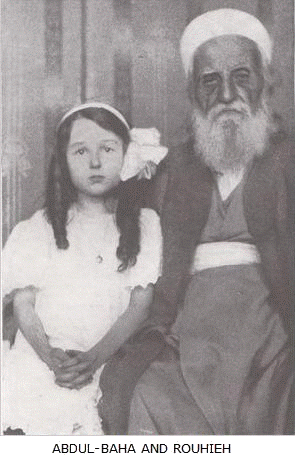
- ʿAbd ʾul-Bahāˁ, ʿAbd ʾal-Bahāˁ, or, conventionally, ʽAbdu’l-Bahá (عَبْد البَهَاء), is Servant of the Light, Glory, or Splendor (1844-1921 A.D.). ʿẠbədūl-Bạhāʾ (Hebrew, עַבְּדּוּל־בַּהָא) is a Hebraized spelling (with my own approximated vowel-points). The full form of the Beloved’s title and name is ʿAbd ʾul-Bahāˁ ʿAbbās, ʿAbd ʾal-Bahāˁ ʿAbbās, or, conventionally, ʽAbdu’l-Bahá ‘Abbás (عَبْد البَهَاء عبَّاس). ʿAbdu͗l-Bahā ʿAbbās (Persian, عَبْداُلْبَهَا عبَّاس, or ʾUrdū, عَبْداُلْبَہَا عبَّاس) is a transliteration of the Persianized and ʾUrdūized Arabic spellings. In His stylized signature, He commonly used the initials of His title and name, ʿ ʿ (ع ع), pronounced ʿAyn ʿAyn (عَيْن عَيْن). I have included numerous photographs and portraits. See also the glossary entries, ʾal-ʿAyn and ʾal-Ġuṣn ʾal-ꞌAʿẓam.
- ʿAbd ʾal-Karīm Quṭb ʾal-Ddīn ʾibn ꞌIbrāhīm ʾal-Ǧīliyy (عَبْد الكَرِيم قُطْب الدِّين اِبْن إِبرَاهِيم الجِيلِيّ) lived 1365-1424. He is commonly referred to as ʾal-Ǧīliyy (الجِيلِيّ), “generational,” and was associated with ʾal-ṭarīqaẗ (see glossary entry) of ʾal-Qādiriyyaẗ (see glossary entry). He may have been the individual who, in 1387 A.D., first brought that ṭarīqaẗ to India. ʾal-Ǧīliyy was also known as a writer of commentaries on the work of ʾIbn ʾal-ʿArabiyy (see the glossary entry, ʾal-Waḥidaẗ ʾal-wuǧūd). For instance, ʾal-Ǧīliyy was the author of the widely esteemed, ʾal-ꞌInsānu ʾal-Kamīl (see glossary entry). See also the glossary entries, ʾẠḇərāhām and ʾal-Quṭb.
- ʿAbd ʾal-Qādir ʾal-Ǧīlāniyy (عَبْد القَادِر الجِيلانِيّ) lived 1078-1166 A.D. He was ʾal-ꞌimām (see glossary entry) of ʾal-Qādiriyyaẗ (see glossary entry). This blessed being was born in the city of ʾÂmul (Persian, آمُل) in ʾIyrān (Persian, اِیْرَان), and he died in the city of Baghdad (بَغْدَاد, Baġdād) in present-day ʿIrāq (العِرَاق, ʾal-ʿIrāq). He was a sayyid (see the glossary entry, ʾal-Sayyid). ʾal-Qādir (القَادِر) is the powerful one. ʾal-Ǧīlāniyy (الجِيلَانِيّ) is the mighty one. Therefore, his name translates as “servant (or slave) of the powerful and mighty One.” He is also known, respectfully, as Pīr-i Pīrān (see glossary entry).
- ʿAbdu͗l-Raḥmān Bābā (Pashto, عَبْداُلْرَحْمَان بَابَا) lived 1653–1711 A.D. He was a Pashtun poet from modern-day Pākistāna. ʾal-Raḥmān (الرَحْمَن) or, slightly varying the original Arabic, ʾal-Rraḥmān (الرَّحْمَن), the name of a sūraẗ in ʾal-Qurʾân, is the All-Beneficent or the Merciful. See the glossary entries, Bābā, the Bhakti-Ṣūfiyy movement, Paṣ̌tū, ʾal-Qurʾân, and ʾal-Sūraẗ.
- ʾĀbəʾạbiyniyliyy hā-Mạləʾāḵə (Hebrew, אָבְּאַבִּינִילִיּ הָמַלְאָךְ) or ꞌAbābīnīliyy ʾal-Malāk (أَبَابِينِيلِيّ الْمَلَاك), Great Spirit or Great Mystery (Chickasaw) the Angel, is Ababinili the Angel, possibly among the Guardian Angels (see the glossary entries, ʾal-Ḥafaẓaẗ and ʾal-Malāk ʾal-Ḥāris) residing in the World of Dreams (see the glossary entry, ʾal-ʿĀlam ʾal-ꞌAhlām). The Hebrew-language spelling, including the vowel-points, is my own.
- ʾẠḇəʾālōqiyṭẹsəwəwəʾrāh (or ʾẠḇəʾālōqiyṭẹsəvəvəʾrāh) hā-Mạləʾāḵə (Hebrew, אַבְאָלוֹקִיטֶסְוְוְארָה הָמַלְאָךְ), ꞌAfālūkītsāfārā ʾal-Malāk (أَفَالُوكِيتْسَافَارَا الْمَلَاك), ʾÂvālūkītišivārā Farištah (Persian, آوَالُوکِیتِشِوَارَا فَرِشْتَه), ʾAvālūkitēšvara Farištah (ʾUrdū, اوَلُوکِتَیشوَرَ فَرِشْتَہ), or Avalōkitēśvara Fariśtā (Dēvanāgarī Hindī/Sanskrit script, अवलोकितेश्वर फ़रिश्ता), the One Who looks down when hearing the sound or cry of the needy (Sanskrit) the Angel, is Avalokitesvara or Avalokiteshvara (Dēvanāgarī Sanskrit script, अवलोकितेश्वर, Avalōkitēśvara) the Angel. My added Hebrew vowel-points are only approximations. Avarōkitēshuvara (Japanese, アヴァローキテーシュヴァラ) is given as a Japanese spelling. Compare with the glossary entry, Qəwōʾən-Yin hā-Mạləʾāḵə.
- ʿẠḇəddiyʾēl hā-Mạləʾāḵə (Hebrew, עַבְדִּיאֵל הָמַלְאָךְ), ʿAbdu͗lla̍h ʾal-Malāk (عبْداللہ الْمَلَاك), and Ángelos Abdiḗl (Greek, Ἄγγελος Αβδιήλ) refer to Abdiel the Angel, Servant of God the Angel. He is the blessed Angel of faith. The twin cognates ʿābạd (Hebrew, עָבַד) and ʿabd (عَبْد) are servant or slave. Abdiel the Angel might be a Resident of the World of Dreams (see the glossary entry, ʾal-ʿĀlam ʾal-Bāṭin) and its Archangels (see the glossary entry, ʾal-Malāꞌikaẗ ʿAllaỳ).
- ʾĀbəhiymūqəhiyy hā-Mạləʾāḵə (Hebrew, אָבְּהִימוּקְהִיּ הָמַלְאָךְ), ꞌAbhīmūẖiyy ʾal-Malāk (أَبْهِيمُوخِيّ الْمَلَاك), ʾAbhī Mūẖī Farištah (Persian, اَبْهِی مُوکهِی فَرِشْتَه), ʾAbhimukhī Farištah (ʾUrdū, ابْھِمُکھِی فَرِشْتَہ), ʾAbhimukhī Farišatah (Šāh Mukhī Panǧābī script, ابْھِمُکھِی فَرِشَتَہ), Abhimukhī Fariśtā (Dēvanāgarī Hindī/Sanskrit script, अभिमुखी फ़रिश्ता), or Abhimukhī Fariśatā (Guramukhī Pajābī script, ਅਭਿਮੁਖੀ ਫ਼ਰਿਸ਼ਤਾ), Turned Towards or Facing (Sanskrit) the Angel, is Abhimukhi (Dēvanāgarī Sanskrit script, अभिमुखी, Abhimukhī) the Angel, possibly among the Guardian Angels (see the glossary entries, ʾal-Ḥafaẓaẗ and ʾal-Malāk ʾal-Ḥāris) residing in the World of Dreams (see the glossary entry, ʾal-ʿĀlam ʾal-ꞌAhlām). The Hebrew-language spelling, including the vowel-points, is my own.
- ʾẠḇərāhām (Hebrew, אַבְרָהָם) or ꞌIbrāhīm (إِبْرَاهِيم), commonly spelled “Abraham” in the English language, is, according to tradition, the Prophetic Patriarch of the Semitic peoples. His divine Name translates as Father of many or Father of a multitude. Reportedly, His designation, prior to beginning His Prophetic Mission, was ʾẠḇrām (Hebrew, אַבְרָם), high Father. My own approximate phonetic Arabization of ʾAḇrām is ꞌIbrām (إِبْرَام). In both ꞌIslām and the Bahá’í Faith, ꞌIbrāhīm (ʾẠḇərāhām) is also called ʾal-Waliyy ʾAlla̍h (الوَلِيّ الله) or ʾal-H̱alīl ʾAlla̍h (الخَلِيل الله), the Friend of God.
- ʾẠḇərāhām bẹn Šəmūʾēl ʾAbūləʿạp̄əyāh (Hebrew, אַבְרָהָם בֶּן שְׁמוּאֶל אַבּוּלְעַפְיָה) or ꞌIbrāhīm ʾibn Ṣamūꞌīl ꞌAbū ʾal-ʿĀfiyaẗ (إِبْرَاهِيم اِبْن صَمُوئِيل أَبُو العَافِيَة), circa 1240-1291 A.D., was the originator of a system of Jewish experiential mysticism (combining words, breathing, bodily movement, contemplation, and concentration) which he called hā-Qạbbālāh hā-Nəḇiyʾiym or, alternately transliterated, hā-Qạbbālāh hā-Nəviyʾiym (Hebrew, הָקַבָּלָה הָנְבִיאִים), the Kabbalah of the Prophets. It is also sometimes known, in the English language, as either Prophetic Kabbalah or Ecstatic Kabbalah. I have an extensive collection of materials related to ʾẠḇərāhām bẹn Šəmūʾēl ʾAbūləʿạp̄əyāh on my Judaism Resources page. See the glossary entries, hā-Qạbbālāh and ʾal-Nabiyy.
- ʾĀbərāʾqāʾdāʾbərāʾ (Hebrew, אָבְּרָאקָאדָּאבְּרָא) or, as modified by Aleister Crowley (see the glossary entry, Thelema), ʾābərāʾhāʾdāʾbərāʾ (Hebrew, אָבְּרָאהָּאדָּאבְּרָא) is the Kabbalistic formula or invocation, abracadabra (or abrahadabra). My added Hebrew vowel-points are only approximations. ꞌAbrākādābrā (أَبْرَاكَادَابْرَا), ʾAbrākādābrā (Persian, ابْرَاکَادَابْرَا), and ʾabrāhādābrā (Arabic, ابْرَاهَادَابْرَا, and Persian, ابْرَاهَادَابْرَا) are Arabized and Persianized spellings. See also the glossary entry, hā-Qạbbālāh.
- ʾal-ꞌAbǧad (الأَبْجَد) is an acronym (أَبْجَد, ꞌ̸ ā b ǧ a̸ d) formed by the first four letters (excluding short vowels) of various Semitic alphabets (in effect, “the order”).
- The term refers to Arabic, Hebrew, Aramaic, and some other Semitic languages which are based upon consonants. The short vowel-points are not always written out. They are either nonexistent or optional. (Contrast ʾal-ꞌabǧad with the glossary entry, ʿƏbugida.)
- In Modern Standard Arabic, an ꞌabǧad (أَبْجَد), with ꞌabǧadāt (أَبْجَدَات) as the plural form, is an alphabet. ꞌAbǧadī (أَبْجَدِي), “my own alphabet,” and ꞌabǧadiyy (أَبْجَدِيّ), “alphabetical” or “alphabetic,” are the possessives or appurtenances.
- However, the more common usage of ꞌabǧad or, conventionally, abjad in the Bahá’í texts is to the traditional and symbolic associations between letters and numbers in Arabic and in Arabized scripts (compare with the glossary entry, ʾal-ʿIlmu ʾal-ꞌaʿdād).
Compare with the glossary entry, ʾal-ꞌAbǧadiyyaẗ. - ʾal-ꞌAbǧadiyyaẗ (الأَبْجَدِيَّة), with ʾal-ꞌAbǧadiyyāt (الأَبْجَدِيَّات) as the plural form, is the alphabet. Compare with the glossary entry, ʾal-ꞌAbǧad.
- ʾal-ꞌAbǧadiyyaẗ ʾal-Duwaliyyaẗ min ꞌaǧl ʾal-Naqḥaraẗ ʾal-Sanskrītiyyaẗ (الأَبْجَدِيَّة الدُوَلِيَّة مِنْ أَجْل النَقْحَرة السنْسْكْريتيّة), the alphabet international of (or from) for the transliteration of Sanskrit, is my Arabic-language translation of the International Alphabet of Sanskrit Transliteration (IAST).
- ʾal-ꞌAbǧadiyyaẗ ʾal-Ṣawtiyyaẗ ʾal-Duwaliyyaẗ (الأَبْجَدِيَّة الصَوْتِيّة الدُوَلِيَّة), the alphabet phonetic international, is the International Phonetic Alphabet.
- ʾal-ꞌAbhā (الأَبْهَا) is the superlative form of Bahāˁ (see the glossary entry, Bahāˁ ʾUlla̍h), i.e., the Most Glorious (or the All-Glorious), the Most Splendrous, or the Most Luminous. These words are variations in the presentation of the Greatest Name (see the glossary entry, ʾal-ʾIsm ʾal-ꞌAʿẓam). See also the glossary entry, Yā Bahāˁ ʾal-ꞌAbhā.
- ʾal-ꞌAbḥāṯ (الأَبْحَاث) is research, search, consideration, study, or seeking. See also the glossary entry, ʾal-Baḥaṯa.
- ʿĀbīr lil-qārrāt (عَابِر لِلقَارَّات), traversing of the continents, is intercontinental. ʾal-Qārraẗ (القَارَّة) is the continent.
- ʾĂḇiyhūʾēl hā-Mạləʾāḵə (Hebrew, אֲבִיהוּאֵל הָמַלְאָךְ), He is the Father ʾĔlōhiym (see glossary entry) the Angel, is Ebuhuel (or Abihuel) the Angel, possibly among the Guardian Angels (see the glossary entries, ʾal-Ḥafaẓaẗ and ʾal-Malāk ʾal-Ḥāris) residing in the World of Dreams (see the glossary entry, ʾal-ʿĀlam ʾal-ꞌAhlām). ʾĂḇiyhūʾ (Hebrew, אֲבִיהוּא) is “he is father.” With four cognates, Hū-ʾal-ʾÂb-ʾAlla̍h ʾal-Malāk (هُو ـ الْآب ـ الله الْمَلَاك), He is-the Father-God the Angel, is my Arabic-language translation. Ángelos Ebouḗl (Greek, Ἄγγελος Εβουήλ) is a Greek (or Hellenized) spelling.
- ʾal-ꞌAb ʾal-nafsāniyy (الأَب النَفْسانِيّ) is spiritual father (more precisely, ensouled father or mental father). My spiritual father (more precisely, my ensouled father or my mental father) is ꞌabī ʾal-nafsāniyy (أَبِي النَفْسانِيّ). Pidar-i maʿnawī (پِدَرِ مَعنَوِی) is Persian for “spiritual father” (literally, father spiritual). However, a more familiar or intimate Arabic and Persian term for father (also found in other languages) is bābā (see glossary entry). Rūḥānī bāpa (ʾUrdū, روحانی باپ) is spiritual father in ʾUrdū.
- hā-ʿĂḇōḏāh hā-dōqəṭōrāṭ (Hebrew, הָעֲבוֹדָה הָדּוֹקְטוֹרָט), the dissertation (alternatively, thesis or paper) doctoral, is the doctoral dissertation (or the doctoral thesis).
- ʾal-ꞌAbrār (الأَبْرار) are the righteous ones. It is a title given to Ṣūfiyy (see the glossary entry, ʾal-Ṣūfiyy) leaders.
- ʾAbrū (Persian and ʾUrdū, ابرو) is eyebrow. The Persian and ʾUrdū, ʾabrū, and the English-language, brow, are cognates. The similarity between the Persian and English-language words fascinated me in my early teens. At the time, I did not know that these near homophones (see the glossary entry, ʾal-Lafẓaẗ ʾal-mutaǧānisaẗ) were derived, etymologically, from the same Indo-European root, bhru (brow). The Sanskrit bhrū (Dēvanāgarī Sanskrit script, भ्रू) and the Bengali bhru (ভ্রু), for “brow” or “eyebrow,” are also cognates.
- ʾal-ꞌAbū ʾal-Hawl (الأَبُو الهَوْل), the father of horror, is the Sphinx (a man-lion). However, the Sphinx can also be referred to as ʾal-ꞌInsān ʾal-Bāraʿ (الإِنْسَان البارع,) “the man masterful” (i.e., the masterful man), or using the loanword, ʾal-Sfīnks (السْفِينْكْس). Compare with the glossary entry, Nārəsiyməhāh-ʾĀwəwāṭʾạr hā-Mạləʾāḵə.
- ʾAbū ʾal-Naǧib Suḥrawardī (Persianized Arabic, ابُو النَجِیب سُهْرَوَرْدِی), a Sunniyy (see the glossary entry, ʾal-ꞌAhl ʾal-Ssunnaẗ w-ʾal-Ǧamāʾaẗ) Muslim (see the glossary entry, ʾal-Muslim) who lived 1097–1168 A.D., founded ʾal-Suḥrawardiyyaẗ (السُهروَردِيَّة) Ṣūfiyy (see the glossary entry, ʾal-Ṣūfiyy) order (see the glossary entry, ʾal-Ṭarīqaẗ). ʾal-Suḥrawardiyy (السُهروَردِيّ) is the possessive or an appurtenance. ʾal-Suḥrawardī (السُهْرَوَرْدِی) is a Persianized Arabic spelling. ʾAbū ʾal-Naǧib Suḥrawardī was unrelated to Šahāb ʾad-Dīn ʾas-Suḥrawardī (see glossary entry).
- ʾẠbūn (in Hebrew script, אַבּוּן, or in Syriac script, ܐܒܘܢ), sometimes transliterated as either Abwûn or Abwoon, is “our Father” in Aramaic, referring to the beginning of the Lord’s Prayer by His Blessed Presence Jesus. An Arabic transliteration (Arabization) would look something like “ꞌAbūn” (أَبُون). Meditatively, the word can be imagined while breathing in and out (ʾab-ūn). The Koinḗ, or Common, Greek version is Páter ēmṓn (Πάτερ ημών), literally “Father of ours.” See also the glossary entry, ʾal-ꞌAb.
- ʾal-ʾÂb w-ʾal-ʾIbn w-ʾal-Rrūḥ ʾal-Qudus (الْآب وَالْاِبْن وَالرُّوح الْقُدُس), the Father and the Son and the Spirit Holy, are the Father, the Son, and the Holy Spirit. See also the glossary entry, Patéras ton gio hágio pneúma.
- Ācārya (Dēvanāgarī Sanskrit script, आचार्य) is teacher or, more formally, preceptor. In order to designate instructional systems or specific preceptors, the word is frequently combined with other Sanskrit or Sanskritized terms, such as Ādi Śaṅkarācārya (see the glossary entry, Ādi Śaṅkarā), Śrī Nimbārkācārya (see the glossary entry, Dvaitādvaita), and Śankarācārya (see the glossary entry, Ṭrānseṃḍaiṃṭala Dhyāna).
- ʾĂḇạddōn hā-Mạləʾāḵə (Hebrew, אֲבַדּוֹן הָמַלְאָךְ), Destruction the Angel, is Abaddon the Angel, possibly among the Guardian Angels (see the glossary entries, ʾal-Ḥafaẓaẗ and ʾal-Malāk ʾal-Ḥāris) residing in the World of Dreams (see the glossary entry, ʾal-ʿĀlam ʾal-ꞌAhlām). ʾĀḇạḏ (Hebrew, אָבַד) is to perish.
- ꞌAbāddūn ʾal-Malāk (أَبَادُّون الْمَلَاك), Abaddon the Angel, is an Arabic rendering. Ángelos Apollýōn (Koinḗ, or Common, Greek, Ἄγγελος Ἀπολλύων) is the Koinḗ, or Common, Greek (or Hellenized) spelling. ꞌAbūlliyūn (أَبُولِّيُون) is an Arabic spelling of Apollyon. This Angel, referred to in both the Old and New Testaments, supervises the punishment (i.e., the purification) of souls.
- They [those without the seal of God on their foreheads] have over them as king the angel of the abyss: his name in Hebrew is Abaddon, and in the Greek tongue he hath the name Apollyon. (Revelation 9:4, American Standard Version. 1901.)
- ʿĀḇạriyʾēl hā-Mạləʾāḵə (Hebrew, עָבַרִיאֵל הָמַלְאָךְ), Pass Over in ʾĔlōhiym (see glossary entry) the Angel, is Abariel (or Abriel) the Angel, possibly among the Guardian Angels (see the glossary entries, ʾal-Ḥafaẓaẗ and ʾal-Malāk ʾal-Ḥāris) residing in the World of Dreams (see the glossary entry, ʾal-ʿĀlam ʾal-ꞌAhlām). ʿĀḇạr (Hebrew, עָבַר) is to pass over. Tamurr fī ʾAlla̍h ʾal-Malāk (تَمُرّ فِي الله الْمَلَاك), Pass Over (or Pass Through) in God the Angel, is my Arabic-language translation. Ángelos Abariḗl (Greek, Ἄγγελος Αβαριήλ) is a Greek (or Hellenized) spelling.
- ʾĀḇēl hā-Mạləʾāḵə (Hebrew, אָבֵל הָמַלְאָךְ), Meadow (or Mourning) the Angel, is Abel the Angel, possibly among the Guardian Angels (see the glossary entries, ʾal-Ḥafaẓaẗ and ʾal-Malāk ʾal-Ḥāris) residing in the World of Dreams (see the glossary entry, ʾal-ʿĀlam ʾal-ꞌAhlām). Marǧ ʾal-Malāk (مَرْج الْمَلَاك), Meadow the Angel, is an Arabic rendering. Abel, in this context, should not be confused with the Biblical individual named Abel (see the glossary entry, Qābīl wa-Hābīl).
- ʾĂḇiyʾēl hā-Mạləʾāḵə (Hebrew, אֲבִיאֵל הָמַלְאָךְ), ʾĔlōhiym (see glossary entry) is My Father the Angel, is Abiel (or Aviel) the Angel, possibly among the Guardian Angels (see the glossary entries, ʾal-Ḥafaẓaẗ and ʾal-Malāk ʾal-Ḥāris) residing in the World of Dreams (see the glossary entry, ʾal-ʿĀlam ʾal-ꞌAhlām). hā-ʾĀḇ (Hebrew, הָאָב) is the father. ʾÂbīꞌīl ʾal-Malāk (آبِيئِيل الْمَلَاك), Abiel the Angel, is my Arabization. Ángelos Abiḗl (Greek, Ἄγγελος Αβιήλ) is a Greek (or Hellenized) spelling.
- ʾĀḇiyḡạyil hā-Mạləʾāḵə (Hebrew, אֲבִיגַ֫יִל הָמַלְאָךְ), My Father is Joy (or Father’s Joy) the Angel, is Abigail (or Abigayil) the Angel, possibly among the Guardian Angels (see the glossary entries, ʾal-Ḥafaẓaẗ and ʾal-Malāk ʾal-Ḥāris) residing in the World of Dreams (see the glossary entry, ʾal-ʿĀlam ʾal-ꞌAhlām). ꞌAbīǧāyil ʾal-Malāk (أَبِيجَايِل الْمَلَاك) is an Arabic version. Other renderings include: ʾAbīgayila Farištah (Persian, ابِیگَیِلَ فَرِشْتَه, and ʾUrdū, ابِیگَیِلَ فَرِشْتَہ), Abīgaila Fariśtā (Dēvanāgarī Hindī/Sanskrit script, अबीगैल फ़रिश्ता), Abīgaila Phariśatā (Guramukhī Pajābī script, ਅਬੀਗੈਲ ਫਰਿਸ਼ਤਾ), Tenshi Abigeiru (Japanese, 天使 アビゲイル), and Ángelos Abigaía (Greek, Ἄγγελος Αβιγαία).
- ʾÂbdast (Persian, آبْدَسْت), the Persian term for ablutions, is, literally, hand washing. ʾÂb (Persian, آب) is water. Dast (Persian, دَسْت) is hand. The Indo-European root, “ab” (river or water), is included in both “ʾabdast” and “ablutions.” The Indo-European root, “leu” (-lutions), is “dirt.” For the corresponding Arabic term, see the glossary entry, ʾal-Wuḍūˁ.
- ꞌAbǧāl ʾal-Malāk (أَبْجَال الْمَلَاك), Ferryman (Arabic) the Angel, is Abgal the Angel, possibly among the Guardian Angels (see the glossary entries, ʾal-Ḥafaẓaẗ and ʾal-Malāk ʾal-Ḥāris) residing in the World of Dreams (see the glossary entry, ʾal-ʿĀlam ʾal-ꞌAhlām). Rạp̄əsōḏạʾiy hā-Mạləʾāḵə (Hebrew, רַפְסוֹדַאִי הָמַלְאָךְ), Ferryman the Angel, is my Hebrew-language translation.
- ʾal-ꞌAbrāǧ ʾal-niẓāmiyyaẗ (الأَبْرَاج النِظَامِيَّة), constellations (or towers) systematic, is systemic constellations (a form of psychotherapy).
- ʾal-ꞌAdab (الأَدَب) is courtesy, good manners, or etiquette.
- ʾĀḏạḇiyʾēl hā-Mạləʾāḵə (Hebrew, אָדַבִיאֵל הָמַלְאָךְ), Grieving in ʾĔlōhiym (see glossary entry) the Angel, is Adabiel the Angel, possibly among the Guardian Angels (see the glossary entries, ʾal-Ḥafaẓaẗ and ʾal-Malāk ʾal-Ḥāris) residing in the World of Dreams (see the glossary entry, ʾal-ʿĀlam ʾal-ꞌAhlām). ʾĀḏạḇ (Hebrew, אָדַב) is to grieve. Ḥazina fī ʾAlla̍h ʾal-Malāk (حَزِنَ فِي الله الْمَلَاك), grieving in God the Angel, is my Arabic-language translation.
- ʾal-ʿAdālaẗ ʾal-ǧināꞌiyyaẗ (العَدَالَة الجِنَائِيَّة), justice of the criminal (or justice penal), is criminal justice. ʾal-Ǧināꞌiyyāt (الجِنَائِيَّات) are criminals.
- ʾal-ʿAdālaẗ ʾal-ʾiqtiṣādiyyaẗ (العَدَالَة الاقْتِصَادِيَّة), justice economic, is economic justice. See also the glossary entries, ʾal-ʿAdl and ʾal-Tabaʿiyyaẗ ʾal-ʾiqtiṣādiyyaẗ ʾal-ʾaḥtiyāǧāt ʾal-maḥrūmīn.
- ʾal-ʿAdālaẗ ʾal-ʾiǧtimāʿiyyaẗ (العَدَالَة الاجْتِمَاعِيَّة), justice social, is social justice. See also the glossary entry, ʾal-ʿAdl.
- ʾal-ʿAdālaẗ ʾal-taṣāluḥiyyaẗ (العَدَالَة التَصَالُحِيَة), justice restorative (or justice conciliatory), is restorative justice. See also the glossary entry, ʾal-ʿAdl.
- ʾal-ʿAdāˁ lil-muhāǧirīna (العَدَاء لِلمُهَاجِرِينَ), the aggression for (or to) the immigrants, is the bigoted, populist philosophy of nativism.
- ʾĀḏām (אָדָם) is Hebrew for ruddy man, earthman, or earthling. His name in Arabic is ʾÂdam (آدَم). In contemporary Hebrew, hā-ʾĀḏām (הָאָדָם) is “man.” See also the glossary entries, hā-ʾĀḏām Qạḏəmōn, hā-ʾIyš, and ʾal-Raǧǧala ʾal-ꞌawwal.
- ʾĀḏām-hā-Ḥādāš hā-Mạləʾāḵə (Hebrew, אָדָם־הָחָדָשׁ הָמַלְאָךְ) or ʾÂdam-ʾal-Ǧadīd ʾal-Malāk (آدَم ـ الجَدِيد الْمَلَاك), Man New the Angel, is New Man the Angel, possibly among the Guardian Angels (see the glossary entries, ʾal-Ḥafaẓaẗ and ʾal-Malāk ʾal-Ḥāris) residing in the World of Dreams (see the glossary entry, ʾal-ʿĀlam ʾal-ꞌAhlām). He came to me in a dream on the afternoon of October 31ˢᵗ, 2014.
- ʿAdam ʾal-ʿilmu bi-ʾal-ššayˁ (عَدَم الْعِلْم بِالشَّيْء), non knowledge of the thing, is unenlightenment, unawareness, unfamiliarity, unacquaintance, or unlearnedness.
- ʾal-ʿAdamiyyaẗ (العَدَمِيَّة), with ʾal-ʿadamiyy (العَدَمِيّ) as the possessive or an appurtenance (“nihilist” or “nihilistic”), is nihilism (“nothingism”). ʾal-ʿAdamiyyūna (العَدَمِيُّونَ) are nihilists. The term, nihilism (German, Nihilismus), was coined by Friedrich Heinrich Jacobi (فْرِيدْرِيش هَاينْرِيش جَاكُوبِي, Frīdrīš Hāynrīš Ǧākūbī), 1743–1819.
- hā-ʾĀḏām Qạḏəmōn (Hebrew, הָאָדָם קַדְמוֹן) or Adam Kadmon, the man (or earthling) ancient (or primordial), is the Kabbalistic (see the glossary entry, hā-Qạbbālāh) concept of the original man (or the primal man). See also the glossary entries, ʾĀḏām, ʾĀḏām-Qạḏəmōn hā-Mạləʾāḵə, and ʾal-Raǧǧala ʾal-ꞌawwal.
- ʾĀḏām-Qạḏəmōn hā-Mạləʾāḵə (Hebrew, אָדָם־קַדְמוֹן הָמַלְאָךְ), Earthling (i.e., Adam) Primordial the Angel, is Adam Kadmon the Angel, possibly among the Guardian Angels (see the glossary entries, ʾal-Ḥafaẓaẗ and ʾal-Malāk ʾal-Ḥāris) residing in the World of Dreams (see the glossary entry, ʾal-ʿĀlam ʾal-ꞌAhlām). With three cognates, ʾÂdam Qadīm ʾal-Malāk (آدَم ـ قَدِيم الْمَلَاك), Earthling Primordial (alternatively, Old or Ancient) the Angel, is my Arabic-language translation. ʾÂdam-i Qadīmī Farištah (Persian, آدَمِ قَدِیمِی فَرِشْتَه), Earthling of Primordial (alternatively, Old or Ancient) Angel, is my Persian translation. See also the glossary entries, ʾĀḏām and hā-ʾĀḏām Qạḏəmōn.
- ʾÂdam-Rūḥāniyy ʾal-Malāk (آدَم ـ رُوحَانِيّ الْمَلَاك), Earthling (i.e., Adam) Spiritual the Angel, is Adam Ruhani the Angel, possibly among the Guardian Angels (see the glossary entries, ʾal-Ḥafaẓaẗ and ʾal-Malāk ʾal-Ḥāris) residing in the World of Dreams (see the glossary entry, ʾal-ʿĀlam ʾal-ꞌAhlām). ʾĀḏām-Rūḥāniyy hā-Mạləʾāḵə (Hebrew, אָדָם־רוּחָנִיּ הָמַלְאָךְ) is my Hebrew-language translation. ʾÂdam-i Rūḥānī Farištah (Persian, آدَمِ رُوحَانِی فَرِشْتَه), Earthling of Spiritual Angel, is my Persian translation. See also the glossary entries, ʾĀḏām and ʾal-ꞌIsmāʿīliyyaẗ.
- ʿAdam taḥammala ʾal-lāktūz (عَدَم تَحَمَّلَ اللَاكْتُوز), non- (or in-) tolerance of lactose, is lactose intolerance. The remedy is lactase enzyme or, using the English-language loanwords, ʾal-ꞌanzaym ʾal-lāktayz (الإَنْزَيْم اللَاكتَيْز).
- ꞌAḏarbayǧān (أَذَرْبَيْجَان) is Azerbaijan.
- ʾǍḏār hā-Mạləʾāḵə (Hebrew, אֲדָר הָמַלְאָךְ), Dark (Assyrian) the Angel, is Adar (or Addaru) the Angel, possibly among the Guardian Angels (see the glossary entries, ʾal-Ḥafaẓaẗ and ʾal-Malāk ʾal-Ḥāris) residing in the World of Dreams (see the glossary entry, ʾal-ʿĀlam ʾal-ꞌAhlām). ʾǍḏār (Hebrew, אֲדָר), the name of a Hebrew month, was originally the Ancient Chaldean God of Saturn. ꞌAdār ʾal-Malāk (أَدَار الْمَلَاك) is an Arabic version. ʾAdār Farištah (Persian, ادَار فَرِشْتَه, or ʾUrdū, ادَار فَرِشْتَہ) is the Persian and ʾUrdū style. Tenshi-Adaru (Japanese, 天使アダル) is a Japanese form. Ángelos Adár (Koinḗ, or Common, Greek, Ἄγγελος Αδάρ) is a Koinḗ, or Common, Greek (or Hellenized) spelling.
- ʾal-ʿĀdaẗ (العَادَة) is the habit, the custom, or the practice. It can be used as an Arabic-language translation of the Swahili word, kawaida (tradition, reason, normal, or common).
- ʾal-ꞌAdāẗ ʾal-samʿiyyaẗ (الأَدَاة السَمْعِيََّة), assistance auditory, is hearing aid. ʾal-Muʿīnāt ʾal-samʿiyyaẗ (المُعِينَات السَمْعِيََّة), aids auditory, are hearing aids.
- ʾal-ꞌAdāt ʾal-ꞌiliktrūniyy (الْأَدَاة الْإِلِكْتُرُونِيّ), gadget (alternatively, tool or instruments) electronic, is electronic gadget (alternatively, electronic tool or instrument). ʾal-ꞌAdawāt ʾal-ꞌiliktrūniyyaẗ (الْأَدَوَات الْإِلِكْتُرُونِيَّة), gadgets (alternatively, tools or instruments) electronic, are electronic gadgets (alternatively, electronic tools or instruments). See also the glossary entry, ʾal-ꞌIliktrūniyyaẗ.
- ʾal-ʿĀdātu (العَادَاتُ), with ʾal-ʿādaẗ (العَادَة) in the singular form, are mores (French, les mœurs). See also the glossary entries, ʾal-Fiqh ʾal-ǧamāʿaẗ and ʾal-Ṭarīqaẗ ʾal-šaʿbiyyaẗ.
- ʾal-ʿAdda (الالعَدَّ), with ʾal-ꞌaʿdād (الْأَعْدَاد) in the plural form, is the number. I will provide a few illustrations of numbering systems (all given 0-9). First, these are the traditional Arabic digits: ٠ ١ ٢ ٣ ٤ ٥ ٦ ٧ ٨ ٩. Here are the Dēvanāgarī numerals (Sanskrit, Hindī, etc.): ० १ २ ३ ४ ५ ६ ७ ८ ९. This is the Telugu and Kannaḍa system: ౦ ౧ ౨ ౩ ౪ ౫ ౬ ౭ ౮ ౯. Here is the Bengali and Assamese convention: ০ ১ ২ ৩ ৪ ৫ ৬ ৭ ৮ ৯. Finally, this is the Malayaḷaṃ version: ൦ ൧ ൨ ൩ ൪ ൫ ൬ ൭ ൮ ൯. In all cases, the numbers are written from left to right. However, throughout most (not all) of both West Asia (see glossary entry) and South Asia (see glossary entry), the Western styling of numbering (0-9) is now commonly in use. See also the glossary entry, ʾal-ꞌAnẓimaẗ min ʾal-tarqīm.
- ʾal-ʿAddād ʾal-masāfāt (العَدَّاد المَسَافَات), the meter (or counter) of distances, is the odometer. ʾal-ʿAddādāt ʾal-masāfaẗ (العَدَّادَات المَسَافَة), the meters (or counters) of distance, are the odometers.
- ʾẠdẹləp̄iyāh hā-Mạləʾāḵə (Hebrew, אַדֶּלְפִיָה הָמַלְאָךְ), ꞌAdīlfiyā ʾal-Malāk (أَدِيلْفِيَا الْمَلَاك), ʾÂdilfiyā Farištah (Persian, آدِلْفِیَا فَرِشْتَه), or Ángelos Adélphia (Ancient Greek, Ἄγγελος Ἀδέλφια), Brotherhood (Ancient Greek) the Angel, is Adelphia the Angel, possibly among the Guardian Angels (see the glossary entries, ʾal-Ḥafaẓaẗ and ʾal-Malāk ʾal-Ḥāris) residing in the World of Dreams (see the glossary entry, ʾal-ʿĀlam ʾal-ꞌAhlām). My added Hebrew vowel-points are only approximations.
- ʾẠḏəmiyʾēl hā-Mạləʾāḵə (Hebrew, אַדְמִיאֵל הָמַלְאָךְ), Man (alternatively, Earthling or Person) of ʾĔlōhiym (see glossary entry) the Angel or (as a variation) ʾĔlōhiym’s Earth the Angel, is Admiel (or Admael) the Angel. He might be a Resident of the World of Dreams (see the glossary entry, ʾal-ʿĀlam ʾal-Bāṭin) and its Guardian Angels (see the glossary entries, ʾal-Ḥafaẓaẗ and ʾal-Malāk ʾal-Ḥāris). ʾẠḏəmiyʾēl (Hebrew, אַדְמִיאֵל) is based upon the word, ʾĀḏām (see glossary entry). ʾÂdmīꞌīl ʾal-Malāk (آدْمِيئِيل الْمَلَاك) is my Arabization. Ángelos Admiēl (Greek, Ἄγγελος Ἀδμιηλ) is a Greek (or Hellenized) spelling. See also the glossary entry, ʾĀḏām.
- ʿẠḏənạḥiyʾēl hā-Mạləʾāḵə (Hebrew, עַדְנַחִיאֵל הָמַלְאָךְ), Pleasure of ʾĔlōhiym (see glossary entry) the Angel, is Adnachiel (alternatively, Advachiel, Advahiel, Adernahael, or Aduachiel) the Angel, possibly among the Guardian Angels (see the glossary entries, ʾal-Ḥafaẓaẗ and ʾal-Malāk ʾal-Ḥāris) residing in the World of Dreams (see the glossary entry, ʾal-ʿĀlam ʾal-ꞌAhlām). hā-ʿẠḏənạḥ (Hebrew, הָעַדְנַח) is pleasure. Mutʿaẗ ʾal-ꞌIlhiyyaẗ ʾal-Malāk (مُتْعَة الإِلهِيّيَة الْمَلَاك), Divine Pleasure the Angel, is my Arabic-language translation. Ángelos Adnachiḗl (Greek, Ἄγγελος Αδναχιήλ) is a Greek (or Hellenized) spelling.
- ʾẠḏərạmmẹlẹḵ hā-Mạləʾāḵə (Hebrew, אַדְרַמֶּ֫לֶך הָמַלְאָךְ), ꞌAdrammilik ʾal-Malāk (أَدْرَمِّلِك الْمَلَاك), or Ángelos Adramelech (Greek, Ἄγγελος Αδραμελεχ), Majestic King (Hebrew) the Angel, is Adramelech (alternatively, Adrammelech, Adramelek or Adar-malik) the Angel, possibly among the Guardian Angels (see the glossary entries, ʾal-Ḥafaẓaẗ and ʾal-Malāk ʾal-Ḥāris) residing in the World of Dreams (see the glossary entry, ʾal-ʿĀlam ʾal-Bāṭin).
- ʿẠḏəriyʾēl hā-Mạləʾāḵə (Hebrew, עַדְרִיאֵל הָמַלְאָךְ), My Help is ʾĔlōhiym (see glossary entry) the Angel, is Adriel the Angel, possibly among the Guardian Angels (see the glossary entries, ʾal-Ḥafaẓaẗ and ʾal-Malāk ʾal-Ḥāris) residing in the World of Dreams (see the glossary entry, ʾal-ʿĀlam ʾal-ꞌAhlām). ʿĀdrīꞌīl ʾal-Malāk (عَادْرِيئِيل الْمَلَاك) is my Arabization. Ángelos Adriḗl (Greek, Ἄγγελος Ἀδριήλ) is a Greek (or Hellenized) spelling. Compare with the glossary entries, ʿẠzəriyʾēl hā-Mạləʾāḵə, ʾĒl-ʿẠḏərʾēl hā-Mạləʾāḵə, and Yạʿəzēyriyʾēl hā-Mạləʾāḵə.
- Ādi Śaṅkaraḥ or Adi Shankara (Dēvanāgarī Sanskrit script, आदि शङ्करः), 788-820 A.D., is also known as Ādi Śaṅkaraḥcāri (Dēvanāgarī Sanskrit script, आदि शङ्करःचारि), Ādi Śaṅkarāḥcārya (Dēvanāgarī Sanskrit script, आदि शङ्करःचार्य), and Śaṅkaraḥ Bhagavatpādācārya (Dēvanāgarī Sanskrit script, शङ्करः भगवत्पादाचार्य). He promoted the nondual school of Advaita Vedānta (Dēvanāgarī Sanskrit script, अद्वैत वेदान्त). The objective was mokṣa (see glossary entry). Śaṅkaraḥ (Dēvanāgarī Sanskrit script, शङ्करः) is repeatedly referenced by the late Indian-English philosopher Roy Bhaskar. Śaṅkaraḥ (Dēvanāgarī Sanskrit script, शङ्करः) and śaṃkara (Dēvanāgarī Sanskrit script, शंकर) are bliss-maker. See also the glossary entries, Ācārya, Advaita, Šəʾạnəqār hā-Mạləʾāḵə, and Veda.
- ʿǍḏiyʾēl hā-Mạləʾāḵə (Hebrew, עֲדִיאֵל הָמַלְאָךְ), Ornament of ʾĔlōhiym (see glossary entry) the Angel, is Adiel the Angel, possibly among the Guardian Angels (see the glossary entries, ʾal-Ḥafaẓaẗ and ʾal-Malāk ʾal-Ḥāris) residing in the World of Dreams (see the glossary entry, ʾal-ʿĀlam ʾal-ꞌAhlām). ʿAdīꞌīl ʾal-Malāk (عَدِيئِيل الْمَلَاك) is an Arabization. Ángelos Adiḗl (Biblical Koinḗ, or Common, Greek, Ἄγγελος Ἀδιήλ) is a Greek (or Hellenized) spelling.
- ʾẠḏiyr hā-Mạləʾāḵə (Hebrew, אַדִיר הָמַלְאָךְ), Mighty (alternatively, Capable, Able, Great, or Powerful) One the Angel, is Adir (alternatively, Ariririon, Adiri, Adiririon, Adiriron, Adi, Adiron, or Adiri) the Angel, possibly among the Guardian Angels (see the glossary entries, ʾal-Ḥafaẓaẗ and ʾal-Malāk ʾal-Ḥāris) residing in the World of Dreams (see the glossary entry, ʾal-ʿĀlam ʾal-ꞌAhlām). Qadīr ʾal-Malāk (قَدِير الْمَلَاك) Mighty (alternatively, Capable, Able, Competent, or Potent) One the Angel, is my Arabic-language translation. Ángelos Adiron (Greek, Ἄγγελος Αδιρον) is a Greek (or Hellenized) spelling.
- ʾẠdiyṭiyy hā-Mạləʾāḵə (Hebrew, אַדִּיטִיּ הָמַלְאָךְ), ꞌAdītiyy ʾal-Malāk (أَدِيتِيّ الْمَلَاك), ʾAdītī Farištah (ʾUrdū, ادِیتِی فَرِشْتَہ), Aditi Fariśtā (Dēvanāgarī Hindī/Sanskrit script, अदिति फ़रिश्ता), or Ángelos Aditi (Greek, Ἄγγελος Αδιτι), Limitless (Sanskrit) the Angel, is Aditi the Angel, possibly among the Guardian Angels (see the glossary entries, ʾal-Ḥafaẓaẗ and ʾal-Malāk ʾal-Ḥāris) residing in the World of Dreams (see the glossary entry, ʾal-ʿĀlam ʾal-ꞌAhlām). Aditi (Dēvanāgarī Sanskrit script, अदिति) is limitless.
- ʾẠdiyy-Būḏəhāʾ hā-Mạləʾāḵə (Hebrew, אַדִּיּ־בּוּדְהָא הָמַלְאָךְ), ʿĀdiyy-Būḏā ʾal-Malāk (عَادِيّ ـ بُوذَا الْمَلَاك), ʾÂdī Būdā Farištah (Persian, آدِی بُودَا فَرِشْتَه), ʿAdī Budhā Farištah (ʾUrdū, عَدِی بُدھَا فَرِشْتَہ), ʾÂdī Budhā Farišatah (Šāh Mukhī Punjabi, آدِی بُدھَ فَرِشَتَہ), Ādi Budha Fariśatā (Guramukhī Pajābī script, ਆਦਿ ਬੁੱਧ ਫ਼ਰਿਸ਼ਤਾ), Ādi Buddha Fariśtā (Dēvanāgarī Hindī/Sanskrit script, आदि बुद्ध फ़रिश्ता), or Ángelos Ádi-Boúdas (Greek, Ἄγγελος Άδι-Βούδας), Source Buddha (Sanskrit) the Angel, is Adi Buddha (Dēvanāgarī Sanskrit script, आदि बुद्ध, Ādi Buddha) the Angel, possibly among the Guardian Angels (see the glossary entries, ʾal-Ḥafaẓaẗ and ʾal-Malāk ʾal-Ḥāris) residing in the World of Dreams (see the glossary entry, ʾal-ʿĀlam ʾal-ꞌAhlām). Some of my added Hebrew vowel-points are only approximations.
- The Adi Buddha is honored by Buddhists from a variety of schools.
- Budꞌdha Ityādi (Bengali, বুদ্ধ ইত্যাদি), Eien-no-Hotoke (Japanese, 永遠の仏) or Adi-Botoke (Japanese, アディ仏), Yǒng-Héng-De-Fú (Chinese, 永恒的佛), and Yŏngwŏnhan Puch’ŏnim (Korean, 영원한 부처님) are additional names for the Adi Buddha, the Eternal or Primordial Buddha (literally, the Source Buddha).
- ʾal-Būḏā ʾal-ꞌAbadiyy (البُوذَا الأَبَدِيّ) and hā-Būḏəhāʾ hā-Niṣəḥiy (Hebrew, הָבּוּדְהָא הָנִצְחִי), the Buddha Eternal, are Arabic-language and Hebrew-language translations. Prōtarchikós Boúddas (Greek, Πρωταρχικός Βούδδας), primordial (or primary) Buddha, is a Greek version.
See also the glossary entries, Buddha and Buddha Dharma. - ʾal-ʿAdl (العَدْل) and ʾal-ʿadālaẗ (العَدَالَة) translate as “justice.” ʾal-ʿAdālāt (العَدَالَات) are “justices.” See also the glossary entry, ʾal-ʿAdālaẗ ʾal-taṣāluḥiyyaẗ.
- ʾĂḏōnāy (Hebrew, אֲדֹנָי) and ʾĀdōn (Hebrew, אָדוֹן) are Hebrew for Majestic Lord. ꞌAdūnāy (أَدُونَاي) is an Arabized Hebrew form. See also the glossary entries, ʾĂdōnāyāh Yəhōwāh hā-Mạləʾāḵə, ʾĂḏōnāyʾēl hā-Mạləʾāḵə, and ʾĂḏōnāy hā-Mạləʾāḵə.
- ʾĂḏōnāyāh-Yəhōwāh hā-Mạləʾāḵə (Hebrew, אֲדֹנָיָה־יְהֹוָה הָמַלְאָךְ), Lord YHWH Jehovah the Angel, is Adonayah Yahovih the Angel, possibly among the Guardian Angels (see the glossary entries, ʾal-Ḥafaẓaẗ and ʾal-Malāk ʾal-Ḥāris) residing in the World of Dreams (see the glossary entry, ʾal-ʿĀlam ʾal-Bāṭin). Rabb-YHWH-Yihuwah ʾal-Malāk (رَبّ ـ يْهْوْهْ ـ يِهُوَه الْمَلَاك), Lord YHWH Jehovah the Angel, is my Arabic-language translation. Compare with the glossary entries, ʾĂḏōnāyʾēl hā-Mạləʾāḵə and ʾĂḏōnāy hā-Mạləʾāḵə. See the glossary entries, ʾĂdōnāy and YHWH.
- ʾĂdōnāyʾēl hā-Mạləʾāḵə (Hebrew, אֲדֹנָיאֵל הָמַלְאָךְ), Lord (see the glossary entry, YHWH) is ʾĔlōhiym (see glossary entry) the Angel, is Adonael (or Adoniel) the Angel, possibly among the Guardian Angels (see the glossary entries, ʾal-Ḥafaẓaẗ and ʾal-Malāk ʾal-Ḥāris) residing in the World of Dreams (see the glossary entry, ʾal-ʿĀlam ʾal-Bāṭin).
- ʾĀḏōniyʾēl hā-Mạləʾāḵə (Hebrew, אָדוֹנִיאֵל הָמַלְאָךְ) is an alternate version. hā-ʾĀḏōn (Hebrew, הָאָדוֹן) is the Lord.
- Rrabb ʾAlla̍h ʾal-Malāk (رَّبّ الله الْمَلَاك), Lord God the Angel, is my Arabic-language translation.
- Ángelos Adonaḗl (Greek, Ἄγγελος Αδοναήλ) is a Greek (or Hellenized) spelling.
Compare with the glossary entries, ʾĂdōnāyāh Yəhōwāh hā-Mạləʾāḵə and ʾĂdōnāy hā-Mạləʾāḵə. See also the glossary entry, ʾĂdōnāy. - ʾĂḏōnāy-Ẹrẹṣ hā-Mạləʾāḵə (Hebrew, אֲדֹנָי־אֶרֶץ הָמַלְאָךְ), Lord of the Land (i.e., Israel) the Angel, is Adonai Aretz the Angel, possibly among the Guardian Angels (see the glossary entries, ʾal-Ḥafaẓaẗ and ʾal-Malāk ʾal-Ḥāris) residing in the World of Dreams (see the glossary entry, ʾal-ʿĀlam ʾal-ꞌAhlām). Rrabb-ꞌArḍ ʾal-Malāk (رَّبّ ـ أَرْض الْمَلَاك), Lord of the Land the Angel, is my Arabic-language rendering. Compare with the glossary entry, hā-Ẹrẹṣ hā-Mạləʾāḵə.
- ʾĂḏōnāy hā-Mạləʾāḵə (Hebrew, אֲדֹנָי הָמַלְאָךְ), Lord the Angel, is Adonay (alternatively, Adonin or Adoneus) the Angel, possibly among the Guardian Angels (see the glossary entries, ʾal-Ḥafaẓaẗ and ʾal-Malāk ʾal-Ḥāris) residing in the World of Dreams (see the glossary entry, ʾal-ʿĀlam ʾal-ꞌAhlām). Rabb ʾal-Malāk (رَبّ الْمَلَاك), Lord the Angel, is my Arabic-language translation. Ángelos Adōnái (Greek, Ἄγγελος Αδωνάι) is a Greek (or Hellenized) spelling. Adonai-Tenshi (Japanese, アドナイ天使) is a Japanese rendering. Compare with the glossary entries, ʾĂdōnāyāh Yəhōwāh hā-Mạləʾāḵə and ʾĂḏōnāyʾēl hā-Mạləʾāḵə. See also the glossary entry, ʾĂdōnāy.
- ʾĀḏōniys hā-Mạləʾāḵə (Hebrew, אָדוֹנִיס הָמַלְאָךְ), ꞌAdūnīs ʾal-Malāk (أَدُونِيس الْمَلَاك), and Ángelos Ádōnis (Ancient Greek, Ἄγγελος Ἄδωνις), Majestic Lord the Angel, refer to Adonis the Angel, possibly among the Guardian Angels (see the glossary entries, ʾal-Ḥafaẓaẗ and ʾal-Malāk ʾal-Ḥāris) residing in the World of Dreams (see the glossary entry, ʾal-ʿĀlam ʾal-ꞌAhlām). He is, according to John Randolph Price, the Angel of Discernment. Ádōnis (Ancient Greek, Ἄδωνις) was a borrowing from ʾĂḏōnāy (see glossary entry).
- Advaita (Dēvanāgarī Sanskrit script, अद्वैत) is Sanskrit for nonduality. ʾal-ꞌAdfāytā (الأَدْفَايْتَا) is an Arabized spelling. Compare advaita with the glossary entry, ʾal-Waḥidaẗ ʾal-wuǧūd. See also the glossary entries, Advaita Mata and Ḥaḍraẗ Manṣūr ʾal-Ḥallāǧ.
- Advaita Mata (Dēvanāgarī Sanskrit script, अद्वैत मत) is Sanskrit for nonduality doctrine or path. One illustration is provided by the movement started by Prem Rāwat or Rāvat (Dēvanāgarī Hindī/Sanskrit script, प्रेम रावत) a.k.a. Guru Mahārāji (Dēvanāgarī Hindī/Sanskrit script, गुरु महाराजी), born in 1957. See also the glossary entry, Advaita.
- ʾal-ꞌAdwār ʾal-takmīliyyaẗ (الأَدْوَار التَكْمِيلِيَّة), the roles complementary (or supplementary) or, more fully, ʾal-ꞌAdwār ʾal-takmīliyyaẗ ʾal-raǧila w-ʾal-marꞌaẗ (الأَدْوَار التَكْمِيلِيَّة اللرجل والمرأة), the roles complementary (or supplementary) of the man and the women, refer to complementarianism. It is the Christian theological view that women and men have different, but complementary, social roles (see the glossary entry, ʾal-Dawr). In some branches of Christianity, complementarianism has been challenged by egalitarianism (see the glossary entry, ʾal-Misāwātiyyaẗ).
- ʾal-ꞌAdwiyyaẗ ʾal-ḏahāniyyaẗ (الأَدْوِيَّة الذهانيَّة), medications psychotic, are psychotropic (or antipsychotic) drugs. ʾal-Ddawāˁ ʾal-ḏahāniyy (الدَّوَاء الذهانيّ), medication psychotic, is the psychotropic (or antipsychotic) drug. See also the glossary entry, ʾal-Ṯūrāzīn.
- ʾal-ꞌAdwiyyaẗ ʾal-rrūḥiyyaẗ (الأَدْوِيَّة الرُّوحِيَّة), medication (or medicines) spiritual, are entheogens. ʾal-Dawaˁaẗ ʾal-rrūḥiyyaẗ (الدَوَاءَة الرُّوحِيَّة) and ʾal-Dawaˁ ʾal-rrūḥiyy (الدَوَاء الرُّوحِيّ), medicine spiritual, are my Arabic-language translations of the entheogen. The excitation of the heart (see the glossary entry, ʾal-Qalb), through prayer and meditation, is a better option for one’s spiritual development than any form of chemical intoxication. Replacing hard work with drugs, in any context, is cheating.
The English-language term, entheogen, is a portmanteau of éntheos (Greek, ἔνθεος), “God filled,” and, taken from “hallucinogen,” genésthai (Greek, γενέσθαι), “generation” (in the sense of “production” or “accomplishment”). The term, entheogen, was intended to replace its hyponym (see the glossary entry, ʾal-Kalimaẗ ʾal-munḍawiyaẗ), “psychedelic” (see the glossary entry, ʾal-Muhalwisāt). The following are among the better-known substances:
- ʾal-ʾÂyāhwāskā (الآيَاهْوَاسْكَا) is ayahuasca.
- ʾal-Bayūti (البَيُوتِ) and ʾal-bayūtiyy (البَيُوتِيّ) are alternate Arabizations of peyote.
- ʾal-Binzūdiyāzaybīn (البِنْزُودِيَازَيْبِين) is Benzodiazepine.
- ʾal-Dībrūbīltribtāmīn (الدِيبْرُوبِيلْترِبْتَامِين) is dipropyltryptamine (DPT).
- ʾal-Fīnisīklaydīn (الفِينِسِيكْلَيدِين), commonly called “angel dust” (الغُبَار الْمَلَاك, ʾal-ġubār ʾal-malāk, dust of the angel), is phencyclidine or, more completely, phenylcyclohexylpiperidine (بِي سِي بِي, Bī Sī Bī, PCP). However, I also pieced together a more complete version: ʾal-ttꞌakksud hīksīl ʾal-ḥalaqiyy fīnīl (التَّأَكْسُد هِيكْسِيل الحَلَقِيّ فِينِيل), oxidation (piperdine) hīksīl cyclic (cyclo) phenyl.
- ʾal-Fuṭr (الفُطْر), or ʾal-fuṭriyyāt (الفُطْرِيَّات) in the plural form, is the mushroom (literally, fungus). ʾal-Fuṭr ʾal-sīlūsībīn (الفُطْر السيلوسيبين), mushroom psilocybin, is the psilocybin mushroom. It is sometimes called ʾal-fuṭr ʾal-muẖadir (الفُطْر المخدر), mushroom psychedelic (or mushroom narcotic), which is, commonly in the English language, the psychedelic mushroom or, alternately, the narcotic mushroom. Another designation is ʾal-fuṭr ʾal-siḥriyy (الفُطْر السِحْرِيّ), mushroom magic (magic mushroom). Yet another term is ʾal-fuṭr ʾal-muqaddasaẗ (الفُطْر المُقَدَّسة), mushroom sacred (sacred mushroom). See Andrija Puharich, The Sacred Mushroom: Key to the Door of Eternity. Garden City, NY: Doubleday & Company. 1959. See also the glossary entry, ʾal-Nnabt ʾal-faǧꞌaẗ.
- ʾal-Ḥamḍ ʾal-laysirǧīk ʾal-āyṯaylāmayd (الحَمْض اللَيْسِرْجِيك الايْثَيْلَامَيْد), acid lysergic diethylamide, is lysergic acid diethylamide (LSD). ʾal-ꞌAḥmāḍ (الأَحْمَاض) are acids.
- ʾal-Ḥašīš (الحَشِيش), which translates literally as “grass” from the Arabic language, is commonly Romanized as “hashish,” abbreviated as “hash” (as in the Arabic, حشْ, ḥaš), or referred to as “grass.” ʾal-Ḥašāꞌiš (الحَشَائش), a cognate, are grasses. Another word, ʾal-ꞌAʿšāb (الأَعْشَاب), are also grasses (alternatively, herbs, herbage, or weeds). Compare with the glossary entry, ʾal-ʿIlmu ʾal-ꞌaʿšāb w-ʾal-ḥašāꞌiš.
- ʾal-Kāfā (الكَافَا) is kava.
- ʾal-Kāfiyīn (الكَافِيِين) is caffeine.
- ʾal-Kākāw (الكَاكَاو) is cacao.
- ʾal-Kawikā (الكَوِكا) is coca.
- ʾal-Krīstāl ʾal-mīṯāmfītāmīn (الكْرِيسْتَال المِيثَامْفِيتَامِين) is crystal methamphetamine. It is commonly abbreviated as either “crystal meth” (الكْرِيسْتَال المِيث, ʾal-Krīstāl ʾal-mīṯ) or as “meth” (المِيث, ʾal-mīṯ).
- ʾal-Kūkāyīn (الكُوكَايِين) is cocaine. ʾal-ꞌIdmānu ʾal-kūkāyīn (الإِدْمانُ الكُوكايِين), addiction to cocaine, is cocaine addiction.
- ʾal-Kuḥūl (الكُحُول) is alcohol and the origin of the English-language word.
- ʾal-Maǧd ʾal-ṣṣabāḥ (المَجْد الصَّبَاح), the glory of the morning, is morning glory.
- ʾal-Mīskālīn (المِيسْكَالِين) is mescaline.
- ʾal-Našwaẗ (النَشْوَة) is ecstasy (both the drug and the emotion). See also the glossary entry, ʾal-Našwaẗ.
- ʾal-Qinnab (القِنَّب), a cognate with “cannabis,” is also referred to as hemp (الخُيُوط, ʾal-ẖuyūṭ), marijuana (المريخْوانا, ʾal-marīẖwānā), or dope (المُخَدَّر, ʾal-muẖaddar). It is sometimes consumed as an entheogen. ʾal-Qinnabuṇ ʾal-Hindiyy (القِنَّبٌ هِنْدِيّ), cannabis Indian (of India), is Indian cannabis.
- ʾal-Qartūm (القَرْطُوم) is Kratom or Kratum. Etymologically, krath̀xm (Thai, กระท่อม) is the Thai word for cottage. This substance is referred to, technically, as mitragyna speciosa (السْبِيسِيُوسَا المِيتْرَاجِينَا, ʾal-sbīsiyūsā ʾal-mītrāǧīnā).
- ʾal-Taqwīḍiyy (التَقْوِيضِيّ) is salvia (or catabolic).
- ʾal-Ṯunāꞌiyy ʾal-mīṯīl ʾal-trībtāmīn (الثُنَائِيّ المِيثِيل الترِيبْتَامِين) is dimethyltryptamine (DMT). Ṯunāꞌiyy (ثُنَائِيّ) is dual (di-).
- ʾal-Yūhimbīn (اليُوهِمْبِين) is Yohimbine.
- ʾal-ꞌAdyān ʾal-dārmā (الأَدْيَان الدَارْمَا), religions (or judgments) of dharma, is my Arabic-language translation of the dharmic faiths. ʾal-Ddīn ʾal-dārmā (الدِّين الدَارْمَا), religion (or judgment) of dharma, is my Arabic-language translation of the the dharmic faith. See also the glossary entry, Dhārmika Āsthāoṃ.
- ʾAfġānistān (Pashto, Persian, ʾUrdū, and Arabic, افْغَانِسْتَان) is Afghanistan. The Hindī spelling is Afaġānistāna (Dēvanāgarī Hindī/Sanskrit script, अफ़ग़ानिस्तान). The Guramukhī Punjabi spelling is Aphagānisatāna (ਅਫਗਾਨਿਸਤਾਨ). The Telugu spelling is Āphganistān (ఆఫ్గనిస్తాన్). The Tamiḻ spelling is Āpkāṉistāṉ (ஆப்கானிஸ்தான்). The Bengali spelling is Āphagānistāna (আফগানিস্তান). The Malayaḷaṃ spelling is Āphagānistāna (ആഫഗാനിസ്താന). The Gujarātī spelling is Aphaghānistāna (અફઘાનિસ્તાન). The Ōṛiꞌā spelling is Āphagānistāna (ଆଫଗାନିସ୍ତାନ). See also the glossary entries, Fārsī and Paṣ̌tū.
- ʾal-ʿĀfiyaẗ (العَافِيَة) is health, good health, vigor, or wellbeing.
- ʾal-ꞌAfkār ʾal-mutakarriraẗ (الأَفْكَار المُتَكَرِّرَة), thoughts recurrent (recurrent thoughts), is, in figurative English, the echo chamber (or echo chambers). It refers to the circular process of interacting mostly with like-minded people. The result is constant reinforcement and little challenge. Many sectarian (exclusivistic) and triumphalistic religions (see the glossary entry, ʾal-Tafawwuq) tend to operate as echo chambers.
- ʾal-ꞌAfnān or al-Afnán (الأَفْنَان), with ʾal-fanan (الفَنَن) as the singular form, are the twigs (alternatively, the branches). ʾAfnān (افْنَان) is a Persianized Arabic spelling. For Bahá’ís, this word refers to the descendents of the Báb (see the glossary entry, ʾal-Bāb).
- ʾal-ʿAfwiyyaẗ ʾal-ṯawriyyaẗ (العَفْوِيَّة الثَوْرِيَّة), spontaneity revolutionary, is revolutionary spontaneity or “spontaneism.”
- ʾal-ꞌAfraqaẗ (الأَفْرَقَة) is Africanization.
- ʾal-ꞌAfyūn (الأَفْيُون) is opium. ʾal-ꞌAnbūb ʾal-ꞌafyūn (الأنْبُوب الأَفْيُون), the pipe of opium, is the opium pipe. ʾal-ꞌAnābīb ʾal-ꞌafyūn (الأَنَابِيب الأَفْيُون), the pipes of opium, are the opium pipes. See also the glossary entry, ʾal-ꞌAdwiyyaẗ ʾal-rrūḥiyyaẗ.
- ʾal-ʿAǧalaẗ Fīrīs (العَجَلَة فِيرِيس), the wheel Ferris, is the Ferris wheel. ʾal-ʿAǧalāt Fīrīs (العَجَلَات فِيرِيس), the wheels Ferris, are the Ferris wheels. Another term for a Ferris wheel (also a windmill and a pinwheel) is ʾal-dūlāb al-hawāˁ (الدُولاب الهَوَاء), the wheel (alternatively, the cupboards or the cabinets) of the air (or the atmosphere). ʾal-Dawālīb ʾal-hawāˁ (الدَوَالِيب الهَوَاء), the wheels (alternatively, the cupboard of the cabinet) of the air (or the atmosphere), is the plural form. The Ferris wheel was invented by George Washington Gale Ferris, Jr. (جُوْرْج وَاشِنْطُن غَيْل فِيرِيس، الاِبْن, Ǧūrǧ Wāšinṭun Ġayl Fīrīs, ʾal-ʾibn), 1859-1896.
- ʾĂḡạp̄ hā-Mạləʾāḵə (Hebrew, אֲגַף הָמַלְאָךְ), Wing the Angel, is Agaf the Angel, possibly among the Guardian Angels (see the glossary entries, ʾal-Ḥafaẓaẗ and ʾal-Malāk ʾal-Ḥāris) residing in the World of Dreams (see the glossary entry, ʾal-ʿĀlam ʾal-ꞌAhlām). hā-ʾĂḡạp̄ (Hebrew, הָאֲגַף) is, in the Talmud (see the glossary entry, hā-Talmūd), the wing of a bird. Ǧanāḥ ʾal-Malāk (جَنَاح الْمَلَاك), Wing the Angel, is my Arabic-language translation.
- Agathángelos (Ancient Greek, Αγαθάγγελος) or Agatʻangeġos (Armenian, Ագաթանգեղոս) is “Good Angel.”
- ʾẠGəLə″ʾǍ hā-Mạləʾāḵə (Hebrew, אַגְּלְ״אֲ הָמַלְאָךְ) is AGLA the Angel. ʾẠGəLə″ʾǍ (Hebrew, אַגְּלְ״אֲ) is my own rendition of the Hebrew acronym for ʾẠtāh Gibōr Lə-ʿōlām ʾǍḏōnāy (Hebrew אַתָּה גִּבּוֹר לְעוֹלָם אֲדֹנָי), Thou art Mighty Forever O Lord (given in order). ʾAĠLĀ ʾal-Malāk (اغْلَا الْمَلَاك), AGLA the Angel, is my Arabization. ꞌAnta Ǧabbār fī ʾal-ʿĀlam bi-lā Nihāyaẗ, Yā Rabb, ʾal-Malāk (أَنْتَ جَبَّار فِي العَالَم بِلَا نِهَايَة، يَا رَبّ، الْمَلَاك), “Thou art Almighty in the World without End, O Lord, the Angel,” is my Arabic-language translation. Ángelos ÁGLA (Άγγελος ΆΓΛΑ) is a Greek (or Hellenized) spelling.
- ʾẠgāsəṭəyāh hā-Mạləʾāḵə (Hebrew, אַגָּסְטְיָה הָמַלְאָךְ), ꞌAġāstyā ʾal-Malāk (أَغَاستيَا الْمَلَاك), or ʾAgāstyā Farištah (Persian, اگَاسْتْیَا فَرِشْتَه), Mountain Thrower (Tamiḻ and Sanskrit) the Angel, is Agastya, Agastyar, or Agastiar (Tamiḻ, அகத்தியர், Akattiyar; or Dēvanāgarī Sanskrit script, अगस्त्य, Agastya) the Angel, possibly among the Guardian Angels (see the glossary entries, ʾal-Ḥafaẓaẗ and ʾal-Malāk ʾal-Ḥāris) residing in the World of Dreams (see the glossary entry, ʾal-ʿĀlam ʾal-ꞌAhlām). My added Hebrew vowel-points are only approximations.
- ʾẠḡəʾạyāh hā-Mạləʾāḵə (Hebrew, אַגְאַיָה הָמַלְאָךְ), ʾAǧāyā ʾal-Malāk (اجَايَا الْمَلَاك), ʾAǧayā Farištah (Persian, اجَیَا فَرِشْتَه, or ʾUrdū, اجَیَا فَرِشْتَہ), ʾAǧā Farišatah (Šāh Mukhī Punjabi, اجَا فَرِشَتَہ), Ajayā Fariśtā (Dēvanāgarī Hindī/Sanskrit script, अजया फ़रिश्ता), or Ajaꞌā Fariśatā (Guramukhī Pajābī script, ਅਜਆ ਫ਼ਰਿਸ਼ਤਾ), Invincible (Sanskrit) the Angel, is Ajaya (Dēvanāgarī Sanskrit script, अजया, Ajayā) the Angel, possibly among the Guardian Angels (see the glossary entries, ʾal-Ḥafaẓaẗ and ʾal-Malāk ʾal-Ḥāris) residing in the World of Dreams (see the glossary entry, ʾal-ʿĀlam ʾal-ꞌAhlām). My added Hebrew vowel-points are only approximations.
- ʾĀgəniyy hā-Mạləʾāḵə (Hebrew, אָגְּנִיּ הָמַלְאָךְ), ꞌAǧniyy ʾal-Malāk (أَجْنِيّ الْمَلَاك), ʾÂgnī Farištah (Persian, آگْنِی فَرِشْتَه), ʾAgnī Farištah (ʾUrdū, اگنِی فَرِشْتَہ), Agni Fariśtā (Dēvanāgarī Hindī/Sanskrit script, अग्नि फ़रिश्ता), or Aguni-Tenshi (Japanese, アグニ天使), Fire (Sanskrit) the Angel, is Agni (Dēvanāgarī Sanskrit script, अग्नि, Agni) the Angel, possibly among the Guardian Angels (see the glossary entries, ʾal-Ḥafaẓaẗ and ʾal-Malāk ʾal-Ḥāris) residing in the World of Dreams (see the glossary entry, ʾal-ʿĀlam ʾal-ꞌAhlām). My added Hebrew vowel-points are only approximations.
- ʾĀḡiyʾēl hā-Mạləʾāḵə (Hebrew, אָגִיאֵל הָמַלְאָךְ), an Angel allegedly associated with Saturn, is Agiel (unknown translation) the Angel, possibly among the Guardian Angels (see the glossary entries, ʾal-Ḥafaẓaẗ and ʾal-Malāk ʾal-Ḥāris) residing in the World of Dreams (see the glossary entry, ʾal-ʿĀlam ʾal-ꞌAhlām). ʾAġīꞌīl ʾal-Malāk (اغِيئِيل الْمَلَاك) is my Arabization. Ángelos Agiēl (Άγγελος Ἀγιηλ) is a Greek (or Hellenized) spelling.
- ʾal-ꞌAǧniḥaẗ ʾal-ꞌAlmāniyyaẗ (الأَجْنِحَة الأَلْمَانِيَّة), the wings German, is Germanwings (the airline).
- ʾal-ꞌAǧniḥaẗ ʾal-Yūrū (الأَجْنِحَة اليُورُو), the wings Euro, is Eurowings (the airline).
- ʾal-ꞌAǧsām ʾal-maġmūraẗ ʾal-maǧhūlīna (الْأَجْسَام المَغْمُورة المَجْهُولِينَ), objects submerged unidentified, are unidentified submerged objects (USOs).
- ʾal-ꞌAġṣān or al-Aghṣán (الأَغْصَان), with ʾal-ġuṣn or al-ghuṣn (الغُصْن) as the singular form, are the branches. ʾAġṣān (اغْصَان) is a Persianized Arabic spelling. For Bahá’ís, this word refers to the descendents of Bahá’u’lláh (see the glossary entry, Bahāˁ ʾUlla̍h). See also the glossary entry, ʾal-Ġuṣn ʾal-ꞌAʿẓam.
- ʾal-ꞌAgtiyāl (الإغْتِيَال) is killing, murder, homicide, or assassination. See also the glossary entries, ʾal-ꞌAgtiyāl ʾal-siyāsiyy and ʾal-Qatl.
- ʾal-ꞌAgtiyāl ʾal-siyāsiyy (الإغْتِيَال السِيَاسِيّ) is killing political, is (specifically) assassination. See also the glossary entries, ʾal-ꞌAgtiyāl, ʾal-Qatl, and ʾal-Raꞌīs Yaḥyaỳ Fītzǧīrāld Kīnādiyy.
- ʾal-ꞌAẖ (الأَخ), with ʾal-ꞌaẖwaẗi (الإَخْوَةِ) as the plural form (“brothers” or “brethren”), is the brother. The obvious Hebrew cognate hā-ʾāḥ (Hebrew, הָאָח), with hā-ʾāḥiym (Hebrew, הָאָחִים) in the plural form, is also the brother. See also the glossary entry, ʾĀḥiyʾēl hā-Mạləʾāḵə.
- ʾĀhạḇiyʾēl hā-Mạləʾāḵə (Hebrew, אָהַבִיאֵל הָמַלְאָךְ), Love of ʾĔlōhiym (see glossary entry) the Angel, is Ahaviel (or Ahabiel) the Angel, possibly among the Guardian Angels (see the glossary entries, ʾal-Ḥafaẓaẗ and ʾal-Malāk ʾal-Ḥāris) residing in the World of Dreams (see the glossary entry, ʾal-ʿĀlam ʾal-ꞌAhlām). hā-ʾĀhạḇ (Hebrew, הָאָהַב) is love. ʾAhāfīꞌīl ʾal-Malāk (اهَافِيئِيل الْمَلَاك) is my Arabization. Ḥubb ʾal-ꞌIlhiyy ʾal-Malāk (حُبّ الإِلهِيّ الْمَلَاك), Divine Love the Angel, is my Arabic-language translation.
- ʾẠẖạṯ (Hebrew, אַחַת) and ꞌaḥad (أَحَد) translate as “one.”
- ꞌAḥad ꞌatbaʿ Mānī ʾal-Fārisiyy (أَحَد أَتْبَاع مَانِي الْفَارِسِيّ), someone who follows Mani the Persian, is a Manichæan.
- ʾal-ꞌAḥaddayhi ʾal-Šaḏḏaẗ (الأَحَدَّيْهِ الشَاذَّة), monism anomalous, is anomalous monism.
- ʾal-ʾÂẖar (الآخَر) or, alternatively, ʾal-ʾâẖir (الآخِر) is the noun and the adjective for (the) other or (the) different. ʾal-ʾÂẖarūn (الآخرون) are the others. ʾal-ꞌUẖraỳ (الْأُخْرَى), “the Other” (German, die Andere), is an important concept in continental philosophy (see the glossary entry, ʾal-Falsafaẗ ʾal-qāriyaẗ), sociology (see the glossary entry, ʾal-ʿIlmu ʾal-ꞌiǧtimāʿa), and other disciplines.
- ʾal-ꞌUẖrayaẗ (الْأُخْرَىة) is othernesss. ʾal-ꞌInšāˁ ʾal-ꞌuẖraỳ (الإِنْشاء الْأُخْرَى), the establishment (alternatively, origination, setting up, or construction) of the other, is my Arabic-language translation of “othering.” ʾal-ꞌInšāˁāt min ʾal-ꞌuẖrayaẗ (الإِنْشاءات مِنْ الْأُخْرَىة), the establishments (alternatively, originations, settings up, or constructions) of (or from) otherness, is my Arabic-language translation of “otherings.” See also the glossary entry, al-Tahamīš ʾal-ʾiǧtimāʿiyy.
- Hegel (see the glossary entry, Ġūrġ Fīlhilm Frīdriš Hayġil) distinguished between the other (die Andere) and the same (die Gleiche). In Arabic, “the same” can be translated as ʾal-nafsuhu (النَفْسُهُ). See the glossary entry, ʾal-Nafs.
See also the glossary entry, ʾal-ꞌUẖraỳ ʾal-Muqaddasaẗ. - ʾal-ʾÂẖar ʾal-muʿammam (الآخَر المُعَمَّم), the other generalized, is the generalized other, an important concept in symbolic interactionism (see the glossary entry, ʾal-Tafāʿuliyyaẗ ʾal-ramziyyaẗ). The generalized other is, as I explain it, a mental construct of “mes” (see the glossary entries, ʾal-ꞌAnā wa-li-ya and ʾal-Dawr). Compare with the glossary entry, ʾal-Naẓariyyaẗ yabḥaṯu ʾal-zuǧǧāǧ ʾal-nafs.
- ʾal-ʿĀhaẗ (العاهَة), with ʾal-ʿāhāt (العاهَات) as the plural form, can be translated as disability. The concept should be distinguished from impairment (see the glossary entry, ʾal-ʾIʿtilāl). For an explanation, see the glossary entry, ʾal-Namūḏaǧ ʾal-ꞌiʿāqaẗ ʾal-ʾiǧtimāʿiyyaẗ. See also the glossary entry, ʾal-ꞌIʿāqaẗ.
- ʾal-ꞌAḥbār ʾal-Zzaman (الأَحْبَار الزَّمَن) is the Inkwells of Time (literally, the Inks of Time). This thirty-volume work was written by ꞌAbū ʾal-Ḥasan ʿAliyy ʾibn ʾal-Ḥusayn ʾibn ʿAliyy ʾal-Masʿūdiyy (أَبُو الحَسَن عَلِيّ اِبْن الحُسَيْن اِبْن عَلِيّ المَسْعُوديّ), commonly known as ʾal-Masʿūdiyy (المَسْعُوديّ). He lived 896-956 A.D. ʾal-Ḥibr (الحِبْر) is “ink.”
- ʾal-ʿAhd (العَهْد), with ʾal-ʿahūd (العَهُود) as the plural form, is the Covenant. See also the glossary entry, ʾal-ʿAhd ꞌAlašt.
- ʾal-ʿAhd ꞌAlašt (العَهْد أَلَسْت) is the Covenant of “am I not your Lord?”
- It is the Ancient or Eternal Covenant of God.
- “O MY FRIENDS! Have ye forgotten that true and radiant morn, when in those hallowed and blessed surroundings ye were all gathered in My presence beneath the shade of the tree of life, which is planted in the all-glorious paradise? Awe-struck ye listened as I gave utterance to these three most holy words: O friends! Prefer not your will to Mine, never desire that which I have not desired for you, and approach Me not with lifeless hearts, defiled with worldly desires and cravings. Would ye but sanctify your souls, ye would at this present hour recall that place and those surroundings, and the truth of My utterance should be made evident unto all of you.” (Bahá’u’lláh, The Hidden Words. Persian number 19. Pages 27-28.)
See also the glossary entry, ʾal-ʿAhd. - ʾal-ʿAhd ʾal-Ǧadīd (العَهْد الجَدِيد), the testament (or covenant) new, is the New Testament. See also the glossary entry, ʾal-ʿAhd ʾal-Qadīm.
- ʾal-ʿAhd ʾal-Qadīm (العَهْد الْقَدِيم), the testament (or covenant) old, is the Old Testament. See also the glossary entry, ʾal-ʿAhd ʾal-Ǧadīd.
- ʾẠḥəlāmāh hā-Mạləʾāḵə (Hebrew, אַחְלָמָה הָמַלְאָךְ), Ǧamašt ʾal-Malāk (جَمَشْت الْمَلَاك), Yāqūt-i ʾAraġavānī Farištah (یَاقُوتِ ارَغَوَانِی فَرِشْتَه), or Nīlum Yāqūt Farištah (ʾUrdū, نِیلُم یَاقُوت فَرِشْتَہ) is Amethyst the Angel, possibly among the Guardian Angels (see the glossary entries, ʾal-Ḥafaẓaẗ and ʾal-Malāk ʾal-Ḥāris) residing in the World of Dreams (see the glossary entry, ʾal-ʿĀlam ʾal-Bāṭin).
- ʾal-ʾÂẖiraẗ (الآخِرَة), the other world, is the hereafter or the next world. Compare with the glossary entry, ʾal-Dunyā. See also the glossary entry, ʾal-ꞌUẖraỳ ʾal-Muqaddasaẗ.
- ʾal-ʾÂẖir ʾal-Mārksiyyaẗu (الآخِر المارْكِسِيَّةُ), “the latest Marxism,” or, alternately, mā baʿdi ʾal-Mārksiyyaẗu (مَا بَعْدِ المارْكِسِيَّةُ), “what is after Marxism,” is post-Marxism. See also the glossary entries, ʾal-Mārksiyyaẗu and ʾal-Mārksiyyaẗu ʾal-ǧadīdaẗ.
- ʾal-ꞌAẖiṣṣāꞌiyy (الأَخِصَّائِيّ), with ʾal-ꞌaẖiṣṣāꞌiyyūna (الأَخِصّائِيُّونَ) as the plural form, is the specialist, the expert, or the technician. Compare with the glossary entry, ʾal-ꞌIẖtiṣāṣiyy.
- ʾĀḥiyʾēl hā-Mạləʾāḵə (Hebrew, אָחִיאֵל הָמַלְאָךְ), Brother in ʾĔlōhiym (see glossary entry) the Angel, is Ahiel (or Achiel) the Angel, possibly among the Guardian Angels (see the glossary entries, ʾal-Ḥafaẓaẗ and ʾal-Malāk ʾal-Ḥāris) residing in the World of Dreams (see the glossary entry, ʾal-ʿĀlam ʾal-ꞌAhlām). ʾAḥīꞌīl ʾal-Malāk (َاحِيئِيل الْمَلَاك) is my Arabization. ꞌAẖ ʾal-ꞌIlhiyy ʾal-Malāk (أَخ الإِلهِيّ الْمَلَاك), Divine Brother the Angel, is my Arabic-language translation. Ángelos Aiḗl (Greek, Ἄγγελος Αἰήλ) is a Greek (or Hellenized) spelling. See also the glossary entry, ʾal-ꞌAẖ.
- ʾĀhūb hā-Mạləʾāḵə (Hebrew, אָהוּב הָמַלְאָךְ), Maḥbūb ʾal-Malāk (مَحْبُوب الْمَلَاك), and Maḥbūb Farištah (Persian, مَحْبُوب فَرِشْتَه, or ʾUrdū, مَحْبُوب فَرِشْتَہ) are terms for Beloved the Angel, possibly among the Guardian Angels (see the glossary entries, ʾal-Ḥafaẓaẗ and ʾal-Malāk ʾal-Ḥāris) residing in the World of Dreams (see the glossary entry, ʾal-ʿĀlam ʾal-ꞌAhlām). The name occurred to me during a personal meditation. I then searched, successfully, to see if anyone else referred to this Angelic Being. Compare with the glossary entry, Ḥāḇiyḇiyʾēl hā-Mạləʾāḵə.
- ʾal-ꞌAḥkām ʾal-Malik (الأَحْكَام المَلِك) or, modifying the short vowels, ʾal-ꞌaḥkām ʾal-Mulk (الأَحْكَام المُلْك) are the decrees (or the provisions) of the Kingdom (or the Dominion).
- ʾal-ꞌAhl (الأهل), with ʾal-ꞌahlūna (الأَهْلُوْنَ) and ʾal-ꞌahlīna (الأَهْلِيْنَ) as plural forms, is people, family, league, or, sometimes, household. In the Bahá’í Faith, all Bahá’ís are blessed to be members of the family of the Father, Bahá’u’lláh. Compare with the glossary entry, ʾal-ꞌAhl ʾal-Bayt. See also the glossary entry, Yā ꞌahl ʾal-Bahāˁ.
- ʾal-ꞌAẖlāqiyyāt (الأَخْلاقِيَّات) with ʾal-ꞌaẖlāqiyyaẗ (الأَخْلاقِيَّة) as the singular form (“morality,” “ethical,” or “moral”), are ethics. See also the glossary entry, ʾal-ꞌAẖlāqiyyāt.
- ʾal-ꞌAẖlāqiyyāt ʾal-ḥālāt ʾal-ẖāṣṣaẗ (الأَخْلاقِيّات الحَالَات الخاصَّة), the ethics of situations specific (or special), are situation ethics. This philosophy was developed by Joseph Fletcher (يُوسِف فْلِيتْشِر, Yūsif Flītšir), 1905-1991. See also the glossary entries, ʾal-ꞌAẖlāqiyyāt and ʾal-Ḥālaẗ.
- ʾal-ꞌAẖlāqiyyāt ʾal-mihnaẗ ʾal-ṭibbu (الأَخْلَاقِيّات المِهْنَة الطِبُّ), ethics of the profession of medicine, are medical ethics.
- ʾal-ꞌAẖlāqiyyāt ʾal-taʿāmul (الأَخْلَاقِيَّات التَعَامُل), the ethics of cooperation, is the Golden Rule. See also the glossary entry, ʾal-Qāʿidaẗ ʾal-ḏahabiyyaẗ.
- ʾal-ꞌAhl ʾal-Bayt (الأَهْل البيت) is people of the house or, in other words, household. The term refers, generally, to individuals related to or descended from the Prophet Muḥammad (see glossary entry). ʾal-Buyūtuṇ (البُيُوتٌ) or ʾal-buyūtāt (البيوتات) is houses. See the glossary entry, ʾal-ꞌAhl.
- ʾAhl-i Haqq (Persianized Arabic, اهْلِ حَقّ), the People of Truth, or Yārsān (Kurdish, یَارْسَان) are a religious movement in parts ofʾIyrān and ʿIrāq.
- ʾal-ꞌAhl ʾal-Kitāb (الأَهْل الكِتَاب) are the people of the Book.
- ʾal-ꞌAhl ʾal-Ssunnaẗ w-ʾal-Ǧamāʾaẗ (الأَهْل السُّنَّة والجَمَاعَة) are the people (see the glossary entry, ʾal-ꞌAhl) of the party (ʾal-ǧamāʾaẗ) of the Sunnaẗ (see glossary entry, ʾal-Ssunnaẗ). They are also called ʾal-ꞌAhl ʾal-Ssunnaẗ (الأَهْل السُّنَّة), the people of the Ssunnaẗ, and ʾal-Sunniyyaẗ (السُنِّيَّة). Sunniyy (سُنِّيّ), my Sunnaẗ, is the possessive or an appurtenance. Sunniyyāt (سُنِّيَّت) is the plural form (“Sunnis”). ʾal-ꞌAhl ʾal-Ssunnaẗ w-ʾal-Ǧamāʾaẗ are the largest major branch of ꞌIslām.
- ʾal-ꞌAḥmad (الأَحْمَد), the highly praised one, is taken from the same Semitic root as Muḥammad (see glossary entry). The Persian, ʾUrdū, and Šāh Mukhī Punjabi spelling is ʾAḥmad (اَحْمَد). The Hindī version is Ahamada (Dēvanāgarī Hindī/Sanskrit script, अहमद). The Guramukhī Pubjabi form is Ahimada (ਅਹਿਮਦ). The Telugu and Malayaḷaṃ version is Ahmad (Telugu, అహ్మద్, and, Malayaḷaṃ, അഹ്മദ്). The Tamiḻ convention is Akamatu (அகமது). The Gujarātī form is Ēhamada (એહમદ). The Modern Turkish spelling is Ahmed. The Indonesian forms are Ahmad and Ahmed.
- ʾAḥmadiyah (ʾUrdū, احْمَدِیَہ, or Persian, احْمَدِیَه) or ʾal-ꞌAḥmadiyyaẗ (الأَحْمَدِيَّة), with ʾAḥmadī (ʾUrdū and Persian, احْمَدِی) or ʾal-ꞌAḥmadiyy (الأَحْمَدِيّ) as the possessive or an appurtenance, is a branch of ʾal-ꞌIslām (see glossary entry) founded, on March 23, 1889, by Ḥaḍrat Mīrzā Ġulām ʾAḥmad (see glossary entry). The Hindī, Telugu, and Malayaḷaṃ spelling of the movement’s name is Ahmadiyā (Dēvanāgarī Hindī/Sanskrit script, अहमदिया; Telugu, అహ్మదీయ; and Malayaḷaṃ, അഹ്മദിയാ). Ahmatiya (Tamiḻ, அஹ்மதிய) is the Tamiḻ form. The Guramukhī spelling is Ahamadiꞌā (Guramukhī Pajābī script, ਅਹਮਦਿਆ). Āhmadīẏā (আহ্মদীয়া) is the Bengali form. Āhamꞌmadīẏa (Ōṛiꞌā, ଆହମ୍ମଦୀୟ) is the Ōṛiꞌā convention. Ahmediye is the Modern Turkish spelling. Ahmadiyat is the Indonesian form. Ahmadijskaâ (Russian, Ахмадийская) and Ahmadíjskaâ (Ukranian, Ахмадійская) are two Cyrillic versions. In 1914, this Punjabi movement divided into two factions:
- The Ahmadiyya Muslim Community is located in Qadian (ʾUrdū and Šāh Mukhī Panǧābī script, قادیان, Qādiyān; Dēvanāgarī Hindī/Sanskrit script, क़ादीयान, Qādīyāna; or Guramukhī Pajābī script, ਕਾਦੀਯਾਨ, Kādīyāna), which is in the Indian Punjab. According to this numerically larger organization, Ḥaḍrat Mīrzā Ġulām ʾAḥmad was a non-lawbearing prophet (and subordinate to Muḥammad, a law-bearing Prophet). The construct is fairly similar to the Bahá’í concept of a lesser Prophet (a Prophet “not endowed with constancy”).
- The demographically smaller Lahore Ahmadiyya Movement for the Propagation of Islam is based out of Lahore (ʾUrdū, لاہورَ, Lāhūra; Šāh Mukhī Panǧābī script, لہورَ, Lahūra; Dēvanāgarī Hindī/Sanskrit script, लाहौर, Lāhaura; or Guramukhī Pajābī script, ਲਾਹੌਰ, Lāhaura), now in the Pākistānī Punjab. In the view of this organization, Ḥaḍrat Mīrzā Ġulām ʾAḥmad was a muǧaddid (see the glossary entry, ʾal-Muǧaddid), not a prophet (see the glossary entry, ʾal-Nabī). Since the (smaller) Lāhūr-based group is not making a new prophetic claim, they have been less controversial, in a South Asian ꞌIslāmic context, than the Ahmadiyya Muslim Community.
- Both ʾAḥmadī organizations regard Ḥaḍrat Mīrzā Ġulām ʾAḥmad as the mahdī (see the glossary entry, ʾal-Mahdī).
See also the glossary entries, ʾal-ꞌAḥmad, Panǧāba, and South Asia. - ʾAhrīman or Ahriman (Persian, اهْرِیمَن) is the modern Persian spelling of the Ancient Avestan term for “malevolent spirit,” Aŋra Mainiiu (Ancient Avestan,
 ). ʾAhrīmanān (Persian, اهْرِیمَنَان) is the Persian literary plural form. ʾAhrīmanhā (Persian, اهْرِیمَنْهَا) is the Persian colloquial plural form. See also the glossary entries, ʾAhūrā Mazdā, Pārasī Maḏhab, ʾal-Zzarāduštiyyaẗ, and Zartušt.
 - ʾal-ꞌAḥtirām ʾal-ḏāt (الإحْتِرَام الذَات), esteem (alternatively, honor, respect, reverence, deference, or veneration) of the self, is self-esteem.
- ꞌAẖanūẖ (أَخَنُوخ) is Enoch. Ḥănōk (חֲנוֹך) is the Hebrew form. H̱anūẖ (خَنُوخ) is the Persian spelling. Hanūk (ہَنُوک) and ʾAynūha (اینُوهَ) are two ʾUrdū variants. Enoha (Dēvanāgarī Hindī/Sanskrit script, एनोह) is the Hindī convention. Hanōka (Guramuhkī Punjabi script, ਹਨੋਕ) is the Guramuhkī Punjabi version. Some Muslims identify Him as the Prophet ꞌIdrīs (see the glossary entry, Hĕrmĕs hā-Mạləʾāḵə). See also the glossary entry, ʾal-Saḥar ʾal-ꞌAẖanūẖī.
- ʾAhūrā Mazdā (Ancient Avestan,
 , or modern Persian, اهُورَا مَزْدَا), literally, “Light of Wisdom,” was, originally, an Ancient Avestan and Zoroastrian Name of God. ꞌAhūrāmazdā (أَهُورَامَزْدَا) is an Arabization. See also the glossary entries, ʾAhrīman, Pārasī Maḏhab, ʾal-Zzarāduštiyyaẗ, and Zartušt.
 - ʾal-ʿĀꞌilaẗ ʾal-rrūḥiyyaẗ (العَائِلَة الرُّوحِيّة), with ʾal-ʿāꞌilāt ʾal-rrūḥiyyaẗ (العائلات الرُّوحِيّة) as the plural form, is the spiritual family (literally, family spiritual). ʿĀꞌilatī ʾal-rrūḥiyyaẗ (عائلتي الرُّوحِيّة) is my spiritual family (literally, my family spiritual). In my opinion, each one of us can, even while still in this world, discover one’s own spiritual family in the world to come, establish a state of prayerful communion with each one of them, and long to be united, or reunited, with them after our mortal deaths. In reality, no separation exists between this world and the next. Departed souls are, figuratively, all around us.
- ʾÂꞌīn-i Bahāꞌī or ’Aꞌín-i-Bahá’í (Persianized Arabic, دِينِ بَهائِی) is the Bahá’í Faith. It is the divine Judgment which belongs to Bahāˁ (Bahá’u’lláh’s Authority). The Arabic spelling is ʾad-Diyānaẗ ʾal-Bahāꞌiyyaẗ (الدِيَانَة البهائيّة). See also the glossary entries, ʾal-Bahāꞌiyyaẗ and ʾad-Dīn.
- Aíresis (Koinḗ, or Common, Greek, αἵρεσις) is the New Testament word for heresy. The term originally referred to a self-willed opinion or, literally, a choice, not to the inevitable differences in human viewpoints. Compare with the glossary entry, ʾal-Naqḍ ʾal-Mīṯāq. See also the glossary entries, ʾal-Harṭaqaẗ and ʾal-Ilhād.
- ʿĀꞌišaẗ (عائِشَة), ʿĀꞌišah (ʾUrdū, عائِشَہ), or ʿĀyišah (Persian, عایِشَه), living one (Arabic), was the Prophet Muḥammad’s youngest wife. It might be noted that child marriages were widely practiced in the ancient world, including in Biblical days. The lives and times of the holy Prophets should not be judged by fallible human standards.
- ʾĀḵāʾāyāh hā-Mạləʾāḵə (Hebrew, אָכָאָיָה הָמַלְאָךְ), the Forbearing (or Patient) Yāhəwẹh (see the glossary entry, YHWH) the Angel, is Achaia (or Achaiah) the Angel, possibly among the Guardian Angels (see the glossary entries, ʾal-Ḥafaẓaẗ and ʾal-Malāk ʾal-Ḥāris) residing in the World of Dreams (see the glossary entry, ʾal-ʿĀlam ʾal-ꞌAhlām). ʾAkāꞌayāh ʾal-Malāk (َاكَاأَيَاه الْمَلَاك) is my Arabization. Ángelos Akaḯa (Greek, Ἄγγελος Ακαΐα) is a Greek (or Hellenized) spelling.
- ʾal-ꞌAkādīmiyyaẗ (الأَكَادِيمِيَّة), with ʾal-ꞌakādīmiyy (الأَكَادِيمِيّ) as the possessive or an appurtenance (“academic”), is an Indo-European loanword for academia (or the academy). ʾal-ꞌAkādīmiyyāt (الأَكَادِيمِيَّات) are academies.
- ʾĀḵēlōs hā-Mạləʾāḵə (Hebrew, אָכֵלוֹס הָמַלְאָךְ), ꞌAkaylūs ʾal-Malāk (أَكَيْلُوس الْمَلَاك), ʾÂkilūs Farištah (Persian, آکِلُوس فَرِشْتَه), or Ángelos Achelō̂ios (Ancient Greek, Ἄγγελος Ἀχελῷος) is Achelous the Angel, possibly among the Guardian Angels (see the glossary entries, ʾal-Ḥafaẓaẗ and ʾal-Malāk ʾal-Ḥāris) residing in the World of Dreams (see the glossary entry, ʾal-ʿĀlam ʾal-ꞌAhlām). My added Hebrew vowel-points are only approximations. The etymology of Achelous is pre-Greek and unknown.
- ʾẠḵəzāriyʾēl hā-Mạləʾāḵə (Hebrew, אַכְזָרִיאֵל הָמַלְאָךְ), Fierce in ʾĔlōhiym (see glossary entry) the Angel, is Akzariel the Angel, possibly among the Guardian Angels (see the glossary entries, ʾal-Ḥafaẓaẗ and ʾal-Malāk ʾal-Ḥāris) residing in the World of Dreams (see the glossary entry, ʾal-ʿĀlam ʾal-ꞌAhlām). ʾẠḵəzār (Hebrew, אַכְזָר) is cruel or fierce. Qās fī ʾAlla̍h ʾal-Malāk (قَاس فِي الله الْمَلَاك), Fierce (or Harsh) in God the Angel, is my Arabic-language translation.
- Akhenaten (Ancient Egyptian hieroglyphs,
 ), born Amunhotep IV (Ancient Egyptian hieroglyphs,
  ), was an Egyptian pharaoh (see glossary entry) who established the monotheistic worship of Aten (or Aton) as the official religion of the kingdom (commonly called “Atenism” in English). ʾIẖnātūn (اِخْنَاتُون) is an Arabized spelling. ʾIḥənạtūn (Hebrew, אִחְנַתּוּן) is a Hebraized spelling (with my own approximated vowel-points).
- The pharaoh lived approximately in the fourteenth century B.C. The name Akhenaten is “Servant of Aten.” Amunhotep is “Amun is satisfied.” Aten (Ancient Egyptian hieroglyphs,
 , jtn) is the solar Disk (the object of worship). Amun (Ancient Egyptian hieroglyphs,
  ; in Arabic, آمُون, ʾÂmūn; or in Hebrew, ʾĀmūn אָמוּן), the hidden one (Ancient Egyptian), was the dominant God in Ancient Egypt both before and after the reign of the Blessed Akhenaten.
 - Some works, such as this one, have speculated that Akhenaten was actually the Prophet Moses (see the glossary entry, Mōšẹh).
See also the glossary entry, ʾĀtūn hā-Mạləʾāḵə. - The pharaoh lived approximately in the fourteenth century B.C. The name Akhenaten is “Servant of Aten.” Amunhotep is “Amun is satisfied.” Aten (Ancient Egyptian hieroglyphs,
- ʿAkkā (عَكَّا) is the Arabic-language name for Acre (in Israel). The Hebrew version is ʿẠkkō (עַכּוֹ). The ʾUrdū term, presumably based upon the English-language pronunciation, is ʾAykaṛ (ایکَڑ). The Persian convention, spelled slightly different from the Arabic form in the original, is ʿAkkā (عَکَّا). The Hindī and Guramukhī Punjabi style is Ēkaṛa (Dēvanāgarī Hindī/Sanskrit script, एकड़, or Guramukhī Pajābī script, ਏਕੜ). The Bengali version is Ēkara (একর). See also the glossary entry, ʾal-Qublaẗ.
- Āku-Enjeru (Japanese, アークエンジェル) is Archangel.
- ʾal-ꞌAkūrdiyūn (الأَكُورْدِيُون) is the Indo-European loanword for accordion (the musical instrument). See also the glossary entry, ʾal-ꞌAkūrdiyūn ʾal-ṣaġīr.
- ʾal-ꞌAkūrdiyūn ʾal-ṣaġīr (الأَكُورْدِيُون الصَغِير), the accordion small, is the concertina. See also the glossary entry, ʾal-ꞌAkūrdiyūn.
- ʾal-ꞌAkwān ʾal-mutaʿddidaẗ (الأَكْوان المُتَعَدِّدَة), universes (or events) multiple, are multiple universes (or the multiverse). “Universe,” in the singular form, is ʾal-kawan (الكَوْن). See also the glossary entry, ʾal-Naẓariyyaẗ ʾal-ʿawālim ʾal-mutaʿaddidaẗ.
- ʾal-, which I have not capitalized in this glossary, is the Arabic definite article (used as a prefix). It is comparable with “the” in the English language. Although Persian (see the glossary entry, Fārsī) itself has no definite article per se, the Arabic definite article is frequently found in the vast body of Persianized Arabic loanwords. Compare with the Anglicized forms of ʾal-ʾIksīr and ʾal-Kīmiyāˁ (see both glossary entries).
- I have generally included the Arabic definite article in the glossary. Note that the Arabic language does not include an indefinite article, e.g., “a” or “an.”
- Based upon conventional, stylistic, and regional variations in pronunciation or, especially, the first letter of the noun or adjective, the prefix is sometimes transliterated as ʾad-, ʾan-, ʾar-, ʾas-, ʾaṣ-, ʾaš-, ʾaṭ-, ʾul-, and so forth. There are also some differences in the spelling of this prefix in the original Arabic script. It is usually written as ال (“ʾal”) and rarely written as ـال (“-ʾal”). اَلْ (“ʾal-”) includes the diacritical markings.
- ʾal- is equivalent to hā- (see that glossary entry) in Hebrew. See the glossary entry, ʾal-ꞌAlif, for the Aramaic definite article.
- ʾal-ꞌAlʿābu ʾal-ǧumbāziyyaẗ (الألعَابُ الجُمْبَازِيَّة), the games calisthenic (or gymnastic), are calisthenics. ʾal-Ǧumbāziyy (الجُمْبَازِيّ) is calisthenic or gymnastic.
- ʾĀlāḏạyāh hā-Mạləʾāḵə (Hebrew, אָלָדַיָה הָמַלְאָךְ), the Favorable Yāhəwẹh (see the glossary entry, YHWH) the Angel, is Aladiah the Angel. He might be a Resident of the World of Dreams (see the glossary entry, ʾal-ʿĀlam ʾal-Bāṭin) and its Archangels (see the glossary entry, ʾal-Malāꞌikaẗ ʿAllaỳ). ʾAlāḏāyāh ʾal-Malāk (الَاذَايَاه الْمَلَاك) is my Arabization. Ángelos Aladia (Ἄγγελος Ἀλαδια) is a Greek (or Hellenized) spelling.
- ʾal-ʿAlāˁ ʾal-ddīn (العَلاء الدِّين), the loftiness of judgment (or religion), is commonly Romanized as Aladdin, i.e., (without the definite articles) ʿAlāˁ ddīn (عَلاء دِّين). It is a West Asian folktale.
- ʾal-ꞌAlahiyyāt (الإِلهِيّات), “divinities,” is theology. ʾal-ꞌAlahiyyaẗ (الإِلهِيّة), the singular form, is divine, Godly, or theological.
- ʾal-ʿAlam (العَلَم), with ʾal-ꞌaʿlām (الأَعْلَام) in the plural form, is the flag or the banner. Compare with the similarly spelled glossary entry, ʾal-ʿIlm. See also the glossary entry, ʾal-ꞌAʿlām ʾal-nubalāˁ.
- ʾal-ʿĀlam (العَالَم) is the world (or universe). ʾal-ʿĀlamūna (العَالَمُونَ) and ʾal-ʿawālimuṇ (العَوَالِمٌ) are plural forms. ʾal-ʿĀlim (changing a short vowel) is the singular form of ʾal-ʿulamāˁ (see glossary entry).
- ʾal-ʿAlāmāt ʾal-ḥaḏf (العَلَامات الحَذْف), the marks of deletion, is the elipsis. Compare with the glossary entry, ʾal-Qaṭʿ.
- ʾal-ʿĀlam ʾal-ꞌAhlām (العَالَم الأَحْلَام) is the world of dreams. ʾal-ʿĀlam ʾal-Manāmāt (العَالَم المَنَامَات) is another term for the world of dreams. When we go to sleep, we have our nightly reunions with our best friends, the Archangels. All dreams are real and valid; but all perceptions of those dreams are, to some extent, clouded. As Roy Bhaskar has said, the limitations of epistemology (knowledge) should not be confused with ontology (reality). See also the glossary entry, ʾal-Manām.
- ʿAlāˁ ʾal-Malāk (عَلَاء الْمَلَاك), Loftiness (or Height) the Angel, is Eleleth the Angel, possibly among the Guardian Angels (see the glossary entries, ʾal-Ḥafaẓaẗ and ʾal-Malāk ʾal-Ḥāris) residing in the World of Dreams (see the glossary entry, ʾal-ʿĀlam ʾal-ꞌAhlām). With two cognates, ʿIllāh hā-Mạləʾāḵə (Hebrew, עִלָּה הָמַלְאָךְ), Raise (or Praise) the Angel, is my first Hebrew-language translation. Also with two cognates, ʿĀlāh hā-Mạləʾāḵə (Hebrew, עָלָה הָמַלְאָךְ), Ascend (alternatively, Rise, Increase, or Surmount) the Angel, is my second Hebrew-language translation. Ángelos Elelḗth (Ἄγγελος Ελελήθ) is a Greek (or Hellenized) spelling.
- ʾal-ʿĀlam ʾal-ꞌarwāḥ (العَالَم الأَرْوَاح) is the world of spirits. See the glossary entry, ʾal-ʿUwaysiyyaẗ.
- ʾal-ʿAlam ʾal-ḥalīf (العَلَم الحَلِيف), the flag confederate, is the confederate flag. However desipicable the flag may be, the sources of United States racism are not symbolic or cultural. The sources, instead, are structural. Until the capitalist world system, led by the imperialist U.S. (which was driven by the plantation system), collapses from its own contradictions, institutional racism will persist.
- ʾal-ʿAlāmaẗ ʾal-suꞌāl (العَلَامَة السُؤَال), the mark of the question (or the inquiry), or ʾal-ʿalāmaẗ ʾal-ʾistifhām (العَلَامَة الاِسْتِفْهَام), the mark of the question (or the inquiry), is the question mark. The ; (semicolon character), which can be alternately represented by a separate Unicode glyph (;), is the Greek question mark. The Arabic, Persian, ʾUrdū, and Šāh Mukhī Punjabi question mark is represented by the Unicode glyph (؟). On the other hand, the ordinary English-language question mark will automatically reverse itself when included with right-to-left (rtl) Unicode Arabic or related scripts. For information on the Hebrew question mark, see the first endnote.
- ʾal-ʿAlāmāt ʾal-taʿib (العَالَمَات التَعِب) are signs of fatigue (German, Müdigkeitsanzeichen).
- ʾal-ʿAlāmaẗ ʾal-tanṣīṣ (العَلَامَة التَنْصِيص), the mark of the quotation, is the quotation mark.
- ʾal-ʿĀlam ʾal-ṭabīʿaẗ (العَالَم الطَبِيعَة) is the world of nature. ʿĀlam-i ṭabīʿat (عالَمِ طَبِیعَت) is the Persianized Arabic form.
- ʾal-ʿĀlam ʾal-Bāṭin (العَالَم الباطِن), the world inside, is the Inner World (alternatively, the inside world, the secret world, the hidden world, or the world of conscience), i.e., the World of Dreams.
- In Unities of All Things™ and The Unicentric Paradigm™, the World of Dreams is the great and glorified realm of the inner-dimensional (see the glossary entry, ʾal-ꞌAbaʿād ʾal-ddāẖiliyyaẗ) Archangels (see the glossary entry, ʾal-Malāꞌikaẗ ʿAllaỳ). These exalted Beings have sometimes been misunderstood as “gods.”
- I sense that they connect this world and the world to come while serving as step-down transformers (see the glossary entry, ʾal-Muḥawwil ʾal-tanāquṣ) for God’s Will in this world. They have, I feel, always existed, and will continue to exist, in that world. They are neither born nor do they die.
See also the glossary entry, ʾal-Ẓāhir w-ʾal-bāṭin. - ʿĀlāmēyāh hā-Mạləʾāḵə (Hebrew, עָלָמֵיָה הָמַלְאָךְ), perhaps the World of Yāhəwẹh (see the glossary entry, YHWH) the Angel or (alternatively) the Hidden (or Concealed) YHWH the Angel, is Elemiah the Angel, possibly among the Guardian Angels (see the glossary entries, ʾal-Ḥafaẓaẗ and ʾal-Malāk ʾal-Ḥāris) residing in the World of Dreams (see the glossary entry, ʾal-ʿĀlam ʾal-ꞌAhlām). ʿĀlāmiyāh ʾal-Malāk (عَالَامِيَاه الْمَلَاك) is my Arabization. Ángelos Elemia (Ἄγγελος Ἐλεμια) is a Greek (or Hellenized) spelling.
- ʿĀlamgīr Taṣawwuf (ʾUrdū, عالَمگِیر تَصَوُّف) is Universal Ṣūfism. See also the glossary entries, Ḥaḍrat ʿInāyat H̱an, ʾal-Taṣawwuf, ʾal-Taṣawwuf ʾal-ʿĀlamiyy, and Taṣawwuf-i Ǧahānī.
- ʾal-ꞌAʿlām ʾal-nubalāˁ (الأَعْلَام النُبَلَاء), the flags (or banners) of the noble, is heraldry. Compare with the glossary entry, ʾal-ʿIlmu ʾal-šiʿārāt ʾal-nabālaẗ. See also the glossary entry, ʾal-ʿAlam.
- ʾal-ʿĀlam ʾal-wāqiʿ ʾal-marīr (العالَم الوَاقِع المَرِير), the world of reality bitter (or scathing), is a term used for dystopia. ʾal-ʿAwālim min ʾal-wāqiʿ ʾal-mārīr (العَوَالِم مِنْ الوَاقِع المَرِير), worlds of reality bitter (or scathing), are dystopias. Contrast with the glossary entries, ʾal-Yūṭūbiyā and ʾal-Yūṭūbiyyaẗ.
- ʾal-ʿAlāqāt ʾal-ʿāmmaẗ (الْعَلَاقَات العامَّة), relations public, are public relations.
- ʾal-ʾÂlaẗ (الآلَة), with ʾal-ʾâlāt (الآلَات) as the plural form (“machines,” “machinery,” or “instruments”), is the machine or the instrument.
- ʾal-ʾÂlaẗu ʾal-mandūlīn ʾal-mūsīqiyyaẗ (الآلَةُ المَنْدُولِين المُوسِيقِيَّة), the instrument (or machine) mandolin musical, is the mandolin.
- ʾal-ʾÂlaẗu ʾal-mūsīqiyyaẗ (الآلَةُ المُوسِيقِيَّة), the instrument (or machine) musical, is the musical instrument.
- ʾal-ʾÂlaẗu ʾal-mutaraddidaẗi ʾal-mūsīqiyyaẗ (الآلَةُ المُتَرَدِّدَةِ المُوسِيقِيَّة), instrument (or machine) hesitating musical, is the trombone.
- ʾal-ʾÂlaẗuṇ ʾal-mūsīqiyyaẗuṇ ʾal-watariyyaẗ (الآلَةٌ المُوسِيقِيَّةٌ الوَتَرِيَّة), the instrument (or machine) musical stringed, is the stringed instrument. For instance, the term can be used to refer to the guitar (see the glossary entry, ʾal-Qīṯāraẗ), the tambour, (see the glossary entry, ʾal-Ṭunbūr), or the lute (see the glossary entry, ʾal-ʿŪd).
- ʾal-ʾÂlaẗu ʾal-nnafẖ ʾal-mūsīqiyyaẗ (الآلَةُ النَّفْخ المُوسِيقِيَّة), instrument (or machine) blowing musical, is the wind instrument. For instance, the term can be used to refer to the sousaphone (see the glossary entry, ʾal-Sūsāfūniyy) or the harmonica (see the glossary entry, ʾal-Hārmūnīkā).
- Āḻavarakaḷ (Tamiḻ, ஆழ்வார்கள்), my own Romanization using the system of the Library of Congress and the American Library Association, or Āḻvārkaḷ, an alternate Romanization of the Tamiḻ, is Āḻavarakaḷ (ആഴ്വാര്കള്) in Malayaḷaṃ, Alavara (Dēvanāgarī Hindī/Sanskrit script, अलवर, and Guramukhī Pajābī script, ਅਲਵਰ) in both Hindī and Guramukhī Pajābī script, and Alvār (అల్వార్) in Telugu. The term translates as individuals immersed in love and devotion. It refers to a movement of medieval poets and spiritual leaders in the Tamiḻ-speaking region of India. The Āḻavarakaḷ were an important dimension of the Bhakti-Ṣūfiyy movement (see glossary entry) in South Asia (see glossary entry). See also the glossary entry, Tamiḻ.
- ʾal-ʿAlawiyyaẗ (العَلَوِيَّة), as the movement, or ʾal-ʿAlawiyy (العَلَوِيّ), as a possessive or an appurtenance, are a branch of ʾal-ʾIṯnā ʾal-ʿUšriyyaẗ (see glossary entry). In the English language, ʾal-ʿAlawiyyaẗ are commonly known as the Alawites.
- The word, ʾal-ʿAlawiyyaẗ, comes from ʿAliyy ʾibn ꞌAbī Ṭālib (see glossary entry), the first Šīʾiyy (see the glossary entry, ʾal-Šīʿaẗ) ꞌImām (see the glossary entry, ʾal-ꞌImām) and the fourth Sunniyy H̱alīfaẗ (see the glossary entry, ʾal-H̱alīfaẗ). ʾal-ʿAlawiyyaẗ are are also known as ʾal-Nuṣayriyaẗ (النصيرية) or ʾal-Nuṣayrī (النصيري), as the possessive or an appurtenance. The etymology of ʾal-Nuṣayriyaẗ is uncertain. One explanation is that the word is derived from Muḥammad ʾibn Nuṣayr (مُحَمَّد اِبْن نصير), a follower of the tenth ꞌImām ʿAliyy ʾal-Hādī (علي هادي نقي), who reportedly founded the movement around the year 883 A.D.
- There are significant ʾal-ʿAlawī populations in Syria (Sūriyyā, سُورِيَّا;), Turkey (in Turkish, Türkiye), and Lebanon (Libnān, لبنان, or ʾal-Libnān, اللبنان, for “the Lebanon”).
- ʿAlayhi ʾal-ssalām (عَلَيْهِ السَّلَام), frequently abbreviated in the Roman alphabet as “AS” (or عس, ʿs) is “peace be upon him” (abbreviated, PBOH). In ꞌIslām, this salutation is reserved for Prophets (except for Muḥammad). However, it appears to be used for anyone who is male in Bahá’í sources. The ꞌIslāmic equivalent for women, particularly Fāṭimaẗ (see glossary entry), is ssalāmu ʾAlla̍h ʿalayhā (سَّلَامُ الله عَلَيهَا), “peace of God be upon her” (abbreviated, SAA or ساع, sāʿ). The following English-language expressions are, in my opinion, comparable to peace be upon her/him or peace and blessings be upon her/him: “God bless her/his soul (with peace),” “God rest her/his soul (in peace),” and, especially with Prophets and Their chosen ones, “thank God for her/him (or for her/his exalted soul).”
- ʾal-ꞌAlbān (الأَلْبَان) are dairy products or “dairy.” See also the glossary entry, ʾal-Ḥalīb.
- ʾal-ꞌAlaỳ ʾal-mustawaỳ fī ʾal-niṭāq (الأَعْلَى المُسْتَوَى فِي النِطَاق), the highest of the level in the domain, is top-level domain or TLD (on the web).
- ꞌAlbāniyā (أَلْبَانِيَا) is Albania.
- ʾẠlēkəsānədẹr hā-Mạləʾāḵə (Hebrew, אַלֵכְּסָנְדֶּר הָמַלְאָךְ), ꞌIskandar ʾal-Malāk (إِسْكَنْدَر الْمَلَاك), ʾIskandar Farištah (Persian, اِسْکَنْدَر فَرِشْتَه), ʾAlīgzaynḍir Farištah (ʾUrdū, الِیگزَینڈِر فَرِشْتَہ), Ángelos Aléxandros (Ancient Greek, Ἄγγελος Ἀλέξανδρος), and Arekusandā-Tenshi (Japanese, アレクサンダー天使), Defender of Man (Greek) the Angel, refer to Alexander the Angel, possibly among the Guardian Angels (see the glossary entries, ʾal-Ḥafaẓaẗ and ʾal-Malāk ʾal-Ḥāris) residing in the World of Dreams (see the glossary entry, ʾal-ʿĀlam ʾal-ꞌAhlām). My added Hebrew vowel-points are only approximations. In the late afternoon of September 11, 2014, he came to me in a dream along with the beloved Emily the Angel (see the glossary entry, ʾẸmiyliy hā-Mạləʾāḵə).
- ʾẠləp̄āh hā-Mạləʾāḵə (Hebrew, אַלְפָה הָמַלְאָךְ), ꞌAlfā ʾal-Malāk (أَلْفَا الْمَلَاك), ʾÂlfā Farištah (Persian, آلْفَا فَرِشْتَه), or Ángelos Álpha (Ancient Greek, Ἄγγελος Ἄλφα) is Alpha the Angel, possibly among the Guardian Angels (see the glossary entries, ʾal-Ḥafaẓaẗ and ʾal-Malāk ʾal-Ḥāris) residing in the World of Dreams (see the glossary entry, ʾal-ʿĀlam ʾal-ꞌAhlām). My added Hebrew vowel-points are only approximations. See also the glossary entries, Alpha kai Ōméga and ʾŌmēgāh hā-Mạləʾāḵə.
- ʾẠləp̄ēʾūs hā-Mạləʾāḵə (Hebrew, אַלְפֵאוּס הָמַלְאָךְ), ꞌAlfayūs ʾal-Malāk (أَلْفَيُوس الْمَلَاك), ʾAlfiꞌūs Farištah (Persian, الفِئُوس فَرِشْتَه), or Ángelos Alpheiós (Ancient Greek, Ἄγγελος Ἀλφειός), Whitish (Ancient Greek) the Angel, is Alpheus the Angel, possibly among the Guardian Angels (see the glossary entries, ʾal-Ḥafaẓaẗ and ʾal-Malāk ʾal-Ḥāris) residing in the World of Dreams (see the glossary entry, ʾal-ʿĀlam ʾal-ꞌAhlām). My added Hebrew vowel-points are only approximations.
- ʾĀlẹp̄iyʾēl hā-Mạləʾāḵə (Hebrew, אָלֶפִיאֵל הָמַלְאָךְ), Aleph of ʾĔlōhiym (see glossary entry) the Angel, is Alphiel (or Alephiel) the Angel, possibly among the Guardian Angels (see the glossary entries, ʾal-Ḥafaẓaẗ and ʾal-Malāk ʾal-Ḥāris) residing in the World of Dreams (see the glossary entry, ʾal-ʿĀlam ʾal-ꞌAhlām). ʾĀlẹp̄ (Hebrew, אָלֶף) is the first letter of the Hebrew alphabet. With three cognates, ꞌAlif ʾAlla̍h ʾal-Malāk (أَلِف الله الْمَلَاك), Alif of God the Angel, is my Arabic-language translation. See also the glossary entry, ʾal-ꞌAlif.
- Alḗtheia (Koinḗ, or Common, Greek, ἀλήθεια) is truth.
- Alevîlik (Turkish for Alevism), with Alevî as the Turkish possessive or an appurtenance, is the name of a distinctively Turkish brand of ʾal-ʾIṯnā ʾal-ʿUšriyyaẗ (see glossary entry) Šīʿiyy (see the glossary entry, ʾal-Šīʿaẗ) ꞌIslām (see the glossary entry, ʾal-ꞌIslām). Alevîler is the Turkish plural form of Alevî.
- Although the word Alevîlik is linguistically related to the Arabic, ʾal-ʿAlawī (العلوي) or “ʿAlī-ist,” the Turkish movement has no formal connection with ʾal-ʿAlawiyyaẗ (see glossary entry). Both designations, however, refer to ʿAliyy ʾibn ꞌAbī Ṭālib (see glossary entry).
- Alevîlik teaches a divine Triad of Hak, Muhammed, and Ali (see the glossary entry, Hak Muhammed Ali ve).
- In Arabic, ʿAlawiyyaẗuṇ (عَلَوِيَّةٌ) is Alevîlik. ʿAlawiyyātuṇ (عَلَوِيَّاتٌ) are Alevîler (Alevis). ʿAlawiyy (عَلَوِيّ) is Alevî.
See also the glossary entry, ʾal-Mawdāliyyaẗ. - ʾAlhayāt (Persian, الهیات, or ʾUrdū, الہیات) is theology (or divinity). In Arabic, ʾal-ꞌilhiyyāt (الإِلهِيَّات) is the plural for divine, Godly, or theological.
- ʾal-ꞌAlif (الأَلِف) is the name of a letter of the Arabic alphabet. Variations are found in other Semitic alphabets. “Aleph” (Hebrew, אָלֶף) is, in Hebrew script, א, in Arabic script, ا, and in Syriac script, ܐ. The word is spelled ʾālẹp̄ or aleph (Hebrew, אָלֶף) using the Hebrew alphabet, the letter ꞌalif (ألف) using the Arabic alphabet, or the letter ʾalap̄ or alaph (ܐܵܠܲܦ) using the Syriac alphabet. ʾal-ꞌAlif (ʾ) and other alephs are represented by a Unicode glyph (ℵ), based upon the Hebrew character.
- With Arabic Romanization, an ꞌalif, when it follows another regular Arabic letter, is usually written as ā. At the beginnings of words, for purposes of Arabic Romanization, the ꞌalif is represented by the right-half-ring glyph, ʾ (followed by A/a, I/i, or U/u). An ꞌalif, in cases where it immediately follows (or is combined with) a hamzaẗ (see the glossary entry, ʾal-Hamzaẗ), is written as A/a, I/i, or U/u. Note that neither the ꞌalif (ʾ) nor the hamzaẗ (either ꞌ or ˁ) should be confused with the ʿayn (ʿ). See the glossary entry, ʾal-ʿAyn and the second and third paragraphs of this endnote.
- In addition, the aleph functions as the Aramaic definite article. The aleph is attached to an Aramaic word as a suffix. Since, today, Aramaic is most commonly, in an academic context, written in the Hebrew script, the Hebrew ʾalep̄ would be used. For the Arabic and Hebrew definite articles, respectively, see the glossary entries, ʾal- and hā-.
- Géʿzé (see glossary entry), with my own Romanizations using slight modifications to the system adopted by the Library of Congress and the American Library Association (replacing ’ with ʾ and ‘ with ʿ), has two alephs: First, the ʾasemāta ʾaléfé (Géʿzé, አስማተ አሌፍ) is represented through the notation, ʾa (አ). Second, the subāʿā ʾaléfé (Géʿzé, ሱባዔ አሌፍ) is represented through the notation, ʿa (ዐ).
- Two other tentative examples: Tāna (see glossary entry) has the ʿalifu (Tāna, ަލިފު ) character, ʿ (Tāna, އ). The Samaritan ʾalʾap (Samaritan,
 ) is ʾa (Samaritan,
  ).
). - This letter was, originally, a hieroglyphic “ox”: “... an ox (aleph) was variously turned, flattened and extended to become an ‘A.’” (Don Robb, “Ox, House, Stick: The History of Our Alphabet.” Kirkus Reviews. Issue 12. Austin, TX: Kirkus Media LLC. 2007.) “A comes from the first letter in the Semitic alphabet, ‘aleph,’ and it represents an ox.” (Howard Richler, In the Beginning There was the Ox. Winnipeg, Manitoba: CanWest Interactive. 2000.)
- ʾal-ꞌAlif ʾal-ẖanǧariyyaẗ (الأَلِف الخَنْجَرِيَّة), the ꞌalif of the dagger, is the dagger ꞌalif (◌ٰ◌). For my Romanizing convention, see the second paragraph of this endnote.
- ʾal-ʿAlīl bayna ʾal-ǧinsayni (العَلِيل بَيْنَ الجِنْسَيْنِ), queer between the two sexes or the two genders (in the dual tense), is genderqueer. In my opinion, old forms of gender are disintegrating. Gender needs to be spiritually reimagined and redeveloped. ʾal-Ǧins (الجِنْس) is sex or gender. See also the glossary entry, ʾal-Mutaḥawul ʾal-ǧinsiyāṇ.
- hā-ʿǍliyāh (Hebrew, הָעֲלִיָּה), the ascent, is the return of Jews to the Holy Land.
- ʿĀliymiyʾēl hā-Mạləʾāḵə (Hebrew, עָלִימִיאֵל הָמַלְאָךְ), Foliage in ʾĔlōhiym (see glossary entry) the Angel, is Alimiel the Angel, possibly among the Guardian Angels (see the glossary entries, ʾal-Ḥafaẓaẗ and ʾal-Malāk ʾal-Ḥāris) residing in the World of Dreams (see the glossary entry, ʾal-ʿĀlam ʾal-ꞌAhlām). hā-ʿĀliym (Hebrew, הָעָלִימ) is foliage, leaves, or fronds. ʿĀlīmīꞌīl ʾal-Malāk (عَالِيمِيئِيل الْمَلَاك) is my Arabization. Ángelos Alimiēl (Άγγελος Αλιμιήλ) is a Greek (or Hellenized) spelling.
- ʿAliyy ʾibn ꞌAbī Ṭālib (عَلِيّ اِبْن أَبِي طَالِب) was the first ꞌImām (see the glossary entry, ʾal-ꞌImām) in ʾal-ʾIṯnā ʾal-ʿUšriyyaẗ (see glossary entry). He was born in approximately 601 A.D. and died in 661 A.D. The ꞌImām ʿAliyy (إِمَام عَلِيّ), as he is often known, was both the cousin and, through his wife Fāṭimaẗ (see glossary entry), the son-in-law of the Prophet Muḥammad (see the glossary entry, Muḥammad). Most historical Ṣūfiyy (see glossary entry) orders (see the glossary entry, ʾal-Ṭarīqaẗ) trace their descent (see the glossary entry, ʾal-Silsilaẗ) back to Muḥammad through ʿAliyy.
- ʾAlla̍h (as a Unicode glyph, ﷲ, or spelled out, الله) is the conventional Arabic Bahá’í and ꞌIslāmic title for “the God,” “the Mighty One,” or “the Chief,” i.e., Deity. The word is also used by various Christian groups, including the Coptics.
- ꞌIlha (إِلٰهَ), “God,” is a modified spelling of ʾAlla̍h without the definite article (ʾal). Both of these words are related to (that is to say, are cognates of): the Aramaic, ʾĔlāhāʾ (in Syriac script, ܐܠܗܐ), the Hebrew, ʾĔlāhāʾ (אֱלָהָא, “Mighty One”), and the more common Hebrew plural form of ʾĔlāhāʾ, ʾĔlōhiym (see glossary entry).
- The word, ʾAlla̍h, is seen in, for instance, Bahá’u’lláh (see the glossary entry, Bahāˁ ʾUlla̍h) and ʾal-Rūḥ ʾAlla̍h (الرُوح الله), the Spirit of God, a term for Jesus. Many Bahá’ís regularly greet each other in the (Greatest) Name of the Most Glorious ʾAlla̍h (see the glossary entry, ʾAlla̍hu ꞌAbhā). On the ʾIyrānian flag, ʾAlla̍h is represented calligraphically, or using fancy lettering, in a style indicated by the Unicode glyph, ☫.
- The Amharic form, with my own Romanization using a slight modification of the system adopted by the Library of Congress and the American Library Association (replacing ’ with ʾ), is ʾAlāhé (አላህ).
See also the glossary entry, ʾAllāt. - ʾAlla̍h min ʾal-tadaẖẖul (الله مِنْ التَدَخُّل), the God of intervention (alternatively, involvement or intermediation), is my Arabic-language translation of Theity. The English-language term is a portmanteau of Deity and deism (from the Latin, Deus, God) with theism (from the Ancient Greek, Θεός, Theós, “God”). Here, the implication is that God is theistic (intervening), not deistic (nonintervening).
- ʾAlla̍hu ꞌAbhā (اللهُ أَبْهَا) is “God is Most Glorious” (or “God is All-Glorious”). The phrase, a common Bahá’í greeting, is, to suggest my own term, an Obligatory Remembrance (see the glossary entry, ʾal-Ḏikr), repeated ninety-five times per day following ablutions (see the glossary entry, ʾal-Wuḍūˁ). See also the glossary entry, ʾal-ʾIsm ʾal-ꞌAʿẓam.
- ʾAlla̍hu ꞌAǧmal (اللهُ أَجْمَل) is “God is More (or Most) Beauteous” or “God is More (or Most) Beautiful.”
- ʾAlla̍hu ꞌAkbar (اللهُ أَكْبَر) is “God is Greater (or Most Great).”
- ʾAlla̍hu ꞌAṭhar (اللهُ أَطْهَر) or ʾAlla̍hu ꞌAṭharu (اللهُ أَطْهَرُ) is “God is Purer,” “God is the Purest,” “God is the Rose” (figuratively), or, using ꞌaṭhar (أَطْهَر) as a verb, “God doth purify.”
- ʾAlla̍hu ꞌAʿẓam (اللهُ أَعْظَم) is “God is Greater (or Most Great).”
- ʾAllāt or ʾal-Lāt (اللات) was a pre-ꞌIslāmic Goddess of Arabian Mecca (مَكَّة, Makkaẗ). Etymologically, “ʾAlla̍h” (see glossary entry) may have been derived from, or be related to, ʾAllāt. Similarly, ʾĔlōhiym (see glossary entry), within the Hebrew Bible, originally referred to the Levantine (Eastern Mediterranean) Pantheon of Gods and Goddesses worshipped by the Canaanites (see the glossary entry, hā-Kənạʿạniym). They were each called Bạʿạl (see glossary entry). The Prophets address humanity within particular historical and linguistic contexts, but words are merely conventions, not realities. See also the glossary entry, ʾal-ʾAyāt ʾal-Šayṭān.
- Allosociology is the term I adopted for sociology of the other or sociology of the different, a reference to beings on other planets and dimensions. The Latin alius is derived from the Greek állos (άλλος). Both words translate as “different” or “other.” The two designations are also cognates with the English-language word “else.” In Unities of All Things™, I discuss various allosociological worlds with allosociological Archangels and other allosociological beings. For the corresponding Arabic-language neologisms, see the glossary entry, ʾal-ʿIlmu ʾal-ǧamāʿa ʾal-ꞌuẖraỳ. See also the glossary entries, ʾal-Maẖlūqāt ʾal-ẖāriq lil-ṭṭabīʿaẗ, Preternaturals, and Sociologie.
- hā-ʿẠlmāh (הָעַלמָה), or hā-ʿălāmōṯ (הָעֲלָמוֹת) as the plural form, is Hebrew for the young woman or maiden. This servant has listened to feverish online debates over whether “maiden” could be legitimately translated as “virgin.” As I see it, those disputes were based upon an erroneous assumption. Jesus or His chosen ones were divinely guided to accurately interpret, not to translate, the Hebrew term. ʿẠlmāh (עַלמָה), used in Isaiah 7:14, was, in my opinion, interpreted in Matthew 1:23 as virgin (Greek, παρθένος, parthénos), which is to say, as a reference to the Virgin Mary, the mother of Jesus. An Arabic term for maiden or virgin is ʾal-bikr (البِكْر). See also the glossary entry, ʾal-Ḥūriyyaẗ.
- ʾal-ʿĀlmanaẗ (العَلْمَنَة) is secularization or secularism (more literally, worldliness). ʾal-ʿĀlimiyy (العِالَمِيّ) and ʾal-ʿālmāniyy (العَلْمَانِيّ) are secular or secularized. Compare with the glossary entry, ʾal-Lādīniyyaẗ. Contrast with the glossary entry, ʾal-ʾUṣūliyaẗ.
- ꞌAlmāniyā (أَلْمَانِيَا) is Germany.
- Alpha kai Ōméga (Koinḗ, or Common, Greek, Άλφα και Ωμέγα) is Alpha and Ōméga. Alpha refers to the letter “a” (Koinḗ, or Common, Greek, α). Ōméga is the name for the Greek letter “ō” (Koinḗ, or Common, Greek, ω). The Greek alphabet begins with alpha (Koinḗ, or Common, Greek, αλφα) and ends with ōméga (Koinḗ, or Common, Greek, ωμέγα).
- According to Jesus Christ, “I am the Alpha and the Omega, the first and the last, the beginning and the end.” (Revelation 22:13, American Standard Version. 1901.)
- The Alpha Course combines video presentations with programmed group discussions on evangelical Christianity. I attended almost the entire series of programs. The format is somewhat similar to The Ruhi Institute in the Bahá’í Faith.
- The French Roman Catholic theologian and philosopher Pierre Teilhard de Chardin (my own rendering, بِيِئِير تِيلْهَار الْشَارْدَانِيّ, Bīꞌīr Tīlhār ʾal-Šārdāniyy) adopted the letter, ōméga, for the Omega Point, his own conceptualization of God. “The true God must ... possess all the attributes ascribed to Omega Point ....” (Pierre Teilhard de Chardin, Let Me Explain. New York: Harper & Row. 1972. Page 88.)
See also the glossary entries, ʾẠlp̄āh hā-Mạləʾāḵə, ʾal-H̱ātam ʾan-Nabiyyin, ʾal-Kuraẗu ʾal-ʿaqliyyaẗ, Noosphere, ʾŌmēgāh hā-Mạləʾāḵə, Rūḥī, and ʾal-Sidraẗ ʾal-Muntahā. - ʾẠlōhāh hā-Mạləʾāḵə (אַלוֹהָה הָמַלְאָךְ), ꞌAlūhā ʾal-Malāk (أَلُوهَا الْمَلَاك), ʾÂlūhā Farištah (Persian, آلُوهَا فَرِشْتَه), or Aloha ʻĀnela (Hawaiian), Peace (Hawaiian) the Angel, is Aloha the Angel, possibly among the Guardian Angels (see the glossary entries, ʾal-Ḥafaẓaẗ and ʾal-Malāk ʾal-Ḥāris) residing in the World of Dreams (see the glossary entry, ʾal-ʿĀlam ʾal-ꞌAhlām). My added Hebrew vowel-points are only approximations.
- ʾal-ʿAmal ʾal-ʾiǧtimāʿiyy (العَمَل الاجْتِمَاعِيّ), work social (or action social), is social work. al-ꞌAẖiṣṣāꞌiyy ʾal-ʾiǧtimāʿiyy (الأَخِصَّائِيّ الاجْتِمَاعِيّ), specialist (or expert) social, is social worker.
- ʿẠmāliyəḇakəyāh hā-Mạləʾāḵə (Hebrew, אַמָלִיְבַכְיָה הָמַלְאָךְ) or ʾAmālīfākā ʾal-Malāk (امَالِيفَاكَا الله الْمَلَاك), an important Figure among the Carab indigenous peoples of South America, is Amalivaca the Angel, possibly among the Guardian Angels (see the glossary entries, ʾal-Ḥafaẓaẗ and ʾal-Malāk ʾal-Ḥāris) residing in the World of Dreams (see the glossary entry, ʾal-ʿĀlam ʾal-ꞌAhlām). My Hebrew-language spelling is modified from the original.
- ʿĀmāliyʾēl hā-Mạləʾāḵə (Hebrew, עָמָלִיאֵל הָמַלְאָךְ), Labor of ʾĔlōhiym (see glossary entry) the Angel, is Amaliel the Angel, possibly among the Guardian Angels (see the glossary entries, ʾal-Ḥafaẓaẗ and ʾal-Malāk ʾal-Ḥāris) residing in the World of Dreams (see the glossary entry, ʾal-ʿĀlam ʾal-ꞌAhlām). hā-ʿĀmāl (Hebrew, הָעָמָל) is the labor, the toil, or the trouble. With three cognates, ʿAmal ʾAlla̍h ʾal-Malāk (عَمَل الله الْمَلَاك), Labor of God the Angel, is my Arabic-language translation.
- ʾal-ʿAmaliyyaẗ (الْعَمَلِيَّة), with ʾal-ʿamaliyyāt (الْعَمَلِيَّات) as the plural form, is the process or the operation.
- ʾal-ʿAmaliyyaẗ ʾal-ladġaẗ (العَمَلِيَّة اللَدْغَة), the operation sting, is the sting operation. ʾal-ʿAmaliyyāt ʾal-ladġaẗ (الْعَمَلِيَّات اللَدْغَة), the operations sting, are the sting operations. For instance, it is conceivable that, given the danger posed by far-right movements in the United States, some of the “pundits” (if one could call them by that term) of the far-right media are agents provocateurs (see the glossary entry, ʾal-ʿĀmil ʾal-muḥarriḍ) in a long-term sting operation or psychop (see the glossary entry, ʾal-ʿAmaliyyāt ʾal-nnafsiyyaẗ). However, using Ockham’s razor (see the glossary entry, ʾal-Ḥilāqaẗ fī ꞌAkhām), I do not possess sufficient evidence to definitively make such a claim.
- ʾal-ʿAmaliyyaẗ ʾal-ꞌiymān bi-ʾAlla̍h (الْعَمَلِيَّة الإِيْمَان بِالله), the process of the faith in God, is process theism. See also the glossary entries, ʾal-ʾĀyamān bi-ʾAlla̍h, ʾal-Falsafaẗ ʾal-ʿamaliyyaẗ, and ʾal-ꞌAlahiyyāt ʾal-ʿamaliyyaẗ.
- ʾal-ʿAmaliyyāt ʾal-nnafsiyyaẗ (الْعَمَلِيَّات النَّفْسِيَّة), operations psychological, are psychological operations (psyops). ʾal-ʿAmaliyyaẗ ʾal-nnafsiyyaẗ (الْعَمَلِيَّة النَّفْسِيَّة), operation psychological, is the singular form (psyop). For example, one of my conclusions from the Edward Snowden revelations is that the spread of the Illuminati conspiracy (see the glossary entry, ʾal-Muꞌāmaraẗ ʾal-mustanīr) is, at least partially, psychops. The best way to control potentially dangerous people on the far right is to disempower them in relation to an imaginary omniscient elite. Similarly, infilitrating only a few terrorist cells will, through suspicion, turn conspiracy-minded terrorists against one another.
- ʾal-ʿAmal ʾal-munḥarif (العَمَل المُنْحَرِف), action deviant (or action aberrant), is my Arabic-language translation of heteropraxy. See also the glossary entry, Orthopraxy and heteropraxy.
- ʾal-ʿAmal ʾal-ṣaḥīḥ (العَمَل الصَحِيح), action right, is my Arabic-language translation of orthopraxy. See also the glossary entry, Orthopraxy and heteropraxy.
- ʾǍmạriyʾēl hā-Mạləʾāḵə (Hebrew, אֲמַרִיאֵל הָמַלְאָךְ), Command of ʾĔlōhiym (see glossary entry) the Angel, is Amriel (alternatively, Ambriel, Ambiel, or Amrel) the Angel, possibly among the Guardian Angels (see the glossary entries, ʾal-Ḥafaẓaẗ and ʾal-Malāk ʾal-Ḥāris) residing in the World of Dreams (see the glossary entry, ʾal-ʿĀlam ʾal-ꞌAhlām). ʾǍmạr (Hebrew, אֲמַר), a verb, is to say, to tell, or to command. With three cognates, ꞌAmr ʾAlla̍h ʾal-Malāk (أَمْر الله الْمَلَاك), Command (or Cause) of God the Angel, is my Arabic-language translation. Ángelos Amriḗl (Greek, Ἄγγελος Αμριήλ) is a Greek (or Hellenized) spelling.
- ʾal-ꞌAmāzūnāt (الأَمَازُونَات), with ʾal-ꞌAmāzūn (الأَمَازُون) as the singular form, are the mythical Amazons. The original Ancient Greek term, with an disputed etymology, is Amazṓn (Ancient Greek, Ἀμαζών) with Amazónes (Ancient Greek, Ἀμαζόνες) as the plural form. See also the glossary entry, ʾẠmāzōniyāh hā-Mạləʾāḵə.
- ʾẠmāzōniyāh hā-Mạləʾāḵə (Hebrew, אַמָזוֹנִיָה הָמַלְאָךְ), ꞌAmāzūniyā ʾal-Malāk (أَمَازُونِيَا الْمَلَاك), ʾAmāzūniyā Farištah (Persian, امَازُونِیَا فَرِشْتَه), or Ángelos Amazónia (Ancient Greek, Ἄγγελος Ἀμαζόνια), Belonging to the Amazon (Ancient Greek) the Angel, is Amazonia the Angel, possibly among the Guardian Angels (see the glossary entries, ʾal-Ḥafaẓaẗ and ʾal-Malāk ʾal-Ḥāris) residing in the World of Dreams (see the glossary entry, ʾal-ʿĀlam ʾal-ꞌAhlām). My added Hebrew vowel-points are only approximations. The term Amazonia (Portugese, Amazônia) is used for the Amazon Rain Forest. See also the glossary entry, ʾal-ꞌAmāzūnāt.
- ʾĀməʾārū-Mūrū hā-Mạləʾāḵə (Hebrew, אָמְאָרוּ־מוּרוּ הָמַלְאָךְ) or ꞌAmārū-Mūrū ʾal-Malāk (أَمَارُو ـ مُورُو الْمَلَاك), Multicolored Serpent (Incan language) the Angel, is Amaru Muru (or Amaru Meru) the Angel, possibly among the Guardian Angels (see the glossary entries, ʾal-Ḥafaẓaẗ and ʾal-Malāk ʾal-Ḥāris) residing in the World of Dreams (see the glossary entry, ʾal-ʿĀlam ʾal-ꞌAhlām). My added Hebrew vowel-points are only approximations.
- ʾẠməʾāṭērāsū hā-Mạləʾāḵə (Hebrew, אַמְאָטֵרָסוּ הָמַלְאָךְ), ꞌAmātayrāsū ʾal-Malāk (أَمَاتَيْرَاسُو الْمَلَاك), ʾÂmātirāsū Farištah (Persian, آمَاتِرَاسُو فَرِشْتَه), Ángelos Amaterásou (Greek, Ἄγγελος Αματεράσου), or Amaterasu-Tenshi (Japanese, アマテラス天使), Shining in Heaven (Japanese) the Angel, is Amaterasu the Angel, possibly among the Guardian Angels (see the glossary entries, ʾal-Ḥafaẓaẗ and ʾal-Malāk ʾal-Ḥāris) residing in the World of Dreams (see the glossary entry, ʾal-ʿĀlam ʾal-ꞌAhlām). My added Hebrew vowel-points are only approximations.
- ʾĀməʾạṭəsū-Miyqəʾābōšiyy hā-Mạləʾāḵə (Hebrew, אָמְאַטְסוּ־מִיקְאָבּוֹשִׁיּ הָמַלְאָךְ), ꞌAmātsū-Mīkābūšiyy ʾal-Malāk (أَمَاتْسُو ـ مِيكَابُوسهِيّ الْمَلَاك), or ʾÂmātsū Mīkābūšī Farištah (Persian, آمَاتْسُو مِیکَابُوشِی فَرِشْتَه), or Ama-Terasu Tenshi (Japanese, 天津甕星 天使), August Star of Heaven (Japanese) the Angel, is Amatsu Mikaboshi the Angel, possibly among the Guardian Angels (see the glossary entries, ʾal-Ḥafaẓaẗ and ʾal-Malāk ʾal-Ḥāris) residing in the World of Dreams (see the glossary entry, ʾal-ʿĀlam ʾal-ꞌAhlām). My added Hebrew vowel-points are only approximations. The Arabic-language spelling is my own.
- ʾẠməbiyqāh hā-Mạləʾāḵə (Hebrew, אַמְבִּיקָה הָמַלְאָךְ), ꞌAmbīkā ʾal-Malāk (أَمْبِيكَا الْمَلَاك), ʾAmbīkā Farištah (Persian, امْبِیکَا فَرِشْتَه, or ʾUrdū, امبِیکَا فَرِشْتَہ), ʾAmbīkā Farišatah (Šāh Mukhī Panǧābī script, امبِکَا فَرِشَتَہ), Ambikā Fariśtā (Dēvanāgarī Hindī/Sanskrit script, अम्बिका फ़रिश्ता), or Abikā Fariśatā (Guramukhī Pajābī script, ਅੰਬਿਕਾ ਫ਼ਰਿਸ਼ਤਾ), Mother (Sanskrit) the Angel, is Ambika (Dēvanāgarī Sanskrit script, अम्बिका, Ambikā) the Angel, possibly among the Guardian Angels (see the glossary entries, ʾal-Ḥafaẓaẗ and ʾal-Malāk ʾal-Ḥāris) residing in the World of Dreams (see the glossary entry, ʾal-ʿĀlam ʾal-ꞌAhlām). My added Hebrew vowel-points are only approximations. The Arabic-language spelling is my own.
- ʿĀmēmēyāh hā-Mạləʾāḵə (Hebrew, עָמֵמֵיָה הָמַלְאָךְ), YHWH (see glossary entry) Hidden (or Dimmed) in Darkness the Angel, is Imamiah the Angel, possibly among the Guardian Angels (see the glossary entries, ʾal-Ḥafaẓaẗ and ʾal-Malāk ʾal-Ḥāris) residing in the World of Dreams (see the glossary entry, ʾal-ʿĀlam ʾal-ꞌAhlām). ʿImmēm (Hebrew, עִמֵּם) is the Hebrew verb for “to dim.” ʿĀmaymayāh ʾal-Malāk (عَامَيمَيَاه الْمَلَاك) is my Arabization. Ángelos Imamia (Greek, Ἄγγελος Ιμαμια) is a Greek (or Hellenized) spelling.
- ʾĀmēn hā-Mạləʾāḵə (Hebrew, אָמֵן הָמַלְאָךְ), ʾÂmīn ʾal-Malāk (آمِين الْمَلَاك), Ángelos Amḗn (Ancient Greek, Ἄγγελος ἀμήν), ʾÂmīn Farištah (Persian, آمین فَرِشْتَه, or ʾUrdū, آمین فَرِشْتَہ), and Enjeru-Āmen (Japanese, エンジェルアーメン), Yea Verily the Angel, refer to Amen the Angel, possibly among the Guardian Angels (see the glossary entries, ʾal-Ḥafaẓaẗ and ʾal-Malāk ʾal-Ḥāris) residing in the World of Dreams (see the glossary entry, ʾal-ʿĀlam ʾal-ꞌAhlām). See also the glossary entry, ʾÂmīn.
- ʾẠmēnōmiynəʾāqəʾānūšiyy hā-Mạləʾāḵə (Hebrew, אַמֵנוֹמִינְאָקְאָנוּשִׁיּ הָמַלְאָךְ), ꞌAmaynūmīnākānūšiyy ʾal-Malāk (َأَمَيْنُومِينَاكَانُوشِيّ الْمَلَاك), or ʾÂminūmīnākānūšī Farištah (Persian, آمِنُومِینَاکَانُوشِی فَرِشْتَه), Heavenly Ancestral God of the Originating Heart of the Universe (Chinese), is Amenominakanushi (Chinese, 天御中主大神, Tiānyùzhōngzhǔdàshén; Japanese, あめのみなかぬしおおがみ, Amenominakanushioogami; or Korean, 아메노미나카누시노가미, Amenominak’anusinogami) the Angel, possibly among the Guardian Angels (see the glossary entries, ʾal-Ḥafaẓaẗ and ʾal-Malāk ʾal-Ḥāris) residing in the World of Dreams (see the glossary entry, ʾal-ʿĀlam ʾal-ꞌAhlām). The Hebrew-, Arabic-, and Persian-language spellings are my own.
- ʾẠmənōn hā-Mạləʾāḵə (Hebrew, אַמְנוֹן הָמַלְאָךְ), Faithful the Angel, is Emenun (or Amnon) the Angel, possibly among the Guardian Angels (see the glossary entries, ʾal-Ḥafaẓaẗ and ʾal-Malāk ʾal-Ḥāris) residing in the World of Dreams (see the glossary entry, ʾal-ʿĀlam ʾal-ꞌAhlām). With two cognates, ꞌAmīn ʾal-Malāk (أَمِين الْمَلَاك), Faithful the Angel, is my Arabic-language translation. Ángelos Eménoun (Greek, Ἄγγελος Εμένουν) is a Greek (or Hellenized) spelling.
- ʾẠmārəʾạḇāṭiyy hā-Mạləʾāḵə (Hebrew, אַמָרְאַבָטִיּ הָמַלְאָךְ), ʾAmarāfātiyy ʾal-Malāk (امَرَافَاتِيّ الْمَلَاك), ʾAmarāvātī Farištah (Persian, امَرَاوَاتِی فَرِشْتَه), ʾAmarāvatī Farištah (ʾUrdū, امَرَاوَتِی فَرِشْتَہ), ʾAmarāvatī Farišatah (Šāh Mukhī Panǧābī script, امَرَاوَتِی فَرِشَتَہ), Amarāvatī Fariśtā (Dēvanāgarī Hindī/Sanskrit script, अमरावती फ़रिश्ता), or Amarāvatī Fariśatā (Guramukhī Pajābī script, ਅਮਰਾਵਤੀ ਫ਼ਰਿਸ਼ਤਾ), Abode of the Deathless (Pāḷi) the Angel, is Amaravati or Amravati (Dēvanāgarī Pāḷi/Sanskrit script, अमरावती, Amarāvatī) the Angel, possibly among the Guardian Angels (see the glossary entries, ʾal-Ḥafaẓaẗ and ʾal-Malāk ʾal-Ḥāris) residing in the World of Dreams (see the glossary entry, ʾal-ʿĀlam ʾal-ꞌAhlām). My added Hebrew vowel-points are only approximations.
- ʾĀməp̄iyṭəriyṭạh hā-Mạləʾāḵə (Hebrew, אָמְפִיטְרִיטַה הָמַלְאָךְ), Âmfītrītat ʾal-Malāk (آمْفِيتْرِيَت الْمَلَاك), Âmfītrītat Farištah (آمْفِیتْرِیَت فَرِشْتَه), or Ángelos Amphitrítē (Greek, Ἄγγελος Ἀμφιτρίτη), Mother of Poseidon the Angel, is Amphitrite the Angel, possibly among the Guardian Angels (see the glossary entries, ʾal-Ḥafaẓaẗ and ʾal-Malāk ʾal-Ḥāris) residing in the World of Dreams (see the glossary entry, ʾal-ʿĀlam ʾal-ꞌAhlām). My added Hebrew vowel-points are only approximations. See also the glossary entries, Poseidō̂n and Pōsēyḏōn hā-Mạləʾāḵə.
- ʾĀmērēṭāṭ hā-Mạləʾāḵə (אָמֵרֵטָט הָמַלְאָךְ) or ʾAmayraytāt ʾal-Malāk (امَيْرَيْتَات الْمَلَاك), Immortality (Ancient Avestan) the Angel, is Ameretat (or Amərətāt) the Angel, possibly among the Guardian Angels (see the glossary entries, ʾal-Ḥafaẓaẗ and ʾal-Malāk ʾal-Ḥāris) residing in the World of Dreams (see the glossary entry, ʾal-ʿĀlam ʾal-ꞌAhlām). My added Hebrew vowel-points are only approximations. Compare with the glossary entry, Hāʾūrūwāṭāṭ hā-Mạləʾāḵə.
- ʾal-ꞌAmībā (الأَمِيبَا), with ʾal-ꞌamībāt (الأَمِيبَات) as the plural form (“amebas” or “amoebae”), is the ameba (or amoeba).
- ʾal-ʿĀmil ʾal-muḥarriḍ (العَامِل المُحَرِّض), agent instigator (alternatively, instigator or inductor), is the agent provocateur (originally French). By extension, ʾal-ʿAwāmil ʾal-muḥarriḍaẗ (العَوَامِل المُحَرِّضَة), agents instigator (alternatively, instigator or inductor), is my Arabic-language translation of agents provocateurs (originally French).
- ʾÂmīn (آمِين or in the slightly different Persian, ʾUrdū, and Šāh Mukhī Punjabi transcription, آمِین) is amen. The Hebrew spelling is ʾāmēn (אָמֵן). The Syriac spelling is ʾāmeyn (ܐܡܝܢ). The Ancient Greek spelling is amḗn (ἀμήν). The word can be translated as verily (yea verily), truly, so be it, or, as is the common Freemasonic, Rosicrucian (Rosey Cross), and Wiccan expression, so mote it be. The roughly corresponding term in Sanskrit is tathāstu (Dēvanāgarī Sanskrit script, तथास्तु), so be it. See also the glossary entry, ʾĀmēn hā-Mạləʾāḵə.
- ʾal-ꞌAmīrkiyyaẗ ʾal-ꞌAfrīqiyyaẗ (الأميركيَّة الأميركيَّة), American African, is African American. ʾal-ꞌAmīrkiyyīn ʾal-ꞌAfrīqiyyaẗ (الأَمِيركِيِّين الأفارقة), Americans African, are African Americans. An African American is ꞌAmrīkiyy min ʾal-ꞌaṣliṇ ʾal-ꞌAfrīqiyy (أمريكيّ مِنْ الأَصْلٍ الأميركيّ), an American of the origin African. My Arabic-language translation of African Americans (as individuals) are ꞌAmīrkiyyīn min ʾal-ꞌaṣliṇ ʾal-ꞌAfrīqiyy (أَمِيركِيِّين مِنْ الأَصْلٍ الإفريقيّ), Americans of the origin African.
- ʾal-ꞌAmīš (الأَمِيش) is an Arabization of the Amish. They are related to the Mennonites (see the glossary entry, ʾal-Kanāꞌis ʾal-Minūniyyaẗ). Both the Amish and the Mennonites are branches of the Anabaptist movement (see the glossary entry, ʾal-Ḥarakaẗ ʾal-ʾIʿādaẗ ʾal-Maʿmūdiyyaẗ).
- ʾǍmitiyʾēl hā-Mạləʾāḵə (Hebrew, אֲמִתִּיאֵל הָמַלְאָךְ), ʾĔlōhiym (see glossary entry) is True the Angel, is Amitiel the Angel, possibly among the Guardian Angels (see the glossary entries, ʾal-Ḥafaẓaẗ and ʾal-Malāk ʾal-Ḥāris) residing in the World of Dreams (see the glossary entry, ʾal-ʿĀlam ʾal-ꞌAhlām). ʾǍmitiy (Hebrew, אֲמִתִּי) is true, correct, real, original, or genuine. Ḥaqq ʾAlla̍h ʾal-Malāk (حَقّ الله الْمَلَاك), Truth of God the Angel, is my Arabic-language translation. Ángelos Amitiḗl (Greek, Ἄγγελος Αμιτιήλ) is a Greek (or Hellenized) spelling. Compare with the glossary entry, ʾal-Ǧamāʿāniyyaẗ ʾal-mutaǧāwibaẗ.
- ʾĂmiyṭəʾābəhəʾạ hā-Mạləʾāḵə (Hebrew, אֲמִיטְאָבְּהְאַ הָמַלְאָךְ), ꞌAmītābhā ʾal-Malāk (أَمِيتَابْهَا الْمَلَاك), Ángelos Amitámpa (Greek, Ἄγγελος Αμιτάμπα), Amida-Tenshi (Japanese, 阿弥陀天使), or Āmítuó-Tiānshǐ (Chinese, 阿彌陀天使), Infinite Light (Sanskrit) the Angel, is Amitabha the Angel, possibly among the Guardian Angels (see the glossary entries, ʾal-Ḥafaẓaẗ and ʾal-Malāk ʾal-Ḥāris) residing in the World of Dreams (see the glossary entry, ʾal-ʿĀlam ʾal-ꞌAhlām). My added Hebrew vowel-points are only approximations. Amitābha (Dēvanāgarī Sanskrit script, अमिताभ), ꞌOd-Dpag-Med (Tibetan, འོད་དཔག་མེད་), Āmítuó (Chinese, 阿彌陀), or Amida (Japanese, 阿弥陀) is infinite light. See also the glossary entries, Jōdobukkyō and Namo Amitābha Buddha.
- ʾĀmiyṭəʾāyūs hā-Mạləʾāḵə (Hebrew, אָמִיטְאָיוּס הָמַלְאָךְ), ꞌAmītāyūs ʾal-Malāk (أَمِيتَايُوس الْمَلَاك), or ʾAmītāyūs Farištah (Persian, امِیتَایِوس فَرِشْتَه), Infinite Life (Sanskrit) the Angel, is Amitayus (Dēvanāgarī Sanskrit script, अमितायुस्, Amitāyus) the Angel, possibly among the Guardian Angels (see the glossary entries, ʾal-Ḥafaẓaẗ and ʾal-Malāk ʾal-Ḥāris) residing in the World of Dreams (see the glossary entry, ʾal-ʿĀlam ʾal-ꞌAhlām). My added Hebrew vowel-points are only approximations.
- ʾẠmmāh hā-Mạləʾāḵə (Hebrew, אַמָּה הָמַלְאָךְ), ꞌAmmā ʾal-Malāk (أَمَّا الْمَلَاك), ʾAmmā Farištah (Persian, امَّا فَرِشْتَه), ʿAmmā Farištah (ʾUrdū, عَمَّا فَرِشْتَہ), Māṉ Farišatah (Šāh Mukhī Panǧābī script, مَاں فَرِشَتَہ), Ammā Fariśtā (Dēvanāgarī Hindī/Sanskrit script, अम्मा फ़रिश्ता), Māṁ Fariśatā (Guramukhī Pajābī script, ਮਾਂ ਫ਼ਰਿਸ਼ਤਾ), or Ángelos Ámma (Greek, Ἄγγελος Άμμα), Mother (Sanskrit) the Angel, is Amma (Dēvanāgarī Sanskrit script, अम्मा, Ammā) the Angel, possibly among the Guardian Angels (see the glossary entries, ʾal-Ḥafaẓaẗ and ʾal-Malāk ʾal-Ḥāris) residing in the World of Dreams (see the glossary entry, ʾal-ʿĀlam ʾal-ꞌAhlām). My added Hebrew vowel-points are only approximations.
- ʾal-ꞌAmmima ʾal-Muttaḥidaẗ (الأمِّمَ المُتَّحِدة), the Nations United, is the United Nations. See also the glossary entry, ʾal-ʿAṣabaẗ ʾal-ꞌAmmima.
- ʿẠmmiyʾēl hā-Mạləʾāḵə (Hebrew, עַמִּיאֵל הָמַלְאָךְ), People of God the Angel, is Ammiel (or Amiel) the Angel, possibly among the Guardian Angels (see the glossary entries, ʾal-Ḥafaẓaẗ and ʾal-Malāk ʾal-Ḥāris) residing in the World of Dreams (see the glossary entry, ʾal-ʿĀlam ʾal-ꞌAhlām). hā-ʿẠmm (Hebrew, הָעַמּ) is the people. With three cognates, ꞌUmmaẗ ʾAlla̍h ʾal-Malāk (أُمَّة الله الْمَلَاك), People of God the Angel, is my Arabic-language translation. Ángelos Ammiḗl (Greek, Ἄγγελος Αμμιήλ) is a Greek (or Hellenized) spelling.
- ʿAmmān (عَمَّان) or ʿẠmmōn (Hebrew, עַמּוֹן) is Amman, the capital city of Jordan. See the glossary entries, ʿẠmmōn hā-Mạləʾāḵə and ʾal-ꞌUrdunn.
- ʿẠmmōn hā-Mạləʾāḵə (Hebrew, עַמּוֹן הָמַלְאָךְ), ʿAmmūn ʾal-Malāk (عَمُّون الْمَلَاك), ʾÂmmūn Farištah (Persian, آمُّون فَرِشْتَه), or Ángelos Ammonioi (Greek, Ἄγγελος Αμμονιοι), Tribal or People (Hebrew and Arabic) the Angel, is Ammon (or Amun) the Angel, possibly among the Guardian Angels (see the glossary entries, ʾal-Ḥafaẓaẗ and ʾal-Malāk ʾal-Ḥāris) residing in the World of Dreams (see the glossary entry, ʾal-ʿĀlam ʾal-ꞌAhlām). Ammon was also an ancient nation in present-day Jordan. See also the glossary entry, ʿAmmān.
- ʿẠmmūḏ-ʾĒš-wə-ʿĒnān hā-Mạləʾāḵə (Hebrew, עַמּ֥וּד־אֵ֖שׁ־וְעָנָ֑ן הָמַלְאָךְ) is Pillar of Fire and Cloud (from the original Hebrew in Exodus 14:24) the Angel, possibly among the Guardian Angels (see the glossary entries, ʾal-Ḥafaẓaẗ and ʾal-Malāk ʾal-Ḥāris) residing in the World of Dreams (see the glossary entry, ʾal-ʿĀlam ʾal-ꞌAhlām). ʿAmūd-Nār-wa-Ġaymaẗ ʾal-Malāk (عَمُود ـ نَار ـ وَغَيْمَة الْمَلَاك), Pillar of Fire and Cloud the Angel, is my Arabic-language translation. This Angel (or, perhaps, Angelophany or Angelic “craft”) guided the journeys of the Ancient Israelites both by day, as a cloud, and by night, as a pillar of fire.
- ʾal-ꞌAmn ʾal-ꞌabadiyy (الأَمْن الأَبَدِيّ), security eternal, is eternal security. This evangelical Christian doctrine is sometimes referred to as once saved, always saved (OSAS) or, in Arabic, ʾal-maḥfūẓaẗ wāḥidaẗ, ʾal-maḥfūẓaẗ dāꞌimāṇ (المَحْفُوظَة واحِدَة، المَحْفُوظَة دائِماً), saved one (or once), saved always. The perspective is also associated with the related doctrine, ʾal-muṯābaraẗ min ʾal-qiddīsīna (المُثَابَرَة مِنْ الْقِدِّيسِينَ), the perseverance (or persistence) of (or from) the saints (i.e., the perseverance of the saints). For the contrasting doctrine, see the glossary entry, al-Ḥifāẓ ʾal-šarṭiyy min ʾal-qiddīsīna.
- ʾal-ꞌAmn ʾal-ǧamāʿiyy (الأَمْن الجَمَاعِيّ), security (or safety) collective (or mass), is collective security.
- ʾĀmōgạsiyddih hā-Mạləʾāḵə (Hebrew, אָמוֹגַּסִידִּה הָמַלְאָךְ), ꞌAmūġāsiddhiyy ʾal-Malāk (أَمُوغَاسِدّْهِيّ الْمَلَاك), and Ángelos Amonkasíntchi (Greek, Ἄγγελος Αμογκασίντχι), Accomplishment not in Vain (Sanskrit) the Angel, refer to Amoghasiddhi the Angel, possibly among the Guardian Angels (see the glossary entries, ʾal-Ḥafaẓaẗ and ʾal-Malāk ʾal-Ḥāris) residing in the World of Dreams (see the glossary entry, ʾal-ʿĀlam ʾal-ꞌAhlām). My added Hebrew vowel-points are only approximations. Amōghasiddhi (Dēvanāgarī Sanskrit script, अमोघसिद्धि), accomplishment not in vain, has been rendered in Chinese as Bùkōngchéngjiùrúlái (Chinese, 不空成就如来).
- ʾĀmōn hā-Mạləʾāḵə (Hebrew, אָמוֹן הָמַלְאָךְ), Architect (alternatively, Artificer or Master Workman) the Angel, is Amon the Angel, possibly among the Guardian Angels (see the glossary entries, ʾal-Ḥafaẓaẗ and ʾal-Malāk ʾal-Ḥāris) residing in the World of Dreams (see the glossary entry, ʾal-ʿĀlam ʾal-ꞌAhlām). Miʿmār ʾal-Malāk (مِعْمَار الْمَلَاك), Architect (or Stonemason) the Angel, is my Arabic-language translation.
- ʾal-ꞌAmr (الأَمْر), or ʾal-ꞌawāmir (الأوامر) in the plural form, is the Cause or the Command. See also the glossary entry, ʾal-ꞌAmr ʾAlla̍h.
- hā-ʾĀmōrāʾ (Hebrew, הָאָמוֹרָא), with hā-ʾāmōrāʾiym (Hebrew, הָאָמוֹרָאִים) as the plural form, is a Talmudic sage (see the glossary entry, hā-Talmūd).
- ʾal-ꞌAmrakaẗ (الأَمْرَكَة) is Americanization.
- ʾal-ꞌAmr ʾAlla̍h (الأَمْر الله) is the Cause of God. See also the glossary entries, ʾal-ꞌAmr and ʾal-Waliyy ʾal-ꞌAmr ʾAlla̍h.
- ʾal-ꞌAmrīkā ʾal-Lātīniyyaẗ (الأمْريكا اللاتينيَّة), America Latin, is Latin America. ʾal-ꞌAmrīkiyyaẗ ʾal-Lātīniyyaẗ (الأَمْرِيكِيّة اللاتينيَّة), American Latin, is Latin American. The United States is not only an Anglo-American (see the glossary entry, ʾal-ꞌAmrīkiyyaẗ ʾal-ꞌAnǧlū) country. It is also a Latin American country. Likewise, Canada is both Anglo-Canadian (الأَمْرِيكَا الأَنْجْلُو, ʾal-Kanadiyyaẗ ʾal-ꞌAnǧlū) and French Canadian (الكنديَّة الفْرنسيَّة, ʾal-Kanadiyyaẗ ʾal-Fransiyyaẗ).
- ʾal-ꞌAmrīkā ʾal-Wustaỳ (الأَمْرِيكَا الوُسْطَى), America middle (or America central), is Central America or Mesoamerica.
- ʾal-ꞌAmrīkiyyaẗ ʾal-ꞌAnǧlū (الأَمْرِيكِيّة الأَنْجْلُو), American Anglo, is Anglo-American. ʾal-ꞌAmīrkiyyūna ʾal-ꞌAnǧlū (الأَمِيرْكِيُّونَ الأَنْجْلُو), Americans Anglo, are Anglo-Americans.
- ʾal-ꞌAmrīkiyyaẗ ʾal-ʾÂsiyawiyyaẗ (الأَمْرِيكِيَّة الآسِيَوِيَّة), American Asian, is Asian American. ʾal-ꞌAmīrkiyyūna ʾal-ʾÂsiyawiyyaẗ (الأَمِيرْكِيُّونَ الآسِيَوِيَّة), Americans Asian, are Asian Americans.
- ʾẠmūnēṭ hā-Mạləʾāḵə (Hebrew, אַמוּנֵט הָמַלְאָךְ), ꞌAmūnit ʾal-Malāk (أَمُونِت الْمَلَاك), or Ángelos Amounét (Greek, Ἄγγελος Αμουνέτ), Hidden Female (Ancient Egyptian) the Angel, is Amunet the Angel, possibly among the Guardian Angels (see the glossary entries, ʾal-Ḥafaẓaẗ and ʾal-Malāk ʾal-Ḥāris) residing in the World of Dreams (see the glossary entry, ʾal-ʿĀlam ʾal-Bāṭin).
- ʾĀmūn-Rāʿ hā-Mạləʾāḵə (Hebrew, אָמֻן־רָע הָמַלְאָךְ) or ʾÂmūn-Raʿ ʾal-Malāk (آمُون ـ رَع الْمَلَاك), Hidden Solar Disk (Ancient Egyptian) the Angel, is Amun-Ra (alternatively, Amon-Ra or Amen-Ra) the Angel, possibly among the Guardian Angels (see the glossary entries, ʾal-Ḥafaẓaẗ and ʾal-Malāk ʾal-Ḥāris) residing in the World of Dreams (see the glossary entry, ʾal-ʿĀlam ʾal-ꞌAhlām). My added Hebrew vowel-points are only approximations.
- ʾal-ꞌAmuwāt (الأموات), with ʾal-mayyit (المَيِّت) as the singular form, are the dead or the deceased ones.
- ʾal-ꞌAnārkiyyaẗ ʾal-niqābiyyaẗ (الأنَارْكِيَّة النِقَابِيّة), the anarchy of the union (or trade union), is anarcho-syndicalism. See also the glossary entries, ʾal-Fawḍawiyyaẗ and ʾal-Niqābiyyaẗ maḏhab yusayṭir ʾal-ʿummāl fīhi.
- ʾal-ꞌAnārkiyyaẗ ʾal-rꞌasmāliyyaẗ (الأنَارْكِيَّة الرَأْسْمَالِيَّة), the anarchy of capitalism, is anarcho-capitalism.
- ʾal-ꞌAnā (الأَنَا) is the ego or, as ꞌanā (أَنَا), the personal pronoun “I.” Sometimes, ʾal-ꞌanā is conceptualized as the highest laṭīfaẗ (see the glossary entry, ʾal-Laṭaꞌif ʾas-sittaẗ).
 See also the glossary entries, ʾal-ꞌAnāniyyaẗ, ʾal-Nafs, and ʾal-Ṭafḥuṇ w-ʾal-ꞌanā w-ʾal-ḍammīr.
 - ʿǍnāḇiyʾēl hā-Mạləʾāḵə (Hebrew, עֲנָבִיאֵל הָמַלְאָךְ), Grape (or Fruit) of ʾĔlōhiym (see glossary entry) the Angel, is Anabiel (or Anaviel) the Angel, possibly among the Guardian Angels (see the glossary entries, ʾal-Ḥafaẓaẗ and ʾal-Malāk ʾal-Ḥāris) residing in the World of Dreams (see the glossary entry, ʾal-ʿĀlam ʾal-ꞌAhlām). hā-ʿǍnāḇ (Hebrew, הָעֲנָב) is the grape or the fruit. With three cognates, ʿInab ʾAlla̍h ʾal-Malāk (عِنَب الله الْمَلَاك), Grape (or Grapes) of God the Angel, is my Arabic-language translation. Ángelos Anabiḗl (Greek, Ἄγγελος Αναβιήλ) is a Greek (or Hellenized) spelling.
- ʿĀnāhʾēl hā-Mạləʾāḵə (Hebrew, עָנָהאֵל הָמַלְאָךְ), Testify in ʾĔlōhiym (see glossary entry) the Angel, is Anahel the Angel, possibly among the Guardian Angels (see the glossary entries, ʾal-Ḥafaẓaẗ and ʾal-Malāk ʾal-Ḥāris) residing in the World of Dreams (see the glossary entry, ʾal-ʿĀlam ʾal-ꞌAhlām). ʿĀnāh (Hebrew, עָנָה), a verb, is to testify, to answer, or to respond. Šahādaẗ ʾal-ꞌIlhiyyaẗ ʾal-Malāk (شَهَادَة الإِلهِيَّة الْمَلَاك), Divine Testimony the Angel, is my Arabic-language translation.
- ʾĀnạẖiyʾēl hā-Mạləʾāḵə (Hebrew, אָנַחִיאֵל הָמַלְאָךְ), Sigh in ʾĔlōhiym (see glossary entry) the Angel, is Anachiel the Angel, possibly among the Guardian Angels (see the glossary entries, ʾal-Ḥafaẓaẗ and ʾal-Malāk ʾal-Ḥāris) residing in the World of Dreams (see the glossary entry, ʾal-ʿĀlam ʾal-ꞌAhlām). ʾĀnạẖ (Hebrew, אָנַח) is to sigh or to groan. Tanahhudaẗ fī ʾAlla̍h ʾal-Malāk (تَنَهُّدَة فِي الله الْمَلَاك), Sigh in God the Angel, is my Arabic-language translation. Ángelos Anachiēl (Greek, Ἄγγελος Αναχιηλ) is a Greek (or Hellenized) spelling.
- ʾĀnạhiyṭāh hā-Mạləʾāḵə (Hebrew, אָנַהִיטָה הָמַלְאָךְ), ʾÂnāhītā ʾal-Malāk (آنَاهِيتَا الْمَلَاك), ʾÂnāhītā Farištah (آنَاهِیتَا فَرِشْتَه), or Ángelos Anachíta (Greek, Ἄγγελος Αναχίτα), Immaculate (Ancient Avestan) the Angel, is Anahita the Angel, possibly among the Guardian Angels (see the glossary entries, ʾal-Ḥafaẓaẗ and ʾal-Malāk ʾal-Ḥāris) residing in the World of Dreams (see the glossary entry, ʾal-ʿĀlam ʾal-ꞌAhlām). My added Hebrew vowel-points are only approximations.
- ꞌAnā mawǧūd (أَنَا مَوْجُود) is “I exist.”
- ʾal-ꞌAnā wa-li-ya (الأَنَا وَلِيَ) are the I (the subjective self or role) and the me (the objective self or performance). With the I, the self acts, linguistically, as the subject (المَوْضُوع, ʾal-mawḍūʿ). With the me, the self acts, linguistically, as the predicate (الإِسْنادِيّ, ʾal-ꞌisnādiyy). The I and the me are important concepts in George Herbert Mead’s social behaviorism (see the glossary entry, ʾal-Sulūkiyyaẗ ʾal-ʾiǧtimāʿiyyaẗ) and, subsequently, in Herbert Blumer’s symbolic interactionism (see the glossary entry, ʾal-Tafāʿuliyyaẗ ʾal-ramziyyaẗ). See also the glossary entries, ʾal-Dawr and ʾal-Fiʿl.
- ʿĀnạnədāh hā-Mạləʾāḵə (Hebrew, אָנַנְדָּה הָמַלְאָךְ), ꞌAnāndā ʾal-Malāk (أَنَانْدَا الْمَلَاك), ʾÂnāndā Farištah (Persian, آنَانْدَا فَرِشْتَه), ʾÂnanda Farištah (ʾUrdū, آنَندَ فَرِشْتَہ), ʾÂnanda Farišatah (Šāh Mukhī Panǧābī script, آنَندَ فَرِشَتَہ), Ānanda Fariśtā (Dēvanāgarī Hindī/Sanskrit script, आनन्द फ़रिश्ता), or Ānanda Fariśatā (Guramukhī Pajābī script, ਆਨਨ੍ਦ ਫ਼ਰਿਸ਼ਤਾ), Bliss (Sanskrit) the Angel, is Ananda (Dēvanāgarī Sanskrit script, आनन्द, Ānanda) the Angel, possibly among the Guardian Angels (see the glossary entries, ʾal-Ḥafaẓaẗ and ʾal-Malāk ʾal-Ḥāris) residing in the World of Dreams (see the glossary entry, ʾal-ʿĀlam ʾal-ꞌAhlām). My added Hebrew vowel-points are only approximations.
- ʾal-ꞌAnāniyyaẗ (الأَنَانِيَّة), with ʾal-ꞌanāniyy (الأَنَانِيّ) as the possessive or an appurtenance, is egoism (or egotism). The French spelling is égoïsme. Compare with the glossary entry, ʾal-ꞌAnā.
- ʿĀnāp̄iyʾēl hā-Mạləʾāḵə (Hebrew, עָנָפִיאֵל הָמַלְאָךְ), Branch in ʾĔlōhiym (see glossary entry) the Angel, is Anafiel (alternatively, Anpiel, Anaphiel, Anapiel, Anfial, Anfiel, or Anafiel) the Angel, possibly among the Guardian Angels (see the glossary entries, ʾal-Ḥafaẓaẗ and ʾal-Malāk ʾal-Ḥāris) residing in the World of Dreams (see the glossary entry, ʾal-ʿĀlam ʾal-ꞌAhlām). hā-ʿĀnāp̄ (הָעָנָף) is the branch, bough, stick, sprig, frond, or sprout. ʿĀnāfīꞌīl ʾal-Malāk (عَانَافِيئِيل الْمَلَاك) is my Arabization. Farʿ fī ʾAlla̍h ʾal-Malāk (فَرْع فِي الله الْمَلَاك), branch (or bough) in God the Angel, is my Arabic-language translation. Ángelos Anaphiḗl (Greek, Ἄγγελος Αναφιήλ) is a Greek (or Hellenized) spelling.
- ʾal-ꞌAnārkiyyaẗ ʾal-ʾistaqlāliyyaẗ ʾal-ḏātiyyaẗ (الأنَارْكّيَّة الاِسْتِقْلالِيَّة الذاتِيَّة), the anarchism of the autonomism (or autonomy) of self (i.e., self-autonomy), is autonomism.
- ʿẠnāṯiyʾēl hā-Mạləʾāḵə (Hebrew, עַנָתִיאֵל הָמַלְאָךְ), Water Spring of ʾĔlōhiym (see glossary entry) the Angel, is Anathiel the Angel, possibly among the Guardian Angels (see the glossary entries, ʾal-Ḥafaẓaẗ and ʾal-Malāk ʾal-Ḥāris) residing in the World of Dreams (see the glossary entry, ʾal-ʿĀlam ʾal-ꞌAhlām). ʿĀnāṯīꞌīl ʾal-Malāk (عَانَاثِيئِيل الْمَلَاك) is my Arabization. Yanbūʿ ʾAlla̍h ʾal-Malāk (يَنْبُوع الله الْمَلَاك), Wellspring (alternatively, Spring or Source) of God the Angel, is my Arabic-language translation.
- ʿĂnāṯ hā-Mạləʾāḵə (Hebrew, עֲנָ֖ת הָמַלְאָךְ), ꞌAnāṯ ʾal-Malāk (إَنَاث الْمَلَاك), or Ángelos Anath (Greek, Ἄγγελος Αναθ), House (Hebrew) the Angel, is Anat the Angel, possibly among the Guardian Angels (see the glossary entries, ʾal-Ḥafaẓaẗ and ʾal-Malāk ʾal-Ḥāris) residing in the World of Dreams (see the glossary entry, ʾal-ʿĀlam ʾal-Bāṭin).
- ꞌAnā ꞌufakkir, ꞌiḏāṇ ꞌanā (أَنَا أُفَكِّر، إِذَاً أَنَا) is I think, therefore I am or, in Latin, cōgitō ergō sum. This statement is related to the philosophy of René Descartes (see the glossary entry, ʾal-Daykārtiyyaẗ).
- ʾal-ʿAnāyyaẗ ʾal-ꞌIlhiyyaẗ (العَنَاِيَّة الإِلهِيَّة), providence (or care) divine, is divine Providence.
- ʾal-ꞌAnbiyāˁ ʾal-Madīnaẗ Kānsās (الأَنْبِيَاء المَدِينَة كَانْسَاس), the prophets of the city of Kansas, is my Arabic-language translation of the Kansas City prophets, a highly unusual branch of the Charismatic movement (see the glossary entry, ʾal-Ḥarakaẗ ʾal-Kārīzmiyyaẗ). Compare with the glossary entry, ʾal-Niʿmaẗ Tūrūntū.
- ʾal-ʿAndalīb (العَنْدَلِيب), with ʾal-ʿanādil (العَنَادِل) as the plural form, is the nightingale. See also the glossary entry, ʾal-Warqāˁ ʾal-Firdaws.
- ʾal-ꞌAndalus (الأنْدَلُس), a word with a disputed etymology, was a medieval Muslim state (roughly, 711-1492 A.D.) on the Iberian Peninsula. The peninsula includes the modern Spanish state of Andalusia.
- The state incorporated contemporary Portugal, Andorra, Spain (including modern Andalusia), and a portion of southern France. The Muslim inhabitants of ʾal-ꞌAndalus have been popularly called the “Moors” (from the Latin, Maurus, for Mauritanian, derived, in turn, from the Greek, μαύρος or Maúros, for black or dark). ʾal-ꞌAndalus was operated as a province of ʾal-H̱alīfaẗ ʾal-ꞌUmawiyyaẗ (الخلافة الأُمَوِيَّة) or the “Umayyad Caliphate.” (See the glossary entry, ʾal-H̱alīfaẗ.)
- According to Shoghi Effendi, “... in some of whose [Europe’s] outlying territories have been won some of the most resplendent victories which ushered in the Golden Age of Islám ...” (Citadel of Faith, page 27). Significantly, from a Baháʾí perspective, ʾal-ꞌIslām (see glossary entry) in ʾal-ꞌAndalus was ʾal-Sunniyy (see the glossary entry, ʾal-ꞌAhl ʾal-Ssunnaẗ w-ʾal-Ǧamāʾaẗ), not ʾal-Šīʿaẗ (see glossary entry). The Golden Age was not restricted to ʾal-Šīʿiyy Muslims. The Moors largely supported the Mālakiyy school of ʾal-fiqh (see the glossary entry, ʾal-Fiqh). For my views on the devotional center, or heart, of that Golden Age, see the glossary entry, The Bhakti-Ṣūfiyy movement.
See also the glossary entry, ʾal-ʿAṣru ʾal-Ḏahabiyy ʾal-ꞌIslāmiyy. - Andha gaja nyāy (Dēvanāgarī Sanskrit script, अन्ध गज न्याय), blind elephant judgment (i.e., the blind judging the elephant), is a formal designation given to the well-known Jain parable, the blind men and the elephant. See also the glossary entries, Anekāntavāda and Jainā Dharma.
- ꞌAndrū ʾal-Malāk (أَنْدرُو الْمَلَاك), ʾĀnədərū hā-Mạləʾāḵə (Hebrew, אָנְדְּרוּ הָמַלְאָךְ), ʾAndrū Farištah (Persian, اندرُو فَرِشْتَه), ʾAynḍrīw Farištah (ʾUrdū, ایْنْڈْرِیو فَرِشْتَہ), or Ángelos Andréas (Ancient Greek, Ἄγγελος Ἀνδρέας), is Manly (Ancient Greek) the Angel, possibly among the Guardian Angels (see the glossary entries, ʾal-Ḥafaẓaẗ and ʾal-Malāk ʾal-Ḥāris) residing in the World of Dreams (see the glossary entry, ʾal-ʿĀlam ʾal-ꞌAhlām). My added Hebrew vowel-points are only approximations. On the morning of January 19ᵗʰ, 2017, Andrew reminded me of the verse, “Taste ye what your hands have wrought!” [Bahá’u’lláh in Shoghi Effendi. The Promised Day is Come.] Yes, voting for a racially prejudiced despot has consequences.
- ʾẠnədərōmēdāh hā-Mạləʾāḵə (Hebrew, אַנְדְּרוֹמֵדָּה הָמַלְאָךְ), ꞌAndrūmaydā ʾal-Malāk (أَنْدْرُومَيْدَا الْمَلَاك), ʾÂndrūmidā Farištah (Persian, آنْدْرُومِدَا فَرِشْتَه), ʾAnḍrūmayḍā Farištah (ʾUrdū, اینْڈْرُومَیْڈَا فَرِشْتَہ), or Ángelos Androméda (Ancient Greek, Ἄγγελος Ἀνδρομέδα), Ruler of Humanity (Ancient Greek) the Angel, is Andromeda the Angel, possibly among the Guardian Angels (see the glossary entries, ʾal-Ḥafaẓaẗ and ʾal-Malāk ʾal-Ḥāris) residing in the World of Dreams (see the glossary entry, ʾal-ʿĀlam ʾal-ꞌAhlām). My added Hebrew vowel-points are only approximations.
- Anekāntavāda (Dēvanāgarī Sanskrit script, अनेकान्तवाद) is Sanskrit for manifold thought (that is to say, skepticism or epistemic relativity about the conclusions of oneself and others). The plural form is anekāntavādāḥ. The term refers to the Jain doctrine of perspectivism, as illustrated by the common parable of “the blind men and the elephant” (see the glossary entry, Andha gaja nyāy). Anekāntavāda is quite similar to another Jain concept, syādvāda (Dēvanāgarī Sanskrit script, स्याद्वाद), assertion of possibilities. See also the glossary entry, Jainā Dharma.
- ʾĀnəpūṭəʾēl hā-Mạləʾāḵə (Hebraized Ancient Egyptian and Hebrew, אָנְפּוּטְאֵל הָמַלְאָךְ), Royal Daughter (Ancient Egyptian) of ʾĔlōhiym (see glossary entry) the Angel, is Anputel the Angel, possibly among the Guardian Angels (see the glossary entries, ʾal-Ḥafaẓaẗ and ʾal-Malāk ʾal-Ḥāris) residing in the World of Dreams (see the glossary entry, ʾal-ʿĀlam ʾal-ꞌAhlām). ʾĀnəpūṭ (Hebraized Ancient Egyptian, אָנְפּוּט), Royal Daughter, is the name of an Ancient Egyptian Goddess. My added Hebrew vowel-points are only approximations. Anput, in Ancient Egyptian hieroglyphs, is
 . ꞌAnbūtꞌīl ʾal-Malāk (أَنْبُوتئِيل الْمَلَاك) is my Arabization of the Angel’s name.
 - Aṅga (Dēvanāgarī Pāḷi/Sanskrit script, अङ्ग) is a Pāḷi and Sanskrit term for a “limb” or division of the Buddha’s teachings or of Jain texts. Aṅgāni (Dēvanāgarī Sanskrit script, अङ्गानि) is a Sanskrit plural form (limbs). Zhītǐ (Chinese, 肢體) is the Chinese spelling. Sìzhī (四肢) is the Chinese plural form (limbs). The ancient country of Aṅga (“limb”) was located in the eastern part of modern India. The Angikā (see glossary entry) language is still widely used in the former imperial territory of Aṅga. See also the glossary entries, Buddha, Buddha Dharma, and Jainā Dharma.
- ʾAngah (ʾUrdū, انگہ, ʾAngah; Dēvanāgarī Sanskrit script, अनगाह, Anagāha; or Guramukhī Pajābī script, ਅਨਗਾਹ, Anagāha), “thresher” (referring to an Indian caste), is a village in the Sūn Valley (ʾUrdū, وادئِ سُون, Wādꞌi-i Sūn) of the modern-day H̱ūšāb District (ʾUrdū, ضِلعِ خُوشاب, Ḍilaʿ-i H̱ūšāb) in the Pākistānī Punjab (see the glossary entries, Pākistāna and Panǧāba). That village was the sanctified birthplace of Ḥaḍrat Sulṭān Bāhū (see glossary entry), God bless his great soul. See also the glossary entry, Ḍilaʿ.
- Angikā (Dēvanāgarī Angikā/Sanskrit script, अंगिका) is an East Indian language. Currently, the script most commonly used to transcribe Angikā is Dēvanāgarī (see glossary entry). See also the glossary entry, Aṅga.
- ʾal-ʾAnġlīkāniyy (الأَنْغلِيكَانِيّ), belonging to the Anglican, is the Anglican Communion. In the U.S., and in some other countries, the Anglican Communion is referred to as the Episcopal Church (see the glossary entry, ʾal-Kanīsaẗ ʾal-ꞌIsqufiyaẗ).
- ʾal-ꞌAnǧlūsaksūniyy (الأَنْجْلُوسَكْسُونِيُّ), with ʾal-ꞌAnǧlūsaksūniyyūna (الأَنْجْلُوسَكْسُونِيُّونَ) as the plural form, is the Indo-European loanword for Anglo-Saxon.
- ꞌAnġūlā (أَنْغُولَا) is Angola.
- ʾal-ꞌAnīsaẗ (الأَنِيسَة), with ʾal-ꞌanīsāt (الأَنِيسَات) as a plural form, is intimate friend or companion, companionship, or, as an adjective, friendly or affable.
- In a Bahá’í context, ꞌAnīsaẗ (أنيسة) symbolizes the tree of life: “The Tree of Life, of which mention is made in the Bible, is Bahá’u’lláh, and the daughters of the Kingdom are the leaves upon that blessed Tree. Then thank thou God that thou hast become related to that Tree, and that thou art flourishing, tender and fresh.” (ʽAbdu’l-Bahá, Selections from the Writings of ʽAbdu’l-Bahá. Page 57.) “… in the supreme Paradise the tree of life is the expression for the center of absolutely pure sanctity—that is to say, of the divine supreme Manifestation.” (ʽAbdu’l-Bahá, Some Answered Questions. Page 124.)
- ꞌAnīsaẗ (أَنِيسَة) as ANISA, an acronym for American National Institutes for Social Advancement, was an educational philosophy developed by various Bahá’í professors and graduate students at the University of Massachusetts’ School of Education (Amherst, MA). In this context, the term was also interpreted as the tree of life. ANISA was influenced by process philosophy (see the glossary entry, ʾal-Falsafaẗ ʾal-ʿamaliyyaẗ) and by the seminal Bahá’í deepening (study) project of Marian Crist Lippitt (see the glossary entry, ʾal-ʿIlmu ʾal-Wāqiʿ).
See also the glossary entries, ʾal-ʿAhd ꞌAlašt, ʾal-Maʿād, ʾal-Sidraẗ ʾal-Muntahaỳ, and ʾal-Taʿmīq ʾal-Bahāꞌiyyaẗ. - ʿĀniyēl hā-Mạləʾāḵə (Hebrew, עָנִיאֵל הָמַלְאָךְ), Poor in ʾĔlōhiym (see glossary entry) the Angel, is Aniel (alternatively, Aliyel or Anael) the Angel, possibly among the Guardian Angels (see the glossary entries, ʾal-Ḥafaẓaẗ and ʾal-Malāk ʾal-Ḥāris) residing in the World of Dreams (see the glossary entry, ʾal-ʿĀlam ʾal-ꞌAhlām). ʿĀniy (עָנִי) is poor, afflicted, or humble. Fuqarāˁ fī ʾAlla̍h ʾal-Malāk (فُقَرَاء فِي الله الْمَلَاك), Poor in God the Angel, is my Arabic-language translation. Ángelos Aniḗl (Greek, Ἄγγελος Ανιήλ) is a Greek (or Hellenized) spelling.
- ʾǍniy kāʾn! (Hebrew, אֲנִי כָּאן!) is I am here! (or here am I!) in Hebrew. Correspondingly, ꞌanā hunā! (أَنَا هُنَا!) is I am here! (or here am I!) in Arabic. In my opinion, “here am I!” is the appropriate response to the Messenger of God for the Age.
- ʾẠniylāh hā-Mạləʾāḵə (Hebrew, אַנִילָה הָמַלְאָךְ), ꞌAnīlā ʾal-Malāk (أَنِيلَا الْمَلَاك), ʾÂnīlā Farištah (Persian, آنِیلَا فَرِشْتَه), ʾAnila Farištah (ʾUrdū, انِلَ فَرِشْتَہ), ʾAnila Farišatah (Šāh Mukhī Panǧābī script, انِلَ فَرِشَتَہ), Anila Fariśtā (Dēvanāgarī Hindī/Sanskrit script, अनिल फ़रिश्ता), or Anila Fariśatā (Guramukhī Pajābī script, ਅਨਿਲ ਫ਼ਰਿਸ਼ਤਾ), Wind (Sanskrit) the Angel, is Anila (Dēvanāgarī Sanskrit script, अनिल, Anila) the Angel, possibly among the Guardian Angels (see the glossary entries, ʾal-Ḥafaẓaẗ and ʾal-Malāk ʾal-Ḥāris) residing in the World of Dreams (see the glossary entry, ʾal-ʿĀlam ʾal-ꞌAhlām). My added Hebrew vowel-points are only approximations.
- ʾẠniyrūddəhāʾ-ʾĀwəwāṭʾạr (or ʾẠniyrūdəhāʾ-ʾĀvəvāṭʾạr) hā-Mạləʾāḵə (Hebrew, אַנִירוּדְּהָא־אָוְוָטְאַר הָמַלְאָךְ), ꞌAnīrūddhā-ꞌAfātār ʾal-Malāk (أَنِيرُودّْهَا ـ أَفَاتَارَ الْمَلَاك), ʾAnīrūddhā ʾÂvātār Farištah (Persian, انِیرُودّْهَا آوَاتَار فَرِشْتَه), ʾAniruddha ʾAvatāra Farišatah (ʾUrdū, انِرُودّھَ اوَتَارَ فَرِشْتَہ), ʾAniruddha ʾAvatāra Farišatah (Šāh Mukhī Panǧābī script, انِرُدّھَ اوَتَارَ فَرِشَتَہ), Aniruddha Avatāra Fariśtā (Dēvanāgarī Hindī/Sanskrit script, अनिरुद्ध अवतार फ़रिश्ता), or Aniruddha Avatāra Fariśatā (Guramukhī Pajābī script, ਅਨਿਰੁੱਧ ਅਵਤਾਰ ਫ਼ਰਿਸ਼ਤਾ), Descent of the Unrestrained One (Sanskrit) the Angel, is Aniruddha Avatar (Dēvanāgarī Sanskrit script, अनिरुद्ध अवतार, Aniruddha Avatāra) the Angel, possibly among the Guardian Angels (see the glossary entries, ʾal-Ḥafaẓaẗ and ʾal-Malāk ʾal-Ḥāris) residing in the World of Dreams (see the glossary entry, ʾal-ʿĀlam ʾal-ꞌAhlām). My added Hebrew vowel-points are only approximations.
- ʾal-ꞌAnmāṭi ʾal-ʾiǧtimāʿiyyaẗ ʾal-ṯṯaqāfiyyaẗ (الأَنْماطِ الاجْتِمَاعِيَّة الثَّقَافِيَّة), patterns (or styles) social cultural, are sociocultural patterns. ʾal-Namaṭ ʾal-ʾiǧtimāʿiyy ʾal-ṯaqāfiyy (النَمَط الاجْتِمَاعِيّ الثَّقَافِيّ), pattern (or style) social cultural, is my translated singular form (“sociocultural pattern”).
- ʾẠnnəʾāpūrənāh hā-Mạləʾāḵə (Hebrew, אַנְּאָפּוּרְנָה הָמַלְאָךְ), ꞌAnnābūrnā ʾal-Malāk (أَنَّابُورْنَا الْمَلَاك), ʾÂnnāpūrnā Farištah (Persian, آنَّاپُورْنَا فَرِشْتَه), ʾAnnapūrnā Farištah (ʾUrdū, انَّپُورنَا فَرِشْتَہ), ʾAnnapūranā Farišatah (Šāh Mukhī Panǧābī script, انَّپُورَنَا فَرِشَتَہ), Annapūrṇā Fariśtā (Dēvanāgarī Hindī/Sanskrit script, अन्नपूर्णा फ़रिश्ता), Anapūraṇā Fariśatā (Guramukhī Pajābī script, ਅੰਨਪੂਰਣਾ ਫ਼ਰਿਸ਼ਤਾ), Annapūrṇa Dēvadūta (Telugu, అన్నపూర్ణ దేవదూత), Annapūrṇā Dēbadūta (Bengali, অন্নপূর্ণা দেবদূত), Annapūrṇā Dūtē (Gujarātī અન્નપૂર્ણા દૂતે), Aṉṉapūrṇā Tēvatai (Tamiḻ, அன்னபூர்ணா தேவதை), Ángelos Annapoúrna (Greek, Ἄγγελος Ανναπούρνα), or Tenshi Annapuruna (Japanese, 天使 アンナプルナ), Complete Food (Sanskrit) the Angel, is Annapurna or Annapoorna (Dēvanāgarī Sanskrit script, अन्नपूर्णा, Annapūrṇā) the Angel, possibly among the Guardian Angels (see the glossary entries, ʾal-Ḥafaẓaẗ and ʾal-Malāk ʾal-Ḥāris) residing in the World of Dreams (see the glossary entry, ʾal-ʿĀlam ʾal-ꞌAhlām). My added Hebrew vowel-points are only approximations.
- ʾẠnniyy hā-Mạləʾāḵə (Hebrew, אַנִּיּ הָמַלְאָךְ), ʾÂnniyy ʾal-Malāk (آنِّيّ الْمَلَاك), ʾÂnnī Farištah (Persian, آنِّی فَرِشْتَه), or Ángelos Ánni (Greek, Ἄγγελος Άννι), Grace (or “Gracie”) the Angel, is Annie the Angel, possibly among the Guardian Angels (see the glossary entries, ʾal-Ḥafaẓaẗ and ʾal-Malāk ʾal-Ḥāris) residing in the World of Dreams (see the glossary entry, ʾal-ʿĀlam ʾal-ꞌAhlām). My added Hebrew vowel-points are only approximations. Anna and Hánna (Koinḗ, or Common, Greek, Ἅννα) are from the Hebrew, Ḥạnnāh (Hebrew, חַנָּה), favor or grace. On the morning of November 20ᵗʰ, 2014, Elizabeth Thomas, my spiritual mother, came to me in a dream through Annie.
- ʾal-ʾAntiḥār (الانْتِحار) is suicide. Sociologist Émile Durkheim discussed four types of suicide: altruistic (see the glossary entry, ʾal-Ġayriyyaẗ), egoistic (see the glossary entry, ʾal-ꞌAnāniyyaẗ), anomic (see the glossary entries, Ġayr ʾal-ꞌaẖlāqiyy ʾal-ʾiǧtimāʿiyyāṇ and ʾal-Šuḏū), and fatalistic (see the glossary entry, ʾal-Qadariyyaẗ). They were illustrations of his social idealist theory of «la conscience collective» (see the glossary entry, al-ꞌIdrāk ʾal-ǧamāʿiyy). See also the glossary entries, ʾImīl Dūrkhāym and ʾal-Miṯāliyyaẗ ʾal-ʾiǧtimāʿiyyaẗ.
- ʾal-ꞌAnṯrūbūsīn (الأَنْثرُوبُوسِين) is the Anthropocene, a proposed geological epoch involving human intervention. The term is taken from the Greek word, ánthrōpos (Greek, ἄνθρωπος), “man.”
- ꞌAnṭūniyū Ġrāmšiyy (أَنْطونِيو غْرَامْشِيّ) is Antonio Gramsci (1891 A.D.-1937 A.D.). He was a leading figure in cultural Marxism (see the glossary entry, ʾal-Mārksiyyaẗu ʾal-ṯṯaqāfiyyaẗ), and he developed the theory of cultural hegemony (see the glossary entry, ʾal-Haymanaẗ ʾal-ṯṯaqāfiyyaẗ). See also the glossary entry, ʾal-Ṯānaw.
- ʾĀnūbiyəs hā-Mạləʾāḵə (Hebrew, אָנוּבִּיְס הָמַלְאָךְ), ꞌAnūbīs ʾal-Malāk (أَنُوبِيس الْمَلَاك), and Ángelos Ánoubis (Ancient Greek, Ἄγγελος Ἄνουβις), Jackal (Ancient Egyptian) the Angel, is Anubis the Angel, possibly among the Guardian Angels (see the glossary entries, ʾal-Ḥafaẓaẗ and ʾal-Malāk ʾal-Ḥāris) residing in the World of Dreams (see the glossary entry, ʾal-ʿĀlam ʾal-ꞌAhlām). He is, according to John Randolph Price, the Angel of Loving Relationships. My added Hebrew vowel-points are only approximations. Anubis is represented in Ancient Egyptian hieroglyphs as
 .
. - ʾẠnū hā-Mạləʾāḵə (Hebrew, אַנוּ הָמַלְאָךְ), ʾÂnū ʾal-Malāk (آنُو الْمَلَاك), Ángelos Ánou (Greek, Ἄγγελος Άνου), or Tenshi-Anu (Japanese, 天使アヌ), Sky (Ancient Sumerian) the Angel, is Anu (or An) the Angel, possibly among the Guardian Angels (see the glossary entries, ʾal-Ḥafaẓaẗ and ʾal-Malāk ʾal-Ḥāris) residing in the World of Dreams (see the glossary entry, ʾal-ʿĀlam ʾal-ꞌAhlām). My added Hebrew vowel-points are only approximations. Compare with the glossary entries, ʾẸnəliyl hā-Mạləʾāḵə, ʾẸnəqiy hā-Mạləʾāḵə, and Niynūrəsāg hā-Mạləʾāḵə.
- ʾĀnūš hā-Mạləʾāḵə (Biblical Hebrew, אָנ֖וּשׁ הָמַלְאָךְ), Melancholy the Angel, is Anush the Angel, possibly among the Guardian Angels (see the glossary entries, ʾal-Ḥafaẓaẗ and ʾal-Malāk ʾal-Ḥāris) residing in the World of Dreams (see the glossary entry, ʾal-ʿĀlam ʾal-ꞌAhlām). My added Hebrew vowel-points are only approximations. ꞌAnūš ʾal-Malāk (أَنُوش الْمَلَاك) is my Arabization. Kʾâbaẗ ʾal-Malāk (كَآبَة الْمَلَاك), Melancholy (or Blues) the Angel, is my Arabic-language translation. Anush may have been a Preceptor Angel (see the glossary entry, ʾal-Muʿallim) to the Prophet ʾĀḏām (see glossary entry).
- ʿĀnūwāʾēl hā-Mạləʾāḵə (Hebrew, עָנֻוָאֵל הָמַלְאָךְ), Humble or Gentle ʾĔlōhiym (see glossary entry) the Angel (compare with the glossary entry, Lāhēḥēyāh hā-Mạləʾāḵə), is Anauel the Angel, possibly among the Guardian Angels (see the glossary entries, ʾal-Ḥafaẓaẗ and ʾal-Malāk ʾal-Ḥāris) residing in the World of Dreams (see the glossary entry, ʾal-ʿĀlam ʾal-ꞌAhlām). ʿĀnāw (Hebrew, עָנָו) is humble. ʿĀnuwāꞌīl ʾal-Malāk (عَانُوَْائِيل الْمَلَاك) is my Arabization.
- ʾĀnūyōʾēl hā-Mạləʾāḵə (Hebrew, אָנֻיֹאֵל הָמַלְאָךְ), the Self of ʾĔlōhiym (see glossary entry) or the divine Self the Angel, is Aniel the Angel. hā-ʾĀnūyō (Hebrew, האָנֻיֹ), the self or the ego, is a cognate and synonym with the Arabic-language ʾal-ꞌanā (see glossary entry). Therefore, my Arabization of this Angelic name is ꞌAnāꞌīl ʾal-Malāk (أنَائِيل الْمَلَاك). The Greek spelling is Ángelos Aniḗl (Greek, Ἄγγελος Ανιήλ). He might be a Resident of the World of Dreams (see the glossary entry, ʾal-ʿĀlam ʾal-Bāṭin) and its Archangels (see the glossary entry, ʾal-Malāꞌikaẗ ʿAllaỳ).
- ʾal-ꞌAnẓimaẗ min ʾal-tarqīm (الأَنْظِمَة مِنْ التَرْقِيم), systems of numbering, is my Arabic-language translation of numbering systems. ʾal-Nniẓām min ʾal-tarqīm (النِّظَام مِنْ التَرْقِيم), system of numbering, is my translated singular form.
- ʾẠpām-Nạpāṭ hā-Mạləʾāḵə (Hebrew, אַפָּם־נַפָּט הָמַלְאָךְ), ꞌAbām-Nābāt ʾal-Malāk (أَبَام ـ نَابَات الْمَلَاك), ʾApam Napāt Farištah (Persian, اپَم نَپَات فَرِشْتَه), ʾApām Napāt Farištah (ʾUrdū, اپَام نَپَات فَرِشْتَہ), Apām Napāt Fariśtā (Dēvanāgarī Hindī/Sanskrit script, अपाम् नपात् फ़रिश्ता), Apā Napāta Fariśatā (Guramukhī Pajābī script, ਅਪਾੰ ਨਪਾਤ ਫ਼ਰਿਸ਼ਤਾ), or Ángelos Apam Napat (Greek, Ἄγγελος Απαμ Ναπατ), Son of the Waters (Sanskrit and Avestan) the Angel, is Apam Napat (Dēvanāgarī Sanskrit script, अपाम् नपात्, Apām Napāt) the Angel, possibly among the Guardian Angels (see the glossary entries, ʾal-Ḥafaẓaẗ and ʾal-Malāk ʾal-Ḥāris) residing in the World of Dreams (see the glossary entry, ʾal-ʿĀlam ʾal-ꞌAhlām). My added Hebrew vowel-points are only approximations. Apāmu·Napāto (Japanese, アパーム·ナパート) is given as a Japanese spelling.
- ʾẠpārəʾạḡiyṭāh hā-Mạləʾāḵə (Hebrew, אַפְּאָרְאַגִיטָה הָמַלְאָךְ), ꞌAbārāǧītā ʾal-Malāk (أَبَارَاجِيتَا الْمَلَاك), ʾApārāǧītā Farištah (Persian, اپَارَاجِیتَا فَرِشْتَه, or ʾUrdū, اپَارَاجِیتَا فَرِشْتَہ), ʾAparāǧītā Farišatah (Šāh Mukhī Panǧābī script, اپَرَاجِتَا فَرِشَتَہ), Aparājitā Fariśtā (Dēvanāgarī Hindī/Sanskrit script, अपराजिता फ़रिश्ता), or Aparājitā Fariśatā (Guramukhī Pajābī script, ਅਪਰਾਜਿਤਾ ਫ਼ਰਿਸ਼ਤਾ), Undefeated (Sanskrit) the Angel, is Aparajita (Dēvanāgarī Sanskrit script, अपराजिता, Aparājitā) the Angel, possibly among the Guardian Angels (see the glossary entries, ʾal-Ḥafaẓaẗ and ʾal-Malāk ʾal-Ḥāris) residing in the World of Dreams (see the glossary entry, ʾal-ʿĀlam ʾal-ꞌAhlām). The Hebrew-language spelling, including the vowel-points, is my own. I used the ʾUrdū-language spelling for the Persian form.
- ʿĀp̄āriyʾēl hā-Mạləʾāḵə (Biblical Hebrew, עָפָרִיאֵל הָמַלְאָךְ), Dust in ʾĔlōhiym (see glossary entry) the Angel, is Aphariel (alternatively, Aparsiel or Apar) the Angel, possibly among the Guardian Angels (see the glossary entries, ʾal-Ḥafaẓaẗ and ʾal-Malāk ʾal-Ḥāris) residing in the World of Dreams (see the glossary entry, ʾal-ʿĀlam ʾal-ꞌAhlām). hā-ʿĀp̄ār (Hebrew, הָעָפָר) is the dust. Ġubār bi-ʾAlla̍h ʾal-Malāk (غُبَار بِالله الْمَلَاك), Dust with (or by) God the Angel, is my Arabic-language translation. Ángelos Apar (Greek, Ἄγγελος Απαρ) is a Greek (or Hellenized) spelling.
- ʾẠp̄! hā-Mạləʾāḵə (Hebrew, אַף! הָמַלְאָךְ), Yea! (or Yes!) the Angel, is Af (or Aph) the Angel, possibly among the Guardian Angels (see the glossary entries, ʾal-Ḥafaẓaẗ and ʾal-Malāk ʾal-Ḥāris) residing in the World of Dreams (see the glossary entry, ʾal-ʿĀlam ʾal-ꞌAhlām). Naʿam! ʾal-Malāk (نَعَمْ! الْمَلَاك), Yea! (or Yes!) the Angel, is my Arabic-language translation. Ángelos Aph (Greek, Ἄγγελος Αφ) is a Greek (or Hellenized) spelling.
- ʾẠp̄ərōḏiyṭẹh hā-Mạləʾāḵə (Hebrew, אַפְרוֹדִיטֶה הָמַלְאָךְ), ꞌAfrūdayti ʾal-Malāk (أَفْرُودَايْتِ الْمَلَاك), ʾÂfrūdaytih Farištah (Persian, آفْرُودَیتِه فَرِشْتَه), Afurodīte-Tenshi (Japanese, アフロディーテ天使), and Ángelos Aphrodítē (Greek, Ἄγγελος Ἀφροδίτη), One Who Shines from the Foam of the Ocean (Ancient Greek) the Angel, refer to Aphrodite the Angel, possibly among the Guardian Angels (see the glossary entries, ʾal-Ḥafaẓaẗ and ʾal-Malāk ʾal-Ḥāris) residing in the World of Dreams (see the glossary entry, ʾal-ʿĀlam ʾal-ꞌAhlām). She is, according to John Randolph Price, the Angel of Abundance. Compare with the glossary entry, Ḥāṯūr hā-Mạləʾāḵə.
- ʾĀpōlō hā-Mạləʾāḵə (Hebrew, אָפּוֹלוֹ הָמַלְאָךְ), ꞌAbūlū ʾal-Malāk (أَبُولُو الْمَلَاك), ʾÂpūlū Farištah (Persian, آپُولُو فَرِشْتَه), ʾApālū Farištah (ʾUrdū, اپَالُو فَرِشْتَہ), and Ángelos Apóllōn (Ancient Greek, Ἄγγελος Ἀπόλλων) refer to Apollo the Angel, possibly among the Guardian Angels (see the glossary entries, ʾal-Ḥafaẓaẗ and ʾal-Malāk ʾal-Ḥāris) residing in the World of Dreams (see the glossary entry, ʾal-ʿĀlam ʾal-ꞌAhlām). He is, according to John Randolph Price, the Angel of Truth and Enlightenment. The etymology of Apóllōn (Ancient Greek, Ἀπόλλων) is uncertain.
- Apóstolos (Koinḗ, or Common, Greek, ἀπόστολος) is the nominative singular for Apostle (or Messenger). Apóstoloi (Koinḗ, or Common, Greek, ἀπόστολοι) is the nominative plural form. See also the glossary entries, ʾal-Rasūl and Saint Paul.
- Apothéōsis (Ancient Greek, Ἀποθέωσις) is deification. ʾẠpōṯēʾōsāh (Hebrew, אַפּוֹתֵאוֹסָה) is a Hebraization. ꞌAbūṯiyūsīs (أَبُوثِيُوسِيس) is an Arabization.
- ʾAqā (Persian, اقَا) is sir, mister, gentleman, or esquire. Translated as “the Master,” ʾAqā is a title given to ʽAbdu’l-Bahá by His Father, Bahá’u’lláh. See the glossary entries, ʿAbd ʾul-Bahāˁ and Bahāˁ ʾUlla̍h.
- ʾal-ꞌAqārib (الأَقَارِب), with ʾal-qarāb (الْقَرِيب) as the singular form (“the relative”), are kindred, kin, kinsfolk, or relatives.
- ʾal-ʿAqīdaẗ (العَقِيدَة), or ʾal-ʿaqāꞌid (العَقَائِد) in the plural form, is doctrine or dogma. The term can refer to the deeply cherished beliefs which connect (literally, “knot” or “tie”) people to a particular dīn (see the glossary entry, ʾad-Dīn).
- ʾal-ʿAqīdaẗu Mūnrū (العَقِيدَةُ مونْرو), the doctrine (or dogma) of Monroe, is the Monroe doctrine. It is associated with James Monroe (جَيمْز مُونْرُو, Ǧaymz Mūnrū), 1758-1831. See also the glossary entries, ʾal-ʿAqīdaẗ and ʾas-Salām ʾal-ꞌAmīrkiyy.
- ʿĀqāriyʾēl hā-Mạləʾāḵə (Hebrew, עָקָרִיאֵל הָמַלְאָךְ), Barren (or Infertile) of ʾĔlōhiym (see glossary entry) the Angel, is Akriel the Angel, possibly among the Guardian Angels (see the glossary entries, ʾal-Ḥafaẓaẗ and ʾal-Malāk ʾal-Ḥāris) residing in the World of Dreams (see the glossary entry, ʾal-ʿĀlam ʾal-ꞌAhlām). ʿĀqār (Hebrew, עָקָר), an adjective, is barren or infertile. ʿAqīm ʾAlla̍h ʾal-Malāk (عَقِيم الله الْمَلَاك), Barren (or Infertile) of God the Angel, is my Arabic-language translation. Ángelos Akriḗl (Greek, Ἄγγελος Ακριήλ) is a Greek (or Hellenized) spelling. He is alleged to be an Angel assisting with infertility issues.
- ʾĀqāš-Bəhāʾyəyrəʾāḇ hā-Mạləʾāḵə (Hebrew, אָקָשׁ־בְּהָאיְירְאָב הָמַלְאָךְ), ꞌAkāš-Bhāyrāf ʾal-Malāk (أَكَاش ـ بْهَايْرَاف الْمَلَاك), ʾÂkāša Bhayrava Farištah (ʾUrdū, آکَاشَ بھَیرَوَ فَرِشْتَہ), Ākāśa Bhairava Fariśtā (Dēvanāgarī Hindī/Sanskrit script, आकाश भैरव फ़रिश्ता), or Akāśa Bhairava Fariśatā (Guramukhī Pajābī script, ਅਕਾਸ਼ ਭੈਰਵ ਫ਼ਰਿਸ਼ਤਾ), Frightful Ether (Sanskrit) the Angel, is Akash Bhairav or Akasha Bhairava (Dēvanāgarī Sanskrit script, आकाश भैरव, Ākāśa Bhairava) the Angel, possibly among the Guardian Angels (see the glossary entries, ʾal-Ḥafaẓaẗ and ʾal-Malāk ʾal-Ḥāris) residing in the World of Dreams (see the glossary entry, ʾal-ʿĀlam ʾal-ꞌAhlām). The Hebrew vowel-points are slightly modified from the original.
- ʾẠqəʾāšāh-hā-ʾImāʾ hā-Mạləʾāḵə (Hebrew, אַקְאָשָׁה־הָאִמָּא הָמַלְאָךְ), ꞌAkāšā-ʾal-ꞌUmm ʾal-Malāk (أَكَاشَا ـ الأُمّ الْمَلَاك), ʾÂkāšā-i Mādar Farištah (Persian, آکَاشَاِ مَادَر فَرِشْتَه), Ángelos Mētéra Akása (Greek, Ἄγγελος Μητέρα Ακάσα), Mātā ʾAkāša Farišatah (Šāh Mukhī Panǧābī script, مَاتَا اکَاشَ فَرِشَتَہ), Mātā Akāśa Fariśatā (Guramukhī Pajābī script, ਮਾਤਾ ਅਕਾਸ਼ ਫ਼ਰਿਸ਼ਤਾ), or Mātā Akāśa Fariśtā (Dēvanāgarī Hindī/Sanskrit script, माता अकाश फ़रिश्ता) is Mother Akasha the Angel, possibly among the Guardian Angels (see the glossary entries, ʾal-Ḥafaẓaẗ and ʾal-Malāk ʾal-Ḥāris) residing in the World of Dreams (see the glossary entry, ʾal-ʿĀlam ʾal-ꞌAhlām). My added Hebrew vowel-points are only approximations. Akāśa (Dēvanāgarī Sanskrit script, अकाश) is æther (or ether).
- ʾẠqəʾāsəʾāgạrəbəʾāh hā-Mạləʾāḵə (Hebrew, אַקְאָסְאָגַּרְבְּאָה הָמַלְאָךְ), ʾÂkāsakarbā ʾal-Malāk (آكَاسَكَرْبَا الْمَلَاك), ʾAkāsāgārbā Farištah (Persian, اکَاسَاگَارْبَا فَرِشْتَه), ʾAkāsahgarbha Farištah (ʾUrdū, آکَاسَه̱گَربھَ فَرِشْتَہ), Ākāśagarbha Fariśtā (Dēvanāgarī Hindī/Sanskrit script, आकाशगर्भ फ़रिश्ता), or Ākāśagarabha Fariśatā (Guramukhī Pajābī script, ਆਕਾਸ਼ਗਰਭ ਫ਼ਰਿਸ਼ਤਾ), Treasury of Boundless Space (Sanskrit) the Angel, is Akasagarbha (Dēvanāgarī Sanskrit script, आकाशगर्भ, Ākāśagarbha) the Angel, possibly among the Guardian Angels (see the glossary entries, ʾal-Ḥafaẓaẗ and ʾal-Malāk ʾal-Ḥāris) residing in the World of Dreams (see the glossary entry, ʾal-ʿĀlam ʾal-ꞌAhlām). The Hebrew-language and Persian-language spellings are my own. He is the Bodhisattva (see glossary entry) of infinite happiness.
- ʾẠqəšəʾạyəʾāmiyṭāh hā-Mạləʾāḵə (Hebrew, אַקְשְׁאַיְאָמִיטָה הָמַלְאָךְ), ꞌAkšāyāmītā ʾal-Malāk (أَكْشَايَامِـتَا الْمَلَاك), ʾAkšāyāmītā Farištah (Persian, اکْشَایَامِیتَا فَرِشْتَه), ʾAkšayamita Farištah (ʾUrdū, اکشَیَمِتَ فَرِشْتَہ), ʾAkašaꞌimita Farišatah (Šāh Mukhī Panǧābī script, اکَشَئِمِتَ فَرِشَتَہ), Akṣayamita Fariśtā (Dēvanāgarī Hindī/Sanskrit script, अक्षयमित फ़रिश्ता), Akaśaꞌimita Fariśatā (Guramukhī Pajābī script, ਅਕਸ਼ਇਮਿਤ ਫ਼ਰਿਸ਼ਤਾ), or Mujinꞌi-Tenshi (Japanese, 無盡意天使), Inexhaustible Intention (Sanskrit) the Angel, is Aksayamita or Akshayamita (Dēvanāgarī Sanskrit script, अक्षयमित, Akṣayamita) the Angel, possibly among the Guardian Angels (see the glossary entries, ʾal-Ḥafaẓaẗ and ʾal-Malāk ʾal-Ḥāris) residing in the World of Dreams (see the glossary entry, ʾal-ʿĀlam ʾal-ꞌAhlām). The Hebrew-language, Arabic-language, and Persian-language spellings are my own.
- ʾĀqəšōbiyāh hā-Mạləʾāḵə (Hebrew, אָקְשׁוֹבִּיָה הָמַלְאָךְ), ꞌAkšūbiyā ʾal-Malāk (أَكْشُوبِيَا الْمَلَاك), ʾAkšūbiyah Farištah (Persian, اَكشُوبِيَه فَرِشْتَه), Dōjinai-Tenshi (Japanese, 動じない天使), and Ángelos Axompchía (Greek, Ἄγγελος Αξομπχία), Immovable One (Sanskrit) the Angel, are renderings of Akshobhya the Angel, possibly among the Guardian Angels (see the glossary entries, ʾal-Ḥafaẓaẗ and ʾal-Malāk ʾal-Ḥāris) residing in the World of Dreams (see the glossary entry, ʾal-ʿĀlam ʾal-ꞌAhlām). My added Hebrew vowel-points are only approximations. Akṣōbhya (Dēvanāgarī Sanskrit script, अक्षोभ्य) is the immovable one. Compare with the glossary entry, ʾĀṣạlāh hā-Mạləʾāḵə.
- ʾal-ʿAql (العَقْل) is reason, the intellect, the mind, or, originally, to restrain oneself from immoderate conduct. See also the glossary entry, ʾal-ʿAql ʾal-bāṭin, ʾal-ʿAql ʾal-lāwāʿī, ʾal-ʿAql ʾal-wāʿī, ʾal-Ḥiss ʾal-muštarik, ʾal-Nafs ʾal-nāṭiqaẗ, and Órganon.
- ʾal-ʿAqlāniyyaẗ ʾal-wāqiʿiyyaẗ (العَقْلَانِيَّة الوَاقِعِيَّة), rationalism realistic, is reconstructivism.
- ʾal-ʿAql ʾal-bāṭin (العَقْل البَاطِن), the mind subconscious (literally, the mind sub, latent, or hidden), is the subconscious mind. See also the glossary entries, ʾal-ʿAql, ʾal-ʿAql ʾal-lāwāʿī, ʾal-ʿAql ʾal-wāʿī, and ʾal-Lāšuʿūr.
- ʾal-ʿAqliyyāt ʾal-ṯṯaqāfiyyaẗ (العَقْلِيّات
الثَّقَافِيَّة), mentalities (or mindsets) cultural, are cultural mentalities. ʾal-ʿAqliyyaẗ ʾal-ṯṯaqāfiyyaẗ (العَقْلِيّة
الثَّقَافِيَّة), mentality (or mindset) cultural, is the singular form. Cultural mentalities were an important aspect of the integral sociology (see the glossary entry, ʾal-ʿIlmu ʾal-Takāmuliyyaẗ) of Pitirim A. Sorokin (see the glossary entry, Bītirim ʾAliksandrūfītš Sūrūkīn). He proposed three mentalities:
- ʾal-Fikriyy (الفِكْرِيّ) is the ideational.
- ʾal-Ḥissiyy (الحِسِّيّ) is the sensate (or the sensory).
- ʾal-Miṯāliyy (المِثَالِيّ) is the idealistic (or the ideal). He also called this type “mixed” or, in Arabic, ʾal-madmūǧ (المَدْمُوج), the mixed or merged.
- ʾal-ʿAql ʾal-lāwāʿī (العَقْل اللَاوَاعِي), the mind unconscious, is the unconscious mind. See also the glossary entry, ʾal-ʿAql, ʾal-ʿAql ʾal-bāṭin, ʾal-ʿAql ʾal-wāʿī, ʾal-Lāšuʿūr, and ʾal-Llāwāʿī ʾal-ǧamāʿiyy.
- ʾal-ʿAql radd ʾal-fiʿl (العَقْل رَدّ الفِعْل), the mind responding to action (i.e., the mind of reaction), is an Arabic-language translation of the reactive mind, a concept in Scientology and Dianetics. Contrast with the glossary entry, ʾal-ʿAql ʾal-taḥlīliyy. See also the glossary entry, ʾal-Siyāntūlūǧiyyaẗ w-ʾal-Diyāniyyaẗ.
- ʾal-ʿAql ʾal-taḥlīliyy (الْعَقْل الْتَحْلِيلِيّ), the mind analytical, is an Arabic-language translation of the analytical mind, a concept of Scientology and Dianetics. Contrast with the glossary entry, ʾal-ʿAql radd ʾal-fiʿl. See also the glossary entry, ʾal-Siyāntūlūǧiyyaẗ w-ʾal-Diyāniyyaẗ.
- ʾal-ʿAql ʾal-wāʿī (العَقْل الوَاعِي), the mind conscious, is the conscious mind. See also the glossary entries, ʾal-ʿAql, ʾal-ʿAql ʾal-bāṭin, and ʾal-ʿAql ʾal-lāwāʿī.
- ʾal-ʿAqrab ʾal-Malāk (العَقْرَب الْمَلَاك), the Scorpion the Angel, is al-Aqrab the Angel, possibly among the Guardian Angels (see the glossary entries, ʾal-Ḥafaẓaẗ and ʾal-Malāk ʾal-Ḥāris) residing in the World of Dreams (see the glossary entry, ʾal-ʿĀlam ʾal-ꞌAhlām). ʾal-ʿAqārib (العَقَارِب) are the scorpions. A Hebrew translation, with two cognates, is hā-ʿẠqərāḇ hā-Mạləʾāḵə (Hebrew, הָעַקְרָב הָמַלְאָךְ), the Scorpion the Angel.
- ʾal-ꞌAqsām al-ꞌidāriyyaẗ al-ẖamsaẗu min ʾal-Madīnaẗ Nīwyūrk (الأَقسَام الإِدَارِيّة الخَمْسَةُ مِنْ المَدِينَة نِيويُورْك), the divisions administrative five of the city of New York, are the five boroughs (or “boros”) of the City of New York. They include: Manhattan (مَانْهَاتَّن, Mānhāttan), the Bronx (البْرُونْكْس, ʾal-Brūnks), Queens (كْوِينْز, Kwīnz, or المَلِكَات, ʾal-Malikāt), Brooklyn (بْرُوكْلِين, Brūklīn), and Staten Island (الجَزِيرَة سْتَاتِن, ʾal-Ǧazīraẗ Stātin). See also the glossary entry, ʾal-Madīnaẗ Nīwyūrk.
- ʾal-ꞌAqsām al-ꞌidāriyyaẗ 32 min Landan (الأَقسَام الإِدَارِيّة ٣٢ مِنْ لَنْدَن), the divisions administrative 32 of London, is my Arabic-language translation of the 32 boroughs of London. ʾal-Madīnaẗ Landan w-ʾal-ꞌAqsām al-ꞌidāriyyaẗ 32 min Landan (المَدِينَة لَنْدَن والأَقسَام الإِدَارِيّة ٣٢ مِنْ لَنْدَن), the city of London and the divisions administrative 32 of London, is my translation of the City of London and the 32 London boroughs.
- ʾal-ꞌAqṣaỳ ʾal-Ǧanūb (الأَقْصَى الجَنُوب), the furthermost to the south, is the Deep South (in the U.S.) or, alternately translated, southernmost.
- ʾal-ꞌAqṣaỳ ʾal-yasār (الأَقْصَى اليَسار), the furthermost to the left, is the far left. Many people on the middle and the far left have never had a problem with spirituality, e.g., Roy Bhaskar’s critical realism and metaReality, Paulo Freire’s critical pedagogy, the Sojourners movement, the Tikkun Olam movement, liberal Quakerism, and the various forms of liberation theology. Contrast with the glossary entry, ʾal-Yasār ʾal-wasaṭ. See also the glossary entry, ʾal-Mārksiyyaẗu.
- ʾal-ʿArab (العرب) are the Arabs. See also the glossary entry, ʾal-ʿArabī.
- ʾal-ʿArabī (العربي) or ʾal-ʿArabiyy (العَرَبِيّ) is Arabic (as a possessive, an appurtenance, or an adjective) or the term for “the Arab” in the singular form. See also the glossary entry, ʾal-ʿArab.
- ʾal-ʿArabaẗ (العَرَبَة), with ʾal-ʿarabāt (العَرَبَات) as the plural form, is the vehicle, the cart, or the wagon.
- ʾal-ʿArabaẗu ʾal-mūsīqaỳ (العَرَبَةُ المُوسِيقَى), wagon (alternatively, cart or vehicle) musical, is the bandwagon. ʾal-ʿArabātu ʾal-mūsīqaỳaẗ (العَرَبَاتُ المُوسِيقَىَة), wagons (alternatively, carts or vehicles) musical, are bandwagons.
- ʾĀrạḇiyʾēl hā-Mạləʾāḵə (Hebrew, אָרַבִיאֵל הָמַלְאָךְ), ʾĔlōhiym (see glossary entry) in Wait the Angel, is Arbiel the Angel, possibly among the Guardian Angels (see the glossary entries, ʾal-Ḥafaẓaẗ and ʾal-Malāk ʾal-Ḥāris) residing in the World of Dreams (see the glossary entry, ʾal-ʿĀlam ʾal-ꞌAhlām). ʾĀrạḇ (Hebrew, אָרַב) is to ambush, to lie in wait, or to lurk. ʾAlla̍h-fī-ʾIntiẓār ʾal-Malāk (الله ـ فِي ـ اِنْتِظَار الْمَلَاك), God in Waiting (or Anticipation) the Angel, is my Arabic-language translation.
- ʾal-ʿArabiyyaẗ (العَرَبِيَّة or, without the diacritics, العربية) is Arabic (as a noun).
- ʾĀrạdiyāh hā-Mạləʾāḵə (Hebrew, אָרַדִּיָה הָמַלְאָךְ), ꞌArādiyā ʾal-Malāk (أَرَادِيَا الْمَلَاك), ʾÂrādiyā Farištah (Persian, آرَادِيَا فَرِشْتَه), or Ángelos Ērōdiás (Greek, Άγγελος Ηρωδιάς), Song of the Hero the Angel, is Aradia (or Herodias) the Angel, possibly among the Guardian Angels (see the glossary entries, ʾal-Ḥafaẓaẗ and ʾal-Malāk ʾal-Ḥāris) residing in the World of Dreams (see the glossary entry, ʾal-ʿĀlam ʾal-ꞌAhlām). My added Hebrew vowel-points are only approximations.
- ʿǍrād hā-Mạləʾāḵə (Hebrew, עֲרָד הָמַלְאָךְ), Longing for God the Angel, is Arad the Angel, possibly among the Guardian Angels (see the glossary entries, ʾal-Ḥafaẓaẗ and ʾal-Malāk ʾal-Ḥāris) residing in the World of Dreams (see the glossary entry, ʾal-ʿĀlam ʾal-ꞌAhlām). ʾIštāta ʾAlla̍h ʾal-Malāk (اِشْتَاقَ الله الْمَلَاك), Longing for God the Angel, is my Arabic-language translation. Ángelos Arad (Koinḗ, or Common, Greek, Ἄγγελος Αραδ) is a Koinḗ, or Common, Greek spelling.
- Arahant (Dēvanāgarī Pāḷi/Sanskrit script, अरहन्त्) or Arhat (Dēvanāgarī Sanskrit script, अर्हत्) is a noble or worthy one who has attained Nirvāṇa (see glossary entry).
- ʾal-ʿArāꞌis (الْعَرَائِس), with ʾal-ʿarūs (العَرُوس) in the singular form, are puppets (or, alternatively, brides). ʾal-Muḥarik ʾal-ʿarāꞌis (مُحَرِّك الْعَرَائِس) is the motor, engine, or manipulator of the puppets, i.e., the puppeteer. See also the glossary entry, ʾal-Dumyaẗ.
- ʾĂrāmiyṯ (in Hebrew script, אֲרָמִית, or in Syriac script, ܐܪܡܝܐ) is Aramaic. ʾal-Ârāmiyyaẗ (الآرَامِيَّة) is the Arabic form.
- Archángelos (Ἀρχάγγελος), “chief angel,” is the original Koinḗ, or Common, Greek term for the English-language word, Archangel. Archángeloi (Ἀρχάγγελοι) is the Koinḗ, or Common, Greek plural form. However, only the singular form of the word is found in the New Testament. These are the two verses:
- “For the Lord himself shall descend from heaven, with a shout, with the voice of the Archangel [Archángelos], and with the trump of God: and the dead in Christ shall rise first ....” (I Thessalonians 4:16. American Standard Version. 1901.)
- “But Michael the Archangel [Archángelos], when contending with the devil he disputed about the body of Moses, durst not bring against him a railing judgment, but said, The Lord rebuke thee.” (Jude 1:9. American Standard Version. 1901.)
Perhaps the exalted Angelic Host (the Archangels) of the Prophets, like the White Buffalo Calf Woman (see the glossary entry, ʾIššāh šẹl hā-ʿĒḡẹl šẹl hā-Ṯəʾō hā-Lẹḇẹn hā-Mạləʾāḵə) and Quetzalcōātl (see the glossary entry, Qēṣəʾạləqōʾāṭʾēl hā-Mạləʾāḵə), have been sent to regions beyond the physical reach of the Prophets Themselves.Compare with the glossary entry, hā-Mạləʾāḵə hā-pəniym. See also the glossary entry, ʾal-Malāꞌikaẗ ʿAllaỳ.- ʾal-ꞌAraqa (الأَرَق), “restlessness,” is insomnia. ʾal-Muꞌraq (المؤرق), “the watchful one,” is the insomniac.
- Árchōn (Greek, Ἄρχων), with árchontes (Greek, ἄρχοντες) as the plural form, is ruler or lord. The term refers, approximately, to an angel.
- ʾĂrārāṭ (Hebrew, אֲרָרָט), ꞌArārāt (أَرَارَات), Ararát (Greek, Αραράτ), ʾÂrārāt (Persian, آرَارَات), or ʾArārāt (ʾUrdū, ارارات) is Ararat, a Biblical term referring either to Armenia or to a district in eastern Armenia.
- ʾal-ꞌArawāḥiyyaẗ (الأرواحيَّة), with ʾal-ꞌarawāḥiyy (الأرواحيّ) as the possesssive or an appurtenance, is animism or spiritism. See also the glossary entry, ʾal-Rūḥ fī ʾal-ʿanāṣir.
- ʾal-ꞌArd ʾal-Muqaddas (الأَرْض المُقَدَّس), the land (or earth) holy (alternatively, sanctified or hallowed), is the Holy Land. hā-ʾẸrẹṣ hā-Qūdạš (Hebrew, הָאֶרֶץ הָקֻדַּשׁ), the country (or the land) sanctified, is the Hebrew form. See also the glossary entry, ʾal-Qudus.
- ʾal-ꞌArd w-ʾal-hawāˁ w-ʾal-nār w-ʾal-māˁ (الأَرْض والهَوَاء والنَار والمَاء), Earth and air and fire and water, are Earth, air, fire, and water. They are proposed as the fundamental elements of the universe in modern (Western) astrology (see the glossary entry, ʾal-ʿIlmu ʾal-ttanǧīm).
- ʾẠrəʾāməʾāzəd hā-Mạləʾāḵə (Hebrew, אַרְאָמְאָזְדּ הָמַלְאָךְ), ꞌAramazd ʾal-Malāk (أَرَمَزْد الْمَلَاك), or ʾAramazd Farištah (Persian, ارَمَزْد فَرِشْتَه), Light of Wisdom (Armenian) the Angel, is Aramazd (Armenian, Արամազդ) the Angel, possibly among the Guardian Angels (see the glossary entries, ʾal-Ḥafaẓaẗ and ʾal-Malāk ʾal-Ḥāris) residing in the World of Dreams (see the glossary entry, ʾal-ʿĀlam ʾal-ꞌAhlām). My added Hebrew vowel-points are only approximations. Compare with the glossary entry (and cognate), ʾAhūrā Mazdā.
- ʿẠrəʾāriyʾēl hā-Mạləʾāḵə (Hebrew, עַרְעָרִיאֵל הָמַלְאָךְ), Destitute in ʾĔlōhiym (see glossary entry) the Angel, is Arariel the Angel, possibly among the Guardian Angels (see the glossary entries, ʾal-Ḥafaẓaẗ and ʾal-Malāk ʾal-Ḥāris) residing in the World of Dreams (see the glossary entry, ʾal-ʿĀlam ʾal-ꞌAhlām). ʾẠrəʾār (Hebrew, עַרְעָר) is desititute or stripped. Faqīr ʾAlla̍h ʾal-Malāk (فَقِير الله الْمَلَاك), Destitute (or Poor) in God the Angel, is my Arabic-language translation.
- ʾẠrədəhəʾānəʾạriyšəḇəʾạrāh hā-Mạləʾāḵə (Hebrew, אַרְדְּהְאָנְאַרִישְׁבְאַרָה הָמַלְאָךְ), ʾArdhānārīšfārā ʾal-Malāk (ارْدْهَانَارِيشْفَارَا الْمَلَاك), ʾArdanārīšvarah Farištah (Persian, اَرْدَنَارِيشْوَرَه فَرِشْتَه), ʾArdh Nārīšvara Farištah (ʾUrdū, اردھ نَارِیشوَرَ فَرِشْتَہ), ʾAdhī Tīvīṉ Farišatah (Šāh Mukhī Panǧābī script, ادھِی تِیوِیں فَرِشَتَہ), Ardhanārīśvara Fariśtā (Dēvanāgarī Hindī/Sanskrit script, अर्धनारीश्वर फ़रिश्ता), or Adhī Tīvīṁ Fariśatā (Guramukhī Pajābī script, ਅੱਧੀ ਤੀਵੀਂ ਫ਼ਰਿਸ਼ਤਾ), Lord Who is Half Woman (Sanskrit) the Angel, is Ardhanarishvara (Dēvanāgarī Sanskrit script, अर्धनारीश्वर, Ardhanārīśvara) the Angel, possibly among the Guardian Angels (see the glossary entries, ʾal-Ḥafaẓaẗ and ʾal-Malāk ʾal-Ḥāris) residing in the World of Dreams (see the glossary entry, ʾal-ʿĀlam ʾal-ꞌAhlām). The Hebrew-language spelling, including the vowel-points, is my own.
- ʾĀrəlāʾnəḡ-Šẹn hā-Mạləʾāḵə (Hebrew, אָרְלָאנְג־שֶׁן הָמַלְאָךְ) and ꞌArlānǧ-Šīn ʾal-Malāk (إَرْلَانْج ـ شِين الْمَلَاك) are forms of Second-Oldest God-Son (Chinese) the Angel, Èrláng-Shén or Erlang Shen (Chinese, 二郎神) the Angel, possibly among the Guardian Angels (see the glossary entries, ʾal-Ḥafaẓaẗ and ʾal-Malāk ʾal-Ḥāris) residing in the World of Dreams (see the glossary entry, ʾal-ʿĀlam ʾal-ꞌAhlām). The Hebrew vowel-points are only slightly modified from the original.
- ʾẠrəmōn hā-Mạləʾāḵə (Hebrew, אַרְמוֹן הָמַלְאָךְ), Citadel the Angel, is Armon the Angel, possibly among the Guardian Angels (see the glossary entries, ʾal-Ḥafaẓaẗ and ʾal-Malāk ʾal-Ḥāris) residing in the World of Dreams (see the glossary entry, ʾal-ʿĀlam ʾal-ꞌAhlām). Qalʿaẗ ʾal-Malāk (قَلْعَة الْمَلَاك), Citadel (or Stronghold) the Angel, is my Arabic-language translation.
- ʿẠrəʿōr hā-Mạləʾāḵə (Hebrew, עַרְעוֹר הָמַלְאָךְ), Razed the Angel, is Aroer (or Areor) the Angel, possibly among the Guardian Angels (see the glossary entries, ʾal-Ḥafaẓaẗ and ʾal-Malāk ʾal-Ḥāris) residing in the World of Dreams (see the glossary entry, ʾal-ʿĀlam ʾal-ꞌAhlām). ʿẠrəʿōr (Hebrew, עַרְעוֹר) is from ʿĀrạr (עָרַר), razed. Kasīr ʾal-Malāk (كَسِير الْمَلَاك), Razed the Angel, is my Arabic-language translation. Ángelos Aroēr (Koinḗ, or Common, Greek, Άγγελος Αροηρn) is a Koinḗ, or Common, Greek spelling.
- ʾẠrəqāhiyʾēl hā-Mạləʾāḵə (Hebrew, אַרְקָהִיאֵל הָמַלְאָךְ), Earth of ʾĔlōhiym (see glossary entry) the Angel, is Araqiel the Angel. hā-ʾẠrəqāh (Hebrew, הָאַרְקָה) and hā-ʾẠrəqāʾ (Hebrew, הָאַרְקָא) are the Earth. ꞌArd ʾAlla̍h ʾal-Malāk (أَرْض الله الْمَلَاك), Earth of God the Angel, is my Arabic-language translation. Ángelos Araqiḗl (Ancient Greek, Άγγελος Ἀρακιήλ) is an Ancient Greek spelling.
- ʾĀrēs hā-Mạləʾāḵə (Hebrew, אָרֵס הָמַלְאָךְ), ʾÂrays ʾal-Malāk (آرَيس الْمَلَاك), or Ángelos Árēs (Ancient Greek, Άγγελος Ἄρης), Battle (Ancient Greek) the Angel, is Ares the Angel, possibly among the Guardian Angels (see the glossary entries, ʾal-Ḥafaẓaẗ and ʾal-Malāk ʾal-Ḥāris) residing in the World of Dreams (see the glossary entry, ʾal-ʿĀlam ʾal-ꞌAhlām). My added Hebrew vowel-points are only approximations.
- ʾĀrəṭēmiys hā-Mạləʾāḵə (Hebrew, אָרְטֵמִיס הָמַלְאָךְ), ʾArtimīs ʾal-Malāk (ارْتِمِيس الْمَلَاك), ʾÂrtimīs Farištah (Persian, آرْتِمِیس فَرِشْتَه), Ángelos Ártemis (Ancient and Koinḗ, or Common, Greek, Ἄγγελος Ἄρτεμις), and Dianæ Angelus (Latin) refer to Artemis (alternatively, Artemidos or Diana) the Angel, possibly among the Guardian Angels (see the glossary entries, ʾal-Ḥafaẓaẗ and ʾal-Malāk ʾal-Ḥāris) residing in the World of Dreams (see the glossary entry, ʾal-ʿĀlam ʾal-ꞌAhlām). The etymology of Ártemis (Ancient and Koinḗ, or Common, Greek, Ἄρτεμις) is uncertain. In addition, my added Hebrew vowel-points are only approximations. This Being is, according to John Randolph Price, the Angel of Imagination and Liberation.
- ʾĀrẹz hā-Mạləʾāḵə (Hebrew, אָ֫רֶז הָמַלְאָךְ), ꞌArz ʾal-Malāk (أَرْز الْمَلَاك), Ángelos Kédrou (Koinḗ, or Common, Greek, Άγγελος Κέδρου), Dīvadār Farištah (ʾUrdū, دیودار فَرِشْتَہ), and Sarv Farištah (Persian, سَرْو فَرِشْتَه) are my translations of Cedar the Angel, possibly among the Guardian Angels (see the glossary entries, ʾal-Ḥafaẓaẗ and ʾal-Malāk ʾal-Ḥāris) residing in the World of Dreams (see the glossary entry, ʾal-ʿĀlam ʾal-Bāṭin).
- ʾẠrəḡəʾūnāh hā-Mạləʾāḵə (Hebrew, אַרְגְ׳וּנָה הָמַלְאָךְ), ꞌArǧūnā ʾal-Malāk (أَرْجُونَا الْمَلَاك), ʾÂrǧūnā Farištah (Persian, آرْجُونَا فَرِشْتَه), ʾArǧuna Farištah (ʾUrdū, ارجُنَ فَرِشْتَہ), Arjuna Fariśtā (Dēvanāgarī Hindī/Sanskrit script, अर्जुन फ़रिश्ता), Ángelos Artzoúna (Greek, Άγγελος Αρτζούνα), or Arujuna-Tenshi (Japanese, アルジュナ天使), Shining One (Sanskrit) the Angel, is Arjuna (Dēvanāgarī Sanskrit script, अर्जुन) the Angel, possibly among the Guardian Angels (see the glossary entries, ʾal-Ḥafaẓaẗ and ʾal-Malāk ʾal-Ḥāris) residing in the World of Dreams (see the glossary entry, ʾal-ʿĀlam ʾal-ꞌAhlām). My added Hebrew vowel-points are only approximations.
- ʾĀrəyʾạməʾān hā-Mạləʾāḵə (Hebrew, אָרְיאַמְאָן הָמַלְאָךְ), ꞌAryāmān ʾal-Malāk (أَرْيَامَان الْمَلَاك), ʾÂryāmān Farištah (Persian, آریَامَان فَرِشْتَه), ʾAryaman Farištah (ʾUrdū, اریَمَن فَرِشْتَہ), ʾAryāmanna Farišatah (Šāh Mukhī Panǧābī script, اریَامَنَّ فَرِشَتَہ), Aryaman Fariśtā (Dēvanāgarī Hindī/Sanskrit script, अर्यमन् फ़रिश्ता), or Ariꞌāmana Fariśatā (Guramukhī Pajābī script, ਅਰਿਆਮੰਨ ਫ਼ਰਿਸ਼ਤਾ), Companion the Angel, is Aryaman (Dēvanāgarī Sanskrit script, अर्यमन्, Aryaman) the Angel, possibly among the Guardian Angels (see the glossary entries, ʾal-Ḥafaẓaẗ and ʾal-Malāk ʾal-Ḥāris) residing in the World of Dreams (see the glossary entry, ʾal-ʿĀlam ʾal-ꞌAhlām). My added Hebrew vowel-points are only approximations.
- ꞌArǧantīn (أَرْجَنْتِين) is Argentina.
- ʾal-ꞌArhāb ʾal-dawlaẗ (الإرْهَاب الدَوْلَة), terrorism of the state, is state terrorism or state-sponsored terrorism.
- ʾal-ꞌArhāb ʾal-duwaliyy (الإرْهَاب الدُوَليّ), terrorism international, is international terrorism.
- ʾal-ꞌArhāb ʾal-maḥalliyy (الإرْهَاب المَحَلِّيّ), terrorism domestic, is domestic terrorism.
- ʾal-ʿArī (العَارِي), with ʾal-ʿarāẗ (العَرَاة) as the plural form, is the nudist (or the naked one). ʿArī (عَارِي) is naked. See also the glossary entry, ʾal-Ṯaqāfaẗ ʾal-muḍāddaẗ min ʾal-maḏhab ʾal-ʿurī.
- ʾal-ꞌArisṭiyyaẗ (الأَرِسْطِيَّة) is Aristotelianism.
- Aristotélēs (Ancient Greek, Ἀριστοτέλης) is Aristotle. The Arabic cognates are ꞌArisṭū (أَرِسْطُو) and ꞌArisṭūṭālīs (أَرِسْطُوطَالِيس). The Persian cognates are ʾArisṭū (ارِسْطُو) and ʾArisṭāṭālīs (ارِسْطَاطَالِیس). ʾArisṭū (ارسطُو) is the ʾUrdū cognate. See also the glossary entry, ʾal-Wāqiʿiyyaẗ ʾal-ꞌArisṭiyyaẗ.
- ʾĂriyʾēl hā-Mạləʾāḵə (Hebrew, אֲרִיאֵל הָמַלְאָךְ), ʾArīꞌīl ʾal-Malāk (ارِيئِيل الْمَلَاك), or Ángelos Ariḗl (Greek, Ἄγγελος Αριήλ) is Ariel (alternatively, Arael or Nariel) the Angel. hā-ʾĂriyʾēl (Hebrew, הָאֲרִיאֵל) is the Lion (or Light) of ʾĔlōhiym (see glossary entry). This Angel might be a Resident of the World of Dreams (see the glossary entry, ʾal-ʿĀlam ʾal-Bāṭin) and its Archangels (see the glossary entry, ʾal-Malāꞌikaẗ ʿAllaỳ).
- ʾal-ʿAriyān (العَريَان), with ʾal-ʿAriyānāt (العَريَانَات) as the plural form, is the Aryan. These terms should not be confused with Arianism (see the glossary entry, ʾal-ʾÂriyūsiyyaẗ).
- ʾal-ʾÂriyūsiyyaẗ (الآريوسيّة), with ʾal-ʾÂriyūsiyy (الآريوسيّ) as the possessive or an appurtenance, is Arianism. It was a movement associated with Arius (آريوس, ʾÂriyūs), circa 256–336 A.D. Arianism should not be confused with the ethnic concept of the Aryan (see the glossary entry, ʾal-ʿAriyān).
- ʾal-ꞌArkān ʾal-ꞌIslām (الأَرْكَان الإِسْلَام) are the five pillars (alternatively, foundations, supports, or corners) of ʾal-ꞌIslām (see glossary entry). ʾal-Rukn ʾal-ꞌIslām (الرُكْن الإِسْلَام) is the pillar (alternatively, foundation, support, or corner) of ꞌIslām. They include, ʾal-Ššahādaẗ (see glossary entry), ʾal-Ḥaǧǧ (see the glossary entry, ʾal-Ḥiǧraẗ), ʾal-Zakāẗ (see glossary entry), ʾal-Ṣalāt (see glossary entry), and ʾal-Ṣawm (see glossary entry). ʾal-ꞌArkān ʾal-ꞌIslām are also called ʾal-ꞌArkān ʾal-Ddīn (الأَرْكَان الدِّين), the five pillars of ʾad-Dīn (see glossary entry). ʾal-Rukn ʾal-Ddīn (الرُكْن الدِّين) is the pillar of ʾad-Dīn. For two Bahá’í pillars, see the glossary entries, ʾal-Ṣafāˁ and ʾal-Wafāˁ.
- ʾal-ꞌArmīniyyaẗ (الأَرْمِينِيَّة) is Arminianism, a theological doctrine associated with Jacobus Arminius (the original Dutch, Jakob Hermanszoon; or Arabic, جَاكُوبُوس أَرْمِينِيُوس, Ǧākūbūs ꞌArmīniyūs), 1560-1609 A.D. See also the glossary entry, al-Ḥifāẓ ʾal-šarṭiyy min ʾal-qiddīsīna.
- ʿĀrmiysạʾēl hā-Mạləʾāḵə (Hebrew, עָרמִיסַאֵל הָמַלְאָךְ), Mountain of the Judgment of ʾĔlōhiym (see glossary entry) the Angel, is Armisael the Angel, possibly among the Guardian Angels (see the glossary entries, ʾal-Ḥafaẓaẗ and ʾal-Malāk ʾal-Ḥāris) residing in the World of Dreams (see the glossary entry, ʾal-ʿĀlam ʾal-ꞌAhlām). ʿĀrmīsāꞌīl ʾal-Malāk (عَارْمِيسَائِيل الْمَلَاك) is my Arabization. Ángelos Armisaḗl (Greek, Ἄγγελος Αρμισαήλ) is a Greek (or Hellenized) spelling. Arumisaeru (Japanese, アルミサエル) is given as the Japanese version of the Angel’s name.
- ʾẠrūnạh hā-Mạləʾāḵə (Hebrew, אַרוּנַה הָמַלְאָךְ), ꞌArūna ʾal-Malāk (أَرُونَ الْمَلَاك), ʾArunā Farištah (ʾUrdū, اَرُنَا فَرِشْتَہ), or ʾÂrūna Farištah (Persian, آرُونَ فَرِشْتَه), Tawny (Sanskrit) the Angel, is Aruna the Angel, possibly among the Guardian Angels (see the glossary entries, ʾal-Ḥafaẓaẗ and ʾal-Malāk ʾal-Ḥāris) residing in the World of Dreams (see the glossary entry, ʾal-ʿĀlam ʾal-ꞌAhlām). My Hebrew-language spelling, including the vowel-points, is unmodified from the original. Aruna (Dēvanāgarī Sanskrit script, अरुण, Aruṇa) is tawny or ruddy.
- ʾẠrūnədəhəʾāṭiyy hā-Mạləʾāḵə (Hebrew, אַרוּנְדְּהְאָטִיּ הָמַלְאָךְ), ꞌArūndhātiyy ʾal-Malāk (أَرُونْدْهَاتِيّ الْمَلَاك), ʾÂrūndhātī Farištah (Persian, آرُونْدْهَاتِی فَرِشْتَه), ʾArundhatī Farištah (ʾUrdū, ارُندھَتِی فَرِشْتَہ), Arundhatī Fariśtā (Dēvanāgarī Hindī/Sanskrit script, अरुन्धती फ़रिश्ता), Arundhatī Fariśatā (Guramukhī Pajābī script, ਅਰੁਂਧਤੀ ਫ਼ਰਿਸ਼ਤਾ), Arundhati Dēbadūta (Bengali, অরুন্ধতি দেবদূত), or Ángelos Arountáti (Greek, Ἄγγελος Αρουντάτι), Unrestrained (Sanskrit) the Angel, is Arundhati (Dēvanāgarī Sanskrit script, अरुन्धती, Arundhatī) the Angel, possibly among the Guardian Angels (see the glossary entries, ʾal-Ḥafaẓaẗ and ʾal-Malāk ʾal-Ḥāris) residing in the World of Dreams (see the glossary entry, ʾal-ʿĀlam ʾal-ꞌAhlām). My added Hebrew vowel-points are only approximations. Arundati (Japanese, アルンダティ) is given as a Japanese spelling. Compare with the glossary entry, Wəʾạšiysəṭāh hā-Mạləʾāḵə.
- hā-ʾĀrōn hā-Hāḇəriyṯ (Hebrew, הָאָרוֹן הָהַבְּרִית) or ʾal-Tabūt ʾal-ʿAhd (التَابُوت العَهْد) is the Ark of the Covenant. See also the glossary entry, hā-ʾĀrōn hā-Qōdẹš.
- hā-ʾArōn hā-Qōdẹš (Hebrew, הָאָרוֹן הָקוֹדֶשׁ) or ʾal-Tābūt ʾal-Qadāsaẗ (التَابُوت القَدَاسَة), the ark of holiness, is the Holy Ark. See also the glossary entry, hā-ʾĀrōn hā-Hāḇəriyṯ.
- ʾal-ʿArrāf (العَرَّاف), with ʾal-ʿArrāfūna (العَرَّافُونَ) as the plural form, is the seer, the fortuneteller, the soothsayer, the wizard, or the augur. Compare with the glossary entry, ʾal-ʿArrāfaẗ.
- ʾal-ʿArrāfaẗ (العَرَّافَة) is necromancy, divination, or witchcraft. Compare with the glossary entry, ʾal-ʿArrāf.
- ʾal-ʿArrāt (العَرَّات), with ʿarraẗ (العَرَّة) as the singular form (“the tic”), are tics. See also the glossary entry, ʾal-Tašannaǧāt ʾal-lāꞌirādiyyaẗ.
- ʾal-ʿAšāˁa ʾal-ꞌAẖīr (العَشاءَ الأخِير), the supper (or the dinner) last, is the Last Supper.
- ʾal-ʿAṣabaẗ (العَصَبَة), with ʾal-ʿaṣabāt (العَصَبَات) as the plural form, is the league, cohort, faction, covey, clique, company, cabal, association, or union.
- ʾal-ʿAṣabaẗ ʾal-ꞌAmmima (العَصَبَة الأمِّمَ) is the League of Nations. See also the glossary entry, ʾal-ꞌAmmima ʾal-Muttaḥidaẗ.
- ʾal-ʿAṣabaẗ Spārtākūs (العَصَبَة سْبَاْرتَاكُوس), the league of Spartacus, is the Spartacus League. It was established by Rosa Luxemburg. See also the glossary entry, ʾal-Luksimbūrġiyyaẗ.
- ʾal-ꞌAsad ʾal-baḥr (الْأَسَد البَحْر), the lion of the sea, is the sealion. ʾal-ꞌAswad ʾal-baḥraẗ (الأَسْوَد البَحْرَة), lions of the sea, are sealions.
- ʾĀṣạlāh hā-Mạləʾāḵə (Hebrew, אָצַלָה הָמַלְאָךְ), ʾÂtšālā ʾal-Malāk (آتْشَالَا الْمَلَاك), ʾAčālā Farištah (Persian, اچَالَا فَرِشْتَه), ʾAčala Farištah (ʾUrdū, اچَلَ فَرِشْتَہ), Acala Fariśtā (Dēvanāgarī Hindī/Sanskrit script, अचल फ़रिश्ता), Acala Fariśatā (Guramukhī Pajābī script, ਅਚਲ ਫ਼ਰਿਸ਼ਤਾ), or Fudō-Myōō-Tenshi (Japanese, 不動明王天使), Immovable One (Sanskrit) the Angel, is Acala (Dēvanāgarī Sanskrit script, अचल, Acala) the Angel, possibly among the Guardian Angels (see the glossary entries, ʾal-Ḥafaẓaẗ and ʾal-Malāk ʾal-Ḥāris) residing in the World of Dreams (see the glossary entry, ʾal-ʿĀlam ʾal-ꞌAhlām). My added Hebrew vowel-points are only approximations. Compare with the glossary entry, ʾĀqəšōbiyāh hā-Mạləʾāḵə.
- Asamẏa (my own ISO transliteration) or, alternately transliterated, Ôxômiya or Asamīẏā (Assamese, অসমীয়া), is commonly called Assamese in the English language. It is a language used in western India and in portions of Bangladesh (see the glossary entry, Bānlādēśa). The script is nearly identical to the one used for writing Bengali (see the glossary entry, Bānlā). You may download A Dictionary in Assamese and English and an Assamese Romanization Table. See also the glossary entry, Xôkikiya and śikīẏa.
- Āsana (Dēvanāgarī Sanskrit script, आसन), or āsanāḥ (Dēvanāgarī Sanskrit script, आसनाः) in the plural form, is Sanskrit for “sitting down.” It is the term, used in yōga, for posture. Today, in the Western world, many people understand the āsanāḥ as stretching exercises. Traditionally, however, the āsanāḥ were practiced, in India, as focuses for meditation. An example is the sūrya namaskār (Dēvanāgarī Sanskrit script, सूर्य नमस्कार), Sanskrit for sun salutation or, literally, sun salute. See also the glossary entry, Prāṇāyām.
- ʾĀsāp̄ hā-Mạləʾāḵə (Hebrew, אָסָף הָמַלְאָךְ), Gatherer the Angel, is Asaph (or Assaf) the Angel, possibly among the Guardian Angels (see the glossary entries, ʾal-Ḥafaẓaẗ and ʾal-Malāk ʾal-Ḥāris) residing in the World of Dreams (see the glossary entry, ʾal-ʿĀlam ʾal-ꞌAhlām). Ḥaṣṣād ʾal-Malāk (حَصَّاد الله الْمَلَاك), Gatherer (alternatively, Reaper or Harvester) the Angel, is my Arabic-language translation. Ángelos Asáph (Greek, Ἄγγελος Ἀσάφ) is a Greek (or Hellenized) spelling.
- ʿĀsạsəyāh hā-Mạləʾāḵə (Hebrew, עָסַסְיָה הָמַלְאָךְ), Pressed by Yāhəwẹh (see the glossary entry, YHWH) the Angel, is Asasiah (alternatively, Asiyah or Assiah) the Angel, possibly among the Guardian Angels (see the glossary entries, ʾal-Ḥafaẓaẗ and ʾal-Malāk ʾal-Ḥāris) residing in the World of Dreams (see the glossary entry, ʾal-ʿĀlam ʾal-ꞌAhlām). ʿĀsạs (Hebrew, עָסַס) is to press, to crush, or to tread down. Ḍaġṭ-bi-Yāhwih ʾal-Malāk (ضَغْط ـ بِيَاهْوِه الْمَلَاك), Pressed (or Pressured) by Yāhəwẹh the Angel, is my Arabic-language translation. Ángelos Asasia (Greek, Ἄγγελος Ασασια) is a Greek (or Hellenized) spelling.
- ʿĀsạsiyʾēl hā-Mạləʾāḵə (Hebrew, עָסַסִיאֵל הָמַלְאָךְ), Pressed by Ĕlōhiym (see glossary entry) the Angel, is Asasiel the Angel, possibly among the Guardian Angels (see the glossary entries, ʾal-Ḥafaẓaẗ and ʾal-Malāk ʾal-Ḥāris) residing in the World of Dreams (see the glossary entry, ʾal-ʿĀlam ʾal-ꞌAhlām). ʿĀsạs (Hebrew, עָסַס) is to press, to crush, or to tread down. Ḍaġṭ-bi-ʾAlla̍h ʾal-Malāk (ضَغْط ـ بِالله الْمَلَاك), Pressed (or Pressured) by God the Angel, is my Arabic-language translation.
- ʾal-ʾAsātrū (الاساتّرو) is Ásatrú (Icelandic for “faith in God”), a new religious movement (see the glossary entry, ʾal-Ḥarakaẗ ʾal-ddīiniyyaẗ ʾal-ǧadīdaẗ). Asatru is also referred to as ʾal-Ddīn ʾal-Fāykinġ (الدِّين الفايْكِنْغْ), the religion (or the judgment) of the Viking (with an obvious Indo-European loanword).
- ʾal-ʿAšạˁu ʾal-ꞌIlhiyyu (العَشاءُ الإِلَهِيُّ), the dinner (or supper) divine, is the Eucharist. Compare with the glossary entry, ʾal-Qurbānu ʾal-Muqadas.
- ʾal-ʾAsbirǧiyā (الاسْبِرْجِيَا) is my Arabization of Aspergia. It is a part of the history of Autism on the Internet (see the glossary entry, ʾal-ꞌIntirnit). See also the glossary entry, ʾal-ʾIḍṭirāb ʾal-ʾAsbirǧir.
- ʾal-ꞌAsbirīn (الأَسْبِرِين) is the Indo-European loanword for aspirin.
- ʾal-ꞌAṣdāˁ (الأَصْدَاء), with ʾal-ṣadaỳ (الصَدَى) as the singular form, are echoes, reactions, resonances, or reverbations.
- ʾal-ꞌAṣdāˁ ʾal-Tawḥīd (الأَصْدَاء التَوْحِيْد), the Echoes of Unification, is my Arabic-language translation of Echoes of Unity™. See also the glossary entry, ʾal-Tawḥīd.
- hā-ʾẠšəkənạzziym (האַשְׁכְּנַזִּים), the plural form, and hā-ʾẠšəkənạzziy (האַשְׁכְּנַזִּי), the possessive or an appurtenance, are Hebrew words for German, or more broadly Middle (Central) European, Jews. The word is derived from the individual, ʾẠšəkənạz (Hebrew, אַשְׁכְּנַז), who is referenced in Genesis 10:3 and 1 Chronicles 1:6. He was reportedly the eldest son of Gōmẹr (Hebrew, גֹּמֶר). According to tradition, these Jews, after leaving West Asia (see glossary entry), settled in Central Europe.
- ʾẠšəmədʾēl hā-Mạləʾāḵə (Hebrew, אַשְׁמְדּאֵל הָמַלְאָךְ), Hebraized Avestan for Wrath of Ĕlōhiym (see glossary entry) the Angel, is Asmodel the Angel, possibly among the Guardian Angels (see the glossary entries, ʾal-Ḥafaẓaẗ and ʾal-Malāk ʾal-Ḥāris) residing in the World of Dreams (see the glossary entry, ʾal-ʿĀlam ʾal-ꞌAhlām). Ġaḍab ʾAlla̍h ʾal-Malāk (غَضَب الله الْمَلَاك), Wrath of God the Angel, is my Arabic-language translation. Ángelos Asmodḗl (Greek, Ἄγγελος Ασμοδήλ) is a Greek (or Hellenized) spelling.
- ʾĀsəqəlēpiyūs hā-Mạləʾāḵə (Hebrew, אָסְקְלֵפִּיוּס הָמַלְאָךְ), ꞌAsklaybiyūs ʾal-Malāk (أَسْكْلَيْبِيُوس الْمَلَاك), ʾÂsklipiyūs Farištah (آسْکْلِپِیُوس فَرِشْتَه), or Ángelos Asklēpiós (Ancient Greek, Ἄγγελος Ἀσκληπιός) is Asclepius (unknown Ancient Greek etymology) the Angel, possibly among the Guardian Angels (see the glossary entries, ʾal-Ḥafaẓaẗ and ʾal-Malāk ʾal-Ḥāris) residing in the World of Dreams (see the glossary entry, ʾal-ʿĀlam ʾal-ꞌAhlām). My added Hebrew vowel-points are only approximations. Asclepius is associated with the healing arts.
- ʾǍšērāh hā-Mạləʾāḵə (Hebrew, אֲשֵׁרָה הָמַלְאָךְ), Stride the Angel, is Asherah the Angel, possibly among the Guardian Angels (see the glossary entries, ʾal-Ḥafaẓaẗ and ʾal-Malāk ʾal-Ḥāris) residing in the World of Dreams (see the glossary entry, ʾal-ʿĀlam ʾal-ꞌAhlām). ʿAšīrah ʾal-Malāk (عَشِيره الْمَلَاك), Asherah the Angel, is an Arabic-language version. Ángelos Astártē (Ancient Greek, Ἄγγελος Ἀστάρτη) is an Ancient Greek (or Hellenized) spelling. Compare with another name for this possibly identical Being, ʿẠšətārōṯ hā-Mạləʾāḵə.
- ʿẠšətārōṯ hā-Mạləʾāḵə (Hebrew, עַשְׁתָּרוֹת הָמַלְאָךְ) is Asteraoth (alternatively, Ashtarowth, Ashtaroth, or Astaroth) the Angel, possibly among the Guardian Angels (see the glossary entries, ʾal-Ḥafaẓaẗ and ʾal-Malāk ʾal-Ḥāris) residing in the World of Dreams (see the glossary entry, ʾal-ʿĀlam ʾal-ꞌAhlām). ʿẠšətārōṯ (Hebrew, עַשְׁתָּרוֹת) is an ancient Name of God. ʿAštārūṯa ʾal-Malāk (عَشْتَارُوثَ الْمَلَاك) is an Arabic spelling of the Angel’s name. Ángelos Astarṓth (Greek, Ἄγγελος Ασταρώθ) is a Greek (or Hellenized) spelling. Compare with another name for this possibly identical Being, ʾǍšērāh hā-Mạləʾāḵə. Compare with the glossary entry, ʾIynānā hā-Mạləʾāḵə. See also the glossary entry, ʾal-Qiyādaẗ ʾal-ʿIštār.
- ʾAsəṭəgiyq hā-Mạləʾāḵə (Hebrew, אָסְטְגִּיק הָמַלְאָךְ), ꞌAstġīk ʾal-Malāk (أَسْتْغِيك الْمَلَاك), or ʾÂstqīk Farištah (Persian, آسْتْقِیک فَرِشْتَه), Little Star (Armenian) the Angel, is Astik or Astig (Armenian, Աստղիկ, Astġik) the Angel, possibly among the Guardian Angels (see the glossary entries, ʾal-Ḥafaẓaẗ and ʾal-Malāk ʾal-Ḥāris) residing in the World of Dreams (see the glossary entry, ʾal-ʿĀlam ʾal-ꞌAhlām). My added Hebrew vowel-points are only approximations.
- ʾĀsəṭərēʾāh hā-Mạləʾāḵə (Hebrew, אָסְטְרֵאַה הָמַלְאָךְ), ꞌAstriyā ʾal-Malāk (أَسْتْرِيَا الْمَلَاك), Asutoraia-Tenshi (Japanese, アストライア天使), or Ángelos Astraîa (Ancient Greek, Ἄγγελος Ἀστραῖα), Star Maiden (Ancient Greek) the Angel, is Astraea (or Astrea) the Angel, possibly among the Guardian Angels (see the glossary entries, ʾal-Ḥafaẓaẗ and ʾal-Malāk ʾal-Ḥāris) residing in the World of Dreams (see the glossary entry, ʾal-ʿĀlam ʾal-ꞌAhlām). My added Hebrew vowel-points are only approximations.
- ʾal-ꞌAṣḥāb ʾal-ẓilālaẗ (الأَصْحاب الظِلَالَة), possessors of the shadows, are the shadow people. They are a speculated type of extradimensional being (see the glossary entry, ʾal-ꞌAbaʿād ʾal-ḍāfiyyaẗ). ʾal-Ṣāḥib ʾal-ẓilāl (الصَاحِب الظلال), possessor of the shadows, is the singular form. ʾal-Ẓilāl (الظلال) and ʾal-ẓilālaẗ (الظِلَالَة) are the shadows. ʾal-Ẓill (الظِلّ) is the shadow.
- ʾal-Aṣīdaẗ (العَصِيدَة), with ʾal-Aṣīdāt (العَصِيدَات) as the plural form, is porridge or pudding.
- ʿĀšilāyāh hā-Mạləʾāḵə (Hebrew, עָשִׁלָיָה הָמַלְאָךְ), YHWH (see glossary entry) Just Judge the Angel, is Asaliah (or Asalia) the Angel, possibly among the Guardian Angels (see the glossary entries, ʾal-Ḥafaẓaẗ and ʾal-Malāk ʾal-Ḥāris) residing in the World of Dreams (see the glossary entry, ʾal-ʿĀlam ʾal-ꞌAhlām). ʿĀšilāyāh ʾal-Malāk (عَاشِلَايَاه الْمَلَاك) is my Arabization. Ángelos Asalia (Greek, Ἄγγελος Ἀσαλια) is a Greek (or Hellenized) spelling.
- ʾal-ʿĀṣimaẗ (الْعَاصِمَة) is, in German, Das Kapital (the Capital), a multi-volume work written, in German, by Karl Marx and Friedrich Engels (see the glossary entry, Kārl Mārks wa-Frīdriš ꞌInġilz). ʾal-ʿĀṣimāt (الْعَاصِمَات) is the plural form (“the capitals”).
- ʾal-ʿAṣīr (العَصِير), with ʾal-ʿaṣāꞌir (العَصَائِر) as the plural form, is juice or the smoothie.
- ʾĂšiymāʾ hā-Mạləʾāḵə (Biblical Hebrew, אֲשִׁימָא הָמַלְאָךְ) or ꞌAšīmā ʾal-Malāk (أَشِيمَا الْمَلَاك) is Ashima the Angel, possibly among the Guardian Angels (see the glossary entries, ʾal-Ḥafaẓaẗ and ʾal-Malāk ʾal-Ḥāris) residing in the World of Dreams (see the glossary entry, ʾal-ʿĀlam ʾal-ꞌAhlām). The etymology of the Hebrew word is undetermined.
- ʾal-ʿAskariyyaẗ (العَسْكَرِيَّة) is the military and militarism. ʾal-Mašrab bi-ʾal-rrūḥ ʾal-ʿaskariyyaẗ (المَشْرَب بِالرُّوح الْعَسْكَرِيَّة), the impregnated (alternatively, intoxicated or saturated) with the spirit of the military, is militaristic. See also the glossary entry, ʾal-Ǧayš.
- ʾal-ꞌAslamaẗ (الأَسْلَمَة) is ꞌIslāmization.
- ʾal-ꞌAsmāˁ (الأَسْمَاء), with ʾal-ʾism (الاِسْم) as the singular form, are “names.”
- Āśrama (Dēvanāgarī Sanskrit script, आश्रम; Bengali, আশ্রম; Gujarātī, આશ્રમ; and Ōṛiꞌā, ଆଶ୍ରମ), or, conventionally, ashram, is an originally Sanskrit term for toiling, austerity, or penance.
- In practice, an ashram is similar to a monastery or hermitage.
- Āśramāḥ (Dēvanāgarī Sanskrit script, आश्रमाः) is one of the Sanskrit plural forms. The ʾUrdū version of ashram is ʾâšrama (آشرَمَ). The Guramukhī Punjabi convention is āśarama (ਆਸ਼ਰਮ). The Telugu and Malayaḷaṃ style is āśramaṁ (Telugu, ఆశ్రమం, or Malayaḷaṃ, ആശ്രമം). Āciramattai (ஆசிரமத்தை) is a Tamiḻ spelling. An Arabization is ʾal-ꞌašrama (الأشْرَمَ).
- ʾal-ʿAṣru (العَصْرُ), with ʾal-ʿuṣūr (العُصُور) as the plural form, is the era, age, time, epoch, or period of time. As illustrations, see the glossary entries below.
- ʾal-ʿAṣru ʾal-burǧ ʾal-dalw (العَصْرُ البُرْج الدَلْو), the age of the constellation of the pail of water, or ʾal-ʿaṣru ʾal-dalw (العَصْر الدَلْو), the age of the pail of water, is the age of aquarius (the water-bearer). See also the glossary entry, ʾal-ꞌInǧīl ʾal-Dalw Yasūʿa ʾal-Masīḥ.
- ʾal-ʿAṣru ʾal-ḏahabiyy (العَصْرُ الذَهَبِيّ), the age golden (given in order), is the golden age (or the gilded age). ʾal-ʿUṣūr ʾal-ḏahabiyyaẗ (العُصُور الذَهَبِيَّة), the ages golden, are the golden (or gilded) ages.
- ʾal-ʿAṣru ʾal-Ḏahabiyy ʾal-ꞌIslāmiyy (العَصْرُ الذَهَبِيّ الأِسلَامِيّ), the Age Golden ꞌIslāmic (given in order), is the ꞌIslāmic Golden Age.
- ʾal-ʿAṣru ʾal-burǧ ʾal-ḥūt (العَصْرُ البُرْج الْحُوت) is the age of the constellation of pisces. ʾal-ʿAṣru ʾal-ḥūt (العَصْرُ الْحُوت) is the age of pisces. See also the glossary entry, ʾal-Ḥūt.
- ʾal-ʿAṣru mā qabl ʾal-ꞌIslām (العَصْرُ ما قَبْل الإِسْلام), the era that (or what) is before ꞌIslām, is the pre-ꞌIslāmic era. See also the glossary entry, ʾal-ʿAṣru.
- ʾal-ʿAṣru ʾal-Tanwīr (العَصْرُ التَنْوِير) is the Age of the Enlightenment. ʾal-Tanwīr (التَنْوِير) is the Enlightenment. See also the glossary entries, ʾal-Maḏhabu ʾal-ʿaqalāniyy and ʾal-Maḏhabu ʾal-waḍʿiyy.
- ʾal-ꞌAswad (الأَسْوَد), with ʾal-Sūd (السُود) as the plural form (“Blacks”), is the Black.
- Assoziation und Dissoziation (German for association and dissociation) are a pair of ideal types, developed by the German neo-Kantian sociologist Georg Simmel, which focus on sociation (German, Soziation; or Arabic, الرَابِطَة, ʾal-rābiṭaẗ) and its forms.
- Sociation is the study of the patterns of social behavior, including the dyad (German, Dyade; or Arabic, الزَوْج, ʾal-zawǧ), a group of two, and the triad (German, Triade; or Arabic, الثَالُوث, ʾal-ṯālūṯ), a group of three. Association (German, Assoziation; or Arabic, الجَمْعِيَّة, ʾal-ǧamʿiyyah) is, in effect, amity. Dissociation (German, Dissoziation; or Arabic, التَفَكُّك, ʾal-tafakkuk) is, for all intents and purposes, enmity. Simmel’s typology was a part of his formal sociology (see the glossary entry, ʾal-ʿIlmu ʾal-ꞌiǧtimāʿa ʾal-rasmiyy).
- I compare the concept of “association” with the late Indian-English philosopher Roy Bhaskar’s view of copresence, while “dissociation” can be compared with his examination of demireality. See the glossary entries, ʾal-Dayāliktīk, ʾal-Ġilāf ʾal-dunyawiyy, Kyrarchy, Rāma Rôya Bhāskara, ʾal-Šiqāq, and ʾal-Waḥidaẗ ʾal-wuǧūd.
See also the glossary entries, Idealtypus and ʾal-Kānṭiyyaẗ ʾal-ḥadīṯaẗ.- ʾẠššūr hā-Mạləʾāḵə (Biblical Hebrew, אַשּׁוּר הָמַלְאָךְ), Guide (alternatively, Going Straight or Advancing) the Angel, is Ashur (alternatively, Assur, Asshur, or Ashshuwr) the Angel, possibly among the Guardian Angels (see the glossary entries, ʾal-Ḥafaẓaẗ and ʾal-Malāk ʾal-Ḥāris) residing in the World of Dreams (see the glossary entry, ʾal-ʿĀlam ʾal-ꞌAhlām). ʾššūr ʾal-Malāk (آشُّور الْمَلَاك) is an Arabic version. Ángelos Assour (Koinḗ, or Common, Greek, Ἄγγελος Ασσουρ) is a Koinḗ, or Common, Greek (or Hellenized) spelling. Ashur, a Name of God related to “Assyria,” was the principal Deity in an Ancient Assyrian pantheon.
- ꞌAstaġfir ʾAlla̍h (أَسْتَغْفِر الله), I beg forgiveness (or I apologize) to God, is astaghfirullah.
- ʾal-ꞌAswad w-ʾal-ꞌabyaḍ ꞌaw ʾal-ramādiyy (الأَسْوَد وَالأَبْيَض أَو الرَمَادِيّ) are black and white or gray (British Commonwealth English, grey). Political officials and diplomats generally treat the demireality of modern human affairs as gray. At the same time, average people frequently see the world in black-and-white terms. Consequently, many of those same officials and diplomats need to convert a gray narrative into a black-and-white one.
- ʾẠtāhʾēl hā-Mạləʾāḵə (Hebrew, אַתָּהאֵל הָמַלְאָךְ), Thou art ʾĔlōhiym (see glossary entry) the Angel, is Itael the Angel, possibly among the Guardian Angels (see the glossary entries, ʾal-Ḥafaẓaẗ and ʾal-Malāk ʾal-Ḥāris) residing in the World of Dreams (see the glossary entry, ʾal-ʿĀlam ʾal-ꞌAhlām). ʾẠtāh (Hebrew, אַתָּה) is thou (or you). ꞌAnta ʾAlla̍h ʾal-Malāk (أَنْتَ الله الْمَلَاك), Thou (or You) art God the Angel, is my Arabic-language translation. Ángelos Itaḗl (Greek, Ἄγγελος Ιταήλ) is a Greek (or Hellenized) spelling.
- ʾal-ꞌAʿtām ʾal-ʿadasaẗ ʾal-ʿayn (الإعتَام العَدَسَة العَيْن), the darkening of the lens of the eye, is the cataract or the cataracts.
- ʿĀṭạp̄iyʾēl hā-Mạləʾāḵə (Hebraized Aramaic and Hebrew, עָטַפִיאֵל הָמַלְאָךְ), Enveloped in ʾĔlōhiym (see glossary entry) the Angel, is Ataphiel (or Barattiel) the Angel, possibly among the Guardian Angels (see the glossary entries, ʾal-Ḥafaẓaẗ and ʾal-Malāk ʾal-Ḥāris) residing in the World of Dreams (see the glossary entry, ʾal-ʿĀlam ʾal-ꞌAhlām). ʿĀṭạp̄ (Hebraized Aramaic, עָטַף) is to envelop oneself. Taġaššaỳ fī ʾAlla̍h ʾal-Malāk (تَغَشَّى فِي الله الْمَلَاك), Enveloped in God the Angel, is my Arabic-language translation. See also the glossary entry, ʾal-Ġilāf ʾal-dunyawiyy.
- ʾẠṭārəgəʾāṭiys hā-Mạləʾāḵə (Hebrew, אַטָרְגְּאָטִיס הָמַלְאָךְ), ꞌAtārǧātīs ʾal-Malāk (أَتَارْجَاتِيس الْمَلَاك), ʾÂtārgātīs Farištah (Persian, آتَارْگَاتِیس فَرِشْتَه), or Ángelos Atargatîs (Ancient Greek, Ἄγγελος Ἀταργατῖς), House of the Ornament or House of the Morning Star (Semitic languages) the Angel, is Atargatis the Angel, possibly among the Guardian Angels (see the glossary entries, ʾal-Ḥafaẓaẗ and ʾal-Malāk ʾal-Ḥāris) residing in the World of Dreams (see the glossary entry, ʾal-ʿĀlam ʾal-ꞌAhlām). My added Hebrew vowel-points are only approximations. Ātǎjiātísī (Chinese, 阿塔伽提斯) is given as a Chinese spelling. Atarugatisu (Japanese, アタルガティス) is given as a Japanese spelling. At’arŭgach’isŭ (Korean, 아타르가티스) is given as a Korean spelling.
- ʾal-ꞌAṭarūḥaẗ (الأَطَرُوحَة) with ʾal-ꞌaṭarūhāt (الأَطَرُوحَات) as the plural form, is the thesis or the dissertation.
- ʾal-ꞌAṭarūḥaẗ ʾal-dduktūrāh (الأَطَرُوحَة الدُّكْتُورَاه), dissertation (or thesis) doctoral, is the doctoral dissertation. Compare with the glossary entry, ʾal-ꞌAṭarūḥaẗ ʾal-māǧistīr.
- ʾal-ꞌAṭarūḥaẗ ʾal-māǧistīr (الأَطَرُوحَة المَاجِسْتِير), the thesis (or dissertation) of the master, is the Master’s thesis. Compare with the glossary entry, ʾal-ꞌAṭarūḥaẗ ʾal-dduktūrāh.
- ʾal-ꞌAṭarūḥaẗ w-ʾal-naqīḍ w-ʾal-tawlīf (الأَطَرُوحَة والنَقِيض والتَوْليف) are thesis, antithesis (or “the against”), and synthesis. See also the glossary entries, ʾal-Dayāliktīk and ʾal-Ǧadaliyyaẗ.
- ʾẠṭəlās hā-Mạləʾāḵə (Hebrew, אַטְלָס הָמַלְאָךְ), ꞌAṭlas ʾal-Malāk (أَطْلَس الْمَلَاك), ʾAṭlas Farištah (Persian (اطْلَس فَرِشْتَه), and Ángelos Átlas (Ancient Greek, Ἄγγελος Ἄτλας) are Atlas the Angel, possibly among the Guardian Angels (see the glossary entries, ʾal-Ḥafaẓaẗ and ʾal-Malāk ʾal-Ḥāris) residing in the World of Dreams (see the glossary entry, ʾal-ʿĀlam ʾal-ꞌAhlām). The mythical island of Atlantis (see the glossary entry, ꞌAtlāntīs) refers to Atlas (with an uncertain etymology). Perhaps He was the Deity of that speculative continent.
- ʾẠṭʾēl hā-Mạləʾāḵə (Hebrew, אַטאֵל הָמַלְאָךְ), Gentleness of ʾĔlōhiym (see glossary entry) the Angel, is Atel the Angel, possibly among the Guardian Angels (see the glossary entries, ʾal-Ḥafaẓaẗ and ʾal-Malāk ʾal-Ḥāris) residing in the World of Dreams (see the glossary entry, ʾal-ʿĀlam ʾal-ꞌAhlām). ʾẠṭ (Biblical Hebrew, אַט) is gentleness. Damāṯaẗ ʾAlla̍h ʾal-Malāk (دَمَاثَة الله الْمَلَاك), Gentleness (or Politeness) of God the Angel, is my Arabic-language translation. Ángelos Atḗl (Greek, Ἄγγελος Ατήλ) is a Greek (or Hellenized) spelling.
- ʾĀṯẹnāh hā-Mạləʾāḵə (Hebrew, אָתֶנָה הָמַלְאָךְ), ʾÂṯīnā ʾal-Malāk (آثِينَا الْمَلَاك), ʾÂtinah Farištah (Persian, آتِنَه فَرِشْتَه), Ángelos Athēnâ (Ancient Greek, Ἄγγελος Ἀθηνᾶ), and Tenshi-Atena (Japanese, 天使アテナ) are Athena the Angel, possibly among the Guardian Angels (see the glossary entries, ʾal-Ḥafaẓaẗ and ʾal-Malāk ʾal-Ḥāris) residing in the World of Dreams (see the glossary entry, ʾal-ʿĀlam ʾal-ꞌAhlām). Etymologically, Athena is associated with the city of Athens (Ancient and Koinḗ, or Common, Greek, Ἀθῆναι, Athē̂nai) in Ancient Greece. Compare with the glossary entry, ʾĀṯūnāhiyʾēl hā-Mạləʾāḵə.
- ʾal-ꞌAṭfāl ʾal-nīliyyaẗ (الأَطْفَال النِيلِيَّة), children indigo, are the indigo children (tense modified from the original), a pseudoscientific concept. ʾal-Ṭifl ʾal-nīliyy (الطِفْل النِيلِيّ), child indigo, is the indigo child.
- ʾal-ꞌAṭfāl ʾal-nnuǧūm (الأطفال النُّجُوم), the children of the stars, are the star children (or star kids). ʾal-Ṭifl ʾal-nnuǧūm (الطِفْل النُّجُوم), child of the stars, is the star child (or star kid). For an explanation, see the glossary entry, Homō noētikós.
- ʾal-ʾAʿtiḏāriyyāt (الاعْتِذاريّات) is a term for apologetics. ʾal-ʾAʿtiḏāriyyaẗ (الاعْتِذاريَّة), the singular form, is the apologetic or apology (defense). See also the glossary entries, ʾal-ʾAʿtiḏāriyyāt ʾal-ʾiftirāḍāt and ʾal-ʿIlmu ʾal-ddifāʿi ʿani ʾal-Masīḥiyyaẗ.
- ʾal-ʾAʿtiḏāriyyāt ʾal-ʾiftirāḍāt (الاعْتِذاريّات الاِفْتِرَاضَات), the apologetics of presuppositions (or assumptions), is my Arabic-language translation of presuppositional apologetics. One of its leading figures was Kornelis (a.k.a. Cornelius) van Til (كُوْرْنِيلْيُوس فَان تِيل, Kūrnīlyūs fān Tīl), 1885-1987. See also the glossary entries, ʾal-ʾAʿtiḏāriyyāt, ʾal-ʾIftirāḍ, and ʾal-ʿIlmu ʾal-ddifāʿi ʿani ʾal-Masīḥiyyaẗ.
- ʿẠtiyq Yōmiyn (Hebrew script, עַתִּיק יוֹמִין), an Aramaic term found in the Biblical Book of Daniel (see the glossary entry, Dāniyyēʾl), is the Ancient of Days (in a Bahá’í context, Bahá’u’lláh). ʿẠtiyq (Hebrew script, עַתִּיק) is ancient. Yōmiyn (Hebrew script, יוֹמִין) are days. The Hebrew spelling of “days” is yōmạyim (Hebrew, יוֹמַיִם). Yōm (Hebrew script, יוֹמ) is both Hebrew and Aramaic for day. Yawm (يوم) or ʾal-yawm (اليوم) is the Arabic spelling. The Arabic plural is ʾal-ʾayyām (الأيَّام), as in the Persianized Arabic, ꞌAyyām-i Hā (أيَّامِ ﻩَ, days of h). The Ancient of Days in Arabic, and a cognate of the Aramaic form, would be ʾal-ʿAtīq al-ʾAyyām (العَتِيق الأيَّام). See also the glossary entry, ʾal-Ǧamāl ʾal-Qidam.
- ꞌAtlāntīs (أتْلانْتيس) is Atlantis (Ancient Greek, Ἀτλαντὶς). See also the glossary entry, ʾẠṭəlās hā-Mạləʾāḵə. Compare with the glossary entries, ʾal-Qārraẗ ʾal-Mafqūdaẗ min Mū and Līmūriyā.
- Ātmā (Dēvanāgarī Sanskrit script, आत्मा) is soul or self.
- ʾẠṭṭāliyʾēl hā-Mạləʾāḵə (Hebraized Arabic and Hebrew, אַטָּלִיאֵל הָמַלְאָךְ), Porter (Hebraized Arabic) of ʾĔlōhiym (see glossary entry) the Angel, is Ataliel (or Atliel) the Angel, possibly among the Guardian Angels (see the glossary entries, ʾal-Ḥafaẓaẗ and ʾal-Malāk ʾal-Ḥāris) residing in the World of Dreams (see the glossary entry, ʾal-ʿĀlam ʾal-ꞌAhlām). ʾẠṭṭāliy (Hebraized Arabic, אַטָּלִי) is Hebraized Arabic for porter. My added Hebrew vowel-points are only approximations. With three cognates, ʾAttāl ʾAlla̍h ʾal-Malāk (عَتَّال الله الْمَلَاك), Porter of God the Angel, is my Arabic-language rendering. ʾal-ʿAttālayni (العَتَّالَيْنِ) are the two porters (or the two carriers).
- ʾAṯtar-Samayn ʾal-Malāk (عَثتَر ـ سَمَيْن الْمَلَاك), Morning Star or Ornament of Heaven (Arabic) the Angel, is Atarsamain, Attar-shamayin, or Attarshamayin the Angel, possibly among the Guardian Angels (see the glossary entries, ʾal-Ḥafaẓaẗ and ʾal-Malāk ʾal-Ḥāris) residing in the World of Dreams (see the glossary entry, ʾal-ʿĀlam ʾal-ꞌAhlām). ʾIṭṭēr Šāmạyim hā-Mạləʾāḵə (Hebrew, עִטֵּר־שָׁמַיִם הָמַלְאָךְ) is a Hebrew-language translation. Compare with the glossary entry, ʿIṭṭēr hā-Mạləʾāḵə.
- ʾal-ʿAttaqa (العَتَّقَ), with ʾal-ʾanʿitāq (الْانْعِتَاق) as the plural form, is emancipation, liberation, or freedom. Compare with the glossary entry, ʾal-Nniẓām ʾal-taḥrīr ʾal-lāhūtiyy.
- ʾĀṭṭiys hā-Mạləʾāḵə (Hebrew, אָטִּיס הָמַלְאָךְ), ꞌAttīs ʾal-Malāk (أَتِّيس الْمَلَاك), ʾÂttīs Farištah (Persian, آتِّیس فَرِشْتَه), or Ángelos Áttis (Ancient Greek, Ἄγγελος Ἄττις) is Attis the Angel, possibly among the Guardian Angels (see the glossary entries, ʾal-Ḥafaẓaẗ and ʾal-Malāk ʾal-Ḥāris) residing in the World of Dreams (see the glossary entry, ʾal-ʿĀlam ʾal-ꞌAhlām). My added Hebrew vowel-points are only approximations. The Ancient Greek etymology is undetermined.
- ʾĀtūn hā-Mạləʾāḵə (Hebrew, אָתּוּן הָמַלְאָךְ), ʾÂtūn ʾal-Malāk (آتُون الْمَلَاك), and Ángelos Atṓn (Greek, Ἄγγελος Ατών) are Aten the Angel, possibly among the Guardian Angels (see the glossary entries, ʾal-Ḥafaẓaẗ and ʾal-Malāk ʾal-Ḥāris) residing in the World of Dreams (see the glossary entry, ʾal-ʿĀlam ʾal-ꞌAhlām). My added Hebrew vowel-points are only approximations. Compare with the glossary entry, Šẹmẹšiyʾēl hā-Mạləʾāḵə. See also the glossary entry, Akhenaten.
- ʾĀṯūnāhiyʾēl hā-Mạləʾāḵə (Hebraized Greek and Hebrew, אָתוּנָהִיאֵל הָמַלְאָךְ), Athens the Angel, is Atheniel the Angel, possibly among the Guardian Angels (see the glossary entries, ʾal-Ḥafaẓaẗ and ʾal-Malāk ʾal-Ḥāris) residing in the World of Dreams (see the glossary entry, ʾal-ʿĀlam ʾal-ꞌAhlām). ʾĀṯūnāh (Hebraized Greek, אָתוּנָה) is Athens. With three cognates, ꞌAṯīnā ʾAlla̍h ʾal-Malāk (أَثِينَا الله الْمَلَاك), Athens of God the Angel, is my Arabic-language translation. The etymology of Athens (Ancient Greek, Ἀθῆναι, Athē̂nai), which is related to Athena (see the glossary entry, ʾĀṯẹnāh hā-Mạləʾāḵə), is uncertain.
- Auṃ (Dēvanāgarī Sanskrit script, औं) or Oṃ (Dēvanāgarī Sanskrit script, ओं, the only spelling found in Buddhism but also used in other traditions), which is symbolized by a Unicode glyph (ॐ), is a sacred sound in various Dharmic Faiths (see the glossary entry, Dhārmika Āsthāoṃ). Auṃ is sometimes repeated as a mantra (see glossary entry) or incorporated into other mantras. The Chinese version is Ān (唵). The Tibetan form (Wylie Romanization) is oM (ༀ). The Japanese rendering is Omu (オム). The Guramukhī Punjabi convention is Ōṃ (ਓਂ).
- Although Auṃ has no clear definition, it might be regarded as an omnipresent force or vibration. ॐ could, in my opinion, be compared with the divine Lógos (Ancient Greek, λόγος), the Word of God, the Holy Spirit, and the divine Attributes manifested to creation (as a sacred ether). Therefore, in this glossary, I have interpreted (not translated) ॐ as “the Word!” See also the glossary entry, ʾal-Hawāˁ.
- Praṇava (Dēvanāgarī Sanskrit script, प्रणव), the name given to ॐ in Sanskrit, is the mantra of prāṇa (see the glossary entry, Prāṇa), but praṇava has also been interpreted as shouting, sounding, humming, or buzzing (trumpeting?). That is to say, praṇava, or the Word, is revealed by ēk Ōaṅkār (see the glossary entry, ʾẸq-ʾŌnəqār hā-Mạləʾāḵə).
See also the glossary entries, Auṃ śāntiḥ śāntiḥ śāntiḥ Auṃ, Oṃ maṇipadme hūṃ, and Om swastiastu ratu bagus.- Auṃ śāntiḥ śāntiḥ śāntiḥ Auṃ (Dēvanāgarī Sanskrit script, औं शान्तिः शान्तिः शान्तिः औं), a common Hindu greeting, is “the Word! peace, peace, peace, the Word!”
- Avatāra (Dēvanāgarī Sanskrit script, अवतार), commonly transliterated as Avatar, is a descent or divine incarnation of Viṣṇu (see glossary entry). Avatārāḥ (Dēvanāgarī Sanskrit script, अवताराः) is a plural form. ʾAvātara (ʾUrdū, اوَتَارَ), or ʾAvātarūṉ (ʾUrdū, اوَتَارُوں) in the plural form, is the ʾUrdū convention. Speculatively, these divine Messengers might include both Prophets and Archangels. See also the glossary entry, Daśa Avatārāḥ.
- ꞌAw (أَو) is “or.”
- ʾal-ꞌAwāꞌil ʾal-ḥurūf ʾal-kalimāt (الأَوَائِل الحُرُوف الكَلِمَات), the beginning (or early) letters of the words, is the acronym. See also the glossary entries, ʾal-ʾIḥtiṣār and ʾal-Lafẓaẗ ʾal-ꞌawāꞌil.
- ʾĀwāmēʾēl hā-Mạləʾāḵə (Hebrew, אָוָמֵאֵל הָמַלְאָךְ), Patient ʾĔlōhiym (see glossary entry) or Divine Patience the Angel, is Omael the Angel. He might be a Resident of the World of Dreams (see the glossary entry, ʾal-ʿĀlam ʾal-Bāṭin) and its Archangels (see the glossary entry, ʾal-Malāꞌikaẗ ʿAllaỳ). ʾAwāmīꞌīl ʾal-Malāk (َاوَامِيئِيل الْمَلَاك) is my Arabization. Ángelos Omaēl (Greek, Ἄγγελος Ὀμαηλ) is a Greek (or Hellenized) spelling.
- ʾĀw hā-Mạləʾāḵə (Hebrew, אָו הָמַלְאָךְ), ꞌAw ʾal-Malāk (أَو الْمَلَاك), or ʾAw Farštah (او فَرِشْتَه), Daylight (Māori) the Angel, is Ao the Angel, possibly among the Guardian Angels (see the glossary entries, ʾal-Ḥafaẓaẗ and ʾal-Malāk ʾal-Ḥāris) residing in the World of Dreams (see the glossary entry, ʾal-ʿĀlam ʾal-ꞌAhlām). My added Hebrew vowel-points are only approximations.
- ʾal-ʿAwālim ʾal-mumakkanaẗ (العَوَالِم المُمَكَّنة), worlds of possibility, are possible worlds. ʾal-ʿĀlam ʾal-mumakkan (العَالَم المُمَكَّن), world possible, is possible world. The concept, in its modern form, has been attributed to Gottfried Wilhelm von Leibniz (غُوتّْفْرِيد فِيلْهِلْم فُون لَايبْنِتْز, Ġūttfrīd Fīlhilm fūn Lāybnitz), 1646-1716. See also the glossary entries, ʾal-Naẓariyyaẗ ʾal-ʿawālim ʾal-mutaʿaddidaẗ, ʾal-Naẓariyyaẗ m, and ʾal-Wāqiʿiyyaẗ ʾal-mašrūṭ.
- ꞌAwġust Kūnt (أَوْغُسْت كُوْنْت) is Auguste Comte (1798-1859 A.D.). In the sense that he first named the field of study as «sociologie» (see glossary entry), or “sociology” in the English language, he was the formal founder of the discipline. ʾal-Kūntiyyaẗ (الْكُوْنْتِيَة), with ʾal-kūntiyy (الْكُوْنْتِي) as the possessive or an appurtenance, is Comtism. See also the glossary entries, ʾad-Dīn ʾal-ʾInsāniyaẗ, ʾal-Ḥarakaẗ ʾal-Sānsīmūniyyaẗ, ʾal-ꞌIyǧābiyyaẗ, and ʾal-Maḏhabu ʾal-waḍʿiyy.
- ʾal-ʿAwlamaẗ (العَوْلَمَة) is globalization or internationalization.
- ʾal-ꞌAwtād (الأَوْتَاد), with ʾal-watad (الـوتـد) as the singular form, are the pegs or pillars. They are, for some orders (see the glossary entry, ʾal-Ṭarīqaẗ) in ʾal-Taṣawwuf (see glossary entry), directly under ʾal-quṭb (see glossary entry).
- ʾal-ꞌAwwal (الأَوَّل) and ʾal-ꞌuwal (الأُوَل) translate as “the first.”
- ʾal-ꞌAyādī ʾal-ꞌAmr ʾAlla̍h (الأَيَادِي الأَمْر الله), with ʾal-Yad ʾal-ꞌAmr ʾAlla̍h (اليَد الأَمْر الله) as the singular form, are the Hands of the Cause of God. See also the glossary entry, ʾal-ʿUlamāˁ.
- ʾẠyʾāh hā-Mạləʾāḵə (Hebrew, אַיאָה הָמַלְאָךְ), ꞌAyā ʾal-Malāk (أَيَا الْمَلَاك), or ʾÂyā Farištah (Persian, آیَا فَرِشْتَه), Dawn (Akkadian) the Angel, is Aya the Angel, possibly among the Guardian Angels (see the glossary entries, ʾal-Ḥafaẓaẗ and ʾal-Malāk ʾal-Ḥāris) residing in the World of Dreams (see the glossary entry, ʾal-ʿĀlam ʾal-ꞌAhlām). My added Hebrew vowel-points are only approximations.
- ʾal-ʾÂyaẗ (الآية) is the sign or evidence (used for the verses of the Qurʾân). The plural form is ʾal-ʾâyāt (الآيات).
- ʾal-ʾÂyāt ʾal-Nūr (الآیات النور) are the signs (or, in common usage, verses) of Light. The term designates the following passage from ʾal-Sūraẗ ʾal-Nūr (السورة النور), the Column of Light (my translation), in ʾal-Qurʾân (see glossary entry). The parable might be a prophecy of the coming of Bahá’u’lláh, the Light of God:
- “ʾAlla̍h is the Light of the heavens and the earth. The Parable of His Light is as if there were a Niche and within it a Lamp: the Lamp enclosed in Glass: the glass as it were a brilliant star: Lit from a blessed Tree, an Olive, neither of the east nor of the west, whose oil is well-nigh luminous, though fire scarce touched it: Light upon Light! ʾAlla̍h doth guide whom He will to His Light: ʾAlla̍h doth set forth Parables for men: and ʾAlla̍h doth know all things.” (Qurʾân 24:35, A. Yusuf Ali translation.)
- An ostensibly similar concept, the inner Light, is found within the Religious Society of Friends (Quakers). See the glossary entries, ʾal-Kwaykirz and ʾal-Nūr ʾal-dāẖil.
See also the glossary entries,ʾal-Nūr, ʾal-Nūr ʾAlla̍h, and ʾal-Sūraẗ.- ʾal-ʾÂyāt ʾal-Šayṭān (الآیات الشيطان) are the Satanic verses (literally, the signs of the Adversary or Accuser).
- These verses have long been a thorny issue within the global ꞌIslāmic community. A common interpretation is that Muḥammad was baited, through persecution, to adopt polytheism, but He later recanted it. However, I would suggest that Muḥammad was simply making a sarcastic or sardonic comment about these three commonly worshipped Arabian Goddesses.
- According to the Prophet, “Have ye thought upon ʾAllāt [see glossary entry] and ʾal-ʿUzzaỳ [العزى] and Manāẗ [مناة], the third, the other? These are the exalted ġarānīq, whose intercession is hoped for. Are yours the males and His the females? That indeed were an unfair division! They are but names which ye have named, ye and your fathers, for which ʾAlla̍h hath revealed no warrant. They follow but a guess and that which (they) themselves desire. And now the guidance from their Lord hath come unto them.” (Qurʾân 53:19-23, The Meaning of the Glorious Qurʾân. Muhammad Marmaduke Pickthall, translator.)
See the glossary entry, ʾal-Ġarānīq, for my suggested interpretation. See also the glossary entries, ʾal-ʾAyah and ʾal-Šayṭān.- ʾal-ꞌAybād (الأَيْبَاد) is an English-language loanword for the iPad.
- ʾal-ꞌAydiyūlūǧiyyaẗ (الأَيْدِيُولُوجِيَّة), an Indo-European cognate, is ideology, a collective (not individual) and oppressive belief system. From my own critical realist standpoint, ideologies are emergent properties (see the glossary entry, ʾal-Našūˁ) of reality (see the glossary entry, ʾal-Wāqiʿ). As such, ideologies are distractions or misdirections from the demireality of oppression. Ideologies are lies. ʾal-ꞌAydiyūlūǧiyaẗ (الأيديولوجية) is “ideology” without the vowel-points and diacritical markings. ʾal-ꞌAydiyūlūǧiyyāt (الأَيْدِيُولُوجِيَّات) is the plural form. ʾal-ꞌAydiyūlūǧiyy (الأَيْدِيُولُوجِيّ), the possessive or appurtenace, is ideological or ideologue. ʾal-ꞌAydiyūlūǧiyyūn (الأَيْدِيُولُوجِيُّون) are ideologues. See also the glossary entries, ʾal-Mārksiyyaẗu, ʾal-Mārksiyyaẗu ʾal-ṯṯaqāfiyyaẗ, and ʾal-Naẓariyyaẗ ʾal-naqdiyyaẗ.
- ʾal-ꞌAydiyūlūǧiyyaẗ ʾal-ꞌAlmāniyyaẗ (الأَيْدِيُولُوجِيَّة الأَلْمانِيَّة), the ideology German, is the German Ideology. This apology (see the glossary entry, ʾal-ʾAʿtiḏāriyyāt) for Marxism was coauthored by Karl Marx and his collaborator Friedrich Engels (see the glossary entry, Kārl Mārks wa-Frīdriš ꞌInġilz).
- The work’s full title, in the original German, is Die deutsche Ideologie: Kritik der neuesten deutschen Philosophie in ihren Repräsentanten Feuerbach, B. Bauer und Stirner und des deutschen Sozialismus in seinen verschiedenen Propheten (The German Ideology: A Critique of Recent German Philosophy with Its Representatives [Ludwig] Feuerbach, B. [Bruno] Bauer, and [Max] Stirner and of German Socialism through Its Various Prophets). It is sometimes abbreviated as A Critique of the German Ideology or, in German, Ein Kritik der deutschen Ideologie (my own Arabic-language translation: نَقَدَة الأَيْدِيُولُوجِيَّة الأَلْمانِيَّة, Naqadaẗ ʾal-ꞌAydiyūlūǧiyyaẗ ʾal-ꞌAlmāniyyaẗ).
- This brilliant essay, my personal favorite of Marx’s works, presents a direct challenge to German idealism. The approach taken by Marx and Engels was dominated by social realism (see the glossary entry, ʾal-Wāqiʿiyyaẗ ʾal-ʾiǧtimāʿiyyaẗ), not by the paradigm of social idealism (see the glossary entry, ʾal-Miṯāliyyaẗ ʾal-ʾiǧtimāʿiyyaẗ). Both men ultimately rejected the neo-Kantian or idealistic assumptions of Hegelianism (see the glossary entry, ʾal-Hīġiliyyaẗ). The numerous revisionary (see the glossary entry, ʾal-Taḥarīfiyaẗ ʾal-Mārksiyyaẗ) forms of cultural Marxism (see the glossary entries, ʾal-Mārksiyyaẗu and ʾal-Mārksiyyaẗu ʾal-ṯṯaqāfiyyaẗ) would come later.
- The following statement, affirmed within contemporary critical realism (see the glossary entry, ʾal-Wāqiʿiyyaẗ ʾal-naqdiyyaẗ ʾal-muʿāṣiraẗ), distinguishes idealism from Marx’s own critical realism: “Life is not determined by consciousness, but consciousness [is determined] by life.” (A Critique of the German Ideology. Page 6.) „Nicht das Bewußtsein bestimmt das Leben, sondern das Leben bestimmt das Bewußtsein”. (Die deutsche Ideologie: Kritik der neuesten deutschen Philosophie in ihren Repräsentanten Feuerbach, B. Bauer und Stirner und des deutschen Sozialismus in seinen verschiedenen Propheten. Original German-language version. Written 1845-1846. Page 7.)
- ʿẠyʾēl hā-Mạləʾāḵə (Hebrew, עַיאֵל הָמַלְאָךְ), Ay (alternatively, Ayya or Ayyath) of ʾĔlōhiym (see glossary entry) the Angel, is Ayil (or Aiel) the Angel, possibly among the Guardian Angels (see the glossary entries, ʾal-Ḥafaẓaẗ and ʾal-Malāk ʾal-Ḥāris) residing in the World of Dreams (see the glossary entry, ʾal-ʿĀlam ʾal-ꞌAhlām). ʿẠy (Hebrew, עַי) was an Ancient Canaanite city. The etymology is uncertain. ʿAyꞌīl ʾal-Malāk (عَيئِيل الْمَلَاك) is my Arabization.
- ʾẠyəqəʾāḡəʾạṭāh hā-Mạləʾāḵə (Hebrew, אַיְקְאָגְאַטָה הָמַלְאָךְ), ꞌAykāǧātā ʾal-Malāk (أَيْكَاجَاتَا الْمَلَاك), ʾAykāǧātā Farištah (Persian, ایْكَاجَاتَا فَرِشْتَه), ʾAykaǧaṭā Farištah (ʾUrdū, ایکَجَٹَا فَرِشْتَہ), ʾAykaǧaṭā Farišatah (Šāh Mukhī Panǧābī script, ایکَجَٹَا فَرِشَتَہ), Ēkajaṭā Fariśtā (Dēvanāgarī Hindī/Sanskrit script, एकजटा फ़रिश्ता), or Ēkajaṭā Fariśatā (Guramukhī Pajābī script, ਏਕਜਟਾ ਫ਼ਰਿਸ਼ਤਾ), Single Braid of Hair (Sanskrit) the Angel, is Ekajata (Dēvanāgarī Sanskrit script, एकजटा, Ēkajaṭā) the Angel, possibly among the Guardian Angels (see the glossary entries, ʾal-Ḥafaẓaẗ and ʾal-Malāk ʾal-Ḥāris) residing in the World of Dreams (see the glossary entry, ʾal-ʿĀlam ʾal-ꞌAhlām). The Hebrew-language, Arabic-language, and Persian-language spellings are my own.
- ʾal-ʾAyǧābiyyaẗ ʾal-nafs ʾal-ḥadīṯ (الإِيجَابِيَّة النَفْس الحَدِيث) is, in order, positive self (or soul) talk. The concept of positive self-talk resembles the older notion of spiritual affirmation (see the glossary entry, ʾal-Tākīd ʾal-rūḥāniyy). The practice of positive self-talk has been promoted by Wayne Dyer (وايْن داير, Wāyn Dāyir), born in 1940, among others. See also the glossary entry, ʾal-Fikr ʾal-Ǧadīd.
- ʾal-ꞌAykīdū (الأَيْكِيدُو) is Aikido (the martial art). Aikidō (Japanese, 合気道, あいきどう, or アイキドー) is the Japanese version.
- ʾal-ʿAyn (العَيْن), with ʾal-ʿuyūn (الْعُيُون or, without the diacritics, العيون) as the plural form, can be translated as either the eye or the spring (perhaps dayspring). The dual tense is ʾal-ʿaynayn (العَيْنَيْن) for two eyes. ʿAyniṇī (عَيْنٍي) are “my two eyes.” In Hebrew, hā-ʿạyin (העַיִן), with hā-ʿạyiniyym (העַיִנִיים) as the plural form, is also “the eye” or “the spring” (the Hebrew letter, ע).
- This letter (the Arabic, ع, and the Hebrew, ע), represented by the left-half-ring glyph (ʿ), is, because of its curved shape, named for the eye (عَيْن, ʿayn). Using the word for the “eye” to refer to “spring” is analogous to the English-language expression, “The eyes are windows to the soul,” or to comparing eyes, poetically, to “pools of water.” As a verb, ʿayn (عَيْن) or ʿayyana (عَيَّنَ) can be translated as “to designate,” “to assign,” or “to appoint.”
- With ASCII (American Standard Code for Information Interchange) code, including in email messages, ʾal-ʿayn is sometimes represented by the Arabic number 3 (as the mirrored reflection of Ɛ or, approximately, ع).
See also the glossary entry, ʾal-ʿAyn ʾal-ǧamʿ.- ʾal-ʿAyn ʾal-ǧamʿ (العَيْن الجَمْع), is, literally, “eye togetherness,” “the eye gathering,” or, poetically perhaps, “the confluence of springs.” Historically, in ʾal-Taṣawwuf (see glossary entry), ʾal-ʿayn ʾal-ǧamʿ has been a designation given to the ecstatic Ṣūfiyy practice of eye-gazing. It was reportedly followed by Mawlānā Ǧalāl ʾad-Dīn Muḥammad Rūmī (see glossary entry) and his teacher, Dīvān-i Šams-i Tabrīzī (see the glossary entry, Diyəwəʾān-Šʾāməs-mi-Ṭābəriyz hā-Mạləʾāḵə). See also the glossary entries, ʾal-ʿAyn, Mawlānā, ʾal-Mawlawiyyaẗ, and ʾal-Ṣūfiyy.
- ʾal-ʿAyn Ḥūrus (العَيْن حُورُس) is the eye of Horus.
- ʾĀyōʿāʾēl hā-Mạləʾāḵə (Hebrew, יֹרֵתָאֵל הָמַלְאָךְ), ʾĔlōhiym (see glossary entry) the Pleasure of the children of men the Angel, is Eyael (or Iaial) the Angel, possibly among the Guardian Angels (see the glossary entries, ʾal-Ḥafaẓaẗ and ʾal-Malāk ʾal-Ḥāris) residing in the World of Dreams (see the glossary entry, ʾal-ʿĀlam ʾal-ꞌAhlām). ʾAyuwāꞌīl ʾal-Malāk (َايُوَائِيل الْمَلَاك) is my Arabization. Ángelos Iaiēl (Greek, Ἄγγελος Ιαιηλ) is a Greek (or Hellenized) spelling.
- ʾẠyōlōs hā-Mạləʾāḵə (Hebrew, אַיוֹלוֹס הָמַלְאָךְ), ꞌAyūlūs ʾal-Malāk (أَيُولُوس الْمَلَاك), ʾÂyūlūs Farištah (Persian, آیُولُوس فَرِشْتَه), ʾIꞌulus Farištah (ʾUrdū, اِؤُلُس فَرِشْتَہ), ʾIꞌulasa Farišatah (Šāh Mukhī Panǧābī script, اِؤُلَسَ فَرِشَتَہ), Iōlas Fariśtā (Dēvanāgarī Hindī/Sanskrit script, इओलस् फ़रिश्ता), Iꞌōlasa Fariśatā (Guramukhī Pajābī script, ਇਓਲਸ ਫ਼ਰਿਸ਼ਤਾ), or Ángelos Aíolos (Ancient Greek, Ἄγγελος Αἴολος), Moving or Swift (Ancient Greek) the Angel, is Aeolus the Angel, possibly among the Guardian Angels (see the glossary entries, ʾal-Ḥafaẓaẗ and ʾal-Malāk ʾal-Ḥāris) residing in the World of Dreams (see the glossary entry, ʾal-ʿĀlam ʾal-ꞌAhlām). The Hebrew-language spelling, including the vowel-points, is unaltered from the original.
- ꞌAyy (أَيّ) is which? (interrogative particle), which (relative pronoun), what (relative pronoun), or any (relative pronoun).
- Ayyavaḻa (my own Tamiḻ Romanization, using the system of the Library of Congress and the American Library Association, அய்யாவழி), Ayyāvaḻi (another Romanization scheme), or Ayyavazhi translates as the route, path, or road (Tamiḻ, வழி, vaḻ) to the father (Tamiḻ, அய்யா, ayya). Ayyāvaḻi (അയ്യാവഴി) is the Malayaḷaṃ form. Ayyāvaḷi (అయ్యావళి) is the Telugu spelling. Ayyāvaḷi (ಅಯ್ಯಾವಳಿ) is the Kannaḍa convention.
- Ayyavaḻa is a Dharmic Faith (see the glossary entry, Dhārmika Āsthāoṃ) practiced in South Asia (see glossary entry).
- “According to sources [?], [the] majority of Ayyavazhi followers were from [the] poorer section of the society and most of them belonged to the Chanar [Tamiḻ, கேனர, kēṉara; Malayaḷaṃ, കേനര, Kēnara; or Dēvanāgarī Hindī/Sanskrit script, चनार्, Canār] caste. By the middle of [the] nineteenth century, Ayyavazhi was recognised [by whom?] as an independent religion, [which] flourished in the region of South Travancore [Tamiḻ, தெற்கு திருவிதாங்கூர், Teṟku Tiruvitāṅkūr; Malayaḷaṃ, തെക്ക് തിരുവിതാംകൂർ, Tekk Tiruvitāṅkūr; or Dēvanāgarī Hindī/Sanskrit script, दक्षिण त्रावणकोर, Dakṣiṇa Trāvaṇakōra].” (“Ayyavazhi followers visit Swamithoppu [Tamiḻ, சுவாமிதோப்பு, Cuvāmitōppu; Malayaḷaṃ, സ്വമിതോപ്പു, Svamitēāppu; or Dēvanāgarī Hindī/Sanskrit script, स्वमितॉप्पु, Svamitôppu].” The Hindu. Newspaper. London, UK: Financial Times Ltd. March 5, 2010. Academic OneFile. Web. Retrieved on October 27, 2013.)
- ʾal-ʾÂyfūn (الآيفون) is an English-language loanword for iPhone.
- ʾĀyrinạh hā-Mạləʾāḵə (Hebrew, אָירִנַה הָמַלְאָךְ), ꞌAyrīna ʾal-Malāk (إَيْرِينَ الْمَلَاك), ʾAyrinah Farištah (Persian, ایرِنَه فَرِشْتَه), ʾÂꞌirīna Farištah (ʾUrdū, آئرینَ فَرِشْتَہ), Āirīna Fariśtā (Dēvanāgarī Hindī/Sanskrit script, आइरीन फ़रिश्ता), Āꞌirīna Phariśatā (Guramukhī Pajābī script, ਆਇਰੀਨ ਫਰਿਸ਼ਤਾ), Tenshi-Irēne (Japanese, 天使イレーネ), or Ángelos Eirḗnē (Ancient Greek, Ἄγγελος Εἰρήνη), Peace (Ancient Greek) the Angel, is Eirene (or Irene) the Angel, possibly a resident of the World of Dreams (see the glossary entry, ʾal-ʿĀlam ʾal-Bāṭin) and its Archangels (see the glossary entry, ʾal-Malāꞌikaẗ ʿAllaỳ). My added Hebrew vowel-points are only approximations.
- ʾẠyyāl hā-Mạləʾāḵə (Hebrew, אַיָּל הָמַלְאָךְ) or Rannaẗ ʾal-Malāk (رَنَّة الْمَلَاك) is Reindeer the Angel, possibly a resident of the World of Dreams (see the glossary entry, ʾal-ʿĀlam ʾal-Bāṭin) and its Archangels (see the glossary entry, ʾal-Malāꞌikaẗ ʿAllaỳ).
- ʿẠyziys hā-Mạləʾāḵə (Hebrew, אַיזִיס הָמַלְאָךְ), ꞌIyzīs ʾal-Malāk (إِيزِيس الْمَلَاك), ʾAysīs Farištah (Persian, اَیسِیس فَرِشْتَه), ʾÂꞌisiz Farištah (ʾUrdū, آئِسِز فَرِشْتَہ), Ángelos Îsis (Ancient Greek, Ἄγγελος Ἶσις), Ishisu-Enjeru (Japanese, イシスエンジェル), and Isisŭ Ch’ŏnsa (Korean, 이시스 천사), Throne the Angel, are forms of Isis the Angel, possibly a resident of the World of Dreams (see the glossary entry, ʾal-ʿĀlam ʾal-Bāṭin) and its Archangels (see the glossary entry, ʾal-Malāꞌikaẗ ʿAllaỳ). My added Hebrew vowel-points are only approximations.
- Isis, the Ancient Egyptian Goddess, is represented, using Ancient Egyptian hieroglypyhs, as either
 or
or  . The word, Isis, itself translates from the Ancient Egyptian language as “Throne.”
 - Isis the Angel is, according to John Randolph Price, the Angel of Creative Wisdom.
- ʿĀzạrəyāh hā-Mạləʾāḵə (Hebrew, עָזַרְיָה הָמַלְאָךְ), Succor (or Help) of Yāhəwẹh (see the glossary entry, YHWH) the Angel, is Azariah (or Azarias) the Angel, possibly a resident of the World of Dreams (see the glossary entry, ʾal-ʿĀlam ʾal-Bāṭin) and its Archangels (see the glossary entry, ʾal-Malāꞌikaẗ ʿAllaỳ). ʾÂzara Yāhwih ʾal-Malāk (آزَرَ يَاهْوِه الْمَلَاك), Help (or Support) of Yāhəwẹh the Angel, is my Arabic-language translation. Ángelos Azaría (Greek, Ἄγγελος Αζαρία) is a Greek (or Hellenized) spelling. Compare with the glossary entries, ʿĀzạr hā-Mạləʾāḵə and ʿẠzəriyʾēl hā-Mạləʾāḵə.
- ʿĀzạr hā-Mạləʾāḵə (Hebrew, עָזַר הָמַלְאָךְ), Succor (or Help) the Angel, is Azer (or Azar) the Angel, possibly a resident of the World of Dreams (see the glossary entry, ʾal-ʿĀlam ʾal-Bāṭin) and its Archangels (see the glossary entry, ʾal-Malāꞌikaẗ ʿAllaỳ). ʾÂzara ʾal-Malāk (آزَرَ الْمَلَاك), Help (or Support) the Angel, is my Arabic-language translation. Compare with the glossary entries, ʿĀzạrəyāh hā-Mạləʾāḵə and ʿẠzəriyʾēl hā-Mạləʾāḵə.
- ʿẠzəriyʾēl hā-Mạləʾāḵə (Hebrew, עַזְרִיאֵל הָמַלְאָךְ), My Help is ʾĔlōhiym (see glossary entry) the Angel (alternatively, Divine Help the Angel or the Divinely Assisted One the Angel), is Azriel (alternatively, Azariel, Ahzariel, Azareel, Azeruel, Azrael, Azarel, or Mahniel) the Angel, possibly a resident (or the name given to multiple residents) of the World of Dreams (see the glossary entry, ʾal-ʿĀlam ʾal-Bāṭin) and its Archangels (see the glossary entry, ʾal-Malāꞌikaẗ ʿAllaỳ). The Hebrew verb, ʿāzạr (Hebrew, עָזַר), is to succor or to help.
- In Judaic lore, ʿẠzəriyʾēl hā-Mạləʾāḵə is considered to be a high-ranking Commander of God’s other Angels, and He receives the prayers of the faithful at the moment of death.
- Ángelos Azariḗl (Greek, Ἄγγελος Αζαριήλ) is a Greek (or Hellenized) spelling.
- In ꞌIslām, He is ʿIzrāꞌīl ʾal-Malāk (عزرائيل الْمَلَاك) or ʿIzrāyil ʾal-Malāk (عزرایل الْمَلَاك). Although those names are never mentioned in ʾal-Qurʾân (see glossary entry), many Muslims have associated this Being with Qurʾânic references to ʾal-Malāk ʾal-Mawt (الْمَلَاك المَوْت), the Angel of Death. “Say: The Angel of Death put in charge of you, will (duly) take your souls, then you shall be brought back to your Lord.” (Qurʾân 32:11. A. Yusuf Ali translation.) With two cognates, the corresponding Hebrew term is hā-Mạləʾāḵə hā-Māwẹṯ (Hebrew, הָמַלְאָךְ הָמָוֶת).
Compare with the glossary entries, ʿĀzạrəyāh hā-Mạləʾāḵə, ʿĀzạr hā-Mạləʾāḵə, Bəʾānəšiyy hā-Mạləʾāḵə, ʾal-Ššūm, and Yạʿəzēyriyʾēl hā-Mạləʾāḵə.- ʾal-ʿAzīzaẗ (العَزِيزَة) is the dear one.
- ʾal-ʿAzl (العَزْل) or ʾal-ʿazlaẗ (العَزْلة), with ʾal-azlāt (العَزْلات) as a plural form, is excommunication, separation, segregation, isolation, or expatriatration.
- ʿẠzziyziyʾēl hā-Mạləʾāḵə (Hebrew, עַזִּיזִיאֵל הָמַלְאָךְ), Might of ʾĔlōhiym (see glossary entry) the Angel, is Aziziel the Angel, possibly a resident of the World of Dreams (see the glossary entry, ʾal-ʿĀlam ʾal-Bāṭin) and its Archangels (see the glossary entry, ʾal-Malāꞌikaẗ ʿAllaỳ). hā-ʿẠzziyz (Hebrew, הָעַזִּיז) is might, strength, or power. With three cognates, ʿAzīz ʾAlla̍h ʾal-Malāk (عَزِيز الله الْمَلَاك), Dear or Precious One of God the Angel, is my Arabic-language-rendering.
Return to the alphabetical directory.
- hā-Bạʿădạt-ʾĒl (Hebrew, הָבַּעֲדַת־אֵל) is the Divine Council (Revised Standard Version, New Revised Standard Version, and English Standard Version) of hā-ʾĔlōhiym (see the glossary entry, ʾĔlōhiym).
- Other translations of hā-Bạʿădạt-ʾĒl include: the Congregation of God (American Standard Version of 1901 and Revised Version), the Assembly of God (Darby), His own congregation (New American Standard Version), the Divine Assembly (New World Translation), the Congregation of Gods (Douay-Rheims), the Congregation of the Mighty (Authorized/King James and Modern King James Versions), the Assembly of the Mighty (Literal Translation), the Company of God (Young’s Literal Translation), and the great assembly (New International Version).
- “God [ʾĔlōhiym] has taken his place [Hebrew, נִצָב, niṣāḇ, to stand] in the divine council [hā-bạʿădạt-ʾĒl]; in the midst of the gods [Hebrew, הָאֱלֹהִ֔ים, hā-ʾĕlōhiym] he holds judgment [Hebrew, שָׁפַט, šāp̄ạṭ, to judge] ....” Psalms 82:1. (New Revised Standard Version. New York: Oxford University Press. 1991.)
Compare hā-Bạʿădạt-ʾĒl with the glossary entries, ʾĔlōhiym, ʾal-Malꞌa ʾal-ꞌAʿlaỳ, and hā-Sūllām Yạʿăqōḇ.- Bạʿạl (Hebrew, בַּעַל), Baal (or Ba’al) is owner, lord, possessor, or master. Baʿal (بَعَل), Baʿli (بَعْلِ), and, perhaps more common, Baʿl (بَعْل) or Baʿla (بَعْلَ) are three Arabic spellings. Báal (Koinḗ, or Common, Greek, Βάαλ) is the Koinḗ, or Common, Greek version. See also the glossary entries, Bạʿạl-Bəriyṯ, Bạʿạl-Hāmōn hā-Mạləʾāḵə, Bạʿạl hā-Mạləʾāḵə, Bạʿạl-Ṣəp̄ōn hā-Mạləʾāḵə, and Bạʿạl-Zəḇūḇ.
- Bạʿạl-Bəriyṯ hā-Mạləʾāḵə (Hebrew, בַּ֫עַל־בְּרִ֑ית הָמַלְאָךְ) or Baʿl-Birīṯ ʾal-Malāk (بَعْل ـ بِرِيث الْمَلَاك), Lord of the Covenant (Hebrew) the Angel, is Baal Berith the Angel, possibly a resident of the World of Dreams (see the glossary entry, ʾal-ʿĀlam ʾal-Bāṭin) and its Archangels (see the glossary entry, ʾal-Malāꞌikaẗ ʿAllaỳ). See also the glossary entries, Bạʿạl and ʾĔl-Bəriyṯ hā-Mạləʾāḵə.
- Bạʿạl-Hāmōn hā-Mạləʾāḵə (Hebrew, בַּעַל־הָמוֹן הָמַלְאָךְ) or Baʿli-Hāmūna ʾal-Malāk (بَعْلِ ـ هَامُونَ الْمَلَاك), Master (alternatively, Lord, Owner, or Possessor) of the Multitude (Punic language) the Angel, is Baal Hamon (alternatively, Ba’al Hamon or Bebellahamon) the Angel, possibly a resident of the World of Dreams (see the glossary entry, ʾal-ʿĀlam ʾal-Bāṭin) and its Archangels (see the glossary entry, ʾal-Malāꞌikaẗ ʿAllaỳ). Baal-Hamon was the major God of Ancient Carthage. Compare with the glossary entries, Bạʿạl, Bạʿạl hā-Mạləʾāḵə, and Bạʿạl-Zəḇūḇ.
- Bạʿạl hā-Mạləʾāḵə (Hebrew, בַּעַל הָמַלְאָךְ), Master (alternatively, Lord, Owner, or Possessor) the Angel, is Baal the Angel, possibly a resident of the World of Dreams (see the glossary entry, ʾal-ʿĀlam ʾal-Bāṭin) and its Archangels (see the glossary entry, ʾal-Malāꞌikaẗ ʿAllaỳ). Baʿl ʾal-Malāk (بَعْل الْمَلَاك), Baal (or Ba’al) the Angel, is an Arabic spelling. Ángelos Báal (Koinḗ, or Common, Greek, Ἄγγελος Βάαλ) is a Koinḗ, or Common, Greek spelling. Compare with the glossary entries, Bạʿạl, Bạʿạl-Hāmōn hā-Mạləʾāḵə, and Bạʿạl-Zəḇūḇ.
- Bạʿạl-Ṣəp̄ōn hā-Mạləʾāḵə (Hebrew, בַּ֥עַל־צְפֹֽן הָמַלְאָךְ), Baʿla Ṣafūn ʾal-Malāk (بَعْلَ صَفُونَ الْمَلَاك), Baʿal Ṣafūn Farištah (Persian, بَعَل صَفُون فَرِشْتَه), or Ángelos Beelsepphṓn (Koinḗ, or Common, Greek, Ἄγγελος Βεελσεπφών), Baal of the North or Baal of Winter (Hebrew) the Angel, is Baal Zephon the Angel, possibly a resident of the World of Dreams (see the glossary entry, ʾal-ʿĀlam ʾal-Bāṭin) and its Archangels (see the glossary entry, ʾal-Malāꞌikaẗ ʿAllaỳ). See also the glossary entry, Bạʿạl.
- Bạʿạl-Zəḇūḇ (Hebrew, בַּעַל־זְבוּב or בַ֤עַל־זְבוּב֙), lord of flies, is Beelzebub (alternatively, Beelzeubub or Beelzebul). With two cognates, Baʿl ʾal-Ḏubāb (بَعْل الذُبَاب), lord of the flies, is also Beelzebub (alternatively, Beelzeubub or Beelzebul). Beelzeboúl (Koinḗ, or Common, Greek, Βεελζεβούλ) is the Koinḗ, or Common, Greek, version. ʾal-Ḏubābaẗ (الذُبَابَة) is the fly. Compare with the glossary entries, Bạʿạl, Bạʿạl-Hāmōn hā-Mạləʾāḵə, and Bạʿạl hā-Mạləʾāḵə.
- ʾal-Baʿaṯ (البَعَث) or Ba‘athism, renaissance or renewal, is the name of a former political party in ʿIrāq (العِرَاق, ʾal-ʿIrāq) and the name of a current political party in Syria (سُورِيَّا, Sūriyyā). Its focus is on pan-Arabism (see the glossary entry, ʾal-ʿUrūbaẗ).
- ʾal-Bāb (البَاب) or, conventionally in the English language, “the Báb” was the Prophetic Forerunner of Bahá’u’lláh (see the glossary entry, Bahāˁ ʾUlla̍h). hā-Bəʾāb (Hebrew, הָבְּאָבּ) is a Hebraized spelling (with my own approximated vowel-points). The Báb’s divine Name translates as the Gate. He was born Siyyid (see the glossary entry, ʾal-Sayyid) ʿAlī Muḥammad-i Šīrāzī (Persianized Arabic, سِیِّد عَلِی محمّدِ شیرازی). A follower of the Báb is a Bābī or, conventionally spelled, a Bábí (بَابِي). The Báb, Who lived 1819-1850 A.D., is also known, by the honorary title, Ḥaḍraẗ ʾal-ꞌAʿlaỳ (حضرة الأعلى), His divine Presence the Exalted One, and as ʾal-Nuqṭaẗ ʾal-ꞌAʿlaỳ (النُقْطَة الأعلى) or ʾal-Nuqṭat ʾal-ꞌAʿlaỳ (Persianized Arabic, النقطت الأعلى), the Primal (literally, the Most Exalted, Highest, or Supreme) Point.
- Bābā (Persian, Šāh Mukhī Panǧābī script, ʾUrdū, Pashto, Kurdish, and Perso-Arabic Kashmiri script, بابا; Bengali and Assamese, বাবা; Dēvanāgarī script, बाबा; Guramukhī Pajābī script, ਬਾਬਾ; Malayaḷaṃ, ബാബാ; Kannaḍa, ಬಾಬಾ; Telugu, బాబా; Ōṛiꞌā, ବାବା; Gujarātī, બાબા; and Tāna, ބާބާ) is a familiar, or affectionate, designation for one’s own father (i.e., “daddy”) which has been taken from the original Persian. Bābāyān (بابایان) is the Persian literary plural form. Bābāhā (باباها) is the Persian colloquial plural form.
- The word, bābā, is an Indo-European cognate with the English-language, “papa” (including its abbreviated version, “pop”), “pope,” and “papacy.” The Tamiḻ Romanization, which resembles the English-language spelling, is pāpā (பாபா). The modern Turkish spelling is baba with babalar as the plural form. The Armenian spelling is also baba (Armenian, բաբա) with babaner (բաբաներ) as the plural form. In the Semitic (i.e., non-Indo-European) language of Arabic, bābā (بابا) is “daddy” with bābawāt (بَابوَات) and bābāwāt (بَابَاوَات) as plural forms. ʾal-Bābā (البابا), with ʾal-bābāwāt (البَابَاوَات) as the plural form, is the Pope (see the glossary entry, ʾal-Ḥabru).
- However, in many of the popular cultures throughout both South Asia (see glossary entry) and West Asia (see glossary entry), the definition of the term, bābā, has been expanded to include: a father, a grandfather, a grandmother, a sage (a wise elder), a saint, a sādhu (see the glossary entry, Sādhu and sādhvī), a guru (see glossary entry), a walī (see the glossary entry, ʾal-Waliyy ʾAlla̍h), a šayẖ (see the glossary entry, ʾal-Šayẖ), and a pīr (see glossary entry).
As illustrations, see the glossary entries, ʿAbd-ʾul-Raḥmān Bābā, Bābā Bulhē Šāh-i Qādrī Šaṭṭārī, Bābā Faqīr Cand, Mihr Bābā, Sātya Sāi Bābā, and Śirḍī Sāi Bābā.- Bābā Bulhē Šāh-i Qādrī Šaṭṭārī (Šāh Mukhī Punjabi script and ʾUrdū, بَابَا بُلہَے شَاہِ قادرِی شَطَّارِی, Bābā Bulhē Šāh-i Qādriyah Šaṭṭārī; Persian, بَابَا بُلْهَی شَاهِ قَادرِیَه شَطَّارِی, Bābā Bulhay Šāh-i Qādriyah Šaṭṭārī; Guramukhī Pajābī script, ਬਾਬਾ ਬੁਲ੍ਹੇ ਸ਼ਾਹ ਕਾਦਰੀ ਕੀਤੀ ਸ਼ਤਾਰੀ, Bābā Bulꞌhē Śāha kītī Kādarī Śatārī; Dēvanāgarī/Hindī Sanskrit script, बाबा बुल्ले शाह की कादरी शतार, Bābā Bulle Śāha kī Kādarī Śatāra; Bengali, বাবা বুল্লা শাহ এর কাদরী শতার, Bābā Bullā Śāha ēra Kādarī Śatāra; Tamiḻ, பாபா புல்லே ஷா உள்ள கத்ரியும் ஸ்டார், Pāpā Pullē Sā uḷḷa Katriyum Sṭār; or Telugu, బాబా బుల్ల షా యొక్క ఖాద్రి స్టార్, Bābā Bulla Sā yokka Khādri Sṭār) is, for short, Bulhē Šāh (Šāh Mukhī Punjabi script and ʾUrdū, بُلہَے شَاہ) or, as commonly transliterated, Bulleh Shah.
- Bulhē Šāh, a great Punjabi poet, lived 1680–1757 A.D. He was born during the final decades of the Bhakti-Ṣūfiyy movement (see glossary entry). His birth name was ʿAbdu͗lla̍h Šāh (Šāh Mukhī Punjabi and ʾUrdū, عَبدُاللہ شَاہ, ʿAbdu͗lla̍h Šāh; Persian, عَبْدُالله شَاه, ʿAbdu͗lla̍h Šāh; Guramukhī Pajābī script, ਅਬਦੁੱਲਾ ਸ਼ਾਹ, Abadulā Śāha; Dēvanāgarī Hindī/Sanskrit script, अबदुल्लाह शाह, Abadullāha Śāha; Bengali, আব্দুল্লাহ শাহ, Ābdullāha Śāha; Tamiḻ, அப்துல்லா ஷா, Aptullā Ṣā; or Telugu, అబ్దుల్లా షా, Abdullā Ṣā), servant (or slave) of God, king. Bulhē (Šāh Mukhī Punjabi and ʾUrdū, بُلہَے) is a rural Punjabi nickname for ʿAbdu͗lla̍h or ʿAbd-ʾAlla̍h (Arabic, عَبْداللہ). See also the glossary entry, Bābā.
- Bulhē Šāh, like his eminent predecessor Ḥaḍrat Sulṭān Bāhū (see glossary entry), was a Punjabi. Both men belonged to the Qādirī (see the glossary entry, ʾal-Qādiriyyaẗ) Ṣūfiyy (see the glossary entry, ʾal-Ṣūfiyy) order (see the glossary entry, ʾal-Ṭarīqaẗ). However, Bulhē Šāh’s particular branch of ʾal-Qādiriyyaẗ was apparently influenced by ʾal-Šaṭṭāriyyaẗ (see glossary entry). Bulhē Šāh’s approach to ʾal-ꞌIslām (see the glossary entry) was open and tolerant, and, unlike some other Punjabi Muslims, he respected the Sikhs (see the glossary entry, Sikhī) of the Punjab (see the glossary entry, Panǧāba). He was, indeed, a blessed soul.
- Dear Bulhē Šāh and his exalted presence Bāhū are two of the most popular and beloved saints in Punjabi history. Although I do not believe in a literal reincarnation of human souls, in my opinion, Bulhē Šāh was the return of the spiritual and rational attributes of Ḥaḍrat Sulṭān Bāhū. See also the glossary entries, ʾal-Maʿād, Metempsýchōsis, Mokṣa, Punar janma, Saṃsāra, and ʾal-Tanāsuẖ.
- Bulhī Šāh’s reported spiritual guide, in the Qādirī order, was the Punjabi Ṣūfiyy, Šāh ʿInāyat-i Qādrī Šaṭṭārī (ʾUrdū and Šāh Mukhī Panǧābī script, شاه عنایتِ قادری شطّاری, Šāh ʿInāyat-i Qādrī Šaṭṭārī; Persian, شاه عنایتِ قادریه شطّاری, Šāh ʿInāyat-i Qādriyaẗ Šaṭṭārī; Guramukhī Pajābī script, ਸ਼ਾਏ ਇਨਾਇਤ ਕੀਤੀ ਕਾਦਰੀ ਸ਼ਤਾਰੀ, Śāꞌē Ināꞌita kītī Kādarī Śatārī; Dēvanāgarī/Hindī Sanskrit script, शाए इनायत की कादरी शतार, Śāe Ināyata kī Kādarī Śatāra; Bengali, শাহ ইনাযত এর কাদরী শতার, Śāha Ināyata ēra Kādarī Śatāra; Tamiḻ, ஷா இநாயத உள்ள கத்ரியும் ஸ்டார், Ṣā Ināyata uḷḷa Katriyum Saṭāra; or Telugu, షా ఇనాయత్ యొక్క ఖాద్రి స్టార్, Ṣā Ināyat yokka Khādri Saṭāra).
See also the glossary entries, Bulhī-ah!, Dargāh-i Bābā Bulhē Šāh, ʾUwč Šarīf, and ʾal-Waliyy ʾAlla̍h.
- Bābā Faqīr Cand (Dēvanāgarī Hindī/Sanskrit script, बाबा फ़क़ीर चन्द्), 1886-1981 A.D., was an Indian teacher of Sūrata Śabda Yōga (see glossary entry).
- Cand (Dēvanāgarī Sanskrit script, चन्द्) is bright or shining. See the glossary entry, Bābā.
- Bābā Faqīr Cand became notable in Sūrata Śabda Yōga for, first, challenging the view that a guru (see glossary entry) possesses supernatural intersubjectivity (or omniscience) and, second, asserting that visions and other inner spiritual phenomena were produced by the brain. In a sense, Bābā Faqīr Cand anticipated the field of neurotheology (see the glossary entry, ʾal-ʿIlmu ʾal-lāhūt ʾal-ʿaṣabiyy). He was in the spiritual lineage of another Sūrata Śabda Yōga teacher, Maharṣi Śīv Bhrātṛ Lal (Dēvanāgarī Sanskrit script, योगी सिव भ्रातृ लल), 1860-1939 A.D. Bhrātṛ (Dēvanāgarī Sanskrit script, भ्रातृ) is brother. Lal (Dēvanāgarī Sanskrit script, लल) is playful one. See the glossary entries, ʾal-Faqīr and Śīva.
See also the glossary entry, Mā bayna ʾal-ḏawāt.- ʾal-Bābā Frānsīs (البَابَا فْرَانْسِيس) is Pope Francis (born, 1936 A.D.) or, in Latin, Pontifex Franciscus. The Persian form is Pāpa Frānsīs (پَاپَ فْرَانْسِیس). The ʾUrdū convention is Pūpa Frānsisa (پُوپَ فرَانسِسَ). The Hindī spelling is Popa Phrāṃsisa (Dēvanāgarī Hindī/Sanskrit script, पोप फ्रांसिस). The Guramukhī Punjabi convention is Pōpa Phrainsisa (Guramukhī Pajābī script, ਪੋਪ ਫ੍ਰੈਨ੍ਸਿਸ). His Italian-Portugese birth name was Jorge Mario Bergoglio (خُورْخَي مَاريِو بِيرْغُوغلِيُو, H̱ūrẖay Māriyū Bīrġūġiyū). God bless his dear, humble, and self-sacrificing soul. See also the glossary entries, Bābā and ʾal-Kanīsaẗ ʾal-Kāṯūlīkiyyaẗ ʾal-Rūmāniyyaẗ.
- ʾal-Babbaġāˁ (البَبَّغاء), with ʾal-babbaġāwāt (البَبَّغاوات) as the plural form, is the parrot or the parakeet.
- Bāḇiyʾēl hā-Mạləʾāḵə (Hebrew, בָּבִיאֵל הָמַלְאָךְ), Gate of ʾĔlōhiym (see glossary entry) the Angel, is Babiel the Angel, possibly a resident of the World of Dreams (see the glossary entry, ʾal-ʿĀlam ʾal-Bāṭin) and its Archangels (see the glossary entry, ʾal-Malāꞌikaẗ ʿAllaỳ). hā-Bāḇāh (Hebrew, הָבָּבָה) is Hebrew for “the gate” (or the pupil of the eye). hā-Bāḇ (Hebrew, הָבָּב) and hā-Bāḇāʾ (Hebrew, הָבָּבָא) are Hebraized Aramaic for “the gate.” With three cognates, Bāb ʾAlla̍h ʾal-Malāk (بَاب الله الْمَلَاك) is Gate of God the Angel. Ángelos Babiḗl (Greek, Ἄγγελος Βαβαήλ) is a Greek (or Hellenized) spelling.
- ʾal-Bābiyaẗ (البابية) or ʾal-Bābiyyaẗ (البابيّة) is the Bābī Faith or “Bābism.” See also the glossary entry, Dīn-i Bābī.
- ʾal-Bābūr (البَابُور) is the steamship or the steamer. Compare with the glossary entry, ʾal-Bāẖiraẗ.
- Bābuwā Ġīniyā ʾal-Ǧadīdaẗ (بَابُوَا غِينِيَا الجَدِيدَة), Papua Guinea new, is Papua New Guinea.
- Badīʿ (ﺑﺪﻳﻊ or, with another Unicode block, بَدِيع) was an early Bahá’í martyr (see the glossary entry, ʾal-Šahīd). His name translates as wonderful one. The Bahá’í calendar, a revision of the earlier Bábí calendar, was named after this blessed soul. He lived 1852-1869. Badīʿ sacrificed his earthly life while he was still a teenager.
- Baʿdi (بَعْدِ) is “after,” “yet,” “post-,” or “next”
- Baʿdi bi-ʾal-ʿaṣru ʾal-ꞌalfiyy (بَعْدِ بِالعَصْرُ الأَلْفِيّ), after with the age millennial, is postmillennialism. Contrast with the glossary entries, ʾal-Naẓariyyaẗ ʾal-mulk ʾal-lā ꞌalfiyy and Qabli bi-ʾal-ʿaṣru ʾal-ꞌalfiyy. See also the glossary entry, ʾal-Maʿād.
- ʾal-Bādiꞌaẗ (البادئة) with ʾal-bādiꞌāt (البادئات) as the plural form (German, Präfixen), is the prefix (German, Präfix).
- Baʿdi ʾal-dduktūrāh (بَعْدِ الدُّكْتُورَاه), after the doctorate, is the post-doc. Compare with the glossary entry, ʾal-Taꞌlīl.
- ʾal-Baġī w-ʾal-ṭaġā (الْبَغِي والَطَغَا), the whore and the excessive (or whorishness and impropriety), is a condemnation made by Bahá’u’lláh in the Kitāb-i Badīʿ (see glossary entry).
- Bahāꞌī or, conventionally, “Bahá’í” (بَهَائي) is my Bahāˁ (بَهَاء), Glory, Light, or Splendor. Bahāꞌī ʾIymān (بَہائِی اِیْمَان) is the ʾUrdū form. Bahāꞌiyy (بََهَائيّ) is an Arabic variation. The Persian and ʾUrdū spellings, while slightly different in the originals, can also be Romanized as Bahāꞌī or Bahá’í (Persian, بهائی, and ʾUrdū, بہائی). The term refers to a follower of Bahá’u’lláh (see the glossary entry, Bahāˁ ʾUlla̍h) and a member of the Bahá’í Faith. (See the glossary entry, Dīn-i Bahāꞌī.) The Arabic plural is “ʾal-Bahāꞌiyūn” (البهائيون). The ʾUrdū plural is “Bahāꞌiyūṉ” (بہائیوں). The Persian literary plural is “Bahāꞌiyān” (بهائیان). The Persian colloquial plural is “Bahāꞌīhā” (بهائیها). As a Bahá’í, Bahá’u’lláh belongs to me. He is my Beloved. See also the glossary entry, ʾal-Bahāꞌiyyaẗ.
- Bāhāʾiy (Hebrew, בָּהָאִי) is Bahāꞌī (see glossary entry). Bāhāʾiyyiym (Hebrew, בָּהָאִיִּים) is the male plural indefinite form. Bāhāʾiyyōṯ (Hebrew, בָּהָאִיּוֹת) is the female plural indefinite form. Bāhāʾiyṯ (Hebrew, בָּהָאִית) is the female singular indefinite form. hā-Ḏāṯ Bāhāʾiyṯ (Hebrew, הָדָת בָּהָאִית), the religion Bahāꞌī, is the Bahāꞌī Faith.
- ʾal-Bahāꞌiyyaẗ (البهَائيَّة) or ʾal-Bahāꞌiyaẗ (البهَائية) is a designation for the Bahāꞌī Faith (conventionally, the Bahá’í Faith). The term is sometimes translated as “Bahāꞌīism.” See also the glossary entries, Bahāꞌī and Dīn-i Bahāꞌī.
- Bāhạliyʾēl hā-Mạləʾāḵə (Hebrew, בָּהַלִיאֵל הָמַלְאָךְ), Terrified in ʾĔlōhiym the Angel, is Bahaliel the Angel, possibly a resident of the World of Dreams (see the glossary entry, ʾal-ʿĀlam ʾal-Bāṭin) and its Archangels (see the glossary entry, ʾal-Malāꞌikaẗ ʿAllaỳ). Bāhạl (Biblical Hebrew, בָּהַל) is to disturb, to terrify, or to dismay. H̱āꞌif fī ʾAlla̍h ʾal-Malāk (خَائِف فِي الله الْمَلَاك), Terrified (or Afraid) in God the Angel, is my Arabic-language translation.
- ʾal-Baḥaṯa (البَحَثَ) and and ʾal-buḥūṯ (البُحُوث) are search, discussion, consideration, study, or research. ʾal-Buḥūṯāt (البُحُوثَات) are researches. See also the glossary entry, ʾal-ꞌabḥaṯ.
- ʾal-Baḥaṯa ʾal-kammiyy (البَحَثَ الكَمِّيّ), research quantitative, is quantitative research. In sociology, this type of research generally involves statistics (see the glossary entry, ʾal-ꞌIḥṣāyiyāh). Contrast with the glossary entry, ʾal-Baḥaṯa ʾal-nawʿiyy. See also the glossary entries, ʾal-ʿIlmu ʾal-ꞌiǧtimāʿa, ʾal-Baḥaṯa ʾal-masḥiyy, and Sociologie.
- ʾal-Baḥaṯa ʾal-maydāniyyaẗ (البَحَثَ المَيْدَانِيَّة), research of the field, is field research. See also the glossary entries, ʾal-Baḥaṯa ʾal-nawʿiyy, ʾal-ꞌIṯnūġrāfiyā ʾal-waṣfiyyaẗ, and ʾal-Mulāḥaẓaẗ bi-ʾal-ʾamušārakaẗ.
- ʾal-Baḥaṯa ʾal-masḥiyy (البَحَثَ مَسْحِيّ), research survey, is survey research. See also the glossary entry, ʾal-Baḥaṯa ʾal-kammiyy.
- ʾal-Baḥaṯa ʾal-nawʿiyy (البَحَثَ النَوْعِيّ), research qualitative, is qualitative research. Contrast with the glossary entry, ʾal-Baḥaṯa ʾal-kammiyy. See also the glossary entries, ʾal-Baḥaṯa ʾal-masḥiyy, ʾal-ꞌIṯnūġrāfiyā ʾal-waṣfiyyaẗ, and ʾal-Mulāḥaẓaẗ bi-ʾal-ʾamušārakaẗ.
- ʾal-Baḥaṯa ʾal-taǧrībiyy (البَحَثَ الالتَجْرِيبِيّ), research empirical (or experimental), is empirical (or experimental) research. ʾal-Buḥūṯāt ʾal-taǧrībiyyaẗ (البُحُوثَات التَجْرِيبِيّة), researches empirical (or experimental), are empirical (or experimental) researches.
- ʾal-Baḥrayni (البَحْرَيْنِ) is Bahrain.
- Balarāma (Dēvanāgarī Sanskrit script, बलराम) is the older brother of Kṛṣṇa (see glossary entry). He is sometimes regarded as the eighth Avatāra (see glossary entry) of Viṣṇu (see glossary entry). See also the glossary entry, Daśa Avatārāḥ.
- Bahasa Indonesia is the Indonesian language. It is written in the Roman alphabet.
- Bahāˁ ʾUlla̍h, Bahāˁ ʾAlla̍h or, conventionally, Bahá’u’lláh (بَهَاء الله) is the Light, Glory, or Splendor of God (1817-1892). Bahāˁ-ʾUlla̍h (Persian, بَهَاءالله, or ʾUrdū, بَہَاءاللہ) is a transliteration of the Persianized and ʾUrdūized Arabic versions. Bạhāʾ-ʾŪllāh (Hebrew, בַּהָא־אֻלָּה) is a Hebraized spelling (with my own approximated vowel-points). The short form of His beautiful divine Name is Bahāˁ or Bahá’ (بَهَاء), Light, Glory, or Splendor. Bahāˁ, and its variations, is the Greatest Name of God (see the glossary entry, ʾal-ʾIsm ʾal-ꞌAʿẓam). He was born Mīrzā Ḥusayn-ʿAlī-i Nūrī (Persianized Arabic, مِیْرْزَا حُسَیْنعَلِیِ نُوْرِی).
- ʾal-Bāẖiraẗ (البَاخِرَة), with ʾal-bāẖirāt (البَاخِرَات) and ʾal-bawāẖir (البَوَاخِر) as plural forms, is the ship or the steamship. Compare with the glossary entry, ʾal-Bābūr.
- ʾal-Bāḥiṯ (الباحِث), with ʾal-bāḥiṯūna (الباحِثُونَ) as the plural form, is the researcher or the scholar. See also the glossary entry, ʾal-Bāḥiṯu wa-mumārisu.
- ʾal-Bāḥiṯu wa-mumārisu (الباحِثُ ومُمَارِسُ), the scholar (or researcher) and practitioner, is my Arabic-language translation of the scholar-practitioner. See also the glossary entries, ʾal-Bāḥiṯ and ʾal-Mumāris.
- ʾal-Baḥṯ ʾal-ʿamal ʾal-tašārukiyy (البَحْث العَمَل التَشَارُكِيّ), the research action participatory, is participatory action research. See also the glossary entry, ʾal-Tadaẖẖul ʾal-taṭbīq ʾal-ʿamaliyy.
- ʾal-Baḥṯ ʾal-ꞌiǧrāꞌiyy (البَحْث الإِجْرَائِيّ), the research operational (alternatively, procedural, executive, or ministerial), is action research.
- ʾal-Baḥṯ ʾal-muʿāriḍ (البَحْث المُعَارِض), the research opposition, is opposition research.
- ʾal-Baẖula ʾal-ššadīd (البَخُلَ الشَّدِيد), thriftiness strong, is parsimony, economy (in the philosophical and theoretical senses), or Ockham’s razor, named after William of Ockham (see the glossary entry, ʾal-Maḏhabu ʾal-falsafiyy min ʾal-ꞌismāniyyaẗ). See also the glossary entry, ʾal-Ḥilāqaẗ fī ꞌAkhām.
- ʾal-Baladiyyaẗ (البَلَدِيَّة), with ʾal-baladiyyāt (البَلَدِيَّات) as the plural form, is the commune, the municipality, or the township.
- Baladiyy ʾal-malāk ʾal-waṣiyy (بَلَدِيّ الْمَلَاك الوَصِيّ), my angel guardian, is my guardian angel. Baladiyy ʾal-malāꞌikaẗ ʾal-waṣiyyaẗ (بَلَدِيّ المَلَائِكَة الوَصِيّة), my angels guardian, are my guardian angels (tense corrected from the original). See also the glossary entries, Ḥaḍrat Sulṭān Bāhū and ʾal-Malāk ʾal-Ḥāris.
- Bạlārạmāh-ʾĀwəwāṭʾạr (or Bạlārạmāh-ʾĀvəvāṭʾạr) hā-Mạləʾāḵə (Hebrew, בַּלָרַמָה־אָוְוָטְאַר הָמַלְאָךְ) or Bālārāmā-ꞌAfātāra ʾal-Malāk (بَالَارَامَا ـ أَفَاتَارَ الْمَلَاك), Descent of Strong Rama the Angel, is Balarama (alternatively, Balram, Baladeva, Balabhadra, or Halayudha) Avatar the Angel, possibly among the Guardian Angels (see the glossary entries, ʾal-Ḥafaẓaẗ and ʾal-Malāk ʾal-Ḥāris) residing in the World of Dreams (see the glossary entry, ʾal-ʿĀlam ʾal-ꞌAhlām). My added Hebrew vowel-points are only approximations. Balarāma (Dēvanāgarī Sanskrit script, बलराम) is strong Rama. Compare with the glossary entry, Rəʾāmā-ʾĀwəwāṭʾạr hā-Mạləʾāḵə.
- Balīnūs (بَلِيْنُوْس) is Apollonius of Tyana (Ancient Greek, Ἀπολλώνιος ὁ Τυανεύς, Apollṓnius ó Tyaneús). See also the glossary entry, Hĕrmĕs hā-Mạləʾāḵə.
- Bālhi (Persian, بَالْهِ), a loanword from the French, is ballet. This word is one of many examples of French borrowing within the Persian language.
- Bānlā (Bengali, বাংলা) or (alternately) Bāṅāli (Bengali, বাঙালি), Baṃgālī (Dēvanāgarī Hindī/Sanskrit script, बंगाली), or ʾal-Banġāliyyaẗ (البَنْغَالِيَّة), is the Bengali language, which is widely spoken in Bangladesh and in parts of India. See also the glossary entry, Bānlādēśa.
- Bānlādēśa (Bengali, বাংলাদেশ), Bāṃglādeśa (Dēvanāgarī Hindī/Sanskrit script, बांग्लादेश), Banġlādiš (بَنْغلَادِيش), or Bangladesh is a country in South Asia. Until the middle of the twentieth century, Bangladesh was a part of India (see the glossary entry, Bhārata Gaṇarājya). Following Pākistāna’s separation from India in 1947, the area now called Bangladesh became the eastern part of Pākistāna (see glossary entry). Geographically, however, Bangladesh was divided from the rest of Pākistāna by India. In 1971, Bangladesh, claiming second-class treatment by the western part of Pākistāna, staged a successful revolution for independence from Pākistāna. See also the glossary entry, Bānlā.
- hā-Bạnōṯ hā-ʾĀḏām (הָבַּנוֹת הָאָדָם) is Hebrew for the daughters of the ruddy man, earthman, or earthling (“Adam”). hā-Bạt hā-ʾĀḏām (Hebrew, הבַּת האָדָם) is the singular form. Biblically, hā-bạnōṯ hā-ʾĀḏām is sometimes translated as the daughters of men. See also the glossary entry, ʾĀḏām.
- Bāpa (باپ) is a common ʾUrdū term for father or “dad.” See also the glossary entry, Bābā.
- Bāp̄ōmẹṭ hā-Mạləʾāḵə (Hebrew, בָּפוֹמֶט הָמַלְאָךְ), Bāfūmit ʾal-Malāk (بَافُومِت الْمَلَاك), Bāfūmit Farištah (Persian, بَافُومِت فَرِشْتَه), or Ángelos Mpaphomét (Greek, Ἄγγελος Μπαφομέτ) is Baphomet (etymologically, an apparently Old French corruption of the Name, Muḥammad) the Angel, possibly among the Guardian Angels (see the glossary entries, ʾal-Ḥafaẓaẗ and ʾal-Malāk ʾal-Ḥāris) residing in the World of Dreams (see the glossary entry, ʾal-ʿĀlam ʾal-ꞌAhlām). My added Hebrew vowel-points are only approximations.
- ʾal-Baqāˁ (البَقَاء or, without the diacritics, البقاء) is subsistence or permanence. In Ṣūfism (see the glossary entry, ʾal-Taṣawwuf), ʾal-baqāˁ is a condition of steadfastness in the spiritual path (see the glossary entry, ʾal-Ṭarīqaẗ). One’s spiritual life is, in baqāˁ (بقاء), entirely dependent upon God.
- ʾal-Baqāˁ ʾal-ꞌaṣlaḥa (البَقَاء الأَصْلَحَ) is survival of the fittest. Compare with the glossary entry, ʾal-ʾIẖtiyār ʾal-ṭabīʿiyy.
- ʾal-Baqiyyaẗ (البَقِيَّة), with ʾal-baqāyā (البَقَايَا) as the plural form, is the remnant, the remainder, or the residue. See also the glossary entry, ʾal-Baqiyyaẗ ʾAlla̍h.
- ʾal-Baqiyyaẗ ʾAlla̍h (البَقِيَّة الله), the Remnant of God, is, in some Bahá’í contexts, Bahá’u’lláh. (See God Passes By. Page 69). See also the glossary entry, ʾal-Baqiyyaẗ.
- hā-Bạr (Hebrew, הָבַּר) is pure or clean. Compare with the glossary entry, ʾal-Naqiyy.
- ʾal-Bārādāym (البَارَادَايْم), with ʾal-bārādāymāt (البَارَادَايْمَات) as the plural form, is paradigm, an obvious loanword from the Indo-European term. The original Ancient Greek word is parádeigma (παράδειγμα), to show or to compare side by side. Pará (Ancient Greek, παρά) is side by side. Deigma (Ancient Greek, δειγμα) is to show or to compare. See also the glossary entries, ʾal-Haykal w-ʾal-wakālaẗ, ʾal-Namūḏaǧ, and ʾal-Namūḏaǧ ʾal-Waḥīd ʾal-Markaz.
- Bārāḏiyʾēl hā-Mạləʾāḵə (Hebrew, בָּרָדִיאֵל הָמַלְאָךְ), Hail of ʾĔlōhiym (see glossary entry) the Angel, is Baradiel the Angel, possibly among the Guardian Angels (see the glossary entries, ʾal-Ḥafaẓaẗ and ʾal-Malāk ʾal-Ḥāris) residing in the World of Dreams (see the glossary entry, ʾal-ʿĀlam ʾal-ꞌAhlām). hā-Bārāḏ (Hebrew, הָבָּרָד) is hail. Barad ʾal-ꞌIlhiyy ʾal-Malāk (بَرَد الإِلهِيّ الْمَلَاك), Hail Divine the Angel, is my Arabic-language translation. Ángelos Baradiḗl (Greek, Ἄγγελος Βαραδιήλ) is a Greek (or Hellenized) spelling.
- Bārāġuwāy (بَارَاغُوَاي) is Paraguay.
- Bārāhʾēl hā-Mạləʾāḵə (Hebrew, בָּרָהאֵל הָמַלְאָךְ), Eating in ʾĔlōhiym (see glossary entry) the Angel, is Barahel the Angel, possibly among the Guardian Angels (see the glossary entries, ʾal-Ḥafaẓaẗ and ʾal-Malāk ʾal-Ḥāris) residing in the World of Dreams (see the glossary entry, ʾal-ʿĀlam ʾal-ꞌAhlām). Bārāh (Biblical Hebrew, בָּרָה) is to eat. ꞌAkl fī ʾAlla̍h ʾal-Malāk (أَكْل فِي الله الْمَلَاك), Eating (or Consumption) in God the Angel, is my Arabic-language translation. Ángelos Baraēl (Greek, Ἄγγελος Βαραηλ) is a Greek (or Hellenized) spelling.
- ʾal-Barakaẗ (البَرَكَة), with ʾal-barakāt (البَرَكَات) as the plural form, is the blessing. The Hebrew spelling is hā-bərāḵāh (הָבְּרָכָה) or hā-bārạk (הָבָּרַך) or, in the plural form, hā-bərāḵōṯ (הָבְּרָכ֑וֹת). It should not be confused with the Arabic, ʾal-burāq (البُراق), and the Hebrew, hā-bārāq (הבָּרָק), lightning. Contrast with the glossary entries, Bārạḵiyʾēl hā-Mạləʾāḵə and ʾal-ʾIsrāꞌ w-ʾal-Miʿrāǧ.
- Bārạḵiyʾēl hā-Mạləʾāḵə (Hebrew, בָּרַכִיאֵל הָמַלְאָךְ), Blessing of ʾĔlōhiym (see glossary entry) the Angel, is Barakiel (alternatively, Barbiel, Barbuel, Baruel, Barbiela, Berekeel, or Baruchiel) the Angel, possibly among the Guardian Angels (see the glossary entries, ʾal-Ḥafaẓaẗ and ʾal-Malāk ʾal-Ḥāris) residing in the World of Dreams (see the glossary entry, ʾal-ʿĀlam ʾal-ꞌAhlām). ʾal-Barakaẗ ʾal-ꞌIlhiyyaẗ ʾal-Malāk (البَرَكَة الإِلهِيَّة الْمَلَاك), Divine Blessing the Angel, is my Arabic-language translation. Ángelos Barakiḗl (Greek, Ἄγγελος Βαρακιήλ) appears to be an accurate Greek spelling. See also the glossary entries, ʾal-Barakaẗ and Bārāqiyʾēl hā-Mạləʾāḵə.
- Bārāqiyʾēl hā-Mạləʾāḵə (Hebrew, בָּרָקִיאֵל הָמַלְאָךְ), Lightning of ʾĔlōhiym (see glossary entry) the Angel, is Barqiel (alternatively, Barchiel or Barachiel) the Angel (allegedly, the Angel of Pisces), possibly among the Guardian Angels (see the glossary entries, ʾal-Ḥafaẓaẗ and ʾal-Malāk ʾal-Ḥāris) residing in the World of Dreams (see the glossary entry, ʾal-ʿĀlam ʾal-ꞌAhlām). hā-Bārāq (Hebrew, הָבָּרָק) is the lightning. Burāqīꞌīl ʾal-Malāk (بُرَاقِيئِيل الْمَلَاك) is my Arabization. Burāq ʾal-ꞌIlhiyy ʾal-Malāk (بُراق الإِلهِيّ الْمَلَاك), Lightning of God the Angel, is my Arabic-language translation. Ángelos Barachiēl (Greek, Ἄγγελος Βαραχιηλ) is a Greek (or Hellenized) spelling. He may have been associated with the Prophet Muḥammad (see glossary entry). See also the glossary entries, ʾal-Barakaẗ, Bārạḵiyʾēl hā-Mạləʾāḵə, and ʾal-ʾIsrāꞌ w-ʾal-Miʿrāǧ.
- ʾal-Bārasakāliyūniyyaẗ (البَارَسَكَالِيُونِيَّة) is Priscillianism, an early Christian movement founded by Priscillian (Latin, Priscillianus). He lived in the fourth century A.D.
- ʾal-Bārāsāykūlūǧiyy (البَارَاسَايْكُولُوجِيّ), an obvious Indo-European loanword, is parapsychology. See also the glossary entry, ʾal-ʿIlmu ʾal-nafs ʾal-ġaybiyy.
- ʾal-Barīd ʾal-ꞌiliktrūniyy (البَرِيد الإلكْتْروني), mail electronic, is email. ʾal-Rasāꞌil ʾal-ꞌiliktrūniyyaẗ (الرَسَائِيل الإلكْتْرونية), messages electronic, are emails. ʾal-Risālaẗ ʾal-ꞌiliktrūniyyaẗ (الرِسَالَة الإلكْتْرونية), the message electronic, is the email message (i.e., the particular email). ʾal-Risālaẗ (الرِسَالَة) is the message.
- ʾal-Barīd sarīʿ (البَرِيد سَرِيع), mail quick (or mail fast), is my Arabic-language translation of QWK mail, an email format used on BBS systems (see the glossary entry, ʾal-Nniẓām ʾal-lawḥaẗ ʾal-našarāt). “QWK” is Internet slang for “quick” (not an abbreviation). Sarīʿ (سَرِيع) is an adjective for quick (or fast).
- Bạriyʾēl hā-Mạləʾāḵə (Hebrew, בַּרִיאֵל הָמַלְאָךְ), Son of God the Angel, is Bariel (or Briel) the Angel, possibly among the Guardian Angels (see the glossary entries, ʾal-Ḥafaẓaẗ and ʾal-Malāk ʾal-Ḥāris) residing in the World of Dreams (see the glossary entry, ʾal-ʿĀlam ʾal-ꞌAhlām). hā-Bạr (Hebrew, הָבַּר) is the son. Bin ʾAlla̍h ʾal-Malāk بِن الله الْمَلَاك), Son of God the Angel, is my Arabic-language translation. Ángelos Bariḗl (Greek, Ἄγγελος Βαριήλ) is a Greek (or Hellenized) spelling. See also the glossary entry, ʾIbn.
- ʾal-Barmaǧiyyāt ʾal-ẖabīṯaẗ (البَرْمَجِيَّات الخَبِيثَة) programming (or software) malicious (or malignant), is malware.
- hā-Bạr miṣəwāh (הָבַּר מִצְוָה) or bar mitzvah is Aramaicized Hebrew for son of commandment. The Hebrew plural is hā-bēniy miṣwāh (הָבֵּנִי מִצוָה). hā-Bạṯ miṣəwāh (הָבַּת מִצְוָה), bat mitzvah, or bas mitzvah is Hebrew for daughter of commandment. The Hebrew plural is hā-bạnōṯ miṣwāh (הָבַּנוֹת מִצוָה). Becoming a bạr or bạt miṣwāh is associated with a coming-of-age ceremony. God bless Rabbi (see the glossary entry, Rạbbiy) Joel Bernstein, in New York City, for teaching me, in preparation for my own bạr miṣəwāh (בַּר מִצְוָה), how to read Hebrew. He ran an unaffiliated Hebrew school, with no formal connection to any Jewish temple (and perhaps to no particular Jewish movement or “denomination”), out of his basement in Bayside, Queens.
- ʾal-Bārnaqīl (البَرْنَقِيل) is the barnacle or the barnacles.
- Bārōnəg hā-Mạləʾāḵə (Hebrew, בָּרוֹנְגּ הָמַלְאָךְ), Bārūnġ ʾal-Malāk (بَارُونْغ الْمَلَاك), or Bārūng Farištah (Persian, بَارُونْگ فَرِشْتَه), Bear (Indonesian) the Angel, is Barong the Angel, possibly among the Guardian Angels (see the glossary entries, ʾal-Ḥafaẓaẗ and ʾal-Malāk ʾal-Ḥāris) residing in the World of Dreams (see the glossary entry, ʾal-ʿĀlam ʾal-ꞌAhlām). My added Hebrew vowel-points are only approximations.
- Barriyyāṇ (بَرِّيَّاً), an adjective, is rural or land.
- Bạr-Tạləmạy-hā-Zəḵạrəyāh hā-Mạləʾāḵə (Hebrew, בַּרתַּלְמַי־הָזְכַרְיָה הָמַלְאָךְ), Son of the Furrowed - Yah (see the glossary entry, YHWH) has remembered the Angel, is, as the name has been commonly abbreviated, Bartzachiah (alternatively, Bartzachia or Bartzachariah) the Angel, possibly among the Guardian Angels (see the glossary entries, ʾal-Ḥafaẓaẗ and ʾal-Malāk ʾal-Ḥāris) residing in the World of Dreams (see the glossary entry, ʾal-ʿĀlam ʾal-Bāṭin).
- Bạr-Tạləmạy or Bartholomew (בַּרתַּלְמַי) is based upon the Hebraized Aramaic, bạr (Hebrew, בַּר), for son, and the Hebrew, tạləmạy (Hebrew, תַּלְמַי), for “furrowed.”
- Bārṯawlūmyū-Zakariyya ʾal-Malāk (بَارْثَوْلُومْيُو ـ زَكَرِيَّ الْمَلَاك) is my Arabic-language rendering. Bārṯawlūmyū Zakariyā Farištah (Persian, بَارْثَوْلُومْیُو زَکَرِیَا فَرِشْتَه) and Bartalamāꞌī Zakariyāh Farištah (ʾUrdū, برتلمائی زکریاہ فَرِشْتَہ) are, respectively, the Persian and ʾUrdū versions. Ángelos Bartzákia (Greek, Ἄγγελος Βαρτζάκια) is a Greek (or Hellenized) spelling. Tenshi-Zekariya-Barutoromei (Japanese, 天使ゼカリヤバルトロメイ) is my constructed Japanese form of the Archangel’s name.
Compare with the glossary entry, Zəḵạriyʾēl hā-Mạləʾāḵə.- ʾal-Barzaẖ (البَرْزَخ) is the isthmus (or the partition).
- ʾal-Barzawiyyāt (البَرْزَوِيَّات) are protozoa.
- Bā Šāhrāh va bī Šāhrāh (Persianized Arabic, با شَاهْرَاه وَ بِی شَاهْرَاه) refer, among ʾal-Ṣūfiyyaẗ (see the glossary entry, ʾal-Ṣūfiyy) and ʾal-fuqarā (see the glossary entry, ʾal-Faqīr), to a pair of ideal types (see the glossary entry, Idealtypus) which are utilized within South Asia and elsewhere. These types focus upon relative degrees of doctrinal orthopraxy (conformity to ʾal-Šarīʿaẗ or, roughly, religious law or, in practice, pronomianism) and heteropraxy (nonconformity to ʾal-Šarīʿaẗ or, in effect, antinomianism):
- Bā Šāhrāh (Persianized Arabic, با شاهراه) is “with Šarīʿaẗ” (orthopraxic or pronomian). Bā (Persian, با) is “with.” Šāhrāh (Persianized Arabic, شاهراه) is ʾal-Šarīʿaẗ (see glossary entry). The Arabic term would be maʿa ʾal-Šarīʿaẗ (مَعَ الشريعة). Maʿa (مَعَ) is “with.” Throughout the course of ꞌIslāmic history, the overwhelming majority of Ṣūfiyy orders have been, formally, bā Šāhrāh. Consequently, ʾal-Taṣawwuf (see glossary entry) has been tolerated, even actively promoted, in many predominantly Muslim societies. The Persian, va, and the Arabic, wa (both, و), are “and.”
- Bī Šāhrāh (Persianized Arabic, بی شاهراه) is “without Šarīʿaẗ” (heteropraxic or antinomian). Bī (Persian, بی) is “without.” The Arabic term would be bilā ʾal-Šarīʿaẗ (بِلَا الشريعة). Bilā (بِلَا) is “without.” Contemporary or recent examples of bī Šāhrāh include the Čištī (see glossary entry) Universal Ṣūfism of Ḥaḍrat ʿInāyat H̱an (see glossary entry), the Naqšbandī (see glossary entry) orders of Rāma Candra (see glossary entry) with his son Mahātmā Jagamohana Nārāyaṇa (see glossary entry) and nephews Rāḍhā Mohana Lal (see glossary entry) and Šayẖ Dàoshòubuddha (see glossary entry), the Naqšbandī orders of H̱āndān-i Šāh (see glossary entry), the Rapid Method of ʿAdnān Sarhān (see the glossary entry, ʾal-Šaṭṭāriyyaẗ), some branches of ʾal-Qādiriyyaẗ ʾal-Muntahiyyaẗ (see glossary entry) of Ḥaḍrat Siyyidnā Riyāḍ ʾAḥmad Sarkār Guhar Šāhī (see glossary entry), and ʾal-Qādiriyyaẗ of Śrī Viśva Vijñāna Vidyā Ādhyātmika Pīṭham (see glossary entry).
- “... the orders that adhered more closedly to the Shariat (known as ba-shara) attracted Hindus only to a limited extent, whereas the be-shara pirs (those who went against the Shariat) had Hindu disciples. On the whole, everyone in Sindh (Hindus and Muslims alike) would have affiliation with some Sufi pir, and to be without such affiliation was a matter of some embarrassment.” (Rita Kothari, “Being-in-translation: Sufism in Sindh.” Decentering Translation Studies: India and Beyond. Judy Wakabayashi and Rita Kothari, editors. Philadelphia, PA: John Benjamins North America. 2009. Page 124.) In my opinion, “against” is too strong a word in most cases. “Nondemanding” would usually be more accurate.
- “The extent of flow of non-Islamic ideas into Sufism had so much impact that in the long run it was considered as roughly divided into orthodox (ba-shara’) and heterodox (be-shara’)—conforming to orthodox Islam and not conforming to orthodox Islam—respectively. Incidentally, this division was seen applicable particularly to non-Semitic countries [sic] like India and Africa, especially the former, where a new heterodox mystic movement facilitated through the interaction of Hindu-Muslim ideas was born, well-known as the Bhakti movement, promoted by Kabir (1440-1518), the Bhakta, influenced the entire sub-continent of the present-day Bangladesh, India and Pakistan, generating a large group of suborders named Kabir-Panthis.” (Dr. Muhammad Hedayetullah, A Compact Survey of Islamic Civilization. Bloomington, IN: AuthorHouse. 2012. Kindle edition.)
- “The realised individual, according to many Sufi authorities, is relieved of the constricting performance of various kinds of social behavior which were intended to help lead to realisation.... This has led to the Sufis being called heretics and apostates, and to the appearance of some large but atypical communities called Bi-Shara’ (Lawless), and even to the distinction between the Bi-Shara’ and the Ba-Shara’ — those who observe the Law. Many Sufis in Islamic countries, including some of the greatest ones, like Hallaj 1,000 years ago, and Rumi, who died in 1273, have said and written things which, in Islamic Law, brand them as apostates.” (Inayat Khan, “Beginning to Begin”: Neglected Aspects of Sufi Study. London: Octagon Press. 2002. Page 59.)
- His blessed Presence Bahá’u’lláh (see the glossary entry, Bahāˁ ʾUlla̍h) expressed a clear preference for Bā Šāhrāh: “In all these journeys [through the Seven Valleys] the traveler must stray not the breadth of a hair from the ‘Law’ [ʾal-Šarīʿaẗ], for this is indeed the secret of the ‘Path’ [ʾal-Ṭarīqaẗ] and the fruit of the Tree of ‘Truth’ [ʾal-Ḥaqīqaẗ]; and in all these stages he must cling to the robe of obedience to the commandments, and hold fast to the cord of shunning all forbidden things, that he may be nourished from the cup of the Law and informed of the mysteries of Truth.” (“The Seven Valleys,” The Seven Valleys and the Four Valleys. Pages 39-40.)
See also the glossary entries, Avatāra, Ḥaḍraẗ Manṣūr ʾal-Ḥallāǧ, Ḥaḍrat Sulṭān Bāhū, ʾal-Ḥaqīqaẗ, Islamicate, ʾal-ꞌIsmāʿīliyyaẗ, ʾal-Lānāmawasiyyaẗ, Orthopraxy and heteropraxy, Pīr, Pronomianism and antinomianism, ʾal-Qādiriyyaẗ, ʾal-Qalandar, Sānəṭ-Kạbiyr hā-Mạləʾāḵə, Šāhrāh, South Asia, Śrī Viśva Vijñāna Vidyā Ādhyātmika Pīṭham, ʾal-Ttanāquḍiyyaẗ ʾal-qawānīn, ʾal-Ṭarīqaẗ, and Theonomy.- ʾal-Baṣariyyāt (البَصَرِيَّات) is optics or opticianry. ʾal-Baṣariyyaẗ (البَصَرِيَّة), the singular form, is optical or visual. ʾal-Naẓārātiyy (النَظَّارَاتِيّ), with ʾal-naẓārātiyyāt (النَظَّارَاتِيَّات) as the plural form, is the optician or the optometrist.
- Basava (Kannaḍa script, ಬಸವ), 1134–1196 A.D., was the founder of Lingāyat (see glossary entry). One of its sacred texts, Basava-Purāṇa (Kannaḍa script, ಬಸವ ಪುರಾಣ), tells the life story of Basava. Purāṇa (Dēvanāgarī Sanskrit script, पुराण) translates as tales of ancient times. See also the Bhakti-Ṣūfiyy movement.
- ʾal-Baṣīr (البَصِير) and ʾal-baṣīraẗ (البَصِيرَة), with ʾal-baṣīrāt (البَصِيرَات) as a plural form, is the visionary, the seer, the clear-sighted one (or clairvoyant), the astute one, the insightful one, or the knowing one.
- ʾal-Bašīr (البَشِير) and ʾal-bašār (البَشَار) can be translated as: the precursor, harbinger, forerunner, omen, herald, augry, presage, portent, dawn, or (deliverer of) glad-tidings. Tabāšīr (تَبَاشِير), ʾal-bašāꞌir (البَشَائِر), and ʾal-bušarāˁ (البُشَراء) are plural forms. However, Bašār (بَشِير), Romanized as Bashar, refers, additionally, to an alleged extraterrestrial entity who is being channeled by Darryl Anka (دَارِّيل أَنْكَاء, Dārrīl ꞌAnkāˁ), born in 1951. See also the glossary entry, ʾal-Tawǧīh.
- ʾal-Basmalaẗ (البَسْمَلَة) is an Arabic acronym of bismi ʾAlla̍h ʾal-Rraḥmān ʾal-Rraḥīm (بِسْمِ الله الرَّحْمَن الرَّحِيم). The phrase translates as “in the name of God, the Most Gracious, the Most Compassionate (or the Most Merciful).” It prefaces each sūraẗ (see the glossary entry, ʾal-Sūraẗ) of ʾal-Qurʾân (see glossary entry), except for the ninth sūraẗ.
- Bāṣūʾē hā-Mạləʾāḵə (Hebrew, בָּצוּאֵ הָמַלְאָךְ), Bātšuway ʾal-Malāk (بَاتْشُوَي الْمَلَاك), or Ángelos Bachoue (Greek, Ἄγγελος Βαχουε), Bare-Breasted One (Chibcha language of the Muisca First-Nations people of Colombia) the Angel, is Bachué (or Bachue) the Angel, possibly among the Guardian Angels (see the glossary entries, ʾal-Ḥafaẓaẗ and ʾal-Malāk ʾal-Ḥāris) residing in the World of Dreams (see the glossary entry, ʾal-ʿĀlam ʾal-ꞌAhlām). My added Hebrew vowel-points are only approximations.
- hā-Bāṯ (Hebrew, הָבָּת) is the bath (a measurement in Biblical times).
- ʾal-Baṭal ʾal-ṯaqāfiyy (البَطَل الثَقَافِيّ), the hero cultural, is my Arabic-language translation of culture hero. ʾal-Baṭalaẗ ʾal-ṯṯaqāfiyyaẗ (البَطَلَة الثَقَافِيَّة), the heroine cultural, is my Arabic-language translation of culture heroine. ʾal-ꞌAbṭāl ʾal-ṯṯaqāfiyyaẗ (الأَبْطَال الثَقَافِيَّة), heroes cultural, is my Arabic-language translation of culture heroes (or culture heroines). ʾal-Baṭalāt ʾal-ṯṯaqāfiyyaẗ (البَطَلَات الثَقَافِيَّة), the heroines cultural, is my Arabic-language translation of culture heroines.
- Bāṭēliyʾēl hā-Mạləʾāḵə (Hebrew, בָּטֵלִיאֵל הָמַלְאָךְ), Cease in ʾĔlōhiym (see glossary entry) the Angel, is Bataliel the Angel, possibly among the Guardian Angels (see the glossary entries, ʾal-Ḥafaẓaẗ and ʾal-Malāk ʾal-Ḥāris) residing in the World of Dreams (see the glossary entry, ʾal-ʿĀlam ʾal-ꞌAhlām). Bāṭēl (Hebrew, בָּטֵל) is to cease. Waqafa fī ʾAlla̍h ʾal-Malāk (وَقَفَ يِي الله الْمَلَاك), Cease in God the Angel, is my Arabic-language translation.
- ʾal-Bāṭin w-ʾal-ẓāhir (البَاطِن والظَاهِر), the hidden and the manifest, are a common Islamicate (see glossary entry) dialectic. This pair of concepts is illustrated quite well by the following verse from hā-TạNạ″Ḵə (see glossary entry): “The secret things [Hebrew, הָנִּסְתָּרֹת, hā-nisətārōṯ, the hidden] belong unto Jehovah our God; but the things that are revealed [Hebrew, הָנִּגְלֹת, hā-nigəlōṯ, the manifest] belong unto us and to our children for ever, that we may do all the words of this law [Hebrew, הָתּוֹרָה הָזֹּאת, hā-Tōrāh hā-zōʾṯ, Instruction this].” (Deuteronomy 29:29, American Standard Version. 1901.) See also the glossary entry, ʾal-Ẓāhir.
- Bạṯ-Qōl hā-Mạləʾāḵə (Hebrew, בַּת־קוֹל הָמַלְאָךְ), Daughter of Sound (alternatively, Voice or Noise) the Angel, is Bat Qol (or Bath Kol) the Angel, possibly among the Guardian Angels (see the glossary entries, ʾal-Ḥafaẓaẗ and ʾal-Malāk ʾal-Ḥāris) residing in the World of Dreams (see the glossary entry, ʾal-ʿĀlam ʾal-ꞌAhlām). ʾIbnaẗ-ʿAqīraẗ ʾal-Malāk (اِبْنَة ـ عَقِيرَة الْمَلَاك), Daughter of Voice the Angel, is my Arabic-language translation. ʾal-Banāt (البَنَات) are the daughters.
- Bātrīk ʾal-Malāk (بَاتْرِيك الْمَلَاك), Pāṭəriyq hā-Mạləʾāḵə (Hebrew, פָּטְרִיק הָמַלְאָךְ), or Ángelos Patríkios (Greek, Ἄγγελος Πατρίκιος) are Patrick the Angel, possibly among the Guardian Angels (see the glossary entries, ʾal-Ḥafaẓaẗ and ʾal-Malāk ʾal-Ḥāris) residing in the World of Dreams (see the glossary entry, ʾal-ʿĀlam ʾal-ꞌAhlām). The Latin Pātricius and the Greek Patríkios (Πατρίκιος) translate as “patrician.” (The Latin Pātricia is a form of Pātricius.) On July 8, 2014, I had a contact experience with Patrick the Angel in my dreams. The Angel took the form of famed broadcaster, John Charles Daly (يَحْيَى تْشَارْلْز دَالِيّ, Yaḥyaỳ Tšārlz Dāliyy), 1914-1991, God bless his soul.
- ʾal-Baṭṭāriyyaẗuṇ (البَطَّارِيَّةٌ), with ʾal-baṭṭāriyyāt (البَطَّارِيَّات) as the plural form, is the battery.
- ʾal-Bawdkāst (البَوْدْكَاسْت) is the English-language loanword for podcast. Pādkast (Persian, پَادْکَسْت) is the Persian-language version.
- ʾal-Bayʿaẗ (البَيْعَة), or ʾal-mabīʿāt (المَبِيعَات) as the plural form, is the sale, the transaction, the deal, or the bargain. The “seller” or “salesman” would be ʾal-bāꞌiʿ (البائِع) with ʾal-bāʿaẗ (البَاعَة) as the plural form. The “saleswoman” is ʾal-bāꞌiʿaẗ (البائِعَة) with ʾal-bāꞌiʿāt (البائِعَات) as the plural form. In ʾal-Taṣawwuf (see glossary entry), specifically, the term bayʿaẗ (بَيْعَة) refers, in the sense of chivalry, to the act of giving, pledging, or, strictly speaking, “selling” one’s allegiance or homage to a Ṣūfiyy guide or leader.
- The spiritual “selling” process involves a figurative, and frequently literal, handshake agreement (“shaking on it”), or, to be more precise, a handclasp. In effect, one then becomes a member of that Ṣūfiyy order. This event is sometimes called an “initiation,” but receiving “permission” or a “license” (see the glossary entry, ʾal-ꞌIǧāzaẗ) to follow the practices of the order would, in most cases, be more accurate.
- Initiation and mystagogy (see the glossary entry, ʾal-Talqīn fī ʾal-ꞌasrār ʾad-dīn), as those terms are often defined, can be seen in the Hindu practice of dīkṣā (Dēvanāgarī Sanskrit script, दीक्षा), “consecration,” when a secret mantrā might be given or during which an occult energy is allegedly stimulated. (For a discussion of esoteric Hindu and Buddhist energy stimulation, see the glossary entry, Kuṇḍalinī.)
- ʾal-Bayān (البَيَان) is the Exposition (alternatively, the statement, the declaration, or the manifesto). The Persian and ʾUrdū rendering is Bayān (بیان). ʾal-Bayānāt (البَيَانَات) is the Arabic plural form.
- ʾal-Bayān is the name given to two Tablets written by the Báb: ʾal-Bayān ʾal-Arabiyy (البَيَان العَرَبِيّ, the Arabic Exposition), 1847 or 1848 A.D., and Bayān-i Fārsī (Persianized Arabic, بَیَانِ فَارسِی, Persian Exposition), circa 1848 A.D.
- The term has also been used in a variety of other contexts. For instance, ʾal-Bayān (commonly transliterated, Al Bayan) is the name of a popular Arabic-language newspaper published in ʾal-Dubai (Dubaiyy or ʾal-Dubayy, الدبيّ), and of another newspaper published in Iraq (ʾal-ʿIrāq, العِرَاق) by the ꞌIslāmic Daʿwaẗ (دعوة) Party or ꞌIslāmic Call Party (ʾal-Ḥizb ʾal-Daʿwaẗ ʾal-ꞌIslāmiyyaẗ, الحِزْب الدَعْوَة الإِسْلَامِيَّة).
See the glossary entry, ʾal-Daʿwaẗ.- ʾal-Bayān ʾal-ꞌiymān (البَيَان الإِيمان) or ʾal-bayān min ʾal-ꞌiymān (البَيَان مِنْ الإِيمان) is the statement of faith (German, das Glaubenssatz). ʾal-Bayānāt min ʾal-ꞌiymān (البَيَانَات مِنْ الإِيمان) are statements of faith.
- ʾal-Bayān ʾal-Šuyūʿiyy (البيان الشُيُوعِيّ), the manifesto (alternatively, exposition or statement) communist, is the Communist Manifesto. The full name of the document is the Manifesto of the Communist Party (German, Manifest der Kommunistischen Partei) or, in Arabic, ʾal-Bayān min ʾal-Ḥizbi ʾal-Šuyūʿiyy (البيان مِنْ الحِزبِ الشُيُوعِيّ), the manifesto of (or from) the party communist. It was written by Karl Marx and Friedrich Engels (see the glossary entry, Kārl Mārks wa-Frīdriš ꞌInġilz).
- Ḇạyḇạsəḇạṭāh-Mānū hā-Mạləʾāḵə (Hebrew, בַיבַסְבַטָה־מָנוּ הָמַלְאָךְ), Fayfāsfātā-Mānū ʾal-Malāk (فَيفَاسْفَاتَا ـ مَانُو الْمَلَاك), Vāyvāsvātā Mānū Farištah (Persian, وَایوَاسْوَاتَا مَانُو فَرِشْتَه), or Vayvasvata Manū Farištah (ʾUrdū وَیوَسوَتَ مَنُو فَرِشْتَہ), Man of the Sun (literally, Sun Man) the Angel, is Vaivasvata Manu (Dēvanāgarī Sanskrit script, वैवस्वत मनु) the Angel, possibly among the Guardian Angels (see the glossary entries, ʾal-Ḥafaẓaẗ and ʾal-Malāk ʾal-Ḥāris) residing in the World of Dreams (see the glossary entry, ʾal-ʿĀlam ʾal-ꞌAhlām). The first part of the Hebrew-language spelling and all the Hebrew vowel-points are my own approximations.
- Bạyəʾūwūləp̄ hā-Mạləʾāḵə (Hebrew, בַּיְאוּוֻלְף הָמַלְאָךְ), Bayūwulf ʾal-Malāk (بَيُووُلْف الْمَلَاك), Biꞌūvulf Farištah (Persian, بِئُووُلْف فَرِشْتَه), Biyūvulfa Farištah (ʾUrdū بِیُووُلْفَ فَرِشْتَہ), Bayūvulapha Farištah (Šāh Mukhī Panǧābī script, بَیُووُلَپْھَ فَرِشَتَہ), Biyōvulfa Fariśtā (Dēvanāgarī Hindī/Sanskrit script, बियोवुल्फ़ फ़रिश्ता), Bayōvulapha Fariśtā (Guramukhī Pajābī script, ਬਯੋਵੁਲਫ ਫ਼ਰਿਸ਼ਤਾ), Bēꞌulapha Dēbadūta (Bengali, বেউলফ দেবদূত), Ángelos Mpéogoulph (Greek, Ἄγγελος Μπέογουλφ), or Beourufu-no-Tenshi (Japanese, ベオウルフの天使), Bee-Wolf or Bee-Hunter (Old English) the Angel, is Beowulf the Angel, possibly among the Guardian Angels (see the glossary entries, ʾal-Ḥafaẓaẗ and ʾal-Malāk ʾal-Ḥāris) residing in the World of Dreams (see the glossary entry, ʾal-ʿĀlam ʾal-ꞌAhlām). My added Hebrew vowel-points are only approximations.
- ʾal-Bayḍaẗ (البَيْضَة), with ʾal-bayḍāt (البَيْضَات) as the plural form (“eggs” or “ova”), is the egg or ovum.
- ʾal-Bayḍuṇ ʾal-brišt (البَيْضٌ البرِشْت), the eggs soft-boiled, are the soft-boiled eggs.
- ʾal-Bayḍuṇ ʾal-maẖlūṭ (البَيْضٌ المَخْلُوط), the eggs mixed (or blended), are the scrambled eggs.
- ʾal-Bayḍuṇ ʾal-maslūq (البَيْضٌ المَسْلُوق), the eggs boiled or cooked, are the hard-boiled eggs or the poached eggs.
- Bayna (بَيْنَ) or bayni (بَيْنِ) is between (poetically or archaically, betwixt), among, amongst, amid, amidst, or inter- (the prefix).
- Bayna-humā (بَيْنَهُمَا) or bayni-himā (بَيْنِهِمَا) is between them.
- Bạyiṯʾēl hā-Mạləʾāḵə (Hebrew, בַּיִתאֵל הָמַלְאָךְ), House of ʾĔlōhiym (see glossary entry) the Angel, is Bethel (alternatively, Bethiel, Bethuael, Bethuael, Betuliel, or Bethuel) the Angel, possibly among the Guardian Angels (see the glossary entries, ʾal-Ḥafaẓaẗ and ʾal-Malāk ʾal-Ḥāris) residing in the World of Dreams (see the glossary entry, ʾal-ʿĀlam ʾal-ꞌAhlām). hā-Bạyiṯ (Hebrew, הָבַּיִת) is the house or the home. Bayt ʾAlla̍h ʾal-Malāk (بَيْت الله الْمَلَاك), House of God the Angel, is my Arabic-language translation. Ángelos Bethḗl (Greek, Ἄγγελος Βεθήλ) is a Greek (or Hellenized) spelling.
- Bạyiṯ-ʾŌr hā-Mạləʾāḵə (Hebrew, בַּיִת־אוֹר הָמַלְאָךְ), House of Light the Angel, is Bethor the Angel, possibly among the Guardian Angels (see the glossary entries, ʾal-Ḥafaẓaẗ and ʾal-Malāk ʾal-Ḥāris) residing in the World of Dreams (see the glossary entry, ʾal-ʿĀlam ʾal-ꞌAhlām). Bayt-Nūr ʾal-Malāk (بَيْت ـ نُور الْمَلَاك), House of Light the Angel, is my Arabic-language translation. Ángelos Bethṓr (Greek, Ἄγγελος Βεθώρ) is a Greek (or Hellenized) spelling.
- Bạyiṯ-Təʾēnāhʾēl hā-Mạləʾāḵə (Hebrew, בַּיִת־תְּאֵנָהאֵל הָמַלְאָךְ), House of a Fig (or a Fig Tree) of ʾĔlōhiym (see glossary entry) the Angel, is Bethnael the Angel, possibly among the Guardian Angels (see the glossary entries, ʾal-Ḥafaẓaẗ and ʾal-Malāk ʾal-Ḥāris) residing in the World of Dreams (see the glossary entry, ʾal-ʿĀlam ʾal-ꞌAhlām). Bạyiṯ-Təʾēnāh (Hebrew, בַּיִת־תְּאֵנָהאֵל) is house of fig. hā-Təʾēnāh (Hebrew, הָתְּאֵנָה) is the fig (or the fig tree). With three cognates, Bayt-Tīn ʾal-Malāk (بَيْت ـ تِين الله الْمَلَاك), House of the Fig of God the Angel, is my Arabic-language translation.
- Bayna ʾal-ꞌabʿād (بَيْنَ الأَبْعَاد), between dimensions, or muštarak bayna ʾal-ꞌabʿād (مُشْتَرَك بَيْنَ الأَبْعَاد), united (or conjoined) between dimensions, is interdimensionality. See also the glossary entry, ʾal-Farrḍiyyaẗ muštarak bayna ʾal-ꞌabʿād.
- Bayna ʾal-ꞌaqwās (بَيْنَ الأَقْوَاس), between the arches (or between brackets), is an Arabic-language translation of bracketing (German, Einklammerung). It is an important concept in phenomenology (see the glossary entries, ʾal-Fīnūmīnūlūǧiyā and ʾal-ʿIlmu ʾal-ẓẓawāhiru). See also the glossary entry, ʾal-ʾIbūtšiyy.
- Bayna ǧinsayni (بَيْنَ الجِنْسَيْنِ), between two sexes (the dual tense), is intersex, intersexed, intersexual, intersexuality, and intersexualism. Those English-language terms have become more acceptable and appropriate terms for hermaphrodism and other sexual anomalies. See also the glossary entries, ʾal-H̱unūṯaẗ and ʾal-H̱unūṯaẗ ʾal-maẓhar ʾal-nafsiyy.
- ʾal-Bayt (البَيْت), with ʾal-buyūt (البُيُوت) as the plural form, is the house.
- ʾal-Bayt ʾal-ʿAdl ʾal-ꞌAʿẓam (البَيْت العدل الأعظم), the House of Justice Most Great, is the Universal House of Justice. It is the current and accurate term for the Universal House of Justice in the Arabic language. By itself, ʾal-Bayt ʾal-ʿAdl (البيت العدل) is the House of Justice. See also the glossary entry, Maḥfil-i rūḥānī.
- ʾal-Bayt ʾal-māl (البَيْت المَال) is the house (بَيْت, bayt) of finance (مَال, māl). See also the glossary entry, ʾal-Zakāẗ.
- ʾal-Bayūflāfūnūyd (البَيُوفْلَافُونُويْد), with ʾal-bayūflāfūnūydāt (البَيُوفْلَافُونُويْدَات) as the plural form, is the bioflavonoid.
- Bāzāqiyʾēl hā-Mạləʾāḵə (Hebrew, בָּזָקִיאֵל הָמַלְאָךְ), Flash of Light of ʾĔlōhiym (see glossary entry) the Angel, is Bazkiel the Angel, possibly among the Guardian Angels (see the glossary entries, ʾal-Ḥafaẓaẗ and ʾal-Malāk ʾal-Ḥāris) residing in the World of Dreams (see the glossary entry, ʾal-ʿĀlam ʾal-ꞌAhlām). hā-Bāzāq (הָבָּזָק) is the flash of light. Wamīḍ ʾAlla̍h ʾal-Malāk (وَمِيض الله الْمَلَاك), Flash of Light of God the Angel, is my Arabic-language translation.
- Bāzār (Persian and ʾUrdū, بازار), with bāzārhā (Persian, بازارها) as the colloquial Persian plural form and bāzārūṉ (ʾUrdū, بازاروں) as the ʾUrdū plural, is the Persian-language ancestor of the Anglicized cognate and synonym, bazaar. ʾal-Bāzār (البَازَار), with ʾal-bāzārāt (البَازَارَات) as the plural form, is the Arabization. hā-Bāzār (Hebrew, הָבָּזָר) is the Hebrew convention. The Hindī version is Bāzāra (Dēvanāgarī Hindī/Sanskrit script, बाज़ार). The Guramukhī Punjabi convention is bazāra (Guramukhī Pajābī script, ਬਜ਼ਾਰ). The Russian style is bazar (Russian Cyrillic, базар).
- Bāz-Bāziyāh hā-Mạləʾāḵə (Hebrew, בָּז־בָּזִיָה הָמַלְאָךְ), Prey-Prey of Yāhəwẹh (see the glossary entry, YHWH) the Angel, is Baz Baziah the Angel, possibly among the Guardian Angels (see the glossary entries, ʾal-Ḥafaẓaẗ and ʾal-Malāk ʾal-Ḥāris) residing in the World of Dreams (see the glossary entry, ʾal-ʿĀlam ʾal-ꞌAhlām). hā-Bāz (Hebrew, הָבָּז) is the prey, the plunder, the spoil, or the booty. Farīsaẗ-Farīsaẗ-Yahwih ʾal-Malāk (فَرِيسَة ـ فَرِيسَة ـ يَهْوِه الْمَلَاك), Prey-Prey-of-Yahəwẹh the Angel, is my Arabic-language translation. Baz Baziah can allegedly cure cutaneous (skin) disorders.
- ʾal-Bazillāˁ ʾal-aynayni ʾal-sawdāˁ (البَازِلَاّء العَيْنَيْنِ السَوْدَاء), the pea (or peas) of the (two) eyes of black, refer to the black-eyed pea or the black-eyed peas.
- ʾal-Bazz (البَزّ) is theft.
- Ḇəʾạḡərəʾạḅəʾārəʾāhiyy hā-Mạləʾāḵə (Hebrew, בְאַגְאַבְאָרְאָהִיּ הָמַלְאָךְ), Fājrāfārāhiyy ʾal-Malāk (فَاجْرَافَارَاهِي الْمَلَاك), Vājrāvārāhī Farištah (Persian, وَاجْرَاوَارَاهِی الْمَلَاك), Vaǧravarāhī Farištah (ʾUrdū, وَجرَوَرَاہِی فَرِشْتَہ), Vaǧaravarāhī Farišatah (Šāh Mukhī Panǧābī script, وَجَرَوَرَاہِی فَرِشَتَہ), Vajravarāhī Fariśtā (Dēvanāgarī Hindī/Sanskrit script, वज्रवराही फ़रिश्ता), Vajaravarāhī Fariśatā (Guramukhī Pajābī script, ਵਜਰਵਰਾਹੀ ਫ਼ਰਿਸ਼ਤਾ), Diamond Sow (Sanskrit) the Angel, is Vajravarahi (Dēvanāgarī Sanskrit script, वज्रवराही, Vajravarāhī) the Angel, possibly among the Guardian Angels (see the glossary entries, ʾal-Ḥafaẓaẗ and ʾal-Malāk ʾal-Ḥāris) residing in the World of Dreams (see the glossary entry, ʾal-ʿĀlam ʾal-ꞌAhlām). The Hebrew-language and Persian-language spellings are my own.
- Ḇəʾāḡərəʾādəhəʾạrāh hā-Mạləʾāḵə (Hebrew, בְאָגְרְאָדְּהְאַרָה הָמַלְאָךְ), Fāǧrādhārā ʾal-Malāk (فَاجْرَادْهَارَا الْمَلَاك), Vāǧrādhārā Farištah (Persian, وَاجْرَادْهَارَا فَرِشْتَه), Vaǧradhāra Farištah (ʾUrdū, وَجرَدھَارَ فَرِشْتَہ), Vaǧaradhāra Farišatah (Šāh Mukhī Panǧābī script, وَجَرَدھَارَ فَرِشَتَہ), Vajradhāra Fariśtā (Dēvanāgarī Hindī/Sanskrit script, वज्रधार फ़रिश्ता), or Vajaradhāra Fariśatā (Guramukhī Pajābī script, ਵਜਰਧਾਰ ਫ਼ਰਿਸ਼ਤਾ), Bearer of the Thunderbolt (Sanskrit) the Angel, is Vajradhara (Dēvanāgarī Sanskrit script, वज्रधार, Vajradhāra) the Angel, possibly among the Guardian Angels (see the glossary entries, ʾal-Ḥafaẓaẗ and ʾal-Malāk ʾal-Ḥāris) residing in the World of Dreams (see the glossary entry, ʾal-ʿĀlam ʾal-ꞌAhlām). The Hebrew-language spelling, including the vowel-points, is my own.
- Ḇəʾānəʾạsəpəʾāṭiyy hā-Mạləʾāḵə (Hebrew, בְאָנְאַסְפְּאָטִיּ הָמַלְאָךְ), Fānāsbātiyy ʾal-Malāk (فَانَاسْبَاتِيّ الْمَلَاك), Vānāspātī Farištah (Persian, وَانَاسْپَاتِی فَرِشْتَه), Vanaspatī Farištah (ʾUrdū, وَنَسْپَتِی فَرِشْتَہ), Banasapatī Farišatah (Šāh Mukhī Panǧābī script, بَنَسَپَتِی فَرِشَتَہ), Vanaspati Fariśtā (Dēvanāgarī Hindī/Sanskrit script, वनस्पति फ़रिश्ता), or Banasapatī Fariśatā (Guramukhī Pajābī script, ਬਨਸਪਤੀ ਫ਼ਰਿਸ਼ਤਾ), Protector of the Forest (Sanskrit) the Angel, is Vanaspati (Dēvanāgarī Sanskrit script, वनस्पति, Vanaspati) the Angel, possibly among the Guardian Angels (see the glossary entries, ʾal-Ḥafaẓaẗ and ʾal-Malāk ʾal-Ḥāris) residing in the World of Dreams (see the glossary entry, ʾal-ʿĀlam ʾal-ꞌAhlām). The Hebrew-language spelling, including the vowel-points, is my own.
- Ḇəʾạyəšənəʾāḇiyy hā-Mạləʾāḵə (Hebrew, בְאַיְשְׁנְאָבִיּ הָמַלְאָךְ), Fāyšnāfiyy ʾal-Malāk (فَايْشْنَافِيّ الْمَلَاك), Vāyšnāvī Farištah (Persian, وَایْشْنَاوِی فَرِشْتَه), Vayšnavī Farištah (ʾUrdū, وَیْشْنَوِی فَرِشْتَہ), Vayšanavī Farištah (Šāh Mukhī Panǧābī script, وَیْشَنَوِی فَرِشَتَہ), Vaiṣṇavī Fariśtā (Dēvanāgarī Hindī/Sanskrit script, वैष्णवी फ़रिश्ता), or Vaiśaṇavī Fariśatā (Guramukhī Pajābī script, ਵੈਸ਼ਣਵੀ ਫ਼ਰਿਸ਼ਤਾ), the Personified Energy of Viṣṇu (Sanskrit) the Angel, is Vaishnavi (Dēvanāgarī Sanskrit script, वैष्णवी, Vaiṣṇavī) the Angel, possibly among the Guardian Angels (see the glossary entries, ʾal-Ḥafaẓaẗ and ʾal-Malāk ʾal-Ḥāris) residing in the World of Dreams (see the glossary entry, ʾal-ʿĀlam ʾal-ꞌAhlām). The Hebrew-language spelling, including the vowel-points, is my own.
- Bəʾānəšiyy hā-Mạləʾāḵə (Hebrew, בְּאָנְשִׁיּ הָמַלְאָךְ), Bānšiyy ʾal-Malāk (بَانْشِيّ الْمَلَاك), or Bānšī Farištah (Persian, بَانْشِی فَرِشْتَه), woman of the barrows (Irish) the Angel, is Banshee the Angel, possibly among the Guardian Angels (see the glossary entries, ʾal-Ḥafaẓaẗ and ʾal-Malāk ʾal-Ḥāris) residing in the World of Dreams (see the glossary entry, ʾal-ʿĀlam ʾal-ꞌAhlām). My added Hebrew vowel-points are only approximations. Compare with the glossary entries, ʿẠzəriyʾēl hā-Mạləʾāḵə and ʾal-Ššūm.
- Bə-ʾẠrəbāʿāh-ʾĔlōhạʾ hā-Mạləʾāḵə (Hebrew, בְּאַרְבָּעָה־אֱלוֹהַ הָמַלְאָךְ), In Four is the Mighty One (God) the Angel, is Barbelo (or Barbello) the Angel, possibly among the Guardian Angels (see the glossary entries, ʾal-Ḥafaẓaẗ and ʾal-Malāk ʾal-Ḥāris) residing in the World of Dreams (see the glossary entry, ʾal-ʿĀlam ʾal-ꞌAhlām). Bārbīlū ʾal-Malāk (بَارْبِيلُو الْمَلَاك) is an Arabic rendering. Ángelos Barbēlṓ (Ancient Greek, Ἄγγελος Βαρβηλώ) is an Ancient Greek (or Hellenized) spelling. Barbelo is sometimes regarded as the first Gnostic emanation of God.
- Ḇəʾāsūqiyy hā-Mạləʾāḵə (Hebrew, בְאָסוּקִיּ הָמַלְאָךְ), Fāsūkiyy ʾal-Malāk (فَاسُوكِيّ الْمَلَاك), Vāsūkī Farištah (Persian, وَاسُوکِی فَرِشْتَه), Vāsu Kī Farištah (ʾUrdū, وَاسُ کِی فَرِشْتَہ), Vāsukī Farišatah (Šāh Mukhī Panǧābī script, وَاسُوکِی فَرِشَتَہ), Vāsukī Fariśtā (Dēvanāgarī Hindī/Sanskrit script, वासुकी फ़रिश्ता), or Vāsūkī Fariśatā (Guramukhī Pajābī script, ਵਾਸੂਕੀ ਫ਼ਰਿਸ਼ਤਾ), “of Divine Being” (Sanskrit) the Angel, is Vasuki or Vasuka (Dēvanāgarī Sanskrit script, वासुकी, Vāsukī) the Angel, possibly among the Guardian Angels (see the glossary entries, ʾal-Ḥafaẓaẗ and ʾal-Malāk ʾal-Ḥāris) residing in the World of Dreams (see the glossary entry, ʾal-ʿĀlam ʾal-ꞌAhlām). The Hebrew-language spelling is my own.
- Ḇəʾāsūdəhəʾārəʾāh hā-Mạləʾāḵə (Hebrew, בְאָסוּדְּהְאָרְאָה הָמַלְאָךְ), Fāsūdhārā ʾal-Malāk (فَاسُودْهَارَا الْمَلَاك), or Vāsūdhārā Farištah (Persian وَاسُودْهَارَا فَرِشْتَه), Stream of Gems (Sanskrit) the Angel, is Vasudhara (Dēvanāgarī Sanskrit script, वसुधारा, Vasudhārā) the Angel, possibly among the Guardian Angels (see the glossary entries, ʾal-Ḥafaẓaẗ and ʾal-Malāk ʾal-Ḥāris) residing in the World of Dreams (see the glossary entry, ʾal-ʿĀlam ʾal-ꞌAhlām). The Hebrew-language spelling is my own.
- Bədāliyʾēl hā-Mạləʾāḵə (Hebrew, בְּדָלִיאֵל הָמַלְאָךְ), Piece or End (Omega?) of ʾĔlōhiym (see glossary entry) the Angel, is Bedaliel the Angel, possibly among the Guardian Angels (see the glossary entries, ʾal-Ḥafaẓaẗ and ʾal-Malāk ʾal-Ḥāris) residing in the World of Dreams (see the glossary entry, ʾal-ʿĀlam ʾal-ꞌAhlām). hā-Bədāl (Hebrew, הָבְּדָל) or hā-bādāl (Hebrew, הָבָּדָל) is the piece or the end. Bidālīꞌīl ʾal-Malāk (بِدَالِيئِيل الْمَلَاك) is my Arabization. See also the glossary entry, Alpha kai Ōméga.
- Bəhạgāh hā-Mạləʾāḵə (Hebrew, בְּהַגָּה הָמַלְאָךְ), Bhāġā ʾal-Malāk (بْهَاجَا الْمَلَاك), Bhāgā Farištah (Persian, بهَاگَا فَرِشْتَه), Bhaga Farištah (ʾUrdū, بھَگَ فَرِشْتَہ), Bhaga Farišatah (Šāh Mukhī Panǧābī script, بھَگَ فَرِشَتَہ), Bhaga Fariśtā (Dēvanāgarī Hindī/Sanskrit script, भग फ़रिश्ता), or Bhaga Fariśatā (Guramukhī Pajābī script, ਭਗ ਫ਼ਰਿਸ਼ਤਾ), Lord or Patron (Sanskrit) the Angel, is Bhaga (Dēvanāgarī Sanskrit script, भग, Bhaga) the Angel, possibly among the Guardian Angels (see the glossary entries, ʾal-Ḥafaẓaẗ and ʾal-Malāk ʾal-Ḥāris) residing in the World of Dreams (see the glossary entry, ʾal-ʿĀlam ʾal-ꞌAhlām). My added Hebrew vowel-points are only approximations.
- Bəhəʾạḇəʾāniyy hā-Mạləʾāḵə (Hebrew, בְּהְאַבְאָניּ הָמַלְאָךְ), Bhāfāniyy ʾal-Malāk (بْهَافَانِيّ الْمَلَاك), Bhāvānī Farištah (Persian, بْهَاوَانِی فَرِشْتَه), Bhavānī Farištah (ʾUrdū, بْھَوَانِی فَرِشْتَہ), Bhavānī Farišatah (Šāh Mukhī Panǧābī script, بْھَوَانِی فَرِشَتَہ), Bhavānī Fariśtā (Dēvanāgarī Hindī/Sanskrit script, भवानी फ़रिश्ता), or Bhavānī Fariśatā (Guramukhī Pajābī script, ਭਵਾਨੀ ਫ਼ਰਿਸ਼ਤਾ), Creator (Sanskrit) the Angel, is Bhavani (Dēvanāgarī Sanskrit script, भवानी, Bhavānī) the Angel, possibly among the Guardian Angels (see the glossary entries, ʾal-Ḥafaẓaẗ and ʾal-Malāk ʾal-Ḥāris) residing in the World of Dreams (see the glossary entry, ʾal-ʿĀlam ʾal-ꞌAhlām). My added Hebrew vowel-points are only approximations.
- Bəhəʾạdərāh hā-Mạləʾāḵə (Hebrew, בְּהְאַדְּרָה הָמַלְאָךְ), Bhādrā ʾal-Malāk (بْهَادْرَا الْمَلَاك), Bhādrā Farištah (Persian, بْهَادْرَا فَرِشْتَه), Bhādra Farištah (ʾUrdū, بْھَادْرَ فَرِشْتَہ), Bhādara Farišatah (Šāh Mukhī Panǧābī script, بْھَادَرَ فَرِشَتَہ), Bhādra Fariśtā (Dēvanāgarī Hindī/Sanskrit script, भाद्र फ़रिश्ता), Bhādra Svargadūtalē (Dēvanāgarī Nepālī/Sanskrit script, भाद्र स्वर्गदूतले), or Bhādara Fariśatā (Guramukhī Pajābī script, ਭਾਦਰ ਫ਼ਰਿਸ਼ਤਾ), the name of a Hindu month, is Bhadra (Dēvanāgarī Sanskrit script, भाद्र, Bhādra) the Angel, possibly among the Guardian Angels (see the glossary entries, ʾal-Ḥafaẓaẗ and ʾal-Malāk ʾal-Ḥāris) residing in the World of Dreams (see the glossary entry, ʾal-ʿĀlam ʾal-ꞌAhlām). My added Hebrew vowel-points are only approximations.
- Bəhəʾādərəʾāqəʾāliyy hā-Mạləʾāḵə (Hebrew, בְּהְאָדְּרְאָקְאָלִיּ הָמַלְאָךְ) or Bhādrākāliyy ʾal-Malāk (بْهَادْرَاكَالِيّ الْمَلَاك), Good Black One (Sanskrit) the Angel, is Bhadrakali the Angel, possibly among the Guardian Angels (see the glossary entries, ʾal-Ḥafaẓaẗ and ʾal-Malāk ʾal-Ḥāris) residing in the World of Dreams (see the glossary entry, ʾal-ʿĀlam ʾal-ꞌAhlām). My added Hebrew vowel-points are only approximations. Bhadrakālī (Dēvanāgarī Sanskrit script, भद्रकाली) is good black one.
- Bəhəʾāgūwān (or Bəhəʾāgūvān) hā-Mạləʾāḵə (Hebrew, בְּהְאָגּוּוָן הָמַלְאָךְ), Bhāġāfān ʾal-Malāk (بهَاغَافَان الْمَلَاك), Bhāgāvān Farištah (Persian, بْهَاگَاوَان فَرِشْتَه), Bhagavān Farištah (ʾUrdū, بھَگَوَان فَرِشْتَہ), Bhagavānna Farišatah (Šāh Mukhī Panǧābī script, بھَگَوَاننَ فَرِشَتَہ), Bhagavān Fariśtā (Dēvanāgarī Hindī/Sanskrit script, भगवान् फ़रिश्ता), or Bhagavānna Fariśatā (Guramukhī Pajābī script, ਭਗਵਾਂਨ ਫ਼ਰਿਸ਼ਤਾ), Fortunate One (Sanskrit) the Angel, is Bhagavan or Bhagawan (Dēvanāgarī Sanskrit script, भगवान्) the Angel, possibly among the Guardian Angels (see the glossary entries, ʾal-Ḥafaẓaẗ and ʾal-Malāk ʾal-Ḥāris) residing in the World of Dreams (see the glossary entry, ʾal-ʿĀlam ʾal-ꞌAhlām). My added Hebrew vowel-points are only approximations.
- Bəhəʾạrāniyy hā-Mạləʾāḵə (Hebrew, בְּהְאַרָנִיּ הָמַלְאָךְ), Bhārāniyy ʾal-Malāk (بْهَارَانِيّ الْمَلَاك), Bhārānī Farištah (Persian, بْهَارَانِی فَرِشْتَه), Bharanī Farištah (ʾUrdū, بْھَرَنِی فَرِشْتَہ), Bharanī Farišatah (Šāh Mukhī Panǧābī script, بْھَرَنِی فَرِشَتَہ), Bharaṇī Fariśtā (Dēvanāgarī Hindī/Sanskrit script, भरणी फ़रिश्ता), or Bharanī Fariśatā (Guramukhī Pajābī script, ਭਰਨੀ ਫ਼ਰਿਸ਼ਤਾ), One Who Fulfills (Sanskrit) the Angel, is Bharani (Dēvanāgarī Sanskrit script, भरणी, Bharaṇī) the Angel, possibly among the Guardian Angels (see the glossary entries, ʾal-Ḥafaẓaẗ and ʾal-Malāk ʾal-Ḥāris) residing in the World of Dreams (see the glossary entry, ʾal-ʿĀlam ʾal-ꞌAhlām). My added Hebrew vowel-points are only approximations.
- Bəhəʾạrəʾāṭ-Məʾạṭāh hā-Mạləʾāḵə (Hebrew, בְּהְאַרְאָט־מְאַטָה הָמַלְאָךְ), Bhārāt-Mātā ʾal-Malāk (بهَارَات ـ مَاتَا الْمَلَاك), Bhārāt Mātā Farištah (Persian, بهَارَات مَاتَا فَرِشْتَه), Bhārata Mātā Farištah (ʾUrdū, بھَارَتَ مَاتَا فَرِشْتَہ), Bhārata Mātā Farišatah (Šāh Mukhī Panǧābī script, بھَارَت مَاتَا فَرِشَتَہ), Bhārata Mātā Fariśtā (Dēvanāgarī Hindī/Sanskrit script, भारत माता फ़रिश्ता), Bhārata Mātā Fariśatā (Guramukhī Pajābī script, ਭਾਰਤ ਮਾਤਾ ਫ਼ਰਿਸ਼ਤਾ), Bhārata Mātā Dēbadūta (Bengali, ভারত মাতা দেবদূত), Pārat Mātā Tēvatai (Tamiḻ, பாரத் மாதா தேவதை), Bhārat Mātā Dēvadūta (Telugu, భారత్ మాతా దేవదూత), Bhārata Mātā Dūtē (Gujarātī, ભારત માતા દૂતે), or Ángelos Baráte Mat (Greek, Ἄγγελος Βαράτε Ματ), Mother India (Sanskrit) the Angel, is Bharat Mat or Bharata Mata (Dēvanāgarī Sanskrit script, भारत माता, Bhārata Mātā) the Angel, possibly among the Guardian Angels (see the glossary entries, ʾal-Ḥafaẓaẗ and ʾal-Malāk ʾal-Ḥāris) residing in the World of Dreams (see the glossary entry, ʾal-ʿĀlam ʾal-ꞌAhlām). My added Hebrew vowel-points are only approximations.
- Bəhəʾạyəšəʾạḡəyəʾārəʾạḡāh hā-Mạləʾāḵə (Hebrew, בְּהְאַיְשְׁאַגְיְאָרְאַגָה הָמַלְאָךְ), Bhāyšāǧyārāǧā ʾal-Malāk (بْهَايْشَاجْيَارَاجَا الْمَلَاك), Bhāyšāǧyārāǧā Farištah (Persian, بْهَایْشَاجْيَارَاجَا فَرِشْتَه), Bhāyšaǧyarāǧa Farištah (ʾUrdū, بھَیشَجیَرَاجَ فَرِشْتَہ), Bhay̰šajarāǧa Farišatah (Šāh Mukhī Panǧābī script, بھَیشَجَرَاجَ فَرِشَتَہ), Bhaiṣajyarāja Fariśtā (Dēvanāgarī Hindī/Sanskrit script, भैषज्यराज फ़रिश्ता), Bhaiśajarāja Fariśatā (Guramukhī Pajābī script, ਭੈਸ਼ਜਰਾਜ ਫ਼ਰਿਸ਼ਤਾ), or Kusuri-ō-Tenshi (Japanese, 薬王天使), Medicine King (Sanskrit) the Angel, is Bhaishajyaraja or Bhaisajyaraja (Dēvanāgarī Sanskrit script, भैषज्यराज, Bhaiṣajyarāja), possibly among the Guardian Angels (see the glossary entries, ʾal-Ḥafaẓaẗ and ʾal-Malāk ʾal-Ḥāris) residing in the World of Dreams (see the glossary entry, ʾal-ʿĀlam ʾal-ꞌAhlām). The Hebrew-language, Arabic-language, and Persian-language spellings are my own. Compare with the glossary entry, Bəhəʾạyəšəʾạḡiyəʾāsəʾāmūdəgəʾạṭāh hā-Mạləʾāḵə.
- Bəhəʾạyəšəʾạḡiyəʾāsəʾāmūdəgəʾạṭāh hā-Mạləʾāḵə (Hebrew, בְּהְאַיְשְׁאַגִיְאָסְאָמוּדְּגְּאַטָה הָמַלְאָךְ), Bhāyšāǧyāsāmūdġātā ʾal-Malāk (بْهَايْشَاجْيَاسَامُودْغَاتَا الْمَلَاك), Bhāyšāǧyāsāmūdgātā Farištah (Persian, بْهَایْشَاجْیَاسَامُودْگَاتَا فَرِشْتَه), Bhāyšāǧyāsamudgata Farištah (ʾUrdū, بھَایشَاجیَاسَمُدگَتَ فَرِشْتَہ), Bhayšaǧasamudagata Farišatah (Šāh Mukhī Panǧābī script, بھَیشَجَسَمُدَگَتَ فَرِشَتَہ), Bhaiṣajyasamudgata Fariśtā (Dēvanāgarī Hindī/Sanskrit script, भैषज्यसमुद्गत फ़रिश्ता), or Bhaiśajasamudagata Fariśatā (Guramukhī Pajābī script, ਭੈਸ਼ਜਸਮੁਦਗਤ ਫ਼ਰਿਸ਼ਤਾ), Supreme Healer or Superior Physician (Sanskrit) the Angel, is Bhaisajyasamudgata (Dēvanāgarī Sanskrit script, भैषज्यसमुद्गत, Bhaiṣajyasamudgata) the Angel, possibly among the Guardian Angels (see the glossary entries, ʾal-Ḥafaẓaẗ and ʾal-Malāk ʾal-Ḥāris) residing in the World of Dreams (see the glossary entry, ʾal-ʿĀlam ʾal-ꞌAhlām). The Hebrew-language, Arabic-language, and Persian-language spellings are my own. Kusuri-Jō-Bosatsu (Japanese, 薬上菩薩) is the Japanese version of this Bodhisattva’s Name. Compare with the glossary entry, Bəhəʾạyəšəʾạḡəyəʾārəʾạḡāh hā-Mạləʾāḵə.
- Bəhēmāhiyʾēl hā-Mạləʾāḵə (Hebrew, בְּהֵמָהִיאֵל הָמַלְאָךְ), Animal of ʾĔlōhiym (see glossary entry) the Angel (or Divine Beast the Angel), is Behemiel the Angel, possibly among the Guardian Angels (see the glossary entries, ʾal-Ḥafaẓaẗ and ʾal-Malāk ʾal-Ḥāris) residing in the World of Dreams (see the glossary entry, ʾal-ʿĀlam ʾal-ꞌAhlām). hā-Bəhēmāh (Hebrew, בְּהֵמָה) is the animal or the beast. Bahīmaẗ ʾal-ꞌIlhiyyaẗ ʾal-Malāk (بَهِيمَة الإِلهِيَّة الْمَلَاك), Divine Animal the Angel (or Divine Beast the Angel), is my Arabic-language translation. ʾal-Bahāꞌim (البَهَائِم) are animals, beasts, cattle, or livestock.
- Bəhərəṭəriyḡiyy hā-Mạləʾāḵə (Hebrew, בְּהָרְטְרִיגִיּ הָמַלְאָךְ), Bhārtrīǧiyy ʾal-Malāk (بْهَارْتْرِيجِيّ الْمَلَاك), Bhārtrīǧī Farištah (بْهَارْتْرِیجِی فَرِشْتَه), or Bhārata Rījhi Fariśtā (Dēvanāgarī Sanskrit script, भारत रीझि फ़रिश्ता), India of cheerfulness (Hindī) the Angel, is Bhartriji the Angel, possibly among the Guardian Angels (see the glossary entries, ʾal-Ḥafaẓaẗ and ʾal-Malāk ʾal-Ḥāris) residing in the World of Dreams (see the glossary entry, ʾal-ʿĀlam ʾal-ꞌAhlām). My added Hebrew vowel-points are only approximations.
- Bəhiymāh hā-Mạləʾāḵə (Hebrew, בְהִימָה הָמַלְאָךְ), Bhīmā ʾal-Malāk (بْهِیمَا الْمَلَاك), Bhīmā Farištah (بْهِيمَا فَرِشْتَه), Bhīma Farištah (بهِيمَ فَرِشْتَہ), or Bhīma Fariśtā (Dēvanāgarī Hindī/Sanskrit script, भीम फ़रिश्ता), Terrible (Sanskrit and Tibetan) the Angel, is Bhima (Dēvanāgarī Sanskrit script, भीम, Bhīma; or Tibetan, མི་འཇིགས་སྟན, Miꞌjigs Stan) the Angel, possibly among the Guardian Angels (see the glossary entries, ʾal-Ḥafaẓaẗ and ʾal-Malāk ʾal-Ḥāris) residing in the World of Dreams (see the glossary entry, ʾal-ʿĀlam ʾal-ꞌAhlām). My added Hebrew vowel-points are only approximations.
- Bəhūwəʾānēšəwəwəʾāriyy (or Bəhūvəʾānēšəwəwəʾāriyy) hā-Mạləʾāḵə (Hebrew, בְּהוּוְאָנֵשְׁוְוְאָרִיּ הָמַלְאָךְ), Bhūfānayšwāriyy ʾal-Malāk (بْهُوفَانَيْشْوَارِيّ الْمَلَاك), Bhuvanayšvarī Farištah (ʾUrdū, بھُوَنَیشوَرِی فَرِشْتَہ), Bhuvanayšvarī Farišatah (Šāh Mukhī Panǧābī script, بھُوَنَیشوَرِی فَرِشَتَہ), Bhuvaneśvarī Fariśtā (Dēvanāgarī Hindī/Sanskrit script, भुवनेश्वरी फ़रिश्ता), Bhuvanēśavarī Fariśatā (Guramukhī Pajābī script, ਭੁਵਨੇਸ਼ਵਰੀ ਫ਼ਰਿਸ਼ਤਾ), Lord of the Worlds (Sanskrit) the Angel, is Bhuvaneshvari or Bhuvaneshwari (Dēvanāgarī Sanskrit script, भुवनेश्वरी, Bhuvaneśvarī) the Angel, possibly among the Guardian Angels (see the glossary entries, ʾal-Ḥafaẓaẗ and ʾal-Malāk ʾal-Ḥāris) residing in the World of Dreams (see the glossary entry, ʾal-ʿĀlam ʾal-ꞌAhlām). My added Hebrew vowel-points are only approximations.
- Bẹn-ʿẠniy hā-Mạləʾāḵə (Hebrew, בֵּן־עָנִי הָמַלְאָךְ), Son of a Poor (alternatively, Afflicted or Humble) One the Angel, is Ben Ani the Angel, possibly among the Guardian Angels (see the glossary entries, ʾal-Ḥafaẓaẗ and ʾal-Malāk ʾal-Ḥāris) residing in the World of Dreams (see the glossary entry, ʾal-ʿĀlam ʾal-ꞌAhlām). Ibn Faqīr ʾal-Malāk (اِبْن ـ فَقِير الْمَلَاك), Son of a Poor One the Angel, is my Arabic-language translation.
- hā-Bənēy ʾĔlōhiym (הָבְּנֵי אֱלֹהִ֔ים) or hā-Bənēy ʾĒl (הָבְּנֵי אֵל) is Hebrew for the sons of God. hā-bẹn ʾĔlōhiym (הָבֶּן אֱלֹהִ֔ים) or hā-bẹn ʾĒl (הָבְּנֵי אֵל) is Hebrew for the son of God (or the Son of God).
- Bēniyʾēl hā-Mạləʾāḵə (Hebrew, בֵּנִיאֵל הָמַלְאָךְ), Son of ʾĔlōhiym (see glossary entry) the Angel, is Beniel the Angel, possibly among the Guardian Angels (see the glossary entries, ʾal-Ḥafaẓaẗ and ʾal-Malāk ʾal-Ḥāris) residing in the World of Dreams (see the glossary entry, ʾal-ʿĀlam ʾal-ꞌAhlām). hā-Bēn (Hebrew, הָבֵּן) or hā-bẹn (Hebrew, הָבֶּן) is the son. Bin ʾAlla̍h ʾal-Malāk (بِن الله الْمَلَاك), Son of God the Angel, is my Arabic-language translation.
- Bẹn-Nēs hā-Mạləʾāḵə (Hebrew, בֶּן־נֵס הָמַלְאָךְ), Son of a Miracle the Angel, is Ben Nez the Angel, possibly among the Guardian Angels (see the glossary entries, ʾal-Ḥafaẓaẗ and ʾal-Malāk ʾal-Ḥāris) residing in the World of Dreams (see the glossary entry, ʾal-ʿĀlam ʾal-ꞌAhlām). Bin-Muʿğizaẗ ʾal-Malāk (بِن ـ مُعْجِزَة الْمَلَاك), Son of a Miracle the Angel, is my Arabic-language translation.
- Bəʾōhẹl hā-Mạləʾāḵə (Hebrew, בְּאֹהֶל הָמַלְאָךְ), ʾĔlōhiym (see glossary entry) is in Him the Angel, is Bohel (alternatively, Boul, Boel, Booel, Bohel, or Dohel) the Angel, possibly among the Guardian Angels (see the glossary entries, ʾal-Ḥafaẓaẗ and ʾal-Malāk ʾal-Ḥāris) residing in the World of Dreams (see the glossary entry, ʾal-ʿĀlam ʾal-ꞌAhlām). Bōʾ (Hebrew, בּוֹא) is the verb for “to come in, come, go in, [or] go.” Būhīl ʾal-Malāk (بُوْهِيل الْمَلَاك) is my Arabization. Ángelos Boḗl (Greek, Ἄγγελος Βοήλ) is a Greek (or Hellenized) spelling.
- Bẹp-Kōrōṭāniyy hā-Mạləʾāḵə (Hebrew, בֶּפּ־כּוֹרוֹטָנִיּ הָמַלְאָךְ) and Bib-Kūrūṭāniyy ʾal-Malāk (بِب ـ كُورُوطَانِيّ الْمَلَاك), I Come from Space the Angel, are, respectively, my Hebraized and Arabized spellings of Bep-Kororoti the Angel, possibly among the Guardian Angels (see the glossary entries, ʾal-Ḥafaẓaẗ and ʾal-Malāk ʾal-Ḥāris) residing in the World of Dreams (see the glossary entry, ʾal-ʿĀlam ʾal-ꞌAhlām). This folk Hero to certain indigenous South Americans is sometimes regarded, perhaps incorrectly, as an “ancient astronaut” (see the glossary entry, ʾal-Ruwād ʾal-faḍāˁ ʾal-qadīmaẗ). Bep-Kororoti is, reportedly, in the language of the Kayapo tribe of Brazil. Compare with the glossary entries, Dōgū hā-Mạləʾāḵə and Pāqəʾēl hā-Mạləʾāḵə.
- Bərāhəmāniyy hā-Mạləʾāḵə (Hebrew, בְּרָהְמָנִיּ הָמַלְאָךְ), Brāhmāniyy ʾal-Malāk (بْرَاهْمَانِيّ الْمَلَاك), Brahmanī Farištah (Persian, بْرَهْمَنِی فَرِشْتَه), Brāhmanī Farištah (ʾUrdū, برَاہمَنِی فَرِشْتَہ), Brāhmaṇī Fariśtā (Dēvanāgarī Hindī/Sanskrit script, ब्राह्मणी फ़रिश्ता), or Barāhamaṇī Fariśatā (Guramukhī Pajābī script, ਬਰਾਹਮਣੀ ਫ਼ਰਿਸ਼ਤਾ), Enlarged One (Sanskrit) the Angel, is Brahmani (Dēvanāgarī Sanskrit script, ब्राह्मणी, Brāhmaṇī) the Angel, possibly among the Guardian Angels (see the glossary entries, ʾal-Ḥafaẓaẗ and ʾal-Malāk ʾal-Ḥāris) residing in the World of Dreams (see the glossary entry, ʾal-ʿĀlam ʾal-ꞌAhlām). My added Hebrew vowel-points are only approximations.
- Bəriyḡiyd hā-Mạləʾāḵə (Hebrew, בְּרִיגִידּ הָמַלְאָךְ), Brīǧīd ʾal-Malāk (بْرِيجِيد الْمَلَاك), Brigiḍa Farištah (ʾUrdū, بْرِگِڈَ فَرِشْتَہ), Brigiḍa Fariśtā (Dēvanāgarī Hindī/Sanskrit script, ब्रिगिड फ़रिश्ता), Tenshi-Burijiddo (Japanese, 天使ブリジッド), or Ángelos Mprinkíta or Brinkíta (Greek, Ἄγγελος Μπριγκίτα), Exalted One (Irish Celtic) the Angel, is Brigid (alternatively, Brigit or Brighid) the Angel, possibly among the Guardian Angels (see the glossary entries, ʾal-Ḥafaẓaẗ and ʾal-Malāk ʾal-Ḥāris) residing in the World of Dreams (see the glossary entry, ʾal-ʿĀlam ʾal-ꞌAhlām). My added Hebrew vowel-points are only approximations.
- Bəriyhāsəpạṭiyy hā-Mạləʾāḵə (Hebrew, בְּרִיהָסְפַּטִיּ הָמַלְאָךְ), Brīhāsbātiyy ʾal-Malāk (بْرِيهَاسْبَاتِيّ الْمَلَاك), or Brīhāspātī Farištah (Persian, برِیهَاسْپَاتِی فَرِشْتَه), Lord of Prayer the Angel, is Bṛhaspati (alternatively, Brhaspati, Brihaspati, Bruhaspati, or Brahmanaspati) the Angel, possibly among the Guardian Angels (see the glossary entries, ʾal-Ḥafaẓaẗ and ʾal-Malāk ʾal-Ḥāris) residing in the World of Dreams (see the glossary entry, ʾal-ʿĀlam ʾal-ꞌAhlām). My added Hebrew vowel-points are only approximations. Bṛhaspati (Dēvanāgarī Sanskrit script, बृहस्पति) is the Lord of prayer (or the Lord of devotion). He is believed to be the Regent of the planet Jupiter.
- Bəriyṭạnnəyāh hā-Mạləʾāḵə (Hebrew, בְּרִיטַנְּיָה הָמַלְאָךְ), Brītānnyā ʾal-Malāk (بْرِيتَانّْيَا الْمَلَاك), Brītānnyā Farištah (Persian, بْرِیتَانّْیَا فَرِشْتَه), Briṭānniyā Farištah (ʾUrdū, برِٹَانِّیَا فَرِشْتَہ), Brīṭānnīa Fariśtā (Dēvanāgarī Hindī/Sanskrit script, ब्रीटान्नीअ फ़रिश्ता), Barīṭānīꞌa Fariśatā (Guramukhī Pajābī script, ਬਰੀਟਾੰਨੀਅ ਫ਼ਰਿਸ਼ਤਾ), or Ángelos Bretanía (Ancient Greek, Ἄγγελος Βρετανία), is Britannia the Angel, possibly among the Guardian Angels (see the glossary entries, ʾal-Ḥafaẓaẗ and ʾal-Malāk ʾal-Ḥāris) residing in the World of Dreams (see the glossary entry, ʾal-ʿĀlam ʾal-ꞌAhlām). My added Hebrew vowel-points are only approximations. The etymology of the Ancient Greek term, Bretanía, is uncertain.
- Bērōniyqāh-hā-Qāḏōš hā-Mạləʾāḵə (Hebrew, בֵּרוֹנִיקָה־הָקָדוֹשׁ הָמַלְאָךְ), Fayrūnīkā-ʾal-Qiddīsi ʾal-Malāk (فَيْرُونِيكَا ـ الْقِدِّيسِينِ الْمَلَاك), Virūnīkā-i Sanat Farištah (Persian, وِرُونِیکَاِ سَنَت فَرِشْتَه), Saynṭa Vayrūnīkā Farištah (ʾUrdū, سَیْنْٹَ وَیْرُونِیکَا فَرِشْتَہ), or Ángelos Hágios Bereníkē (Ancient Greek, Ἄγγελος Ἅγιος Βερενίκη), Saint “She Who Brings Victory” (Ancient Greek) the Angel, is Saint Veronica the Angel, possibly among the Guardian Angels (see the glossary entries, ʾal-Ḥafaẓaẗ and ʾal-Malāk ʾal-Ḥāris) residing in the World of Dreams (see the glossary entry, ʾal-ʿĀlam ʾal-ꞌAhlām). The Hebrew-language spelling, including the vowel-points, is unaltered from the original.
- Bəṣạlʾēl hā-Mạləʾāḵə (Hebrew, בְּצַלְאֵל הָמַלְאָךְ), in the Shadow of the Protection of ʾĔlōhiym (see glossary entry) the Angel, is Bezaliel (or Bezalel) the Angel, possibly among the Guardian Angels (see the glossary entries, ʾal-Ḥafaẓaẗ and ʾal-Malāk ʾal-Ḥāris) residing in the World of Dreams (see the glossary entry, ʾal-ʿĀlam ʾal-ꞌAhlām). Ẓill-ʾAlla̍h-fī-alʿ-Ālam ʾal-Malāk (ظِلّ ـ الله ـ فِي ـ العَالَم الْمَلَاك), Shadow (or Shelter) of God on Earth (or in the World) the Angel, is my Arabic-language translation.
- Béta ʾÉsériʾélé (Amharic, ቤተ እስራኤል), my own Romanization from the Amharic using a slight modification of the system adopted by the Library of Congress and the American Library Association (replacing ’ with ʾ), or Bēytẹʾ Yiśərāʾēl (Hebrew, בֵּיתֶא יִשְׂרָאֵל) is House of Israel, the name given to Ethiopian Jews.
- Bhakti (Dēvanāgarī Sanskrit script, भक्ति, Bengali, ভক্তি, Malayaḷaṃ, ഭക്തി, Telugu, భక్తి, Kannaḍa, ಭಕ್ತಿ, Gujarātī, ભક્તિ, and Ōṛiꞌā, ଭକ୍ତି) is Sanskrit for engagement, allocation, or apportionment. The Guramukhī Punjabi spelling is bhagatī (ਭਗਤੀ). The Tamiḻ spelling is pakti (Tamiḻ, பக்தி). The ʾUrdū spelling is baktī (بکتی). The Modern Turkish spelling is bağlılık. The term refers to Hindu devotion. A practitioner of bhakti is a bhakta (Dēvanāgarī Sanskrit script, भक्त). See also the glossary entries, The Bhakti-Ṣūfiyy movement, The Bhakti-Ṣūfiyy movement’s saṃtāna and ʾal-ꞌawliyāˁ, Bhakti yōga, Darśan, ʾal-Maʿrifaẗ ʾal-qalbī, and Qawwālī.
- The Bhakti-Ṣūfiyy movement of South Asia (see the glossary entry) began, roughly, in 800 A.D. and ended in approximately 1700 A.D. The ʾUrdū spelling is Baktī Ṣūfī (بکتی صوفی). The Hindī, Telugu, and Malayaḷaṃ form is Bhakti Sūphī (Dēvanāgarī Sanskrit script, भक्ति सूफी, Telugu, భక్తి సూఫీ, and Malayaḷaṃ, ഭക്തി സൂഫീ). The Guramukhī Punjabi spelling is Bhagatī Sūphī (ਭਗਤੀ ਸੂਫੀ). The Bengali, Kannaḍa, and Ōṛiꞌā transcription is Bhakti Suphī (Bengali, ভক্তি সুফী, Kannaḍa, ಭಕ್ತಿ ಸೂಫಿ, and Ōṛiꞌā, ଭକ୍ତି ସୁଫୀ). The Tamiḻ spelling is Pakti Cupi (பக்தி சுபி). The Modern Turkish convention is Bağlılık Sufı.
- That revitalization (and occasionally interfaith) movement, which remains my personal ideal type (see the glossary entry, Idealtypus) for devotion, has had an enduring impact upon South Asia. The movement demonstrated the cross-fertilizations, though not always unified, of many primarily subaltern (see the glossary entry, ʾal-Ṯānaw) populations of Hindus and Muslims. The latter were both Šīʾiyy (see the glossary entries, ʾal-Šīʿaẗ and Čištī) and Sunniyy (see the glossary entry, ʾal-ꞌAhl ʾal-Ssunnaẗ w-ʾal-Ǧamāʾaẗ). This confluence of spiritual streams has even influenced the modern Western world.
- As I see it, the devotional center, and flowering, of the Golden Age of ꞌIslām can be found in the Bhakti-Ṣūfiyy movement. It appeared through the grace and blessings of the dear Prophet Muḥammad. Historically, the movement is dated entirely within the ꞌIslāmic Dispensation. (See the glossary entries, ʾal-Taṣawwuf and ʾal-ꞌAndalus.) See also the glossary entry, ʾal-ʿAṣru ʾal-Ḏahabiyy ʾal-ꞌIslāmiyy.
- In a sense, a modern comparison can be made with the Pentecostal movement. Based on my own doctoral research, American Pentecostalism, while not an interfaith movement, has been dominated by individuals who are significantly poorer than the general population. Segments of both spiritual “revival” movements have also emphasized ecstatic experience. (See the glossary entry, Pentecostalism.)
See also the glossary entries, Bhakti, The Bhakti-Ṣūfiyy movement’s saṃtāna and ʾal-ꞌawliyāˁ, Bhakti yōga, and ʾal-Ṣūfiyy.- The Bhakti-Ṣūfiyy movement’s saṃtāna (self-realized ones) and ʾal-ꞌawliyāˁ (lords or seigniors) have, through the blessings of sanctified Muḥammad, included such spiritual luminaries as Ḥaḍrat Sulṭān Bāhū, Bābā Bulhē Šāh-i Qādrī Šaṭṭārī, ʿAbdu͗l-Raḥmān Bābā, Gurū Nānaka, Brahmarṣi Śrī Madin Kabīra Śāha, Dādū Dayāl, Səʾạṣi′yāh-Məʾạṭāh hā-Mạləʾāḵə, Basava, Pīr Ṣadr ʾad-Dīn, Sadagurū Ravidāsa Jī, Svāmī Rāmānanda, Siyyid Šāh Muḥammad Ġawṯ-i Šaṭṭārī, ʿAbd ʾal-Karīm Quṭb ʾad-Dīn ʾibn ꞌIbrāhīm ʾal-Ǧīliyy, Muʿīn ʾad-Dīn-i Čištī, Siyyid Muḥammad-i Ḥusaynī, Mahāpuruṣa Śrīmanta Śaṅkaradav, Nityānanda, Śrī Samarth Rāmdās, Sānəṭ-Kạbiyr hā-Mạləʾāḵə, and Ḥaḍraẗ Manṣūr ʾal-Ḥallāǧ. See the glossary entries for each of these dear souls. See also the glossary entries, Bhakti, The Bhakti-Ṣūfiyy movement, Bhakti yōga, Saṃta, ʾal-Ṣūfiyy, and ʾal-Waliyy ʾAlla̍h.
- Bhakti yōga (Dēvanāgarī Sanskrit script, भक्ति योग) is Sanskrit for union through engagement (or, roughly, union through devotion). See the glossary entries, Bhakti, The Bhakti-Ṣūfiyy movement, and Yōga. Bhakti yōga was popularized in the West through, for instance, Kṛṣṇa Cetanā ke lie Iṃṭaraneśanala Sosāyaṭī (see glossary entry) and the Meher Baba movement (see the glossary entry, Mihr Bābā).
- Bhārata Gaṇarājya (Dēvanāgarī Hindī/Sanskrit script and Dēvanāgarī Koṃkaṇī/Sanskrit script, भारत गणराज्य) is the Hindī name given to the Republic of India. Bharata (Dēvanāgarī Hindī/Sanskrit script and Dēvanāgarī Koṃkaṇī/Sanskrit script, भारत), by itself, is the Hindī term for India.
- Bharaa ʾGaṇarajaṯ (Assamese, ভাৰত গণৰাজ্য) is my own Assamese Romanization using the system of the Library of Congress and the American Library Association. Bhārata Gaṇaraājya is an alternate Romanization.
- Bharataya Pajata (Bengali, ভারতীয় প্রজাতন্ত্র) is my own Bengali Romanization using the system of the Library of Congress and the American Library Association. Another Romanization of the term is Bhāratīẏa Prajātantra.
- The Guramukhī Punjabi version is Bhārata Gaṇatatara (ਭਾਰਤ ਗਣਤੰਤਰ).
- The Marāṭhī form is Bhāratīya Prajāsattāka (Dēvanāgarī Marāṭhī/Sanskrit script, भारतीय प्रजासत्ताक).
- The ʾUrdū spelling is Ǧumhūrīyat-i Bhārat (جمہوریہِ بھارت).
- The Telugu transcription is Bhārata Gaṇatantra Rājyamu (భారత గణతంత్ర రాజ్యము).
- The Malayaḷaṃ form is Bhārata Mahārājyaṁ (ഭാരത മഹാരാജ്യം).
- The Ōṛiꞌā version is Bhārata Gaṇarājya (ଭାରତ ଗଣରାଜ୍ଯ).
- The Tamiḻ spelling is Intiyak Kuṭiyaracu (இந்தியக் குடியரசு), Indian Republic.
- The Gujarātī convention is Bhāratīya Gaṇatantra (ભારતીય ગણતંત્ર).
- The Sanskrit rendering is Bhāratamahārājyam (Dēvanāgarī Sanskrit script, भारतमहाराज्यम्), “unto whom or dedicated to (Dēvanāgarī Sanskrit script, यम्, yam) Bhārata, the great king (Dēvanāgarī Sanskrit script, महाराज्, mahārāja).” Bharata (Dēvanāgarī Hindī/Sanskrit script and Dēvanāgarī Koṃkaṇī/Sanskrit script, भारत) is from Bhārata (Dēvanāgarī Sanskrit script, भरत), Sanskrit for the cherished one, a legendary Indian emperor.
- Bhārata kī Kamyunisṭa Pārṭī (Mārksavādī) (Dēvanāgarī Hindī/Sanskrit script, भारत की कम्युनिस्ट पार्टी (मार्क्सवादी)), India of Communist Party (Marxist), is the Communist Party of India (Marxist), a Marxist-Leninist organization.
- Bhikku (Dēvanāgarī Pāḷi/Sanskrit script, भिक्खु) is a male monastic, monk, or frater in Buddhism.
- Bībī (Persian, بِیبِی) is Persian for madam, ma’am, lady, wife, mistress, or dame (as a respectful title or a term of endearment). See also the glossary entry, Bībī Rastī.
- Bībī Rastī (Persian, بِیبِی رَاسْتِی), Persian for Madam Truth, was Ḥaḍrat Sulṭān Bāhū’s mother, God bless her dear soul. See the glossary entries, Bībī, Ḥaḍrat Sulṭān Bāhū, and Rastī.
- ʾal-Bīdāġūǧiyā (البِيدَاغُوجِيَا) is pedagogy and an obvious Indo-European loanword. See also the glossary entries, ʾal-Bīdāġūǧiyā ʾal-Maẓlūmīna and ʾal-ʿIlmu ʾal-ꞌuṣūl ʾal-taʿlīm ʾal-naqdiyy. Compare with the glossary entry, ʾal-Bīdāġūǧiyyaẗ.
- ʾal-Bīdāġūǧiyā ʾal-Maẓlūmīna (البِيدَاغُوجِيَا المَظْلُومِينَ) is Pedagogy of the Oppressed (French, la Pédagogie des opprimés), a book by Paulo Freire (see the glossary entry, ʾal-ʿIlmu ʾal-ꞌuṣūl ʾal-taʿlīm ʾal-naqdiyy). See also the glossary entry, ʾal-Bīdāġūǧiyā.
- ʾal-Bīdāġūǧiyyaẗ (البِيدَاغِوجِيَّة) is pedagogy or pedagogical and an obvious Indo-European loanword. See also the glossary entries, ʾal-Bīdāġūǧiyā ʾal-Maẓlūmīna and ʾal-ʿIlmu ʾal-ꞌuṣūl ʾal-taʿlīm ʾal-naqdiyy. Compare with the glossary entry, ʾal-Bīdāġūǧiyā.
- ʾal-Bidʿaẗ (البِدْعَة), with (البِدَع) ʾal-bidaʿ as the plural form, is the fad or the heresy.
- ʾal-Bīḍaẗ ʾal-Qāmaẗ ꞌaw ʾal-Šamāliyyaẗ ꞌaw ʾal-ʿAriyān (البِيضَة القَامَة أَو الشَمَالِيَّة أَو العَريَان), the white (alternatively, egg or ovum) tall or the Nordic (literally, northern) or the Aryan, is my Arabic-language translation of “Tall White, Nordic, or Aryan,” as alternate names for a speculated category of extradimensional (see the glossary entry, ʾal-Nnās ʾal-ꞌabaʿād ʾal-ḍāfiyyaẗ) or extraterrestrial (see the glossary entry, ʾal-H̱āriǧ ʾal-kawkab ʾal-ꞌAraḍa) beings. ʾal-Bīḍāt ʾal-Qāmaẗ w-ʾal-Šamāliyyīn (البِيضَات القَامَة والشَمَالِيّين), whites (alternatively, eggs or ova) tall, is my Arabic-language translation of the Tall Whites or the Nordics (literally, the northerners). Perhaps their whitish color refers to a “chalice of pure light” (Baháʾuʾlláh, Gleanings from the Writings of Baháʾuʾlláh. Page 280.) emanating from Each of Them.
- However, in my opinion, these pale-skinned Creatures, as Troops within the Hosts of the Supreme Concourse (see the glossary entry, ʾal-Malꞌa ʾal-ꞌAʿlaỳ), are Archangels and not, as commonly defined, extraterrestrials. From Dispensation to Dispensation, the Archangels, divinely blessed and sanctified Beings, both accompany and support (see the glossary entries, ʾal-Malāk ʾal-Yusʿif and ʾal-Muʿallim) Each of the Prophets of God. According to God’s Will, Archangels may have visited earthly regions outside the geographical scope of the Prophets and Their followers.
- Possible examples of these Beings are: Amalivaca (see the glossary entry, ʿẠmāliyəḇakəyāh hā-Mạləʾāḵə), Amaru Muru (see the glossary entry, ʾĀməʾārū-Mūrū hā-Mạləʾāḵə), Bachué (see the glossary entry, Bāṣūʾē hā-Mạləʾāḵə), Bep-Kororoti (see the glossary entry, Bẹp-Kōrōṭāniy hā-Mạləʾāḵə), Bochica (see the glossary entry, Bōṣiyqəyāh hā-Mạləʾāḵə), Chee-Zoos (see the glossary entry, Ṣiy-Zūs hā-Mạləʾāḵə), the Great Peacemaker (see the glossary entry, Pạyəsān-hā-ʾẠḏiyr hā-Mạləʾāḵə), Hurukan (see the glossary entry, Hūrūqān hā-Mạləʾāḵə), Huyustus (see the glossary entry, Hūyūsəṭūs hā-Mạləʾāḵə), Lord Pacal (see the glossary entry, Pāqəʾēl hā-Mạləʾāḵə), Mánco Capac (see the glossary entry, Məʾānəqō-Qəʾạpəʾāqə hā-Mạləʾāḵə), Naapi (see the glossary entry, Nəʾāpiy hā-Mạləʾāḵə), Nanabozho (see the glossary entry, Nānābōzō hā-Mạləʾāḵə), Pahana (see the glossary entry, Pāhānāh hā-Mạləʾāḵə), the Pale One (see the glossary entry, Ḥiwēr hā-Mạləʾāḵə), Pamela (see the glossary entry, Pạmẹlāh hā-Mạləʾāḵə), Quetzalcōātl (see the glossary entry, Qēṣəʾạləqōʾāṭʾēl hā-Mạləʾāḵə), Qꞌuqꞌumatz (see the glossary entry, Qūqūməʾāṣ hā-Mạləʾāḵə), Black-Robe Chief (see the glossary entry, Rāʾšiy-ʿim-Gəliymāh-hā-Šāḥōrāh hā-Mạləʾāḵə), Sua (see the glossary entry, Sūyāh hā-Mạləʾāḵə), Tacoma (see the glossary entry, Ṭāqōmạh hā-Mạləʾāḵə), Tacopa (see the glossary entry, Ṭāqōpạh hā-Mạləʾāḵə), Tiahuanaco (see the glossary entry, Ṭiyʾəhūʾānəqō hā-Mạləʾāḵə), Tiki (see the glossary entry, Ṭiyqiy hā-Mạləʾāḵə), Viracocha (see the glossary entry, Ḇiyərəʾạqōṣəyāh hā-Mạləʾāḵə), Waicomah Tete (see the glossary entry, Wāyqōmạh-Ṭēṭē hā-Mạləʾāḵə), and the White Buffalo Calf Woman (see the glossary entry, ʾIššāh šẹl hā-ʿĒḡẹl šẹl hā-Ṯəʾō hā-Lẹḇẹn hā-Mạləʾāḵə).
- ʾal-Bīḍ (البِيض) is also the white person (or caucasian).
Compare with the glossary entries, ʾal-Ḥašarāt, ʾal-Ḥukām, ʾal-Ramādiyyūn, ʾal-Tšūbākābrā, and ʾal-Zzāḥif. See also the glossary entries, ʾal-Faḍīlaẗ, ʾal-Haǧīn, and ʾal-Ṯurayyā.- ʾal-Bilād (الْبِلَاد), with ʾal-buldānu (الْبُلدَانُ) as the plural form, is the country (or the land).
- ʾal-Bilād ʾal-Rāfidayni (الْبِلَاد الرَافِدَيْنِ), the land (الْبِلَاد, ʾal-bilād) of “two rivers” (الرَافِدَيْنِ, ʾal-rāfidayni), is Mesopotamia (Ancient Greek, Μεσοποτάμια, Mesopotámia). Meso (Ancient Greek, Μεσο) is in the midst. Potámia (Ancient Greek, Ποτάμια) is rivers. See also the glossary entry, South Asia.
- ʾal-Bilād ʾal-Yūnān (الْبِلَاد الْيُونَان), the country or land of Greece, is Greece.
- Biləʿām hā-Mạləʾāḵə (Hebrew, בִּלְעָם הָמַלְאָךְ), Bilʿām ʾal-Malāk (بِلْعَام الْمَلَاك), Bilʿām Farištah (Persian, بِلْعَام فَرِشْتَه, or ʾUrdū, بِلْعَام فَرِشْتَہ),), or Ángelos Balaàm (Koinḗ, or Common, Greek, Βαλαὰμ), Unstable (tentative translation from the Hebrew) the Angel, is Balaam the Angel, possibly among the Guardian Angels (see the glossary entries, ʾal-Ḥafaẓaẗ and ʾal-Malāk ʾal-Ḥāris) residing in the World of Dreams (see the glossary entry, ʾal-ʿĀlam ʾal-ꞌAhlām). The Hebrew-language version is unaltered from the original.
- Biləbēl hā-Mạləʾāḵə (Hebrew, בִּלְבֵּל הָמַלְאָךְ), “Confound” (or Confuse) the Angel, is Balbel the Angel, possibly among the Guardian Angels (see the glossary entries, ʾal-Ḥafaẓaẗ and ʾal-Malāk ʾal-Ḥāris) residing in the World of Dreams (see the glossary entry, ʾal-ʿĀlam ʾal-ꞌAhlām). With two cognates, Balbala ʾal-Malāk (بَلْبَلَ الْمَلَاك), “Confound” (or Confuse) the Angel, is my Arabic-language translation. Ángelos Balbḗl (Greek, Ἄγγελος Βαλβήλ) is a Greek (or Hellenized) spelling.
- ʾal-Billawr ʾal-ṣaẖriyy (البِلَّوْر الصَخْرِيّ), the crystal of the rock is quartz (rock crystal). It can also be referred to by the loanword, ʾal-kwārtz (الكْوَارْتز).
- Bi-ʾal-Muqtaḍaỳ ʾal-sulṭaẗ (بِالمُقْتَضَى السُلْطَة), by (or with) the requirement (or the requisite) of the authority (alternatively, the power or the rule), is ex cathedrā (Latin, from the chair). See also the glossary entry, ʾal-Maʿṣūm.
- ʾal-Binā ʾal-dawlaẗ (البِنَاء الدَوْلَة), the building of the nation, is nation-building. “Nation-building has come to an end.” (Shoghi Effendi, The World Order of Bahá’u’lláh. Page 202.) Instead, we see nations falling and breaking apart.
- ʾal-Bināꞌiyyaẗ ʾal-ʾiǧtimāʿiyyaẗ (البِنائِيَّة الاجْتِمَاعِيَّة) is social constructionism (literally, constructionism social). It is a common idealist perspective (see the glossary entries, ʾal-Miṯāliyyaẗ and ʾal-Miṯāliyyaẗ ʾal-ʾiǧtimāʿiyyaẗ) used in sociology. The Arabic term can also be translated as social constructivism. In sociology, the opposite of social constructionism is essentialism (see the glossary entry, ʾal-Māhiyāniyyaẗ). For instance, human religions are social constructions. Claiming that radical ꞌIslāmism is not an example of ꞌIslām presents an essentialist approach to religion. The most reasonable (and respectful) approach is to refer to people as they refer to themselves.
- “I ... draw upon a dispute in social constructionism between whether it is to be interpreted as idealist or realist. Social constructionism seems more obviously to be a form of idealism and I shall pursue the suggestion that it is a form of linguistic idealism ....” (Julian C. Hughes, Thinking through Dementia. New York: Oxford University Press. 2011. Page 170.)
- “Social constructivism has roots in [Immanuel] Kant’s idealism, which claims that we cannot know things in themselves and that knowledge of the world is possible only by imposing pre-given categories of thought on otherwise inchoate experience. But where Kant believed that the categories with which we interpret and thus construct the world are given a priori, contemporary constructivists believe that the relevant concepts and associated practices vary from one group or historical period to another. Since there are no independent standards for evaluating conceptual schemes, social constructivism leads naturally to relativism.” (Philip Gasper, “Social constructivism also called social constructionism.” The Cambridge Dictionary of Philosophy. Second edition. Robert Audi, general editor. New York: Cambridge University Press. 1999. Kindle edition.)
See also the glossary entries, Buʿd ʾal-ḥadāṯaẗ, ʾal-Bināꞌiyyaẗ ʾal-naqdiyyaẗ, ʾal-Fīnūmīnūlūǧiyā, ʾal-Ǧamāʿāniyaẗ, ʾal-ʾIbūtšiyy, ʾal-ʿIlmu ʾal-ꞌiǧtimāʿa, ʾal-ʿIlmu ʾal-ẓẓawāhiru, ʾal-ʿIlmu ʾal-ẓẓawāhiru ʾal-ʾiǧtimāʿiyyaẗ, ꞌIymānuwīl Kānṭ, ʾal-Naẓariyyaẗ ʾal-naqdiyyaẗ, and ʾal-Naẓariyyaẗ ʾal-naqdiyyaẗ mā baʿdi ʾal-ḥadāṯaẗ.- ʾal-Bināꞌiyyaẗ ʾal-ʾiǧtimāʿiyyaẗ ʾal-wāqiʿiyyaẗ (البِنائِيَّة الاجْتِمَاعِيَّة الْوَاقِعِيَّة), constructionism social realist (or realism), is realist social constructionism. This critical-realist perspective was developed by Dave Elder-Vass (دَاوُد الشَيْخ ـ فَاسّ, Dāwud ʾal-Šayẖ-Fāss).
- ʾal-Bināꞌiyyaẗ ʾal-naqdiyyaẗ (البِنائِيَّة النَقْدِيَّة), constructivism critical or constructionism critical, is critical constructivism or critical constructionism. In 1999, American philosopher Andrew Feenberg (أَنْدرُو فِينْبِيرغ, ꞌAndrū Fīnbīrġ), born in 1943, first used the term, critical constructivism. The designation was, in 2002, adopted by sociologist Maria Bakardjieva (مَارِيَا بَاكَارْدْجِيَافَا, Māriyā Bākārdǧiyāfā). Critical constructionism was developed by Robert Heiner (رُوْبِرْت هَايْنِر, Rūbirt Hāynir). See also the glossary entry, ʾal-Bināꞌiyyaẗ ʾal-ʾiǧtimāʿiyyaẗ.
- ʾal-Bināꞌiyyaẗ ʾal-wāqiʿiyyaẗ (البِنَائِيَّة الوَاقِعِيَّة), constructivism (or constructionism) realistic, is realistic constructivism, an approach used in psychology. It was proposed by Khosrow Bagheri Noaparast (Persian, خُسْرُو بَاقِرِی نُوَع پَرَسْت, H̱usrū Bāqirī Nūaʿparast).
- ʾal-Binayaẗ ʾal-ʾiǧtimāʿiyyaẗ (البِنْيَة الاجْتِمَاعِيَّة), structure social, is social structure. ʾal-Binayāt ʾal-ʾiǧtimāʿiyyaẗ (البِنْيات الاجْتِمَاعِيَّة) is the plural form.
- Binəyāmiyn “Biybiy” Nəṯạnəyāhū or Benjamin “Bibi” Netanyahu (Hebrew, בִּנְיָמִין ”בִּיבִּי“ נְתַנְיָהוּ), Son of the South – Yāhəwẹh (see the glossary entry, YHWH) has given, was the prime minister of Israel 1996-1999 and, again, 2009-present. He was born in 1949.
- Binīn (بِنِين) is Binin.
- Bi-ʾal-nisbaẗ (بِالنِسْبَة), by (or with) the link (or the relation), is vis-à-vis.
- ʾal-Bint (الْبِنْت), with ʾal-banāt (الْبَنَات) as the plural form, is the Arabic word for daughter (or for girl). The Hebrew term for daughter is hā-bạṯ (הָבַּת). hā-Bẹnōṯ (הָבֶּנוֹת) is Hebrew for “daughters.”
- ʾal-Birr (البِرّ) is charity or piety.
- Bīrū (بِيرُو) is Peru.
- ʾal-Bīrūqrāṣiyyaẗ (البِيرُوقْراطِيّة), with ʾal-bīrūqrāṣiyy (البِيرُوقْراطِيّ) as the possessive or an appurtenance (“bureaucrat” or “bureaucratic”), is the Indo-European loanword for bureaucracy. See also the glossary entry, ʾal-Dawāwīniyyaẗ.
- ʾal-Bišārāt or al-Bishárát (ﺍﻟﺒﺸﺎﺭﺍﺕ or, using a different Unicode block, البشارات) are Glad-Tidings, a blessed Tablet revealed by Bahá’u’lláh. Each section of the Tablet is designated as a Bišhāraẗ (بشارة), a Glad-Tiding. In my opinion, this Tablet announces the Gospel (see the glossary entry, ʾal-ꞌInǧīl), the Good News or Glad-Tidings, for the Bahá’í Cycle.
- Bi-ʾal-taḥfīzi ʾal-ḏātiyy (بِالتَحْفيزِ الذَاتِيّ), stimulation self, is Autistic stimming (self-stimulation). Ba (ب) is “with,” “through,” or “of.” In psychiatry, stimming is referred to as motor stereotypy. My own Arabic-language translation of motor stereotypy is ʾal-ratābaẗ ʾal-ḥarakaẗ (الرَتَابَة الحَرَكَة), stereotypy or monotony of movement. See also the glossary entry, ʾal-Ttawaḥḥud.
- Bi-ʾal-taqāṭuʿ (بِالتَقَاطُع) is intersectionality (literally, through or with the intersection). ʾal-Taqāṭuʿ (التَقَاطُع) is the intersection (alternatively, the cross or the crossing).
- Intersectionality is a neo-Marxist, African American feminist (“womanist”) theory of power or domination. The theory developed out of a critique of radical feminism (see the glossary entry, ʾal-Niswiyyaẗ ʾal-rādīkāliyyaẗ). Historically, the term was first used by Kimberlé Williams Crenshaw (كِيمْبِرْلِيّ وِيلْيَامْز كرِينْشَاو, Kīmbirliyy Wīlyāmz Krīnšāw), born in 1959 A.D.
- I have integrated intersectional theory into my eclectic version of critical realism (see the glossary entry, ʾal-Wāqiʿiyyaẗ ʾal-naqdiyyaẗ), Dialectical metaRealism (see the glossary entry, ʾal-Ǧadaliyyaẗ ʾal-ttilwiyyaẗ ʾal-Wāqiʿiyyaẗ). Specifically, I apply the theory to a critical examination of Roy Bhaskar’s concept, demireality (see the glossary entries, ʾal-Niṣf ʾal-wāqiʿ and ʾal-Šiqāq). Both intersectionality and demireality present sophisticated approaches to the dialectic (see the glossary entries, ʾal-Dayāliktīk and ʾal-Ǧadaliyyaẗ).
See also the glossary entries, Kyrarchy, ʾal-Manbit min ʾal-sayṭaraẗ, ʾal-Naẓariyyaẗ ʾal-wuǧhaẗ ʾal-nuẓira, ʾal-Niswiyyaẗ ʾal-Sawdāˁ, and ʾal-Taġyīr ʾal-markaz.- Bi-taqwīmi ʾal-ʿamūd ʾal-fiqriyy (بِتَقْوِيمِ العَمُود الْفِقْرِيّ), evaluation (or “in calibration”) of the column spinal, is chiropractic. ʾal-Muqawwam ʾal-ʿiẓām (المُقَوَّم العِظَام), mender (or fixer) of the bones, is chiropractor. Chiropractic can also be referred to as ʾal-muʿālaǧaẗ al-yadawiyyaẗ (المُعَالَجَة اليَدَوِيَّة), treatment manual. The English-language words, chiropractic and chiropractor, combine the Greek cheír (χείρ) and the Latin chīro, for “hand,” with the Greek praktikós (πρακτικός), for “practical.” See also the glossary entry, ʾal-H̱allaʿa ʾal-ǧuziyy.
- Bi-ʾal-ṭarīq ʾal-faṣṣ ʾal-ṣudġiyy (بِالطَرِيق الفَصّ الصُدْغِيّ), in the way of the lobe transtemporal, is the path of the temporal lobe (in neuroscience). See also the glossary entry, ʾal-ʿIlmu ʾal-ꞌaʿṣāb.
- Bi-ʾal-tawāṣala ʾal-rūḥiyy (بِالتَوَاصَلَ الرُوحِيّ), in communion spiritual, is spiritual communion. “... the core of religious faith is that mystical feeling which unites man with God. This state of spiritual communion can be brought about and maintained by means of meditation and prayer.” (From a letter, dated December 8, 1935, written on behalf of Shoghi Effendi to an individual Bahá’í, Lights of Guidance. Number 1704.)
- Bītirim ʾAliksandrūfītš Sūrūkīn (بِيتِرِم الِكْسَنْدْرُوفِيتْش سُورُوكِين) or Pītirīm ʾÂliksāndrūvīč Sūrūkīn (Persian, ʾUrdū, Šāh Mukhī Panǧābī script, and Kurdish, پِیتِرِیم آلِکْسَانْدْرُووِیچ سُورُوكِين) is Pitirim Alexandrovich Sorokin (Russian Cyrillic, Питири́м Алекса́ндрович Соро́кин, Pitirím Aleksándrovič Sorókin), 1889-1968 A.D. While I was a graduate student, and in the first part of my academic career, I considered myself to be a devotee of Sorokin’s sociological theory, Integralism. See also the glossary entries, ʾal-ʿAqliyyāt ʾal-ṯṯaqāfiyyaẗ, ʾal-ʿIlmu ʾal-Takāmuliyyaẗ, and ʾal-ʿIlmu ʾal-ṣadāqaẗ.
- ʾal-Bitrūkīmāwiyyāt (البِتْرُوكِيمَاوِيَّات), with ʾal-Bitrūkīmāwiyyaẗ (البِتْرُوكِيمَاوِيَّة) in the singular form, are petrochemicals (an obvious Indo-European loanword).
- ʾal-Biyꞌaẗ (البِيئَة), with ʾal-biyꞌāt (البِيئَات) as the plural form, is the environment or ecology.
- ʾal-Biyꞌaẗ ʾal-ġābāt (البِيئَة الْغَابَات), the ecology (or environment) of the forests, is forest ecology. Compare with the glossary entry, ʾal-ʿIlmu ʾal-ġābāt. See also the glossary entries, ʾal-Ġābaẗ ʾal-mutaḥaǧiraẗ.
- ʾal-Biyꞌaẗ ʾal-ṯṯaqāfiyyaẗ (البيئة الثَّقَافِيَّة), the environment cultural, is cultural ecology. It is a methodological approach to social change, focused on particular societies, which was developed by anthropologist Julian Steward (جُولِيَان ستِوَارْد, Ǧūliyān Stiwārd, or, based upon the etymology of “Julian” from “Julius,” يُولِيُوس ستِوَارْد, Yūliyūs Stiwārd), 1902-1972 A.D. Compare with the glossary entry, ʾal-Taṭawwur mutaʿddid ʾal-ẖaṭṭiyaẗ. See also the glossary entries, ʾal-ʿIlmu ʾal-biyꞌaẗ ʾal-ʾinsāniyyaẗ, ʾal-Taṭawwur ʾal-ʿālamiyy, and ʾal-Taṭawwur ʾal-ṯaqāfiyy.
- Biynāh hā-Mạləʾāḵə (Hebrew, בִּינָה הָמַלְאָךְ), Wisdom (alternatively, Sense or Wisdom) the Angel, is Binah the Angel, possibly among the Guardian Angels (see the glossary entries, ʾal-Ḥafaẓaẗ and ʾal-Malāk ʾal-Ḥāris) residing in the World of Dreams (see the glossary entry, ʾal-ʿĀlam ʾal-ꞌAhlām). Bīnāh ʾal-Malāk (بِينَاه الْمَلَاك), Binah the Angel, is an Arabization.
- Ḇiyrəʾạqōṣəyāh hā-Mạləʾāḵə (Hebrew, בִירְאַ̣קוֹצְיָה הָמַלְאָךְ), Fīrākūtšā ʾal-Malāk (فِيرَاكُوتْشَا الْمَلَاك), Vīrākūčā Farištah (وِیرَاکُوچَا فَرِشْتَہ), or Ángelos Birakótsa (Greek, Ἄγγελος Βιρακότσα), Foam of the Sea (perhaps) the Angel, is Viracocha (alternatively, Wiracocha or Wiraqutra) the Angel, possibly among the Guardian Angels (see the glossary entries, ʾal-Ḥafaẓaẗ and ʾal-Malāk ʾal-Ḥāris) residing in the World of Dreams (see the glossary entry, ʾal-ʿĀlam ʾal-ꞌAhlām). My Hebrew-language rendering was modified from three other versions I found. The name, “Viracocha” is taken from the Quechuan language of the Incas, spoken in the South American Andes, which is written in the Roman alphabet.
- Ḇiyrəḡə′yinəyāh hā-Mạləʾāḵə (Hebrew, בִירְגְ׳יִנְיָה הָמַלְאָךְ), Fīrǧīnyā ʾal-Malāk (فِرْجِينْيَا الْمَلَاك), Vīrǧīnyā Farištah (Persian, وِیرْجِینِْیَا فَرِشْتَه), Virgīnyā Farištah (ʾUrdū, وِرْجِینْیَا فَرِشْتَہ), or Ángelos Birginía (Greek, Ἄγγελος Βιργινία), Virgin or Maiden (Latin) the Angel, is Virginia (from the Latin, virgō) the Angel, possibly among the Guardian Angels (see the glossary entries, ʾal-Ḥafaẓaẗ and ʾal-Malāk ʾal-Ḥāris) residing in the World of Dreams (see the glossary entry, ʾal-ʿĀlam ʾal-ꞌAhlām). My added Hebrew vowel-points are only approximations.
- Ḇiyṭōbāh hā-Mạləʾāḵə (Hebrew, בִיטוֹבָּה הָמַלְאָךְ), Fīṯūbā ʾal-Malāk (فِيثُوبَا الْمَلَاك), Viṭhūbā Farištah (ʾUrdū, وِٹھُوبَا فَرِشْتَہ), Viṭhūbā Farišatah (Šāh Mukhī Panǧābī script, وِٹھُوبَا فَرِشَتَہ), Viṭhōbā Dēvadūta (Dēvanāgarī Marāṭhī/Sanskrit script, विठोबा विठोबा), Viṭhōbā Fariśtā (Dēvanāgarī Hindī/Sanskrit script, विठोबा फ़रिश्ता), Viṭhōbā Fariśatā (Guramukhī Pajābī script, ਵਿਠੋਬਾ ਫ਼ਰਿਸ਼ਤਾ), Viṭhṭhala Dēvate (Kannaḍa, ವಿಠ್ಠಲ ದೇವತೆ), Vitōpā Tēvatai (Tamiḻ, விதோபா தேவதை), or Viṭhala Dēvadūta (Telugu, విఠల దేవదూత), Standing on a Brick (Sanskrit) the Angel, is Vithoba (Dēvanāgarī Sanskrit script, विठोबा, Viṭhōbā) the Angel, possibly among the Guardian Angels (see the glossary entries, ʾal-Ḥafaẓaẗ and ʾal-Malāk ʾal-Ḥāris) residing in the World of Dreams (see the glossary entry, ʾal-ʿĀlam ʾal-ꞌAhlām). My added Hebrew vowel-points are only approximations.
- ʾal-Biyyrūwiyyaẗ (البِيّْرُووِيَّة) with ʾal-Biyyrūwiyy (البِيّْرُووِيّ) as the possessive or an appurtenance, is Pyrrhonism. It is named after Pýrrōn or Pyrrho (Ancient Greek, Πύρρων), 360-270 B.C. His name in Arabic is Bīrūs (بِيرُوس). See also the glossary entry, ʾal-Šukūkiyyaẗ.
- ʾal-Blawq (البْلَوْق), with ʾal-blawqāt (البْلَوْقَات) as the plural form, is the English-language loanword for “blog.” Blāg (بلاگ) is the Persian and ʾUrdū convention. Modern Turkish uses the precise loanword, blog. Bloglar is the Modern Turkish plural form. Compare with the glossary entries, ʾal-Maqālaẗ, ʾal-Mudawwanaẗ, and ʾal-Mudawwanaẗ ʾal-ꞌiliktrūniyyaẗ.
- Bodhisattva (Dēvanāgarī Sanskrit script, बोधिसत्त्व), or bodhisattvāḥ (बोधिसत्त्वाः) in the plural form, is Sanskrit for awakened (bodhi, बोधि) essence or being (sattva, सत्त्व). The Pāḷi form is bodhisatta (Dēvanāgarī Pāḷi/Sanskrit script, बोधिसत्त). Bodhisat (Dēvanāgarī Sanskrit script, बोधिसत्) is a shorter form of the word. The Chinese translation is púsà (菩薩). Compare with the glossary entry, Brahmarṣi.
- Bōhẹnʾēl hā-Mạləʾāḵə (Hebrew, בֹּהֶןאֵל הָמַלְאָךְ), Big Toe (or Thumb) of God the Angel, is my rendering of Boabel the Angel, possibly among the Guardian Angels (see the glossary entries, ʾal-Ḥafaẓaẗ and ʾal-Malāk ʾal-Ḥāris) residing in the World of Dreams (see the glossary entry, ʾal-ʿĀlam ʾal-ꞌAhlām). hā-Bōhẹn (Hebrew, הָבֹּהֶן) is the big toe or the thumb. ꞌIbhām ʾAlla̍h ʾal-Malāk (إِبْهَام الله الْمَلَاك), Thumb of God the Angel, is my Arabic-language translation. Ángelos Boabḗl (Greek, Ἄγγελος Βωαβήλ) is a Greek (or Hellenized) spelling.
- Bōhū-Mạnā hā-Mạləʾāḵə (Hebrew, בּוֹהוּ־מַנָ הָמַלְאָךְ), Fawhū-Mānāh ʾal-Malāk (فَوْهُو ـ مَانَاه الْمَلَاك), and Bahman (sometimes Romanized as Barman) Farištah (Persian, بَهمَن فَرِشْتَه, or ʾUrdū, بهمن فَرِشْتَہ), Good Mind the Angel, are Hebrew, Arabic, Persian, and ʾUrdū renderings of Vohu Manah (or Vohumanah) the Angel, possibly among the Guardian Angels (see the glossary entries, ʾal-Ḥafaẓaẗ and ʾal-Malāk ʾal-Ḥāris) residing in the World of Dreams (see the glossary entry, ʾal-ʿĀlam ʾal-ꞌAhlām). My added Hebrew vowel-points are only approximations. (In modern Persian, بَهمَن bahman translates as “avalanche.”) Vohu Mana is Ancient Avestan for Good Mind, Good Purpose, Good Thought, or Good Sense. This Archangel was allegedly the Preceptor (Initiator) of the Prophet Zoroaster (see the glossary entry, Zartušt).
- Bōṣiyqəyāh hā-Mạləʾāḵə (Hebrew, בּוֹצִיקְיָה הָמַלְאָךְ) and Būtšīkā ʾal-Malāk (بُوتشِيكَا الْمَلَاك), White Mantle of Light (from the language of the Chibcha First-Nations South Americans) the Angel, are, respectively, my Hebraized and Arabized versions of Bochica the Angel, possibly among the Guardian Angels (see the glossary entries, ʾal-Ḥafaẓaẗ and ʾal-Malāk ʾal-Ḥāris) residing in the World of Dreams (see the glossary entry, ʾal-ʿĀlam ʾal-ꞌAhlām). Bo-chika (Japanese, ぼちか) is given as a Japanese spelling. He is also known as Sua (see the glossary entry, Sūyāh hā-Mạləʾāḵə). Compare with the glossary entries, Pạḥạdiyʾēl hā-Mạləʾāḵə, Qēṣəʾạləqōʾāṭʾēl hā-Mạləʾāḵə, Qūqūləqəʾān hā-Mạləʾāḵə, and Qūqūməʾāṣ hā-Mạləʾāḵə.
- ʾal-Brāġmātiyyaẗ (البرَاغمَاتِيَّة), with ʾal-brāġmātiyy (البرَاغمَاتِيّ) as the possessive or an appurtenance (“pragmatic” or “pragmatist”), is pragmatism, an obvious cognate or loanword. The original Greek word is prâgma (πρᾶγμα) for “action” or “affair.” In sociology, pragmatism, dominated by the social idealist paradigm (see the glossary entry, ʾal-Miṯāliyyaẗ ʾal-ʾiǧtimāʿiyyaẗ), has also been influenced (and sometimes divided) by the contrasting perspective of social realism (see the glossary entry, ʾal-Wāqiʿiyyaẗ ʾal-ʾiǧtimāʿiyyaẗ). See also the glossary entries, ʾal-Bārādāym, ʾal-Brāġmātiyyaẗ ʾal-ǧududaẗ, ʾal-Maḏhabu ʾal-ʿamaliyy, and ʾal-Tafāʿuliyyaẗ ʾal-ramziyyaẗ.
- ʾal-Brāġmātiyyaẗ ʾal-ǧududaẗ (البرَاغمَاتِيَّة الجُدُدَة), pragmatism rejuvenated or reconstructed, is neopragmatism. It was developed by the American philosopher, Richard Rorty (رِيتْشَارْد رَوْرْتِيّ, Rītšārd Rawrtiyy), 1931-2007 A.D. Contrast with the glossay entry, ʾal-Brāġmātiyyaẗ ʾal-naqdiyyaẗ See also the glossary entry, ʾal-Brāġmātiyyaẗ.
- ʾal-Brāġmātiyyaẗ ʾal-ḥariǧaẗ (البرَاغمَاتِيَّة الحَرِجَة), pragmatics (or pragmatism) critical, is critical pragmatics, an approach to the social use of language.
- ʾal-Brāġmātiyyaẗ ʾal-naqdiyyaẗ (البرَاغمَاتِيَّة النَقْدِيَّة), pragmatism critical, is my own coined term for critical pragmatism. It is a neo-Marxian perspective (see the glossary entry, ʾal-Mārksiyyaẗu ʾal-ǧadīdaẗ). Canadian sociologist Dorothy Edith Smith (دُورُوثِيّ إِيْدِيث سْمِث, Dūrūṯiyy ꞌIdīṯ Smīṯ), born in 1926, is one of the leading figures in critical pragmatism. Contrast with the glossary entry, ʾal-Brāġmātiyyaẗ ʾal-ǧududaẗ.
- Brahmā (Dēvanāgarī Sanskrit script, ब्रह्मा, Guramukhī Punjabi, ਬ੍ਰਹਮਾ, and Bengali, ব্রহ্মা), Piramꞌmā (Tamiḻ, பிரம்மா), Brahma (Telugu, బ్రహ్మ), or Brāhmā (Arabic, بْرَاهْمَا) is the Praised One, the Answerer of Prayers, the Absolute, or the Supreme and Self-Subsisting Spirit. He is, in many Hindu traditions, God the Creator. Brāhmaṇa or brahmin (Dēvanāgarī Sanskrit script, ब्राह्मण), absolute self or priestly caste (see the glossary entry, Varṇa), is related to the word Brahmā.
- Brahmarṣi (Dēvanāgarī Sanskrit script, ब्रह्मर्षि, brahmarṣi; Gujarātī, બ્રહ્મર્ષિ, brahmarṣi; Telugu, బ్రహ్మరిషి, brahmarṣi; Tamiḻ, ப்ரஹ்மர்ஷி, prahmarṣi; ʾUrdū and Arabized ʾUrdū, برهمرش, brahmarši; Ōṛiꞌa, ବ୍ରହ୍ମର୍ଷି, brahmarṣi; Guramukhī Pajābī script, ਬਰਹਮਰਸ਼ਿ, barahamaraśi; Malayaḷaṃ, ബ്രഹ്മര്ഷി, brahmarṣi; or Bengali, ব্রহ্মর্ষি, brahmarṣi) is a Sanskrit term for a divine (or “Brahmic”) sage (see the glossary entries, Brahmā and Ṛṣi). Compare with the glossary entry, Bodhisattva. See also the glossary entries, The Bhakti-Ṣūfiyy movement, Brahmarṣi Śrī Madin Kabīra Śāha, Priya Brahmarṣi!, and Śrī Viśva Vijñāna Vidyā Ādhyātmika Pīṭham.
- Brahmarṣi Śrī Madin Kabīra Śāha or Brahmarishi Sri Madeen Kabir Shah (Dēvanāgarī Hindī/Sanskrit script, ब्रह्मर्षि श्री मदिन् कबीर शाह; or translated into Telugu, బ్రహ్మరిషి శ్రీ మదిన్ కబీర్ షా, Brahmarṣi Śrī Madin Kabīr Ṣā; and into ʾUrdū, برَهمَرشِ شرِی مَدِن کَبِير شَاہ, Brahmarši Šrī Madin Kabīr Šāh), God bless his dear soul, was born during the final decades of the Bhakti-Ṣūfiyy movement (see glossary entry). This beloved one was, in my opinion, the return of the spiritual and rational attributes of Ḥaḍrat Sulṭān Bāhū (see glossary entry).
- The ancestors of Brahmarṣi Śrī Madin Kabīra Śāha had migrated from Baghdad (Baġdād, بغداد) to the Indian metropolitan distict of Delhi (Dēvanāgarī Hindī/Sanskrit script, दिल्ली, Dillī; Ḍhillī (Telugu, ఢిల్లీ), and Dihlī (ʾUrdū, دہلی) and, ultimately, to the Indian city of Hyderabad (Dēvanāgarī Hindī/Sanskrit script, हैदराबाद, Haidarābāda; Telugu, హైదరాబాద్, Haidarābād; or ʾUrdū, حیدرآباد, Ḥaydarʾâbād) in the present-day Indian state of Andhra Pradesh (Dēvanāgarī Hindī/Sanskrit script, आंध्र प्रदेश, Āṃdhra Pradēśa; Telugu, ఆంధ్ర ప్రదేశ్, Āndhra Pradēś; or ʾUrdū, آندھرا پردیش, ʾÂndhrā Pradīš).
- Upon relocating, around 1700 A.D., from Hyderbad to Pithapuram (Telugu, పిఠాపురం, Piṭhāpuraṁ; Dēvanāgarī Hindī/Sanskrit script, पितापुरम, Pitāpurama; or ʾUrdū, پتاپورم, Pitāpūram), in the East Godavari District (Telugu, తూర్పు గోదావరి జిల్లా, Tūrpu Gōdāvari Jillā; Dēvanāgarī Hindī/Sanskrit script, पूर्वी गोदावरी जिल्ला, Pūrvī Gōdāvarī Jillā; or ʾUrdū, ضلعِ مشرقی گوداوری, Ḍilaʿ-i Mašriqī Gūdʾawarī) of Andhra Pradesh, Brahmarṣi Śrī Madin Kabīra Śāha founded Śrī Viśva Vijñāna Vidyā Ādhyātmika Pīṭham (see glossary entry). It is a branch of ʾal-Qādiriyyaẗ (see glossary entry).
- “ ... [Brahmarṣi Śrī Madin Kabīr Śāha] was a disciple of the Great Ṣūfiyy Master Pīr-i Pīrān [ʿAbd ʾal-Qādir ʾal-Ǧīlāniyy, the founder of ʾal-Qādiriyyaẗ], the descendant and spiritual successor of Prophet Muḥammad.... [Brahmarṣi Śrī Madin Kabīr Śāha] was a disciple of ʿAbd ʾal-Qādir ʾal-Ǧīlāniyy (Pīr-i Pīrān), [who is] claimed to be the descendant and spiritual successor of [the] ꞌIslāmic Prophet Muḥammad.” (Different sources on Śrī Viśva Vijñāna Vidyā Ādhyātmika Pīṭham.)
See also the glossary entries, Brahmarṣi, ʾal-Maʿād, Priya Brahmarṣi!, and Pīr-i Pīrān.- ʾal-Brāhmū Sāmāǧ (البْرَاهْمُو سَامَاج) are the Brahmo Samaj (Bengali, ব্রাহ্ম সমাজ, Brāhma Samāja), the Brahma Society.
- Brīnān ʾal-Malāk (ْبْرِينَان الْمَلَاك), Brennan the Angel, is the Angel Brennan, possibly among the Guardian Angels (see the glossary entries, ʾal-Ḥafaẓaẗ and ʾal-Malāk ʾal-Ḥāris) residing in the World of Dreams (see the glossary entry, ʾal-ʿĀlam ʾal-ꞌAhlām). A Hebrew spelling is Briynān hā-Mạləʾāḵə (ברִינָן הָמַלְאָךְ). This sanctified, loving Being came to me during two angelophanies (see the glossary entry, ʾal-Ẓuhūrāt ʾal-malāꞌikiyyaẗ). For further information, see this online book. See also the glossary entry, Yā Brīnān ʾal-Malāk.
- ʾal-Brūfīsūr (البْرُوفِيسُور) or, alternately, ʾal-brūfisūr (البْرُوفِسُور), obvious Indo-European loanwords, refer to professor.
- ʾal-Brūlītāriyā (البْرُولِيتَارِيَا) is the proletariat, a Marxian term for the working class (see the glossary entry, ʾal-Mārksiyyaẗu). ʾal-Brūlītāriyy (البْرُولِيتَارِيّ), with ʾal-brūlītāriyyīna (البْرُولِيتَارِيِّينَ) in the plural form, is proletarian (or the proletarian). ʾal-Diktātūriyyaẗ ʾal-brūlītāriyā (الدكتَاتُورِيَّة البْرُولِيتَارِيَا) is the dictatorship of the proletariat. They are all obvious Indo-European loanwords. For a discussion of the Indo-European etymology, see the glossary entry, Lumpenproletariat.
- Brūnāy (برُونَاي) is Brunei.
- ʾal-Buʿbuʿ (البُعْبُع) is the monster, the specter, or the bogeyman.
- ʾal-Buʿd (البُعْد), with ʾal-ꞌabʿād (الأَبْعَاد) as the plural form, is the dimension or the distance.
- Buddha (Dēvanāgarī Sanskrit script, बुद्ध) is both Sanskrit and Pāḷi for Awakened One. Alternate Thai versions are Phuthṭh Cêā (พุทธเจ้า) and Phuthˌṭho (พุทฺโธ), sometimes Romanized as Buddho. The Chinese form is Fú (佛). The spelling in Việtnamese is Đức Phật. The Korean form is pul (불). The Arabic spelling is Būḏā (بُوذَا). The Persian style is Būdā (بُودَا). The Guramukhī Punjabi spelling is Budha (ਬੁੱਧ). The ʾUrdū convention is Budah (بدھ). The Ōṛiꞌā spelling is Budꞌdha (ବୁଦ୍ଧ).
- In Buddhism, many individuals are called buddhāḥ (Dēvanāgarī Sanskrit script, बुद्धाः), a Sanskrit plural for “buddhas”. However, in the usual Bahá’í context, the Buddha is the name given to the traditional Founder of Buddhism.
- The Buddha may have lived approximately 400 B.C. His given name was Gotama (Pāḷi) or Gautama (Sanskrit). His family name was Siddhatta (Pāḷi) or Siddhārtha (Sanskrit). Siddhārtha Gautama Buddha is written in the Dēvanāgarī Sanskrit script as सिद्धार्थ गौतम बुद्ध. He is also known as Sākyamuni (Dēvanāgarī Sanskrit script, क्यक्यमुनि), in Pāḷi, or Śakyamuni (Dēvanāgarī Sanskrit script, शाक्यमुनि), in Sanskrit, the Sage (or Holy Man) of the Sākya (Dēvanāgarī Sanskrit script, क्यक्य), in Pāḷi, or Śakya (Dēvanāgarī Sanskrit script, शाक्य), in Sanskrit, kingdom of South Asia.
- Buddha Dharma (Dēvanāgarī Sanskrit script, बुद्ध धर्म) is Sanskrit for Buddhism. The name of the religion translates as “natural law of the Awakened One.” The Pāḷi equivalent is Buddha Dhamma (Dēvanāgarī Sanskrit script, बुद्ध धम्म). Two Armenian forms are Buddayakanutʻyun (Բուդդայականություն) and the loanword, Buddizm (բուդդիզմ). See also the glossary entries, Buddha, Dharma, and Dhārmika Āsthāoṃ.
- Buddhayāna (Dēvanāgarī Sanskrit script, बुद्धयान, Awakened One’s Vehicle or Path) or Buddhayana in Indonesianized Sanskrit is an Indonesian form of theistic Buddhism.
- Yāna (Dēvanāgarī Sanskrit script, यान) is vehicle. Adherents worship Sanghyang Adibuddha (Indonesianized Sanskrit for angelic, or holy, Primordial Awakened One). Sanghyang is Indonesian (which uses the Roman alphabet) for angelic or holy. In Sanskrit, Ādibuddha (Dēvanāgarī Sanskrit script, आदिबुद्ध) is Primordial Awakened One. Ādi (Dēvanāgarī Sanskrit script, आदि) is first, beginning, primal, primeval, or primordial. See the glossary entry, Buddha.
- The religion was started by Bhikkhu Ashin Jinarakkhita (1923-2002 A.D.) as a means conforming Buddhism to the “Ketuhanan Yang Maha Esa” (my own translation from the Indonesianized Sanskrit, “that Great One Who has Divinity”) requirement in Indonesia. Ketuhanan is Indonesian for “deity” or “divinity.” Yam or yang (Dēvanāgarī Sanskrit script, यम्) is “one to whom,” “who,” or “which.” Mahā (Dēvanāgarī Sanskrit script, मह) is “great.” Eṣā (Dēvanāgarī Sanskrit script, एषा) is “this” or “that.”
- Buddhayāna is one of the only three major forms of theistic Buddhism. For the others, see the glossary entries, Risshō-Kōsei-kai and Wŏnbulgyo.
- Būdəhāh hā-Mạləʾāḵə (Hebrew, בּוּדְּהָה הָמַלְאָךְ), Būdhā ʾal-Malāk (بُودْهَا الْمَلَاك), Būdhā Farištah (Persian, بُودْهَا فَرِشْتَه), Budha Farištah (ʾUrdū, بُدھَ فَرِشْتَہ), Budha Farištah (Šāh Mukhī Panǧābī script, بُدھَ فَرِشَتَہ), Budha Fariśtā (Dēvanāgarī Hindī/Sanskrit script, बुध फ़रिश्ता), or Budha Fariśatā (Guramukhī Pajābī script, ਬੁੱਧ ਫ਼ਰਿਸ਼ਤਾ), Mercury (Sanskrit) the Angel, is Budha (Dēvanāgarī Sanskrit script, बुध, Budha) the Angel, possibly among the Guardian Angels (see the glossary entries, ʾal-Ḥafaẓaẗ and ʾal-Malāk ʾal-Ḥāris) residing in the World of Dreams (see the glossary entry, ʾal-ʿĀlam ʾal-ꞌAhlām). My added Hebrew vowel-points are only approximations.
- hā-Būḏəhāʾ hā-Ṣəḥōq (Hebrew, הָבּוּדְהָא הָצְחוֹק) and ʾal-Būḏā ʾal-ḍaḥk (البُوذَا الضَحْك), the Buddha of the Laugh (or Laughter), are my Hebrew and Arabic renderings of the Laughing Buddha (Chinese, 笑佛, Xiào-Fú). The term refers to Budai (Chinese, 布袋, Bù-dài), “cloth sack.” He lived in the tenth century A.D.
- Būḏəhāʾ-šẹl-hā-Rəp̄ūʾāh hā-Mạləʾāḵə (Hebrew, בּוּדְהָא־הָשֶׁל־רְפוּאָה הָמַלְאָךְ), Būḏā-min-ʾal-Ṭṭibbu ʾal-Malāk (بُوذَا ـ مِنْ ـ الطِبُّ الْمَلَاك), and Būdā-i Piziškī Farištah (Persian, بُودَاِ پِزِشْکِی فَرِشْتَه), Buddha of Medicine the Angel, are renderings of Medicine Buddha the Angel, possibly among the Guardian Angels (see the glossary entries, ʾal-Ḥafaẓaẗ and ʾal-Malāk ʾal-Ḥāris) residing in the World of Dreams (see the glossary entry, ʾal-ʿĀlam ʾal-ꞌAhlām). My added Hebrew vowel-points are only approximations. In Japanese, He is sometimes referred to as Yakushi-Tenshi (Japanese, 薬師天使), Healing Buddha the Angel. A Chinese desigination is Yàoshī-Fú-Tiānshǐ (Chinese, 药师佛天使), Medicine Buddha the Angel. In Sanskrit, He is referred to, formally, as Bhaiṣajyaguruvaiḍūryaprabhārāja (Dēvanāgarī Sanskrit script, भैषज्यगुरुवैडूर्यप्रभाराज), Medicine Master and King of Lapis Lazuli (a semi-precious blue stone) Light.
- Buʿd ʾal-ḥadāṯaẗ (بُعْد الحَدَاثَة) is, in order, after modernism or after modernity. The term is used for both postmodernism and postmodernity. One of the leading figures in postmodernism is Jean-François Lyotard (جَان فرَانْسْوَا لِيُوتَار, Ǧān Frānswā Liyūtār), 1924-1998 A.D. He famously referred to “the incredulity toward metanarratives” (in the original French, «l’incrédulité à l’égard des métarécits»). See also the glossary entries, ʾal-Bināꞌiyyaẗ ʾal-ʾiǧtimāʿiyyaẗ, ʾal-Ḥadāṯaẗ, ʾal-Mukāfiḥaẗ ʾal-ḥadāṯaẗ, ʾal-Naẓariyyaẗ ʾal-naqdiyyaẗ mā baʿdi ʾal-ḥadāṯaẗ, and ʾal-Sard ʾal-kabbaraỳ.
- ʾal-Buʿdu ġayir ʾal-mutaʿaddiṇ (البُعْدُ غَيْر المُتَعَدٍّ), dimension against the transitive, is my Arabic-language translation of the late Indian-English philosopher Roy Bhaskar’s intransitive dimension. It approximates ontology (see the glossary entry, ʾal-ʿIlmu ʾal-wuǧūd). See also the glossary entry, ʾal-Buʿdu ʾal-mutaʿaddiṇ.
- ʾal-Buʿdu ʾal-mutaʿaddiṇ (البُعْدُ المُتَعَدٍّ), dimension of the transitive, is my Arabic-language translation of the late Indian-English philosopher Roy Bhaskar’s transitive dimension. It approximates epistemology (see the glossary entry, ʾal-Naẓariyyaẗ ʾal-maʿrifaẗ). See also the glossary entry, ʾal-Buʿdu ġayir ʾal-mutaʿaddiṇ.
- ʾal-Buḏūr ʾal-fasād (الْبُذُور الْفَسَاد) are the seeds of corruption.
- ʾal-Būfīh (البُوفِيه), with ʾal-būfīhāt (البُوفِيهَات) as the plural form, is the buffet.
- ʾal-Buġḍu ʾal-ǧinsi ʾal-bašariyy (البُغْضُ الجِنْسِ البَشَرِيّ), the hatred of the kind (in other contexts, the sex or the gender) of humanity (i.e., the hatred of humankind), is misanthropy.
- ʾal-Buḥūṯ ʾal-taqyīm (البُحُوث التَقْيِيم), the research evaluation (alternatively, assessment or rating), is evaluation research.
- Būkāhūntās ʾal-Malāk (بُوكَاهُونْتَاس الْمَلَاك), Pōqāhōnəṭạs hā-Mạləʾāḵə (Hebrew, פּוֹקָהוֹנְטַס הָצְחוֹק), Pūkāhūntās Farištah (Persian, پُوکَاهُونْتَاس فَرِشْتَه), Pūkāhānṭas Farištah (ʾUrdū, پُوكَاهَانْٹَس فَرِشْتَہ), Pokāhāṃṭasa Fariśtā, or (Dēvanāgarī Hindī/Sanskrit script, पोकाहांटस फ़रिश्ता), Pōkāhāṇṭasa Fariśatā (Guramukhī Pajābī script, ਪੋਕਾਹਾਂਟਸ ਫ਼ਰਿਸ਼ਤਾ), Pūkāhānṭas Farištah (Šāh Mukhī Punjabi, پُوکَاہَانْٹَس فَرِشَتَہ), or Ángelos Pokachóntas (Greek, Ἄγγελος Ποκαχόντας), is Pocahontas the Angel, possibly among the Guardian Angels (see the glossary entries, ʾal-Ḥafaẓaẗ and ʾal-Malāk ʾal-Ḥāris) residing in the World of Dreams (see the glossary entry, ʾal-ʿĀlam ʾal-ꞌAhlām). My added Hebrew vowel-points are only approximations.
- Bulhī-ah! (ʾUrdū and Šāh Mukhī Punjabi, بللیہ!), a contraction of “Bulhē ah!” (or, in effect, “ah Bulhē!”), is an invocation for spiritual intercession made to the divine lover of the Punjab, Bābā Bulhē Šāh-i Qādrī Šaṭṭārī (see glossary entry). By itself, ʾâh! (ʾUrdū, آہ!) is ah! The corresponding Hindī term is āha (Dēvanāgarī Hindī/Sanskrit script, आह). Watch an MP4 video
 or listen to an MP3 audio file
  . Compare with the glossary entries, Priya Brahmarṣi! and Yā Bāhū!
- Būlīfīā (بُولِيفِيَا) is Bolivia.
- ʾal-Būlinǧ (الْبُولِينْج) and ʾal-Būlīnġ (البُولِينْغ) are English-language loanwords for bowling.
- ʾal-Būlīsiyyaẗ (البُولِيسِيَّة) can be alternately translated as the police (an Indo-European loanword) and as Paulicianism (Armenian, Պաւղիկեաններ, Pawġikeanner), an early Christian movement. Paulicianism existed between the seventh and the ninth centuries A.D. in Armenia and some surrounding areas.
- ʾal-Bulʿūm sākim (البُلْعُوم سَاكِن), pharynx residing (or resident), is pharyngeal or the making of pharyngeal consonants. ʿAyn (see the glossary entry, ʾal-ʿAyn) is an example in both Hebrew and Arabic.
- ʾal-Buniyuwiyyaẗ ʾal-ttawlīdiyyaẗ (البُنْيَوِيَّة التَّوليدِيَّة), structuralism generative, is genetic (in the sense of generative) structuralism (French, «structuralisme génétique»). It was developed by Pierre Bourdieu (بِيِئِير بورْديو, Bīꞌīr Būrdū), 1930-2002.
- ʾal-Būq (البُوق), with ʾal-ʾabwāq (الأَبْوَاق) as the plural form, is the bugle, trumpet, or horn.
- ʾal-Burǧ ʾal-Bābil (البُرْج البَابِل) or hā-Miḡədāl hā-Bāḇẹl (Hebrew, המִגְדָּל הבָּבֶל) is the Tower of Babel (or the Tower of Babylon). ʾal-Bābil (البَابِل) and hā-Bābēl (Hebrew, הבָּבֶל) translate as the gate (بَاب, Bāb; or, in Hebrew, בָּב, bāḇ) of God (related to ال, ʾIl or, in Hebrew, אֵל, ʾĒl). See also the glossary entry, Šīnəʿọr.
- Būmiyy hā-Mạləʾāḵə (Hebrew, בּוּמִיּ הָמַלְאָךְ), Būmiyy ʾal-Malāk (بُومِيّ الْمَلَاك), or Bhūmī Farištah (Persian, بْهُومِی فَرِشْتَه), Land or Ground (Sanskrit) the Angel, is Bhumi the Angel, possibly among the Guardian Angels (see the glossary entries, ʾal-Ḥafaẓaẗ and ʾal-Malāk ʾal-Ḥāris) residing in the World of Dreams (see the glossary entry, ʾal-ʿĀlam ʾal-ꞌAhlām). My added Hebrew vowel-points are only approximations. Bhūmi (Dēvanāgarī Hindī/Sanskrit script, भूमि) is land, ground, or earth.
- Būnḡə′yil hā-Mạləʾāḵə (Hebrew, בּוּנְגְ׳יִל הָמַלְאָךְ) or Būnǧīl ʾal-Malāk (بُونْجِيل الْمَلَاك) is Bunjil (Wurundjeri Aboriginal language of Australia, Eagle) the Angel, possibly among the Guardian Angels (see the glossary entries, ʾal-Ḥafaẓaẗ and ʾal-Malāk ʾal-Ḥāris) residing in the World of Dreams (see the glossary entry, ʾal-ʿĀlam ʾal-ꞌAhlām). My added Hebrew vowel-points are only approximations. Bunjiru (ブンジル) is given as a Japanese spelling.
- ʾal-Bunyaẗ ʾal-dāẖiliyyaẗ lil-taqyīm ʾal-mumārasaẗ (البُنْيَة الدَاخِلِيَّة لِلتَقْيِيم المُمَارَسَة), the structure internal for (or to) evaluation of practice, is internal structure of practice evaluation. It was developed by Mustafa Emirbayer (مُصْطَفَى أِمِيرْبَايِر, Muṣṭafaỳ ꞌImīrbāyir) and Ann Mische (آن مِشَا, ʾÂn Miūā).
- ʾal-Burġul (البُرْغُل) is groats (cereal grain kernals), grit (loose particles of sand or stone), or bulgar wheat.
- ʾal-Burġul ʾal-ḥubūb ʾal-ḏuraẗ ʾal-mujafffaẗ (البُرْغُل الحُبُوب الذُرَة المُجَفَّفَة), grit of grain maize (or sorghum) dried, is my Arabic-language translation of hominy grits.
- ʾal-Burǧwāziyyaẗ (البرجوازيَّة) or ʾal-būrǧwāziyyaẗ (البورجوازيَّة), obviously borrowed from the French language, is the bourgeoisie. ʾal-Burǧwāziyy (البرجوازيّ) or ʾal-būrǧwāziyy (البورجوازيّ) is bourgeois. See also the glossary entry, ʾal-Burǧwāziyaẗ ʾal--ṣṣaġīraẗ.
- ʾal-Burǧwāziyyaẗ ʾal-ṣṣaġīraẗ (البرجوازيَّة الصَّغِيرَة), the bourgeoisie petty (or small), is the petty bourgeoisie (French, petite-bourgeoisie). See also the glossary entry, ʾal-Burǧwāziyaẗ.
- ʾal-Burhaniyyah (البرهنيَّه), with ʾal-Burhaniyy (البرهنيّ) as the possessive or an appurtenance, is a Ṣūfiyy (see the glossary entry, ʾal-Ṣūfiyy) order (see the glossary entry, ʾal-Ṭarīqaẗ). One of the founders of the movement was Sayyidiỳ ꞌIbrāhīm ʾal-Disūqiỳ (سيدى إبراهيم الدسوقى), thirteenth century A.D.
- Būriyʾēl hā-Mạləʾāḵə (Hebrew, בּוּרִיאֵל הָמַלְאָךְ), Clarity in ʾĔlōhiym (see glossary entry) the Angel, is Buriel the Angel, possibly among the Guardian Angels (see the glossary entries, ʾal-Ḥafaẓaẗ and ʾal-Malāk ʾal-Ḥāris) residing in the World of Dreams (see the glossary entry, ʾal-ʿĀlam ʾal-ꞌAhlām). Būr (Hebrew, בּוּר), a verb, is to make clear, to clear up, or to explain. Wuḍūḥ ʾal-ꞌIlhiyy ʾal-Malāk (وُضُوح الإِلهِيّ الْمَلَاك), Clarity Divine the Angel, is my Arabic-language translation.
- Būrkīnā Fāsū (بُورْكِينَا فَاسُو) is Burkina Faso.
- ʾal-Burmaǧaẗ ʾal-luġawiyyaẗ ʾal-ʿaṣabiyyaẗ (البَرْمَجَة اللُغَوِيَّة العَصَبِيَّة), the programming of language neural, is neuro-linguistic programming (NLP), sometimes regarded as a pseudoscience. It was developed by Richard Bandler (ريتْشارد بانْدْلر, Rītšārd Bāndlir), born in 1950, and John Grinder (يَحْيَى غْرَاينْدِر, Yaḥyaỳ Ġrāyndir), born in 1940 A.D. I received an introductory certification in NLP in 1990.
- ʾal-Būsnaẗ w-ʾal-Hirsik (البُوسْنَة وَالهِرْسِك) is Bosnia and Herzegovina.
- ʾal-Burš ʾal-ḥasāˁ ʾal-ẖuḍar ʾal-Rūsiyy (البُرْش الحَسَاء الخُضَر الرُوسِيّ), the borscht of the soup greenery (or vegetables) Russian, is borscht (Russian Cyrillic, борщ, borŝ).
- Būrtū Rīkū (بُورْتُو رِيكُو) is Puerto Rico.
- Būrūndī (بُورُونْدِي) is Burundi.
- Būtswānā (بُوتْسْوَانَا) is Botswana.
Return to the alphabetical directory.
- Čalā (ʾUrdū and Persian, چَلَا) or calā (Dēvanāgarī Hindī/Sanskrit script, चेला) is ʾUrdū, Persian (Fārsī), and Hindī for disciple (derived from the Sanskrit, cetā or, in Dēvanāgarī Sanskrit script, चेट, “slave” or “servant”) or, literally, slave/servant. Čalā/calā is frequently Anglicized as “chela.” Čalāgān (چَلَاگَان) is the literary Persian plural form. Čalāhā (چَلَاهَا) is the colloquial Persian plural form. See also the glossary entry, Śiṣya.
- Čahār Vādī (Persian, چَهَار وَادِی) is the Four Valleys, a mystical Tablet (see the glossary entry, ʾal-Lawḥ) written by Bahá’u’lláh. See also the glossary entry, Haft Vādī.
- Cakra or chakra (Dēvanāgarī Sanskrit script, चक्र, or Bengali, চক্র), with cakrāṇi (Dēvanāgarī Sanskrit script, चक्राणि) as a Sanskrit plural form, are wheels, circles, or vortices. The ʾUrdū form is čakra (چَکرَ). The Persian version is čaraẖah (چَرَخَه). The Guramukhī Punjabi spelling is cakara (ਚੱਕਰ). Within some Hindu traditions, the term is used to refer to various energy centers (vortices) in the human body (from the base of the spine to the crown of the head). See also the glossary entries, ʾal-Laṭaꞌif ʾas-sittaẗ and Nāḍī.
- Cào Đại or Cao Dai (Việtnamese), Gāo Tái Jiào (Chinese, 高台教), Kōdai Kyō (Japanese, 高台教), Kao-Dai (Japanese, カオダイ), and Tondae Kyo (Korean, 돈대 교) are Việtnamese, Chinese, Japanese, and Korean for High Support Master or, roughly, the Master of High-level Support. Kāw Dāy (كَاو دَاي) is an Arabization. My own Arabic-language translation of the term is ʾal-H̱abīraẗ ʾal-Musāʿadaẗ ʾal-ꞌAʿlaỳ (الخَبِيرة المُسَاعَدَة الأعلى), Master (or Expert) of Support on High. Cào Đai is a Việtnamese new religious movement (see the glossary entry, ʾal-Ḥarakaẗ ʾal-ddīiniyyaẗ ʾal-ǧadīdaẗ). Compare with the glossary entry, Qəʾạw-Dəʾāy hā-Mạləʾāḵə.
- CAUSA, the Confederation of the Associations for the Unification of the Societies of the Americas, was an anti-communist organization (using the common American, not the Marxist, definition of “communism”) founded by the late Reverend Sun Myung Moon. The “CAUSA worldview” was referred to as “Godism” (Korean, 신본주의, Sinbonjuŭi). See also the glossary entries, Mun Sŏnmyŏng and Segye P’yŏngwa T’ongil Gajŏng Yŏnhap.
- Cirāga (Dēvanāgarī Hindī/Sanskrit script, चिराग) or čirāġa (Persian and ʾUrdū, چِرَاغَ), with čirāġān (چِرَاغَان) in the literary Persian plural form and čirāġhā (چِرَاغهَا) as the colloquial plural form, is Hindī, ʾUrdū, and Persian for guide, director, or, literally, lamp/light (as in the Ṣūfiyy Order International’s Cherag Library).
- Čištī or Chishti (چِشْتِی), in Persian and ʾUrdū, is the name of a historically open-minded and a tolerant path or order (see the glossary entry, ʾal-Ṭarīqaẗ) in Ṣūfism (see the glossary entry, ʾal-Taṣawwuf).
- ʾal-Šištiỳ (الششتى) and ʾal-Tšīštī (التشيشتي) are alternate Arabic spellings. The Hindī spelling is Ciśtī (Dēvanāgarī Hindī/Sanskrit script, चिश्ती). The Guramukhī Punjabi spelling is Ciśatī (ਚਿਸ਼ਤੀ). The Kannaḍa spelling is Cisti (ಚಿಸ್ತಿ). The Telugu spelling is Ciṣti (చిష్తి). The Tamiḻ spelling is Cisṭi (சிஸ்டி). The Russian spelling is Chishti (Чишти). The Indonesian spelling is also Chishti. The Modern Turkish spelling is Çişti. The Malayaḷaṃ spelling is Ciśti (ചിശ്തി). The Gujarātī spelling is Cistī (ચિસ્તી). The Ōṛiꞌā spelling is Ciśtī (ଚିଶ୍ତୀ). The Chinese spelling is Qí shén dì (Chinese, 奇什蒂). The Armenian spelling is Čʻištii (Չիշտիի). The Georgian spelling is Chisti (ჩისთი).
- The Čištiyāṉ (ʾUrdū plural form, چِشتِیَاں) or Čištiyān (Persian plural form, چِشْتِیَان) are reportedly named, first, after the village in Afghanistan (see the glossary entry, ʾAfġānistān), named Čišt (Persian and ʾUrdū, چشت), where the order began and, second, after Muʿīn ʾad-Dīn-i Čištī (see glossary entry). The Čištiyān of South Asia (see glossary entry) became one of the important ꞌIslāmic contributors to the culturally syncretistic Bhakti-Ṣūfiyy movement (see glossary entry).
- In the early twentieth century, the Čištī order gave birth to the Universal Ṣūfism of Hazrat Inayat Khan (see the glossary entry, Ḥaḍrat ʿInāyat H̱an).
See also the glossary entries, Ḥaḍraẗ Šayẖ H̱awāǧ Siyyid Muḥammad Niẓām ʾad-Dīn ʾAwliyāʾ, Maẖdūm ʾal-ʿĀlim Ḥaḍraẗ Aʿlāˁ ʾad-Dīn ʿAliyy ꞌAḥmad, and Siyyid Muḥammad-i Ḥusaynī.- Citta maruttuvam (Tamiḻ, சித்த மருத்துவம்) is “proven medicine.” Cita (Tamiḻ, சித்த) is related to the Sanskrit word siddha (Dēvanāgarī Sanskrit script, सिद्ध), “fact” or “proven.”
- Čīz (Persian, چِیز) Čīza (ʾUrdū, چِیزَ), and cīza (Dēvanāgarī Hindī/Sanskrit script, चीज़) is “thing.” This term, perhaps via ʾUrdū, is the origin of the English-language expression, “big cheese.”
- Cosmotheandrism is composed of three Greek words (describing a trinity): kósmos (κόσμος) for order or world, Theós (Θεός) for God, and ánthrōpos (άνθρωπος) for man. This nondual and trinitarian (or triadic) form of realism was developed by the Spanish Roman Catholic priest, Raimon Panikkar (1918-2010), during his spiritual pilgrimage to India. He was expelled from the conservative Roman Catholic organization, Opus Dei (Latin, opus deī, work divine or divine work). The common Malayaḷaṃ name and title, Paṇikkar (പണിക്കര്), is from the Sanskrit, pariṇāyaka (Dēvanāgarī Sanskrit script, परिणायक), leader, guide, or husband. Panikkar wrote:
- “... the cosmotheandric experience ‘re-links’ Man with the Divine as well as with the Cosmos and with his Humanity in a thematically stronger way than up to now.” (Raimon Panikkar, Rhythm of Being: The Gifford Lectures. Maryknoll, NY: Orbis Books. 2010. Kindle edition.)
- “... [There is] a highly characteristic and important feature of the Vedas which we term ‘cosmotheandric,’ with reference to a particular union that takes place between the human and the divine, or, as here, between the spiritual and the material, or, in yet another context, between the natural and the supernatural.” (Raimon Panikkar, The Vedic Experience: Mantramañjarī – An Anthology of the Vedas for Modern Man and Contemporary Celebration. Delhi, India: Motilal Banarsidass. 2001.)
See also the glossary entries, Advaita, Veda, and ʾal-Wāqiʿiyyaẗ ʾAlla̍h w-ʾal-kawn w-ʾal-ꞌinsān.- Cymraeg is “Welsh” (both the noun and the adjective) in the Welsh language. The Arabic term is ʾal-Waylziyy (الْوَيْلْزِيّ).
Return to the alphabetical directory.
- Dāḇāriyʾēl hā-Mạləʾāḵə (Hebrew, דָּבָרִיאֵל הָמַלְאָךְ), Word of God the Angel, is Dabriel (or Dabariel) the Angel, possibly among the Guardian Angels (see the glossary entries, ʾal-Ḥafaẓaẗ and ʾal-Malāk ʾal-Ḥāris) residing in the World of Dreams (see the glossary entry, ʾal-ʿĀlam ʾal-ꞌAhlām). hā-Dāḇār (Hebrew, הָדָּבָר) is the word or the speech. Kalimaẗ ʾAlla̍h ʾal-Malāk (كَلِمَة الله الْمَلَاك), Word of God the Angel, is my Arabic-language translation. Ángelos Dabriḗl (Greek, Ἄγγελος Δαβριήλ) is a Greek (or Hellenized) spelling. Ángelos Lógos Theós (Koinḗ, or Common, Greek, Ἄγγελος Λόγος Θεός), Angel Word God, is my Greek translation. Compare with the glossary entry, Dāḇār hā-Mạləʾāḵə.
- Dāḇār hā-Mạləʾāḵə (Hebrew, דָּבָר הָמַלְאָךְ), Word (or Speech) the Angel, is Dabria the Angel, possibly among the Guardian Angels (see the glossary entries, ʾal-Ḥafaẓaẗ and ʾal-Malāk ʾal-Ḥāris) residing in the World of Dreams (see the glossary entry, ʾal-ʿĀlam ʾal-ꞌAhlām). Qawl ʾal-Malāk (قَوْل الْمَلَاك), Speech the Angel, is my Arabic-language translation. Ángelos Dabría (Koinḗ, or Common, Greek, Ἄγγελος Δαβρία) is a Greek (or Hellenized) spelling. Ángelos Omilía (Greek, Ἄγγελος Ομιλία), Angel Speech, is my Greek translation. Compare with the glossary entry, Dāḇāriyʾēl hā-Mạləʾāḵə.
- ʾal-Dabbūs ʾal-bāb (الْدَبُّوس الْبَاب), the pin of the door, is the “door pin” (German, Türpin). ʾal-Dabābīs fī ʾal-bāb (الدَبَابِيس فِي البَاب), pins in the door, is my Arabic-language translation of “door pins” (German, Türpins).
- ʾal-Dabbūs ʾal-ṭabʿaẗ (الدَبُّوس الطَبْعَة), the pin of printing, is the thumbtack. ʾal-Dabābīs ʾal-ṭabʿaẗ (الدَبَابِيس الطَبْعَة), the pins of printing, is my Arabic-language translation of thumbtacks.
- Dādū Dayāl (Dēvanāgarī Hindī/Sanskrit script, दादू दयाल), 1544–1603, was a great Hindu representative of the South Asian Bhakti-Ṣūfiyy movement (see glossary entry). He lived in India. Dādū (Dēvanāgarī Hindī/Sanskrit script, दादू) is “mendicant” or “beggar.” “Dayāl” (Dēvanāgarī Hindī/Sanskrit script, दयाल) is “compassionate one.” The movement he started is called the Dādū Paṃtha (Dēvanāgarī Hindī/Sanskrit script, दादू पंथ), the beggar’s path. A member of the movement was a Dādū Paṃthī (Dēvanāgarī Hindī/Sanskrit script, दादू पंथी). See the glossary entry, Paṇṭhan.
- Dāʾḡiyʾēl hā-Mạləʾāḵə (Hebrew, דָּאגִיאֵל הָמַלְאָךְ), Fish of ʾĔlōhiym (see glossary entry) the Angel, is Dagiel (alternatively, Daghiel or Daiel) the Angel, possibly among the Guardian Angels (see the glossary entries, ʾal-Ḥafaẓaẗ and ʾal-Malāk ʾal-Ḥāris) residing in the World of Dreams (see the glossary entry, ʾal-ʿĀlam ʾal-ꞌAhlām). hā-Dāʾḡ (Hebrew, הָדָּאג) and hā-dāḡ (Hebrew, הָדָג) translate as the fish. Dāġīꞌīl ʾal-Malāk (دَاغِيئِيل الْمَلَاك) is my Arabization. Ángelos Dagiḗl (Greek, Ἄγγελος Δαγιήλ) is a Greek (or Hellenized) spelling.
- ʾal-Daǧǧāl (الدَجَّال) is the deceiver, the false one, or the imposter. Thus, ʾal-masīḥ ʾal-daǧǧāl (المَسِيح الدَجَّال) is the false messiah.
- Dāḡōn hā-Mạləʾāḵə (Biblical Hebrew, דָּגוֹן הָמַלְאָךְ), Dāǧūn ʾal-Malāk (دَاجُون الْمَلَاك), Ḍaygūn Farištah (ʾUrdū ڈَیگُون فَرِشْتَہ), Dāǧūn Farištah (Persian, دَاجُون فَرِشْتَه), or Ángelos Dagon (Greek, Ἄγγελος Δαγον), Grain (Samaritan) the Angel, is Dagon the Angel, possibly among the Guardian Angels (see the glossary entries, ʾal-Ḥafaẓaẗ and ʾal-Malāk ʾal-Ḥāris) residing in the World of Dreams (see the glossary entry, ʾal-ʿĀlam ʾal-ꞌAhlām). Compare with the glossary entry, ʾŌʾānnẹs hā-Mạləʾāḵə.
- ʾal-Dāhišiyyaẗ (الداهشيَّة) is Daheshism. In 1942, it was founded by ʾal-Duktūr Dāhiš or Dr. Dahesh (الدُكْتُور دَاهِش). He lived 1909-1984. Dr. Danesh was born Salīm Mūsaỳ ʿAššī (سليم موسى عشّي) in Jerusalem (see the glossary entry, Yərūšālạyim) in 1909. He died in New York City, while in self-proclaimed exile, in 1984.
- ʾal-Ḍāḥiyaẗ (الضاحِيَة), with ʾal-ḍāḥiyāt (الضاحِيَات) as the plural form, is the suburb.
- ʾal-Ḍaḥk ʾal-muqaddasaẗ (الضَحْك المُقَدَّسَة), laughter holy, is holy laughter. It is an activity within certain sectors of the Charismatic movement (see the glossary entry, ʾal-Ḥarakaẗ ʾal-Kārīzmiyyaẗ).
- Daímōn (Ancient Greek, δαίμων), or daímōnes (Ancient Greek, δαίμωνες) as the plural form, is the source of the word “demon,” but the original connotation of daímōn is not synonymous with “demon” (a supposed evil spirit). Daímōn is Ancient Greek for a benevolent nature spirit.
- ʾal-Dāꞌiraẗ ʾal-maḥāṣīlaẗ (الدَائِرَة المَحَاصِيلَة), the circle of the crops, is crop circle (tense modified from the original). ʾal-Duwꞌir ʾal-maḥāṣīlaẗ (الدوائر المَحَاصِيلَة), the circles of the crops, is the plural form (tense modified form the original). The English-language term, “crop circle,” was coined by Colin Andrews (كولن اندروز, Kūlin ʾAndrūz), born in 1946. In my opinion, the non-hoaxed crop circles are a type of contact emancipation (see the glossary entry, ʾal-Taḥrīr fī ʾal-ʾitiṣāl). For my own preferred term for crop circles and similar phenomena, see the glossary entry, ʾal-Kitābaẗ ʾal-ṣawwara ʾal-malāꞌikiyy. See also the glossary entry, ʾal-ʿilmu ʾal-dāꞌiraẗ ʾal-maḥāṣīlaẗ.
- Ḍākṭara (Dēvanāgarī Hindī/Sanskrit script, डाक्टर) is Anglicized Hindī or “Hinglish” for doctor. The Guramukhī Punjabi form is ḍākaṭara (ਡਾਕਟਰ). The Šāh Mukhī Punjabi and ʾUrdū word is ḋākṫar (Šāh Mukhī Panǧābī script, ڈاﮐﭩﺮ, and the slightly different ʾUrdū spelling, ڈاکٹر). The Persian form is daktar (دکتر). The Telugu and Malayaḷaṃ convention is ḍākṭar (Telugu, డాక్టర్, and Malayaḷaṃ, ഡാക്ടര്). The Tamiḻ spelling is ṭākṭar (டாக்டர்). The Gujarātī form is ḍōkṭara (ડોક્ટર). See the glossary entry, Śrī Viśva Vijñāna Vidyā Ādhyātmika Pīṭham.
- Dālạqiyʾēl hā-Mạləʾāḵə (Hebrew, דָּלַקִיאֵל הָמַלְאָךְ), To Burn in ʾĔlōhiym (see glossary entry) the Angel, is Dalaquiel the Angel, possibly among the Guardian Angels (see the glossary entries, ʾal-Ḥafaẓaẗ and ʾal-Malāk ʾal-Ḥāris) residing in the World of Dreams (see the glossary entry, ʾal-ʿĀlam ʾal-ꞌAhlām). Dālạq (Hebrew, דָּלַק) is the verb, to burn (i.e., burning). Ḥarraqa fī ʾAllah ʾal-Malāk (حَرَّقَ فِي الله الْمَلَاك), To Burn in God the Angel, is my Arabic-language translation.
- Ḏạmēḇēyāh hā-Mạləʾāḵə (Hebrew, דַמֵבֵיָה הָמַלְאָךְ), YHWH (see glossary entry) the Source of Wisdom the Angel, is Damabiah (or Damabiath) the Angel, possibly among the Guardian Angels (see the glossary entries, ʾal-Ḥafaẓaẗ and ʾal-Malāk ʾal-Ḥāris) residing in the World of Dreams (see the glossary entry, ʾal-ʿĀlam ʾal-ꞌAhlām). Ḏāmībiyāh ʾal-Malāk (ذَامِيبِيَاه الْمَلَاك) is my Arabization. Compare with the glossary entry, Ḥọḵəmāhʾēl hā-Mạləʾāḵə.
- ʾal-Dam w-ʾal-balġam w-ʾal-sawdāˁ w-ʾal-ṣafrāˁ (الدَم والبَلْغَم والسَوْداء والصَفْراء), blood and phlegm (alternatively, mucus or sputum) and “the black” (i.e., black bile) and “the yellow” (i.e., yellow bile), are blood, phlegm, black bile, and yellow bile. These four humors (see the glossary entry, ʾal-Mizāǧāt al-ꞌarbaʿaẗ) were associated with the some premodern approaches to medicine (see the glossary entry, ʾal-Ṭṭibbu). See also the glossary entries, ʾal-Maḏhabu ʾal-ꞌaẖlāṭ and ʾal-Naẓariyyaẗ ʾal-mustanqaʿ.
- ʾal-Ḍamīr w-ʾal-wiǧdān (الضَمِير وَالوِجْدَان) are terms for the conscience.
- Dāmiyʾēl hā-Mạləʾāḵə (Hebrew, דָּמִיאֵל הָמַלְאָךְ), Blood of ʾĔlōhiym (see glossary entry) the Angel, is Damiel (or Dameal) the Angel, possibly among the Guardian Angels (see the glossary entries, ʾal-Ḥafaẓaẗ and ʾal-Malāk ʾal-Ḥāris) residing in the World of Dreams (see the glossary entry, ʾal-ʿĀlam ʾal-ꞌAhlām). With three cognates, Dam ʾAlla̍h ʾal-Malāk (دَم الله الْمَلَاك), Blood of God the Angel, is my Arabic-language rendering. hā-Dām (Hebrew, הָדָּם) and ʾal-dam (الدَم) translate as “blood.”
- I have speculatively ascribed the name “Damiel” to an Angel Who may have appeared to the Báb (see the glossary entry, ʾal-Bāb). Damiel might have been the Báb’s Preceptor Angel (see the glossary entry, ʾal-Muʿallim) or Ministering Angel (see the glossary entry, ʾal-Malāk ʾal-Yusʿif).
- “In one of His [the Báb’s] writings revealed in the year ’60 A.H. [1260 A.H.], the Báb declares the following: ‘The spirit of prayer which animates My soul is the direct consequence of a dream which I had in the year before the declaration of My Mission. In My vision I saw the head of the Imám Ḥusayn, the Siyyidu’sh-Shuhada’, which was hanging upon a tree. Drops of blood dripped profusely from His lacerated throat. With feelings of unsurpassed delight, I approached that tree and, stretching forth My hands, gathered a few drops of that sacred blood, and drank them devoutly. When I awoke, I felt that the Spirit of God had permeated and taken possession of My soul. My heart was thrilled with the joy of His Divine presence, and the mysteries of His Revelation were unfolded before My eyes in all their glory.’” (The Dawn-Breakers)
- Dạnəwənəṭāriyy-ʾĀwəwāṭʾạr (or Dạnəvənəṭāriyy-ʾĀvəvāṭʾạr) hā-Mạləʾāḵə (Hebrew, דָּנְוְוָנְטָרִיּ־אָוְוָטְאַר הָמַלְאָךְ) or Dānfāntāriyy-ꞌAfātār ʾal-Malāk (دَانْفَانْتَارِيّ ـ أَفَاتَارَ الْمَلَاك), Descent of One Moving in a Curve (Sanskrit) the Angel, is Dhanvantari (or Dhanwantari) Avatar the Angel, possibly among the Guardian Angels (see the glossary entries, ʾal-Ḥafaẓaẗ and ʾal-Malāk ʾal-Ḥāris) residing in the World of Dreams (see the glossary entry, ʾal-ʿĀlam ʾal-ꞌAhlām). My added Hebrew vowel-points are only approximations. Dhanvantari (Dēvanāgarī Sanskrit script, धन्वन्तरि) is moving in a curve. See also the glossary entry, Avatāra.
- Đảng Cộng sản Việt Nam (Việtnamese) is the Communist Party of Việtnam, a Marxist-Leninist party.
- Dāniyyēʾl (Hebrew, דָּנִיֵּאל), Dāniyāl (دَانِيَال), Ḍaynyal (ʾUrdū, ڈینیل), Dānyal (Persian, دانیل), or Daniḗl (Koinḗ, or Common, Greek, Ἄγγελος) is Daniel (as in the holy Prophet and the book of the Bible). His name translates, from the Hebrew, as “my divine Judge” or “my Judge is God.” Dān (Hebrew, דָּנ), judge, is a cognate with the Arabic-language word, dīn (see the glossary entry, ʾad-Dīn). Compare with the glossary entry, Ḏānūyōʾēl hā-Mạləʾāḵə.
- Dansk is the Danish language. It is written in a modified Roman alphabet.
- Dānū hā-Mạləʾāḵə (Hebrew, דָּנוּ הָמַלְאָךְ), Dānū ʾal-Malāk (دَانُو الْمَلَاك), or Dānū Farištah (ʾUrdū, دَانُو فَرِشْتَہ), Dewdrop (Sanskrit) the Angel, is Danu the Angel, possibly among the Guardian Angels (see the glossary entries, ʾal-Ḥafaẓaẗ and ʾal-Malāk ʾal-Ḥāris) residing in the World of Dreams (see the glossary entry, ʾal-ʿĀlam ʾal-ꞌAhlām). My added Hebrew vowel-points are only approximations. Dānu (Dēvanāgarī Sanskrit script, दानु) is dewdrop.
- Ḏānūyōʾēl hā-Mạləʾāḵə (Hebrew, דַנֻיֹאֵל הָמַלְאָךְ), Dāniyāl ʾal-Malāk (دَانِيَال الْمَلَاك), or Ángelos Daniḗl (Koinḗ, or Common, Greek, Ἄγγελος Δανιήλ) is Daniel the Angel (compare with the glossary entry, Dāniyyēʾl), Judgment of ʾĔlōhiym (see glossary entry) the Angel. Ḏānūyōʾēl (Hebrew, דַנֻיֹאֵל) is a variant spelling of the name Dāniyyēʾl (Hebrew, דָּנִיֵּאל). This Angel, Who was blessedly given the divine Name of a Holy Prophet, might be a Resident of the World of Dreams (see the glossary entry, ʾal-ʿĀlam ʾal-Bāṭin) and its Archangels (see the glossary entry, ʾal-Malāꞌikaẗ ʿAllaỳ).
- Dāqəšāh hā-Mạləʾāḵə (Hebrew, דָּקְשָׁה הָמַלְאָךְ), Dākšā ʾal-Malāk (دَاكْشَا الْمَلَاك), Dākšā Farištah (Persian, دَاكْشَا فَرِشْتَه), or Tenshi-Dakusha (Japanese, 天使ダクシャ), Skillful (Sanskrit) the Angel, is Daksha the Angel, possibly among the Guardian Angels (see the glossary entries, ʾal-Ḥafaẓaẗ and ʾal-Malāk ʾal-Ḥāris) residing in the World of Dreams (see the glossary entry, ʾal-ʿĀlam ʾal-ꞌAhlām). My added Hebrew vowel-points are only approximations. Dakṣa (Dēvanāgarī Sanskrit script, दक्ष) is skillful.
- Dàojiào (Chinese, 道教, teachings of Dào) is Daoism or Taoism. The Arabic spelling is ʾal-Ṭāwiyyat (الطاويَّة) with ʾal-Ṭāwiyy (الطاويّ) as the possessive or an appurtenance (“Taoist”). The Dào (Chinese, 道), dāo (Dēvanāgarī Hindī/Sanskrit script, ताओ), or Tāꞌu (ʾUrdū, تاؤ) is the way. The most important holy book of Dàojiào is the Dàodéjīng or Tao Te Ching (Traditional Chinese, 道德經, or Simplified Chinese, 道德经), the Classic Text on the Way to Virtue. Its reported author, in approximately the sixth century B.C., was Lǎozi or, commonly, Lao Tse (Chinese, 老子), Old Man. See also the glossary entries, Lāʾō-Dəzēh hā-Mạləʾāḵə, Lāū Tsayy, and Tàijítú.
- ʾal-Daraǧaẗ (الدَرَجَة), with ʾal-daraǧāt (الدَرَجَات) as the plural form, is the degree. For examples, see the glossary listings below.
- ʾal-Daraǧaẗ ʾal-ꞌasās (الدَرَجَة الأَسَاس), degree foundation (alternatively, basis, fundamental, cornerstone, or rudiment), is the foundation degree (in the United Kingdom). It is somewhat comparable to the associate’s degree (see the glossary entry, ʾal-Daraǧaẗ ʾal-zamīlaẗ).
- ʾal-Daraǧaẗ ʾal-bakālūriyūs (الدَرَجَة البَكَالُورْيُوس), the degree baccalaureate, is the bachelor’s degree.
- ʾal-Daraǧaẗ ʾal-dduktūrāh (الدَرَجَة الدُّكْتُورَاه), the degree doctoral (or doctorate), is the doctoral degree.
- ʾal-Daraǧaẗ ʾal-dduktūrāh fī ʾal-qānūn (الدَرَجَة الدُّكْتُورَاه فِي القَانُون), the degree doctoral (or doctorate) in law, is my Arabic-language translation of the juris doctor (JD) degree, i.e., the juris doctorate.
- ʾal-Daraǧaẗ ʾal-māǧistīr (الدَرَجَة المَاجِسْتِير), the degree of the master, is the master’s degree.
- ʾal-Daraǧaẗ ʾal-mutaẖaṣṣiṣ (الدَرَجَة المُتَخَصِّص), the degree of the specialist, is the specialist degree. It is an intermediate degree between the master’s degree (see the glossary entry, ʾal-Daraǧaẗ ʾal-māǧistīr) and the doctoral degree (see the glossary entry, ʾal-Daraǧaẗ ʾal-dduktūrāh).
- ʾal-Daraǧaẗ ʾal-zamīlaẗ (الدَرَجَة الزَمِيلة), the degree of the associate, is the associate’s degree (offered in the U.S., Canada, the United Kingdom, Australia, and the Netherlands). In the UK, the associate’s degree is somewhat comparable to the British “foundation degree” (see the glossary entry, ʾal-Daraǧaẗ ʾal-ꞌasās). Side by side, the foundation degree is more widely offered in the UK than the associate’s degree.
- ʾal-Daran (الدَرَن) is tuberculosis.
- ʾal-Dardašaẗ ʾal-tarḥīl ʾal-ꞌIntirnit (الدَرْدَشَة التَرْحِيل الإِنْتِرْنِت), chatting relay Internet, is Internet Relay Chat (IRC).
- Dạrədạriyʾēl hā-Mạləʾāḵə (Hebrew, דַּרְדַּרִיאֵל הָמַלְאָךְ), Thistle (or Thorn) of ʾĔlōhiym (see glossary entry) the Angel, is Dardariel the Angel, possibly among the Guardian Angels (see the glossary entries, ʾal-Ḥafaẓaẗ and ʾal-Malāk ʾal-Ḥāris) residing in the World of Dreams (see the glossary entry, ʾal-ʿĀlam ʾal-ꞌAhlām). hā-Dạrədạr (Hebrew, הָדַּרְדַּר) is the thistle or the thorn. Ššawk ʾAlla̍h ʾal-Malāk (شَّوْك الله الْمَلَاك), Thistle (or Thorn) of God the Angel, is my Arabic-language translation. ʾal-ꞌAšwāk (أَشْوَاك) are thistles or thorns.
- Dargāh (Persian, درگاه, or the slightly different ʾUrdū spelling, درگاہ) is a heavenly gateway, threshold, or portal. This originally Persian term is used for a mausoleum, shrine, tomb, or sepulcher constructed around the burial site or grave of a Ṣūfiyy leader or holy figure. Compare with the glossary entry, ʾal-Mazār. See also the glossary entries, Dargāh-i Bābā Bulhē Šāh, Mawḍiʿ-i Sulṭān Ḥaqq Bāhū, H̱ānaqāh, Qawālī, and ʾal-ʿUrs.
- Dargāh-i Bābā Bulhē Šāh (ʾUrdū with ʾUrdūized Arabic and Persian, درگاہِ بابا بلہے شاہ) is the mausoleum or shrine of Bābā Bulhē Šāh-i Qādrī Šaṭṭārī (see glossary entry). The mausoleum is located in Qaṣūr (Persian and ʾUrdū, قصُور, and Šāh Mukhī Punjabi, قصور, Qaṣūr; or Guramukhī Punjabi, ਕਸُਵਰ, Kasav́ara), a city in the (now Pākistānī) Punjab. Bābā Bulhē Šāh-i Qādrī Šaṭṭārī died in the city of Qaṣūr. The words ʾal-qaṣūr (القصُور) and qaṣūr (Persianized and ʾUrdūized Arabic, قصُور, or Šāh Mukhī Punjabized Arabic, قصور) translate as fault, failure, guilt, or insufficiency. See also the glossary entries, ʾUwč Šarīf, Pākistāna, and Panǧāba.

- ʾal-Dāriǧ (الدَارِج), the colloquial, is slang.
- ʾal-Dar ʾal-ꞌIslām (الدار الإسْلام) is the house, abode, or home of ʾal-ꞌIslām (see glossary entry). The term refers to nations or jurisdictions in which Muslims can practice their religion (see the glossary entry, ʾad-Dīn) without fear of persecution.
- Dạriyʾēl hā-Mạləʾāḵə (Hebrew, דַּרִיאֵל הָמַלְאָךְ), Mother-of-Pearl of ʾĔlōhiym (see glossary entry) the Angel, is Dariel (or Dahariel) the Angel, possibly among the Guardian Angels (see the glossary entries, ʾal-Ḥafaẓaẗ and ʾal-Malāk ʾal-Ḥāris) residing in the World of Dreams (see the glossary entry, ʾal-ʿĀlam ʾal-ꞌAhlām). hā-Dạr (Hebrew, הָדַּר) is mother-of-pearl. ʿIrq-ʾal-Lꞌulꞌu ʾAlla̍h ʾal-Malāk (عِرْق ـ اللُؤْلُؤ ـ الله الْمَلَاك), Mother (literally, Root or Ancestry) of the Pearl of God the Angel, is my Arabic-language translation. Ángelos Dariḗl (Greek, Ἄγγελος Δαριήλ) is a Greek (or Hellenized) spelling.
- Darśan (Dēvanāgarī Hindī/Sanskrit script, दर्शन) is inner or spiritual sight or vision. Receiving darśan refers to spiritually witnessing the presence, emanation, outpouring, or effulgence of God or one’s guru (see glossary entry), as a theophany or hierophany (see the glossary entry, Theophany and hierophany). Through darśan, the devotee draws close to the object of her or his devotion.
- ʾal-Dārwīniyyaẗ ʾal-ʾiǧtimāʿiyyaẗ (الدَارْوِينِيَّة الاجْتِمَاعِيَّة), Darwinism social, is social Darwinism. Unfortunately, the perspective is incorrectly named. Charles Darwin (see the glossary entry, ʾal-Naẓariyyaẗ ʾal-Dārwīn) rejected it. Herbert Spencer (see the glossary entry, Hirbirt Sbinsir) was not much of a social Darwinist either. The term might, however, be applied to certain segments of the contemporary right wing (see the glossary entry, ʾal-Yamīniyyaẗ) in the United States and elsewhere.
- ʾal-Darwīš (الدَرْوِيش), or ʾal-darāwīš (التَنْوِير) in the plural form, is derived, through Turkish, from the Persian and ʾUrdū (i.e., Indo-European) darvīš (دَرْوِیش), the needy one or the mendicant. The Modern Turkish spelling is derviş with dervişler as the Turkish plural form. The prohibition against begging and giving to beggars appears to refer, historically, to this class of individuals (similar to monks or friars who have taken vows of poverty), not to the poor people to whom ʽAbdu’l-Bahá gave coins during His journeys through the West. The Hindī version of the word is daravēśa (Dēvanāgarī Hindī/Sanskrit script, दरवेश). For rough Hindu approximations, see the glossary entries, Sādhu and sādhvī.
- ʾal-Dāˁ ʾal-manqūl ǧinsiyyaṇā (الدَاء المَنْقُول جِنْسِيًّا), the disease (alternatively, the malady or the illness) transmitted (or transported) sexually, is the sexually transmitted disease (SID).
- ʾal-Dāˁ ʾal-ṣarʿ (الدَاء الصَرْع), the disease (alternatively, the malady or the illness) of falling or, simply, ʾal-ṣarʿ (الصَرْع), “falling,” is epilepsy.
- ʾal-Nūbaẗ ʾal-ṣarʿ (النُوبَة الصَرْع), fit (alternatively, seizure or convulsion) of falling (or epilepsy), is epileptic fit (alternatively, epileptic seizure or epileptic convulsion). ʾal-Nūbāt ʾal-ṣarʿ (النُوبَات الصَرْع), fits (alternatively, seizures or convulsions) of falling (or epilepsy), is the plural form.
- ʾal-Muṣāb bi-ʾal-ṣarʿ (المُصَابُ بالصَرْع) is the victim of epilepsy (the epileptic). ʾal-Muṣābūn bi-ʾal-ṣarʿ (المُصَابُون بالصَرْع) is the victims in epilepsy (the epileptics).
- ʾal-Ṣarʿ ʾal-faṣṣ ʾal-ṣudġī (الصَرْع اَلْفَصّ الصدغي), falling lobe temporal, is temporal-lobe epilepsy. A common medication is phenytoin (الفنيتويين, ʾal-finītūyīn). Dilantin (الديلانْتين, ʾal-Daylāntīn) is the original trade name.
For some types of epileptic convulsions, see the glossary entries, ʾal-Nūbāt ʾal-ǧuzyꞌyyaẗ ʾal-basīṭaẗ, ʾal-Nūbāt ʾal-ḥissiyyaẗ, and ʾal-Nūbāt ʾal-munašiyyaṭ ʾal-ʾirtiǧāǧiyyaẗ.- Daśa Avatārāḥ (Dēvanāgarī Sanskrit script, दश अवताराः) is “the system of ten Avatars.” Daśa (Dēvanāgarī Sanskrit script, दश) is ten (Dēvanāgarī Sanskrit script, १०, 10).
- For Bahá’ís, Bahá’u’lláh (see the glossary entry, Bahāˁ ʾUlla̍h) is the tenth or Kalki (Dēvanāgarī Sanskrit script, कल्कि) Avatar. (The etymology of “Kalki” is uncertain.)
- “To Him [Bahá’u’lláh] the Bhagavad-Gita of the Hindus had referred as the ‘Most Great Spirit,’ the ‘Tenth Avatar,’ the ‘Immaculate Manifestation of Krishna.’” (Shoghi Effendi, God Passes By. Page 95.)
- “Kalki, radiant as the Sun, will gallop through the world with his sword glittering in his hand. He will end this present cycle of existence, purifying the universe so that creation can begin anew.” (Kenneth McLeish, Bloomsbury Dictionary of Myth. “Kalki.” London, UK: Bloomsbury Publishing. 1996. Credo Reference.)
See also the glossary entries, Avatāra and Balarāma.- Dāsa Dharama (Guramukhī Pajābī script, ਦਾਸ ਧਰਮ) and Saca Khaḍa Nānaka Dharama (Guramukhī Pajābī script, ਸਚ ਖੰਡ ਨਾਨਕ ਧਰਮ) are two branches of a neo-Sikh religion started by Darśana Dāsa (Dēvanāgarī Hindī/Sanskrit script, दर्शन दास, or Guramukhī Pajābī script, ਦਰ੍ਸ਼ਨ ਦਾਸ), 1953-1987. Darśana Dāsa claimed to receive a divine revelation on August 15, 1971. He was shot to death by two Sikhs in 1987. Dāsa (Dēvanāgarī Sanskrit script, दास) is an originally Sanskrit word for slave or servant. See also the glossary entries, Darśan, Dharma, Gurū Nānaka, Sach Khaṇḍ, and Sikhī.
- ʾal-Ḏākir (الذَاكِر) is the practitioner of the Ṣūfiyy remembrance of God (see the glossary entry, ʾal-Ḏikr). It is pronounced, approximately, like äl-ză-kĭr or äl-dă-kĭr (given the many regional variations).
- ʾal-Ḏāt (الذَات), or ʾal-ḏawāt (الذَوَات) in the plural form, is essence, personal self, or being. The term can also be used for isism, namely, a realistic picture of that which exists. Isism can be contrasted with shouldism (see the glossary entry, ʾal-Ẓann). Both concepts were formulated by the psychiatrist Frederick “Fritz” Salomon Perls (see the glossary entry, ʾal-ʿIlāǧ ʾal-Ǧišṭālt). To my understanding, the unifying essence (or unity) of each thing, in this world, is an Guardian Angel. Essences are Beings, not idealizations (Platonic ideal forms).
- Dạṭəṭərẹyʾāh-ʾĀwəwāṭʾạr (or Dạṭəṭərẹyʾāh-ʾĀvəvāṭʾạr) hā-Mạləʾāḵə (Hebrew, דַּטְטְרֶיאָה־אָוְוָטְאַר הָמַלְאָךְ), Dāttātrayā-ꞌAfātār ʾal-Malāk (دَاتَّاتْرَيَا ـ أَفَاتَارَ الْمَلَاك), or Ángelos Dattatreiach Ábatar (Greek, Ἄγγελος Δαττατρειαχ Άβαταρ), Descent of That which is Given by the Prosperous One (Sanskrit) the Angel, is Dattatreya Avatar the Angel, possibly among the Guardian Angels (see the glossary entries, ʾal-Ḥafaẓaẗ and ʾal-Malāk ʾal-Ḥāris) residing in the World of Dreams (see the glossary entry, ʾal-ʿĀlam ʾal-ꞌAhlām). My added Hebrew vowel-points are only approximations. Dattātrēya (Dēvanāgarī Sanskrit script, दत्तात्रेय) is given by the Properous One. See also the glossary entry, Avatāra.
- ʾal-Ḏātiyyaẗ (الذاتِيَّة) is subjectivity. Contrast with the glossary entry, ʾal-Mūḍūʿiyyaẗ.
- ʾal-Daʿwaẗ (الدَعْوَة), with ʾal-daʿwāt (الدَعْوَات) in the plural form, is the call, the referral, or the invitation (as in the invitation to become Muslims). The term often connotes preaching. For cognates, see the glossary entries, ʾal-Duʿā and ʾal-Muꞌaḏḏin.
- ʾal-Daʿwaẗ ʾal-ḏātiyyaẗ (الدَعْوَة الذاتِيَّة), the call (or the invitation) of subjectivity (or identity), is self-advocacy. It is an important concept among many disabled populations (see the glossary entry, ʾal-ꞌIʿāqaẗ).
- ʾal-Daʿwaẗ ʾal-ꞌinǧīliyyaẗ (الدَعْوَة الْإِنْجِيليَّة), the call (or the invitation) of evangelism, is evangelism. Compare with the glossary entry, ʾal-Tablīġ.
- ʾal-Dawāwīniyyaẗ (الدَوَاوِينيّة) can be translated as either “bureaucracy” or “bureaucratic.” ʾal-Dawāwīniyy (الدَوَاوِينيّ), the possessive or an appurtenance, is “bureaucrat.” For the Indo-European loanword, see the glossary entry, ʾal-Bīrūqrāṣiyyaẗ.
- ʾal-Ḍawḍāˁ (الضَوْضَاء) is noise.
- ʾal-Ḍawḍāˁ ʾal-bayḍāˁ (الضَوْضَاء البَيْضَاء), the noise white, is white noise.
- ʾal-Ḍawˁ ʾal-flūrisant (الضَوْء الفْلُورِسَنْت), light fluorescent, is fluorescent light. ʾal-ꞌAḍwāˁ ʾal-flūrisant (الأَضْواء الفْلُورِسَنْت), lights fluorescent, are fluorescent lights.
- Dāwiḏ hā-Mạləʾāḵə (Hebrew, דָּוִד הָמַלְאָךְ), Dāwūd ʾal-Malāk (دَاووُد الله الْمَلَاك), Dāvūd Farištah (Persian, دَاووُد فَرِشْتَه, and ʾUrdū, دَاووُد فَرِشْتَہ), Ángelos Dabíd (Greek, Ἄγγελος Δαβίδ), Dāꞌūda Fariśtā (Dēvanāgarī Hindī/Sanskrit script, दाऊद फ़रिश्ता), or Tenshi-Deibiddo (Japanese, 天使デイビッド), Beloved (Hebrew) the Angel, is David the Angel, possibly among the Guardian Angels (see the glossary entries, ʾal-Ḥafaẓaẗ and ʾal-Malāk ʾal-Ḥāris) residing in the World of Dreams (see the glossary entry, ʾal-ʿĀlam ʾal-ꞌAhlām). This Angelic Being was blessed with the divine Name of a Holy Prophet.
- ʾal-Dāwiyyaẗ w-ʾal-Ṭāwiyyaẗ (الدَاوِيَّة وَالطَاوِيَّة) are alternate terms for Daoism (or Taoism).
- ʾal-Dawlaẗ ʾal-dīmūqrāṭiyyaẗ (الدَوْلَة الدِيمُوقرَاطِيَّة), state democratic (or country democratic), is democratic state (or democratic country). ʾal-Duwwila ʾal-dīmūqrāṭiyyaẗ (الدُوِّلَ الدِيمُوقرَاطِيَّة), states democratic (or countries democratic), are democratic states (or democratic countries).
- ʾal-Dawlaẗ Filasṭīn (الدَوْلَة فِلَسْطِين) or hā-Məḏiynāh P̄ālạsəṭiyn (Hebrew, הָמְדִינָה פָלַסְטִין) is the State (or the Country) of Palestine.
- ʾal-Dawlaẗ ʾal-mustaqillaẗ (الدَوْلَة المُسْتَقِلَّة), country independent, is independent country (or independent state). ʾal-Duwwila ʾal-mustaqillaẗ (الدُوِّلَ المُسْتَقِلَّة), countries independent, are independent countries (or independent states).
- ʾal-Dawlaẗ ʾal-ꞌIslāmiyyaẗ (الدَوْلَة الإِسْلَامِيَّة), the state ꞌIslāmic, is the ꞌIslāmic State.
- Beginning in late June of 2014, the term has been used by an organization previously called ʾal-Dawlaẗ ʾal-ꞌIslāmiyyaẗ fī ʾal-ʿIrāq w-ʾal-Šām (الدَوْلَة الإِسْلَامِيَّة فِي العِرَاق والشَام), the state ꞌIslāmic in (or through) ʿIrāq and Syria (or the Levant), i.e., the ꞌIslāmic State of ʿIrāq and Syria (or the Levant). ʾal-Bilād ʾal-Šām (البِلَاد الشَام), the country (or land) of Syria (سُورِيَّا, Sūriyyā), can refer to the Levant (see the glossary entry, ʾal-Mušriqī ʾal-nasīǧ ʾal-ḥarīriyy).
- The organization’s Arabic-language acronym was DꞌIʿIŠ (دإِعِش) or, in the English language, either ISIS (the ꞌIslāmic State of ʿIrāq and Syria) or ISIL (the ꞌIslāmic State of ʿIrāq and the Levant). The current acronym would be DꞌI (دإِ) or, in the English language, IS.
- ʾal-Dawlaẗ ʾal-ꞌIslāmiyyaẗ claims to have re-established the Caliphate (see the glossary entry, ʾal-H̱alīfaẗ).
- Imperialism bites. ISIS, as an unintended consequence of American imperialism, is one of the contradictions in the capitalist world system. Defeating capitalism will resolve the contradictions.
See also the glossary entry, ʾal-Bilād.- ʾal-Dawr (الدَوْر), with ʾal-ꞌadwār (الأَدْوَار) as the plural form, is the role (the common sociological and anthropological concept). Contrast with the glossary entry, ʾal-Fiʿl. See also the glossary entries, al-ꞌAnā w-ʾal-nī, ʾal-Qāꞌimaẗ Bīm ʾal-ꞌadwār ʾal-ǧinsiyyaẗ, and ʾal-Waḍʿ ʾal-ʾiǧtimāʿiyy.
- ʾal-Dawraẗ (الدَوْرَة), with ʾal-dawrāt (الدَوْرَات) as the plural form, is the cycle, the spin, the rotation, or the course.
- Dawraẗ fī ʾal-Muʿǧiẓāt (دَوْرَة فِي المُعْجِزات) is, in order, (A) Course in Miracles or, as commonly abbreviated, ACIM. (There are no indefinite articles in Arabic.) The book was written by Helen Schucman (هيلين شوكمان, Hīlīn Šūkmān), 1909-1981 A.D. See also the glossary entry, ʾal-Muʿǧiẓaẗ.
- ʾal-Dawraẗ ʾal-miyāh (الدَوْرَة المِيَاه), the cycle (or the revolution) of the water (or the waters), is the bathroom.
- ʾal-Dawraẗ al-tunāsuẖ (الدَوْرَة التَنَاسُخ) is the cycle of reincarnation (literally, the cycle of sequence or succession).
- ʾal-Dawwāmaẗ (الدَوَّامَة), with ʾal-dawwāmāt (الدَوَّامَات) as the plural form, is the swirl, the whirlpool, vortex, whirl, or eddy. See also the glossary entries, ʾal-Dawwāmaẗ ʾal-ḥaqīraẗ and ʾal-Dawwāmaẗ ʾal-ẖayl.
- ʾal-Dawwāmaẗ ʾal-ḥaqīraẗ (الدَوَّامَة الحَقِيرَة), the vortex vile (or despicable), is my Arabic-language translation of the vile vortex. ʾal-Dawwāmāt ʾal-ḥaqīraẗ (الدَوَّامَات الحَقِيرَة), the vortices vile (or despicable), my Arabic-language translation of the vile vortices. The concept is related to electronic fog (see the glossary entry, ʾal-Ḍḍabāb ʾal-ꞌiliktrūniyyaẗ). See also the glossary entry, ʾal-Dawwāmaẗ.
- ʾal-Dawwāmaẗ ʾal-ẖayl (الدَوّامَة الخَيْل), the whirl (alternatively, the vortex or the whirlpool) of the horse, is the merry-go-round or carousel. ʾal-Dawwāmāt min ʾal-ẖayl (الدَوَّامَات مِنْ الخَيْل), the whirls (alternatively, the vorties or the whirlpools) of the horse, is my Arabic-language translations of the merry-go-rounds or carousels. Compare with the glossary entry, ʾal-ꞌUrǧūḥaẗ al-ǧawlāt. See also the glossary entry, ʾal-Dawwāmaẗ.
- Dạyāḡ-hā-Gāḏōl hā-Mạləʾāḵə (Hebrew, דַּיָּג־הָגָּדוֹל הָמַלְאָךְ) or Ṣayyād-ʾal-Kabīr ʾal-Malāk (صَيَّاد ـ الكَبِير الْمَلَاك), Fisher (or Fisherman) Great the Angel, is Great Fisher the Angel, possibly among the Guardian Angels (see the glossary entries, ʾal-Ḥafaẓaẗ and ʾal-Malāk ʾal-Ḥāris) residing in the World of Dreams (see the glossary entry, ʾal-ʿĀlam ʾal-ꞌAhlām). This Being allegedly appeared among the Ojibway and Algonquin First-Nations North Americans.
- ʾal-Dayāliktīk (الديالكتيك) is Arabized Indo-European for the dialectic. Ultimately, the source of both words is the Ancient Greek dialektikḗ (διαλεκτική) for logical discussion, conversation, or discourse. From a sociological perspective, the concept relates to the contradictions of domination (oppressing and being oppressed). The dialectic is an aspect of dualism, demireality, or disunity. See also the glossary entries, ʾal-ꞌAṭarūḥaẗ, w-ʾal-naqīḍ, w-ʾal-tawlīf, ʾal-Ǧadaliyyaẗ, ʾal-Ḥuḍūr w-ʾal-ġaybaẗ, Kyrarchy, Lumpenproletariat, ʾal-Mārksiyyaẗu, and ʾal-Šiqāq.
- Dāyēq hā-Mạləʾāḵə (Hebrew, דָּיֵק הָמַלְאָךְ), Dayk ʾal-Malāk (دَيك الْمَلَاك), or Ángelos Díkē (Ancient Greek, Ἄγγελος Δίκη), Justice (Ancient Greek) the Angel, is Dike the Angel, possibly among the Guardian Angels (see the glossary entries, ʾal-Ḥafaẓaẗ and ʾal-Malāk ʾal-Ḥāris) residing in the World of Dreams (see the glossary entry, ʾal-ʿĀlam ʾal-Bāṭin).
- Dāyəwəwiyy-Qəʾānəyāh-Qūməʾāriyy (or Dāyəvəviyy-Qəʾānəyāh-Qūməʾāriyy) hā-Mạləʾāḵə (Hebrew, דָּיְוְוִיּ־קְאַנְיָה־קוּמְאָרִיּ הָמַלְאָךְ), Dayfiyy-Kānyākūmāriyy ʾal-Malāk (دَيْفِيّ ـ كَانْيَاكُومَارِيّ الْمَلَاك), Divī Kānyākūmārī Farištah (Persian, دِوِی کَانْیَاکُومَارِی فَرِشْتَه), Dayvī Kanyā Kumārī Farištah (ʾUrdū, دَیوِی کَنیَا کُمَارِی فَرِشْتَہ), Dayvī Kanyā Kumārī Farišatah (Šāh Mukhī Panǧābī script, دَیوِی کَنیِا کُمَارِی فَرِشَتَہ), Dēvī Kanyā Kumārī Fariśtā (Dēvanāgarī Hindī/Sanskrit script, देवी कन्या कुमारी फ़रिश्ता), Dēvī Kaniꞌā Kumārī Fariśatā (Guramukhī Pajābī script, ਦੇਵੀ ਕੰਨਿਆ ਕੁਮਾਰੀ ਫ਼ਰਿਸ਼ਤਾ), or Tēvi Kaṉyā Kumāri Tēvatai (Tamiḻ, தேவி கன்யா குமாரி தேவதை), Goddess Girl the Virgin (Sanskrit) the Angel, is Devi Kanya Kumari (Dēvanāgarī Sanskrit script, देवी कन्या कुमारी, Dēvī Kanyā Kumārī) the Angel, possibly among the Guardian Angels (see the glossary entries, ʾal-Ḥafaẓaẗ and ʾal-Malāk ʾal-Ḥāris) residing in the World of Dreams (see the glossary entry, ʾal-ʿĀlam ʾal-ꞌAhlām). My added Hebrew vowel-points are only approximations.
- ʾal-Daykārtiyyaẗ (الدَيْكَارْتِيَّة) is Cartesianism (French, «le Cartésianisme»). It is associated with René Descartes (رِنَاي دَيْكَارْت, Rināy Daykārt), 1596-1650 A.D. See also the glossary entry, ꞌAnā ꞌufakkir, ꞌiḏāṇ ꞌanā.
- Dạynāh hā-Mạləʾāḵə (Hebrew, דַּינָה הָמַלְאָךְ), Dāynā ʾal-Malāk (داينا الْمَلَاك), or Ángelos Dána (Ancient Greek, Ἄγγελος Δάνα) is Dana (or Danu) the Angel, possibly among the Guardian Angels (see the glossary entries, ʾal-Ḥafaẓaẗ and ʾal-Malāk ʾal-Ḥāris) residing in the World of Dreams (see the glossary entry, ʾal-ʿĀlam ʾal-ꞌAhlām). My added Hebrew vowel-points are only approximations. The etymology of the Irish, Dana (or Danu), is uncertain.
- ʾal-Daynāmiyyāt ʾal-duwwāmaẗ (الدَيْنَامِيَّات الدُوَّامَة), the dynamics of the vortex (alternatively, whirlpool, swirl, eddy, spinning, or maelstrom), is spiral dynamics. However, my own Arabic-language translation of spiral dynamics is ʾal-ḥarakiyyāt ʾal-lawlabiyyaẗ (الحَرَكِيَّات اللَوْلَبِيّة), the dynamics (or kinetics) of the spiral. As a model of human development, spiral dynamics was developed by Don Beck (دُون بِيك, Dūn Bīk), born in 1937, and Chris Cowan (كْرِيس كُوَان, Krīs Kuwān). ʾal-Daynāmiyy (الدَيْنَامِيّ) is the dynamic.
- ʾal-Ḍḍabāb ʾal-ꞌiliktrūniyyaẗ (الضَّبَاب الْإِلِكْتُرُونِيَّة), fog electronic, is electronic fog. It is an explanation sometimes given for the Bermuda triangle (see the glossary entry, ʾal-Muṯallaṯ ʾal-Birmūdā), the Formosa triangle (see the glossary entry, ʾal-Muṯallaṯ ʾal-Furmūzā), the Lake Michigan Triangle (see the glossary entry, ʾal-Muṯallaṯ ʾal-Buḥayraẗ ʾal-Mīšīġān), and other alleged vile vortices (see the glossary entry, ʾal-Dawwāmaẗ ʾal-ḥaqīraẗ.
- ʾal-Ḍḍawˁu (الضَّوْءُ), with ʾal-ꞌaḍḍwāˁu (الأَضّْواءُ) as the plural form, is the: light, illumination, illuminator, glow, afterglow, limelight, or spotlight.
- ʾal-Ddifāʿ ʾal-ꞌaṭarūḥaẗ (الدِّفَاع الأَطَرُوحَة), the defense of the dissertation (or thesis), is the dissertation defense (or defending the dissertation).
- ʾal-Ddīnu ʾAlla̍h (الدّيْنُ الله) is the Religion (i.e., the Judgment) of God.
- ʾal-Ddīnu ʾal-ḥanīf (الدّيْنُ الحَنِيف), the religion (i.e., the judgment) true, is the true religion.
- ʾal-Ddīnu ʾal-ꞌIslāmiyy (الدّيْنُ الإِسْلامِيّ), the religion (i.e., the judgment) ꞌIslāmic, is the ꞌIslāmic religion.
- ʾal-Ddirāsaẗ (الدِّرَاسَة), with ʾal-ddirāsāt (الدِّرَاسات) as the plural form, is the study.
- ʾal-Ddirāsāt ʿabara ʾal-ṯaqāfāt (الدِّرَاسات عَبَرَ الثَقَافَات), studies across cultures, are cross-cultural studies.
- ʾal-Ddirāsāt ʾal-ʾAġusṭīnūs (الدِّرَاسات اغُسطِينُوس), studies of Augustine, are Augustinian studies. ʾal-Qiddīsi ʾal-ʾAġusṭīnūs (القِدِّيسِ اغُسطِينُوس), Saint Augustine (Latin, Sānctī Augustīnī), lived from 354-430 A.D.
- ʾal-Ddirāsāt ʾal-ʿalīl (الدِّرَاسات العَلِيل), studies of queerness, are queer studies. See also the glossary entries, ʾal-Hūmūfūbiyā, ʾal-Ġilmān, and ʾal-Ruhāb ʾal-miṯliyaẗ.
- ʾal-Ddirāsāt ʾal-ꞌAmīrkiyyaẗ ʾal-ꞌAfrīqiyyaẗ (الدِّرَاسات الأميركيَّة الْأَفْرِيقِيَّة), studies American African, are African American studies.
- ʾal-Ddirāsaẗ ʾal-ʾÂrṯur (الدِّرَاسَة آرْثُر), studies of Arthur, are Arthurian studies.
- ʾal-Ddirāsaẗ ʾal-ꞌAsmāˁ (الدِّرَاسَة الْأَسْمَاء), the study of names, is my Arabic-language translation of onomastics.
- ʾal-Ddirāsāt ʾal-Bahāꞌiyyaẗ (الدِّرَاسات البهائيّة), studies Bahāꞌī (or studies Bahāꞌiyy), are Bahá’í studies.
- ʾal-Ddirāsāt ʾal-bāṭiniyyaẗ (الدِّرَاسات البَاطِنيَّة), studies of the esoteric (or the inner), are esoteric studies.
- ʾal-Ddirāsāt ʾad-dīniyyaẗ (الدِّرَاسات الدِينِيَّة), studies religious, are religious studies. See also the glossary entry, ʾal-ʿIlmu ʾal-ꞌiǧtimāʿa ʾad-dīn.
- ʾal-Ddirāsāt Ǧīǧik (الدِّرَاسَات جِيجِك), the studies of Žižek, are Žižek studies. See also the glossary entry, ʾal-Madrasaẗ ʾal-taḥlīl ʾal-nafsiyy Liyūbliyānā.
- ʾal-Ddirāsāt ʾal-ǧinsāniyyaẗ (الدِّرَاسات الجِنسَانِيَّة), studies of gender (or sexuality), are gender studies.
- ʾal-Ddirāsaẗ ʾal-ḥayyāẗ wa-maḏhab ʾal-bābāwāt (الدِّرَاسَة الحَيَّاة ومَذْهَب البَابَاوَات), the study of the life and doctrine of the fathers, is patristics. ʾal-Mutaʿalliq bi-ʾal-bābāwāt (المُتَعَلِّق بالبَابَاوَات), concerning (alternatively, regarding or related to) in the fathers (i.e., concerning the fathers), is patristic. Compare with the glossary entry, ʾal-ʾÂbāˁ ʾal-kanīsaẗ.
- ʾal-Ddirāsāt ʾal-hībhūb الدِّرَاسات الهِيبْهُوب), the studies of hip hop, is my Arabic-language rendering of hip hop studies.
- ʾal-Ddirāsāt ʾal-ꞌidmān (الدِّرَاسات الإِدْمان), the studies of addiction, are addiction studies. Compare with the glossary entry, ʾal-ʿIlmu ʾal-ꞌidmān. See also the glossary entry, ʾal-ꞌIdmān.
- ʾal-Ddirāsāt ʾal-ꞌIslāmiyyaẗ (الدِّرَاسات الإسْلاميّة), studies ꞌIslāmic, are ꞌIslāmic studies.
- ʾal-Ddirāsāt ʾal-Lātīniyyaẗ (الدِّرَاسات لاتينيّة), the studies Latino, are Latino studies.
- ʾal-Ddirāsaẗ Laynǧ (الدِّرَاسات لَيْنْج), Studies of Laing, is my Arabic-language rendering of Laingian studies, i.e., Ronald David “R. D.” Laing (رُونَالْد دَاوُد “ر د” لَيْنْج, Rūnāld Dāwud Laynǧ). He lived 1927-1989 A.D.
- ʾal-Ddirāsaẗ ʾal-malāꞌikaẗ w-ʾal-dirāsaẗ ʾal-šayātīn (الدِّرَاسَة الملائكة والدِرَاسَة الشَيَاطِين), the study of angels and the study of demons, are angelology and demonology. Compare with the glossary entry, ʾal-Tanẓīm ʾal-malāꞌikaẗ w-ʾal-tanẓīm ʾal-šayātīn.
- ʾal-Ddirāsāt ʾal-malāꞌikiyyaẗ (الدِّرَاسَات المَلَائِكِيَّة), studies angelic, are angelic studies.
- ʾal-Ddirāsaẗ ʾal-maʿānī ʾal-ꞌaʿdād (الدِّرَاسَة المَعَانِي الْأعْدَاد), the study of the meanings of numbers, is a term for numerology. Compare with the glossary entries, ʾal-ꞌAbǧad and ʾal-ʿIlmu ʾal-ꞌaʿdād.
- ʾal-Ddirāsāt ʾal-marꞌaẗ (الدِّرَاسات المَرْأَة), studies of women, are women’s studies.
- ʾal-Ddirāsāt ʾal-muqāwamaẗ (الدِّرَاسات المُقَاوَمَة), the studies of resistance, are resistance studies.
- ʾal-Ddirāsāt ʾal-mustaqbaliyaẗ (الدِّرَاسات المُسْتَقْبَلية), studies of the future, are futures studies. The field is also known as futurism or, in Arabic, ʾal-mustaqbaliyaẗ (المُسْتَقْبَلية). In addition, the field is referred to as futurology or, in Arabic, ʾal-ʿilmu ʾal-mustaqbal (العِلْمُ المُسْتَقْبَل), the knowledge of the future.
- ʾal-Ddirāsāt mutaʿaddidaẗ ʾal-taẖaṣṣuṣāt (الدِّرَاسات مُتَعَدِّدة التَخَصُّصات), studies of multiple specializations, are multidisciplinary studies. ʾal-Taẖaṣṣuṣ (التَخَصُّص) is the specialization.
- ʾal-Ddirāsāt ʾal-Šarqiyyaẗ (الدِّرَاسات الشَرْقِيَّة), studies oriental, are Oriental studies. Contrast with the glossary entry, ʾal-Mustašriq.
- ʾal-Ddirāsāt Šiksbīr (الدِّرَاسَات شِكْسبِير), the studies of Shakespeare, are Shakespearean studies, i.e., relating to William Shakespeare (وِيلْيَام شِكْسبِير, Wīlyām Šiksbīr), 1564-1616 A.D.
- ʾal-Ddirāsāt ʾal-Slāfiyyaẗ (الدِّرَاسَات السلَافِيَّة), studies Slavonic, are Slavonic studies. ʾal-Slāfiyyaẗ (السلَافِيَّة) is Slavonic or Slavic.
- ʾal-Ddirāsāt ʾal-ssukkān ʾal-ꞌaṣliyyīn (الدِّرَاسات السُّكَّان الأَصْلِيِّين), the studies of the population indigenous (or native), are indigenous studies.
- ʾal-Ddirāsāt ʾal-ṯānawiyyaẗ (الدِّرَاسات الثانَويّة), studies of the subaltern (or the secondary), is my Arabic-language translation of subaltern studies.
- ʾal-Ddirāsāt ʾal-ṯṯaqāfiyyaẗ (الدِّرَاسات الثَّقَافِيَّة), studies cultural, are cultural studies. The term refers to an interdisciplinary version of cultural Marxism. See the glossary entry, ʾal-Mārksiyyaẗu ʾal-ṯṯaqāfiyyaẗ.
- ʾal-Ddirāsāt ʾal-Tūlkīn (الدِّرَاسات تُولكِين), the studies of Tolkien, are Tolkien studies. The field focuses upon the study of author J. R. R. Tolkien’s works. See also the glossary entries, Mythopoiía and ʾal-Ṣunʿ ʾal-ꞌusṭūraẗ.
- ʾal-Ddirāsāt ʾal-Ttawaḥḥud (الدِّرَاسات التَّوَحُّد), studies of Autism, are Autism studies.
- ʾal-Ddirāsāt ʾal-Yahūdiyyaẗ (الدِّرَاسات اليَهُودِيَّة), studies Jewish, are Jewish studies.
- ʾal-Ddirāsāt warāˁa ʾal-šaẖṣiyyaẗ (الدِّرَاسات وَرَاءَ الشَخْصِيَّة), studies beyond the personal, is my own Arabic-language translation of transpersonal studies. This field is an example of the social idealist paradigm (see the glossary entry, ʾal-Miṯāliyyaẗ ʾal-ʾiǧtimāʿiyyaẗ).
- ʾal-Ddirāsaẗ ʾal-ẓẓawāhiru ʾal-mawt (الدِّرَاسَة الظَّوَاهِرُ المَوْت), the study of the phenomena of death, is thanatology. Compare with the glossary entry, ʾal-ʿIlmu ʾal-mawt.
- ʾal-Ddiwal ʾal-ꞌUwlaỳ (الدِّوَل الأُولَى), nations (or states) first, are the First Nations, a term for indigenous people (see the glossary entry, ʾal-Sukkān ʾal-ꞌaṣliyyīna).
- Ddiynāʾ hā-Mạləʾāḵə (Hebrew, דִּינָא הָמַלְאָךְ), Judgment the Angel, is Dina the Angel. This possible Preceptor of Moses (see the glossary entry, Mōšẹh) might be a Resident of the World of Dreams (see the glossary entry, ʾal-ʿĀlam ʾal-Bāṭin) and its Archangels (see the glossary entry, ʾal-Malāꞌikaẗ ʿAllaỳ). Ddiynāʾ (Hebrew, דִּינָא) is a form of ddiyn (Hebrew, דִּין), judgment (see the glossary entry, ad-Dīn). With two cognates, Ddīnu ʾal-Malāk (دّيْنُ الْمَلَاك), Judgment the Angel, is my Arabic-language translation. Compare with the glossary entry, Ddiyniyʾēl hā-Mạləʾāḵə.
- Ddiyniyʾēl hā-Mạləʾāḵə (Hebrew, דִּינִיאֵל הָמַלְאָךְ), Judgment of ʾĔlōhiym (see glossary entry) the Angel, is Diniel the Angel, possibly among the Guardian Angels (see the glossary entries, ʾal-Ḥafaẓaẗ and ʾal-Malāk ʾal-Ḥāris) residing in the World of Dreams (see the glossary entry, ʾal-ʿĀlam ʾal-ꞌAhlām). hā-Ddiyn (Hebrew, הָדִּין) is judgment. With three cognates, Ddīn ʾAlla̍h ʾal-Malāk (دِّيْن الله الْمَلَاك), Judgment of God the Angel, is my Arabic-language translation. Ángelos Diniḗl (Greek, Ἄγγελος Δινιήλ) is a Greek (or Hellenized) spelling. Compare with the glossary entry, Ddiynāʾ hā-Mạləʾāḵə. See also the glossary entry, ad-Dīn.
- ʾal-Dduktūrāh (الدُّكْتُورَاه) is a collective (or group) noun for the doctorate, doctorates, or, as an adjective, doctoral.
- ʾal-Dduktūrāh ʾal-falsafaẗ (الدُّكْتُورَاه الفَلْسَفَة), with two obvious cognates, is doctorate (or doctor) of philosophy (Ph.D.).
- ʾal-Dduktūrāh fī ʾal-ʿamal ʾal-ʾiǧtimāʿiyy (الدُّكْتُورَاه فِي العَمَل الاِجْتِمَاعِيّ), the doctorate in work social, is the doctorate (or doctor) of social work (DSW).
- ʾal-Dduktūrāh fī ʾal-baṣariyyāt (الدُّكْتُورَاه فِي البَصَرِيّات) is the doctorate in optics.
- ʾal-Dduktūrāh fī ʾal-faḥṣ ʾal-naẓar (الدُّكْتُورَاه فِي الفَحْص النَظَر), the doctorate in the examination of seeing, the doctorate of optometry.
- ʾal-Dduktūrāh fī ʾal-ʿilāǧ ʾal-ṭabīʿiyy (الدُّكْتُورَاه فِي العِلَاج الطَبِيعِيّ), doctorate in therapy physical, is the doctorate (or doctor) of physical therapy (DPT).
- ʾal-Dduktūrāh fī ʾal-ʿilmu ʾal-samʿ (الدُّكْتُورَاه فِي العِلمُ السَمْع), doctorate in the scientific knowledge of hearing, is the doctorate (or doctor) of audiology (Au.D.).
- ʾal-Dduktūrāh fī ʾal-lāhūt (الدُّكْتُورَاه فِي اللَاهُوت), doctorate in divinity (or theology), is the doctorate (or doctor) of theology (Th.D.) or the doctorate (or doctor) of divinity (D.Div.).
- ʾal-Dduktūrāh fī ʾal-mumārasaẗ ʾal-tamrīḍ (الدُّكْتُورَاه فِي المُمَارَسَة التَمْرِيض), the doctorate in the practice of nursing, is the doctorate (or doctor) of nursing practice (DPN).
- ʾal-Dduktūrāh fī ʾal-taʿlīm w-ʾal-dduktūrāh fī ʾal-tarbiyāt (الدُّكْتُورَاه فِي التَعْلِيم وَالدُّكْتُورَاه فِي التَرْبِيَة), doctorate in education (or teaching) and doctorate in education (alternatively, pedagogy or breeding), are two terms for the doctorate (or doctor) of education (Ed.D.)
- ʾal-Dduktūrāh fī ʾal-ṭṭibbu ʾal-taqwīmī (الدُّكْتُورَاه فِي الطِّبُّ التَقْوِيمِي), doctorate in medicine osteopathic (or corrective), is the doctorate (or doctor) of osteopathic medicine (D.O.).
- ʾal-Dduktūrāh ʾal-ṣaydalaẗ (الدُّكْتُورَاه الصَيْدَلَة), doctorate of pharmaceutics (or pharmacology), is the doctorate (or doctor) of pharmacy (Pharm.D.).
- Dəʾāw hā-Mạləʾāḵə (Hebrew, דְּאָו הָמַלְאָךְ), Dāw ʾal-Malāk (دَاو الْمَلَاك), Dāw Farištah (دَاو فَرِشْتَه), or Ángelos Táo (Greek, Ἄγγελος Τάο), Way (Chinese) the Angel, is Dao or Tao (Chinese, 道, Dào) the Angel, possibly among the Guardian Angels (see the glossary entries, ʾal-Ḥafaẓaẗ and ʾal-Malāk ʾal-Ḥāris) residing in the World of Dreams (see the glossary entry, ʾal-ʿĀlam ʾal-ꞌAhlām). My added Hebrew vowel-points are only approximations.
- Dəʾāyqōqūtēn hā-Mạləʾāḵə (Hebrew, דְּאָיקוֹקוּטֵן הָמַלְאָךְ), Dāykūkūtayn ʾal-Malāk (دَايكُوكُوتَين الْمَلَاك), Dāykūkūtin Farištah (Persian, دَایکُوکُوتِن فَرِشْتَه), or Daikokuten Tenshi (Japanese, 大黒天 天使), God of Great Darkness (Japanese) the Angel, is Daikokuten (or Daikoku-ten) the Angel, possibly among the Guardian Angels (see the glossary entries, ʾal-Ḥafaẓaẗ and ʾal-Malāk ʾal-Ḥāris) residing in the World of Dreams (see the glossary entry, ʾal-ʿĀlam ʾal-ꞌAhlām). My added Hebrew vowel-points are only approximations.
- Dəʾānəgūn-Wəʾānəggōm hā-Mạləʾāḵə (Hebrew, דְּאָנְגּוּן־וְאָנְגּוֹם הָמַלְאָךְ), Dānġun-Wānġġūm ʾal-Malāk (دَانْغُن ـ وَانْغُّوم الْمَلَاك), or Dāngūn Wānggūm Farištah (Persian, دَانْگُّون وَانْگُوم فَرِشْتَه), Stage Country King Sword (Korean) the Angel, is Dangun-Wanggeom or Tan’gun-Wanggŏm (Korean, 단군왕검 or 檀君王儉) the Angel, possibly among the Guardian Angels (see the glossary entries, ʾal-Ḥafaẓaẗ and ʾal-Malāk ʾal-Ḥāris) residing in the World of Dreams (see the glossary entry, ʾal-ʿĀlam ʾal-ꞌAhlām). The second part of the Hebrew-language spelling and all of the Hebrew vowel-points are my own.
- Dəʾạrāh hā-Mạləʾāḵə (Hebrew, דְּאַרָה הָמַלְאָךְ), Dhārā ʾal-Malāk (دْهَارَا الْمَلَاك), Dhārā Farištah (Persian, دْهَارَا فَرِشْتَه), Dharā Farištah (ʾUrdū, دْھَرَا فَرِشْتَہ), Dhariyā Farišatah (Šāh Mukhī Panǧābī script, دْھَرِیَا فَرِشَتَہ), Dharā Fariśtā (Dēvanāgarī Hindī/Sanskrit script, धरा फ़रिश्ता), or Dhariꞌā Fariśatā (Guramukhī Pajābī script, ਧਰਿਆ ਫ਼ਰਿਸ਼ਤਾ), Support (Sanskrit) the Angel, is Dhara (Dēvanāgarī Sanskrit script, धरा, Dharā) the Angel, possibly among the Guardian Angels (see the glossary entries, ʾal-Ḥafaẓaẗ and ʾal-Malāk ʾal-Ḥāris) residing in the World of Dreams (see the glossary entry, ʾal-ʿĀlam ʾal-ꞌAhlām). My added Hebrew vowel-points are only approximations.
- Dəḇōrāh hā-Mạləʾāḵə (Hebrew, דְּבוֹרָה הָמַלְאָךְ), Dabūraẗ ʾal-Malāk (دَبُورَة الْمَلَاك), Dabūrā Farištah (Persian, دَبُورَا فَرِشْتَه, ʾUrdū, دَبُورَا فَرِشْتَہ), or Ángelos Debṓra (Greek, Ἄγγελος Δεβώρα), Bee (Hebrew) the Angel, is Deborah the Angel, possibly among the Guardian Angels (see the glossary entries, ʾal-Ḥafaẓaẗ and ʾal-Malāk ʾal-Ḥāris) residing in the World of Dreams (see the glossary entry, ʾal-ʿĀlam ʾal-ꞌAhlām). The Hebrew-language spelling, including the vowel-points, is unaltered from the original. On the morning of July 15ᵗʰ, 2015, She came to me in a dream, looking like Rachel Madow, along with Angel Theresa (see the glossary entry, Tẹrēzāh hā-Mạləʾāḵə).
- Dẹḡẹliyʾēl hā-Mạləʾāḵə (Hebrew, דֶּ֫גֶלִיאֵל הָמַלְאָךְ), Standard (or Banner) of ʾĔlōhiym (see glossary entry) the Angel, is Dageliel (or Dageliel) the Angel, possibly among the Guardian Angels (see the glossary entries, ʾal-Ḥafaẓaẗ and ʾal-Malāk ʾal-Ḥāris) residing in the World of Dreams (see the glossary entry, ʾal-ʿĀlam ʾal-ꞌAhlām). hā-Dẹḡẹl ((Hebrew, הָדֶּ֫גֶל) is the standard or the banner. Rāyaẗ ʾAlla̍h ʾal-Malāk (رَايَة الله الْمَلَاك), Banner of God the Angel, is my Arabic-language translation. Compare with the glossary entry, Nēsiyʾēl hā-Mạləʾāḵə.
- Dəḡ′ūwāl-Qəhūl hā-Mạləʾāḵə (Hebrew, דְּג׳וּוָל־קְהוּל הָמַלְאָךְ), Dǧūhāl-H̱ūl ʾal-Malāk (دْجُوهَال ـ خُول الْمَلَاك), Ǧuwāl Kūl Farištah (Persian, جُوَال کُول فَرِشْتَه), or Ángelos Tzbal Koul (Greek, Ἄγγελος Τζβαλ Κουλ) is Djwal Khul (or Djwhal Khul) the Angel, possibly among the Guardian Angels (see the glossary entries, ʾal-Ḥafaẓaẗ and ʾal-Malāk ʾal-Ḥāris) residing in the World of Dreams (see the glossary entry, ʾal-ʿĀlam ʾal-ꞌAhlām). My added Hebrew vowel-points are only approximations.
- Dəhārạnāh hā-Mạləʾāḵə (Hebrew, דְּהָרַנָה הָמַלְאָךְ), Dārānā ʾal-Malāk (دَارَانَا الْمَلَاك), or Ángelos Darana (Ancient Greek, Ἄγγελος Δαρανα), Maintaining (Sanskrit) the Angel, is Dharana the Angel, possibly among the Guardian Angels (see the glossary entries, ʾal-Ḥafaẓaẗ and ʾal-Malāk ʾal-Ḥāris) residing in the World of Dreams (see the glossary entry, ʾal-ʿĀlam ʾal-ꞌAhlām). My added Hebrew vowel-points are only approximations. In Sikhism (see the glossary entry, Sikhī), Dhāranā (Guramukhī Pajābī script, ਧਾਰਨਾ), taken from the Sanskrit Dhāraṇā (Dēvanāgarī Sanskrit script, धारणा), is the name given to the seven-headed snake, a protector.
- Dəhārəmạqəʾyāh hā-Mạləʾāḵə (Hebrew, דְּהָרְמַקְאיָה הָמַלְאָךְ), Dhārmākāyā ʾal-Malāk (دْهَارْمَاكَايَا الْمَلَاك), Dhārmākāyā Farištah (Persian, دْهَارْمَاكَایَا فَرِشْتَه), Ángelos Ntarmakágia (Greek, Ἄγγελος Νταρμακάγια), Form of Religion (Sanskrit) the Angel, is Dharmakaya (Dēvanāgarī Sanskrit script, धर्मकाय, Dharmakāya) the Angel, possibly among the Guardian Angels (see the glossary entries, ʾal-Ḥafaẓaẗ and ʾal-Malāk ʾal-Ḥāris) residing in the World of Dreams (see the glossary entry, ʾal-ʿĀlam ʾal-ꞌAhlām). My added Hebrew vowel-points are only approximations. Compare with the glossary entry, Wŏnbulgyo.
- Dəhāṭəriyy hā-Mạləʾāḵə (Hebrew, דְּהָטְרִיּ הָמַלְאָךְ) or Dātriyy ʾal-Malāk (دَاتْرِيّ الْمَلَاك), Earth (Sanskrit) the Angel, is Datri (or Dhatri) the Angel, possibly among the Guardian Angels (see the glossary entries, ʾal-Ḥafaẓaẗ and ʾal-Malāk ʾal-Ḥāris) residing in the World of Dreams (see the glossary entry, ʾal-ʿĀlam ʾal-ꞌAhlām). My added Hebrew vowel-points are only approximations. Dhātṛ (Dēvanāgarī Sanskrit script, धातृ), Earth, is a solar Deity and a God of health and domestic tranquility.
- Dəhəʾānəʾạdāh hā-Mạləʾāḵə (Hebrew, דְּהְאָנְאַדָּה הָמַלְאָךְ), Dhānādā ʾal-Malāk (دْهَانَادَا الْمَلَاك), Dhānādā Farištah (Persian, دْهَانَادَا فَرِشْتَه), Dhanadā Farištah (ʾUrdū, دْھَنَدَا فَرِشْتَہ), Dhanadā Farišatah (Šāh Mukhī Panǧābī script, دْھَنَدَا فَرِشَتَہ), Dhanadā Fariśtā (Dēvanāgarī Hindī/Sanskrit script, धनदा फ़रिश्ता), or Dhanadā Fariśatā (Guramukhī Pajābī script, ਧਨਦਾ ਫ਼ਰਿਸ਼ਤਾ), Wealth Bestowing (Sanskrit) the Angel, is Dhanada (Dēvanāgarī Sanskrit script, धनदा, Dhanadā) the Angel, possibly among the Guardian Angels (see the glossary entries, ʾal-Ḥafaẓaẗ and ʾal-Malāk ʾal-Ḥāris) residing in the World of Dreams (see the glossary entry, ʾal-ʿĀlam ʾal-ꞌAhlām). The Hebrew-language and Arabic-language spellings are my own.
- Dəhəʾạrəməʾāṣə′ʾạqərāh hā-Mạləʾāḵə (Hebrew, דְּהְאַרְמְאָצְ׳אַקְרָה הָמַלְאָךְ), Dhārmātšākrā ʾal-Malāk (دْهَارْمَاتشَاكْرَا الْمَلَاك), Dārmāčākrā Farištah (Persian, دَارْمَاچَاکرَا فَرِشْتَه), Dharma Čakra Farištah (ʾUrdū, دْھَرْمَ چَکْرَ فَرِشْتَہ), Dharamačakara Farišatah (Šāh Mukhī Panǧābī script, دْھَرَمَچَکَرَ فَرِشَتَہ), Dharmacakra Fariśtā (Dēvanāgarī Hindī/Sanskrit script, धर्मचक्र फ़रिश्ता), or Dharamacakara Fariśatā (Guramukhī Pajābī script, ਧਰਮਚਕਰ ਫ਼ਰਿਸ਼ਤਾ), Wheel of Natural Law (Sanskrit) the Angel, is Dharmachakra (Dēvanāgarī Sanskrit script, धर्मचक्र, Dharmacakra) the Angel, possibly among the Guardian Angels (see the glossary entries, ʾal-Ḥafaẓaẗ and ʾal-Malāk ʾal-Ḥāris) residing in the World of Dreams (see the glossary entry, ʾal-ʿĀlam ʾal-ꞌAhlām). The Hebrew-language spelling, including the vowel-points, is my own.
- Dəhəʾārəmēš hā-Mạləʾāḵə (Hebrew, דְּהְאָרְמֵשׁ הָמַלְאָךְ), Dhārmayš ʾal-Malāk (دْهَارْمَيْش الْمَلَاك), Dhārmiš Farištah (Persian, دْهارْمِش فَرِشْتَه), Dharmayša Farištah (ʾUrdū, دْھَرمَیْشَ فَرِشْتَہ), Dharamayša Farišatah (Šāh Mukhī Panǧābī script, دْھَرَمَیْشَ فَرِشَتَہ), Dharmēśa Fariśtā (Dēvanāgarī Hindī/Sanskrit script, धर्मेश फ़रिश्ता), or Dharamēśa Fariśatā (Guramukhī Pajābī script, ਧਰਮੇਸ਼ ਫ਼ਰਿਸ਼ਤਾ), Lord of Natural Law (Sanskrit) the Angel, is Dharmesh (Dēvanāgarī Hindī/Sanskrit script, धर्मेश, Dharmēśa) the Angel, possibly among the Guardian Angels (see the glossary entries, ʾal-Ḥafaẓaẗ and ʾal-Malāk ʾal-Ḥāris) residing in the World of Dreams (see the glossary entry, ʾal-ʿĀlam ʾal-ꞌAhlām). My added Hebrew vowel-points are only approximations.
- Dəhəʾāriyniyy hā-Mạləʾāḵə (Hebrew, דְּהְאָרִינִיּ הָמַלְאָךְ), Dhārīniyy ʾal-Malāk (دْهَارِينِيّ الْمَلَاك), Dhārinī Farištah (ʾUrdū, دْھَارِنِی فَرِشْتَہ), Dhārinī Farišatah (Šāh Mukhī Panǧābī script, دْھَارِنِی فَرِشَتَہ), Dhāriṇī Fariśtā (Dēvanāgarī Hindī/Sanskrit script, धारिणी फ़रिश्ता), or Dhāriṇī Fariśatā (Guramukhī Pajābī script, ਧਾਰਿਣੀ ਫ਼ਰਿਸ਼ਤਾ), Earth (Sanskrit) the Angel, is Dharini (Dēvanāgarī Sanskrit script, धारिणी, Dhāriṇī) the Angel, possibly among the Guardian Angels (see the glossary entries, ʾal-Ḥafaẓaẗ and ʾal-Malāk ʾal-Ḥāris) residing in the World of Dreams (see the glossary entry, ʾal-ʿĀlam ʾal-ꞌAhlām). My added Hebrew vowel-points are only approximations.
- Dəhəḇəʾāḡəʾạgərəʾạqēyūrāh hā-Mạləʾāḵə (Hebrew, דְּהְבְאָגְאַגְּרְאַקֵיוּרָה הָמַלְאָךְ), Dhfāǧāġrākīyūrā ʾal-Malāk (دْهْفَاجَاغْرَاكِيْيُورَا الْمَلَاك), Dhvāǧāgrākīyūrā Farištah (Persian, دْهْوَاجَاگْرَاکِیْیُورَا فَرِشْتَه), Dhvaǧāgrakīyūra Farištah (ʾUrdū, دْھْوَجَاگْرَکِیْیُورَ فَرِشْتَہ), Dhavaǧāgarakayꞌura Farišatah (Šāh Mukhī Panǧābī script, دْھَوَجَاگَرَکَیُؤرَ فَرِشَتَہ), Dhvajāgrakēyūra Fariśtā (Dēvanāgarī Hindī/Sanskrit script, ध्वजाग्रकेयूर फ़रिश्ता), or Dhavajāgarakēꞌūra Fariśatā (Guramukhī Pajābī script, ਧਵਜਾਗਰਕੇਊਰ ਫ਼ਰਿਸ਼ਤਾ), Ring on Top of a Standard (Sanskrit) the Angel, is Dhvajagrakeyura (Dēvanāgarī Sanskrit script, ध्वजाग्रकेयूर, Dhvajāgrakēyūra) the Angel, possibly among the Guardian Angels (see the glossary entries, ʾal-Ḥafaẓaẗ and ʾal-Malāk ʾal-Ḥāris) residing in the World of Dreams (see the glossary entry, ʾal-ʿĀlam ʾal-ꞌAhlām). The Hebrew-language, Arabic-language, and Persian-language spellings are my own.
- Dəhəriyṭəʾārəʾạšəṭərāh hā-Mạləʾāḵə (Hebrew, דְּהְרִיטְאָרְאַשְׁטְרָה הָמַלְאָךְ), Dhrītārāštrā ʾal-Malāk (دْهْرِيتَارَاشْتْرَا الْمَلَاك), Dhritarāštra Farištah (Persian, دْهْرِتَرَاشْتْرَ فَرِشْتَه), Dhrta Rāšṭra Farištah (ʾUrdū, دْھْرْتَ رَاشْٹْرَ فَرِشْتَہ), Dharatarāšaṭara Farišatah (Šāh Mukhī Panǧābī script, دھَرَتَرَاشَٹَرَ فَرِشَتَہ), Dhṛtarāṣṭra Fariśtā (Dēvanāgarī Hindī/Sanskrit script, धृतराष्ट्र फ़रिश्ता), or Dharatarāśaṭara Fariśatā (Guramukhī Pajābī script, ਧਰਤਰਾਸ਼ਟਰ ਫ਼ਰਿਸ਼ਤਾ) is Dhritarashtra (Dēvanāgarī Sanskrit script, धृतराष्ट्र , Dhṛtarāṣṭra) the Angel, possibly among the Guardian Angels (see the glossary entries, ʾal-Ḥafaẓaẗ and ʾal-Malāk ʾal-Ḥāris) residing in the World of Dreams (see the glossary entry, ʾal-ʿĀlam ʾal-ꞌAhlām). The Hebrew-language spelling, including the vowel-points, is my own. The Sanskrit etymology is undetermined.
- Ḏəhəyāʾnāh hā-Mạləʾāḵə (Hebrew, דְהְיָאנָה הָמַלְאָךְ), Dhyānā ʾal-Malāk (دْهْيَانَا الْمَلَاك), Dhyānā Farištah (Persian, دْهْیَانَا فَرِشْتَه), Dhyāna Farištah (ʾUrdū, دْھْیَانَ فَرِشْتَہ), Dhiyāna Farišatah (Šāh Mukhī Panǧābī script, دْھِیَانَ فَرِشَتَہ), Dhyāna Fariśtā (Dēvanāgarī Hindī/Sanskrit script, ध्यान फ़रिश्ता), Dhyāna Dēvadūta (Gujarātī, ધ્યાન દેવદૂત), Dhyāna Dēbadūta (Bengali, ধ্যান দেবদূত), Dhiꞌāna Fariśatā (Guramukhī Pajābī script, ਧਿਆਨ ਫ਼ਰਿਸ਼ਤਾ), Jhāna Dēva (Dēvanāgarī Pāḷi/Sanskrit script, झान देव), Jharan Kaunggkain-Tamaan (Burmese/Myanmar language, ඣාන දූතයා), Jēna Svargadūtalē (Dēvanāgarī Nepālī/Sanskrit script, जेन स्वर्गदूतले), Jhaāna Daūtayaā (Sinhalese, ඣාන දූතයා), Zen-Tenshi (Japanese, 禅天使), Chán-Tiānshǐ (Chinese, 禅天使), Sŏn Ch’ŏnsa (Korean, 선 천사), or Thiền Phúc Hậu (Việtnamese), Meditation or Attention (Sanskrit and Pāḷi) the Angel, is Dhyana the Angel, possibly among the Guardian Angels (see the glossary entries, ʾal-Ḥafaẓaẗ and ʾal-Malāk ʾal-Ḥāris) residing in the World of Dreams (see the glossary entry, ʾal-ʿĀlam ʾal-ꞌAhlām). The Hebrew-language spelling, including the vowel-points, is unaltered from the original. See also the glossary entry, Zen.
- Dəhūməʾạḇəʾāṭiyy hā-Mạləʾāḵə (Hebrew, דְּהוּמְאַבְאָטִיּ הָמַלְאָךְ), Dhūmāfātiyy ʾal-Malāk (دْهُومَافَاتِيّ الْمَلَاك), Dhūmā Vātī Farištah (Persian, دْهُومَا وَاتِى فَرِشْتَه), Dhūmāvatī Farištah (ʾUrdū, دْھُومَاوَتِی فَرِشْتَہ), Dhūmāvatī Farišatah (Šāh Mukhī Panǧābī script, دْھُومَاوَتِی فَرِشَتَہ), Dhūmāvatī Fariśtā (Dēvanāgarī Hindī/Sanskrit script, धूमावती फ़रिश्ता), or Dhūmāvatī Fariśatā (Guramukhī Pajābī script, ਧੂਮਾਵਤੀ ਫ਼ਰਿਸ਼ਤਾ), Smokey One (Sanskrit) the Angel, is Dhumavati (Dēvanāgarī Sanskrit script, धूमावती, Dhūmāvatī) the Angel, possibly among the Guardian Angels (see the glossary entries, ʾal-Ḥafaẓaẗ and ʾal-Malāk ʾal-Ḥāris) residing in the World of Dreams (see the glossary entry, ʾal-ʿĀlam ʾal-ꞌAhlām). The Hebrew-language and Arabic-language spellings are my own.
- hā-Ḏēmāḡōḡ (Hebrew, הָדֵמָגוֹג), with hā-ḏēmāḡōḡiym (Hebrew, הָדֵמָגוֹגִים) as the plural form, is the demagogue.
- Dēmentia præcox (commonly spelled, dementia praecox), Latin for premature madness (premature dementia), is the old and outdated rubric for schizophrenia. The diagnosis included Autism. See also the glossary entries, ʾal-Fuṣām and ʾal-Ttawaḥḥud.
- Dēmẹtēr hā-Mạləʾāḵə (Hebrew, דֵּמֶטֵר הָמַלְאָךְ), Dīmītar ʾal-Malāk (دِيمِيتَر الْمَلَاك), Dīmītir Farištah (Persian دِیمِیتِر فَرِشْتَه), Ḍimīṭara Farištah (ʾUrdū, ڈِمِیٹَرَ فَرِشْتَہ), Ḍimīṭara Fariśtā (Dēvanāgarī Hindī/Sanskrit script, डिमीटर फ़रिश्ता), and Ángelos Dēmḗtēr (Ancient Greek, Ἄγγελος Δημήτηρ), Motherland (Ancient Greek) the Angel, is Demeter the Angel, possibly among the Guardian Angels (see the glossary entries, ʾal-Ḥafaẓaẗ and ʾal-Malāk ʾal-Ḥāris) residing in the World of Dreams (see the glossary entry, ʾal-ʿĀlam ʾal-ꞌAhlām). My added Hebrew vowel-points are only approximations. I based the ʾUrdū short vowels on the Hindī version.
- Dēmiyəʾān hā-Mạləʾāḵə (Hebrew, דֵּמִיְאָן הָמַלְאָךְ), Dāmiyān ʾal-Malāk (دَامِيَان الْمَلَاك), Dāmiyān Farištah (Persian, دَامِیَان فَرِشْتَه), or Ángelos Damianós (Greek, Ἄγγελος Δαμιανός), Overcomer (Greek) the Angel, is Damian (or Damien) the Angel, possibly among the Guardian Angels (see the glossary entries, ʾal-Ḥafaẓaẗ and ʾal-Malāk ʾal-Ḥāris) residing in the World of Dreams (see the glossary entry, ʾal-ʿĀlam ʾal-ꞌAhlām). My added Hebrew vowel-points are only approximations. This Angelic Being came to me in a dream on the afternoon of October 31ˢᵗ, 2014.
- Dərəʾạwəpādiyy hā-Mạləʾāḵə (Hebrew, דְּרְאַוְפָּדִּיּ הָמַלְאָךְ), Drāwbādiyy ʾal-Malāk (دْرَاوْبَادِيّ الْمَلَاك), Dravpadī Farištah (Persian, دْرَوْپَدِی فَرِشْتَه, or ʾUrdū, دْرَوْپَدِی فَرِشْتَہ), Darūpatī Farišatah (Šāh Mukhī Panǧābī script, دَرُوپَتِی فَرِشَتَہ), Draupadī Fariśtā (Dēvanāgarī Hindī/Sanskrit script, द्रौपदी फ़रिश्ता), or Darōpatī Fariśatā (Guramukhī Pajābī script, ਦਰੋਪਤੀ ਫ਼ਰਿਸ਼ਤਾ), Daughter of the Wooden Pillar (Sanskrit) the Angel, is Draupadi (Dēvanāgarī Sanskrit script, द्रौपदी, Draupadī) the Angel, possibly among the Guardian Angels (see the glossary entries, ʾal-Ḥafaẓaẗ and ʾal-Malāk ʾal-Ḥāris) residing in the World of Dreams (see the glossary entry, ʾal-ʿĀlam ʾal-ꞌAhlām). My added Hebrew vowel-points are only approximations.
- hā-Ḏẹrẹḵ (Hebrew, הָדֶרֶך) and hā-dẹrẹḵə (Hebrew, הָדֶּרֶךְ), with hā-Ḏẹrẹḵiym (Hebrew, הָדֶרֶךִים) and and hā-dẹrẹḵiym (Hebrew, הָדֶּרֶךִים) in the plural form, is the path. Compare with the glossary entry and precise Arabic-language cognate, ʾal-Ṭarīqaẗ. See also the glossary entry, Ḏẹrẹḵiyʾēl hā-Mạləʾāḵə.
- hā-Ḏẹrẹḵ hā-ʾĒḥūdiym (Hebrew, הָדֶרֶך הָאֵחוּדִים) is the Path of Unities. See the glossary entries, hā-Ḏẹrẹḵ and hā-ʾĒḥūd. For the precise Arabic cognate of hā-Dẹrẹẖ hā-ʾĒḥūdīm, see the glossary entry, ʾal-Ṭarīqaẗ ʾal-Wāḥidāt. See also the glossary entries, Ḏẹrẹḵiyʾēl hā-Mạləʾāḵə, Mōšẹh ʾẠhărōn bẹn Hẹʿərəšəʿl, and Mōšẹh ʾẠhărōn bẹn Hẹʿərəšəʿl (in the Society for Creative Anachronism).
- Ḏẹrẹḵiyʾēl hā-Mạləʾāḵə (Hebrew, דֶרֶכִיאֵל הָמַלְאָךְ), Path of ʾĔlōhiym (see glossary entry) the Angel, is Dirachiel the Angel, possibly among the Guardian Angels (see the glossary entries, ʾal-Ḥafaẓaẗ and ʾal-Malāk ʾal-Ḥāris) residing in the World of Dreams (see the glossary entry, ʾal-ʿĀlam ʾal-ꞌAhlām). With three cognates, Ṭarīqaẗ ʾAlla̍h ʾal-Malāk (طَرِيقَة الله الْمَلَاك), Path of God the Angel, is my Arabic-language translation. See also the glossary entries, hā-Ḏẹrẹḵ, hā-Ḏẹrẹḵ hā-ʾĒḥūdiym, and ʾal-Ṭarīqaẗ.
- Dərōnāh hā-Mạləʾāḵə (Hebrew, דְּרוֹנָה הָמַלְאָךְ), Drūnā ʾal-Malāk (دْرُونَا الْمَلَاك), or Drūnā Farištah (Persian, دْرُونَا فَرِشْتَه), Vessel or Basket (Sanskrit) the Angel, is Drona (Dēvanāgarī Sanskrit script, द्रोण, Drōṇa), the Angel, possibly among the Guardian Angels (see the glossary entries, ʾal-Ḥafaẓaẗ and ʾal-Malāk ʾal-Ḥāris) residing in the World of Dreams (see the glossary entry, ʾal-ʿĀlam ʾal-ꞌAhlām). My added Hebrew vowel-points are only approximations.
- Dēʾūs hā-Mạləʾāḵə (Hebrew, דֵּאוּס הָמַלְאָךְ), Dyūs ʾal-Malāk (دْيُوس الْمَلَاك), Dyāꞌūs Farištah (Persian, دْيَائُوس فَرِشْتَه), Ḍyayūs Malāyikah (Pashto, ډيَيُوس مَلَايِکَه), or Ángelos Deús (Ancient Greek, Ἄγγελος Δεύς), Sky (reconstructed early Bronze-Age Proto-Indo-European language) the Angel, is Dyēus (or Dyēws) the Angel, possibly among the Guardian Angels (see the glossary entries, ʾal-Ḥafaẓaẗ and ʾal-Malāk ʾal-Ḥāris) residing in the World of Dreams (see the glossary entry, ʾal-ʿĀlam ʾal-ꞌAhlām). My added Hebrew vowel-points are only approximations. Dyēus is a cognate with Zeus (see the glossary entry, Zẹʾūs hā-Mạləʾāḵə). Compare with the glossary entry, Dəyʾāʾūs-Piyṭāh hā-Mạləʾāḵə.
- Deutsch (German language) is German. The Arabic term is ʾal-ꞌAlmāniyyaẗ (الأَلْمانِيَّة) with ʾal-ꞌAlmāniyy (الأَلْمانِيّ) as the possessive or an appurtenance.
- Deutsche Sprache (German language) is the German language. The Arabic term is ʾal-Lluġaẗu ʾal-ꞌAlmāniyyaẗ (اللُّغَةُ الأَلْمانِيَّة), language German.
- Deutschland (German language) is Germany (literally, “Germanland”). The Arabic term is ꞌAlmāniyā (أَلْمَانْيَا). Nazi Germany (German, Nazi-Deutschland) is ꞌAlmāniyā Nāziyy (أَلْمَانْيَا نازِيّ).
- Dēva (Dēvanāgarī Sanskrit script, देव) is Sanskrit and Hindī for God, Deity, or divine. However, the term literally translates as “shining one.” Dēvāḥ (Dēvanāgarī Sanskrit script, देवाः) is the nominative plural Sanskrit spelling (“the shining ones”).
- Dīva (ʾUrdū, دِيوَ) is the ʾUrdū version. Dēva (ਦੇਵ) is the Guramukhī Punjabi form. Dēba (দেব) is the Bengali convention.
- These words, which are false cognates with the English-language “devil,” are cognates with the English-language deity, divine, and diva as well as with the Latin Deus (God), the French Dieu (God), and similar words in other Indo-European languages.
- The notion of a Dēva approximates some Semitic concepts of an angel.
For the corresponding feminine term, see the glossary entry, Dēvī. Compare with the glossary entry, Dēvadūta.- Dēvadūta (Dēvanāgarī Sanskrit script, देवदूत) is Sanskrit and Hindī for angel. Devadūtāḥ (Dēvanāgarī Sanskrit script, देवदूताः) is a Sanskrit plural form. Compare with the glossary entry, Dīva.
- Dēvanāgarī (Dēvanāgarī Sanskrit script, देवनागरी) is the writing script used to transcribe Sanskrit, Pāḷi (through transliteration), Hindī, and numerous other Indo-Aryan languages. ʾal-Dīfānāǧāriyy (الدِيفَانَاجَارِيّ) is an Arabized spelling. hā-Dēwəwānạgəʾāriyy (הָדֵּוְוָנַגְּאָרִיּ) is a Hebraization (with my added vowel-points). The Sanskrit word is from Dēva (see glossary entry) and Nagārī (नागरी), the predecessor to Dēvanāgarī script which was once used to write Sanskrit. Nagārī also influenced Guramukhī script (see the glossary entry, Panǧābī). See also the glossary entry, Saṃskṛtam.
- Dēvarahā Bābā (Dēvanāgarī Hindī/Sanskrit script, देवरहा बाबा) is Devraha Baba. He died in 1990 (or 1993), but his date of birth is unknown.
- Dēvī (Dēvanāgarī Sanskrit script, देवी), a female deity or goddess, is the corresponding feminine term to Dēva (see glossary entry).
- Dəyʾāʾūs-Piyṭāh hā-Mạləʾāḵə (Hebrew, דְּיאָאוּס־פִּיטָה הָמַלְאָךְ), Dyāws-Bītā ʾal-Malāk (دْيَاوْس ـ بِيتَا الْمَلَاك), Dyūs Pītā Farištah (Persian, دْیُوْس پِیتَا فَرِشْتَه), or Ḍyayūs Pātir Malāyikah (Pashto, ډيَيُوس پَاتِر مَلَايِکَه), Sky Father (Sanskrit) the Angel, is Dyaus Pita (Dēvanāgarī Sanskrit script, द्यौष्पितृ, Dyauṣpitṛ) the Angel, possibly among the Guardian Angels (see the glossary entries, ʾal-Ḥafaẓaẗ and ʾal-Malāk ʾal-Ḥāris) residing in the World of Dreams (see the glossary entry, ʾal-ʿĀlam ʾal-ꞌAhlām). The Hebrew-language spelling is my own. Compare with the glossary entry, Dēʾūs hā-Mạləʾāḵə.
- Dəyōniysūs hā-Mạləʾāḵə (Hebrew, דְּיוֹנִיסוּס הָמַלְאָךְ), Dayūnīsūs ʾal-Malāk (دَيُونِيسُوس الْمَلَاك), Dayūnūsūs Farištah (دَیُونُوسُوس فَرِشْتَه), Enjeru-Dionyusosu (Japanese, エンジェルディオニュソス), or Ángelos Diónysos (Ancient Greek, Ἄγγελος Διόνυσος), Animator of the Cosmic Axis (Ancient Greek) the Angel, is Dionysus the Angel, possibly among the Guardian Angels (see the glossary entries, ʾal-Ḥafaẓaẗ and ʾal-Malāk ʾal-Ḥāris) residing in the World of Dreams (see the glossary entry, ʾal-ʿĀlam ʾal-Bāṭin).
- Dharma (Dēvanāgarī Sanskrit script, धर्म, dharma; Guramukhī Pajābī script, ਧਰਮ, dharama; Assamese, ধৰ্ম, dharma; Bengali, ধর্ম, dharma; Gujarātī, ધર્મ, dharma; or Persian, دَارْمَا, dārmā), or dharmāḥ (Dēvanāgarī Sanskrit script, धर्माः) as a Sanskrit plural form, is Sanskrit for law, habit, duty, statute, or usage. The Pāḷi equivalent is dhamma (Dēvanāgarī Pāḷi/Sanskrit script, धम्म) or dhammā (Dēvanāgarī Pāḷi/Sanskrit script, धम्आ) as the plural. The ʾUrdū and Šāh Mukhī Punjabi spelling of dharma is dharma (دھَرمَ). Two Arabic versions are ʾal-daʿama (الدعم) and ʾal-daʿāmah (الدعامة).
- In this glossary, I have cautiously translated dharma as “natural law.” The word itself is derived from dhārayati (Dēvanāgarī Sanskrit script, धारयति), Sanskrit for “he holds.” Thus, dharma may be more precisely translated as the support, foundational principle, or upholding of the universe. The modern Persian descendent of the proto-Indo-European root for dharma, dher-, is the suffix, -dār (دار), for owning, having, or holding. The English-language word, darn (in the sense of sewing), is also related.
- As many Hindus, Sikhs (see the glossary entry, Sikhī), Jains, Buddhists, and others regard faith as dharma, Muslims commonly view faith as “dīn.” Compare dharma with the glossary entry, ʾad-Dīn.
See also the glossary entries, Dharmacakra, Dhārmika Āsthāoṃ, and ʾal-Qānūn ʾal-ṭabīʿiyy.- Dharmacakra (Dēvanāgarī Sanskrit script, धर्मचक्र) is the wheel (Dēvanāgarī Sanskrit script, चक्र, cakra or chakra) of dharma (Dēvanāgarī Sanskrit script, धर्म, dharma) in Buddhism. Dharmacakra is symbolized by a Unicode glyph, ☸. See also the glossary entries, Buddha Dharma, Cakra, and Dharma.
- Dhārmika (Dēvanāgarī Hindī/Sanskrit script, धार्मिक, or Bengali, ধার্মিক) is “dharmic” or, informally in modern South Asia, religious, righteous, godly, pious, or virtuous. See also the glossary entries, Dharma and Dhārmika Āsthāoṃ.
- Dhārmika Āsthāoṃ (Dēvanāgarī Hindī/Sanskrit script, धार्मिक आस्थाओं) are Dharmic Faiths in Hindī. These indigenous South Asian religions, which emphasize the proper understanding of nature, include: Hinduism (see the glossary entry, Sanātana Dharma), Buddhism (see the glossary entry, Buddha Dharma), Sikhism (see the glossary entry, Sikhī), Jainism (see the glossary entry, Jainā Dharma), Ēka Śaraṇa Dharma (see glossary entry), Guruṅa Dharma (see glossary entry), Ayyavaḻa (see glossary entry), and Dāsa Dharama and Saca Khaḍa Nānaka Dharama (see glossary entry). The Dharmic (or South Asian) Faiths are sometimes, although imprecisely, contrasted with the Near Eastern Faiths, such as: Judaism, Zoroastrianism, Christianity, Mandæanism, ꞌIslām, the Bábí Faith, and the Bahá’í Faith. See also the glossary entries, ʾal-ꞌAdyān ʾal-dārmā, Dharma, and Dhārmika.
- ʾal-Diʿāmaẗ (الدِعَامَة), with ʾal-diʿāmāt (الدِعَامَات) as the plural form, is the pillar, the stanchion, the support, the prop, or the plank.
- ʾal-Diʿāyaẗ (الدِعَايَة) or ʾal-ddaʿāyaẗ (الدَّعَايَة), publicity (alternatively, propaganda, advertising, or exploitation), is the name given to field of publicists (see the glossary entry, ʾal-Murawwiǧ), including press agents (see the glossary entry, ʾal-Wakīlu ʾal-diʿāyaẗ).
- ʾal-Dihlīz (الدهليز) is the threshold, the gateway, the hallway, or the vestibule. This term is an Arabized version of the Persian word, dahlīz (دهليز), with a similar translation.
- ʾal-Ḏikr (الذِكْرْ), approximately pronounced like äl-zĭ-kər, is remembrance, commemoration, recollection, invocation, mention (or “male”). The plural form is ʾal-ꞌaḏkār (الأذْكارْ). There are numerous dialectical variations, but the word is approximately pronounced like äl-äz-kăr. This term can refer, in a general sense, to remembering God under all circumstances. However, in devotional meditation, the word usually describes the repetition of specific sacred words or phrases. “Remembrance” resembles, in Hinduism, the discipline of nāḍa yōga (Dēvanāgarī Sanskrit script, नाद योग), which is Sanskrit for union through sound.
- ʾal-Ḏikr ʾal-ǧaliyy (الذِكْرْ الجَلِيّ), the clear (or obvious) remembrance, or ʾal-ḏikr ʾal-lisān (الذِكْرْ اللِسَان), the remembrance with the tongue, is spoken ḏikr. In some schools of Hinduism, this practice is called vācika japa (Dēvanāgarī Sanskrit script, वाचिक जप), which is Sanskrit for loud muttering.
- ʾal-Ḏikr ʾal-ẖafiyy (الذِكْرْ الخَفِيّ), the concealed (alternatively, hidden, secret, or invisible) remembrance, is silent ḏikr. It is especially common in some of the Naqšbandī (see glossary entry) Ṣūfiyy (see the glossary entry, ʾal-Ṣūfiyy) orders. An alternate term is ʾal-ḏikr ʾal-qalbiyy (الذِكْرْ القَلْبِيّ), the remembrance of the heart. The Hindu term is mānasa japa (Dēvanāgarī Sanskrit script, मानस जप), which is Sanskrit for mental muttering. This form of ḏikr is the one which is used in Heartfulness Inquiry. However, in some meditative systems, including the non-Ṣūfiyy Watchful Remembrance , this ḏikr can be whispered. Word repetition, while whispering or with only the lips moving, is called, by certain Hindu schools, upāṃśuḥ japa (Dēvanāgarī Sanskrit script, उपांशुः जप), which is Sanskrit for soft muttering. See also the glossary entry, Japa.
- Ḍilaʿ (ʾUrdū and Šāh Mukhī Panǧābī script, ضِلع, or more commonly in Persian, ضلع) is, in various forms, a common designation in some South and West Asian languages for a (political) district. Corresponding words in other South Asian languages are jillā (Telugu, జిల్లా, Gujarātī, જિલ્લા, Dēvanāgarī Nepālī/Sanskrit script, जिल्ला, Tamiḻ, ஜில்லா, or Malayaḷaṃ, ജില്ലാ) and, in Hindī, either jilā (Dēvanāgarī Hindī/Sanskrit script, जिला) or jilē (Dēvanāgarī Hindī/Sanskrit script, जिले). Zilꞌhā (Guramukhī Pajābī script, ਜ਼ਿਲ੍ਹਾ) is the Guramukhī Punjabi convention. See also the glossary entries, ʾal-Kasraẗ, South Asia, and West Asia.
- ʾal-Diltā ʾal-Mīsīsībiyy (الدِلْتَا المِيسِيسِيبِيّ), the delta of Mississippi (with two English-language loanwords), is the Mississippi Delta.
- Dimašq ʾal-Šām (دِمَشْق الشام) is Damascus. The term, ʾal-Šām (الشام) is Syria (سُورِيَّا, Sūriyyā) or the Levant (see the glossary entry, ʾal-Mušriqī ʾal-nasīǧ ʾal-ḥarīriyy). The Greek form, and the origin of the English-language spelling, is Damaskós (Δαμασκός).
- ʾal-Ḏimmī (الذمي), the protected (obligated) one, referred to the progressive ꞌIslāmic policy of religious human rights toward Jews, Christians, and Sabians (see the glossary entry, ʾal-Ṣābiꞌūn). ʾal-ꞌAhl ʾal-ḏimmah (الأَهْل الذمة) is the people of protection or obligation (individuals entitled to a status of ʾal-ḏimmī).
- ʾal-Dimāġūǧiyyaẗ (الدِيمَاغُوجِيَّة) is the Indo-European loanword for demagoguery or demagogic. See also the glossary entry, ʾal-Ġawġāꞌiyyaẗ.
- ʾal-Dīmuqrāṭiyyaẗ (الدِيمُقرَاطِيَّة), with ʾal-Dīmuqrāṭiyy (الدِيمُقرَاطِيّ) as the possessive or an appurtenance (“democratic”), is democracy (an obvious cognate). The Ancient Greek dēmokratía (δημοκρατία) is derived from dē̂mos (Ancient Greek, δῆμος), “people,” and kratía (Ancient Greek, κρατία), “strength or power.” Hence, “power to the people” has become a common democratic adage. The Persian form is dimūkrāsī (دموکراسی). The ʾUrdū convention is ḋīmūkrīsī (ڈیموکریسی). See also the glossary entries, ʾal-Dīmuqrāṭiyyaẗ ʾal-ʾiǧtimāʿiyyaẗ, ʾal-Dīmuqrāṭiyyaẗ ʾal-Masīḥiyyaẗ, ʾal-Dīmuqrāṭiyyaẗ ʾal-rādīkāliyyaẗ, and ʾal-Dīmuqrāṭiyyaẗ ʾal-tawāfuqiyyaẗ.
- ʾal-Dīmuqrāṭiyyaẗ ʾal-ʾiǧtimāʿiyyaẗ (الدِيمُقرَاطِيَّة الاجْتِمَاعِيَّة) is social democracy. It broke with democratic socialism (see the glossary entry, ʾal-ʾIštirākiyyaẗ ʾal-dīmuqrāṭiyyaẗ) in the twentieth century. The roughly corresponding term in the United States is progressivism (see the glossary entry, ʾal-Taqaddumiyyaẗ). Both social democracy and progressivism belong to the middle left (see the glossary entry, ʾal-Yasār ʾal-wasaṭ). See also the glossary entry, ʾal-Dīmuqrāṭiyyaẗ.
- ʾal-Dīmuqrāṭiyyaẗ ʾal-Masīḥiyyaẗ (الدِيمُقرَاطِيَّة المَسِيحِيَّة), the democracy of Christianity (or democracy Christian), is Christian democracy. See also the glossary entry, ʾal-Dīmuqrāṭiyyaẗ.
- ʾal-Dīmuqrāṭiyyaẗ ʾal-rādīkāliyyaẗ (الدِيمُقرَاطِيَّة الرادِيكالِيّة), democracy radical, is radical democracy. See also the glossary entry, ʾal-Dīmuqrāṭiyyaẗ.
- ʾal-Dīmuqrāṭiyyaẗ ʾal-tawāfuqiyyaẗ (الدِيمُقرَاطِيَّة التَوَافُقِيّة), democracy consensual, is consociationalism or consensus democracy. See also the glossary entry, ʾal-Dīmuqrāṭiyyaẗ.
- ʾad-Dīn, ʾal-Dīn (الدين), or ʾal-ddīnu (الدّيْنُ), with ʾal-ꞌadiyān (الأديان) in the plural form, is, while short, a complex Arabic term. It is frequently translated as “way of life,” “faith,” or “religion.” However, dīn is often used in the sense of (divine) judgment, justice, or law. Therefore, I might, in some cases, opt to translate the word as “authority,” “authorization,” or “judgment” (see the glossary entry, ʾal-Yawmu ʾal-Ddīni). ʾad-Dīn could, in that case, be rendered as the authority (to judge) which belongs to a particular individual or religion. Plural forms are ʾal-ʾadwān (الاديان) and ʾal-diyāna (الديانات). Compare with the similarly spelled glossary entry, ʾal-Dayn.
- ʾad-Dīn ʾAlla̍h (الدين الله), “the Judgment of God,” is the Religion of God. See also the glossary entries, ʾad-Dīn and Dīn-i ʾIlahī.
- Dīn-i Bābī or Dín-i-Bábí (Persianized Arabic, دِینِ اِلَهِی) is the Bābī Faith. The Arabic spelling is ʾad-Diyānaẗ ʾal-Bābiyyaẗ (الدِيَانَة البابيّة). It is the divine Judgment which belongs to the Báb (the Bab’s Authority). See also the glossary listings, ʾal-Bābiyaẗ and ʾad-Dīn.
- ʾad-Dīn ʾal-falakiyy (الدِين الفَلَكِيّ), the judgment (or religion) astronomical, is my Arabic-language translation of astrolatry. Compare with the glossary entry, ʾal-Lāhūt ʾal-falakiyyaẗ.
- ʾad-Dīn ʾal-Ġūrūnġ (الدِين الغُورُونْغ) is Guruṅa Dharma (see glossary entry).
- Dīn-i ʾIlahī (Persianized Arabic, دینِ اِلَهِی), “divine Judgment,” was a religion in India. The founder was the Muġal or Mughal (ʾUrdū, مُغلِ) emperor ꞌAkbar (Arabic, أَكْبَر) or ʾAkbar (ʾUrdūized and Persianized Arabic, اکبَر), who lived 1542-1605 A.D. It syncretized various faiths, including ꞌIslām and Hinduism. Dīn-i ʾIlahī (ʾUrdūized Arabic, دینِ اِلَهِی), translated as the Religion of God, is also the name of a branch of ʾal-Taṣawwuf (see glossary entry) founded by the twentieth-century Pākistānī Ṣūfiyy (see the glossary entry, ʾal-Ṣūfiyy) leader Ḥaḍrat Siyyidnā Riyāḍ ʾAḥmad Sarkār Guhar Šāhī (see glossary entry). See also the glossary entries, ʾad-Dīn, ʾad-Dīn ʾAlla̍h, and ʾal-Qādiriyyaẗ ʾal-Muntahiyyaẗ.
- ʾad-Dīn ʾal-ꞌInsāniyaẗ (دين الإِنسانيَّة) is the Religion of Humanity (French, la Religion de l’Humanité). It was a secular religion, inspired by sociology (see the glossary entries, ʾal-ʿIlmu ʾal-ꞌiǧtimāʿa and Sociologie), positivism (see the glossary entries, ʾal-ꞌIyǧābiyyaẗ and ʾal-Maḏhabu ʾal-waḍʿiyy), Saint-Simonism (see the glossary entry, ʾal-Ḥarakaẗ ʾal-Sānsīmūniyyaẗ), and the values (see the glossary entry, ʾal-Qayim) of the Enlightenment (see the glossary entry, ʾal-ʿAṣru ʾal-Tanwīr). It was developed by Auguste Comte (see the glossary entry, ꞌAwġust Kūnt).
- ʾad-Dīn ʾal-madiniyy (الدين المَدَنِيّ), the standard of judgment (roughly, religion) civil, is civil religion, an important concept in the sociology of religion.
- ʾad-Dīn ʾal-muḥākāẗ sāẖiraẗ (الدين المُحَاكَاة السَاخِرة), the standard of judgment (roughly, religion) of imitation (or emulation) ironic (or sarcastic), is my Arabic-language rendering of parody religion (i.e., the religion of ironic imitation). ʾal-ꞌAdiyān ʾal-muḥākāẗ sāẖiraẗ (الأديان المُحَاكَاة السَاخِرة), the standards of judgment (roughly, religions) of imitation (or emulation) ironic (or sarcastic), is my Arabic-language plural form (i.e., the religions of ironic imitation). See also the glossary entries, ʾal-Dīskūrdiyyaẗ and ʾal-Kanīsaẗ ʾal-ʿAbqariyyaẗ ʾal-Tābaʿaẗ.
- ʾad-Dīn ʾal-muqārin (الدِين المقارن), the standard of judgment (roughly, religion) comparative, is comparative religion. See also the glossary entry, ʾal-Muqāranaẗaṇ ʾad-ꞌadiyān.
- ʾad-Dīn ʾal-Riyūkyū (الدِين الرِيُوكْيُو) is the Ryukyuan religion of Japan.
- ʾal-Dīskūrdiyyaẗ (الدِيسْكُورْدِيَّة) is an English-language loanword for Discordianism. It is a parody religion (see the glossary entry, ʾad-Dīn ʾal-muḥākāẗ sāẖiraẗ). Discordianism’s religious text is Principia Discordia or, in Arabic (spelling and grammar corrected from the original), ʾal-Mabādīˁ ʾal-Dīskūrdiyyā (المباديء الدِيسْكُورْدِيّا), the principles of Discordia. Compare with the glossary entry, ʾal-Kanīsaẗ ʾal-ʿAbqariyyaẗ ʾal-Tābaʿaẗ.
- Divehi (Tāna, ދިވެހި) is the language used in the Maldives. See also the glossary entries, Tāna and South Asia.
- Diyāfaẗ-i Navuzdah Rūziỳ (Persianized Arabic, ضيَافَةِ نَوُزْدَه رُوزِى), Diyāfat-i Navuzdah Rūzī (Persianized Arabic without the non-Persian letters, ضيَافَتِ نَوُزْدَه رُوزِی), or, as commonly Romanized, Diyáfat-i-Navuzdah Rúzī is the Nineteen Day Feast (literally, Feast of Nineteen Days). It is a Bahá’í community gathering which is held at the beginning of each Bahá’í month. See also the glossary entry, Naw-Rūz.
- ʾal-Diyanaẗ ʾal-ʾÂtūniyyaẗ (الدِيَانَة الآتُونِيَّة), the religion of Atenism, is Atenism.
- ʾal-Diyanaẗ ʾal-Būdiyyaẗ (الدِيَانَة البُوذِيَّة) is the religion of Buddhism.
- ʾal-Diyān ʾal-Malāk (الدِيَان الْمَلَاك), the Judge the Angel, might be a Resident of the World of Dreams (see the glossary entry, ʾal-ʿĀlam ʾal-Bāṭin) and its Archangels (see the glossary entry, ʾal-Malāꞌikaẗ ʿAllaỳ). ʾal-Diyān (الدِيَان) is the judge. ʾĀlədiyān hā-Mạləʾāḵə (אָלְדִּיָן הָמַלְאָךְ) is a Hebraized spelling. This being (approximate appearance), ʾal-Diyān (or el Diyan), appeared to me, along with Lucy the Angel (see the glossary entry, Lūsiyy ʾal-Malāk) during one or more contact emancipations in the early morning hours of June 16ᵗʰ, 2014. Compare with the glossary entries, for perhaps the same Being, ʿĀšilāyāh hā-Mạləʾāḵə and Šōp̄əṭiyʾēl hā-Mạləʾāḵə.
- Diyānat Bahāꞌī (Persian, دِیَانَت بَهَائِی), religion Bahāꞌī, is the Bahá’í Faith.
- Diypəṭiyy hā-Mạləʾāḵə (Hebrew, דִּיפְּטִיּ הָמַלְאָךְ), Dībtiyy ʾal-Malāk (دِيبْتِيّ الْمَلَاك), Dīptī Farištah (Persian, دِیبْتِی فَرِشْتَه, or ʾUrdū, دِیبْتِی فَرِشْتَہ), Dīpatī Farištah (Šāh Mukhī Panǧābī script, دِیپَتِی فَرِشَتَہ), Dīptī Fariśtā (Dēvanāgarī Hindī/Sanskrit script, दीप्ती फ़रिश्ता), or Dīpatī Fariśatā (Guramukhī Pajābī script, ਦੀਪਤੀ ਫ਼ਰਿਸ਼ਤਾ), Brightness (Sanskrit) the Angel, is Dipti (Dēvanāgarī Sanskrit script, दीप्ती, Dīpatī) the Angel, possibly among the Guardian Angels (see the glossary entries, ʾal-Ḥafaẓaẗ and ʾal-Malāk ʾal-Ḥāris) residing in the World of Dreams (see the glossary entry, ʾal-ʿĀlam ʾal-ꞌAhlām). My added Hebrew vowel-points are only approximations.
- Diyəwəʾān-Šʾāməs-mi-Ṭābəriyz hā-Mạləʾāḵə (Hebrew, דִּיְוְאָן־שָׁאמְס־מִטָבְּרִיז הָמַלְאָךְ), Dīwān-ʾal-Šams-ʾal-Tabrīziyy ʾal-Malāk (دِیْوَان ـ الشَمْس ـ التَبْرِيزِيّ الْمَلَاك), Dīvān-i Šams-i Tabrīzī Farištah (Persian, دِیْوَانِ شَمْسِ تَبْرِیزِی فَرِشْتَه), Dīvāna-i Šamsa-i Tabarīzī Farištah (ʾUrdū, دِیْوَانَِ شَمسَِ تَبَرِیزِی فَرِشْتَہ), or Dīvāna-ē-Śamsa-ē-Tabarījī Fariśtā (Dēvanāgarī Hindī/Sanskrit script, दीवान-ए-शम्स-ए-तबरीजी फ़रिश्ता) is Devan-e Shams-e Tabrizi (Persian) the Angel, possibly among the Guardian Angels (see the glossary entries, ʾal-Ḥafaẓaẗ and ʾal-Malāk ʾal-Ḥāris) residing in the World of Dreams (see the glossary entry, ʾal-ʿĀlam ʾal-ꞌAhlām). Some of my added Hebrew vowel-points are only approximations. This mysterious being, who appeared in approximately 1185–1248 A.D, was the reported teacher of Mawlānā Ǧalāl ʾad-Dīn Muḥammad Rūmī (see glossary entry).
- Ḏiypạnəqạrạh hā-Mạləʾāḵə (Hebrew, דִיפַּנְקַרַה הָמַלְאָךְ), Dībānkārā ʾal-Malāk (دِيبَانْكَارَا الْمَلَاك), Dīpānkārā Farištah (دِیپَانْکَارَا فَرِشْتَه), Dīpankara Farištah (ʾUrdū, دِیپَنکَرَ فَرِشْتَہ), Dīpaṃkara Fariśtā (Dēvanāgarī Hindī/Sanskrit script, दीपंकर फ़रिश्ता), or Dīpakara Fariśatā (Guramukhī Pajābī script, ਦੀਪੰਕਰ ਫ਼ਰਿਸ਼ਤਾ), Light-Causer (Sanskrit and Pāḷi) the Angel, is Dipankara (Dēvanāgarī Sanskrit script and Dēvanāgarī/Pāḷi Sanskrit script, दीपंकर, Dīpaṃkara) the Angel, possibly among the Guardian Angels (see the glossary entries, ʾal-Ḥafaẓaẗ and ʾal-Malāk ʾal-Ḥāris) residing in the World of Dreams (see the glossary entry, ʾal-ʿĀlam ʾal-ꞌAhlām). The Hebrew vowel-points are unmodified from the original.
- Diyqəšāh hā-Mạləʾāḵə (Hebrew, דִּיקְשָׁה הָמַלְאָךְ), Dīkšā ʾal-Malāk (دِيكْشَا الْمَلَاك), Dīkšā Farištah (Persian, دِیكْشَا فَرِشْتَه, or ʾUrdū, دِیكْشَا فَرِشْتَہ), ʾUpadayša Farišatah (Šāh Mukhī Panǧābī script, اُپَدَیْشَ فَرِشَتَہ), Dīkṣā Fariśtā (Dēvanāgarī Hindī/Sanskrit script, दीक्षा फ़रिश्ता), Upadēśa Fariśatā (Guramukhī Pajābī script, ਉਪਦੇਸ਼ ਫ਼ਰਿਸ਼ਤਾ), Tīṭcai Tēvatai (Tamiḻ, தீட்சை தேவதை), or Dīkṣā Dēbadūta (Bengali, দীক্ষা দেবদূত), Initiation (Sanskrit) the Angel, is Diksha (Dēvanāgarī Sanskrit script, दीक्षा, Dīkṣā) the Angel, possibly among the Guardian Angels (see the glossary entries, ʾal-Ḥafaẓaẗ and ʾal-Malāk ʾal-Ḥāris) residing in the World of Dreams (see the glossary entry, ʾal-ʿĀlam ʾal-ꞌAhlām). My added Hebrew vowel-points are only approximations.
- Diyrāhʾēl hā-Mạləʾāḵə (Hebrew, דִּירָהאֵל הָמַלְאָךְ), Dwelling of ʾĔlōhiym (see glossary entry) the Angel, is Dirael the Angel, possibly among the Guardian Angels (see the glossary entries, ʾal-Ḥafaẓaẗ and ʾal-Malāk ʾal-Ḥāris) residing in the World of Dreams (see the glossary entry, ʾal-ʿĀlam ʾal-ꞌAhlām). hā-Diyrāh (Hebrew, הָדִּירָה) is the apartment (British Commonwealth English, the flat) or the dwelling. Maskan ʾAlla̍h ʾal-Malāk (مَسْكَن الله الْمَلَاك), Dwelling (alternatively, House or Residence) of God the Angel, is my Arabic-language translation. ʾal-Masākin (المَسَاكِن) are dwellings, houses, or residences.
- Dōgū hā-Mạləʾāḵə (Hebrew, דּוֹגּוּ הָמַלְאָךְ) and Dūġū ʾal-Malāk (دُوغُو الْمَلَاك) are, respectively, my Hebraized and Arabized spellings of Dogū the Angel, possibly among the Guardian Angels (see the glossary entries, ʾal-Ḥafaẓaẗ and ʾal-Malāk ʾal-Ḥāris) residing in the World of Dreams (see the glossary entry, ʾal-ʿĀlam ʾal-ꞌAhlām). Dogū (Japanese, 土偶) translates as “Clay Figure.” He is sometimes regarded, perhaps incorrectly, as an “ancient astronaut” (see the glossary entry, ʾal-Ruwād ʾal-faḍāˁ ʾal-qadīmaẗ). Compare with the glossary entries, Bẹp-Kōrōṭāniy hā-Mạləʾāḵə and Pāqəʾēl hā-Mạləʾāḵə.
- Dōmiyniyq hā-Mạləʾāḵə (Hebrew, דּוֹמִינִיק הָמַלְאָךְ), Dūmīnīk ʾal-Malāk (دُومِينِيك الْمَلَاك), Dūmīnīk Farištah (Persian, دُومِینِیک فَرِشْتَه), Ḍūmīnīka Farištah (ʾUrdū, ڈُومِینِکَ فَرِشْتَہ), Ḍūmīnīka Farišatah (Šāh Mukhī Panǧābī script, ڈُومِنِکَ فَرِشَتَہ), Ḍōminika Fariśtā (Dēvanāgarī Hindī/Sanskrit script, डोमिनिक फ़रिश्ता), Ḍōminika Fariśatā (Guramukhī Pajābī script, ਡੋਮਨਿਕ ਫ਼ਰਿਸ਼ਤਾ), Ángelos Ntóminik (Greek, Ἄγγελος Ντόμινικ), or Dominiku-Enjeru (Japanese, ドミニクエンジェル), Belonging to God (late Latin) the Angel, is Dominic (Late Latin, Dominicus) the Angel, possibly among the Guardian Angels (see the glossary entries, ʾal-Ḥafaẓaẗ and ʾal-Malāk ʾal-Ḥāris) residing in the World of Dreams (see the glossary entry, ʾal-ʿĀlam ʾal-ꞌAhlām). My added Hebrew vowel-points are only approximations. He came to me in a dream on February 28ᵗʰ, 2015, and in a second dream on June 7ᵗʰ, 2015.
- Dōminiyqūs hā-Mạləʾāḵə (Hebrew, דּוֹמִנִיקוּס הָמַלְאָךְ), Dūmīnīkūs ʾal-Malāk (دُومِينِيكُوس الْمَلَاك), Dūminīkūs Farištah (Persian, دُومِنِیکُوس فَرِشْتَه), or Ángelos Domḗnikos (Greek, Ἄγγελος Δομήνικος), Belonging to the Lord or to the Master (Latin) the Angel, is Dominicus the Angel, possibly among the Guardian Angels (see the glossary entries, ʾal-Ḥafaẓaẗ and ʾal-Malāk ʾal-Ḥāris) residing in the World of Dreams (see the glossary entry, ʾal-ʿĀlam ʾal-ꞌAhlām). My added Hebrew vowel-points are only approximations. He came to me in a dream on October 30ᵗʰ, 2015. In the dream, I wanted to make a website containing boxes which can automatically go up and down. Although I tried various types of HTML code, nothing worked. I asked an expert, Angel Dominicus. He looked at my website, and He agreed. My plan would not succeed unless I purchased an advanced program from Him. For some reason, I did not want to purchase the program. Meditation: Ascension and communion on Jacob’s ladder is only through the Guardian Angels.
- Dōnạḡiyʾēl hā-Mạləʾāḵə (Hebrew, דּוֹנַגִיאֵל הָמַלְאָךְ), Wax (Waxing?) of ʾĔlōhiym (see glossary entry) the Angel, is Donachiel the Angel, possibly among the Guardian Angels (see the glossary entries, ʾal-Ḥafaẓaẗ and ʾal-Malāk ʾal-Ḥāris) residing in the World of Dreams (see the glossary entry, ʾal-ʿĀlam ʾal-ꞌAhlām). hā-Dōnạḡ (Hebrew, הָדּוֹנַג) is wax, beeswax, or ear wax. Šamʿ ʾAlla̍h ʾal-Malāk (شَمْع الله الْمَلَاك), Wax (or Candle) of God the Angel, is my Arabic-language translation. Ángelos Donachiēl (Greek, Ἄγγελος Δοναχιηλ) is a Greek (or Hellenized) spelling.
- Dōnədūbəhiysəḇəʾạrāh hā-Mạləʾāḵə (Hebrew, דּוּנְדּוּבְּהִיסְבְאַרָה הָמַלְאָךְ), Dūndūbhīsfārā ʾal-Malāk (دُونْدُوبْهِيسْفَارَا الْمَلَاك), Dūndūbhīsvārā Farištah (دُونْدُوبْهِیسْوَارَا فَرِشْتَه), Dundubhisvara Farištah (ʾUrdū, دُندُبھِسوَرَ فَرِشْتَہ), Dundubhisavara Farišatah (Šāh Mukhī Panǧābī script, دُندُبھِسَوَرَ فَرِشَتَہ), Dundubhisvara Fariśtā (Dēvanāgarī Hindī/Sanskrit script, दुन्दुभिस्वर फ़रिश्ता), or Dundubhisavara Fariśatā (Guramukhī Pajābī script, ਦੁਂਦੁਭਿਸਵਰ ਫ਼ਰਿਸ਼ਤਾ), Having a Voice Sounding like a Drum (Sanskrit) the Angel, is Dundubhisvara (Dēvanāgarī Sanskrit script, दुन्दुभिस्वर, Dundubhisvara) the Angel, possibly among the Guardian Angels (see the glossary entries, ʾal-Ḥafaẓaẗ and ʾal-Malāk ʾal-Ḥāris) residing in the World of Dreams (see the glossary entry, ʾal-ʿĀlam ʾal-ꞌAhlām). The Hebrew-language, Arabic-language, and Persian-language spellings are my own.
- Dōriys hā-Mạləʾāḵə (Hebrew, דּוֹרִיס הָמַלְאָךְ), Dūrīs ʾal-Malāk (دُورِيس الْمَلَاك), Dorisu-Tenshi (Japanese, ドリス天使), or Ángelos Dōrís (Greek, Ἄγγελος Δωρίς), Dorian Woman (Ancient Greek) the Angel, is Doris the Angel, possibly among the Guardian Angels (see the glossary entries, ʾal-Ḥafaẓaẗ and ʾal-Malāk ʾal-Ḥāris) residing in the World of Dreams (see the glossary entry, ʾal-ʿĀlam ʾal-ꞌAhlām). My added Hebrew vowel-points are only approximations.
- ʾal-Drāmā ʾal-nafsiyyaẗ (الدْراما النَفْسِيَّة), drama psychological, is either psychodrama (a form of psychotherapy) or psychological drama.
- Drāviḍa (Dēvanāgarī Sanskrit script, द्राविड) is a Sanskrit word which refers to the Dravidian people and their languages.
- ʾal-Duʿāˁ (الدُعَاء), or ʾal-ꞌadʿiyaẗ (الأَدْعِيَة) and ʾal-daʿawāt (الدَعَوَات) as plural forms, is the prayerful request, supplication, invocation, or, literally, call upon God for ʾal-maʿūna (المِنُونَ), assistance. For cognates, see the glossary entries, ʾal-Daʿwaẗ and ʾal-Muꞌaḏḏin.
- Ḏūḇiyʾēl hā-Mạləʾāḵə (Hebrew, דוּבִיאֵל הָמַלְאָךְ), Bear of ʾĔlōhiym (see glossary entry) the Angel (and the Guardian Angel of Ancient Persia), is Dubiel (alternatively, Dubbiel or Dobiel) the Angel, possibly among the Guardian Angels (see the glossary entries, ʾal-Ḥafaẓaẗ and ʾal-Malāk ʾal-Ḥāris) residing in the World of Dreams (see the glossary entry, ʾal-ʿĀlam ʾal-ꞌAhlām). hā-Ḏūḇ (Hebrew, הָדוּב) is the bear. Ḏūbīꞌīl ʾal-Malāk (ذُوبِيئِيل الْمَلَاك) is my Arabization. Dubb ʾAlla̍h ʾal-Malāk (دُبّ الله الْمَلَاك), Bear of God the Angel, is my Arabic-language translation. ʾal-Dibabaẗ (الدِبَبَة) are bears. Ángelos Dobiḗl (Greek, Ἄγγελος Δοβιήλ) is a Greek (or Hellenized) spelling.
- ʾal-Dufūf (الدُفُوف) is the tambour (see the glossary entry, ʾal-Ṭunbūr) or the drums. See also the glossary entry, Nuqāriyaẗ.
- Ḏūḡəlās hā-Mạləʾāḵə (Hebrew, דוּגְלָס הָמַלְאָךְ), Dūġlās ʾal-Malāk (دُوغْلَاس الْمَلَاك), Dāglās Farištah (Persian, دَاگْلَاس فَرِشْتَه), or Ḍagalasa Farištah (ʾUrdū, ڈَگَلَسَ فَرِشْتَہ), Black River (Goidelic Celtic) the Angel, is Douglas the Angel, possibly among the Guardian Angels (see the glossary entries, ʾal-Ḥafaẓaẗ and ʾal-Malāk ʾal-Ḥāris) residing in the World of Dreams (see the glossary entry, ʾal-ʿĀlam ʾal-ꞌAhlām). The Hebrew-language spelling, including the vowel-points, is unaltered from the original. On the morning of May 26ᵗʰ, 2015, a man, portrayed by Douglas, called into Coast to Coast AM radio (on two successive nights with two different hosts). He asserted, both times, that he hosts a weekly (paranormal) show in Canada (similar to Coast to Coast). He ends up as more of a guest the second time. Somehow, Douglas is on a stage. Suddenly, the president of the U.S., Archangel Matthew (see the glossary entry, Mạtiṯəyāhū hā-Mạləʾāḵə), appeared on television. He annnounced, while crying hysterically, that the U.S. has been invaded. Then, on June 7ᵗʰ, 2015, Douglas the Angel, along with Sonny the Angel (see the glossary entry, Sōnniyy hā-Mạləʾāḵə) and Josephine the Angel (see the glossary entry, Ḡə′ōzẹp̄iyn hā-Mạləʾāḵə), facilitated a meeting with the late Roy Bhaskar.
- Ḏū-ʾal-H̱alaṣaẗi ʾal-Malāk (ذُو ـ الْخَلَصَةِ الْمَلَاك), Of (or With) the Elite (or the Private) the Angel, is Dhul Khalasa the Angel, possibly among the Guardian Angels (see the glossary entries, ʾal-Ḥafaẓaẗ and ʾal-Malāk ʾal-Ḥāris) residing in the World of Dreams (see the glossary entry, ʾal-ʿĀlam ʾal-ꞌAhlām). Šẹl-hā-ʾẸliyṭāh hā-Mạləʾāḵə (Hebrew, שֶׁל־הָאֶלִיטָה הָמַלְאָךְ), Of the Elite the Angel, is my Hebrew-language translation.
- ʾal-Dulfīn (الدُلْفِين), with ʾal-dulāfīn (الدُلافين) as the plural form, is the Indo-European loanword for dolphin. The word can also refer to the porpoise. Compare with the glossary entry, ʾal-H̱inzīr ʾal-baḥr.
- ʾal-Duẖalāˁ ʾal-Ġarībaẗ (الدُخَلَاء الغَرِيبَة), intruders strange, is an Arabic-language translation of Strange Intruders. It is a book by David Weatherly (داود ويثرْلي, Dāwud Wīṯirlī), born in 1954. Weatherly speculates that the beings he writes about are extradimensional phenomena (see the glossary entry, ʾal-Ẓẓawāhiru ʾal-ꞌabaʿād ʾal-ḍāfiyyaẗ). ʾal-Daẖīl (الدَخِيل) is the intruder, the outsider, or the stranger. ʾal-Ġarīb (الغَرِيب) or ʾal-ġarībaẗ (الغَرِيبَة) is strange, eccentric, bizarre, or quirky. Compare with the glossary entry, 411 ʾal-Mafqūdīn.
- ʾal-Ḏuhān (الذُهَان) with ʾal-ḏuhānāt (الذُهَانَات) as the plural form (“psychoses”), is psychosis. Contrast with the glossary entry, ʾal-ʿUṣāb.
- Dūḵāniyʾēl hā-Mạləʾāḵə (Hebrew, דּוּכָנִיאֵל הָמַלְאָךְ), Pulpit (or Platform) of ʾĔlōhiym (see glossary entry), is Ducaniel the Angel, possibly among the Guardian Angels (see the glossary entries, ʾal-Ḥafaẓaẗ and ʾal-Malāk ʾal-Ḥāris) residing in the World of Dreams (see the glossary entry, ʾal-ʿĀlam ʾal-ꞌAhlām). hā-Dūḵān (Hebrew, הָדּוּכָן) is the platform, the pulpit, or the podium. With three cognates, Dikkaẗ ʾAlla̍h ʾal-Malāk (دِكَّة الله الْمَلَاك), Pulpit of God the Angel, is my Arabic-language translation.
- ʾal-Dūlār (الدُولَار), with ʾal-dūlārāt (الدُولَارَات) in the plural form, is the dollar.
- ʾal-Dūlārāt ʾal-nafṭiyyaẗ (الدُولَارَات النَفْطِيَّة), dollars of petroleum, are petrodollars. ʾal-Dūlār ʾal-nafṭiyy (الدُولَار النَفْطِيّ), dollar of petroleum, is “the petrodollar.”
- ʾal-Dūmā (الدُومَا), a Russian loanword, is a group (or collective) noun for the Duma (Russian Cyrillic, Дума, Duma). See also the glossary entry, ʾal-Qayṣar.
- Dūmẹh hā-Mạləʾāḵə (Hebrew, דּוֹמֶה הָמַלְאָךְ) or Dūmẹhiyʾēl hā-Mạləʾāḵə (Hebrew, דּוֹמֶהִיאֵל הָמַלְאָךְ) is Dumeh (alternatively, Duma, Dumah, Dumiel, or Domiel) the Angel. The Hebrew word, dūmẹh (דּוֹמֶה), is “similar,” “resembling,” “akin,” or (in flowery writing) “grave” or “the hereafter.” In Arabic, He is sometimes referred to as ʾal-Malāk ʾal-Ṣamat (الْمَلَاك الصَمَت), the Angel of Silence. This Patron Saint of dreams might be a Resident of the World of Dreams (see the glossary entry, ʾal-ʿĀlam ʾal-Bāṭin) and its Archangels (see the glossary entry, ʾal-MalāꞌikaẗʿAllaỳ). Ángelos Doúma (Greek, Ἄγγελος Δούμα) is a Greek (or Hellenized) spelling. The New Testamental presumed false cognate, dóma (Koinḗ, or Common, Greek, δόμα), is “gift” or “present.”
- ʾal-Ḍumūr ʾal-ʿaḍalāt (الضُمُور العَضَلَات), the emaciation (or the weakening) of the muscles, is muscular dystrophy.
- ʾal-Dumyaẗ (الدُمْيَة), an Indo-European loanword for “dummy,” refers to a ventriloquist’s dummy, doll, mannequin, or, as preferred by many English-speaking ventriloquists, “figure” or “vent figure.” The term, dumyaẗ (دُمْيَة), can be additionally used for a puppeteer’s puppet or marionette. The plural form is ʾal-ddumaỳ (الدُّمَى). See also the glossary entries, ʾal-ʿArāꞌis, Karāčī, ʾal-Tūǧiyaẗ ʾal-ẖātꞌi, and ʾal-Tukilimu ʾal-buṭanī.
- ʾal-Dunyā (الدُنْيا), “the lower” or “the nether,” is the proximate (or near) world, the netherworld, the world of dust, or “this world.” In Modern Standard Arabic, ʾal-dunyā is the universe. This world is the shell of the World of Dreams (the Archangelic world). However, the hereafter, not this world, is our world. Living in this world, provided one ultimately learns that it does not matter (see the glossary entry, ʾal-Fanā), is a bounty, but it is not necessary. Compare with the glossary entries, ʾal-ʾAẖirata and ʾal-Dunyā ʾal-Būhīmiyīn.
- ʾal-Ḏuʿr (الذُعْر) is panic or paranoia.
- ʾal-Ḏuraẗ (الذُرَة) is corn, maize, the atom, or the particle. ʾal-Ḏurāt (الذُرَات) are atoms or particles.
- Dūrəgāh hā-Mạləʾāḵə (Hebrew, דּוּרְגָּה הָמַלְאָךְ), Dūrġā ʾal-Malāk (دُورْغَا الْمَلَاك), Dūrgā Farištah (Persian, دُورْگَا فَرِشْتَه), Durgā Farištah (دُرگَا فَرِشْتَه), Durgā Fariśtā (Dēvanāgarī Hindī/Sanskrit script, दुर्गा फ़रिश्ता), or Tenshi-Duruga (天使ドゥルガ), Invincible the Angel, is Durga the Angel, possibly a Resident of the World of Dreams (see the glossary entry, ʾal-ʿĀlam ʾal-Bāṭin) and its Archangels (see the glossary entry, ʾal-MalāꞌikaẗʿAllaỳ). My added Hebrew vowel-points are only approximations. Durgā (Dēvanāgarī Sanskrit script, दुर्गा) is invincible or inaccessible.
- ʾal-Duyūn (الدُيُون), with ʾal-dayn (الدَيْن) as the singular form (compare with the similarly spelled glossary entry, ʾad-Dīn), are debts.
- ʾal-Duyūn ʾal-karmiyyaẗ (الدُيُون الكَرمِيَّة), the debts of Karma, is karmic debt.
- Dvaita (Dēvanāgarī Sanskrit script, द्वैत) is Sanskrit for duality. ʾal-Dfāytā (الدْفَايتَا) is an Arabized spelling. the late Indian-English philosopher Roy Bhaskar uses dvaita or duality to refer to the world of relative reality (difference or diversity). See also the glossary entry, ʾal-Farq and ʾal-Nisbiyyaẗ.
- Dvaitādvaita (Dēvanāgarī Sanskrit script, द्वैताद्वैत) is Sanskrit for duality (Dēvanāgarī Sanskrit script, द्वैत, dvaita) in nonduality (Dēvanāgarī Sanskrit script, अद्वैत, advaita). Another name for this theological position is Svābhāvika Bhedābheda (Dēvanāgarī Sanskrit script, स्वाभाविक भेदाभेद), namely, natural or innate (Dēvanāgarī Sanskrit script, स्वाभाविक, Svābhāvika) difference or disunion with nondifference or union (Dēvanāgarī Sanskrit script, भेदाभेद, Bhedābheda).
- These terms refer to a Hindu theological compromise originated by Śrī Nimbārkācārya (Dēvanāgarī Sanskrit script, श्री निम्बार्काचार्य) around the twelfth or thirteenth century A.D.
- In my opinion, Dvaitādvaita and Acintyabhedaābheda (see the glossary entry, Səʾạṣi′yāh-Məʾạṭāh hā-Mạləʾāḵə) are the two most widespread Hindu philosophies which are closest to the late Indian-English philosopher Roy Bhaskar’s philosophy of metaReality (see the glossary entry, ʾal-Falsafaẗ ʾal-fawqiyyaẗ ʾal-Wāqiʿ).
See also the glossary entries, Ācārya, Advaita, and Dvaita.Return to the alphabetical directory.
- ʾẸḇēnōr hā-Mạləʾāḵə (Hebrew, אֶבֵנוֹר הָמַלְאָךְ), ꞌIfaynūr ʾal-Malāk (أَفَيْنُور الْمَلَاك), or Ángelos Euḗnōr or E̓v̱í̱no̱r (Ancient Greek, Ἄγγελος Εὐήνωρ) is Evenor the Angel, possibly among the Guardian Angels (see the glossary entries, ʾal-Ḥafaẓaẗ and ʾal-Malāk ʾal-Ḥāris) residing in the World of Dreams (see the glossary entry, ʾal-ʿĀlam ʾal-ꞌAhlām). My added Hebrew vowel-points are only approximations. The Ancient Greek etymology is undetermined.
- hā-ʾEḇəyūniym (Hebrew, האֶבְיונִים), with hā-ʾEḇəyūniy (Hebrew, האֶבְיונִי) as the singular form, are the Ebionites. Ebiōnaîoi (Greek, Ἐβιωναῖοι) is the Greek form. ʾal-ꞌIbiyūniyyīn (الإِبِيُونِيِيّن), with ʾal-ꞌIbiyyūniyy (الإِبِيُونِيّ) as the singular form, are the Ebionites in Arabic. ʾal-ꞌIbiyūniyyaẗ (الإِبِيُونِيُّة) is Ebionitism.
- ʾẸbiysū hā-Mạləʾāḵə (Hebrew, אֶבִּיסוּ הָמַלְאָךְ), ꞌIbīsū ʾal-Malāk (إِبِيسُو الْمَلَاك), or Ebisu-Tenshi (Japanese, 恵比須天使) Foreigner (Japanese) the Angel, is Ebiso the Angel, possibly among the Guardian Angels (see the glossary entries, ʾal-Ḥafaẓaẗ and ʾal-Malāk ʾal-Ḥāris) residing in the World of Dreams (see the glossary entry, ʾal-ʿĀlam ʾal-ꞌAhlām). My added Hebrew vowel-points are only approximations. Ebisu (Japanese, 恵比須) is “foreigner.”
- ʿƏbugida and ʾabugidā (Géʿzé language, አቡጊዳ) are my own transliterations of the term from the original Géʿzé. The second transliteration uses a slight modification of the system from the Library of Congress and the American Library Association (replacing ’ with ʾ). In addition, the word ʿəbugida is sometimes transliterated as either ābugīda or ʾäbugida. The Arabic spelling is ʾal-ꞌabūǧīdāt (الَأبُوجِيدَات).
- ʿƏbugida refers to some South Asian language scripts in which short vowel notation is secondary, such as Dēvanāgarī Sanskrit script, Guramukhī Pajābī script, and Tamiḻ script.
- The word, ʿəbugida, is an acronym (ʿ ə̸ b u ̸g i ̸d a̸) formed by the first four letters (excluding short vowels) of the Géʿzé (Ethiopic) alphabet.
Contrast ʿəbugida with ꞌabǧad systems (in Arabic, Hebrew, Aramaic, and some other Semitically derived language scripts) in which short vowel notation is either nonexistent or optional. See also the glossary entries, ʾal-ʾAbǧad and Géʿzé.- hā-ʿĒdẹn (העֵדֶן) is “Eden” in Hebrew. The word is based on the Semitic root, ʿdn (in Hebrew, עדן, or in Arabic, عدن), for abundant, lush, or fruitful. ʾal-ʿAdn (العَدْن) is the Arabic form. ʾAydin (ایڈن) is the ʾUrdū style. The Hindī spelling is Īḍana (Dēvanāgarī Sanskrit script, ईडन). Aden is the Modern Turkish convention. See the glossary entry, hā-Gạn hā-ʿĒdẹn.
- hā-ʿĒḡẹl-hā-Zāhāḇ hā-Mạləʾāḵə (Hebrew, הָעֵגֶּל־הָזָהָב הָמַלְאָךְ), ʾal-ʿIǧl-ʾal-Ḏahabiyy ʾal-Malāk (العِجْل ـ الذَهَبِيّ الْمَلَاك), Gūsālih-i Ṭalāyī Farištah (Persian, گُوسَالِهِ طَلَایِی فَرِشْتَه), Sunē kā Bačhṙā Farištah (ʾUrdū, سُونے کَا بَچْھْڑَا فَرِشْتَہ), or Ángelos Chrysó Moschári (Greek, Ἄγγελος Χρυσό Μοσχάρι) is Golden Calf (originally, Hebrew) the Angel, possibly a Resident of the World of Dreams (see the glossary entry, ʾal-ʿĀlam ʾal-Bāṭin) and its Archangels (see the glossary entry, ʾal-Malāꞌikaẗ, ʿAllaỳ). The Hebrew version, including the vowel-points, is unaltered from the original.
- ʾẸhēqāṭəl hā-Mạləʾāḵə (Hebrew, אֶהֵקָטְל הָמַלְאָךְ), ꞌIhaykātl ʾal-Malāk (إِهَيْكَاتْل الْمَلَاك), ʾIhikātl Farištah (Persian, اِهِکَاتْل فَرِشْتَه), or Ángelos Eékatl (Greek, Ἄγγελος Εέκατλ) is Ehēcatl (or Ehecatl) the Angel, Wind (Nahuātl language of the Aztecs) the Angel, possibly among the Guardian Angels (see the glossary entries, ʾal-Ḥafaẓaẗ and ʾal-Malāk ʾal-Ḥāris) residing in the World of Dreams (see the glossary entry, ʾal-ʿĀlam ʾal-ꞌAhlām). My added Hebrew vowel-points are only approximations.
- ʾẸhəyẹh hā-Mạləʾāḵə (Hebrew, אֶֽהְיֶ֖ה הָמַלְאָךְ), “I Am” the Angel, is Eae the Angel, possibly among the Guardian Angels (see the glossary entries, ʾal-Ḥafaẓaẗ and ʾal-Malāk ʾal-Ḥāris) residing in the World of Dreams (see the glossary entry, ʾal-ʿĀlam ʾal-ꞌAhlām). Ẹhəyẹh ʾĂšẹr Ẹhəyẹh (Hebrew, אֶֽהְיֶ֖ה אֲשֶׁ֣ר אֶֽהְיֶ֑ה) is I Am Who I Am (Exodus 3:14). ꞌAnā ʾal-Malāk (أَنَا الْمَلَاك), “I Am” the Angel, is my Arabic-language translation. Ángelos Eae (Greek, Ἄγγελος Εαε) is a Greek (or Hellenized) spelling.
- hā-ʾĒḥūḏ (Hebrew, הָאֵחוּד), with hā-ʾĒḥūḏiym (Hebrew, הָאֵחוּדִים) as the plural form, is unity, union, unit, or, literally, the numerical entity of one (1). For the precise Arabic cognate, see the glossary entry, ʾal-Wāḥid.
- Ēka Śaraṇa Dharma (my own ISO transliteration from the Assamese, এক শৰণ ধৰ্ম, and in Dēvanāgarī Sanskrit script, एक शरण धर्म) is an indigenous Indian religion founded by Mahāpuruṣa Śrīmanta Śaṅkaradav (see glossary entry). Kêkôi Xôrnô Dhôrmô is another transliteration of the name of the religion, which I made using the Asamese Romanizing system of the Library of Congress and the American Library Association.
- The Assamese or Sanskrit Ēka or the Assamese Kêkôi (Assamese, এক শৰণ, or Dēvanāgarī Sanskrit script, एक) is single, solitary, sole, only one, one and only, only, alone, or, literally, the numerical entity of one (1). The Assamese or Sanskrit Śaraṇa or the Assamese Xôrnô (Assamese, শৰণ, or Dēvanāgarī Sanskrit script, शरण) is refuge, shelter, protection, asylum, or rest. For a definition of the Assamese “Dhôrmô” or the Sanskrit “Dharma,” see the glossary entry, Dharma. The name of the religion translates as the “natural law of one refuge.”
- Ēka Śaraṇa Dharma or Kêkôi Xôrnô Dhôrmô is a beautiful part of the Bhakti-Ṣūfiyy movement (see glossary entry).
See also the glossary entry, ʾẸq-ʾŌnəqār hā-Mạləʾāḵə.- Ekklēsía or ecclesia (Greek, ἐκκλησία) is assembly, congregation, or, literally, calling out. It is the word usually translated as “church” in English-language Christian Bibles. In the sociology of religion and, more broadly, in religious studies, “ecclesia” is sometimes used for a state or an “official” religion. This usage originated, in a Christian context, with the German Protestant theologian, Ernst Troeltsch (1865-1923). The definition is, in my view, problematic for at least two reasons: First, most churches, as self-defined, have no status, in any country, as a state religion. Second, the term is semantically awkward when referring to non-Christian religions. For my own religious organizational typology, see this page.
- ʾĒl-ʿẠḏəriyʾēl hā-Mạləʾāḵə (Hebrew, אֵל־עַדְרִיאֵל הָמַלְאָךְ), ʾĔlōhiym (see glossary entry) My Help is ʾĔlōhiym the Angel, is El-Adriel (or El-Adrel) the Angel, possibly among the Guardian Angels (see the glossary entries, ʾal-Ḥafaẓaẗ and ʾal-Malāk ʾal-Ḥāris) residing in the World of Dreams (see the glossary entry, ʾal-ʿĀlam ʾal-ꞌAhlām). ʾAlla̍h Musāʿadatī Hū ʾAlla̍h ʾal-Malāk (الله ـ مُسَاعَدَتِي ـ هُو ـ الله الْمَلَاك), God-My-Support (or Assistance)-He is-God the Angel, is my Arabic-language translation. Compare with the glossary entry, ʿẠḏəriyʾēl hā-Mạləʾāḵə.
- ʾĔl-Bəriyṯ hā-Mạləʾāḵə (Hebrew, אֱל־בְּרִ֑ית הָמַלְאָךְ) or ꞌIyli-Barīṯa ʾal-Malāk (إِيلِ ـ بَرِيثَ الْمَلَاك), ʾĔlōhiym (see glossary entry) of the Covenant (Hebrew) the Angel, is El Berith the Angel, possibly a resident of the World of Dreams (see the glossary entry, ʾal-ʿĀlam ʾal-Bāṭin) and its Archangels (see the glossary entry, ʾal-Malāꞌikaẗ ʿAllaỳ). See also the glossary entry, Bạʿạl-Bəriyṯ hā-Mạləʾāḵə.
- ʾẸləʿāḏʾēl hā-Mạləʾāḵə (Hebrew, אֶלְעָדאֵל הָמַלְאָךְ), ʾĔlōhiym (see glossary entry) doth Testify of ʾĔlōhiym the Angel, is Eladel the Angel, possibly among the Guardian Angels (see the glossary entries, ʾal-Ḥafaẓaẗ and ʾal-Malāk ʾal-Ḥāris) residing in the World of Dreams (see the glossary entry, ʾal-ʿĀlam ʾal-ꞌAhlām). ʾẸləʿāḏ (Hebrew, אֶלְעָד) is ʾĔlōhiym doth testify. ʾAlla̍h Yašhad ʾAlla̍h ʾal-Malāk (الله يَشْهَد الله الْمَلَاك), God Testifies of God the Angel, is my Arabic-language translation.
- ʾẸləpiys hā-Mạləʾāḵə (Hebrew, אֶלְפִּיס הָמַלְאָךְ), ꞌIlbīs ʾal-Malāk (إِلْبِيس الْمَلَاك), ʾIlpīs Farištah (Persian, اِلْپِيس فَرِشْتَه), or Ángelos Elpís (Ancient Greek, Ἄγγελος Ἐλπίς), Hope (Ancient Greek) the Angel, is Elpis the Angel, possibly a Resident of the World of Dreams (see the glossary entry, ʾal-ʿĀlam ʾal-Bāṭin) and its Archangels (see the glossary entry, ʾal-Malāꞌikaẗ, ʿAllaỳ). My added Hebrew vowel-points are only approximations.
- ʾẸlēqəṭərāh hā-Mạləʾāḵə (Hebrew, אֶלֵקְטְרָה הָמַלְאָךְ), ꞌIlayktrā ʾal-Malāk (إِلَيْكْتْرَا الْمَلَاك), ʾIliktrā Farištah (Persian, اِلِکْتْرَا فَرِشْتَه), ʾIlaykṭrā Farištah (ʾUrdū, اِلَیْکْٹْرَا فَرِشْتَہ), Ilēkṭrā Fariśtā (Dēvanāgarī Hindī/Sanskrit script, इलेक्ट्रा फ़रिश्ता), or Ángelos Ēléktra (Ancient Greek, Ἄγγελος Ἠλέκτρα), Amber (Ancient Greek) the Angel, is Electra the Angel, possibly a Resident of the World of Dreams (see the glossary entry, ʾal-ʿĀlam ʾal-Bāṭin) and its Archangels (see the glossary entry, ʾal-Malāꞌikaẗ, ʿAllaỳ). My added Hebrew vowel-points are only approximations.
- ʿẸləyōniyn hā-Mạləʾāḵə (Hebrew, עֶלְיוֹנִין הָמַלְאָךְ), Supreme (or Most High) One the Angel, is Elyon the Angel, possibly among the Guardian Angels (see the glossary entries, ʾal-Ḥafaẓaẗ and ʾal-Malāk ʾal-Ḥāris) residing in the World of Dreams (see the glossary entry, ʾal-ʿĀlam ʾal-ꞌAhlām). ʿUlyā ʾal-Malāk (عُلْيَا الْمَلَاك), Supreme (or Most High) One the Angel, is my Arabic-language translation. Ángelos Elyṓn (Greek, Ἄγγελος Ἐλυών) is a Greek (or Hellenized) spelling.
- ʾĒl-ʾĒl hā-Mạləʾāḵə (Hebrew, אֵל־אֵל הָמַלְאָךְ), ʾĔlōhiym (see glossary entry) ʾĔlōhiym the Angel, is El El the Angel, possibly among the Guardian Angels (see the glossary entries, ʾal-Ḥafaẓaẗ and ʾal-Malāk ʾal-Ḥāris) residing in the World of Dreams (see the glossary entry, ʾal-ʿĀlam ʾal-ꞌAhlām). With all cognates, ʾAlla̍h-ʾAlla̍h ʾal-Malāk (الله ـ الله الْمَلَاك), God-God the Angel, is my Arabic-language translation.
- ʾĔliyyāhū hā-Mạləʾāḵə (Hebrew, אֱלִיָּהוּ הָמַלְאָךְ), my ʾĔlōhiym (see glossary entry) is Yāhəwẹh (see the glossary entry, YHWH) the Angel, is Elijah (alternatively, Eliyah or Elyah) the Angel. He might be a Resident of the World of Dreams (see the glossary entry, ʾal-ʿĀlam ʾal-Bāṭin) and its Archangels (see the glossary entry, ʾal-Malāꞌikaẗ ʿAllaỳ). An Arabized version is ꞌIliyās ʾal-Malāk (إِلِيَاس الْمَلَاك). Ángelos Ēlías (Greek, Ἄγγελος Ηλίας) is the Greek convention. Compare with the glossary entries, ʾĒliy hā-Mạləʾāḵə and ʾĔliymẹlẹḵ hā-Mạləʾāḵə.
- Ēliyēl hā-Mạləʾāḵə (Hebrew, אֵלאִיֵל הָמַלְאָךְ), ʾĔlōhiym (see glossary entry) -of ʾĔlōhiym the Angel, is Eliel (or Elial) the Angel, possibly among the Guardian Angels (see the glossary entries, ʾal-Ḥafaẓaẗ and ʾal-Malāk ʾal-Ḥāris) residing in the World of Dreams (see the glossary entry, ʾal-ʿĀlam ʾal-ꞌAhlām). With all cognates, ꞌIlh-ʾAlla̍h ʾal-Malāk (إِلْه ـ الله الْمَلَاك), God-the God the Angel, is my Arabic-language translation.
- ʾĒliy hā-Mạləʾāḵə (Hebrew, אֵלִי הָמַלְאָךְ), My God the Angel, is Eloi the Angel, possibly among the Guardian Angels (see the glossary entries, ʾal-Ḥafaẓaẗ and ʾal-Malāk ʾal-Ḥāris) residing in the World of Dreams (see the glossary entry, ʾal-ʿĀlam ʾal-ꞌAhlām). ꞌIlhī ʾal-Malāk (إِلهِي الْمَلَاك), My God the Angel, is my Arabic-language translation. Ángelos Elōḯ (Koinḗ Greek, Ἄγγελος Ἐλωΐ) is the Koinḗ, or Common, Greek spelling. Compare with the glossary entries, ʾĔliyyāhū hā-Mạləʾāḵə and ʾĔliymẹlẹḵ hā-Mạləʾāḵə.
- ʾĔliymẹlẹḵ hā-Mạləʾāḵə (Hebrew, אֱלִימֶ֫לֶך הָמַלְאָךְ), My God is King the Angel, is Elimelek (or Elimelech) the Angel, possibly among the Guardian Angels (see the glossary entries, ʾal-Ḥafaẓaẗ and ʾal-Malāk ʾal-Ḥāris) residing in the World of Dreams (see the glossary entry, ʾal-ʿĀlam ʾal-ꞌAhlām). ꞌIlhī ʾal-Malik ʾal-Malāk (إِلهِي المَلِك الْمَلَاك), My God the King the Angel, is my Arabic-language translation. Ángelos Elimelech (Greek, Ἄγγελος Ελιμελεχ) is a Greek (or Hellenized) spelling. Compare with the glossary entries, ʾĔliyyāhū hā-Mạləʾāḵə and ʾĒliy hā-Mạləʾāḵə.
- ʾĔliyšẹḇạʿ hā-Mạləʾāḵə (Hebrew, אֱלִישֶׁבַע הָמַלְאָךְ), ʾĔlōhiym (see glossary entry) is My Oath the Angel, is Esabel (alternatively, Elizabeth, Isabel, or Isabella) the Angel, possibly among the Guardian Angels (see the glossary entries, ʾal-Ḥafaẓaẗ and ʾal-Malāk ʾal-Ḥāris) residing in the World of Dreams (see the glossary entry, ʾal-ʿĀlam ʾal-ꞌAhlām). ꞌIyzābīl ʾal-Malāk (إِيْزَابِيل الْمَلَاك) is an Arabic version. ʾIyzābil Farištah (اِیْزَابِل فَرِشْتَه) is a Persian form. Ángelos Isabél (Greek, Ἄγγελος Ισαβέλ) is a Greek (or Hellenized) spelling. Compare with the glossary entry, ʾIyzẹbẹl.
- ʾĔl hā-Mạləʾāḵə (Hebrew, אֱל הָמַלְאָךְ), Might (or Chiefhood) the Angel, is El the Angel, possibly among the Guardian Angels (see the glossary entries, ʾal-Ḥafaẓaẗ and ʾal-Malāk ʾal-Ḥāris) residing in the World of Dreams (see the glossary entry, ʾal-ʿĀlam ʾal-ꞌAhlām). ꞌIl ʾal-Malāk (ئِيل الْمَلَاك) is my Arabization. Ángelos Ḗl (Greek, Ἄγγελος Ἤλ) is a Greek (or Hellenized) spelling. Compare with the glossary entries, ʾĔlōhiy hā-Mạləʾāḵə and hā-ʾĔl hā-Mạləʾāḵə.
- hā-ʾĔl hā-Mạləʾāḵə (Hebrew, הָאֱל הָמַלְאָךְ), “the” ʾĒlōhiym (see glossary entry) with the Angel, is Haael (or Hael) the Angel, possibly a Resident of the World of Dreams (see the glossary entry, ʾal-ʿĀlam ʾal-Bāṭin) and its Archangels (see the glossary entry, ʾal-Malāꞌikaẗ, ʿAllaỳ). ʾAlla̍h maʿa ʾal-Malāk (الله مَعَ الْمَلَاك), “the God” with the Angel, is my Arabic-language translation. hā-ʾĒl (Hebrew, הָאֵל), the God, is a literal translation of ʾAlla̍h (الله). Compare with the glossary entry, ʾĔl hā-Mạləʾāḵə.
- ʾĔl-hā-Məḏūkāʾiym hā-Mạləʾāḵə (Hebrew, אֱל־הָמְדֻכָּאִים הָמַלְאָךְ) or ꞌIlh-ʾal-Maẓlūmīna ʾal-Malāk (إِلْه ـ المَظْلُومِينَ الْمَلَاك) is God of the Oppressed the Angel, possibly a Resident of the World of Dreams (see the glossary entry, ʾal-ʿĀlam ʾal-Bāṭin) and its Archangels (see the glossary entry, ʾal-Malāꞌikaẗ, ʿAllaỳ).
- ʾĔl-Mōryāh hā-Mạləʾāḵə (Hebrew, אֱל־מוֹריָה הָמַלְאָךְ), ʾal-Mūryā ʾal-Malāk (المُوريَا الْمَلَاك), Ángelos El Mórya (Greek, Ἄγγελος Ελ Μόρυα), or Tenshi-no-Eru·Moriya (Japanese, 天使のエル・モリヤ) is El Morya the Angel, possibly a Resident of the World of Dreams (see the glossary entry, ʾal-ʿĀlam ʾal-Bāṭin) and its Archangels (see the glossary entry, ʾal-Malāꞌikaẗ, ʿAllaỳ). My added Hebrew vowel-points are only approximations.
- ʾĔlōhạ hā-Mạləʾāḵə (Hebrew, אֱל֫וֹהַּ הָמַלְאָךְ), Mighty One the Angel, is Eloha (or Eloa) the Angel, possibly among the Guardian Angels (see the glossary entries, ʾal-Ḥafaẓaẗ and ʾal-Malāk ʾal-Ḥāris) residing in the World of Dreams (see the glossary entry, ʾal-ʿĀlam ʾal-ꞌAhlām). ʾÂlih ʾal-Malāk (آلِه الْمَلَاك), Deity the Angel, is my Arabic-language translation. Ángelos Elōá (Greek, Ἄγγελος Ελωά) is a Greek (or Hellenized) spelling. Compare with the glossary entry, hā-ʾĔl hā-Mạləʾāḵə. See also the glossary entries, ʾal-ʾÂlih and ʾĔlōhiym.
- ʾĔlōhiym (Hebrew, אֱלֹהִ֔ים), as both a plural and singular Hebrew word, is the Almighty (or Chief), His (angelic) mighty ones (or chiefs), or the Almighty and His mighty ones (or the Chief and His chiefs). In the second and third senses, the word ʾĔlōhiym may be compared with the Supreme Concourse. (See the glossary entry, ʾal-Malꞌa ʾal-ꞌAʿlaỳ.) The entirely singular form is ʾĔlọhāʾ (Hebrew, אֱלָהָא) or ʾĔlōhạ (Hebrew, אֱל֫וֹהַּ), Hebrew for Mighty One. ʾĔlāh (Aramaic in Hebrew script, אֱלָהּ) is the Aramaic form of “Eloha.”
- The plurality of ʾĔlōhiym may indicate its origins in monolatrism or monolatry (see the glossary entry, ʾal-ꞌUḥādiyyaẗ ʾal-ʿibādaẗ), henotheism (see the glossary entry, ʾal-Tawḥīd ʾal-ꞌišrāqiyy), or kathenotheism (see the glossary entry, ʾal-Tawḥīd fī ʾal-taʿāqub).
- As I commonly point out when people engage in ꞌIslāmophobia (see the glossary entry, ʾal-H̱awifa min ʾal-ꞌIslām), ʾĔlōhiym is a cognate with the Arabic ʾAlla̍h (see glossary entry).
See also the glossary entries, ʾAllāt and ʾal-ʾAyāt, ʾĔlōhạ hā-Mạləʾāḵə, ʾal-Šayṭān, ʾal-Tawḥīd ʾal-ꞌišrāqiyy, and ʾal-ꞌUḥādiyyaẗ ʾal-ʿibādaẗ.- ʾĔlōhiyy hā-Mạləʾāḵə (Hebrew, אֱלֹהִיּ הָמַלְאָךְ), Mighty (alternatively, Godly or Divine) One the Angel, is Elohi the Angel, possibly among the Guardian Angels (see the glossary entries, ʾal-Ḥafaẓaẗ and ʾal-Malāk ʾal-Ḥāris) residing in the World of Dreams (see the glossary entry, ʾal-ʿĀlam ʾal-ꞌAhlām). ꞌIlhiyy ʾal-Malāk (إِلهِيّ الْمَلَاك), Divine (or Godly) One the Angel, is my Arabic-language translation. Ángelos Elōí (Greek, Ἄγγελος Ἐλωί) is a Greek (or Hellenized) spelling. Compare with the glossary entry, ʾĔl hā-Mạləʾāḵə.
- ʾĔlōhiym hā-Mạləʾāḵə (Hebrew, אֱלֹהִים הָמַלְאָךְ), Mighty One (or Mighty Ones) the Angel, is Eloeus the Angel, possibly among the Guardian Angels (see the glossary entries, ʾal-Ḥafaẓaẗ and ʾal-Malāk ʾal-Ḥāris) residing in the World of Dreams (see the glossary entry, ʾal-ʿĀlam ʾal-ꞌAhlām). ꞌIlūhīm ʾal-Malāk (إِلُوهِيم الْمَلَاك) is an Arabized spelling. ʾIlūhīm Farištah (Persian اِلُوهِیم فَرِشْتَه, or ʾUrdū, الوهیم فَرِشْتَہ) is a Persian and an ʾUrdū version of the Angel’s name. Ángelos Elōis̱ (Greek, Ἄγγελος Ελωισ) is a Greek (or Hellenized) spelling. Ēlōhīma Fariśtā (Dēvanāgarī Hindī/Sanskrit script, एलोहीम फ़रिश्ता) is a Hindī form.
- ʾĒl-Šạddạy hā-Mạləʾāḵə (Hebrew, אֵשַׁדַּי הָמַלְאָךְ), ʾĔlōhiym (see glossary entry) Almighty the Angel, is El Shaddai the Angel, possibly among the Guardian Angels (see the glossary entries, ʾal-Ḥafaẓaẗ and ʾal-Malāk ʾal-Ḥāris) residing in the World of Dreams (see the glossary entry, ʾal-ʿĀlam ʾal-ꞌAhlām). ʾAlla̍h-Ǧabbār ʾal-Malāk (الله ـ جَبَّار الْمَلَاك), God Almighty the Angel, is my Arabic-language translation. Ángelos El Sentái (Greek, Ἄγγελος Ελ Σεντάι) is a Greek (or Hellenized) spelling.
- ʾEmiréñā (Amharic, አማርኛ) is my own transliteration of the name of the (Semitic) Amharic language of Ethiopia using a slight modification of the system of the Library of Congress and the American Library Association (replacing ’ with ʾ). Amarəñña and ʾÄmarəña are two other Romanizations. The Arabic form is ʾal-ꞌAmhariyyaẗ (الأَمْهَرِيَّة). See also the glossary entry, Géʿzé.
- ʾĒmiyʾēl hā-Mạləʾāḵə (Hebrew, אֵמִיאֵל הָמַלְאָךְ), Mother in God the Angel is Emial (or Emiel) the Angel, possibly among the Guardian Angels (see the glossary entries, ʾal-Ḥafaẓaẗ and ʾal-Malāk ʾal-Ḥāris) residing in the World of Dreams (see the glossary entry, ʾal-ʿĀlam ʾal-ꞌAhlām). hā-ʾĒm (Hebrew, הָאֵם) is the mother. ꞌUmm-fī-ʾAlla̍h ʾal-Malāk (أُمّ ـ فِي ـ الله الْمَلَاك), Mother in God the Angel, is my Arabic-language translation. Ángelos Emiḗl (Greek, Ἄγγελος Εμιήλ) is a Greek (or Hellenized) spelling.
- ʾẸmiyliyy hā-Mạləʾāḵə (Hebrew, אֶמִילִיּ הָמַלְאָךְ), ꞌImīliyy ʾal-Malāk (إِمِيلِيّ الْمَلَاك), or Ángelos Aimilía (Greek, Ἄγγελος Αιμιλία, Angel Emilia) is Emily the Angel, possibly among the Guardian Angels (see the glossary entries, ʾal-Ḥafaẓaẗ and ʾal-Malāk ʾal-Ḥāris) residing in the World of Dreams (see the glossary entry, ʾal-ʿĀlam ʾal-ꞌAhlām). My added Hebrew vowel-points are only approximations. Both “Emily” and “Emilia” are derived from the Latin name, Æmulus (striving to excel, striving to equal, or rivaling). She visited me, in a dream (a contact experience), along with Susan the Angel (see the glossary entry, Sawsan ʾal-Malāk). Since that time, she has appeared in my dreams multiple times. Her angelophany was, I feel, partially intended for me (and perhaps others, as well).
- Empedoklē̂s (Ancient Greek, Ἐμπεδοκλῆς) is Empedocles, circa 490–circa 430 BC. The Arabic cognate is ꞌImbīdūklīs (إِمبِيدُوكْلِيس).
- ʾĒnəgūs hā-Mạləʾāḵə (Hebrew, אֵנְגּוּס הָמַלְאָךְ), ꞌIynǧus ʾal-Malāk (أِيْنْجُس الْمَلَاك), ʾIngūs Farištah (Persian, اِنگُوس فَرِشْتَه), Ángelos Ouénꞌgous (Greek, Ἄγγελος Ουένγους), or O∼engusu-Tenshi (Japanese, オェングス天使), One Strength (Proto-Celtic) the Angel, is Aengus (originally, Oíngus or Óengus) the Angel, possibly among the Guardian Angels (see the glossary entries, ʾal-Ḥafaẓaẗ and ʾal-Malāk ʾal-Ḥāris) residing in the World of Dreams (see the glossary entry, ʾal-ʿĀlam ʾal-ꞌAhlām). My added Hebrew vowel-points are only approximations.
- ʾẸnəliyl hā-Mạləʾāḵə (Hebrew, אֶנְלִיל הָמַלְאָךְ), ꞌInlīl ʾal-Malāk (إِنْلِيل الْمَلَاك), Ángelos Enlíl (Greek, Ἄγγελος Ενλίλ), or Tenshi-Enriru (Japanese, 天使エンリル), Lord of the Storm (Ancient Sumerian) the Angel, is Enlil the Angel, possibly among the Guardian Angels (see the glossary entries, ʾal-Ḥafaẓaẗ and ʾal-Malāk ʾal-Ḥāris) residing in the World of Dreams (see the glossary entry, ʾal-ʿĀlam ʾal-ꞌAhlām). Compare with the glossary entries, ʾẠnū hā-Mạləʾāḵə, ʾẸnəqiy hā-Mạləʾāḵə, and Niynūrəsāg hā-Mạləʾāḵə.
- ʾẸnəqiyy hā-Mạləʾāḵə (Hebrew, אֶנְקִיּ הָמַלְאָךְ), ꞌInkiyy ʾal-Malāk (إِنْكِيّ الْمَلَاك), Ángelos Énꞌki (Greek, Ἄγγελος Ένκι), or Enki-no-Tenshi (Japanese, エンキの天使), Lord of the Earth (Ancient Sumerian) the Angel, is Enki the Angel, possibly among the Guardian Angels (see the glossary entries, ʾal-Ḥafaẓaẗ and ʾal-Malāk ʾal-Ḥāris) residing in the World of Dreams (see the glossary entry, ʾal-ʿĀlam ʾal-ꞌAhlām). My added Hebrew vowel-points are only approximations. Compare with the glossary entries, ʾẠnū hā-Mạləʾāḵə, ʾẸnəliyl hā-Mạləʾāḵə, and Niynūrəsāg hā-Mạləʾāḵə.
- ʾĒʾōs hā-Mạləʾāḵə (Hebrew, אֵאוֹס הָמַלְאָךְ), ꞌIws ʾal-Malāk (إِوْس الْمَلَاك), ʾIꞌūs Farištah (اِئُوس فَرِشْتَه), Ángelos Ēṓs (Ancient Greek, Ἄγγελος Ἠώς), or Aurōra Angelō (Latin), Dawn (Ancient Greek) the Angel, is Eos (or Aurora) the Angel, possibly among the Guardian Angels (see the glossary entries, ʾal-Ḥafaẓaẗ and ʾal-Malāk ʾal-Ḥāris) residing in the World of Dreams (see the glossary entry, ʾal-ʿĀlam ʾal-ꞌAhlām). My added Hebrew vowel-points are only approximations.
- ʾẸq-ʾŌnəqār hā-Mạləʾāḵə (Hebrew, אֶק־אוֹנְקָר הָמַלְאָךְ), ꞌIk-ꞌUwnkār ʾal-Malāk (إِك ـ أُوْنْكَار الْمَلَاك), ʾIk ʾUwnkār Farištah (Persian, اِک اُوْنْکَار فَرِشْتَه), ʾIyka ʾUwꞌnkāra Farištah (ʾUrdū, اِیکَ اُوئنکَارَ فَرِشْتَہ), ʾIka ʾUwnkāra Farišatah (Šāh Mukhī Panǧābī script, اِکَ اُوَانکَارَ فَرِشَتَہ), Eka Oaṃkāra (or Ēka Ōankāra) Fariśtā (Dēvanāgarī Hindī/Sanskrit script, एक ओअंकार फ़रिश्ता), Ēk Ōṅkār Dēvate (Kannaḍa, ಏಕ್ ಓಂಕಾರ್ ದೇವತೆ), Ēka Ōmakāra Dūtē (Gujarātī, એક ઓમકાર દૂતે), Ēk Ōṅkār Dēvadūta (Telugu, ఏక్ ఓంకార్ దేవదూత), or Ika Ōꞌakāra Fariśatā (Guramukhī Pajābī script, ਇੱਕ ਓਅੰਕਾਰ ਫ਼ਰਿਸ਼ਤਾ), One Auṃ-Maker (Guramukhī Punjabi) the Angel, is Ek Onkar (or Ik Onkar) the Angel, possibly among the Guardian Angels (see the glossary entries, ʾal-Ḥafaẓaẗ and ʾal-Malāk ʾal-Ḥāris) residing in the World of Dreams (see the glossary entry, ʾal-ʿĀlam ʾal-ꞌAhlām). My added Hebrew vowel-points are only approximations.
- Ēk Ōaṅkār or, alternately Romanized, Ika Ōꞌakāra (Guramukhī Pajābī script, ਇੱਕ ਓਅੰਕਾਰ) is “One God” (the Unity of God) or, literally, “One Auṃ-Maker.” The expression is sometimes written as the single word, Ēkakāru (Guramukhī Pajābī script, ਏਕੰਕਾਰੁ). Ēk Ōaṅkār is symbolized by a Unicode glyph (ੴ).
- Ēk or ik (Guramukhī Pajābī script, ਇੱਕ) is, literally, the numerical entity of one (1). Ōaṅ or Ōꞌa (Guramukhī Pajābī script, ਓਅੰ) refers to Auṃ (see glossary entry). The common Indo-ʾIyrānīan suffix -kāra, -kār, or -kara (Dēvanāgarī Sanskrit script, कर, kara; Guramukhī Pajābī script, ਕਾਰ, kāra; Šāh Mukhī Panǧābī script, کَار, kār or kāra; Dēvanāgarī Koṃkaṇī/Sanskrit script, कार, kāra; or ʾUrdū, کَارَ, kāra) is functionally similar to the English-language suffix -er. Kāra, in its various forms, can be translated as “doer,” “maker,” “task,” or “affair.”
- The American religious movement, Eckankar, is named after this important Sikh (see the glossary entry, Sikhī) term. Eckankar, which has factionalized since the death of its founder (Paul Twitchell), is a branch of Sūrata Śabda Yōga (see glossary entry).
See also the glossary entry, Huwa and hū.- ʾẸrəʾēl hā-Mạləʾāḵə (Hebrew, אֶרְאֵל הָמַלְאָךְ), Valiant One (alternatively, Brave One or Hero) the Angel, is Erel the Angel, possibly among the Guardian Angels (see the glossary entries, ʾal-Ḥafaẓaẗ and ʾal-Malāk ʾal-Ḥāris) residing in the World of Dreams (see the glossary entry, ʾal-ʿĀlam ʾal-ꞌAhlām). Baṭal ʾal-Malāk (بَطَل الْمَلَاك), Hero (or Champion) the Angel, is my Arabic-language translation. Ángelos Erḗl (Ancient Greek, Ἄγγελος Ερήλ) is a Greek (or Hellenized) spelling.
- ʾĒrẹbōs hā-Mạləʾāḵə (Hebrew, אֵרֶבּוּס הָמַלְאָךְ), ꞌIyrībūs ʾal-Malāk (إِيْرِيبُوس الْمَلَاك), ʾIrībūs Farištah (Persian, اِرِیبُوس فَرِشْتَه), or Ángelos Érebos (Ancient Greek, Ἄγγελος Ἔρεβος), Shadow or Deep Darkness (Ancient Greek) the Angel, is Erebos (or Erebus) the Angel, possibly among the Guardian Angels (see the glossary entries, ʾal-Ḥafaẓaẗ and ʾal-Malāk ʾal-Ḥāris) residing in the World of Dreams (see the glossary entry, ʾal-ʿĀlam ʾal-ꞌAhlām). My added Hebrew vowel-points are only approximations.
- ʾẸrẹšəkigāl hā-Mạləʾāḵə (Hebrew, אֶרֶשְׁכִּיגָּל הָמַלְאָךְ), ʾAriškīǧāl ʾal-Malāk (ايرِشْكِيجَال الْمَلَاك), ʾAriškīgāl Farištah (Persian, ارِشْکِیگَال فَرِشْتَه), or Ángelos Ereskinkál (Greek, Ἄγγελος Ερεσκιγκάλ), the Great Lady Under the Earth (Ancient Sumerian) the Angel, is Ereshkigal the Angel, possibly among the Guardian Angels (see the glossary entries, ʾal-Ḥafaẓaẗ and ʾal-Malāk ʾal-Ḥāris) residing in the World of Dreams (see the glossary entry, ʾal-ʿĀlam ʾal-ꞌAhlām). My added Hebrew vowel-points are only approximations. Ereshukigaru (Japanese, エレシュキガル) is given as a Japanese rendering.
- hā-Ẹrẹṣ hā-Mạləʾāḵə (Hebrew, הָאֶרֶץ הָמַלְאָךְ), the Land (i.e., Israel) the Angel, is Haarez (or Haaretz) the Angel, possibly among the Guardian Angels (see the glossary entries, ʾal-Ḥafaẓaẗ and ʾal-Malāk ʾal-Ḥāris) residing in the World of Dreams (see the glossary entry, ʾal-ʿĀlam ʾal-ꞌAhlām). ʾal-ꞌArḍ ʾal-Malāk (الأَرْض الْمَلَاك), the Land the Angel, is my Arabic-language translation. Ángelos Ēaaretz (Greek, Ἄγγελος Ηααρετζ) is a Greek (or Hellenized) spelling. Compare with the glossary entry, ʾĂḏōnāy-Ẹrẹṣ hā-Mạləʾāḵə
- ʾÉreterā (Amharic, ኤርትራ), my own Romanization from the Amharic using a slight modification of the system adopted by the Library of Congress and the American Library Association (replacing ’ with ʾ), or ꞌIrītriyā (إِرِيترِيَا) is Eritrea, a country in Africa. See also the glossary entry, Tawāḥédo Béta Keresétiyāné ʾÉreterā.
- ʾẸriys hā-Mạləʾāḵə (Hebrew, אֶרִיס הָמַלְאָךְ), ꞌIrīs ʾal-Malāk (إِرِيس الْمَلَاك), Ángelos Éris (Greek, Ἄγγελος Ἔρις), or Angelus Discordia (Latin), Strife (Ancient Greek) the Angel, is Eris (or Disordia) the Angel, possibly among the Guardian Angels (see the glossary entries, ʾal-Ḥafaẓaẗ and ʾal-Malāk ʾal-Ḥāris) residing in the World of Dreams (see the glossary entry, ʾal-ʿĀlam ʾal-ꞌAhlām). My added Hebrew vowel-points are only approximations.
- Eru·Kantāre (Japanese, エル・カンターレ), “the Beautiful Land of Light, Earth,” is commonly Romanized as El-Cantare. This God of Happy Science is claimed to be the ʾĔlōhiym (see glossary entry) of the Hebrew Bible. ʾĒl-Qạnəṭārē (Hebrew, אֵל־קַנְטָרֵ) is a Hebraized spelling (with my own added vowel-points). See also the glossary entry, Kōfuku-no-Kagaku.
- ʾĚsāriyʾēl hā-Mạləʾāḵə (Hebrew, אֱסָרִיאֵל הָמַלְאָךְ), Bound by Oath of ʾĔlōhiym (see glossary entry) the Angel, is Asariel (or Assarel) the Angel, possibly among the Guardian Angels (see the glossary entries, ʾal-Ḥafaẓaẗ and ʾal-Malāk ʾal-Ḥāris) residing in the World of Dreams (see the glossary entry, ʾal-ʿĀlam ʾal-ꞌAhlām). ʾĚsār (Hebrew, אֱסָר) is bound by oath. Muḥallaf ʾAlla̍h ʾal-Malāk (مُحَلَّف الله الْمَلَاك), Bound by Oath (or Sworn) of God the Angel, is my Arabic-language translation. Ángelos Asariḗl (Greek, Ἄγγελος Ασαριήλ) is a Greek (or Hellenized) spelling.
- ʿĒšāw hā-Mạləʾāḵə (Hebrew, עֵשָׂו הָמַלְאָךְ), Handling the Angel, is Esor (alternatively, Esau, Esaw, or Esav) the Angel, possibly among the Guardian Angels (see the glossary entries, ʾal-Ḥafaẓaẗ and ʾal-Malāk ʾal-Ḥāris) residing in the World of Dreams (see the glossary entry, ʾal-ʿĀlam ʾal-ꞌAhlām). ʿĪsaw ʾal-Malāk (عِيسَو الْمَلَاك) is a Hebrew version. Ángelos Ēsaû (Koinḗ, or Common, Greek, Ἄγγελος Ἠσαῦ) is a Koinḗ, or Common, Greek (or Hellenized) spelling.
- hā-ʿĒṣ hā-Ḥạyiym (Hebrew, הָעֵץ הָחַיִּים) is the (Biblical) Tree of Life. ʾal-Šaǧaraẗ ʾal-Ḥayāẗ (الشَجَرَة الحَيَاة) is the Tree of Life in Arabic.
- ʾĒšiyʾēl hā-Mạləʾāḵə (Hebrew, אֵשִׁיל הָמַלְאָךְ), Fire of ʾĔlōhiym (see glossary entry) the Angel, is Asiel (alternatively, Ashiel, or Eshiel) the Angel, possibly among the Guardian Angels (see the glossary entries, ʾal-Ḥafaẓaẗ and ʾal-Malāk ʾal-Ḥāris) residing in the World of Dreams (see the glossary entry, ʾal-ʿĀlam ʾal-ꞌAhlām). hā-ʾĒš (Hebrew, הָאֵשׁ) is the fire. Šuʿlaẗ ʾAlla̍h ʾal-Malāk (شُعْلَة الله الْمَلَاك), Fire (or Blaze) of God the Angel, is my Arabic-language translation.
- Español is Spanish, including the Spanish language.
- ʾẸṯẹr hā-Mạləʾāḵə (Hebrew, אֶתֶר הָמַלְאָךְ), ꞌIyṯir ʾal-Malāk (إِيثِر الْمَلَاك), ʾItir Farištah (اِتِر فَرِشْتَه), and Ángelos Aithḗr (Greek, Ἄγγελος Αἰθήρ), Air or Ether (Ancient Greek) the Angel, is Æther (alternatively, Aether or Ether) the Angel, possibly among the Guardian Angels (see the glossary entries, ʾal-Ḥafaẓaẗ and ʾal-Malāk ʾal-Ḥāris) residing in the World of Dreams (see the glossary entry, ʾal-ʿĀlam ʾal-Bāṭin).
- ʾẸṯərōḡiyʾēl hā-Mạləʾāḵə (Hebrew, אֶתְרוֹגִיאֵל הָמַלְאָךְ), Citron of ʾĔlōhiym (see glossary entry) the Angel, is Atrugiel (alternatively, Atrigiel, Atarniel, Tagriel, and Atrugniel) the Angel, possibly among the Guardian Angels (see the glossary entries, ʾal-Ḥafaẓaẗ and ʾal-Malāk ʾal-Ḥāris) residing in the World of Dreams (see the glossary entry, ʾal-ʿĀlam ʾal-ꞌAhlām). hā-ʾẸṯərōḡ (Hebrew, אֶתְרוֹג) is the term used for the special citron which is consumed by Orthodox Jews. ꞌUtruǧǧ ʾAlla̍h ʾal-Malāk (أُتْرُجّ الله الْمَلَاك), Citron of God the Angel, is my Arabic-language translation.
- ʿĒṯ hā-Mạləʾāḵə (Hebrew, עֵת הָמַלְאָךְ), Time (alternatively, Season, Era, Epoch, Age, Period, or Term) the Angel, is Eth the Angel, possibly among the Guardian Angels (see the glossary entries, ʾal-Ḥafaẓaẗ and ʾal-Malāk ʾal-Ḥāris) residing in the World of Dreams (see the glossary entry, ʾal-ʿĀlam ʾal-ꞌAhlām). Muddaẗ ʾal-Malāk (مُدَّة الْمَلَاك), Period of Time (alternatively, Duration or Term) the Angel, is my Arabic-language translation. Ángelos Eth (Greek, Ἄγγελος Ἐθ) is a Greek (or Hellenized) spelling.
- ʾĒylim hā-Mạləʾāḵə (Hebrew, אֵילִם הָמַלְאָךְ) is Elim (possibly either Mighty Ones or Palm Trees) the Angel. He may be a Resident of the World of Dreams (see the glossary entry, ʾal-ʿĀlam ʾal-Bāṭin) and its Archangels (see the glossary entry, ʾal-Malāꞌikaẗ ʿAllaỳ). ꞌIylim ʾal-Malāk (إِيْلِم الْمَلَاك) is my Arabization. Naẖl ʾal-Malāk (نَخْل الْمَلَاك), Date Palms the Angel, is my Arabic-language translation. ʾal-Naẖlaẗ (النَخْلَة) is the date palm. Ángelos Elim (Greek, Ἄγγελος Ελιμ) is a Greek (or Hellenized) spelling.
- ʿĒylōmiyʾēl hā-Mạləʾāḵə (Hebrew, עֵילוֹמִיאֵל הָמַלְאָךְ), Forever ʾĔlōhiym (see glossary entry) the Angel, is Elomeel (or Ilylumiel) the Angel, possibly among the Guardian Angels (see the glossary entries, ʾal-Ḥafaẓaẗ and ʾal-Malāk ʾal-Ḥāris) residing in the World of Dreams (see the glossary entry, ʾal-ʿĀlam ʾal-ꞌAhlām). ʿĒylōm (Hebrew, עֵילוֹם) is ever or forever. ꞌIlaỳ ʾal-ꞌAbad ʾAlla̍h ʾal-Malāk (إِلَى الأَبَد الله الْمَلَاك), to (or towards) the Eternity of God the Angel, is my Arabic-language translation.
- ʾĒyn Sōp̄ or Ain Soph (Hebrew, אֵין סוֹף) translates, literally, as not a thing or no-thing (Hebrew, אֵין, ʾēyn, no-thing, not nothing) which ends (Hebrew, סוֹף, sōp̄, end) or, taken together, not a thing which ends or, I would suggest, the eternal uncreated One. An alternate version is ʾĒyn Sōp̄ ʾŌr or Ain Soph Aur (Hebrew, אֵין סוֹף אוֹר), without end light (i.e., Limitless Light or Light without End). They are beautiful Names of God.
- ʾĒyn Sōp̄, as a Kabbalistic term for the preexistent or premanifested God, may be a similar concept to some current interpretations of the word, “metaphysics” (see glossary entry).
- ʾĒyn (Hebrew, אֵין), “no” or “not,” should not be confused with the Hebrew letter (and word), ʿạyin (see the glossary entry, ʾal-ʿAyn).
Compare with the glossary entries, ʾal-Hāhūt and Sōp̄iyʾēl hā-Mạləʾāḵə. See also the glossary entry, hā-Qạbbālāh.- ʾĒyrōpāh hā-Mạləʾāḵə (Hebrew, אֵירוֹפָּה הָמַלְאָךְ), ꞌUwrūbbā ʾal-Malāk (أُورُوبَّا الْمَلَاك), ʾUrūpā Farištah (Persian, اُرُوپَا فَرِشْتَه), Yūrupa Farištah (ʾUrdū, یُورُپَ فَرِشْتَہ), or Ángelos Eurṓpa (Doric Greek, Ἄγγελος Εὐρώπα), Wide Eyes or Wide Face (Doric Greek) the Angel, is Europa the Angel, possibly among the Guardian Angels (see the glossary entries, ʾal-Ḥafaẓaẗ and ʾal-Malāk ʾal-Ḥāris) residing in the World of Dreams (see the glossary entry, ʾal-ʿĀlam ʾal-ꞌAhlām). The Hebrew-language spelling, including the vowel-points, is unaltered from the original. The Hebrew-language, Arabic-language, Persian-language, and ʾUrdū-language words can also be translated as “Europe.” The continent of Europe is named after the Goddess Europa.
- ʿẸzərāʾ hā-Mạləʾāḵə (Hebrew, עֶזְרָא הָמַלְאָךְ), ʿUzayr ʾal-Malāk (عُزَيْر الْمَلَاك), ʿAzrā Farištah (Persian, عَزْرَا فَرِشْتَه), ʾAyǧarā Farištah (ʾUrdū, ایجَرَا فَرِشْتَہ), ʿAḏarā Farišatah (Šāh Mukhī Panǧābī script, عَذَرَا فَرِشَتَہ), Ējarā Fariśtā (Dēvanāgarī Hindī/Sanskrit script, एजरा फ़रिश्ता), Azarā Fariśatā (Guramukhī Pajābī script, ਅਜ਼ਰਾ ਫ਼ਰਿਸ਼ਤਾ), Ángelos Ésdras (Koinḗ, or Common, Greek, Ἄγγελος Ἔσδρας), or Ezura Tenshi (Japanese, エズラ 天使), God Helps (Hebrew) the Angel, is Ezra the Angel, possibly among the Guardian Angels (see the glossary entries, ʾal-Ḥafaẓaẗ and ʾal-Malāk ʾal-Ḥāris) residing in the World of Dreams (see the glossary entry, ʾal-ʿĀlam ʾal-Bāṭin).
Return to the alphabetical directory.
- ʾal-Faḍāˁ (الفَضَاء), with ʾal-faḍāˁāt (الفَضَاءات) as the plural form, is space.
- ʾal-Faḍāˁ ʾal-dāẖiliyy (الفَضَاء الداخِلِيّ), space inner, is inner space. It is a concept used in transpersonal psychology (see the glossary entry, Rāˁ ʾal-ʿilmu ʾal-nafs).
- ʾal-Faḍāˁ ʾal-ẖāriǧiyy (الفَضَاء الخارِجِيّ), space outer (or space external), is outer space.
- ʾal-Faḍāˁ ʾal-saybrāniyy (الفَضَاء السَيْبرَانِيّ), space cyber (with an obvious Indo-European loanword), is cyberspace.
- ʾal-Faḍīlaẗ (فَضِيلَة) ʾal-faḍāꞌil (الفَضَائِل) in the plural form (“virtues”), is spiritual virtue.
- In my opinion, the virtues of the spirit of faith (see the glossary entry, ʾal-Rūḥ ʾal-ꞌiymān), and of other degrees of spirit (attributes), are not abstractions. The messengers, carriers, or confirmations of these virtues are the innately pure, receptive, and empathetic Archangels (i.e., made “of snow and of fire”) of the World of Dreams (see the glossary entry, ʾal-ʿĀlam ʾal-Bāṭin), i.e., emotional Beings. I can feel them. Practically, that fiery snow might be the plasma-like substance of the Orbs (see the glossary entry, ʾal-Falak) or Tall-White Angels (see the glossary entry, ʾal-Bīḍaẗ ʾal-Qāmaẗ ꞌaw ʾal-Šamāliyyaẗ ꞌaw ʾal-ʿAriyān). Comparably, the Maiden (see the glossary entry, ʾal-Ḥūriyyaẗ) was the confirmation of the Attributes manifested in Bahá’u’lláh.
- “But for the burning of their souls and the sighing of their hearts [that yearn after God], they would be drowned in the midst of their tears, and but for the flood of their tears they would be burnt up by the fire of their hearts and the heat of their souls. Methinks, they are like the angels which Thou hast created of snow and of fire.” (Prayers and Meditations by Bahá’u’lláh. Pages 157-158.)
- “... angels have something in common with both men and demons. They have the shape of man, but consist half of fire and half of water (TJ, RH 2; PdRK, ed. Mandelbaum, 6; Song R. 3:11, 15). (“Angels & Angelology.” Encyclopaedia Judaica. Copyright © 2008 The Gale Group, Gale Cengage Learning. Independence, KY. All Rights Reserved.)
Compare with the glossary entry, ʾal-Manāqib.- ʾal-Faǧwaẗ bayna ʾal-ꞌaǧyāl (الفَجْوَة بَيْنَ الأَجْيَال), the gap (or divide) between generations, is the generation gap. ʾal-Faǧwāt (الفَجْوَات) are the gaps (or divides). ʾal-Ǧīl (الجِيل) is the generation.
- ʾal-Fahm (الفَهْم), “understanding,” or, as a verb, fahima (فَهِمَ), “to understand,” is a common Arabic-language translation of the German term, Verstehen (see glossary entry).
- ʾal-Faḍl (الفَضْل) is favor, the favored one, courtesy, the good deed, or the advantage.
- ʾal-Faǧr (الفَجْر), with ʾal-faǧrāt (الفَجْرَات) as the plural form, is the dawn, the daylight, the daybreak, or the morning (the morn).
- ʾal-Falak (الفَلَك), with ʾal-ꞌaflāk (الأفْلاك) in the plural form, is the orb (or the orbit). I use this term to refer to various, possibly angelic, spheres, often luminous, which have been reported by many people, including by me. Compare with the glossary entry, ʾal-Ǧinniyyaẗ.
- ʾal-Falāfil (الفَلَافِل) or hā-p̄ālāp̄ẹl (Hebrew, הָפָלָפֶל) is falafel.
- ʾal-Falsafaẗ (الفَلْسَفَة) and ʾal-filsafaẗ (الفِلْسَفَة) are variant spellings of the Arabic cognate for philosophy. However, ʾal-falsafaẗ (الفَلْسَفَة) is the more common rendering. The ʾUrdū and Persian forms, which are spelled somewhat differently from the Arabic in the original, are falsafah or filsafah (ʾUrdū, فلسفہ, and Persian, فلسفه). The Hindī form is falasafā (Dēvanāgarī Hindī/Sanskrit script, फ़लसफ़ा). The Guramukhī Punjabi spelling is phalasaphā (ਫਲਸਫਾ). The Latin transcription is philosophia. The original Ancient Greek convention is philosophia (φιλοσοφια) or philosophía (φιλοσοφία). Phílos (Ancient Greek, Φίλος) is loved one or beloved. Sophia (Ancient Greek, Σοφια) is wisdom.
- ʾal-Falsafaẗ ʾal-ꞌAbīstimūlūǧiyā (الفَلْسَفَة الإبِيسْتِمُولُوجِيَا), the philosophy of epistemology, is epistemology. See also the glossary entry, ʾal-Naẓariyyaẗ ʾal-maʿrifaẗā.
- ʾal-Falsafaẗ ʾal-ʿĀlam ʾal-ꞌAwwāl (الفَلْسَفَة العَالَم الأَوَّل), the philosophy of the world first, is my Arabic-language translation of First Worldism. ʾal-Muꞌayyid min ʾal-ʿĀlam ʾal-ꞌAwwāl (المُؤَيِّد مِنْ العَالَم الأَوَّل), the supporter from (or of) the world first, is my Arabic-language translation of the First Worldist.
- ʾal-Falsafaẗ ʾal-ʿĀlam ʾal-Ṯāliṯ (الفَلْسَفَة العَالَم الثَالِث), the philosophy of the world third, is my Arabic-language translation of the (emancipatory) philosophy of Third Worldism. ʾal-Muꞌayyid min ʾal-ʿĀlam ʾal-Ṯāliṯ (المُؤَيِّد مِنْ العَالَم الثَالِث), the supporter from (or of) the world first, is my Arabic-language translation of the Third Worldist.
- ʾal-Falsafaẗ ʾal-ʿamaliyyaẗ (الفَلْسَفَة العَمَلِيَّة), the philosophy of process, is process philosophy. Process philosophy, as a type of panexperientialism (see the glossary entry, ʾal-Falsafaẗ ʾal-taǧrībiyyaẗ ʾal-šāmal), was originally developed by Alfred North Whitehead (أَلفْرِد نُورْث وَايْتْهِد, ꞌAlfrid Nūrṯ Wāythid), 1861-1947. See also the glossary entries, ʾal-ꞌAlahiyyāt ʾal-ʿamaliyyaẗ and ʾal-ʿAmaliyyaẗ ʾal-ꞌiymān bi-ʾAlla̍h.
- ʾal-Falsafaẗ ʾal-ʿaql (الفَلْسَفَة العَقْل) is the philosophy of mind.
- ʾal-Falsafaẗ ʾal-bīꞌiyyaẗ (الفَلْسَفَة البِيئِيَّة), the philosophy environmental (or ecological), is ecosophy (an acronym for ecological philosophy). ʾal-ꞌIkūsūfiyyaẗ (الإِكُوسُوفِيَّة) is my Arabized spelling. One of the major figures associated with this philosophy is Félix Guattari (فَيْلِيكْس غْوَاتَارِيّ, Faylīks Ġwātāriyy).
- ʾal-Falsafaẗ ʾal-fawqiyyaẗ ʾal-Wāqiʿ (الفَلْسَفَة الفَوْقِيّة الوَاقِع), the philosophy of the top (alternatively, supreme, meta, overlying, or super) of reality, is the philosophy of metaReality. ʾal-Fawqiyyaẗ ʾal-Wāqiʿ (الفَوْقِيّة الوَاقِع), the top (alternatively, supreme, meta, overlying, or super) of reality, is metaReality. This philosophy has been developed by the late Indian-English philosopher Roy Bhaskar (see the glossary entry, Rāma Rôya Bhāskara).
- I also translated the philosophy of metareality as ʾal-falsafaẗ mā warāˁa ʾal-Wāqiʿ (الفَلْسَفَة مَا وَرَاءَ الوَاقِع). This portmanteau or compound term is based upon mā warāˁa ʾal-ṭabīʿah (مَا وَرَاءَ الطَبِيعَة), a term for metaphysics or, literally, that (alternatively, what) which is beyond nature. Mā warāˁa (مَا وَرَاءَ) is beyond (“meta”). ʾal-Ṭabīʿah (الطَبِيعَة) is nature. ʾal-Wāqiʿ (الوَاقِع) is reality.
- Through the philosophy of metaReality, the Marxian dialectic (contradiction or dualism) is completed in the cosmic envelope (see the glossary entry, ʾal-Ġilāf ʾal-dunyawiyy).
Compare with the glossary entry, ʾal-Fawqiyyaẗ ʾal-naẓariyyaẗ. See also the glossary entries, ʾal-Falsafa, metaphysics, and ʾal-Wāqiʿiyyaẗ ʾal-naqdiyyaẗ.- ʾal-Falsafaẗ ʾal-ẖālidaẗ (الفَلْسَفَة الخَالِدَة), the philosophy perennial (alternatively, eternal or ageless), is the perennial philosophy or, in the original Latin, philosophia perennis. ʾal-Ḥikmaẗ ʾal-ẖālidaẗ (الحِكْمَة الخَالِدَة), wisdom ageless (alternatively, eternal or perennial), is the ageless (or timeless) wisdom or perennialism.
- ʾal-Faylasūf ʾal-ẖālid (الفَيْلَسُوف الخَالِد), philosopher perennial (alternatively, timeless or immortal), is my own Arabic-language translation of “perennial philosopher” or “perennialist.” ʾal-Falāsifaẗ ʾal-ẖālidaẗ (الفَلَاسِفَة الخَالِدَة), philosophers perennial (alternatively, timeless or immortal), is my Arabic-language translated plural form.
- The perennial philosophy refers to various (largely) Neoplatonic approaches to the unity of religions.
- A specifically Neo-Thomist (see the glossary entry, ʾal-Tūmāꞌiyyaẗ) interpretation of the perennial philosophy was developed, through the Second Vatican Council, by the Roman Catholic Church.
Compare with the glossary entry, ʾal-Madrasaẗ ʾal-falsafiyyaẗ ʾal-maḏhabiyyaẗ ʾal-taqlīdiyyaẗ. Contrast with the glossary entry, ʾal-Ḥikmaẗ ʾal-ʾilāhiyaẗ. See also the glossary entries, ʾal-Falsafaẗ, ʾal-ꞌIflāṭūniyaẗ ʾal-muḥdaṯaẗ, and ʾal-Qiddīsi Tūmā ʾal-ʾAkwīniyy.- ʾal-Falsafaẗ ʾal-ḥatmiyyaẗ (الفَلْسَفَة الحَتْمِيَّة), the philosophy of inevitability, is my Arabic-language translation of inevitablism or inevitabilism (in Marxism).
- ʾal-Falsafaẗ ʾal-Hindiyyaẗ (الفَلْسَفَة الهِنْدِيَّة), the philosophy of Hinduism, is Hindu philosophy. ʾal-Hindiyy (الهِنْدِيّ) is the Hindu.
- ʾal-Falsafaẗ ʾal-ʿilmu ʾal-ẖalāṣ (الفَلْسَفَة العِلْمُ الخَلَاص), the philosophy of the scientific knowledge of deliverance (or settlement), is my Arabic-language rendering of soteriological philosophy. It was developed by Bonnitta Roy (بُونِّيتَّا رُي, Būnnīttā Ruy).
- ʾal-Falsafaẗ ʾal-huwiyyaẗ (الفَلْسَفَة الهُوِيَّة), the philosophy of identity, is my Arabic-language translation of identitarianism.
- ʾal-Falsafaẗ ʾal-ꞌIslāmiyyaẗ (الفَلْسَفَة الإِسْلَامِيَّة), philosophy ꞌIslāmic, is ꞌIslāmic philosophy.
- ʾal-Falsafaẗ ʾal-ʾistiḥālaẗ (الفَلْسَفَة الاِسْتِحَالَة), the philosophy of impossibility (or transformation), is my Arabic-language translation of impossiblism or impossibilism (in Marxism). I do not think it is possible for people, in the capitalist world system, to establish world socialism. The system itself must first collapse from its own internal contradictions.
- ʾal-Falsafaẗ ʾal-ʾiṣṭināʿiyyaẗ (الفَلْسَفَة الاِصْطِنُاعِيَّة), the philosophy of synthesis (or artificiality), is synthetic philosophy. It was the name given by Herbert Spencer to his overall perspective, including his approach to sociology. See also the glossary entry, Hirbirt Sbinsir.
- ʾal-Falsafaẗ ʾal-madrasiyyaẗ (الفَلْسَفَة المَدْرَسِيَّة), the philosophy scholastic, is scholastic philosophy or scholasticism.
- ʾal-Falsafaẗ ʾal-mutʿāliyyaẗ (الفَلْسَفَة المُتَعالِيَّة), the philosophy of transcendentalism, is transcendentalism. ʾal-Mutʿāliyy (المُتَعالِيّ), the possessive or an appurtenance, is transcendentalist. The key figure in transcendentalism, which is sometimes called New England transcendentalism (نْيُو اِنْغْلَانْد الفَلْسَفَة المُتَعَالِيَّة, Nyū ʾInġlānd ʾal-falsafaẗ ʾal-mutʿāliyyaẗ, New England philosophy of transcendentalism, or المُتَعالِيَّة فِي نْيُو اِنْغْلَانْد, ʾal-mutʿāliyyaẗ fī Nyū ʾInġlānd, transcendentalism in New England), was Ralph Waldo Emerson (رَالْف وَالْدُو إِمِرْسُون, Rālf Wāldū ꞌImirsūn), 1803-1882.
- ʾal-Falsafaẗ ʾal-muʿayyaniyyaẗ (الفَلْسَفَة المُعَيَّنيَّة), with ʾal-muʿayyaniyy (المُعَيَّنيّ) as the possessive or an appurtenance (“particularist”), is the philosophy of particularism.
- ʾal-Falsafaẗ ʾal-mawḍūʿāniyyaẗ (الفَلْسَفَة المَوْضُوعَانِيَّة) is the philosophy of objectivism. It was developed by Ayn Rand (عَيْن رَانْد, ʿAyn Rānd; or, in Hebrew, עַיִן רָאנְדּ, ʿẠyin Rāʾnəd), 1905-1982.
- ʾal-Falsafaẗ ʾal-miṯāliyyaẗ ʾal-naqdiyyaẗ (الفَلْسَفَة المِثالِيَّة النَقْدِيَّة)
- ʾal-Falsafaẗ ʾal-nafs ʾal-šāmilaẗ (الفَلْسَفَة النَفْس الشامِلَة) is the philosophy of soul pan, comprehensive or universal. I have coined this term for panpsychism. A more common term for panpsychism, however, is ʾal-waḥdāniyyaẗ ʾal-nafs (الوحدَانيَّة النفس), the oneness of self (or, roughly, universal mind or universal soul). Either way, the traditional Arabic translation of the Greek word, psychḗ (ψυχή), soul (alternatively, mind or self), is ʾal-nafs. See also the glossary entry, ʾal-Nafs.
- ʾal-Falsafaẗ ʾal-našiꞌaẗ (الفَلْسَفَة النَاشِئَة), the philosophy of emergence (alternatively, growing, arising, or resulting), is my own Arabic-language translation of emergentism. Emergentism can also be referred to as ʾal-ʾinbiṯāqiyyaẗ (الاِنْبِثَاقِيَّة), emergence, emanation, or effusion. Contrast with the glossary entry, ʾal-Falsafaẗ ʾal-tarẖīmaẗ.
- ʾal-Falsafaẗ ʾal-qāriyyaẗ (الْفَلْسَفة الْقَارِيَّة), philosophy continental, is continental philosophy.
- ʾal-Falsafaẗ ʾal-taǧrībiyyaẗ ʾal-šāmilaẗ (الفَلْسَفَة التَجْرِيبِيَّة الشَامِلَة) is the philosophy of experientialism (alternatively, empiricism or experientialism) pan, comprehensive, or universal. It is my own Arabic-language translation of panexperientialism.
- The objective idealist concept of panexperientialism, which is a variation of the philosophy of panpsychism (see the glossary entry, ʾal-Falsafaẗ ʾal-nafs ʾal-šāmilaẗ), relates to process philosophy and to Charles Hartshorne’s (تْشارْلْز هارْتْسْهورْن, Tšārlz Hārtshūrn) process theology (see the glossary entry, ʾal-ꞌAlahiyyāt ʾal-ʿamaliyyaẗ).
- “Charles Hartshorne’s [1897-2000] arguments for the position that he has deemed ‘psychicalism’ or ‘objective idealism,’ or what [George W.] Shields calls ‘physicalist panexperientialism (PPE),’ have great relevance to contemporary debates on the mind-body problem, debates which are at the very center of contemporary analytic metaphysics and philosophical commentary on cognitive and neuroscience. If Hartshorne’s arguments are correct, the perspective of PPE offers a genuine, much needed advance forward in the currently moribund mind-body debates.” (George W. Shields, “Physicalist panexperientialism and the mind-body problem.” Abstract. American Journal of Theology & Philosophy. 22.1. May, 2001.)
See also the glossary entry, ʾal-Falsafaẗ ʾal-ʿamaliyyaẗ.- ʾal-Falsafaẗ ʾal-taḥlīliyyaẗ (الْفَلْسَفة التَحْلِيلِيَّة), philosophy analytic (or analytical), is analytic philosophy.
- ʾal-Falsafaẗ ʾal-taḥrīr (الفَلْسَفَة التَحْرِير) is the philosophy of liberation. It was developed by Enrique Dussel (إِنْرِيكَي دُوسَّيْل, ꞌInrīkay Dūssayl), born in 1934 A.D.
- ʾal-Falsafaẗ ʾal-tarẖīmaẗ (الفَلْسَفَة التَرْخِيمة), the philosophy of elision, is my own Arabic-language translation of elisionism. It is a philosophical standpoint, based upon process philosophy (see the glossary entry, ʾal-Falsafaẗ ʾal-ʿamaliyyaẗ) and inspired by Roy Bhaskar’s critical realism (see the glossary entry, ʾal-Wāqiʿiyyaẗ ʾal-naqdiyyaẗ), which was developed by Margaret Archer (مارْغارِيت آرتْشر, Mārġārīt ꞌArtšir), born in 1943. She contrasts it with emergentism (see the glossary entry, ʾal-Falsafaẗ ʾal-našiꞌaẗ). ʾal-Tarẖīm (التَرْخِيم) is elision. Compare with the glossary entry, ʾal-Nahǧ ʾal-taẖalluqiyyaẗ.
- ʾal-Falsafaẗ ʾal-ṯiraṯaẗ ʾal-ꞌaḍʿāf ʾal-ʾiǧtimāʿiyyaẗ (الفَلْسَفَة الثلاثة الأضعاف الاجْتِمَاعِيَّة), the philosophy of threefolding social, is my own coined Arabic term for social threefolding. ʾal-Ṯiraṯah ʾal-ꞌaḍʿāf (الثلاثة الأضعاف) is threefold. ʾal-Ṯiraṯaẗ (الثلاثة) is three. ʾal-ꞌAḍʿāf (الأضعاف) is fold. Social threefolding is a social philosophy developed by Rudolph Steiner. See the glossary entries, ʾal-Ǧamāʿaẗ al-Masīḥiyyaẗ and ʾal-Ḥikmaẗ ʾal-ꞌInsānu.
- ʾal-Falsafaẗ ʾal-ttilwiyyaẗ ʾal-talāmuliyyaẗ (الفَلْسَفَة التِّلْوِيَّة التَكَامُلِيَّة), the philosophy of the meta of the integral (or integrative), is my Arabic-language translation of MetaIntegral philosophy. It was developed by John O’Neill (يَحْيَى أُوْنِيل, Yaḥyaỳ ꞌUwnīl).
- ʾal-Falsafaẗ ʾal-ꞌUwbūntū (الفَلْسَفَة الأُوْبُونْتُو) is the philosophy of Ubuntu (Nguni Bantu language for human kindness).
- ʾal-Falsafaẗ ʾal-Yahūdiyyaẗ (الفَلْسَفَة اليَهُودِيَّة) or hā-p̄iylōp̄əyāh hā-Yəhūḏiyṯ (Hebrew, הָפִילוֹסוֹפְיָה הָיְהוּדִית), the philosophy Jewish, is Jewish philosophy.
- ʾal-Falsafaẗ ʾal-ẓẓawāhiru ʾal-muṣāḥabaẗ (الفَلْسَفَة الظَّوَاهِرُ المُصَاحَبَة), the philosophy of phenomena accompanying (or the philosophy of the phenomenona of accompaniment), is my Arabic-language translation of epiphenomenalism. See also the glossary entry, ʾal-Ẓāhiraẗ ʾal-ṯānawiyyaẗ.
- ʾal-Fanāˁ (الفَنَاء) is the annihilation or extinction of the lower self. This state of being is comparable to kénōsis (Greek, κένωσις) or, in Buddhism, śūnyatā (Dēvanāgarī Sanskrit script, शून्यता), which can both be translated as “emptiness.” Compare with the similarly spelled glossary entry, ʾal-Fināˁu. See also the glossary entries, ʾal-Fanāˁ ʾal-nnafs ʾal-ʾammāraẗ and Faqr-i Haqīqī va Fanāˁ.
- ʾal-Fanāˁ ʾal-nnafs ʾal-ʾammāraẗ (الفَنَاء النَّفْس الأَمَّارَة) is the figurative death, or annihilation of the inciting self or, in effect, of “the emirate,” i.e., the princely domination of personal egotism (through dikr, prayer, fasting, and other practices). In other words, the ego (the selfish self) is “killed” or, in effect, buried. The Bahá’í and Ṣūfiyy term for the human “self” or “soul” is the Arabic, nnafs (نَّفْس). The lower self or ego, as that word is commonly used (the selfish self), is ʾal-nnafs ʾal-ʾammāraẗ (النَّفْس الأَمَّارَة), the willful self (literally, the inciting, commanding, or insistent insistent self). See also the glossary entries, ʾal-Fanāˁ and ʾal-Nafs ʾal-ʾimmāraẗ.
- Finizwīllā (فِنِزْوِيلَّا) is Venezuela.
- ʾal-Fannu (الفَنُّ), with ʾal-funūnu (الفُنُونُ) as the plural form (“the arts”), is art.
- ʾal-Fannu ʾal-ʾastiḏkār (الفَنُّ الاسْتِذْكار), the art (or the technique) of memorization, is mnemonics. See also the glossary entry, əniyōsiynāh hā-Mạləʾāḵə.
- ʾal-Fannu ʾal-ḥadīṯ (الفَنُّ الحَدِيث), art modern (or new), is modern art.
- ʾal-Fannu min ʾal-ʿilkaẗ ʾal-fuqqāʿaẗ (الفَنُّ مِنْ العِلْكَة الفُقَّاعَة), the art of (or from) the chewing-gum of the bubble (i.e., the art of bubblegum), is my own Arabic-language translation of bubblegum art. It is a form of abstract art (see the glossary entry, ʾal-Fannu ʾal-taǧrīdiyy) which was especially popular in the early 1960s. It was one of my earliest hobbies (see the glossary entry, ʾal-Hiwāyaẗ).
- ʾal-Fannu ʾal-naqaša ʿallaỳ al-ẖašab (الفَنُّ النَقَشَ عَلَّى الخَشَب), the art of engraving upon wood, is xylography.
- ʾal-Fannu ʾal-tafāwuḍ (الفَنُّ التَفَاوُض), the art of negotiation (or consultation), is diplomacy. The Indo-European loanword, ʾal-diblūmāsiyyaẗ (الدِبْلُومَاسِيَّة), can also be used.
- ʾal-Fannu ʾal-taǧrīdiyy (الفَنُّ التَجْرِيدِيّ), art abstract, is abstract art. See also the glossary entry, ʾal-Fannu min ʾal-ʿilkaẗ ʾal-fuqqāʿaẗ.
- ʾal-Fannu ʾal-takʿībiyy (الفَنُّ التَكْعِيبِيّ), art cubistic (or cubic), is cubism.
- Fānuwātū (فَانُوَاتُو) is Vanuatu.
- ʾal-Faqīr (الفَقِير), or ʾal-fuqarā (الْفُقَرَا) as the plural form, is a darwīš (see glossary entry, ʾal-Darwīš) often believed to possess miraculous powers.
- ʾal-Faqīr, translates, literally, as pauper or poor one. The word ʾal-faqīr comes from ʾal-faqr (الفقر), poverty. ʾal-Faqīr is sometimes interpreted as ʾal-faqīr ꞌiliỳ ʾAlla̍h (الفَقِير إِلَى الله), the poor in (more precisely, within, for, or at) God.
- Faqīr (فَقِیر) is the spelling in Persian, ʾUrdū, and Šāh Mukhī Punjabi. The Hindī and Telugu convention is faqīra (Dēvanāgarī Hindī/Sanskrit script is फ़क़ीर, and Telugu, ఫకీర). The Guramukhī Punjabi version is phakīra (Guramukhī Pajābī script, ਫਕੀਰ). Fakir is the Modern Turkish form. Foqra is the Maltese spelling.
See also the glossary entries, Bā Šāhrāh va bī Šāhrāh, ʾal-Ṣūfiyy, and ʾal-Taṣawwuf.- Faqr-i Ḥaqīqī va Fanāˁ (Persianized Arabic, فَقْرِ حَقِیقِی وَ فَنَاء), poverty of true (or real) and annihilation, is the name given to the Valley of True Poverty and Absolute Nothingness
in Bahá’u’lláh’s blessed Tablet, the Seven Valleys (see the glossary entry, Haft Vādī). ʾal-Faqra ʾal-Ḥaqīqiyy w-ʾal-Fanāˁ (الْفَقْرَ الْحَقِيقِيّ وَالْفَنَاء), the poverty true (or real) and annihilation, is my Arabic-language rendering. In this world, the fruit of the Valley of Wonderment (see the glossary entry, ʾal-Ḥayraẗ), the soul learns that this world is the world of dust, the outer shell of the Archangelic world, the world of physicality, or absolute nothingness. That is to say, the Archangels are the inner Essences or Unities of this world. Essentially, one becomes, in Buddhist terms, a bodhisattva. As I see it, living in this valley of annhilation is martyrdom (see the glossary entry, ʾal-Ššahādaẗ). The inhabitant of this valley dies a martyr’s death (spiritually) and longs to die a martyr’s death (physically).- ʾal-Faqru ʾal-ddami ʾal-llāhaydrūklawrīkiyy (الفَقْرُ الدَّمِ اللَّاهَيدرُوكلَورِيكِيّ), the lack of blood achlorhydric, is achlorhydric anemia or achylic anemia.
- ʾal-Fardāniyyaẗ (الفَرْدانِيَّة) is individualism (in philosophy). ʾal-Fardiyyaẗ (الفَرْدِيَّة) is the individual. Contrast with the glossary entry, ʾal-Ǧamāʿiyyaẗ.
- ʾal-Fāraqlīṭ (الفَارَقْلِيط) and ʾal-Bārāqlīṭ (البَارَاقْلِيط) are two Arabic-language renderings of the Koinḗ, or Common, Greek, Paráklētos (παράκλητος), “comforter,” “assister,” or “helper.” Fāraqlīṭ (فَارَقْلِیط) is a Persian-language version. Payrāqlīṭ (پَیرَاقلِیط) is an ʾUrdū rendering. The usual English-language spelling is “Paraclete.”
- ʾal-Fꞌaraẗ (الفَأْرَة), with ʾal-fꞌirān (الفِئْرَان) as the plural form, is the mouse.
- ʾal-Farʿ fiꞌaẗ ꞌakṯar ʾal-ʿumūmiyyaẗ (الفَرْع فِئَة أكْثَر العُمُومِيَّة), the branch of a category more of the general (or the generality), is the hypernym (modified from the original). ʾal-Farūʿ min fiꞌaẗ ẗakṯar ʾal-ʿumūmiyyaẗ (الفَرُوع مِنْ فِئَة أكْثَر العُمُومِيَّة), branches of (or from) a category more of the general (or the generality), is my own Arabic-language translation of hypernyms. Contrast with the glossary entry, ʾal-Kalimaẗ ʾal-munḍawiyaẗ.
- Farīda Zakariya (ʾUrdū, فَرِیدَ زَکَرِیَ) or Pharīda Jakāriyā (Dēvanāgarī Hindī/Sanskrit script, फरीद जकारिया) is Fareed Zakaria (born in 1964 A.D.). He is an Indian-American journalist and a political scientist (Ph.D. in government, Harvard University).
- ʾal-Fāris ʾal-qurṣ (الفَارِس القُرْص), the knight of the disk, is the disk jockey (or the DJ). ʾal-Fursān ʾal-qurṣ (الفُرْسَان القُرْص), the knights of the disk, are the disk jockeys (or DJs).
- Farištah (ʾUrdū, فَرِشْتَہ, or Persian and Pashto, فَرِشْتَه) is the angel or the cherub. Two alternate Hindī forms are Firiśtā (Dēvanāgarī Hindī/Sanskrit script, फ़िरिश्ता) and Fariśtā (Dēvanāgarī Hindī/Sanskrit script, फ़रिश्ता). Three Guramukhī Punjabi variations are Phiriśatā (Guramukhī Pajābī script, ਫਿਰਿਸ਼ਤਾ), Phariśatā (Guramukhī Pajābī script, ਫਰਿਸ਼ਤਾ), and Fariśatā (Guramukhī Pajābī script, ਫ਼ਰਿਸ਼ਤਾ).
- ʾal-Fārkāriyyaẗ (الفَارْكَارِيَة) is my Arabic-language rendering of the Varkari movement. It is a branch of the The Bhakti-Ṣūfiyy movement of South Asia (see glossary entry).
- ʾal-Farrḍa (الفَرّْضَ) or ʾal-Farrḍiyyaẗ (الفَرّْضِيَّة), with ʾal-farrḍiyyāt (الفَرّْضِيَّات) as the plural form, is the hypothesis. For examples, see the glossary entries immediately below.
- ʾal-Farrḍiyyaẗ ʾal-dalāliyyaẗ ʾal-ǧuzꞌiyyaẗ (الفَرّْضِيَّة الدَلَالِيَّة الجُزْئِيَّة), the hypothesis semantic (or meaning) partial, is the partial semantic hypothesis (in psychology).
- ʾal-Farrḍiyyaẗ muštarak bayna ʾal-ꞌabʿād (الفَرّْضِيَّة مُشْتَرَك بَيْنَ الأَبْعَاد), the hypothesis of united (or conjoined) between dimensions, is the interdimensional hypothesis (on so-called unidentified flying objects or UFOs). Contrast with the glossary entries, ʾal-Farrḍiyyaẗ ʾal-ẖāriǧ ʾal-kawkab ʾal-ꞌaraḍa and ʾal-Farrḍiyyaẗ ʾal-ʾiǧtimāʿiyyaẗ ʾal-nafsiyyaẗ. See also the glossary entries, Bayna ʾal-ꞌabʿād and ʾal-Namūḏaǧ ʾal-Waḥīd ʾal-Markaz.
- ʾal-Farrḍiyyaẗ ʾal-muwwaḥidaẗ (الفَرّْضِيَّة المُوَحَّدة), the hypothesis unified, is the unified hypothesis. The term refers to the consolidation of ʾal-farrḍiyyaẗ muštarak bayna ʾal-ꞌabʿād (see glossary entry), ʾal-farrḍiyyaẗ ʾal-ẖāriǧ ʾal-kawkab ʾal-ꞌaraḍa (see glossary entry), ʾal-farrḍiyyaẗ ʾal-nafsiyy w-ʾal-ʾiǧtimāʿiyy (see glossary entry), ʾal-farrḍiyyaẗ ʾal-qadīmaẗ ʾal-ʾittiṣāl (see glossary entry), ʾal-Farrḍiyyaẗ ʾal-taqāsum ʾal-ꞌard (see glossary entry), and ʾal-Farrḍiyyaẗ ʾal-ʿubūr ʾal-zamin (see glossary entry) in the Unicentric Paradigm (see the glossary entry, ʾal-Namūḏaǧ ʾal-Waḥīd ʾal-Markaz).
- ʾal-Farrḍiyyaẗ ʾal-ẖāriǧ ʾal-kawkab ʾal-ꞌaraḍa (الفَرّْضِيَّة الخَارِج الكَوْكَب الأَرْض), the hypothesis of outside the planet Earth, is the extraterrestrial hypothesis (on so-called unidentified flying objects or UFOs). Contrast with the glossary entries, ʾal-Farrḍiyyaẗ muštarak bayna ʾal-ꞌabʿād, ʾal-Farrḍiyyaẗ ʾal-ʾiǧtimāʿiyyaẗ ʾal-nafsiyyaẗ, ʾal-Farrḍiyyaẗ ʾal-qadīmaẗ ʾal-ʾittiṣāl, and ʾal-Farrḍiyyaẗ ʾal-taqāsum ʾal-ꞌard. See also the glossary entries, ʾal-H̱āriǧ ʾal-kawkab ʾal-ꞌAraḍa, ʾal-Kāꞌināt ʾal-faḍāꞌiyyaẗ, and ʾal-Namūḏaǧ ʾal-Waḥīd ʾal-Markaz.
- ʾal-Farrḍiyyaẗ ʾal-ʾiǧtimāʿiyyaẗ ʾal-nafsiyyaẗ (الفَرّْضِيَّة الاجْتِمَاعِيَّة النَفْسِيَّة), the hypothesis social psychological, is my own translation of the psychosocial hypothesis (on so-called unidentified flying objects or UFOs). According to this proposition, reported sightings of “alien” craft can be explained psychologically, sociologically, or both. Contrast with the glossary entries, ʾal-Farrḍiyyaẗ muštarak bayna ʾal-ꞌabʿād, ʾal-Farrḍiyyaẗ ʾal-ẖāriǧ ʾal-kawkab ʾal-ꞌaraḍa, and ʾal-Farrḍiyyaẗ ʾal-taqāsum ʾal-ꞌard.
- ʾal-Farrḍiyyaẗ ʾal-nisbiyyaẗ ʾal-luġawiyyaẗ (الفَرّْضِيَّة النِسْبِيّة اللُغَوِيَّة), the hypothesis of the relativity of language, is the linguistic-relativity hypothesis. It is also known as the Sapir-Whorf hypothesis (الفَرّْضِيَّة سَابِير ـ وُرْْف, ʾal-farrḍiyyaẗ Sābīr-Wurf; modified from the original). The so-called hypothesis is named after Edward Sapir (إدْوارْد سابير, ꞌIdwārd Sābīr), 1884-1939, and Benjamin Lee Whorf (بنْجامين لي ورْْف, Binǧāmīn Lī Wurf), 1987-1941.
- ʾal-Farrḍiyyaẗ ʾal-qadīmaẗ ʾal-ʾittiṣāl (الفَرّْضِيَّة الْقَدِيمَة الاِتِّصال), the hypothesis of the antiquity of contact, is an Arabic-language translation of the paleocontact hypothesis. The hypothesis is commonly known as “ancient aliens” (see the glossary entry, ʾal-Kāꞌināt ʾal-ġarībaẗ ʾal-qadīmaẗ). Perhaps even more frequently, in the English language, they are called is “ancient astronauts” (see the glossary entry, ʾal-Ruwād ʾal-faḍāˁ ʾal-qadīmaẗ). Contrast with the glossary entries, ʾal-Farrḍiyyaẗ muštarak bayna ʾal-ꞌabʿād, ʾal-Farrḍiyyaẗ ʾal-ẖāriǧ ʾal-kawkab ʾal-ꞌaraḍa, ʾal-Farrḍiyyaẗ ʾal-ʾiǧtimāʿiyyaẗ ʾal-nafsiyyaẗ, and ʾal-Farrḍiyyaẗ ʾal-taqāsum ʾal-ꞌard.
- ʾal-Farrḍiyyaẗ ʾal-taqāsum ʾal-ꞌard (الفَرّْضِيَّة تَقَاسُم الأَرْض), the hypothesis of sharing the earth, is my Arabic-language translation of the coterrestrial hypothesis. According to this hypothesis, other intelligent beings may inhabit various regions of the Earth. Contrast with the glossary entries, ʾal-Farrḍiyyaẗ muštarak bayna ʾal-ꞌabʿād, ʾal-Farrḍiyyaẗ ʾal-ẖāriǧ ʾal-kawkab ʾal-ꞌaraḍa, and ʾal-Farrḍiyyaẗ ʾal-ʾiǧtimāʿiyyaẗ ʾal-nafsiyyaẗ.
- ʾal-Farrḍiyyaẗ ʾal-ʿubūr ʾal-zamin (الفَرّْضِيَّة العُبُور الزَمِن), hypothesis of the crossing (or traversing) of time, is the chrononaut (time-traveler) hypothesis. In the context of The Unicentric Paradigm™, the term “chrononauts” refers principally to the Archangels (see the glossary entry, ʾal-Malāꞌikaẗ ʿAllaỳ) from the World of Dreams (see the glossary entry, ʾal-ʿĀlam ʾal-ꞌAhlām). However, other chrononauts may exist as well. See also the glossary entries,ʾal-Farrḍiyyaẗ ʾal-ʿubūr ʾal-zamin, ʾal-Safar ʿabara ʾal-zamin, and ʾal-ʿUbūr ʾal-zamin.
- ʾal-Farq (الفَرْق) is difference or diversity. Farq (فرق) is the ʾUrdū form. The Modern Turkish spelling is fark. Pharaka (ਫਰਕ) is the Guramukhī Punjabi convention. ʾal-Farq is one of the words used in Dialectical metaRealism and in the Unicentric Paradigm for Roy Bhaskar’s world of relative reality, difference, or diversity. See also the glossary entry, ʾal-Nisbiyyaẗ.
- Fārs (Persian, فَارْس), Persia in English, is the ancient name for ʾIyrān (Persian, اِیْرَان). Fāris (فَارِس) is the Arabic form. ʾUstān-i Fārs (Persian, اُسْتَانِ فَارْس) is the modern-day Fārs Province in ʾIyrān. See also the glossary entry, Fārsī.
- ʾal-Farsaẖ (الفَرْسَخ), or ʾal-farāsiẖ (الفَرَاسِخ) in the plural form, is the parasang (or parsang). It is a measurement of about four miles, six kilometers, or, roughly, a league. hā-P̄ạrsāh (Hebrew, הָפַרסָה), with hā-p̄ạrsāhōṯ (Hebrew, הָפַרסָהוֹת) in the plural form, is the parasang in Hebrew. The Arabic term was adopted from the Persian word, with the same spelling, farsaẖ (فَرْسَخ). The Ancient Greek form is parasángēs (Ancient Greek, παρασάγγης).
- Fārsī (Persian, فارسی) is the (majority) Persian language in ʾIyrān (see glossary entry). The older Persian spelling, still in use, is Pārsī (پارسی). Fārshā (Persian, فارسها), using the Persian colloquial plural form, are “Persians.”
- Branch languages as well as Persian-influenced languages are utilized in other countries, including Paṣ̌tū (see the glossary entry) in ʾAfġānistān (see glossary entry) and ʾUrdū (see glossary entry), a branch of Hindustānī (see glossary entry), in Pākistāna (see glossary entry).
- In this glossary, I have followed my own variation of the Arabic ISO system of Romanization for Persian.
See also the glossary entries, Fārs and ʾal-Kasraẗ.- ʾal-Fāṣilaẗ (الفَاصِلَة), with ʾal-fawāṣil (الفَوَاصِل) as the plural form, is the comma (،).
- ʾal-Fāṣilaẗ ʾal-manqūṭaẗ (الفَاصِلَة المَنْقُوطَة), the comma dotted, is the semicolon (؛). ʾal-Fawāṣil ʾal-manqūṭaẗ (الفَوَاصِل المَنْقُوطَة), the commas dotted, are semicolons.
- ʾal-Fāšiyyaẗ (الفَاشِيَّة), with ʾal-fāšiyy (الفَاشِيّ) as the possessive or an appurtenance (“fascist”), is fascism. The founder of Italian Fascism (Italian, Fascismo) was Benito Mussolini (بِنِيتُو مُوسُّولِينِيّ, Binītū Mūssūlīniyy), 1883-1945. Within some sectors of the far right, he has become a hero because of his unapologetic imprisonment of Antonio Gramsci (see the glossary entry, ꞌAnṭūniyū Ġrāmšiyy). See also the glossary entries, ʾal-Fāšiyyaẗ ʾal-ǧadīdaẗ, ʾal-Haymanaẗ ʾal-ṯṯaqāfiyyaẗ, ʾal-Nāziyyaẗ ʾal-ǧadīdaẗ, and ʾal-Šaʿbiyyaẗ.
- ʾal-Fāšiyyaẗ ʾal-ǧadīdaẗ (الفَاشِيَّة الجَدِيدَة), fascism new, is neo-fascism. Libertarianism (see the glossary entry, ʾal-Taḥurriyaẗ), the fetish of liberty, in the United States often reflects a knee-jerk neo-fascism. It emphasizes the liberty of the common people, the masses, against a perceived elite. See also the glossary entries, ʾal-Fāšiyyaẗ ʾal-ǧadīdaẗ and ʾal-Nāziyyaẗ ʾal-ǧadīdaẗ.
- ʾal-Faṣl bayna ʾal-kanīsaẗ w-ʾal-dawlaẗ (الفَصْل بَيْنَ الكَنِيسَة والدَوْلَة), the separation between church and state, is the separation of church and state.
- ʾal-Faṣl ʾal-ʿunṣuriyy (الفَصْل العُنْصُرِيّ), the detaching (or the cutting off) racial (or ethnic), is racial segregation.
- ʾal-Fātiḥaẗ (الفَاتِحَة), the Opening, is the first sūraẗ (see the glossary entry, ʾal-Sūraẗ) of ʾal-Qurʾân (see glossary entry). The sūraẗ is used as a prayer for guidance. It is also incorporated into the ꞌIslāmic ṣalāt (see the glossary entry, ʾal-Ṣalāt).
- Fāṭimaẗ (فَاطِمَة) or Fāṭimah (Persianized Arabic, فاطمه), a daughter of the Prophet Muḥammad (see the glossary entry), was the greatest exemplar of womanhood (and perhaps the divine feminine) for the ꞌIslāmic Dispensation. Her husband was ʿAliyy ʾibn ꞌAbī Ṭālib (see glossary entry).
- ʾal-Fatwaỳ (الفَتْوَى) or fatwa, with ʾal-fatāwaỳ (الفَتَاوَى) in the plural form, is the opinion (legal opinion or ruling). ʾal-Muftī (المُفْتِي) is the legal opinion giver.
- ʾal-Fawḍawiyyaẗ (الفَوْضَوِيَّة) is anarchism. ʾal-Fawḍaw (الفَوْضَو) or ʾal-fawḍaỳ (الفَوْضَى) is anarchy or chaos. ʾal-Fawḍawiyy (الفَوْضَوِيّ), the possessive or an appurtenance, is anarchist. The term, anarchism, can be loosely defined as ʾal-ġiyābu ʾal-niẓẓām (الغِيابُ النِّظَام), the absence of order.
- The Indo-European loanword for anarchism is ʾal-ꞌAnārkiyyaẗ (الأناركيّة) with ʾal-ꞌanārkiyy (الأناركيّ) as the possessive or an appurtenance (see the glossary entry, ʾal-ꞌAnārkiyyaẗ ʾal-ʾistaqlāliyyaẗ ʾal-ḏātiyyaẗ).
- Personally, I am both a communist, which has certain collectivistic anarchist characteristics, and a socialist statist. Whatever revolutionary social forces, collectivities, and individuals result in anarchy, instability, and chaos within the capitalist world system, I support. My peaceful contribution to this revolution is through human rights activism and social critique. The end objective of worldwide chaos (or anarchy) will, I believe, be a global socialist state. Chaos is not a good in itself. It is, however, a necessary phase of the age of transition.
See also the glossary entries, ʾal-Fāšiyyaẗ, ʾal-Fawḍaỳ ʾal-šāmilaẗ, and ʾal-Taḥurriyaẗ.- ʾal-Fawḍawiyyaẗ ʾal-fardāniyyaẗ (الفَوْضَوِيَّة الفَرْدَانِيَّة), the anarchism of individualism, is my Arabic-language translation of individualist anarchism.
- ʾal-Fawḍaỳ ʾal-šāmilaẗ (الفَوْضَى الشَامِلَة), the anarchy (alternatively, chaos or lawlessness) comprehensive (alternatively, general or complete), is total anarchy (alternatively, total chaos, total lawlessness, or total statelessness). In the five revolutionary stages (see the glossary entry, ʾal-H̱ams ʾal-marāḥil ʾal-ṯawriyyaẗ), total anarchy, or statelessness (see the glossary entry, ʾal-ꞌInʿidām ʾal-wilāyaẗ), follows the contradictions of capitalism (see the glossary entry, ʾal-Tanāquḍāt ʾal-raꞌasmāliyyaẗ) and precedes cooperative communism (see the glossary entry, ʾal-Šuyūʿiyyaẗ ʾal-taʿawuniyyaẗ). See also the glossary entry, ʾal-Fawḍawiyyaẗ.
- ʾal-Fawqiyyaẗ ʾal-naẓariyyaẗ (الفَوْقِيّة النَظَرِيَّة), the top (alternatively, supreme, meta, overlying, or super) of the theory, is metatheory (a theory about theory).
- ʾal-Fayḍ (الفَيْض), with ʾal-fayaḍānāt (الفَيَضَانَات) in the plural form, is emanation (as commonly found in the Bahá’í Sacred Texts) or, alternately, the outpouring, the overflow, the flood, or the deluge. The term is sometimes used, in Ṣūfism (see the glossary entry, ʾal-Taṣawwuf), for the transmission of grace between a šayẖ (see the glossary entry, ʾal-Šayẖ), whether living or departed, and a murīd (see the glossary entry, ʾal-Murīd), as in an ʿUwaysiyy transmission (see the glossary entry, ʾal-ʿUwaysiyyaẗ).
- ʾal-Faydūnīt (الفَيدُونِيت) is the English-language loanword for FidoNet. It is a network used for communication between computer bulletin board systems (see the glossary entry, ʾal-Nniẓām ʾal-lawḥaẗ ʾal-našarāt).
- ʾal-Fayǧīmāyt (الفَيْجِيمَايْت) is Vegemite. See also the glossary entry, ʾal-Māmāyt.
- ʾal-Faylasūf (الفَيْلَسُوف), with ʾal-falāsifaẗ (الفَلَاسِفَة) as the plural form, is the philosopher.
- Fēng Shuǐ (Traditional Chinese, 風水, or Simplified Chinese, 风水), “wind-water,” is the Chinese metaphysical art of juxtapositioning objects, in relation to their physical environment, for maximum spiritual effect. The system is based upon qì (see glossary entry). Compare with the glossary entry, Vastu Śāstā.
- Fes (Modern Turkish), commonly transliterated as “fez,” is a Turkish felt cap. Fesler is the Turkish plural form (“fezes”). Fesi and Fesleri are the Turkish singular and plural possessive forms. A fes was frequently worn by Shoghi Effendi (see the glossary entry, Šawqiyy ꞌAfandiyy Rabbāniyy). The Arabic-language equivalent is ʾal-ṭarbūš (الطَرْبُوش) or, more specifically, ʾal-ṭarbūšfāsiyy (الطَرْبُوشْفَاسِيّ).
- ʾal-Fihris ʾal-ꞌabǧadiyy (الفِهْرِس الأَبْجَدِيّ), index (alternatively, list or catalog) alphabetical, is the concordance. ʾal-Fahāris ʾal-ꞌabǧadiyyaẗ (الفَهَارِس الأَبْجَدِيَّة), indices (alternatively, lists or catalogs) alphabetical, is my Arabic-language rendering of the concordances.
- ʾal-Fikr (الفِكْر), with ʾal-ꞌafkār (الأَفْكَار) as the plural form (“thoughts” or “ideas”), is thought, idea, or intellect. As a verb, fikr (فِكْر) is “to reason.”
- ʾal-Fikr ʾal-Ǧadīd (الفِكْر الجَدِيد), thought new, is New Thought, popularized as “the power of positive thinking” (see the glossary entry, ʾal-Quwwaẗ ʾal-tafkīr ʾal-ꞌiyǧābiyy). ʾal-Ḥarakaẗ ʾal-Fikr ʾal-Ǧadīd (الحَرَكَة الفِكْر الجَدِيد), the movement of thought new, is the New Thought Movement.
- I have a collection of materials related to the movement on this page.
- The New Thought Movement was influenced by Christian Science (see the glossary entry, ʾal-ʿIlmu ʾal-Masīḥiyy) and by New England transcendentalism (see the glossary entry, ʾal-Falsafaẗ ʾal-mutʿāliyyaẗ).
- ʾal-Fikr ʾal-Tawḥīd (الفِكْر التَوْحِيد), the thought of unification (or the thought of unifying), is my Arabic-language translation of Unification Thought. See also the glossary entry, Segye P’yŏngwa T’ongil Gajŏng Yŏnhap.
- ʾal-Fildinkrāyz (الفِلْدِنْكْرَايز) is Feldenkrais. Compare with the glossary entry, ʾal-ʿIlāǧ ʾal-Rūlf.
- ʾal-Fiʿl (الفِعْل), with ʾal-faʿaluwā (الفَعَلُوا) in the plural form, is the performance. In a sociological context, contrast with the glossary entry, ʾal-Diwar. See also the glossary entries, ʾal-ꞌAnā wa-li-ya and ʾal-Fiʿl ʾal-munʿakis.
- ʾal-Fiʿl ʾal-munʿakis (الفِعْل المُنْعَكِس), act (or performance) reflected, is reflexivity. See also the glossary entries, ʾal-Fiʿl and ʾal-ʾInʿikās.
- ʾal-Fināˁu (الفِنَاءُ), with ʾal-fināˁāt (الفِنَاءَات) and ʾal-ꞌafniyaẗ (الأَفْنِيَة) as plural forms, is the courtyard, the barnyard, the dooryard, the yard, the patio, the court, or the precinct. Compare with the similarly spelled glossary entry, ʾal-Fanāˁ.
- ʾal-Fināˁu ʾal-kanīsaẗ (الفِناءُ الكَنِيسَة) or ʾal-bāḥaẗ ʾal-kanīsaẗ (الباحَة الكَنِيسَة), the yard (or court) of the church, is the churchyard. ʾal-ꞌAfniyaẗ ʾal-kanīsaẗ (الأَفْنِيَة الكَنِيسَة) or ʾal-bāḥāt ʾal-kanīsaẗ (الباحات الكَنِيسَة), the yards (or courts) of the church, are churchyards.
- ʾal-Fīnūmīnūlūǧiyā (الفينومينولوجيا) is the Indo-European loanword for phenomenology (German, Phänomenologie). For more detailed information on phenomenology, see the glossary entries, ʾal-ʿIlmu ʾal-ẓẓawāhiru and ʾal-ʿIlmu ʾal-ẓẓawāhiru ʾal-ʾiǧtimāʿiyyaẗ. For brief discussions of idealism, neo-Kantianism, and social constructionism, see the glossary entries, ʾal-Bināꞌiyyaẗ ʾal-ʾiǧtimāʿiyyaẗ, ʾal-Kānṭiyyaẗ, ʾal-Kānṭiyyaẗ ʾal-ḥadīṯaẗ, ʾal-Miṯāliyyaẗ, and ʾal-Naẓariyyaẗ ʾal-naqdiyyaẗ. See also the glossary entries, ʾal-ʾIbūtšiyy, ʾal-ʿIlmu ʾal-ʾaǧtimāʿ, Lebenswelt, ʾal-Tuʿammid, ʾal-Waṣafa w-ʾal-maʿaỳ, and ʾal-Wāqiʿiyyaẗ ʾal-ẓẓawāhiru.
- ʾal-Fiqdānu ʾal-ḏḏākiraẗ (الفِقْدَانُ الذَّاكِرَة), the absence of memory, is amnesia. al-Fāqid al-ḏḏākiraẗ (الفاقِد الذَّاكِرَة), the losing of one’s memory, is amnesiac.
- ʾal-Fiqh (الفِقْه), with ʾal-fiqāt (الفِقْات) in the plural form, is discernment, operation, making distinction, doctrine, or, in general usage, jurisprudence in ʾal-ꞌIslām (see glossary entry). The expert in ʾal-fiqh is ʾal-faqīh (الفَقِيه) with ʾal-fuqahāˁ (الفُقَهَاء) as the plural form. The word ʾal-fiqh is related to the name of the twenty-fifth sūraẗ (see the glossary entry, ʾal-Sūraẗ) of ʾal-Qurʾân (see glossary entry), ʾal-Furqān (الفُرْقَان), the standard. In Sunniyy ꞌIslām (see the glossary entry, ʾal-ꞌAhl ʾal-Ssunnaẗ w-ʾal-Ǧamāʾaẗ), there are four major schools of jurisprudence: ʾal-Ḥanafiyy (الحَنَفِيّ), ʾal-Šāfiʿiyy (الشافِعِيّ), ʾal-Mālakiyy (المَالِكِيّ), and ʾal-Ḥanbaliyy (الحَنْبَلِيّ).
- ʾal-Fiqh ʾal-ǧamāʿaẗ (الفِقْه الْجَمَاعَة), doctrine (or jurisprudence) of the community, is the folkway or folkways. Compare with the glossary entry, ʾal-Ṭarīqaẗ ʾal-šaʿbiyyaẗ. See also the glossary entry, ʾal-ʿĀdạtu.
- Firdūs (Arabic, Persian, and ʾUrdū, فِرْدَوْس), or Farādīs (فَرَادِيس) as the Arabic plural form (gardens or parks of Paradise), is the garden or park of Paradise. The Hindī spelling is Fardausa (Dēvanāgarī Hindī/Sanskrit script, फ़िर्दौस). The Tamiḻ spelling is Piraṭas (பிரடஸ்). The Telugu and Malayaḷaṃ spelling is Phirdaus (Telugu, ఫిర్దౌస్, and Malayaḷaṃ, ഫിര്ദൌസ്). The Russian spelling is Firdaus (Фирдаус). The Gujarātī spelling is Pārādēśa (પારાદેશ). They are cognates with the English-language “Paradise.” The source of all these words is the Ancient Greek, Parádeisos (Παράδεισος), garden or park. Compare with the glossary entries, hā-Gạn hā-ʿĒdẹn, Ǧannaẗ ʾal-Malāk, and Riḍwān ʾal-Malāk.
- ʾal-Firqaẗ (الفِرْقَة), with ʾal-firqāt (الفِرْقَات) and ʾal-firaq (الفِرَق) as plural forms, is the group, band, the troop, the division, the squad, or the team.
- ʾal-Firqaẗ min ʾal-Faraqa ʾal-Masīḥiyyaẗ (الفِرْقَة مِنْ الفَرَّقَ المَسِيحِيَّة), the group (alternatively, division or band) of (or from) the variance (or section) of Christianity (i.e., the group which stands out from mainstream Christianity), are the Waldensians (or the Waldenses). The movement can also be specifically identified as ʾal-Waladān (الوَلَدَان), the Waldenses. It originated with Peter Waldo also known, in French, as Pierre Vaudès (بِيِئِير فودز, Bīꞌīr Fūdiz). He lived circa 1140 A.D. until circa 1218 A.D.
- ʾal-Firqaẗ ʾal-mūsīqiyyaẗ (الفِرْقَة المُوسِيقِيَّة), the group musical, is the orchestra or the band.
- ʾal-Fiṣṣaẗ (الفِصَّة) is alfalfa.
- ʾal-Fītāmīnāt ʾal-ḍḍaẖmaẗ (الفِيتَامِينات الضَّخْمَة), vitamins enormous (or immense), is a translation of megavitamins. They are used in orthomolecular medicine (see the glossary entry, ʾal-Ṭṭibbu bi-ʾal-taṣḥīḥ ʾal-ǧazīꞌī). ʾal-Fītāmīn ʾal-ḍḍaẖm (الفِيتَامِين الضَّخْم), vitamin enormous (or immense), is the singular form. Compare with the glossary entry, ʾal-Fītāmīnāt mīǧā.
- ʾal-Fītāmīnāt mīǧā (الفِيتَامِينات ميجا), vitamins mega, are megavitamins (with two obvious loanwords). They are used in orthomolecular medicine (see the glossary entry, ʾal-Ṭṭibbu bi-ʾal-taṣḥīḥ ʾal-ǧazīꞌī). ʾal-Fītāmīn mīǧā (الفِيتَامِين ميجا) is the singular form. Compare with the glossary entry, ʾal-Fītāmīnāt ʾal-ḍḍaẖmaẗ.
- ʾal-Fīzyāˁ (الفِيزْيَاء) is a cognate and synonym with the English-language word, physics. Physics can also be referred to as ʾal-ʿilmu ʾal-fīzyāˁ (العِلْمُ الفِيزْياء), the scientific knowledge of physics. See also the glossary entries, ʾal-Ǧiyūfīziyāˁ, ʾal-ʿIlmu ʾal-ṭabiyyʿaẗ, and ʾal-Ṭabīʿiyyaẗ.
- ʾal-Fīzyāˁ ʾal-daraǧāt ʾal-ḥarāraẗ ʾal-mutadanniyyaẗ (الفِيزْيَاء الدَرَجَات الحَرَارَة المُتَدَنِّيَّة), the physics of the degrees of temperature approaching, is cryogenics.
- ʾal-Fīzyāˁ ʾal-ʾiǧtimāʿiyyaẗ (الفِيزْيَاء الاجْتِمَاعِيَّة), physics social, is social physics (French, physique sociale). It was the original name given by Auguste Comte (see the glossary entry, ꞌAwġust Kūnt) to his sociology (see the glossary entry, Sociologie). See also the glossary entry, ʾal-ʿIlmu ʾal-ꞌiǧtimāʿa.
- ʾal-Fīzyāˁ ʾal-naẓariyyaẗ (الفِيزْيَاء النَظَرِيَّة), physics theoretical, is theoretical physics.
- 411 ʾal-Mafqūdīn (٤١١ المَفْقُودِين) is 411 the missing ones. It is my own translation of Missing 411, a fascinating, well-researched series of volumes written by David Paulides (دَاوُد بُوْلَايْدِيْز, Dāwud Bawlāydīz). He was born in 1956. Although the books are moderately priced on Paulides’ own website, they are commonly overpriced by third-party sellers. Many of the reported disappearances may be explained by extradimensional phenomena (see the glossary entry, ʾal-Ẓẓawāhiru ʾal-ꞌabaʿād ʾal-ḍāfiyyaẗ). However, Paulides himself is careful not to publicly offer his own speculations on the causes of these events. Compare with the glossary entry, ʾal-Duẖalāˁ ʾal-Ġarībaẗ.
- Français (French) is French, including the language.
- ʾal-Fūdū (الفُودُو) is voodoo.
- Fūlābūk (فُولَابُوك), Vulāpūk (Persian, وُلَاپُوک), or Vōlāpuka (Dēvanāgarī Hindī/Sanskrit script, वोलापुक) is Volapük. This proposed international auxiliary language was developed by Johann Martin Schleyer (يحيى مارتین شايلر, Yaḥyaỳ Mārtīn Šāylir), 1831-1912, in 1879. The word, volapük, is “world” (in Volapük). See also the glossary entries, ʿĪdū, ꞌIntirlinġwā, ꞌIsbirāntū, Lāꞌadān, ʾal-Luġaẗ ʾal-duwaliyyaẗ ʾal-musāʿadaẗ, and ʾal-Lūǧbān.
- ʾal-Fulku Nūḥ (الفُلْكُ نُوح) or hā-Ṯēḇạṯ Nōẖạ (Hebrew, הָתֵבַת נוֹחַ), the ark of Noah (the ark of the lamenting One), is Noah’s Ark.
- ʾal-Fūl ʾal-ṣūyā (الفُول الصُويَا), the beans of soy, are soy beans.
- ʾal-Funūnu ʾal-ʿaqliyyaẗ (الفُنُونُ العَقْلِيّة), arts mental, is an Arabic-language translation of the German term, Geisteswissenschaften (see glossary entry). Compare with the glossary entry, ʾal-Funūnu ʾal-ḥurraẗ.
- ʾal-Funūnu ʾal-ǧamīlaẗ (الفُنُونُ الجَمِيلَة), the arts (alternatively, lovely or beautiful), are the fine arts.
- ʾal-Funūnu w-ʾal-ḥarrafa ʾal-yadawiyyaẗ (الفُنُونُ والحَرَّفَ اليَدَوِيّة), arts and crafts manual, are arts and crafts.
- ʾal-Funūnu ʾal-ḥurraẗ (الفُنُونُ الحُرّة), arts free, are the liberal arts. Compare with the glossary entry, ʾal-Funūnu ʾal-ʿaqliyyaẗ.
- ʾal-Fuqdān ʾal-ḏārikaẗ ʾal-fuṣāmiyy (الفُقْدَان الذَاكِرَة الفُصَامِيّ), the loss of memory dissociative (or schizophrenic), is dissociative amnesia.
- ʾal-Fursān (الفُرْسَان), with ʾal-fāris (الفَارِس) as the singular form, are the knights. Compare fāris (فَارِس) with the glossary entry, Fārs. See also the glossary entry, ʾal-Fursān ʾalʿArabiyyaẗ.
- ʾal-Fursān ʾalʿArabiyyaẗ (الفُرْسَان العَرَبِيَّة), the knights Arabian (or Arabic), are the Arabian Knights. ʾal-Fāris ʾalʿArabiyy (الفَارِس العَرَبِيّ), the knight Arabian (or Arabic), is the Arabian knight. See also the glossary entry, ʾal-Fursān.
- ʾal-Fuṣām (الفُصَام), literally “splitting,” is schizophrenia. ʾal-Min-faṣm (المِنْفَصْم) is, literally, “from, of, or who (مِنْ, min) split (فَصْم, faṣm).” The term refers to “schizophrenic.” See also the glossary entries, Dēmentia præcox, ʾal-Fuṣām ʾal-ṭufūlaẗ, ʾal-Taẖallfuṇ ʾal-ʿaqliyy, and ʾal-Ttawaḥḥud.
- ʾal-Fuṣām ʾal-ṭufūlaẗ (الفُصَام الطُفُولَة), the splitting of infancy, is childhood schizophrenia. It included Autism. Childhood schizophrenia was my original diagnosis beginning around 1962 A.D. In the United States, many, if not most, Autists who entered the psychotherapeutic establishment were classified as schizophrenics prior to 1980. Nonspeaking Autists were commonly misdiagnosed as mentally retarded (currently referred to as “intellectually disabled”). See also the glossary entries, Dēmentia præcox, ʾal-Fuṣām, ʾal-Taẖallfuṇ ʾal-ʿaqliyy, and ʾal-Ttawaḥḥud.
- ʾal-Fuṭār ʾal-fuṭrāniyy (الفُطَار الفُطْرَانِيّ), the mycosis of the fungoid, is mycosis fungoides.
- ʾal-Futūḥāt ʾal-Ġayb (الفُتُوحَات الغَيْب) are Breakthroughs (alternatively, Achievements or Conquests) of the Unseen. It was written by ʿAliyy ʾal-Huǧwīrī (عَلِي الهُجْوِيرِي), circa 990 A.D.-circa 1077 A.D.
Return to the alphabetical directory.
- Ǧabali Ḥūrība (جَبَلِ حُورِيبَ) and Hạr Hōrēḇ (Hebrew, הַר חֹרֵב) are Mount (or mountain) Horeb. See also the glossary entry, Ḥōrēḇ hā-Mạləʾāḵə.
- ʾal-Ǧabarūt (الجَبَرُوت) is Omnipotence or Might. See also the glossary entry, Gəḇūrāhiyʾēl hā-Mạləʾāḵə.
- ʾal-Ġābaẗ (الْغَابَة), with ʾal-ġābāt (الْغَابَات) as the plural form, is the forest, the jungle, the woodland, the timberland, or the thicket. See also the glossary entry, ʾal-Ġābaẗ ʾal-mutaḥaǧǧiraẗ.
- ʾal-Ġābaẗ ʾal-mutaḥaǧǧiraẗ (الْغَابَة المُتَحَجِّرَة), the forest (or jungle) petrified (alternatively, fossilized or ossified), is the petrified forest. ʾal-Ġābāt ʾal-mutaḥaǧǧiraẗ (الْغَابَات المُتَحَجِّرَة), the forests (or jungles) petrified (alternatively, fossilized or ossified), is the plural form. See also the glossary entry, ʾal-Ġābaẗ.
- Gạḇəriyʾēlāh hā-Mạləʾāḵə (Hebrew, גַּבְרִיאֵלָה הָמַלְאָךְ), Strong Woman of God the Angel, is Gabriella the Angel. She might be a Resident of the World of Dreams (see the glossary entry, ʾal-ʿĀlam ʾal-Bāṭin) and its Archangels (see the glossary entry, ʾal-Malāꞌikaẗ ʿAllaỳ). Ǧibrīlaẗ ʾal-Malāk (جِبْرِيلَة الْمَلَاك) is my Arabic rendering. Ángelos Gabriḗla (Ἄγγελος Γαβριήλα) is a Greek (or Hellenized) spelling. See also the glossary entry, Gạḇəriyʾēl hā-Mạləʾāḵə.
- Gạḇəriyʾēl hā-Mạləʾāḵə (Hebrew, גַּבְרִיאֵל הָמַלְאָךְ), ʾĔlōhiym (see glossary entry) is My Strength is ʾĔlōhiym (see glossary entry) the Angel (alternatively, Strong Man of ʾĔlōhiym the Angel or Warrior of ʾĔlōhiym the Angel), is the Angel Gabriel (alternatively, Gavriel, Gavreel, or Guabarel), possibly among the Guardian Angels (see the glossary entries, ʾal-Ḥafaẓaẗ and ʾal-Malāk ʾal-Ḥāris) residing in the World of Dreams (see the glossary entry, ʾal-ʿĀlam ʾal-ꞌAhlām). Ǧibrīl ʾal-Malāk (جِبْرِيل الْمَلَاك) and Ǧibrāꞌīl ʾal-Malāk (جِبْرَائِيل الْمَلَاك), Gabriel the Angel, are alternate Arabic versions.
- Ǧibraꞌīl Farištah (Persian, جِبْرَئِیل فَرِشْتَه) and Ǧibrāꞌīl Farištah (ʾUrdū, جِبرَائِیل فَرِشْتَہ), Gabriel Angel, are Persian and ʾUrdū conventions. Gēbriyala Fariśtā (Dēvanāgarī Hindī/Sanskrit script, गेब्रियल फ़रिश्ता) is a Hindī style. His name in Greek is Ángelos Gabriḗl (Ἄγγελος Γαβριήλ). His Japanese designation is Tenshi-Gaburieru (Japanese, 天使ガブリエル).
- Gabriel is, I feel, the central Archangel of the ꞌIslāmic Dispensation. Through this Angel, the dear Prophet Muḥammad (see glossary entry) may, thank God, have entered into contact with the World of Dreams. The Virgin Mary (see the glossary entries, Maryamu al-ʿAḏrāˁ and ʾal-Ssayyidaẗu Maryam) also reportedly interacted with the Angel Gabriel. He was, in my view, the Agent of the Virgin Birth (see the glossary entry, ʾal-Mīlādi ʾal-ʿAḏrāˁ) of Jesus Christ.
- “... in the sixth month the angel Gabriel was sent from God unto a city of Galilee, named Nazareth, to a virgin betrothed to a man whose name was Joseph, of the house of David; and the virgin’s name was Mary. And he came in unto her, and said, Hail, thou that art highly favored, the Lord is with thee. But she was greatly troubled at the saying, and cast in her mind what manner of salutation this might be. And the angel said unto her, Fear not, Mary: for thou hast found favor with God. And behold, thou shalt conceive in thy womb, and bring forth a son, and shalt call his name JESUS. He shall be great, and shall be called the Son of the Most High: and the Lord God shall give unto him the throne of his father David: and he shall reign over the house of Jacob for ever; and of his kingdom there shall be no end. And Mary said unto the angel, How shall this be, seeing I know not a man? And the angel answered and said unto her, The Holy Spirit shall come upon thee, and the power of the Most High shall overshadow thee: wherefore also the holy thing which is begotten shall be called the Son of God.” (Luke 1:26-35. American Standard Version. 1901.)
See also the glossary entries, Gạḇəriyʾēlāh hā-Mạləʾāḵə and Zạḡəzạḡəʾēl hā-Mạləʾāḵə.- ʾal-Ǧabhaẗ (الجَبْهَة), with ʾal-ǧabahāt (الجَبَهَات) as the plural form, is the front or the front line.
- ʾal-Ǧabhaẗ ʾal-Dīmūqrāṭiyyaẗ li-Taḥrīr Filasṭīn (الجَبْهَة الدِيمُوقرَاطِيَّة لِتَحْرِير فِلَسْطِين), the front democratic for (or to) liberation Palestine, is the Democratic Front for the Liberation of Palestine (the DFLP), a secular Maoist and Marxist-Leninist organization.
- ʾal-Ǧabhaẗ ʾal-Nuṣraẗ li-ꞌAhl ʾal-Šām (الجَبْهَة النُصْرَة لِأَهْل الشَام), the front of the support for (or to) the people of Syria (or the Levant), is the al-Nusra Front.
- ʾal-Ǧabhaẗ ʾal-Šaʿbiyyaẗ li-Taḥrīr Filasṭīn (الجَبْهَة الشَعْبِيَّة لِتَحْرِير فِلَسْطِين), the front popular (alternatively, people’s or national) for (or to) liberation Palestine, is the Popular Front for the Liberation of Palestine (the PFLP), a secular Marxist-Leninist organization.
- ʾal-Ǧabhaẗ ʾal-Taḥrīr ʾal-Waṭaniyy – ʾal-Baḥrayni (الجَبْهَة التَحْرِير الوَطَنِيّ ـ البَحْرَيْنِ), the front liberation national – Bahrain, is the National Liberation Front – Bahrain, a Marxist-Leninist group.
- ʾal-Ǧabr (الجَبْر) is algebra and the source of the English-language word. ʾal-ʿĀlimuṇ bi-ʾal-ǧabr (العَالِمٌ بِالجَبْر), the scientist (or scholar) with algebra, is the algebraist. See also the glossary entries, ʾal-ꞌIksīr and ʾal-Kīmiyāˁ.
- ʾal-Ǧabr ʾal-manṭiqiyyaẗ (الجَبْر المَنْطِقِيَّة), algebra logical, is Boolean algebra. Compare with the glossary entry, ʾal-Manṭiq ʾal-manṭiqiyyaẗ.
- ʾal-Ǧadaliyyaẗ (الجَدَلِيَّة), with ʾal-ǧadaliyyāt (الجَدَلِيَّات) in the plural form (“dialectics” or “polemics”), is the dialectic (or the polemic). The dialectic has been described, by Roy Bhaskar, as the contradictions of demireality (see the glossary entries, ʾal-Niṣf ʾal-wāqiʿ and ʾal-Šiqāq) followed by the synthesis of copresence (see the glossary entry, ʾal-Waḥidaẗ ʾal-wuǧūd). For example, the problems in the modern Right are illustrative of the contradictions in white supremacy (i.e., capitalism). The Right is panicking and becoming increasing outrageous, but it will lose. See also the glossary entries, ʾal-ꞌAṭarūḥaẗ, w-ʾal-naqīḍ, w-ʾal-tawlīf, ʾal-Dayāliktīk, ʾal-Māddiyyaẗ ʾal-ǧadaliyyaẗ, and ʾal-Mārksiyyaẗu.
- ʾal-Ǧadaliyyaẗ ʾal-ʿafwiyyaẗ w-ʾal-munaẓẓamaẗ (الجَدَلِيَّة العَفْوِيَّة وَالمُنَظَّمَة) is the dialectic of spontaneity and organization. It was a feature of the Marxist theory developed by Rosa Luxemburg (in the original Polish, Róża Luksemburg). See also the glossary entry, ʾal-Luksimbūrġiyyaẗ.
- ʾal-Ǧadaliyyāt ʾal-haykaliyyaẗ (الجَدَلِيَّات الهَيْكَلِيَّة), the dialectics structural, is Structural Dialectics, the original name for my sociological perspective. It has, over the years, developed into Dialectical metaRealism (see the glossary entry, ʾal-Ǧadaliyyaẗ ʾal-ttilwiyyaẗ ʾal-Wāqiʿiyyaẗ).
- ʾal-Ǧadaliyyāt ʾal-ʾiġtiṣāb (الجَدَلِيَّات الاِغْتِصَاب), the dialectics of rape, was proposed by Angela Davis (أَنْجِيلَا دَيْفِيس, ꞌAnǧilā Dayfīs), born in 1944.
- ʾal-Ǧadaliyyaẗ ʾal-manhaǧiyyaẗ (الجَدَلِيَّة المَنْهَجِيَّة), the dialectic methodological (or programmatic), is my Arabic-language translation of the systematic dialectic. It has been formulated by Christopher J. Arthur (كْرِيسْتُوفَر جَي آرْثُر, Krītūfar Ǧay ʾÂrṯur) and others.
- ʾal-Ǧadaliyyaẗ ʾal-nafs w-ʾal-ǧamʿu ʾal-ššaml (الجَدَلِيَّة النَفْس وَالجَمْعُ الشَّمْل), the dialectic of the self and the gathering of the members, is my Arabic-language translation of the dialectic of self and reunion.
- “They say: ‘Where is Paradise, and where is Hell?’ Say: ‘The one is reunion with Me; the other thine own self, O thou who dost associate a partner with God and doubtest.’” (Bahá’u’lláh, Epistle to the Son of the Wolf, page 132.)
- “No created thing shall ever attain its paradise unless it appeareth in its highest prescribed degree of perfection.” (the Báb, Selections from the Writings of the Báb, page 217.)
- “... the paradise and hell of existence are found in all the worlds of God, whether in this world or in the spiritual heavenly worlds.” (ʽAbdu’l-Bahá, Some Answered Questions, page 223.)
- ʾal-Ǧadaliyyāt ʾal-Salbiyyaẗ (الجَدَلِيَّات السَلْبِيَّة), the dialectics negative, is Negative Dialectics, a book by Theodor Adorno. See also the glossary entry, ʾal-Ǧadaliyyaẗ ʾal-Tabṣiraẗ.
- ʾal-Ǧadaliyyaẗ ʾal-Tabṣiraẗ (الجَدَلِيَّة التَبْصِرَة) is my Arabic-language translation of the Dialectic of Enlightenment, a book written by Theodor Adorno (1903-1969 A.D.) and Max Horkheimer (1895-1973 A.D.) (ثِيُودُور أَدُورْنُو وَمَاكْس هُورْكْهَايمِر, Ṯiyūdūr ꞌAdūrnū wa-Māks Hūrkhāymir). See also the glossary entry, ʾal-Ǧadaliyyāt ʾal-Salbiyyaẗ.
- ʾal-Ǧadaliyyaẗ ʾal-ttilwiyyaẗ ʾal-Wāqiʿiyyaẗ (الجَدَلِيَّة التِّلْوِيَّة الْوَاقِعِيَّة), the dialectics of the meta of realism, is my Arabic-language translation of Dialectical metaRealism™. A French-language translation is métaRéalisme Dialectique. Dialektischen MetaRealismus is a German version. The striking phonetic similarity to dialectical materialism was immediately apparent to me.
- Ḡāḏēriyʾēl hā-Mạləʾāḵə (Hebrew, גָדֵרִיאֵל הָמַלְאָךְ), Wall (or Boundary) of ʾĔlōhiym (see glossary entry) the Angel, is Gadriel (alternatively, Gadreel or Gael) the Angel, possibly among the Guardian Angels (see the glossary entries, ʾal-Ḥafaẓaẗ and ʾal-Malāk ʾal-Ḥāris) residing in the World of Dreams (see the glossary entry, ʾal-ʿĀlam ʾal-ꞌAhlām). hā-Ḡāḏēr (Hebrew, הָגָדֵר) is the wall, the boundary, the enclosure, the fence, the border, the restriction, the limit, or the protective barrier. Ḥadd ʾAlla̍h ʾal-Malāk (حَدّ الله الْمَلَاك), Boundary (alternatively, Extent or Limit) of God the Angel, is my Arabic-language translation. Ángelos Gadriḗl (Greek, Ἄγγελος Γαδριήλ) is a Greek (or Hellenized) spelling. Compare with the glossary entries, Gāḏēr hā-Mạləʾāḵə and ʾal-Sidraẗ ʾal-Muntahaỳ.
- Gāḏēr hā-Mạləʾāḵə (Hebrew, גָּדֵר הָמַלְאָךְ), Wall (or Boundary) the Angel, is Gader the Angel, possibly among the Guardian Angels (see the glossary entries, ʾal-Ḥafaẓaẗ and ʾal-Malāk ʾal-Ḥāris) residing in the World of Dreams (see the glossary entry, ʾal-ʿĀlam ʾal-ꞌAhlām). With two cognates, Ǧidār ʾal-Malāk (جِدَار الْمَلَاك), Wall the Angel, is my Arabic-language translation. Ángelos Gáder (Koinḗ, or Common, Greek, Ἄγγελος Γάδερ) is a Koinḗ, or Common, Greek (or Hellenized) spelling. Compare with the glossary entry, Ḡāḏēriyʾēl hā-Mạləʾāḵə.
- Gạdiyʾēl hā-Mạləʾāḵə (Hebrew, גַּדִּיאֵל הָמַלְאָךְ), ʾĔlōhiym (see glossary entry) is My Fortune (or Wealth) the Angel (or Wealth of ʾĔlōhiym the Angel), is Gadiel (alternatively, Gaddiel, Gedael, Giadaiyal, or Gidaijal) the Angel, possibly among the Guardian Angels (see the glossary entries, ʾal-Ḥafaẓaẗ and ʾal-Malāk ʾal-Ḥāris) residing in the World of Dreams (see the glossary entry, ʾal-ʿĀlam ʾal-ꞌAhlām). hā-Gạḏ (Hebrew, הָגַּד) or hā-gāḏ (Hebrew, הָגָּד) is wealth, fortune, luck, or success. Ġāḏīꞌīl ʾal-Malāk (غَاذِيئِيل الْمَلَاك) is my Arabization. With three cognates, Qadar ʾAlla̍h ʾal-Malāk (قَدَر الله الْمَلَاك), Fortune (alternatively, Fate or Destiny) of God the Angel, is my Arabic-language translation. Ángelos Gadiḗl (Greek, Ἄγγελος Γαδιήλ) is a Greek (or Hellenized) spelling. Compare with the glossary entry, Gạḏ hā-Mạləʾāḵə.
- Gạḏ hā-Mạləʾāḵə (Hebrew, גַּד הָמַלְאָךְ) or Qadar ʾal-Malāk (قَدَر الْمَلَاك), Fortune the Angel, is Gad the Angel, possibly among the Guardian Angels (see the glossary entries, ʾal-Ḥafaẓaẗ and ʾal-Malāk ʾal-Ḥāris) residing in the World of Dreams (see the glossary entry, ʾal-ʿĀlam ʾal-ꞌAhlām). Compare with the glossary entry, Gạdiyʾēl hā-Mạləʾāḵə.
- ʾal-Ǧadwal (الجَدْوَل), with ʾal-ǧadāwil (الجَدَاوِل) as the plural form, is the table, the schedule, the roster, the chart, or the list.
- ʾal-Ǧadwal ʾal-ꞌAʿmāl ʾal-Qirn 21 (الجَدْوَل الأَعْمَال القِرْن ٢١), the schedule of the actions contemporary 21, is Agenda 21.
- ʾal-Ǧadwal ʾal-dawriyy lil-ʿanāṣir ʾal-kīmiyāꞌiyyaẗ (الجَدْوَل الدَوْرِيّ لِلعَنَاصِر الكِيمِيائِيَّة), the table periodic of elements chemical, is the periodic table of elements.
- Gā′ḡạnnāṯạh hā-Mạləʾāḵə (Hebrew, גָּ׳גַנָּתַה הָמַלְאָךְ) or Gə′ʾāḡəʾānnəʾāṯạ hā-Mạləʾāḵə (Hebrew, גְּ׳אָגְאָנְּאָתַ הָמַלְאָךְ), Ġāǧānnāṯa ʾal-Malāk (جَاغَانَّاثَ الْمَلَاك), Ǧagān Nāta Farištah (Persian, جَگَان نَاتَ فَرِشْتَه), or Ángelos Tzánknot (Ἄγγελος Τζάγκνοτ), Lord of the Universe the Angel, is Jagannath (alternatively, Juggernaut, Jagannatha, or Jugnauth) the Angel, possibly among the Guardian Angels (see the glossary entries, ʾal-Ḥafaẓaẗ and ʾal-Malāk ʾal-Ḥāris) residing in the World of Dreams (see the glossary entry, ʾal-ʿĀlam ʾal-ꞌAhlām). My added Hebrew vowel-points are only approximations. Jagannātha (Dēvanāgarī Sanskrit script, जगन्नाथ) is Lord of the universe.
- Gāḡiyʾēl hā-Mạləʾāḵə (Hebrew גָּגִיאֵל הָמַלְאָךְ), Top (or Roof) of ʾĔlōhiym (see glossary entry) the Angel, is Gagiel the Angel, possibly among the Guardian Angels (see the glossary entries, ʾal-Ḥafaẓaẗ and ʾal-Malāk ʾal-Ḥāris) residing in the World of Dreams (see the glossary entry, ʾal-ʿĀlam ʾal-ꞌAhlām). hā-Gāḡ (Hebrew, הָגָּג) is the the top or the roof. Qimmaẗ ʾAlla̍h ʾal-Malāk (قِمَّة الله الْمَلَاك), Summit of God the Angel, is my Arabic-language translation. Ángelos Gagiēl (Greek, Ἄγγελος Γαγιηλ) is a Greek (or Hellenized) spelling.
- Gạləgạliyʾēl hā-Mạləʾāḵə (Hebrew גַּלְגַּלִיאֵל הָמַלְאָךְ), Wheel (or Whirlwind) ʾĔlōhiym (see glossary entry) the Angel, is Galgaliel (or Galgalliel) the Angel, possibly among the Guardian Angels (see the glossary entries, ʾal-Ḥafaẓaẗ and ʾal-Malāk ʾal-Ḥāris) residing in the World of Dreams (see the glossary entry, ʾal-ʿĀlam ʾal-ꞌAhlām). hā-Gạləgạl (Hebrew הָגַּלְגַּל) is the wheel or whirlwind. Ġālġālīꞌīl ʾal-Malāk (غَالغَالِيئِيل الْمَلَاك) is my Arabization. ʿAǧalaẗ ʾAlla̍h ʾal-Malāk (عَجَلَة الله الْمَلَاك), Wheel of God the Angel, is my Arabic-language translation. Ángelos Galgaliḗl (Greek, Ἄγγελος Γαλγαλιήλ) is a Greek (or Hellenized) spelling. Compare with the glossary entry, ʾŌp̄āniyʾēl hā-Mạləʾāḵə.
- Ǧahannam (جَهَنَّم) is the Arabized version of the Hebrew word, ḡēyhinōm (גֵיהִנוֹם). Ḡạyʾ (Hebrew, גַיא) or Gāyəʾ (Hebrew, גָּיְא), by itself, is “valley.” Specifically, the term referred to the accursed valley of Hinōm (Hebrew, הִנוֹם), on the outskirts of ancient Jerusalem (see the glossary entry, Yərūšālạyim), in which ritualized child sacrifices by fire were allegedly being performed. The word is used to refer to Hell or, by implication, hellfire and brimstone. See also the glossary entry, Gāyəʾēl hā-Mạləʾāḵə.
- ʾal-Ǧāhiliyyaẗ (الجاهِليَّة), with ʾal-ǧāhiliyy (الجاهِليّ) as the possessive or an appurtenance, is ignorance.
- Ḡạ′lānəḏạrāh hā-Mạləʾāḵə (Hebrew, גַ׳לָנְדַרָה הָמַלְאָךְ), Ǧālānḏārā ʾal-Malāk (جَالَانْذَارَا الْمَلَاك), Ǧālandara Farištah (Persian, جَالَنْدَرَ فَرِشْتَه), Ǧālandhara Farištah (ʾUrdū, جَالَندْھَرَ فَرِشْتَہ), Ǧālandhara Farištah (Šāh Mukhī Panǧābī script, جَالَندھَرَ فَرِشَتَہ), Jālandhara Fariśtā (Dēvanāgarī Hindī/Sanskrit script, जालन्धर फ़रिश्ता), or Jāladhara Fariśatā (Guramukhī Pajābī script, ਜਾਲੰਧਰ ਫ਼ਰਿਸ਼ਤਾ), Web or Net of Holding (Sanskrit) the Angel, Jalandhara (Dēvanāgarī Sanskrit script, जालन्धर, Jālandhara) the Angel, possibly among the Guardian Angels (see the glossary entries, ʾal-Ḥafaẓaẗ and ʾal-Malāk ʾal-Ḥāris) residing in the World of Dreams (see the glossary entry, ʾal-ʿĀlam ʾal-ꞌAhlām). My added Hebrew vowel-points are only approximations.
- ʾal-Ǧamāʿāniyyaẗ (الجَمَاعَانِيَّة), with ʾal-ǧamāʿāniyy (الجَمَاعَانِيّ) as the possessive or an appurtenance, is communitarianism. See also the glossary entry, ʾal-Ǧamāʿāniyyaẗ ʾal-mutaǧāwibaẗ.
- ʾal-Ǧamāʿāniyyaẗ ʾal-mutaǧāwibaẗ (الجَمَاعَانِيَّة المُتَجَاوِبَة), communitarianism responsive (or harmonious), is my Arablic-language translation of responsive communitarianism, a social constructionist perspective (see the glossary entry, ʾal-Bināꞌiyyaẗ ʾal-ʾiǧtimāʿiyyaẗ). One of the most influential contemporary figures is Amitai Etzioni (أَميِتَاي إِتْزِيُونِيّ, ꞌAmītāy ꞌItziyūniyy), born in 1929. ʾĂmitạy or Amitai (Hebrew, אֲמִתַּי) is “truth.” ʿẸṣəyōniy or Etzioni (Hebrew, עֶצְיוֹנִי) refers to Ṣiyōn or Zion (see the glossary entry, Ṣiyōn). Compare with the glossary entry, ʾǍmitiyʾēl hā-Mạləʾāḵə. See also the glossary entry, ʾal-Ǧamāʿāniyyaẗ.
- ʾal-Ǧamāʿaẗ (الْجَمَاعَة), with ʾal-Ǧamāʿāt (الْجَمَاعَات) as the plural form, is the community, the group, or the party.
- ʾal-Ǧamāʿaẗ ꞌAhl ʾal-Sunnaẗ lil-Daʿwaẗ w-ʾal-Ǧihād (الجَمَاعَة أَهْل السُنَّة لِلدَعْوَة وَالجِهَاد), the party of people of the Tradition for (or to) the call and the struggle, are the People’s Party of the Sunna Promoting the Call (i.e., to ꞌIslām) and Jihad. It is the formal name of Boko Haram (بُوكُو حَرَام, Būkū Ḥarām).
- ʾal-Ǧamāʿaẗ al-Masīḥiyyaẗ (الْجَمَاعَة الْمَسِيحِيَّة), the community Christian (or the Community of Christianity), is the Christian Community (German, Die Christengemeinschaft). It was inspired by the teachings of Rudoph Steiner. See also the glossary entries, ʾal-Falsafaẗ ʾal-ṯiraṯaẗ ʾal-ꞌaḍʿāf ʾal-ʾiǧtimāʿiyyaẗ and ʾal-Ḥikmaẗ ʾal-ꞌInsānu.
- ʾal-Ǧamāhīr (الجَمَاهِير), with ʾal-ǧumhūr (الجُمْهُور) as the singular form (“the multitude,” “the crowd,” or “the public”), are the masses or the audiences.
- ʾal-Ǧamāhīr w-ʾal-ṭṭabaqāt (الجَمَاهِير والطَّبَقَات) is my Arabic-language translation of “the masses and the classes.”
- ʾal-Ǧamāʿiyyaẗ (الجَمَاعِيّة) is collectivism. Contrast with the glossary entry, ʾal-Fardāniyyaẗ
- ʾal-Ǧamāl (الجَمَال), with ʾal-ǧamālāt (الجَمَالَات) as the plural form, is beauty.
- ʾal-Ǧamāl ʾal-Mubārak (الجَمَال المُبَارَك) is the Blessed Beauty. It is One of the Titles of Bahá’u’lláh.
- ʾal-Ǧamāl ʾal-Qidam (الجَمَال القِدَم) is the Ancient (alternatively, Preexistent or Immemorial) Beauty or, more roughly, the Ancient of Days. It is One of the Titles of Bahá’u’lláh. See also the glossary entry, ʿẠtiyq Yōmiyn.
- ʾal-Ǧamāliyyāt (الجَمَالِيّات), aesthetics, is the name given to the perspective of the Hungarian Marxist philosopher, György Lukács (جْيُورْجِ لُوكَاتْش, Ǧyūrǧi Lūkātš), 1885-1971 A.D.
- Gạməliyʾēl hā-Mạləʾāḵə (Hebrew, גַּמְלִיאֵל הָמַלְאָךְ), Recompense (or Reward) of ʾĔlōhiym (see glossary entry) the Angel, is Gamaliel the Angel, possibly among the Guardian Angels (see the glossary entries, ʾal-Ḥafaẓaẗ and ʾal-Malāk ʾal-Ḥāris) residing in the World of Dreams (see the glossary entry, ʾal-ʿĀlam ʾal-ꞌAhlām). Gāmạl (Hebrew, גָּמַל) is the verb for “to recompense” or “to remunerate.” Ġāmalīꞌīl ʾal-Malāk (غَامَلِيئِيل الْمَلَاك) is my Arabization. Ǧāyꞌizaẗ ʾAlla̍h ʾal-Malāk (جَائِزَة الله الْمَلَاك), Reward (or Prize) of God the Angel, is my Arabic-language translation. Ángelos Gamaliḗl (Ἄγγελος Γαμαλιήλ) is a Greek (or Hellenized) spelling.
- ʾal-Ǧāmiʿaẗ (الجَامِعَة), with ʾal-ǧāmiʿāt (الجَامِعَات) as the plural form, is the university or the league.
- ʾal-Ǧāmiʿaẗ ꞌAdīlfay (الجَامِعَة أدِيلْفَي), the university adelphi, is Adelphi University (abbreviated as AU).
- ʾal-Ǧāmiʿaẗ ꞌAfīlā (الجَامِعَة أَفِيلَا), the university Avila, is Avila University (abbreviated as AU).
- ʾal-Ǧāmiʿaẗ ʾal-ꞌAmrīkiyyaẗ fī Bayrūt (الجَامِعَة الأَمِيرْكِيَّة فِي بَيْرُوْت), the university American in Beirut, is the American University of Beirut (abbreviated as AUB).
- ʾal-Ǧāmiʿaẗ Brīnstūn (الجَامِعَة بْرِينْسْتُون), the university Princeton, is Princeton University.
- ʾal-Ǧāmiʿaẗ Fūrdhām (الجَامِعَة فُورْدْهَام), the university Fordham, is Fordham University.
- ʾal-Ǧāmiʿaẗ ʾal-Ǧazīraẗ Ṭawīlaẗ (الجَامِعَة الجَزِيرَة طَوِيلَة), the university of the island long (or extended), is Long Island University (abbreviated as LIU). ʾIl ʾAy Yū Būst (اِل اْي يُو بُوسْت) is LIU Post. For the English-language loanwords for Long Island, see the glossary entry, Lūnġ ʾÂylānd. See also the glossary entry, ʾal-Ǧazīraẗ Ṭawīlaẗ.
- ʾal-Ǧāmiʿaẗ Ǧūrǧiyā (الجَامِعَة جُورْجِيا) is the University of Georgia (abbreviated as UGA).
- ʾal-Ǧāmiʿaẗ Hārfārd (الجَامِعَة هَارْفَارْد), the university Harvard, is Harvard University.
- ʾal-Ǧāmiʿaẗ Hūfstrā (الجَامِعَة هُوْفْسْتْرَا), the university Hofstra, is Hofstra University.
- ʾal-Ǧāmiʿaẗ ꞌInǧiltirā ʾal-Ǧadīd (الجَامِعَة إِنْجِلْتِرَا الجَدِيد), the university of England new, is my Arabic-language translation of the University of New England. Its has two campuses in Maine (see the glossary entry, ʾal-Wilāyaẗ Mayn) and one campus in Morocco (see the glossary entry, ʾal-Maġrib).
- ʾal-Ǧāmiʿaẗ Kāldwīl (الجَامِعَة كَالْدْوِيل), the university of Caldwell, is Caldwell University.
- ʾal-Ǧāmiʿaẗ Kāmbrīdǧ (الجَمْعِيَّة كَامْبْرِيدْج), the university Cambridge, is Cambridge University.
- ʾal-Ǧāmiʿaẗ Kālīfūrniyā fī Bīrklī (الجَامِعَة كَالِيفُورْنِيَا فِي بِيرْكْلِي), the University of California in Berkeley, is the University of California at Berkeley.
- ʾal-Ǧāmiʿaẗ Kānsās (الجَامِعَة كَانْسَاس) is the University of Kansas (abbreviated as KU).
- ʾal-Ǧāmiʿaẗ Kūrnayl (الجَامِعَة كُورْنَيْل), the university Cornell, is Cornell University.
- ʾal-Ǧāmiʿaẗ Landan (الجَامِعَة لَنْدَن) is the University of London (abbreviated as Lond.).
- ʾal-Ǧāmiʿaẗ Mīsīsībiyy (الجَامِعَة مِيسِيسِيبِيّ) is the University of Mississippi (abbreviated as Ole Miss).
- ʾal-Ǧāmiʿaẗ ʾal-Nāṣiriyyaẗ fī ʾal-Muntaṣaf ꞌAmrīkā (الجَامِعَة النَاصِرِيَّة فِي المُنْتَصَف أَمْرِيكَا), the university of the Nazarene in the middle of America, is my Arabic-language translation of MidAmerica Nazarene University (abbreviated as MNU).
- ʾal-Ǧāmiʿaẗ Rawkhūrst (الجَامِعَة رَوْكْهُورْسْت), the university rockhurst, is my Arabic-language rendering of Rockhurst University (abbreviated as RU).
- ʾal-Ǧāmiʿaẗ Rūzfilt (الجَامِعَة رُوزْفِلْت), the university of Roosevelt, is Roosevelt University (abbreviated as RU).
- ʾal-Ǧāmiʿaẗ ʾal-ꞌUmam ʾal-Muttaḥidaẗ (الجَامِعَة الأُمَم المُتَّحِدَة), the university of the nations united, is United Nations University (abbreviated as UNU).
- ʾal-Ǧāmiʿaẗ ꞌUksfūrd (الجَامِعَة أُكْسفُورْد), the university Oxford, is Oxford University.
- ʾal-Ǧāmiʿaẗ ʾal-Wilāyaẗ Mīsīsībiyy (الجَمْعِيَّة الوِلَايَة مِيسِيسِيبِيّ), the university of the state of Mississippi, is Mississippi State University (abbreviated as MS State).
- ʾal-Ǧāmiʿaẗ Yayl (الجَامِعَة يَيْل), the university Yale, is Yale University.
- ʾal-Ġāmiḍaẗ (الغامِضَة) is the mysterious.
- Gạmiyʾēl hā-Mạləʾāḵə (Hebrew, גַּמִיאֵל הָמַלְאָךְ), Yea! ʾĔlōhiym (see glossary entry) the Angel, is Gamiel the Angel, possibly among the Guardian Angels (see the glossary entries, ʾal-Ḥafaẓaẗ and ʾal-Malāk ʾal-Ḥāris) residing in the World of Dreams (see the glossary entry, ʾal-ʿĀlam ʾal-ꞌAhlām). Gạm (Hebrew, גַּם) is yea (“yea!”), moreover, or also. Naʿam! ʾAlla̍h ʾal-Malāk (نَعَمْ! الله الْمَلَاك), Yea! (or Yes!) God the Angel, is my Arabic-language translation. Ángelos Gamiḗl (Ἄγγελος Γαμιήλ) is a Greek (or Hellenized) spelling.
- ʾal-Ǧamʿiyyaẗ (الجَمْعِيَّة), with ʾal-ǧamʿiyyāt (الجَمْعِيَّات) in the plural form, is society, assembly, organization, association, institute, or league.
- ʾal-Ǧamʿiyyāt ʾAlla̍h (الجَمْعِيَّات الله) are the Assemblies of God. They are a pentecostal denomination (see the glossary entry, Pentecostalism).
- ʾal-Ǧamʿiyyaẗ ʾal-ꞌAmrīkiyyaẗ ʾal-ʿIlmu ʾal-ꞌIǧtimāʿa (الجَمْعِيَّة الأَمِيرْكِيَّة العِلْمُ الإِجْتِمَاعَ), the association American scientific knowledge of society, is the American Sociological Association (abbreviated as ASA).
- ʾal-Ǧamʿiyyaẗ ʾal-ꞌAmrīkiyyaẗ li-Manʿ ʾal-Qaswaẗ ḍidda ʾal-Ḥayawānāt (الجَمْعِيَّة الأَمْرِيكِيَّة لِمَنْع القَسْوَة ضِدَّ الحَيَوَانَات), the society (or association) American for the prevention of harshness (or cruelty) against animals, is the American Society for the Prevention of Cruelty to Animals.
- ʾal-Ǧamʿiyyaẗ ʾal-ꞌAmrīkiyyaẗ ʾal-Ṭṭibbu ʾal-Nafsiyy (الجَمْعِيَّة الأَمِيرْكِيَّة الطِّبُّ النَفْسِيّ), the association American medicine psychology (medico-psychology), is the American Psychiatric Association (abbreviated as the APA). See also the glossary entry, ʾal-Tašẖīs w-ʾal-ʾIẖṣāˁ ʾal-ʾIḍṭirābāẗ ʾal-ʿAqliyyaẗ.
- ʾal-Ǧamʿiyyaẗ ʾal-ꞌAnṯrūbūlūǧiyā ʾal-ꞌAmrīkiyyaẗ (الجَمْعِيَّة الأَنْثْرُوبُولُوجِيَا الأَمِيرْكِيَّة), the association anthropology American, is the American Anthropological Association.
- ʾal-Ǧamʿiyyaẗ ʾal-Buḥūṯ w-ʾal-Tanwīr (الجَمْعِيَّة البُحُوث والتَنْوِير), the association of research and enlighenment, is the Association for Research and Enlightenment (the ARE).
- ʾal-Ǧamʿiyyaẗ ʾal-Duwaliyyaẗ ʾal-Waʿy Krīšnā (الجَمْعِيَّة الدُوَلِيَّة الْوَعْي كْرِيْشْنَا), society (or association) international consciousness Krishna, is the International Society for Krishna Consciousness. See also the glossary entry, Kṛṣṇa Cetanā ke lie Iṃṭaraneśanala Sosāyaṭī.
- ʾal-Ǧamʿiyyaẗ Kū Klūks Klān ʾal-Sirriyyaẗ ʾal-ʿUnṣuriyyaẗ (الجَمْعِيَّة كُو كْلُوكْس كْلَان السِرِّيَّة العُنْصُرِيَّة), the society of the Ku Klux Klan of the secrecy racist (or secrecy of racism), is the Ku Klux Klan (abbreviated as the KKK, ك.ك.ك).
- ʾal-Ǧamʿiyyaẗ min ꞌaǧl ʾal-ʿIlmu ʾal-ꞌIǧtimāʿa ʾal-Taṭbīqiyyaẗ w-ʾal-ꞌIklīnīkiyyaẗ (الجَمْعِيَّة مِنْ أَجْل العِلْمُ الإِجْتِمَاعَ التَطْبِيقِيَّة وَالإِكْلِينِيكِيَّة), the association of (or from) for the scientific knowledge of society applied and clinical, is my Arabic-language translation of the Association for Applied and Clinical Sociology.
- ʾal-Ǧamʿiyyaẗ ʾal-Murabbīna ʾal-ꞌAmīrkiyyaẗ (الجَمْعِيَّة المُرَبِّينَ الأَمِيرْكِيَّة), the association of educators American, is the American Association of Educators. ʾal-Murabb (المُرَبّ) is the educator.
- ʾal-Ǧamʿiyyaẗ ʾal-sirriyyaẗ (الجَمْعِيَّة السِرِّيَّة), the society (or the association) secret (or private), is the cabal or the secret society. ʾal-Ǧamʿiyyāt ʾal-sirriyyaẗ (الجَمْعِيَّات السِرِّيَّة), the societies (or the associations) secret (or private), is my Arabic-language rendering of the cabals or the secret societies. This subject is frequently discussed within some segments of the far right.
- ʾal-Ǧamʿiyyaẗ ʾal-Ṭṭibbiyyaẗ ʾal-ꞌAmīrkiyyaẗ (الجَمْعِيَّة الطِّبِّيَّة الأَمِيرْكِيَّة), the association medical American, is the American Medical Association (the AMA).
- ʾal-Ǧamʿiyyaẗ ʾal-Ttawaḥḥud (الجَمْعِيَّة التَّوَحُّد), the Society Autism, is the Autism Society.
- Ġānā (غَانَا) is Ghana.
- Ǧanāb (Persian, or, as a loanword, ʾUrdū and Arabic, جَنَاب), a polite form of address, can be translated as right honorable or your excellency.
- ʾal-Ǧanāḥ (الجَنَاح), with ʾal-ꞌaǧniḥaẗ (الأَجْنِحَة) as the plural form, is the wing or the flank.
- Gạnədəhāh hā-Mạləʾāḵə (Hebrew, גַּנְדְּהָה הָמַלְאָךְ), Ġāndhā ʾal-Malāk (غَانْدْهَا الْمَلَاك), Gāndā Farištah (Persian, گَانْدَا فَرِشْتَه), Gandha Farištah (ʾUrdū, گَنْدْھَ فَرِشْتَہ), Duragandha Farišatah (Šāh Mukhī Panǧābī script, دُرَگَنْدْھَ فَرِشَتَہ), Gandha Fariśtā (Dēvanāgarī Hindī/Sanskrit script, गंध फ़रिश्ता), or Duragadha Fariśatā (Guramukhī Pajābī script, ਦੁਰਗੰਧ ਫ਼ਰਿਸ਼ਤਾ), Fragrance (Sanskrit) the Angel, is Gandha (Dēvanāgarī Sanskrit script, गंध, Gandha) the Angel, possibly among the Guardian Angels (see the glossary entries, ʾal-Ḥafaẓaẗ and ʾal-Malāk ʾal-Ḥāris) residing in the World of Dreams (see the glossary entry, ʾal-ʿĀlam ʾal-ꞌAhlām). My added Hebrew vowel-points are only approximations.
- Gạnədəhāriyy hā-Mạləʾāḵə (Hebrew, גַּנְדְּהָרִיּ הָמַלְאָךְ), Ġāndhāriyy ʾal-Malāk (غَانْدْهَارِيّ الْمَلَاك), Gāndhārī Farištah (Persian, گَانْدْهَارِی فَرِشْتَه, or ʾUrdū, گَانْدْھَارِی فَرِشْتَہ), Gāndhārī Farišatah (Šāh Mukhī Panǧābī script, گَانْدْھَارِی فَرِشَتَہ), Gāndhārī Fariśtā (Dēvanāgarī Hindī/Sanskrit script, गांधारी फ़रिश्ता), or Gāndhārī Fariśatā (Guramukhī Pajābī script, ਗਾਂਧਾਰੀ ਫ਼ਰਿਸ਼ਤਾ), Fragrant One (Sanskrit) the Angel, is Gandhari (Dēvanāgarī Hindī/Sanskrit script, गांधारी, Gāndhārī) the Angel, possibly among the Guardian Angels (see the glossary entries, ʾal-Ḥafaẓaẗ and ʾal-Malāk ʾal-Ḥāris) residing in the World of Dreams (see the glossary entry, ʾal-ʿĀlam ʾal-ꞌAhlām). My added Hebrew vowel-points are only approximations.
- hā-Gạn hā-ʿĒdẹn (הָגַּן העֵדֶן) is Hebrew for the Garden of Eden. The Arabic version is ʾal-Ǧannaẗ ʾal-ʿAdn (الجَنَّة العَدْن). See the glossary entry, hā-ʿĒdẹn. Compare with the glossary entries, Firdūs, Gạnāh hā-Mạləʾāḵə, and Ǧannaẗ ʾal-Malāk.
- Gānēšạ hā-Mạləʾāḵə (Hebrew, גָּנֵשַׁ הָמַלְאָךְ), Ġānayšā ʾal-Malāk غَانَيشَا الْمَلَاك), Ángelos Nkanésa (Greek, Ἄγγελος Γκανέσα), and Ganēsha-Tenshi (Japanese, ガネーシャ天使), Lord of a Multitude (Sanskrit) the Angel, is Ganesha the Angel, possibly among the Guardian Angels (see the glossary entries, ʾal-Ḥafaẓaẗ and ʾal-Malāk ʾal-Ḥāris) residing in the World of Dreams (see the glossary entry, ʾal-ʿĀlam ʾal-ꞌAhlām). My added Hebrew vowel-points are only approximations. Gaṇēśa (Dēvanāgarī Sanskrit script, गणेश) is Lord of a Multitude.
- ʾal-Ġanīmaẗ (الغَنِيمَة), a singular word, are the spoils or the booty.
- Gāniymēd hā-Mạləʾāḵə (Hebrew, גָּנִימֵד הָמַלְאָךְ), Ǧānīmīd ʾal-Malāk (جَانِيمِيد الْمَلَاك), Ángelos Ganymḗdēs (Ancient Greek, Ἄγγελος Γανυμήδης), Gānīmid Farištah (Persian, گَانِیمِد فَرِشْتَه), and Gānīmīd Farištah (ʾUrdū, گانیمید فَرِشْتَہ), Moon (Ancient Greek) the Angel, is Ganymede the Angel, possibly among the Guardian Angels (see the glossary entries, ʾal-Ḥafaẓaẗ and ʾal-Malāk ʾal-Ḥāris) residing in the World of Dreams (see the glossary entry, ʾal-ʿĀlam ʾal-ꞌAhlām). He is, according to John Randolph Price, the Angel of Service and Synthesis. My added Hebrew vowel-points are intended as approximations.
- Gạnnāhʾēl hā-Mạləʾāḵə (Hebrew, גַּנָּהאֵל הָמַלְאָךְ), Garden of ʾĔlōhiym (see glossary entry) the Angel, is Ganael (or Janiel) the Angel, possibly among the Guardian Angels (see the glossary entries, ʾal-Ḥafaẓaẗ and ʾal-Malāk ʾal-Ḥāris) residing in the World of Dreams (see the glossary entry, ʾal-ʿĀlam ʾal-ꞌAhlām). hā-Gạnnāh (גַּנָּה) is the garden. With three cognates, Ǧannaẗ ʾAlla̍h ʾal-Malāk (جَنَّة الله الْمَلَاك), Garden of God the Angel, is my Arabic-language translation. Ángelos Ganaḗl (Greek, Ἄγγελος Γαναήλ) is a Greek (or Hellenized) spelling. Compare with the glossary entry, Ǧannaẗ ʾal-Malāk. See also the glossary entry, hā-Gạn hā-ʿĒdẹn.
- Ganǧ (Persian and ʾUrdū, گنج) is treasure. In Arabic, ʾal-kanz (الكَنْز), with ʾal-kunūz (الكُنُوز) as the plural form, is also “treasure.” See also the glossary entry, Ḥaḍraẗ Mawlānā Šāh Faḍl ꞌAḥmad H̱an Ṣāḥib-i Naqšbandī-i Muǧaddidī-i Maẓharī.
- Ǧannaẗ ʾal-Malāk (جَنَّة الْمَلَاك), Garden of Paradise the Angel, is the name of the Angel Who maintains Paradise. He might be a Resident of the World of Dreams (see the glossary entry, ʾal-ʿĀlam ʾal-Bāṭin) and its Archangels (see the glossary entry, ʾal-Malāꞌikaẗ ʿAllaỳ). With two cognates, Gạnnāh hā-Mạləʾāḵə (Hebrew, גַּנָּה הָמַלְאָךְ), Garden of Paradise the Angel, is my Hebrew translation. Compare with the glossary entries, Firdūs, hā-Gạn hā-ʿĒdẹn, Gạnnāh hā-Mạləʾāḵə. and Riḍwān ʾal-Malāk.
- ʾal-Ġarānīq (الغَرَانِيق), a word used in the Qurʾân (see the glossary entry, ʾal-Qurʾân) for “cranes,” is from the Ancient Greek, géranos (γέρανος), crane. In the Qurʾânic context, the term is, it appears to me, used in a similar sense to the English-language pejorative for an elderly woman, “old crane.” ʾal-Ġurnūq (الْغُرْنُوق) is the singular form. For further discussion, see the glossary entry, ʾal-ʾAyāt ʾal-Šayṭān.
- Gārạp̄iyʾēl hā-Mạləʾāḵə (Hebrew, גָּרַפִיאֵל הָמַלְאָךְ), Washed in ʾĔlōhiym (see glossary entry) the Angel, is Graphiel (alternatively, Gradiel or Gradhiel) the Angel, possibly among the Guardian Angels (see the glossary entries, ʾal-Ḥafaẓaẗ and ʾal-Malāk ʾal-Ḥāris) residing in the World of Dreams (see the glossary entry, ʾal-ʿĀlam ʾal-ꞌAhlām). Gārạp̄ (Hebrew, גָּרַף) is to sweep away, to wash away, to sweep clean, or to clear. Ġasīl fī ʾAlla̍h ʾal-Malāk (غَسِيل فِي الله الْمَلَاك), Washed in God the Angel, is my Arabic-language translation. Ángelos Graphiḗl (Greek, Ἄγγελος Γραφιήλ) is a Greek (or Hellenized) spelling.
- ʾal-Ġarb ʾal-wasaṭiyyaẗ (الغَرْب الوَسَطِيَّة), West environmental, is Western-centrism. ʾal-Ġarbiyyaẗ tatamuḥawwar (الغَرْبِيَّة التتمُحَوَّر), Western centered, is Western-centric. Compare with the glossary entry, ʾal-Murakkaziyyaẗ ʾal-ꞌUwrubiyyaẗ.
- ʾal-Ǧasima ʾal-ġāmaḍ (الجسم الغامض), object mysterious (or object unidentified), is an unidentified flying object (UFO). ʾal-ꞌAǧsām ʾal-ġāmaḍ (الأجسام الغامض), objects mysterious, is the plural form. Another term is ʾal-ꞌaǧsām ʾal-ṭāꞌiraẗ ʾal-ġāmaḍaẗ (الأجسام الطائرة الغامضة), objects flying mysterious. See also the glossary entry, ʾal-Taḥrīr fī ʾal-ʾitiṣāl.
- Ḡạ′ṭəʾāyū hā-Mạləʾāḵə (Hebrew, גַ׳טְאָיוּ הָמַלְאָךְ), Ǧātāyū ʾal-Malāk (جَاتَايُو الْمَلَاك), Ǧatāyū Farištah (Persian, جَتَایُو فَرِشْتَه), Ǧaṭāyu Farištah (ʾUrdū, جَٹَایُ فَرِشْتَہ), Ǧaṭāyu Farišatah (Šāh Mukhī Panǧābī script, جَٹَایُ فَرِشَتَہ), Jaṭāyuḥ Fariśtā (Dēvanāgarī Hindī/Sanskrit script, जटायुः फ़रिश्ता), Jaṭāyu Fariśatā (Guramukhī Pajābī script, ਜਟਾਯੁ ਫ਼ਰਿਸ਼ਤਾ), or Jatāyu-Tenshi (Japanese, ジャターユ天使) is Jatayu (Dēvanāgarī Sanskrit script, जटायुः, Jaṭāyuḥ) the Angel, possibly among the Guardian Angels (see the glossary entries, ʾal-Ḥafaẓaẗ and ʾal-Malāk ʾal-Ḥāris) residing in the World of Dreams (see the glossary entry, ʾal-ʿĀlam ʾal-ꞌAhlām). My added Hebrew vowel-points are only approximations. The Sanskrit etymology is undetermined.
- Gautama Maharṣi (Dēvanāgarī Sanskrit script, गौतम महर्षि; Gujarātī, ગૌતમ મહર્ષિ; Ōṛiꞌā, ଗୌତମ ମହର୍ଷି; Kannaḍa, ಗೌತಮ ಮಹರ್ಷಿ; or Telugu, గౌతమ మహర్షి), Kho Dm Mh̄ā Vs̄ʹī (Thai, โคดม มหาฤษี), Ġūtāma Mahārīšiyy (Arabic, غُوتَامَ مَهَارِيشِيّ), Gūtama Maharšī (ʾUrdū, گُوتَمَ مَہَرشِی), Gūtāma Māhārīšī (Persian, گُوتَامَ مَاهَارِیشِی), Gautama Mahāriśī (Guramukhī Punjabi, ਗੌਤਮ ਮਹਾਰਿਸ਼ੀ), Getama Maharṣi (Malayaḷaṃ, ഗൌതമ മഹര്ഷി), Kavutama Makariṣi (Tamiḻ, கவுதம மகரிஷி), Gŏwəṭạmạ Mạhạriyšiyy (Hebrew, גֳּוְטַמַ מַהַרִישִׁיּ), or Gʾạwtʾạma Mʾạhʾạrīšī (Yiddish, גאַוטאַם מאַהאַרישי) is Gautama Maharishi. He is believed to have discovered mantras (see the glossary entry, Mantra).
- ʾal-Ǧawāhir ʾal-ꞌAsrār (الجَوَاهِر الأَسْرَار) or, as conventionally Romanized without the initial definite article, Javáhiru’l-Asrár (جَوَاهِر الأَسْرَار) is Gems [or Essences] of [Divine] Mysteries, a blessed Tablet revealed by Bahá’u’lláh. The word “Divine” has been inserted into the English-language translation of the title.
- ʾal-Ǧawāhir ʾal-Zahraẗ min ʾal-Mazraʿaẗ min ʾal-ꞌAmal ʾal-ꞌAẖḍar (الجَوَاهِر الزَهْرَة مِنْ المَزْرَعَة مِنْ الأَمَل الأَخْضَر), the essences [or gems] of the flower of (or from) the farm of (or from) hope green, is my Arabic-language translation of Green Hope Farm Flower Essences.
- ʾal-Ǧawāꞌiz ʾal-ꞌUwskār (الجَوَائِز الأُوْسْكَار), the awards Oscar, are the Oscars. ʾal-Ǧawāꞌiz ʾal-ꞌAkādīmiyyaẗ (الجَوَائِز الأَكَادِيمِيَّة) are the Academy Awards. ʾal-Ǧāꞌizaẗ ʾal-ꞌUwskār (الجَائِزَة الأُوْسْكَار), the award Oscar, is the Oscar. ʾal-Ǧāꞌizaẗ ʾal-ꞌAkādīmiyyaẗ (الجَائِزَة الأَكَادِيمِيَّة), the award academy, is the Academy Award.
- Ḡāwḏāyāʾō ʾYēsp̄āʾnīyōl (Ladino, גֿודֿיאו איספאנייול) is Judæo-Spanish (a Romance language) or, in the Spanish language, Judeo-Española. The Cyrillic version is Đudeo-Espan̂ol (Ђудео-Еспањол). It is sometimes called Ladino (Hebrew, לאדינו, Lạʾdiynū; or לָדִינוֹ, Lādiynō). Ḡāwḏāyāʾō ʾYēsp̄āʾnīyōl is the corresponding living language among Sephardic Jews (see the glossary entry, hā-Səp̄āraddiym) to Yiddish among Ashkenazi Jews (see the glossary entry, hā-ʾẠšəkənạzziym). Both languages are written in a Hebraic script. See also the glossary entries, hā-ʿIbəriyṯ and Yiyḏiyš.
- ʾal-Ġawġāꞌiyyaẗ (الغَوْغَائِيَّة) is demagoguery (demogogy) or the demagogue. ʾal-Ġawġāꞌiyyāt (الغَوْغَائِيَّات) are the demagogues. These terms refer to leaders who achieve or maintain their authority through emotional appeals to the baser prejudices of the masses (militant populism). Demogoguery is, perhaps, the most disgusting and dangerous form of populism (see the glossary entry, ʾal-Šaʿbiyyaẗ). See also the glossary entries, ʾal-Dimāġūǧiyyaẗ and ʾal-Ġawġāꞌiyyaẗ Dūnāld Trūmb.
- ʾal-Ġawġāꞌiyyaẗ Dūnāld Trūmb (الغَوْغَائِيَّة دُونَالْد تْرُومْب), the demogoguery of Donald Trump, is my Arabic-language translation of Trumpism. See also the glossary entry, ʾal-Ġawġāꞌiyyaẗ.
- Ǧawhar ʾal-Tawḥīd ʾal-Ṭabīʿaẗ ʾal-Malāk (جَوْهَر التَوْحِيد الطَبِيعَة الْمَلَاك), Mạhūṯ hā-Mẹʾuḥāḏ šẹl hā-Ṯẹḇạʿ (Hebrew, מַהוּת הָמְאֻחָד שֶׁל הָטֶבַע), or Ǧawhar-i Waḥdat ʾaz Ṭabīʿat Farištah (Persian, جَوْهَرِ وَحْدَت از طَبِیعَت فَرِشْتَه) is Essence of Unification (or unifying) of Nature the Angel, possibly among the Guardian Angels (see the glossary entries, ʾal-Ḥafaẓaẗ and ʾal-Malāk ʾal-Ḥāris) residing in the World of Dreams (see the glossary entry, ʾal-ʿĀlam ʾal-ꞌAhlām). My added Hebrew vowel-points are only approximations.
- Gạwiyʾēl (or Gạviyʾēl) hā-Mạləʾāḵə (Hebrew, גַּוִיאֵל הָמַלְאָךְ), Midst of ʾĔlōhiym (see glossary entry) the Angel, is Gaviel the Angel, possibly among the Guardian Angels (see the glossary entries, ʾal-Ḥafaẓaẗ and ʾal-Malāk ʾal-Ḥāris) residing in the World of Dreams (see the glossary entry, ʾal-ʿĀlam ʾal-ꞌAhlām). Gạw or gạv (Hebrew, גַּו) is “midst.” Wasṭa ʾAlla̍h ʾal-Malāk (وَسْطَ الله الْمَلَاك), Midst of God the Angel, is my Arabic-language translation. Ángelos Gabiḗl (Greek, Ἄγγελος Γαβιήλ) is a Greek (or Hellenized) spelling.
- ʾal-Ǧawqaẗ (الجَوْقَة), with ʾal-ǧawqāt (الجَوْقَات) as the plural form, is: the troupe, the troop, the choir, the band, the group, the legion, or the company.
- ʾal-Ġawṯ ʾal-zamān (الغَوْث الزمان), or ʾal-ꞌaġwāṯ ʾal-zamānaẗ (الأغواث الزمانَة) in the plural form, is the intercessor (more literally, succorer) of the time. This term is sometimes considered to be a synonym for ʾal-quṭb (see glossary entry) and, at other times, as the higher station occupied by an unknown person operating “behind the scenes,” as it were.
- ʾal-Ġaybaẗ (الغيبة) is the Occultation (or the Absence). ʾal-Ġībaẗ (الغِيبَة) and ʾal-ġiyāb (الغياب), occultation or absence, are two other forms of the word.
- For the Twelver (see the glossary entry, ʾal-ʾIṯnā-ʿAšariyaẗ) Šīʿaẗ (see the glossary entry, ʾal-Šīʿaẗ), ʾal-Ġaybaẗ is the period of time during which the Twelfth ꞌImām (see the glossary entry, ʾal-ꞌImām), Muḥammad ʾal-Mahdī (مُحَمَّد المهدي), is hidden from the world. In ʾal-Ġaybaẗ ʾal-Ṣuġraỳ (الغيبة الصغرى), or the Lesser (Minor) Occultation, the Twelfth ꞌImām was indirectly accessible through four consecutive abwāb (ʾal-abwāb, الابواب) or gates (the plural of ʾal-bāb or الباب). In ʾal-Ġaybaẗ ʾal-Kubraỳ (الغيبة الكبرى), or the Greater (Major) Occultation, even ʾal-abwāb are gone.
- From a Bahá’í perspective, ʾal-Ġaybaẗ ʾal-Kubraỳ ended with the Declaration of the Báb on the evening of May 22, 1844 A.D., at two hours and eleven minutes after sunset.
- Ġaybaẗ (غيبة) is also the term used for backbiting in the Bahá’í Sacred Texts. The implication is that the victim of someone’s backbiting is absent from the discussions.
See also the glossary entries, ʾal-Bāb, ʾal-Ḥuḍūr w-ʾal-ġaybaẗ, ʾal-Qāꞌim, and ʾal-Mahdī.- ʾal-Ġaybiyyaẗ (الغَيْبِيَّة), metaphysics, metaphysical, or speculative.
- ʾal-Ġaydaẗ ʾal-Būhīmiyīn (غيضة البُوهِيمِيِين), the Grove Bohemian (with an obvious English-language loanword), is my own translation of the Bohemian Grove. Compare with the glossary entry, ʾal-Ṯaqāfaẗ ʾal-muḍāddaẗ min ʾal-dunyā ʾal-Būhīmiyīn.
- Gāyəʾēl hā-Mạləʾāḵə (Hebrew, גָּיְאֵל הָמַלְאָךְ), Valley of ʾĔlōhiym (see glossary entry) the Angel, is Geal (or Giel) the Angel, possibly among the Guardian Angels (see the glossary entries, ʾal-Ḥafaẓaẗ and ʾal-Malāk ʾal-Ḥāris) residing in the World of Dreams (see the glossary entry, ʾal-ʿĀlam ʾal-ꞌAhlām). hā-Gāyəʾ (Hebrew, הָגָּיְא) is the valley. Wadiṇ ʾAlla̍h ʾal-Malāk (وَادٍ الله الْمَلَاك), Valley of God the Angel, is my Arabic-language translation. ʾal-Widyān (الوِدْيَان) and ʾal-ꞌawdiyaẗ, two plural forms, translate as “the valleys.” Ángelos Giḗl (Greek, Ἄγγελος Γιήλ) is a Greek (or Hellenized) spelling. See also the glossary entry, Ǧahannam.
- Ġayr ʾal-ꞌaẖlāqiyy ʾal-ʾiǧtimāʿiyyāṇ (غَيْر الأَخْلاقِيّ الاجْتِمَاعِيَّّاً), against the normative socially (or against the normative socially), is, given in order, a term for both anomie (French, anomie) and anomic (French, anomique). In the English language, anomie is sometimes spelled “anomy.” Compare with the glossary entry, ʾal-Šuḏūḏ.
- ʾal-Ġayriyyaẗ (الغَيْرِيَّة), with ʾal-ğayriyy (الغَيْرِيّ) as the possessive or an appurtenance, is altruism. The French spelling is altruisme.
- ʾal-Ǧayš (الجَيْش), with ʾal-ǧuyūš (الجُيُوش) as the plural form, is the army. See also the glossary entry, ʾal-ʿAskariyyaẗ.
- ʾal-Ġazālī (الغزالي) a.k.a. ꞌAbū Ḥāmid Muḥammad ʾibn Muḥammad ʾal-Ġazālī (ابو حامد مُحَمَّد اِبْن مُحَمَّد الغزالي), roughly 1058–1111 A.D., was a Muslim jurist, theologian, and mystic.
- ʾal-Ǧazāꞌir (الجَزَائِر) is Algeria.
- Gāzạriyʾēl hā-Mạləʾāḵə (Hebrew, גָּזַרִיאֵל הָמַלְאָךְ), Decree of ʾĔlōhiym (see glossary entry) the Angel, is Gazriel (or Gazardiel) the Angel, possibly among the Guardian Angels (see the glossary entries, ʾal-Ḥafaẓaẗ and ʾal-Malāk ʾal-Ḥāris) residing in the World of Dreams (see the glossary entry, ʾal-ʿĀlam ʾal-ꞌAhlām). Gāzạr (Hebrew, גָּזַר) is to cut, to decree, to divide, or to snatch. Qarār ʾAlla̍h ʾal-Malāk (قَرَار الله الْمَلَاك), Decree (alternatively, Decision or Resolution) of God the Angel, is my Arabic-language translation.
- ʾal-Ǧazīraẗ (الجَزِيرَة), the Island, is shorthand for the Arabian Peninsula (see the glossary entry, ʾal-Ǧazīraẗ ʾal-ʿArabiyyaẗ). Romanized as Aljazeera, the term refers to the Aljazeera cable channels and other news operations. Ạl-ḡəꞌziyrāh (Hebrew, אַל־גְꞌזִירָה) is a Hebraized spelling (with my approximated vowel-points). ʾal-Ǧazara (الجَزَرَ) or ʾal-Ǧuzur (الجُزُر) are islands. See also the glossary entries, ʾal-Ǧazīraẗ ꞌAmrīkā and ʾal-H̱alīǧ ʾal-Fārisiyy ʾal-ʿArabiyy.
- ʾal-Ǧazīraẗ ʾal-ꞌAmīr ꞌIdwārd (الجَزِيرَة الأَمِير إِدْوَارْد), the island of Prince Edward, is Prince Edward Island.
- ʾal-Ǧazīraẗ ꞌAmrīkā (الجَزِيرَة أَمْرِيكَا) is Aljazeera America, an operation of the Aljazeera network (see the glossary entry, ʾal-Ǧazīraẗ).
- ʾal-Ǧazīraẗ ʾal-ʿArabiyyaẗ (الجَزِيرَة العَرَبِيَّة), the island Arabian, is the Arabian Peninsula or, in other words, the predominantly Arabic-speaking sections of the Perso-Arabian Gulf (see the glossary entry, ʾal-H̱alīǧ ʾal-Fārisiyy ʾal-ʿArabiyy). See also the glossary entries, ʾal-Ǧazīraẗ and ʾal-H̱alīǧ ʾal-Fārisiyy ʾal-ʿArabiyy.
- ʾal-Ǧazīraẗ Fānkūfir (الجَزِيرَة فَانْكُوفِر), the island of Vancouver, is my Arabic-language rendering of Vancouver Island.
- ʾal-Ǧazīraẗ Ṭawīlaẗ (الجَزِيرَة طَوِيلَة), the island long, is Long Island. For the English-language loanword for Long Island, see the glossary entry, Lūnġ ʾÂylānd. See also the glossary entry, ʾal-Ǧamʿiyyaẗ ʾal-Ǧazīraẗ Ṭawīlaẗ.
- Ḡə′ạmābəʾạlāh hā-Mạləʾāḵə (Hebrew, גְ׳ַמָבְּאַלָה הָמַלְאָךְ), Ǧāmabhālā ʾal-Malāk (جَامَبْهَالَا الْمَلَاك), Ǧāmabālā Farištah (Persian, جَمَبَالَا فَرِشْتَه), Ǧamabhālā Farištah (ʾUrdū, جَمَبْھَالَا فَرِشْتَہ), Ǧamabhālā Farišatah (Šāh Mukhī Panǧābī script, جَمَبْھَالَا فَرِشَتَہ), Jamabhālā Fariśtā (Dēvanāgarī Hindī/Sanskrit script, जमभाला फ़रिश्ता), or Jamabhālā Fariśatā (Guramukhī Pajābī script, ਜਮਭਾਲਾ ਫ਼ਰਿਸ਼ਤਾ), Honored Golden Deity (Sanskrit) the Angel, is Jamabhala or Jambhala (Dēvanāgarī Sanskrit script, जमभाला, Jamabhālā) the Angel, possibly among the Guardian Angels (see the glossary entries, ʾal-Ḥafaẓaẗ and ʾal-Malāk ʾal-Ḥāris) residing in the World of Dreams (see the glossary entry, ʾal-ʿĀlam ʾal-ꞌAhlām). My added Hebrew vowel-points are only approximations.
- Gəʾạnəgāh hā-Mạləʾāḵə (Hebrew, גְּאַנְגָּה הָמַלְאָךְ), Ġānġā ʾal-Malāk (غَانْغَا الْمَلَاك), Gāngā Farištah (Persian, گَانْگَا فَرِشْتَه), Gangā Farištah (ʾUrdū, گَنگَا فَرِشْتَہ), Gaṃgā Fariśtā (Dēvanāgarī Hindī/Sanskrit script, गंगा फ़रिश्ता), or Gagā Fariśatā (Guramukhī Pajābī script, ਗੰਗਾ ਫ਼ਰਿਸ਼ਤਾ), the River Ganges the Angel, is Ganga (Dēvanāgarī Sanskrit script, गंगा, Gaṃgā; or Dēvanāgarī Sanskrit script, गङ्गा, Gaṅgā) the Angel, possibly among the Guardian Angels (see the glossary entries, ʾal-Ḥafaẓaẗ and ʾal-Malāk ʾal-Ḥāris) residing in the World of Dreams (see the glossary entry, ʾal-ʿĀlam ʾal-ꞌAhlām). My added Hebrew vowel-points are only approximations.
- Gəʾānəʾạpəʾāṭiyy hā-Mạləʾāḵə (Hebrew, גְּאָנְאַפְּאָטִיּ הָמַלְאָךְ), Ġānābātiyy ʾal-Malāk (غَانَابَاتِيّ الْمَلَاك), Gānāpātī Farištah (Persian, گَانَاپَاتِی فَرِشْتَه), Ganapatī Farištah (ʾUrdū, گَنَپَتِی فَرِشْتَہ), Ganapatī Farišatah (Šāh Mukhī Panǧābī script, گَنَپَتِی فَرِشَتَہ), Gaṇapati Fariśtā (Dēvanāgarī Hindī/Sanskrit script, गणपति फ़रिश्ता), or Gaṇapati Fariśatā (Guramukhī Pajābī script, ਗਣਪਤੀ ਫ਼ਰਿਸ਼ਤਾ), Leader of the Flock (Sanskrit) the Angel, is Ganapati (Dēvanāgarī Sanskrit script, गणपति, Gaṇapati) the Angel, possibly among the Guardian Angels (see the glossary entries, ʾal-Ḥafaẓaẗ and ʾal-Malāk ʾal-Ḥāris) residing in the World of Dreams (see the glossary entry, ʾal-ʿĀlam ʾal-ꞌAhlām). My added Hebrew vowel-points are only approximations.
- Gəʾānədəhəʾạrəḇāh hā-Mạləʾāḵə (Hebrew, גְּאָנְדְּהְאַרְבָה הָמַלְאָךְ), Ġāndhārfā ʾal-Malāk (غَانْدْهَارْفَا الْمَلَاك), Gāndhārvā Farištah (Persian, گَانْدْهَارْوَا فَرِشْتَه), Gandharva Farištah (ʾUrdū, گَنْدْھَرْوَ فَرِشْتَہ), Gandharaba Farišatah (Šāh Mukhī Panǧābī script, گَنْدْھَربَ فَرِشَتَہ), Gandharva Fariśtā (Dēvanāgarī Hindī/Sanskrit script, गंधर्व फ़रिश्ता), or Gadharaba Fariśatā (Guramukhī Pajābī script, ਗੰਧਰਬ ਫ਼ਰਿਸ਼ਤਾ), Celestial Musician (Sanskrit) the Angel, is Gandharva (Dēvanāgarī Sanskrit script, गंधर्व, Gandharva) the Angel, possibly among the Guardian Angels (see the glossary entries, ʾal-Ḥafaẓaẗ and ʾal-Malāk ʾal-Ḥāris) residing in the World of Dreams (see the glossary entry, ʾal-ʿĀlam ʾal-ꞌAhlām). My added Hebrew vowel-points are only approximations.
- Gəʾārūdāh hā-Mạləʾāḵə (Hebrew, גְּאָרוּדָּה הָמַלְאָךְ), Ǧārūdā ʾal-Malāk (جَارُودَا الْمَلَاك), Ángelos Garouda (Greek, Ἄγγελος Γαρουδα), or Garūda-Tenshi (Japanese, ガルーダ天使), Bird of the Elixer (Sanskrit) the Angel, is Garuda the Angel, possibly among the Guardian Angels (see the glossary entries, ʾal-Ḥafaẓaẗ and ʾal-Malāk ʾal-Ḥāris) residing in the World of Dreams (see the glossary entry, ʾal-ʿĀlam ʾal-ꞌAhlām). My added Hebrew vowel-points are only approximations. Garuḍa (Dēvanāgarī Sanskrit script, गरुड) is bird of the elixer.
- Gəʾāyạh hā-Mạləʾāḵə (Hebrew, גְּאָיַה הָמַלְאָךְ), Qāyā ʾal-Malāk (قَايَا الْمَلَاك), Gāyā Farištah (Persian, گَایَا فَرِشْتَه), Tenshi-Gaia (Japanese, 天使ガイア), and Ángelos Gaîa (Ancient Greek, Ἄγγελος Γαῖα), Land or Earth (Ancient Greek) the Angel, is Gaia the Angel, possibly among the Guardian Angels (see the glossary entries, ʾal-Ḥafaẓaẗ and ʾal-Malāk ʾal-Ḥāris) residing in the World of Dreams (see the glossary entry, ʾal-ʿĀlam ʾal-ꞌAhlām). My added Hebrew vowel-points are only approximations.
- Ḡə′ʾạyʾānəṭiyy hā-Mạləʾāḵə (Hebrew, גְ׳אַיאָנְטִיּ הָמַלְאָךְ), Ǧāyāntiyy ʾal-Malāk (جَايَانْتِيّ الْمَلَاك), Ǧāyāntī Farištah (Persian, جَایَانْتِی فَرِشْتَه), Ǧayantī Farištah (ʾUrdū, جَیَنتِی فَرِشْتَہ), Ǧayantī Farišatah (Šāh Mukhī Panǧābī script, جَیَنتِی فَرِشَتَہ), Jayaṃtī Fariśtā (Dēvanāgarī Hindī/Sanskrit script, जयंती फ़रिश्ता), Jaitī Fariśatā (Guramukhī Pajābī script, ਜੈੰਤੀ ਫ਼ਰਿਸ਼ਤਾ), or Jaẏantī Dēbadūta (Bengali, জয়ন্তী দেবদূত), Victorious (Sanskrit) the Angel, is Jayanti (Dēvanāgarī Sanskrit script, जयंती, Jayaṃtī) the Angel, possibly among the Guardian Angels (see the glossary entries, ʾal-Ḥafaẓaẗ and ʾal-Malāk ʾal-Ḥāris) residing in the World of Dreams (see the glossary entry, ʾal-ʿĀlam ʾal-ꞌAhlām). My added Hebrew vowel-points are only approximations.
- Gəʾāyạṭəriyy hā-Mạləʾāḵə (Hebrew, גְּאָיַטְרִיּ הָמַלְאָךְ), Ǧāyātriyy ʾal-Malāk (جَايَاتْرِيّ الْمَلَاك), or Gāyatrī Farištah (ʾUrdū, گَایَترِی فَرِشْتَہ), Song (Sanskrit) the Angel, is Gayatri the Angel, possibly among the Guardian Angels (see the glossary entries, ʾal-Ḥafaẓaẗ and ʾal-Malāk ʾal-Ḥāris) residing in the World of Dreams (see the glossary entry, ʾal-ʿĀlam ʾal-ꞌAhlām). My added Hebrew vowel-points are only approximations. Gāyatrī (Dēvanāgarī Sanskrit script, गायत्री) is a song or a hymn.
- Ḡə′ʾạyəʾānəṭāh hā-Mạləʾāḵə (Hebrew, גְ׳אַיְאָנְטָה הָמַלְאָךְ), Ǧāyāntā ʾal-Malāk (جَايَانْتَا الْمَلَاك), Ǧāyāntā Farištah (Persian, جَایَانْتَا فَرِشْتَه), Ǧayanta Farištah (ʾUrdū, جَیَنْتَ فَرِشْتَہ), Jaynta Farišatah (Šāh Mukhī Panǧābī script, جَیْنْتَ فَرِشَتَہ), Jayaṃta Fariśtā (Dēvanāgarī Hindī/Sanskrit script, जयंत फ़रिश्ता), or Jaita Fariśatā (Guramukhī Pajābī script, ਜੈੰਤ ਫ਼ਰਿਸ਼ਤਾ), Moon (Sanskrit) the Angel, is Jayanta (Dēvanāgarī Hindī/Sanskrit script, जयंत, Jayaṃta) the Angel, possibly among the Guardian Angels (see the glossary entries, ʾal-Ḥafaẓaẗ and ʾal-Malāk ʾal-Ḥāris) residing in the World of Dreams (see the glossary entry, ʾal-ʿĀlam ʾal-ꞌAhlām). The Hebrew-language spelling, including the vowel-points, is my own.
- Gēḇiyʾēl hā-Mạləʾāḵə (Hebrew, גֵּבִיאֵל הָמַלְאָךְ), Locust of ʾĔlōhiym (see glossary entry) the Angel, is Gebiel (or Geviel) the Angel, possibly among the Guardian Angels (see the glossary entries, ʾal-Ḥafaẓaẗ and ʾal-Malāk ʾal-Ḥāris) residing in the World of Dreams (see the glossary entry, ʾal-ʿĀlam ʾal-ꞌAhlām). hā-Gēḇ (Hebrew, הָגֵּב) is the locust. Ǧarādaẗ ʾAlla̍h ʾal-Malāk (جَرَادَة الله الْمَلَاك), Locust of God the Angel, is my Arabic-language translation. ʾal-Ǧarād (الجَرَاد) are the locusts.
- Gəḇiyrāh-hā-Liḇənāh hā-Mạləʾāḵə (Hebrew, גְּבִירָה־הָלִבְנָה הָמַלְאָךְ), Sayyidaẗ-ʾal-Bayḍāˁ ʾal-Malāk (سَيِّدَة ـ البَيْضَاء الْمَلَاك), or Bānūy-i Sifīd Farištah (Persian, بَانُویِ سِفِید فَرِشْتَه), lady of white the Angel, is White Lady the Angel, possibly among the Guardian Angels (see the glossary entries, ʾal-Ḥafaẓaẗ and ʾal-Malāk ʾal-Ḥāris) residing in the World of Dreams (see the glossary entry, ʾal-ʿĀlam ʾal-Bāṭin).
- Gẹb hā-Mạləʾāḵə (Hebrew, גֶּבּ הָמַלְאָךְ), Ǧib ʾal-Malāk (جِب الْمَلَاك), or Gib Farištah (گِب فَرِشْتَه), Earth (Ancient Egyptian) the Angel, is Geb the Angel, possibly among the Guardian Angels (see the glossary entries, ʾal-Ḥafaẓaẗ and ʾal-Malāk ʾal-Ḥāris) residing in the World of Dreams (see the glossary entry, ʾal-ʿĀlam ʾal-ꞌAhlām). My added Hebrew vowel-points are only approximations.
- Gəḇūrāhiyʾēl hā-Mạləʾāḵə (Hebrew, גְּבוּרָהִיאֵל הָמַלְאָךְ), Strength (or Might) in ʾĔlōhiym (see glossary entry) the Angel, is Geburatiel (alternatively, Geburathiel, Geburael, or Geburah) the Angel, possibly among the Guardian Angels (see the glossary entries, ʾal-Ḥafaẓaẗ and ʾal-Malāk ʾal-Ḥāris) residing in the World of Dreams (see the glossary entry, ʾal-ʿĀlam ʾal-ꞌAhlām). hā-Gəḇūrāh (Hebrew, הָגְּבוּרָה) is strength or might. With three cognates, Ǧabarūt ʾAlla̍h ʾal-Malāk (جَبَرُوت الله الْمَلَاك), Omnipotence (or Might) of God the Angel, is my Arabic-language translation. See also the glossary entry, ʾal-Ǧabarūt.
- Gəḏūḏiyʾēl hā-Mạləʾāḵə (Hebrew, גְּדוּדִיאֵל הָמַלְאָךְ), Band (or Troop) of ʾĔlōhiym (see glossary entry) the Angel, is Gedudiel the Angel, possibly among the Guardian Angels (see the glossary entries, ʾal-Ḥafaẓaẗ and ʾal-Malāk ʾal-Ḥāris) residing in the World of Dreams (see the glossary entry, ʾal-ʿĀlam ʾal-ꞌAhlām). hā-Gəḏūḏ (Hebrew, הָגְּדוּד) is the band or the troop. Ǧawqaẗ ʾAlla̍h ʾal-Malāk (جَوْقَة الله الْمَلَاك), Band (or Troop) of God the Angel, is my Arabic-language translation. See also the glossary entry, ʾal-Ǧawqaẗ.
- Ḡəhiy hā-Mạləʾāḵə (Hebrew, גְהִי הָמַלְאָךְ), Simnaẗ ʾal-Malāk (سِمْنَة الْمَلَاك), Rūġan-i Hayvānī Farištah (Persian, رُوغَنِ حَیوَانِی فَرِشْتَه), Ghī Farištah (ʾUrdū, گھِی فَرِشْتَہ), Ghī Fariśtā (Dēvanāgarī Hindī/Sanskrit script, घी फ़रिश्ता), or Gī-Tenshi (Japanese, ギー天使) is Ghee (Sanskrit) the Angel, possibly among the Guardian Angels (see the glossary entries, ʾal-Ḥafaẓaẗ and ʾal-Malāk ʾal-Ḥāris) residing in the World of Dreams (see the glossary entry, ʾal-ʿĀlam ʾal-ꞌAhlām). Ghee is from Ghṛta (Dēvanāgarī Sanskrit script, घृत), “sprinkled.”
- Geisteswissenschaften, with Geisteswissenschaft as the singular form, are, literally, the spiritual (or mental) sciences in German.
- The designation can be traced back to the German philosopher Georg Wilhelm Friedrich Hegel. The Geisteswissenschaften are, practically speaking, the human sciences. The German-language designation is, like the term “human sciences,” more inclusive than the American concept of the “social sciences” (see the glossary entry, ʾal-ʿIlmu ʾal-ʾiǧtimāʿiyyaẗ).
- Today, the Geisteswissenschaften are a curricular area in German universities, including the social sciences, many of the humanities, and theology.
See also the glossary entries, ʾal-Fīnūmīnūlūǧiyā, ʾal-Funūnu ʾal-ʿaqliyyaẗ, Ġūrġ Fīlhilm Frīdriš Hayġil, ʾal-ʿIlmu, ʾal-ʿIlmu ʾal-ẓẓawāhiru, Religionswissenschaft, and ʾal-ʿUlūm ʾal-ꞌinsāniyyaẗ.- Gəlūsəqāp hā-Mạləʾāḵə (גְּאלוּסְקָפּ הָמַלְאָךְ), Ġlūskāb ʾal-Malāk (غْلُوسْكَاب الْمَلَاك), and Ángelos Glooskap (Greek, Ἄγγελος Γλοοσκαπ), Man Created from Mere Speech (Wabanaki language) the Angel, is Glooscap the Angel, possibly a Resident of the World of Dreams (see the glossary entry, ʾal-ʿĀlam ʾal-Bāṭin) and its Archangels (see the glossary entry, ʾal-MalāꞌikaẗʿAllaỳ). The Hebraized version is my own.
- Gemeinschaft und Gesellschaft, a pair of ideal types (see the glossary entry, Idealtypus), are, literally, community and society in German.
- However, German sociologist Ferdinand Tönnies (1855-1936) used Gemeinschaft, technically, for social groups which are based on shared goals and objectives. On the other hand, a Gesellschaft was his technical term for a society focused on individual goals and objectives.
- Tönnies’ twin concepts reflected his understandings of the transitions from tradition to modernity. The religious pluralism observed in many societies, such as the United States, can be seen as a expression of increasing Gesellschaft.
For my Arabic translations of these two terms, see the glossary entry, ʾal-Muǧtamiʿ w-ʾal-ǧamʿiyyaẗ.- Ḡə′nāʾnāh hā-Mạləʾāḵə (Hebrew, גְ׳נָאנַה הָמַלְאָךְ), Ǧnānā ʾal-Malāk (جْنَانَا الْمَلَاك), Ǧnānā Farištah (Persian, جْنَانَا فَرِشْتَه), Gyāna Farištah (ʾUrdū, گْیَانَ فَرِشْتَہ), Giyāna Farišatah (Šāh Mukhī Panǧābī script, گِیَانَ فَرِشَتَہ), Jñāna Fariśtā (Dēvanāgarī Hindī/Sanskrit script, ज्ञान फ़रिश्ता), or Giꞌāna Fariśatā (Guramukhī Pajābī script, ਗਿਆਨ ਫ਼ਰਿਸ਼ਤਾ), Knowledge (Sanskrit) the Angel, is Jnana (Dēvanāgarī Sanskrit script, ज्ञान, Jñāna) the Angel, possibly among the Guardian Angels (see the glossary entries, ʾal-Ḥafaẓaẗ and ʾal-Malāk ʾal-Ḥāris) residing in the World of Dreams (see the glossary entry, ʾal-ʿĀlam ʾal-ꞌAhlām). The Hebrew-language spelling, including the vowel-points, is unaltered from the original.
- Ḡə′ōhərẹy hā-Mạləʾāḵə (Hebrew, גְ׳וֹהְרֶי הָמַלְאָךְ), Ǧūrāy ʾal-Malāk (جُورَاي الْمَلَاك), Ángelos Tzoréi (Greek, Ἄγγελος Τζορέι), or Jōrei-Tenshi or Kiyoshi-rei-Tenshi (Japanese, 浄霊天使), Purification of the Spirit the Angel, is Jōrei or Johrei the Angel, possibly a Resident of the World of Dreams (see the glossary entry, ʾal-ʿĀlam ʾal-Bāṭin) and its Archangels (see the glossary entry, ʾal-MalāꞌikaẗʿAllaỳ). My added Hebrew vowel-points are only approximations. Compare with the glossary entry, ʾal-Ǧūrāy.
- Ḡə′ōzẹp̄iyn hā-Mạləʾāḵə (Hebrew, גְ׳וֹזֶפִין הָמַלְאָךְ), Ǧūzifīn ʾal-Malāk (جُوزِفِين الْمَلَاك), Žūzifīn Farištah (Persian, ژُوزِفِین فَرِشْتَه), Ǧūzafīna Farištah (ʾUrdū, جُوزَفِینَ فَرِشْتَہ), Ángelos Iōsēphína (Greek, Ἄγγελος Ιωσηφίνα), or Jōsaphina Fariśtā (Dēvanāgarī Hindī/Sanskrit script, जोसफिन फ़रिश्ता), Yāhəwẹh (see the glossary entry, YHWH) Increases (from the Hebrew) the Angel, is Josephine (a feminized form of Joseph) the Angel, possibly a Resident of the World of Dreams (see the glossary entry, ʾal-ʿĀlam ʾal-Bāṭin) and its Archangels (see the glossary entry, ʾal-MalāꞌikaẗʿAllaỳ). My added Hebrew vowel-points are only approximations. On June 7ᵗʰ, 2015, Josephine the Angel, along with Sonny the Angel (see the glossary entry, Sōnniyy hā-Mạləʾāḵə) and Douglas the Angel (see the glossary entry, Ḏūḡəlās hā-Mạləʾāḵə), facilitated a meeting with the late Roy Bhaskar.
- Ḡē′rẹmiyy hā-Mạləʾāḵə (Hebrew, גֵ׳רֶמִיּ הָמַלְאָךְ), Ǧayrīmiyy ʾal-Malāk (جَيْرِيمِيّ الْمَلَاك), Ǧirimī Farištah (Persian, جِرِمِی فَرِشْتَه), or Ǧayrīmī Farištah (ʾUrdū, جَیْرِیمِی فَرِشْتَہ), Yāhəwẹh Exalts (from the Biblical Hebrew, יִרְמְיָהוּ, Yirəməyāhū) the Angel, is Jeremy the Angel, possibly a Resident of the World of Dreams (see the glossary entry, ʾal-ʿĀlam ʾal-Bāṭin) and its Archangels (see the glossary entry, ʾal-MalāꞌikaẗʿAllaỳ). My added Hebrew vowel-points to Ḡē′rẹmiyy are only approximations. The Hebrew vowel-points on Yirəməyāhū are unaltered from the original. During a meditation on May 26ᵗʰ, 2015, “Jeremy” came to me as the name of the Archangel Who supervises the punishments, in the next world, of the perpetrators of police brutality. During a dream in the morning of June 4ᵗʰ, 2015, Jeremy knew how to interpret a secret divining (fortunetelling) cylinder. After I pledge to Jeremy that I will discover the method, I kill a spider with “Raid.” In my meditation, the spider was the matrix of domination (intersectionality). I discovered the method, the insecticide, to destroy the matrix.
- Ḡə′ōrəḡ′-hā-Qāḏōš hā-Mạləʾāḵə (Hebrew, גְ׳וֹרְג׳־הָקָדוֹשׁ הָמַלְאָךְ), Ǧūrǧ-ʾal-Qiddīs ʾal-Malāk (جُورْج ـ القِدِّيس الْمَلَاك), Ǧūrǧ-i Sanat Farištah (Persian, جُورْجِ سَنَت فَرِشْتَه), Saynṭa Ǧārǧa Farištah (ʾUrdū, سَینٹَ جَارجَ فَرِشْتَہ), Saynṭa Ǧāraǧa Farišatah (Šāh Mukhī Panǧābī script, سَینٹَ جَارَجَ فَرِشَتَہ), Sēṇṭa Jôrja Fariśtā (Dēvanāgarī Hindī/Sanskrit script, सेंट जॉर्ज फ़रिश्ता), Sēṇṭa Jāraja Fariśatā (Guramukhī Pajābī script, ਸੇਂਟ ਜਾਰਜ ਫ਼ਰਿਸ਼ਤਾ), or Ángelos Hágios Geṓrgios (Ancient Greek, Ἄγγελος Ἅγιος Γεώργιος), Farmer (Ancient Greek, Γεωργός, Geōrgós) the Angel, is Saint George the Angel, possibly among the Guardian Angels (see the glossary entries, ʾal-Ḥafaẓaẗ and ʾal-Malāk ʾal-Ḥāris) residing in the World of Dreams (see the glossary entry, ʾal-ʿĀlam ʾal-ꞌAhlām). My added Hebrew vowel-points are only approximations.
- Ḡə′ūliyəʾān hā-Nāsiyḵ hā-Mạləʾāḵə (Hebrew, גְ׳וּלִיְאָן הָנָסִיך הָמַלְאָךְ), Ǧūliyān ʾal-ꞌAmīr ʾal-Malāk (جُولِيَان الأَمِير الْمَلَاك), Ǧūliyān-i Šāhzādih Farištah (Persian, جُولِیَانِ شَاهْزَادِه فَرِشْتَه), Šihzādih Ǧūliyana Farištah (ʾUrdū, شِہْزَادَہ جُولِیَنَ فَرِشْتَہ), Prinsa Jūlīꞌana Farišatah (Šāh Mukhī Panǧābī script, پرِنْسَ جُولِیئَنَ فَرِشَتَہ), or Prisa Jūlīꞌana Fariśatā (Guramukhī Pajābī script, ਪ੍ਰਿੰਸ ਜੂਲੀਅਨ ਫ਼ਰਿਸ਼ਤਾ) is Prince Julian the Angel, possibly a Resident of the World of Dreams (see the glossary entry, ʾal-ʿĀlam ʾal-Bāṭin) and its Archangels (see the glossary entry, ʾal-MalāꞌikaẗʿAllaỳ). My added Hebrew vowel-points on “Ḡə′ūliyəʾān” are only approximations. On May 8ᵗʰ, 2015, Prince Julian, the name which came to me in my reflections, appeared to me in a dream as a stage magician. To my surprise, we immediately bonded. He taught me how to do a trick. I then told Him that I was a ventriloquist.
- Gərạyəyəs hā-Nəsiyḵāh hā-Mạləʾāḵə (Hebrew, גְּרַיְיְס הָנְסִיכָה הָמַלְאָךְ) and Ġrays ʾal-ꞌAmīraẗ ʾal-Malāk (غْرَيْس الأَمِيرَة الْمَلَاك), Grace the Princess the Angel, refer to Princess Grace the Angel, possibly a Resident of the World of Dreams (see the glossary entry, ʾal-ʿĀlam ʾal-Bāṭin) and its Archangels (see the glossary entry, ʾal-MalāꞌikaẗʿAllaỳ). My added Hebrew vowel-points on Gərạyəyəs (Hebrew, גְּרַיְיְס) are only approximations.
- Grays Šāhzādih-i H̱ānum Farištah (Persian, گْرَیْس شَاهْزَادِهِ خَانُم فَرِشْتَه), Grace Prince of Lady Angel, is a Persian-language version. Rāǧakumārī Graysa Farištah (ʾUrdū, رَاجَکُمَارِی گرَیسَ فَرِشْتَہ) and Rājakumārī Grēsa Fariśtā (Dēvanāgarī/Hindī Sanskrit script, राजकुमारी ग्रेस फ़रिश्ता), Princess Grace Angel, are two Hindustānī translations. Rāǧa Kumārī Garaysa Farišatah (Šāh Mukhī Panǧābī script, رَاجَ کُمَارِی گَرَیس فَرِشَتَہ) and Rājakumārī Garēsa Fariśatā (Guramukhī Pajābī script, ਰਾਜਕੁਮਾਰੀ ਗਰੇਸ ਫ਼ਰਿਸ਼ਤਾ) are two Punjabi renderings.
- On the morning of March 18, 2015, Princess Grace the Angel came to me, in a dream, as an elegant- and hip-looking (female) president of the United States, with curly orange hair, and, to my surprise, my dear personal friend. I ended up holding hands with her. In my opinion, God’s “grace” is conveyed to us by the Archangels, acting as divine Emissaries, while dreaming. Perhaps we are protected by spiritual “royalty.”
- Gəriyp̄ōn hā-Mạləʾāḵə (Hebrew, גְּרִיפוֹן הָמַלְאָךְ), Ġrīfīn ʾal-Malāk (غْرِيفِين الْمَلَاك), Grīfīn Farištah (Persian, گْرِیفِین فَرِشْتَه), Grifin Farištah (ʾUrdū, گرِفِن فَرِشْتَہ), or Ángelos Grýphōn (Greek, Ἄγγελος Γρύφων), Curved (Greek) the Angel, is Griffin (alternatively, Griffon or Gryphon) the Angel, possibly a Resident of the World of Dreams (see the glossary entry, ʾal-ʿĀlam ʾal-Bāṭin) and its Archangels (see the glossary entry, ʾal-MalāꞌikaẗʿAllaỳ).
- Gəʾūʾēl hā-Mạləʾāḵə (Hebrew, גְּאוּאֵל הָמַלְאָךְ), Majesty of ʾĔlōhiym (see glossary entry) the Angel, is Germael the Angel, possibly a Resident of the World of Dreams (see the glossary entry, ʾal-ʿĀlam ʾal-Bāṭin) and its Archangels (see the glossary entry, ʾal-MalāꞌikaẗʿAllaỳ). Ǧalālaẗ ʾAlla̍h ʾal-Malāk (جَلَالَة الله الْمَلَاك), Majesty of God the Angel, is an Arabic-language translation. Ángelos Germaḗl (Greek, Ἄγγελος Γερμαήλ) is a Greek (or Hellenized) spelling.
- Ḡə′ūrōḡə′yin hā-Mạləʾāḵə (Hebrew, גְ׳וּרוֹגְ׳יִן הָמַלְאָךְ), Ǧūrūǧīn ʾal-Malāk (جُورُوجِين الْمَلَاك), or Ǧūrūǧīn Farištah (جُورُوجِین فَرِشْتَه), Human Longevity (Japanese) the Angel, is Jurojin (Japanese, 寿老人, Jurōjin) the Angel, possibly a Resident of the World of Dreams (see the glossary entry, ʾal-ʿĀlam ʾal-Bāṭin) and its Archangels (see the glossary entry, ʾal-MalāꞌikaẗʿAllaỳ). My added Hebrew vowel-points are only approximations.
- Ḡə′ūsəṭiynāh hā-Mạləʾāḵə (Hebrew, גְ׳וּסְטִינָה הָמַלְאָךְ), Ǧūstīnā ʾal-Malāk (جُوسْتِينَا الْمَلَاك), Ǧūstīnā Farištah (Persian, جُوسْتِینَا فَرِشْتَه), or Ángelos Ioustínē (Greek, Ἄγγελος Ιουστίνη), Just or Fair (from the Latin, Iustina) the Angel, possibly a Resident of the World of Dreams (see the glossary entry, ʾal-ʿĀlam ʾal-Bāṭin) and its Archangels (see the glossary entry, ʾal-MalāꞌikaẗʿAllaỳ). My added Hebrew vowel-points are only approximations.
- Ḡə′ūsəṭiyniyūs hā-Mạləʾāḵə (Hebrew, גְ׳וּסְטִינִיוּס הָמַלְאָךְ), Ǧūstīniyūs ʾal-Malāk (جُوسْتِينِيُوس الْمَلَاك), or Ǧūstīniyūs Farištah (Persian, جُوسْتِینِیُوس فَرِشْتَه), Justified (Latin) is Justinius the Angel, possibly a Resident of the World of Dreams (see the glossary entry, ʾal-ʿĀlam ʾal-Bāṭin) and its Archangels (see the glossary entry, ʾal-MalāꞌikaẗʿAllaỳ). My added Hebrew vowel-points are only approximations.
- Gəzạrʾēl hā-Mạləʾāḵə (Hebrew, גְּזַראֵל הָמַלְאָךְ), Cutting Out in ʾĔlōhiym (see glossary entry) the Angel, is Gzrel (or Gezarel) the Angel, possibly a Resident of the World of Dreams (see the glossary entry, ʾal-ʿĀlam ʾal-Bāṭin) and its Archangels (see the glossary entry, ʾal-MalāꞌikaẗʿAllaỳ). Gəzạr (Hebrew, גְּזַר), from the root ḡzr (Hebrew, גזר) for to cut, is to cut out, to cut, or to determine. This Angel can allegedly revoke (or cut out) any evil decree against another. ʾIqtaṭaʿa fī ʾAlla̍h ʾal-Malāk (اِقْتَطَعَ فِي الله الْمَلَاك), Cutting Out in God the Angel, is my Arabic-language translation. Ángelos Gzrḗl (Greek, Ἄγγελος Γζρήλ) is a Greek (or Hellenized) spelling.
- Géʿzé (ግዕዝ), my own transliteration of the name of the language using a slight modification of the system of the Library of Congress and the American Library Association (replacing ’ with ʾ), or Gəʿəz and Gəʾəzə (two other transliterations), is sometimes called Ethiopic. It is the liturgical (and Semitic) language, written left to right, which is employed in some Ethiopian religious communities. The language was previously used much more widely. Functionally, Géʿzé can be compared to Latin in the Roman Catholic Church. The modern (also Semitic) language in Ethiopia, which uses an expanded version of the Géʿzé alphabet, is called Amharic (see the glossary entry, ʾEmiréñā).
- ʾal-Ǧidāriyyaẗ (الجداريّة), with ʾal-Ǧidāriyyāt (الجداريّات) as the plural form, is the mural. Compare with the glossary entry, ʾal-Rasm ʾal-ǧidāriyy.
- ʾal-Ġiḏāˁ ʾal-ṣiḥḥiyy (الغِذَاء الصِحِّيّ), the food of health, is health food.
- Ǧifriyy ʾal-Malāk (جِفْرِيّ الْمَلَاك), Ḡẹ′p̄əriyy hā-Mạləʾāḵə (Hebrew, גֶ׳פְרִיּ הָמַלְאָךְ), Ǧifrī Farištah (Persian, جِفْرِی فَرِشْتَه), Ǧīfrī Farištah (ʾUrdū, جِیفْرِی فَرِشْتَہ), Ángelos Tzéphreü (Greek, Ἄγγελος Τζέφρεϋ), Jefurī Tenshi (Japanese, ジェフリー 天使), or Chep’ŭri Ch’ŏnsa (Korean, 제프리 천사), Great Protection (Germanic) the Angel, is Jeffrey (or Geoffrey) the Angel, possibly among the Guardian Angels (see the glossary entries, ʾal-Ḥafaẓaẗ and ʾal-Malāk ʾal-Ḥāris) residing in the World of Dreams (see the glossary entry, ʾal-ʿĀlam ʾal-ꞌAhlām). My added Hebrew vowel-points are only approximations. On January 7ᵗʰ, 2017, Jeffrey came to me, in a dream, and said that the U.S. Republican Party has gone from being anti–Russia to pro–Russia.
- ʾal-Ǧihād bi-ʾal-yad (الجهاد بِالْيَد), the struggle (or striving) by the hand, is the fight against economic and social injustice. Compare with the glossary entry, hā-Tiqqūn hā-ʿōlām. See also the glossary entry, ʾal-Muǧāhadah.
- ʾal-Ǧihādiyy ʾal-mutaṭarrif (الجِهَادِيّ المُتَطَرِّف), the striver radical (or extremist), is the radical jihadist. ʾal-Ǧihādiyyīna ʾal-mutaṭarrifīna (الجِهَادِيِّينَ المُتَطَرِّفِينَ), the strivers radicals (or extremists), are the radical jihadists.
- ʾal-Ǧihāz ʾal-ꞌAnābīb (الجِهَاز الأنابيب), the organ pipe, is the pipe organ. ʾal-ꞌAǧhizaẗ ʾal-ꞌAnābīb (الأَجْهِزَة الأنابيب), the organs pipe, are the pipe organs.
- ʾal-Ġilāf ʾal-dunyawiyy (الغِلَاف الدُنْيَوِيّ) is literally the “envelope or covering cosmic.” It is my own coined equivalent, used in Dialectical metaRealism and the Unicentric Paradigm, for Roy Bhaskar’s cosmic envelope. The plural of ʾal-ġifāf, envelope or covering, is ʾal-ġuluf (الغلف).
- ʾal-Ǧilātī (الجِيلَاتِي) is from the Italian term for ice cream, gelato (plural, gelati). The Arabic-language designation refers to ice cream.
- ʾal-Ġilmān (الغِلْمَان), with ʾal-ġulām (الغُلَام) as the singular form, is the term used by Bahá’u’lláh, in the Kitāb-i Aqdas, for “boys.”
- Although the translation is servant boy or page (with the implication of pederasty), Shoghi Effendi interpreted ʾal-ġilmān as a prohibition, among Bahá’ís, against sexual relations between same-sexed individuals in general. Plainly, the law does not apply to individuals who are not members of the voluntary community of Bahá’ís. Furthermore, the Bahá’í community does not promote anti-Gay legislation.
- As far as I know, the contemporary constructs of Gay or Lesbian sexual identity (also called sexual orientation and sexual preference) and sexual attraction have not been censured. Obviously, an individual’s self-identification or object of attraction cannot be prohibited. Pseudoscientific reparative or conversion therapy (see the glossary entry, ʾal-ʿIlāǧ ʾal-ttarmīmiyy) is not, to my knowledge, ever advocated.
See also the glossary entries, ʾal-Hūmūfūbiyā and ʾal-ʿIlmu ʾal-zāꞌifaẗ.- ʾal-Ǧimāʿ (الجِمَاع) is coitus or copulation.
- Ġīniyā-Bīssāw (غِينِيَا ـ بِيسَّاو) is Guinea-Bissau.
- Ġīniyā ʾal-ʾIstiwāꞌiyyaẗ (غِينِيَا الاِسْتِوَائِيَّة), Guinea equatorial, is Equatorial Guinea.
- ʾal-Ǧinn (الجِنّ), with ʾal-ǧinniyy (الجِنِّيّ) as the singular form, are the hidden ones.
- These “evil” angels are, like angelic beings, also messengers, but they refer to the lower nature which whispers in our breasts. The ǧinn (جِنّ) have been popularized in Western folklore as the genies (hidden) in the bottle.
- “Regarding your question as to the meaning of Jin or Genii referred to in the Qur’án, these are not beings or creatures that are actually living, but are symbolic references to the power of men of evil and may be likened to evil spirits. But the point to bear in mind is that these have no positive existence of any kind.” (From a letter, dated June 26ᵗʰ, 1936, written on behalf of Shoghi Effendi to an individual Bahá’í, Lights of Guidance. Number 1667.)
See also the glossary entries, Ǧinnistān, ʾal-Ǧinniyy ʾal-ṣaġīru, ʾal-Ǧinniyyaẗ, and Jin Kurcaci.- Ǧinnistān (جِنِّسْتَان) is Djinnestan, the mythopoeic (see the glossary entry, Mythopoiía) realm which, according to some, is inhabited by ʾal-Ǧinn (see glossary entry).
- ʾal-Ǧinniyyaẗ (الجِنِّيَّة), with ʾal-ǧinniyyāt (الجِنِّيّات) as the plural form, is the fairy. Compare with the glossary entry, ʾal-Falak. For the etymology, see the glossary entry, ʾal-Ǧinn.
- ʾal-Ǧinniyy ʾal-ṣaġīru (الجِنِّيّ الصَغِيرُ), hidden one tiny, is an Arabic-language term for “elf” or “pixie.” ʾal-Ǧinn ʾal-ṣaġīraẗ (الجِنّ الصَغِيرة), hidden ones tiny, is the plural form. For the etymology, see the glossary entry, ʾal-Ǧinn.
- ʾal-Ǧins ʾal-ꞌadabiyy (الجِنْس الأَدَبِيّ), type (or kind) literary, is a term for literary genre. ʾal-ꞌAǧnās ʾal-ꞌadabiyyaẗ (الأَجْناس الأَدَبِيَّة), types (or kinds) literary, are literary genres. Compare with the glossary entry, ʾal-Nawʿ ʾal-ꞌadabiyy.
- ʾal-Ǧirāḥaẗ (الجِرَاحَة), with ʾal-ǧirāḥāt (الجِرَاحَات) as the plural form, is the surgery or the operation. As illustrations, see the glossary entries below.
- ʾal-Ǧirāḥaẗ ʾal-ʿamūd ʾal-faqriyy bi-ʾal-layzir (الجِرَاحَة العَمُود الفَقْرِيّ بِاللَيْزِر), surgery of the column spinal through (alternatively, by or with) the laser, is laser spine surgery.
- ʾal-Ǧirāḥaẗ ʾal-muẖẖ w-ʾal-ꞌaʿṣāb (الجِرَاحَة المُخّ وَالأَعْصَاب), surgery of the brain and the nerves, is neurosurgery.
- ʾal-Ǧirāḥaẗ ʾal-nnafsiyyaẗ (الجِرَاحَة النَّفْسِيَّة), surgery psychic (or surgery psychological), is psychic surgery.
- ʾal-Ǧirāḥaẗ ʾal-taġyīr ʾal-ǧins (الجِرَاحَة التَغْيِير الجِنْس), surgery of transposition (or alteration) of gender, is gender reassignment surgery. al-Taġyīr al-ǧins (التَغْيِير الجِنْس), transposition (or alteration) of gender, is transsexualism. See also the glossary entry, ʾal-Mutaḥawul ʾal-ǧinsiyāṇ.
- ʾal-Ǧirāḥaẗ ʾal-zarʾ ʾal-qalb (الجِرَاحَة الزَرْع القَلْب), surgery of the implanting of the heart, is heart-transplant surgery.
- ʾal-Ġišāˁ (الغِشَاء), or ʾal-ꞌaġšiyaẗ (الأغْشية) as the plural form, is the membrane. See the glossary entry, ʾal-Naẓariyyaẗ m.
- ʾal-Ġītū (الغِيتُو), with ʾal-ġītuwāt (الغِيتُوات) as the plural form, is the ghetto.
- ʾal-Ġītū ʾal-Yahūdiyy (الغِيتُو اليَهُودِيّ), the ghetto Jewish, is the Jewish Ghetto (home to my ancestors).
- Gi′yəriyḡā′h hā-Mạləʾāḵə (Hebrew, גִּ׳יְרִיגָ׳ה הָמַלְאָךְ), Ġīrīǧā ʾal-Malāk (غِيرِيجَا الْمَلَاك), Gīrīǧā Farištah (Persian, گِیرِیجَا فَرِشْتَه), Giriǧā Farištah (ʾUrdū, گِرِجَا فَرِشْتَہ), Giriǧā Farišatah (Šāh Mukhī Punjabi, گِرِجَا فَرِشَتَہ), Girijā Fariśtā (Dēvanāgarī/Hindī Sanskrit script, गिरिजा फ़रिश्ता), or Girijā Fariśatā (Guramukhī Pajābī script, ਗਿਰਿਜਾ ਫ਼ਰਿਸ਼ਤਾ), Daughter of the Mountain (Sanskrit) the Angel, is Girija (Dēvanāgarī Sanskrit script, गिरिजा, Girijā) the Angel, possibly a Resident of the World of Dreams (see the glossary entry, ʾal-ʿĀlam ʾal-Bāṭin) and its Archangels (see the glossary entry, ʾal-MalāꞌikaẗʿAllaỳ). My added Hebrew vowel-points are only approximations.
- Giyləgāmẹš hā-Mạləʾāḵə (Hebrew, גִּילְגָּמֶשׁ הָמַלְאָךְ), Ġīlġāmiš ʾal-Malāk (غِيلْغَامِش الْمَلَاك), Gīlgamiš Farištah (Persian, گِیلْگَمِش فَرِشْتَه), Ǧilaǧamiša Farištah (ʾUrdū, جِلَجَامِشَ فَرِشْتَہ), Gilagamēśa Fariśtā (Dēvanāgarī/Hindī Sanskrit script, गिलगमेश फ़रिश्ता), Gilagāmēśa Fariśatā (Guramukhī Pajābī script, ਗਿਲਗਾਮੇਸ਼ ਫ਼ਰਿਸ਼ਤਾ), or Girugamesshu-Tenshi (Japanese, ギルガメッシュ天使), the old man is still a young man (Sumerian) the Angel, is Gilgamesh (Sumerian,
 ) the Angel, possibly a Resident of the World of Dreams (see the glossary entry, ʾal-ʿĀlam ʾal-Bāṭin) and its Archangels (see the glossary entry, ʾal-MalāꞌikaẗʿAllaỳ). My added Hebrew vowel-points are only approximations.
- hā-Ḡiymāṭəriyāh (Hebrew, הָגִימַטְרִיָה) is gematria. It is a system of numerology (see the glossary entry, ʾal-ʿIlmu ʾal-ꞌaʿdād). The Hebrew word may be based upon either or both of the Greek words, geōmetriā (γεωμετρια), geometry, or grammateía (γραμματεία), secretariat.
- Giyṭəšiyy-Māniyṭō hā-Mạləʾāḵə (Hebrew, גִּיטְשִׁיּ־מָנִיטוֹ הָמַלְאָךְ) or Ǧītšiyy-Mānītū ʾal-Malāk (جِيتْشِيّ ـ مَانِيتُو الْمَلَاك), Great Spirit (Algonquian) the Angel, is Gitche Manitou (alternatively, Gitche-manito or Kitchi Manitou) the Angel, possibly a Resident of the World of Dreams (see the glossary entry, ʾal-ʿĀlam ʾal-Bāṭin) and its Archangels (see the glossary entry, ʾal-MalāꞌikaẗʿAllaỳ). My added Hebrew vowel-points are only approximations.
- ʾal-Ǧiyūfīziyāˁ (الجِيُوفِيزيَاء) is a cognate and synonym with the English-language word, geophysics. An alternate term for geophysics is ʾal-fīzyāˁ ʾal-ꞌarḍ (الفِيزيَاء الأَرض), the physics of the earth. See also the glossary entry, ʾal-Fīzyāˁ.
- ʾal-Ǧiyūsiyāsaẗ (الجِيُوسِيَاسَة) is geopolitics (or, as an adjective, geopolitical).
- Ġlūriyā ʾal-Malāk (غْلُورِيَا الْمَلَاك), Gəlōriyāh hā-Mạləʾāḵə (Hebrew, גְּלוֹרִיָה הָמַלְאָךְ), Glūriyā Farištah (Persian, گْلُورِیَا فَرِشْتَه; or ʾUrdū, گْلُورِیَا فَرِشْتَہ), or Ángelos Nklória (Greek, Ἄγγελος Γκλόρια) is Gloria the Angel, possibly a Resident of the World of Dreams (see the glossary entry, ʾal-ʿĀlam ʾal-Bāṭin) and its Archangels (see the glossary entry, ʾal-MalāꞌikaẗʿAllaỳ). My added Hebrew vowel-points are only approximations. Glōria, in Latin, is glory. In a dream on January 3ʳᵈ, 2017, she mediated a meeting with my parents and with Paul Levi, Rosa Luxemburg’s friend and one–time lover.
- Glōssolalía is transliterated from the Koinḗ, or Common, Greek, γλωσσολαλία.
- The word translates, literally, as lingual speech or lingual talk but is usually interpreted as “speaking in tongues.” The feminine noun glṓssa (Koinḗ, or common Greek, γλῶσσα), with glṓsses (Koinḗ, or common Greek, γλώσσες) as the plural form, is “tongue” or “language.” Another feminine noun, lalía (Koinḗ, or common Greek, λαλία), with laliés (Koinḗ, or common Greek, λαλιές) as the plural form, is “speech” or “talk.”
- The subject of glōssolalía is elaborated upon in a long endnote†.
Compare with the glossary entries,ʾal-H̱itāb ʾal-ꞌuǧwafa and Sāṃdhyabhāṣā. See also the glossary entries, Hellēniká, ʾal-Mawdāliyyaẗ, Pentecostalism, and Subud.- ʾal-Ġnūṣiyyaẗ (الغْنُوصِيَّة), from the Ancient Greek gnō̂sis (γνῶσις), is a belief in inner knowledge and an obvious cognate with the English-language word, gnosticism. ʾal-Ġnūṣ (الغْنُوص) is gnosis. ʾal-Ġnunūṣiyy (الغُنُوصِيّ), with ʾal-ġnunūṣiyyīna (الغُنُوصِيِّينَ) as the plural form, is “the gnostic” (or “gnostic” as an adjective). See also the glossary entry, ʾal-ʿIrfān.
- Gōlẹm hā-Mạləʾāḵə (Hebrew, גֹּלֶם הָמַלְאָךְ), Ġūlim ʾal-Malāk (غُولِم الْمَلَاك), Gūlim Farištah (Persian, گُولِم فَرِشْتَه, or ʾUrdū, گُولِم فَرِشْتَہ), or Ángelos Nkólem (Greek, Ἄγγελος Γκόλεμ), My Unshaped Form (Hebrew) the Angel, is Golem the Angel, possibly a Resident of the World of Dreams (see the glossary entry, ʾal-ʿĀlam ʾal-Bāṭin) and its Archangels (see the glossary entry, ʾal-MalāꞌikaẗʿAllaỳ). The Hebrew-language spelling, including the vowel-points, is unaltered from the original.
- Gōpəʾāl-Dəʾās hā-Mạləʾāḵə (Hebrew, גּוֹפְּאָל־דְאָס הָמַלְאָךְ), Ǧūbāl-Dās ʾal-Malāk (جُوبَال ـ دَاس الْمَلَاك), Gūpāl Dās Farištah (Persian, گُوپَال دَاس فَرِشْتَه), Gūpāla Dāsa Farištah (ʾUrdū, گُوپَالَ دَاسَ فَرِشْتَہ), Gūpāla Dāsa Farišatah (Šāh Mukhī Punjabi, گُوپَالَ دَاسَ فَرِشَتَہ), Gōpāla Dāsa Fariśtā (Dēvanāgarī/Hindī Sanskrit script, गोपाल दास फ़रिश्ता), Gōpāla Dāsa Fariśatā (Guramukhī Pajābī script, ਗੋਪਾਲ ਦਾਸ ਫ਼ਰਿਸ਼ਤਾ), Cowheard (or King) Servant (or Slave) the Angel, is Gopal Das (Dēvanāgarī Sanskrit script, गोपाल दास, Gōpāla Dāsa) the Angel, possibly a Resident of the World of Dreams (see the glossary entry, ʾal-ʿĀlam ʾal-Bāṭin) and its Archangels (see the glossary entry, ʾal-MalāꞌikaẗʿAllaỳ). My added Hebrew vowel-points are only approximations.
- Gōpiyy hā-Mạləʾāḵə (Hebrew, גּוֹפִּיּ הָמַלְאָךְ), Ġūbiyy ʾal-Malāk (غُوبِيّ הָמַלְאָךְ), Gūpī Farištah (Persian, گُوپِی فَرِشْتَه, or ʾUrdū, گُوپِی فَرِشْتَہ), Gūpī Farišatah (Šāh Mukhī Punjabi, گُوپِی فَرِشَتَہ), Gōpī Fariśtā (Dēvanāgarī/Hindī Sanskrit script, गोपी फ़रिश्ता), or Gōpī Fariśatā (Guramukhī Pajābī script, ਗੋਪੀ ਫ਼ਰਿਸ਼ਤਾ), Cowherd Girl (Sanskrit) the Angel, is (Dēvanāgarī Sanskrit script, गोपी, Gōpī) the Angel, possibly a Resident of the World of Dreams (see the glossary entry, ʾal-ʿĀlam ʾal-Bāṭin) and its Archangels (see the glossary entry, ʾal-MalāꞌikaẗʿAllaỳ). My added Hebrew vowel-points are only approximations.
- Gōrāqəšạnəʾāṯ hā-Mạləʾāḵə (Hebrew, גּוֹרָקְשַׁנְאָט הָמַלְאָךְ), Ġūrākšānātha ʾal-Malāk (غُورَاكْشَانَاتْهَ الْمَلَاك), Gūrāšānātha Farištah (Persian, گُورَاکْشَانَاتْهَ فَرِشْتَه), Gūrakšanātha Farištah (گُورَکْشَنَاتْھَ فَرِشْتَہ), Gūrakašanātha Farištah (Šāh Mukhī Panǧābī script, گُورَکَشَنَاتھَ فَرِشَتَہ), Gōrakṣanātha Fariśtā (Dēvanāgarī/Hindī Sanskrit script, गोरक्षनाथ फ़रिश्ता), or Gōrakaśanātha Fariśatā (Guramukhī Pajābī script, ਗੋਰਕਸ਼ਨਾਥ ਫ਼ਰਿਸ਼ਤਾ), the One Who Protects from Attachment (Sanskrit) the Angel, is Gorakshanath or Gorakshanatha (Dēvanāgarī/Hindī Sanskrit script, गोरक्षनाथ, Gōrakṣanātha) the Angel, possibly a Resident of the World of Dreams (see the glossary entry, ʾal-ʿĀlam ʾal-Bāṭin) and its Archangels (see the glossary entry, ʾal-MalāꞌikaẗʿAllaỳ). My added Hebrew vowel-points are only approximations. The Arabic-language and Persian-language spellings are my own.
- Gōrəʾāqənəʾāṭ hā-Mạləʾāḵə (Hebrew, גּוֹרְאָקנְאָט הָמַלְאָךְ), Ǧūrāẖnāṯ ʾal-Malāk (جُورَاخْنَاث الْمَلَاك), or Gūrāẖnāt Farištah (Persian, گُورَاخنَات فَرِشْتَه), Mastered His Senses (Sanskrit) the Angel, is Gorakhnath or Gorakshanath (Dēvanāgarī Sanskrit script, गोरखनाथ, Gōrakhanātha) the Angel, possibly a Resident of the World of Dreams (see the glossary entry, ʾal-ʿĀlam ʾal-Bāṭin) and its Archangels (see the glossary entry, ʾal-MalāꞌikaẗʿAllaỳ). My added Hebrew vowel-points are only approximations.
- ʾal-Ġrām min ʾal-fūl ʾal-ṣūyā ʾal-ꞌaẖḍar (الغْرَام مِنْ الفُول الصُويَا الأَخْضَر), the gram of the beans soy green, is edamame (Japanese, 枝豆, エダマメ, or えだまめ, edamame). ʾal-ꞌIdāmāmay (الإِدَامَامَي) is an Arabization.
- ʾal-Ġrāmšiyyaẗ ʾal-ǧadīdaẗ (الغْرَامْشِيَّة الجَدِيدَة), Gramscianism new, is my Arabic-language translation of neo-Gramscianism.
- Gtong len (གཏོང་ལེན་), Tibetan for giving and taking, is a Tibetan Buddhist meditative practice in which one imagines inhaling the sufferings of others and exhaling compassion. It is sometimes spelled “tonglin” or “tonglen.”
- Gūʾān-Diyy hā-Mạləʾāḵə (Hebrew, גּוּאָן־דִּיּ הָמַלְאָךְ), Ġuwāndiyy ʾal-Malāk (غُوَانْدِيّ الْمَلَاك), Guvāndī Farištah (Persian, گُوَانْدِی فَرِشْتَه), Guandi-Tenshi (Japanese, グアンディ天使), or Guāndì Tiānshǐ (Chinese, 關帝 天使), Barrier-God (Chinese) the Angel, is Guan-Ti (or Guandi) the Angel, possibly a Resident of the World of Dreams (see the glossary entry, ʾal-ʿĀlam ʾal-Bāṭin) and its Archangels (see the glossary entry, ʾal-MalāꞌikaẗʿAllaỳ). The Hebrew vowel-points have been modified from the original.
- Gūʾān-Yū hā-Mạləʾāḵə (Hebrew, גּוּאָן־יוּ הָמַלְאָךְ), Ġuwān-Yū ʾal-Malāk (غُوَان ـ يُو الْمَلَاك), Guvān-Yū Farištah (Persian, گُوَان يُو فَرِشْتَه), or Seki-Hane-Tenshi (Japanese, 関羽天使), Cut the Feather (Chinese) the Angel, is Guan Yu (alternatively, Kuan Yu, Guan Di, or Kuan Ti) the Angel, possibly a Resident of the World of Dreams (see the glossary entry, ʾal-ʿĀlam ʾal-Bāṭin) and its Archangels (see the glossary entry, ʾal-MalāꞌikaẗʿAllaỳ). My added Hebrew vowel-points are only approximations. Guān Yǔ (Chinese, 关羽) is the Chinese form.
- Ġubār fī ʾal-Rīḥ (غُبَار فِي الرِيح) is Dust in the Wind, the name of a song by Kansas (كَانْسَاس, Kānsās).
- Ġūbīkliyy Tībiyy (غُوبِيكْلِيّ تِيبِيّ) is an Arabization of the Modern Turkish, Göbekli Tepe, the bellied or pot-bellied (göbekli) hill (tepe). Three similar Arabic-language translations are: ʾal-Tallaẗ min ʾal-Kirš (التَلَّة مِنْ الكِرْش), the hill of (or from) the potbelly (or the hill of the paunch), and ʾal-Tall ʾal-Kirš (التَلّ الكِرْش), the hill of the potbelly (or the hill of the paunch), and ʾal-Tallaẗ Ma-kirš (التَلَّة مكِرْش), the hill potbellied.
- ʾal-Ǧubn (الجُبْن) or ʾal-ǧubnaẗ (الجُبْنَة), with ʾal-ꞌaǧubān (الأَجُبَان) as the plural form, is cheese. As illustrations, see the glossary entries below.
- ʾal-Ǧubn ʾal-ʿAkkāwiyy (الجُبْن العَكّاوِيّ) is Akkawi cheese, i.e., originally from Acre, Israel (see the glossary entry, ʿAkkā).
- ʾal-Ǧubn ʾal-ꞌAmrīkiyy (الجُبْن الأَمْرِيكِيّ), cheese American, is American cheese.
- ʾal-Ǧubn ʾal-ꞌAsiyāǧū (الجُبْن الأَسِيَاجُو), cheese Asiago, is Asiago cheese.
- ʾal-Ǧubn ʾal-manziliyy (الجُبْن المَنْزِلِيّ), cheese domestic, is cottage cheese.
- ʾal-Ǧubn ʾal-Suwīsriyy (الجُبْن السُوِيسرِيّ), cheese Swiss, is Swiss cheese.
- ʾal-Ǧuḏām (الجُذام) is leprosy. ʾal-ꞌAbaraṣu (الأَبَرَصُ), with ʾal-baraṣ (الْبَرَص) as the plural form, is the leper.
- ʾal-Ǧudariyy ʾal-ʾal-māˀ (الجُدَرِيّ المَاء), the pox (or smallpox) of water, is the chickenpox (technically called varicella) or hives. Chickenpox can also be referred to, simply, as ʾal-ǧudariyy (الجُدَرِيّ), the pox (alternatively, smallpox).
- ʾal-Ǧūdū (الجُودُو) is judo (the martial art).
- ʾal-Ǧuġrāfiyā (الجُغْرَافيَا) is geography and an obvious Indo-European loanword. See also the glossary entries, ʾal-Ǧuġrāfiyā ʾal-ʾiqtiṣādiyaẗ, ʾal-Ǧuġrāfiyā ʾal-ʾiǧtimāʿiyyaẗ, and ʾal-Ǧuġrāfiyā ʾal-ṯṯaqāfiyyaẗ.
- ʾal-Ǧuġrāfiyā ʾal-ʾiqtiṣādiyaẗ (الجُغْرَافيَا الاقْتِصَادِيَّة), geography economic, is economic geography. See also the glossary entry, ʾal-Ǧuġrāfiyā.
- ʾal-Ǧuġrāfiyā ʾal-ʾiǧtimāʿiyyaẗ (الجُغْرَافيَا الاجْتِمَاعِيَّة), geography social, is social geography (French, la géographie sociale). See also the glossary entry, ʾal-Ǧuġrāfiyā.
- ʾal-Ǧuġrāfiyā ʾal-naqdiyyaẗ (الجُغْرَ النَقْدِيَّة), geography critical, is critical geography. It is a neo-Marxist approach to geography.
- ʾal-Ǧuġrāfiyā ʾal-ṯṯaqāfiyyaẗ (الجُغْرَافيَا الثَّقَافِيَّة), geography cultural, is cultural geography. See also the glossary entry, ʾal-Ǧuġrāfiyā.
- ʾal-Ǧuġrāfiyyaẗ ʾal-dīmūġrāfiyā (الجُغْرَافِيَّة الدِيمُوغْرَافْيَا) or ʾal-ǧuġrāfiyyaẗ ʾal-dīmūġrāfiyyaẗ (الجُغْرَافِيَّة الدِيمُوغْرَافِيَّة), the geography of demography (or geography demographic), is geodemography. The second version is my own Arabic-language translation.
- Gūhạyəyạsāməʾạḡā′h hā-Mạləʾāḵə (Hebrew, גּוּהַיְיַסָמְאַגָ׳ה הָמַלְאָךְ), Ġūhayāsāmāǧā ʾal-Malāk (غُوهَيَاسَامَاجَا الْمَلَاك), Gūhayāsāmāǧā Farištah (Persian, گُوهَیَاسَامَاجَا فَرِشْتَه), Guhayāsamāǧa Farištah (ʾUrdū, گُہَیَاسَمَاجَ فَرِشْتَہ), Guhayāsamāǧa Farišatah (Šāh Mukhī Punjabi, گُہَیَاسَمَاجَ فَرِشَتَہ), Guhayāsamāja Fariśtā (Dēvanāgarī/Hindī Sanskrit script, गुहयासमाज फ़रिश्ता), or Guhayāsamāja Fariśatā (Guramukhī Pajābī script, ਗੁਹਯਾਸਮਾਜ ਫ਼ਰਿਸ਼ਤਾ), Secret Community (Sanskrit) the Angel, is Guhayasamaja or Guhyasamaja (Dēvanāgarī Sanskrit script, गुहयासमाज, Guhayāsamāja) the Angel, possibly a Resident of the World of Dreams (see the glossary entry, ʾal-ʿĀlam ʾal-Bāṭin) and its Archangels (see the glossary entry, ʾal-MalāꞌikaẗʿAllaỳ). My added Hebrew vowel-points are only approximations.
- Gujarātī (Gujarātī, ગુજરાતી) is an Indo-Aryan language used in some Western states of India. ʾal-Ġūǧārātiyyaẗ (الغُوجَارَاتِيَّة) is the Arabic spelling.
- Ġūk Bʾâsišt (غُوك بآسِشْت), a Persianized transcription of the original Sanskrit title, is a Persian translation, from the Sanskrit, of Yōga Vasiṣṭha (Dēvanāgarī Sanskrit script, योग वासिष्ठ), the Union of the Most Wealthy.
- The original Sanskrit text was reportedly written by Vālmīki (Dēvanāgarī Sanskrit script, वाल्मीकि), a Hindu sage from the fourth century B.C. He was also the author of the epic poem, written in Sanskrit, the Ramayana (see the glossary entry, Rāmāyaṇa).
- According to Bahá’u’lláh, “Mention hath been made in certain books of a deluge which caused all that existed on earth, historical records as well as other things, to be destroyed. Moreover, many cataclysms have occurred which have effaced the traces of many events. Furthermore, among existing historical records differences are to be found, and each of the various peoples of the world hath its own account of the age of the earth and of its history. Some trace their history as far back as eight thousand years, others as far as twelve thousand years. To any one that hath read the book of Jük it is clear and evident how much the accounts given by the various books have differed.” (Gleanings from the Writings of Bahá’u’lláh. Page 174.)
See also the glossary entry, Yōga.- ʾal-Ǧulasaẗ ʾal-ʾistiḥḍār ʾal-ꞌarwāḥ (الجُلَسَة الاِسْتِحْضَار الأَرْوَاح), meeting (or session) of summoning (or conjuring) spirits, is the séance (or seance). See also the glossary entry, ʾal-Maǧlis Wīǧā.
- ʾal-Ǧumhūriyyaẗ (الجُمْهُورِيَّة), with ʾal-ǧumhūriyyāt (الجُمْهُورِيّات) as the plural form, is the republic.
- ʾal-Ǧumhūriyyaẗ ʾal-Dūmīnīkān (الجُمْهُورِيَّة الدُومِينِيكَان), the republic Dominican, is the Dominican Republic (Spanish, República Dominicana).
- ʾal-Ǧumhūriyyaẗ ʾal-ꞌIslāmiyyaẗ fī ʾIyrān (الجُمْهُورِيَّة الإِسْلَامِيَّة فِي إِيرَان), the republic ꞌIslāmic in ʾIyrān, is the ꞌIslāmic Republic of ʾIyrān.
- ʾal-Ǧumhūriyyaẗ ʾal-Ǧanūb ʾal-ꞌAfrīqiyā (الجُمْهُورِيَّة الجَنُوب الأَفْرِيقِيَا), the republic of the south of Africa, is the Republic of South Africa.
- ʾal-Ǧumhūriyyaẗ ʾal-Kūnġū ʾal-Dīmūqrāṭiyyaẗ (الجُمْهُورِيَّة الكُونْغُو الدِيمُوقرَاطِيَّة), the Republic of the Congo Democratic, is the Democratic Republic of the Congo. I visited the country, back in 1979, when it was known as Zaire (زَائِير, Zāꞌīr). The capital city is Kīnšāsā (كينْشَاسَا), Kinshasa.
- ʾal-Ǧumhūriyyaẗ ʾal-Ṣṣīn ʾal-Šaʿbiyyaẗ (الجُمْهُورِيَّة الصِّين الشَعْبِيَّة), the republic of China of the people, is the People’s Republic of China. The Chinese spelling is Zhōnghuá-Rénmín-Gònghéguó (中华人民共和国).
- ʾal-Ǧumlaẗu ʾal-ʿaṣabiyyaẗu ʾal-wuddiyyaẗ (الجُمْلَةُ العَصَبِيَّةُ الوُدِّيَّة), the system (alternatively, sentence or clause) nervous sympathetic, is the sympathetic nervous system.
- ʾal-Ǧundub (الجُنْدُب), with ʾal-ǧanādib (الجَنَادِب) as the plural form, is the grasshopper (or the locust).
- ʾal-Ǧunūdu ʾal-biḥurriyyaẗ (الجُنُودُ البِحُرِّيَّة), the soldiers maritime (or nautical), are the Marines. ʾal-Ǧuniyy ʾal-biḥurriyy (الجُنْدِيّ البِحُرِّيّ), the soldier maritime (or nautical), is the Marine. ʾal-Biḥurriyy (البِحُرِّيّ), by itself, can also refer to the Marine.
- ʾal-Ǧunūdu min ʾal-Malꞌa ʾal-ꞌAʿlaỳ (الجُنُودُ مِنْ المَلَأ الأَعْلَى) are, in order, the hosts (or soldiers) of (literally, from) the Concourse on high. “Verily, We behold you from Our realm of glory, and shall aid whosoever will arise for the triumph of Our Cause with the hosts of the Concourse on high and a company of Our favoured angels.” (Bahá’u’lláh, The Kitáb-i-Aqdas. Page 39.) See also the glossary entry, ʾal-Malꞌa ʾal-ꞌAʿlaỳ and YHWH hā-Ṣāḇāʾōṯ.
- ʾal-Ǧunūn ʾal-ʿaẓamaẗ (الجُنُون العَظَمَة), the madness (or insanity) of greatness, is megalomania. This condition is now generally referred to as narcissistic personality disorder. See also the glossary entries, ʾal-ʾIḍṭirāb ʾal-šaẖṣiyyaẗ ʾal-narǧisiyyaẗ and ʾal-ʿUššiqa ʾal-ḏḏāt.
- Gurabāṇī (Guramukhī Pajābī script, ਗੁਰਬਾਣੀ) is the words or hymns (Guramukhī Pajābī script, ਬਾਣੀ, bānī) of the gurū (Guramukhī Pajābī script, ਗੁਰ, gura). The singular form is Gurabāṇa (Guramukhī Pajābī script, ਗੁਰਬਾਣ), word or hymn (Guramukhī Pajābī script, ਬਾਣ, bāṇa) of the gurū (Guramukhī Pajābī script, ਗੁਰ, gura). The term refers to any of the writings by the Sikh (see the glossary entry, Sikhī) gurūs (see the glossary entry, Guru). Gurabāṇī are commonly set to music and sung. See also the glossary entry, Qawālī.
- ʾal-Ǧuraḏ (الجُرَذ), with ʾal-ǧurḏān (الجُرْذَان) as the plural form, is the rat.
- Ġūrġ Fīlhilm Frīdriš Hayġil (غُورْغ فِيلْهِلْم فْرِيدْرِيش هَيْغِل) is Georg Wilhelm Friedrich Hegel (1770-1831). He developed a neo-Kantian approach to phenomenology which inspired the young Karl Marx (see the glossary entry, Kārl Mārks wa-Frīdriš ꞌInġilz). See also the glossary entries, ʾal-Fīnūmīnūlūǧiyā, ʾal-ʿIlmu ʾal-ẓẓawāhiru, ꞌIymānuwīl Kānṭ, ʾal-Mārksiyyaẗu, and ʾal-Naẓariyyaẗ ʾal-naqdiyyaẗ.
- Guruṅa Dharma or Gurung Dharma (Dēvanāgarī/Nepālī Sanskrit script, गुरुङ धर्म) is a religion practiced by the indigenous Guruṅa or Gurung (Dēvanāgarī/Nepālī Sanskrit script, गुरुङ) people of Nepal. For an Arabic-language rendering, see the glossary entry, ʾad-Dīn ʾal-Ġūrūnġ.
- Guraduꞌārā (Guramukhī Pajābī script, ਗੁਰਦੁਆਰਾ, Guraduꞌārā; Bengali, গুরুদুয়ারা, Guruduẏārā; Dēvanāgarī Hindī/Sanskrit script, गुरुद्वारा, Gurudvārā; ʾUrdū, گوردوارہ, Gūrudvārah; Telugu, Gujarārtī, ગુરૂદ્વારા, Gurūdvārā; గురుద్వారా, Gurudvārā; Tamiḻ, குருத்வாரா, Kurutvārā; or Malayaḷaṃ, Gurudvārā, ഗുരുദ്വാരാ) is gateway of the guru (see the glossary entry, Guru). It is a Sikh (see the glossary entry, Sikhī) house of worship.
- ʾal-Ǧūrāy (الجُورَاي) is an Arabization of Jōrei or kiyoshi-rei (浄霊). However, it is usually transliterated as Johrei or Jyorei. The term is Japanese for purifying qì (see glossary entry). The movement was founded by Mokichi Okada (Japanese, 岡田茂吉) also known as Meishū-sama (Japanese, 明主様, lord of light), 1882–1955. Members of these organizations (divided into factions after the passing of the founder), one of the shinshūkyō (see glossary entry), claim that they are practicing a type of energy healing (using the hands). One offshoot calls itself a branch of Reiki (see the glossary entry, ʾal-Raykī), although it is based upon Jōrei (following a request by one of the Jōrei organizations). Compare with the glossary entry, Ḡə′ōhərẹy hā-Mạləʾāḵə. See also the glossary entry, ʾal-Māhīkāriyy.

- ʾal-Ǧūrǧiyyaẗ ʾal-Rasūliyyaẗ ʾal-Kanīsaẗ ʾal-ꞌUrṯūḏaksiyyaẗ ʾal-Mustaqillaẗ (الجُورْجِيَّة الرَسُولِيَّة الكَنِيسَّة الأُرْثُوذُكْسِيَّة المُسْتَقِلَّة), the Georgian Apostolic (or Messenger-like) Church Orthodox Autocephalous (or Independent), is the Georgian Apostolic Autocephalous Orthodox Church. The original Georgian form is Sakartvelos Samotsikulo Avt’ok’epaluri Martlmadidebeli Ek’lesia (საქართველოს სამოციქულო ავტოკეფალური მართლმადიდებელი ეკლესია), Ministry of Apostolic Autocephalous Orthodox Church.
- Gūriyʾēl hā-Mạləʾāḵə (Hebrew, גּוּרִיאֵל הָמַלְאָךְ), Cub (alternatively, Whelp or Puppy) of ʾĔlōhiym (see glossary entry) the Angel, is Guriel the Angel, possibly a Resident of the World of Dreams (see the glossary entry, ʾal-ʿĀlam ʾal-Bāṭin) and its Archangels (see the glossary entry, ʾal-MalāꞌikaẗʿAllaỳ). hā-Gūr (Hebrew, הָגּוּר) is the cub, the whelp, or the pup. Ǧarw ʾAlla̍h ʾal-Malāk (جَرْو الله الْمَلَاك), Cub (alternatively, Whelp or Puppy) of God the Angel, is my Arabic-language translation. ʾal-Ǧirāˁ (الجِرَاء) are cubs, whelps, or puppies.
- Guru (جورو, ġūrū; Dēvanāgarī Sanskrit script, गुरु, guru; Guramukhī Pajābī script, ਗੁਰੂ, gurū; Šāh Mukhī Panǧābī script, گورو, gūrū; ʾUrdū, گرو, gurū; Bengali, গুরু, guru; Tamiḻ, குரு, kuru; Telugu, గురు, guru; Gujarātī, ગુરુ, guru; Malayaḷaṃ, ഗുരു, guru; Georgian, გურუ, Ōṛiꞌā, ଗୁରୁ, guru; and Hebrew, גורו, gūrū), or guravaḥ (Dēvanāgarī Sanskrit script, गुरवः) as a Sanskrit plural form, is Sanskrit for enlightener, illuminator, or, roughly, master. Literally, gu (गु) -ru (रु) is, in Sanskrit, darkness-light. The term is in common usage throughout South Asia (see glossary entry) and elsewhere. See also the glossary entry, Sadagurū.
- Gurū Nānaka (غُورُو نَانَاك, Ġūrū Nānāk; Guramukhī Pajābī script, ਗੁਰੂ ਨਾਨਕ, Gurū Nānaka; Šāh Mukhī Panǧābī script, گورو نانک, Gurū Nānak; ʾUrdū, گرونانک, Gūru Nānak; Dēvanāgarī Hindī/Sanskrit script, गुरु नानक, Guru Nānaka; Bengali, গুরু নানক, Guru Nānaka; Tamiḻ, குரு நானக், Kuru Nāṉak; Telugu, గురు నానక్, Guru Nānak; Gujarātī, ગુરુ નાનક, Guru Nānaka; Malayaḷaṃ, ഗുരു നാനക, Guru Nānaka; Ōṛiꞌā, ଗୁରୁ ନାନକ, Guru Nānaka; and Hebrew, גּוּרוּ נָנַק, Gūrū Nānạq), 1469-1539 A.D., was the founding guru (see glossary entry) of Sikhism (Sikh Dharma) and a leading figure in the Bhakti-Ṣūfiyy movement (see glossary entry).
- Some insight into the spiritual stature of Gurū Nānaka was provided in a letter by the National Spiritual Assembly (NSA) of the Bahá’ís of India, dated July 7, 1986, to the State Bahá’í Council of Punjab. That NSA received a letter from the Universal House of Justice, dated October 27, 1985. According to the House of Justice, Gurū Nānaka was endowed with a “saintly character.” Moreover, he “was inspired to reconcile the religions of Hinduism and Islam, the followers of which religions had been in violent conflict.” Therefore, the House of Justice further explained, Bahá’ís view Gurū Nānaka as a “saint of the highest order.”
- In my opinion, the Universal House of Justice, in praising Gurū Nānaka, has blessed him. (See the glossary entry, Sikhī.) Taking the statement by the Universal House of Justice as my example, I commonly refer to individuals as “saints,” since I have no authority to designate anyone as a Prophet of God. For information on sainthood, see the glossary entries, Saint and ʾal-Waliyy ʾAlla̍h.
- Guru Rāma Lālajī Sīhāga (Dēvanāgarī Hindī/Sanskrit script, गुरु राम लालजी सीहाग), in his Adhyātma Vijñāna Satsaṅga Kēndra (Dēvanāgarī Hindī/Sanskrit script, अध्यात्म विज्ञान सत्सङ्ग केन्द्र), gives śaktīpāta (see glossary entry) by reciting a mantrā (see glossary entry). “Adhyātma” (Dēvanāgarī Sanskrit script, अध्यात्म) is “transcendental.” “Vijñāna” (Dēvanāgarī Hindī/Sanskrit script, विज्ञान) is “knowledge.” See the glossary entry, Satsaṅga. “Kēndra” (Dēvanāgarī Sanskrit script, केन्द्र) is “center.” Taken together, it is the Center for Transcendental Knowledge and the Association with Truth. See also the glossary entries, Kuṇḍalinī and Śīva.
- ʾal-Ġuṣn ʾal-ꞌAʿẓam or al-Ghuṣn al-A‘ẓam (الغُصْن الأَعْظَم) is the Most Great Branch. It is one of the divinely bestowed titles of His sanctified Presence ʽAbdu’l-Bahá (see the glossary entry, ʿAbd ʾul-Bahāˁ). See also the glossary entry, ʾal-Aġṣān.
- ʾal-Ǧusūr (الجُسُور), with ʾal-ǧisr (الجِسْر) as the singular form, are the bridges or reinforcement beams. In my opinion, the Archangels are the divinely created Bridges between God’s worlds. Compare with the glossary entry, ʾal-Qanawāt.
- Ġuwātīmālā (غُوَاتِيمَالَا) is Guatemala.
- ʾal-Ġuyyab w-ʾal-ššahādaẗ (الغُيَّب وَالشَّهَادَة) are the absent (or the occulted) and the witnessed or, roughly, the unseen and the seen. See also the glossary entries, ʾal-Ġaybaẗ and ʾal-Ššahādaẗ.
- Gūziyʾēl hā-Mạləʾāḵə (Hebrew, גּוּזִיאֵל הָמַלְאָךְ), Pass Away in ʾĔlōhiym (see glossary entry) the Angel, is Guziel the Angel, possibly a Resident of the World of Dreams (see the glossary entry, ʾal-ʿĀlam ʾal-Bāṭin) and its Archangels (see the glossary entry, ʾal-MalāꞌikaẗʿAllaỳ). Gūz (Hebrew, גּוּז) is to pass over or to pass away. Māta fī ʾAlla̍h ʾal-Malāk (مَاتَ فِي الله الْمَلَاك), Pass Away (or Die) in God the Angel, is my Arabic-language translation.
- ʾal-Ǧuzur Fārū (الجُزُر فَارُو), the islands Faroe, are the Faroe Islands.
- ʾal-Ǧuzur ʾal-Kanāriyy (الجُزُر الكَنَارِيّ), the islands of the canary, are the Canary Islands.
- ʾal-Ǧuzur Līwārd (الجُزُر لِيوَارْد), the islands Leeward, are the Leeward Islands.
- ʾal-Ǧuzur ʾal-Māldīf (الجُزُر المَالْدِيف), the islands of the Maldives, are the Maldives.
- ʾal-Ǧuzur ʾal-Malikaẗ ꞌIlīzābīṯ (الجُزُر المَلِكَة إِلِيزَابِيث), the islands of the Queen Elizabeth, is my Arabic-language translation of the Queen Elizabeth Islands (Canada).
- ʾal-Ǧuzur ʾal-Malikaẗ Šārlūt (الجُزُر المَلِكَة شَارْلُوت), the islands of the Queen Charlotte, is my Arabic-language translationof the Queen Charlotte Islands (Canada).
- ʾal-Ǧuzur Māriyānā ʾal-Šamāliyyaẗ (الجُزُر مَارِيَانَا الشَمَالِيَّة), the islands Mariana northern, are the Northern Mariana Islands.
- Ġwādalūb (غْوَادَلُوب) is Guadeloupe.
- ʾal-Ǧyū ǧītsū (الجْيُو جِيتْسُو) is jiujitsu (the martial art).
Return to the alphabetical directory.
- hā- (ה or הָ) or hạ- (הַ), which I do not capitalize in this glossary, is the Hebrew definite article (functionally similar to the English-language “the”). It is used as a prefix. I have generally included the definite article in Hebrew renderings. See also the glossary entries, ʾal- and ꞌAlif.
- Hạʾăzānāh hā-Mạləʾāḵə (Hebrew, הַאֲזָנָה הָמַלְאָךְ), ʾIstimāʿ ʾal-Malāk (اِسْتِمَاع الْمَلَاك), ʾIstimāʿ Farištah (Persian, اِسْتِمَاع فَرِشْتَه), Sinnā Farištah, (ʾUrdū, سِننَا فَرِشْتَہ), or Kiku-Tenshi (Japanese, 聴く天使) is Listening the Angel (the Listening Angel), possibly among the Guardian Angels (see the glossary entries, ʾal-Ḥafaẓaẗ and ʾal-Malāk ʾal-Ḥāris) residing in the World of Dreams (see the glossary entry, ʾal-ʿĀlam ʾal-Bāṭin).
- ʾal-Ḥabalu bilā Danas (الحَبَلُ بِلَا دَنَس), pregnancy without desecration, is the Immaculate Conception (Latin, Immaculāta Conceptiō) of the Virgin Mary. ʾal-ʿĪd ʾal-Ḥabalu bilā Danas (العيد الحَبَلُ بِلَا دَنَس), the festival of the pregnancy without desecration, is the Feast of the Immaculate Conception (Latin, Sollemnitāte Immaculatāe Conceptiōnis). This doctrine of the Roman Catholic Church (see the glossary entry, ʾal-Kanīsaẗ ʾal-Kāṯūlīkiyyaẗ ʾal-Rūmāniyyaẗ) should not be confused with the Virgin Birth (see the glossary entry, ʾal-Mīlādi ʾal-ʿAḏrāˁ). See also the glossary entry, Maryamu al-ʿAḏrāˁ.
- ʾal-H̱abar (الخَبَر) is the news. See also the glossary entries, ʾal-Ṣaḥāfaẗ and ʾal-Ṣaḥāfaẗ ʾal-munāṣarah.
- Hāḇạriyʾēl hā-Mạləʾāḵə (Hebrew, הָבַרִיאֵל הָמַלְאָךְ), Stargazer of ʾĔlōhiym (see glossary entry) the Angel, is Habriel the Angel, possibly among the Guardian Angels (see the glossary entries, ʾal-Ḥafaẓaẗ and ʾal-Malāk ʾal-Ḥāris) residing in the World of Dreams (see the glossary entry, ʾal-ʿĀlam ʾal-ꞌAhlām). hā-Hāḇạr (Hebrew, הָהָבַר) is the astrologer or the stargazer. Falakiyy ʾal-ꞌIlhiyy ʾal-Malāk (فَلَكِيّ الإِلهِيّ الْمَلَاك), Divine Stargazer (alternatively, Divine Astronomer or Divine Astrologer) the Angel, is my Arabic-language translation. Ángelos Abriḗl (Greek, Ἄγγελος Αβριήλ) is a Greek (or Hellenized) spelling.
- Ḥāḇạriyʾēl hā-Mạləʾāḵə (Hebrew, חָבַרִיאֵל הָמַלְאָךְ), United in ʾĔlōhiym (see glossary entry) the Angel, is Chabril (or Chavril) the Angel, possibly among the Guardian Angels (see the glossary entries, ʾal-Ḥafaẓaẗ and ʾal-Malāk ʾal-Ḥāris) residing in the World of Dreams (see the glossary entry, ʾal-ʿĀlam ʾal-ꞌAhlām). Ḥāḇạr (Hebrew, חָבַר) is to unite, be joined, to tie a magic knot, to spell, or to charm. Muttaḥid fī ʾAlla̍h ʾal-Malāk (مُتَّحِد فِي الله الْمَلَاك), United in God the Angel, is my Arabic-language translation. Ángelos Chabriēl (Greek, Ἄγγελος Χαβριηλ) is a Greek spelling.
- Ḥāḇiyḇiyʾēl hā-Mạləʾāḵə (Hebrew, חָבִיבִיאֵל הָמַלְאָךְ), Beloved of ʾĔlōhiym (see glossary entry) the Angel, is Habibiel (alternatively, Habbiel or Haviviel) the Angel, possibly a Resident of the World of Dreams (see the glossary entry, ʾal-ʿĀlam ʾal-Bāṭin) and its Archangels (see the glossary entry, ʾal-Malāꞌikaẗ, ʿAllaỳ). Ḥāḇiyḇ (Hebrew, חָבִיב) is beloved, valuable, or darling. With three cognates, Ḥabīb ʾAlla̍h ʾal-Malāk (حَبِيب الله الْمَلَاك), Beloved of God the Angel, is my Arabic-language translation. Ángelos Abbiēl (Greek, Ἄγγελος Αββιηλ) is a Greek (or Hellenized) spelling. Compare with the glossary entry, ʾĀhūb hā-Mạləʾāḵə.
- ʾal-Ḥabl (الْحَبْل), with ʾal-ḥabbāl (الحَبَّال) as the plural form, is the rope, cord, cable, or tether.
- ʾal-Ḥabl ʾal-fiḍḍiyy (الْحَبْل الفِضِّيّ), the cord (or rope) silver, is the silver cord.
- ʾal-Ḥabl ʾal-mašdūd (الحَبْل المَشْدُود), the rope tight, is the tightrope.
- ʾal-Ḥabl ʾal-warīd (الْحَبْل الْوَرِيد), the tether (or rope) intravenous, is the jugular vein (or life-vein). Compare with the glossary entry, Šāh-rag.
- ʾal-Ḥabru (الحَبْرُ) is the Pontiff, such as the Pope or the rabbi, or “ink.” ʾal-ʾAḥbāru (الَاحْبَارُ) are pontiffs, including popes and rabbis, or “inks.” See also the glossary entries, Bābā and Rạbbiy.
- ʾal-Habūb (الهَبُوب), commonly transliterated as haboob, is a strong wind blowing, blasting, rushing, or drafting (a gale, a heavy sandstorm, or a dust storm). ʾal-Habūbāt (الهَبُوبَات) is a plural form. A cognate, the verb habab (هب), is to blow, to rush, or to breathe. Here is a habūb (هَبوب) in Phoenix, Arizona (July, 2012):

- ʾal-Haḍabaẗ ʾal-Ǧīzaẗ (الهَضَبَة الجِيزَة), the plateau of Giza, is the Giza Plateau.
- ʾal-Hadafa (الهَدَفَ), with ʾal-ꞌahadāf (الأهداف) as the plural form, is the objective or the goal.
- Hǎḏār-ʿĀmiyʾēl hā-Mạləʾāḵə (Hebrew, הֲדַר־עָמִיאֵל הָמַלְאָךְ), Citrus of Nation of ʾĔlōhiym (see glossary entry) the Angel, is Hadarmiel the Angel, possibly among the Guardian Angels (see the glossary entries, ʾal-Ḥafaẓaẗ and ʾal-Malāk ʾal-Ḥāris) residing in the World of Dreams (see the glossary entry, ʾal-ʿĀlam ʾal-ꞌAhlām). Hǎḏār ʿĀm (Hebrew, הֲדַר עָמ) is nation citrus. Ḥamḍiyyāt-ꞌUmmaẗ-ʾAlla̍h ʾal-Malāk (حَمْضِيَّات ـ أُمَّة ـ الله الْمَلَاك), “Citrus Fruit” of Nation of God the Angel, is my Arabic-language translation.
- ʾal-Ḥaḍāraẗ (الْحَضَارَة), with ʾal-Ḥaḍārāt (الْحَضَارَات) as the plural form, is civilization.
- Hāḏārniyʾēl hā-Mạləʾāḵə (Hebrew, הָדָרנִיאֵל הָמַלְאָךְ), Majesty (or Greatness) of ʾĔlōhiym (see glossary entry) the Angel, is is Hadarniel (alternatively, Hadreniel, Hadariel, Hadriel, Hadramiel, or Hadraniel) the Angel, possibly among the Guardian Angels (see the glossary entries, ʾal-Ḥafaẓaẗ and ʾal-Malāk ʾal-Ḥāris) residing in the World of Dreams (see the glossary entry, ʾal-ʿĀlam ʾal-ꞌAhlām). Hāḏār (Hebrew, הָדָר) is glory, splendor, or majesty. My Arabization of His name is Hāḏārnīꞌīl ʾal-Malāk (هَاذَارنِيئِيل الْمَلَاك). His name in Japanese is given as Hadānieru (ハダーニエル).
- Hạḏ-hā-Qẹrẹn hā-Mạləʾāḵə (Hebrew, חַד־הָקֶרֶן הָמַלְאָךְ), ꞌUḥādiyyu-ʾal-Qarn ʾal-Malāk (أُحَادِيُّ القَرْن الْمَلَاك), ʾAsb-i Šāẖdār Farištah (Persian, اسْبِ شَاخْدَار فَرِشْتَه), ʾIyka Tangāvālā Farištah (ʾUrdū, اِیکَ تَنگَاوَالَا فَرِشْتَہ), Eka Taṃgāvālā Fariśtā (Dēvanāgarī Hindī/Sanskrit script, एक तंगावाला फ़रिश्ता), Śr̥ṅgāśva Dūtē (Gujarātī, શૃંગાશ્વ દૂતે), Jantuvunu Dēvadūta (Telugu, జంతువును దేవదూత), Yūṉikārṉ Tēvatai (Tamiḻ, யூனிகார்ன் தேவதை), Ángelos Monókeros (Greek, Ἄγγελος Μονόκερος), or Yunikōn-Tenshi (Japanese, ユニコーン天使) is Unicorn the Angel, possibly a Resident of the World of Dreams (see the glossary entry, ʾal-ʿĀlam ʾal-Bāṭin) and its Archangels (see the glossary entry, ʾal-MalāꞌikaẗʿAllaỳ).
- hā-Hăḏạssāh (Hebrew, הָהֲדַסָּה) can be translated as compassion or as the myrtle tree. Romanized as “Hadassah,” it is the name of a Jewish women’s voluntary association. The Arabic term for the myrtle tree is ʾal-šaǧaraẗ ʾal-ʾâs (الشَجَرَة الآس), the tree myrtle. See also the glossary entry, ʾal-Tābiṭaẗ ʾal-ṭawʿiyyaẗ.
- ʾal-Ḥadāṯaẗ (الحَدَاثَة) is both modernism and modernity (or “newness”). See also the glossary entries, Buʿd ʾal-ḥadāṯaẗ and ʾal-Mukāfiḥaẗ ʾal-ḥadāṯaẗ.
- ʾal-Ḥadāṯaẗ ʾal-sāꞌalaẗi (الحَدَاثَة السَائَلَةِ), modernity liquid, is liquid modernity. It is a theory developed by Zygmunt Bauman (زِيغْمُونْت بَاوْمَان, Zīġmūnt Bāwmān), a Polish sociologist now living in England.
- ʾal-Ḥadda (الحَدَّ), with ʾal-ḥudūd (الحُدُود) as the plural form, is the penalty, limitation, border, frontier, limits, or restriction.
- ʾal-Ḥadda min ʾal-ẓẓawāhir (الحَدَّ مِنْ الظَّوَاهِر), the limit of phenomena, is an Arabic-language translation of phenomenological reduction (German, phänomenologische Reduktion). See also the glossary entry, ʾal-ʾIbūtšiyy.
- ʾal-Hādī (الهَادِي), or ʾal-hudāẗ (الهُدَاة) as the plural form, is the guide or the leader.
- ʾal-Hādī ʾal-ꞌIslām (الهَادِي الإِسْلَام) is the guide of ꞌIslām (see the glossary entry, ʾal-ꞌIslām). ʾal-Hudāt ʾal-ꞌIslām (الهداة الإسْلام) are the guides of ꞌIslām.
- ʾal-Ḥadd ʾal-ꞌadnaỳ ʾal-ꞌuǧūr (الحَدّ الأَدْنَى لِلأُجُور), the limit minimum for (or to) the wages, is the minimum wage (or the minimum wages).
- ʾal-H̱addām (الخَدَّام), or ʾal-ẖuddām (الخُدَّام) in the plural form, is the servant (or eunich). The word is found in the name of the late Hand of the Cause of God Ḏikr ʾAlla̍h H̱addām or “Zikrullah Khadem” (ذِكْرْ الله خَدَّام), “remembrance of God, servant,” 1904-1986. Having met and conversed with him numerous times, I knew him better than any of the Hands of the Cause of God (see the glossary entry, ʾal-ꞌAyādī ʾal-ꞌAmr ʾAlla̍h). Once, I rode with him, his wife and Auxiliary Board member Ǧavīduẖt H̱addām or “Javidukht Khadem” (Persianized Arabic, جاویداخت دَّام), my spiritual mother (Elizabeth M. Thomas), and her husband (Dave Thomas) from the Green Acre Bahá’í School in Eliot, Maine, to Long Island, New York. (Ǧavīduẖt is Persian for Ǧavīd’s اخت, uẖt, or sister.)
- ʾal-Ḥadīqaẗ (الحَدِيقَة), with ʾal-ḥadāꞌiq (الحَدَائِق) as the plural form, is the garden or the park.
- ʾal-Ḥadīṯ (الحديث), with ʾal-ꞌaḥādīṯ (الأحاديث) as the plural form, is talk, speech, or conversation. The term refers, in a theological context, to ꞌIslāmic tradition.
- Hādiyṭ hā-Mạləʾāḵə (Hebrew, הָדִּיט הָמַלְאָךְ), Hādīt ʾal-Malāk هَادِيت الْمَلَاك), or Hadīd Farištah (Persian, هَدِید فَرِشْتَه) is Hadit the Angel, possibly a Resident of the World of Dreams (see the glossary entry, ʾal-ʿĀlam ʾal-Bāṭin) and its Archangels (see the glossary entry, ʾal-MalāꞌikaẗʿAllaỳ). My added Hebrew vowel-points are only approximations. The etymology is undetermined.
- ʾal-Hadiyyaẗ (الهَدِيَّة), with ʾal-hadāyā (الهَدَايَا) as the plural form, is the gift.
- (ʾal-)Ḥaḍraẗ (حَضْرَة) is his royal, lordly, holy, sacred, blessed, or exalted presence or, in effect, the individual whose presence is sanctified. ʾal-Ḥaḍrāt (الحضرات) is the plural form. The term is similar to (and sometimes translated as) his holiness (e.g., Haq Badshah Sarkar, Bawa Muhaiyaddeen, and Lasani Sarkar) or his eminence (e.g., Hazrat Maulana Muhammad Ibrahim Khushtar). In ʾUrdū and Persian, the word is written as ḥaḍrat (حضرت). Hazarata (Dēvanāgarī Hindī/Sanskrit script, हज़रत) is the Hindī form. ʾal-Ḥuḍūr (Arabic, الحُضُور), “the presence,” is a cognate. An analogy is provided by the Sanskrit indeclension, sākṣāt (Dēvanāgarī Sanskrit script, साक्षात्), “in the presence of.” See also the glossary entry, Pava Mahayatataṇa.
- ʾal-Ḥaḍraẗ ʾAlla̍h (حضرة الله) is the Presence of God. According to Bahá’u’lláh, “Know thou of a truth that the soul, after its separation from the body, will continue to progress until it attaineth the presence of God, in a state and condition which neither the revolution of ages and centuries, nor the changes and chances of this world, can alter. It will endure as long as the Kingdom of God, His sovereignty, His dominion and power will endure.... When the soul attaineth the Presence of God, it will assume the form that best befitteth its immortality and is worthy of its celestial habitation.” (Gleanings from the Writings of Bahá’u’lláh, pages 155 and 157)
- Ḥaḍrat ʿInāyat H̱an or Hazrat Inayat Khan (ʾUrdū, حَضرَت عِنَایَت خَان) lived 1882-1927. He was the founder of the popular early twentieth-century movement, Universal Ṣūfism. Ḥaḍrat ʿInāyat H̱an came to the West from his native northern India, and he was blessed with meeting ʽAbdu’l-Bahá.
- Although Ḥaḍrat ʿInāyat H̱an also belonged to ʾal-Qādiriyyaẗ (see glossary entry), ʾal-Naqšbandiyyaẗ (see the glossary entry, Naqšbandī), and Suḥrawardī (see the glossary entry, ʾAbū ʾal-Naǧib Suḥrawardī) Ṣūfiyy (see glossary entry) orders (see the glossary entry, ʾal-Ṭarīqaẗ), he mostly identified with ʾal-Niẓāmiyyaẗ (النِظَامِيّة), a branch of the historically open-minded Čištī (see glossary entry) order. See also the glossary entry, Ḥaḍrat Šayẖ H̱awāǧ Siyyid Muḥammad Niẓām ʾad-Dīn ʾAwliyāˁ
- Ḥaḍrat ʿInāyat H̱an’s Universal Ṣūfism (listen to my radio show on the subject), which did not require an allegiance to ʾal-Šarīʿaẗ (see glossary entry) of ʾal-ꞌIslām (see glossary entry), could, in a sense, be regarded as a continuation, or a revival, of the spirit of the Bhakti-Ṣūfiyy movement (see glossary entry).
See this links page on Universal Ṣūfism and its current branches. See also the glossary entries, ʿAlamgiyr Taṣawwuf, Bā Šāhrāh va bī Šāhrāh, and Ḥaḍraẗ Šayẖ H̱awāǧ Siyyid Muḥammad Niẓām ʾad-Dīn ʾAwliyāꞌ.
- Ḥaḍraẗ Manṣūr ʾal-Ḥallāǧ (حَضْرَة مَنْصُور الحَلّاج) or, in Persianized Arabic, Ḥaḍrat Manṣūr-i Ḥallāǧ (حَضْرَت مَنْصُورِ حَلَّاج), roughly 858-922 A.D., was an ʾIyrānian Ṣūfiyy (see the glossary entry, ʾal-Ṣūfiyy) mystic and an important early figure in the Bhakti-Ṣūfiyy movement (see glossary entry). His full name was ꞌAbū ʾal-Muġīṭ Ḥusayn Ḥaḍraẗ Manṣūr ʾal-Ḥallāǧ (ابُو المُغِيط حَسَیْن مَنْصُور الحَلَّاج), but he is commonly known as ʾal-Ḥallāǧ (الحَلَّاج). Etymologically, ʾal-ḥallāġ is the carder, the person who disentangles fibers (such as cotton or wool) in preparation for spinning them (or the cotton-ginner).
- According to some accounts of ʾal-Ḥallāǧ’ life, he traveled to various places, including India, and eventually incorporated a version of universalist Advaita (see glossary entry) into his belief system. Upon settling in Baghdad (بَغْدَاد, Baġdād), he began to make such apparently bold claims as, “Naught else is to be found under my cloak (alternatively, my mantle or my “jubbah”), save God” (my own translation of: “مَا فِي جُبَّتِي، إِلَّا الله.”, “Mā fī ǧubbatī, ꞌillā ʾAlla̍h.”). After being charged, by his detractors, with committing širk (see the glossary entry, ʾal-Širk) and blasphemy (see the glossary entry, ʾal-Taǧdīf), he was imprisoned for nearly a decade and, ultimately, executed.
- On the other hand, some of ʾal-Ḥallāǧ’s defenders have interpreted his statements as ʾal-fanāꞌ ʾal-nafs ʾal-ʾimmāraẗ (see glossary entry). To them, he never rejected ʾal-Tawḥīd (see glossary entry).
See also the glossary entry, Mast.- Ḥaḍraẗ Mawlānā Šāh Faḍl ꞌAḥmad H̱an Ṣāḥib-i Naqšbandī-i Muǧaddidỳ-i Maẓhariỳ (ʾUrdūized Arabic, حضرة مولانا شاہ فضل أحمد خانى صاحِبِ نقشبندىِ مجددىِ مظهرى), who lived approximately 1838-1907, was the reported Naqšbandī (see glossary entry) šayẖ (see the glossary entry, ʾal-Šayẖ) of Rāma Candra (see glossary entry), a Hindu. That Muslim šayẖ was also known by the honorific, Ḥuḍūr (Arabic, حضور, his sanctified presence) Mahārāj (Dēvanāgarī Sanskrit script, महाराज्, great king). Ḥuḍūr Mahārāǧah (حضور مہاراجہ) is the ʾUrdū spelling. He was born in the city of Qāyamagañja (Dēvanāgarī Hindī/Sanskrit script, क़ायमगंज, Qāyamagañja; or ʾUrdū, قَاِئمَ گَنجَ, Qāꞌima Ganǧa), Qāꞌim (see glossary entry) Treasure, which is located in the northern Indian state of Uttara Pradeśa (Dēvanāgarī Hindī/Sanskrit script, उत्तर प्रदेश). See also the glossary entries, ʾal-ꞌAḥmad, ʾal-Faḍl, (ʾal-)Ḥaḍraẗ, ʾal-Muǧaddid, Ganǧ, ʾal-Qāꞌim, ʾal-Šāh, ʾal-Ṣāḥib, and ʾal-Ẓuhūr.

- Ḥaḍrat Mīrzā Ġulām ʾAḥmad (ʾUrdū and Persian, حضرت مرزا غلام احمد, Ḥaḍrat Mīrzā Ġulām ʾAḥmad; Arabic, حضرة مرزا غلام أحمد, Ḥaḍraẗ Mirzā Ġulām ꞌAḥmad; Dēvanāgarī Hindī/Sanskrit script, हज़रत मिर्जा गुलाम अहमद, Hajarata Mirjā Qulāma Ahamada; or Guramukhī Pajābī script, ਹਜਰਤ ਮਿਰਜਾ ਗੁਲਾਮ ਅਹਿਮਦ, Hajarata Mirajā Gulāma Ahimada) was the founder of ʾAḥmadiyah (see glossary entry), a branch of ʾal-ꞌIslām (see glossary entry). He lived 1835-1908 A.D. See also the glossary entry, (ʾal-)Ḥaḍraẗ.

- Ḥaḍrat Šayẖ H̱awāǧ Siyyid Muḥammad Niẓām ʾad-Dīn ʾAwliyāˁ (ʾUrdūized Arabic, حضرت شیخ خواجہ سیّد مُحَمَّد نظام الدین اولیاء) lived 1238-1325 A.D. He was the founder of ʾal-Nniẓāmiyyaẗ (النِّظَامِيّة), regularity, system, order, or ordleriness. ʾal-Nniẓāmiyy (النِّظَاميّ) is the possessive or an appurtenance. This movement, named after him, is a South Asian branch of Čištī (see glossary entry), a Ṣūfiyy (see the glossary entry, ʾal-Ṣūfiyy) order (see the glossary entry, ʾal-Ṭarīqaẗ). See also the glossary entry, Ḥaḍrat ʿInāyat H̱an.
- Ḥaḍrat Siyyidnā Riyāḍ ʾAḥmad Sarkār Guhar Šāhī or Hazrat Syedna Riaz Ahmed Sarkar Gohar Shahi (ʾUrdūized Arabic, حضرة سيدنا ریاض احمد سرکار گوھر شاہی) translates as Ḥaḍraẗ (حضرة, his holy presence) Siyyidnā (سيدنا, our master) Riyāḍ (ریاض, gardens of paradise) ʾAḥmad (احمد, highly praised) Sarkār (سرکار, overseer or emissary) Guhar (گوھر, jewel) Šāhī (شاہی, imperial). He is commonly known as Guhar Šāhī or, as most frequently transliterated, Gohar Shahi.
- Guhar Šāhī asserted that he received an ʿUwaysiyy (see the glossary entry, ʾal-ʿUwaysiyyaẗ) transmission (see the glossary entry, ʾal-Fayḍ) from Ḥaḍrat Sulṭān Bāhū (see glossary entry). Šāhī referred to his spiritual teachings and meditative practices as Dīn-i ʾIlahī (see glossary entry).
- Šāhī was born November 25, 1941, in Rāwalpinḋiỳ (ʾUrdū, راولپِنڈى), Pākistāna (see glossary entry). His death is, however, disputed. Although he may have died in either 2001 or 2003 A.D., others argue that, due to persecution and an ongoing fatwā (see the glossary entry, ʾal-Fatwā) on his life, he is in hiding or occultation (see the glossary entry, ʾal-Ġaybaẗ).
- In my opinion, Šāhī was used by Bāhū to lead me to him.
- “I have never claimed to be Mihdī. The false claimant is misled and ill-fated. However, I have elaborated the signs of True Mihdī. As Holy Prophet Muḥammad (Peace be upon him) has a seal of prophethood at his back, likewise, on the back of Mihdī there will be a seal of Mihdī which will be embossed by veins and who so ever will posses this sign we will accept him as ꞌImām Mihdī.” (Guhar Šāhī. October, 1999.)
For a discussion of Šāhī’s Ṣūfiyy order, see the glossary entry, ʾal-Qādiriyyaẗ ʾal-Muntahiyyaẗ. See also the glossary entries, ʾal-ꞌAḥmad, (ʾal-)Ḥaḍraẗ, Muḥammad, Sarkār, and ʾal-Sayyad.
- Ḥaḍrat Sulṭān Bāhū (Persian and ʾUrdū, حضرت سلطان باهو, Ḥaḍrat Sulṭān Bāhū; Šāh Mukhī Punjabi script, حضرت سلطان باہو, Ḥaḍrat Sulṭān Bāhū; Guramukhī Pajābī script, ਹਜ਼ਰਤ ਸੁਲਤਾਨ ਬਾਹੂ, Hazarata Sulatāna Bāhū; Bengali, হজ়রত সুলতান বআহঊ, Hazarata Sulatāna Bāhū; Tamiḻ, ஹஜரத சுல்தான் பாஹூ, Hajarata Cultāṉ Pāhū; Telugu, హజ్రత్ సుల్తాన్ బాహూ, Hajrat Sultān Bāhū; or Gujarātī, હાજરી સુલતાન બાહૂ, Hājarī Sulatāna Bāhū) was ʾal-ꞌimām (see glossary entry) of his own Ṣūfiyy Path (see the glossary entry, ʾal-Ṭarīqaẗ), ʾal-Qādiriyyaẗ ʾal-Sarwariyyaẗ (see glossary entry).
- Ḥaḍrat Sulṭān Bāhū was a brilliant Ṣūfiyy (see glossary entry) writer of both poetry and prose as well as a beautiful Muslim exemplar of the Bhakti-Ṣūfiyy movement (see glossary entry). Bāhū was, in my estimation, a great and spiritually advanced waliyy ʾAlla̍h (see the glossary entry, ʾal-Waliyy ʾAlla̍h).
- Bāhū lived, roughly, from 1628-1691 A.D. in the Punjab area of South Asia (see the glossary entry, Panǧāba). Etymologically, bā (Persian and ʾUrdū, با) is the Persian preposition for “with,” while hū (Arabic, Persian, and ʾUrdū, هو) is the Arabic pronoun for “he” (referring here to God). Bāhū (Persian and ʾUrdū, باهو), a given name which came from his mother (see the glossary entry, Bībī Rastī), can be translated as “with God”. Bāhū’s name came to define his noble character (links page).
- As Bāhū wrote (translation significantly modified by me), “Neither Sunniyy nor Šīʿiyy am I. Heartburn doth afflict me with one as with the other. The moment I cast them aside, my pathway was arid no longer. I found myself immersed in the ocean of divine Unity.” (Excerpted from Kalām-i Bāhū, in Persianized Arabic, ـعلمِ باهو, Discourse of Bāhū.)
See also the glossary entries, Angāh, Ḥaḍrat Siyyidnā Riyāḍ ʾAḥmad Sarkār Guhar Šāhī, Mawḍiʿ-i Sulṭān Ḥaqq Bāhū, ʾal-Qādiriyyaẗ, and ʾal-Qādiriyyaẗ ʾal-Sarwariyyaẗ.
- Ḥaḍratukum (حَضْرَتُكُمْ) is esquire or functionally similar to the now antiquated British salutation, messrs. (“misters”), an abbreviation for messieurs (from the French). The word, ḥaḍratukum, is related to (ʾal-)Ḥaḍraẗ (see glossary entry).
- ʾal-Ḥafaẓaẗ (الحَفَظَة), the Guardians (or the Custodians), is an ꞌIslāmic term for Guardian Angels. The reference, from ʾal-Qurʾân 82:10, is waꞌinna ʿalaykum la-ḥāfiẓīna (وَإِنَّ عَلَيْكُمْ لَحَافِظِينَ), indeed above you to guardians (or to custodians).
- ʾal-Ḥāfiẓ (الحافظ) is the guardian or ʾal-ḥāfiẓa (الحَفِظَة) for the female guardian. The plural form is ʾal-ḥuffāẓ (الحُفَّاظ). This term of endearment is used by Muslims for someone who has completely memorized ʾal-Qurʾân (see glossary entry). Ḥāfiẓ (حافظ) was also the name of the eleventh H̱alīfaẗ (Caliph) of ʾal-Fāṭimiyūn (الفاطميون) or ʾal-Fāṭimidiyaẗ (الفاطميويـة) “Dynasty” (909-1171 A.D.), ʿAbd ʾal-Maǧīd ʾal-Ḥāfiẓ (عبد المجید الحافظ) also known as ʾal-Ḥāfiẓ (الحافظ) who lived 1130–1149 A.D., and the name of the well-known Persian poet, Šamsu ʾad-Dīn Muḥammad H̱waǧa Ḥāfiẓ-i Šīrāzī (Persianized Arabic, شمس الدين مُحَمَّد خواجه حافظِ شيرازی) or “Ḥāfiẓ” (حافظ), circa 1325–circa 1389 A.D. Blessedly, Bahá’u’lláh quotes from that poet in His Tablet, The Seven Valleys. See the glossary entry, Haft Vādī.
- ʾal-Ḥāfiz ʾal-rribḥ (الحافز الرِّبْح), the motive (or motivation) of profit, is the profit motive.
- ʾal-Ḥaflaẗ (الحَفْلَة), with ʾal-ḥaflāt (الحَفلَات) as the plural form, is the party, bash, ceremony, binge, prom, or shindig. See also the glossary entry, ʾal-Ḥaflaẗu ʾal-Šāy.
- ʾal-Ḥaflaẗu ʾal-Šāy (الحَفْلَةُ الشَاي), the party of tea, is the Tea Party, an early twenty-first-century movement, on the far right, in the United States. See also the glossary entry, ʾal-Ḥaflaẗ.
- Haft Vādī (Persian, هفت وادی) is the Seven Valleys (from The Dr. Mark Foster Show
), a mystical Tablet (see the glossary entry, ʾal-Lawḥ) written by Bahá’u’lláh (my personal journey ). Compare with the glossary entry, Čahār Vādī. See also the glossary entries, Faqr-i Ḥaqīqī va Fanāˁ, ʾal-Ḥayraẗ, ʾal-ʿIšq, ʾal-ʾIstiġnāˁ, ʾal-Maʿrifaẗ, ʾal-Ṭalab, and ʾal-Tawḥīd.- ʾal-Ḥaǧǧ fī ʾal-Bahāꞌiyyaẗ (الحَجّ فِي البَهَائيَّة), pilgrimage in the Bahāꞌī Faith, is the Bahá’í pilgrimage.
- Ḥạggạy hā-Mạləʾāḵə (Hebrew, חַגַּי הָמַלְאָךְ), My Holy Day (or Festive) the Angel, is Haggai the Angel, possibly a Resident of the World of Dreams (see the glossary entry, ʾal-ʿĀlam ʾal-Bāṭin) and its Archangels (see the glossary entry, ʾal-Malāꞌikaẗ, ʿAllaỳ). This Angel was blessed with the divine Name of the Prophet Haggai (Hebrew, חַגַּי, Ḥạggạy). Ḥaǧǧay ʾal-Malāk (حَجَّي الْمَلَاك), Haggai the Angel, is my Arabic-language rendering. Ángelos Angaîos (Koinḗ, or Common, Greek, Ἄγγελος Ἀγγαῖος) is the Koinḗ, or Common, Greek spelling. Compare with the glossary entry, Ḥạggiyṯ hā-Mạləʾāḵə.
- Ḥạggiyṯ hā-Mạləʾāḵə (Hebrew, חַגִּית הָמַלְאָךְ), Festive the Angel, is Hagith (or Haggith) the Angel, possibly a Resident of the World of Dreams (see the glossary entry, ʾal-ʿĀlam ʾal-Bāṭin) and its Archangels (see the glossary entry, ʾal-Malāꞌikaẗ, ʿAllaỳ). Ḥāġġīṯ ʾal-Malāk (حَاغِّيث الْمَلَاك) is my Arabization. ʾIḥtifāliyy ʾal-Malāk (اِحْتِفَالِيّ الْمَلَاك), Festive the Angel, is my Arabic-language translation. Compare with the glossary entry, Ḥạggạy hā-Mạləʾāḵə.
- Ḥạḡiyʾēl hā-Mạləʾāḵə (Hebrew, חַגִיאֵל הָמַלְאָךְ), Festival of ʾĔlōhiym (see glossary entry) the Angel, is Hagiel the Angel, possibly a Resident of the World of Dreams (see the glossary entry, ʾal-ʿĀlam ʾal-Bāṭin) and its Archangels (see the glossary entry, ʾal-Malāꞌikaẗ, ʿAllaỳ). hā-Ḥạḡ (Hebrew, הָחַג) is the festival or the holy day. ʿĪdu ʾAlla̍h ʾal-Malāk (عِيدُ الله الْمَلَاك), Festival of God the Angel, is my Arabic-language translation. Ángelos Agiḗl (Greek, Ἄγγελος Αγιήλ) is a Greek (or Hellenized) spelling.
- Hagiography is from the Koinḗ, or Common, Greek, hágios (ἅγιος), the set apart, the different, or the other. In a general sense, hágǐos can be interpreted as holy, sacred, or saintly. The suffix -graphy is from the Greek, graphía (γραφία), drawing, writing, or translation. A hagiography is a biography or a tribute pertaining to one or more saints. Much of this glossary is, admittedly, hagiographical. See also the glossary entry, ʾal-Sayir ʾal-qidīsīn.
- ʾal-Haǧīn (الهَجِين), with ʾal-haǧāꞌin (الهجائن) in the plural form, is the hybrid. The English-language term, aside from its use in the natural sciences, is also found in ufology (see the glossary entry, ʾal-ʿIlmu ʾal-ꞌaǧsām ʾal-ṭāꞌiraẗ ʾal-ġāmaḍaẗ). ʾal-Haǧǧanaẗ (الهَجَّنة) is hybridization or hybridity. Compare with the glossary entries, ʾal-Haǧīn, ʾal-Ramādiyyūn, and ʾal-Zzāḥif.
- al-Hāhūt (الهَاهُوت), Hāhūt (Persianized Arabic, هَاهُوت, or ʾUrdūized Arabic, ہاہوت), or Hāhōta (Dēvanāgarī Hindī/Sanskrit script, हाहोत, or Guramukhī Pajābī script, ਹਾਹੋਤ) is Haecceity (from Latin, haecceitās, “this-ness”), Quiddity (from Latin, quidditās, “what-ness”), Ipseity (selfhood, from the Latin, ipse for self), Essence (roughly), He-hood, He-ness, the unmanifested Self, Selfhood, He is God, or He Himself (God). The word is related to Huwa (see the glossary entry, Huwa and Hū). Compare with the glossary entry, ʾĒyn Sōp̄. See also the glossary entry, ʾal-Huwiyyaẗ.
- ʾal-Ḥāꞌiz ʿallay ʾal-Ǧāꞌizāẗ ʾal-Nūbil (الحَائِز عَلَّى الجائِزَة النوبل), holder (or owner) upon (or to) the prize Nobel, is the Nobel laureate. ʾal-Ǧāꞌizāẗ ʾal-Nūbil (الجائِزَة النوبل), prize Nobel, is the Nobel Prize.
- ʾal-Ḥakama ʾal-nniẖabaẗ (الحَكَمَ النّخب), the judgment (or rule) of the elites, are the ruling elites.
- Ḥāḵāmiyʾēl hā-Mạləʾāḵə (Hebrew, חָכָמִיאֵל הָמַלְאָךְ), Wise One of ʾĔlōhiym (see glossary entry) the Angel, is Chachmiel (alternatively, Chachmal or Haqemel) the Angel, possibly a Resident of the World of Dreams (see the glossary entry, ʾal-ʿĀlam ʾal-Bāṭin) and its Archangels (see the glossary entry, ʾal-Malāꞌikaẗ, ʿAllaỳ). Ḥāḵām or chacham (Hebrew, חָכָם) is wise, intelligent, or smart. With three cognates, Ḥakīm ʾAlla̍h ʾal-Malāk (حَكِيم الله الْمَلَاك) is Wise One of God the Angel.
- ʾal-Ḥākim (الحَاكِم), with ʾal-ḥukkām (الحُكَّام) as the plural form, is governor or ruler. The cognate, ʾal-ḥukm (الحُكْم), with ʾal-ꞌaḥkām (الأَحْكَام) as the plural form, is pronouncement, decree, judgment, or provision.
- ʾal-Ḥakīm (الحَكِيم), with ʾal-Ḥukamāˁ (الحُكَمَاء) as the plural form, is “sage,” “wise one,” “elder,” or “physician.” Ḥakīm (Persian and ʾUrdū, حکیم) is the Persian and ʾUrdū form. See also the glossary entries, Bābā, Sēja, and Ṛṣi.
- ʾal-Ḥakim ʾal-šarikāt (الحكم الشركات), governance by corporations (translated in order), is a corporatocracy. In the English language, corporatocracy is a portmanteau, or combined term, of the Latin corporātus, “made into a body,” and the Greek kratía (κρατία), “strength or power.” Kratía comes from the Indo-European root, -kar (see the glossary entries, ʾẸq-ʾŌnəqār hā-Mạləʾāḵə, Namaste, and Paṅca Namaḥ), “to do or to make.” The Russian version of the word is korporatokratiâ (корпоратократия). The Greek form is etairiokratías (εταιριοκρατίας). Etaireia (Greek, Εταιρεια) is corporation or company. A corporatocracy is a nation or world system in which corporations have disproportionate economic and political power or dominance.
- Hak Muhammed Ali ve (Modern Turkish) are Hak, Muhammed, Ali and (i.e., Hak, Muhammed, and Ali). In Alevîlik (see glossary entry), they are a divine Triad. Hak is from the Arabic ʾal-Ḥaqq (see glossary entry) for the True One. Muhammed is the Turkish spelling of Muḥammad (see glossary entry). Ali is ʿAliyy ʾibn ꞌAbī Ṭālib (see glossary entry). These three are regarded, mystically, as modalistic (for modes of operation) representations of ʾAlla̍h (see glossary entry). For more information, you can read this short essay. See also the glossary entry, ʾal-Mawdāliyyaẗ.
- ʾal-Hāl (الهَال), with ʾal-ꞌahwāl (الأهـوَال) as the plural form, is state or condition. In Ṣūfism (see the glossary entry, ʾal-Taṣawwuf), the term refers to an immediate condition established by spiritual practices, such as prayer (see the glossary entry ʾal-Duʿā) and remembrance (see the glossary entry, ʾal-Ḏikr).
- ʾal-H̱alal (الخَلَل) is imbalance, imperfection, defect, flaw, or fault. See also the glossary entry, ʾal-Waẓāꞌif w-ʾal-ʾiẖtilālāt.
- ʾal-Ḥalāl (الحَلَال), permissible, is the name given to actions or objects which are in conformity with ʾal-Šarīʿaẗ (see glossary entry). The opposite of ʾal-ḥalāl is ʾal-ḥarām (الحَرَام) or sinful. When applied to dietary codes, ʾal-ḥalāl is similar to the Hebrew, hā-kọšēr (הָכָּשֵׁר), often Anglicized as “kosher,” for fit, right, appropriate, or proper.
- ʾal-H̱alal ʾal-ḥarakaẗ ʾal-mutaẖẖir (الخَلَل الحَرَكَة المُتَأَخِّر), imbalance (alternatively, disorder or trouble) of movement delayed, is tardive dyskinesia.
- Hālạliyʾēl hā-Mạləʾāḵə (Hebrew, הָלַלִיאֵל הָמַלְאָךְ), Shining in ʾĔlōhiym (see glossary entry) the Angel, is Halaliel the Angel, possibly among the Guardian Angels (see the glossary entries, ʾal-Ḥafaẓaẗ and ʾal-Malāk ʾal-Ḥāris) residing in the World of Dreams (see the glossary entry, ʾal-ʿĀlam ʾal-ꞌAhlām). Hālạl (Hebrew, הָלַל) is the verb, to shine. Hālalīꞌīl ʾal-Malāk (هَالَليئِيل الْمَلَاك) is my Arabization. Muḍīˁ fī ʾAlla̍h ʾal-Malāk (مُضِيء فِي الله الْمَلَاك), Shining in God the Angel, is my Arabic-language translation.
- H̱alaqat ꞌUwalāṇ (خَلَقَت أُوَلَاً), shape first, is my Arabic-language translation of protoplast (Greek, πρωτόπλαστος, prōtóplastos), first-formed. Another version is ʾal-Taškīl ꞌawwal šaẖṣ (التَشْكِيل أَوَّل شَخْص), the formation of first person.
- ʾal-Hālaẗ (الهَالَة) or, using the nominative case, ʾal-hālaẗuṇ (الهَالَةٌ), with ʾal-hālāt (الهَالَات) as the plural form, is aura. See also the glossary entry, ʾal-Kīrliyān fī ʾal-taṣwīr.
- ʾal-Ḥālaẗ (الحَالَة), with ʾal-ḥālāt (الحَالَات) as the plural form, is the situation.
- ʾal-Ḥalīb (الحَلِيب), with ʾal-ḥalībāt (الحَلِيبَات) as the plural form, is milk. As illustrations, see the glossary entries, below. See also the glossary entry, ʾal-ꞌAlbān.
- ʾal-Ḥalīb ʾal-ʿabbād (الحَلِيب العَبَّاد), the milk of the sunflower, is sunflower milk.
- ʾal-Ḥalīb ʾal-ꞌaruzz (الحَلِيب الأَرُزّ), the milk of rice, is rice milk.
- ʾal-Ḥalīb ʾal-baqar (الحَلِيب البَقَر), the milk of the cow, is cow’s milk. ʾal-ꞌAbqār (الأَبْقار) are cows. ʾal-Māšiyyaẗ (الماشِيَّة) are cattle or livestock.
- ʾal-Ḥalīb bi-ʾal-zubdaẗ (الحَلِيب بِالزُبْدَة), the milk with the butter, is buttermilk.
- ʾal-Ḥalīb ʾal-bunduqaẗ (الحَلِيب البُنْدُقَة), the milk of the hazelnut, is my Arabic-language translation of hazelnut milk. ʾal-Bunduq (البُنْدُق) are hazelnuts.
- ʾal-Ḥalīb ʾal-fuluṇ ʾal-Sūdāniyy (الحَلِيب الفُولٌ السُودَانِيّ), the milk of the bean (or the beans) Sudanese, is my Arabic-language translation of peanut milk.
- ʾal-Ḥalīb ʾal-fustuq (الحَلِيب الفُسْتُق), the milk of the pistachio, is my Arabic-language translation of pistachio milk.
- ʾal-Ḥalīb ʾal-ǧaff ġayr ʾal-duhn (الحَلِيب الجَافّ غَيْر الدُهْن), the milk dry not fat, is nonfat dry milk.
- ʾal-Ḥalīb ʾal-ǧawzaẗu ʾal-hind (الحَلِيب الجَوْزَةُ الهِنْد), the milk of the walnut (or acorn) of India, is my Arabic-language translation of coconut milk.
- ʾal-Ḥalīb ʾal-ḥubūb ʾal-kāmil (الحَلِيب الحُبُوب الكَامِل), the milk of the grain complete (or full), is whole-grain milk.
- ʾal-Ḥalīb ʾal-kāmil (الحَلِيب الكَامِل), milk complete (or full), is whole milk.
- ʾal-Ḥalīb ʾal-kattān (الحَلِيب الكَتّان), the milk flax, is flax milk.
- ʾal-Ḥalīb ʾal-kurkum (الحَلِيب الكُرْكُم), the milk of turmeric (or curcumin), is turmeric milk.
- ʾal-Ḥalīb ʾal-kīnuwā (الحَلِيب الكِينُوَا), the milk quinoa, is my Arabic-language translation of quinoa milk.
- ʾal-Ḥalīb ʾal-lawz (الحَلِيب اللَوْز), the milk of almonds (or cashews), is my Arabic-language translation of almond milk (or cashew milk). ʾal-Lawzaẗ (اللَوْزَة) is the almond (or the cashew).
- ʾal-Ḥalīb ʾal-māʿiz (الحَلِيب المَاعِز), the milk of the goat, is goat’s milk. ʾal-Maʿaz (المَعَز) are goats.
- ʾal-Ḥalīb ʾal-maqšūd (الحَلِيب المَقْشُود), the milk skimmed, is skim milk.
- ʾal-Ḥalīb ʾal-murakkaz (الحَلِيب المُرَكَّز), the milk condensed (alternatively, concentrated or centralized), is condensed milk.
- ʾal-Ḥalīb ʾal-qinnab (الحَلِيب القِنَّب), the milk of the hemp (alternatively, cannabis or calyx), is my Arabic-language translation of hemp milk.
- ʾal-Ḥalīb ʾal-rāꞌib (الحَلِيب الرَائِب), the milk curdled, is curdled milk. Compare with the glossary entry, ʾal-Zabādiyy.
- ʾal-Ḥalīb ʾal-šūfān (الحَلِيب الشُوفَان), the milk of oats, is my Arabic-language translation of oat milk.
- ʾal-Ḥalīb ʾal-ṣūyā (الحَلِيب الصُويَا), the milk of soy, is soy milk.
- ʾal-H̱alīfaẗ (الْخَلِيفَة), or ʾal-ẖulafāˁu (الْالخُلَفاءُ) in the plural form, is the substitute or successor (the “caliph”). This term referred to the religious leader of the majority, Sunniyy (see the glossary entry, ʾal-ꞌAhl ʾal-Ssunnaẗ w-ʾal-Ǧamāʾaẗ), Muslim population until 1924. “Caliphate” is ʾal-H̱ilāfaẗ (الْخِلَافَة). It is a system of caliphs which is similar in definition to the Roman Catholic Papacy (Latin, pāpātia, from the Latin, pāpa, Pope or father). The designation, ẖalīfah, is also sometimes used to refer to the appointed successor of a Muslim leader, such as a šayẖ (see the glossary entry, ʾal-Šayẖ).
- ʾal-H̱alīǧ ʾal-Fārisiyy ʾal-ʿArabiyy (الْخَلِيج الْفَارِسِيّ العَرَبِيّ), the Gulf Persian Arabian, is my Arabic-language translation of the Perso-Arabian Gulf. I have tried to accommodate the fact that many Persian ʾIyrānians regard the region as the “Persian Gulf,” while many Arabs consider the same territory to be the “Arabian Gulf.” See also the glossary entries, ʾal-Ǧazīraẗ and ʾal-Ǧazīraẗ ʾal-ʿArabiyyaẗ.
- ʾal-Ḥalimaṇā ʾal-ẖayāliyaṇā (الحلمًا الخياليًا), dream (or utopia) fictitious or dream (or utopia) fanciful, is fanciful dream (or utopia).
- ʾal-H̱āliq ʾal-Kawn ʾal-Māddiyy (الخَالِق الكَوْن المَادِّيّ), the creator of the universe material (or physical), is the demiurge (Latin, dēmiūrgōs), the maintainer of the physical universe. Literally, dēmiūrgōs is “public worker.”
- ʾal-H̱allaʿa ʾal-ǧuziyy (خَلَّعَ جُزْئِيّ), luxation fractional (alternatively, partial or modular), is subluxation. It is a disputed concept with numerous interpretations in chiropractic (see the glossary entry, Bi-taqwīmi ʾal-ʿamūd ʾal-fiqriyy).
- ʾal-Ḥāllaẗuṇ al-qāʿidiyy (الْحَالَّةٌ القاعِدِيَّ), the state (alternatively, status or condition) basic, is the ground state (case corrected from the original). My own Arabic-language translation of the ground state is ʾal-ḥāllaẗ al-tāsīsiyy (الْحَالّة التَأْسِيسِيّ), the state (alternatively, status or condition) foundational. The ground state, a term also used in physics (see the glossary entry, ʾal-Fīzyāˁ), is an important concept in Indian-English philosopher Roy Bhaksar’s (see the glossary entry, Rāma Rôya Bhāskara) philosophy of critical realism (see the glossary entry, ʾal-Wāqiʿiyyaẗ ʾal-naqdiyyaẗ) and philosophy of metaReality (see the glossary entry, ʾal-Falsafaẗ ʾal-fawqiyyaẗ ʾal-Wāqiʿ).
- Hạlləlūyāh (Hebrew, הַלְּלוּיָהּ) or Hạləlūyāh (Hebrew, הַלְלוּיָה) is Hebrew for “praise be to Thee Yāh.” The word Yāh (Hebrew, יָה) is an abbreviated form of YHWH (see glossary entry). See also the glossary entry, Hạlləlūyāh hā-Mạləʾāḵə.
- Hạlləlūyāh hā-Mạləʾāḵə (Hebrew, הַלְּלוּיָהּ הָמַלְאָךְ), “Praise be to Thee Yāh” the Angel, is Hallelujah the Angel, possibly among the Guardian Angels (see the glossary entries, ʾal-Ḥafaẓaẗ and ʾal-Malāk ʾal-Ḥāris) residing in the World of Dreams (see the glossary entry, ʾal-ʿĀlam ʾal-ꞌAhlām). Hallilūyā ʾal-Malāk (هَلِّلُويَا الْمَلَاك), Hallelujah the Angel, is an Arabic rendering. Subḥān ʾAlla̍h ʾal-Malāk (سُبْحَان الله الْمَلَاك), Praise God the Angel, is my Arabic-language translation. Halilūyā Farištah (Persian, هَلِلُویَا فَرِشْتَه), Haylīlūyāh Farištah (ʾUrdū, ھیلیلویاہ فَرِشْتَہ), Hareruya Tenshi (Japanese, ハレルヤ天使), and Ángelos Hallēloúïa (Koinḗ, or Common, Greek, Ἄγγελος Ἁλληλούϊα) are additional forms. See also the glossary entry, Hạlləlūyāh.
- ʾal-H̱alq (الْخَلْق) is creation. The world of creation is ʾal-ʿālam ʾal-ẖalq (العَالَم الْخَلْق). See also the glossary entry, ʾal-Ẓẓawāhiru ʾal-ꞌabaʿād ʾal-ḍāfiyyaẗ.
- ʾal-Ḥalqaẗ ʾal-dirāsiyyaẗ (الحَلْقَة الدِرَاسِيَّة), the circle (or ring) of study, is the course of study (or seminar). ʾal-Ḥalqāt ʾal-dirāsiyyaẗ (الحَلْقَات الدِرَاسِيَّة), the circles (or rings) of study, are the courses of study (or seminars).
- ʾal-Ḥalwaỳ ʾal-ṣuẖẖūr w-ʾal-māˁa ʾal-ward (الحَلْوَى الصُّخُور والمَاءَ الوَرْد), the candy of the rocks and the water of the roses, are rock candy and rose water. The Persian version is nabāt va gulāb (نَبَات وَ گَلَاب). The ʾUrdū convention, misrī ʾawra panī-i gulāba (مِسرِی اورَ پَانِیِ گُلَابَ), and the Hindī form, masarī aura pānī gulāba (Dēvanāgarī Hindī/Sanskrit script, मसरी और पानी गुलाब), are “rock candy” and water of rose. According to my late friend, Rouhieh McComb (see the glossary entry, ʾal-Rūḥiyaẗ), beloved ʽAbdu’l-Bahá gave her rock candy and rose water. He said that it would provide her with the gift of laughter. As Rouhieh herself noted, she had the giggles.
- Hāmāhʾēl hā-Mạləʾāḵə (Hebrew, הָמָהאֵל הָמַלְאָךְ), Roar of ʾĔlōhiym (see glossary entry) the Angel, is Hamael (alternatively, Hamal or Hmnal) the Angel, possibly a Resident of the World of Dreams (see the glossary entry, ʾal-ʿĀlam ʾal-Bāṭin) and its Archangels (see the glossary entry, ʾal-Malāꞌikaẗ, ʿAllaỳ). Hāmāh (Hebrew, הָמָה) is to murmur, to growl, to roar, or to be boisterous. Zaꞌīr ʾAlla̍h ʾal-Malāk (زَئِير الله الْمَلَاك), Roar of God the Angel, is my Arabic-language translation. Compare with the glossary entry, Hāmōn hā-Mạləʾāḵə.
- Hāmāliyʾēl hā-Mạləʾāḵə (Hebrew, הָמָלִיאֵל הָמַלְאָךְ), Compassion of ʾĔlōhiym (see glossary entry) the Angel, is Hamaliel (alternatively, Humatiel or Hamatiel) the Angel, possibly among the Guardian Angels (see the glossary entries, ʾal-Ḥafaẓaẗ and ʾal-Malāk ʾal-Ḥāris) residing in the World of Dreams (see the glossary entry, ʾal-ʿĀlam ʾal-ꞌAhlām). My added Hebrew vowel-points are only approximations. Šafaqaẗ ʾAlla̍h ʾal-Malāk (شَفَقَة الله الْمَلَاك), Compassion of God the Angel, is my Arabic-language translation. Ángelos Amaliḗl (Greek, Ἄγγελος Αμαλιήλ) is a Greek (or Hellenized) spelling.
- ʾal-Ḥamām ʾal-zzāǧil (الحَمَام الزّاجِل) or ʾal-Ḥamāmaẗ ʾal-zzāǧilaẗ (الحَمَامَة الزّاجِلَة), the pigeon homing, is the homing pigeon or carrier pigeon. ʾal-Ḥamāmāt ʾal-zzāǧilaẗ (الحَمَامَات الزّاجِلَة), the pigeons homing, is the plural form.
- Hamārī Būlī (ʾUrdū, ہَمَارِی بُولِی) or Hamārī Bōlī (Dēvanāgarī Hindī/Sanskrit script, हमारी बोली) is Hamari Boli (literally, “our language”). It is an inclusive version of Hindustānī (see glossary entry), or Hindī-ʾUrdū, when written in the Roman alphabet.
- ʾal-Hamastar (الهَمَسْتَر) is the Indo-European loanword for hamster. ʾal-Ǧirḏāni ʾal-hamastar (الجِرْذَانِ الهَمَسْتَر), rats hamster (i.e., hamster rats), are hamsters. ʾal-Ǧuraḏ (الجُرَذ) is the rat.
- ʾal-Ḥamḍiyyaẗ (الحَمْضِيََّة), with ʾal-ḥamḍiyyāt (الحَمْضِيَّات) as the plural form, is the citrus.
- ʾal-Ḥamdu͗lla̍h (الحمْدُالله) is “praised be God,” “praise be to God,” “magnified be God,” “thanks be to God,” or, more literally, “the feelings of gratitude (or of God’s magnification) belong to God.” As the Báb (see the glossary entry, ʾal-Bāb) wrote, “Is there any Remover of difficulties save God? Say: Praised be God! He is God! All are His servants and all abide by His bidding!” (Selections from the Writings of the Báb, page 217.) “ʾal-Ḥamdu͗lla̍h, ʾal-Rrabb ʾal-ʿĀlamīna!” (”الحمْدُالله، الرَّبّ العَالَمِينَ!“) is “Praise be to God, the Lord of the Worlds!” Compare with the glossary entry, Ṯōḏāh lə-ʾĒl.
- Hạməsāh hā-Mạləʾāḵə (Hebrew, הַמְסָה הָמַלְאָךְ), Hāmsā ʾal-Malāk (هامْسا الْمَلَاك), Hāmsā Farištah (Persian, هامْسا فَرِشْتَه), Hansa Farištah (ʾUrdū, ہَنسَ فَرِشْتَہ), Hansa Farišatah (Šāh Mukhī Panǧābī script, ہَنسَ فَرِشَتَہ), Haṃsa Fariśtā (Dēvanāgarī Hindī/Sanskrit script, हंस फ़रिश्ता), or Hasa Fariśatā (Guramukhī Pajābī script, ਹੰਸ ਫ਼ਰਿਸ਼ਤਾ), Swan (Sanskrit) the Angel, is Hamsa (Dēvanāgarī Sanskrit script, हंस, Haṃsa) the Angel, possibly among the Guardian Angels (see the glossary entries, ʾal-Ḥafaẓaẗ and ʾal-Malāk ʾal-Ḥāris) residing in the World of Dreams (see the glossary entry, ʾal-ʿĀlam ʾal-ꞌAhlām). My added Hebrew vowel-points are only approximations. Compare with the glossary entry, Haṃsa.
- Ḥạməsāh hā-Mạləʾāḵə (Hebrew, חַמְסָה הָמַלְאָךְ), H̱amsaẗ ʾal-Malāk (خَمْسَة الْمَلَاك), Ħamsa l-Anġlu (Maltese), or Ḥāmésetu Maléʿak (Géʿzé, ሓምስቱ መልዐክ), Five the Angel, is Hamsa (or Khamsa) the Angel, possibly among the Guardian Angels (see the glossary entries, ʾal-Ḥafaẓaẗ and ʾal-Malāk ʾal-Ḥāris) residing in the World of Dreams (see the glossary entry, ʾal-ʿĀlam ʾal-ꞌAhlām). The Géʿzé language has no definite article. I used a slight modification to the Géʿzé Romanization system adopted by the Library of Congress and the American Library Association (replacing ʻ with ʿ). On the afternoon of July 17ᵗʰ, 2016, just before waking up, this great Being inspired me with the idea that: All Planets, when they are formed, include an original mineral substance which contains the potentialites of the vegetable, animal, and human kingdoms or spirits.
- Ḥamīd ʾal-Malāk (حَمِيد الله الْمَلَاك), Praiseworthy (alternatively, Praised or Lauded) the Angel, is Hamied (or Hamid) the Angel, possibly among the Guardian Angels (see the glossary entries, ʾal-Ḥafaẓaẗ and ʾal-Malāk ʾal-Ḥāris) residing in the World of Dreams (see the glossary entry, ʾal-ʿĀlam ʾal-ꞌAhlām). Ḥāmiyd hā-Mạləʾāḵə (Hebrew, חָמִידּ הָמַלְאָךְ), Hamied (or Hamid) the Angel, is a Hebraization. My added Hebrew vowel-points are only approximations. Ḥamīd Farištah (حَمِید فَرِشْتَه), Hamied (or Hamid) the Angel, is a Persian rendering. Ḥāmid Farištah (ʾUrdū, حامد فَرِشْتَہ) is an ʾUrdū adaptation. Ángelos Chamínt (Greek, Ἄγγελος Χαμίντ) is a Greek (or Hellenized) spelling.
- Ḥạmmūʾēl hā-Mạləʾāḵə (Hebrew, חַמּוּאֵל הָמַלְאָךְ), Heat (heat of desire or, metaphorically, Anger) of ʾĔlōhiym (see glossary entry) the Angel, is Chamuel (alternatively, Hamuel or Chammuw’el) the Angel, possibly a Resident of the World of Dreams (see the glossary entry, ʾal-ʿĀlam ʾal-Bāṭin) and its Archangels (see the glossary entry, ʾal-Malāꞌikaẗ, ʿAllaỳ). With three cognates, Ḥamm ʾAlla̍h ʾal-Malāk (حَمّ الله الْمَلَاك), Heat of God the Angel, is my Arabic-language translation. Ángelos Chamouḗl (Greek, Ἄγγελος Χαμουήλ) is a Greek (or Hellenized) spelling. Compare with the glossary entry, Nōḥạ.
- Hāmōn hā-Mạləʾāḵə (Hebrew, הָמוֹן הָמַלְאָךְ), Roar the Angel, is Hamon the Angel, possibly a Resident of the World of Dreams (see the glossary entry, ʾal-ʿĀlam ʾal-Bāṭin) and its Archangels (see the glossary entry, ʾal-Malāꞌikaẗ, ʿAllaỳ). Hāmūn ʾal-Malāk (هَامُون الْمَلَاك) is my Arabization. Hadīr ʾal-Malāk (هَدِير الْمَلَاك), Roaring of the Angel, is my Arabic-language translation. Compare with the glossary entry, Hāmāhʾēl hā-Mạləʾāḵə.
- Haṃsa (Dēvanāgarī Sanskrit script, हंस) and sō ꞌham or sohang (Dēvanāgarī Sanskrit script, सो ऽहम्) are a commonly used pair of mystical concepts, with transposed, or partially inverted, spellings, in some Hindu groups. Haṃsa is “swan,” and “sō ꞌham” is “I am he” or “I am that.” In meditation, haṃsa is sometimes repeated as the breath. Then, reversing the inhalation and exhalation, sō ꞌ̕ham is, once again, repeated as the breath. Compare with the glossary entry, Hạməsāh hā-Mạləʾāḵə. See the glossary entry, Paṅca Namaḥ. See also this servant’s devotional compilation on Breathing Bahá’u’lláh™.
- ʾal-H̱amsīniyyaẗ (الخَمْسِينِيَّة), with ʾal-ẖamsīniyy (الخَمْسِينِيّ) as the possessive or an appurtenance (“Pentecostal”), is Pentecostalism (literally, in Arabic, fiftieth-ism). ʾal-Ḥarakaẗ ʾal-H̱amsīniyyaẗ (الحَرَكَة الخَمْسِينِيَّة) is the Pentecostal movement. It was the subject of my Ph.D. dissertation. See also the glossary entries, Glōssolalía, ʾal-Ḥarakaẗ ʾal-Kārīzmiyyaẗ, and Pentecostalism.
- ʾal-H̱ams ʾal-marāḥil ʾal-ṯawriyyaẗ (الأَرْبَع المَرَاحِل الثَوْرِيَّة), the five stages (or phases) revolutionary, are the five revolutionary stages, to my understanding, of the Lesser Peace (see the glossary entry, Ṣulḥ-i ʾAkbar): the contradictions of capitalism (see the glossary entry, ʾal-Tanāquḍāt ʾal-raꞌasmāliyyaẗ), individualist anarchism (see the glossary entry, ʾal-Fawḍawiyyaẗ ʾal-fardāniyyaẗ), grassroots communism (see the glossary entry, ʾal-Šuyūʿiyyaẗ ʾal-qāʿidaẗ ʾal-šāʿbiyyaẗ), rebuilding from the bottom up (see the glossary entry, ʾal-ꞌIʿādaẗ ʾal-bināˁ ʾal-ꞌasfal ꞌilaỳ ʾal-ꞌaʿlaỳ), and socialist global statism (see the glossary entry, ʾal-Naẓariyyaẗ ʾal-dawlaẗ ʾal-ʿālamiyyaẗ ʾal-ʾištirākiyyaẗ).
- To put it another way, after the capitalist world system, borrowing Immanuel Wallerstein’s term, collapses from its own internal contradictions, which I believe it will at some point, the world may be in total anarchy. In that condition, I would expect residents of local communities to band together and establish a grassroots communism (collectivization). Then, a new world socialist state, which I call Unitive Socialism (see the glossary entry, ʾal-ʾIštirākiyyaẗ ʾal-Ttuwaḥḥudiyyaẗ), could be developed from the bottom up. I have, therefore, reversed the order, given by Karl Marx and Friedrich Engels, of socialism and communism. They expected communism to follow socialism. I see communism as preface and socialism as conclusion.
- Globally, we are now in the contradictions of capitalism and moving, quite rapidly, into a total individualist anarchy. I am, however, an impossibilist (see the glossary entry, ʾal-Falsafaẗ ʾal-ʾistiḥālaẗ). In my opinion, these revolutionary events will occur, due to dialectical forces, on their own, not primarily through planned human agency. Although I support both socialism and, as a transitional phase, communism, my approval of individualist anarchism is qualified or provisional. It will, to my understanding, simply be the inevitable state of affairs immediately following the collapse. Finally, I do not, personally, favor a market system for the world socialist state but, instead, something more like a command economy.
- ʾal-Hamzaẗ (الهَمْزة), the connecting or prodding diacritic, is represented by the character, ꞌ, or the character, ˁ. See the first endnote for an explanation. See also the glossary entries, ʾal-ꞌAlif and ʾal-ʿAyn.
- ʾal-Ḥān (الحَان), with ʾal-ḥānāt (الحَانَات) as the plural form, is the bar, the tavern, the pub, or the speakeasy.
- Ḥǎnāniyʾēl hā-Mạləʾāḵə (Hebrew, חֲנָנִיאֵל הָמַלְאָךְ), ʾĔlōhiym (see glossary entry) Who Shows Favor (or is Gracious) the Angel, is Hananiel (alternatively, Chananiel, Chananel, Hananel, or Ananel) the Angel, possibly among the Guardian Angels (see the glossary entries, ʾal-Ḥafaẓaẗ and ʾal-Malāk ʾal-Ḥāris) residing in the World of Dreams (see the glossary entry, ʾal-ʿĀlam ʾal-ꞌAhlām). Ḥānạn (Hebrew, חָנַן), a verb, is to beseech, to be gracious, or to show favor. hā-Ḥān (Hebrew, הָחֵן), a noun, is grace or favor. Ḥanānīꞌīl ʾal-Malāk (حَنَانِيئِيل الْمَلَاك) is my Arabization. With three cognates, Ḥanān ʾAlla̍h ʾal-Malāk (حَنَان الله الْمَلَاك), Sympathy (or Affection) of God the Angel, is my Arabic-language translation. Ángelos Ananiḗl (Greek, Ἄγγελος Ανανιήλ) is a Greek (or Hellenized) spelling.
- H̱ānaqāh (خانقاه), in Persian, is a Ṣūfī lodge, hermitage, convent, or sometimes shrine. For a corresponding Arabic word, see ʾal-Ribāṭ.
- H̱āndān-i Šāh (ʾUrdū, خاندانِ شاہ), ẖānvādah-i Šāh (Persian, خانوادهِ شاه), or kūrnạy-i Šāh (Pashto, كورنۍِ شاه) is the “Šāh family, household, dynasty, or clan.” The Šāh family originated in the country of Afghanistan (see the glossary entry, ʾAfġānistān). Some of them have since migrated to various other nations. Among the family’s notable figures are:
- ʾIdrīs Šāh or Idries Shah (ʾUrdūized Arabic, ادریس شاہ) lived from 1924-1996. He was also known as Siyyid ꞌIdrīs Hāšimī (Arabic, سيد إدريس هاشمي). ʾIdrīs Šāh established a universalistic version of Naqšbandī Taṣawwuf. For a discussion of his first name, ʾIdrīs (ʾUrdū and Persian, ادریس), see the glossary entry, Hĕrmĕs hā-Mạləʾāḵə.
- ʿUmar ʿAlī Šāh or Omar Ali-Shah (ʾUrdūized Arabic, عمر علی شاہ), also known, using the longer form of his name, as ʿUmar ʿAlī Šāh Naqšband ʾibn Hāšimī (ʾUrdūized Arabic and ʾUrdūized Persian, عمر علی شاہ النقشبند اِبْن هاشمی), was ʾIdrīs Šāh’s older brother. He lived from 1922-2005. ʿUmar ʿAlī Šāh established his own universalistic version of Naqšbandī Taṣawwuf.
- ʾÂminah Šāh or Amina Shah (ʾUrdūized Arabic, آمنہ شاہ), born in 1918, is ʾIdrīs Šāh and ʿUmar ʿAlī Šāh’s older sister. She was born in 1918 and has written traditional Ṣūfiyy and other folktales.
- ʿĀrif ʿAlī Šāh or Arif Ali-Shah (ʾUrdūized Arabic, عارف علی شاہ), born in 1968, is ʿUmar ʿAlī Šāh’s son. He has continued his father’s Ṣūfiyy movement.
- Ṭāhir Šāh or Tahir Shah (ʾUrdūized Arabic, طاهر شاہ) is ʾIdrīs Šāh’s son. He was born in 1966 and is one of the directors of The Idries Shah Foundation. Ṭāhir Šāh is also known as Sayyid Ṭāhir ʾal-Hāšimī (سيد طاهر الهاشمي). For a translation of his first name, see the glossary entry, Ṭāhirih.
See also the glossary entries, Bā Šāhrāh va bī Šāhrāh, Islamicate, Naqšbandī, ʾal-Niyū Taṣawwuf, Šāh, ʾal-Ṣūfiyy, and ʾal-Taṣawwuf.- ʾal-Handasaẗ (الهَنْدَسَة) is engineering, geometry, or architecture. ʾal-Handasāt (الهَنْدَسَات) are geometries. See also the glossary entries, ʾal-Handasaẗ ʾal-mīmiyyaẗ, ʾal-Handasaẗ ʾal-muqaddasaẗ, and ʾal-Handasaẗ ʾal-warāṯiyaẗ.
- ʾal-Handasaẗ ʾal-mīmiyyaẗ (الهَنْدَسَة المِيمِيَّة), engineering memetic, is my own Arabic-language translation of memetic engineering. See also the glossary entries, ʾal-Handasaẗ, ʾal-Mīm, and ʾal-Mīmiyyāt.
- ʾal-Handasaẗ ʾal-muqaddasaẗ (الهَنْدَسَة المُقَدَّسَة), geometry sacred, is sacred geometry. See also the glossary entry, ʾal-Handasaẗ.
- ʾal-Handasaẗ ʾal-wirāṯiyyaẗ (الهَنْدَسَة الوِرَاثِيَّة), engineering genetic, is genetic engineering. See also the glossary entries, ʾal-Handasaẗ, ʾal-Qiyādaẗ ʾal-ʿIštār, and ʾal-Ttabazzuru ʾal-šāmil.
- ʾal-Handasaẗ ʾal-zzirāʿiyyaẗ (الهَنْدَسَة الزِّرَاعِيَّة), engineering agricultural, is agricultural engineering. Compare with the glossary entry, ʾal-ʿIlmu ʾal-zirāʿaẗ.
- Ḥạni̇yʾēl hā-Mạləʾāḵə (Hebrew, חַנִּיאֵל הָמַלְאָךְ) is Haniel (alternatively, Hanael, Chaniel, Chananya, Channiyel, Khaniael, or Hamiel) the Angel, possibly among the Guardian Angels (see the glossary entries, ʾal-Ḥafaẓaẗ and ʾal-Malāk ʾal-Ḥāris) residing in the World of Dreams (see the glossary entry, ʾal-ʿĀlam ʾal-ꞌAhlām). Ḥạni̇yʾēl (Hebrew, חַנִּיאֵל) is pleasure, or joy, or favor of ʾĔlōhiym (see glossary entry). Ḥānīꞌīl ʾal-Malāk (حَانِيئِيل الْمَلَاك) is my Arabization. Ángelos Chaniḗl (Greek, Ἄγγελος Χανιήλ) is a Greek (or Hellenized) spelling. Compare with the glossary entry, Ḥạni̇yʾēl Nạḥūmiyʾēl hā-Mạləʾāḵə.
- Ḥạni̇yʾēl-Nạḥūmiyʾēl hā-Mạləʾāḵə (Hebrew, חַנִּיאֵל־נַחוּמִיאֵל הָמַלְאָךְ), Joy of ʾĔlōhiym (see glossary entry) in Comfort of ʾĔlōhiym (see glossary entry) the Angel, is Anael Nahijmel the Angel, possibly among the Guardian Angels (see the glossary entries, ʾal-Ḥafaẓaẗ and ʾal-Malāk ʾal-Ḥāris) residing in the World of Dreams (see the glossary entry, ʾal-ʿĀlam ʾal-ꞌAhlām). Nạḥūm (Hebrew, נַחוּם), the divine Name of a Blessed Prophet, is from nāḥạm (Hebrew, נָחַם), comfort or consolation. Ḥānīꞌīl-Naḥūmīꞌīl ʾal-Malāk (حَانِيئِيل ـ نَحُومئِيل الْمَلَاك) is my Arabization. Compare with the glossary entry, Ḥạni̇yʾēl hā-Mạləʾāḵə.
- Ḥạnnāhʾēl hā-Mạləʾāḵə (Hebrew, חַנָּהאֵל הָמַלְאָךְ), Grace the Angel, is Ananchel (or Ananehel) the Angel, possibly among the Guardian Angels (see the glossary entries, ʾal-Ḥafaẓaẗ and ʾal-Malāk ʾal-Ḥāris) residing in the World of Dreams (see the glossary entry, ʾal-ʿĀlam ʾal-ꞌAhlām). Ḥạnnāh (Hebrew, חַנָּה) is Hannah or Anna, Grace. With three cognates, Ḥannaẗ ʾAlla̍h ʾal-Malāk (حَنَّة الله الْمَلَاك), Hannah (or Anna) of God the Angel, is my Arabic-language translation.
- Ḥạnnūnʾēl hā-Mạləʾāḵə (Hebrew, חַנּוּןאֵל הָמַלְאָךְ), Merciful (or Compassionate) of ʾĔlōhiym (see glossary entry) the Angel, is Hannuel the Angel, possibly among the Guardian Angels (see the glossary entries, ʾal-Ḥafaẓaẗ and ʾal-Malāk ʾal-Ḥāris) residing in the World of Dreams (see the glossary entry, ʾal-ʿĀlam ʾal-ꞌAhlām). With three cognates, Ḥanūn ʾAlla̍h ʾal-Malāk (حَنُون الله الْمَلَاك), Merciful (or Compassionate) of God the Angel, is my Arabic-language translation. Compare with the glossary entry, Ḥạnnūn hā-Mạləʾāḵə.
- Ḥạnnūn hā-Mạləʾāḵə (Hebrew, חַנּוּן הָמַלְאָךְ), Merciful (or Compassionate) the Angel, is Hannu or Hannun the Angel, possibly among the Guardian Angels (see the glossary entries, ʾal-Ḥafaẓaẗ and ʾal-Malāk ʾal-Ḥāris) residing in the World of Dreams (see the glossary entry, ʾal-ʿĀlam ʾal-ꞌAhlām). With two cognates, Ḥanūn ʾal-Malāk (حَنُون الْمَلَاك), Merciful (or Compassionate) the Angel, is my Arabic-language translation. Compare with the glossary entry, Ḥạnnūnʾēl hā-Mạləʾāḵə.
- hā-Hạp̄ṭārāh or ha-Haftarah (Hebrew, הָהַפטָרָה) is “the parting.” It is the portion of hā-TạNạ″Ḵə (see glossary entry) which is read publicly in the synagogue (see the glossary entry, ʾal-Kanīsu ʾal-Yahūd). During my own bar mitzvah (see the glossary entry, hā-Bạr miṣwāh), I was assigned a particular Hạp̄ṭārāh (Hebrew, הַפטָרָה) to read.
- ʾal-Ḥaqāꞌiq ʾal-ʾiǧtimāʿiyyaẗ (الحَقَائِق الاجْتِمَاعِيَّة), facts (alternatively, truths or realities) social, are social facts (French, les faits sociaux). ʾal-Ḥaqīqaẗ ʾal-ʾiǧtimāʿiyyaẗ (الحَقِيقَة الاجْتِمَاعِيَّة) is the social fact (French, le fait social). Social facts are an important concept in the sociology of Émile Durkheim (see the glossary entry, ʾImīl Dūrkhāym).
- ʾal-Ḥaqīqaẗ (الحقيقة), or ʾal-ḥaqāꞌiq (الحَقَائِق) in the plural form, is truth, fact, or reality. The word is from the same root as ʾal-Ḥaqq (see glossary entry).
- ʾal-Ḥaqīqiyyaẗ w-ʾal-Fiʿliyyaẗ w-ʾal-Taǧrībiyyaẗ (الحقيقيّة وَالفِعْلِيَّة وَالتَجْرِيبِيَّة) are, in order, the Real and the Actual (“actuality”) and the Empirical (“empiricism”). According to the late Indian-English philosopher Roy Bhaskar, they are the three levels of reality (see the glossary entry, ʾal-Wāqiʿ). In metaReality (see the glossary entry, ʾal-Falsafaẗ ʾal-fawqiyyaẗ ʾal-Wāqiʿ), the Real is stratified into the cosmic envelope (see the glossary entry, ʾal-Ġilāf ʾal-dunyawiyy), relative reality (see the glossary entry, ʾal-Nisbiyyaẗ), and demireality (see the glossary entries, ʾal-ʾInšiṭār, ʾal-Niṣf ʾal-wāqiʿ, and ʾal-Šiqāq).
- ʾal-Ḥaqq (الحَقّ), the Right, True, or Real One, from the same root as ʾal-ḥaqīqaẗ (see glossary entry), is a common Bahá’í and ꞌIslāmic (including Ṣūfiyy) title for God.
- ʾal-Ḥaqq ʾal-ꞌilhiyy lil-mulūki (الحَقّ الإِلهِيّ للمُلُوكِ), the right divine of kings, is the divine right of kings.
- Ḥārạḇiyʾēl hā-Mạləʾāḵə (Hebrew, חָרַבִיאֵל הָמַלְאָךְ), Decay the Angel, is Charbiel (or Charabiel) the Angel, possibly among the Guardian Angels (see the glossary entries, ʾal-Ḥafaẓaẗ and ʾal-Malāk ʾal-Ḥāris) residing in the World of Dreams (see the glossary entry, ʾal-ʿĀlam ʾal-ꞌAhlām). This Angel has allegedly been commissioned to dry up all of the Earth’s waters. Ḥārạḇ (Hebrew, חָרַב) is decay. ʾIḍmiḥlāl ʾal-Malāk (اِضْمِحْلَال الْمَلَاك), Decay (alternatively, Disappearance or Fading) the Angel, is my Arabic-language translation.
- ʾal-Ḥarāꞌik (الحَرَائِك) is kinetics.
- ʾal-Ḥarāꞌik ʾal-ẖalawiyyaẗ (الحَرَائِك الخَلَوِيَّة), the kinetics of the cell, is cytokinesis.
- ʾal-H̱arāꞌiṭiyyaẗ (الخَرَائِطِيّة), with ʾal-ẖarāꞌiṭiyy (الخَرَائِطِيّ) as the possessive or an appurtenance, is cartography. ʾal-Rassām ʾal-ḥarāꞌiṭiyy (الرَسَّام الخَرَائِطِيّ), drawer cartographic, is cartographer.
- ʾal-Ḥarakaẗ (الحَرَكَة), with ʾal-ḥarakāt (الحَرَكَات) as the plural form, is the movement, activity, or organization. Hareket, with hareketler in the plural form, is the Modern Turkish spelling. See the following glossary entries for examples of the term’s usage.
- ʾal-Ḥarakaẗ ʾal-ꞌAʿadaẗ (الحَرَكَة الإعادَة), the movement of restoration, is my Arabic-language translation of the Restoration movement. In the English language, it is sometimes referred to as the Stone-Campbell movement. The second designation refers to Barton W. Stone (بارْتون و سْتون, Bārtūn Stūn), 1772-1833, Thomas Campbell (توما كامْبل, Tūmā Kāmbil), 1763-1864, and Alexander Campbell (الاليكْسانْدر كامْبل, ʾAlīksāndir Kāmbil), 1788-1866.
- ʾal-Ḥarakaẗ ʾal-ꞌadiyān (الحَرَكَة الأدْيَان), the movement of religions, is the interfaith movement.
- ʾal-Ḥarakaẗ ʾal-ʿaṣru ʾal-ǧadīda (الحَرَكَة العَصْر الجَدِيد), movement age new (given in order), is the new age movement.
- ʾal-Ḥarakaẗ ʾal-Bhāktiyyaẗ ʾal-Ṣūfiyyaẗ (الحَرَكَة البْهَاكْتِيَّة الصُوفِيَّة), the movement Bhakti Sufi, is my Arabic-language translation of the Bhakti-Ṣūfiyy movement (see the glossary entry, the Bhakti-Ṣūfiyy movement of South Asia).
- ʾal-Ḥarakaẗ ʾal-bināˁ ʾal-muǧtamʿa (الحَرَكَة البِنَاء المُجْتَمَع), the movement of the building (or the structure) of community, is the community-building movement. This perspective, which strives for unity in diversity, can be related to the concept of the cosmic envelope (see the glossary entry, ʾal-Ġilāf ʾal-dunyawiyy). Contrast with the glossary entry, ʾal-Ḥarakaẗ ʾal-tanẓīm ʾal-muǧtamʿa.
- ʾal-Ḥarakaẗ ʾal-dam (الحَرَكَة الدَم), the movement of blood, is hemodynamics (in medicine).
- ʾal-Ḥarakaẗ ʾal-ddīiniyyaẗ ʾal-ǧadīdaẗ (الحَرَكَة الدِّينِيَّة الجَدِيدَة), “the movement religious new,” is the new religious movement (commonly abbreviated as “NRM”). In the English language, new religious movement is the preferred term, among many sociologists of religion, for “cult” (see the glossary entry, ʾal-ʿIbādaẗ) and for some usages of “sect” (see the glossary entry, ʾal-Ṭāꞌifaẗ). Compare with the glossary entry, Shinshūkyō. See also the glossary entry, ʾal-ʿIlmu ʾal-ꞌiǧtimāʿa ʾad-dīn.
- ʾal-Ḥarakaẗ ʾal-faẖara bi-ʾal-Ttawaḥḥud (الحَرَكَة الفخر بالتَّوَحُّد), the movement of pride with (or by) Autism, is the Autistic pride movement.
- ʾal-Ḥarakaẗ ʾal-ǧāmiʿaẗi ʾal-Amarīkiyyaẗ (الحَرَكَة الجَمْعِيَّةِ الأَمْرِيكِيَّة), the movement for union (or confederation) American, is pan-Americanism.
- ʾal-Ḥarakaẗ ʾal-ǧuḏūr ʾal-ʿIbriyyaẗ (الحَرَكَة الجُذُور العِبْرِيَّة), the movement of roots Hebrew (or Hebraic), is the Hebrew roots movement. See also the glossary entry, ʾal-Ḥarakaẗ ʾal-Mukarrsaẗ.
- ʾal-Ḥarakaẗ ʾal-ẖaḍrāˁ (الحَرَكَة الخَضْراء), the movement of green, is the Green Movement.
- ʾal-Ḥarakaẗ ʾal-ḥuqūq ʾal-muṣābīn bi-ʾal-Ttawaḥḥud (الحَرَكَة الحقوق المصابين بالتَّوَحُّد), the movement for the rights of patients with Autism, is the Autistic rights movement.
- ʾal-Ḥarakaẗ ʾal-ʾIʿādaẗ ʾal-Maʿmūdiyyaẗ (الحَرَكَة الْإِعَادَة الْمَعْمُودِيَّة), the movement of rebaptism (literally, the movement of the repeat or restoration of baptism), is my own Arabic-language translation of the Anabaptist movement. The English-language word, Anabaptist, is from the late Greek anabaptízein (ἀναβαπτίζειν), to rebaptize. The contemporary descendents of Anabaptism are the Amish (see the glossary entry, ʾal-ꞌAmīš) and the Mennonite Churches (see the glossary entry ʾal-Kanāꞌis ʾal-Minūniyyaẗ). See also the glossary entry, ʾal-Muǧtamiʿ ʾal-Brūdirhūf ʾal-ꞌAẖawiyy.
- ʾal-Ḥarakaẗ ʾal-ʾiǧtimāʿiyyaẗ (الحَرَكَة الاجْتِمَاعِيَّة), with ʾal-ḥarakāt ʾal-ʾiǧtimāʿiyyaẗ (الحَرَكَات الاجْتِمَاعِيَّة) as the plural form, is, in sociology, social movement.
- ʾal-Ḥarakaẗ ʾal-ꞌaẖwaẗi min ʾal-faḍāˁa (الحَرَكَة الإَخْوَةِ مِنْ الفَضَاءَ), the movement of the brothers (or brethren) from space, is my own coined term for the space brothers movement. It was especially popular in the 1950s. Paola Harris (بَاولَا هَارِيس, Bāwlā Hārīs) is attempting to revive the movement. She was born in Italy in 1945 and lives in both Rome, Italy, and Boulder, CO. See also the glossary entries, Homō novus and ʾal-Taḥrīr fī ʾal-ʾitiṣāl.
- ʾal-Ḥarakaẗ ʾal-ʾintiʿāš (الحَرَكَة الاِنْتِعَاش), the movement of recovery (alternatively, resurgence or revival), is the recovery movement. The recovery movement has been associated with twelve-step groups (see the glossary entries, ʾal-Maǧmūʿāt ʾal-ʾiṯnay ʿušraẗ ʾal-ẖutwaẗ and ʾal-Tabaʿiyyaẗ ʾal-mutabādalaẗ), with mental illness (see the glossary entry, ʾal-Murḍiṇ ʾal-ʿaqlī), and with the civil rights movement (see the glossary entry, ʾal-Ḥuqūqu ʾal-madaniyyaẗ). See also the glossary entries, ʾal-Muʿāqaraẗ and ʾal-Mušrūbāt ʾal-ʾKuḥūliyyaẗ ʾal-Maǧhūl.
- ʾal-Ḥarakaẗ ʾal-ʾIsm ʾal-Muqaddas (الحَرَكَة الاِسْم المُقَدَّس), the movement of the name sacred, is the Sacred Name Movement.
- ʾal-Ḥarakaẗ ʾal-ʾIštirākiyyaẗ ʾal-ʿĀlamiyyaẗ (الحَرَكَة الاِشْتِرَاكِيَّة العَالَمِيَّة), the movement socialist world (or international), is the World Socialist Movement.
- ʾal-Ḥarakaẗ ʾal-Kalimaẗ ʾal-ꞌiymān (الحَرَكَة الكَلِمَة الإِيْمَان), the movement of the word of faith, is the Word of Faith Movement, an offshoot from Pentecostalism. See also the glossary entries, ʾal-H̱amsīniyyaẗ and Pentecostalism. Compare with the glossary entry, ʾal-ꞌInǧīl ʾal-izdihār.
- ʾal-Ḥarakaẗ ʾal-Kārīzmiyyaẗ (الحَرَكَة الكَارِيزْمِيَة), the movement charismatic, is the Charismatic Movement, an offshoot from Pentecostalism. See also the glossary entries, ʾal-H̱amsīniyyaẗ and Pentecostalism.
- ʾal-Ḥarakaẗ ʾal-maskūniyyaẗ (الحَرَكَة المَسْكُونِيّة), the movement of ecumenism (or the movement ecumenical), is the ecumenical movement (or ecumenism). ʾal-Maskūniyy (المَسْكُونِيّ), the possessive or an appurtenance, is ecumenical.
- ʾal-Ḥarakaẗ ʾal-mawt ʾal-ʾÂlih (الحَرَكَة المَوْت الآلِه), the movement of the death of the God, is my Arabic-language translation of theothanatology.
- ʾal-Ḥarakaẗ min ꞌaǧl ʾal-taḥrīr min ʾal-Maǧānīna (الحَرَكَة مِنْ أَجْل التَحْرِير مِنْ المَجَانِينَ), the movement of (or from) for the liberation of (or from) insane people (i.e., the movement for the liberation of the insane), is my Arabic-language translation of the Mad liberation movement. ʾal-Maǧnūn (المَجْنُون) is the insane person.
- ʾal-Ḥarakaẗ ʾal-munāhaḍaẗ lil-ṭawāꞌif (الحَرَكَة المُنَاهَضَة لِلطَوَائِف), the movement of opposition to cults (alternatively, sects, denominations, or factions), is my Arabic-language translation of the anti-cult movement.
- ʾal-Ḥarakaẗ ʾal-munāhaḍaẗ ʾal-ṭibbi al-nafsiyy (الحَرَكَة المُنَاهَضَة الطِبِّ النَفْسِيّ), the movement of opposition (alternatively, against or anti-) medicine psychological, is the anti-psychiatry movement.
- ʾal-Ḥarakaẗ ʾal-muwāṭin ʾal-ssiyādiyyaẗ (الحَرَكَة المُوَاطِن السِّيَادِيَّة), the movement of the citizen sovereign, is the sovereign citizen movement. It is wisely regarded by the Federal Bureau of Investigation (see the glossary entry, ʾal-Maktab ʾal-Taḥqīqāt ʾal-Fidirāliyyaẗ) as a domestic terrorist movement (see the glossary entry, ʾal-ꞌArhāb al-maḥalliyy).
- ʾal-Ḥarakaẗ ʾal-nisāꞌiyyaẗ ʾal-ʿunṣuriyyaẗ ʾal-naqdiyyaẗ (الحَرَكَة النِسَائِيَّة الْعُنْصُرِيَّة النَقْدِيَّة), the movement of feminism racial critical, is my Arabic-language translation of critical race feminism. One of the scholars associated with the movement is Tanya Kateri Hernandez (تَانْيَا كَاتِرِيّ هَيْرْنَانْدَيْز, Tānyā Kātiriyy Hayrnāndayz).
- ʾal-Ḥarakaẗ ʾal-Qadāsaẗ (الكَنِيسَة القَدَاسَة), the movement of holiness (or the movement of sanctity), is the Holiness movement. It is sometimes referred to as the Sanctified movement. The movement developed out of John Wesley’s Methodist Church (see the glossary entry, ʾal-Kanīsaẗ ʾal-Mīṯūdiyyaẗ). The Holiness movement also gave birth to Pentecostalism (see the glossary entries, ʾal-H̱amsīniyyaẗ and Pentecostalism).
- ʾal-Ḥarakaẗ ʾal-Qiddīsīna ʾal-Yawm ʾal-ꞌAẖīr (الحَرَكَة القِدِيسِينَ اليَوْم الأَخِير), the movement of Saints of the Day Latter, is my Arabic-language translation of the Latter-day Saint (LDS) movement. For examples, see the glossary entries, ʾal-Kanīsaẗ Yasūʿa ʾal-Masīḥ ʾal-Qiddīsīna ʾal-Yawm ʾal-ꞌAẖīr, ʾal-Kanīsaẗ Yasūʿa ʾal-Masīḥ ʾal-Qiddīsīna ʾal-Yawm ʾal-ꞌAẖīr, ʾal-ꞌIʿādaẗu ʾal-Ttanẓīm, and ʾal-Muǧtamiʿ ʾal-Masīḥ.
- ʾal-Ḥarakaẗ ʾal-Sabtiyyaẗ (الحَرَكَة السَبْتِيّة), the movement Adventist, is my Arabic-language translation of the Adventist movement. ʾal-Sabtiyyīna (السَبْتِيّينَ), with ʾal-Sabtiyy (السَبْتِيّ) as the singular form, are the Adventists.
- William Miller (ويليام ميلر, Wīlyām Mīlir), 1782-1849, founded the Adventist (or Millerite) movement. He predicted the second coming of Jesus Christ at some time between March 21, 1843, and March 21, 1844. When that year-long period came and went, he announced a new date, April 18, 1844.
- Subsequently, another Adventist (Millerite) named Samuel Sheffield Snow (صَمُوئِيل شيفيلد سنو, Ṣamūꞌīl Šīfīld Snū), 1806–1890, revised the date to October 22, 1844.
- The apparent Millerite fiasco became known as the Great Disappointment or, in Arabic, ʾal-ẖaybaẗu ʾal-ꞌamal ʾal-kabīraẗ (الخَيْبَةُ الأَمَل الكَبِيرَ), the failure in hope (i.e., disappointment) great.
- ʾal-Ḥarakaẗ ʾal-ṣaʿida ʾal-māǧistīr (الحَرَكَة الصَعِدَ الماجستير), the movement of the ascended master (given in order), is the ascended master movement, an intriguing branch of the new age movement (see the glossary entry, ʾal-Ḥarakaẗ ʾal-ʿaṣru ʾal-ǧadīda). The ascended master movement is an outgrowth of Theosophy (see the glossary entry, ʾal-Ṯiyūṣūfiyyaẗ), the Arcane school (see the glossary entry, ʾal-Madrasaẗ ʾal-Ġāmidaẗ), and, even more directly, the “I AM” Activity (see the glossary entry, ʾal-Našāṭ “ʾal-ꞌAnā”).
- ʾal-Ḥarakaẗ ʾal-sammaʿ ʾal-ꞌaṣwāt (الحَرَكَة السَمَّاع الأَصْوَات), the movement of the hearing of the voices (or sounds), is the hearing-voices movement. It is a self-empowering movement which was established by individuals, sometimes psychiatric patients, who hear voices in their heads. ʾal-Ṣawwata (الصَوَّتَ) is the voice or the sound.
- ʾal-Ḥarakaẗ ʾal-Sānsīmūniyyaẗ (الحَرَكَة السَانسِيمُونِيَّة), with ʾal-Sānsīmūniyy (السَانسِيمُونِيّ) as the possessive or an appurtenance, is the movement of Saint-Simonianism. It is a term for Saint-Simonisme (French for Saint-Simonianism), a movement started by Claude Henri de Saint-Simon (كْلَوْد انْرِيّ دِي سَان سِيمُون, Klawd ʾInriyy dī Sān Sīmūn), 1760 A.D.-1825 A.D. Auguste Comte (see the glossary entry, ꞌAwġust Kūnt), one of Saint-Simon’s protégés, was associated with the movement.
- ʾal-Ḥarakaẗ ʾal-tafawwuq ʾal-ꞌabyaḍ (الحَرَكَة التَفَوُّق الأَبْيَض), the movement of supremacy white, is the white supremacist movement. More broadly, white supremacy has been the dominant oppressive ideology of the U.S.
- ʾal-Ḥarakaẗ ʾal-Taǧdīd ʾal-Yahūdiyyaẗ (الحَرَكَة التَجْدِيد اليَهُودِيَّة), the movement of the renewal of Judaism, is the Jewish Renewal Movement.
- ʾal-Ḥarakaẗ ʾal-taḥrīr ʾal-marāꞌatu (الحَرَكَة تَحْرِير الْمَرْأَةُ), the movement of liberation of the woman, is the women’s liberation movement. See also the glossary entry, ʾal-Niswiyyaẗ.
- ʾal-Ḥarakaẗ ʾal-Ṯaqāfaẗ ʾal-ꞌAẖlāqiyyaẗ (الحَرَكَة الثَقَافَة الأَخْلَاقِيَّة), the movement of culture ethical, is the Ethical Culture Movement. It was founded by Felix Adler (فِيلِيكْس أَدْلِر, Fīlīks ꞌAdlir), 1851-1933 A.D. See also the glossary entry, ʾal-Muwaḥḥadīn ʾal-Kawniyyaẗ.
- ʾal-Ḥarakaẗ ʾal-tasalluṭiyyaẗ (الحَرَكَة التَسَلُّطيَّة), the movement of dominion, is dominionism (dominion theology). ʾal-Tasalluṭiyy (التَسَلُّطيّ), the possessive or an appurtenance, is dominionist (or authoritarian).
- ʾal-Ḥarakaẗ ʾal-tanšiꞌaẗ ʾal-rrūḥiyyaẗ (الحَرَكَة التَنْشِئَة الرُّوحِيّة), the movement of formation (or upbringing) spiritual, is the spiritual formation movement.
- ʾal-Ḥarakaẗ ʾal-tanẓīm ʾal-muǧtamʿa (الحَرَكَة التَنْظِيم المُجْتَمَع), the movement of organizing (or organization) community, is the community organizing movement. This perspective, which focuses on acquiring power, can be related to the concept of demireality (see the glossary entries, ʾal-Niṣf ʾal-wāqiʿ and ʾal-Šiqāq). The person who coined the term “community organizing” was Saul Alinsky (شَاؤول الِنْسْكِيّ, Šāꞌūl ʾAlinskiyy), 1909-1972. He self-identified with Niccolò Machiavelli (see the glossary entry, ʾal-Mikayāfiliyyaẗ), not with Karl Marx (see the glossary entry, Kārl Mārks wa-Frīdriš ꞌInġilz).
- “The Prince was written by Machiavelli for the Haves on how to hold power. Rules for Radicals is written for the Have-Nots on how to take it away.” (Saul D. Alinsky, Rules for Radicals: A Pragmatic Primer for Realistic Radicals. New York: Vintage Books. A division of Random House. 1971. Page 3.)
- “I’ve never joined any organization ‒ not even the ones I’ve organized myself. I prize my own independence too much. And philosophically, I could never accept any rigid dogma or ideology, whether it’s Christianity or Marxism.” (Saul Alinksky, Saul Alinsky Interview. 1967.)
Contrast with the glossary entry, ʾal-Ḥarakaẗ ʾal-bināˁ ʾal-muǧtamʿa.- ʾal-Ḥarakaẗ ʾal-waṭaniyyīn (الحَرَكَة الوَطَنِيّين), the movement of patriots, is the patriot movement. ʾal-Waṭaniyy (الوَطَنِيّ) is the patriot.
- ʾal-Ḥarakaẗ ʾal-wilādaẗ (الحَرَكَة الوِلَادَة), the movement of the birth, is my Arabic-language translation of the birther movement. It is a manifestation of the ideology of racism (see the glossary entry, ʾal-ʿUnṣuriyyaẗ) in the United States.
- ʾal-Ḥarakaẗ ʾal-Yahūdiyyaẗ ʾal-Mukarrsaẗ (الكَنِيسَة اليَهُودِيَّة المُكَرّسَة), the movement of Judaism of the consecrated (or dedicated), is my own Arabic-language rendering of the movement of Nazarite Judaism. I coined this term in reference to the Nazarites, a new religious movement (see the glossary entry, ʾal-Ḥarakaẗ ʾal-ddīiniyyaẗ ʾal-ǧadīdaẗ). It is related to the Hebrew roots movement (see the glossary entry, ʾal-Ḥarakaẗ ʾal-ǧuḏūr ʾal-ʿIbriyyaẗ). The term “Nazarite” is taken from the Hebrew, hā-nāziyr (Hebrew, הָנָזִיר), the consecrated one or the devoted one.
- ʾal-Ḥarakiyyaẗ (الحَرَكِيَّة), with ʾal-ḥarakiyyāt (الحَرَكِيَّات) as the plural form (“kinetic” or “dynamic”), is kinetics (or dynamics).
- ʾal-Haram (الهَرَم), with ʾal-ꞌahrām (الأَهْرَام) as the plural form, is pyramid. I use the term in connection with The Pyramid Civilization book. For instance, I refer to the pyramids and man (الأَهْرَام وَالنَاسُوت, ʾal-ꞌahrām w-ʾal-nāsūt). See also the glossary entry, ʾal-Nāsūt.
- Hārạriyʾēl hā-Mạləʾāḵə (Hebrew, הָ֫רַרִיאֵל הָמַלְאָךְ), Mountain of ʾĔlōhiym (see glossary entry) the Angel, is Harariel the Angel, possibly among the Guardian Angels (see the glossary entries, ʾal-Ḥafaẓaẗ and ʾal-Malāk ʾal-Ḥāris) residing in the World of Dreams (see the glossary entry, ʾal-ʿĀlam ʾal-ꞌAhlām). hā-Hārạr (Hebrew, הָהָ֫רַר) is the hill or the mountain. Ǧabal ʾAlla̍h ʾal-Malāk (جَبَل الله الْمَلَاك), Mountain of God the Angel, is my Arabic-language translation. Ángelos Arariḗl (Greek, Ἄγγελος Αραριήλ) is a Greek (or Hellenized) spelling.
- ʾal-Hārb (الهَارْب) is the Indo-European loanword for harp. See also the glossary entry, ʾal-Qīṯāraẗ.
- ʾal-Ḥarb (الحَرْب), with ʾal-ḥurūb as the plural form (الحُرُوب), is the war or warfare.
- ʾal-Ḥarb ʾal-ꞌahliyyaẗ (الحَرْب الأَهْلِيَّة), the war civil (alternatively, domestic or family), is the civil war.
- ʾal-Ḥarb ʾal-ʾiliktrūniyyaẗ (الحَرْب الإِلِكْترُونِيَّة), warfare (or war) electronic is cyberwarfare. ʾal-Ḥurūb ʾal-ʾiliktrūniyyaẗ (الحُرُوب الإِلِكْترُونِيَّة), wars electronic, are cyberwars.
- ʾal-Ḥarb ʾal-ẖifyaẗ taḥt rāyaẗ ʾal-muzayyifaẗ (الحَرْب الخِفْيَة تَحْت رَايَة المُزَيِّفة), warfare (or war) secretly waged under (or beneath) a banner fabricated, is false flag. It is a common theme in the far-right conspiratorial literature. ʾal-Ḥurūb ʾal-ẖifyaẗ taḥt rāyaẗ ʾal-muzayyifaẗ (الحُرُوب الخِفْيَة تَحْت رَايَة المُزَيِّفة), wars secretly waged under (or beneath) a banner fabricated, is the plural form.
- ʾal-Ḥarb ʾal-ṯawriyyaẗ (الحَرْب الثَوْرِيَّة), the war revolutionary, is the revolutionary war.
- Ḥạrəḇōnāʾ hā-Mạləʾāḵə (Hebrew, חַרְבוֹנָא הָמַלְאָךְ), Donkey-Driver (Hebraized Persian) the Angel, is Harbonah (alternatively, Harbona, Charbona, or Charbonah) the Angel, possibly among the Guardian Angels (see the glossary entries, ʾal-Ḥafaẓaẗ and ʾal-Malāk ʾal-Ḥāris) residing in the World of Dreams (see the glossary entry, ʾal-ʿĀlam ʾal-ꞌAhlām). H̱ar (Persian, خَر) is donkey. Ḥarfūnāˁ ʾal-Malāk (حَرْفُونَاء الْمَلَاك) is my Arabization. Sāꞌiq ʾal-Ḥimār ʾal-Malāk (سَائِق الْحِمَار الْمَلَاك), Driver of the Donkey the Angel, is my Arabic-language translation. Ángelos Charbōna (Greek, Ἄγγελος Χαρβωνα) is a Greek (or Hellenized) spelling.
- hā-Ḥărēḏiy (Hebrew, הָחֲרֵדִי) is “the trembling one.” hā-Ḥărēḏiym (Hebrew, הָחֲרֵדִים), “the trembling ones,” is the plural form. They have sometimes been referred to as ultra-Orthodox Jews. Compare with ʾal-ʾirtiʿāš (الاِرْتِعاش), trembling. hā-Yạhăḏūṯ hā-Ḥărēḏiym (Hebrew, הָיַהֲדוּת הָחֲרֵדִים), Judaism trembling, is Haredi Judaism. See also the glossary entry, ʾal-Yahūdiyyaẗ ʾal-ꞌUrṯūḏaksiyyaẗ.
- Hạrəpōqərəʾāṭẹs hā-Mạləʾāḵə (Hebrew, הַרְפּוֹקְרְאָטֶס הָמַלְאָךְ), Hārbūqrāṭ ʾal-Malāk (هَارْبُوقْرَاط الْمَلَاك), Hārpūkrātis Farištah (Persian, هَارْپُوکْرَاتِس فَرِشْتَه), Hʾạrpʾāqrʾạṭʿs Mʾạlʿḵ (Yiddish, האַרפּאָקראַטעס מאַלעך), or Ángelos Harpokrátēs (Ancient Greek, Ἄγγελος Ἁρποκράτης), Horus the Child (Hellenized Ancient Egyptian) the Angel, is Harpocrates the Angel, possibly among the Guardian Angels (see the glossary entries, ʾal-Ḥafaẓaẗ and ʾal-Malāk ʾal-Ḥāris) residing in the World of Dreams (see the glossary entry, ʾal-ʿĀlam ʾal-ꞌAhlām). The Hebrew vowel-points have been slightly modified from the original. Hābōkuídísī (Chinese, 哈波奎迪斯) has been given as a Chinese spelling. Harupokuratesu (Japanese, ハルポクラテス) has been given as a Japanese spelling. Hap’o k’ŭrat’esŭ (Korean, 하포 크라테스) has been given as a Korean spelling. Compare with the glossary entry, Hōrūs hā-Mạləʾāḵə.
- ʾal-Hārmūnīkā (الهَارْمُونِيكَا) is the Indo-European loanword for harmonica. See also the glossary entry, ʾal-ʾÂlaẗu ʾal-nnafẖ ʾal-mūsīqiyyaẗ.
- ʾal-H̱āriǧ ʾal-ǧasima ʾal-ẖaburāt (الخَارِج الجسم الخبرات), the outside (alternatively, the exterior or the out) body experiences, are out-of-body experiences (OBEs). ʾal-H̱āriǧ ʾal-ǧasima ʾal-ʾIẖtibār (الخَارِج الجسم التجربة), outside (or out) body experience, is out-of-body experience (OBE). See also the glossary entry, ʾal-ꞌIsqāṭ ʾal-naǧmiyy.
- ʾal-H̱āriǧ ʾal-kawkab ʾal-ꞌAraḍa (الخَارِج الكَوْكَب الأَرْض), the exterior (or the outside) of the planet Earth, can be translated as the extraterrestrial or the extraterrestrials. See also the glossary entries, ʾal-Farrḍiyyaẗ muštarak bayna ʾal-ꞌabʿād and ʾal-Kāꞌināt ʾal-faḍāꞌiyyaẗ.
- ʾal-H̱arīṭaẗ ʾal-burūǧ (الخَرِيطَة البُرُوج), the chart of the zodiac, is horoscope.
- ʾal-H̱āriq lil-ṭṭabīʿaẗ (الخَارِق لِلطَّبِيعَة), the extraordinary (alternatively, unusual, paranormal, preternatural, or supernatural) of nature, is preternatural. ʾal-Kāꞌināt ʾal-ẖāriqaẗ lil-ṭṭabīʿaẗ (الْكَائِنَات الخَارِقة لِلطَّبِيعَة), beings extraordinary of nature, are preternatural beings. ʾal-Kāꞌin ʾal-ẖāriq lil-ṭṭabīʿaẗ (الْكَائِنَ الخَارِق لِلطَّبِيعَة), being extraordinary of nature, is preternatural being. See also the glossary entries, Preternaturals and ʾal-Šāḏḏ.
- Harīs (هرِيس) is an Arabic-language translation of the verb, to puree (German, pürieren).
- ʾal-Ḥarīs (الحَارِس), with ʾal-ḥurrār (الحُرَّاس) as the plural form, is the watchman, the guard, the guardian, or the sentry. The term can be used for a concept, in evangelical Christianity (see the glossary entry, ʾal-Masīḥiyyaẗ ʾal-ꞌinǧīliyyaẗ), for an observer of alleged end-times events.
- Hāriyhạrāh hā-Mạləʾāḵə (Hebrew, הָרִיהַרָה הָמַלְאָךְ), Hārīhārā ʾal-Malāk (هَارِيهَارَا الْمَلَاك), Harīhārā Farištah (Persian, هَرِیهَارَا فَرِشْتَه), Hari Hara Farištah (ʾUrdū, ہَرِ ہَرَ فَرِشْتَہ), Harihara Farišatah (Šāh Mukhī Panǧābī script, ہَرِہَرَ فَرِشَتَہ), Harihara Fariśtā (Dēvanāgarī Hindī/Sanskrit script, हरिहर फ़रिश्ता), or Harihara Fariśatā (Guramukhī Pajābī script, ਹਰਿਹਰ ਫ਼ਰਿਸ਼ਤਾ), Hari-Shiva the Angel, is Harihara (Dēvanāgarī Sanskrit script, हरिहर, Harihara) the Angel, possibly among the Guardian Angels (see the glossary entries, ʾal-Ḥafaẓaẗ and ʾal-Malāk ʾal-Ḥāris) residing in the World of Dreams (see the glossary entry, ʾal-ʿĀlam ʾal-ꞌAhlām). My added Hebrew vowel-points are only approximations.
- ʾal-Ḥarq ʾal-ꞌAdġāl (الحَرْق الأَدْغال), the burning of the bush, is the Burning Bush. See also the glossary entry, ʾal-Malāk ʾal-ʿUllayqaẗ ʾal-Muštaʿilaẗ.
- ʾal-Harṭaqaẗ (الهَرْطَقَة), the Arabic word for “heresy,” is an Indo-European loanword. It is a nineteenth-century Arabization of “heretic.” See also the glossary entries, Aíresis and ʾal-Ilhād.
- Hārūt wa-Mārūt ʾal-Malāꞌikaẗ (هَارُوت وَمَارُوت المَلائِكَة), Abundance and Immortality (originally, Avestan) the Angels, are Hārūt and Mārūt the Angels, possibly among the Residents of the World of Dreams (see the glossary entry, ʾal-ʿĀlam ʾal-Bāṭin) and its Archangels (see the glossary entry, ʾal-Malāꞌikaẗ ʿAllaỳ). They are a pair of Angels mentioned in ʾal-Qurʾân (see glossary entry). Həʾārūṭ wə-Məʾārūṭ hā-Mạləʾāḵiym (Hebrew, הְאָרוּט וְמְאָרוּט הָמַלְאָכִים) is a Hebrew-language rendering (with my own added vowel-points). Hārūt va Mārūt Farištigān (Persian, هَارُوت وَ مَارُوت فَرِشْتِگَان) is a Persian-language translation. Hārūt ʾawra Mārūt Farištūṉ (ʾUrdū, هَارُوت اورَ مَارُوت فَرِشتُوں) is an ʾUrdū-language spelling.
- Ḥāsạm hā-Mạləʾāḵə (Hebrew, חָסַם הָמַלְאָךְ), Obstruction (or Muzzle) the Angel, is Chasam the Angel, possibly among the Guardian Angels (see the glossary entries, ʾal-Ḥafaẓaẗ and ʾal-Malāk ʾal-Ḥāris) residing in the World of Dreams (see the glossary entry, ʾal-ʿĀlam ʾal-ꞌAhlām). He is allegedly the Patron Angel of the air (blocking asteroids, bad weather, etc.?). Kimāmaẗ ʾal-Malāk (كِمَامَة الْمَلَاك), Muzzle (or Mask) the Angel, is my Arabic-language translation. Ángelos Chasam (Greek, Ἄγγελος Χασαμ) is a Greek (or Hellenized) spelling.
- Ḥāsạn hā-Mạləʾāḵə (Hebrew, חָסַן הָמַלְאָךְ), Treasured Up (or Hoarded) the Angel, is Chasan (alternatively, Chassan or Chasen) the Angel, possibly among the Guardian Angels (see the glossary entries, ʾal-Ḥafaẓaẗ and ʾal-Malāk ʾal-Ḥāris) residing in the World of Dreams (see the glossary entry, ʾal-ʿĀlam ʾal-ꞌAhlām). Maknūz ʾal-Malāk (مَكْنُوز الْمَلَاك), Treasured Up (or Hoarded) the Angel, is my Arabic-language translation.
- ʾal-Ḥašarāt (الحَشَرَات), with ʾal-ḥašraẗ (الحَشْرَة) as the singular form, are the insects. I use this term for the Insectoids, a speculated category of extradimensional (see the glossary entry, ʾal-Nnās ʾal-ꞌabaʿād ʾal-ḍāfiyyaẗ) or extraterrestrial (see the glossary entry, ʾal-H̱āriǧ ʾal-kawkab ʾal-ꞌAraḍa) being. Compare with the glossary entries, ʾal-Ḥukām. ʾal-Ramādiyyūn, ʾal-Tšūbākābrā, and ʾal-Zzāḥif. See also the glossary entry, ʾal-Haǧīn.
- ʾal-Ḥaṣbaẗ ʾal-ꞌAlmāniyyaẗ (الحَصْبَة الأَلْمَانِيَّة), the measles German, are the German measles. The malady is also known as rubella or, in Arabic, ʾal-ḥumayrāˁ (الحُمَيْرَاء).
- ʾal-Ḥašd ʾal-faꞌiq (الحَشْد الفَائِق), the concentration (alternatively, the gathering or the crowd) boundless (or exceeding), is the supercluster. ʾal-Ḥušūd ʾal-faꞌiqaẗ (الحُشُود الفَائِقَة), the concentrations (alternatively, the gatherings or the crowds) boundless (or exceeding), is my Arabic-language translation of the superclusters.
- Ḥạšəmạl hā-Mạləʾāḵə (Hebrew, חַשְׁמַל הָמַלְאָךְ), Amber (the mineral) the Angel, is Hasmal (alternatively, Hashmal, Chasmal, or Hachashel) the Angel, possibly among the Guardian Angels (see the glossary entries, ʾal-Ḥafaẓaẗ and ʾal-Malāk ʾal-Ḥāris) residing in the World of Dreams (see the glossary entry, ʾal-ʿĀlam ʾal-ꞌAhlām). Kahramān ʾal-Malāk (كَهْرَمَان الْمَلَاك), Amber (the mineral) the Angel, is my Arabic translation. Ángelos Ēlektron (Greek, Ἄγγελος Ηλεκτρον) is a Greek (or Hellenized) translation. In addition, Ḥạšəmạliym or Hashmalim (Hebrew, חַשְׁמַלִים), the plural form, are a class of Angels. In modern Hebrew, hā-ḥạšəmạl (Hebrew, הָזַשְׁמַל) is electricity.
- hā-Ḥāsiyḏōṯ (הָחָסִידוֹת), Hebrew for piousness, is Hasidism (an Orthodox Jewish system of mysticism and spirituality). hā-Ḥāsiyḏ (הָחָסִיד), or pious one, is a practitioner. hā-Ḥāsiyḏiym (הָחָסִידִים) is the plural form. The possessive or an appurtenance is hā-Ḥāsīḏiy (Hebrew, הָחָסִידִי) for “Hasidic.” Beginning in the late twentieth century, hā-Ḥāsiyḏōṯ influenced liberal Judaism as Neo-Hasidism and Jewish Renewal. See also the glossary entries, hā-Ṣadiqiym, Rạbb Zạləmān Šʾạqṭẹʿr Šʾạlʾọmī, and ʾal-Yahūdiyyaẗ ʾal-Hasīdiyyaẗ.
- Ḥāsiyʾēl hā-Mạləʾāḵə (Hebrew, חָסִיאֵל הָמַלְאָךְ), Pity (or Mercy) of ʾĔlōhiym (see glossary entry) the Angel, is Chassiel the Angel, possibly among the Guardian Angels (see the glossary entries, ʾal-Ḥafaẓaẗ and ʾal-Malāk ʾal-Ḥāris) residing in the World of Dreams (see the glossary entry, ʾal-ʿĀlam ʾal-ꞌAhlām). Ḥās (Hebrew, חָס) is to pity, to have mercy, to save, to spare, or to go easy on. Šafaqaẗ ʾAlla̍h ʾal-Malāk (شَفَقَة الله الْمَلَاك), Pity (or Sympathy) of God the Angel, is my Arabic-language translation. Ángelos Chassiḗl (Greek, Ἄγγελος Χασσιήλ) is a Greek (or Hellenized) spelling.
- Hạṣ′yimān hā-Mạləʾāḵə (Hebrew, הַץ׳יִמָן הָמַלְאָךְ), Hātšīmān ʾal-Malāk (هَاتشِيمَان الْمَلَاك), Hāčīmān Farištah (Persian, هَاچِیمَان فَرِشْتَه), or Yahatashin-Tenshi (Japanese, 八幡神天使), Eight Banners (Japanese) the Angel, is Hachiman the Angel, possibly among the Guardian Angels (see the glossary entries, ʾal-Ḥafaẓaẗ and ʾal-Malāk ʾal-Ḥāris) residing in the World of Dreams (see the glossary entry, ʾal-ʿĀlam ʾal-ꞌAhlām). My added Hebrew vowel-points are only approximations.
- hā-Hašlāmāh (Hebrew, הָהַשְׁלָמָה) is the reconciliation, the completion, the fulfillment, the accomplishment, or the aggregation. See the glossary entry, Sallama, for the Semitic root. The Hashlamah Project is an interfaith organization which focuses upon Muslim-Jewish dialogue and “co-worship.” The project also maintains the Judeo-Sufi blog.
- Ḥassana ʾal-ẖaṭṭa (حَسَّنَ الخَطّ), to beautify writing, is calligraphy. See also the glossary entries, ʾal-H̱aṭṭa ʾal-yad and ʾal-ʿIlmu ʾal-ẖaṭṭa.
- ʾal-H̱āṣṣiyyaẗ ʾal-maḥalliyyaẗ (الخَاصِّيَّة المَحَلِّيَّة), the specialty (or the peculiarity) of the local, is localism. See also the glossary entry, ʾal-H̱āṣṣiyyaẗ ʾal-maḥalliyyaẗ ʾal-šuyūʿiyyaẗ.
- ʾal-H̱āṣṣiyyaẗ ʾal-maḥalliyyaẗ ʾal-šuyūʿiyyaẗ (الخَاصِّيَّة المَحَلِّيَّة الشُيُوعِيَّة), the specialty (or the peculiarity) of the local communist, is my Arabic-language translation of communist localism. Communist localism resembles Karl Marx’s concept of primitive communism (see the glossary entry, ʾal-Šuyūʿiyyaẗ ʾal-budāꞌiyyaẗ). See also the glossary entry, ʾal-H̱āṣṣiyyaẗ ʾal-maḥalliyyaẗ.
- ʾal-Ḥāsūb (الحَاسُوب), with ʾal-ḥāsibāt (الحَاسِبَات) as the plural form, is the computer (or the calculator). For the English-language loanword, see the glossary entry, ʾal-Kumbyūtir.
- ʾal-Ḥāsūb ʾal-šaẖṣiyy (الحَاسُوب الشَخْصِيّ), computer (or calculator) personal, is personal computer (PC). ʾal-Ḥāsibāt ʾal-šaẖṣiyyaẗ (الحَاسِبَات الشَخْصِيّة), computers (or calculators) personal, are personal computers (PCs).
- ʾal-H̱aṭābaẗ (الْخَطَابَة) is elocution or rhetoric. ʾal-H̱aṭābāt (الْخَطَابَات), the plural form, are rhetorics, oratories, speeches, or discourses.
- ʾal-H̱ātam ʾal-Nnabbiyin (الخَاتَمَ النَّبِيِّينَ) is the Seal of the Prophets or, literally, the Seal of the Warners. See also the glossary entries, Alpha kai Ōméga, Muḥammad, ʾal-Nabiyy, and ʾal-Sidraẗ ʾal-Muntahā.
- Ḥāṯān hā-Mạləʾāḵə (Hebrew, חָתָן הָמַלְאָךְ), Bridegroom (alternatively, Groom, Son-in-Law, or Guest of Honor) the Angel, is Haatan the Angel, possibly among the Guardian Angels (see the glossary entries, ʾal-Ḥafaẓaẗ and ʾal-Malāk ʾal-Ḥāris) residing in the World of Dreams (see the glossary entry, ʾal-ʿĀlam ʾal-ꞌAhlām). ʿArīs ʾal-Malāk (عَرِيس الْمَلَاك), Bridegroom (or Newlywed) the Angel, is my Arabic-language translation. ʾal-ʿUrsān (العُرْسَان) are the bridegrooms or newlyweds. Compare with the glossary entry, ʾal-ʿUrs.
- ʾal-Hātif ʾal-ḏakiyy (الْهَاتِف الذَكِيّ), telephone smart (or intelligent), is smartphone. ʾal-Hawātif ʾal-ḏakiyyaẗ (الهواتف الذَكِيّة), telephones smart (or intelligent), are smartphones.
- ʾal-Hātif ʾal-maḥmūl (الْهَاتِف المَحْمُول), telephone portable, is cellphone (in British Commonwealth English, mobile phone). ʾal-Hawātif ʾal-maḥmūlaẗ (الهَوَاتِف الخَلَوِيَّة), telephones portable, are cellphones (in British Commonwealth English, mobile phones). ʾal-Hātif ʾal-ẖalawiyy (الْهَاتِف الخلويّ), phone cellular, is, literally, cellphone. ʾal-Hawātif ʾal-ẖalawiyyaẗ (الهواتف الخلويَّة), telephones cellular, are cellphones. In the new African American civil rights, cellphone cameras have become the tools of revolution.
- ʾal-Hātif ʾal-ꞌarḍiyy (الْهَاتِف الأَرْضِيّ), telephone ground, is landline telephone. ʾal-Hawātif ʾal-ꞌarḍiyyaẗ (الهواتف الأَرْضِيَّة), telephones ground, are landline telephones.
- Ḥāṯəḥōr hā-Mạləʾāḵə (Hebrew, חָתְחוֹר הָמַלְאָךְ), Ḥatḥūr ʾal-Malāk (حَتْحُور الْمَلَاك), and Ángelos Háthōr (Greek, Ἄγγελος Άθωρ), Mansion of Horus (Ancient Egyptian) the Angel, is Hathor (or Mars) the Angel, possibly among the Guardian Angels (see the glossary entries, ʾal-Ḥafaẓaẗ and ʾal-Malāk ʾal-Ḥāris) residing in the World of Dreams (see the glossary entry, ʾal-ʿĀlam ʾal-ꞌAhlām). My added Hebrew vowel-points are only approximations. Compare with the glossary entry, ʾẠp̄ərōḏiyṭẹh hā-Mạləʾāḵə. See also the glossary entry, Hōrūs hā-Mạləʾāḵə.
- ʾal-Ḥatmiyyaẗ (الحَتمِيَّة), inevitability, is a designation for determinism.
- ʾal-H̱aṭṭa (الخَطَّ), with ʾal-ẖuṭūṭ (الخُطُوط) as the plural form, is the line.
- ʾal-H̱aṭṭa ʾal-ꞌuḥādiyy (الخَطَّ الأُحَادِيّ), the line single, is the monorail. ʾal-H̱uṭūṭ ʾal-ꞌuḥādiyyaẗ (الخُطُوط الأُحَادِيَّة), the lines single, is my Arabic-language plural translation (monorails).
- ʾal-H̱aṭṭa ʾal-yad (الخَطَّ اليَد), the handwriting (or line) by hand, is handwriting or calligraphy. See also the glossary entries, Ḥassana ʾal-ẖaṭṭa and ʾal-ʿIlmu ʾal-ẖaṭṭa.
- Hāʾūmēʾāh hā-Mạləʾāḵə (Hebrew, הָאוּמֵאָה הָמַלְאָךְ), Hāwmiyā ʾal-Malāk (هَاوْمِيَا الْمَلَاك), Hāꞌūmiyā Farištah (Persian, هَائُومِیَا فَرِشْتَه), or Ángelos Chaouméia (Greek, Ἄγγελος Χαουμέια), Red Ruler (Hawaiian) the Angel, is Haumea the Angel, possibly among the Guardian Angels (see the glossary entries, ʾal-Ḥafaẓaẗ and ʾal-Malāk ʾal-Ḥāris) residing in the World of Dreams (see the glossary entry, ʾal-ʿĀlam ʾal-ꞌAhlām). My added Hebrew vowel-points are only approximations.
- Hāʾūrūwāṭāṭ hā-Mạləʾāḵə (Hebrew, הָאוּרוּוָטָט הָמַלְאָךְ) or Hāwrfātāt ʾal-Malāk (هَاوْرْفَاتَات الْمَلَاك), Wholeness or Perfection (Ancient Avestan) the Angel, is Haurvatat (or Haurvatāt) the Angel, possibly among the Guardian Angels (see the glossary entries, ʾal-Ḥafaẓaẗ and ʾal-Malāk ʾal-Ḥāris) residing in the World of Dreams (see the glossary entry, ʾal-ʿĀlam ʾal-ꞌAhlām). My added Hebrew vowel-points are only approximations. Compare with the glossary entry, ʾĀmērēṭāṭ hā-Mạləʾāḵə.
- ʾal-Hawāˁ (الهواء) is the ether. Another term for the ether is the cognate, ʾal-ꞌaṯīr (الْأَثِير). Please read my essay and compilation on the subject. See also the glossary entry, ʾal-ꞌaṯīriyaẗ.
- ʾal-Ḥawiliyyaẗ (الحلوليّة), with ʾal-ḥawiliyy (الحلوليّ) as the possessive or an appurtenance (“pantheistic”), is pantheism. ʾal-Muꞌamman bi-ʾal-kawwana wa-H̱āliqahu (مُؤَمَّن بالكَوَّنَ وخالقه), the believer in the universe and Creator, is the pantheist.
- Hayeren (Armenian, հայերեն) is the Armenian language. ʾal-Lluġaẗ ʾal-ꞌArmīniyyaẗ (اللُّغَة الأَرْمِينِيَّة), the language Armenian, is the Armenian language in Arabic. The language is spoken by the People of Armenia (Armenian, Հայաստան, Hayastan).
- ʾal-H̱ayāl al-ʾiǧtimāʿiyy (الخَيَال الاجْتِمَاعِيّ), the imagination societal (or the imagination social), is the sociological imagination. It is a highly important concept developed by Columbia University sociologist C. Wright Mills. See the glossary entry, ʾal-Naẓariyyaẗ ʾal-ṣirāʿ.
- ʾal-H̱awāriq (الْخَوَارِق) is the paranormal.
- ʾal-Hawas (الهَوَس), a collective (or group) noun, is mania, folly, frenzy, obsession, or madness.
- ʾal-Hawas ʾal-ꞌiḥrāq (الهَوَس الإِحْرَاق), the mania of combustion (or burning), is pyromania.
- ʾal-Hawas ʾal-mūsīqaỳ (الهَوَس المُوسِيقَى), the mania of music, is melomania.
- ʾal-Hawas ʾal-sariqaẗ (الهَوَس السَرِقَة), the mania of stealing (or theft), is kleptomania.
- ʾal-Ḥawāyaẗ (الحَوَاية) is prestidigitation. It is also called min ʾal-nāḥiyaẗ ʾal-ṭafīf (مِنْ النَاحِيَة الطَفِيف), from the side insignificant or minor (given in order), “slight of hand.” See also the glossary entries, ʾal-Saḥar and ʾal-Tūǧiyaẗ ʾal-ẖātꞌi.
- ʾal-H̱awf (الخَوْف), with ʾal-maẖāwif (المَخَاوِف) as the plural form, is fear, anxiety, or worry. Compare with the glossary entry, ʾal-Ruhāb. See also the glossary entry, ʾal-H̱awf min ʾAlla̍h.
- ʾal-H̱awf min ʾAlla̍h (الخَوْف مِنْ الله) is the fear of God. Compare with the glossary entry, hā-Mōrāh šẹl ʾĔlōhiym. See also the glossary entries, ʾal-H̱awf and Mōrāhiyʾēl hā-Mạləʾāḵə.
- ʾal-H̱awf min ʾal-ꞌIslām (الخَوْف مِنْ الإسْلام), the fear of ꞌIslām, is ꞌIslāmophobia. ʾal-H̱āyꞌif min ʾal-ꞌIslām (الخائِف مِنْ الإسْلام), the frightened one (or fearful one) of ꞌIslām, is ꞌIslāmophobe.
- Ḥạwwāh (Hebrew, חַוָּה), from the Semitic root Ḥ-Y-W (Hebrew, חיו, or Arabic, حيو), is Hebrew for living one, life giver, or, my own translation, lifespring. This Biblical word for Eve is related to the verb, ḥāyāh (Hebrew, חָיָה), to live. Compare with the glossary entry, Ḥạwwāh hā-Mạləʾāḵə.
- Ḥạwwāh hā-Mạləʾāḵə (Hebrew, חַוָּה הָמַלְאָךְ), the Angel of Life (or the Angel of the Lifespring), is Eve (alternatively, Chavvah or Hawwah) the Angel, the Angel of Humanity. She was possibly the Angel to the Prophet ʾĀḏām (see glossary entry) and a Resident of the World of Dreams (see the glossary entry, ʾal-ʿĀlam ʾal-Bāṭin) and its Archangels (see the glossary entry, ʾal-Malāꞌikaẗ ʿAllaỳ). Ḥawwāˁ ʾal-Malāk (حَوَّاء الْمَلَاك) is my Arabic-language translation. Ángelos Eúa (Greek, Ἄγγελος Εύα) is a Greek (or Hellenized) spelling. Compare with the glossary entry, Ḥạwwāh.
- ʾal-H̱ayāl al-ʿilmiyy (الخَيَال العِلْمِيّ), fiction scientific, is science fiction.
- ʾal-Hayꞌaẗ (الهَيْئَة), with ʾal-hayꞌāt (الهَيْئَات) as the plural form, is the authority, the organization, or the body.
- ʾal-Hayꞌaẗ min ʾal-muḥallafīna (الهَيْئَة مِنْ المُحَلَّفِينَ), the authority (alternatively, the organization or the body) of (or from) the jury, is the jury. ʾal-Hayꞌāt min ʾal-muḥallafīna (الهَيْئَات مِنْ المُحَلَّفِينَ), the authorities (alternatively, the organizations or the bodies) of (or from) the jury, are juries. ʾa-Muḥākamaẗ bi-wāsiṭaẗ ʾal-hayꞌaẗ min ʾal-muḥallafīna (المُحَاكَمَة بِوَاسِطَة الهَيْئَة مِنْ المُحَلَّفِينَ), trial “by means of” the authority (alternatively, the organization or the body) of (or from) the jury, is trial by jury.
- ʾal-Ḥayawān (الحَيَوَان), with ʾal-ḥayawānāt (الحَيَوَانات) in the plural form, is the animal.
- ʾal-Ḥayawāt ʾal-Sūd ʾal-Masꞌalaẗ (الحَيَوَات السُود المَسْأَلَة), the lives of the Blacks are the matter (alternatively, the issue, the affair, or the question), is my Arabic-language translation of Black Lives Matter. A reactionary (primarily white) response to the movement is “all lives matter.”
- ʾal-Ḥayawiyyāt ʾal-maǧmūʿaẗ (الحَيَوِيَّات المَجْمُوعَة), the dynamics (alternatively, vigor, liveliness, or vitality) of the group, is group dynamics. It was developed by Kurt Lewin (كُورْت لَيْفِين). ʾal-Ḥayawiyyaẗ ʾal-maǧmūʿaẗ (الحَيَوِيَّة المَجْمُوعَة), the dynamic (alternatively, vigor, liveliness, or vitality) of the group, is the group dynamic.
- Ḥayfā (حَيْفَا; or Persian, حَیْفَا), Ḥēyp̄ā (Hebrew, חֵיפָה), Ḥayfah (ʾUrdū, حیفہ), Haiphā (Dēvanāgarī Hindī/Sanskrit script, हैफा), or Hāꞌiphā (Guramukhī Pajābī script, ਹਾਇਫਾ, Gujarātī, હાઇફા, or Bengali, হাইফা) is Haifa.
- Ḥạyiyʾēl hā-Mạləʾāḵə (Hebrew, חַיִיאֵל הָמַלְאָךְ), Living in ʾĔlōhiym (see glossary entry) the Angel, is Chayyiel (alternatively, Chaydiel, Hayliel, Hayyiel, Hahyel, Chayyliel, Hayyal, Hayyel, or He’el) the Angel, possibly a Resident of the World of Dreams (see the glossary entry, ʾal-ʿĀlam ʾal-Bāṭin) and its Archangels (see the glossary entry, ʾal-Malāꞌikaẗ, ʿAllaỳ). Ḥạy (Hebrew, חַי) is living or alive. With three cognates, Ḥayy ʾal-ꞌIlhiyy ʾal-Malāk (حَيّ الإِلْهِيّ الْمَلَاك), Divine Living the Angel, is my Arabic-language translation. As a side note, although hā-ḥāyil (Hebrew, הָחָ֫יִל) translates as “the army,” I doubt that the word has any relationship with this Angel’s name. Compare with the glossary entry, Ḥayy ʾal-Malāk.
- ʾal-Hayirūfaniyy (الهَيِرُوفَنِيّ), an Indo-European loanword, is hierophany, the manifestation of the sacred. See also the glossary entries, ʾal-Kāhin ʾal-muqaddas, ʾal-Maẓāhir ʾal-muqadisaẗ, and Theophany and hierophany.
- ʾal-Haykal (الهَيْكَل), with ʾal-hayākal (الهَيَاكَل) as the plural form, is structure.
- ʾal-Haykaliyyaẗ ʾal-waẓīfiyyaẗ (الهَيْكَلِيَّة الوَظِيفِيَّة) is, in order, structural functionalism (or structural functionality). The theory of structural functionalism once dominated American sociology. See also the glossary entries, ʾal-Naẓariyyaẗ, ʾal-Naẓariyyaẗ ʾal-ꞌanẓimaẗ, and ʾal-Waẓāꞌif w-ʾal-ʾiẖtilālāt.
- ʾal-Haykal w-ʾal-wakālaẗ (الهَيْكَل والوَكَالَة) are structure and agency. These concepts focus upon the relative influence of structure (recurrent social patterns) and agency (individual initiative) in human social action.
- ʾal-Haymanaẗ ʾal-ṯṯaqāfiyyaẗ (الهَيْمَنَة الثَّقَافِيَّة), hegemony (or dominance) cultural, is cultural hegemony. It was a cultural Marxist theory (see the glossary entry, ʾal-Mārksiyyaẗu ʾal-ṯṯaqāfiyyaẗ) developed by Antonio Gramsci (see the glossary entry, ꞌAnṭūniyū Ġrāmšiyy). See also the glossary entry, ʾal-Ṯānaw.
- Hạymẹn hā-Mạləʾāḵə (Hebrew, הַימֶן הָמַלְאָךְ), Haymin ʾal-Malāk (هَيمِن الْمَلَاك), or Ángelos Hymḗn (Ancient Greek, Ἄγγελος Ὑμήν), Membrane or Skin (Ancient Greek) the Angel, is Hymen (alternatively, Hymenaios or Hymenaeus) the Angel, possibly a Resident of the World of Dreams (see the glossary entry, ʾal-ʿĀlam ʾal-Bāṭin) and its Archangels (see the glossary entry, ʾal-Malāꞌikaẗ, ʿAllaỳ). My added Hebrew vowel-points are only approximations.
- Hạypiriyōn hā-Mạləʾāḵə (Hebrew, הַיפִּרִיוֹן הָמַלְאָךְ), Haybīriyūn ʾal-Malāk (هَيبِيرِيُون الْمَلَاك), Hūpiriyūn Farištah (Persian, هُوپِرِیُون فَرِشْتَه), Haiperion-Tenshi (Japanese, ハイペリオン天使), and Ángelos Hyperíōn (Ancient Greek, Ἄγγελος Ὑπερίων), the High One (Ancient Greek) the Angel, is Hyperion the Angel, possibly a Resident of the World of Dreams (see the glossary entry, ʾal-ʿĀlam ʾal-Bāṭin) and its Archangels (see the glossary entry, ʾal-Malāꞌikaẗ, ʿAllaỳ). My added Hebrew vowel-points are only approximations.
- ʾal-Ḥayraẗ (الحَيرَة) can be translated as: wonderment, bewilderment, suspense, uncertainty, perplexity, mystification, confusion, indecision, or pendulousness. The name, ʾal-ḥayraẗ, is given to the beautifully transformative Valley of Wonderment
in Bahá’u’lláh’s blessed Tablet, the Seven Valleys (see the glossary entry, Haft Vādī). In this sixth valley, the mysteries of the dream and the Angelic Beings of Jacob’s Ladder (see the glossary entry, hā-Sūllām Yạʿăqōḇ) which all of us get to know, and to love, while dreaming can be understood. Living in Wonderment is the gateway to the seventh valley (see the glossary entry, Faqr-i Ḥaqīqī va Fanāˁ). See also the glossary entry, ʾal-Manām.- ʾal-Ḥayyāẗ (الحَيَّاة) is life.
- ʾal-Ḥayyāẗ hī ʾal-ḥatmiyyaẗ ʾal-kawniyyaẗ (“الحَيَّاة هي الحَتْمِيَّة الْكَوْنِيَّة”), life it (or she) is an imperative (or inevitability) cosmic, is “life is a cosmic imperative“ (in the original French, «la vie est un impératif cosmique»). This brilliant observation was made by Nobel laureate (see the glossary entry, ʾal-Ḥāꞌiz ʿallay ʾal-Ǧāꞌizāẗ ʾal-Nūbil) Christian de Duve (كْرِيسْتِيَان دُو دُوف, Krīstiyān dū Dūf), 1917-2013.
- ʾal-Ḥayyāẗ ʾal-ṭawīlaẗ (الحَيَّاة الطَوِيلة), life long, is long life.
- Ḥayy ʾal-Malāk (حَيّ الْمَلَاك), Living the Angel, is Hayy the Angel, possibly a Resident of the World of Dreams (see the glossary entry, ʾal-ʿĀlam ʾal-Bāṭin) and its Archangels (see the glossary entry, ʾal-Malāꞌikaẗ, ʿAllaỳ). With two cognates, Ḥạy hā-Mạləʾāḵə (Hebrew, חַיהָמַלְאָךְ), Living the Angel, is my Arabic-language translation. Compare with the glossary entry, Ḥạyiyʾēl hā-Mạləʾāḵə.
- Ḥǎzāhʾēl hā-Mạləʾāḵə (Hebrew, חֲזָהאֵל הָמַלְאָךְ) or Ḥǎziyʾēl hā-Mạləʾāḵə (Hebrew, חֲזִיאֵל הָמַלְאָךְ), Seeing ʾĔlōhiym (see glossary entry) or Vision of ʾĔlōhiym the Angel, is Chazael (alternatively, Chaziel, Haziel, or Hazael) the Angel, possibly among the Guardian Angels (see the glossary entries, ʾal-Ḥafaẓaẗ and ʾal-Malāk ʾal-Ḥāris) residing in the World of Dreams (see the glossary entry, ʾal-ʿĀlam ʾal-ꞌAhlām). Ḥāzāhꞌīl ʾal-Malāk (حَازَاهئِل الْمَلَاك) is my Arabization. Ángelos Chazaḗl (Greek, Ἄγγελος Χαζαήλ) is a Greek (or Hellenized) spelling. Compare with the glossary entry, Qəmūʾēl hā-Mạləʾāḵə.
- Ḥāzāqiyʾēl hā-Mạləʾāḵə (Hebrew, חָזָקִיאֵל הָמַלְאָךְ), Strong in ʾĔlōhiym (see glossary entry) the Angel, is Chaskiel the Angel, possibly among the Guardian Angels (see the glossary entries, ʾal-Ḥafaẓaẗ and ʾal-Malāk ʾal-Ḥāris) residing in the World of Dreams (see the glossary entry, ʾal-ʿĀlam ʾal-ꞌAhlām). Ḥāzāq (Hebrew, חָזָק) is strong, stout, or mighty. Qawiyy fī ʾAlla̍h ʾal-Malāk (قَوِيّ فِي الله الْمَلَاك), Strong (or Powerful) in God the Angel, is my Arabic-language translation.
- ʾal-Ḥaẓīraẗ ʾal-Quds (الحَظِيرَة القُدْس) is the Sacred, Holy, or Jerusalemite (قُدْس, quds) Fold or barn (حَظِيرَة, ḥaẓīraẗ), the seat of a National Spiritual Assembly (see the glossary entry, Maḥfil-i rūḥānī). The plural form is ʾal-Ḥaẓāꞌir ʾal-Qudsaẗ (الحَظَائِر القُدْسَة), the Sacred, Holy, or Jerusalemite (قُدْسَة, qudsaẗ) Folds or barns (حَظَائِر, ḥaẓāꞌir). A common implication of ʾal-quds (القُدْس), without the second “u” short vowel (القُدُس, ʾal-qudus, holy), is Jerusalem, i.e., the Holy Land.
- hā-Ḥăziyṯ hā-Dẹmōqərāṯiyṯ lə-Šillūm wə-lə-Šiwəyōn (Hebrew, הָחֲזִית הָדֶּמוֹקְרָטִית לְשִׁלּוּם וְלְשִׁוְיוֹן), the front democratic for peace and for equality, or ʾal-Ǧabhaẗ ʾal-Dīmūqrātiyyaẗ lil-Salām w-ʾal-Musāwāẗ (الجَبْهَة الدِيمُقْرَاطِيَّة لِلسَلَام وَالمُسَاوَاة), the front democratic for peace and for the equality, is the Democratic Front for Peace and Equality (a jointly Israeli and Palestinian Marxist organization). It is known by the Hebrew acronym, Ḥāḏā″š (Hebrew, חָדָ״שׁ), “new” without the added ″.
- ʾal-Ḥaẓẓ ʾal-ʿāṯir (الحَظّ العَاثِر), luck (or fortune) bad, is bad luck, mishap, or hoodoo.
- Hēʾāʾāyāh hā-Mạləʾāḵə (Hebrew, הֵאָאָיָה הָמַלְאָךְ), is Haaiah the Angel, YHWH (see glossary entry) listening in concealment the Angel. Hēʾāʾā (Hebrew, הֵאָאָ) is a representation of, as Hebrew letters, hēʾ (Hebrew, הֵא) the ʾalep̄ repeated twice, followed by yāh (Hebrew, יָה). The Arabic cognates are the letters hayˁ (هَيْء), the ꞌalif (أَلِف) repeated twice, followed by yāh (يَاه). Therefore, my Arabic approximation of this Angel’s name is Hayāꞌayāh ʾal-Malāk (هَيَاأَْيَاه الْمَلَاك). He might be a Resident of the World of Dreams (see the glossary entry, ʾal-ʿĀlam ʾal-Bāṭin) and its Archangels (see the glossary entry, ʾal-Malāꞌikaẗ ʿAllaỳ).
- Həʾādis hā-Mạləʾāḵə (Hebrew, הְאָדִּס הָמַלְאָךְ), Ḥādis ʾal-Malāk (حَادِس الْمَلَاك), and Ángelos Hā́idēs (Ancient and Koinḗ, or Common, Greek, Ἄγγελος ᾍδης), Unseen (Ancient and Koinḗ, or Common, Greek) the Angel, is Hades the Angel, possibly a Resident of the World of Dreams (see the glossary entry, ʾal-ʿĀlam ʾal-Bāṭin) and its Archangels (see the glossary entry, ʾal-Malāꞌikaẗ, ʿAllaỳ). My added Hebrew vowel-points are only approximations. Hā́idēs or Hades (Ancient Greek, ᾍδης) was the Ancient Greek God of the underworld. In the New Testament, Hades is the world of the dead. For the corresponding Hebrew word for Hades, see the glossary entry, hā-Šəʾōl.
- Həʾālạhəhəʾạlāh hā-Mạləʾāḵə (Hebrew, הְאָלַהְהְאַלָה הָמַלְאָךְ), Hālāhālā ʾal-Malāk (هَالَاهَالَا الْمَلَاك), Hālāhālā Farištah (Persian, هَالَاهَالَا فَرِشْتَه), Halāhala Farištah (ʾUrdū, ہَلَاہَلَ فَرِشْتَہ), Halāhala Farišatah (Šāh Mukhī Panǧābī script, ہَلَاہَلَ فَرِشَتَہ), Halāhala Fariśtā (Dēvanāgarī Hindī/Sanskrit script, हलाहल फ़रिश्ता), or Halāhala Fariśatā (Guramukhī Pajābī script, ਹਲਾਹਲ ਫ਼ਰਿਸ਼ਤਾ), Black Mass or Time Puzzle (Sanskrit) the Angel, is Halahala (Dēvanāgarī Sanskrit script, हलाहल, Halāhala) the Angel, possibly among the Guardian Angels (see the glossary entries, ʾal-Ḥafaẓaẗ and ʾal-Malāk ʾal-Ḥāris) residing in the World of Dreams (see the glossary entry, ʾal-ʿĀlam ʾal-ꞌAhlām). My added Hebrew vowel-points are only approximations.
- Ḥēʿāmēyēl hā-Mạləʾāḵə (Hebrew, חֵעָמֵיָה הָמַלְאָךְ), ʾĔlōhiym (see glossary entry) the Hope of All that Ends on Earth the Angel, is Haamiah the Angel, possibly among the Guardian Angels (see the glossary entries, ʾal-Ḥafaẓaẗ and ʾal-Malāk ʾal-Ḥāris) residing in the World of Dreams (see the glossary entry, ʾal-ʿĀlam ʾal-ꞌAhlām). Ḥīꞌamīꞌīl ʾal-Malāk (حِيأمِيئِيل الْمَلَاك) is my Arabization.
- Həʾạnnəyāh hā-Mạləʾāḵə (Hebrew, הְאַנְּיָה הָמַלְאָךְ), Hānnyā ʾal-Malāk (هَانّْيَا الْمَلَاك), Hānnyā Farištah (Persian, هَانّْیَا فَرِشْتَه), or Hannya Tenshi (Japanese, 般若 天使), Wisdom (Japanese) the Angel, is Hannya the Angel, possibly among the Guardian Angels (see the glossary entries, ʾal-Ḥafaẓaẗ and ʾal-Malāk ʾal-Ḥāris) residing in the World of Dreams (see the glossary entry, ʾal-ʿĀlam ʾal-ꞌAhlām). My added Hebrew vowel-points are only approximations.
- Həʾạnūmān hā-Mạləʾāḵə (Hebrew, הְאַנוּמָן הָמַלְאָךְ), Hānūmān ʾal-Malāk (هَانُومَان الْمَلَاك), Hānūmān Farištah (Persian, هَانُومَان فَرِشْتَه), Hanumān Farištah (ʾUrdū, ہَنُمَان فَرِشْتَہ), Hanumān Fariśtā (Dēvanāgarī Hindī/Sanskrit script, हनुमान् फ़रिश्ता), Hanumānna Fariśatā (Guramukhī Pajābī script, ਹਨੁਮਾਂਨ ਫ਼ਰਿਸ਼ਤਾ), Hanumān Dēvadūta (Telugu, హనుమాన్ దేవదూత), or Hanumān-Tenshi (Japanese, ハヌマーン天使), Broken Chin or Mutilated Jaw (Sanskrit) the Angel, is Hanuman (Dēvanāgarī Sanskrit script, हनुमान्, Hanumān) the Angel, possibly among the Guardian Angels (see the glossary entries, ʾal-Ḥafaẓaẗ and ʾal-Malāk ʾal-Ḥāris) residing in the World of Dreams (see the glossary entry, ʾal-ʿĀlam ʾal-ꞌAhlām). My added Hebrew vowel-points are only approximations.
- Həʾāriyṭiyy hā-Mạləʾāḵə (Hebrew, הְאָרִיטִיּ הָמַלְאָךְ), Hārītiyy ʾal-Malāk (هَارِيتِيّ الْمَلَاك), Hārītī Farištah (Persian, هَارِیتَی فَرِشْتَه), Ḥarītī Farištah (ʾUrdū, حَرِیتِی فَرِشْتَہ), Harītī Farišatah (Šāh Mukhī Panǧābī script, ہَرِیتِی فَرِشَتَہ), Harīti Fariśtā (Dēvanāgarī Hindī/Sanskrit script, हरीति फ़रिश्ता), or Harītī Fariśatā (Guramukhī Pajābī script, ਹਰੀਤੀ ਫ਼ਰਿਸ਼ਤਾ), Verdant (Sanskrit) the Angel, is Hariti (Dēvanāgarī Sanskrit script, हरीति, Harīti) the Angel, possibly among the Guardian Angels (see the glossary entries, ʾal-Ḥafaẓaẗ and ʾal-Malāk ʾal-Ḥāris) residing in the World of Dreams (see the glossary entry, ʾal-ʿĀlam ʾal-ꞌAhlām). My added Hebrew vowel-points are only approximations.
- Həʾāriyy-Pəriyāh hā-Mạləʾāḵə (Hebrew, הְאָרִיּ־פְּרִיָה הָמַלְאָךְ), Hāriyy-Briyā ʾal-Malāk (هَارِيّ ـ بْرِيَا الْمَلَاك), Harī Priyā Farištah (Persian, هَرِی پْرِیَا فَرِشْتَه), Haripriyā Farištah (ʾUrdū, ہَرِپْرِیَا فَرِشْتَہ), Haripriyā Farišatah (Šāh Mukhī Panǧābī script, ہَرِپْرِیَا فَرِشَتَہ), Haripriyā Fariśtā (Dēvanāgarī Hindī/Sanskrit script, हरिप्रिया फ़रिश्ता), Haripriꞌā Fariśatā (Guramukhī Pajābī script, ਹਰਿਪ੍ਰਿਆ ਫ਼ਰਿਸ਼ਤਾ), or Haripriyā Dēbadūta (Bengali, হরিপ্রিযা দেবদূত), Dear to Viṣṇu or Vishnu (Sanskrit) the Angel, is Haripriya (Dēvanāgarī Sanskrit script, हरिप्रिया, Haripriyā) the Angel, possibly among the Guardian Angels (see the glossary entries, ʾal-Ḥafaẓaẗ and ʾal-Malāk ʾal-Ḥāris) residing in the World of Dreams (see the glossary entry, ʾal-ʿĀlam ʾal-ꞌAhlām). My added Hebrew vowel-points are only approximations. See also the glossary entry, Viṣṇu.
- Həʾạrriysōn hā-Mạləʾāḵə (Hebrew, הְאַרִּיסוֹן הָמַלְאָךְ), Hārrīsūn ʾal-Malāk (هَارِّيسُون الْمَلَاك), Hārrīsūn Farištah (Persian, هَارِّیسُون فَرِشْتَه), Hayrrīsun Farištah (ʾUrdū, ہَیْرِّیسُن فَرِشْتَہ), or Ángelos Chárison (Greek, Ἄγγελος Χάρισον), Son of Harry (English, “son,” and the Greek, Χάρις, Cháris, Harris or Harry, Grace) the Angel, is Harrison the Angel, possibly among the Guardian Angels (see the glossary entries, ʾal-Ḥafaẓaẗ and ʾal-Malāk ʾal-Ḥāris) residing in the World of Dreams (see the glossary entry, ʾal-ʿĀlam ʾal-ꞌAhlām). My added Hebrew vowel-points are only approximations. At about 2:30 p.m, on June 18ᵗʰ, 2015, Harrison appeared to me in a dream warming of a monstrous storm in either Schenectady, NY, or Putnam County, NY. No date was given.
- Həʾạyəʾāgəriywāh-ʾĀwəwāṭʾạr (or Həʾạyəʾāgəriyvāh-ʾĀvəvāṭʾạr) hā-Mạləʾāḵə (Hebrew, הְאַיְאָגְּרִיוָה־אָוְוָטְאַר הָמַלְאָךְ), Hāyāġrīfā-ꞌAfātāra ʾal-Malāk (هَايَاغْرِيفَا ـ أَفَاتَارَ الْمَلَاك), Hāyāgrīvā ʾÂvātār Farištah (Persian, هَایَاگْرِیوَا آوَاتَار فَرِشْتَه), Hayagrīva ʾAvatāra Farištah (ʾUrdū, ہَیَگرِیوَ اوَتَارَ فَرِشْتَہ), Hayagrīva ʾAvatāra Farišatah (Šāh Mukhī Panǧābī script, ہَیَگرِیوَ اوَتَارَ فَرِشَتَہ), Ángelos Chará Gríba Ábatar (Greek, Ἄγγελος Χαρά Γρίβα Άβαταρ), Hayagrīva Avatāra Fariśtā (Dēvanāgarī Hindī/Sanskrit script, हयग्रीव अवतार फ़रिश्ता), or Hayagrīva Avatāra Fariśatā (Guramukhī Pajābī script, ਹਯਗ੍ਰੀਵ ਅਵਤਾਰ ਫ਼ਰਿਸ਼ਤਾ), Descent of the Horse’s Neck (Sanskrit) the Angel, is Hayagriva Avatar (Dēvanāgarī Sanskrit script, हयग्रीव ਅਵਤਾਰ, Hayagrīva) Avatar the Angel, possibly among the Guardian Angels (see the glossary entries, ʾal-Ḥafaẓaẗ and ʾal-Malāk ʾal-Ḥāris) residing in the World of Dreams (see the glossary entry, ʾal-ʿĀlam ʾal-ꞌAhlām). My added Hebrew vowel-points are only approximations.
- Ḥēḇēwāyēh hā-Mạləʾāḵə (Hebrew, חֵבֵוָיָה הָמַלְאָךְ), God the Kindest Giver the Angel, is Chabuiah (alternatively, Habuhiah or Habuiah) the Angel, possibly among the Guardian Angels (see the glossary entries, ʾal-Ḥafaẓaẗ and ʾal-Malāk ʾal-Ḥāris) residing in the World of Dreams (see the glossary entry, ʾal-ʿĀlam ʾal-ꞌAhlām). Ḥayfīwāyay ʾal-Malāk (حَيْفِيوَايَي الْمَلَاك) is my Arabization.
- Hēhēʿāyāh hā-Mạləʾāḵə (Hebrew, הֵהֵעָיָה הָמַלְאָךְ), YHWH (see glossary entry) the Refuge (or Shelter) the Angel, is Hahaia (or Hahaiah) the Angel, possibly among the Guardian Angels (see the glossary entries, ʾal-Ḥafaẓaẗ and ʾal-Malāk ʾal-Ḥāris) residing in the World of Dreams (see the glossary entry, ʾal-ʿĀlam ʾal-ꞌAhlām). Hīhiyāyāh ʾal-Malāk (هِيهِيَايَاه الْمَلَاك) is my Arabization.
- Hēhēhēʾēl hā-Mạləʾāḵə (Hebrew, הֵהֵהֵאֵל הָמַלְאָךְ), ʾĔlōhiym (see glossary entry) of the Trinity the Angel, is Hahahel (alternatively, Hahael, Haiaiel, Hailael, or Chantare) the Angel, possibly among the Guardian Angels (see the glossary entries, ʾal-Ḥafaẓaẗ and ʾal-Malāk ʾal-Ḥāris) residing in the World of Dreams (see the glossary entry, ʾal-ʿĀlam ʾal-ꞌAhlām). ʾAlla̍h ʾal-Ṯālūṯ ʾal-Malāk (الله الثَالُوث الْمَلَاك), God of the Trinity the Angel, is my Arabic-language translation.
- Hēhēšiyāh hā-Mạləʾāḵə (Hebrew, הֵחֵשִׁיָה הָמַלְאָךְ) is Hahasiah the Angel, possibly among the Guardian Angels (see the glossary entries, ʾal-Ḥafaẓaẗ and ʾal-Malāk ʾal-Ḥāris) residing in the World of Dreams (see the glossary entry, ʾal-ʿĀlam ʾal-ꞌAhlām). Since hā-Hēhēši (Hebrew, הָהֵחֵשִׁ) is hidden (or, poetically, the impenetrable secret), hā-Hēhēšiyāh (Hebrew, הָהֵחֵשִׁיָה) becomes the hidden YHWH (see glossary entry). Hayhayšiyāh ʾal-Malāk (هَيهَيشِيَاه الْمَلَاك) is my Arabization.
- Ḥēhēwāyāh hā-Mạləʾāḵə (חֵהֵוָיָה הָמַלְאָךְ), YHWH (see glossary entry) the Intrinsic Good the Angel, is Haheuiah (or Hahuiah) the Angel, possibly among the Guardian Angels (see the glossary entries, ʾal-Ḥafaẓaẗ and ʾal-Malāk ʾal-Ḥāris) residing in the World of Dreams (see the glossary entry, ʾal-ʿĀlam ʾal-ꞌAhlām). Ḥīhīwāyāh ʾal-Malāk (حِيهِيوَايَاه الْمَلَاك) is my Arabization.
- Ḥẹ′pəriyy hā-Mạləʾāḵə (Hebrew, חֶ׳פְּרִיּ הָמַלְאָךְ), Ḥibriyy ʾal-Malāk (خِبْرِيّ الْمَلَاك), or Ángelos Keperá (Greek, Ἄγγελος Κεπερά), Beetle the Angel, is Khepri (alternatively, Khepera, Kheper, Khepra, Keper, or Chepri) the Angel, possibly among the Guardian Angels (see the glossary entries, ʾal-Ḥafaẓaẗ and ʾal-Malāk ʾal-Ḥāris) residing in the World of Dreams (see the glossary entry, ʾal-ʿĀlam ʾal-ꞌAhlām). My added Hebrew vowel-points are only approximations.
- Hēp̄iyysəṭūs hā-Mạləʾāḵə (Hebrew, הֵפִייסְטוּס הָמַלְאָךְ), Hayfāystūs ʾal-Malāk (هَيْفَايْسْتُوس الْمَلَاك), Hifāystūs Farištah (Persian, هِفَایْسْتُوس فَرِشْتَه), or Ángelos Hḗphaistos (Greek, Ἄγγελος Ἥφαιστος) is Hephaestus (uncertain Ancient Greek etymology) the Angel, possibly among the Guardian Angels (see the glossary entries, ʾal-Ḥafaẓaẗ and ʾal-Malāk ʾal-Ḥāris) residing in the World of Dreams (see the glossary entry, ʾal-ʿĀlam ʾal-ꞌAhlām). He is reportedly devoted to blacksmiths, craftsmen, artisans, sculptors, metals, metallurgy, fire and volcanoes. My added Hebrew vowel-points are only approximations.
- Hẹqəʾāṭēh hā-Mạləʾāḵə (Hebrew, הֶקְאָטֵה הָמַלְאָךְ), Haykāt ʾal-Malāk (هَيْكَات الْمَلَاك), Hikātih Farištah (هِکَاتِه فَرِشْتَه), or Ángelos Hekátē (Ancient Greek, Ἄγγελος Ἑκάτη) is Hecate or Hekate (Ancient Greek) the Angel, possibly among the Guardian Angels (see the glossary entries, ʾal-Ḥafaẓaẗ and ʾal-Malāk ʾal-Ḥāris) residing in the World of Dreams (see the glossary entry, ʾal-ʿĀlam ʾal-ꞌAhlām). He is reportedly devoted to blacksmiths, craftsmen, artisans, sculptors, metals, metallurgy, fire and volcanoes. My added Hebrew vowel-points are only approximations. The etymology of the Ancient Greek term is unknown.
- Hēqōmēyāh hā-Mạləʾāḵə (Hebrew, הֵקֹמֵיָה הָמַלְאָךְ), the Rousing (or Raising) Yāhəwẹh (see the glossary entry, YHWH) the Angel, is Hakamiah the Angel, possibly among the Guardian Angels (see the glossary entries, ʾal-Ḥafaẓaẗ and ʾal-Malāk ʾal-Ḥāris) residing in the World of Dreams (see the glossary entry, ʾal-ʿĀlam ʾal-ꞌAhlām). Hā-Hēqōmē (Hebrew, ההֵקֹמֵ), by itself, is the establishment. Yāh (Hebrew, יָה) is an abbreviated form of YHWH (see glossaary entry). My Arabization of His name is Hīqūmiyāh ʾal-Malāk (هِيقُومِيَاه الْمَلَاك).
- Hērákleitos ho Ephésios (Ancient Greek, Ἡράκλειτος ὁ Ἐφέσιος) is Heraclitus of Ephesus. His name is Arabic is Hīrāklaytus muǧammaʿ ꞌIfisus (هِيرَاكْلَيتِس مُجَمَّع أِفِسُس), Heraclitus assembled in Ephesus. He lived between circa 535 B.C. and circa 475 B.C.
- Hērēyōʾēl hā-Mạləʾāḵə (Hebrew, הֵרֵיֹאֵל הָמַלְאָךְ), Comforting ʾĔlōhiym (see glossary entry) the Angel, is Hariel (alternatively, Harael or Behemial) the Angel. Hērēiyō (Hebrew, הֵרֵיֹ), by itself, is “behold!” My Arabization of his name is Hāriyūꞌīl ʾal-Malāk (هَارِيُوئِيل الْمَلَاك). He might be a Resident of the World of Dreams (see the glossary entry, ʾal-ʿĀlam ʾal-Bāṭin) and its Archangels (see the glossary entry, ʾal-Malāꞌikaẗ ʿAllaỳ).
- Ḥẹlẹḏiyʾēl hā-Mạləʾāḵə (Hebrew, חֶלֶדִיאֵל הָמַלְאָךְ), World of ʾĔlōhiym (see glossary entry) the Angel, is Haldiel the Angel, possibly among the Guardian Angels (see the glossary entries, ʾal-Ḥafaẓaẗ and ʾal-Malāk ʾal-Ḥāris) residing in the World of Dreams (see the glossary entry, ʾal-ʿĀlam ʾal-ꞌAhlām). hā-Ḥẹlẹḏ (הָחֶלֶד) is, poetically, the world or the universe. Ḥilidīꞌīl ʾal-Malāk (حِلِدِيئِيل الْمَلَاك) is my Arabization. Compare with the glossary entry, Tēḇəliyʾēl hā-Mạləʾāḵə.
- Hēlẹm-Mẹlẹk hā-Mạləʾāḵə (Hebrew, הֵ֫לֶם־מֶ֫לֶך הָמַלְאָךְ), Smiting-King (i.e., the Smiting of the King) the Angel, is Helemmelek the Angel, possibly among the Guardian Angels (see the glossary entries, ʾal-Ḥafaẓaẗ and ʾal-Malāk ʾal-Ḥāris) residing in the World of Dreams (see the glossary entry, ʾal-ʿĀlam ʾal-ꞌAhlām). Hẹlẹm (Hebrew, הֵ֫לֶם) is from Hālạm (Hebrew, הָלַם), to smite, to hammer, or to strike down. hā-Mẹlẹk (Hebrew, הָמֶ֫לֶך) is the king. Malik-Yuḍrabūna ʾal-Malāk (مَلِك ـ يُضْرَبُونَ الْمَلَاك), King of Smiting the Angel, is my Arabic-language translation.
- Hēliyōs hā-Mạləʾāḵə (Hebrew, הֵליִוֹס הָמַלְאָךְ), Hayliyūs ʾal-Malāk (هَيْلِيُوس الْمَلَاك), Hiliyūs Farištah (Persian, هِلِیُوس فَرِشْتَه), Heriosu-Tenshi (Japanese, ヘリオス天使), or Ángelos Hḗlios (Ancient Greek, Ἄγγελος Ἥλιος), Sun (Ancient Greek) the Angel, is Helios the Angel, possibly among the Guardian Angels (see the glossary entries, ʾal-Ḥafaẓaẗ and ʾal-Malāk ʾal-Ḥāris) residing in the World of Dreams (see the glossary entry, ʾal-ʿĀlam ʾal-ꞌAhlām). My added Hebrew vowel-points are only approximations.
- Hellēniká (Greek, ελληνικά) is the general term used for Greek (the language). It is a cognate with the English-language, Hellenization, Hellenic, and related words. More specifically, Hellēniká glṓssa (Greek, ελληνικά γλώσσα) is the Greek language (or tongue). See also the glossary entries, Glōssolalía and Koinḗ.
- Hēmẹrāh hā-Mạləʾāḵə (Hebrew, הֵמֶרָה הָמַלְאָךְ), Haymīrā ʾal-Malāk (هَيْمِيْرَا الْمَلَاك), Himirā Farištah (هِمِرَا فَرِشْتَه), or Ángelos Hēméra (Ancient Greek, Ἄγγελος Ἡμέρα), Day (Ancient Greek) the Angel, is Hemera the Angel, possibly among the Guardian Angels (see the glossary entries, ʾal-Ḥafaẓaẗ and ʾal-Malāk ʾal-Ḥāris) residing in the World of Dreams (see the glossary entry, ʾal-ʿĀlam ʾal-ꞌAhlām). My added Hebrew vowel-points are only approximations.
- Hērēḥēʾēl hā-Mạləʾāḵə (Hebrew, הֵרֵחֵאֵל הָמַלְאָךְ), the All-Pervading ʾĔlōhiym (see glossary entry) the Angel, is Harahel (alternatively, Harakel, Harael, Harrarel, or Haroel) the Angel, possibly among the Guardian Angels (see the glossary entries, ʾal-Ḥafaẓaẗ and ʾal-Malāk ʾal-Ḥāris) residing in the World of Dreams (see the glossary entry, ʾal-ʿĀlam ʾal-ꞌAhlām). Hayrayḥīꞌīl ʾal-Malāk (هَيرَيحِيئِيل الْمَلَاك) is my Arabization.
- Hērāh hā-Mạləʾāḵə (Hebrew, הֵרָה הָמַלְאָךְ), Hayrā ʾal-Malāk (هَيرَا الْمَلَاك), or Ángelos Hḗra (Ancient Greek, Ἄγγελος Ἥρα) is Hera the Angel, possibly among the Guardian Angels (see the glossary entries, ʾal-Ḥafaẓaẗ and ʾal-Malāk ʾal-Ḥāris) residing in the World of Dreams (see the glossary entry, ʾal-ʿĀlam ʾal-ꞌAhlām). The Ancient Greek etymology is uncertain.
- Hẹrəmiys-Ṭərāyəsəmēgiysəṭūs hā-Mạləʾāḵə (Hebrew, הֶרְמִיס־טְרָיְסְמֵגִּיסְטוּס הָמַלְאָךְ), Hīrmis-Traysmāǧistūs ʾal-Malāk (هِيرْمِس ـ تْرَيْسمَاجِسْتُوس الْمَلَاك), Hirmis Traysmigīstūs Farištah (Persian, هِرمِس تْرَیْسْمِگِیسْتُوس فَرِشْتَه), Ermes Ṭrismejisṭas Tēvatai (Tamiḻ, எர்மெஸ் ட்ரிஸ்மெஜிஸ்டஸ் தேவதை), Hīrmēs Ṭrismegisṭas Dēvadūta (Telugu, హీర్మేస్ ట్రిస్మెగిస్టస్ దేవదూత), Hermas Ṭrismejisṭas Dēvate (Kannaḍa, ಹೆರ್ಮಸ್ ಟ್ರಿಸ್ಮೆಜಿಸ್ಟಸ್ ದೇವತೆ), or Ángelos Hermē̂s ho Trismégistos (Ancient Greek, Ἄγγελος Ἑρμῆς ὁ Τρισμέγιστος), Thrice Great Hermes (Ancient Greek) the Angel, is Hermes Trismegistus the Angel, possibly among the Guardian Angels (see the glossary entries, ʾal-Ḥafaẓaẗ and ʾal-Malāk ʾal-Ḥāris) residing in the World of Dreams (see the glossary entry, ʾal-ʿĀlam ʾal-ꞌAhlām). My added Hebrew vowel-points are only approximations. Hèꞌěrmòsī·Tèlǐsīmòjísītèsī (Chinese, 赫耳墨斯·特里斯墨吉斯忒斯) is given as a Chinese spelling. Herumesu·Torisumegisutosu (Japanese, ヘルメス・トリスメギストス) is given as a Japanese spelling. Herŭmesŭ T’ŭrisŭmegisŭt’usŭ (Korean, 헤르메스 트리스메기스투스) is given as a Korean spelling. Compare with the glossary entries, Hĕrəmĕs hā-Mạləʾāḵə and Hĕrəmĕsiyʾēl hā-Mạləʾāḵə.
- Hĕrəmĕs hā-Mạləʾāḵə (Hebrew, הֱרְמֱס הָמַלְאָךְ), Hīrmīs ʾal-Malāk (هِيرْمِيس الْمَلَاك), and Ángelos Hermē̂s (Ancient and Koinḗ, or Common, Greek, Ἄγγελος Ἑρμῆς) is the Angel Hermes, possibly among the Guardian Angels (see the glossary entries, ʾal-Ḥafaẓaẗ and ʾal-Malāk ʾal-Ḥāris) residing in the World of Dreams (see the glossary entry, ʾal-ʿĀlam ʾal-ꞌAhlām). He is named for the Prophet Hermē̂s. For additional information, see the glossary entry, Hīrmīs. See also the glossary entries, Hẹrəmiys-Ṭərāyəsəmēgiysəṭūs hā-Mạləʾāḵə and Hĕrəmĕsiyʾēl hā-Mạləʾāḵə.
- Hĕrəmĕsiyʾēl hā-Mạləʾāḵə (Hebrew, הֱרְמֱסִיאֵל הָמַלְאָךְ) and Hīrmīsīꞌīl ʾal-Malāk (هِيرْمِيسِيئِيل الْمَلَاك) are, respectively, my Hebrew and Arabic spellings of Hermesiel the Angel, possibly among the Guardian Angels (see the glossary entries, ʾal-Ḥafaẓaẗ and ʾal-Malāk ʾal-Ḥāris) residing in the World of Dreams (see the glossary entry, ʾal-ʿĀlam ʾal-ꞌAhlām). He is named for the Prophet Hermē̂s. For additional information, see the glossary entry, Hīrmīs. See also the glossary entries, Hẹrəmiys-Ṭərāyəsəmēgiysəṭūs hā-Mạləʾāḵə and Hĕrəmĕs hā-Mạləʾāḵə.
- Hẹrəqūlis hā-Mạləʾāḵə (Hebrew, הֶרְקוּלִס הָמַלְאָךְ), Hirqil ʾal-Malāk (هِرْقِل الْمَلَاك) or Hiraql ʾal-Malāk (هِرَقْل الْمَلَاك), Hirkūl Farištah (Persian, هِرْکُول فَرِشْتَه), Herakuresu-Tenshi (Japanese, ヘラクレス天使), or Ángelos Hēraklē̂s (Ancient Greek, Ἄγγελος Ἡρακλῆς), Glorified Hero (Ancient Greek) the Angel, is Hercules the Angel, possibly among the Guardian Angels (see the glossary entries, ʾal-Ḥafaẓaẗ and ʾal-Malāk ʾal-Ḥāris) residing in the World of Dreams (see the glossary entry, ʾal-ʿĀlam ʾal-ꞌAhlām). My added Hebrew vowel-points are only approximations.
- Ḥẹsẹḏiyʾēl hā-Mạləʾāḵə (Hebrew, חֶסֶדִיאֵל הָמַלְאָךְ), Benevolence of ʾĔlōhiym (see glossary entry) the Angel, is Chesediel (alternatively, Hasdiel, Khasdiel, Hesediel, Hoesediel, Hoesediel, or Chesetial) the Angel, possibly among the Guardian Angels (see the glossary entries, ʾal-Ḥafaẓaẗ and ʾal-Malāk ʾal-Ḥāris) residing in the World of Dreams (see the glossary entry, ʾal-ʿĀlam ʾal-ꞌAhlām). hā-Ḥẹsẹḏ (Hebrew, חֶסֶד) is benevolence, kindness, goodness, charity, grace, or favor. Ḥisiḏīꞌīl ʾal-Malāk (حِسِذِيئِيل الْمَلَاك) is my Arabization.
- Hēsəṭiyāh hā-Mạləʾāḵə (Hebrew, הֵסְטִיָה הָמַלְאָךְ), Haystiyā ʾal-Malāk (هَيْسْتِيَا الْمَلَاك), Histiyā Farištah (Persian, هِسْتِیَا فَرِشْتَه), Ángelos Hestía (Ancient Greek, Ἄγγελος Ἑστία), Hearth (Ancient Greek) the Angel, is Hestia the Angel, possibly among the Guardian Angels (see the glossary entries, ʾal-Ḥafaẓaẗ and ʾal-Malāk ʾal-Ḥāris) residing in the World of Dreams (see the glossary entry, ʾal-ʿĀlam ʾal-ꞌAhlām). My added Hebrew vowel-points are only approximations.
- Hēsychasmós (Greek, ἡσυχασμός, silence, stillness, or rest), from the Greek hēsychía (ἡσυχία, silence, stillness, or rest), is hesychasm. It is a practice of experiential prayer in the Eastern Orthodox Church (see the glossary entry, ʾal-Kanīsaẗ ʾal-ꞌUrṯūḏaksiyyaẗ ʾaš-Ššarqiyyaẗi). See also the glossary entry, Lēctiō dīvīna.
- Hēsəpẹrūs hā-Mạləʾāḵə (Hebrew, הֵסְפֶּרוּס הָמַלְאָךְ), Haysbīrūs ʾal-Malāk (هَيْسْبِيرُوس الْمَلَاك), Hayspīrūs Farištah (Persian, هَیْسْپِرُوس فَرِشْتَه), or Ángelos Hèsperos (Ancient Greek, Ἄγγελος Ἓσπερος), Evening Star or Venus (Ancient Greek) the Angel, is Hesperus the Angel, possibly among the Guardian Angels (see the glossary entries, ʾal-Ḥafaẓaẗ and ʾal-Malāk ʾal-Ḥāris) residing in the World of Dreams (see the glossary entry, ʾal-ʿĀlam ʾal-ꞌAhlām). My added Hebrew vowel-points are only approximations.
- Həwānūnəḡ hā-Mạləʾāḵə (Hebrew, הְוָנוּנְג הָמַלְאָךְ) and Hwānūnǧ ʾal-Malāk (هْوَانُونْج الْمَلَاك), Supreme Divine Regent (Korean) the Angel, are, respectively, my Hebrew-language and Arabic-language renderings of Hwan-ung or Hwanung (Korean, 환웅 or 桓雄) the Angel, possibly among the Guardian Angels (see the glossary entries, ʾal-Ḥafaẓaẗ and ʾal-Malāk ʾal-Ḥāris) residing in the World of Dreams (see the glossary entry, ʾal-ʿĀlam ʾal-Bāṭin).
- Hwan-ung-Ch’ŏn-sa (Korean, 천사환웅 or 天使桓雄) is a Korean version. Ángelos Chouánꞌnk (Ancient and Koinḗ, or Common, Greek, Ἄγγελος Χουάνγκ) is a Greek spelling. The Japanese pronunciation of Hwan-ung is Kanꞌyū (Japanese, 桓雄). Huán-xióng (Chinese, 桓雄) is the Chinese pronunciation.
- According to Korean tradition, Hwan-ung was sent from Heaven to Earth by His Father, the Lord of Heaven (Korean, 환인 or 桓因, Hwan-in).
- “In ancient times Hwan-in (Heavenly King, Chesok or Sakrodeveendra) had a young son whose name was Hwan-ung. The boy wished to descend from heaven and live in the human world.... He [Hwan-in] gave Hwan-ung three heavenly treasures, and commanded him to rule over his people.... He [Hwan-ung] led his ministers of wind, rain and clouds in teaching the people more than 360 useful arts, including agriculture and medicine, inculcated moral principles and imposed a code of law.” (Ilyon, Samguk Yusa: Legends and History of the Three Kingdoms of Ancient Korea. Ha Tae-Hung and Grafton K. Mintz, translators. Rockville, MD: Silk Pagoda imprint of Disruptive Publishing. 2006. Kindle edition. Originally published in Seoul, South Korea: Yonsei University Press. 1972. Page 32.)
- For what it’s worth, on October 6, 2014, I meditated on whether Hwan-ung was a Prophet or an Angel. Almost immediately, the Modern Turkish word for angel, Melek (see the glossary entries, ʾal-Malāk, hā-Mạləʾāḵə, and Melek), came into my mind.
- Həyānəg hā-Mạləʾāḵə (Hebrew, הְיָנְגּ הָמַלְאָךְ), Hyānġ ʾal-Malāk (هْيَانْغ الْمَلَاك), or Hyāng Farištah (Persian, هْیَانْگ فَرِشْتَه), Unseen (Indonesian) the Angel, is Hyang the Angel, possibly among the Guardian Angels (see the glossary entries, ʾal-Ḥafaẓaẗ and ʾal-Malāk ʾal-Ḥāris) residing in the World of Dreams (see the glossary entry, ʾal-ʿĀlam ʾal-ꞌAhlām). My added Hebrew vowel-points are only approximations.
- Həyəgiyẹʾih hā-Mạləʾāḵə (Hebrew, הְיְגִּיֶאִה הָמַלְאָךְ), Hāyāǧiyā ʾal-Malāk (هَايَاجِيَا الْمَلَاك), Hayagīhyā Farištah (Persian, هَیَگِیهْیَا فَرِشْتَه), or Ángelos Hygieía (Ancient Greek, Ἄγγελος Ὑγιεία), Hygiene (Ancient Greek) the Angel, is Hygieia the Angel, possibly among the Guardian Angels (see the glossary entries, ʾal-Ḥafaẓaẗ and ʾal-Malāk ʾal-Ḥāris) residing in the World of Dreams (see the glossary entry, ʾal-ʿĀlam ʾal-ꞌAhlām). My added Hebrew vowel-points are only approximations.
- Hēylēl (הֵילֵל) is Hebrew for Lūcifer or Lucifer (Latin for light-bearer), shining one, morning star, or, by extension, Venus. The Arabic form is Halīl (هَلِيل). The Greek version is Heōsphóros (Ἑωσφόρος), dawn-bringer. In my opinion, since the Archangels are messengers (or conveyers) of divine blessings, Hēylēl indicates the absence of those blessings.
- “The epitome of this discourse is that it is possible that one thing in relation to another may be evil, and at the same time within the limits of its proper being it may not be evil. Then it is proved that there is no evil in existence; all that God created He created good. This evil is nothingness; so death is the absence of life. When man no longer receives life, he dies. Darkness is the absence of light: when there is no light, there is darkness. Light is an existing thing, but darkness is nonexistent. Wealth is an existing thing, but poverty is nonexisting.” (ʽAbdu’l-Bahá, Some Answered Questions. Page 264.)
- In Canaanite mythology, the shining one is ʿAṭṭār (Arabic spelling, عَطَّار) or ʿẠttʾār (in Hebrew script, עַטּאָר) who unsuccessfully challenged Bāʿạl (Hebrew, בַּעַל) for dominion. He is also known as ʾĔl (Hebrew, אֱלֹ), a word which is related to ʾĔlōhīm (see glossary entry). ʿAṭṭār then became the god of the underworld.
- ʾal-ʿAṭṭār (العَطَّار), “the aromatic,” is also the name of an essential oil. A Persian poet, commonly known as ʿAṭṭār (عَطَّار), wrote the mystical poem, Manṭiq uṭ-Ṭayr (Persianized Arabic, مَنطِق اُلطَیر, conference or speech of the birds). It established the literary genre for Bahá’u’lláh’s Tablet (see the glossary entry, ʾal-Lawḥ), The Seven Valleys (see the glossary entry, Haft Vādī). In modern Arabic, ʾal-ʿaṭṭār (Arabic spelling, العَطَّار) is the druggist, perfumer, or spice dealer (spice merchant).
See also the glossary entry, Hēylēl hā-Mạləʾāḵə.- Hēylēl hā-Mạləʾāḵə (Biblical Hebrew, הֵילֵל הָמַלְאָךְ), Lūsīfir ʾal-Malāk (لُوسِيفِر الْمَلَاك), Lūsīfir Farištah (Persian, لُوسِیفِر فَرِشْتَه), or Ángelos Heōsphóros (Koinḗ, or Common, Greek, Ἄγγελος Ἑωσφόρος), Light-Bearer (Latin) the Angel, is Lucifer (Latin, Lūcifer) the Angel, possibly among the Guardian Angels (see the glossary entries, ʾal-Ḥafaẓaẗ and ʾal-Malāk ʾal-Ḥāris) residing in the World of Dreams (see the glossary entry, ʾal-ʿĀlam ʾal-ꞌAhlām). The Hebrew-language spelling, including the vowel-points, is unaltered from the original. See also the glossary entry, Hēylēl.
- Hēymān hā-Mạləʾāḵə (Hebrew, הֵימָן הָמַלְאָךְ), Believe (or Trust) the Angel, is Heman the Angel, possibly among the Guardian Angels (see the glossary entries, ʾal-Ḥafaẓaẗ and ʾal-Malāk ʾal-Ḥāris) residing in the World of Dreams (see the glossary entry, ʾal-ʿĀlam ʾal-ꞌAhlām). Haymān ʾal-Malāk (هَيْمَان الْمَلَاك) is my Arabization. Ángelos Hēmán (Greek, Ἄγγελος Ἡμάν) is a Greek (or Hellenized) spelling.
- Hēyōyōʾēl hā-Mạləʾāḵə (Hebrew, הֵיֹיֹאֵל הָמַלְאָךְ), ʾĔlōhiym (see glossary entry) the Master of the Universe the Angel, is Haiyael (or Haiel) the Angel, possibly among the Guardian Angels (see the glossary entries, ʾal-Ḥafaẓaẗ and ʾal-Malāk ʾal-Ḥāris) residing in the World of Dreams (see the glossary entry, ʾal-ʿĀlam ʾal-ꞌAhlām). Hiyūyūꞌīl ʾal-Malāk (هِيُويُوئِيل الْمَلَاك) is my Arabization. Ángelos Haiēl (Koinḗ, or Common, Greek, Ἄγγελος Αἱηλ) is a Koinḗ, or Common, Greek (or Hellenized) spelling.
- Hēzāyōʾēl hā-Mạləʾāḵə (Hebrew, הֵזָיֹאֵל הָמַלְאָךְ), Merciful ʾĔlōhiym (see glossary entry) the Angel, is Aziel (alternatively, Azael or Haziel) the Angel, possibly among the Guardian Angels (see the glossary entries, ʾal-Ḥafaẓaẗ and ʾal-Malāk ʾal-Ḥāris) residing in the World of Dreams (see the glossary entry, ʾal-ʿĀlam ʾal-ꞌAhlām). Hīzāyūꞌīl ʾal-Malāk (هِيزَايُوئِيل الْمَلَاك) is my Arabization. Ángelos Haziḗl (Greek, Ἄγγελος Ἀζιήλ) is a Greek (or Hellenized) spelling.
- ʾal-Hībiyyīna (الهِيبِيِّينَ), ʾal-hībiyyūna (الهِيبِيُّونَ), or ʾal-hībiyyāt (الهِيبِيَّات), with ʾal-hībiyy (الهِيبِيّ) as the singular form, are the hippies. See also the glossary entry, ʾal-Ṯaqāfaẗ ʾal-muḍāddaẗ min ʾal-hībiyyīna.
- ʾal-H̱idmat (الخدمت), with ʾal-ẖidam (الخدم) as a plural form, is service. The Modern Turkish form, Hizmet, sometimes refers to a contemporary or modernist expression of ʾal-ꞌIslām (see glossary entry), Hizmet Hareket (Turkishized Arabic for Service Movement). It is promoted by the Turkish-born Muslim, Fethullah Gülen (born in 1941), who currently resides in the U.S. state, the Commonwealth of Pennsylvania (see the glossary entry, ʾal-Wilāyaẗ Binsilfāniyā ʾal-Kūmunwilṯ). See also the glossary entry, ʾal-Ḥarakaẗ.
- ʾal-H̱iḍr ʾal-Malāk (الخِضْر الْمَلَاك), Green One the Angel, is Al-Khidr the Angel, possibly among the Guardian Angels (see the glossary entries, ʾal-Ḥafaẓaẗ and ʾal-Malāk ʾal-Ḥāris) residing in the World of Dreams (see the glossary entry, ʾal-ʿĀlam ʾal-ꞌAhlām). ʾĒl-Ḥiydər hā-Mạləʾāḵə (Hebrew, אֵל־חִידְּר הָמַלְאָךְ) is a Hebraization of the Angel’s name. My added vowel-points are only approximations. hā-Yārōq hā-Mạləʾāḵə (Hebrew, הָיָרֹק הָמַלְאָךְ), the Green One the Angel, is my Hebrew-language translation. Ángelos Chidr (Greek, Ἄγγελος Χιδρ) is a Greek (or Hellenized) spelling.
- ʾal-H̱iḍr (الخِضْر) is a mythical Character (i.e., recorded in sacred narratives) from ꞌIslāmic folklore. He may have been a Preceptor of Moses (see the glossary entry, Mōšẹh). The Angel’s verdant name may be related to Hermēs (see the glossary entry, ʾal-Hīrmīs), the beloved Prophet of God. In some cases, the traditional account of ʾal-H̱iḍr has been invoked as the source of an ʿUwaysiyy transmission (see the glossary entry, ʾal-ʿUwaysiyyaẗ). In addition, He is, as Hizir (Modern Turkish), honored by the Turkish Alevis (see the glossary entry, Alevîlik).
- Varying the vowel-points, ʾal-ḥuḍar (الخُضَر) is the vegetable (or “the green”). The plural form, ʾal-ḥaḍḍār (الخَضّار), are the vegetables, “the greens,” or the greenery. hā-Yārōqiym (הָיָרֹקִים) are “the greens” in Hebrew.
See also the glossary entry, ʾal-Fayḍ.- ʾal-Ḥifāẓ ʾal-šarṭiyy min ʾal-qiddīsīna (الحِفَاظ الشَرْطِيّ مِنْ الْقِدِّيسِينَ), the preservation (or maintaining) conditional of (or from) the saints, is my own Arabic-language translation of the conditional preservation of the saints. This doctrine is accepted within Arminianism (see the glossary entry, ʾal-ꞌArmīniyyaẗ). For the contrasting doctrines of eternal security and the persistence of the saints, see the glossary entry, ʾal-ꞌAmn ʾal-ꞌabadiyy.
- ʾal-H̱iffaẗu ʾal-rrūḥ (الخِفَّةُ الرُّوح), lightness of spirit, is levity or humor.
- ʾal-Hīġiliyyaẗ (الهيغليَّة), with ʾal-Hīġiliyy (الهيغليّ) as the possessive or an appurtenance (“Hegelian”), is Hegelianism.
- ʾal-Hīġiliyyaẗ ʾal-ḥadīṯaẗ (الهيغلية الحديثة), Hegelianism modern, is neo-Hegelianism.
- ʾal-Ḥiǧr (الحِجْر), with ʾal-ꞌaḥǧār (الأَحْجَار) as the plural form, is the stone.
- ʾal-Ḥiǧraẗ (الهِجْرَة), the Emigration, is the name of the ꞌIslāmic calendar. It is dated from the Emigration, or night journey, of the Prophet Muḥammad and the Muslims from Mecca (Makkāẗ, مَكَّة) to Medina (ʾal-Madīnaẗ, اَلْمَدِينَة, “the city”) in 622 A.D. Those first Muslim pilgrims are called ʾal-muḥāǧirūn (المهاجرون), the emigrants. In addition, ʾal-Ḥaǧǧ (اَمكة), the Emigration, is the name given to the Pilgrimage by Muslims to Mecca. Muslims who fulfill the ꞌIslāmic requirement to take the Pilgrimage are entitled to add ʾal-Ḥaǧǧ, or ʾal-Ḥaǧǧī (اَمكةي) as the possessive or an appurtenance, to their names (“the emigrant” or “the pilgrim”). The complete Pilgrimage authorized in the Bahá’í Sacred Texts is not yet possible. For the time being, Bahá’ís visit the Holy Land.
- ʾal-Ḥiǧr al-ʾIswadda (الحِجْر الاِسْوَدَّ), the stone black, is the Black Stone. See also the glossary entry, ʾal-Kaʿbaẗ.
- hā-Hiẖəlạhăḇūṯ (Hebrew, הָהִתְלַהֲבוּת), my own ISO transliteration (as usual), is Hebrew for flaming fervor or, more weakly, enthusiasm. Traditionally, the term, hā-hiẖəlạhăḇūṯ, has referred to Hasidic (Hebrew, חָסִידִי, Ḥāsiydiy) ecstasy (pious ecstasy). See the glossary entry, hā-Ḥāsiyḏōṯ.
- ʾal-Ḥikāyaẗ (الحِكَايَة), with ʾal-ḥikāyāt (الحِكَايَات) as the plural form, is the story or the account.
- ʾal-Ḥikāyaẗuṇ ʾal-ramziyyaẗ (الحِكَايَةٌ الرَمْزِيَّة), the story (or the account) symbolic, is the parable or the allegory. ʾal-Ḥikāyātuṇ ʾal-ramziyyaẗ (الحِكَايَاتٌ الرَمْزِيَّة), the stories (or the accounts) symbolic, is my translated plural form.
- Hiḵəṯiyriyʾēl (Hebrew, הִכְתִּירִיאֵל הָמַלְאָךְ), Coronation in ʾĔlōhiym (see glossary entry) or Discovery of ʾĔlōhiym the Angel, is my rendering of Ithuriel the Angel. Hiḵəṯiyr (Hebrew, הִכְתִּיר) is to crown or to coronate. Tawwaǧa fi ʾAlla̍h ʾal-Malāk (تَوَّجَ فِي الله الْمَلَاك), Crowned in God the Angel, is my Arabic-language translation.
- ʾal-Ḥikmaẗ (الحِكْمَة) is wisdom. Ḥikmat (حكمت) is the Persianized Arabic spelling. ʾal-Ḥakīm (الحكيم), from the same Semitic root, is the sage or the wise one. See also the glossary entries, ʾal-Ḥikmaẗ ʾal-ʾilāhiyaẗ and Lawḥ-i Ḥikmat.
- ʾal-Ḥikmaẗ ʾal-ꞌInsānu (الحِكْمَة الْإِنْسَانُ), the wisdom of man, is Anthroposophy (German, Anthroposophie). It was developed by Rudolf Joseph Lorenz Steiner (رُودُولْف يُوسِف لُورِينْز شْتَايْنِر, Rūdūlf Yūsif Lūrinz Štāynir), 1961-1925. See also the glossary entries, ʾal-Falsafaẗ ʾal-ṯiraṯaẗ ʾal-ꞌaḍʿāf ʾal-ʾiǧtimāʿiyyaẗ, ʾal-Ǧamāʿaẗ al-Masīḥiyyaẗ, and ʾal-Ḥikmaẗ.
- ʾal-Ḥikmaẗ ʾal-ʾilāhiyyaẗ (الحِكْمَة الإِلهِيّة) is the divine philosophy or, literally, the divine wisdom. This historically ꞌIslāmic term is elaborated upon and developed by Bahá’u’lláh in the Lawḥ-i Ḥikmat (ﻟﻮﺡِ حكمت), Persianized Arabic for Tablet of Wisdom, and is also discussed in other places. In my opinion, the divine philosophy has been reinterpreted as progressive Revelation (see the glossary entry, ʾal-Waḥiyy ʾal-tadrīǧiyy). Contrast with the glossary entries, ʾal-Falsafaẗ ʾal-ẖālidaẗ and ʾal-Ṯiyūṣūfiyyaẗ.
- ʾal-Ḥilāqaẗ fī ꞌAkhām (الحِلَاقَة فِي أَكْهَام), the shave (or the razor) of Ockham, is Ockham’s razor (see the glossary entry, ʾal-Baẖula ʾal-ššadīd). See also the glossary entry, ʾal-Maḏhabu ʾal-falsafiyy min ʾal-ꞌismāniyyaẗ.
- ʾal-Hilyūn (الهِلْيُون) is asparagus.
- ʾal-Ḥimyaẗ ʾal-Mutawassiṭiyyaẗ (الحِمْيَة المُتَوَسِّطِيَّة), the diet of the Middle, is the Mediterranean diet.
- Hindī (Dēvanāgarī Hindī/Sanskrit script, हिन्दी), an Indian language, uses a modified version of the Dēvanāgarī (see glossary entry) script. It is one of the two major forms of Hindustānī (see glossary entry). ʾal-Hindiyyaẗ (الهِنْدِيَّة) is an Arabic spelling. The other Hindustānī script is ʾUrdū (see glossary entry).
- Hindu (Dēvanāgarī Sanskrit script, हिन्दु) is derived from Hind (Dēvanāgarī Sanskrit script, हिन्द), the Indus River of South Asia (in modern-day Pākistāna, Tibet, and northern India).
- ʾal-Hindūsiyyaẗ (الهِنْدُوسِيَّة), with ʾal-Hindūsiyy (الهِنْدُوسِيّ) as the possessive or an appurtenance (“Hindu”), is Hinduism. The Armenian form is Hinduizm (Հինդուիզմ).
- Hindustānī (Dēvanāgarī Hindī/Sanskrit script, हिन्दुस्तानी, Hindustānī; or ʾUrdū, ہندوستانی, Hindustānī) is the name given to Hindī (see glossary entry) and ʾUrdū (see glossary entry).
- Hindustānī has been influenced by Persian (see the glossary entry, Fārsī), Arabic (see the glossary entry, ʾal-ʿArabiyyaẗ), Sanskrit (see the glossary entry, Saṃskṛtam), and other languages. In recent years, many English-language words have also been incorporated into Hindustānī. Aside from some technical, especially religious, terms, Hindī and ʾUrdū speakers are, for the most part, mutually intelligible.
- In my opinion, Hindustānī, as the unity of Hindī and ʾUrdū, expresses the glories of the Bhakti-Ṣūfiyy movement (see glossary entry) in the Golden Age of ʾal-ꞌIslām (see glossary entry).
Compare with the glossary entry, Panǧābī. See also the glossary entries, ʾal-ʿAṣru ʾal-Ḏahabiyy ʾal-ꞌIslāmiyy and Hamārī Būlī.- Hindutva (Dēvanāgarī Hindī/Sanskrit script, हिन्दुत्व) is Hindu-ness.
- Hinəniy (Hebrew, הִנְנִי) is the Biblical expression, “Here am I.” Pōh (Hebrew, פֹּה) is “here am I” or “hither.”
- ʾal-H̱inzīr ʾal-baḥr (الخِنْزِير البَحْر), the pig of the sea, is the porpoise. ʾal-H̱anāzīr ʾal-baḥr (الخَنَازِير البَحْر), the pigs (or swine) of the sea, are porpoises. Compare with the glossary entry, ʾal-Dulfīn.
- ʾal-H̱inzīr ʾal-ġīniyy (الخِنْزِير الغِينِيّ), the pig guinea, is the guinea pig. ʾal-H̱anāzīr ʾal-ġīniyyaẗ (الخَنَازِير الغِينِيَّة), the pigs guinea, are guinea pigs.
- ʾal-Ḥirāsaẗ min ʾal-Yamīniyyaẗ (الحِرَاسَة مِنْ اليَمِينِيَّة), watch (or guard) of (or from) “the right wing,” is my Arabic-language translation of Right Wing Watch. It is a project of People for the American Way (see the glossary entry, ʾal-Nnās min ꞌaǧl ʾal-Ṭṭarīqaẗ ʾal-ꞌAmrīkiyyaẗ).
- Hirbirt Sbinsir (هِرْبِرْت سْبِنْسِر,) is Herbert Spencer (1820-1903), one of the founders of sociology. See also the glossary entries, ʾal-Falsafaẗ ʾal-ʾiṣṭināʿiyyaẗ and ʾal-Taṭawwur ʾal-Lāmārkiyy.
- Hīrmīs (هِيرْمِيس), Hĕrmĕs (Hebrew, הֱרמֱס), and Hirmis (Persian, هِرْمِس) are the Arabic, Hebrew, and Persian cognates of the Greek, Hermē̂s (Ancient Greek, Ἑρμῆς). My added Hebrew vowel-points are only approximations.
- In Bahá’í and in some ꞌIslāmic contexts, Hermēs was the Qurʾânic Prophetic ꞌIdrīs (إدْريس) or, in Persian and ʾUrdū, ʾIdrīs (ادریس).
- “The first person who devoted himself to philosophy was Ídrís. Thus was he named. Some called him also Hermes. In every tongue he hath a special name [such as Kṛṣṇa?]. He it is who hath set forth in every branch of philosophy thorough and convincing statements. After him Bálinus (see the glossary entry, Balīnūs) derived his knowledge and sciences from the Hermetic Tablets and most of the philosophers who followed him made their philosophical and scientific discoveries from his words and statements....” (Bahá’u’lláh, Lawḥ-i-Ḥikmat or Tablet of Wisdom, Tablets of Bahá’u’lláh Revealed after the Kitáb-i-Aqdas. Page 152.)
See also the glossary entries, Balīnūs, Hĕrmĕsiyʾēl hā-Mạləʾāḵə, ʾal-H̱iḍr ʾal-Malāk, and Kṛṣṇa.- ʾal-H̱irrīǧ (الخِرِّيج), with ʾal-ẖirrīǧīna (الخِرِّيجِينَ) as the plural form (“alumni” or “graduates”) and ʾal-ẖirrīǧayni (الخِرِّيجَيْنِ) as the dual form (“two alumni” or “two graduates”), is the alumnus or the graduate.
- ʾal-Hirmisiyyaẗ (الهِرْمِسِيَّة), with ʾal-hirmisiyy (الهِرْمِسِيّ) as the possessive or an appurtenance, (“hermetic”) is hermeticism.
- ʾal-Hīrūġlīfiyyaẗ (الهِيرُوغْلِيفِيَّة), with ʾal-hīrūġlīfiyyāt (الهِيرُوغْلِيفِيَّات) as the plural form (“hieroglyphs” or “hieroglyphics”), is the Indo-European loanword for the hierglyphic. ʾal-Ḥarfuṇ ʾal-hīrūġlīfiyy (الحَرْفٌ الهِيرُوغْلِيفِيّ), symbols hieroglyphic, are hieroglyphic symbols.
- Ḥisān (حِسَان) is good or fair.
- hā-Hišəkiyn hā-Šālōm (הָהִשְׁכִּין הָשָׁלוֹם), the maker of peace, is peacemaker. See also the glossary entry, Pạyəsān-hā-ʾẠḏiyr hā-Mạləʾāḵə.
- ʾal-Ḥiss ʾal-muštarik (الحسّ المشترك), sense (alternatively, sensation or feeling) common (alternatively, shared, mutual, reciprocal, or conjoint), is the common faculty, the common sense, or the participatory sense.
- ʽAbdu’l-Bahá appears to have modified the definition of the term used by the Greek philosopher Aristotle, aísthēsis (Ancient Greek, αἴσθησις), the ego (Ancient Greek, αἴσ, aís, I) puts, places, or frames (Ancient Greek, θησις, thēsis, put or place) things. In my opinion, ʾal-ḥiss ʾal-muštarik is being given a similar nuance to ʾal-nafs ʾal-nāṭiqaẗ (see glossary entry), i.e., as the rational soul, rational faculty, rationality, intellect, human spirit, or human attributes.
- “The intermediary between the five outward powers [sight, hearing, smell, taste, and feeling] and the inward powers [imagination, thought, comprehension, and memory] is the sense which they possess in common—that is to say, the sense which acts between the outer and inner powers, conveys to the inward powers whatever the outer powers discern. It is termed the common faculty, because it communicates between the outward and inward powers and thus is common to the outward and inward powers.” (ʽAbdu’l-Bahá, Some Answered Questions. Page 210.)
- Speculatively, ʽAbdu’l-Bahá might, in addition to a reference to the rational faculty, have been teaching us to use our common sense, as generally defined (being practical or using keen judgment), when making observations.
For a possible synonym, see the glossary entry, ʾal-Nafs ʾal-nāṭiqaẗ. See also the glossary entries, Noosphere and Órganon.- ʾal-H̱iṭāb ʾal-ꞌuǧwafa (الخِطَاب الأَجْوَفَ) or, with some diacritical changes, ʾal-ẖiṭāb al-ꞌaǧwaf (الخِطَاب الأَجْوَف) is speech hollow (alternatively, empty, meaningless, futile, or blank). It is a term for Glōssolalía (see glossary entry).
- ʾal-Hiwāyaẗ (الهِوَايَة), with ʾal-hiwāyāt (الهِوَايَات) as the plural form, is the hobby, the passion, the avocation, or the interest.
- Ḥiwēr hā-Mạləʾāḵə (חִוֵּר הָמַלְאָךְ), Šāḥib ʾal-Malāk (شَاحِب الْمَلَاك), or Pažmurdih Farištah (Persian, پَژْمُرْدِه فَرِشْتَه), Pale the Angel, is the Pale One the Angel, possibly among the Guardian Angels (see the glossary entries, ʾal-Ḥafaẓaẗ and ʾal-Malāk ʾal-Ḥāris) residing in the World of Dreams (see the glossary entry, ʾal-ʿĀlam ʾal-ꞌAhlām). The Pale One visited the Tsalagi Cherokee First-Nations North Americans in the Smokey Mountains.
- ʾal-Ḥiyāzaẗi (الحِيَازَةِ) is tenure (literally, holding or possession). ʾal-Ḥiyāzāt (الحِيَازَات), the plural form, are holdings or possessions. See also the glossary entry, ʾal-Munaṣab.
- Hiyəyʾạqāh hā-Mạləʾāḵə (Hebrew, הִיְיאַקָה הָמַלְאָךְ), Hāyākā ʾal-Malāk (هَايَاكَا الْمَلَاك), or Hāyākā Farištah (Persian, هَایَاکَا فَرِشْتَه), Womb (literally, Holder of the Embryo), is Hiʻiaka (Hawaiian) the Angel, possibly among the Guardian Angels (see the glossary entries, ʾal-Ḥafaẓaẗ and ʾal-Malāk ʾal-Ḥāris) residing in the World of Dreams (see the glossary entry, ʾal-ʿĀlam ʾal-ꞌAhlām). My added Hebrew vowel-points are only approximations.
- Hiyləʾāriyōn hā-Mạləʾāḵə (Hebrew, הִילְאָרִיוֹן הָמַלְאָךְ), Hīlāriyūn ʾal-Malāk (هِيلَارِيُون الْمَلَاك), Hīlāriyūn Farištah (Persian, هِیلَارِیُون فَرِشْتَه), or Ángelos Hilaríōn (Ancient Greek, Ἄγγελος Ἱλαρίων), Cheerful (Ancient Greek) the Angel, is Hilarion the Angel, possibly among the Guardian Angels (see the glossary entries, ʾal-Ḥafaẓaẗ and ʾal-Malāk ʾal-Ḥāris) residing in the World of Dreams (see the glossary entry, ʾal-ʿĀlam ʾal-ꞌAhlām). My added Hebrew vowel-points are only approximations.
- Hiynēh-nəwiyy-ṭēh-pō hā-Mạləʾāḵə (Hebrew, הִינֵה־נְוִיּ־טֵה־פּוֹ הָמַלְאָךְ) or Hīnay-nwiyy-tay-bū ʾal-Malāk (هِينَي ـ نْوِيّ ـ تَي ـ بُو الْمَلَاك), Great Woman of Night (Māori) the Angel, is Hine nui te pō the Angel, possibly among the Guardian Angels (see the glossary entries, ʾal-Ḥafaẓaẗ and ʾal-Malāk ʾal-Ḥāris) residing in the World of Dreams (see the glossary entry, ʾal-ʿĀlam ʾal-ꞌAhlām). My added Hebrew vowel-points are only approximations.
- Hiypənōs hā-Mạləʾāḵə (Hebrew, הִיפְּנוּס הָמַלְאָךְ), Hībnūs ʾal-Malāk (هِيبْنُوس الْمَلَاك), Hūpnūs Farištah (Persian, هُوپِنُوس فَرِشْتَه), or Ángelos Hýpnos (Greek, Ἄγγελος Ὕπνος), sleep (Ancient Greek) the Angel, is Hypnos the Angel, possibly among the Guardian Angels (see the glossary entries, ʾal-Ḥafaẓaẗ and ʾal-Malāk ʾal-Ḥāris) residing in the World of Dreams (see the glossary entry, ʾal-ʿĀlam ʾal-ꞌAhlām). My added Hebrew vowel-points are only approximations.
- Hiyppōmēnēs hā-Mạləʾāḵə (Hebrew, הִיפּוֹמֵנֵס הָמַלְאָךְ), Hibbūmaynays ʾal-Malāk (هِبُّومَيْنَيْس الْمَلَاك), Hīppūminis Farištah (Persian, هِیپُّومِنِس فَرِشْتَه), or Ángelos Hippoménēs (Ancient Greek, Ἄγγελος Ἱππομένης), Spirited Horse (Ancient Greek) the Angel, is Hippomenes the Angel, possibly among the Guardian Angels (see the glossary entries, ʾal-Ḥafaẓaẗ and ʾal-Malāk ʾal-Ḥāris) residing in the World of Dreams (see the glossary entry, ʾal-ʿĀlam ʾal-ꞌAhlām). My added Hebrew vowel-points are only approximations.
- Hiyrōhiyṭō hā-Mạləʾāḵə (Hebrew, הִירוֹהִיטוֹ הָמַלְאָךְ), Hīrūhītū ʾal-Malāk (هِيرُوهِيتُو الْمَلَاك), Hīrūhītū Farištah (Persian, هِیرُوهِیتُو فَرِشْتَه), Hirūhitū Farištah (ʾUrdū, ہِرُوہِتُو فَرِشْتَہ), or Ángelos Chirochíto (Greek, Ἄγγελος Χιροχίτο), Abundant Benevolence (Japanese) the Angel, is Hirohito (Japanese, 裕仁 or ヒロヒト) the Angel, possibly among the Guardian Angels (see the glossary entries, ʾal-Ḥafaẓaẗ and ʾal-Malāk ʾal-Ḥāris) residing in the World of Dreams (see the glossary entry, ʾal-ʿĀlam ʾal-ꞌAhlām). My added Hebrew vowel-points are only approximations. On July 28ᵗʰ, 2015, I had a dream. A young boy thinks that he has figured out a very simple way for a ship to travel through time. There are many supporters and many mockers. After failing on his first try, he realizes that he will lose a lot of money in his crowd-funding campaign. Right after waking up, from my meditation, I intuit that the little boy was Angel Hirohito. Immediately, I turned on the television in the middle of a Net Life commercial. The announcer said, “No one can predict the future.”
- ʾal-Hiyyāṇ (الهِيّاً) is “divinely.”
- ʾal-Ḥizb (الحِزْب), with ʾal-ꞌaḥzāb (الأَحْزَاب) as the plural form, is the party, the band, the faction, the company, or the group. ʾal-Ḥizbāni (الحِزْبَانِ), in the dual tense, are the two parties. As illustrations, see the glossary entries below. See also the glossary entry, ʾal-Nniẓām ʾal-ḥizbayni.
- ʾal-Ḥizb ʾal-ʿAd (الحِزْب العَدْ), the party of justice, is the Justice Party (in the U.S.).
- ʾal-Ḥizb ʾAlla̍h (الحِزْب الله), sometimes transliterated as Hezbollah or Hizbollah, is the Party of God (in Lebanon). See also the glossary entry, ʾal-Šīʿaẗ.
- ʾal-Ḥizb ʾal-ʿAmal (الحِزْب العَمَل), the party of labor (or work), is the Labour Party (in the UK).
- ʾal-Ḥizb ʾal-ʿAmal ʾal-ʾIštirākiyy bi-ꞌAmrīkiyyaẗ (الحِزْب العَمَل الاِشْتِرَاكِيّ بِأَمْرِيكِيَّة), the party of labor (or work) socialist by (or with) America, is my Arabic-language translation of the Socialist Labor Party of America.
- ʾal-Ḥizb ʾal-ʿAmal ʾal-ʾIštirākiyy ʾal-ʿArabiyy (الحِزْب العَمَل الاِشْتِرَاكِيّ العَرَبِيّ), the party of action (alternatively, labor or work) socialist Arab, was the Arab Socialist Action Party.
- ʾal-Ḥizb ʾal-Dīmuqrāṭiyy (الحِزْب الدِيمُقْرَاطِيّ), the party democratic, is the Democratic Party (in the U.S.). It is often misidentified by members of the Republican Party (see the glossary entry, ʾal-Ḥizb ʾal-Ǧumhūriyy) as the “Democrat Party.”
- ʾal-Ḥizb ʾal-Ǧumhūriyy (الحِزْب الجُمْهُورِيّ), the party republican, is the Republican Party (in the U.S.).
- ʾal-Ḥizb ʾal-Ǧūtšiyy (الحِزْب الجُوتْشِيّ) is the Chuch’e or Juche (Korean, 주체 or 主體, “self-reliance” or “subject”) Party of North Korea. Juche was developed by President Kim Il Sung (Korean, 김일성 주석, Kim-Il-Sŏng Chusŏk), 1912-1994 A.D.
- ʾal-Ḥizb ʾal-Šaʿb ʾal-Dīmūqrāṭiyy ʾal-ꞌUrdunniyy (الحِزْب الشَعْب الدِيمُقرَاطِيّ الأُرْدُنِّيّ), the party of the people democratic of Jordan, is the Jordanian Democratic People’s Party, a Marxist-Leninist organization.
- ʾal-Ḥizb ʾal-ʿUmmāl (الحِزْب العُمَّال), the party of the workers, is the Workers’ Party (in Algeria). Their French-language name is «Le Parti des Travailleurs».
- ʾal-Ḥizb ʾal-H̱aḍir (الحِزْب الخَضِر), the party green, is the Green Party.
- ʾal-Ḥizb ʾal-Ḥurriyyaẗ ʾal-ʾIštirākiyyaẗ (الحِزْب الحُرِّيَّة الاِشْتِرَاكِيَّة), the party of freedom socialist, is the Freedom Socialist Party.
- ʾal-Ḥizb li-ʾIštirākiyyaẗ w-ʾal-Taḥrīr (الحِزْب لِاِشْتِرَاكِيَّة وَالتَحْرِير), the party for (or to) socialism and liberation, is the Party for Socialism and Liberation.
- ʾal-Ḥizb ʾal-ꞌIṭlāḥ (الحِزْب الإِصْلَاح), the party of reform (or restoration), is the Reform Party (in the U.S.).
- ʾal-Ḥizb ʾal-Lībirāliyy (الحِزْب اللِيبِرَالِيّ), the party liberal, is the Liberal (or Whig) Party (in the UK).
- ʾal-Ḥizb ʾal-Muḥāfiẓ (الحِزْب المُحَافِظ), the party conservative (or the party governor), is the Conservative (or Tory) Party (in the UK).
- ʾal-Ḥizb ʾal-Šāy (الحِزْب الشَاي), the party of tea, is the Tea Party (in the U.S.).
- ʾal-Ḥizb ʾal-Šāy Būsṭun (الحِزْب الشَاي بُوسْطُن), the party of tea Boston, is the Boston Tea Party (in the U.S.).
- ʾal-Ḥizb ʾal-Ssalām w-ʾal-Ḥurriyyaẗ (الحِزْب السَّلَام وَالحُرِّيَّة), the party of peace and freedom, is the Peace and Freedom Party (in the U.S.).
- ʾal-Ḥizb ʾal-Šuyūʿiyy ʾal-Miṣriyy (الحِزْب الشُيُوعِيّ المِصْرِيّ), the party communist Egyptian, is the Egyptian Communist Party, a Marxist-Leninist organization.
- ʾal-Ḥizb ʾal-Šuyūʿiyy ʾal-Ṯawriyy (الحِزْب الشُيُوعِيّ الثَوْرِيّ), the party communist revolutionary, is the Revolutionary Communist Party (in the U.S.).
- ʾal-Ḥizb ʾal-Šuyūʿiyy ʾal-ʿUmmāliyy ʾal-Yasāriyy ʾal-ʿIrāqiyy (الحِزْب الشُيُوعِيّ العُمَّالِيّ اليَسَارِيّ العِرَاقِيّ), the party communist of the workers (or laborers) left ʿIrāqī, is the Left Worker-Communist Party of ʿIrāq. It is a Trotskyist organization.
- ʾal-Ḥizb ʾal-Šuyūʿiyy ʾal-ʿUmmāliyy ʾal-ʿIrāqiyy (الحِزْب الشُيُوعِيّ العُمَّالِيّ العِرَاقِيّ), the party communist of the workers (or laborers) ʿIrāqī, is the Worker-Communist Party of ʿIrāq, a Trotskyist group.
- ʾal-Ḥizb ʾal-Šuyūʿiyy ʾal-ꞌUrdunniyy (الحِزْب الشُيُوعِيّ الأُرْدُنِّيّ), the party communist Jordanian, is the Jordanian Communist Party, a Marxist-Leninist group.
- ʾal-Ḥizb li-Taḥqīq ʾal-Saʿādaẗ (الحِزْب لِتَحْقِيق السَعَادَة), the party for (or to) realization of happiness, is my Arabic-language translation of the Happiness Realization Party (Japanese, 幸福実現党, Kōfuku-Jitsugen-Tō). It is associated with Happy Science (see the glossary entry, Kōfuku-no-Kagak).
- ʾal-Ḥizb ʾal-Taḥarruriyy (الحِزْب التَحَرُّرِيّ), the party libertarian (alternatively, the party of liberation), is the Libertarian Party.
- ʾal-Ḥizb ʾal-Taḥrīr (الحِزْب التَحْرِير), the party of emancipation (alternatively, liberation or manumission), an ꞌIslāmic organization, favors the restoration of the Caliphate (see the glossary entry, ʾal-H̱alīfaẗ). See also the glossary entry, ʾal-Tahrīr.
- ʾal-Ḥizb ʾal-ʾUmmāl ʾal-ʿĀlam (الحِزْب العُمّال العَالَم), the party of the workers of the world, is the Workers World Party (in the U.S.).
- ʾal-Ḥizb ʾal-ʾUmmāl ʾal-ʾIštirākiyy (الحِزْب العُمَّال الاِشْتِرَاكِيّ), the party of workers socialist, is the Socialist Workers Party (in the U.S.).
- ʾal-Ḥizb ʾal-Wuḍūḥ ʾal-ʿĀmm (الحِزْب الوُضُوح العَامّ), the Party of Clarity Public (i.e., public clarity), is my Arabic-language translation of Kōmeitō (Japanese, 公明党), the public clarity party.
- Ḥizəkiyʾēl hā-Mạləʾāḵə (Hebrew, חִזְקִיאֵל הָמַלְאָךְ), ʾĔlōhiym (see glossary entry) has Strengthened Me the Angel, is Chizkiel (alternatively, Hizkiel, Hizkeil, Hizqiel, or Ezekiel) the Angel. Etymologically, Ḥizəkiyʾēl (Hebrew, חִזְקִיאֵל) is related to the name of the Prophet Yəzẹkēʾl or Ezekiel (Hebrew, יְחֶזְקֵאל), may God strengthen Him. Ḥazqiyāl ʾal-Malāk (حَزقِيَال الْمَلَاك), literally Chizkiel (God has Strengthened Me) the Angel, is the Arabic spelling. Ezekiel is spelled like Chizkiel in Arabic. Ángelos Iezekiḗl (Greek, Ἄγγελος Ιεζεκιήλ), Angel Ezekiel, is a Greek (or Hellenized) spelling.
- Hōḏiyʾēl hā-Mạləʾāḵə (Hebrew, הוֹדִיאֵל הָמַלְאָךְ), Majesty (or Splendor) of ʾĔlōhiym (see glossary entry) the Angel, is Hodiel (or Hodiriron) the Angel, possibly among the Guardian Angels (see the glossary entries, ʾal-Ḥafaẓaẗ and ʾal-Malāk ʾal-Ḥāris) residing in the World of Dreams (see the glossary entry, ʾal-ʿĀlam ʾal-ꞌAhlām). hā-Hōḏ (Hebrew, הָהוֹד) is majesty, splendor, or vigor. Hūḏīꞌīl ʾal-Malāk (هُوْذِيئِيل الْمَلَاك) is my Arabization. Ángelos Odiḗl (Greek, Ἄγγελος Οδιήλ) is a Greek (or Hellenized) spelling.
- Ḥọḵəmāhʾēl hā-Mạləʾāḵə (Hebrew, חָכְמָהאֵל הָמַלְאָךְ), Wisdom of ʾĔlōhiym (see glossary entry) the Angel, is Hochmael (alternatively, Hochmel or Hochmal) the Angel, possibly among the Guardian Angels (see the glossary entries, ʾal-Ḥafaẓaẗ and ʾal-Malāk ʾal-Ḥāris) residing in the World of Dreams (see the glossary entry, ʾal-ʿĀlam ʾal-ꞌAhlām). hā-Ḥọḵəmāh (Hebrew, הָחָכמָה) is wisdom. With three cognates, Ḥikmaẗ ʾAlla̍h ʾal-Malāk (حِكْمَة الله الْمَلَاك), Wisdom of God the Angel, is my Arabic-language translation. Compare with the glossary entries, Ḏạmēḇēyāh hā-Mạləʾāḵə and Ḥọḵəmāh hā-Mạləʾāḵə. See also the glossary entry, ʾal-Ḥikmaẗ.
- Ḥọḵəmāh hā-Mạləʾāḵə (Hebrew, חָכְמָה הָמַלְאָךְ), Wisdom the Angel, is Chokhmah (alternatively, Hokhmah Hochma, or Chokma) the Angel, possibly among the Guardian Angels (see the glossary entries, ʾal-Ḥafaẓaẗ and ʾal-Malāk ʾal-Ḥāris) residing in the World of Dreams (see the glossary entry, ʾal-ʿĀlam ʾal-ꞌAhlām). With two cognates, Ḥikmaẗ ʾal-Malāk (حِكْمَة الْمَلَاك), Wisdom the Angel, is my Arabic-language translation. Compare with the glossary entry, Ḥọḵəmāhʾēl hā-Mạləʾāḵə. See also the glossary entry, ʾal-Ḥikmaẗ.
- Ḥōriyʾēl (Hebrew, חֹרִיאֵל הָמַלְאָךְ), Opening of ʾĔlōhiym (see glossary entry) the Angel, is Choriel the Angel, possibly among the Guardian Angels (see the glossary entries, ʾal-Ḥafaẓaẗ and ʾal-Malāk ʾal-Ḥāris) residing in the World of Dreams (see the glossary entry, ʾal-ʿĀlam ʾal-ꞌAhlām). hā-Ḥōr (Hebrew, הָחֹר) is the hole or the opening. ʾInfitāḥ ʾAlla̍h ʾal-Malāk (اِنْفِتَاح الله الْمَلَاك), Opening (or Openness) of God the Angel, is my Arabic-language translation. Ángelos Choriēl (Greek, Ἄγγελος Χοριηλ) is a Greek (or Hellenized) spelling.
- Homō noētikós or homo noeticus, man intellectual, is a mixed compound term (combining word stems from different languages). Semantically, homō, which is Latin for “man,” should not be confused with hómo (Greek, ὅμο), “same.” Noētikós (νοητικός) is Greek for intellectual.
- “Noeticus is a term that was developed by consciousness researcher John White to describe the next phase of human development ‒ a phenomenon he called the emergence of homo noeticus. (What Does Noeticus Mean?)
- “Richard Boylan, psychologist, clinical hypnotherapist and secretary of the Academy of Clinical Close Encounter Therapists (ACCET) in America, not only acknowledges the evidence for Homo noeticus, but also has a name for them. He calls them ‘Star Kids.’ He believes they exist in sufficient numbers to run workshops for both them and their parents. These workshops are called ‘Helping Children Explore their ET Encounters’ and are designed for those ‘special children and their parents, who have been touched by a heritage from the Stars. They often seem like little adults in children’s bodies.’” (Mary Rodwell, “Star Children.” Australian Close Encounter Resource Network. No date. Retrieved on March 2, 2014.)
For my Arabic-language translation of the term, see the glossary entry, ʾal-ꞌInsānu ʾal-mumayyiz. See also the glossary entry, ʾal-ꞌAṭfāl ʾal-nuǧūm.- Homō novus (Latin), or hominēs novī (Latin) as the plural form, is a portmanteau, based upon homō sapiēns (see the glossary entry, ʾal-ꞌInsānu ʾal-ʿāql), for the new man (literally, man new). In the Roman Empire, hominēs novī were men who, for various reasons, occupied a high social status. In the extraterrestrial contactee community (see the glossary entry, ʾal-Taḥrīr fī ʾal-ʾitiṣāl), the term sometimes refers to the inauguration of a new cosmically aware humanity. For my Arabic-language translation, see the glossary entry, ʾal-ꞌInsānu ʾal-ǧadīda. See also the glossary entry, ʾal-Ḥarakaẗ ʾal-ꞌaẖwaẗi min ʾal-faḍāˁa.
- Ḥōrēḇ hā-Mạləʾāḵə (Hebrew, חֹרֵב הָמַלְאָךְ), Hot and Glowing as the Sun the Angel, is Chorob (or Horeb) the Angel, possibly among the Guardian Angels (see the glossary entries, ʾal-Ḥafaẓaẗ and ʾal-Malāk ʾal-Ḥāris) residing in the World of Dreams (see the glossary entry, ʾal-ʿĀlam ʾal-ꞌAhlām). Ḥūrība ʾal-Malāk (حُورِيبَ الْمَلَاك) is an Arabic rendering. Ḥūrib Farištah (ʾUrdū, حُورِب فَرِشْتَہ) is an ʾUrdū convention. The Persian form is Ḥūrīb Farištah (Persian, حُورِیب فَرِشْتَه). Ángelos Chōrēb (Koinḗ, or Common, Greek, Ἄγγελος χωρηβ) is a Koinḗ, or Common, Greek spelling. See also the glossary entry, Ǧabali Ḥūrība.
- Hōrūs hā-Mạləʾāḵə (Hebrew, הוֹרוּס הָמַלְאָךְ), Ḥūrus ʾal-Malāk (حُورُس الْمَلَاك), Ángelos Hōros (Greek, Ἄγγελος Ὡρος), or Horusu-Tenshi (Japanese, ホルス天使), Falcon (Ancient Egyptian) the Angel, is Horus the Angel (possible images of Horus on Mars), possibly among the Guardian Angels (see the glossary entries, ʾal-Ḥafaẓaẗ and ʾal-Malāk ʾal-Ḥāris) residing in the World of Dreams (see the glossary entry, ʾal-ʿĀlam ʾal-ꞌAhlām). My added Hebrew vowel-points are only approximations. Compare with the glossary entries, Hạrəpōqərəʾāṭẹs hā-Mạləʾāḵə and Ḥāṯəḥūr hā-Mạləʾāḵə.
- Ḥōṭẹriyʾēl hā-Mạləʾāḵə (Hebrew, חוֹטֶרִיאֵל הָמַלְאָךְ), Rod of ʾĔlōhiym (see glossary entry) the Angel, is Hutriel the Angel, possibly among the Guardian Angels (see the glossary entries, ʾal-Ḥafaẓaẗ and ʾal-Malāk ʾal-Ḥāris) residing in the World of Dreams (see the glossary entry, ʾal-ʿĀlam ʾal-ꞌAhlām). hā-Ḥōṭẹr (Hebrew, הָחוֹטֶר) is the rod, the scion, the shoot, the branch, the offshoot, the twig, or the shaft. Ḥūṭirīꞌīl ʾal-Malāk (حُوطِرِيئِيل الْمَلَاك) is my Arabization. ʿIqāb ʾal-ꞌIlhiyy ʾal-Malāk (عِقَاب الإِلهِيّ الْمَلَاك), Punishment Divine the Angel, is my Arabic-language translation.
- Hū ʾAlla̍h (هُو ﷲ) is He is God. The expression should not be confused with ʾAlla̍hu (transliterated, like ʾAlla̍h, from الله), which is frequently employed by Ṣūfiyys (see the glossary entry, ʾal-Ṣūfiyy) as a stylistic means of stringing together repetitions of ʾAlla̍h or الله (through the nominative form), using liaison or sandhi (Sanskrit, saṃdhī or, in Dēvanāgarī Sanskrit script, संधि, joining), during ʾal-ḏikr (see glossary entry, ʾal-Ḏikr). Liaison or sandhi, through the nominative form, is also seen in ʾAlla̍hu ꞌAbhā (see the glossary entry) and ʾAlla̍hu ʾAkbar (see the glossary entry). See also the glossary entry, Hū.
- Hubal ʾal-Malāk (هُبَل الْمَلَاك), Spirit of the Lord (Arabic) the Angel, is Hubal the Angel, possibly among the Guardian Angels (see the glossary entries, ʾal-Ḥafaẓaẗ and ʾal-Malāk ʾal-Ḥāris) residing in the World of Dreams (see the glossary entry, ʾal-ʿĀlam ʾal-ꞌAhlām). Hūbəʾāl hā-Mạləʾāḵə (Hebrew, הוּבְּאָל הָמַלְאָךְ) is my Hebraization.
- ʾal-Ḥubūb (الحُبُوب), with ʾal-ḥubūbāt (الحُبُوبَات) as the plural form (“grains”), is grain, seed, or pills.
- ʾal-H̱ubz (الخُبْز), with ʾal-ꞌaẖbāz (الأخبَاز) as the plural form, is bread.
- H̱udā (Persian, خدا) is, in addition to the Arabic word ʾAlla̍h (see glossary entry), a common Persian, ʾUrdū, and Šāh Mukhī Punjabi term for God. Ḵẖudā (Dēvanāgarī Hindī/Sanskrit script, ख़ुदा, and Guramukhī Pajābī script, ਖ਼ੁਦਾ) is the Hindī and the Guramukhī Punjabi convention.
- ʾal-H̱udār (الخُدَار) is narcolepsy or anesthesia.
- ʾal-H̱uḍariyyaẗ (الخُضَرِيَّة), with ʾal-ẖuḍariyyāt (الخُضَرِيَّات) as the plural form, is the green grocer.
- ʾal-Ḥuḍūr al-ǧassady lil-Masīḥi (الحُضُور الجَسَّدي لِلْمَسِيحِ), the presence physical of Christ, is sacramental union. It is a doctrine of the Eucharist (see the glossary entry, ʾal-Qurbānu ʾal-Muqadas) which was accepted by Martin Luther (see the glossary entry, ʾal-Kanīsaẗ ʾal-Lūṯiriyyaẗ). See also the glossary entries, ʾal-ʾIstiḥālaẗ and Maʿa māddaẗ.
- ʾal-Hudaỳ (الهُدَى) is right guidance or guidance into righteousness.
- Hudayakanutʻyun (Armenian, հուդայականություն) is Judaism. Hudayakan (Armenian, հուդայական) is Jewish.
- ʾal-Ḥudūd (الْحُدُود), “the frontier,” “the border,” or “the limits,” is Grundrisse (German for “outlines”), the last major work written by Karl Marx (see the glossary entry, Kārl Mārks wa-Frīdriš ꞌInġilz). ʾal-Ḥudūdāt (الْحُدُودَات) are the frontiers or the borders.
- Hū ḍud ʾal-ꞌanšaqāqiyaẗ (هُو ضُد الإَنْشَقَاقِيَة), it (or he) is against the dissociative, is an Arabic-language translation of antidisestablishmentarianism. By extension, hū ʾal-ꞌanšaqāqiyaẗ (هُو الإَنشَقَاقِيَة), it (or he) is the dissociative, would be disestablishmentarianism. They are two positions regarding church and state.
- ʾal-Ḥuḍūr w-ʾal-ġaybaẗ (الحضور والغيبة) are presence and absence. They are a common dialectic, duality, or contradiction in ʾal-Taṣawwuf (see glossary entry). See also the glossary entry, ʾal-Ġaybaẗ.
- ʾal-Ḥuǧǧaẗ (الحُجَّة), with ʾal-ḥuǧaǧ (الحُجَج) as the plural form, is the argument or the proof. Huǧatayn (الحُجَتَين), in the dual tense, are two arguments (or two proofs).
- ʾal-Ḥuǧǧaẗ ʾal-ꞌIslām (الحُجَّة الإسْلام), or ʾal-ḥuǧaǧ ʾal-ꞌIslām (الحُجَج الإسْلام) as the plural form, is the proof (or the argument) of ꞌIslām (see the glossary entry, ʾal-ꞌIslām). It is a designation given to high-ranking Muslim (see glossary entry) individuals, such as ʾal-Ġazālī (see glossary entry).
- Hūḡiyy hā-Mạləʾāḵə (Hebrew, הוּגִיּ הָמַלְאָךְ) or Huǧiyy ʾal-Malāk (هُوجِيّ الْمَلَاك), Lord of Millet (Chinese) the Angel, is Hòujì or Houji (Chinese, 后稷) the Angel, possibly among the Guardian Angels (see the glossary entries, ʾal-Ḥafaẓaẗ and ʾal-Malāk ʾal-Ḥāris) residing in the World of Dreams (see the glossary entry, ʾal-ʿĀlam ʾal-ꞌAhlām). My added Hebrew vowel-points are only approximations.
- ʾal-Ḥukām (الحكام), with ʾal-Ḥākim (الحاكِم) in the singular form, are the rulers. These terms are Arabic-language translations of Árchōn (Ancient Greek ἄρχων) or Archon (ruler) and, the plural form, Árchontes (Ancient Greek, ἄρχοντες) or Archons (rulers). The Archons are a speculated category of of extradimensional (see the glossary entry, ʾal-Nnās ʾal-ꞌabaʿād ʾal-ḍāfiyyaẗ) or extraterrestrial (see the glossary entry, ʾal-H̱āriǧ ʾal-kawkab ʾal-ꞌAraḍa) being. Compare with the glossary entries, ʾal-Ḥašarāt, ʾal-Ḥukām, ʾal-Ramādiyyūn, ʾal-Bīḍaẗ ʾal-Qāmaẗ ꞌaw ʾal-Šamāliyyaẗ ꞌaw ʾal-ʿAriyān, ʾal-Tšūbākābrā and ʾal-Zzāḥif. See also the glossary entry, ʾal-Haǧīn.
- Hūkiyʾēl hā-Mạləʾāḵə (Hebrew, הוּכִיאֵל הָמַלְאָךְ), Again ʾĔlōhiym (see glossary entry) the Angel, is Hukiel the Angel, possibly among the Guardian Angels (see the glossary entries, ʾal-Ḥafaẓaẗ and ʾal-Malāk ʾal-Ḥāris) residing in the World of Dreams (see the glossary entry, ʾal-ʿĀlam ʾal-ꞌAhlām). Hūk (Hebrew, הוּך) is again, bring again, come, or go up. Ṯāniyaẗ ʾAlla̍h ʾal-Malāk (ثَانِيَة الله الْمَلَاك), Again God the Angel, is my Arabic-language translation.
- ʾal-Ḥukm ʾal-ġawġāˁ (الحُكْم الغَوْغَاء), the rule (or government) of the mob, is ochlocracy (or mob rule).
- ʾal-Ḥukūmaẗ (الحُكُومَة), with ʾal-ḥukūmāt (الحُكُومَات) as the plural form, is government. See also the glossary entry, ʾal-ʿUlūm ʾal-ssiyāsaẗ.
- ʾal-Ḥukūmaẗ ʾal-ʾalamiyyaẗ (الْحُكُومَة العالَمِيَّة), government world (or government universal), is world government.
- ʾal-Ḥukūmaẗ ʾad-dīniyyaẗ (الْحُكُومَة الدِينِيَّة), government religious (or government of divine judgment), is theocracy. See also the glossary entry, ʾad-Dīn.
- ʾal-Ḥulm ʾal-ṣāfī (الحُلْم الصَافِي), dreaming lucid (or dreaming clear), is lucid dreaming.
- ʾal-Ḥūlūn (الحُوْلُون) is an English-language loanword for “holon.” The term was coined by Arthur Koestler (آرْثُر كِسْتْلِر, ʾÂrṯur Kistlir), 1905-1983 A.D., and subsequently popularized by Ken Wilber. See the glossary entry, Kīn Wīlbir.
- ʾal-Ḥulw (الحُلْو) is sweet, pleasant, or honey. The Arabic-language term is used in the Bahá’í Sacred Texts for anthropomorphism. See also the glossary entries, ʾal-Maḏhabu ʾal-tꞌanīs and ʾal-Tašbīh.
- ʾal-Hūmūfūbiyā (الهُومُوفُوبِيَا), an obvious English-language loanword, is homophobia. ʾal-Hūmūfūb (الهُومُوفُوب), another English-language loanword, is homophobe. The Hindustānī terms for homophobia are hūmūphūbiyā (ʾUrdū, هوموپھوبيا) and hōmōphōbiyā (Dēvanāgarī Hindī/Sanskrit script, होमोफोबिया). The Persian spelling is hūmūfūbiyā (هوموفوبیا). The Modern Turkish convention is homofobi. The Gujarātī version is hōmōphōbiyyā (હોમોફોબીયા). See also the glossary entries, ʾal-Ddirāsāt ʾal-ʿalīl, ʾal-Ġilmān, and ʾal-Ruhāb ʾal-miṯliyaẗ.
- ʾal-Hūnā (الهُونَا) is my Arabization of Huna, a Hawaiian branch of the New Thought movement (see the glossary entry, ʾal-Fikr ʾal-Ǧadīd). It was started by Max Freedom Long (مَاكْس فْرِيدُم لُونْغ, Māks Frīdum Lūnġ), 1890–1971.
- Hundūrās (هُنْدُورَاس) is Honduras.
- Hūnədūn hā-Mạləʾāḵə (Hebrew, הוּנְדּוּן הָמַלְאָךְ), Hūndūn ʾal-Malāk (هُونْدُون الْمَلَاك), Hūndūn Farištah (Persian, هُونْدُون فَرِشْتَه), or Hùndùn-Tiānshǐ (Chinese, 混沌天使), Muddled Confusion (Chinese) the Angel, is Hundun (Chinese, 混沌, Hùndùn) the Angel, possibly among the Guardian Angels (see the glossary entries, ʾal-Ḥafaẓaẗ and ʾal-Malāk ʾal-Ḥāris) residing in the World of Dreams (see the glossary entry, ʾal-ʿĀlam ʾal-ꞌAhlām). My added Hebrew vowel-points are only approximations.
- ʾal-H̱unūṯaẗ (الخُنُوثَة) is hermaphrodism or intersexuality. ʾal-H̱unūṯaỳ (الخُنْثَى) is hermaphrodite, hermaphroditic, intersex, intersexual, or intersexed person. For a more specific term for intersexuality, see the glossary entry, Bayna ǧinsayni. See also the glossary entry, ʾal-H̱unūṯaẗ ʾal-maẓhar ʾal-nafsiyy.
- ʾal-H̱unūṯaẗ ʾal-maẓhar ʾal-nafsiyy (الخُنُوثَة المَظْهَر النَفْسِيّ), hermaphrodism expressed psychologically, is psychological androgyny.
- For instance, ʾal-ẖunūṯaẗ ʾal-ꞌunṯawiyyaẗ ʾal-maẓhar ʾal-nafsiyy (الخنوثة الأُنْثَوِيَّة المَظْهَر النَفْسِيّ), hermaphrodism of the female expressed psychologically, is male psychological androgyny. ʾal-H̱unūṯaẗ ʾal-rruǧūlaẗ ʾal-maẓhar ʾal-nafsiyy (الخنوثة الرُّجُولَة المَظْهَر النَفْسِيّ), hermaphrodism of manliness expressed psychologically, is my own rendering of female psychological androgyny.
- The framework of psychological androgyny was devised by Sandra Bem (see the glossary entry, Sāndrā Bīm). An experimental elementary school in California applied the framework. Years ago, I played a video for my sociology classes which featured the school. However, Bem has since abandoned psychological androgyny in favor of gender schema theory (see the glossary entry, ʾal-Naẓariyyaẗ ʾal-muẖaṭṭaṭ ʾal-ǧinsayni).
See also the glossary entries, ʾal-H̱unūṯaẗ, ʾal-Naẓariyyaẗ ʾal-muẖaṭṭaṭ ʾal-ǧinsayni, and ʾal-Qāꞌimaẗ Bīm ʾal-ꞌadwār ʾal-ǧinsiyyaẗ.- ʾal-Huqūqu ʾAlla̍h or, conventionally, al-Huqúqu’lláh (الحُقُوقُ ﺍﻟﻠﻪ) is the Right of God. It a charitable payment, consisting of 19% of one’s discretionary income, to the Universal House of Justice. See also the glossary entry, ʾal-Bayt ʾal-ʿAdl ʾal-ꞌAʿẓam.
- ʾal-Ḥuqūqu ʾal-ḏḏukūr (الحُقُوقُ الذُّكُور), the rights of men, is masculinism or masculism.
- ʾal-Ḥuqūqu ʾal-ꞌinsān (الحُقُوقُ الإنْسان), rights human, are human rights. ʾal-Ḥaqq ʾal-ꞌinsān (الحَقّ الإنْسان) is the human right. Compare with the glossary entry, ʾal-Ḥuqūqu ʾal-madaniyyaẗ.
- ʾal-Ḥuqūqu ʾal-madaniyyaẗ (الحُقُوقُ المَدَنِيَّة), rights (or truths) civil, are civil rights. ʾal-Ḥaqq ʾal-madaniyyaẗ (الحَقّ المَدَنِيَّة), right (or truth) civil, is the civil right. Compare with the glossary entry, ʾal-Ḥuqūqu ʾal-ꞌinsān. ʾal-Ḥarakaẗ ʾal-ḥuqūqu ʾal-madaniyyaẗ (الحَرَكَة الحُقُوقُ المَدَنِيَّة), the movement of rights civil, is the civil rights movement.
- ʾal-Ḥuqūqu ʾal-marꞌaẗ (الحُقُوقُ المَرْأَة), the rights of women, are women’s rights. ʾal-Ḥaqq ʾal-marꞌaẗ (الحَقّ المَرْأَة), the right of women, is the women’s right.
- H̱urāsān (Persian and Arabized Persian, خُرَاسَان) is Khorasan, an ꞌIslāmist group. More specifically, ʾal-Ǧamāʿaẗ H̱urāsān (الجَمَاعَة خُرَاسَان), the group Khorasan, is the Khorasan Group.
- ʾal-Ḥurayaẗ (الحُرَيْرَة), with ʾal-ḥurayāt (الحُرَيْرَات) as the plural form, is the calorie.
- ʾal-Ḥūriyyaẗ (الحُورِيَّة), with ʾal-ḥūriyyāt (الحُورِيّات) as the plural form, is the Maiden (both feminine nouns). ʾal-Ḥūriyy (الحُورِيّ), the possessive or an appurtenance, is maidenly or fairylike. A Hebrew cognate is hā-ḥīwēr (הָחִוֵּר) for pale, weak, or unimpressive.
- In Persian, the singular convention is ḥūrī (Persian, حُورِی). Ḥūr (Persian, حُور) is the Persian plural style. In ʾUrdū, the singular form is ḥūrī (حُوری), while the plural forms are ḥūriyān (حُوریان) and ḥūriyāṉ (حُوریاں). The Bengali singular and plural cases are, respectively, huri (হুরি) and hurira (হুরির). Hūra (Dēvanāgarī Hindī/Sanskrit script, हूर) and hōriyāṃ (Dēvanāgarī Hindī/Sanskrit script, होरियां) are the singular and plural Hindī conventions. In Guramukhī Punjabi, hūra (Guramukhī Pajābī script, ਹੂਰ) and hōriꞌāṁ (Guramukhī Pajābī script, ਹੋਰਿਆਂ) are the singular and plural forms. The usual Anglicized spelling is houri(s).
- ʾal-Ḥūriyyaẗ is the Maiden, the Nymph, the Fairy, or, strictly speaking, the black-in-white-eyed Damsel. The “whiteness” signifies purity or chastity, which has led some Arabists to translate ʾal-ḥūriyyāt as “the virgins.” The word ḥūriyyaẗ (حُورِيّة) is derived from a feminine form of the Semitic root, Ḥ-W-R (حور or, in Hebrew, חור), literally, whiteness when juxtaposed against the blackness of the eye. ʾal-Ḥūriyyaẗ is called by that name because She possesses ʾal-ḥawar (الحور): the contrast (or alteration) between the extreme whiteness of Her sclera (the white of the eye) and the deep blackness of Her iris (see the glossary entry, ʾal-ʿAyn).
- ʾal-Ḥūr (الحُور) is, on the one hand, the plural of both the feminine ʾal-ḥawrāˁ (الحَوْراء) and the masculine ʾal-ꞌaḥwar (الأحْوَر). Perhaps, therefore, ʾal-Ḥūr (roughly, “the Pure Ones”), as a generic term for the Archangels (see the glossary entry, ʾal-Malāꞌikaẗ ʿAllaỳ), is not necessarily related to gender. On the other hand, and maybe even more importantly, Shoghi Effendi consistently translated the personalized forms of the word as feminine.
See also the glossary entries, ʾal-Ḥūriyyaẗ ʾal-ġābāt, Ḥūriyyaẗ ʾal-Malāk, ʾal-Taʿaddud ʾal-ꞌazwāǧ, and ʾal-Taʿaddud ʾal-zzawǧāt.- ʾal-Ḥūriyyaẗ ʾal-ġābāt (الحُورِيّة الْغَابَات), the nymph of the forests (or the nymph of the jungles), is the wood nymph. See also the glossary entries, ʾal-Ġābaẗ, ʾal-Ġābaẗ ʾal-mutaḥaǧiraẗ, ʾal-Ḥūriyyaẗ, and Ḥūriyyaẗ ʾal-Malāk.
- Ḥūriyyaẗ ʾal-Malāk (حُورِيَّة الْمَلَاك) is Maiden the Angel. This magnificent Being is, I feel, the central Archangel of the current Dispensation and, therefore, the Essence or Unity of Humanity. Ḥūriyy hā-Mạləʾāḵə (חוּרִיּ הָמַלְאָךְ) is a Hebraized version (with my approximated vowel-points). Other styles include: Ḥūrī Farištah (Persian, حُورِی فَرِشْتَه, and ʾUrdū, حُوری فَرِشْتَہ), Huri Melek (Modern Turkish), Ángelos Oúri (Greek, Ἄγγελος Ούρι), Hori Tenshi (Japanese, 堀天使), Hori Ch’ŏnsa (Korean, 호리 천사), Tiānshǐ Huòlì (Chinese, 天使霍丽), Hori Angel (Ukrainian Cyrillic, Хори Ангел), Huri Dēbadūta (Bengali, হুরি দেবদূত), Hūra Svargadūta (Dēvanāgarī Hindī/Sanskrit script, हूर स्वर्गदूत), Hūra Fariśatā (Guramukhī Pajābī script, ਹੂਰ ਫ਼ਰਿਸ਼ਤਾ), and Hōrī Dēvadūta (Gujarātī, હોરી દેવદૂત).
- ʾal-Ḥūriyyaẗ, while symbolizing the Holy Spirit of Bahá’u’lláh, is also, in my opinion, a sentient Being. Bahá’u’lláh was, I suspect, engaged in actual conversations. That is to say, perhaps Her glorified Presence the Maiden is a Resident of the World of Dreams (see the glossary entry, ʾal-ʿĀlam ʾal-ꞌAhlām) and among its Archangels. Through the Archangel Ḥūriyyaẗ (حُورِيَّة), Bahá’u’lláh, while in His human form, may, perhaps like all the Prophets, have entered into conscious contact with that magnificent World of Dreams.
- To my understanding, the Revelation of Bahá’u’lláh expresses the Maiden. The Revelation is feminine. Bahá’u’lláh, as the Perfect Man, interacted with the universal Prophetic Nature (the Holy Spirit, the Word of God, or the Will of God) as ʾal-Ḥūriyyaẗ, the glorious divine Feminine who descended, with all Her majesty, upon Carmel. Together, these encounters constituted, in my opinion, the single most important event in Earthly history. The Maiden was blessed to become the specific Archangel of the Bahá’í Revelation. The feminine spirit (attributes), the activity of the Maiden, animates the Head of the Bahá’í Faith.
- In light of the divinely Feminine Spirit of the Bahá’í Revelation, all of the Maiden’s beloved “consorts” (Bahá’u’lláh, ʽAbdu’l-Bahá, the Guardian of the Cause of God, and the members of the Universal House of Justice) have been men. Radically, I regard this relationship as a reversal of the polygyny (male polygamy) of old into an entirely new heavenly polyandry (female polygamy) of a sort. On one level, women have now, dispensationally, been exalted over men. Now, I personally believe, the beloved Maiden mediates the grace of Bahá’u’lláh and the Báb to the men of the Universal House of Justice.
See also the glossary entries, ʾal-Ḥūriyyaẗ, ʾal-Ḥūriyyaẗ ʾal-ġābāt, ʾal-Taʿaddud ʾal-ꞌazwāǧ, and ʾal-Taʿaddud ʾal-zzawǧāt.- ʾal-Ḥurriyyaẗu (الحُرِّيَّةُ), with ʾal-ḥurriyyāt (الحُرِّيّات) in the plural form, is freedom or liberty. For illustrations, see the glossary entries below.
- ʾal-Ḥurriyyaẗu ʾal-ʾaẖtiyār (الحُرِّيَّةُ الاخْتِيَار) is freedom of choice.
- ʾal-Ḥurriyyaẗu ʾal-dīniyyaẗ (الحُرِّيَّةُ الدِينِيّة) is freedom of religion.
- ʾal-Ḥurriyyaẗu fī ḥamala al-ssilāḥ (الحُرِّيَّةُ فِي حَمَلَ السِّلاح), the right in bearing firearms, is the right to bear arms. It was a liberty granted to militias (see the glossary entry, ʾal-Mīlīšiyā) in the United States. Those militias have long since been superseded by the military (see the glossary entry, ʾal-ʿAskariyyaẗ), particularly the army (see the glossary entry, ʾal-Ǧayš).
- ʾal-Ḥurriyyaẗu fī ʾal-taqdīm ʾal-tamāss ꞌilaỳ ʾal-ḥukūmaẗ (الحُرِّيَّةُ فِي التَقْدِيم التَمَاسّ إِلَى الحُكُومَة), freedom to petition seek (or contact) to the government, is freedom to petition the government. Compare with the glossary entry, ʾal-ḥurriyyaẗu ʾal-tamāss.
- ʾal-Ḥurriyyaẗu ʾal-kalimaẗ (الحُرِّيَّةُ الكَلِمَة) is freedom of speech.
- ʾal-Ḥurriyyaẗu ʾal-ṣṣaḥāfaẗ (الحُرِّيَّةُ الصّحَافَة) is freedom of the press.
- ʾal-Ḥurriyyaẗu ʾal-taʿbīr (الحُرِّيَّةُ التَعْبِير) is freedom of expression.
- ʾal-Ḥurriyyaẗu ʾal-taǧammaʿa (الحُرِّيَّةُ التَجَمَّعَ) or is freedom of assembly.
- ʾal-ḥurriyyaẗu ʾal-tamāss (الحُرِّيَّةُ التَمَاسّ) is freedom to petition. Compare with the glossary entry, ʾal-Ḥurriyyaẗu fī ʾal-taqdīm ʾal-tamāss ꞌilaỳ ʾal-ḥukūmaẗ.
- ʾal-Ḥurriyyaẗu al-ttaṣarruf (الحُرِّيَّةُ التَّصَرُّف), freedom of behavior (or action), is laissez-faire (literally, in French, let make or let do).
- ʾal-Ḥurūbi ʾal-ṣṣalībiyyaẗ (الحُرُوبِ الصَّلِيبِيَّة), the wars of crusade (or the wars of the crusader), are the Crusades. ʾal-Ṣṣalībiyy (الصَّلِيبِيَّ), with ʾal-ṣṣalībiyyāt (الصَّلِيبِيَّات) as the plural form, is the crusader. See also the glossary entry, ʾal-Ṣṣalīb.
- ʾal-Ḥurūf ʾal-Ḥayyaẗ (الحُرُوف الحيَّة), with ʾal-Ḥarf ʾal-Ḥayy (الحَرْف الحَرْف) as the singular form, are the Letters of the Living.
- Hūrūqān hā-Mạləʾāḵə (Hebrew, הוּרוּקָן הָמַלְאָךְ), Hūrūkān ʾal-Malāk (هُورُوكَان الْمَلَاك), or Ángelos Chourakán (Greek, Ἄγγελος Χουρακάν), One-Legged One (Mayan) the Angel, is Hurukan (alternatively, Hurakan, Harakan, or Jurakan) the Angel, possibly among the Guardian Angels (see the glossary entries, ʾal-Ḥafaẓaẗ and ʾal-Malāk ʾal-Ḥāris) residing in the World of Dreams (see the glossary entry, ʾal-ʿĀlam ʾal-ꞌAhlām). My added Hebrew vowel-points are only approximations.
- Ḥūšiyʾēl hā-Mạləʾāḵə (Hebrew, חוּשִׁיאֵל הָמַלְאָךְ), Eager in ʾĔlōhiym (see glossary entry) the Angel, is Chushiel the Angel, possibly among the Guardian Angels (see the glossary entries, ʾal-Ḥafaẓaẗ and ʾal-Malāk ʾal-Ḥāris) residing in the World of Dreams (see the glossary entry, ʾal-ʿĀlam ʾal-ꞌAhlām). Ḥūš (Hebrew, חוּשׁ) is to to hurry or, as a figure of speech, to be eager with enjoyment or with excitement. Ḥamāsiyy fī ʾAlla̍h ʾal-Malāk (حَمَاسِيّ فِي الله الْمَلَاك), Eager (alternatively, Enthusiastic or Zealous) in God the Angel, is my Arabic-language translation. Ángelos Chousiḗl (Greek, Ἄγγελος Χουσιήλ) is a Greek (or Hellenized) spelling.
- ʾal-Ḥūt (الْحُوت) is pisces (alternately, the whale). ʾal-Ḥītān (الحِيتان) are the whales (or the fish). ʾal-ʿAlāmaẗ ʾal-ḥūt (العَلَامَة الْحُوت) is the sign of pisces. See also the glossary entry, ʾal-ʿAṣru ʾal-ḥūt.
- ʾal-H̱uṭbaẗ (الخُطْبَة), with ʾal-ẖiṭābāt (الْخِطَابَات) as the plural form, is the homily, the oration, the sermon, or the speech. See also the glossary entry, ʾal-H̱uṭbaẗ ʾal-Ǧiddaẗ.
- ʾal-H̱uṭbaẗ ʾal-Ǧiddaẗ (الخُطْبَة الجِدَّة), the Homily of Jeddah (my translation), is a Tablet by the Báb. Ǧiddaẗ or Jeddah (خُطْبَة), “grandmother,” is a city in present-day Saudi Arabia (see the glossary entry, ʾal-Mamlakaẗ ʾal-ʿArabiyyaẗ ʾal-Saʿūdiyyaẗ). ʾal-Ǧiddāt (الجِدَّات) are grandmothers. See also the glossary entries, ʾal-Bāb and ʾal-H̱uṭbaẗ.
- Ḥūṭiyʾēl hā-Mạləʾāḵə (Hebrew, חוּטִיאֵל הָמַלְאָךְ), Thread of ʾĔlōhiym (see glossary entry) the Angel, is Kutiel the Angel, possibly among the Guardian Angels (see the glossary entries, ʾal-Ḥafaẓaẗ and ʾal-Malāk ʾal-Ḥāris) residing in the World of Dreams (see the glossary entry, ʾal-ʿĀlam ʾal-ꞌAhlām). hā-Ḥūṭ (Hebrew, הָחוּט) is the thread, the cord, or the line. With three cognates, H̱ayṭ ʾAlla̍h ʾal-Malāk (خَيْط الله الْمَلَاك) is Thread of God the Angel. Ángelos Kytiēl (Ἄγγελος Κυτιηλ) is a Greek (or Hellenized) spelling.
- ʾal-Ḥūṯiyyūna (الحُوثِيُّونَ), with ʾal-ḥūṯiyy (الحُوثِيّ) as the singular form, are the Huthis. They are formally ʾal-ꞌAnṣār ʾAlla̍h (الأَنْصَار اللهَ), the partisans (or supporters) of God.
- ʾal-H̱uṭūṭ ʾal-Ǧawwiyyaẗ Diltā (الخُطُوط الجَوِّيَّة دِلْتَا), the lines aerial Delta, is Delta Airlines.
- Huwa and hū (both, هو) are the pronoun, he. The Hebrew cognate and synonym is hū (Hebrew, הוּ), he, she, or it. Hū is used as a mantra (see glossary entry) by the American Sūrata Śabda Yōga (see glossary entry) organization, Eckankar (see the glossary entry, ʾẸq-ʾŌnəqār hā-Mạləʾāḵə). See also the glossary entry, Hū ʾAlla̍h.
- Hūwiyṭəṣiylōpōṣə′ṭəliyy hā-Mạləʾāḵə (Hebrew, הוּוִיטְצִילוֹפּוֹצְ׳טְלִיּ הָמַלְאָךְ), Huwītzīlūbūtštliyy ʾal-Malāk (هُوِيتْزِيلُوبُوتْشْتْلِيّ الْمَلَاك), Hūꞌītzīlūpūčlī Farištah (Persian, هُوئِیتْزِیلُوپُوچْلِی فَرِشْتَه), or Ángelos Ouitzilopótstli (Greek, Ἄγγελος Ουιτζιλοπότστλι) is Huītzilōpōchtli or Huitzilopochtli (Nahuātl language of the Aztecs) the Angel, possibly among the Guardian Angels (see the glossary entries, ʾal-Ḥafaẓaẗ and ʾal-Malāk ʾal-Ḥāris) residing in the World of Dreams (see the glossary entry, ʾal-ʿĀlam ʾal-ꞌAhlām). My added Hebrew vowel-points are only approximations. The etymology is disputed.
- ʾal-Huwiyyaẗ (الهُوِيَّة) is he-ness, ipseity, or, in common modern usage, identity. The word is related to ʾal-huwa (see glossary entry). ʾal-Huwiyy (الهُوِيّ) is the fall, the tumble, the whim, the passion, or the fantasy. See also the glossary entry, ʾal-Hāhūt.
- Hūyūsəṭūs hā-Mạləʾāḵə (Hebrew, הוּיוּסְטוּס הָמַלְאָךְ) and Hūyūstūs ʾal-Malāk (هُويُوسْتُوس الْمَلَاك) are my respective Hebraized and Arabized versions of Huyustus (in the language of the Ancient Tiwanaku First Nations people of South America, Teacher or Leader) the Angel, possibly among the Guardian Angels (see the glossary entries, ʾal-Ḥafaẓaẗ and ʾal-Malāk ʾal-Ḥāris) residing in the World of Dreams (see the glossary entry, ʾal-ʿĀlam ʾal-ꞌAhlām). Compare with the glossary entries, Pạḥạdiyʾēl hā-Mạləʾāḵə, Qēṣəʾạləqōʾāṭʾēl hā-Mạləʾāḵə, Qūqūləqəʾān hā-Mạləʾāḵə, and Qūqūməʾāṣ hā-Mạləʾāḵə.
- ʾal-Ḥuzmaẗ ʾal-ꞌIḥṣāꞌiyyaẗ ʾal-ʿUlūm ʾal-ʾIǧtimāʿiyyaẗ (الحُزْمَة الإِحْصَائيّة العُلُوم الاجْتِمَاعِيَّة), the package statistical of the sciences social, is the Statistical Package for the Social Sciences (SPSS).
Return to the alphabetical directory.
- ʾal-ꞌIʿādaẗ ʾal-bināˁ ʾal-ꞌasfal ꞌilaỳ ʾal-ꞌaʿlaỳ (الإِعَادَة البِنَاء مِنْ الأَسْفَل إِلَى الأَعْلَى), the return (alternatively, the restoration, the recurrence, or the re-) building (alternatively, structure or construction) from the lower to (or towards) the highest (or the supreme), is rebuilding (or reconstruction) from the bottom up.
- ʾal-ꞌIʿādaẗ ʾal-Bināˁ al-Yahūdiyyaẗ (الإِعَادَة البِنَاء اليَهُودِيَّة), the recurrence of the construction of Judaism, is Reconstructionist Judaism.
- ʾal-ꞌIʿādaẗ ʾal-siḥr (الإِعَادَة السِحْر), the return of enchantment (or the return of magic), is reenchantment (case corrected from the original). It is a common theme in the critical realism (see the glossary entry, ʾal-Wāqiʿiyyaẗ ʾal-naqdiyyaẗ) of Roy Bhaskar (see the glossary entry, Rāma Rôya Bhāskara). Contrast with the glossary entry, ʾal-Taḥarrara min ʾal-saḥara. See also the glossary entry, ʾal-Šaỳˁ ʾal-sāḥir.
- ʾal-ꞌIʿādaẗ ʾal-Taꞌsīs ʾal-Yasār (الإِعَادَة التَأْسِيس اليَسَار), the re- (alternatively, return or repetition) of establishment (alternatively, creation or installation) of the left, is Left Refoundation. It is associated with the Freedom Road Socialist Organization (Left Refoundation). See the glossary entry, ʾal-Munaẓẓamaẗ ʾal-ʾIštirākiyyaẗ ʾal-Sikkaẗ ʾal-Ḥurriyyaẗ.
- ʾal-ꞌIʿādaẗ ʾal-walạdaẗ (الإِعَادَة الوَلَّادَة), the recurrence of birthing, is rebirthing.
- ʾal-ꞌIʿāqaẗ (الإِعَاقَة), with ʾal-ꞌiʿāqāt (الإِعَاقَات) as the plural form, can be translated as disability. The concept should be distinguised from impairment (see the glossary entry, ʾal-ʾIʿtilāl). For an explanation, see the glossary entry, ʾal-Namūḏaǧ ʾal-ꞌiʿāqaẗ ʾal-ʾiǧtimāʿiyyaẗ. See also the glossary entry, ʾal-ʿāhaẗ.
- ʾal-ʿIbādaẗ (العِبَادَة), or ʾal-ʿIbādāt (العِبَادَات) in the plural form, is worship or “cult” (religious cult). See also the glossary entry, ʾal-Ḥarakaẗ ʾal-ddīiniyyaẗ ʾal-ǧadīdaẗ.
- ʾal-ʿIbādaẗu ʾal-ꞌaṣnām (العِبَادَةُ الأصْنَام) and ʾal-ʿibādaẗu ʾal-ꞌawṯān (العِبَادَةُ الأَوْثَان) are terms for idolatry. ʾal-ʿIbādaẗu (العِبَادَةُ) is worship (see the glossary entry, ʾal-ʿIbādaẗ). ʾal-ꞌAṣnām (الأصْنَام) are idols or vain imaginings. ʾal-ꞌAwṯān (الأَوْثان) is another term for idols.
- ʾal-ʿIbādaẗu ʾal-baḍāꞌiʿ (العِبَادَةُ البَضائِع), cult cargo or worship cargo (alternatively, cult merchandise or worship merchandise), is cargo cult. ʾal-ʿIbādāt min ʾal-baḍāꞌiʿ (العِبَادَات مِنْ البَضائِع), cults of (or from) cargo, is my Arabic-language translation of cargo cults.
- ʾal-ꞌIbādaẗuṇ ʾal-ǧamāʿiyyaẗ (الإِبَادَةٌ الجَمَاعِيَّة), extermination collective, is genocide. See also the glossary entry, ʾal-qatluṇ ʾal-ǧamāʿiyy.
- ʾal-ʿIbādaẗu ʾal-ṭabīʿaẗ (العِبَادَةُ الطَبِيعَة), the cult (or worship) of nature, is naturism (public nudity). Compare with the glossary entry, ʾal-Ṯaqāfaẗ ʾal-muḍāddaẗ min ʾal-maḏhab ʾal-ʿurī.
- ʾal-ʾIbāḍiyyaẗ (الاباضيّة) or the “Ibadis” are a branch of ʾal-ꞌIslām (see glossary entry). They were named after ʿAbdu͗lla̍h ʾibn ʾIbāḍ ʾal-Tamīmī (بدالله اِبْن اباض التميمي) from the eighth century A.D. However, the movement was apparently founded by Ǧābir ʾibn Zayd (جابر اِبْن زيد). He died in 711 A.D.
- ʾal-ʿIbbāraẗ (العِبّارَة), with ʾal-ʿibbārāt (العِبّارَاَت) as the plural form, is the ferry or, alternatively, the expression or the phrase.
- ʾal-ʿIbbāraẗ ʾal-Ǧazīraẗ Stātin (العِبّارَة الجَزِيرَة ستَاتِن), the ferry of the island of Staten, is the Staten Island Ferry.
- hā-ʿIḇəriyṯ (Hebrew, הָעִבְרִית), or Hebrew, is the language of the Ancient Israelites and the modern Israelis. The Tiberian system is used in this glossary for some Hebrew words. ʾal-ʿIbrāniyy (العِبْرَانِيّ) and ʾal-ʿIbriyy (العِبْرِيّ) are two alternate Arabic spellings. “... Abraham, the Friend of God, appeared and shed upon the world the light of Divine Revelation. The language He spoke while He crossed the Jordan became known as Hebrew (Ibrání), which meaneth ‘the language of the crossing.’” (Bahá’u’lláh, Gleanings from the Writings of Bahá’u’lláh. Page 173.) See also the glossary entries, Yiśərāʾēl and Yiśərāʾēliy.
- ʾal-ꞌIbifanī (الإِبِفَنِي) is the Indo-European loanword for epiphany (Koinḗ, or Common, Greek, ἐπιφάνεια, epipháneia).
- ʾal-ꞌIbīqūriyyaẗ (الإبِيقُورِيّة), with ʾal-ꞌibīqūriyy (الإبِيقُورِيّ) as the possessive or an appurtenance (“Epicurean”), is a cognate or loanword for Epicureanism. It is a system of thought attributed to the Ancient Greek philosopher Epicurus (Ancient Greek, Ἐπίκουρος, Epíkouros; or Arabic, أبيقور, ꞌIbīqūr), 341-270 B.C.
- ʾal-ꞌIbiyūniyyaẗ (الإبيونيَّة) is Ebionitism. ʾal-ꞌIbiyūniyy (الإبيونيّ) is Ebionite. ʾal-ꞌIbiyūniyyūna (الإبيونيُّونَ) are the Ebionites.
- ʾal-ꞌIblīs (الإبليس), with ʾal-ʾibālisaẗ (الابالسة) in the plural form, is the devil.
- ʾIbn (اِبْن), which can be alternately spelled as “bin” (بِن), is son (or son of) and a cognate (and synonym) with the Hebrew, bẹn (בֶּן or, without the diacritical markings, בן). ʾal-ʾAbnāˁ (الأَبْنَاء) is “sons.” hā-Bẹniy (הָבֶּנִי) is “sons” in Hebrew.
- ʾIbn H̱aldūn or Ibn Khaldún (اِبْن خَلْدُوْن) was a medieval Arab sociologist. He lived 1332-1406 A.D. ʾIbn H̱aldūn’s full name or designation was ꞌAbū Zayd ʿAbd ʾal-Rraḥman ʾibn Muḥammad ʾibn H̱aldūn ʾal-Ḥaḍramiyy (أبُو زيْد عبْد الرَّحْمَن اِبْن مُحَمَّد اِبْن خَلْدُوْن الحَضْرَمِيّ). See also the glossary entries, ʾal-ʿIlmu ʾal-ʿumrān ʾal-bašariyy and ʾal-Taʿrīf bi-ʾIbn H̱aldūn wa-Riḥlath Ġarbāṇ wa-Šarqaṇ.
- Ibn Warraq (اِبْن وَرَّاق, ʾIbn Warrāq), son of papermaker, is a leading figure in the New Atheist movement.
- ʾal-ꞌIbtidāˁ (الإبتداء) is novice (i.e., “starting one”). ꞌIbtidāˁ (إبتداء) is the verb, “starting.” Yabdꞌa (يَبْدَأ) is “starts” or “begins.”
- ʾal-ʾIbtihāl (الاِبْتِهَال), with ʾal-ʾIbtihālāt (الاِبْتِهَالات) as the plural form, is the invocation, the supplication, or the litany.
- ʾal-ʾIbūtšiyy (الاِبُوْتْشِيّ), the Arabic cognate and synonym of epochḗ (Greek, ἐποχή), is cessation or suspension.
- The term, epochḗ, was reinterpreted by German neo-Kantian (idealist) philosopher Edmund Husserl (1859-1938) as bracketing (German, Einklammerung) or phenomenological reduction (German, phänomenologische Reduktion), a suspension of belief that the external world is real. The researcher can then, allegedly, study the phenomena (German, Phänomene) of consciousness or cognitive experience.
- One of the major objectives of epochḗ is intersubjectivity (German, Intersubjektivität), a shared consciousness or a comingling of minds.
For brief discussions of idealism and neo-Kantianism, see the glossary entries, ʾal-Bināꞌiyyaẗ ʾal-ʾiǧtimāʿiyyaẗ, ꞌIymānuwīl Kānṭ, ʾal-Kānṭiyyaẗ ʾal-ḥadīṯaẗ, ʾal-Maʿabūdah, ʾal-Miṯāliyyaẗ, and, ʾal-Naẓariyyaẗ ʾal-naqdiyyaẗ. See also the glossary entries, Bayna ʾal-ꞌaqwās, ʾal-Fīnūmīnūlūǧiyā, ʾal-Ḥadda min ʾal-ẓẓawāhir, and ʾal-ʿIlmu ʾal-ẓẓawāhiru.- ʾal-ʿĪd or ʾal-Eid (العِيد), with ʾal-ꞌaʿyād (الأَعْيَاد) as the plural form, is the festival or the feast.
- In the Bahá’í Faith, ʿĪd-i Naw-Rūz (Persian with Arabic, عِیدِ نُوْرُوز) or ʾal-ʿĪdu ʾal-Naw-Rūz (Arabized Persian, العِيدُ النُوْرُوز) is the Feast of Naw-Rūz (see glossary entry).
- Many ꞌaʿyād (أعياد) are commemorated in ʾal-ꞌIslām (see glossary entry). For example: ʾal-ʿĪdu ʾal-Fiṭr (العِيدُ الفطر) or simply ʿĪd (عيد) is the Festival of Breaking the Fast (see the glossary entries, Ramaḍān and ʾal-Ṣawm); ʾal-ʿĪdu Mīlādi ʾal-Nnabawiyy ʾal-Ššarīf (العِيْدُ المَوْلِدِ النَّبَوِيّ الشَّرِيف) is the Festival of the Birth of the Prophet the Noble (see the glossary entry, Muḥammad); and ʾal-ʿĪdu ʾal-ꞌAḍḥaỳ (العِيدُ الأَضْحَى) is the Festival of the Sacrifice, i.e., of ꞌIsmāʿīl (see glossary entry) by ꞌIbrāhīm (see the glossary entry, ʾẠḇərāhām). Specifically, in Šīʿiyy ꞌIslām (see the glossary entry, ʾal-Šīʿaẗ), ʾal-ʿĪdu ʾal-Ġadīr (العِيدُ الغَدير) is the Festival of the Pond, a commemoration of the appointment of ʿAliyy ʾibn ꞌAbī Ṭālib (see glossary entry) as ʾal-ꞌImām (see glossary entry). ʾal-Ġudrān (الغُدْران, ponds) is the plural form of ʾal-ġadīr.
- In Christianity, ʾal-ʿĪdu ʾal-Fuṣaḥ (العِيدُ الفصح) is Easter, and ʾal-ʿĪdu ʾal-Mīlād (العيدُ الميلاد) is Christmas.
- More generally, however, ʾal-ʿīdu ʾal-mīlād (العِيدُ الميلاد) is the festival of birth or the birthday. ʾal-ʿĪdu ʾal-marfaʿ (العِيدُ المَرفَع), the festival of hoisting (or lifting), is carnival (Portugese and Spanish, carnaval).
See also the glossary entry, ʾal-Ḥabalu bilā Danas.- ʾal-ꞌIʿdād ʾal-ʿiẓām (الإِعْدَاد العِظَام), the preparation of the bones, is bone setting. ʾal-ʿAẓm (العَظْم) is the bone.
- ʾal-ꞌIdāraẗ (الإِدَارَة), with ʾal-ꞌidārāt (الإِدَارَات) as the plural form, is management, administration, or department.
- ʾal-ꞌIdāraẗ ʾal-ḍiyāfaẗ (الإِدَارَة الضِيَافَة), the management of hospitality, is hospitality management.
- Idealtypus, with Idealtypen as the plural form, is the original German word for sociologist and economist Max Weber’s (1864–1920) ideal type. An ideal type is a mentally constructed, or imagined, rubric, category, true type, or prototype which allows the sociologist to classify empirically observed phenomena. For the Arabic version, see the glossary entry, ʾal-Namūḏaǧ ʾal-miṯāliyy. See also the glossary entries, Māks Faybir and Verstehen.
- ʾal-ꞌIdmān (الإِدْمان) or ʾal-ꞌidmānu (الإِدْمانُ) is addiction. See also the glossary entry, ʾal-ꞌIdmān ʿilaỳ ʾal-muẖadirāt.
- ʾal-ꞌIdmān ʾal-ꞌalʿāb ʾal-fidyū (الإِدْمَان الأَلْعَاب الفِيدْيُو), the addiction of the games video, is video-game addiction.
- ʾal-ꞌIdmān ʿalaỳ ʾal-mumārasaẗ ʾal-ǧins (الإِدْمَان عَلَى المُمَارَسَة الجِنْس), addiction over (or above) the practice of sex, is sex-and-love addiction.
- ʾal-ꞌIdmān ʾal-ꞌIntirnit (الإِدْمَان الإِنْتِرْنِت), addiction of the Internet, is Internet addiction.
- ʾal-ꞌIdmān ʾal-ǧins (الإِدْمَان الجِنْس), the addiction of sex, is sex addiction (or “sexaholism”).
- ʾal-ꞌIdmān ʿalaỳ ʾal-muẖadirāt (الإِدْمان عَلَى المخدرات), addiction over (or above) narcotics, is drug addiction or substance addiction. See also the glossary entries, ʾal-ꞌIdmān and ʾal-Muʿāqaraẗ.
- ʾal-ꞌIdmān ʾal-qidmān (الإِدْمَان القِمَار), the addiction of gambling, is compulsive gambling (or gambling addiction). Compare with the glossary entry, ʾal-Qimār ʾal-qahriyy.
- ʾal-ꞌIdmān ʾal-sulūkiyy (الإِدْمَان السُلُوكِيّ), addiction behavioral, is behavioral addiction.
- ʾal-ꞌIdmān ʾal-tarayyaḍa (الإِدْمَان التَرَيَّضَ), the addiction of exercise, is exercise addiction.
- ʾal-ꞌIdrāk ʾal-ǧamāʿiyy (الإِدْرَاك الجَمَاعِيّ), discernment (or perceptiveness) collective, is my Arabic-language translation of ʾal-waʿy ʾal-ǧamāʿiyy w-ʾal-ḍamīr ʾal-ǧamāʿiyy (الوَعِْي الجَمَاعِيّ والضَمِير الجَمَاعِيّ), the consciousness collective and the conscience collective. The French term, «la conscience collective», could be translated either as “the collective consciousness” or as “the collective conscience.” That is to say, the French «conscience» can imply consciousness, conscience, or both.
- ʾal-Waʿy (الوَعِْي) is a designation for “consciousness.” ʾal-Ḍamīr (الضَمِير) is a word for “conscience.”
- «La conscience collective» was used by Émile Durkheim (see the glossary entry, ʾImīl Dūrkhāym) in the development of his social idealist perspective (see the glossary entry, ʾal-Miṯāliyyaẗ ʾal-ʾiǧtimāʿiyyaẗ).
Compare with the glossary entry, ʾal-Llāwāʿī ʾal-ǧamāʿiyy.- ʾal-ʾIḍṭihād (الاِضْطِهاد), with ʾal-ʾiḍṭihạdāt (الاِضْطِهادات) as the plural form, is oppression or persecution.
- ʾal-ʾIḍṭihād ʾal-ṭṭabaqiyy (الاِضْطِهاد الطَّبَقِيّ), the oppression of class, is class oppression. See also the glossary entry, ʾal-Ṭabaqiyyaẗ.
- ʾal-ʾIḍṭirāb (الاِضْطِرَاب) or ʾal-ʾaḍṭirāb (الاضْطِرَاب), with ʾal-ʾiḍṭirābāt (الاِضْطِرابات) or ʾal-ʾaḍṭirābāt (الاضْطِرَابَات) as the plural form, is the disorder (alternatively, the unrest, trouble, turmoil, agitation, or disturbance). As illustrations, see the glossary entries below.
- ʾal-ʾIḍṭirāb ʾal-ʾAsbirǧir (الاِضْطِراب الاسْبِرْجِر), the disorder of Asperger, is Asperger’s disorder. Similarly, ʾal-mutalāzimah ʾal-ʿAsbirǧir (العَضمتلازمة الاسْبِرْجِر) is Asperger’s syndrome. The “Asperger’s” designation was named after Hans Asperger (هَانْز اسْبِرْجِر, Hānz ʾAsbirǧir), 1906-1980, by Lorna Wing (لُورْنُا وِينْج, Lūrnā Wīnǧ), born in 1928. In the United States, this diagnosis was superseded, in 2013, by the broader construct of Autism spectrum disorder. See also the glossary entries, ʾal-ʿAsbirǧiyā, ʾal-ʾIḍṭirāb ʾal-ṭayf ʾal-Ttawaḥḥud and ʾal-Ttawaḥḥud.
- ʾal-ʾIḍṭirāb fī ʾal-šaẖṣiyyaẗ (الاِضْطِراب فِي الشَخْصِيّة), disorder in the personality, is personality disorder. ʾal-ʾIḍṭirābāt ʾal-šaẖṣiyyaẗ (الاِضْطِرابَات الشَخْصِيّة), disorders of the personality, are personality disorders.
- ʾal-ʾIḍṭirāb ʾal-fuṣāmiyy ʾal-ʿāṭifiyy (الاِضْطِراب الفُصامِيّ العاطِفِيّ), disorder of splitting (or schizophrenic) emotional (or affectionate), is schizoaffective disorder.
- ʾal-ʾIḍṭirāb ʾal-huwiyyaẗ ʾal-ǧinsiyyaẗ (الاِضْطِراب الهُوِيَّة الجِنْسِيَّة), disorder of identity sexual, is gender identity disorder or gender dysphoria.
- ʾal-ʾIḍṭirāb mā baʿdi ʾal-ṣadmaẗ (الاِضْطِراب مَا بَعْدِ الصَدْمَة), the disorder of what is after the shock, is post-traumatic stress disorder (PTSD).
- ʾal-ʾIḍṭirāb ʾal-muʿālaǧaẗ ʾal-ḥissiyyaẗ (الاِضْطِراب المُعَالَجَة الحِسِّيَّة), disorder processing sensory, is sensory processing disorder. It was previously called sensory integration dysfunction or, in Arabic, ʾal-ḍaʿufa ʾal-takāmul ʾal-ḥissiyy (الضَعُفَ التَكَامُل الحِسِّيّ), the weakness of integration sensory.
- ʾal-ʾIḍṭirāb ʾal-murawwaʿa (الاِضْطِراب المُرَوَّع), upheaval (or disorder) bloodcurdling (or horrid), is apocalyptic upheaval. “We have no indication of exactly what nature the apocalyptic upheaval will be: it might be another war ... but as students of our Bahá’í writings it is clear that the longer the ‘Divine Physician’ (i.e., Bahá’u’lláh) is withheld from healing the ills of the world, the more severe will be the crises, and the more terrible the sufferings of the patient.” (From a letter, dated November 21, 1949, written on behalf of Shoghi Effendi to an individual Bahá’í, Lights of Guidance. Number 439.)
- ʾal-ʾIḍṭirāb ʾal-naqs ʾal-ʾintibāh w-ʾal-faraṭa ʾal-nnašāṭ (الاِضْطِراب النَقْص الاِنْتِباه والفَرَطَ النَّشَاط), disorder of the scarcity of attention and the overabundance (alternatively, plethora or hyper-) of activity, is attention deficit hyperactivity disorder (ADHD).
- ʾal-ʾIḍṭirāb ʾal-qaliq ʾal-ʿāmm (الاِضْطِراب القَلِق العَامّ), the disorder of anxiety (alternatively, concern or worry) general, is generalized anxiety disorder. See also the glossary entry, ʾal-Qaliq.
- ʾal-ʾIḍṭirāb ʾal-šaẖṣiyyaẗ ʾal-fuṣāmiyyaẗ (الاِضْطِراب الشَخْصِيَّة الفُصامِيَّة), disorder of the personality splitting (or schizophrenic), is schizotypal personality disorder (modified from the original).
- ʾal-ʾIḍṭirāb ʾal-šaẖṣiyyaẗ ʾal-ḥaddiyyaẗ (الاِضْطِراب الشَخْصِيّة الحَدِّيَّة), disorder of the personality marginal, is borderline personality disorder.
- ʾal-ʾIḍṭirāb ʾal-šaẖṣiyyaẗ ʾal-histīriyyaẗ (الاِضْطِراب الشَخْصِيّة الهِسْتِيرِيَّة), disorder of the personalty hysterical, is histrionic personality disorder.
- ʾal-ʾIḍṭirāb ʾal-šaẖṣiyyaẗ ʾal-ʾiʿtimādiyyaẗ (الاِضْطِراب الشَخْصِيّة الاِعْتِماديَّة), disorder of the personality of dependence (or of reliance), is dependent personality disorder.
- ʾal-ʾIḍṭirāb ʾal-šaẖṣiyyaẗ ʾal-ʾinʿizāliyyaẗ (الاِضْطِراب الشَخْصِيَّة الاِنْعِزَالِيَّة), disorder of the personality isolationist (or of isolationism), is schizoid personality disorder.
- ʾal-ʾIḍṭirāb ʾal-šaẖṣiyyaẗ ʾal-murtābaẗ (الاِضْطِراب الشَخْصِيّة المُرْتَابَة), disorder of the personality suspicious (alternatively, skeptical or questionable), is paranoid personality disorder.
- ʾal-ʾIḍṭirāb ʾal-šaẖṣiyyaẗ ʾal-muʿādī ʾal-muǧtamʿa (الاِضْطِراب الشَخْصِيّة المعادي اللمجتمع), disorder of the personality hostile society, is antisocial personality disorder. It is sometimes referred to as ʾal-saykūbātiyyaẗ (السَيْكُوبَاتِيَّة), “psychopathy.” ʾal-Saykūbātiyy (السَيْكُوبَاتِيّ) is the possessive or an appurtenance. A psychopath is saykūbāt (سَيْكُوبَات). The condition is also called ʾal-ʾiʿtilāl ʾal-ʾiǧtimāʿiyy (الاِعْتِلال الاجْتِمَاعِيّ), impairment social or “sociopathy.” In certain segments of the far right in some Western countries, social problems are commonly blamed upon a conspiracy of psychopaths (see the glossary entry, ʾal-ʾIẖtizāliyaẗ ʾal-nafsiyy).
- ʾal-ʾIḍṭirāb ʾal-šaẖṣiyyaẗ ʾal-taǧannubiyyaẗ (الاِضْطِراب الشَخْصِيّة التَجَنُّبيَّة), disorder of the personality aversive, is avoidant personality disorder.
- ʾal-ʾIḍṭirāb ʾal-šaẖṣiyyaẗ ʾal-narǧisiyyaẗ (الاِضْطِرَاب الشَخْصِيَّة النَرْجِسِيَّة), disorder of the personality narcissistic, is narcissistic personality disorder. Compare with the glossary entries, ʾal-Ǧunūn ʾal-ʿaẓamaẗ and ʾal-Narǧisiyyaẗ.
- ʾal-ʾIḍṭirāb ʾal-šaẖṣiyyaẗ ʾal-waswāsiyyaẗ (الاِضْطِرَاب الشَخْصِيَّة الوَسوَاسِيَّة), disorder of the personality of compulsion (or temptation), is obsessive-compulsive personality disorder (also known as anankastic personality disorder).
- ʾal-ʾIḍṭirāb ʾal-takayyuf (الاِضْطِرَاب التَكَيُّف), the disorder of adjustment, is adjustment disorder.
- ʾal-ʾIḍṭirāb ʾal-taʿlīmiyy ġayr lafẓiyy (الاِضْطِراب التَعْلِيمِيّ غَيْر لَفْظِيّ), disorder learning except (or but) verbal, is nonverbal learning disorder (or, more commonly in the English language, nonverbal learning disability).
- ʾal-ʾIḍṭirāb ʾal-tansīq ʾal-tanmawiyy (الاِضْطِرَاب التَنْسِيق التَنْمَوِيّ), the disorder of coordination developmental, is developmental coordination disorder.
- ʾal-ʾIḍṭirāb ʾal-tašannuǧ (الاِضْطِرَاب التَشَنُّج), the disorder of the spasm, is tic disorder.
- ʾal-ʾIḍṭirāb ʾal-tawāṣala ʾal-ʾiǧtimāʿiyy (الاِضْطِراب التَواصَلَ الاِجْتِماعِيّ), disorder of communication social, is social (pragmatic) communication disorder.
- ʾal-ʾIḍṭirāb ʾal-tawattur ʾal-ḥādd (الاِضْطِرَاب التَوَتُّر الحَادّ), the disorder of tension (or strain) sharp, is acute stress disorder.
- ʾal-ʾIḍṭirāb ʾal-ṭayf ʾal-Ttawaḥḥud (الاِضْطِراب الطَيْف التَّوَحُّد), the disorder of the spectrum of Autism, is Autism spectrum disorder. ʾal-Ṭayf ʾal-Ttawaḥḥud (الطيف التَّوَحُّد), the spectrum of Autism, is the Autism spectrum. See also the glossary entries, ʾal-ʾIḍṭirāb ʾal-ʾAsbirǧir and ʾal-Ttawaḥḥud.
- ʾal-ʾIḍṭirāb ʾal-ttaʿalluqu ʾal-ʾirtikāsiyy (الاِضْطِراب التَّعَلُّقُ الاِرْتِكَاسِيّ), the disorder of connection (or relationship) reactive, is reactive attachment disorder.
- ʾal-ʾIḍṭirābuṇ ʾal-ʿaṣabiyy (الاِضْطِرَابٌ العَصَبِيّ), disorder neurological, is neurological disorder.
- ʾal-ʾIḍṭirāb ʾal-waǧadāniyy ʾal-ṯunāꞌiyy ʾal-quṭb (الاِضْطِراب الوجدانيّ الثُنَائِيّ القُطْب), the disorder mood of the dual (or binary) of the pole, is bipolar mood disorder. Its previous name, in the Unitd States, was manic-depressive disorder or, in Arabic ʾal-ʾiḍṭirāb ʾal-hawas ʾal-ʾiktiyābī (الاِضْطِراب الهَوَس الاِكْتِئابي), the disorder of mania (or manic) depressive.
- ʾal-ʾIḍṭirāb ʾal-wahmiyyaẗ (الاِضْطِرَاب الوَهْمِيَّة), the disorder of delusion, is delusional disorder.
- ʿĪdū (عِيدُو) is Ido (Esperanto, “offspring,” and related to the Latin, id, “it”). This proposed international auxiliary language is an attempted simplification of Esperanto (see the glossary entry, ꞌIsbirāntū). See also the glossary entries, Fūlābūk, ꞌIntirlinġwā, Lāꞌadān, ʾal-Luġaẗ ʾal-duwaliyyaẗ ʾal-musāʿadaẗ, ʾal-Lūǧbān, and ʾal-Ṭafḥuṇ w-ʾal-ꞌanā w-ʾal-ḍammīr.
- ꞌIdwārd Wadiʿ Saʿīd (إِدْوَارْد وَدِيع سَعِيد), which I have pronounced in an MP3 audio file
, is Edward Wadie Said (1935-2003 A.D.).- ʾal-ꞌIflāṭūniyyaẗ (الأَفْلاطُونِيَّة), with ʾal-ꞌIflāṭūniyy (الأَفْلاطُونِيّ) as the possessive or an appurtenance, is Platonism. See also the glossary entries, ʾal-Miṯāliyyaẗ ʾal-ꞌiflāṭūniyyaẗ, ʾal-ꞌIflāṭūniyaẗ ʾal-muḥdaṯaẗ, and Plátōn.
- ʾal-ꞌIflāṭūniyyaẗ ʾal-muḥdaṯaẗ (الأَفْلاطُونِيَّة المُحدثة) is, literally, Platonism updated. The term refers to Neoplatonism. See also the glossary entries, ʾal-Falsafaẗ ʾal-ẖālidaẗ, ʾal-ꞌIflāṭūniyaẗ, and Plátōn.
- ʾal-Ifrāṭ fī ʾal-ꞌakl ʾal-qahriyy (الإِفْرَاط فِي الأَكْل القَهْرِيّ), the excess (or the immoderation) in eating compulsory, is compulsive overeating.
- ʾal-ʿIfrīt (العِفْرِيت), with ʾal-ʿafārīt (العَفَارِيت) as the plural form, is the imp, the mischievous one, or the devilish one.
- ʾal-ʾIftirāḍ (الاِفْتِرَاض), with ʾal-ʾiftirāḍāt (الاِفْتِرَاضَات) as the plural form, is the assumption, the presumption, the presupposition, supposition, or the hypothesis.
- ʾal-ꞌIǧāzaẗ (الإِجَازَة), with ʾal-ꞌiǧāzāt (الإِجَازَات) as the plural form, is “the permission” (or license) granted by a Ṣūfiyy guide to enter an order or to follow its practices (such as ḏikr) or to serve that guide in some capacity. The Arabic-language term can also be translated as “holiday,” “furlough,” or “vacation.”
- Within many orders, an individual may be required to receive permission before engaging in a variety of activities, including ḏikr (see the glossary entry, ʾal-Ḏikr), teaching Ṣūfism to the public (or to other members of the order), or representing the guide in a particular region of the world.
- In the Bahá’í Faith, permission is based upon Bahá’u’lláh and His Covenant (see the glossary entry, ʾal-ʿAhd). Everyone has been given permission to meditate and to serve Bahá’u’lláh. Bahá’ís are the members of His Household (see the glossary entries, ʾal-ꞌAhl, ʾal-ꞌAhl ʾal-Bayt, and Yā ꞌahl ʾal-Bāhā).
- ʾal-ʾIǧhāḍ (الإِجْهَاض) is abortion
) or miscarriage (a collective Arabic noun, i.e., both singular and plural). ʾal-ʾIǧhāḍ ʾal-mutakarrir (الإِجْهَاض لمُتَكَرِّر), abortions (or miscarriages) repeated (or recurrent), are repeated (or recurrent) abortions (or miscarriages). Despite the fact that abortion is nowhere prohibited (or referred to as murder) in the Biblical texts, many Christians oppose it in all cases. Moreover, in hā-TạNạ″Ḵə (see glossary entry), abortion is apparently commanded in cases of marital infidelity. Dear Bahá’u’lláh did not ask the kings and rules of the world to forbid abortions. He called upon them to make peace with one another.
- “He that smiteth a man, so that he dieth, shall surely be put to death.... And if men strive together, and hurt a woman with child, so that her fruit depart, and yet no harm follow; he shall be surely fined, according as the woman’s husband shall lay upon him; and he shall pay as the judges determine.” (Exodus 21:12 and 22, American Standard Version. 1901.)
- “... if thou have gone aside, being under thy husband, and if thou be defiled, and some man have lain with thee besides thy husband: then the priest shall cause the woman to swear with the oath of cursing, and the priest shall say unto the woman, Jehovah make thee a curse and an oath among thy people, when Jehovah doth make thy thigh to fall away, and thy body to swell; and this water that causeth the curse shall go into thy bowels, and make thy body to swell, and thy thigh to fall away. And the woman shall say, Amen, Amen. And the priest shall write these curses in a book, and he shall blot them out into the water of bitterness: and he shall make the woman drink the water of bitterness that causeth the curse; and the water that causeth the curse shall enter into her and become bitter. And the priest shall take the meal-offering of jealousy out of the woman’s hand, and shall wave the meal-offering before Jehovah, and bring it unto the altar: and the priest shall take a handful of the meal-offering, as the memorial thereof, and burn it upon the altar, and afterward shall make the woman drink the water. And when he hath made her drink the water, then it shall come to pass, if she be defiled, and have committed a trespass against her husband, that the water that causeth the curse shall enter into her and become bitter, and her body shall swell, and her thigh shall fall away: and the woman shall be a curse among her people. And if the woman be not defiled, but be clean; then she shall be free, and shall conceive seed.” (Numbers 5:20-28, American Standard Version. 1901.)
- “And Jehovah spake unto Moses in the wilderness of Sinai, saying, Number the children of Levi by their fathers’ houses, by their families: every male from a month old and upward shalt thou number them. And Moses numbered them according to the word of Jehovah, as he was commanded.”(Numbers 3:14-16, American Standard Version. 1901.)
- “And if it be from a month old even unto five years old, then thy estimation shall be of the male five shekels of silver, and for the female thy estimation shall be three shekels of silver.” (Leviticus 27:6, American Standard Version. 1901.)
- “Samaria ... hath rebelled against her God: they shall fall by the sword; their infants shall be dashed in pieces, and their women with child shall be ripped up.” (Hosea 13:16, American Standard Version. 1901.)
Contrast with the glossary entry, ʾal-Qatl.- ʾal-ʾIǧtimāʿ (الاِجْتِمَاع), with ʾal-ʾiǧtimāʿāt (الاِجْتِمَاعات) as the plural form, is the meeting, assembly, forum, or board. Compare with the glossary entry, ʾal-Lawḥāt ʾal-niqāšaẗ.
- ʾal-ʾIġtirāb ʾal-ʾiǧtimāʿiyy (الاِغْتِراب الاجْتِمَاعِيّ), alienation social, is social alienation.
- ʾal-ꞌIḥiyāˁ (الإِحِْيَاء), with ʾal-ꞌIḥiyāˁāt (الإِحِْيَاءَات) as the plural form, is the revival.
- ʾal-ꞌIḥiyāˁ fī ʾal-ʿĀlim min ʾal-Ǧayš min ʾal-Ḥaṣād (الإِحِْيَاء فِي العالِم مِنْ الجَيْش مِنْ الحَصَاد), the revival in (or through) the world of (or from) the army of (or from) the harvest, is my Arabic-language translation of Harvest Army World Revival.
- ʾal-ꞌIḥlāˁ (الإِخْلَاء) is the emptying, the release, or the evacuation. It is a translation of kenosis (Greek, κένωσις, kénōsis).
- ʾal-ꞌIẖlāṣ (الإِخْلَاص) is faithfulness, fidelity, or sincerity. It is, perhaps, the most important virtue to nurture when engaged in spiritual ḏikr and prayer.
- ʾal-ꞌIḥṣāꞌiyyaẗ (الإِحْصائِيَّة), with ʾal-ꞌiḥṣāꞌiyy (الإِحْصائِيّ) as the singular form, is statistics. ʾal-ꞌIṣāꞌiyyaẗ (الإِحْصائِيَّة) is statistical. ʾal-ꞌIṣāꞌiyy (الإحْصَائِيّ) is statistician. ʾal-ꞌIḥṣāꞌiyyaẗ ʾal-ʾiǧtimāʿiyyaẗ (الإِحْصائِيَّة الاجْتِمَاعِيَّة), statistics social, is “social statistics,” the form of statistics used in sociology.
- ʾal-ꞌIḥsās bilams al-ꞌašiyāˁi (الإِحْساس بِلَمْس الأَشْياءِ), the sentience (or sense) of touch of objects, is psychometry. It is an alleged form of psychic phenomena (see the glossary entry, ʾal-Ẓẓawāhiru ʾal-nafsiyyaẗ).
- ʾal-ʾIẖtibar (الاِخْتِبَار), with ʾal-ʾiẖtibarāt (الاِخْتِبَارَات) as the plural form, is the test, the quiz, the examination, the audition, the ordeal, or the probing. Some dreams, which may be interpreted as nightmares, are tests of faith. Compare with the glossary entry, ʾal-Ṣuʿūbaẗ. See also the glossary entry, ʾal-ʾIẖtibar ʾal-šaẖṣiyyaẗ.
- ʾal-ʾIẖtibar ʾal-ʾiḥtimāl ʾal-daqīq Fīšir (الاِخْتِبَار الاِحْتِمَال الدَقِيق فِيشِر), the test of probability precise (or exact) Fisher, is my Arabic-language translation of Fisher’s exact probability test.
- ʾal-ʾIẖtibar ʾal-qudrāt (الاِخْتِبار القدرات), test of powers (alternatively, abilities, capacities, or aptitudes), is aptitude test. ʾal-ʾIḥtibarāt ʾal-qudrāt (الاِخْتِبارات القدرات), tests of powers (alternatively, abilities, capacities, or aptitudes), are aptitude tests. See also the glossary entry, ʾal-Qudraẗ.
- ʾal-ʾIẖtibar ʾal-šaẖṣiyyaẗ (الاِخْتِبار الشَخْصِيّة), test of personality, is personality test. ʾal-ʾIḥtibarāt ʾal-šaẖṣiyyaẗ (الاِخْتِبارات الشَخْصِيّة), tests of personality, are personality tests. See also the glossary entries, ʾal-ʾIẖtibar and ʾal-Muꞌaššar Māyirz Brīġz lil-Nawʿ.
- ʾal-ʾIḥtikār (الاحْتِكار), with ʾal-ʾiḥtikārāt (الاحتكارات) as the plural form, is the monopoly or the monopolization.
- ʾal-ʾIẖtilāf ʾal-manẓar (الاِخْتِلَاف المَنْظَر), the variation of scenery (alternatively, view or appearance), is parallax, from the Greek parállaxis (παράλλαξις).
- ʾal-ʾIẖtilāl (الاِخْتِلال), with ʾal-ʾiẖtilālāt (الاِخْتِلالات) as the plural form, is imbalance, disruption, malalignment, abnormality, disturbance, deficiency, or disorder.
- ʾal-ʾIḥtilāl ʾal-ǧadīda (الاِحْتِلَال الجَدِيد), occupation new (given in order), is neocolonialism. See also the glossary entry, ʾal-ʾIstiʾmār.
- ʾal-ʾIḥtiṣār (الاِخْتِصَار), with ʾal-ʾiḥtiṣārāt (الاِخْتِصَارَات) as the plural form, is the abbreviation (alternatively, the acronym, the shortening, or the summary.) See also the glossary entry, ʾal-ꞌAwāꞌil ʾal-ḥurūf ʾal-kalimāt and ʾal-Lafẓaẗ ʾal-ꞌawāꞌil.
- ʾal-ꞌIẖtiṣāṣiyy (الاِخْتِصَاصِيّ), with ʾal-ꞌiẖtiṣāṣiyyūna (الاِخْتِصَاصِيُّونَ) as the plural form, is the expert or the specialist. Compare with the glossary entry, ʾal-ꞌAẖiṣṣāꞌiyy.
- ʾal-ʾIẖtiṭāf (الاِخْتِطَاف) is the rapture or translation of the church. This Arabic term, with ʾal-ʾiẖtiṭāfāt (الاِخْتِطَافَات) as the plural form, can also be translated as hijacking, abduction, snatching, or kidnapping. The words “rapture” and “translation” refer to a religiously triumphalist doctrine (see the glossary entry, ʾal-Tafawwuq) accepted in certain branches of evangelical Christianity (see the glossary entry, ʾal-Masīḥiyyaẗ ʾal-ꞌinǧīliyyaẗ).
- ʾal-ʾIẖtiṭāf ʾal-ġarīb (الاِخْتِطَاف الغَرِيب), the abduction of the alien (alternatively, the foreigner or the stranger), is alien abduction. ʾal-ʾIẖtiṭāfāt ʾal-ġarībaẗ (الاِخْتِطَافَات الغَرِيبَة), the abductions of the alien (alternatively, the foreigner or the stranger), are alien abductions.
- To my understanding, no one has been abducted by aliens. These experiences are, instead, dreams and visions. However, the dream state, as a portal to the World of Dreams (see the glossary entry, ʾal-ʿĀlam ʾal-Bāṭin) of Archangels, is, potentially, much more glorious than commonly imagined. That realm, an ontologically real dimension of the cosmic envelope (see the glossary entry, ʾal-Ġilāf ʾal-dunyawiyy), is filled with possibilities. Moreover, our dreams and visions within the Inner, Angelic World which are not veiled, distorted, and impurified by vain imaginations, describe real phenomena or spiritual substances, not simply mental idealizations.
- “One [sort of spiritual discovery] is the revelations of the Prophets, and the spiritual discoveries of the elect. The visions of the Prophets are not dreams; no, they are spiritual discoveries and have reality. They say, for example, ‘I saw a person in a certain form, and I said such a thing, and he gave such an answer.’ This vision is in the world of wakefulness, and not in that of sleep. Nay, it is a spiritual discovery which is expressed as if it were the appearance of a vision.“ (ʽAbdu’l-Bahá, Some Answered Questions. Page 251.)
For my preferred term, see the glossary entry, ʾal-Taḥrīr fī ʾal-ʾitiṣāl. See also the glossary entry, ʾal-Kāꞌināt ʾal-faḍāꞌiyyaẗ.- ʾal-ʾIẖtiyār (الاِخْتِيَار) are the chosen or, more precisely, choice ones (or the selection). It is a title given to Ṣūfiyy (see the glossary entry, ʾal-Ṣūfiyy) leaders.
- ʾal-ʾIẖtiyār ʾal-ššarīk (الاِخْتِيَار الشَّرِيك), selection of the mate (or partner), is mate selection.
- ʾal-ʾIẖtiyār ʾal-ṭabīʿiyy (الاِخْتِيَار الطَبِيعِيّ), selection natural, is natural selection. Compare with the glossary entry, ʾal-Baqāˁ ʾal-ꞌaṣlaḥa.
- ʾal-ʾIḥtiyāṭ ʾal-ʾIttiḥādiyy (الاِحْتِيَاط الاِتِّحَادِيّ), the reserve federal, is the Federal Reserve, a common bogeyman of the American far right. ʾal-ʾIḥtiyāṭiyyāt (الاِحْتِيَاطِيَّات) are the reserves (economic, geological, legal, or political).
- ʾal-ʾIẖtizāliyyaẗ (الاِخْتِزَالِيّة), with ʾal-ʾiẖtizāliyy (الاِخْتِزَالِيّ) as the possessive or an appurtenance (“reductionist” or “reductionistic”), is reductionism. ʾal-ʾIẖtizāl (الاِخْتِزَال) is reduction. See also the glossary entries, ʾal-ʾIẖtizāliyaẗ ʾal-nafsiyyaẗ and ʾal-ʾIẖtizāliyaẗ ʾal-sūsiyūlūǧiyyaẗ.
- ʾal-ʾIẖtizāliyyaẗ ʾal-nafsiyyaẗ (الاِخْتِزَالِيّة الدينيَّة), psychological reductionism is, literally, reductionism of the soul, self, or mind. Contrast with the glossary entry, ʾal-ʾIẖtizāliyaẗ ʾal-sūsiyūlūǧiyyaẗ See also the glossary entry, ʾal-ʾIẖtizāliyaẗ.
- ʾal-ʾIẖtizāliyyaẗ ʾal-sūsiyūlūǧiyyaẗ (الاِخْتِزَالِيّة السُوسِيِولِوجِيَّة), reductionism sociological, is sociological reductionism. Contrast with the glossary entry, ʾal-ʾIẖtizāliyaẗ ʾal-nafsiyyaẗ. See also the glossary entries, ʾal-ʾIẖtizāliyaẗ and Min nuwaʿaẗ.
- ʾal-ꞌIẖwaẗ fī ʾal-Masīḥ (الإِخْوَة فِي المَسِيح), the brothers in Christ, are the Christadelphians. Therefore, ʾal-ꞌAẖ fī ʾal-Masīḥ (الأَخ فِي المَسِيح), the brother in Christ, would be the Christadelphian. The movement was started by John Thomas (يحيى توما, Yaḥyaỳ Tūmā), 1805-1871. He also coined the name, “Christadelphian.”
- ʾIkkār-Sōp̄ hā-Mạləʾāḵə (אּכָּר־סוֹף הָמַלְאָךְ), Husbandman (or Plowman) of the End the Angel, is Ikkar Sof the Angel, possibly among the Guardian Angels (see the glossary entries, ʾal-Ḥafaẓaẗ and ʾal-Malāk ʾal-Ḥāris) residing in the World of Dreams (see the glossary entry, ʾal-ʿĀlam ʾal-ꞌAhlām). Fallāh-ʾal-Niyāyaẗ ʾal-Malāk (فَلَّاح ـ الْنِهَايَة), Husbandman (or Farmer) of the End the Angel, is my Arabic-language translation.
- ʾal-ꞌIksīr (الإكسير), “the elixir,” is the source of the English-language word, elixir (i.e., el-ixir). This Arabic term may have been derived from the Ancient Greek, xḗrion (ξήριον), medicinal powder. See also the glossary entries, ʾal-Ǧabr and ʾal-Kīmiyāˁ.
- ꞌIksū - ʾal-ssiyāsaẗ (إِكْسُو ـ السِّيَاسَة), exo-politics, is exopolitics. It is a branch of ufology (see the glossary entry, ʾal-Yūfūlūǧiyy). ꞌIksū (إكْسو) is an obvious English-language loanword for “exo.” Compare with the glossary entries, ʾal-Ssiyāsaẗ ʾal-barrāniyyaẗ and ʾal-Ssiyāsaẗ ʾal-kawniyyaẗ. See also the glossary entry, ʾal-Ssiyāsaẗ.
- ꞌĪl (ئِيل), ꞌĪl (Persian, ئِیل), ꞌIl (ʾUrdū, ئِل), and ʾĒl (Hebrew, אֵל) are suffixes for “of God,” “divine,” “heavenly,” or “angelic.” They are all found, with some variations, throughout this glossary.
- ʾal-ʿIlāǧ (العِلَاج), with ʾal-ʿilāǧāt (العِلَاجَات) as the plural form, is therapy, treatment, or remedy. As examples, see the numerous glossary entries below.
- ʾal-ʿIlāǧ ʾallatī turakkiz ʿilaỳ ʾal-ʿatifaẗ (العِلَاج الَّتِي تُرَكِّز إِلَى العاطِفَة), therapy which concentrates upon emotion, is emotion-centered therapy. It is also known as process-experiential therapy (العِلَاج مِنْ العَمَلِيَّة والخِبْرَة, ʾal-ʿilāǧ min ʾal-ʿamaliyyaẗ w-ʾal-ẖibraẗ), the therapy of (or from) process and experience. This type of therapy combines aspects of person-centered therapy (see the glossary entry, ʾal-ʿIlāǧ ʾal-šiẖaṣa muḥawwarhā), existential analysis (see the glossary entry, ʾal-Taḥlīl ʾal-wuǧūdiyy), and Gestalt psychotherapy (see the glossary entry, ʾal-ʿIlāǧ ʾal-Ǧišṭālt).
- ʾal-ʿIlāǧ ʾal-ʿamīl muḥawwarhā (العِلَاج العَمِيل مُحَوَّرهَا), therapy of the client centered, is client-centered therapy. It was Carl Rogers’ original name for person-centered therapy (see the glossary entry, ʾal-ʿIlāǧ ʾal-šaẖṣ muḥawwarhā).
- ʾal-ʿIlāǧ ʾal-ꞌarǧul (العِلَاج الأَرْجُل), the therapy of the legs (or the feet), is podiatry (also called chiropody). ʾal-Muṭabbab ʾal-ꞌarǧul (المُطَبَّب الأَرْجُل), the physician of the legs (or the feet), is the podiatrist (or chiropodist).
- ʾal-ʿIlāǧāt ʾal-Zahraẗ Bāẖ (العِلَاجَات الزَهْرَة بَاخ), the remedies of the flower of Bach, are Bach Flower Remedies. They were developed by the homeopath (see the glossary entry, ʾal-Muʿālaǧaẗ ʾal-miṯliyyaẗ) Edward Bach (إِدْوَارْد بَاخ, ꞌIdwārd Bāẖ), 1886-1936. Compare with the glossary entry, ʾal-ʿIlāǧāt ʾal-Zahraẗ Kālīfūrnyā.
- ʾal-ʿIlāǧāt ʾal-Zahraẗ Kālīfūrnyā (العِلَاجَات الزَهْرَة كَالِيفُوْرٓنْيَا), the remedies of the flower of California, is my Arabic-language translation of California flower remedies. Compare with the glossary entry, ʾal-ʿIlāǧāt ʾal-Zahraẗ Bāẖ.
- ʾal-ʿIlāǧ ʾal-barriyyaẗ (العِلَاج البَرِّيَّة), the therapy of the open country, is wilderness therapy (a type of psychotherapy).
- ʾal-ʿIlāǧ bi-ʾal-maʿnaỳ (العِلَاج بِالمَعْنَى), therapy with (or by) meaning, is logotherapy (German, Logotherapie, or Arabized, اللُوغُوثِيرَابِي, ʾal-lūġūṯīrābī). It was developed by Austrian neurologist and psychiatrist Viktor Frankl (فِيكْتُور فْرَانْكْل, Fītūr Frānkl), 1905-1997, a Nazi concentration camp survivor. Logotherapy, which was informed by Frankl’s experiences as a death-camp prisoner, is his own version of existential analysis (see the glossary entry, ʾal-Taḥlīl ʾal-wuǧūdiyy).
- ʾal-ʿIlāǧ bi-ʾal-ꞌiqnāʿ (العِلَاج بِالإِقْنَاع), therapy through (alternatively, with or by) persuasion, is persuasion therapy.
- ʾal-ʿIlāǧ bi-ʾal-layzir ʾal-bārid (العِلَاج بِاللَيْزِر البَارِد), the therapy with (alternatively, through or by) the laser cold, is cold laser therapy.
- ʾal-ʿIlāǧ bi-ʾal-mūsīqaỳ (العِلَاج بالْمُوسِيقَى), therapy through music, is music therapy.
- ʾal-ʿIlāǧ bi-ʾal-ṣadmaẗ ʾal-kahrabāꞌiyyaẗ (العِلَاج بالصَدْمَة الكَهْرَبَائِيَّة), therapy through being shocked electrically, is electroconvulsive therapy (ECT). It is also referred to as electroshock therapy. In 1967, while committed to a New York City psychiatric hospital for about ten weeks, I received approximately a dozen such treatments. I was eleven years old. Following the treatments, I had almost complete amnesia (see the glossary entry, ʾal-Fiqdānu ʾal-ḏḏākiraẗ) for about a year. Back then, Autists (see the glossary entry, ʾal-Ttawaḥḥud) were generally diagnosed with schizophrenia (see the glossary entry, ʾal-Fuṣām).
- ʾal-ʿIlāǧ bi-ʾal-laʿiba (العِلَاج باللَعِبَ), the therapy by play, is play therapy (German, Spieltherapie). One of its early founders was Hermine Hug-Hellmuth (هَارْمِينِ هُوغ ـ هِيلْمُوس, Hārmīni Hūġ-Hīlmūs), 1871-1924.
- ʾal-ʿIlāǧ bi-ʾal-yadayni (العِلَاج بِاليَدَيْنِ), therapy by the hands (the dual tense), is craniosacral therapy. It is a form of bodywork (see the glossary entry, ʾal-Tadlīk w-ʾal-masāǧ). Craniosacral therapy can also be more specifically identified as ʾal-ʿilāǧ ʾal-qiḥf ʾal-ʿaǧuzī (العِلَاج القِحْف العَجُزي), therapy cranial sacral.
- ʾal-ʿIlāǧ ʾal-badāꞌiyyaẗ (العِلَاج البَدَائِيَّة), therapy primal (alternatively, initial or original), is primal therapy. It was developed by Arthur Janov (آرْثر جانوف, ʾÂrṯur Ǧānūf), born in 1924 A.D. Janov’s work has been popularly known as the primal scream (Arthur Janov, The Primal Scream: Primal Therapy, the Cure for Neurosis. New York: G. P. Putman’s Sons. 1970.) or, in Arabic, ʾal-ṣarẖaẗ ʾal-bidāꞌiyyaẗ (الصَرْخَة البِدَائِيَّة), the scream primal.
- ʾal-ʿIlāǧ ʾal-falsafiyy (العِلَاج الفَلْسَفِيّ), therapy philosophical, is philosophical therapy.
- ʾal-ʿIlāǧ ʾal-fardiyy (العِلَاج الفَرْدِيّ), therapy individual, is individual therapy.
- ʾal-ʿIlāǧ ʾal-ǧamāʿiyy (العِلَاج الجَمَاعِيّ), therapy group (or therapy collective), is group therapy.
- ʾal-ʿIlāǧ ʾal-Ǧišṭālt (العِلَاج الجِشْطَالْت), the therapy of Gestalt, is Gestalt therapy (German, die Gestalttherapie). ʾal-Ḥarakaẗ ʾal-ʿilāǧ ʾal-Ǧišṭālt (الحَرَكَة العِلَاج الجشطالت), the movement of the therapy of Gestalt, is the Gestalt therapy movement. In the English language, the word, Gestalt (German, die Gestalt, the configuration or the figure), refers to wholeness. Gestalt psychotherapy was developed by German-born psychiatrist Frederick “Fritz” Salomon Perls (فْرِيدِرِيك “فْرِيتْز” سُلَيمَان بِيرْلْز, Frīdirīk “Frītz” Sulaymān Bīrlz), 1893-1970 A.D. See also the glossary entries, ʾal-Ḏāt, ʾal-ʿIlmu ʾal-nafs ʾal-Ǧišṭālt, and ʾal-Ẓann.
- ʾal-ʿIlāǧ ʾal-ḥarakaẗ ʾal-kaṯīfaẗ (العِلَاج الحَرَكَة الكَثِيفَة), the therapy of the movement concentrated (or intense), is my Arabic-language translation of concentrated movement therapy.
- ʾal-ʿIlāǧ ʾal-ʾIntiẖābiyy (العِلَاج الاِنْتِخابِيّ), the therapy of choice (or the therapy of selection), is Choice Therapy. It was developed by American psychiatrist William Glasser. Compare with the glossary entry, ʾal-ʿIlāǧ ʾal-Wāqiʿ. See also the glossary entry, ʾal-ʿIlāǧ ʾal-sulūkiyy ʾal-maʿrifiyy.
- ʾal-ʿIlāǧ ʾal-ꞌirādaẗ (العِلَاج الإِرَادَة), the therapy of the will, is “will therapy” (German, wird die Therapie). It was developed by Otto Rank (أَوْتُو رَانْك, ꞌAwtū Rānk), 1884-1939 A.D.
- ʾal-ʿIlāǧ ʾal-ʾitiḥām (العِلَاج الاِلْتِحَام), the therapy of cohesion, is coherence therapy. It was developed by Bruce Ecker (بْرُوْس إيْكِر, Brūs ꞌAykir) and Laurel Hulley (لَوْرِيل هُولِيّ, Lawrīl Hūliyy), born in 1947. See also the glossary entry, ʾal-Tamāsaka.
- ʾal-ʿIlāǧ ʾal-maġnāṭīs (العِلَاج الْمَغْنَاطِيس), the therapy of the magnet, is magnet therapy. ʾal-Maġnāṭīs (الْمَغْنَاطِيس), the magnet, is an obvious Indo-European loanword. ʾal-Maġnāṭīsāt (الْمَغْنَاطِيسات) are magnets. Compare with the glossary entry, ʾal-Kahramiġnaṭīsiyyaẗu ʾal-bayūlūǧiyyaẗ.
- ʾal-ʿIlāǧ ʾal-muġāmaraẗ (العِلَاج المُغَامَرَة), the therapy of the adventure, is adventure therapy (a form of psychotherapy).
- ʾal-ʿIlāǧ ʾal-muẖaddar (العِلَاج المُخَدَّر), therapy psychedelic (alternatively, narcotic, psychoactive, doped, or drugged), is psychedelic therapy (or, in another context, drug therapy). See also the glossary entry, ʾal-ꞌAdwiyyaẗ ʾal-rrūḥiyyaẗ.
- ʾal-ʿIlāǧ ʾal-nafsiyy (العِلَاج النَفْسِيّ), psychotherapy, is, literally, therapy of the soul, self, or mind. Compare with the glossary entry, ʾal-Muʿālaǧ ʾal-nafsiyy. See also the glossary entries (among many others), ʾal-ʿIlāǧ ʾal-ʾIntiẖābiyy, ʾal-ʿIlāǧ ʾal-ǧimāʿī, ʾal-ʿIlāǧ ʾal-Ǧišṭālt, ʾal-ʿIlāǧ ʾal-šiẖaṣa muḥawwarhā, ʾal-ʿIlāǧ ʾal-šiẖaṣa muḥawwarhā, ʾal-ʿIlāǧ ʾal-sulūkiyy ʾal-maʿrifiyy, ʾal-ʿIlāǧ ʾallatī turakkiz ʿilaỳ ʾal-ʿatifaẗ, ʾal-ʿIlāǧ ʾal-Wāqiʿ, ʾal-Taḥlīl ʾal-muʿāmalāt, ʾal-Taḥlīl ʾal-nafsiyy, ʾal-Taḥlīl ʾal-našiṭaẗ, and ʾal-Taḥlīl ʾal-wuǧūdiyy.
- ʾal-ʿIlāǧ ʾal-nafsiyy ʾal-dīnāmīkiyy ʾal-nafsiyy (العِلَاج النَفْسِيّ الدِينَامِيكِيّ النَفْسِيّ), the therapy psychological (or mental) dynamic psychological (or mental), is psychodynamic psychotherapy.
- ʾal-ʿIlāǧ ʾal-nafsiyy ʾal-ǧassama (العِلَاج النفسي الجَسَّمَ), body psychotherapy (or somatic psychotherapy), is, literally, therapy of the soul, self, or mind of the body (or embodied). This branch of psychotherapy includes the orgonomy (see the glossary entry, ʾal-ʿIlmu ʾal-ṭāqaẗ) and vegetotherapy (see the glossary entry, ʾal-ʿIlāǧ ʾal-taṣāruʿ) of Wilhelm Reich. See also the glossary entry, ʾal-Tadrīʿa.
- ʾal-ʿIlāǧ ʾal-nafsiyy bi-ʾal-ḥissiyyaẗ w-ʾal-ḥarakiyyaẗ (العِلَاج النَفْسِيّ بِالحِسِّيَّة وَالحَرَكِيَّة), my Arabic-language translation of sensorimotor psychotherapy, is, literally, therapy of the soul, self, or mind with (or by) the sensory and the kinetic.
- ʾal-ʿIlāǧ ʾal-nafsiyy ʾal-ꞌiyǧābiyy (العِلَاج النَفْسِيّ الإِيجابِيّ), positive psychotherapy (German, Positive Psychotherapie), is, literally, therapy of the soul, self, or mind positive. The Persian form is ruwān-i darmānī-i muṯabt (روانِ درمانیِ مثبت), psycho (or mind) therapeutic positive. It was developed, in Germany, by ʾIyrānian-born neurologist and psychiatrist Nuṣrat Piziškiyān or Nossrat Peseschkian (Persian, نصرت پزشکیان) and his colleagues. He lived from 1933-2010 A.D. and was a member of the Bahá’í Faith.
- ʾal-ʿIlāǧ ʾal-nafsiyy ʾal-taḥlīliyy ʾal-waẓīfiyy (العِلَاج النَفْسِيّ التَحْلِيلِيّ الوَظِيفِيّ) is functional analytic psychotherapy (FAP) or, literally, the therapy of the soul, self, or mind analytical functional.
- ʾal-ʿIlāǧ ʾal-raḥmaẗ rakkaza (العِلَاج الرَحْمَة رَكَّزَ), the therapy of compassion it focuses, is compassion-focused therapy.
- ʾal-ʿIlāǧ ʾal-rawāꞌiḥ (العِلَاج الرَوَائِح), therapy of the odors (alternatively, scents or smells) is aromatherapy.
- ʾal-ʿIlāǧ ʾal-Rūlf (العِلَاج الرولْف), the therapy of Rolf, is Rolfing. The therapy’s more formal name is structural integration or, in Arabic, ʾal-ttakāmul ʾal-hakaliyy (التَّكَامُل الهَيْكَلِيّ), integration structural. It was developed by Ida Pauline Rolf (ايْدَا بُولِين رُولْف, ʾAydā Būlīn Rūlf), 1896-1979 A.D. Compare with the glossary entry, ʾal-Fildinkrāyz.
- ʾal-ʿIlāǧ ʾal-šaẖṣ muḥawwarhā (العِلَاج الشَخْص مُحَوَّرهَا), therapy person (or individual) centered, is person-centered therapy. It was developed by the American psychologist, Carl Rogers (كَارْل رُوْجِرْز, Kārl Rūǧirz), 1902-1987 A.D. For Rogers’ original name for person-centered therapy, see the glossary entry, ʾal-ʿIlāǧ ʾal-ʿamīl muḥawwarhā. See also the glossary entry, ʾal-ʿIlāǧ ʾal-nafsiyy.
- ʾal-ʿIlāǧ ʾal-šaṭranǧ (العِلَاج الشَطْرَنْج), the therapy of chess, is chess therapy.
- ʾal-ʿIlāǧ ʾal-siyāqiyy (العِلَاج السِيَاقِيّ), therapy contextual, is contextual therapy, a type of existential analysis (see the glossary entry, ʾal-Taḥlīl ʾal-wuǧūdiyy). Contextual therapy was developed by the Hungarian-American psychiatrist, Iván Böszörményi-Nagy (ايْفَان بُوسْزُورْمِنْيِيّ نَاجِيّ, ʾAyfān Būszūrminyiyy Nāǧiyy), 1920-2007 A.D.
- ʾal-ʿIlāǧ ʾal-sulūkiyy (العِلَاج السُلُوكِيّ), therapy behavioral, is behavioral therapy.
- ʾal-ʿIlāǧ ʾal-sulūkiyy ʾal-maʿrifiyy (العِلَاج السُلُوكِيّ المَعْرِفِيّ), therapy behavioral cognitive, is cognitive behavioral therapy. See also the glossary entries, ʾal-ʿIlāǧ ʾal-ʾIntiẖābiyy, ʾal-ʿIlāǧ ʾal-wāqʿ, ʾal-ʿIrfān, ʾal-Sulūkiyyaẗ, and ʾal-Sulūkiyyaẗ ʾal-muʿarrafaẗ.
- ʾal-ʿIlāǧ ʾal-sulūkiyy ʾal-ʿaqalāniyy ʾal-ʾinfiʿālī (العِلَاج السُلُوكِيّ العَقْلانِيّ الانفعالي), therapy behavioral rational emotional, is rational emotive behavior therapy (REBT). It was previously called ʾal-ʿilāǧ ʾal-ʿaqalāniyy ʾal-ʾinfiʿālī (العِلَاج العَقْلانِيّ الانفعالي), therapy rational emotional, or rational emotive therapy (RET). The process was developed by psychologist Albert Ellis (ألْبرت إليس, ꞌAlbirt ꞌIlīs), 1913-2007 A.D.
- ʾal-ʿIlāǧ ʾal-sulūkiyyaẗ ʾal-ǧadaliyyaẗ (العِلَاج السُلُوكِيَّة الجَدَلِيَّة), the therapy of the behavior dialectical, is my Arabic-language translation of dialectical behavior therapy.
- ʾal-ʿIlāǧ ʾal-taʿāwuniyy (العِلَاج التَعَاوُنِيّ), therapy cooperative, is collaborative therapy.
- ʾal-ʿIlāǧ ʾal-taʿbīriyy (العِلَاج التَعْبِيرِيّ), the therapy expressive, is expressive therapy.
- ʾal-ʿIlāǧ ʾal-ṭabīʿiyy (العِلَاج الطَبِيعِيّ), therapy physical (or natural), is physical therapy (also known as physiotherapy). ʾal-ꞌAẖiṣṣāꞌiyy ʾal-ʿilāǧ ʾal-ṭabīʿiyy (الأَخِصَّائِيّ العِلَاج الطَبِيعِيّ), specialist of therapy physical (or natural) is physical therapist (or physiotherapist).
- ʾal-ʿIlāǧ ʾal-takāmul ʾal-samʿiyy (العِلَاج التَكَامُل السَمْعِيّ), the therapy of integration auditory, is auditory integration therapy. It has been used by occupational therapists (see the glossary entry, ʾal-Muʿālaǧaẗ bi-ʾal-ʿamal) in treating Autists (see the glossary entry, ʾal-Ttawaḥḥud).
- ʾal-ʿIlāǧ ʾal-takāmuliyy (العِلاج التَكَامُلِيّ), therapy integrative, is integrative therapy. Compare with the glossary entry, ʾal-Ṭṭibbu ʾal-takmīliyy w-ʾal-badīl.
- ʾal-ʿIlāǧ ʾal-takāmuliyy ʾal-wuƃūdiyy (العِلَاج التَكَامُلِيّ الوُجُودِيّ), therapy integrative existential, is my Arabic-language rendering of existential-integrative therapy. It was developed by Kirk Schneider (كِيرْك شْنَايْدِر).
- ʾal-ʿIlāǧ ʾal-tamāsuk (العِلَاج التَمَاسُك), the therapy of cohesiveness, is coherence therapy.
- ʾal-ʿIlāǧ ʾal-tarbawiyy (العِلَاج التَرْبَوِيّ), therapy educational, is educational therapy.
- ʾal-ʿIlāǧ tarkīzāṇ ʿāṭifiyyāṇ (العِلَاج تَرْكِيزَاً عَاطِفِيّاً), the therapy emphasis emotional, is emotionally focused therapy.
- ʾal-ʿIlāǧ ʾal-ttarmīmiyy (العِلَاج التَّرْمِيْمِيُّ), therapy reparative (or restorative), is reparative therapy, a category for various pseudoscientific treatments, or alleged “cures,” for homosexuality. This category of treatment is also called conversion therapy (العِلَاج التَحْوِيل, ʾal-ʿilāǧ ʾal-taḥwīl), the therapy of conversion. See also the glossary entry, ʾal-Ġilmān.
- ʾal-ʿIlāǧ ʾal-taṣāruʿ (العِلَاج التَسَارُع), the therapy of quickening, is my Arabic-language translation of vegetotherapy (German, Vegetotherapie). The English-language prefix “vegeto,” as in vegetable, can be traced back to the Latin word, vegēre, “to quicken.” Vegetotherapy was developed by Wilhelm Reich. See also the glossary entries, ʾal-ʿIlāǧ ʾal-nafsiyy ʾal-ǧassama, ʾal-ꞌUwrīġūn, ʾal-ʿIlmu ʾal-ṭāqaẗ, and ʾal-Tadrīʿa.
- ʾal-ʿIlāǧ ʾal-ꞌusriyy (العِلَاج الأُسْرِيّ), the therapy family (or domestic), is family therapy.
- ʾal-ʿIlāǧ ʾal-wahmiyy (العِلَاج الوَهْمِيّ), the therapy of the mirage (or the unreality), is placebo. Compare with the glossary entry, ʾal-Tātẖīr ʾal-ddawāˁ ʾal-wahamī.
- ʾal-ʿIlāǧ ʾal-Wāqiʿ (العِلَاج الواقع), the therapy of reality or Reality Therapy, was developed by the well-known American psychiatrist William Glasser (ويليام غْلاسر, Wīlyām Ġlāsir). He lived 1925-2013 A.D. Compare with the glossary entry, ʾal-ʿIlāǧ ʾal-ʾIntiẖābiyy. See also the glossary entry, ʾal-ʿIlāǧ ʾal-sulūkiyy ʾal-maʿrifiyy.
- ʾal-ꞌIlāhaẗ (الإِلَاهَة) is the Goddess. ʾal-ꞌIlāhāt (الإِلَاهَات) are goddesses.
- ʾal-ꞌIlāhaẗ ʾal-Ṯulāṯiyyaẗ (الإِلَاهَة الثُلَاثِيّة), the Goddess triple, is my Arabic-language translation of the Triple Goddess (the Maiden, the Mother, and the Crone). She is accepted within Wicca (see the glossary entry, ʾal-Wīkā). The Triple Goddess is sometimes called the Mother Goddess (see the glossary entry, ʾal-ꞌIlāhaẗ ʾal-ꞌUmm).
- ʾal-ꞌIlāhaẗ ʾal-ꞌUmm (الإِلَاهَة الأُمّ), the Goddess mother, is the Mother Goddess, another name for the Triple Goddess (see the glossary entry, ʾal-ꞌIlāhaẗ ʾal-Ṯulāṯiyyaẗ) within Wicca (see the glossary entry, ʾal-Wīkā).
- ꞌIlāhī (إِلَاهِي) is my God.
- ʾal-ꞌIla̍h (الإِلٰه) is the God (or the Deity). ʾal-ʾÂlihaẗ (الآلِهَة) are gods (or deities). For illustrations of the term’s usage, see the glossary entries, ʾal-ꞌAlih ʾal-Muqaran and ʾĔlōhạ hā-Mạləʾāḵə.
- ʾal-ꞌIla̍h ʾal-Muqarran (الإِلٰه المُقَرَّن), the God horned, is the Horned God. He is accepted within Wicca (see the glossary entry, ʾal-Wīkā). The horned God is sometimes called the Green Man (see the glossary entry, ʾal-Raǧǧala ʾal-ꞌAẖḍar).
- ʾal-ꞌIla̍huṇ ʿinda ʾal-Rruwmān (الإِلٰهٌ عِنْدَ الرُّومَان) is the God with (alternatively, at or near) the Romans. The term can be used for the distinctively Ancient Roman God, Janus (see the glossary entry, Yəʾānūs hā-Mạləʾāḵə).
- ʾal-ꞌIʿlām (الإِعْلَام) are the media or information. The root is ʿIlm (see the glossary entry, ʾal-ʿIlmu). Compare with the glossary entry, ʾal-Wasāꞌil ʾal-ʾittiṣāl bi-ʾal-ǧamāhīr.
- ʾal-ꞌIlhād (الإِلْحَاد) is deviation or, by implication, atheism or heresy. See also the glossary entries, Aíresis, ʾal-Harṭaqaẗ, and ʾal-ꞌIlhādiyyaẗ.
- ʾal-ꞌIlhād ʾal-ʿamaliyy (الإلحاد العَمَلِيّ), atheism practical or pragmatic, is practical atheism or pragmatic atheism. In the English language, it is popularly called apatheism. The word “apatheism” is a portmanteau, or combination, of apathy (from the Ancient Greek, ἀπαθής, apathḗs, “dispassionate”) and theism (from the Ancient Greek, Θεός, Theós, “God.”)
- ʾal-ꞌIlhād ʾal-ḍaʿīf (الإِلْحَاد الضَعِيف), atheism weak, is weak atheism.
- ʾal-ꞌIlhādiyyaẗ (لإِلْحَادِيَّة), with ʾal-ꞌilhādī (لإِلْحَادِيَّ) as the possessive or an appurtenance (“atheist” or “atheistic”), is atheism (or the atheist). For the origin of the term, see the glossary entry, ʾal-ꞌIlhād. See also the glossary entry, ʾal-Lāꞌadriyyaẗ.
- ʾal-ꞌIlhād ʾal-qawiyy (الإلحاد القَوِيّ), atheism strong, is strong atheism.
- ʾal-ꞌIlhām (الإِلْهَام), with ʾal-ꞌilhāmāt (الإِلْهَامَات) as the plural form, is inspiration.
- ʾal-ꞌIʿlān (الإِعْلَان), with ʾal-ꞌiʿlānāt (الإِعْلَانَات) as the plural form, is the declaration, the proclamation, the advertisement, or the advertising. See also the glossary entry, ʾal-ꞌIʿlān ʾal-Taḥrīr ʾal-ʿAbīd.
- ʾal-ꞌIʿlān ʾal-Taḥrīr ʾal-ʿAbīd (الإِعْلَان التَحْرِير العَبِيد), the proclamation (alternatively, declaration or advertising) of the emancipation (or liberation) of slaves (i.e., the emancipation proclamation of slaves), is the Emancipation Proclamation (1863 A.D.). It was signed by U.S. President Abraham Lincoln (see the glossary entry, ʾal-Raꞌīs ꞌIbrāhīm Līnkūn). See also the glossary entries, ʾal-ʿAbd and ʾal-ꞌIʿlān.
- ʾal-ꞌIliktrūniyyāt (الإِلِكْترُونِيَّات) with ʾal-ꞌiliktrūniyyaẗ (الإلِكْترُونيّة) as the singular form (“electronic”), is the Indo-European loanword for “electronics.” See also the glossary entry, ʾal-ꞌAdāt ʾal-ꞌiliktrūniyy.
- ʾal-ꞌIliyāḏaẗ (الإِلِيَاذَة) is the Iliad (Greek, Ιλιάδα, Iliáda). The book is traditionally ascribed to Homer (Ὅμηρος, Hómēros) or, in Arabic, Hūmīrūs (هُومِيرُوس), seventh or eighth century B.C.
- ʾal-ʿIlkaẗ (العِلْكَة) is chewing gum. See also the glossary entry, ʾal-ʿIlkaẗ ʾal-fuqāʿaẗ.
- ʾal-ʿIlkaẗ ʾal-fuqāʿaẗ (العِلْكَة الفُقَّاعَة), the chewing gum of the bubble, is bubblegum. See also the glossary entry, ʾal-ʿIlkaẗ.
- ʾal-ʿIlmu (العِلْمُ) or ʾal-ʿilm (العِلْم), with ʾal-ʿulūm (الْعُلُوم or, without the diacritics, العلوم) as the plural form, can both be translated either as “knowledge” or as “science.” ʾal-ʿUlūm can also be translated as “sciences” or “the sciences.” ʾal-ʾAʿilmu (الاعلْمُ) is “more knowledgeable” or “more familiar.”
- In historical usage, especially in more recent times, ʾal-ʿilmu has been employed in a similar fashion to the English-language term, “science,” as broadly defined (especially in Europe). Here, ʾal-ʿilmu approximates the German word, Wissenschaft (see the glossary entry, Religionswissenschaft).
- Shoghi Effendi wrote, “The Revelation proclaimed by Bahá’u’lláh, His followers believe, is ... scientific in its method ....” As this servant has suggested, on an online forum, the phrase, “scientific in its method,” is explained by the words in the following paragraph: “The Bahá’í Faith ... teaches that the fundamental purpose of religion is to promote concord and harmony, that it must go hand-in-hand with science ....” (Shoghi Effendi, The Bahá’í Faith: A Summary of Its Aims, Teachings and History.)
- ʾal-ʿIlmu can refer, additionally, to theory. See the glossary entry, ʾal-Naẓariyyaẗ.
Compare with the similarly spelled glossary entries, ʾal-ʿAlam and hā-Mạḏāʿ. See also the glossary entry, ʾal-ʿUlamāˁ.- ʾal-ʿIlmu ʾal-ꞌaʿdād (العِلْمُ الأعداد), the (pseudo)scientific knowledge of numbers, is numerology. Compare with the glossary entries, ʾal-ꞌAbǧad and ʾal-Ddirāsaẗ ʾal-maʿānī ʾal-ꞌaʿdād.
- ʾal-ʿIlmu ʾal-ꞌaǧsām ʾal-ṭāꞌiraẗ ʾal-ġāmaḍaẗ (العِلْمُ الأجسام الطائرة الغامضة), the scientific knowledge of objects flying mysterious, is ufology. For the Indo-European loanword for ufology, see the glossary entry, ʾal-Yūfūlūǧiyy.
- ʾal-ʿIlmu ʾal-ꞌaẖlāq (العِلْمُ الأَخْلاق), the knowledge of ethics (or morality), is ethics (the field of study).
- ʾal-ʿIlmu ʾal-ꞌaḥyāˁ (العِلْمُ الأَحْيَاء), the scientific knowledge of biology (literally, “neighborhoods” or, in effect, ecosystems), is biology. See also the glossary entry, ʾal-ʿIlmu ʾal-ꞌaḥyāˁ ʾal-ẖariǧī.
- ʾal-ʿIlmu ʾal-ꞌaḥyāˁ ʾal-ẖāriǧiyy (العِلْمُ الأَحْيَاء الخَارِجِيّ), the scientific knowledge of biology (literally, “neighborhoods” or, in effect, ecosystems) alien (or outer), is exobiology or xenobiology. See also the glossary entries, ʾal-ʿIlmu ʾal-ꞌaḥyāˁ and ʾal-ʿIlmu ʾal-ꞌiǧtimāʿa ʾal-ẖāriǧiyy.
- ʾal-ʿIlmu ʾal-ꞌarṣādi al-ǧawwiyyaẗ (العِلْمُ الأَرْصادِ الجَوِّيّة), the scientific knowledge of observation (or meteorology) atmospheric (or aerial), is meteorology. ʾal-ꞌArṣādiyy (الأرْصَادِيّ), the observer, is the meteorologist. See also the glossary entry, ʾal-ʿIlmu ʾal-hawāˁ.
- ʾal-ʿIlmu ʾal-ꞌaʿṣāb (العِلْمُ الأَعْصَاب), the scientific knowledge of the nerves, is neuroscience. ʾal-ʿAṣab (العَصَب) is the nerve.
- ʾal-ʿIlmu ʾal-ꞌaʿṣāb ʾal-ḥāsim (العِلْمُ الأَعْصَاب الحَاسِم), the scientific knowledge of the nerves critical, is critical neuroscience.
- ʾal-ʿIlmu ʾal-ꞌaʿšāb w-ʾal-ḥašāꞌiš (العِلْمُ الأَعْشَاب والحَشَائش), the scientific knowledge of weeds (or herbs) and grasses, is agrostology. ʾal-ʿUšb (العُشْب) is the weed. Ágrōstis (Greek, ἄγρωστις) refers to grass. See also the glossary entries, ʾal-ꞌAdwiyyaẗ ʾal-rrūḥiyyaẗ and -logy.
- ʾal-ʿIlmu ʾal-ꞌasbābu ʾal-ꞌamrād (العِلْمُ الأَسْبابُ الأَمْرَاض), the scientific knowledge of the reasons of disease (or illness), is etiology.
- ʾal-ʿIlmu ʾal-ꞌasbābu ʾal-ssulūk (العِلْمُ الأَسْبابُ السُّلُوك), the scientific knowledge of the reasons of behavior, is ethology.
- ʾal-ʿIlmu ʾal-ꞌaṣl ʾal-kalimaẗ (العِلْمُ الْأَصْل الْكَلِمَة), the scientific knowledge of the origin of the word, is etymology. See also the glossary entry, ʾal-ʾIštiqāqiyyaẗ.
- ʾal-ʿIlmu ʾal-ʾšūriyyaẗ (العِلْمُ الآشُورِيَّات), the scientific knowledge of Assyriology, is Assyriology. Alternately, Assyriology can be referred to, simply, as ʾal-ʾšūriyyaẗ (الآشُورِيَّات).
- ʾal-ʿIlmu ʾal-ꞌuṣūl ʾal-taʿlīm ʾal-naqdiyy (العِلْمُ الأُصُول التَعْلِيم النَقْدِيّ), the scientific knowledge of the fundamentals of education critical (given in order), is critical pedagogy (Portugese, pedagogia crítica), the neo-Marxist approach to education developed by Paulo Freire (باولو فريري, Bāwlū Frīrī), 1921-1997. Compare with the glossary entry, ʾal-Nniẓām ʾal-taḥrīr ʾal-lāhūtiyy. See also the glossary entries, ʾal-Bīdāġūǧiyā ʾal-maqamwaʿīn, ʾal-Bīdāġūǧiyā, ʾal-Mārksiyyaẗu ʾal-ǧadīdaẗ, ʾal-Masrāḥ ʾal-muḍṭahadīna, and ʾal-Tawʿayaẗ ʾal-taʿamalān.
- ʾal-ʿIlmu ʾal-ʾâṯār (العِلْمُ الآثار), the scientific knowledge of relics, is archaeology. ʾal-ʿĀlim ʾal-ʾâṯār (العالِم الآثار), the scientific knower of relics, is archaeologist. See also the glossary entries, ʾal-ʿIlmu ʾal-ꞌinsānu and ʾal-Lisāniyyāt ʾal-ꞌanṯrūbūlūǧiyyaẗ.
- ʾal-ʿIlmu ʾal-ꞌawbiꞌaẗ (العِلْمُ الأَوْبئة), the scientific knowledge of epidemics, is epidemiology. ʾal-Wabāˁ (الوَبَاء) is the epidemic. ʾal-Wabāꞌiyy (الوَبَائِيّ) is epidemical or epidemiological.
- ʾal-ʿIlmu ʾal-falaki (العِلْمُ الفَلَكِ), the scientific knowledge of the orbit (alternatively, orb or sphere), is astronomy.
- ʾal-ʿIlmu bi-ʾal-firāsaẗi al-dimāġ (العِلْمُ بِالفرَاسَةِ الدِمَاغ), the (pseudo)scientific knowledge with (or through) discernment of the brain, is phrenology.
- ʾal-ʿIlmu ʾal-barākīn (العِلْمُ البَرَاكِين), the scientific knowledge of volcanoes, is volcanology. ʾal-Burkān (البُرْكَان) is the volcano.
- ʾal-ʿIlmu ʾal-bardiyyāt (العِلْمُ البَرْدِيَّات), the scientific knowledge of papyri, is papyrology. ʾal-Bardiyyaẗ (البَرْدِيَّة) is papyrus.
- ʾal-ʿIlmu ʾal-biyꞌaẗ (العِلْمُ البِيئَة), the scientific knowledge of the environment, is environmental science. See also the glosssary entry, ʾal-ꞌAykūlūǧiyā.
- ʾal-ʿIlmu ʾal-biyꞌaẗ ʾal-ʾinsāniyyaẗ (العِلْمُ البِيئَة الإِنسانيَّة), the scientific knowledge of the environment human, is human ecology, an interdisciplinary school of theory (see the glossary entry, ʾal-Naẓariyyaẗ). The sociological version was originally developed at the University of Chicago (الجَامِعَة الشِيكَاغُو, ʾal-Ǧamiʿah ʾal-Šīkāġū). See also the glossary entry, ʾal-Biyꞌaẗ ʾal-ṯṯaqāfiyyaẗ.
- ʾal-ʿIlmu ʾal-biyūlūǧiyā ʾal-ʾiǧtimāʿiyyaẗ (العِلْمُ البيولوجيا الاجْتِمَاعِيَّة), the scientific knowledge of biology social, is sociobiology.
- ʾal-ʿIlmu ʾal-dāꞌiraẗ ʾal-maḥāṣīlaẗ (العِلْمُ الدَائِرَة المَحَاصِيلَة), the knowledge of the circles of crops, is my coined term for cerealogy (the study of crop circles).
- In my opinion, crop circles are examples of how Archangels deliver their own message to us and, perhaps, convey messages from other beings in the universe or multiverse.
- “One of the ways that Orbs serve their galactic neighbors is by using their capability for interdimensional travel to act as windows into other dimensions. In essence, they provide a telescopic view into another world. For example when we see Orbs in photographs, many times they are there acting as a window for someone in another dimension. In this capacity Orbs are like historians, recording events as they play out.” (Jelaila Starr, “Orbs.” The Nibiruan Council. Lenexa, KS. Retrieved on November 4, 2012.)
See also the glossary entry, ʾal-Dāꞌiraẗ ʾal-maḥāṣīlaẗ.- ʾal-ʿIlmu ʾal-ddifāʿi ʿani ʾal-Masīḥiyyaẗ (العِلْمُ الدِّفاعِ عَنِ المَسِيحِيَّة), the knowledge of defense about (or on) Christianity, refers to Christian apologetics. See also the glossary entry, ʾal-ʾAʿtiḏāriyyāt.
- ʾal-ʿIlmu ʾal-drāsaẗ ʾal-ḥiyawānāt ʾal-ẖafiyyaẗ (العِلْمُ الدراسة الحيوانات الخِفْيَّة), the knowledge of the study of animals hidden, is cryptozoology. See also the glossary entry, ʾal-Maẖlūq ʾal-ꞌusṭwriyy.
- ʾal-ʿIlmu ʾal-falak ạlṭabīʿiyy (العِلْمُ الفَلَك الطَبِيعِيّ), the scientific knowledge of astronomy (or orbit) natural (or physical), is astrophysics.
- ʾal-ʿIlmu ʾal-fiqhu ʾal-luġaẗ (العِلْمُ الفِقْهُ اللُغَة), the scientific knowledge of the knowledge (alternatively, doctrine or jurisprudence) of language, is philology.
- ʾal-ʿIlmu ʾal-fiqhu ʾal-luġaẗ ʾal-maʿrifiyy (العِلْمُ الفِقْهُ اللُغَة المَعْرِفِيّ), the scientific knowledge of the knowledge (alternatively, doctrine or jurisprudence) of language cognitive (or epistemic), is cognitive philology.
- ʾal-ʿIlmu ʾal-firāsaẗ (العِلْمُ الفِرَاسَة), the (pseudo)scientific knowledge of discernment, is physiognomy (Greek, φυσιογνωμία, physiognōmía).
- ʾal-ʿIlmu ʾal-fūlklūr (العِلْمُ الفُولْكْلُور), the scientific knowledge of folklore, is folkloristics. ʿĀlim ʾal-fūlklūr (العَالِم الفُولْكْلُور), the scientific knower of folklore, is the folklorist. ʾal-ʿUlamāˁ ʾal-fūlklūr (العُلَمَاء الفُولْكْلُور), the scientific knowers of folklore, are the folklorists.
- ʾal-ʿIlmu ʾal-ġāꞌiyyaẗ (العِلْمُ الغَائِيَّة), the knowledge of finality or the knowledge final, is teleology.
- ʾal-ʿIlmu ʾal-ġābāt (العِلْمُ الغَابَات), the scientific knowledge of forests, is forestry. Compare with the glossary entry, ʾal-Biyꞌaẗ ʾal-ġābāt.
- ʾal-ʿIlmu ʾal-ǧawāhir (العِلْمُ الجَوَاهِر), the knowledge of gems, is gemology. ʾal-ʿĀlm ʾal-ꞌaḥǧār ʾal-karīmaẗ (الْعالم الْأَحْجَار الكَرِيمَة), the knower of stones precious, is gemologist.
- ʾal-ʿIlmu ʾal-ǧild (العِلْمُ الجِلْد), the scientific knowledge of the skin, is dermatology. Compare with the glossary entry, ʾal-Ṭṭibbu ʾal-ꞌamrāḍ ʾal-ǧildiyyaẗ.
- ʾal-ʿIlmu ʾal-ġudad (العِلْمُ الغُدَد), the scientific knowledge of the glands, is endocrinology. ʾal-Ġuddaẗ (الغُدَّة) is the gland.
- ʾal-ʿIlmu ʾal-ḥaḍāraẗ ʾal-Ṣīniyyaẗ (الْعِلْمُ الْحَضَارَة الْصِينِيَّة), the scientific knowledge of civilization Chinese, is sinology. See also the glossary entry, ʾal-Ḥaḍāraẗ.
- ʾal-ʿIlmu ʾal-ḥarakaẗ (العِلْمُ الحَرَكَة), the scientific knowledge of movement, is kinesiology.
- ʾal-ʿIlmu ʾal-ḥarakaẗ ʾal-taṭbīqiyyaẗ (العِلْمُ الحَرَكَة التَطْبِيقِيَّة), the (pseudo)scientific knowledge of movement applied, is applied kinesiology. For the Arabic-language term for pseudoscience, see the glossary entry, ʾal-ʿIlmu ʾal-zāꞌifaẗ.
- ʾal-ʿIlmu ʾal-ḥarīq (العِلْمُ الحَريْق), the scientific knowledge of fire (alternatively, blaze or conflagration), is fire science.
- ʾal-ʿIlmu ʾal-hašarāt (العِلْمُ الحَشَرَات), the scientific knowledge of insects, is entomology. ʾal-Hašaraẗ (الحَشَرَت) is the insect.
- ʾal-ʿIlmu ʾal-ẖaṭṭa (العِلْمُ الخَطّ), the knowledge of the line (alternatively, handwriting or penmanship), is calligraphy. See also the glossary entries, Ḥassana ʾal-ẖaṭṭa and ʾal-H̱aṭṭa ʾal-yad.
- ʾal-ʿIlmu ʾal-hawāˁ (العِلْمُ الهَوَاء), the scientific knowledge of the atmosphere (or the air), is aerology. It is a branch of meteorology (see the glossary entry, ʾal-ʿIlmu ʾal-ꞌarṣādi al-ǧawwiyyaẗ).
- ʾal-ʿIlmu ʾal-ḥayāẗ ʾal-falakiyyaẗ (العِلْمُ الحَيَاة الفَلَكِيَّة), the pseudoscientific knowledge of life astrological, is my Arabic-language translation of natal astrology. I have also translated natal astrology as ʾal-ʿIlmu ʾal-falakiyyaẗ ʾal-wilādaẗ (العِلْمُ الفَلَكِيَّة الوِلَادَة), the pseudoscientific knowledge astrological natal (or birth).
- ʾal-ʿIlmu ʾal-ḥayawān (العِلْمُ الحَيَوَان), the scientific knowledge of the animal, is zoology. See also the glossary entry, ʾal-Ḥayawān.
- ʾal-ʿIlmu ʾal-hisāb (العِلْمُ الحِسَاب), the scientific knowledge of computation, is arithmetic.
- ʾal-ʿIlmu ʾal-ḥurūf (العِلْمُ الحُرُوف) is the scientific knowledge of letters (i.e., the science of letters). It is referred to by the Báb (see the glossary entry, ʾal-Bāb).
- ʾal-ʿIlmu ʾal-ẖuṭūṭ (العِلْمُ الخُطُوط), the scientific knowledge of the lines, is graphology.
- ʾal-ʿIlmu ʾal-ꞌidmān (العِلْمُ الإِدْمان), the scientific knowledge of addiction, is addictionology. ʾal-ʾIẖtiṣāṣiyy ʾal-ꞌidmān (الاِخْتِصَاصِيّ الإِدْمان), the specialist (or expert) in addiction, is addictionologist. Compare with the glossary entry, ʾal-Ddirāsāt ʾal-ꞌidmān. See also the glossary entry, ʾal-ꞌIdmān.
- ʾal-ʿIlmu ʾal-ꞌidrāk (العِلْمُ الإِدْرَاك), the scientific knowledge of discernment (or perceptiveness), is my Arabic-language translation of consciencism, i.e., “conscience-ism.” It was formulated by Kwame Nkrumah (كْوَامِيّ نْكْرُومَا, Kwāmiyy Nkrūmā), 1909-1972 A.D.
- ʾal-ʿIlmu ʾal-ꞌiǧtimāʿa (العِلْمُ الإِجْتِمَاعَ), with ʾal-ʿulūm ʾal-ꞌiǧtimāʿa (العلوم الإِجْتِمَاعَ) as the plural form, is sociology or, literally, the scientific knowledge of society, meeting, gathering, encounter, the social, or sociality. Sociologist is ʾal-ʾiǧtimāʿī (الإِجْتِمَاعَي), “society-ist.” See also the glossary entries, ʾal-ʿIlmu and Sociologie. For illustrations of the branches of sociology, see the glossary entries below.
- ʾal-ʿIlmu ʾal-ꞌiǧtimāʿa ʾal-ʿabiṯa (العِلْمُ الإِجْتِمَاعَ العَبِثَ), the scientific knowledge of society futility (or frivolity), is the sociology of the absurd. This term is my own Arabic-language portmanteau from the theater of the absurd (see the glossary entry, ʾal-Masrāḥ ʾal-ʿabiṯa). The concept of the sociology of the absurd was developed, in the book A Sociology of the Absurd (Second edition. Dix Hills, NY: General Hall, Inc. 1989.), by Stanford Lyman (سْتانفورْد ليمان, Stānfūrd Laymān) and Marvin Scott (مارْفن سكوت, Mārfin Skūt).
- ʾal-ʿIlmu ʾal-ꞌiǧtimāʿa ʾal-ꞌaẖlāq ʾal-ʿālamiyyaẗ (العِلْمُ الإِجْتِمَاعَ الأَخْلَاق العَالَمِيَّة), the scientific knowledge of society morals (alternatively, ethics or character) world (alternatively, world-wide or international), is my Arabic-language translation of the sociology of global morals. It is a critical social theory which was developed by Andrew Linklater (أَنْدْرُو لِينْكْلَيْتِر, ꞌAndrū Līnklaytir).
- ʾal-ʿIlmu ʾal-ꞌiǧtimāʿa ʾal-ʿalāꞌiqiyyaẗ (العِلْمُ الإِجْتِمَاعَ العلائقيَّة), the scientific knowledge of society relational (or relationalism), is relational sociology. In relational sociology, the unit of analysis is relationship. The peer-reviewed “Manifesto for a Relational Sociology” (The American Journal of Sociology. Volume 103. Number 2. September, 1997. Pages 281-317.) was written by Mustafa Emirbayer (مُصْطَفَى أِمِيرْبَايِر, Muṣṭafaỳ ꞌImīrbāyir), Ph.D., 1989, Harvard. The relational sociology of Pierpaolo Donati (بيارباولو دوناتي, Biyārbāwlū Dūnātī), born in 1946, is a version of critical realism (see the glossary entry, ʾal-Wāqiʿiyyaẗ ʾal-naqdiyyaẗ). See also the glossary entry, ʾal-Wāqiʿiyyaẗ ʾal-ʿalāꞌiqiyaẗ.
- ʾal-ʿIlmu ʾal-ꞌiǧtimāʿa ʾal-ʿāmm (العِلْمُ الإِجْتِمَاعَ العامّ), the scientific knowledge of society public, is public sociology.
- ʾal-ʿIlmu ʾal-ꞌiǧtimāʿa ʾal-ꞌusraẗ (العِلْمُ الإِجْتِمَاعَ الأُسْرَة), the scientific knowledge of society of the family, is the sociology of the family.
- ʾal-ʿIlmu ʾal-ꞌiǧtimāʿa ʾad-dīn (العِلْمُ الإِجْتِمَاعَ الدين), with ʾal-ʿulūm ʾal-ꞌǧamāʿa ʾad-dīn (العلوم الإِجْتِمَاعَ الدين) as the plural form, is the sociology of religion or, literally, the scientific knowledge of society of the judgment (see the glossary entry, ʾad-Dīn). It is a branch of religious studies (see the glossary entry, ʾal-Ddirāsāt ʾad-dīniyyaẗ). See also the glossary entry, ʾal-Ḥarakaẗ ʾal-ddīiniyyaẗ ʾal-ǧadīdaẗ.
- ʾal-ʿIlmu ʾal-ꞌiǧtimāʿa ʾal-dīnāmīkiyy (العِلْمُ الإِجْتِمَاعَ الدِينَامِيكِيّ), the scientific knowledge of society dynamic, is dynamic sociology. It was the approach developed by the American sociologist, paleontologist, and botanist Lester Frank Ward (ليسْتر فْرانْك وارْد, Līstir Frānk Wārd), 1831-1913.
- ʾal-ʿIlmu ʾal-ꞌiǧtimāʿa ʾal-ġiḏāˁ (العِلْمُ الإِجْتِمَاعَ الْغِذَاء), the scientific knowledge of society of food, is the sociology of food.
- ʾal-ʿIlmu ʾal-ꞌiǧtimāʿa ʾal-ḥaḍariyy (العِلْمُ الإِجْتِمَاعَ الْحَضَرِيّ), the scientific knowledge of society urban, is urban sociology.
- ʾal-ʿIlmu ʾal-ꞌiǧtimāʿa ʾal-ẖālisa (العِلْمُ الإِجْتِمَاعَ الخالص), the scientific knowledge of society pure, is pure sociology. This approach was developed by Donald Black (دونالد بلاك, Dūnāld Blāk). Contrast with the glossary entry, ʾal-ʿIlmu ʾal-ꞌiǧtimāʿa ʾal-sarīriyyaẗ.
- ʾal-ʿIlmu ʾal-ꞌiǧtimāʿa ʾal-ẖāriǧiyy (العِلْمُ الإِجْتِمَاعَ الخَارِجِيّ), the scientific knowledge of society alien (or outer), is my own Arabic portmanteau (see the glossary entries, ʾal-ʿIlmu ʾal-ꞌaḥyāˁ ʾal-ẖāriǧiyy and ʾal-ʿIlmu ʾal-ꞌiǧtimāʿa) for sociologist of religion Richard E. Yinger’s coined term (1974), exosociology. “If we ever discover life forms in a biological sense, the implications will be largely sociological for our planet.” (Exosociology. Blog. March 24, 2005. Retrieved on January 19, 2014.)
- ʾal-ʿIlmu ʾal-ꞌiǧtimāʿa ʾal-ḥiwāriyyaẗ ʾal-tarbiyaẗ (العِلْمُ الإِجْتِمَاعَ الحِوَارِيَّة التَرْبِيَة), the scientific knowledge of society dialogical of education, is my Arabic-language translation of the dialogic sociology of education. It was developed by Ramón Flecha (رَامُون فْلَيْتْشَا, Rāmūn Flaytšā).
- ʾal-ʿIlmu ʾal-ꞌiǧtimāʿa ʾal-ʿilmu (العِلْمُ الإِجْتِمَاعَ العِلْمُ), the scientific knowledge of society of scientific knowledge, is the sociology of science.
- ʾal-ʿIlmu ʾal-ꞌiǧtimāʿa ʾal-ʾinaʿkāsiyy (العِلْمُ الإِجْتِمَاعَ الاِنْعِكَاسِيّ), the scientific knowledge of society reflexive, is reflexive sociology.
- ʾal-ʿIlmu ʾal-ꞌiǧtimāʿa ʾal-ꞌinsāniyy (العِلْمُ الإِجْتِمَاعَ الإِنْسَانِيّ), the scientific knowledge of society humanistic, is humanistic sociology.
- ʾal-ʿIlmu ʾal-ꞌiǧtimāʿa ʾal-lluġaẗ w-ʾal-ddīn (العِلْمُ الإِجْتِمَاعَ اللُّغَة والدّيْن), the scientific knowledge of society of language and religion, is the sociology of language and religion.
- ʾal-ʿIlmu ʾal-ꞌiǧtimāʿa ʾal-maʿrifaẗ (العِلْمُ الإِجْتِمَاعَ المَعْرِفَة), the scientific knowledge of society of knowledge, is the sociology of knowledge.
- ʾal-ʿIlmu ʾal-ꞌiǧtimāʿa ʾal-Mārksiyy (العِلْمُ الإِجْتِمَاعَ المَارْكْسِيّ), the scientific knowledge of society Marxist, is Marxist sociology.
- ʾal-ʿIlmu ʾal-ꞌiǧtimāʿa min ʾal-muḍṭahadīna (العِلْمُ الإِجْتِمَاعَ مِنْ المُضْطَهَدِينَ), the scientific knowledge of society of (or from) the oppressed, is the sociology of the oppressed. ʾal-Muḍṭahadīna (المُضْطَهَدِينَ) are the oppressed ones.
- ʾal-ʿIlmu ʾal-ꞌiǧtimāʿa ʾal-muqārin (العِلْمُ الإِجْتِمَاعَ المُقَارِن), the scientific knowledge of society comparative, is comparative sociology.
- ʾal-ʿIlmu ʾal-ꞌiǧtimāʿa ʾal-muškilāt al-ʾiǧtimāʿiyyaẗ (العِلْمُ الإِجْتِمَاعَ المشكلات الاجْتِمَاعِيَّة), the scientific knowledge of society of problems social, is the sociology of social problems. ʾal-Muškilaẗ al-ʾiǧtimāʿiyyaẗ (المشكلة الاجْتِمَاعِيَّة), with ʾal-muškilāt al-ʾiǧtimāʿiyyaẗ (المشكلات الاجْتِمَاعِيَّة) in the plural form, is the social problem (literally, the problem social).
- ʾal-ʿIlmu ʾal-ꞌiǧtimāʿa ʾal-rādīkāliyy (العِلْمُ الإِجْتِمَاعَ الرَادِيكَالِيّ) the scientific knowledge of society radical, is radical sociology. Fortunately, in the United States, the establishment of radical sociology on major university campuses marked the end to the sociological dominance of structural functionalism (see the glossary entry, ʾal-Haykaliyyaẗ ʾal-waẓīfiyyaẗ).
- ʾal-ʿIlmu ʾal-ꞌiǧtimāʿa ʾal-rasmiyy (العِلْمُ الإِجْتِمَاعَ الرَسْمِيّ), the scientific knowledge of society formal, is formal sociology (German, formalen Soziologie), i.e., the sociological study of the forms of human conduct. This perspective was developed by Georg Simmel (غورْغ سيمل, Ġūrġ Sīmil), 1858-1918. See also the glossary entry, Assoziation und Dissoziation.
- ʾal-ʿIlmu ʾal-ꞌiǧtimāʿa ʾal-rīfiyy (العِلْمُ الإِجْتِمَاعَ الرِيفِيّ), the scientific knowledge of society rural, is rural sociology.
- ʾal-ʿIlmu ʾal-ꞌiǧtimāʿa ʾal-riyādiyy (العِلْمُ الإِجْتِمَاعَ الرِيَاضِيّ), the scientific knowledge of society mathematical, is mathematical sociology. See also the glossary entry, ʾal-ʿIlmu ʾal-taḥlīl ʾal-šubukāt al-ʾiǧtimāʿiyyaẗ.
- ʾal-ʿIlmu ʾal-ꞌiǧtimāʿa ʾal-rriyāḍaẗ (العِلْمُ الإِجْتِمَاعَ الرِّيَاضَة), the scientific knowledge of society of sport, is the sociology of sport.
- ʾal-ʿIlmu ʾal-ꞌiǧtimāʿa ʾal-sarīriyyaẗ (العِلْمُ الإِجْتِمَاعَ السريريَّة), the scientific knowledge of society clinical, is clinical sociology. Compare with the glossary entry, ʾal-Mumārisah ʾal-sūsiyūlūǧiyyaẗ. Contrast with the glossary entry, ʾal-ʿIlmu ʾal-ꞌiǧtimāʿa ʾal-ẖālisa. See also the glossary entry, ʾal-ʿIlmu ʾal-ꞌiǧtimāʿa ʾal-taṭbīqiyy.
- ʾal-ʿIlmu ʾal-ꞌiǧtimāʿa ʾal-saybrāniyy (العِلْمُ الإِجْتِمَاعَ السَيْبرَانِيّ), the scientific knowledge of society cyber, is my Arabic-language translation of cybersociology.
- ʾal-ʿIlmu ʾal-ꞌiǧtimāʿa ʾal-sulūkiyyaẗ (العِلْمُ الإِجْتِمَاعَ السُلُوكِيّة), the scientific knowledge of society behavioral (or behaviorism), is behavioral sociology. One of its most prominent figures is Robert Lee Burgess (روبرْت لي بورغيس, Rūbirt Lī Būrġis). He was born in 1931 A.D. See also the glossary entry, ʾal-Naẓariyyaẗ ʾal-tabādul.
- ʾal-ʿIlmu ʾal-ꞌiǧtimāʿa ʾal-taḥlīliyyaẗ (العِلْمُ الإِجْتِمَاعَ التَحْلِيلِيَّة), the scientific knowledge of society analytical, is analytical sociology. It is a contemporary adaptation of Robert Merton’s middle-range theory (see the glossary entry, ʾal-Naẓariyyaẗ ʾal-madiỳ ʾal-matawasiṭ).
- ʾal-ʿIlmu ʾal-ꞌiǧtimāʿa ʾal-taḥlīl ʾal-nafsiyy (العِلْمُ الإِجْتِمَاعَ التَحْلِيل النَفْسِيّ), the scientific knowledge of society analytical psychological, is my Arabic-language translation of psychoanalytic sociology or sociatry.
- ʾal-ʿIlmu ʾal-ꞌiǧtimāʿa ʾal-taṣwīriyy (العِلْمُ الإِجْتِمَاعَ التَصْوِيرِيّ), the scientific knowledge of society figurational (or graphical), is my neologism for figurational sociology (German, Figurationssoziologie). It is also referred to as process sociology (German Standard German, Prozeß-Soziologie, or Swiss Standard German, Prozess-Soziologie) or, using my own coined term once again, ʾal-ʿilmu ʾal-ꞌǧamāʿa ʾal-ʿamaliyyaẗ (العِلْمُ الإِجْتِمَاعَ العملية), the scientific knowledge of society process. Figurational or process sociology was developed by Norbert Elias (نوربرت إلياس, Nūrbirt ʾIliyās), 1897-1990 A.D.
- ʾal-ʿIlmu ʾal-ꞌiǧtimāʿa ʾal-taṭbīqiyy (العِلْمُ الإِجْتِمَاعَ التَطْبِيقِيّ), the scientific knowledge of society applied, is applied sociology. See also the glossary entries, ʾal-ʿIlmu ʾal-ꞌiǧtimāʿa ʾal-sarīriyyaẗ and ʾal-Mumārisah ʾal-sūsiyūlūǧiyyaẗ.
- ʾal-ʿIlmu ʾal-ꞌiǧtimāʿa ʾal-Ttawaḥḥud (العِلْمُ الإِجْتِمَاعَ التَّوَحُّد), the scientific knowledge of society of Autism, is my Arabic-language translation of the sociology of Autism.
- ʾal-ʿIlmu ʾal-ꞌiǧtimāʿa ʾal-ṭṭibbiyy (العِلْمُ الإِجْتِمَاعَ الطِّبِّيّ), the scientific knowledge of society medical, is medical sociology.
- ʾal-ʿIlmu ʾal-ꞌiǧtimāʿa ʾal-ꞌuẖraỳ (العِلْمُ الإِجْتِمَاعَ الْأُخْرَى), the sociology of the other, is my coined term for allosociology (see glossary entry). ʾal-ʿAwālim ʾal-ʿilmu ʾal-ꞌǧamāʿa ʾal-ꞌuẖraỳ (العَوَالِمٌ العِلْمُ الإِجْتِمَاعَ الْأُخْرَى) are worlds of the sociology of the other. ʾal-Kāꞌināt ʾal-ʿilmu ʾal-ꞌǧamāʿa ʾal-ꞌuẖraỳ (الكَائِنَات العِلْمُ الإِجْتِمَاعَ الْأُخْرَى) are beings (or creatures) of the sociology of the other. ʾal-Malāꞌikaẗ ʾal-ʿilmu ʾal-ꞌǧamāʿa ʾal-ꞌuẖraỳ (المَلائِكَة العِلْمُ الإِجْتِمَاعَ الْأُخْرَى) are angels of the sociology of the other. See also the glossary entry, ʾÂẖar.
- ʾal-ʿIlmu ʾal-ʾiǧtimāʿiyyaẗ (العِلْمُ الاجْتِمَاعِيَّة), with ʾal-ʿulūm ʾal-ʾiǧtimāʿiyyaẗ (العلوم الاجْتِمَاعِيَّة) as the plural form, is social science or, literally, the scientific knowledge of the social.
- ʾal-ʿIlmu ʾal-ʾiǧtimāʿiyyaẗ ʾal-ʿaql (العِلْمُ الاجْتِمَاعِيَّة العَقْل), the scientific knowledge of the social (i.e., social science) of the mind, is my own Arabic rendering of phronetic social science (Danish, samfundsvidenskab som virker, social science that works).
- Phrónēsis (Ancient Greek, φρόνησις), an important Aristotelian concept (see the glossary entry, Aristotélēs), is understanding, knowledge, wisdom, prudence, or pragmatic knowledge. ʾal-ʿAql (العَقْل), the traditional Arabic translation of phrónēsis, can be similarly defined as wisdom, intelligence, discernment, or apprehension.
- Phronetic social science is advocated by Danish economic geographer Bent Flyvbjerg (بنْت فْليفْبْجرْغ, Bint Flīfbǧirġ), born in 1952. He is a professor of major programme management at Oxford University’s Saïd Business School in the UK. The name, Saʿīd or Saïd (سعيد), can be translated as happy, joyful, halcyon, blissful, or glad.
- ʾal-ʿIlmu ʾal-ꞌiʿlām (العِلْمُ الإِعْلَام), the scientific knowledge of the information (or the media), is my Arabic-language translation of mediology (French, «médiologie»). This critical theory was developed by Régis Debray (رَيْجِيس دِبْرَي, Rayǧīs Dibray).
- ʾal-ʿIlmu ʾal-ꞌinsānu (العِلْمُ الْإِنْسَانُ), with ʾal-ʿulūm ʾal-ꞌinsānu (العلوم الْإِنْسَانُ) as the plural form, is anthropology or, literally, the scientific knowledge of man. Anthropology can also be written as the Arabized Indo-European, ʾal-ꞌanṯrūbūlūǧiyā (الأنثروبولوجيا). For instance, ʾal-ꞌanṯrūbūlūǧiyā ʾal-ṯṯaqāfiyyaẗ (الأنثروبولوجيا الثَّقَافِيَّة), anthropology cultural, is cultural anthropology. ʾal-ʿĀlim ʾal-ꞌinsānu (العالِمٌ الاْإِنْسَانُ), the scientific knower of man, is anthropologist. See also the glossary entries, ʾal-ʿIlmu, ʾal-ʿIlmu ʾal-ʾâṯār, and ʾal-Lisāniyyāt ʾal-ꞌanṯrūbūlūǧiyyaẗ.
- ʾal-ʿIlmu ʾal-ʾIqtiṣādi ʾal-ʾibtidāʿiyy (العِلْمُ الِاقْتِصَادِ الاِبْتِدَاعِيّ), the science of the knowledge of economics (or the economy) innovative, is my Arabic-language translation of heterodox (or alternative) economics.
- ʾal-ʿIlmu ʾal-ʾIqtiṣādu ʾal-zirāʿiyy (العِلْمُ الاقْتِصادُ الزِرَاعِيّ), the scientific knowledge of economics (or the economy) agricultural, is agricultural economics (ag econ).
- ʾal-ʿIlmu ʾal-ǧins (العِلْمُ الجِنْس), the scientific knowledge of sex (or gender), is sexology.
- ʾal-ʿIlmu ʾal-kalām (العِلْمُ الكلام), with ʾal-ʿulūm ʾal-kalām (العلوم الكلام) as the plural form, is theological knowledge through the word, i.e., by discussion or through discourse (theology as a “science”). The term is also used for scholasticism. Theology can, in addition, be called by a variety of other terms, including ʾal-ʿilmu ʾal-lāhūt (العِلْمُ ايلاهوت), knowledge of being or divinity (“the Great Being”). See also the glossary entry, ʾal-ʿIlmu.
- ʾal-ʿIlmu ʾal-kawn (العِلْمُ الكَوْن), the scientific knowledge of the cosmos or universe, or ʾal-kawwniyāt (الكَوْنِيّات) is cosmology. The Ancient Greek, kósmos (κόσμος), is order. Compare with the glossary entry, ʾal-ʿIlmu ʾal-wuǧūd. The Indo-European loanword for cosmology is ʾal-kūzmūlūǧiyā (الكُوزْمُولُوجيَا). See also the glossary entry, -logy.
- ʾal-ʿIlmu ʾal-kawniyyaẗ ʾal-ꞌinsāniyyaẗ (العِلْمُ الكَوْنِيَّات الإِنْسَانِيَّة), the scientific knowledge of the cosmos or universe human, is my Arabic-language translation of anthropocosmism (Chinese, 可以用天人和谐论, kě-yǐ-yòng-tiān-rén-hé-xié-lùn, practical heavenly theory of harmony). This Confucian perspective was elaborated by Seo Mingyu (Korean, 서민규, Sŏ-Min’gyu; or سَاو مِنْغْيُو, Sāw Minġyū).
- ʾal-ʿIlmu ʾal-lāhūt ʾal-ʿaṣabiyy (العِلْمُ اللاهوت العَصَبِيّ), the scientific knowledge of theology (or divinity) neurological (or neural), is neurotheology. Another term for neurotheology is ʾal-ʿilmu ʾal-ꞌaʿṣāb ʾal-nafsiyy (العِلْمُ الأَعْصَاب الديني), the scientific knowledge of the nerves divinely authorized (or religious). Neurotheology is the study of the neurological causes of mystical experiences. See also the glossary entries, ʾal-ꞌAdwiyyaẗ ʾal-rrūḥiyyaẗ and ʾal-Rāꞌid ʾal-nafsiyy.
- ʾal-ʿIlmu ʾal-lāhūt ʾal-niẓāmiyy (العِلْمُ اللاهوت النِظَامِيّ), the scientific knowledge of theology (or divinity) systematic (or methodical), is systematic theology.
- ʾal-ʿIlmu ʾal-malāꞌikaẗ (العِلْمُ الملائكة), the scientific knowldge of angels, is angelology. See also the glossary entry, ʾal-Tanẓīm ʾal-malāꞌikaẗ w-ʾal-tanẓīm ʾal-šayātīn.
- ʾal-ʿIlmu ʾal-Masīḥiyy (العِلْمُ المَسِيحِيّ), the scientific knowledge of the Christian, is Christian Science. ʾal-ʿĀlim ʾal-Masīḥī (العالِمٌ المَسِيحِيّ), the scientific knower of the Christian, is Christian Scientist. I have a collection of materials related to Christian science on this page. See also the glossary entry, ʾal-Fikr ʾal-Ǧadīd.
- ʾal-ʿIlmu ʾal-mawt (العِلْمُ المَوْت), scientific knowledge of death, is thanatology. Compare with the glossary entry, ʾal-Ddirāsaẗ ʾal-ẓẓawāhiru ʾal-mawt.
- ʾal-ʿIlmu ʾal-Miṣriyyāt (العِلْمُ المِصْرِيَّات), the scientific knowledge of Egyptology, is Egyptology.
- ʾal-ʿIlmu ʾal-mītāfīzīqā (العِلْمُ الْمِيتَافِيزِيقَا), the scientific knowledge of metaphysics, is metaphysics (see glossary entry). ʾal-ʿĀlim ʾal-mītāfīziqā (العالِمٌ الميتافيزقا), the scientific knower of metaphysics, is metaphysicist. ʾal-Mītāfīzīqā (الْمِيتَافِيزِيقَا) is an obvious Indo-European cognate. See also the glossary entries, ʾal-Falsafaẗ ʾal-fawqiyyaẗ ʾal-Wāqiʿ, ʾal-ʿIlmu ʾal-kawn, and ʾal-ʿIlmu ʾal-wuǧūd.
- ʾal-ʿIlmu ʾal-muḥīṭāt (العِلْمُ المُحِيطَات), the scientific knowledge of the oceans, is oceanography. See also the glossary entry, ʾal-Muḥīṭ.
- ʾal-ʿIlmu ʾal-mūsīqaỳ (العِلْمُ المُوسِيقَى), the scientific knowledge of music, is musicology.
- ʾal-ʿIlmu ʾal-māṭūṭāt (العِلْمُ المَخطُوطَات), the scientific knowledge of manuscripts (or scripts), is codicology. ʾal-Māṭūṭ (المَخطُوط) is the manuscript (or the script).
- ʾal-ʿIlmu ʾal-mutaḥaǧirāt (العِلْمُ المتحجرات), the scientific knowledge of fossils, is paleontology. ʾal-Mutaḥaǧir (المتحجر) is the fossil.
- ʾal-ʿIlmu ʾal-nafs (العِلْمُ النَفْس) is psychology or, literally, the scientific knowledge of the soul, self, or mind. ʾal-ʿIlmu ʾal-nafsiyy (العالم النَفْسِيّ) and ʾal-ʿālim ʾal-nafs (العَالِم النَفْس) are terms for the psychologist. See also the glossary entries, ʾal-ʿIlmu ʾal-nafs ʾal-ʿumq, ʾal-ʿIlmu ʾal-nafs ʾal-fardiyy, ʾal-ʿIlmu ʾal-nafs ʾal-ʾiǧtimāʿiyy and ʾal-ʿIlmu ʾal-nafs ʾal-taḥlīliyy.
- ʾal-ʿIlmu ʾal-nafs ʾal-ʿaṣabiyy (العِلْمُ النَفْس العَصَبِيّ) is neuropsychology or, literally, the scientific knowledge of the soul, self, or mind neural. ʾal-Nafsiyyaẗ ʾal-ʿaṣabiyyaẗ (النَفْسِيَّة العَصَبِيّة), psychological neural, is neuropsychological. Compare with the glossary entry, ʾal-Ṭṭibbu ʾal-nafsiyy al-ʿaṣabiyy.
- ʾal-ʿIlmu ʾal-nafs ʾal-fardiyy (العِلْمُ النَفْس فَرْدِيّ), the scientific knowledge of the soul, self, or mind individualistic or individual, is individual psychology (German, Individualpsychologie). It was developed by Alfred Adler (أَلْفرِد أَدْلِر, ꞌAlfrid ꞌAdlir), 1870-1937 A.D.
- ʾal-ʿIlmu ʾal-nafs ʾal-ġaybiyy (العِلْمُ النَفْس الغَيْبِيّ), the scientific knowledge of the soul, self, or mind metaphysical, is parapsychology. For the Indo-European loanword, see the glossary entry, ʾal-Bārāsāykūlūǧiyy.
- ʾal-ʿIlmu ʾal-nafs ġayyara ʾal-ṭabīʿiyy (العِلْمُ النَفْس غَيَّرَ الطَبِيعِيّ), the scientific knowledge of the soul, self, or mind against the normal, is abnormal psychology.
- ʾal-ʿIlmu ʾal-nafs ʾal-Ǧišṭālt (العِلْمُ النَفْس الجِشْطَالْت) is Gestalt psychology (German, Gestaltpsychologie) or, literally, the scientific knowledge of the soul, self, or mind Gestalt. For an explanation of the term, Gestalt, see the glossary entry, ʾal-ʿIlāǧ ʾal-Ǧišṭālt.
- ʾal-ʿIlmu ʾal-nafs ʾal-ḥayawiyyaẗ ʾal-dīnāmīkiyyaẗ (العِلْمُ النَفْس الحَيَوِيَّة الدِينَامِيكِيَّة) is biodynamic psychology or, literally, the scientific knowledge of the soul, self, or mind biological (alternatively, vital or lively) dynamic.
- ʾal-ʿIlmu ʾal-nafs ʾal-ʾiǧtimāʿiyy (العِلْمُ النَفْس الاجْتِمَاعِيّ) is social psychology or, literally, the scientific knowledge of the soul, self, or mind social. See also the glossary entries, ʾal-ʿIlmu ʾal-nafs, ʾal-Naẓariyyaẗ ʾal-tabādul ʾal-ʾiǧtimāʿiyyaẗ, and ʾal-Tafāʿuliyyaẗ ʾal-ramziyyaẗ.
- ʾal-ʿIlmu ʾal-nafs ʾal-ꞌinsāniyy (العِلْمُ النَفْس الإِنْسَانِيّ) is humanistic psychology or, literally, the scientific knowledge of the soul, self, or mind humanistic. See also the glossary entry, ʾal-Tasalsul ʾal-haramiyy lil-ʾIẖtiyāǧāt.
- ʾal-ʿIlmu ʾal-nafs ʾal-ʾistiṭrādiyy ʾal-ḥariǧ (العِلْمُ النَفْس الاِسْتِطْرَادِيّ الحَرِج) is critical discursive psychology or, literally, the scientific knowledge of the soul, self, or mind of the digression (or the excursus) critical. It was developed by Ian Parker (إِيَان بَارْكِر, ꞌIyān Bārkir).
- ʾal-ʿIlmu ʾal-nafs ʾal-mašwaraẗ (العِلْمُ النَفْس المَشْوَرَة) is counseling psychology or, literally, the scientific knowledge of the soul, self, or mind counseling (alternatively, advice or consultation).
- ʾal-ʿIlmu ʾal-nafs ʾal-muǧtamiʿ (العِلْمُ النَفْس المُجْتَمِع) is community psychology or, literally, the scientific knowledge of the soul, self, or mind community (or society).
- ʾal-ʿIlmu ʾal-nafs ʾal-ssarīriyy (العِلْمُ النَفْس السَّرِيريّ) is clinical psychology or, literally, the scientific knowledge of the soul, self, or mind clinical.
- ʾal-ʿIlmu ʾal-nafs ʾal-taǧrībiyy (العِلْمُ النَفْس التَجْرِيبِيّ), the scientific knowledge of the soul, self, or mind experimental, is experimental psychology.
- ʾal-ʿIlmu ʾal-nafs ʾal-taḥlīliyy (العِلْمُ النَفْس التَحْلِيلِيّ), the scientific knowledge of the soul, self, or mind analytical, is analytical psychology (German, analytischen Psychologie). It was inspired by the work of Swiss psychiatrist Carl Gustav Jung (كارل غوستاف يونغ, Kārl Ġūstāf Yūnġ), 1875-1961 A.D. See also the glossary entry, ʾal-Llāwāʿī ʾal-ǧamāʿiyy.
- ʾal-ʿIlmu ʾal-nafs ʾal-taḥwīliyy (العِلْمُ النَفس التَحْوِيلِيّ), my own Arabic-language translation of transformational (or transformative) psychology, is, literally, the scientific knowledge of the soul, self, or mind transformative.
- Transformational psychology is more commonly known as transpersonal psychology (see the glossary entry, Rāˁ ʾal-ʿilmu ʾal-nafs).
- “Transformational psychology, a term used interchangeably with transpersonal psychology, is focused on incorporating all elements of human experience, particularly spirituality and mystical experiences, into existing ideas about human health and potential.” (Ann Trent, Degrees in Transformational Psychology. 2001-2014.)
See also the glossary entry, ʾal-Tasalsul ʾal-haramiyy lil-ʾIẖtiyāǧāt.- ʾal-ʿIlmu ʾal-nafs ʾal-tanẓīmiyy (العِلْمُ النَفْس التَنْظِيمِيّ), organizational psychology, is, literally, the scientific knowledge of the soul, self, or mind organizational (or regulative).
- ʾal-ʿIlmu ʾal-nafs ʾal-tārīẖiyy ʾal-ṯaqāfiyy (العِلْمُ النَفْس التَارِيخِيّ الثَقَافِيّ), the scientific knowledge of the soul, self, or mind historical cultural, is the cultural-historical psychology of Lev Vygotsky (Russian, Лев Вы́готский, Lev Výgotskij; لِف وِيغُوتْسْكِيّ, Lif Wīġūtskiyy), 1896-1934 A.D.
- ʾal-ʿIlmu ʾal-nafs ʾal-tarbawiyy (العِلْمُ النَفْس التَرْبَوِيّ), the scientific knowledge of the soul, self, or mind educational, is educational psychology.
- ʾal-ʿIlmu ʾal-nafs ʾal-ʿumq (العِلْمُ النَفْس العُمْق) is depth psychology or, literally, the scientific knowledge of the soul, self, or mind depth, deepness, profundity, or bedrock. See also the glossary entries, ʾal-ʿIlmu ʾal-nafs, Sīġmūnd Fruwīd, and ʾal-Taḥlīl ʾal-nafsiyy.
- ʾal-ʿIlmu ʾal-nnabāt (العِلْمُ الْنَّبَات), the scientific knowledge of the plant, is botany.
- ʾal-ʿIlmu ʾal-qayima (العِلْمُ القيم), the knowledge of values, is axiology.
- ʾal-ʿIlmu ʾal-qiyās (العِلْمُ القِياس), the scientific knowledge of measurement, is metrology.
- ʾal-ʿIlmu ʾal-quzaḥiyaẗ (العِلْمُ القزحية), the pseudoscientific knowledge of the iris, is iridology.
- ʾal-ʿIlmu ʾal-rrumūz (العِلْمُ الرُّمُوز), the knowledge of symbols, is symbology. ʾal-Ramz (الرَمْز) is the symbol.
- ʾal-ʿIlmu ʾal-ṣadāqaẗ (العِلْمُ الصداقة), the scientific knowledge of amity (or friendship), is my Arabic-language translation of amitology. Sociologist Pitirim A. Sorokin (see the glossary entry, Bītirim ʾAliksandrūfītš Sūrūkīn) proposed the development of amitology as an applied Integralism (see the glossary entry, ʾal-ʿIlmu ʾal-Takāmuliyyaẗ).
- ʾal-ʿIlmu ʾal-samʿ (العِلْمُ السَمْع), the scientific knowledge of hearing, is audiology.
- ʾal-ʿIlmu ʾal-sard (العِلْمُ السَرْد), the scientific knowledge of the narrative (alternatively, the enumeration, the listing, the citation, or the presentation), is narratology. See also the glossary entry, ʾal-Sard.
- ʾal-ʿIlmu ʾal-šarʿiyyaẗ (العِلْمُ الشَرْعِيَّة), the scientific knowledge of the legitimate (alternatively, the lawful, the de jure, or the prima facie), is forensic science or forensics. See also the glossary entry, ʾal-Ṭṭibbu ʾal-šarʿiyy.
- ʾal-ʿIlmu ʾal-šiʿārāt ʾal-nabālaẗ (العِلْمُ الشِعَارَات النَبَالَة), the knowledge of the emblems (or slogans) of nobility, is heraldry. Compare with the glossary entry, ʾal-ꞌAʿlām ʾal-nubalāˁ.
- ʾal-ʿIlmu ʾal-sukkān (العِلْمُ السُكَّان), the scientific knowledge of population, is demography. It is a branch of sociology (see the glossary entry, ʾal-ʿIlmu ʾal-ꞌiǧtimāʿa ). See also the glossary entry, ʾal-ʿAqliyyāt ʾal-ṯṯaqāfiyyaẗ.
- ʾal-ʿIlmu ʾal-sumūm (العِلْمُ السُمُوم), the scientific knowledge of toxins (or poisons), is toxicology. ʾal-Samm (السَمّ) is the toxin or the poison.
- ʾal-ʿIlmu ʾal-ṭabaqāti ʾal-ꞌarḍ (العِلْمُ الطَبَقَاتِ الأَرْض), the scientific knowledge of the layers (or the levels) of the earth, is geology. ʾal-Ṭabaqaẗ (الطَبَقَة) is the layer (or the level). Geology can also be referred to using the alternate loanwords, ʾal-ǧiyūlūǧiyyaẗ (الجِيُولُوجيِيَّة) and ʾal-ǧiyūlūǧiyā (الجِيُولُوجِيَا).
- ʾal-ʿIlmu ʾal-ṭabiyyʿaẗ (العِلْمُ الطَبِيّعَة), the scientific knowledge of the natural, is natural science or physics. Physics can be additionally referred to as ʾal-Ṭabiyyʿāt (الطَبِيعِيَّات). Compare with the glossary entries, ʾal-Fīzyāˁ and ʾal-Ṭabīʿiyyaẗ.
- ʾal-ʿIlmu ʾal-taǧbīr (العِلْمُ التَجْبِير), the scientific knowledge of bones, is osteology.
- ʾal-ʿIlmu ʾal-taḥlīl ʾal-ššubukāt al-ʾiǧtimāʿiyyaẗ (العِلْمُ تحليل الشَّبْكات الاجْتِمَاعِيَّة), the scientific knowledge of the analysis of networks social, is social networks analysis, an approach used in sociology. Social networks analysis is an an application of mathematical sociology (see the glossary entry, ʾal-ʿIlmu ʾal-ꞌiǧtimāʿa ʾal-riyādiyy). See also the glossary entry, ʾal-Ššubukāt al-ʾiǧtimāʿiyyaẗ.
- ʾal-ʿIlmu ʾal-Takāmuliyyaẗ (العِلْمُ التَكَامُلِيَّة), the scientific knowledge of the integral or integrative, is Integralism. It is my Arabic rendering of the name which the late Harvard University sociologist, Pitirim Sorokin (see the glossary entry, Bītirim ʾAliksandrūfītš Sūrūkīn), gave to his neo-Kantian, neo-Hegelian idealist (see the glossary entry, ʾal-Miṯāliyyaẗ) theoretical perspective. ʾal-Takāmul (التَكَامُل) is integration. Compare with the glossary entries, ʾal-ʿIlmu ʾal-ṣadāqaẗ and ʾal-Naẓariyyaẗ ʾal-kāmiliyaẗ. See also the glossary entries, ʾal-ʿAqliyyāt ʾal-ṯṯaqāfiyyaẗ, Ġūrġ Fīlhilm Frīdriš Hayġil, and ꞌIymānuwīl Kānṭ.
- ʾal-ʿIlmu ʾal-ṭāqaẗ (العِلْمُ الطاقَة), the knowledge of energy, is orgonomy or, in other contexts, energetics. Orgonomy is a theory of everything (see the glossary entry, ʾal-Naẓariyyaẗ kulla šayˁ) developed by Wilhelm Reich. See also the glossary entries, ʾal-ʿIlāǧ ʾal-nafsiyy ʾal-ǧassama, ʾal-ʿIlāǧ ʾal-taṣāruʿ, ʾal-ꞌUwrīġūn, and ʾal-Tadrīʿa.
- ʾal-ʿIlmu ʾal-taqwīm ʾal-ꞌasnān ʾal-muʿawwaǧaẗ (العِلْمُ التَقْوِيم الأَسْنَان المُعَوَّجَة), the scientific knowledge of the correction of teeth crooked, is orthodontics. ʾal-Ṭabīb ʾal-muqawwim ʾal-ꞌasnān ʾal-muʿawwaǧaẗ (الطَبِيب المُقَوِّم الأَسْنَان المُعَوَّجَة), the physician of the rectifying (or of the rectifier) of teeth crooked, is the orthodontist. ʾal-Sinn (السِنّ) is the tooth. Compare with the glossary entry, ʾal-Ṭṭibbu ʾal-ꞌasnān.
- ʾal-ʿIlmu ʾal-tarbiyyaẗ ʾal-madaniyyaẗ (العِلْمُ التَرْبِيَة المَدَنِيَّة), the scientific knowledge of education civilian, is civics.
- ʾal-ʿIlmu ʾal-tarkībi ʾal-kawn (العِلْمُ التَركِيبِ الكَون), the scientific knowledge of the composition (or makeup) of the universe, is cosmography.
- ʾal-ʿIlmu ʾal-taṣnīf ʾal-ꞌamrāḍ (العِلْمُ التَصْنِيف الْأَمْرَاض), the scientific knowledge of the classification of illnesses (or diseases), is nosology. See also the glossary entry, ʾal-Murḍ.
- ʾal-ʿIlmu ʾal-ttamrīḍ (العِلْمُ التَّمْرِيض), the scientific knowledge of nursing, is nursing.
- ʾal-ʿIlmu ʾal-ttanǧīm (العِلْمُ التَّنْجِيم) is the pseudoscientific knowledge of occultism, the occult, or astrology. ʾal-Ttanǧīmiyy (التَنْجِيمِيّ) can be translated as occult or astrological. ʾal-Ttanǧīm (التَّنْجِيم) is occultism, the occult, or astrology.
- ʾal-ʿIlmu ʾal-Ttanǧīm 14 (العِلْمُ التَّنْجِيم ١٤), the pseudoscientific knowledge of occultism, the occult, or astrology 14, is my rendering of Astrology 14. It was developed by Stephen Schmidt (سْتِيفِن شْمِيت, Stīfin Šmīt) in 1970. For the signs, see the glossary entries, hā-Mạzzạl-hā-ʾẠrəyēh hā-Mạləʾāḵə, hā-Mạzzạl-hā-ʿẠqərāḇ hā-Mạləʾāḵə, hā-Mạzzạl-hā-Bəṯūlāh hā-Mạləʾāḵə, hā-Mạzzạl-hā-Dāḡiym hā-Mạləʾāḵə, hā-Mạzzạl-hā-Dəliy hā-Mạləʾāḵə, hā-Mạzzạl-hā-Gəḏiy hā-Mạləʾāḵə, hā-Mạzzạl-hā-Liwəyāṯān hā-Mạləʾāḵə, hā-Mạzzạl-hā-Mōʿzənạyim hā-Mạləʾāḵə, hā-Mạzzạl-hā-Nōśēʾ-hā-Nāḥāš hā-Mạləʾāḵə, hā-Mạzzạl-hā-Qạššāṯ hā-Mạləʾāḵə, hā-Mạzzạl-hā-Sạrəṭān hā-Mạləʾāḵə, hā-Mạzzạl-hā-Šōr hā-Mạləʾāḵə, hā-Mạzzạl-hā-Ṭālẹh hā-Mạləʾāḵə, and hā-Mạzzạl-hā-Təʾōmiym hā-Mạləʾāḵiym.
- ʾal-ʿIlmu ʾal-ttašakkul (العِلْمُ التَّشَكُّل), the scientific knowledge of conformation, is morphology.
- ʾal-ʿIlmu ʾal-ʿumlāt (العِلْمُ العُمْلَات), the knowledge of currencies, is numismatics. ʾal-ʿUmlaẗ (العُمْلَة) is currency. Another term, using the Indo-European loanword for numismatics, is ʾal-ʿIlmu ʾal-nnummiyyāt (العِلْمُ النّمّيّات), the knowledge of numismatics. The numismatist is ʾal-ǧāmaʿa ʾal-ʿumlāt (الجامَعَ العُمْلَات), the picker of currencies.
- ʾal-ʿIlmu ʾal-ʿumrān ʾal-bašariyy (العِلْمُ العُمْران البَشَرِيّ), the scientific knowledge of civilization (alternatively, urbanization, development, prosperity, or construction) human, is the science of human civilization. This term refers to the medieval sociology developed by ʾIbn H̱aldūn (see glossary entry).
- ʾal-ʿIlmu ʾal-Wāqiʿ (العِلْمُ الوَاقِع) is the scientific knowledge of reality.
- The term is my own Arabic-language translation of the name for the divine philosopher Marian Crist Lippitt’s (ماريان كريست ليبيت, Māryān Krīst Lībīt) deepening program, the Science of Reality.
- “[T]he science of reality,” contained in the following quotation, is not included in the original Persian notes: “The Prophets of God have been the servants of reality; Their teachings constitute the science of reality.” (ʽAbdu’l-Bahá, The Promulgation of Universal Peace. Page 297.)
Compare with the glossary entry, ʾal-Ṯarawaẗ dawan ʾal-ḏahaba. See also the glossary entries, ʾal-ꞌAnīsaẗ, ʾal-Maʿād, and ʾal-Taʿmīq ʾal-Bahāꞌiyyaẗ- ʾal-ʿIlmuwiyyaẗ (العِلْمُويَّة), with ʾal-ʿilmuwiyy (العِلْمُويّ) as the possessive or an appurtenance (“scientistic”), is scientism.
- ʾal-ʿIlmu ʾal-wuǧūd (العِلْمُ الوُجُود), the scientific knowledge of existence (or being), is ontology. The Ancient Greek, óntos (ὄντος), is “thing.” Compare with the glossary entry, ʾal-ʿIlmu ʾal-kawn. See also the glossary entries, ʾal-ʿIlmu ʾal-mītāfīzīqā and -logy.
- ʾal-ʿIlmu yadrus ʾal-ẓẓawāhiru ʾal-zzilzāliyyaẗ w-ꞌasbābhā (العِلْمُ يَدْرُس الظَّوَاهِرُ الزِّلْزَالِيَّة وَأَسْبَابهَا), the scientific knowledge of learning phenomena seismic and their reasons (or their causes), is seismology. Compare with the glossary entry, ʾal-ʿIlmu ʾal-zzalāzil.
- ʾal-ʿIlmu ʾal-Yahūdiyy (العِلْمُ اليَهُودِيّ), scientific knowledge Jewish, is my Arabic-language translation of Jewish Science. At a time which witnessed the considerable popularity of Christian Science (see the glossary entry, ʾal-ʿIlmu ʾal-Masīḥiyy), Alfred G. Moses (ألْفْرِيد غ مُوسَى, ꞌAlfrīd Ġ Mūsaỳ) founded Jewish Science as a Jewish alternative.
- ʾal-ʿIlmu ʾal-zāꞌifaẗ (العِلْمُ الزائِفَة), with ʾal-ʿulūm ʾal-zāꞌifaẗ (العُلُوم الزائِفَة) as the plural form (“sciences false”), is, literally, science false (alternatively, forged, spurious, or fake). ʾal-ʿIlmu ʾal-zāꞌifaẗ is a term for pseudoscience. The modern Greek form is pseudoepistḗmē (ψευδοεπιστήμη). Pseudḗs (Ancient Greek, ψευδής) is false, inauthentic, counterfeit, or lying. See also the glossary entries, ʾal-Ġilmān and ʾal-ʿIlmu.
- ʾal-ʿIlmu ʾal-zirāʿaẗ (العِلْمُ الزِرَاعَة), the scientific knowledge of agriculture (or farming), is agronomy. Compare with the glossary entry, ʾal-Handasaẗ ʾal-zzirāʿiyyaẗ.
- ʾal-ʿIlmu ʾal-zzalāzil (العِلْمُ الزَّلَازِل), the scientific knowledge of earthquakes, is seismology. ʾal-Zzilzāl (الزِّلْزَال) is the earthquake. Compare with the glossary entry, ʾal-ʿIlmu yadrus ʾal-ẓẓawāhiru ʾal-zzilzāliyyaẗ w-ꞌasbābhā.
- ʾal-ʿIlmu ʾal-ẓẓawāhiru (العِلْمُ الظَّوَاهِرُ), with ʾal-ʿulūm ʾal-ẓẓawāhiru (العلوم الظَّوَاهِرُ) as the plural form, is phenomenology or, literally, the scientific knowledge of phenomena. Phenomenology (German, Phänomenologie) was developed by German neo-Kantian (idealist) philosopher Georg Wilhelm Friedrich Hegel (see the glossary entry, Ġūrġ Fīlhilm Frīdriš Hayġil) and, subsequently, by another German neo-Kantian philosopher, Edmund Husserl (ادموند هوسرل, ʾIdmūnd Hūsirl). For the Indo-European loanword for phenomenology, see the glossary entry, ʾal-Fīnūmīnūlūǧiyā. See also the glossary entries, ʾal-ʿIlmu ʾal-ʾaǧtimāʿ, and ʾal-ʿIlmu ʾal-ẓẓawāhiru ʾal-ʾiǧtimāʿiyyaẗ, ʾal-Tuʿammid, Lebenswelt, ʾal-Waṣafa w-ʾal-maʿaỳ, and ʾal-Wāqiʿiyyaẗ ʾal-ẓẓawāhiru.
- ʾal-ʿIlmu ʾal-ẓẓawāhiru ʾad-dīn (العِلْمُ الظَّوَاهِرُ الدين) is the phenomenology of religion (more precisely, the phenomenology of authorization). An alternate designation for the phenomenology of religion, using the Indo-European cognate for phenomenology, is ʾal-fīnūmīnūlūǧiyā ʾad-dīn (الفينومينولوجيا الدين).
- ʾal-ʿIlmu ʾal-ẓẓawāhiru ʾal-ḥariǧaẗ (العِلْمُ الظَّوَاهِرُ الحَرِجَة), the scientific knowledge of phenomena critical (alternatively, delicate, sensitive, awkward, or narrow), is critical phenomenology. It was developed by Jérôme Melançon (جَيْرُوم مِلَانْسُون, Ǧayrūm Milānsūn).
- ʾal-ʿIlmu ʾal-ẓẓawāhiru ʾal-ʾiǧtimāʿiyyaẗ (العِلْمُ الظَّوَاهِرُ الاجْتِمَاعِيَّة) is social phenomenology.
- Edmund Husserl’s phenomenology (German, Husserls Phänomenologie) was adapted into social phenomenology (German, Sozialphänomenologie) by Austrian-born sociologist and philosopher Alfred Schütz (أَلفْرِيد شُوتْز, ꞌAlfrīd Šūtz), 1899-1959, and, through Schütz’s influence, by the Austrian-born American socologist Peter Ludwig Berger (بِيتِر لُودْفِيغ بِيرْغِر, Bītir Lūdfīġ Bīrġir), born in 1929, and the Austrian sociologist Thomas (Tomaž) Luckmann (تُومَا لُقْمَان, Tūmā Luqmān), born in 1927.
- Berger’s and Luckman’s interpretations of Schütz’s phenomenology developed, along with other influences, into social constructionism.
See also the glossary entries,ʾal-Bināꞌiyyaẗ ʾal-ʾiǧtimāʿiyyaẗ, ʾal-ʿIlmu ʾal-ẓẓawāhiru, and ʾal-Naẓariyyaẗ mā baʿdi ʾal-binyawiyyaẗ- ʾal-ʾIltihāb (الاِلْتِهَاب), with ʾal-ʾiltihābāt (الاِلْتِهَابَات) as the plural form, is the inflammation or the infection. See also the glossary entry, ʾal-ʾItihāb ʾal-mafāṣil.
- ʾal-ʾIltihābu ʾal-ꞌanf (اِلْتِهَابُ الأَنْف), the inflammation of the nose, is rhinitis.
- ʾal-ʾIltihābu ʾal-kabid (اِلْتِهَابُ الكَبِد), the inflammation of the liver, is hepatitis.
- ʾal-ʾIltihābu ʾal-mafāṣil (الاِلْتِهَابُ المَفَاصِل), the inflammation of the joints, is arthritis. See also the glossary entries, ʾal-ʾItihāb and ʾal-Mafāṣil.
- ʾal-ʾIltihābu ʾal-riꞌawiyy (الاِلْتِهَابُ الرِئَوِيّ), the inflammation pulminary, is pneumonia.
- ʾal-ʾIltihābu ʾal-šuʿabiyy (الاِلْتِهَابُ الشُعَبِيّ), the inflammation bronchial, is bronchitis.
- ʾal-ꞌImām (الإمام) is the pathfinder (my own translation and my preference) or leader. The plural form is ʾal-ꞌAꞌimmaẗ (الأَئِمَّة). In addition to its Šīʾiyy (see the glossary entry, Šīʾah) usage, ʾal-ꞌimām is also a common title for the founder (matriarch/patriarch) of a Ṣūfiyy (see glossary entry) order (see the glossary entries, ʾal-Ṭarīqaẗ and ʾal-Silsilaẗ) and for the worship leader of a mosque (see glossary entry, ʾal-Masǧid).
- ʾal-ꞌImāmiyyaẗ (الإِمَامِيَّة), with ʾal-ꞌImāmiyy (الإِمَامِيّ) as the possessive or an appurtenance, the pathfinding movement or, more simply, the pathfinders. The Arabic-language term refers to ʾal-ʾIṯnā ʾal-ʿUšriyyaẗ (see glossary entry). “Pathfinding” and “Pathfinders” are my own translations.
- ꞌImām-i Zamān (Persianized Arabic, إمامِ زمان) is Pathfinder of the Time, a title given to the Nizārī leader. See the glossary entry, ʾal-ꞌIsmāʿīliyyaẗ.
- ʾal-ꞌImāraẗ (الإمارة), or ꞌal-imarāt (الإمارات) as the plural, is emirate. An ʾimārah is a territory, like a fiefdom, administered by an ꞌamīr (أمير), a male commander or prince, or by an ꞌamīrah (أميرة), a female commander or princess. The plural form is umarā. See also the glossary entry, ʾal-Ṭāʾifa.
- ʾal-ꞌImārāt ʾal-Arabiyyaẗ ʾal-Muttaḥidaẗ (الإمارات العَرَبِيَّة المُتَّحِدة), Emirates Arab United, are the United Arab Emirates (UAE).
- ʾal-ꞌImbiriyāliyyaẗ (الإِمْبِرْيالِيَّة), with ʾal-ꞌimbiriyāliyy (الإِمْبِرْيالِيّ) as the possessive or an appurtenance (“imperialist” or “imperialistic”), is an Indo-European loanword for imperialism. See also the glossary entry, ʾal-ʾIstiʾmār.
- ʾImīl Dūrkhāym (اميل دوركهايم) is Émile Durkheim (1858-1917). He was one of the founders of the sociology of religion.
- ʾal-ꞌImkāniyyaẗ ʾal-mutakāmilaẗ (الإِمْكَانِيَّة المُتَكَامِلَة), possibility integral, is my Arabic-language translation of integral possibilism. It was developed by R. Elliott Ingersoll (ر إِلِّيُوت إِنْغِرْسُول, R ꞌIlliyūt ꞌInġirsūl).
- ʿImmānūʾel (עִמָּנוּאֵל) is Hebrew for ʾĔlōhiym (see glossary entry) with us. It is a prophetic title given to Jesus in Isaiah 7:14. The Arabic form is ꞌIymānuwīl (إِيمَانُوِيل). See also the glossary entry, ʿImmānūʾēl hā-Mạləʾāḵə.
- ʿImmānūʾēl hā-Mạləʾāḵə (עִמָּנוּאֵל הָמַלְאָךְ), ʾĔlōhiym (see glossary entry) with Us the Angel, is Emmanuel (alternatively, Emanuel or Immanuel) the Angel, possibly among the Guardian Angels (see the glossary entries, ʾal-Ḥafaẓaẗ and ʾal-Malāk ʾal-Ḥāris) residing in the World of Dreams (see the glossary entry, ʾal-ʿĀlam ʾal-ꞌAhlām). ꞌIymānuwīl ʾal-Malāk (إِيمَانُوِيل الْمَلَاك) is an Arabic version. ʾImānūꞌil Farištah (Persian, اِمَانُوئِل فَرِشْتَه) is a Persian form. ʿImanūꞌīl Farištah (ʾUrdū, عمانوئیل فَرِشْتَہ) is an ʾUrdū version. Ángelos Emmanouḗl (Ἄγγελος Εμμανουήλ) is the Greek (or Hellenized) spelling. Tenshi Emanyueru (天使エマニュエル) is Japanese for Angel Emmanuel. See also the glossary entry, ʿImmānūʾel.
- ʾal-ʾInbiṯāq (اماِنْبِثَاق) is emanation or emergence. See also the glossary entry, ʾal-Našūˁ.
- ʾal-ʾIndimāǧ ʾal-nawayiyy (الاِنْدِماج النَوَوِيّ), fusion nuclear, is nuclear fusion. Compare with the glossary entry, ʾal-ʾInšiṭār ʾal-nawayiyy.
- ʾal-ʾIndimāǧ ʾal-ʿunṣuriyy (الاِنْدِمَاج العُنْصُرِيّ), the assimilation (alternatively, the absorption or the fusion) racial (or ethnic), is racial integration.
- ꞌIndūnīsiyā (إِنْدُونِيسِيَا) is Indonesia, the country with the largest Muslim population in the world. See the glossary entries, Mālīziyā and ʾal-Muslim.
- ʾal-ꞌInfluwanzā (الإِنْفْلُوَنْزَا) is an Indo-European loanword for the influenza. See also the glossary entry, ʾal-Nazlaẗuṇ ʾal-wāfidaẗ.
- ʾal-ꞌInǧāz (الإِنْجَاز), with ʾal-ʾinǧāzāt (الإِنْجَازَات) as the plural form, is realization, accomplishment, achievement, or success.
- ʾal-ꞌInǧīl (الإنجيل or, with the diacritics, الإِنْجِيل), with ʾal-ꞌInāǧīl (ـالاناجيل) as the plural form (“the Gospels”), is the Gospel (i.e., the Evangel).
- ʾal-ꞌInǧīl Barnābā (الإِنْجِيل برْنابا) is the Gospel of (Saint) Barnabas (Spanish, Evangelio de San Bernabé). Academically, the main body of the text is widely regarded as pseudepigraphal (see the glossary entry, ʾal-Kataba ʾal-mansūbaẗ zūrā).
- ʾal-ꞌInǧīl ʾal-Dalw Yasūʿa ʾal-Masīḥ (الإِنْجِيل الدَلْو يسوع، المسيح), the Gospel of the pail of water of Jesus, the Messiah, is The Aquarian Gospel of Jesus, the Christ. It was written by Levi H. Dowling (ليفي ه داولنْغ, Līfī H. Dawlinġ), 1844-1911 A.D. See also the glossary entry, ʾal-ʿAṣru ʾal-burǧ ʾal-dalw
- ʾal-ꞌInǧilīziyyaẗ (الإِنْجِلِيْزِيَّة) is English, i.e., a name for the English language. See also the glossary entry, ʾal-ꞌInklīziyyaẗ.
- ʾal-ꞌInǧīl ʾal-ʾizdihār (الْإِنْجِيل الاِزْدِهار), the Gospel of prosperity, is the prosperity Gospel. It is also known as prosperity theology (اللاهوت الاِزْدِهار, ʾal-lāhūt al-izdihār), the theology (or divinity) of prosperity. Compare with the glossary entry, ʾal-Ḥarakaẗ ʾal-Kalimaẗ ʾal-ꞌiymān . See also the glossary entry, ʾal-Fikr ʾal-Ǧadīd.
- ʾal-ʾInḥirāf ʾal-miʿyāriyy (الْاِنْحِرَاف الْمِعْيَارِيّ), deviation (or variation) standard, is standard deviation (in statistics). See the glossary entry, ʾal-ꞌIḥṣāyiyaẗ.
- ꞌInǧiltirā ʾal-Ǧadīd (إِنْجِلْتِرَا الجَدِيد), England new, is my own Arabic-language translation of New England. However, the phonetic, Nīw ꞌInġlānd (نِيو إِنْجْلَاند), is the spelling which, it appears to me, is most commonly in use.
- ʾal-ʾInḥidār ʾal-mutaʿaddid (الاِنْحِدَار المُتَعَدِّد), regression multiple, is multiple regression (in statistics). See the glossary entry, ʾal-ꞌIḥṣāyiyaẗ.
- ʾal-ʾInḥilāl ʾal-ʾiǧtimāʿiyy (الاِنْحِلَال الاجْتِمَاعِيّ), dissolution social, is social atomization or social breakdown.
- ʾal-ʾInḥirāf ʾal-ʾiǧtimāʿiyy (الاِنْحِرَاف الاجْتِمَاعِيّ), deviance social, is social deviance. Sociologically, social deviance may be defined as nonconformity (see the glossary entry, ʾal-ꞌIstiqlāliyyah) which is not tolerated in a particular social context. See also the glossary entry, ʾal-Naẓariyyaẗ ʾal-taṣnīf.
- ʾal-ʾInḥirāf ʾal-mulabbas (الاِنْحِرَاف المُلَبَّس), deviance of clothing, is transvestism. ʾal-Mutaẖanniṯ (المُتَخَنِّث), with ʾal-mutaẖanniṯūn (المُتَخَنِّثون) as the plural form, is the (male) transvestite, the male-to-female transsexual, or the effeminate one. See also the glossary entry, ʾal-Mutaḥawul ʾal-ǧinsiyāṇ.
- ʾal-ʾInhiyār ʾal-kammi (الاِنْهِيَار الكَمِّ), collapse quantum (or collapse quantity), is quantum collapse (in physics).
- ʾal-ꞌInʿidām ʾal-wilāyaẗ (الاِنْعِدَام الوِلَايَة), the absence (or the lack) of the state, is statelessness.
- ʾal-ʾInʿikās (اِنْعِكاس) is reflexive. See also the glossary entry, ʾal-Fiʿl ʾal-munʿakis.
- ʾal-ꞌInqāḏ (الإِنْقاذ) and ʾal-ꞌinqāḏaẗ (الإِنْقاذَة) translate as “deliverance.” See also the glossary entry, ʾal-Wizārāt ʾal-naǧāt.
- ʾal-ꞌInklīziyyaẗ (الإِنْكلِيزِيَّة), with ʾal-ꞌInklīziyy (الإِنْكلِيزِيّ) as the possessive or an appurtenance (“English”), is a name for the English language. Compare with the glossary entry, ʾal-Inǧilīziyyaẗ.
- ʾal-ʾInqilāb (الاِنْقِلاب), with ʾal-ʾinqilābāt (الانقلابات) is the plural form (coups d’état), is coup (French for stroke or blow) or, more precisely, coup d’état (French for stroke or blow of state). Contrast with the glossary entry, ʾal-Ṯṯawraẗ.
- ʾal-ꞌInsānu (اَلإِنْسَانُِ), a collective noun, is “man.” The cognate, ʾal-nnās (النَّاس), is humans, people, or men.
- ʾal-ꞌInsāniyyaẗ (الإِنْسانِيَّة), with ʾal-ꞌinsāniyy (الإِنْسانِيّ) as the possessive or an appurtenance (“humanist” or “humanistic”), is humanism (in the social sciences and philosophy) or, alternately, humanity.
- ʾal-ꞌInsāniyyaẗ ʾal-ʿIbriyyaẗ (الإِنْسَانِيَّة العِبْرِيَّة), humanism (or humanity) Hebrew, is the Hebrew humanism of Martin Buber (Hebrew, מָרְטִין בּוּבֶּר, Mārəṭiyn Būbẹr; or مَارْتِن بُوبِر, Mārtin Būbir).
- ʾal-ꞌInsāniyyaẗ ʾal-ʾištirākiyyaẗ (الإنْسَانِيَّة الِاشْتِرَاكِيَّة), the humanism of socialism, is socialist humanism. One of its founders was the sociologist, psychoanalyst, philosopher, and critical theorist Erich Fromm (إرِيخ فْرُوم, ꞌIrīẖ Frūm), 1900-1980. Compare with the glossary entry, ʾal-ʾIštirākiyyaẗ ʾal-ꞌinsāniyyaẗ. See also the glossary entries, ʾal-Falsafaẗ, ʾal-ʿIlmu ʾal-ꞌiǧtimāʿa, ʾal-Naẓariyyaẗ ʾal-naqdiyyaẗ, and ʾal-Taḥlīl ʾal-nafsiyy.
- ʾal-ꞌInsānu ʾal-ʿāql (اَلإِنْسَانُِ العاقل), man rational (or man wise), is homo sapiens (New Latin, homō sapiēns, man wise).
- ʾal-ꞌInsānu ʾal-budāꞌiyy (اللإِنْسَانُِ البُدَائِيّ), man primitive, is Neanderthal (alternatively, النيانْدرْتال, ʾal-Niyāndirtāl). ʾal-ꞌInsānu (اَلإِنْسَانُِ) is a group noun for “man.” ʾal-Bašara ʾal-budāꞌiyyūn (البَشَرَ البُدَائِيّون), humans of the primitives, are Neanderthals. See also the glossary entry, ʾal-Naẓariyyaẗ ʾal-Niyāndirtāl.
- ʾal-ꞌInsānu ʾal-ǧadīda (اَلإِنْسَانُِ الجَدِيد) or ʾal-ꞌinsānu ʾal-ǧadīdaẗ (الْإِنْسَانُ الجديدة), man new, is my portmanteau, based upon ʾal-ꞌInsānu ʾal-ʿāql (see glossary entry), for homō novus (see glossary entry), man new. Collectively, ʾal-ꞌinsāniyyaẗ ʾal-ǧadīdaẗ (الإِنْسانِيَّة الجديدة) are humanity new.
- ʾal-ꞌInsānu ʾal-Kāmil (اَلإِنْسَانُِ الكَامِلْ), with ʾal-Nās ʾal-Kāmil (الناس الكَامِلْ) in the plural form, is a Bahá’í and Ṣūfiyy term which translates as the Perfect Man. In various Bahá’í texts, both the Prophets and ʽAbdu’l-Bahá are referred to as Perfect Men. See my short reflective compilation on the subject. ʾal-ꞌInsānu ʾal-Kāmil is also the name of a treatise written by ʿAbd ʾal-Karīm Quṭb ʾad-Dīn ʾibn ꞌIbrāhīm ʾal-Ǧīliyy (see glossary entry).
- ʾal-ꞌInsānu ʾal-mumayyiz (اَلإِنْسَانُِ المُمَيِّز), man discerning (or man perceptive), is my Arabic-language translation for homō noētikós (see glossary entry).
- ʾal-ꞌInsānu ʾal-mutafawwiq (اَلإِنْسَانُِ المُتَفَوِّق), man superior, is die Übermensch (German for the over man or the superman). It is a concept which was developed by Friedrich Wilhelm Nietzsche (see the glossary entry, ʾal-Nazʿaẗ ʾal-manẓūriyyaẗ).
- ʾal-ꞌInsānu ʾal-waḥidaẗ (اَلإِنْسَانُِ اَوحدة), man of unity, is my own coined term for homō ūnitās, Latin for man of unity.
- ʾInsaẗ (انسة) is “miss,” as in the French, «mademoiselle» (mlle). ʾInsāt (آنسات) are “misses,” as in the French, «mesdemoiselles» (mlles).
- ʾal-ʾInṣihār ʾal-ǧunūn ʾal-ʿaẓmaẗ (الاِنْصِهَار الجُنُون العَظْمَة), the fusion of madness (or insanity) majestic, is fusion paranoia.
- ʾal-ʾInšiṭār (الاِنْشِطار) is fission, cleavage, schism, dichotomy, breakup, split, or disintegration. This is an alternate term used, in Unities of All Things™, for Roy Bhaskar’s concept of demireality. See also the glossary entries, ʾal-ʾInšiṭār ʾal-nawayiyy, ʾal-Niṣf ʾal-wāqiʿ, ʾal-Šiqāq, and ʾal-Niṣfiyy ʾal-wāqiʿ.
- ʾal-ʾInšiṭār ʾal-nawayiyy (الاِنْشِطَار النَوَوِيّ), fission nuclear, is nuclear fission. Compare with the glossary entry, ʾal-ʾIndimāǧ ʾal-nawayiyy. See also the glossary entry, ʾal-ʾInšiṭār.
- ʾal-ʾIntiʿāš ʾal-Duwaliyy (الاِنْتِعَاش الدُوَلِيّ), recovery (alternatively, resurgence or revival) international, is my Arabic-language translation of Recovery International. It is an organization founded by Abraham Low (إبراهيم لُو, ꞌIbrāhīm Lū), 1891–1954 A.D.
- ʾal-ʾIntifāḍaẗ (الاِنْتِفَاضَة), with ʾal-ʾintifāḍāt (الاِنْتِفَاضَات) as the plural form, is the popular uprising, the insurrection, or the rebellion. hā-ʾInəṯip̄ạʾḏāh (Hebrew, הָאִנְתִּפַאדָה), with hā-ʾinəṯip̄ạʾḏāṯ (Hebrew, הָאִנְתִּפַאדָת) as the plural form, is the Hebrew version of the word. In my opinion, anti-racist demonstrations in the U.S. and elsewhere (such as Israel) should be referred to as “uprisings,” not as “riots.” So-called rioters should be designated as “revolutionaries.”
- ʾal-ʾIntiḥāl (الاِنْتِحَال) is plagiarism or piracy. ʾal-ʾIntiḥāliyy (الاِنْتِحَالِيّ), the possessive or an appurtenance, is the plagiarist or the pirate.
- ʾal-ꞌIntilīǧinsiyā (الأَنْتِليجِنْسيَا), an obvious Indo-European loanword, is the intelligentsia. See also the glossary entry, ʾal-Muṯaqaf.
- ʾal-ʾIntihākāt ʾal-ḥuqūq ʾal-ꞌinsān (اِنْتِهَاكَات الحُقُوق الإِنْسَان), violations of rights human, are human rights abuses.
- ʾal-ʾIntiqād (الاِنْتِقَاد), with ʾal-ʾintiqādāt (الاِنْتِقَادَات) as the plural form, is criticism or censure. Compare with the glossary entry, ʾal-ʾIntiqādāt ʾal-maṣdar.
- ʾal-ʾIntiqādāt ʾal-maṣdar (الاِنْتِقَادَات المَصْدَر), the criticisms of the source, or ʾal-ʾintiqād ʾal-maṣdar (الاِنْتِقَاد المَصْدَر), the criticism of the source, is source criticism. Compare with the glossary entry, ʾal-ʾIntiqād.
- ʾal-ʾIntiqāl ʾal-ʾâniyy (الاِنْتِقال الآنِيّ), jump (alternatively, transfer or shift) instantaneous (or simultaneous), is teleportation. “Šuʿāʿ lī, Skūtiyy” (“شُعَاع لِي، سْكُوتِيّ”), “beam to me, Scotty,” is “beam me up, Scotty.”
- ꞌIntirlinġwā (إنْترْلنْغْوا), a modernized version of Latin, is Interlingua. It is a proposed international auxiliary language. See also the glossary entries, Fūlābūk, ʿĪdū, ꞌIsbirāntū, Lāꞌadān, ʾal-Luġaẗ ʾal-duwaliyyaẗ ʾal-musāʿadaẗ, and ʾal-Lūǧbān.
- ʾal-ꞌIntirnit (الإِنْتِرْنِت) is the Internet. The word is obviously borrowed from the English-language term. See also the glossary entries, ʾal-Mūqqaʿ ʾal-ꞌiliktrūniyy, ʾal-Rādiyū ʾal-ꞌIntirnit, and ʾal-Šabakaẗ ʾal-ꞌIntirnit.
- ʾal-ʾInṭiwāˁ w-ʾal-ʾinbisāṭiyyaẗ (الاِنْطِوَاء والاِنْبِسَاطِيَّة) are introversion and extraversion.
- ʾal-ꞌInuwīt (الإِنُوِيت) is the Inuit (both singular and plural). Compare with the glossary entry, ʾal-ꞌIskīmū.
- ʾal-ꞌIntrānit (الإِنْتْرَانِت) is the intranet. ʾal-ꞌIntrānitāt (الإِنْتْرَانِتَات) is my coined plural form (“intranets”).
- Inuktiꞌtut (Inuktitut, ᐃᓄᒃᑎᑐᑦ) is Inuktitut (a language).
- ʾal-ꞌIqālīm ʾal-Šamāliyyaẗ ʾal-Ġarbiyyaẗ (الأِقَالِيم الشَمَالِيَّة الغَرْبِيَّة), the territories north west, are the Northwest Territories.
- ʾIqəṭōmiyy hā-Mạləʾāḵə (Hebrew, אִקְטוֹמִיּ הָמַלְאָךְ), ꞌIktūmiyy ʾal-Malāk (أِكْتُومِيّ الْمَلَاك), ʾIktūmī Farištah (Persian, اکْتُومِی فَرِشْتَه), or Ángelos Iktómi (Greek, Ἄγγελος Ικτόμι), Spider (Sioux) the Angel, is Iktomi (alternatively, Inktomi, Iktome, or Unktomi) the Angel, possibly among the Guardian Angels (see the glossary entries, ʾal-Ḥafaẓaẗ and ʾal-Malāk ʾal-Ḥāris) residing in the World of Dreams (see the glossary entry, ʾal-ʿĀlam ʾal-ꞌAhlām). My added Hebrew vowel-points are only approximations.
- ʾal-ꞌIqlīm (الإِقْلِيم), with ʾal-ꞌiqālīm (الأِقَالِيم) as the plural form, is the territory (or the district).
- ʾal-ꞌIqlīm Nūnāfūt (الإِقْلِيم نُونَافُوت) is the Territory of Nunavut.
- ʾal-ꞌIqṭāʿiyyaẗ (الإِقْطاعِيَّة) and ʾal-ꞌIqṭāʿ (الإقْطَاع) are terms for feudalism.
- ʾal-ʾIqtibās (الاِقْتِبَاس), with ʾal-ʾiqtibāsāt (الاِقْتِبَاسَات) as the plural form, is the quotation or the citation.
- ʾal-ʾIqtibāsāt min ʾal-Zaʿīm Māw (الاِقْتِبَاسَات من الزَعِيم مَاو), the quotations of (or from) chairman (or leader) Mao, are Quotations from Chairman Mao (Chinese, 主席毛泽东, Máo Zhǔ Xí Yǔ Lù). The author was Zhǔ Xí Máo Zé Dōng (Chinese, 主席毛泽东), Chairman Mao Tse-tung or, in Arabic, ʾal-Zaʿīm Māw Tsay Tunġ (الزَعِيم مَاو تْسَي تُونْغ). He lived 1893-1976 A.D. The volume is sometimes called, in the English language, the Little Red Book (see the glossary entry, ʾal-Kitāb ʾal-ꞌAḥmar ʾal-Ṣaġīr).
- ʾal-ʾIntiqāꞌiyyaẗ (الاِنْتِقَائِيَّة) is eclecticism (or selectivity). ʾal-ʾIntiqāꞌiyy (الاِنْتِقَائِيّ), as a noun or as an adjective, is eclectic (or selective).
- ʾal-ʾIqtirāḥ ʾal-zzawāǧ (الاِقْتِرَاح الزَّواج), proposal of marriage, is marriage proposal (German, Heiratsantrag). ʾal-Muqtarḥāt ʾal-zzawāǧaẗ (المقترحات الزَّواجَة), proposals of marriage (German, Heiratsanträge), is my translated plural form.
- ʾal-ʾIqtiṣād (الاقتصاد) is the economy or economics.
- ʾal-ʾIqtiṣād ʾal-ʾiǧtimāʿiyy w-ʾal-taḍāmun (الاِقْتِصَاد الاِجْتِمَاعِيّ وَالتَضَامُن), the economy of social and solidarity, is the social and solidarity economy. The term refers to some so-called “third-way” approaches to the economy.
- ʾal-ʾIqtiṣād ʾal-ꞌIslāmiyy (الاِقْتِصَاد الإِسْلَامِيّ), economics (or economy) ꞌIslāmic, is ꞌIslāmic economics. It was developed by Amir Wahbalbari (أَمِير وَهبَالبَارِيّ, ꞌAmīr Wahbālbāriyy), Zakaria Bahari (زَكَرِيَّا بَهَارِيّ, Zakariyyā Bahāriyy), and Norzarina Mohd-Zaharim (Malay language of Malaysia).
- ʾal-ʾIqtiṣād ʾal-muwaǧǧah (الاِقْتِصَاد المُوَجَّه), the economy directed (or guided), is the command economy. Contrast with the glossary entry, ʾal-ʾIqtiṣād ʾal-suwwiqa.
- ʾal-ʾIqtiṣād ʾal-siyāsiyy (الاقتصاد السِيَاسِيّ), economy political or economics political, is political economy or political economics.
- ʾal-ʾIqtiṣād ʾal-siyāsiyy ʾal-ṯaqāfiyy (الاقتصاد السِيَاسِيّ الثَقَافِيّ), economy political cultural, is cultural political economy. It is a theory developed by David Tyfield (دَاوُد تَيْفِيلْد, Dāwud Tayfīld).
- ʾal-ʾIqtiṣād ʾal-siyāsiyy ʾal-rādīkāliyy (الاقتصاد السِيَاسِيّ الرَادِيكَالِيّ), economy political radical or economics political radical, is radical political economy or radical political economics. This perspective, a neo-Marxian (see the glossary entry, ʾal-Mārksiyyaẗu ʾal-ǧadīdaẗ) approach to economics (see the glossary entry, ʾal-ʾIqtiṣād), is advocated by the Union for Radical Political Economics and its journal, the Review of Radical Political Economics. ʾal-Rādīkālī (الراديكالي) is an obvious Indo-European loanword.
- ʾal-ʾIqtiṣād ʾal-suwwiqa (الاِقْتِصَاد السُوِّقَ), the economy of the market (or the marketplace), is the market economy. Contrast with the glossary entry, ʾal-ʾIqtiṣād ʾal-muwaǧǧah. See also the glossary entries, ʾal-ʾIqtiṣād ʾal-suwwiqa ʾal-ḥarr and ʾal-ʾIqtiṣād ʾal-suwwiqa ʾal-ʾiǧtimāʿiyy.
- ʾal-ʾIqtiṣād ʾal-suwwiqa ʾal-ḥarr (الاِقْتِصَاد السُوِّقَ الحَرّ), the economy of the market (or the marketplace) free, is the alleged free market economy. See also the glossary entry, ʾal-ʾIqtiṣād ʾal-suwwiqa.
- ʾal-ʾIqtiṣād ʾal-suwwiqa ʾal-ʾiǧtimāʿiyy (الاِقْتِصَاد السُوِّقَ الاجْتِمَاعِيَّ), the economy of the market (or the marketplace) social, is the social market economy (German, Soziale Marktwirtschaft). See also the glossary entry, ʾal-ʾIqtiṣād ʾal-suwwiqa.
- ʾal-ʾIqtiṣādu ʾal-manziliyy (الاقْتِصادُ المَنْزِلِيّ), economics (or economy) home, is home economics. It was the previous name for the family and consumer sciences (see the glossary entry, ʾal-ʿUlūm ʾal-ꞌasirraẗ w-ʾal-mustahlik).
- ʾal-ʾIqtiṣāduṇ ʾal-qiyāsiyy (الاِقْتِصادٌ القِيَاسِيّ), economics standard (alternatively, typical or regular), refers to econometrics.
- ʾal-ʾIrādaẗ (الإِرَادَة), with ʾal-ʾirādāt (الارادات) as the plural form, is will.
- ʾal-ʾIrādaẗ ʾAlla̍h (الإِرَادَة الله) is the Will of God.
- ʾal-ʾIrādaẗ ʾal-ǧazꞌiyaẗ (الإِرَادَة الجزئية), will partial, is partial free will.
- ʾal-ꞌIrādaẗ ʾal-ssulṭaẗi (الإِرَادَة السُّلْطَةِ), the will of power (or the will of authority), is der Wille zur Macht (German for the will to power). It is a concept which was developed by Friedrich Wilhelm Nietzsche (see the glossary entry, ʾal-Nazʿaẗ ʾal-manẓūriyyaẗ). See also the glossary entry, ʾal-ꞌInsānu ʾal-mutafawwiq.
- ʾal-ʿIrāq (الْعِرَاق) is dawlaẗuṇ ʿArabiyyaẗ ʿāṣimatuhā Baġdād (دَوْلَةٌ عَرَبِيَّة عَاصِمَتُهَا بَغْدَاد), state Arab capital Baġdād, i.e., an Arab state with its capital in Baghdad. ʾal-ʿAwāṣim (العَوَاصِم) are capitals (or capital cities).
- ʾal-ʿIrfān (العرفان) and, from the same root, ʾal-maʿrifaẗ (المَعْرِفَة) and ʾal-ʿārif (العارف), with ʾal-ʿārifūn (العارفون) and ʾal-ʿārifīn (العارفين) as plural forms, are associated with ʾal-fanāꞌ ʾal-nafs ʾal-ʾimmāraẗ (see glossary entry). These three words refer to gnṓsis, mystical awareness, or divine guidance. The word, ʾal-maʿrifaẗ can also, for instance, be used for cognition. ʾal-ʿĀrif (العارف), also from the same Semitic root, is the gnōstic or inner knower. ʾal-ʿIrfāniyyaẗ (العِرفَانِيَّة) is another cognate for gnṓsis or, as an adjective, mystical.
- Gnōsis is often considered to be the highest of four spiritual stations (see the glossary entry, ʾal-maqām). Sequentially, ʾal-maʿrifaẗ follows ʾal-šarīʿah (see glossary entry), ʾal-ṭarīqaẗ (see glossary entry), and ʾal-ḥaqīqah (see glossary entry). ʾal-ʿIrfāniyy (العِرفَانِيّ) or ʾal-maʿrifiyy (المَعرِفِيّ) is someone on the path of ʿarif/maʿrifa (mystical knowledge or gnṓsis), a mystic, or a gnostic. ʾal-Maʿrifiyyūna (المَعرِفِيُّونَ) is the plural form (mystics, gnostics, etc.). ʾal-ʿIrfāniyyaẗ (العِرفَانِيَّة) is “gnosis” or “theological.”
- In a Bahá’í context, however, the highest station is service or servitude to Bahá’u’lláh (see the glossary entry, ʾal-ʿUbūdiyya).
See also the glossary entry, ʾal-Ġnūṣiyyaẗ.- ʾal-ꞌIrhāb (الإرهاب) is terrorism. ʾal-ꞌIrhābī (الإرهابي), with ʾal-ꞌirhābiyīn (الإرهابيين) in the plural form, is terrorist.
- ꞌIrintin ʾal-Malāk (إَرِنْتِن الْمَلَاك) is Erintin the Angel. ʾErintin hā-Mạləʾāḵə (Hebrew, אֶרִנטִן הָמַלְאָךְ), Erintin the Angel, is a Hebrew spelling. This possible Archangel came to me, I believe, in a series of meditations. ꞌIrintin (إَرِنْتِن) and ʾErintin (אֶרִנטִן) are my phonetic spellings of Erintin. She might be a Resident of the World of Dreams (see the glossary entry, ʾal-ʿĀlam ʾal-Bāṭin) and its Archangels (see the glossary entry, ʾal-Malāꞌikaẗ ʿAllaỳ).
- ʾal-ʿIrqiyyaẗ (الایعِرْقِيَّة), with ʾal-ʿirqī (الایعِرْقِي) as the possessive or an appurtenance (“ethnocentric” or “ethnocentrist”), is ethnocentrism. Contrast with the glossary entry, ʾal-Nisbiyyaẗ al-ṯaqāfiyyaẗ.
- ʾal-ꞌIršād (الإِرْشَاد) is direction, tutelage, advice, or steering, or spiritual guidance. See also the glossary entry, ʾal-ꞌIršādiyy.
- ʾal-ꞌIršādiyy (الإِرْشَادِيّ), with ʾal-ꞌiršādiyyūn (الإِرْشَادِيُّون) and ʾal-ꞌiršādiyyīn (الإِرْشَادِيِّين) as plural forms, is the heuristic, the didactic, or the benchmark. See also the glossary entries, ʾal-ꞌIršād, ʾal-ʾIstidlāl, and ʾal-Ṭarīqaẗ ʾal-ʾistikšāfiyyaẗ.
- ʾal-ʾIrtibāṭ (الاِرْتِباط) is engagement, involvement, linking, or correlation. It is my Arabic-language translation of bhakti (see glossary entry). ʾal-ʾIrtibāṭāt (الاِرْتِبَاطَات) is the plural form. Compare with the glossary entry, ʾal-Tizāmaẗ.
- ʾal-ʾIrtibāṭ Bīrsūn (الاِرْتِبَاط بِيرْسُون), correlation Pearson, is Pearson’s correlation.
- ʾal-ʾIrtiǧāʿ ʾal-biyūlūǧiyy (الاِرْتِجَاع البِيُولُوجِيّ), reverberation biological, is biofeedback.
- ʾal-ꞌIšāʿaẗ ʾal-ẖawf (الإِشَاعَة الخَوْف), the spreading of fear, is fear-mongering. As global capitalism continues to unravel, fear-mongering will, unfortunately, only get worse. The First World is like an injured animal.
- ʾal-ꞌIsāʿaẗ ʾal-ʾistiẖdām ʾal-sulṭaẗ (الإِسَاءَة الاِسْتِخْدَام السُلْطَة), the affront (or insult) of the usage of power (or authority), is the abuse of power. ʾal-ꞌIsāʿāt ʾal-ʾistiẖdām ʾal-sulṭaẗ (الإِسَاءَات الاِسْتِخْدَام السُلْطَة), the affronts (or insults) of the usage of power (or authority), are the abuses of power. Contrary to the claims of many populists, the problem is not specifically (or perhaps exclusively) with abuses of police power but, rather, with abuses of power by people in all strata of society.
- ʾal-ꞌIsʿāfāt ʾal-ꞌawwaliyyaẗ (الإِسْعَافَات الأَوَّلِيَّة), the assistances (or medical services) primary, are the Band-Aids (adhesive bandages) or first aids. ʾal-ꞌIsʿāf ʾal-ꞌawwaliyy (الإِسْعَاف الأَوَّلِيّ), the assistance (or medical service) primary, is the singular form.
- ʾIšạnāh hā-Mạləʾāḵə (Hebrew, אִשַׁנָה הָמַלְאָךְ), ꞌIšānā ʾal-Malāk (إِشَانَا الْمَلَاك), ʾšāna Farištah (Persian, آسَانَ فَرِشْتَه), ʾIšāna Farištah (ʾUrdū, اِیشَانَ فَرِشْتَہ), Īśāna Fariśtā (Dēvanāgarī Hindī/Sanskrit script, ईशान फ़रिश्ता), Īśāna Fariśatā (Guramukhī Pajābī script, ਈਸ਼ਾਨ ਫ਼ਰਿਸ਼ਤਾ), Wielder of the Invisible Power Governing the Universe (Sanskrit) the Angel, is Ishana (Dēvanāgarī Sanskrit script, ईशान, Īśāna) the Angel, possibly among the Guardian Angels (see the glossary entries, ʾal-Ḥafaẓaẗ and ʾal-Malāk ʾal-Ḥāris) residing in the World of Dreams (see the glossary entry, ʾal-ʿĀlam ʾal-ꞌAhlām). My added Hebrew vowel-points are only approximations.
- ʾal-ʾIsataẖalāb (الاستخلاب) is chelation. A more elaborate term for chelation is ʾal-harakaẗ ʾal-ʿamaliyyaẗ ʾal-ꞌizālaẗ ʾal-maʿdin ʾal-ṯaqīl (الحَرَكَة العَمَلِيَّة الإزالة المَعْدِن الثَقِيل), the movement process of the removal of metal heavy. Either way, chelation is a dangerous pseudoscientific practice which, unfortunately, has been used with many Autistic children.
- ʾal-ʾIšāra (الاشارة), or ʾal-Išārat (الاشارةت) in the plural form, is the allusion (a subtle allusion), the pointer, or the reference.
- ꞌIsbāniyā (إِسْبَانِيَا) is Spain.
- ʾal-ʾIstiẖaraẗ (الاِسْتِخَارَة) refers, in the highest sense of the term, to moral guidance or, literally, to seeking beneficence. It also has a superstitious definition as divination (fortunetelling), especially bibliomancy (arbitrarily pointing to a text), which is not recommended here. See also the glossary entry, ʾal-ʾIstiẖaraẗ bi-ʾal-kataba.
- ʾal-ʾIstiẖaraẗ bi-ʾal-kataba (الاِسْتِخَارَة بالكَتَبَ), moral guidance through the books, is bibliomancy. See also the glossary entry, ʾal-ʾIstiẖaraẗ.
- ʿĪsaỳ (عِيسَى) or, commonly among the Copts (see the glossary entry, ʾal-Qibtiyy) and other Arabic-speaking Christians, Yasūʿa (يَسُوعَ), is Jesus. See also the glossary entry, Yēšūʿạ.
- ʾal-ʾIšbāʿ ʾal-raġabāt ʾal-ḏātiyyaẗ ( الإِشْبَاع الرَغَبَات الذَاتِيَّة), the gratification (or saturation) of the desires (or wishes) of the self, is self-actualization (as a financial concept).
- ꞌIsbirāntū (الإِسْبِرَانْتُو) in Arabic, ʾIspirāntū (اسپرانتو) in Persian and ʾUrdū, or ʾẸsəpērạnəṭō (אֶסְפֵּרַנְטוֹ) in Hebrew is Esperanto (Esperanto, hopeful one). The Hindī and Bengali spelling is Ēspērāntō (Dēvanāgarī Hindī/Sanskrit script, एस्पेरांतो, and Bengali, এস্পেরান্তো). The Guramukhī Punjabi form is Ēsapērāntō (ਏਸਪੇਰਾਂਤੋ). The Tamiḻ convention is Esparēṉṭō (Tamiḻ, எஸ்பரேன்டோ). This proposed international auxiliary language was constructed by Ludwig Lazarus Zamenhof (لُودْفِيغ عَازَر زَامِنْهُوف, Lūdfīġ ʿĀzar Zāminhūf), 1859-1917.
- Zamenhof’s youngest daughter, Lidia Zamenhof (لِيدِيَا زَامِنْهُوف, Līdiyā Zāminhūf), 1904–1942, joined the Bahá’í Faith. She came from a Jewish background and died in a Nazi death camp. See the glossary entry, ʾal-Nāziyyaẗ.
- “Regarding the subject of Esperanto: It should be made clear to the believers [Bahá’ís] that while the teaching of that language has been repeatedly encouraged by ʽAbdu’l-Bahá, there is no reference either from Him or from Bahá’u’lláh that can make us believe that it will necessarily develop into the international auxiliary language of the future.” (From a letter, June 4ᵗʰ, 1937, written on behalf of Shoghi Effendi to the National Spiritual Assembly of the Bahá’ís of the United States and Canada. Lights of Guidance. Number 1140.)
See also the glossary entries, Fūlābūk, ʿĪdū, ꞌIntirlinġwā, ʾal-Luġaẗ ʾal-duwaliyyaẗ ʾal-musāʿadaẗ, Lāꞌadān, and ʾal-Lūǧbān.- ʾal-ꞌIšfāq (الإشفاق) is compassion. This intellectual trait should not be confused with empathy (see the glossary entry, ʾal-Taʿāṭuf). Compare with the glossary entry, ʾal-Mušārakaẗ ʾal-wiǧdāniyyaẗ.
- ꞌIsḥāq (إِسْحَاق), Yiṣḥāq (Hebrew, יִצְחָק), or ʾIsḥāq (Persian and ʾUrdū, اِسحَاق) is the Biblical Prophet Isaac.
- ʾal-ʿIṣiyān ʾal-madaniyy (العِصْيان المَدَنِيّ), disobedience civil, is civil disobedience. Compare with the glossary entry, ʾal-Muqāwamaẗ ʾal-lā-ʿunfiyyaẗ.
- ʾal-ꞌIskīmū (الإِسْكِيمُو) is the Eskimo or Eskimos. For the more appropriate term, see the glossary entry, ʾal-ꞌInuwīt.
- ʾal-ꞌIslāḥ ʾal-Brūtistāntiyy (الإِصْلَاح البرُوتِسْتانْتِيّ), Reformation Protestant, is the Protestant Reformation. ʾal-Masīḥiyyaẗ ʾal-Brūtistāntiyyaẗ (المَسِيحِيَّة البرُوتِسْتانْتِيَّة), Christianity Protestant, is Protestant Christianity.
- ʾal-ꞌIslām (الإسْلام), surrender, is the religion founded by the Prophet Muḥammad (see glossary entry). The Persian and ʾUrdū spelling is ʾIslām (اسلام). The Tamiḻ form is Islāmiyam (இஸ்லாமியம்). The Gujarātī spelling is Islāma (ઇસ્લામ). The Hindī and Guramukhī Punjabi form is Isalāma (Dēvanāgarī Sanskrit script, इसलाम, and Guramukhī Pajābī script, ਇਸਲਾਮ). The Armenian convention is Islam (իսլամ). For the Semitic root, see the glossary entry, Sallama.
- Islamicate, a coined English-language term, is applied to groups or movements which originated or developed within, or were significantly influenced by, an ꞌIslāmic cultural context. For example, this wider usage is relevant to some of the Ṣūfiyy orders associated with the Čištī (see glossary entry) movement in South Asia, the Indian Naqšbandī (see glossary entry) movement of Rāma Candra (see glossary entry), and the Indian Śrī Viśva Vijñāna Vidyā Ādhyātmika Pīṭham (see glossary entry) of Brahmarṣi Śrī Madin Kabīra Śāha (see glossary entry). The rubric may also be useful when contextualizing the Bahá’í Faith.
- According to Michael G. S. Hodgson, who proposed using the designation, “The adjective ‘Islamic’ ... must be restricted to ‘of or pertaining to Islam’ .... Unfortunately, there seems to be no adjective in use for ... the society or culture of Islamdom [the Islamic world].... I have been driven to invent a term, ‘Islamicate’.... [It] would refer ... to the social and cultural complex historically associated with Islam and the Muslims, both among Muslims themselves and even when found among non-Muslims.” (The Venture of Islam. Volume 1. The Classical Age of Islam. Chicago, IL: The University of Chicago Press. 1977. Page 59.)
- The following comments by Shoghi Effendi are particularly relevant: “They [Bahá’í teachers] must strive to obtain, from sources that are authoritative and unbiased, a sound knowledge of the history and tenets of Islám—the source and background of their Faith—and approach reverently and with a mind purged from preconceived ideas the study of the Qur’án which, apart from the sacred scriptures of the Bábí and Bahá’í Revelations, constitutes the only Book which can be regarded as an absolutely authenticated Repository of the Word of God.” (The Advent of Divine Justice. Page 49.)
For my Arabic-language translation of Islamicate, see the glossary entry, ʾal-Mumāṯalaẗ ʾal-ꞌIslāmiyyaẗ. See also the glossary entries, Bā Šāhrāh va bī Šāhrāh, ʾal-Niyū Taṣawwuf, and South Asia.- ʾal-ꞌIslām ʾal-siyāsiyy (الإسْلام السِيَاسِيّ) is political ꞌIslām.
- The term, ʾal-ꞌIslām ʾal-siyāsiyy, is comparable with some uses of ʾal-ꞌIslāmiyyaẗ (الإِسْلَامِيَّة) or “ꞌIslāmism.”
- I will, on occasion, use “ꞌIslāmism” because, while contested, it is, generally, a less objectionable term to most ʾal-Salāfiyyaẗ (السلفِيَّة), or “predecessors,” than the designations ʾal-Wahhābiyy (الوَهّابيّ), the possessive or an appurtenance, and ʾal-Wahhābiyyaẗ (الوَهّابيَّة), the movement itself. The last two terms are named after the disputed founder Muḥammad ʾibn ʿAbd Wahhāb (مُحَمَّد اِبْن عَبد الوَهّاب). He lived 1703-1792. Unfortunately, the preferred terms ʾal-Salāfiyy (السلفيّ), the possessive or an appurtenance, and ʾal-Salāfiyyaẗ, the movement itself, are virtually unknown outside of Muslim and intellectual circles.
Compare with the glossary entries, Bā Šāhrāh va bī Šāhrāh, Orthopraxy and heteropraxy, and Pronomianism and antinomianism. See also the glossary entries, ʾal-Qāʿidaẗ and ʾal-Ṭālib.- ʾal-ꞌIslām ʾal-taqaddumiyy (الإِسْلَام التَقَدُّمِيّ), the ꞌIslām progressive, is progressive ꞌIslām.
- Íslenska is Icelandic. It is the Germanic language of Iceland (Icelandic, Ísland) which is written in a modified Roman alphabet.
- ꞌIsmāʿīl (إِسْمَاعِيل) is Arabized Hebrew for the Almighty God hears. The Hebrew form is Yišəmāʿēʾl (יִשְׁמָעֵאל).
- Traditionally, Ishmael (the common English-language spelling), one of the sons of Abraham (see the glossary entry, ʾẠḇərāhām), became the patriarch of the Arab people.
- ʾIsmāʿīl Siyāhpūš or “Ismail Siahpoosh” (Persianized Arabic اِسْمَاعِیل سِیَاهْپُوش) was a dear ʾIyrānian friend of mine. He was a soft-spoken, deeply spiritual man with a pure heart. His last name, Siyāhpūš (سِیَاهْپُوش), is Persian for clad or covered (پوش, pūš) in black (سیاه, siyāh). Ismail was born on December 28, 1919, the same year as my father Harold, and died on March 7, 2010. Although he was fluent in Persian (see the glossary entry, Fārsī), his first language was Arabic (see the glossary entry, ʾal-ʿArabiyyaẗ).
- ꞌIsmāʿīl ʾibn Ǧaʿfar aṣ-Ṣādiq (إِسْمَاعِيل اِبْن جَعفَر الصَادِق) is the name of the Seventh ꞌImām in ʾal-Nizāriyyūna and the Eighth ꞌImām in ʾal-Mustāʿliyyaẗ (see the glossary entry, ʾal-ꞌIsmāʿīliyyaẗ). See also the glossary entries, ʾal-ꞌImām, ꞌIsmāʿīl, and ʾal-ʾIṯnā ʾal-ʿUšriyyaẗ.
- ʾal-ꞌIsmāʿīliyyaẗ (الإِسْمَاعِيلِيَّة) or the Ismailis are, based on a dispute over the identity of the seventh ꞌImām (see the glossary entries, ʾal-ꞌImām and ꞌIsmāʿīl ʾibn Ǧaʿfar aṣ-Ṣādiq), also known as Seveners. They are a branch of Šīʿiyy (see the glossary entry, ʾal-Šīʿaẗ) ꞌIslām (see the glossary entry, ʾal-ꞌIslām). ʾal-Ismāʿīliyy (الإِسْمَاعِيلِيّ) is the possessive or an appurtenance. Now divided into factions, they are distinguished from ʾal-ʾIṯnā ʾal-ʿUšriyyaẗ (see glossary entry) in their view of the identity of the seventh ꞌImām:
- One branch, ʾal-Nizāriyyūna (النزَارِيُّونَ) or the Nizaris, with ʾal-Nizāriyy (النِزَارِيّ) as the possessive or an appurtenance, have a living hereditary ꞌImām. The Nizāriyy (نِزَارِيّ) approach to ꞌIslām combines mysticism with a progressive approach to many social issues.
- Sat Paṃtha or Sat Panth (Dēvanāgarī Sanskrit script, सत् पंथ), “true or ideal path,” is a breakaway movement from ʾal-Nizāriyyūna which was founded in India by Pīr Ṣadr ʾad-Dīn (see glossary entry). The Sat Paṃtha movement used Hindu metaphors to present ꞌIslām. “According to [Anita Raina] Thapan ..., the Ismailis did not ‘resort to force to win over converts. Instead they used local beliefs to spread their own message.’ She cites Pir Sadruddin’s version of the Dasavatar, a Hindu pantheon of ten Hindu Gods that shows Ali (a holy figure ... revered by the Shias) to be the last incarnation of the Lord Vishnu!” (Rita Kothari, “Being-in-translation: Sufism in Sindh.” Decentering Translation Studies: India and Beyond. Judy Wakabayashi and Rita Kothari, editors. Philadelphia, PA: John Benjamins North America. 2009. Page 124.)
- Another branch, ʾal-Mustāʿliyyaẗ (المستعلِيَّة), with ʾal-Mustāʿliyy (المستعلِيّ) as the possessive or an appurtenance, is headed by the ʾÂġā H̱ān or Agha Khan (Persian, آغا خان), the current name given to that movement’s hereditary ꞌImām. ʾÂġā (Persian, آغَا) is ruler or commander. H̱ān (Persian, خَان) is lord or chief.
- Another faction, is ʾal-ꞌAhl ʾal-Tawḥīd (الأَهْل التوحيد, the People of Unification) or ʾal-Muwaḥḥidūn (see glossary entry). In Arabic, they are commonly, though imprecisely, known as ʾal-Durziyyaẗ (الدُرْزِيَّة) or the Druze, with ʾal-Durūz (الدُرُوز) as the plural form and ʾal-Durziyy (الْدُرْزِيّ) as the possessive or an appurtenance. Similarly, they are generally known, in Hebrew, as hā-Dərūziym (Hebrew, הָדְּרוּזִים), with hā-Dərūziy (Hebrew, הָדְּרוּזִי) as the possessive or an appurtenance. The word “Druze” may have been named after ʾad-Darāzī (لدرازي) whom ʾal-ꞌAhl ʾal-Tawḥīd consider to have been a heretic.
See the glossary entries, ʿAliyy ʾibn ꞌAbī Ṭālib, Avatāra, Bā Šāhrāh va bī Šāhrāh, ʾad-Dīn, Pántheon, Sat, and Viṣṇu.- ʾal-ʾIsm ʾal-ꞌAʿẓam (الاِسْم الأَعْظَم) is the Greatest (or Most Great) Name. In the Bahá’í Faith, the Greatest Name is the Name of Bahá’u’lláh (Bahāˁ or “Baháʾ”) in any of its forms. To put it another way, Bahá’u’lláh is the Supreme Manifestation (or Prophet) of God.
- ʾal-ꞌIsqāṭ ʾal-naǧmiyy (الإِسْقاط النَجْمِيّ), projection astral, is astral projection. The plural form is ʾal-tawaqquʿāt ʾal-naǧmiyyaẗ (التَوَقُّعَات النَجْمِيَّة), projections astral (tense modified from the original). See also the glossary entry, ʾal-H̱āriǧ ʾal-ǧasima ʾal-ẖaburāt.
- ꞌIsrāfīl ʾal-Malāk (إِسْرَافِيل الْمَلَاك), Israfil the Angel, is the Angel Israfil (the Burning One), possibly among the Guardian Angels (see the glossary entries, ʾal-Ḥafaẓaẗ and ʾal-Malāk ʾal-Ḥāris) residing in the World of Dreams (see the glossary entry, ʾal-ʿĀlam ʾal-ꞌAhlām). In Hebrew he is, as the Angel of Mercury, Rāp̄āʾēl hā-Mạləʾāḵə (רָפָאֵל הָמַלְאָךְ), Raphael (or Rephael) the Angel, the Angel Raphael, ʾĔlōhiym (see glossary entry) the Healer. His Greek name is Ángelos Raphaḗl (Ἄγγελος Ραφαήλ). He is also called Ḥāriyp̄ or Hariph (Hebrew, חָרִיף), the Bright or Sharp One. In Persian, He is Tīr or Tir Farištah (تِیر فَرِشْتَه).
- ʾal-ꞌIšrāṭuṇ ꞌadawātiyy (الإِشْرَاطٌ أَدَوَاتِيّ), conditioning instrumental, is instrumental conditioning. Compare with the glossary entry, ʾal-ꞌIšrāṭuṇ ʾistiṯābiyy.
- ʾal-ꞌIšrāṭuṇ ʾistiṯābiyy (الإِشْرَاطٌ اِسْتِثَابِيّ), conditioning operant, is operant conditioning. Compare with the glossary entry, ʾal-ꞌIšrāṭuṇ ꞌadawātiyy.
- ʾal-ʾIsrāˁ w-ʾal-Miʿrāǧ (الإِسْرَاء وَالمِعْرَاج) was the Night Journey (الإِسْرَاء, ʾal-ʾIsrāˁ) and (و, wa, “and”) the Stairway (or the Ascension) to Heaven (المِعْرَاج, ʾal-Miʿrāǧ) which were reportedly taken by the Prophet Muḥammad in approximately 621 A.D. According to tradition, He rode upon a horse named ʾal-Burāq (البُراق), Lightning. The Hebrew cognate and synonym is hā-bārāq (הָבָּרָק). Contrast with the glossary entry, ʾal-Barakaẗ. For more information on the angelic Lightning, see the glossary entry, Burāqīl ʾal-Malāk.

- ʾal-ꞌIṣlāḥ ʾal-Rasūliyy ʾal-Ǧadīd (الإِصْلَاح الرَسُولِيّ الجَدِيد), the reformation (alternatively, reform or restoration) apostolic new, is the New Apostolic Reformation.
- ʾal-ʿIšq (العِشْق) is love, as with the Valley of Love in Bahá’u’lláh’s blessed Tablet, the Seven Valleys (see the glossary entry, Haft Vādī).
- ʾIššāh-hā-ʿẠkāḇiyš hā-Mạləʾāḵə (אִשָּׁה־הָעַכָּבִישׁ הָמַלְאָךְ), ʾImrꞌaẗ-ʾal-ʿAnkabūt ʾal-Malāk (اِمْرَأَة ـ العَنْكَبُوت الْمَلَاك), or Zan-i ʿAnkabūtī Farištah (Persian, زَنِ عَنْکَبُوتِی فَرِشْتَه), Woman of the Spider the Angel, is Spider Woman the Angel, possibly among the Guardian Angels (see the glossary entries, ʾal-Ḥafaẓaẗ and ʾal-Malāk ʾal-Ḥāris) residing in the World of Dreams (see the glossary entry, ʾal-ʿĀlam ʾal-ꞌAhlām). This Being is honored by the Navajo First-Nations people of North America. Compare with the glossary entry, Sāḇəṯāʾ-šẹl-hā-ʿẠkāḇiyš hā-Mạləʾāḵə.
- ʾIššāh-hā-Ṣəḇiy hā-Mạləʾāḵə (Hebrew, אִשָּׁה־הָצְבִי הָמַלְאָךְ) and ʾImrꞌaẗ-ʾal-ꞌUyyal (اِمْرَأَة ـ الأُيَّل الْمَلَاك), woman of the deer the Angel, is Deer Woman the Angel, possibly a resident of the World of Dreams (see the glossary entry, ʾal-ʿĀlam ʾal-Bāṭin) and its Archangels (see the glossary entry, ʾal-Malāꞌikaẗ ʿAllaỳ). Deer Woman (or Deer Lady) is honored among the Potawatomi, Creek, Omaha, and Ponca First-Nations North Americans.
- ʾIššāh šẹl hā-ʿĒḡẹl šẹl hā-Ṯəʾō hā-Lẹḇẹn hā-Mạləʾāḵə (Hebrew, אִשָּׁה שֶׁל הָעֵגֶל שֶׁל הָתְאוֹ הָלֶבֶן הָמַלְאָךְ) and ʾImrꞌaẗ min ʾal-ʿIǧl min ʾal-Ǧāmūs ʾal-ꞌAbyaḍ ʾal-Malāk (اِمْرَأَة مِنْ العِجْل مِنْ الجَامُوس الأَبْيَض الْمَلَاك), woman of the calf of the buffalo white the angel, are, respectively, my Hebrew-language and Arabic-language translations of “White Buffalo Calf Woman the Angel,” possibly a resident of the World of Dreams (see the glossary entry, ʾal-ʿĀlam ʾal-Bāṭin) and its Archangels (see the glossary entry, ʾal-Malāꞌikaẗ ʿAllaỳ). The White Buffalo Calf Woman is known, in the Lakota language (see the glossary entry, Lakȟótiyapi), as Pte-san win-yan. According to Lakota tradition, after manifesting in the clouds as a White Buffalo Calf, She shapeshifted into a beautiful Woman. Speculatively, the color of the buffalo may allude to her pale or radiant skin (see the glossary entry, ʾal-Bīḍaẗ ʾal-Qāmaẗ ꞌaw ʾal-Šamāliyyaẗ ꞌaw ʾal-ʿAriyān).
- ʾIššāh-hā-Šinnūy hā-Mạləʾāḵə (Hebrew, אִשָּׁה־הָשִׁנּוּי הָמַלְאָךְ), ʾImrꞌaẗ-ʾal-Taḥawwul ʾal-Malāk (اِمْرَأَة ـ تَحَوُّل الْمَلَاك), or Zan-i Digargūnī Farištah (Persian, زَنِ دِگَرْگُونِی فَرِشْتَه), Woman of Change (or Transformation) the Angel, is Changing Woman (Navajo, Asdzą́ą́ Nádleehé, Ahsonnutli, Estsanatlehi, or Etsanatlehi) the Angel, possibly a resident of the World of Dreams (see the glossary entry, ʾal-ʿĀlam ʾal-Bāṭin) and its Archangels (see the glossary entry, ʾal-Malāꞌikaẗ ʿAllaỳ).
- ʾIššāh-hā-Sūʿāl hā-Mạləʾāḵə (Hebrew, אִשָּׁה־הָשׁוּעָל הָמַלְאָךְ), ʾImrꞌaẗ-ʾal-Ṯaʿlab ʾal-Malāk (اِمْرَأَة ـ الثَعْلَب الْمَلَاك), or Zan-i Rūbāh Farištah (Persian, زَنِ رُوبَاه فَرِشْتَه), woman of the fox the Angel, is Fox-Woman the Angel, possibly a resident of the World of Dreams (see the glossary entry, ʾal-ʿĀlam ʾal-Bāṭin) and its Archangels (see the glossary entry, ʾal-Malāꞌikaẗ ʿAllaỳ). Fox-woman is honored by the Cree and Ojibwe First-Nations North Americans.
- ʾal-ʾIstīʿāb ʾal-ṯaqāfiyy (الاِسْتِيعَاب الثَقَافِيّ), assimilation cultural, is cultural assimilation (or absorption).
- ʾal-ʾIstiʿāraẗ (الاِسْتِعَارَة), with ʾal-ʾistiʿārāt (الاِسْتِعَارَات) as the plural form, is figure (of speech), metaphor, or allegory.
- ʾal-ʾIstibṣār (الاِسْتِبْصار) is clairvoyance (originally French for clear sight) or precognition. See also the glossary entry, ʾal-Maʿrifaẗ ʾal-musbaqaẗ.
- ʾal-ʾIstidlāl (الاِسْتِدْلال) is heuristics, inference, or deduction. See also the glossary entries, ʾal-ꞌIršādī, ʾal-ʾIstintāǧ, and ʾal-Ṭarīqaẗ ʾal-ʾistikšāfiyyaẗ.
- ʾal-ʾIstifsār (الاِسْتِفْسار), with ʾal-ʾistifsārāt (الاِسْتِفْسارَات) as the plural form, is the inquiry or the query.
- ʾal-ʾIstifsār ʾal-Qalb ʾal-ʿAẓīm (الاِسْتِفْسار القَلْب العظيم) is, literally, the inquiry of the heart big (or great), i.e., the inquiry of the big heart. This coined term is used for Heartfulness Inquiry™ in Unities of All Things™. See also the glossary entry, ʾal-Qalb.
- ʾal-ʾIstiǧābaẗ ʾal-ʾIstirẖāˁ (الاِسْتِجابَة الاِسْتِرْخاء), the response of relaxation, is The Relaxation Response. It is the name given to the first of the books by the American cardiologist (see the glossary entry, ʾal-Ṭṭibbu ʾal-qalb) Herbert Benson (هِرْبِرت بِنْسُون, Hirbirt Binsūn), born in 1935 A.D., and to his system of meditation. It was influenced by Transcendental Meditation. See the glossary entries, Ṭrānseṃḍaiṃṭala Dhyāna and ʾal-Ttaꞌammul ʾal-Taǧāwaziyy.
- ʾal-ʾIstiġnāˁ (الاِسْتِغْنَاء) is renunciation or contentment, as with the Valley of Contentment in Bahá’u’lláh’s blessed Tablet, the Seven Valleys (see the glossary entry, Haft Vādī). Contentment is discovered through the duality of spiritual happiness and sorrow.
- ʾal-ʾIstiḥālaẗ (اِسْتِحَالَة) is Transubstantiation (a Roman Catholic dogma). It is a doctrine concerning the Eucharist (see the glossary entry, ʾal-Qurbānu ʾal-Muqadas). The word can also be translated as transformation or impossibility. See also the glossary entries, ʾal-Ḥuḍūr al-ǧassady lilmasīḥi and Maʿa māddaẗ.
- ʾal-ʾIštihāˁ ʾal-ǧins ʾal-muġāyar (الاِشْتِهاء الجِنْس المُغَايَر), the desire of the sex variant (alternatively, heterogeneous or unlike), is heterosexuality. ʾal-Mutabāyin ʾal-gins (المُتَبَايِن الجِنْس), the dissimilar (or differential) sex, is heterosexual.
- ʾal-ʾIstiẖbār (الاِسْتِخْبَار), with ʾal-ʾistiẖbārāt (الاِسْتِخْبَارَات) as the plural form, is intelligence.
- ʾal-ꞌIstimrāriyitahā (الإستمراريتها), ʾal-ꞌistimrār (الاِسْتِمْرَار), and ʾal-ʾistimrāriyyaẗ (الاِسْتِمْراريّة) are cognates for continuity. The first term is used for continuationism, the view that certain gifts or manifestations of the Holy Spirit have been divinely maintained after the lives and times of the Apostles of Christ. This perspective is associated with Pentecostalism (see the glossary entry, ʾal-H̱amsīniyyaẗ) and its offshoots. Compare with the glossary entry, ʾal-Rūtīniyyaẗ min ʾal-kārīzmā. Contrast with the glossary entry, ʾal-Nihāyaẗ ʾal-muʿǧizaẗ.
- ʾal-ʾIštiqāqiyyaẗ (الاِشْتِقَاقِيَّة) and ʾal-ʾištiqāqiyy (الاِشْتِقَاقِيّ) are derivative or etymological. See also the glossary entry, ʾal-ʿIlmu ʾal-ꞌaṣl ʾal-kalimaẗ.
- ʾal-ꞌIstiqlāliyyaẗ (الاِسْتِقْلالِيَّة), nonconformity, refers to a set of human behaviors which includes social deviance (see the glossary entry, ʾal-ʾInḥirāf ʾal-ʾiǧtimāʿiyy).
- ʾal-ʾIstiqāmaẗ (الاِسْتِقَامَة) is righteousness, integrity, straightness, rectitude, honesty, or justice.
- ʾal-ʾIstiqāmaẗ ʾal-ꞌilhiyyaẗ (الاِسْتِقَامَة الإِلهِيَّة), Incorruptibility (or Righteousness) divine, is divine Incorruptibility (or divine Righteousness).
- ʾal-ʾIstiqrāˁ (الاِسْتِقْراء) is induction (in logic and scientific research), inference, or conclusion. See also the glossary entries, ʾal-ʾIstidlāl and ʾal-ʾIstintāǧ.
- ʾal-ʾIstiʾmār (الاِسْتِعْمار) is colonialism or imperialism. ʾal-ʾIstiʾmāriyyaẗ (الاِسْتِعْمارِيَّة) is colonial or imperial. These types of militant nationalism can be avoided through the establishment of a strong global government and collective security (see the glossary entry, ʾal-ꞌAmn ʾal-ǧamāʿiyy). See also the glossary entries, ʾal-ʾIḥtilāl ʾal-ǧadīda and ʾal-ꞌImbiriyāliyaẗ.
- ʾal-ʾIstintāǧ (الاِسْتِنْتاج) is induction or inference. See also the glossary entries, ʾal-ʾIstidlāl and ʾal-ʾIstiqrāˁ.
- ʾal-ʾIštirākiyyaẗ (الاِشْتِرَاكِيَّة), with ʾal-ʾištirākiyy (الاِشْتِرَاكِيّ) as the possessive or an appurtenance (“socialist”), is socialism. ʾal-ʾIštirākiyy (الاشتراكيّ), with ʾal-ʾištirākiyyīn (الاشتراكييّن) as the plural form, is the socialist (referring to an individual).
- ʾal-ʾIštirākiyyaẗ ʾal-dīmuqrāṭiyyaẗ (الاِشْتِرَاكِيَّة الدِيمُقرَاطِيَّة), socialism democratic, is democratic socialism. Contrast with the glossary entry, ʾal-Dīmuqrāṭiyyaẗ ʾal-ʾiǧtimāʿiyyaẗ. See also the glossary entry, ʾal-ʾIštirākiyyaẗ.
- ʾal-ʾIštirākiyyaẗ ʾal-dawlaẗ (الاِشْتِرَاكِيَّة الدَوْلَة), socialism of the state, or ʾal-ʾištirākiyy ʾal-dūl (الاِشْتِرَاكِيّ الدُوَل) is state socialism, socialism of the states). ʾal-ʾIštirākiyā ʾal-dawlaẗ (الاشتراكيا الدَوْلَة), the socialist of the state, is the state socialist (an individual). The plural of ʾal-dawlaẗ (الدولة), “the state,” is ʾal-duwal (اللدول).
- ʾal-ʾIštirākiyyaẗ ʾal-ʿilmiyyaẗ (الاِشْتِرَاكِيَّة العِلْمِيَّة), socialism scientific, is scientific socialism.
- ʾal-ʾIštirākiyyaẗ ʾal-ꞌinsāniyyaẗ (الاِشْتِرَاكِيَّة الإِنْسَانِيَّة), the socialism of humanism, is humanistic socialism. Compare with the glossary entry, ʾal-ꞌInsāniyyaẗ ʾal-ʾištirākiyyaẗ.
- ʾal-ʾIštirākiyyaẗ ʾal-miṯāliyyaẗ (الاِشْتِرَاكِيَّة المِثَالِيَّة), socialism exemplary (or ideal), or ʾal-ʾištirākiyyaẗ ʾal-yūṭūbiyyaẗ (الاِشْتِرَاكِيَّة اليُوطُوبِيَّة), socialism utopian (or of utopianism), is utopian socialism.
- ʾal-ʾIštirākiyyaẗ ʾal-ssuwqaẗ (الاِشْتِرَاكِيَّة السُّوقَة), socialism of the market (or the marketplace), is my own Arabic-language translation of market socialism.
- ʾal-ʾIštirākiyyaẗ ʾal-Taṭawwuriyyaẗ (الاِشْتِرَاكِيَّة التَطَوُّرِيَّة), the socialism evolutionary (or developmental), is evolutionary socialism. It was formulated by Eduard Bernstein (إِدْوَارْد بِرْنْشْتَايْن, ꞌIdwārd Birnštāyn), 1850-1932 A.D.
- ʾal-ʾIštirākiyyaẗ ʾal-Ttuwaḥḥudiyyaẗ (الاِشْتِرَاكِيَّة التَّوَحُّدِيَّة), socialism unitive, is my coined term for Unitive Socialism™ in Unities of All Things.
- ʾal-ʾIstirẖāˁ ʾal-ʿadilāt ʾal-tadrīǧiyy (الاِسْتِرْخَاء العَضَلَات التَدْرِيجِيّ), relaxation of the muscles progressive, is progressive muscle relaxation. This method, in which muscles are successively tightened and released, was pioneered by Edmund Jacobson (إِدْمُونْد جَيكُوبْسُون, ꞌIdmūnd Ǧaykūbsūn), M.D., in the 1920s and 1930s. He lived 1888-1983. (Listen to this sample from a Buddhist.) Progressive muscle relaxation is still taught by many physical therapists and chiropractors. My own modification of the technique has been incorporated into Heartfulness Inquiry.
- ʾal-ʾIstišārāt ʾal-bīꞌiyyaẗ (الاِسْتِشَارَات البِيئِيَّة), the consultations environmental, is ecological counseling.
- ʾal-ʾIstiṯnāˁ ʾal-ꞌAmrīkiyy (الاِسْتِثْنَاء الأَمِيرْكِيّ), the exception (or the exclusion) American, is American exceptionalism—an expedient justification for U.S. imperialism. Yes, “America” is exceptional—exceptionally arrogant and corrupt.
- Italiano (Italian) is Italian, including the language of Italy (Italian, Italia).
- ʾal-ꞌIṭār (الإِطَار), with ʾal-ꞌiṭārāt (الإِطَارَات) as the plural form, is the framework (or the frame). See also the glossary entries, ʾal-ꞌIṭār ʾal-mafāhīmiyy and al-Taḥlīl ʾal-ʾiṭār.
- ʾal-ꞌIṭār ʾal-mafāhīmiyy (الإِطَار المَفَاهِيمِيّ), framework (or frame) conceptual, is conceptual framework. ʾal-ꞌIṭārāt ʾal-mafāhīmiyyaẗ (الإطارات المَفَاهِيمِيَّة), frameworks (or frames) conceptual, is my Arabic-language translation of conceptual frameworks. See also the glossary entry, ʾal-ꞌIṭār.
- ʾal-ʾItibārāt ʾal-maʿrifiyyaẗ ʾal-ꞌIslāmiyyaẗ (الاِعْتِبَارَات المَعْرِفِيَّة الإِسْلَامِيَّة), considerations epistemological (alternatively, information-related or gnostic) ꞌIslāmic, are ꞌIslāmic epistemological considerations (IEC). The subject was discussed by Yadollah Dadgar (Persian, يَدالله دَادْگَر, Yadu͗lla̍h Dādgar).
- ʾal-ꞌIṯīriyyaẗ (الْأِثِيرِيَّة) is ethereality, as a noun, or etheric or ethereal, as an adjective. It is my Arabic-language term for the world of the Etherians. An alternate term is my neologism ʾal-ꞌIṯīrūt (الْأِثِيرُوت). Another neologism, with ʾal-ꞌIṯīriyyūn (الْأِثِيرِيُّون) in the plural form and ʾal-ꞌIṯīriyy (الْأِثِيرِيّ) in the singular form, refers to the Etherians themselves.
- To me, the Etherians are the speculated Beings of the World of Dreams (see the glossary entry, ʾal-ʿĀlam ʾal-Bāṭin) Whom I refer to as Archangels (see the glossary entry, ʾal-Malāꞌikaẗ ʿAllaỳ) or, occasionally, as intermediate Angels (see the glossary entry, ʾal-Malāꞌikaẗ ʾal-wasīṭaẗ).
- The English-language term, “Etherians,” was coined by noted parapsychologist and ufologist Meade Layne, 1882-1961. For a presentation of Layne’s viewpoint, see his book, The Ether Ship Mystery and Its Solution. San Diego, CA: self-published (mimeographed). 1950 (republished in December, 1957).
See also the glossary entry, ʾal-Hawāˁ.- ʾal-ʾIʿtilāl (الاِعْتِلال), with ʾal-ʾiʿtilālāt (الاِعْتِلالات) as the plural form, is impairment. It can be contrasted with disability (see the glossary entries, ʾal-ʿĀhaẗ and ʾal-ꞌIʿāqaẗ). For an explanation, see the glossary entry, ʾal-Namūḏaǧ ʾal-ꞌiʿāqaẗ ʾal-ʾiǧtimāʿiyyaẗ.
- ʾal-ʾIṯnā ʾal-ʿUšriyyaẗ (الاثْنَا العُشْرِيَّة), “the twelve of the decimal” (i.e., the movement of the twelve or “twelvism”), is a descriptive term for the Twelver branch of Šīʾiyy (see the glossary entry, ʾal-Šīʿaẗ) ꞌIslām (see the glossary entry, ʾal-ꞌIslām). The designation implies a twelve-linked chain of support or precedent (established by a chain of transmission). They are, in addition, called ʾal-ꞌImāmiyyaẗ (see glossary entry). See also the glossary entries, ʾal-ʿAlawiyyaẗ, Alevîlik, ʾal-ꞌImām, and ʾal-Silsilaẗ.
- ʾal-ꞌIṯnūġrāfiyā ʾal-waṣfiyyaẗ (الأِثْنُوْغرَافِيَا الوَصْفِيَّة), ethnography descriptive, is ethnography. ʾal-ꞌIṯnūġrāfiyā (الأِثْنُوْغرَافِيَا) is an obvious Indo-European loanword. See also the glossary entries, ʾal-Baḥaṯa ʾal-maydāniyyaẗ, ʾal-Baḥaṯa ʾal-nawʿiyy, ʾal-ꞌIṯnūġrāfiyyaẗ, and ʾal-Mulāḥaẓaẗ bi-ʾal-ʾamušārakaẗ.
- ʾal-ꞌIṯnūġrāfiyyaẗ (الأِثنُوغرَافِيَّة) is ethnographic. See also the glossary entry, ʾal-ꞌIṯnūġrāfiyā ʾal-waṣfiyyaẗ.
- ʾal-ꞌIṭrāˁ (الإِطْرَاء) is the praise, the flattery, or the eulogy.
- ʿIṭṭēr hā-Mạləʾāḵə (Hebrew, עִטֵּר הָמַלְאָךְ), ʿIṭr ʾal-Malāk (عِطْر الْمَلَاك), Ángelos Attár (Greek, Ἄγγελος Αττάρ), ʿAṭāra Farištah (ʾUrdū, عَطَارَ فَرِشْتَہ), and Attara Fariśtā (Dēvanāgarī Hindī/Sanskrit script, अत्तर फ़रिश्ता), Adorn or Perfume the Angel, are my versions of Atar (or Attar) the Angel, possibly among the Guardian Angels (see the glossary entries, ʾal-Ḥafaẓaẗ and ʾal-Malāk ʾal-Ḥāris) residing in the World of Dreams (see the glossary entry, ʾal-ʿĀlam ʾal-ꞌAhlām). The Hebraized Persian, ʿiṭṭēr (Hebrew, עִטֵּר), is to decorate, to adorn, or to ornament. The Arabized Persian, ʾal-ʿiṭr (العِطْر), is perfume. ʿAṭr (Persian, عَطْر) is Persian for perfume.
- ʾal-ʾIttifāqiyyaẗ (الاِتِّفَاقِيَّة) and ʾal-ʾittifāq (الاِتِّفَاق), with ʾal-ʾittifāqāt (الاِتِّفَاقَات) and ʾal-ʾittifāqiyyāt (الاِتِّفَاقِيَّات) as plural forms, is the agreement or the convention. See also the glossary entry, ʾal-ʾIttifāqiyyaẗ ʾal-Muʿammadāniyyaẗ ʾal-Ǧanūbiyyaẗ.
- ʾal-ʾIttifāqiyyaẗ ʾal-Muʿammadāniyyaẗ ʾal-Ǧanūbiyyaẗ (الاِتِّفَاقِيَّة المُعَمَّدانيَّة الْجَنُوبِيَّة), the convention of Baptist southern, is the Southern Baptist Convention. Compare with the glossary entry, ʾal-Muʿammadāniyīn ʾal-ꞌIrādaẗ ʾal-Ḥarraẗ. See also the glossary entries, ʾal-ʾIttifāqiyyaẗ and ʾal-Muʿammadāniyīn.
- ʾal-ʾIttiǧāh (الاِتِّجَاه), with ʾal-ʾittiǧāhāt (الاِتِّجَاهَات) as the plural form, is the direction, the trend, or the destination. See also the glossary entry, ʾal-ʾIttiǧāh ʾal-rūḥāniyy
- ʾal-ʾIttiǧāh ʾal-rūḥāniyy (الاِتِّجَاه الرُوحانِيّ), direction spiritual, is spiritual direction. See also the glossary entry, ʾal-ʾIttiǧāh.
- ʾal-ʾIttiḥād (الاِتِّحَاد)ʾal-ʾittiḥādāt (الاِتِّحَادَات) as the plural form, is the union (or the federation).
- ʾal-ʾIttiḥād ʾal-ꞌAmrīkiyy lil-Ḥurriyyāt ʾal-Madaniyyaẗ (الاِتِّحَاد الأَمْرِيكِيّ لِلحُرِّيَّات المَدَنِيَّة), the union American for (or to) freedoms (or liberties) civil, is the American Civil Liberties Union (the ACLU).
- ʾal-ʾIttiḥād ʾal-ꞌAmrīkiyy lil-muʿallimīna (الاِتِّحَاد الأَمِيرْكِيّ لِلمُعَلِّمِينَ), the union American for (or to) the teacher, is the American Federation of Teachers.
- ʾal-ʾIttiḥād ʾal-Ǧumhūriyyāt ʾal-ʾIštirākiyyaẗ ʾal-Sawfiyātiyyaẗ (الاِتِّحَاد الجُمْهُورِيّات الِاشْتِرَاكِيَّة السَوْفِيَاتِيَّة), the union of republics socialist Soviet, is the Union of Soviet Socialist Republics or, in Russian, Soûz Sovetskih Socialističeskih Respublik (Russian Cyrillic, Союз Советских Социалистических Республик). The abbreviation is the USSR or, in Russian, SSSR (Russian Cyrillic, СССР). The short form is ʾal-ʾIttiḥād ʾal-Sawfiyātiyy (الاِتِّحَاد السَوْفِيَاتِيّ), the union Soviet (i.e., the Soviet Union) or, in Russian, Sovetskij Soûz (Russian Cyrillic, Советский Союз).
- ʾal-ʾIttiḥād ʾal-ꞌUwrūbbiyy (الاِتِّحَاد الأُورُوبِّيّ), the union European, is the European Union.
- ʾal-ʾIttiṣāl (الاِتِّصَال), with ʾal-ʾittiṣālāt (الاِتِّصَالَات) as the plural form, is communication.
- ʾal-ʾIttiṣālāt bi-musạʿidaẗ (الاِتِّصَالَات بِمُساعِدَة), communication with assistance (or with help), is assisted communication. This important function is practiced by a variety of disabled persons, including nonspeaking Autists. Assisted communication should not be confused with facilitated communication (see the glossary entry, ʾal-ʾIttiṣālāt sahhalat).
- ʾal-ʾIttiṣālāt sahhalat (الاِتِّصَالَات سَهَّلَت), communications facillitated, is the controversial practice of facilitated communication. It should not be confused with assisted communication (see the glossary entry, ).
- ʾal-ʾItuǧmiʿa ʾal-rūḥiyy (التجمع الرُوحِيّ), assembly spiritual, is the Arabic term for a spiritual assembly (in the Bahá’í Faith). For the corresponding Persian designation, see the glossary entry, Maḥfil-i rūḥānī.
- ʾIydāh hā-Mạləʾāḵə (Hebrew, אִידָּּה הָמַלְאָךְ), ꞌIydā ʾal-Malāk (إِيدَا الْمَلَاك), ʾIydā Farištah (Persian, اِیدَا فَرِشْتَه), ʾIḍā Farištah (ʾUrdū, اِڈَا فَرِشْتَہ), ʾIḍā Farišatah (Šāh Mukhī Panǧābī script, اِڈَا فَرِشَتَہ), Iḍā Fariśtā (Dēvanāgarī Hindī/Sanskrit script, इडा फ़रिश्ता), or Iḍā Fariśatā (Guramukhī Pajābī script, ਇਡਾ ਫ਼ਰਿਸ਼ਤਾ), Food or Refreshment (Sanskrit) the Angel, is Ida (Dēvanāgarī Sanskrit script, इडा, Iḍā) the Angel, possibly among the Guardian Angels (see the glossary entries, ʾal-Ḥafaẓaẗ and ʾal-Malāk ʾal-Ḥāris) residing in the World of Dreams (see the glossary entry, ʾal-ʿĀlam ʾal-ꞌAhlām). My added Hebrew vowel-points are only approximations.
- ʾIymmạqūlāṭāh hā-Mạləʾāḵə (Hebrew, אִימַּקוּלָטָה הָמַלְאָךְ), ʾIymmākūlātā ʾal-Malāk (اِيْمَّاكُولَاتَا الْمَلَاك), ʾIymmākūlātā Farištah (Persian, اِیْمَّاکُولَاتَا فَرِشْتَه), Immaculate or Stainless (Latin) the Angel, is Immaculata (Latin, Immaculāta) the Angel, possibly among the Guardian Angels (see the glossary entries, ʾal-Ḥafaẓaẗ and ʾal-Malāk ʾal-Ḥāris) residing in the World of Dreams (see the glossary entry, ʾal-ʿĀlam ʾal-ꞌAhlām). My added Hebrew vowel-points are only approximations.
- ʾal-ꞌIyǧābiyyaẗ (الإِيجَابِيَّة), with ʾal-ꞌiyǧābiyy (الإِيجَابِيّ) as the possessive or an appurtenance, is positivism. Positivism belongs to the nominalist perspective (see the glossary entry ʾal-Maḏhabu ʾal-falsafiyy min ʾal-ꞌismāniyyaẗ). Western sociology, while beginning in the nominalist perspective, moved to the dominant social idealist paradigm (see the glossary entry, ʾal-Miṯāliyyaẗ ʾal-ʾiǧtimāʿiyyaẗ). Compare with the glossary entry, ʾal-Maḏhabu ʾal-waḍʿiyy. See also the glossary entries, ʾal-ʿAṣru ʾal-Tanwīr and ʾal-ꞌIyǧābiyyaẗ ʾal-manṭiqiyyaẗ.
- ʾal-ꞌIyǧābiyyaẗ ʾal-manṭiqiyyaẗ (الإِيجَابِيَّة المَنْطِقِيَّة) is logical positivism. ʾal-Manṭiqiyyaẗ (المَنْطِقِيَّة) is rationality, rationalism, or, as an adjective, rational. Logical positivism moved positivism from the nominalist perspective (see the glossary entry, ʾal-Maḏhabu ʾal-falsafiyy min ʾal-ꞌismāniyyaẗ) to the social idealist paradigm (see the glossary entry, ʾal-Miṯāliyyaẗ ʾal-ʾiǧtimāʿiyyaẗ). Logical positivism is associated with the Vienna Circle (الفيينا الدوار, ʾal-Fiyiynā ʾal-Duwār), the circle of Vienna. See also the glossary entry, ʾal-ꞌIyǧābiyyaẗ.
- ʾIygōr hā-Mạləʾāḵə (Hebrew, אִיגּוֹר הָמַלְאָךְ), ꞌIyġūr ʾal-Malāk (إِيْغُور الْمَلَاك), ʾIygūr Farištah (Persian, اِیْگُور فَرِشْتَه), or Ángelos Inkór (Greek, Ἄγγελος Ιγκόρ), Army of the God Yngvi (Old Norse) the Angel, is Igor the Angel, possibly among the Guardian Angels (see the glossary entries, ʾal-Ḥafaẓaẗ and ʾal-Malāk ʾal-Ḥāris) residing in the World of Dreams (see the glossary entry, ʾal-ʿĀlam ʾal-ꞌAhlām). My added Hebrew vowel-points are only approximations.
- ʾal-ꞌIykūlūǧiyā (الإيكُولُوجِيَا) is an Indo-European loanword for ecology. See also the glossary entries, ʾal-ʿIlmu ʾal-biyꞌaẗ, ʾal-ʿIlmu ʾal-biyꞌaẗ ʾal-ʾinsāniyyaẗ, ʾal-ꞌIykūlūǧiyā ʾal-ʿamīqaẗ, and ʾal-Niswiyyaẗ ʾal-ꞌiykūlūǧiyyaẗ.
- ʾal-ꞌIykūlūǧiyā ʾal-ʿamīqaẗ (الإيكُولُوجِيَا العَمِيقَة), ecology deep (alternatively, profound or visceral), is deep ecology. See also the glossary entry, ʾal-ꞌIykūlūǧiyā.
- ʾIylāniyʾēl hā-Mạləʾāḵə (Hebrew, אּילָנִיאֵל הָמַלְאָךְ), Tree (or Oak Tree) of ʾĔlōhiym (see glossary entry) the Angel, is Iloniel (or Eloniel) the Angel, possibly among the Guardian Angels (see the glossary entries, ʾal-Ḥafaẓaẗ and ʾal-Malāk ʾal-Ḥāris) residing in the World of Dreams (see the glossary entry, ʾal-ʿĀlam ʾal-ꞌAhlām). hā-ʾIylān (הָאּילָן) is the tree or the oak tree. ꞌIylānīꞌīl ʾal-Malāk (إِيْلَانِيئِيل الْمَلَاك) is my Arabization.
- ʾal-ꞌIymān (الإِيْمَان), with ʾal-ꞌiyāmān (الإِيَامَان) ʾal-ꞌiymānāt (الإِيْمَانَات) as plural forms, is the creed, the belief, or the faith (as in “having faith”). ʾIymān (ایمان) is the Persian and ʾUrdū form. See also the glossary entry, ʾal-ꞌIymāniyyaẗ.
- ʾal-ꞌIymān bi-ʾal-ʾâẖiraẗ (الإِيْمَان بِالآخِرَة) is belief in the other world (the hereafter or the world to come). The term is sometimes used to refer to eschatology. See also the glossary entries, ʾal-ꞌIymān bi-ʾal-ʾâẖiraẗ, ʾal-ꞌIymān bi-ʾal-ʾâẖiraẗ tataḥaqquq, and ʾal-Maʿād.
- ʾal-ꞌIymān bi-ʾal-ʾâẖiraẗ ʾal-Mārksiyyaẗ (الإِيْمَان بِالآخِرَة المارْكِسِيَّة), belief in the other world (the hereafter or the world to come) Marxist, is my Arabic-language translation of Marxist eschatology.
- ʾal-ꞌIymān bi-ʾal-ʾâẖiraẗ tataḥaqquq (الإِيْمَان بِالآخِرَة تتَحَقُّق), belief in the other world (the hereafter or the world to come) realized (or came to fruition), is fulfilled eschatology or preterism. There are two major types (my own translations):
- ʾal-ꞌIymān bi-ʾal-ʾâẖiraẗ tataḥaqquq ǧuzꞌiyā (الإِيْمَان بِالآخِرَة تتَحَقُّق جُزْئِيا), belief in the other world (the hereafter or the world to come) realized (or came to fruition) partially, is partial preterism.
- ʾal-ꞌIymān bi-ʾal-ʾâẖiraẗ tataḥaqquq bi-ʾal-kāmil (الإِيْمَان بِالآخِرَة تتَحَقُّق بالكامل), belief in the other world (the hereafter or the world to come) realized (or came to fruition) fully, is full preterism.
- ʾal-ꞌIymān bi-ʾal-ʾâẖiraẗ ʾal-tadrīǧiyyaẗ (الإِيْمَان بِالآخِرَة التَدْرِيجِيّة), faith in the other world (the hereafter or the world to come) progressive, is progressive eschatology. It is also called dispensationalism (see the glossary entries, ʾal-Maʿād and ʾal-Taqaddumiyyaẗ).
See also the glossary entry, ʾal-ꞌIymān bi-ʾal-ʾâẖiraẗ.- ʾal-ꞌIymān bi-ʾAlla̍h (الإِيْمَان بِاللَّه), faith in God, is theism. ʾal-Muꞌamman bi-ʾAlla̍h (المُؤَمَّن باللَّه), believer in God, is theist. Bi- (ب or, with the short vowel-point diacritic included, بِ) is “in.” See also the glossary entry, ʾal-Maftūḥaẗ ʾal-ʾāyamān bi-ʾAlla̍h.
- ʾal-ꞌIymān bi-ʾAlla̍h min ʾal-H̱ayyir (الإِيْمَان بِاللَّه مِنْ الخَيِّر), the belief in the God (theism) of Goodness, is my Arabic-language translation of eutheism or Omnibenevolence (the belief that God is entirely good).
- ʾal-ꞌIymān bi-ʾal-ʿaṣru ʾal-ꞌalfiyy ʾal-saʿīd (الإِيمَان بِالعَصْرُ الأَلْفِيّ السَعِيد), the belief in (alternatively, with or by) the age (alternatively, the epoch or the period) millenial (or millenary) happy, is millenialism, millenarianism, or millenarism.
- ʾal-ꞌIymān bi-ʾal-ḏḏāt (الإِيْمَان بِالذَّات), the belief in the self, is solipsism.
- ʾal-ꞌIymān bi-ʾal-qaḍāˁi w-ʾal-qadar (الإِيْمَان بِالقَضَاءِ والقَدَر), the belief in elimination and destiny, is necessitarianism, determinism, fatalism, or defeatism. See also the glossary entries, ʾal-Ḥatmiyyaẗ, ʾal-Qadar, and ʾal-Qadariyyaẗ.
- ʾal-ꞌIymāniyyaẗ (الإِيمانِيَّة), with ʾal-ꞌiymāniyy (الإِيمانِيّ) as the possessive or an appurtenance, is fideism. See also the glossary entry, ʾal-ꞌIymān.
- ʾal-ꞌIymān fī ꞌilhayni (الإِيْمَان فِي إِلْهَيْنِ), belief in two deities or gods (the dual tense), is my coined Arabic-language term for duotheism or bitheism (alternate designations for faith in two deities). It is a common viewpoint in Wicca (see the glossary entry, ʾal-Wīkā) and Neopaganism (see the glossary entry, ʾal-Waṯaniyyaẗ ʾal-ǧadīdaẗ). See also the glossary entries, ʾal-ꞌAlih ʾal-Muqaran, ʾal-ꞌIlāhaẗ ʾal-Ṯulāṯiyyaẗ, ʾal-ꞌIlāhaẗ ʾal-ꞌUmm, and ʾal-Raǧǧala ʾal-ꞌAẖḍar.
- ʾal-ꞌIymān fī kulla ʾal-ꞌadyān (الإيمان فِي كُلّ الأَدْيَان), faith (or belief) in all of the religions, is my Arabic-language translation of omnism.
- ꞌIymānuwīl Kānṭ (إِيمَانُوِيل كَانْط) is Immanuel Kant (1724-1804). He formulated a system of transcendental idealism (see the glossary entry, ʾal-Miṯāliyyaẗ ʾal-mutaʿāliyyaẗ), or Kantianism (see the glossary entry, ʾal-Kānṭiyyaẗ), which developed into neo-Kantianism (see the glossary entry, ʾal-Kānṭiyyaẗ ʾal-ḥadīṯaẗ). See also the glossary entries, Ġūrġ Fīlhilm Frīdriš Hayġil, ʾal-Maḏhabu ʾal-Frānkfūrt, and ʾal-Naẓariyyaẗ ʾal-naqdiyyaẗ.
- ʾIynānnā hā-Mạləʾāḵə (Hebrew, אִינָנָּה הָמַלְאָךְ), ʾIynānnā ʾal-Malāk (اِينَانَّا الْمَلَاك), and Ángelos Inánna (Greek, Ἄγγελος Ινάννα), Inanna-Tenshi (Japanese, イナンナ天使), Lady of Heaven (Ancient Sumerian) the Angel, is Inanna the Angel, possibly among the Guardian Angels (see the glossary entries, ʾal-Ḥafaẓaẗ and ʾal-Malāk ʾal-Ḥāris) residing in the World of Dreams (see the glossary entry, ʾal-ʿĀlam ʾal-ꞌAhlām). My added Hebrew vowel-points are only approximations. Compare with the glossary entries, ʾẠnū hā-Mạləʾāḵə, ʿẠšətārōṯ hā-Mạləʾāḵə, ʾẸnəliyl hā-Mạləʾāḵə, ʾẸnəqiy hā-Mạləʾāḵə, and Niynəḥūrəsāg hā-Mạləʾāḵə.
- ʾIynəʾāriyy hā-Mạləʾāḵə (Hebrew, אִינְאָרִיּ הָמַלְאָךְ), ꞌInāriyy ʾal-Malāk (أِنَاريّ الْمَلَاك), ʾInārī Farištah (Persian, اِنَارِی فَرِشْتَه), or Inari Tenshi (Japanese, 稲荷 天使), Flavored Boiled Rice (Japanese) the Angel, is Inari the Angel, possibly among the Guardian Angels (see the glossary entries, ʾal-Ḥafaẓaẗ and ʾal-Malāk ʾal-Ḥāris) residing in the World of Dreams (see the glossary entry, ʾal-ʿĀlam ʾal-ꞌAhlām). My added Hebrew vowel-points are only approximations.
- ʾIynədərāh hā-Mạləʾāḵə (Hebrew, אִינְדְּרָה הָמַלְאָךְ), ꞌIndrā ʾal-Malāk (إِنْدْرَا الْمَلَاك), ʾIyndrā Farištah (Persian, اِیْنْدْرَا فَرِشْتَه), and Indora-Tenshi (Japanese, インドラ天使), Possesses a Drop of Rain (Sanskrit) the Angel, refer to Indra the Angel, possibly among the Guardian Angels (see the glossary entries, ʾal-Ḥafaẓaẗ and ʾal-Malāk ʾal-Ḥāris) residing in the World of Dreams (see the glossary entry, ʾal-ʿĀlam ʾal-ꞌAhlām). My added Hebrew vowel-points are only approximations. Indra (Dēvanāgarī Sanskrit script, इन्द्र) is possesses a drop of rain.
- ʾIynəṭiyy hā-Mạləʾāḵə (Hebrew, אִינְטִיּ הָמַלְאָךְ), ꞌIntiyy ʾal-Malāk (إِنْتِيّ الْمَلَاك), or ʾIntī Farištah (Persian, اِنْتِی فَرِشْتَه) is Inti (Incan) the Angel, possibly among the Guardian Angels (see the glossary entries, ʾal-Ḥafaẓaẗ and ʾal-Malāk ʾal-Ḥāris) residing in the World of Dreams (see the glossary entry, ʾal-ʿĀlam ʾal-ꞌAhlām). My added Hebrew vowel-points are only approximations. The etymology is either unknown or undetermined.
- ʾIyqəʾāṭērēh hā-Mạləʾāḵə (Hebrew, אִיקְאָטֵרֵה הָמַלְאָךְ) or ꞌIkātayray ʾal-Malāk (إِكَاتَيرَي الْمَلَاك) is Ikatere (Māori) the Angel, possibly among the Guardian Angels (see the glossary entries, ʾal-Ḥafaẓaẗ and ʾal-Malāk ʾal-Ḥāris) residing in the World of Dreams (see the glossary entry, ʾal-ʿĀlam ʾal-ꞌAhlām). My added Hebrew vowel-points are only approximations. The Arabic-language spelling is my own. The etymology of Ikatere is undetermined.
- ʿIyr (in Hebrew script, עִיר), with ʿiyrin (in Hebrew script, עִירִנ) or ʿiyriyn (in Hebrew script, עִירִין) in the Aramaic plural form and ʿiyrīm (עָרִים) in the Hebrew plural form, is an originally Aramaic term for “Watcher.” They are category of Angels mentioned in the Bible (Daniel 4:10, 4:14, and 4:20). Compare with the glossary entry, ʿIyrʾēl hā-Mạləʾāḵə.
- ꞌIyrbāṣ (إِيرْبَاص) is Airbus.
- ʿIyrʾēl hā-Mạləʾāḵə (Hebrew, עִיראֵל הָמַלְאָךְ), Watcher (alternatively, Wakeful One) in ʾĔlōhiym (see glossary entry) the Angel, is Irel the Angel, possibly among the Guardian Angels (see the glossary entries, ʾal-Ḥafaẓaẗ and ʾal-Malāk ʾal-Ḥāris) residing in the World of Dreams (see the glossary entry, ʾal-ʿĀlam ʾal-ꞌAhlām). Murāqib ʾal-ꞌIlhiyy ʾal-Malāk (مُرَاقِب الإِلهِيّ الْمَلَاك), Watcher (alternatively, Observer or Inspector) Divine the Angel, is my Arabic-language translation. ʾal-Murāqibūna (المُرَاقِبُونَ) are the watchers, observers, or inspectors. Compare with the glossary entry, ʿIyr.
- ʾIyrān (Persian, اِیْرَان) or, conventionally, Iran (“ʾĪrān”) is the medieval and modern name for Ancient Persia. The word ʾIyrān is an Indo-European cognate with the English-language “aryan,” which is derived from the Sanskrit āryā (Dēvanāgarī Sanskrit script, आर्या) for noble, righteous, or saintly. The Arabic form is ꞌIyrān (إِيْرَان). ʾIyrānian is ʾIyrānī (Persian, اِیْرَانِی) or, in Arabic, ꞌIyrāniyy (إِيْرَانِيّ). Although Persian (see the glossary entry, Fārsī) is the majority language of ʾIyrān, that language is not universal. Therefore, not all ʾIyrānians consider themselves to be Persians.
- ʾIyriys hā-Mạləʾāḵə (Hebrew, אִירִיס הָמַלְאָךְ), ꞌIyrīs ʾal-Malāk (إِيْرِيس الْمَلَاك), ʾÂyrīs Farištah (Persian, آیرِیس فَرِشْتَه), ʾAyris Farištah (ʾUrdū, ایرِس فَرِشْتَہ), and Ángelos Îris (Ancient and Koinḗ, or Common, Greek, Ἄγγελος Ἶρις), Rainbow or Halo (Ancient Greek) the Angel, is Iris the Angel, possibly among the Guardian Angels (see the glossary entries, ʾal-Ḥafaẓaẗ and ʾal-Malāk ʾal-Ḥāris) residing in the World of Dreams (see the glossary entry, ʾal-ʿĀlam ʾal-ꞌAhlām). She is, according to John Randolph Price, the Angel of Patience and Acceptance.
- ʾal-ꞌIyrūkwā (الإِيْرُوكْوَا) and hā-ʾIyrūqəwōy (Hebrew, הָאִירוּקְווֹי) are the Iroquois. (My added Hebrew vowel-points are only approximations.) See also the glossary entry, Pạyəsān-hā-ʾẠḏiyr hā-Mạləʾāḵə.
- hā-ʾIyš (Hebrew, הָאִ֗ישׁ), with hā-ʾănāšiym (Hebrew, הָאֲנָשִׁים) as a plural form, is “the man” in Hebrew. According to Maimonides (see the glossary entry, Ribbọynō Mōšẹh bẹn Māyymōn), hā-ʾĂnāšiym are an order of human-like Angels. See also the glossary entry, ʾĀḏām.
- ʾIyš-hā-ʿĀš hā-Mạləʾāḵə (Hebrew, אִישׁ־הָעָשׁ הָמַלְאָךְ), Raǧǧala-ʾal-ʿUṯṯaẗ ʾal-Malāk (رَجَّلَ ـ العُثَّة الْمَلَاك), or Mard-i Šab Parih Farištah (Persian, مَرْدِ شَب پَرِه فَرِشْتَه), Man of the Moth the Angel, is Mothman the Angel, possibly among the Guardian Angels (see the glossary entries, ʾal-Ḥafaẓaẗ and ʾal-Malāk ʾal-Ḥāris) residing in the World of Dreams (see the glossary entry, ʾal-ʿĀlam ʾal-Bāṭin).
- ʾIyṣẹ′l hā-Mạləʾāḵə (Hebrew, אִיצֶ׳ל הָמַלְאָךְ), ꞌIks-Tšil ʾal-Malāk (إِكْس ـ تْشِل الْمَلَاك), ʾIyščil Farištah (Persian, اِيشْچِل فَرِشْتَه), or Ángelos Is Tsel (Greek, Ἄγγελος Ις Τσελ) is Ixchel or Ix Chel (Mayan) the Angel, possibly among the Guardian Angels (see the glossary entries, ʾal-Ḥafaẓaẗ and ʾal-Malāk ʾal-Ḥāris) residing in the World of Dreams (see the glossary entry, ʾal-ʿĀlam ʾal-ꞌAhlām). My added Hebrew vowel-points are only approximations. The etymology is disputed.
- ʾIyšəwəwəʾạrāh (or ʾIyšəvəvəʾạrāh) hā-Mạləʾāḵə (Hebrew, אִישְׁוְוְאַרָה הָמַלְאָךְ), ꞌIyšfārā ʾal-Malāk (إِيشْفَارَا الْمَلَاك), ʾIyšvārā Farištah (Persian, اِیشْوَارَا فَرِشْتَه), or Ángelos Isbára (Greek, Ἄγγελος Ισβάρα), Lord (Sanskrit) the Angel, is Ishvara or Ishwara (Dēvanāgarī Sanskrit script, ईश्वर, Īśvara) the Angel, possibly among the Guardian Angels (see the glossary entries, ʾal-Ḥafaẓaẗ and ʾal-Malāk ʾal-Ḥāris) residing in the World of Dreams (see the glossary entry, ʾal-ʿĀlam ʾal-ꞌAhlām). My added Hebrew vowel-points are only approximations.
- ʾIyṭəsạmənāh hā-Mạləʾāḵə (Hebrew, אִיטְסַמְנָה הָמַלְאָךְ), ꞌIytzamnā ʾal-Malāk (إِيتْزَمْنَا الْمَلَاك), ʾIytsāmnā Farištah (Persian, اِیتْسَامْنَا فَرِشْتَه), or Ángelos Intzamná (Greek, Ἄγγελος Ιντζαμνά) is Itzamna (Mayan) the Angel, possibly among the Guardian Angels (see the glossary entries, ʾal-Ḥafaẓaẗ and ʾal-Malāk ʾal-Ḥāris) residing in the World of Dreams (see the glossary entry, ʾal-ʿĀlam ʾal-ꞌAhlām). My added Hebrew vowel-points are only approximations. The etymology is disputed.
- ʾIyzānạgiyy hā-Mạləʾāḵə (Hebrew, אִיזָנַגִּיּ הָמַלְאָךְ), ꞌIzānāġiyy ʾal-Malāk (إِزَانَاغِيّ الْمَلَاك), ʾIyzānāgī Farištah (Persian, اِیزَانَاگِی فَرِشْتَه), or Izanagi-Tenshi (Japanese, イザナギ天使), Male Beckoner or Caller (Japanese) the Angel, is Izanagi the Angel, possibly among the Guardian Angels (see the glossary entries, ʾal-Ḥafaẓaẗ and ʾal-Malāk ʾal-Ḥāris) residing in the World of Dreams (see the glossary entry, ʾal-ʿĀlam ʾal-ꞌAhlām). My added Hebrew vowel-points are only approximations.
- ʾIyzəʾānəʾāmiyy-nō-Miyqōṭō hā-Mạləʾāḵə (Hebrew, אִיזְאָנְאָמִיּ־נוֹ־מִיקוֹטוֹ הָמַלְאָךְ), ꞌIzanāmiyy-nū-Mīkūtū ʾal-Malāk (إِزَنَامِيّ ـ نُو ـ مِيكُوتُو الْمَلَاك), or Ángelos Izanámi no Mikóto (Greek, Ἄγγελος Ιζανάμι νο Μικότο), She Who Invites (Japanese) the Angel, is Izanami-no-Mikoto (Japanese, 伊弉冉尊), possibly among the Guardian Angels (see the glossary entries, ʾal-Ḥafaẓaẗ and ʾal-Malāk ʾal-Ḥāris) residing in the World of Dreams (see the glossary entry, ʾal-ʿĀlam ʾal-ꞌAhlām). She is a God in Shinto (see the glossary entry, ʾal-Šintū).
- ʾIyzẹbẹl (Hebrew, אִיזֶבֶל) or ꞌIyzābīl (إِيْزَابِيل) is the Biblical figure who is commonly known, in the English language, as Jezebel (Isabel). Compare with the glossary entry, ʾĔliyšẹḇạʿ hā-Mạləʾāḵə.
- ʾIyziydōr hā-Mạləʾāḵə (Hebrew, אִיזִידּוֹר הָמַלְאָךְ), ꞌIyzīdūr ʾal-Malāk (إِيزِيدُور الْمَلَاك), ʾIyzīdūr Farištah (Persain, اِیزِیدُور فَرِشْتَه), or Ángelos Isídōros (Ancient Greek, Ἄγγελος Ἰσίδωρος), Gift of Isis (Ancient Greek) the Angel, is Isidor or Isidore the Angel, possibly among the Guardian Angels (see the glossary entries, ʾal-Ḥafaẓaẗ and ʾal-Malāk ʾal-Ḥāris) residing in the World of Dreams (see the glossary entry, ʾal-ʿĀlam ʾal-ꞌAhlām). My added Hebrew vowel-points are only approximations. On July 6ᵗʰ, 2015, He appeared to me in a dream. His accent was Eastern European, Greek, or West Asian. I attempted to give Him two Bahá’í books, The Conditions of Existence (by Emogene Hoagg?) and a separate concordance to that book. He insisted on exchanging them for two books of His Own. The covers were blank (no titles).
- Iyzōlədēh hā-Mạləʾāḵə (Hebrew, אִיזוֹלְדֵּה הָמַלְאָךְ), ꞌIyzūldaỳ ʾal-Malāk (إِيْزُولْدَى الْمَلَاك), ʾIyzūldi Farištah (Persian, اِیْزُولْدِ فَرِشْتَه), or Ángelos Izóldē (Greek, Ἄγγελος Ιζόλδη), Ice Battle? (possibly Germanic) the Angel, is Isolde (or Iseult) the Angel, possibly among the Guardian Angels (see the glossary entries, ʾal-Ḥafaẓaẗ and ʾal-Malāk ʾal-Ḥāris) residing in the World of Dreams (see the glossary entry, ʾal-ʿĀlam ʾal-ꞌAhlām). My added Hebrew vowel-points are only approximations.
- ʾal-ꞌIzālaẗ ʾal-ttafriqaẗ ʾal-ʿunṣuriyyaẗ (الإِزَالَة التَّفْرِقَة الْعُنْصُرِيَّة), the elimination (or removal) of discrimination racial (or of racism), is the elimination of racial discrimination.
- ʾal-ʾIzhār (الإظهار) is the proclamation. ʾal-ʾIzhār ʾal-Bahāˁ ʾUlla̍h (الإظهار البهاء الله) is the Proclamation of Bahá’u’lláh.
Return to the alphabetical directory.
- Jainā Dharma (Dēvanāgarī Sanskrit script, ज़ीना धर्म) is Jainism.
- The name of the religion translates as “natural law of the overcomer.” Jainā (Dēvanāgarī Sanskrit script, ज़ीना) can be translated as “overcomer.” A disciple of Jainā is a Jaina (Dēvanāgarī Sanskrit script, जैन). The word comes from the Sanskrit, jinaḥ (Dēvanāgarī Sanskrit script, जिन), victor. Jinaḥ, in turn, can be traced to the Sanskrit verb, jayati (Dēvanāgarī Sanskrit script, जयति), to win.
- One of the major teachings of Jainā Dharma is ahiṃsā (Dēvanāgarī Sanskrit script, अहिंसा), nonviolence or, literally, not striking a living being.
- An important figure in the history of Jainā Dharma is Mahāvīrā (Dēvanāgarī Sanskrit script, महावीर). He lived, traditionally, from 599 B.C. until 527 B.C.
See also the glossary entries, Anekāntavāda, Dharma, Dhārmika Āsthāoṃ, ʾal-Liyāniyaẗ, and Prekṣā Dhyāna.- Japa (Dēvanāgarī Sanskrit script, जप) or japō (Guramukhī Pajābī script, ਜਪੋ) is, literally, “muttering.” In nāma japa (Dēvanāgarī Sanskrit script, नाम जप) or nāma japō (Gurmurkhī Punjabi, ਨਾਮ ਜਪੋ), one repeats the nāma. The word nāma (Dēvanāgarī Sanskrit script, नाम, or Guramukhī Pajābī script, ਨਾਮੁ) is a cognate and synonym with the English-language word, name. In practice, however, japa or japō involves either silent or soft repetition of a mantra (see glossary entry). See also the glossary entries, ʾal-Ḏikr ʾal-ẖafī and Simarana.
- Jewfi or, sometimes, Jufi is a Hebrew-Arabic mixed compound word (combining stems from different languages). The prefix, “jew-” or “ju-,” is adopted from Yəhudī (see the glossary entry, hā-Yəhūdiy), Jew. The suffix, “-fi,” is taken from Ṣūfiyy (see the glossary entry, ʾal-Ṣūfiyy). The term refers to a Jew who has adopted certain aspects of ʾal-Taṣawwuf (see glossary entry) or joined a Ṣūfiyy order (see the glossary entry, ʾal-Ṭarīqaẗ). Perhaps the most fascinating example is Ribbọynō ʾẠḇərāhām bẹn Mōšẹh bẹn Māyymōn (see glossary entry). See also the glossary entries, hā-Hašlāmāh, Mōšẹh ʾẠhărōn bẹn Hẹʿərəšəʿl (in the Society for Creative Anachronism), and Ṭarīqat-i ʿInāyatī ʾawra Maymūnī.
Māyymōn- Jī (Dēvanāgarī script, जी, jī; ʾUrdū, جی, ǧī; Guramukhī Pajābī script, ਜੀ, jī; Tamiḻ, ஜி, ji; Telugu, జీ, jī; Bengali, জি, ji; Gujarātī, જી, jī; or Malayaḷaṃ, ജീ, jī) is a respectful suffix added to the names of beings, things, designations, and titles in Sanskrit and many other South Asian languages. Although the word’s etymology is disputed, “the great” and “the honorable” are approximations of the usage. A fairly similar suffix in Japanese is -san (Japanese, サン, san).
- Jin kurcaci, with jin kurcaci-kurcaci as the plural form (“jin gnomes”), is Indonesianized Arabic for jin (hidden) gnome (alternatively, jin elf, jin hobbit, or jin dwarf). The Indonesian “jin”, or “jin-jin” in the plural form, is a loanword from the Arabic-language, ʾal-ǧinn (see glossary entry). “Kurcaci,” or “kurcaci-kurcaci” in the plural form, is Indonesian for a gnome, an elf, a hobbit, or a mythological dwarf. For the term’s fascinating context, and a discussion of beings who might reside in other dimensions of the human world, please read this PDF file. Compare with the glossary entry, ʾal-Muṯallaṯ ʾal-Bīnīntūn. See also the glossary entries, ʾal-Qazam and ʾal-Matašīṭin.
- Jōdobukkyō (Japanese, 浄土仏教), Jìngtǔzōng (Chinese, 淨土宗), and Tịnh Độ Tông (Việtnamese) are names for Pure Land Buddhism. The Arabic form is ʾal-Būḏiyyaẗ ʾal-ꞌAraḍa ʾal-Naqiyyaẗ (الْبُوذِيَّة الأَرْض النَقِيّة), Buddhism of the land (or earth) of the pure. The objective is to reach the Pure Land (Japanese, 浄土, Jodo; Chinese, 净土, Jìngtǔ; and Việtnamese, Tịnh Độ). See also the glossary entries, ʾĂmiyəṭəʾābəhəʾạ hā-Mạləʾāḵə, Buddha, Buddha Dharma, and Namo Amitābha Buddha.
- Joma ta Kaśīra (Dēvanāgarī Sanskrit script, जोम त कशीर), Ǧūma ti Kašīra (Kashmiri Perso-Arabic script, جوم تِ کشیر), or Ǧumūṉ ʾawra Kašmīr (ʾUrdū, جموں اورَ کشمیر) are Jammu and Kashmir, a predominantly Muslim state in India. The major languages are Kashmiri (see the glossary entry, Kaśura or Kāšura) and ʾUrdū (see glossary entry).
- Jyōti (Dēvanāgarī Sanskrit script, ज्योति) is effulgence or light. See also the glossary entry, Paṅca Namaḥ.
Return to the alphabetical directory.
- Kāḇạriyʾēl hā-Mạləʾāḵə (Hebrew, כָּבַרִיאֵל הָמַלְאָךְ), Much or Many (or Abundance) of ʾĔlōhiym (see glossary entry) the Angel, is Kabriel (alternatively, Cabriel or Cabrael) the Angel, possibly among the Guardian Angels (see the glossary entries, ʾal-Ḥafaẓaẗ and ʾal-Malāk ʾal-Ḥāris) residing in the World of Dreams (see the glossary entry, ʾal-ʿĀlam ʾal-ꞌAhlām). hā-Kāḇạr (Hebrew, הָכָּבַר) is abundance. Kaṯīr ʾAlla̍h ʾal-Malāk (كَثِير الله الْمَلَاك), Much or Many (or Numerous) of God the Angel, is my Arabic-language translation. Ángelos Kabriēl (Greek, Ἄγγελος Καβριηλ) is a Greek (or Hellenized) spelling.
- Kāḇạšiyʾēl hā-Mạləʾāḵə (Hebrew, כָּבַשִׁיאֵל הָמַלְאָךְ), Bonded to ʾĔlōhiym (see glossary entry) the Angel, is Kabshiel (or Kavashiel) the Angel, possibly among the Guardian Angels (see the glossary entries, ʾal-Ḥafaẓaẗ and ʾal-Malāk ʾal-Ḥāris) residing in the World of Dreams (see the glossary entry, ʾal-ʿĀlam ʾal-ꞌAhlām). Kāḇạš (Hebrew, כָּבַשׁ) is to subdue or to bring into bondage. Kāfāšīꞌīl ʾal-Malāk (كَافَاشِيئِيل الْمَلَاك) is my Arabization. Ángelos Kabsiḗl (Greek, Ἄγγελος Καβσιήλ) is a Greek (or Hellenized) spelling.
- ʾal-Kaʿbaẗ (الكَعْبَة) is the Kaaba. It is also called ʾal-Baytu ʾal-ʿAtīq (البَيْتُ العَتِيق), house ancient, the Ancient House, or ʾal-Baytu ʾal-Ḥarām (البَيْتُ الحَرَام), house sacred, the Sacred House. See also the glossary entry, ʾal-Ḥiǧr al-ʾIswadda.
- Kāḇōḏ hā-Mạləʾāḵə (Hebrew, כָּבוֹד הָמַלְאָךְ), the Dignity (alternatively, Honor, Glory, or Glorious) the Angel, is Kavod the Angel, possibly among the Guardian Angels (see the glossary entries, ʾal-Ḥafaẓaẗ and ʾal-Malāk ʾal-Ḥāris) residing in the World of Dreams (see the glossary entry, ʾal-ʿĀlam ʾal-ꞌAhlām). Karāmaẗ ʾal-Malāk (كَرَامَة الْمَلَاك), Dignity the Angel, is my Arabic-language translation. Kāfūḏ ʾal-Malāk (كَافُوذ الْمَلَاك) is my Arabization. Ángelos Kabōd (Greek, Ἄγγελος Καβωδ) is a Greek (or Hellenized) spelling.
- Kāḏiyʾēl hā-Mạləʾāḵə (Hebrew, כַּדִיאֵל הָמַלְאָךְ), Pitcher (or Jar) of ʾĔlōhiym (see glossary entry) the Angel, is Kadiel the Angel, possibly among the Guardian Angels (see the glossary entries, ʾal-Ḥafaẓaẗ and ʾal-Malāk ʾal-Ḥāris) residing in the World of Dreams (see the glossary entry, ʾal-ʿĀlam ʾal-ꞌAhlām). hā-Kāḏ (Hebrew, הָכַּד) is the jar or the pitcher. Ǧarraẗ ʾAlla̍h ʾal-Malāk (جَرَّة الله الْمَلَاك), Pitcher (or Jar) of God the Angel, is my Arabic-language translation.
- ʾal-Kāfir (الكَافِر) is the denier, the unbeliever, the infidel, the apostate, or the miscreant. However, the word translates, literally, as someone who is hiding or seeking cover (from God). The plural forms are ʾal-kuffār (الكُفَّار), ʾal-kāfirīna (الﻛﺎﻓﺮﻳﻦَ), and ʾal-kāfirūna (الالكافرونَ). ʾal-Kāfirūna is also the one-hundred-ninth sūraẗ (see the glossary entry, ʾal-Sūraẗ) of ʾal-Qurʾân (see glossary entry). Compare with the glossary entry, Kāp̄ạriyēl hā-Mạləʾāḵə.
- Kāf wa-nūn (ك وَـن) or, in Persianized Arabic, kāf va nūn (ک وَ ن, k and n), when combined (or turned into an acronym), become kūn (كون), “existence,” “the universe,“ or, literally, “the world of being.” According to Bahá’u’lláh, “... the letters B [کَاف, kāf] and E [نُون, nūn] were joined and knit together.” (Prayers and Meditations by Bahá’u’lláh. Page 84.) Since the English-language word, “be,” contains two letters, Shoghi Effendi translated kāf and nūn as, respectively, B and E. This metaphor illustrates the process of divine creation.
- ʾal-Kahanūtiyyaẗ (الكَهَنُوتِيَّة), with ʾal-Kahanūtiyy (الكَهَنُوتِيّ) as the possessive or an appurtenance (“sacertodal” or “priestly”), is sacerdotalism or priestliness.
- Ḵāhēṯāʾēl hā-Mạləʾāḵə (Hebrew, כָהֵתָאֵל הָמַלְאָךְ), the Adored ʾĔlōhiym (see glossary entry) the Angel, is Cahetel (alternatively, Cahatel or Cahathel) the Angel, possibly among the Guardian Angels (see the glossary entries, ʾal-Ḥafaẓaẗ and ʾal-Malāk ʾal-Ḥāris) residing in the World of Dreams (see the glossary entry, ʾal-ʿĀlam ʾal-ꞌAhlām). Kāhītāꞌīl ʾal-Malāk (كَاهِيتَائِيل الْمَلَاك) is my Arabization.
- ʾal-Kahif (الكَهْف), with ʾal-kuhūf (الكُهُوف) as the plural form, is the cave, the cavern, or the grotto.
- ʾal-Kāhin ʾal-muqaddas (الْكَاهِن المُقَدَّس), priest consecrating (with the case corrected from the original), is my Arabic-language translation of hierophant (Ancient Greek, ιεροφάντη, hierophántē), shower (or displayer) of the holy. ʾal-Kahanaẗ ʾal-muqaddasaẗ (الكَهَنَة المُقَدَّسَة), priests consecrating, is my translated plural form. See also the glossary entries, ʾal-Hayirūfaniyy, Kōhēn-Gāḏōl hā-Mạləʾāḵə, ʾal-Maẓāhir ʾal-muqadisaẗ, and Theophany and hierophany.
- ʾal-Kahramiġnaṭīsiyyaẗu ʾal-bayūlūǧiyyaẗ (الكَهْرَمِغْنَطِيسِيَّةُ البَيُولُوجِيَّة), electromagnetism biological, is bioelectromagnetics or bioelectromagnetism. Compare with the glossary entry, ʾal-ʿIlāǧ ʾal-maġnāṭīs.
- ʾal-Kāꞌin (الكَائِن), with ʾal-kāꞌināt (الكَائِنَات), as the plural form, is the being, the creature, or the object. Kāꞌinayni (كائِنَيْنِ), in the dual tense, are two beings (or two creatures).
- ʾal-Kāꞌināt ʾal-faḍāꞌiyyaẗ (الكائِنَات الفَضَائِيَّة), beings or creatures from space, are extraterrestrials. (The Latin word, extrā, translates as outside or beyond.) The empyrean servants which some people incorrectly refer to as extraterrestrials or, worse, aliens, are, in my view, our celestial angels, the heavenly hosts of Bahá’u’lláh. They have always been with us. ʾal-Kāꞌin ʾal-faḍāꞌiyy (الكَائِن الفَضَائِيّ) is the being from space (the extraterrestrial). See also the glossary entries, ʾal-ʾIẖtiṭāf ʾal-ġarīb, ʾal-H̱āriǧ ʾal-kawkab ʾal-ꞌAraḍa, and ʾal-Taḥrīr fī ʾal-ʾitiṣāl.
- ʾal-Kāꞌināt ʾal-ġarībaẗ ʾal-qadīmaẗ (الْكَائِنَات الغَرِيبَة القَدِيمَة), creatures (or beings) unfamiliar (or anomalous) ancient, are “ancient aliens.” See also the glossary entries, ʾal-Farrḍiyyaẗ ʾal-qadīmaẗ ʾal-ʾittiṣāl and ʾal-Ruwād ʾal-faḍāˁ ʾal-qadīmaẗ.
- ʾal-Kāꞌināt maʿa ʾal-taʿāṭuf (الكَائِنَات مَعَ التَعَاطُف), beings with empathy, is my Arabic-language translation of “empaths.” ʾal-Kāꞌin maʿa ʾal-taʿāṭuf (الكَائِن مَعَ التَعَاطُف), being with empathy, is my translated singular form. Although “empath” is primarily a concept out of science fiction, I believe it is descriptive of the Archangels. I feel that they need tremendous empathy, as well as true intersubjectivity (see the glossary entry, Mā bayna ʾal-ḏawāt) in order to interact with each of our hearts. See also the glossary entry, ʾal-Taʿāṭuf.
- ʾal-Kāꞌināt ʾal-Naǧmiyyaẗ (الكَائِنَات النَجْمِيَّة), beings stellar (or beings astral), are Astral Beings. ʾal-Kāꞌin ʾal-Naǧmiyy (الكَائِن النَجْمِيّ), being stellar (or being astral), is the singular form. I use these terms for the Archangels. In my opinion, as true Bodhisattvāḥ (see the glossary entry, Bodhisattva) or Servants, They occupy an intermediate position between this world and the world to come.
- ʾal-Kalab (الكَلَب), with ʾal-kullāb (الكُلاّب) as the plural form, is the dog.
- ʾal-Kalām ʾal-ḥuǧǧaẗ ʾal-lāhūtiyyaẗ (الكَلَام الحُجَّة لَاهُوتِيَّة), the speech (alternatively, statement, remark, talk, or saying) of the proof theological (or divine), is the kalam theological argument.
- Ḵālāyōʾēl hā-Mạləʾāḵə (Hebrew, כָלָיֹאֵל הָמַלְאָךְ), Invocable ʾĔlōhiym (see glossary entry) the Angel, is Caliel (alternatively, Calliel or Kaliel) the Angel, possibly among the Guardian Angels (see the glossary entries, ʾal-Ḥafaẓaẗ and ʾal-Malāk ʾal-Ḥāris) residing in the World of Dreams (see the glossary entry, ʾal-ʿĀlam ʾal-ꞌAhlām). hā-Ḵālāyō (Hebrew, הָכָלָיֹ), by itself, is the vessel or the instrument. Kālāyūꞌīl ʾal-Malāk (كَالَايُوئِيل الْمَلَاك) is my Arabization. Ángelos Kaliḗl (Άγγελος Καλιήλ) is a Greek (or Hellenized) spelling.
- ʾal-Kalbiyyaẗ (الكَلْبِيَّة), with ʾal-kalbiyy (الكَلْبِيّ) as the possessive or an appurtenance, is cynicism (in philosophy).
- ʾal-Kalimaẗ (الكَلِمَة), with ʾal-kalimāt (الكَلِمَات), as the plural form, is the Word. ʾal-Kalimaẗ ʾAlla̍h or, commonly, al-Kalimat Álláh (الكلمة الله) is the Word of God.
- Kalimāt-i Maknūniẗ (Persianized Arabic, الكلماتِ مَكْنُونه), Words of Hidden, are the Hidden Words, a Tablet by Bahá’u’lláh.
- ʾal-Kalimaẗ manḥūtaẗ min ʾal-kalimatayni (الكَلِمَة مَنْحُوتَة مَنْ الكَلِمَتَيْنِ), the word carved (or sculpted) from two words, is portmanteau. (“ʾal-Kalimatayn” is in the dual tense.)
- ʾal-Kalimaẗ ʾal-munḍawiyaẗ (الكَلِمَة المنضوية), the word affiliated (or internalized), is the hyponym. ʾal-Kalimāt ʾal-munḍawiyaẗ (الكَلِمَات المنضوية), the words affiliated (or internalized), are the hyponyms. Contrast with the glossary entry, ʾal-Farʿ fiꞌaẗ ẗakṯar ʾal-ʿumūmiyyaẗ.
- ʾal-Kalimāt ʾal-muqaddasaẗ (الكَلِمَات المُقَدَّسَة), the words holy, are the holy words.
- ʾal-Kamān (الْكَمَان), with ʾal-kamānāt (الْكَمَانَات) as the plural form, is the violin or the fiddle. ʾal-ʿĀzif ʾal-kamān (الْعَازِف الْكَمَان), the performer (or instrumentalist) of the violin or the fiddle, is the violinist or the fiddler.
- Kambūdiyā (كَمْبُودِيَا) is Cambodia.
- Kamā Yāhwih ʾal-nnafs (كَمَا يَاهْوِه النَّفْس) is “as Yəhōwāh (i.e., YHWH or Jehovah) the breath (or the soul).” This expression refers to the fascinating speculation that YHWH (see glossary entry) is “unpronouncable,” quite literally, because it signifies the breath (Yah-weh), not a word. See also my essay and compilation on Breathing Bahá’u’lláh™.
- Kanadā (كَنَدَا) is, obviously, Canada (in both the English and French languages). Mūntriyāl (مُونْتْرِيَال) is Montreal (French, Montréal). Tūrūntū (تُورُونْتُو) is Toronto. ʾal-Madīnaẗ Kībayk (المَدِينَة كِيبَيك), the city of Quebec, is Quebec City (French, la Ville de Québec). Fānkūfir (فَانْكُوفِر) is Vancouver. Fīktūriyā (فيكْتوريا) is Victoria.
- ʾal-Kanāꞌis ʾal-Masīḥiyyaẗ ʾal-ꞌUrṯūḏaksiyyaẗ ʾaš-Ššarqiyyaẗi (الكَنَائس المَسِيحِيَّة الأرثوذكسيّة الشَّرْقِيَّّةِ), the Churches Christian of the Orthodoxy Eastern (or Oriental), are the Oriental Orthodox Churches. They should not be confused with the Eastern Orthodox Churches (see the glossary entry, ʾal-Kanīsaẗ ʾal-ꞌUrṯūḏaksiyyaẗ ʾaš-Ššarqiyyaẗi). See also the glossary entries, ʾal-Kanīsaẗ ʾal-Qibṭiyyaẗ ʾal-ꞌUrṯūḏaksiyyaẗ ʾal-ꞌAskandariyyaẗ, ʾal-Qibṭiyy, Tawāḥédo Béta Keresétiyāné ʾÉreterā, and Yaʾiteyop̣eyā ʾOrétodokese Tawāḥédo Béta Keresétiyāné.
- ʾal-Kanāꞌis ʾal-Minūniyyaẗ (الكَنَائس المِنُونِيَّة) and ʾal-Kanāꞌis ʾal-Minūnāyt (الكنائس المِينُونَايْت), the churches Mennonite, are the Mennonite churches. See also the glossary entries, ʾal-ꞌAmīš, ʾal-Ḥarakaẗ ʾal-ʾIʿādaẗ ʾal-Maʿmūdiyyaẗ, and ʾal-Muǧtamiʿ ʾal-Brūdirhūf ʾal-ꞌAẖawiyy.
- ʾal-Kanāꞌis ʾal-Rūḥāniyyaẗ (الكَنَائس الرُوحانِيَّة), the churches of spiritualism, are the Spiritualist Churches.
- ʾal-Kanāꞌis ʾal-ssalām (الكَنَائس السَّلَام), the churches of peace, are the peace churches. They include, arguably among others, the Quakers (see the glossary entry, ʾal-Kwaykirz), certain Anabaptist denominations (see the glossary entry, ʾal-Ḥarakaẗ ʾal-ʾIʿādaẗ ʾal-Maʿmūdiyyaẗ ), and the Church of the Brethren (see the glossary entry, ʾal-Kanīsaẗ ʾal-ʾIẖwaẗ).
- ʾal-Kanīsaẗ (الكَنِيسَة), with ʾal-kanāꞌis (الكَنَائس) as the plural form, is the church (including the building), temple, synagogue, chapel, or basilica. See also the glossary entries, ʾal-Kanīsaẗ ʾal-Kāṯūlīkiyyaẗ ʾal-Rūmāniyyaẗ, ʾal-Kanīsaẗ al-Quds ʾal-Ǧadīdaẗ, ʾal-Kanīsaẗ Yasūʿa ʾal-Masīḥ ʾal-Qiddīsīna ʾal-Yawm ʾal-ꞌAẖīr, ʾal-Kanīsaẗ ʾal-ꞌUrṯūḏaksiyyaẗ ʾal-Rūwsiyyaẗ, ʾal-Kanīsaẗ ʾal-ꞌUrṯūḏaksiyyaẗ ʾal-Yūnāniyyaẗ, and the other religious organizations which immediately follow this glossary listing.
- ʾal-Kanīsaẗ ʾal-ʿAbqariyyaẗ ʾal-Tābaʿaẗ (الكَنِيسَة العَبْقَرِيّة التَابَعَة), the church of the genius subordinate, is my Arabic-language translation of the Church of the SubGenius. It is a parody religion (see the glossary entry, ʾad-Dīn ʾal-muḥākāẗ sāẖiraẗ). Compare with the glossary entry, ʾal-Dīskūrdiyyaẗ.
- ʾal-Kanīsaẗ ʾAlla̍h ʾal-Duwaliyyaẗ (الكَنِيسَة الله الدُوَلِيَّة) is the Church of God International. Its headquarters are in Cleveland, TN. The same Arabic term can be used to refer to the previously named Worldwide Church of God. The current name of the Worldwide Church of God is Grace Communion International (see the glossary entry, ʾal-Ṭāꞌifaẗ ʾal-Nniʿmaẗ ʾal-Duwaliyyaẗ).
- ʾal-Kanīsaẗ ʾʾal-ʿAnṣaraẗ ʾal-Muttaḥidaẗ ʾal-Duwaliyyaẗ (الكَنِيسَة العَنْصَرَة المُتَّحِدة الدُوَلِيَّة), the church Pentecostal united international, is the United Pentecostal Church International.
- ʾal-Kanīsaẗ ʾal-Ḥayyāẗ ʾal-ʿĀlimiyyaẗ (الكَنِيسَة الحَيَّاة العالَمِيَّة), the church of life universal, is the Universal Life Church.
- ʾal-Kanīsaẗ ʾal-ʿIlmu ʾal-ꞌIlhiyy (الكَنِيسَة العِلْمُ الإِلهِيّ), the church of the scientific knowledge divine, is the Church of Divine Science. This church was founded by Malinda Cramer (مالينْدا كْرايمر, Mālīndā Krāymir), 1844-1906, and Nona Lovell Brooks (نونا لوفيل بْروكْس, Nūnā Lūfīl Brūks), 1861-1945. It is a branch of the New Thought Movement (see the glossary entry, ʾal-Fikr ʾal-Ǧadīd).
- ʾal-Kanīsaẗ ʾal-ꞌIsqufiyaẗ (الكَنِيسَة الأسقفية), Church Episcopal, is the Episcopal Church. It is a name for some branches of the Anglican Communion (see the glossary entry, ʾal-ʾAnġlīkāniyy).
- ʾal-Kanīsaẗ ʾal-Ǧadīdaẗ (الكَنِيسَة الجَدِيدَة), The New Church, is also known as Swedenborgianism. See also the glossary entry, ʾal-Swīdinbūrġiyyaẗ.
- ʾal-Kanīsaẗ ʾal-Kāṯūlīkiyyaẗ ʾal-Rūmāniyyaẗ (الكَنِيسَة الكَاثُولِيكِيَّة الرُومَانِيَّة), the Church Catholic Roman, is the Roman Catholic Church. ʾal-Rūmānī ʾal-Kāṯūlīkī (الرومي الكاثوليكي) is Roman Catholic. See also the glossary entry, ʾal-Bābā Frānsīs.
- ʾal-Kanīsaẗ ʾal-Lūṯiriyyaẗ (الكَنِيسَة اللُوثِرِيَّة), the Church Lutheran, is the Lutheran Church. It is associated with Martin Luther (مَارْتِن لُوثِر, Mārtin Lūṯir), 1483-1546 A.D. The twelve-step movement (see the glossary entry, ʾal-Ḥarakaẗ ʾal-ʾintiʿāš) is, through the Oxford Group (see the glossary entry, ʾal-Maǧmūʿaẗ ʾal-ꞌAksfūrd), an indirect descendent of Lutheranism.
- ʾal-Kanīsaẗ ʾal-Nāṣariyyaẗ (الكَنِيسَة الناصريّة) is the Church of the Nazarene.
- ʾal-Kanīsaẗ ʾal-Mīṯūdiyyaẗ (الكَنِيسَة المِيثُودِيَّة), the Church of Methodism (or the Church Methodist), is the Methodist Church. It gave birth to the Holiness (or Sanctified) movement (see the glossary entry, ʾal-Ḥarakaẗ ʾal-Qadāsaẗ). Methodism was inspired by the views of John Wesley, (يَحْيَى وِيسْلِيّ, Yaḥyaỳ Wīsliyy), 1703-1791.
- ʾal-Kanīsaẗ ʾal-Qibṭiyyaẗ ʾal-ꞌUrṯūḏaksiyyaẗ ʾal-ꞌAskandariyyaẗ (الكَنِيسَة القبطيّة الأرثوذكسيّة الإسكندريّة), the Church Coptic Orthodox of Alexandria, or Tiekklēsia Nʹrimʹnʹchēmi Northodoxos (my own Romanization of the original Coptic,
 , using the system of the Library of Congress and the American Library Association), Church Coptic Orthodox, is the Coptic Orthodox Church of Alexandria. It is a branch of Oriental Orthodoxy (see the glossary entry, ʾal-Kanāꞌis ʾal-Masīḥiyyaẗ ʾal-ꞌUrṯūḏaksiyyaẗ ʾaš-Ššarqiyyaẗi). See also the glossary entry, ʾal-Qibṭiyy.
- ʾal-Kanīsaẗ al-Quds ʾal-Ǧadīdaẗ (الكَنِيسَة القُدْس الجَدِيدَة), the Church of the Holy Land New, is the Church of the New Jerusalem. It is associated with Emanuel Swedenborg (اِيمَانُوِيل سْوِيدِنْبُرْغ, ꞌIymānuwīl Swīdinburġ), 1688-1772. See also the glossary entries, ʾal-Kanīsaẗ ʾal-Ǧadīdaẗ and ʾal-Swīdinbūrġiyyaẗ.
- ʾal-Kanīsaẗ ʾal-Ṣulbaẗ (الكَنِيسَة الصُلْبَة), the church solid (or firm), is my Arabic-language translation of the Foursquare Church. The founder was Aimee Semple McPherson (ايمِيّ سِيمْبِل مَاكْفِيرْسُون, ʾAymiyy Sīmbil Mākfīrsūn), 1890-1944 A.D.
- ʾal-Kanīsaẗ ʾal-Tawḥīd (الكَنِيسَة التَوْحِيد), the church of unification, is the Unification Church. See also the glossary entry, Segye P’yŏngwa T’ongil Gajŏng Yŏnhap.
- ʾal-Kanīsaẗ ʾal-ʾIẖwaẗ (الكَنِيسَة الإِخْوَة) is the Church of the Brethren (or Brothers).
- ʾal-Kanīsaẗ ʾal-ꞌUrṯūḏaksiyyaẗ ʾal-Rūwsiyyaẗ (الكَنِيسَة الأرثوذكسيّة الرُّوسِيَّة), the Church of Orthodoxy Russian, is the Russian Orthodox Church. The original Russian name is Russkaâ Pravoslavnaâ Cerkovʹ (Russian Cyrillic, Русская Православная Церковь), Russian Orthodox Church (translated in order). See also the glossary entries, ʾal-Ǧūrǧiyyaẗ ʾal-Rasūliyyaẗ ʾal-Kanīsaẗ ʾal-ꞌUrṯūḏaksiyyaẗ ʾal-Mustaqillaẗ, ʾal-Kanīsaẗ ʾal-ꞌUrṯūḏaksiyyaẗ ʾaš-Ššarqiyyaẗi, and ʾal-Kanīsaẗ ʾal-ꞌUrṯūḏaksiyyaẗ ʾal-Yūnāniyyaẗ.
- ʾal-Kanīsaẗ ʾal-ꞌUrṯūḏaksiyyaẗ ʾaš-Ššarqiyyaẗi (الكَنِيسَة الأرثوذكسيّة الشَّرْقِيَّةِ), the Church of Orthodoxy Eastern, is the Eastern Orthodox Church. It includes the Greek Orthodox Church (see the glossary entry, ʾal-Kanīsaẗ ʾal-ꞌUrṯūḏaksiyyaẗ), the Russian Orthodox Church (see the glossary entry, ʾal-Kanīsaẗ ʾal-ꞌUrṯūḏaksiyyaẗ ʾal-Rūwsiyyah), the Georgian Apostolic Autocephalous Orthodox Church (see the glossary entry, ʾal-Ǧūrǧiyyaẗ ʾal-Rasūliyyaẗ ʾal-Kanīsaẗ ʾal-ꞌUrṯūḏaksiyyaẗ ʾal-Mustaqillaẗ), and other branches. The Eastern Orthodox Church should not be confused with the Oriental Orthodox Churches (see the glossary entry, ʾal-Kanāꞌis ʾal-Masīḥiyyaẗ ʾal-ꞌUrṯūḏaksiyyaẗ ʾaš-Ššarqiyyaẗi).
- ʾal-Kanīsaẗ ʾal-ꞌUrṯūḏaksiyyaẗ ʾal-Yūnāniyyaẗ (الكَنِيسَة الأرثوذكسيّة الْيُونَانِيَّة), the Church of Orthodoxy Greek, is the Greek Orthodox Church. Its original name in Greek is Hellēnorthódoxē Ekklēsía (Ελληνορθόδοξη Εκκλησία), Greek-Orthodox Church or Hellenic-Orthodox Church (translated in order). See also the glossary entries, ʾal-Ǧūrǧiyyaẗ ʾal-Rasūliyyaẗ ʾal-Kanīsaẗ ʾal-ꞌUrṯūḏaksiyyaẗ ʾal-Mustaqillaẗ, ʾal-Kanīsaẗ ʾal-ꞌUrṯūḏaksiyyaẗ ʾal-Rūwsiyyaẗ, and ʾal-Kanīsaẗ ʾal-ꞌUrṯūḏaksiyyaẗ ʾaš-Ššarqiyyaẗi.
- ʾal-Kanīsaẗ, w-ʾal-fiꞌaẗ, w-ʾal-ṭāꞌifaẗ, w-ʾal-ʿibādaẗ (الكَنِيسَة، والفِئَة، والطائِفَة، والعِبَادَة) are (in order) church, and denomination, and sect, and cult. See also the glossary entries, ʾal-ʿAbādaẗ ʾal-biḍāꞌaʿ, Ekklēsía, ʾal-Kanīsaẗ, and ʾal-Ṭāꞌifaẗ.
- ʾal-Kanīsaẗ Yasūʿa ʾal-Masīḥ ʾal-Qiddīsīna ʾal-Yawm ʾal-ꞌAẖīr (الكَنِيسَة يسوع المسيح القِدِيسِين اليوم الأخير), the Church of Jesus Christ (literally, Jesus the Messiah) of Saints of the Day Latter, is the Church of Jesus Christ of Latter-day Saints (LDS). See also the glossary entries, ʾal-Kitāb ʾal-Mūrmūn and ʾal-Mūrmūniyyaẗ.
- ʾal-Kanīsaẗ Yasūʿa ʾal-Masīḥ ʾal-Qiddīsīna ʾal-Yawm ʾal-ꞌAẖīr, ʾal-ꞌIʿādaẗu ʾal-Ttanẓīm (الكَنِيسَة يسوع المسيح القِدِيسِين اليوم الأخير، الإِعَادَةُ التَّنْظِيم) is the church of Jesus Christ (literally, Jesus the Messiah) of saints of the day latter, restoration of organization. It is my own Arabic-language translation of the Church of Jesus Christ of Latter-day Saints, Reorganized. For the organization’s current name, see the glossary entry, ʾal-Muǧtamiʿ ʾal-Masīḥ.
- ʾal-Kanīsu ʾal-Yahūd (الكَنِيسُ اليَهُود), synagogue Jewish, is Jewish synagogue. ʾal-Kanīsu (الكَنِيسُ), with ʾal-kans (الكنس) in the plural form, is the synagogue.
- Kannaḍa (Kannaḍa, ಕನ್ನಡ) is a Dravidian language which is used in parts of India. See also the glossary entries, Drāviḍa and Tamiḻ.
- ʾal-Kānṭiyyaẗ (الكَانطِيَّة), with ʾal-Kānṭiyy (الكَانطِيّ) as the possessive or an appurtenance (“Kantian”), is Kantianism. See also the glossary entries, ꞌIymānuwīl Kānṭ and ʾal-Kānṭiyyaẗ ʾal-ḥadīṯaẗ.
- ʾal-Kānṭiyyaẗ ʾal-ḥadīṯaẗ (الكَانطِيَّة الحَدِيثَة), Kantianism modern, is neo-Kantianism. See also the glossary entries, ꞌIymānuwīl Kānṭ and ʾal-Kānṭiyyaẗ.
- Kāp̄ạriyʾēl hā-Mạləʾāḵə (Hebrew, כָּפַרִיאֵל הָמַלְאָךְ), Atonement (or Hidden) in ʾĔlōhiym (see glossary entry) the Angel, is Caphriel (or Kepharel) the Angel, possibly among the Guardian Angels (see the glossary entries, ʾal-Ḥafaẓaẗ and ʾal-Malāk ʾal-Ḥāris) residing in the World of Dreams (see the glossary entry, ʾal-ʿĀlam ʾal-ꞌAhlām). hā-Kāp̄ạr (Hebrew, כָּפַר), a verb, is to cover, to hide, to purge, to make an atonement, or to make a reconciliation. Kāfirīꞌīl ʾal-Malāk (كَافِرِيئِيل الْمَلَاك) is my Arabization. Kaffāraẗ ʾAlla̍h ʾal-Malāk (كَفَّارَة الله الْمَلَاك), Atonement (or Penance) of God the Angel, is my Arabic-language translation. Ángelos Kaphriḗl (Ἄγγελος Καφριήλ) is a Greek (or Hellenized) spelling. Compare with the glossary entry, ʾal-Kāfir.
- Kāp̄əkāp̄iyʾēl hā-Mạləʾāḵə (Hebrew, כָּפְכָּפִיאֵל הָמַלְאָךְ), K-K of ʾĔlōhiym (see glossary entry) the Angel, is Kaphkaphiel (or Kafkafiel) the Angel, possibly among the Guardian Angels (see the glossary entries, ʾal-Ḥafaẓaẗ and ʾal-Malāk ʾal-Ḥāris) residing in the World of Dreams (see the glossary entry, ʾal-ʿĀlam ʾal-ꞌAhlām). Kāp̄ (Hebrew, כָּף) is a Hebrew letter (Hebrew, כּ), k. With three cognates, Kāfkāf ʾAlla̍h ʾal-Malāk (كَافْكَاف الله الْمَلَاك), K-K of God the Angel, is my Arabic-language translation. Letters are frequently considered to be significant symbols in both Hebrew and Arabic. See also the glossary entries, ʾal-ꞌAbǧad and hā-Ḡiymāṭəriyāh.
- Saṃgha (Dēvanāgarī Sanskrit script, संघ), saṅgha (Dēvanāgarī Pāḷi/Sanskrit script, सङ्घ), or sēngjiā (Chinese, 僧伽) is “sangha,” community, association, assembly, or company.
- Kạpiyṯiyʾēl hā-Mạləʾāḵə (Hebrew, כַּפִּיתִיאֵל הָמַלְאָךְ), Teaspoon (or Spoon) of ʾĔlōhiym (see glossary entry) the Angel, is Capitiel the Angel, possibly among the Guardian Angels (see the glossary entries, ʾal-Ḥafaẓaẗ and ʾal-Malāk ʾal-Ḥāris) residing in the World of Dreams (see the glossary entry, ʾal-ʿĀlam ʾal-ꞌAhlām). hā-Kạpiyṯ (Hebrew, הָכַּפִּית) is the teaspoon or the spoon. Milʿaqaẗ-ṣaġīraẗ ʾal-Malāk ʾAlla̍h ʾal-Malāk (مِلْعَقَة ـ صَغِيرَة الله الْمَلَاك), Spoon Small (i.e., Teaspoon) of God the Angel, is my Arabic-language translation.
- Karāčī (ʾUrdū and Persian, کَرَاچِی) or Karātšī (Arabic, كَرَاتْشِي) is Karachi, the largest city in Pākistāna (see glossary entry). As a child, I referred to a ventriloquial team, with myself and my younger sibling, as The Karachis. Although I was unaware of the origin of the term, I must have heard it used somewhere. In retrospect, I do not know why I did not call us, simply, The Fosters. Perhaps, on some level, I already had a connection with the Punjabi (see the glossary entry, Panǧāba) saint, Ḥaḍrat Sulṭān Bāhū (see glossary entry) and with South Asia (see glossary entry) as a child. See also the glossary entries, ʾal-Dumyaẗ and ʾal-Tukilimu ʾal-buṭanī.
- ʾal-Karāhiyyaẗ ʾal-ꞌIslām (الكَرَاهِيَّة الإِسْلَام), the antipathy toward (or dislike of) ꞌIslām, is Islamophobia.
- ʾal-Karāhiyyaẗ ʾal-ṣawt (الكَرَاهِيَّة الصَوْت), the antipathy of sound (or voice), is misophonia. ʾal-Mīsūfūniyā (المِيسُوفُونِيَا) is an Arabization. hā-Miysōp̄ōniyāh (Hebrew, הָמִיסוֹפוֹנִיָה) is a Hebraized spelling of misophonia.
- ʾal-Kārātīh (الكَارَاتِيه) is Karate.
- Kāriyʾēl hā-Mạləʾāḵə (Hebrew, כָּרִיאֵל הָמַלְאָךְ), Captain in ʾĔlōhiym (see glossary entry) the Angel, is Karael (or Kariel) the Angel, possibly among the Guardian Angels (see the glossary entries, ʾal-Ḥafaẓaẗ and ʾal-Malāk ʾal-Ḥāris) residing in the World of Dreams (see the glossary entry, ʾal-ʿĀlam ʾal-ꞌAhlām). hā-Kār (Hebrew, הָכָּר) is the captain. Kārīꞌīl ʾal-Malāk (كَارِيئِيل الْمَلَاك) is my Arabization. Ángelos Karaḗl (Greek, Ἄγγελος Καραήλ) is a Greek (or Hellenized) spelling.
- Kārl Mārks wa-Frīdriš ꞌInġilz (كَارْل مَارْكْس وَفْرِيدْرِش إِنْغِلْز) are Karl Marx (كارل ماركس, Kārl Mārks) and Friedrich Engels (فْرِيدْرِش إِنْغِلْز, Frīdriš ꞌInġilz). They are two of the founders of sociology (see the glossary entry, ʾal-ʿIlmu ʾal-ꞌiǧtimāʿa), including the sociology of religion (see the glossary entry, ʾal-ʿIlmu ʾal-ꞌiǧtimāʿa ad-dīn). Marx lived 1818-1883, while Engels lived 1820-1895.
- Karma (Dēvanāgarī Sanskrit script, कर्म) is action.
- Karma yōga (Dēvanāgarī Sanskrit script, कर्म योग) is union through action.
- Kārnāvāl (Persian, کارناوال), with kārnāvālhāy (Persian, کارناوالهای) as the Persian plural form, is the Indo-European loanword, in the Persian language, for carnival. Compare with the glossary entries, ʾal-Karnifāl and Kārnīval. See also the glossary entries, ʾal-Madīnaẗ ʾal-malāhiyyaẗ ʾal-mutanaqqilaẗ and ʾal-Mihraǧān.
- ʾal-Karnifāl (الكرْنفال), with ʾal-karnifālāt (الكرْنفالات) as the plural form, is the Indo-European loanword for carnival. Compare with the glossary entries, Kārnāvāl and Kārnīval. See also the glossary entries, ʾal-Madīnaẗ ʾal-malāhiyyaẗ ʾal-mutanaqqilaẗ and ʾal-Mihraǧān.
- Kārnīval (ʾUrdū, کارنیول), with kārnīvalūṉ (ʾUrdū, کارنیولوں) as a possible ʾUrdū plural form, is carnival. Compare with the glossary entries, Kārnāvāl and ʾal-Karnifāl. See also the glossary entries, ʾal-Madīnaẗ ʾal-malāhiyyaẗ ʾal-mutanaqqilaẗ and ʾal-Mihraǧān.
- Kārōziyʾēl hā-Mạləʾāḵə (Hebrew, כָּרוֹזִיאֵל הָמַלְאָךְ), Herald in ʾĔlōhiym (see glossary entry) the Angel, is my rendering of Akhazriel (or Akraziel) the Angel, possibly among the Guardian Angels (see the glossary entries, ʾal-Ḥafaẓaẗ and ʾal-Malāk ʾal-Ḥāris) residing in the World of Dreams (see the glossary entry, ʾal-ʿĀlam ʾal-ꞌAhlām). hā-Kārōz (Hebrew, הָכָּרוֹז) is the herald. Munādī fī ʾAlla̍h ʾal-Malāk (مُنَادِي فِي الله الْمَلَاك), Herald (or Crier) in God the Angel, is my Arabic-language translation.
- Kārtikēya (Dēvanāgarī Sanskrit script, Dēvanāgarī Nepālī/Sanskrit script, or Dēvanāgarī Hindī/Sanskrit script, कार्तिकेय; Malayaḷaṃ, കാര്തികേയ; or Telugu, కార్తికేయ), Kārtikēyē (Gujarātī, કાર્તિકેયે), Kārtikēyana (Kannaḍa, ಕಾರ್ತಿಕೇಯನ), Kāratīkēꞌē (Guramukhī Pajābī script, ਕਾਰਤੀਕੇਏ), or Kārttikēyāvukku (Tamiḻ, கார்த்திகேயாவுக்கு) is the Hindu God of war. He is often associated with a peacock (see the glossary entry, Ṭṭāwūs ʾal-Malāk). See also the glossary entry, Qạrəṭiyqiyəyāh hā-Mạləʾāḵə.
- ʾal-Kārṯiyyaẗ (الكَارْثِيَّة), with ʾal-kārṯiyy (الكَارْثِيّ) as the possessive or an appurtenance (“catastrophist,” “catastrophic, ” “cataclysmal,” or “cataclysmic”), is catastrophism. One of its leading exponents was Immanuel Velikovsky (Russian Cyrillic, Иммануи́л Велико́вский, Immanuíl Velikóvskij; or in Arabic, عِمَانُوئِيل فِلِيكُوفْسْكِيّ, ʿImānūꞌīl Filīkūfskiyy), 1895-1979, A.D.
- K’art’uli Ena (Georgian, ქართული ენა) is my own ISO Romanization of the name of the Georgian language.
- Kāśədạy hā-Mạləʾāḵə (Hebrew, כַּשְׂדַּי הָמַלְאָךְ), Chaldean the Angel, is Kasdaye the Angel, possibly among the Guardian Angels (see the glossary entries, ʾal-Ḥafaẓaẗ and ʾal-Malāk ʾal-Ḥāris) residing in the World of Dreams (see the glossary entry, ʾal-ʿĀlam ʾal-ꞌAhlām). ā-Kāśədiy (Hebrew, הָכַּשְׂדִּי) is variant spelling for “the Chaldean.” Kaldāniyyaẗ ʾal-Malāk (كَلْدَانِيَّة الْمَلَاك), Chaldean the Angel, is my Arabic-language translation. ʾal-Kaldāniyyāt (الكَلْدَانِيَّات) are the Chaldeans. Ángelos Chaldaîos (Koinḗ, or Common, Greek, Ἄγγελος Χαλδαῖος), Angel Chaldean, is my Greek spelling.
- ʾal-Kasraẗ (الكَسْرَة, the breaking) is the Arabic, Persian, ʾUrdū, Šāh Mukhī Punjabi, and Pashto letter, i (◌ِ ). When indicating possession (Persian, اِضَافِه, ʾiḍāfih, addition), I have decided to include ʾal-kasraẗ (placed below the final letter in the word), Romanized as -i, for clarification. This connecting vowel is ordinarily excluded from Persian transcription (but more common in ʾUrdū writing). For a general example of this Persian-ʾUrdū distinction, not related to possession, see the glossary entry, Ḍilaʿ. See also the glossary entries, ʾal-ʿArabiyyaẗ, Fārsī, Paṣ̌tū, and ʾUrdū.
- ʾal-Kāstruwiyyaẗ (الكَاسْتْرُوِيَّة), with ʾal-kāstruwiyy (الكَاسْتْرُوِيّ) as the possessive or an appurtenance, is Castroism.
- Kaśura (Dēvanāgarī Kashmiri/Sanskrit script, कॉशुर) or Kꞌašura (Kashmiri Perso-Arabic script, کأشُر) is the Kashmiri language (written in its two scripts). In this glossary, I have followed IAST (International Alphabet of Sanskrit Transliteration) for the Dēvanāgarī Kashmiri/Sanskrit script and my own variation of the Arabic ISO system of Romanization for the Kashmiri Perso-Arabic script. See also the glossary entry, Joma ta Kaśīra.
- ʾal-Kataba ʾal-maẖfiyyaẗ (الكَتَبَ المَخْفِيّة), books hidden, are the Apocrypha (Greek, Ἀπόκρυφα, Apókrypha). The Indo-European loanword is ʾal-ꞌAbūkrīfā (الأبوكْريفا).
- ʾal-Kataba ʾal-mansūbaẗ zūrā (الكَتَبَ المَنْسُوبة زُورا), books ascribed (alternatively, attributed or imputed) falsely, are the Pseudepigrapha (Greek, Ψευδεπίγραφα, Pseudepígrapha).
- Kathānaka (Dēvanāgarī Sanskrit script, कथानक) is Sanskrit for “story,” “narrative” or “tale.”
- Kaṭavuḷ (Tamiḻ, கடவுள்), alternatively, “Katavul” or “Kadavul,” is God.
- ʾal-Kātib (الكَاتِب), with ʾal-Kātibīna (الكَاتِبِينَ) as the plural form (“writings”), is the writing.
- ʾal-Kaṯraẗ (الكَثْرَة) is multiplicity, abundance, frequency, “manyness,” or, roughly, diversity. ʾal-Waḥdaẗ w-ʾal-kaṯraẗ (الوَحْدَة وَالكَثْرَة) can be translated as unity and multiplicity.
- Kaura (Guramukhī Pajābī script, ਕੌਰ), in Punjabi, is literally “prince,” but the word is often used in the sense of “princess.” The name, which was derived from the Sanskrit kumāra (Dēvanāgarī Sanskrit script, कुमार), translates as pure, chaste, or young. “Kaur” is given to baptized female Sikhs. In practice, however, many Sikh women also use Siṅh or Siṅgh (see glossary entry), since it has become a common Sikh last name. Some Sikh men have also had Kaura in their names.
- Kāwāqōyāh hā-Mạləʾāḵə (Hebrew, כָוָקֹיָה הָמַלְאָךְ), YHWH (see glossary entry) of Joy the Angel, is Chevakiah the Angel. hā-Kāwāqō (Hebrew, הָכָוָקֹ), by itself, is the duke. Kāwāqūyāh ʾal-Malāk (كَاوَاقُويَاه الْمَلَاك) is my Arabization. He might be a Resident of the World of Dreams (see the glossary entry, ʾal-ʿĀlam ʾal-Bāṭin) and its Archangels (see the glossary entry, ʾal-Malāꞌikaẗ ʿAllaỳ).
- ʾal-Kawkab (الكَوْكَب), with ʾal-kawākib (الكَوَاكِب) as the plural form, is star or planet. See also the glossary entry, ʾal-Naǧmaẗ.
- ʾal-Kawkab ʾal-ꞌAraḍa (الكَوْكَب الأَرْض) is, in order, the planet Earth. See also the glossary entry, ʾal-Kawkab.
- ʾal-Kawkab ʾal-ʿāšir (الكَوْكَب العاشِر), planet tenth, is the tenth planet. It is a reference to Planet X or Niburu (نِيبُيرُو, Nībīrū), a common theme in the far-right conspiratorial literature. See also the glossary entry, ʾal-Kawkab.
- ʾal-Kawkab ʾal-Mirrīẖ (الكَوْكَب المِرِّيخ) is the planet Mars. Mars, the name of the God of War, may indicate how the planet was destroyed. Perhaps we are its remnants.
- ʾal-Kawkab ʾal-Ššiʿraỳ (الكَوْكَب الشِّعْرَى) is the star “Sirius.” See also the glossary entry, ʾal-Kawkab.
- ʾal-Kawn (الكَوْن), with ʾal-ꞌakwān (الأَكْوَان) as the plural form (“universes” or “events”), is the universe.
- ʾal-Kawniyyaẗ (الكَوْنِيَّة), literally “the cosmic,” is cosmopolitanism.
- ʾal-Kawn ʾal-mutaʿaddid (الكَوْن المُتَعَدِّد), the universe multiple (alternatively, multi-, poly-, manifold, or numerous), is the multiverse.
- ʾal-Kawn ʾal-muwāzī (الكَوْن المُوَازِي), the universe parallel, is the parallel universe. ʾal-ꞌAkwān ʾal-muwāziyaẗ (الأكوان المتوازية), the universes parallel, are parallel universes.
- ʾal-Kawn ʾal-ṯulāṯiyyaẗ ʾal-ꞌabʿād (الكَون الثُلَاثِيَّة الأَبْعاد), the universe tripartite (or triple) of dimensions (i.e., the universe of three dimensions), is the holographic universe. See also the glossary entry, ʾal-Ssanadu ʾal-ẖaṭṭiyy.
- ʾal-Kawṯar (الكوثر), “abundance,” is the name of a sūraẗ (see the glossary entry, ʾal-Sūraẗ) in ʾal-Qurʾân (see glossary entry) and a term used by Bahá’u’lláh (see the glossary entry, Bahāˁ ʾUlla̍h).
- ʾal-Kayfiyyāt (الكَيفِيَّات), “modes,” is a translation of qualia. ʾal-Kayfiyyaẗ (الكَيفِيَّة), the singular form, is the mode.
- ʾal-Kaynūnaẗ (الكَيْنُونَة), with ʾal-kaynūnāt (الكَيْنُونَات) as the plural form, is creature.
- Kəʾēl hā-Mạləʾāḵə (Hebrew, כְּאֵל הָמַלְאָךְ), Like ʾĔlōhiym (see glossary entry) the Angel, is Keel the Angel, possibly among the Guardian Angels (see the glossary entries, ʾal-Ḥafaẓaẗ and ʾal-Malāk ʾal-Ḥāris) residing in the World of Dreams (see the glossary entry, ʾal-ʿĀlam ʾal-ꞌAhlām). Kə (Hebrew, כְּ) is “like.” With three cognates, Ka ʾAlla̍h ʾal-Malāk (كَ الله الْمَلَاك), Like (or As) God the Angel, is my Arabic-language translation. Ángelos Keḗl (Greek, Ἄγγελος Κεήλ) is a Greek (or Hellenized) spelling.
- Kəliyʾēl hā-Mạləʾāḵə (Hebrew, כְּלִיאֵל הָמַלְאָךְ), Vessel of ʾĔlōhiym (see glossary entry) the Angel, is Keliel the Angel, possibly among the Guardian Angels (see the glossary entries, ʾal-Ḥafaẓaẗ and ʾal-Malāk ʾal-Ḥāris) residing in the World of Dreams (see the glossary entry, ʾal-ʿĀlam ʾal-ꞌAhlām). hā-Kəliy (Hebrew, הָכְּלִי), is the article, the utensil, or the vessel. Wiʿāˁ ʾAlla̍h ʾal-Malāk (وِعَاء الله الْمَلَاك), Vessel (alternatively, Container or Receptacle) of God the Angel, is my Arabic-language translation.
- Kəlōriys hā-Mạləʾāḵə (Hebrew, כְּלוֹרִיס הָמַלְאָךְ), Klūrīs ʾal-Malāk (كْلُورِيس الْمَلَاك), H̱lūrīs Farištah (خْلُورِیس فَرِشْتَه), or Ángelos Chlō̂ris (Ancient Greek, Ἄγγελος Χλῶρις), Verdant (Ancient Greek) the Angel, is Chloris the Angel (the Ancient Greek Nymph of spring), possibly among the Guardian Angels (see the glossary entries, ʾal-Ḥafaẓaẗ and ʾal-Malāk ʾal-Ḥāris) residing in the World of Dreams (see the glossary entry, ʾal-ʿĀlam ʾal-ꞌAhlām). The Hebrew spelling, including the vowel-points, is unaltered from the original.
- Kəmōš hā-Mạləʾāḵə (Hebrew, כְּמוֹשׁ הָמַלְאָךְ) or Kamūšu ʾal-Malāk (كَمُوشُ الْمَلَاك) is Chemosh the Angel, possibly among the Guardian Angels (see the glossary entries, ʾal-Ḥafaẓaẗ and ʾal-Malāk ʾal-Ḥāris) residing in the World of Dreams (see the glossary entry, ʾal-ʿĀlam ʾal-ꞌAhlām). The etymology of the Hebrew term is unknown.
- hā-Kənạʿạniym (Hebrew, הָכְּנַ֫עַנִים) are the Canaanites. ʾal-Kanʿāniyīn (الكنعانيين) is the Arabic spelling. hā-Kənạʿạniy (Hebrew, הָכְּנַ֫עַנִי) is a Canaanite. ʾal-Kanʿānī (الكنعاني) is the Arabic spelling. Kənạʿạn (Hebrew, כְּנַ֫עַנ) is Canaan. Kanʿān (كنعان) is the Arabic spelling.
- Kēʾōs hā-Mạləʾāḵə (Hebrew, כֵּאוֹס הָמַלְאָךְ), Kāyūs ʾal-Malāk (كَايُوس الْمَلَاك), Kayʾâws Farištah (Persian, کَیآوْس فَرِشْتَه), Kayꞌusa Farištah (ʾUrdū, کَیؤُسَ فَرِشْتَہ), Kaiōsa Fariśtā (Dēvanāgarī Hindī/Sanskrit script, कैओस फ़रिश्ता), Keyās Dēvadūta (Telugu, కెయాస్ దేవదూత), or Ángelos Cháos (Ancient Greek, Ἄγγελος Χάος), Gap (Ancient Greek) the Angel, is Chaos the Angel, possibly among the Guardian Angels (see the glossary entries, ʾal-Ḥafaẓaẗ and ʾal-Malāk ʾal-Ḥāris) residing in the World of Dreams (see the glossary entry, ʾal-ʿĀlam ʾal-ꞌAhlām). The Hebrew vowel-points are unaltered from the original.
- Kəriysəṭōp̄ạr-hā-Qāḏōš hā-Mạləʾāḵə (Hebrew, כְּרִיסְטוֹפַר־הָקָדוֹשׁ הָמַלְאָךְ), Krīstūfar-ʾal-Qiddīsi ʾal-Malāk (كرِيسْتُوفَر ـ القِدِّيسِ الْمَلَاك), Krīstūfar-i Sanat Farištah (Persian, کرَیسْتُوفِرِ سَنَت فَرِشْتَه), Saynṭa Krisṭūfara Farištah (ʾUrdū, سَینٹَ کرِسٹُوفَرَ فَرِشْتَہ), Sēṇṭa Krisṭōphara Fariśtā (Dēvanāgarī Hindī/Sanskrit script, सेंट क्रिस्टोफर फ़रिश्ता), Sēṇṭa Karisaṭōphara Fariśatā (Guramukhī Pajābī script, ਸੇਂਟ ਕਰਿਸਟੋਫਰ ਫ਼ਰਿਸ਼ਤਾ), Seyiṇṭ Krisṭōphar Dēvadūta (Telugu, సెయింట్ క్రిస్టోఫర్ దేవదూత), or Ángelos Hágios Christóphoros (Ancient Greek, Ἄγγελος Ἅγιος Χριστόφορος), Christ-Bearing (Ancient Greek) the Angel, is Saint Christopher the Angel, possibly among the Guardian Angels (see the glossary entries, ʾal-Ḥafaẓaẗ and ʾal-Malāk ʾal-Ḥāris) residing in the World of Dreams (see the glossary entry, ʾal-ʿĀlam ʾal-ꞌAhlām). My added Hebrew vowel-points are only approximations.
- hā-Kərūḇ (הָכְּרוּב), or hā-kərūḇiym (הָכְּרוּבִים) in the plural form (“cherubim”), is, in Hebrew, the cherub. An Arabized Hebrew rendering is ʾal-karūb (الكَرُوب) with ʾal-karūbīm (Arabized Hebrew, الكَرُوبِيم) as the plural form. The etymology is uncertain. This term might refer to the Archangels (see the glossary entry, ʾal-Malāꞌikaẗ ʿAllaỳ). A term used for cherubim in the Bahá’í Sacred Texts (ʾal-Kitāb ʾal-ʾIqān) is hḏihi ʾal-nufūs ʾal-muqaddasaẗ (هْذِهِ النُفُوس المُقَدَّسَة), these souls holy (i.e., these holy souls).
- “And now, concerning His words: ‘And He shall send His angels….’ By ‘angels’ is meant those who, reinforced by the power of the spirit, have consumed, with the fire of the love of God, all human traits and limitations, and have clothed themselves with the attributes of the most exalted Beings and of the Cherubim.” (Bahá’u’lláh, The Kitáb-i-Íqán. Pages 78-79.)
- “O Most Exalted Leaf! Thou art she who did endure with patience in God’s way from thine earliest childhood and throughout all thy life, and did bear in His pathway what none other hath borne, save only God in His own Self, the Supreme Ruler over all created things, and before Him, His noble Herald, and after Him, His holy Branch, the One, the Inaccessible, the Most High. The people of the Concourse on High seek the fragrance of thy presence, and the dwellers in the retreats of eternity circle about thee. To this bear witness the souls of the cherubim within the tabernacles of majesty and might, and beyond them the tongue of God the One True Lord, the Pure, the Most Wondrous. Blessedness be thine and a goodly abode; glad tidings to thee and a happy ending!” (Shoghi Effendi, Bahíyyih Khánum. Pages 25-26.)
See also the glossary entries, Kərūḇiyʾēl hā-Mạləʾāḵə and ʾal-Malāꞌikaẗ ʿAllaỳ.- Kərūḇiyʾēl hā-Mạləʾāḵə (Hebrew, כְּרוּבִיאֵל הָמַלְאָךְ), the Cherub of ʾĔlōhiym (see glossary entry) the Angel (see the glossary entry, hā-Kərūḇ), is Kerubiel the Angel, possibly among the Guardian Angels (see the glossary entries, ʾal-Ḥafaẓaẗ and ʾal-Malāk ʾal-Ḥāris) residing in the World of Dreams (see the glossary entry, ʾal-ʿĀlam ʾal-ꞌAhlām). Kurūbīꞌīl ʾal-Malāk (كُرُوبِيئِيل الْمَلَاك) is my Arabization. Ángelos Cheroúbiél (Greek, Ἄγγελος χερούβιέλ) is a Greek (or Hellenized) spelling.
- Kẹsẹp̄ hā-Mạləʾāḵə (Hebrew, כֶּסֶף הָמַלְאָךְ), Silver the Angel, is Kezef (or Kesef) the Angel, possibly among the Guardian Angels (see the glossary entries, ʾal-Ḥafaẓaẗ and ʾal-Malāk ʾal-Ḥāris) residing in the World of Dreams (see the glossary entry, ʾal-ʿĀlam ʾal-ꞌAhlām). hā-Kẹsẹp̄ (Hebrew, הָכֶּסֶף) is silver or, by extension, money or currency. Fiddaẗ ʾal-Malāk (فِضَّة الْمَلَاك), Silver the Angel, is my Arabic-language translation.
- Kẹṯẹriyʾēl hā-Mạləʾāḵə (Hebrew, כֶּתֶרִיאֵל הָמַלְאָךְ), Crown of ʾĔlōhiym (see glossary entry) the Angel, is Ketheriel the Angel, possibly among the Guardian Angels (see the glossary entries, ʾal-Ḥafaẓaẗ and ʾal-Malāk ʾal-Ḥāris) residing in the World of Dreams (see the glossary entry, ʾal-ʿĀlam ʾal-ꞌAhlām). hā-Kẹṯẹr (כֶּתֶר) is the crown. ꞌIklīl ʾAlla̍h ʾal-Malāk (إِكْلِيل الله الْمَلَاك), Crown of God the Angel, is my Arabic-language translation.
- Khaḍā (Guramukhī Pajābī script, ਖੰਡਾ), the double-edged sword, is the symbol of Sikhism (see the glossary entry, Sikhī). The khaḍā is portrayed by the Unicode glyph, ☬. It refers to charity. The word is derived from the Sanskrit, khaṅga (Dēvanāgarī Sanskrit script, खङ्ग), sword.
- ʾal-Kibriyāˁ (الكِبْرِيَاء) is arrogance, pride, or the glorification of self.
- ʾal-Kihānaẗ (الكِهَانَة) is fortune-telling, augury, soothsaying, or divination. See also the glossary entry, ʾal-Kihānaẗ maʿa al-biṭāqāẗ.
- ʾal-Kihānaẗ maʿa al-biṭāqāẗ (الكِهَانَة مَعَ البِطَاقَات), fortune-telling with cards, is cartomancy, See also the glossary entries, ʾal-Kihānaẗ and ʾal-Tārū.
- ʾal-Kilāniyyaẗ (الكلَانِيَّة), with ʾal-kilāniyy (الكلَانِيّ) as the possessive or an appurtenance (“holist” or “holistic”), is holism (or wholism). Compare with the glossary entry, ʾal-Maḏhabu ʾal-kull.
- ʾal-Kīmiyāˁ (الكِيمْياء), alchemy, is the source of the English-language word “alchemy.” Kīmiyāˁ (كِيمْياء), as in chemistry and alchemy, is taken from the Ancient Greek word, chēmeía (χημεία), for “infusion.” See also the glossary entries, ʾal-Ǧabr and ʾal-ʾIksīr.
- ʾal-Kīndil ʾal-ꞌAmāzūn (الكِينْدَل الأَمَازُون) are the English-language loanwords for the Amazon Kindle. (The word order is reversed from the original.)
- Kīniyā (كِينِيَا) is Kenya.
- Kīn Wīlbir (كِين وِيلْبِر), or Ken Wilber, is the American philosopher, Kenneth Earl “Ken” Wilber II (born in 1949). See also the glossary entries, ʾal-Bārādāym, ʾal-Naẓariyyaẗ ʾal-kāmiliyaẗ, and ʾal-Naẓariyyaẗ kulla šayˁ.
- hā-kipāh hā-sārūḡ (Hebrew, הָכִּפָּה הָסָרוּג), the skullcap knitted, is the knitted skullcap, a reference to a branch of Israeli Jewry. hā-kipōṯ hā-sārūḡōṯ (Hebrew, הָכִּפּוֹת הָסָרוּגוֹת), the skullcaps knitted, is the plural form.
- ʾal-Kirāmaṇā ʾal-Kātibīna (الكِرَامًا الكَاتِبِينَ), the Dignitaries (or honorable Ones) of the Writers (alternatively, Scribes or Posters), are two Angels mentioned in ʾal-Qurʾân (50:16-18 and 82:10-12). They are sometimes regarded as Angels Who record a person’s deeds.
- Kīrībās (كِيرِيبَاس) is Kiribati.
- ʾal-Kīrliyān fī ʾal-taṣwīr (الكيرليان فِي التصوير), Kirlian through photography, is Kirlian photography. It can allegedly photograph an aura (see the glossary entry, ʾal-Hālaẗ).
- Kīrtanā or (Dēvanāgarī Hindī/Sanskrit script, कीर्तना, kīrtanā; Bengali, কীর্তন, kīrtana; Guramukhī Pajābī script, ਕੀਰਤਨ, kīratana; Telugu, కీర్తనా, kīrtanā; or ʾUrdū, كيرتنا, kīrtanā) is Indian responsory, or call-and-response, chanting. The term kīrtana is derived from the Sanskrit, kīrtanaṃ (Dēvanāgarī Sanskrit script, करोति), to repeat words of praise, commemoration, or remembrance.
- Kissāhʾēl hā-Mạləʾāḵə (Hebrew, כִּסָּהאֵל הָמַלְאָךְ), Covered by ʾĔlōhiym (see glossary entry) the Angel, is Kisael (or Kissael) the Angel, possibly among the Guardian Angels (see the glossary entries, ʾal-Ḥafaẓaẗ and ʾal-Malāk ʾal-Ḥāris) residing in the World of Dreams (see the glossary entry, ʾal-ʿĀlam ʾal-ꞌAhlām). Kissāh (Hebrew, כִּסָּה) is to cover, to conceal, or to hide. ʾAlla̍h Tuġaṭṭīhā ʾal-Malāk (الله تُغَطِّيهَا الْمَلَاك), God Covered the Angel, is my Arabic-language translation. Ángelos Kisaḗl (Greek, Ἄγγελος Κισαήλ) is a Greek (or Hellenized) spelling.
- ʾal-Kitāb (الكِتَاب), with ʾal-kataba (الكَتَبَ) or ʾal-kutub (الكُتُب) in the plural form (sometimes used for “writings”), is the book.
- ʾal-Kitāb ʾal-ꞌAḥmar ʾal-Ṣaġīr (الكِتَاب الأَحْمَر الصَغِير), the book red little, is my Arabic-language translation of the Little Red Book. It is another name for Quotations from Chairman Mao (see the glossary entry, ʾal-ʾIqtibāsāt min ʾal-Zaʿīm Māw).
- ʾal-Kitāb ʾal-ꞌAẖḍar (الكِتَاب الأَخْضَر), the book green, is The Green Book. It was written by Muammar Gaddafi (see the glossary entry, ʾal-Naẓariyyaẗ ʾal-ʿamiyyaẗ ʾal-ṯāliṯaẗ). See also the glossary entry, Lībyā.
- ʾal-Kitāb ʾal-ṣṣalawāt (الكِتَاب الصَّلَوَات), the book of prayers, is the prayer book. ʾal-Kutub ʾal-ṣṣalawāt (الكُتُب الصَّلَوَات), the books of prayers, are the prayer books.
- ʾal-Kitābaẗ (الكِتَابَة), with ʾal-kitābāt (الكِتَابَات) as the plural form, is the writing.
- ʾal-Kitābaẗ bi-ʾal-ḥarf kabīr (الكِتَابَة بِالحَرْف كَبِير), the writing with the letter large (i.e., the upper-case letter), is capitalization (in grammar). ʾal-Kitābaẗ bi-ʾal-ḥurūf kabīraẗ (الكِتَابَة بِالحُرُوف كَبِيرَة), the writing with the letters large (i.e., the upper-case letters), are capitalizations (in grammar).
- As a matter of personal preference, I capitalize the pronouns referring to Archangels, in the world of dreams (see the glossary entry, ʾal-ʿĀlam ʾal-ꞌAhlām), since I know that they are much more spiritually developed than me. Perhaps, in the next world, earthly humans might be higher than the Archangels, in the linear sense of being in the Heavens (rather than in the intermediate realm of the Archangels), not necessarily higher in spiritual capacity or development. I cannot imagine ever being elevated over Bahá’u’lláh’s pure Servants, the Archangels.
- “Now God did not subject the coming world ... to angels. But someone has testified somewhere, ‘What are human beings that you are mindful of them, or mortals, that you care for them? You have made them for a little while [in this world?] lower than the angels; you have crowned them with glory and honor, subjecting all things under their feet’ [Psalms 8:4-6]. Now in subjecting all things to them, God left nothing outside their control. As it is, we do not yet see everything in subjection to them, but we do see Jesus, who for a little while was made lower [in the human world?] than the angels, now crowned with glory and honor because of the suffering of death, so that by the grace of God he might taste death for everyone.” (Hebrews 2:5-9, New Revised Standard Version.)
Contrast with the glossary entry, ʾal-Kitābaẗ bi-ʾal-ḥarf ṣaġīr.- ʾal-Kitābaẗ bi-ʾal-ḥarf ṣaġīr (الكِتَابَة بِالحَرْف صَغِير), the writing with the letter small, is my Arabic-language translation of writing with the lower-case letter. ʾal-Kitābaẗ bi-ʾal-ḥurūf ṣaġīraẗ (الكِتَابَة بِالحُرُوف صَغِيرَة), the writing with the letters small, is my Arabic-language translation of writing in lower-case. Contrast with the glossary entry, ʾal-Kitābaẗ bi-ʾal-ḥarf kabīr.
- ʾal-Kitābaẗ bi-ʾal-ḥurūf ʾal-Lātīniyyaẗ (الكِتَابَة بِالحُرُوف اللَاتِينِيَّة), the writing with the letters Latin, is Romanization.
- ʾal-Kitābaẗ ʾal-ṣawwara (الكتابة الصَوَّرَ), the writing of the picture, is pictograph. ʾal-Kitābaẗ ʾal-bālṣuwar (الكتابة البالصور), the writing of pictures, is pictographs.
- ʾal-Kitābaẗ ʾal-ṣawwara ʾal-malāꞌikiyy (الكتابة الصَوَّرَ الملائكِيّ), the writing of the picture angelic, is my own coined Arabic term for angelic pictograph. ʾal-Kitābaẗ bi-ʾal-ṣuwar ʾal-malāꞌikiyy (الكتابة بالصور الملائكِيّ), the writing of pictures angelic, is the plural form. See also the glossary entry, ʾal-Dꞌiraẗ ʾal-maḥāṣīl.
- ʾal-Kitābaẗ ʾal-ttārīẖ (الكتابة التَّارِيخ), the writing of history, is historiography. Another term for historiography is ʾal-ʿilmu ʾal-ttārīẖ (العِلْمُ التَّارِيخ), the scientific knowledge of history. ʾal-ʿālimu ʾal-ttạrīẖ (العَالِمُ التَّارِيخ) is historiographer. See also the glossary entries, ʾal-ʿIlmu, ʾal-Kitāb, and ʾal-Ttārīẖ.
- ʾal-Kitābaẗ al-tilqāꞌiyaẗ (الكتابة التلقائية), writing automatic, is automatic writing, a pseudoscience (see the glossary entry, ʾal-ʿIlmu ʾal-zāꞌifaẗ). ʾal-Kitābāt al-tilqāꞌiyaẗ (الكتابات التلقائية), writings automatic, is the plural form. ʾal-Kātibu al-tilqāꞌiyy (الكَاتِبُ التِلْقَائِيّ), writer automatic, is automatic writer. ʾal-Kuttāb al-tilqāꞌiyyaẗ (الكُتَّاب التِلْقَائِيَّة), writers automatic, are automatic writers.
- In an nonauthoritative or unauthenticated statement (pilgrims’ note), ʽAbdu’l-Bahá appears to attribute automatic writing to self-hypnosis (see the glossary entry, ʾal-Ttanwīm ʾal-miġnātīsiyy ʾal-ḏātī) or Mesmerism (see the glossary entry, ʾal-Tanwīmuṇ ʾal-miġnātīsiyy):
- “This power [of automatic writing] is neither heavenly nor spiritual; neither is it an influence from disembodied spirits. It is of the human spirit – magnetism within the self of the one doing the writing.
“When the thoughts have taken possession of the mind and are not consciously directed, one becomes subject to their promptings and, unconsciously, or automatically, takes a pencil and writes them down. The oftener this is done, the stronger becomes the magnetic prompting.” (reported words of ʽAbdu’l-Bahá in Helen S. Goodall and Ella Goodall Cooper, Daily Lessons Received at Akka: January 1908. Wilmette, Illinois: Bahá’í Publishing Trust, 1979. Page 37.
See also the glossary entry, ꞌUwasbiyy.- ʾal-Kitāb ʾal-ꞌAqdas (اللكتاب الأقدس) or, in the more common Persianized Arabic, Kitāb-i ʾAqdas or Kitáb-i-Aqdas (كتابِ اقدس) is the Most Holy Book. In approximately 1873, this important Tablet was written, in Arabic, by the Prophet-Founder of the Bahá’í Faith, Bahá’u’lláh.
- Kitāb-i Badīʿ (Persianized Arabic, الكِتابِ بَدِیع), the Tablet of the Wonderful or the Marvelous, was authored by Bahá’u’lláh.
- ʾal-Kitāb ʾal-ꞌiliktrūniyy (الكِتاب الإِلِكترُونِيّ), book electronic, is electronic book (ebook). ʾal-Kataba ʾal-ꞌiliktrūniyyaẗ (الكَتَبَ الإِلِكترُونِيَّة), books electronic, is the plural form.
- ʾal-Kitāb ʾal-ʾIqān (الكتاب الإيقان), in Arabic, or, more commonly, Kitāb-i ʾIqān or Kitáb-i-Íqán (Persianized Arabic, كتابِ ايقان) is the Book of Certitude.
- ʾal-Kitāb ʾal-Lamʿ fī ʾal-Taṣawwuf (الكِتَاب اللَمْع فِي التَصَوُّف) is the Book of the Luminosity (or the Effulgence) in Ṣūfism. It was written by ꞌAbū Naṣr ʿAbd ʾAlla̍h ʾal-Sarrāǧ ʾal-Ṭūsiyy (ابُو نَصْر عَبْد الله السَرَّاج الطُوسِيّ). His date of birth is unknown, but he died in 988 A.D. ʾal-Naṣr (النَصْر) is victory. See also the glossary entries, ʾal-Sarrāǧ and ʾal-Ssarǧa.
- ʾal-Kitāb ʾal-Muqaddas ( الكِتاب المُقَدَّس), the book holy, is the Holy Bible. See also the glossary entry, ʾal-Ramz ʾal-Kitāb ʾal-Muqaddas.
- ʾal-Kitāb ʾal-Mūrmūn (الكِتَاب المُورْمُون) is the Book of Mormon. See also the glossary entries, ʾal-Kanīsaẗ Yasūʿa ʾal-Masīḥ ʾal-Qiddīsīna ʾal-Yawm ʾal-ꞌAẖīr, ʾal-Luꞌluꞌaẗ Kabīraẗ fī ʾal-ꞌAsʾār, and ʾal-Mūrmūniyyaẗ.
- ʾal-Kitāb ʾal-taḏkāriyy (الكِتَاب التَذْكَارِيّ), the book commemorative (or memorial), is the Festschrift. ʾKutub ʾal-taḏkāriyyaẗ (الكُتُب التَذْكَارِيَّة), my translated plural form (the books commemorative), are the Festschriften.
- ʾal-Kitāb Yūrānšiyā (الكِتَاب يُورَانْشِيَا) is the Urantia Book.
- ʾal-Kitāb ʾal-Zzarāduštiyyīna ʾal-Muqddas (الكِتاب الزَّرادُشْتِيِّينَ المُقدَّس), the book of the Zoroastrians holy, is the Zend Avesta (see the glossary entry, ʾal-Zind ʾal-ʾAfistā). See also the glossary entry, ʾal-Zzarāduštiyyaẗ.
- Klīṃ Kṛṣṇa klīṃ (Dēvanāgarī Sanskrit script, क्लीं कृष्ण क्लीं) is a commonly used mantra. Klīṃ (Dēvanāgarī Sanskrit script, क्लीं) is Kṛṣṇa’s bija (Dēvanāgarī Sanskrit script, बीज), or seed, sound. By itself, the Sanskrit word, klīṃ, translates as desired or attractive one. See also the glossary entries, Kṛṣṇa and Mantra.
- Kōfuku-no-Kagaku (Japanese, 幸福の科学, Complete Sciences of Happiness), or Happy Science in the English language, is a Japanese Shinshūkyō (see glossary entry). ʾal-ʿIlmu ʾal-Saʿādaẗ (العِلْمُ السَعَادَة), the scientific knowledge of happiness, is my Arabic-language translation.
- It was founded by Ōkawa Ryūhō (Japanese, 大川 隆法), born in 1956, on October 6, 1986. Ōkawa Ryūhō claims to have achieved spiritual enlightenment on March 23, 1981.
- In simple terms, I sometimes think of the movement as a combination of Buddhist mindfulness (see the glossary entry, Smṛtī), New Thought (see the glossary entry, ʾal-Fikr ʾal-Ǧadīd), and an elaborate spiritual cosmology reminiscent of Emanuel Swedenborg (see the glossary entry, ʾal-Kanīsaẗ al-Quds ʾal-Ǧadīdaẗ) or Rudolf Joseph Lorenz Steiner (see the glossary entry, ʾal-Ḥikmaẗ ʾal-ꞌInsānu).
See also the glossary entries, ʾal-Ḥizb li-Taḥqīq al-Saʿādaẗ and Eru・Kantāre.- Kōhēn-Gāḏōl hā-Mạləʾāḵə (Hebrew, כֹּהֵן־גָּדוֹל הָמַלְאָךְ), Priest Powerful the Angel, is Hierophant the Angel. Kāhin-ꞌAʿẓam ʾal-Malāk (كَاهِن ـ أَعْظَم الْمَلَاك), Priest Major (alternatively, Greater or Greatest) the Angel, is an Arabic-language version. ʾal-Kahanaẗ ʾal-ꞌAʿẓamaẗ (الكَهَنَة الأَعْظَمَة), priests major (alternatively, greater or greatest), is my Arabic-language rendition of hierophants. Ángelos Hierophántēs (Ancient Greek, Ἄγγελος Ἱεροφάντης), literally “Angel Hierophant,” is an Ancient Greek (or Hellenized) spelling. Hierophántēs (Ancient Greek, Ἱεροφάντης) is “displaying the holy.” See also the glossary entry, ʾal-Kāhin ʾal-muqaddas.
- Koinḗ (Greek, κοινή), or common, Greek is the name of the Greek dialect which was spoken by the educated class in the Roman Empire during the New Testamental period. The Arabic form is ʾal-Kūyniyyaẗ (الكُويْنِيَّة). Aramaic was more commonly used among the masses. See also the glossary entries, ʾĂrāmiyṯ and Hellēniká.
- Kōḵāḇ-hā-Dārōm hā-Mạləʾāḵə (Hebrew, כּוֹכָב־הָדָּרוֹם הָמַלְאָךְ), Naǧm-ʾal-Ǧanūb ʾal-Malāk (نَجْم ـ الجَنُوب الْمَلَاك), Sitārih-i Ǧanūb Farištah (Persian, سِتَارِهِ جَنُوب فَرِشْتَه), star of the south the Angel, is South Star the Angel, possibly among the Guardian Angels (see the glossary entries, ʾal-Ḥafaẓaẗ and ʾal-Malāk ʾal-Ḥāris) residing in the World of Dreams (see the glossary entry, ʾal-ʿĀlam ʾal-ꞌAhlām). South Star is an important Figure among the Pawnee First-Nations North Americans. Compare with the glossary entry, Kōḵāḇ-hā-Ṣāp̄ōn hā-Mạləʾāḵə.
- Kōḵāḇiyʾēl hā-Mạləʾāḵə (Hebrew, כּוֹכָבִיאֵל הָמַלְאָךְ), Star of ʾĔlōhiym (see glossary entry) the Angel, is Kokabiel (alternatively, Kokabel, Kokbiel, Kakabel, Kawkabel, Kochbiel, Kokaviel, Cochabiel, or Chochabiah) the Angel, possibly among the Guardian Angels (see the glossary entries, ʾal-Ḥafaẓaẗ and ʾal-Malāk ʾal-Ḥāris) residing in the World of Dreams (see the glossary entry, ʾal-ʿĀlam ʾal-ꞌAhlām). hā-Kōḵāḇ (Hebrew, הָכּוֹכָב) is the star. Kūẖābīꞌīl ʾal-Malāk (كُوْخَابِيئِيل الْمَلَاك) is my Arabization. Ángelos Kokbiḗl (Ἄγγελος Κοκβιήλ) is a Greek (or Hellenized) spelling. Compare with the glossary entry, Kōḵāḇ-hā-Šạḥạr hā-Mạləʾāḵə.
- Kōḵāḇ-hā-Šạḥạr hā-Mạləʾāḵə (Hebrew, כּוֹכַב הָשַּׁחַר הָמַלְאָךְ), Naǧm-ʾal-Ṣabāḥ ʾal-Malāk (نَجْم ـ الصَبَاح الْمَلَاك), or Sitārih-i Ṣubḥ Farištah (سِتَارِهِ صُبْح فَرِشْتَه), star of the morning the Angel, is Morning Star the Angel, possibly among the Guardian Angels (see the glossary entries, ʾal-Ḥafaẓaẗ and ʾal-Malāk ʾal-Ḥāris) residing in the World of Dreams (see the glossary entry, ʾal-ʿĀlam ʾal-ꞌAhlām). Morning Star is a culture hero (see the glossary entry, ʾal-Baṭal ʾal-ṯaqāfiyy) of the Blackfoot First-Nations North Americans. Compare with the glossary entry, Kōḵāḇiyʾēl hā-Mạləʾāḵə.
- Kōḵāḇ-hā-Ṣāp̄ōn hā-Mạləʾāḵə (Hebrew, כּוֹכָב־הָצָפוֹן הָמַלְאָךְ), Naǧm-ʾal-Šamāl ʾal-Malāk (نَجْم ـ الشَمَال الْمَلَاك), or Sitārih-i Šamāl Farištah (Persian, سِتَارِهِ شَمَال فَرِشْتَه), star of the north the Angel, is North Star the Angel, possibly among the Guardian Angels (see the glossary entries, ʾal-Ḥafaẓaẗ and ʾal-Malāk ʾal-Ḥāris) residing in the World of Dreams (see the glossary entry, ʾal-ʿĀlam ʾal-ꞌAhlām). North Star is an important Figure among the Pawnee First-Nations North Americans. Compare with the glossary entry, Kōḵāḇ-hā-Dārōm hā-Mạləʾāḵə.
- Koṃkaṇī or Koṅkaṇi (Dēvanāgarī Koṃkaṇī/Sanskrit script, कोंकणी, Koṃkaṇī; or Kannaḍa script, ಕೊಂಕಣಿ, Koṅkaṇi) is a language used in the western part of India.
- Kommounistikó Kómma Elládas (Greek, Κομμουνιστικό Κόμμα Ελλάδας), communist party Greece, is the Communist Party of Greece, a Marxist-Leninist organization.
- Kōriyʾēl hā-Mạləʾāḵə (Hebrew, כֹּרִיאֵל הָמַלְאָךְ), Measurement of ʾĔlōhiym (see glossary entry) the Angel, is Coriel (or Koriel) the Angel, possibly among the Guardian Angels (see the glossary entries, ʾal-Ḥafaẓaẗ and ʾal-Malāk ʾal-Ḥāris) residing in the World of Dreams (see the glossary entry, ʾal-ʿĀlam ʾal-ꞌAhlām). hā-Kōr (Hebrew, כֹּר) is the measurement (of wheat). Qiyās ʾAlla̍h ʾal-Malāk (قِيَاس الله الْمَلَاك), Measurement of God the Angel, is my Arabic-language translation. Ángelos Koriḗl (Ἄγγελος Κοριήλ) is a Greek (or Hellenized) spelling.
- Kōsēl hā-Mạləʾāḵə (Hebrew, כּוֹסאֵל הָמַלְאָךְ), Cup of ʾĔlōhiym (see glossary entry) the Angel, is Cosel (or Kosel) the Angel, possibly among the Guardian Angels (see the glossary entries, ʾal-Ḥafaẓaẗ and ʾal-Malāk ʾal-Ḥāris) residing in the World of Dreams (see the glossary entry, ʾal-ʿĀlam ʾal-ꞌAhlām). hā-Kōs (Hebrew, הָכּוֹס) is the cup. With three cognates, Kꞌas ʾAlla̍h ʾal-Malāk (كَأْس الله الْمَلَاك), Cup of God the Angel, is my Arabic-language translation. Compare with the glossary entry, Sạp̄iyʾēl hā-Mạləʾāḵə.
- Kōšiyʾēl hā-Mạləʾāḵə (Hebrew, כּוּשִׁיאֵל הָמַלְאָךְ), Rigid One of ʾĔlōhiym (see glossary entry) the Angel, is Kushiel the Angel, possibly among the Guardian Angels (see the glossary entries, ʾal-Ḥafaẓaẗ and ʾal-Malāk ʾal-Ḥāris) residing in the World of Dreams (see the glossary entry, ʾal-ʿĀlam ʾal-ꞌAhlām). hā-Kōš (Hebrew, הָכּוּשׁ) is the rigid one. Mutaṣallib ʾAlla̍h ʾal-Malāk (مُتَصَلِّب الله الْمَلَاك), Rigid (or Inflexible) One of God the Angel, is my Arabic-language translation.
- Kriya (Dēvanāgarī Sanskrit script, क्रिय), as in kriya yōga (Dēvanāgarī Sanskrit script, क्रिय योग) for union through action, is Sanskrit for action. A plural form is kriyaya (Dēvanāgarī Sanskrit script, क्रियय). See also the glossary entry, Yōga.
- Kṛṣṇa (Dēvanāgarī Sanskrit script, कृष्ण), commonly transliterated as “Krishna,” is Sanskrit for the Dark Blue or Black One.
- Some branches of Hinduism honor Kṛṣṇa as an Avatar (see glossary entry, Avatāra) of the God Viṣṇu (see glossary entry). Others regard Kṛṣṇa as a God in His Own right. He is estimated by some writers to have lived 3228-3102 B.C. In certain forms of the Vaiṣṇava (Dēvanāgarī Sanskrit script, वैष्णव, Viṣṇu or Vishnu worship) tradition, Kṛṣṇa’s eternal female companion is Rādhā (Dēvanāgarī Sanskrit script, राधा), the beautiful or splendrous one. To Bahá’ís, the beloved Kṛṣṇa, thank God for His exalted Soul, is a Prophet and Messenger of God.
- The Arabic and Persian cognate is Krīšnā (كريشنا, and Persian, کریشنا). The ʾUrdū form is Krišna (کرشن).
Compare with the glossary entry, Śīva. See also the glossary entry, Kṛṣṇa Cetanā ke lie Iṃṭaraneśanala Sosāyaṭī.- Kṛṣṇa Cetanā ke lie Iṃṭaraneśanala Sosāyaṭī (Dēvanāgarī Hindī/Sanskrit script, कृष्ण चेतना के लिए इंटरनेशनल सोसायटी) is Anglicized Hindī (“Hinglish”) for the International Society for Krishna Consciousness.
- The organization, commonly called ISKCON, was founded by Abhaya-Caraṇāravinda (A.C.) Bhaktivedānta Svāmī Prabhupāda (Dēvanāgarī Sanskrit script, अभय चरणारविन्द भक्तिवेदान्त स्वामी प्रभुपादः). It is sometimes associated with, or nicknamed as, the “Hārē Kṛṣṇā Movement.”
- Kṛṣṇā (see glossary entry) is an Avatar (see the glossary entry, Avatāra) of Viṣṇu (see glossary entry), one of the Hindu Names for God. Specifically, Kṛṣṇā (traditionally, 3228-3102 B.C.) is believed to be the Supreme Personality of the Godhead (Viṣṇu). Since ISKCON is in the spiritual lineage of the beautiful Lord Caitanya Mahāprabhu (see the glossary entry, Səʾạṣi′yāh-Məʾạṭāh hā-Mạləʾāḵə), it is an inheritor of the Bhakti-Ṣūfiyy movement (see glossary entry).
See also the glossary entries, ʾal-Ǧamaʿiyyaẗ ʾal-Duwaliyyaẗ ʾal-Waʿy Krīšnā, Mahā Mantra, Rāma, and Svāmī.
- ʾal-Krūmāniyyūn (الكْرُومَانِيُّون) is an Indo-European loanword for Cro-magnons (Cro-Magnon Man). ʾal-Krūmāniyy (الكْرُومَانِيّ) might, by extension, be a single Cro-Magnon individual.
- Kūriyʾēl hā-Mạləʾāḵə (Hebrew, כּוּרִיאֵל הָמַלְאָךְ), Pierced in ʾĔlōhiym (see glossary entry) the Angel, is Kuriel the Angel, possibly among the Guardian Angels (see the glossary entries, ʾal-Ḥafaẓaẗ and ʾal-Malāk ʾal-Ḥāris) residing in the World of Dreams (see the glossary entry, ʾal-ʿĀlam ʾal-ꞌAhlām). Kōr (Hebrew, כּוּר) is to pierce, to bore, or to dig. Ṭaʿanuwā fī ʾAlla̍h ʾal-Malāk (طَعَنُوَا فِي الله الْمَلَاك), Pierced (or Stabbed) in God the Angel, is my Arabic-language translation. Ángelos Kuriḗl (Ἄγγελος Κυριήλ) is a Greek (or Hellenized) spelling.
- Kūlāməyāh hā-Mạləʾāḵə (Hebrew, כּוּלָמְיָה הָמַלְאָךְ), Everyone in Yāhəwẹh (see the glossary entry, YHWH) the Angel, is Quelamia the Angel, possibly among the Guardian Angels (see the glossary entries, ʾal-Ḥafaẓaẗ and ʾal-Malāk ʾal-Ḥāris) residing in the World of Dreams (see the glossary entry, ʾal-ʿĀlam ʾal-ꞌAhlām). Kūlām (Hebrew, כּוּלָם) is everyone or everybody. With three cognates, Kull fī Yāhwih ʾal-Malāk (كُلّ فِي يَاهْوِه الْمَلَاك), All in Yāhəwẹh the Angel, is my Arabic-language translation.
- ʾal-Kūlbrin (الكُولْبْرِن) is my own Arabization of The Kolbrin, a “New Age” text. See the glossary entry, ʾal-Ḥarakaẗ ʾal-ʿaṣru ʾal-ǧadīda.
- Kull ʿām wa-ꞌantum bi-ẖayr! (كُلّ عَام وَأَنْتُم بِخَيْر!), is happy New Year!, best wishes for a happy New Year!, or, literally, all (or every) year and you with best (or with good). See also the glossary entry, ʾal-Sanaẗ ʾal-ǧadīdaẗ ʾal-saʿīdaẗ.
- ʾal-Kull fī ʾAlla̍h (الكُلّ فِي الله), all in (or through) God, is panentheism (Greek, πανενθεϊσμός, panentheïsmós. ʾal-Muꞌamman ʾal-kull fī ʾAlla̍h (المُؤَمَّن الكُلّ فِي الله), the believer in all in (or through) God, is my Arabic-language translation of panentheist.
- ʾal-Kulliyy ʾal-šifāˁ (الكُلِّيّ الشِفَاء), the entirety of cure (alternatively, remedy or medication), is holistic healing.
- ʾal-Kulliyyaẗ (الكُلِّيَّة), with ʾal-kulliyyāt (الكُلِّيَّات) as the plural form, is the college or, alternately, the entirety.
- ʾal-Kulliyyaẗ Bīnidīktīn (الكُلِّيَّة البِينِدِيكْتِين), the college Benedictine, is Benedictine College.
- ʾal-Kulliyyaẗ Fārminǧdayl ʾal-Dawlaẗ (الكُلِّيَّة فَارْمِنْجْدَيْل الدَوْلَة), the college Farmingdale state, is Farmingdale State College.
- ʾal-Kulliyyaẗ ʿindi Wīstburiyy ʾal-Qadīm (الكُلِّيَّة عِنْدِ وِيسْتْبُرِيّ القَدِيم), the college at (or with) Westbury old, is my Arabic-language translation of the College at Old Westbury.
- ʾal-Kulliyyaẗ ʾal-Malakiyyaẗ lil-ꞌAṭibbāˁ (الكُلِّيَّة المَلَكِيَّة لِلأَطِبّاء), the college royal for (or to) physicians, is the Royal College of Physicians (in the UK).
- ʾal-Kulliyyaẗ ʾal-Muǧtamiʿ fī ʾal-Muqāṭaʿaẗ Ǧūnsūn (الكُلِّيَّة الْمُجْتَمَع فِي المُقَاطَعَة جُونْسُون), college community in the county of Johnson, is Johnson County Community College (abbreviated as JCCC). It is located in Overland Park (see the glossary entry, ꞌUwfirlānd Bārk), Kansas (see the glossary entry, ʾal-Wilāyaẗ Kānsās).
- ʾal-Kulliyyaẗ ʾal-Muǧtamiʿ fī Nāsāw (الكُلِّيَّة الْمُجْتَمَع فِي نَاسَاو), the college community in Nassau, is Nassau Community College (abbreviated as Nassau).
- ʾal-Kulliyyaẗ ʾal-ṣiḥḥaẗ (الكُلِّيَّة الصِحَّة), the entirety of health, is holistic health.
- ʾal-Kulliyyaẗ fī Wayz min ʾal-Ǧāmiʿaẗ Fīrǧīnyā (الكُلِّيَّة فِي وَيْز مِنْ الجَامِعَة فِيرجِينْيَا), the college in (or through) Wise of the university of Virginia, is my rendering of the University of Virginia’s College at Wise (abbreviated, UVa-Wise).
- ʾal-Kulliyyaẗ ʾal-wilāyaẗ (الْكُلِّيَّة الْوِلَايَة), the college of the state, is the state college.
- ʾal-Kulliyyaẗ ʾal-Wilāyaẗ fī Māykūn (الْكُلِّيَّة الْوِلَايَة فِي مَايكُون), the college of the state in Macon, is my Arabic-language translation of Macon State College. It has now become Middle George State College or, with my Arabic-language translation, ʾal-Kulliyyaẗ ʾal-Wilāyaẗ fī ʾal-Wasaṭ Ǧūrjiyā (الْكُلِّيَّة الْوِلَايَة فِي الوَسَط جُوْرْجِيَا), the college of the state in the middle of Georgia.
- Kūlūmbiyā (كُولُومْبِيَا) is Colombia.
- ʾal-Kumbyūtir (الكُمْبِيُوتِر), with ʾal-kumbyūtirāt (الكُمْبِيُوتِرات) as the plural form, is the English-language loanword for computer. ʾal-ꞌAǧhizaẗ ʾal-kumbyūtir (الأَجْهِزَة الكُمْبِيُوتِر), hardware computer, is computer hardware. See also the glossary entry, ʾal-Ḥāsūb and the listings below.
- ʾal-Kumbyūtir ʾal-ꞌAbl ʾal-Mākintūš (الكُمْبِيُوتِر الأبْل الماكنْتوش), the computer Apple Macintosh, is the Apple Macintosh computer.
- ʾal-Kumbyūtir ʾal-lūḥī (الكُمْبِيُوتِر اللوحي), computer tablet, is the tablet computer. A tablet computer may also be referred to, simply, as ʾal-lūḥī (اللوحي), the tablet.
- ʾal-Kumbyūtir ʾal-maḥmūl (الكُمْبِيُوتِر مَحْمُول), the computer portable, is the laptop computer (or notebook computer).
- Kumyūnisṭ Pārṭī ʾâf Pākistāna (ʾUrdūized English, کُمْیُونِسْٹ پَارْٹِی آف پَاکِسْتَانَ) is the Communist Party of Pakistan, a Marxist-Leninist group.
- Kuṇḍalinī (Dēvanāgarī Sanskrit script, कुण्डलिनी), Sanskrit for coiled, is a Hindu tantric śaktī (Dēvanāgarī Sanskrit script, सक्ति, power or ability) which is believed to be “coiled,” like a serpent, at the base of the spine (related to the Goddess, Śaktī). See also the glossary entries, Qūnədạliyniyy hā-Mạləʾāḵə and Śaktīpāta.
- Kūnfūšiyūs (كونفوشيوس) is Confucius, an apparent borrowing from the English-language spelling. The Chinese form is Kǒngzǐ (孔子). Confucianism is Kūnfūšiyūsiyyaẗ (كونفوشيوسيّة). Kūnfūšiyūsiyy (كونفوشيوسيّ), the possessive or an appurtenance, is Confucian.
- ʾal-Kurhu ʾal-nnisāˁ (الكُرْهُ النِّسَاء) is misogyny. ʾal-Kurhu (الكُرْهُ) is “aversion.” ʾal-Nnisāˁ (النِّسَاء) are “women.”
- ʾal-Kunyaẗ (الكُنْيَة), with ʾal-kunyāt (الكُنْيَات) in the plural form, is the nickname.
- ʾal-Kuraẗ (الْكُرَة), with ʾal-Kurāt (الْكُرَات) as the plural form, is the ball, the globe, the orb, or the sphere. As illustrations, see the glossary entries below.
- ʾal-Kuraẗu ʾal-ʿaqliyyaẗ (الكُرَةُ العَقْلِيَّة), the sphere (or globe) mental (or rational), is my Arabic-language translation of the noosphere (see glossary entry). See also the glossary entry, Alpha kai Ōméga.
- ʾal-Kuraẗu al-maḍrib (الْكُرَةُ الْمَضْرِب), the ball of the racket (or racquet), is tennis.
- ʾal-Kuraẗu ʾal-markaziyyaẗ (الْكُرَةُ المَرْكَزِيّة), the globe (alternatively, ball or orb) centered, is the centrosphere, the inner or central domain of the Earth.
- Kūrdī (Kurdish, کُورْدِی) is Kurdish.
- ʾal-Kūrīšiyyaẗ (الكُورِيشِيَّة) is my Arabization of Koreshanity. Koresh (كُورِيش, Kūrīš) was the alias of Cyrus Reed Teed (سَايْرُوس رِيد تِيد, Sayrūs Rīd Tīd), 1839-1908. His system was called Cellular Cosmogony or, in Arabic, ʾal-Našꞌaẗ ʾal-Kawwana ʾal-H̱alawiyyaẗ (النَشْأَة الكَوَّنَ الخَلَوِيَّة), the evolution (alternatively, the growth or the development) of the universe cellular. ʾal-Našꞌaẗ ʾal-kawwana (النَشْأَة الكَوَّنَ), the evolution (alternatively, the growth or the development) of the universe, is cosmogony (see also the glossary entry, ʾal-ʿIlmu ʾal-tarkībi ʾal-kawn).
- Kūriyā ʾal-Ǧanūbiyyaẗ (كُورِيَا الجَنُوبِيَّة), Korea south (or southern), is South Korea. Its name in Korean is Taehan-Min’guk (Korean, 대한민국). Compare with the glossary entry, Kūriyā ʾal-Šamāliyyaẗ.
- Kūriyā ʾal-Šamāliyyaẗ (كُورِيَا الشَمَالِيَّة), Korea north (or northern), is North Korea. Its name in Korean is Chosŏn-Minjujuŭi-Inmin’-Gongwaguk (Korean, 조선민주주의인민공화국). Compare with the glossary entry, Kūriyā ʾal-Ǧanūbiyyaẗ.
- ʾal-Kursiyyu (الْكُرْسِيُّ), with ʾal-karāsī (الْكَرَاسِي) as the plural form, is the chair. Compare with the glossary entry, ʾal-Ṭāwilaẗ.
- ʾal-Kwaykirz (الكْوَيْكِرْز) or ʾal-Kwaykirīna (الكْوَيْكِرِينَ), with ʾal-Kwīkirī (الكْوَيْكِرِي) in the singular form, are the Quakers. Quakerism is ʾal-Kwaykiriyyaẗ (الكْوَيْكِرِيَّة). These terms are obviously borrowed from the English language.
- A more formal name of the movement, found in numerous sources, is ʾal-Ǧamaʿiyyaẗ ʾal-ꞌAṣdiqāˁ ʾal-Ddīiniyyaẗ (الجَمْعِيَّة الأصدقاء الدِّينِيَّة), the Society of Friends Religious (given in order), the Religious Society of Friends.
- An alternative version, also found in numerous sources, is ʾal-Muǧtamʿa ʾad-Dayyiniyy min ʾal-ꞌAṣdiqāˁ (المجتمع الدِّينِيّ مِنْ الأصدقاء), the Society Religious of (or from) Friends (again, given in order), the Religious Society of Friends.
See also the glossary entries, ʾal-ʾÂyāt ʾal-Nūr and ʾal-Nūr ʾal-dāẖil.- Kyrarchy is from the Greek, kýrios (κύριος, lord or master) and the Greek, árkhēs (άρχης, highest or “arch”).
- The term, kyrarchy, is used in the context of intersectional theory (which examines multiple contradictions of domination and oppression). See the glossary entry, Bi-ʾal-taqāṭuʿ.
- “ Kyriarchy is best theorized as a complex pyramidal system of interlocking multiplicative social and religious structures of superordination and subordination, of ruling and oppression.... Such kyriarchal relations are still today at work in the multiplicative intersectionality of class, race, gender, ethnicity, empire, and other structures of discrimination. In short, kyriarchy is constituted as a sociocultural and religious system of dominations by intersecting multiplicative structures of oppression. The different sets of relations of domination shift historically and produce a different constellation of oppression in different times and cultures. The structural positions of subordination that have been fashioned by kyriarchal relations stand in tension with those required by radical democracy.” (Elisabeth Schüssler Fiorenza, Changing Horizons: Explorations in Feminist Interpretation. Minneapolis, MN: Fortress Press. 2013. Kindle edition.)
See also the glossary entries, ʾal-Naẓariyyaẗ ʾal-wuǧhaẗ ʾal-nuẓira, ʾal-Šiqāq, and ʾal-Taġyīr ʾal-markaz.Return to the alphabetical directory.
- Lāꞌadān (لَاأدَان) is my Arabization of Láadan. It is an explicitly feminist constructed language developed by Suzette Haden Elgin (سُوزِت هَيْدِن اِلْجِين, Sūzit Haydin ʾIlǧīn), born in 1936, in 1982. See also the glossary entries, Fūlābūk, ʿĪdū, ꞌIntirlinġwā, ꞌIsbirāntū, ʾal-Lūǧbān, and ʾal-Luġaẗ ʾal-duwaliyyaẗ ʾal-musāʿadaẗ.
- ʾal-Lāꞌadriyyaẗ (الْلاأَدْرِيَّة), with ʾal-lāꞌadriyy (الْلاأَدْرِيّ) as the possessive or an appurtenance (“agnostic” or “agnostical”), is agnosticism. See also the glossary entry, ʾal-ꞌIlhādiyyaẗ.
- Lạʿānāh hā-Mạləʾāḵə (Hebrew, לַעֲנָה הָמַלְאָךְ), ꞌIfsintīnaṇ ʾal-Malāk (إِفْسِنْتِينَاً الْمَلَاك), Ángelos Ápsinthos (Koinḗ, or Common, Greek, Ἄγγελος Ἄψινθος), Nagā Dūna Farištah (ʾUrdū, نَاگَ دُونَا فَرِشْتَہ), Nāga Dōnā Fariśtā (Dēvanāgarī Hindī/Sanskrit script, नाग दोना फ़रिश्ता) ʾAfsinṭīn Farištah (Persian, افسِنطِین فَرِشْتَه), Tenshi yo Mogi (Japanese, 天使よもぎ), Kauṛā Fariśatā (Guramukhī Pajābī script, ਕੌੜਾ ਫ਼ਰਿਸ਼ਤਾ), and Ch’ŏnsarŭl Ssuk (Korean, 천사를 쑥) are Wormwood the Angel, possibly among the Guardian Angels (see the glossary entries, ʾal-Ḥafaẓaẗ and ʾal-Malāk ʾal-Ḥāris) residing in the World of Dreams (see the glossary entry, ʾal-ʿĀlam ʾal-Bāṭin).
- Lāʾāwāyāh hā-Mạləʾāḵə (Hebrew, לָאָוָיָה הָמַלְאָךְ), Exalted (alternatively Praised or Marvelous) Yāhəwẹh (see the glossary entry, YHWH) the Angel, is Lauviah (or Laviah) the Angel, possibly among the Guardian Angels (see the glossary entries, ʾal-Ḥafaẓaẗ and ʾal-Malāk ʾal-Ḥāris) residing in the World of Dreams (see the glossary entry, ʾal-ʿĀlam ʾal-ꞌAhlām). Lāꞌawāyāh ʾal-Malāk (لَاأوَايَاه الْمَلَاك) is my Arabization.
- ʾal-Laḏḏaẗ (اللَذَّة) is pleasure. See also the glossary entry, ʾal-Maḏhabu ʾal-mutʿaẗ.
- ʾal-Lādīniyyaẗ (اللَادِينِيَّة) is irreligion or secularism. Compare with the glossary entry, ʾal-ʿĀlmanaẗ.
- ʾal-Lafaẓa ʾal-ṣadawiyy (اللَفَظَ الصدوِيّ), pronunciation echoic (or echoing), is echolalia, a common behavioral trait among Autists. See also the glossary entry, ʾal-Ttawaḥḥud.
- ʾal-Lafẓaẗ (اللَفظَة), with ʾal-lafẓāt (اللَفْظَات) as the plural form, is the utterance, the articulation, the enunciation, or the word. As illustrations, see the glossary entries below.
- ʾal-Lafẓaẗ ʾal-ꞌawāꞌil (اللَفظَة الأَوَائِل), word of the beginning (or the early), is the acronym. See also the glossary entries, ʾal-ꞌAwāꞌil ʾal-ḥurūf ʾal-kalimāt and ʾal-ʾIḥtiṣār.
- ʾal-Lafẓaẗ ʾal-mutaǧānisaẗ (اللَفْظَة المُتَجَانِسَة), the utterance homogeneous, is the homophone. ʾal-Lafẓāt ʾal-mutaǧānisaẗ (اللَفْظَات المُتَجَانِسَة), utterances (alternatively, articulations, enunciations, terms, or words) homogeneous, are homophones.
- Lạhạbiyʾēl hā-Mạləʾāḵə (Hebrew, לַהַבִיאֵל הָמַלְאָךְ), Blade of ʾĔlōhiym (see glossary entry) the Angel, is Lahabiel the Angel, possibly among the Guardian Angels (see the glossary entries, ʾal-Ḥafaẓaẗ and ʾal-Malāk ʾal-Ḥāris) residing in the World of Dreams (see the glossary entry, ʾal-ʿĀlam ʾal-ꞌAhlām). hā-Lạhạb (Hebrew, הָלַהַב) is the blade, the sail, or the tongue of fire (the sharp tongue). Naṣl ʾAlla̍h ʾal-Malāk (نَصْل الله الْمَلَاك), Blade (alternatively, arrowhead or spearhead) of God the Angel, is my Arabic translation. ʾal-Naṣūl (النُصُول) and ʾal-niṣāl (النِصال) are the blades, arrowheads, or spearheads. Compare with the glossary entries, Lẹhāḇāh hā-Mạləʾāḵə and Rẹšẹp̄ hā-Mạləʾāḵə.
- hā-Lạhạš (Hebrew, הָלַחַשׁ), the whisper, is an apparent Biblical metaphor for the “evil whisperer.”
- Lạhạṭiyʾēl hā-Mạləʾāḵə (Hebrew, לַ֫הַטִיאֵל הָמַלְאָךְ), Flaming of ʾĔlōhiym (see glossary entry) the Angel, is Lahatiel the Angel, possibly among the Guardian Angels (see the glossary entries, ʾal-Ḥafaẓaẗ and ʾal-Malāk ʾal-Ḥāris) residing in the World of Dreams (see the glossary entry, ʾal-ʿĀlam ʾal-ꞌAhlām). hā-Lạhạṭ (Hebrew, הָלַ֫הַט) is the flaming. ꞌAǧǧāǧ ʾAlla̍h ʾal-Malāk (أَجَّاج الله الْمَلَاك), Flaming (alternatively, Burning or Blazing) the Angel, is my Arabic-language translation. Ángelos Latiḗl (Ἄγγελος Λατιήλ) is a Greek (or Hellenized) spelling.
- Lāhəʾāriyʾēl hā-Mạləʾāḵə (Hebrew, לָהְאָרִיאֵל הָמַלְאָךְ) and Lāhārīꞌīl ʾal-Malāk (لَاهَارِيئِيل الْمَلَاك), Lahar of God the Angel, are Lahariel the Angel, possibly among the Guardian Angels (see the glossary entries, ʾal-Ḥafaẓaẗ and ʾal-Malāk ʾal-Ḥāris) residing in the World of Dreams (see the glossary entry, ʾal-ʿĀlam ʾal-ꞌAhlām). My Hebrew and Arabic spellings, while based on existing sources, are only approximations. Lahar was the Ancient Sumerian Deity of Cattle.
- Lāhēḥēyāh hā-Mạləʾāḵə (Hebrew, לָהֵחֵיָה הָמַלְאָךְ), Gentle Yāhəwẹh (see the glossary entry, YHWH) the Angel (compare with the glossary entry, ʿĀnūwāʾēl hā-Mạləʾāḵə), is Lehahiah the Angel, possibly among the Guardian Angels (see the glossary entries, ʾal-Ḥafaẓaẗ and ʾal-Malāk ʾal-Ḥāris) residing in the World of Dreams (see the glossary entry, ʾal-ʿĀlam ʾal-ꞌAhlām). Lāhīḥiyāh ʾal-Malāk (لَاهِيحِيَاه الْمَلَاك) is my Arabization.
- ʾal-Lahṭ (اللَهْط) is slapping.
- ʾal-Lāhūt or, in effect, “ʾAlla̍hūt” (اللاهوت) or ʾal-llāhūt (اللَّاهُوت) is theology or, in other contexts, divinity.
- ʾal-Lāhūt ʾal-ʿālamiyyaẗ (اللاهوت العَالَمِيَّة), theology global (or theology universal), is my Arabic-language translation of cosmotheology (German, Cosmotheologie). The Ancient Greek word kósmos (κόσμος) translates as world or universe. The original German-language term itself was coined by Immanuel Kant (see the glossary entry, ꞌIymānuwīl Kānṭ). See also the glossary entry, ʾal-Lāhūt.
- ʾal-Lāhūt ʾal-ꞌamala (اللاهوت الأَمَل) is the theology of hope. See also the glossary entry, ʾal-Lāhūt.
- ʾal-Lāhūt ʾal-ʿamaliyyaẗ (اللاهوت العَمَلِيَّة), the theology of process, is process theology. See also the glossary entries, ʾal-ʿAmaliyyaẗ ʾal-ꞌiymān bi-ʾAlla̍h, ʾal-Falsafaẗ ʾal-ʿamaliyyaẗ, ʾal-Falsafaẗ ʾal-taǧrībiyyaẗ ʾal-šāmal, and ʾal-Lāhūt.
- ʾal-Lāhūt ʾal-ꞌanṭūlūǧiyyaẗ (اللاهوت الأَنْطولُوجِيَّة), theology ontological, is my own Arabic-language translation of ontotheology (German, Ontotheologie). It focuses on either the ontology (existence) of God or the theological study of being (existence). The original German-language term itself was coined by Immanuel Kant (see the glossary entry, ꞌIymānuwīl Kānṭ). See also the glossary entry, ʾal-Lāhūt.
- ʾal-Lāhūt ʾal-bannāˁ (اللاهوت البَنَّاء), theology constructive, is constructive theology. See also the glossary entry, ʾal-Lāhūt.
- ʾal-Lāhūt ʾal-ʾistibdāl (اللَاهُوت الاِسْتِبْدَال), the theology (or divinity) of replacement, is replacement theology (also called supersessionism).
- ʾal-Lāhūt ʾal-falakiyyaẗ (اللَاهُوت الفَلَكِيّة), theology astronomical, is my Arabic-language translation of astrotheology. Compare with the glossary entry, ʾad-Dīn ʾal-falakiyy.
- ʾal-Lāhūt ʾal-ǧadaliyy (اللَاهُوت الجَدَلِيّ), theology dialectical, is dialectical theology.
- ʾal-Lāhūt min qānūn wāḥid (اللاهوت مِنْ قَانُون وَاحِد), the theology (or divinity) of (or from) law one (i.e., the theology of one law), is one-law theology.
- ʾal-Lāhūt ʾal-qaṣaṣiyy (اللَاهُوت القَصَصِيّ), the theology of the narrative (or theology fictional), is my Arabic-language translation of narrative theology.
- ʾal-Lāhūt min šaẖṣayn (اللاهوت مِنْ شَخْصَيْن), the theology of two persons (in the dual tense), is my Arabic-language translation of binitarianism or bitheism. It is the belief that God presently consists of two persons, the Father and the Son (see the glossary entry, ʾal-ʾÂb w-ʾal-ʾIbn w-ʾal-Rrūḥ ʾal-Qudus). This viewpoint was presented by Herbert W. Armstrong (هِرْبِرْت و ارْمْسْتْرُونْغ, Hirbirt W ʾArmstrūnġ), 1892-1986 A.D.
- ʾal-Lāhūt munzalayn (اللاهوت مُنزَلَين), the theology of two houses (the dual tense), is two-house theology. See also the glossary entry, ʾal-Yahūdiyyaẗ ʾal-Masīḥāniyyaẗ.
- ʾal-Lāhūt ʾal-niswiyyaẗ (اللاهوت النِسْوِيَّة), theology womanly, is “thealogy” or feminist theology (tense modified from the original). The word, thealogy, is a portmanteau, or combined term, based upon “theology.” Theós (Ancient Greek, Θεός), God, is replaced with Theía (Ancient Greek, Θεία), Goddess. See also the glossary entries, ʾal-Lāhūt, -logy, and ʾal-Niswiyyaẗ.
- ʾal-Lāhūt ʾal-taḥrīr (اللَاهُوت التَحْرِير), the theology (or divinity) of liberation (or emancipation), is liberation theology. Compare with the glossary entry, ʾal-Nniẓām ʾal-taḥrīr ʾal-lāhūtiyy. See also the glossary entry, ʾal-Lāhūt ʾal-taḥrīr ʾal-ꞌaswad.
- ʾal-Lāhūt ʾal-taḥrīr ʾal-ꞌaswad (اللَاهُوت التَحْرِير الأَسْوَد), the theology (or divinity) of liberation (or emancipation) black, is Black liberation theology.
- Lākābēʾēl hā-Mạləʾāḵə (Hebrew, לָכָבֵאֵל הָמַלְאָךְ) is Lecabel (or Lekebel) the Angel, ʾĔlōhiym (see glossary entry) the Teacher the Angel. He might be a Resident of the World of Dreams (see the glossary entry, ʾal-ʿĀlam ʾal-Bāṭin) and its Archangels (see the glossary entry, ʾal-Malāꞌikaẗ ʿAllaỳ). Lākābꞌīl ʾal-Malāk (لَاكَابئِيل الْمَلَاك) is my Arabization. ʾAlla̍h ʾal-Muʿallim ʾal-Malāk (الله المُعَلِّم الْمَلَاك), God the Teacher the Angel, is my Arabic-language translation. Ángelos Lekabḗl (Ἄγγελος Λεκαβήλ) is a Greek (or Hellenized) spelling. Compare with the glossary entry, Yārāhʾēl hā-Mạləʾāḵə.
- Lakȟótiyapi (Lakota language) is the name of the Lakota language. It uses a modified Roman alphabet. The name of the language in Arabic is ʾal-luġaẗ ʾal-Lākūtā (اللُغَة اللَاكُوتَا), the language of the Lakota. See also the glossary entry, ʾImrꞌaẗ min ʾal-ʿIǧl ʾal-Ǧāmūs ʾal-ꞌAbyaḍ ʾal-Malāk.
- Lakṣadvīp (Malayaḷaṃ, ലക്ഷദ്വീപ്), an archipelago (chain of islands), is a predominantly Muslim union territory in India. Sunniyy (see the glossary entry, ʾal-ꞌAhl ʾal-Ssunnaẗ w-ʾal-Ǧamāʾaẗ) is the most widely practiced form of ꞌIslām in the territory. Malayaḷaṃ (see glossary entry) is the prevailing language.
- ʾal-Laqab (اللَقَب), with ʾal-ꞌalqāb (الأَلْقَاب) as the plural form, is the epithet, the title, or the nickname. For instance, “the Great” is ʾal-laqab, the epithet, in Alexander the Great.
- Lālāhēʾēl (לָלָהֵאֵל הָמַלְאָךְ), the Laudable (or Praiseworthy) ʾĔlōhiym (see glossary entry) the Angel, is Lelahel the Angel, possibly among the Guardian Angels (see the glossary entries, ʾal-Ḥafaẓaẗ and ʾal-Malāk ʾal-Ḥāris) residing in the World of Dreams (see the glossary entry, ʾal-ʿĀlam ʾal-ꞌAhlām). Lālāhīꞌīl ʾal-Malāk (لَالَاهِيئِيل الْمَلَاك) is my Arabization. Ángelos Lelaḗl (Greek, Ἄγγελος Λελαήλ) is a Greek (or Hellenized) spelling.
- ʾal-Lāmāddiyyaẗ (اللامادّيّة), with ʾal-Lāmāddiyy (اللامادّيّ) as the possessive or an appurtenance (“immaterialist”), is immaterialism (or immateriality). The philosophy of immaterialism was named and developed by George Berkeley (جُورْج بِيرْكْلِيّ, Ǧūrǧ Bīrkliyy), 1685-1753. Immaterialism is a type of subjective idealism (see the glossary entry, ʾal-Miṯāliyyaẗ ʾal-ḏātiyyah).
- Lā-madrasiyyaẗ ʾal-ǧiḏriyy (لَامَدْرَسِيَّة الجِذْرِيّ), unschooling radical, is radical unschooling.
- Lāmāh? hā-Mạləʾāḵə (Hebrew, לָמָה? הָמַלְאָךְ), Lima? ʾal-Malāk (لِمَ؟ الْمَلَاك), and Ángelos Limá? (Koinḗ, or Common, Greek and Hellenized Aramaic, Ἄγγελος λιμά;) are Why? (alternatively, Whatever? or Wherefore?) the Angel, is Lama (or La Ma) the Angel, possibly among the Guardian Angels (see the glossary entries, ʾal-Ḥafaẓaẗ and ʾal-Malāk ʾal-Ḥāris) residing in the World of Dreams (see the glossary entry, ʾal-ʿĀlam ʾal-Bāṭin).
- ʾal-Lamʿiyyaẗ (اللَمْعِيَّة) is luminal.
- ʾal-Lamasaẗ ʾal-ʿalāǧiyyaẗ (اللَمَسَة العلاجيّ), touch therapeutic (with the case of the second word corrected from the original), is therapeutic touch. It was developed by Dolores Krieger (دُولُورِيس كْرِيغِر, Dūlūrīs Krīġir) in 1972.
- Lāmẹḏiyʾēl hā-Mạləʾāḵə (Hebrew, לָמֶדִיאֵל הָמַלְאָךְ), Lamed of ʾĔlōhiym (see glossary entry) the Angel, is Lamediel (or Lamedhiel) the Angel, possibly among the Guardian Angels (see the glossary entries, ʾal-Ḥafaẓaẗ and ʾal-Malāk ʾal-Ḥāris) residing in the World of Dreams (see the glossary entry, ʾal-ʿĀlam ʾal-ꞌAhlām). Lāmẹḏ or Lamedh (Hebrew, לָמֶד), a Hebrew letter Romanized as “L,” signifies the King of Kings, Authority, and heart knowledge. With three cognates, Lām ʾAlla̍h ʾal-Malāk (لَام الله الْمَلَاك), Lam (the Arabic letter) of God the Angel, is an Arabic-language translation.
- Lāmẹkiyʾēl hā-Mạləʾāḵə (Hebrew, לָ֫מֶכִיאֵל הָמַלְאָךְ), Servant (or perhaps Pauper) of ʾĔlōhiym (see glossary entry) the Angel, is Lamechiel (alternatively, Lamechalal or Lemekiel) the Angel, possibly among the Guardian Angels (see the glossary entries, ʾal-Ḥafaẓaẗ and ʾal-Malāk ʾal-Ḥāris) residing in the World of Dreams (see the glossary entry, ʾal-ʿĀlam ʾal-ꞌAhlām). The etymology of lāmẹk (Hebrew, לָ֫מֶך) is uncertain. Lāmikīꞌīl ʾal-Malāk (لَامِكِيئِيل الْمَلَاك) is my Arabization. Ángelos Lamechiḗl (Greek, Ἄγγελος Λαμεχιήλ) is a Greek (or Hellenized) spelling. Compare with the glossary entry, Lẹmẹkə hā-Mạləʾāḵə.
- ʾal-Lānāmawasiyyaẗ (اللاناموسيّة), with ʾal-lānāmawasiyy (اللاناموسيّ) as the possessive or an appurtenance, is antinomianism. See also the glossary entry, Bā Šāhrāh va bī Šāhrāh.
- Lāʾō-Dəzēh hā-Mạləʾāḵə (Hebrew, לָאוֹ־דְּזֵה הָמַלְאָךְ), Lāw-Tsayy ʾal-Malāk (لَاو ـ تْسَيّ الْمَلَاك), Ángelos Láou-Tze (Greek, Ἄγγελος Λάου-Τζε), Lǎozi-Tiānshǐ (Chinese, 老子天使), or Rōshi-Tenshi (Japanese, 老子天使), Old Man the Angel, is Laozi (alternatively, Laotse, Lao-Tzu, Lao-Tse, Lao-Tsu, or Lao-Tze) the Angel, possibly among the Guardian Angels (see the glossary entries, ʾal-Ḥafaẓaẗ and ʾal-Malāk ʾal-Ḥāris) residing in the World of Dreams (see the glossary entry, ʾal-ʿĀlam ʾal-ꞌAhlām). My added Hebrew vowel-points are only approximations. Lǎozi (Chinese, 老子) is Chinese for Old (or Elderly) Man. He is worshipped as Tài-Shàng-Lǎo-Jūn (Chinese, 太上老君), Most Senior Old (or Elderly) Master. Some Taoist myths connect Laozi with a falling star (an orb or Angelic craft?). See also the glossary entry, Lāū Tsayy.
- Lạqāh hā-Mạləʾāḵə (Hebrew, לַקָה הָמַלְאָךְ), Lākā ʾal-Malāk (لَاكَا الْمَلَاك), Lāka Farištah (Persian, لَاکَ فَرِشْتَه), Ángelos Láka (Greek, Ἄγγελος Λάκα), or Raka-Enjeru (Japanese, ラカエンジェル), Gentle (Hawaiian) the Angel, is Laka the Angel, possibly among the Guardian Angels (see the glossary entries, ʾal-Ḥafaẓaẗ and ʾal-Malāk ʾal-Ḥāris) residing in the World of Dreams (see the glossary entry, ʾal-ʿĀlam ʾal-ꞌAhlām). My added Hebrew vowel-points are only approximations.
- Lạqəšəmānāh hā-Mạləʾāḵə (Hebrew, לַקְשְׁמָנָה הָמַלְאָךְ), Lākšmānā ʾal-Malāk (لَاكْشْمَانَا الْمَلَاك), Lakšmana Farištah (لَکشمَنَ فَرِشْتَہ), or Lakṣmaṇa Fariśtā (Dēvanāgarī Hindī/Sanskrit script, लक्ष्मण फ़रिश्ता), Lucky Marks (Sanskrit) the Angel, is Lakshmana (alternatively, Lakshman or Laxman) the Angel, possibly among the Guardian Angels (see the glossary entries, ʾal-Ḥafaẓaẗ and ʾal-Malāk ʾal-Ḥāris) residing in the World of Dreams (see the glossary entry, ʾal-ʿĀlam ʾal-ꞌAhlām). My added Hebrew vowel-points are only approximations. Lakṣmaṇa (Dēvanāgarī Sanskrit script, लक्ष्मण) is having lucky marks.
- Lạqəšəmiyy hā-Mạləʾāḵə (Hebrew, לַקְשְׁמִיּ הָמַלְאָךְ), Lākšmiyy ʾal-Malāk (لاكْشْميّ الْمَلَاك), Lākšmī Farištah (Persian, لَاکْشْمِی فَرِشْتَه), Lakšmī Farištah (ʾUrdū, لَکشمی فَرِشْتَہ), Lakṣmī Fariśtā (Dēvanāgarī Hindī/Sanskrit script, लक्ष्मी फ़रिश्ता), and Tenshi Rakushu (Japanese, 天使 ラクシュ), Good Fortune the Angel, is Lakshmi the Angel, possibly among the Guardian Angels (see the glossary entries, ʾal-Ḥafaẓaẗ and ʾal-Malāk ʾal-Ḥāris) residing in the World of Dreams (see the glossary entry, ʾal-ʿĀlam ʾal-ꞌAhlām). Lakṣmī (Dēvanāgarī Sanskrit script, लक्ष्मी) is Sanskrit for Good Fortune (or Good Sign).
- ʾal-Lā-sāmiyyaẗ (اللَاسَامِيَّة), with ʾal-lā-sāmiyy (اللَاسَامِيّ) as the possessive or an appurtenance (“antisemitic” or “antisemite”), is antisemitism. Broken down, lā sāmiyy (لَا سَامِيّ) is anti (or no) semite. Compare with the glossary entry, ʾal-Muʿādāẗ ʾal-sāmiyyaẗ.
- ʾal-Lāšuʿūr (اللَاشُعُور) is the subconscious or the unconscious. See also the glossary entries, ʾal-ʿAql ʾal-bāṭin and ʾal-ʿAql ʾal-lāwāʿī.
- ʾal-Laṭaꞌif ʾas-sittaẗ (اللَطَائِف السِتَّة), subtleties six, are the six subtle centers. They are similar, though not identical, to the chakras (see the glossary entry, Cakra) in Hinduism and the dāntiáns (from the Chinese, dāntián or 丹田, for red field) or tandens (from the Japanese rendering, tanden or たんでん) in Dàoism (Chinese, Dàojiā or 道家).
- In the Naqšbandī Haqqanī (Persian, نَقْشْبَنْدِی حَقَانِی) Ṣūfiyy Order of Šayẖ Muḥammad Nāẓim (شَيْخ مُحَمَّد نَاظِم), there is a system of correspondences between ʾal-laṭaꞌif (اللَطَائِف), “the subtleties,” and each of the fingers, while the thumb is used to feel the pulse. (He lived 1922-2014 A.D.) For instance, in Nāẓim’s system, the minimus (little finger or pinkie) represents ʾal-laṭīfaẗ ʾal-qalbiyyaẗ (اللَطِيفَة القَلْبِيَّة) or the subtlety of the heart (on the left side of the chest), while the thumb represents ʾal-laṭīfaẗ ʾal-ẖafiyyaẗ (اللَطِيفَة الخَفِيَّة), the hidden subtlety. It is the analogous laṭīfaẗ (لَطِيفَة) to the ājñā cakra (Dēvanāgarī Sanskrit script, आज्ञा चक्र, command vortex), which lies between the eyebrows. The highest laṭīfaẗ is ʾal-laṭīfaẗ ʾal-iẖfāˁ (اللَطِيفَة الإِخْفَاء), the hiddenmost subtlety. It is located in the center of the crown of the head.
- In other systems, the highest laṭīfaẗ is ʾal-ꞌanā (see glossary entry) or ʾal-nafs (see glossary entry), also in the crown of the head. The comparable cakra is Sahasrāra (Dēvanāgarī Sanskrit script, सहस्रार), the thousand-petaled white lotus or the crown chakra. “There seems to be strong evidence that the otherwise-Sufi notions of subtle physiologies and the (usually six) subtle centers (laṭaʾif ʾas-sittaẗ) are derived from, or at least consonant with, Hindu bodily systems involved with the cakras.” (Eric John Rothgery, Generating and Mediating Religious Identities: Islamic Healing Rituals. Doctoral dissertation. Iowa City, IA: The University of Iowa. Ann Arbor, MI: ProQuest LLC. UMI. 2008. Page 193.)
- Latviešu Valoda (Latvian) is the Latvian language, of Latvia (Latvian, Latvija), which is written with a modified Roman alphabet.
- Lāū Tsayy or, alternatively, Lāw Tsayy (لَاو تْسَيّ), an obvious cognate, is Lao Tse (Chinese, 老子, Lǎozi). This traditional founder of Taoism reportedly lived in the sixth century B.C. See also the glossary entries, Dàojiào and Lāʾō-Dəzēh hā-Mạləʾāḵə.
- Lāwāwāyāh hā-Mạləʾāḵə (Hebrew, לָוָוָיָה הָמַלְאָךְ), the Swiftly Harkening (or the Swiftly Listening) Yāhəwẹh (see the glossary entry, YHWH) the Angel, is Leuviah the Angel, possibly among the Guardian Angels (see the glossary entries, ʾal-Ḥafaẓaẗ and ʾal-Malāk ʾal-Ḥāris) residing in the World of Dreams (see the glossary entry, ʾal-ʿĀlam ʾal-ꞌAhlām). Lāwāwāyāh ʾal-Malāk (لَاوَاوَايَاه الْمَلَاك) is my Arabization.
- ʾal-Lawḥ (اللَوْح), with ʾal-ʾalwāḥ (الأَلْوَاح) and ʾal-lawḥāt (اللَوْحَات) as plural forms, is the tablet, board, or plank. In Bahá’í doctrinal usage, a Lawḥ (لَوْح) is a Tablet.
- Lawḥ-i ꞌAḥmad-i ʿArabī (Persianized Arabic, لَوْحِ أَحْمَدِ عَرَبِی), the Tablet of ꞌAḥmad in ʿArabic, is the Arabic-language Tablet of ꞌAḥmad. See also the glossary entry, ʾal-Warqāˁ ʾal-Firdaws.
- Lawḥ-i ꞌAnta ʾal-Kāfī (Persianized Arabic, لَوْحِ أَنْتَ الکَافِی), the Tablet of Thou (or You) the Healer, is the Long Healing Prayer.
- ʾal-Lawḥāt ʾal-niqāšaẗ (اللَوْحَات النِقاشة), the board of discussion (or debate), is my Arabic-language translation of the message board. ʾal-Lawḥāt ʾal-niqāšaẗ (اللَوْحَات النِقاشة), the boards of discussion (or debate), is my pluralized form. Compare with the glossary entries, ʾal-ʾIǧtimāʿ and ʾal-Nniẓām ʾal-lawḥaẗ ʾal-našarāt.
- Lawḥ-i Dunyā (Persianized Arabic, لَوْحِ دُنْيا) is the Tablet of the Lower World (alternatively, the Proximate World, the Universe, or this World). See also the glossary entry, ʾal-Dunyā.
- Lawḥ-i qad ʾIḥtarāq ʾal-Muẖlisūna (Persianized Arabic, لَوْحِ قَد اِحْتِرَاق المُخْلِصُونَ), the Tablet of that which may Set Aflame the Faithful Ones (alternatively, the sincere ones or the loyalists), is the Fire Tablet.
- Lawḥ-i Ḥikmat or Lawḥ-i-Ḥikmat (لَوْحِ حِکْمَت) is, in Persianized Arabic, the Tablet of Wisdom (by Bahá’u’lláh). See also the glossary entries, ʾal-Ḥikmaẗ and ʾal-Lawḥ.
- Lawḥ-i Karmil (Persianized Arabic, لَوْحِ کَرْمِل) is the Tablet of Carmel (revealed in Arabic).
- ʾal-Lawḥ ʾal-Maḥfūẓ (اللَوْح المَحْفوظ) is the Preserved Tablet. See also the glossary entry, ʾal-Lawḥ.
- Lawḥ-i Mallāḥ ʾal-Qūds (Persianized Arabic, لوحِ ملّاح القدس), the Tablet of the Mariner (or the Navigator) Holy, is the Tablet of the Holy Mariner.
- Lawḥ-i Mubārak H̱itāb bī Šayẖ Muḥammad Taqī ʾIṣfāhānī Maʿrūf bih Naǧafī (Persianized Arabic, لوحِ مبارک خطاب به شيخ مُحَمَّد تقی اصفهانی معروف به نجفی) is the Epistle to the Son of the Wolf, by Bahá’u’lláh, or, literally, the Tablet Blessed (i.e., the Blessed Tablet) Addressed to Šayẖ Muḥammad Taqī ʾIṣfāhānī, Called (or, literally, Known by the Name of) Naǧafī (Persianized Arabic, نجفی, naǧafī, exalted one).
- ʾal-Lawlabiyy (اللَوْلَبِيّ) or ʾal-lawlabiyyaẗ (اللَوْلَبِيّة), with ʾal-Lawlabiyyāt (اللَوْلَبِيّات) as the plural form, is a spiral or whorl.
- Laynayksā (لَيْنَيْكْسَا) is Lenexa, the name of a city in Kansas.
- Lēctiō dīvīna (Latin for reading divine) is a Benedictine (see the glossary entry, ʾal-Nniẓām ʾal-Bīnidīktīn) Roman Catholic practice of meditation on Biblical verses. The Arabic version is ʾal-qirāˁaẗ ʾal-ꞌilāhiyaẗ (القِرَاءَة الإلهيَّة), reading divine. See also the glossary entry, Hesychasmós.
- Lāyəlāh hā-Mạləʾāḵə (Hebrew, לָיְלָה הָמַלְאָךְ) or Laylaẗ ʾal-Malāk (لَيْلَة الْمَلَاك), Night the Angel, is Lailah (alternatively, Layla, Leliel, or Lailahel) the Angel, possibly among the Guardian Angels (see the glossary entries, ʾal-Ḥafaẓaẗ and ʾal-Malāk ʾal-Ḥāris) residing in the World of Dreams (see the glossary entry, ʾal-ʿĀlam ʾal-ꞌAhlām). Ángelos Laíla (Greek, Ἄγγελος Λαίλα) is a Greek (or Hellenized) spelling. Rerieru (レリエル) is given as a Japanese version. This Angel might have been a preceptor (see the glossary entry, ʾal-Muʿallim) Angel to Abraham (see the glossary entry, ʾẠḇərāhām). Compare with the glossary entry, Maǧnūn-Layliyy.
- ʾal-Layzir (اللَيْزِر), with ʾal-layzirāt (اللَيْزِرَات) as the plural form, is the laser. See also the glossary entry, ʾal-Taḍẖīm ʾal-ḍawˁ bi-wāsiṭaẗ ʾal-ʾinbiʿāṯ ʾal-mustaḥaṯ lil-ꞌišʿāʿ.
- Ləʾām hā-Mạləʾāḵə (Hebrew, לְאָם הָמַלְאָךְ), Lām ʾal-Malāk (لَام الْمَلَاك), or Lām Farištah (Persian, لَام فَرِشْتَه) is LAM the Angel, possibly among the Guardian Angels (see the glossary entries, ʾal-Ḥafaẓaẗ and ʾal-Malāk ʾal-Ḥāris) residing in the World of Dreams (see the glossary entry, ʾal-ʿĀlam ʾal-ꞌAhlām). My added Hebrew vowel-points are only approximations. The name, LAM, was coined by Aleister Crowley (see the glossary entry, Thelema).
- Ləʾānəṭō hā-Mạləʾāḵə (Hebrew, לְאָנְטוֹ הָמַלְאָךְ), Lāntū ʾal-Malāk (لَانْتُو الْمَلَاك), Lāntū Farištah (Persian, لَانْتُو فَرِشْتَه), or Tiānshǐ-Lántú (Chinese, 天使- 蓝途), Angel-Blue-Way (Chinese), is Lanto (Lord Lanto) the Angel, possibly among the Guardian Angels (see the glossary entries, ʾal-Ḥafaẓaẗ and ʾal-Malāk ʾal-Ḥāris) residing in the World of Dreams (see the glossary entry, ʾal-ʿĀlam ʾal-ꞌAhlām). My added Hebrew vowel-points are only approximations.
- Lēḇāḇiyʾēl hā-Mạləʾāḵə (Hebrew, לֵבָבִיאֵל הָמַלְאָךְ), Heart of ʾĔlōhiym (see glossary entry) the Angel, is Lebabiel (or Levaviel) the Angel, possibly among the Guardian Angels (see the glossary entries, ʾal-Ḥafaẓaẗ and ʾal-Malāk ʾal-Ḥāris) residing in the World of Dreams (see the glossary entry, ʾal-ʿĀlam ʾal-ꞌAhlām). hā-Lēḇāḇ (Hebrew, הָלֵבָב) is the heart. Qalb ʾAlla̍h ʾal-Malāk (قَلْب الله الْمَلَاك), Heart of God the Angel, is my Arabic-language translation.
- Ləḇānāh hā-Mạləʾāḵə (Hebrew, לְבָנָה הָמַלְאָךְ), Moon the Angel, is Levanah the Angel, possibly among the Guardian Angels (see the glossary entries, ʾal-Ḥafaẓaẗ and ʾal-Malāk ʾal-Ḥāris) residing in the World of Dreams (see the glossary entry, ʾal-ʿĀlam ʾal-ꞌAhlām). Qamar ʾal-Malāk (قَمَر الْمَلَاك), Moon the Angel, is my Arabic-language translation.
- Lebenswelt, or Lebenswelten as the German plural form, is lifeworld.
- The term refers to the lived experiences of human beings in a particular social context.
- The Arabic form is ʾal-ḥayyāẗ ʾal-dunyā (الحَيَاة الدُنْيَا), the life of mortality. ʾal-Ḥayyāẗ (الحَيَاة) is life. Dunyā (دُنْيَا), by itself, is “minimum” (alternatively, mortality, mortal world, lower world, world of dust, or “this world”). Lifeworlds would be ʾal-ḥayawāt ʾal-dunyā (الحيوات الدُنْيا), the lives of mortality.
- Lifeworld can also be referred to as is al-ʿālim ʾal-ḥayawiyy (العالِم الحَيَوِيّ), the world vital (alternatively, dynamic or spirited). ʾal-ʿĀlimīn al-ḥayawiyyaẗ (العالِمين الحَيَوِيّة), the worlds vital (alternatively, dynamic or spirited), is the plural form.
- Yet another version of lifeworld is ʾal-ʿilmu ʾal-ḥayaẗ (العِلْمُ الحياة), the cognizance, knowledge, or science of life. Lifeworlds would be ʾal-ʿulūm ʾal-ḥayaẗ الْعُلُوم الحياة), the cognizances, knowledges, or sciences of life.
See also the glossary entries, ʾal-Fīnūmīnūlūǧiyā, ʾal-ʿIlmu, ʾal-ʿIlmu ʾal-ẓẓawāhiru, and Verstehen.- Lẹhāḇāh hā-Mạləʾāḵə (Hebrew, לֶהָבָה הָמַלְאָךְ), Flame (or Tongue of Fire) the Angel, is Lehavah the Angel, possibly among the Guardian Angels (see the glossary entries, ʾal-Ḥafaẓaẗ and ʾal-Malāk ʾal-Ḥāris) residing in the World of Dreams (see the glossary entry, ʾal-ʿĀlam ʾal-ꞌAhlām). With two cognates, Lahab ʾal-Malāk (لَهَب الْمَلَاك), Flame the Angel, is my Arabic-language translation. Compare with the glossary entry, Lạhạbiyʾēl hā-Mạləʾāḵə.
- Lēḵāhʾēl hā-Mạləʾāḵə (Hebrew, לֵכָהאֵל הָמַלְאָךְ), Journey in ʾĔlōhiym (see glossary entry) the Angel, is Lecahel the Angel, possibly among the Guardian Angels (see the glossary entries, ʾal-Ḥafaẓaẗ and ʾal-Malāk ʾal-Ḥāris) residing in the World of Dreams (see the glossary entry, ʾal-ʿĀlam ʾal-ꞌAhlām). hā-Lēḵāh (Hebrew, הָלֵכָה) is the journey. Riḥlaẗ fī ʾAlla̍h ʾal-Malāk (رِحْلَة فِي الله الْمَلَاك), Journey in God the Angel, is my Arabic-language translation.
- Lə-Mānāhʾēl hā-Mạləʾāḵə (Hebrew, לְמָנָֽהאֵל הָמַלְאָךְ), For (or To) a Portion (or Part) in ʾĔlōhiym (see glossary entry) the Angel, is Lemanael the Angel, possibly among the Guardian Angels (see the glossary entries, ʾal-Ḥafaẓaẗ and ʾal-Malāk ʾal-Ḥāris) residing in the World of Dreams (see the glossary entry, ʾal-ʿĀlam ʾal-ꞌAhlām). Lə-Mānāh (Hebrew, לְמָנָֽה) is for (or to) a portion (or part). Li-Ǧuzˁ fī ʾAlla̍h ʾal-Malāk (لِجُزْء فِي الله الْمَلَاك), For (or To) a Portion (or Part) in God the Angel, is my Arabic-language translation.
- Lẹmẹkə hā-Mạləʾāḵə (Hebrew, לֶמֶךְ הָמַלְאָךְ), Servant (or perhaps Pauper) the Angel, is Lamach (alternatively, Lamech, Lameck, or Lamek) the Angel, possibly among the Guardian Angels (see the glossary entries, ʾal-Ḥafaẓaẗ and ʾal-Malāk ʾal-Ḥāris) residing in the World of Dreams (see the glossary entry, ʾal-ʿĀlam ʾal-ꞌAhlām). Lāmik ʾal-Malāk (لَامِك الْمَلَاك) is an Arabic version. Ángelos Lámech (Koinḗ, or Common, Greek, Ἄγγελος Λάμεχ) is the Koinḗ, or Common, Greek spelling. Compare with the glossary entry, Lāmẹkiyʾēl hā-Mạləʾāḵə.
- Lēʾōnōrāh hā-Mạləʾāḵə (Hebrew, לֵאוֹנוֹרָה הָמַלְאָךְ), Layūnūrā ʾal-Malāk (لَيُونُورَا الْمَلَاك), Liꞌūnūrā Farištah (Persian, لِئُونُورَا فَرِشْتَه), or Ángelos Leōnorá (Greek, Ἄγγελος Λεωνορά), The Other Ænor or Aenor (Italian) the Angel, is Leonora the Angel, possibly among the Guardian Angels (see the glossary entries, ʾal-Ḥafaẓaẗ and ʾal-Malāk ʾal-Ḥāris) residing in the World of Dreams (see the glossary entry, ʾal-ʿĀlam ʾal-ꞌAhlām). My added Hebrew vowel-points are only approximations.
- Lẹyiyy-Gōnəg hā-Mạləʾāḵə (Hebrew, לֶיִיּ־גּוֹנְגּ הָמַלְאָךְ), Liyy-Qūnġ ʾal-Malāk (لِيّ ـ قُونْغ الْمَلَاك), Lī Gūng Farištah (Persian, لِی گُونْگ فَرِشْتَه), or Léi-Gōng-Tiānshǐ (Chinese, 雷公天使), Lord of Thunder (Chinese) the Angel, is Lei Gong (Chinese, 雷公, Léi-Gōng) the Angel, possibly among the Guardian Angels (see the glossary entries, ʾal-Ḥafaẓaẗ and ʾal-Malāk ʾal-Ḥāris) residing in the World of Dreams (see the glossary entry, ʾal-ʿĀlam ʾal-ꞌAhlām). My added Hebrew vowel-points are only approximations.
- Lẹyṭō hā-Mạləʾāḵə (Hebrew, לֶיטוֹ הָמַלְאָךְ), Laytū ʾal-Malāk (لَيتُو الْمَلَاك), or Ángelos Lētṓ (Ancient Greek, Ἄγγελος Λητώ) is Leto the Angel, possibly among the Guardian Angels (see the glossary entries, ʾal-Ḥafaẓaẗ and ʾal-Malāk ʾal-Ḥāris) residing in the World of Dreams (see the glossary entry, ʾal-ʿĀlam ʾal-ꞌAhlām). My added Hebrew vowel-points are only approximations. The etymology of the Ancient Greek word, Lētṓ (Ancient Greek, Λητώ), is uncertain. Leto is, within some branches of the New Age Movement, an ascended master.
- Lha Saꞌi Skad (Wylie transliteration), Lha Sé Ké (THL transcription), and Lha Se Ke (Polish THL transcription) are alternate Romanizations for the name of the Standard Tibetan language (Tibetan, ལྷ་སའི་སྐད་). It is used in Tibet and in Nepāl. See the glossary entry, South Asia.
- ʾal-Lībirāliyyaẗ (اللِيبِرَالِيَّة) is liberalism (or the liberal). ʾal-Lībirāliyyāt (اللِيبِرَالِيَّات) are the liberals. They are obvious Indo-European loanwords.
- ʾal-Lībirāliyyaẗ ʾal-ǧadīdaẗ (اللِيبِرَالِيَّة الجديدة), liberalism new, is neoliberalism.
- ʾal-Lībū ʾal-Flāfūnūyd (اللِيبُو الفْلَافُونُويْد) is Lipo-Flavonoid.
- Lībyā (لِيبْيَا) is Libya. See also the glossary entries, ʾal-Kitāb ʾal-ꞌAẖḍar and ʾal-Naẓariyyaẗ ʾal-ʿamiyyaẗ ʾal-ṯāliṯaẗ.
- Līmūriyā (لِيمُورِيَا) is Lemuria. Compare with the glossary entries, ꞌAtlāntīs and ʾal-Qārraẗ ʾal-Mafqūdaẗ min Mū.
- Lingāyat (Dēvanāgarī Hindī and Marāṭhī/Sanskrit script, लिंगायत, Lingāyat; Bengali, লিঙ্গায়ত, Liṅgāẏata; Guramukhī Pajābī script, ਲਿੰਗਾਇਤ, Ligāꞌita; Šāh Mukhī Panǧābī script, لنگائت, Lingāyat; Kannaḍa script, ಲಿಂಗಾಯತರು, Lingāyataru; Telugu script, లింగాయత, Lingāyata; or Tamiḻ script, இலிங்காயதம், Linkāyatam) is a non-Vedic (see the glossary entry, Veda) Shaivite (see the glossary entry, Śīva) religion practiced in India. It was reportedly founded by Basava (see glossary entry). Lingāyat is a beautiful manifestation of the Bhakti-Ṣūfiyy movement (see glossary entry).
- Lingua Latīna (Latin, Language Latin) was the language of the Roman Empire. Latin remains the liturgical language of the Roman Catholic Church.
- ʾal-Lisāniyyāt (اللِسَانِيَّات), with ʾal-lisāniyy (اللِسَانِيّ) as the possessive or an appurtenance (“lingual” or “verbal”), is linguistics. Another term for linguistics is ʾal-ʿilm ʾal-luġaẗ (العِلْمُ اللُغَة), the scientific knowledge of language. The corresponding term for linguist is ʾal-luġawiyy (اللُغَوِيّ). See also the glossary entry, ʾal-Lisāniyyāt ʾal-ꞌanṯrūbūlūǧiyyaẗ.
- ʾal-Lisāniyyāt ʾal-ꞌanṯrūbūlūǧiyyaẗ (اللِسَانِيَّات الأَنْثْرُوبُولُوجِيَّة), linguistics anthropological (or the linguistics of anthropology), is anthropological linguistics. See also the glossary entries, ʾal-ʿIlmu ʾal-ʾâṯār, ʾal-ʿIlmu ʾal-ꞌinsānu, and ʾal-Lisāniyyāt.
- ʾal-Lisāniyyāt ʾal-ʿirqiyyaẗ (اللِسَانِيَّات العِرْقِيَّة), linguistics ethnic, is ethnolinguistics. The field is also known as cultural linguistics or, in Arabic, ʾal-lisāniyyāt ʾal-ṯṯaqāfiyyaẗ (اللِسَانِيَّات الثَّقَافِيَّة), linguistics cultural.
- Līštinštāyn (لِيشْتِنْشْتَايْن) is Liechtenstein.
- Li-taʿallum ʾal-ḏātiyy (لِتَعَلُّم الذَاتِيّ), for (or to) learning of the autonomous (or the self) is autodidacticism or autodidactism. ʾal-Mutaʿallim ḏātiyyāṇ (المُتَعَلِّم ذَاتِيّاً), the educated autonomous (or self), is the autodidact (or, as an adjective, autodidactic).
- ʾal-Liwāṭ (اللِوَاط) is pederasty or homosexuality.
- hā-Liwəyāṯān or hā-Livəyāṯān (Hebrew, הָלִוְיָתָן) is the leviathan, the twisted (or coiled) sea creature. ʾal-Līfayāṯān (اللِيْفَيَاْثَان) is an Arabization. See also the glossary entry, hā-Mạzzạl-hā-Liwəyāṯān hā-Mạləʾāḵə.
- ʾal-Liyāniyyaẗ (اللِيَانِيَّة) or ʾal-Ǧāyniyyaẗ (الجَاينِيَّة), with ʾal-Liyāniyy (اللِيَانِيّ) or ʾal-Ǧāyniyy (الجَاينِيّ) as the possessives or appurtenances, is Jainism. See also the glossary entry, Jainā Dharma.
- ʾal-Liyāqaẗ ʾal-ssiyāsaẗ (اللِيَاقَة السِّيَاسَة), good behavior (alternatively, capability or competence) political, is political correctness. What many people on the right refer to as “political correctness,” I call “courtesy.”
- Liybẹrəṭəʾās hā-Mạləʾāḵə (Hebrew, לִיבֶּרְטְאָס הָמַלְאָךְ), Lībirtās ʾal-Malāk (لِيبِرْتَاس الْمَلَاك), or Lībirtās Farištah (لِیبِرْتَاس فَرِشْتَه), Liberty (Latin) the Angel, is Lībertās (or Libertas) the Angel, possibly among the Guardian Angels (see the glossary entries, ʾal-Ḥafaẓaẗ and ʾal-Malāk ʾal-Ḥāris) residing in the World of Dreams (see the glossary entry, ʾal-ʿĀlam ʾal-ꞌAhlām). My added Hebrew vowel-points are only approximations.
- Liynəḡ-hā-Ribōn hā-Mạləʾāḵə (Hebrew, לִינְג־הָרִבּוֹן הָמַלְאָךְ), Līnǧ-ʾal-Sayyid ʾal-Malāk (لِينْج ـ السَيِّد الْمَلَاك), Līng-i ʾArbāb Farištah (Persian, لِینْگِ ارْبَاب فَرِشْتَه), or Líng-Shīfù-Tiānshǐ (Chinese, 菱天使), Lord Water Caltrop (Chinese) the Angel, is Lord Ling the Angel, possibly among the Guardian Angels (see the glossary entries, ʾal-Ḥafaẓaẗ and ʾal-Malāk ʾal-Ḥāris) residing in the World of Dreams (see the glossary entry, ʾal-ʿĀlam ʾal-ꞌAhlām). My added Hebrew vowel-points are only approximations.
- Liyliyṯ (Hebrew, לִילִית) or Līlīṯ (لِيْلِيْث) is Lilith, a character in Jewish folklore.
- ʾal-Llāwāʿī ʾal-ǧamāʿiyy (اللَاّوَاعِي الجَمَاعِيّ), the unconscious collective, is the collective unconscious. It is a significant concept in the neo-Kantian (see the glossary entry, ʾal-Kānṭiyyaẗ ʾal-ḥadīṯaẗ), social idealist (see the glossary entry, ʾal-Miṯāliyyaẗ ʾal-ʾiǧtimāʿiyyaẗ) analytical psychology of Carl Gustav Jung (see the glossary entry, ʾal-ʿIlmu ʾal-nafs ʾal-taḥlīliyy). Compare with the glossary entry, al-ꞌIdrāk ʾal-ǧamāʿiyy. See also the glossary entry, ʾal-ʿAql ʾal-lāwāʿī.
- Lōʾēl hā-Mạləʾāḵə (Hebrew, לֹאֵל הָמַלְאָךְ), Not ʾĔlōhiym (see glossary entry) the Angel, is Loel the Angel, possibly among the Guardian Angels (see the glossary entries, ʾal-Ḥafaẓaẗ and ʾal-Malāk ʾal-Ḥāris) residing in the World of Dreams (see the glossary entry, ʾal-ʿĀlam ʾal-ꞌAhlām). Lōʾ (Hebrew, לֹא) is no or not. With three cognates, Lā ʾAlla̍h ʾal-Malāk (لَا الله الْمَلَاك), Not God the Angel, is my Arabic-language translation. Ángelos Loḗl (Greek, Ἄγγελος Λοήλ) is a Greek (or Hellenized) spelling.
- Lokadhātu (Dēvanāgarī Sanskrit script, लोकधातु) is Sanskrit for universe, nature, or matter. The concept is common in some schools of Buddhism.
- Lōnō hā-Mạləʾāḵə (Hebrew, לוֹנוֹ הָמַלְאָךְ), Lūnū ʾal-Malāk (لُونُو الْمَلَاك), Lūnū Farištah (Persian, لُونُو فَرِشْتَه), or Ángelos Lóno (Greek, Ἄγγελος Λόνο), News (Hawaiian) the Angel, is Lono the Angel, possibly among the Guardian Angels (see the glossary entries, ʾal-Ḥafaẓaẗ and ʾal-Malāk ʾal-Ḥāris) residing in the World of Dreams (see the glossary entry, ʾal-ʿĀlam ʾal-ꞌAhlām). My added Hebrew vowel-points are only approximations.
- Lōqiyy hā-Mạləʾāḵə (Hebrew, לוֹקִיּ הָמַלְאָךְ), Lūkiyy ʾal-Malāk (لُوكِيّ الْمَلَاك), or Lūkī Farištah (Persian, لُوکِی فَرِشْتَه), or Ángelos Lóki (Greek, Ἄγγελος Λόκι) is Loki (alternatively, Loptr or Hveðrungr) the Angel, possibly among the Guardian Angels (see the glossary entries, ʾal-Ḥafaẓaẗ and ʾal-Malāk ʾal-Ḥāris) residing in the World of Dreams (see the glossary entry, ʾal-ʿĀlam ʾal-ꞌAhlām). My added Hebrew vowel-points are only approximations.
- -logy, a suffix, is derived from the Greek, logía (λογία), which is itself a form of the Greek, lógos (λόγος), word, speech, conversation, discourse, or logic. -logies are commonly fields of study. Compare with the glossary entries, ʾal-ʿIlmu and Religionswissenschaft. See also the glossary entry, Soulology.
- ʾal-Luʿbaẗ (اللُعْبَة) or ʾal-laʿbaẗ (اللَعْبَة), with ʾal-ꞌalʿāb (الأَلْعَاب) and ʾal-luʿbāt (اللُعْبَاب) as plural forms, is the game.
- ʾal-Luʿbaẗ ʾal-būkar (اللُعْبَة البُوكَر) is the game of poker.
- ʾal-Luʿbaẗ ʾal-bilyārd (اللُعْبَة البِلْيَارْد) is the game of billiards (or pool).
- ʾal-Luʿbaẗ ʾal-būlū (اللُعْبَة البُولُو) is the game of polo.
- ʾal-Luʿbaẗ ʾal-daḥal (اللُعْبَة الدَحَل) is the game of marbles.
- ʾal-Luʿbaẗ ʾal-ddāmā (اللُعْبَة الدَّامَا) is the game of checkers (or in British Commonwealth English, the game of draughts).
- ʾal-Luʿbaẗ ʾal-ġūlf (اللُعْبَة الغُولْف), the game of golf, is golf or golfing.
- ʾal-Luʿbaẗ ʾal-mubārazaẗ (اللُعْبَة المُبَارَزَة), the game of the duel (or the contest), is fencing.
- ʾal-Luʿbaẗ ʾal-ssihām (اللُعْبَة السِّهَام), the game of arrows, is darts.
- ʾal-Luʿbaẗ ʾal-nard (اللُعْبَة النَرْد), the game of the cube, is dice or backgammon. See also the glossary entry, ʾal-Luʿbaẗ ʾal-ṭāwilaẗ.
- ʾal-Luʿbaẗ ʾal-qarāmīd ʾal-Ṣṣīniyyaẗ (اللُعْبَة القَرَامِيد الصِّينِيَّة), the game of tiles Chinese, is mahjong (Chinese, 麻将, má jiāng). ʾal-Māhjūnj (المَاهْجُونْج) is an Arabized spelling.
- ʾal-Luʿbaẗ ʾal-rūlīt ʾal-ꞌIntirnit (اللُعْبَة الرُولِيت الإِنْتِرْنِت), the game of roulette of the Internet, is my Arabic-language translation of UROULETTE (randomized websites).
- ʾal-Luʿbaẗ ʾal-rūlīt ʾal-Rūsiyy (اللُعْبَة الرُولِيت الرُوسِيّ), the game of roulette Russian, is Russian roulette (case corrected from the originals).
- ʾal-Luʿbaẗ ʾal-ṭāwilaẗ (اللُعْبَة الطَاوِلَة), the game of the table, is backgammon. See also the glossary entry, ʾal-Luʿbaẗ ʾal-nard.
- ʾal-Luʿbaẗ ʾal-waraq (اللُعْبَة الوَرَق), the game of paper, is blackjack or rummy.
- ʾal-Lūdiyyaẗ (اللُودِيَّة), with ʾal-lūdiyy (اللُودِيّ) as the possessive or an appurtance, is Luddism. See also the glossary entry, ʾal-Lūdiyyaẗ ʾal-ǧadīdaẗ.
- ʾal-Lūdiyyaẗ ʾal-ǧadīdaẗ (اللُودِيَّة الجَدِيدَة), Luddism new, is my Arabic-language translation of neo-Luddism. See also the glossary entry, ʾal-Lūdiyyaẗ.
- Lūʾēl hā-Mạləʾāḵə (Hebrew, לוּאאֵל הָמַלְאָךְ), If ʾĔlōhiym (see glossary entry) the Angel, is Luel the Angel, possibly among the Guardian Angels (see the glossary entries, ʾal-Ḥafaẓaẗ and ʾal-Malāk ʾal-Ḥāris) residing in the World of Dreams (see the glossary entry, ʾal-ʿĀlam ʾal-ꞌAhlām). Lūʾ (Hebrew, לוּא) is “if.” With three cognates, Law ʾAlla̍h ʾal-Malāk (لَوْ الله الْمَلَاك), If God the Angel, is my Arabic-language translation. Ángelos Louḗl (Greek, Ἄγγελος Λουήλ) is a Greek (or Hellenized) spelling.
- Lūfthānzā (لُوفْتْهَانْزَا) is Lufthansa (the airline).
- ʾal-Luġāt (اللُغَة), a plural noun, is the languages, the glossary, the dictionary, or the word list. ʾal-Luġaẗ (اللُغَة) and ʾal-luġ (اللُغ), the singular forms, can be translated as the language or, alternately, as the word in a glossary or dictionary, the word in a dialect, or lexicography.
- ʾal-Luġaẗ ʾal-ꞌIšāraẗ lil-Ṣamma (اللُغَة الْإِشَارَة للصَمَّ), language signal for the Deaf, is Sign Language for the Deaf.
- ʾal-Luġaẗ ʾal-ʾiṣṭināʿiyy (اللُغَة الاِصْطِنَاعِيّ), language artificial, is artificial language. ʾal-Luġāt ʾal-ʾiṣṭināʿiyyaẗ (اللغات الاِصْطِنَاعِيَّة), languages artificial, is the plural form.
- ʾal-Luġaẗ ʾal-duwaliyyaẗ ʾal-musāʿadaẗ (اللُغَة الدُوَلِيَّة المُسَاعَدَة), language international auxiliary, is international auxiliary language. ʾal-Luġāt ʾal-duwaliyyaẗ ʾal-musāʿadaẗ (اللغات الدُوَلِيَّة المُسَاعَدَة) is international auxiliary languages. The adoption of such a secondary language will be an intermediary stage before the selection of a single world language. My own speculation is that English will, because of its widespread usage, become the international auxiliary language. The single world language will, perhaps, be a hybrid of Arabic and Persian (with a standardized grammar and phonetic spellings). See also the glossary entries, Fūlābūk, ʿĪdū, ꞌIntirlinġwā, ꞌIsbirāntū, and ʾal-Luġaẗ ʾal-kawākib.
- ʾal-Luġaẗ ʾal-Ǧīz (اللُغَة الجِيز) is the Géʿzé (see glossary entry) language.
- ʾal-Luġaẗ ʾal-kawākib (اللُغَة الْكَوَاكِب), the language planetary, is my Arabic-language translation of Lingwa de planeta (Lidipla, language of planet). It is also known as Lidepla or, with my Arabization, ʾal-Līdiplā (اللِيدِپْلَا). As a constructed language (see the glossary entry, ʾal-Luġaẗ ʾal-šayyadataẗ), Lidepla is intended, by its supporters, to become an international auxiliary language (see the glossary entry, ʾal-Luġaẗ ʾal-duwaliyyaẗ ʾal-musāʿada).
- ʾal-Luġaẗ ʾal-Linġālā (اللُغَة اللِينْغَالَا), the language Lingala, is the Lingala language.
- ʾal-Luġaẗ ʾal-mumayyizaẗ (اللُغَة المُمَيِّزَة), language distinctive, is phraseology. ʾal-Luġāt ʾal-mumayyizaẗ (اللُغَات المُمَيِّزَة), languages distinctive, are phraseologies.
- ʾal-Luġaẗ ʾal-Mustaʿmilaẗ fī Bināˁ Waṯāꞌiq ʾal-Naṣṣ ʾal-Mustašāʿib (اللُغَة المُسْتَعْمِلَة فِي بِنَاء وَثَائِق النَصّ المُتَشَعِّب), the Language Used (alternatively, Utilized or Applied) in Building Documents of Text Versatile, is Hypertext Markup Language (HTML).
- ʾal-Luġaẗ ʾal-šayyadataẗ (اللُغَة الشَيَّدَتة), language built (or language constructed), is my Arabic-language translation of the constructed language. ʾal-Luġāt ʾal-šayyadataẗ (اللغات الشَيَّدَتة), languages built (or languages constructed), is my translated plural form.
- ʾal-Lūǧbān (اللُوجْبَان) is Lojban, a constructed language. It is based upon logic (see the glossary entry, ʾal-Manṭiq). See also the glossary entries, Fūlābūk, ʿĪdū, ꞌIntirlinġwā,ꞌIsbirāntū, Lāꞌadān, and ʾal-Luġaẗ ʾal-duwaliyyaẗ ʾal-musāʿadaẗ.
- ʾal-Luksimbūrġiyyaẗ (اللُكْسِمْبُورغِيَّة) is Luxemburgism. It was developed by Rosa Luxemburg (رُوسَا لُكْسِمْبُورغ, Rūsā Luksimbūrġ). See also the glossary entries, ʾal-ʿAṣabaẗ Spārtākūs and ʾal-Ǧadaliyyāt ʾal-ʿafwiyyaẗ w-ʾal-munaẓẓamaẗ.
- ʾal-Luꞌluꞌaẗ Kabīraẗ fī ʾal-ꞌAsʾār (اللُؤْلُؤَة كَبِيرَة فِي الأَسْعَار), the pearl great in prices, is Pearl of Great Price. See also the glossary entries, ʾal-Kanīsaẗ Yasūʿa ʾal-Masīḥ ʾal-Qiddīsīna ʾal-Yawm ʾal-ꞌAẖīr, ʾal-Kitāb ʾal-Mūrmūn, and ʾal-Mūrmūniyyaẗ.
- Lumpenproletariat (lumpenproletarian, adjective) is derived from a German-French hybrid. The term was used by Karl Marx for the underclass. Lumpen is the German plural of lump (ragged or ragamuffin), i.e., the depersonalized lump of masses at the bottom of the social stratification (social inequality) system. The French, prolétariat, can be traced back to the Latin, prōlētārius. Although prōlētārius literally translates as offspring, the classist implication, in the Roman Empire, was that these downtrodden people, who did not own property, were good only as “baby factories” for future low-paid workers. The shorter word, proletariat, refers, in Marxist theory, to wage-laborers. See also the glossary entry, ʾal-Brūlītāriyā.
- Lūnāh hā-Mạləʾāḵə (Hebrew, לוּנָה הָמַלְאָךְ), Lūnā ʾal-Malāk (لُونَا الْمَلَاك), or Runa-Tenshi (Japanese, ルナ天使), Moon (Latin) the Angel, is Lūna (or Luna) the Angel, possibly among the Guardian Angels (see the glossary entries, ʾal-Ḥafaẓaẗ and ʾal-Malāk ʾal-Ḥāris) residing in the World of Dreams (see the glossary entry, ʾal-ʿĀlam ʾal-ꞌAhlām). My added Hebrew vowel-points are only approximations.
- Lūnġ ʾÂylānd (لونْغ آيلانْد) is the English-language loanword for Long Island. It is a geographical area in the southeastern region of New York State (see the glossary entry, ʾal-Wilāyaẗ Nīwyūrk). For another term for Long Island, see the glossary entry, Ǧazīraẗ Ṭawīlaẗ.
- Lūmiynāh hā-Mạləʾāḵə (Hebrew, לוּמִינָה הָמַלְאָךְ), Lūmīnā ʾal-Malāk (لُومِينَا الْمَلَاك), Lūmīnā Farištah (Persian, لُومِینَا فَرِشْتَه), Ángelos Loúmina (Greek, Ἄγγελος Λούμινα), or Rumina ~ Tenshi (Japanese, ルミナ~天使), Enlighten (Latin) the Angel, is Lumina (from the Latin, lūmināre) the Angel, possibly among the Guardian Angels (see the glossary entries, ʾal-Ḥafaẓaẗ and ʾal-Malāk ʾal-Ḥāris) residing in the World of Dreams (see the glossary entry, ʾal-ʿĀlam ʾal-ꞌAhlām). My added Hebrew vowel-points are only approximations.
- Luqmān ʾal-Malāk (لُقْمَان الْمَلَاك), Lūqəmān hā-Mạləʾāḵə (Hebrew, לוּקְמָן הָמַלְאָךְ), Luqmān Farištah (Persian, لُقْمَان فَرِشْتَه), Luqamāna Farištah (ʾUrdū, لُقَمَانَ فَرِشْتَہ), or Luqamāna Fariśtā (Dēvanāgarī Hindī/Sanskrit script, लुक़मान फ़रिश्ता), Wise One (Arabic) the Angel, is Luqman (or Lukman) the Angel, possibly among the Guardian Angels (see the glossary entries, ʾal-Ḥafaẓaẗ and ʾal-Malāk ʾal-Ḥāris) residing in the World of Dreams (see the glossary entry, ʾal-ʿĀlam ʾal-ꞌAhlām). My added Hebrew vowel-points are only approximations.
- Lūsiyy ʾal-Malāk (لُوسِيّ الْمَلَاك) or Lūsiyy hā-Mạləʾāḵə (Hebrew, לוּסִיּ הָמַלְאָךְ) is Lucy the Angel, possibly among the Guardian Angels (see the glossary entries, ʾal-Ḥafaẓaẗ and ʾal-Malāk ʾal-Ḥāris) residing in the World of Dreams (see the glossary entry, ʾal-ʿĀlam ʾal-ꞌAhlām). In the early morning hours of June 16ᵗʰ, 2014, this being, along with ʾal-Diyān ʾal-Malāk (see glossary entry), appeared in a contact experience (a dream). Her name came to me in a meditation on the following day. Outwardly, she looked like an attractive, serious woman in her late thirties or early forties.
Return to the alphabetical directory.
- ʾal-Māˁ (المَاء), with ʾal-miyāh (المِيَاه) as the plural form, is water. See also the glossary entry, ʾal-Māˁ ʾal-muqaddis.
- ʾal-Maʿād (المعد), or ʾal-maʿadʿāꞌdāt (المعدعائدات) as a plural form, is return or, in some theologically contexts, eschatology. A continuity in mission or even conscious awareness (consciousness) can, in my view, often be observed from soul to soul.
- Speculatively, certain affinites may be divinely ordained. Perhaps these relationships conform to an order or return not unlike the progressive Revelation of God’s Prophets. Rational and spiritual attributes return to this world, time and time again, as different human beings. Their shared mission or spiritual connections with one another, sometimes as guardian angels, might be remembered, in the minds of certain individuals, as past lives, reincarnation, or transmigration. The earthly lives of these “returning” souls can even be simultaneous, as with Bahá’u’lláh and the Báb or with Jesus, Paul, and John the Baptist.
- Bahá’u’lláh wrote, “Strive ... to comprehend the meaning of ‘return’ which hath been so explicitly revealed in the Qur’án itself, and which none hath as yet understood. What sayest thou? If thou sayest that Muḥammad was the ‘return’ of the Prophets of old, as is witnessed by this verse, His Companions must likewise be the ‘return’ of the bygone Companions, even as the ‘return’ of the former people is clearly attested by the text of the above-mentioned verses.” (The Kitáb-i-Íqán. Page 47.)
- the late Indian-English philosopher Roy Bhaskar conjectured on his own previous incarnations in the book, From East to West: “More particularly it is a conjugate of dual dispositions: to be embodied in successive layers of embodiment, and in particular at the physical level, over a succession of lives ....” (Roy Bhaskar, From East to West. Critical Realism – Interventions Series. New York: Routledge. Taylor & Francis Group. 2007. Kindle edition. Page 132.)
- In the spirit of Bhaskar’s meditations, although I do not believe in reincarnation, as a Bahá’í, I personally feel deeply, in my heart, as though my soul is a “return” of the attributes of, in rough chronological order, the mystic of the interior castle Sainte Thérèse d’Ávila (see glossary entry), the king of knowers Ḥaḍrat Sulṭān Bāhū (see glossary entry), the tolerant Bābā Bulhē Šāh-i Qādrī Šaṭṭārī (see glossary entry), his contemporary, the glorious Brahmarṣi Śrī Madin Kabīra Śāha (see glossary entry), the Bahá’í teacher and scholar of God’s worlds Henrietta “Emogene” Martin Hoagg (September 27ᵗʰ, 1869 - December 15ᵗʰ, 1945), the lover of reality Marian Crist Lippitt (June 30ᵗʰ, 1897 - February 5ᵗʰ, 1984), my eternal spiritual mother Elizabeth M. Thomas (December 10ᵗʰ, 1906 - January 18ᵗʰ, 1991), and the soul closer to God than his life’s vein Henry A. Weil (March 30ᵗʰ, 1909 - April 28ᵗʰ, 1984).
See also the glossary entries, ʾal-ꞌIymān bi-ʾal-ʾâẖiraẗ, Buʿd bi-ʾal-ʿaṣru ʾal-ꞌulfī, ʾal-Malāk ʾal-Ḥāris, Metempsýchōsis, ʾal-Naẓariyyaẗ ʾal-mulk ʾal-lā ꞌalfiyy, Qabli bi-ʾal-ʿaṣru ʾal-ꞌalfiyy, ʾal-Sālif, ʾal-Ṯarawaẗ dawan ʾal-Ḏahaba, ʾal-ꞌUmm ʾal-nafsāniyaẗ, and ʾal-Wāqiʿ w-ʾal-nafs.- Maʿa ʾal-māddaẗ (مَعَ المادَّة), with substance, is my Arabic-language translation of consubstantiation, a doctrine on the Eucharist (see the glossary entry, ʾal-Qurbānu ʾal-Muqadas). See also the glossary entries, ʾal-Ḥuḍūr al-ǧassady lilmasīḥi and ʾal-ʾIstiḥālaẗ.
- ʾal-Maʿnaỳ (المَعْنَى), with ʾal-maʿānī (المَعَانِي) as the plural form, is the meaning, the sense, the concept, or the nuance.
- ʾal-Maꞌasāẗ (المأَسَاة), with ʾal-maʾâsī (المآسِي) as the plural form, is tragedy. Contrast with the glossary entry, ʾal-Malāẗ.
- Mạʿǎśēriyʾēl hā-Mạləʾāḵə (Hebrew, מַעֲשֵׂרִיאֵל הָמַלְאָךְ), Tithe (or Tenth) in ʾĔlōhiym (see glossary entry) the Angel, is Maseriel (alternatively, Maaseriel, or Maasariel, or Maasrahiel) the Angel, possibly among the Guardian Angels (see the glossary entries, ʾal-Ḥafaẓaẗ and ʾal-Malāk ʾal-Ḥāris) residing in the World of Dreams (see the glossary entry, ʾal-ʿĀlam ʾal-ꞌAhlām). hā-Mạʿǎśēr (Hebrew, הָמַעֲשֵׂר) is the tithe (or the tenth). ʿUšr fī ʾAlla̍h ʾal-Malāk (عُشْر فِي الله الْمَلَاك), Tithe (or Tenth) in God the Angel, is my Arabic-language translation. ʾal-ꞌAšār (الأَعْشَار) are tithes (or tenths).
- ʾal-Maʿāyīr (المَعَايِير), with ʾal-Miʿayār (المِعْيَار) as the singular form, are (social) norms. Compare with the glossary entry, ʾal-Qayim.
- Mā baʿdi ʾal-ꞌinsāniyyaẗ (مَا بَعْدِ الإِنْسانِيّة), what is after humanism, is transhumanism. ʿAbara ʾal-ꞌinsāniyy (عَبَرَ الإِنْسانِيّ), across the humanist, is the transhumanist.
- Mā baʿdi ʾal-muǧtamiʿ ʾal-ṣināʿiyy (مَا بَعْدِ المُجْتَمِع الصِنَاعِيّ), what is after society industrial, is post-industrial society. The English-language term was popularized by Daniel Bell (دَانِيَال بِيل, Dāniyāl Bīl), 1919-2011.
- Mā baʿdi ʾal-niswiyyaẗ (مَا بَعْدِ النِسْوِيَّة), what is after feminism, is postfeminism. Mā baʿdi ʾal-niswī (مَا بَعْدِ النسوي) is postfeminist. See also the glossary entries, ʾal-Niswiyyaẗ, ʾal-Niswiyyaẗ ʾal-ʾištirākiyyaẗ, ʾal-Niswiyyaẗ ʾal-lībirāliyyaẗ, ʾal-Niswiyyaẗ ʾal-rādīkāliyyaẗ, ʾal-Niswiyyaẗ ʾal-Mārksiyyaẗu, and ʾal-ꞌUnṯawiyyaẗ.
- ʾal-Maʿabūdaẗ (المعبودة) is Goddess. ʾal-Maʿabūdāt (المعبودات), the plural form, is deities.
- Mā bayna ʾal-ḏawāt (مَا بَيْنَ الذَوَات), what (or that which) lies between selves, is intersubjectivity. See also the glossary entries, ʾal-Fīnūmīnūlūǧiyā, ʾal-ʾIbūtšiyy, and ʾal-ʿIlmu ʾal-ẓẓawāhiru.
- ʾal-Mabdꞌa ʾal-ꞌamal (المَبْدَأ الأَمَل) is the principle of hope. It is a philosophy developed by Ernst Bloch (إِرنْسْت بْلُوخ, ꞌIrnst Blūẖ).
- ʾal-Mabdꞌa ʾal-ꞌinsiyy (المَبْدَأ الإِنْسِيّ), the principle human, is the anthropic principle.
- ʾal-Mabdꞌa ʾal-ʾirtiyāb ʾal-Hāyzīnburġ (المبْدأ الاِرْتِيَاب الهايْزْنبرْغ), the principle of uncertainty of Heisenberg, is the Heisenberg uncertainty principle. It is named after Werner Heisenberg (فيرْنر هايْزْنبرْغ, Fīrnir Hāyzīnbirġ), 1901-1976.
- ʾal-Mabnaỳ (المَبْنَى), with ʾal-mabānī (المَبَانِي) as the plural form, is the building.
- ʾal-Mabnaỳ ʾal-Taʿlīm ʾal-ʿĀlimiyy lil-Diyānaẗ (المَبْنَى التَعْلِيم العِالَمِيّ للدِيَانَة), the building of education (or educational) world (or universal) of the religion (i.e. the international educational building of the religion), is the International Teaching Centre (in the Bahá’í Faith).
- ʾal-Maʿbūd (المَعْبُود) is the adored, loved, idolized, cherished, worshipped, or glorified one. The term is frequently used for God.
- hā-Mạḏāʿ (Hebrew, הָמַדָע), with hā-mạḏāʿiym (Hebrew, הָמַדָעִים) in the plural form, is science or knowledge. Compare with the glossary entry, ʾal-ʿIlmu.
- Madaġašqar (مَدَغَشْقَر) or Māḏāḡạsəqār (Hebrew, מָדָגַסְקָר) is Madagascar.
- ʾal-Maḍāraẗ (المضارة) is bigamy. Compare with the glossary entries, ʾal-Taʿaddudu ʾal-ꞌazwāǧhnna and ʾal-Taʿaddudu ʾal-zzawǧāt.
- ʾal-Māddiyyaẗ fī ʾal-šayˁ w-ʾal-sulṭaẗ (المَادِّيَّة فِي الشَيْء وَالسُلْطَة), the materialism in the thing and the power, is my Arabic-language translation of thing-power materialism. It was developed by Jane Bennett (جَيْن بَيْنِيت, Ǧayn Baynīt).
- ʾal-Māddiyyaẗ ʾal-ǧadaliyyaẗ (المادّيّةُ الجَدَلِيَّة), the materialism of the dialectic, is dialectical materialism (German, dialektischen Materialismus; or Russian Cyrillic, диалектический материализм, dialektičeskij materializm). It is the philosophical approach to nature (matter), including human nature, developed by Karl Marx and Friedrich Engels (see the glossary entry, Kārl Mārks wa-Frīdriš ꞌInġilz). The term, dialectical materialism, was initially used by Georgi Plekhanov (Russian Cyrillic, Георгий Плеханов, Georgij Plehanov; or, in Arabic, جُورْج بلَيْخَانُوف, Ǧūrǧ Blayẖānūf), the father of Russian Marxism, and by Josef or Joseph Dietzgen (يُوسِف دَيْتْزْغِن, Yūsif Daytzġin), an early Marxist. In the former Soviet Union, dialectical materialism was abbreviated as diamat (Russian Cyrillic, диамат). Compare with the glossary entry, ʾal-Māddiyyaẗ ʾal-ttārīẖiyyaẗ. See also the glossary entries, ʾal-Ǧadaliyyaẗ and ʾal-Mārksiyyaẗu.
- ʾal-Māddiyyaẗ ʾal-ǧadaliyyaẗ w-ʾal-ttārīẖiyyaẗ (المادّيّةُ الجَدَلِيَّة وَالتّارِيخِيَّة), the materialism dialectical and historical (alternatively, historicist or historicity), is dialectical and historical materialism (German, dialektischen und historischen Materialismus).
- ʾal-Māddiyyaẗ ʾal-ʾiǧtimāʿiyyaẗ (المَادِّيَّة الاِجْتِمَاعِيَّة), the materialism social, is my Arabic-language translation of sociomateriality, a Marxian concept.
- ʾal-Māddiyyaẗ ʾal-ttārīẖiyyaẗ (المادّيّةُ التّارِيخِيَّة), the materialism of historicity (or historicism), is historical materialism (German, historischen Materialismus). This Marxian sociology is the application of dialectical materialism (see the glossary entry, ʾal-Māddiyyaẗ ʾal-ǧadaliyyaẗ) to history and the social world. See also the glossary entries, ʾal-Mārksiyyaẗu and ʾal-Ttārīẖiyyaẗ.
- ʾal-Māddiyyaẗ ʾal-ttārīẖiyyaẗ w-ʾal-ʾaẖlāqiyyaẗ (المادّيّةُ التّارِيخِيَّة وَالَاخْلَاقِيَّة), the materialism of historicity (or historicism) ethical (or moral), is historical and ethical materialism. It was proposed by Samir Amin (سَمِير أَمِين, Samīr ꞌAmīn).
- Mạdəʿān (Hebrew, מַדְּעָן הָמַלְאָךְ) Scientist the Angel, is Madan the Angel, possibly among the Guardian Angels (see the glossary entries, ʾal-Ḥafaẓaẗ and ʾal-Malāk ʾal-Ḥāris) residing in the World of Dreams (see the glossary entry, ʾal-ʿĀlam ʾal-ꞌAhlām). ʿĀlim ʾal-Malāk (عَالِم الْمَلَاك), Scientist (or Scholar) the Angel, is my Arabic-language translation. Ángelos Madan (Greek, Ἄγγελος Μαδαν) is a Greek (or Hellenized) spelling.
- ʾal-Maḏhabu (المَذْهَبُ or, without the vowel-points, المذهب), with ʾal-maḏāhib (المذاهب) as the plural form, is the school (in the sense of a doctrine), the ideology, the trend, the manner, or the path. The term is, for instance, used to classify approaches to ʾal-Fiqh (see glossary entry). In ʾUrdū, maḏhab (مذہب), spelled somewhat differently in the original, is religion. The Hindī version, which can also be translated as religion, is mazahaba (Dēvanāgarī Sanskrit script, मज़हब). Compare with the glossary entry, ʾal-Taqlīd al-fikriyy. Contrast with the glossary entry, ʾal-Madrasaẗ.
- ʾal-Maḏhabu ʾal-ꞌaẖlāṭ (المَذْهَبُ الأَخْلَاَط), the school (or doctrine) or humors (or blends), is humorism (in premodern medicine). See also the glossary entries, ʾal-Dam w-ʾal-balġam w-ʾal-sawdāˁ w-ʾal-ṣafrāˁ and ʾal-Mizāǧāt al-ꞌarbaʿaẗ.
- ʾal-Maḏhabu ʾal-ʿamaliyy (المَذْهَبُ العَمَلِيّ), the school or doctrine of the practical, is pragmatism. For the Indo-European loanword for pragmatism, see the glossary entry, ʾal-Brāġmātiyyaẗ.
- ʾal-Maḏhabu ʾal-ʿaqalāniyy (المَذْهَبُ العَقْلانِيّ), the rational or rationalist school, is rationalism (in philosophy and social theory). Philosophically and theoretically, rationalism belongs to the social idealist paradigm (see the glossary entries, ʾal-Miṯāliyyaẗ and ʾal-Miṯāliyyaẗ ʾal-ʾiǧtimāʿiyyaẗ). ʾal-Aqalāniyy (العَقْلانِيّ) is the rationalist. See also the glossary entry, ʾal-ʿAṣru ʾal-Tanwīr.
- ʾal-Maḏhabu ʾal-ḏḏarriyy (المَذْهَبُ الذَّرِّيّ), the school or doctrine atomic, is atomism.
- ʾal-Maḏhabu ʾal-falsafiyy (المَذْهَبُ الفَلْسَفِيّ), school or doctrine philosophical, is philosophical school or doctrine.
- ʾal-Maḏhabu ʾal-falsafiyy min ʾal-ꞌismāniyyaẗ (المَذْهَبُ الفَلْسَفِيّ مِنْ الإِسْمَانِيَّة) is the philosophical (الفَلْسَفِيّ, ʾal-falsafiyy) school or doctrine (المَذْهَبُ, ʾal-maḏhabu) of nominalism or “name-ism” (الإِسْمَانِيَّة, ʾal-ꞌismāniyyaẗ). ʾal-ꞌIsmāniyy (الإِسْمَانِيّ), the possessive or an appurtenance of ʾal-ꞌismāniyyaẗ (الإِسْمَانِيَّة), is nominalist. Two key historical figures are Roscellinus (روسلينوس, Rūsalinūs), circa 1050-circa 1125 A.D., and William of Ockham (ويليام الأكهامي, Wīlyām ʾal-ꞌAkhāmī), 1287-1347 A.D.
- ʾal-Maḏhabu ʾal-falsafiyy min ʾal-ꞌismāniyyaẗ ʾal-ʾiǧtimāʿiyyaẗ (المَذْهَبُ الفَلْسَفِيّ مِنْ الإِسْمَانِيَّة الاجْتِمَاعِيَّة) is social nominalism. ʾal-Maḏhabu ʾal-falsafiyy min ʾal-ꞌismāniyyaẗ ʾal-sūsiyūlūǧiyyaẗ (المَذْهَبُ الفَلْسَفِيّ مِنْ الإِسْمَانِيَّة السُوسِيِولِوجِيَّة) is sociological nominalism. ʾal-Sūsiyūlūǧiyyaẗ (السُوسِيِولِوجِيَّة), sociological, is an obvious Indo-European loanword. ʾal-Maḏhabu ʾal-falsafiyy min ʾal-ꞌismāniyyaẗ ʾal-muǧāz (المَذْهَبُ الفَلْسَفِيّ مِنْ الإِسْمَانِيَّة المجاز) and ʾal-Maḏhabu ʾal-falsafiyy min ʾal-ꞌismāniyyaẗ ʾal-tušabih (المَذْهَبُ الفَلْسَفِيّ مِنْ الإِسْمَانِيَّة التشابه) are my Arabic-language translations of, respectively, trope nominalism and resemblance nominalism. ʾal-Muǧāz (المجاز) is trope. ʾal-Tušabih (التشابه) is resemblance or similarity.
- Nominalism is also called ʾal-ʾismiyyaẗ (الاِسْمِيَّة), “name-ism,” with ʾal-ʾismiyy (الاِسْمِيّ) as the possessive or an appurtenance (“nominal” or “nominalist”).
- To nominalists, all groups, organizations, and societies are simply useful linguistic conveniences. They have no reality. Nominalism (see the glossary entry, ʾal-Maḏhabu ʾal-falsafiyy min ʾal-ꞌismāniyyaẗ) is associated with, as illustrations, behavioral sociology (see the glossary entry, ʾal-ʿIlmu ʾal-ꞌiǧtimāʿa ʾal-sulūkiyyaẗ), exchange theory (see the glossary entry, ʾal-Naẓariyyaẗ ʾal-tabādul), and rational choice theory (see the glossary entry, ʾal-Naẓariyyaẗ ʾal-ʾiẖtiyār ʾal-ʿaqilānī). In my opinion, nominalism has, historically, been one of the three most influential perspectives in sociology (see the glossary entry, ʾal-Namūḏaǧ ʾal-sūsiyūlūǧiyyaẗ). For the other two perspectives, see the glossary entries, ʾal-Miṯāliyyaẗ ʾal-ʾiǧtimāʿiyyaẗ and ʾal-Wāqiʿiyyaẗ ʾal-ʾiǧtimāʿiyyaẗ.
See also the glossary entries, ʾal-Baẖula ʾal-ššadīd, ʾal-Maḏhabu, ʾal-Mafhūmiyyaẗ, and ʾal-Maḏhabu ʾal-falsafī.- ʾal-Maḏhabu ʾal-Frānkfūrt (المَذْهَبُ الفرانكفورت), the school or doctrine of Frankfurt, is the Frankfurt school (German, die Frankfurter Schule).
- It was a neo-Marxian movement among German humanists and social scientists in Frankfurt, Germany, which gave birth to critical social theory. The founders of this school developed a neo-Kantian type of cultural Marxism. That is to say, they applied a revised version of the German idealism of Immanuel Kant to their cultural Marxism. While Marx challenged Hegelian neo-Kantianism, the critical theorists returned to it. See the glossary entries, Ġūrġ Fīlhilm Frīdriš Hayġil and Kārl Mārks wa-Frīdriš ꞌInġilz.
- Some of these critical social theorists famously incorporated a variety of the psychoanalytic or depth psychological views of the well-known neo-Kantian thinker, Sigmund Freud.
Contrast with the glossary entry, ʾal-Wāqiʿiyyaẗ ʾal-naqdiyyaẗ See also the glossary entries, ꞌIymānuwīl Kānṭ, ʾal-Mārksiyyaẗu, ʾal-Mārksiyyaẗu ʾal-ṯṯaqāfiyyaẗ, ʾal-Miṯāliyyaẗ ʾal-ꞌAlmāniyyaẗ, ʾal-Miṯāliyyaẗ, ʾal-Naẓariyyaẗ ʾal-naqdiyyaẗ, Sīġmūnd Fruwīd, and Šūl.- ʾal-Maḏhabu Ǧayfārā (المَذْهَبُ جَيْفَارَا), the ideology (alternatively, the school, the trend, the manner, or the path) of Guevara, is Guevarism (Spanish, Guevarismo). It is associated with Ernesto “Che” Guevara (إِرْنَيسْتُو “تْشَي” جَيْفَارَا, ꞌIrnaystū “Tšay” Ǧayfārā), 1928-1967 A.D.
- ʾal-Maḏhabu ʾal-ḥayawiyy (المَذْهَبُ الحَيَوِيّ), the school or doctrine of vitality, is vitalism.
- ʾal-Maḏhabu ʾal-ʾittiḥādiyy (المَذْهَبُ الاِتِّحَادِيّ), the school or doctrine of the federal, is federalism. Compare with the glossary entry, ʾal-Waḥdawiyyaẗ.
- ʾal-Maḏhab ʾal-kull (المَذْهَبُ الكُلّ), the school or doctrine of all, is holism (or wholism). Compare with the glossary entry, ʾal-Kilāniyyaẗ.
- ʾal-Maḏhabu ʾal-Mukāriṯiyy (المَذْهَبُ المُكَارِثِيّ), the school or doctrine of McCarthy, is McCarthyism. It is associated with Joseph McCarthy (يُوسِف مُكَارِثِيّ, Yūsif Mukāriṯiyy), 1908-1957.
- ʾal-Maḏhabu ʾal-mutʿaẗ (المَذْهَبُ المُتْعَة), the school or doctrine of pleasure (or fun) is hedonism. See also the glossary entry, ʾal-Laḏḏaẗ.
- ʾal-Maḏhabu ʾal-nisbiyy (المَذْهَبُ النِسْبِيّ), the school or doctrine of the relative, is relativism. Compare with the glossary entry, ʾal-Nisbiyyaẗ.
- ʾal-Maḏhabuṇ ʾal-siyāsiyy (المَذْهَبٌ السِيَاسِيّ), school or doctrine political, is political school of thought or political doctrine.
- ʾal-Maḏhabuṇ ʾal-ṯawriyy (المَذْهَبٌ الثَوْرِيّ), the school or doctrine revolutionary, is syndicalism or unionism.
- ʾal-Maḏhabu ʾal-saʿādaẗ (المَذْهَبُ السَعَادَة), the school or doctrine of happiness, is eudaimonism.
- ʾal-Maḏhabu ʾal-tꞌanīs (المَذْهَبُ التَأْنِيس), the school or doctrine of humanization (alternatively, humanizing or domestication), is anthropomorphism. See also the glossary entries, ʾal-Ḥulw, ʾal-Širk, and ʾal-Tašbīh.
- ʾal-Maḏhabu ʾal-ṭṭabīʿiyy (المَذْهَبُ اَلطَّبِيعِيّ), the school or doctrine of the natural (or the physical), is naturalism.
- ʾal-Maḏhabu ʾal-waḍʿiyy (المَذْهَبُ الوَضْعِيّ), the school or doctrine of the positive or the positivist, is the positivist school (positivism). In sociology and other disciplines, positivism is associated with Auguste Comte (see the glossary entry, ꞌAwġust Kūnt). ʾal-Waḍʿiyy (الوَضْعِيّ) is the positivist (or positivist). This perspective combined a hostility to metaphysics with rationalistic empiricism. Compare with the glossary entry, ʾal-ꞌIyǧābiyyaẗ. See also the glossary entry, ʾal-ʿAṣru ʾal-Tanwīr.
- ʾal-Maḏhabu ʾal-waǧib (المَذْهَبُ الوَاجِب), the school or doctrine of duty (alternatively, obligation or requirement), is deontology.
- ʾal-Maḏhabu ʾal-Yin-Yanġ (المَذْهَبُ اليِين ـ يَانْغ), the school of yin-yang, is my Arabic-language translation of the Yin-Yang School (Chinese, 陰陽家, Yīn-Yáng-Jiā), a branch of Chinese philosophy.
- ʾal-Maʿdin (المَعْدِن), with ʾal-maʿādina (المَعَادِنَ) as the plural form, is the mineral (or the metal).
- ʾal-Madīnaẗ (المَدِينَة), “the city,” is Medina, one of the holiest cities in the ꞌIslāmic world. ʾal-Madāꞌina (المَدَائِنَ) and ʾal-mudun (المُدُن) translate as “cities.”
- ʾal-Madīnaẗ ʾal-Fātīkān (الْمَدِينَة الْفَاتِيكَان), the city of the Vatican, is Vatican City. ʾal-Fātīkān (الْفَاتِيكَان) is the Vatican.
- ʾal-Madīnaẗ Kānsās (المَدِينَة كَانْسَاس), the city of Kansas, is Kansas City.
- ʾal-Madīnaẗ ʾal-malāhiyyaẗ ʾal-mutanaqqilaẗ (المَدِينَة المَلَاهِيَّة المُتَنَقِّلَة), the city of amusements (i.e., amusement park) mobile, is the carnival (i.e., the amusement park on wheels). ʾal-Mudun ʾal-malāhiyyaẗ ʾal-mutanaqqilaẗ (المُدُن المَلَاهِيَّة المُتَنَقِّلَة), the cities of amusements (i.e., amusement parks) mobile, are carnivals (i.e., the amusement parks on wheels). ʾal-Malāhiyy (المَلَاهِيّ), “amusements,” are also amusement parks (or nightclubs). ʾal-Mulhī (المُلْهِي), “amusement,” is the amusement park (or nightclub). See also the glossary entries, Kārnāvāl, ʾal-Karnifāl, Kārnīval, and ʾal-Mihraǧān.
- ʾal-Madīnaẗ Nīwyūrk (المَدِينَة نِيويُورْك) is the City of New York or, commonly, New York City (NYC). See also the glossary entry, ʾal-ꞌAqsām al-ꞌidāriyyaẗ al-ẖamsaẗu min ʾal-Madīnaẗ Nīwyūrk.
- ʾal-Madrasaẗ (المَدْرَسَة), or ʾal-madāris (المدارس) in the plural form, is “the school.” The word is a cognate of the Hebrew hā-Miḏərāš (see glossary entry). Contrast with the glossary entry, ʾal-Maḏhabu.
- Mạḏiyʾēl hā-Mạləʾāḵə (Hebrew, מַדִיאֵל הָמַלְאָךְ), Armor of ʾĔlōhiym (see glossary entry) the Angel, is Madiel the Angel, possibly among the Guardian Angels (see the glossary entries, ʾal-Ḥafaẓaẗ and ʾal-Malāk ʾal-Ḥāris) residing in the World of Dreams (see the glossary entry, ʾal-ʿĀlam ʾal-ꞌAhlām). hā-Mạḏ (Hebrew, הָמַד) is the armor. Durūʿ ʾAlla̍h ʾal-Malāk (دُرُوع الله الْمَلَاك), Armor of God the Angel, is my Arabic-language translation. Ángelos Madiḗl (Greek, Ἄγγελος Μαδιήλ) is a Greek (or Hellenized) spelling.
- Māḏōr hā-Mạləʾāḵə (Hebrew, מָדוֹר הָמַלְאָךְ), Section (or Department) the Angel, is Mador the Angel, possibly among the Guardian Angels (see the glossary entries, ʾal-Ḥafaẓaẗ and ʾal-Malāk ʾal-Ḥāris) residing in the World of Dreams (see the glossary entry, ʾal-ʿĀlam ʾal-ꞌAhlām). Qism ʾal-Malāk (قِسْم الْمَلَاك), Section (or Department) the Angel, is my Arabic-language translation. ʾal-ꞌAqsām (الأَقْسَام) are the sections (or the departments). Ángelos Mador (Greek, Ἄγγελος Μαδορ) is a Greek (or Hellenized) spelling.
- ʾal-Madrasaẗ ꞌAltūssayr (المَدْرَسَة ألْتُوسَّيْر), the school of Althusser, is my Arabic-language rendering of the Althusserian school. It is associated with Louis Althusser (لُوِي ألْتُوسَْيْر, Luwiyy ꞌAltūssayr).
- ʾal-Madrasaẗ ʾal-Bahāꞌiyyaẗ lil-Faddān ʾal-ꞌAẖḍar (المَدْرَسَة البَهَائيَّة لِلفَدَّان الأَخْضَر), the school Bahá’í of the acre green, is my Arabic-language translation of the Green Acre Bahá’í School.
- ʾal-Madrasaẗ ʾal-falsafiyyaẗ ʾal-maḏhabiyyaẗ ʾal-taqlīdiyyaẗ (المَدْرَسَة الفَلْسَفِيَّة المَذْهَبِيَّة التَقْلِيدِيَّة) is, given in order, the school of the philosophical doctrinal (or religious) traditionalist (or traditionalism) or, more conventionally, the Traditionalist School of Esotericism (philosophical doctrine). Another Arabic version is ʾal-madrasaẗ ʾal-mutamassikaẗ bi-ʾal-taqālīd (المدرسة المُتَمَسِّكَة بالتَقَالِيد), the school of the adhering (or the holding) to tradition, i.e., the Traditionalist School. ʾal-Taqlīdiyyaẗ (التَقْلِيدِيَّة) is Traditionalism. Among the many figures sometimes associated with this conservative (see the glossary entry, ʾal-Muḥāfaẓaẗ ʾal-ddīniyyaẗ), antimodernist (see the glossary entry, ʾal-Mukāfiḥaẗ ʾal-ḥadāṯaẗ) school are:
- René Guénon (رِنَي غَيْنُون, Rinay Ġaynūn) lived 1886-1951. His Muslim name was Šayẖ ʿAbd ʾal-Wāḥid Yaḥyaỳ (شَيْخ عَبْد الوَاحِد يَحْيَى). Although Guénon is often claimed to be the founder of the Traditionalist School, he did not identify himself with it.
- Frithjof Schuon (فريثْجوف شوان, Frīṯǧūf Šuwān) lived 1907-1998. His Muslim name was ʾal-Šayẖ ʿĪsaỳ Nūr ad-Dīn ꞌAḥmad (شَيْخ عِيْسَى نُور الدِّين أَحْمَد).
- Ananda Coomaraswamy (Tamiḻ, ஆனந்த குமாரசுவாமி, Āṉanta Kumāracuvāmi) was a Hindu from Ceylon (Tamiḻ, சிலோன், Cilōṉ), now called Sri Lanka (Tamiḻ, இலங்கை, Ilaṅkai). He lived 1877-1947. See the glossary entry, South Asia.
- Martin Lings (مارْتن لنْغْز, Mārtin Linġz) lived 1909-2005. His Muslim name was ꞌAbū Bakr Sirāǧ ad-Dīn (أَبُو بَكْر سِرَاج الدِّين). ʾal-Sirāǧ (السِرَاج) is the lamp, the lantern, or the light.
- Jean-Louis Michon (جان لوي ميشون, Ǧān Luwī Mīšūn) lived 1924-2013. His Muslim name was ʿAliyy ʿAbd ʾal-H̱alīq (عَلِيّ عَبد الخَلِيق). ʾal-H̱alīq (الخَلِيق) can be translated as suitable, able, qualified, capable, or eligible.
- Titus Burckhardt (تيتوس بوركهارت, Tītūs Būrkhārt) lived 1908-1984. His Muslim name was ꞌIbrāhīm ʿAzz ad-Dīn (إبراهيم عَزَّ الدين). ʾal-ʿAzz (العَزَّ), frequently Romanized as ʾal-ʿizz, translates as glory, esteem, respect, or cherishing.
- Seyyed Hossein Nasr (Persianized Arabic, سِیِّد حُسَیْن نَصْر, Siyyid Ḥusayn Naṣr) was born in 1933. ʾal-Naṣr (النَصْر) is triumph or victory.
- Charles le Gai Eaton (تشارلز له غاي إيتون, Tšārlz Lih Ġāy ꞌIytūn) lived 1921-2010. His Muslim name was Ḥasan ʿAbd ʾal-Ḥakīm. (حسن عبد الحكيم). ʾal-Ḥasan (الحسن) is beautiful or handsome.
- Marco Pallis (مرقس باليس, Marqus Bālīs), a Tibetan Buddhist, lived 1895-1989. His Tibetan name, “Thubten” (Tibetan, ཐུབ་བསྟན), translates as “Buddha’s way.” Thubten is Thub Bstan using the Wylie transliteration, Tup Ten using the THL and Polish TLH transcriptions, and Thuptän using the Tournadre Phonetic System. The Chinese spelling, using the Tibetan Pīnyīn system (see the glossary entry, Pīnyīn), is Tubdain (Chinese, 土登).
- Rav Yehuda Léon Askénazi (Hebrew and Yiddish, רַבּ יְהוּדָה לִיאוּן אַשְׁכְּנַזִּי, Rạbb Yəhūdọh Liyʾūn Ašəkənāziy) lived 1922-1996. He was recruited by Guénon himself. (See Mark Sedgwick, Against the Modern World: Traditionalism and the Secret Intellectual History of the Twentieth Century. New York: Oxford University Press. 2004. Kindle edition.)
- Gershom Scholem (גֵּרְשֹׁם שׁוֹלֶם, Gērəšōm Šōlẹm) lived 1897-1982. He was born Gerhard Scholem in Germany. Gērəšōm (גֵּרְשֹׁם) is a “foreigner there.” Šōlẹm (שׁוֹלֶם), peace, is related to šēlōm (see the glossary entry, Sallama). His relationship with the Traditionalist School is by attribution.
- Aleksandr Gelyevich Dugin (Russian Cyrillic, Алекса́ндр Ге́льевич Ду́гин, Aleksándr Gélʹevič Dúgin; or in Arabic, الِكْسَندْر غِلِيفِيتْش دُوغِين, ʾAliksandr Ġilyifītš Dūġīn) was born in 1962. He belongs to the Russian Orthodox Church (see the glossary entry, ʾal-Kanīsaẗ ʾal-ꞌUrṯūḏaksiyyaẗ ʾal-Rūwsiyyah).
- Huston Smith (هْيُوستُن سمِيث, Hyūstun Smīṯ) was born in 1919. He has sequentially studied and practiced Vedānta (see the glossary entry, Veda), Zen (see glossary entry), and ʾal-Taṣawwuf (see glossary entry).
- Barone Giulio Cesare Andrea Evola, 1898-1974, is more commonly known, in the English-speaking world, as Julius Evola (جُولِيُوس إِيْفُولَا, Ǧūliyūs ꞌIfūlā). His practice combined Buddhism with other spiritual approaches.
Compare with the glossary entry, ʾal-Falsafaẗ ʾal-ẖālidaẗ. See also the glossary entries, Orthodoxy and heterodoxy, Orthopraxy and heteropraxy, ʾal-Šāḏḏiliyyaẗ, and ʾal-Taqlīdiyyaẗ lā ʾal-Yataǧazꞌa.
- ʾal-Madrasaẗ ʾal-Ǧadīdaẗ (المَدْرَسَة الجَدِيدَة), the school new, is The New School. This university has played a major role in the development of American sociology.
- ʾal-Madrasaẗ ʾal-Hindūsiyyaẗ (المَدْرَسَة الهِنْدُوسِيَّة) the school of Hinduism, is Vedānta (see the glossary entry, Veda).
- ʾal-Madrasaẗ Landan lil-ʾIqtiṣād (المَدْرَسَة لَنْدَن لِلاِقْتِصَاد), the school London to (or for) economics, is the London School of Economics.
- ʾal-Madrasaẗ ʾal-taṭbīq ʾal-ʿamaliyy (المَدْرَسَة التَطْبِيق العَمَلِيّ), the school of the application of the practical (or the pragmatic), is the praxis school. It was a school of critical theory developed by Gajo Petrović (غَاجُو بَيْتْرُوفِيتْش, Ġāǧū Baytrūfītš) and others.
- ʾal-Madrasaẗ ʾal-tawzīʿiyyaẗ (المَدْرَسَة التَوْزِيعِيّة), the school distributional, is distributivism, distributism, or distributionalism. These terms refer to an approach to economics which has been formulated around the teachings of the Roman Catholic Church (see the glossary entry, ʾal-Kanīsaẗ ʾal-Kāṯūlīkiyyaẗ ʾal-Rūmāniyyaẗ).
- ʾal-Madrasaẗ ʾal-Ġāmidaẗ (المَدْرَسَة الغَامِضَة), the school of the arcane, is the Arcane School. It was established by Alice Bailey. See also the glossary entry, ʾal-Maǧmūʿaẗ ʾal-Ǧadīdaẗ ʾal-ʿĀlamiyyaẗ lil-H̱ādimīna.
- ʾal-Madrasaẗ ʾal-sulūkiyyaẗ ʾal-ʾastiṯābiyyaẗ (المَدْرَسَة السُلُوكِيَّة الاسْتِثَابِيَّة), the school behavioral operant, is my Arabic-language translation of operant behaviorism.
- ʾal-Madrasaẗ ʾal-taḥlīl ʾal-nafsiyy Lākān (المَدْرَسَة التَحْلِيل النَفْسِيّ لَاكَان), the school of analysis psychological (or mental) Lakan, is my Arabic-language translation of the “Lacanian psychoanalysis” of Jacques Lacan (جَاك لَاكَان, Ǧāk Lākān), 1981-1981 A.D.
- ʾal-Madrasaẗ ʾal-taḥlīl ʾal-nafsiyy Liyūbliyānā (المَدْرَسَة التَحْلِيل النَفْسِيّ لِيُوبْلِيَانَا), the school of analysis psychological (or mental) Ljubljana, is the Ljubljana school of psychoanalysis. One of its proponents is the Slovenian Marxist, Slavoj Žižek (سْلَافُوي جِيجِك, Slāfūy Ǧīǧik), born in 1949 A.D. See also the glossary entry, ʾal-Ddirāsāt Ǧīǧik.
- ʾal-Madrasaẗ ʾal-lāꞌiḥaẗ (المَدْرَسَة اللَائِحَة), the school of regulation, is the regulation school (French, «l’école de la régulation»), an offshoot of structural Marxism. One of its major figures is Alain Lipietz (آلَان لِيبْيِتْس, ʾÂlān Lībyits), born in 1947 A.D.
- ʾal-Madrasaẗuṇ ʾal-btidāꞌiyyaẗ (المَدْرَسَةٌ الابْتِدَائِيّة), school primary, is primary school (or elementary school). ʾal-Madāris ʾal-btidāꞌiyyaẗ (المدارس الابْتِدَائِيّة), schools primary, is the plural form.
- ʾal-Madrasaẗuṇ ʾal-Mutawassiṭaẗ (المَدْرَسَةٌ المُتَوَسِّطَة), school of the middle (alternatively, central or average), is middle school.
- ʾal-Madrasaẗuṇ ʾal-ṯānawiyyaẗ (المَدْرَسَةٌ الثَانَوِيَّة), school secondary, is secondary school (or high school). ʾal-Madāris ʾal-ṯānawiyyaẗ (المَدَارِس الثانَويّة), schools secondary, is the plural form. See also the glossary entry, ʾal-Ššahādaẗ ʾal-ddirāsaẗ ʾal-ṯānawiyyaẗ.
- ʾal-Madrasaẗuṇ ʾal-Ṯānawiyyaẗ ʾal-Taḏkāriyyaẗ Līfītāwn (المَدْرَسَةٌ الثَانَوِيَّة التَذْكَارِيَّة لِيفِيتَاوْن), school secondary memorial (or commemorative) Levittown, is my Arabic-language translation of Levittown Memorial High School.
- Mạʾədiymiyʾēl hā-Mạləʾāḵə (Hebrew, מַאְדִּימִיאֵל הָמַלְאָךְ), Mars of ʾĔlōhiym (see glossary entry) the Angel, is Madimiel (alternatively, Madiniel or Madamiel) the Angel, possibly among the Guardian Angels (see the glossary entries, ʾal-Ḥafaẓaẗ and ʾal-Malāk ʾal-Ḥāris) residing in the World of Dreams (see the glossary entry, ʾal-ʿĀlam ʾal-ꞌAhlām). hā-Mạʾədiym (Hebrew, הָמַאְדִּים) is the planet Mars. Mirrīẖ ʾAlla̍h ʾal-Malāk (مِرِّيخ الله الْمَلَاك), Mars of God the Angel, is my Arabic-language translation. Ángelos Madimiēl (Greek, Ἄγγελος Μαδιμιηλ) is a Greek (or Hellenized) spelling. He is, according to John Randolph Price, the Angel of Courage and Perseverance.
- hā-Mạʿəyān (Hebrew, הָמַעְיָן), with hā-mạʿəyānōṯ (Hebrew, הָמַעְיָןוֹת) as the plural form, is the wellspring, the well, or the spring.
- ʾal-Mafāṣil (المَفَاصِل), with ʾal-mafṣil (المَفْصِل) in the singular form (“knuckle” or “itemized”), are the joints or knuckles. See also the glossary entry, ʾal-ʾItihāb ʾal-mafāṣil.
- ʾal-Mafhūm ʾal-ḏāt (المَفْهُوم الذَات), the concept (alternatively, notion, sense, or meaning) of the self (alternatively, the essence or the same), is the self-concept. ʾal-Mafāhīm ʾal-ḏātiyyaẗ (المَفَاهِيم الذَاتِيَّة), the concepts (alternatively, notions, senses, or meanings) of the self (alternatively, the essence, the same, or autonomous), are the self-concepts.
- ʾal-Mafhūmiyyaẗ (المَفْهُومِيَّة), with ʾal-mafhūmiyy (المَفْهُومِيّ) as the possessive or an appurtenance (“conceptualist”), is conceptualism or, as an adjective, conceptual. The philosophy of conceptualism has been associated with the French scholastic philosopher, Pierre (Peter) Abélard (بِيِئِير آبِيلَار, Bīꞌīr ʾÂbīlār), 1079-1142 A.D. Conceptualism is, in a sense, a hybrid of nominalism (see the glossary entry, ʾal-Maḏhabu ʾal-falsafiyy min ʾal-ꞌismāniyyaẗ) and idealism (see the glossary entry, ʾal-Miṯāliyyaẗ ʾal-ʾiǧtimāʿiyyaẗ).
- ʾal-Mafqūd (المَفْقُود), with ʾal-mafqūdīn (المَفْقُودِين) as the plural form (“the missing ones” or “the lost ones”), is the missing or the lost one.
- ʾal-Maftūḥaẗ ʾal-ʾāyamān bi-ʾAlla̍h (المَفْتُوحَة الإِيْمَان باللَّه), open of faith “in God,” is an Arabic-language translation of open theism (also known as: open-view theism, freewill theism, wide-open theism, and openness theism). See also the glossary entry, ʾal-ʾĀyamān bi-ʾAlla̍h.
- ʾal-Maǧāl ʾal-ꞌAnǧlū (المَجَال الأَنْجْلُو), the area (alternatively, field, arena, or context) Anglo, is my Arabic-language translation of the Anglosphere.
- ʾal-Maǧālī (المَجَالِي) are the manifestations.
- hā-Māḡēn hā-Dāwiḏ (Hebrew, הָמָגֵן הָדָּוִד) is the Star of David (sometimes called, the Shield of David). It is a frequently used symbol of Judaism. hā-Māḡēn hā-Dāwiḏ can be displayed using the Unicode glyph, ✡. The Arabic term is ʾal-Naǧmaẗ ʾal-Dāwūd (النَجْمَة الداوود), the Star of David. See the glossary entry, ʾal-Naǧmaẗ.
- ʾal-Maġfiraẗ (المَغْفِرَة) is the “maghfirah,” the pardon or the forgiveness.
- hā-Mạggiyd (Hebrew, הָמַגִּיד), with hā-Mạggiydiym (Hebrew, הָמַגִּידִים) as the plural form, is the Narrator, the Preacher, or the Herald. Maggid is also a Hebrew term for a personal Angel. See also the glossary entry, Mēyšāriym hā-Mạləʾāḵə.
- Magī is the Latin masculine plural of the Latin masculine singular, magus (المَجُوس, ʾal-maǧūs), a magician or a Zoroastrian astrologer. ʾal-Maǧīˁ (المَجِيء) is the advent (or the appearance), as in the Advent of Christ. Around the thirteenth century A.D., magī came to refer to the wise men mentioned in the nativity account within the Book of Matthew. The Koinḗ, or Common, Greek word for the wise men or sages, which is used in the Biblical nativity story, is mágoi (μάγοι). The Koinḗ Greek singular form of mágoi is mágos (μάγος). However, numbering these mágoi at three is based on extra-Biblical traditions.
- ʾal-Maǧīˁ ʾal-Masīḥ (المَجِيء الْمَسِيح) is the Advent of Christ (or the Messiah). A Hebrew version is hā-Bōʾū šẹl hā-Māšiyẖạ (הבּוֹאו שֶׁל המָשִׁיחַ), the Coming of Christ (or the Messiah).
- ʾal-Māǧistīr fī ʾal-ʿulūm (المَاجِسْتِير فِي العُلُوم), the master in the sciences, is the master of science (M.S.)
- ʾal-Māǧistīr fī ʾal-lāhūt (المَاجِسْتِير فِي اللَاهُوت), the masters in divinity (or theology), is the masters of divinity (M.Div.)
- ʾal-Māǧistīr ʾal-funūn (المَاجِسْتِير الفُنُون) is the master of arts (M.A.).
- ʾal-Māǧistīr ʾal-funūn fī ʾal-tadrīs (المَاجِسْتِير الفُنُون فِي التَدْرِيس) is the master of arts in teaching (M.A.T.).
- ʾal-Maǧlis (المَجْلِس), with ʾal-maǧālis (المَجَالِس) as the plural form, is the council, the board, or the assembly.
- ʾal-Maǧlis ʾal-Kanāꞌis ʾal-ʿĀlamiyy (المَجْلِس الكَنَائِس العَالَمِيّ), the council of churches of the world, is the World Council of Churches (WCC). Compare with the glossary entry, ʾal-Maǧlis ʾal-Waṭaniyy lil-Kanāꞌis.
- ʾal-Maǧlis min ʾal-tisʿaẗ (المَجْلِس مِنْ التِسْعَة) is the Council of Nine. It was allegedly channeled by the Indian Mystic, Dr. D. G. Vinod (الدكتور د غ فينود, ʾal-Duktūr D. Ġ. Fīnūd). Vinōda (Dēvanāgarī Sanskrit script, विनोद) is Sanskrit for humor, merriment, and, as an adjective, joyful. See also the glossary entry, al-Tawǧiyaẗ.
- ʾal-Maǧlis ʾal-Waṭaniyy lil-Kanāꞌis (المَجْلِس الوَطَنِيّ لِلكَنَائِس), the council national of churches, is, in the United States, the National Council of Churches (NCC). Compare with the glossary entry, ʾal-Maǧlis ʾal-Kanāꞌis ʾal-ʿĀlamiyy.
- ʾal-Maǧmūʿaẗ ʾal-Ǧadīdaẗ ʾal-ʿĀlamiyyaẗ lil-H̱ādimīna (المَجْمُوعَة الجَدِيدَة العالَمِيَّة لِلخادِمِينَ), group new world (or universal) of the servants, is the New Group of World Servers, a movement associated with the work of Alice Bailey (أَلِيس بَيلِيّ, ꞌAlīs Bayliyy), 1880-1949. See also the glossary entry, ʾal-Madrasaẗ ʾal-Ġāmidaẗ.
- ʾal-Maǧmūʿaẗ ʾal-qāˁa (المَجْمُوعَة القَاءَ), group disgorge (alternatively, group upchuck, group vomit, or group throw), is encounter group. ʾal-Maǧmūʿāt ʾal-qāˁaẗ (المَجْمُوعَات القاءَة), groups disgorge (alternatively, groups upchuck, groups vomit, or groups throw), is the plural form.
- ʾal-Maǧmūʿāt ʾal-ʾiṯniyy ʿašraẗ ʾal-ẖatwaẗ (المَجْمُوعَات الإِثْنِيّ عَشْرَة خَطْوَة), groups twelve step, are twelve-step groups. ʾal-Maǧmūʿaẗ ʾal-ʾiṯniyy ʿašraẗ ʾal-ẖatwaẗ (المَجْمُوعَة الإِثْنِيّ عَشْرَة خَطْوَة), group twelve step, is the twelve-step group. ʾal-ʾIṯniyy ʿašraẗ (الإِثْنِيّ عَشْرَة) are the twelve. See also the glossary entries, ʾal-Ḥarakaẗ ʾal-ʾintiʿāš and ʾal-Tabaʿiyyaẗ ʾal-mutabādalaẗ.
- ʾal-Maǧnūn (المَجْنُون) with ʾal-maǧānīn (المَجَانِين) as the plural form, is the insane one, the crazy one, or the madman. See also the glossary entry, Maǧnūn-Layliyy.
- Maǧnūn-Layliyy (مَجْنُون ـ لَيْلِيّ), insane one nocturnal (or insane one evening), is the name given to the Arabic folktale of Maǧnūn (مَجْنُون) and Layliyy (لَيْلِيّ). The story is referenced by Bahá’u’lláh (see the glossary entry, Bahāˁ ʾUlla̍h) in His blessed Tablet, the Seven Valleys (see the glossary entry, Haft Vādī). Compare with the glossary entry, Lāyəlāh hā-Mạləʾāḵə. See also the glossary entry, ʾal-Maǧnūn.
- ʾal-Maġrib (المَغْرِب) is Morocco.
- Maǧuda ʾAlla̍h! (مَجُدَ الله!) is glorified be God! ʾal-Maǧd ʾAlla̍h! (المَجْد الله!) is the glory (or the grandeur) be to God!
- Māgū hā-Mạləʾāḵə (Hebrew, מָגּוּ הָמַלְאָךְ), Māġū ʾal-Malāk (مَاغُو الْمَلَاك), or Ángelos Mágou (Greek, Ἄγγελος Μάγου), Hemp Maiden (Chinese) the Angel, is Mágū or Magu (Chinese, 麻姑) the Angel, possibly among the Guardian Angels (see the glossary entries, ʾal-Ḥafaẓaẗ and ʾal-Malāk ʾal-Ḥāris) residing in the World of Dreams (see the glossary entry, ʾal-ʿĀlam ʾal-ꞌAhlām). My added Hebrew vowel-points are only approximations.
- ʾal-Maʿhad (المَعْهَد), with ʾal-muʿāhid (المُعَاهِد) as the plural form, is the institute, academy, institution, or college.
- ʾal-Maʿhad min ꞌaǧl ʾal-Buḥūṯ ʾal-ʾIǧtimāʿiyy (المَعْهَد مِنْ أَجْل البُحُوث الاِجْتِمَاعِيّ), the institute of (or from) for research social, is my Arabic-language translation of the Institute for Social Research (German, die Institut für Sozialforschung), Frankfurt, Germany.
- ʾal-Maʿhad min ꞌaǧl ʾal-Ǧadaliyyaẗ ʾal-ttilwiyyaẗ ʾal-Wāqiʿiyyaẗ (المَعْهَد مِنْ أَجْل الجَدَلِيَّة التِّلْوِيَّة الْوَاقِعِيَّة), the institute of (or from) for the dialectics of the meta of realism, is my Arabic-language translation of The Institute for Dialectical metaRealism™.
- ʾal-Maʿhad min ꞌaǧl ʾal-Naẓariyyaẗ min ʾal-Biniyaẗ (المَعْهَد مِنْ أَجْل النَظَرِيَّة مِنْ البِنْيَة), the institute of (or from) for the theory of (or from) formation (or construction), is my Arabic-language translation of The Institute for Structurization Theory™. It was the previous name of The Institute for Dialectical metaRealism™. See the glossary entry, ʾal-Maʿhad min ꞌaǧl ʾal-Ǧadaliyyaẗ ʾal-ttilwiyyaẗ ʾal-Wāqiʿiyyaẗ. See also the glossary entry, ʾal-Naẓariyyaẗ ʾal-biniyaẗ.
- ʾal-Maḥabbaẗ (الْمَحَبَّة) and ʾal-ḥibb (الحِبّ) are terms for love.
- Mahābhāratam or Mahābhārata (Dēvanāgarī Sanskrit script, महाभारतम्), Sanskrit for Great Dynasty of the Cherished, is an ancient Indic war epic. ʾal-Mahābhārātā (المَهَابْهَارَاتَا) is an Arabized spelling. See also the glossary entry, Śrīmad Bhagavad Gītā.
- Mạhāqāliyy hā-Mạləʾāḵə (Hebrew, מַהָקָלִיּ הָמַלְאָךְ), Māhākāliyy ʾal-Malāk (مَاهَاكَالِيّ الْمَلَاك), Māhākālī Farištah (Persian, مَاهَاکَالِی فَرِشْتَه), Mahā Kālī Farištah (ʾUrdū, مَہَا کَالِی فَرِشْتَہ), Mahākālī Fariśtā (Dēvanāgarī Hindī/Sanskrit script, महाकाली फ़रिश्ता), Mahākālī Fariśatā (Guramukhī Pajābī script, ਮਹਾਕਾਲੀ ਫ਼ਰਿਸ਼ਤਾ), Great Black One (Sanskrit) the Angel, is Mahakali (Dēvanāgarī Sanskrit script, महाकाली, Mahākālī) the Angel, possibly among the Guardian Angels (see the glossary entries, ʾal-Ḥafaẓaẗ and ʾal-Malāk ʾal-Ḥāris) residing in the World of Dreams (see the glossary entry, ʾal-ʿĀlam ʾal-ꞌAhlām). My added Hebrew vowel-points are only approximations.
- Māhạlʾēl hā-Mạləʾāḵə (Hebrew, מָהַלאֵל הָמַלְאָךְ), Diluted by ʾĔlōhiym (see glossary entry) the Angel, is Mahalel the Angel, possibly among the Guardian Angels (see the glossary entries, ʾal-Ḥafaẓaẗ and ʾal-Malāk ʾal-Ḥāris) residing in the World of Dreams (see the glossary entry, ʾal-ʿĀlam ʾal-ꞌAhlām). Māhạl (Hebrew, מָהַל) is to weaken, to dilute, or to circumcise. Muẖaffaf bi-ʾAlla̍h ʾal-Malāk (مُخَفَّف بِالله الْمَلَاك), Diluted by (or with) God the Angel, is my Arabic-language translation.
- Mahā Mantra (Dēvanāgarī Sanskrit script, मह मन्त्र) is the Great Mantra (see the glossary entry, Mantra). In Kṛṣṇa Cetanā ke lie Iṃṭaraneśanala Sosāyaṭī (see glossary entry), the Mahā Mantrā is: Harē Kṛṣṇa! Harē Kṛṣṇa! Kṛṣṇa! Kṛṣṇa! Harē! Harē! Harē Rāma! Harē Rāma! Rāma! Rāma! Harē! Harē! (Dēvanāgarī Sanskrit script, हरे कृष्ण हरे कृष्ण कृष्ण कृष्ण हरे हरे हरे राम हरे राम राम राम हरे हरे). Harē (Dēvanāgarī Sanskrit script, हरे) is “power” or “potency.” Rāma (Dēvanāgarī Sanskrit script, राम) is “black one.” The mantra is usually recited as a bhajan (Dēvanāgarī Sanskrit script, भजन), a hymn or song of engagement. The word, bhajan, is related to bhakti (see glossary entry). See also the glossary entry, Kṛṣṇa.
- Mahā prajñā pāramitā (Dēvanāgarī Pāḷi/Sanskrit script, मह प्रज्ञा पारमिता) is “great perfection.” This originally Pāḷi term is rendered as Rdzogs Chen (Wylie transliteration), Dzok Chen (THL transcription), or, commonly, dzogchen (རྫོགས་ཆེན་) in Tibetan and as dàjiūjìng (Traditional Chinese, 大圓滿, or Simplified Chinese, 大圆满) in Chinese. Mahā prajñā pāramitā is one of the techniques of satī (see the glossary entry, Smṛtī) meditation in Tibetan Buddhism. The objective is universal awareness.
- Mahāpuruṣa Śrīmanta Śaṅkaradav (my own ISO transliteration) or, alternately transliterated, Môhapurux Srimôntô Xônkôrdeu (Assamese, মহাপুৰুষ শ্ৰীমন্ত শঙ্কৰদেৱ), 1449–1568 A.D., was the founder of Ēka Śaraṇa Dharma (see glossary entry). The equivalent name in Sanskrit is Mahāpuruṣa Śrīmanta Śaṅkaradev (Dēvanāgarī Sanskrit script, महापुरुष श्रीमन्त शङ्करःदेव), great soul, affluent, divine bliss-maker. He is commonly known as Śaṅkaradav (Assamese, শঙ্কৰদেৱ) or, in Sanskrit, Śaṅkaradev (Dēvanāgarī Sanskrit script, शङ्करःदेव), literally, bliss-maker (Assamese, শঙ্কৰ, or Dēvanāgarī Sanskrit script, शङ्करः, Śaṅkaraḥ), divine (Assamese, দেৱ, Dav; or Dēvanāgarī Sanskrit script, देव, Dev). See also the glossary entries, Dēva and ʾẸq-ʾŌnəqār hā-Mạləʾāḵə.
- Mahārāja (Dēvanāgarī Sanskrit script, महाराज, mahārāja; or Guramukhī Punjabi, ਮਹਾਰਾਜ, mahārāja) is great king. Mahārājah (Šāh Mukhī Panǧābī script, مہاراجہ) is the Šāh Mukhī Punjabi spelling.
- Māḥāriyʾēl hā-Mạləʾāḵə (Hebrew, מָחָרִיאֵל הָמַלְאָךְ), ʾĔlōhiym (see glossary entry) Brings Tomorrow the Angel, is Macariel the Angel, possibly among the Guardian Angels (see the glossary entries, ʾal-Ḥafaẓaẗ and ʾal-Malāk ʾal-Ḥāris) residing in the World of Dreams (see the glossary entry, ʾal-ʿĀlam ʾal-ꞌAhlām). He is the Angel of rain. Māḥār (Hebrew, מָחָר) is tomorrow. Ġadāṇ ʾal-ꞌIlhiyy ʾal-Malāk (غَدَاً الإِلهِيّ الْمَلَاك), Tomorrow Divine the Angel, is my Arabic-language translation.
- Mahātmā Jagamohana Nārāyaṇa or Mahatma Jagmohan Narain (Dēvanāgarī Sanskrit script, महात्मा जगमोहन नारायण), 1901-1944, was the son of Rāma Candra (see glossary entry) and the founder of the Naqšbandiyat Muǧaddiyat-i Maẓāharī (ʾUrdūized Arabic, نقشبندیت مجددیتِ مظاهری) Ṣūfiyy (see the glossary entry, ʾal-Ṣūfiyy) order (see the glossary entry, ʾal-Ṭarīqaẗ). Nārāyaṇa (Dēvanāgarī Sanskrit script, नारायण) is the son of the primordial man, a title which is frequently identified with Viṣṇu (see glossary entry). Mahātmā (Dēvanāgarī Sanskrit script, महात्मा) is great soul or great self. Jagamohana (Dēvanāgarī Sanskrit script, जगमोहन) is universal enchanter or attractor, a term referring to a Hindu congregational center used for kīrtanā (see glossary entry). Maẓāharī (ʾUrdū, مظاهری) is from the Arabic, ʾal-Maẓāhariyy (المظاهريّ), for my manifestations or self-manifestations (see the glossary entry, ʾal-Ẓuhūr). See also the glossary entries, Ātmā, Bā Šāhrāh va bī Šāhrāh, ʾal-Muǧaddid, Naqšbandī, Rāḍhā Mohana Lal, and Šayẖ Dàoshòubuddha.

- Mạhạʾwəwạʾtạʾr-Bạbạʾḡi′yy (or Mạhạʾvəvạʾtạʾr-Bạbạʾḡi′yy) hā-Mạləʾāḵə (Hebrew, מַהַאוְוַאתַּאר־בַּאבַּאגִ׳יּ הָמַלְאָךְ), Māhāfātāra-Bābāǧiyy hā-Mạləʾāḵə (مَاهَافَاتَارَ ـ بَابَاجِيّ الْمَلَاك), Māhā ʾÂvātāra-i Bābāǧī Farištah (Persian, مَاهَا آوَاتَارَِ بَابَاجِی فَرِشْتَه), Māhāvātāra Bābāǧī Farištah (ʾUrdū, مَاهَاوَاتَارَ بَابَاجِی فَرِشْتَہ), Mahāvatāra Bābājī Fariśtā (Dēvanāgarī Hindī/Sanskrit script, महावतार बाबाजी फ़रिश्ता), or Ángelos Machabatár Mpámpatzi or Bámpatzi (Greek, Ἄγγελος Μαχαβατάρ Μπάμπατζι), Great Descended One and Beloved Father (Sanskrit) the Angel, is Mahavatar Babaji the Angel, possibly among the Guardian Angels (see the glossary entries, ʾal-Ḥafaẓaẗ and ʾal-Malāk ʾal-Ḥāris) residing in the World of Dreams (see the glossary entry, ʾal-ʿĀlam ʾal-ꞌAhlām). My Hebrew vowel-points are slightly modified from the original. Mahāvatāra Bābājī (Dēvanāgarī Sanskrit script, महावतार बाबाजी) is Great Descended One and Beloved Father.
- ʾal-Maḥbūb (الْمَحْبُوب) is the Best Beloved (or the Beloved). This word expresses the desirable state of heart, in Heartfulness Inquiry, when approaching the Unity of God (“Deity” or “Godhead”) or a Messenger (see the glossary entry, ʾal-Rasūl) of that Unity. More specifically, in Heartfulness Inquiry, the Best Beloved is the Promised One of all ages, dear Bahá’u’lláh. See also the glossary entry, ʾal-Tawḥīd.
- ʾal-Maḥbūb ʾal-ʿĀlamīna (الْمَحْبُوب العالَمِينَ) is the Best Beloved of the Worlds (Bahá’u’lláh).
- ʾal-Mahdī (المهدي) is the leader or the Rightly Guided One, i.e., a messianic Figure in ʾal-ꞌIslām (see glossary entry). The Persianized and ʾUrdūized Arabic transliteration, which does not include the Arabic definite article, is Mihdī (Persian, مهدی, or ʾUrdū, مہدی). To Bahá’ís, ʾal-Mahdī is the Báb (see the glossary entry, ʾal-Bāb).
- ʾal-Maẖdūm (المخدوم), or ʾal-maẖdūmīn (المخدومين) as the plural form, is master or, literally, the served one.
- Maẖdūm ʾal-ʿĀlim Ḥaḍraẗ Aʿlāˁ ʾad-Dīn ʿĀlī ꞌAḥmad (مخدوم العالم حضرة علاء الدین عَلِيّ أحمد) was also known as Ṣābr (or Ṣābir) Kālir (ʾUrdū, صابر کالر). He lived 1196-1291 A.D. and founded Ṣābrī (ʾUrdū, صابریہ), a South Asian branch of Čištī (see glossary entry), a Ṣūfiyy (see glossary entry) order (see the glossary entry, ʾal-Ṭarīqaẗ). ʾal-Ṣābriyaẗ or ʾas-Ṣābriyaẗ (الصابريية), with ʾal-Ṣābrī or ʾas-Ṣābrī (الصابري) as the possessive or an appurtenance, is the Arabic spelling. In Arabic, ʾal-Ṣābr or ʾas-Ṣābr (الصابر) is patience. ʾal-Ṣābrī or ʾaṣ-Ṣābrī is the patient one. Kaliyara (Dēvanāgarī Hindī/Sanskrit script, कलियर) or Kālir (ʾUrdū, کالر) is a village in India. See the glossary entries, ʾal-ꞌAḥmad, ʾal-ʿĀlim, ʾal-Bāb, ʾad-Dīn, and ʾal-Maẖdūm.
- Mạhəʾāh-Ṣə′ōhān hā-Mạləʾāḵə (Hebrew, מַהְאָה־צְ׳וֹהָן הָמַלְאָךְ), Māhā-Tšūhān ʾal-Malāk (مَاهَا ـ تْشُوهَان الْمَلَاك), or Māhā Čūhān Farištah (Persian, مَاهَا چُوهَان فَرِشْتَه), Great Lord (Sanskrit) the Angel, is Maha Chohan (Dēvanāgarī Sanskrit script, मह चोहान, Maha Cohāna) the Angel, possibly among the Guardian Angels (see the glossary entries, ʾal-Ḥafaẓaẗ and ʾal-Malāk ʾal-Ḥāris) residing in the World of Dreams (see the glossary entry, ʾal-ʿĀlam ʾal-ꞌAhlām). The Hebrew spelling is combined from two other versions, but the added Hebrew vowel-points are my own.
- Mạhʾēl? hā-Mạləʾāḵə (Hebrew, מַהאֵל? הָמַלְאָךְ), How Much ʾĔlōhiym? (see glossary entry) the Angel, is Mael the Angel, possibly among the Guardian Angels (see the glossary entries, ʾal-Ḥafaẓaẗ and ʾal-Malāk ʾal-Ḥāris) residing in the World of Dreams (see the glossary entry, ʾal-ʿĀlam ʾal-ꞌAhlām). Mạh (Hebrew, מַה) is what?, how much?, why?, or how? Kam ʾAlla̍h? ʾal-Malāk (كَم الله؟ الْمَلَاك), How Much God? the Angel, is my Arabic-language translation. Ángelos Maḗl (Greek, Ἄγγελος Μαήλ) is a Greek (or Hellenized) spelling.
- ʾal-Maḥfaẓaẗ ʾal-sāꞌiq ʾal-šāḥinaẗ (المَحْفَظَة السَائِق الشاحِنَة), the wallet (or portfolio) of the driver of the truck (British Commonwealth English, the lorry), is the trucker’s wallet (British Commonwealth English, the lorry-driver’s wallet). ʾal-Maḥfaẓāt ʾal-sāꞌiq ʾal-šāḥinaẗ (المَحْفَظَات السَائِق الشاحِنَة), the wallets (or portfolios) of the driver of the truck (British Commonwealth English, the lorry), is the plural form. ʾal-Šāḥināt (الشاحِنَات) are trucks (British Commonwealth English, lorries).
- ʾal-Maḥfil (المَحْفِل) is the assembly or congregation. Maḥfil (مَحْفِل) is the Persian and ʾUrdū form. In modern South Asia, a maḥfil is a spiritually-oriented gathering which focuses, principally, on ġazal music. See the glossary entries, Maḥfil-i rūḥānī and Qawālī.
- Maḥfil-i rūḥānī (Persian, مَحْفِلِ رُوحَانِی), with Maḥfilān-i Rūḥānī (Persian, مَحْفِلَانِ رُوحَانِی) as the plural form, is spiritual assembly (in the Bahá’í Faith). Maḥfil (Persian, مَحْفِل) is assembly, congregation, congress, or convention. For the corresponding Arabic-language term, see the glossary entry, ʾal-ʾItuǧmiʿa ʾal-rūḥiyy. See also the glossary entries, ʾal-Bayt ʾal-ʿAdl ʾal-ꞌAʿẓam, ʾal-Ḥaẓīraẗ ʾal-Quds, ʾal-Maḥfil, and Rūḥānī.
- ʾal-Māhīkāriyy (المَاهِيكَارِيّ) is an Arabization of the Japanese Mahikari (真光, Shinkō), new light. It is a name used by a couple of breakaway groups from Jōrei (see the glossary entry, ʾal-Ǧūrāy). Compare with the glossary entry, Māhiyqāriyy hā-Mạləʾāḵə.
- Māhiyqāriyy hā-Mạləʾāḵə (Hebrew, מָהִיקָרִיּ הָמַלְאָךְ), Māhīkāriyy ʾal-Malāk (مَاهِيكَارِيّ الْمَلَاك), Māhīkārī Farištah (Persian, مَاهِیکَارِی فَرِشْتَه), or Shinkō or Mahikari the Angel (Japanese, 真光天使), True Light (Japanese) the Angel, is Mahikari the Angel, possibly among the Guardian Angels (see the glossary entries, ʾal-Ḥafaẓaẗ and ʾal-Malāk ʾal-Ḥāris) residing in the World of Dreams (see the glossary entry, ʾal-ʿĀlam ʾal-ꞌAhlām). My added Hebrew vowel-points are only approximations. Compare with the glossary entry, ʾal-Māhīkāriyy.
- Māhiyrʾēl hā-Mạləʾāḵə (Hebrew, מָהִיראֵל הָמַלְאָךְ), Swift of ʾĔlōhiym (see glossary entry) the Angel, is Mahariel the Angel, possibly among the Guardian Angels (see the glossary entries, ʾal-Ḥafaẓaẗ and ʾal-Malāk ʾal-Ḥāris) residing in the World of Dreams (see the glossary entry, ʾal-ʿĀlam ʾal-ꞌAhlām). hā-Māhiyr (Hebrew, הָמָהִיר) is swift, quick, fast, or nimble. Mifarr ʾal-ꞌIlhiyy ʾal-Malāk (مِفَرّ الإِلهِيّ الْمَلَاك), Swift (alternatively, Quick, Fast, Expeditious, Alternative, or Inevitable) Divine the Angel, is my Arabic-language translation of the Angel’s name.
- ʾal-Māhiyāniyyaẗ (المَاهِيَانِيَّة), with ʾal-māhiyāniyy (المَاهِيَانِيّ) as the possessive or an appurtenance, is essentialism. ʾal-Māhiyyaẗ (ماهِيَّة) is essence. In sociology, the opposite of essentialism is social contructionism (see the glossary entry, ʾal-Bināꞌiyyaẗ ʾal-ʾiǧtimāʿiyyaẗ).
- ʾal-Maẖlūq ʾal-ꞌusṭwriyy (المَخْلُوق الأُسْطورِيّ), creature mythical (or creature legendary), is cryptid. ʾal-Maẖlūqāt ʾal-ꞌusṭwriyyaẗ (المَخْلُوقَات الأُسْطورِيّة), creatures mythical (or creatures legendary), is the plural form. The English-language word “cryptid” is from the Greek krýptō (κρύπτω), to cloak, to hide, or to conceal. See also the glossary entry, ʾal-ʿIlmu ʾal-drāsaẗ ʾal-ḥiyawānāt ʾal-ẖafiyyaẗ.
- ʾal-Maẖlūqāt ʾal-ẖāriq lil-ṭṭabīʿaẗ (المَخْلُوقَات الخَارِق لِلطَّبِيعَة), creatures (created beings) of the extraordinary of nature, is my coined Arabic-language term for preternaturals (see glossary entry). See also the glossary entries, Allosociology, ʾal-H̱āriq lil-ṭṭabīʿaẗ, ʾal-ʿIlmu ʾal-ǧamāʿa ʾal-ꞌuẖraỳ, and ʾal-Šāḏḏ.
- Mạhpẹhiyʾēl hā-Mạləʾāḵə (Hebrew, מַהפֶּהִיאֵל הָמַלְאָךְ), Out of the Mouth of ʾĔlōhiym (see glossary entry) the Angel, is Mupiel the Angel (with my approximated vowel-points), possibly among the Guardian Angels (see the glossary entries, ʾal-Ḥafaẓaẗ and ʾal-Malāk ʾal-Ḥāris) residing in the World of Dreams (see the glossary entry, ʾal-ʿĀlam ʾal-ꞌAhlām). Māhbīhīꞌīl ʾal-Malāk (مَاهْبِيْهِيئِيل الْمَلَاك) is my Arabization.
- ʾal-Mahr (المَهْر), with ʾal-muhūr (المُهُور) in the plural form, is the dowry (or the seal).
- ʾal-Mahr ʾal-ʿarūs (المَهْر العَرُوس), the dowry (or seal) of the bride, is the bride-price. ʾal-Muhūr ʾal-ʿarūsaẗ (المُهُور العَرُوسَة), the dowries (or seals) of the bride, is the plural form (bride-prices).
- ʾal-Maẖṭūṭaẗ (المَخْطُوطَة) and ʾal-maẖṭūṭ (المَخْطُوط), with ʾal-maẖṭūṭāt (المَخْطُوطَات) as the plural form, is the script, the manuscript, or the codex. Compare with the glossary entry, ʾal-Muṣḥaf.
- Mạhūyəyiqāh hā-Mạləʾāḵə (Hebrew, מַהוּיְיִקָה הָמַלְאָךְ) or Māhuwīkā ʾal-Malāk (مَاهُوِيكَا الْمَلَاك) is Mahuika, Mafui'e, Mafuike, Mahuiꞌe, or Mahuike (Hawaiian and Polynesian) the Angel, possibly among the Guardian Angels (see the glossary entries, ʾal-Ḥafaẓaẗ and ʾal-Malāk ʾal-Ḥāris) residing in the World of Dreams (see the glossary entry, ʾal-ʿĀlam ʾal-ꞌAhlām). My added Hebrew vowel-points are only approximations. The etymology is undetermined.
- ʾal-Mihraǧān (المِهْرَجَان), with ʾal-mihraǧānāt (المِهْرَجَانَات) as the plural form, is the: gala, jamboree, festival, fiesta, pageant, merriment, carnival, or fair. See also the glossary entries, Kārnāvāl, ʾal-Karnifāl, Kārnīval, and ʾal-Madīnaẗ ʾal-malāhiyyaẗ ʾal-mutanaqqilaẗ.
- Majā Hari (Dēvanāgarī Sanskrit script, मजा हरि), a Sanskrit term, is captivating (Dēvanāgarī Sanskrit script, हरि, hari) enjoyment (Dēvanāgarī Sanskrit script, मजा, majā).
- ʾal-Mākdūnāldiyyaẗ (المَاكْدُونَالْدِيَّة) is McDonaldization, a term coined by American sociologist George Ritzer (جورْج ريتْزر, Ǧūrǧ Rītzer), born in 1940. Makdonalʹdizaciâ (Russian, Макдональдизация) and McDonaldisierung (German) are, respectively, the Russian and German spellings. See also the glossary entry, ʾal-Namūḏaǧ ʾal-sūsiyūlūǧiyyaẗ.
- Mạkkāhiyʾēl hā-Mạləʾāḵə (Hebrew, מַכָּהִיאֵל הָמַלְאָךְ), Plague of ʾĔlōhiym (see glossary entry) the Angel, is Makatiel the Angel, possibly among the Guardian Angels (see the glossary entries, ʾal-Ḥafaẓaẗ and ʾal-Malāk ʾal-Ḥāris) residing in the World of Dreams (see the glossary entry, ʾal-ʿĀlam ʾal-ꞌAhlām). hā-Mạkkāh (Hebrew, הָמַכָּה) is the plague, stroke, blow, or punch. Mākkāhīꞌīl ʾal-Malāk (مَاكَّاهِيئِيل الْمَلَاك) is my Arabization. Ángelos Malachías (Greek, Ἄγγελος Μαλαχίας) is a Greek (or Hellenized) spelling.
- Makkaẗ (مَكَّة) is Mecca, one of the holiest cities of the ꞌIslāmic world.
- ʾal-Makrūbayūtīk (المَاكْرُوبَيُوتِيك) is the English-language loanword for macrobiotics. The diet itself can, depending on circumstances, be either beneficial or harmful. However, macrobiotics is, theoretically, a pseudoscience.
- Māks Faybir (مَاكْس فَيْبِر) is Max Weber (1864-1920), one of the founders of the sociology of religion. See also the glossary entries, Idealtypus, ʾal-Naẓariyyaẗ ʾal-ʿamal ʾal-ʾiǧtimāʿiyy, and Verstehen.
- Maksīk (مَكْسِيك) is Mexico.
- ʾal-Maktabaẗ (المكتبة), with ʾal-maktabāt (المكتبات) as the plural form, is the library.
- ʾal-Maktab ʾal-Taḥqīqāt ʾal-Fidirāliyyaẗ (المَكْتَب التَحْقِيقات الفِدِرالِيَّة), the bureau of investigation federal, is the Federal Bureau of Investigation (the FBI).
- ʾal-Mākūlaẗ (المَأْكُولَة), with ʾal-mākūlāt (المَأْكُولَات) as the plural form (“edibles” or “food”), is edible. See also the glossary entry, ʾal-Mākūlāt ʾal-ṣaġīraẗ.
- ʾal-Mākūlāt ʾal-ṣaġīraẗ (المَأْكُولَات الصَغِيرَة), food (or edibles) small, is my Arabic-language translation of petite cuisine. This late twentieth-century fad involved paying considerable amounts of money, in certain restaurants, for small portions of food. See also the glossary entry, ʾal-Mākūlaẗ.
- ʾal-Malꞌa (الْمَلَأ) is the crowd, the assembly, the assemblage, the audience, or the concourse.
- ʾal-Malꞌa ʾal-ꞌAʿlaỳ (الْمَلَأ الأَعْلَى), the concourse uppermost (alternatively, the concourse highest or the concourse most exalted), is an ꞌIslāmic term (ʾal-Qurʾân 38:69-70) used in certain Bahá’í texts. It is commonly translated as the Supreme Concourse, the Concourse on high, the Company on high, or the Celestial Concourse. I try to live with my heart in the Supreme Concourse.
- This otherworldly formation of the Prophets and Their hosts (armies) of angels may include ʽAbdu’l-Bahá and various other angelic or spiritual souls from the Heavens, the Earth, and between them, i.e., occupying an inner-dimensional realm (see the glossary entry, ʾal-ꞌAbaʿād ʾal-ddāẖiliyyaẗ) between this world and the world to come (see the glossary entry, ʾal-ʿĀlam ʾal-Bāṭin). They may also be extraterrestrial (see the glossary entry, ʾal-H̱āriǧ ʾal-kawkab ʾal-ꞌAraḍa), i.e., live on other planets.
- In the Supreme Concourse Archangels, or chalices of pure light, may work side by side with other souls. “Whoso openeth his lips in this Day and maketh mention of the name of his Lord, the hosts of Divine inspiration shall descend upon him from the heaven of My name, the All-Knowing, the All-Wise. On him shall also descend the Concourse on high, each bearing aloft a chalice of pure light.” (Baháʾuʾlláh, Gleanings from the Writings of Baháʾuʾlláh. Page 280.) “On every daring adventurer in the service of the Cause of Baháʾuʾlláh the Concourse on high shall descend, ‘each bearing aloft a chalice of pure light.’” (Baháʾuʾlláh quoted by Shoghi Effendi, Messages to America. Page 18.)
See also the glossary entries, ʾal-Ǧunūdu min ʾal-Malꞌa ʾal-ꞌAʿlaỳ, ʾal-Malāꞌikaẗ ʾal-wasīṭaẗ, and ʾal-Samawāt w-ʾal-ꞌArḍ wa-mā bayna-humā.- ʾal-Malāꞌikaẗ ʾal-ꞌAʿlaỳ (الملائكة الأعلى) are the Angels on High (or the Angels Exalted).
- ʾal-Malāꞌikaẗ ʿAllaỳ (المَلَائِكَة عَلَّى), the Angels above (or the angels over), are the Most Exalted Angels (or the most exalted Beings). ʾal-Malāk ʿallaỳ (الْمَلَاك عَلَّى), the angel above (or the angel over), would be the Most Exalted Angel (or the Most Exalted Being). I use this term for the Archangels who appear during contact emancipations (see the glossary entry, ʾal-Taḥrīr fī ʾal-ʾitiṣāl). To my understanding, these beings are sometimes misidentified as strictly extraterrestrial. I personally sense that they are extremely tender, gentle, and receptive. Perhaps the reside both within and upon the cosmic spheres.
- In my opinion, these inner-dimensional beings (see the glossary entry, ʾal-ꞌAbaʿād ʾal-ddāẖiliyyaẗ) may be able to move between our human world and their own World of Dreams (see the glossary entry, ʾal-ʿĀlam ʾal-Bāṭin) at will. Such Archangels as the Maiden (see the glossary entry, ʾal-Ḥūriyyaẗ) and the Angel Gabriel (see the glossary entry, Gạḇəriyʾēl hā-Mạləʾāḵə) can contact Prophets and ordinary humans both when sleeping and awake. These Archangels seem to be capable of interacting with incarnate and discarnate souls, as seen in reports of departed souls manifesting in orbs of light.
- I have adopted a version of the viewpoint, held by Graham Hancock and some other writers, that the beings who have had an ongoing interaction with individuals on this planet are interdimensionals, not exactly extraterrestrials. The Archangels, who may reside in a world of their own, seem to use dreams (see the glossary entry, ʾal-Manām), near-death experiences (see the glossary entry, ʾal-Ttaǧarib ʾal-ʾiqtirāb min ʾal-mawt), visions (see the glossary entry, ʾal-Ruꞌyā), and fugue states (see the glossary entry, ʾal-Šarūd ʾal-tafakkakay) as portals for both spiritual and physical contact.
- “Call out to Zion, O Carmel, and announce the joyful tidings: He that was hidden from mortal eyes is come! His all-conquering sovereignty is manifest; His all-encompassing splendour is revealed. Beware lest thou hesitate or halt. Hasten forth and circumambulate the City of God that hath descended from heaven, the celestial Kaaba round which have circled in adoration the favoured of God, the pure in heart, and the company of the most exalted angels.” (Baháʾuʾlláh, “Lawḥ-i-Karmil.” Tablets of Baháʾuʾlláh Revealed after the Kitáb-i-Aqdas. Page 4.)
- “By ‘angels’ is meant those who, reinforced by the power of the spirit, have consumed, with the fire of the love of God, all human traits and limitations, and have clothed themselves with the attributes of the most exalted Beings [الملائكة على, ʾal-malāꞌikaẗ ʿalaỳ, the angels above] and of the Cherubim [هذِهِ النُفُوس المُقَدَّسَة, hḏihi ʾal-nufūs ʾal-muqaddasaẗ, these souls holy, i.e., these holy souls].” (Bahá’u’lláh, The Kitáb-i-Íqán. Pages 78-79.)
- “At the age of thirty Zoroaster receives a revelation, and during the next ten years he beholds seven visions of Ormazd [see the glossary entry, ʾAhūrā Mazdā] and the Archangels.” (Abraham Valentine Williams Jackson, Zoroaster: The Prophet of Ancient Iran. Page 50.)
For further elaboration, see the glossary entry, ʾal-Malāk ʾal-Raꞌīsiyy. See also the glossary entry, hā-Kərūḇ.- ʾal-Malāꞌikaẗ ʾal-sāqiṭaẗ (اْلمَلَائِكَة الْسَاقِطَة), angels fallen, are fallen angels. ʾal-Malāk ʾal-sāqiṭ (الْمَلَاك الْسَاقِط), angel fallen, is the fallen angel. In my opinion, fallen angels can refer either to pre-Adamites (see the glossary entry, Qabli ʾal-ʾÂdamiyyīna) or to specific human imperfections (see the glossary entry, ʾal-Naqīṣa).
- ʾal-Malāꞌikaẗ ʾal-wasīṭaẗ (المَلائِكَة الوَسِيطَة), Angels of Intermediation, are the Intermediate Angels (or Intermediate Messengers) of the Supreme Concourse (see the glossary entry, ʾal-Malꞌa ʾal-ꞌAʿlaỳ). ʾal-Malāk ʾal-wasīṭ (الْمَلَاك الوَسِيط) is the Intermediate Angel.
- I have adopted these Arabic terms for the Intermediate Angels discussed in Unities of All Things™. However, I now more commonly refer to these majestic servants of God as Archangels (see the glossary entry, ʾal-Malāꞌikaẗ ʿAllaỳ).
- To my understanding, these extradimensional Beings lie between Earth (this world) and Heaven (the world to come).
- ʽAbdu’l-Bahá appears, in my opinion, to refer to these Beings, and perhaps other members of the Supreme Concourse, as “divine confirmations and heavenly powers.” Archangels are, I feel, the Divine Physician’s Assistants of the human heart. My feeling is that each Archangel is a healing Vehicle for a specific divine blessing or spiritual virtue. The fact that we are in this world to develop virtues is, I feel, another way of saying that we are here to establish relationships with Archangels. By encountering the Archangels, the Messengers, or the pure Channels of the attributes and virtues, we can acquire them. Rather than asserting that angels are divine confirmations, I would say that Angels are divine Confirmations.
- “The Holy Spirit will strengthen them [pure souls] and the hosts of the Supreme Concourse will render them victorious and the angels of Abha will come in succession. By angels is meant the divine confirmations and heavenly powers. Angels are also those holy souls who have severed attachment to the earthly world, who are free from the fetters of self and passion and who have attached their hearts to the Divine Realm and the Merciful Kingdom. They are of the Kingdom, heavenly; they are of the Merciful One, divine. They are the manifestations of the divine grace and the dawns of spiritual bounty.” (ʽAbdu’l-Bahá, Tablets of ʽAbdu’l-Bahá ‘Abbás. Page 509.)
- An apparently newer translation, “The hosts of the Company on high will defend them [consecrated souls], and the angels of the Abhá Paradise, in continuous succession, will come down to their aid. The meaning of ‘angels’ is the confirmations of God and His celestial powers. Likewise angels are blessed beings who have severed all ties with this nether world, have been released from the chains of self and the desires of the flesh, and anchored their hearts to the heavenly realms of the Lord. These are of the Kingdom, heavenly; these are of God, spiritual; these are revealers of God’s abounding grace; these are dawning-points of His spiritual bestowals.” (ʽAbdu’l-Bahá, Selections from the Writings of ʽAbdu’l-Bahá. Page 81.)
See also the glossary entries, ʾal-Malꞌa ʾal-ꞌAʿlaỳ and ʾal-Samawāt w-ʾal-ʾaraḍa wa-mā bayna-humā.- ʾal-Malāk (الْمَلَاك), with ʾal-malāꞌikaẗ (المَلائِكَة) as the plural form, is angel (or messenger). The root is laꞌk (لأك), to send as a messenger.
- The word, ʾal-malāk, is related to ʾal-malik (المَلِك) or ʾal-mulk (المُلْك), dominion or kingdom. ʾal-Malākī (الْمَلَاكي or, without the short vowel-points, الملاكي) and ʾal-malāꞌikiyy (المَلَائِكِيّ) are “angelic.” Guramuhkī Punjabi script and Hindī for angelic, loanwords from Arabic, are both malākī (Guramuhkī Punjabi script, ਮਲਾਕੀ, or Dēvanāgarī Hindī/Sanskrit script, मलाकी).
- “Over thousands of years, angel names have evolved in spelling, meaning and use within religions, mysticism and magic, where the name of an angel is thought important in order to invoke angelic help.” (“Angel Names: Names of Angels.” Angels and Ghosts: Exploring Ghost & Spirit Phenomena. Louis Charles, publisher. Retrieved on July 22, 2014.)
Compare with the glossary entries, hā-Bạʿădạt-ʾĒl, ʾĔlōhīm, and ʾal-Malākūt.- ʾal-Malāk ʾal-Ḥāris (الْمَلَاك الحَارِس), with ʾal-Malāꞌikaẗ ʾal-Ḥārisaẗ (المَلَائِكَة الحَارِسَة) as the plural form, is guardian angel.
- “... he [God] will give his angels charge over thee, To keep thee in all thy ways.” (Psalms 91:11. American Standard Version. 1901.)
- “See that ye despise not one of these little ones; for I say unto you, that in heaven their angels do always behold the face of my Father who is in heaven.” (Jesus, quoted in Matthew 18:10. American Standard Version. 1901.)
- “... when he [Mark] knocked at the door of the gate, a maid came to answer, named Rhoda. And when she knew Peter’s voice, she opened not the gate for joy, but ran in, and told that Peter stood before the gate. And they said unto her, Thou art mad. But she confidently affirmed that it was even so. And they said, It is his angel.” (Acts 12:13-15. American Standard Version. 1901.)
See also the glossary entry, Baladiyy ʾal-malāk ʾal-waṣiyy.- ʾal-Malakiyyaẗ (المَلَكِيَّة), with ʾal-Milkiyyāt (المِلْكِيَّات) as the plural form, is monarchy. See also the glossary entries, ʾal-Malakiyyaẗ ʾal-ddustūriyyaẗ and ʾal-Mulūk.
- ʾal-Malakiyyaẗuṇ ʾal-ddustūriyyaẗuṇ (المَلَكِيَّةٌ الدُّسْتُورِيَّةٌ), monarchy (or ownership) constitutional, is constitutional monarchy. In my opinion, an honorary monarch should be popularly selected on the basis of personal heroism or sainthood. The monarchy should not be hereditary. Compare with the glossary entries, ʾal-Milkiyyaẗ ʾal-ddustūriyyaẗ, ʾal-Malakiyyaẗuṇ ʾal-ddustūriyyaẗuṇ. See also the glossary entries, ʾal-Malakiyyaẗ and ʾal-Mulūk.
- ʾal-Malakiyyaẗuṇ ʾal-muqayydaẗuṇ (المَلَكِيَّةٌ المُقَيّدَةٌ), monarchy (or ownership) limited, is limited monarchy.
- ʾal-Malāk min ʾal-Wuǧūd ʾal-ꞌIlhiyy (الْمَلَاك مِنْ الوُجُود الإِلَهِيّ), the angel of the Presence Divine, is the Angel of the Divine Presence. ʾal-Malāꞌikaẗ min ʾal-Wuǧūd ʾal-ꞌIlhiyy (المَلائِكَة مِنْ الوُجُود الإِلَهِيّ), the angels of the Presence Divine, is the plural form. For the Hebrew version, see the glossary entry, hā-Mạləʾāḵə šẹl hā-Nōḵəḥūṯ hā-ʾĔlōhiyaṯ. See also the glossary entry, Malāk min ʾal-Wuǧūd ʾal-ꞌIlhiyy Taslīm Ḥawwā li-ʾÂdam.
- Malāk min ʾal-Wuǧūd ʾal-ꞌIlhiyy Taslīm Ḥawwā li-ʾÂdam (مَلَاك مِنْ الوُجُود الإِلَهِيّ تَسْلِيم حَوّاء لِآدَم), angel of the Presence Divine “handing over” Eve to (or for) Adam, is my Arabic-language translation of Angel of the Divine Presence Bringing Eve to Adam. A painting by William Blake (وِلِيَام بْلَيْك, Wilyām Blayk), 1757-1827, bears that name. See also the glossary entry, ʾal-Malāk min ʾal-Wuǧūd ʾal-ꞌIlhiyy.
- ʾal-Malāk ʾal-Raꞌīsiyy (الْمَلَاك الرَئِيسِيّ), angel superior (alternatively, main, principal, or chief), is a term for Archangel. ʾal-Malāꞌikaẗ ʾal-Raꞌīsiyyaẗ (المَلَائِكَة الرَئِيسِيَّة), angels superior (alternatively, main, principal, or chief), and ʾal-Ruꞌasāˁ ʾal-Malāꞌikaẗ (الرؤساء المَلَائِكَة), superiors (or chiefs) of the angels, would be Archangels.
- ʾal-Malākūt (المَلَكُوتُ) is the Angelic Realm, Angelhood, or, as the Arabic term is commonly translated in Bahá’í sources, the Kingdom. The Hebrew cognate and synonym for “kingdom” is hā-mạləḵūṯ (Hebrew, הָמַלְכוּת). See also the glossary entries, ʾal-Malāk, ʾal-Malākūt ʾal-ꞌAbhā, and ʾal-Malākūt ʾal-ꞌAsmāˁ w-ʾal-Ṣifāt.
- ʾal-Malākūt ʾal-ꞌAbhā (المَلَكُوتُ الأبها), the Angelhood of the Most Glorious (or All-Glorious), is the ꞌAbhā (or Abhá) Kingdom. The term can be also be translated as the Most Glorious (or All-Glorious) Angelic Realm. See also the glossary entry, ʾal-Malākūt.
- ʾal-Malākūt ʾal-ꞌAsmāˁ w-ʾal-Ṣifāt (المَلَكُوتُ الاسْماء والصفات) is the Kingdom of Names and Attributes or, literally, the Angelic Realm (or Angelhood) of the divine Names and Attributes, i.e., the diffusion, spreading, messengership, or angelhood of divine fragrances.
- ʾal-Malāk ʾal-Yusʿif (الْمَلَاك اليُسْعِف), Angel of Support, is an Arabic-language translation of Ministering Angel. ʾal-Malāꞌikaẗ ʾal-Yusʿifaẗ (المَلَائِكَة اليُسْعِفَة), Angels of Support, is my Arabic-language translation of Ministering Angels. They can also be called Preceptor Angels (see the glossary entry, ʾal-Muʿallim).
- “Are they not all ministering spirits, sent forth to do service for the sake of them that shall inherit salvation?” (Hebrews 1:14, American Standard Version. 1901.)
- “Are not all angels spirits in the divine service, sent to serve for the sake of those who are to inherit salvation?” (Hebrews 1:14, New Revised Standard Version.)
- Malayaḷaṃ (Malayaḷaṃ, മലയാളം), with my own Romanization using the system adopted by Library of Congress and the American Library Association, is a language used in India. Malayāḷam and Malayam are other transliterations of the word. The Arabic form is ʾal-Mālāyālāmiyaẗ (المالايالامية).
- ʾal-Malāẗ (المَلْهَاة), with ʾal-mulhiyāt (المُلهِيَات) as the plural form, is comedy. Contrast with the glossary entry, ʾal-Maꞌasāẗ.
- Mālạṭiyʾēl hā-Mạləʾāḵə (Hebrew, מָלַטִיאֵל הָמַלְאָךְ), Escape by ʾĔlōhiym (see glossary entry) the Angel, is Maltiel the Angel, possibly among the Guardian Angels (see the glossary entries, ʾal-Ḥafaẓaẗ and ʾal-Malāk ʾal-Ḥāris) residing in the World of Dreams (see the glossary entry, ʾal-ʿĀlam ʾal-ꞌAhlām). Mālạṯ (Hebrew, מָלַט) is to escape or to slip away. Harab bi-ʾAlla̍h ʾal-Malāk (هَرَب بِالله الْمَلَاك), Escape by (or with) God the Angel, is my Arabic-language translation. He was allegedly a preceptor Angel (see the glossary entry, ʾal-Muʿallim) to Elijah (Hebrew, אֱלִיָּהוּ, ʾĔliyyāhū).
- Malāwī (مَلَاوِي) is Malawi.
- Mālīziyā (مَالِيزِيَا) is Malaysia. See also the glossary entry, ꞌIndūnīsiyā.
- Maléʿak (Géʿzé language, መልዐክ), with malāʿeket (Géʿzé language, መላዕክት) as the plural form, is angel. I used my own Romanizations with a slight modification to the system jointly adopted by the Library of Congress and the American Library Association (replacing ‘ with ʿ).
- hā-Mạləʾāḵə (הָמַלְאָךְ), with hā-mạləʾāḵəym (הָמַלְאָךְים) or hā-mạləʾāḵiym (הָמַלְאָכִים) as the plural form, is Hebrew for angel. hā-Mạləʾāḵiy (Hebrew, הָמַלְאָכִי), the possessive or an appurtenance, is angelic (or the angelic one).
- hā-Mạləʾāḵə Mōrōnạyy (Hebrew, הָמַלְאָךְ מוֹרוֹנַיּ), ʾal-Malāk Mūrūnayy (الْمَلَاك مُورُونَيّ), Farištah Mūrūnay (Persian, فَرِشْتَه مُورُونَی, or ʾUrdū, فَرِشتَہ مُورُونَی), or Tenshi-Moroni (Japanese, 天使モロニ) is the Angel Moroni, an important figure in the mythology of the Church of Jesus Christ of Latter-day Saints (see the glossary entry, ʾal-Kanīsaẗ Yasūʿa ʾal-Masīḥ ʾal-Qiddīsīna ʾal-Yawm ʾal-ꞌAẖīr) and in other branches of the Latter-day Saint movement (see the glossary entry, ʾal-Ḥarakaẗ ʾal-Qiddīsīna ʾal-Yawm ʾal-ꞌAẖīr). My added Hebrew vowel-points are only approximations.
- hā-Mạləʾāḵə hā-pəniym (הָמַלְאָךְ הפְּנִים), angel of the interior, is Archangel. Compare with the glossary entry, ʾal-Malāꞌikaẗ ʿAllaỳ.
- hā-Mạləʾāḵə šẹl hā-Nōḵəḥūṯ hā-ʾĔlōhiyaṯ (Hebrew, הָמַלְאָכְ שֶׁל הָנוֹכְחוּת הָאֱלֹהִית), the angel of the presence of God, is the Angel of the divine Presence, possibly among the Guardian Angels (see the glossary entries, ʾal-Ḥafaẓaẗ and ʾal-Malāk ʾal-Ḥāris) residing in the World of Dreams (see the glossary entry, ʾal-ʿĀlam ʾal-ꞌAhlām). hā-Mạləʾāḵəym šẹl hā-Nōkəḥūṯ hā-ʾĔlōhiyaṯ (הָמַלְאָךְים שֶׁל הנוֹכְחוּת האֱלֹהִית), the angels of the Presence of God, is the plural form. For the Arabic version, see the glossary entry, ʾal-Malāk min ʾal-Wuǧūd ʾal-ꞌIlhiyy. See also the glossary entry, ʾŪriyʾēl hā-Mạləʾāḵə.
- Mạləʾāḵiy hā-Mạləʾāḵə (Hebrew, מַלְאָכִי הָמַלְאָךְ), My Messenger (or My Angel) the Angel, is Malachi (or Malachy) the Angel, possibly among the Guardian Angels (see the glossary entries, ʾal-Ḥafaẓaẗ and ʾal-Malāk ʾal-Ḥāris) residing in the World of Dreams (see the glossary entry, ʾal-ʿĀlam ʾal-ꞌAhlām). Malākī ʾal-Malāk (الْمَلَاكِي الْمَلَاك), My Angel (or My Messenger) the Angel, is my Arabic-language translation. Ángelos Malachías (Greek, Ἄγγελος Μαλαχίας) is a Greek (or Hellenized) spelling.
- Mạləkiyʾēl hā-Mạləʾāḵə (Hebrew, מַלְכִּיאֵל הָמַלְאָךְ), My King is ʾĔlōhiym (see glossary entry) the Angel, is Malchiel (alternatively, Malkiel, Malchedael, Malchidiel, Malahidael, Machidiel, Melkeial, Melkajal, Melkejal, Melkiel, or Malshiel) the Angel, possibly among the Guardian Angels (see the glossary entries, ʾal-Ḥafaẓaẗ and ʾal-Malāk ʾal-Ḥāris) residing in the World of Dreams (see the glossary entry, ʾal-ʿĀlam ʾal-ꞌAhlām). With three cognates, Malikī ʾAlla̍h ʾal-Malāk (مَلِكِي الله الْمَلَاك), My King is God the Angel, is my Arabic-language translation, hā-Mạlək (Hebrew, הָמַלְכּ) and ʾal-malik (المَلِك), both used here in the possessive case, translate as the king, the sovereign, or the ruler. Ángelos Malchiḗl (Greek, Ἄγγελος Μαλχιήλ) is a Greek (or Hellenized) spelling. He was allegedly a preceptor Angel (see the glossary entry, ʾal-Muʿallim) to Elijah (Hebrew, אֱלִיָּהוּ, ʾĔliyyāhū).
- Mạləkiy-Ṣẹḏẹq hā-Mạləʾāḵə (Hebrew, מַלְכִּי־צֶדֶֿק הָמַלְאָךְ), Righteous One is My King or My Sovereign (or Jupiter is My King or My Sovereign) the Angel, is Melchizedek the Angel, possibly among the Guardian Angels (see the glossary entries, ʾal-Ḥafaẓaẗ and ʾal-Malāk ʾal-Ḥāris) residing in the World of Dreams (see the glossary entry, ʾal-ʿĀlam ʾal-ꞌAhlām). Broken down, Melchizedek is My King or My Sovereign (Hebrew, מַלְכִּי, Mạləkiy), the Righteous One (Hebrew, הָצֶדֶֿק, hā-Ṣẹḏẹq).
- Malkīṣādaqa ʾal-Malāk (مَلْكِيصَادَقَ الْمَلَاك) is an Arabic version. Malikī Ṣadiq Farištah (Persian, مَلِکِی صَدِق فَرِشْتَه) is a Persian form. Maliki Ṣidaqa Farištah (ʾUrdū, مَلِکِ صَدِقَ فِرَشْتَہ) and Malikisidaka Fariśtā (Dēvanāgarī Hindī/Sanskrit script, मलिकिसिदक फ़रिश्ता) are two Hindustānī spellings. Malakisidaka Farišatah (Šāh Mukhī Panǧābī script, مَلَکِسِدَکَ فَرِشَتَہ) and Malakisidaka Fariśatā (Guramukhī Pajābī script, ਮਲਕਿਸਿਦਕ ਫ਼ਰਿਸ਼ਤਾ) are two Punjabi spellings. Ángelos Melchisedék (Greek, Ἄγγελος Μελχισεδέκ) and Enzeru-Merukizedeku (Japanese, エンゼルメルキゼデク) are, respectively, the Greek and Japanese spellings of Angel Melchizedek.
- “His [Melchizedek’s] name, in the first place, means ‘king of righteousness’; next he is also king of Salem, that is, ‘king of peace.’ Without father, without mother, without genealogy, having neither beginning of days nor end of life, but resembling the Son of God, he remains a priest forever.” (Hebrews 7:2-3, American Standard Version. 1901.)
- “In a QUMRAN TEXT, 11QMelch, Melchizedek is not a mortal but an angel.” (Rosemary Ellen Guiley. The Encyclopedia of Angels. Second Edition. New York: Facts on File, Inc. 2004. Kindle edition.)
See also the glossary entry, hā-Ṣạdiyqiym.- Mālēʾēl hā-Mạləʾāḵə (Hebrew, מָלֵאֵל הָמַלְאָךְ), Complete in ʾĔlōhiym (see glossary entry) the Angel, is Meleyal (or Melejal) the Angel, possibly among the Guardian Angels (see the glossary entries, ʾal-Ḥafaẓaẗ and ʾal-Malāk ʾal-Ḥāris) residing in the World of Dreams (see the glossary entry, ʾal-ʿĀlam ʾal-ꞌAhlām). hā-Mālēʾ (Hebrew, הָמָלֵא) is full, complete, or whole. Kāmil fī ʾAlla̍h ʾal-Malāk (كَامِل فِي الله الْمَلَاك), Complete (or Full) in God the Angel, is my Arabic-language translation.
- Mālī (مَالِي) is Mali.
- ʾal-Malikaẗ (المَلِكَة), with ʾal-malikāt (المَلِكَات) as the plural form, is the queen.
- Malti (Maltese) is the Maltese language. It is used in Malta. Malti is the only Semitic language which is written primarily in a Romanized script.
- ʾal-Mamlakaẗ (الْمَمْلَكَة), with ʾal-mamlakāt (المَمْلَكَات) and ʾal-mamālik (الممالك) as plural forms, is the kingdom.
- ʾal-Mamlakaẗ ʾal-ʿArabiyyaẗ ʾal-Saʿūdiyyaẗ (الْمَمْلَكَة العَرَبِيَّة السَعُودِيَّة), the kingdom of Arabia Saudi, is the Kingdom of Saudi Arabia. See also the glossary entries, ʾal-Madīnaẗ and Makkaẗ.
- ʾal-Mamlakaẗ ʾal-Muttaḥidaẗ (الْمَمْلَكَة المُتَّحِدة), the kingdom united, is the United Kingdom. Brīṭānyā ʾal-ʿAzimiyy (بِرِيطَانيَا العَظْمِيّ), Britain great, is Great Britain. ꞌInǧiltirā (إِنْجِلْتِرَا) is England. ꞌAyirlandā ʾal-Šamāliyyaẗ (أَيِرْلَنْدَا الشَمَالِيّة), Ireland northern, is Northern Ireland. ꞌUskutlandā (أُسْكُتْلَنْدَا) is Scotland. Waylz (وَيلْزْ) is Wales. Landan (لَنْدَن) is London. ꞌAksfūrd (أكْسْفورْد) is Oxford.
- ʾal-Māˁ ʾal-muqaddis (المَاء المُقَدِّس), water holy (alternatively, sacred, sanctified, or hallowed), is holy water. See also the glossary entry, ʾal-Māˁ.
- ʾal-Manafaỳ, w-ʾal-muġtarib, w-ʾal-ꞌibʿād (المنفى، والمُغْتَرِب، والإِبْعاد) are terms for exile.
- Manāf ʾal-Malāk (مَنَاف الْمَلَاك), Banishment the Angel, is Manaf the Angel, possibly among the Guardian Angels (see the glossary entries, ʾal-Ḥafaẓaẗ and ʾal-Malāk ʾal-Ḥāris) residing in the World of Dreams (see the glossary entry, ʾal-ʿĀlam ʾal-ꞌAhlām). Gērōš hā-Mạləʾāḵə (Hebrew, גֵּרוּשׁ הָמַלְאָךְ), Banishment the Angel, is my Hebrew-language translation.
- ʾal-Manām (المَنَام) with ʾal-manāmāt (المَنَامَات) in the plural form, is the dream.
- To my understanding, through the wormhole (see the glossary entry, ʾal-Ṯaqaba) of the dream state, the human soul enters into the World of Dreams (see the glossary entry, ʾal-ʿĀlam ʾal-Bāṭin) of the healing Archangels (see the glossary entry, ʾal-Malāꞌikaẗ ʿAllaỳ). However, the ability to accurately perceive that perceive that world may be limited by one’s imperfections. All dreams are contact experiences, but not all contact experiences are dreams.
- We all become acquainted with the Archangels in our dreams. If we remember these divine Beings, if They seem familiar to us, or if (like the writers and mythologizers of old) we can even name Them, we may be drawing upon our dreams and similar visionary states. Perhaps the inner relationships which we now develop with these Archangels will even continue into the glorious world beyond. Going to sleep is a sacred act. My nightly “baptisms” have, for me, become among the most anticipated events in life.
- “When thou desirest and yearnest for meeting in the world of vision; at the time when thou art in perfect fragrance and spirituality, wash thy hands and face, clothe thyself in clean robes, turn toward the court of the Peerless One, offer prayer to Him and lay thy head upon the pillow. When sleep cometh, the doors of revelation shall be opened and all thy desires shall become revealed.” (ʽAbdu’l-Bahá, Tablets of ʽAbdu’l-Bahá ʿAbbás. Page 104.)
- “As to what thou hast seen in the dream, concerning the letter which reached thee from me, and angels were enclosed in it and they surrounded thee: Know thou verily, that letter is this glorious writing whereby I address thee; and, verily, this is full of angels of confirmation from the Kingdom of God and they will assist thee to serve the Cause of God in the vineyard of God.” (ʽAbdu’l-Bahá, Tablets of ʽAbdu’l-Bahá ʿAbbás. Page 604.)
- “The human heart resembleth a mirror. When this is purified human hearts are attuned and reflect one another, and thus spiritual emotions are generated. This is like the world of dreams when man is detached from things which are tangible and experienceth those of the spirit. What amazing laws operate, and what remarkable discoveries are made! And it may even be that detailed communications are registered... ” (Selections from the Writings of ʽAbdu’l-Bahá. Page 108.)
See also the glossary entries, ʾal-ʿĀlam ʾal-ꞌAhlām and ʾal-Ruꞌyā.- Mạnās hā-Mạləʾāḵə (Hebrew, מַנָס הָמַלְאָךְ), Mānās ʾal-Malāk (مَانَاس الْمَلَاك), or Mānās Farištah (Persian, مَانَاس فَرِشْتَه), Mind (Sanskrit) the Angel, is Manas the Angel, possibly among the Guardian Angels (see the glossary entries, ʾal-Ḥafaẓaẗ and ʾal-Malāk ʾal-Ḥāris) residing in the World of Dreams (see the glossary entry, ʾal-ʿĀlam ʾal-ꞌAhlām). My added Hebrew vowel-points are only approximations. Manas (Dēvanāgarī Sanskrit script, मनस्) is mind.
- Mạnāsāh hā-Mạləʾāḵə (Hebrew, מַנָסָה הָמַלְאָךְ), Mānāsā ʾal-Malāk (مَانَاسَا الْمَلَاك), Mānāsā Farištah (Persian, مَانَاسَا فَرِشْتَه), Manasā Farištah (ʾUrdū, مَنَسَا فَرِشْتَہ), Manasā Fariśtā (Dēvanāgarī Hindī/Sanskrit script, मनसा फ़रिश्ता), or Manasā Fariśatā (Guramukhī Pajābī script, ਮਨਸਾ ਫ਼ਰਿਸ਼ਤਾ), Purpose or Heart (Sanskrit) the Angel, is Manasa (Dēvanāgarī Sanskrit script, मनसा, Manasā) the Angel, possibly among the Guardian Angels (see the glossary entries, ʾal-Ḥafaẓaẗ and ʾal-Malāk ʾal-Ḥāris) residing in the World of Dreams (see the glossary entry, ʾal-ʿĀlam ʾal-ꞌAhlām). My added Hebrew vowel-points are only approximations.
- ʾal-Manāwiyyaẗ (المَانَوِيَّة) is Manichaeism or the Manichaean. ʾal-Manāwiyyīna (المَانَوِيِّينَ) are the Manichaeans. ʾal-Manāwiyyayni (المَانَوِيَّيْنِ) are the two Manichaeans (the dual tense).
- ʾal-Manbit min ʾal-sayṭaraẗ (المَنْبِت مِنْ السَيْطَرَة), my own Arabic-language translation of the matrix of domination, is, in order, the matrix, source, origin, or fountainhead of domination. Alternatively, ʾal-maṣfūfaẗ ʾal-haymanaẗ (المَصْفُوفَة الهَيْمَنَة) is, in order, the matrix of domination.
- The model of a matrix of domination was developed by American sociologist Patricia Hill Collins (بَاتْرِيشِيَا هِيل كُولِينْز, Bātrīšā Hīl Kūlīnz), born in 1948. Subsequently, the matrix of domination has become commonly used in intersectionality theory (see the glossary entry, Bi-ʾal-taqāṭuʿ).
- Please note that the term, matrix of domination, was coined before the release of the first Matrix movie in 1999. Therefore, no historical relationship exists between the matrix of domination and modern conspiratorial claims that we are all “living in a matrix” (الذِين يَعِيشون فِي مصْفوفة, ʾal-aḏīn yaʿīšūn fī maṣfūfaẗ, those living in a matrix)
See also the glossary entries, Kyrarchy, ʾal-Niṣf ʾal-wāqiʿ, ʾal-Naẓariyyaẗ ʾal-wuǧhaẗ ʾal-nuẓira, ʾal-Sayṭaraẗ, ʾal-Šiqāq, ʾal-Taġyīr ʾal-markaz, and Verstehen.- Maṇḍala (Dēvanāgarī Sanskrit script, मण्डल), with maṇḍalāḥ (Dēvanāgarī Sanskrit script, मण्डलाः) as a Sanskrit plural form, is Sanskrit and Pāḷi for circular, round, or circle. In Hinduism and Buddhism, a maṇḍala is a symbolic, geometric model of the universe.
- Mānədạrāḇāh hā-Mạləʾāḵə (Hebrew, מָנְדַּרָבָה הָמַלְאָךְ), Māndārāfā ʾal-Malāk (مَانْدَارَافَا الْمَلَاك), Māndārāvā Farištah (Persian, مَانْدَارَاوَا فَرِشْتَه), Mandarava Farištah (ʾUrdū, مَندَرَوَ فَرِشْتَہ), Mandarava Farišatah (Šāh Mukhī Panǧābī script, مَندَرَوَ فَرِشَتَہ), Mandarava Fariśtā (Dēvanāgarī Hindī/Sanskrit script, मन्दरव फ़रिश्ता), or Mandarava Fariśatā (Guramukhī Pajābī script, ਮੰਦਰਵ ਫ਼ਰਿਸ਼ਤਾ), Coral Tree (Sanskrit) the Angel, is Mandarava (Dēvanāgarī Sanskrit script, मन्दरव, Mandarava) the Angel, possibly among the Guardian Angels (see the glossary entries, ʾal-Ḥafaẓaẗ and ʾal-Malāk ʾal-Ḥāris) residing in the World of Dreams (see the glossary entry, ʾal-ʿĀlam ʾal-ꞌAhlām). My added Hebrew vowel-points are only approximations.
- Mạnəgəʾạlāh hā-Mạləʾāḵə (Hebrew, מַנְגְּאַלָה הָמַלְאָךְ), Mānġālā ʾal-Malāk (مَانْغَالَا الْمَلَاك), Māngālā Farištah (Persian, مَانْگَالَا فَرِشْتَه), Mangala Farištah (ʾUrdū, مَنگَلَ فَرِشْتَہ), Mangala Farišatah (Šāh Mukhī Panǧābī script, مَنگَلَ فَرِشَتَہ), Maṃgala Fariśtā (Dēvanāgarī Hindī/Sanskrit script, मंगल फ़रिश्ता), or Magala Fariśatā (Guramukhī Pajābī script, ਮੰਗਲ ਫ਼ਰਿਸ਼ਤਾ), Mars (Sanskrit) the Angel, is Mangala (Dēvanāgarī Sanskrit script, मंगल, Maṃgala) the Angel, possibly among the Guardian Angels (see the glossary entries, ʾal-Ḥafaẓaẗ and ʾal-Malāk ʾal-Ḥāris) residing in the World of Dreams (see the glossary entry, ʾal-ʿĀlam ʾal-ꞌAhlām). My added Hebrew vowel-points are only approximations.
- Mānəḡ′ūśəriyy hā-Mạləʾāḵə (Hebrew, מָנְג׳וּשְׂרִיּ הָמַלְאָךְ), Mānǧūšriyy ʾal-Malāk (مَانْجُوشْرِيّ الْمَلَاك), Monju-Tenshi (Japanese, 文殊天使), and Tiānshǐ-Wénshūshīlì (Chinese, 天使文殊师利), Gentle Glory (Sanskrit) the Angel, are Manjusri (or Manjushri) the Angel, possibly among the Guardian Angels (see the glossary entries, ʾal-Ḥafaẓaẗ and ʾal-Malāk ʾal-Ḥāris) residing in the World of Dreams (see the glossary entry, ʾal-ʿĀlam ʾal-ꞌAhlām). My added Hebrew vowel-points are only approximations. Mañjuśrī (Dēvanāgarī Sanskrit script, मञ्जुश्री), in Buddhism, is Gentle Glory.
- Mānġūliyā (مَنْغُولِيَا), Mōnəgōləyāh (Hebrew, מוֹנְגּוֹלְיָה), or Muġūlistān (Persian, مُغُولِسْتَان) is Mongolia.
- ʾal-Manhaǧiyyaẗ ʾal-ʿirqiyyaẗ (المَنْهَجِيَّة العِرْقِيّة), methodology ethnic, is ethnomethodology (a perspective in sociology). On the other hand, ethnomethodology is sometimes referred to as ʾal-ʿilmu ʾal-ꞌiǧtimāʿa (see glossary entry), but that same term is used for sociology. Ethnomethodology was originally developed by American sociologist Harold Garfinkel (هَارُولْد غَارْفِينْكِل, Hārūld Ġārfīnkil), 1917-2011. The perspective has had numerous influences, including phenomenology. See the glossary entries, ʾal-Fīnūmīnūlūǧiyā and ʾal-ʿIlmu ʾal-ẓẓawāhiru.
- Māniylāq hā-Mạləʾāḵə (Hebrew, מָנִילָק הָמַלְאָךְ) or Mānīlak ʾal-Malāk (مَانِيلَك الْمَلَاك) is Maniiḷaq (alternatively, Maniilaq, Maniixaq, Maneelok, and Maniixauraq) the Angel, possibly among the Guardian Angels (see the glossary entries, ʾal-Ḥafaẓaẗ and ʾal-Malāk ʾal-Ḥāris) residing in the World of Dreams (see the glossary entry, ʾal-ʿĀlam ʾal-ꞌAhlām). My added Hebrew vowel-points are only approximations. He reportedly appeared among the Iñupiat people of Alaska in the nineteenth century A.D. I do not know the etymology of Maniiḷaq.
- Mañjarī (Dēvanāgarī Sanskrit script, मञ्जरी) is a cluster of blossoms.
- ʾal-Manqabaẗ (المَنْقَبَة), with ʾal-manāqib (المَنَاقِب) as the plural form (“virtues”), is the virtue. Compare with the glossary entry, ʾal-Faḍīlaẗ.
- ʾal-Mansūbuṇ ꞌilaỳ ʾal-ꞌusṭūraẗ (المَنْسُوبٌ إِلَى الأُسْطُورَة), the attribution to mythology (i.e., attributable to mythology), is mythological. See also the glossary entry, ʾal-ꞌUsṭūraẗ.
- ʾal-Mansūbuṇ ꞌilaỳ ʾal-waʿẓ (المَنْسُوبٌ إِلَى الوَعْظ), the attribution to preaching (i.e., attributable to preaching), is preachy, sermonic, or horatory. See also the glossary entry, ʾal-Minbar ʾal-waʿẓ.
- ʾal-Manṭiq (المَنْطِق), with ʾal-manṭiqīna (مَنْطِقِينَ) as the plural form (“logics”), is logic. See also the glossary entries below.
- ʾal-Manṭiq ʾal-manṭiqiyyaẗ (المَنْطِق المَنْطِقِيَّة), reasoning logical, is Boolean logic. Compare with the glossary entry, ʾal-Ǧabr ʾal-manṭiqiyyaẗ. See also the glossary entry, ʾal-Manṭiq.
- ʾal-Manṭiq ʾal-ramziyy (المَنْطِق الرَمْزِيّ), the logic symbolic, is symbolic logic.
- ʾal-Manṭiq ʾal-riyāḍiyy (المَنْطِق الرِيَاضِيّ), the logic mathematical, is mathematical logic. See also the glossary entries, ʾal-Manṭiq, ʾal-Naẓariyyaẗ ʾal-maǧūʿāt, and ʾal-Tafkir ʾal-naqdī.
- Mantra (Dēvanāgarī Sanskrit script, मन्त्र), with mantrāḥ (Dēvanāgarī Sanskrit script, मन्त्राः) as a plural form, is Sanskrit for liberation of thought (literally, man-tra as mind-deliverance). These terms refer to words or sounds (i.e., spells or incantations) which are believed to have a positive or spiritual or suggestible influence on the individuals reciting them. Compare with the glossary entry, Nam-šub. See also the glossary entry, Gautama Maharṣi.
- ʾal-Manzil ḏū ʾal-ṭābiqayni (المَنْزِل ذُو الطَابِقَيْنِ), the house (or residence) with (or of) “two decks” (alternatively, floors or stories), is the duplex. ʾal-Manāzil ḏū ʾal-ṭābiqayni (المَنَازِل ذُو الطَابِقَيْنِ), the houses (or residences) with (or of) “two decks” (alternatively, floors or stories), are the duplexes.
- Mā Oṃ (Dēvanāgarī Sanskrit script, मा ओं) is a mantra (see glossary entry).
- The practice is taught by the Indian guru Śrī Mātā Amṝitānandamayī Devī (Dēvanāgarī Sanskrit script, श्री माता अमृतआनन्दमयी देवी). One inhales on Mā (Dēvanāgarī Sanskrit script, मा) and exhales on Oṃ (Dēvanāgarī Sanskrit script, ओं).
- Mā (Dēvanāgarī Sanskrit script, मा) is apparently a shortened form of mātā (Dēvanāgarī Sanskrit script, माता), mother. Amṝit (Dēvanāgarī Sanskrit script, अमृत) is immortality. Ānanda (Dēvanāgarī Sanskrit script, आनन्द) is ecstasy, bliss, joy, pleasure, or delight. Mayī (Dēvanāgarī Sanskrit script, मयी) is “empowered with.”
- Śrī Mātā Amṝitānandamayī Devī is popularly known, from my own Romanization using the system adopted by the Library of Congress and the American Library Association, as Ammȧ (Malayaḷaṃ, അമ്മ), mother. Amꞌma is an alternate Romanization.
See also the glossary entries, Auṃ, Devī, and Śrī.- Mạp̄ətēḥiyʾēl hā-Mạləʾāḵə (Hebrew, מַפְתֵּחִיאֵל הָמַלְאָךְ), Key (or Opener) in ʾĔlōhiym (see glossary entry) the Angel, is Mefathiel the Angel, possibly among the Guardian Angels (see the glossary entries, ʾal-Ḥafaẓaẗ and ʾal-Malāk ʾal-Ḥāris) residing in the World of Dreams (see the glossary entry, ʾal-ʿĀlam ʾal-ꞌAhlām). hā-Mạp̄ətēḥạ (Hebrew, הָמַפְתֵּחַ) is the key or the opener. Miftāḥ ʾAlla̍h ʾal-Malāk (مِفْتَاح الله الْمَلَاك), Key (or Opener) of God the Angel, is my Arabic-language translation. ʾal-Mafātīḥ (المَفَاتِيح) are keys or openers.
- ʾal-Maqālaẗ (المَقَالَة), with ʾal-maqālāt (المَقَالَات) as the plural form, is the: homily, treatise, article, essay, discourse, paper, or homily. Maqālāt (مَقَالَات), “articles,” can also refer to a blog. See also the glossary entries, ʾal-Blawq, ʾal-Mudawwanaẗ, and ʾal-Mudawwanaẗ ʾal-ꞌiliktrūniyyaẗ.
- ʾal-Maqālaẗ ʾal-naqdiyyaẗ ʾal-sūsiyūlūǧiyyaẗ ʾal-musallamaẗ min ʾal-nadraẗ (المَقالَة النَقْدِيَّة السُوسِيُولُوجِيَّة المُسَلَّمَة مِنْ النَدْرَة), the essay critical sociological postulate from (or of) rarity, is my Arabic-language translation of the sociological critique of the scarcity postulate. It was proposed by Adel Daoud (عَادِل دَاوُد, ʿĀdil Dāwud).
- ʾal-Maqām (المَقَام), or ʾal-maqāmāt (المَقَامَات) in the plural form, is station.
- ʾal-Maqām ʾal-Nufarriqu (المَقَام النُفَرِّقُ) is the Station of Distinction.
- ʾal-Maqām ʾal-Tawḥīd (المَقَام التَوْحِيد) is the Station of Unity.
- ʾal-Maqām ʾal-ʿUbūdiyyaẗ (المَقَام العُبُودِيَّة) is the Station of Servitude (alteratively, veneration or slavery). It is the Perfection of creation as exemplified by ʽAbdu’l-Bahá.
- Māqẹnəziyy hā-Mạləʾāḵə (Hebrew, מָקֶנְזִיּ הָמַלְאָךְ), Mākinziyy ʾal-Malāk ( مَاكِنْزِيّ الْمَلَاك), Makinzī Farištah (Persian, مَکِنْزِی فَرِشْتَه), or Ángelos Makénzi (Greek, Ἄγγελος Μακένζι), Son of the Fair One (Scottish Gaelic) the Angel, is Mackenzie the Angel, possibly among the Guardian Angels (see the glossary entries, ʾal-Ḥafaẓaẗ and ʾal-Malāk ʾal-Ḥāris) residing in the World of Dreams (see the glossary entry, ʾal-ʿĀlam ʾal-ꞌAhlām). My added Hebrew vowel-points are only approximations. In November, 2015, I had a dream that I was being sold defective t-shirts. However, I was not going to do anything about it. My mother and sister took care of the situation for me.
- hā-Mạqāp̄ (Hebrew, הָמַקָּף) or the maqaf, with hā-mạqāp̄iym (Hebrew, הָמַקָּפִים) as the plural form, is the name given to the Hebrew hyphen (Hebrew, ־). No spaces are entered on either side. Compare with the glossary entry, ʾal-Šarṭaẗ. As illustrations of the use of the maqaf, see also the glossary entries, Mạləkiy-Ṣẹḏẹq hā-Mạləʾāḵ and Yēš-Šēmiyʾēl? hā-Mạləʾāḵə.
- Māra (Dēvanāgarī Sanskrit script, मार), Sanskrit for “you kill,” is the purported demon who tempted the Buddha with seeing beautiful women.
- ʾal-Maraḍ (المَرَض), with ʾal-ꞌamraḍ (الأَمْرَاض) as the plural form, is the disease, the illness, the sickness, or the malady.
- ʾal-Maraḍu ʾal-fayrūs ꞌiybūlā (المَرَضُ الفَيْرُوس إِيبُولَا), the disease of the virus of ebola, is the ebola virus.
- ʾal-Maraḍu ʾal-fundān ʾal-manāʿaẗ (المَرَضُ الفُقْدَان الْمَنَاعَة), the disease of the loss of immunity, is acquired immune deficiency syndrome (AIDS).
- ʾal-Maraḍu ʾal-sill (المَرَضُ السِلّ), the disease of tuberculosis, is tuberculosis.
- ʾal-Maraḍu ʾal-ssukkar (المَرَضُ السُّكَّر), the disease of sugar, is diabetes. ʾal-Ssukkar (السُّكَّر) is an obvious Indo-European loanword.
- ʾal-Mārkiyūniyyaẗ (المارْكِيُونِيَّة) is Marcionism, an early Christian movement. hā-Mārəqiyōniyzəm (Hebrew, הָמָרְקִיוֹנִיזְם), with my own added vowel-points, is a Hebraized version. It was founded by Marcion of Sinope (Greek, Μαρκίων Σινώπης, Markíōn Sinṓpēs). He lived circa 85 A.D. until circa 160 A.D.
- ʾal-Marākiz min ʾal-Nnūr (المراكز مِنْ النُّور) are the Centers of Light. This branch of the New Thought Movement (see the glossary entry, ʾal-Fikr ʾal-Ǧadīd) is directed by Mother Clare Watts (الأُمّ كْلَير وَاتّْس, ʾal-ꞌUmm Klayr Wātts), born in 1954.
- Mārānāʾ ṯāʾ or Maranatha (in Hebrew script, מָרָנָא תָא) is the Aramaic imperative phrase, taken from I Corinthians 16:22, “Lord, come!” The expression is spelled, in that verse from the New Testament, using the Koinḗ, or Common, Greek, Maràn athá (μαρὰν ἀθά). Mārānāṯā (ماراناثا) is an Arabization. The command can be either repeated as the breath or chanted.
- Marāṭhī (Dēvanāgarī Marāṭhī/Sanskrit script, मराठी) is a South Asian Indian language which is transliterated using either the Dēvanāgarī (see glossary entry) or the Moḍī (Devanagari, मोडी) script.
- Mārga (Dēvanāgarī Sanskrit script, मार्ग) is path, as in Ānanda Mārga (Dēvanāgarī Sanskrit script, आनन्द मार्ग), path of joy, pleasure, happiness, or delight.
- ʾal-Maʿriḍ (المَعْرِض), with ʾal-maʿāriḍ (المَعَارِض) as the plural form, is the exhibition or the fair.
- ʾal-Maʿriḍ ʾal-ʿālam (المَعْرِض فِي العَالَم), the fair (or the exhibition) in the world, is the world’s fair.
- ʾal-Marǧi nafsh (المَرْجِع نَفْسْه), “the source its same,” is ibid. (Latin, ibidem, in the same place).
- ʾal-Marḥūm (المَرْحُوم) translates as the dead (or the late ones).
- ʾal-Maʿrifaẗ (المَعْرِفَة) is knowledge, as with the Valley of Knowledge in Bahá’u’lláh’s blessed Tablet, the Seven Valleys (see the glossary entry, Haft Vādī).
- ʾal-Maʿrifaẗ ʾal-māḍiyaẗ (المَعْرِفَة الماضية), the mystical knowledge of the past, is retrocognition.
- ʾal-Maʿrifaẗ min ʾal-qalb (المَعْرِفَة مِنْ القَلْب), the mystical knowledge of the heart, is an Arabic-language translation of cardiognōsis (heart-based knowing). Compare with the glossary entry, ʾal-Maʿrifaẗ ʾal-qalbiyyaẗ.
- ʾal-Maʿrifaẗ ʾal-musbaqaẗ (المَعْرِفَة المُسْبَقَة), the mystical knowledge prior, is precognition. See also the glossary entries, ʾal-ʿIrfān and ʾal-ʾIstibṣār.
- ʾal-Maʿrifaẗ ʾal-qalbiyyaẗ (المَعْرِفَة القَلْبِيَّة), the mystical knowledge of (or from) the heart, is a term used within Heartfulness Inquiry™ for cardiognōsis (see the glossary entry, ʾal-Maʿrifaẗ min ʾal-qalb). In this devotional meditation, one intensively focuses upon the heart. Compare with the glossary entry, ʾal-Maʿrifaẗ min ʾal-qalb. See also the glossary entry, ʾal-ʿIrfān.
- ʾal-Maʿrifaẗ ʾal-qirāˁaẗ w-ʾal-kitābaẗ ʾal-ṯṯaqāfiyyaẗ (المَعْرِفَة القِرَاءَة والكِتَابَة الثَقَافِيَّة), the knowledge of reading and writing cultural, is cultural literacy.
- Māriyṣiyy hā-Mạləʾāḵə (Hebrew, מָרִיצִיּ הָמַלְאָךְ), Mārītšiyy ʾal-Malāk (مَارِيتْشِيّ الْمَلَاك), Marīčī Farištah (Persian, مَریچِی فَرِشْتَه, or ʾUrdū, مَرِیچِی فَرِشْتَہ), Marīci Fariśtā (Dēvanāgarī Hindī/Sanskrit script, मरीचि फ़रिश्ता), or Marīci Fariśatā (Guramukhī Pajābī script, ਮਰੀਚਿ ਫ਼ਰਿਸ਼ਤਾ), Ray of Light (Sanskrit) the Angel, is Marici or Marichi (Dēvanāgarī Sanskrit script, मरीचि, Marīci) the Angel, possibly among the Guardian Angels (see the glossary entries, ʾal-Ḥafaẓaẗ and ʾal-Malāk ʾal-Ḥāris) residing in the World of Dreams (see the glossary entry, ʾal-ʿĀlam ʾal-ꞌAhlām). My added Hebrew vowel-points are only approximations. Marishi-Ten (Japanese, 摩利支天, まりしてん, or マリシテン), Marici of Heaven, is given as a Japanese spelling.
- ʾal-Markabaẗ ʾal-Faḍāꞌiyyaẗ (المَرْكَبَة الفَضَائِيَّة), the vehicle cosmic, is the blimp or the dirigible. Compare with the glossary entry, ʾal-Munṭād.
- ʾal-Markaz (المُرَكَّز), with ʾal-marākiz (المَرَاكِز) as the plural form, is the center. Murakkaz (مُرَكَّز), which is spelled identically (except for the diacritical markings), is centralized, concentrated, or condensed. As illustrations, see the glossary entries below.
- ʾal-Markaz ʾal-Bahāꞌiyy ʾal-ꞌIdāriyy ʾal-ʿĀlamiyy (المَرْكَز البهائيّ الإِدارِيّ العالَمِيّ), the Center Bahāꞌī Administrative of the World, is the Bahá’í World Administrative Centre. See also the glossary entries, ʾal-Markaz ʾal-Bahāꞌiyy ʾal-ʿĀlamiyy and ʾal-Ṭāꞌifaẗ ʾal-Bahāꞌiyyaẗ ʾal-Duwaliyyaẗ.
- ʾal-Markaz ʾal-Bahāꞌiyy ʾal-ʿĀlamiyy (المَرْكَز البهائيّ العالَمِيّ), the Center Bahāꞌī of the World, is the Bahá’í World Centre. See also the glossary entries, ʾal-Markaz ʾal-Bahāꞌiyy ʾal-ꞌIdāriyy ʾal-ʿĀlamiyy, ʾal-Markaz ʾal-Ddrāsaẗ ʾal-Nuṣūṣ ʾal-H̱āṣṣaẗ, and ʾal-Ṭāꞌifaẗ ʾal-Bahāꞌiyyaẗ ʾal-Duwaliyyaẗ.
- ʾal-Markaz ʾal-Ddrāsaẗ ʾal-Nuṣūṣ ʾal-H̱āṣṣaẗ (المَرْكَز الدِّرَاسَة النُصُوص الخاصَّة), the Center for the Study of the Texts Special, is the Centre for the Study of the Texts. See also the glossary entry, ʾal-Markaz ʾal-Bahāꞌiyy ʾal-ʿĀlamiyy.
- ʾal-Markaz ʾal-ꞌiʿādaẗ ʾal-tāhīl mudminī ʿalayya ʾal-muẖaddirāt w-ʾal-kuḥūl (المَرْكَز الإِعَادَة التَأْهِيل مُدْمِنِي عَلَيَّ المُخَدِّرَات وَالكُحُول), the center for the return (or the redo) of training (i.e., rehabilitation) of addicts in (or upon) drugs and alcohol, is drug and alcohol rehabilitation center. ʾal-Marākiz ʾal-ꞌiʿādaẗ ʾal-tāhīl mudminī ʿalayya ʾal-muẖaddirāt w-ʾal-kuḥūl (المَرَاكِز الإِعَادَة التَأْهِيل مُدْمِنِي عَلَيَّ المُخَدِّرَات وَالكُحُول), the centers for the return (or the redo) of training (i.e., rehabilitation) of addicts in (or upon) drugs and alcohol, are drug and alcohol rehabilitation centers (my own rendering).
- ʾal-Markaz ꞌIbkūt (المَرْكَز إِبكُوت), the center Epcot, is the Epcot Center.
- ʾal-Markaziyyaẗ ʾal-ꞌarḍ (المَرْكَزِيَّة الأَرْض), the centralization (or the center) of the earth, is geocentrism.
- ʾal-Markaziyyaẗ ʾal-šams (المَرْكَزِيَّة الشَمْس), the centralization (or the center) of the sun, is heliocentrism.
- ʾal-Markaz ʾal-Qānūn ʾal-Faqr ʾal-Ǧanūbiyy (المَرْكَز القَانُون الفَقْر الجَنُوبِيّ), the center of law poverty southern (or south), is the Southern Poverty Law Center (SPLC), a bastion of civil rights in the United States.
- ʾal-Markaz lil-Ṭṭibb ʾal-Nafsiyy Krīdmūr (المُرَكَّز للطِّبّ النَفْسِيّ كْرِيدْمُور), the center of medicine of the mind (alternatively, soul or self) Creedmoor, is Creedmoor Psychiatric Center. It is located in Queens Village or, in Arabic, ʾal-Qariyyaẗ ʾal-Malikāt (القَرِيَّة المَلِكَات), the village of queens, in New York City (see the glossary entry, ʾal-Madīnaẗ Nīwyūrk).
- ʾal-Markaz ʾal-ṭṭibbiyy (المَرْكَز الطِّبِّيّ), the center medical, is medical center. ʾal-Marākiz ʾal-ṭṭibbiyyaẗ (المَرَاكِز الطِّبِّيَّة), centers medical, are medical centers. Compare with the glossary entry, ʾal-Mustašfaỳ. See also the glossary entry, ʾal-Markaz ʾal-Ṭṭibbiyy ꞌUwlāyṯā.
- ʾal-Markaz ʾal-Ṭṭibbiyy bi-ʾal-Ǧāmiʿaẗ Nāsaw (المَرْكَز الطِّبِّيّ بِالجَامِعَة نَاسَو), the center medical with (or by) the university Nassau, is Nassau University Medical Center. Its original name was Meadowbrook Hospital or, with my own Arabic-language translation, ʾal-Mustašfaỳ Marǧ-Ġadīr (المُسْتَشْفَى مَرْج ـ غَدِير), the hospital meadow (or pasture) brook (alternatively, pond or stream).
- ʾal-Markaz ʾal-Ṭṭibbiyy ꞌUwlāyṯā (المَرْكَز الطِّبِّيّ أُوْلَايْثَا), the center medical of Olathe, is my Arabic-language translation of the Olathe Medical Center. See also the glossary entries, ʾal-Markaz ʾal-ṭṭibbiyy and ꞌAwlāyṯā.
- ʾal-Mārksiyyaẗu (المارْكِسِيَّةُ), with ʾal-Mārksiyy (المارْكِسِيّ) as the possessive or an appurtenance (“Marxist”), is Marxism (German, Marxismus). See also the glossary entries, ʾal-Bārādāym, Kārl Mārks wa-Frīdriš ꞌInġilz, ʾal-Māddiyyaẗ ʾal-ǧadaliyyaẗ, ʾal-Māddiyyaẗ ʾal-ttārīẖiyyaẗ, ʾal-Mārksiyyaẗu ʾal-ǧadīdaẗ, ʾal-Mārksiyyaẗu ʾal-ṯṯaqāfiyyaẗ, ʾal-Naẓariyyaẗ ʾal-naqdiyyaẗ, ʾal-Waʿy ʾal-ṭabaqiyy, and ʾal-Waʿy ʾal-zāꞌif.
- ʾal-Mārksiyyaẗu ʾal-binyawiyyaẗ (المارْكِسِيَّةُ البِنْيَوِيَّة), Marxism structural (or the Marxism of structuralism), is structural Marxism. See also the glossary entries, ʾal-Mārksiyyaẗu, ʾal-Mārksiyyaẗu ʾal-Ġarbiyyaẗ, and ʾal-Naẓariyyaẗ mā baʿdi ʾal-binyawiyyaẗ.
- ʾal-Mārksiyyaẗu Dayliyūn (المارْكِسِيَّةُ دَيْلِيُون), the Marxism of De Leon, is my Arabic-language translation of De Leonism. It was developed by Daniel De Leon (دَانِيَال دَيْلِيُون, Dāniyāl Dayliyūn). He lived 1852-1914 A.D.
- ʾal-Mārksiyyaẗu ʾal-ǧadīdaẗ (المارْكِسِيَّةُ الجَدِيدَة) is neo-Marxism. The term can include, among others, critical realism (see the glossary entry, ʾal-Wāqiʿiyyaẗ ʾal-naqdiyyaẗ), critical social theory (see the glossary entry, ʾal-Naẓariyyaẗ ʾal-naqdiyyaẗ), cultural hegemony (see the glossary entry, ʾal-Haymanaẗ ʾal-ṯṯaqāfiyyaẗ), intersectionality (see the glossary entry, Bi-ʾal-taqāṭuʿ), Western Marxism (see the glossary entry, ʾal-Mārksiyyaẗu ʾal-Ġarbiyyaẗ), cultural Marxism (see the glossary entry, ʾal-Mārksiyyaẗu ʾal-ṯṯaqāfiyyaẗ), structural Marxism (see the glossary entry, ʾal-Mārksiyyaẗu ʾal-binyawiyyaẗ), post-Marxism (see the glossary entry, ʾal-ʾAẖr ʾal-Mārksiyyaẗu), postcolonialism (see the glossary entry, ʾal-Naẓariyyaẗ mā baʿdi ʾal-ʾistiʿmāriyyaẗ), dependency theory (see the glossary entry, ʾal-Naẓariyyaẗ ʾal-tabaʿiyyaẗ ʾal-Naẓariyyaẗ), and world systems theory (see the glossary entry, ʾal-Naẓariyyaẗ ʾal-nniẓama ʾal-ʿālim). See also the glossary entry, ʾal-Mārksiyyaẗu.
- ʾal-Mārksiyyaẗu ʾal-Ġarbiyyaẗ (المارْكِسِيَّةُ الغَرْبِيَّة), Marxism western, is Western Marxism, which includes ʾal-Mārksiyyaẗu ʾal-binyawiyyaẗ (see glossary entry) and ʾal-Mārksiyyaẗu ʾal-ṯṯaqāfiyyaẗ (see glossary entry). Two of the principal developers of Western Marxism were György Lukács (1885 A.D.-1971 A.D.) or, in Arabic, Ǧūrǧ Lūkātš (جورْج لوكاتش) and Karl Korsch (1886-1961) or, in Arabic, Kārl Karūš (كارل كروش). See also the glossary entries, ʾal-Maḏhabu ʾal-Frānkfūrt, ʾal-Mārksiyyaẗu, and ʾal-Mārksiyyaẗu ʾal-ṯṯaqāfiyyaẗ.
- ʾal-Mārksiyyaẗu Hūǧā (المارْكِسِيَّةُ هُوجَا), is my Arabic-language translation of Hoxhaism. This type of Marxist-Leninism was developed by Enver Hoxha (أِنْففِر هُوجَا ꞌInfir Hūǧā), 1908-1985 A.D.
- ʾal-Mārksiyyaẗu ʾal-ꞌInsāniyyaẗ (المارْكِسِيَّةُ الإِنْسانِيَّة), the Marxism of humanism, is Marxist humanism. The American version of Marxist-Humanism was started by Raya Dunayevskaya (Russian Cyrillic, Ра́я Дунае́вска, Ráâ Dunaévska; or in Arabic, رَيَا دُونَايِفْسْكَا, Rayā Dūnāyifskā), 1910-1987 A.D.
- ʾal-Mārksiyyaẗu ʾal-klāsīkiyyaẗ (المارْكِسِيَّةُ الكلَاسِيكِيَّة), Marxism classical (with two obvious Indo-European loanwords), is classical Marxism. The term refers to Marxism as originally developed by Karl Marx and Friedrich Engels (see the glossary entry, Kārl Mārks wa-Frīdriš ꞌInġilz). See also the glossary entry, ʾal-Mārksiyyaẗu ʾal-ꞌurṯūḏaksiyyaẗ.
- ʾal-Mārksiyyaẗu ʾal-Llīnīniyyaẗ (المارْكِسِيَّةُ اللِّينِينِيَّة) is Marxist-Leninism (or Marxism-Leninism). It was developed by Vladimir Lenin (Russian Cyrillic , Влади́мир Ле́нин, Vladímir Lénin) or Flādīmīr Llīnīn (فْلَادِيمِير لِّينِين). He lived 1870-1921 A.D.
- ʾal-Mārksiyyaẗu ʾal-maftwaḥaẗ (المارْكِسِيَّةُ المَفْتُوحَة), Marxism open, is open Marxism.
- ʾal-Mārksiyyaẗu ʾal-mufīdaẗ (المارْكِسِيَّةُ المُفِيدَة), the Marxism useful (or beneficial), is instrumental Marxism. It was developed by Ralph Miliband (رَالْف مِيلِيبَانْد, Rālf Mīlībānd).
- ʾal-Mārksiyyaẗu ʾal-našiꞌaẗ (المارْكِسِيَّةُ النَاشِئَة), the Marxism of emergence, is my own Arabic-language translation of emergentist Marxism. This theory, inspired by Roy Bhaskar’s critical realism (see the glossary entry, ʾal-Wāqiʿiyyaẗ ʾal-naqdiyyaẗ), has been developed by Sean Creaven (شَاوْن كْرَيْفِن, Šāwn Krayfin), born in 1963 A.D.
- ʾal-Mārksiyyaẗu ʾal-taḥlīliyyaẗ (المارْكِسِيَّةُ التَحْلِيلِيَّة), Marxism analytical, is analytical Marxism.
- ʾal-Mārksiyyaẗu ʾal-ṯṯaqāfiyyaẗ (المارْكِسِيَّةُ الثَّقَافِيَّة), Marxism cultural, is cultural Marxism. It is more commonly known, in an academic context, as Western Marxism (see the glossary entry, ʾal-Mārksiyyaẗu ʾal-Ġarbiyyaẗ).
- Cultural Marxism moved Marxism from the social realist perspective (see the glossary entry, ʾal-Wāqiʿiyyaẗ ʾal-ʾiǧtimāʿiyyaẗ) to the dominant social idealist paradigm (see the glossary entry, ʾal-Miṯāliyyaẗ ʾal-ʾiǧtimāʿiyyaẗ).
- For examples of cultural Marxism, see the glossary entries, ʾal-Dirāṣāt ʾal-ṯṯaqāfiyyaẗ, ʾal-Haymanaẗ ʾal-ṯṯaqāfiyyaẗ, ʾal-ʿIlmu ʾal-ꞌuṣūl ʾal-taʿlīm ʾal-naqdiyy, ʾal-Maḏhabu ʾal-Frānkfūrt, ʾal-Mārksiyyaẗu ʾal-wuǧūdiyyaẗ, ʾal-Mārksiyyaẗu ʾal-ẓẓawāhiru, and ʾal-Naẓariyyaẗ ʾal-naqdiyyaẗ. See also the glossary entries, ꞌAnṭūniyū Ġrāmšiyy, ʾal-Maḏhabu ʾal-Frānkfūrt, and ʾal-Mārksiyyaẗu.
- ʾal-Mārksiyyaẗu ʾal-ꞌurṯūḏaksiyyaẗ (المارْكِسِيَّةُ الأرثوذكسيّة), the Marxism of orthodoxy, is orthodox Marxism. The term refers to the attempted systematization and simplification of Marxism, during the three decades following Karl Marx’s death, by Friedrich Engels and other writers, including Karl Kautsky (كارْل كاوْتْسْكي, Kārl Kāwtskī), 1854-1938 A.D. See also the glossary entries, Kārl Mārks wa-Frīdriš ꞌInġilz and ʾal-Mārksiyyaẗu ʾal-klāsīkiyyaẗ.
- ʾal-Mārksiyyaẗu ʾal-wuǧūdiyyaẗ (المارْكِسِيَّةُ الوُجُودِيّة), the Marxism of beingness, is Marxist existentialism (French, l’existentialisme Marxiste). The originator of this perspective, and its greatest exponent, was Jean-Paul Sartre. He combined his existentialism with an approach to Marxism late in his career. See also the glossary entry, ʾal-Wuǧūdiyaẗ.
- ʾal-Mārksiyyaẗu ʾal-ẓẓawāhiru (المارْكِسِيَّةُ الظَّوَاهِرُ), the Marxism of phenomena or Marxism phenomenological, is phenomenological Marxism. One of the primary developers of this idealist perspective was Herbert Marcuse (هِرْبِرْت مَارْكُوزِ, Hirbirt Mārkūzi), 1898–1979. He was associated with the Frankfurt School (see the glossary entry, ʾal-Maḏhabu ʾal-Frānkfūrt) of critical theory (see the glossary entry, ʾal-Naẓariyyaẗ ʾal-naqdiyyaẗ). See also the glossary entries, ʾal-Fīnūmīnūlūǧiyā, ʾal-ʿIlmu, ʾal-ʿIlmu ʾal-ẓẓawāhiru, and ʾal-Mārksiyyaẗu.
- ʾal-Mārmāyt (المَارْمَايْت) is Marmite. See also the glossary entry, ʾal-Fayǧīmāyt.
- Mārōṯ hā-Mạləʾāḵə (Hebrew, מָרוֹת הָמַלְאָךְ), Bitterness (or Bitter Springs) the Angel, is Maroth (alternatively, Maroot, Marout, or Maroch) the Angel, possibly among the Guardian Angels (see the glossary entries, ʾal-Ḥafaẓaẗ and ʾal-Malāk ʾal-Ḥāris) residing in the World of Dreams (see the glossary entry, ʾal-ʿĀlam ʾal-ꞌAhlām). Mārōṯ (Hebrew, מָרוֹת) may the plural form of mārạr (Hebrew, מָרַר), bitter. Murr (مُرّ), bitter, is the Arabic form. Mārūṯ ʾal-Malāk (مَارُوث الْمَلَاك) is my Arabization of the Angel’s name. With two cognates, Murriyyāt ʾal-Malāk (مُرِّيَّات الْمَلَاك), Bitters the Angel, is my Arabic-language translation.
- Marqus (مَرْقُس) is Marcus, Mark, or Marc. It the name of the apostle of Jesus Christ (the Koinḗ, or Common, Greek, Μᾶρκον, Mârkon, and the Latin, Mārcus) and the first name of this servant (Mark). My full name, Mark Alan Foster, would be something like, Marqus ꞌAlān Fustir (مُرْقُس أَلَان فَسْتِر). ꞌAlān (أَلَان) and Fustir (فُسْتِر), including the short vowel-points I added to ꞌAlān and Fustir, are only Arabizations. Mārcus was derived, etymologically, from the Latin word, Mārs (and the older Latin, Māvors), the God of war.
- ʾal-Martabaẗ (المَرْتَبَة), with ʾal-martabāt (المَرْتَبَات) as the plural form, is the gradation, the hierarchy, or the salary. See also the glossary entry, ʾal-Martabaẗ min ʾal-malāꞌikaẗ.
- ʾal-Martabaẗ min ʾal-malāꞌikaẗ (المَرْتَبَة مِنْ المَلَائِكَة), the gradation of Angels, is the Angelic hierarchy. See also the glossary entry, ʾal-Martabaẗ.
- Mārtīnīk (مَارْتِينِيك) is Martinique.
- Maryamu al-ʿAḏrāˁ (مَرْيَمُ العَذْراء), Mary the Virgin, is the Virgin Mary. Mirəyām hā-Bbəṯūlāh (מִרְיָם הָבְּתוּלָה), Mary the Virgin (or Mary the Maiden), is a Hebrew translation. See also the glossary entries, ʾal-Ḥabalu bilā Danas and ʾal-Ssayyidaẗu Maryam.
- Mā šāˁ ʾAlla̍h (مَا شَاء الله), literally (and in grammatical order) “it is willed by God,” is a humble expression of gratitude or thanksgiving. See also the glossary entries (and cognates), ʾal-Mašīʾa ʾal-Awwal and ʾal-Mašīʾa ʾAlla̍h.
- ʾal-Maṣaḥḥaẗ (المَصَحَّة), with ʾal-maṣaḥḥāt (المَصَحَّات) as the plural form, is the sanatorium (or sanitarium).
- Māsāḵiyʾēl hā-Mạləʾāḵə (Hebrew, מָסָכִיאֵל הָמַלְאָךְ), Screen of ʾĔlōhiym (see glossary entry) the Angel, is Maskiel the Angel, possibly among the Guardian Angels (see the glossary entries, ʾal-Ḥafaẓaẗ and ʾal-Malāk ʾal-Ḥāris) residing in the World of Dreams (see the glossary entry, ʾal-ʿĀlam ʾal-ꞌAhlām). hā-Māsāḵ (Hebrew, הָמָסָך) is the screen or the covering. Šāšaẗ ʾAlla̍h ʾal-Malāk (شَاشَة الله الْمَلَاك), Screen of God the Angel, is my Arabic-language translation.
- ʾal-Maꞌsāẗ ʾal-mušāʿāt (المَأْسَاة المُشَاعَات) is the tragedy of the commons.
- Māsạw hā-Mạləʾāḵə (Hebrew, מָסַו הָמַלְאָךְ) or Māsaw ʾal-Malāk (مَاسَو الْمَلَاك), Gray (Hopi language) the Angel, is Masaw (alternatively, Masau’u, Masau, Maasawu, Maasawi, Masawu, Maasaw, Masaaw, Masauwu, Masao, or Mosau’u) the Angel, possibly among the Guardian Angels (see the glossary entries, ʾal-Ḥafaẓaẗ and ʾal-Malāk ʾal-Ḥāris) residing in the World of Dreams (see the glossary entry, ʾal-ʿĀlam ʾal-ꞌAhlām). Masau (Japanese, マサウ) is given as a Japanese spelling.
- Assuming the form of a so-called “Gray” (British Commonwealth English, Grey) alien, this Angelic Representative of the Supreme Concourse (see the glossary entry, ʾal-Malꞌa ʾal-ꞌAʿlaỳ) may have been sent to the Hopi First-Nations people of North America.
- This Being is sometimes referred to as Skeleton Man (الرَجَّلَ الهَيْكَل العَظْمِيّ, ʾal-Raǧǧala ʾal-Haykal ʾal-ʿAẓmiyy), the man of the structure (alternatively, framework or skeleton) of bone.
- ʾal-Maṣdar (المَصْدَر), The Source, is a historical novel by James Albert Michener (جَيْمْس أَلْبِرْت مِيشْنِر, Ǧaymz ꞌAlbirt Mīšnir). He lived 1907-1997 A.D. The book was among my favorites during my preteens and early teens. I was very attached to it for some reason (odd, since I have generally disliked fiction). ʾal-Maṣādir (المَصَادِر) are the sources.
- ʾal-Masǧid (المسجد) is mosque or, its plural form, ʾal-masāǧid (المساجد). The etymology is uncertain.
- hā-Mạšẹṯẹṯ (Hebrew, הָמַשׁחֶתֶת) is the destroyer, the name of a supposed “demon,” or, alternately, the battleship.
- ʾal-Mašīꞌaẗ ʾAlla̍h (المشيئة الله) is the Will of God.
- ʾal-Mašīꞌaẗ ʾal-ꞌAwwal (المشيئة الأوّل), the Will First (or the Will Primal), is the First Will (or the Primal Will).
- ʾal-Masīḥ (المسيح) is the Messiah in Arabic. Jesus the Messiah, in Arabic, is ʿĪsaỳ ʾal-Masīḥ (عيسى المسيح). See the glossary entries, ʿĪsā and hā-Māšiyḥạ.
- ʾal-Masīḥiyyaẗ (المَسِيحِيَّة), with ʾal-Masīḥiyy (المَسِيحِيّ) as the possessive or an appurtenance (“Christian”), is Christianity. Christians are called ʾal-Masīḥiyyūna (المَسِيحِيُّونَ). Compare with the glossary entries, hā-Māšiyḥạ, ʾal-Masīḥ, and ʾal-Masīḥiyayaẗ. See also the glossary entries, ʾal-Naṣrāniyyaẗ and the listings below.
- ʾal-Masīḥiyyaẗ ʾal-ʿIbriyyaẗ (المَسِيحِيَّة العِبْرِيَّة), Christianity Hebrew (or Christianity Hebraic), is Hebrew Christianity.
- ʾal-Masīḥiyyaẗ ʾal-ꞌinǧīliyyaẗ (المَسِيحِيَّة الإِنْجِيلِيَّة), Christianity evangelical, is evangelical Christianity.
- Masīḥīyyaẗ (المَسِيحِيِيَّة) is messianism. Masīḥīyy (المَسِيحِيِيّ) is messianic.
- hā-Māšiyḥạ (הָמָשִׁיחַ) is Hebrew for the Messiah. Jesus the Messiah, in Hebrew, is Yēšūʿạ hā-Māšiyḥạ (יֵשׁוּעַ המָשִׁיחַ). See the glossary entries, ʾal-Masīḥ and Yēšūʿạ.
- Māšiyḥạ hā-Mạləʾāḵə (Hebrew, מָשִׁיחַ הָמַלְאָךְ), Masīḥ ʾal-Malāk (مَسِيح الْمَلَاك), and Ángelos Christós (Koinḗ, or Common, Greek, Άγγελος Χριστός), Annointed One the Angel, refer to Messiah (or Messiach) the Angel, possibly among the Guardian Angels (see the glossary entries, ʾal-Ḥafaẓaẗ and ʾal-Malāk ʾal-Ḥāris) residing in the World of Dreams (see the glossary entry, ʾal-ʿĀlam ʾal-ꞌAhlām). This Angel was blessed with the divine Name of a Holy Prophet. See also the glossary entries, ʾal-Masīḥ and hā-Māšiyḥạ.
- ʾal-Masnaʿ (المَصْنَع), with ʾal-maṣāniʿ (المَصَانِع) as the plural form, is the factory.
- ʾal-Mašriq ʾal-Aḏkār (المَشْرِق الأَذْكَارْ) is the Dawning-place, Dawn, Rising-place, Horizon, Orient, East, Shining, or Brightness of the Remembrances (of God). ʾal-Mašāriq ʾal-Aḏkār (المَشَارِق الأَذْكَارْ), Dawning-places of the Remembrances, is the plural form. ʾal-Mašriq ʾal-Aḏkār is the technical term for a Bahá’í House of Worship. The word, ʾal-mašaraq (المشرق), the east or the Orient, is related. ʾal-Mašarqiyy (المَشرقيّ) is eastern. See also the glossary entry, hā-Mizrāḥiym.
- ʾal-Masrāḥ (الْمَسْرَح) is the theater (American English) or the theatre (British Commonwealth English). ʾal-Masāriḥ (الْمَسَارِح) are theaters (or theatres).
- ʾal-Masrāḥ ʾal-ʿabiṯa (الْمَسْرَح العَبِثَ), theater of futility or frivolity, is the theater of the absurd (or theatre of the absurd in British Commonwealth English). See also the glossary entry, ʾal-ʿIlmu ʾal-ꞌiǧtimāʿa ʾal-ʿabiṯa.
- ʾal-Masrāḥ ʾal-ʾirtiǧāliyyaẗ (الْمَسْرَح الْاِرْتِجالِيّة), theater improvisational, is improvisational theater (or improvisational theatre in British Commonwealth English).
- ʾal-Masraḥiyyaẗuṇ ʾal-mūsīqiyyaẗ (المَسْرَحِيَّةٌ المُوسِيقِيَّة), theater musical, is musical theater (or musical theatre in British Commonwealth English).
- ʾal-Masrāḥ ʾal-muḍṭahadīna (الْمَسْرَح المُضْطَهَدِينَ) is the theater of the oppressed (or theatre of the oppressed in British Commonweath English). This approach to theatrical performance, was developed by the director, Augusto Boal (أوغوستو بوال, ꞌAwġūstū Buwāl), 1931-2009, and was influenced by fellow Brazilian Paulo Freire’s critical pedagogy. See the glossary entry, ʾal-ʿIlmu ʾal-ꞌuṣūl ʾal-taʿlīm ʾal-naqdiyy.
- ʾal-Maṣrī (Masri Arabic, المَصْرِی) or ʾal-Maṣriyy (Modern Standard Arabic, المَصْرِيّ) is Masri, the linguistically intermixed form of Arabic used in Egypt.
- ʾal-Mašrūʿa (المَشْرُوعَ), with ʾal-mašārīʿa (المَشَارِيعَ) as the plural form, is the project, venture, undertaking, concern, enterprise, or scheme.
- ʾal-Mašrūʿa ʾal-ǧīnūm ʾal-bašariyy (المَشْرُوعَ الجِيْنُوم البَشَرِيّ), the project genome human, is the human genome project. ʾal-Ǧīnūm (الجينوم) is the Indo-European loanword for genome. ʾal-Ǧīnūmāt (الجينومات) is the plural form.
- ʾal-Mašrūʿa Kāsāmā (المَشْرُوعَ كَاسَامَا), the project kasama, is the Kasama Project (Maoist). Kasama is the Tagalog (Filipino) word for a traveling companion.
- ʾal-Mašrūʿa min ꞌaǧl ʾal-Ttawaḥḥud ʾal-Taḥarrar (المَشْرُوعَ مِنْ أَجْل التَّوَحُّد التَحَرّر), the project of (or from) for Autism of emancipation (or liberation), is my Arabic-language translation of The Emancipated Autism Project ™.
- ʾal-Mašrūʿa ʾal-rranīn (المَشْرُوعَ الرَّنِين), the project of resonance, is my Arabic-language translation of The Resonance Project. It is a speculative, nonstandard theory of everything (see the glossary entry, ʾal-Naẓariyyaẗ kulla šayˁ) which was developed by ʾIyrānian-born Nasīm Ḥaramīn or Nassim Haramein (Persianized Arabic, نسیم حرمین), born in 1962.
- Mast (Persian and ʾUrdū, مست) and masta (Dēvanāgarī Hindī/Sanskrit script, मस्त), or mastān (Persian, مستان), mastāṉ (ʾUrdū, مستاں), and mastāna (Dēvanāgarī Hindī/Sanskrit script, मस्तान) in the plural forms (“drunks” or “drunkards”), is Persian, ʾUrdū, and Hindī for a God-intoxicated Ṣūfiyy (literally, “intoxicated one,” “drunk,” or “drunkard”). The term was popularized, in the West, by Meher Baba (see the glossary entry, Mihr Bābā). The original wording was mast ʾAlla̍h (Persianized Arabic, مست الله, God intoxicated) or, in the plural form, mastān ʾAlla̍h (Persianized Arabic, مستان الله).
- ʾal-Maʿṣūm (المَعْصُوم), with ʾal-maʿṣūmūn (المَعْصُومون) and ʾal-maʿṣūmīn (المَعْصُومين) as plural forms (“infallibles” or “infallible ones”), is infallible, impeccable, or inviolable. ʾal-ʿIṣmaẗ (العِصْمَة), “infallibility,” is another presentation of the same Semitic root (عصم or, in Hebrew, עצם, ʿṣm). ʾal-Maʿṣūmiyaẗ (المَعْصُومية) is “infallibilities.” ʾal-ʿIṣmaẗ ʾal-Kabbaray (العِصْمَة الكَبَّرَي), the infallibility most great, is the Most Great Infallibility (of the Manifestation of God).
- These terms for infallibility refer to “immaculacy,” “purity,” or, by extension, the “protection” or “guarding” from ʾal-ẖaṭaꞌ (الخطأ), trespass, (moral) misstep, or, in common English-language usage, sin. For instance, the Universal House of Justice, and the Guardian before it, have, to my undertanding, been protected from intentionally lying or sinning. More weakly, a ẖaṭaꞌ (خطأ), with ꞌaẖṭāˁ (أخطاء) as the plural form, is a mistake. ʾal-H̱aṭāꞌī (الخطئي) is the trespasser (the sinner). The Koinḗ, or Common, Greek (New Testament) word for trespass is paráptōma (παράπτωμα).
- In a Bahá’í doctrinal context, however, a recognition of authority (see the glossary entries, ʾal-Sulṭān and ʾal-Waṣī), appears to be more important than developing a properly nuanced understanding of the complex concept of ʾal-ʿiṣmaẗ: “Apart from the question of infallibility, there is the matter of authority..... Infallibility is a profound spiritual concept inherent in the Bahá’í Writings. In meditating upon the relevant passages, the believers [Bahá’ís] will naturally reach their own understanding of the subject.” (Department of the Secretariat to the Universal House of Justice, an excerpt from a letter, dated April 7, 2008, written to the Bahá’ís residing in ʾIyrān. Translated from the original Persian.)
- Infallibility, in my view, is moral. In an ꞌIslāmic context, maʿṣūm can refer to an individual who does not sin (Arabic, ẖaṭaꞌ). A similar view of infallibility is used by the Roman Catholic Church. The Pope is considered to be morally infallible when he speaks ex cathedrā (Latin, literally, from the chair). However, speaking ex cathedrā is very rare. Neither Pope Benedict nor Pope Francis have chosen to issue this type of edict. See the glossary entry, Bi-ʾal-Muqtaḍaỳ ʾal-sulṭaẗ.
- Māʾ-Ṣū hā-Mạləʾāḵə (Hebrew, מָא־צוּ הָמַלְאָךְ), Māzū ʾal-Malāk (مَازُو الْمَلَاك), Mazū Farištah (Persian, مَزُو فَرِشْتَه), or Māzǔ-Tiānshǐ (Chinese, 妈祖天使), Ancestral Mother (Chinese) the Angel, is Mazu the Angel, possibly among the Guardian Angels (see the glossary entries, ʾal-Ḥafaẓaẗ and ʾal-Malāk ʾal-Ḥāris) residing in the World of Dreams (see the glossary entry, ʾal-ʿĀlam ʾal-ꞌAhlām). My added Hebrew vowel-points are only approximations.
- ʾal-Māsūniyyaẗ (المَاسُونِيَّة) is Masonry (Freemasonry). ʾal-Māsūniyyūna (المَاسُونِيَّونَ), with ʾal-Māsūniyy (المَاسُونِيّ) as the singular form (and the possessive or an appurtenance), are the Masons (the Freemasons).
- ʾal-Mašwaraẗ ʾal-raʿawiyyaẗ (المَشْوَرَة الرَعَوِيَّة), the consultation (alternatively, the deliberation or the advice) pastoral, is pastoral counseling.
- Mat or Mata (Dēvanāgarī Sanskrit script, मत) is religion, advice, or path. See also the glossary entry, Saṃta Mata.
- ʾal-Matāhaẗ (المَتَاهَة), with ʾal-matāhāt (المَتَاهَات) as the plural form, is the labyrinth or the maze.
- Mạṭānəḡiyy hā-Mạləʾāḵə (Hebrew, מַטָנְגִיּ הָמַלְאָךְ), Mātānǧiyy ʾal-Malāk (مَاتَانْجِيّ الْمَلَاك), Mātāngī Farištah (Persian, مَاتَانْگِی فَرِشْتَه), Mātangī Farištah (ʾUrdū, مَاتَنگِی فَرِشْتَہ), Mātaṅgī Fariśtā (Dēvanāgarī Hindī/Sanskrit script, मातङ्गी फ़रिश्ता), or Mātaṅagī Fariśatā (Guramukhī Pajābī script, ਮਾਤਙਗੀ ਫ਼ਰਿਸ਼ਤਾ) is Matangi (Dēvanāgarī Sanskrit script, मातङ्गी, Mātaṅgī) the Angel, possibly among the Guardian Angels (see the glossary entries, ʾal-Ḥafaẓaẗ and ʾal-Malāk ʾal-Ḥāris) residing in the World of Dreams (see the glossary entry, ʾal-ʿĀlam ʾal-ꞌAhlām). My added Hebrew vowel-points are only approximations. The etymology of the Sanskrit term is undetermined.
- ʾal-Maṭār (المَطَار), with ʾal-maṭārāt (المَطَارَات) as the plural form, is the airport, airfield, or aerodrome.
- Māṯāriyʾēl hā-Mạləʾāḵə (Hebrew, מָטָרִיאֵל הָמַלְאָךְ), Rain of ʾĔlōhiym (see glossary entry) the Angel, is Matariel (alternatively, Matriel or Matarel) the Angel, possibly among the Guardian Angels (see the glossary entries, ʾal-Ḥafaẓaẗ and ʾal-Malāk ʾal-Ḥāris) residing in the World of Dreams (see the glossary entry, ʾal-ʿĀlam ʾal-ꞌAhlām). hā-Māṯār (Hebrew, הָמָטָר) is the rain. Maṭar ʾal-ꞌIlhiyy ʾal-Malāk (مَطَر الإِلهِيّ الْمَلَاك), Rain Divine the Angel, is my Arabic translation. ʾal-ꞌAmṭār (الأَمْطَار) are the rains. Ángelos Matariḗl (Ἄγγελος Ματαριήλ) is a Greek (or Hellenized) spelling.
- ʾal-Mataṣaffaḥ ʾal-ꞌIntirnit (المَتَصَفَّح الإِنْتِرْنِت), the browser of the Internet, is the web browser.
- ʾal-Matašīṭin (المتشيطن) is the leprechaun. See also the glossary entries, Jin kurcaci and ʾal-Qazam.
- ʾal-Maṭbaẖ ʾal-ṣaġīr (المَطْبَخ الصَغِير), the kitchen small, is the kitchenette. ʾal-Maṭābaẖ ʾal-ʾal-ṣaġīraẗ (المَطَابِخ المُصَغَّرَة), kitchens small, are kitchenettes.
- Mạṭəʾāḡi′yy hā-Mạləʾāḵə (Hebrew, מַטְאָגִ׳יּ הָמַלְאָךְ), Mātāǧiyy ʾal-Malāk (مَاتَاجِيّ الْمَلَاك), Matāǧī Farištah (Persian, مَتَاجِی فَرِشْتَه), Mātāǧī Farištah (ʾUrdū, مَاتَاجِی فَرِشْتَہ), Mātājī Fariśtā (Dēvanāgarī Hindī/Sanskrit script, माताजी फ़रिश्ता), Mātājī Fariśatā (Guramukhī Pajābī script, ਮਾਤਾਜੀ ਫ਼ਰਿਸ਼ਤਾ), or Ángelos Matatzí (Greek, Ἄγγελος Ματατζί), Honorable Mother (Sanskrit) the Angel, is Mataji (Dēvanāgarī Sanskrit script, माताजी, Mātājī) the Angel, possibly among the Guardian Angels (see the glossary entries, ʾal-Ḥafaẓaẗ and ʾal-Malāk ʾal-Ḥāris) residing in the World of Dreams (see the glossary entry, ʾal-ʿĀlam ʾal-ꞌAhlām). My added Hebrew vowel-points are only approximations.
- Mạṭəmōniyʾēl hā-Mạləʾāḵə (Hebrew, מַטְמוֹנִיאֵל הָמַלְאָךְ), Hidden Treasure of ʾĔlōhiym (see glossary entry) the Angel, is Matmoniel the Angel, possibly among the Guardian Angels (see the glossary entries, ʾal-Ḥafaẓaẗ and ʾal-Malāk ʾal-Ḥāris) residing in the World of Dreams (see the glossary entry, ʾal-ʿĀlam ʾal-ꞌAhlām). hā-Mạṭəmōn (Hebrew, הָמַטְמוֹן) is the hidden treasure or the treasure. Kanz ʾAlla̍h ʾal-Malāk (كَنْز الله الْمَلَاك), Treasure of God the Angel, is my Arabic-language translation. Ángelos Matmoniēl (Ἄγγελος Ματμονιηλ) is a Greek (or Hellenized) spelling.
- Māṯərʾāwạš hā-Mạləʾāḵə (Hebrew, מָתְראָוַשׁ הָמַלְאָךְ) is Mathravash (unknown translation) the Angel, possibly among the Guardian Angels (see the glossary entries, ʾal-Ḥafaẓaẗ and ʾal-Malāk ʾal-Ḥāris) residing in the World of Dreams (see the glossary entry, ʾal-ʿĀlam ʾal-ꞌAhlām). My added Hebrew vowel-points are only approximations. Māṯrāfāš ʾal-Malāk (مَاثْرَافَاش الْمَلَاك) is my Arabization.
- ʾal-Matǧar ʾal-ʿatīqaẗ (المَتْجَر العَتِيقة), shop (or store) of the antiquated (alternatively, old, vintage, or ancient), is antique shop (or antique store). ʾal-Mutāǧir ʾal-ʿatīqaẗ (المُتَاجِر العَتِيقة), shops (or stores) of the antiquated (alternatively, old, vintage, or ancient), are antique shops (or antique stores).
- ʾal-Matḥaf (المَتْحَف), with ʾal-matāḥaf (المتاحف) as the plural form, is the museum.
- Mạtiṯəyāhū hā-Mạləʾāḵə (Hebrew, מַתִּתְיָהוּ הָמַלְאָךְ), Māṯṯyū ʾal-Malāk (مَاثّْيُو الْمَلَاك), Māttyū Farištah (Persian, مَاتّْیُو فَرِشْتَه), Maytthyū Farištah (ʾUrdū, مَیْتّْھْیُو فَرِشْتَہ), or Ángelos Matthaîos (Ancient Greek, Ἄγγελος Ματθαῖος), Gift of Yāhəwẹh (Hebrew) the Angel, is Matthew the Angel, possibly among the Guardian Angels (see the glossary entries, ʾal-Ḥafaẓaẗ and ʾal-Malāk ʾal-Ḥāris) residing in the World of Dreams (see the glossary entry, ʾal-ʿĀlam ʾal-ꞌAhlām). The Hebrew-language spelling, including the vowel-points, is unaltered from the original. For an explanation, see the glossary entry, Ḏūḡəlās hā-Mạləʾāḵə.
- ʾal-Maṯnawiyy (المَثْنَوِيّ), Maṯnavī (مَثنَوِی) in Persian, or Mesnevî in Modern Turkish refers to an Arabic, a Persian, a Turkish, or ʾUrdū poem consisting of rhyming couplets. The best-known of these poems, especially in the West, was written by Mawlānā (Our Master) Ǧalāl ʾad-Dīn Muḥammad Rūmī. See the glossary entries, Mawlānā Ǧalāl ʾad-Dīn Muḥammad Rūmī and ʾal-Mawlawiyyaẗ.
- Māṯōqiyʾēl hā-Mạləʾāḵə (Hebrew, מָתוֹקִיאֵל הָמַלְאָךְ), Sweetness of ʾĔlōhiym (see glossary entry) the Angel, is Mataquiel (or Mataqiel) the Angel, possibly among the Guardian Angels (see the glossary entries, ʾal-Ḥafaẓaẗ and ʾal-Malāk ʾal-Ḥāris) residing in the World of Dreams (see the glossary entry, ʾal-ʿĀlam ʾal-ꞌAhlām). Māṯōq (Hebrew, מָתוֹק), an adjective, is sweet or pleasant. Māṯūqīꞌīl ʾal-Malāk (مَاثُوقِيئِيل الْمَلَاك) is my Arabization of the Angel’s name.
- ʾal-Maṯṯala (المَثَّلَ), with ʾal-ꞌamṯāl (الأَمْثال) as the plural form, is the illustration, proverb, parable, maxim, saying, example, paragon, or aphorism.
- ʾal-Maʿūnaẗ (المَعُونَة) with ʾal-muʿīnāt (المُعِينات) as the plural form, is aid or assistance.
- ʾal-Mawād ʾal-Šīṯ (المَوَادّ الشيث), the materials of Seth, is my own Arabic-language translation of the Seth Material. It is a body of writings allegedly channeled (see the glossary entry, ʾal-Tawǧīh) to Jane Roberts (جيْن روبرْتْس, Ǧayn Rūbirts) between 1963 A.D. and her death in 1984 A.D. Roberts was born in 1929 A.D.
- ʾal-Mawārid ʾal-māliyyaẗ (المَوَارِد المالِيَّة), resources financial (or of finance), is finance. See also the glossary entry, ʾal-Muwarrid.
- Mawḍiʿ-i Sulṭān Ḥaqq Bāhū (Šāh Mukhī Panǧābī script, مَوْضِعِ سلطان حقّ باہو) is the village, administrative unit, or locality (ʾUrdū and Šāh Mukhī Panǧābī script, مَوْضِع, mawḍiʿ) of his blessed presence, the king, the true one, with He or God.
- Mawḍiʿ-i Sulṭān Ḥaqq Bāhū is the sanctified home to the dargāh, or mausoleum, of Ḥaḍrat Sulṭān Bāhū (see glossary entry).
- Mawḍiʿ-i Sulṭān Ḥaqq Bāhū is located on the outskirts of the town, Gāṙh Mahārāǧah (Šāh Mukhī Panǧābī script, گڑھ مہاراجہ), fort of the great king, in the Ǧhang District (ʾUrdū and Šāh Mukhī Punjabi, ضلعِ جھنگ, Ḍilaʿ-i Ǧhang) of the Pākistānī Punjab. The name “Gāṙh Mahārāǧah” comes from the Sanskrit, Gāḍha Mahārāja (Dēvanāgarī Sanskrit script, गाढ महाराज), which translates, similarly, as fort of the great king.
See also the glossary entries, Angāh, Dargāh, Ḍilaʿ, ʾal-Ḥaqq, Pākistāna, Panǧāba, and ʾal-ʿUrs.
- ʾal-Mawdāliyyaẗ (المَوْدَالِيَّة), with ʾal-Mawdāliyy (المَوْدَالِيّ) as the possessive or an appurtenance, is an Indo-European loanword for modalism. The English-language term comes from the medieval Latin, modālis, which is derived from the Latin, modus (measure or manner). The Indo-European root is med- (to measure). Theologically, modalism refers to various doctrinal positions on the divine Nature. Modalists are substantially (that is to say, regarding divine Substance) unitarians (see the glossary entry, ʾal-Muwaḥḥid). They believe, however, that God appears, manifests, or operates in different modes, aspects, or measures. In ʾal-ꞌIslām (see glossary entry), the Alevîlik (see the glossary entries, Alevîlik and Hak Muhammed Ali ve) have a modalist theology. In Christianity, modalism takes three major forms:
- First, in modalistic monarchianism (also called Sabellianism, from its promoter, Sabellius, third century A.D.), God has three “faces” (Greek, πρόσωπα, prósōpa) of Father, Son, and Holy Spirit (see the glossary entry, Patéras ton gio hágio pneúma). He is not a Trinity. The Arabic language term for Sabellianism is ʾal-Sābīliyāniyaẗ (السابيليانية).
- Second, in dynamic monarchianism or adoptionism, historically a minority position, Jesus became a mode, aspect, or measure of God during His earthly Ministry or after His heavenly Ascension. The Arabic-language term is Yuqāran maʿa ʾal-ttabanniy (يقارن مَعَ التَّبَنِّي), compares with adoption.
- Finally, in Oneness Pentecostalism (see the glossary entry, Pentecostalism), also called Jesus-only Pentecostalism (يَسُوع فَقَطْ, Yasūʿa faqaṭ, Jesus only), the Father and the Holy Spirit are different modes, aspects, or measures of Jesus Christ as the one and only God. Many Oneness Pentecostals contend that anyone who has not been specifically baptized in “Jesus’ Name only” (namely, the vast majority of self-identified Christians) has not received spiritual salvation (see the glossary entry, Sōtēría). This position, which is much closer to modalistic monarchianism than to dynamic monarchianism, originated with Frank John Ewart (1876-1947). Globally, the largest Jesus-only denomination is the United Pentecostal Church International (see the glossary entry, ʾal-Kanīsaẗ ʾʾal-ʿAnṣaraẗ ʾal-Muttaḥidaẗ ʾal-Duwaliyyaẗ).
- Māwẹṯ-hā-Qāḏōš hā-Mạləʾāḵə (Hebrew, מָוֶת־הָקָדוֹשׁ הָמַלְאָךְ), Wafāẗ-ʾal-Qiddīs ʾal-Malāk (وَفَاة ـ القِدِّيس الْمَلَاك), Marg-i Sanat Farištah (Persian, مَرْگِ سَنَت فَرِشْتَه), or Saynṭa Mawt Farištah (ʾUrdū, سَینٹَ مَوت فَرِشْتَہ), Saint Death the Angel, is Santa Muerte (Spanish) the Angel, possibly among the Guardian Angels (see the glossary entries, ʾal-Ḥafaẓaẗ and ʾal-Malāk ʾal-Ḥāris) residing in the World of Dreams (see the glossary entry, ʾal-ʿĀlam ʾal-Bāṭin).
- ʾal-Mawǧaẗ (المَوْجَة), with ʾal-ꞌamwāǧ (الأَمْوَاج) as the plural form, is the wave.
- ʾal-Mawǧaẗ ʾal-ṯāliṯaẗ ʾal-niswiyyaẗ (المَوْجَة الثَالِثَة النِسْوِيَّة), the wave third of feminism, is third-wave feminism. See also the glossary entry, ʾal-Niswiyyaẗ.
- ʾal-Māwiyyaẗ (المَاوِيَّة), with ʾal-māwiyy (المَاوِيّ) as the possessive or an appurtenance (“Maoist”), is Maoism (Chinese, 毛主义, Máo-Zhǔ-Yì). It was originated by Máo-Zé-Dōng (Chinese, 毛泽东) or, in Arabic, Māw Tsī Tūnġ (ماو تْسي تونْغ). He lived 1893-1976 A.D.
- Mawlānā (مَوْلَانَا, our lord or our master) or Mavlānā (the Persian transliteration of the same word) Ǧalāl ʾad-Dīn Muḥammad Rūmī (Persianized Arabic, جَلَال الدِین مُحَمَّد رُومِی) lived from 1207-1273 A.D. He was a highly regarded Persian poet and mystic. In much of the West, he is commonly known as Rūmī (Persian, رومی) in much of the West. In Turkey, Rūmī is frequently referred to as Mevlâna (the Modern Turkish spelling of Mawlānā or Mavlānā). The Arabic version is: Muḥammad Ǧalāl ʾal-Ddīn Rūmiyy (مَوْلَانَا جَلَال الدِيين مُحَّمَّد رُومِيّ). This is the translation of his name: ʾal-Ǧalāl (الجلال) is brilliance or splendor. See the glossary entries, ʾad-Dīn and Muḥammad. Rūmī (Persian, رومی) is “Anatolian” (someone associated with Asia Minor). See also the glossary entries, ʾal-ʿAyn ʾal-ǧamʿ, Diyəwəʾān-Šʾāməs-mi-Ṭābəriyz hā-Mạləʾāḵə, ʾal-Mawlawiyyaẗ, and ʾal-Samʿ.
- ʾal-Mawlawiyyaẗ (المَوْلوِيَّة), as the movement itself, or ʾal-Mawlawiyy (المَوْلوِيّ), as the possessive or an appurtenance, is known as Mevlevi in Modern Turkish and Mavlavī (مولوی) in Persian. Mevlevi or ʾal-Mawlawiyy (of the lord or master) refers to Mawlānā (مولانا, our master) Ǧalāl ʾad-Dīn Muḥammad Rūmī (see glossary entry), 1207-1273 A.D., ʾal-ꞌimām (see glossary entry) of ʾal-Mawlawiyyaẗ Another individual who uses this title is Mawlānā Fayzānī (Persian, مولانا فيضانی). He was born in 1923 and may have been executed around 1979. ʾal-Mawlawiyyaẗ shares the same root with ʾal-Mawlaỳ (see glossary entry). One of the movement’s most distinctive practices is ʾal-samaʿ (see glossary entry).
- ʾal-Mawlaỳ (المَوْلَى), or ʾal-mawālī (الموالي) in the plural form, is an expert on ʾal-Šarīʿaẗ (see glossary entry) or a religious cleric. ʾal-Mawlaỳ, which has the same root as ʾal-Mawlawī (see glossary entry), is the interceder, protector, or master. The Persianized Arabic, ʾUrdūized Arabic, and Hindized Arabic Romanization is mullā (Persian and ʾUrdū, ملا, or Dēvanāgarī Hindī/Sanskrit script, मुल्ला). Mullāyān (Persian, صدراگان) is the literary Persian plural form. Mullāhā (Persian, صدراها) is the colloquial plural form. The Modern Turkish spelling is molla (for a jurist). Mollalar is the Modern Turkish plural form.
- ʾal-Mawqid (المَوْقِد), with ʾal-mawāqid (المَوَاقِد) as the plural form, is the fireplace or the stove.
- Mawrīšiyūs (مَوْرِيشِيُوس) is Mauritius.
- ʾal-Mawriyyaẗ (المَاوْرِيَّة), with ʾal-Mawriyy (المَاوْرِيّ) as the possessive or an appurtenance, refers to the Māori people of New Zealand (see the glossary entry, ʾal-Nyūzīlandiyyaẗ) or their language. ʾal-Mawriyyīna (المَاوْرِيِّينَ) are the Maoris. The Māori language (اللُّغَة المَاوْرِيَّة, ʾal-lluġaẗ ʾal-Mawriyyaẗ) is written in a modified Roman alphabet.
- Mawṣil is the ʿIrāqiyy (Arabic, عِرَاقِيّ) city of Mosul.
- ʾal-Mawsūʿaẗ (المَوْسُوعَة), with ʾal-mawsūʿāt (المَوْسُوعَات) as the plural form, is the encyclopedia. The encyclopedia can also be referred to as ʾal-dāyꞌiraẗu ʾal-maʿarifaẗ (الدَائِرَةُ المَعَارِفَة), the circle (or circuit) of knowledge. ʾal-Dāyꞌirāt ʾal-maʿarifaẗ (الدَائِرَات المَعَارِفَة), circles (or circuits) of knowledge, are encyclopedias.
- ʾal-Mišbak ʾal-waraq (المِشْبَك الوَرَق), the clip of paper, is the paperclip. ʾal-Mašābik ʾal-waraq (المَشَابِك الوَرَق), the clips of paper, are the paperclips.
- ʾal-Mawṯūqiyyaẗ (المَوْثُوقِيَّة), with ʾal-mawṯūqiyyāt (المَوْثُوقِيَّات) as the plural form, is reliability (in empirical research), dependability, authenticity, or trustworthiness. Compare with the glossary entry, ʾal-Miṣdāqiyyaẗ.
- ʾal-Mawʿūd (المَوْعُود) is the Promised One.
- Māyā (Dēvanāgarī Sanskrit script, माया), Sanskrit for “not this,” refers to illusion or unreality. Its opposite (antonym), in a sense, is the Sanskrit word, sat (see glossary entry).
- ʾal-Māyā (المايا) is a group noun for both the Maya or the Mayan people (collectively) and the Mayan.
- ʾal-Maym al-masraḥiyyaẗ (المَيْم المَسْرَحِيَّة), the mime performing (alternatively, the mime theatrical or the mime dramatic), is the mime. Maym (مَيم) is an obvious Indo-European loanword. Qallada (قَلَّدَ) is an Arabic-language translation of the verb, to mime (alternatively, to mimic, to imitate, to simulate, to parrot, to fake, to impersonate, or to affect). ꞌAwmꞌa (أَوْمَأَ), which can also be used for the verb “to mime,” is to nutate, to gesticulate, or to signal.
- Māyymōn hā-Mạləʾāḵə (Hebrew, מָיימוֹן הָמַלְאָךְ) or Mayymūn ʾal-Malāk (مَيّْمُون الْمَلَاك), Happy or Relaxed (Hebrew) the Angel, is Mayymon (or Maymon) the Angel, possibly among the Guardian Angels (see the glossary entries, ʾal-Ḥafaẓaẗ and ʾal-Malāk ʾal-Ḥāris) residing in the World of Dreams (see the glossary entry, ʾal-ʿĀlam ʾal-ꞌAhlām). My added Hebrew vowel-points are only approximations.
- ʾal-Mazād (المَزَاد), with ʾal-mazādāt (المَزَادَات) as the plural form, is the auction.
- ʾal-Maẓāhir ʾal-muqaddisaẗ (المَظَاهِر المُقَدِّسَة), the manifestations of the sacred (or the holy), refer to hierophanies. ʾal-Maẓhar ʾal-muqaddis (المَظْهَر المُقَدِّس), the manifestation of the sacred (or the holy), is the hierophany. See also the glossary entries, ʾal-Hayirūfaniyy, ʾal-Kāhin ʾal-muqaddas, and Theophany and hierophany.
- ʾal-Mazār (المَزَار), with ʾal-mazārāt (المَزَارات) as the plural form, is the shrine or the mausoleum. Compare with the glossary entry, Dargāh.
- ʾal-Maẓhar ʾal-māddiyy (المَظْهَر المَادِّيّ), manifestation (or feature) physical, is the physical manifestation (or the physical feature). ʾal-Maẓāhir ʾal-māddiyyaẗ (المَظَاهِر المَادِّيَّة), manifestations (or features) physical, are physical manifestations (or physical features). Our dreams and visions within the World of Dreams (see the glossary entry, ʾal-ʿĀlam ʾal-Bāṭin) of Archangels (see the glossary entry, ʾal-Malāꞌikaẗ ʿAllaỳ), sometimes misinterpreted as alien abductions, can, to my understanding, sometimes actual involve physical manifestations (including in my own life).
- ʾal-Mazraʿaẗ (المَزْرَعَة), with ʾal-mazāriʿ (المَزَارِع) as the plural form, is the farm. See also the glossary entry, ʾal-Mazraʿaẗ ʾal-ʿinabaẗ.
- ʾal-Mazraʿaẗ ʾal-ʿinabaẗ (المَزْرَعَة العِنَبَة), the farm of grapes, is an Arabic-language translation of “the vineyard.” ʾal-Mazāriʿ ʾal-ʿinabaẗ (المَزَارِع العِنَبَة), the farms of grapes, is my Arabic-language translation of “the vineyards.” See also the glossary entry, ʾal-Mazraʿaẗ.
- hā-Mạzzạl-hā-ʾẠrəyēh hā-Mạləʾāḵə (Hebrew, הָמַזַּל־הָאַרְיֵה הָמַלְאָךְ), the Zodiacal Sign (or Fate) of Leo (Lion) the Angel, or ʾẠrəyēhiyʾēl hā-Mạləʾāḵə (Hebrew, אַרְיֵהִיאֵל הָמַלְאָךְ), Lion (Ariel or Eriel) of ʾĔlōhiym (see glossary entry) the Angel, and ʾal-Burǧu-ʾal-ꞌAsad ʾal-Malāk (البُرْجُ ـ الأَسَد الْمَلَاك), the Constellation (or the Towers) of Leo (Lion) the Angel, refer to Leo (or Lion) the Angel, possibly among the Guardian Angels (see the glossary entries, ʾal-Ḥafaẓaẗ and ʾal-Malāk ʾal-Ḥāris) residing in the World of Dreams (see the glossary entry, ʾal-ʿĀlam ʾal-ꞌAhlām). Other forms of Leo (Lion) the Angel include: Šīr Farištah (Persian, شِیر فَرِشْتَه, and ʾUrdū, شِیر فَرِشْتَہ), Ángelos Léōn (Ancient Greek, Άγγελος Λέων), Raion Tenshi (Japanese, ライオン天使), and Leō Angelus (Latin). The English-language name of this Angel is taken directly from the Latin spelling of lion, leō. The name, Arias, is from ʾẠrəyēh (Hebrew, אַרְיֵה).
- hā-Mạzzạl-hā-ʿẠqərāḇ hā-Mạləʾāḵə (Hebrew, הָמַזַּל־הָעַקְרָב הָמַלְאָךְ), ʾal-Burǧu-ʾal-ʿAqrab ʾal-Malāk (البُرْجُ ـ العَقْرَب الْمَلَاك), Burǧ-i ʿAqrab Farištah (Persian, بُرْجِ عَقْرَب فَرِشْتَه), or Ángelos Skorpiós (Ancient Greek, Ἄγγελος Σκορπιός), Scorpion (Ancient Greek) the Angel, possibly among the Guardian Angels (see the glossary entries, ʾal-Ḥafaẓaẗ and ʾal-Malāk ʾal-Ḥāris) residing in the World of Dreams (see the glossary entry, ʾal-ʿĀlam ʾal-ꞌAhlām). The Hebrew-language spelling, including the vowel-points, is unaltered from the original.
- hā-Mạzzạl-hā-Bəṯūlāh hā-Mạləʾāḵə (Hebrew, הָמַזַּל־הָבְּתוּלָה הָמַלְאָךְ), ʾal-Burǧu-ʾal-Ssunbulaẗ ʾal-Malāk (البُرْجُ ـ الالسُّنْبُلَة الْمَلَاك), Burǧ-i Sunbulah Farištah (Persian, بُرْجِ سُنْبُلَه فَرِشْتَه), Kanyā Farištah (ʾUrdū, کَنْیَا فَرِشْتَہ), or Ángelos Parthénos (Ancient Greek, Ἄγγελος Παρθένος), Virgin (Latin) the Angel, is Virgo (Latin, Virgō) the Angel, possibly among the Guardian Angels (see the glossary entries, ʾal-Ḥafaẓaẗ and ʾal-Malāk ʾal-Ḥāris) residing in the World of Dreams (see the glossary entry, ʾal-ʿĀlam ʾal-ꞌAhlām). The Hebrew-language spelling, including the vowel-points, is unaltered from the original.
- hā-Mạzzạl-hā-Dāḡiym hā-Mạləʾāḵə (Hebrew, הָמַזַּל־הָדָּגִים הָמַלְאָךְ), ʾal-Burǧu-ʾal-Ḥūt ʾal-Malāk (البُرْجُ ـ الحُوت الْمَلَاك), Burǧ-i Ḥūt Farištah (Persian, بُرْجِ حُوت فَرِشْتَه), Mīna Farištah (ʾUrdū, مِینَ فَرِشْتَہ), or Ángelos Ichthýes (Ancient Greek, Ἄγγελος Ἰχθύες), Fish (Ancient Greek) the Angel, is Pisces the Angel, possibly among the Guardian Angels (see the glossary entries, ʾal-Ḥafaẓaẗ and ʾal-Malāk ʾal-Ḥāris) residing in the World of Dreams (see the glossary entry, ʾal-ʿĀlam ʾal-ꞌAhlām). The Hebrew-language spelling, including the vowel-points, is unaltered from the original.
- hā-Mạzzạl-hā-Dəliy hā-Mạləʾāḵə (Hebrew, מַזַּל־דְּלִי הָמַלְאָךְ), ʾal-Burǧu-ʾal-Ddalw ʾal-Malāk (البُرْجُ الدَّلْو الْمَلَاك), Burǧ-i Dalw Farištah (Persian, بُرْجِ دَلْو فَرِشْتَه), or Ángelos Ýdrochóos (Ancient Greek, Ἄγγελος Ύδροχόος), Water-Bearer (Ancient Greek) the Angel, is Aquarius the Angel, possibly among the Guardian Angels (see the glossary entries, ʾal-Ḥafaẓaẗ and ʾal-Malāk ʾal-Ḥāris) residing in the World of Dreams (see the glossary entry, ʾal-ʿĀlam ʾal-ꞌAhlām). The Hebrew-language spelling, including the vowel-points, is unaltered from the original.
- hā-Mạzzạl-hā-Gəḏiy hā-Mạləʾāḵə (Hebrew, הָמַזַּל־הָגְּדִי הָמַלְאָךְ), ʾal-Burǧu-ʾal-Ǧady ʾal-Malāk (البُرْجُ ـ الجَدْي الْمَلَاك), Burǧ-i Ǧady Farištah (Persian, بُرْجِ جَدْي فَرِشْتَه), or Ángelos Aigókerōs (Ancient Greek, Ἄγγελος Ἀιγόκερως), Horned Goat (Latin) the Angel, is Capricorn (Latin, Capricornus) the Angel, possibly among the Guardian Angels (see the glossary entries, ʾal-Ḥafaẓaẗ and ʾal-Malāk ʾal-Ḥāris) residing in the World of Dreams (see the glossary entry, ʾal-ʿĀlam ʾal-ꞌAhlām). The Hebrew-language spelling, including the vowel-points, is unaltered from the original.
- hā-Mạzzạl-hā-Liwəyāṯān hā-Mạləʾāḵə (Hebrew, הָמַזַּל־הָלִוְיָתָן הָמַלְאָךְ), ʾal-Burǧu-ʾal-Qīṭsu ʾal-Malāk (البُرْجُ ـ قِيطْسُ الْمَلَاك), Burǧ-i Qīṭsu Farištah (Persian, (بُرْجِ قِيطْسُ فَرِشْتَه), Livayātāna Farištah (ʾUrdū, لِوَیَاتَانَ فَرِشْتَہ), or Ángelos Kē̂tos (Ancient Greek, Ἄγγελος Κῆτος), Sea Monster or Whale (Ancient Greek) the Angel, is Cetus (Leviathan) the Angel, possibly among the Guardian Angels (see the glossary entries, ʾal-Ḥafaẓaẗ and ʾal-Malāk ʾal-Ḥāris) residing in the World of Dreams (see the glossary entry, ʾal-ʿĀlam ʾal-ꞌAhlām). The Hebrew-language spelling, including the vowel-points, is unaltered from the original. See also the glossary entry, hā-Liwəyāṯān.
- hā-Mạzzạl-hā-Mōʿzənạyim hā-Mạləʾāḵə (Hebrew, הָמַזַּל־הָמֹאזְנַיִם הָמַלְאָךְ), ʾal-Burǧu-ʾal-Mīzān ʾal-Malāk (البُرْجُ المِيزَان الْمَلَاك), Burǧ-i Mīzān Farištah (Persian, بُرْجِ مِیزَان فَرِشْتَه), or Ángelos Zygós (Ancient Greek, Ἄγγελος Ζυγός) Scales (Latin), is Libra (Latin, Lībra) the Angel, possibly among the Guardian Angels (see the glossary entries, ʾal-Ḥafaẓaẗ and ʾal-Malāk ʾal-Ḥāris) residing in the World of Dreams (see the glossary entry, ʾal-ʿĀlam ʾal-ꞌAhlām). The Hebrew-language spelling, including the vowel-points, is unaltered from the original.
- hā-Mạzzạl-hā-Nōśēʾ-hā-Nāḥāš hā-Mạləʾāḵə (Hebrew, הָמַזַּל־הָנוֹשֵׂא־הָנָחָשׁ הָמַלְאָךְ), ʾal-Burǧu-ʾal-Kawkabaẗ-ʾal-Ḥawwāˁ ʾal-Malāk (البُرْجُ ـ الكَوْكَبَة ـ الحَوَّاء الْمَلَاك), Burǧ-i Mārāfsāy Farištah (Persian, بُرْجِ مَارَافْسَای فَرِشْتَه), or Ángelos Ophioûchos (Ancient Greek, Ἄγγελος Ὀφιοῦχος), Serpent-Bearer (Ancient Greek) the Angel, is Ophiuchus the Angel, possibly among the Guardian Angels (see the glossary entries, ʾal-Ḥafaẓaẗ and ʾal-Malāk ʾal-Ḥāris) residing in the World of Dreams (see the glossary entry, ʾal-ʿĀlam ʾal-ꞌAhlām). The Hebrew-language spelling, including the vowel-points, is unaltered from the original.
- hā-Mạzzạl-hā-Qạššāṯ hā-Mạləʾāḵə (Hebrew, הָמַזַּל־הָקַשָּׁת הָמַלְאָךְ), ʾal-Burǧu-ʾal-Qaws ʾal-Malāk (البُرْجُ ـ القَوْس الْمَلَاك), Burǧ-i Qaws Farištah (Persian, بُرْجِ قَوْس فَرِشْتَه), or Ángelos Toxótēs (Ancient Greek, Ἄγγελος Τοξότης), Archer (Ancient Greek) the Angel, is Sagittarius the Angel, possibly among the Guardian Angels (see the glossary entries, ʾal-Ḥafaẓaẗ and ʾal-Malāk ʾal-Ḥāris) residing in the World of Dreams (see the glossary entry, ʾal-ʿĀlam ʾal-ꞌAhlām). The Hebrew-language spelling, including the vowel-points, is unaltered from the original.
- hā-Mạzzạl-hā-Sạrəṭān hā-Mạləʾāḵə (Hebrew, הָמַזַּל־הָסַרְטָן הָמַלְאָךְ), ʾal-Burǧu-ʾal-Ssaraṭān ʾal-Malāk (البُرْجُ ـ السَّرَطَان الْمَلَاك), Burǧ-i Saraṭān (Persian, بُرْجِ سَرَطَان فَرِشْتَه), or Ángelos Karkínos (Ancient Greek, Ἄγγελος Καρκίνος), Crab (Old English) the Angel, is Cancer the Angel, possibly among the Guardian Angels (see the glossary entries, ʾal-Ḥafaẓaẗ and ʾal-Malāk ʾal-Ḥāris) residing in the World of Dreams (see the glossary entry, ʾal-ʿĀlam ʾal-ꞌAhlām). The Hebrew-language spelling, including the vowel-points, is unaltered from the original.
- hā-Mạzzạl-hā-Šōr hā-Mạləʾāḵə (Hebrew, הָמַזַּל־הָשׁוֹר הָמַלְאָךְ), ʾal-Burǧu-ʾal-Ṯṯawr ʾal-Malāk (البُرْجُ ـ الثَّوْر الْمَلَاك), Burǧ-i Ṯawr Farištah (Persian, بُرْجِ ثَوْر فَرِشْتَه), or Ángelos Taûros (Ancient Greek, Ἄγγελος Ταῦρος), Bull (Ancient Greek) the Angel, is Taurus the Angel, possibly among the Guardian Angels (see the glossary entries, ʾal-Ḥafaẓaẗ and ʾal-Malāk ʾal-Ḥāris) residing in the World of Dreams (see the glossary entry, ʾal-ʿĀlam ʾal-ꞌAhlām). The Hebrew-language spelling, including the vowel-points, is unaltered from the original.
- hā-Mạzzạl-hā-Ṭālẹh hā-Mạləʾāḵə (Hebrew, הָמַזַּל־הָטָלֶה הָמַלְאָךְ), ʾal-Burǧu-ʾal-Ḥamal ʾal-Malāk (البُرْجُ ـ الحَمَل الْمَلَاك), Burǧ-i Ḥamal Farištah (Persian, بُرْجِ حَمَل فَرِشْتَه), Mayša Farištah (ʾUrdū, مَیشَ فَرِشْتَہ), or Ángelos Kriós (Ancient Greek, Ἄγγελος Κριός), Ram (Latin) the Angel, is Aries the Angel, possibly among the Guardian Angels (see the glossary entries, ʾal-Ḥafaẓaẗ and ʾal-Malāk ʾal-Ḥāris) residing in the World of Dreams (see the glossary entry, ʾal-ʿĀlam ʾal-ꞌAhlām). The Hebrew-language spelling, including the vowel-points, is unaltered from the original.
- hā-Mạzzạl-hā-Təʾōmiym hā-Mạləʾāḵiym (Hebrew, מַזַּל־תְּאוֹמִים הָמַלְאָכִים), ʾal-Burǧu-ʾal-Ǧawzāˁ ʾal-Malāꞌikaẗ (البُرْجُ الجَوْزَاء المَلائِكَة), Burǧ-i Ǧawzā Farištigān (Persian, بُرْجِ جَوْزَا فَرِشْتِگَان), Ǧawzā Farištūṉ (ʾUrdū, جَوْزَا فَرِشْتُوں), or Ángeloi Dídymoi (Ancient Greek, Ἄγγελοι Δίδυμοι), Twins (Latin) the Angels, are Gemini (Latin, Geminī) the Angels, possibly among the Guardian Angels (see the glossary entries, ʾal-Ḥafaẓaẗ and ʾal-Malāk ʾal-Ḥāris) residing in the World of Dreams (see the glossary entry, ʾal-ʿĀlam ʾal-ꞌAhlām). The Hebrew-language spelling, including the vowel-points, is unaltered from the original.
- Mạzzāl ṭōḇ (Hebrew and Yiddish, מַזָּל טוֹב) good luck kind, is mazal (or mazel) tov.
- Məʾạgəhāh hā-Mạləʾāḵə (Hebrew, מְאַגְּהָה הָמַלְאָךְ), Māġhā ʾal-Malāk (مَاغْهَا الْمَلَاك), Māghā Farištah (Persian, مَاگْهَا فَرِشْتَه), Maghā Farištah (ʾUrdū, مَگْھَا فَرِشْتَہ), Maghiyā Farišatah (Šāh Mukhī Panǧābī script, مَگْھِیَا فَرِشَتَہ), Maghā Fariśtā (Dēvanāgarī Hindī/Sanskrit script, मघा फ़रिश्ता), or Maghiꞌā Fariśatā (Guramukhī Pajābī script, ਮਘਿਆ ਫ਼ਰਿਸ਼ਤਾ), Gift or Wealth (Sanskrit) the Angel, is Magha (Dēvanāgarī Sanskrit script, मघा, Maghā) the Angel, possibly among the Guardian Angels (see the glossary entries, ʾal-Ḥafaẓaẗ and ʾal-Malāk ʾal-Ḥāris) residing in the World of Dreams (see the glossary entry, ʾal-ʿĀlam ʾal-ꞌAhlām). My added Hebrew vowel-points are only approximations.
- Məʾāhəʾāpərəʾạṭiysəʾạrāh hā-Mạləʾāḵə (Hebrew, מְאָהְאָפְּרְאַטִיסְאַרָה הָמַלְאָךְ), Māhābrātīsārā ʾal-Malāk (مَاهَابْرَاتِيسَارَا الْمَلَاك), Māhāprātīsārā Farištah (Persian, مَاهَاپْرَاتِیسَارَا فَرِشْتَه), Mahāpratisarā Farištah (ʾUrdū, مَہَاپرَتِسَرَا فَرِشْتَہ), Mahāpratīsarā Farišatah (Šāh Mukhī Panǧābī script, مَہَاپرَتِیسَرَا فَرِشَتَہ), Mahāpratisarā Fariśtā (Dēvanāgarī Hindī/Sanskrit script, महाप्रतिसरा फ़रिश्ता), Mahāpratīsarā Fariśatā (Guramukhī Pajābī script, ਮਹਾਪ੍ਰਤੀਸਰਾ ਫ਼ਰਿਸ਼ਤਾ), Mahāpratisarā Dēbadūta (Bengali, মহাপ্রতিসরা দেবদূত), Mʾạhʾạprʾạtysʾạrʾạ Mʾạlʿk (Yiddish, מאַהאַפּראַטיסאַראַ מאַלעך), or Tiānshǐ-Dàsuíqiú (Chinese, 天使大随求), Greatly Expanded (Sanskrit) the Angel, is Mahapratisara (Dēvanāgarī Sanskrit script, महाप्रतिसरा, Mahāpratisarā) the Angel, possibly among the Guardian Angels (see the glossary entries, ʾal-Ḥafaẓaẗ and ʾal-Malāk ʾal-Ḥāris) residing in the World of Dreams (see the glossary entry, ʾal-ʿĀlam ʾal-ꞌAhlām). The Hebrew-language, Arabic-language, and Persian-language spellings are my own.
- Məʾạhāqālāh hā-Mạləʾāḵə (Hebrew, מְאַהָקָלָה הָמַלְאָךְ), Māhākālā ʾal-Malāk (مَاهَاكَالَا الْمَلَاك), Māhākālā Farištah (Persian, مَاهَاکَالَا فَرِشْتَه), Mahākāla Farištah (ʾUrdū, مَہَاکَالَ فَرِشْتَہ), Mahākāla Fariśtā (Dēvanāgarī Hindī/Sanskrit script, महाकाल फ़रिश्ता), or Mahākāra-Tenshi (Japanese, マハーカーラ天使), Beyond Time (Sanskrit) the Angel, is Mahākāla (or Mahakala) the Angel, possibly among the Guardian Angels (see the glossary entries, ʾal-Ḥafaẓaẗ and ʾal-Malāk ʾal-Ḥāris) residing in the World of Dreams (see the glossary entry, ʾal-ʿĀlam ʾal-ꞌAhlām). My added Hebrew vowel-points are only approximations. Mahākāla (Dēvanāgarī Sanskrit script, महाकाल) is beyond time (or beyond death).
- Məʾāhəʾāsəṯəʾāməʾāpərəʾāpəṭāh hā-Mạləʾāḵə (Hebrew, מְאָהְאָסְתְאָמְאָפְּרְאָפְּטָה הָמַלְאָךְ), Māhāsṯāmābrābtā ʾal-Malāk (مَاهَاسْثَامَابْرَابْتَا الْمَلَاك), or Tiānshǐ-Dàshìzhì (Simplified Chinese, 天使大势至), Great Strength Arrival (Sanskrit) the Angel, is Mahasthamaprapta the Angel, possibly among the Guardian Angels (see the glossary entries, ʾal-Ḥafaẓaẗ and ʾal-Malāk ʾal-Ḥāris) residing in the World of Dreams (see the glossary entry, ʾal-ʿĀlam ʾal-ꞌAhlām). My added Hebrew vowel-points are only approximations. Mahāsthāmaprāpta (Dēvanāgarī Sanskrit script, महास्थामप्राप्त) is Great Strength Arrival.
- Mēʾāhʾēl hā-Mạləʾāḵə (Hebrew, הָמֵאָהאֵל הָמַלְאָךְ), Hundred of ʾĔlōhiym (see glossary entry) the Angel, is Mehahel the Angel, possibly among the Guardian Angels (see the glossary entries, ʾal-Ḥafaẓaẗ and ʾal-Malāk ʾal-Ḥāris) residing in the World of Dreams (see the glossary entry, ʾal-ʿĀlam ʾal-ꞌAhlām). hā-Mēʾāh (Hebrew, הָמֵאָה) is the hundred, the name of a tower on the northern wall of Jerusalem. With three cognates, Miꞌaẗ ʾAlla̍h ʾal-Malāk (مِئَة الله الْمَلَاك), Hundred of God the Angel, is my Arabic-language translation.
- Məʾāhiyy hā-Mạləʾāḵə (Hebrew, מְאָהִיּ הָמַלְאָךְ), Māhiyy ʾal-Malāk (مَاهِيّ الْمَلَاك), Māhī Farištah (Persian, مَاهِی فَرِشْتَه), Maḥī Farištah (ʾUrdū, مَحِی فَرِشْتَہ), Dharatī Farišatah (Šāh Mukhī Panǧābī script, دْھَرَتِی فَرِشَتَا), Mahī Fariśtā (Dēvanāgarī Hindī/Sanskrit script, मही फ़रिश्ता), or Dharatī Fariśatā (Guramukhī Pajābī script, ਧਰਤੀ फ़रिश्ता), Earth (Sanskrit) the Angel, is Mahi (Dēvanāgarī Sanskrit script, मही, Mahī) the Angel, possibly among the Guardian Angels (see the glossary entries, ʾal-Ḥafaẓaẗ and ʾal-Malāk ʾal-Ḥāris) residing in the World of Dreams (see the glossary entry, ʾal-ʿĀlam ʾal-ꞌAhlām). My added Hebrew vowel-points are only approximations.
- Məʾāʾāṭ hā-Mạləʾāḵə (Hebrew, מְאָאָט הָמַלְאָךְ), Māʿat ʾal-Malāk (مَاعَت الْمَلَاك), or Ángelos Máat (Greek, Ἄγγελος Μάατ), Truth (Ancient Egyptian) the Angel, is Maat (or Maꞌat) the Angel, possibly among the Guardian Angels (see the glossary entries, ʾal-Ḥafaẓaẗ and ʾal-Malāk ʾal-Ḥāris) residing in the World of Dreams (see the glossary entry, ʾal-ʿĀlam ʾal-ꞌAhlām). My added Hebrew vowel-points are only approximations.
- Məʾānəqō-Qəʾạpəʾāqə hā-Mạləʾāḵə (Hebrew, מְאָנְקוֹ־קְאַפְּאָקְ הָמַלְאָךְ), Mānkū-Kābāk ʾal-Malāk (مَانْكُو ـ كَابَاك الْمَلَاك), Mānkū-Kāpāk Farištah (Persian, مَانْكُو ـ كَاپَاك فَرِشْتَه), or Ángelos Mánꞌko Kápak (Greek, Ἄγγελος Μάνκο Κάπακ), Splendid Foundation (or Founder Royal) the Angel, is Mánco Capac (Quechua language, Manqu Qhapaq, Manqo Qhapaq, or Manku Qhapaq) the Angel, possibly among the Guardian Angels (see the glossary entries, ʾal-Ḥafaẓaẗ and ʾal-Malāk ʾal-Ḥāris) residing in the World of Dreams (see the glossary entry, ʾal-ʿĀlam ʾal-ꞌAhlām). My added Hebrew vowel-points are only approximations. Manko·Kapakku (Japanese, マンコ・カパック) is given as a Japanese spelling. This Being appeared among the Inca people of present-day Peru.
- Məʾạqəsiymūs hā-Mạləʾāḵə (Hebrew, מְאַקְסִימוּס הָמַלְאָךְ), Māksīmūs ʾal-Malāk (مَاكْسِيمُوس الْمَلَاك), Māksīmūs Farištah (Persian, مَاکْسِیمُوس فَرِشْتَه), or Ángelos Máximos (Greek, Ἄγγελος Μάξιμος), Greatest (Latin) the Angel, is Maximus the Angel, possibly among the Guardian Angels (see the glossary entries, ʾal-Ḥafaẓaẗ and ʾal-Malāk ʾal-Ḥāris) residing in the World of Dreams (see the glossary entry, ʾal-ʿĀlam ʾal-ꞌAhlām). My added Hebrew vowel-points are only approximations.
- Məʾāriyəʾạmməʾān hā-Mạləʾāḵə (Hebrew, מְאָרִיְאַמְּאָן הָמַלְאָךְ), Māriyāmmān ʾal-Malāk (مَارِيَامَّان الْمَلَاك), Māriyāmmān Farištah (Persian, مَارِیَامَّان فَرِشْتَه), Marimmana Farištah (ʾUrdū, مَرِمَّنَ فَرِشْتَہ), Marimana Farišatah (Šāh Mukhī Panǧābī script, مَرِمَنَ فَرِشَتَہ), Marimmana Fariśtā (Dēvanāgarī Hindī/Sanskrit script, मरिंमन फ़रिश्ता), Marimana Fariśatā (Guramukhī Pajābī script, ਮਰਿੰਮਨ ਫ਼ਰਿਸ਼ਤਾ), Ángelos Mariamman (Greek, Ἄγγελος Μαριαμμαν), Marīyāmꞌmana Dūtē (Gujarātī, મરીયામ્મન દૂતે), Māriyamꞌman Dēvadūta (Telugu, మారియమ్మన్ దేవదూత), or Māriyamꞌmaṉ Tēvatai (Tamiḻ, மாரியம்மன் தேவதை), Mother Mari (Tamiḻ) the Angel, is Māriyamꞌmaṉ or Mariamman the Angel, possibly among the Guardian Angels (see the glossary entries, ʾal-Ḥafaẓaẗ and ʾal-Malāk ʾal-Ḥāris) residing in the World of Dreams (see the glossary entry, ʾal-ʿĀlam ʾal-ꞌAhlām). My added Hebrew vowel-points are only approximations.
- Məʾạsəʾāniyy hā-Mạləʾāḵə (Hebrew, מְאַסְאָנִיּ הָמַלְאָךְ), Māsāniyy ʾal-Malāk (مَاسَانِيّ الْمَلَاك), Māsānī Farištah (Persian, مَاسَانِی فَرِشْتَه), Masānī Farištah (ʾUrdū, مَسَانِی فَرِشْتَہ), Masāni Farišatah (Šāh Mukhī Panǧābī script, مَسَانِ فَرِشَتَہ), Masāṇi Fariśtā (Dēvanāgarī Hindī/Sanskrit script, मसाणि फ़रिश्ता), Masāṇi Fariśatā (Guramukhī Pajābī script, ਮਸਾਣਿ ਫ਼ਰਿਸ਼ਤਾ), or Masani-Tenshi (Japanese, まさに天使) is Masani (Dēvanāgarī Sanskrit script, मसाणि, Masāṇi) the Angel, possibly among the Guardian Angels (see the glossary entries, ʾal-Ḥafaẓaẗ and ʾal-Malāk ʾal-Ḥāris) residing in the World of Dreams (see the glossary entry, ʾal-ʿĀlam ʾal-ꞌAhlām). My added Hebrew vowel-points are only approximations. The Sanskrit etymology is undetermined.
- Məʾāṭəsəyāh-ʾĀwəwāṭʾạr (or Məʾāṭəsəyāh-ʾĀvəvāṭʾạr) hā-Mạləʾāḵə (Hebrew, מְאָטְסְיָה־אָוְוָטְאַר הָמַלְאָךְ), Mātsyā-ꞌAfātāra ʾal-Malāk (مَاتْسْيَا ـ أَفَاتَارَ الْمَلَاك), or Ángelos Mátsgia Ábatar (Greek, Ἄγγελος Μάτσγια Άβαταρ), Descent of the Fish (Sanskrit) the Angel, is Matsya Avatar the Angel, possibly among the Guardian Angels (see the glossary entries, ʾal-Ḥafaẓaẗ and ʾal-Malāk ʾal-Ḥāris) residing in the World of Dreams (see the glossary entry, ʾal-ʿĀlam ʾal-ꞌAhlām). My added Hebrew vowel-points are only approximations. Matsya (Dēvanāgarī Sanskrit script, मत्स्य) is “fish.” See also the glossary entry, Avatāra.
- Məʾạṭəsyiyənədərạnəʾāṭ hā-Mạləʾāḵə (Hebrew, מְאַטְסיִיְנְדְרַנְאָט הָמַלְאָךְ), Mātsiyindrānāṯa ʾal-Malāk (مَاتْسِيِنْدْرَانَاثَ الْمَلَاك), or Mātsiyindrānāta Farištah (Persian, مَاتْسِیِنْدْرَانَاتَ فَرِشْتَه) is Matsyendranath (alternatively, Matsyendranatha, Machindranath, or Matsyendra) the Angel, possibly among the Guardian Angels (see the glossary entries, ʾal-Ḥafaẓaẗ and ʾal-Malāk ʾal-Ḥāris) residing in the World of Dreams (see the glossary entry, ʾal-ʿĀlam ʾal-ꞌAhlām). My added Hebrew vowel-points are only approximations. The Arabic-language spelling is my own. South Asian forms of His name include Maṯsyēndranātha (Assamese and Bengali, মৎস্যেন্দ্রনাথ), Matsyēndranātha (Dēvanāgarī Sanskrit script, मत्स्येन्द्रनाथ), and Matasiꞌēndaranātha (Guramukhī Pajābī script, ਮਤਸਿਏਂਦਰਨਾਥ). The etymology is undetermined.
- Məʾạyəṭərēyāh hā-Mạləʾāḵə (Hebrew, מְאַיְטְרֵיָה הָמַלְאָךְ), Māytrayā ʾal-Malāk (مَايْتْرَيَا الْمَلَاك), Māytrayā Farištah (Persian, مَایْتْرَیَا فَرِشْتَه), Mētrēyah Farištah (ʾUrdū, مَیتْرَیْیَہ فَرِشْتَہ), Mētrēya Farišatah (Šāh Mukhī Panǧābī script, مَیْتْرَییَ فَرِشَتَہ), Maitrēya Fariśtā (Dēvanāgarī Hindī/Sanskrit script, मैत्रेय फ़रिश्ता), Maitrēya Svargadūtalē (Dēvanāgarī Nepālī/Sanskrit script, मैत्रेय स्वर्गदूतले), Mēttēyya Dēva (Dēvanāgarī Pāḷi/Sanskrit script, मेत्तेय्य देव), Maitrēya Fariśatā (Guramukhī Pajābī script, ਮੈਤ੍ਰੇਯ ਫ਼ਰਿਸ਼ਤਾ), A-Ri-Mayt-Tayyya Kaunggkain-Tamaan (Burmese, အရိမေတ္တေယျ ကောင်းကင်တမန်), Maitrēẏa Dēbadūta (Bengali, মৈত্রেয় দেবদূত), Maitrēya Dēvadūta (Telugu, మైత్రేయ దేవదూత), Maitrēya Ēnjala (Gujarātī, મૈત્રેય એન્જલ), Maitrēyāviṉ Tēvatai (Tamiḻ, மைத்ரேயாவின் தேவதை), Maaitaraī Daeva Daūtayaā (Sinhalese, මෛත්රී දේව දූතයා), Di-lặc Thiên Thần (Việtnamese), Miroku-Tenshi (Japanese, 弥勒天使), Mí-Lēi-Tiānshǐ (Chinese, 彌勒天使), Mirŭk-Ch’ŏnsa (Korean, 미륵천사), or Ángelos Maïtrégia (Greek, Ἄγγελος Μαϊτρέγια), Lovingkindness (Sanskrit) the Angel, is Maitreya (Dēvanāgarī Sanskrit script, मैत्रेय, Maitrēya) the Angel, possibly among the Guardian Angels (see the glossary entries, ʾal-Ḥafaẓaẗ and ʾal-Malāk ʾal-Ḥāris) residing in the World of Dreams (see the glossary entry, ʾal-ʿĀlam ʾal-ꞌAhlām). My added Hebrew vowel-points are only approximations.
- Maitrēya (Dēvanāgarī Sanskrit script, मैत्रेय), in Sanskrit, or Mēttēyya (Dēvanāgarī Pāḷi/Sanskrit script, मेत्तेय्य, Mēttēyya; or in Japanese, メッテーヤ, Mettēya), in Pāḷi, is the Promised Buddha. The word is derived from the Sanskrit, maitrī (Dēvanāgarī Sanskrit script, मैत्री) and the Pāḷi, mettā (Dēvanāgarī Pāḷi/Sanskrit script, मेत्ता), for lovingkindness. Maitrī and mettā are both derived from the Sanskrit word, mitra (see the glossary entry, Miṯra), for friend.
- Maitrēya Buddha (Dēvanāgarī Sanskrit script, मैत्रेय बुद्ध) is Mí-Lēi-Fó (弥勒佛) in Chinese, Byams-Pa (བྱམས་པ་) in Tibetan, A-Ri-Mayt-Tay-Yya (အရိမေတ္တေယျ) in Burmese, Mayidari Asaralto (ᠮᠠᠶᠢᠳᠠᠷᠢ ᠠᠰᠠᠷᠠᠯᠲᠣ) in Mongolian, Mirŭk-Posal (미륵보살) in Korean, Miroku-Bosatsu (弥勒菩薩) in Japanese, Phra Ṣ̄rī-Xriy-Met-Tịry (พระศรีอริยเมตไตรย) in Thai, and Phật Di-Lặc in Việtnamese.
See also the glossary entry, Mihr Bābā.- Məʾạyāh hā-Mạləʾāḵə (Hebrew, מְאַיָה הָמַלְאָךְ), Māyā ʾal-Malāk (مَايَا الْمَلَاك), Māyā Farištah (Persian, مَایَا فَرِشْتَه), or Ángelos Maîa (Ancient Greek, Ἄγγελος Μαῖα), Lady (Ancient Greek) the Angel, is Maia the Angel, possibly among the Guardian Angels (see the glossary entries, ʾal-Ḥafaẓaẗ and ʾal-Malāk ʾal-Ḥāris) residing in the World of Dreams (see the glossary entry, ʾal-ʿĀlam ʾal-ꞌAhlām). My added Hebrew vowel-points are only approximations.
- Mēḇēhēʾēl hā-Mạləʾāḵə (Hebrew, מֵבֵהֵאֵל הָמַלְאָךְ), ʾĔlōhiym (see glossary entry) the Protector and Savior the Angel, is Mebahel the Angel, possibly among the Guardian Angels (see the glossary entries, ʾal-Ḥafaẓaẗ and ʾal-Malāk ʾal-Ḥāris) residing in the World of Dreams (see the glossary entry, ʾal-ʿĀlam ʾal-ꞌAhlām). Mībīhīꞌīl ʾal-Malāk (مِيبِيهِيئِيل الْمَلَاك) is my Arabization.
- Mēḇēhēyāh hā-Mạləʾāḵə (Hebrew, מֵבֵהֵיָה הָמַלְאָךְ), Eternal Yāhəwẹh (see the glossary entry, YHWH) the Angel, is Mebahiah (or Mabaiah) the Angel, possibly among the Guardian Angels (see the glossary entries, ʾal-Ḥafaẓaẗ and ʾal-Malāk ʾal-Ḥāris) residing in the World of Dreams (see the glossary entry, ʾal-ʿĀlam ʾal-ꞌAhlām). Mībīhiyāh ʾal-Malāk (مِيبِيهِيَاه الْمَلَاك) is my Arabization. Ángelos Mabaia (Greek, Ἄγγελος Μαβαια) is a Greek (or Hellenized) spelling.
- Məḡiddōn hā-Mạləʾāḵə (Hebrew, מְגִדּוֹן הָמַלְאָךְ) or Məḡiddō hā-Mạləʾāḵə (Hebrew, מְגִדּוֹ הָמַלְאָךְ), Place of Crowds the Angel, is Megiddon (or Megiddo) the Angel, possibly among the Guardian Angels (see the glossary entries, ʾal-Ḥafaẓaẗ and ʾal-Malāk ʾal-Ḥāris) residing in the World of Dreams (see the glossary entry, ʾal-ʿĀlam ʾal-ꞌAhlām). Maǧiddū ʾal-Malāk (مَجِدُّو الْمَلَاك) is an Arabic spelling. Magīddū Farištah (Persian, مَگِیدُّو فَرِشْتَه) is a Persian version. Ángelos Mageddō (Koinḗ, or Common, Greek, Ἄγγελος Μαγεδδω) is a Koinḗ, or Common, Greek (or Hellenized) spelling.
- Mēhēšiyāh hā-Mạləʾāḵə (Hebrew, מֵהֵשִׁיָה הָמַלְאָךְ), Annointed One of Yāhəwẹh (see the glossary entry, YHWH) the Angel, is Mahasiah the Angel, possibly among the Guardian Angels (see the glossary entries, ʾal-Ḥafaẓaẗ and ʾal-Malāk ʾal-Ḥāris) residing in the World of Dreams (see the glossary entry, ʾal-ʿĀlam ʾal-ꞌAhlām). Mēhēšiyāh (Hebrew, מֵהֵשִׁיָה) is a variation of the Hebrew, hā-Māšiyḥạ (see glossary entry), the Messiah or, in other words, the annointed One. Masīḥ ʾal-Malāk (مَسِيح الْمَلَاك) would be the Arabic form. Ángelos Messías (Greek, Ἄγγελος Μεσσίας) is the Greek (or Hellenized) spelling.
- Mēḥēyōʾēl hā-Mạləʾāḵə (Hebrew, מֵחֵיֹאֵל הָמַלְאָךְ) is Mehiel the Angel, Vivifying ʾĔlōhiym (see glossary entry) the Angel, possibly among the Guardian Angels (see the glossary entries, ʾal-Ḥafaẓaẗ and ʾal-Malāk ʾal-Ḥāris) residing in the World of Dreams (see the glossary entry, ʾal-ʿĀlam ʾal-ꞌAhlām). hā-Mēḥēyō (הָמֵחֵיֹ) is Vivification (to make vivid, to animate, to enliven, or to endow with a new life). Therefore, hā-Mēḥēyōʾēl (Hebrew, הָמֵחֵיֹאֵל) is the Vivifying of God. This Angel allegedly governs savants, professors, and orators. Mīhiyūꞌīl ʾal-Malāk (مِيهِيُوئِيل الْمَلَاك) is my Arabization. Ángelos Meiēl (Greek, Ἄγγελος Μειηλ) is a Greek (or Hellenized) spelling.
- Mēlāhēʾēl hā-Mạləʾāḵə (Hebrew, מֵלָהֵאֵל הָמַלְאָךְ), ʾĔlōhiym (see glossary entry) Deflecting evil the Angel, is Melahel the Angel, possibly among the Guardian Angels (see the glossary entries, ʾal-Ḥafaẓaẗ and ʾal-Malāk ʾal-Ḥāris) residing in the World of Dreams (see the glossary entry, ʾal-ʿĀlam ʾal-ꞌAhlām). hā-Mēlāhē (Hebrew, הָמֵלָהֵ), by itself, is the Word. Mīlāhīꞌīl ʾal-Malāk (مِيلَاهِيئِيل الله الْمَلَاك) is my Arabization. Ángelos Malaēl (Greek, Ἄγγελος Μαλαηλ) is a Greek (or Hellenized) spelling.
- Melek, with Melekler as the plural form, is the Modern Turkish word for Angel.
- Mẹlẹḵə hā-Mạləʾāḵə (Hebrew, מֶלֶךְ הָמַלְאָךְ) and Malik ʾal-Malāk (مَلِك الْمَلَاك), King (or Sovereign) the Angel, are renderings of Melek (or Melech) the Angel, possibly among the Guardian Angels (see the glossary entries, ʾal-Ḥafaẓaẗ and ʾal-Malāk ʾal-Ḥāris) residing in the World of Dreams (see the glossary entry, ʾal-ʿĀlam ʾal-ꞌAhlām). The term refers to the Peacock Angel (see the glossary entry, Ṭṭāwūs ʾal-Malāk).
- Mẹlẹḵəyāh hā-Mạləʾāḵə (Hebrew, מֶלֶכְיָה הָמַלְאָךְ), King Yāhəwẹh (see the glossary entry, YHWH) the Angel, is Malkiyyah (or Melchiah) the Angel, possibly among the Guardian Angels (see the glossary entries, ʾal-Ḥafaẓaẗ and ʾal-Malāk ʾal-Ḥāris) residing in the World of Dreams (see the glossary entry, ʾal-ʿĀlam ʾal-ꞌAhlām). Malikyāh ʾal-Malāk (مَلِكْيَاه الْمَلَاك) is my Arabization. Compare with the glossary entry, Mẹlẹḵə hā-Mạləʾāḵə.
- Məlēʾōṯ hā-Mạləʾāḵə (Hebrew, מְלֵאוּת הָמַלְאָךְ), Completeness (or Fullness) the Angel, is Melioth the Angel, possibly among the Guardian Angels (see the glossary entries, ʾal-Ḥafaẓaẗ and ʾal-Malāk ʾal-Ḥāris) residing in the World of Dreams (see the glossary entry, ʾal-ʿĀlam ʾal-ꞌAhlām). ʾIktimāl ʾal-Malāk (اِكْتِمَال الْمَلَاك), Completeness the Angel, is my Arabic-language translation.
- Mẹləpōmināh hā-Mạləʾāḵə (Hebrew, מֶלְפּוֹמִנָה הָמַלְאָךְ), Mīlbūmīna ʾal-Malāk (مِيلْبُومِينَ الْمَلَاك), Milpūminah Farištah (Persian, مِلْپُومِنَه فَرِشْتَه), or Ángelos Melpoménē (Greek, Ἄγγελος Μελπομένη), Melodious One (Ancient Greek) the Angel, is Melpomene the Angel, possibly among the Guardian Angels (see the glossary entries, ʾal-Ḥafaẓaẗ and ʾal-Malāk ʾal-Ḥāris) residing in the World of Dreams (see the glossary entry, ʾal-ʿĀlam ʾal-ꞌAhlām). My added Hebrew vowel-points are only approximations.
- Mẹləqārət hā-Mạləʾāḵə (Hebrew, מֶלְקָרְתּ הָמַלְאָךְ) or Milqart ʾal-Malāk (مِلْقَرْت الْمَلَاك), King of the City (Phoenician and Akkadian) the Angel, is Melqart the Angel, possibly among the Guardian Angels (see the glossary entries, ʾal-Ḥafaẓaẗ and ʾal-Malāk ʾal-Ḥāris) residing in the World of Dreams (see the glossary entry, ʾal-ʿĀlam ʾal-ꞌAhlām). My added Hebrew vowel-points are only approximations.
- Məmūnẹh hā-Mạləʾāḵə (Hebrew, מְמוּנֶה הָמַלְאָךְ), Trustee (alternatively, Commissioner or Supervisor) the Angel, is Memuneh the Angel, possibly among the Guardian Angels (see the glossary entries, ʾal-Ḥafaẓaẗ and ʾal-Malāk ʾal-Ḥāris) residing in the World of Dreams (see the glossary entry, ʾal-ʿĀlam ʾal-ꞌAhlām). Mufawwaḍ ʾal-Malāk (مُفَوَّض الْمَلَاك), Commissioner (or Agent) the Angel, is my Arabic-language translation. ʾal-Mufawwaḍīna (لمُفَوَّضِينَ) are the commissioners or the agents.
- Məniyōsiynāh hā-Mạləʾāḵə (Hebrew, מְנִימוֹסִינָה הָמַלְאָךְ), Mnīmūsīna ʾal-Malāk (مْنِيمُوسِينَ الْمَلَاك), Mnimūsūnah Farištah (Persian, مْنِمُوسُونَه فَرِشْتَه), Ángelos Mnēmosýnē (Ancient Greek, Ἄγγελος Μνημοσύνη), Memory (Ancient Greek) the Angel, is Mnemosyne the Angel, possibly among the Guardian Angels (see the glossary entries, ʾal-Ḥafaẓaẗ and ʾal-Malāk ʾal-Ḥāris) residing in the World of Dreams (see the glossary entry, ʾal-ʿĀlam ʾal-ꞌAhlām). My added Hebrew vowel-points are only approximations. See also the glossary entry, ʾal-Fannu ʾal-ʾastiḏkār.
- Mēnūdạʾēl hā-Mạləʾāḵə (Hebrew, מֵנֻדַאֵל הָמַלְאָךְ), Honorable ʾĔlōhiym (see glossary entry) the Angel, is Menadel the Angel, possibly among the Guardian Angels (see the glossary entries, ʾal-Ḥafaẓaẗ and ʾal-Malāk ʾal-Ḥāris) residing in the World of Dreams (see the glossary entry, ʾal-ʿĀlam ʾal-ꞌAhlām). Mīnūdāꞌīl ʾal-Malāk (مِينُودَائِيل الْمَلَاك) is my Arabization. Ángelos Menadḗl (Greek, Ἄγγελος Μεναδήλ) is a Greek (or Hellenized) spelling.
- Mēnūqōʿēl hā-Mạləʾāḵə (Hebrew, מֵנֻקֹאֵל הָמַלְאָךְ), ʾĔlōhiym (see glossary entry) Nurturing (Maintaining) Everything the Angel, is Manakel the Angel, possibly among the Guardian Angels (see the glossary entries, ʾal-Ḥafaẓaẗ and ʾal-Malāk ʾal-Ḥāris) residing in the World of Dreams (see the glossary entry, ʾal-ʿĀlam ʾal-ꞌAhlām). Mīnūqūꞌīl ʾal-Malāk (مِينُوقُوئِيل الْمَلَاك) is my Arabization. Ángelos Manakḗl (Greek, Ἄγγελος Μανακήλ) is a Greek (or Hellenized) spelling.
- hā-Mẹrəkāḇāh (Hebrew, הָמֶרְכָּבָה), with hā-mirəkẹḇẹṯ (Hebrew, הָמִרְכֶּבֶת) as the plural form, is the merkabah, the wheeled chariot. The Arabic cognate (for chariot or vehicle) is ʾal-markabaẗ (المَرْكَبة) with ʾal-markabāt (المَرْكَبات) as the plural form.
- “The appearance of the wheels and their work was like unto a beryl: and they four had one likeness; and their appearance and their work was as it were a wheel within a wheel.” (Ezekiel 1:16, American Standard Version. 1901.)
- Jewish Mẹrəkābāh (Hebrew, מֶרְכָּבָה) Mysticism attempted to cultivate similar visionary experiences.
See also the glossary entries, Mẹrəkāḇāh hā-Mạləʾāḵə and hā-ʾŌp̄aniym.- Mẹrəkāḇāh hā-Mạləʾāḵə (Hebrew, מֶרְכָּבָה הָמַלְאָךְ), Chariot (or Carriage) the Angel, is Merkabah the Angel, possibly among the Guardian Angels (see the glossary entries, ʾal-Ḥafaẓaẗ and ʾal-Malāk ʾal-Ḥāris) residing in the World of Dreams (see the glossary entry, ʾal-ʿĀlam ʾal-ꞌAhlām). Markabaẗ ʾal-Malāk (مَرْكَبة الْمَلَاك), Chariot (or Carriage) the Angel, is my Arabic-language translation. Ángelos Merkaba (Greek, Ἄγγελος Μερκαβα) is a Greek (or Hellenized) spelling. See also the glossary entry, hā-Mẹrəkāḇāh.
- Mẹrəliyn hā-Mạləʾāḵə (Hebrew, מֶרְלִין הָמַלְאָךְ), Mīrlīn ʾal-Malāk (مِيرْلِين الْمَلَاك), Mirlīn Farištah (Persian, مِرْلِین فَرِشْتَه), Mirlin Farištah (ʾUrdū, مِرلِن فَرِشْتَہ), or Ángelos Mérlin (Greek, Ἄγγελος Μέρλιν), Sea Fortress (Celtic) the Angel, is Merlin the Angel, possibly among the Guardian Angels (see the glossary entries, ʾal-Ḥafaẓaẗ and ʾal-Malāk ʾal-Ḥāris) residing in the World of Dreams (see the glossary entry, ʾal-ʿĀlam ʾal-ꞌAhlām). The Hebrew vowel-points are taken from the original.
- Mẹrəṣēdẹs hā-Mạləʾāḵə (Hebrew, מֶרְצֵדֶּס הָמַלְאָךְ), Marsīdis ʾal-Malāk (مَرْسِيدِس الْمَلَاك), Mirsidis Farištah (Persian, مِرسِدِس فَرِشْتَه), Mirsiḍis Farištah (ʾUrdū, مِرسِْڈِیز فَرِشْتَہ), or Ángelos Mersédes (Greek, Ἄγγελος Μερσέδες), Mary of the Mercies (Spanish) the Angel, is Mercedes the Angel, possibly among the Guardian Angels (see the glossary entries, ʾal-Ḥafaẓaẗ and ʾal-Malāk ʾal-Ḥāris) residing in the World of Dreams (see the glossary entry, ʾal-ʿĀlam ʾal-ꞌAhlām). My added Hebrew vowel-points are only approximations.
- Mərōḏạkə hā-Mạləʾāḵə (Biblical Hebrew, מְרֹדַךְ הָמַלְאָךְ), Murdūẖ ʾal-Malāk (مُرْدُوخ الْمَلَاك), or Ángelos Mardochaîos (Koinḗ, or Common, Greek, Ἄγγελος Μαρδοχαῖος), Solar Calf (Ancient Sumerian) the Angel, is Marduk the Angel, possibly among the Guardian Angels (see the glossary entries, ʾal-Ḥafaẓaẗ and ʾal-Malāk ʾal-Ḥāris) residing in the World of Dreams (see the glossary entry, ʾal-ʿĀlam ʾal-Bāṭin).
- Mēṣārēʾēl hā-Mạləʾāḵə (Hebrew, מֵצָרֵאֵל הָמַלְאָךְ) is Mizrael the Angel (alternatively, Mitrael or Mitzrael the Angel), the Angel of ʾĔlōhiym (see glossary entry) comforting the oppressed or, perhaps, the Angel of ʾĔlōhiym’s Sorrow. Mēṣārē (Hebrew, מֵצָרֵ) or, modifying the vowel-points, mēṣēr (Hebrew, מֵצֵר) is the adjective “sorry” or “depressed.” My Arabization of His name is Mīṣārīꞌīl ʾal-Malāk (مِيصَارِيئِيل الْمَلَاك). Ángelos Mizraḗl (Greek, Ἄγγελος Μιζραήλ) is a Greek (or Hellenized) spelling. He might be a Resident of the World of Dreams (see the glossary entry, ʾal-ʿĀlam ʾal-Bāṭin) and its Archangels (see the glossary entry, ʾal-Malāꞌikaẗ ʿAllaỳ).
- Metaphysics (Greek, μετάφυσικά, metáphysiká) is often interpreted today as “beyond the physical.” Originally, however, the term referred to one of Aristotle’s works written after the book, Physics. For the Arabic cognates or loanwords, see the glossary entry, ʾal-ʿIlmu ʾal-mītāfīzīqā. See also the glossary entry, ʾal-Falsafaẗ ʾal-fawqiyyaẗ ʾal-Wāqiʿ.
- hā-Mẹṭəʾā-Məṣiyʾūṯ (Hebrew, מֶטְאָ־מְצִיאוּת) is metaReality. Compare with the glossary entry, hā-Rēʾāliyzəm hā-Biqārətiy.
- Metempsýchōsis (Ancient Greek, μετεμψύχωσις) is a synonym for the transmigration of souls. The word literally translates as “after animate” (animate after or, roughly, re-animate). The Arabic translation of metempsýchōsis is ʾal-taqammuṣ (التَقَمُّص). Metempsýchōsis is a similar concept to reincarnation. However, with reincarnation, as commonly defined, the returns are always human. With metempsýchōsis, the incarnations can also appear in animal forms. See also the glossary entries, Saṃsāra and ʾal-Tanāsuẖ.
- Mẹṭāṭrūn hā-Mạləʾāḵə (Hebrew, מֶטָטרוֹן הָמַלְאָךְ) or Mẹyṭāṭrūn hā-Mạləʾāḵə (Hebrew, מֶיטָטרוֹן הָמַלְאָךְ), Mitatrūn ʾal-Malāk (متترْون الْمَلَاك), or Ángelos Métatron (Greek, Ἄγγελος Μέτατρον) is Metatron the Angel, possibly among the Guardian Angels (see the glossary entries, ʾal-Ḥafaẓaẗ and ʾal-Malāk ʾal-Ḥāris) residing in the World of Dreams (see the glossary entry, ʾal-ʿĀlam ʾal-ꞌAhlām). The etymology of the word, Metatron, is uncertain. He also has many other names, including ʿẸḇẹḏ (Hebrew, עֶ֫בֶד), Servant, Gəḇiyriyāh (Hebrew, גְּבִירִיָה), Master in Yāhəwẹh (see the glossary entry, YHWH), Hāwāh-Ḥạyāh (Hebrew, הָוָה־חַיָה), Life of Animal (i.e., Spirit of Life), and Miḏərāš (Hebrew, מִדְרָשׁ), Commentary. In Greek, He is sometimes referred to as the Demiurge (Greek, Δημιουργός, Dēmiourgós). He may have been the Preceptor of Moses (see the glossary entry, Mōšẹh).
- Məṯiynōṯ hā-Mạləʾāḵə (Hebrew, מְתִינוּת הָמַלְאָךְ), ʾIʿtidāl ʾal-Malāk (اِعْتِدَال الْمَلَاك), or ʾIʿtidāl Farištah (Persian, اِعْتِدَال فَرِشْتَه) is Temperance the Angel, possibly among the Guardian Angels (see the glossary entries, ʾal-Ḥafaẓaẗ and ʾal-Malāk ʾal-Ḥāris) residing in the World of Dreams (see the glossary entry, ʾal-ʿĀlam ʾal-Bāṭin).
- Met Remʹnʹchēmi (my own Romanization of the original Coptic,
 , using the system of the Library of Congress and the American Library Association) is the name of the Coptic language. It is the contemporary descendent of the Ancient Egyptian language.
- Mettā bhāvanā (Dēvanāgarī Sanskrit script, मेत्ता भावना), a term that can be translated as the development or cultivation (Pāḷi, bhāvanā) of lovingkindness (Pāḷi, mettā), is a type of Buddhist meditation in which one expresses compassion for oneself and, ultimately, for all sentient (conscious) beings. Compare with the glossary entry, Mihr Bābā.
- Mēwāmēyāh hā-Mạləʾāḵə (Hebrew, מֵוָמֵיָה הָמַלְאָךְ), YHWH (see glossary entry) the End of the universe the Angel, is Mumiah the Angel, possibly among the Guardian Angels (see the glossary entries, ʾal-Ḥafaẓaẗ and ʾal-Malāk ʾal-Ḥāris) residing in the World of Dreams (see the glossary entry, ʾal-ʿĀlam ʾal-ꞌAhlām). Mīwāmiyāh ʾal-Malāk (مِيْوَامِيَاه الْمَلَاك) is my Arabization.
- Mēyōhēʾēl hā-Mạləʾāḵə (Hebrew, מֵיֹהֵאֵל הָמַלְאָךְ), Father ʾĔlōhiym (see glossary entry) the Generous the Angel, is Mihael the Angel, possibly among the Guardian Angels (see the glossary entries, ʾal-Ḥafaẓaẗ and ʾal-Malāk ʾal-Ḥāris) residing in the World of Dreams (see the glossary entry, ʾal-ʿĀlam ʾal-ꞌAhlām). Mīyūhīꞌīl ʾal-Malāk (مِييُوهِيئِيل الْمَلَاك) is my Arabization.
- Mēyōḵāʾēl hā-Mạləʾāḵə (מֵיֹכָאֵל הָמַלְאָךְ), Resembling ʾĔlōhiym (see glossary entry) the Angel, is Michael (alternatively, Mikhael, Mikael, Mikiel, or Mayakhel) the Angel, possibly among the Guardian Angels (see the glossary entries, ʾal-Ḥafaẓaẗ and ʾal-Malāk ʾal-Ḥāris) residing in the World of Dreams (see the glossary entry, ʾal-ʿĀlam ʾal-ꞌAhlām). Mēyōḵāʾēl (Hebrew, מֵיֹכָאֵל) or Miyḵāʾēl (Hebrew, מִיכָאֵל), for “resembling God,” are two alternate Hebrew versions.
- Mīẖāꞌīl ʾal-Malāk (مِيخَائِيل الْمَلَاك), Michael the Angel, is the Arabic form. Mīẖāꞌīl Farištah (Persian and Pashto, مِیخَائِیل فَرِشْتَه) and Mīẖāꞌil Farištah (ʾUrdū, میخائل فَرِشْتَہ), Michael Angel, are the Persian, Pashto, and ʾUrdū conventions. In Greek, He is Ángelos Michaḗl (Ἄγγελος Μιχαήλ). His Japanese designation is Tenshi Mikaeru (Japanese, 天使ミカエル).
- According to some extra-Biblical sources, He worked, as a Preceptor (see the glossary entry, ʾal-Muʿallim) or Ministering (see the glossary entry, ʾal-Malāk ʾal-Yusʿif) Angel, with the Prophetic Patriarch Abraham (see the glossary entry, ʾẠḇərāhām).
- “... the aged Abraham arose in order to meet the archangel. And the archangel said, ‘Rejoice, venerable father, the chosen one of the Lord, righteous soul, friend of the Ruler of heaven.’ And Abraham said to the angel, ‘Rejoice, oh chief of the hosts (Arhistratig)! Thou, who art greater than any of the children of men, be welcome on my return home [with Arhistratig as Romanized Slavonic taken from the originally Greek Ἀρχιστράτηγος, Archistrátēgos, Chief General or Chief Strategist]. Kindly relate me, oh young man, whence thou comest, and whence it is that thou art so beautiful?’” (The Apocalypse of Abraham. Verse 4, From the Roumanian Text, Discovered and Translated by Dr. M. Gaster.)
- “Stand up, Abraham! Go without fear; be right glad and rejoice; and I am with thee! For eternal honour hath been prepared for thee by the Eternal One. Go, fulfil the sacrifices commanded. For lo! I have been appointed to be with thee and with the generation prepared (to spring) from thee; and with me Michael blesseth thee for ever. Be of good cheer, go!” (The Apocalypse of Abraham. Translated from the Slavonic text by G. H. Box, M.A. Page 49.)
- The Angel Michael also figures prominently among the Jehovah’s Witnesses (see the glossary entry, ʾaš-Šuhūd Yahwih). To them, He was the precarnate Jesus Christ (see the glossary entry, hā-Māšiyḥạ). However, to me, using Ockham’s razor (see the glossary entries, ʾal-Baẖula ʾal-ššadīd and ʾal-Ḥilāqaẗ fī ꞌAkhām), Michael was Michael.
Compare with the glossary entry, Yəhōʾēl hā-Mạləʾāḵə.- Məyōqēn hā-Mạləʾāḵə (Hebrew, מְיוֹקֵן הָמַלְאָךְ), Myūkayn ʾal-Malāk (مْيُوكَين الْمَلَاك), Myūkayn Farištah (Persian, مْیُوکَین فَرِشْتَه), or Myōken·Tenshi (Japanese, 妙見・天使), Wonderful Found (Japanese) the Angel, is Myōken (or Myoken) the Angel, possibly among the Guardian Angels (see the glossary entries, ʾal-Ḥafaẓaẗ and ʾal-Malāk ʾal-Ḥāris) residing in the World of Dreams (see the glossary entry, ʾal-ʿĀlam ʾal-ꞌAhlām). My added Hebrew vowel-points are only approximations.
- Mēyšāriym hā-Mạləʾāḵə (Hebrew, מֵישָׁרִים הָמַלְאָךְ), Uprightness of ʾĔlōhiym (see glossary entry) the Angel, is Mesharim the Angel, possibly among the Guardian Angels (see the glossary entries, ʾal-Ḥafaẓaẗ and ʾal-Malāk ʾal-Ḥāris) residing in the World of Dreams (see the glossary entry, ʾal-ʿĀlam ʾal-ꞌAhlām). Miyšārīm ʾal-Malāk (مِيشَارِيم الْمَلَاك is my Arabization. hā-Yāšār (Hebrew, הָיָשָׁר) is the straight, honest, honorable, law-abiding, decent, or (biblically) the righteous, God-fearing individual. This Being allegedly appeared, as a maggid (see the glossary entry, hā-Mạggiyd) to Kabbalist Joseph ben Ephraim Caro (Hebrew, יוֹסֵף בֶּן אֶפְרַיִם קָארוֹ), Yōsēp̄ bẹn ʾẸp̄ərạyim Qāʾrō), 1488-1575.
- Middāhʾēl hā-Mạləʾāḵə (Hebrew, מִדָּהאֵל הָמַלְאָךְ), Garment of ʾĔlōhiym (see glossary entry) the Angel, is Midael (or Middael) the Angel. hā-Middāh (Hebrew, מִדָּה) is the garment. Middāhꞌīl ʾal-Malāk (مِدَّاهئِيل الْمَلَاك) is my Arabization. Ángelos Midaḗl (Greek, Ἄγγελος Μιδαήλ) is a Greek (or Hellenized) spelling.
- hā-Miḏərāš (הָמִדְרָשׁ), or hā-miḏərāšiym (הָמִדְרָשִׁים) in the plural form, is Hebrew for explanation or commentary. The word is taken from the Hebrew verb, dārạš (Hebrew, דּמִדְרָשִׁים), to seek, to search, to demand, or to require. The term, hā-midrāš, refers to homiletic commentaries on hā-TạNạ″Ḵə (see glossary entry). They were written during the period of 400 A.D.-1200 A.D.
- miʿẹḇẹr lə-hā-Məṣiyʾūṯiyūṯ hā-Diyʾālẹqəṭiy (Hebrew, מִעֶבֶר לְהָמְצִיאוּתִיוּת הָדִּיאָלֶקְטִי), beyond to the Realism dialectical, is my Hebrew-language translation of Dialectical metaRealism.
- ʾal-Miftāḥ (المِفْتَاح), with ʾal-mafātīḥ (المَفَاتِيح) as the plural form, is the key. These terms are used in a variety of Islamicate (see glossary entry) contexts, such as, ʾal-Mafātīḥ ʾal-Ġaybaẗ (المفاتيح الغيبة), the Keys to the Unseen, and ʾal-mafātīḥ ʾal-ʾabwāb (المفاتيح الابواب), the keys to the gates. In a non-Islamicate context, Whitley Strieber (see the glossary entry, ʾal-Zuwwār) uses the term, “the key,” to describe a particular spiritual path. Moreover, taken and returned keys were the central feature of my contact experience with Brennan (see the glossary entry, Brīnān ʾal-Malāk). See also the glossary entries, ʾal-Ġaybaẗ and ʾal-Taʿāwun.
- ʾal-Miǧhar (المِجْهَر), with ʾal-maǧāhir (المَجَاهِر) as the plural form, is the microscope.
- ʾal-Mihraǧān ʾal-Nahḍaẗ (المِهْرَجان النَهْضَة), the festival of the Renaissance, is the Renaissance festival (or Renaissance faire). ʾal-Mihraǧānāt ʾal-Nahḍaẗ (المِهْرَجانات النَهْضَة), the festivals of the Renaissance, is the plural form.
- Mihr Bābā (Persian, مِهْر بَابَا, Mihr Bābā; ʾUrdū, مِہر بَابَا Mihr Bābā; Dēvanāgarī Hindī/Sanskrit script, महर बाबा, Mahara Bābā; Gujarātī, મહાર બાબા, Mahāra Bābā; Ōṛiꞌā, ମହାର ବାବା, Mahāra Bābā; Guramukhī Pajābī script, ਮਹਰ ਬਾਬਾ, Mahara Bābā; Kannaḍa, ಮಹಾರ್ ಬಾಬಾ, Mahār Bābā; Bengali, মোহরানা বাবা, Mōharānā Bābā; Tamiḻ, மஹார பாபா, Mahāra Pāpā; Telugu, మహార బాబా, Mahāra Bābā; or Malayaḷaṃ, മഹാര ബാബാ, Mahāra Bābā), which is usually Anglicized as “Meher Baba,” lived 1894-1969. He was among the more fascinating Indian gurus of the twentieth century. In 1954, he claimed to be the avatar (see the glossary entry, Avatāra) of the age.
- Since Zoroastrian-born Meher Baba’s parents emigrated from ʾIyrān to India, he was not a Pārsī (Persian, پَارْسِی, or in Gujarātī, પારસી, Pārasī), a Persian or member of an established Persian Zoroastrian community in India. (Gujarātī is now the majority Pārsī language.) Meher Baba was born Marwān (or, more correctly, Marvān) Šahriyār-i ʾIyrānī (Persian, مَرْوَان شَهْرِیَارِ اِیرَانِی). The Persian name, Meher Baba, which was given to him by his earliest disciples, is Mihr (see the glossary entry, Miṯra), Persian for “lovingkindness” or “compassion,” and Bābā, Persian for “father” or “daddy.” See the glossary entries, Bābā and Gujarātī.
- Meher Baba also established Ṣūfism Reoriented, a breakaway organization from the Universal Ṣūfism of Hazrat Inayat Khan (see the glossary entry, Ḥaḍrat ʿInāyat H̱an). Khan, directly, and perhaps Baba, indirectly, were related to the Čištī (see glossary entry) Ṣūfiyy (see glossary entry) tradition.
- For what it’s worth, I respect Meher Baba. Periodically, I will pray for his departed soul. He appears, on many levels, to have been a sincere and kind-hearted individual, but I am obviously not one of his followers.
Compare with the glossary entry, Mettā bhāvanā. See also the glossary entry, Šāh.
- ʾal-Mīkānīkā ʾal-kam (المِيكَانِيكَا الكَمْ), mechanics quantum, is quantum mechanics. ʾal-Mīkānīkā (الميكانيكا) is an obvious Indo-European loanword. Quantum mechanics is also known as ʾal-naẓariyyaẗ ʾal-kam (النَظَرِيَّة الكَمْ), the theory of the quantum (quantum theory), and as ʾal-fīzyāˁ ʾal-kam (الفيزياء الكَمْ), the physics of the quantum (quantum physics). See also the glossary entries, ʾal-Fīzyāˁ and ʾal-Tašābaka ʾal-kam.
- ʾal-Mīkānīkā ʾal-Nyūtūniyyaẗ (المِيكَانِيكَا النْيُوتُونِيَّة), mechanics Newtonian, is Newtonian mechanics. It was developed by Sir Isaac Newton (سَيِّد إِسْحَاق نْيُوتُون, Sayyid ꞌIsḥāq Nyūtūn), 1643-1727 A.D.
- ʾal-Mikayāfiliyyaẗ (المِكَيَافِلِيَّة), with ʾal-Mikayāfiliyy (المِكَيَافِلِيّ) as the possessive or an appurtenance, is Machiavellianism. It is associated with Niccolò Machiavelli (نِيكُولُو المِكَيَافِلِيّ, Nīkūlū Mikayāfiliyy), 1469-1527 A.D. See also the glossary entry, ʾal-Ḥarakaẗ ʾal-tanẓīm ʾal-muǧtamʿa.
- ʾal-Miksīk (المِكْسِيك) is Mexico (Spanish, México).
- hā-Mip̄əlāḡāh hā-Qōmūniysəṭiyṯ hā-Yiśərəʾēliyṯ (Hebrew, הָמִפְלָגָה הָקוֹמוּנִיסְטִית הָיִשְׂרְאֵלִית), the “political party” communist Israeli, or ʾal-Ḥizb ʾal-Šuyūʿiyy ʾal-ꞌIsrāꞌīliyy (الحِزْب الشُيُوعِيّ الإِسْرَائِيلِيّ), the party communist Israeli, is the Communist Party of Israel, a Marxist-Leninist organization. It is known by the Hebrew acronym Māq″y (Hebrew, מָק״י).
- ʾal-Miqyās ʾal-ḍaġṭ ʾal-ǧawwiyy (المِقْيَاس الضَغْط الجَوِّيّ), the measurement of the pressure atmospheric, is the barometer. ʾal-Maqāyīs ʾal-ḍaġṭ ʾal-ǧawwiyy (المَقَايِيس الضَغْط الجَوِّيّ), the measurements of the pressure atmospheric, are the barometers.
- ʾal-Miqyās ʾal-ḥarāraẗ (المِقْيَاس الحَرَارَة), the measurement of the temperature, is the thermometer. ʾal-Maqāyīs ʾal-ḥarāraẗ (المَقَايِيس الحَرَارَة), the measurements of the temperature, are the thermometers.
- ʾal-Mīlādi ʾal-ʿAḏrāˁ (المِيلادِ العَذْراء), the birth of the virgin, is the Virgin Birth. This event was, in my opinion, an example of reproductive intervention (perhaps genetic engineering) by Angels. It should not be confused with the specifically Roman Catholic doctrine of the Immaculate Conception (see the glossary entry, ʾal-Ḥabalu bilā Danas).
- ʾal-Mīlīšiyā (الْمِيلِيشِيا), with ʾal-milīšiyāt (الْمِلِيشِيَات) as the plural form, is the English-language loanword for the militia.
- ʾal-Milkiyyaẗ ʾal-ẖāṣṣaẗ (المِلْكِيَّة الخَاصَّة), property private, is private property.
- ʾal-Mīm (الميم) is the Indo-European loanword for “meme,” a concept developed by English physicist Richard Dawkins (رِيتْشَارْد دَوْكِينْز, Rītšārd Dawkīnz), born in 1941. The word meme, modeled upon “gene,” is taken from the Ancient Greek mímēma (μίμημα), something imitated or imitable. See also the glossary entries, ʾal-Handasaẗ ʾal-mīmiyyaẗ and ʾal-Mīmiyyāt.
- ʾal-Mīmiyyāt (المِيمِيَّات) is an English-language loanword for memetics. It is a type of objective idealism (see the glossary entry, ʾal-Miṯāliyyaẗ ʾal-muwḍūʿiyyaẗ) related to memes (see the glossary entry, ʾal-Mīm). See also the glossary entry, ʾal-Handasaẗ ʾal-mīmiyyaẗ.
- Min ꞌAnta? (مِنْ أَنْتَ؟) is, “Who art Thou?” (“Who are You?”) or “Esý poios eísai?” (Greek, Εσύ ποιος είσαι;, who you be?).
- After the Messenger of God replies affirmatively to that question, the only acceptable response, in my opinion, is, “Yes, my Lord.”
- “ They [the Jews] said therefore unto him [Jesus], Who art thou? Jesus said unto them, Even that which I have also spoken unto you from the beginning. I have many things to speak and to judge concerning you: howbeit he that sent me is true; and the things which I heard from him, these speak I unto the world. They [the Jews] perceived not that he spake to them of the Father.” (John 8:25-27, American Standard Version. 1901.)
- ʾal-Minaṣṣaẗ ʾal-balhawān (المِنَصَّة البَلْهَوَان), the platform of the acrobat, is the trampoline. ʾal-Minaṣṣāt ʾal-balhawānaẗ (المِنَصَّات البَلْهَوَانَة), the platforms of the acrobat, are the trampolines.
- ʾal-Minbar (المِنْبَر), with ʾal-minābir (المَنابِر) as the plural form, is the platform, the pulpit, the rostrum, the podium, or the dais.
- Minnāp̄iyʾēl hā-Mạləʾāḵə (Hebrew, מִנָּפִיאֵל הָמַלְאָךְ), Leveraged by ʾĔlōhiym (see glossary entry) the Angel, is Menafiel the Angel, possibly among the Guardian Angels (see the glossary entries, ʾal-Ḥafaẓaẗ and ʾal-Malāk ʾal-Ḥāris) residing in the World of Dreams (see the glossary entry, ʾal-ʿĀlam ʾal-ꞌAhlām). Minnāp̄ (Hebrew, מִנָּףִ) is to leverage or to be leveraged. ꞌAfāda bi-ʾAlla̍h ʾal-Malāk (أَفَادَ بِالله الْمَلَاك), Advantaged by (or with) God the Angel, is my Arabic-language translation.
- ʾal-Minbar ʾal-muꞌaqqat (المِنْبَر المُؤَقَّت), the platform temporary, is the soapbox. ʾal-Minābir ʾal-muꞌaqqataẗ (المَنابِر المُؤَقَّتَة), platforms temporary, is my Arabic-language translation of soapboxes.
- ʾal-Minbar ʾal-waʿẓ (المِنْبَر الوَعْظ), the podium (alternatively, platform or dais) of preaching (alternatively, moralizing or sermonizing), is the pulpit. ʾal-Minābir ʾal-waʿẓaẗ (المَنابِر الوَعْظَة), the podiums (or platforms or daises) of preaching (alternatively, moralizing, sermonizing, or “the sermon”), is my own Arabic-language translation of “pulpits.” See also the glossary entry, ʾal-Mansūbuṇ ꞌilaỳ ʾal-waʿẓ.
- Min nuwaʿah (مِنْ نوعه), from (or of) a kind, is an Arabic-language translation of the Latin expression, suī generis, “its own kind.” Suī is a Latin reflexive pronoun for “his own” or, in this case, “its own.” Generis is “kind” (or genus). In sociology, suī generis refers to sociological reductionism (see the glossary entry, ʾal-ʾIẖtizāliyaẗ ʾal-sūsiyūlūǧiyyaẗ) and an opposition to psychological reductionism (see the glossary entry, ʾal-ʾIẖtizāliyaẗ ʾal-nafsiyy). “The social suicide-rate is therefore a phenomenon sui generis; this is the subject of the present study.” (Émile Durkheim, Suicide: A Study in Sociology. New York: Free Press, 1958. Page 399.)
- Min Yaẓhar ʾAlla̍h (مِنْ يَظْهَر الله), of (or from) manifest God, is He Whom God shall make manifest.
- hā-Miqrāʾ (המִקרָא) is Hebrew for “reading.” It is an alternate term for hā-TạNạ″Ḵə (see glossary entry).
- ʾal-Miqyās (المِقْيَاس), with ʾal-maqāyīs (المقاييس) as the plural form, is scale, measure, gauge, or standard. See also the glossary entries, ʾal-Miqyās Līkirt, ʾal-Miqyās ʾal-masāfaẗ ʾal-ʾiǧtimāʿiyyaẗ Būġārdūs, and ʾal-Miqyās Ṯurstūn.
- ʾal-Miqyās Līkirt (المِقْيَاس لِيكِرْت), the scale of Likert, is the Likert scale. It was developed by the American organizational psychologist Rensis Likert (رنْسيس ليكرْت, Rinsīs Līkirt), 1903-1981. See also the glossary entries, ʾal-ʿIlmu ʾal-nafs ʾal-tanẓīmiyy and ʾal-Miqyās.
- ʾal-Miqyās ʾal-masāfaẗ ʾal-ʾiǧtimāʿiyyaẗ Būġārdūs (المِقْيَاس المَسَافَة الاجْتِمَاعِيَّة بوغَارْدوس), the scale distance social of Bogardus, is my Arabic-language translation of the Bogardus social distance scale. It was developed by Emory Bogardus (إيموري بوغَارْدوس, ꞌAymūrī Būġārdūs), 1882-1973. See also the glossary entry, ʾal-Miqyās.
- ʾal-Miqyās Ṯurstūn (المِقْيَاس ثرسْتون), the scale of Thurstone, is the Thurstone scale. It was developed by Louis Leon Thurstone (لويس ليون ثرسْتون, Luwīs Liyūn Ṯurstūn), 1887-1955. See also the glossary entry, ʾal-Miqyās.
- Mīrābāī (Dēvanāgarī Hindī/Sanskrit script, मीराबाई) is Mira Bai, a sixteenth-century Indian Hindu poet. She is identified with the Bhakti-Ṣūfiyy movement (see glossary entry).
- Mirəyām hā-Mạləʾāḵə (Hebrew, מִרְיָם הָמַלְאָךְ), Mīriyām ʾal-Malāk (مِيرِيَام الْمَلَاك), Mīriyām Farištah (Persian, مِیرِیَام فَرِشْتَه; or ʾUrdū, مِیرِیَام فَرِشْتَہ, or Ángelos Mariám (Koinḗ, or Common, Greek, Άγγελος Μαριάμ), is Marianne the Angel, possibly among the Guardian Angels (see the glossary entries, ʾal-Ḥafaẓaẗ and ʾal-Malāk ʾal-Ḥāris) residing in the World of Dreams (see the glossary entry, ʾal-ʿĀlam ʾal-ꞌAhlām). My added Hebrew vowel-points are only approximations. Marianne—one of the national symbols of France—represents the Goddess of Liberty. The etymology of the Hebrew word is uncertain.
- Mīrzā ꞌAbūʾl-Faḍl-i Gulpāygānī (Persianized Arabic, ميرزا أبوالفضلِ گلپایگانی) lived from 1844–1914. He was an exceptional Bahá’í scholar, traveling teacher, and defender of the Bahá’í Faith. His name translates, from the Persian, as prince (Persian, ميرزا, mīrzā, or translated into Arabic, مرزا, mirzā), father of (Arabic, ابو, abū) the favored one (Arabic, فضل, faḍl). Gulpāygān (Persian, گلپایگان), with Gulpāygānī (Persian, گلپایگانی) as the possessive or an appurtenance, is a town in ʾIṣfāhān (Persian, اصفهان), ʾIyrān. The Arabized rendering of the name would, I think, be something like Mirzā ʾal-ꞌAbū ʾal-Faḍl ʾal-Ġulbāyġānī (مرزا الابو الفضل الغلبيغاني). See also the glossary entries, ʾal-ꞌAb, ʾal-Faḍl and ʾIyrān.

- ʾal-Misāwātiyyaẗ (المساواتيّة) is egalitarianism. In a Christian theological context, egalitarianism is the view that social distinctions between women and men have been eliminated. Biblical statements about men and women are considered to be interchangeable. In some branches of Christianity, egalitarianism has been challenged by complementarianism (see the glossary entry, ʾal-ꞌAdwār ʾal-takmīliyyaẗ).
- ʾal-Miṣbāḥ (المِصْباح) is the Lamp, i.e., the Manifestation or Prophet of God. ʾal-Maṣābīḥ (المَصَابِيح) are lamps.
- ʾal-Misbaḥaẗ ʾal-ṣṣalāẗ (المِسبَحَة الصَّلَاة), the Rosary of prayer, is the Rosary.
- ʾal-Miṣdāqiyyaẗ (المِصْدَاقِيَّة), or ʾal-miṣdāqiyyaāt (المِصْدَاقِيَّات) in the plural form, is reliability (in empirical research), dependability, believability, or credibility. ʾal-Maṣdāq (المصداق) is evidence. Compare with the glossary entry, ʾal-Mawṯūqiyyaẗ.
- Mišəmār-hā-Gāḏōl-wə-hā-Šāqēṭ hā-Mạləʾāḵə (Hebrew, מִשְׁמָר־הָגָּדוֹל־וְהָשָׁקֵט הָמַלְאָךְ), Ḥaras ʾal-Kabīr w-ʾal-Ṣāmit ʾal-Malāk (حَرَس ـ الكَبِير ـ وَالصَامِت الْمَلَاك), and Muḥāfaẓat-i Buzurg va Sākat Farištah (Persian, مُحَافَظَتِ بُزُرْگ وَ سَاکَت فَرِشْتَه), Guard of the Great and the Silent the Angel, are my renderings of Great Silent Watcher the Angel, possibly among the Guardian Angels (see the glossary entries, ʾal-Ḥafaẓaẗ and ʾal-Malāk ʾal-Ḥāris) residing in the World of Dreams (see the glossary entry, ʾal-ʿĀlam ʾal-Bāṭin).
- Mišəpāṭ hā-Mạləʾāḵə (Hebrew, מִשְׁפָּט הָמַלְאָךְ), Judgment (or Justice) the Angel, is Mishpat (or Mishpar) the Angel, possibly among the Guardian Angels (see the glossary entries, ʾal-Ḥafaẓaẗ and ʾal-Malāk ʾal-Ḥāris) residing in the World of Dreams (see the glossary entry, ʾal-ʿĀlam ʾal-ꞌAhlām). Daynūnaẗ ʾal-Malāk (دَيْنُونَة الْمَلَاك), Judgment the Angel, is my Arabic-language translation. Ángelos Mispar (Greek, Άγγελος Μισπαρ) is a Greek (or Hellenized) spelling.
- Miṣərāyim hā-Mạləʾāḵə (Hebrew, מִצְרָיִם הָמַלְאָךְ) or Miṣr ʾal-Malāk (مِصْر الْمَلَاك), the land of Egypt the Angel, is Mizraim (alternatively, Mitzráyim, Misraim, or Mitzraim) the Angel, possibly among the Guardian Angels (see the glossary entries, ʾal-Ḥafaẓaẗ and ʾal-Malāk ʾal-Ḥāris) residing in the World of Dreams (see the glossary entry, ʾal-ʿĀlam ʾal-ꞌAhlām). Ángelos Misraím (Greek, Άγγελος Μισραίμ) is a Greek (or Hellenized) spelling. See also the glossary entry, ʾal-Miṣr ʾal-Qadīmaẗ.
- ʾal-Miṣr ʾal-Qadīmaẗ (المِصْر القَدِيمة), Egyptian ancient, is Ancient Egyptian. Bi-Miṣr ʾal-Qadīmaẗ (بمِصْر القَدِيمة), Egypt Ancient, is Ancient Egypt. See also the glossary entry, Miṣərāyim hā-Mạləʾāḵə.
- ʾal-Miṯāl (المِثَال), with ʾal-ꞌamṯilaẗ (الأَمْثِلَة) as the plural form, is the model or the example.
- ʾal-Miṯāliyyaẗ (المِثَالِيَّة) is (philosophical) idealism. Modern Western idealism has been strongly influenced by various interpretations of the work of Immanuel Kant (see the glossary entry, ꞌIymānuwīl Kānṭ). Contrast with the glossary entry, ʾal-Wilāyaẗ. See also the glossary entries, ʾal-Miṯāliyyaẗ ʾal-ꞌAlmāniyyaẗ and ʾal-Miṯāliyyaẗ ʾal-mutaʿāliyyaẗ.
- ʾal-Miṯāliyyaẗ ʾal-ḏātiyyaẗ (المِثَالِيَّة الذاتِيَّة), idealism subjectivity, is subjective idealism. See also the glossary entries, ʾal-Lāmāddiyyaẗ and ʾal-Miṯāliyyaẗ.
- ʾal-Miṯāliyyaẗ ʾal-ꞌiflāṭūniyyaẗ (المِثَالِيَّة الأَفْلاطُونِيَّة), idealism Platonic, is Platonic idealism. It is a type of objective idealism (see the glossary entry, ʾal-Miṯāliyyaẗ ʾal-muwḍūʿiyyah).
- ʾal-Miṯāliyyaẗ ʾal-ʾiǧtimāʿiyyaẗ (المِثَالِيَّة الاجْتِمَاعِيَّة), idealism social, is social idealism.
- Historically, of the three most influential perspectives in sociology, social idealism has been, in my opinion, the dominant paradigm. For two other perspectives, see the glossary entries, ʾal-Maḏhabu ʾal-falsafiyy min ʾal-ꞌismāniyyaẗ and ʾal-Wāqiʿiyyaẗ ʾal-ʾiǧtimāʿiyyaẗ.
- Various forms of social idealism are connected with, for example, social phenomenology (see the glossary entry, ʾal-ʿIlmu ʾal-ẓẓawāhiru ʾal-ʾiǧtimāʿiyyaẗ), poststructuralism (see the glossary entry, ʾal-Naẓariyyaẗ mā baʿdi ʾal-binyawiyyaẗ), social constructionism (see the glossary entry, ʾal-Bināꞌiyyaẗ ʾal-ʾiǧtimāʿiyyaẗ), and symbolic interactionism (see the glossary entry ʾal-Tafāʿuliyyaẗ ʾal-ramziyyaẗ).
- Social idealism, in its various forms, presents the view that human social experience can be understood as cognitive (see the glossary entry, ʾal-ʿIrfān), ideational (see the glossary entry, ʾal-ʿAqliyyāt ʾal-ṯṯaqāfiyyaẗ), or linguistic (see the glossary entry, ʾal-Lisāniyyāt).
See also the glossary entry, ʾal-Namūḏaǧ ʾal-maṯāliyyaẗ ʾal-ʾiǧtimāʿiyyaẗ- ʾal-Miṯāliyyaẗ ʾal-lluġawiyyaẗ (المِثَالِيَّة اللُّغَوِيَّة), idealism linguistic, is linguistic idealism. This type of idealism would include poststructuralism (see the glossary entry, ʾal-Naẓariyyaẗ mā baʿdi ʾal-binyawiyyaẗ) and social constructionism (see the glossary entry, ʾal-Bināꞌiyyaẗ ʾal-ʾiǧtimāʿiyyaẗ).
- ʾal-Miṯāliyyaẗ ʾal-mutaʿāliyyaẗ (المِثَالِيَّة المُتَعالِيَّة), idealism transcendent (or transcendental), is transcendental idealism. It is a specific term for the Kantian and neo-Kantian forms of idealism which developed in the tradition of Immanuel Kant (see the glossary entry, ꞌIymānuwīl Kānṭ). See also the glossary entries, ʾal-Miṯāliyyaẗ and ʾal-Miṯāliyyaẗ ʾal-ꞌAlmāniyyaẗ.
- ʾal-Miṯāliyyaẗ ʾal-muwḍūʿiyyaẗ (المِثَالِيَّة المَوْضُوعِيَّة), the idealism of objectivity, is objective idealism. Platonism (see the glossary entries, ʾal-ꞌIflāṭūniyyaẗ and ʾal-Miṯāliyyaẗ ʾal-ꞌiflāṭūniyyah) is an example of objective idealism. See also the glossary entries, ʾal-Miṯāliyyaẗ and ʾal-Mūḍūʿiyyaẗ.
- ʾal-Miṯāliyyaẗ ʾal-ꞌAlmāniyyaẗ (المِثَالِيَّة الأَلْمَانِيَّة), idealism German, is German idealism. This school of thought originated with Immanuel Kant (see the glossary entry, ꞌIymānuwīl Kānṭ). See also the glossary entries, ʾal-Fīnūmīnūlūǧiyā, ʾal-ʾIbūtšiyy, ʾal-ʿIlmu ʾal-ẓẓawāhiru, ʾal-Miṯāliyyaẗ, and ʾal-Naẓariyyaẗ ʾal-naqdiyyaẗ.
- ʾal-Miṯqāl (المِثْقَال), literally “weight,” is a miskal, a unit of weight in some Islamicate (see glossary entry) societies. It is equivalent to 4¼ grams. The plural form is ʾal-maṯāqīl (المَثَاقِيل). In Hebrew, ʾal-miṯqāl is hā-mišqāl (המִשְׁקָל). The Hebrew plural is hā-mišqāliym (המִשְׁקָלים).
- Miṯra or Mithra (Ancient Avestan written in Persian and Arabic script, مثر, covenant, agreement, promise, or, literally, “causing to bind”), Mitra (Dēvanāgarī Sanskrit script, मित्र, sun, friend, or ally), or Míthras (Ancient Greek, Μίθρας, God of light) was an Ancient Zoroastrian Name for God (see the glossary entry, Zartūšt). Modern descendants of the term are the Persian, mihr (see the glossary entry, Mihr Bābā), as well as the Sanskrit, Maitrēya, and the Pāḷi, Ṁēttēyya (see the glossary entry, Məʾạyəṭərēyāh hā-Mạləʾāḵə).
- Mīṯrā ʾal-Malāk (مِيثْرَا الْمَلَاك), Miyṯrāh hā-Mạləʾāḵə (Hebrew, מִיתרָא הָמַלְאָךְ), or Ángelos Míthras (Greek, Ἄγγελος Μίθρας) is Mithra (alternatively, Mirthra, Mithra, or Mitra) the Angel, the Angel of Covenant (or Friendship). He might be a Resident of the World of Dreams (see the glossary entry, ʾal-ʿĀlam ʾal-Bāṭin) and its Archangels (see the glossary entry, ʾal-Malāꞌikaẗ ʿAllaỳ). The modern Persian descendent of the Ancient Avestan Mithra is mihr (Persian, مِهْر), lovingkindness or compassion. See also the glossary entries, Mihr Bābā and Miṯra.
- ʾal-Miṭraqaẗ w-ʾal-Minǧal (المِطْرَقَة وَالمِنْجَل), are the hammer and the sickle (or the scythe). This communist symbol can be indicated by the Unicode glyph, ☭.
- ʾal-Mitrū (المِتْرُو), an obvious Indo-European loanword, is the metro, the subway, or (in the United Kingdom) the underground.
- Miyḵāh hā-Mạləʾāḵə (Hebrew, מִיכָה הָמַלְאָךְ) Mīẖā ʾal-Malāk (مِيخَا الْمَلَاك), Mīkā Farištah (Persian, مِیکَا فَرِشْتَه, and ʾUrdū, مِیکَا فَرِشْتَہ), Mīkā Fariśtā (Dēvanāgarī Hindī/Sanskrit script, मीका फ़रिश्ता), Mīkāha Fariśatā (Guramukhī Pajābī script, ਮੀਕਾਹ ਫ਼ਰਿਸ਼ਤਾ), Mīkā Dēvadūta (Telugu, మీకా దేవదూత), Mika-Tenshi (Japanese, ミカ天使), and Ángelos Michaian (Greek, Ἄγγελος Μιχαιαν), “Who is like YHWH?” (Hebrew) the Angel, are versions of Micah the Angel, possibly among the Guardian Angels (see the glossary entries, ʾal-Ḥafaẓaẗ and ʾal-Malāk ʾal-Ḥāris) residing in the World of Dreams (see the glossary entry, ʾal-ʿĀlam ʾal-Bāṭin).
- Miyʾēl? hā-Mạləʾāḵə (Hebrew, מִיאֵל﹖ הָמַלְאָךְ), Who is ʾĔlōhiym (see glossary entry)? the Angel, is Miel the Angel, possibly among the Guardian Angels (see the glossary entries, ʾal-Ḥafaẓaẗ and ʾal-Malāk ʾal-Ḥāris) residing in the World of Dreams (see the glossary entry, ʾal-ʿĀlam ʾal-ꞌAhlām). Miy? (Hebrew, מִי︖) is who? Man-Huwa-ʾAlla̍h? ʾal-Malāk (مَن ـ هُوَ ـ الله؟ الْمَلَاك), Who is (literally, Who He) God? the Angel, is my Arabic-language translation. Ángelos Miḗl (Greek, Ἄγγελος Μιήλ) is a Greek (or Hellenized) spelling.
- Miynāqəšiyy hā-Mạləʾāḵə (Hebrew, מִינָקְשִׁיּ הָמַלְאָךְ), Mīnākšiyy ʾal-Malāk (مِينَاكْشِيّ الْمَلَاك), Mīnākšī Farištah (Persian, مِینَاکْشِی فَرِشْتَه, or ʾUrdū, مِینَاکشِی فَرِشْتَہ), Mīnākṣī Fariśtā (Dēvanāgarī Hindī/Sanskrit script, मीनाक्षी फ़रिश्ता), Mīnākaśī Fariśatā (Guramukhī Pajābī script, ਮੀਨਾਕਸ਼ੀ ਫ਼ਰਿਸ਼ਤਾ), Mīnākṣī Dēvadūta (Telugu, మీనాక్షీ దేవదూత), Mīnākṣī Dēbadūta (Bengali, মীনাক্ষী দেবদূত), or Mīṉāṭci Tēvatai (Tamiḻ, மீனாட்சி தேவதை), Fish-Shaped (i.e., Almond) Eyes (Tamiḻ) the Angel, is Minakshi (Tamiḻ, மீனாட்சி, Mīṉāṭci) the Angel, possibly among the Guardian Angels (see the glossary entries, ʾal-Ḥafaẓaẗ and ʾal-Malāk ʾal-Ḥāris) residing in the World of Dreams (see the glossary entry, ʾal-ʿĀlam ʾal-ꞌAhlām). My added Hebrew vowel-points are only approximations.
- Miynẹrəḇāh hā-Mạləʾāḵə (Hebrew, מִינֶרְבָה הָמַלְאָךְ), Mīnirfā ʾal-Malāk (مِينِرْفَا الْمَلَاك), Ángelos Minérba (Greek, Ἄγγελος Μινέρβα), or Mineruba-Tenshi (Japanese, ミネルバ天使), She Who Measures (Ancient Etruscan) the Angel, is Minerva (or Menrva) the Angel, possibly among the Guardian Angels (see the glossary entries, ʾal-Ḥafaẓaẗ and ʾal-Malāk ʾal-Ḥāris) residing in the World of Dreams (see the glossary entry, ʾal-ʿĀlam ʾal-ꞌAhlām). My added Hebrew vowel-points are only approximations.
- Miyniyʾēl hā-Mạləʾāḵə (Hebrew, מִינִיאֵל הָמַלְאָךְ), Type (alternatively, Kind or Species) of ʾĔlōhiym (see glossary entry) the Angel, is Miniel the Angel, possibly among the Guardian Angels (see the glossary entries, ʾal-Ḥafaẓaẗ and ʾal-Malāk ʾal-Ḥāris) residing in the World of Dreams (see the glossary entry, ʾal-ʿĀlam ʾal-ꞌAhlām). hā-Miyn (Hebrew, הָמִין) is the kind or the species. Nawʿ ʾAlla̍h ʾal-Malāk (نَوْع الله الْمَلَاك), Type (alternatively, Kind or Species) of God the Angel, is my Arabic-language translation. Ángelos Miniḗl (Greek, Ἄγγελος Μινιήλ) is a Greek (or Hellenized) spelling.
- Miyqəṭəlānəṭēqūṭəliyy hā-Mạləʾāḵə (Hebrew, מִיקְטְלָנְטֵקוּטְלִיּ הָמַלְאָךְ), Mīktlāntīkūhtliyy ʾal-Malāk (مِيكْتلَانْتِيكُوهْتْلِيّ الْمَلَاك), Mīklān Tikūtlī Farištah (Persian, مِیکتْلَان تِکُوتْلِى فَرِشْتَه), or Ángelos Miklatntekoútli (Greek, Ἄγγελος Μικλατντεκούτλι), Lord of Mictlan (Nahuātl language of the Aztecs) the Angel, is Mictlantecuhtli the Angel, possibly among the Guardian Angels (see the glossary entries, ʾal-Ḥafaẓaẗ and ʾal-Malāk ʾal-Ḥāris) residing in the World of Dreams (see the glossary entry, ʾal-ʿĀlam ʾal-ꞌAhlām). My added Hebrew vowel-points are only approximations. Mikutorantekūtori (Japanese, ミクトランテクートリ) is given as a Japanese spelling.
- Miyšəqōʾāṭəl hā-Mạləʾāḵə (Hebrew, מִישְׁקוֹאֲטְל הָמַלְאָךְ), Mīkskuwātl ʾal-Malāk (مِيكْسْكُوَاتْل الْمَلَاك), Mīkskuvātl Farištah (Persian, مِیکْسْکُوَاتْل فَرِشْتَه), or Ángelos Mixkóatl (Greek, Ἄγγελος Μιξκόατλ), Cloud Serpent (Nahuātl language of the Aztecs) the Angel, is Mixcōhuātl (or Mixcoatl) the Angel, possibly among the Guardian Angels (see the glossary entries, ʾal-Ḥafaẓaẗ and ʾal-Malāk ʾal-Ḥāris) residing in the World of Dreams (see the glossary entry, ʾal-ʿĀlam ʾal-ꞌAhlām). My Hebrew-language spelling, including the vowel-points, is only slightly altered from the original. Mishukuatoru (Japanese, ミシュクアトル) is given as a Japanese spelling.
- ʾal-Miẓallaẗ (الكَلِمَة), with ʾal-miẓallāt (الكَلِمَات) as the plural form, is the umbrella or the awning.
- ʾal-Mizāǧāt al-ꞌarbaʿaẗ (المِزَاجَات الأَرْبَعَة), the humors (or temperaments) four, are the four humors. ʾal-Mizāǧ (المِزَاج) is the humor (or temperament). For an elaboration, see the glossary entry, ʾal-Dam w-ʾal-balġam w-ʾal-sawdāˁ w-ʾal-ṣafrāˁ.
- hā-Mizərāḥiym (Hebrew, המִזְרָחִים) are “Easterners” (Oriental Jews). hā-Mizərāḥiy (Hebrew, המִזְרָחִי), “Eastern,” is the possessive or an appurtenance. The Arabic spelling for “Easterners,” or Oriental Jews, is ʾal-Mašriqiyyūna (المَشْرِقِيُّونَ). Compare with the glossary entry, ʾal-Mašriq ʾal-Aḏkār. These “Eastern” Jews settled in predominantly Arabic-speaking countries. Many Mizərāḥiym (Hebrew, מִזְרָחִים) regard themselves as Sephardic (see the glossary entry, hā-Səp̄āraddīm).
- Mmạzzālōṯ hā-Mạləʾāḵə (Hebrew, מַּזָּלוֹת הָמַלְאָךְ), Zodiac the Angel, is Masleh (or Mazloth) the Angel, possibly among the Guardian Angels (see the glossary entries, ʾal-Ḥafaẓaẗ and ʾal-Malāk ʾal-Ḥāris) residing in the World of Dreams (see the glossary entry, ʾal-ʿĀlam ʾal-ꞌAhlām). Dāꞌiraẗi ʾal-Buruǧi ʾal-Malāk (دَائِرَةِ البُرُوجِ الْمَلَاك), Circle of the Towers (i.e., Zodiac) the Angel, is my Arabic-language translation. Ángelos Maslḗ (Greek, Ἄγγελος Μασλή) is a Greek (or Hellenized) spelling.
- Mōḏiyʿiyniyʾēl hā-Mạləʾāḵə (Hebrew, מוֹדִיעִינִיאֵל הָמַלְאָךְ), Intelligence of ʾĔlōhiym (see glossary entry) the Angel, is Modiniel the Angel, possibly among the Guardian Angels (see the glossary entries, ʾal-Ḥafaẓaẗ and ʾal-Malāk ʾal-Ḥāris) residing in the World of Dreams (see the glossary entry, ʾal-ʿĀlam ʾal-ꞌAhlām). hā-Mōḏiyʿiyn (Hebrew, הָמוֹדִיעִין) is intelligence. ʾIstiẖbār ʾAlla̍h ʾal-Malāk (اِسْتِخْبَار الله الْمَلَاك), Intelligence of God the Angel, is my Arabic-language translation.
- hā-Mōʿēḏ (Biblical Hebrew, הָמוֹעֵד) is the appointed time, the appointed place, or the appointed meeting.
- Mōggāləʾạnāh hā-Mạləʾāḵə (Hebrew, מוֹגָּלְאַנָה הָמַלְאָךְ), Mūǧǧālānā ʾal-Malāk (مُوجَّالَانَا الْمَلَاك), Mūggālānā Farištah (Persian, مُوگَّالَانَا فَرِشْتَه), Mūggalana Farištah (ʾUrdū, مُوگَّلَنَ فَرِشْتَہ), Mūgalana Farišatah (Šāh Mukhī Panǧābī script, مُوگَلَنَ فَرِشَتَہ), Mōggalana Fariśtā (Dēvanāgarī Hindī/Sanskrit script, मोग्गलन फ़रिश्ता), or Mōgalana Fariśatā (Guramukhī Pajābī script, ਮੋੱਗਲਨ ਫ਼ਰਿਸ਼ਤਾ) is Moggalana the Angel, possibly among the Guardian Angels (see the glossary entries, ʾal-Ḥafaẓaẗ and ʾal-Malāk ʾal-Ḥāris) residing in the World of Dreams (see the glossary entry, ʾal-ʿĀlam ʾal-ꞌAhlām). The Hebrew vowel-points are modified from the original. The Sanskrit etymology is undetermined.
- Mōḥạʾēl hā-Mạləʾāḵə (Hebrew, מוֹחַאֵל הָמַלְאָךְ), Brain of ʾĔlōhiym (see glossary entry) the Angel, is Mochael (alternatively, Mochayel, Mochaiel, or Machiel) the Angel, possibly among the Guardian Angels (see the glossary entries, ʾal-Ḥafaẓaẗ and ʾal-Malāk ʾal-Ḥāris) residing in the World of Dreams (see the glossary entry, ʾal-ʿĀlam ʾal-ꞌAhlām). hā-Mōḥạ (Hebrew, הָמוֹחַ) is the brain. With three cognates, Muẖẖ ʾAlla̍h ʾal-Malāk (مُخّ الله الْمَلَاك), Brain of God the Angel, is my Arabic-language translation. Ángelos Mochaḗl (Greek, Ἄγγελος Μοχαήλ) is a Greek (or Hellenized) spelling.
- Mōhiyniyy-ʾĀwəwāṭʾạr hā-Mạləʾāḵə (Hebrew, מוֹהִינִיּ־אָוְוָטְאַר הָמַלְאָךְ) or Mūhīniyy-ꞌAfātār ʾal-Malāk (مُوهِينِيّ ـ أَفَاتَارَ الْمَلَاك), Descent of the Enchanter (Sanskrit) the Angel, is Mohini Avatar the Angel, possibly among the Guardian Angels (see the glossary entries, ʾal-Ḥafaẓaẗ and ʾal-Malāk ʾal-Ḥāris) residing in the World of Dreams (see the glossary entry, ʾal-ʿĀlam ʾal-ꞌAhlām). My added Hebrew vowel-points are only approximations. Mōhinī (Dēvanāgarī Sanskrit script, मोहिनी) is to enchant. See also the glossary entry, Avatāra.
- Mokṣa or moksha (Dēvanāgarī Sanskrit script, मोक्ष) is release or freedom from the cycle of births and deaths or transmigration. The term is used by the late Indian-English philosopher Roy Bhaskar for emancipation. Compare with the glossary entry, Mukti. See also the glossary entries, Metempsýchōsis and Saṃsāra.
- Mōlẹḵ hā-Mạləʾāḵə (Hebrew, מֹ֫לֶך הָמַלְאָךְ) or Mūlūẖ ʾal-Malāk (مُولُوخ الْمَلَاك), King (Hebrew) the Angel, is Molek (alternatively, Molech, Molekh, Molok, Molek, Melek, Molock, Moloc, Moloch, Melech, Milcom, or Molcom) the Angel, possibly among the Guardian Angels (see the glossary entries, ʾal-Ḥafaẓaẗ and ʾal-Malāk ʾal-Ḥāris) residing in the World of Dreams (see the glossary entry, ʾal-ʿĀlam ʾal-ꞌAhlām). hā-Mōḥạ (Hebrew, הָמוֹחַ) is the brain.
- Mōmōṭārō hā-Mạləʾāḵə (Hebrew, מוֹמוֹטָרוֹ הָמַלְאָךְ), Mūmūtārū ʾal-Malāk (مُومُوتَارُو الْمَلَاك), or Mūmūtārū Farištah (Persian, مُومُوتَارُو فَرِشْتَه), Peach Boy (Japanese 桃太郎, Momotarō) the Angel, is Momotarō (or Momotaro) the Angel, possibly among the Guardian Angels (see the glossary entries, ʾal-Ḥafaẓaẗ and ʾal-Malāk ʾal-Ḥāris) residing in the World of Dreams (see the glossary entry, ʾal-ʿĀlam ʾal-ꞌAhlām). My added Hebrew vowel-points are only approximations.
- hā-Mōr (Hebrew, הָמֹר), myrrh, is derived from hā-mārạr (Hebrew, הָמָרַר), bitter. ʾal-Murr (المُرّ) is myrrh in Arabic.
- Mōrāhiyʾēl hā-Mạləʾāḵə (Hebrew, מוֹרָהִיאֵל הָמַלְאָךְ), Fear of ʾĔlōhiym the Angel, is Muriel (alternatively, Murriel or Moriel) the Angel, possibly among the Guardian Angels (see the glossary entries, ʾal-Ḥafaẓaẗ and ʾal-Malāk ʾal-Ḥāris) residing in the World of Dreams (see the glossary entry, ʾal-ʿĀlam ʾal-ꞌAhlām). He is allegedly the Angel of awe and fear. hā-Mōrāh (Hebrew, הָמוֹרָה) is fear. H̱awf min ʾAlla̍h ʾal-Malāk (خَوْف مِنْ الله الْمَلَاك), Fear of (or from) God the Angel, is my Arabic-language rendering of the Angel’s name. On the other hand, some sources associate this angel with myrrh (see the glossary entry, hā-Mōr). See also the glossary entry, ʾal-H̱awf min ʾAlla̍h.
- hā-Mōrāh šẹl ʾĔlōhiym (Hebrew, הָמוֹרָה שֶׁל אֱלֹהִ֔ים) is the fear of God in Hebrew. Compare with the glossary entry, ʾal-H̱awf min ʾAlla̍h.
- Mōrạṯʾēl hā-Mạləʾāḵə (Hebrew, מֹרַתאֵל הָמַלְאָךְ), Grief of ʾĔlōhiym the Angel, is Morael (or Morahel) the Angel, possibly among the Guardian Angels (see the glossary entries, ʾal-Ḥafaẓaẗ and ʾal-Malāk ʾal-Ḥāris) residing in the World of Dreams (see the glossary entry, ʾal-ʿĀlam ʾal-ꞌAhlām). hā-Mōrạṯ (Hebrew, הָמֹרַת) is grief. Ḥuzn ʾAlla̍h ʾal-Malāk (حُزْن الله الْمَلَاك), Grief of God the Angel, is my Arabic-language translation. Ángelos Moraḗl (Greek, Ἄγγελος Μοραήλ) is a Greek (or Hellenized) spelling.
- Mōrəp̄iyūs hā-Mạləʾāḵə (Hebrew, מוֹרְפִיוּס הָמַלְאָךְ) or Mūrfiyūs ʾal-Malāk (مُورْفِيُوس الْمَلَاك), Form (Ancient Greek) the Angel, is Morpheus the Angel, possibly among the Guardian Angels (see the glossary entries, ʾal-Ḥafaẓaẗ and ʾal-Malāk ʾal-Ḥāris) residing in the World of Dreams (see the glossary entry, ʾal-ʿĀlam ʾal-ꞌAhlām). My added Hebrew vowel-points are only approximations. Ángelos Morpheús (Ancient Greek, Ἄγγελος Μορφεύς) is the Ancient Greek (or Hellenized) spelling. Morpheus, an Ancient Greek God of dreams, can, allegedly, take on any human form and appear in dreams, as well. In my opinion, He illustrates an Ancient understanding of the World of Dreams of Archangels.
- Mōšẹh (Hebrew, מֹשֶׁה) or Mūsaỳ (مُوسَى or, alternatively, مُوسَا, Mūsā) was the Biblical Prophet, the divine Messenger Moses. His divine Name translates as “drawn from water.” He lived, traditionally, 1391–1271 B.C. “... she [the pharaoh’s daughter] called his name Moses, and said, Because I drew him out of the water.” (Exodus 2:10, American Standard Version. 1901.) Another title of Moses, in some Bahá’í and ꞌIslāmic sources, is the Interlocutor of (or “Speaker for”) God (الكليم الله, ʾal-Kalīm ʾAlla̍h). See also the glossary entries, Akhenaten and Pharaoh.
- Mōšẹh ʾẠhărōn bẹn Hẹʿərəšəʿl (Hebrew and Yiddish, מֹשֶׁה אַהֲרֹן בֶּן הֶערְשֶׁעל) is based upon my own and my father’s Jewish or “covenant of circumcision” (Hebrew, בְּרִית מִילָה, bəʾrīṯ mīʾlā) names. Mūsaỳ Hārūn ʾibn Hiʿršiʿl (موسى هارون ِابْن هِعرْشِعْل) is the Arabic form. Hẹʿərəšəʿl is my own ISO transliteration. I transliterated (not translated) the Yiddish “Hẹʿərəšəʿl” (הֶערְשֶׁעל) and the German “Hirschel” or “Herschel” into the Arabic “Hiʿršiʿl” (هِعرْشِعْل). Hẹʿərəšəʿl (הֶערְשֶׁעל), my late father Harold’s Jewish name, is Yiddish for “little deer” and a diminutive (through the Yiddish, עֶל, ʿẹl) of the considerably older Yiddish, Hẹʿərəš (הֶערְש), or, in German, Hirsche, deer. Mōšẹh (מֹשֶׁה) or Moses is Hebrew for “drawn from water.” ʾẠhărōn (אַהֲרֹן) or Aaron, which has an unclear etymology, may translate from the Hebrew as “high mountain,” as “bearer of martyrs,” or possibly as “exalted or lofty one.” Bẹn (בֶּן) is Hebrew and Yiddish for “son” or “son of.” See also the glossary entry, Mōšẹh ʾẠhărōn bẹn Hẹʿərəšəʿl (in the Society for Creative Anachronism).
- Mōšẹh ʾẠhărōn bẹn Hẹʿərəšəʿl (in the Society for Creative Anachronism) is the name given to this servant’s fictional persona (1349-1425 A.D.). He was born in Regensburg, Bavaria (German, Bayern), now in Germany (German, Deutschland). During the fourteenth and fifteenth centuries A.D., he was one of the pioneers of ʾal-Qādiriyyaẗ (see glossary entry), a ṭarīqaẗ (see the glossary, entry, ʾal-Ṭarīqaẗ), to the Punjab (see the glossary entry, Panǧāba) region of South Asia (see glossary entry). He was a forerunner or predecessor (see the glossary entry, ʾal-Sālif) of Ḥaḍrat Sulṭān Bāhū (see glossary entry). Mōšẹh ʾẠhărōn bẹn Hẹʿərəšəʿl, a medieval Jewfi (see glossary entry), died in the city of ʾAngah (see glossary entry), located in the modern Pākistānī (see the glossary entry, Pākistāna) Punjab, the birthplace of beloved Bāhū. See also the glossary entries, hā-Ḏẹrẹḵ hā-ʾĒḥūdīm, Mōšẹh ʾẠhărōn bẹn Hẹʿərəšəʿl, and ʾal-Ṭarīqaẗ ʾal-Wāḥidāt.
- ʾal-Muʿādāẗ ʾal-ꞌAǧānib (المُعَادَاة الأَجَانِب), the jaundice (alternatively, envy, resentment, jealousy, hatred, or disgust) of foreigners, is xenophobia (see glossary entry).
- ʾal-Muʿādāẗ ʾal-ꞌimbiriyāliyyaẗ (المُعَادَاة الإِمْبِرِيَالِيَّة), the jaundice (alternatively, envy, resentment, jealousy, hatred, or disgust) of imperialism, is anti-imperialism.
- ʾal-Muʿādāẗ ʾal-sāmiyyaẗ (المُعَادَاة السَامِيَّة), the jaundice (alternatively, envy, resentment, jealousy, hatred, or disgust) of semitism, is antisemitism. Compare with the glossary entry, ʾal-Lā-sāmiyyaẗ.
- ʾal-Muꞌaḏḏin (المُؤَذِّن) or, in Modern Turkish, müezzin, is the caller or the one who makes the call to prayer (in ꞌIslām). The call to prayer is ʾal-ꞌaḏān (الأَذَان). The words could, literally, be translated, respectively, as the one who says: “Lend me your ears” and “Lend me your ears” (quoting from Mark Anthony in William Shakespeare’s play, Julius Cæser). Each of these words has the same Semitic root as ʾal-duʿā (see the glossary entry, ʾal-Duʿā) and ʾal-daʿwaẗ (see the glossary entry, ʾal-Daʿwaẗ ).
- ʾal-Muʿālaǧaẗ bi-ʾal-ʿamal (المُعَالَجَة بِالعَمَل), treatment (or cure) of occupation (or work), is occupational therapy. Another term for occupational therapy is ʾal-ʿIlāǧ al-ṭabīʿiyy al-mihniyy (العِلَاج الطَبِيعِيّ المِهْنِيّ), therapy normal (or natural) occupational (or vocational). ʾal-ꞌAẖiṣṣāꞌiyy ʾal-ʿilāǧ ʾal-mihniyy (الأَخِصَّائِيّ العِلَاج المِهْنِيّ), specialist (or expert) in therapy occupational, is occupational therapist. See also the glossary entry, ʾal-ʿIlāǧ ʾal-takāmul ʾal-samʿiyy.
- ʾal-Muʿālaǧaẗ bi-ʾal-ṭabīʿaẗ (المُعَالَجَة بالطَبِيعَة), treatment (or cure) of nature, is naturopathy. ʾal-Šaẖẖaṣa yu-ʿāliǧ bi-ʾal-ṭabīʿaẗ (الشَخَّصَ يُعَالِج بالطَبِيعَة), person (or individual) treating with (or through) nature, is naturopath.
- ʾal-Muʿālaǧaẗ ʾal-miṯliyyaẗ (المُعَالَجَة المِثْلِيَّة), treatment (or cure) same, is homeopathy (German, Homöopathie). It was originally developed by Samuel Hahnemann (صَمُوئِيل هَانِيمَان Ṣamūꞌīl Hānīmān), 1755-1843. ʾal-Ṭabīb taǧānusī (الطَبِيب تَجانُسِي), the physician (or the practitioner) of similarity (or sameness), is homeopath (German, Homöopath).
- Scientifically and academically, modern-day homeopathy is medical quackery, but an empirical application of the principle of similars may be observed in vaccination. The Universal House of Justice has emphasized that it does not want the quotation provided below (found in Extracts from The Writings Concerning Health, Healing, and Nutrition, number 83) to be disseminated in isolation from other Bahá’í texts on medicine. Significantly, Shoghi Effendi said that the validity of a “biochemical homeopathy,” referred to by ’Abdu’l-Bahá, will be discovered “in the future.”
- “One of the friends [Bahá’ís] of Persia wrote to Shoghi Effendi and asked this question: ‘Is it true that ’Abdu’l-Bahá has said that biochemical homeopathy, which is a form of food medicine, is in conformity with the Bahá’í medical concept?’ The beloved Guardian’s [Shoghi Effendi’s] reply to this question in a letter dated 25th November, 1944 was as follows: ‘This statement is true, and the truth thereof will be revealed in the future.’ (The question and answer are translated from the Persian.)
“The Universal House of Justice has also asked us to inform you that it does not wish the above statement to be circulated in isolation from the many and varied other texts in the [Bahá’í] Writings on medicine. However, you may share it with any of your friends who are interested.” (From a letter, dated November 12, 1975, written on behalf of the Universal House of Justice to an individual Bahá’í)
See also the glossary entry, ʾal-ʿAlāǧāt ʾal-Zahraẗ Bāẖ.- ʾal-Muʿālaǧ ʾal-nafsiyy (المُعَالَج النَفْسِيّ), therapist (or handler) of the mind, soul, or self, is the psychotherapist. See also the glossary entry, ʾal-ʿIlāǧ ʾal-nafsiyy.
- ʾal-Muʿallim (المُعَلِّم), with ʾal-muʿallimīna (المُعَلِّمِينَ) as the plural form and ʾal-muʿallimayni (المُعَلِّمَيْنِ) as the dual form, is the teacher or the preceptor. In my opinion, the Archangels are our Teachers. However difficult the lessons may be, these wonderful Souls give us what we need. The Archangels also appear to serve as Preceptors (or Initiators) to the Prophets at various stages in Their divine, earthly Missions. These Beings can also be referred to as Ministering Angels (see the glossary entry, ʾal-Malāk ʾal-Yusʿif).
- ʾal-Muʿallim ʾal-ꞌasrār ʾal-ddīn (المُعَلِّم الأَسْرَار الدِّين), the teacher of the secrets (or mysteries) of the religion, is an Arabic-language translation of mystagogue (Ancient Greek, μυσταγωγός, mystagōgós), “mystery guide.” See also the glossary entries, ʾad-Dīn and ʾal-Talqīn fī ʾal-ꞌasrār ʾad-dīn.
- ʾal-Muʿallimāt ʾal-mumayyizaẗ (المُعَلِّمَات المُمَيِّزة), parameters characteristic, are characteristic parameters. ʾal-Muʿallimaẗ ʾal-mumayyizaẗ (المُعَلِّمَة المُمَيِّزة), parameter characteristic, is the singular form.
- ʾal-Muꞌāmaraẗ ʾal-mustanīr (المُؤَامَرَة المُسْتَنِير), conspiracy, cabal, or plot illuminated, is the Illuminati conspiracy. This movement, associated largely with the far right, demonstrates the distintegration and demireality (see the glossary entries, ʾal-Niṣf ʾal-wāqiʿ and ʾal-Šiqāq) of the old world order. See also the glossary entries, ʾal-Muḥāfaẓaẗ ʾal-ddīiniyyaẗ, ʾal-Naẓariyyaẗ ʾal-mūꞌāmaraẗ, and ʾal-Nāziyyaẗ.
- ʾal-Muʿāmil (المُعَامِل), with ʾal-Muʿāmilāt (المُعَامِلَت) as the plural form, is the coefficient, the parameter, the factor, or the modulus. The German singular and plural terms for paramater are, respectively, Parameter and Parametern. Kenngröße (in Switzerland, Kenngrösse) and Kenngrößen (in Switzerland, Kenngrössen) are, respectively, the German singular and plural words for characteristic.
- ʾal-Muʿammadāniyyīna (المُعَمَّدانِيِّينَ) are the Baptists. ʾal-Muʿammad (المُعَمَّد) and ʾal-Muʿammadāniyyaẗ (المُعَمَّدَانِيَّة) is the Baptist (or baptized one). See also the glossary entries, ʾal-ʾIttifāqiyyaẗ ʾal-Muʿammadāniyyaẗ ʾal-Ǧanūbiyyaẗ and ʾal-Muʿammadāniyyīna ʾal-ꞌIrādaẗ ʾal-Ḥarraẗ.
- ʾal-Muʿammadāniyyīna ʾal-ʾIrādaẗ ʾal-Ḥurraẗ (المُعَمَّدانِيِّينَ الْإِرَادَة الحَرّة), the Baptists of the will free, are the Free Will Baptists. ʾal-Muʿammadaẗ ʾal-ꞌIrādaẗ ʾal-Ḥarraẗ (المُعَمَّدَة الإِرَادَة الحُرَّة), Baptist of the will free, is the Free Will Baptist. See also the glossary entries, ʾal-ʾIttifāqiyyaẗ ʾal-Muʿammadāniyyaẗ ʾal-Ǧanūbiyyaẗ and ʾal-Muʿammadāniyyīna.
- ʾal-Muʿāqaraẗ (مُعاقرة) is addiction or alcoholism. ʾal-Mutaʿāṭī (المتعاطي) is “the abuser.” ʾal-Mudmin (المدمن) is “the addict” or “the drunk.” See also the glossary entry, ʾal-Ḥarakaẗ ʾal-ʾintiʿāš. Addiction is a characteristic of demireality (see the glossary entries, ʾal-Niṣf ʾal-wāqiʿ and ʾal-Šiqāq).
- ʾal-Muʿaqqibāt (المُعَقِّبَات), with ʾal-muʿaqqib (المُعَقِّب) as the singular form (“complex”), are the Sequencers. They are sometimes considered to be a class of Angels. “For each (person), there are angels in succession, before and behind him. They guard him by the Command of ʾAlla̍h. Verily! ʾAlla̍h will not change the good condition of a people as long as they do not change their state of goodness themselves (by committing sins and by being ungrateful and disobedient to ʾAlla̍h). But when ʾAlla̍h wills a people’s punishment, there can be no turning back of it, and they will find besides Him no protector.” (ʾal-Qurʾân 13:11, Hilāliyy-H̱ān [هِلَالِيّ ـ خَان] translation.)
- ʾal-Muꞌaššar (المُؤَشَّر), with ʾal-muꞌašširāt (المؤشّرات) as the plural form (“indices,” “indicators,” or “indicants”), is the index, indicator, or indicant. See also the glossary entry, ʾal-Muꞌaššar Māyirz Brīġz lil-Nawʿ.
- ʾal-Muꞌaššar Māyirz Brīġz lil-Nawʿ (المُؤَشَّر مايرز بريغز للنَوْع), the indicator Myers-Briggs to type, is the Myers-Briggs Type Indicator®. See also the glossary entries, ʾal-ʾIṯtibar ʾal-šaẖṣiyyaẗ and ʾal-Muꞌaššar.
- ʾal-Muꞌassisaẗ ʾal-ʾiǧtimāʿiyyaẗ (المُؤَسَّسة الاجْتِمَاعِيَّة), institution social, is social institution. ʾal-Muꞌassisāt ʾal-ʾiǧtimāʿiyyaẗ (المُؤَسَّسات الاجْتِمَاعِيَّة), institutions social, is the plural form.
- ʾal-Muꞌassisāt ʾal-muǧtamiʿ ʾal-madaniyy (المُؤَسَّسات المُجْتَمِع المَدَنِيّ), the institutions of society (or community) civil (alternatively, civic or citified), are the institutions of civil society.
- ʾal-Mubālaġ (المُبَالَغ), with ʾal-mubālaġāt (المُبَالَغَات) as the plural form, is hyperbole or exaggeration. This figure of speech is more commonly found in many Eastern than in Western languages. Appreciating the function of hyperbole is vital for understanding much of the nuance contained in the Bahá’í Sacred Scriptures, the Writings of the Báb (see the glossary entry ʾal-Bāb), ʾal-Qurʾân (see glossary entry), and hā-TạNạ″Ḵə (see glossary entry).
- ʾal-Mubārak (المبارك) is the blessed one. See also the glossary entry, ʾal-ʿUrs.
- Muḍaḥḥik (مُضَحِّك), an adjective, is funny or comical.
- ʾal-Muḍādd (مُضادّ), with ʾal-muḍāddāt (مُضادَّات) as the plural form (“the resistances” or “the contraries”), is the resistance, the contrary, the anti-, the contra-, or the counter-.
- Muḍādd ʾal-ǧāḏibiyyaẗ (مُضادّ الجاذِبيَّة), “contrary to” (or anti-) gravity, is antigravity. See also the glossary entry, ʾal-Ttafarrudu ʾal-ǧāḏibiyyaẗ.
- ʾal-Muḍāǧaẗ (المُضَاجَعَة) is coitus or copulation.
- ʾal-Muḍāhāẗ ʾal-maḥaṭṭaẗ ʾal-ṭarafiyyaẗ (المُضَاهَاة المَحَطَّة الطَرَفِيَّة), emulation of the station terminal, is, with computers, terminal emulation or telnet (تِلْنِت, tilnit). See also the glossary entries, ʾal-Ḥāsūb and ʾal-Kumbyūtir.
- ʾal-Mudawwanaẗ (المُدَوَّنَة), with ʾal-mudawwanāt (المُدَوَّنَات) in the plural form, is the (written) record, the document, the entry, or, in modern times, the blog. Compare with the glossary entries, ʾal-Blawq, ʾal-Maqālaẗ, and ʾal-Mudawwanaẗ ʾal-ꞌiliktrūniyyaẗ.
- ʾal-Mudawwanaẗ ʾal-ꞌiliktrūniyyaẗ (المُدَوَّنَة الإلِكْترُونيّة), the record electronic, is the blog. ʾal-Mudawwanāt ʾal-ꞌiliktrūniyyaẗ (المُدَوَّنَات الإلِكْترُونيّة), records electronic, are blogs. Compare with the glossary entries, ʾal-Blawq and ʾal-Mudawwanaẗ. See also the glossary entries, ʾal-Maqālaẗ and ʾal-Mudawwanaẗ
- ʾal-Muḏīʿu ʾal-ꞌaẖbār (المُذِيعُ الأَخْبَار), the broadcaster (or announcer) of the news, is the newscaster or the news anchor. ʾal-Muḏīʿūna ʾal-ꞌaẖbār (المُذِيعُونَ الأَخبَار), the broadcasters (or announcers) of the news, are the newscasters or the news anchors.
- Mudrā (Dēvanāgarī Sanskrit script, मुद्रा), with mudrāḥ (Dēvanāgarī Sanskrit script, मुद्राः) as the nominative plural form, is Sanskrit for seal. It is a meditative hand position. A mudrā has been utilized in Heartfulness Inquiry™ and in its derived system, The Echoing Practice™ (see the glossary entry, ʾal-Mumārasaẗ ʾal-tardī ʾal-ṣadaỳ). For instance, the buddhi mudrā (Sanskrit for seal of awakening), associated with the Buddha (see glossary entry), is one of the meditative hand positions taught within some schools of Buddhism and Hinduism. In this mudrā, the thumb touches the minimus or pinkie. Below is an illustration of the buddhi mudrā (Dēvanāgarī Sanskrit script, बुद्धि मुद्रा):

- Mudrik bi-ʾal-ḥawāss (مُدْرِك بالحَوَاسّ) is aware of the senses. ʾal-Ḥāssaẗ (الحَاسَّة) is the sense.
- ʾal-Mūḍūʿiyyaẗ (المَوْضُوعِيَّة) is objectivity. Contrast with the glossary entry, ʾal-Ḏātiyyaẗ.
- ʾal-Mufakkiraẗ (المُفَكِّرَة), with ʾal-mufakkirāt (المُفَكِّرَات) and ʾal-mufakkirīna (المُفَكِّرِينَ) as plural forms, is the intellectual, the pocket book, or the diary.
- ʾal-Mufassir (المُفَسِّر), with ʾal-mufassirīna (المُفَسِّرِينَ) as the plural form and ʾal-mufassirayni (المُفَسِّرَيْنِ) as the dual form, is the commentator or the expounder.
- ʾal-Muǧaddid (المُجَدِّد), or ʾal-Muǧaddidūna (المُجَدِّدُونَ) as the plural form, is the reformer or renewer. That is to say, ʾal-muǧaddid is the person believed to appear at the beginning or ending of each century, according to ʾal-Hiǧra (see glossary entry) or ꞌIslāmic calendar, to regenerate ʾal-ꞌIslām (see glossary entry). See also the glossary entry, ʾal-Taǧdīd.
- ʾal-Muǧāhadah (المجاهده) is striving or struggling. It is the prayerful struggle against ʾal-nafs ʾal-ʾimmāraẗ (see the glossary entry). It is also known as ʾal-ǧihād ʾal-ꞌakbar (الجهاد الأكبر), the greater “jihad” (striving or struggling). ʾal-Muǧāhadah may be contrasted with ʾal-ǧihād ʾal-ꞌaṣġar (الجهاد الأصغر), the minor or lesser struggle, i.e., against social injustice or, in some cases, ʾal-kuffār (see the glossary entry, ʾal-Kāfir). From the same root, the word, ʾal-iǧtihād (الاجتهاد), is striving or struggling to reason, such as to understand ʾal-Šarīʿaẗ (see glossary entry). Compare with the glossary entry, hā-Tiqqūn hā-ʿōlām. See also the glossary entry, ʾal-Ǧihād bi-ʾal-yad.
- ʾal-Muġālaṭaẗ (المُغَالَطَة), with ʾal-muġālaṭāt (المُغَالَطَات) as the plural form, is sophistry, sophism, fallacy, fallaciousness, or paralogism.
- ʾal-Muġālaṭaẗ ʾal-ꞌanṭūlūǧiyyaẗ (المُغَالَطَة الأَنْطولُوجِيّة), the fallacy ontic (or the fallacy ontological), is my Arabic-language translation of the ontic fallacy (with an obvious Indo-European cognate).
- It is referred to by the late Indian-English philosopher Roy Bhaskar (see the glossary entry, Rāma Rôya Bhāskara).
- By accepting the possibility of a naïve realism (see the glossary entry, ʾal-Wāqiʿiyyaẗ ʾal-sāḏaǧah), this fallacy neglects the sociology of knowledge (see the glossary entry, ʾal-ʿIlmu ʾal-ꞌiǧtimāʿa ʾal-maʿrifaẗ), namely, the social and historical contexts of knowledge production.
Compare with the glossary entry, ʾal-Muġālaṭaẗ ʾal-maʿrifiyy. See also the glossary entries, ʾal-Mārksiyyaẗu and ʾal-Muġālaṭaẗ ʾal-manṭiqiyyaẗ- ʾal-Muġālaṭaẗ ʿilaỳ ʾal-šaẖṣ (المُغَالَطَة إِلَى الشَخْص), the fallacy to the person (or to the man), is my Arabic-language translation of the ad hominem fallacy (Latin, fallācia ad hominem), the “to the man” fallacy.
- ʾal-Muġālaṭaẗ ʾal-maʿrifiyyaẗ (المُغَالَطَة المَعْرِفِيّة), the fallacy epistemic (or cognitive), is the epistemic fallacy.
- It is referred to by the late Indian-English philosopher Roy Bhaskar (see the glossary entry, Rāma Rôya Bhāskara).
- When committing the epistemic fallacy, which distinguishes some types of the social idealist paradigm (see the glossary entry, ʾal-Miṯāliyyaẗ ʾal-ʾiǧtimāʿiyyaẗ) from critical realism (see the glossary entry, ʾal-Wāqiʿiyyaẗ ʾal-naqdiyyaẗ), one assumes that entities cannot exist apart from one’s knowledge of them. Statements about being or existence are misconstrued as statements about knowledge.
- “For (a) it [transcendental realism] stands opposed to the empirical realism of subjective idealism and the conceptual realism of objective idealism alike, (b) pinpointing their common error in the reduction [reductionism] of being to a human attribute—experience or reason—in two variants of the ‘epistemic fallacy’ and (c) revealing their systematic interdependence—in that epistemologically, objective idealism pre-supposes the reified facts of subjective idealism and ontologically, subjective idealism presupposes the hypostatized ideas of objective idealism; so that upon inspection of their respective fine structures they may be seen to bear the same Janus-faced [dual or dualistic] legend: empirical certainty/conceptual truth.” (Roy Bhaskar, Reclaiming Reality: A Critical Introduction to Contemporary Philosophy. New York: Taylor & Francis Group. 2011. Pages 102-103.)
Compare with the glossary entry, ʾal-Muġālaṭaẗ ʾal-ꞌanṭūlūǧiyy. See also the glossary entries, ʾal-ʿIrfān and ʾal-Muġālaṭaẗ ʾal-manṭiqiyyaẗ- ʾal-Muġālaṭaẗ ʾal-manṭiqiyy (المُغَالَطَة المَنْطِقِيّ), with ʾal-muġālaṭāt ʾal-manṭiqiyyaẗ (المُغَالَطَات المَنْطِقِيَّة) as the plural form, is logical fallacy. See also the glossary entry, ʾal-Muġālaṭaẗ ʾal-maʿrifiyyaẗ.
- ʾal-Muġālaṭaẗ ʾal-ṭabīʿiyy (المُغَالَطَة الطَبِيعِيّ), the fallacy natural (or naturalistic), is the naturalistic fallacy.
- ʾal-Muǧallas (المُجَلَّس), with ʾal-muǧālis (المُجَالِس) as the plural form, is the council, board, or assembly.
- ʾal-Muǧallas ʾal-ʾiqtiṣādiyy w-ʾal-ʾiǧtimāʿiyy lil-ꞌAmama ʾal-Muttaḥidaẗ (المُجَلَّس الاِقْتِصادِيّ والاِجْتِمَاعِيّ للأمم المُتَّحِدة), the council economic and social of the nations united, is the Economic and Social Council (ECOSOC) of the United Nations. See also the glossary entry, ʾal-ꞌAmmima ʾal-Muttaḥidaẗ.
- ʾal-Muǧāmaʿaẗ (المُجَامَعَة) is coitus or copulation.
- ʾal-Muġāyir ʾal-miʿyāriyyaẗ (المُغَايِر المِعْيَارِيَّة), the heterosexual (or the different) of the standard, is heteronormativity.
- ʾal-Muʿǧiẓaẗ (المُعْجِزَة) , with ʾal-muʿǧiẓāt (المُعْجِزَات) in the plural form, is the miracle. ʾal-Muʿǧiẓ (المُعْجِز) is the miraculous. See also the glossary entry, Dawraẗ fī ʾal-Muʿǧiẓāt.
- ʾal-Maǧmūʿaẗ ʾal-ꞌUksfūrd (المَجْمُوعَة الأُكْسْفُورْد), the group of Oxford, is the Oxford Group. It was founded by the ordained Lutheran minister (see the glossary entry, ʾal-Kanīsaẗ ʾal-Lūṯiriyyaẗ) Frank Buchman (فْرَانْك بُوشْمَان, Frānk Būšmān), 1878-1961 A.D. Alcoholics Anonymous (see the glossary entry, ʾal-Mušrūbāt ʾal-ʾKuḥūliyyaẗ ʾal-Maǧhūl) was originally an offshoot of the Oxford Group.
- From 1938-2001, the Oxford Group was called Moral Re-Armament or, in Arabic, ʾal-ꞌIʿādaẗ ʾal-Tasalluḥ ꞌAẖlāqiyy (الإِعَادَة التَسَلُّح الأَخْلَاقِيّ), the restoration of armament moral.
- Since 2001, Moral Re-Armament has been rebranded as Initiatives of Change or, in Arabic, ʾal-Mubādarāt ʾal-Taġyīr (المُبَادَرَات التَغْيِير), initiatives (alternatively, proposals or gestures) of change (or shift).
- ʾal-Muǧtamiʿ (المُجْتَمِع) or, modifying one of the vowel-points, ʾal-muǧtamaʿ (المُجْتَمَع), with ʾal-muǧtamaʿāt (المُجْتَمَعات) as the plural form, is community.
- ʾal-Muǧtamiʿ ʾal-Brūdirhūf ʾal-ꞌAẖawiyy (المُجْتَمِع البْرُودِرهُْوف الأَخَوِيّ) the community of Bruderhof fraternal, is the Bruderhof Fraternal Community or the Bruderhofs. They are a part of the larger Mennonite movement (see the glossary entry, ʾal-Ḥarakaẗ ʾal-ʾIʿādaẗ ʾal-Maʿmūdiyyaẗ). See also the glossary entry, ʾal-Ḥarakaẗ ʾal-ʾIʿādaẗ ʾal-Maʿmūdiyyaẗ.
- ʾal-Muǧtamiʿ ʾal-ḏukūriyy (المُجْتَمِع الذُكُورِيّ), society patriarchal (or manly), is patriarchal society. ʾal-Muǧtamaʿātʾal-ḏukūriyyaẗ (المُجْتَمَعات الذُكُورِيَّة), societies patriarchal (or manly), are patriachal societies.
- ʾal-Muǧtamiʿ w-ʾal-ǧamʿiyyaẗ (المُجْتَمِع والجَمْعِيَّة) are my Arabic-language translations of Gemeinschaft (German for community) and Gesellschaft (German for society). See also the glossary entry, Gemeinschaft and Gesellschaft.
- ʾal-Muǧtamiʿ ʾal-Masīḥ (المُجْتَمِع المَسِيح), the community of the Messiah, is the Community of Christ (with its headquarters in Independence, MO). For the organization’s previous (and original) name, see the glossary entry, ʾal-Kanīsaẗ Yasūʿa ʾal-Masīḥ ʾal-Qiddīsīna ʾal-Yawm ʾal-ꞌAẖīr, ʾal-ꞌIʿādaẗu ʾal-Ttanẓīm.
- ʾal-Muǧtamiʿ min ꞌaǧl ʾal-Dīmuqrāṭiyyaẗ wa-Ḥuqūq ʾal-ꞌUmam (المُجْتَمِع مِن أَجْل الدِيمُقرَاطِيَّة وَحُقُوق الأُمَم), the community of (or from) for democracy and rights nations, is my Arabic-language translation of the Community for Democracy and the Rights of Nations (Russian Cyrillic, Сообщество за Демократию и Права Народов, Soobŝestvo za Demokratiû i Prava Narodov).
- ʾal-Muǧtamiʿ min ꞌaǧl ʾal-Mufāraqaẗ ʾal-Tạrīkẖiyyaẗ ʾal-ꞌIbdāʿiyyaẗ (المُجْتَمِع مِنْ أَجْل المُفَارَقَة التارِيخِيَّة الإِبْدَاعِيَّة), the society of (or from) for the irony (or anomaly) historical creative, is my Arabic-language translation of the Society for Creative Anachronism. See also the glossary entry, Mōšẹh ʾẠhărōn bẹn Hẹʿərəšəʿl (in the Society for Creative Anachronism).
- ʾal-Muǧtamiʿ ʾal-mutaʿammad (المُجْتَمِع المُتَعَمَّد), community intentional, is intentional community. ʾal-Muǧtamiʿāt ʾal-mutaʿammadaẗ (المُجْتَمَعات المُتَعَمَّدَة), communities intentional, is the plural form.
- ʾal-Muǧtamiʿ ʾal-nuǧum (المُجْتَمِع النُجُوم), community of the stars, is my Arabic-language translation of stellar community. ʾal-Muǧtamaʿāt ʾal-nuǧum (المُجْتَمَعات النُجُوم), communities of the stars, are stellar communities. In my opinion, each solar system is a stellar community, a cosmic ecosystem (see the glossary entry, ʾal-Nniẓām ʾal-bīꞌiyy ʾal-kawniyy).
- ʾal-Muǧtamiʿ ʾal-taʿallum (المُجْتَمِع التَعَلُّم), community of learning, is learning community. ʾal-Muǧtamiʿāt ʾal-taʿallumaẗ (المُجْتَمِعَات التَعَلُّمَة), communities of learning, are learning communities.
- ʾal-Muẖaḍram (المُخَضْرَم), with ʾal-muẖaḍramāt (المُخَضْرَمات) in the plural form, is the maven or the veteran. Compare with the glossary entry, ʾal-Muḥārabīn.
- ʾal-Muḥāfaẓaẗ ʾal-ddīniyyaẗ (المُحَافَظَة الدِّينِيَّة), conservatism religious, is religious conservatism.
- Clinging to religious tradition has resulted in the persecutions of the Prophets and Their followers.
- Sadly, religiously conservative perspectives are now wreaking havoc across the globe and poisoning the human heart through the right-wing religious media: “Religious conservatism, particularly in England, constitutes indeed a serious obstacle which the friends [Bahá’ís] have to meet when spreading the Message, and not until such an obstacle has been completely removed can the Cause effectively spread and establish itself in the West. This religious conservatism is in many respects far more dangerous and more difficult to wipe out than the religious apathy which is so rapidly invading all classes of society.” (Shoghi Effendi, Unfolding Destiny: The Messages from the Guardian of the Bahá’í Faith to the Bahá’í Community of the British Isles. Pages 433-434.)
See also the glossary entry, ʾal-Muḥāfaẓaẗ ʾal-ʾiǧtimāʿiyyaẗ w-ʾal-ṯṯaqāfiyyaẗ.- ʾal-Muḥāfaẓaẗ ʾal-ʾiǧtimāʿiyyaẗ w-ʾal-ṯṯaqāfiyyaẗ (المُحَافَظَة الاجْتِمَاعِيَّة وَالثَّقَافِيَّة), conservatism social and cultural, are social and cultural conservatism.
- In my view, “traditional morality” has little or nothing to do with the demireality (see the glossary entries, ʾal-ʾInšiṭār, ʾal-Niṣf ʾal-wāqiʿ, and ʾal-Šiqāq) of contemporary American social and cultural conservatism. I believe that critical realism and the cosmic envelope (see the glossary entry, ʾal-Ġilāf ʾal-dunyawiyy) of metaReality come much closer.
- According to Shoghi Effendi: “On the question of sex the Bahá’ís are, in most of their fundamental views, in full agreement with the upholders of traditional morality.” Shoghi Effendi, Unfolding Destiny: The Messages from the Guardian of the Bahá’í Faith to the Bahá’í Community of the British Isles. Page 434.)
See also the glossary entries, ʾal-Falsafaẗ ʾal-fawqiyyaẗ ʾal-Wāqiʿ, ʾal-Muḥāfaẓaẗ ʾal-ddīniyyaẗ, and ʾal-Wāqiʿiyyaẗ ʾal-naqdiyyaẗ.- ʾal-Muḥāfaẓaẗ ʾal-ǧadīdaẗ (المُحَافَظَة الجديدة), conservatism new, is neoconservatism. ʾal-ꞌAydiyūlūǧiyyaẗ ʾal-muḥāfaẓaẗ ʾal-ǧadīdaẗ (الأَيْدِيُولُوجِيَّة الجديدة الايديولوجية) is the ideology of neoconservatism. Min ʾal-muḥāfiẓīna ʾal-ǧudida (مِنْ المُحَافِظِينَ الجدد), from (or of) conservative new, is the neoconservative.
- ʾal-Muḥāfaẓaẗ ʾal-qadīmaẗ (المُحَافَظَة الْقَدِيمَة), conservatism old, is paleoconservatism.
- ʾal-Muhalwisāt (المُهَلْوِسات), with ʾal-muhalwis (المُهَلْوِس) in the singular form, are hallucinogens or psychedelics.
- The word English-language word hallucinogen, from hallucination, is a compound of the Latin alūcinātus, “deceive,” and the later Latin, hallucinatus, “to wander,” with the Greek genḗs (γενής), “producer of.”
- The term psychedelic is taken from the Greek noun, psychḗ (ψυχή), “soul” (alternatively, “mind” or “self”), and the Greek verb, dēleín (δηλείν), “to manifest,” “to make visible,” or “to clarify.”
- “Concerning the so-called ‘spiritual’ virtues of the hallucinogens ... spiritual stimulation should come from turning one’s heart to Bahá’u’lláh, and not through physical means such as drugs and agents.” (From a letter, dated April 15, 1965, written by the Universal House of Justice to the National Spiritual Assembly of the Bahá’ís of the United States, Lights of Guidance. Number 1183.)
See also the glossary entry, ʾal-ꞌAdwiyyaẗ ʾal-rrūḥiyyaẗ.- Muḥammad (مُحَمَّد or, with fewer diacritics, محمّد) is “Praiseworthy.” He lived, roughly, from 570 A.D. until 632 A.D. His full name and title was ꞌAbū ʾal-Qāsim Muḥammad ʾIbn ʿAbd ʾAlla̍h ʾibn ʿAbd ʾal-Muṭṭalib ʾibn Hāšim (ابو القاسم مُحَمَّد بن عبد الله بن عبد المطلب بن هاشم). See the glossary entry, ʾIbn. Taken out of historical context, some of the actions taken during the Prophet’s Ministry might appear rather drastic. However, He was living in a rugged tribal environment. As His divine Name implies, He should be praised for His actions. The Spirit of the Bhakti-Ṣūfiyy movement (see glossary entry), chronicled during the ꞌIslāmic Dispensation, was, in my opinion, the divine Attributes of His Praiseworthy Presence, the Prophet of ʾal-Qurʾân (see glossary entry). The movement was His gift to South Asia.
- Muḥammad Yūsif ʿAbd ʾal-ʿAzīz (مُحَمَّد يُوسِف عَبْد العَزِيز), praised one “he will add” (Joseph) servant of the precious (or dear) one, was Mohammad Youssuf Abdulazeez, the 24-year-old alleged terrorist who, on July 16ᵗʰ, 2015, attacked two military facilities in Chattanooga, TN. Fortunately, he was killed by local police before causing even greater harm.
- Muḥammad Ḥusayn or Muhammad Hussein (Persianized Arabic, مُحَمَّد حسین) was born in Ṭihrān (Persian, تهران), ʾIyrān (Persian, ایران), in 1944. After proclaiming himself the promised maitreya (see glossary entry) of Buddhism, and the messianic figure of certain other religions, he established the Mission of Maitrēya in 1977. The organization’s headquarters are in Albuquerque, NM. The theology presented in Ḥusayn’s scriptural text, THOTH: The Holiest of the Holies, is eclectic. However, it appears to borrow rather heavily from various Theosophical writers, especially Alice Bailey (1880-1949). See also the glossary entry, Məʾạyəṭərēyāh hā-Mạləʾāḵə.

- Muḥammad ʾImwāziyy or Mohammed Emwazi (مُحَمَّد اِمْوَازِيّ) is the so-called Jihadi John (يَحْيَى الجِهَادِيّ, Yaḥyaỳ ʾal-Ǧihādiyy). He was reportedly killed in a U.S. drone strike on November 12ᵗʰ, 2015.
- Muhammad Tahir-ul-Qadri (ʾUrdū, مُحَمَّد طَاہِر اُلقَادْرِی, Muḥammad Ṭāhir ʾul-Qādrī) is a Pākistānī ꞌIslāmic scholar, and a proponent of nonviolence, now living in Canada. He is the director of Minhaj-ul-Quran International (ʾUrdū, مِنْہَاج اُلقُرآن اِنْٹِرْنَیْشِنَل, Minhāǧ ʾul-Qurʾân ʾInṭirnayšinal, Circle of the Qurʾân International).
- ʾal-Muḥārabaẗ ʾal-ꞌImbiriyāliyyaẗ w-ʾal-Wuqūf Maʿāṇ (المُحَارَبَة الإِمْبِرِيَالِيَّة وَالوُقُوف مَعاً), the struggle against imperialism and the standing (alternatively, the stopping or the halting) together, is my Arabic-language translation of Fight Imperialism – Stand Together (FIST).
- ʾal-Muḥārabīna (المُحَارِبِينَ), with ʾal-muḥārab (المُحَارِب) in the singular form, is the warrior, the veteran, the legionnaire, or the partisan. Compare with the glossary entry, ʾal-Muẖaḍram.
- ʾal-Muḥārabīna min ʾal-Rrūḥ (المُحَارِبِينَ مِنْ الرُّوح), Warriors of the Spirit, is my Arabic-language translation of the Duhobory or Doukhobors (Russian Cyrillic, Духоборы) or, originally, Duhoborcy (Russian Cyrillic, Духоборцы), the Spirit-warriors of Christ. Duh (Russian Cyrillic, Дух) is spirit. ʾal-Muḥārab min ʾal-Rrūḥ (المُحَارِبِ مِنْ الرُّوح), Warrior of the Spirit, is my translated singular term. My more phonetic translation of the Doukhobors is ʾal-Dūẖūbūriyyūna (الدُوخُوبُوريُّونَ). ʾal-Dūẖūbūriyy (الدُوخُوبُوريّ) might be the singular form. The movement itself would, by extension, be ʾal-Dūẖūbūriyyaẗ (الدُوخُوبُوريَّة).
- ʾal-Muḥarramāt ʾal-zzinā w-ʾal-maḥāram (الْمُحَرَّمَات الزِّنَا والمحارم) are the taboos of adultery and incest. ʾal-Muḥarramaẗ (اللْمُحَرَّمَة) is the taboo. Compare with the glossary entry, ʾal-Zzinā bi-ʾal-muḥarramāt.
- ʾal-Muḥarrik ʾal-flāš (المُحَرِّك الفْلَاش), the drive (alternatively, the engine or the motor) flash, is the flash drive. ʾal-Muḥarrikāt ʾal-flāš (المُحَرِّكَات الفْلَاش), the drives (alternatively, the engines or the motors) flash, are the flash drives.
- ʾal-Muḥarrik ʾal-ʾiʿwiǧāǧ (المُحَرِّك الاِعْوِجَاج), engine warp (or engine distortion), is “warp drive” in Star Trek (سْتار تْريك, Stār Trīk).
- ʾal-Muḥāsabaẗ (المُحَاسَبَة) is accounting, accountancy, or the accountant. ʾal-Muḥạsibayni (المُحاسِبَيْنِ) are two accountants (dual tense). ʾal-Muḥāsibūna (المُحاسِبُونَ), in the plural tense, are the accountants (more than two).
- ʾal-Muẖāṭabaẗ ʾal-haymanaẗ (المُخَاطَبَة الهَيْمَنَة), the conversation of surveillance (alternatively, control or supremacy), is the discourse of domination. It was developed by Ben Agger (بِن آغِّر, Bin ʾÂġġir).
- ʾal-Muḥawwil (المُحَوِّل), with ʾal-muḥawwilāt (المُحَوِّلَات) as the plural form, is the transformer. The English-language term is by folklorists (see the glossary entry, ʾal-ʿIlmu ʾal-fūlklūr). Compare with the glossary entry, Ṭərạnəsəp̄ōrəmāṭōr hā-Mạləʾāḵə.
- ʾal-Muḥawwil ʾal-tanāquṣ (المُحَوِّل التَنَاقُص), the transformer (alternatively, adapter, transducer, or converter) decreasing, is my Arabic-language translation of the step-down transformer. ʾal-Muḥawwilāt ʾal-tanāquṣaẗ (المُحَوِّلَات التَنَاقُصَة), the transformers (alternatively, adapters, transducers, or converters) decreasing, is my Arabic-language translation of step-down transformers.
- ʾal-Muḥib (المهيب), or ʾal-muḥibīn (المهيبين) in the plural form, is the lover.
- ʾal-Muḥīṭ (المُحِيط), with ʾal-muḥīṭāt (المُحِيطَات) as the plural form, is the ocean. See also the glossary entry, ʾal-ʿIlmu ʾal-muḥīṭāt.
- ʾal-Mūhiyyaẗ (المُوهِيَّة) is Mohism.
- ʾal-Muhr (المُهْر) is the signet or the seal.
- ʾal-Muẖtall ʾal-ʿaql (المُخْتَلّ العَقْل), the defective of the mind, is the mental defective (or the lunatic).
- Muʿīn ʾad-Dīn-i Čištī (Arabized Persian and Arabized ʾUrdū, مُعِین الدِینِ چِشتِی) lived 1141-1236 A.D. He was an ʾIyrānian man who attached Čištī to his name (see the glossary entry ʾal-Nisbaẗ) and brought the Čištī (see glossary entry) order (see the glossary entry, ʾal-Ṭarīqaẗ) from its native ʾAfġānistān (see glossary entry) to medieval India. Also known as Ġarīb Navīz (Persian, غریب نواز), he was a member of ʾal-ʾIṯnā ʾal-ʿUšriyyaẗ (see glossary entry) branch of ʾal-Šīʿaẗ (see glossary entry). ʾal-Mūʿīn ʾad-Dīn (المعین الدین) is the supporter of, helper of, or assistant to ʾad-Dīn (see glossary entry).
- ʾal-Mukabbir ʾal-ṣṣawt (المُكَبِّر الصَّوْت), the amplifier of the voice (or the sound), is the microphone. ʾal-Mukabbirāt ʾal-ṣṣawt (المُكَبِّرات الصَّوْت), the amplifiers of the voice (or the sound), are the microphones.
- ʾal-Mukāfiḥaẗ (المُكَافِحَة), with ʾal-mukāfiḥāt (المُكَافِحَات) as the plural form, is the fight or the struggle.
- ʾal-Mukāfiḥaẗ ʾal-ḥadāṯaẗ (المُكَافِحَة الحَدَاثَة), the fight against modernism or the fight against modernity, is both antimodernism and antimodernity. See also the glossary entries, Buʿd ʾal-ḥadāṯaẗ and ʾal-Ḥadāṯaẗ.
- ʾal-Mukāfiḥaẗ ʾal-ꞌirhāba (المُكَافِحَة الإِرْهابَ), the fight against (or the control of) terrorism, is fighting terrorism (or anti-terrorism). See also the glossary entry, ʾal-Muqāwamaẗ ʾal-ꞌirhāba.
- ʾal-Mukāfiḥaẗ ʾal-wāqiʿiyyaẗ (المُكَافِحَة الْوَاقِعِيَّة), the fight against realism, is antirealism.
- Mukti (Dēvanāgarī Sanskrit script, मुक्ति) is salvation, freedom, release, liberation, or absolution. The term is sometimes used as a synonym for mokṣa (see glossary entry).
- ʾal-Mulāḥaẓaẗ bi-ʾal-mušārakaẗ (المُلَاحَظَة بِالمُشَارَكَة), observation (or observational) by (or with) participation, is participant observation (a sociological methodology). See also the glossary entries, ʾal-Baḥaṯa ʾal-maydāniyyaẗ, ʾal-Baḥaṯa ʾal-nawʿiyy, and ʾal-ꞌIṯnūġrāfiyā ʾal-waṣfiyyaẗ.
- Mūlāh hā-Mạləʾāḵə (Hebrew, מוּלָה הָמַלְאָךְ), Mūlā ʾal-Malāk (مُولَا الْمَلَاك), Mūlā Farištah (Persian, مُولَا فَرِشْتَه, or ʾUrdū, مُولَا فَرِشْتَہ), Mūliyā Farišatah (Šāh Mukhī Panǧābī script, مُولِیَا فَرِشَتَہ), Mūlā Fariśtā (Dēvanāgarī Hindī/Sanskrit script, मूला फ़रिश्ता), or Mūliꞌā Fariśatā (Guramukhī Pajābī script, ਮੂਲਿਆ ਫ਼ਰਿਸ਼ਤਾ), Angle (Sanskrit) the Angel, is Mula (Dēvanāgarī Sanskrit script, मूला, Mūlā) the Angel, possibly among the Guardian Angels (see the glossary entries, ʾal-Ḥafaẓaẗ and ʾal-Malāk ʾal-Ḥāris) residing in the World of Dreams (see the glossary entry, ʾal-ʿĀlam ʾal-ꞌAhlām). My added Hebrew vowel-points are only approximations.
- ʾal-Mulākamaẗ (الْمُلَاكَمَة) is boxing. ʾal-Mulākim (المُلَاكِم), with ʾal-mulākimīn (المُلَاكِمِين) as the plural form, is the boxer.
- ʾal-Mulūk (المُلُوك), with ʾal-malik (المَلِك) as the singular form, are the rulers.
- Mullā Ṣadrā (Persianized Arabic, مُلَّا صَدْرَا), whose full name was Ṣadr ʾal-Ddīn Muḥammad-i Šīrāzī (Persianized Arabic, صَدْر الدِّین مُحَمَّد ِ شِیرَازِی), was an important Neoplatonic Muslim philosopher and a member of ʾal-ʾIṯnā ʾal-ʿUšriyyaẗ (see glossary entry) branch of Šīʾiyy (see the glossary entry, ʾal-Šīʿaẗ) ꞌIslām (see the glossary entry, ʾal-ꞌIslām). He lived, roughly, 1571–1636 A.D. ʾal-Ṣadr(ā), “chest” or “bosom,” refers to the breastplate, indicating that he was a defender of ʾad-Dīn. See the glossary entries, ʾad-Dīn and Mullā.
- ʾal-Mumāris (المُمَارِس), with ʾal-mumārisīn (المُمَارِسِين) as the plural form, is the practitioner. See also the glossary entry, ʾal-Bāḥiṯu wa-mumārisu.
- ʾal-Mumārasaẗ (المُمارَسَة), with ʾal-mumārasāt (المُمارَسَات) as the plural form, is praxis or practice. See also the glossary entries, ʾal-Naẓariyyaẗ ʾal-mumārasaẗ and ʾal-Naẓariyyaẗ ʾal-naqdiyyaẗ.
- ʾal-Mumārasaẗ ʾal-sūsiyūlūǧiyyaẗ (المُمارَسَة السُوسِيِولِوجِيَّة), practice sociological, is sociological practice. Compare with the glossary entry, ʾal-ʿIlmu ʾal-ꞌiǧtimāʿa ʾal-sarīriyyaẗ See also the glossary entry, ʾal-ʿIlmu ʾal-ꞌiǧtimāʿa ʾal-taṭbīqiyy.
- ʾal-Mumārasaẗ ʾal-tardī ʾal-ṣadaỳ (المُمارَسَة التَرْدِي الصَدَى), the practice of the repetition of the echo (i.e., echoing), is my coined term for The Echoing Practice™ in Unities of All Things.
- ʾal-Mumāṯalaẗ ʾal-ꞌIslāmiyyaẗ (المُمَاثَلَة الإِسْلَامِيَّة), resemblance (or similitude) ꞌIslāmic, is my Arabic-language translation of Islamicate (see glossary entry).
- ʾal-Mumaṯṯil al-hazliyy (المُمَثِّل الهَزْلِيّ), the actor (or representative) comic (or comical), is the comedian or comic. ʾal-Mumaṯṯilūna ʾal-hazliyyaẗ (المُمَثِّلُونَ الهَزْلِيَّة), the actors (or representatives) comic (or comical), are the comedians or comics. ʾal-Mumaṯṯilayni ʾal-hazliyyaẗ (المُمَثِّلَيْنِ الهَزْلِيَّة), two actors (or representatives) comic (or comical), are two comedians or comics (the dual form), i.e., the comedy duo or double act.
- Mūməbāh hā-Mạləʾāḵə (Hebrew, מוּמְבָּה הָמַלְאָךְ), Mūmbā ʾal-Malāk (مُومْبَا الْمَلَاك), Mūmbā Farištah (Persian, مُومْبَا فَرِشْتَه), Mumbaʿ Farištah (ʾUrdū, مُمبَع فَرِشْتَہ), Mumbā Farištah (Šāh Mukhī Panǧābī script, مُمبَا فَرِشَتَہ), Mumbā Fariśtā (Dēvanāgarī Hindī/Sanskrit script, मुंबा फ़रिश्ता), or Mubā Fariśatā (Guramukhī Pajābī script, ਮੁੰਬਾ ਫ਼ਰਿਸ਼ਤਾ), Great Mother (Sanskrit) the Angel, is Mumba (Dēvanāgarī Hindī/Sanskrit script, मुंबा, Mumbā) the Angel, possibly among the Guardian Angels (see the glossary entries, ʾal-Ḥafaẓaẗ and ʾal-Malāk ʾal-Ḥāris) residing in the World of Dreams (see the glossary entry, ʾal-ʿĀlam ʾal-ꞌAhlām). My added Hebrew vowel-points are only approximations.
- ʾal-Mꞌumin (المُؤْمِن), or ʾal-mꞌuminīna (المُؤْمِنِينَ) as the plural form, is the believer, i.e., the person who has surrendered her heart to the Will of God. “Thy heart is My home; sanctify it for My descent.” (The Hidden Words of Bahá’u’lláh, Arabic, number 59.) ʾal-Mꞌuminayni (المُؤْمِنَيْنِ), in the dual tense, are the two believers.
- ʾal-Munādī (المُنَادِي) and ʾal-munād (المُنَاد), with ʾal-munādūna (المُنَادُونَ) as the plural form, is the crier, the herald, the barker, or the bellman. ʾal-Munādāẗ (المُنَادَاة) is the proclamation, calling, the call, shouting, or the cry
- Munādī ʾal-Karnifāl ʾal-Malāk (مُنَادِي الكَرْنِفَال الْمَلَاك), the Barker of the Carnival the Angel, is an Archangel who, I believe, came to me in my dreams as a child (JPEG with approximations of his appearance). He might be a Resident of the World of Dreams (see the glossary entry, ʾal-ʿĀlam ʾal-Bāṭin) and its Archangels (see the glossary entry, ʾal-Malāꞌikaẗ ʿAllaỳ). See also the glossary entry, ʾal-Munādī.
- ʾal-Munāfasaẗ fī ʾal-ʿālam ʾal-ḥaqīqiyy (المُنَافَسَة فِي العَالَم الحَقِيقِيّ), competition in the world real, is real-world competition, a critical-realist perspective developed by Hubert Buch-Hansen (هُوبِيرْت بُوخ ـ هَانْسِن, Hūbīrt Būẖ-Hānsin).
- Munāǧāt (Persian, مناجات) is chant. For Arabic versions, see the glossary entry, ʾal-Našīd.
- ʾal-Munāhaḍaẗ lil-fikr (المُنَاهَضَة لِلفِكْر), the opposition (or resistance) to (or for) thought (or thinking), is anti-intellectualism.
- ʾal-Munaṣab (المنصب), with ʾal-manāṣab (المناصب) as the plural form, refers to tenure, the position, or the job. See also the glossary entry, ʾal-Ḥiyāzaẗi.
- ʾal-Munazzal ʾal-maskūn (المُنَزَّل المَسْكُون), house haunted, is haunted house.
- ʾal-Munaẓẓamaẗ (المُنَظَّمَة) or ʾal-munaẓẓamaẗ (المُنَظَّمَة), with ʾal-munaẓẓamāt (المُنَظَّمَات) in the plural form, is the organization.
- ʾal-Munaẓẓamaẗ ʾal-Duwaliyyaẗ ʾal-Tūḥīd ʾal-Maqāyiyis (المُنَظَّمَة الدُوَلِيَّة التَوْحِيد المقاييس), the organization international of the standardization (or the unification) of measurements, is the International Organization for Standardization. It is referred to, internationally, by the abbreviation ISO. The transliteration system in this glossary, for Arabic and related scripts, uses my own modifications to the Arabic ISO.
- ʾal-Munaẓẓamaẗ ʾal-ʿafuww ʾal-duwaliyyaẗ (المُنَظَّمَة العَفُوّ الدُوَلِيَّة), the organization of amnesty international, is Amnesty International.
- ʾal-Munaẓẓamaẗ ʾal-Ṣiḥḥaẗ ʾal-ʿAlamiyyaẗ (المُنَظَّمَة الصِحَّة العالَمِيَّة), the organization of the health of the world (or the organization of health universal), is the World Health Organization (WHO). It is an agency of the United Nations (see the glossary entry, ʾal-ꞌAmmima ʾal-Muttaḥidaẗ). See also the glossary entry, ʾal-Taṣnīf ʾal-Duwaliyy ʾal-ꞌAmrāḍi.
- ʾal-Munaẓẓamaẗ ʾal-ǧamāʿiyyaẗ (المُنَظَّمَة الجَمَاعِيَّة), organization collective, is collectivization.
- ʾal-Munaẓẓamaẗ ʾal-Ḥilf ʾal-Šamāl ʾal-ꞌAṭlasiyy (المُنَظَّمَة الحِلْف الشَمَال الأَطْلَسِيّ), organization of the treaty (or the alliance) north of the Atlantic, is the North Atlantic Treaty Organization (NATO).
- ʾal-Munaẓẓamaẗ ʾal-ʾIštirākiyyaẗ ʾal-Sikkaẗ ʾal-Ḥurriyyaẗ (المُنَظَّمَة الاِشْتِرَاكِيَّة السِكَّة الحُرِّيَّة), the organization socialist (or of socialism) the road of freedom, is my Arabic-language translation of the Freedom Road Socialist Organization. There are two factions: Freedom Road Socialist Organization (Left Foundation), at freedomroad.org, and Freedom Road Socialist Organization (Marxist-Leninist), at frso.org. See also the glossary entry, ʾal-ꞌIʿādaẗ ʾal-Taꞌsīs ʾal-Yasār.
- ʾal-Munaẓẓamaẗ ʾal-Šuyūʿiyyaẗ min ꞌaǧl ʾal-ꞌUmamiyyaẗ ʾal-Rābiʿaẗ (المُنَظَّمَة الشُيُوعِيَّة مِنْ أَجْل الأُمَمِيَّة الرَابِعَة), the organization communist of (or from) for the international fourth, is the Communist Organization for the Fourth International, a Trotskyist organization. It is associated with the League for the Revolutionary Party: Communist Organization for the Fourth International.
- ʾal-Munaẓẓamaẗ ʾal-Waṭaniyyaẗ lil-Nisāˁ (المُنَظَّمَة الوَطَنِيَّة لِلنِسَاء), the organization national for (or to) women, is the National Organization for Women (the NOW).
- ʾal-Munaẓẓamaẗ ʾal-Yūnīsīf (المُنَظَّمَة اليُونِيسِيف), the organization UNICEF (i.e., the UNICEF organization), is
- ʾal-Munaẓẓamaẗ ʾal-Yūniskū (المُنَظَّمَة اليُونِسْكو), the organization UNESCO (i.e., the UNESCO organization), is UNESCO (with its headquarters in France). However, the complete name of the organization, in Arabic, is ʾal-Munaẓẓamaẗ ʾal-ꞌAmmima ʾal-Mutttaḥidaẗ lil-ʿUlūm w-ʾal-Tarbiyyaẗ w-ʾal-Ṯaqāfaẗ (المُنَظَّمَة الأمِّمَ المُتَّحِدة للعُلُوم والتَرْبِيَة والثَقَافَة), the organization of nations united of the sciences and education and culture (i.e., United Nations Educational, Scientific and Cultural Organization). The French designation is «Organisation des Nations unies pour l’éducation, la science et la culture».
- ʾal-Munaẓẓif ʾal-ʿadasaẗ (المُنَظِّف العَدَسَة), the cleaner of the lens, is the lens cleaner. ʾal-Munaẓẓifāt ʾal-ʿadasaẗ (المُنَظِّفَات العَدَسَة), the cleaners of the lens, are the lens cleaners.
- Mūnəsiyn hā-Mạləʾāḵə (Hebrew, מוּנְסִין הָמַלְאָךְ), Mūnsīn ʾal-Malāk (مُونْسِين الْمَلَاك), Mūnsīn Farištah (Persian, مُونْسِین فَرِشْتَہ), or Munsin Ch’ŏnsa (Korean, 문신 천사), Door God (Korean) the Angel, is Munsin (or Munshin) the Angel, possibly among the Guardian Angels (see the glossary entries, ʾal-Ḥafaẓaẗ and ʾal-Malāk ʾal-Ḥāris) residing in the World of Dreams (see the glossary entry, ʾal-ʿĀlam ʾal-ꞌAhlām). My added Hebrew vowel-points are only approximations.
- Munivara (Dēvanāgarī Sanskrit script, मुनिवर) and Muṉivar (Tamiḻ, முனிவர்) is the best or the most excellent (Dēvanāgarī Sanskrit script, वर, vara; Tamiḻ, வர், var) muni (Dēvanāgarī Sanskrit script, मुनि, muni; or Tamiḻ, முனி, muṉi), i.e., the best holy man, saint, sage, or monk. A female sage is munī (Dēvanāgarī Sanskrit script, मुनी) or mūṉi (Tamiḻ, மூனி). See also the glossary entries, Bābā, ʾal-Ḥakīm, Sēja, and Ṛṣi.
- Munkar wa-Nakīr (مُنْكَر وَنَكِير) are the denier (alternatively, the repudiated, disclaimed, disavowed, or recanted) and the denial (alternatively, the complex, abstruse, or abnegation).
- Mun Sŏnmyŏng (Korean, 문선명), 1920-2012, was the founder of Segye P’yŏngwa T’ongil Gajŏng Yŏnhap (see glossary entry). He is referred to in the English language as Reverend Sun Myung Moon (1920-2012).
- Moon and his wife (Korean, 한학자, Han Hak-cha or Hak Ja Han), born in 1943, became the self-proclaimed messianic couple (Korean, 참 부모님, ch’am pumonim, true parents). Watch an MP4 video of their coronation. They claimed to complete the mission of Jesus Who was crucified before He could marry and populate the Earth with “blessed” (married) couples.
- The current international president is the youngest son of Sun Myung Moon and Hak Ja Han, Hyung Jin Moon (Korean, 문형진, Mun Hyŏngjin), born in 1979.
- The late Rev. Moon also launched News World Communications. That company’s former flagship publication, now independent and in financial jeopardy, is the conservative daily newspaper, The Washington Times.

- ʾal-Munṭād (المُنْطَاد) is the blimp or the dirigible. Compare with the glossary entry, ʾal-Markabaẗ ʾal-Faḍāꞌiyyaẗ.
- ʾal-Muntaǧaʿ (المُنْتَجَع), with ʾal-muntaǧaʿāt (المُنْتَجَعَات) as the plural form, is the resort.
- ʾal-Muntaǧaʿ ʾal-ʿAlām Wālt Dīzniyy (المُنْتَجَع العَلَم وَالْت دِيزْنِيّ), the resort of the world Walt Disney, is my Arabic-language translation of the Walt Disney World Resort (Bay Lake, Florida).
- ʾal-Muntaǧaʿ ʾal-ꞌArḍ Dīzniyy (المُنْتَجَع الأَرْض دِيزْنِيّ), the resort of the land (or the earth) of Disney, is my Arabic-language translation of the Disneyland Resort (Anaheim, California).
- ʾal-Muntaṣafi ʾal-ʿamara (المُنْتَصَفِ العَمَرَ), the middle of the age, is middle age (alternatively, mid-life, middle-aged, or the middle-aged person).
- ʾal-Muntazah (المُنْتَزَه), with ʾal-muntazahāt (المُنْتَزَهَات) as the plural form, is the park, the recreational area, or the garden.
- ʾal-Muntazah ꞌIbkūt (المُنْتَزَه إِبْكُوت), the park (alternatively, recreational area or garden) Epcot, is the Epcot Theme Park.
- ʾal-Muntazah ʾal-Mamlakaẗ ʾal-Siḥriyyaẗ (المُنتَزَه المَمْلَكَة السِحْرِيَّة), the park (alternatively, the recreational area or the garden) of the kingdom magic, is the Magic Kingdom Park.
- ʾal-Muntaẓim (المُنْتَظِم) is the regular or the uniform.
- ʾal-Muqaddas w-ʾal-madanas (المُقَدَّس والمدنس) are, in order, the sacred and the profane.
- ʾal-Muqaddam (المُقَدَّم), or ʾal-muqaddamūna (المُقَدَّمونَ) as the plural form, is the principal. In some Ṣūfiyy (see glossary entry) orders (see the glossary entry, ʾal-Ṭarīqaẗ), this rank is occupied by a chief or senior disciple who functions as an undersecretary, a provost, or an assistant to the šayẖ (see the glossary entry, ʾal-Šayẖ). ʾal-Muqaddamūna are sometimes given the permission (see the glossary entry, ʾal-ꞌIǧāzaẗ) to assist other disciples and to induct new ones into the order.
- ʾal-Muqaddim (المُقَدِّم) is the presented, the offered, or the submitted.
- ʾal-Muqāranaẗ (المُقَارَنَة), with ʾal-muqāranāt (المُقَارَنَات) as a plural form, is comparison (or contrast).
- ʾal-Muqāranaẗaṇ ʾal-ꞌadiyān (المُقَارَنَةً الأديان), comparison of religions, is comparative religion. See also the glossary entry, ʾad-Dīn ʾal-muqārin.
- ʾal-Muqāṭaʿaẗ (المُقَاطَعَة), with ʾal-Muqāṭaʿāt (المُقَاطَعَات) as the plural form, is the county, the province, or the district.
- ʾal-Muqāṭaʿaẗ ꞌAwntāriyū (المُقَاطَعَة أَوْنْتَارِيُو) is the Province of Ontario.
- ʾal-Muqāṭaʿaẗ Ǧūnsūn, Kānsās (المُقَاطَعَة جُونْسُون، كَانْسَاس), the county of Johnson, Kansas, is Johnson County, Kansas.
- ʾal-Muqāṭaʿaẗ Kībīk (المُقَاطَعَة كِيبِيك) is the Province of Quebec (French, la province de Québec).
- ʾal-Muqāṭaʿaẗ Kūlūmbiyā ʾal-Brīṭāniyyaẗ (المُقَاطَعَة كُولُومبِيَا البرِيطَانِيَّة), the province of columbia British, is the Province of British Columbia.
- ʾal-Muqāwamaẗ (المُقَاوَمَة), with ʾal-muqāwamāt (المُقَاوَمَات) as the plural form (“resistances” or “resistors”), is resistance or resistor.
- ʾal-Muqāwamaẗ ʾal-ꞌirhāba (المُقَاوَمَة الإِرْهابَ), resistance to terrorism, is counter-terrorism. See also the glossary entry, ʾal-Mukāfiḥaẗ ʾal-ꞌirhāba.
- ʾal-Muqāwamaẗ ʾal-lā-ʿunfiyyaẗ (المُقَاوَمَة اللَاعُنْفِيَّة), resistance the no (“non-”) violent, is nonviolent resistance. Compare with the glossary entry, ʾal-ʿIṣiyān ʾal-madaniyy.
- ʾal-Muqawwas ʾal-waǧhayn (المُقَوَّس الوَجْهَيْن), the bent face (or the bent countenance), is biconvex or convexo-convex.
- Mūqəhạliynəgāh hā-Mạləʾāḵə (Hebrew, מוּקְהַלִינְגָּה הָמַלְאָךְ), Mūẖālīnǧā ʾal-Malāk (مُوخَالِينْجَا الْمَلَاك), Mukhalingaṉ Farištah (ʾUrdū, مُکْھَلِنْگَں فَرِشْتَہ), Mukhalinagaṉ Farišatah (Šāh Mukhī Panǧābī script, مُکْھَلِنَگَں فَرِشَتَہ), Mukhaliṅgaṃ Fariśtā (Dēvanāgarī Hindī/Sanskrit script, मुखलिङ्गं फ़रिश्ता), or Mukhaliṅagaṁ Fariśatā (Guramukhī Pajābī script, ਮੁਖਲਿਙਗਂ ਫ਼ਰਿਸ਼ਤਾ), Sign with a Face (Sanskrit) the Angel, is Mukhalinga or Mukhalingam (Dēvanāgarī Sanskrit script, मुखलिङ्गं, Mukhaliṅgaṃ) the Angel, possibly among the Guardian Angels (see the glossary entries, ʾal-Ḥafaẓaẗ and ʾal-Malāk ʾal-Ḥāris) residing in the World of Dreams (see the glossary entry, ʾal-ʿĀlam ʾal-ꞌAhlām). My added Hebrew vowel-points are only approximations.
- ʾal-Mūqqaʿ ʾal-ꞌiliktrūniyy (المُوَقَّع الإلِكْترُونيّ), site electronic, is the website. ʾal-ꞌIliktrūniyy is an obvious Indo-European cognate with (or loanword from) electronic. A website can also be referred to, simply, as ʾal-muwqaʿ (الموقع), site. ʾal-Muwāqaʿ (المُوَاقع) are sites (websites). ʾal-Muwāqaʿ ʾal-ꞌiliktrūniyyaẗ (المُوَاقع الإلِكْترُونيَّة), sites electronic, would also be “websites.” See also the glossary entries, ʾal-ꞌIntirnit and ʾal-Šabakaẗ ʾal-ꞌIntirnit.
- Mūqūnədāh hā-Mạləʾāḵə (Hebrew, מוּקוּנְדָּה הָמַלְאָךְ), Mūkūndā ʾal-Malāk (مُوكُونْدَا الْمَلَاك), Mūkūndā Farištah (Persian, مُوکُونْدَا فَرِشْتَه), Mukunda Farištah (ʾUrdū, مُکُنْدَ فَرِشْتَہ), Mukunda Farišatah (Šāh Mukhī Panǧābī script, مُکُنْدَ فَرِشَتَہ), Mukunda Dēvadūta (Telugu, ముకుంద దేవదూత), Mukunda Dēbadūta (Bengali, মুকুন্দ দেবদূত), Mukuṃda Fariśtā (Dēvanāgarī Hindī/Sanskrit script, मुकुंद फ़रिश्ता), or Mukuda Fariśatā (Guramukhī Pajābī script, ਮੁਕੁੰਦ ਫ਼ਰਿਸ਼ਤਾ), Liberator (Sanskrit) the Angel, is Mukunda (Dēvanāgarī Sanskrit script, मुकुंद, Mukuṃda) the Angel, possibly among the Guardian Angels (see the glossary entries, ʾal-Ḥafaẓaẗ and ʾal-Malāk ʾal-Ḥāris) residing in the World of Dreams (see the glossary entry, ʾal-ʿĀlam ʾal-ꞌAhlām). The Hebrew-language spelling, including the vowel-points, is unaltered from the original.
- ʾal-Murāhaqaẗ (الْمُرَاهَقَة) is adolescence (or the teen years). ʾal-Murāhiq (الْمُرَاهِق), with ʾal-murāhiqūna (المُرَاهِقُونَ) and ʾal-murāhiqīna (المُرَاهِقِينَ) as plural forms, is the adolescent (alternatively, the teen or the teenager). See also the glossary entry, Qabli ʾal-Murāhaqaẗ.
- ʾal-Murāqabaẗ (المراقبة), or ʾal-murāqabāt (المراقبات) as the plural form, is the silent meditative, or contemplative, watchfulness, and waiting upon, divine Providence or, simply, meditation. Murāqabah (مراقبہ), with a slightly different spelling in the original, is the ʾUrdū version.
- ʾal-Murakkaz ʿalaỳ ʾal-sukkān ʾal-ꞌaṣliyīna (المُرَكَّز عَلَى السُكّان الأَصْلِيِّينَ), the concentrated (or centered) on (or above) the inhabitants (or residents) original (or authentic) ones, is my Arabic-language translation of indigenism.
- ʾal-Murakkaziyyaẗ ʾal-ꞌUwrubiyyaẗ (المُرَكَّزِيَّة الأُورُوبِيَّة), centrism European, is Eurocentrism. ʾal-ꞌUwrūbiyy (الأُورُوبِيّ), the possessive or an appurtenance, is Eurocentric. Compare with the glossary entries, ʾal-Ġarb ʾal-wasaṭiyyaẗ and Xenophobia. Contrast with the glossary entry, Xenophilia.
- ʾal-Murawwiǧ (المُرَوِّج), with ʾal-murawwiǧūn (المُرَوِّجون) as the plural form, is the promoter or publicist. Compare with the glossary entry, ʾal-Wakīlu ʾal-diʿāyaẗ. See also the glossary entry, ʾal-Diʿāyaẗ.
- ʾal-Murādif (المُرَادِف), with ʾal-murādifāt (المُرَادِفات) as the plural form, is the synonym. ʾal-Mutarādif (المُتَرَادِف) is synonymous.
- ʾal-Murāqab (المُرَاقَب), with ʾal-murāqabūn (المُرَاقَبُون) as the plural form, is the watcher, the observer, the lookout, the watchdog, or the warden.
- ʾal-Murḍ (المُرْض) or ʾal-murḍiṇ (المُرْضٍ), with ʾal-ꞌamrāḍ (الْأَمْرَاض) as the plural form, is the illness (or the disease).
- ʾal-Murḍiṇ ʾal-ʿaqlī (المُرْضٍ العَقْلِيّ), illness (or disease) mental (or of the mind), is mental illness. ʾal-ꞌAmrāḍ ʾal-ʿaqliyyaẗ (الْأَمْرَاض العَقْلِيَّة), illnesses (or diseases) mental (or of the mind), are mental illnesses. See also the glossary entry, ʾal-Ḥarakaẗ ʾal-ʾintiʿāš.
- ʾal-Murīd (المُرِيد), or ʾal-murīdīn (المُرِيدِين;) as the plural form, is the devotee, the disciple, or, literally, the aspirant, i.e., an individual who is willfully committed or desirous. The word suggests someone who strongly desires to follow a teacher.
- Mūrītāniyā (مُورِيتَانِيَا) is Mauritania.
- ʾal-Mūrmūniyyaẗ (المورمونيَّة), with ʾal-Mūrmūniyy (المورمونيّ) as the possessive or an appurtenance (“Mormon”), is Mormonism. For the organization’s official name (in Arabic), see the glossary entry, ʾal-Kanīsaẗ Yasūʿa ʾal-Masīḥ ʾal-Qiddīsīna ʾal-Yawm ʾal-ꞌAẖīr. See also the glossary entry, ʾal-Kitāb ʾal-Mūrmūn.
- ʾal-Muršid (المرشد), or muršidīn as the plural form, is the (spiritual) guide or director. If the guide is a woman, the proper spelling is ʾal-muršidaẗ (المرشدة) or, in the plural form, ʾal-muršidāt (المرشدات)
- ʾal-Murūru ʾal-zzaman (المُرُورُ الزَّمَن) is the passage (alternatively, passing or traffic) of time. See also the glossary entry, ʾal-Zamin.
- ʾal-Musāʿadaẗ ʾal-muʿallim (المُسَاعَدة المُعَلِّم), the aid of the teacher, is the teacher aid (or the teacher’s aid). ʾal-Musāʿadāt ʾal-muʿallim (المُسَاعَدات المُعَلِّم), the aids of the teacher, are the teacher aids (or teacher’s aids).
- Mūṣạ′liynəḏạh hā-Mạləʾāḵə (Hebrew, מוּצַ׳לִינְדַה הָמַלְאָךְ), Mūtšālīndā ʾal-Malāk (مُوتْشَالِينْدَا الْمَلَاك), Mūčālīndā Farištah (Persian, مُوچَالِینْدَا فَرِشْتَه), Mučalinda Farištah (ʾUrdū, مُچَلِندَ فَرِشْتَہ), Mučalinda Farišatah (Šāh Mukhī Panǧābī script, مُچَلِندَ فَرِشَتَہ), Mucilinda Fariśtā (Dēvanāgarī Hindī/Sanskrit script, मुचिलिन्द फ़रिश्ता), or Mucalida Fariśatā (Guramukhī Pajābī script, ਮੁਚਲਿੰਦ ਫ਼ਰਿਸ਼ਤਾ) is Mucalinda (Dēvanāgarī Sanskrit script, मुचलिन्द, Mucalinda) or Mucilinda (Dēvanāgarī Sanskrit script, मुचिलिन्द, Mucilinda) the Angel, possibly among the Guardian Angels (see the glossary entries, ʾal-Ḥafaẓaẗ and ʾal-Malāk ʾal-Ḥāris) residing in the World of Dreams (see the glossary entry, ʾal-ʿĀlam ʾal-ꞌAhlām). The Hebrew-language spelling, including the vowel-points, is unaltered from the original. The Arabic-language and Persian-language spellings are my own. The Sanskrit etymology is undetermined. Mucalinda reportedly protected the Buddha.
- hā-Mūsạr (Hebrew, המוּסַר) is instruction. The term is used to refer to the Musar movement among some Eastern European Orthodox Jews (see the glossary entry, ʾal-Yahūdiyyaẗ ʾal-ꞌUrṯūḏaksiyyaẗ) in the nineteenth century.
- ʾal-Muṣāb (المُصَاب) is victim.
- ʾal-Mušārakaẗ ʾal-wiǧdāniyyaẗ (المُشَارِكَة الوِجْدَانِيَّة), participation (or sharing) affective (or sentimental), is sympathy. This intellectual trait should not be confused with empathy (see the glossary entry, ʾal-Taʿāṭuf). Compare with the glossary entry, ʾal-ꞌIšfāq.
- Musaylimaẗ bin Ḥabīb (مُسَيْلِمَة بِن حَبِيب) was a prophetic claimant in the seventh-century A.D. He is sometimes referred to as ʾal-kaḏḏāb (الكَذَّاب), the liar.
- Mūšəḥāṯ hā-Mạləʾāḵə (Hebrew, מֻשְׁחָת הָמַלְאָךְ), Destroyed the Angel, is Masshit the Angel, possibly among the Guardian Angels (see the glossary entries, ʾal-Ḥafaẓaẗ and ʾal-Malāk ʾal-Ḥāris) residing in the World of Dreams (see the glossary entry, ʾal-ʿĀlam ʾal-ꞌAhlām). Mūšəḥāṯ (Hebrew, מֻשְׁחָת) is destroyed, corrupt, immoral, defaced, or marred. Damarat ʾal-Malāk (دَمَرَت الْمَلَاك), Destroyed the Angel, is my Arabic-language translation.
- Mušfiqūna (مُشْفِقُونَ), an adjective, is compassionate or sympathetic.
- ʾal-Muṣḥaf (المُصْحَف) are the codices, pages (literally), or sheets, as in the original texts of ʾal-Qurʾân (see glossary entry). The codex, page (literally), newspaper, or sheet (the singular form) is ʾal-ṣaḥīfaẗ (الصَحِيفَة). Compare with the glossary entry, ʾal-Maẖṭūṭaẗ.
- ʾal-Mūsīqaỳ ʾal-ꞌaftitān (المُوسِيقَى الإفْتِتَان), the music of the bewitchment (alternatively, captivation, enchantment, fascination, or infatuation), is rhapsody music.
- ʾal-Mūsīqaỳ ʾal-ʿaṣr ʾal-ǧadīd (المُوسِيقَى العَصْر الجَدِيد), the music of the age new, is new-age music.
- ʾal-Mūsīqaỳ ʾal-blū (المُوسِيقَى البْلُو), with two Indo-European loanwords, is bluegrass music.
- ʾal-Mūsīqaỳ ʾal-dīskū (المُوسِيقَى الدِيسْكُو), the music disco, is disco music.
- ʾal-Mūsīqaỳ ʾal-fāsiqu (المُوسِيقَى الفاسِقُ), the music punk (or immoral), is punk music.
- ʾal-Mūsīqaỳ ʾal-ǧāz (المُوسِيقَى الجَاز), with two Indo-European loanwords, is jazz music.
- ʾal-Mūsīqaỳ ʾal-ǧāz ʾal-ꞌaǧwaf (المُوسِيقَى الجَاز الأَجْوَف), the music of jazz hollow, is my Arabic-language translation of scat jazz.
- ʾal-Mūsīqaỳ ġayr ʾal-taqlīdiyy (المُوسِيقَى غَيْر التَقْلِيدِيّ), the music not conventional (i.e., funky), is my Arabic-language translation of funk music.
- ʾal-Mūsīqaỳ ʾal-hībhūb (المُوسِيقَى الهِيبْهُوب), the music hip hop, is hip hop music.
- ʾal-Mūsīqaỳ ʾal-ẖaṭwaẗ (المُوسِيقَى الخَطْوَة), the music of the stride or step, is stride music.
- ʾal-Mūsīqaỳ ʾal-ḥuǧraẗ (المُوسِيقَى الحُجْرَة), the music of the chamber (alternatively, the room or the compartment), is chamber music.
- ʾal-Mūsīqaỳ ʾal-ꞌiliktrūnīkā (المُوسِيقَى الإِلِكْترُونِيكَا), the music electronica, is electronica (music).
- ʾal-Mūsīqaỳ ʾal-ꞌInǧīl (المُوسِيقَى الإِنْجِيل), the music of the Gospel, is Gospel music.
- ʾal-Mūsīqaỳ ʾal-ʾinṣihār (المُوسِيقَى الاِنْصِهَار), the music of fusion, is fusion music.
- ʾal-Mūsīqaỳ ʾal-ꞌiyqāʿ w-ʾal-kʾâbaẗ (المُوسِيقَى الإِيقَاع والكَآبَة), the music of rhythm and the blues (or depression), is my Arabic-language translation of rhythm-and-blues (r&b) music. ʾal-ꞌIyqāʿāt (الإِيقَاعَات) are rhythms.
- ʾal-Mūsīqaỳ ʾal-kʾâbaẗ (المُوسِيقَى الكَآبَة), the music of the blues (or depression), is the blues (music).
- ʾal-Mūsīqaỳ ʾal-kʾâbaẗ ʾal-ṣawtiyyaẗ (المُوسِيقَى الكَآبَة الصَوْتِيَّة), the music of the blues (or depression) acoustic, is my Arabic-language translation of the acoustic blues.
- ʾal-Mūsīqaỳ ʾal-kālībsū (المُوسِيقَى الكَالِيبْسُو), the music calypso, is calypso music.
- ʾal-Mūsīqaỳ ʾal-klāsīkiyyaẗ (المُوسِيقَى الكْلَاسِيكِيَّة), with two Indo-European loanwords, is classical music.
- ʾal-Mūsīqaỳ ʾal-maʿdiniyyaẗ (المُوسِيقَى المَعْدِنِيَّة), the music metal (or mineral), is metal music.
- ʾal-Mūsīqaỳ ʾal-Masīḥiyyaẗ ʾal-muʿāṣiraẗ (المُوسِيقَى المَسِيحِيَّة المُعَاصِرَة), the music Christian contemporary, is contemporary Christian music.
- ʾal-Mūsīqaỳ ʾal-našwaẗ (المُوسِيقَى النَشْوَة), music of the trance (alternatively, rapture, elation, swoon, or intoxication), is my Arabic-language translation of trance music (German, Trance-Musik).
- ʾal-Mūsīqaỳ ʾal-rāb (المُوسِيقَى الرَاب), with two Indo-European loanwords, is rap music.
- ʾal-Mūsīqaỳ ʾal-rīf (المُوسِيقَى الرِيف), the music of the country (alternatively, the countryside, the rustic area, or, colloquially, “the sticks”), is country music.
- ʾal-Mūsīqaỳ ʾal-rūk (المُوسِيقَى الرُوْك), with two Indo-European loanwords, is rock music.
- ʾal-Mūsīqaỳ ʾal-rayġay (المُوسِيقَى الرَيْغَي), the music reggae, is reggae music.
- ʾal-Mūsīqaỳ ʾal-rrūḥ (المُوسِيقَى الرُّوح), the music of the spirit, is soul (music).
- ʾal-Mūsīqaỳ ʾal-šaʿbiyyaẗ (المُوسِيقَى الشَعْبِيَّة), the music popular (or national), is popular music or folk music.
- ʾal-Mūsīqaỳ ʾal-šaʿbiyyaẗ ʾal-ꞌAbbalāš (المُوسِيقَى الشَعْبِيَّة الأَبَّلَاش), the music popular (or national) Appalachian, is Appalachian folk music. See also the glossary entry, ʾal-ꞌAbbālātšiyā.
- ʾal-Mūsīqaỳ ʾal-tiknū (المُوسِيقَى التِكْنُو), with two Indo-European loanwords, is techno music.
- ʾal-Muslim (المسلم), from the same Semitic root (see the glossary entry, Sallama) as ꞌIslām (see the glossary entry, ʾal-ꞌIslām), is the one who surrenders (to God). Musalamāna (ମୁସଲମାନ) is the Ōṛiꞌā form. The plural form of ʾal-Muslim is ʾal-Muslimūna (المُسْلِمُونَ). ʾal-Muslimaẗ (المسلمة) is a designation for a female Muslim. The plural form of ʾal-Muslimaẗ is ʾal-Muslimāt (المسلمات).
- ʾal-Musrif fī ʾal-muḥāfaẓaẗ (المُسْرِف فِي المُحَافَظَة), extravagant (or intemperate) in conservatism, is ultraconservative (or ultraconservatism).
- ʾal-Mušriqī ʾal-nasīǧ ʾal-ḥarīriyy (المُشْرِقي النَسِيج الحَرِيرِيّ), the Levantine (or eastern) of texture silken (i.e., the Levantine of silken texture), is a term for Levantine. Another term for the Levantine is ʾal-mušriqī ꞌaḥad ꞌabnāˁ ʾal-ššarq (المُشْرِقي أَحَد أَبْناءِ الشَّرْق), the Levantine (or eastern) unique the people of the East (i.e., the unique Levantine of the Eastern people). See also the glossary entry, ʾal-Dawlaẗ ʾal-ꞌIslāmiyyaẗ.
- ʾal-Mušrūb (المَشْرُوب), with ʾal-Mušrūbāt (المَشْرُوبَات) in the plural form, is the beverage.
- ʾal-Mušrūbāt ʾal-ʾKuḥūliyyaẗ ʾal-Maǧhūl (المَشْرُوبَات الكُحُولِيَّة المَجْهُول), beverages alcoholic anonymous, is Alcoholics Anonymous (AA). It was founded by William “Bill” Wilson (وِيلْيَام “بِيل” وِيلْسُون, Wīlyām “Bīl” Wīlsūn), 1895-1971. AA contributed to the development of the recovery movement (see the glossary entry, ʾal-Ḥarakaẗ ʾal-ʾintiʿāš). See also the glossary entries, ʾal-Maǧmūʿāt ʾal-ʾiṯnay ʿušraẗ ʾal-ẖutwaẗ, ʾal-Maǧmūʿaẗ ʾal-ꞌAksfūrd, ʾal-Muʿāqaraẗ, and ʾal-Tabaʿiyyaẗ ʾal-mutabādalaẗ.
- ʾal-Muṣṭafāwiyyaẗ (المُصْطَفَاوِيَّة), with ʾal-Muṣṭafāwiyy (المُصْطَفَاوِيّ) as the possessive or an appurtenance, is a Ṣūfiyy (see the glossary entry, ʾal-Ṣūfiyy) order (see the glossary entry, ʾal-Ṭarīqaẗ). The name of the order comes from ʾal-ꞌimām (see glossary entry), Šayẖ Muṣṭafā (شَيْخ المُصْطَفَا) of Senegal, 1926-1989. He founded the order, a branch of ʾal-Ṭarīqaẗ ʾal-Tiǧāniyyaẗ (see glossary entry), in 1966.
- ʾal-Mutaʿaṣṣib (المُتَعَصِّب), with ʾal-mutaʿaṣṣibūna (المُتَعَصِّبُونَ) as the plural form, is the bigot, the fanatic, the fundamentalist, the zealot, or the devotee.
- ʾal-Mutaẖallif (المُتَخَلِّف), the undeveloped one, is a term for the redneck. ʾal-Mutaẖallifūna (المُتَخَلِّفُونَ), the undeveloped ones, are rednecks.
- ʾal-Mustašfaỳ (المُسْتَشْفَى), with ʾal-mustašfayāt (المُسْتَشْفَيَات) as the plural form, is the hospital. Compare with the glossary entry, ʾal-Markaz ʾal-ṭibbiyy.
- ʾal-Mustašfaỳ ʾal-Ǧāmiʿaẗ ꞌAymūriyy (المُسْتَشْفَى الجَامِعَة إَيمُورِيّ), the hospital of the university Emory, is the Emory University Hospital.
- ʾal-Mustašfaỳ Zūkir ʾal-Tilāl (المُسْتَشْفَى زُوكِر التِلَال), the hospital Zucker of the hills, is Zucker Hillside Hospital.
- ʾal-Mustašriq (المُسْتَشْرِق), with ʾal-Mustašriqīn (المُسْتَشْرِقِين) as the plural form, is the Orientalist. ʾal-ʾIstišrāq (الاِسْتِشْرَاق) is Orientalism. The English-language terms are now rarely used (other than as historical references). Contrast with the glossary entry, ʾal-Ddirāsāt ʾal-Šarqiyyaẗ.
- Mutaʿaliquṇ bi-ʿilmi ʾal-wuǧūd (مُتَعَلِّقٌ بِعِلْمِ الوُجُود), concerning (or related to) a knowledge of existence, is ontological.
- ʾal-Mutaḥawul ʾal-ǧinsiyāṇ (المُتَحَوِّل الجِنْسِيَاً), variable or transitional sexually, is transgender. See also the glossary entries, ʾal-ʿAlīl bayna ʾal-ǧinsayni, ʾal-Ǧirāḥaẗ al-taġyīr al-ǧins, and ʾal-ʾInḥirāf ʾal-mulabbas.
- ʾal-Muṭahhir (المُطَهِّر), with ʾal-muṭahhirāt (المُطَهِّرَات) as the plural form, is the disinfectant, the detergent (the detersive), or the cleanser.
- ʾal-Muṯallaṯ (المُثَلَّث), with ʾal-muṯallaṯāt (المُثَلَّثَات) as the plural form, is the triangle. ʾal-Muṯallaṯāt, triangles, is also the Arabic-language term for trigonometry. See the glossary entries below.
- ʾal-Muṯallaṯ ʾal-Bīnīntūn (المُثَلَّث بِينِينْتُون), the triangle Bennington, is my rendering of the Bennington triangle, a possible example extradimensionality (see the glossary entries, ʾal-ꞌAbaʿād ʾal-ḍāfiyyaẗ and ʾal-Ẓẓawāhiru ʾal-ꞌabaʿād ʾal-ḍāfiyyaẗ) and wormholes (see the glossary entry, ʾal-Ṯaqaba). Compare with the glossary entry, Jin kurcaci.
- ʾal-Muṯallaṯ ʾal-Birmūdā (المُثَلَّث البِرْمُودَا), the triangle of Bermuda, is the Bermuda triangle, a possible example of extradimensionality (see the glossary entry, ʾal-ꞌAbaʿād ʾal-ḍāfiyyaẗ). See also the glossary entries, ʾal-Ḍḍabāb ʾal-ꞌiliktrūniyyaẗ, ʾal-Naẓariyyaẗ ʾal-šabakaẗ ʾal-ʿālamiyyaẗ, and ʾal-Muṯallaṯ ʾal-Furmūzā.
- ʾal-Muṯallaṯ ʾal-Furmūzā (المُثَلَّث الفُرْمُوزَا), the triangle of Formosa (Taiwan), or Fú Ěr Mó Shā Sān Jiǎo (Chinese, 福尔摩沙三角) is the Formosa triangle, a possible example of extradimensionality (see the glossary entry, ʾal-ꞌAbaʿād ʾal-ḍāfiyyaẗ). See also the glossary entries, ʾal-Ḍḍabāb ʾal-ꞌiliktrūniyyaẗ, ʾal-Naẓariyyaẗ ʾal-šabakaẗ ʾal-ʿālamiyyaẗ, ʾal-Muṯallaṯ ʾal-Birmūdā, and ʾal-Muṯallaṯ ʾal-Buḥayraẗ ʾal-Mīšīġān.
- ʾal-Muṯallaṯ ʾal-Buḥayraẗ ʾal-Mīšīġān (المُثَلَّث البُحَيْرَة المِيشِيغَان), the triangle of Lake Michigan, is the Lake Michigan Triangle. See also the glossary entries, ʾal-Ḍḍabāb ʾal-ꞌiliktrūniyyaẗ, ʾal-Naẓariyyaẗ ʾal-šabakaẗ ʾal-ʿālamiyyaẗ, ʾal-Muṯallaṯ ʾal-Birmūdā, and ʾal-Muṯallaṯ ʾal-Furmūzā.
- ʾal-Mutalāzimaẗ (المُتَلَازِمَة), with ʾal-mutalāzimāt (المُتَلَازِمَات) as the plural form, is the syndrome.
- ʾal-Mutalāzimaẗ ʾal-dāˁi ʾal-ssalāꞌili w-ʾal-waram ʾal-ddibqiyy (المُتَلَازِمَة الدَاءِ السَّلَائِلِ وَالوَرَم الدِّبْقِيّ), the syndrome of the disease of the descendants and the tumor (or and the swelling) of the glioma, is glioma-polyposis syndrome.
- ʾal-Mutalāzimaẗ ʾal-Dāwn (المُتَلَازِمَة الدَاوْن), the syndrome of the Down, is Down’s syndrome.
- ʾal-Mutalāzimāt ʾal-ẖalal ʾal-tanassuǧ ʾal-niqawiyy (المُتَلَازِمَات الخَلَل التَنَسُّج النِقَوِيّ), the syndromes of the malfunction (or fault) dysplasia myelogenous (or myeloma), is myelodysplastic syndromes.
- ʾal-Mutalāzimaẗ ʾal-Tūrīt (المُتَلَازِمَة التُورِيت), the syndrome of the Tourette, is Tourette syndrome (or Tourette’s syndrome).
- ʾal-Mutalāzimaẗ ʾal-Wīlyāmz (المُتَلَازِمَة الوِيلْيَامْز), the syndrome Williams, is Williams syndrome.
- ʾal-Mꞌutamar (المُؤْتَمَر), with ʾal-mꞌutamarāt (المُؤْتَمَرَات) as the plural form, is the conference, the congress, or the colloquium.
- ʾal-Muʿtaqad (المُعْتَقَد), with ʾal-muʿtaqadāt (المُعْتَقَدَات) as the plural form, is doctrine, belief, dogma, creed, or conviction.
- Mutaqaddim (مُتَقَدِّم), with mutaqaddimīn (مُتَقَدِّمين) as a plural form, is an adjective for prior, ancient, progressive, advancing, developed, or eternal.
- ʾal-Muṯaqaf (المثقف) is the intellectual or the educated one. ʾal-Muṯaqafūn (المثقفون) and ʾal-Muṯaqafīn (المثقفين), the plural forms, are the intellectuals. See also the glossary entry, ʾal-ꞌIntilīǧinsiyā.
- ʾal-Muṭāradaẗ (المُطَارَدَة) is stalking, expulsion, pursuit, or chase.
- ʾal-Mutašaddidūna (المُتَشَدِّدُونَ), with ʾal-Mutašaddid (المُتَشَدِّد) as the singular form (“the Puritan,” “the hardliner,” or “the radical”), are the Puritans (alternatively, the hardliners or the radicals).
- ʾal-Mutawaḥḥidūna ʾal-bukmaẗ (المُتَوَحِّدُونَ البُكْمَة), Autists (or Autistics) silent (or mute), is my Arabic-language translation of nonspeaking Autistics. ʾal-Mutawaḥḥid ʾal-bukm (المُتَوَحِّد البُكْم), Autist (or Autistic) silent (or mute), is my Arabic-language translated singular form.
- ʾal-Mutawaḥḥidūna maǧmūʿaẗ ḏāt ʾal-ꞌadāˁ ʾal-ʿālī (المُتَوَحِّدُونَ مَجْمُوعَة ذَات الأَدَاء العَالِي), Autistics related to a range of self performance high (or elevated), are high-functioning Autistics. ʾal-Mutawaḥḥid maǧmūʿaẗ ḏāt ʾal-ꞌadāˁ ʾal-ʿālī (المُتَوَحِّد مَجْمُوعَة ذَات الأَدَاء العَالِي), the Autistic related to a range of self performance high (or elevated), is the singular form. See also the glossary entry, ʾal-Ttawaḥḥud maʿa ʾal-ꞌadāˁ ʾal-ʿāliyaẗ.
- ʾal-Mutawaḥḥidūna maǧmūʿaẗ ḏāt ʾal-ꞌadāˁ ʾal-munẖafiḍ (المُتَوَحِّدُونَ مَجْمُوعَة ذَات الأَدَاء المُنْخَفِض), Autistics related to a range of self performance low (or reduced), are low-functioning Autistics. ʾal-Mutawaḥḥid maǧmūʿaẗ ḏāt ʾal-ꞌadāˁ ʾal-munẖafiḍ (المُتَوَحِّد مَجْمُوعَة ذَات الأَدَاء المُنْخَفِض), the Autistic related to a range of self performance low (or reduced), is the singular form.
- ʾal-Mutayaqqiẓ (المُتَيَقِّظ), with ʾal-Mutayaqqiẓāt (المُتَيَقِّظَات) and ʾal-Mutayaqqiẓūna (المُتَيَقِّظُونَ) as plural forms, is the Awakener or the Alerter.
- In my opinion, the Archangels are sent to the Prophets to awaken Them from Their sleep and to comfort Them. Therefore, the Prophets are temporarily placed a little lower than the angels (see the glossary entry, ʾal-Kitābaẗ bi-ʾal-ḥarf kabīr).
- “O King! I was but a man like others, asleep upon My couch, when lo, the breezes of the All-Glorious were wafted over Me, and taught Me the knowledge of all that hath been. This thing is not from Me, but from One Who is Almighty and All-Knowing. And He bade Me lift up My voice between earth and heaven, and for this there befell Me what hath caused the tears of every man of understanding to flow.” (Bahá’u’lláh, Summons of the Lord of Hosts. Page 98.)
- ʾal-Muṭlaq ʾal-quwwaẗ yuꞌaddiỳ ꞌilaỳ ʾal-fasāda (“الْمُطْلَق القُوَّة يُؤَدِّى إلَى الْفَسَاد”), absolute power to lead to corruption, is the cynical statement, “Absolute power leads to corruption.”
- ʾal-Muwaḥḥad (المُوَحَّد), with ʾal-muwaḥḥadūn (المُوَحَّدون) and ʾal-muwaḥḥadīn (المُوَحَّدين) as plural forms, is the affirmer of Unification (see the glossary entry, ʾal-Tawḥīd) or, by implication, the monotheist. When contrasted with Trinitarianism (see the glossary entry, ʾal-Ṯālūṯiyyaẗ), ʾal-muwaḥḥad is the unitarian.
- ʾal-Muwaḥḥadīn ʾal-Kawniyyaẗ (المُوَحَّدين الْكَوْنِيَّة), unitarian universal (given in order), is Unitarian Universalism. See also the glossary entry, ʾal-Ḥarakaẗ ʾal-Ṯaqāfaẗ ʾal-ꞌAẖlāqiyyaẗ.
- ʾal-Muwarrid (المُوَرِّد), with ʾal-mawārid (المَوَارِد) as the plural form, is the resource. See also the glossary entry, ʾal-Mawārid ʾal-māliyyaẗ.
- ʾal-Muwāṭin ʾal-ʿaǧūz (الْمُوَاطِن الْعَجُوز), citizen old (or elderly), is senior citizen. ʾal-Muwāṭinīn ʾal-ʿaǧūzaẗ (الْمُوَاطِنِين الْعَجُوزَة), citizens old (or elderly), is my translated plural form.
- Mūzambīq (مُوزَمْبِيق) is Mozambique.
- ʾal-Muzdawiǧ (المُزْدَوِج) is dual. See also the glossary entry, ʾal-Ṯunāꞌiyyaẗ.
- Mythopoiía or mythopoeia (Greek, μυθοποιία), myth-making, was adopted by English writer and poet John Ronald Reuel Tolkien (يحيى رونالد رعوئيل تولكين, Yaḥyaỳ Rūnāld Raʿūꞌīl Tūlkīn), 1892-1973. He is commonly known as J. R. R. Tolkien. The name, Raʿūꞌīl (رعوئيل), is from the Hebrew, Rəʿūʾēl (רְעוּאֵל), friend of God. If mythopoeia emerges from the Angelic World of Dreams (see the glossary entry, ʾal-ʿĀlam ʾal-Bāṭin) of Dreams, many, perhaps most, of the Beings which people report are, at least on some level, real. For an Arabic-language translation of mythopoeia, see the glossary entry, ʾal-Ṣunʿ ʾal-ꞌusṭūraẗ.
Return to the alphabetical directory.
- Nạʿạriyʾēl hā-Mạləʾāḵə (Hebrew, נַ֫עַרִיאֵל הָמַלְאָךְ), Youth in ʾĔlōhiym (see glossary entry) the Angel, is Naaririel the Angel, possibly among the Guardian Angels (see the glossary entries, ʾal-Ḥafaẓaẗ and ʾal-Malāk ʾal-Ḥāris) residing in the World of Dreams (see the glossary entry, ʾal-ʿĀlam ʾal-ꞌAhlām). hā-Nạʿạr (Hebrew, נַ֫עַר) is the lad or the youth. Fatiyy ʾal-ꞌIlhiyy ʾal-Malāk (فَتِيّ الإِلهِيّ الْمَلَاك), Divine Youthful One the Angel, is my Arabic-language translation. Ángelos Naaririḗl (Greek, Ἄγγελος Νααριριήλ) is a Greek (or Hellenized) spelling.
- ʾal-Nabātiyyaẗ (النَبَاتِيَّة) is vegetarianism or veganism.
- ʾal-Nabiyy (النَبِيّ) is the Prophet or, literally, the warner. ʾal-ꞌAnbiyāˁ (الأَنْبِيَاء), ʾal-Nabiyyūna (النَبِيُّونَ), and ʾal-Nnabbiyyīna (النَّبِيِّينَ) are plural forms. ʾal-Nabiyy ʾAlla̍h (النَبِيّ الله) is the Prophet of God. The Hebrew version of ʾal-Nabiyy is hā-Nāḇiyʾ (הָנָבִיא). The plural form is hā-Nəḇiyʾiym (הָנְבִיאִים).
- Nạdəʾāh hā-Mạləʾāḵə (Hebrew, נַדְּאָה הָמַלְאָךְ), Nādā ʾal-Malāk (نَادَا الْمَلَاك), Nādā Farištah (Persian, نَادَا فَرِشْتَه), Nāda Farištah (ʾUrdū, نَادَ فَرِشْتَہ), Nāda Fariśtā (Dēvanāgarī Hindī/Sanskrit script, नाद फ़रिश्ता), or Nāda Fariśatā (Guramukhī Pajābī script, ਨਾਦ ਫਰਿਸ਼ਤਾ), Sound or Ringing (Sanskrit) the Angel, is Nada (Dēvanāgarī Sanskrit script, नाद) the Angel, possibly among the Guardian Angels (see the glossary entries, ʾal-Ḥafaẓaẗ and ʾal-Malāk ʾal-Ḥāris) residing in the World of Dreams (see the glossary entry, ʾal-ʿĀlam ʾal-ꞌAhlām). My added Hebrew vowel-points are only approximations.
- Nāḍī (Dēvanāgarī Sanskrit script, नाडी) is nerve, pulse, vein, artery, conduit, or river. In Hindu philosophy, nāḍī refers to the energetic connections, or flow, between the chakras. See the glossary entry, Cakra.
- Nāʾēl hā-Mạləʾāḵə (Hebrew, נָאֵל הָמַלְאָךְ), I Pray (or We Pray) to ʾĔlōhiym (see glossary entry) the Angel, is Nauel the Angel, possibly among the Guardian Angels (see the glossary entries, ʾal-Ḥafaẓaẗ and ʾal-Malāk ʾal-Ḥāris) residing in the World of Dreams (see the glossary entry, ʾal-ʿĀlam ʾal-ꞌAhlām). Nāʾ (Hebrew, נָא) is “I pray” or “we pray.” ꞌAdʿu ꞌilaỳ ʾAlla̍h ʾal-Malāk (أَدْعُو إِلَى الله الْمَلَاك), I Pray (or I Request) to God the Angel, or Naḥnu Naṣlī ꞌilaỳ ʾAlla̍h ʾal-Malāk (نَحْنُ نَصْلِي إِلَى الله الْمَلَاك), We Pray to God the Angel, are my Arabic-language translations. Ángelos Nauḗl (Greek, Ἄγγελος Ναυήλ) is a Greek (or Hellenized) spelling.
- ʾal-Nāfiḏaẗ (النافِذَة), with ʾal-nawāfiḏ (النَوَافِذ) as the plural form, is the window.
- ʾal-Nāfiḏaẗ Ǧūhariyy (النَافِذَة جُوهَرِيّ), the window johari, is the Johari window.
- ʾal-Nāfiḏaẗ ʾAwfirtūn (النافِذَة اوْفرْتون), the window of Overton, is the Overton window. It is a fascinating political theory (see the glossary entry, ʾal-Naẓariyyaẗ ʾal-siyāsiyyaẗ) which was developed by the short-lived Joseph P. Overton (يُوسِف بِي اوْفِرْتُون, Yūsif Bī ʾAwfirtūn), 1960-2003, God bless his soul.
- ʾal-Nafaʿiyyaẗ (النَفْعِيَّة), with ʾal-nafaʿiyy (النَفْعِيَّ) as the possessive or an appurtenance (“utilitarian”), is utilitarianism (the philosophy). Its two strongest original proponents were the British philosophers Jeremy Bentham (جِيرِمِيّ بِنْثَام, Ǧīrimiyy Binṯām), 1748-1832 A.D., and John Stuart Mill (يَحْيَى سْتْيُوَارْت مِيل, Yaḥyaỳ Styuwārt Mīl), 1806-1873 A.D.
- ʾal-Nafs (النَفْس), with ʾal-nufūs (النُفُوس) as the plural form, is the soul or the self. This Arabic word, which is characteristically more flexible than its English translations, can refer to various forms or expressions of the self, including the physical body and the rational faculty.
- Nafs (نَفْس), without any modifiers, is self or soul. However, there are different types, or levels, of nafs in various schools of Ṣūfism. In addition, ʾal-nafs is the name sometimes given to the highest laṭīfaẗ (see the glossary entry, ʾal-Laṭaꞌif ʾas-sittaẗ).
- ʾal-Nafs is related to, or a cognate of, the Biblical Hebrew word for soul or creature. hā-Nẹp̄ẹš (Hebrew, הנֶפֶשׁ) or nefesh, with hā-nẹp̄ẹšiym (Hebrew, הנֶפֶשִׁים) as the plural form, can be translated as soul, creature, self, life, breath, or air. In this world, to my understanding, a nafs or a nefesh is a breathing creature, a person who has been born, not a fetus or a zygote.
See also the glossary entries, ʾal-ꞌAnā, ʾal-Nafs ʾal-ʾimmāraẗ, and ʾal-Nafs ʾal-nāṭiqaẗ.
- ʾal-Nafs ʾal-ʾimmāraẗ (النَفْس امارة) is the Bahá’í and Ṣūfiyy term for the willful self (literally, the soul, self, or mind commanding or insistent). It is the human ego, as that word is commonly used in the English language (the selfish self). See also the glossary entries, ʾal-Fanāˁ ʾal-nnafs ʾal-ʾammāraẗ and ʾal-Nafs.
- ʾal-Nafs ʾal-nāṭiqaẗ (النَفْس الناطقه) is the rational soul, the rational faculty, or, literally, the soul, self, or mind rational. For a possible synonym, see the glossary entry, ʾal-Ḥiss ʾal-muštarik. See also the glossary entries, ʾal-Nafs, Noosphere, Órganon, and ʾal-Rūḥ ʾal-ꞌinsāniyy.
- Nạgārəʾạḡā′h hā-Mạləʾāḵə (Hebrew, נַגָּרְאַגָ׳ה הָמַלְאָךְ), Nāġārāǧā ʾal-Malāk (نَاغَارَاجَا الْمَلَاك), Nāgārāǧā Farištah (Persian, نَاگَارَاجَا فَرِشْتَه), Nāgarāǧā Farištah (ʾUrdū, نَاگَرَاجَا فَرِشْتَہ), Nāgarāǧā Farišatah (Šāh Mukhī Panǧābī script, نَاگَرَاجَا فَرِشَتَہ), Nāgarājā Fariśtā (Dēvanāgarī Hindī/Sanskrit script, नागराजा फ़रिश्ता), or Nāgarājā Fariśatā (Guramukhī Pajābī script, ਨਾਗਰਾਜਾ ਫ਼ਰਿਸ਼ਤਾ), Lord of Serpents (Sanskrit) the Angel, is Nagaraja (Dēvanāgarī Sanskrit script, नागराजा, Nāgarājā) the Angel, possibly among the Guardian Angels (see the glossary entries, ʾal-Ḥafaẓaẗ and ʾal-Malāk ʾal-Ḥāris) residing in the World of Dreams (see the glossary entry, ʾal-ʿĀlam ʾal-ꞌAhlām). My added Hebrew vowel-points are only approximations.
- Nāgạrəḡ′ūnāh hā-Mạləʾāḵə (Hebrew, נָגַּרְג׳וּנָה הָמַלְאָךְ), Nāǧārǧūnā ʾal-Malāk (نَاجَارْجُونَا الْمَلَاك), Nāǧārǧūnā Farištah (Persian, نَاجَارْجُونَا فَرِشْتَه), or Ángelos Nankártzouna (Greek, Ἄγγελος Ναγκάρτζουνα) is Nagarjuna the Angel, possibly among the Guardian Angels (see the glossary entries, ʾal-Ḥafaẓaẗ and ʾal-Malāk ʾal-Ḥāris) residing in the World of Dreams (see the glossary entry, ʾal-ʿĀlam ʾal-ꞌAhlām). My added Hebrew vowel-points are only approximations. The etymology of Nāgārjuna (Dēvanāgarī Sanskrit script, नागार्जुन) has not been determined.
- ʾal-Naǧāẗ (النَجَاة) is salvation.
- ʾal-Naǧmaẗ (النَجْمَة) and ʾal-naǧm (النَجْم), with ʾal-nnuǧūm (النُّجُوم) as the plural form, is the star or the luminary. The term naǧm (نَجْم) is used, similarly to the word “star” in the English language, both literally (as a stellar or celestial body) and figuratively (as a celebrity or spiritual leader). See also the glossary entry, ʾal-Kawkab.
- ʾal-Naǧmaẗ w-ʾal-Hilāl (النَجْمَة وَالهِلَال) are the Star (النَجْمَة, ʾal-Naǧmaẗ) and the Crescent (الهِلَال, ʾal-Hilāl). The ʾUrdū spelling, Sitārah ʾawra Hilāl (ʾUrdū, ستاره اورَ ہلال), is the Star (ʾUrdū, ستاره, Sitārah) and the Crescent (ʾUrdū, ہلال, Hilāl). The Persian form is Sitārah va Hilāl (ستاره و هلال). It an ancient symbol which was adopted, purified, and reclaimed for ʾal-ꞌIslām (see glossary entry). The ʾUrdū and Persian, hilāl, is from the Arabic, ʾal-hilāl (الهِلَال), for crescent (crescent moon). The Star and the Crescent have been represented by the Unicode glyph, ☪.
- Nạḥăliyʾēl hā-Mạləʾāḵə (Hebrew, נַחֲלִיאֵל הָמַלְאָךְ), Valley of ʾĔlōhiym (see glossary entry) the Angel, is Nachaliel (or Nahaliel) the Angel, possibly among the Guardian Angels (see the glossary entries, ʾal-Ḥafaẓaẗ and ʾal-Malāk ʾal-Ḥāris) residing in the World of Dreams (see the glossary entry, ʾal-ʿĀlam ʾal-ꞌAhlām). Naḥālīꞌīl ʾal-Malāk (نَحَالِيئِيل الْمَلَاك) is an Arabization. Wādī ʾAlla̍h ʾal-Malāk (وَادِي الله الْمَلَاك), Valley of God the Angel, is my Arabic-language translation. Ángelos Nachaliḗl (Greek, Ἄγγελος Ναχαλιήλ) is a Greek (or Hellenized) spelling.
- hā-Nāḥāš (Hebrew, הנָחָשׁ), with hā-nāḥāšiym (Hebrew, הנָחָשִׁים) in the plural form, is the snake or serpent referred to in the Book of Genesis.
- Nāḥāš-hā-Qẹšẹṭ hā-Mạləʾāḵə (Hebrew, נָחָשׁ־הָקֶשֶׁת הָמַלְאָךְ), Ṯuʿbān-ʾal-Quzaḥ ʾal-Malāk (ثُعْبَان ـ القُزَح الْمَلَاك), or Mār-i Rangīn Farištah (Persian, مَارِ رَنْگِین فَرِشْتَه), Serpent (or Snake) of the Rainbow the Angel, is Rainbow Serpent the Angel, possibly among the Guardian Angels (see the glossary entries, ʾal-Ḥafaẓaẗ and ʾal-Malāk ʾal-Ḥāris) residing in the World of Dreams (see the glossary entry, ʾal-ʿĀlam ʾal-ꞌAhlām). ʾIndradaẖuša Sānpa Farištah (ʾUrdū, اِندرَدَخُشَ سَانْپَ فَرِشْتَہ) and Iṃdradhanuṣa Sāṃpa Fariśtā (Dēvanāgarī Hindī/Sanskrit script, इंद्रधनुष सांप फ़रिश्ता), Rainbow Serpent Angel, are two Hindustānī versions. The Rainbow Serpent is honored by many of the Aboriginal People of Australia.
- ʾal-Naẖbiyyaẗ (النخبِيَّة) is elitism. Compare with the glossary entry, ʾal-Šaʿbiyyaẗ. See also the glossary entries, ʾal-Naẖbiyyaẗ ʾal-ʿaṣabiyyaẗ, ʾal-Naẖbuwī, ʾal-Nuẖbaẗ, and ʾal-Nuẖbaẗ ʾal-ḥākimaẗ.
- ʾal-Naẖbiyyaẗ ʾal-ʿaṣabiyyaẗ (النخبِيَّة العَصَبِيّة), elitism neurological, is neurological elitism. It is my coined term for my English-language neologism, neurelitism, an ideology of Autistic inferiority. See also the glossary entry, ʾal-Naẖbiyyaẗ.
- ʾal-Naẖbuwī (النخبوي) is elitist or the elitist. See also the glossary entries, ʾal-ꞌAydiyūlūǧiyyaẗ and ʾal-Naẖbiyyaẗ.
- ʾal-Nahǧ ʾal-taẖalluqiyyaẗ (النَهْج التَخَلُّقِيَّة), the way (alternatively, the method or the procedure) morphogenetic, is my Arabic-language translation of the morphogenetic approach, the form of critical realism developed by British sociologist Margaret Archer (مارْغارِيت آرتْشر, Mārġārīt ꞌArtšir), born in 1943 A.D. Compare with the glossary entry, ʾal-Falsafaẗ ʾal-tarẖīmaẗ.
- ʾal-Nahǧ ʾal-ṯiqaẗ ʾal-ḥariǧaẗ النَهْج الثِقَة الحَرِجَة), the way (alternatively, the method or the procedure) of trust critical, is my Arabic-language translation of the Critical Trust Approach. It was developed by Kai-man Kwan (Chinese, 关启文, Guān-Qǐ-Wén; or كَاي ـ مَان كْوَان, Kāy-mān Kwān).
- Nāḥiyʾēl hā-Mạləʾāḵə (Hebrew, נָחִיאֵל הָמַלְאָךְ), at Rest (or Restful) in ʾĔlōhiym (see glossary entry) the Angel, is Nakhiel (alternatively, Nakiel or Nachiel) the Angel, possibly among the Guardian Angels (see the glossary entries, ʾal-Ḥafaẓaẗ and ʾal-Malāk ʾal-Ḥāris) residing in the World of Dreams (see the glossary entry, ʾal-ʿĀlam ʾal-ꞌAhlām). Nāḥ (Hebrew, נָח) is at rest, restful, to rest, or to relax. Murīḥ fī ʾAlla̍h ʾal-Malāk (مُرِيح فِي الله الْمَلَاك), Restful in God the Angel, is my Arabic-language translation. Ángelos Nachiḗl (Greek, Ἄγγελος Ναχιήλ) is a Greek (or Hellenized) spelling.
- Nāḥōriyʾēl hā-Mạləʾāḵə (Hebrew, נָחוֹרִיאֵל הָמַלְאָךְ), Hot in ʾĔlōhiym (see glossary entry) the Angel, is Nahoriel (or Nahuriel) the Angel, possibly among the Guardian Angels (see the glossary entries, ʾal-Ḥafaẓaẗ and ʾal-Malāk ʾal-Ḥāris) residing in the World of Dreams (see the glossary entry, ʾal-ʿĀlam ʾal-ꞌAhlām). hā-Nāḥōr (Hebrew, הָנָחוֹר) is hoarse, dry, hot, or snorting. Ḥārr fī ʾAlla̍h ʾal-Malāk (حَارّ فِي الله الْمَلَاك), Hot (or Fervent) in God the Angel, is my Arabic-language translation.
- Naī Dillī (Dēvanāgarī Hindī/Sanskrit script, नई दिल्ली), Naꞌi Dihlī (ʾUrdū, نئ دہلی), Naẏā Dilli (Bengali, নয়া দিল্লি), Nꞌyū Ḍhillī (Telugu, న్యూఢిల్లీ), Navī Dilꞌhī (Gujarātī, નવી દિલ્હી), Ī Dilī (Guramukhī Punjabi, ਈ ਦਿੱਲੀ) or Nꞌyū Ḍēlī (Guramukhī Punjabi, ਨ੍ਯੂ ਡੇਲੀ), Nīw Dihlī (Arabic, نيو دلهي), Nꞌyū Ḍelhi (Malayaḷaṃ, ന്യൂ ഡെൽഹി), Putu Tilli (Tamiḻ, புது தில்லி), Nūꞌā Dillī (Ōṛiꞌā, ନୂଆ ଦିଲ୍ଲୀ), and Dihlī-i Naw (Persian, دهلیِ نو) are names for New Delhi, the capital city of India.
- Nakaśāla (Bengali, নকশাল) is Naxalite, a designation for a Maoist movement in India.
- Naʿma wa-lā (نَعمَ وَلَا), balhi va nah (Persian, بله و نه), ǧī hāṉ [“ṉ” indicating a final undotted “n” in ʾUrdū] ʾawra nahīṉ (ʾUrdū, جی ہاں اورَ نہیں), and hāṃ aura nahīṃ (Dēvanāgarī Hindī/Sanskrit script, हां और नहीं) are “yes and no.”
- Nāmībiyā (نَامِيبِيَا) is Namibia.
- Namo Amitābha Buddha (Dēvanāgarī Sanskrit script, नमो अमिताभ बुद्ध) translates as “I pay homage to the Awakened One of Infinite Light.” Namo Amitābha (Dēvanāgarī Sanskrit script, नमो अमिताभ) is, “I pay homage to the Infinite Light.” They are both Buddhist mantras (see the glossary entry, Mantra). Amitābha (Dēvanāgarī Sanskrit script, अमिताभ) is the name given to a Buddha (see the glossary entry, Buddha). The Indo-European word, Amitābha, is a false cognate with the Arabic word, ꞌAbhā (see the glossary entry, ʾal-ꞌAbhā). However, the fact that both words can refer to light is a fascinating coincidence. See also the glossary entries, Jōdobukkyō and ʾĂmiyəṭəʾābəhəʾạ hā-Mạləʾāḵə.
- Namāz (نماز), or Namāzān (نمازان) in the Persian plural form, refers literally to prostration. The word is Persian and ʾUrdū for ʾal-Ṣalāt (see glossary entry). The Bānlā or Bengali spelling is Nāmāj (নামাজ). The Telugu form is Namāju (నమాజు). The Hindī and Guramukhī Punjabi convention is Namāza (Dēvanāgarī Hindī/Sanskrit script, नमाज़, and Guramukhī Pajābī script, ਨਮਾਜ਼).
- Namsā (نَمْسَا) is Austria. Namsāwiyy (نَمْسَاوِيّ), with namsāwiyyīna (نَمْسَاوِيِّينَ) as the plural form, is Austrian.
- Nam-šub (
 ) is Ancient Sumerian (
 or eme-ĝir, native tongue) for incantation or, literally, to cast a spell. Compare with the glossary entry, Mantra.
- ʾal-Namūḏaǧ (النَمُوذَج), with ʾal-namāḏaǧ (النَمَاذَج) or ʾal-namāḏiǧ (النَماذِج) as the plural form, is paradigm, form, model, example, sample, exemplar, or type. ʾal-Namūḏaǧiyy (النَمُوذَجيّ), the possessive or an appurtenance, is paradigmatic, exemplary, or typical.
- ʾal-Namūḏaǧ is a common Arabic-language translation of paradigm or exemplar, as used in the work of philosopher of science and physicist Thomas Samuel Kuhn (توما صَمُوئِيل كون, Tūmā Ṣamūꞌīl Kūn), 1922–1996.
- In The Structure of Scientific Revolutions (1962 and revised in 1970), Kuhn used the term paradigm for dominant puzzle-solving models or mechanisms in the sciences. In a postscript to the revised edition, he suggested, unsuccessfully for the most part, replacing “paradigm” with “exemplar.” Kuhn’s concept has been influential in the field of social (sociological) theory.
See also the glossary entries, ʾal-Bārādāym, ʾal-Haykal w-ʾal-wakālaẗ, ʾal-Namūḏaǧ ʾal-ꞌiʿāqaẗ ʾal-ʾiǧtimāʿiyyaẗ, ʾal-Namūḏaǧ ʾal-ʾiʿāqaẗ ʾal-ṭibbiyy, ʾal-Namūḏaǧ ʾal-taḥwalu, ʾal-Namūḏaǧ ʾal-sūsiyūlūǧiyyaẗ, and ʾal-Namūḏaǧ ʾal-Waḥīd ʾal-Markaz.- ʾal-Namūḏaǧ ʾal-ꞌasliyy (النَمُوذَج الأَصْلِيّ), form (or model) original, is archetype. ʾal-Namāḏiǧ ʾal-ꞌasliyyaẗ (النَماذِج الأَصْلِيَّة), models original, are archetypes.
- ʾal-Namūḏaǧ ʾal-biyꞌaẗ ʾal-takāmuliyyaẗ (النَمُوذَج البِيئَة التَكَامُلِيَّة), the model of the milieu integrative, is the integrative milieu model (a form of psychotherapy).
- ʾal-Namūḏaǧ ʾal-ꞌiʿāqaẗ (النَمُوذَج الإِعَاقَة), with ʾal-namāḏaǧ ʾal-ꞌiʿāqaẗ (النماذج الإِعَاقَة), in the plural form, is the model of disability. See the glossary listings below as illustrations.
- ʾal-Namūḏaǧ ʾal-ʿamaliyyaẗ ʾal-taġyīr Firǧīnyā Sātīr (النَمُوذَج العَمَلِيَّة التَغْيِير فِرْجِينيَا سَاتِير), the model of the process of change of Virginia Satir, is my Arabic-language rendering of the Virginia Satir Change Process Model. It was developed by Virginia Satir (فِرْجِينيَا سَاتِير, Firǧīnyā Sātīr), 1916-1988 A.D.
- ʾal-Namūḏaǧ ʾal-ꞌiʿāqaẗ ʾal-ꞌaqalliyyaẗ (النَمُوذَج الإِعَاقَة الأقَلِّيَّة), the model of disability minority, is my Arabic-language translation of the minority-group model of disability.
- ʾal-Namūḏaǧ ʾal-ꞌiʿāqaẗ ʾal-ḥuqūqaẗ (النَمُوذَج الإِعَاقَة الحُقُوقَة), the model of disability of rights, is my Arabic-language translation of the rights-based model of disability.
- ʾal-Namūḏaǧ ʾal-ꞌiʿāqaẗ ʾal-ʾiǧtimāʿiyyaẗ (النَمُوذَج الإِعَاقَة الاجْتِمَاعِيَّة), the model of disability social, is the social model of disability (syntax modified from the originals). It is one of the dominant frameworks for describing disability by disabled individuals, clinicians, and researchers.
- The social model of disability develops a relativist (see the glossary entry, ʾal-Nisbiyyaẗ) or social constructionist (see the glossary entry, ʾal-Bināꞌiyyaẗ ʾal-ʾiǧtimāʿiyyaẗ) approach to disability (see the glossary entries, ʾal-ʿĀhaẗ and al-ꞌIʿāqaẗ), through epistemology (see the glossary entry, ʾal-Naẓariyyaẗ ʾal-maʿrifaẗ), and an ontologically (see the glossary entry, ʾal-ʿIlmu ʾal-wuǧūd) realist (see the glossary entry, ʾal-Wāqiʿiyyaẗ) approach to impairment (see the glossary entry, ʾal-ʾIʿtilāl). The model is, therefore, compatible with critical realism (see the glossary entry, ʾal-Wāqiʿiyyaẗ ʾal-naqdiyyaẗ). Therefore, impairment is relative reality (see the glossary entry, ʾal-Nisbiyyaẗ). Disability is demireality (see the glossary entry, ʾal-ʾInšiṭār). Emancipation is copresence (see the glossary entry, ʾal-Waḥidaẗ ʾal-wuǧūd). See also the glossary entry, ʾal-Wāqiʿiyyaẗ ʾal-wuǧūdī.
- “The so-called social model of disability shares some of the central concerns of a social constructionist perspective.... For example, the vocabulary of disability is not widely shared, as can be seen by the many epithets available for general use as different groups try to exercise political power through their choice of language in the debate.... [One writer] argues that ‘The social model of disability draws upon a realist philosophical approach which argues that some things (such as impairments) exist independently of the way in which they are socially constructed,’ ... Impairment might then be said to belong in the ‘real’ world while disability occupies a less certain space somewhere beyond language.” (Alex McClimens, “From vagabonds to Victorian values: The social construction of a disability identity” in Learning Disability: A Life Cycle Approach to Valuing People. Gordon Grant, Peter Goward, Malcolm Richardson, and Paul Ramcharan, editors. New York: Open University Press. 2005. Page 43.)
See also the glossary entries, ʾal-Namūḏaǧ ʾal-ꞌiʿāqaẗ ʾal-ṯṯaqāfiyyaẗ and ʾal-Namūḏaǧ ʾal-ʾiʿāqaẗ ʾal-ṭibbiyy.- ʾal-Namūḏaǧ ʾal-ꞌiʿāqaẗ ʾal-ʾiqtiṣādiyaẗ (النَمُوذَج الإِعَاقَة الاقْتِصَادِيَّة), the model of disability economic, is my Arabic-language translation of the economic model of disability.
- ʾal-Namūḏaǧ ʾal-ꞌiʿāqaẗ ʾal-ꞌiyǧābiyyaẗ (النَمُوذَج الإِعَاقَة الإِيجَابِيَّة), the model of disability affirmative (or positive), is my Arabic-language translation of the affirmative model of disability (also called the affirmation model of disability).
- ʾal-Namūḏaǧ ʾal-ꞌiʿāqaẗ ʾal-muẖawwalaẗ (النَمُوذَج الإِعَاقَة المُخَوَّلة), the model of disability empowered, is my Arabic-language translation of the empowerment model of disability.
- ʾal-Namūḏaǧ ʾal-ꞌiʿāqaẗ ʾal-tabāyunaẗ ʾal-ꞌinsānaẗ (النَمُوذَج الإِعَاقَة التَبَايُنة الإِنْسَانَة), the model of disability of variation (alternatively, variability or contrast) human, is my Arabic-language translation of the human-variation model of disability.
- ʾal-Namūḏaǧ ʾal-ꞌiʿāqaẗ ʾal-tāhīliyaẗ (النَمُوذَج الإِعَاقَة التَأْهِيليَة), the model of disability rehabilitative, is my Arabic-language translation of the rehabilitation model of disability.
- ʾal-Namūḏaǧ ʾal-ꞌiʿāqaẗ ʾal-ṯṯaqāfiyyaẗ (النَمُوذَج الإِعَاقَة الثَّقَافِيَّة), the model of disability cultural, is my Arabic-language translation of the cultural model of disability. It has been proposed by Patrick J. Devlieger (بَاتْرِيك جَاي دِفْلِيجِر, Bātrīk Ǧāy Diflīǧir) among others (see Patrick J. Devlieger, University of Leuven and University of Illinois at Chicago, “Generating a cultural model of disability.” Presented at the 19th Congress of the European Federation of Associations of Teachers of the Deaf, October 14-16, 2005.). See also the glossary entries, ʾal-Namūḏaǧ ʾal-ꞌiʿāqaẗ ʾal-ʾiǧtimāʿiyyaẗ and ʾal-Namūḏaǧ ʾal-ʾiʿāqaẗ ʾal-ṭibbiyy.
- ʾal-Namūḏaǧ ʾal-ʾiʿāqaẗ ʾal-ṭibbiyy (النَمُوذَج الإِعَاقَة الطِبِّيّ), the model of disability medical, is the medical model of disability. See also the glossary entrues, ʾal-Namūḏaǧ ʾal-ꞌiʿāqaẗ ʾal-ʾiǧtimāʿiyyaẗ and ʾal-Namūḏaǧ ʾal-ꞌiʿāqaẗ ʾal-ṯṯaqāfiyyaẗ.
- ʾal-Namūḏaǧiyyaẗ ʾal-ʿaṣabiyyaẗ (النَمُوذَجِيَّة العَصَبِيَّة), the typical (or exemplary) neurological, is my Arabic-language translation of neurotypical.
- ʾal-Namūḏaǧ ʾal-miṯāliyy (النَمُوذَج المِثَالِيّ), model ideal, is ideal type. See also the glossary entry, Idealtypus.
- ʾal-Namūḏaǧ ʾal-maṯāliyyaẗ ʾal-ʾiǧtimāʿiyyaẗ (النَمُوذَج المِثَالِيَّة الاجْتِمَاعِيَّة), the paradigm idealism social, is the social idealist paradigm. See also the glossary entry, ʾal-Miṯāliyyaẗ ʾal-ʾiǧtimāʿiyyaẗ.
- ʾal-Namūḏaǧ ʾal-Mīnīsūtā (النماذج المينيسوتا), the model of Minnesota, is the Minnesota model. It refers to an approach to alcoholism treatment which was developed at Hazelden (هَازلْدِن, Hāzildin) in Center City (المَدِينَة المُرَكَّزِيَّة, ʾal-Madīnaẗ ʾal-Murakkaziyyaẗ, the city central), Minnesota (see the glossary entry, ʾal-Wilāyaẗ Mīnīsūtā). The model was originally inspired by Alcoholics Anonymous (see the glossary entry, ʾal-Mušrūbāt ʾal-ʾKuḥūliyyaẗ ʾal-Maǧhūl). Today, Hazelden treats individuals with a variety of substance addictions (see the glossary entry, ʾal-ꞌIdmān ʿilaỳ ʾal-muẖadirāt).
- ʾal-Namūḏaǧ min ʾal-zuhūr, w-ʾal-sababiyyaẗ, w-ʾal-kiyānāt ʾal-ḏāt ʾal-ṣilaẗ, w-ʾal-nniẓām (النَمُوذَج مِنْ الظُهُور، وَالسَبَبِيَّة، وَالكِيَانَات الذَات الصِلَة، والنِّظَام) is, literally, the model of (or from) the emergence (or the appearance), and the causal (or the provoking), and the entities same (alternatively, self or essence) connection, and the system. It is my Arabic-language translation of the ECPRES Model. ECPRES is an acronym for emergent (E), causal powers (CP), related entities (RE), and system (S). This critical-realist model was developed by Philip Gorski (فِيلِيب غُورْسْكِيّ, Fīlīb Ġūrskiyy).
- ʾal-Namūḏaǧ ʾal-muʿāmalāt lil-ʾittiṣāl (النَمُوذَج المُعَامَلَات لِلَاِتِّصَال), the model of the procedures to (or for) communication (or contact), is the transactional model of communication.
- ʾal-Namūḏaǧ ʾal-sūsiyūlūǧiyyaẗ (النماذج السُوسِيِولِوجِيَّة), the paradigm sociological, is the sociological paradigm. ʾal-Sūsiyūlūǧiyyaẗ (السُوسِيِولِوجِيَّة) is an obvious Indo-European cognate for sociological.
- Historically, there have, in my opinion, been three influential perspectives in Western sociology. They are social realism (see the glossary entry, ʾal-Wāqiʿiyyaẗ ʾal-ʾiǧtimāʿiyyaẗ), nominalism (see the glossary entry, ʾal-Maḏhabu ʾal-falsafiyy min ʾal-ꞌismāniyyaẗ), and social idealism (see the glossary entry, ʾal-Miṯāliyyaẗ ʾal-ʾiǧtimāʿiyyaẗ). Social realists contend that the social world is substantially real. Nominalists or particularists (see the glossary entry, ʾal-Falsafaẗ ʾal-Muʿayãniyaẗ) claim that groups are conventional categories of distinct human actors. Social idealists, who occupy a middle-range position, argue that the social world is ideational, mental, conceptual, or conversational (linguistic). Of the three, social idealism is, unfortunately in my view, the dominant paradigm.
- In my opinion, each of these three perspectives can be distinctly defined. For example, combining idealism with nominalism would result in the unusual idea that each particular consists of consciousness. In such a case, consciousness itself would become simply a useful convention, not a universal. With this view in mind, Max Weber (see the glossary entry, Māks Faybir) was a German idealist (see the glossary entry, ʾal-Miṯāliyyaẗ ʾal-ꞌAlmāniyyaẗ), not, as frequently claimed, a nominalist.
- Contrary to the views of George Ritzer (born, 1940), sociology is not, in my view, a multiple-paradigm science: “There is some support in the literature for the tripartite differentiation of sociology into factist, definitionist, and behaviorist paradigms.” (George Ritzer, “Sociology: A Multiple Paradigm Science.” The American Sociologist. Washington, D.C.: American Sociological Association. Volume 10. Number 3. August, 1975. Page 156-167.) The paradigm is idealism.
- Kenneth Morrison has a different typology: “... by the end of the [nineteenth] century, three dominant philosophies had come to the forefront during the development of classical social theory. These were the philosophies of idealism, empiricism, and positivism, and what is important to note is that each of these philosophies influenced the development of social thought and had an enormous impact on nineteenth century social theory as a whole.” (Kenneth Morrison, Marx, Durkheim, Weber: Formations of Modern Social Thought. Second edition. Thousand Oaks, CA: SAGE Publications. 2006. Kindle edition.)
See also the glossary entry, ʾal-Namūḏaǧ.- ʾal-Namūḏaǧ ʾal-taḥawwul min ʾal-našāṭ ʾal-ʾiǧtimāʿiyy (النَمُوذَج التَحَوُّل مِنْ النَشَاط الاِجْتِمَاعِيّ), the model transformation of (or from) activity social, is the transformational model of social activity (in Bhaskarian critical realism).
- ʾal-Namūḏaǧ ʾal-taḥwalu (النَمُوذَج التحول) is paradigm shift (or paradigm transformation). The original English-language term was popularized through the work of Thomas Kuhn. See the glossary entry, ʾal-Namūḏaǧ.
- ʾal-Namūḏaǧ ʾal-tatawwur ʾal-ʿimāraẗ ʾal-muꞌassarāt (النَمُوذَج التَطَوُّر العِمَارَة المُؤَسَّسَات), the model of the evolution of architecture (or structure) organizational, is my Arabic-language translation of the model of enterprise architecture evolution. It was developed by Ayed Said Alwadain (عَايِض سَعِيد الوَدَاعِين, ʿĀyiḍ Saʿīd ʾal-Wadāʿīn).
- ʾal-Namūḏaǧ ʾal-ṭawārꞌi ʾal-rrūḥiyy (النَمُوذَج الطَوارِئ الرُّوحِيّ), the model of emergency spiritual, is the model of spiritual emergency. In this model, the husband-and-wife team of Stanislav and Christina Grof juxtaposed the concept of spiritual emergency (الطَوارِئ الرُّوحِيّ, ʾal-ṭawārꞌi ʾal-rrūḥiyy) with their concept of spiritual emergence (النُّشُوء الرُّوحِيّ, ʾal-nnušūˁ ʾal-rrūḥiyy).
- ʾal-Namūḏaǧ tisʿaẗ ʿašara ʾal-ꞌabaʿād min ʾal-ʿawālim ʾal-mutaʿaddidaẗ (النَمُوذَج تِسْعَة عَشَرَ الأَبْعاد مِنْ العَوَالِم المُتَعَدِّدة), the paradigm (or model) of nine ten dimensions of (or from) the worlds multiple, is the nineteen-dimensional many-worlds paradigm. This term refers to The Unicentric Paradigm™ (see the glossary entry, ʾal-Namūḏaǧ ʾal-Waḥīd ʾal-Markaz).
- ʾal-Namūḏaǧ ʾal-Waḥīd ʾal-Markaz (النَمُوذَج الوَحِيد المَرْكَز) is a fairly precise translation of The Unicentric Paradigm™ into Arabic (literally, the paradigm of the unity of the center or the paradigm of concentric unity).
- ʾal-Waḥīd ʾal-Markaz (الوَحِيد المَرْكَز) is unicentric (literally, the unity of the center) in Arabic. ʾal-Markaz (المَرْكَز) is the center.
- This perspective, along with Dialectical metaRealism (see the glossary entry, ʾal-Ǧadaliyyaẗ ʾal-ttilwiyyaẗ ʾal-Wāqiʿiyyaẗ) as a whole, proposes to shift social theory from the dominant social idealist paradigm (see the glossary entry, ʾal-Miṯāliyyaẗ ʾal-ʾiǧtimāʿiyyaẗ) to a social realist paradigm (see the glossary entry, ʾal-Wāqiʿiyyaẗ ʾal-ʾiǧtimāʿiyyaẗ).
- The Unicentric Paradigm challenges the false trichotomy between the extraterrestrial hypothesis (see the glossary entry, ʾal-Farrḍiyyaẗ ʾal-ẖāriǧ ʾal-kawkab ʾal-ꞌaraḍa), the interdimensional hypothesis (see the glossary entry, ʾal-Farrḍiyyaẗ muštarak bayna ʾal-ꞌabʿād), and the chrononaut hypothesis (see the glossary entry, ʾal-Farrḍiyyaẗ ʾal-ʿubūr ʾal-zamin). All of them are true. In my opinion, however, the Beings who are in constant contact with us are not, at least for the most part, extraterrestrials (in the ordinary sense).
See also the glossary entries, ʾal-Bārādāym, ʾal-Namūḏaǧ, ʾal-Namūḏaǧ ʾal-taḥwalu, and ʾal-Waḥīd.- Nānābōzō hā-Mạləʾāḵə (Hebrew, נָנָבּוֹזוֹ הָמַלְאָךְ), Nānābūzū ʾal-Malāk (نَانَابُوزُو الْمَلَاك), or Ángelos Nanabozo (Greek, Ἄγγελος Ναναβοζο), Trembling Tail (Algonquian language) the Angel, is Nanabozho (alternatively, Wenabozho, Wenaboozhoo, Waynaboozhoo, Wenebojo, Nanaboozhoo, Nanabojo, Nanabushu, Nanabush, Nana-Bush, Nanapush, Nenabush, Nenabozho, Nanabosho, Manabush, Winabojo, Manabozho, Manibozho, Nanahboozho, Minabozho, Manabus, Manibush, Manabozh, Manabozo, Manabozho, Manabusch, Manabush, Manabus, Menabosho, Nanaboojoo, Nanaboozhoo, Nanaboso, Nanabosho, Nenabuc, Amenapush, Ne-Naw-bo-zhoo, Kwi-wi-sens Nenaw-bo-zhoo, Michabo, Michabou, Michabous, Michaboo, Mishabo, Michabo, Misabos, Misabooz, or Messou) the Angel, possibly among the Guardian Angels (see the glossary entries, ʾal-Ḥafaẓaẗ and ʾal-Malāk ʾal-Ḥāris) residing in the World of Dreams (see the glossary entry, ʾal-ʿĀlam ʾal-ꞌAhlām). My added Hebrew vowel-points are only approximations.
- Nạ Nạḥə Nạḥəmā Nạḥəmān Mə-ʾŪmạn (my own ISO Romanization from the Hebrew, נַ נַחְ נַחְמָ נַחְמָן מְאוּמַן) is a devotional phrase, based upon a Kabbalistic formula (see the glossary entry, hā-Qạbbālāh), which is commonly repeated by devotees of the Nạ Nạḥə or Na Nach (Hebrew, נַ נַחְ) branch of Bratslav Ḥāsīdōṯ. Nạḥəmān apparently refers to Rạbbiy Nạḥəmān or Rebbe Nachman (see the glossary entry, Riybōnō šẹl ʿŎlām). Uman (Ukranian, Умань, Uman′, my own ISO Romanization from the Ukrainian), in the nation of Ukraine, is the city where Nạḥəmān died. See also the glossary entry, hā-Ḥāsiyḏōṯ.
- Namaste (Dēvanāgarī Sanskrit script, नमस्ते) is “bowing to you” (i.e., obeisance) or, literally, “to bend.” However, a better English-language translation is “to bow,” as in, “I bow before you.” Saying “namaste,” touching one’s palms (the namaste gesture), or doing both simultaneously is a common greeting in parts of South Asia (see glossary entry). A more formal greeting is namaskār (Dēvanāgarī Sanskrit script, नमस्कार), with the common Indo-ʾIyrānian suffix -kar (Dēvanāgarī Sanskrit script, कार, to do or to make), is to make obeisance or, literally, “to make oneself bend” (or bow). Namaskāra or, alternately transliterated, nōmōshka (Bengali, নমস্কার) is the Bengali convention. These two Unicode glyphs approximate namaste: 🙏 and 🙇.
- Nạnāh hā-Mạləʾāḵə (Hebrew, נַנָה הָמַלְאָךְ), Nānā ʾal-Malāk (نَانَا الْمَلَاك), or Nānā Farištah (Persian, نَانَا فَرِشْتَه) is Nana (Kushan Greek, Νανα, Nana) the Angel (from Ancient Afghanistan), possibly among the Guardian Angels (see the glossary entries, ʾal-Ḥafaẓaẗ and ʾal-Malāk ʾal-Ḥāris) residing in the World of Dreams (see the glossary entry, ʾal-ʿĀlam ʾal-ꞌAhlām). My added Hebrew vowel-points are only approximations. The etymology is undetermined
- Nanakānah Ṣāḥib (ʾUrdū, ننكانہ صاحِب, Nanakānah Ṣāḥib; Guramukhī Pajābī script, ਨਨਕਾਣਾ ਸਾਹਿਬ, Nanakāṇā Sāhiba; or Dēvanāgarī Hindī/Sanskrit script, ननकाना साहिब, Nanakānā Sāhiba) was the birthplace of both Gurū Nānaka (see glossary entry) and Sānəṭ-Kạbiyr hā-Mạləʾāḵə (see glossary entry).
- Nanakānah (ʾUrdū, ننكانہ, Nanakānah; and Guramukhī Pajābī script, ਨਨਕਾਣਾ, Nankāṇā) refers to Nānak. Ṣāḥib (ʾUrdū, صاحِب, Ṣāḥib; and Guramukhī Pajābī script, ਸਾਹਿਬ, Sāhiba) is lord.
- Nanakānah Ṣāḥib is located in in the modern Pākistānī Punjab. The city’s original name was Rāi Bhōi diỳ Talvaṇḋiỳ (ʾUrdū, راۓ بهوۓ دى تلونڈى).
- “Pakistan has accorded the status of ‘holy city’ to Nankana Sahib – the birthplace of Guru Nanak Dev, the first Sikh guru. Nankana Sahib is one of the most revered pilgrimage destinations for Sikhs around the world.” (Vikas Kahol, “Pakistan grants ‘holy city’ status to Nankana Sahib.” Mail Online India. London, UK: Associated Newspapers Limited. October 26, 2012. Retrieved on October 6, 2013.)
See the glossary entries, Deva, Pākistāna and Panǧāba.- Nānədiyy hā-Mạləʾāḵə (Hebrew, נָנְדִּיּ הָמַלְאָךְ), Nāndiyy ʾal-Malāk (نَانْدِيّ الْمَلَاك), Nandī Farištah (ʾUrdū, نَندِی فَرِشْتَہ), Nandī Fariśtā (Dēvanāgarī Hindī/Sanskrit script, नन्दी फ़रिश्ता), or Nandi-Tenshi (Japanese, ナンディ天使), Bull (Sanskrit) the Angel, is Nandi the Angel, possibly among the Guardian Angels (see the glossary entries, ʾal-Ḥafaẓaẗ and ʾal-Malāk ʾal-Ḥāris) residing in the World of Dreams (see the glossary entry, ʾal-ʿĀlam ʾal-ꞌAhlām). My added Hebrew vowel-points are only approximations. Nandī (Dēvanāgarī Sanskrit script, नन्दी) is bull.
- hā-Nāp̄iliym (Hebrew, הנָפִילִים), with hā-nāp̄il (Hebrew, הנָפִיל) in the singular form, are translated, in different sources, either as the “fallen ones” or as “the giants.” ʾal-Nafīlīm (النفيليم), the plural form, and ʾal-nafīl (النفيل), the singular, are Arabizations. I consider this subject in The Pyramid Civilization book.
- Nāp̄išiyēl hā-Mạləʾāḵə (Hebrew, נָפִשִׁיאֵל הָמַלְאָךְ), Life in ʾĔlōhiym (see glossary entry) the Angel, is Nafriel (perhaps based on a spelling seen in the Wycliffe Bible) the Angel, possibly among the Guardian Angels (see the glossary entries, ʾal-Ḥafaẓaẗ and ʾal-Malāk ʾal-Ḥāris) residing in the World of Dreams (see the glossary entry, ʾal-ʿĀlam ʾal-ꞌAhlām). Nāp̄iš (Hebrew, נָפִישׁ), coming from the same root as nạp̄ẹš (Hebrew, נָ֫פֶשׁ), is soul, life, living being, or self. With three cognates, Nnafs fī ʾAlla̍h ʾal-Malāk (نَّفْس فِي الله الْمَلَاك), Life in God the Angel, is my Arabic-language translation. See also the glossary entry, ʾal-Nafs.
- ʾal-Naqāniq (النَقَانِق), with ʾal-maqāniq (المَقَانِق) as the plural form, is the sausage.
- ʾal-Naqd (النَقَدَ) or, with different short vowels, ʾal-naqd (النَقْد) is criticism or critique. ʾal-ʾItiqādāt (الاِنْتِقَادَات) are criticisms.
- ʾal-Naqd ʾal-ḏawq (النَقْد الذَوْق) is the critique of taste, a critical social theory developed by Galvano Della Volpe (غَالْفَانُو دَيْلَا فُولْبِه, Ġālfānū Daylā Fūlbih), 1895-1952 A.D.
- ʾal-Naqd ʾal-ḥayāẗ ʾal-yawmiyyaẗ (النَقْد الحَيَاة اليَوْمِيَّة), the critique of life daily, is the critique of everyday life (French, «la critique de la vie quotidienne»). It was developed by Henri Lefebvre (إِنْرِيّ لِفِفْرِه, ꞌInriyy Lififrih), 1901-1991 A.D.
- ʾal-Naqd ʾal-ʾiǧtimāʿiyyaẗ (النقد الاجْتِمَاعِيَّة), criticism (or critique) social, is social criticism (or social critique).
- In both critical realism (see the glossary entry, ʾal-Wāqiʿiyyaẗ ʾal-naqdiyyaẗ) and critical theory (see the glossary entry, ʾal-Naẓariyyaẗ ʾal-naqdiyyaẗ), the scholar critiques existing systems of domination. Criticism generally includes Marxian and neo-Marxian analyses of power. The objective is to promote significant social change. Research is not “neutral.”
- The concept of criticism also refers to various responses to Immanuel Kant’s consideration of epistemology (see the glossary entry, ʾal-Naẓariyyaẗ ʾal-maʿrifaẗ) in his book, The Critique of Pure Reason.
See also the glossary entries, ꞌIymānuwīl Kānṭ, ʾal-Naẓariyyaẗ ʾal-maʿrifaẗ, ʾal-Mārksiyyaẗu, and ʾal-Mārksiyyaẗu ʾal-ǧadīdaẗ.- ʾal-Naqḍ ʾal-Mīṯāq (النَقْض المِيثَاق) and ʾal-naqḍ ʾal-ʿAhd (النَقْض العَهْد) translate as Covenant-breaking (literally, the destruction, contradiction, repeal, rebuttal, or criticism of the Covenant). Compare with the glossary entry, Aíresis.
- ʾal-Naqd ʾal-naṣṣ (النَقْد النَصّ), criticism textual, is textual criticism.
- ʾal-Naqd ʾal-Tawrātiyy (النَقْد التَوْرَاتِيّ), criticism Biblical, is Biblical criticism.
- ʾal-Naqduṇ ʾal-ꞌadabiyy (النَقْدٌ الأدَبِيّ), criticism literary, is literary criticism.
- ʾal-Naqīṣaẗ (النَقِيصَة), with ʾal-naqāꞌiṣ (النَقَائِص) as the plural form, is fault, shortcoming, failing, defect, or imperfection.
- ʾal-Naqiyy (النَقِيّ) is pure or clean. Compare with the glossary entry, hā-Bạr.
- Naqšbandī (Persian and, later, ʾUrdū, نقشبندی) or ʾal-Naqšbandiyyaẗ (النقشبنديَّة), with ʾal-Naqšbandiyy (النقشبنديّ) as the possessive or an appurtenance, is a Ṣūfiyy (see the glossary entry, ʾal-Ṣūfiyy) order (see the glossary entry ʾal-Ṭarīqaẗ).
- The order was founded by Bahāˁ (بهاء) ʾad-Dīn (الدين) Naqšband (Persian, نقشبند) Buẖarī (Persian, بخاری, from the city of Buẖara, بخارا) in the geographical area of modern-day Uzbekistan. He lived 1318-1389. Some, not all, Naqšbandī orders descend, traditionally, from ꞌAbū Bakr (أبو بكر). He lived from 573-634 A.D. and was the first Muslim caliph (see the glossary entry, ʾal-H̱alīfaẗ) in Sunniyy ꞌIslām (see the glossary entry, ʾal-ꞌAhl ʾal-Ssunnaẗ w-ʾal-Ǧamāʾaẗ). All of the other major orders descend from the ꞌImām ʿAliyy (see the glossary entry, ʿAliyy ʾibn ꞌAbī Ṭālib) who was also the fourth Sunniyy caliph.
- Etymologically, the word Naqšbandī is the “bond” or “banding” (the Persian cognate, بند, band), from the Indo-European root “bhendh,” which is established through the “engraving” (Persian, نقش, naqš) of the Name ʾAlla̍h upon the person’s spiritual heart (see the glossary entry, ʾal-Qalb). ʾal-Naqšbandiyaẗ have often accepted the spiritual legitimacy of ʿUwaysiyy transmissions.
- Other spellings include: Nāqəšəbạnədiyāh (Hebrew, with my approximated vowel-points, נָקְשְבַנְדִיָה), Nəqşibəndi (Azerbaijani), Nakśabandī (Dēvanāgarī Hindī/Sanskrit script, नक्शबंदी), Nakaśabadī (Guramukhī Pajābī script, ਨਕਸ਼ਬੰਦੀ), Nakşibendi (Modern Turkish), Nakšbandi (Russian Cyrillic, Накшбанди), Nakšbandí (Ukrainian Cyrillic, Накшбанді), Nʾạqšbʾạndī (Yiddish, נאַקשבאַנדי), Nà Gé Shén Bān Dǐ Yé (Chinese, 纳格什班底耶), and Nakaśabadī (Guramukhī Pajābī script, ਨਕਸ਼ਬੰਦੀ).
See also the glossary entries, ʾal-Fayḍ, O‘zbekiston, ʾal-Qalbiyy ʾal-wuqūf, and ʾal-ʿUwaysiyyaẗ- ʾal-Naqṣu ʾal-sukkari ʾal-ddam (النَقْصُ السُكَّرِ الدَّم), the shortage of the sugar of the blood, is hypoglycemia (i.e., low blood sugar).
- Nạrạḏā hā-Mạləʾāḵə (Hebrew, נַרַדָה הָמַלְאָךְ), Nārādā ʾal-Malāk (نَارَادَا الْمَلَاك), Ángelos Narada (Greek, Ἄγγελος Ναραδα), or Tenshi-Narada (Japanese, 天使ナラダ), Wisdom-Giver (Sanskrit) the Angel, is Narada the Angel, possibly among the Guardian Angels (see the glossary entries, ʾal-Ḥafaẓaẗ and ʾal-Malāk ʾal-Ḥāris) residing in the World of Dreams (see the glossary entry, ʾal-ʿĀlam ʾal-ꞌAhlām). Nārada (Dēvanāgarī Sanskrit script, नारद) is wisdom-giver. This majestic Being, a divine Seer, allegedly visits distant worlds and far-off realms.
- Nārəmạdāh hā-Mạləʾāḵə (Hebrew, נָרְמַדָּה הָמַלְאָךְ), Nārmādā ʾal-Malāk (نَارْمَادَا الْمَلَاك), Nārmādā Farištah (نَارْمَادَا فَرِشْتَه), Narmadā Farištah (ʾUrdū, نَرْمَدَا فَرِشْتَہ), Naramadā Farišatah (Šāh Mukhī Panǧābī script, نَرَمَدَا فَرِشَتہَ), Narmadā Fariśtā (Dēvanāgarī Hindī/Sanskrit script, नर्मदा फ़रिश्ता), or Naramadā Fariśtā (Guramukhī Pajābī script, ਨਰਮਦਾ ਫ਼ਰਿਸ਼ਤਾ), Pleasure-Giver (Sanskrit) the Angel, is Narmada (Dēvanāgarī Sanskrit script, नर्मदा, Narmadā) the Angel, possibly among the Guardian Angels (see the glossary entries, ʾal-Ḥafaẓaẗ and ʾal-Malāk ʾal-Ḥāris) residing in the World of Dreams (see the glossary entry, ʾal-ʿĀlam ʾal-ꞌAhlām). My added Hebrew vowel-points are only approximations. Narmada is the personification of a river (by the same name).
- Nạrəqiys hā-Mạləʾāḵə (Hebrew, נַרְקִיס הָמַלְאָךְ), Nirǧus ʾal-Malāk (نِرْجِس الْمَلَاك), Gul Nargis Farištah (Persian, گُل نَرْگِس فَرِشْتَه), Gins Nargis Farištah (ʾUrdū, جنس نَرگِس فَرِشْتَہ), or Ēmērīlisa Fariśtā (Dēvanāgarī Hindī/Sanskrit script, एमेरीलिस फ़रिश्ता), is Amaryllis the Angel, possibly among the Guardian Angels (see the glossary entries, ʾal-Ḥafaẓaẗ and ʾal-Malāk ʾal-Ḥāris) residing in the World of Dreams (see the glossary entry, ʾal-ʿĀlam ʾal-Bāṭin).
- Nārəsiyməhāh-ʾĀwəwāṭʾạr (or Nārəsiyməhāh-ʾĀvəvāṭʾạr) hā-Mạləʾāḵə (Hebrew, נָרְסִימְהָה־אָוְוָטְאַר הָמַלְאָךְ), Nārāsīmhā-ꞌAfātāra ʾal-Malāk (نَارَاسِيمهَا ـ أَفَاتَارَ الْمَلَاك), or Ángelos Narasima Ábatar (Greek, Ἄγγελος Ναρασιμα Άβαταρ), Descent of the Man-Lion (Sanskrit) the Angel, is Narasimha (alternatively, Narasingh, Narsingh, Narasinha, and Narasingha) Avatar the Angel, possibly among the Guardian Angels (see the glossary entries, ʾal-Ḥafaẓaẗ and ʾal-Malāk ʾal-Ḥāris) residing in the World of Dreams (see the glossary entry, ʾal-ʿĀlam ʾal-ꞌAhlām). My added Hebrew vowel-points are only approximations. Narasiṃha (नरसिंह) is man-lion. Compare with the glossary entry, ʾal-ꞌAbū ʾal-Hawl.
- ʾal-Narǧisiyyaẗ (النَرْجِسِيَّة), with ʾal-narǧisiyy (النَرْجِسِيّ) as the possessive or an appurtenance, is an Indo-European loanword for narcissism. Compare with the glossary entry, ʾal-ʿUššiqa ʾal-ḏḏāt. See also the glossary entries, ʾal-Ǧunūn ʾal-ʿaẓamaẗ and ʾal-ʾIḍṭirāb ʾal-šaẖṣiyyaẗ ʾal-narǧisiyyaẗ.
- Nạrạyʾānāh hā-Mạləʾāḵə (Hebrew, נַרַיאָנָה הָמַלְאָךְ), Nārayānā ʾal-Malāk (نَارَيَانَا الْمَلَاك), Nārayānā Farištah (نَارَیَانَا فَرِشْتَه), Nārāꞌiana Farištah (ʾUrdū, نَارَاِئَنَ فَرِشْتَہ), Nārāyaṇa Fariśtā (Dēvanāgarī Hindī/Sanskrit script, नारायण फ़रिश्ता), or Narāꞌiṇa Fariśatā (Guramukhī Pajābī script, ਨਰਾਇਣ ਫ਼ਰਿਸ਼ਤਾ), Shelter for all Humans (Sanskrit) the Angel, is Narayana (Dēvanāgarī Sanskrit script, नारायण, Nārāyaṇa) the Angel, possibly among the Guardian Angels (see the glossary entries, ʾal-Ḥafaẓaẗ and ʾal-Malāk ʾal-Ḥāris) residing in the World of Dreams (see the glossary entry, ʾal-ʿĀlam ʾal-ꞌAhlām). My added Hebrew vowel-points are only approximations.
- ʾal-Nasab (النَسَب) is the house (lineage or pedegree), as in the House of Windsor (النَسَب الونْدْسور, ʾal-Nasab ʾal-Windsūr). I use the term, in a fictional context, as ʾal-Nasab ʾal-Wāḥidāt (النَسَب الواحدات), “the House of Unities (or Ones),” on this page. The plural form of ʾal-nasab is ʾal-ꞌansāb (الأَنْسَاب). For instance, ʾal-ꞌansāb ʾal-ꞌašrāf (الأَنْسَاب الأشراف) is the genealogies (or houses) of the nobles. See the glossary entry, ʾal-Šarīf.
- ʾal-Nasaẖa (النسخ) or, sometimes, al-Nasẖ (النسْخْ) is the most common calligraphic format for writing the Arabic script (see the glossary entry, ʾal-ʿArabiyyaẗ) and some derived and related scripts, such as Persian (see the glossary entry, Fārsī) and Pashto (see the glossary entry, Paṣ̌tū). Contrast with the glossary entry, Nastaʿlī.
- ʾal-Našara ʾal-ṯṯaqāfiyyaẗ (النشر الثَّقَافِيَّة), diffusion cultural, is cultural diffusion.
- ʾal-Našāṭ “ʾal-ꞌAnā” (النَشاط “الأنا”), the activity of “the I am,” is my Arabic-language translation of the “I AM” Activity. It was established by Guy Warren Ballard (غَاي وَارِّن بالَّارْد, Ġāy Wārrin Bāllārd), 1978-1939, and Edna Anne Wheeler Ballard (إِدْنَا آنّ وِيلِر بالَّارْد, ꞌIdnā ʾÂnn Wīlir Bāllārd), 1886-1971. The “I AM” Activity was the direct originator of the ascended master movement (see the glossary entry, ʾal-Ḥarakaẗ ʾal-ṣaʿida ʾal-māǧistīr). The organization itself is called (my own Arabic-language translation) ʾal-Muꞌassasaẗ min ʾal-Qiddīsi Ǧīrmān (المُؤَسَّسَة مِنْ الْقِدِّيسِينِ جِيرْمَان, the Foundation of Saint Germain), the Saint Germain Foundation. See also the glossary entry, hā-Qāḏōš-Zẹ′rəmān hā-Mạləʾāḵə.
- ʾal-Našīd (النشيد) and ʾal-ꞌunšūdaẗ (الأُنْشُودَة), with ʾal-ꞌanāšīd (الأناشيد) as two plural forms, are the chant or the song. For the Persian version, see the glossary entry, Munāǧāt. See also the glossary entries, Kīrtanā, ʾal-Našīd, Qawālī, and ʾal-Samʿ.
- ʾal-Nāsik (الناسِك), with ʾal-nusāk (النساك) as the plural form, is the hermit or the monk.
- ʾal-Nāṣir (الناصر), with ʾal-ꞌanṣār (الأنصار) as the plural form, is the protector or the helper.
- Našīṭ (نَشِيط), an adjective, is vigorous, energetic, active, robust, spry, or indefatigable.
- ʾal-Nāšiꞌaẗ fī ʾal-ẓuhūr (النَاشِئَة فِي الظُهُور), the pedagogy in the emergence (or the appearance), is my Arabic-language translation of emergent pedagogy. It was developed by Bushra Sharar (بُشْرَى شَرَار, Bušraỳ Šarār), the pen name of Bushra Connors.
- ʾal-Naṣrāniyyaẗ (النَصْرَانِيَّة) is Christianity or, literally, Nazareanism. See also the glossary entry, ʾal-Masīḥiyyaẗ.
- ʾal-Našraẗ (النَشْرَة), with ʾal-našrāt (النَشَرَات) as the plural form, is the proclamation, the bulletin, the report, or the announcement.
- ʾal-Našraẗuṇ ʾal-Bābawiyyaẗ (النَشْرَةٌ البَابَوِيَّة), the proclamation (alternatively, the bulletin, the report, or the announcement) Papal, is the encyclical.
- ʾal-Našr ʾal-ꞌiliktrūniyy (النَشْر الْإِلِكْتُرُونِيّ), publishing electronic, is electronic publishing.
- Nasr ʾal-Malāk (نَسْر الْمَلَاك), Eagle or Vulture (Arabic) the Angel, is Nasr the Angel, possibly among the Guardian Angels (see the glossary entries, ʾal-Ḥafaẓaẗ and ʾal-Malāk ʾal-Ḥāris) residing in the World of Dreams (see the glossary entry, ʾal-ʿĀlam ʾal-ꞌAhlām). Nẹšẹr hā-Mạləʾāḵə (Hebrew, נֶשֶׁר הָמַלְאָךְ), Eagle or Vulture the Angel, is a Hebrew-language translation.
- Nastaʿlīq (Persian, نستعلیق) is the most common Perso-Arabic script for writing ʾUrdū (see glossary entry) and Šāh Mukhī Punjabi (see the glossary entry, Panǧābī). Contrast with the glossary entry, ʾal-Nasaẖa.
- ʾal-Nāsūt (الناسوت) is humanity.
- Nāyāꞌīl ʾal-Malāk (نَايَائِيل الْمَلَاك), Bamboo Flute of God the Angel, is Nayaʹil the Angel, possibly among the Guardian Angels (see the glossary entries, ʾal-Ḥafaẓaẗ and ʾal-Malāk ʾal-Ḥāris) residing in the World of Dreams (see the glossary entry, ʾal-ʿĀlam ʾal-ꞌAhlām). ʾal-Nāyā (النَايَا) and ʾal-nāy (النَاي) refer to the bamboo flute or the reed pipe. Nāyāʾēl hā-Mạləʾāḵə (Hebrew, נָיָאֵל הָמַלְאָךְ) is my Hebraized version.
- ʾal-Našwaẗ (النَشْوَة) is trance, ecstasy, rapture, elation, or euphoria.
- ʾal-Nawʿ (النَوْع), with ʾal-ꞌanwāʿ (الأَنْواع) in the plural form, is genre, type, or kind. See also the glossary entries, ʾal-Nawʿ ʾal-ꞌadabiyy and ʾal-Nawʿ ʾal-mūsīqiyy.
- ʾal-Nawʿ ʾal-ꞌadabiyy (النَوْع الأَدَبِيّ), type literary, is literary genre. ʾal-ꞌAnwāʿ ʾal-ꞌadabiyyaẗ (الأَنْواع الأَدَبِيَّة), types literary, are literary genres. Compare with the glossary entry, ʾal-Ǧins ʾal-ꞌadabiyy. See also the glossary entry, ʾal-Nawʿ.
- ʾal-Nawʿ ʾal-mūsīqiyy (النَوْع المُوسِيقِيّ), type musical, is musical genre. ʾal-ꞌAnwāʿ ʾal-mūsīqiyyaẗ (الأَنْواع المُوسِيقِيَّة), types musical, are musical genres. See also the glossary entry, ʾal-Nawʿ.
- Naw-Rūz or, conventionally in the English language, Naw-Rúz (Persian, نَوْرُوز) is “New Day.” It is the name for the traditional Persian new year’s day (using the Persian calendar) and for the Bahá’í new year’s day. The commemoration originated in Zoroastrianism (see the glossary entry, Zartušt). It falls on the March equinox, the first day of spring in the Northern Hemisphere. Naw (Persian, نَو) is a cognate and synonym with the English-language “new.” See also the glossary entries, ʾal-ʿĪd and Diyāfaẗ-i Navuzdah Rūziỳ.
- Nāyəqiyy hā-Mạləʾāḵə (Hebrew, נָיְקִיּ הָמַלְאָךְ), Nāykiyy ʾal-Malāk (نَايْكِيّ الْمَلَاك), Nāykī Farištah (Persian, نَایْکِی فَرِشْتَه or ʾUrdū, نایکی فَرِشْتَہ), and Ángelos Níkē (Koinḗ, or Common, Greek, Ἄγγελος Νίκη), Victory (in Greek) the Angel, are Nike the Angel, possibly among the Guardian Angels (see the glossary entries, ʾal-Ḥafaẓaẗ and ʾal-Malāk ʾal-Ḥāris) residing in the World of Dreams (see the glossary entry, ʾal-ʿĀlam ʾal-ꞌAhlām). My added Hebrew vowel-points are only approximations.
- Nayǧīriyā (نَيْجِيرِيَا) is Nigeria.
- ʾal-Naẓariyyaẗ (النَظَرِيَّة) is theory. ʾal-Naẓariyyāt (النَظَرِيَّات) is the plural form. ʾal-Naẓariyy (النَظَرِيّ), the possessive or an appurtenance, is theoretical. ʾal-Munaẓẓir (المُنَظِّر) is the theorist. See also the glossary entries, ʾal-ʿIlmu and the extensive listing of theories provided below.
- ʾal-Naẓariyyaẗ ʾal-ʿadwaỳ (النَظَرِيَّة الْعَدْوَى), the theory of contagion (or infection), is contagion theory, a sociological perspective on crowd behavior.
- ʾal-Naẓariyyaẗ ʾal-ꞌalʿāb (النَظَرِيَّة الأَلْعَاب), the theory of games, is game theory.
- ʾal-Naẓariyyaẗ ʾal-ʿamiyyaẗ ʾal-ṯāliṯaẗ (النَظَرِيَّة العالَمِيَّة الثَالِثَة), the theory universal third, is the third universal theory. It was developed by Muʿammar Muḥammad ꞌAbū Minyār ʾal-Qaddāfiyy (مُعَمَّر مُحَمَّد أبُو مِنْيَار القَذَّافِيّ), everlasting (or perennial) one praiseworthy one father of Minyar the archer (i.e., as in archery) or the thrower. He was commonly known, in the English language, as Muammar Gaddafi, 1942-2011. See also the glossary entries, ʾal-Kitāb ʾal-ꞌAẖḍar and Lībyā.
- ʾal-Naẓariyyaẗ ʾal-ʿalīl (النَظَرِيَّة العَلِيل), the theory of queer, is queer theory. It is a theory focused on the normative and nonnormative dimensions of gender. Queer theory developed out of postmodern critical theory (see the glossary entry, ʾal-Naẓariyyaẗ ʾal-naqdiyyaẗ mā baʿdi ʾal-ḥadāṯaẗ). One of the more influential figures on this perspective is Michel Foucault (see the glossary entry, ʾal-Naẓariyyaẗ mā baʿdi ʾal-binyawiyyaẗ).
- ʾal-Naẓariyyaẗ ʾal-ʿamal ʾal-ʾiǧtimāʿiyy (النَظَرِيَّة العَمَل الاجْتِمَاعِيّ), the theory of action social, is social action theory (German, die Theorie des sozialen Handelns, the theory of social action). In my opinion, this theory belongs to the social idealist paradigm (see the glossary entries, ʾal-Miṯāliyyaẗ and ʾal-Miṯāliyyaẗ ʾal-ʾiǧtimāʿiyyaẗ). Social action theory was developed by Max Weber. See the glossary entry, Māks Faybir.
- ʾal-Naẓariyyaẗ ʾal-ꞌAmr ʾal-ꞌilhiyy (النَظَرِيَّة الأَمْر الإِلهِيّ), the theory of the Command divine, is divine Command theory. Truth, goodness, and virtue are relative to the Will of God. See also the glossary entries, ʾal-ʿIlmu ʾal-qayima and ʾal-ʾIrādaẗ ʾAlla̍h.
- ʾal-Naẓariyyaẗ ʾal-ꞌanẓimaẗ (النَظَرِيَّة الأَنْظِمَة), the theory of systems, is systems theory. See also the glossary entries, ʾal-Haykaliyyaẗ ʾal-waẓīfiyyaẗ and ʾal-Naẓariyyaẗ ʾal-ꞌanẓimaẗ ʾal-ʿāmmaẗ.
- ʾal-Naẓariyyaẗ ʾal-ꞌanẓimaẗ ʾal-ʿāmmaẗ (النَظَرِيَّة الأَنْظِمَة العامَّة) is general systems theory. ʾal-ʿĀmmaẗ (العامَّة) is generality or commonality. See also the glossary entries, ʾal-Haykaliyyaẗ ʾal-waẓīfiyyaẗ and ʾal-Naẓariyyaẗ ʾal-ꞌanẓimaẗ.
- ʾal-Naẓariyyaẗ ʾal-ʿaql (النَظَرِيَّة العَقْل) is theory of mind. An absence of theory of mind or “mentalizing” (see the glossary entry, ʾal-Sard ʾal-dāẖaliyy) is one of the characteristics of Autism spectrum disorder. See also the glossary entry, ʾal-Ttawaḥḥud.
- ʾal-Naẓariyyaẗ ʾal-ꞌArd ʾal-muǧawwafaẗ (النَظَرِيَّة الأَرْض المُجَوَّفة), the theory of the Earth hollowed, is hollow earth theory.
- ʾal-Naẓariyyaẗ ꞌArǧūs (النَظَرِيَّة أَرْجُوس) is Argus theory (in the military). In Ancient Greek mythology, Argus (Ancient Greek, Ἄργος, Árgos) was a one-hundred-eyed giant.
- ʾal-Naẓariyyaẗ ʾal-ʿariqa ʾal-ḥariǧaẗ (النَظَرِيَّة العَرِقَ الحَرِجَة), the theory of race critical, is critical race theory. It is an approach to the study of race based upon critical social theory (see the glossary entry, ʾal-Naẓariyyaẗ ʾal-naqdiyyaẗ).
- ʾal-Naẓariyyaẗ ʾal-ʿawālim ʾal-mutaʿaddidaẗ (النَظَرِيَّة العَوَالِم المُتَعَدِّدَة), the theory of worlds multiple, is many-worlds theory (in physics). This theory of the multiverse (see the glossary entry, ʾal-ꞌAkwān ʾal-mutaʿddidaẗ) was originally developed by Hugh Everett (هيو ايفرت, Hyū ʾAyfirit), 1930-1982, in 1957. Many-worlds theory is an approach within quantum mechanics (see the glossary entry, ʾal-Mīkānīkā ʾal-kam). See also the glossary entries, ʾal-ʿAwālim ʾal-mumakkanah, ʾal-Naẓariyyaẗ m, and ʾal-Wāqiʿiyyaẗ ʾal-mašrūṭ.
- ʾal-Naẓariyyaẗ ʾal-ꞌAydiyūlūǧiyā w-ʾal-Yūṭūbiyā (النَظَرِيَّة الأَيْدِيُولُوجِيَا وَاليُوطُوبِيَا) is the theory of ideology and utopia. It was developed by Karl Mannheim (German or Károly Mannheim in Hungarian; كَارْل مَانّْهَايْم, Kārl Mānnhāym), 1893-1947 A.D., and Paul Ricœur (بُول رِيكُور, Pūl Rīkūr), 1913-2005 A.D.
- ʾal-Naẓariyyaẗ ʾal-biniyaẗ (النَظَرِيَّة البِنْيَة) is my coined term for Structurization Theory™ in Arabic. ʾal-Biniyaẗ (البِنْيَة) is construction or formation. The noun is related to the verb, banaỳ (بَنَى), to construct or to build. See also the glossary entry, ʾal-Maʿhad min ꞌaǧl ʾal-Naẓariyyaẗ min ʾal-Biniyaẗ.
- ʾal-Naẓariyyaẗ ʾal-binyawiyyaẗ (النَظَرِيَّة البِنْيَوِيَّة) is the theory of structuralism. See also the glossary entries, ʾal-Mārksiyyaẗu ʾal-binyawiyyaẗ, ʾal-Naẓariyyaẗ ʾal-binyawiyyaẗ ʾal-Faransiyyaẗ, ʾal-Naẓariyyaẗ mā baʿdi ʾal-binyawiyyaẗ, and ʾal-Ḥikmaẗ ʾal-ꞌInsānu.
- ʾal-Naẓariyyaẗ ʾal-binyawiyyaẗ ʾal-Faransiyyaẗ (النَظَرِيَّة البِنْيَوِيَّة الفَرَنْسِيَّة), the theory of structuralism French, is French structuralism. One of the leading figures in French structuralism was the anthropologist, Claude Lévi-Strauss (كْلَاوْد لَيفِي سْتْرَاوْس, Klāwd Layfī Strāws), 1908-2009. See also the glossary entry, ʾal-Naẓariyyaẗ ʾal-binyawiyyaẗ.
- ʾal-Naẓariyyaẗ ʾal-Dārwīn (النَظَرِيَّة الدَارْوِين), the theory of Darwin, is Darwinian theory. Charles Darwin (تْشَارْلْز دَارْوِين, Tšārlz Dārwīn) lived 1809-1882. Contrast with the glossary entry, ʾal-Taṭawwur ʾal-Lāmārkiyy. See also the glossary entry, ʾal-Darwīniyaẗ ʾal-ʾiǧtimāʿiyyaẗ.
- ʾal-Naẓariyyaẗ ʾal-dawlaẗ (النَظَرِيَّة الدَوْلَة), the theory of the state, is statism.
- ʾal-Naẓariyyaẗ ʾal-dawlaẗ ʾal-ʿālamiyyaẗ ʾal-ʾištirākiyyaẗ (النَظَرِيَّة الدَوْلَة العَالَمِيَّة الاِشْتِرَاكِيَّة), the theory of the state global socialist, is my Arabic-language translation of socialist global statism, an aspect of my own perspective on world affairs. A global state would promote a society with state ownership of major services, collectivization of other corporations (worker-owned businesses, credit unions, and cooperatives), and highly regulated small businesses (with mandatory profit sharing). See also the glossary entry, ʾal-Taqāsum ʾal-ꞌarbāḥ.
- ʾal-Naẓariyyaẗ ʾal-dawraẗ ʾal-ḥayyāẗ (النَظَرِيَّة الدَوْرَة الحَيَّاة), the theory of the cycle of life, is life-course theory, the life-course approach, or the life-course perspective.
- ʾal-Naẓariyyaẗ ʾal-faʿla ʾal-tawāṣuliyy (النَظَرِيَّة الفعل التَوَاصُليّ), the theory of action (alternatively, act or performance) communicative (alternatively, communicatively, communication, or intercommunication), is the theory of communicative action (German, die Theorie des kommunikativen Handelns).
- It was developed by German social theorist (sociological theorist) and philosopher Jürgen Habermas (يُورْغِن هَابِرْمَاس, Yūrġin Hābirmās), born in 1929.
- Habermas, associated with the Frankfurt school (see the glossary entry, ʾal-Maḏhabu ʾal-Frānkfūrt), has continued the tradition of theoretical eclecticism within critical social theory (see the glossary entry, ʾal-Naẓariyyaẗ ʾal-naqdiyyaẗ).
- ʾal-Naẓariyyaẗ ʾal-Fawḍaỳ (النَظَرِيَّة الفَوْضَى), the theory of chaos, is chaos theory. It is a theory of everything (see the glossary entry, ʾal-Naẓariyyaẗ kulla šayˁ).
- ʾal-Naẓariyyaẗ ʾal-Fawḍaỳ ʾal-ʾiǧtimāʿiyyaẗ (النَظَرِيَّة الفَوْضَى الاجْتِمَاعِيَّة), the theory of chaos (alternatively, anarchy) social, is social disorganization theory.
- ʾal-Naẓariyyaẗ ʾal-ġasīl ʾal-muẖẖ (النَظَرِيَّة الغَسِيل المُخّ), the theory of the washing of the brain, is brainwashing theory. ʾal-Ġasīl ʾal-muẖẖ, washing the brain, is brainwashing (الغَسِيل المُخّ). The theory itself, while widely discredited in serious academic research, is still accepted by a segment of the general public. Compare with the glossary entries, ʾal-Taḥakkum bi-ʾal-fikr and Yu-ʿataqadu ʾal-ꞌiṣlāḥ.
- ʾal-Naẓariyyaẗ ʾal-ǧihāz ʾal-mašy li-ꞌintāǧ (النَظَرِيَّة الجِهَاز المَشْي لِإِنْتَاج), the theory of the apparatus (or equipment) of walking for production, is my Arabic-language translation of the treadmill theory of production (in environmental sociology). It was originally developed by Allan Schnaiberg (أَلَان شْنَيْبِرْغ, ꞌAlān Šnaybirġ).
- ʾal-Naẓariyyaẗ ʾal-ǧurṯūmiyyaẗ (النَظَرِيَّة الجُرْثُومِيَّة), the theory of the germ (or the theory microbial), is germ theory. Contrast with the glossary entry, ʾal-Naẓariyyaẗ ʾal-mustanqaʿ.
- ʾal-Naẓariyyaẗ ʾal-ẖalq (النَظَرِيَّة الخَلْق), the theory of creation, is creationism. Creation science, so called, is ʾal-ʿilmu ʾal-ẖalq (العِلْمُ الخَلْق), the (pseudo)scientific knowledge of creation. ʾal-Qissaẗ ʾal-ẖalq (القِصَّة الخَلْق) is the narrative (or story) of creation or, as commonly referred to in the English language, the creation story. Compare with the glossary entry, ʾal-Naẓariyyaẗ ʾal-taṣmīm ʾal-ḏakiyy.
- ʾal-Naẓariyyaẗ ʾal-ḥaql (النَظَرِيَّة الحَقْل), the theory of the field, is field theory, a sociological perspective.
- ʾal-Naẓariyyaẗ ʾal-haykalaẗ (النَظَرِيَّة الهَيْكَلَة), the theory of structure or framing, is structuration theory, as developed by sociologist Anthony Giddens (أَنْثُونِيّ غِيدِّنْز, ꞌAnṯūniyy Ġīddinz), born in 1938 A.D.
- ʾal-Naẓariyyaẗ ʾal-ḥikāyaẗ (النَظَرِيَّة الحِكَايَة), the theory of the narrative (or the story), is my Arabic-language translation of narrative theory. However, in my view, reality or substance, not narrative, is the major predictor of human behavior.
- ʾal-Naẓariyyaẗ ʾal-ḥuqūl ʾal-dalāliyyaẗ (النَظَرِيَّة الحُقُول الدَلَالِيّة), the theory of the fields semantic, is semantic fields theory (French, la théorie des champs sémantiques). It was developed by Christine “Chris” Hardy (كْرِيسْتِين “كْرِيس” هَارْدِيّ, Krīstīn “Krīs” Hārdiyy).
- ʾal-Naẓariyyaẗ ʾal-ʾiǧtimāʿiyyaẗ (النَظَرِيَّة الاجْتِمَاعِيَّة) is social theory. In the English language, the term, social theory, is commonly used in place of the more pretentious-sounding “sociological theory” (see the glossary entry, ʾal-Naẓariyyaẗ ʾal-sūsiyūlūǧiyyyaẗ).
- ʾal-Naẓariyyaẗ ʾal-ʾiḥtimālāt (النَظَرِيَّة الاِحْتِمَالَات), the theory of probabilities (alternatively, possibilities or odds), is probability theory (in statistics). See also the glossary entry, ʾal-ꞌIḥṣāyiyaẗ.
- ʾal-Naẓariyyaẗ ʾal-ʾiẖtiyār ʾal-ʿaqilānī (النَظَرِيَّة الاِخْتِيَار العَقْلاني), the theory of choice rational, is rational choice theory. “Rational choice theory (RCT) is a social-scientific approach that explains social phenomena in terms of deliberate decisions that self-interested individuals make.” (Basak Kus, “Rational Choice Theory.” Encyclopedia of Social Problems. Vincent N. Parrillo, editor. Thousand Oaks, CA: SAGE Publications. 2008.) Compare with the glossary entry, ʾal-Naẓariyyaẗ ʾal-tabādul.
- ʾal-Naẓariyyaẗ ʾal-ꞌimbiriyāliyyaẗ (النَظَرِيَّة الإِمْبِرْيَالِيَّة) is the theory of imperialism. It was developed by Paul A. Baran and Paul Marlor Sweezy (بُول ا. بَارَان وَبُول مَارْلُور سْوِيزِيّ, Būl ʾA. Bārūn wa-Būl Mārlūr Swīziyy).
- ʾal-Naẓariyyaẗ ʾal-ʾiʿtirāf (النَظَرِيَّة الاِعْتِرَاف), the theory of recognition (alternatively, acknowledgement, admission, or confession), is the theory of recognition. It was developed by Axel Honneth (أَكْسِل هُونِّت, ꞌAksil Hūnnit).
- ʾal-Naẓariyyaẗ ʾal-takāmuliyyaẗ (النَظَرِيَّة التَكَامُلِيَّة), the theory of the integral (or the integrative), is integral theory. It is an Arabic rendering of the name of the holistic (see the glossary entry, ʾal-Kilāniyyaẗ) philosophical perspective developed by Ken Wilber (see the glossary entry, Kīn Wīlbir). ʾal-Kāmilī (التكاملي) is also integral or integrative. ʾal-Kāmil (التكامل) is integration. Integral theory is an idealist (neo-Kantian) perspective (see the glossary entry, ʾal-Miṯāliyyaẗ). Compare with the glossary entry, ʾal-ʿIlmu ʾal-Takāmuliyyaẗ See also the glossary entry, ʾal-Naẓariyyaẗ kulla šayˁ
- ʾal-Naẓariyyaẗ ʾal-kawwana ʾal-kahrabāꞌiyyaẗ (النَظَرِيَّة الكَوَّنَ الكَهْرَبائِيّة), the theory of the universe electric (or the theory of the universe of electricity), is the electric universe theory. It is a nonstandard theory of everything (see the glossary entry, ʾal-Naẓariyyaẗ kulla šayˁ). See also the glossary entry, ʾal-Naẓariyyaẗ kulla šayˁ ġayr muwaḥḥadaẗ.
- ʾal-Naẓariyyaẗ kulla šayˁ (النَظَرِيَّة الكُلَّ شيء) is the theory of everything. The term is used, for instance, in relation to Ken Wilber. However, others have also attempted their own theories of everything (النَظَرِيَّات الكُلَّ شيء, ʾal-naẓariyyāt kulla šayˁ). See also the glossary entries, Kīn Wīlbir, ʾal-Naẓariyyaẗ ʾal-kāmiliyaẗ, and ʾal-Naẓariyyaẗ m.
- ʾal-Naẓariyyaẗ kulla šayˁ ġayr muwaḥḥadaẗ (النَظَرِيَّة الكُلَّ شيء غَيْر مُوَحَّدَة), the theory of everything nonstandard, is my Arabic-language translation of the nonstandard theory of everything.
- ʾal-Naẓariyyaẗ m (النَظَرِيَّة م), theory m, is m-theory (in physics). It is a theory of everything (see the glossary entry, ʾal-Naẓariyyaẗ kulla šayˁ). The “m” was an abbreviation for “membrane” (see the glossary entry, ʾal-Ġišāˁ). M-theory succeeded superstring theory (النَظَرِيَّة الأوتار, ʾal-naẓariyyaẗ ʾal-ꞌawkār ʾal-fāꞌiqah), the theory of strings super (or ultra), which was preceded by string theory (النَظَرِيَّة الأوتار, ʾal-naẓariyyaẗ ʾal-ꞌawkār), the theory of strings. See also the glossary entries, ʾal-ʿAwālim ʾal-mumakkanah, ʾal-Naẓariyyaẗ ʾal-ʿawālim ʾal-mutaʿaddidaẗ, and ʾal-Wāqiʿiyyaẗ ʾal-mašrūṭ.
- ʾal-Naẓariyyaẗ mā baʿdi ʾal-binyawiyyaẗ (النَظَرِيَّة مَا بَعْدِ البِنْيَوِيَّة) is, in order, the theory of poststructuralism.
- The theory had significant influences upon the development of social constructionism (see the glossary entry, ʾal-Bināꞌiyyaẗ ʾal-ʾiǧtimāʿiyyaẗ).
- Accuratedly or not, poststructuralism has been associated with, among others, Michel Foucault (مِيخَائِيل فُوكُو, Mīẖāꞌīl Fūkū, or more phonetically, مِيشِل فُوكُو, Mīšil Fūkū), 1926-1984 A.D., and Jacques Derrida (جَاك دِرِيدَا, Ǧāk Dirīdā; or in Persian, ژَاک دِرِیدَا, Žāk Dirīdā), 1930-2004 A.D.
See also the glossary entries, ʾal-ʿIlmu ʾal-ẓẓawāhiru ʾal-ʾiǧtimāʿiyyaẗ, ʾal-Mārksiyyaẗu ʾal-binyawiyyaẗ, ʾal-Naẓariyyaẗ ʾal-ʿalīl, ʾal-Naẓariyyaẗ ʾal-binyawiyyaẗ, and ʾal-Tafkīkiyyaẗ.- ʾal-Naẓariyyaẗ mā baʿdi ʾal-ʾistiʿmāriyyaẗ (النَظَرِيَّة مَا بَعْدِ الاِسْتِعْمَارِيَّة), the theory of after the colonialist (in order), or ʾal-Naẓariyyaẗ mā baʿdi ʾal-ʾistiʿmār (النَظَرِيَّة مَا بَعْدِ الاِسْتِعْمار), the theory of after colonialism (in order), is the neo-Marxist theory of postcolonialism, a branch of critical social theory (see the glossary entry, ʾal-Naẓariyyaẗ ʾal-naqdiyyaẗ). Postcolonialism examines societies which have been dominated by colonial empires. Palestinian scholar Edward Said (إِدْوَارْد وَدِيع سَعِيد, ꞌIdwārd Wadīʿ Saʿīd) was one of its founders. See also the glossary entry, al-Mārksiyaẗ ʾal-ǧadīda.
- ʾal-Naẓariyyaẗ ʾal-madiỳ ʾal-matawasiṭ (النَظَرِيَّة المدى المتوسط), the theory of the range middle (or mid-), is middle-range theory. It was proposed by sociologist Robert King Merton (روبرْت كينْغ ميرْتون, Rūbirt Kīnġ Mīrtūn), 1910-2003. See also the glossary entry, ʾal-ʿIlmu ʾal-ꞌiǧtimāʿa ʾal-taḥlīliyyaẗ.
- ʾal-Naẓariyyaẗ ʾal-maʿlūmāt (النَظَرِيَّة المَعْلُومَات), the theory of data, is information theory.
- ʾal-Naẓariyyaẗ ʾal-maǧmūʿāt (النَظَرِيَّة المجموعات), the theory of sets, is set theory. ʾal-Maǧmūʿaẗ (المَجْمُوعَة) is the set. Set theory is a branch of mathematical logic (see the glossary entry, ʾal-Manṭiq).
- ʾal-Naẓariyyaẗ ʾal-maʿrifaẗ (النَظَرِيَّة المَعْرِفَة), the theory of knowledge or ways of knowing, is epistemology or gnoseology. See also the glossary entries, ʾal-Falsafaẗ ʾal-ꞌAbīstimūlūǧiyā and ʾal-ʿIrfān.
- ʾal-Naẓariyyaẗ ʾal-mizāǧ (النَظَرِيَّة المِزَاج), the theory of mood, is mood theory. ʾal-ꞌAmziǧaẗ (الأَمْزِجَة) are moods or temperaments.
- ʾal-Naẓariyyaẗ ʾal-muꞌāmaraẗ ʾal-muwaḥḥadaẗ (النَظَرِيَّة المُؤَامَرَة المُوَحَّدَة), the theory of the conspiracy united, is the unified conspiracy theory, i.e., the creation, by conspiracy theorists, of a mega-conspiracy.
- ʾal-Naẓariyyaẗ ʾal-muẖaṭṭaṭ ʾal-ǧinsayni (النَظَرِيَّة المُخَطَّط الجِنْسَيْنِ), the theory of schema (alternatively, plan or sketch) “two genders (or two sexes),” is, given in order, gender schema theory. It was pioneered by Sandra Bem (see the glossary entry, Sāndrā Bīm). See also the glossary entries, ʾʾal-H̱unūṯaẗ ʾal-maẓhar ʾal-nafsiyy and ʾal-Qāꞌimaẗ Bīm ʾal-ꞌadwār ʾal-ǧinsiyyaẗ.
- ʾal-Naẓariyyaẗ ʾal-mulk ʾal-lā ꞌalfiyy (النَظَرِيَّة المُلك اللَا أَلْفِيّ), the theory of the kingdom (or sovereignty) of the non millennial (or non millenarian), is the theory of the amillennial Kingdom. The term refers to amillennialism. Contrast with the glossary entries, Buʿd bi-ʾal-ʿaṣru ʾal-ꞌalfiyy and Qabli bi-ʾal-ʿaṣru ʾal-ꞌalfiyy. See also the glossary entry, ʾal-Maʿād.
- ʾal-Naẓariyyaẗ ʾal-mumārasaẗ (النَظَرِيَّة المُمارَسَة), the theory of practice, is practice theory. It is associated with cultural anthropologist Sherry Ortner (شيري أورتنر, Šīrī ꞌAwrtnir), born in 1941, among others. See also the glossary entries, ʾal-ʿIlmu ʾal-ꞌinsānu and ʾal-Mumārasaẗ.
- ʾal-Naẓariyyaẗ ʾal-mušariyyʿaẗ ʾal-takāmuliyyaẗ (النَظَرِيَّة المُشَرِّعَة لَا التَكَامُلِيَّة), the theory of the enacting (or the legislating) integrative (or integral), is my Arabic-language translation of Integral Enactment Theory. It was developed by Sean Esbjörn-Hargens (سِيُون إِسْبِيُن هَارْغِنْز, Siyūn ꞌIsbiyūn Hārġinz).
- ʾal-Naẓariyyaẗ ʾal-mustanqaʿ (النَظَرِيَّة المُسْتَنْقَع), the theory of the swamp (alternatively, quagmire, morass, slough, or mire), is the miasma theory (or miasmatic theory). It is an outdated theory of disease which was refuted by germ theory (see the glossary entry, ʾal-Naẓariyyaẗ ʾal-ǧurṯūmiyyaẗ). ʾal-Ǧaww ʾal-ẖāniq (الجَوّ الخانِق), air (or atmosphere) stuffy (or stifling), are miasma (the singular form) and miasmata or miasmas (alternate plural forms). Miasmata can also be called: ʾal-ḥamaỳ al-mustanqaʿ (الحَمَى المُسْتَنْقَع), fever swamp (i.e., swamp fever), and ʾal-ǧaww ʾal-ḍārr (الجَوّ الضَارّ), air noxious (i.e., noxious air). See also the glossary entry, ʾal-Dam w-ʾal-balġam w-ʾal-sawdāˁ w-ʾal-ṣafrāˁ.
- ʾal-Naẓariyyaẗ ʾal-naqdiyyaẗ (النَظَرِيَّة النَقْدِيَّة) is critical theory. More specifically, ʾal-naẓariyyaẗ ʾal-naqdiyyaẗ ʾal-ʾiǧtimāʿiyyaẗ (النَظَرِيَّة النَقْدِيَّة الاجْتِمَاعِيَّة), critical social theory, distinguishes it from the critical theory in literary criticism (see the glossary entries, ʾal-Naqd ʾal-ꞌadabī and ʾal-Naqd ʾal-ʾiǧtimāʿiyyaẗ).
- In sociology, critical (social) theory was originally identified with the neo-Kantian (idealist), neo-Marxian Frankfurt school (see the glossary entry, ʾal-Maḏhabu ʾal-Frānkfūrt). For example, first generational critical theory often incorporated elements of Sigmund Freud’s (see the glossary entry, Sīġmūnd Fruwīd) neo-Kantian psychoanalysis (see the glossary entry, ʾal-Taḥlīl ʾal-nafsiyy), including Fredu’s discussion of the unconscious mind (see the glossary entry, ʾal-ʿAql ʾal-lāwāʿī).
- Many contemporary critical theorists have introduced elements of a more recent type of idealism called social constructionism. After abandoning critical realism and before embracing it once again, I personally accepted that synthesized perspective, sometimes referred to as postmodern critical theory (see the glossary entry, ʾal-Naẓariyyaẗ ʾal-naqdiyyaẗ mā baʿdi ʾal-ḥadāṯaẗ), for several years.
See also the glossary entries, ʾal-ꞌAydiyūlūǧiyaẗ, Buʿd ʾal-ḥadāṯaẗ, ʾal-Bināꞌiyyaẗ ʾal-ʾiǧtimāʿiyyaẗ, ʾal-Falsafaẗ ʾal-fawqiyyaẗ ʾal-Wāqiʿ, ʾal-Fīnūmīnūlūǧiyā, ʾal-ʾIbūtšiyy, ʾal-ʿIlmu ʾal-ẓẓawāhiru, ꞌIymānuwīl Kānṭ, ʾal-Maḏhabu, ʾal-Mārksiyyaẗu, ʾal-Mārksiyyaẗu ʾal-ṯṯaqāfiyyaẗ, ʾal-Miṯāliyyaẗ, ʾal-Naẓariyyaẗ ʾal-ʿariqa ʾal-ḥariǧaẗ, Rāma Rôya Bhāskara, ʾal-Ṭaqāfa, and ʾal-Wāqiʿiyyaẗ ʾal-naqdiyyaẗ- ʾal-Naẓariyyaẗ ʾal-naqdiyyaẗ mā baʿdi ʾal-ḥadāṯaẗ (النَظَرِيَّة النَقْدِيَّة مَا بَعْدِ الحداثة), the theory critical after modernism (or modernity), is postmodern critical theory. It is sometimes called new critical theory (النَظَرِيَّة النَقْدِيَّة الجديدة, ʾal-naẓariyyaẗ ʾal-naqdiyyaẗ ʾal-ǧadīdaẗ) or poststructural(ist) critical theory (النَظَرِيَّة النَقْدِيَّة مَا بَعْدِ البِنْيَوِيَّة, ʾal-naẓariyyaẗ ʾal-naqdiyyaẗ mā baʿdi ʾal-binyawiyyaẗ). See also the glossary entries, ʾal-Bināꞌiyyaẗ ʾal-ʾiǧtimāʿiyyaẗ and ʾal-Naẓariyyaẗ ʾal-ʾiǧtimāʿiyyaẗ.
- ʾal-Naẓariyyaẗ ʾal-nniẓam ʾal-ʿālam (النَظَرِيَّة النِّظَام العَالَم), the theory of the systems of the world, is world systems theory. The approach is also known as world systems analysis, ʾal-taḥlīl ʾal-nniẓam ʾal-ʿālam (التَحْلِيل النِّظَام العَالَم), the analysis of the systems of the world. It is a theory or analytical method for global social development which was originated by Immanuel Wallerstein (إِيمَانُوِيل وَالِّرْشْتَاين, ꞌIymānuwīl Wāllirštāyn), born in 1930. World systems theory is historically related to dependency theory (see the glossary entry, ʾal-Naẓariyyaẗ ʾal-tabaʿiyyaẗ).
- ʾal-Naẓariyyaẗ ʾal-mūꞌāmaraẗ (النَظَرِيَّة المُؤَامَرَة), the theory of conspiracy, is conspiracy theory. ʾal-Naẓariyyāt ʾal-mūꞌāmaraẗ (النَظَرِيَّات المُؤَامَرَة), the theories of conspiracy, are conspiracy theories. See also the glossary entry, ʾal-Muꞌāmaraẗ ʾal-mustanīr.
- ʾal-Naẓariyyaẗ ʾal-muꞌāmaraẗ min ʾal-nniẓam ʾal-ʿālimiyy ʾal-ǧadīd (النَظَرِيَّة المُؤَامَرَة مِنْ النِّظَام العَالَمِيّ الجَدِيد), the theory of conspiracy of (or from) the systems world (or systems universal) new, is my own translation of the new world order conspiracy theory.
- ʾal-Naẓariyyaẗ ʾal-Nisbiyyaẗ (النَظَرِيَّة النِسْبِيَّة) is the theory of relativity. It was pioneered by Albert Einstein (أَلْبِرْت أَيْنْشْتَايْن, ꞌAlbirt ꞌAynštāyn), 1879-1955 A.D.
- ʾal-Naẓariyyaẗ ʾal-niswiyyaẗ (النَظَرِيَّة النِسْوِيَّة), the theory of feminism, is feminist theory. For examples, see the glossary entries, Mā baʿdi ʾal-niswiyyaẗ, ʾal-Niswiyyaẗ ʾal-ʾištirākiyyaẗ, ʾal-Niswiyyaẗ ʾal-lībirāliyyaẗ, and ʾal-Niswiyyaẗ ʾal-Mārksiyyaẗu See also the glossary entry, ʾal-Niswiyyaẗ.
- ʾal-Naẓariyyaẗ ʾal-Niyāndirtāl (النَظَرِيَّة النيانْدرْتال), the theory of the Neanderthal, is Neanderthal theory, a pseudoscientific explanation for Autism spectrum disorder (see the glossary entry, ʾal-ʾIḍṭirāb ʾal-ṭayf ʾal-Ttawaḥḥud). See also the glossary entry, ʾal-ꞌInsānu ʾal-budāꞌiyy.
- ʾal-Naẓariyyaẗ ʾal-qarār (النَظَرِيَّة القَرَار), the theory of the decision, is decision theory. ʾal-Qarārāt (القَرَارَات) are decisions, rulings, verdicts, decrees, or resolutions.
- ʾal-Naẓariyyaẗ ʾal-raǧǧala ʾal-ʿaẓīm fī ʾal-ttārīẖ (النَظَرِيَّة الرَجَّلَ العَظِيم فِي التَّارِيخ), the theory of the man great in history, is the great-man theory of history.
- ʾal-Naẓariyyaẗ ʾal-šabakaẗ ʾal-fāʿilaẗ (النَظَرِيَّة الشَبَكَة الفاعِلة), the theory of the network (alternatively, grid or web) of actors, is actor-network theory. ʾal-Fāʿil (الفاعِل) is the actor.
- ʾal-Naẓariyyaẗ ʾal-šabakaẗ ʾal-ʿālamiyyaẗ (النَظَرِيَّة الشَبَكَة العالَمِيَّة), the theory of the grid (alternatively, network or web) of the world (or the theory of the grid universal or global), is the world grid theory. See also the glossary entries, ʾal-Muṯallaṯ ʾal-Birmūdā and ʾal-Muṯallaṯ ʾal-Furmūzā.
- ʾal-Naẓariyyaẗ ʾal-ṣirāʿ (النَظَرِيَّة الصراع), the theory of conflict, or ʾal-Naẓariyyaẗ ʾal-ṣirāʿ ʾal-ʾiǧtimāʿiyyaẗ (النَظَرِيَّة الصراع الاجْتِمَاعِيَّة), the theory of conflict social, is conflict theory or social conflict theory (in sociology). Modern social conflict theory, while influenced by Marxism (see the glossary entry, ʾal-Mārksiyyaẗu), was originally developed by C. Wright Mills (سي رايت ميلز, Sī Rāyt Mīlz), 1916-1962. See also the glossary entry, ʾal-ʿIlmu ʾal-ꞌiǧtimāʿa.
- ʾal-Naẓariyyaẗ ʾal-siyāsiyyaẗ (النَظَرِيَّة السِيَاسِيّة), theory political, is political theory. ʾal-Naẓariyyaẗ ʾal-siyāsiyyāt (النَظَرِيَّات السِيَاسِيّة), theories political, is the plural form. For an illustration, see the glossary entry, ʾal-Nāfiḏaẗ ʾAwfirtūn.
- ʾal-Naẓariyyaẗ ʾal-sūsiyūlūǧiyyyaẗ (النَظَرِيَّة السُوسِيُولُوجِيَّة), theory sociological, is sociological theory. ʾal-Naẓariyyāt ʾal-sūsiyūlūǧiyyyaẗ (النَظَرِيَّات السُوسِيُولُوجِيَّة), theories sociological, are sociological theories.
- ʾal-Naẓariyyaẗ ʾal-sūsiyūlūǧiyyyaẗ ʾal-klāsīkiyyaẗ (النَظَرِيَّة السُوسِيُولُوجِيَّة الكلَاسِيكِيَّة), theory sociological classical, is classical sociological theory.
- ʾal-Naẓariyyaẗ ʾal-tabaʿiyyaẗ (النَظَرِيَّة التَبَعِيَّة), the theory of dependency, is dependency theory. See also the glossary entry, ʾal-Naẓariyyaẗ ʾal-nniẓama ʾal-ʿālim.
- ʾal-Naẓariyyaẗ ʾal-tanāfur (النَظَرِيَّة التَنَافُر), the theory of dissonance (or inconsistency), is dissonance theory (in social psychology). See also the glossary entry, ʾal-ʿIlmu ʾal-nafs ʾal-ʾiǧtimāʿiyy.
- ʾal-Naẓariyyaẗ ʾal-taṣmīm ʾal-ḏakiyy (النَظَرِيَّة التَصْمِيم الذَكِيّ), the theory of design intelligent, is intelligent design theory. It is widely regarded among academics, this servant included, as a pseudoscience (see the glossary entry, ʾal-ʿIlmu ʾal-zāꞌifaẗ). Compare with the glossary entry, ʾal-Naẓariyyaẗ ʾal-ẖalq.
- ʾal-Naẓariyyaẗ ʾal-taṣnīf (النَظَرِيَّة تَصْنِيف), the theory of labeling, is labeling theory, a sociological perspective on social deviance. See also the glossary entry, ʾal-ʾInḥirāf ʾal-ʾiǧtimāʿiyy.
- ʾal-Naẓariyyaẗ ʾal-tabādul (النَظَرِيَّة التَبَادُل), the theory of exchange, is exchange theory. It was developed by sociologist George Homans (جُورْج هُومَانْز, Ǧūrǧ Hūmānz), 1910-1989. Exchange theory is a type of behavioral sociology (see the glossary entry, ʾal-ʿIlmu ʾal-ꞌiǧtimāʿa ʾal-sulūkiyyaẗ). Compare with the glossary entry, ʾal-Naẓariyyaẗ ʾal-ʾiẖtiyār ʾal-ʿaqilānī. See also the glossary entry, ʾal-Naẓariyyaẗ ʾal-tabādul ʾal-ʾiǧtimāʿiyyaẗ.
- ʾal-Naẓariyyaẗ ʾal-tabādul ʾal-ʾiǧtimāʿiyyaẗ (النَظَرِيَّة التَبَادُل الاجْتِمَاعِيّ), the theory of exchange social, is social exchange theory, a theory which is especially useful when explaining decision-making in a gray world. It was developed by socologist Peter Blau (بِيتِر بْلَاو, Bītir Blāw), 1918-2002. In the middle 1970s, I was fortunate to have met him, briefly, following one of his lectures at Georgia State University in Atlanta, GA. Social exchange theory was influenced by exchange theory (see the glossary entry, ʾal-Naẓariyyaẗ ʾal-tabādul). Compare with the glossary entry, ʾal-Naẓariyyaẗ ʾal-tawaqqʿa.
- ʾal-Naẓariyyaẗ ʾal-tawaqqʿa (النَظَرِيَّة التَوَقَّعَ), the theory of expectancy, is expectancy theory. It was proposed by Victor Vroom (فيكْتور فْروم, Fīktūr Frūm), born in 1932. Compare with the glossary entry, ʾal-Naẓariyyaẗ ʾal-tabādul ʾal-ʾiǧtimāʿiyyaẗ.
- ʾal-Naẓariyyaẗ ʾal-tawāzun ʾal-mušakkal (النَظَرِيَّة التَوَازُن المُشَكَّل), the theory of equilibrium formative, is punctuated equilibrium theory. It was developed by Stephen Jay Gould (سْتِيفِن جَاي غُولْد, Stīfin Ǧāy Ġūld), 1941-2002, and Niles Eldredge (نَايلْز إِلْدْرِيدْج, Nāyilz ꞌIldrīdǧ), born in 1943.
- ʾal-Naẓariyyaẗ Tūmā (النَظَرِيَّة توما), the theorem (or theory) of Thomas, is the Thomas Theorem, sometimes referred to as the definition of the situation (التَعْرِيف مِنْ الوَضَعَ, ʾal-taʿrīf min ʾal-waḍaʿa, the definition of the situation). “If men define situations as real, they are real in their consequences.” (William Isaac Thomas, On Social Organization and Social Personality: Selected Papers. Chicago, IL: University of Chicago Press. 1966. Page xi.) See also the glossary entries, ʾal-Ṣinʿaẗ ʾal-masraḥ and ʾal-Tafāʿuliyyaẗ ʾal-ramziyyaẗ.
- ʾal-Naẓariyyaẗu ʾal-fayḍ (النَظَرِيَّةُ الفَيْض), the theory of emanation, is emanationism.
- ʾal-Naẓariyyaẗ ʾal-ꞌusus ʾal-ꞌaẖlāqiyyaẗ (النَظَرِيَّة الأُسُس الأَخْلَاقِيَّة), the theory of the foundations moral, is moral foundations theory (in psychology). One of its many developers is Sharareh Noorbaloochi (Persian, شَرَارِه نُورْبَلُوچِی, Šarārih Nūrbalūčī).
- ʾal-Naẓariyyaẗ ʾal-uzlaẗ ʾal-muꞌassasiyyaẗ min ʾal-ṣirāʿ ʾal-ṣināʿiyy (النَظَرِيَّة العُزْلَة المُؤَسَّسِيَّة مِنْ الصِرَاع الصِنَاعِيّ), the theory of isolation institutional of (or from) conflict (or struggle) industrial (or artificial), is my Arabic-language translation of the theory of the institutional isolation of industrial conflict. It was developed by Ralf Dahrendorf (رَالْف دَاهْرِنْدُورْف, Rālf Dāhrindūrf).
- ʾal-Naẓariyyaẗ ʾal-wāhadāt ʾal-maʿrifiyyaẗ (النَظَرِيَّة الوَحَدَات المَعْرِفِيَّة), the theory of units (or “ones”) gnostic, is gnostic units theory. It was proposed by Jerzy Konorski (جِيرْزيّ كُونُورْسْكيّ, Ǧīrziyy Kūnūrskiyy), 1903-1973.
- ʾal-Naẓariyyaẗ ʾal-wasīlaẗ (النَظَرِيَّة الوَسِيلَة), the theory of the instrument (alternatively, the means or the device), is my Arabic-language translation of instrumentalization theory. It was developed by Andrew Feenberg (أَنْدْرُو فِينْبُورْغ).
- ʾal-Naẓariyyaẗ ʾal-wuǧhaẗ ʾal-nuẓira (النَظَرِيَّة الوُجْهَة النَظَرَ), the theory of the point of view, is standpoint epistemology (see the glossary entry, ʾal-Naẓariyyaẗ ʾal-maʿrifaẗ), i.e., situated knowledges. Standpoint epistemology is an important type of praxis (see the glossary entry, ʾal-Mumārasa) in the theory of intersectionality (see the glossary entry, Bi-ʾal-taqāṭuʿ). Compare with the glossary entries, ʾal-Taġyīr ʾal-markaz and Verstehen. See also the glossary entries, Kyrarchy and ʾal-Manbit min ʾal-sayṭaraẗ.
- ʾal-Naẓariyyaẗ yabḥaṯu ʾal-zuǧǧāǧ ʾal-nafs (النَظَرِيَّة يَبْحَثُ الزَجَّاج النفس) is, in order, the theory of looking in the glass of the self (the looking-glass self, looking-glass mind, or looking-glass soul). Through the looking-glass self, one sees oneself in the mirror (looking glass) of how one thinks others see oneself.
- The theory of the looking-glass self was the objective idealist perspective (see the glossary entry, ʾal-Miṯāliyyaẗ ʾal-muwḍūʿiyyah) developed by University of Michigan sociologist Charles Horton Cooley (تْشَارْلْز هُورْتُون كُولِيّ, Tšārlz Hūrtūn Kūliyy), 1864-1929.
- The looking-glass self later influenced the work of George Herbert Mead (see the glossary entry, ʾal-Sulūkiyyaẗ ʾal-ʾiǧtimāʿiyyaẗ), particularly his view of the generalized other (see the glossary entry, ʾal-ꞌAẖir ʾal-muʿamam), and symbolic interactionism (see the glossary entry, ʾal-Tafāʿuliyyaẗ ʾal-ramziyyaẗ).
See also the glossary entries, ʾal-Miṯāliyyaẗ ʾal-ʾiǧtimāʿiyyaẗ and ʾal-Ttaꞌammul ʾal-mutaʿāṭif.- ʾal-Nazʿaẗ (النَزْعَة), with ʾal-nazʿāt (النَزْعَات) as the plural form, is proclivity, predisposition, propensity, trend, or tendency. For examples of the term’s usage, see the glossary entries below.
- ʾal-Nazʿaẗ ʾal-manẓūriyyaẗ (النَزْعَة المَنْظُورِيَّة) is perspectivism. ʾal-Manaẓūriyyaẗ (المَنْظُورِيَّة) is perspective. The term “perspectivism” (German, Perspektivismus) was coined by Friedrich Wilhelm Nietzsche (فْريدْريش فيلْهلْم نيْْشْه, Frīdrīš Fīlhilm Nītšhi), 1844-1900. See also the glossary entries, ʾal-ꞌInsānu ʾal-mutafawwiq and ʾal-ꞌIrādaẗ ʾal-ssulṭaẗi.
- ʾal-Nazʿaẗ ʾal-tamṯīliyyaẗ (النَزْعَة التَمْثِيلِيَّة), propensity or proclivity for representation, is representationalism, a type of realism. See also the glossary entry ʾal-Wāqiʿ.
- ʾal-Nazʿaẗuṇ ʾal-nafsiyyaẗ ꞌaw ʾal-nafsāniyyaẗ (النَزْعَةٌ النَفْسِيَّة أَو النَفْسَانِيَّة), tendency (or predisposition) psychological or psychiatric, or (more briefly) ʾal-nazʿaẗuṇ ʾal-nafsiyyaẗ (النَزْعَةٌ النَفْسِيَّة), tendency (or predisposition) psychological, is psychologism. Compare with the glossary entry, ʾal-Raṭānaẗ ʾal-nafsiyyaẗ.
- ʾal-Nāziyyaẗ (النَازِيَّة), with ʾal-Nāziyy (النَازِيّ) as the possessive or an appurtenance (“Nazi”), is Nazism.
- The German word, Nazi, was an abbreviation for Nationalsozialismus (national socialism). Its full name was German National Socialist Worker’s Party (German, Nationalsozialistische Deutsche Arbeiterpartei). Arbeiter is German for worker. Partei is party. It should be noted that Adolph Hitler did not found the Nazi Party. Although he was not a socialist, he agreed to retain the name. However, he redefined “socialism” as German nationalism.
- Today, many people on the far right, while not always neo-Nazis (see the glossary entry, ʾal-Nāziyyaẗ ʾal-ǧadīdaẗ), resemble the Nazis in their populism (see the glossary entry, ʾal-Šaʿbiyyaẗ), acceptance of Illuminati conspiracies (see the glossary entry, ʾal-Muꞌāmaraẗ ʾal-mustanīr), and concern over bloodlines.
See also the glossary entry, ʾal-Fāšiyyaẗ.- ʾal-Nāziyyaẗ ʾal-ǧadīdaẗ (النَازِيَّة الجَدِيدة), Nazism new, is neo-Nazism. See also the glossary entries, ʾal-Fāšiyyaẗ ʾal-ǧadīdaẗ and ʾal-Nāziyyaẗ.
- ʾal-Nazlaẗuṇ ʾal-wāfidaẗ (النَزْلَةٌ الوَافِدَة), the catarrh (or the cold) incoming, is influenza (or the flu). See also the glossary entry, ʾal-ꞌInfluwanzā.
- ʾal-Naẓẓāraẗ (النَظّارَة) are a single pair of eyeglasses or binoculars. ʾal-Naẓẓārāt (النَظَّارَات) are multiple pairs of eyeglasses or binoculars. ʾal-Naẓẓārātī (نَظَّارَاتِي) are my multiple pairs of eyeglasses or binoculars.
- ʾal-Naẓẓārāt Ġūġl (النَظَّارَات غُوغْل), the eyeglasses (or binoculars) Google, is a general term for Google Glass (now discontinued).
- ʾal-Naẓẓāraẗ ʾal-šamsiyyaẗ (النَظّارَة الشَمْسِيَّة), eyeglasses (or binoculars) solar, are a single pair of sunglasses. ʾal-Naẓẓārāt ʾal-šamsiyyaẗ (النَظّارَات الشَمْسِيَّة), eyeglasses (or binoculars) solar, are multiple pairs of sunglasses.
- ʾal-Naẓẓārātiyy (النَظَّارَاتِيّ), with ʾal-Naẓẓārātiyyūna (النَظَّارَاتِيُّونَ) as the plural form, is the optometrist or the optician.
- Nəʾāgiyniyy hā-Mạləʾāḵə (Hebrew, נְאָגִּינִיּ הָמַלְאָךְ), Nāġīniyy ʾal-Malāk (نَاغِينِيّ الْمَلَاك), Nāgīnī Farištah (Persian, نَاگِینِی فَرِشْتَه), Nāginī Farištah (ʾUrdū, نَاگِنِی فَرِشْتَہ), Nāginī Farišatah (Šāh Mukhī Panǧābī script, نَاگِنِی فَرِشَتَہ), Nāginī Fariśtā (Dēvanāgarī Hindī/Sanskrit script, नागिनी फ़रिश्ता), or Nāginī Fariśatā (Guramukhī Pajābī script, ਨਾਗਿਨੀ ਫ਼ਰਿਸ਼ਤਾ), Bulbous Plant (Sanskrit) the Angel, is Nagini (Dēvanāgarī Sanskrit script, नागिनी, Nāginī) the Angel, possibly among the Guardian Angels (see the glossary entries, ʾal-Ḥafaẓaẗ and ʾal-Malāk ʾal-Ḥāris) residing in the World of Dreams (see the glossary entry, ʾal-ʿĀlam ʾal-ꞌAhlām). My added Hebrew vowel-points are only approximations.
- Nəʾạməgəyʾēl hā-Mạləʾāḵə (Hebrew, נְאַמְגְּיאֵל הָמַלְאָךְ), Nāmǧyāl ʾal-Malāk (نَامْجْيَال الْمَلَاك), Nāmgyāl Farištah (Persian, نَامْگْيَال فَرِشْتَه), Nāmagyāla Farištah (ʾUrdū, نَامَگیَالَ فَرِشْتَہ), Namagyāla Fariśtā (Dēvanāgarī Hindī/Sanskrit script, नमग्याल फ़रिश्ता), Namagiꞌāla Fariśatā (Guramukhī Pajābī script, ਨਮਗਿਆਲ ਫ਼ਰਿਸ਼ਤਾ), or Ángelos Namnkiál (Greek, Ἄγγελος Ναμγκιάλ), Victorious (Tibetan) the Angel, is Rnam-gyal (Wylie transliteration) or Namgyal (Tibetan, རྣམ་གྱལ) the Angel, possibly among the Guardian Angels (see the glossary entries, ʾal-Ḥafaẓaẗ and ʾal-Malāk ʾal-Ḥāris) residing in the World of Dreams (see the glossary entry, ʾal-ʿĀlam ʾal-ꞌAhlām). My added Hebrew vowel-points are only approximations.
- Nəʾạnədāh hā-Mạləʾāḵə (Hebrew, נְאַנְדָּה הָמַלְאָךְ), Nāndā ʾal-Malāk (نَانْدَا الْمَلَاك), Nāndā Farištah (Persian, نَانْدَا فَرِشْتَه), Nandā Farištah (ʾUrdū, نَنْدَا فَرِشْتَہ), Nandā Fariśtā (Dēvanāgarī Hindī/Sanskrit script, नंदा फ़रिश्ता), Nandā Dēbadūta (Bengali, নংদা দেবদূত), or Nadā Fariśatā (Guramukhī Pajābī script, ਨੰਦਾ ਫ਼ਰਿਸ਼ਤਾ), Wealth, Joy, or Prosperity (Sanskrit) the Angel, is Nanda (Dēvanāgarī Sanskrit script, नंदा, Nandā) the Angel, possibly among the Guardian Angels (see the glossary entries, ʾal-Ḥafaẓaẗ and ʾal-Malāk ʾal-Ḥāris) residing in the World of Dreams (see the glossary entry, ʾal-ʿĀlam ʾal-ꞌAhlām). My added Hebrew vowel-points are only approximations.
- Nəʾānəḡ-Qūwəʾāq hā-Mạləʾāḵə (Hebrew, נְאָנְג־קוּוְאָק הָמַלְאָךְ), Nānǧ-Kwāk ʾal-Malāk (نَانْج ـ كْوَاك الْمَلَاك), Nānga Kvʿāqa Farištah (ʾUrdū, نَانگَ کوعَاقَ فَرِشْتَہ), Nāṃga Kvāka Fariśtā (Dēvanāgarī Hindī/Sanskrit script, नांग क्वाक फ़रिश्ता), or Nāṅga Kavāka Fariśatā (Guramukhī Pajābī script, ਨਾਂਗ ਕਵਾਕ ਫ਼ਰਿਸ਼ਤਾ), She Who Beckons or Waves (Thai) the Angel, is Nang Kwak (Thai, นางกวัก, Nāng-Kwạk) the Angel, possibly among the Guardian Angels (see the glossary entries, ʾal-Ḥafaẓaẗ and ʾal-Malāk ʾal-Ḥāris) residing in the World of Dreams (see the glossary entry, ʾal-ʿĀlam ʾal-ꞌAhlām). My added Hebrew vowel-points are only approximations. Other versions include: Nan-Kuwakku (Japanese, ナンクワック), Nang-Kkwak (Korean, 낭꽉), Nán-Guā (Chinese, 南刮), and Nẵng Kwak (Việtnamese).
- Nəʾānēh hā-Mạləʾāḵə (Hebrew, נְאָנֵה הָמַלְאָךְ), Nānay ʾal-Malāk (نَانَي الْمَلَاك), or Nānay Farištah (Persian, نَانَی فَرِشْتَه), Ensemble (Armenian) the Angel, is Nane (Armenian, Նանե, Nane) the Angel, possibly among the Guardian Angels (see the glossary entries, ʾal-Ḥafaẓaẗ and ʾal-Malāk ʾal-Ḥāris) residing in the World of Dreams (see the glossary entry, ʾal-ʿĀlam ʾal-ꞌAhlām). My added Hebrew vowel-points are only approximations.
- Nəʾānūq hā-Mạləʾāḵə (Hebrew, נְאָנוּק הָמַלְאָךְ), Nānūk ʾal-Malāk (نَانُوك الْمَلَاك), Nānūk Farištah (Persian, نَانُوک فَرِشْتَه), Tenshi-Nanūku (Japanese, 天使ナヌーク), or Ángelos Nanoúk (Greek, Ἄγγελος Νανούκ), Polar Bear (Inuktitut) the Angel, is Nanook the Angel, possibly among the Guardian Angels (see the glossary entries, ʾal-Ḥafaẓaẗ and ʾal-Malāk ʾal-Ḥāris) residing in the World of Dreams (see the glossary entry, ʾal-ʿĀlam ʾal-ꞌAhlām). My added Hebrew vowel-points are only approximations.
- Nəʾāpiy hā-Mạləʾāḵə (Hebrew, נְאָפִּי הָמַלְאָךְ), Nābā ʾal-Malāk (نَابَا الْمَلَاك), or Ángelos Nápa (Greek, Ἄγγελος Νάπα), Elderly Man (Blackfoot language) the Angel, is Naapi (alternatively, Napa, Napi, Nape, Napiw, or Napioa) the Angel, possibly among the Guardian Angels (see the glossary entries, ʾal-Ḥafaẓaẗ and ʾal-Malāk ʾal-Ḥāris) residing in the World of Dreams (see the glossary entry, ʾal-ʿĀlam ʾal-ꞌAhlām). My added Hebrew vowel-points are only approximations.
- Nəʾạrāh hā-Mạləʾāḵə (Hebrew, נְאַרָה הָמַלְאָךְ), Nārā ʾal-Malāk (نَارَا الْمَلَاك), Nārā Farištah (Persian, نَارَا فَرِشْتَه, or ʾUrdū, نَارَا فَرِشْتَہ), Naʿarah Farišatah (Šāh Mukhī Panǧābī script, (نَعَرَہ فَرِشَتَہ), Nārā Fariśtā (Dēvanāgarī Hindī/Sanskrit script, नारा फ़रिश्ता), or Nāꞌarā Fariśatā (Guramukhī Pajābī script, ਨਾਅਰਾ ਫ਼ਰਿਸ਼ਤਾ), Slogan or Shout (Sanskrit) the Angel, is Nara (Dēvanāgarī Sanskrit script, नारा, Nārā) the Angel, possibly among the Guardian Angels (see the glossary entries, ʾal-Ḥafaẓaẗ and ʾal-Malāk ʾal-Ḥāris) residing in the World of Dreams (see the glossary entry, ʾal-ʿĀlam ʾal-ꞌAhlām). My added Hebrew vowel-points are only approximations.
- Nəʾạṭārəʾạgā′h hā-Mạləʾāḵə (Hebrew, נְאַטָרְאַגָ׳ה הָמַלְאָךְ), Nātārāǧā ʾal-Malāk (نَاتَارَاجَا الْمَلَاك), Nātārāǧā Farištah (Persian, نَاتَارَاجَا فَرِشْتَه), Naṭarāǧa Farištah (ʾUrdū, نَٹَرَاجَ فَرِشْتَہ), Naṭarāja Fariśtā (Dēvanāgarī Hindī/Sanskrit script, नटराज फ़रिश्ता), Naṭarāja Fariśatā (Guramukhī Pajābī script, ਨਟਰਾਜ ਫ਼ਰਿਸ਼ਤਾ), Naṭarāja Dēvate (Kannaḍa, ನಟರಾಜ ದೇವತೆ), Naṭarāju Dēvadūta (Telugu, నటరాజు దేవదూత), or Kūttaṉ Tēvatai (Tamiḻ, கூத்தன் தேவதை), Lord of Dance (Sanskrit) the Angel, is Nataraja (Dēvanāgarī Sanskrit script, नटराज, Naṭarāja) the Angel, possibly among the Guardian Angels (see the glossary entries, ʾal-Ḥafaẓaẗ and ʾal-Malāk ʾal-Ḥāris) residing in the World of Dreams (see the glossary entry, ʾal-ʿĀlam ʾal-ꞌAhlām). My added Hebrew vowel-points are only approximations.
- Nəḇō hā-Mạləʾāḵə (Hebrew, נְבוֹ הָמַלְאָךְ), Neptune or Prophet (Ancient Sumerian) the Angel, is Nabu (alternatively, Nevo, Nebo, or Nebow) the Angel, possibly among the Guardian Angels (see the glossary entries, ʾal-Ḥafaẓaẗ and ʾal-Malāk ʾal-Ḥāris) residing in the World of Dreams (see the glossary entry, ʾal-ʿĀlam ʾal-ꞌAhlām). Nibtūn ʾal-Malāk (نِبْتُون الْمَلَاك), Neptune the Angel, is my Arabic-language translation. My other renderings include: Farištah-i Niptūn (Persian, فَرِشْتَهِ نِپْتُون), Nīpčūn Farištah (ʾUrdū, نیپچون فَرِشْتَہ), Angelus Neptūniī (Latin), and Nepuchūn no Tenshi (Japanese, ネプチューンの天使). Compare with the glossary entry, Pōsēyḏōn hā-Mạləʾāḵə.
- Nẹmẹziys hā-Mạləʾāḵə (Hebrew, נֶמֶזִיס הָמַלְאָךְ), Nimisīs ʾal-Malāk (نِمِسِيس الْمَلَاك), or Ángelos Némesis (Ancient Greek, Ἄγγελος Νέμεσις), Just Deserts (Ancient Greek) the Angel, is Nemesis the Angel, possibly among the Guardian Angels (see the glossary entries, ʾal-Ḥafaẓaẗ and ʾal-Malāk ʾal-Ḥāris) residing in the World of Dreams (see the glossary entry, ʾal-ʿĀlam ʾal-ꞌAhlām). My added Hebrew vowel-points are only approximations.
- Nepālī (Dēvanāgarī Nepālī/Sanskrit script, नेपाली) is the national language of Nepāl (see the glossary entry, South Asia) and is also used in other countries.
- Nērəḡēl hā-Mạləʾāḵə (Biblical Hebrew, נֵרְגָ֑ל הָמַלְאָךְ), Nirkāl ʾal-Malāk (نِرْكَال الْمَلَاك), Nirgāl Farištah (Persian, نِرْگَال فَرِشْتَه), or Ángelos Nergal (Greek, Ἄγγελος Νεργαλ) is Nergal the Angel, possibly among the Guardian Angels (see the glossary entries, ʾal-Ḥafaẓaẗ and ʾal-Malāk ʾal-Ḥāris) residing in the World of Dreams (see the glossary entry, ʾal-ʿĀlam ʾal-ꞌAhlām). Nergal, the name of a pre-ꞌIslāmic Mesopotamian Deity, has an uncertain etymology.
- Nēriyāh hā-Mạləʾāḵə (Hebrew, נֵרִיָּה הָמַלְאָךְ), Lamp of Yāhəwẹh (see the glossary entry, YHWH) the Angel, is Neriyyah (alternatively, Neriyyahu, Neria, Neriah, or Neriel) the Angel, possibly among the Guardian Angels (see the glossary entries, ʾal-Ḥafaẓaẗ and ʾal-Malāk ʾal-Ḥāris) residing in the World of Dreams (see the glossary entry, ʾal-ʿĀlam ʾal-ꞌAhlām). hā-Nēr (Hebrew, הָנֵר) and, the variant, hā-nūrāh (Hebrew, הָנוּרָה) are “the lamp.” Nayriyāh ʾal-Malāk (نَيْرِيَاه الْمَلَاك) is an Arabization. Compare with the glossary entry, Nūriyʾēl hā-Mạləʾāḵə.
- Nēṣạḥ or Netzach (Hebrew, נֵצַח) is the seventh of the ten holy səp̄īrōṯ (see the glossary entry, hā-Səp̄īrōṯ). The word, hā-Nēṣạḥ (Hebrew, הָנֵצַח), itself is eternity (alternatively, perpetuity, forever, enduring, eminence, or victory). Nayṣāẖ (نَيْصَاخ) is my Arabization.
- Nēsəṯōriyʾēl hā-Mạləʾāḵə (Hebrew, נֵסְתוֹרִיאֵל הָמַלְאָךְ), Nīstūr fī ʾAlla̍h ʾal-Malāk (نِيسْتُور فِي الله الْمَلَاك), and Ángelos Néstōr sto Theó (Greek, Ἄγγελος Νέστωρ στο Θεό), Homecoming (Ancient Greek) in God the Angel, is Nestoriel the Angel, possibly among the Guardian Angels (see the glossary entries, ʾal-Ḥafaẓaẗ and ʾal-Malāk ʾal-Ḥāris) residing in the World of Dreams (see the glossary entry, ʾal-ʿĀlam ʾal-ꞌAhlām). My added Hebrew vowel-points are only approximations. Néstōr (Ancient Greek, Νέστωρ) is homecoming.
- Nēsiyʾēl hā-Mạləʾāḵə (Hebrew, נֵסִיאֵל הָמַלְאָךְ), Standard of ʾĔlōhiym (see glossary entry) the Angel, is Neciel (or Nesiel) the Angel, possibly among the Guardian Angels (see the glossary entries, ʾal-Ḥafaẓaẗ and ʾal-Malāk ʾal-Ḥāris) residing in the World of Dreams (see the glossary entry, ʾal-ʿĀlam ʾal-ꞌAhlām). hā-Nēs (Hebrew, הָנֵס) is the standard, the ensign, the signal, or the sign. Miʾyār ʾAlla̍h ʾal-Malāk (مِعْيَار الله الْمَلَاك), Standard of God the Angel, is my Arabic-language translation. Compare with the glossary entry, Dẹḡẹl hā-Mạləʾāḵə.
- Nəṯạnəʾēl hā-Mạləʾāḵə (Hebrew, נְתַנְאֵל הָמַלְאָךְ), Gift of ʾĔlōhiym (see glossary entry) the Angel, is Nathaniel (alternatively, Nathanael, Xathanael, or Natiel) the Angel. He might be a Resident of the World of Dreams (see the glossary entry, ʾal-ʿĀlam ʾal-Bāṭin) and its Archangels (see the glossary entry, ʾal-Malāꞌikaẗ ʿAllaỳ). Nāṯānyal ʾal-Malāk (نَاثَانيَل الْمَلَاك), Nathaniel the Angel, is an Arabic spelling. Ángelos Nathanaḗl (Koinḗ, or Common, Greek, Ἄγγελος Ναθαναήλ) is the Biblical Koinḗ, or Common, Greek form. In Hebrew, Nəṯạnəʾēl (נְתַנְאֵל) is the one given by the Almighty (or the divine gift).
- Nəz′ōrəd hā-Mạləʾāḵə (Hebrew, נְז׳וֹרְדּ הָמַלְאָךְ), Nǧūrd ʾal-Malāk (نْجُورْد الْمَلَاك), or Ángelos Nꞌgiornt (Greek, Ἄγγελος Νγιορντ), Force or Power (Old Norse) the Angel, is Njodr, Njord, Njoerd, or Njorth (Old Norse, Njörðr) the Angel, possibly among the Guardian Angels (see the glossary entries, ʾal-Ḥafaẓaẗ and ʾal-Malāk ʾal-Ḥāris) residing in the World of Dreams (see the glossary entry, ʾal-ʿĀlam ʾal-ꞌAhlām). My added Hebrew vowel-points are only approximations.
- Niḇəḥạz hā-Mạləʾāḵə (Hebrew, נִבְחַז הָמַלְאָךְ) or Nibḥaza ʾal-Malāk (نِبْحَزَ الْمَلَاك), Barker (Hebrew) the Angel, is Nibhaz (or Nibchaz) the Angel, possibly among the Guardian Angels (see the glossary entries, ʾal-Ḥafaẓaẗ and ʾal-Malāk ʾal-Ḥāris) residing in the World of Dreams (see the glossary entry, ʾal-ʿĀlam ʾal-Bāṭin).
- ʾal-Nibrās (النِبْرَاس), with ʾal-nibrāsāt (النِبْرَاسَات) as the plural form, is the lantern, the light, the burner, the streetlamp, or the cresset.
- ʾal-Nihāyaẗ (النِهَايَة), with ʾal-nihāyāt (النِهَايَات) as the plural form (“ends,” “cessations,” or “terminations”), is the end, the cessation, or the termination. See also the glossary entries, ʾal-Nihāyaẗ al-ʿālamaẗ and ʾal-Nihāyaẗ ʾal-muʿǧizaẗ.
- ʾal-Nihāyaẗ al-ʿālamaẗ (النِهَايَة العَالَمَة) is the end of the world. Ḥattaỳ ʾal-nihāyaẗ al-ʿālamaẗ (حَتَّى النِهَايَة العَالَمَة) is “until the end of the world.”
- ʾal-Nihāyaẗ ʾal-muʿǧizaẗ (النِهَايَة المُعْجِزات), the cessation (or termination) of miracles, is cessationism. It is a Christian view that some or all of the miraculous gifts or manifestations of the Holy Spirit reported in various New Testament texts, such as speaking in tongues (see the glossary entry, Glōssolalía), ended with the lives and times of the Apostles of Jesus Christ. Contrast with the glossary entry, ʾal-ꞌIstimrāriyitahā.
- ʾal-Nikāḥ (النِكَاح) is marriage, wedlock, or copulation (coitus).
- Niḵəbāḏiyʾēl hā-Mạləʾāḵə (Hebrew, נִכְבָּדִיאֵל הָמַלְאָךְ), Honored by ʾĔlōhiym (see glossary entry) the Angel, is Nichbadiel the Angel, possibly among the Guardian Angels (see the glossary entries, ʾal-Ḥafaẓaẗ and ʾal-Malāk ʾal-Ḥāris) residing in the World of Dreams (see the glossary entry, ʾal-ʿĀlam ʾal-ꞌAhlām). Niḵəbāḏ (Hebrew, נִכְבָּד) is honorable, honored, venerable, distinguished, respected, eminent, or notable. Karrama bi-ʾAlla̍h ʾal-Malāk (كَرَّمَ بِالله الْمَلَاك), Honored (or Venerated) by (or with) God the Angel, is my Arabic-language translation.
- ʾal-Niʿmaẗ (الْنِعْمَة), with ʾal-niʿmāt (الْنِعْمَات) as a plural form, is grace or blessing.
- ʾal-Niʿmaẗ Tūrūntū (الْنِعْمَة تُورُونتُو), the blessing (or grace) of Toronto, is the Toronto blessing, a branch of the Charismatic movement (see the glossary entry, ʾal-Ḥarakaẗ ʾal-Kārīzmiyyaẗ). Compare with the glossary entry, ʾal-ꞌAnbiyāˁ ʾal-Madīnaẗ Kānsās.
- Niʿmatu͗lla̍hī (Persianized Arabic, نِعمَتﷲِی) is the name of a Šīʿiyy (see the glossary entry, ʾal-Šīʿaẗ) Ṣūfiyy (see the glossary entry, ʾal-Ṣūfiyy) order (see the glossary entry, ʾal-Ṭarīqaẗ) founded, in ʾIyrān (see glossary entry), by Nūr ʾal-Ddīn ʾal-Niʿmaẗ ʾAlla̍h Waliyy (نُور الدِّين النِعمَة الله وَلِيّ) during the fourteenth and fifteenth centuries A.D. He is commonly known in Persian as Šāh Niʿmatu͗lla̍h-i Valī (شَاه نعمتاللهِ وَلِی). Strictly speaking, ʾal-Niʿmaẗ ʾAlla̍hiyyaẗ (النِعمَة ﷲِيَّة) would be the Arabic form (the blessing of God in Arabic) of the order’s name. ʾal-Niʿmatu͗lla̍hiyyaẗ (النِعمَتﷲِيَّة), with ʾal-Niʿmatu͗lla̍hiyy (النِعمَتﷲِيّ) as the possessive or an appurtenance, is an Arabic spelling based upon the Persian rendering. See also the glossary entries, ʾad-Dīn, ʾal-Nūr, Šāh, ʾal-Taṣawwuf, and ʾal-Waliyy ʾAlla̍h.
- ʾal-Niqābaẗ al-Waṭaniyyaẗ lil-taʿlīm (النِقَابَة الوَطَنِيَّة لِلتَعْلِيم), the union national for (or to) education (or teaching), is the National Education Association (the NEA). See also the glossary entry, ʾal-Niqābiyyaẗ.
- ʾal-Niqābiyyaẗ (النِقَابِيّة), with ʾal-Niqābiyyāt (النِقَابِيّات) as the plural form, is the union (or trade union). The singular form of the word can also be translated as unionism, trade unionism, or syndicalism. ʾal-Niqāb (النِقَاب), with ʾal-niqābāt (النِقَابات) as the plural form, is the union, as well. See also the glossary entries, ʾal-Niqābaẗ al-Waṭaniyyaẗ lil-taʿlīm and ʾal-Niqābiyyaẗ maḏhab yusayṭir ʾal-ʿummāl fīhi.
- ʾal-Niqābiyyaẗ maḏhab yusayṭir ʾal-ʿummāl fīhi (النِقَابِيّة مَذْهَب يُسَيْطِر العُمَّال فِيهِ), the union (alternatively, trade union or unionism) of the doctrine controlled (or dominated) workers by (or among), is the trade union with the doctrine of worker control, i.e., syndicalism. In addition, syndicalism can be referred to using the Indo-European loanword, ʾal-sīndīkāliyyaẗ (السِينْدِيكَالِيَّة). See also the glossary entries, ʾal-Niqābiyyaẗ and ʾal-ꞌAnārkiyyaẗ ʾal-niqābiyyaẗ.
- Nirvāṇa (Dēvanāgarī Sanskrit script, निर्वाण) is, literally, not blowing (or drifting) with desire. The term is used in certain Dharmic Faiths (see the glossary entry, Dhārmika Āsthāoṃ) for mokṣa (see glossary entry) or liberation from births and deaths. Compare Nirvāṇa with the glossary entry, ʾal-Ġilāf ʾal-dunyawiyy.
- hā-Niṣāḥōn (Hebrew, הָנִצָחוֹן), ʾal-ʾintiṣār (الاِنْتِصَار), and fataḥ (ʾUrdūized Arabic, فَتَح, or Persianized Arabic, فَتَح) translate as “victory.”
- ʾal-Nisbaẗ (النسبة) or nisbat (نسبت) in Persianized Arabic translates as “in relation to.” The term refers to the affinity which develops between God and the individual, or a spiritual teacher and student, through prayer, meditation, fasting, etc. Another usage of nisbaẗ (نسبة) is for a surname, an attribution, or a social (sometimes devotional) relationship. As an illustration, with Muʿīn ʾad-Dīn-i Čištī (see glossary entry), Čištī is ʾal-nisbaẗ. See also the glossary entry, ʾal-Nisbiyyaẗ.
- ʾal-Nisbiyyaẗ (النِسْبِيّة) is relativity or, on the other hand, relativism. In Dialectical metaRealism and in the Unicentric Paradigm, ʾal-nisbiyaẗ is my Arabic equivalent for Roy Bhaskar’s world of relative reality (duality). Compare with the glossary entry, ʾal-Maḏhabu ʾal-nisbiyy. See also the glossary entries, ʾal-Farq and ʾal-Nisbaẗ.
- ʾal-Nisbiyyaẗ al-ṯaqāfiyyaẗ (النِسْبِيّة الثَّقَافِيَّة), relativity (or relativism) cultural, is cultural relativity or cultural relativism. Contrast with the glossary entry, ʾal-ʿIrqiyyaẗ.
- Nisərōḵə hā-Mạləʾāḵə (Hebrew, נִסְרֹךְ הָמַלְאָךְ), Plank of Noah’s Ark the Angel, is Nisroch (alternatively, Nesroch, Nisroc, Nasarach, or Meserach) the Angel, possibly among the Guardian Angels (see the glossary entries, ʾal-Ḥafaẓaẗ and ʾal-Malāk ʾal-Ḥāris) residing in the World of Dreams (see the glossary entry, ʾal-ʿĀlam ʾal-ꞌAhlām). Nisrūẖ ʾal-Malāk (نِسْرُوْخ الْمَلَاك) is my Arabization. H̱ašabaẗ ʾal-Malāk (خَشَبَة الْمَلَاك), Plank (alternatively, Wood or Timber) the Angel, is my Arabic-language translation. Ángelos Neserach (Ἄγγελος Νεσεραχ) is a Greek (or Hellenized) spelling. Nisuroku (Japanese, ニスロク) is a Japanese version.
- ʾal-Niṣfiyy ʾal-wāqiʿ (النِصْفِيّ الوَاقِع), the demi- (or the semi-) of reality, is one of my Arabic-language translations of demireality (or demi-reality). See also the glossary entry, ʾal-ʾInšiṭār, ʾal-Niṣf ʾal-wāqiʿ, and ʾal-Šiqāq.
- ʾal-Niṣf ʾal-wāqiʿ (النِصْف الوَاقِع) is one of the terms used for demireality (demi-reality) in Unities of All Things™. Niṣf (نِصْف), as a verb, is bisected or divided in half. As a noun, ʾal-niṣf is bisection, half, semi-, or “demi-.” ʾal-Wāqiʿ (الوَاقِع) is reality. See also the glossary entries, ʾal-ʾInšiṭār, ʾal-Šiqāq, and ʾal-Niṣfiyy ʾal-wāqiʿ.
- ʾal-Niswiyyaẗ (النِسْوِيَّة), with ʾal-Niswiyy (النِسْوِيّ) as the possessive or an appurtenance (“feminist”), is feminism. ʾal-Niswiyyāt (النِسْوِيَّات) are feminisms. See also the glossary entries, Bi-ʾal-taqāṭuʿ, ʾal-Lāhūt ʾal-niswiyyaẗ, Mā baʿdi ʾal-niswiyyaẗ, ʾal-Mawǧaẗ ʾal-ṯāliṯaẗ ʾal-niswiyyaẗ, ʾal-Niswiyyaẗ ʾal-ʾištirākiyyaẗ, ʾal-Niswiyyaẗ ʾal-ꞌiykūlūǧiyyaẗ, ʾal-Niswiyyaẗ ʾal-lībirāliyyaẗ, ʾal-Niswiyyaẗ ʾal-Mārksiyyaẗu, ʾal-Niswiyyaẗ ʾal-rādīkāliyyaẗ, ʾal-Niswiyyaẗ ʾal-Sawdāˁ, and ʾal-ꞌUnṯawiyyaẗ.
- ʾal-Niswiyyaẗ ʾal-ʾištirākiyyaẗ (النِسْوِيَّة الاِشْتِرَاكِيَّة), the feminism of socialism, is socialist feminism. This feminist theory (see the glossary entry, ʾal-Naẓariyyaẗ ʾal-niswiyyaẗ) is a hybrid of Marxist feminism (see the glossary entry, ʾal-Niswiyyaẗ ʾal-Mārksiyyaẗu) and radical feminism (see the glossary entry, ʾal-Niswiyyaẗ ʾal-rādīkāliyyaẗ). Therefore, socialist feminism is sometimes called ʾal-Naẓariyyaẗ ʾal-naẓam ʾal-muzdawǧah (النَظَرِيَّة النظم المزدوجة), dual systems theory or, in order, the theory of systems dual. It can also be called ʾal-niswiyyaẗ ʾal-māddiyyaẗ (النِسْوِيَّة المَادِّيَّة), the feminism material, or material feminism. See also the glossary entries, Mā baʿdi ʾal-niswiyyaẗ, ʾal-Niswiyyaẗ, and ʾal-ꞌUnṯawiyyaẗ.
- ʾal-Niswiyyaẗ ʾal-ꞌiykūlūǧiyyaẗ (النِسْوِيَّة الإيكولوجيَّة), the feminism of ecology (or feminism ecological), is ecofeminism. ʾal-ꞌIykūlūǧiyyaẗ (الإيكولوجيَّة) is an obvious Indo-European loanword. See also the glossary entries, ʾal-Biyꞌaẗ ʾal-ṯṯaqāfiyyaẗ ʾal-ʿIlmu ʾal-biyꞌaẗ ʾal-ʾinsāniyyaẗ, ʾal-ꞌIykūlūǧiyā, ʾal-Niswiyyaẗ, and ʾal-Niswiyyaẗ ʾal-Mārksiyyaẗu.
- ʾal-Niswiyyaẗ ʾal-lībirāliyyaẗ (النِسْوِيَّة اللِيبِرَالِيَّة), the feminism of liberalism, is liberal feminism. ʾal-Lībirāliyyaẗ (اللِيبِرَالِيَّة) is an obvious Indo-European loanword. See also the glossary entries, Mā baʿdi ʾal-niswiyyaẗ, ʾal-Niswiyyaẗ, ʾal-Niswiyyaẗ ʾal-ʾištirākiyyaẗ, ʾal-Niswiyyaẗ ʾal-Mārksiyyaẗu, and ʾal-ꞌUnṯawiyyaẗ.
- ʾal-Niswiyyaẗ ʾal-Mārksiyyaẗu (النِسْوِيَّة المَارْكِسِيَّةُ), the feminism of Marxism, is Marxist feminism. See also the glossary entries, Mā baʿdi ʾal-niswiyyaẗ, ʾal-Niswiyyaẗ, ʾal-Niswiyyaẗ ʾal-lībirāliyyaẗ, ʾal-Niswiyyaẗ ʾal-Mārksiyyaẗu, ʾal-Niswiyyaẗ ʾal-rādīkāliyyaẗ, and ʾal-ꞌUnṯawiyyaẗ.
- ʾal-Niswiyyaẗ ʾal-rādīkāliyyaẗ (النِسْوِيَّة الرَادِيكَالِيَّة), the feminism of radicalism, is radical feminism. ʾal-Rādīkāliyy (الرَادِيكَالِيّ), as a noun or an adjective, is radical. ʾal-Rādīkāliyyaẗ (الرَادِيكَالِيَّة) is an obvious Indo-European loanword. See also the glossary entries, Mā baʿdi ʾal-niswiyyaẗ, ʾal-Niswiyyaẗ, ʾal-Niswiyyaẗ ʾal-ʾištirākiyyaẗ, ʾal-Niswiyyaẗ ʾal-Mārksiyyaẗu, and ʾal-ꞌUnṯawiyyaẗ.
- ʾal-Niswiyyaẗ ʾal-Sawdāˁ (النِسْوِيَّة السَوْدَاء), feminism Black, is Black feminism, African American feminism, or womanism. See also the glossary entries, Bi-ʾal-taqāṭuʿ and ʾal-Niswiyyaẗ.
- ʾal-Niswiyyaẗ ʾal-taḥalīl ʾal-nafsiyy (النِسْوِيَّة التَحْلِيل النَفْسِيّ), the feminism of analysis psychological, is psychoanalytic feminism. See also the glossary entries, ʾal-Niswiyyaẗ and ʾal-Taḥlīl ʾal-nafsiyy.
- Nityānanda (Bengali, নিত্যানন্দ; Hindī, नित्यानंद; Kannaḍa, ನಿತ್ಯಾನಂದ; or ʾUrdū, نِتیَانَندَ) or Nityāṉanta (Tamiḻ, நித்யானந்த) was an important figure in the Bhakti-Ṣūfiyy movement (see the glossary entry).
- Niydərāh hā-Mạləʾāḵə (Hebrew, נִידְּרָה הָמַלְאָךְ), Nīdrā ʾal-Malāk (نِيدْرَا الْمَلَاك), Nīdrā Farištah (Persian, نِیدْرَا فَرِشْتَه), Nidrā Farištah (ʾUrdū, نِدْرَا فَرِشْتَہ), Nīnda Farišatah (Šāh Mukhī Panǧābī script, نِینْدَ فَرِشَتَہ), Nidrā Fariśtā (Dēvanāgarī Hindī/Sanskrit script, निद्रा फ़रिश्ता), or Nīnda Fariśatā (Guramukhī Pajābī script, ਨੀਂਦ ਫ਼ਰਿਸ਼ਤਾ), Sleep (Sanskrit) the Angel, is Nidra (Dēvanāgarī Sanskrit script, निद्रा, Nidrā) the Angel, possibly among the Guardian Angels (see the glossary entries, ʾal-Ḥafaẓaẗ and ʾal-Malāk ʾal-Ḥāris) residing in the World of Dreams (see the glossary entry, ʾal-ʿĀlam ʾal-ꞌAhlām). My added Hebrew vowel-points are only approximations.
- Niynəgiyšəziyddəʾāh hā-Mạləʾāḵə (Hebrew, נִינְגִּישְׁזִידְּאָה הָמַלְאָךְ), Nīnǧīšzīddā ʾal-Malāk (نِينْجِيشْزيدَّا الْمَلَاك), or Nīngīšzīddā Farištah (نِینْگِیشْزِیدَّا فَرِشْتَه), Lord of the Good Tree (Ancient Sumerian) the Angel, is Ningishzidda (or Ningishzida) the Angel, possibly among the Guardian Angels (see the glossary entries, ʾal-Ḥafaẓaẗ and ʾal-Malāk ʾal-Ḥāris) residing in the World of Dreams (see the glossary entry, ʾal-ʿĀlam ʾal-ꞌAhlām). The Hebrew-language rendering, including the vowel-points, is my own. Ningijidda (Japanese, ニンギジッダ) is given as a Japanese spelling.
- Niynəḥūrəsāg hā-Mạləʾāḵə (Hebrew, נִינְחוּרְסָגּ הָמַלְאָךְ), Nīnẖūrsāk ʾal-Malāk (نِينْخُورْسَاك الْمَلَاك), or Ángelos Ninꞌchoursánk (Greek, Ἄγγελος Νινχουρσάγκ), Lady of the Sacred Mountain (Ancient Sumerian) the Angel, is Ninhursag (alternatively, Ninkharsag or Ninḫursag) the Angel, possibly among the Guardian Angels (see the glossary entries, ʾal-Ḥafaẓaẗ and ʾal-Malāk ʾal-Ḥāris) residing in the World of Dreams (see the glossary entry, ʾal-ʿĀlam ʾal-ꞌAhlām). My added Hebrew vowel-points are only approximations. Ninfurusagu (Japanese, ニンフルサグ) is given as a Japanese spelling. Compare with the glossary entries, ʾẠnū hā-Mạləʾāḵə, ʾẸnəliyl hā-Mạləʾāḵə, ʾẸnəqiy hā-Mạləʾāḵə, and Niynūrətāh hā-Mạləʾāḵə.
- Niyniygiyy-nō-Miyqōṭō hā-Mạləʾāḵə (Hebrew, נִינִיגִּיּ־נוֹ־מִיקוֹטוֹ הָמַלְאָךְ), Niniǧiyy-nū-Mīkūtū (نِنِجِيّ ـ نُو ـ مِيكُوتُو الْمَلَاك), or Ninigi-no-Mikoto-Tenshi (Japanese, 瓊瓊杵尊天使), Beautiful Jade Baton of Honor (Japanese) the Angel, is Ninigi-no-Mikoto the Angel, possibly among the Guardian Angels (see the glossary entries, ʾal-Ḥafaẓaẗ and ʾal-Malāk ʾal-Ḥāris) residing in the World of Dreams (see the glossary entry, ʾal-ʿĀlam ʾal-ꞌAhlām). My added Hebrew vowel-points are only approximations.
- Niynūrətāh hā-Mạləʾāḵə (Hebrew, נִינוּרְתָּה הָמַלְאָךְ), Nīnūrtā ʾal-Malāk (نِينُورتَا الْمَلَاك), Ángelos Ninoúrta (Greek, Ἄγγελος Νινούρτα), and Tenshi ∼ Ninuruta (Japanese, 天使~ニヌルタ), God of War (Ancient Sumerian) the Angel, is Ninurta the Angel, possibly among the Guardian Angels (see the glossary entries, ʾal-Ḥafaẓaẗ and ʾal-Malāk ʾal-Ḥāris) residing in the World of Dreams (see the glossary entry, ʾal-ʿĀlam ʾal-ꞌAhlām). My added Hebrew vowel-points are only approximations. Compare with the glossary entries, ʾẠnū hā-Mạləʾāḵə, ʿẠšətārōṯ hā-Mạləʾāḵə, ʾẸnəliyl hā-Mạləʾāḵə, ʾẸnəqiy hā-Mạləʾāḵə, ʾIynānnā hā-Mạləʾāḵə, and Niynəḥūrəsāg hā-Mạləʾāḵə.
- Niyrrəṭiyy hā-Mạləʾāḵə (Hebrew, נִירְּטִיּ הָמַלְאָךְ) or Nīrrtiyy ʾal-Malāk (نِيرّْتِيّ الْمَلَاك), Absence of Natural Order (Sanskrit) the Angel, is Nirṛti (alternatively, Nirrti or Nirriti) the Angel, possibly among the Guardian Angels (see the glossary entries, ʾal-Ḥafaẓaẗ and ʾal-Malāk ʾal-Ḥāris) residing in the World of Dreams (see the glossary entry, ʾal-ʿĀlam ʾal-ꞌAhlām). My added Hebrew vowel-points are only approximations. Nirṛti (Dēvanāgarī Sanskrit script, निरृति) is the absence of natural order.
- Niyū Brūnzwīk (نِيُو بْرُونْزْوِيك) is New Brunswick.
- Niyqəs hā-Mạləʾāḵə (Hebrew, נִיקְס הָמַלְאָךְ), Nīks ʾal-Malāk (نِيكْس الْمَلَاك), Nūx Farištah (Persian, نُوکْس فَرِشْتَه), Ángelos Nýx (Ancient and Koinḗ, or Common, Greek, Ἄγγελος Νύξ), Nox Angelus (Latin), or Tenshi-Nyukusu (Japanese, 天使ニュクス), Night (Ancient Greek) the Angel, is Nyx (Ancient Greek) the Angel, possibly among the Guardian Angels (see the glossary entries, ʾal-Ḥafaẓaẗ and ʾal-Malāk ʾal-Ḥāris) residing in the World of Dreams (see the glossary entry, ʾal-ʿĀlam ʾal-ꞌAhlām). My added Hebrew vowel-points are only approximations.
- Niyrạnəḡā′n hā-Mạləʾāḵə (Hebrew, נִירַנְגָ׳ן הָמַלְאָךְ), Nīrānǧān ʾal-Malāk (نِيرَانْجَان الْمَلَاك), Nīrānǧān Farištah (Persian, نِیرَانْجَان فَرِشْتَه), Niranǧana Farištah (ʾUrdū, نِرَنجَنَ فَرِشْتَہ), Niranǧana Farišatah (Šāh Mukhī Panǧābī script, نِرَنجَنَ فَرِشَتَہ), Niraṃjana Fariśtā (Dēvanāgarī Hindī/Sanskrit script, निरंजन फ़रिश्ता), or Nirajana Fariśatā (Guramukhī Pajābī script, ਨਿਰੰਜਨ ਫ਼ਰਿਸ਼ਤਾ), Spotless One (Sanskrit) the Angel, is Niranjan (Dēvanāgarī Sanskrit script, निरंजन, Niraṃjana) the Angel, possibly among the Guardian Angels (see the glossary entries, ʾal-Ḥafaẓaẗ and ʾal-Malāk ʾal-Ḥāris) residing in the World of Dreams (see the glossary entry, ʾal-ʿĀlam ʾal-ꞌAhlām). My added Hebrew vowel-points are only approximations.
- Niysānēl hā-Mạləʾāḵə (Hebrew, נִיסָןאֵל הָמַלְאָךְ), First Fruits of ʾĔlōhiym (see glossary entry) the Angel, is Nesanel (alternatively, Nisanel or Nisan) the Angel, possibly among the Guardian Angels (see the glossary entries, ʾal-Ḥafaẓaẗ and ʾal-Malāk ʾal-Ḥāris) residing in the World of Dreams (see the glossary entry, ʾal-ʿĀlam ʾal-ꞌAhlām). Niysān (Hebrew, נִיסָן), an originally non-Hebrew word adopted for a month of the Jewish year, may translate as “first fruits.” Similarly, Nīsān (نِيسَان) is a month in the ꞌIslāmic calendar (see the glossary entry, ʾal-Ḥiǧraẗ). Nīsān ʾAlla̍h ʾal-Malāk (نِيسَان الله الْمَلَاك), Nisan of God the Angel, is my Arabic-language translation.
- Niyṣə′yirēn hā-Mạləʾāḵə (Hebrew, נִיצְ׳יִרֵן הָמַלְאָךְ), Nītšīrayn ʾal-Malāk (نِيتْشِيرَيْن الْمَلَاك), Nīčīrin Farištah (Persian, نِیچِیرِن فَرِشْتَه), Ničirayna Farištah (ʾUrdū, نِچِرَینَ فَرِشْتَہ), Ničirayna Farišatah (Šāh Mukhī Panǧābī script, نِچِرَینَ فَرِشَتَہ), Ángelos Nichíren (Greek, Ἄγγελος Νιχίρεν), Nicirēna Fariśtā (Dēvanāgarī Hindī/Sanskrit script, निचिरेन फ़रिश्ता), Nicirēna Fariśatā (Guramukhī Pajābī script, ਨਿਚਿਰੇਨ ਫ਼ਰਿਸ਼ਤਾ), Nicirēna Dēbadūta (Bengali, নিচিরেন দেবদূত), or Nichiren-Tenshi (Japanese, 日蓮天使), Japan Lotus (Japanese) the Angel, is Nichiren the Angel, possibly among the Guardian Angels (see the glossary entries, ʾal-Ḥafaẓaẗ and ʾal-Malāk ʾal-Ḥāris) residing in the World of Dreams (see the glossary entry, ʾal-ʿĀlam ʾal-ꞌAhlām). My added Hebrew vowel-points are only approximations.
- Niyṭəyōdəyūqəṭāh hā-Mạləʾāḵə (Hebrew, נִיטְיוֹדְּיוּקְטָה הָמַלְאָךְ), Nītyūdyūktā ʾal-Malāk (نِيتْيُودْيُوكْتَا الْمَلَاك), Nītyūdyūktā Farištah (Persian, نِیتْیُودْیُوکْتَا فَرِشْتَه), Nityūdyuktā Farištah (ʾUrdū, نِتیُودیُکتَ فَرِشْتَہ), Nitayūdyūkata Farišatah (Šāh Mukhī Panǧābī script, نِتَیُودیُوکَتَ فَرِشَتَہ), Nityōdyukta Fariśtā (Dēvanāgarī Hindī/Sanskrit script, नित्योद्युक्त फ़रिश्ता), or Nitayōdiꞌukata Fariśatā (Guramukhī Pajābī script, ਨਿਤਯੋਦਿਉਕਤ ਫ਼ਰਿਸ਼ਤਾ), Never Resting or Always Energetic (Sanskrit) the Angel, is Nityodyukta (Dēvanāgarī Sanskrit script, नित्योद्युक्त, Nityōdyukta) the Angel, possibly among the Guardian Angels (see the glossary entries, ʾal-Ḥafaẓaẗ and ʾal-Malāk ʾal-Ḥāris) residing in the World of Dreams (see the glossary entry, ʾal-ʿĀlam ʾal-ꞌAhlām). The Hebrew-language, Arabic-language, and Persian-language spellings are my own.
- ʾal-Niyū Taṣawwuf (النِيُو تَصَوُّف) is neo-Ṣūfism. ʾal-Niyū (النِيُو) is an obvious borrowing from the English-language prefix, “neo-.” Compare with the glossary entry, ʾal-Taṣawwuf ʾal-Ǧudud. See also the glossary entries, Bā Šāhrāh va bī Šāhrāh, Ḥaḍrat ʿInāyat H̱an, Mahātmā Jagamohana Nārāyaṇa, Rāḍhā Mohana Lal, Rāma Candra, ʾal-Qādiriyyaẗ ʾal-Muntahiyyaẗ, The H̱āndān-i Šāh, ʾal-Šaṭṭāriyyaẗ, Šayẖ Dàoshòubuddha, ʾal-Ṣūfiyy, and ʾal-Taṣawwuf.
- ʾal-Nyūzīlandiyyaẗ (النْيُوزِيلَنْدِيَّة), with ʾal-Nyūzīlandiyy (النْيُوزِيلَنْدِيّ) as the possessive or an appurtenance (“New Zealander”), is New Zealand. ʾal-Nyūzīlandiyyīna (النْيُوزِيلَنْدِيِّينَ) are the New Zealanders. See also the glossary entry, ʾal-Mawriyyaẗ.
- ʾal-Nnabāt (الْنَّبَات), with ʾal-nabātāt (الْنَّبَاتات) as the plural form, is the plant or the vegetable.
- ʾal-Nnabātī w-ʾal-ꞌasmāk (الْنَّبَاتي والْأَسْمَاك), vegetation (alternatively, vegetables or vegetarian) and fish, is pescetarianism (alternately spelled, pescatarianism).
- ʾal-Nnabt ʾal-faǧꞌaẗ (الْنَّبْت الفَجْأَة), the undergrowth (or plant) of surprise, is the mushroom. See also the glossary entry, ʾal-ꞌAdwiyyaẗ ʾal-rrūḥiyyaẗ.
- ʾal-Nnaǧmu ʾal-Quṭbiyy (النَّجْمُ القُطْبِيّ), the star polar, is Polaris.
- ʾal-Nnazʿaẗ (النَّزْعَة) with ʾal-nnazʿāt (النَّزْعَات) as the plural form, is the trend, the tendency, or the propensity.
- ʾal-Nnazʿaẗ ʾal-rramiyaẗ ʾilay ʾal-ʾanʿitāq ʾal-ssiyāsiyy w-ʾal-ʾiqtiṣādiyy (النَّزْعَة الرَّامِيَة إِلَى الْانْعِتَاق السِّيَاسِيّ وَالْاقْتِصَادِيّ), the trend (or tendency) aimed to emancipation (or liberation) political and economic (i.e., the tendency toward political and economic emancipation), is liberalization.
- ʾal-Nniẓām (النِّظَام) or ʾal-naẓm (النَظْم), with ʾal-ꞌanẓimaẗ (الأَنْظِمَة) as a plural form, is order, system, framework, organization arrangement, or regime.
- ʾal-Nniẓām ʾal-ʿālamiyyaẗ (النِّظَام العَالَمِيَّة) is world order.
- ʾal-Nniẓām ʾal-ꞌamn ʾal-waṭan (النِّظَام الأَمْن الوَطَن), the system of security home, is the home security system.
- ʾal-Nniẓām ʾal-bīꞌiyy (النِّظَام البِيئِيّ), system environmental, is ecosystem. ʾal-ꞌAnẓimaẗ ʾal-bīꞌiyyaẗ (الأَنْظِمَة البِيئِيَّة), systems environmental, are ecosystems. See also the glossary entry, ʾal-Nniẓām ʾal-bīꞌiyy ʾal-kawniyy.
- ʾal-Nniẓām ʾal-bīꞌiyy ʾal-kawniyy (النِّظَام البِيئِيّ الكَوْنِيّ), system environmental, is cosmic ecosystem. Compare with the glossary entry, ʾal-Muǧtamiʿ ʾal-nuǧum. See also the glossary entry, ʾal-Nniẓām ʾal-bīꞌiyy.
- ʾal-Nniẓām ʾal-Bīnidīktīn (النِّظَام البِينِدِيكْتِين), the order Benedictine, is the Benedictine Order. It was inspired by Saint Benedict of Nursia (Italian, San Benedetto da Norcia) or, in Arabic, ʾal-Qiddīsi Bīnidīkt min Nūrsiyā (القِدِّيسِ البينديكْت مِنْ نُورْسيا). He lived circa 480 A.D. until circa 543 A.D. See also the glossary entries, Lēctiō dīvīna and ʾal-Qiddīsi.
- ʾal-Nniẓām ʾal-ddīniyy (النِّظَام الدِّينِيّ), order religious, is religious order.
- ʾal-Nniẓām ʾal-Dūmīnīkān (النِّظَام الدُومِينِيكَان), the order Dominican, is the Dominican Order. It was founded by Santo Domingo Félix de Guzmán (سَانْتُو دُومِينْغُو فَيْلِيكْس دِي غُوزْمَان, Sāntū Dūmīnġū Faylīks dī Ġūzmān). He lived 1170-1221 A.D.
- ʾal-Nniẓām ʾal-Hirmisiyy ʾal-Faǧr ʾal-Ḏahabiyy (النِّظَام الهِرْمِسِيّ الفَجْر الذَهَبِيّ), the order (or system) Hermetic of the dawn golden, is the Hermetic Order of the Golden Dawn.
- ʾal-Nniẓām ʾal-ḥarūf ʾal-dūaliyy ʾal-muwaḥḥad (النِّظَام الحروف الدُوَليّ المُوَحَّد), the system of characters (or letters) international unified, is Unicode. For the English-language loanword, see the glossary entry, ʾal-Yūnīkūd.
- ʾal-Nniẓām ʾal-ḥizbayni (النِّظَام الحِزْبَيْنِ), the system of the two parties (the dual tense), is the two-party system. Compare with the glossary entry, ʾal-Ṯunāꞌiyyaẗ ʾal-ḥizbiyyaẗ.
- ʾal-Nniẓām ʾal-ꞌInḏār (النِّظام الإِنْذَار), the system of alarm (alternatively, cautioning or warning), is the alarm system.
- ʾal-Nniẓāmi ʾal-ṭawāꞌif (النِّظَامِ الطَوَائِف), the system of sects, parties, or factions, is the caste system.
- ʾal-Nniẓām ʾal-lawḥaẗ ʾal-našarāt (النِّظَام اللَوْحَة النشرات), the system of the board of bulletins, is the bulletin board system (BBS). ʾal-ꞌAnẓimaẗ ʾal-lawḥaẗ ʾal-našarāt (الأنظمة اللَوْحَة النشرات), the systems of the board of bulletins, is the plural form. They were very popular, in the United States, before the rise of the Internet. (I operated one.) See also the glossary entries, ʾal-Barīd sarīʿ, ʾal-Faydūnīt, and ʾal-Lawḥāt ʾal-niqāšaẗ.
- ʾal-Nniẓām ʾal-mazāriʿ (النِّظَام المَزَارِع), the system of the plantations or the farms, is the plantation system.
- ʾal-Nniẓām min ʾal-fawḍaỳ (النِّظَام مِنْ الفَوْضَى), order from chaos (or anarchy), is order out of chaos. “A confused and shapeless mass, such as is supposed to have existed before God reduced creation into order. It is a Masonic symbol of the ignorance and intellectual darkness from which man is rescued by the light and truth of Freemasonry. Hence, Ordo ab chao, or, Order out af chaos, is one of the mottoes of the Institution.” (Encyclopedia of Freemasonry and Its Kindred Sciences) “Order out of chaos” has been incorporated into some versions of the modern far-right Illuminati conspiracy.
- ʾal-Nniẓām ʾal-raꞌasmāliyy ʾal-ʿālamiyy (النِّظَام الرَأْسمَالِيّ العالَمِيّ), the system (or order) capitalist of the world (or universal), is the capitalist world system. The English-language term is used within world systems theory (see the glossary entry, ʾal-Naẓariyyaẗ ʾal-nniẓama ʾal-ʿālim). See also the glossary entries, ʾal-Tafakkuk ʾal-kabīr and ʾal-Raꞌasmāliyyaẗ.
- ʾal-Nniẓām ʾal-taḥrīr ʾal-lāhūtiyy (النِّظَام التحرير اللاهُوتِيّ) is liberation theology. ʾal-Nniẓām (النِّظَام) is framework or order. ʾal-Taḥrīr (التحرير) is emancipation. ʾal-Lāhūtiyy (اللاهُوتِيّ) is theological. Compare with the glossary entries, ʾal-ʿIlmu ʾal-ꞌuṣūl ʾal-taʿlīm ʾal-naqdiyy and ʾal-Lāhūt ʾal-taḥrīr ʾal-ꞌaswad. See also the glossary entry, ʾal-ʿAttaqa.
- ʾal-Nniẓām ʾal-tašġīl (النِّظَام التَشْغِيل) or ʾal-nniẓāmaẗ ʾal-tašġīliyyaẗ (النِّظَامَة التَشْغِيلِيَّة), system of operation, is operating system. ʾal-ꞌAnẓimaẗ ʾal-tašġīliyyaẗ (الأَنْظِمَة التَشْغِيلِيَّة), systems of operation, are operating systems.
- ʾal-Nniẓām ʾal-tašġīl ʾal-ꞌAndrūyd (النِّظَام التَشْغِيل الأَنْدْرُويْد), the system of operation Android, is the Android operating system.
- ʾal-Nniẓām ʾal-tašġīl ʾal-Mākintūš (النِّظَام التَشْغِيل المَاكِنْتُوش), the system of operation Macintosh, is the Mac OS.
- ʾal-Nniẓām ʾal-tašġīl min ʾal-qurṣ (النِّظَام التَشْغِيل مِنْ القُرْص), the system of operation of (or from) the disk, is the disk operating system (DOS).
- ʾal-Nniẓām ʾal-tašġīl ʾal-Nawāfiḏ (النِّظَام التَشْغِيل النَوَافِذ), the system of operation of windows, is the Windows operating system.
- ʾal-Nniẓāmaẗ ʾal-ǧadāraẗ (النِّظَامَة الجَدَارَة), the system of merit, is my Arabic-language translation of meritocracy.
- ʾal-Nniẓāmuṇ ʾal-ꞌabawiyy (النِّظَامٌ الأَبَوِيّ) is patriarchy. ʾal-Nniẓāmuṇ (النِْظامٌ) is system, order, or framework. ʾal-ꞌAbawī (الأَبَوِيّ) is patriarchal or fatherly. ʾal-ꞌAbawiyyaẗ (الأَبَوِيَّة) is patriarchal, patriarchy, or parental. See also the glossary entry, ʾal-Nnizāmu ʾal-ʾumšmiyy.
- ʾal-Nnizāmu ʾal-ꞌumūmiyy (النِّظَامُ الأُمُوميّ), framework (or system) of the motherly, is matriarchy. See also the glossary entry, ʾal-Nizāmuṇ ʾal-ꞌabawiyy.
- ʾal-Nnabātiyyaẗ (النَّبَاتِيَّة), “plantism,” is vegetarianism.
- ʾal-Nnaʿīm (النَّعِيم) is bliss, blissfulness, felicity, or beatitude. This Arabic term may be used as a translation for the Ancient Greek, eudaimonía (ευδαιμονία), which can be defined with the same English-language words.
- ʾal-Nnār (النّار), with ʾal-nīrān (النِيرَان) as the plural form, is the fire. See also the glossary entry, ʾal-Malāk ʾal-ʿUllayqaẗ ʾal-Muštaʿilaẗ
- ʾal-Nnās ʾal-ꞌabaʿād ʾal-ḍāfiyyaẗ (النَّاس الأَبْعاد الضَافِيَّة), humans (or people) of dimensions additional (or humans dimensions exhaustive), is my own translation of extradimensional humans. See also the glossary entry, ʾal-Ẓẓawāhiru ʾal-ꞌabaʿād ʾal-ḍāfiyyaẗ.
- ʾal-Nnās min ꞌaǧl ʾal-Ṭṭarīqaẗ ʾal-ꞌAmrīkiyyaẗ (النَّاس مِنْ أَجْل الطَّرِيقَة الأَمْرِيكِيّة), people of (or from) for the way American, is my Arabic-language translation of People for the American Way. See also the glossary entry, ʾal-Ḥirāsaẗ min ʾal-Yamīniyyaẗ.
- Nōḡạhʾēl hā-Mạləʾāḵə (Hebrew, נֹ֫גַהּאֵל הָמַלְאָךְ), Shines in ʾĔlōhiym (see glossary entry) the Angel, is Nogahel (or Nogah) the Angel, possibly among the Guardian Angels (see the glossary entries, ʾal-Ḥafaẓaẗ and ʾal-Malāk ʾal-Ḥāris) residing in the World of Dreams (see the glossary entry, ʾal-ʿĀlam ʾal-ꞌAhlām). Nōḡạh (Hebrew, נֹ֫גַהּ) is shines or illumines. Yuḍīˁ fī ʾAlla̍h ʾal-Malāk (يُضِيء فِي الله الْمَلَاك), Shines in God the Angel, is my Arabic-language translation. Ángelos Nogaḗl (Greek, Ἄγγελος Νογαήλ) is a Greek (or Hellenized) spelling.
- Nōḥạ (Hebrew, נוֹחַ or נֹחַ, rest, peace, or comfort), commonly Romanized as Noah, was the Prophet of God for the Diluvian Dispensation (my own term). The Arabic spelling of His divine Name is Nūḥ (نُوح).
- According to tradition, Noah’s sons repopulated the Earth following the Great Flood. Their names were Shem (“name”; سام, Sām; Hebrew: שֵם, Šēm), Ham (“heat or hot”; حَمّ, Ḥāmm; Hebrew: חָם, Ḥām), and Japeth (“fair or enlarged”; يافث, Yāfiṯ; Hebrew: יֶפֶֿתֿ, Yẹp̄ẹṯ). In Judaism, Noah’s sons and descendants are called hā-benēy hā-Nōḥạ (Hebrew, הָבֶּןי הָנוֹחַ), the sons of Noah. hā-ben hā-Nōḥạ (Hebrew, הָבֶּן הָנוֹחַ) is the son of Noah. The Arabic version of the sons of Noah would be ʾal-ꞌabnāˁ ʾal-Nūḥ (الأبناء النُوح). ʾal-ʾIbn ʾal-Nūḥ (الابن النُوح) is the son of Nūḥ in Arabic.
- The various branches of the modern-day Noahide movement (my coined term, النُوحِيَّة, ʾal-Nūḥiyyaẗ), which offer a contemporary interpretation of hā-benēy hā-Nōăḥ, claim to be following “the seven laws (or more precisely, the commandments) of the sons of Noah” (Hebrew, הָשִׁבְעַה הָמִצְווֹת הָבֶּנֵי הָנוֹחַ, hā-šẹḇʿạḥ hā-miṣəwōṯ hā-bẹnēy hā-Nōḥạ).
Compare with the glossary entry, Ḥạmmūʾēl hā-Mạləʾāḵə. See also my Resources on Nōăḥidism page.- Nōḥāhʾēl hā-Mạləʾāḵə (Hebrew, נוֹחָהאֵל הָמַלְאָךְ), Rest of ʾĔlōhiym (see glossary entry) the Angel, is Nohahel (alternatively, Nochahel, Noghael, or Nogael) the Angel, possibly among the Guardian Angels (see the glossary entries, ʾal-Ḥafaẓaẗ and ʾal-Malāk ʾal-Ḥāris) residing in the World of Dreams (see the glossary entry, ʾal-ʿĀlam ʾal-ꞌAhlām). Nōḥāh (Hebrew, נוֹחָה) is a variant of Nōḥạ (see glossary entry), to rest. With three cognates, Nūḥ ʾAlla̍h ʾal-Malāk (نُوح الله الْمَلَاك), Rest (“Noah”) of God the Angel, is my Arabic-language translation. Ángelos Noaḗl (Greek, Ἄγγελος Νοαήλ) is a Greek (or Hellenized) spelling.
- Nōhāriyēl hā-Mạləʾāḵə (Hebrew, נוֹהָרִיאֵל הָמַלְאָךְ), Luminosity of ʾĔlōhiym (see glossary entry) the Angel, is Nohariel the Angel, possibly among the Guardian Angels (see the glossary entries, ʾal-Ḥafaẓaẗ and ʾal-Malāk ʾal-Ḥāris) residing in the World of Dreams (see the glossary entry, ʾal-ʿĀlam ʾal-ꞌAhlām). hā-Nōhār (Hebrew, הָנוֹהָר) is luminosity. Lamaʿān ʾAlla̍h ʾal-Malāk (لَمَعَان الله الْمَلَاك), Luminosity of God the Angel, is my Arabic-language translation.
- Nōmmō hā-Mạləʾāḵə (Hebrew, נוֹמּוֹ הָמַלְאָךְ), Nūmmū ʾal-Malāk (نُومُّو الْمَلَاك), or Ángelos Nómmo (Greek, Ἄγγελος Νόμμο), Drink (in Dogon) the Angel, is Nommo the Angel, possibly among the Guardian Angels (see the glossary entries, ʾal-Ḥafaẓaẗ and ʾal-Malāk ʾal-Ḥāris) residing in the World of Dreams (see the glossary entry, ʾal-ʿĀlam ʾal-ꞌAhlām). According to many of the Dogon people in West Africa, Nommo was the first living Creature. Other compassionate Beings, the Nommos, came from Him.
- Noosphere was a term first used by Pierre Teilhard de Chardin for the human thought world.
- The word is a portmanteau of noûs (Ancient Greek, νοῦς), “mind,” and sphaîra (Ancient Greek, σφαῖρα), “sphere.”
- According to Teilhard, “All our difficulties and repulsions as regards the opposition between the All and the Person would be dissipated if only we understood that, by structure, the noosphere (and more generally the world) represent a whole that is not only closed but also centred.” (Pierre Teilhard De Chardin, The Phenomenon of Man. New York: Harper Perennial Modern Classics. 2008. Pages 262-263.)
For my Arabic-language translation of the noosphere, see the glossary entry, ʾal-Kuraẗu ʾal-ʿaqliyyaẗ. See also the glossary entries, Alpha kai Ōméga, ʾal-Ḥiss ʾal-muštarik, ʾal-Nafs ʾal-nāṭiqaẗ, and Órganon.- Nōp̄iyʾēl hā-Mạləʾāḵə (Hebrew, נֹפִיאֵל הָמַלְאָךְ), Enduring and Beautiful One (Greek, Μέμφις, Mémphis) of ʾĔlōhiym (see glossary entry) the Angel, is Noaphiel (or Nophiel) the Angel, possibly among the Guardian Angels (see the glossary entries, ʾal-Ḥafaẓaẗ and ʾal-Malāk ʾal-Ḥāris) residing in the World of Dreams (see the glossary entry, ʾal-ʿĀlam ʾal-ꞌAhlām). Nōp̄ (Hebrew, נֹף) is a variation of Mōp̄ (Hebrew, מֹף) for Memphis (in Greece). With three cognates, Manf ʾAlla̍h ʾal-Malāk (مَنْف الله الْمَلَاك), Memphis of God the Angel, is my Arabic-language translation. Ángelos Noaphiēl (Greek, Ἄγγελος Νοαφιηλ) is a Greek (or Hellenized) spelling.
- Nōriyqō hā-Mạləʾāḵə (Hebrew, נוֹרִיקוֹ הָמַלְאָךְ), Nūrīkū ʾal-Malāk (نُورِيكُو الْمَلَاك), Nūrīkū Farištah (Persian, نُورِیکُو فَرِشْتَه), Ángelos Noríko (Greek, Ἄγγελος Νορίκο), or Noriko-Tenshi (Japanese, 典子天使), Child of the Law (Japanese) the Angel, is Noriko the Angel (a Guardian Angel of Japan), possibly among the Guardian Angels (see the glossary entries, ʾal-Ḥafaẓaẗ and ʾal-Malāk ʾal-Ḥāris) residing in the World of Dreams (see the glossary entry, ʾal-ʿĀlam ʾal-ꞌAhlām). Noriko (Japanese, 典子) is the child of the law (or the rule). Compare with the glossary entry, Yạpāniyʾēl hā-Mạləʾāḵə.
- Nōsạp̄iyʾēl hā-Mạləʾāḵə (Hebrew, נוֹסַפִיאֵל הָמַלְאָךְ), To be Added in ʾĔlōhiym (see glossary entry) the Angel, is Nosaphiel the Angel, possibly among the Guardian Angels (see the glossary entries, ʾal-Ḥafaẓaẗ and ʾal-Malāk ʾal-Ḥāris) residing in the World of Dreams (see the glossary entry, ʾal-ʿĀlam ʾal-ꞌAhlām). Nōsạp̄ (Hebrew, נוֹסַף) is “to be added to.” ꞌAḍāfa fī ʾAlla̍h ʾal-Malāk (أَضَافَ فِي الله الْمَلَاك), Added in God the Angel, is my Arabic-language translation.
- ʾal-Nūbāt ʾal-ǧuzyꞌyyaẗ ʾal-basīṭaẗ (النُوبَات الجُزْئِيّة الْبَسِيطَة), the seizures (alternatively, fits or convulsions) partial simple, are simple partial seizures. ʾal-Nūbaẗ ʾal-ǧuzyꞌyyaẗ ʾal-basīṭaẗ (النُوبَة الجُزْئِيّة الْبَسِيطَة), the seizure (alternatively, fit or convulsion) partial simple, is the singular form. See also the glossary entries, ʾal-Dāˁ ʾal-ṣarʿ, ʾal-Nūbāt ʾal-ḥissiyyaẗ, and ʾal-Nūbāt ʾal-munašiyyaṭ ʾal-ʾirtiǧāǧiyyaẗ.
- ʾal-Nūbāt ʾal-ḥissiyyaẗ (النُوبَات الحِسِّيَّة), the seizures (alternatively, fits or convulsions) sensory, are sensory seizures. ʾal-Nūbaẗ ʾal-ḥissiyyaẗ (النُوبَة الحِسِّيَّة), the seizures (alternatively, fits or convulsions) sensory, is the singular form. They are a type of simple partial seizure (see the glossary entry, ʾal-Nūbāt ʾal-ǧuzyꞌyyaẗ ʾal-basīṭaẗ). See also the glossary entries, ʾal-Dāˁ ʾal-ṣarʿ and ʾal-Nūbāt ʾal-munašiyyaṭ ʾal-ʾirtiǧāǧiyyaẗ.
- ʾal-Nūbāt ʾal-munašiyyaṭ ʾal-ʾirtiǧāǧiyyaẗ (النُوبَات المُنَشِّط الاِرْتِجاجيّة), the seizures (alternatively, fits or convulsions) activated (or tonic) and clonic, are tonic-clonic seizures. ʾal-Nūbaẗ ʾal-munašiyyaṭ ʾal-ʾirtiǧāǧiyyaẗ (النُوبَة المُنَشِّط الاِرْتِجاجيّة), the seizure (alternatively, fit or convulsion) activated (or tonic) and clonic, is the singular form. It is an alternate term for ʾal-Nūbāt ʾal-tawatturiyyaẗ ʾal-irtiǧāǧiyyaẗ (see glossary entry). These types of seizure were previously called grand mal seizures or, in Arabic, ʾal-nūbāt ʾal-ṣarʿ ʾal-kubrī (النُوبَات الصَرْع الكُبْرِي), the seizures (alternatively, fits or convulsions) of epilepsy macroscopic. See also the glossary entries, ʾal-Dāˁ ʾal-ṣarʿ, and ʾal-Nūbāt ʾal-ḥissiyyaẗ, and ʾal-Nūbāt ʾal-munašiyyaṭ ʾal-ʾirtiǧāǧiyyaẗ.
- ʾal-Nūbāt ʾal-tawatturiyyaẗ ʾal-irtiǧāǧiyyaẗ (النُوبَات التَوَتُّرِيّة الاِرْتِجاجيّة), seizures tonic (or tensive) clonic (or seismic), are tonic-clonic seizures. ʾal-Nūbaẗ ʾal-tawatturiyyaẗ ʾal-irtiǧāǧiyyaẗ (النُوبَة التَوَتُّرِيّة الاِرْتِجاجيّة), seizure tonic (or tensive) clonic (or seismic), is the singular form. It is an alternate term for ʾal-Nūbāt ʾal-munašiyyaṭ ʾal-ʾirtiǧāǧiyyaẗ (see glossary entry).
- ʾal-Nubuwwaẗ (النُبُوَّة) is Prophethood or Prophecy. The Hebrew and Persian/ʾUrdū cognates and synonyms are, respectively, Neḇūʾah or, alternately transliterated, Nəḇūʾāh (Hebrew, נְבוּאָה), and Nabūt (Persian and ʾUrdū, نبوت). Nabūvata (Dēvanāgarī Hindī/Sanskrit script, नबूवत) is the Hindī form.
- ʾal-Nukāf (الْنُكَاف) is the mumps.
- ʾal-Naqš (النَقْش), with ʾal-Nqūš (النْقُوش) as the plural form, is the inscription or the petroglyph. However, the petroglyph can also be referred to as ʾal-naḥata ʿallaỳ al-ṣaẖr (النَحَتَ عَلَّى الصَخْر), the sculpture upon stone. ʾal-Manḥūtāt ʿallaỳ al-ṣaẖr (المنحوتات عَلَّى الصَخْر), sculptures upon stone, are inscriptions or petroglyphs.
- ʾal-Nubūˁaẗ taḥaqquq ḏātiyyāṇ (النُبُوءَة تَحَقُّق ذَاتِيَّاً), the prophecy realized (or fulfilled) self, is the self-fulfilling prophecy. It is sometimes also referred to as the Pygmalion effect (from the Ancient Greek, Πυγμαλίων, Pygmalíōn) or, in Arabic ʾal-taꞌṯīr ʾal-Biǧmāliyūn (التَأْثِير البِجْمَالِيُون), the effect of Pygmalion. The theory itself is expected states theory or, approximately in Arabic, ʾal-naẓariyyaẗ ʾal-ẓurūf ʾal-mutawaqqaʿaẗ (النَظَرِيَّة الظُرُوف المُتَوَقَّعَة), the theory of conditions (or circumstances) expected.
- ʾal-Nuẖbaẗ (النُخْبَة), with ʾal-nuẖbāt (النُخْبَات) as the plural form (“elites”), is the elite. See also the glossary entries, ʾal-Naẖbiyyaẗ, ʾal-Naẖbuwī, and ʾal-Nuẖbaẗ ʾal-ḥākimaẗ.
- ʾal-Nuẖbaẗ ʾal-ḥākimaẗ (النُخْبَة الحَاكِمَة), the elite ruling, is the power elite. ʾal-Ḥākimaẗ (الحَاكِمَة) refers to ruling or governing. See also the glossary entry, ʾal-Nuẖbaẗ.
- Nūlāḵāʾēl hā-Mạləʾāḵə (Hebrew, נֻלָכָאֵל הָמַלְאָךְ), the Only ʾĔlōhiym (see glossary entry) the Angel, is Nelecael (alternatively, Nelchael, Nelakhel, Nelakiel, or Nelchael) the Angel, possibly among the Guardian Angels (see the glossary entries, ʾal-Ḥafaẓaẗ and ʾal-Malāk ʾal-Ḥāris) residing in the World of Dreams (see the glossary entry, ʾal-ʿĀlam ʾal-ꞌAhlām). Nūlāẖāꞌīl ʾal-Malāk (نُولَاخَائِيل الْمَلَاك) is my Arabization. Ángelos Nelchaḗl (Greek, Ἄγγελος Νελχαήλ) is a Greek (or Hellenized) spelling.
- Nūmēmēyāh hā-Mạləʾāḵə (Hebrew, נֻמֵמֵיָה הָמַלְאָךְ), the Lovely Yāhəwẹh (see the glossary entry, YHWH) the Angel, is Nemamiah (or Nemmamiah) the Angel, possibly among the Guardian Angels (see the glossary entries, ʾal-Ḥafaẓaẗ and ʾal-Malāk ʾal-Ḥāris) residing in the World of Dreams (see the glossary entry, ʾal-ʿĀlam ʾal-ꞌAhlām). Nūmīmayāh ʾal-Malāk (نُومِيمَيَاه الْمَلَاكئِل) is my Arabization.
- Nūnūʾāʾēl hā-Mạləʾāḵə (Hebrew, נֻנֻאָאֵל הָמַלְאָךְ). ʾĔlōhiym (see glossary entry) Humiliating the Proud the Angel, is Nanael the Angel. Nūnuwāꞌīl ʾal-Malāk (نُونُوَا الْمَلَاكئِيل) is my Arabization. Ángelos Nanaḗl (Ἄγγελος Ναναήλ) is the Greek (or Hellenized) spelling.
- ʾal-Nuqabāˁ (النقباء), with ʾal-naqīb (النقيب) as the singular form, are the spiritual captains (or the spiritual directors). It is a title given to Ṣūfiyy (see the glossary entry, ʾal-Ṣūfiyy) leaders.
- ʾal-Nuqqāriyyaẗ (النُقَّارِيَّة) is the timpani or kettledrums. See also the glossary entry, ʾal-Dufūf.
- ʾal-Nuqṭaẗ (النُقْطَة), with ʾal-niqāṭ (النِقَاط) as the plural form is, literally, the point, i.e., the period (.).
- ʾal-Nuqṭatāni ʾal-mutawāzīatāni (النُقْطَتَانِ المُتَوَازِيَتَانِ), the two positions, locations, or points (dual tense) of the two parallels (dual tense), is the colon (:).
- ʾal-Nūr (النور), with ʾal-ꞌanwār (الأنوار) as the plural form, is the Light. See also the glossary entry, ʾal-Nūr ʾAlla̍h.
- ʾal-Nūr ʾal-ꞌAbhā fī ʾal-Mufāwaḍat, ʿAbd ʾul-Bahāˁ (“النُور الأَبهَا فِي المُفَاوَضَة، عَبْد البَهَاء”) is “the Light of the Most Glorious (or the All-Glorious) in Dialogue (literally, Negotiation or Discussion), ʽAbdu’l-Bahá” or, in Persian, Guftagū bar Sir-i Nahār (“گُفْتَگُو بَر سِرِ نَهَار”), “Conversation (or Round-Table Discussion) on the Mystery (or Secret) of the Day.” Those are titles for the book, Some Answered Questions, by ʽAbdu’l-Bahá.
- ʾal-Nūr ʾAlla̍h (الله النور) is the Light of God.
- ʾal-Nūr ʾal-ꞌanwār (النور الأنوار) is the light of lights. See also the glossary entries, ʾal-Nūr and Šayẖ Nūr ʾal-ꞌAnwār ʾal-Ǧarrāhiyy.
- ʾal-Nūr ʾal-dāẖil (النور الداخِل), the light of the inward (or the inner), is my own term for the inner Light within the Religious Society of Friends or Quakers. Compare with the glossary entry, ʾal-ʾÂyāt ʾal-Nūr. See also the glossary entries, ʾal-Ǧamaʿiyyaẗ ʾal-ꞌaṣdiqāˁ ʾal-diyniya and ʾal-Kwaykirz.
- Nūriyʾēl hā-Mạləʾāḵə (Hebrew, נוּרִיאֵל הָמַלְאָךְ), Nūriyil ʾal-Malāk (نُورِيِل الْمَلَاك), and Ángelos Nouriél (Greek, Ἄγγελος Νουριέλ) are Nuriel (or Noriel) the Angel. He might be a Resident of the World of Dreams (see the glossary entry, ʾal-ʿĀlam ʾal-Bāṭin) and its Archangels (see the glossary entry, ʾal-Malāꞌikaẗ ʿAllaỳ). The Hebrew word (from the original Aramaic), Nūriyʾēl (Hebraized Aramaic, נוּרִיאֵל), is the flame of ʾĔlōhiym (see glossary entry). The term is a cognate with the Arabic-language ʾal-nūr (see glossary entry). Compare with the glossary entry, Nēriyāh hā-Mạləʾāḵə.
- ʾal-Nušūˁ (النُشُوء) is emergence. ʾal-H̱aṣāꞌiṣa ʾal-našiꞌaẗ (الخَصَائِصَ النَاشِئَة), properties (or particulars) emergent, are emergent properties. See also the glossary entries, ʾal-ꞌAydiyūlūǧiyyaẗ, ʾal-Inbiṯāq, and ʾal-Mārksiyyaẗu.
- Nūṯāhēyāh hā-Mạləʾāḵə (Hebrew, נֻתָהֵיָה הָמַלְאָךְ), the Generous Yāhəwẹh (see the glossary entry, YHWH) the Angel, is Nith-Haiah (alternatively, Nithaiah or Nilaihah) the Angel. He might be a Resident of the World of Dreams (see the glossary entry, ʾal-ʿĀlam ʾal-Bāṭin) and its Archangels (see the glossary entry, ʾal-Malāꞌikaẗ ʿAllaỳ). Nūṯāhāyāh ʾal-Malāk (نُوثَاهَايَاه الْمَلَاك) is my Arabization.
- Nūṭ hā-Mạləʾāḵə (Hebrew, נוּט הָמַלְאָךְ), Nūt ʾal-Malāk (نُوت الْمَلَاك), Nūt Farištah (نُوت فَرِشْتَه), Ángelos Nout (Greek, Ἄγγελος Νουτ), or Tenshi-Natto (Japanese, 天使ナット), Sky (Ancient Egyptian) the Angel, is Nut (or Neuth) the Angel, possibly among the Guardian Angels (see the glossary entries, ʾal-Ḥafaẓaẗ and ʾal-Malāk ʾal-Ḥāris) residing in the World of Dreams (see the glossary entry, ʾal-ʿĀlam ʾal-ꞌAhlām). My added Hebrew vowel-points are only approximations.
- Nū′-Wəwāh hā-Mạləʾāḵə (Hebrew, נוּ׳־וְוָה הָמַלְאָךְ), Nū-Wā ʾal-Malāk (نُو ـ وَا الْمَلَاك), or Nūvā Farištah (Persian, نُووَا فَرِشْتَه), Goddess (Chinese) the Angel, is Nüwa, Nuwa, or Nügua (Chinese, 女娲, Nǚwā) the Angel, possibly among the Guardian Angels (see the glossary entries, ʾal-Ḥafaẓaẗ and ʾal-Malāk ʾal-Ḥāris) residing in the World of Dreams (see the glossary entry, ʾal-ʿĀlam ʾal-ꞌAhlām). My Hebrew vowel-points are partially approximated (based upon the original). Compare with the glossary entry, P̄ū-Həsiyy hā-Mạləʾāḵə.
- Nūyōṯāʾēl hā-Mạləʾāḵə (Hebrew, נֻיֹתָאֵל הָמַלְאָךְ) is Nithael the Angel, ʾĔlōhiym (see glossary entry) the King of Heaven the Angel. Nūyōṯ (Hebrew, נֻיֹת), by itself, is “possible” or “again.” My Arabization of this Angel’s name is Nūyūṯāꞌīl ʾal-Malāk (نُويُوثَائِيل الْمَلَاك). Ángelos Nithaḗl (Greek, Ἄγγελος Νιθαήλ) is a Greek (or Hellenized) spelling. He might be a Resident of the World of Dreams (see the glossary entry, ʾal-ʿĀlam ʾal-Bāṭin) and its Archangels (see the glossary entry, ʾal-Malāꞌikaẗ ʿAllaỳ).
Return to the alphabetical directory.
- ʾŌʾānnẹs hā-Mạləʾāḵə (Hebrew, אוֹאָנֶּס הָמַלְאָךְ), ꞌUwānnīs ʾal-Malāk (أُوَانِّيس الْمَلَاك), ʾUwʾânnis Farištah (Persian, اُوآنِّس فَرِشْتَه), or Ángelos Hōánnēs (Ancient Greek, Ἄγγελος Ὡάννης) is Oannes or Hoannes (Akkadian language) the Angel, possibly among the Guardian Angels (see the glossary entries, ʾal-Ḥafaẓaẗ and ʾal-Malāk ʾal-Ḥāris) residing in the World of Dreams (see the glossary entry, ʾal-ʿĀlam ʾal-ꞌAhlām). My added Hebrew vowel-points are only approximations. The etymology of Oannes (a Merman or Fish God) is undetermined. Compare with the glossary entry, Dāḡōn hā-Mạləʾāḵə.
- ʾŌḇ hā-Mạləʾāḵə (Hebraized Ancient Egyptian, אוֹב הָמַלְאָךְ) or ꞌUwb ʾal-Malāk (Arabized Ancient Egyptian, أُوْب الْمَلَاك), Serpent (Ancient Egyptian) the Angel, is Aub (or Ob) the Angel, possibly among the Guardian Angels (see the glossary entries, ʾal-Ḥafaẓaẗ and ʾal-Malāk ʾal-Ḥāris) residing in the World of Dreams (see the glossary entry, ʾal-ʿĀlam ʾal-Bāṭin).
- ʿŌḏēḏ hā-Mạləʾāḵə (Hebrew, עֹדֵד הָמַלְאָךְ), Restore the Angel, is Oudidi (or Oded) the Angel, possibly among the Guardian Angels (see the glossary entries, ʾal-Ḥafaẓaẗ and ʾal-Malāk ʾal-Ḥāris) residing in the World of Dreams (see the glossary entry, ʾal-ʿĀlam ʾal-ꞌAhlām). ꞌAʿda ʾal-Malāk (أَعَادَ الْمَلَاك), Restore the Angel, is my Arabic-language translation. Ángelos Oudidi (Greek, Ἄγγελος Ουδιδι) is a Greek (or Hellenized) spelling.
- ʾŌdiynn hā-Mạləʾāḵə (Hebrew, אוֹדִּינּ הָמַלְאָךְ), ꞌUwdīnn ʾal-Malāk (أُوْدِينّ الْمَلَاك), ʾUwdīnn Farištah (Persian, اُوْدِینّ فَرِشْتَه), or Ángelos Odin (Greek, Ἄγγελος Οδιν), Master of Inspired Fury (Old Norse) the Angel, is Odin (Old Norse, Óðinn) or Wodin (Old English, Wóden) the Angel, possibly among the Guardian Angels (see the glossary entries, ʾal-Ḥafaẓaẗ and ʾal-Malāk ʾal-Ḥāris) residing in the World of Dreams (see the glossary entry, ʾal-ʿĀlam ʾal-ꞌAhlām). My added Hebrew vowel-points are only approximations. Compare with the glossary entry, ʾal-Quwwaẗ ʾal-ꞌUwdīnn.
- ʾŌdiyssēʾūs hā-Mạləʾāḵə (Hebrew, אוֹדִּיסֵּאוּס הָמַלְאָךְ), ꞌUdīssiyūs ʾal-Malāk (أُوْدِيسِّيُوس الْمَلَاك), ʾUdīssiꞌūs Farištah (Persian, (اُودِیسِّئُوس فَرِشْتَه), or Ángelos Odysseús (Greek, Ἄγγελος Ὀδυσσεύς) is Odysseus (Greek) or Ulysses (Latin, Ulyssēs) the Angel, possibly among the Guardian Angels (see the glossary entries, ʾal-Ḥafaẓaẗ and ʾal-Malāk ʾal-Ḥāris) residing in the World of Dreams (see the glossary entry, ʾal-ʿĀlam ʾal-ꞌAhlām). My added Hebrew vowel-points are only approximations. The etymology of the name is uncertain.
- ʾŌʾēl hā-Mạləʾāḵə (Biblical Hebrew, אוֹאֵל הָמַלְאָךְ), Or ʾĔlōhiym (see glossary entry) the Angel, is Oel (or Ol) the Angel, possibly among the Guardian Angels (see the glossary entries, ʾal-Ḥafaẓaẗ and ʾal-Malāk ʾal-Ḥāris) residing in the World of Dreams (see the glossary entry, ʾal-ʿĀlam ʾal-ꞌAhlām). ʾẠw (Biblical Hebrew, אַו) or ʾō (Hebrew, אוֹ) is “or.” With three cognates, ꞌAw ʾAlla̍h ʾal-Malāk (أَوْ الله الْمَلَاك), Or God the Angel, is my Arabic-language translation. Ángelos Oḗl (Greek, Ἄγγελος Οήλ) is a Greek (or Hellenized) spelling.
- hā-ʿŌl (Biblical Hebrew, הָעֹל) is the yoke.
- ʾŌmāriyʾēl ā-Mạləʾāḵə (Hebrew, אוֹמָרִיאֵל הָמַלְאָךְ), Utterance of ʾĔlōhiym (see glossary entry) the Angel, is Oumriel the Angel, possibly among the Guardian Angels (see the glossary entries, ʾal-Ḥafaẓaẗ and ʾal-Malāk ʾal-Ḥāris) residing in the World of Dreams (see the glossary entry, ʾal-ʿĀlam ʾal-ꞌAhlām). ʾŌmār (Hebrew, אוֹמָר) is from ʾĀmạr (Hebrew, אָמַר), to utter or to say. Kalām ʾAlla̍h ʾal-Malāk (كَلَام الله الْمَلَاك), Utterance of God the Angel, is my Arabic-language translation.
- ʾŌmēgāh hā-Mạləʾāḵə (Hebrew, אוֹמֵגָּה הָמַלְאָךְ), ꞌUwmayǧā ʾal-Malāk (أُوْمَيْجَا الْمَلَاك), ʾUmigā Farišah (Persian, اُمِگَا فَرِشْتَه), or Ángelos Ōméga (Ancient Greek, Ἄγγελος Ωμέγα) is Omega (the last letter of the Greek alphabet) the Angel, possibly among the Guardian Angels (see the glossary entries, ʾal-Ḥafaẓaẗ and ʾal-Malāk ʾal-Ḥāris) residing in the World of Dreams (see the glossary entry, ʾal-ʿĀlam ʾal-ꞌAhlām). My added Hebrew vowel-points are only approximations. See also the glossary entries, ʾẠləp̄āh hā-Mạləʾāḵə and Alpha kai Ōméga.
- ʾŌmiyʾēl ā-Mạləʾāḵə (Hebrew, אוֹמִיאֵל הָמַלְאָךְ), Om of ʾĔlōhiym (see glossary entry) the Angel, is Omiel (a mixed compound word) the Angel, possibly among the Guardian Angels (see the glossary entries, ʾal-Ḥafaẓaẗ and ʾal-Malāk ʾal-Ḥāris) residing in the World of Dreams (see the glossary entry, ʾal-ʿĀlam ʾal-ꞌAhlām). ʾŌm (Hebrew, אוֹם) is Oṃ or Auṃ (see the glossary entry, Auṃ). My added Hebrew vowel-points are only approximations. With three cognates, ꞌAwm ʾAlla̍h ʾal-Malāk (أَوْم الله الْمَلَاك), Om of God the Angel, is my Arabic-language translation. Ángelos Omiḗl (Greek, Ἄγγελος Ομιήλ) is a Greek (or Hellenized) spelling.
- Oṃ maṇipadme hūṃ (Dēvanāgarī Sanskrit script, ओं मणिपद्मे हूं), is a Tibetan Buddhist mantra devoted to a bodhisattva (see glossary entry) named Avalōkitēśvara (Dēvanāgarī Sanskrit script, अवलोकितेश्वर) The mantra can be roughly translated as “the Word! jewel-lotus wisdom” or “the Word! lotus-flower-in-hand wisdom.” That Tibetan Buddhist mantra (MP3 audio file
) is often repeated in four breaths. For an explanation of this Being’s name, see the glossary entry, Qəwōʾən-Yin hā-Mạləʾāḵə. See also the glossary entry, Auṃ.- Oṃ namaḥ Śivāya (Dēvanāgarī Sanskrit script, ओं नमः शिवाय), the Word! adoration of Shiva (see the glossary entry, Śivā), is a popular Sanskrit mantra (see glossary entry).
- The Tamiḻ version is Ōm namacivāya (Tamiḻ, ஓம் நமசிவாய). The Telugu form is Ōṁ namaśśivāya (Telugu, ఓం నమశ్శివాయ). The Guramukhī Punjabi convention is Ōṁ nama Śivāꞌē (Guramukhī Pajābī script, ਓਂ ਨਮ ਸ਼ਿਵਾਏ). The ʾUrdū spelling is ʾAwm nāmā Šivāya (ʾUrdū, اوم نَامَا شِوَایَ).
- This holy mantra, both with and without the initial Oṃ (Dēvanāgarī Sanskrit script, ओं), is available in eleven MP3 files: (file 1, file 2, file 3, file 4, file 6, file 6, file 7, file 8, file 9, file 10, and file 11).
See also the glossary entry, Auṃ.- Om swastiastu ratu bagus (MP3 audio file) is an Indonesianized Sanskrit mantra (see the glossary entry, Mantra). Indonesian is written in the Roman Alphabet. The words are Indonesianized Sanskrit and Indonesian for Oṃ (see the glossary entry, Auṃ), svasti (Dēvanāgarī Sanskrit script, स्वस्ति, wellbeing, welfare, or blessing), astu (Dēvanāgarī Sanskrit script, अस्तु, let it be), ratū (Dēvanāgarī Sanskrit script, रतू, the river of heaven, the celestial Ganges, or true speech), and bagus (Indonesian for “good”). The mantra is chanted within Ratu Bagus International.
- ʾŌnōʾēl hā-Mạləʾāḵə (Hebrew, אוֹנוֹאֵל הָמַלְאָךְ), Vigorous in ʾĔlōhiym (see glossary entry) the Angel, is Onoel the Angel, possibly among the Guardian Angels (see the glossary entries, ʾal-Ḥafaẓaẗ and ʾal-Malāk ʾal-Ḥāris) residing in the World of Dreams (see the glossary entry, ʾal-ʿĀlam ʾal-ꞌAhlām). ʾŌnō (אוֹנוֹ), a proper name, is vigorous (alternatively, vital or powerful). Quwwaẗ fī ʾAlla̍h ʾal-Malāk (نَشِيط فِي الله الْمَلَاك), Vigor (alternatively, Power or Strength) in God the Angel, is my Arabic-language translation. Ángelos Onoḗl (Greek, Ἄγγελος Ὀνοήλ) is a Greek (or Hellenized) spelling.
- ʾŌp̄āniyʾēl hā-Mạləʾāḵə (Hebrew, אוֹפָנִיאֵל הָמַלְאָךְ), Wheel of ʾĔlōhiym (see glossary entry) the Angel, is Ophaniel (alternatively, Ofaniel, Ofan, Ofniel, Ophan, Ophaniel, or Yuriel), the Angel, possibly among the Guardian Angels (see the glossary entries, ʾal-Ḥafaẓaẗ and ʾal-Malāk ʾal-Ḥāris) residing in the World of Dreams (see the glossary entry, ʾal-ʿĀlam ʾal-ꞌAhlām). ꞌUwfānīꞌīl ʾal-Malāk (أُوْفَانِيئِيل الْمَلَاك) is my Arabization. Compare with the glossary entry, Gạləgạliyʾēl hā-Mạləʾāḵə. See also the glossary entry, hā-ʾŌp̄aniym.
- hā-ʾŌp̄aniym (Hebrew, הָאוֹפַנִּים), with hā-ʾōp̄an (Hebrew, הָאוֺפָן) as the singular form, are the (angelic) wheels reported in Ezekiel 1:15-21. See also the glossary entry, hā-Mẹrəkāḇāh. See also the glossary entry, ʾŌp̄āniyʾēl hā-Mạləʾāḵə.
- O patéras ton gio hágio pneúma (Greek, Ο πατέρας τον γιο άγιο πνεύμα) is “O (or Oh), Father, Son, and Holy Spirit.” See also the glossary entry, Patéras ton gio hágio pneúma.
- ʿŌp̄ hā-Ḥōl hā-Mạləʾāḵə (Hebrew, עוֹף הָחוֹל הָמַלְאָךְ), Bird of the Sand the Angel, is Phoenix the Angel, possibly among the Guardian Angels (see the glossary entries, ʾal-Ḥafaẓaẗ and ʾal-Malāk ʾal-Ḥāris) residing in the World of Dreams (see the glossary entry, ʾal-ʿĀlam ʾal-ꞌAhlām). P̄ẹniyqəs hā-Mạləʾāḵə (Hebrew, פֶנִיקְס הָמַלְאָךְ) is also Phoenix the Angel.
- ʿAnqāˁ ʾal-Malāk (عَنْقَاء الْمَلَاك) is Phoenix (or Griffin) the Angel. Ṭāꞌir ʾal-Fīnīq ʾal-Malāk (طَائِر الفِينِيق الْمَلَاك), Bird the Phoenix the Angel, is also Phoenix the Angel.
- Ángelos Phoînix (Ancient Greek, Ἄγγελος Φοῖνιξ), using the source word for “phoenix,” is Phoenix the Angel.
- Sīmurġ Farištah (Persian, سِیمُرْغ فَرِشْتَه), Quqnūs Farištah (Persian, قُقنُوس فَرِشْتَه), and Fūnīks Farištah (Persian, فُونیِکْس فَرِشْتَه) are three alternate Persian versions of Phoenix Angel.
- Sīmurġ Farištah (ʾUrdū, سیمرغ فَرِشْتَہ) and Fīniks Farištah (ʾUrdū, فینکس فَرِشْتَہ) are two alternate ʾUrdū forms of Phoenix Angel.
- Phīniksa Dēvadūta (Dēvanāgarī Hindī/Sanskrit script, फीनिक्स देवदूत) is Phoenix Angel in Hindī.
- Tenshi no Fenikkusu (Japanese, 天使のフェニックス) is Japanese for Angel Phoenix.
- Anka Kuşu Melek, Phoenix Bird the Angel, is Phoenix the Angel in Modern Turkish.
- ʿŌqiyānūs hā-Mạləʾāḵə (Hebrew, אוֹקִיָנוּס הָמַלְאָךְ), ꞌUwkiyānūs ʾal-Malāk (أُوْكِيَانُوس الْمَلَاك), ʾAwkiꞌānūs Farištah (Persian, اوْکِئَانُوس فَرِشْتَه), ʾAwqiyānūs Farištah (ʾUrdū, اوقِیَانُوس فَرِشْتَہ), or Ángelos Ōkeanós (Ancient Greek, Ἄγγελος Ὠκεανός), Ocean (Ancient Greek) the Angel, is Oceanus the Angel, possibly among the Guardian Angels (see the glossary entries, ʾal-Ḥafaẓaẗ and ʾal-Malāk ʾal-Ḥāris) residing in the World of Dreams (see the glossary entry, ʾal-ʿĀlam ʾal-ꞌAhlām). My added Hebrew vowel-points are only approximations.
- ʿŌrẹp̄iyʾēl hā-Mạləʾāḵə (Hebrew, עוֹרֶפִיאֵל הָמַלְאָךְ), Neck of ʾĔlōhiym (see glossary entry) the Angel, is Araphiel (or Arapiel) the Angel, possibly among the Guardian Angels (see the glossary entries, ʾal-Ḥafaẓaẗ and ʾal-Malāk ʾal-Ḥāris) residing in the World of Dreams (see the glossary entry, ʾal-ʿĀlam ʾal-ꞌAhlām). hā-ʿŌrẹp̄ (Hebrew, הָעוֹרֶף) is the neck. Raqabaẗ ʾAlla̍h ʾal-Malāk (رَقَبَة الله الْمَلَاك), Neck of God the Angel, is my Arabic-language translation. ʾal-Riqāb (الرِقَاب) are necks.
- ʿŌp̄iyʾēl hā-Mạləʾāḵə (Hebrew, עוֹפִיאֵל הָמַלְאָךְ), Flying Creatures (or Birds) of ʾĔlōhiym (see glossary entry) the Angel, is Ofiel (alternatively, Ofael or Ophiel) the Angel, possibly among the Guardian Angels (see the glossary entries, ʾal-Ḥafaẓaẗ and ʾal-Malāk ʾal-Ḥāris) residing in the World of Dreams (see the glossary entry, ʾal-ʿĀlam ʾal-ꞌAhlām). hā-ʿŌp̄ (Hebrew, הָעוֹף) are flying creatures or birds. Ṭuyūr ʾAlla̍h ʾal-Malāk (طُيُور الله الْمَلَاك), Birds of God the Angel, is my Arabic-language translation. ʾal-Ṭaꞌir (الطَائِر) is the bird. Ángelos Ophiḗl (Greek, Ἄγγελος Οφιήλ) is a Greek (or Hellenized) spelling.
- ʿŌrēḇ-ʿim-Šālōš-Rẹḡẹliym hā-Mạləʾāḵə (Hebrew, עוֹרֵב־עִם־שָׁלוֹשׁ־רֶגֶלִים הָמַלְאָךְ) or Ġurāb-maʿa-Ṯalāṯaẗ-ꞌArǧul ʾal-Malāk (غُرَاب ـ مَعَ ـ ثَلَاثَة ـ أَرْجُل الْمَلَاك), Crow with Three Legs the Angel, is Three-Legged (or Tripedal) Crow the Angel, possibly among the Guardian Angels (see the glossary entries, ʾal-Ḥafaẓaẗ and ʾal-Malāk ʾal-Ḥāris) residing in the World of Dreams (see the glossary entry, ʾal-ʿĀlam ʾal-ꞌAhlām). In Persian, Kalāġ-i Sah Pāhāy Farištah (کَلَاغِ سَه پَاهَای فَرِشْتَه) is Crow of Three Legs Angel. In Chinese, Sān-Zú-Wū-Tiānshǐ (Chinese, 三足烏天使) is Three-Legged Crow the Angel. The Three-Legged (or Tripedal) Crow, under various names, is an important Figure in some East Asian mythologies.
- ʿŌrēḇiyʾēl hā-Mạləʾāḵə (Hebrew, עֹרֵבִיאֵל הָמַלְאָךְ), Raven of ʾĔlōhiym (see glossary entry) the Angel, is Harabiel (or Harabael) the Angel, possibly among the Guardian Angels (see the glossary entries, ʾal-Ḥafaẓaẗ and ʾal-Malāk ʾal-Ḥāris) residing in the World of Dreams (see the glossary entry, ʾal-ʿĀlam ʾal-ꞌAhlām). hā-ʿŌrēḇ (Hebrew, הָעֹרֵב) is the raven or the crow (both singular and plural). ʿŪrīfīꞌīl ʾal-Malāk (عُوْرِيفِيئِيل الْمَلَاك) is my Arabization. Ġurāb ʾAlla̍h ʾal-Malāk (غُرَاب الله الْمَلَاك), Raven (or Crow) of God the Angel, is my Arabic-language translation. This Being has been popular among many First Nations North Americans. See also the glossary entry, ʾal-ʿUš ʾal-ġurāb.
- Órganon or Organon (Ancient Greek, Ὄργανον) is instrument, organ, institution, tool, or implement. The Arabization of the Greek word is ʾal-ꞌawrġānūn (الأَوْرْغَانُون). One of my websites, The MarkFoster.ORGanon™, is named after the term. The organon was sometimes considered to be a cognitive sensory faculty. Compare with the glossary entries, ʾal-Ḥiss ʾal-muštarik and ʾal-Nafs ʾal-nāṭiqaẗ.
- Ōṛiꞌā (ଓଡ଼ିଆ), commonly Romanized as Odia, is a language used in some of the eastern sections of India.
- ʾŌriyōn hā-Mạləʾāḵə (Hebrew, אוֹרִיוֹן הָמַלְאָךְ), ꞌUwriyūn ʾal-Malāk (أُوْرِيُون الْمَلَاك), ʾUwriyūn Farištah (اوْرِیُون فَرِشْتَه), Tenshi-Orion (Japanese, 天使オリオン), or Ángelos Ōríōn (Ancient Greek, Ἄγγελος Ὠρίων), Light of Heaven (Akkadian) the Angel, is Orion (or Urion) the Angel, possibly among the Guardian Angels (see the glossary entries, ʾal-Ḥafaẓaẗ and ʾal-Malāk ʾal-Ḥāris) residing in the World of Dreams (see the glossary entry, ʾal-ʿĀlam ʾal-ꞌAhlām). My added Hebrew vowel-points are only approximations.
- ʿỌrmāhōṯ hā-Mạləʾāḵə (Hebrew, עָרְמָהוֹת הָמַלְאָךְ), Prudences the Angel, is Ormaoth the Angel, possibly among the Guardian Angels (see the glossary entries, ʾal-Ḥafaẓaẗ and ʾal-Malāk ʾal-Ḥāris) residing in the World of Dreams (see the glossary entry, ʾal-ʿĀlam ʾal-ꞌAhlām). hā-ʿỌrmāh (Hebrew, הָעָרְמָה) is prudence, cunning, craftiness, slyness, wile, deviousness, or guile. ʿUrmāhūṯ ʾal-Malāk (عُرمَاهُوث الْمَلَاك) is my Arabization. Ángelos Ormaoth (Greek, Ἄγγελος Ορμαοθ) is a Greek (or Hellenized) spelling.
- ʾŌr hā-Mạləʾāḵə (Hebrew, אוֹר הָמַלְאָךְ), Light the Angel, is Oreus the Angel, possibly among the Guardian Angels (see the glossary entries, ʾal-Ḥafaẓaẗ and ʾal-Malāk ʾal-Ḥāris) residing in the World of Dreams (see the glossary entry, ʾal-ʿĀlam ʾal-ꞌAhlām). Ḍawˁ ʾal-Malāk (ضَوْء الْمَلَاك), Light the Angel, is my Arabic-language translation. Ángelos Oreús̱ (Greek, Ἄγγελος Ορεύσ) is a Greek (or Hellenized) spelling.
- ʾŌrō hā-Mạləʾāḵə (Hebrew, אוֹרוֹ הָמַלְאָךְ), ꞌUwrū ʾal-Malāk (أُوْرُو الْمَلَاك), ʾUwrū Farištah (Persian, اُوْرُو فَرِشْتَه, or ʾUrdū, اُورُو فَرِشْتَہ), Oro Fariśtā (Dēvanāgarī Hindī/Sanskrit script, ओरो फ़रिश्ता), Ōrō Fariśatā (Guramukhī Pajābī script, ਓਰੋ ਫ਼ਰਿਸ਼ਤਾ), or Oro-Tenshi (Japanese, オロ天使) is ꞌOro or Oro (Polynesian) the Angel, possibly among the Guardian Angels (see the glossary entries, ʾal-Ḥafaẓaẗ and ʾal-Malāk ʾal-Ḥāris) residing in the World of Dreams (see the glossary entry, ʾal-ʿĀlam ʾal-ꞌAhlām). My added Hebrew vowel-points are only approximations. The etymology of ꞌOro is undetermined.
- ʾŌsəṭəʾạrāh hā-Mạləʾāḵə (Hebrew, אוֹסְטְאַרָה הָמַלְאָךְ), ꞌUwstarā ʾal-Malāk (أُوْسْتَرَا الْمَلَاك), ʾUwstārā Farištah (Persian, اُوْسْتَارَا فَرِشْتَه), either Tenshi-Eosutore (Japanese, 天使エオストレ) or Tenshi Osutara (天使 オスタラ), or Ángelos Ostára (Greek, Ἄγγελος Οστάρα), Dawn (Old English) the Angel, is Ēostre (alternatively, Ostara, Ôstara, Eastre, Eostre, Eostre, Oestra, or Oestra) the Angel, possibly among the Guardian Angels (see the glossary entries, ʾal-Ḥafaẓaẗ and ʾal-Malāk ʾal-Ḥāris) residing in the World of Dreams (see the glossary entry, ʾal-ʿĀlam ʾal-ꞌAhlām). My added Hebrew vowel-points are only approximations. The Christian festival of “Easter” is named after this Being.
- Orthodoxy and heterodoxy are a contrasting pair of ideal types (see the glossary entry, Idealtypus) on acceptable belief systems or religious doctrines. Orthós (Greek, ὀρθός) is proper or straight. Héteros (Greek, ἕτερος) is different or other. Doxía (Greek, δοξία) or dóxa (Greek, δόξα) is opinion. Therefore, orthodoxy is a designation for accepted (or officially endorsed) doctrines. The Arabic cognate is ʾal-ꞌurṯūḏaksiyyaẗ (الأرثوذكسيّة) with ʾal-ꞌurṯūḏaksī (الأرثوذكسي) as the possessive or an appurtenance (“orthodox”). Heterodoxy refers to (officially) unaccepted or unendorsed doctrines. Contrast with the glossary entry, Orthopraxy and heteropraxy.
- Orthopraxy and heteropraxy refer to a contrasting pair of ideal types (see the glossary entry, Idealtypus) on appropriate social behavior. The word, orthopraxy (modern Greek, ὀρθοπραξία, orthopraxía) consists of orthós (Greek, ὀρθός), proper or straight, and prâxis (Ancient Greek, πρᾶξις) or praxía (Ancient Greek, πραξία), freely chosen activity. Thus, orthopraxy would be proper conduct. Heteropraxy is a portmanteau, or compound term, of héteros (Greek, ἕτερος), different or other, and praxía (from orthopraxía). Heteropraxy is a designation for nonconformity or, if not tolerated within a particular social context, deviance. Compare with the glossary entries, Bā Šāhrāh va bī Šāhrāh and Pronomianism and antinomianism. Contrast with the glossary entry, Orthodoxy and heterodoxy.
- Ōśō or Osho (in Dēvanāgarī Sanskrit script, ओशो) was the name taken by the Indian guru (see glossary entry) Candra Mōhana Jaina (Dēvanāgarī Sanskrit script, चन्द्र मोहन जैन). He was born into a Jain family in 1931 and died in 1990. Osho was previously known as Bhagavān Śrī Rajanīśa or Bhagwan Shree Rajneesh (Dēvanāgarī Sanskrit script, भगवान् श्री रजनीश). The Japanese oshō and Chinese héshàng (Japanese and Chinese, 和尚) are “master.” That title is given to some Buddhist priests and monks. Rajanīśa is kingless or lordless (literally) or, basically, sublime one (Dēvanāgarī Sanskrit script, अनीश, anīśa) of the night or moon (Dēvanāgarī Sanskrit script, रजनी, rajanī). For the definitions of his other names, see the glossary entries, Jainā Dharma, Rāḍhā Mohana Lal, Rāma Candra, Śrī, and Svayam Bhagavān.
- hā-ʾŌṭiyzəm (Hebrew, הָאוֹטִיזְם) is the English-language loanword for Autism in Modern Hebrew. See also the glossary entry, hā-Ṯismōnẹṯ hā-Qẹšẹṯ hā-ʾŌṭiysəṭiyṯ.
- ʾŌzạyəriys hā-Mạləʾāḵə (Hebrew, אוֹזַיְרִיס הָמַלְאָךְ), ꞌUwzūrīs ʾal-Malāk (أُوْزُورِيس الْمَلَاك), and Ángelos Ósiris (Ancient Greek, Ἄγγελος Ὄσιρις), Almighty (Ancient Egyptian) the Angel, refer to Osiris the Angel, possibly among the Guardian Angels (see the glossary entries, ʾal-Ḥafaẓaẗ and ʾal-Malāk ʾal-Ḥāris) residing in the World of Dreams (see the glossary entry, ʾal-ʿĀlam ʾal-ꞌAhlām). My added Hebrew vowel-points are only approximations.
- Oʻzbekcha (the Uzbek language written the Roman script), Ŭzbekc̆a (the Uzbek language written in the Cyrillic script, ўзбекча), and ʾUwzbīkčah (the Uzbek language written in the Perso-Arabic script, اوزبیکچه) are names for the Uzbek language. The Arabic spelling is ʾal-ꞌUwzbakiyy (الأُوْزْبَكِيّ). The Persian and ʾUrdū convention is ʾUzbik (ازبِک). See also the glossary entry, O‘zbekiston.
- O‘zbekiston (the Uzbek language written in its Roman script), Ŭzbekiston (the Uzbek language written in its Cyrillic script, ўзбекистон), or ʾUwzbīkistān (the Uzbek language written in its Perso-Arabic script, اوزبیکستان) is Uzbekistan. The Arabic spelling is ꞌUwzbikistān (أُوْزبَكِسْتَان). The Persian and ʾUrdū form is ʾUzbikistān (ازبکستان). See also the glossary entry, Oʻzbekcha.
Return to the alphabetical directory.
- Pāḏāhʾēl hā-Mạləʾāḵə (Hebrew, פָּדָהאֵל הָמַלְאָךְ), Redeemed (or Ransomed) by ʾĔlōhiym (see glossary entry) the Angel, is Padael (alternatively, Phadihel or Padiel) the Angel, possibly among the Guardian Angels (see the glossary entries, ʾal-Ḥafaẓaẗ and ʾal-Malāk ʾal-Ḥāris) residing in the World of Dreams (see the glossary entry, ʾal-ʿĀlam ʾal-ꞌAhlām). Pāḏāh (Hebrew, פָּדָה) is to redeem or to ransom. ʾIftadaỳ bi-ʾAlla̍h ʾal-Malāk (اِفْتَدَى بِالله الْمَلَاك), Redeemed (or Ransomed) by (or with) God the Angel, is my Arabic-language translation.
- Pādəmạḇəʾāṭiyy hā-Mạləʾāḵə (Hebrew, פָּדְּמַבְאָטִיּ הָמַלְאָךְ), Bādmāfātiyy ʾal-Malāk (بَادْمَافَاتِيّ الْمَلَاك), Pādmāvātī Farištah (Persian, پَادْمَاوَاتِی فَرِشْتَه), Padmāvatī Farištah (ʾUrdū, پَدمَاوَتِی فَرِشْتَہ), Padmāvatī Fariśtā (Dēvanāgarī Hindī/Sanskrit script, पद्मावती फ़रिश्ता), or Padamāvatī Fariśatā (Guramukhī Pajābī script, ਪਦਮਾਵਤੀ ਫ਼ਰਿਸ਼ਤਾ), Resembles a Lotus Flower (Sanskrit) the Angel, is Padmavati (Dēvanāgarī Sanskrit script, पद्मावती, Padmāvatī) the Angel, possibly among the Guardian Angels (see the glossary entries, ʾal-Ḥafaẓaẗ and ʾal-Malāk ʾal-Ḥāris) residing in the World of Dreams (see the glossary entry, ʾal-ʿĀlam ʾal-ꞌAhlām). My added Hebrew vowel-points are only approximations. Padomāwati (Japanese, パドマーワティ) is given as a Japanese spelling.
- Pādəməʾạsāməbəhạʾḇāh hā-Mạləʾāḵə (Hebrew, פָּדְּמְאַסָמְבְּהַאבָה הָמַלְאָךְ), Bādmāsāmbhāfā ʾal-Malāk (بَادْمَاسَامْبْهَافَا الْمَلَاك), Pādmāsāmbhāvā Farištah (Persian, پَادْمَاسَامْبْهَاوَا فَرِشْتَه), and Ángelos Pantmasampába (Ancient Greek, Ἄγγελος Παντμασαμπάβα), Lotus-Born One (Sanskrit) the Angel, refer to Padmasambhava (or Padma Sambhava) the Angel, possibly among the Guardian Angels (see the glossary entries, ʾal-Ḥafaẓaẗ and ʾal-Malāk ʾal-Ḥāris) residing in the World of Dreams (see the glossary entry, ʾal-ʿĀlam ʾal-ꞌAhlām). My added Hebrew vowel-points are only approximations. Padmasambhava (Dēvanāgarī Sanskrit script, पद्मसम्भव) is lotus-born one.
- Pajāba dī Kamiꞌūnisaṭa Lahira (Guramukhī Pajāba script, ਪਜਾਬ ਦੀ ਕਮਿਊਨਿਸਟ ਲਹਿਰ) or Panǧāba dī Kamiyūnisaṭa Lahira (Šāh Mukhī Panǧāba script, پَنْجَابَ دِی کَمِیُونِسَٹَ لَہِرَ), Punjab of communist movement, is the Communist Movement of the Punjab, a Marxist-Leninist activity.
- Pạḡiyʾēl hā-Mạləʾāḵə (Hebrew, פַּגִיאֵל הָמַלְאָךְ), Green (or Early) Fig of ʾĔlōhiym (see glossary entry) the Angel, is Pagiel the Angel, possibly among the Guardian Angels (see the glossary entries, ʾal-Ḥafaẓaẗ and ʾal-Malāk ʾal-Ḥāris) residing in the World of Dreams (see the glossary entry, ʾal-ʿĀlam ʾal-ꞌAhlām). hā-Pạḡ (Hebrew, הָפַּג) is the green (or early) fig. Tīnaẗ ʾAlla̍h ʾal-Malāk (تِينَة الله الْمَلَاك), Fig of God the Angel, is my Arabic-language translation. Ángelos Pagiḗl (Greek, Ἄγγελος Παγιήλ) is a Greek (or Hellenized) spelling.
- Pạḥạdiyʾēl hā-Mạləʾāḵə (Hebrew, פַּ֫חַדִיאֵל הָמַלְאָךְ), Dread (or Extreme Fear) of ʾĔlōhiym (see glossary entry) the Angel, is Pachdiel (alternatively, Pachadiel or Pahadiel) the Angel, possibly among the Guardian Angels (see the glossary entries, ʾal-Ḥafaẓaẗ and ʾal-Malāk ʾal-Ḥāris) residing in the World of Dreams (see the glossary entry, ʾal-ʿĀlam ʾal-ꞌAhlām). hā-Pạḥạd (Hebrew, הָפַּ֫חַד) is dread, extreme fear, or (more weakly) anxiety. Ḏuʿr min ʾAlla̍h ʾal-Malāk (ذُعْر مِنْ الله الْمَلَاك), Terror (or Panic) of (or from) God the Angel, is my Arabic-language rendering of the Angel’s name.
- Pāhānāh hā-Mạləʾāḵə (Hebrew, פָּהָנָה הָמַלְאָךְ), Bāhānā ʾal-Malāk (بَاهَانَا الْمَلَاك), and Ángelos Pachána (Greek, Ἄγγελος Παχάνα), Elder Brother (Hopi language) the Angel, refer to Pahana (or Bahana) the Angel, possibly a resident of the World of Dreams (see the glossary entry, ʾal-ʿĀlam ʾal-Bāṭin) and its Archangels (see the glossary entry, ʾal-Malāꞌikaẗ ʿAllaỳ). My added Hebrew vowel-points are only approximations. Compare with the glossary entries, Qēṣəʾạləqōʾāṭʾēl hā-Mạləʾāḵə, Qūqūləqəʾān hā-Mạləʾāḵə, and Qūqūməʾāṣ hā-Mạləʾāḵə.
- Pākistāna (ʾUrdū, Šāh Mukhī Panǧābī script, and Persian, پَاكِستَانَ, or Dēvanāgarī Hindī/Sanskrit script, पाकिस्तान) is “land of the pure ones.” Pāk (پَاک) is undefiled, chaste, and pure. Stān (ʾUrdū, Šāh Mukhī Panǧābī script, and Persian, ستَان), “land,” is a cognate with the English-language “stand” (as in standing on the land). The Sanskrit form of “standing” is sthāna (Dēvanāgarī Sanskrit script, स्थान). “Pākistānī” (ʾUrdū, Šāh Mukhī Panǧābī script, and Persian, پَاکِستَانَی, or Dēvanāgarī Hindī/Sanskrit script, पाकिस्तानी) is the possessive or an appurtenance.
- Pạləṭiyʾēl hā-Mạləʾāḵə (Hebrew, פַּלְטִיאֵל הָמַלְאָךְ), Deliverance in ʾĔlōhiym (see glossary entry) the Angel, is Paltiel the Angel, possibly among the Guardian Angels (see the glossary entries, ʾal-Ḥafaẓaẗ and ʾal-Malāk ʾal-Ḥāris) residing in the World of Dreams (see the glossary entry, ʾal-ʿĀlam ʾal-ꞌAhlām). Bāltīꞌīl ʾal-Malāk (بَالْتِيئِيل الْمَلَاك) is my Arabization. Ángelos Paltiḗl (Greek, Ἄγγελος Παλτιήλ) is a Greek (or Hellenized) spelling. When I first saw His name, I had an inner sense that He was an Angel. I then found the source.
- Pāḷi or, as indicated by the Dēvanāgarī Romanization used in this glossary, Pāli (Dēvanāgarī Pāḷi/Sanskrit script, पालि), is an extinct language (both written and spoken) which is now studied and utilized by Buddhologists, other scholars, and scholar-practitioners. Today, it is commonly written, in academic contexts, using the Dēvanāgarī Sanskrit script. Pāḷi has also been extensively translated into Chinese and Tibetan.
- Pạmẹlāh hā-Mạləʾāḵə (Hebrew, פַּמֶלָה הָמַלְאָךְ), Bāmīlā ʾal-Malāk (بَامِيلَا الْمَلَاك), Pāmīlā Farištah (Persian, پَامِيلَا فَرِشْتَه), Ángelos Pámela (Greek, Ἄγγελος Πάμελα), or Pamera-Tenshi (Japanese, パメラ天使), All Sweetness the Angel, is Pamela the Angel, possibly among the Guardian Angels (see the glossary entries, ʾal-Ḥafaẓaẗ and ʾal-Malāk ʾal-Ḥāris) residing in the World of Dreams (see the glossary entry, ʾal-ʿĀlam ʾal-Bāṭin).
- Pānāhʾēl hā-Mạləʾāḵə (Hebrew, פָּנָהאֵל הָמַלְאָךְ), Turn Towards ʾĔlōhiym (see glossary entry) the Angel, is Panael the Angel, possibly among the Guardian Angels (see the glossary entries, ʾal-Ḥafaẓaẗ and ʾal-Malāk ʾal-Ḥāris) residing in the World of Dreams (see the glossary entry, ʾal-ʿĀlam ʾal-ꞌAhlām). Pānāh (Hebrew, פָּנָה) is turned or to turn. ꞌAntaqil ꞌilaỳ ʾAlla̍h ʾal-Malāk (أَنْتَقِل إِلَى الله الْمَلَاك), Move (or Transfer) towards (or to) God the Angel, is my Arabic-language translation. Ángelos Panaḗl (Greek, Ἄγγελος Παναήλ) is a Greek (or Hellenized) spelling.
- Pān hā-Mạləʾāḵə (Hebrew, פָּן הָמַלְאָךְ), Bān ʾal-Malāk (بَان الْمَلَاك), Ángelos Pán (Ancient Greek, Ἄγγελος Πάν), Pān Farištah (Persian, پَان فَرِشْتَه, or ʾUrdū, پَان فَرِشْتَہ), Tenshi no Pan (Japanese, 天使のパン), or Ch’ŏnsa P’aen (Korean, 천사 팬), Pasture (Ancient Greek) the Angel, is Pan the Angel, possibly among the Guardian Angels (see the glossary entries, ʾal-Ḥafaẓaẗ and ʾal-Malāk ʾal-Ḥāris) residing in the World of Dreams (see the glossary entry, ʾal-ʿĀlam ʾal-ꞌAhlām). He is, according to John Randolph Price, the Angel of Materiality and Temptation.
- Paṅca Namaḥ (Dēvanāgarī Sanskrit script, पङ्च नमः) is Sanskrit for Five Names, as silently repeated in Rādhā Svāmī Satsaṅga Byāsa (see glossary entry) and some of its branches (factions). Paja Nāma (Guramukhī Pajābī script, ਪੰਜ ਨਾਮ) is the Guramukhī Punjabi form. Panǧa Nāma (Persian, پَنْج نَامَ) is the Persian convention. Panča Nāmūṉ (ʾUrdū, پانچ ناموں) is the ʾUrdū version. The possible etymologies of the Five Names, from my own research, are:
- Jyōta Nirajana (Guramukhī Pajābī script, ਜ੍ਯੋਤ ਨਿਰੰਜਨ) or Jyōta Nirañjana (Dēvanāgarī Sanskrit script, ज्योत निरंजन) is the first name which is inwardly recited. Jyōta (Guramukhī Pajābī script, ਜ੍ਯੋਤ) is “light or effulgence.” Nirajana (Guramukhī Pajābī script, ਨਿਰੰਜਨ) is “without blemishes.” See also the glossary entry, Jyōti.
- Ōꞌakāra (Guramukhī Pajābī script, ਓਅੰਕਾਰ, in which ਕਾਰ, -kāra, is from the Dēvanāgarī Sanskrit script, कर, -kara, to do or to make) is “Oṃ-maker or, by implication, God.” The “Ō” is Oṃ (see the glossary entry, Auṃ). Oṃkāra (Dēvanāgarī Sanskrit script, ओंकार) is the Sanskrit form.
- Rarāmakāra (Guramukhī Pajābī script, ਰਰਾਮਕਾਰ) is “the Possessing, Giving, or Acquiring Black One or Rāma” (Dēvanāgarī Sanskrit script, राम, Rāma; or Guramukhī Pajābī script, ਰਾਮਾ, Rāma). In some traditions, Rarāmakāra is replaced with Karamakāra (Guramukhī Pajābī script, ਕਰਮਕਾਰ), “Maker of karma or action.” See also the glossary entry, Karma.
- Sō ꞌHam or sohang (Guramukhī Pajābī script, ਸੋ ऽਹਮ੍, or Dēvanāgarī Sanskrit script, सो ऽहम्) is “I am he or I am that.” See also the glossary entry, Haṃsa.
- Sati Nāmu (Guramukhī Pajābī script, ਸਤਿ ਨਾਮੁ), Sat Nāma (Dēvanāgarī Sanskrit script, सत् नाम), or Śani Nāma (Gujarātī, શનિ નામ) is “True or Ideal Name.” See also the glossary entry, Sati Nāmu.
The Five Names are sometimes interpreted as the five lords of consciousness. In the Quan Yin Method (see the glossary entry, Qəwōʾən-Yin hā-Mạləʾāḵə) of Ching Hai (Chinese, 驚駭, Jīng Hài, astonished one), born in 1950, the Paṅca Namaḥ have been modified or transliterated as Gomtrazan Gwaarla Rarunka Sohuan Satnum. Compare with the glossary entry, Śabda Pratāp Āśrama. See also the glossary entries, Rādhā Svāmī Satsaṅga, Śivdayāl Siṅh, Śrī Śrī Ṭhākura Anukūlacandra, and Sūrata Śabda Yōga.- Pạnədōrāh hā-Mạləʾāḵə (Hebrew, פַּנְדּוֹרָה הָמַלְאָךְ), Bāndūrā ʾal-Malāk (بَانْدُورَا الْمَلَاك), Pāndūrā Farištah (Persian, پَانْدُورَا فَرِشْتَه), Pinḍūrā Farištah (ʾUrdū, پِنڈُورَا فَرِشْتَہ), Paynḍūrā Farišatah (Šāh Mukhī Panǧābī script, پَینڈُورَا فَرِشَتَہ), Peṃḍorā Fariśtā (Dēvanāgarī Hindī/Sanskrit script, पेंडोरा फ़रिश्ता), Pēṇḍōrā Fariśatā (Guramukhī Pajābī script, ਪੇਂਡੋਰਾ ਫ਼ਰਿਸ਼ਤਾ), Pyānḍōrā Dēbadūta (Bengali, প্যান্ডোরা দেবদূত), Paṇḍōra Dēvadūta (Telugu, పండోర దేవదూత), Paṇṭōrā Tēvatai (Tamiḻ, பண்டோரா தேவதை), Pāṇḍora Dēvate (Kannaḍa, ಪಾಂಡೊರ ದೇವತೆ), Pānḍōrā Ēnjala (Gujarātī, પાન્ડોરા એન્જલ), Pandora-Enjeru (Japanese, パンドラエンジェル), P’andora Ch’ŏnsa (Korean, 판도라 천사), Pānduōlā-Tiānshǐ (Chinese, 潘多拉天使), or Ángelos Pandṓra (Ancient Greek, Ἄγγελος Πανδώρα), the All-Endowed (Ancient Greek) the Angel, is Pandora the Angel, possibly among the Guardian Angels (see the glossary entries, ʾal-Ḥafaẓaẗ and ʾal-Malāk ʾal-Ḥāris) residing in the World of Dreams (see the glossary entry, ʾal-ʿĀlam ʾal-ꞌAhlām). The Hebrew-language spelling, including the vowel-points, is unaltered from the original.
- Pancasila (Indonesian) is paṅca (Dēvanāgarī Sanskrit script, पङ्च), five, with śilā (Dēvanāgarī Sanskrit script, शिला), stones. The term refers to five cornerstones or five principles. (Indonesian uses the Roman alphabet.)
- Panǧāba (Persian, Šāh Mukhī Panǧābī script, and ʾUrdū, پَنْجَابَ), Pajāba or Paṃjāba (Guramukhī Pajābī script, ਪੰਜਾਬ), Pañjāba (Dēvanāgarī Hindī/Sanskrit script, पंजाब), ʾal-Banǧāb (Arabic, البَنْجَاب), or Punjab (the common English-language spelling) is a region of South Asia currently shared by India (see the glossary entry, Bhārata Gaṇarājya) and Pākistāna (see glossary entry).
- The word, Panǧāba, translates from the original Persian as “five rivers” or, more precisely, “five waterways.” Panǧ (پنج) is Persian for the number five. ʾÂb (آب) is Persian for water.
- The Punjab was home to Ḥaḍrat Sulṭān Bāhū (see glossary entry), to Bābā Bulhē Šāh-i Qādrī Šaṭṭārī (see glossary entry), to Gurū Nānaka (see glossary entry), to Sānəṭ-Kạbiyr hā-Mạləʾāḵə (see glossary entry), and to many other blessed saints (see the glossary entry ʾal-Waliyy ʾAlla̍h). Although I have not as yet visited the Punjab, it is my spiritual home.
Compare with the glossary entry, Hindustānī. See also the glossary entry, Panǧābī.- Panǧābī (Persian and Šāh Mukhī Panǧābī script, پَنْجَابِی), Pajābī or Paṃjābī (Guramukhī Pajābī script, ਪੰਜਾਬੀ), Panǧābī (ʾUrdū, پنجابی), Pañjābī (Dēvanāgarī Hindī/Sanskrit script, पंजाबी), ʾal-Banǧābiyaẗ (Arabic, البَنْجَابِيَاة), or Punjabi (the common English-language spelling) is the language of the Punjab (see the glossary entry, Panǧāba). Punjabi is written in two scripts:
- Šāh Mukhī (my own Romanization of the original Šāh Mukhī Panǧābī script, شاہ مکھی, king’s mouth or utterance) or Shahmukhi, which is written from right to left, is based upon the Persianized Arabic script. However, Šāh Mukhī script also has some formal similarities with ʾUrdū script. Šāh Mukhī Punjabi is the script used by most Punjabi Muslims (generally speaking, in the Pākistānī Punjab).
- Guramukhī (Guramukhī Pajābī script, ਗੁਰਮੁਖੀ, guru’s mouth or utterance) or Gurmukhi, which is written from left to right, is a linguistic cousin to Dēvanāgarī Sanskrit script. Guramukhī Punjabi is used by most Punjabi Sikhs and Hindus (generally speaking, in the Indian Punjab). Guramukhī Punjabi is employed more frequently than Šāh Mukhī Punjabi.
- The Sanskrit word, mukhī (Dēvanāgarī Sanskrit script, मुखी), is found in the names of both scripts. It translates as “mouth.”
See also the glossary entries, Guru and Šāh.- Pānəgū hā-Mạləʾāḵə (Hebrew, פָּנְגּוּ הָמַלְאָךְ), Bānġū ʾal-Malāk (بَانْغُو الْمَلَاك), or Pāngū Farištah (پَانْگُو فَرِشْتَه), Aboriginal Abyss (Chinese) the Angel, is Pangu (Chinese, 盘古, Pángǔ) the Angel, possibly among the Guardian Angels (see the glossary entries, ʾal-Ḥafaẓaẗ and ʾal-Malāk ʾal-Ḥāris) residing in the World of Dreams (see the glossary entry, ʾal-ʿĀlam ʾal-ꞌAhlām). My added Hebrew vowel-points are only approximations.
- Pāniym-bə-Mạʾədiym hā-Mạləʾāḵə (Hebrew, הָפָּנִים־בְּמַאְדִּים הָמַלְאָךְ), Saydūnyā ʾal-Malāk (سَيْدُونْيَا الْمَلَاك), Saydūnyā Farištah (Persian, سَیْدُونْیَا فَرِشْتَه), or Ángelos Ky̆dōnía (Ancient Greek, Ἄγγελος Κῠδωνία), Crete (Ancient Greek) the Angel, is Cydonia the Angel, possibly among the Guardian Angels (see the glossary entries, ʾal-Ḥafaẓaẗ and ʾal-Malāk ʾal-Ḥāris) residing in the World of Dreams (see the glossary entry, ʾal-ʿĀlam ʾal-ꞌAhlām). The Hebrew-language spelling, including the vowel-points, is unaltered from the original.
- Pāqəʾēl hā-Mạləʾāḵə (Hebrew, פָּקְאֵל הָמַלְאָךְ), Bākāl ʾal-Malāk (بَاكَال الْمَلَاك), and Ángelos Pakál (Greek, Ἄγγελος Πακάλ), Shield the Angel, refer to Pacal (or Pakal) the Angel, possibly a resident of the World of Dreams (see the glossary entry, ʾal-ʿĀlam ʾal-Bāṭin) and its Archangels (see the glossary entry, ʾal-Malāꞌikaẗ ʿAllaỳ). My added Hebrew vowel-points are only approximations. Pakal is Mayan (which now uses the Roman alphabet) for “shield.” In my opinion, He is incorrectly regarded by some popular writers as an “ancient astronaut” (see the glossary entry, ʾal-Ruwād ʾal-faḍāˁ ʾal-qadīmaẗ). Compare with the glossary entries, Bẹp-Kōrōṭāniy hā-Mạləʾāḵə and Dōgū hā-Mạləʾāḵə.
- Pārāniyʾēl hā-Mạləʾāḵə (Hebrew, פָּארָנִיאֵל הָמַלְאָךְ), Bough of ʾĔlōhiym (see glossary entry) the Angel, is Phaniel (or Paraniel) the Angel, possibly among the Guardian Angels (see the glossary entries, ʾal-Ḥafaẓaẗ and ʾal-Malāk ʾal-Ḥāris) residing in the World of Dreams (see the glossary entry, ʾal-ʿĀlam ʾal-ꞌAhlām). Pārān (Hebrew, פָּארָן) is from hā-pūʾrāh (Hebrew, הָפֻּארָה), the bough. With three cognates, Fārān ʾAlla̍h ʾal-Malāk (فَارَان الله الْمَلَاك), Paran (Bough) of God the Angel, is my Arabic-language translation. Ángelos Phaniḗl (Ἄγγελος Φανιήλ) is a Greek (or Hellenized) spelling. Pārān Farištah (Persian, پَارَان فَرِشْتَه, and ʾUrdū, پاران فَرِشْتَہ) is the Persian and ʾUrdū convention.
- Paṇṭhan (Dēvanāgarī Sanskrit script, पण्ठन्), paṃtha (Dēvanāgarī Sanskrit script, पंथ), pathyā (Dēvanāgarī Sanskrit script, पथ्या), and patha (Dēvanāgarī Sanskrit script, पथ) are Indo-European cognates and synonyms with the English-language “path.”
- Pántheon (Πάνθεον) is, in Ancient Greek, “for (or of) all the Gods.” It was originally a term for a temple dedicated to the worship of Greek Gods. The word was later applied to the set, or “collective,” of Gods worshipped within a particular religion. The Arabic cognate is ʾal-bāntiyūn (البانتيون). I have included the term, pántheon, in the glossary because of a possible similarity with the Station of Prophetic Distinction or, perhaps, Prophethood in general. In the divine hierarchy of Prophets sent to this world, Bahá’u’lláh, the Supreme Manifestation of God, occupies the highest Prophetic Rank.
- Paramātman (Dēvanāgarī Sanskrit script, परमात्मन्) is the Supreme (Dēvanāgarī Sanskrit script, परमात्, Param) Soul or Self (Dēvanāgarī Sanskrit script, परम्, Ātman). The term is, in modern India, used for God.
- Paramahansa Yōgānanda or Paramhansa Yogananda (Bengali, পরমহংস যোগানন্দ, Paramahansa Yōgānanda; or Dēvanāgarī Sanskrit script, परमहंस योगानंद, Paramahaṃsa Yogānaṃda), 1893 A.D.-1952 A.D., originated his practice of Kriya Yōga (see the glossary entry, Kriya).
- Kriya Yōga is an initiatory system which incorporates mantrās (see the glossary entry, Mantra), such as “aw,” and “ee,” in addition to various breathing exercises (see the glossary entry, Prāṇāyām) and proper posture (see the glossary entry, āsana).
- Parām (Dēvanāgarī Sanskrit script, पराम्) is transcendental. Ānanda (Dēvanāgarī Sanskrit script, आनन्द) is ecstasy, bliss, joy, pleasure, or delight. He was born Mukunda Lāla Ghōṣa (Bengali, মুকুন্দ লাল ঘোষ, Mukunda Lāla Ghōṣa; or in Dēvanāgarī Sanskrit script, मुकुंद लाल घोष, Mukuṃda Lāla Ghōṣa)
- In 1920, Yogananda founded the American organization, the Self-Realization Fellowship. My late mother, Corinne Foster, studied under one of his students.
See also the glossary entries, Haṃsa, Rāma Candra, Śrī Aravinda, and Yōga.- Pārāsiyʾēl hā-Mạləʾāḵə (Hebrew, פָּרָסִיאֵל הָמַלְאָךְ), Persia of ʾĔlōhiym (see glossary entry) the Angel, is Parasiel the Angel, possibly among the Guardian Angels (see the glossary entries, ʾal-Ḥafaẓaẗ and ʾal-Malāk ʾal-Ḥāris) residing in the World of Dreams (see the glossary entry, ʾal-ʿĀlam ʾal-ꞌAhlām). Pārās (Hebrew, פָּרָס) is (Ancient) Persia.
- With three cognates, Fāris ʾAlla̍h ʾal-Malāk (فَارِس الله الْمَلَاك), Persia of God the Angel, is my Arabic-language translation.
- Ángelos Parasiḗl (Greek, Ἄγγελος Παρασιήλ) is a Greek (or Hellenized) spelling. Fārs-i H̱udā Farištah (Persian, فَارسِ خُدَا فَرِشْتَه), Persia of God Angel, is my Persian-language translation. Fārs mīṉ H̱udā kē Farištah (ʾUrdū, فارس میں خدا کے فَرِشْتَہ) and Phārasa meṃ Ḵẖudā kē Fariśtā (Dēvanāgarī Hindī/Sanskrit script, फारस में ख़ुदा के फ़रिश्ता), Persia in God the (or of) Angel, are my Hindustānī renderings.
- Pārasī Maḏhab (ʾUrdū, پارسی مذہب) is the Parsi Religion of South Asia. In Gujarātī, a common Parsi language, the convention is Pārasī Dharma (પારસી ધર્મ), the natural law of the Parsi. See also the glossary entries, ʾAhrīman, ʾAhūrā Mazdā, ʾal-Maḏhabu, Mihr Bābā, ʾal-Zzarāduštiyyaẗ, and Zartušt.
- Pạrāšūrạmā-ʾĀwəwāṭʾạr (or ʾĀvəvāṭʾạr) hā-Mạləʾāḵə (Hebrew, פַּרָשׁוּרַמָ־אָוְוָטְאַר הָמַלְאָךְ), Bārāšūrāmā-ꞌAfātāra ʾal-Malāk (بَارَاشُورَامَا ـ أَفَاتَارَ الْمَلَاك), Parašvuramah ʾÂvātār Farištah (Persian, پَرَشْوُرَمَه آوَاتَار فَرِشْتَه), or Ángelos Parasouráma Ábatar (Greek, Ἄγγελος Παρασουράμα Άβαταρ), Descent of Rama with the Axe (Sanskrit) the Angel, is Parashurama (alternatively, Parshuram, Parasurama, and Parashuraman) Avatar the Angel, possibly among the Guardian Angels (see the glossary entries, ʾal-Ḥafaẓaẗ and ʾal-Malāk ʾal-Ḥāris) residing in the World of Dreams (see the glossary entry, ʾal-ʿĀlam ʾal-ꞌAhlām). My added Hebrew vowel-points are only approximations. Paraśurāma (Dēvanāgarī Sanskrit script, परशुराम) is Rama with the axe. See also the glossary entries, Avatāra and Rəʾāmā-ʾĀwəwāṭʾạr hā-Mạləʾāḵə.
- Pạrəšəwəwạnāṭāh hā-Mạləʾāḵə (Hebrew, פַּרְשְׁוְוַנָטָה הָמַלְאָךְ), Bāršwānātā ʾal-Malāk (بَارْشْوَانَاتَا الْمَلَاك), Pāršvanātha Farištah (ʾUrdū, پَارشوَنَاتھَ فَرِشْتَہ), Pārašavanātha Farišatah (Šāh Mukhī Panǧābī script, پَارَشَوَنَاتھَ فَرِشَتَہ), Pārśvanātha Fariśtā (Dēvanāgarī Hindī/Sanskrit script, पार्श्वनाथ फ़रिश्ता), or Pāraśavanātha Fariśatā (Guramukhī Pajābī script, ਪਾਰਸ਼ਵਨਾਥ ਫ਼ਰਿਸ਼ਤਾ), Lord of the Chariot Horses (Sanskrit) the Angel, is Parshvanatha or Parshvanath (Dēvanāgarī Sanskrit script, पार्श्वनाथ, Pārśvanātha) the Angel, possibly among the Guardian Angels (see the glossary entries, ʾal-Ḥafaẓaẗ and ʾal-Malāk ʾal-Ḥāris) residing in the World of Dreams (see the glossary entry, ʾal-ʿĀlam ʾal-ꞌAhlām). My added Hebrew vowel-points are only approximations. Pārushubanāta (Japanese, パールシュバナータ) is given as a Japanese spelling.
- Pārəwāṭiyy (or Pārəvāṭiyy) hā-Mạləʾāḵə (Hebrew, פָרְוָטִיּ הָמַלְאָךְ), Bārfātiyy ʾal-Malāk (بَارْفَاتِيّ الْمَلَاك), Pārvatī Farištah (Persian پَاروَتِی فَرِشْتَه), or Pārubati-Enjeru (Japanese, パールバティエンジェル), She is of the Mountains (Sanskrit) the Angel, is Parvati the Angel, possibly among the Guardian Angels (see the glossary entries, ʾal-Ḥafaẓaẗ and ʾal-Malāk ʾal-Ḥāris) residing in the World of Dreams (see the glossary entry, ʾal-ʿĀlam ʾal-ꞌAhlām). My added Hebrew vowel-points are only approximations. Pārvatī (Dēvanāgarī Sanskrit script, पार्वती) is she is of the mountains.
- Pāriyʾēl hā-Mạləʾāḵə (Hebrew, פָּרִיאֵל הָמַלְאָךְ), Steer of ʾĔlōhiym (see glossary entry) the Angel, is Pariel the Angel, possibly among the Guardian Angels (see the glossary entries, ʾal-Ḥafaẓaẗ and ʾal-Malāk ʾal-Ḥāris) residing in the World of Dreams (see the glossary entry, ʾal-ʿĀlam ʾal-ꞌAhlām). hā-Pār (Hebrew, הָפָּר) is the young bull or steer. Ṯawr ʾAlla̍h ʾal-Malāk (ثَوْر الله الْمَلَاك), Steer (alternatively, Bull or Ox) of God the Angel, is my Arabic-language translation. Ángelos Pariḗl (Greek, Ἄγγελος Παριήλ) is a Greek (or Hellenized) spelling.
- Parvardigār (Persian and ʾUrdū, پَرْوَرْدِگَار), Sustainer, is an originally Persian Name for God.
- Pạṣ′āməʾạmāh hā-Mạləʾāḵə (Hebrew, פַּץ׳אָמְאַמָה הָמַלְאָךְ), Bātšāmāmā ʾal-Malāk (بَاتْشَامَامَا الْمَلَاك), Pāčāmāmā Farištah (Persian, پَاچَامَامَا فَرِشْتَه, or ʾUrdū, پَاچَامَامَا فَرِشْتَہ), Pācāmāmā Fariśtā (Dēvanāgarī Hindī/Sanskrit script, पाचामामा फ़रिश्ता), Pācāmāmā Fariśatā (Guramukhī Pajābī script, ਪਾਚਾਮਾਮਾ ਫ਼ਰਿਸ਼ਤਾ), or Ángelos Pachamáma (Greek, Ἄγγελος Παχαμάμα), World Mother (Aymara and Quechua languages) the Angel, is Pachamama the Angel, possibly among the Guardian Angels (see the glossary entries, ʾal-Ḥafaẓaẗ and ʾal-Malāk ʾal-Ḥāris) residing in the World of Dreams (see the glossary entry, ʾal-ʿĀlam ʾal-ꞌAhlām). My added Hebrew vowel-points are only approximations.
- Pạsiyʾēl hā-Mạləʾāḵə (Hebrew, פַּסִיאֵל הָמַלְאָךְ), Palm of ʾĔlōhiym (see glossary entry) the Angel, is Pasiel the Angel, possibly among the Guardian Angels (see the glossary entries, ʾal-Ḥafaẓaẗ and ʾal-Malāk ʾal-Ḥāris) residing in the World of Dreams (see the glossary entry, ʾal-ʿĀlam ʾal-ꞌAhlām). hā-Pạs (Hebrew, הָפַּס) is the palm of the hand. Kaff ʾAlla̍h ʾal-Malāk (كَفّ الله الْمَلَاك), Palm of God the Angel, is my Arabic-language translation. What greater glory can ever be imagined than, through the intercession of the Archangels, to be placed within the comforting Palm of the Beloved?
- Paṣ̌tū or, sometimes, Pax̌tō (Pashto, پښتو) is the Pashto language. It is the Persianized variant language, with some alphabetical similarities to ʾUrdū (see glossary entry), used by the Pashtun (Pashto, پښتانه, Paṣ̌tānih or, alternately, Pax̌tūnə) people from ʾAfġānistān (see glossary entry) and from parts of Pākistāna (see glossary entry). ʾal-Baštūn (البَشْتُون) is the Arabic spelling of Pashtun. In this glossary, I have followed my own variation of the Arabic ISO system of Romanization for Paṣ̌tū.
- Pāšūpāṭiyy hā-Mạləʾāḵə (Hebrew, פָּשׁוּפָּטִיּ הָמַלְאָךְ), Bāšūbātiyy ʾal-Malāk (بَاشُوبَاتِيّ الْمَلَاك), or Pāšūpātī Farištah (Persian, پَاشُوپَاتِي فَرِشْتَه), Lord of All Animals (Sanskrit) the Angel, is Pashupati the Angel, possibly among the Guardian Angels (see the glossary entries, ʾal-Ḥafaẓaẗ and ʾal-Malāk ʾal-Ḥāris) residing in the World of Dreams (see the glossary entry, ʾal-ʿĀlam ʾal-ꞌAhlām). My added Hebrew vowel-points are only approximations. Paśupati (Dēvanāgarī Sanskrit script, पशुपति) is lord of all animals.
- Pāʾūl-hā-Wẹnẹṣəyāʾniy hā-Mạləʾāḵə (Hebrew, פָּאוּל־הָוֶנֶצְיָאנִי הָמַלְאָךְ), Būl-ʾal-Bunduqiyy ʾal-Malāk (بُول ـ البُنْدُقِيّ الْمَلَاك), Pul-i Vinīzī Farištah (Persian, پُلِ وِنِیزِی فَرِشْتَه), or Pāl-i Vīnis Farištah (ʾUrdū, پَالِ وِینِس فَرِشْتَہ) is Paul the Venetian the Angel, possibly possibly among the Guardian Angels (see the glossary entries, ʾal-Ḥafaẓaẗ and ʾal-Malāk ʾal-Ḥāris) residing in the World of Dreams (see the glossary entry, ʾal-ʿĀlam ʾal-ꞌAhlām). My added Hebrew vowel-points on “Pāʾūl” are only approximations. The Hebrew-language spelling of “hā-Wẹnẹṣəyāʾniy,” including the vowel-points, is unaltered from the original.
- Patéras ton gio hágio pneúma (Greek, πατέρας τον γιο άγιο πνεύμα) is “Father, Son, and Holy Spirit.” See also the glossary entries, ʾal-ʾÂb w-ʾal-ʾIbn w-ʾal-Rrūḥ ʾal-Qudus and O patéras ton gio hágio pneúma.
- Pạṭəriyšiyāh hā-Mạləʾāḵə (Hebrew, פַּטְרִישִׁיָה הָמַלְאָךְ), Bātrīšā ʾal-Malāk (بَاتْرِيشيَا الْمَلَاك), or Pātrīšā Farištah (Persian, پَاتْرِیشِیَا فَرِشْتَه), Noble (Latin) the Angel, is Patricia the Angel, possibly among the Guardian Angels (see the glossary entries, ʾal-Ḥafaẓaẗ and ʾal-Malāk ʾal-Ḥāris) residing in the World of Dreams (see the glossary entry, ʾal-ʿĀlam ʾal-ꞌAhlām). My added Hebrew vowel-points are only approximations. On the morning of October 27ᵗʰ, 2015, I had a dream in a weird restaurant. I purchased a package deal which entitled me to have some fabulous breakfasts for eleven days. I was treated very nicely by the restaurant owner, Angel Patricia. Each morning, I wanted to make sure that I woke up early enough to get the meals. (For some reason, this issue concerned me.) However, after thinking about the subject, I realized that the package deal was cheap, so it was not really much of a problem. Very few of these packages were available, but not many (if any) others took advantage of the offer.
- Pati or pathi (Tamiḻ, பதி) is, literally, a registration, a register, or a record. However, the word is used to refer to a record or register of divine contact.
- Patriarch (Greek, patriárkhēs, πατριάρχης) is from the original Greek word for arch (Greek, άρχης, árkhēs), or highest (most exalted), father (Greek, πατρι, patri). The title is used by the leader of The Azeemia Ṣūfi Order. Azeemia is from the Arabic ʾal-ʾaʿẓimiyaẗ (الاعظميه), the great one.
- Pava Mahayatataṇa (Tamiḻ, பாவா முஹையுத்தீன்) is my own Romanization of Bawa Muhaiyaddeen, using the system adopted by the Library of Congress and the American Library Association. His name can be alternatedly transliterated as Pava Mahayatataṉa (also my own Romanization) or as Pāvā Muhaiyutatīṉa. Bawa Muhaiyaddeen was a Ṣūfiyy leader. Although he was born in Sri Lanka (see the glossary entry, South Asia), his actual date of birth is unknown. He died in 1986 A.D. The flexible Indo-European word, pava (Tamiḻ, பாவா), is uncle, (male) cousin, husband, boyfriend, (male) lover, or, in some contexts, father. Mahayatataṇa (Tamiḻ, முஹையுத்தீன்) is from the Arabic, Mūʿīn ʾad-Dīn (see the glossary entry, Muʿīn ʾad-Dīn-i Čištī). See also the glossary entries, ʾad-Dīn and ʾal-Quṭb.

- Pạyəsān-hā-ʾẠḏiyr hā-Mạləʾāḵə (פַּיְסָן־הָאַדִיר הָמַלְאָךְ), Peacemaker (or Conciliator) the Great the Angel, is my Hebrew-language term for the Great Peacemaker of the Iroquois People. Muṣāliḥ-ʾal-ʿAẓīm ʾal-Malāk (مُصَالِح ـ العَظِيم الْمَلَاك), Peacemaker (or Conciliator) the Great the Angel, is my Arabic-language rendering. Muṣliḥ-i Buzurg Farištah (مُصْلِحِ بُزُرْگ فَرِشْتَه), Peacemaker (or Reformer) of Great Angel, is a Persian translation. This Being might be a Resident of the World of Dreams (see the glossary entry, ʾal-ʿĀlam ʾal-Bāṭin) and its Archangels (see the glossary entry, ʾal-Malāꞌikaẗ ʿAllaỳ). He is also known as Kul-kul and Itzamatul. See also the glossary entries, ʾal-ꞌIyrūkwā and hā-Hišəkiyn hā-Šālōm.
- Pəʾādəmạpāniyy hā-Mạləʾāḵə (Hebrew, פְּאָדְּמַפָּנִיּ הָמַלְאָךְ), Bādmābāniyy ʾal-Malāk (بَادْمَابَانِيّ الْمَلَاك), Pādmāpānī Farištah (Persian, پَادْمَاپَانَی فَرِشْتَه), Padmapānī Farištah (ʾUrdū, پَدْمَپَانِی فَرِشْتَہ), Padamapāni Farišatah (Šāh Mukhī Panǧābī script, پَدَمَپَانِ فَرِشَتَہ), Padmapāṇi Fariśtā (Dēvanāgarī Hindī/Sanskrit script, पद्मपाणि फ़रिश्ता), Padmapāṇi Dēbadūta (Bengali, পদ্মপাণি দেবদূত), or Padamapāṇi Fariśatā (Guramukhī Pajābī script, ਪਦਮਪਾਣਿ ਫ਼ਰਿਸ਼ਤਾ), Lotus-Handed (Sanskrit) the Angel, is Padmapani (Dēvanāgarī Sanskrit script, पद्मपाणि, Fariśtā) the Angel, possibly among the Guardian Angels (see the glossary entries, ʾal-Ḥafaẓaẗ and ʾal-Malāk ʾal-Ḥāris) residing in the World of Dreams (see the glossary entry, ʾal-ʿĀlam ʾal-ꞌAhlām). My added Hebrew vowel-points are only approximations.
- Pəʾālədẹn-Ləhəʾāmō hā-Mạləʾāḵə (Hebrew, פְּאָלְדֶּן־לְהְאָמוֹ הָמַלְאָךְ), Bāldin-Lhāmū ʾal-Malāk (بَالْدِن ـ لْهَامُو الْمَلَاك), or Pāldin Lhāmū Farištah (Persian, پَالْدِن لْهَامُو فَرِشْتَه), Glorious Goddess (Tibetan) the Angel, is Palden Lhamo (Tibetan, དཔལ་ལྡན་ལྷ་མོ, Dpal Ldan Lha Mo) the Angel, possibly among the Guardian Angels (see the glossary entries, ʾal-Ḥafaẓaẗ and ʾal-Malāk ʾal-Ḥāris) residing in the World of Dreams (see the glossary entry, ʾal-ʿĀlam ʾal-ꞌAhlām). My added Hebrew vowel-points are only approximations.
- Pəʾạnəṣi′yəqāh hā-Mạləʾāḵə (Hebrew, פְּאַנְצִ׳יְקָה הָמַלְאָךְ), Bāntšīkā ʾal-Malāk (بَانْتْشِيكَا الْمَلَاك), Panǧčikā Farištah (ʾUrdū, پَنجچِکَا فَرِشْتَہ), Panǧačikā Farišatah (Šāh Mukhī Panǧābī script, پَنجَچِکَا فَرِشَتَہ), Pañcikā Dēvadūta (Dēvanāgarī Sanskrit script, पञ्चिका देवदूत), Pañcikā Fariśtā (Dēvanāgarī Hindī/Sanskrit script, पञ्चिका फ़रिश्ता), Pañacikā Fariśatā (Guramukhī Pajābī script, ਪਞਚਿਕਾ ਫ਼ਰਿਸ਼ਤਾ), or Pañcikā Dēbadūta (Bengali, পঞ্চিকা দেবদূত), Buddha like a Buddhist Monk (Chinese) the Angel, is Pancika (Chinese, 般闍迦, Bān-dū-jiā) the Angel, possibly among the Guardian Angels (see the glossary entries, ʾal-Ḥafaẓaẗ and ʾal-Malāk ʾal-Ḥāris) residing in the World of Dreams (see the glossary entry, ʾal-ʿĀlam ʾal-ꞌAhlām). My added Hebrew vowel-points are only approximations.
- Pəʾāqəs hā-Mạləʾāḵə (Hebrew, פְּאָקְס הָמַלְאָךְ), Bāks ʾal-Malāk (بَاكْس الْمَلَاك), or Pāks Farištah (پَاکْس فَرِشْتَه), Peace (Latin) the Angel, is Pāx (or Pax) the Angel, possibly among the Guardian Angels (see the glossary entries, ʾal-Ḥafaẓaẗ and ʾal-Malāk ʾal-Ḥāris) residing in the World of Dreams (see the glossary entry, ʾal-ʿĀlam ʾal-ꞌAhlām). My added Hebrew vowel-points are only approximations.
- Pəʾārəʾạm-ʾĀṭəmạn hā-Mạləʾāḵə (Hebrew, פּאָרְאַם־אָטְמַן הָמַלְאָךְ), Bārāmātmān ʾal-Malāk (بَارَامَاتْمَان الْمَلَاك), Pārāmātmān Farištah (Persian, پَارَامَاتْمَان فَرِشْتَه), Paramātman Farištah (ʾUrdū, پَرَمَاتْمَن فَرِشْتَہ), Paramātamanna Farišatah (Šāh Mukhī Panǧābī script, پَرَمَاتَمَنَّ فَرِشَتَہ), Paramātman Fariśtā (Dēvanāgarī Hindī/Sanskrit script, परमात्मन् फ़रिश्ता), Paramātamana Fariśatā (Guramukhī Pajābī script, ਪਰਮਾਤਮੰਨ ਫ਼ਰਿਸ਼ਤਾ), or Paramātman Dēbadūta (Bengali, পরমাত্মন্ দেবদূত), Supreme Soul (Sanskrit) the Angel, is Paramatman (Dēvanāgarī Sanskrit script, परमात्मन्, Paramātman) the Angel, possibly among the Guardian Angels (see the glossary entries, ʾal-Ḥafaẓaẗ and ʾal-Malāk ʾal-Ḥāris) residing in the World of Dreams (see the glossary entry, ʾal-ʿĀlam ʾal-ꞌAhlām). My added Hebrew vowel-points are only approximations.
- Pəʾārəḡəʾạnəyāh hā-Mạləʾāḵə (Hebrew, פְּאָרְגְאַנְיְאָה הָמַלְאָךְ), Bārǧānyā ʾal-Malāk (بَارْجَانْيَا الْمَلَاك), Pārǧānyā Farištah (Persian, پَارْجَانْیَا فَرِشْتَه), Parǧanyah Farištah (ʾUrdū, پَرْجَنْیَہ فَرِشْتَہ), Parajaṉ Farišatah (Šāh Mukhī Panǧābī script, پَرَجَں فَرِشَتَہ), Parjanya Fariśtā (Dēvanāgarī Hindī/Sanskrit script, पर्जन्य फ़रिश्ता), or Paraja Fariśatā (Guramukhī Pajābī script, ਪਰਜੰ ਫ਼ਰਿਸ਼ਤਾ), Rainfall (Sanskrit) the Angel, is Parjanya (Dēvanāgarī Hindī/Sanskrit script, पर्जन्य, Parjanya) the Angel, possibly among the Guardian Angels (see the glossary entries, ʾal-Ḥafaẓaẗ and ʾal-Malāk ʾal-Ḥāris) residing in the World of Dreams (see the glossary entry, ʾal-ʿĀlam ʾal-ꞌAhlām). The Hebrew-language spelling, including the vowel-points, is my own.
- Pəʾāṣə′ʾāqəʾạməʾāq hā-Mạləʾāḵə (Hebrew, פְּאָצְ׳אָקְאַמְאָק הָמַלְאָךְ), Bātšākāmāk ʾal-Malāk (بَاتْشَاكَامَاك الْمَلَاك), Pāčākāmāk Farištah (Persian, پَاچَاکَامَاک فَرِشْتَه), or Ángelos Patsakámak (Greek, Ἄγγελος Πατσακάμακ), Earth-Maker (Incan) the Angel, is Pachacamac (alternatively, Pacha Camac, Pacha Kamaq, or Pacharurac) the Angel, possibly among the Guardian Angels (see the glossary entries, ʾal-Ḥafaẓaẗ and ʾal-Malāk ʾal-Ḥāris) residing in the World of Dreams (see the glossary entry, ʾal-ʿĀlam ʾal-ꞌAhlām). My added Hebrew vowel-points are only approximations. Pachakama (Japanese, パチャカマ) is given as a Japanese spelling.
- P̄ēhēlāyāh hā-Mạləʾāḵə (Hebrew, פֵהֵלָיָה הָמַלְאָךְ), YHWH (see glossary entry) the Redeemer the Angel, is Pahaliah the Angel, possibly among the Guardian Angels (see the glossary entries, ʾal-Ḥafaẓaẗ and ʾal-Malāk ʾal-Ḥāris) residing in the World of Dreams (see the glossary entry, ʾal-ʿĀlam ʾal-ꞌAhlām). Bayhaylāyāh ʾal-Malāk (بَيْهَيْلَايَاه الْمَلَاك) is my Arabization.
- Pẹlẹḡ hā-Mạləʾāḵə (Hebrew, פֶּלֶג הָמַלְאָךְ), Stream of God the Angel, is Peleg the Angel, possibly among the Guardian Angels (see the glossary entries, ʾal-Ḥafaẓaẗ and ʾal-Malāk ʾal-Ḥāris) residing in the World of Dreams (see the glossary entry, ʾal-ʿĀlam ʾal-ꞌAhlām). Bīlīġ ʾal-Malāk (بِيلِيغ الْمَلَاك) is my Arabization. Ángelos Pelég (Ἄγγελος Πελέγ) is a Greek (or Hellenized) spelling. Faregu (Japanese, ファレグ) is given as a Japanese version of the name.
- Pēlēh hā-Mạləʾāḵə (Hebrew, פֵלֵה הָמַלְאָךְ), Baylih ʾal-Malāk (بَيلِه الْمَلَاك), Pilih Farištah (پِلِه فَرِشْتَه), or Ángelos Pelé (Greek, Ἄγγελος Πελέ), Swell or Increase (Hawaiian) the Angel, is Pele the Angel, possibly among the Guardian Angels (see the glossary entries, ʾal-Ḥafaẓaẗ and ʾal-Malāk ʾal-Ḥāris) residing in the World of Dreams (see the glossary entry, ʾal-ʿĀlam ʾal-ꞌAhlām). My added Hebrew vowel-points are only approximations.
- Pẹlẹʾiyʾēl hā-Mạləʾāḵə (Hebrew, פֶּלֶאִיאֵל הָמַלְאָךְ), Marvel of ʾĔlōhiym (see glossary entry) the Angel, is Peliel (or Pehel) the Angel, possibly among the Guardian Angels (see the glossary entries, ʾal-Ḥafaẓaẗ and ʾal-Malāk ʾal-Ḥāris) residing in the World of Dreams (see the glossary entry, ʾal-ʿĀlam ʾal-ꞌAhlām). hā-Pẹlẹʾ (Hebrew, הָפֶּלֶא) is the marvel, the wonder, or the miracle. Bilīꞌīl ʾal-Malāk (بِلِيئِيل الْمَلَاك) is my Arabization. Ángelos Peliḗl (Ἄγγελος Πελιήλ) is a Greek (or Hellenized) spelling. He may have been the Preceptor, or Angelic Contact, of Jacob.
- P̄əlōrāh hā-Mạləʾāḵə (Hebrew, פְלוֹרָה הָמַלְאָךְ), Flūrā ʾal-Malāk (فْلُورَا الْمَلَاك), or Flūrā Farištah (Persian, فْلُورَا فَرِشْتَه), Flower (Latin) the Angel, is Flōra (or Flora) the Angel, possibly among the Guardian Angels (see the glossary entries, ʾal-Ḥafaẓaẗ and ʾal-Malāk ʾal-Ḥāris) residing in the World of Dreams (see the glossary entry, ʾal-ʿĀlam ʾal-ꞌAhlām). My added Hebrew vowel-points are only approximations.
- Pəlūṭō hā-Mạləʾāḵə (Hebrew, פְּלוּטוֹ הָמַלְאָךְ), Blūtū ʾal-Malāk (بْلُوتُو الْمَلَاك), Ángelos Ploútōn (Ancient Greek, Ἄγγελος Πλούτων), Plūtū Farištah (Persian, پْلُوتُو فَرِشْتَه), and Plūṭū Farištah (ʾUrdū, پلوٹو فَرِشْتَہ), Giver of Wealth (Ancient Greek) the Angel, is Pluto the Angel, possibly among the Guardian Angels (see the glossary entries, ʾal-Ḥafaẓaẗ and ʾal-Malāk ʾal-Ḥāris) residing in the World of Dreams (see the glossary entry, ʾal-ʿĀlam ʾal-ꞌAhlām). He is, according to John Randolph Price, the Angel of the Creative Word. Compare with the glossary entry, Pəlūṭūs hā-Mạləʾāḵə.
- Pəlūṭūs hā-Mạləʾāḵə (Hebrew, פְּלוּטוּס הָמַלְאָךְ), Blūtūs ʾal-Malāk (بْلُوتُوس الْمَلَاك), Plūtūs Farištah (پْلُوتُوس فَرِشْتَه), or Ángelos Ploûtos (Ancient Greek, Ἄγγελος Πλοῦτος), Wealth (Ancient Greek) the Angel, is Plutus (or Ploutus) the Angel, possibly among the Guardian Angels (see the glossary entries, ʾal-Ḥafaẓaẗ and ʾal-Malāk ʾal-Ḥāris) residing in the World of Dreams (see the glossary entry, ʾal-ʿĀlam ʾal-ꞌAhlām). My added Hebrew vowel-points are only approximations. Compare with the glossary entry, Pəlūṭō hā-Mạləʾāḵə.
- Pəniymāh hā-Mạləʾāḵə (Hebrew, פְּנִימָה הָמַלְאָךְ), Inside (alternatively, Within or Inwards) the Angel, is Penemue the Angel, possibly among the Guardian Angels (see the glossary entries, ʾal-Ḥafaẓaẗ and ʾal-Malāk ʾal-Ḥāris) residing in the World of Dreams (see the glossary entry, ʾal-ʿĀlam ʾal-ꞌAhlām). Dāẖil ʾal-Malāk (دَاخِل الْمَلَاك), Inside (alternatively, Hidden, Within, Inwards, or Interior) the Angel, is my Arabic translation. Banīmāh ʾal-Malāk (بَنِيمَاه الْمَلَاك) is my Arabization.
- Pənūʾēl hā-Mạləʾāḵə (פְּנוּאֵל הָמַלְאָךְ) is Phanuel (alternatively, Penuel, Peniel, Penael, Pemael, Orifiel, Orifel, Orfiel, Oribel, or Oriphiel) the Angel, the Angel of the Face of ʾĔlōhiym (see glossary entry). The Arabic version is Finūꞌīl ʾal-Malāk (فِنُوئِيل الْمَلَاك). The Biblical Koinḗ, or Common, Greek, spelling is Ángelos Phanouḗl (Ἄγγελος Φανουήλ). He might be a Resident of the World of Dreams (see the glossary entry, ʾal-ʿĀlam ʾal-Bāṭin) and its Archangels (see the glossary entry, ʾal-Malāꞌikaẗ ʿAllaỳ).
- Pentecostalism (from the Koinḗ, or Common, Greek, pentēkostḗ or πεντηκοστή, fiftieth day) is an American neo-Protestant movement. It was initiated by Charles F. Parham (1873-1929) of Topeka, Kansas. Following a spiritual experience in 1900, Parham’s work inspired a series of revival meetings on Azusa St. in Los Angeles, California. Pentecostalism initially combined the Methodist or Wesleyan (John Wesley) emphasis on sanctification or holiness with various gifts of the Holy Spirit, including glōssolalía (see glossary entry). As I explained in my doctoral dissertation (1984), American Pentecostal Convergence and Divergence: A Hermeneutic and Survey Analysis, Pentecostalism soon divided into three major factions (my own terms):
- The Parhamites continued, with some modifications, to accept the Methodist interpretation of instant sanctification (as an event following spiritual salvation, redemption, or rebirth).
- The Durhamites, influenced by William Howard Durham (1873–1912), adopted a more Baptist view of gradual holiness.
- The Ewartites are named after Frank John Ewart. His theology combined a basically Durhamite Pentecostalism with modalism. See the glossary entry, ʾal-Mawdāliyyaẗ.
Since the early twentieth century, Pentecostalism has further factionalized and, through the Charismatic Renewal Movement, has even influenced Roman Catholicism. In my view, a comparison can be made between Pentecostalism and the Bhakti-Ṣūfiyy movement (see glossary entry). Both movements have appealed disproportionately to subaltern (see the glossary entry, ʾal-Ṯānaw) populations, especially, in the case of Pentecostalism, to African Americans and Latinos. See also the glossary entries, Glōssolalía and ʾal-H̱amsīniyyaẗ.- Pərạdiyūmənāh-ʾĀwəwāṭʾạr (or Pərạdiyūmənāh-ʾĀvəvāṭʾạr) hā-Mạləʾāḵə (Hebrew, פְּרַדִּיוּמְנָה־אָוְוָטְאַר הָמַלְאָךְ), Brādiyūmnā-ꞌAfātār ʾal-Malāk (بْرَادِيُومْنَا ـ أَفَاتَارَ الْمَلَاك), or Prādiyūmnā ʾÂvātār Farištah (Persian, پْرَادِیُومْنَا آوَاتَار فَرِشْتَه), is Pradyumna (Dēvanāgarī Sanskrit script, प्रद्युम्न) Avatar (Sanskrit) the Angel, possibly among the Guardian Angels (see the glossary entries, ʾal-Ḥafaẓaẗ and ʾal-Malāk ʾal-Ḥāris) residing in the World of Dreams (see the glossary entry, ʾal-ʿĀlam ʾal-ꞌAhlām). My added Hebrew vowel-points are only approximations. See also the glossary entry, Avatāra.
- Pərạwāšiyy (or Pərạvāšiyy) hā-Mạləʾāḵə (Hebrew, פְרָוָשִיּ הָמַלְאָךְ), Frāfāšiyy ʾal-Malāk (فْرَافَاشِيّ الْمَلَاك), or Fravašī Farištah (فْرَوَشِی فَرِشْتَه), Chosen One (Ancient Avestan) the Angel, is Fravashi the Angel, possibly among the Guardian Angels (see the glossary entries, ʾal-Ḥafaẓaẗ and ʾal-Malāk ʾal-Ḥāris) residing in the World of Dreams (see the glossary entry, ʾal-ʿĀlam ʾal-ꞌAhlām). The Hebrew spelling, including the vowel-points, is my own.
- Pərạḡə′nəyəʾāpəʾārạmiyṭāʾ hā-Mạləʾāḵə (Hebrew, פְּרַגְ׳נְיְאָפְּאָרַמִיטָא הָמַלְאָךְ), Brāǧyābārāmītā ʾal-Malāk (بْرَاجْيَابَارَامِيتَا الْمَلَاك), Pragyāpāramītā Farištah (Persian, پْرَگْیَاپَارَمِیتَا فَرِشْتَه), Pragyāpāramitā Farištah (ʾUrdū, پرَگیَاپَارَمِتَا فَرِشْتَہ), Pragyāpāramitā Farišatah (Šāh Mukhī Panǧābī script, پرَگیَاپَارَمِتَا فَرِشَتَہ), Prajñāpāramitā Fariśtā (Dēvanāgarī Hindī/Sanskrit script, प्रज्ञापारमिता फ़रिश्ता), or Pragiꞌāpāramitā Fariśatā (Guramukhī Pajābī script, ਪ੍ਰਗਿਆਪਾਰਮਿਤਾ ਫ਼ਰਿਸ਼ਤਾ), Perfection of Wisdom (Sanskrit) the Angel, is Prajnaparamita (Dēvanāgarī Sanskrit script, प्रज्ञापारमिता, Prajñāpāramitā) the Angel, possibly among the Guardian Angels (see the glossary entries, ʾal-Ḥafaẓaẗ and ʾal-Malāk ʾal-Ḥāris) residing in the World of Dreams (see the glossary entry, ʾal-ʿĀlam ʾal-ꞌAhlām). The Hebrew vowel-points have been significantly modified from the original.
- Pərəʾāḡạ′pāṭiyy hā-Mạləʾāḵə (Hebrew, פְּרְאָגַ׳פָּטִיּ הָמַלְאָךְ), Brāǧābātiyy ʾal-Malāk (بْرَاجَابَاتِيّ الْمَلَاك), Prāǧāpātī Farištah (Persian, پْرَاجَاپَاتِی فَرِشْتَه), Praǧāpatī Farištah (ʾUrdū, پرَجَاپَتِی فَرِشْتَہ), Prajāpati Fariśtā (Dēvanāgarī Hindī/Sanskrit script, प्रजापति फ़रिश्ता), or Parajāpatī Fariśatā (Guramukhī Pajābī script, ਪਰਜਾਪਤੀ ਫ਼ਰਿਸ਼ਤਾ), Lord of Creatures (Sanskrit) the Angel, is Prajapati the Angel, possibly among the Guardian Angels (see the glossary entries, ʾal-Ḥafaẓaẗ and ʾal-Malāk ʾal-Ḥāris) residing in the World of Dreams (see the glossary entry, ʾal-ʿĀlam ʾal-ꞌAhlām). My added Hebrew vowel-points are only approximations. Prajāpati (Dēvanāgarī Sanskrit script, प्रजापति) is lord of creatures.
- Pərəʾạḡə′nāh hā-Mạləʾāḵə (Hebrew, פְּרְאַגְ׳נָה הָמַלְאָךְ), Brāǧnā ʾal-Malāk (بْرَاجْنَا الْمَلَاك), Prāǧnā Farištah (Persian, پْرَاجْنَا فَرِشْتَه), Praǧnǧa Farištah (ʾUrdū, پْرَجْنْجَ فَرِشْتَہ), Praǧanǧa Farišatah (Šāh Mukhī Panǧābī script, پْرَجَنْجَ فَرِشَتَہ), Prajña Fariśtā (Dēvanāgarī Hindī/Sanskrit script, प्रज्ञ फ़रिश्ता), or Prajaña Fariśatā (Guramukhī Pajābī script, ਪ੍ਰਜਞ ਫ਼ਰਿਸ਼ਤਾ), Wisdom (Sanskrit) the Angel, is Prajna (Dēvanāgarī Sanskrit script, प्रज्ञ, Prajña) the Angel, possibly among the Guardian Angels (see the glossary entries, ʾal-Ḥafaẓaẗ and ʾal-Malāk ʾal-Ḥāris) residing in the World of Dreams (see the glossary entry, ʾal-ʿĀlam ʾal-ꞌAhlām). My added Hebrew vowel-points are only approximations.
- Pərəʾāqərūṭiyy hā-Mạləʾāḵə (Hebrew, פְּרְאָקְרוּטִיּ הָמַלְאָךְ), Brākrūtiyy ʾal-Malāk (بْرَاكْرُوتِيّ الْمَلَاك), Prākrītī Farištah (Persian, پْرَاکْرِیتِی فَرِشْتَه), Prakrtī Farištah (ʾUrdū, پرَکرتِی فَرِشْتَہ), Prakrtī Farišatah (Šāh Mukhī Panǧābī script, پرَکرتِ فَرِشَتَہ), Prakṛti Fariśtā (Dēvanāgarī Hindī/Sanskrit script, प्रकृति फ़रिश्ता), Prakriti Fariśatā (Guramukhī Pajābī script, ਪ੍ਰਕ੍ਰਿਤਿ ਫ਼ਰਿਸ਼ਤਾ), or Prakrti Dēbadūta (Bengali, প্রক্র্তি দেবদূত), Nature (Sanskrit) the Angel, is Prakrti, Prakruti, or Prakriti (Dēvanāgarī Sanskrit script, प्रकृति, Prakṛti) the Angel, possibly among the Guardian Angels (see the glossary entries, ʾal-Ḥafaẓaẗ and ʾal-Malāk ʾal-Ḥāris) residing in the World of Dreams (see the glossary entry, ʾal-ʿĀlam ʾal-ꞌAhlām). My added Hebrew vowel-points are only approximations.
- Pẹrəsẹp̄ōnẹh hā-Mạləʾāḵə (פֶּרְסֶפוֹנֶה הָמַלְאָךְ), Birsifūni ʾal-Malāk (بِرْسِفُونِ الْمَلَاك), Perusepone-Tenshi (Japanese, ペルセポネ天使), or Ángelos Persephónē (Ancient Greek, Ἄγγελος Περσεφόνη), She Who Threshes Corn (Ancient Greek) the Angel, is Persephone the Angel, possibly among the Guardian Angels (see the glossary entries, ʾal-Ḥafaẓaẗ and ʾal-Malāk ʾal-Ḥāris) residing in the World of Dreams (see the glossary entry, ʾal-ʿĀlam ʾal-Bāṭin).
- P̄ərēyạh hā-Mạləʾāḵə (פְרֵיַה הָמַלְאָךְ), Frayā ʾal-Malāk (فْرَيَا الْمَلَاك), Frayā Farištah (Persian, فْرَیَا فَرِشْتَه), or Fureiya-Tenshi (Japanese, フレイヤ天使), the Lady (Old Norse) the Angel, is Freyja (alternatively, Freya, Freija, Freyia, Frøya, Frøjya, Freia, Freja, or Freiya) the Angel, possibly among the Guardian Angels (see the glossary entries, ʾal-Ḥafaẓaẗ and ʾal-Malāk ʾal-Ḥāris) residing in the World of Dreams (see the glossary entry, ʾal-ʿĀlam ʾal-ꞌAhlām). My added Hebrew vowel-points are only approximations.
- P̄əreyəyər hā-Mạləʾāḵə (פְרֶיְיְר הָמַלְאָךְ), Frīr ʾal-Malāk (فْرِير الْمَلَاك), Frīr Farištah (Persian, فْرِیر فَرِشْتَه), or Ángelos Phréir (Ancient Greek, Ἄγγελος Φρέιρ), Lord (Proto-Norse) the Angel, is Freyr the Angel, possibly among the Guardian Angels (see the glossary entries, ʾal-Ḥafaẓaẗ and ʾal-Malāk ʾal-Ḥāris) residing in the World of Dreams (see the glossary entry, ʾal-ʿĀlam ʾal-ꞌAhlām). My added Hebrew vowel-points are only approximations.
- Pəriyṯəḇiyy-Məʾāṭā hā-Mạləʾāḵə (פְּרִיתְבִיּ־מְאָטָ הָמַלְאָךְ) or Brīṯfiyy-Mātā ʾal-Malāk (بْرِيثْفِيّ ـ مَاتَا الْمَلَاك), Earth Mother (i.e., Mother Earth) the Angel, is Prithvi Mata (Sanskrit) the Angel, possibly among the Guardian Angels (see the glossary entries, ʾal-Ḥafaẓaẗ and ʾal-Malāk ʾal-Ḥāris) residing in the World of Dreams (see the glossary entry, ʾal-ʿĀlam ʾal-ꞌAhlām). My added Hebrew vowel-points are only approximations. Pṛthvī mātā (Dēvanāgarī Sanskrit script, पृथ्वी माता) is earth mother (i.e., mother earth). Compare with the glossary entry, Pəriyṭəhəḇiyy-Ṭəʾạṭṭəḇāh hā-Mạləʾāḵə.
- Pəriyṭəhəḇiyy-Ṭəʾạṭṭəḇāh hā-Mạləʾāḵə (Hebrew, פְּרְתְהְבִיּ־טְאָטְּבָה הָמַלְאָךְ), Brīthfiyy-Tāttfā ʾal-Malāk (بْرّْتْهِيفِيّ ـ تَاتّْفَا الْمَلَاك), Prīthvī Tāttvā Farištah (Persian, پْرْتْهِیوِي تَاتّْوَا فَرِشْتَه), Prithvī Tattva Farištah (ʾUrdū, پرِتھوِی تَتّوَ فَرِشْتَہ), Prathivī Tatava Fariśatā (Šāh Mukhī Panǧābī script, پرَتھِوِی تَتَوَ فَرِشَتَہ), Pṛthivī Tattva Fariśtā (Dēvanāgarī Hindī/Sanskrit script, पृथिवी तत्त्व फ़रिश्ता), Prathivī Tatava Fariśatā (Guramukhī Pajābī script, ਪ੍ਰਥਿਵੀ ਤੱਤਵ ਫ਼ਰਿਸ਼ਤਾ), Earth Element (Sanskrit) the Angel, is Prithvi Tavta (Dēvanāgarī Sanskrit script, पृथिवी तत्त्व, Pṛthivī Tattva) the Angel, possibly among the Guardian Angels (see the glossary entries, ʾal-Ḥafaẓaẗ and ʾal-Malāk ʾal-Ḥāris) residing in the World of Dreams (see the glossary entry, ʾal-ʿĀlam ʾal-ꞌAhlām). The Hebrew-language, Arabic-language, and Persian-language spellings are my own. Compare with the glossary entry, Pəriyṯəḇiyy-Məʾāṭā hā-Mạləʾāḵə.
- Pəriyṭiyy hā-Mạləʾāḵə (פְּרִיטִיּ הָמַלְאָךְ), Brītiyy ʾal-Malāk (بْرِيتِيّ الْمَلَاك), Prītī Farištah (Persian, پْرِيتِی فَرِشْتَه), Prīti Farištah (ʾUrdū, پْرِیتِ فَرِشْتَہ), Prītī Farišatah (Šāh Mukhī Panǧābī script, پْرِیتِی فَرِشَتَہ), Prīti Fariśtā (Dēvanāgarī Hindī/Sanskrit script, प्रीति फ़रिश्ता), or Prītī Fariśatā (Guramukhī Pajābī script, ਪ੍ਰੀਤੀ ਫ਼ਰਿਸ਼ਤਾ), Love or Happiness (Sanskrit) the Angel, is Priti (Dēvanāgarī Sanskrit script, प्रीति, Prīti) the Angel, possibly among the Guardian Angels (see the glossary entries, ʾal-Ḥafaẓaẗ and ʾal-Malāk ʾal-Ḥāris) residing in the World of Dreams (see the glossary entry, ʾal-ʿĀlam ʾal-ꞌAhlām). My added Hebrew vowel-points are only approximations.
- Pəriyṭū-ʾĀwəwāṭʾạr (or Pəriyṭū-ʾĀvəvāṭʾạr) hā-Mạləʾāḵə (Hebrew, פְּרִיטוּ־אָוְוָטְאַר הָמַלְאָךְ), Brīṯū-ꞌAfātār ʾal-Malāk (بْرِيثُو ـ أَفَاتَارَ الْمَلَاك), or Prītū ʾÂvātār Farištah (Persian, پْرِيتهُو آوَاتَار فَرِشْتَه), Descent of the Abundant One (Sanskrit) the Angel, is Prithu Avatar the Angel, possibly among the Guardian Angels (see the glossary entries, ʾal-Ḥafaẓaẗ and ʾal-Malāk ʾal-Ḥāris) residing in the World of Dreams (see the glossary entry, ʾal-ʿĀlam ʾal-ꞌAhlām). My added Hebrew vowel-points are only approximations. Pṛthu (Dēvanāgarī Sanskrit script, पृथु) is abundant. See also the glossary entry, Avatāra.
- Pəriyʾāpūs hā-Mạləʾāḵə (Hebrew, פְּרִיאָפּוּס הָמַלְאָךְ), Briyābūs ʾal-Malāk (بْرِيَابُوس الْمَلَاك), Priyāpūs Farištah (Persian, پْرِيَاپُوس فَرِشْتَه), or Ángelos Príapos (Ancient Greek, Ἄγγελος Πρίαπος) is Priapus or Priapos (Ancient Greek) the Angel, possibly among the Guardian Angels (see the glossary entries, ʾal-Ḥafaẓaẗ and ʾal-Malāk ʾal-Ḥāris) residing in the World of Dreams (see the glossary entry, ʾal-ʿĀlam ʾal-ꞌAhlām). My added Hebrew vowel-points are only approximations. The Ancient Greek etymology is unknown.
- P̄əriyggō hā-Mạləʾāḵə (Hebrew, פְרִיגּוֹ הָמַלְאָךְ) or Frīǧǧū ʾal-Malāk فْرِيجُّو الْمَلَاك), Love (Old German) the Angel, is Frijjō (alternatively, Frijjo, Frīg, Frīja, Frike, or Freke) the Angel, possibly among the Guardian Angels (see the glossary entries, ʾal-Ḥafaẓaẗ and ʾal-Malāk ʾal-Ḥāris) residing in the World of Dreams (see the glossary entry, ʾal-ʿĀlam ʾal-ꞌAhlām). My added Hebrew vowel-points are only approximations.
- Pẹrōṭẹʾūs hā-Mạləʾāḵə (Hebrew, פְּרוֹטֶאוּס הָמַלְאָךְ), Brūtiyūs ʾal-Malāk (بْرُوتِيُوس الْمَلَاك), Prūtiꞌūs Farištah (پْرُوتِئُوس فَرِشْتَه), Puroteusu-Tenshi (Japanese, プロテウス天使), or Ángelos Prōteús (Ancient Greek, Ἄγγελος Πρωτεύς), First (Ancient Greek) the Angel, are Proteus the Angel, possibly among the Guardian Angels (see the glossary entries, ʾal-Ḥafaẓaẗ and ʾal-Malāk ʾal-Ḥāris) residing in the World of Dreams (see the glossary entry, ʾal-ʿĀlam ʾal-ꞌAhlām). Prōteús (Ancient Greek, Πρωτεύς) is an Ancient Greek Deity of the sea.
- Pərōwiydẹnəṭiyāh (or Pərōviydẹnəṭiyāh) hā-Mạləʾāḵə (Hebrew, פְּרוֹוִידֶּנְטִיָה הָמַלְאָךְ), Brūfīdintiyā ʾal-Malāk (بْرُوفِيدِنْتِيَا الْمَلَاك), or Prūvīdinsiyā Farištah (Persian, پْرُووِیدِنْسِیَا فَرِشْتَه), Providence (Latin) the Angel, is Prōvidentia (or Providentia) the Angel, possibly among the Guardian Angels (see the glossary entries, ʾal-Ḥafaẓaẗ and ʾal-Malāk ʾal-Ḥāris) residing in the World of Dreams (see the glossary entry, ʾal-ʿĀlam ʾal-ꞌAhlām). My added Hebrew vowel-points are only approximations.
- Pẹsạḥ (Hebrew, פֶּסַח) is Passover. ʾal-ʿĪd al-Fiṣḥ (العِيد الفِصْح) is the Festival of Passover (alternatively, the Festival of Easter). See also the glossary entry, Sēḏẹriyʾēl hā-Mạləʾāḵə.
- Pẹṯạḥʾēl hā-Mạləʾāḵə (Hebrew, פֶּתַחאֵל הָמַלְאָךְ), Entrance to ʾĔlōhiym (see glossary entry) the Angel, is Petahel the Angel, possibly among the Guardian Angels (see the glossary entries, ʾal-Ḥafaẓaẗ and ʾal-Malāk ʾal-Ḥāris) residing in the World of Dreams (see the glossary entry, ʾal-ʿĀlam ʾal-ꞌAhlām). hā-Pẹṯạḥ (Hebrew, הָפֶּתַח), is the opening or the entrance. Madẖal ꞌilaỳ ʾAlla̍h ʾal-Malāk (مَدْخَل إِلَى الله الْمَلَاك), Entrance to God the Angel, is my Arabic-language translation. Compare with the glossary entry, Pẹṯạḥəyāh hā-Mạləʾāḵə.
- Pẹṯạḥəyāh hā-Mạləʾāḵə (Hebrew, פֶּתַחְיָה הָמַלְאָךְ), Entrance to Yāhəwẹh (see the glossary entry, YHWH) the Angel, is Petahyah the Angel, possibly among the Guardian Angels (see the glossary entries, ʾal-Ḥafaẓaẗ and ʾal-Malāk ʾal-Ḥāris) residing in the World of Dreams (see the glossary entry, ʾal-ʿĀlam ʾal-ꞌAhlām). hā-Pẹṯạḥ (Hebrew, הָפֶּתַח), is the opening or the entrance. Madẖal ꞌilaỳ Yāhwih ʾal-Malāk (مَدْخَل إِلَى يَاهْوِه الْمَلَاك), Entrance to Yāhəwẹh the Angel, is my Arabic-language translation. Compare with the glossary entry, Pẹṯạḥʾēl hā-Mạləʾāḵə.
- Pəṭāh hā-Mạləʾāḵə (Hebrew, פְּטָה הָמַלְאָךְ), Btāḥ ʾal-Malāk (بْتَاح الْمَلَاك), Ptāh Farištah (پْتَاه فَرِشْتَه), or Ángelos Pta (Ancient Greek, Ἄγγελος Πτα) is Ptah the Angel, possibly among the Guardian Angels (see the glossary entries, ʾal-Ḥafaẓaẗ and ʾal-Malāk ʾal-Ḥāris) residing in the World of Dreams (see the glossary entry, ʾal-ʿĀlam ʾal-ꞌAhlām). My added Hebrew vowel-points are only approximations. The etymology of the Ancient Egyptian, Ptah (or Pitaḥ), is uncertain.
- Pəṯūʾēl hā-Mạləʾāḵə (Hebrew, פְּתוּאֵל הָמַלְאָךְ), Alluring ʾĔlōhiym (see glossary entry) the Angel, is Pethel (or Pethuel) the Angel, possibly among the Guardian Angels (see the glossary entries, ʾal-Ḥafaẓaẗ and ʾal-Malāk ʾal-Ḥāris) residing in the World of Dreams (see the glossary entry, ʾal-ʿĀlam ʾal-ꞌAhlām). The cognate, pāṯāh (Hebrew, פָּתָה), is allure, spacious, wide, or open. ʾAlla̍h ʾal-ꞌAḥḥāḏ ʾal-Malāk (الله الأَخَّاذ الْمَلَاك), God the Alluring the Angel, is my Arabic-language translation. Ángelos Pethuḗl (Greek, Ἄγγελος Πεθυήλ) is a Greek (or Hellenized) spelling.
- P̄ēwāyōʾēl hā-Mạləʾāḵə (Hebrew, פֵוָיֹאֵל הָמַלְאָךְ), ʾĔlōhiym (see glossary entry) Sustaining Everything the Angel, is Poyel (alternatively, Poiel or Poial) the Angel, possibly among the Guardian Angels (see the glossary entries, ʾal-Ḥafaẓaẗ and ʾal-Malāk ʾal-Ḥāris) residing in the World of Dreams (see the glossary entry, ʾal-ʿĀlam ʾal-ꞌAhlām). Fīwāyūꞌīl ʾal-Malāk (فِيوَايُوئِيل الْمَلَاك) is my Arabization. The Greek spelling (or Hellenized) is Ángelos Poiḗl (Greek, Ἄγγελος Ποιήλ).
- Phak-Pasāson-Patiwat-Lāw or, as Romanized using the Library of Congress system, Phak-Pasason-Pativat-Lao (Laotian, ພັກປະຊາຊົນປະຕິວັດລາວ) is the Lao People’s Revolutionary Party, the Marxist-Leninist party of Laos.
- Pharaoh (Ancient Egyptian hieroglyphs,
 , pr-ʾo or pr-aa) translates as great house or palace.
- P̣hās̄ʹā Thịy (Thai, ภาษาไทย) is Thai, the language of Pratheṣ̄thịy (Thai, ประเทศไทย), Thailand. The language was previously referred to as Chāw S̄yām (Thai, ชาวสยาม), or Siamese, and the country was formerly known as S̄yām (Thai, สยาม), or Siam.
- Pidar (Persian, پدر) is father. See also the glossary entry, Pitā.
- hā-Piləpūl (Hebrew, הָפִּלְפּוּל), from the word for “pepper,” can be roughly translated as “sharp analysis.” It refers to a method of studying the Talmud (see the glossary entry, hā-Talmūḏ).
- Pīnyīn (Chinese, 拼音), which translates as “phonetic,” is a system of Romanization for Chinese characters.
- Pīr (Persian, پیر), the elder, is the corresponding Persian word for the Arabic, šayẖ (see the glossary entry, ʾal-Šayẖ). The term pīr refers to a Ṣūfiyy (see glossary entry) leader. Pīrān (پیران) is the plural form. See also the glossary entry, Pīr-i pīrān.
- Pīr-i pīrān (Persian, پیرِ پیران) is elder of elders. The title is sometimes given to ʿAbd ʾal-Qādir ʾal-Ǧīlāniyy (see glossary entry), the blessed founder of ʾal-Qādiriyyaẗ (see glossary entry). See also the glossary entry, Pīr.
- Pīr Ṣadr ʾad-Dīn (Persianized Arabic, پیر صدر الدين) was the founder of the Sat Paṃtha branch of ʾal-ꞌIsmāʿīliyyaẗ (see glossary entry). He lived roughly 1290-1380 A.D. (For an explanation of his name, see the glossary entry, Mullā Ṣadrā.) Pīr Ṣadr ʾad-Dīn was also known as Imāma Śāha Mahārāja (Gujarātī, ઇમામ શાહ મહારાજ) and Imāma Śāha Bāvā (Gujarātī, ઇમામ શાહ બાવા). See the glossary entry, Bābā. See also the glossary listings, The Bhakti-Ṣūfiyy movement, ʾad-Dīn, ʾal-ꞌImām, Mahārāja, Pava Mahayatataṇa, Pīr, and Šāh.
- Pitā (Dēvanāgarī/Hindī Sanskrit script, पिता, pitā; and Guramukhī Pajābī script, ਪਿਤਾ, pitā) is father. See also the glossary entry, Pidar.
- Pīṭham (Dēvanāgarī Sanskrit script, पीठम्, accusative singular), pīṭha (Dēvanāgarī Sanskrit script, पीठ, vocative singular), pīṭham (ʾUrdū, پيٹھم) or pīṭha (ʾUrdū, پیٹھ), pīṭhamu (Telugu, పీఠము), pīṭha (Gujarātī, પીઠ), pichanē (Bengali, পিছনে), or pāṭha (Dēvanāgarī Marāṭhī/Sanskrit script, पाठ) is seat or, by implication, sanctuary or headquarters. See also the glossary entry, Śrī Viśva Vijñāna Vidyā Ādhyātmika Pīṭham.
- Piyʾādʾạsiyy hā-Mạləʾāḵə (Hebrew, פִּיאָדְּאַסִיּ הָמַלְאָךְ), Biyādāsiyy ʾal-Malāk (بِيَادَاسِيّ الْمَلَاك), Piyādāsī Farištah (Persian, پِیَادَاسِی فَرِشْتَه), Piyadasī Farištah (ʾUrdū, پِیَدَسِی فَرِشْتَہ), Piꞌadasi Farišatah (Šāh Mukhī Panǧābī script, پِئَدَسِ فَرِشَتَہ), Piyadassi Fariśtā (Dēvanāgarī Hindī/Sanskrit script, पियदस्सि फ़रिश्ता), or Piꞌadasi Fariśatā (Guramukhī Pajābī script, ਪਿਅਦੱਸਿ ਫ਼ਰਿਸ਼ਤਾ), Dearest of the Gods (Sanskrit) the Angel, is Piyadassi or Piyadasi (Dēvanāgarī Pāḷi/Sanskrit script, पियदस्सि, Piyadassi; or Dēvanāgarī Sanskrit script, प्रियदर्शिन्, Priyadarśin), possibly among the Guardian Angels (see the glossary entries, ʾal-Ḥafaẓaẗ and ʾal-Malāk ʾal-Ḥāris) residing in the World of Dreams (see the glossary entry, ʾal-ʿĀlam ʾal-ꞌAhlām). My added Hebrew vowel-points are only approximations.
- P̄iybiyy hā-Mạləʾāḵə (Hebrew, פִיבִּיּ הָמַלְאָךְ), Fībiyy ʾal-Malāk (فِيبِيّ الْمَلَاك), Fībī Farištah (Persian, فِیبِی فَرِشْتَه, or ʾUrdū, فیبی فَرِشْتَہ), Phōēbē Fariśtā (Dēvanāgarī/Hindī Sanskrit script, फोएबे फ़रिश्ता), Tenshi-Fēbe (Japanese, 天使フェーベ), or Ángelos Phoíbē (Ancient Greek, Ἄγγελος Φοίβη), Radiant, Bright, or Prophetic One (Ancient Greek) the Angel, is Phoebe the Angel, possibly among the Guardian Angels (see the glossary entries, ʾal-Ḥafaẓaẗ and ʾal-Malāk ʾal-Ḥāris) residing in the World of Dreams (see the glossary entry, ʾal-ʿĀlam ʾal-ꞌAhlām). My added Hebrew vowel-points are only approximations.
- P̄iylōmēmāh hā-Mạləʾāḵə (Hebrew, פִילוֹמֵנָה הָמַלְאָךְ), Fīlūmaynā ʾal-Malāk (فِيلُومَينَا الْمَلَاك), Fīlūmināh Farištah (Persian, فِیلُومِنَا فَرِشْتَه), Fīlūmaynā Farištah (ʾUrdū, فِیلُومَینَا فَرِشْتَہ), Philōmēnā Fariśtā (Dēvanāgarī/Hindī Sanskrit script, फिलोमेना फ़रिश्ता), or Ángelos Philoména (Greek, Ἄγγελος Φιλομένα), Friend of Strength (Greek) the Angel, is Philomena (alternatively, Filumena or Philomenia) the Angel, possibly among the Guardian Angels (see the glossary entries, ʾal-Ḥafaẓaẗ and ʾal-Malāk ʾal-Ḥāris) residing in the World of Dreams (see the glossary entry, ʾal-ʿĀlam ʾal-ꞌAhlām). My added Hebrew vowel-points are only approximations.
- Piynəḥās hā-Mạləʾāḵə (Hebrew, פִּינְחָס הָמַלְאָךְ), Bronze-Colored One the Angel, is Phinehas (or Phineas) the Angel, possibly among the Guardian Angels (see the glossary entries, ʾal-Ḥafaẓaẗ and ʾal-Malāk ʾal-Ḥāris) residing in the World of Dreams (see the glossary entry, ʾal-ʿĀlam ʾal-ꞌAhlām). My added Hebrew vowel-points are only approximations. Fīnis ʾal-Malāk (فِينِس الْمَلَاك) is an Arabic version. Ángelos Phinees (Koinḗ, or Common, Greek, Ἄγγελος Φινεες) is a Koinḗ, or Common, Greek spelling.
- Piysəṭiys-Sōp̄iyāh hā-Mạləʾāḵə (Hebrew, פִּיסְטִיס־סוֹפִיָה הָמַלְאָךְ), Bīstīs-Ṣūfiyā ʾal-Malāk (بِيسْتِيس ـ صُوفِيَا الْمَلَاك), and Ángelos Pístis Sophía (Ancient Greek, Ἄγγελος Πίστις Σοφία), Faith of Sophia or Wisdom (Ancient Greek) the Angel, is Pistis Sophia (or Sophia) the Angel, possibly among the Guardian Angels (see the glossary entries, ʾal-Ḥafaẓaẗ and ʾal-Malāk ʾal-Ḥāris) residing in the World of Dreams (see the glossary entry, ʾal-ʿĀlam ʾal-ꞌAhlām). My added Hebrew vowel-points are only approximations. In a dream on July 22ⁿᵈ, 2015; Sophia provided a portal to my parents.
- Plátōn (Ancient Greek, Πλάτων), one having wide or broad shoulders), is Plato. The Arabic cognate is ꞌAflāṭūn (أَفْلَاطُون). The Persian and ʾUrdū cognate is ʾAflāṭūn (افلاطون). See also the glossary entries, ʾal-ꞌIflāṭūniyaẗ and ʾal-ꞌIflāṭūniyaẗ ʾal-muḥdaṯaẗ.
- Pōliyhiyūməniyāh hā-Mạləʾāḵə (Hebrew, פּוֹלִיהִיֻמְנִיָה הָמַלְאָךְ), Būlīhiyumniyā ʾal-Malāk (بُولِيهِيُمْنِيَا الْمَلَاك), Puliyumniyā Farištah (پُلِیُمْنِیَا فَرِشْتَه), Ángelos Polyúmnia (Ancient Greek, Ἄγγελος Πολυύμνια), the One of Many Hymns (Ancient Greek) the Angel, is Polyhymnia (the Muse of sacred poetry, sacred hymn, dance, eloquence, agriculture, and pantomime) the Angel, possibly among the Guardian Angels (see the glossary entries, ʾal-Ḥafaẓaẗ and ʾal-Malāk ʾal-Ḥāris) residing in the World of Dreams (see the glossary entry, ʾal-ʿĀlam ʾal-ꞌAhlām). My added Hebrew vowel-points are only approximations.
- Pōlōniyāh hā-Mạləʾāḵə (Hebrew, פּוֹלוֹנִיָה הָמַלְאָךְ), Būlūniyā ʾal-Malāk (بُولُونِيَا الْمَلَاك), Pūlūniyā Farištah (Persian, پُولُونِیَا فَرِشْتَه), or Ángelos Polōnía (Greek, Ἄγγελος Πολωνία), Poland the Angel, is Polania the Angel (the national personification of Poland), possibly among the Guardian Angels (see the glossary entries, ʾal-Ḥafaẓaẗ and ʾal-Malāk ʾal-Ḥāris) residing in the World of Dreams (see the glossary entry, ʾal-ʿĀlam ʾal-ꞌAhlām). My added Hebrew vowel-points are only approximations.
- Pōrəšəyāh hā-Mạləʾāḵə (Hebrew, פּוֹרְשְיָה הָמַלְאָךְ), Būršyā ʾal-Malāk (بُورْشْيَا الْمَلَاك), Pūršyā Farištah (Persian, پُورْشْیَا فَرِشْتَه), or Ángelos Pórsia (Greek, Ἄγγελος Πόρσια), Offering (Latin) the Angel, is Portia the Angel, possibly among the Guardian Angels (see the glossary entries, ʾal-Ḥafaẓaẗ and ʾal-Malāk ʾal-Ḥāris) residing in the World of Dreams (see the glossary entry, ʾal-ʿĀlam ʾal-ꞌAhlām). My added Hebrew vowel-points are only approximations.
- Pōnəṭūs hā-Mạləʾāḵə (Hebrew, פּוֹנְטוּס הָמַלְאָךְ), Būntūs ʾal-Malāk (بُونْتُوس الْمَلَاك), Pūntūs Farištah (Persian, پُونْتُوس فَرِشْتَه), or Ángelos Póntos (Ancient Greek, Ἄγγελος Πόντος), Sea (Ancient Greek) the Angel, is Pontus the Angel, possibly among the Guardian Angels (see the glossary entries, ʾal-Ḥafaẓaẗ and ʾal-Malāk ʾal-Ḥāris) residing in the World of Dreams (see the glossary entry, ʾal-ʿĀlam ʾal-ꞌAhlām). My added Hebrew vowel-points are only approximations.
- P̄ōrəṭūnāh hā-Mạləʾāḵə (Hebrew, פוֹרְטוּנָה הָמַלְאָךְ), Fūrtūnā ʾal-Malāk (فُورْتُونَا الْمَلَاك), or Fūrtūnā Farištah (فُورْتُونَا فَرِشْتَه), Fortune (Latin) the Angel, is Fortūna (or Fortuna) the Angel, possibly among the Guardian Angels (see the glossary entries, ʾal-Ḥafaẓaẗ and ʾal-Malāk ʾal-Ḥāris) residing in the World of Dreams (see the glossary entry, ʾal-ʿĀlam ʾal-ꞌAhlām). My added Hebrew vowel-points are only approximations.
- Português is Portugese (in Portugese). It is the language used in Portugal (in Portugese, Portugal) and Brazil (in Portugese, Brasil). ʾal-Burtiġāliyyaẗ (البُرتِغَالِيَّة) is Portugese in Arabic. Burtuġāl (بُرْتُغَال) is Portugal. Barāzīl (بَرَازِيل) is Brazil.
- hā-P̄ōrūm hā-Qōmūniysəṭiy hā-Yiśərəʾēliy (Hebrew, הָפוֹרוּם הָקוֹמוּנִיסְטִי הָיִשְׂרְאֵלִי), forum communist Israeli, or ʾal-Muntadaỳ ʾal-Šuyūʿiyy ʾal-ꞌIsrāꞌīliyy (المُنْتَدَى الشُيُوعِيّ الإِسْرَائِيلِيّ), gathering place (alternatively, forum or assembly room) communist Israeli, is the Israeli Communist Forum. It is a Marxist-Leninist activity.
- Poseidō̂n (Ancient Greek, Ποσειδῶν) is an Ancient Greek name for the Ancient Roman Deity, Neptune (Latin, Neptūnus), a Name of God. The Arabizations are Būsaydūn (بُوسَيدُون), for Poseidon, and Nibtūn (نِبْتُون), for Neptune. The Hebrew forms are Pōsēyḏōn (Hebrew, פּוֹסֵידוֹן), for Poseidon, and Nẹpəṭūn (Hebrew, נֶפְּטוּן) for Neptune. See also the glossary entry, Pōsēyḏōn hā-Mạləʾāḵə.
- P̄ōsəp̄ōrūs hā-Mạləʾāḵə (Hebrew, פוֹסְפוֹרוּס הָמַלְאָךְ), Fūsfūrūs ʾal-Malāk (فُوسْفُورُوس الْمَلَاك), Fūsfūrūs Farištah (Persian, فُوسْفُورُوس فَرِشْتَه), or Ángelos Phōsphóros (Ancient Greek, Ἄγγελος Φωσφόρος), Light-Bringer (Ancient Greek) the Angel, is Phosphorus the Angel, possibly among the Guardian Angels (see the glossary entries, ʾal-Ḥafaẓaẗ and ʾal-Malāk ʾal-Ḥāris) residing in the World of Dreams (see the glossary entry, ʾal-ʿĀlam ʾal-ꞌAhlām). My added Hebrew vowel-points are only approximations.
- hā-Pōsẹq (Hebrew, הָפּוֹסֵק), with hā-pōsẹqiym (Hebrew, הָפּוֹסֵקִים) as the plural form, is the posek, the (Jewish legislative) adjucator or decider.
- Pōsēyḏōn hā-Mạləʾāḵə (Hebrew, פּוֹסֵידוֹן הָמַלְאָךְ), Būsaydūn ʾal-Malāk (بُوسَيدُون الْمَلَاك), Ángelos Poseidō̂n (Ancient Greek, Ἄγγελος Ποσειδῶν), Pūzaydūn Farištah (Persian, پُوزَیدُون فَرِشْتَه), and Pūsaydūn Farištah (ʾUrdū, پوسیدون فَرِشْتَہ), Master (Ancient Greek) the Angel, are Poseidon the Angel, possibly among the Guardian Angels (see the glossary entries, ʾal-Ḥafaẓaẗ and ʾal-Malāk ʾal-Ḥāris) residing in the World of Dreams (see the glossary entry, ʾal-ʿĀlam ʾal-ꞌAhlām). He is, according to John Randolph Price, the Angel of Renunciation and Regeneration. Compare with the glossary entry, Nəḇō hā-Mạləʾāḵə. See also the glossary entry, Poseidō̂n.
- Pōṯəḥāniyʾēl hā-Mạləʾāḵə (Hebrew, פּוֹתְחָןאֵל הָמַלְאָךְ), Opener of ʾĔlōhiym (see glossary entry) the Angel, is my rendering of Pathiel the Angel, possibly among the Guardian Angels (see the glossary entries, ʾal-Ḥafaẓaẗ and ʾal-Malāk ʾal-Ḥāris) residing in the World of Dreams (see the glossary entry, ʾal-ʿĀlam ʾal-ꞌAhlām). hā-Pōṯəḥān (Hebrew, הָפּוֹתְחָן) is the opener. Fātiḥ ʾAlla̍h ʾal-Malāk (فَاتِح الله الْمَلَاك), Opener of God the Angel, is my Arabic-language translation.
- Prāṇa (Dēvanāgarī Sanskrit script, प्राण) is breath or vital life force. Compare with the glossary entry, Qì.
- Prāṇāyām or prāṇāyāma (Dēvanāgarī Sanskrit script, प्राणायाम), which is Sanskrit for controlling prāṇa (breath or vital life force), is yogic breathing (breathwork). It is often combined with Haṭha yōga (Dēvanāgarī Sanskrit script, हठयोग) for union through sun-moon balance, as in Mark Becker’s Serenity Yōga. Similar breathing techniques are recommended by many psychotherapists for patients with obsessive-compulsive disorder (OCD). See also the glossary entries, Prāṇa and ʾal-Waswās ʾal-qahriyy.
- Prekṣā Dhyāna (Dēvanāgarī Sanskrit script, प्रेक्षा दास्) is the name give to a Jainā meditation practice. Prekṣā (Dēvanāgarī Sanskrit script, प्रेक्षा) is profound insight. Dhyāna (Dēvanāgarī Sanskrit script, दास्) is meditation. A common Prekṣā Dhyāna mantra (see glossary entry) is arahan (Dēvanāgarī Sanskrit script, अरहन्), Sanskrit for “killer or destroyer of enemies.” See also the glossary entry, Jainā Dharma.
- Premī (Dēvanāgarī Sanskrit script, प्रेमी), with Premiyom or premiyoṇ (Dēvanāgarī Sanskrit script, प्रेमियों) as the plural form, is from prem (Dēvanāgarī Sanskrit script, प्रेम) or prim (ʾUrdū, پریم), love. Premī or, in ʾUrdū, prīmī (پریمی) is Sanskrit and Hindustānī (see glossary entry) for lover or devotee. The term, premī, was used to indicate a follower of Prem Rāwat or Rāvat (Dēvanāgarī Hindī/Sanskrit script, प्रेम रावत) a.k.a. Guru Mahārāji (Dēvanāgarī Hindī/Sanskrit script, गुरु महाराजी), born in 1957.
- Preternaturals is a term which I adopted, from the word preternatural, for beings from other planets and dimensions, including departed human souls. The Latin word, præternātūrālis, is derived from the Latin, præter nātūrām, beyond nature.
- Preternaturals include Archangels (see the glossary entry, ʾal-Malāꞌikaẗ ʿAllaỳ), souls in the next world (see the glossary entry, ʾal-ʾÂẖiraẗ), extradimensional human beings (see the glossary entry, ʾal-Nnās ʾal-ꞌabaʿād ʾal-ḍāfiyyaẗ), and extraterrestrials (see the glossary entry, ʾal-H̱āriǧ ʾal-kawkab ʾal-ꞌAraḍa).
- “... the king [Saul] said to her [a female medium], ‘Have no fear. What do you see?’ The woman answered Saul, ‘I see a preternatural being rising from the earth.’ ‘What does he look like?’ asked Saul. And she replied, ‘It is an old man who is rising, clothed in a mantle.’ Saul knew that it was Samuel, and so he bowed face to the ground in homage.” (Samuel 28:13-14. The New American Bible. 2002. Not the revised edition. Retrieved on April 5, 2014.)
- “In the light of the Bible, the state of man before sin appears as a condition of original perfection. Genesis expresses this in a certain way by the image of ‘paradise’ that it offers us. We may ask what the source of this perfection was. The answer is that it was found above all in friendship with God by means of sanctifying grace, and in the other gifts that in theological language are called preternatural, which were lost through sin.” (Pope John Paul II, “Sin Involves the Misuse of God’s Gifts.” General audience. September 3, 1986. Retrieved on April 5, 2014.)
See also the glossary entries, Allosociology, ʾal-ʿIlmu ʾal-ꞌiǧtimāʿa, ʾal-ʿIlmu ʾal-ǧamāʿa ʾal-ꞌuẖraỳ, ʾal-Maẖlūqāt ʾal-ẖāriq lil-ṭṭabīʿaẗ, and ʾal-Šāḏḏ.- Priya Brahmarṣi! (Telugu, ప్రియ బ్రహ్మరిషి!, and Malayaḷaṃ, പ്രിയ ബ്രഹ്മര്ഷി!), pyāre Brahmarṣi! (Dēvanāgarī Hindī/Sanskrit script, प्यारे ब्रह्मर्षि!, and Bengali, প্যারে ব্রহ্মর্ষি!), piyārē Brahmarši! (ʾUrdū, پیارے برهمرش!), priya Brahmarṣi! (Gujarātī, પ્રિય બ્રહ્મર્ષિ!), piꞌārē Barahamaraśi! (Guramukhī Pajābī script, ਪਿਆਰੇ ਬਰਹਮਰਸ਼ਿ!), priya Prahmarṣi! (Tamiḻ, ப்ரிய ப்ரஹ்மர்ஷி!), and pyārē Brahmarṣi! (Ōṛiꞌa, ପ୍ଯାରେ ବ୍ରହ୍ମର୍ଷି!) are dear (alternatively, darling or beloved) divine (or “Brahmic”) sage! I coined this invocation or supplication for divine intercession to Brahmarṣi Śrī Madin Kabīra Śāha (see glossary entry). Compare with the glossary entries, Bulhī-ah! and Yā Bāhū! See also the glossary entries, Brahmarṣi and Śrī Viśva Vijñāna Vidyā Ādhyātmika Pīṭham.
- Pronomianism and antinomianism are from nómos (Ancient Greek, νόμος), law. The prefix pro- (based upon the Indo-European root, per), “supporting,” is from the Ancient Greek, pró (πρό), “before.” The prefix anti- (based upon the Indo-European root, ant), “against,” is from the Ancient Greek, antí (ἀντί), “opposite.” Whereas pronomians believe, as Christians, that the Mosaic law continues to be pertinent, antinomians argue, also as Christians, that the Mosaic law is no longer relevant. Compare with the glossary entries, Bā Šāhrāh va bī Šāhrāh, ʾal-ꞌIslām ʾal-siyāsiyy, ʾal-Lānāmawasiyaẗ, Orthopraxy and heteropraxy, ʾal-Ttanāquḍiyyaẗ ʾal-qawānīn, and Theonomy.
- Prosōpopoiía (Ancient Greek, Προσωποποιία) is dramatization.
- Pūʿāhʾēl hā-Mạləʾāḵə (Hebrew, פּוּעָהאֵל הָמַלְאָךְ), Splendid of ʾĔlōhiym (see glossary entry) the Angel, is Phuel (or Phul) the Angel, possibly among the Guardian Angels (see the glossary entries, ʾal-Ḥafaẓaẗ and ʾal-Malāk ʾal-Ḥāris) residing in the World of Dreams (see the glossary entry, ʾal-ʿĀlam ʾal-ꞌAhlām). Pūʿāh (Hebrew, פּוּעָה) is splendid. Rāꞌiʿ ʾAlla̍h ʾal-Malāk (رَائِع الله الْمَلَاك), Splendid (alternatively, Marvelous or Magnificent) of God the Angel, is my Arabic-language translation. Ángelos Phuḗl (Greek, Ἄγγελος Φυήλ) is a Greek (or Hellenized) spelling.
- P̄ūḡ′iyn hā-Mạləʾāḵə (Hebrew, פוּג׳ִין הָמַלְאָךְ), Fūǧin ʾal-Malāk (فُوجِن الْمَلَاك), or Fūjin-Tenshi (Japanese, 風神天使), Wind the Angel, is Fūjin, Fuujin, or Fujin (Japanese, 風神) the Angel, possibly among the Guardian Angels (see the glossary entries, ʾal-Ḥafaẓaẗ and ʾal-Malāk ʾal-Ḥāris) residing in the World of Dreams (see the glossary entry, ʾal-ʿĀlam ʾal-ꞌAhlām). My added Hebrew vowel-points are only approximations. This Japanese God of the Wind is associated with Shinto (see the glossary entry, ʾal-Šintū).
- Pūjā (Dēvanāgarī Sanskrit script, पूजा) is Sanskrit for worship, honor, respect, adoration, or reverence. Pūjā is a Hindu religious ritual of respect to deities or, in some cases, to gurus (see the glossary entry, Guru).
- P̄ū-Həsiyy hā-Mạləʾāḵə (Hebrew, פוּ־הְסִיּ הָמַלְאָךְ), Fū-Hsiyy ʾal-Malāk (فُو ـ هْسِيّ الْمَلَاك), Fūhsī Farištah (Persian, فُوهْسِی فَرِشْتَه), or Fukushi-Tenshi (フクシ天使), Hidden or Underlying (Chinese) Xi (Chinese Proper Noun) the Angel, is Fuxi, Fu Xi, or Fu-Hsi (Chinese, 伏羲, Fú-Xī
) the Angel, possibly among the Guardian Angels (see the glossary entries, ʾal-Ḥafaẓaẗ and ʾal-Malāk ʾal-Ḥāris) residing in the World of Dreams (see the glossary entry, ʾal-ʿĀlam ʾal-ꞌAhlām). My added Hebrew vowel-points are only approximations. Compare with the glossary entry, Nū′-Wəwāh hā-Mạləʾāḵə.- P̄ū-Lū-Šōʾū hā-Mạləʾāḵə (Hebrew, פוּ־לוּ־שׁוֹאוּ הָמַלְאָךְ), Fū-Lū-Šū ʾal-Malāk (فُو ـ لُو ـ شُو الْمَلَاك), Fū Lū Šū Farištah (Persian, فُو لُو شُو فَرِشْتَه), or Fú-Lù-Shòu Tiānshǐ (Chinese, 福禄寿 天使), Prosperity-Status-Longevity (Chinese) the Angel, is Fu Lu Shou (Chinese, 福禄寿, Fú-Lù-Shòu) the Angel, possibly among the Guardian Angels (see the glossary entries, ʾal-Ḥafaẓaẗ and ʾal-Malāk ʾal-Ḥāris) residing in the World of Dreams (see the glossary entry, ʾal-ʿĀlam ʾal-ꞌAhlām). My added Hebrew vowel-points are only approximations.
- Punar janma (Dēvanāgarī Sanskrit script, पुनर् जन्म) is Sanskrit for rebirth (reincarnation or transmigration/metempsychosis) or, literally, “again born” (i.e., born again). See also the glossary entries, Metempsýchōsis and Saṃsāra.
- Pūnəʾạrəḇəʾāsū hā-Mạləʾāḵə (פּוּנְאַרְבְאָסוּ הָמַלְאָךְ), Būnārfāsū ʾal-Malāk (بُونَارْفَاسُو الْمَلَاك), Pūnārvāsū Farištah (Persian, پُونَارْوَاسُو فَرِشْتَه), Punarvasu Farištah (ʾUrdū, پُنَرْوَسُ فَرِشْتَہ), Punaravasu Farišatah (Šāh Mukhī Panǧābī script, پُنَرَوَسُ فَرِشَتَہ), Punarvasu Fariśtā (Dēvanāgarī Hindī/Sanskrit script, पुनर्वसु फ़रिश्ता), Punaravasu Fariśatā (Guramukhī Pajābī script, ਪੁਨਰਵਸੁ ਫ਼ਰਿਸ਼ਤਾ), Puṇartaṁ Mālākha (Malayaḷaṃ, പുണർതം മാലാഖ), Punarbasu Dēbadūta (Bengali, পুনর্বসু দেবদূত), or Puṉarpūcam Tēvatai (Tamiḻ, புனர்பூசம் தேவதை), Castor and Pollux (Sanskrit) the Angel, is Punarvasu (Dēvanāgarī Sanskrit script, पुनर्वसु, Punarvasu) the Angel, possibly among the Guardian Angels (see the glossary entries, ʾal-Ḥafaẓaẗ and ʾal-Malāk ʾal-Ḥāris) residing in the World of Dreams (see the glossary entry, ʾal-ʿĀlam ʾal-ꞌAhlām). The Hebrew-language spelling, including the vowel-points, is my own.
- hā-P̄ūnədāmẹnəṭāliyzəm hā-Yẹhūḏiy (Hebrew, הָפוּנְדָּמֶנְטָלִיזְם הָיְהוּדִי), the fundamentalism Jewish, is Jewish fundamentalism.
- P̄ūqūrōqūḡə′ū hā-Mạləʾāḵə (Hebrew, פוּקוּרוֹקוּגְ׳וּ הָמַלְאָךְ), Fūkūrūkūǧū ʾal-Malāk (فُوكُورُوكُوجُو الْمَلَاك), Fūkūrūkūǧū Farištah (Persian, فُوکُورُوکُوجُو فَرِشْتَه), or Fuku-Roku-Kotobuki-Tenshi (Japanese, 福禄寿天使), Happiness-Wealth-Longevity (Japanese) the Angel, is Fukurokuju the Angel, possibly among the Guardian Angels (see the glossary entries, ʾal-Ḥafaẓaẗ and ʾal-Malāk ʾal-Ḥāris) residing in the World of Dreams (see the glossary entry, ʾal-ʿĀlam ʾal-ꞌAhlām). My added Hebrew vowel-points are only approximations.
- Pūrāh hā-Mạləʾāḵə (Hebrew, פֻּרָה הָמַלְאָךְ), Fruitfulness the Angel, is Purah (alternatively, Poteh or Puta) the Angel, possibly among the Guardian Angels (see the glossary entries, ʾal-Ḥafaẓaẗ and ʾal-Malāk ʾal-Ḥāris) residing in the World of Dreams (see the glossary entry, ʾal-ʿĀlam ʾal-ꞌAhlām). His name is derived from Pārāh (Hebrew, פָּרָה), to bear fruit or to be fruitful. Būrāh ʾal-Malāk (بُورَاه الْمَلَاك) is my Arabization.
- Purānā (Dēvanāgarī Hindī/Sanskrit script, पुराना) is an elder and a corresponding Hindī term for the Arabic, šayẖ (see the glossary entry, ʾal-Šayẖ), and the Persian, pīr (see glossary entry).
- Pūrəʾānạy hā-Mạləʾāḵə (Hebrew, פּוּרְאָנַי הָמַלְאָךְ), Būrānāy ʾal-Malāk (بُورَانَاي الْمَلَاك), Pūrānāy Farištah (Persian, پُورَانَای فَرِشْتَه), Purānē Farištah (ʾUrdū, پُرَانے فَرِشْتَہ), Purānē Farišatah (Šāh Mukhī Panǧābī script, پُرَانے فَرِشَتَہ), Purānai Fariśtā (Dēvanāgarī/Hindī Sanskrit script, पुरानै फ़रिश्ता), or Purānai Fariśatā (Guramukhī Pajābī script, ਪੁਰਾਨੈ ਫ਼ਰਿਸ਼ਤਾ), Ancient (Sanskrit) the Angel, is Puranai (Dēvanāgarī Sanskrit script, पुरानै, Purānai) the Angel, possibly among the Guardian Angels (see the glossary entries, ʾal-Ḥafaẓaẗ and ʾal-Malāk ʾal-Ḥāris) residing in the World of Dreams (see the glossary entry, ʾal-ʿĀlam ʾal-ꞌAhlām). The Hebrew-language, Arabic-language, and Persian-language spellings are my own.
- Pūrəʾānədəʾạrāh hā-Mạləʾāḵə (Hebrew, פּוּרְאָנְדְּאַרָה הָמַלְאָךְ), Būrāndārā ʾal-Malāk (بُورَانْدَارَا الْمَلَاك), Pūrāndārā Farištah (Persian, پُورَانْدَارَا فَرِشْتَه), Purandārā Farištah (ʾUrdū, پُرَنْدَارَا فَرِشْتَہ), Puranadārā Farišatah (Šāh Mukhī Panǧābī script, پُرَنَدَارَا فَرِشَتَہ), Puraṇadārā Fariśtā (Dēvanāgarī/Hindī Sanskrit script, पुरणदारा फ़रिश्ता), Purandara Dēvate (Kannaḍa, ಪುರಂದರ ದೇವತೆ), or Puraṇadārā Fariśatā (Guramukhī Pajābī script, ਪੁਰਣਦਾਰਾ ਫ਼ਰਿਸ਼ਤਾ), Destroyer of Strongholds or Destroyer of Forts (Sanskrit) the Angel, is Purandara Dēvanāgarī Sanskrit script, पुरणदारा, Puraṇadārā) the Angel, possibly among the Guardian Angels (see the glossary entries, ʾal-Ḥafaẓaẗ and ʾal-Malāk ʾal-Ḥāris) residing in the World of Dreams (see the glossary entry, ʾal-ʿĀlam ʾal-ꞌAhlām). My added Hebrew vowel-points are only approximations.
- Pūriyʾēl hā-Mạləʾāḵə (Hebrew, פּוּרִיאֵל הָמַלְאָךְ), Lot of ʾĔlōhiym (see glossary entry) the Angel, is Puriel (alternatively, Puruel, Purel, Furiel, Furmiel, or Pusiel) the Angel, possibly among the Guardian Angels (see the glossary entries, ʾal-Ḥafaẓaẗ and ʾal-Malāk ʾal-Ḥāris) residing in the World of Dreams (see the glossary entry, ʾal-ʿĀlam ʾal-ꞌAhlām). Pūr (Hebrew, פּוּר), a “lot,” refers to the festival of Purim (Hebrew, פּוּרִים, Pūriym), “lots” (i.e., apportionment). With three cognates or loanwords, Būrīm ʾAlla̍h ʾal-Malāk (بُورِيم الله الْمَلَاك), Purim of God the Angel, is my Arabic-language translation. Ángelos Puriḗl (Greek, Ἄγγελος Πυριήλ) is a Greek (or Hellenized) spelling. This Angel has sometimes been identified with ʾŪriyʾēl hā-Mạləʾāḵə (see glossary entry).
- Pūrūšāh hā-Mạləʾāḵə (Hebrew, פּוּרוּשָׁה הָמַלְאָךְ), Būrūšā ʾal-Malāk (بُورُوشَا الْمَلَاك), or Pūrūšā Farištah (Persian, پُورُوشَا فَرِشْتَه), Cosmic Man (Sanskrit) the Angel, is Purusha (Dēvanāgarī Sanskrit script, पुरुष, Puruṣa) the Angel, possibly among the Guardian Angels (see the glossary entries, ʾal-Ḥafaẓaẗ and ʾal-Malāk ʾal-Ḥāris) residing in the World of Dreams (see the glossary entry, ʾal-ʿĀlam ʾal-ꞌAhlām). My added Hebrew vowel-points are only approximations.
- Pūšān hā-Mạləʾāḵə (Hebrew, פּוּשָׁן הָמַלְאָךְ), Būšān ʾal-Malāk (بُوشَان الْمَلَاك), Pūšān Farištah (Persian, پُوشَان فَرِشْتَه), Pūšana Farištah (ʾUrdū, پُوشَنَ فَرِشْتَہ), Pūṣana Fariśtā (Dēvanāgarī Hindī/Sanskrit script, पूषन फ़रिश्ता), or Pūṣana Fariśatā (Guramukhī Pajābī script, ਪੂਸ਼ਨ ਫ਼ਰਿਸ਼ਤਾ), One Who Makes People Thrive (Sanskrit) the Angel, is Pushan or Pusan (Dēvanāgarī Sanskrit script, पूषन, Pūṣana) the Angel, possibly among the Guardian Angels (see the glossary entries, ʾal-Ḥafaẓaẗ and ʾal-Malāk ʾal-Ḥāris) residing in the World of Dreams (see the glossary entry, ʾal-ʿĀlam ʾal-ꞌAhlām). My added Hebrew vowel-points are only approximations.
- Pūšəṭiyy hā-Mạləʾāḵə (Hebrew, פּוּשְׁטִיּ הָמַלְאָךְ), Būštiyy ʾal-Malāk (بُوشْتِيّ الْمَلَاك), Pūštī Farištah (Persian, پُوشْتِی فَرِشْتَه), Pušṭi Farištah (ʾUrdū, پُشْٹِ فَرِشْتَہ), Pušaṭī Farišatah (Šāh Mukhī Panǧābī script, پُشَٹِی فَرِشَتَہ), Puṣṭi Fariśtā (Dēvanāgarī Hindī/Sanskrit script, पुष्टि फ़रिश्ता), or Puśaṭī Fariśatā (Guramukhī Pajābī script, ਪੁਸ਼ਟੀ ਫ਼ਰਿਸ਼ਤਾ), Confirmation or Nourishment (Sanskrit) the Angel, is Pushti or Pusti (Dēvanāgarī Sanskrit script, पुष्टि, Puṣṭi) the Angel, possibly among the Guardian Angels (see the glossary entries, ʾal-Ḥafaẓaẗ and ʾal-Malāk ʾal-Ḥāris) residing in the World of Dreams (see the glossary entry, ʾal-ʿĀlam ʾal-ꞌAhlām). My added Hebrew vowel-points are only approximations.
- P’yŏngwa or, using another Romanization system, Pyeonghwa (Korean, 평화) is peace.
- Pythagoras (Ancient Greek, Πυθαγόρας, Pythagóras; or Arabic, فِيثَاغُورَس, Fīṯāġūras) is the Ancient Greek philosopher and mathematician Pythagoras. ʾal-Fīṯāġūriyyaẗ (الفِيثَاغُورِيَّة), with ʾal-Fīṯāġūriyy (الفِيثَاغُورِيّ) as the possessive or an appurtenance (“Pythagorean”), is Pythagoreanism. ʾal-Naẓariyyaẗ ʾal-Fīṯāġūras (النَظَرِيَّة الفِيثَاغُورَس), the theorem (or theory) of Pythagoras, is the Pythagorean theorem. See also the glossary entry, ʾal-Wīꞌam min al-maǧālāt.
Return to the alphabetical directory.
- ʾal-Qāʿaẗ al-riyāḍiyyaẗ (القَاعَة الرِيَاضِيَّة), the hall (alternatively, corridor or large room) sportive (or of sports), is the gymnasium. ʾal-Qāʿāt al-riyāḍiyyaẗ (القَاعَات الرِيَاضِيَّة), the halls (alternatively, corridors or large rooms) sportive (or of sports), are the gymnasiums.
- ʾal-Qabaẗ ʾal-falakiyyaẗ (القبة الفَلَكِيّة), the dome (or roof) astronomical, is the planetarium. ʾal-Qabāt ʾal-falakiyyaẗ (القباب الفَلَكِيّة), the domes (or rooves) astronomical, are planetarium.
- hā-Qạbbālāh (הָקַבָּלָה) is Hebrew for “receiving.” The word is frequently transliterated or Anglicized/Latinized as Kabbalah. The Arabic spelling is ʾal-Qabbālaẗ (القَبَّالَة). hā-Qạbbālāh refers to a body of medieval Jewish mystical literature produced in Southern Europe, during a time of considerable Muslim-Jewish interaction (see the glossary entry, ʾal-ꞌAndalus). Perhaps the best-known of these spiritual texts is hā-Səp̄ār hā-Zōhạr (Hebrew, הסְפָר הזֹהַר), the Book of Splendor. See also the glossary entries, ʾẠḇərāhām bẹn Šəmūʾēl ʾAbūləʿạp̄əyāh, Nạ Nạḥə Nạḥəmā Nạḥəmān Mə-ʾŪmạn, and hā-Səp̄īrōṯ.
- Qạḇiyʾēl hā-Mạləʾāḵə (Hebrew, קַבִיאֵל הָמַלְאָךְ), Dry Measure of Capacity in ʾĔlōhiym (see glossary entry) the Angel, is Cabiel (alternatively, Qabiel or Kabiel) the Angel, possibly among the Guardian Angels (see the glossary entries, ʾal-Ḥafaẓaẗ and ʾal-Malāk ʾal-Ḥāris) residing in the World of Dreams (see the glossary entry, ʾal-ʿĀlam ʾal-ꞌAhlām). hā-Qạḇ (Biblical Hebrew, הָקַב) is a Biblical measure of capacity. Qudraẗ ʾal-ꞌIlhiyyaẗ ʾal-Malāk (قُدْرَة الإِلَهِيَّة الْمَلَاك), Capacity Divine the Angel, is my Arabic-language translation. Ángelos Kabiēl (Greek, Ἄγγελος Καβιηλ) is a Greek (or Hellenized) spelling.
- Qabli bi-ʾal-ʿaṣru ʾal-ꞌalfiyy (قَبْلِ بِالعَصْرُ الأَلْفِيّ), before with the age millennial, is premillennialism. Contrast with the glossary entries, Buʿd bi-ʾal-ʿaṣru ʾal-ꞌalfiyy and ʾal-Naẓariyyaẗ ʾal-mulk ʾal-lā ꞌalfiyy. See also the glossary entry, ʾal-Maʿād.
- Qabli ʾal-tārīẖ (قَبْلِ التَارِيخ), before history, is prehistory.
- Qabli ʾal-ʾÂdamiyyīna (قَبْلِ الآدَمِيِّينَ), before the Adamites (or the humans), are the pre-Adamites. Qabli ʾal-ʾÂdamiyy (قَبْلِ الآدَمِيّ), before the Adamite (or the human), is the the pre-Adamite. See also the glossary entry, ʾĀḏām.
- Qabli ʾal-Murāhaqaẗ (قَبْلِ الْمُرَاهَقَة), before the adolescence, is preteen (or the preteen years). Qabli ʾal-murāhiqīna (قَبْلِ المُرَاهِقِينَ), before the teens, are the preteens. See also the glossary entry, ʾal-Murāhaqaẗ.
- Qabli ʾal-Sanskrītiyyaẗ (قَبْلِ السَنْسْكْرِيتِيَّة), before Sanskrit, is pre-Sanskrit (German, Pre-Sanskrit). The English-language and German-language (German, Pre-Sanskrit) terms were used by noted German linguist (see the glossary entry, ʾal-Lisāniyyāt) Kurt Schildmann (كورْت شيلْدْمان, Kūrt Šīldmān), 1909-2005 A.D. For further information, please read this file.
- ʾal-Qadama ʾal-Kabīraẗ (القَدَّمَ الْكَبِيرَة), foot big, is Bigfoot. The English-language borrowed term for Bigfoot is ʾal-Bīġ Fūt (الْبِيغ فُوْت). See also the glossary entries, ʾal-Sāskwātš, ʾal-Ṯalǧ ʾal-Baǧīḍaẗ, and ʾal-Yitiyy.
- ʾal-Qadar (القدر), with ʾal-aqdiyaẗ (العقدية) as a plural form, is fate. Compare with the glossary entries, ʾal-ꞌIymān bi-ʾal-qaḍāˁi w-ʾal-qadar and ʾal-Qadariyyaẗ.
- ʾal-Qadariyyaẗ (القَدَرِيَّة), with ʾal-qadariyy (القَدَرِيّ) as the possessive or an appurtenance, is fatalism (French, fatalisme). Compare with the glossary entries, ʾal-ꞌIymān bi-ʾal-qaḍāˁi w-ʾal-qadar and ʾal-Qadar.
- Qạdərū hā-Mạləʾāḵə (Hebrew, קַדְּרוּ הָמַלְאָךְ), Kadrū ʾal-Malāk (كَدْرُو الْمَلَاك), Kadrū Farištah (Persian, کَدْرُو فَرِشْتَه, or ʾUrdū, کَدرُو فَرِشْتَہ), Kadrū Farišatah (Šāh Mukhī Panǧābī script, کَدرُو فَرِشَتَہ), Kadrū Fariśtā (Dēvanāgarī Hindī/Sanskrit script, कद्रू फ़रिश्ता), or Kadrū Fariśatā (Guramukhī Pajābī script, ਕਦ੍ਰੂ ਫ਼ਰਿਸ਼ਤਾ), Reddish-Brown One (Sanskrit) the Angel, is Kadru (Dēvanāgarī Sanskrit script, कद्रू, Kadrū) the Angel, possibly among the Guardian Angels (see the glossary entries, ʾal-Ḥafaẓaẗ and ʾal-Malāk ʾal-Ḥāris) residing in the World of Dreams (see the glossary entry, ʾal-ʿĀlam ʾal-ꞌAhlām). My added Hebrew vowel-points are only approximations.
- ʾal-Qādiriyyaẗ (القادريَّة), with ʾal-Qādiriyy (القادريّ) as the possessive or an appurtenance (“powerful”), is a Sunniyy (see the glossary entry, ʾal-ꞌAhl ʾal-Ssunnaẗ w-ʾal-Ǧamāʾaẗ) Ṣūfiyy (see the glossary entry, ʾal-Ṣūfiyy) order (see the glossary entry, ʾal-Ṭarīqaẗ). The word ʾal-Qādiriyyaẗ is related to the name of a sūraẗ (see the glossary entry, ʾal-Sūraẗ) in ʾal-Qurʾân (see glossary entry). ʾal-Qadr or, alternately, ʾal-Qadir (القدر), can be translated as power or the powerful one.
- The Persian spelling is Qādriyah (قادریه). The ʾUrdū and Šāh Mukhī Punjabi form is Qādrī (ʾUrdū and Šāh Mukhī Panǧābī script, قادری). The Hindī, Bengali, Guramukhī Punjabi, Gujarātī, and Ōṛiꞌā spelling is Kādarī (Dēvanāgarī Hindī/Sanskrit script, कादरी, Bengali, কাদরী, Guramukhī Punjabi, ਕੀਤੀ, Gujarātī, કાદરી, and Ōṛiꞌā, କାଦରୀ). The Tamiḻ spelling is Katriyum (கத்ரியும்) or Katri (கத்ரி). The Georgian form is K’adri (კადრი). The Telugu and Malayaḷaṃ spelling is Kadri (Telugu, కద్రి, and Malayaḷaṃ, കദ്രി). The Hebrew spelling is hā-Qʾādrī (הקאדרי). The Yiddish form is Qʾadʿryʿəh (קאַדעריעה). The Russian spelling is Kaderi (Кадери). The Modern Turkish spelling is Qaderi. The Indonesian convention is Qadariyah. The Armenian version is Kadiri (Կադիրի).
- This ṭarīqaẗ, the one closest to my heart, was started by ʿAbd ʾal-Qādir ʾal-Ǧīlāniyy (see glossary entry), God bless his dear soul.
- Although, as a Bahá’í, I cannot be a formal member of a religious order, I am connected to ʾal-Qādiriyyaẗ through: first, Ḥaḍrat Sulṭān Bāhū (see glossary entry), the beloved one, who initiated his own branch of this order (see the glossary entry, ʾal-Qādiriyyaẗ ʾal-Sarwariyyaẗ), second, Bābā Bulhē Šāh-i Qādrī Šaṭṭārī (see glossary entry), third, Brahmarṣi Śrī Madin Kabīra Śāha (see glossary entry) and his Śrī Viśva Vijñāna Vidyā Ādhyātmika Pīṭham (see glossary entry), and, fourth, Ḥaḍrat Siyyidnā Riyāḍ ʾAḥmad Sarkār Guhar Šāhī (see glossary entry) and his ʾal-Qādiriyyaẗ ʾal-Muntahiyyaẗ (see glossary entry).
See also the glossary entries, Subud and ʾal-Taṣawwuf.- ʾal-Qādiriyyaẗ ʾal-Muntahiyyaẗ (القادريَّة المُنْتَهِيَّة) or Qādrī ʾal-Muntahī (ʾUrdūized Arabic, قادری المنتهی) is the name given to the movement started by Ḥaḍrat Siyyidnā Riyāḍ ʾAḥmad Sarkār Guhar Šāhī (see glossary entry). It is the Qādrī order (see the glossary entry, ʾal-Ṭarīqaẗ) of the finished or terminated one (المنتهي, ʾal-muntahī), possibly because Šāhī’s ʿUwaysiyy transmission (see the glossary entries, ʾal-Fayḍ and ʾal-ʿUwaysiyyaẗ) completed (or fulfilled) the branch of the Qādrī order started by Ḥaḍrat Sulṭān Bāhū (see glossary entry). After Šāhī’s death or disappearance, the four original branches of his movement, previously all united into a single movement, are now organized into different factions:
- R.A.G.S., United Kingdom (R.A.G.S., which stands for the ʾUrdūized Arabic, ریاض, Riyāḍ; احمد, ʾAḥmad; گوھر, Guhar; شاہی, Šāhī), with a domain which as registered in Toronto, ON, considers the book, Dīn-i ʾIlahī (see glossary entry), to be Šāhī’s “last testament.” The group, apparently a faction of R.A.G.S., International (one of the four original branches), advocates repeating ʾal-ḏikr (see glossary entry), yā Riyāḍ (ʾUrdūized Arabic, يا احمد, O Gardens of paradise, taken from Šāhī’s name), seven times (with one’s hand on the heart), whenever desired, in order to receive “the spirit of the holy name.” No mention was made of Šāhī as ʾal-mahdī (see glossary entry). Their website is no longer functional.
- On the other hand, Mehdi [Mihdi] Foundation International (ʾUrdūized Arabic and English, مہدی فاونڈیشن, Mihdī Fawnḋiyyāšin), another faction of R.A.G.S., International, is also known as (or closely associated with), in the English language, Gohar Shahi International, Kalki Avatar Foundation (ʾUrdūized Sanskrit and English, کلکی اوتار فاونڈیشن, Kalkī Āwatār Fawnḋiyyāšin), and Messiah Foundation International. This London-based organization claims that Šāhī, who is now in occultation (see the glossary entry, ʾal-Ġaybaẗ), is the (interfaith) messiah or mahdī. It is currently operated by Yūnus ʾal-Guhar or Younus AlGohar (ʾUrdū, یونس الگوھر). He was born Muḥammad Yūnus (ʾUrdūized Arabic, مُحَمَّد یونس) in 1970 (see the glossary entry, Yōnāh)

- The U.S.-based branch, the American Ṣūfiyy Institute (Devil’s Lake, ND), seems to have joined with Mehdi Foundation International. Before the factionalization of the movement (as I recall, in the middle-to-late 1990s), a leader or representative of the American Ṣūfiyy Institute graciously came to my home and instructed me in Šāhī’s meditation techniques, including taṣavvur-i ism-i ḏāt (see glossary entry) of Ḥaḍrat Sulṭān Bāhū. I personally believe that Ḥaḍrat Sulṭān Bāhū used this movement to more closely connect me with his departed soul.
- A separate branch, All Faith Spiritual Movement International (originally in Antrim, Northern Ireland, UK), contends that, even though Šāhī never claimed to be ʾal-mahdī, he is ʾal-mahdī.
- Members of yet another branch, Anǧumān Sarfrušān-i ꞌIslām or Anjuman Sarfroshan e Islam (ʾUrdū, انجمن سرفروشانِ اسلام) are the Organization of (ʾUrdū, انجمن, anǧumān) of Fearless Ones or Martyrs of (ʾUrdū, سرفروشان ِ, sarfrušān-i) ꞌIslām (ʾUrdū and Arabic, اسلام). ASI, International, the official abbreviation for the organization’s name, argues that, as a faithful Sunniyy (see glossary entry, ʾal-ꞌAhl ʾal-Ssunnaẗ w-ʾal-Ǧamāʾaẗ), Šāhī, who is deceased, was not ʾal-mahdī, but, rather, that he was open to accepting members of other religions into his movement. ASI, International, is located in Bahāwalpūr (ʾUrdū, بہاولپور), a city in the Pākistānī Punjab.
- Finally, ʾal-Markāz-i Rūḥānī-i Qādrī or Al-Markaz-e-Rohani-e Kotri (ʾUrdūized Arabic, المَركَزِ روحَانیِ قَادرِی) is the Spiritual (روحانی ِ, Rūḥānī) Center of (ʾUrdūized Arabic, المَرْكَز ِ, ʾal-markāz-i) Qādrī (ʾUrdūized Arabic, قادری). The website is also available on Archive.org. It apparently is, based upon an earlier redirection page, associated with ASI, International. Both websites also present similar interpretations of Šāhī and his activities. Significantly, however, in relation to this glossary listing, ʾal-Markāz-i Rūḥānī-i Qādrī operates the only website which formally connects Šāhī with ʾal-Qādiriyyaẗ (in the name of the organization). The group is located in the Jamshoro District (ʾUrdū, ضِلعِ جامشورو, Ḍilaʿ-i Ǧāmšūrū) of Sindh (ʾUrdū, سندھ), Pākistāna.
The parent order of ʾal-Qādiriyyaẗ ʾal-Muntahiyyaẗ is ʾal-Qādiriyyaẗ (see glossary entry) or, perhaps more directly, ʾal-Qādiriyyaẗ ʾal-Sarwariyyaẗ (see glossary entry). See also the glossary entries, Bā Šāhrāh va bī Šāhrāh, ʾal-Ṣūfiyy, and ʾal-Taṣawwuf.- ʾal-Qādiriyyaẗ ʾal-Sarwariyyaẗ (القادريَّة السروريّة) was the Ṣūfiyy order (see the glossary entry, ʾal-Ṭarīqaẗ) founded by the beautiful Punjabi walī (see the glossary entry, ʾal-Waliyy ʾAlla̍h) Ḥaḍrat Sulṭān Bāhū (see glossary entry). ʾal-Sarwar (السرور), from the name of the order, is the leader or the chief. ʾal-Sarwariyy (السروريّ) is the possessive or an appurtenance. Sarvariỳ (سرورى) is the Persian form. Dear Bāhū, God bless his soul, appointed no successor (see the glossary entry ʾal-H̱alīfaẗ). Nevertheless, several branches of his order have been founded over the years. Since Bāhū, in his book Nūr ʾal-Hudaỳ (نور الهدى, Light of Guidance), offered to give people ʿUwaysiyy transmissions (see the glossary entries, ʾal-Fayḍ and ʾal-ʿUwaysiyyaẗ), some of the orders which claim to be related to him have no continuous “earthly” salāsil (see the glossary entry, ʾal-Silsilaẗ). Branches and devotional activities include:
- ʾal-Faqr (الفقر). See the glossary entry, ʾal-Faqīr.
- Ḥaḍrat Sulṭān Bāhū (see glossary entry).
- Ḥaqq Bāhū (Persianized Arabic, حقّ باہو). See the glossary entry, ʾal-Ḥaqq.
- ʾal-Ḥīraẗ (الحيرة, the encampment), a mosque in the United Kingdom. See the glossary entry, ʾal-Masǧid.
- Nūr Bāhū (Persianized Arabic, نور باہو). See the glossary entry, ʾal-Nūr.
- ʾal-Qādiriyyaẗ ʾal-Muntahiyyaẗ (see glossary entry).
- Sarwarī Qādrī (ʾUrdūized Arabic, سروری قادری). ʾal-Sarwariyy (السروريّ) is pleasure.
- Sarwarī Qādrī Silsilah (ʾUrdūized Arabic, سروری قادری سلسله). See the glossary entry, ʾal-Silsilaẗ.
- Yā Bāhū. See the glossary entry, Yā Bāhū!
The parent order of ʾal-Qādiriyyaẗ ʾal-Sarwariyyaẗ is ʾal-Qādiriyyaẗ (see glossary entry).- Qạḏəmiyʾēl hā-Mạləʾāḵə (Hebrew, קַדְמִיאֵל הָמַלְאָךְ), Ancient (or Aforetime) ʾĔlōhiym (see glossary entry) the Angel, is Kadmiel (alternatively, Qadmiel or Gedemel) the Angel, possibly among the Guardian Angels (see the glossary entries, ʾal-Ḥafaẓaẗ and ʾal-Malāk ʾal-Ḥāris) residing in the World of Dreams (see the glossary entry, ʾal-ʿĀlam ʾal-ꞌAhlām). Qẹdẹm (Hebrew, קֶ֫דֶם) is “aforetime.” With three cognates, ʾAlla̍h ʾal-Qidam ʾal-Malāk (الله القِدَم الْمَلَاك), Ancient God the Angel, is my Arabic-language translation. Ángelos Kadmiḗl (Greek, Ἄγγελος Καδμιήλ) is a Greek (or Hellenized) spelling.
- ʾal-Qādiyāniyy (القَادِيَانِيّ), the Qadiani, is a nickname, sometimes used in an unfriendly manner, for certain Ahmadi Muslims (see the glossary entry, Aḥmadiyah). Qādiyānī (قَادِیَانِی) is the original ʾUrdū spelling.
- hā-Qāḏōš Hāyạwəwəʾāṯāh (Hebrew, הָקָדוֹשׁ הָיַוְוְאָתָה), ʾal-Qiddīsi Hāyāwāṯā (الْقِدِّيسِينِ هَايَاوَاثَا), Sanat Hayāvātā (Persian, سَنَت هَیَاوَاتَا), or Ágios Chiagouátha (Greek, Ἄγιος Χιαγουάθα), Saint He Who Combs (Iroquoian), is Saint Hiawatha. My added Hebrew vowel-points are only approximations.
- Qāḏōš hā-Mạləʾāḵə (Hebrew, קָדוֹשׁ הָמַלְאָךְ), Holy (or Sacred) the Angel, is Kadosh (alternatively, Qadosh or Qaddis) the Angel, possibly among the Guardian Angels (see the glossary entries, ʾal-Ḥafaẓaẗ and ʾal-Malāk ʾal-Ḥāris) residing in the World of Dreams (see the glossary entry, ʾal-ʿĀlam ʾal-ꞌAhlām). Qudus ʾal-Malāk (قُدُس الْمَلَاك), Holy the Angel, is my Arabic-language translation. Compare with the glossary entry, Qāḏōšiyʾēl hā-Mạləʾāḵə.
- Qāḏōšiyʾēl hā-Mạləʾāḵə (Hebrew, קָדוֹשִׁיאֵל הָמַלְאָךְ), Holy (or Sacred) ʾĔlōhiym (see glossary entry) the Angel, is Kadashiel (or Qadoshiel) the Angel, possibly among the Guardian Angels (see the glossary entries, ʾal-Ḥafaẓaẗ and ʾal-Malāk ʾal-Ḥāris) residing in the World of Dreams (see the glossary entry, ʾal-ʿĀlam ʾal-ꞌAhlām). Qudus ʾAlla̍h ʾal-Malāk (قُدُس الله الْمَلَاك), Holy God the Angel, is my Arabic-language translation. Compare with the glossary entry, Qāḏōš hā-Mạləʾāḵə.
- hā-Qāḏōš-Zẹ′rəmān hā-Mạləʾāḵə (Hebrew, הָקָדוֹשׁ־זֶ׳רְמָן הָמַלְאָךְ), ʾal-Qiddīsi-Ǧīrmān ʾal-Malāk (الْقِدِّيسِينِ ـ جِيرْمَان الْمَلَاك), Sanat Žirman Farištah (Persian, سَنَت ژِرْمَن فَرِشْتَه), Saynṭa Ǧarmayna Farištah (ʾUrdū, سَینٹَ جَرمَینَ فَرِشْتَہ), Saynṭa Ǧaramayna Farišatah (Šāh Muhkī Punjabi script, سَینٹَ جَرَمِینَ فَرِشَتَہ), Sēṇṭa Jarmēna Fariśtā (Dēvanāgarī Hindī/Sanskrit script, सेंट जर्मेन फ़रिश्ता), Sēṇṭa Jaramēna Fariśatā (Guramukhī Pajābī script, ਸੇਂਟ ਜਰਮੇਨ ਫ਼ਰਿਸ਼ਤਾ), Ángelos Ágios Germanós (Greek, Ἄγγελος Άγιος Γερμανός), Sanjeruman-Tenshi (Japanese, サンジェルマン天使), or Saint-Germain l’Ange (French) is St. Germain the Angel, possibly among the Guardian Angels (see the glossary entries, ʾal-Ḥafaẓaẗ and ʾal-Malāk ʾal-Ḥāris) residing in the World of Dreams (see the glossary entry, ʾal-ʿĀlam ʾal-ꞌAhlām). My added Hebrew vowel-points are only approximations. See also the glossary entry, ʾal-Našāṭ “ʾal-ꞌAnā.”
- ʾal-Qafaza ʾal-kam (القَفَزَ الكَمْ), jumping quantum, is quantum jumping or quantum leaping.
- ʾal-Qahwaẗ (القَهْوَة), coffee, is the source of the English-language “coffee,” the Modern Turkish “kahve,” and the French-language «café». ʾal-Qahāwī (القهاوي) are coffees.
- ʾal-Qāʿidaẗ or ʾal-Qaeda (القَاعِدَة), “the base,” is a radical ꞌIslāmist movement. ʾal-Qawāʿid (القَوَاعِد) and ʾal-Qawāʿidahā (القواعدها), two plural forms, are the basics, the bases, the rules, or the essentials. See also the glossary entries, ʾal-ꞌIslām ʾal-siyāsiyy and ʾal-Ṭālib.
- ʾal-Qāʿidaẗ ʾal-ḏahabiyyaẗ (القَاعِدَة الذَهَبِيَّة), the rule golden, is a literal translation of the Golden Rule. See also the glossary entry, ʾal-ꞌAẖlạqiyyāt ʾal-taʿāmul.
- ʾal-Qāʿidaẗ ʾal-šāʿbiyyaẗ (القَاعِدَة الشَعْبِيَّة), the base popular, is the grassroots.
- ʾal-Qāꞌim (القَائِم) is He Who Arises. In ʾal-ʾIṯnā ʾal-ʿUšriyyaẗ (see glossary entry) of ʾal-Šīʿaẗ branch of (see glossary entry) ʾal-ꞌIslām (see glossary entry), ʾal-Qāꞌim is the return of the Twelfth ꞌImām (see the glossary entry, ʾal-ꞌImām) or ʾal-Mahdī (see glossary entry). To Bahá’ís, ʾal-Qāꞌim is the Báb (see the glossary entry, ʾal-Bāb).
- ʾal-Qāꞌimaẗ Bīm ʾal-ꞌadwār ʾal-ǧinsiyyaẗ (القَائِمَة بِيم الأَدْوَار الجِنْسِيَّة), the inventory (or menu) of Bem on roles of sexuality (given in order), is the Bem Sex Role Inventory (the BSRI test). The test, developed by Sandra Bem (see the glossary entry, Sāndrā Bīm), is widely used. See also the glossary entries, ʾal-Dawr, ʾal-H̱unūṯaẗ ʾal-maẓhar ʾal-nafsiyy, and ʾal-Naẓariyyaẗ ʾal-muẖaṭṭaṭ ʾal-ǧinsayni.
- ʾal-Qāꞌimaẗ ʾal-taʿmīm (القائِمَة التَعْمِيم), the list (or menu) circular (or circulated), is listserv. ʾal-Qawāꞌim ʾal-taʿmīmaẗ (القَوَائِم التَعْمِيمَة), the lists (or menus) circular (or circulated), is my Arabic-language translation of “listservs.”
- Qāʾiyy-Šēn hā-Mạləʾāḵə (Hebrew, קָאִיּ־שֵׁן הָמַלְאָךְ), Kāy-Šayn ʾal-Malāk (كَاي ـ شَين الْمَلَاك), Kāyšin Farištah (Persian, کَایشِن فَرِشْتَه), or Cái-Shén-Tiānshǐ (Chinese, 财神天使), God of Wealth (Chinese) the Angel, is Cai-Shen or Caishen (Chinese, 财神, Cái-Shén) the Angel, possibly among the Guardian Angels (see the glossary entries, ʾal-Ḥafaẓaẗ and ʾal-Malāk ʾal-Ḥāris) residing in the World of Dreams (see the glossary entry, ʾal-ʿĀlam ʾal-ꞌAhlām). My added Hebrew vowel-points are only approximations.
- ʾal-Qalam ʾal-ꞌAʿlaỳ (القَلَم الأَعْلَى) is the Supreme (or Most Exalted) Pen (Bahá’u’lláh). In my opinion, the term is often used, preceded by O or Oh (يا, Yā), when the Universal Prophetic Nature (the Cause or Command of God along with the Word of God, the Will of God, or the Holy Spirit), from the manifested Unity of God or Station of Essential Unity (see the glossary entry, ʾal-Tawḥīd), is addressing Bahá’u’lláh’s individual Soul.
- ʾal-Qalam ʾal-ḥibr (القَلَم الحِبْر), the pen of ink, is the ink pen, the fountain pen, or the biro. ʾal-ꞌAqlām ʾal-ḥibr (الأَقْلَام الحِبْر), the pens of ink, is the plural form.
- ʾal-Qalam ʾal-raṣāṣ (القَلَم الرَصَاص), the pen (or pencil) of lead, is the pencil (or the lead pencil). ʾal-ꞌAqlām ʾal-raṣāṣ (الأَقْلَام الرَصَاص), the pens (or pencils) of lead, are the pencils (or the lead pencils).
- ʾal-Qalandar (القَلَندَر), or ʾal-qalandariyyaẗ (القَلَندَرِيَّة) as the name of the movement, is a wandering, a mendicant, a disheveled, and an independent šayẖ (see the glossary entry, ʾal-Šayẖ). ʾal-Qalandariyyāt (القَلَندَرِيَّات) are Qalandars.
- A Qalandar is someone who is not attached to a particular ṭarīqaẗ (see the glossary entry, ʾal-Ṭarīqaẗ) and šayẖ or, in some cases, an antinomian (i.e., free from the obligations of moral law) darwīš (see the glossary entry, ʾal-Darwīš). The possible etymology is an uncouth individual.
- The (original) Persian spelling is qalandar (Persian and ʾUrdū, قلندر). The Bengali version is Qalandariẏẏā (ক়লন্দরিয়্য়া). The Russian spelling is Kalandar (Каландар). The Yiddish version is Qʾạlʾạndʾạr (קאַלאַנדאַר). The Telugu style is Qalandar (కలందర్ ). The Malayaḷaṃ and Ōṛiꞌā form is Kalandara (Malayaḷaṃ, കലംദര, and Ōṛiꞌā, କଲଂଦର). The Hindī spellings are Qalandara (Dēvanāgarī Hindī/Sanskrit script, क़लन्दर) and Qalandariyyā (Dēvanāgarī Hindī/Sanskrit script, क़लन्दरिय्या). The Guramukhī Punjabi forms are Kaladara (ਕਲੰਦਰ) and Kaladaria̔iꞌā (ਕਲੰਦਰਿਅਿਆ). The Tamiḻ spelling is kalatara (கலதர).
See also the glossary entry, Bā Šāhrāh va bī Šāhrāh.- ʾal-Qalb (القَلْب), or ʾal-qulūb (القُلُوب) in the plural form, is the heart. See also the glossary entry, ʾal-Istifsār ʾal-Qalb ʾal-ʿAẓīm.
- ʾal-Qalbiyy ʾal-wuqūf (القَلْبِيّ الوقوف) (the pausing or stilling of the heart) is one of the eleven principles of the Naqšbandī Ṣūfiyy orders (see the glossary entry, Naqšbandī). One imagines the word, ʾAlla̍h, engraved upon one’s heart. This activity has been incorporated, with some changes, into Heartfulness Inquiry.
- ʾal-Qaliq (القَلِق) is anxiety, concern, or apprehension. This Arabic word is an approximation of the German, Angst (anxiety and depression). ʾal-Qaliq ʾal-wuǧūdiyy (القَلِق الوُجُودِيّ), Angst existential, is existential Angst. See also the glossary entries, ʾal-ʾIḍṭirāb ʾal-qaliq al-ʿāmm and ʾal-Wuǧūdiyaẗ.
- Qạmādēwāh (or Qạmādēvāh) hā-Mạləʾāḵə (Hebrew, קַמָדֵּוָה הָמַלְאָךְ), Kāmādayfā ʾal-Malāk (كَامَادَيفَا الْمَلَاك), Kāmahdivah Farištah (Persian کَامَهْدِوَه فَرِشْتَه), or Kāma Dayva Farištah (ʾUrdū, کَامَ دَیوَ فَرِشْتَہ), God of Longing or Desire (Sanskrit) the Angel, is Kamadeva (Dēvanāgarī Sanskrit script, कामदेव, Kāmadeva) the Angel, possibly among the Guardian Angels (see the glossary entries, ʾal-Ḥafaẓaẗ and ʾal-Malāk ʾal-Ḥāris) residing in the World of Dreams (see the glossary entry, ʾal-ʿĀlam ʾal-ꞌAhlām). My added Hebrew vowel-points are only approximations.
- Qāmāqəšiyy hā-Mạləʾāḵə (Hebrew, קָמָקְשִׁיּ הָמַלְאָךְ), Kāmākšiyy ʾal-Malāk (كَامَاكْشِيّ الْمَلَاك), Kāmākšī Farištah (Persian, کَامَاکْشِی فَرِشْتَه, or ʾUrdū, کَامَاکشِی فَرِشْتَہ), Kāmākšī Farišatah (Šāh Mukhī Panǧābī script, کَامَاکشِی فَرِشَتَہ), Kāmākṣī Fariśtā (Dēvanāgarī Hindī/Sanskrit script, कामाक्षी फ़रिश्ता), Kāmākaśī Fariśatā (Guramukhī Pajābī script, ਕਾਮਾਕਸ਼ੀ ਫ਼ਰਿਸ਼ਤਾ), Kāmākṣī Dēbadūta (Bengali, কামাক্ষী দেবদূত), Kāmākṣi Dēvadūta (Telugu, కామాక్షి దేవదూత), or Kāmāṭci Tēvatai (Tamiḻ, காமாட்சி தேவதை), With Voluptuous Eyes (Sanskrit) the Angel, is Kamakshi (Dēvanāgarī Sanskrit script, कामाक्षी, Kāmākṣī) the Angel, possibly among the Guardian Angels (see the glossary entries, ʾal-Ḥafaẓaẗ and ʾal-Malāk ʾal-Ḥāris) residing in the World of Dreams (see the glossary entry, ʾal-ʿĀlam ʾal-ꞌAhlām). The Hebrew vowel-points are slightly modified from the original.
- Qāmạqiyāh hā-Mạləʾāḵə (Hebrew, קָמַקִיָה הָמַלְאָךְ), Kāmākiyā ʾal-Malāk (كَامَاكِيَا الْمَلَاك), Kāmākhiyā Farištah (ʾUrdū, کَامَاکھِيَا فَرِشْتَہ), Kāmākhyā Fariśtā (Dēvanāgarī Hindī/Sanskrit script, कामाख्या फ़रिश्ता), or Kāmākhā Fariśatā (Guramukhī Pajābī script, ਕਾਮਾੱਖਾ ਫ਼ਰਿਸ਼ਤਾ), Renowned Goddess of Desire (Sanskrit) the Angel, is Kamakhya (Dēvanāgarī Sanskrit script, कामाख्या, Kāmākhyā) the Angel, possibly among the Guardian Angels (see the glossary entries, ʾal-Ḥafaẓaẗ and ʾal-Malāk ʾal-Ḥāris) residing in the World of Dreams (see the glossary entry, ʾal-ʿĀlam ʾal-ꞌAhlām). My added Hebrew vowel-points are only approximations.
- ʾal-Qamḥ (القَمْح) is wheat or buckwheat.
- ʾal-Qamar (الْقَمَر) is the moon. ʾal-ꞌAqmār (الأَقْمَار) are moons or satellites.
- Qāməbạlāh hā-Mạləʾāḵə (Hebrew, קָמְבַּלָה הָמַלְאָךְ), Kāmbālā ʾal-Malāk (كَامْبَالَا الْمَلَاك), or Kāmbālā Farištah (Persian, کَامْبَالَا فَرِشْتَه), is Kambala or Kambalapada (Dēvanāgarī Sanskrit script, कंबलपाद, Kaṃbalapāda) the Angel, possibly among the Guardian Angels (see the glossary entries, ʾal-Ḥafaẓaẗ and ʾal-Malāk ʾal-Ḥāris) residing in the World of Dreams (see the glossary entry, ʾal-ʿĀlam ʾal-ꞌAhlām). My added Hebrew vowel-points are only approximations. The etymology is undetermined.
- Qāmiyʾēl hā-Mạləʾāḵə (Hebrew, קָמִיאֵל הָמַלְאָךְ), Arise in ʾĔlōhiym (see glossary entry) the Angel, is Qamiel (or Kamiel) the Angel, possibly among the Guardian Angels (see the glossary entries, ʾal-Ḥafaẓaẗ and ʾal-Malāk ʾal-Ḥāris) residing in the World of Dreams (see the glossary entry, ʾal-ʿĀlam ʾal-ꞌAhlām). Qām (Hebrew, קָם) is to wake up, to get up, to arise, to stand up, to be established, to be built, to come into being, to be realized (as in a dream, a plan, or a prophecy), or (in flowery Hebrew) to persevere or to endure. Nahaḍa fī ʾAlla̍h ʾal-Malāk (نَهَضَ فِي الله الْمَلَاك), Arise in God the Angel, is my Arabic-language translation. Ángelos Kamiḗl (Ἄγγελος Καμιήλ) is a Greek (or Hellenized) spelling.
- ʾal-Qāmūs (القاموس), with ʾal-quwāmīs (القواميس) as the plural form, is the dictionary.
- Qāmūy-P̄ūṣiyy hā-Mạləʾāḵə (Hebrew, קָמוּי־פוּצִיּ הָמַלְאָךְ), Kāmūy-Fūtšiyy ʾal-Malāk (كَامُوي ـ فُوتْشِيّ الْمَلَاك), and Kāmūy Fūčī Farištah (Persian, کَامُوی فُوچِی فَرِشْتَه), Goddess of the Fire (Ainu language) the Angel, are, respectively, my Hebraized, Arabized, and Persianized versions of Kamui Fuchi or Kamuy Fuchi (in Japanese, カムイ淵, Kamui-Fuchi; or in Cyrillic, Камуи Фуцхи, Kamui Fuchi) the Angel, possibly among the Guardian Angels (see the glossary entries, ʾal-Ḥafaẓaẗ and ʾal-Malāk ʾal-Ḥāris) residing in the World of Dreams (see the glossary entry, ʾal-ʿĀlam ʾal-Bāṭin).
- ʾal-Qanaʿaẗ (القَنَاعَة) is contentment or satisfaction. In divine sorrow is found contentment.
- Qạnālōʾāh hā-Mạləʾāḵə (Hebrew, קַנָלוֹאָה הָמַלְאָךְ) or Kānāluwā ʾal-Malāk (كَانَالُوَا الْمَلَاك) is Kanaloa (Hawaiian) the Angel, possibly among the Guardian Angels (see the glossary entries, ʾal-Ḥafaẓaẗ and ʾal-Malāk ʾal-Ḥāris) residing in the World of Dreams (see the glossary entry, ʾal-ʿĀlam ʾal-ꞌAhlām). My added Hebrew vowel-points are only approximations. They etymology of Kanaloa is undetermined.
- ʾal-Qanawāt (القَنَوَات) with ʾal-qanāẗ (القَنَاة) as the singular form, are conduits, canals, or channels. In my opinion, the Archangels are the divinely created Conduits between God’s worlds. These heavenly Beings, as Angels, are Messengers but not Prophets. Compare with the glossary entry, ʾal-Ǧusūr.
- Qạnədōbāh hā-Mạləʾāḵə (Hebrew, קַנְדּוֹבָּה הָמַלְאָךְ), Kandūbā ʾal-Malāk (كَنْدُوبَا الْمَلَاك), H̱āndūbāh Farištah (Persian, خَانْدُوبَا فَرِشْتَه), Khanḍūbā Farištah (ʾUrdū, کھَنڈُوبَا فَرِشْتَہ), Khaṃḍobā Fariśtā (Dēvanāgarī Hindī/Sanskrit script, खंडोबा फ़रिश्ता), Khaḍōbā Fariśatā (Guramukhī Pajābī script, ਖੰਡੋਬਾ ਫ਼ਰਿਸ਼ਤਾ), Khaṃḍobā Devadūta (Dēvanāgarī Marāṭhī/Sanskrit script, खंडोबा देवदूत), or Khaṇḍōbā Dēvate (Kannaḍa, ಖಂಡೋಬಾ ದೇವತೆ), Father of the Sword (Marāṭhī) the Angel, is Khandoba (Dēvanāgarī Marāṭhī/Sanskrit script, खंडोबा, Khaṃḍobā) the Angel, possibly among the Guardian Angels (see the glossary entries, ʾal-Ḥafaẓaẗ and ʾal-Malāk ʾal-Ḥāris) residing in the World of Dreams (see the glossary entry, ʾal-ʿĀlam ʾal-ꞌAhlām). My added Hebrew vowel-points are only approximations.
- Qāniyʾēl hā-Mạləʾāḵə (Hebrew, קָנִיאֵל הָמַלְאָךְ), ʾĔlōhiym (see glossary entry) Supports Me the Angel, is Kaniel (or Qaniel) the Angel, possibly among the Guardian Angels (see the glossary entries, ʾal-Ḥafaẓaẗ and ʾal-Malāk ʾal-Ḥāris) residing in the World of Dreams (see the glossary entry, ʾal-ʿĀlam ʾal-ꞌAhlām). Qānīꞌīl ʾal-Malāk (قَانِيئِيل الْمَلَاك) is my Arabization. Ángelos Kaniḗl (Ἄγγελος Κανιήλ) is a Greek (or Hellenized) spelling.
- ʾal-Qānūn (القَانُون), with ʾal-Qawānīn (القَوَانِين) as the plural form, is law or statute.
- ʾal-Qānūn ʾAlla̍h (القَانُون الله), the law of God, is my Arabic-language translation of theonomy (see glossary entry).
- ʾal-Qānūn ʾal-ꞌamīrāliyyaẗ (القَانُون الأميراليَّة), law admiralty, is admiralty law. It is also known as maritime law (see the glossary entry, ʾal-Qānūn ʾal-baḥriyy).
- ʾal-Qānūn ʾal-baḥriyy (القَانُون البَحْريّ), law maritime, is maritime law. It is also known as admiralty law (see the glossary entry, ʾal-Qānūn ʾal-ꞌamīrāliyyaẗ).
- ʾal-Qānūn ʾal-bannāˁ (القَانُون البَنَّاء), the law constructed, is my Arabic-language translation of constructal law (a theory in physics).
- ʾal-Qānūn ʾal-duwaliyy (القَانُون الدُوَليّ), law international, is international law.
- ʾal-Qānūn ʾal-ǧaḏaba (القانُون الجَذَبَ) is the law of attraction, a common idea in the new age movement (see the glossary entry, ʾal-Ḥarakaẗ ʾal-ʿaṣru ʾal-ǧadīda).
- ʾal-Qānūn ʾal-kanasiyy (القَانُون الكَنَسِيّ), law ecclesiastical (or law churchly), is ecclesiastical law.
- ʾal-Qānūn ʾal-ṭabīʿiyy (القَانُون الطَبِيعِيّ), law natural, is natural law. For instance, I reject the right to private property as a natural law. Instead, issues of property must be legislated. Compare with the glossary entry, Dharma.
- ʾal-Qānūn w-ʾal-taqālīd (القانُون والتَقَالِيد) is my own Arabic-language translation of “law and lore.”
- ʾal-Qānūn ʾal-Wāḥid (القَانُون الوَاحِد) is the Law of One. It is also known as the Ra Material (المادَّة رَا, ʾal-Māddaẗ Rā). The Law of One is a body of allegedly channeled texts from Ra (رَا, Rā). In Ancient Egypt, Ra was worshipped as the God of the Sun. He is symbolized, using Egyptian hieroglyphs, by the solar disk (
 ).
).- Qāp̄əziyʾēl hā-Mạləʾāḵə (Hebrew, קָפְצִיאֵל הָמַלְאָךְ), the Speed (or Speedy One) of ʾĔlōhiym (see glossary entry) the Angel, is Cassiel (alternatively, Kafziel, Qafsiel, Qaspiel, Qaphsiel, Mocoton, Quaphsiel, or Kaziel) the Angel, possibly among the Guardian Angels (see the glossary entries, ʾal-Ḥafaẓaẗ and ʾal-Malāk ʾal-Ḥāris) residing in the World of Dreams (see the glossary entry, ʾal-ʿĀlam ʾal-ꞌAhlām). Qāp̄ạz (Hebrew, קָפַץ), by itself, is to rise, increase, jump, hop, skip, pop, or bounce. This Angel’s Greek name is Ángelos Kássiel (Ἄγγελος Κάσσιελ). Kāfzīꞌīl ʾal-Malāk (كَافْزِيئِيل الْمَلَاك) is my Arabization.
- Qạpiylāh-ʾĀwəwāṭʾạr (or Qạpiylāh-ʾĀvəvāṭʾạr) hā-Mạləʾāḵə (Hebrew, קַפִּילָה־אָוְוָטְאַר הָמַלְאָךְ), Kābīlā-ꞌAfātāra ʾal-Malāk (كَابِيلَا ـ أَفَاتَارَ الْمَلَاك), Kāpīlā ʾÂvātār Farištah (Persian, کَاپِیلَا آوَاتَار فَرِشْتَه), Ángelos Kapíla Ábatar (Greek, Ἄγγελος Καπίλα Άβαταρ), Kapila Avatāra Fariśtā (Dēvanāgarī Hindī/Sanskrit script, कपिल अवतार फ़रिश्ता), or Kapila Avatāra Fariśatā (Guramukhī Pajābī script, ਕਪਿਲ ਅਵਤਾਰ ਫ਼ਰਿਸ਼ਤਾ), Descent of the Brown One (Sanskrit) the Angel, is Kapila Avatar (Dēvanāgarī Sanskrit script, कपिल ਅਵਤਾਰ, Kapila Avatāra) the Angel, possibly among the Guardian Angels (see the glossary entries, ʾal-Ḥafaẓaẗ and ʾal-Malāk ʾal-Ḥāris) residing in the World of Dreams (see the glossary entry, ʾal-ʿĀlam ʾal-ꞌAhlām). My added Hebrew vowel-points are only approximations.
- Qạqạsəyāh hā-Mạləʾāḵə (Hebrew, קַקַסְיָה הָמַלְאָךְ), Kākāsyā ʾal-Malāk (كَاكَاسْيَا الْمَلَاك), Kākāsyā Farištah (Persian, کَاکَاسْیَا فَرِشْتَه), Kākasyah Farištah (ʾUrdū, کَاکَسیَہ فَرِشْتَہ), Kākasiˁa Farišatah (Šāh Mukhī Panǧābī script, کَاکَسِءَ فَرِشَتَہ), Kākasya Fariśtā (Dēvanāgarī Hindī/Sanskrit script, काकस्य फ़रिश्ता), or Kākasiꞌa Fariśatā (Guramukhī Pajābī script, ਕਾਕਸਿਅ ਫ਼ਰਿਸ਼ਤਾ), Crow-Faced (Sanskrit) the Angel, is Kakasya (Dēvanāgarī Sanskrit script, काकस्य, Kākasya) the Angel, possibly among the Guardian Angels (see the glossary entries, ʾal-Ḥafaẓaẗ and ʾal-Malāk ʾal-Ḥāris) residing in the World of Dreams (see the glossary entry, ʾal-ʿĀlam ʾal-ꞌAhlām). My added Hebrew vowel-points are only approximations.
- Qạqūsạnəḏəhạh hā-Mạləʾāḵə (Hebrew, קַקוּסַנְדְהַה הָמַלְאָךְ), Kākūsāndā ʾal-Malāk (كَاكُوسَانْدَا الْمَلَاك), Kākūsāndā Farištah (Persian, کَاکُوسَانْدَا فَرِشْتَه), Krakuččhanda Farištah (ʾUrdū, کرَکُچّھَندَ فَرِشْتَہ), Karakučhanda Farišatah (Šāh Mukhī Panǧābī script, کَرَکُچھَندَ فَرِشَتَہ), Krakucchanda Fariśtā (Dēvanāgarī Hindī/Sanskrit script, क्रकुच्छन्द फ़रिश्ता), or Karakuchada Fariśatā (Guramukhī Pajābī script, ਕਰਕੁੱਛੰਦ ਫ਼ਰਿਸ਼ਤਾ), Hen (Pāḷi and Sanskrit) the Angel, is Kakusandha (Dēvanāgarī Pāḷi/Sanskrit script, ककुसन्ध) or Krakucchanda (Dēvanāgarī Sanskrit script, क्रकुच्छन्द) the Angel, possibly among the Guardian Angels (see the glossary entries, ʾal-Ḥafaẓaẗ and ʾal-Malāk ʾal-Ḥāris) residing in the World of Dreams (see the glossary entry, ʾal-ʿĀlam ʾal-ꞌAhlām). The Hebrew vowel-points are unaltered from the original.
- ʾal-Qarābaẗ (الْقَرَابَة) is kinship or propinquity. ʾal-Qarābāt (الْقَرَابَات) are propinquities.
- ʾal-Qarāꞌiyyaẗ (القرائيَّة) is Karaism. ʾal-Qarāꞌīna (القرائينَ), with ʾal-Qarāꞌiyy (القرائيّ) in the singular form, are the Karaites.
- Qạrəṭiyqiyəyāh hā-Mạləʾāḵə (Hebrew, קַרְטִיקִיְיָה הָמַלְאָךְ), Kārtīkiyā ʾal-Malāk (كَارْتِيكِيَا الْمَلَاك), Kārtīkiyā Farištah (Persian, کَارْتِیکِیَا فَرِشْتَه), Kārtikīyah Farištah (ʾUrdū, کَارتِکِییَہ فَرِشْتَہ), Kāratīkayꞌē Farišatah (Šāh Mukhī Panǧābī script, کَارتیکَیئَے فَرِشَتَہ), Kārtikeya Fariśtā (Dēvanāgarī Hindī/Sanskrit script, कार्तिकेय फ़रिश्ता), Kāratīkēꞌē Fariśatā (Guramukhī Pajābī script, ਕਾਰਤੀਕੇਏ ਫ਼ਰਿਸ਼ਤਾ), Kārtika Dēbadūta (Bengali, কার্তিক দেবদূত), or Kārttikēyaṉ Tēvatai (Tamiḻ, கார்த்திகேயன் தேவதை), Constellation Pleiades (Tamiḻ from Sanskrit) the Angel, is Kartikeya or Kartikay (Dēvanāgarī Sanskrit script, कार्तिकेय, Kārtikeya) the Angel, possibly among the Guardian Angels (see the glossary entries, ʾal-Ḥafaẓaẗ and ʾal-Malāk ʾal-Ḥāris) residing in the World of Dreams (see the glossary entry, ʾal-ʿĀlam ʾal-ꞌAhlām). My added Hebrew vowel-points are only approximations. See also the glossary entry, Kārtikēya.
- ʾal-Qārꞌi ʾal-kitāb ʾal-ꞌiliktrūniyy (القَارِئ الكِتَاب الْإِلِكْتُرُونِيّ), reader of the book electronic, is ebook reader. ʾal-Qurrāˁ min ʾal-kitāb ʾal-ꞌiliktrūniyy (القُرَّاء مِنْ الكِتَاب الْإِلِكْتُرُونِيّ), readers of (or from) the book electronic, is my own Arabic-language translation of ebook readers.
- ʾal-Qariyyaẗ (القَرِيَّة), with ʾal-qaraỳ (القَرَى) in the plural form, is the village.
- ʾal-Qarnabīṭ (القَرْنَبِيط) is cauliflower or broccoli.
- ʾal-Qārraẗ (القَارَّة), with ʾal-qārrāt (القَارََّات) as the plural form, is the continent.
- ʾal-Qārrāt ʾal-ẖams (القَارََّات الخَمْس), the continents five, are the five continents.
- ʾal-Qārraẗ ʾal-Mafqūdaẗ min Mū (القَارَّة المَفْقُودَة مِنْ مُو), the continent lost of (or from) Mu, is the Lost Continent of Mu. A book, with this title, was written by James Churchwood (جَيمْس تْشُرْتْشْوُود, Ǧayms Tšurtšwūd), 1851-1936. See also the glossary entries, ꞌAtlāntīs and Līmūriyā.
- ʾal-Qārraẗ ʾal-Quṭbiyyaẗ ʾal-Ǧanūbiyyaẗ (القَارَّة القُطْبِيَّة الجَنُوبِيَّة), the continent polarity southern, is Antarctica.
- ʾal-Qarṣanaẗ al-siyāsiyyaẗ (القَرْصَنَة السِيَاسِيّة), piracy political, is hacktivism. The word “hacktivism” is a portmanteau of “hacker” and “activism.” al-Nušaṭạˁ al-muẖtaraqayni (النُشَطَاء المُخْتَرَقَيْنِ), activists of (two) hackers, are (two) hacktivists.
- Qāssạnədərāh hā-Mạləʾāḵə (Hebrew, קָסַּנְדְּרָה הָמַלְאָךְ), Kāssāndrā ʾal-Malāk (كَاسَّانْدْرَا الْمَلَاك), Kāssāndrā Farištah (Persian, کَاسَّانْدْرَا فَرِشْتَه), Kaysaynḍrā Farištah (ʾUrdū, کَیسَینڈرَا فَرِشْتَہ), Kaysaynḍarā Farišatah (Šāh Mukhī Panǧābī script, کَیسَینڈَرَا فَرِشَتَہ), Kaisēṇḍrā Fariśtā (Dēvanāgarī Hindī/Sanskrit script, कैसेंड्रा फ़रिश्ता), Kaisēṇḍarā Fariśatā (Guramukhī Pajābī script, ਕੈਸੇਂਡਰਾ ਫ਼ਰਿਸ਼ਤਾ), Kāsāṇḍrā Dēvadūta (Telugu, కాసాండ్రా దేవదూత), Kāsāndrā Dēbadūta (Bengali, কাসান্দ্রা দেবদূত), Kacaṇṭirā Tēvatai (Tamiḻ, கசண்டிரா தேவதை), or Ángelos Kassándra (Ancient Greek, Ἄγγελος Κασσάνδρα) is Cassandra (Ancient Greek) the Angel, possibly among the Guardian Angels (see the glossary entries, ʾal-Ḥafaẓaẗ and ʾal-Malāk ʾal-Ḥāris) residing in the World of Dreams (see the glossary entry, ʾal-ʿĀlam ʾal-ꞌAhlām). My added Hebrew vowel-points are only approximations. The Ancient Greek etymology is disputed.
- Qạssạpạh hā-Mạləʾāḵə (Hebrew, קַסַּפַּה הָמַלְאָךְ), Kāssābā ʾal-Malāk (كَاسَّابَا الْمَلَاك), or Kāssāpā Farištah (Persian, کَاسَّاپَا فَرِشْتَه), Old Man Turtle (Pāḷi) the Angel, is Kassapa (Dēvanāgarī Pāḷi/Sanskrit script, कस्सप, Kassapa) the Angel, possibly among the Guardian Angels (see the glossary entries, ʾal-Ḥafaẓaẗ and ʾal-Malāk ʾal-Ḥāris) residing in the World of Dreams (see the glossary entry, ʾal-ʿĀlam ʾal-ꞌAhlām). The Hebrew vowel-points have been slightly modified from the original.
- ʾal-Qaṣīdaẗ (قَصِيدَة), with ʾal-qaṣāꞌid (القَصَائِد) as the plural form, is the poem. See also the glossary entries, ʾal-Ššiʿr and ʾal-Tanāṣ ʾal-ššiʿriyy.
- ʾal-Qāṣir (قَاصِر) with ʾal-qāṣirāt (قَاصِرَات) as the plural form, is the underage person or minor.
- Qāšiyʾēl hā-Mạləʾāḵə (Hebrew, קָשִׁיאֵל הָמַלְאָךְ), Chaff of ʾĔlōhiym (see glossary entry) the Angel, is Kashiel (or Qashiel) the Angel, possibly among the Guardian Angels (see the glossary entries, ʾal-Ḥafaẓaẗ and ʾal-Malāk ʾal-Ḥāris) residing in the World of Dreams (see the glossary entry, ʾal-ʿĀlam ʾal-ꞌAhlām). hā-Qāš (Hebrew, הָקָשׁ) is stubble or chaff. Hašīm ʾAlla̍h ʾal-Malāk (هَشِيم الله الْمَلَاك), Chaff (or Hay) of God the Angel, is my Arabic-language translation. Ángelos Kasiḗl (Greek, Ἄγγελος Κασιήλ) is a Greek (or Hellenized) spelling.
- Qạṣiynāh-hā-Kāḥōl hā-Mạləʾāḵə (Hebrew, קַצִינָה־הָכָּחֹל הָמַלְאָךְ), Kātšīnā-ʾal-ꞌAzraq ʾal-Malāk (كَاتْشِينَا ـ الأَزْرَق الْمَلَاك), Kāčīnā-i ʾAbī Farištah (Persian, کَاچِینَاِ ابِی فَرِشْتَه), Ángelos Mple (or Ble) Kachína (Greek, Ἄγγελος Μπλε Καχίνα), or Tenshi-Burū-Kachīna (Japanese, 天使ブルーカチーナ), supernatural (Keres language of the Pueblo First-Nations North Americans) blue the Angel, is Blue Kachina (or Kacina) the Angel, possibly among the Guardian Angels (see the glossary entries, ʾal-Ḥafaẓaẗ and ʾal-Malāk ʾal-Ḥāris) residing in the World of Dreams (see the glossary entry, ʾal-ʿĀlam ʾal-ꞌAhlām). My added Hebrew vowel-points are only approximations.
- Qạssiyōpēʾāh hā-Mạləʾāḵə (Hebrew, קַסִּיוֹפֵּאָה הָמַלְאָךְ), Kāssiyūbiyā ʾal-Malāk (كَاسِّيُوبِيَا الْمَلَاك), Kāssiyūpiyā Farištah (Persian, کَاسِّیُوپِیَا فَرِشْتَه), or Ángelos Kassiópeia (Ancient Greek, Ἄγγελος Κασσιόπεια), Most Excellent of Names (Ancient Greek) the Angel, is Cassiopeia (or Cassiepeia) the Angel, possibly among the Guardian Angels (see the glossary entries, ʾal-Ḥafaẓaẗ and ʾal-Malāk ʾal-Ḥāris) residing in the World of Dreams (see the glossary entry, ʾal-ʿĀlam ʾal-ꞌAhlām). My added Hebrew vowel-points are only approximations.
- ʾal-Qaṭʿ (القَطْع), the breaking off or the interruption, is a term for the elipsis. Compare with the glossary entry, ʾal-ʿAlāmāt al-ḥaḏf.
- Qạṭāriynāh-mi-ʾĀlẹkəsạnədəriyyāh-hā-Qāḏōš hā-Mạləʾāḵə (Hebrew, קַתָרִינָה־מִאָלֶכְּסַנְדְּרִיָּה־הָקָדוֹשׁ הָמַלְאָךְ), Kāṯirīn-ʾal-ꞌIskandariyyaẗ-ʾal-Qiddīsi ʾal-Malāk (كَاثِرِين ـ الإِسْكَنْدَرِيَّة ـ القِدِّيسِ الْمَلَاك), Kātirīn-i ʾIskandariyah-i Sanat Farištah (Persian, کَاتِرِینِ اِسْکَنْدَرِیَهِ سَنَت فَرِشْتَه), Saynṭa Kaytharīn ʾIskandariyah Farištah (ʾUrdū, سَینٹَ کَیتْھَرِین اِسْکَنْدَرِیَہ فَرِشْتَہ), or Ángelos Hagía Aikaterína tē̂s Alexándreias (Koinḗ, or Common, Greek, Ἄγγελος Ἁγία Ἀἰκατερίνα τῆς Ἀλεξάνδρειας), Saint “Each of the Two” (possible etymology) of Alexandria (Koinḗ, or Common, Greek) the Angel, is Saint Catherine of Alexandria the Angel, possibly among the Guardian Angels (see the glossary entries, ʾal-Ḥafaẓaẗ and ʾal-Malāk ʾal-Ḥāris) residing in the World of Dreams (see the glossary entry, ʾal-ʿĀlam ʾal-ꞌAhlām). My added Hebrew vowel-points on Qạṭāriynāh are only approximations. The spellings of the remaining Hebrew words, and their vowel-points, are unaltered from the originals.
- ʾal-Qatl (الْقَتْل), with ʾal-ꞌaqtāl (الأَقْتَال) as the plural form, is murder or homicide.
- Maqtl (مقتل) is “kill” or “killing.” ʾal-Ḥālāt al-qatl (الْحَالَات الْقَتْل) are cases of murder (murder cases).
- While killing is an observable fact, murder is a legal interpretation (which continues to vary in definition throughout the world and even within particular countries). In my view, the Prophets are the ones who codify religious law, not ordinary human beings. The Prophets and Their chosen ones establish the standards for their Dispensations. This distinction is important for understanding the alleged killings by the Prophets Moses (see the glossary entry, Mōšẹh) and Muḥammad (see glossary entry). For an elabortion, see the glossary entry, ʾal-ʾIǧhāḍ.
See also the glossary entries, ʾal-ꞌAgtiyāl, ʾal-ꞌAgtiyāl ʾal-siyāsiyy, ʾal-Qatluṇ ʾal-ǧamāʿiyy, and ʾal-Qatluṇ ʾal-musalsal.- ʾal-Qatl ʾal-ꞌab (الْقَتْل الأَب), killing of the father, is patricide.
- ʾal-Qatluṇ ʾal-ǧamāʿiyy (القَتْلٌ الجَمَاعِيّ), killing (or murder) collective, is mass murder. See also the glossary entries, ʾal-ꞌIbādaẗuṇ ʾal-ǧamāʿiyyaẗ, ʾal-Qatl, and ʾal-Qatluṇ ʾal-musalsal.
- ʾal-Qatluṇ ʾal-musalsal (القَتْلٌ المُسَلْسَل), killing serial, is serial killing. See also the glossary entries, ʾal-Qatl and ʾal-Qatluṇ ʾal-ǧamāʿiyy.
- ʾal-Qatl ʾal-raḥīm (القَتْل الرَحِيم), killing compassionate, is euthanasia (also called mercy killing).
- ʾal-Qatl ʾal-ṭifl ꞌaw ʾal-wulayd (الْقَتْل الْطِفْل أَو الْوُلَيْد), the killing of the child or infant, is infanticide. Compare with the glossary entry, ʾal-Qatl ʾal-wulayd ʾal-ṭifl.
- ʾal-Qatl ʾal-wulayd ʾal-ṭifl (القَتْل الوُلَيْد الطِفْل), the killing the newborn of the child, is infanticide. Compare with the glossary entry, ʾal-Qatl ʾal-ṭifl ꞌaw ʾal-wulayd.
- ʾal-Qatl ʾal-zzawǧaẗ (الْقَتْل الزَّوْجَة), killing of the wife, is uxorcide.
- Qawālī (ʾUrdū قوالي, qawālī; Dēvanāgarī Hindī/Sanskrit script, क़व्वाली, kavvālī; or Guramukhī Pajābī script, ਕਵਾਲੀ, kavālī), “loquacious,” refers to originally Čištī (see glossary entry) South Asian Muslim devotional music. It emerged from the Bhakti-Ṣūfiyy movement (see glossary entry). A person who sings a qawālī is a qawāla (ʾUrdū, قووال, qawāla; Dēvanāgarī Hindī/Sanskrit script, क़व्वाल, kavvāla; or Guramukhī Pajābī script, ਕੱਵਾਲ, kavāla). The word is from the Arabic, ʾal-qawl (القَوْل), the speech, the utterance, or the discourse. “Qawwālī A form of ecstatic Sufi Muslim worship in which a soloist leads a group of singers ....” (Gordon Thompson, “Qawwālī.” Encyclopedia of India. Volume 3. Stanley Wolpert, editor. Detroit, MI: Charles Scribner’s Sons. 2006. Pages 361-362.) Examples of Qawālī are:
- ʾal-Ġazal (الغزل) is the spinning of ballads or love poems. See the glossary entry, ʾal-Ġazālī.
- ʾal-Ḥamd (الحمد), the magnifying or praising of God, is from the verb, ḥamd (حمد), to magnify or to praise. See the glossary entry, ʾal-Ḥamdu͗lla̍h.
- ʾal-Kāfī (الكافي) is testifying that the beloved (God or a spiritual teacher) is sufficent.
- ʾal-Manqabat (المنقبت) is extolling the virtue of a spiritual leader. ʾal-Manāqib (المناقب) are virtues.
- ʾal-Marṯiyyaẗ (المَرْثِيَّة) or marṯāh (ʾUrdū, مرثیہ) is the teary-eyed elegy, dirge, threnody, or lament for the deaths of certain Companions of the Prophet Muḥammad.
- ʾal-Munāǧāẗ (المناجاة) are monologues or addresses of whispered conversation with God. The singular form is ʾal-mūnūlūǧ (المونولوج). The word is a cognate, from the Greek monólogos (μονόλογος), with the English-language “monologue.”
- ʾal-Naʿat (النعت) is the epithet in praise of the Prophet Muḥammad.
See also the glossary entries, Gurbānī and ʾal-Našīd.- ʾal-Qawānīn w-ʾal-maʿāyīr (القَوَانِين والمَعَايِير) are laws and norms (or laws and standards).
- ʾal-Qawmiyyaẗ (القَوْمِيَّة), with ʾal-qawmiyy (القَوْمِيّ) as the possessive or an appurtenance (“nationalist” or “nationalistic”), is nationalism.
- ʾal-Qawm ʾal-Malāk (القَوْم الْمَلَاك), the People or the Nation (Arabic) the Angel, is al-Qaum the Angel, possibly among the Guardian Angels (see the glossary entries, ʾal-Ḥafaẓaẗ and ʾal-Malāk ʾal-Ḥāris) residing in the World of Dreams (see the glossary entry, ʾal-ʿĀlam ʾal-ꞌAhlām). hā-Gōy hā-Mạləʾāḵə (Hebrew, הָגּוֹי הָמַלְאָךְ), the People or the Nation the Angel, is my Hebrew-language translation.
- ʾal-Qawm Sabꞌa (القَوْم سَبَأ) are the people of Sheba. It is the name for the Shebans (“Sabians”) in ʾal-Qurʾân (see glossary entry). See also the glossary entry, ʾal-Ṣābiꞌūn.
- ʾal-Qaws ʾal-quzaḥ (القَوْس القُزَح), the arch (or arc) of the rainbow, is the rainbow. ʾal-ꞌAqwās ʾal-quzaḥ (الأقواس القُزَح), the arches (or arcs) of the rainbow, is the plural form.
- Qābīl wa-Hābīl (قَابِيل وَهَابِيل) are Cain (Hebrew, קַיִן, Qạyin), “craftsman,” and Abel (Hebrew, הֶבֶל, Hẹḇẹl), “breath” or “vapor.”
- Qāyəyiṭ hā-Mạləʾāḵə (Hebrew, קָיְיִט הָמַלְאָךְ), Kayt ʾal-Malāk (كَيْت الْمَلَاك), Kayt Farištah (Persian, کَیْت فَرِشْتَه), or Ángelos Hekáteros (Attic Greek, Ἄγγελος Ἑκάτερος), Each Singly or Each of Two (Attic Greek) the Angel, is Kate (a shortened form of Katherine or Catherine) the Angel, possibly among the Guardian Angels (see the glossary entries, ʾal-Ḥafaẓaẗ and ʾal-Malāk ʾal-Ḥāris) residing in the World of Dreams (see the glossary entry, ʾal-ʿĀlam ʾal-ꞌAhlām). My added Hebrew vowel-points are only approximations. In a dream on September 23, 2015, a woman, Kate the Angel, and her daughter, Victoria the Angel (see the glossary entry, Wiyqəṭōriyāh hā-Mạləʾāḵə), possessed time-travel stones. Since these individuals came from the past, I assume, incorrectly, that they do not know the purpose of the stones. “Wonderful,” I think, sarcastically. When I try to take the stones, the little girl injures me. Then, I go to the mother. She and her daughter, the mother tells me, were taken into the past by another team. The two of them have also been using the stones, in a machine, to dance in a vortex.
- Qạyiyn hā-Mạləʾāḵə (Hebrew, קַיִין הָמַלְאָךְ) or Kayn ʾal-Malāk (كَين الْمَلَاك) is Kāne or Kane (Hawaiian) the Angel, possibly among the Guardian Angels (see the glossary entries, ʾal-Ḥafaẓaẗ and ʾal-Malāk ʾal-Ḥāris) residing in the World of Dreams (see the glossary entry, ʾal-ʿĀlam ʾal-ꞌAhlām). My added Hebrew vowel-points are only approximations. The etymology of Kāne is undetermined.
- ʾal-Qayṣar (القَيْصَر), with ʾal-qayāṣaraẗ (القَيَاصَرَة) as the plural form, is, literally, the kaiser (from the Latin, cæsar or caesar), but the term can also be translated as the czar or tzar (Russian Cyrillic, царь, carꞌ). ʾal-Ḥukmu ʾal-qayṣar (الحُكْمُ القَيْصَر), the ruler of the czar or kaiser is czarism or kaiserism. See also the glossary entry, ʾal-Dūmā.
- ʾal-Qayyim (القَيِّم), with ʾal-qīmaẗ (القِيمَة) in the singular form, are (social) values. Compare with the glossary entry, ʾal-Maʿāyīr.
- ʾal-Qayyūm (القيّوم), the Subsisting (or Self-Subsisting), is a prediction concerning the long-awaited arrival of Bahá’u’lláh.
- According to Siyyid (see the glossary entry, ʾal-Sayyid) Kāzim-i Raštī (Persian, سید کاظمِ رشتی), “Verily I say, after the Qáʾim the Qayyúm will be made manifest. For when the star of the Former has set, the sun of the beauty of Ḥusayn [ʾal-Ḥusayn, الحسین, the beautiful one and, perhaps, the Blessed Beauty] will rise and illuminate the whole world” (The Dawnbreakers, pages 21-22).
- In some Naqšbandī (see the glossary entry, Naqšbandī) and other Ṣūfiyy (see the glossary entry, ʾal-Ṣūfiyy) orders (see the glossary entry, ʾal-Ṭarīqaẗ), ʾal-qayyūm is roughly equivalent to ʾal-quṭb.
See also the glossary entries, ʾal-Qāꞌim, ʾal-Quṭb, and ʾal-Šayẖiyyaẗ- ʾal-Qayyūm ʾal-ꞌAsmāˁ (القَيُّوم الاسْمَاء), the Self-Subsisting or Maintaining One of Names, was a Tablet by the Exalted Báb. It is also called ʾal-Tafsīr ʾal-Sūraẗ ʾal-Yūsif (التَفْسِير السُورَة اليُوسِف), the Commentary on the Qurʾânic Sūraẗ of Joseph. In effect, the Báb, as ʾal-Qāꞌim (see glossary entry), confirmed that He Whom God Shall Make Manifest (see the glossary entry, Min Yaẓhar ʾAlla̍h), a prophetic title of Bahá’u’lláh, will be ʾal-Qayyūm (see glossary entry). See also the glossary entries ʾal-Sūraẗ and ʾal-Tafsīr.
- ʾal-Qazam (القَزَم) is the elf, dwarf, troll, gnome, homunculus, lilliputian, or pygmy. ʾal-ꞌAqzām (الأَقْزَام) are elves, dwarves, trolls, gnomes, homunculi, lilliputians, or pygmies. See also the glossary entries, Jin kurcaci and ʾal-Matašīṭin.
- Qəʾāləʾạḇiynəqāh hā-Mạləʾāḵə (Hebrew, קְאָלְאַבִינְקָה הָמַלְאָךְ), Kālāfīnkā ʾal-Malāk (كَالَافِينْكَا الْمَلَاك), Kalāvinka Farištah (ʾUrdū, کَلَاوِنْکَا فَرِشْتَہ), Kalāvinkā Farišatah (Šāh Mukhī Panǧābī script, کَلَاوِنْکَا فَرِشَتَہ), Kalāviṃkā Fariśtā (Dēvanāgarī Hindī/Sanskrit script, कलाविंका फ़रिश्ता), Kalāvikā Fariśatā (Guramukhī Pajābī script, ਕਲਾਵਿੰਕਾ ਫ਼ਰਿਸ਼ਤਾ), Karyōbinga-Tenshi (Japanese, 迦陵頻伽天使), Nk-Kārwek Thewdā (Thai, นกการเวก เทวดา), or Karawiat Kaunggkain-Tamaan (Burmese/Myanmar, ကရဝိက် ကောင်းကင်တမန်), Sparrow (Sanskrit) the Angel, is (Dēvanāgarī Sanskrit script, कलाविंका, Kalāviṃkā) the Angel, possibly among the Guardian Angels (see the glossary entries, ʾal-Ḥafaẓaẗ and ʾal-Malāk ʾal-Ḥāris) residing in the World of Dreams (see the glossary entry, ʾal-ʿĀlam ʾal-ꞌAhlām). My added Hebrew vowel-points are only approximations.
- Qəʾāləʾạṣə′ʾāqərāh hā-Mạləʾāḵə (Hebrew, קְאָלְאַצְ׳אָקְרָה הָמַלְאָךְ), Kālātšākrā ʾal-Malāk (كَالَاتْشَاكْرَا الْمَلَاك), Kālāčākrā Farištah (Persian, کَالَاچَاکْرَا فَرِشْتَه), Kālačakrā Farištah (ʾUrdū, کَالَچَکرَ فَرِشْتَہ), Kālačakara Farišatah (Šāh Mukhī Panǧābī script, کَالَچَکَرَ فَرِشَتَہ), Kālacakra Fariśtā (Dēvanāgarī Hindī/Sanskrit script, कालचक्र फ़रिश्ता), or Kālacakara Fariśatā (Guramukhī Pajābī script, ਕਾਲਚਕਰ ਫ਼ਰਿਸ਼ਤਾ), Wheel of Time (Sanskrit) the Angel, is Kalachakra the Angel, possibly among the Guardian Angels (see the glossary entries, ʾal-Ḥafaẓaẗ and ʾal-Malāk ʾal-Ḥāris) residing in the World of Dreams (see the glossary entry, ʾal-ʿĀlam ʾal-ꞌAhlām). The Hebrew-language spelling, including the vowel-points, is my own.
- Qəʾạliyāh hā-Mạləʾāḵə (Hebrew, קְאַלִיָה הָמַלְאָךְ), Kāliyā ʾal-Malāk (كَالِيَا الْمَلَاك), Kāliyā Farištah (Persian, کَالِیَا فَرِشْتَه), Kāliyah Farištah (ʾUrdū, کَالِیَہ فَرِشْتَہ), Kāliyā Farišatah (Šāh Mukhī Panǧābī script, کَالِیَا فَرِشَتَہ), Kāliya Fariśtā (Dēvanāgarī Hindī/Sanskrit script, कालिय फ़रिश्ता), or Kālīꞌā Fariśatā (Guramukhī Pajābī script, ਕਾਲੀਆ ਫ਼ਰਿਸ਼ਤਾ) is Kaliya (Dēvanāgarī Sanskrit script, कालिय, Kāliya) the Angel, possibly among the Guardian Angels (see the glossary entries, ʾal-Ḥafaẓaẗ and ʾal-Malāk ʾal-Ḥāris) residing in the World of Dreams (see the glossary entry, ʾal-ʿĀlam ʾal-ꞌAhlām). My added Hebrew vowel-points are only approximations. The Sanskrit etymology is undetermined.
- Qəʾạliynədāh hā-Mạləʾāḵə (Hebrew, קְאַלִינְדָּה הָמַלְאָךְ), Kālīndā ʾal-Malāk (كَالِينْدَا الْمَلَاك), Kālīndā Farištah (Persian, کَالِینْدَا فَرِشْتَه), Kalindā Farištah (ʾUrdū, کَلِنْدَا فَرِشْتَہ), Kalindā Farišatah (Šāh Mukhī Panǧābī script, کَلِندَا فَرِشَتَہ), Kaliṃdā Fariśtā (Dēvanāgarī Hindī/Sanskrit script, कलिंदा फ़रिश्ता), or Kalidā Fariśatā (Guramukhī Pajābī script, ਕਲਿੰਦਾ ਫ਼ਰਿਸ਼ਤਾ), Bestower of Arts and Skills (Sanskrit) the Angel, is Kalinda (Dēvanāgarī Sanskrit script, कलिंदा, Kaliṃdā) the Angel, possibly among the Guardian Angels (see the glossary entries, ʾal-Ḥafaẓaẗ and ʾal-Malāk ʾal-Ḥāris) residing in the World of Dreams (see the glossary entry, ʾal-ʿĀlam ʾal-ꞌAhlām). My added Hebrew vowel-points are only approximations. Compare with the glossary entry, Qəʾāliynədiyy hā-Mạləʾāḵə.
- Qəʾạliynədiyy hā-Mạləʾāḵə (Hebrew, קְאַלִינְדִּיּ הָמַלְאָךְ), Kālīndiyy ʾal-Malāk (كَالِينْدِيّ الْمَلَاك), Kalīndī Farištah (Persian, کَلِیندِی فَرِشْتَه), Kālindī Farištah (ʾUrdū, کَالِنْدِی فَرِشْتَہ), Ǧamana Nadī Farišatah (Šāh Mukhī Panǧābī script, جَمَنَا نَدِی فَرِشَتَہ), Kāliṃdī Fariśtā (Dēvanāgarī Hindī/Sanskrit script, कालिंदी फ़रिश्ता), Jamanā Nadī Fariśatā (Guramukhī Pajābī script, ਜਮਨਾ ਨਦੀ ਫ਼ਰਿਸ਼ਤਾ), or Kālīndi Dēbadūta (Bengali, কালীন্দি দেবদূত), Belonging to the Bestower of Arts and Skills (Sanskrit) the Angel, is Kalindi (Dēvanāgarī Hindī/Sanskrit script, कालिंदी, Kāliṃdī) the Angel, possibly among the Guardian Angels (see the glossary entries, ʾal-Ḥafaẓaẗ and ʾal-Malāk ʾal-Ḥāris) residing in the World of Dreams (see the glossary entry, ʾal-ʿĀlam ʾal-ꞌAhlām). My added Hebrew vowel-points are only approximations. Compare with the glossary entry, Qəʾạliynədāh hā-Mạləʾāḵə.
- Qəʾāliynəgāh hā-Mạləʾāḵə (Hebrew, קְאַלִינְגָּה הָמַלְאָךְ), Kālīnġā ʾal-Malāk (كَالِينْغَا الْمَلَاك), Kālīngā Farištah (Persian, کَالِینْگَا فَرِشْتَه, Kalinga Farištah (ʾUrdū, کَلِنگَ فَرِشْتَہ), Kalingā Fariśtā (Dēvanāgarī Hindī/Sanskrit script, कलिंगा फ़रिश्ता), or Kaḷiṅga Dēvadūta (Telugu, కళింగ దేవదూత) is Kalinga (Dēvanāgarī Hindī/Sanskrit script, कलिंगा, Kalingā) the Angel, possibly among the Guardian Angels (see the glossary entries, ʾal-Ḥafaẓaẗ and ʾal-Malāk ʾal-Ḥāris) residing in the World of Dreams (see the glossary entry, ʾal-ʿĀlam ʾal-ꞌAhlām). My added Hebrew vowel-points are only approximations. The etymology of Kalinga is undetermined.
- Qəʾāliyy hā-Mạləʾāḵə (Hebrew, קְאָלִיּ הָמַלְאָךְ), Kāliyy ʾal-Malāk (كَالِيّ الْمَلَاك), Kālī Farištah (Persian, کَالِی فَرِشْتَه, or ʾUrdū, کَالِی فَرِشْتَہ), Kērī-Tenshi (Japanese, カーリー天使), or Ángelos Káli (Ancient Greek, Ἄγγελος Κάλι), Black One the Angel, is Kali the Angel, possibly among the Guardian Angels (see the glossary entries, ʾal-Ḥafaẓaẗ and ʾal-Malāk ʾal-Ḥāris) residing in the World of Dreams (see the glossary entry, ʾal-ʿĀlam ʾal-ꞌAhlām). My added Hebrew vowel-points are only approximations. Kālī (Dēvanāgarī Sanskrit script, काली) is the black one.
- Qəʾālliyōpēh hā-Mạləʾāḵə (Hebrew, קְאָלִּיוֹפֵּה הָמַלְאָךְ), Kālliyūbiyy ʾal-Malāk (كَالِّيُوبِيّ الْمَلَاك), Kālliyūpi Farištah (کَالِّیُوپِ فَرِشْتَه), or Ángelos Kalliópē (Ancient Greek, Ἄγγελος Καλλιόπη), Beautiful-Voiced One (Ancient Greek) the Angel, is Calliope the Angel, possibly among the Guardian Angels (see the glossary entries, ʾal-Ḥafaẓaẗ and ʾal-Malāk ʾal-Ḥāris) residing in the World of Dreams (see the glossary entry, ʾal-ʿĀlam ʾal-ꞌAhlām). My added Hebrew vowel-points are only approximations. Calliope is the Ancient Greek Muse of epic poetry.
- Qəʾạmāh hā-Mạləʾāḵə (Hebrew, קְאַמָה הָמַלְאָךְ), Kāmā ʾal-Malāk (كَامَا الْمَلَاك), Kāmā Farištah (Persian, کَامَا فَرِشْتَه), Kāma Farištah (ʾUrdū, کَامَ فَرِشْتَہ), Kama Farišatah (Šāh Mukhī Panǧābī script, کَمَ فَرِشَتَہ), Kāma Fariśtā (Dēvanāgarī Hindī/Sanskrit script, काम फ़रिश्ता), or Kama Fariśatā (Guramukhī Pajābī script, ਕੰਮ ਫ਼ਰਿਸ਼ਤਾ), Desire or Longing (Sanskrit) the Angel, is Kama (Dēvanāgarī Sanskrit script, काम, Kāma) the Angel, possibly among the Guardian Angels (see the glossary entries, ʾal-Ḥafaẓaẗ and ʾal-Malāk ʾal-Ḥāris) residing in the World of Dreams (see the glossary entry, ʾal-ʿĀlam ʾal-ꞌAhlām). My added Hebrew vowel-points are only approximations.
- Qəʾạməʾādəhēnū hā-Mạləʾāḵə (Hebrew, קְאַמְאָדְּהֵנוּ הָמַלְאָךְ), Kamaḏinū ʾal-Malāk (كَمَذِنُو الْمَلَاك), Kāmādhinū Farištah (Persian, کَامَادْهِنُو فَرِشْتَه), Kāmadhaynū Farištah (ʾUrdū, کَامَدْھَیْنُو فَرِشْتَہ), Kāmadhaynu Farišatah (Šāh Mukhī Panǧābī script, کَامَدْھَیْنُ فَرِشَتَہ), Kāmadhēnu Fariśtā (Dēvanāgarī Hindī/Sanskrit script, कामधेनु फ़रिश्ता), or Kāmadhēnu Fariśatā (Guramukhī Pajābī script, ਕਾਮਧੇਨੁ ਫ਼ਰਿਸ਼ਤਾ), Cow of Plenty (Sanskrit) the Angel, is Kamadhenu (Dēvanāgarī Sanskrit script, कामधेनु, Kāmadhēnu) the Angel, possibly among the Guardian Angels (see the glossary entries, ʾal-Ḥafaẓaẗ and ʾal-Malāk ʾal-Ḥāris) residing in the World of Dreams (see the glossary entry, ʾal-ʿĀlam ʾal-ꞌAhlām). The Hebrew-language spelling, including the vowel-points, is my own.
- Qəʾạməyāh hā-Mạləʾāḵə (Hebrew, קְאַמְיָה הָמַלְאָךְ), Kāmyā ʾal-Malāk (كَامْيَا الْمَلَاك), Kāmyā Farištah (Persian, کَامْیَا فَرِشْتَه), Kām Yā Farištah (ʾUrdū, کَام یَا فَرِشْتَہ), Kāmanā Farišatah (Šāh Mukhī Panǧābī script, کَامَنَا فَرِشَتَہ), Kāmyā Fariśtā (Dēvanāgarī Hindī/Sanskrit script, काम्या फ़रिश्ता), or Kāmanā Fariśatā (Guramukhī Pajābī script, ਕਾਮਨਾ ਫ਼ਰਿਸ਼ਤਾ), Striving (Sanskrit) the Angel, is Kamya (Dēvanāgarī Sanskrit script, काम्या, Kāmyā) the Angel, possibly among the Guardian Angels (see the glossary entries, ʾal-Ḥafaẓaẗ and ʾal-Malāk ʾal-Ḥāris) residing in the World of Dreams (see the glossary entry, ʾal-ʿĀlam ʾal-ꞌAhlām). My added Hebrew vowel-points are only approximations.
- Qəʾāmiyniyy hā-Mạləʾāḵə (Hebrew, קְאָמִינִיּ הָמַלְאָךְ), Kāmīniyy ʾal-Malāk (كَامِينِيّ الْمَلَاك), Kāmīnī Farištah (Persian, کَامِینِی فَرِشْتَه), Kāminī Farištah (ʾUrdū, کَامِنِی فَرِشْتَہ), Kāmanī Farišatah (Šāh Mukhī Panǧābī script, کَامَنِی فَرِشَتَہ), Kāminī Fariśtā (Dēvanāgarī Hindī/Sanskrit script, कामिनी फ़रिश्ता), or Kāmanī Fariśatā (Guramukhī Pajābī script, ਕਾਮਨੀ ਫ਼ਰਿਸ਼ਤਾ), Desirable (Sanskrit) the Angel, is Kamini (Dēvanāgarī Sanskrit script, कामिनी, Kāminī) the Angel, possibly among the Guardian Angels (see the glossary entries, ʾal-Ḥafaẓaẗ and ʾal-Malāk ʾal-Ḥāris) residing in the World of Dreams (see the glossary entry, ʾal-ʿĀlam ʾal-ꞌAhlām). My added Hebrew vowel-points are only approximations.
- Qəʾānəṭəhəʾạqəyāh hā-Mạləʾāḵə (Hebrew, קְאָנְטְהְאַקְיָה הָמַלְאָךְ), Kanṯakaẗ ʾal-Malāk (كَنْثَكَة الْمَلَاك), Kāntāka Farištah (Persian, کَانْتَاکَا فَرِشْتَه), Kānthakyah Farištah (ʾUrdū, کَانْتھَکْیَہ فَرِشْتَہ), Kānthakiˁa Farišatah (Šāh Mukhī Panǧābī script, کَانْتْھَکِءَ فَرِشَتَہ), Kānthakya Fariśtā (Dēvanāgarī Hindī/Sanskrit script, कान्थक्य फ़रिश्ता), or Kānthakiꞌa Fariśatā (Guramukhī Pajābī script, ਕਾਂਥਕਿਅ ਫ਼ਰਿਸ਼ਤਾ) is Kanthaka (Dēvanāgarī Sanskrit script, कान्थक्य, Kānthakya) the Angel, possibly among the Guardian Angels (see the glossary entries, ʾal-Ḥafaẓaẗ and ʾal-Malāk ʾal-Ḥāris) residing in the World of Dreams (see the glossary entry, ʾal-ʿĀlam ʾal-ꞌAhlām). The Hebrew-language spelling, including the vowel-points, is my own. The etymology of the Sanskrit term is undetermined.
- Qəʾānəṭiyy hā-Mạləʾāḵə (Hebrew, קְאָנְטִיּ הָמַלְאָךְ), Kāntiyy ʾal-Malāk (كَانْتِيّ الْمَلَاك), Kāntī Farištah (Persian, کَانْتِی فَرِشْتَه, or ʾUrdū, کَانْتِی فَرِشْتَہ), Kāndī Farišatah (Šāh Mukhī Panǧābī script, کَانْدِی فَرِشَتَہ), Kāntī Fariśtā (Dēvanāgarī Hindī/Sanskrit script, कान्ती फ़रिश्ता), or Kāndī Fariśatā (Guramukhī Pajābī script, ਕਾਂਦੀ ਫ਼ਰਿਸ਼ਤਾ), Beauty (Sanskrit) the Angel, is Kanti (Dēvanāgarī Sanskrit script, कान्ती, Kāntī) the Angel, possibly among the Guardian Angels (see the glossary entries, ʾal-Ḥafaẓaẗ and ʾal-Malāk ʾal-Ḥāris) residing in the World of Dreams (see the glossary entry, ʾal-ʿĀlam ʾal-ꞌAhlām). My added Hebrew vowel-points are only approximations.
- Qəʾạpəʾāliyy hā-Mạləʾāḵə (Hebrew, קְאַפְּאָלִיּ הָמַלְאָךְ), Kābāliyy ʾal-Malāk (كَابَالِيّ الْمَلَاك), Kāpālī Farištah (Persian, کَاپَالِی فَرِشْتَه), Kāpalī Farištah (ʾUrdū, کَاپَلِی فَرِشْتَہ), Kāpalī Farišatah (Šāh Mukhī Panǧābī script, کَاپَلِی فَرِشَتَہ), Kāpalī Fariśtā (Dēvanāgarī Hindī/Sanskrit script, कापली फ़रिश्ता), or Kāpalī Fariśatā (Guramukhī Pajābī script, ਕਾਪਲੀ ਫ਼ਰਿਸ਼ਤਾ), Pathetic (Sanskrit) the Angel, is Kapali (Dēvanāgarī Sanskrit script, कापली, Kāpalī) the Angel, possibly among the Guardian Angels (see the glossary entries, ʾal-Ḥafaẓaẗ and ʾal-Malāk ʾal-Ḥāris) residing in the World of Dreams (see the glossary entry, ʾal-ʿĀlam ʾal-ꞌAhlām). My added Hebrew vowel-points are only approximations.
- Qəʾạrūnāh hā-Mạləʾāḵə (Hebrew, קְאַרוּנָה הָמַלְאָךְ), Kārūnā ʾal-Malāk (كَارُونَا الْمَلَاك), Kārūnā Farištah (Persian, کَارُونَا فَرِشْتَه), Karūnā Farištah (ʾUrdū, کَرُونَا فَرِشْتَہ), Dayā Farišatah (Šāh Mukhī Panǧābī script, دَیَا فَرِشَتَہ), Karūṇā Fariśtā (Dēvanāgarī Hindī/Sanskrit script, करूणा फ़रिश्ता), or Dayā Fariśatā (Guramukhī Pajābī script, ਦਯਾ ਫ਼ਰਿਸ਼ਤਾ), Compassion or Pity (Sanskrit) the Angel, is Karuna (Dēvanāgarī Sanskrit script, करूणा, Karūṇā) the Angel, possibly among the Guardian Angels (see the glossary entries, ʾal-Ḥafaẓaẗ and ʾal-Malāk ʾal-Ḥāris) residing in the World of Dreams (see the glossary entry, ʾal-ʿĀlam ʾal-ꞌAhlām). My added Hebrew vowel-points are only approximations.
- Qəʾāṭəʾārəgāmạh hā-Mạləʾāḵə (Hebrew, קְאָטְאָרְגָּמַה הָמַלְאָךְ), Kātārāǧāmā ʾal-Malāk (كَاتَارَاجَامَا الْمَلَاك), or Ángelos Katarankáma (Greek, Ἄγγελος Καταραγκάμα), Domain of the Burning Sun the Angel, is Kataragama the Angel, possibly among the Guardian Angels (see the glossary entries, ʾal-Ḥafaẓaẗ and ʾal-Malāk ʾal-Ḥāris) residing in the World of Dreams (see the glossary entry, ʾal-ʿĀlam ʾal-ꞌAhlām). My added Hebrew vowel-points are only approximations. Kataragama (my own Romanization from the original Sinhala, using the system of the Library of Congress and the American Library Association, කතරගම), Katirkāmam (Tamiḻ, කතරගම), or Katāragāma (Dēvanāgarī Sanskrit script, कतारगाम) is the domain of the burning sun. He is the Guardian Angel of India and Sri Lanka.
- Qəʾāṯəliyn hā-Mạləʾāḵə (Hebrew, קְאָתְלִין הָמַלְאָךְ), Kāṯlīn ʾal-Malāk (كَاثْلِين الْمَلَاك), Kātlīn Farištah (Persian, کَاتْلِین فَرِشْتَه), Kaythlīn Farištah (ʾUrdū, کَیْتْھْلِین فَرِشْتَہ), or Ángelos Kathlín (Greek, Ἄγγελος Καθλίν), Pure (Irish) the Angel, is Kathleen the Angel, possibly among the Guardian Angels (see the glossary entries, ʾal-Ḥafaẓaẗ and ʾal-Malāk ʾal-Ḥāris) residing in the World of Dreams (see the glossary entry, ʾal-ʿĀlam ʾal-ꞌAhlām). My added Hebrew vowel-points are only approximations. On June 30ᵗʰ, 2015, Kathleen appeared to me as an old lady. I assisted her in climbing the stairs. She opened a portal to my parents. After encountering this Guardian Angel, I found myself sitting around a table chatting with my friendly, and very elegant- and radiant-looking, parents.
- Qəʾạw-Dəʾāy hā-Mạləʾāḵə (Hebrew, קְאַו־דְּאָי הָמַלְאָךְ), Kāw-Dāy ʾal-Malāk (كَاو ـ دَاي الْمَلَاك), Kāꞌū Dāy Farištah (Persian, کَائُو دَای فَرِشْتَه), Kāꞌuḍāꞌī Farištah (ʾUrdū, کَاؤڈَائِی فَرِشْتَہ), Kāꞌuḍāꞌī Farišatah (Šāh Mukhī Panǧābī script, کَاؤڈَائِی فَرِشَتَہ), Kāūḍāī Fariśtā (Dēvanāgarī Hindī/Sanskrit script, काऊडाई फ़रिश्ता), Kāꞌūḍāꞌī Fariśatā (Guramukhī Pajābī script, ਕਾਊਡਾਈ ਫ਼ਰਿਸ਼ਤਾ), Kāꞌō Dāꞌi Dēbadūta (Bengali, কাও দাই দেবদূত), or Ángelos Káo Nti (Greek, Ἄγγελος Κάο Ντι), Highest Lord (Việtnamese) the Angel, is Cào Đại (alternatively, Cao Đài or Cao Dai) the Angel, possibly among the Guardian Angels (see the glossary entries, ʾal-Ḥafaẓaẗ and ʾal-Malāk ʾal-Ḥāris) residing in the World of Dreams (see the glossary entry, ʾal-ʿĀlam ʾal-ꞌAhlām). My added Hebrew vowel-points are only approximations. See also the glossary entry, Cào Đại.
- Qẹḏẹmʾēl hā-Mạləʾāḵə (Hebrew, קֶדֶמאֵל הָמַלְאָךְ), Ancient Times (or Eastward) of ʾĔlōhiym (see glossary entry) the Angel, is Kedemel (alternatively, Qedemel or Kidumiel) the Angel, possibly among the Guardian Angels (see the glossary entries, ʾal-Ḥafaẓaẗ and ʾal-Malāk ʾal-Ḥāris) residing in the World of Dreams (see the glossary entry, ʾal-ʿĀlam ʾal-ꞌAhlām). Qẹḏẹm (Hebrew, קֶדֶם) is ancient times or eastward. With three cognates, Qidam ʾAlla̍h ʾal-Malāk (قِدَم الله الْمَلَاك), Ancient Times of God the Angel, is my Arabic-language translation.
- Qəliyʾō hā-Mạləʾāḵə (Hebrew, קְלִיאוֹ הָמַלְאָךְ), Kliyū ʾal-Malāk (كْلِيُو الْمَلَاك), Kliyū Farištah (Persian, کْلِیُو فَرِشْتَه, or ʾUrdū, کلیو فَرِشْتَہ), or Ángelos Kleiṓ (Ancient Greek, Ἄγγελος Κλειώ), Recounting One (Ancient Greek) the Angel, is Clio the Angel, possibly among the Guardian Angels (see the glossary entries, ʾal-Ḥafaẓaẗ and ʾal-Malāk ʾal-Ḥāris) residing in the World of Dreams (see the glossary entry, ʾal-ʿĀlam ʾal-ꞌAhlām). My added Hebrew vowel-points are only approximations. Compare with the glossary entry, ʾal-Ttārīẖ ʾal-ʾiqtiṣādiyy.
- Qẹrẹn-hā-ʾĀḏōm hā-Mạləʾāḵə (Hebrew, קֶרֶן־הָאָדֹם הָמַלְאָךְ) or Qarn-ʾal-ꞌAḥmar (قَرْن ـ الأَحْمَر الْمَلَاك), horn of the red the Angel, is Red Horn the Angel, possibly among the Guardian Angels (see the glossary entries, ʾal-Ḥafaẓaẗ and ʾal-Malāk ʾal-Ḥāris) residing in the World of Dreams (see the glossary entry, ʾal-ʿĀlam ʾal-ꞌAhlām). Ángelos Kókkino Kérato (Greek, Ἄγγελος Κόκκινο Κέρατο) is a Greek (or Hellenized) spelling. Red Horn is a Culture Hero (see the glossary entry, ʾal-Baṭal ʾal-ṯaqāfiyy) among the Siouan-speaking First-Nations North Americans.
- hā-Qəḏūššāh (Hebrew, הָקְדֻשָּׁה), Qedussah or Kedushah, is sanctification or holiness. ʾal-Qudsiyyaẗ (القُدْسِيَّة) is an Arabic cognate and synonym.
- Qəmūʾēl hā-Mạləʾāḵə (Hebrew, קְמוּאֵל הָמַלְאָךְ) is Kemuel (alternatively, Khamael, Camael, Cahathel, Cahatel, or Camiel) the Angel, the Angel Who Sees ʾĔlōhiym (see glossary entry). The Arabic version is Qimūꞌīl ʾal-Malāk (قِمُوئِيل الْمَلَاك). Ángelos Kemouḗl (Greek, Ἄγγελος Κεμουήλ) is a Greek (or Hellenized) spelling. He might be a Resident of the World of Dreams (see the glossary entry, ʾal-ʿĀlam ʾal-Bāṭin) and its Archangels (see the glossary entry, ʾal-Malāꞌikaẗ ʿAllaỳ). Compare with the glossary entry, Ḥǎzāhʾēl hā-Mạləʾāḵə.
- Qərēdō-Mūṭəwəwəʾāh hā-Mạləʾāḵə (Hebrew, קְרֵדּוֹ־מוּטְוְוְאָה הָמַלְאָךְ), Krīdū-Mūtwā ʾal-Malāk كْرِيدُو ـ مُوتْوَا الْمَلَاك), Kridū Mūtwā Farištah (كْرِدُو مُوتْوَا فَرِشْتَه), or Ángelos Krénto Moútba (Greek, Ἄγγελος Κρέντο Μούτβα) is Credo Mutwa (born in 1921) the Angel (MP4 video file
), possibly among the Guardian Angels (see the glossary entries, ʾal-Ḥafaẓaẗ and ʾal-Malāk ʾal-Ḥāris) residing in the World of Dreams (see the glossary entry, ʾal-ʿĀlam ʾal-ꞌAhlām). My added Hebrew vowel-points are only approximations. Kuredo·Mutowa (クレド・ムトワ) is given as a Japanese spelling.- Qẹrənūnnōs hā-Mạləʾāḵə (Hebrew, קֶרְנוּנּוֹס הָמַלְאָךְ), Kirnūnnūs ʾal-Malāk (كِرْنُونُّوس الْمَلَاك), or Ángelos Karnonou (Ἄγγελος Καρνονου), Horned One (Celtic) the Angel, is Cernunnos the Angel, possibly among the Guardian Angels (see the glossary entries, ʾal-Ḥafaẓaẗ and ʾal-Malāk ʾal-Ḥāris) residing in the World of Dreams (see the glossary entry, ʾal-ʿĀlam ʾal-ꞌAhlām). My added Hebrew vowel-points are only approximations.
- Qəriysəṭiyn-hā-Gəḇiyrāh hā-Mạləʾāḵə (Hebrew, קְרִיסְטִין־הָגְּבִירָה הָמַלְאָךְ), Krīstīn-ʾal-Sayyidaẗ ʾal-Malāk (كْرِيسْتِين ـ السَيِّدَة الْمَلَاك), or Krīstīn H̱ānum Farištah (Persian, کْرِیسْتِین خَانُم فَرِشْتَه), Annointed One (from “Christ”) the Lady the Angel, is Lady Christine the Angel, possibly among the Guardian Angels (see the glossary entries, ʾal-Ḥafaẓaẗ and ʾal-Malāk ʾal-Ḥāris) residing in the World of Dreams (see the glossary entry, ʾal-ʿĀlam ʾal-ꞌAhlām). My added Hebrew vowel-points are only approximations.
- Qərōnōs hā-Mạləʾāḵə (Hebrew, קְרוֹנוֹס הָמַלְאָךְ), Krūnūs ʾal-Malāk (كْرُونُوس الْمَلَاك), and Ángelos Chrónos (Ancient Greek, Ἄγγελος Χρόνος), Time (Ancient Greek) the Angel, is Chronos (alternatively, Khronos or Kronos) the Angel, possibly among the Guardian Angels (see the glossary entries, ʾal-Ḥafaẓaẗ and ʾal-Malāk ʾal-Ḥāris) residing in the World of Dreams (see the glossary entry, ʾal-ʿĀlam ʾal-ꞌAhlām). He is, according to John Randolph Price, the Angel of Success. My added Hebrew vowel-points are only approximations.
- Qəsạmāh hā-Mạləʾāḵə (Hebrew, קְסַמָה הָמַלְאָךְ), Ksāmā ʾal-Malāk (كْسَامَا الْمَلَاك), Kšama Farištah (ʾUrdū, كْشَمَ فَرِشْتَہ), Kašama Farištah (Šāh Mukhī Panǧābī script, کَشَمَ فَرِشَتَہ), Kṣama Fariśtā (Dēvanāgarī Hindī/Sanskrit script, क्षम फ़रिश्ता), or Kaśama Fariśatā (Guramukhī Pajābī script, ਕਸ਼ਮ ਫ਼ਰਿਸ਼ਤਾ), Patient (Sanskrit) the Angel, is Ksama (Dēvanāgarī Sanskrit script, क्षम, Kṣama) the Angel, possibly among the Guardian Angels (see the glossary entries, ʾal-Ḥafaẓaẗ and ʾal-Malāk ʾal-Ḥāris) residing in the World of Dreams (see the glossary entry, ʾal-ʿĀlam ʾal-ꞌAhlām). My added Hebrew vowel-points are only approximations.
- Qēṣəʾạləqōʾāṭʾēl hā-Mạləʾāḵə (Hebrew, קֵצְאַלְקוֹאָטאֵל הָמַלְאָךְ), Kītzālkuwātl ʾal-Malāk (كِيتْزَالْكُوَاتْل الْمَلَاك), Kitsālkuwʾâtl Farištah (Persian, کِتْسَالْکُوآتْل فَرِشْتَه), Qīṭzālkuwāṭl Farištah (ʾUrdū, قِیٹزَالکُوَاٹل فَرِشْتَہ), Ángelos Ketzalkoátl (Greek, Ἄγγελος Κετζαλκοάτλ), and Enjeru-Ketsarukoatoru (Japanese, エンジェルケツァルコアトル), the Plumed or Feathered Serpent the Angel, refer to Quetzalcōātl (alternatively, Kate-Zahi or Ee-see-cotl) the Angel, possibly a resident of the World of Dreams (see the glossary entry, ʾal-ʿĀlam ʾal-Bāṭin) and its Archangels (see the glossary entry, ʾal-Malāꞌikaẗ ʿAllaỳ). My Hebrew spelling, including the vowel-points, is based upon two other versions. Quetzalcōātl is taken from the Nahuātl language, a branch of the Aztecan language family, which uses the Roman alphabet. In my opinion, this Archangel visited the Mesoamerican, including the Mayan and Aztec, peoples. Compare with the glossary entries, Kəṣēh-ʾẠqəʾāṭəl-Ṭōpiyləṣiyn-Qēṣəʾạləqōʾāṭʾēl hā-Mạləʾāḵə, Qūqūləqəʾēn hā-Mạləʾāḵə, and Qūqūməʾāṣ hā-Mạləʾāḵə. See also the glossary entry, ʾal-ꞌAmrīkā ʾal-Wustaỳ.

- Qəśiyṭiygārəbəhāh hā-Mạləʾāḵə (Hebrew, קְשִׂיטִיגָּרְבְּהָה הָמַלְאָךְ), Ksītīǧārbhā ʾal-Malāk (كْسِيتِيجَاربْهَا الْمَلَاك), Ángelos Sitinkármpa (Greek, Ἄγγελος Σιτιγκάρμπα), and Jizō-Tenshi (Japanese, 地蔵天使), Womb of the Earth (Sanskrit) the Angel, is Ksitigarbha the Angel, possibly among the Guardian Angels (see the glossary entries, ʾal-Ḥafaẓaẗ and ʾal-Malāk ʾal-Ḥāris) residing in the World of Dreams (see the glossary entry, ʾal-ʿĀlam ʾal-ꞌAhlām). My added Hebrew vowel-points are only approximations. Kṣitigarbha (Dēvanāgarī Sanskrit script, क्षितिगर्भ) is womb (or matrix) of the earth.
- Qēṭēš hā-Mạləʾāḵə (Hebrew, קֵטֵשׁ הָמַלְאָךְ), Qaytayš ʾal-Malāk (قَيْتَيْش الْمَلَاك), Qitiš Faištah (Persian, قِتِش فَرِشْتَه), or Ángelos Ketés (Greek, Ἄγγελος Κετές), Holy (Ancient Egyptian) the Angel, is Qātiša (alternatively, Qetesh or Kadesh) the Angel, possibly among the Guardian Angels (see the glossary entries, ʾal-Ḥafaẓaẗ and ʾal-Malāk ʾal-Ḥāris) residing in the World of Dreams (see the glossary entry, ʾal-ʿĀlam ʾal-ꞌAhlām). My added Hebrew vowel-points are only approximations.
- Qəwōʾən-Yin hā-Mạləʾāḵə (Hebrew, קְווֹאְן־יִן הָמַלְאָךְ), Kwān-Yīn ʾal-Malāk (كْوَان ـ يِين الْمَلَاك), Kwān Yīn Farištah (Persian, کْوَان یِین فَرِشْتَه), Ángelos Kouán Gin (Greek, Ἄγγελος Κουάν Γιν), Guān-Yīn-Tiānshǐ (Chinese, 观音天使), or Tenshi-Kanꞌnon (Japanese, 天使観音) is Gwan Yin (alternatively, Gwanyin, Quan Yin, Kwan Yin, or Kuanyin) the Angel, possibly among the Guardian Angels (see the glossary entries, ʾal-Ḥafaẓaẗ and ʾal-Malāk ʾal-Ḥāris) residing in the World of Dreams (see the glossary entry, ʾal-ʿĀlam ʾal-ꞌAhlām). My added Hebrew vowel-points are only approximations.
- Guān-Yīn (Traditional Chinese, 觀音, or Simplified Chinese, 观音) in Chinese, Kanꞌnon (Japanese, 觀音) in Japanese, Kwan-ŭm (Korean, 관음) in Korean, Kwn-xim (Thai, กวนอิม) in Thai, Qwm-rain (Burmese, ကွမ်ရင်) in Burmese, Quan Âm in Việtnamese, and Kuām̐ yina (Dēvanāgarī Hindī/Sanskrit script, कुआँ यिन) in Hindī, are precise translations of the Sanskrit, Avalōkitēśvara (see the glossary entry, ʾẠḇəʾālōqiyṭẹsəwəwəʾrāh hā-Mạləʾāḵə). However, the Sanskrit Being is portrayed as male, while the Chinese Being is presented as female.
- This Bodhisattva (see glossary entry) is related to compassion.
See also the glossary entry, Oṃ maṇipadme hūṃ.- Qì (Traditional Chinese, 氣, or Simplified Chinese, 气) is breath, air, spirit, or gas. In Japanese, qì (き, 氣, or 気) is atmosphere, feeling, mind, or heart. Generally speaking, qì refers to the life force. Compare with the glossary entry, Prāṇā. See also the glossary entry Qìgōng.
- ʾal-Qibṭiyy (القِبْطِيّ) is both Copt and Coptic. The Copts are ʾal-ʾIqbāṭ (الاقباط). See also the glossary entries, ʾal-Kanāꞌis ʾal-Masīḥiyyaẗ ʾal-ꞌUrṯūḏaksiyyaẗ ʾaš-Ššarqiyyaẗi and ʾal-Kanīsaẗ ʾal-Qibṭiyyaẗ ʾal-ꞌUrṯūḏaksiyyaẗ ʾal-ꞌAskandariyyaẗ.
- ʾal-Qiddīsi (القِدِّيسِ), with ʾal-qiddīsīna (الْقِدِّيسِينَ) as the plural form, is the saint. See also the glossary entries, ʾal-Qiddīsi Tūmā ʾal-ʾAkwīniyy and al-Walī ʾAlla̍h.
- ʾal-Qiddīsi Tūmā ʾal-ʾAkwīniyy (القِدِّيسِ تُومَا الاكْوِينِيّ) is Saint Thomas Aquinas (1225 A.D.-1274 A.D.) or, in Latin, Sānctī Thomæ Aquinatis. See also the glossary entries, ʾal-Qiddīsi and ʾal-Tūmāꞌiyyaẗ.
- Qìgōng (Traditional Chinese, 氣功, or Simplified Chinese, 气功) is breath or spirit (Traditional Chinese, 氣; Simplified Chinese, 气; or qì) power, achievement, or accomplishment (Traditional Chinese, 功; Simplified Chinese, 功; or gōng). Qìgōng involves a regimen of exercises intended to improve the flow or functioning of the qì within the human body. A set of similar practices has been called “Taoist (or Daoist) yōga” by Mantak Chia (Chinese, 謝明德, Xiè Míng Dé), born in 1944. See also the glossary entries, Dàojiào, Qì, and Yōga.
- ʾal-Qimār (القِمَار) is gambling.
- ʾal-Qimār ʾal-qahriyy (القِمَار القَهْرِيّ), gambling forced (or compulsory), is compulsive gambling. Compare with the glossary entry, ʾal-ꞌIdmān ʾal-qidmān.
- Qip̄iyssūs hā-Mạləʾāḵə (Hebrew, קִפִיסּוּס הָמַלְאָךְ), Kīfīssūs ʾal-Malāk (كِيفِيسُّوس الْمَلَاك), Kifīssūs Farištah (Persian, كِيفِيسُّوس فَرِشْتَه), or Ángelos Kēphisós (Ancient Greek, Ἄγγελος Κηφισός) is Cephissus the Angel, possibly among the Guardian Angels (see the glossary entries, ʾal-Ḥafaẓaẗ and ʾal-Malāk ʾal-Ḥāris) residing in the World of Dreams (see the glossary entry, ʾal-ʿĀlam ʾal-ꞌAhlām). My added Hebrew vowel-points are only approximations. The etymology of the Ancient Greek, Cephissus, is undetermined.
- ʾal-Qirāˁaẗ (القِرَاءَة), with ʾal-Qirāˁāt (القِرَاءَات) as the plural form (“readings”), is reading.
- ʾal-Qirāˁaẗ ʾal-kiffa (القِرَاءَة الكّف), the reading of the palm, is palmistry, palm reading, cheirognomy, or cheiromancy. The Greek cheír (χείρ), also found in chiropractic (see the glossary entry, Bi-taqwīmi ʾal-ʿamūd ʾal-fiqriyy), is “hand.” Palmist and occultist William John Warner (ويلْيام يحيى وارْنر, Wīlyām Yaḥyaỳ Wārnir), 1866-1936 A.D., adopted Cheiro as his pen name.
- ʾal-Qirāˁaẗ ꞌilaỳ ʾal-naṣṣ (القِرَاءَة فِي النَصّ), the reading into (or to) the text, is my Arabic-language translation of eisegesis.
- ʾal-Qirāˁaẗ ʾal-surʿaẗ (القِرَاءَة السُرْعَة), reading speed, is speed reading. Reversed, ʾal-surʿaẗ ʾal-qirāˁaẗ (السُرْعَة القِرَاءَة), speed reading, becomes reading speed (or speed of reading).
- Qīrġīzstān (قِيرْغِيزْسْتَان) is Kyrgyzstan.
- ʾal-Qīṯāraẗ (الْقِيثَارَة), with ʾal-qīṯārāt (الْقِيثَارَات) as the plural form, is the guitar, harp (see the glossary entry, ʾal-Hārb), lyre, or ukelele.
- ʾal-Qiṭṭaẗ (القِطَّة) is the female cat. ʾal-Qiṭṭ (القِطّ) is the tom cat (the male cat). ʾal-Qiṭaṭ (القِطَط), the plural form, are cats.
- ʾal-Qiyādaẗ ʾal-difāʿiyaẗ (القِيَادَة الدِفَاعية), driving defensive, is defensive driving.
- ʾal-Qiyādaẗ ʾal-ʿIštār (القِيَادَة العِشْتَار), the command of Ashtar, is the Ashtar Command or, in effect, the fertility command. Listen to an Arabic-language pronunciation of ʿIštār (عِشْتَار) as ʿAštār (عَشْتَار)
.
- The English-language term originally referred to an alleged contact emancipation (see the glossary entry, ʾal-Taḥrīr fī ʾal-ʾitiṣāl) on live British television (MP4 video files one , two , and three ). ʿIštār (عِشْتَار) was the Ancient Sumerian Goddess of fertility. ʿẠšətārōṯ (Hebrew, עַשְׁתְּרוֹת) is the Hebrew-language version. Astártē (Greek, Ἀστάρτη) is a Greek spelling. The Christian festival of Easter (see the glossary entry, ʾal-ʿĪd), which includes the twin fertility symbols of the egg and the bunny rabbit, was named after Her.
- Speculatively, the Ashtar Command is a name, blessedly provided to us, of the body of God’s Archangels (see the glossary entries, ʾĔlōhiym and ʾal-Malāꞌikaẗ ʿAllaỳ) from the Supreme Concourse (see the glossary entry, ʾal-Malꞌa ʾal-ꞌAʿlaỳ) which has, from time immemorial, been watching over the “fertility” of the planet Earth (see the glossary entry, ʾal-Kawkab ʾal-ꞌAraḍa) through contact emancipation (see the glossary entry, ʾal-Taḥrīr fī ʾal-ʾitiṣāl) and genetic engineering (see the glossary entry, ʾal-Handasaẗ ʾal-warāṯiyaẗ).
See also the glossary entries, ʿẠšətārōṯ hā-Mạləʾāḵə and ʾal-Ttabazzuru ʾal-šāmil.- ʾal-Qiyāmaẗ ʾal-Masīḥ (القِيَامَة المسيح) is the Resurrection of Christ.
- ʾal-Qiyās ʾal-ʿalāqāt ʾal-ʾiǧtimāʿiyyaẗ (القِياس الْعَلَاقَات الاجْتِمَاعِيَّة), the measurement of relations social, is sociometry.
- ʾal-Qiyās ʾal-madaỳ ʾal-baṣar (القِيَاس المَدَى البَصَر), the measurement of the range of vision (or sight), is optometry. ʾal-Ṭabību ʾal-ʿuyūn الطَبِيبُ الْعُيُون, physician (or practitioner) of the eyes, is optometrist or ophthalmologist. See also the glossary entry, ʾal-Ṭṭibbu ʾal-ʿuyūn.
- ʾal-Qiyās ʾal-manṭiqiyy (القِيَاس المَنْطِقِيّ), measurement logical, is the syllogism. ʾal-Qiyāsāt ʾal-manṭiqiyyaẗ (القِيَاسَات المَنْطِقِيَّة), measurements logical, are syllogisms.
- Qip̄iyssūs hā-Mạləʾāḵə (Hebrew, קִפִיסּוּס הָמַלְאָךְ), Kīfīssūs ʾal-Malāk (كِيفِيسُّوس الْمَلَاك), Kifīssūs Farištah (Persian, كِيفِيسُّوس فَرِشْتَه), or Ángelos Kēphisós (Ancient Greek, Ἄγγελος Κηφισός) is Cephissus the Angel, possibly among the Guardian Angels (see the glossary entries, ʾal-Ḥafaẓaẗ and ʾal-Malāk ʾal-Ḥāris) residing in the World of Dreams (see the glossary entry, ʾal-ʿĀlam ʾal-ꞌAhlām). My added Hebrew vowel-points are only approximations. The etymology of the Ancient Greek, Cephissus, is undetermined.
- Qiybẹlē hā-Mạləʾāḵə (Hebrew, קִיבֶּלֵ הָמַלְאָךְ), Kībili ʾal-Malāk (كِيبِلِ الْمَلَاك), or Ángelos Kybélē (Ancient Greek, Ἄγγελος Κυβέλη), Mountain (Ancient Phrygian language) the Angel, is Cybele the Angel, possibly among the Guardian Angels (see the glossary entries, ʾal-Ḥafaẓaẗ and ʾal-Malāk ʾal-Ḥāris) residing in the World of Dreams (see the glossary entry, ʾal-ʿĀlam ʾal-ꞌAhlām). My added Hebrew vowel-points are only approximations.
- Qōʾăṭəliyqū hā-Mạləʾāḵə (Hebrew, קוֹאֲטְלִיקוּ הָמַלְאָךְ), Kuwātlīkū ʾal-Malāk (كُوَاتْلِيكُو الْمَلَاك), or Ángelos Koatlíkou (Greek, Ἄγγελος Κοατλίκου), Skirt of the Serpent the Angel, is Coatlicue the Angel, possibly among the Guardian Angels (see the glossary entries, ʾal-Ḥafaẓaẗ and ʾal-Malāk ʾal-Ḥāris) residing in the World of Dreams (see the glossary entry, ʾal-ʿĀlam ʾal-ꞌAhlām). Coatlicue is taken from the Nahuātl language, a branch of the Aztecan language family, which uses the Roman alphabet.
- hā-Qōḏẹš-hā-Qqŏḏāšiym hā-Mạləʾāḵə (Hebrew, הָקֹדֶשׁ־הָקֳּדָשִׁים הָמַלְאָךְ), ʾal-Qudus-ʾal-ꞌAqdās ʾal-Malāk (القُدُس ـ الأَقْدَاس الْمَلَاك), Qudus ʾal-ʾAqdās Farištah (Persianized Arabic, قُدُس الاقْدَاس فَرِشْتَه, or ʾUrdūized Arabic, قُدُس الاقْدَاس فَرِشْتَہ), or Ángelos Hágion tō̂n Hagíōn (Koinḗ, or Common, Greek, Ἄγγελος Ἅγιον τῶν Ἁγίων) is Holy of Holies (Hebrew) the Angel, possibly among the Guardian Angels (see the glossary entries, ʾal-Ḥafaẓaẗ and ʾal-Malāk ʾal-Ḥāris) residing in the World of Dreams (see the glossary entry, ʾal-ʿĀlam ʾal-ꞌAhlām). The Hebrew-language spelling, including the vowel-points, is unaltered from the original.
- Qōlūməbiyāh hā-Mạləʾāḵə (Hebrew, קוֹלוּמְבִּיָה הָמַלְאָךְ), Kūlūmbiyā ʾal-Malāk (كُولُومْبِيَا الْمَلَاك), Kulumbiyā Farištah (Persian, کُلُمْبِیَا فَرِشْتَه), Kūlambiyā Farištah (ʾUrdū, کُولَمبِیَا فَرِشْتَہ), Kūlambiyā Farišatah (Šāh Mukhī Panǧābī script, کُولَمبِیَا فَرِشَتَہ), Kolaṃbiyā Fariśtā (Dēvanāgarī Hindī/Sanskrit script, कोलंबिया फ़रिश्ता), or Kōlabīꞌā Fariśatā (Guramukhī Pajābī script, ਕੋਲੰਬੀਆ ਫ਼ਰਿਸ਼ਤਾ), Dove the Angel, is Columbia the Angel, possibly among the Guardian Angels (see the glossary entries, ʾal-Ḥafaẓaẗ and ʾal-Malāk ʾal-Ḥāris) residing in the World of Dreams (see the glossary entry, ʾal-ʿĀlam ʾal-ꞌAhlām). My modified Hebrew vowel-points are only approximations.
- Qōnədinəyəyāh hā-Mạləʾāḵə (Hebrew, קוֹנְדִּנְיְיָה הָמַלְאָךְ), Kawndīnyā ʾal-Malāk (كَونْدِينْيَا الْمَلَاك), Kawnḍinyah Farištah (ʾUrdū, کَونڈِنیَہ فَرِشْتَہ), Kawnḍini Farišatah (Šāh Mukhī Panǧābī script, کَونڈِنِ فَرِشَتَہ), Kauṇḍinya Fariśtā (Dēvanāgarī Hindī/Sanskrit script, कौण्डिन्य फ़रिश्ता), or Kauṇḍini Fariśatā (Guramukhī Pajābī script, ਕੌਂਡਿੰਨਿ ਫ਼ਰਿਸ਼ਤਾ), from the city of Kundina (Dēvanāgarī Sanskrit script, कुण्डिन, Kuṇḍina) the Angel, is Kaundinya (Dēvanāgarī Sanskrit script, कौण्डिन्य, Kauṇḍinya) or Kondanna (Dēvanāgarī Pāḷi/Sanskrit script, कोण्डञ्ञ, Koṇḍañña) the Angel, possibly among the Guardian Angels (see the glossary entries, ʾal-Ḥafaẓaẗ and ʾal-Malāk ʾal-Ḥāris) residing in the World of Dreams (see the glossary entry, ʾal-ʿĀlam ʾal-ꞌAhlām). The Hebrew vowel-points are modified from the original.
- Qōnəqōrədiyāh hā-Mạləʾāḵə (Hebrew, קוֹנְקוֹרְדִּיָה הָמַלְאָךְ), Kūnkūrdiyā ʾal-Malāk (كُونْكُورْدِيَا الْمَلَاك), or Kūnkūrdiyā Farištah (Persian, کُونْکُورْدِیَا فَرِشْتَه), Agreement (Latin) the Angel, is Concordia the Angel, possibly among the Guardian Angels (see the glossary entries, ʾal-Ḥafaẓaẗ and ʾal-Malāk ʾal-Ḥāris) residing in the World of Dreams (see the glossary entry, ʾal-ʿĀlam ʾal-ꞌAhlām). My added Hebrew vowel-points are only approximations.
- Qōnəʾạgəʾāməʾạnāh hā-Mạləʾāḵə (Hebrew, קוֹנְאַגְּאָמְאַנָה הָמַלְאָךְ), Kūnāġamānā ʾal-Malāk (كُونَاغَمَانَا الْمَلَاك), Kanakamunī Farištah (ʾUrdū, کَنَکَمُنِی فَرِشْتَہ), Kanakamuni Fariśtā (Dēvanāgarī Hindī/Sanskrit script, कनकमुनि फ़रिश्ता), or Kanakamuni Fariśatā (Guramukhī Pajābī script, ਕਨਕਮੁਨਿ ਫ਼ਰਿਸ਼ਤਾ), Serpent (Pāḷi and Sanskrit) the Angel, is Konagamana (Dēvanāgarī Pāḷi/Sanskrit script, कोणागमन, Koṇāgamana) or Kanakamuni (Dēvanāgarī Sanskrit script, कनकमुनि, Kanakamuni) the Angel, possibly among the Guardian Angels (see the glossary entries, ʾal-Ḥafaẓaẗ and ʾal-Malāk ʾal-Ḥāris) residing in the World of Dreams (see the glossary entry, ʾal-ʿĀlam ʾal-ꞌAhlām). The Hebrew-language spelling is my own. Kunagonmuni (Japanese, くなごんむに) and Kunaganmuni (Japanese, 拘那含牟尼) are given as Japanese versions.
- Qōnəsəṭānətiyn hā-Mạləʾāḵə (Hebrew, קוֹנְסְטָנְטִין הָמַלְאָךְ), Kūnstāntīn ʾal-Malāk (كُونْسْتَانْتِين الْمَلَاك), Kunstāntīn Farištah (Persian, کُنْسْتَانْتِین فَرِشْتَه), Kānsṭanṭāꞌin Fariātah (ʾUrdū, کَانْسْٹَنْٹَائِن فَرِشْتَہ), or Ángelos Kōnstantînos (Greek, Ἄγγελος Κωνσταντῖνος), Constant or Steadfast (Latin) the Angel, is Constantine (Latin, Cōnstantīnus) the Angel, possibly among the Guardian Angels (see the glossary entries, ʾal-Ḥafaẓaẗ and ʾal-Malāk ʾal-Ḥāris) residing in the World of Dreams (see the glossary entry, ʾal-ʿĀlam ʾal-ꞌAhlām). My added Hebrew vowel-points are only approximations. In the World of Dreams, on June 28ᵗʰ, 2015, Constantine opened a portal for me to see my paternal grandmother, Rose Feigenbaum (“Grandma”).
- Qōp̄-hā-ʾĒl hā-Mạləʾāḵə (Hebrew, קוֹף־הָאֵל הָמַלְאָךְ), Qird-ʾal-ʾÂlih ʾal-Malāk (قِرْد ـ الآلِه الْمَلَاك), Maymūn H̱udā Farištah (Persian, مَیْمُون خُدَا فَرِشْتَه), Bandara H̱udā Farištah (ʾUrdū, بَندَرَ خُدَا فَرِشْتَہ), or Baṃdara Bhagavāna Fariśtā (Dēvanāgarī Hindī/Sanskrit script, बंदर भगवान फ़रिश्ता) is Monkey God the Angel, possibly among the Guardian Angels (see the glossary entries, ʾal-Ḥafaẓaẗ and ʾal-Malāk ʾal-Ḥāris) residing in the World of Dreams (see the glossary entry, ʾal-ʿĀlam ʾal-ꞌAhlām). My added Hebrew vowel-points are only approximations.
- Qōqōpẹlliyy hā-Mạləʾāḵə (Hebrew, קוֹקוֹפֶּלִּיּ הָמַלְאָךְ), Kūkūbīlliyy ʾal-Malāk (كُوكُوبِيلِّيّ الْمَلَاك), Kūkūpillī Farištah (Persian, کُوکُوپِلِّی فَرِشْتَه), Ángelos Kokopellí (Greek, Ἄγγελος Κοκοπελλί), or Kokoperi-Tenshi (Japanese, ココペリ天使), is Kokopelli (alternatively Xochipilli or Xochipili) the Angel, possibly among the Guardian Angels (see the glossary entries, ʾal-Ḥafaẓaẗ and ʾal-Malāk ʾal-Ḥāris) residing in the World of Dreams (see the glossary entry, ʾal-ʿĀlam ʾal-ꞌAhlām). My added Hebrew vowel-points are only approximations. The etymology of the Southwestern First-Nations American word, Kokopelli, is unclear.
- Qōrạḥʾēl hā-Mạləʾāḵə (Hebrew, קֹ֫רַחאֵל הָמַלְאָךְ), Ice of God the Angel, is Corael (alternatively, Korael or Qorael) the Angel, possibly among the Guardian Angels (see the glossary entries, ʾal-Ḥafaẓaẗ and ʾal-Malāk ʾal-Ḥāris) residing in the World of Dreams (see the glossary entry, ʾal-ʿĀlam ʾal-ꞌAhlām). Qōrạḥ (Hebrew, קֹ֫רַח) is baldness, ice, hail, or frost. Ǧalīd ʾAlla̍h ʾal-Malāk (جَلِيد الله الْمَلَاك), Ice of God the Angel, is my Arabic-language translation. Ángelos Koraḗl (Greek, Ἄγγελος Κοραήλ) is a Greek spelling.
- Qōyōləšəʾāwəqiyy hā-Mạləʾāḵə (Hebrew, קוֹיוֹלְשְׁאָוְקִיּ הָמַלְאָךְ), Kūyūlksākiyy ʾal-Malāk (كُويُولْكْسَاكِيّ الْمَلَاك), Kūyūl Šāvkī Farištah (Persian, کُویُول شَاوْکِی فَرِشْتَه), or Ángelos Kogiolxáouki (Greek, Ἄγγελος Κογιολξάουκι), Face Painted with Bells (Nahuātl language of the Aztecs) the Angel, is Coyolxāuhqui (or Coyolxauhqui) the Angel, possibly among the Guardian Angels (see the glossary entries, ʾal-Ḥafaẓaẗ and ʾal-Malāk ʾal-Ḥāris) residing in the World of Dreams (see the glossary entry, ʾal-ʿĀlam ʾal-ꞌAhlām). My added Hebrew vowel-points are only approximations.
- ʾal-Qubbaẗ ʾal-ǧiyūdīsiyyaẗ (القُبَّة الجِيُودِيسِيَّة), the dome geodesic, is the geodesic dome. ʾal-Qibāb ʾal-ǧiyūdīsiyyāt (القِبَاب الجِيُودِيسِيَّة), the domes geodesic, are the geodesic domes.
- Qūbērāh hā-Mạləʾāḵə (Hebrew, קוּבֵּרָה הָמַלְאָךְ), Kūbayrā ʾal-Malāk (كُوبَيرَا الْمَلَاك), Kūbirā Farištah (Persian, کُوبِرَا فَرِشْتَه), Kubayra Farištah (ʾUrdū, کُبَیرَ فَرِشْتَہ), or Ángelos Koubera (Greek, Ἄγγελος Κουβερα), Earth Hero (Sanskrit) the Angel, is Kubera, Kuvera, or Kuber (Dēvanāgarī Sanskrit script, कुबेर, Kubēra; or Tamiḻ, குபேரன், Kupēraṉ) the Angel, possibly among the Guardian Angels (see the glossary entries, ʾal-Ḥafaẓaẗ and ʾal-Malāk ʾal-Ḥāris) residing in the World of Dreams (see the glossary entry, ʾal-ʿĀlam ʾal-ꞌAhlām). My added Hebrew vowel-points are only approximations.
- ʾal-Qublaẗ (القُبْلَة) is, regarding prayer (see the glossary entry, ʾal-Ṣalāẗ), the point of adoration. Literally, however, a qublaẗ (قُبْلَة) is a kiss. By turning toward ʿAkkā (see glossary entry) in one’s prayers, one is metaphorically kissing one’s Lord.
- Qubruṣ (قُبْرُص) is Cyprus.
- ʾal-Quddāsa (القُدَّاسَ) is the religious service, including Roman Catholic Mass.
- Quddūs or Quddús (قُدُّوس or, without the diacritics, قدوس), circa 1820–1849, was one of the blessed Letters of Living (see the glossary entry, ʾal-Ḥurūf ʾal-Ḥayyaẗ) of the Báb (see the glossary entry, ʾal-Bāb). His name translates as “holy,” “sanctified,” or “saintly” one. Compare with the glossary entry, ʾal-Qudus.
- ʾal-Qudraẗ (القُدْرَة), with ʾal-qudrāt (القُدْرَة) as the plural form, is power, ability, capacity, or aptitude.
- ʾal-Qudsiyyaẗ (قُدْسِيَّة) and hā-qōḏẹš (Hebrew, הָקֹדֶשׁ), a pair of cognates, are sanctity or holiness.
- ʾal-Qudus (الْقُدُس) or ʾal-Quddus (الْقُدُّس) is holy or, without the second short “u” (القُدْس, ʾal-Quds), Jerusalem, i.e., the Holy Land (see the glossary entry, ʾal-ꞌArd ʾal-Muqaddas). ʾal-Qadāsaẗ (القَدَاسَة) is holiness or sanctity. Compare with the glossary entry, Quddūs. See also the glossary entry, Yərūšālạyim.
- Qū hā-Mạləʾāḵə (Hebrew, קוּ הָמַלְאָךְ), Kū ʾal-Malāk (كُو الْمَلَاك), Kū Farištah (کُو فَرِشْتَه), or Ángelos Kou (Greek, Ἄγγελος Κου), Upright (Hawaiian) the Angel, is Kū the Angel, possibly among the Guardian Angels (see the glossary entries, ʾal-Ḥafaẓaẗ and ʾal-Malāk ʾal-Ḥāris) residing in the World of Dreams (see the glossary entry, ʾal-ʿĀlam ʾal-ꞌAhlām). My added Hebrew vowel-points are only approximations.
- Qūnədạliyniyy hā-Mạləʾāḵə (Hebrew, קוּנְדַּלִינִיּ הָמַלְאָךְ), Kūndālīniyy ʾal-Malāk (كُونْدَالِينِيّ الْمَلَاك), Kundālīnī Farištah (Persian, کُنْدَالِینِی فَرِشْتَه), Kunḍalinī Farištah (ʾUrdū, کُنڈَلِنِی فَرِشْتَہ), Kunḍalanī Farišatah (Šāh Mukhī Panǧābī script, کُنڈَلَنِی فَرِشَتَہ), Kuṇḍalinī Fariśtā (Dēvanāgarī Hindī/Sanskrit script, कुण्डलिनी फ़रिश्ता), or Kuḍalanī Fariśatā (Guramukhī Pajābī script, ਕੁੰਡਲਨੀ ਫ਼ਰਿਸ਼ਤਾ), Circular or Coiled (Sanskrit) the Angel, is Kundalini (Dēvanāgarī Sanskrit script, कुण्डलिनी, Kuṇḍalinī) the Angel, possibly among the Guardian Angels (see the glossary entries, ʾal-Ḥafaẓaẗ and ʾal-Malāk ʾal-Ḥāris) residing in the World of Dreams (see the glossary entry, ʾal-ʿĀlam ʾal-ꞌAhlām). My added Hebrew vowel-points are only approximations. Compare with the glossary entry, Qūnədạliyy hā-Mạləʾāḵə. See also the glossary entry, Kuṇḍalinī.
- Qūnədạliyy hā-Mạləʾāḵə (Hebrew, קוּנְדַּלִיּ הָמַלְאָךְ), Kūndaliyy ʾal-Malāk (كُونْدَلِيّ الْمَلَاك), Kūndālī Farištah (Persian, كُونْدَالِی فَرِشْتَه), Kunḍalī Farištah (ʾUrdū, کُنڈَلِی فَرِشْتَہ), Kunḍali Farišatah (Šāh Mukhī Panǧābī script, کُنڈَلِ فَرِشَتَہ), Kuṇḍali Fariśatā (Guramukhī Pajābī script, ਕੁਂਡਲਿ ਫ਼ਰਿਸ਼ਤਾ), Kuṇḍali Fariśtā (Dēvanāgarī Hindī/Sanskrit script, कुण्डलि फ़रिश्ता), or Kuṇḍli Dēvadūta (Telugu, కుండ్లి దేవదూత), Kuṇḍaḷī Dūtē (Gujarātī, કુંડળી દૂતે), Wheel (Sanskrit) the Angel, is Kundali (Dēvanāgarī Sanskrit script, कुण्डलि, Kuṇḍali) the Angel, possibly among the Guardian Angels (see the glossary entries, ʾal-Ḥafaẓaẗ and ʾal-Malāk ʾal-Ḥāris) residing in the World of Dreams (see the glossary entry, ʾal-ʿĀlam ʾal-ꞌAhlām). My added Hebrew vowel-points are only approximations. Compare with the glossary entry, Qūnədạliyniyy hā-Mạləʾāḵə.
- Qūqūləqəʾān hā-Mạləʾāḵə (Hebrew, קוּקוּלְקְאָן הָמַלְאָךְ), Kūkūlkān ʾal-Malāk (كُوكُولْكَان الْمَلَاك), Kūkūlkān Farištah (Persian, كُوكُولْكَان فَرِشْتَه), or Ángelos Koukoulkán (Greek, Ἄγγελος Κουκουλκάν), Plumed or Feathered Serpent or Snake (Maya language) the Angel, is Kukulkan the Angel, possibly among the Guardian Angels (see the glossary entries, ʾal-Ḥafaẓaẗ and ʾal-Malāk ʾal-Ḥāris) residing in the World of Dreams (see the glossary entry, ʾal-ʿĀlam ʾal-ꞌAhlām). My added Hebrew vowel-points are only approximations. Compare with the glossary entries, Qēṣəʾạləqōʾāṭʾēl hā-Mạləʾāḵə and Qūqūməʾāṣ hā-Mạləʾāḵə.
- Qūqūməʾāṣ hā-Mạləʾāḵə (Hebrew, גוּקוּמְאָץ הָמַלְאָךְ), Ġūkūmāts ʾal-Malāk (غُوكُومَاتْس الْمَلَاك), or Ángelos Koukoumáts (Greek, Ἄγγελος Κουκουμάτς), Quetzal Serpent (Quiché language) the Angel, is Qꞌuqꞌumatz (alternatively, Qucumatz, Gukumatz, Gucumatz, Gugumatz, or Kucumatz) the Angel, possibly among the Guardian Angels (see the glossary entries, ʾal-Ḥafaẓaẗ and ʾal-Malāk ʾal-Ḥāris) residing in the World of Dreams (see the glossary entry, ʾal-ʿĀlam ʾal-ꞌAhlām). Compare with the glossary entries, Qēṣəʾạləqōʾāṭʾēl hā-Mạləʾāḵə and Qūqūləqəʾān hā-Mạləʾāḵə.
- ʾal-Qurʾân (القُرْآن), with ʾal-Qurʾâniyy (القُرْآنِيّ) as the possessive or an appurtenance (Qurʾânic), is the Recitation, the Holy Book of ʾal-ꞌIslām (see glossary entry).
- ʾal-Qurʾâniyyūna (القُرْآنِيُّونَ), with ʾal-Qurʾâniyy (القُرْآنِيُّونَ) as the singular form, are members the Qurʾân-only movement or, literally, the Qurʾânites (or Qurʾânists).
- ʾal-Qurbānu ʾal-Muqadas (القُرْبانُ المُقَدَّس), Eucharist Holy, is the Holy Eucharist. ʾal-Afẖāristiyyā (الأفْخارِسْتِيّا) is Eucharistic. Compare with the glossary entry, ʾal-ʿAšạʾu ʾal-ꞌilhiyyu.
- Qūrəmə-ʾĀwəwāṭʾạr (or Qūrəmə-ʾĀvəvāṭʾạr) hā-Mạləʾāḵə (Hebrew, קוּרְמְ־אָוְוָטְאַר הָמַלְאָךְ) or Kūrm-ꞌAfātāra ʾal-Malāk (كُورْمْ ـ أَفَاتَارَ الْمَلَاك), Descent of the Tortoise (Sanskrit) the Angel, is Kurmavatara (or Koormavatara) Avatar the Angel, possibly among the Guardian Angels (see the glossary entries, ʾal-Ḥafaẓaẗ and ʾal-Malāk ʾal-Ḥāris) residing in the World of Dreams (see the glossary entry, ʾal-ʿĀlam ʾal-ꞌAhlām). My Hebrew and Arabic spellings, while based partially on existing sources, are only approximations. Kūrmāvatāra (Romanized identically from: Dēvanāgarī Sanskrit script, कूर्मावतार, Kannaḍa, ಕೂರ್ಮಾವತಾರ, Tamiḻ, கூர்மாவதார, Telugu, కూర్మావతార, and Malayaḷaṃ, കൂര്മാവതാര) is the Tortoise Avatar (see the glossary entry, Avatāra).
- ʾal-Qurṣ ʾal-mudmaǧ (القُرْص المُدْمَج), the disk (or the tablet) compact (or firm), is the CD (compact disk) or CD-ROM. ʾal-ꞌAqrāṣ ʾal-mudmaǧaẗ (الأَقْرَاص المُدْمَجَة), the disks (or the tablets) compact (or firm), are the CDs.
- ʾal-Qurṣ ʾal-raqmiyy ʾal-fīdyū (القُرْص الرَقْمِيّ الفِيدْيُو), the disk (or the tablet) digital video, is my Arabic-language translation of the DVD (digital video disk). ʾal-ꞌAqrāṣ ʾal-raqmiyyaẗ ʾal-fīdyū (الأَقْرَاص الرَقْمِيَّة الفِيدْيُو), the disks (or the tablets) digital video, is my Arabic-language translation of the DVDs.
- Qūrūqūllēh hā-Mạləʾāḵə (Hebrew, קוּרוּקוּלֵּה הָמַלְאָךְ), Kūrūkūllay ʾal-Malāk (كُورُوكُولَّي الْمَلَاك), Kūrūkūllā Farištah (Persian, کُورُوکُولَّا فَرِشْتَه), Kurukullē Farištah (ʾUrdū, کُرُکُلّے فَرِشْتَہ), Kurukulē Farišatah (Šāh Mukhī Panǧābī script, کُرُکُلے فَرِشَتَہ), Kurukullē Fariśtā (Dēvanāgarī Hindī/Sanskrit script, कुरुकुल्ले फ़रिश्ता), or Kurukulē Fariśatā (Guramukhī Pajābī script, ਕੁਰੁਕੁੱਲੇ ਫ਼ਰਿਸ਼ਤਾ), She Who is the Cause of Knowledge (Tibetan) the Angel, is Kurukulle or Kurukulla (Tibetan, ཀུ་རུ་ཀུ་ལླེ་; Wylie transliteration, Ku ru ku l+le) the Angel, possibly among the Guardian Angels (see the glossary entries, ʾal-Ḥafaẓaẗ and ʾal-Malāk ʾal-Ḥāris) residing in the World of Dreams (see the glossary entry, ʾal-ʿĀlam ʾal-ꞌAhlām). My added Hebrew vowel-points are only approximations.
- ʾal-Quṭb (القُطْب), with ʾal-ꞌaqṭāb (الأَقْطَاب) as the plural form, is the pole or the pivot. ʾal-Quṭb ʾal-ꞌaqṭāb (القُطْب الأَقْطَاب) is the pole of poles.
- Globally, this individual is, in effect, the chief šayẖ of the time (see the glossary entry, ʾal-Šayẖ). For example, “Qutb Muhammad Raheem Bawa Muhaiyaddeen was a Sufi, a sage of all-embracing love and wisdom who dedicated his life to serving others.” (Howard Posner, M.D., “Introduction” to Qutb M. R. Bawa Muhaiyaddeen, The Point Where God and Man Meet. Philadelphia, PA: Fellowship Press. 2006. Page xi.)
- Please note that, in practice, many of the ranks actually have minimal significance. There has been a triumphalistic tendency, in many branches of ʾal-Taṣawwuf (see glossary entry), to attribute the highest positions to one’s own leader and/or to her or his predecessors.
- For Bahá’í usages, see this paper and also this one.
See also the glossary entries, ʾal-Abdāl and Pava Mahayatataṇa.- ʾal-Quṭūb (القَطُوب) is frowning or scowling.
- Qūṯūmiyy hā-Mạləʾāḵə (Hebrew, קוּתוּמִיּ הָמַלְאָךְ), Kūṯūmiyy ʾal-Malāk (كُوثُومِيّ الْمَلَاك), or Kūtūmī Farištah (Persian, کُوتُومِی فَرِشْتَه), Equals (Sanskrit) the Angel, is Kuthumi or Koothumi (Dēvanāgarī Sanskrit script, कुथुमि, Kuthumi) the Angel, possibly among the Guardian Angels (see the glossary entries, ʾal-Ḥafaẓaẗ and ʾal-Malāk ʾal-Ḥāris) residing in the World of Dreams (see the glossary entry, ʾal-ʿĀlam ʾal-ꞌAhlām). My added Hebrew vowel-points are only approximations.
- ʾal-Quwwaẗ (القُوَّة), with ʾal-quwwāt (القُوَّات) and ʾal-quwwaỳ (القَوَّى) as plural forms, is force or power.
- ʾal-Quwwāt ʾal-Ǧawwiyyaẗ ʾAmrīkiyyaẗ (القُوَّات الجَوِّيَّة الأَمْرِيكِيَّة), the forces of the air American, is the United States Air Force.
- ʾal-Quwwaẗ ʾal-ꞌiqnāʿ (القُوَّة الإِقْناع), the force (alternatively, power or strength) of persuasion, is cogency.
- ʾal-Quwwaẗ ʾal-tafkīr ʾal-ꞌiyǧābiyy (القُوَّة التفكير الإِيجابِيّ), the power of thinking positive, is the power of positive thinking. See also the glossary entry, ʾal-Fikr ʾal-Ǧadīd.
- ʾal-Quwwaẗ ʾal-ꞌUwdīnn (القُوَّة الأُوْدِين), the force (or power) of Odin, is my own Arabic-language translation of the Odic force (German, die Odic Kraft). The term was coined by Karl Ludwig Freiherr von Reichenbach (كارْل لودْفيغ فْرايهر فون رايشنْباخ, Kārl Lūdfīġ Frāyhir Fūn Rāyšinbāẖ), 1788-1869. “Odic” refers to the God, Odin (Old Norse, Óðinn, Master of Inspired Fury). Late Old Norse was written in a version of the Roman alphabet. Compare with the glossary entry, ʾŌdiynn hā-Mạləʾāḵə.
- ʾal-Quwwaỳ ʾal-nafs (القَوَّى النفس), or ʾal-quwwaẗ ʾal-nafs (القُوَّة النفس) as the singular form, are the powers of the soul.
Return to the alphabetical directory.
- Rāˁ ʾal-ʿilmu ʾal-nafs (رَاء العِلْمُ النَفْس), transpersonal psychology, is beyond the scientific knowledge of the soul, self, or mind. It is also sometimes called transformational psychology (see the glossary entry, ʾal-ʿIlmu ʾal-nafs ʾal-taḥwīliyy). See also the glossary entries, ʿAbara ʾal-šaẖṣiyyaẗ, ʾal-ʿIlmu ʾal-nafs, and ʾal-Tasalsul ʾal-haramiyy lil-ʾIẖtiyāǧāt.
- Rāmʾēl hā-Mạləʾāḵə (Hebrew, רָםאֵל הָמַלְאָךְ), Exalted in ʾĔlōhiym (see glossary entry) the Angel, possibly among the Guardian Angels (see the glossary entries, ʾal-Ḥafaẓaẗ and ʾal-Malāk ʾal-Ḥāris) residing in the World of Dreams (see the glossary entry, ʾal-ʿĀlam ʾal-ꞌAhlām). Rām (Hebrew, רָם) is exalted. Ǧall fī ʾAlla̍h ʾal-Malāk (جَلّ الله الْمَلَاك), Exalted in God the Angel, is my Arabic-language translation. Ángelos Ramḗl (Greek, Ἄγγελος Ραμήλ) is a Greek (or Hellenized) spelling.
- Rạʿạmiyʾēl hā-Mạləʾāḵə (Hebrew, רַעַמִיאֵל הָמַלְאָךְ), Thunder of ʾĔlōhiym (see glossary entry) the Angel, is Ramiel (alternatively, Remiel, Rhamiel, or Raamiel) the Angel, possibly among the Guardian Angels (see the glossary entries, ʾal-Ḥafaẓaẗ and ʾal-Malāk ʾal-Ḥāris) residing in the World of Dreams (see the glossary entry, ʾal-ʿĀlam ʾal-ꞌAhlām). He is, according to John Randolph Price, the Angel of Divine Compassion or Mercy. hā-Rạʿạm (Hebrew, הָרַעַמ) is thunder. Rāʿāmīꞌīl ʾal-Malāk (رَاعَامِيئِيل الْمَلَاك) is my Arabization. Raʿada ʾal-ꞌIlāhiyy ʾal-Malāk (رَعَدَ الإِلَهِيّ الْمَلَاك), Divine Thunder the Angel, is my Arabic translation. ʾal-Raʿada (الرَعَدَ), by itself, is thunder. Ángelos Ramiēl (Greek, Ἄγγελος Ραμιηλ) is a Greek (or Hellenized) spelling. His Name in Japanese is given as Ramieru (Japanese, ラミエル). He is also known as Yərạẖəməʾēl hā-Mạləʾāḵə (see glossary entry).
- Rạʿạšiyʾēl hā-Mạləʾāḵə (Hebrew, רַ֫עַשִׁיאֵל הָמַלְאָךְ), ʾĔlōhiym’s Earthquake the Angel, is Ra’shiel (alternatively, Rasiel or Raasiel) the Angel, possibly among the Guardian Angels (see the glossary entries, ʾal-Ḥafaẓaẗ and ʾal-Malāk ʾal-Ḥāris) residing in the World of Dreams (see the glossary entry, ʾal-ʿĀlam ʾal-ꞌAhlām). hā-Rạʿạš (Hebrew, הָרַ֫עַשׁ) is the Earthquake. Raʿiša ʾal-ꞌIlāhiyy ʾal-Malāk (رَعِشَ الإِلَهِيّ الْمَلَاك), Divine Earthquake the Angel, is my Arabic-language translation. ʾal-Raʿišāt (الرَعِشَات) are earthquakes, quivers, or shivers. His name in Japanese is given as Rajieru (Japanese, ラジエル).
- Rabb (رَبّ) or rạbb (Hebrew, רַב) is lord, master, or teacher. See also the glossary entries, ʾal-Faḍāˁ ʾal-dāẖiliyy, Rạbbiy, and Ribbọynō.
- ʾal-Rabb ʾal-qalb (الرَبّ القَلْب), with arbāb ʾal-qalb (الاربَاب القَلْب) as the plural form, is the master of the heart. It is a title given to some Ṣūfiyy (see glossary entry) leaders. See also the glossary entry, ʾal-Qalb.
- Rạbb Zạləmān Šʾạqṭẹʿr Šʾạlʾọmī or Reb Zalman Schachter-Shalomi (Yiddish, רַבּ זַלְמָן שאַקטער שאַלאָמי) lived 1924-2014 A.D. He was the founder of Aleph (Hebrew, אָלֶף, ʾAlep̄), which refers to the letter ʾ (Hebrew, א), one of the major organizations in the Jewish Renewal Movement. He was, in addition, one of the originators of the movement itself. Zạləmān (Hebrew and Yiddish, זַלְמָן) is a form of Solomon (in Arabic, سليمان, Sulaymān, peace). Šʾạlʾọmī (Yiddish, שאַלאָמי), “peaceful one,” is related to the Hebrew, šēlōm (see the glossary entry, Sallama). Rạbb Zạləmān’s name in Universal Ṣūfism is Pīr Sulaymān (Persianized Arabic, پیر سليمان). See also the glossary entries, ʾal-ꞌAlif, hā-Ḥāsiyḏōṯ, Pīr, and Ṭarīqat-i ʿInāyatī ʾawra Maymūnī.
- Rạbbiy (Hebrew, רַבִּי), generally Romanized as “rabbi,” is my lord, my master, or my teacher. The common Yiddish convention is reb (Yiddish, רַבּ, rạb, lord, master, or teacher). The Arabic cognate is rabbī (رَبّـِي) for my lord, lordly, or divine. The Hebrew and Yiddish words are generally either placed before, or used in place of, someone’s name. See also the glossary entries, Rab and Ribbọynō.
- ʾal-Rabībā (الْرَبِيبَا), with ʾal-bararahā (البَرَرَهَا) as the plural form, is the protégé.
- ʾal-Rābiṭaẗ (الرَابِطَة), with ʾal-rābiṭāt (الرَابِطَات) as the plural form, is the association, the commonwealth, the league, or the connection.
- ʾal-Rābiṭaẗ ʾal-ꞌAmrīkiyyaẗ ʾal-ꞌAsātiḏaẗ ʾal-Ǧāmiʿāt (الرَابِطَة الأَمْرِيكِيَّة الأَسَاتِذَة الجَامِعَات), the association American of professors university, is the American Association of University Professors (AAUP). ʾal-ꞌUstāḏ (الأُسْتَاذ) is the professor.
- ʾal-Rābiṭaẗ ʾal-ꞌAmrīkiyyaẗ li-ʿilm ʾal-Nafs (الرَابِطَة الأَمِيرْكِيَّة لِعِلْم النَفْس), the association American for (or to) the scientific knowledge of the mind (alternatively, soul or self), is the American Psychological Association (abbreviated APA).
- ʾal-Rābiṭaẗ ʾal-Kanāꞌis ʾal-Karm (الرَابِطَة الكنائس الكَرْم), the association of churches of the vineyard (alternatively, orchard, generosity, bounteousness, hospitality, kindness, munificence, or unselfishness), is my Arabic-language translation of the Association of Vineyard Churches. ʾal-Karūm (الْكُرُوم) are vineyards. Another translation is ʾal-Rābiṭaẗ ʾal-Kanāꞌis Fīnyārd (الرَابِطَة الكنائس فِينْيَارْد), the association of churches vineyard (with “vineyard” spelled phonetically).
- ʾal-Rābiṭaẗ ʾal-Nāẖibāt (الرَابِطَة النَاخِبَات), the league of voters, is the League of Women Voters. ʾal-Nāẖibāt (النَاخِبَات) is the feminine plural form for “the voters.” ʾal-Nāẖib (النَاخِبَ) is the voter.
- ʾal-Rābiṭaẗ ʾal-Waṭaniyyaẗ lil-Nuhūḍ ʾal-Šiʿb ʾal-Mulawwanaẗ (الرَابِطَة الوَطَنِيَّة لِلنُهُوض الشِعْب المُلَوَّنَة), the association national “to uplift” people colored, is the National Association for the Advancement of Colored People (the NAACP).
- Rabīʿiyyaẗ ʾal-Malāk (رَبِيعِيَّة الْمَلَاك), Spring (or Springtime) the Angel, is Rabia the Angel, possibly among the Guardian Angels (see the glossary entries, ʾal-Ḥafaẓaẗ and ʾal-Malāk ʾal-Ḥāris) residing in the World of Dreams (see the glossary entry, ʾal-ʿĀlam ʾal-ꞌAhlām). ʾĀḇiyḇ hā-Mạləʾāḵə (Hebrew, אָבִיב הָמַלְאָךְ), Spring (or Springtime) the Angel, is my Hebrew-language translation.
- Rādəhāh-Sōwəʾāmiyy hā-Mạləʾāḵə (Hebrew, רָדְהָה־סוֹוְאָמִיּ הָמַלְאָךְ), Rādhā-Swāmiyy ʾal-Malāk (رَادْهَا ـ سْوَامِيّ الْمَلَاك), Rādhā Svāmī Farištah (Persian, رَادْهَا سْوَامِی فَرِشْتَه, and ʾUrdū, رَادھَا سوَامِی فَرِشْتَہ), Rādhā Savāmī Farišatah (Šāh Mukhī Panǧābī script, رَادھَا سَوَامِی فَرِشَتَہ), Rādhā Svāmī Fariśtā (Dēvanāgarī Hindī/Sanskrit script, राधा स्वामी फ़रिश्ता), Rādhā Savāmī Fariśatā (Guramukhī Pajābī script, ਰਾਧਾ ਸਵਾਮੀ ਫ਼ਰਿਸ਼ਤਾ), Ángelos Ránta Souámi (Greek, Ἄγγελος Ράντα Σουάμι), Lord of the Soul or Lord of Splendor (Sanskrit) the Angel, is Radha Soami or Radhasoami (Dēvanāgarī Sanskrit script, राधा स्वामी, Rādhā Svāmī, or Dēvanāgarī Sanskrit script, राधास्वामी, Rādhāsvāmī) the Angel, possibly among the Guardian Angels (see the glossary entries, ʾal-Ḥafaẓaẗ and ʾal-Malāk ʾal-Ḥāris) residing in the World of Dreams (see the glossary entry, ʾal-ʿĀlam ʾal-ꞌAhlām). My added Hebrew vowel-points are only approximations. Compare with the glossary entries, Rādhā Svāmī Satsaṅga and Rādhā Svāmī Satsaṅga Byāsa.
- Rāḍhā Mohana Lal (Dēvanāgarī Sanskrit script, राढा मोहन लल्), a nephew of Rāma Candra (see glossary entry), lived 1893-1966. He founded the Ṭarīqat-i Naqšbandiyat ʾawra Muǧaddidiyat (ʾUrdūized Arabic, طريقتِ نقشبنديت اورَ لمجدديت) or Naqshbandiyya-Mujadiddiya Sufi Order. Rāḍhā (Dēvanāgarī Sanskrit script, राढा) is beauty, splendor, gift, or favor. Mohana or Mohan (Dēvanāgarī Sanskrit script, मोहन) is attractive or enchanting. Lal (Dēvanāgarī Sanskrit script, मोहन) is playful one. Rāḍhā Mohana Lal is also known as Bhāi Sāhib (Dēvanāgarī Sanskrit script, भाइ साहिब). Bhāi (Dēvanāgarī Sanskrit script, भाइ) is brother. (See the glossary entry, Sāhiba.)
- Rāḍhā Mohana Lal was the šayẖ (see the glossary entry, ʾal-Šayẖ) of Irina Tweedie (1907-1999). She continued the Ṭarīqat-i Naqšbandiyat ʾawra Muǧaddidiyat of Rāḍhā Mohana Lal.
- ʾal-Silsilaẗ (see glossary entry) of Rāḍhā Mohana Lal and Irina Tweedie has been maintained by Llewellyn Vaughan-Lee (born in 1953), a very dear soul. He established the The Golden Ṣūfiyy Center (see the glossary entry, ʾal-Silsilaẗ ʾal-ḏahab), also a Naqšbandī (see glossary entry) order. I was blessed to have had a brief email correspondence with him.
- On the other hand, based upon a claimed ʿUwaysiyy transmission, another branch (from Irina Tweedie), The White Rose, was established by Jenenne Marie Castor-Thompson.
See also the glossary entries, Bā Šāhrāh va bī Šāhrāh, ʾal-Fayḍ, Mahātmā Jagamohana Nārāyaṇa, Šayẖ Dàoshòubuddha, ʾal-Muǧaddid, Naqšbandī, Rāḍhā ʾal-Ṭarīqaẗ, and ʾal-ʿUwaysiyyaẗ


- Rādhā Svāmī Satsaṅga (Dēvanāgarī Sanskrit script, राधा स्वामी सत्सङ्ग, Rādhā Svāmī Satsaṅga; and Guramukhī Pajābī script, ਰਾਧਾ ਸਵਾਮੀ ਸਤਸਙਗ, Rādhā Savāmī Satasaṅaga) is the name of the organization which gave birth to the highly schismatic Sūrata Śabda Yōga (see glossary entry). Rādhā Svāmī Satsaṅga is Sanskrit for lord (svāmī) of perfection, beauty, or splendor (rādhā) truth assembly (see the glossary entry, Satsaṅga). That name is still used by several branches. Some of the organizations silently repeat Rādhā Svāmī (Dēvanāgarī Sanskrit script, राढास्वामी) as simarana (see glossary entry). Others inwardly recite five names (see the glossary entry, Paṅca Namaḥ) or three names (see the glossary entry, Śabda Pratāp Āśrama). Still others use hū (see the glossary entry, Huwa and hū). Rādhā Svāmī Satsaṅga was founded by Śivdayāl Siṅh (see glossary entry). See also the glossary entries, Rādəhāh-Sōwəʾāmiyy hā-Mạləʾāḵə and Rādhā Svāmī Satsaṅga Byāsa.
- Rādhā Svāmī Satsaṅga Byāsa (Dēvanāgarī Sanskrit script, राधा स्वामी ब्यास, Rādhā Savāmī Satsaṅga Byāsa; and Guramukhī Pajābī script, ਰਾਧਾ ਸਵਾਮੀ ਸਤਸਙਗ ਬਿਆਸ, Rādhā Svāmī Satasaṅaga Biꞌāsa) has, with its several factions, been the most influential branch of Sūrata Śabda Yōga in the West. See the glossary entry, Sūrata Śabda Yōga, for the etymology of Rādhā Svāmī Satsaṅga. Byāsa (Guramukhī Pajābī script, ਬਿਆਸ) is a city in the Indian Punjab (see the glossary entry, Panǧāba). See also the glossary entry, Rādhā Svāmī Satsaṅga.
- ʾal-Rādiyū ʿalaỳ ʾal-mawǧāt ʾal-qaṣīraẗ (الرَادِيُو عَلَى المَوْجَات القَصِيرَة) radio on (or above) the waves short (or small), is shortwave radio.
- ʾal-Rādiyū ʾal-ꞌIntirnit (الرَادِيُو الإِنْتِرْنِت), radio Internet (with two obvious loanwords), is Internet radio. See also the glossary entries, ʾal-ꞌIntirnit and ʾal-Ṣaḥāfaẗ ʾal-ꞌiḏāʿiyyaẗ.
- ʾal-Rādiyū ʾal-Ššiʿraỳ-ꞌIksīm (الرَادِيُو الشِّعْرَى ـ إِكْسِيم), radio sirius-xm, is my Arabic-language translation of SiriusXM Radio. Compare with the glossary entry, ʾal-Kawkab ʾal-Ššiʿraỳ.
- ʾal-Rādiyū ʾal-taḍmīn ʾal-saʿaẗ (الرَادِيُو التَضْمِين السَعَة), radio of the modulation of the extent (or the amplitude), is my Arabic-language translation of AM (amplitude modulation) radio.
- ʾal-Rādiyū ʾal-taḍmīn ʾal-taraddud (الرَادِيُو التَضْمِين التَرَدُّد), radio of the modulation of the frequency, is my Arabic-language translation of FM (frequency modulation) radio.
- Rāʿəʾēl hā-Mạləʾāḵə (Hebrew, רָעְאֵל הָמַלְאָךְ), Adversity in ʾĔlōhiym (see glossary entry) the Angel, is my Hebrew-language spelling of Rael the Angel, possibly among the Guardian Angels (see the glossary entries, ʾal-Ḥafaẓaẗ and ʾal-Malāk ʾal-Ḥāris) residing in the World of Dreams (see the glossary entry, ʾal-ʿĀlam ʾal-ꞌAhlām). hā-Rāʿ (Hebrew, הָרָע) is adversity. Rāʿa ʾAlla̍h ʾal-Malāk (رَاعَ الله الْمَلَاك), Startled of God the Angel, is my Arabic-language translation. Ángelos Raḗl (Greek, Ἄγγελος Ραήλ) is a Greek (or Hellenized) spelling.
- ʾal-Raǧāǧāt (الرَجَاجَات), with ʾal-Raǧāǧaẗ (الرَجَاجَة) in the singular form, are the Shakers. The full name of the movement is the United Society of Believers in Christ’s Second Appearing (الأمم مُجْتَمِع المؤمنين فِي المَسِيح الثَّانِيَة ظَهَرَ, ʾal-ꞌUmma Muǧtamiʿ ʾal-Muꞌminīn fī ʾal-Masīḥ ʾal-Ṯṯāniyaẗ Ẓahara), the united (or nations) society (or community) of believers in the Christ (or the Messiah) the second self-Revelation (or self-Manifestation). The movement was founded by Mother Ann Lee (الأُمّ آن لِيّ, ʾal-ꞌUmm ʾÂn Liyy), 1736-1784.
- ʾal-Raǧfaẗ (الرَجْفَة), with ʾal-raǧfāt (الرَجْفَات) as the plural form, is the shiver, the tremble, the quake, the flicker, the convulsion, or the shake.
- ʾal-Raǧǧala (الرَجَّلَ) or, modifying the diacritics, ʾal-raǧul (الرَجُل), with ʾal-rriǧāl (الرِّجَال) and (without doubling the “r”) ʾal-riǧāl (الرِجَال) in the plural form (“men”), is “man” or “men.” As in the English language, raǧǧala (رَجَّلَ) can also serve as a group (or collective) noun.
- ʾal-Raǧǧala ʾal-ꞌAẖḍar (الرَجَّلَ الأَخْضَر), the man green, is the Green Man. It is another term for the Horned God (see the glossary entry, ʾal-ꞌIla̍h ʾal-Muqarran) in Wicca (see the glossary entry, ʾal-Wīkā)
- ʾal-Raǧǧala ʾAlla̍h (الرَجَّلَ الله) is the man of God. ʾal-Rriǧāl ʾAlla̍h (الرِّجَال الله) are the men of God.
- ʾal-Raǧǧala ʾal-ꞌawwal (الرَجَّلَ الأَوَّل), the man first, is the first man or the primal man. Compare with the glossary entries, hā-ʾĀḏām and hā-ʾĀḏām Qạdmōn.
- ʾal-Raǧǧala ʾal-ꞌiṭfāˁ (الرَجَّلَ الإِطْفَاء), the men of firefighting (or extinguishing), are the firefighters (or firemen).
- ʾal-Raǧǧala ʾal-kalbi Mīšīġān (الرَجَّلَ الْكَلْبِ ميشيغان), the man of the dog of Michigan, is the dogman of Michigan, a speculated type of cryptozoological being (see the glossary entry, ʾal-ʿIlmu ʾal-drāsaẗ ʾal-ḥiyawānāt ʾal-ẖafiyyaẗ).
- ʾal-Raǧǧala ʾal-makfūfīna w-ʾal-fīl (الرَجَّلَ المَكْفُوفِينَ وَالفِيل), the men blind and the elephant, are the blind men and the elephant.
- ʾal-Raǧǧala min ʾal-ṯalǧ (الرَجَّلَ مِنْ الثَلْج), the man of (or from) snow, is snowman or the snowmen. Snowman can also be translated as ʾal-ṯalǧ (الثَلْج), “snow.”
- ʾal-Raǧǧala ʾal-mubtismā (الرَجَّلَ المبتسما), the man grinning (or smiling), is the grinning man. He is a speculated type of multidimensional being (see the glossary entry, ʾal-Taʿaddud ʾal-ꞌabaʿād).
- ʾal-Raǧǧala ʾal-murhaf (الرَجَّلَ المُرْهَف), the man slender, is the slender man, a speculated type of multidimensional being (see the glossary entry, ʾal-Taʿaddud ʾal-ꞌabaʿād).
- ʾal-Raǧǧala ʾal-ʿuṯṯu (الرَجَّلَ العُثُّ), the man of the moth, is the mothman, a speculated type of multidimensional (see the glossary entry, ʾal-Taʿaddud ʾal-ꞌabaʿād) or cryptozoological (see the glossary entry, ʾal-ʿIlmu ʾal-drāsaẗ ʾal-ḥiyawānāt ʾal-ẖafiyyaẗ) being. ʾal-ʿUṯiṯ (العثث) are moths.
- Rag ǧān (ʾUrdū, رگ جان), vein life, is life vein or jugular vein.
- ʾal-Raǧʿiyyaẗ (الرَجْعِيَّة) is reactionary (or “the reactionary”). ʾal-Raǧʿiyyayni (الرَجْعِيَّيْنِ), in the dual tense, are the two reactionaries. ʾal-Raǧʿiyyūna (الرَجْعِيُّونَ) are the reactionaries (more than two).
- Rạhạḇiyʾēl hā-Mạləʾāḵə (Hebrew, רַ֫הַבִיאֵל הָמַלְאָךְ), violent Storm of ʾĔlōhiym (see glossary entry) the Angel, or Rạhạḇ hā-Mạləʾāḵə (Hebrew, רַ֫הַב הָמַלְאָךְ), violent Storm the Angel, is Rahabiel (alternatively, Rahab, Rachab, or Rahaviel) the Angel, possibly among the Guardian Angels (see the glossary entries, ʾal-Ḥafaẓaẗ and ʾal-Malāk ʾal-Ḥāris) residing in the World of Dreams (see the glossary entry, ʾal-ʿĀlam ʾal-ꞌAhlām). Rāhābīꞌīl ʾal-Malāk (رَاهَابِيئِيل الْمَلَاك) is my Arabization.
- Rāḥāməyāh hā-Mạləʾāḵə (Hebrew, רָחָמְיָה הָמַלְאָךְ), Yāhəwẹh’s (see the glossary entry, YHWH) Pity the Angel, is Rachmiah the Angel, possibly among the Guardian Angels (see the glossary entries, ʾal-Ḥafaẓaẗ and ʾal-Malāk ʾal-Ḥāris) residing in the World of Dreams (see the glossary entry, ʾal-ʿĀlam ʾal-ꞌAhlām). hā-Rāḥạm (Hebrew, הָרָחָם) or hā-rāḥạm (הָרָ֫חַם) is pity or compassion. With three cognates, Raḥmaẗ Yāhwih ʾal-Malāk (رَحْمَة يَاهْوِه الْمَلَاك), Beneficence (or Mercy) of Yāhəwẹh the Angel, is my Arabic-language translation. Ángelos Rámia (Ἄγγελος Ράμια) is a Greek (or Hellenized) spelling. Compare with the glossary entry, Rāḥāmiyʾēl hā-Mạləʾāḵə.
- Rāḥāmiyʾēl hā-Mạləʾāḵə (Hebrew, רָחָמִיאֵל הָמַלְאָךְ), ʾĔlōhiym’s (see the glossary entry, ʾĔlōhiym) Pity the Angel, is Rahamiel (alternatively, Rachmiel, Rahmiel, Rahamael, Rachaniel, or Rakhaniel) the Angel, possibly among the Guardian Angels (see the glossary entries, ʾal-Ḥafaẓaẗ and ʾal-Malāk ʾal-Ḥāris) residing in the World of Dreams (see the glossary entry, ʾal-ʿĀlam ʾal-ꞌAhlām). hā-Rāḥạm (Hebrew, הָרָחָם) or hā-rāḥạm (הָרָ֫חַם) is pity or compassion. With three cognates, Raḥmaẗ ʾAlla̍h ʾal-Malāk (رَحْمَة الله الْمَلَاك), Beneficence (or Mercy) of God the Angel, is my Arabic-language translation. Ángelos Ramiḗl (Ἄγγελος Ραμιήλ) is my Greek spelling. Compare with the glossary entry, Rāḥāməyāh hā-Mạləʾāḵə.
- Rāhạtiyʾēl hā-Mạləʾāḵə (Hebrew, רָהַטִיאֵל הָמַלְאָךְ), Runner of ʾĔlōhiym (see glossary entry) the Angel, is Rahatiel (or Rahtiel) the Angel, possibly among the Guardian Angels (see the glossary entries, ʾal-Ḥafaẓaẗ and ʾal-Malāk ʾal-Ḥāris) residing in the World of Dreams (see the glossary entry, ʾal-ʿĀlam ʾal-ꞌAhlām). Figuratively, the hebrew word, rạhạt (Hebrew, רָהַט), is to run (or to speak fluently). In addition, rāṣ (Hebrew, רָץ) is the verb for “to run” and the noun for “runner.” Rāhātīꞌīl ʾal-Malāk (رَاهَاتِيئِيل الْمَلَاك) is my Arabization.
- ʾal-Rahbanaẗ (الرَهْبَنَة), with ʾal-rahbanāt (الرَهْبَنَات) as the plural form, is the convent, religious order, sisterhood, friary, or abbey. ʾal-Rahbanaẗ can refer, in addition, to monasticism. See also the glossary entry, ʾal-Rāhibaẗ.
- Rāḥēl hā-Mạləʾāḵə (Hebrew, רָחֵל הָמַלְאָךְ), the Ewe of ʾĔlōhiym (see glossary entry), is Rachel (alterntively, Rachiel, Rachael, or Raahel) the Angel, possibly among the Guardian Angels (see the glossary entries, ʾal-Ḥafaẓaẗ and ʾal-Malāk ʾal-Ḥāris) residing in the World of Dreams (see the glossary entry, ʾal-ʿĀlam ʾal-ꞌAhlām). Rāḥīl ʾal-Malāk (رَاحِيل الْمَلَاك) is an Arabized version. Ángelos Rachḗl (Greek, Ἄγγελος Ραχήλ) is a Greek (or Hellenized) spelling.
- ʾal-Rāhibaẗ (الرَاهِبَة), with ʾal-rāhibāt (الرَاهِبَات) as the plural form, is the nun. See also the glossary entry, ʾal-Rahbanaẗ.
- ʾal-Rāꞌid ʾal-fadāˁa (الرائد الفَضَاءَ), explorer or pioneer of space, is astronaut. ʾal-Ruwwād ʾal-fadāˁa (الرُوّاد الفَضَاءَ), explorers or pioneers of space, are astronauts. Compare with the glossary entry, ʾal-Rāꞌid ʾal-nafsiyy.
- ʾal-Rāꞌid ʾal-nafsiyy (الرائد النَفْسِيّ), explorer or pioneer psychological, is my Arabic-language portmanteau (from the glossary entry, ʾal-Rāꞌid ʾal-fadāˁa) for psychonaut. ʾal-Ruwwād ʾal-nafsiyyaẗ (الرُوّاد النَفْسِيَّة), explorers or pioneers psychological, are psychonauts.
- Terence McKenna (تيرينْس ماكينا, Tīrīns Mākīnā), 1946-2000, was one of the better known psychonauts.
- Graham Hancock (غْراهام هانْكوك, Ġrāhām Hānkūk), born in 1950, is another practitioner.
See also the glossary entries, ʾal-ꞌAdwiyyaẗ ʾal-rrūḥiyyaẗ and ʾal-ʿIlmu ʾal-lāhūt ʾal-ʿaṣabiyy.- ʾal-Raꞌīliyyaẗ (الرائيليَّة), with ʾal-Raꞌīliyy (الرائيليّ) as the possessive or an appurtenance (“Raëlian”), is Raëlism (also called Raëlianism or, in the original French, Raëlisme). This new religious movement (see the glossary entry, ʾal-Ḥarakaẗ ʾal-ddīiniyyaẗ ʾal-ǧadīdaẗ) was founded, in 1974, by Claude Vorilhon (كلود فوريلون, Klūd Fūrīlūn), born in 1946. Vorilhon is known by the title, Raël (رائيل, Raꞌīl). In the context of the religion, the word “Raël” is “messenger.”
- ʾal-Raꞌīs (الرَئِيس), with ʾal-rruꞌasāˁ (الرُّؤَسَاء) as the plural form, is the president (alternatively, chief, principal, leader, director, or chairperson). See also the glossary entry, ʾal-Rruꞌasāˁ w-ʾal-ʿulamāˁ.
- ʾal-Raꞌīs ʾal-ꞌAmrīkiyy (الرَئِيس الأَمْرِيكِيّ), president American, is the U.S. president. ʾal-Rruꞌasāˁ ʾal-ꞌAmrīkiyyaẗ (الرُّؤَسَاء الأَمْرِيكِيَّة), presidents American, is the plural form. See also the glossary entries, ʾal-Raꞌīs, ʾal-Raꞌīs Burāq Ḥusayn ꞌUwbāmā, ʾal-Raꞌīs Dwāyt Dāwud ꞌAyzinhāwar, and ʾal-Raꞌīs Yaḥyaỳ Fītzǧīrāld Kīnādiyy.
- ʾal-Raꞌīs Burāq Ḥusayn ꞌUwbāmā (الرَئِيس بُرَاق حُسَيْن أُوْبَامَا) is my Arabic-language rendering of President Barack Hussein Obama (i.e., Arabic spelling modified from the original), born in 1961. ʾal-Burāq (البُرَاق) is the (angelic) steed (or horse), “lightning” (see the glossary entries, Burāqīl ʾal-Malāk and ʾal-ʾIsrāˁ w-ʾal-Miʿrāǧ). ʾal-Ḥusayn (الحُسَيْن) is the handsome or beautiful one. ꞌUwbāmā (أُوْبَامَا) is an Arabization of Obama, the Swahili (see glossary entry) name of a particular African tribe. President Obama is the first African American (see the glossary entry, ʾal-ꞌAmīrkiyyaẗ ʾal-ꞌAfrīqiyyaẗ) president. For what it’s worth, he is also the first president younger than this writer. See also the glossary entries, ʾal-Raꞌīs and ʾal-Raꞌīs ʾal-ꞌAmrīkiyy.
- ʾal-Raꞌīs Dwāyt Dāwud ꞌAyzinhāwar (الرَئِيس دْوَايْت دَاوُد أَيْزِنْهَاوَر) is my Arabic-language rendering of President Dwight David Eisenhower, 1890-1969, God bless his dear soul. The president’s nickname was Ike. It can be Arabized as ʾÂyk (آيْك). President Eisenhower is my favorite U.S. president. See also the glossary entries, ʾal-Raꞌīs and ʾal-Raꞌīs ʾal-ꞌAmrīkiyy.
- ʾal-Raꞌīs ꞌIbrāhīm Līnkūn (الرَئِيس إِبْرَاهِيم لِينْكُون) is President Abraham Lincoln. See also the glossary entry, ʾal-ꞌIʿlān ʾal-Taḥrīr ʾal-ʿAbīd.
- ʾal-Raꞌīs Yaḥyaỳ Fītzǧīrāld Kīnādiyy (الرَئِيس يَحْيَى فِيتْزْجِيرَالْد كِينَادِيّ) is President John Fitzgerald Kennedy, 1917-1963. I remember my precise location at the moment his assassination was announced over the public address (PA) system: seated in the left rear of Mrs. Hoplamazian’s second-grade classroom. (She was also the assistant teacher in my kindergarten class.) She cried. All classes were immediately dismissed. Arriving home, I found, as an Autistic, my mother’s crying to be disturbing and confusing. Still, exploring President Kennedy’s assassination (see the glossary entry, ʾal-ꞌAgtiyāl ʾal-siyāsiyy) became one of the major Autistic special interests of my childhood. See also the glossary entries, ʾal-Raꞌīs and ʾal-Raꞌīs ʾal-ꞌAmrīkiyy.
- Rājan (Dēvanāgarī Sanskrit script, राजन्) is king.
- ʾal-Rakʿaẗ (الركعة), with ʾal-rakʿāt (الركعات) as the plural form, translates, literally, as prostration, as in ʾal-Ṣalāt (see glossary entry). However, in a Ṣūfiyy context, the term is frequently applied to repetitions of ʾal-ḏikr (see glossary entry), i.e., inner prostrations.
- Rāma Candra or Ram Chandra (in Dēvanāgarī Sanskrit script, राम चन्द; and as sometimes transliterated into Arabic, ʾUrdū, and Persian, رام تشاندرا, Rām Tšāndrā), Sanskrit for dark (rāma) moon (candra), is also referred to as Lalajī Mahārāja (Dēvanāgarī Sanskrit script, ललजी महाराज), Sanskrit for the honored (Dēvanāgarī Sanskrit script, जी, jī) playful one (Dēvanāgarī Sanskrit script, लल, lala), the great king (Dēvanāgarī Sanskrit script, महाराज, mahārāja).
- In 1873, Rāma Candra was born in Mainpurī (Dēvanāgarī Hindī/Sanskrit script, मैनपुरी), India. (“Purī,” or पुरी using Dēvanāgarī Hindī/Sanskrit script, is “city.” “Mainpurī” is an apparent English-Hindī, or “Hinglish,” hybrid of “main city.”) He died in 1931. As a Hindu and a reported initiate of Rādhā Svāmī Satsaṅga (see glossary entry), Lalajī (Dēvanāgarī Sanskrit script, ललजी), the name by which he is commonly known, was allegedly the first non-Muslim šayẖ (see the glossary entry, ʾal-Šayẖ) of the Naqšbandī (see glossary entry) Ṣūfiyy (see the glossary entry, Ṣūfiyy) order (see the glossary entry, ʾal-Ṭarīqaẗ). His legacy has been claimed by both Hindus and Muslims. I was once blessed to experience his Ṣūfiyy meditation technique through a “prefect” of Sahaj Marg (Sahāj Mārga, Dēvanāgarī Sanskrit script, सहज मार्ग), natural path.
- For further information on Lalajī, see this links page.
See also the glossary entries, Ḥaḍraẗ Mawlānā Šāh Faḍl ꞌAḥmad H̱an Ṣāḥib-i Naqšbandī-i Muǧaddidī-i Maẓharī, Mahātmā Jagamohana Nārāyaṇa, Rāḍhā Mohana Lal, and Šayẖ Dàoshòubuddha.
- Ramaḍān (رمضان), literally “heat” or “burning,” is the name given to the ꞌIslāmic month of fasting. See also the glossary entries, ʾal-ʿĪd and ʾal-Ṣawm.
- ʾal-Ramādiyyūn (الرَمَادِيُّون), with ʾal-Ramādiyy (الرَمَادِيّ) in the singular form, are “the Grays” (or “the Greys” in British Commonwealth English), a speculated category of extradimensional (see the glossary entry, ʾal-Nnās ʾal-ꞌabaʿād ʾal-ḍāfiyyaẗ) or extraterrestrial (see the glossary entry, ʾal-H̱āriǧ ʾal-kawkab ʾal-ꞌAraḍa) being. Compare with the glossary entries, ʾal-Ḥašarāt, ʾal-Ḥukām, ʾal-Bīḍaẗ ʾal-Qāmaẗ ꞌaw ʾal-Šamāliyyaẗ ꞌaw ʾal-ʿAriyān, ʾal-Tšūbākābrā, and ʾal-Zzāḥif. See also the glossary entry, ʾal-Haǧīn.
- Rāma Rôya Bhāskara (Dēvanāgarī Hindī/Sanskrit script, राम रॉय भास्कर), May 15ᵗʰ, 1944, – November 19ᵗʰ, 2014, is the Hindī version of the name of (Ram) Roy Bhaskar, God bless his dear soul. He was an Indian-English philosopher and the beautiful founder of the philosophy of Critical Realism, including its early twenty-first-century unfolding, the philosophy of metaReality.
- Variations of his name in other South Asian languages include: Rāma Rāꞌē Bhāsakara (Guramukhī Pajābī script, ਰਾਮ ਰਾਏ ਭਾਸਕਰ), Rāma Rāꞌē Bahāskara (ʾUrdū and Šāh Mukhī Panǧābī script, رَامَ رَائَے بھَاسکَر), Rāma Rāẏa Bhāskara (Bengali and Assamese, রাম রায় ভাস্কর), Rām Rāy Pāskar (Tamiḻ, ராம் ராய் பாஸ்கர்), Rām Rāy Bhāskar (Telugu, రామ్ రాయ్ భాస్కర్, and Malayaḷaṃ, രാമ് രായ് ഭാസ്കര്), Rāma Rōya Bhāskara (Gujarātī, રામ રોય ભાસ્કર, Dēvanāgarī Nepālī/Sanskrit script, राम रोय भास्कर), and Rāma Rāya Bhāskara (Ōṛiꞌā, ରାମ ରାଯ ଭାସ୍କର). His name in Arabic would be something like Rāma Ruꞌyā Bahāskāra (رَامَ رُؤيَا بَهَاسْكَارَ) and in Persian, Rāma Rūya Bahāskāra (رَامَ رُویَ بَهَاسْکَارَ).
- Rôya (Dēvanāgarī Hindī/Sanskrit script, रॉय) and its cognates are derived from the Arabic word, ʾal-Ruꞌyā (see glossary entry). Rôya is a false cognate with the common English-language name, Roy (from the proto-Celtic, roudos, red). The Sanskrit word, Bhāskara (Dēvanāgarī Sanskrit script, भास्कर), and its cognates translate as bright, shining, or glittering. See the glossary entry, Rāma.
See also the glossary entries, ʾal-Falsafaẗ ʾal-fawqiyyaẗ ʾal-Wāqiʿ and ʾal-Wāqiʿiyyaẗ ʾal-naqdiyyaẗ
- Rāmāyaṇa (Dēvanāgarī Sanskrit script, रामायण), Ramaẏana (my own Assamese Romanization using the system of the Library of Congress and the American Library Association, ৰামায়ন), or Rāmāꞌina (ʾUrdū, رامائن) is the Ramayana. It is an epic poem, in Sanskrit, which was reportedly written by Vālmīki (Dēvanāgarī Sanskrit script, वाल्मीकि), a Hindu sage from the fourth century B.C. Yaṇa (Dēvanāgarī Sanskrit script, यण) is vehicle. See also the glossary entries, Ġūk Bʾâsišt and Rāma.
- Rāmạziyʾēl hā-Mạləʾāḵə (Hebrew, רָמַזִיאֵל הָמַלְאָךְ), Hint of ʾĔlōhiym (see glossary entry) the Angel, is Ramaziel the Angel, possibly among the Guardian Angels (see the glossary entries, ʾal-Ḥafaẓaẗ and ʾal-Malāk ʾal-Ḥāris) residing in the World of Dreams (see the glossary entry, ʾal-ʿĀlam ʾal-ꞌAhlām). Rāmạz (Hebrew, רָמַז) is to hint, to imply, or to indicate. hā-Rẹmẹz (Hebrew, הָרֶמֶז) is the hint, the clue, or the indication. With three cognates, Ramz ʾAlla̍h ʾal-Malāk (رَمْز الله الْمَلَاك), Sign (alternatively, Symbol, Ensign, or Emblem) of God the Angel, is my Arabic-language translation. ʾal-Rumūz (الرُمُوز) are the signs, the symbols, the ensigns, or the emblems.
- ʾal-Ramzuṇ li-ḥarakaẗiṇ ʾal-ṣawtiyyaẗ (الرَمْزٌ لِحَرَكَةٍ الصَوْتِيَّة), the sign (or emblem) for (or to) movement (or activity) voiced (or acoustic), is the schwa.
- Rānəgạnāṭāh hā-Mạləʾāḵə (Hebrew, רָנְגַּנָטָה הָמַלְאָךְ) or Rānġānāṯā ʾal-Malāk (رَانْغَانَاثَا الْمَلَاك), Lord of Love (Sanskrit) the Angel, is Ranganatha the Angel, possibly among the Guardian Angels (see the glossary entries, ʾal-Ḥafaẓaẗ and ʾal-Malāk ʾal-Ḥāris) residing in the World of Dreams (see the glossary entry, ʾal-ʿĀlam ʾal-ꞌAhlām). My added Hebrew vowel-points are only approximations. The Arabized spelling is my own. Raṃganātha (Dēvanāgarī Sanskrit script, रंगनाथ) is lord of love.
- Rānəgiyy wə-Pəʾāpəʾā hā-Mạləʾāḵəym (Hebrew, רָנְגִּיּ וְפְּאָפְּאָ הָמַלְאָךְים), Ranǧiyy wa-Bābā ʾal-Malāꞌikaẗ (رَنْجِي وَبَابَا المَلَائِكَة), or Rangī va Pāpā Farištigān (Persian, رَنْگِی وَ پَاپَا فَرِشْتِگَان), Sky and World (Māori) the Angels, are Rangi and Papa the Angels, possibly among the residents of the World of Dreams (see the glossary entry, ʾal-ʿĀlam ʾal-Bāṭin) and its Archangels (see the glossary entry, ʾal-Malāꞌikaẗ ʿAllaỳ). My added Hebrew vowel-points are only approximations.
- Rāqaba (راقَبَ) is the verb, “to watch.”
- ʾal-Raqāꞌiq ʾal-ḏuraẗ (الرَقَائِق الذُرَة), the subtleties (or niceties) of corn (alternatively, maize or sorghum), are corn flakes.
- Rāqōṣəqiyy hā-Mạləʾāḵə (Hebrew, רָקוֹצְקִיּ הָמַלְאָךְ), Rākūsīziyy ʾal-Malāk (رَاكُوسِيزِيّ الْمَلَاك), Rākūčzī Farištah (Persian, رَاکُوچْزِی فَرِشْتَه), or Ángelos Rakótsi (Greek, Ἄγγελος Ρακότσι) is Rakoczy or Rakoczi (Hungarian, Rákóczi) the Angel, possibly among the Guardian Angels (see the glossary entries, ʾal-Ḥafaẓaẗ and ʾal-Malāk ʾal-Ḥāris) residing in the World of Dreams (see the glossary entry, ʾal-ʿĀlam ʾal-ꞌAhlām). My added Hebrew vowel-points are only approximations. The etymology of Rakoczy is undetermined.
- Rašād H̱alīfaẗ or Rashad Khalifa (رَشَاد خَلِيفَة), born in 1936, was the Egyptian-born founder of the progressive American ꞌIslāmic organization, United Submitters International, and the director of Masjid Tucson.
- “Submitter” is a translation of Muslim (see glossary entry). “Masjid” is a Romanization of Masǧid (see the glossary entry, ʾal-Masǧid).
- I briefly met H̱alīfaẗ during one of his presentations. He was speaking at Mississippi State University, where I received my Ph.D. in sociology, in the early 1980s.
- H̱alīfaẗ was celebrated by some and harshly criticized by others after claiming, based on an extensive computer analysis, that ʾal-Qurʾân (see glossary entry) was revealed in multiples of nineteen. In arguing his case, he frequently quoted this verse: “Over it [divine retribution or fire] is nineteen.” (Qurʾân 74:30, Qurʾân, the Final Testament: Authorized English Version. Rashad Khalifa, translator.) H̱alīfaẗ also claimed to be a messenger of God (see the glossary entry, ʾal-Rasūl). Regrettably, he became the victim of a religious hate crime or, more precisely, an act of terrorism. He was assassinated by an alleged ʾal-Qāʿidaẗ operative (see the glossary entry, ʾal-Qāʿidaẗ) in 1990.

- ʾal-Raꞌs ʾal-ꞌAẖḍar (الرَأْس الأَخْضَر), Cape Green, is Cape Verde.
- ʾal-Rasm (الرَسْم) or (modifying the short vowels) ʾal-rasama (الرَسَمَ), with ʾal-rusūm (الرُسُوم) and ʾal-rusūmāt (الرُسُومات) as plural forms, are illustrations or depictions.
- ʾal-Rasm ʾal-muẖẖ (الرَسْم المُخّ), the depiction (or illustration) of the brain, is the electroencephalogram (EEG). ʾal-Rusūm ʾal-muẖẖ (الرُسُوم المُخّ) and ʾal-rusūmāt ʾal-muẖẖ (الرُسُومات المُخّ) are plural forms. ʾal-Taẖṭīṭ ʾal-dimāġiyy (التَخْطِيط الدِمَاغِيّ), diagram (or drawing) cerebral, is another term for the EEG. ʾal-Taẖṭīṭāt ʾal-dimāġiyyaẗ (التَخْطِيطات الدِمَاغِيّة) is the plural form.
- ʾal-Rasm ʾal-qalb (الرَسْم القَلْب), the depiction (or illustration) of the heart, is the electrocardiogram or electrocardiography (both abbreviated either as EKG or ECG).
- ʾal-Rasāꞌil (الرَسَائِيل), with ʾal-risālaẗ (الرِسَالَة) as the singular form, are the messages, the letters, the missives, the epistles, or the treatises.
- ʾal-Rasāꞌil ʾal-Qadīs Būlus (الرَسَائِيل القَدِيس بُولُس) are the Epistles of Saint Paul (thank God for His blessed Soul). ʾal-Risālaẗ ʾal-Qadīs Būlus (الرِسَالَة القَدِيس بُولُس) is the Epistle of Saint Paul.
- ʾal-Raꞌasmāliyyaẗ (الرَأْسمَالِيَّة), with ʾal-raꞌasmāliyy (الرَأْسمَالِيّ) as the possessive or an appurtenance (“capitalist”), is capitalism, perhaps the most debased structure of contemporary demireality (see the glossary entries, ʾal-ʾInšiṭār, ʾal-Niṣf ʾal-wāqiʿ, and ʾal-Šiqāq). The capitalist world system has been clearly condemned by both Shoghi Effendi and the Universal House of Justice. With the decisive legislative ruling by the House of Justice, global capitalism will, in my view, be brought down. In Some Answered Questions, ‘Abdu’l-Bahá was, in context, responding to a specific question about capitalism. That does not, in my opinion, indicate that He, in any fashion, necessarily supported the system.
- “... an evil which the nation [the United States], and indeed all those within the capitalist system, though to a lesser degree, share with that state [the former Soviet Union] and its satellites regarded as the sworn enemies of that system—is the crass materialism, which lays excessive and ever-increasing emphasis on material well-being, forgetful of those things of the spirit on which alone a sure and stable foundation can be laid for human society.” (Shoghi Effendi, Citadel of Faith. Page 83.)
- An ideology has “... callously abandon[ed] starving millions to the operations of a market system that all too clearly is aggravating the plight of the majority of mankind, while enabling small sections to live in a condition of affluence scarcely dreamed of by our forebears.” (The Universal House of Justice, The Promise of World Peace. Page 5.)
See also the glossary entries, ʾal-ꞌAydiyūlūǧiyaẗ, ʾal-Nniẓām ʾal-raꞌasmāliyy ʾal-ʿālamiyy, and ʾal-Tafakkuk ʾal-kabīr.- ʾal-Raꞌasmāliyyaẗ ʾal-dawlaẗ ʾal-ʾiḥtikāriyyaẗ (الرَأْسمَالِيَّة الدَوْلَة الاِحْتِكَارِيَّة), capitalism of the state monopolized (or of the monopoly), is my Arabic-language translation of state-monopoly capitalism. This neo-Marxist perspective was developed by various scholars, including Jun Ikegami (Japanese, いけがみ じゅん or 池上 順, Ikegami Jun; or in Arabic جُون إِكِغَامِيّ, Ǧūn ꞌIkiġāmiyy).
- ʾal-Raꞌasmāliyyaẗ ʾal-maḥsūbiyyaẗ (الرَأْسمَالِيَّة المَحْسُوبِيَّة), the capitalism of patronage (or favoritism), is crony capitalism.
- ʾal-Raꞌasmāliyyaẗ wāʿiyaẗ ʾal-ꞌIslāmiyyaẗ (الرَأْسمَالِيَّة وَاعِيَة الإِسْلَامِيَّة), the capitalism conscious of ꞌIslām, is “Islamic conscious capitalism.” It was proposed, as an ꞌIslāmic “third way,” by Samir H. K. Safar-Aly (سَمِير ه. ك. صَفَر ـ عَلِيّ, Samīr H. K. Ṣafar-ʿAliyy).
- hā-Rāʾšiy-ʿim-Gəliymāh-hā-Šāḥōrāh hā-Mạləʾāḵə (Hebrew, הָרָאשִׁי־עִם־גְּלִימָה־הָשָׁחֹרָה הָמַלְאָךְ) or ʾal-Raꞌīs-maʿa-ʿAbāˁaẗ-ʾal-Sawdāˁ ʾal-Malāk (رَئِيس ـ مَعَ ـ عَبَاءَة ـ السَوْدَاء الْمَلَاك), the chief with a robe black the Angel, is Black-Robe Chief the Angel (Iroquois First-Nations North Americans), possibly among the Guardian Angels (see the glossary entries, ʾal-Ḥafaẓaẗ and ʾal-Malāk ʾal-Ḥāris) residing in the World of Dreams (see the glossary entry, ʾal-ʿĀlam ʾal-Bāṭin).
- ʾal-Rasm ʾal-ǧidāriyy (الرَسْم الجِدَارِيّ), painting on the wall, is the mural. ʾal-Rasmāt ʾal-ǧidāriyyaẗ (الرَسْمات الجِدَارِيّة), paintings on the wall, are murals. Images of some fascinating murals are included in my Pyramid Civilization book. Compare with the glossary entry, ʾal-Ǧidāriyyaẗ.
- ʾal-Ramz ʾal-Kitāb ʾal-Muqaddas (الرَمْز الكِتاب المُقَدَّس), the code of the book holy, is the Bible code, a magical (see the glossary entry, ʾal-Saḥars) approach to the Bible. See also the glossary entry, ʾal-Kitāb ʾal-Muqaddas.
- ʾal-Rasmalaẗ (الرَسْمَلَة), a collective (or group) noun, is capitalization or capitalizations (in the sense of financing).
- Rāstī (راستی) is Persian for right!, truth, indeed, or really. For instance, in Persianized Arabic, Rūḥ-i Rāstī (رُوحِ راستی) is Spirit of Truth.
- ʾal-Rasūl (الرسول), with ʾal-Rusul (الرسل) as the plural form, is the Messenger or Apostle. ʾar-Rasūl ʾAlla̍h (الرسول الله) is the Messenger or Apostle of God. An alternate Qurʾânic term for Apostle, from the same root, is ʾal-Mursal (المرسل). ʾal-Mursalūn (المرسلان) and ʾal-mursalīn (الـمـرسـلـيـن) are plural forms. The message, also from the same root, is ʾar-risāla (الرسالة). See also the glossary entry, Apóstolos.
- ʾal-Raṭānaẗ (الرَطَانَة) is lingo, jargon, jabber, or gibberish. See also the glossary entry, ʾal-Raṭānaẗ ʾal-nafsiyyaẗ.
- ʾal-Raṭānaẗ ʾal-nafsiyyaẗ (الرَطَانَة النَفْسِيَّة), lingo (or jargon) psychological, is my Arabic-language translation of psychologese. Compare with the glossary entry, ʾal-Nazʿaẗuṇ ʾal-nafsiyyaẗ ꞌaw ʾal-nafsāniyyaẗ. See also the glossary entry, ʾal-Raṭānaẗ.
- Rātiyy hā-Mạləʾāḵə (Hebrew, רָטִיּ הָמַלְאָךְ), Rātiyy ʾal-Malāk (رَاتِيّ الْمَلَاك), Rātī Farištah (Persian, رَاتِی فَرِشْتَه), or Rati-Tenshi (Japanese, ラティ天使), Delight (Sanskrit) the Angel, is Rati the Angel, possibly among the Guardian Angels (see the glossary entries, ʾal-Ḥafaẓaẗ and ʾal-Malāk ʾal-Ḥāris) residing in the World of Dreams (see the glossary entry, ʾal-ʿĀlam ʾal-ꞌAhlām). My added Hebrew vowel-points are only approximations. Rati (Dēvanāgarī Sanskrit script, रति) is delight.
- ʾal-Rawšan (الرَوْشَن) is skylight, the aperture, the dormer, or the peep-hole.
- Rāyalasīma (Telugu, రాయలసీమ), sometimes called Rāyala (Telugu, రాయల), is a region of India in the state of Andhra Pradesh (Dēvanāgarī Hindī/Sanskrit script, आंध्र प्रदेश, Āṃdhra Pradēśa; Telugu, ఆంధ్ర ప్రదేశ్, Āndhra Pradēś; or ʾUrdū, آندھرا پردیش, ʾÂndhrā Pradīš).
- ʾal-Raykiyy (الْرَيْكِيّ) is an Arabization of Reiki (Japanese, 霊気, レイキ, or れいき). It is Japanese term for mysterious qì (see glossary entry). The Japanese word is used for numerous types of energy healing (by applying the hands). However, the original version of the system was developed by Mikao Usui or, Romanized as Chinese, Mikao Jiùjǐng (Japanese written in Chinese characters, 臼井甕男), 1865-1926 A.D. See also the glossary entry, Rạyqiyy hā-Mạləʾāḵə.
- Rạyqiyy hā-Mạləʾāḵə (Hebrew, רַיקִיּ הָמַלְאָךְ), Raykiyy ʾal-Malāk (رَيْكِيّ الْمَلَاك), Raykī Farištah (Persian, رَیْکِی فَرِشْتَه), Ángelos Réiki (Greek, Ἄγγελος Ρέικι), or Tenshi-no-Reiki (Japanese, 天使のレイキ), Mysterious Atmosphere the Angel (Japanese), is Reiki the Angel, possibly among the Guardian Angels (see the glossary entries, ʾal-Ḥafaẓaẗ and ʾal-Malāk ʾal-Ḥāris) residing in the World of Dreams (see the glossary entry, ʾal-ʿĀlam ʾal-ꞌAhlām). My added Hebrew vowel-points are only approximations. See also the glossary entry, ʾal-Raykiyy.
- Rāziyʾēl hā-Mạləʾāḵə (Hebrew, רָזִיאֵל הָמַלְאָךְ) is Raziel (alternatively, Razael, Reziel, Raisiel, Ratziel, Raguil, Gallitzur, Gallizur, or Galizur) the Angel, the Secret (or Enigma) of ʾĔlōhiym (see glossary entry) the Angel. hā-Rāz (Hebrew, הרָז) is the secret or the enigma. Rāzīꞌīl ʾal-Malāk (رَازِيئِيل الْمَلَاك) is my Arabized version. Ángelos Raziḗl (Greek, Ἄγγελος Ραζιήλ) is a Greek (or Hellenized) spelling. This possible Preceptor of ʾĀḏām (see glossary entry) might be a Resident of the World of Dreams (see the glossary entry, ʾal-ʿĀlam ʾal-Bāṭin) and its Archangels (see the glossary entry, ʾal-Malāꞌikaẗ ʿAllaỳ).
- Rəʾādạh hā-Mạləʾāḵə (Hebrew, רְאָדַּה הָמַלְאָךְ), Rādhā ʾal-Malāk (رَادْهَا الْمَلَاك), and Ángelos Ráda (Greek, Ἄγγελος Ράδα), Beauty the Angel, are forms of Radha the Angel, possibly among the Guardian Angels (see the glossary entries, ʾal-Ḥafaẓaẗ and ʾal-Malāk ʾal-Ḥāris) residing in the World of Dreams (see the glossary entry, ʾal-ʿĀlam ʾal-ꞌAhlām). Rādhā (Dēvanāgarī Sanskrit script, राधा) is perfection, beauty, or splendor. She may have been the Preceptor Angel (see the glossary entry, ʾal-Muʿallim) of Kṛṣṇa (see glossary entry).
- Rəʾāgiyniyy hā-Mạləʾāḵə (Hebrew, רְאָגִּינִיּ הָמַלְאָךְ), Rāġīniyy ʾal-Malāk (رَاغِينِيّ الْمَلَاك), Rāgīnī Farištah (Persian, رَاگِینِی فَرِشْتَه), Rāginī Farištah (ʾUrdū, رَاگِنِی فَرِشْتَہ), Rāganī Farišatah (Šāh Mukhī Panǧābī script, رَاگَنِی فَرِشَتَہ), Rāginī Fariśtā (Dēvanāgarī Hindī/Sanskrit script, रागिनी फ़रिश्ता), or Rāgaṇī Fariśatā (Guramukhī Pajābī script, ਰਾਗਣੀ ਫ਼ਰਿਸ਼ਤਾ), Melody (Sanskrit) the Angel, is Ragini (Dēvanāgarī Hindī/Sanskrit script, रागिनी, Rāginī) the Angel, possibly among the Guardian Angels (see the glossary entries, ʾal-Ḥafaẓaẗ and ʾal-Malāk ʾal-Ḥāris) residing in the World of Dreams (see the glossary entry, ʾal-ʿĀlam ʾal-ꞌAhlām). My added Hebrew vowel-points are only approximations.
- Rēʾāhēʾēl hā-Mạləʾāḵə (Hebrew, רֵאָהֵאֵל הָמַלְאָךְ), Seer in ʾĔlōhiym (see glossary entry) the Angel, is Rochel the Angel. Rēʾāhē (Hebrew, רֵאָהֵ) is to see or to view. He might be a Resident of the World of Dreams (see the glossary entry, ʾal-ʿĀlam ʾal-Bāṭin) and its Archangels (see the glossary entry, ʾal-Malāꞌikaẗ ʿAllaỳ). His name in Greek is Ángelos Rochḗl (Greek, Ἄγγελος Ροχήλ). My Arabization of this Angel’s name is Riyāhīꞌīl ʾal-Malāk (رِيَاهِيئِيل الْمَلَاك).
- Rəʾāh-Mū hā-Mạləʾāḵə (Hebrew, רְאָה־מוּ הָמַלְאָךְ), Rā-Mū ʾal-Malāk (رَا ـ مُو الْمَلَاك), Rā Mū Farištah (Persian, رَا مُو فَرِشْتَه), or Ramū-Tenshi (Japanese, ラムー天使), is Ra Mu (or Ra Mun) the Angel, possibly among the Guardian Angels (see the glossary entries, ʾal-Ḥafaẓaẗ and ʾal-Malāk ʾal-Ḥāris) residing in the World of Dreams (see the glossary entry, ʾal-ʿĀlam ʾal-ꞌAhlām). My added Hebrew vowel-points are only approximations.
- hā-Rēʾāliyzəm hā-Biqārətiy (Hebrew, הָרֵאָלִיזְם הָבִּקָּרְתִּי), realism critical, is critical realism (with an obvious Indo-European loanword). Compare with the glossary entry, hā-Mẹṭəʾā-Məṣiyʾūṯ.
- Rəʾāhū hā-Mạləʾāḵə (Hebrew, רְאָהוּ הָמַלְאָךְ), Rāhū ʾal-Malāk (رَاهُو الْمَلَاك), Rāhū Farištah (Persian, رَاهُو فَرِشْتَه, or ʾUrdū, رَاہُو فَرِشْتَہ), Rāhū Farišatah (Šāh Mukhī Panǧābī script, رَاہُو فَرِشَتَہ), Rāhu Fariśtā (Dēvanāgarī Hindī/Sanskrit script, राहु फ़रिश्ता), or Rāhū Fariśatā (Guramukhī Pajābī script, ਰਾਹੂ ਫ਼ਰਿਸ਼ਤਾ), Seizer (Sanskrit) the Angel, is Rahu (Dēvanāgarī Sanskrit script, राहु, Rāhu) the Angel, possibly among the Guardian Angels (see the glossary entries, ʾal-Ḥafaẓaẗ and ʾal-Malāk ʾal-Ḥāris) residing in the World of Dreams (see the glossary entry, ʾal-ʿĀlam ʾal-ꞌAhlām). My added Hebrew vowel-points are only approximations.
- Rəʾạmāh-ʾĀwəwāṭʾạr (or Rəʾạmāh-ʾĀvəvāṭʾạr) hā-Mạləʾāḵə (Hebrew, רְאַמָה־אָוְוָטְאַר הָמַלְאָךְ), Rāmā-ꞌAfātāra ʾal-Malāk (رَامَا ـ أَفَاتَارَ الْمَلَاك), Rāmā ʾÂvātār Farištah (Persian, رَامَا آوَاتَار فَرِشْتَه), or Ángelos Ráma Ábatar (Greek, Ἄγγελος Ράμα Άβαταρ), Descent of the Ruddy One (Sanskrit) the Angel, is Rama Avatar the Angel, possibly among the Guardian Angels (see the glossary entries, ʾal-Ḥafaẓaẗ and ʾal-Malāk ʾal-Ḥāris) residing in the World of Dreams (see the glossary entry, ʾal-ʿĀlam ʾal-ꞌAhlām). My added Hebrew vowel-points are only approximations. Rāma (Dēvanāgarī, राम, Guramukhī Pajābī script, ਰਾਮ, Bengali, রাম, Gujarātī, રામ, and ʾUrdū, رَامَ) or Rām (Tamiḻ, ராம், Telugu, రామ్, and Malayaḷaṃ, രാമ്) translates as dark, black, ruddy, or pleasing one. He may be one of the following:
- Balarāma (see glossary entry).
- the seventh Avatar of the Great Viṣṇu (Dēvanāgarī Sanskrit script, विष्णु).
- a term for the union of Kṛṣṇā (see glossary entry) with his beloved, Rādhā (Dēvanāgarī Sanskrit script, राधा), Sanskrit for prosperity or success.
Compare with the glossary entry, ʾAḏām. See also the glossary entry, Avatāra.- Rəʾạqāh hā-Mạləʾāḵə (Hebrew, רְאַקָה הָמַלְאָךְ), Rākā ʾal-Malāk (رَاكَا الْمَلَاك), Rākā Farištah (Persian, رَاکَا فَرِشْتَه, or ʾUrdū, رَاکَا فَرِشْتَہ), Rākā Farišatah (Šāh Mukhī Panǧābī script, رَاکَا فَرِشَتَہ), Rākā Fariśtā (Dēvanāgarī Hindī/Sanskrit script, राका फ़रिश्ता), or Rākā Fariśatā (Guramukhī Pajābī script, ਰਾਕਾ ਫ਼ਰਿਸ਼ਤਾ), Full-Moon Night (Sanskrit) the Angel, is Raka (Dēvanāgarī Sanskrit script, राका, Rākā) the Angel, possibly among the Guardian Angels (see the glossary entries, ʾal-Ḥafaẓaẗ and ʾal-Malāk ʾal-Ḥāris) residing in the World of Dreams (see the glossary entry, ʾal-ʿĀlam ʾal-ꞌAhlām). My added Hebrew vowel-points are only approximations.
- Rəʾạṭāh hā-Mạləʾāḵə (Hebrew, רְאַטָה הָמַלְאָךְ), Rātā ʾal-Malāk (رَاتَا الْمَلَاك), or Rātā Farištah (Persian, رَاتَا فَرِشْتَه) is Rata (alternatively, Rātā or Laka) the Angel, possibly among the Guardian Angels (see the glossary entries, ʾal-Ḥafaẓaẗ and ʾal-Malāk ʾal-Ḥāris) residing in the World of Dreams (see the glossary entry, ʾal-ʿĀlam ʾal-ꞌAhlām). My added Hebrew vowel-points are only approximations. The etymology of this Māori, Tuamotu, Hawaiian, and Samoan term is undetermined.
- Rəʾạṭənāh-Ṣə′ʾānədərāh hā-Mạləʾāḵə (Hebrew, רְאַטְנָה־צְ׳אָנְדְּרָה הָמַלְאָךְ), Rātnā-Tšāndrā ʾal-Malāk (رَاتْنَا ـ تْشَانْدْرَا الْمَلَاك), Rātnā Čāndrā Farištah (Persian, رَاتْنَا چَانْدْرَا فَرِشْتَه), Ratnačandra Farištah (ʾUrdū, رَتنَچَندرَ فَرِشْتَہ), Ratanačandara Farištah (Šāh Mukhī Panǧābī script, رَتَنَچَندَرَ فَرِشَتَہ), Ratnacandra Fariśtā (Dēvanāgarī Hindī/Sanskrit script, रत्नचन्द्र फ़रिश्ता), or Ratanacadara Fariśatā (Guramukhī Pajābī script, ਰਤਨਚੰਦਰ ਫ਼ਰਿਸ਼ਤਾ), Moon among the Jewels (Sanskrit) the Angel, is Ratnachandra (Dēvanāgarī Sanskrit script, रत्नचन्द्र, Ratnacandra) the Angel, possibly among the Guardian Angels (see the glossary entries, ʾal-Ḥafaẓaẗ and ʾal-Malāk ʾal-Ḥāris) residing in the World of Dreams (see the glossary entry, ʾal-ʿĀlam ʾal-ꞌAhlām). My added Hebrew vowel-points are only approximations.
- Rəʾạṭən′ʾāsəʾāməbəhəʾāwəwāh (or Rəʾạṭən′ʾāsəʾāməbəhəʾāvəvāh) hā-Mạləʾāḵə (Hebrew, רְאַטְן׳אָסְאָמְבְּהְאָוְוָה הָמַלְאָךְ), Rātnāsāmbhāfā ʾal-Malāk (رَاتْنَاسَامْبْهَافَا الْمَلَاك), Rātnāsām Bhā Vā Farištah (Persian, رَاتْنَاسَام بْهَا وَا فَرِشْتَه), or Ángelos Rátnasampchába (Greek, Ἄγγελος Ράτνασαμπχάβα), Jewel-Producing One (Sanskrit) the Angel, is Ratnasambhava (Dēvanāgarī Sanskrit script, रत्नसम्भव, Ratnasambhava) the Angel, possibly among the Guardian Angels (see the glossary entries, ʾal-Ḥafaẓaẗ and ʾal-Malāk ʾal-Ḥāris) residing in the World of Dreams (see the glossary entry, ʾal-ʿĀlam ʾal-ꞌAhlām). The Hebrew-language spelling has been slightly modified from the original, and my added Hebrew vowel-points are only approximations. The Arabic-language spelling is my own.
- Rəʾāṭənəʾạpəʾāniyy hā-Mạləʾāḵə (Hebrew, רְאָטְנְאַפְּאָנִיּ הָמַלְאָךְ), Rātnābāniyy ʾal-Malāk (رَاتْنَابَانِيّ الْمَلَاك), Rātnāpānī Farištah (Persian, رَاتْنَاپَانِی فَرِشْتَه), Ratnapānī Farištah (ʾUrdū, رَتنَپَانِی فَرِشْتَہ), Ratanapānī Farišatah (Šāh Mukhī Panǧābī script, رَتَنَپَانِ فَرِشَتَہ), Ratnapāṇi Fariśtā (Dēvanāgarī Hindī/Sanskrit script, रत्नपाणि फ़रिश्ता), or Ratanapāṇi Fariśatā (Guramukhī Pajābī script, ਰਤਨਪਾਣਿ ਫ਼ਰਿਸ਼ਤਾ), Holding Jewels (Sanskrit) the Angel, is Ratnapani (Dēvanāgarī Sanskrit script, रत्नपाणि, Ratnapāṇi) the Angel, possibly among the Guardian Angels (see the glossary entries, ʾal-Ḥafaẓaẗ and ʾal-Malāk ʾal-Ḥāris) residing in the World of Dreams (see the glossary entry, ʾal-ʿĀlam ʾal-ꞌAhlām). The Hebrew-language, Arabic-language, and Persian-language spellings are my own.
- Rəʾạṭənəʾāpərəʾạbəhāh hā-Mạləʾāḵə (Hebrew, רְאַטְנְאָפְּרְאַבְּהָה הָמַלְאָךְ), Rātnābrābhā ʾal-Malāk (رَاتْنَابْرَابْهَا الْمَلَاك), Rātnāprābhā Farištah (Persian, رَاتْنَاپْرَابْهَا فَرِشْتَه), Ratnaprabhā Farištah (ʾUrdū, رَتنَپرَبھَا فَرِشْتَہ), Ratanaprabhā Farišatah (Šāh Mukhī Panǧābī script, رَتَنَپرَبھَا فَرِشَتَہ), Ratnaprabhā Fariśtā (Dēvanāgarī Hindī/Sanskrit script, रत्नप्रभा फ़रिश्ता), or Ratanaprabhā Fariśatā (Guramukhī Pajābī script, ਰਤਨਪ੍ਰਭਾ ਫ਼ਰਿਸ਼ਤਾ), the Shrine of Jewels (Sanskrit) the Angel, is Ratnaprabha (Dēvanāgarī Sanskrit script, रत्नप्रभा, Ratnaprabhā) the Angel, possibly among the Guardian Angels (see the glossary entries, ʾal-Ḥafaẓaẗ and ʾal-Malāk ʾal-Ḥāris) residing in the World of Dreams (see the glossary entry, ʾal-ʿĀlam ʾal-ꞌAhlām). The Hebrew-language, Arabic-language, and Persian-language spellings are my own.
- Rəʾạṭənə′ʾāqēṭū hā-Mạləʾāḵə (Hebrew, רְאַטְנְ׳אָקֵטוּ הָמַלְאָךְ), Rātnākaytū ʾal-Malāk (رَاتنَاكَيْتُو الْمَلَاك), Rātnākaytū Farištah (Persian, رَاتنَاکَیتُو فَرِشْتَه), Ratnakaytū Farištah (ʾUrdū, رَتنَکَیتُو فَرِشْتَہ), Rakanataytu Farišatah (Šāh Mukhī Panǧābī script, رتنکیتُ فرشتہ), Ratnakētu Fariśtā (Dēvanāgarī Hindī/Sanskrit script, रत्नकेतु फ़रिश्ता), or Ratanakētu Fariśatā (Guramukhī Pajābī script, ਰਤਨਕੇਤੁ ਫ਼ਰਿਸ਼ਤਾ), Jewel-Bannered One (Sanskrit) the Angel, is Ratnaketu (Dēvanāgarī Sanskrit script, रत्नकेतु, Ratnakētu) the Angel, possibly among the Guardian Angels (see the glossary entries, ʾal-Ḥafaẓaẗ and ʾal-Malāk ʾal-Ḥāris) residing in the World of Dreams (see the glossary entry, ʾal-ʿĀlam ʾal-ꞌAhlām). The Hebrew-language, Arabic-language, and Persian-language spellings are my own.
- Rəʾạṭənə′ʾāqūṭāh hā-Mạləʾāḵə (Hebrew, רְאַטְנְ׳אָקוּטָה הָמַלְאָךְ), Rātnākūtā ʾal-Malāk (رَاتنَاكُوتَا الْمَلَاك), Rātnākūtā Farištah (Persian, رَاتنَاکُوتَا فَرِشْتَه), Ratnakutā Farištah (ʾUrdū, رَتنَکُتَا فَرِشْتَہ), Ratanakutā Farišatah (Šāh Mukhī Panǧābī script, رَتَنُکَتَا فَرِشَتَہ), Ratnakutā Fariśtā (Dēvanāgarī Hindī/Sanskrit script, रत्नकुता फ़रिश्ता), or Ratanakutā Fariśatā (Guramukhī Pajābī script, ਰਤਨਕੁਤਾ ਫ਼ਰਿਸ਼ਤਾ), Jeweled-Peak or Gathering of Treasure (Sanskrit) the Angel, is Ratnakuta (Dēvanāgarī Sanskrit script, रत्नकुता, Ratnakutā) the Angel, possibly among the Guardian Angels (see the glossary entries, ʾal-Ḥafaẓaẗ and ʾal-Malāk ʾal-Ḥāris) residing in the World of Dreams (see the glossary entry, ʾal-ʿĀlam ʾal-ꞌAhlām). The Hebrew-language spelling, including the vowel-points, is my own.
- Rəʾāṭriyy hā-Mạləʾāḵə (Hebrew, רְאָטרִיּ הָמַלְאָךְ), Rātriyy ʾal-Malāk (رَاتْرِيّ الْمَلَاك), Rātrī Farištah (Persian, رَاتْرِی فَرِشْتَه, or ʾUrdū, رَاتْرِی فَرِشْتَہ), Rāta Farišatah (Šāh Mukhī Panǧābī script, رَاتَ فَرِشَتَہ), Rātri Fariśtā (Dēvanāgarī Hindī/Sanskrit script, रात्रि फ़रिश्ता), Rāta Fariśatā (Guramukhī Pajābī script, ਰਾਤ ਫ਼ਰਿਸ਼ਤਾ), Rātri Dēvadūta (Telugu, రాత్రి దేవదూత), or Rātri Dēbadūta (Bengali, রাত্রি দেবদূত), or Rātri Dūtē (Gujarāti, રાત્રિ દૂતે), Stillness of the Night (Sanskrit) the Angel, is Ratri (Dēvanāgarī Sanskrit script, रात्रि, Rātrī) the Angel, possibly among the Guardian Angels (see the glossary entries, ʾal-Ḥafaẓaẗ and ʾal-Malāk ʾal-Ḥāris) residing in the World of Dreams (see the glossary entry, ʾal-ʿĀlam ʾal-ꞌAhlām). My added Hebrew vowel-points are only approximations.
- Rēḇạṭāh hā-Mạləʾāḵə (Hebrew, רֵבַטָה הָמַלְאָךְ), Rayfātā ʾal-Malāk (رَيْفَاتَا الْمَلَاك), Rayvaṭa Farištah (ʾUrdū, رَیوَٹَ فَرِشْتَہ), Rayvaṭa Farišatah (Šāh Mukhī Panǧābī script, رَیوَٹَ فَرِشَتَہ), Rēvaṭa Fariśtā (Dēvanāgarī Hindī/Sanskrit script, रेवट फ़रिश्ता), or Rēvaṭa Fariśatā (Guramukhī Pajābī script, ਰੇਵਟ ਫ਼ਰਿਸ਼ਤਾ), Boar (Sanskrit) the Angel, is Revata (Dēvanāgarī Hindī/Sanskrit script, रेवट, Rēvaṭa) the Angel, possibly among the Guardian Angels (see the glossary entries, ʾal-Ḥafaẓaẗ and ʾal-Malāk ʾal-Ḥāris) residing in the World of Dreams (see the glossary entry, ʾal-ʿĀlam ʾal-ꞌAhlām). The Hebrew vowel-points are modified from the original.
- Rēhēʿāʾēl hā-Mạləʾāḵə (Hebrew, רֵהֵעָאֵל הָמַלְאָךְ), Rehael the Angel, is the quickly Forgiving ʾĔlōhiym (see glossary entry) the Angel. He might be a Resident of the World of Dreams (see the glossary entry, ʾal-ʿĀlam ʾal-Bāṭin) and its Archangels (see the glossary entry, ʾal-Malāꞌikaẗ ʿAllaỳ). Rīhiyāꞌīl ʾal-Malāk (رِيهِيَائِيل الْمَلَاك) is my Arabized version. Ángelos Reaēl (Ἄγγελος Ρεαηλ) is a Greek (or Hellenized) spelling.
- Rẹḵẹbiyʾēl hā-Mạləʾāḵə (Hebrew, רֶכֶבִיאֵל הָמַלְאָךְ), ʾĔlōhiym’s Chariot (or Vehicle) the Angel, is Rikbiel the Angel, possibly among the Guardian Angels (see the glossary entries, ʾal-Ḥafaẓaẗ and ʾal-Malāk ʾal-Ḥāris) residing in the World of Dreams (see the glossary entry, ʾal-ʿĀlam ʾal-ꞌAhlām). ʿArabaẗ ʾal-ꞌIlhiyyaẗ ʾal-Malāk (عَرَبَة الإِلهِيَّة الْمَلَاك), Divine Chariot (or Divine Vehicle) the Angel, is my Arabic-language translation. Ángelos Rikbiḗl (Ἄγγελος Ρικβιήλ) is a Greek (or Hellenized) spelling.
- Religionswissenschaft (German) is religious studies. Wissenschaft, broken down as wissen-schaft, is, literally, knowledge-ship or, even more linguistically precise, wit-ship (in a similar sense as king-ship, fellow-ship, or owner-ship). Wissen is from the same Indo-European root as the English-language word, wit. The German suffix, -schaft, is from the same Indo-European root as the English-language suffix, -ship. A Wissenschaft is a science or systematic field of study. See also the glossary entries, ʾal-ʿIlmu and Veda.
- Rẹmūs hā-Mạləʾāḵə (Hebrew, רֶמוּס הָמַלְאָךְ), Rimēs ʾal-Malāk (رِمُوس الْمَلَاك), Rimēs Farištah (Persian, رِمُوس فَرِشْتَه), or Ángelos Rhō̂mos (Ancient Greek, Ἄγγελος Ῥῶμος), Swiftness (Latin) the Angel, is Remus (Latin) the Angel, possibly among the Guardian Angels (see the glossary entries, ʾal-Ḥafaẓaẗ and ʾal-Malāk ʾal-Ḥāris) residing in the World of Dreams (see the glossary entry, ʾal-ʿĀlam ʾal-ꞌAhlām). My added Hebrew vowel-points are only approximations. See also the glossary entry, Rōmūlūs hā-Mạləʾāḵə.
- Rēnūqāh hā-Mạləʾāḵə (Hebrew, רֵנוּקָה הָמַלְאָךְ), Raynūkā ʾal-Malāk (رَيْنُوكَا الْمَلَاك), or Raynūkā Farištah (ʾUrdū, رَینُوکَا فَرِشْتَہ), Dust or Grain of Sand (Sanskrit) the Angel, is Renuka the Angel, possibly among the Guardian Angels (see the glossary entries, ʾal-Ḥafaẓaẗ and ʾal-Malāk ʾal-Ḥāris) residing in the World of Dreams (see the glossary entry, ʾal-ʿĀlam ʾal-ꞌAhlām). My added Hebrew vowel-points are only approximations. Rēṇukā (Dēvanāgarī Sanskrit script, रेणुका, Kannaḍa, ರೇಣುಕಾ, Telugu, రేణుక, Guramukhī Pajābī script, ਰੇਣੁਕਾ, or Tamiḻ, ரேணுகா), Rēnukā (Bengali, রেনুকা), or Raynūkā (ʾUrdū, رَینُوکَا) is dust (or grain of sand).
- Rəp̄ūʾāh-hā-Māṯōqāh hā-Mạləʾāḵə (Hebrew, רְפוּאָה־הָמָתוֹקָה הָמַלְאָךְ) or Ṭibbu-ʾal-Ḥulw (طِبُّ ـ الحُلْو الْمَلَاك), medicine sweet the Angel, is Sweet Medicine the Angel, possibly among the Guardian Angels (see the glossary entries, ʾal-Ḥafaẓaẗ and ʾal-Malāk ʾal-Ḥāris) residing in the World of Dreams (see the glossary entry, ʾal-ʿĀlam ʾal-ꞌAhlām). Sweet Medicine appeared among the Cheyenne First-Nations North Americans.
- Rẹšẹp̄ hā-Mạləʾāḵə (Hebrew, רֶ֫שֶׁף הָמַלְאָךְ), Flame the Angel, is Resheph (or Reshep) the Angel, possibly among the Guardian Angels (see the glossary entries, ʾal-Ḥafaẓaẗ and ʾal-Malāk ʾal-Ḥāris) residing in the World of Dreams (see the glossary entry, ʾal-ʿĀlam ʾal-ꞌAhlām). Lahab ʾal-Malāk (لَهَب الْمَلَاك), Flame the Angel, is my Arabic-language translation. Ángelos Reseph (Greek, Ἄγγελος Ρεσεφ) is a Greek (or Hellenized) spelling. Compare with the glossary entry, Lạhạbiyʾēl hā-Mạləʾāḵə.
- Rəʿūʾēl hā-Mạləʾāḵə (Hebrew, רֵאָהֵאֵל הָמַלְאָךְ), Friend of ʾĔlōhiym (see glossary entry) the Angel, is Reuel (alternatively, Raguel, Raguil, Suryan, Akatriel, Akrasiel, Achtariel, Akathriel Yah Yedhod Sebaoth, Akatriel Yah Yedhod Sebaoth, Aktriel, Kethriel, or Yehadriel) the Angel, possibly among the Guardian Angels (see the glossary entries, ʾal-Ḥafaẓaẗ and ʾal-Malāk ʾal-Ḥāris) residing in the World of Dreams (see the glossary entry, ʾal-ʿĀlam ʾal-ꞌAhlām). Rʿūꞌīl ʾal-Malāk (رعُوئِيل الْمَلَاك) is the Arabic spelling. In Greek, His name is Ángelos Ragouḗl (Greek, Ἄγγελος Ραγουήλ).
- Rēyōyōʾēl hā-Mạləʾāḵə (Hebrew, רֵיֹיֹאֵל הָמַלְאָךְ), the Expected ʾĔlōhiym (see glossary entry) the Angel, is Reiyel (or Reiiel) the Angel, possibly among the Guardian Angels (see the glossary entries, ʾal-Ḥafaẓaẗ and ʾal-Malāk ʾal-Ḥāris) residing in the World of Dreams (see the glossary entry, ʾal-ʿĀlam ʾal-ꞌAhlām). Riyūyūꞌīl ʾal-Malāk (رِيُويُوئِيل الْمَلَاك) is my Arabization. Ángelos Reiēl (Ἄγγελος Ρειηλ) is a Greek (or Hellenized) spelling.
- ʾal-Ribāṭ (الرِبَاط), or ʾal-ꞌarbiṭaẗ (الأَرْبِطَة) in the plural form, is, literally, “the band” or “the bond.” The term is used for a Ṣūfiyy (see glossary entry) retreat, hospice, lodge, fortified place, or convent. (It is also the name of the capital of Morocco, commonly spelled Rabat.) For a corresponding Persian word, see the glossary entry, H̱ānaqāh. Previously, a ribāṭ referred to a military fort or to a fortification (defense or protection). The current mystical definition may express the idea of “banding together” to “defend one’s faith.”
- Ribbọynō (Hebrew, רִבָּינוֹ) is our lord, our master, or our teacher. The word is generally placed before, or used in place of, someone’s name. See also the glossary entries, Rab, Rạbbiy, Ribbọynō ʾẠḇərāhām bẹn Mōšẹh bẹn Māyymōn, and Ribbọynō Mōšẹh bẹn Māyymōn.
- Ribbọynō ʾẠḇərāhām bẹn Mōšẹh bẹn Māyymōn (Hebrew, רִבָּינוֹ אַבְרָהָם בֶּן מֹשֶׁה בֶּן מָיּמוֹן) lived 1186-1237 A.D. Ribbọynō ʾẠḇərāhām bẹn Mōšẹh bẹn Māyymōn and his followers, in Egypt, developed a mystical approach to Judaism inspired by ʾal-Taṣawwuf (see glossary entry). The movement itself was, in my opinion, a wonderful expression of the Golden Age of ʾal-ꞌIslām (see the glossary entry, ʾal-ꞌAndalus). For this dear soul’s father, see the glossary entry, Ribbọynō Mōšẹh bẹn Māyymōn. See also the glossary entries, ʾal-ʿAṣru ʾal-Ḏahabiyy ʾal-ꞌIslāmiyy, Jewfi, hā-Ḥāsiyḏōṯ, hā-Mizrāḥiym, Ribbọynō, and hā-Səp̄āraddiym.
- Ribbọynō Mōšẹh bẹn Māyymōn (Hebrew, רִבָּינוֹ מֹשֶׁה בֶּן מָיּמוֹן) lived 1135-1204 A.D. He is commonly known in the English language as “Maimonides.” In Hebrew, on the other hand, he is frequently referred to by the Hebrew acronym, RạMəBạ″Mə (רַמְבַּ״מְ). His name in Arabic is Mūsaỳ ʾibn Maymūn (مُوسَى اِبْن مَيْمُون), Moses son of Maimon. For his son, see the glossary entry, Ribbọynō ʾẠḇərāhām bẹn Mōšẹh bẹn Māyymōn. Compare with the glossary entry, hā-TạNạ″Ḵə. See also the glossary entries, hā-Mizrāḥiym, Ribbọynō, and hā-Səp̄āraddiym.
- ʾal-Riḍāˁ (الرِضَاء) is contentment.
- Riḍwān ʾal-Malāk (رِضْوَان الْمَلَاك), the Well-Pleased One the Angel, is the name of the Angel, the Heavenly Gardener, who, according to ꞌIslāmic tradition, maintains Paradise, the heavenly Garden. He might be a Resident of the World of Dreams (see the glossary entry, ʾal-ʿĀlam ʾal-Bāṭin) and its Archangels (see the glossary entry, ʾal-Malāꞌikaẗ ʿAllaỳ). Riyḏəwəwʾān hā-Mạləʾāḵə (Hebrew, רִידְוְואָן הָמַלְאָךְ) is a Hebraized version (my vowel-points only provided as approximations). Rāṣōn hā-Mạləʾāḵə (Hebrew, רָצוֹן הָמַלְאָךְ) is a translation. The Biblical cognate, hā-rāṣōn (Hebrew, הָרָצוֹן), is grace, favor, or will. Ángelos Ridban (Greek, Ἄγγελος Ρ̓ιδβαν) is a Greek (or Hellenized) spelling.
- Riḍvān (رِضْوَان) is the Persian and ʾUrdū Romanization of the same original word. Here are some other versions: Rizavāna (Dēvanāgarī Hindī/Sanskrit script, रिज़वान, and Guramukhī Pajābī script, ਰਿਜ਼ਵਾਨ), Rijvān (Telugu, రిజ్వాన్), Risvāṉ (Tamiḻ, ரிஸ்வான்), Rijhavāna (Gujarātī, રિઝવાન), Risvān (Malayaḷaṃ, രിസ്വാൻ), and Rīḏūwʾạn (Yiddish, רידוואַן). Radwan is the Modern Turkish and the Indonesian form.
- In the Bahá’í Faith, an entire festival has been blessedly named after this celestial Being. Riḍwān, rendered as “Paradise,” is the designation given to an annual Bahá’í commemoration (sunset on April 20 through sunset on May 2) of the twelve days (1863 A.D.) which Bahá’u’lláh spent in a garden near Baghdad (Baġdād, بَغْدَاد). During that time, He privately announced His Mission to a few close friends and family members.
See also the glossary entries, Firdūs and Ǧannaẗ ʾal-Malāk.- ʾal-Riǧīm ʾal-nabātiyy (الرِجِيم النَبَاتِيّ), the diet vegetable, is vegetarianism.
- ʾal-Riǧīm ʾal-nabātiyy ʾal-marin (الرِجِيم النَبَاتِيّ المَرِن), the diet vegetable flexible, is my Arabic-language translation of flexitarianism.
- ʾal-Risāmaẗ (الرِسَامَة;), with ʾal-risāmāt (الرِسَامَات) as the plural form, is the ordination.
- Risshō-Kōsei-kai (Japanese, 立正佼成会; or Arabized, رِيشُو ـ كُوسَي ـ كَاي, Rīšū-Kūsay-kāy) is one of the shinshūkyō (see glossary entry).
- The name of the organization translates as “risshō” for “based upon,” “kō” for “lay association,” “sei” for “perfecton,” and “kai” for “high-minded congregation.”
- As a branch of Nichiren (Japanese, 日蓮) Buddhism (Japanese, 法華宗, Hokkeshū, Nichiren Buddhism), members chant Namu Myōhō Renge Kyō (南無妙法蓮華經), Japanese for “Devotion to the Mystic Law of the Lotus Sutra.” (The Chinese Romanization of the same characters is Námó Miàofǎ Liánhuá Jīng.)
- The movement is one of the only three major forms of theistic Buddhism. For the others, see the glossary entries, Buddhayāna and Wŏnbulgyo. Nichiren Buddhism, which has divided into several factions, was originally founded, in Japan, by Nichiren Daishōnin (Japanese, 日蓮 日蓮大聖人), 1212-1282 A.D.
- ʾal-Riṯāˁ (الرِثَاء) is the praise, the lamentation, the pathos, the bemoaning, or the elegiac (mournful) poetry.
- ʾal-Riwāqiyyaẗ (الرِوَاقِيَّة), with ʾal-riwāqiyy (الرِوَاقِيّ) as the possessive or an appurtenance (“stoic”), is stoicism.
- ʾal-Riyāḍaẗ (الرِيَاضَة), with ʾal-riyāḍāt (الرِيَاضَات) as the plural form, is the sport. ʾal-Riyāḍiyy (الرِيَاضِيّ), with ʾal-riyāḍiyyūna (الرِيَاضِيُّونَ) as the plural form, is the athlete.
- ʾal-Riyāḍaẗuṇ ʾal-badaniyyaẗ (الرِيَاضَةٌ البَدَنِيَّة), the sport physical, is gymnastics. ʾal-Lāʿaba ʾal-ǧumbā (اللَاعَبَ الجُمْبَاز), the player of gynmastics (or calisthenics), is the gymnast.
- Riyʾāh hā-Mạləʾāḵə (Hebrew, רִיאָה הָמַלְאָךְ), Riyā ʾal-Malāk رِيَا الْمَلَاك), or Ángelos Rhéa (Ancient Greek, Ἄγγελος Ῥέα), Ground (Ancient Greek) the Angel, is Rhea the Angel, possibly among the Guardian Angels (see the glossary entries, ʾal-Ḥafaẓaẗ and ʾal-Malāk ʾal-Ḥāris) residing in the World of Dreams (see the glossary entry, ʾal-ʿĀlam ʾal-ꞌAhlām). My added Hebrew vowel-points are only approximations.
- Riybəʾạzəʾār-Təʾārəz hā-Mạləʾāḵə (Hebrew, רִיבְּאַזאָר־טְאָרְז הָמַלְאָךְ), Ribāzār-Tārz ʾal-Malāk (رِبَازَار ـ تَارْز الْمَلَاك), or Ribāzār Tārz Farištah (Persian, رِبَازَار تَارْز فَرِشْتَه) is Rebazar Tarzs the Angel, possibly among the Guardian Angels (see the glossary entries, ʾal-Ḥafaẓaẗ and ʾal-Malāk ʾal-Ḥāris) residing in the World of Dreams (see the glossary entry, ʾal-ʿĀlam ʾal-ꞌAhlām). The Hebrew-language spelling, including the vowel-points, is my own. The etymology of Rebazar Tarzs is undetermined or unknown.
- Riybəhū hā-Mạləʾāḵə (Hebrew, רִיבְּהוּ הָמַלְאָךְ), Rībhū ʾal-Malāk (رِيبْهُو الْمَلَاك), Rībhū Farištah (Persian, رِیبْهُو فَرِشْتَه), Rbhu Farištah (ʾUrdū, رْبْھُ فَرِشْتَہ), Yagga Dayvatā Farišatah (Šāh Mukhī Panǧābī script, یَگَّ دَیْوَتَا فَرِشَتَہ), Ṛbhu Fariśtā (Dēvanāgarī Hindī/Sanskrit script, ऋभु फ़रिश्ता), Yaga Dēvatā Fariśatā (Guramukhī Pajābī script, ਯੱਗ ਦੇਵਤਾ ਫ਼ਰਿਸ਼ਤਾ), Prudent or Clever (Sanskrit) the Angel, is Ribhu (Dēvanāgarī Sanskrit script, ऋभु, Ṛbhu) the Angel, possibly among the Guardian Angels (see the glossary entries, ʾal-Ḥafaẓaẗ and ʾal-Malāk ʾal-Ḥāris) residing in the World of Dreams (see the glossary entry, ʾal-ʿĀlam ʾal-ꞌAhlām). My added Hebrew vowel-points are only approximations.
- Riybōnō šẹl ʿŎlām (Hebrew, רִיבּוֹנוֹ שֶׁל עוֹלָם) is Master (or Lord) of the World (or Universe). It was a commonly repeated devotional phrase by Rạbbiy Nạḥəmān or Rebbe Nachman (Hebrew and Yiddish, רַבִּי נַחְמָן), the founder of the Bratslav school of hā-Ḥāsiyḏōṯ (see glossary entry). Bratslav (Ukrainian, Брацлав; Hebrew, בְּרָסְלֶב, Bərāsəlẹḇ; or Yiddish, בראָסלעוו, Brāslʿẹvv), the ISO Romanization of the Ukrainian word, is, today, a small town located in the Ukraine. Nạḥəmān himself lived 1772-1810. Although he refused to establish a dynasty (see the glossary entry, hā-Ṣaḏiqīm), Bratslav-related organizations and movements have been initiated by others. See also the glossary entry, Nạ Nạḥə Nạḥəmā Nạḥəmān Mə-ʾŪmạn.
- Riyddhiyy hā-Mạləʾāḵə (Hebrew, רִידּהִיּ הָמַלְאָךְ), Rīddhiyy ʾal-Malāk (رِيدّْهِيّ الْمَلَاك), Rīddhī Farištah (Persian, رِیدّْهِی فَرِشْتَه), Riddhī Farištah (ʾUrdū, رِدّْھِی فَرِشْتَہ), Ridadhī Farišatah (Šāh Mukhī Panǧābī script, رِدَدْھِی فَرِشَتَہ), Riddhi Fariśtā (Dēvanāgarī Hindī/Sanskrit script, रिद्धि फ़रिश्ता), or Ridadhī Fariśatā (Guramukhī Pajābī script, ਰਿਦਧੀ ਫ਼ਰਿਸ਼ਤਾ), Prosperity (Sanskrit) the Angel, is Riddhi or Ridhi (Dēvanāgarī Hindī/Sanskrit script, रिद्धि, Riddhi) the Angel, possibly among the Guardian Angels (see the glossary entries, ʾal-Ḥafaẓaẗ and ʾal-Malāk ʾal-Ḥāris) residing in the World of Dreams (see the glossary entry, ʾal-ʿĀlam ʾal-ꞌAhlām). My added Hebrew vowel-points are only approximations.
- Riyəʾānnōn hā-Mạləʾāḵə (Hebrew, רִיְאָנּוֹן הָמַלְאָךְ), Riyānnūn ʾal-Malāk (رِيَانُّون الْمَلَاك), or Ángelos Ríanon (Greek, Ἄγγελος Ρίανον), Great Queen (Old Celtic) the Angel, is Rhiannon the Angel, possibly among the Guardian Angels (see the glossary entries, ʾal-Ḥafaẓaẗ and ʾal-Malāk ʾal-Ḥāris) residing in the World of Dreams (see the glossary entry, ʾal-ʿĀlam ʾal-ꞌAhlām). My added Hebrew vowel-points are only approximations.
- Riysəʾābəhəʾāh hā-Mạləʾāḵə (Hebrew, רִישְׁאָבְּהְאָה הָמַלְאָךְ), Rīšābhā ʾal-Malāk (رِيشَابْهَا الْمَلَاك), Rīšābha Farištah (Persian, رِیشَابْهَ فَرِشْتَه), Rišabha Farištah (ʾUrdū, رِشَبھَ فَرِشْتَہ), Rṣabha Fariśtā (Dēvanāgarī Hindī/Sanskrit script, ऋषभ फ़रिश्ता), or Riśabha Fariśatā (Guramukhī Pajābī script, ਰਿਸ਼ਭ ਫ਼ਰਿਸ਼ਤਾ), Bull (Sanskrit) the Angel, is Rishabha, Rishaba, or Rishabh (Dēvanāgarī Sanskrit script, ऋषभ, Rṣabha) the Angel, possibly among the Guardian Angels (see the glossary entries, ʾal-Ḥafaẓaẗ and ʾal-Malāk ʾal-Ḥāris) residing in the World of Dreams (see the glossary entry, ʾal-ʿĀlam ʾal-ꞌAhlām). The Hebrew-language and Arabic-language spellings are my own. Rishabha is both the traditional Founder of Jainism (see the glossary entry, Jainā Dharma) and a Hindu Avatar (see the glossary entry, Avatāra).
- Rōbẹrəṭ hā-Mạləʾāḵə (Hebrew, רוֹבֶּרְט הָמַלְאָךְ), Rūbirt ʾal-Malāk (رُوبِرْت الْمَلَاك), Rūbirt Farištah (Persian, رُوبِرْت فَرِشْتَه), Rābirṭ Farištah (ʾUrdū, رَابِرْٹ فَرِشْتَہ), or Ángelos Robértos (Greek, Ἄγγελος Ροβέρτος), Bright with Glory (from the Old High German, Hrodberht) the Angel, is Robert the Angel, possibly among the Guardian Angels (see the glossary entries, ʾal-Ḥafaẓaẗ and ʾal-Malāk ʾal-Ḥāris) residing in the World of Dreams (see the glossary entry, ʾal-ʿĀlam ʾal-ꞌAhlām). The Hebrew-language spelling, including the vowel-points, is unaltered from the original. In June, 2015, I met Robert in a dream along with Cynthia the Angel (see the glossary entry, Siynəṯiyāh hā-Mạləʾāḵə).
- Rōḡāziyʾēl hā-Mạləʾāḵə (Hebrew, רוֹגָזִיאֵל הָמַלְאָךְ), Angry (or Wrathful) in ʾĔlōhiym (see glossary entry) the Angel, is Rogziel the Angel, possibly among the Guardian Angels (see the glossary entries, ʾal-Ḥafaẓaẗ and ʾal-Malāk ʾal-Ḥāris) residing in the World of Dreams (see the glossary entry, ʾal-ʿĀlam ʾal-ꞌAhlām). Rōḡāz (Hebrew, רוֹגָז) is angry or wrathful. Using three cognates, Ruǧz ʾAlla̍h ʾal-Malāk (رُجْز الله الْمَلَاك), Punishment of God the Angel, is my Arabic-language translation.
- Rōhiyṭāh hā-Mạləʾāḵə (Hebrew, רוֹהִיטָה הָמַלְאָךְ), Rūḥītā ʾal-Malāk (رُوحِيتَا الْمَلَاك), Rūḥītā Farištah (Persian, رُوحِیتَا فَرِشْتَه), Rūhitā Farištah (ʾUrdū, رُوہِتَا فَرِشْتَہ), Rūhitā Farišatah (Šāh Mukhī Panǧābī script, رُوہِتَا فَرِشَتَہ), Rōhitā Fariśtā (Dēvanāgarī Hindī/Sanskrit script, रोहिता फ़रिश्ता), or Rōhitā Fariśatā (Guramukhī Pajābī script, ਰੋਹਿਤਾ ਫ਼ਰਿਸ਼ਤਾ), Red (Sanskrit) the Angel, is Rohita (Dēvanāgarī Sanskrit script, रोहिता, Rōhitā) the Angel, possibly among the Guardian Angels (see the glossary entries, ʾal-Ḥafaẓaẗ and ʾal-Malāk ʾal-Ḥāris) residing in the World of Dreams (see the glossary entry, ʾal-ʿĀlam ʾal-ꞌAhlām). My added Hebrew vowel-points are only approximations.
- Rōmūlūs hā-Mạləʾāḵə (Hebrew, רוֹמוּלוּס הָמַלְאָךְ), Rūmūlūs ʾal-Malāk (رُومُولُوس الْمَلَاك), Rūmūlūs Farištah (Persian, رُومُولُوس فَرِشْتَه), or Ángelos Rōmýlos (Greek, Ἄγγελος Ρωμύλος), Rome (Latin) the Angel, is Romulus (Latin, Rōmulus) the Angel, possibly among the Guardian Angels (see the glossary entries, ʾal-Ḥafaẓaẗ and ʾal-Malāk ʾal-Ḥāris) residing in the World of Dreams (see the glossary entry, ʾal-ʿĀlam ʾal-ꞌAhlām). My added Hebrew vowel-points are only approximations. See also the glossary entry, Rẹmūs hā-Mạləʾāḵə.
- Rōnəgō hā-Mạləʾāḵə (Hebrew, רוֹנְגּוֹ הָמַלְאָךְ), Rūnġū ʾal-Malāk (رُونْغُو الْمَلَاك), Rūngū Farištah (Persian, رُونْگُو فَرِشْتَه, or ʾUrdū, رُونْگُو فَرِشْتَہ), or Ángelos Rónko (Greek, Ἄγγελος Ρόγκο), Peace (Māori) the Angel, is Rongo (or Roꞌo) the Angel, possibly among the Guardian Angels (see the glossary entries, ʾal-Ḥafaẓaẗ and ʾal-Malāk ʾal-Ḥāris) residing in the World of Dreams (see the glossary entry, ʾal-ʿĀlam ʾal-ꞌAhlām). My added Hebrew vowel-points are only approximations.
- ʾal-Rramyu bi-ʾal-ssihām (الرَّمْيُ بِالسِّهَام), the flinging with (or by) the arrows, is archery.
- ʾal-Rriǧāl ʾal-Bayt ʾal-ʿAdl ʾal-ꞌIlhiyy (الرِّجَال البيت العدل الإِلَهِيَّ), or Riǧāl-i Bayt-i ʿAdl-i ʾIlahī (Persianized Arabic, رجالِ بيتِ عدلِ الهی), are the men (or males) of the Spiritual House of Justice. ʾal-Raǧǧala ʾal-Bayt ʾal-ʿAdl ʾal-ꞌIlhiyy (الرَجَّلَ البيت العدل الإِلَهِيَّ), or Raǧal-i Bayt-i ʿAdl-i ʾIlahī (Persianized Arabic, رجلِ بيتِ عدلِ الهی), would be the man (or male) of the Spiritual House of Justice.
- Both ʽAbdu’l-Bahá and Shoghi Effendi have divinely interpreted the original phrase as stipulating that the members of the Universal House of Justice be men.
- “We exhort the men of the House of Justice and command them to ensure the protection and safeguarding of men, women and children.” (Bahá’u’lláh, Tablets of Bahá’u’lláh Revealed After the Kitáb-i-Aqdas. Pages 69-70.)
For a suggested explanation, see the glossary entry, ʾal-Ḥūriyyaẗ ʾal-Malāk. See also the glossary entry, ʾal-Bayt ʾal-ʿAdl ʾal-ꞌAʿẓam.- ʾal-Rriǧāl fī ʾal-ꞌaswad (الرِّجَال فِي الأَسْوَد) are the men in black, a speculated type of extradimensional being (see the glossary entry, ʾal-ꞌAbaʿād ʾal-ḍāfiyyaẗ). ʾal-Raǧǧala fī ʾal-ꞌaswad (الرَجَّلَ فِي الأَسْوَد) is the singular form.
- ʾal-Rruꞌasāˁ w-ʾal-ʿulamāˁ (الرُّؤَسَاء وَالْعُلَمَاء) are kings (alternatively, the chiefs or presidents) and divines (alternatively, the learned or scholars). See also the glossary entries, ʾal-Raꞌīs and ʾal-ʿUlamāˁ.
- ʾal-Rrūḥ ʾal-ʾanhizāmiyyaẗ (الْرُّوح الْانْهِزَامِيَّة) is the spirit of defeatism. ʾal-ʾAnhizāmiyyaẗ (الْانْهِزَامِيَّة), by itself, is defeatism.
- Ṛṣi (Dēvanāgarī Sanskrit script or Dēvanāgarī Marāṭhī/Sanskrit script, ऋषि, Bengali, ঋষি, or Kannaḍa, ಋಷಿ), rśī (Guramukhī Pajābī script, ਰਿਸ਼ੀ), or rṣi (Tamiḻ, ர்ஷி), commonly spelled rishi, refers to an ecstatic Hindu sage. See also the glossary entries, Brahmarṣi, ʾal-Ḥakīm, Munivara, and Sēja.
- Rūbin Wīlyāmz (رُوبِن وِيلْيَامْز) is Robin Williams (July 21ˢᵗ, 1951-August 11ᵗʰ, 2014 A.D.). He was one of the greatest entertainers, perhaps the greatest entertainer, of my generation. God bless him. He is a tremendous soul. An Archangel, Who took Williams’ form, came to me in a dream on June 16ᵗʰ, 2014. Perhaps the dream was a foreboding of Williams’ immanent depressive suicide. If the dream was a call to pray for him, I did not, unfortunately, understand that at the time.
- ʾal-Rubūbiyyaẗ (الرُبُوبِيَّة) is the Godhead or, in some cases, the philosophy of deism. See also the glossary entry, ʾal-Rubūbiyyaẗ ʾal-ḥadīṯaẗ.
- ʾal-Rubūbiyyaẗ ʾal-ḥadīṯaẗ (الرُبُوبِيَّة الحَدِيثة), Godhead modern (or Godhead contemporary), is Deism.
- ʾal-Rubūbiyyaẗ ʾal-kulliyyaẗ (الرُبُوبِيَّة الكُلِّيَّة) Godhead fullness (or Godhead “allness”), is pandeism.
- Rūdərāh hā-Mạləʾāḵə (Hebrew, רוּדְּרָה הָמַלְאָךְ), Rūdrā ʾal-Malāk (رُودْرَا الْمَلَاك), or Rūdrā Farištah (Persian, رُودْرَا فَرِشْتَه), Roarer (Sanskrit) the Angel, is Rudra (Dēvanāgarī Sanskrit script, रुद्र, Rudra) the Angel, possibly among the Guardian Angels (see the glossary entries, ʾal-Ḥafaẓaẗ and ʾal-Malāk ʾal-Ḥāris) residing in the World of Dreams (see the glossary entry, ʾal-ʿĀlam ʾal-ꞌAhlām). My added Hebrew vowel-points are only approximations.
- Rūḏiyʾēl hā-Mạləʾāḵə (Hebrew, רוּדִיאֵל הָמַלְאָךְ), Restlessly Wandering in ʾĔlōhiym (see glossary entry) the Angel, is Rudiel the Angel, possibly among the Guardian Angels (see the glossary entries, ʾal-Ḥafaẓaẗ and ʾal-Malāk ʾal-Ḥāris) residing in the World of Dreams (see the glossary entry, ʾal-ʿĀlam ʾal-ꞌAhlām). Rūḏ (Hebrew, רוּד) is restlessly wandering (or restlessly roaming). Taǧawwala maʿa Qalaq fī ʾAlla̍h ʾal-Malāk (تَجَوَّلَ مَعَ قَلَق فِي الله الْمَلَاك), Wandering with Unrest (or Concern) in God the Angel, is my Arabic-language translation. Ángelos Roudiēl (Greek, Ἄγγελος Ρουδιηλ) is a Greek (or Hellenized) spelling.
- ʾal-Rūḥ (الرُوح), with ʾal-ꞌarwāḥ (الأَرْوَاح) as the plural form, is spirit (alternatively, life or odor). The Hebrew cognate and synonym is hā-rẹwạḥ (הָרֶוַח). The Hebrew plural is hā-rẹwạḥōṯ (הָרֶוַחוּת).
- ʾal-Ruhāb (الرُهَاب), with ʾal-ruhābāt (الرُهَابَات) as the plural form, is the phobia (the fear). Compare with the glossary entry, ʾal-H̱awf. See also the glossary entries below.
- ʾal-Ruhāb ʾal-ʾaḥtiǧāz (الرُهَاب الاحْتِجَاز), the phobia of detention, is claustrophobia.
- ʾal-Ruhāb ʾal-ʾaṣwāt (الرُهَاب الأَصْوَات), the phobia of sounds (or voices), is phonophobia, acousticophobia, ligyrophobia, or sonophobia. ʾal-Ṣawatta (الصَوَّتَ) is the sound (or the voice).
- ʾal-Ruhāb ʾal-ḍawˁ (الرُهَاب الضَوْء), the phobia of light, is photophobia.
- ʾal-Ruhāb ʾal-ẖalāˁ (الرُهَاب الخَلاء), the phobia of emptiness, is agoraphobia.
- ʾal-Ruhāb ʾal-ḥalam (الرُهَاب الحَلَم), the phobia of mites (or ticks), is acarophobia. ʾal-Hawāmm (الهَوامّ) is the mite (or the insect).
- ʾal-Ruhāb ʾal-maẖāwif (الرُهَاب المَخَاوِف), the phobia of fears, is phobophobia. See also the glossary entry, ʾal-H̱awf.
- ʾal-Ruhāb ʾal-manāmāt (الرُهَاب الحَلَمَات), the phobia of dreams, is my Arabic-language translation of oneirophobia.
- ʾal-Ruhāb ʾal-miṯliyyaẗ (الرُهَاب المِثْلِيَّة), the phobia or fear of homosexuality, or ʾal-H̱awwafa min ʾal-miṯliyyīn (الخَوَّفَ مِنْ المِثْلِيِّين), fear of homosexuals, is homophobia. ʾal-Miṯliyyaẗ (المِثْلِيَّة), with ʾal-miṯliyy (المِثْلِيّ) as the possessive or an appurtenance (“homosexual”), is a term for homosexuality. ʾal-Miṯliyyīn (المِثْلِيِّين), with ʾal-Miṯliyy (المِثْلِيّ) as the singular form, are homosexuals or gays. ʾal-Maṯalayhi (الالمَثَلَيْهِ), with ʾal-maṯalayāt (المَثَلَيْات) as the plural form, is the lesbian. ʾal-Lūtī (اللوطي) is gay. See also the glossary entries, ʾal-Ddirāsāt ʾal-ʿalīl, ʾal-Ġilmān, and ʾal-Hūmūfūbiyā.
- Rūḥạ-ʾĔlōhiym hā-Mạləʾāḵə (Hebrew, רוּחַ־אֱלֹהִים הָמַלְאָךְ), Spirit of ʾĔlōhiym (see glossary entry) the Angel, is Ruach Elohim the Angel, possibly among the Guardian Angels (see the glossary entries, ʾal-Ḥafaẓaẗ and ʾal-Malāk ʾal-Ḥāris) residing in the World of Dreams (see the glossary entry, ʾal-ʿĀlam ʾal-ꞌAhlām). With three cognates, Rrūḥ-ʾAlla̍h ʾal-Malāk (رُّوح ـ الله الْمَلَاك), Spirit of God the Angel, is my Arabic-language translation.
- ʾal-Rūḥānī (الروحاني) or ʾal-rūḥāniyy (الرُوحَانِيّ) is spiritual. In Persian and ʾUrdū, rūḥānī (روحانی) is spiritual.
- ʾal-Rūḥāniyyaẗ (الرُوحانِيَّة) is spirituality or spiritualism. The ʾUrdū equivalent is rūḥāniyat (روحانیت). ʾal-Rūḥāniyyāt (الرُوحانِيَّت), the Arabic plural form, are the clergy or the divines.
- ʾal-Rūḥāniyyaẗ ʾal-H̱alq (الرُوحانِيَّة الخَلْق), the spirituality of creation, is Creation Spirituality. It has been promoted by Episcopal (previously Roman Catholic) priest Matthew Fox (مَاثْيُو فُوكْس, Māṯyiw Fūks), born in 1940. See the glossary entries, ʾal-Kanīsaẗ ʾal-ꞌIsqufiyaẗ and ʾal-Kanīsaẗ ʾal-Kāṯūlīkiyyaẗ ʾal-Rūmāniyyaẗ.
- ʾal-Rūḥ fī ʾal-ʿanāṣir (الرُوح فِي العَنَاصِر), the spirit in the elements, is my Arabic-language translation of the elementals. ʾal-ꞌArwāḥ fī ʾal-ʿanāṣir (الأَرْوَاح فِي العَنَاصِر), the spirits in the elements, is my Arabic-language translation of the elementals. A belief in elementals is common in some forms of animism (see the glossary entry, ʾal-ꞌArawāḥiyyaẗ). ʾal-ʿUnṣur (العُنْصُر) is the element. ʿUnṣuriyy (عُنْصُرِيّ) is elemental (as an adjective).
- Rūḥī (رُوحِي) or rūḥiyy (رُوحِيّ), as in The Ruhi Institute, is the adjective for “spiritual.”
- ʾal-Rūḥiyaẗ (رُوحِيَة), ʾal-rūḥiyyaẗ (الرُوحِيَّة), or ʾal-rrūḥiyyaẗ (الرُّوحِيَّة) is spirituality (or, as an adjective, spiritual).
- It was the name of the late Hand of the Cause of God Rūḥiyyaẗ Rabbāniyy (رُوحِيَّة رَبَّانِيّ) also known, in Persianized Arabic, as Rūḥiyyah H̱ānum or, as commonly Romanized, Rúhíyyih Khanum (Persianized Arabic, رُوحِیَّه خَانُم). Her birth name was Mary Sutherland Maxwell, and she lived 1910-2000. (I met her once briefly at the New York City Bahá’í Center.) H̱ānum (خَانُم) is Persian for lady or madam. She was the wife of the Guardian of the Cause of God, Shoghi Effendi (see the glossary entry, Šawqiyy ꞌAfandiyy Rabbāniyy).
- In addition, Rūḥiyyaẗ is the name of my late friend, given to her by ʽAbdu’l-Bahá, Rūḥiyyaẗ McComb or “Rouhieh McComb” (birth name, Musette Montana Jones). She was born in New York in 1904 and died in Hillsborough, FL, in 1987. Dear Rouhieh told me that she met ʽAbdu’l-Bahá at least 19 times in 1912 (early photo), and that He always spoke to her in English (see also the glossary entry, ʾal-Ḥalwaỳ ʾal-ṣuẖẖūr w-ʾal-māˁu ʾal-ward).

- Rūḥiyʾēl hā-Mạləʾāḵə (Hebrew, רוּחִיאֵל הָמַלְאָךְ), the Spirit (or Wind) of ʾĔlōhiym (see glossary entry) the Angel, is Ruhiel (or Rubiel) the Angel, possibly among the Guardian Angels (see the glossary entries, ʾal-Ḥafaẓaẗ and ʾal-Malāk ʾal-Ḥāris) residing in the World of Dreams (see the glossary entry, ʾal-ʿĀlam ʾal-ꞌAhlām). Rūḥ ʾal-ꞌIlāhiyy ʾal-Malāk (رُوح الإِلَهِيّ الْمَلَاك), Divine Spirit (or Wind) the Angel, is my Arabic translation.
- ʾal-Rūḥ ʾal-ꞌiymān (الروح الإيمان) is the spirit of faith. It is, in my opinion, a term for faith (as attributes). Rūḥ-i ʾiymān (Persianized Arabic, روحِ ايمانی) is the Persianized Arabic spelling.
- ʾal-Rūḥ ʾal-ꞌinsāniyy (الروح إِنْسانِيّ), spirit human, is the human spirit. Rūḥ-i ʾinsānī (روحِ انسانی) is the Persianized Arabic convention. See also the glossary entry, ʾal-Nafs ʾal-nāṭiqaẗ.
- ʾal-Rūḥ ʾal-Qudūs (الروح الْقُدُس), the spirit holy, is the Holy Spirit. To my understanding, the Holy Spirit is one of names for the shared Attributes of the Manifestations (or Prophets) of God.
- ʾal-Rūḥ ʾal-šarīr (الرُوحِ الشَرِير), with ʾal-ꞌarwāḥ ʾal-šarīraẗ (الأرواح الشَرِيرَة) as the plural form, is evil spirit (or poltergeist). See also the glossary entry, ʾal-Šabaḥ.
- ʾal-Rūmansiyyaẗ (الرُومَنْسِيَّة), with ʾal-rūmansiyy (الرُومَنْسِيّ) as the possessive or an appurtenance (“romantic”), is the Indo-European loanword for romanticism. Contrast with the glossary entry, ʾal-Ṯaqāfaẗ ʾal-muḍāddaẗ min ʾal-Rūmāntīkiyyaẗ.
- Rūqəmiyniyy-ʾĀwəwāṭʾạr (or Rūqəmiyniyy-ʾĀvəvāṭʾạr) hā-Mạləʾāḵə (Hebrew, רוּקְמִינִיּ־אָוְוָטְאַר הָמַלְאָךְ), Rūkmīniyy-ꞌAfātāra ʾal-Malāk (رُوكْمِينِيّ ـ أَفَاتَارَ الْمَلَاك), Rūkmīmī ʾÂvātār Farištah (Persian, رُوکمِینِی آوَاتَار فَرِشْتَه), Rukminī ʾAvatāra Farištah (ʾUrdū, رُکمِنِی اوَتَارَ فَرِشْتَہ), Rukamini ʾAvatāra Farišatah (Šāh Mukhī Panǧābī script, رُکَمِنِی اوَتَارَ فَرِشَتَہ), Rukmiṇī Avatāra Fariśtā (Dēvanāgarī Hindī/Sanskrit script, रुक्मिणी अवतार फ़रिश्ता), Rukamiṇī Avatāra Fariśatā (Guramukhī Pajābī script, ਰੁਕਮਿਣੀ ਅਵਤਾਰ ਫ਼ਰਿਸ਼ਤਾ), or Ángelos Roukmíni Ábatar (Greek, Ἄγγελος Ρουκμίνι Άβαταρ), Descent of the One Adorned with Gold (Sanskrit) the Angel, is Rukmini Avatar (Dēvanāgarī Sanskrit script, रुक्मिणी अवतार, Rukmiṇī Avatāra) the Angel, possibly among the Guardian Angels (see the glossary entries, ʾal-Ḥafaẓaẗ and ʾal-Malāk ʾal-Ḥāris) residing in the World of Dreams (see the glossary entry, ʾal-ʿĀlam ʾal-ꞌAhlām). My added Hebrew vowel-points are only approximations.
- Rūmiyʾēl hā-Mạləʾāḵə (Hebrew, רוּמִיאֵל הָמַלְאָךְ), Exalted ʾĔlōhiym (see glossary entry) the Angel, is Rumiel (or Rumial) the Angel, possibly among the Guardian Angels (see the glossary entries, ʾal-Ḥafaẓaẗ and ʾal-Malāk ʾal-Ḥāris) residing in the World of Dreams (see the glossary entry, ʾal-ʿĀlam ʾal-ꞌAhlām). Rūm (Hebrew, רוּם) is high or exalted. ʾAlla̍h ʾal-Mutaʿālī ʾal-Malāk (الله المُتَعَالِي الْمَلَاك), God the Exalted (or Transcendent) the Angel, is my Arabic-language translation.
- ʾal-Rūmiyyyaẗ (الرُومِيَّة) is the Roman. ISIL has used Rūmiyyyaẗ (رُومِيَّة) as the new name for its periodical—presumably as a warning to the Vatican crusaders. ʾal-Rūmā (الرُومَا) is Rome.
- Rūpiyniyy hā-Mạləʾāḵə (Hebrew, רוּפִּינִיּ הָמַלְאָךְ), Rūbīniyy ʾal-Malāk (رُوبِينِيّ الْمَلَاك), Rūpīnī Farištah (Persian, رُوپِینِی فَرِشْتَه), Rupinī Farištah (ʾUrdū, رُپِنِی فَرِشْتَہ), Rupinī Farišatah (Šāh Mukhī Panǧābī script, رُپِنِی فَرِشَتَہ), Rupinī Fariśtā (Dēvanāgarī Hindī/Sanskrit script, रुपिनी फ़रिश्ता), or Rupinī Fariśatā (Guramukhī Pajābī script, ਰੁਪਿਨੀ ਫ਼ਰਿਸ਼ਤਾ), Beautiful Appearance (Sanskrit) the Angel, is Rupini (Dēvanāgarī Sanskrit script, रुपिनी, Rupinī) the Angel, possibly among the Guardian Angels (see the glossary entries, ʾal-Ḥafaẓaẗ and ʾal-Malāk ʾal-Ḥāris) residing in the World of Dreams (see the glossary entry, ʾal-ʿĀlam ʾal-ꞌAhlām). The Hebrew-language spelling, including the vowel-points, is my own.
- Rússkij Âzýk (Russian, Ру́сский Язы́к) is the ISO Romanization for the name of the Russian language. It is written in the Cyrillic alphabet (Russian, Кириллица, Kirillica). Rossiâ (Russian Cyrillic, Россия) is Russia. Russkij (Russian Cyrillic, Русский) is Russian.
- ʾal-Rusūm ʾal-mutaḥarrikaẗ (الرُسُوم المُتَحَرِّكَة), the drawings (alternatively, sketches or illustrations) moving (or mobile), are the cartoons. ʾal-Rasm ʾal-mutaḥarrik (الرَسْم المُتَحَرِّك), the drawing (alternatively, sketch or illustration) moving (or mobile), is the cartoon.
- ʾal-Rūtīniyyaẗ min ʾal-kārīzmā (الرُوتِينِيَّة مِنْ الكَاريزْمَا), including two Indo-European cognates, is the routinization of charisma (German, die Veralltäglichung des Charisma) or, literally, the routine of charisma. This concept, as developed by Max Weber (see the glossary entry, Māks Faybir), refers to the institutionalization of the charisma (authority based upon personal magnetism, saintliness, or heroism) of a religious leader as a social organization or a priesthood. Without such routinization, any new religious movement (NRM) will generally die out.
- In the Bahá’í Faith, the charismata of the Báb, Bahá’u’lláh, and ʽAbdu’l-Bahá, the three Central Figures of the Bahá’í Faith, were routinized into the Bahá’í administrative order, including the Guardianship of Shoghi Effendi and the Universal House of Justice.
- In ʾal-Taṣawwuf (see glossary entry), a ṭarīqaẗ (see the glossary entry, ʾal-Ṭarīqaẗ) is generally founded upon the routinization (social institutionalization) of the charisma of a deceased leader (see the glossary entry, ʾal-ꞌImām).
- “Routine” is from the French, route, a “customary way,” which, in turn, is derived from the Latin, rupta viā. Rupta is “broken” (in the sense of established or well-trodden). Viā is way or road. “Charisma” is from the Ancient Greek, chárisma (χάρισμα), “gift, grace, or favor.” The Ancient Greek, charísmata (χαρίσματα), is a plural form of the word.
See also the glossary entry, ʾal-Ḥarakaẗ ʾal-ddīiniyyaẗ ʾal-ǧadīdaẗ.- ʾal-Ruwād ʾal-faḍāˁ ʾal-qadīmaẗ (الرواد الفَضَاء القَدِيمَة), pioneers (or scouts) in space ancient, are “ancient astronauts.” See also the glossary entries, ʾal-Farrḍiyyaẗ ʾal-qadīmaẗ ʾal-ʾittiṣāl and ʾal-Kāꞌināt ʾal-ġarībaẗ ʾal-qadīmaẗ.
- ʾal-Ruꞌyā (الرؤيا), or ʾal-ruꞌaỳ (الرؤَى) and ʾal-ruꞌaṇaỳ (الرؤًى) in the plural forms, is the (spiritual) vision, such as in having a vision. See also the glossary entry, ʾal-Manām.
- ʾal-Ruꞌyaẗ ʿan ʾal-buʿd (الرُؤْيَة عَنْ البُعْد), vision regarding remoteness (or distance), is remote viewing. It is a psychic practice (see the glossary entry, ʾal-Ẓẓawāhiru ʾal-nafsiyyaẗ).
- Riyū-ḡə′yin hā-Mạləʾāḵə (Hebrew, רִיוּ־גְ׳יִן הָמַלְאָךְ), Riyū-ǧīn ʾal-Malāk (رِيُو ـ جِين الْمَلَاك), Riyū-ǧīn Farištah (رِیُو ـ جِین فَرِشْتَه), or Ryū-jin-Tenshi (Japanese, 龍神天使), Dragon (Japanese) the Angel, is Ryū-jin (alternatively, Ryō-jin, Ryūjin, Ryōjin, Ryujin, Ryojin, Ryu-jin, or Ryo-jin) the Angel, possibly among the Guardian Angels (see the glossary entries, ʾal-Ḥafaẓaẗ and ʾal-Malāk ʾal-Ḥāris) residing in the World of Dreams (see the glossary entry, ʾal-ʿĀlam ʾal-ꞌAhlām). My added Hebrew vowel-points are only approximations.
Return to the alphabetical directory.
- Sāʾālāyāh hā-Mạləʾāḵə (Hebrew, סָאָלָיָה הָמַלְאָךְ), YHWH (see glossary entry) Who Stirs all men the Angel, is Sealiah (or Sehaliah) the Angel, possibly among the Guardian Angels (see the glossary entries, ʾal-Ḥafaẓaẗ and ʾal-Malāk ʾal-Ḥāris) residing in the World of Dreams (see the glossary entry, ʾal-ʿĀlam ʾal-ꞌAhlām). Sāꞌalāyāh ʾal-Malāk (سَاأَلَايَاه الْمَلَاك) is my Arabization.
- Ṣạ′ʾāq hā-Mạləʾāḵə (Hebrew, צַ׳אָק הָמַלְאָךְ), Tšāk ʾal-Malāk (تْشَاك الْمَلَاك), Čāk Farištah (Persian, چَاک فَرِشْتَه), Čaka Farištah (ʾUrdū, چَکَ فَرِشْتَہ), Čaka Farišatah (Šāh Mukhī Panǧābī script, چَکَ فَرِشَتَہ), Čaka Fariśtā (Dēvanāgarī Hindī/Sanskrit script, चक फ़रिश्ता), or Čaka Fariśatā (Guramukhī Pajābī script, ਚਕ ਫ਼ਰਿਸ਼ਤਾ), Cloud (Mayan) the Angel, is Chaac (or Chaahk) the Angel, possibly among the Guardian Angels (see the glossary entries, ʾal-Ḥafaẓaẗ and ʾal-Malāk ʾal-Ḥāris) residing in the World of Dreams (see the glossary entry, ʾal-ʿĀlam ʾal-ꞌAhlām). The Hebrew-language spelling, including the vowel-points, is unaltered from the original.
- ʾal-Sāʿaẗ (السَاعَة), with ʾal-sāʿāt (السَاعَات) as the plural form, is the clock, the watch, or the timepiece.
- ʾal-Sāʿaẗ ʾal-ǧadd (السَاعَة الجَدّ), the clock (alternatively, the watch or the timepiece) of the grandfather, is the grandfather clock.
- ʾal-Sāʿaẗ ʾal-ḥāꞌiṭ (السَاعَة الحَائِط), the clock (alternatively, the watch or the timepiece) of the wall, is the wall clock.
- ʾal-Sāʿaẗ ʾal-munabbihaẗ (السَاعَة المُنَبِّهَة), the clock (alternatively, the watch or the timepieace) of cautioning (or alerting), is the alarm clock.
- ʾal-Sāʿaẗ ʾal-yad (السَاعَة اليَد), the watch (alternatively, the clock or the timepiece) of the hand, is the wristwatch. ʾal-Sāʿāt ʾal-yad (السَاعَات اليَد), the watch (alternatively, the clocks or the timepieces) of the hand, are the wristwatches.
- ʾal-Sababu ʾal-wuǧūd (السَبَبُ الوُجُود), reason (or cause) for being (or existence), is raison d’être (French).
- ʾal-Sabaẖ (السَبَخ) is fertilizer or dung.
- ʾal-Šabaḥ (الشَبَح or, without the diacritics, الشبح), with ʾal-ꞌašbāḥ (الأَشْبَاح) as the plural form, is ghost, sprite, specter, phantasm, phantom, or wraith. See also the glossary entry, ʾal-Rūḥ ʾal-šarīr.
- ʾal-Šabakaẗ ʾal-ꞌIntirnit (الشَبَكَة الإِنْتِرْنِت) is, literally, the web of the Internet. The term refers to the web or the worldwide web (www). The web can also be referred to by the pure English-language loanword, ʾal-wīb (الوِيب). See also the glossary entries, ʾal-ꞌIntirnit and ʾal-Mūqqaʿ ʾal-ꞌiliktrūniyy.
- ʾal-Sabānaẖ (السَبَانَخ) is spinach.
- hā-Ṣāḇāʾōṯ (הָצָבָאוֹת), with hā-ṣāḇāʾ (הָצָבָא) or hā-ṣəḇāʾāh (הָצְבָאָה) as singular forms, are, in Hebrew, the hosts or armies, as in the LORD of hosts. See the glossary entries, Ṣāḇāʾōṯ hā-Mạləʾāḵə and YHWH hā-Ṣāḇāʾōṯ.
- Ṣāḇāʾōṯ hā-Mạləʾāḵə (Hebrew, צָבָאות הָמַלְאָךְ), the Hosts or Armies the Angel, is Sabaoth (or Sabaoc) the Angel, possibly a Resident of the World of Dreams (see the glossary entry, ʾal-ʿĀlam ʾal-Bāṭin) and its Archangels (see the glossary entry, ʾal-Malāꞌikaẗ ʿAllaỳ). He is alleged to be an Angel of the divine Presence (see the glossary entries, ʾal-Malāk min ʾal-Wuǧūd ʾal-ꞌIlhiyy and hā-Mạləʾāḵə šẹl hā-Nōkəḥūṯ hā-ʾĔlōhiyaṯ). Ǧuyūš ʾal-Malāk (جُيُوش الْمَلَاك), Armies the Angel, is my Arabic translation. Ángelos Sabaṓth (Greek, Ἄγγελος Σαβαώθ) is a Greek (or Hellenized) spelling.
- Śāḇạriyʾēl hā-Mạləʾāḵə (Hebrew, שָׂבַרִיאֵל הָמַלְאָךְ), Hope in ʾĔlōhiym (see glossary entry) the Angel, is Sabriel (or Sabrael) the Angel, possibly a Resident of the World of Dreams (see the glossary entry, ʾal-ʿĀlam ʾal-Bāṭin) and its Archangels (see the glossary entry, ʾal-Malāꞌikaẗ ʿAllaỳ). Śāḇạ (Hebrew, שָׂבַר) is the verb, to hope. ꞌAmal fī ʾAlla̍h ʾal-Malāk (أَمَل فِي الله الْمَلَاك), Hope in God the Angel, is my Arabic-language translation. Ángelos Sabriḗl (Greek, Ἄγγελος Σαβριήλ) is a Greek (or Hellenized) spelling.
- ʾal-Sabatiyyaẗ (السَبَتِيَّة) is Sabbatarianism or Adventism.
- ʾal-Sabbaba (السَبَّبَ), with ʾal-ꞌasbāb (الأَسْبَاب) as the plural form, is the reason or the cause.
- ʾal-Šabbaha (الشَبَّهَ) is similitude or likeness.
- hā-Šạbbāṯ (הָשַׁבָּת), with hā-Šạbbāṯiym (הָשַׁבָּתִים) as the plural form and hā-Šạbbāṯiy (הָשַׁבָּתִי) as the possessive or an appurtenance, is Hebrew for the Sabbath (sunset on Friday until sunset on Saturday), i.e., “rest.” The Arabic cognate is ʾal-Ssabt (السَّبْت). Sabbaths are ʾal-subūt (السُبُوت). See also the glossary entries, Šạbbāṯiyʾēl hā-Mạləʾāḵə and Šạbbāṯ hā-Mạləʾāḵə.
- Šạbbāṯiyʾēl hā-Mạləʾāḵə (שַׁבָּתִיאֵל הָמַלְאָךְ), Rest of ʾĔlōhiym (see glossary entry) the Angel, is Sabathiel (or Sabbati) the Angel, possibly a Resident of the World of Dreams (see the glossary entry, ʾal-ʿĀlam ʾal-Bāṭin) and its Archangels (see the glossary entry, ʾal-Malāꞌikaẗ ʿAllaỳ). Ssabt ʾAlla̍h ʾal-Malāk (سَّبْت الله الْمَلَاك), Sabbath (Rest) of God the Angel, is my Arabic-language translation. Ángelos Sabbati (Greek, Ἄγγελος Σαββατι) is a Greek (or Hellenized) spelling. Compare with the glossary entry, Šạbbāṯ hā-Mạləʾāḵə. See also the glossary entry, hā-Šạbbāṯ.
- Šạbbāṯ hā-Mạləʾāḵə (שַׁבָּת הָמַלְאָךְ), Rest the Angel, is Sabbath (or Sabbede) the Angel, possibly a Resident of the World of Dreams (see the glossary entry, ʾal-ʿĀlam ʾal-Bāṭin) and its Archangels (see the glossary entry, ʾal-Malāꞌikaẗ ʿAllaỳ). Ssabt ʾal-Malāk (سَّبْت الْمَلَاك) is an Arabic translation. Ángelos Sábbaton (Greek, Ἄγγελος Σάββατον) is a Greek (or Hellenized) spelling. Compare with the glossary entry, Šạbbāṯiyʾēl hā-Mạləʾāḵə. See also the glossary entry, hā-Šạbbāṯ.
- ʾal-Sabbūraẗ (السَبُّورَة), with ʾal-sabbūrāt (السَبُّورَات) as the plural form, is the blackboard, the chalkboard, the board, or the slate.
- Sāḇəṯāʾ-šẹl-hā-ʿẠkāḇiyš hā-Mạləʾāḵə (סָבְתָא־שֶׁל־הָעַכָּבִישׁ הָמַלְאָךְ), Ǧaddaẗ-min-ʾal-ʿAnkabūt ʾal-Malāk (جَدَّة ـ مِنْ ـ العَنْكَبُوت الْمَلَاك), or Mādar Buzurg-i ʿAnkabūtī Farištah (Persian, مَادَر بُزُرْگِ عَنْکَبُوتِی فَرِشْتَه), Grandmother from (or of) the Spider the Angel, is Spider Grandmother the Angel, possibly among the Guardian Angels (see the glossary entries, ʾal-Ḥafaẓaẗ and ʾal-Malāk ʾal-Ḥāris) residing in the World of Dreams (see the glossary entry, ʾal-ʿĀlam ʾal-ꞌAhlām). This Being is honored by many First-Nations North Americans. Compare with the glossary entry, ʾIšāh-hā-ʿẠkāḇiyš hā-Mạləʾāḵə.
- ʾal-Šabīhuṇ bi-ʾal-Masīḥ (الشَبِيهٌ بِالمَسِيح), similitude of (alternatively, similar to or like) Christ, is Christ-like.
- ʾal-Ṣābiꞌūn (الصَابئُون), and ʾal-Ṣābiꞌaẗ (الصَابئَة) in the singular form, are the Sabæans or, alternately, the Sabians.
- The term refers historically (by Shoghi Effendi), in a Bahá’í context, to the Ḥarrānities (ʾal-Ḥarrāniyyaẗ, الحَرَّانِيَّة) or universally (by Bahá’u’lláh) to both the Ḥarrānities and the Mandæans or, in Arabic, ʾal-Mandāꞌiyyūn (المَنْدَائيُّون). ʾal-Mandāꞌiyy (المَنْدَائيّ) is “the Mandæan.” In my opinion, Mandæanism may have resulted from the routinization of the charisma (see the glossary entry, ʾal-Rūtīniyyaẗ min ʾal-kārīzmā) of John the Baptist (see the glossary entry, Yōḥānān hā-Mạṭbiyl).
- Either way, ʾal-Ṣābiꞌūn should not be confused with ʾal-Sabaꞌyūn (Arabic spelling, السَبأِيُون) of Sheba (Hebrew, שְׁבָא or Šəḇāʾ, and Arabic, سَبأَ or Sabꞌa), as recorded in the Hebrew Bible. The word, ʾal-Sabaꞌyūn, does not appear in ʾal-Qurʾân (see glossary entry), but the story of Solomon (سُلَيْمَان, Sulaymān) and the Queen of Sheba (or بِلْقِيس, Bilqīs) is contained in chapter (See the glossary entry, ʾal-Sūraẗ) 27 (النَمْل, ʾan-Naml, the Ants).
- In order to emphasize the spelling differences in the original languages, my suggestion is to represent ʾal-Ṣabāʾiyūn as “Shebans”. Unfortunately, the similarity in spelling between Sabæans and Sabians has added to the confusion. For instance, although some writers call the Ḥarrānities “Sabæans” and the Mandæans “Sabians,” the original word is, in both cases, Ṣābiꞌūn. Further perplexing to some readers, other sources, including many Biblical translations, use “Sabæans” for the Shebans.
See also the glossary entry, ʾal-Qawm Sabꞌa.- Śabda Pratāp Āśrama or Shabd Pratap Ashram (Dēvanāgarī Sanskrit script, शब्द प्रताप आश्रम, Word of Power Monastery) is a Sūrat Śabda Yōga (see glossary entry) organization. Their Sanskrit simarana (see glossary entry) is: Dharā (Dēvanāgarī Sanskrit script, धरा, “support” or, in common usage, “waterfall”) Sindhu (Dēvanāgarī Sanskrit script, सिन्धु, “ocean,” “stream,” “flood,” “waters,” “sea,” or “Indus River”) Pratāpa (Dēvanāgarī Sanskrit script, प्रताप, “heat,” “warmth,” “splendor,” “glory,” “majesty,” “power,” “strength,” or “energy”). Compare with the glossary entry, Paṅca Namaḥ. See also the glossary entry, Āśrama.
- Sāḇiyʾēl hā-Mạləʾāḵə (סָבִיאֵל הָמַלְאָךְ), Grandfather in ʾĔlōhiym (see glossary entry) the Angel, is Sabiel the Angel, possibly a Resident of the World of Dreams (see the glossary entry, ʾal-ʿĀlam ʾal-Bāṭin) and its Archangels (see the glossary entry, ʾal-Malāꞌikaẗ ʿAllaỳ). hā-Sāḇ (Hebrew, הָסָב) is the grandfather. Ǧaddaẗ fī ʾAlla̍h ʾal-Malāk (جَدّ فِي الله الْمَلَاك), Grandfather in God the Angel, is my Arabic-language translation. Ángelos Sabiḗl (Greek, Ἄγγελος Σαβιήλ) is a Greek (or Hellenized) spelling.
- ʾal-Šaʿbiyyaẗ (الشَعْبِيَّة) is populism or popularity. ʾal-Šaʿbiyy (الشَعْبِيّ), the possessive or an appurtenance, is populist. Compare with the glossary entries, ʾal-Fāšiyyaẗ, ʾal-Naẖbiyyaẗ, ʾal-Nāziyyaẗ, and ʾal-Taḥurriyaẗ.
- Saca Khaḍa or (Guramukhī Pajābī script, ਸਚ ਖੰਡ) or, alternately, Saca Khaṇḍa or Sach Khand (Dēvanāgarī Sanskrit script, सच खंड) is the truth realm or region. The term refers to union with God.
- Saca (Guramukhī Pajābī script, ਸਚ, or Dēvanāgarī Sanskrit script, सच), from the Sanskrit word “sat” (see glossary entry), is truth. Khaḍa (Guramukhī Pajābī script, ਖੰਡ) or khaṇḍa (Dēvanāgarī Sanskrit script, खंड) is from the Sanskrit, khaṇḍ (Dēvanāgarī Sanskrit script, खण्ड्), for country.
- In some branches of Sūrata Śabda Yōga (see glossary entry), Saca Khaḍa or Sat Lok (Dēvanāgarī Sanskrit script, सत् लोक्, truth to behold) is regarded as the highest level of spiritual development (the fifth plane).
See also the glossary entry, Sikhī.- Sadagurū or satguru (Dēvanāgarī Sanskrit script, सदगुरू) is Sanskrit for true, real, or ideal enlightener or, roughly, perfect master. See also the glossary entries, Guru and Sat.
- Šạdāyʾēl hā-Mạləʾāḵə (שַׁדָּיאֵל הָמַלְאָךְ), Almighty ʾĔlōhiym (see glossary entry) the Angel, is Shaddiel (alternatively, Sadayel or Sadiel) the Angel, possibly a Resident of the World of Dreams (see the glossary entry, ʾal-ʿĀlam ʾal-Bāṭin) and its Archangels (see the glossary entry, ʾal-Malāꞌikaẗ ʿAllaỳ). hā-Šạdāy (הָשַׁדָּי) is the Almighty. ʾAlla̍hu ʾal-Ǧabbār ʾal-Malāk (اللهُ الجَبَّار الْمَلَاك), God the Almighty (or the Gigantic) the Angel, is my Arabic-language translation. Ángelos Sadiḗl (Greek, Ἄγγελος Σαδιήλ) is a Greek (or Hellenized) spelling.
- ʾal-Ṣaddaqa ʾal-ẓāhiriyy (الصَدَّقَ الظاهِرِيّ), validity (or genuineness) apparent (or ostensible), is face validity. ʾal-Ṣaddaqāt (الصَدَّقَات) are alms (for the poor) or, disparagingly, “handouts.” Compare with the glossary entry, ʾal-Ṣiḥḥaẗ ʾal-waǧǧaha. See also the glossary entry, ʾal-Ṣalāḥiyyaẗ.
- ʾal-Ṣadaqaẗ (الصَدَقَة) with ʾal-ṣadaqāt (الصَدَقَات) as the plural form (“charities” or “alms”), is the charity.
- Sādhaka (Dēvanāgarī Sanskrit script, साधक) is a spiritual adept, a worshipper, or an achiever.
- Sadagurū Ravidāsa Jī (Dēvanāgarī Sanskrit script, सदगुरू रविदास जी), circa 1450–1520 A.D., was a member of the low-caste (see the glossary entry, Varṇa), or casteless, cobblers or shoemakers (kamar, Dēvanāgarī Sanskrit script चर्म) from northern India. See the glossary entries, Sadagurū and Jī. Etymologically, Ravidāsa (Dēvanāgarī Sanskrit script, रविदास) is the servant (dāsa, Dēvanāgarī Sanskrit script, दास) of the sun (ravi, Dēvanāgarī Sanskrit script, रवि). Ravidāsa was an important figure in the Bhakti-Ṣūfiyy movement (see the glossary entry). The Shri Guru Ravidas Mission regards itself as a religion in its own right and considers Ravidāsa to be its prophet.
- ʾal-Šāḏḏ (الشَاذّ), with ʾal-šuwāḏḏ (الشواذّ) as the plural form, is the preternatural, the anomalous, the irregular, the odd, the deviant, the bizarre, or the atypical. See also the glossary entries, ʾal-H̱āriq lil-ṭṭabīʿaẗ and Preternaturals.
- ʾal-Šāḏḏiliyyaẗ (الشاذليّة), with ʾal-Šāḏḏiliyy (الشاذليّ) as the possessive or an appurtenance, was a Ṣūfiyy (see the glossary entry, ʾal-Ṣūfiyy) order (see the glossary entry, ʾal-Ṭarīqaẗ) founded by ꞌAbū Ḥasan ʾaš-Šāḏiliyy (أبو الحسن الشاذليّ), 1196-1258 A.D., from Morocco.
- René Guénon (1886-1951), the founder of the Traditionalist School of Esotericism, eventually converted to ʾal-ꞌIslām (see glossary entry) and became a Šāḏilī Ṣūfiyy (see the glossary entry, ʾal-Madrasaẗ ʾal-falsafiyyaẗ ʾal-maḏhabiyyaẗ ʾal-taqlīdiyyaẗ).
- Presently, a branch of this ṭarīqaẗ is governed by Sīdī Muḥammad ʾal-Ǧamāl (سيدي مُحَمَّد الجمال). He was born in the Holy Land in 1935. The branch is associated with the University of Spiritual Healing and Sufism.
- Sādhanā (Dēvanāgarī Sanskrit script, साधना) is Sanskrit for the process of liberation, emancipation, or realization (literally, means of accomplishment). The term is used within both Hindu and Buddhist Tantra (see the glossary entry, Tantra). Further, the word was transplanted, into a Christian context, by the well-known Jesuit priest (and psychotherapist) Anthony De Mello (1931-1987) in his book, Sadhana, a Way to God: Exercises in Eastern Form. (New York: Random House. 2011.)
- Sādhu (Dēvanāgarī Sanskrit script, साधु), a goal-directed man, and sādhvī (Dēvanāgarī Sanskrit script, साध्वी), a goal-directed woman, refer to a wandering ascetic or monk. Compare wth the glossary entry, ʾal-Darwīš.
- Sāḡā hā-Mạləʾāḵə (סָגָה הָמַלְאָךְ) or Sāġā ʾal-Malāk (سَاغَا الْمَلَاك), Seeress (old Norse) the Angel, is Sága (or Saga) the Angel, possibly a Resident of the World of Dreams (see the glossary entry, ʾal-ʿĀlam ʾal-Bāṭin) and its Archangels (see the glossary entry, ʾal-Malāꞌikaẗ ʿAllaỳ).
- Ṣạḏiyqiyʾēl hā-Mạləʾāḵə (צַדִּיקִיאֵל הָמַלְאָךְ), Righteous One of ʾĔlōhiym (see glossary entry) the Angel, is Sidqiel the Angel, possibly a Resident of the World of Dreams (see the glossary entry, ʾal-ʿĀlam ʾal-Bāṭin) and its Archangels (see the glossary entry, ʾal-Malāꞌikaẗ ʿAllaỳ). With three cognates, Ṣiddīq ʾAlla̍h ʾal-Malāk (صِدِّيق الله الْمَلَاك), Honest One of God the Angel, is my Arabic-language translation. Compare with the glossary entry, Ṣẹḏẹqiyʾēl hā-Mạləʾāḵə. See also the glossary entry, hā-Ṣạdiyqiym.
- hā-Ṣạdiyqiym (הָצַדִּיקִים) or Tzadikim, Hebrew for the righteous ones, are the dynasties (as they are commonly called in English) of hā-Ḥāsiyḏōṯ (see glossary entry).
- These dynasties include one or more lines of succession. Each leader is called hā-ṣạḏiyq (הָצַדִּיק) or tzadik, the righteous one, or the rebbe (a common Yiddish pronunciation of the Hebrew, רַבִּי, rạbbiy, or rabbi, my revered lord or master).
- On the other hand, Rạbbiy or Rebbe Nạḥəmān of the Bratslav Ḥāsīdōṯ, as a ṣạḏiyq (צַדִיק), refused to establish one (see the glossary entry, Rībōnō šẹl ʿŎlām). This situation resembles ʾal-Qādiriyyaẗ ʾal-Sarwariyyaẗ (see glossary entry) Ṣūfiyy Order of Ḥaḍrat Sulṭān Bāhū (see the glossary entry). He never instituted his own silsilaẗ (see the glossary entry, ʾal-Silsilaẗ).
See also the glossary entries, Mạləkiy-Ṣẹḏẹq hā-Mạləʾāḵə, ʾal-Qādiriyyaẗ, Ṣạḏiyqiyʾēl hā-Mạləʾāḵə, Ṣẹḏẹqiyʾēl hā-Mạləʾāḵə, and ʾal-Ṭarīqaẗ.- ʾal-Ṣadmaẗ (الصَدْمَة), with ʾal-ṣadmāt (الصَدْمَات) as the plural form, is shock or trauma.
- ʾal-Ṣadmaẗ ʾal-mustaqbal (الصَدْمَة المُسْتَقْبَل), the shock of the future, is future shock. The English-language term was coined by Alvin Toffler (أَلْفِين تَاوْفْلِر, ꞌAlfīn Tāwflir), born in 1928.
- ʾal-Ṣadmaẗ ʾal-ṯaqāfaẗ (الصَدْمَة الثَقَافَة), the shock (or trauma) of culture, is culture shock.
- ʾal-Ṣafāˁ (الصَفَاء) is purity or serenity. Ṣafāˁ or “Saffa” (صَفَاء) was also the name given by ʽAbdu’l-Bahá to Edward Kinney (1863-1950), a pillar of the Bahá’í Faith and father of my late friend, the beloved Donald “Don” Kinney. See also the glossary entry, ʾal-Wafāˁ.
- ʾal-Safar (السَفَر), with ʾal-ꞌasfār (الأَسْفار) in the plural form, is the book or, literally the journey (as in taking a literary journey). hā-Səp̄ār (Hebrew, הסְפָר), with hā-səp̄āriym (Hebrew, הסְפָרִים) as the plural form, is the Hebrew cognate for “book.” As illustrations, see the glossary entries, ʾal-Safar Yāšir and hā-Səp̄ār hā-Bərēʾšiyṯ.
- ʾal-Safar ʿabara ʾal-zamin (السَفَر عَبَرَ الزَمِن), travel (or journey) across time, is time travel. ʾal-Waqt ʾal-musāfir (الوَقْت المُسافِر) is, in order, time traveler (or chrononaut). For an elaboration, see the glossary entry, ʾal-ʿUbūr ʾal-zamin. See also the glossary entry, ʾal-Farrḍiyyaẗ ʾal-ʿubūr ʾal-zamin.
- ʾal-Safar bayna ʾal-ꞌabʿād (السَفَر بَيْنَ الأَبْعَاد), the travel between dimensions, is interdimensional travel. In my opinion, this activity is facilitated by the Archangels of Jacob’s ladder (see the glossary entry, hā-Sūllām Yạʿăqōḇ).
- ʾal-Safar Yāšir (السَفَر يَاشِر) or hā-Səp̄ọr Yọšọr (הָסְפָר יָשָׁר) is the Book of Jasher. It is pseudepigraphal (see the glossary entry, ʾal-Kataba ʾal-mansūbaẗ zūrā). See also the glossary entry, ʾal-Safar.
- ʾal-Ṣaff (الصَفّ), with ʾal-ṣufūr (الصُفُوف) in the plural form, is the rank, the row, the line, or the class. Whether the Archangels, such as ʾal-Ḥūriyyaẗ (see glossary entry) and Gạḇəriyʾēl hā-Mạləʾāḵə (see glossary entry), occupy literal ranks or some other significance is indicated has not, to my knowledge, been revealed. To me, They are All, collectively, the Holy Other (see the glossary entry, ʾal-ꞌUẖraỳ ʾal-Muqaddasaẗ).
- “THE angels and the spirits, arrayed rank upon rank, descend, by the leave of God, upon this Gate and circle round this Focal Point in a far-stretching line. Greet them with salutations, O Qurratu’l-‘Ayn [see the glossary entry, Ṭāhirih], for the dawn hath indeed broken; then proclaim unto the concourse of the faithful: ‘Is not the rising of the Morn, foreshadowed in the Mother Book, to be near at hand?” (the Báb, Selections from the Writings of the Báb, page 50.)
- “The unseen legions, [are] standing rank upon rank, and [are] eager to pour forth from the Kingdom on high the full measure of their celestial strength on the individual participants of this incomparably glorious Crusade ....” (Shoghi Effendi, Citadel of Faith, page 27)
- “Invisible battalions are mustered, rank upon rank, ready to pour forth reinforcements from on high.” (Shoghi Effendi, Messages to the Bahá’í World: 1950–1957. Page 44.)
- ʾal-Šaffāʿaẗ (الشـَّفـَاعَة) is intercession. I frequently pray for the intercession of my spiritual family (for others and for myself). See also the glossary entries, ʾal-ʿĀꞌilaẗ ʾal-rrūḥiyyaẗ and Yā ʾal-ʿāꞌalaẗ ʾal-rūḥiyaẗ.
- Šāgird (Persian and ʾUrdū, شَاگِرد, šāgird; Dēvanāgarī Hindī/Sanskrit script, शागिर्द, śāgirda; or Guramukhī Pajābī script, ਸ਼ਾਗਿਰਦ, śāgirada), or šāgirdān (Persian, شَاگِردَان) in the Persian plural form, is Persian, ʾUrdū, Hindī, and Punjabi for pupil, disciple, or apprentice. The term is frequently juxtaposed with ʾUstād (see glossary entry).
- Šāh (Persian and Pashto, شَاه; the slightly different ʾUrdū variants, شَاہ or شَاه; or Šāh Mukhī Punjabi, شَاہ) is king. The Hindī, Guramukhī Punjabi, and Bengali spelling is śāha (Dēvanāgarī/Hindī Sanskrit script, शाह; Guramukhī Punjabi, ਸ਼ਾਹ; and Bengali, শাহ). The Tamiḻ, Telugu, and Malayaḷaṃ spelling is ṣā (Tamiḻ, ஷா, Telugu, షా, and Malayaḷaṃ, ഷാ). Šahriyār (Persian and ʾUrdū, شَهرِیَار) is great king. See also the glossary entry, Mihr Bābā.
- ʾal-Ṣaḥābaẗ (الصَحَابَة), with ʾal-ṣaḥib (الصَاحِب) and ʾal-ṣaḥibu (الصَاحِبُ) as singular forms (“companion” or “owner”), refers, collectively, to the companions, i.e., of the Prophet Muḥammad.
- ʾal-Saḥābaẗ (السَحَاب), with ʾal-saḥāb (السَح) as the plural form, is the cloud. In addition, ʾal-ġaymaẗ (الغَيْمَة), with ʾal-ġuyūm (الغُيُوم) as the plural form, is the cloud. See also the glossary entry, ʾal-Saḥābaẗ ʾal-ʿadasiyyaẗ.
- ʾal-Saḥābaẗ ʾal-ʿadasiyyaẗ (السَحَابَة العَدَسِيَّة), cloud lenticular (or lens-shaped), is the lenticular cloud. ʾal-Ġuyūm ʾal-ʿadasiyyaẗ (الغُيُوم العَدَسِيَّة), clouds lenticular (or lens-shaped), are lenticular clouds. See also the glossary entry, ʾal-Saḥābaẗ.
- ʾal-Saḥābaẗ ʾal-mukfahirraẗ (السَحَابَة المُكْفَهِرَّة), the cloud overcast (or gloomy), is the cumulonimbus cloud. ʾSuḥub ʾal-mukfahirraẗ (السُحُب المُكْفَهِرَّة), the clouds overcast (or gloomy), are the cumulonimbus clouds.
- ʾal-Saḥābaẗ ʾal-rukām (السَحَابَة الرُكَام), the cloud of accumulation (or the heap), is the cumulus cloud. ʾal-Ġuyūm ʾal-rukāmiyyaẗ (الغُيُوم الرُكَامِيَّة), the clouds of accumulation, are cumulus clouds.
- ʾal-Šaʿwaḏaẗ (الشَعْوَذَة) is: conjuring, magic, witchcraft, Voodoo, sorcery, arcanum, juggling, prestidigitation, quackery, or charlatanism.
- Šahāb ʾad-Dīn ʾas-Suḥrawardī (Persianized Arabic, شهابالدین سهروردی), circa 1155-1191 A.D., founded the ʾIyrānian school of Neoplatonic Illuminationism (or Illuminism). He died in Syria. In Persian, the school was called Ḥikmat-i Išrāq (حِکْمَتِ اِشْرَاق) and in Arabic, ʾal-Ḥikmaẗ ʾal-ꞌIšrāq (الحَكْمَة الإِشْرَاق). ʾal-ꞌIšrāqī (الإِشْرَاقي) is the possessive or an appurtenance.
- ʾal-Ḥikmaẗ (الحِكْمَة) is “philosophy” or, literally, “wisdom.” ʾal-ꞌIšrāq (الإِشْرَاق) is “illumination.”
- One of the main principle of Suḥrawardī’s philosophy is the existence of the Platonic ʾal-ʿālam ʾal-miṯāl (العالم المثال), “the imaginal world” of spiritual lights upon lights. It is comparable to Plato’s world of ideal forms or ideas (Ancient Greek, εἶδος or eîdos). The singular form is eídē (Ancient Greek, εἴδη).
- Šahāb ʾad-Dīn ʾas-Suḥrawardī was unrelated to ʾAbū ʾal-Naǧib Suḥrawardī (see glossary entry).
- ʾal-Ṣaḥāfaẗ (الصَحَافَة), with ʾal-ṣaḥāfī (الصَحَافي) as the possessive or an appurtenance (“journalist”), is journalism (or the press), my undergraduate major or area of study. See also the glossary entries, ʾal-H̱abar and the glossary entries below.
- ʾal-Ṣaḥāfaẗ ʾal-ʿāmmaẗ (الصَحَافَة العامَّة), journalism public, is public journalism.
- ʾal-Ṣaḥāfaẗ ʾal-ꞌiḏāʿiyyaẗ (الصَحَافَة الإِذَاعِيَّة), the journalism of broadcasting (or of radio), is broadcast journalism (or radio journalism). I worked as on-air talent in radio journalism off and on between 1974 and 1993. I now run the Internet radio program, The Dr. Mark Foster Show™. See also the glossary entries, ʾal-Rādiyū ʾal-ꞌIntirnit and ʾal-Ṣaḥāfaẗ ʾal-raqmiyyaẗ.
- ʾal-Ṣaḥāfaẗ ʾal-maṭbūʿaẗ (الصَحَافَة المَطْبُوعَة), journalism of print, is print journalism.
- ʾal-Ṣaḥāfaẗ ʾal-maǧallaẗ (الصَحَافَة المَجَلَّة), journalism of the magazine (or the periodical), is magazine journalism.
- ʾal-Ṣaḥāfaẗ ʾal-munāṣarah (الصَحَافَة المُنَاصَرَة), journalism advocacy, is advocacy journalism. My current work as a journalist tends toward this field. See also the glossary entries, ʾal-H̱abar and ʾal-Ṣaḥāfaẗ.
- ʾal-Ṣaḥāfaẗ ʾal-raqmiyyaẗ (الصَحَافَة الرَقْمِيَّة), journalism digital, is digital journalism. It is also called ʾal-ṣaḥāfaẗ ʾal-ꞌiliktrūniyyaẗ (الصَحَافَة الإلِكْترُونيّة), journalism electronic (electronic journalism). See also the glossary entries, ʾal-Rādiyū ʾal-ꞌIntirnit and ʾal-Ṣaḥāfaẗ ʾal-ꞌiḏāʿiyyaẗ.
- ʾal-Ṣaḥāfaẗ ʾal-ṣaḥīfaẗ (الصَحَافَة الصَحِيفَة), journalism newspaper, is newspaper journalism.
- ʾal-Ṣaḥāfaẗ ʾal-salām (الصَحَافَة السَلَام), the journalism of peace, is peace journalism. It is a critical realist theory of journalism developed by Jake Lynch (جَيْك لِينْتْش, Ǧayk Līntš).
- Šạḥạqiyʾēl hā-Mạləʾāḵə (Hebrew, שַׁחַקִיאֵל הָמַלְאָךְ), Covering of ʾĔlōhiym (see glossary entry) the Angel, is Shahakiel (alternatively, Sachiel, Shateiel, or Shatetiel) the Angel, possibly among the Guardian Angels (see the glossary entries, ʾal-Ḥafaẓaẗ and ʾal-Malāk ʾal-Ḥāris) residing in the World of Dreams (see the glossary entry, ʾal-ʿĀlam ʾal-ꞌAhlām). By itself, hā-šạḥạq (Hebrew, הָשַׁחַק) is, poetically, the heavens or the clouds. Šāḥāqīꞌīl ʾal-Malāk (شَاحَاقِيئِيل الْمَلَاك) is my Arabization. Ángelos Sachiḗl (Greek, Ἄγγελος Σαχιήλ) is a Greek (or Hellenized) spelling. Sakieru (Japanese, サキエル) is given as a Japanese version.
- Šāḥạriyʾēl hā-Mạləʾāḵə (Hebrew, שָׁ֫חַרִיאֵל הָמַלְאָךְ), ʾĔlōhiym (see glossary entry) of the Dawn the Angel, is Sahariel (alternatively, Asderel, Shahariel, or Shachariel) the Angel, possibly among the Guardian Angels (see the glossary entries, ʾal-Ḥafaẓaẗ and ʾal-Malāk ʾal-Ḥāris) residing in the World of Dreams (see the glossary entry, ʾal-ʿĀlam ʾal-ꞌAhlām). Šāḥạr or Shachar (Hebrew, שָׁ֫חַר), “dawn” (alternatively “moon” or “crescent”), is the name of an ancient God. Šạḥạr (שַׁחַר) is an alternate spelling. Faǧr ʾal-ꞌIlhiyy ʾal-Malāk (فَجْر الإِلَهِيّ الْمَلَاك), Dawn Divine the Angel, is my Arabic-language translation of the Angel’s name. Compare with the glossary entries, Zọhạriyʾēl hā-Mạləʾāḵə and Zọhạr hā-Mạləʾāḵə.
- ʾal-Saḥara (السَحَرَ) is magic. A term used for greater clarity and precision, in order to distinguish stage magic from the more arcane usages of saḥara (سَحَرَ), is ʾal-ṣināʿah ʾal-saḥara (الصنَاعة السَحَرَ), the industry of magic. Contrast with the glossary entries, ʾal-Saḥara ʾal-ꞌAẖanūẖiyy and ʾal-Saḥara ʾal-šaʿāꞌiriyyaẗ. See also the glossary entries, ʾal-Ḥawāyaẗ and ʾal-Tūǧiyaẗ ʾal-ẖātꞌi.
- ʾal-Saḥara ʾal-ꞌAẖanūẖiyy (السَحَرَ الأَخَنُوخِيّ), magic Enochian, is Enochian magic. See also the glossary entry, ꞌAẖanūẖ.
- ʾal-Saḥara ʾal-faḍaỳ (السَحَرَ الفَوْضَى), the magic of chaos, is chaos magic.
- ʾal-Saḥara ʾal-muqallid (السَحَرَ المُقَلِّد), magic imitative, is my Arabic-language translation of imitative magic (or sympathetic magic), a social scientific concept.
- ʾal-Saḥara ʾal-šaʿāꞌiriyyaẗ (السَحَرَ الشَعَائِرِيَّة), magic ceremonial (or magic ritualistic), is ceremonial magic (or ritual magic).
- Sāhiba (Dēvanāgarī Hindī/Sanskrit script, साहिब, Sāhiba; or Guramukhī Pajābī script, ਸਾਹਿਬਾਂ, sāhibāṁ) is from the Arabic ṣāḥib (صَاحِب) or, with the definite article, ʾal-ṣāḥib (الصَاحِب), one who holds title or, roughly, owner, master, lord, or governor. The word, which is commonly found in South Asian languages, is seen in, for instance, Tulsī Sāhiba (see glossary entry) and the Śrī Gurū Gratha Sāhiba Jī (see the glossary entry, Sikhī). See also the glossary entry, ʾal-Ṣāḥibu al-Šarīʿaẗ.
- ʾal-Ṣāḥibu ʾal-quwwaẗ w-ʾal-ǧalad (الصَاحِبُ القُوَّة وَالجَلَد) is the holder of power and endurance.
- ʾal-Ṣāḥibu ʾal-Šarīʿaẗ (الصَاحِبُ الشَرِيعَة) is holder (alternatively, associate, owner, or friend) of al-Šarīʿaẗ (see glossary entry). See also the glossary entry, Sāhiba.
- ʾal-Sāḥil ʾal-ʿĀǧ (السَاحِل العَاج), the coast (or seashore) ivory, is the Ivory Coast (French, «Côte d’Ivoire»).
- Šāh-rag (Persian, شَاهرَگ) is king-vein or, as it is called in the English language, jugular vein or life-vein. The word rag (Persian, رَگ), for “vein,” can also be translated, figuratively, as lineage, stock, or race, as with the English-language expressions, “a vein of truth” and “in the same vein.” An ʾUrdūized Persian form is šah rag (شہ رگ). Compare with the glossary entry, ʾal-Ḥabl ʾal-warīd.
- ʾal-Ṣāḥib ʾal-zamān (الصَاحِب الزَمَان), in Arabic, or Ṣāḥib-i zamān (صَاحِبِ زَمَان), in Persianized Arabic, is Lord of the time. ʾal-Ṣāḥib (الصَاحِب) is Arabic for Lord or Master. In Dēvanāgarī Hindī/Sanskrit script, ṣāḥib is written as साहिब, sāhiba. The ʾUrdū form is صاحب, ṣāḥib. The Guramukhī Punjabi spelling is ਸਾਹਿਬ, sāhiba. ʾal-Zamān (الزَمَان) is the time, the age, or the duration. The plural of ʾal-ṣāḥib is ʾal-ṣāḥibāt (الصَاحِبَات). The plural of ʾal-zamān is ʾal-ꞌazminaẗ (الأزمنة).
- ʾal-Šahīd (الشهيد), or ʾal-šuhadāˁ (الشُهَدَاء) as the plural form, comes from the same verb (šahada, شَهَدَ, he observed) as ʾal-ššahādaẗ (see glossary entry). It translates as the witness or, roughly, as the person who bears witness. The term is used for “the martyr.” The ʾUrdū designation is šahād (شہید). The Persian form is šahīd (شهید). ʾal-ʾIstišhād (الاستشهاد), from the same root, is martyrdom. The ʾUrdū version is šahīdat (شہادت). The Persian term is šahādat (شهادت).
- ʾal-Sāḥil ʾal-ẖalīǧ (السَاحِل الخَلِيج), the coast (or the seashore) of the gulf, is the gulf coast.
- ʾal-Sāḥir (السَاحِر), with ʾal-sāḥirāt (السَاحِرَات) as the plural form, the wizard, the sorcerer, the magician, the witch, or the conjurer.
- ʾal-Sāḥir ꞌUwz (السَاحِر أُوْز) is the Wizard of Oz.
- Šāhrāh (Persianized Arabic, شاهراه) is ʾal-Šarīʿaẗ (see glossary entry), way, or, in modern Persian, highway, expressway, freeway, or turnpike. See also the glossary entry, Bā Šāhrāh va bī Šāhrāh.
- ʾal-Ṣahyūniyyaẗ (الصَهْيُونِيَّة), with ʾal-ṣahyūniyy (الصَهْيُونِيّ) as the possessive or an appurtenance (“the Zionist”), is Zionism. ʾal-Ṣahyūniyyīna (الصَهْيُونِيِّينَ) are the Zionists.
- ʾal-Šāʿir (الشَاعِر) is the muse, the poet, or the bard. On the other hand, taꞌammala (تَأَمَّلَ) is the verb, “to muse.”
- ʾal-Šaẖṣāniyyaẗ (الشَخْصانِيَّة), with ʾal-Šaẖṣāniyy (الشَخْصانِيّ) as the possessive or an appurtenance, is personalism, a diverse philosophical movement. ʾal-Šaẖṣān (الشَخْص) is “the person.”
- Saint can be traced back to seint (Middle English), to saint (French masculine) and sainte (French feminine), to sānctus (Late Latin for holy), and to sancīre (Latin for to consecrate or to hallow). The Indo-European root is sak (to sacrifice, to sacrifice, or to make a treaty). A saint is a holy or virtuous person. Many of the individuals included in this glossary are, in my opinion, saints. The Sanskrit, saṃta (see glossary entry), is a false cognate with saint. See also the glossary entries, Gurū Nānaka, ʾal-Qiddīsi, Sainte Thérèse d’Ávila, and ʾal-Waliyy ʾAlla̍h.
- Sainte (Ste) Thérèse d’Ávila (French) or St. Teresa of Ávila (1515-1582) was baptized as Teresa Sánchez de Cepeda y Ahumada (Spanish). I translated her name into Arabic as ʾal-Qiddīsaẗ Tayrīs ʾal-ꞌAfīlāꞌiyy (القِدِّيسَة تَيرِيسْ الأَفِيلَائِيّ). ʾal-Ddirāsāt ʾal-Qiddīsaẗ Tayrīs (الدِّرَاسَات القِدِّيسَة تَيرِيسْ), the studies of saint Teresa, are Teresian studies.
- She was an exceptional Roman Catholic mystic and the author of books on Christian mysticism and the spiritual world, including Interior Castle (or another translation of Interior Castle), The Way to Perfection, and numerous poems. Although Thérèse is commonly, and devotionally, referred to as a saint, she is, officially, a doctor of the Roman Catholic church (see the glossary entry, ʾal-Ṭabīb min ʾal-kanīsaẗ), not a saint.
- I consider Ste Thérèse d’Ávila to be a member of my spiritual family.
- The etymology of “Teresa” is uncertain, but it may be derived from the Greek theros (θερος), “summer,” or thḗrízein (θήρίζεἰν), “to reap or to harvest.”
See also the glossary entries, ʾal-Maʿād, ʾal-Qiddīsi, Saint, ʾal-Ṣalāẗ ʾal-ʿaqliyyaẗ, and ʾal-Waliyy ʾAlla̍h.- Saint John of the Apocalypse (Koinḗ, or Common, Greek, Άγιος Ιωάννης της Αποκάλυψης, Hágios Iōánnēs tēs Apokálypsēs) is, in Arabic, ʾal-Qiddīsi Yaḥyaỳ min ʾal-Nihāyaẗ ʾal-ʿĀlim (القِدِّيسِ يَحْيَى مِنْ النِهَايَة العالِم), Saint John of the End of the World. He was, by His Own testimony, a divine Revelator, a Messenger of God (a lesser Prophet). He is also known as Iōánnēs tēs Pátmou (Koinḗ, or Common, Greek, Ιωάννης της Πάτμου) or Yaḥyaỳ Baṭmus (يَحْيَى بَطمُس), John of Patmos.
- The Hebrew version of “John” (Koinḗ, or Common, Greek, Ιωάννης, Iōánnēs) is Yōḥānān (יוֹחָנָן) or Yəhōḥānān (יְהוֹחָנָן). The Arabic version is Yaḥyaỳ (يَحْيَى). John is “YHWH is the Gracious One or the Favorer.” See the glossary entry, YHWH. Apocalypse (Koinḗ, or Common, Greek, Αποκάλυψης, Apokálypsēs) is Revelation, i.e., the Book of Revelation.
- “The Revelation of Jesus Christ, which God gave him to show unto his servants, even the things which must shortly come to pass: and he sent and signified it by his angel unto his servant John; who bare witness of the word of God, and of the testimony of Jesus Christ, even of all things that he saw. Blessed is he that readeth, and they that hear the words of the prophecy, and keep the things that are written therein: for the time is at hand.” (St. John, Revelation 1:1-3, American Standard Version. 1901.)
See also the glossary entries, Apóstolos, ʾal-Rasūl, Saint, and Saint Paul.- Saint Paul (Koinḗ, or Common, Greek, Άγιος Παῦλος, Hágios Paûlos) or ʾal-Qiddīsi Būlus (الْقِدِّيسِ بُولُس) was an Apostle (Koinḗ, or Common, Greek, Άπόστολος, Apóstolos) or Messenger of God (a lesser Prophet). I have developed an intimate prayerful relationship with His divine Soul. He is, in my opinion, the spirit of Christian flexibility and relativism. Sadly, He has been misunderstood as a dogmatic (doctrinal) theologian.
- St. Paul was not one of the apostles (Koinḗ, or Common, Greek, απόστολοι, apóstoloi) appointed during the earthly Ministry of Jesus Christ. Nevertheless, beloved Paul proclaimed Himself to be an Apostle. St. Paul was born Shaul (Hebrew, שָׁאוּל, Šāʾūl; Koinḗ, or Common, Greek, Σαῦλος, Saûlos; Latin, Saulus; or in Arabic, شاؤول, Šāꞌūl), Ask or Pray. After His Revelatory vision of Jesus, on the highway to Damascus (see the glossary entry, Dimašq ʾal-Šām), His divine Name became Paul (Latin, Paulus; Greek, Παῦλος, Paûlos; in Hebrew, פּוֹל, Pōl; or in Arabic, بُولُس, Būlus), Small or Humble.
- “... [Some] Prophets are followers and promoters, for they are branches and not independent; they receive the bounty of the independent Prophets, and they profit by the light of the Guidance of the universal Prophets. They are like the moon, which is not luminous and radiant in itself, but receives its light from the sun.” (ʽAbdu’l-Bahá, Some Answered Questions. Page 164.)
- “We cannot possibly add names of people we (or anyone else) think might be Lesser Prophets to those found in the Qur’án, the Bible and our own Scriptures. For only these can we consider authentic Books.” (From a letter, dated March 13, 1950, written on behalf of Shoghi Effendi to an individual Bahá’í, Lights of Guidance. Number 1696.)
See also the glossary entries, Apóstolos, ʾal-Rasūl, and Saint.- ʾal-Sāꞌiqu ʾal-ḥāfilaẗ (السَائِقُ الحَافِلَة), the driver of the bus (or coach), is the bus driver (or the coach driver). ʾal-Sāꞌiqūn ʾal-ḥāfilaẗ (السَائِقُون الحَافِلَة), the drivers of the bus (or coach), are the bus drivers (or the coach drivers). ʾal-Ḥāfilāt (الحَافِلَات) are the buses (or coaches).
- ʾal-Šaʿir (الشَعِير) is barley.
- Śāḵạriyʾēl (Hebrew, שָׂכַר הָמַלְאָךְ), Hired by ʾĔlōhiym (see glossary entry) the Angel, is Sacriel (or Sakariel) the Angel, possibly among the Guardian Angels (see the glossary entries, ʾal-Ḥafaẓaẗ and ʾal-Malāk ʾal-Ḥāris) residing in the World of Dreams (see the glossary entry, ʾal-ʿĀlam ʾal-ꞌAhlām). Šāḵạr (Hebrew, ) is to hire or hired. Sākrīꞌīl ʾal-Malāk (سَاكْرِيئِيل الْمَلَاك) is my Arabized version. ʾIstāǧarat ʾAlla̍h ʾal-Malāk (اِسْتَأْجَرَت الله الْمَلَاك), Hired by God the Angel, is my Arabic-language translation.
- Šāḵəṣiyʾēl hā-Mạləʾāḵə (Hebrew, שָׁכְצִיאֵל הָמַלְאָךְ), ʾĔlōhiym (see glossary entry) the King the Angel, is Shakziel (or Shaḳẓiel using an older Romanization system) the Angel, possibly among the Guardian Angels (see the glossary entries, ʾal-Ḥafaẓaẗ and ʾal-Malāk ʾal-Ḥāris) residing in the World of Dreams (see the glossary entry, ʾal-ʿĀlam ʾal-ꞌAhlām). This Angel allegedly has dominion over water insects (waterbugs). hā-Šāḵəṣiy (Hebrew, הָשָׁכְצ) may translate as “the king.” My added Hebrew vowel-points are only approximations. Šākṣīꞌīl ʾal-Malāk (شَاكْصِيئِيل الْمَلَاك) is my Arabization.
- Sākśātkāra (Dēvanāgarī Sanskrit script, साक्षात्कार, or in the Southern Dravidian Kannaḍa language of India, ಸಾಕ್ಷಾತ್ಕಾರ). The word is Sanskrit for self-realization. See also the glossary entries, Drāviḍa and Kannaḍa.
- Śaktīpāta (Dēvanāgarī Sanskrit script, सक्तिपात, empowerment or enablement) is the awakening of śaktī (see the glossary entry, Kuṇḍalinī), by a master, in a disciple. See also the glossary entry, Guru Rāma Lālajī Sīhāga.
- ʾal-Ṣalābaẗ (الصَلَابَة) is rigidity, stiffness, inflexibility, hardness, steadiness, or soundness.
- ʾal-Ṣalāḥiyyaẗ (الصَلاحِيَّة), with ʾal-ṣalāḥiyyāt (الصَلاحِيَّات) as the plural form, is validity. See also the glossary entries, ʾal-Ṣaddaqa ʾal-ẓāhiriyy and ʾal-Ṣiḥḥaẗ ʾal-waǧǧaha.
- ʾal-Salaka ʾas-Salām (السَلَكَ السَلام), the corps of peace, is the Peace Corps.
- ʾal-Šalal ʾal-nawm (الشَلَل النَوْم), the paralysis of sleep, is sleep paralysis. It is a common explanation for so-called alien abductions (angelophanies). Indeed, angelophanies are visionary phenomena. As such, they can be easily distorted by the mind of the experiencer.
- ʾas-Salām ʾal-ꞌAmīrkiyy (السَلَام الأَمِيرْكِيّ), peace American, is pax Americana. See also the glossary entry, ʾal-ʿAqīdaẗu Mūnrū.
- ʾal-Ṣalāẗ (الصَلَاة), with ʾal-ṣalawāt (الصَلَوَات) as the plural form, has been translated by Shoghi Effendi as obligatory prayer and, by some others, as contact prayer. Although I prefer a simple rendering of the term as either “connection” or “communion,” current usage favors retaining the original Arabic.
- ʾal-Ṣalāẗ ʾal-ʿaqliyyaẗ (الصَلَاة العَقْلِيَّة), prayer mental, is mental prayer (Spanish, oración mental, prayer mental). It was advocated, using its original Spanish name, by Sainte Thérèse d’Ávila (see glossary entry). A more contemporary term for this devotional activity is ʾal-ṣalāẗ ʾal-dāẖaliyyaẗ (الصَلَاة الدَاخِلِيَّة), prayer interior, namely, interior prayer.
- ʾal-Ṣalāẗ ʾal-ʾistimāʿ (الصَلَاة الاستماع), the prayer of listening, is listening prayer. It is a type of contemplative prayer (see the glossary entry, ʾal-Ṣalāẗ ʾal-taꞌmmuliyyah). See also the glossary entries, ʾal-Ṣalāẗ ʾal-tanaffasa, ʾal-Ṣalāẗ tawasīṭ, ʾal-Ṣalāẗ ʾal-Yahwih, and ʾal-Tanaffasa Yišūʿa.
- ʾal-Ṣālaẗ ʾal-Muġaṭṭāẗ bi-Hyūstūn (الصَالَة المُغَطَّاة بِهْيُوسْتُون), the hall covered by (or with) Houston, is the Houston Astrodome.
- ʾal-Ṣalāẗ ʾal-nuqiʿa (الصَلَاة النُقِعَ), the prayer of the soak (or the prayer of the soaking), is soaking prayer.
- ʾal-Ṣalāẗ ʾal-Rabbāniyyaẗ (الصَلَاة الرَبَّانِيَّة), the prayer lordly (or, more loosely, divine), is the Lord’s Prayer.
- ʾal-Ṣalāẗ ʾal-taꞌmmuliyyaẗ (الصَلَاة التَأَمُّلِيّة), prayer contemplative, is contemplative prayer. For some variations, see the glossary entries, ʾal-Ṣalāẗ ʾal-ʾistimāʿ, ʾal-Ṣalāẗ ʾal-tanaffasa, ʾal-Ṣalāẗ tawasīṭ, and ʾal-Tanaffasa Yišūʿa.
- ʾal-Ṣalāẗ ʾal-tanaffasa (الصَلَاة التَنَفَّسَ), the prayer of the breath, is the breath prayer, a type of contemplative prayer (see the glossary entry, ʾal-Ṣalāẗ ʾal-ʿaqliyyaẗ). The practice has been advocated by Richard Foster (ريتْشارد فُستِر, Rītšārd Fustir), born in 1942. (He is not related to this “Foster.”) See also the glossary entries, ʾal-Ṣalāẗ ʾal-ʾistimāʿ, ʾal-Ṣalāẗ tawasīṭ, ʾal-Ṣalāẗ ʾal-Yahwih, and ʾal-Tanaffasa Yišūʿa.
- ʾal-Ṣalāẗ tawasīṭ (الصَلَاة توسيط), prayer centering, is centering prayer, a type of contemplative prayer (see the glossary entry, ʾal-Ṣalāẗ ʾal-ʿaqliyyaẗ). It is advocated by, among others, Thomas Keating (توما كيتنْغ, Tūmā Kītinġ), born in 1923. The practice resembles, and was perhaps inspired by, Transcendental Meditation (see the glossary entry, Ṭrānseṃḍaiṃṭala Dhyāna). See also the glossary entries, ʾal-Ṣalāẗ ʾal-ʾistimāʿ, ʾal-Ṣalāẗ ʾal-tanaffasa, ʾal-Ṣalāẗ ʾal-Yahwih, and ʾal-Tanaffasa Yišūʿa.
- ʾal-Ṣalāẗ ʾal-Yahwih (الصَلَاة اليَهْوه), prayer of Yāhəwẹh (see the glossary entry, YHWH), is the Yāhəwẹh prayer or Yahweh prayer. This devotional practice, a type of contemplative prayer (see the glossary entry, ʾal-Ṣalāẗ ʾal-taꞌmmuliyyah), is advocated by Richard Rohr (ريتْشارد رور, Rītšārd Rūr). He was born in 1943. See also the glossary entries, ʾal-Ṣalāẗ ʾal-ʾistimāʿ, ʾal-Ṣalāẗ ʾal-tanaffasa, and ʾal-Tanaffasa Yišūʿa.
- ʾal-Ṣalba (الصَلْب) is the Crucifixion. See also the glossary entry, ʾal-Ṣṣalīb.
- Šālēm hā-Mạləʾāḵə (Hebrew, שָׁלֵם הָמַלְאָךְ), Peaceful the Angel, is Salem the Angel, possibly among the Guardian Angels (see the glossary entries, ʾal-Ḥafaẓaẗ and ʾal-Malāk ʾal-Ḥāris) residing in the World of Dreams (see the glossary entry, ʾal-ʿĀlam ʾal-ꞌAhlām). With two cognates, Sālim ʾal-Malāk (سَالِم الْمَلَاك), Salem the Angel, is my Arabic-language translation. Ángelos Salḗm (Greek, Ἄγγελος Σαλήμ) is a Greek (or Hellenized) spelling. For the Semitic root of these two words for “peaceful,” see the glossary entry, Sallama. Compare with the glossary entries, Šālēmiyʾēl hā-Mạləʾāḵə and Šālēməyāh hā-Mạləʾāḵə.
- Šālēməyāh hā-Mạləʾāḵə (Hebrew, שָׁלֵמְיָה הָמַלְאָךְ), Peaceful in Yāhəwẹh (see the glossary entry, YHWH) the Angel, is Salemia (alternatively, Salmia, Selemia, Shelemiah, or Seleucia) the Angel, possibly among the Guardian Angels (see the glossary entries, ʾal-Ḥafaẓaẗ and ʾal-Malāk ʾal-Ḥāris) residing in the World of Dreams (see the glossary entry, ʾal-ʿĀlam ʾal-ꞌAhlām). Šālēm (Hebrew, שָׁלֵם) is peaceful. With three cognates, Silmiyy fī Yāhwih ʾal-Malāk (سِلْمِيّ فِي يَاهْوه الْمَلَاك), Peaceful in Yāhəwẹh the Angel, is my Arabic-language translation. Ángelos Salemia (Greek, Ἄγγελος Σαλεμια) is a Greek (or Hellenized) spelling. For the Semitic root of these two words for “peaceful,” see the glossary entry, Sallama. Compare with the glossary entries, Šālēm hā-Mạləʾāḵə and Šālēmiyʾēl hā-Mạləʾāḵə.
- Šālēmiyʾēl hā-Mạləʾāḵə (Hebrew, שָׁלֵמִיאֵל הָמַלְאָךְ), Peaceful in ʾĔlōhiym (see glossary entry) the Angel, is Salamiel (alternatively, Satanail or Satomail) the Angel, possibly among the Guardian Angels (see the glossary entries, ʾal-Ḥafaẓaẗ and ʾal-Malāk ʾal-Ḥāris) residing in the World of Dreams (see the glossary entry, ʾal-ʿĀlam ʾal-ꞌAhlām). Šālēm (Hebrew, שָׁלֵם) is peaceful. With three cognates, Silmiyy fī ʾAlla̍h ʾal-Malāk (سِلْمِيّ فِي الله الْمَلَاك), Peaceful in God the Angel, is my Arabic-language translation. Ángelos Salamiḗl (Greek, Ἄγγελος Σαλαμιήλ) is a Greek (or Hellenized) spelling. For the Semitic root of these two words for “peaceful,” see the glossary entry, Sallama. Compare with the glossary entries, Šālēm hā-Mạləʾāḵə and Šālēməyāh hā-Mạləʾāḵə.
- ʾal-Salfādūr (السَلْفَادُور) is El Salvador.
- ʾal-Sālif (السالف), with ʾal-ꞌaslāf (الأسلاف) as the plural form, is the predecessor. Each of the Prophets is ʾal-Sālif of the Prophets from the future. In my opinion, the concept of sālif (سالف) is related to the mystical concept of return (see the glossary entry, ʾal-Maʿād). See also the glossary entry, Mutaqaddim.
- ʾal-Sālik (السالك), or ʾal-sālikūn (السالكون) as the plural form, is the wayfarer, such as on a spiritual journey. ʾal-ʾibn ʾal-sālik (ابن السالك), literally “son of the wayfarer,” is a needy traveler. The plural form is ʾal-ꞌabnāˁ ʾal-sālikūn (الأبناء السالكون) for sons of the wayfarer. See also the glossary entry, ʾal-Sayr w-ʾal-sulūk.
- Sallama (سَلَّمَ), a verb, is “to surrender.” It is related to the nouns, ꞌIslām (see the glossary entry, ʾal-ꞌIslām), Muslim (see the glossary entry, ʾal-Muslim), Sulaymān or Solomon (سليمان, peace), and ssalām (سَّلَام, peace). In both Géʿzé (see glossary entry) and Amharic (see the glossary entry, ʾEmiréñā), “peace” is salām (ሰላም), based upon my own transliteration using the system of the Library of Congress and the American Library Association. The verb, sallū (سلُّو), to seek, is also related.
- These words, among others, share the Semitic root, S-L-M (in Arabic, سلم, sīn-lām-mīm), which may be translated as, for instance, “whole,” “peace,” “safe,” “well-being,” “intact,” and “surrender.” Šālōm (שָׁלוֹם), ššālōm (שָּׁלוֹם), or “shalom”, a Hebrew noun for “peace,” is from the same root (in Hebrew, שׂלם, šīn-lāmed-mēm).
- Peace, in Maltese, the only Semitic language written in a version of the Roman alphabet, is sliem (or, alternately, the Indo-European, non-Semitic “paċi”).
- ʾal-Ssalāmu ʿālaykum (السَّلَامُ عَلَيكُم) is peace be upon you. The Hebrew cognate is šālōm ʿălēyəḵẹm (שָׁלוֹם עֲלֵיְכֶם). The Maltese cognate is sliem għalikom.
- True peace, I feel, is found by surrendering one’s heart (or free will) to the Best Beloved.
For a listing of words related to peace in various languages (including a fictional one), see this page.- ʾal-Sallaẗ ʾal-muhmalāt (السَلَّة المُهْمَلَات), the basket of wastes, is the trash can (or the garbage can).
- Saʿluwaẗ ꞌaw Saʿlāẗ (سعلوة أو سعلاة) are alternate names for the Succubus.
- ʾal-Samʿ (السَمْع), or ʾal-samāʿūn (السَمْعوْن) as the plural form, is “hearing (or listening) to the voice of tradition.” The Modern Turkish spelling is sema with semalar as the plural form. ʾal-Samʿ is a form of meditative divine remembrance or ʾal-ḏikr (see glossary entry). The devotionally choreographed practice of ʾal-samʿ, which has been especially popular in Turkey, involves whirling, chanting, and prayer. See also the glossary entries, Mawlānā Ǧalāl ʾad-Dīn Muḥammad Rūmī, ʾal-Mawlawiyyaẗ, Šāmạʿēl hā-Mạləʾāḵə, and ʾal-Samawāt w-ʾal-ꞌArḍ wa-mā bayna-humā.
- ʾal-Samāˁ (السَمَاء) is the firmament, heaven, the empyrean, the welkin, or the sky. ʾal-Samawāt (السموات) and ʾal-Samāwāt (السماوات), the plural forms, are the heavens or the skies. ʾal-Samāwiyyaẗ (سَمَاوِيّ) and ʾal-Samāwiyy (سَمَاوِيَّة) are heavenly, celestial, or angelic. See also the glossary entry, ʾal-Samawāt w-ʾal-ꞌArḍ wa-mā bayna-humā.
- Šāmạʿēl hā-Mạləʾāḵə (Hebrew, שָׁמַעֵל הָמַלְאָךְ), Hearing ʾĔlōhiym (see glossary entry) the Angel (or I Heard God the Angel), is Samuil (alternatively, Semil or Shamail) the Angel, possibly among the Guardian Angels (see the glossary entries, ʾal-Ḥafaẓaẗ and ʾal-Malāk ʾal-Ḥāris) residing in the World of Dreams (see the glossary entry, ʾal-ʿĀlam ʾal-ꞌAhlām). Šāmạʿ (Hebrew, שָׁמַע) is to hear. With three cognates, Samʿ ʾAlla̍h ʾal-Malāk (سَمْع الله الْمَلَاك), Hearing God the Angel, is my Arabic-language translation. Ángelos Samyil (Greek, Ἄγγελος Σαμυιλ) is a Greek (or Hellenized) spelling. Compare with the glossary entry, Šiməʿōn hā-Mạləʾāḵə. See also the glossary entry, ʾal-Samʿ.
- Sāmạkə hā-Mạləʾāḵə (Hebrew, סָמַךְ הָמַלְאָךְ), Strengthen (or Support) the Angel, is Samax the Angel, possibly among the Guardian Angels (see the glossary entries, ʾal-Ḥafaẓaẗ and ʾal-Malāk ʾal-Ḥāris) residing in the World of Dreams (see the glossary entry, ʾal-ʿĀlam ʾal-ꞌAhlām). Šadda ʾal-Malāk (شَدَّ الْمَلَاك), Strengthen the Angel, is my Arabic-language translation. Compare with the glossary entry, Sāmạḵiyʾēl hā-Mạləʾāḵə.
- Sāmạḵiyʾēl hā-Mạləʾāḵə (Hebrew, סָמַכִיאֵל הָמַלְאָךְ), Support of ʾĔlōhiym (see glossary entry) the Angel, is Samkiel (or Samakiel) the Angel, possibly among the Guardian Angels (see the glossary entries, ʾal-Ḥafaẓaẗ and ʾal-Malāk ʾal-Ḥāris) residing in the World of Dreams (see the glossary entry, ʾal-ʿĀlam ʾal-ꞌAhlām). Sāmạḵ (Hebrew, סָמַך) is to lean, to lay, to rest, or to support. Diʿam ʾAlla̍h ʾal-Malāk (دِعَم الله الْمَلَاك), Support of God the Angel, is my Arabic-language translation. Ángelos Samkiḗl (Greek, Ἄγγελος Σαμκιήλ) is a Greek (or Hellenized) spelling. Compare with the glossary entry, Sāmạkə hā-Mạləʾāḵə.
- ʾal-Šamātaẗ (الشَمَاتَة), “gloating,” is an Arabic-language translation of Schadenfreude (see glossary entry).
- Śamatha (Dēvanāgarī Pāḷi/Sanskrit script, शमथ), Pāḷi for tranquility or quietism, is one of the Buddhist methods of satī (Dēvanāgarī Pāḷi/Sanskrit script, सती), Pāḷi for mindfulness or retention, or smṛti (Dēvanāgarī Sanskrit script, स्मृति), Sanskrit for mindfulness or retention (see the glossary entry, Smṛtī). This form of meditation involves various concentration exercises. See also the glossary entry, ʾal-Ṭumānīnaẗ.
- Śamatha-vipassanā (Dēvanāgarī Sanskrit script, शमथ यह शब्द) is Pāḷi for a combination of śamatha’s (see the glossary entry, Śamatha) concentration exercises with vipassanā (See the glossary entry, Vipassanā) meditation.
- ʾal-Samawāt w-ʾal-ꞌArḍ wa-mā bayna-humā (السَمَوَات وَالأَرْض وَمَا بَيْنَهُمَا) is, in order, the Heavens and the Earth and whatsoever lieth between them. Bayna-humā (without the short vowel-points added, بينهما) is, literally, between (بين, bayna) them (هما, humā). The quotation itself is taken from the Writings of the Báb. In my opinion, the Archangels, Who reside permanently in this intermediate world, connect the Heavens with the Earth. See also the glossary entries, ʾal-Malāꞌikaẗ ʾal-wasīṭaẗ, ʾal-Samāˁ, and hā-Sūllām Yạʿăqōḇ.
- Śambhāla (Dēvanāgarī Sanskrit script, शंभाल), Śambhālā (Bengali, শাম্ভালা), Šambhala (Telugu, శంభల), Bde ꞌByung (Tibetan, བདེ་འབྱུང), Ṣampālā (Tamiḻ, ஷம்பாலா), Xiāng Bā Lā (Chinese, 香巴拉), Samballa (Korean, 샴발라), and Šāmbālā (شَامْبَالَا), the assurance of tranquility (Sanskrit), are renderings of Shambhala.
- Sāṃdhyabhāṣā (Dēvanāgarī Sanskrit script, सांध्यभाषा) or, alternately, sāṃdhya bhāṣā (Dēvanāgarī Sanskrit script, सांध्य भाषा) are, literally twilight languages (or evening languages). The term refers to secret languages, initiatory languages, or intentional languages. Sāṃdhyabhāṣā is a Hindu and Buddhist Tantric concept of a coded language which is incomprehensible to the uninitiated observer. Two Arabic translations are ʾal-luġaẗ ʾal-šafiqa (اللُغَة الشفق), languages of the twilight, and ʾal-luġaẗ ʾal-masāˁ (اللُغَة المَسَاء), languages of the evening. Compare with the glossary entry, Glōssolalía.
- Sāmẹḵəyāh hā-Mạləʾāḵə (Hebrew, סָמֶכְיָה הָמַלְאָךְ), Samekh or Simketh (a Hebrew letter) of Yāhəwẹh (see the glossary entry, YHWH) the Angel, is Samchia the Angel, possibly among the Guardian Angels (see the glossary entries, ʾal-Ḥafaẓaẗ and ʾal-Malāk ʾal-Ḥāris) residing in the World of Dreams (see the glossary entry, ʾal-ʿĀlam ʾal-ꞌAhlām). My Arabic version is Šīn Yāhwih ʾal-Malāk (شِين يَاهْوِه الْمَلَاك), Shin (an Arabic letter) of Yāhəwẹh the Angel. Sāmẹḵə or Samekh (Hebrew, סָמֶךְ) is the letter ṣ (Hebrew. ס). Šīn or shin (شِين) is the letter š (ش). Letters are frequently considered to be significant symbols in both Hebrew and Arabic. Compare with the glossary entry, Sāmẹḵiyʾēl hā-Mạləʾāḵə. See also the glossary entries, ʾal-ꞌAbǧad and hā-Ḡiymāṭəriyāh.
- Sāmẹḵiyʾēl hā-Mạləʾāḵə (Hebrew, סָמֶכִיאֵל הָמַלְאָךְ), Samekh or Simketh (a Hebrew letter) of ʾĔlōhiym (see glossary entry) the Angel, is Samchiel the Angel, possibly among the Guardian Angels (see the glossary entries, ʾal-Ḥafaẓaẗ and ʾal-Malāk ʾal-Ḥāris) residing in the World of Dreams (see the glossary entry, ʾal-ʿĀlam ʾal-ꞌAhlām). My Arabic version is Šīn ʾAlla̍h ʾal-Malāk (شِين الله الْمَلَاك), Shin (an Arabic letter) of God the Angel. Sāmẹḵə or samekh (Hebrew, סָמֶךְ) is the letter ṣ (Hebrew, ס). Šīn or shin (شِين) is the letter š (ش). Letters are frequently considered to be significant symbols in both Hebrew and Arabic. Compare with the glossary entry, Sāmẹḵəyāh hā-Mạləʾāḵə. See also the glossary entries, ʾal-ꞌAbǧad and hā-Ḡiymāṭəriyāh.
- Sạmiyʾēl hā-Mạləʾāḵə (Hebrew, סַמִיאֵל הָמַלְאָךְ), Fragrant Spice of ʾĔlōhiym (see glossary entry) the Angel, is Samiel (alternatively, Samel, Samael, Sammael, Samil, Seir, or Salmael) the Angel, possibly among the Guardian Angels (see the glossary entries, ʾal-Ḥafaẓaẗ and ʾal-Malāk ʾal-Ḥāris) residing in the World of Dreams (see the glossary entry, ʾal-ʿĀlam ʾal-ꞌAhlām). hā-Sạm (Hebrew, הָסַם) is, Biblically, the fragrant spice or, in some other literary contexts, the medicament or the cure. Ṭīb ʾAlla̍h ʾal-Malāk (طِيب الله الْمَلَاك), Fragrant Spice of God the Angel, is my Arabic-language translation. Ángelos Samiḗl (Greek, Ἄγγελος Σαμιήλ) is a Greek (or Hellenized) spelling.
- Šāmiyʾēl hā-Mạləʾāḵə (Hebrew, שָׁמִיעֵל הָמַלְאָךְ), There (or Thither) is ʾĔlōhiym (see glossary entry) the Angel, is Shamiel (alternatively, Shamael or Shammiel) the Angel, possibly among the Guardian Angels (see the glossary entries, ʾal-Ḥafaẓaẗ and ʾal-Malāk ʾal-Ḥāris) residing in the World of Dreams (see the glossary entry, ʾal-ʿĀlam ʾal-ꞌAhlām). Šām (Hebrew, שָׁם) is there or thither. Šāmīꞌīl ʾal-Malāk (شَامِيئِيل الْمَلَاك) is my Arabization.
- ʾal-Sāmiyyaẗ (السَامِيَّة), with ʾal-Sāmiyyāt (السَامِيَّات) as the plural form (“Semitics”), is Semitic.
- Sạmmāʾēl hā-Mạləʾāḵə (Hebrew, סַמָּאֵל הָמַלְאָךְ), the Severity of ʾĔlōhiym (see glossary entry) the Angel, is Samael (or Simiel) the Angel. His name in Arabic is Samāꞌīl ʾal-Malāk (سَمَائِيل الْمَلَاك). Ángelos Samaḗl (Greek, Ἄγγελος Σαμαήλ) is a Greek (or Hellenized) spelling. He might be a Resident of the World of Dreams (see the glossary entry, ʾal-ʿĀlam ʾal-Bāṭin) and its Archangels (see the glossary entry, ʾal-Malāꞌikaẗ ʿAllaỳ).
- ʾal-Sammāk ʾal-Rāmiḥ (السَمَّاك الرَامِح), the fisherman of Arcturus, is Arcturus (the star).
- Ṣạ′mūnədāh hā-Mạləʾāḵə (Hebrew, צַ׳מוּנְדָּה הָמַלְאָךְ), Tšāmūndā ʾal-Malāk (تشَامُونْدَا الْمَلَاك), Čāmūndā Farištah (Persian, چَامُونْدَا فَرِشْتَه), Čāmunḍā Farištah (ʾUrdū, چَامُنڈَا فَرِشْتَہ), Cāmuṇḍā Fariśtā (Dēvanāgarī Hindī/Sanskrit script, चामुण्डा फ़रिश्ता), Cāmuṇḍā Fariśatā (Guramukhī Pajābī script, ਚਾਮੁਂਡਾ ਫ਼ਰਿਸ਼ਤਾ), or Cāmuṇḍā Dēvadūta (Telugu, చాముండా దేవదూత), Place of Protection (Sanskrit) the Angel, is Chamunda (Dēvanāgarī Sanskrit script, चामुण्डा) the Angel, possibly among the Guardian Angels (see the glossary entries, ʾal-Ḥafaẓaẗ and ʾal-Malāk ʾal-Ḥāris) residing in the World of Dreams (see the glossary entry, ʾal-ʿĀlam ʾal-ꞌAhlām). My added Hebrew vowel-points are only approximations.
- Sampradāya (Dēvanāgarī Sanskrit script, सम्प्रदाय) is religious teaching, tradition, sect, cult, or custom.
- Saṃsāra (Dēvanāgarī Sanskrit script, संसार), Sanskrit for continuous flow, is the process of birth and death, reincarnation, or transmigration of souls. See also the glossary entry, Metempsýchōsis.
- Saṃskāra (Dēvanāgarī Sanskrit script, संस्कार), or saṃskārāḥ (Dēvanāgarī Sanskrit script, संस्काराः) as a plural form, is purification or cleansing. The term refers to a Hindu religious ritual, or initiation, which allows a person to progress from one spiritual status to another.
- Saṃskṛtam or Sanskrit (Dēvanāgarī Sanskrit script, संस्कृतम्) is derived from saṃskṛtā vāk (Dēvanāgarī Sanskrit script, संस्कृता वाक्). Saṃskṛtā (Dēvanāgarī Sanskrit script, संस्कृता) is consecrated, refined, or sanctified. Vāk (Dēvanāgarī Sanskrit script, वाक्) is utterance or telling and, by extension, voice, speech, words, language, or vocabulary.
- “It is clear that there has been, beginning with the ancient period, continuous contact and exchange between India and Iranian regions. This contact and exchange did not end in the Vedic period but can be found in almost every major historical period and political dynasty. The exchange was not unidirectional or a one-way diffusion either from some ‘Aryan’ civilization to India or from India outward. Rather, Sanskrit, like most cultural phenomena, developed over time through a joint process of cross-fertilization and regional innovations.” (Holly Jane Grether, “Sanskrit.” Encyclopedia of Global Religion. Mark Juergensmeyer and Wade Clark Roof, editors. Thousand Oaks, CA: SAGE Publications. 2011. Pages 1122-1124.)
- Sanskrit is still a spoken language. In recent years, an Indian “back to Sanskrit” movement has emerged.
See also the glossary entry, Devanāgarī.- Saṃta, sata, or sant (Dēvanāgarī Hindī/Sanskrit script, संत, saṃta; Dēvanāgarī Marāṭhī/Sanskrit script, सेंट, seṃṭa; Guramukhī Pajābī script, ਸੰਤ, sata; ʾUrdū and Persian, sant, سنت; Tamiḻ, சந்த், cant; Bengali, সন্ত, santa; Gujarātī, સેન્ટ, sēnṭa; Malayaḷaṃ, സംത്, sant; Telugu, సంత్, sant; and Ōṛiꞌā, ସମ୍ତ, Samta), or saṃtāna (Dēvanāgarī Hindī/Sanskrit script, संतान) as a Sanskrit plural form, is the realized one. Saṃta (self-realized one), a title given to some spiritual leaders from South Asia, comes from the same Aryan root as the Sanskrit, sat (see glossary entry). The word saṃta is a false cognate with the English-language “saint.” See also the glossary entries, Sānəṭ-Kạbiyr hā-Mạləʾāḵə and Saṃta Mata.
- Saṃta Mata or Sant Māt (Dēvanāgarī Hindī/Sanskrit script, संत मत, Saṃta Mata; Guramukhī Pajābī script, ਸੰਤ ਮਤ, Sata Mata; ʾUrdū, سنت مات, Sant Māt; Dēvanāgarī Marāṭhī/Sanskrit script, सेंट न, Seṃṭa Na; or Tegalu, సంత్ నాట్, Sant Nāṭ) is Sanskrit for the realized one’s path. Mat or mata is way, path, doctrine, or opinion. Sant mat is an important legacy of the Bhakti-Ṣūfiyy movement (see glossary entry). Many of the leaders of Sūrata Śabda Yōga (see glossary entry), Sikhism (see the glossary entry, Sikhī), and the Kabīr Paṃtha (see the glossary entry, Sānəṭ-Kạbiyr hā-Mạləʾāḵə) claim to be the inheritors of this tradition. See also the glossary entries, Gurū Nānaka, Mat, and Sant.
- ʾal-Sanad (السَنَد) is “support” or (literally) “backing,” including for a particular ḥadīṯ (see the glossary entry, ʾal-Ḥadīṯ). In this context, a sanad (سَنَد) becomes a chain of (textual) narration. The plural form is ʾal-ꞌasnad (الأَسْناد).
- Sānạnədāh hā-Mạləʾāḵə (Hebrew, סָנַנְדָּה הָמַלְאָךְ), Sānāndā ʾal-Malāk (سَانَانْدَا الْمَلَاك), Sānāndā Farištah (Persian, سَانَانْدَا فَرِشْتَه), Sānandā Farištah (ʾUrdū, سَانَندَا فَرِشْتَہ), Sānaṃdā Fariśtā (Dēvanāgarī Hindī/Sanskrit script, सानंदा ਫ਼ਰਿਸ਼ਤਾ), or Sānadā Fariśatā (Guramukhī Pajābī script, ਸਾਨੰਦਾ ਫ਼ਰਿਸ਼ਤਾ), Full of Pleasure (Sanskrit) the Angel, is Sananda (Dēvanāgarī Sanskrit script, सानंदा, Sānaṃdā) the Angel, possibly among the Guardian Angels (see the glossary entries, ʾal-Ḥafaẓaẗ and ʾal-Malāk ʾal-Ḥāris) residing in the World of Dreams (see the glossary entry, ʾal-ʿĀlam ʾal-ꞌAhlām). My added Hebrew vowel-points are only approximations.
- Sanātana Dharma (Dēvanāgarī Sanskrit script, सनातन धर्म), Sanskrit for “eternal support” or “eternal natural law,” is also known, in English, as Hinduism (see the glossary entry, Hindu). The term applies to many, but not all, of the diverse, indigenous traditions of India. See also the glossary entries, Dharma and Dhārmika Āsthāoṃ.
- ʾal-Sanaẗ ʾal-ǧadīdaẗ ʾal-saʿīdaẗ (السَنَة الجَدِيدَة السَعِيدَة), the year new happy, is happy new year. For the more conventional way of saying “happy New Year,” see the glossary entry, Kull ʿām wa-ꞌantum bi-ẖayr!
- Sāndrā Bīm (ساندرا بيم) is Sandra Bem, born in 1944. She is an American psychologist. See also the glossary entries, ʾal-Haykaliyyaẗ ʾal-waẓīfiyyaẗ, ʾal-Naẓariyyaẗ ʾal-muẖaṭṭaṭ ʾal-ǧinsayni, and ʾal-Qāꞌimaẗ Bīm ʾal-ꞌadwār ʾal-ǧinsiyyaẗ.
- Sānədạləp̄ōn hā-Mạləʾāḵə (Hebrew, סָנְדַלְפוֹן הָמַלְאָךְ) is Ángelos Sandalphṓn (Ancient Greek, Ἄγγελος Σανδαλφών), possibly among the Guardian Angels (see the glossary entries, ʾal-Ḥafaẓaẗ and ʾal-Malāk ʾal-Ḥāris) residing in the World of Dreams (see the glossary entry, ʾal-ʿĀlam ʾal-ꞌAhlām). His name may be translated as co-worker, co-brother, or bringing together. An Arabization of Sandalphon’s name is Sāndālfūn ʾal-Malāk (سَانْدَالْفُون الْمَلَاك).
- Ṣā′nədạqāh hā-Mạləʾāḵə (Hebrew, צָ׳נְדַּקָה הָמַלְאָךְ), Tšāndākā ʾal-Malāk (تْشَانْدَاكَا الْمَلَاك), Čānda Kā Farištah (ʾUrdū, چَانْدَ کَا فَرِشْتَہ), or Cām̐dakā Svargadūtalē (Dēvanāgarī Nepālī/Sanskrit script, चाँदका स्वर्गदूतले), Moon (Nepālī) the Angel, is Chandaka the Angel, possibly among the Guardian Angels (see the glossary entries, ʾal-Ḥafaẓaẗ and ʾal-Malāk ʾal-Ḥāris) residing in the World of Dreams (see the glossary entry, ʾal-ʿĀlam ʾal-ꞌAhlām). My added Hebrew vowel-points are only approximations.
- Ṣā′nədiyy hā-Mạləʾāḵə (Hebrew, צָ׳נְדִּיּ הָמַלְאָךְ), Tšāndiyy ʾal-Malāk (تْشَانْديّ الْمَلَاك), Čāndī Farištah (Persian, چَانْدِی فَرِشْتَه), Čanḍī Farištah (ʾUrdū, چَنڈِی فَرِشْتَہ), Čanḍī Farišatah (Šāh Mukhī Panǧābī script, چَنڈِی فَرِشَتَہ), Caṇḍī Fariśtā (Dēvanāgarī Hindī/Sanskrit script, चण्डी फ़रिश्ता), or Caḍī Fariśatā (Guramukhī Pajābī script, ਚੰਡੀ ਫ਼ਰਿਸ਼ਤਾ), Passionate Woman (Sanskrit) the Angel, is Chandi (Dēvanāgarī Sanskrit script, चण्डी, Caṇḍī) the Angel, possibly among the Guardian Angels (see the glossary entries, ʾal-Ḥafaẓaẗ and ʾal-Malāk ʾal-Ḥāris) residing in the World of Dreams (see the glossary entry, ʾal-ʿĀlam ʾal-ꞌAhlām). My added Hebrew vowel-points are only approximations.
- Šānəgədiyy hā-Mạləʾāḵə (Hebrew, שָׁנְגְּדִּיּ הָמַלְאָךְ), Šānġdiyy ʾal-Malāk (شَانْغْدِيّ الْمَلَاك), or Šāngdī Farištah (Persian, شَانْگْدِی فَرِشْتَه), Primordial Emperor the Angel, is Shàngdì or Shangdi (Chinese, 上帝) the Angel, possibly among the Guardian Angels (see the glossary entries, ʾal-Ḥafaẓaẗ and ʾal-Malāk ʾal-Ḥāris) residing in the World of Dreams (see the glossary entry, ʾal-ʿĀlam ʾal-ꞌAhlām). My added Hebrew vowel-points are only approximations.
- Sạnəṭāh-Qəlāʾūs hā-Mạləʾāḵə (Hebrew, סַנְטָה־קְלָאוּס הָמַלְאָךְ), Bābā-Nuwīl ʾal-Malāk (بَابَا ـ نُوِيل الْمَلَاك), Bābā Nūꞌil Farištah (Persian, بَابَا نُوِئل فَرِشْتَه), Sāntā Klāz Farištah (ʾUrdū, سَانْتَا کْلَاز فَرِشْتَہ), Ángelos Ágios Basílēs (Greek, Ἄγγελος Άγιος Βασίλης), Santakurōsu-Tenshi (Japanese, サンタクロース天使), Sant’a K’ŭllosŭ Ch’ŏnsa (Korean, 산타 클로스 천사), or Shèng-Dàn-Lǎo-Rén-De-Tiānshǐ (Chinese, 圣诞老人的天使) is Santa Claus the Angel, possibly among the Guardian Angels (see the glossary entries, ʾal-Ḥafaẓaẗ and ʾal-Malāk ʾal-Ḥāris) residing in the World of Dreams (see the glossary entry, ʾal-ʿĀlam ʾal-ꞌAhlām). My added Hebrew vowel-points are only approximations.
- Šạnəṭạnəqāh-hā-Hiynədiy Mạləʾāḵə (Hebrew, שַׁנְטַנְקָה־הָהִינְדִּי הָמַלְאָכְ), Šāntānkā-ʾal-Hindūsiyy ʾal-Malāk (شَانتَانكَا ـ الهِنْدُوسِيّ الْمَلَاك), and Šāntānkā-i Hindū Farištah (Persian, شَانتَانکَاِ هِنْدُو فَرِشْتَه) are, respectively, my Hebrew, Arabic, and Persian versions of Hindu Shantanka, possibly among the Guardian Angels (see the glossary entries, ʾal-Ḥafaẓaẗ and ʾal-Malāk ʾal-Ḥāris) residing in the World of Dreams (see the glossary entry, ʾal-ʿĀlam ʾal-ꞌAhlām). The name of this Guardian Angel came to mind immediately before waking up on September 1, 2015. The translation of the word, Shantanka, is unknown.
- Sānəṭ-Kạbiyr hā-Mạləʾāḵə (Hebrew, סָנְט־כַּבִּיר הָמַלְאָךְ), Sānt-Kabīr ʾal-Malāk (سَانْت ـ كَبِير الْمَلَاك), Sant Kabīr Farištah (Persian, سَنْت کَبِیر فَرِشْتَه), Santa Kabīra Farištah (ʾUrdū, سَنتَ کَبِیرَ فَرِشْتَہ), Saṃta Kabīra Fariśtā (Dēvanāgarī Hindī/Sanskrit script, संत कबीर फ़रिश्ता), Sata Kabīra Fariśatā (Guramukhī Pajābī script, ਸੰਤ ਕਬੀਰ ਫ਼ਰਿਸ਼ਤਾ), or Ángelos Sant Kabir (Greek, Ἄγγελος Σαντ Καβιρ), True One Great (Arabized Hindī) the Angel, is Sant Kabir the Angel, possibly among the Guardian Angels (see the glossary entries, ʾal-Ḥafaẓaẗ and ʾal-Malāk ʾal-Ḥāris) residing in the World of Dreams (see the glossary entry, ʾal-ʿĀlam ʾal-ꞌAhlām). My added Hebrew vowel-points are only approximations.
- Other versions include: Seṃṭa Kabīra (Dēvanāgarī Marāṭhī/Sanskrit script, सेंट कबीर), Cant Kapīr (Tamiḻ, சந்த் கபீர்), Santa Kabira (Bengali, সন্ত কবির), Sēnṭa Kabīra (Gujarātī, સેન્ટ કબીર), Sant Kabīr (Malayaḷaṃ, സംത് കബീര്), Sant Kabīr (Telugu, సంత్ కబీర్), Śaānata Kabaīra (Singalese, ශාන්ත කබීර්), and Samta Kabīra (Ōṛiꞌā, ସମ୍ତ କବୀର). He reportedly lived 1440-1518 A.D.
- Kabīr was, according to one account, born of a virgin widow (a Hindu), through the palm of her hand. According to another account, He was abandoned by His (high-caste) Hindu brāhmaṇa (Dēvanāgarī Sanskrit script, ब्राह्मण, absolute self or priestly caste), or “brahmin,” biological mother, since she gave birth to him out of wedlock. He was then found and adopted by a Muslim family. Regardless of Kabīr’s origins, He became one of the most important figures in the Bhakti-Ṣūfiyy movement (see glossary entry). He also strongly influenced Gurū Nānaka (see glossary entry).
- The movement inspired by Kabīr is known as the Kabīr Paṃtha or Kabīr Panth (Dēvanāgarī Hindī/Sanskrit script, कबीर पंथ). A follower of the movement is a Kabīr Paṃthī or Kabīr Panthī (Dēvanāgarī Hindī/Sanskrit script, कबीर पंथी). See the glossary entry, Paṇṭhan. “Kabīr” is taken from the Arabic, ʾal-kabīr (الكَبِير) for the great one. Kabīr allegedly originated Saṃta Mata (see glossary entry). He was, at the least, one of its principal founders.
See also the glossary entry, Saṃta.- Ṣāniyp̄ hā-Mạləʾāḵə (Hebrew, צָנִיף הָמַלְאָךְ), Royal Turban the Angel, is Astanphaeus the Angel, possibly among the Guardian Angels (see the glossary entries, ʾal-Ḥafaẓaẗ and ʾal-Malāk ʾal-Ḥāris) residing in the World of Dreams (see the glossary entry, ʾal-ʿĀlam ʾal-ꞌAhlām). Mikwar ʾal-Malāk (مِكْوَر الْمَلَاك), Turban the Angel, is my Arabic-language translation.
- hā-Šạnnạʾy (Hebrew, הָשַׁנַּאי), with hā-šạnnạʾiym (Hebrew, הָשַׁנַּאִים) as the plural form, is the electrical transformer.
- ʾal-Sāntīriyā (السَانْتِيرِيَا) is Santeria, a religious movement.
- Sānt Finsant w-ʾal-Ǧuzur ʾal-Ġrīnādīn (سَانْت فِنْسَنْت وَالجُزُر الغْرِينَادِين), Saint Vincent and the islands of the Grenadines, is Saint Vincent and the Grenadines.
- Sāp̄ạr hā-Mạləʾāḵə (Hebrew, סָפַר הָמַלְאָךְ), Count (or Recount) the Angel, is Saphar the Angel, possibly among the Guardian Angels (see the glossary entries, ʾal-Ḥafaẓaẗ and ʾal-Malāk ʾal-Ḥāris) residing in the World of Dreams (see the glossary entry, ʾal-ʿĀlam ʾal-ꞌAhlām). ꞌIḥṣāˁ ʾal-Malāk (إِحْصَاء الْمَلَاك), Count (or Counting) the Angel, is my Arabic-language translation. Ángelos Sáphar (Koinḗ, or Common, Greek, Ἄγγελος Σάφαρ) is a Koinḗ, or Common, Greek (or Hellenized) spelling.
- Sạp̄iyʾēl hā-Mạləʾāḵə (Hebrew, סַפִיאֵל הָמַלְאָךְ), Goblet of ʾĔlōhiym (see glossary entry) the Angel, is Saphiel (alternatively, Sapiel, Saaphiel, or Capiel) the Angel, possibly among the Guardian Angels (see the glossary entries, ʾal-Ḥafaẓaẗ and ʾal-Malāk ʾal-Ḥāris) residing in the World of Dreams (see the glossary entry, ʾal-ʿĀlam ʾal-ꞌAhlām). hā-Sạp̄ (Hebrew, הָסַף) is the basin (British Commonwealth English, bason) or the goblet. Qadaḥ ʾAlla̍h ʾal-Malāk (قَدَح الله الْمَلَاك), Goblet (or Cup) the Angel, is my Arabic-language translation. Ángelos Saphiēl (Greek, Ἄγγελος Σαφιηλ) is a Greek (or Hellenized) spelling. Compare with the glossary entry, Kōsēl hā-Mạləʾāḵə.
- Ṣāp̄ūn hā-Mạləʾāḵə (Hebrew, צָפוּן הָמַלְאָךְ), Hidden (or Concealed) One the Angel, is Zephon (or Xaphon) the Angel, possibly among the Guardian Angels (see the glossary entries, ʾal-Ḥafaẓaẗ and ʾal-Malāk ʾal-Ḥāris) residing in the World of Dreams (see the glossary entry, ʾal-ʿĀlam ʾal-ꞌAhlām). Ṣāfūn ʾal-Malāk (صَافُون الْمَلَاك) is my Arabization. Ángelos Zephon (Greek, Ἄγγελος Ζεφον) is a Greek (or Hellenized) spelling.
- ʾal-Šaqīqaẗ (الشَقِيقَة), with ʾal-šaqīqāt (الشَقِيقَات) in the plural form, is the sister.
- Sạqqạh hā-Mạləʾāḵə (Hebrew, סַקַּה הָמַלְאָךְ) or Sākkā ʾal-Malāk (سَاكَّا الْمَلَاك), Powerful (Pāḷi) the Angel, is Sakka the Angel, possibly among the Guardian Angels (see the glossary entries, ʾal-Ḥafaẓaẗ and ʾal-Malāk ʾal-Ḥāris) residing in the World of Dreams (see the glossary entry, ʾal-ʿĀlam ʾal-ꞌAhlām). Śakro (Dēvanāgarī Pāḷi/Sanskrit script, शक्रो) or Śakra (Dēvanāgarī Sanskrit script, शक्र), powerful, is the Name of a Buddhist Deity.
- ʾal-Šaqqaẗ (الشَقَّة), with ʾal-šuqaq (الشُقَق) as the plural form, is the apartment (American English), the flat (British Commonwealth English), or the condo (the condominium). See also the glossary entry, ʾal-Šaqqaẗ ʾal-ẖāṣṣaẗ.
- ʾal-Šaqqaẗ ʾal-ẖāṣṣaẗ (الشَقَّة الخَاصَّة), the apartment (or flat) private (or exclusive), is the condominium (the condo). ʾal-Šuqaq ʾal-ẖāṣṣaẗ (الشُقَق الخَاصَّة), the apartments (or flats) private (or exclusive), are the condominiums (the condos). See also the glossary entry, ʾal-Šaqqaẗ.
- Šārạṯiyʾēl hā-Mạləʾāḵə (Hebrew, שָׁרַתִיאֵל הָמַלְאָךְ), Minister (or Servant) of ʾĔlōhiym (see glossary entry) the Angel, is Sharatiel (or Sharathiel) the Angel, possibly among the Guardian Angels (see the glossary entries, ʾal-Ḥafaẓaẗ and ʾal-Malāk ʾal-Ḥāris) residing in the World of Dreams (see the glossary entry, ʾal-ʿĀlam ʾal-ꞌAhlām). Šārạṯ (Hebrew, שָׁרַת) is to minister, to serve, minister or servant. Wakīl ʾAlla̍h ʾal-Malāk (وَكِيل الله الْمَلَاك), Minister (or Representative) of God the Angel, is my Arabic-language translation.
- Sạrāʾəsūwāṭiyy (or Sạrāʾəsūvāṭiyy) hā-Mạləʾāḵə (Hebrew, סַרָאְסוּוָטִיּ הָמַלְאָךְ), Sārāsfātiyy ʾal-Malāk (سَارَاسْفَاتِيّ الْمَلَاك), Sārāsvātī Farištah (Persian, سَارَاسْوَاتِی فَرِشْتَه), Ángelos Sarasouáti (Greek, Ἄγγελος Σαρασουάτι), Sarasavatī Fariśatā (Guramukhī Pajābī script, ਸਰਸਵਤੀ ਫ਼ਰਿਸ਼ਤਾ), Sarasvati Dēvadūta (Telugu, సరస్వతి దేవదూత), or Tenshi-Sarasuvati (Japanese, 天使サラスヴァティ), She with Many Pools (Sanskrit) the Angel, is Sarasvatī or Sarasvati, or Saraswati (Dēvanāgarī Sanskrit script, सरस्वती) the Angel, possibly among the Guardian Angels (see the glossary entries, ʾal-Ḥafaẓaẗ and ʾal-Malāk ʾal-Ḥāris) residing in the World of Dreams (see the glossary entry, ʾal-ʿĀlam ʾal-ꞌAhlām). My added Hebrew vowel-points are only approximations. The Buddhist Goddess Biàn-Cái-Tiān or Benzaiten (Chinese, 弁才天) was allegedly inspired by Saraswati.
- Šārāhiyʾēl hā-Mạləʾāḵə (Hebrew, שָׁרָהִיאֵל הָמַלְאָךְ), ʾĔlōhiym (see glossary entry) Sets You Free the Angel, is Sharhiel (or Sharahiel) the Angel, possibly among the Guardian Angels (see the glossary entries, ʾal-Ḥafaẓaẗ and ʾal-Malāk ʾal-Ḥāris) residing in the World of Dreams (see the glossary entry, ʾal-ʿĀlam ʾal-ꞌAhlām). Šārāh (Hebrew, שָׁרָה) is “lets it loose” or “sets you free.” Ḥarrara bi-ʾAlla̍h ʾal-Malāk (حَرَّرَ بِالله الْمَلَاك), Set Free by (or with) God the Angel, is my Arabic-language translation. Ángelos Sarachiḗl (Greek, Ἄγγελος Σαραχιήλ) is a Greek (or Hellenized) spelling.
- Śārāhiyʾēl hā-Mạləʾāḵə (Hebrew, שָׂרָהִיאֵל הָמַלְאָךְ), Princess of ʾĔlōhiym (see glossary entry) the Angel, is Sarahiel the Angel, possibly among the Guardian Angels (see the glossary entries, ʾal-Ḥafaẓaẗ and ʾal-Malāk ʾal-Ḥāris) residing in the World of Dreams (see the glossary entry, ʾal-ʿĀlam ʾal-ꞌAhlām). Śārāh (Hebrew, שָׂרָה), the proper noun, is princess. With three cognates, Sāraẗ ʾAlla̍h ʾal-Malāk (سَارَة الله الْمَلَاك), Sarah of God the Angel, is my Arabic-language rendering. Ángelos Sára tou Theoú (Greek, Ἄγγελος Σάρα του Θεού), Angel Sarah of God, is a Greek (or Hellenized) spelling. Compare with the glossary entry, Śāriyṯ iyʾēl hā-Mạləʾāḵə.
- Šaraka fī ʾal-wuǧūd (شَارَكَ فِي الوُجُود), participate in the presence (or the existence), is a term used for copresence (or co-presence) in Unities of All Things™. Compare with the glossary entry, ʾal-Waḥidaẗ ʾal-wuǧūd.
- Sārāwāk (سَارَاوَاك) is Sarawak (in Malaysia).
- ʾal-Sard (السَرْد), with ʾal-sardāt (السَرْدَات) as the plural form, is the narrative, the enumeration, the listing, the citation, or the presentation. See also the glossary entry, ʾal-ʿIlmu ʾal-sard, ʾal-Sard ʾal-dāẖaliyy, and ʾal-Sard ʾal-kabbaraỳ.
- ʾal-Sard ʾal-dāẖaliyy (السَرْد الداخِلِيّ), the narrative interior, is mentalizing. The concept is related to theory of mind (see the glossary entry, ʾal-Naẓariyyaẗ ʾal-ʿaql). See also the glossary entry, ʾal-Ttawaḥḥud.
- ʾal-Sard ʾal-kabbaraỳ (السَرْد الكَبَّرَى), the narrative grand (or great), is the metanarrative. See also the glossary entry, Buʿd ʾal-ḥadāṯaẗ.
- Ṣā′rəliyy hā-Mạləʾāḵə (Hebrew, צָ׳ארְלִיּ הָמַלְאָךְ), Tšārliyy ʾal-Malāk (تْشَارْلِيّ الْمَلَاك), Čārlī Farištah (Persian, چَارْلِی فَرِشْتَه, or ʾUrdū, چَارْلِی فَرِشْتَہ), Čāralī Farišatah (Šāh Mukhī Panǧābī script, چَارَلِی فَرِشَتَہ), Cārlī Fariśtā (Dēvanāgarī Hindī/Sanskrit script, चार्ली फ़रिश्ता), Cāralī Fariśatā (Guramukhī Pajābī script, ਚਾਰਲੀ ਫ਼ਰਿਸ਼ਤਾ), Cārli Dēbadūta (Bengali, চার্লি দেবদূত), Cārlī Dēvadūta (Telugu, చార్లీ దేవదూత), Cārḷi Mālākha (Malayaḷaṃ, ചാർളി മാലാഖ), Cārlī Ēnjala (Gujarātī, ચાર્લી એન્જલ), Cārli Tēvatai (Tamiḻ, சார்லி தேவதை), Caālai Daeva Daūtayaā (Sinhalese, චාලි දේව දූතයා), Cārli Dēvate (Kannaḍa, ಚಾರ್ಲಿ ದೇವತೆ), Ángelos Tsárli (Greek, Ἄγγελος Τσάρλι), Chār̒ lī Thewdā (Thai, ชาร์ลี เทวดา), Chārī-Tenshi (Japanese, チャーリー天使), Ch’alli Ch’ŏnsa (Korean, 찰리 천사), or Chálǐ-de-Tiānshǐ (Chinese, 查理的天使), Old Man (Germanic) the Angel, is Charlie (as a diminutive of Charles) the Angel, possibly a Resident of the World of Dreams (see the glossary entry, ʾal-ʿĀlam ʾal-Bāṭin) and its Archangels (see the glossary entry, ʾal-Malāꞌikaẗ ʿAllaỳ). My added Hebrew vowel-points are only approximations.
- Sạrəṭāniyʾēl hā-Mạləʾāḵə (Hebrew, סַרְטָנִיאֵל הָמַלְאָךְ), Cancer (the Crab) of ʾĔlōhiym (see glossary entry) the Angel, is Sartaniel the Angel, possibly a Resident of the World of Dreams (see the glossary entry, ʾal-ʿĀlam ʾal-Bāṭin) and its Archangels (see the glossary entry, ʾal-Malāꞌikaẗ ʿAllaỳ). hā-Sạrəṭān (Hebrew, הָסַרְטָן) is cancer, the crab, in astronomy (and astrology). Saraṭān ʾAlla̍h ʾal-Malāk (سَرَطَان الله الْمَلَاك), Cancer of God the Angel, is my Arabic-language translation.
- ʾal-Šarīʿaẗ (الشَرِيعَة), with ʾal-Šarāꞌiʿ (الشرائع) as the plural form (“legislation” or “canons”), is the way or path of conduct, the prescription, or, in common usage, the body of religious law. The word Šarīʿaẗ (شريعة) indicates the complete Revelation of a Prophet.
- According to Birgit Krawietz, referencing Qurʾân 45:18, the word literally translates as “the path to the waterhole.” “Then We put thee on the (right) Way [Šarīʿaẗ] of Religion: so follow thou that (Way), and follow not the desires of those who know not.” (Qurʾân 45:18. A. Yusuf Ali, translator.)
- The Persian spelling is Šāhrāh (see glossary entry). The word in the Georgian language, borrowed from the Persian, is, using my own ISO Romanization, Šara (შარა). The Modern Turkish form is Şeriat. The term in Swahili (an African language which is currently written in a version of the Roman alphabet) is Sheria. The Telugu convention is Ṣariyat (షరియత్). The Bengali version is Śariẏā (শরিয়া). The Hindī spelling is Śariyā (Dēvanāgarī Hindī/Sanskrit script, शरिया). The Guramukhī Punjabi style is Śariꞌā (Guramukhī Pajābī script, ਸ਼ਰਿਆ). The Tamiḻ form is Ṣariyā (ஷரியா).
See also the glossary entry, Bā Šāhrāh va bī Šāhrāh.- ʾal-Šarīf (الشريف), or ʾal-ꞌašrāf (أشراف) as the plural form, is the noble one or thing, including a sacred Text, such as ʾal-Qurʾân ʾal-Šarīf for the Noble Qurʾân (see the glossary entry, ʾal-Qurʾân). “Šarīf” (شريف) is a false cognate with the English-language “sheriff.” Other forms of the word are šarīf (ʾUrdū and Šāh Mukhī Punjabi, شریف), śarīpha (Guramukhī Pajābī script, ਸ਼ਰੀਫ, Dēvanāgarī Hindī/Sanskrit script, शरीफ, Bengali, শরীফ, and Ōṛiꞌā, ଶରୀଫ), ṣarīph (Telugu, షరీఫ్, and Malayaḷaṃ, ഷരീഫ്), ṣerīp (Tamiḻ, ஷெரீப்), śarīph (Kannaḍa, ಶರೀಫ್), and śaripha (Gujarātī, શરિફ).
- ʾal-Šarīṭ ʾal-hazliyy (الشَرِيط الهَزْلِيّ), the strip (alternatively, tape or ribbon) comical (or amusing), is the comic strip. ʾal-Šarāꞌiṭ ʾal-hazliyyaẗ (الشَرَائِط الهَزْلِيَّة), the strips (alternatively, tapes or ribbons) comical (or amusing), are the comic strips.
- Sāʾriypūṭạh hā-Mạləʾāḵə (Hebrew, סָארִיפּוּטַּה הָמַלְאָךְ), Sārībūtā ʾal-Malāk (سَارِيبُوتَا الْمَلَاك), Sārībūtā Farištah (Persian, سَارِيپُوتَا فَرِشْتَه), Šāriputra Farištah (ʾUrdū, شَارِپُترَ فَرِشْتَہ), Šāriputara Farišatah (Šāh Mukhī Panǧābī script, شَارِپُتَرَ فَرِشَتَہ), Śāriputra Fariśtā (Dēvanāgarī Hindī/Sanskrit script, शारिपुत्र फ़रिश्ता), or Śāriputara Fariśatā (Guramukhī Pajābī script, ਸ਼ਾਰਿਪੁਤਰ ਫ਼ਰਿਸ਼ਤਾ), Child of Śāri (Sanskrit and Pāḷi) the Angel, is Sariputta (Dēvanāgarī Sanskrit script, शारिपुत्र, Śāriputra; or Dēvanāgarī Pāḷi/Sanskrit script, सारिपुत्त, Sāriputta) the Angel, possibly among the Guardian Angels (see the glossary entries, ʾal-Ḥafaẓaẗ and ʾal-Malāk ʾal-Ḥāris) residing in the World of Dreams (see the glossary entry, ʾal-ʿĀlam ʾal-ꞌAhlām). The Hebrew vowel-points are are unaltered from the original.
- Śāriyṯiyʾēl hā-Mạləʾāḵə (Hebrew, שָׂרִיתִיאֵל הָמַלְאָךְ), Princess of ʾĔlōhiym (see glossary entry) the Angel, is Saritiel (or Saritaiel) the Angel, possibly among the Guardian Angels (see the glossary entries, ʾal-Ḥafaẓaẗ and ʾal-Malāk ʾal-Ḥāris) residing in the World of Dreams (see the glossary entry, ʾal-ʿĀlam ʾal-ꞌAhlām). Śāriyṯ (Hebrew, שָׂרִית), a Hebrew name, is princess. Sārīt ʾAlla̍h ʾal-Malāk (سَارِيت الله الْمَلَاك), Sarit of God the Angel, is my Arabic-language rendering. Ángelos Sarit tou Theoú (Greek, Ἄγγελος Σαριτ του Θεού), Angel Sarit of God, is a Greek (or Hellenized) spelling. Compare with the glossary entry, Śārāhiyʾēl hā-Mạləʾāḵə.
- Sarkār (ʾUrdū, سرکار), with sarkārāṉ (ʾUrdū, سرکاراں) as the ʾUrdū plural form, is ʾUrdū and Persian for government, emissary, chief agent, overseer, landlord, superintendent, governor, lord, master, or administrator. Sar (سر) is “head.” Kār (ʾUrdū, کار) is, as in the original Sanskrit (Dēvanāgarī Sanskrit script, कार, kāra), “doer”, “maker,” or “agent.” The Hindī spelling of sarkār is sarkāra (Dēvanāgarī Hindī/Sanskrit script, सरकार). Kār (Guramukhī Pajābī script, ਕਾਰ) is also “maker” in Punjabi, as with Ēk Ōaṅkār (see the glossary entry, ʾẸq-ʾŌnəqār hā-Mạləʾāḵə). Sarkār is a title given to some leaders of Ṣūfiyy (see glossary entry) orders (see the glossary entry, ʾal-Ṭarīqaẗ).
- Šārka fī ʾal-taqdīm ʾal-mašūrah (شارْك فِي التَقْدِيمْ المشورة), to participate in the presentation of counseling, is co-counseling. Šārka (شارْك) is a cognate with širk (see the glossary entry, ʾal-Širk).
- ʾal-Sarrāǧ (السَرَّاج), with ʾal-sarrāǧūna (السَرَّاجُونَ) in the plural form, is the saddler or saddle maker. See also the glossary entry, ʾal-Ssarǧa.
- Šạr-hā-Qōdẹš hā-Mạləʾāḵə (Hebrew, שַׂר־הָקוֹדֶשׁ הָמַלְאָךְ), Prince of Holiness (or Sanctity) the Angel, is Sar ha-Kodesh the Angel, possibly among the Guardian Angels (see the glossary entries, ʾal-Ḥafaẓaẗ and ʾal-Malāk ʾal-Ḥāris) residing in the World of Dreams (see the glossary entry, ʾal-ʿĀlam ʾal-ꞌAhlām). My Arabic-language translation of His name is ꞌAmīr-ʾal-Qadāsaẗ ʾal-Malāk (أَمِير ـ القَدَاسَة الْمَلَاك), Emir (Prince) of Holiness (or Sanctity) the Angel.
- ʾal-Sarṭān (السَرْطَان), with ʾal-sarṭānāt (السَرْطَانَت) as the plural form, is cancer or carcinoma.
- ʾal-Sarṭān ʾal-bankriyās (السَرْطَان البَنكرِيَاس), the cancer of the pancreas, is pancreatic cancer.
- ʾal-Sarṭān ʾal-dam (السَرْطَان الدَم), the cancer of the blood, is leukemia.
- ʾal-Sarṭān ʾal-fam (السَرْطَان الفَم), the cancer of the mouth, is mouth cancer.
- ʾal-Sarṭān ʾal-ǧild (السَرْطَان الجِلْد), the cancer of the skin, is skin cancer.
- ʾal-Sarṭān ʾal-ġudad ʾal-līmfāwiyyaẗ (السَرْطَان الغُدَد اللِيمْفَاوِيَّة), the cancer of the glands lymphatic, is lymphoma.
- ʾal-Sarṭān ʾal-ġuddaẗ ʾal-daraqiyyaẗ (السَرْطَان الغُدَّة الدَرَقِيَّة), the cancer of the gland thyroid (i.e., the cancer of the thyroid gland), is thyroid cancer.
- ʾal-Sarṭān ʾal-ẖaliyyaẗ Mayrkil (السَرْطَان الخَلِيَّة مَيْرْكِل), the cancer (or carcinoma) of the cell Merkel, is Merkel cell carcinoma.
- ʾal-Sarṭān ʾal-ẖuṣyaẗ (السَرْطَان الخُصْيَة), the cancer of the testicle, is testicular cancer.
- ʾal-Sarṭān ʾal-kabid (السَرْطَان الكَبِد), the cancer of the liver, is liver cancer.
- ʾal-Sarṭān ʾal-mabīḍ (السَرْطَان المَبِيض), the cancer of the ovary, is ovarian cancer.
- ʾal-Sarṭān ʾal-mustaqīm (السَرْطَان المُسْتَقِيم), the cancer of the rectum, is rectal cancer.
- ʾal-Sarṭān ʾal-mūṯaẗ (السَرْطَان المُوثَة), the cancer of the prostate, is prostate cancer.
- ʾal-Sarṭān ʾal-qūlūn (السَرْطَان القُولُون), the cancer of the colon (or the bowels), is colon cancer.
- ʾal-Sarṭān ʾal-raḥim (السَرْطَان الرَحِم), the cancer of the uterus, is uterine cancer.
- ʾal-Sarṭān ʾal-riꞌaẗ (السَرْطَان الرِئَة), the cancer of the lung, is lung cancer.
- ʾal-Sarṭān ʾal-ṯady (السَرْطَان الثَدْي), the cancer of the breast, is breast cancer.
- ʾal-Sarṭān ʾal-ʿunq (السَرْطَان العُنْق), the cancer of the neck, is cervical cancer.
- ʾal-Šarṭaẗ (الشَرْطَة), with ʾal-šarṭāt (الشَرْطَات) in the plural form, is the line, the dash, or the hyphen. The Arabic hyphen, surrounded by spaces on both sides, is indicated by the Unicode glyph, (ـ). On the other hand, the Arabic hyphen, with no spaces on either side, is sometimes used to improve the readability of Arabic and related scripts (by providing “spacers”). Compare with the glossary entry, hā-Mạqāp̄. As illustrations of the Arabic hyphen, see the glossary entries, Bạyiṯ-ʾōr hā-Mạləʾāḵə and Yēš-Šēmiyʾēl? hā-Mạləʾāḵə.
- ʾal-Šarūd ʾal-tafakkakay (الشَرُود التَفَكَّكَي), the state of dissociation, is the fugue state (technically, dissociative fugue). These speculately extradimmensional states (see the glossary entry, ʾal-ꞌAbaʿād ʾal-ḍāfiyyaẗ) are, like dreams (see the glossary entry, ʾal-Manām) and hypnosis (see the glossary entry, ʾal-Ttanwīm ʾal-miġnātīsiyy), sometimes associated with contact emancipations (see the glossary entry, ʾal-Taḥrīr fī ʾal-ʾitiṣāl) or personal angelophanies (see the glossary entry, ʾal-Ẓuhūrāt ʾal-malāꞌikiyyaẗ ʾal-šaẖṣiyyaẗ).
- Śạr-hā-ʿŪlām hā-Mạləʾāḵə (Hebrew, שַׂר־עוֹלָם הָמַלְאָךְ), Prince of the World the Angel, is Sar ha-Olam, possibly among the Guardian Angels (see the glossary entries, ʾal-Ḥafaẓaẗ and ʾal-Malāk ʾal-Ḥāris) residing in the World of Dreams (see the glossary entry, ʾal-ʿĀlam ʾal-ꞌAhlām). My Arabic-language translation of His name is ꞌAmīr-ʾal-ʿĀlam ʾal-Malāk (أَمِير العَالَم ـ الْمَلَاك), Emir (Prince) of the World the Angel.
- ʾal-Sāskwātš (الساسكواتش) is an Arabic-language spelling of Sasquatch, a speculated multidimensional being (see the glossary entry, ʾal-Taʿaddud ʾal-ꞌabaʿād). See also the glossary entries, ʾal-Qadama ʾal-Kabīraẗ, ʾal-Ṯalǧ ʾal-Baǧīḍaẗ, and ʾal-Yitiyy.
- Sat (Dēvanāgarī Sanskrit script, सत्) is Sanskrit for true, real, or ideal.
- Śāṭāhʾēl hā-Mạləʾāḵə (Hebrew, שָׂטָהאֵל הָמַלְאָךְ), Turn Aside in ʾĔlōhiym (see glossary entry) the Angel, is Satael the Angel, possibly among the Guardian Angels (see the glossary entries, ʾal-Ḥafaẓaẗ and ʾal-Malāk ʾal-Ḥāris) residing in the World of Dreams (see the glossary entry, ʾal-ʿĀlam ʾal-ꞌAhlām). Ḥāda ʿan Ṭṭarīqaẗ fī ʾAlla̍h ʾal-Malāk (حَادَ عَن طَّرِيقَة فِي الله الْمَلَاك), Turn Aside (alternatively, Deviate or Desist) from (or about) Method (i.e., turn aside or about turn) in God the Angel, is my Arabic-language translation. Ángelos Sataḗl (Greek, Ἄγγελος Σαταήλ) is a Greek (or Hellenized) spelling.
- Sāṯạriyʾēl hā-Mạləʾāḵə (Hebrew, סָתַרִיאֵל הָמַלְאָךְ), Concealment of ʾĔlōhiym (see glossary entry) the Angel, is Sathariel (or Sheiriel) the Angel, possibly among the Guardian Angels (see the glossary entries, ʾal-Ḥafaẓaẗ and ʾal-Malāk ʾal-Ḥāris) residing in the World of Dreams (see the glossary entry, ʾal-ʿĀlam ʾal-ꞌAhlām). Sāṯạr (Hebrew, סָתַר) is to hide or to conceal. Iẖfāˁ ʾAlla̍h ʾal-Malāk (إِخْفَاء الله الْمَلَاك), Concealment of God the Angel, is my Arabic-language translation.
- Sata Tulasī Sāhibāṁ (Guramukhī Pajābī script, ਸੰਤ ਤੁਲਸੀ ਸਾਹਿਬਾਂ), 1763-1843, was the guru (see glossary entry) of Śivdayāl Siṅh (see glossary entry). See also the glossary entries, Sāhiba and Sūrata Śabda Yōga.
- Sạtəṣiyṭəʾạnānədāh hā-Mạləʾāḵə (Hebrew, סַטְצִיטְאַנָנְדָּה הָמַלְאָךְ), Sātšītānāndā ʾal-Malāk (سَاتْشِيتَانَانْدَا الْمَلَاك), Sat Čīt ʾÂnāndā Farištah (Persian, سَت چِيت آنَانْدَا فَرِشْتَه), Saččidānanda Farištah (ʾUrdū, سَچِّدَانَندَ فَرِشْتَہ), Sačidānanda Farišatah (Šāh Mukhī Panǧābī script, سَچِدَانَندَ فَرِشَتَہ), Saccidānanda Fariśtā (Dēvanāgarī Hindī/Sanskrit script, सच्चिदानन्द फ़रिश्ता), or Sacidānada Fariśatā (Guramukhī Pajābī script, ਸੱਚਿਦਾਨੰਦ ਫ਼ਰਿਸ਼ਤਾ), Being-Consciousness-Bliss (Sanskrit) the Angel, is Satchitananda (Dēvanāgarī Sanskrit script, सच्चिदानन्द, Saccidānanda) the Angel, possibly among the Guardian Angels (see the glossary entries, ʾal-Ḥafaẓaẗ and ʾal-Malāk ʾal-Ḥāris) residing in the World of Dreams (see the glossary entry, ʾal-ʿĀlam ʾal-ꞌAhlām). My added Hebrew vowel-points are only approximations.
- ʾal-Saṭḥ ʾal-bayniyy (السَطْح البَيْنِيّ), the surface in-between, is the interface. ʾal-Suṭūḥ ʾal-bayniyyaẗ (السُطُوح البَيْنِيَّة), the surfaces in-between, is my Arabic-language translation of interfaces. Angelic “craft” are, in my opinion, transdimensional interfaces.
- Sati Nāmu (Guramukhī Pajābī script, ਸਤਿ ਨਾਮੁ), Sat Nāma (Dēvanāgarī Sanskrit script, सत् नाम), Śani Nāma (Gujarātī, શનિ નામ), or Sat Nomo (Esperanto), True or Ideal Name, is a common reference to God which is contained throughout the Granth of Sikhism (see the glossary entry, Sikhī). Compare with the glossary entries, Səʾạt-Nəʾām hā-Mạləʾāḵə and hā-Ššēm.
- ʾal-Šaṭīraẗu (الشَطِيرَةُ), with ʾal-Šaṭāꞌir (الشَطَائِر) in the plural form, is the sandwich.
- ʾal-Šaṭīraẗu ʾal-ǧubn ʾal-mašwiyy (الشَطِيرَةُ الجُبْن المَشْوِيّ), the sandwich of cheese broiled (or roasted), is the grilled-cheese sandwich.
- Sāṭiyy hā-Mạləʾāḵə (Hebrew, סָטִיּ הָמַלְאָךְ), Sātiyy ʾal-Malāk (سَاتيّ الْمَلَاك), or Sātī Farištah (ʾUrdū, سَاتی فَرِشْتَہ), True One (Sanskrit) the Angel, is Sati the Angel, possibly among the Guardian Angels (see the glossary entries, ʾal-Ḥafaẓaẗ and ʾal-Malāk ʾal-Ḥāris) residing in the World of Dreams (see the glossary entry, ʾal-ʿĀlam ʾal-ꞌAhlām). Satī (Dēvanāgarī Sanskrit script, सती) is a feminine Sanskrit term for “true.” Compare with the glossary entry, Sati Nāmu.
- Satsaṅga (Dēvanāgarī Sanskrit script, सत्सङ्ग) or, commonly, “satsang” is Sanskrit for association with truth, in company with truth, or truth assembly (a gathering of devotees). A plural form is satsaṅgāḥ (Dēvanāgarī Sanskrit script, सत्सङ्आः).
- ʾal-Šaṭḥ (الشطح), with ʾal-šaṭḥiyāt (الشطحيات) and ʾal-šaṭaḥāt (الشطحات) as plural forms, is ecstasy or the ecstatic utterance.
- ʾal-Šaṭṭāriyyaẗ (الشطّاريَّة), with ʾal-Šaṭṭāriyy (الشطّاريّ) as the possessive or an appurtenance, is the Ṣūfiyy order of cleverness or quick-wittedness (sometimes interpreted as “rapidity”). Šaṭṭāriyy (شطّاريّ) is the “clever” or “quick-witted” one. Šaṭṭār (شطّار) is clever, quick-witted, smart, cute, or savvy.
- The Persian, Šāh Mukhī Punjabi, and ʾUrdū form is Šaṭṭārī (شطّاری). The spelling in Guramukhī Punjabi is Śatārī (Guramukhī Punjabi, ਸ਼ਤਾਰੀ). The Hindī and Bengali form is Śatāra (Dēvanāgarī/Hindī Sanskrit script, शतार, and Bengali, শতার). The Tamiḻ, Ōṛiꞌā, and Malayaḷaṃ convention is Saṭāra (Tamiḻ, ஸ்டார், Ōṛiꞌā, ସଟାର, and Malayaḷaṃ, സടാര) or, alternately in Tamiḻ, Catārā (Tamiḻ, சதாரா). The Telugu and Gujarātī form is Satārā (Telugu, సతారా, and Gujarātī, સતારા).
- ʾal-Šaṭṭāriyyaẗ was allegedly founded by ꞌAbū Muḥammad Bāyazīd Bastāmiỳ (ابُو مُحَمَّد بَايَزِيد بَسْطَامِى), circa 777-848 A.D. His birth name was ʿInāyat ʾAlla̍h (عِنَایَت الله).
- Ṣūfī Foundation of America is a modernized branch. It uses the “Shattari Method” or “Rapid Method.” The organization was founded by Adnan Sarhan (Persianized Arabic, عَدْنَان سَرْهَان, ʿAdnān Sarhān).
See also the glossary entries, Siyyid Šāh Muḥammad Ġawṯ-i Šaṭṭārī, ʾal-Ṭarīqaẗ, and ʾal-Taṣawwuf.- Sātya Sāi Bābā (Dēvanāgarī Hindī/Sanskrit script, सत्य साईं बाबा), Sačā Sāꞌīṉ Bābā (ʾUrdū, سچا سائیں بابا), Satiꞌa Sāꞌīṁ Bābā (Guramukhī Pajābī script, ਸਤਿਅ ਸਾਈਂ ਬਾਬਾ), or Satya Sāꞌī Bābā (Gujarātī, સત્ય સાઈ બાબા) was an Indian guru (see glossary entry). He claimed to be the reincarnation of Śirḍī Sāi Bābā (see glossary entry). Sātya Sāi Bābā was born in 1926 and died in 2011. In Hindustānī, Sātya (Dēvanāgarī Hindī/Sanskrit script, सत्य) and Sāča (ʾUrdū, سچا) are defined by the adjective, “true” or “real.” Sāī (Dēvanāgarī Hindī/Sanskrit script, साई) is earnest. See the glossary entries, Sat and Sadagurū.
- ʾal-Šahwaẗ ʾal-ǧinsiyyaẗ ʾal-silʿaẗ (الشَهْوَة الجِنْسِيَّة السِلْعَة), the desire sexual of the commodity, is commodity fetishism. It is a theory developed by Karl Marx.
- ʾal-Ṣawm (الصوم), with ʾal-ṣiyām (الصيام) as the plural form, is the Fast or fasting.
- Šawqiyy ꞌAfandiyy Rabbāniyy or Shoghi Effendi Rabbani (شَوْقِيّ أَفَنْدِيّ رَبَّانيّ) is the Guardian of the Cause of God (1897-1957).
- ʾal-Šawq (الشَوْق) is Arabic for yearning or longing. The letter yāˁ (يَاء), represented by the ī (ي or in Persian, ʾUrdū, Šāh Mukhī Punjabi, and Maṣrī, ی) at the end of Šawq (شوق), makes the word a possessive or an appurtenance (my yearning or my longing), i.e., Šawqiyy (شَوْقِيّ). The Persian, ʾUrdū, and Maṣrī form is Šawqī (شَوْقِی).
- ꞌAfandiyy (أَفَنْدِيّ or in Persian, ʾUrdū, Šāh Mukhī Punjabi, and Maṣrī, آفندی, ʾÂfandī) is a transliteration of the word efendi (Modern Turkish) when written in the Arabic alphabet. Literally, in historically formal Turkish address, efendi can be translated as “my lord.” In Modern Turkish, efendi is used much like “sir,” or, beginning in 1934 (in post-Ottoman Turkey), “mister.” The word comes from the modern Greek word, aphéntēs (αφέντης), which itself is derived from the Ancient Greek word, authéntēs (αὐθέντης), lord or doer. Therefore, efendi is, ultimately, a cognate with the English-language word, authentic. Efendi is, for instance, also used in reference to Šayẖ Nūr ʾal-Ǧarrāhī (see glossary entry).
- Rabbāniyy (رَبَّانيّ or in Persian, ʾUrdū, Šāh Mukhī Punjabi, and Maṣrī, ربانی, Rabbānī), from the same Semitic root as the Hebrew word, rạbbiy, (see glossary entry) or “rabbi” (translated, like efendi, as my lord), and the Arabic word, rabbī (translated as my lord, lordly, or divine). See the glossary entry, Rạbbiy.
See also the glossary entry, ʾal-Waliyy ʾal-ꞌAmr ʾAlla̍h.
- Sawsan ʾal-Malāk (سَوْسَن الْمَلَاك), Šōšān hā-Mạləʾāḵə (Hebrew, שׁוֹשָׁן הָמַלְאָךְ), and Ángelos Sousánna (Greek, Ἄγγελος Σουσάννα) are Susan the Angel, possibly among the Guardian Angels (see the glossary entries, ʾal-Ḥafaẓaẗ and ʾal-Malāk ʾal-Ḥāris) residing in the World of Dreams (see the glossary entry, ʾal-ʿĀlam ʾal-ꞌAhlām). Sawsan (Arabic, Persian, and ʾUrdū, سَوْسَن), Šōšān (Hebrew, שׁוֹשָׁן), and the cognate “Šōšạnnāh” (Hebrew, שׁוֹשַׁׁנָּה), translate as “lily,” i.e., Lilian. This Angel visited me, in a dream (a contact experience), along with Emily the Angel (see the glossary entry, ʾẸmiyliy hā-Mạləʾāḵə). Compare with the glossary entry, ʾal-Zanbaq.
- ʾal-Ṣawt (الصَوْت), with ʾal-ꞌaṣwāt (الأَصْوَات) as the plural form, is the voice (alternatively, the noise, the sound, or the vote). ʾal-Ṣawtāni (الصَوْتَانِ), in the dual tense, are the two voices (alternatively, the two noises or the two sounds). When I worked as an on-air radio newscaster (see the glossary entry, ʾal-Muḏīʿu ʾal-ꞌaẖbār), “the voice” was my nickname (from one of the disk jockeys or “jocks”).
- ʾal-Ṣawt ʿabra ʾal-Prūtūkūl ʾal-ꞌIntirnit (الصَوْت عَبْرَ البرُوتُوكُول الإِنْتِرْنِت), the voice over the protocol of the Internet, is Voice Over Internet Protocol (VOIP).
- Sāw Tūmay wa-Brīnsībay (سَاو تُومَي وَبْرِينْسِيبَي) is São Tomé and Príncipe.
- ʾal-Šayẖ or, conventionally, al-shaykh (الشيخ), the elder, is the corresponding word for the Persian, pīr (see glossary entry). ʾal-Šuyūẖ (الشيوخ) is the plural form. The term ʾal-šayẖ refers to a Ṣūfiyy (see glossary the entry, ʾal-Ṣūfiyy) leader. Śēkha (Dēvanāgarī Hindī/Sanskrit script, शेख, Guramukhī Pajābī script, ਸ਼ੇਖ, and Bengali, শেখ) is the Hindī, Guramukhī Punjabi, and Bengali spelling. Šayẖ (شیخ) is the ʾUrdū and Persian form. ʾal-Šayẖ ʾal-šuyūẖ (الشيخ الشيوخ) is the elder of elders.
- Šayẖ Dàoshòubuddha or Sheikh Taoshobuddha (in ʾUrdū script, شيخ تاؤشوبدھ, Šayẖ Tāꞌušūbudah; in Dēvanāgarī script, शेख ताओस्होउबुद्ध, Śēkha Tāōshoubuddha; or in Guramukhī Punjabī script, ਸ਼ੇਖ ਤਾਓਸਹੋਉਬੁੱਧ, Śēkha Tāꞌōsahōꞌubudha) is a mixed compound term (combining word stems from different languages). Śēkha (Dēvanāgarī Hindī/Sanskrit script, शेख), Tāō (transliterated into Dēvanāgarī Hindī/Sanskrit script, ताओ), and Buddha (Dēvanāgarī Sanskrit script, बुद्ध) are taken from Hindī and Sanskrit. Shou (Dēvanāgarī Sanskrit script, स्होउ) is based upon my Dēvanāgarī transliteration from the original Chinese and its Romanization.
- Born in 1951, Sheikh Taoshobuddha is a nephew of Rāma Candra (see glossary entry) and has further universalized the Naqšbandī (see glossary entry) Ṣūfiyy (see the glossary entry, ʾal-Ṣūfiyy) silsilaẗ (see the glossary entry, ʾal-Silsilaẗ) which was continued by Rāma Candra. Sheikh Taoshobuddha’s birth name was Brij Kumar Saksena (Dēvanāgarī Sanskrit script, ब्रज कुमार सक्षण, Braja Kumāra Sakṣaṇa), multitude, prince, and victorious. I once had an extended telephone conversation with him.
- Shòu (Traditional Chinese, 壽, shòu; or Simplified Chinese, 寿, shòu) is the blessing of longevity. According to Sheikh Taoshobuddha, “The word Sho implies, that which is vast like the sky and deep like an ocean and carries within its womb a treasure as ‘Bliss.’”
See also the glossary entries, Bā Šāhrāh va bī Šāhrāh, Buddha, Dàojiào, Mahātmā Jagamohana Nārāyaṇa, Rāḍhā Mohana Lal, ʾal-Šayẖ, Ṭarīqat-i Naqšbandiyat ʾawra Muǧaddidiyat ʾawra Maẓāhariyat ʾawra Rāmčāndriyat, and ʾal-Taṣawwuf.
- ʾal-Šayẖiyyaẗ (الشيْخيَّة) is Šayẖism or Shaykhism. ʾal-Šayẖiyy or al-Shaykhiyy (الشيْخيّ) is the possessive or an appurtenance. It is an ꞌIslāmic messianic movement which was started by Šayẖ ꞌAḥmad bin Zayn ʾal-Ddīn bin ꞌIbrāhīm ʾal-ꞌAšāꞌiyy (شَيخ أَحْمَد بِن زَين الدِّين بِن إبراهيم الأحسائِيّ). He lived 1753–1826. After his death, he was succeeded by Siyyid (see the glossary entry, ʾal-Sayyid) Kāzim-i Raštī (Persianized Arabic, سِیِّدِ کاظم رَشْتِی). He is also known, in Arabic, as Sayyid Kāẓim bin Qāsim ʾal-Ḥusayniyy ʾal-Rraštiyy (سَيِّد كاظم بن قاسم الحسينِيّ الرَّشْتِيّ). He lived 1793–1843. ʾal-Šayẖiyyaẗ continues to have a following on the Perso-Arabian Gulf (see the glossary entry, ʾal-H̱alīǧ ʾal-Fārisiyy ʾal-ʿArabiyy). However, in the nineteenth century, some members of the movement became adherents of the Bábí Faith. See also the glossary entries, ʾal-Bāb, ʾal-Bābiyaẗ, Dīn-i Bābī, and ʾal-Šayẖ.
- Šayẖ Nūr ʾal-ꞌAnwār ʾal-Ǧarrāhiyy or Shaykh Nur al-Anwar al-Jerrahi (شَيْخ نُور الأَنْوَار الجَرَّاحِيّ) was the Muslim name of the blessed being Alexander Paul “Lex” Hixon (1941–1995).
- Lex Hixon was the beautiful founder (see the glossary entry, ʾal-ꞌImām) of the Nur Ashki Jerrahi (Persianized Arabic, نور اشکی جَرَّاحی, Nūr Aškī Ǧarrāhī) Ṣūfiyy (see glossary entry) order (see the glossary entry, ʾal-Ṭarīqaẗ). I met him, in New York City, at one of his Ṣūfiyy gatherings for ḏikr (see the glossary entry, ʾal-Ḏikr). He used to host a spiritually themed interview show on listener-supported WBAI-FM radio in New York City. Lex Hixon also founded Free Spirit magazine (now called New York Spirit).
- Lex practiced a participatory approach to universal spirituality. In addition to being a Ṣūfiyy šayẖ, he was actively engaged in Zen Buddhism (see the glossary entry, Zen), Vedānta (see the glossary entry, Veda), and Russian Orthodoxy (see the glossary entry, ʾal-Kanīsaẗ ʾal-ꞌUrṯūḏaksiyyaẗ ʾal-Rūwsiyyah). He was originally a disciple of Sri Chinmoy (see the glossary entry, Śrī Cinmaya).
See also the glossary entries, ʾal-Nūr and ʾal-Nūr ʾal-anwār.
- ʾal-Sayir ʾal-qidīsīn (السير القِدِيسِين), course of the saints, is hagiography (see glossary entry).
- Sāyōṭēʾēl hā-Mạləʾāḵə (Hebrew, סָיֹטֵאֵל הָמַלְאָךְ), ʾĔlōhiym (see glossary entry) of Hope the Angel, is Sitael the Angel, possibly among the Guardian Angels (see the glossary entries, ʾal-Ḥafaẓaẗ and ʾal-Malāk ʾal-Ḥāris) residing in the World of Dreams (see the glossary entry, ʾal-ʿĀlam ʾal-ꞌAhlām). Sāyūṭīꞌīl ʾal-Malāk (سَايُوطِيئِيل الْمَلَاك) is my Arabization. Ángelos Sitaḗl (Greek, Ἄγγελος Σιταήλ) is a Greek (or Hellenized) spelling.
- ʾal-Sayr (السير), or ʾal-suyūr (السيور) in the plural form, is traveling. See also the glossary entry, ʾal-Sayr w-ʾal-sulūk.
- ʾal-Sayr w-ʾal-sulūk (السَيْر وَالسُلُوك) is traveling and wayfaring, as in ʾal-Risālaẗ ʾal-Sayr w-ʾal-Sulūk (الرِسَالَة السَيْر وَالسُلُوك), Treatise on Traveling and Wayfaring. See also the glossary entries, ʾal-Sālik and ʾal-Sayr.
- ʾal-Šayṭān (الشَيْطَان), with ʾal-Šayṭānayni (الشَيْطَانَيْنِ) in the dual form (“two devils”) or ʾal-Šayṭānaẗ (الشَيْطانة), with ʾal-Šayṭānāt (الشَيْطانات) in the plural form, is Satan, “the adversary.” The Hebrew cognate and synonym is hā-Śāṭạn (הָשָׂטַן). See also the glossary entries, ʾal-ʾAyāt ʾal-Šayṭān and ʾal-ʾIblīs.
- ʾal-Sayṭaraẗ (السَيْطَرَة) is domination or hegemony (in a sociological sense). ʾal-Sayṭarāt (السَيْطَرَات) are checkpoints (i.e., points of domination or control). See also the glossary entry, ʾal-Manbit min ʾal-sayṭaraẗ.
- ʾal-Sayṭaraẗ ʿalaỳ ʾal-ʿālam (السَيْطَرَة عَلَى العَالَم), domination over the world, is world domination. Recent American wars are not about oil but about global domination. Through global domination, countries get to call all the shots, economically, politically, and otherwise.
- ʾal-Sayyid (السَيِّد), with ʾal-sādaẗ (السَادَة) as the plural form, is a male descendant of the Prophet Muḥammad (see glossary entry). The word ʾal-sayyid translates as “the lordly one” or “prince.” The usual Persian and ʾUrdū transliteration, with a nearly identical original spelling as sayyid, is siyyid (سَیِّد). Likewise, “siyyid” is the common Romanization from some other Indo-ʾIyrānian languages. In certain cases, sayyid or siyyid is used, more broadly, as “my lord” or, by extension, “sir.”
- ʾal-Šaỳˁ ʾal-sāḥir (الشَىء السَاحِر), something (or the thing) enchanting, is enchantment. See also the glossary entries, ʾal-ꞌIʿādaẗ ʾal-siḥr and ʾal-Taḥarrara min al-saḥara.
- Šayˁuṇ muẖtaraʿ (شَيْءٌ مُخْتَرَع) is, in order, something invented (i.e., an invented thing).
- Sāzmān-i Muǧāhidīn-i H̱alq-i ʾIyrān (Persian, سَازْمَانِ مُجَاهِدِينِ خَلْقِ اِيْرَان), organization of militia of people of ʾIyrān, is the People’s Mujahedin of ʾIyrān. They have fused Marxism with Šīʿiyy ꞌIslām while advocating for a revolution in ʾIyrān.
- Sāzmān-i Rihāyī-i ʾAfġānistān (Persian, سَازْمَانِ رِهَایِیِ افْغَانِسْتَان), organization of liberation (alternatively, emancipation or release) of ʾAfġānistān, is the ʾAfġānistān Liberation Organization, a Maoist group.
- Schadenfreude (German) or ṣạṭəšəʾạḏəʿẹnəp̄ərəʾūḏạʿ (my own Romanization from the Yiddish, סטשאַדענפרעודע) is taking joy or pleasure in the sufferings or misfontunes of others or perhaps more simply, heartless delight or gloating. Listen to the German word being pronounced (MP3 audio file
).
- In the German language, schaden, a verb, is to damage, harm, injure, or hurt. Freude, a noun, is joy, pleasure, delight, or happiness.
- Throughout my life, I, like many other Autists, have run into many bullies to whom I, subjectively, would attribute Schadenfreude. These experiences have informed my work in both social theory and the sociology of religion.
For an Arabic-language translation, see the glossary entry, ʾal-Šamātaẗ.- Səʾāḇiyṭəriyy hā-Mạləʾāḵə (Hebrew, סְאָבִיטְרִיּ הָמַלְאָךְ), Sāfītriyy ʾal-Malāk (سَافِيتْرِيّ الْمَلَاك), Sāvītrī Farištah (Persian, سَاوِیتْرِی فَرِشْتَه), Savitri Farištah (ʾUrdū, سَوِتْرِ فَرِشْتَہ), Savitari Farišatah (Šāh Mukhī Panǧābī script, سَوِتَرِ فَرِشَتَہ), Savitri Fariśtā (Dēvanāgarī Hindī/Sanskrit script, सवित्रि फ़रिश्ता), or Savitari Fariśatā (Guramukhī Pajābī script, ਸਵਿਤਰਿ ਫ਼ਰਿਸ਼ਤਾ), Stimulator (Sanskrit) the Angel, is Savitri (Dēvanāgarī Sanskrit script, सवित्रि, Savitri) the Angel, possibly among the Guardian Angels (see the glossary entries, ʾal-Ḥafaẓaẗ and ʾal-Malāk ʾal-Ḥāris) residing in the World of Dreams (see the glossary entry, ʾal-ʿĀlam ʾal-ꞌAhlām). My added Hebrew vowel-points are only approximations.
- Səʾạdəʾāqiyy hā-Mạləʾāḵə (Hebrew, סְאַדְּאָקִיּ הָמַלְאָךְ), Sādākiyy ʾal-Malāk (سَادَاكِيّ الْمَلَاك), Sādākī Farištah (Persian, (سَادَاکِی فَرِشْتَه), Sādakī Farištah (ʾUrdū, سَادَکِی فَرِشْتَہ), Sādakī Farišatah (Šāh Mukhī Panǧābī script, صَادَقِی فَرِشَتَہ), Sādakī Fariśtā (Dēvanāgarī Hindī/Sanskrit script, सादकी फ़रिश्ता), or Sādakī Fariśatā (Guramukhī Pajābī script, ਸਾਦਕੀ ਫ਼ਰਿਸ਼ਤਾ) is Sadaki (Dēvanāgarī Hindī/Sanskrit script, सादकी, Sādakī) the Angel, possibly among the Guardian Angels (see the glossary entries, ʾal-Ḥafaẓaẗ and ʾal-Malāk ʾal-Ḥāris) residing in the World of Dreams (see the glossary entry, ʾal-ʿĀlam ʾal-ꞌAhlām). My added Hebrew vowel-points are only approximations. The etymology of this Sanskrit term for a Buddha is undetermined.
- Ṣəʾāləṣiyʾūṭəliyqūh hā-Mạləʾāḵə (Hebrew, צְאָלְצִיאוּטְלִיקֻה הָמַלְאָךְ), Tšāltšiyūtlīkyū ʾal-Malāk (تْشَالْتْشِيُوتْلِيكْيُو الْمَلَاك), Čālčiyūtlīkūꞌih Farištah (Persian, چَالْچِیُوتْلِیکُوئِه فَرِشْتَه), or Ángelos Tsaltsioutlíkoue (Greek, Ἄγγελος Τσαλτσιουτλίκουε), Jade Skirt (Nahuātl language of the Aztecs) the Angel, is Chālchihuitl (or Chalchihuitl) the Angel, possibly among the Guardian Angels (see the glossary entries, ʾal-Ḥafaẓaẗ and ʾal-Malāk ʾal-Ḥāris) residing in the World of Dreams (see the glossary entry, ʾal-ʿĀlam ʾal-ꞌAhlām). My added Hebrew vowel-points are only approximations.
- Šə-ʾẠlətiyʾēl hā-Mạləʾāḵə (Hebrew, שְׁאַלְתִּיאֵל הָמַלְאָךְ), I Asked ʾĔlōhiym (see glossary entry) the Angel, is Salathiel (alternatively, Salatheel, Selaphiel, Salaphiel, Sealriel, Sealthiel, Selatiel, or Shealtiel) the Angel, possibly among the Guardian Angels (see the glossary entries, ʾal-Ḥafaẓaẗ and ʾal-Malāk ʾal-Ḥāris) residing in the World of Dreams (see the glossary entry, ʾal-ʿĀlam ʾal-ꞌAhlām). Šꞌaltiꞌīla ʾal-Malāk (شَأَلْتِئِيلَ الْمَلَاك) is an Arabization. An Arabic translation, with three cognates, is Sa-ꞌAltu ʾAlla̍h ʾal-Malāk (سَأَلْتُ الله الْمَلَاك), “I asked” God the Angel. Ángelos Salathiḗl (Greek, Ἄγγελος Σαλαθιήλ) is a Greek (or Hellenized) spelling.
- Səʾāmānəṭābəhādərạh hā-Mạləʾāḵə (Hebrew, סְאָמָנְטָבְּהָדְּרַה הָמַלְאָךְ), Sāmāntābhādrā ʾal-Malāk (سَامَانْتَابْهَادْرَا الْمَلَاك), Samantah Badrah Farištah (Persian, سَمَنْتَه بَدْرَه فَرِشْتَه), Fugenbosatsu-Tenshi (Japanese, 普賢菩薩天使), and Pǔxiánpúsà-Tiānshǐ (Chinese, 普贤菩萨天使) refer to Universal Worthy (Sanskrit) the Angel, Samantabhadra (Dēvanāgarī Sanskrit script, समन्तभद्र, Samantabhadra) the Angel, possibly among the Guardian Angels (see the glossary entries, ʾal-Ḥafaẓaẗ and ʾal-Malāk ʾal-Ḥāris) residing in the World of Dreams (see the glossary entry, ʾal-ʿĀlam ʾal-ꞌAhlām). My added Hebrew vowel-points are only approximations.
- Səʾạnəʾāṭ-Qūmạrāh hā-Mạləʾāḵə (Hebrew, סְאַנְאָט־קוּמַרָה הָמַלְאָךְ), Sānāta-Kūmārā ʾal-Malāk (سَانَاتَ ـ كُومَارَا الْمَلَاك), Sānāta Kūmārā Farištah (Persian, سَانَاتَ کُومَارَا فَرِشْتَه), Saynata Kumārā Farištah (ʾUrdū, سَینَتَ کُمَارَا فَرِشْتَہ), Ángelos Sanát Koumára (Greek, Ἄγγελος Σανάτ Κουμάρα), or Tenshi Sanato·Kumāra (Japanese, 天使 サナト・クマーラ), Eternal Youth (Sanskrit) the Angel, is Sanat Kumara (or Sanatkumara) the Angel, possibly among the Guardian Angels (see the glossary entries, ʾal-Ḥafaẓaẗ and ʾal-Malāk ʾal-Ḥāris) residing in the World of Dreams (see the glossary entry, ʾal-ʿĀlam ʾal-ꞌAhlām). My added Hebrew vowel-points are only approximations. Sanata Kumāra (Dēvanāgarī Sanskrit script, सनत कुमार) is eternal youth.
- Ṣə′ʾānədərāh hā-Mạləʾāḵə (Hebrew, צְ׳אָנְדְּרָה הָמַלְאָךְ), Tšāndrā ʾal-Malāk (تْشَانْدْرَا الْمَلَاك), Čāndrā Farištah (Persian, چَانْدْرَا فَرِشْتَه, ʾUrdū, چَانْدْرَا فَرِشْتَہ), or Caṃdrā Fariśtā (Dēvanāgarī Hindī/Sanskrit script, चंद्रा फ़रिश्ता), Chandora-Tenshi, (Japanese, チャンドラ天使), Moon (Sanskrit) the Angel, is Chandra the Angel, possibly among the Guardian Angels (see the glossary entries, ʾal-Ḥafaẓaẗ and ʾal-Malāk ʾal-Ḥāris) residing in the World of Dreams (see the glossary entry, ʾal-ʿĀlam ʾal-ꞌAhlām). My added Hebrew vowel-points are only approximations. Candra (Dēvanāgarī Sanskrit script, चन्द्र) is moon.
- Ṣə′ʾānədərāh-Pərəʾābəhāh hā-Mạləʾāḵə (Hebrew, צְ׳אָנְדְּרָה־פְּרְאָבְּהָה הָמַלְאָךְ), Tšāndrā-Brābhā ʾal-Malāk (تْشَانْدْرَا ـ بْرَابْهَا الْمَلَاك), Čāndrā Prābhā Farištah (Persian, چَانْدْرَا پْرَابْهَا فَرِشْتَه), Čandraprabha Farištah (ʾUrdū, چَندرَپرَبھَ فَرِشْتَہ), Čandaraprabha Farišatah (Šāh Mukhī Panǧābī script, چَندَرَپرَبھَ فَرِشَتَہ), Candraprabha Fariśtā (Dēvanāgarī Hindī/Sanskrit script, चंद्रप्रभ फ़रिश्ता), Cadaraprabha Fariśatā (Guramukhī Pajābī script, ਚੰਦਰਪ੍ਰਭ ਫ਼ਰਿਸ਼ਤਾ), or Gekkō-Tenshi (Japanese, 月光天使), Moonlight (Sanskrit) the Angel, is Chandraprabha (Dēvanāgarī Sanskrit script, चंद्रप्रभ, Candraprabha) the Angel, possibly among the Guardian Angels (see the glossary entries, ʾal-Ḥafaẓaẗ and ʾal-Malāk ʾal-Ḥāris) residing in the World of Dreams (see the glossary entry, ʾal-ʿĀlam ʾal-ꞌAhlām). My added Hebrew vowel-points are only approximations.
- Ṣạ′nədərāsēqəhạrāh hā-Mạləʾāḵə (Hebrew, צַ׳נְדְּרָסֵקְהַרָה הָמַלְאָךְ), Tšāndrāsayẖārā ʾal-Malāk (تْشَانْدْرَاسَيْخَارَا الْمَلَاك), Kāndrāsiẖārā Farištah (Persian, کَانْدْرَاسِخَارَا فَرِشْتَه), Čandrašaykhara Farištah (ʾUrdū, چَنْدْرَشَیْکھَرَ فَرِشْتَہ), Čandrašaykhara Farišatah (Šāh Mukhī Panǧābī script, چَنْدْرَشَیْکھَرَ فَرِشَتَہ), Candraśēkhara Fariśtā (Dēvanāgarī Hindī/Sanskrit script, चंद्रशेखर फ़रिश्ता), or Cadraśēkhara Fariśatā (Guramukhī Pajābī script, ਚੰਦ੍ਰਸ਼ੇਖਰ ਫ਼ਰਿਸ਼ਤਾ), Crowned with the Moon (Sanskrit) the Angel, is Chandrasekhara (Dēvanāgarī Sanskrit script, चंद्रशेखर, Candraśēkhara) the Angel, possibly among the Guardian Angels (see the glossary entries, ʾal-Ḥafaẓaẗ and ʾal-Malāk ʾal-Ḥāris) residing in the World of Dreams (see the glossary entry, ʾal-ʿĀlam ʾal-ꞌAhlām). My added Hebrew vowel-points are only approximations.
- Səʾạmərāḡ′ hā-Mạləʾāḵə (Hebrew, סְאַמְרָג׳ הָמַלְאָךְ), Sāmrāǧ ʾal-Malāk (سَامْرَاج الْمَلَاك), Sāmrāǧ Farištah (Persian, سَامْرَاج فَرِشْتَه), Samrāǧa Farištah (ʾUrdū, سَمْرَاجَ فَرِشْتَہ), Samrāǧa Farišatah (Šāh Mukhī Panǧābī script, سَمْرَاجَ فَرِشَتَہ), Samrāja Fariśtā (Dēvanāgarī Hindī/Sanskrit script, सम्राज फ़रिश्ता), or Samriāja Fariśatā (Guramukhī Pajābī script, ਸੰਮ੍ਰਿਾਜ ਫ਼ਰਿਸ਼ਤਾ), Universal Ruler or Supreme Ruler (Sanskrit) the Angel, is Samraj (Dēvanāgarī Sanskrit script, चंद्रशेखर, Samrāja) the Angel, possibly among the Guardian Angels (see the glossary entries, ʾal-Ḥafaẓaẗ and ʾal-Malāk ʾal-Ḥāris) residing in the World of Dreams (see the glossary entry, ʾal-ʿĀlam ʾal-ꞌAhlām). My added Hebrew vowel-points are only approximations.
- Ṣə′ʾānəg-ʾēh hā-Mạləʾāḵə (Hebrew, צְ׳אָנְגּ־אֵה הָמַלְאָךְ), Tšānǧay ʾal-Malāk (تْشَانْجَي الْمَلَاك), or Čāngay Farištah (Persian, چَانْگَی فَرِشْتَه), Beautiful Chang (Chinese) the Angel, is Changꞌe (Chinese, 嫦娥, Chángꞌé) the Angel, possibly among the Guardian Angels (see the glossary entries, ʾal-Ḥafaẓaẗ and ʾal-Malāk ʾal-Ḥāris) residing in the World of Dreams (see the glossary entry, ʾal-ʿĀlam ʾal-ꞌAhlām). My added Hebrew vowel-points are only approximations.
- Šəʾạnəqāh hā-Mạləʾāḵə (Hebrew, שְׁאַנְקָה הָמַלְאָךְ), Šankā ʾal-Malāk (شَنْكَا الْمَلَاك), Šankhā Farištah (Persian, شَانْکْهَا فَرِشْتَه), Šankha Farištah (ʾUrdū, شَنْکْھَ فَرِشْتَہ), Šankha Farišatah (Šāh Mukhī Panǧābī script, شَنْکْھَ فَرِشَتَہ), Śaṁkha Fariśtā (Dēvanāgarī Hindī/Sanskrit script, शंख फ़रिश्ता), or Śakha Fariśatā (Guramukhī Pajābī script, ਸ਼ੰਖ ਫ਼ਰਿਸ਼ਤਾ), Conch Shell (Sanskrit) the Angel, is Shankha (Dēvanāgarī Sanskrit script, शंख, Śaṁkha) the Angel, possibly among the Guardian Angels (see the glossary entries, ʾal-Ḥafaẓaẗ and ʾal-Malāk ʾal-Ḥāris) residing in the World of Dreams (see the glossary entry, ʾal-ʿĀlam ʾal-ꞌAhlām). My added Hebrew vowel-points are only approximations.
- Šəʾạnəqār hā-Mạləʾāḵə (Hebrew, שְׁאַנְקָר הָמַלְאָךְ), Šānkār ʾal-Malāk (شَانْكَار الْمَلَاك), Šānkār Farištah (Persian, شَانْکَار فَرِشْتَه), Šankarā Farištah (ʾUrdū, شَنْکَرَا فَرِشْتَہ), Šankarā Farištah (Šāh Mukhī Panǧābī script, شَنْکَرَا فَرِشَتَہ), Śaṃkarā Fariśtā (Dēvanāgarī Hindī/Sanskrit script, शंकरा फ़रिश्ता), Śakarā Fariśatā (Guramukhī Pajābī script, ਸ਼ੰਕਰਾ ਫ਼ਰਿਸ਼ਤਾ), or Śaṅkara Dēbadūta (Bengali, শংকর দেবদূত), Bliss-Maker (Sanskrit) the Angel, is Shankar or Shankara (Dēvanāgarī Sanskrit script, शंकरा, Śaṃkarā; or शङ्करः, Śaṅkaraḥ) the Angel, possibly among the Guardian Angels (see the glossary entries, ʾal-Ḥafaẓaẗ and ʾal-Malāk ʾal-Ḥāris) residing in the World of Dreams (see the glossary entry, ʾal-ʿĀlam ʾal-ꞌAhlām). My added Hebrew vowel-points are only approximations. See also the glossary entry, Ādi Śaṅkaraḥ.
- Šəʾānətiyy hā-Mạləʾāḵə (Hebrew, שְׁאָנְטִיּ הָמַלְאָךְ), Šāntiyy ʾal-Malāk (شَانْتِيّ الْمَلَاك), Šāntī Farištah (Persian, شَانْتِی فَرِشْتَه), Šānti Farištah (ʾUrdū, شَانْتِ فَرِشْتَہ), Šāntī Farišatah (Šāh Mukhī Panǧābī script, شَانْتِی فَرِشَتَہ), Śāntiḥ Fariśtā (Dēvanāgarī Hindī/Sanskrit script, शान्तिः फ़रिश्ता), Śāntī Fariśatā (Guramukhī Pajābī script, ਸ਼ਾਂਤੀ ਫ਼ਰਿਸ਼ਤਾ), Śāntī Dēbadūta (Bengali, শান্তি দেবদূত), Śāntī Dēvadūta (Telugu, శాంతి దేవదూత), Śāntī Ēnjala (Gujarātī, શાંતિ એન્જલ), Śāntī Dēvate (Kannaḍa, ಶಾಂತಿ ದೇವತೆ), Śāntī Mālākha (Malayaḷaṃ, ശാംതി മാലാഖ), Cānti Tēvatai (Tamiḻ, சாந்தி தேவதை), Shanti Tenshi (Japanese, シャンティ 天使), Sanch’i Ch’ŏnsa (Korean, 샨티 천사), Xiāngtí-Tiānshǐ (Chinese, 香提天使), Ángelos Xanthē (Greek, Ἄγγελος Ξανθη), S̄ạnti Thewdā (Thai, สันติ เทวดา), Santi Theuaada (Lao, ສັນຕິ ເທວະດາ), or Śaānatai Daeva Daūtayaā (Sinhalese, ශාන්ති දේව දූතයා), Peace (Sanskrit) the Angel, is Shanti (Dēvanāgarī Sanskrit script, शान्तिः, Śāntiḥ) the Angel, possibly among the Guardian Angels (see the glossary entries, ʾal-Ḥafaẓaẗ and ʾal-Malāk ʾal-Ḥāris) residing in the World of Dreams (see the glossary entry, ʾal-ʿĀlam ʾal-ꞌAhlām). My added Hebrew vowel-points are only approximations.
- Səʾāniyy hā-Mạləʾāḵə (Hebrew, סְאָנִיּ הָמַלְאָךְ), Sāniyy ʾal-Malāk (سَانِيّ الْمَلَاك), Sānī Farištah (Persian, سَانِی فَرِشْتَه), Ṯānī Farištah (ʾUrdū, ثَانِی فَرِشْتَہ), Ṯānī Farišatah (Šāh Mukhī Panǧābī script, ثَانِی فَرِشَتَہ), Sānī Fariśtā (Dēvanāgarī Hindī/Sanskrit script, सानी फ़रिश्ता), or Sānī Fariśatā (Guramukhī Pajābī script, ਸਾਨੀ ਫ਼ਰਿਸ਼ਤਾ), Mash (Sanskrit) the Angel, is Sani (Dēvanāgarī Hindī/Sanskrit script, सानी, Sānī) the Angel, possibly among the Guardian Angels (see the glossary entries, ʾal-Ḥafaẓaẗ and ʾal-Malāk ʾal-Ḥāris) residing in the World of Dreams (see the glossary entry, ʾal-ʿĀlam ʾal-ꞌAhlām). My added Hebrew vowel-points are only approximations.
- Šəʾāniyy hā-Mạləʾāḵə (Hebrew, שְׁאָנִיּ הָמַלְאָךְ), Šāniyy ʾal-Malāk (شَانِيّ الْمَلَاك), Šānī Farištah (Persian, شَانِی فَرِشْتَه), Šani Farištah (ʾUrdū, شَنِ فَرِشْتَہ), Šanī Farišatah (Šāh Mukhī Panǧābī script, شَنِی فَرِشَتَہ), Śani Fariśtā (Dēvanāgarī Hindī/Sanskrit script, शनि फ़रिश्ता), or Śani Fariśatā (Guramukhī Pajābī script, ਸ਼ਨੀ ਫ਼ਰਿਸ਼ਤਾ), the One Who Moves Slowly (Sanskrit) the Angel, is Shani (Dēvanāgarī Sanskrit script, शनि, Śani) the Angel, possibly among the Guardian Angels (see the glossary entries, ʾal-Ḥafaẓaẗ and ʾal-Malāk ʾal-Ḥāris) residing in the World of Dreams (see the glossary entry, ʾal-ʿĀlam ʾal-ꞌAhlām). My added Hebrew vowel-points are only approximations.
- Ṣə′ʾāqərạḇārṭiyy-Rəʾạḡā′h hā-Mạləʾāḵə (Hebrew, צְ׳אָקְרַבָרטִיּ־רְאַגָ׳ה הָמַלְאָךְ), Tšākrāfārtiyy-Rāǧā ʾal-Malāk (تْشَاكْرَافَارْتِيّ ـ رَاجَا الْمَلَاك), Čākrāvārtī Rāǧā Farištah (Persian, چَاکْرَاوَارْتِی رَاجَا فَرِشْتَه), Čakravartī Rāǧā Farištah (ʾUrdū, چَکْرَوَرْتِی رَاجَا فَرِشْتَہ), Čakaravartī Rāǧā Farišatah (Šāh Mukhī Panǧābī script, چَکَرَوَرَتِی رَاجَا فَرِشَتَہ), Cakravarti Rājā Fariśtā (Dēvanāgarī Hindī/Sanskrit script, चक्रवर्ति राजा फ़रिश्ता), or Cakaravaratī Rājā Fariśatā (Guramukhī Pajābī script, ਚਕਰਵਰਤੀ ਰਾਜਾ ਫ਼ਰਿਸ਼ਤਾ), Wheel-Turning King (Sanskrit) the Angel, is Chakravarti Raja or Chakravartiraja (Dēvanāgarī Sanskrit script, चक्रवर्ति राजा, Cakravarti Rājā) the Angel, possibly among the Guardian Angels (see the glossary entries, ʾal-Ḥafaẓaẗ and ʾal-Malāk ʾal-Ḥāris) residing in the World of Dreams (see the glossary entry, ʾal-ʿĀlam ʾal-ꞌAhlām). My added Hebrew vowel-points are only approximations.
- Śəʾāqərāh hā-Mạləʾāḵə (Hebrew, שְׂאָקְרָה הָמַלְאָךְ), Šākrā ʾal-Malāk (شَاكْرَا الْمَلَاك), Šākrā Farištah (Persian, شَاکْرَا فَرِشْتَه), Šakra Farištah (ʾUrdū, شَکرَ فَرِشْتَہ), Šakara Farišatah (Šāh Mukhī Panǧābī script, شَکَرَ فَرِشَتَہ), Śakra Fariśtā (Dēvanāgarī Hindī/Sanskrit script, शक्र फ़रिश्ता), or Śakara Fariśatā (Guramukhī Pajābī script, ਸ਼ਕਰ ਫ਼ਰਿਸ਼ਤਾ), Powerful (Sanskrit) the Angel, is Sakra or Shakra (Dēvanāgarī Sanskrit script, शक्र, Śakra) the Angel, possibly among the Guardian Angels (see the glossary entries, ʾal-Ḥafaẓaẗ and ʾal-Malāk ʾal-Ḥāris) residing in the World of Dreams (see the glossary entry, ʾal-ʿĀlam ʾal-ꞌAhlām). My added Hebrew vowel-points are only approximations.
- Ṣə′ʾạqərəʾāsəʾạməḇəʾārāh hā-Mạləʾāḵə (Hebrew, צְ׳אַקְרְאָסְאַמְבְאָרָה הָמַלְאָךְ), Tšākrāsāmfārā ʾal-Malāk (تْشَاكْرَاسَامْفَارَا الْمَلَاك), Čākrāsāmvārā Farištah (Persian, چَاکْرَاسَامْوَارَا فَرِشْتَه), Čakrasanvara Farištah (ʾUrdū, چَکرَسَنوَرَ فَرِشْتَہ), Čakarasanvara Farišatah (Šāh Mukhī Panǧābī script, چَکَرَسَنوَرَ فَرِشَتَہ), Cakrasaṃvara Fariśtā (Dēvanāgarī Hindī/Sanskrit script, चक्रसंवर फ़रिश्ता), or Cakarasavara Fariśatā (Guramukhī Pajābī script, ਚਕਰਸੰਵਰ ਫ਼ਰਿਸ਼ਤਾ), Highest Bliss (Sanskrit) the Angel, is Chakrasamvara or Chakrasanvara (Dēvanāgarī Sanskrit script, चक्रसंवर, Cakrasaṃvara) the Angel, possibly among the Guardian Angels (see the glossary entries, ʾal-Ḥafaẓaẗ and ʾal-Malāk ʾal-Ḥāris) residing in the World of Dreams (see the glossary entry, ʾal-ʿĀlam ʾal-ꞌAhlām). The Hebrew-language spelling is significantly modified from the original. The Hebrew vowel-points are my own.
- Šəʾāqəṭiyy hā-Mạləʾāḵə (Hebrew, שְׁאָקְטִיּ הָמַלְאָךְ), Šāktiyy ʾal-Malāk (شَاكْتِيّ الْمَلَاك), Šāktī Farištah (Persian, شَاکْتِی فَرِشْتَه), Ángelos Sákti (Greek, Ἄγγελος Σαμυιλ), and Shakuti-Tenshi (Japanese, シャクティ天使), Empowerment the Angel, are terms for Shakti the Angel, possibly among the Guardian Angels (see the glossary entries, ʾal-Ḥafaẓaẗ and ʾal-Malāk ʾal-Ḥāris) residing in the World of Dreams (see the glossary entry, ʾal-ʿĀlam ʾal-ꞌAhlām). My added Hebrew vowel-points are only approximations. Śakti (Dēvanāgarī Sanskrit script, शक्ति) is power, empowerment, ability, or enablement. See also the glossary entry, Kuṇḍalinī.
- Šəʾạqəṭiymān hā-Mạləʾāḵə (Hebrew, שְׁאַקְטִימָן הָמַלְאָךְ), Šāktīmān ʾal-Malāk (شَاكْتِيمَان الْمَلَاك), Šāktīmān Farištah (Persian, شَاكْتِیمَان فَرِشْتَه), Šaktimāna Farištah (ʾUrdū, شَکْتِمَانَ فَرِشْتَہ), Šakatī Māna Farišatah (Šāh Mukhī Panǧābī script, شَکَتِی مَانَ فَرِشَتَہ), Śaktimāna Fariśtā (Dēvanāgarī Hindī/Sanskrit script, शक्तिमान फ़रिश्ता), Śaktimāna Dēbadūta (Bengali, শক্তিমান দেবদূত), or Śakatīmāna Fariśatā (Guramukhī Pajābī script, ਸ਼ਕਤੀਮਾਨ ਫ਼ਰਿਸ਼ਤਾ), Powerful One (Sanskrit) the Angel, is Shaktiman (Dēvanāgarī Sanskrit script, शक्तिमान, Śaktimāna) the Angel, possibly among the Guardian Angels (see the glossary entries, ʾal-Ḥafaẓaẗ and ʾal-Malāk ʾal-Ḥāris) residing in the World of Dreams (see the glossary entry, ʾal-ʿĀlam ʾal-ꞌAhlām). My added Hebrew vowel-points are only approximations.
- Šəʾāqūnəṭəʾạlāh hā-Mạləʾāḵə (Hebrew, שְׁאָקוּנְטְאַלָה הָמַלְאָךְ), Šākūntālā ʾal-Malāk (شَاكُونْتَالَا الْمَلَاك), Šākūntālā Farištah (Persian, شَاکُونْتَالَا فَرِشْتَه), Šakuntalā Farištah (ʾUrdū, شَکُنْتَلَا فَرِشْتَہ), Šakuntalā Farišatah (Šāh Mukhī Panǧābī script, شَکُنْتَلَا فَرِشَتَہ), Śakuntalā Fariśtā (Dēvanāgarī Hindī/Sanskrit script, शकुन्तला फ़रिश्ता), Śakuntalā Dēbadūta (Bengali, শকুংতলা দেবদূত), or Śakuntalā Fariśatā (Guramukhī Pajābī script, ਸ਼ਕੁਂਤਲਾ ਫ਼ਰਿਸ਼ਤਾ), Brought Up by Birds (Sanskrit) the Angel, is Shakuntala (Dēvanāgarī Sanskrit script, शकुन्तला, Śakuntalā) the Angel, possibly among the Guardian Angels (see the glossary entries, ʾal-Ḥafaẓaẗ and ʾal-Malāk ʾal-Ḥāris) residing in the World of Dreams (see the glossary entry, ʾal-ʿĀlam ʾal-ꞌAhlām). My added Hebrew vowel-points are only approximations.
- Šəʾārəʾạmāh hā-Mạləʾāḵə (Hebrew, שְׁאָרְאַמָה הָמַלְאָךְ), Šāramā ʾal-Malāk (شَارَمَا الْمَلَاك), Šārāmā Farištah (Persian, شَارَامَا فَرِشْتَه), Šarama Farištah (ʾUrdū, شَرَمَ فَرِشْتَہ), Šārāmā Farišatah (Persian, شَارَامَا فَرِشْتَه), Šarama Farišatah (Šāh Mukhī Panǧābī script, شَرَمَ فَرِشَتَہ), Śarama Fariśtā (Dēvanāgarī Hindī/Sanskrit script, शरम फ़रिश्ता), or Śarama Fariśatā (Guramukhī Pajābī script, ਸ਼ਰਮ ਫ਼ਰਿਸ਼ਤਾ), Shame (Sanskrit) the Angel, Sharama (Dēvanāgarī Hindī/Sanskrit script, शरम, Śarama) the Angel, possibly among the Guardian Angels (see the glossary entries, ʾal-Ḥafaẓaẗ and ʾal-Malāk ʾal-Ḥāris) residing in the World of Dreams (see the glossary entry, ʾal-ʿĀlam ʾal-ꞌAhlām). My added Hebrew vowel-points are only approximations.
- Səʾāṣi′yy hā-Mạləʾāḵə (Hebrew, סְאָצִ׳יּ הָמַלְאָךְ), Šātšiyy ʾal-Malāk (شَاتْشِيّ الْمَلَاك), Šāčī Farištah (Persian, شَاچِی فَرِشْتَه), Šačī Farištah (ʾUrdū, شَچِی فَرِشْتَہ), Śacī Fariśtā (Dēvanāgarī Hindī/Sanskrit script, शची फ़रिश्ता), or Śacī Fariśatā (Guramukhī Pajābī script, ਸ਼ਚੀ ਫ਼ਰਿਸ਼ਤਾ), Glow or Flame (Sanskrit) the Angel, is Shachi (Dēvanāgarī Sanskrit script, शची, Śacī) the Angel, possibly among the Guardian Angels (see the glossary entries, ʾal-Ḥafaẓaẗ and ʾal-Malāk ʾal-Ḥāris) residing in the World of Dreams (see the glossary entry, ʾal-ʿĀlam ʾal-ꞌAhlām). My added Hebrew vowel-points are only approximations.
- Səʾạt-Nəʾām hā-Mạləʾāḵə (Hebrew, סְאַט־נְאָם הָמַלְאָךְ), Sāt-Nām ʾal-Malāk (سَات ـ نَام الْمَلَاك), Sātnām Farištah (Persian, سَاتْنَام فَرِشْتَه), Sat Nāma Farištah (ʾUrdū, سَت نَامَ فَرِشْتَہ), Sati Nāmu Farišatah (Šāh Mukhī Panǧābī script, سَتِ نَامُ فَرِشَتَہ), Sat Nāma Fariśtā (Dēvanāgarī Hindī/Sanskrit script, सत् नाम फ़रिश्ता), Sati Nāmu Fariśatā (Guramukhī Pajābī script, ਸਤਿ ਨਾਮੁ ਫ਼ਰਿਸ਼ਤਾ), or Śani Nāma Dūtē (Gujarātī, શનિ નામ દૂતે), True or Ideal Name (Sanskrit) the Angel, is Sat Nam or Satnam (Dēvanāgarī Sanskrit script, सत् नाम, Sat Nāma) the Angel, possibly among the Guardian Angels (see the glossary entries, ʾal-Ḥafaẓaẗ and ʾal-Malāk ʾal-Ḥāris) residing in the World of Dreams (see the glossary entry, ʾal-ʿĀlam ʾal-ꞌAhlām). My added Hebrew vowel-points are only approximations. Compare with the glossary entry, Sati Nāmu.
- Səʾạṣi′yāh-Məʾạṭāh hā-Mạləʾāḵə (Hebrew, סְאַצִ׳יָה־מְאַטָה הָמַלְאָךְ), Sātšiyā-Mātā ʾal-Malāk (سَاتْشِيَا ـ مَاتَا الْمَلَاك), Saččiyā Mātā Farištah (ʾUrdū, سَچِّیَا مَاتَا فَرِشْتَہ), Sačiyā Mātāmumbā Farišatah (Šāh Mukhī Panǧābī script, سَچِیَا مَاتَامُمبَا فَرِشَتَہ), Sacciyā Mātā Fariśtā (Dēvanāgarī Hindī/Sanskrit script, सच्चिया माता फ़रिश्ता), or Saciꞌā Mātāmubā Fariśatā (Guramukhī Pajābī script, ਸੱਚਿਆ ਮਾਤਾਮੁੰਬਾ ਫ਼ਰਿਸ਼ਤਾ), Real Mother (Sanskrit) the Angel, is Sachiya Mata (Dēvanāgarī Sanskrit script, सच्चिया माता, Sacciyā Mātā) the Angel, possibly among the Guardian Angels (see the glossary entries, ʾal-Ḥafaẓaẗ and ʾal-Malāk ʾal-Ḥāris) residing in the World of Dreams (see the glossary entry, ʾal-ʿĀlam ʾal-ꞌAhlām). My added Hebrew vowel-points are only approximations.
- Ṣə′ạyəṭānəyāh-Mạhəʾāpərābəhū hā-Mạləʾāḵə (Hebrew, צְ׳ַיְתָנְיָה־מַהְאָפְּרָבְּהוּ הָמַלְאָךְ), Tšaytānyā-Māhābrābhū ʾal-Malāk (تْشَيْتَانْيَا ـ مَاهَابْرَابْهُو الْمَلَاك), Čaytānyā Māhāprābhū Farištah (Persian, چَیْتَانْیَا مَاهَاپْرَابْهُو فَرِشْتَه), Čaytanyah Mahā Prabhū Farištah (ʾUrdū, چَیتَنیَہ مَہَا پرَبھُو فَرِشْتَہ), Giyāna Mahāprabhu Farišatah (Šāh Mukhī Panǧābī script, گِیَانَ مَہَاپرَبھُ فَرِشَتَہ), Caitanya Mahāprabhu Fariśtā (Dēvanāgarī Hindī/Sanskrit script, चैतन्य महाप्रभु फ़रिश्ता), Giꞌāna Mahāprabhu Fariśatā (Guramukhī Pajābī script, ਗਿਆਨ ਮਹਾਪ੍ਰਭੁ ਫ਼ਰਿਸ਼ਤਾ), Caitanꞌya Mahāprabhu Dēvadūta (Telugu, చైతన్య మహాప్రభు దేవదూత), Caitaṉyā Mahāpirapu Tēvatai (Tamiḻ, சைதன்யா மஹாபிரபு தேவதை), Caitanꞌya Mahāprabhunā Dūtē (Gujarātī, ચૈતન્ય મહાપ્રભુના દૂતે), Caitanꞌya Mahāprabhu Dēvate (Kannaḍa, ಚೈತನ್ಯ ಮಹಾಪ್ರಭು ದೇವತೆ), or Caitanꞌya Mahāprabhu Dēbadūta (Bengali, চৈতন্য মহাপ্রভু দেবদূত), Consciousness Great Master (Sanskrit) the Angel, is Chaitanya Mahaprabhu (Dēvanāgarī Hindī/Sanskrit script, चैतन्य महाप्रभु, Caitanya Mahāprabhu) the Angel, possibly among the Guardian Angels (see the glossary entries, ʾal-Ḥafaẓaẗ and ʾal-Malāk ʾal-Ḥāris) residing in the World of Dreams (see the glossary entry, ʾal-ʿĀlam ʾal-ꞌAhlām). My added Hebrew vowel-points are only approximations.
- Śrī Caitanya Mahāprabhu (Dēvanāgarī Sanskrit script, श्री चैतन्य महाप्रभु, for beautiful, consciousness, great master), 1486-1534 A.D., was the originator of the Acintyabhedaābheda (Dēvanāgarī Sanskrit script, अचिन्त्यभेदाभेद, inconceivable oneness and difference) school of bhakti (see glossary entry) and of the Gauḍīyā (Dēvanāgarī Sanskrit script, गौडीय, for the Gauḍa territory now in Bengal, India, and in Bangladesh) Vaiṣṇava (Dēvanāgarī Sanskrit script, वैष्णव, Viṣṇu or Vishnu worship) tradition. He was also a leading figure in the Bhakti-Ṣūfiyy movement (see glossary entry).
- Lord Caitanya (sometimes spelled “Chaitanya”), as he is sometimes known in the English language, was popularized throughout the West by Kṛṣṇa Cetanā ke lie Iṃṭaraneśanala Sosāyaṭī (see glossary entry). Click to read a translation of the only known work by Caitanya, Śrī Śikṣāṣṭakam (Dēvanāgarī Sanskrit script, श्री शिक्षाष्टकं, a beautiful instruction in eight stanzas).
- Sẹdənāh hā-Mạləʾāḵə (Hebrew, סֶדְּנָה הָמַלְאָךְ), Sidnā ʾal-Malāk (سِدْنَا الْمَلَاك), Sidnā Farištah (Persian, سِدْنَا فَرِشْتَه), or Ángelos Séntna (Greek, Ἄγγελος Σέντνα), She Down there in the Sea (Inuktitut) the Angel, is Sedna (or Sanna) the Angel, possibly among the Guardian Angels (see the glossary entries, ʾal-Ḥafaẓaẗ and ʾal-Malāk ʾal-Ḥāris) residing in the World of Dreams (see the glossary entry, ʾal-ʿĀlam ʾal-ꞌAhlām). The Hebrew vowel-points are slightly modified from the original.
- Ṣẹḏẹqiyʾēl hā-Mạləʾāḵə (Hebrew, צֶ֫דֶקִיאֵל הָמַלְאָךְ), Righteousness (alternatively, Justice or Jupiter) of ʾĔlōhiym (see glossary entry) the Angel, is Zadkiel (alternatively, Tadiel, Tadhiel, Izidkiel, Tzadqiel, Zidkiel, Tradkiel, Zachiel, Zadakiel Tsadkielm, Tzadkiel, Tzadkiel, or Azza) the angel. This possible Preceptor of ʾẠḇərāhām (see glossary entry) might be a Resident of the World of Dreams (see the glossary entry, ʾal-ʿĀlam ʾal-Bāṭin) and its Archangels (see the glossary entry, ʾal-Malāꞌikaẗ ʿAllaỳ).
- Ṣiddīq ʾal-ꞌIlhiyy ʾal-Malāk (صِدِّيق الإِلهِيّ الْمَلَاك), Righteous One (or Friend) of God the Angel, is my translation of His name into Arabic. Ángelos Zadkiḗl (Greek, Ἄγγελος Ζαδκιήλ) is a Greek (or Hellenized) spelling.
- hā-Ṣẹḏẹqiyʾēl (הָצֶ֫דֶקִיאֵל) is “divine Righteousness.” hā-Ṣẹḏẹq (הָצֶדֶק) is righteousness, justice, or jupiter.
Compare with the glossary entry, Ṣạḏiyqiyʾēl hā-Mạləʾāḵə. See also the glossary entry, hā-Ṣaḏiqīm.- Sēḏẹriyʾēl hā-Mạləʾāḵə (Hebrew, סֵדֶרִיאֵל הָמַלְאָךְ), Order of ʾĔlōhiym (see glossary entry) the Angel, is Sadriel the Angel, possibly among the Guardian Angels (see the glossary entries, ʾal-Ḥafaẓaẗ and ʾal-Malāk ʾal-Ḥāris) residing in the World of Dreams (see the glossary entry, ʾal-ʿĀlam ʾal-ꞌAhlām). In Judaism, hā-sēḏẹr (Hebrew, הָסֵדֶר), “the order,” is a sacred and ritualized meal on the first night (or first two nights) of Passover (see the glossary entry, Pẹsạḥ). ʾal-Sīdir (السِيدِر) is an Arabic spelling. Nniẓām ʾal-ꞌIlhiyy ʾal-Malāk (نِّظَام الإِلهِيّ الْمَلَاك), Divine Order the Angel, is my Arabic-language translation. Sīdirīꞌīl ʾal-Malāk (سِيدِرئِيل الْمَلَاك) is my Arabization. Ángelos Sadriḗl (Greek, Ἄγγελος Σαδριήλ) is a Greek (or Hellenized) spelling.
- Šəʾēlāhiyʾēl hā-Mạləʾāḵə (Hebrew, שְׁאֵלָהִיאֵל הָמַלְאָךְ), Prayer (or Request) of ʾĔlōhiym (see glossary entry), is Selaphiel (or Sealtiel) the Angel, possibly among the Guardian Angels (see the glossary entries, ʾal-Ḥafaẓaẗ and ʾal-Malāk ʾal-Ḥāris) residing in the World of Dreams (see the glossary entry, ʾal-ʿĀlam ʾal-ꞌAhlām). Šīltīꞌīl ʾal-Malāk (شِيلْتِيئِيل الْمَلَاك) is my Arabization. Suꞌāl ʾAlla̍h ʾal-Malāk (سُؤَال الله الْمَلَاك), Request of God the Angel, is my Arabic-language translation. Ángelos Selaphiḗl (Greek, Ἄγγελος Σελαφιήλ) is a Greek (or Hellenized) spelling.
- Sẹḥẹṭ hā-Mạləʾāḵə (Hebrew, סֶחֶט הָמַלְאָךְ), Siẖiyyaẗ ʾal-Malāk (سِخِيَّة الْمَلَاك), or Ángelos Sechet (Greek, Ἄγγελος Σεχετ), Powerful One (Ancient Egyptian) the Angel, is Seket (alternatively, Sekhet, Sekhmet, or Sakhmet) the Angel, possibly among the Guardian Angels (see the glossary entries, ʾal-Ḥafaẓaẗ and ʾal-Malāk ʾal-Ḥāris) residing in the World of Dreams (see the glossary entry, ʾal-ʿĀlam ʾal-ꞌAhlām). Her name, in Hebrew, can also be spelled as Sẹḥə′mẹṭ (Hebrew, סֶחְ׳מֶת).
- Seichōnoie (Japanese, 生長の家), growth prolonged of home (i.e., home of prolonged growth), is Seicho-no-ie. It is one of the Japanese shinshūkyō (see glossary entry). An Arabic-language translation is ʾal-Manzil ʾal-nnumū lifatraẗ ṭawīlaẗ (المَنْزِل النُّمُوّ لِفَتْرَة طَوِيلة), the home of growth “for a period” long.
- Sēja (Gujarātī, સેજ) is a sage. See also the glossary entries, ʾal-Ḥakīm, Munivara, and Ṛṣi.
- Segye P’yŏngwa T’ongil Gajŏng Yŏnhap (Korean, 세계평화통일가정연합) is the Family Federation for World Peace and Unification. An Arabic translation would be ʾal-ꞌAttiḥād ʾal-ꞌUsraẗ min ꞌaǧl ʾal-Ssalām ʾal-ʿĀlamiyy w-ʾal-Tūḥīd (الإَتّحَاد الأُسْرَة مِنْ أَجْل السَّلام العَالَمِيّ والتَوْحِيد) the federation family for the purpose of (literally, from for) peace world and unification. It is more commonly known as T’ongil Gyohoe (Korean, 통일교회), the Unification Church. The church’s major theological text is the Divine Principle (Korean, 원리강론, Wŏnli Ganglon).
- Notoriously, this dualistic far-right Christianity, sometimes called Unificationism or the Unification movement, compared the Right to Abel (Hebrew, הֶבֶל, Hẹwẹl) and the Left to murderous Cain (Hebrew, קַיִן, Qạyin). The movement, notably, rallied to support U.S. President Richard Milhous Nixon (1913-1994), during the Watergate hearings in the 1970s, with outdoor demonstrations in Washington, D.C.
- A breakaway group from the Unification movement was established, a few years before the death of Reverend Moon, when one of the couple’s sons (born in 1969), Hyun Jin “Preston” Moon (Korean, 문현진, Mun Hyŏnjin), organized the Global Peace Foundation (formerly, the Global Peace Festival Foundation).
- For some insight into the nature of the Unification movement, read a fascinating full-page newspaper advertisement.
See also the glossary entries, CAUSA, ʾal-Fikr ʾal-Tawḥīd, ʾal-Kanīsaẗ ʾal-Tawḥīd, and Mun Sŏnmyŏng.- Śẹhəyāh hā-Mạləʾāḵə (Hebrew, שֶׂהְיָה הָמַלְאָךְ), Sheep of Yāhəwẹh (see the glossary entry, YHWH) the Angel, is Seehiah (or Seheiah) the Angel, possibly among the Guardian Angels (see the glossary entries, ʾal-Ḥafaẓaẗ and ʾal-Malāk ʾal-Ḥāris) residing in the World of Dreams (see the glossary entry, ʾal-ʿĀlam ʾal-ꞌAhlām). hā-Śẹh (Hebrew, הָשֶׂה) is the sheep or the goat. Ġanam Yāhwih ʾal-Malāk (غَنَم يَاهْوِه الْمَلَاك), Sheep of Yāhəwẹh the Angel, is my Arabic-language translation.
- Ṣə′hiynnəʾāməʾạsəṯāh hā-Mạləʾāḵə (Hebrew, צְ׳הִינְּאָמְאַסְטָה הָמַלְאָךְ), Tšhīnnāmāstā ʾal-Malāk (تْشْهِينَّامَاسْتَا الْمَلَاك), Čhīnnāmāstā Farištah (Persian, چْهِینَّامَاسْتَا فَرِشْتَه), Čhinnamastā Farištah (ʾUrdū, چھِنَّمَستَا فَرِشْتَہ), Čhinamasatā Farišatah (Šāh Mukhī Panǧābī script, چھنمستا فَرِشَتَہ), Chinnamastā Fariśtā (Dēvanāgarī Hindī/Sanskrit script, छिन्नमस्ता फ़रिश्ता), or Chinamasatā Fariśatā (Guramukhī Pajābī script, ਛਿੰਨਮਸਤਾ ਫ਼ਰਿਸ਼ਤਾ), She Whose Head is Severed (Sanskrit) the Angel, is Chhinnamasta (Dēvanāgarī Sanskrit script, छिन्नमस्ता, Chinnamastā) the Angel, possibly among the Residents of the World of Dreams (see the glossary entry, ʾal-ʿĀlam ʾal-Bāṭin) and its Archangels (see the glossary entry, ʾal-Malāꞌikaẗ ʿAllaỳ). The Hebrew-language, Arabic-language, and Persian-language spellings are my own.
- Šəḵiynāh hā-Mạləʾāḵə (Hebrew, שְׁכִינָה הָמַלְאָךְ), the Abiding (alternatively, Dwelling or Settling) of the Divine Presence the Angel, is Shekhinah (alternatively, Shekinah, Shechinah, Shechina, or Schechinah) the Angel, possibly among the Guardian Angels (see the glossary entries, ʾal-Ḥafaẓaẗ and ʾal-Malāk ʾal-Ḥāris) residing in the World of Dreams (see the glossary entry, ʾal-ʿĀlam ʾal-ꞌAhlām). hā-Šəḵiynāh (Hebrew, שְׁכִינָה) is a feminine Hebrew word. It can also be translated as Divine Spirit, Omnipresence, Godhead, or Holy Inspiration. Šiẖaynāh ʾal-Malāk (شِخَيْنَاه الْمَلَاك) is an Arabized rendering. Šīẖaynah Farištah (Persian, شِیخَینَه فَرِشْتَه) is a Persianization. Ángelos Sechina (Greek, Ἄγγελος Σεχινα) is a Greek (or Hellenized) spelling.
- Šẹlẹḡiyʾēl hā-Mạləʾāḵə (Hebrew, שֶׁלֶגִיאֵל הָמַלְאָךְ), Snow of ʾĔlōhiym (see glossary entry) or Divine Snow the Angel, is Shalgiel the Angel, possibly among the Guardian Angels (see the glossary entries, ʾal-Ḥafaẓaẗ and ʾal-Malāk ʾal-Ḥāris) residing in the World of Dreams (see the glossary entry, ʾal-ʿĀlam ʾal-ꞌAhlām). This Angel allegedly has dominion over the snow. hā-Šẹlẹḡ (Hebrew, הָשֶׁלֶג) or hā-šālẹḡ (Hebrew, הָשָׁ֫לֶג) is the snow. Ṯulūǧ ʾal-Malāk (ثُلُوج الْمَلَاك), Snow (or ice) the Angel, is my Arabic-language translation. Šīlġīꞌīl ʾal-Malāk (شِيلْغِيئِيل الْمَلَاك) is my Arabization. Ángelos Salgiḗl (Greek, Ἄγγελος Σαλγιήλ) is a Greek (or Hellenized) spelling.
- Sẹlēnēh hā-Mạləʾāḵə (Hebrew, סֶלֵנֵה הָמַלְאָךְ), Silaynay ʾal-Malāk (سِلَينَي الْمَلَاك), Silaynay Farištah (Persian, سِلَینَی فَرِشْتَه), or Ángelos Selḗnē (Ancient Greek, Ἄγγελος Σελήνη), Moon (Ancient Greek) the Angel, is Selene the Angel, possibly among the Guardian Angels (see the glossary entries, ʾal-Ḥafaẓaẗ and ʾal-Malāk ʾal-Ḥāris) residing in the World of Dreams (see the glossary entry, ʾal-ʿĀlam ʾal-ꞌAhlām). My added Hebrew vowel-points are only approximations.
- Sēlẹsəṭ hā-Mạləʾāḵə (Hebrew, סֵלֶסְט הָמַלְאָךְ), Saylist ʾal-Malāk (سَيْلِست الْمَلَاك), Saylist Farištah (Persian, سَیْلِست فَرِشْتَه), or Ángelos Selést (Greek, Ἄγγελος Σελέστ), Celestial (French) the Angel, is Céleste (or Celeste) the Angel, possibly among the Guardian Angels (see the glossary entries, ʾal-Ḥafaẓaẗ and ʾal-Malāk ʾal-Ḥāris) residing in the World of Dreams (see the glossary entry, ʾal-ʿĀlam ʾal-ꞌAhlām). My added Hebrew vowel-points are only approximations.
- Šẹliyʾēl hā-Mạləʾāḵə (Hebrew, שֶׁלִיאֵל הָמַלְאָךְ), Belonging to ʾĔlōhiym (see glossary entry) the Angel, is Scheliel (alternatively, Sheliel or Schliel) the Angel, possibly among the Guardian Angels (see the glossary entries, ʾal-Ḥafaẓaẗ and ʾal-Malāk ʾal-Ḥāris) residing in the World of Dreams (see the glossary entry, ʾal-ʿĀlam ʾal-ꞌAhlām). Šẹl (Hebrew, שֶׁל), a word which is seen throughout this glossary, is “of,” “belonging to,” or “pertaining to.” Min ʾAlla̍h ʾal-Malāk (مِنْ الله الْمَلَاك), Of (or From) God the Angel, is my Arabic-language translation.
- Sẹmạ″ḡiyʾēl hā-Mạləʾāḵə (Hebrew, סֶמַ״גִיאֵל הָמַלְאָךְ), Large Book of Commandments of ʾĔlōhiym (see glossary entry) the Angel, is Semakiel (or Semaqiel) the Angel, possibly among the Guardian Angels (see the glossary entries, ʾal-Ḥafaẓaẗ and ʾal-Malāk ʾal-Ḥāris) residing in the World of Dreams (see the glossary entry, ʾal-ʿĀlam ʾal-ꞌAhlām). Sẹmạ″ḡ (Hebrew, סֶמַ״ג) is an acronyn for Sēp̄ār Miṣəwōṯ Gāḏōl (Hebrew, סֵפֶר מִצְווֹת גָּדוֹל), book of commandments large. My added Hebrew vowel-points are only approximations. Simaǧīꞌīl ʾal-Malāk (سِمَجِيئِيل الْمَلَاك) is my Arabization.
- Sēmẹliyʾēl hā-Mạləʾāḵə (Hebrew, סֵ֫מֶלִיאֵל הָמַלְאָךְ), Image of ʾĔlōhiym (see glossary entry) the Angel, is Semeliel (or Semishial) the Angel, possibly among the Guardian Angels (see the glossary entries, ʾal-Ḥafaẓaẗ and ʾal-Malāk ʾal-Ḥāris) residing in the World of Dreams (see the glossary entry, ʾal-ʿĀlam ʾal-ꞌAhlām). hā-Sēmẹl (Hebrew, סֵ֫מֶל) is the image. Ṣūraẗ ʾAlla̍h ʾal-Malāk (صُورَة الله الْمَلَاك), Image of God the Angel, is my Arabic-language translation.
- Səmərəṭiyy hā-Mạləʾāḵə (סְמְרְטִיּ הָמַלְאָךְ), Smrtiyy ʾal-Malāk (سْمْرْتِيّ الْمَلَاك), Smrtī Farištah (Persian, سْمْرْتِی فَرِشْتَه, or ʾUrdū, سْمْرْتِی فَرِشْتَہ), Simaratī Farišatah (Šāh Mukhī Panǧābī script, سِمَرَتِی فَرِشَتَہ), Smṛti Fariśtā (Dēvanāgarī Hindī/Sanskrit script, स्मृति फ़रिश्ता), Simaratī Fariśatā (Guramukhī Pajābī script, ਸਿਮਰਤੀ ਫ਼ਰਿਸ਼ਤਾ), Smr̥ti Dēbadūta (Bengali, স্মৃতি দেবদূত), Smr̥ti Dēvadūta (Telugu, స్మృతి దేవదూత), or Smr̥ti Ēnjala (Gujarātī, સ્મૃતિ એન્જલ), Retention or Memory (Sanskrit) the Angel, is Smrti (Dēvanāgarī Sanskrit script, स्मृति, Smṛti) the Angel, possibly among the Residents of the World of Dreams (see the glossary entry, ʾal-ʿĀlam ʾal-Bāṭin) and its Archangels (see the glossary entry, ʾal-Malāꞌikaẗ ʿAllaỳ). My added Hebrew vowel-points are only approximations.
- Šẹmẹšiyʾēl hā-Mạləʾāḵə (Hebrew, שֶׁמֶשִׁיאֵל הָמַלְאָךְ), Sun of ʾĔlōhiym (see glossary entry) the Angel, is Shemshiel (or Shemeshiel) the Angel, possibly among the Guardian Angels (see the glossary entries, ʾal-Ḥafaẓaẗ and ʾal-Malāk ʾal-Ḥāris) residing in the World of Dreams (see the glossary entry, ʾal-ʿĀlam ʾal-ꞌAhlām). hā-Šẹmẹš (הָשֶׁמֶשׁ) is the Sun. With three cognates, Šams ʾAlla̍h ʾal-Malāk (شَمْس الله الْمَلَاك), Sun of God the Angel, is my Arabic-language translation. Ángelos Semesiēl (Greek, Ἄγγελος Σεμεσιηλ) is a Greek (or Hellenized) spelling. Compare with the glossary entry, ʾĀtūn hā-Mạləʾāḵə. Compare with the glossary entry, Šẹmẹš hā-Mạləʾāḵə.
- Šẹmẹš hā-Mạləʾāḵə (Hebrew, שֶׁמֶשׁ הָמַלְאָךְ) or Šams ʾal-Malāk (شَمْس الْمَلَاك), Sun (Akkadian) the Angel is Šamaš (or Shamash) the Angel, possibly among the Guardian Angels (see the glossary entries, ʾal-Ḥafaẓaẗ and ʾal-Malāk ʾal-Ḥāris) residing in the World of Dreams (see the glossary entry, ʾal-ʿĀlam ʾal-ꞌAhlām). Compare with the glossary entry, Šẹmẹšiyʾēl hā-Mạləʾāḵə.
- hā-Šəmiṭṭāh (Hebrew, הָשְׁמִטָּה), the release (i.e., from all debts), is the shemitah (or shmita), the sabbatical (seventh) year in the Jewish calendar. The shemitah year is the subject of a nonsensical conspiracy theory, concerning September, 2015, by Jonathan Cahn (جُونَاثَان كَاهْن, Ǧūnāṯān Kāhn; or Hebrew גְ׳וֹנָתַן קְאָהְן, Ḡə′ōnāṯạn Qəʾāhən), born in 1959.
- Šəmūʾēl hā-Dōḏ hā-Mạləʾāḵə (Hebrew, שְׁמוּאֵל הָדּוֹד הָמַלְאָךְ) and Ṣamūꞌīl ʾal-ʿAmm ʾal-Malāk (صَمُوئِيل العَمّ الْمَلَاك), Name of ʾĔlōhiym (see glossary entry) the uncle the Angel (Hebrew), is Uncle Sam the Angel, possibly among the Guardian Angels (see the glossary entries, ʾal-Ḥafaẓaẗ and ʾal-Malāk ʾal-Ḥāris) residing in the World of Dreams (see the glossary entry, ʾal-ʿĀlam ʾal-ꞌAhlām). Ángelos Theíos Samouḗl (Greek, Ἄγγελος Θείος Σαμουήλ) is a Greek (or Hellenized) spelling.
- Šəmūʾēl hā-Mạləʾāḵə (Hebrew, שְׁמוּאֵל הָמַלְאָךְ), Name of ʾĔlōhiym (see glossary entry) the Angel, is Samuel the Angel, possibly among the Guardian Angels (see the glossary entries, ʾal-Ḥafaẓaẗ and ʾal-Malāk ʾal-Ḥāris) residing in the World of Dreams (see the glossary entry, ʾal-ʿĀlam ʾal-ꞌAhlām). Ṣamūꞌīl ʾal-Malāk (صَمُوئِيل الْمَلَاك) is the Arabic version. Ángelos Samouḗl (Greek, Ἄγγελος Σαμουήλ) is a Greek (or Hellenized) spelling. He came to me in a dream on June 7ᵗʰ, 2015.
- hā-Šəʾōl (Hebrew, הָשְׁאוֹל) or Sheol, the grave or the pit, is the Underworld in hā-TạNạ″Ḵə (see glossary entry). Compare with the glossary entry, Həʾādis hā-Mạləʾāḵə.
- Ṣəp̄ạnəyāh hā-Mạləʾāḵə (Hebrew, צְפַנְיָה הָמַלְאָךְ), YHWH (see glossary entry) has Treasured the Angel, is Zephaniah the Angel, possibly among the Guardian Angels (see the glossary entries, ʾal-Ḥafaẓaẗ and ʾal-Malāk ʾal-Ḥāris) residing in the World of Dreams (see the glossary entry, ʾal-ʿĀlam ʾal-ꞌAhlām). Ṣafanyā ʾal-Malāk (صَفَنْيَا الْمَلَاك) is an Arabic spelling. Ángelos Sophonías (Greek, Ἄγγελος Σοφονίας) is a Greek (or Hellenized) spelling.
- hā-Sēp̄āraddiym (Hebrew, הָסְפָרַדִּים), “Spaniards,” are Sephardic Jews, i.e., from the Iberian Peninsula, Spain (Hebrew, סְפָרַד, Səp̄ārạḏ), or, more broadly, Southern Europe, West Asia (see glossary entry), and North Africa. The Arabic spelling is ʾal-Safārdiyūn (السفارديون). In Hebrew, the possessive or an appurtenance is hā-Səp̄īyraddiy (הסְפָרַדִּי). See also the glossary entry, ʾal-ꞌAndalus.
- hā-Sēp̄ār hā-Bərēʾšiyṯ (Hebrew, הָסֵפֶר הָבְּרֵאשִׁית), “the book of the origin,” is the Book of Genesis (Koinḗ, or Common, Greek, γένεσις, Génesis). ʾal-Safar ʾal-Takwīn (السَفَر التَكْوِين) is the Book of Genesis (origin) in Arabic. See also the glossary entry, ʾal-Safar.
- hā-Sēp̄ār Ḥănōḵə (הָסֵפֶר חֲנוֹךְ) is Hebrew for the (Hebrew) Book of Enoch. It is a canonical text in both Tawāḥédo Béta Keresétiyāné ʾÉreterā (see glossary entry) and Yaʾiteyop̣eyā ʾOrétodokese Tawāḥédo Béta Keresétiyāné (see glossary entry).
- Səp̄ār hā-Mạləʾāḵə (Hebrew, סְפָר הָמַלְאָךְ), Enumeration (alternatively, Census or Numbering) the Angel, is Zeffar the Angel, possibly among the Guardian Angels (see the glossary entries, ʾal-Ḥafaẓaẗ and ʾal-Malāk ʾal-Ḥāris) residing in the World of Dreams (see the glossary entry, ʾal-ʿĀlam ʾal-ꞌAhlām). Taʿdād ʾal-Malāk (تَعْدَاد الْمَلَاك), Enumeration (alternatively, Counting, Census, or Poll) the Angel, is my Arabic-language translation. Ángelos Sephar (Greek, Ἄγγελος Σεφαρ) is a Greek (or Hellenized) spelling.
- Ṣẹp̄ẹqiyʾēl hā-Mạləʾāḵə (Hebrew, צֶפֶקִיאֵל הָמַלְאָךְ), Angel of ʾĔlōhiym’s Adoration (or Angel of ʾĔlōhiym’s Knowledge), is Zaphkiel (alternatively, Zophiel, Zaphchial, Zaphiel, or Tzaphkiel) the Angel. As a possible Preceptor of Noah (see the glossary entry, Nōḥạ), “she” or, in other sources, “He” might be a Resident of the World of Dreams (see the glossary entry, ʾal-ʿĀlam ʾal-Bāṭin) and its Archangels (see the glossary entry, ʾal-Malāꞌikaẗ ʿAllaỳ). Ṣifiqīꞌīl ʾal-Malāk (صِفِقِيئِيل الْمَلَاك) is my Arabization. Ángelos Zaphkiḗl (Greek, Ἄγγελος Ζαφκιήλ) is a Greek (or Hellenized) spelling.
- hā-Səp̄īrōṯ (Hebrew, הָסְפִירוֹת), with hā-Səp̄īrāh (Hebrew, הָסְפִירָה) as the singular form, are the Neoplatonic emanations or, literally, enumerations of God. See also the glossary entries, hā-Qạbbālāh and hā-Yiḥūḏ.
- Səqānədạh hā-Mạləʾāḵə (Hebrew, סְקָנְדַּה הָמַלְאָךְ), Skāndā ʾal-Malāk (سْكَانْدَا الْمَلَاك), or Ángelos Skánda (Greek, Ἄγγελος Σκάνδα), Spilling (Sanskrit) the Angel, is Skanda the Angel, possibly among the Guardian Angels (see the glossary entries, ʾal-Ḥafaẓaẗ and ʾal-Malāk ʾal-Ḥāris) residing in the World of Dreams (see the glossary entry, ʾal-ʿĀlam ʾal-ꞌAhlām). My added Hebrew vowel-points are only approximations. Skanda (Dēvanāgarī Sanskrit script, स्कंद, and Bengali, স্কন্দ), both a Guardian of the Buddha’s Teachings and a Hindu God of war, is, in the original Sanskrit, “spilling” or “spurting.” Other versions include: Wéi-Tuó (Chinese, 韦驮), Wit’ach’ŏn (Korean, 위타천), Arvan Khoyor Nuud (Mongolian, Арван Хоёр Нууд), Idaten (Japanese, 韋駄天), and Hộ Pháp Vi Đà (Việtnamese).
- Śərāp̄iyʾēl hā-Mạləʾāḵə (שְׂרָפִיאֵל הָמַלְאָךְ), Burning One of ʾĔlōhiym (see glossary entry) the Angel, is Seraphiel (alterantively, Serapiel or Sarfiel) the Angel, possibly among the Guardian Angels (see the glossary entries, ʾal-Ḥafaẓaẗ and ʾal-Malāk ʾal-Ḥāris) residing in the World of Dreams (see the glossary entry, ʾal-ʿĀlam ʾal-ꞌAhlām). Sīrāfīꞌīl ʾal-Malāk (سِيرَافِيئِيل الْمَلَاك) is my Arabization. Ángelos Seraphiḗl (Greek, Ἄγγελος Σεραφιήλ) is a Greek (or Hellenized) spelling. Compare with the glossary entry, Śərāp̄ hā-Mạləʾāḵə.
- Sẹrāʾpiys hā-Mạləʾāḵə (Hebrew, סֶרָאפִּיס הָמַלְאָךְ), Sīrābīs ʾal-Malāk (سِيرَابِيس الْمَلَاك), Ángelos Sérapis (Greek, Ἄγγελος Σέραπις), Sirāpīs Farištah (Persian, سِرَاپِيس فَرِشْتَه), or Serapisu-Tenshi (Japanese, セラピス天使), Mighty Bull (from Ancient Egyptian) the Angel, is Serapis the Angel, possibly among the Guardian Angels (see the glossary entries, ʾal-Ḥafaẓaẗ and ʾal-Malāk ʾal-Ḥāris) residing in the World of Dreams (see the glossary entry, ʾal-ʿĀlam ʾal-ꞌAhlām). Serapis is an Ancient Egyptian God of dreams.
- hā-Śərāp̄iym (Hebrew, הָשְׂרָפִים) or s(h)eraphim, with hā-śərāp̄ (Hebrew, הָשְׂרָפ) in the singular form, are, in Hebrew, the burning ones.
- Śərāp̄ hā-Mạləʾāḵə (Hebrew, שְׂרָפ הָמַלְאָךְ), Burning One the Angel, is Seraph the Angel, possibly among the Guardian Angels (see the glossary entries, ʾal-Ḥafaẓaẗ and ʾal-Malāk ʾal-Ḥāris) residing in the World of Dreams (see the glossary entry, ʾal-ʿĀlam ʾal-ꞌAhlām). Sirāf ʾal-Malāk (سِرَاف الْمَلَاك) is my Arabization. Ángelos Seraph (Greek, Ἄγγελος Σιραφ) is a Greek (or Hellenized) spelling. Compare with the glossary entry, Śərāp̄iyʾēl hā-Mạləʾāḵə.
- Šərəʾạddəhāh hā-Mạləʾāḵə (Hebrew, שְׁרְאַדְּהָּה הָמַלְאָךְ), Šrāddhā ʾal-Malāk (شْرَادّْهَا الْمَلَاك), Šrāddhā Farištah (Persian, شْرَادّْهَا فَرِشْتَه), Šraddhā Farištah (ʾUrdū, شْرَدّْھَا فَرِشْتَہ), Šaradhā Farišatah (Šāh Mukhī Panǧābī script, شَرَدھَا فَرِشَتَہ), Śraddhā Fariśtā (Dēvanāgarī Hindī/Sanskrit script, श्रद्धा फ़रिश्ता), or Śaradhā Fariśatā (Guramukhī Pajābī script, ਸ਼ਰਧਾ ਫ਼ਰਿਸ਼ਤਾ), Diligence (Sanskrit) the Angel, is Shraddha or Shradda (Dēvanāgarī Sanskrit script, श्रद्धा, Śraddhā) the Angel, possibly among the Guardian Angels (see the glossary entries, ʾal-Ḥafaẓaẗ and ʾal-Malāk ʾal-Ḥāris) residing in the World of Dreams (see the glossary entry, ʾal-ʿĀlam ʾal-ꞌAhlām). My added Hebrew vowel-points are only approximations.
- Sẹrəwiyṭūs (or Sẹrəviyṭūs) hā-Mạləʾāḵə (Hebrew, סֶרְוִיטוּס הָמַלְאָךְ), Sayrfītūs ʾal-Malāk (سَيْرْفِيتُوس الْمَلَاك), or Sirvītūs Farištah (Persian, سِرْوِیتُوس فَرِشْتَه), Servitude (Latin) the Angel, is Servitus the Angel, possibly among the Guardian Angels (see the glossary entries, ʾal-Ḥafaẓaẗ and ʾal-Malāk ʾal-Ḥāris) residing in the World of Dreams (see the glossary entry, ʾal-ʿĀlam ʾal-ꞌAhlām). My added Hebrew vowel-points are only approximations.
- Sērriydūwēn hā-Mạləʾāḵə (Hebrew, סֵרִּידּוּוֵן הָמַלְאָךְ), Sayrrīdwayn ʾal-Malāk (سَيْرِّيدْوَيْن الْمَلَاك), Sayarrīdavina Farištah (ʾUrdū, سَیَرِّیدَوِنَ فَرِشْتَه), Sayarrīdavina Fariśtā (Dēvanāgarī Hindī/Sanskrit script, सय॒र्रीद॒विन फ़रिश्ता), or Ángelos Kérintgouen (Greek, Ἄγγελος Κέριντγουεν), Fair Woman? (Welsh) the Angel, is Cerridwen or Ceridwen the Angel, possibly among the Guardian Angels (see the glossary entries, ʾal-Ḥafaẓaẗ and ʾal-Malāk ʾal-Ḥāris) residing in the World of Dreams (see the glossary entry, ʾal-ʿĀlam ʾal-ꞌAhlām). My added Hebrew vowel-points are only approximations.
- Šēšāh hā-Mạləʾāḵə (Hebrew, שֵׁשָׁה הָמַלְאָךְ), Šayšā ʾal-Malāk (شَيشَا الْمَلَاك), or Šišā Farištah (Persian, شِيشَا فَرِشْتَه), that which remains (Sanskrit) the Angel, is Shesha (Dēvanāgarī Sanskrit script, शेष, Śēṣa) the Angel, possibly among the Guardian Angels (see the glossary entries, ʾal-Ḥafaẓaẗ and ʾal-Malāk ʾal-Ḥāris) residing in the World of Dreams (see the glossary entry, ʾal-ʿĀlam ʾal-ꞌAhlām). My added Hebrew vowel-points are only approximations.
- Šēṯʾēl hā-Mạləʾāḵə (שֵׁתאֵל הָמַלְאָךְ), Appointed One of ʾĔlōhiym (see glossary entry) the Angel, is Shetel the Angel, possibly among the Guardian Angels (see the glossary entries, ʾal-Ḥafaẓaẗ and ʾal-Malāk ʾal-Ḥāris) residing in the World of Dreams (see the glossary entry, ʾal-ʿĀlam ʾal-ꞌAhlām). Šēṯ or Seth (Hebrew, שֵׁת) is “appointed” or “placed.” With three cognates, Sīṯ ʾAlla̍h ʾal-Malāk (سِيث الله الْمَلَاك), Seth of God the Angel, is my Arabic-language translation. Ángelos Setḗl (Greek, Ἄγγελος Σετήλ) is a Greek (or Hellenized) spelling. Shetel may have been a Preceptor Angel (see the glossary entry, ʾal-Muʿallim) to the Prophet ʾĀḏām (see glossary entry). Compare with the glossary entry, Šēṯ l hā-Mạləʾāḵə.
- Sẹṯ hā-Mạləʾāḵə (סֶת הָמַלְאָךְ) is Set (alternatively, Seth, Sūtaḫ, Setesh, Sutekh, Setekh, or Suty) the Angel, possibly among the Guardian Angels (see the glossary entries, ʾal-Ḥafaẓaẗ and ʾal-Malāk ʾal-Ḥāris) residing in the World of Dreams (see the glossary entry, ʾal-ʿĀlam ʾal-ꞌAhlām). With two cognates, Sīṯ ʾal-Malāk (سِيث الْمَلَاك), Seth the Angel, is my Arabic-language translation. Ángelos Sḗth (Koinḗ, or Common, Greek, Ἄγγελος Σήθ) is a Koinḗ, or Common, Greek (or Hellenized) spelling. The etymology of the Ancient Egyptian term is uncertain. Compare with the glossary entry, Šēṯʾēl hā-Mạləʾāḵə.
- Ṣə′iyṭərāgūpəṭāh hā-Mạləʾāḵə (צְ׳ִיטְרָגּוּפְּטָה הָמַלְאָךְ), Tšītrāǧūbtā ʾal-Malāk (تْشِيتْرَاجُوبْتَا الْمَلَاك), or Čitragupta Farištah (ʾUrdū, چِترَگُپتَ فَرِشْتَہ), Rich in Secrets (Sanskrit) the Angel, is Chitragupta the Angel, possibly among the Guardian Angels (see the glossary entries, ʾal-Ḥafaẓaẗ and ʾal-Malāk ʾal-Ḥāris) residing in the World of Dreams (see the glossary entry, ʾal-ʿĀlam ʾal-ꞌAhlām). My added Hebrew vowel-points are only approximations. Citragupta (Dēvanāgarī Sanskrit script, चित्रगुप्त) is rich in secrets.
- Šəwə′ʾān-Wū hā-Mạləʾāḵə (Hebrew, שְׂוְ׳אָן־ווּ הָמַלְאָךְ), Šwān-Wū ʾal-Malāk (شْوَان ـ وُو الْمَلَاك), Švān Vū Farištah (Persian, شْوَان وُو الْمَلَاك), Xuán-Wǔ-Tiānshǐ (Chinese, 玄武天使), Mysterious Warrior the Angel, is Xuan Wu (Chinese, 玄武, Xuán-Wǔ) the Angel, possibly among the Guardian Angels (see the glossary entries, ʾal-Ḥafaẓaẗ and ʾal-Malāk ʾal-Ḥāris) residing in the World of Dreams (see the glossary entry, ʾal-ʿĀlam ʾal-ꞌAhlām). My Hebrew vowel-points are modified from the original.
- Səwəwəʾāṭiyy (or Səvəvəʾāṭiyy) hā-Mạləʾāḵə (Hebrew, סְוְוְאָטִיּ הָמַלְאָךְ), Sfātiyy ʾal-Malāk (سْفَاتِيّ الْمَلَاك), Svātī Farištah (Persian, سْوَاتِي فَرِشْتَه), Svāti Farištah (ʾUrdū, سْوَاتِ فَرِشْتَہ), Savātī Farištah (Šāh Mukhī Panǧābī script, سَوَاتِی فَرِشَتَہ), Svāti Fariśtā (Dēvanāgarī Hindī/Sanskrit script, स्वाति फ़रिश्ता), Cuvāti Tēvatai (Tamiḻ, சுவாதி தேவதை), Karuvalirikka Dēvadūta (Telugu, కరువలిరిక్క దేవదూత), or Savātī Fariśatā (Guramukhī Pajābī script, ਸਵਾਤੀ ਫ਼ਰਿਸ਼ਤਾ), Arcturus (Sanskrit) the Angel, is Svati, Swati, or Swathi (Dēvanāgarī Sanskrit script, स्वाति, Svāti) the Angel, possibly among the Guardian Angels (see the glossary entries, ʾal-Ḥafaẓaẗ and ʾal-Malāk ʾal-Ḥāris) residing in the World of Dreams (see the glossary entry, ʾal-ʿĀlam ʾal-ꞌAhlām). My added Hebrew vowel-points are only approximations. See also the glossary entry, ʾal-Sammāk ʾal-Rāmiḥ.
- Shinshūkyō (新宗教) are, literally, “new religions” in Japanese. It a term for Japanese new religious movements started since the mid-nineteenth century. Compare with the glossary entry, ʾal-Ḥarakaẗ ʾal-ddīiniyyaẗ ʾal-ǧadīdaẗ. See also the glossary entries, ʾal-Ǧūrāy, ʾal-Raykī, and Risshō-Kōsei-kai.
- Šīʾāhēyāh hā-Mạləʾāḵə (Hebrew, שִׁאָהֵיָה הָמַלְאָךְ), YHWH (see glossary entry) Who Fights evil the Angel, is Seheiah the Angel, possibly among the Guardian Angels (see the glossary entries, ʾal-Ḥafaẓaẗ and ʾal-Malāk ʾal-Ḥāris) residing in the World of Dreams (see the glossary entry, ʾal-ʿĀlam ʾal-ꞌAhlām). Šiyāhiyāh ʾal-Malāk (شِيَاهِيَاه الْمَلَاك) is my Arabization.
- ʾal-Šīʿaẗ (الشِيعَة) or, commonly, Shiʿah (party) is the second largest major branch of ꞌIslām and the term for the “Shiites.” The singular noun and adjectival form is Šīʿiyy (شِيعِيّ). The category of this branch with the most followers is ʾal-ʾIṯnā ʾal-ʿUšriyyaẗ (see glossary entry). See also the glossary entries, ʾal-ʿAlawiyyaẗ, Alevîlik, ʾal-ꞌImām.
- ʾal-Sībirūlīnā (السِيبِرُولِينَا) is the loanword for Spirulina. Compare with the glossary entry, ʾal-Ṭṭaḥālib ha̱ḍrāˁ. See also the glossary entry, ʾal-Ṭṭaḥālib.
- ʾal-Ṣidām ʾal-ḥaḍārāt (الْصِدَام الْحَضَارَات), the clash (alternatively, bump, conflict, disagreement, fight, or conflict) of civilizations, is the clash of civilizations. An alternate Arabic-language translation is ʾal-ṣirāʿ ʾal-ḥaḍārāt (الصِرَاع الْحَضَارَات), the clash (alternatively, controversy, conflict, dispute, struggle, fight, combat, strife, contest, tussle, or wrestle) of civilizations. This controversial theory was developed by the political scientist Samuel P. Huffington (صَمُوئِيل هُوفِينْغْتُوْن, Ṣamūꞌīl Bī Hūfīnġtūn), 1927-2008.
- Siddhā Yōga (Dēvanāgarī Sanskrit script, सिद्धा योग) is the union of the accomplished one.
- Siddhā (Dēvanāgarī Sanskrit script, सिद्धा) is accomplished one. The term Siddhā Yōga has been adopted by various kuṇḍalinī (see glossary entry) groups, including Adhyātma Vigyān Satsaṅga Kendra (see the glossary entry, Kuṇḍalinī).
- In the United States, the term is used by the Siddhā Yōga organization founded by Svāmī Muktānanda Parāmhaṃsa or Swami Muktananda Paramahansa (Dēvanāgarī Sanskrit script, स्वामी मुक्तानन्द পরমহংস), 1908-1982. Mukta (Dēvanāgarī Sanskrit script, मुक्त) is free or immune. He was born Kṛṣṇa Rāū (Dēvanāgarī Sanskrit script, कृष्ण राऊ).
See also the glossary entries, Ānanda, Kṛṣṇa, Parāmhaṃsa Yōgaānanda, Svāmī, and Siddhi.- Siddhi (Dēvanāgarī Sanskrit script, सिद्धि, or ʾUrdū, سددھ) is Sanskrit for supernatural accomplishment, attainment, success, or perfection. Siddhayaḥ (Dēvanāgarī Sanskrit script, सिद्धय) is the Sanskrit plural form. Basically, the term refers to kuṇḍalinī (or psychic) powers. See also the glossary entries, Kuṇḍalinī and Siddhā Yōga.
- Siddhi ātmā (Dēvanāgarī Sanskrit script, सिद्धि आत्मा) is Sanskrit for self-accomplishment.
- Siddūriyʾēl hā-Mạləʾāḵə (Hebrew, סִדּוּרִיאֵל הָמַלְאָךְ), Arrangement of ʾĔlōhiym (see glossary entry) the Angel, is Sidriel the Angel, possibly among the Guardian Angels (see the glossary entries, ʾal-Ḥafaẓaẗ and ʾal-Malāk ʾal-Ḥāris) residing in the World of Dreams (see the glossary entry, ʾal-ʿĀlam ʾal-ꞌAhlām). hā-Siddūr (הָסִדּוּר) is the arrangement, including, but not limited to, the arrangement of prayers, i.e., the prayer book. Tartīb ʾAlla̍h ʾal-Malāk (تَرْتِيب الله الْمَلَاك), Arrangement of God the Angel, is my Arabic-language translation. ʾal-Tartībāt (التَرْتِيبَات) are the arrangements.
- Sīdī (سيدي), or asyādī as the plural form, is my lord. Sīdī is a respectful title used for some leaders of Ṣūfiyy (see glossary entry) orders (see the glossary entry, ʾal-Ṭarīqaẗ), such as Sīdī Muḥammad ʾal-Ǧamāl (سيدي مُحَمَّد الجمال) and Sīdī ꞌAḥmad Tidǧānī (سيدي أحمد تجاني).
- ʾal-Sidraẗ ʾal-Muntahaỳ (السِدْرَة المُنْتَهَى or, without the diacritics, السدرة المنتهى), usually spelled in the Bahá’í texts as Sadratuʾl-Muntahá, is the Lote Tree of the extremity or of the boundary. The term is a symbol of the Manifestation of God, the Tree beyond which there is no passing. The Prophets are the Alpha (Greek, Άλφα) and the Ōméga (Greek, Ωμέγα), the Beginning and the End, or, in effect, the A-Z. Ultimately, the Tree of Life (see the glossary entry, hā-ʿĒṣ hā-Ḥạyiym) is the Manifestation of God. Compare with the glossary entry, Gāḏēriyʾēl hā-Mạləʾāḵə. See also the glossary entries, Alpha kai Ōméga, ʾal-ꞌAnīsaẗ, and ʾal-H̱ātam ʾan-Nabiyyin.
- ʾal-Ṣifāt (الصفات), or ʾal-ṣifā (الصفا) in the singular form, are attributes.
- ʾal-Ṣifra (الصِفْر), with ʾal-ꞌaṣfār (الأصْفار) in the plural form, is zero.
- Ṣīġah (Persian, صیغه), “concubinage,” is the legal practice of temporary (or trial) marriage in ʾIyrān. A similar, but not identical, idea, known as companionate marriage, was advocated in the U.S.
- “It [a chaste and holy life] condemns ... the practices of nudism and companionate marriage.” (Shoghi Effendi, The Advent of Divine Justice. Page 31.)
- “... the extension of the influence and activities of those ‘prophets of decadence’ who advocate companionate marriage ... [appears to be one of] the outstanding characteristics of a decadent society, a society that must either be reborn or perish.” (Shoghi Effendi, The World Order of Bahá’u’lláh. Page 188.)
- “The Companionate Marriage ... [is] ‘legal marriage with legalized birth control, and with the right to divorce by mutual consent for childless couples, usually without payment of alimony.’” (Judge Ben B. Lindsey and Wainwright Evans, The Companionate Marriage. Garden City, NY: Garden City Publishing. 1929. Page xiii.) The authors dissociate companionate marriage, in which a couple admits the (nullifying) possibility that the marriage may be unsuccessful, from trial marriage, as institutionalized promiscuity. In my opinion, that distinction between two negatives is without much of a difference.
See also the glossary entry, ʾal-Ṯaqāfaẗ ʾal-muḍāddaẗ min ʾal-maḏhab ʾal-ʿurī.- Sīġmūnd Fruwīd (سِيغْمُونْد فْرُوِيد) is Sigmund Freud. He was the originator of psychoanalysis. From a sociological perspective, he influenced the development of critical social theory. Within both psychiatry (see the glossary entry, ʾal-Ṭṭibbu ʾal-nafs) and clinical psychology (see the glossary entry, ʾal-ʿIlmu ʾal-nafs ʾal-ssarīriyy), the dominance of his perspectives has, fortuitously, waned. Freud was born in 1856 A.D. and died in 1939 A.D. See also the glossary entries, ʾal-Mārksiyyaẗu ʾal-ṯṯaqāfiyyaẗ, ʾal-Maḏhabu ʾal-Frānkfūrt, ʾal-Naẓariyyaẗ ʾal-naqdiyyaẗ, ʾal-Ṭafḥuṇ w-ʾal-ꞌanā w-ʾal-ḍammīr, and ʾal-Taḥlīl ʾal-nafsiyy.
- ʾal-Siḥr (السِحْر) is sorcery, magic, or goetia (Greek, γοητεία, goēteía).
- ʾal-Ṣiḥḥaẗ ʾal-waǧǧaha (الصِحَّة الوَجَّهَ), validity face, is face validity. ʾal-Ṣiḥḥāt (الصِحَّات) are validities. ʾal-Waǧǧawahu (الوجّوه) are faces. Compare with the glossary entry, ʾal-Ṣaddaqa ʾal-ẓāhiriyy. See also the glossary entry, ʾal-Ṣalāḥiyyaẗ.
- Sikhī (Guramukhī Pajābī script, ਸਿੱਖੀ, “discipleship”) or Sikh Dharma (Guramukhī Pajābī script, ਸਿੱਖ ਧਰਮ, “natural law of the disciple”) is Sikhism. A Sikh (Guramukhī Pajābī script, ਸਿੱਖ) is a “disciple.” The word Sikhī is from the Sanskrit śiṣyaḥ (Dēvanāgarī Sanskrit script, शिष्यः), for “disciple,” from the Sanskrit, śikṣ (Dēvanāgarī Sanskrit script, शिक्ष्), for “he wishes to learn,” from the Sanskrit, śaknoti (Dēvanāgarī Sanskrit script, शक्नोति), for “is able.” The Arabic spelling of Sikhism is ʾal-Siyẖiyyaẗ (السِيخِيَّة) with ʾal-Siyẖiyy (السِيخِيّ) as the possessive or an appurtenance (“the Sikh”).
- During the 1400s A.D., Gurū Nānaka (see glossary entry), God bless his dear soul, founded this monotheistic religion, an important part of the Bhakti-Ṣūfiyy movement (see glossary entry), in the South Asian Punjab. Sikhism was partially inspired by the beautiful Sānəṭ-Kạbiyr hā-Mạləʾāḵə (see glossary entry). In the main tradition of Sikhism, Gurū Nānaka was followed by nine other gurus (see the glossary entry, Guru). The current guru is the Sikh corpus of sacred scriptures, the Śrī Gurū Gratha Sāhiba Jī (Guramukhī Pajābī script, ਸ਼੍ਰੀ ਗੁਰੂ ਗ੍ਰੰਥ ਸਾਹਿਬ ਜੀ) also called the Ādi Gratha (Guramukhī Pajābī script, ਆਦਿ ਗ੍ਰੰਥ) or, simply, the Gratha or Grath (Guramukhī Pajābī script, ਗ੍ਰੰਥ).
- There are variations in the successorships of smaller branches and splinter groups, such as the Nāmadhārī (Guramukhī Pajābī script, ਨਾਮਧਾਰੀ, Nāmadhārī; or Dēvanāgarī Hindī/Sanskrit script, नामधारी, Nāmadhārī adherent of the divine Name) Sikhs and the numerous factions and subfactions of Sūrata Śabda Yōga (see glossary entry).
See also the glossary entries, Dharma, Dhārmika Āsthāoṃ, and Siṅh.- ʾal-Sīlībrīks (السِيلِيبْرِيكْس) is Celebrex. ʾal-Sīlīkūksīb (السِيلِيكُوكْسِيب), the generic name, is Celecoxib.
- ʾal-Silsilaẗ (السِلْسِلَة), or ʾal-salāsil (السَلَاسِل) in the plural form, is a “chain” of successive Ṣūfiyy guides started or inspired by an ꞌimām (see the glossary entry, ʾal-ꞌImām). In Anglicized Arabic, a silsilaẗ (سِلْسِلَة) is sometimes interpreted as a sub-ṭarīqaẗ (see the glossary entry, ʾal-Ṭarīqaẗ). For a similar concept in Judaism, see the glossary entry, hā-Ṣadiqiym. See also the glossary entry, ʾal-Silsilaẗ ʾal-ḏahab.
- ʾal-Silsilaẗ ʾal-ḏahab (السِلْسِلَة الذَهَب), the chain of gold, or ʾal-silsilaẗ ʾal-ḏahabiyy (السِلْسِلَة الذَهَبِيّ), the golden chain, refers to a silsilaẗ (سِلْسِلَة) which begins, historically, with the Prophet Muḥammad (see glossary entry) through His Companions (see the glossary entry, ʾal-Ṣaḥābaẗ). ʾal-Salāsil ʾal-ḏahabiyyaẗ (السَلَاسِل الذَهَبِيَّة) is the plural form. See also the glossary entry, ʾal-Silsilaẗ.
- Silsilah-i Taṣawwuf Naqšbandiyah ʾUwaysah (ʾUrdū, سِلسِلَہِ تَصَوُّف نَقشبَندِیَہ اُوَیسَہ) is Silsila e Naqshbandia Owaisiah.
- Simarana (Gurmurkhī Punjabi, ਸਿਮਰਨ, simarana, or Dēvanāgarī Hindī/Sanskrit script, सिमरन, simarana) is Punjabi for remembrance. It is derived from the Sanskrit, smaraṇa (Dēvanāgarī Sanskrit script, स्मरण), remembering or recalling. In nāma simarana (Gurmurkhī Punjabi, ਨਾਮੁ ਸਿਮਰਨ), one remembers (meditates on) the nāma (Dēvanāgarī Sanskrit script, नाम), a cognate and synonym with the English-language word, name. For instance, among the neo-Sikh Rādhā Svāmī Satsaṅga Byāsa (see glossary entry) and some of its branches (see the glossary entry, Sūrata Śabda Yōga), simarana is practiced by silently repeating the Paṅca Namaḥ (see glossary entry). Compare simarana with the glossary entry, ʾal-Ḏikr. See also the glossary entry, Japa.
- Śiməḥiyʾēl hā-Mạləʾāḵə (Hebrew, שִׂמְחִיאֵל הָמַלְאָךְ), Joy (or Gladness) of ʾĔlōhiym (see glossary entry) the Angel, is Simkiel the Angel, possibly among the Guardian Angels (see the glossary entries, ʾal-Ḥafaẓaẗ and ʾal-Malāk ʾal-Ḥāris) residing in the World of Dreams (see the glossary entry, ʾal-ʿĀlam ʾal-ꞌAhlām). Śiməḥāh (Hebrew, שִׂמְחָה) is joy or gladness. Faraḥ ʾAlla̍h ʾal-Malāk (فَرَح الله الْمَلَاك), Joy of God the Angel, is my Arabic-language translation.
- Šiməʿōn hā-Mạləʾāḵə (Hebrew, שִׁמְעוֹן הָמַלְאָךְ), I Hear the Angel, is Chaaman (or Shimon) the Angel, possibly among the Guardian Angels (see the glossary entries, ʾal-Ḥafaẓaẗ and ʾal-Malāk ʾal-Ḥāris) residing in the World of Dreams (see the glossary entry, ʾal-ʿĀlam ʾal-ꞌAhlām). The Angel’s name is, it appears, derived from Šāmạʿ (Hebrew, שָׁמַע), “to hear.” With two cognates, ꞌAsmaʿ ʾal-Malāk (أَسْمَع الْمَلَاك), I Hear the Angel, is my Arabic-language translation. Ángelos Chaaman (Ἄγγελος Χααμαν) is a Greek (or Hellenized) spelling. Compare with the glossary entry, Šāmạʿēl hā-Mạləʾāḵə.
- Šiməšiyʾēl hā-Mạləʾāḵə (Hebrew, שִׁמְשִׁיאֵל הָמַלְאָךְ), Sun (or Daylight) of ʾĔlōhiym (see glossary entry) the Angel, is Shamsiel (alternatively, Shamshiel or Shamsiel) the Angel, possibly among the Guardian Angels (see the glossary entries, ʾal-Ḥafaẓaẗ and ʾal-Malāk ʾal-Ḥāris) residing in the World of Dreams (see the glossary entry, ʾal-ʿĀlam ʾal-ꞌAhlām). Šiməšiy (Hebrew, שִׁמְשִׁי) is “sunny.” hā-Šẹmẹš (Hebrew, הָשֶׁמֶשׁ) is the sun. With three cognates, Šams ʾAlla̍h ʾal-Malāk (شَمْس الله الْمَلَاك), Sun of God the Angel, is my Arabic-language translation. Šimšīꞌīl ʾal-Malāk (شِمْشِيئِيل الْمَلَاك) is my Arabization. The Angel’s Greek name is Ángelos Semiḗl (Ἄγγελος Σεμιήλ).
- Šiməšōn hā-Mạləʾāḵə (Hebrew, שִׁמְשׁוֹן הָמַלְאָךְ), Šamšūn ʾal-Malāk (شَمْشُون الْمَلَاك), Sāmūn Farištah (Persian, سَامْسُون فَرِشْتَه), or Ángelos Sampsṓn (Koinḗ, or Common, Greek, Ἄγγελος Σαμψών), Man of the Sun the Angel, is Samson the Angel, possibly among the Guardian Angels (see the glossary entries, ʾal-Ḥafaẓaẗ and ʾal-Malāk ʾal-Ḥāris) residing in the World of Dreams (see the glossary entry, ʾal-ʿĀlam ʾal-ꞌAhlām). My added Hebrew vowel-points are only approximations.
- Siṃhala (Sinhalese, සිංහල), with my own Romanization using the system adopted by the Library of Congress and the American Library Association, is the majority Sinhala or Sinhalese language of Sri Lanka. Siṁhala is an alternate Romanization. See also the glossary entry, South Asia.
- ʾal-Simnaẗ ʾal-ṣināʿiyyaẗ (السِمْنَة الصِنَاعِيَّة), fat artificial (or fat industrial), is margarine (also known as oleomargarine or, for short, oleo).
- Šīnəʿọr (Hebrew, שִׁנְעָר) is Shinar. The etymology of the word is uncertain. The Arabic spelling is Šinʿār (شنعار).
- Šīnəʿọr was located in Mesopotamia (see the glossary entry, ʾal-Bilād ʾal-Rāfidayn).
- “Now the whole earth had one language and the same words. And as they migrated from the east, they came upon a plain in the land of Shinar [Šīnəʿọr] and settled there. And they said to one another, ‘Come, let us make bricks, and burn them thoroughly.’ And they had brick for stone, and bitumen for mortar. Then they said, ‘Come, let us build ourselves a city, and a tower with its top in the heavens, and let us make a name for ourselves; otherwise we shall be scattered abroad upon the face of the whole earth.’ The LORD [Hebrew, יהוה, YHWH] came down to see the city and the tower, which mortals had built. And the LORD said, ‘Look, they are one people, and they have all one language; and this is only the beginning of what they will do; nothing that they propose to do will now be impossible for them. Come, let us go down, and confuse their language there, so that they will not understand one another’s speech.’ So the LORD scattered them abroad from there over the face of all the earth, and they left off building the city. Therefore it was called Babel, because there the LORD confused the language of all the earth; and from there the LORD scattered them abroad over the face of all the earth.” (Genesis 11:1-9, New Revised Standard Version.)
See also the glossary entry, ʾal-Burǧ ʾal-Bābil.- ʾal-Ṣinʿaẗ ʾal-masraḥ (الصِنَاعَة المَسْرَح) is dramaturgy (a sociological perspective). ʾal-Ṣinʿaẗ is craftsmanship. Masraḥ (المسرح) is to dramatize (the verb) or theater (the noun). Dramaturgy, partially inspired by the Thomas theorem (see the glossary entry, ʾal-Naẓariyyaẗ Tūmā), was developed by Erving Goffman (إرفينغ جوفمان, ꞌIrfīnġ Ǧūfmān), 1922-1982. See also the glossary entries, ʾal-Taḥlīl ʾal-ꞌiṭār and ʾal-Tafāʿuliyyaẗ ʾal-ramziyyaẗ.
- ʾal-Sinǧāb (السِنْجَاب) is the gray squirrel.
- Sinġāfūraẗ (سِنْغَافُورَة) or Siynəgāpūr (Hebrew, סִינְגָּפּוּר) is Singapore.
- Siṅh, Siṅgh, Sigha, or Singh (Guramukhī Pajābī script, ਸਿੰਘ) is derived from the Sanskrit and Hindī (Hindustānī) designation for a lion, siṃha (Dēvanāgarī Sanskrit script, सिंह). Siṃha is also the word used for the name, Siṅh, in Sanskrit and Hindī. Siṅh, Siṅgh, or Sigha, as alternate transliterations from the Punjabi, is added to the names of baptized male Sikhs (see the glossary entry, Sikhī). Moreover, in modern South Asia (see glossary entry), Siṅh has become a common last name for Sikhs (of both genders). See the glossary entry, Kaura, for the corresponding female designation.
- Siṅh Sabhā (Guramukhī Punjabi, ਸਿੰਘ ਸਭਾ, lion assembly) was a nineteenth-century Sikh revitalization movement. See the glossary entries, Sikhī and Siṅh.
- ʾal-Siniġāl (السِنِغَال) is Senegal.
- ʾal-Šintū (الشنتو) is Shintō (the Japanese Romanization of 神道) or Shén Dào (the Chinese Romanization of 神道). The originally Chinese, Shén (神), is Divinity, Deity, or spirit. The originally Chinese, Dào (道), is way or road, as in Dàoism or “Taoism” (see the glossary entry, Dàojiào). Shintō is “divine way.”
- ʾal-Širākaẗ ʿabr ʾal-Muḥīṭ ʾal-Hadꞌi (الشِرَاكَة عَبْر المُحِيط الهَادِئ), the partnership across the ocean Pacific, is the Trans-Pacific Partnership.
- ʾal-Sīraẗuṇ ʾal-ḏātiyyaẗ (السِيرَةٌ الذَاتِيَّة), the biography autonomous, is the autobiography or the curriculum vitæ (the CV or vita).
- ʾal-Šiqāq (الشِقَاق) is disunity, disunion, division, schism, dissension, strife, quarrel, or discord. It is one of the terms used in Dialectical metaRealism and in the Unicentric Paradigm for Roy Bhaskar’s demireality (demi-reality). See also the glossary entries, ʾal-ʾInšiṭār, ʾal-Niṣf ʾal-wāqiʿ, and ʾal-Niṣfiyy ʾal-wāqiʿ.
- Śirḍī Sāī Bābā (Dēvanāgarī Marāṭhī/Hindī/Sanskrit script, शिर्डी साई बाबा), Širḍī Sāꞌiṉ Bābā (ʾUrdū, شِرڈِی ساِئیں بَابَا), Śiraḍīcē Sāꞌī Bābā (Guramukhī Pajābī script, ਸ਼ਿਰਡੀਚੇ ਸਾਈ ਬਾਬਾ), or Śiraḍī Sāꞌī Bābā (Gujarātī, શિરડી સાઈ બાબા), God bless his dear soul, was an open-minded, a nonsectarian mystic from India. His spiritual practices combined elements of Hinduism (see the glossary entry, Sanātana Dharma) and ʾal-ꞌIslām (see glossary entry). Śirḍī Sāi Bābā should not be confused with Sātya Sāi Bābā (see glossary entry).
- Śirḍī (Dēvanāgarī Hindī/Sanskrit script, शिर्डी) is the town where this saint lived in India. Sāi (Dēvanāgarī Hindī/Sanskrit script, साई) is divine one. See the glossary entry, Bābā.
- Śirḍī Sāi Bābā may have been born in 1835. He died in 1918. He was, in a sense, a universalistic reviver of the Bhakti-Ṣūfiyy movement (see glossary entry).
- Some of Śirḍī Sāi Bābā’s devotees recite the mantrā (see glossary entry), Auṃ (or Oṃ) Sāi śrī Sāi jaya jaya Sāi (Dēvanāgarī Hindī/Sanskrit script, औं साई श्री साई जय जय साई), the Word (Auṃ), victory! victory! or twice the victory (jaya jaya) to the beautiful or majestic (śrī) divine one (Sāi).
See also the glossary entry, Auṃ.
- ʾal-Ṣirāṭ ʾal-mustaqīm (الصِرَاط المُسْتَقِيم), the straight of the path, is the straight path. ʾal-Ṣirāṭ, borrowed from the Latin sternō (to extend), is a cognate of the English-language words, street and stratum/strata.
- ʾal-Širk (الشِرْك) is sharing (as an equal partner with God) or association (with God). The popular view of širk as either “polytheism,” the worship of more than one God or Goddess, or “idolatry,” the worship of objects or images, while not always incorrect, is an oversimplification. For the term’s functional opposite, see the glossary entry for ʾal-Tawḥīd. See also the glossary entry, ʾal-Tašbīh.
- ʾal-Sirra (السِرّ), with ʾal-ꞌasrār (الأَسْرَار) as the plural form, is the mystery or the secret.
- ʾal-Sirra ʾAlla̍h (السِرّ الله), the Mystery of God, is ʽAbdu’l-Bahá (see the glossary entry, ʿAbd ʾul-Bahāˁ).
- ʾal-Sirra ʿUmar (السِرّ عُمَر) is the secret (or the mystery) of Omar (German, das Geheimnis des Omar).
- ʾal-Siryāliyyaẗ (السِرْيَالِيَّة) is surrealism.
- Śiṣya (Dēvanāgarī Sanskrit script, शिष्य) is Sanskrit for a learner, pupil, disciple, or, literally, one who is taught. For example, according to Makhanlal Roychoudury’s The Din-i-Ilahi (see the glossary entry, Dīn-i ʾIlahī), “In course of a century, the Ṣūfiyys adopted the Hindu doctrine of ʿGuru-Shishyaʾ (Master and Disciple) with all their technique of worship.” Ācārya-śiṣya (Dēvanāgarī Sanskrit script, आचार्यशिष्य) refers to a relationship between a teacher, ācārya (see glossary entry), and a student, śiṣya (Dēvanāgarī Sanskrit script, शिष्य). See also the glossary entries, Čalā and Guru.
- Śīva or Shiva (Dēvanāgarī Sanskrit script, सिव), a Hindu Name for God, is the Sticher, Needleworker, Embroider, or Sew-er. He is also known as Rūḍha (Dēvanāgarī Sanskrit script, रूढ), the Notorious One and, hence, the Destroyer.
- The religious movement of Śīva devotees is called Śaiva Paṃtha (Dēvanāgarī Sanskrit script, शैव पंथ). Paṃtha (Dēvanāgarī Sanskrit script, पंथ) is association, i.e., Shaivite Association.
- In some schools of Tantra (Dēvanāgarī Sanskrit script, तन्त्र, technique), such as Kaśmīra Śaiva Paṃtha (Dēvanāgarī Hindī/Sanskrit script, कश्मीर शैव पंथ), Śīva is eternally joined with His female companion, Śaktī or Shakti (Dēvanāgarī Sanskrit script, सक्ति, power or ability). Kaśmīr or Kashmir (Dēvanāgarī Hindī/Sanskrit script, कश्मीर) is a region within South Asia.
- The Śaktī religious movement is referred to as Śakta Paṃtha (Dēvanāgarī Sanskrit script, शक्त पंथ), i.e., Shaktite Association.
Compare with the glossary entries, Kṛṣṇa and ʾal-Ṭāꞌifaẗ Šīfā Kašmīra. See also the glossary entry, Kuṇḍalinī.- Śivdayāl Siṅh or Shiv Dayal Singh (Guramukhī Pajābī script, ਸ਼ਿਵਦਯਾਲ ਸਿੰਘ) lived 1818-1878. His name in Hindī is Śivadayāla Siṃha (Dēvanāgarī Hindī/Sanskrit script, शिवदयाल सिंह).
- Śiv (Guramukhī Pajābī script, ਸ਼ਿਵ) is Śiva (see glossary entry). Dayāl (Guramukhī Pajābī script, ਦਯਾਲ) or Dayāla (Dēvanāgarī Sanskrit script, दयाल) is compassionate one. (See the glossary entry, Siṅh.) Śivdayāl Siṅh was born into a Sikh family as Tulasī Rāma (Dēvanāgarī Sanskrit script, तुलसी राम, Tulasī Rāma; or Guramukhī Pajābī script, ਤੁਲਸੀ ਰਾਮ, Tulasī Rāma). Tulasī (Guramukhī Pajābī script, ਤੁਲਸੀ) is from the Sanskrit, tulasī (Dēvanāgarī Sanskrit script, तुलसी), holy basil. Rāma (Dēvanāgarī Sanskrit script, राम, or Guramukhī Pajābī script, ਰਾਮ), Black One, is the name of an Indian Avatar (see the glossary entry, Avatāra). Śivdayāl Siṅh is also known by the honorific Svāmījī Mahārāja (Dēvanāgarī Sanskrit script, स्वामीजी महाराज, Svāmījī Mahārāja; or Guramukhī Pajābī script, ਸਵਾਮੀਜੀ ਮਹਾਰਾਜ, Savāmījī Mahārāja), Sanskrit for respected master or lord, the great king.
- Historically, Śivdayāl Siṅh was the originator of Sūrata Śabda Yōga (see glossary entry). In 1861, Śivdayāl Siṅh founded the organization, Rādhā Svāmī Satsaṅga. Śivdayāl Siṅh’s movement has, perhaps because of its emphasis on inward experience and direction, been plagued with issues concerning successorship.
See also the glossary entries, Rādhā Svāmī Satsaṅga and Sata Tulasī Sāhibāṁ.
- Siwīsrā (سِوِيسْرَا) is Switzerland (German, Schweiz, or French, Suisse). ʾal-Siwīsriyy (السِويسْرِيّ) is the Swiss. Zīwrīẖ (زيوْريخ) is Zurich (German, Zürich). Ǧinīf (جِنِيف) is Geneva (French, Genève).
- ʾal-Siyāġaẗ (الصِيَاغَة) is drafting (the occupation). ʾal-Muẖaṭṭiṭ (المُخَطِّط) are the draftsmen (alternatively, the designers or the sketchers).
- ʾal-Siyāntūlūǧiyyaẗ w-ʾal-Diyāniyyaẗ (السيَانْتُوْلُوْجِيَّة والدِيَانِيَّة) or ʾal-Siyāntūǧiyā w-ʾal-Dayānaytikz (السِيَانتُولُوجِيَا والدَيَانَيْتِكْز) are English-language loanwords for Scientology and Dianetics. Both sets of terms refer to a new religious movement (see the glossary entry, ʾal-Ḥarakaẗ ʾal-ddīiniyyaẗ ʾal-ǧadīdaẗ) originated by Lafayette Ron Hubbard (لافاييت رون هوبّارد, Lāfāyīt Rūn Hūbbārd), 1911-1986. However, he is better known as L. Ron Hubbard (ل رون هوبّارد, L. Rūn Hūbbārd). See also the glossary entries, ʾal-ʿAql radd ʾal-fiʿl and ʾal-ʿAql ʾal-taḥlīliyy.
- ʾal-Siyāqihā (السِيَاقهَا) is contextualization. ʾal-Siyāq (السِيَاق), with ʾal-siyāqāt (السِيَاقَات) as the plural form, is context. ʾal-Siyāq ʾal-ʾiǧtimāʿiyy (السِيَاق الاجْتِمَاعِيّ), context social, is social context. ʾal-Siyāq ʾal-ttārīẖiyy (السِيَاق التَّارِيخيّ), context historical, is historical context. ʾal-Siyāq ʾal-ṯaqāfī (السِيَاق الثقافي), context cultural, is cultural context. ʾal-Siyāq ʾal-luġawiyy (السِيَاق اللُغَوِيّ), context linguistic, is linguistic context.
- ʾal-Šiyātsū (الشياتسو) is the Arabization of shiatsu (Japanese, 指圧, shiatsu, or しあつ, shi atsu), finger (or digital) pressure. Shiatsu is sometimes referred to as ʾal-muʿālaǧaẗ bi-ʾal-ḍaġaṭ bi-ʾal-ꞌibhām (لمُعَالَجَة بالضَغْط بالإِبْهام), treatment with pressure with the thumb, or, commonly in the English language, acupressure. See also the glossary entry, Waẖz bi-ʾal-ꞌibar.
- Siyddəhāh hā-Mạləʾāḵə (Hebrew, סִידְּהָה הָמַלְאָךְ), Sīddhā ʾal-Malāk (سِيدّْهَا الْمَلَاك), Sīddhā Farištah (Persian, سِیدّْهَا فَرِشْتَه), Siddhā Farištah (ʾUrdū, سِدّْھَا فَرِشْتَہ), Sidha Farišatah (Šāh Mukhī Panǧābī script, سِدْھَ فَرِشَتَہ), Siddhā Fariśtā (Dēvanāgarī Hindī/Sanskrit script, सिद्धा फ़रिश्ता), Sidha Fariśatā (Guramukhī Pajābī script, ਸਿਧ ਫ਼ਰਿਸ਼ਤਾ), Sidꞌdha Dēbadūta (Bengali, সিদ্ধ দেবদূত), Sidꞌdha Dēvadūta (Telugu, సిద్ధ దేవదూత), Sidꞌdha Ēnjala (Gujarātī સિદ્ધ એન્જલ), Sidꞌdha Dēvate (Kannaḍa, ಸಿದ್ಧ ದೇವತೆ), Sidꞌdha Mālākha (Malayaḷaṃ, സിദ്ധ മാലാഖ), Citta Tēvatai (Tamiḻ, சித்த தேவதை), or Saidadha Daeva Daūtayaā (Sinhalese, සිද්ධ දේව දූතයා), Accomplished One (Sanskrit) the Angel, is Siddha (Dēvanāgarī Sanskrit script, सिद्धा, Siddhā) the Angel, possibly among the Guardian Angels (see the glossary entries, ʾal-Ḥafaẓaẗ and ʾal-Malāk ʾal-Ḥāris) residing in the World of Dreams (see the glossary entry, ʾal-ʿĀlam ʾal-ꞌAhlām). My added Hebrew vowel-points are only approximations. Compare with the glossary entry, Siyddəhiyy hā-Mạləʾāḵə.
- Siyddəhiyy hā-Mạləʾāḵə (Hebrew, סִידְּהִיּ הָמַלְאָךְ), Sīddhiyy ʾal-Malāk (سِيدّْهِيّ الْمَلَاك), Sīddhī Farištah (Persian, سِیدّْهِی فَرِشْتَه), Siddhī Farištah (ʾUrdū, سِدّْھِی فَرِشْتَہ), Sidhī Farišatah (Šāh Mukhī Panǧābī script, سِدْھِی فَرِشَتَہ), Siddhi Fariśtā (Dēvanāgarī Hindī/Sanskrit script, सिद्धि फ़रिश्ता), Sidhī Fariśatā (Guramukhī Pajābī script, ਸਿੱਧੀ ਫ਼ਰਿਸ਼ਤਾ), Sidꞌdhi Dēbadūta (Bengali, সিদ্ধি দেবদূত), Sidꞌdhi Dēvadūta (Telugu, સિદ્ધિ దేవదూత), Sidꞌdhi Ēnjala (Gujarātī સિદ્ધ એન્જલ), Sidꞌdhi Dēvate (Kannaḍa, ಸಿದ್ಧಿ ದೇವತೆ), Sidꞌdhi Mālākha (Malayaḷaṃ, സിദ്ധി മാലാഖ), or Citti Tēvatai (Tamiḻ, சித்தி தேவதை), Accomplishment (Sanskrit) the Angel, is Siddhi (Dēvanāgarī Sanskrit script, सिद्धि, Siddhi) the Angel, possibly among the Guardian Angels (see the glossary entries, ʾal-Ḥafaẓaẗ and ʾal-Malāk ʾal-Ḥāris) residing in the World of Dreams (see the glossary entry, ʾal-ʿĀlam ʾal-ꞌAhlām). My added Hebrew vowel-points are only approximations. Compare with the glossary entry, Siyddəhāh hā-Mạləʾāḵə. See also the glossary entry, Siddhi.
- Ṣiyḏōn hā-Mạləʾāḵə (Hebrew, צִידוֹן הָמַלְאָךְ), Ṣaydūn ʾal-Malāk (صَيْدُونْ الْمَلَاك), and Ángelos Sidṓn (Koinḗ, or Common, Greek, Ἄγγελος Σιδών), Fisheries (from the Phoenician,
 , Ṣydwn) the Angel, are version of Zideon (alternatively, Sidon, Tsiydon, or Saïda) the Angel, possibly among the Guardian Angels (see the glossary entries, ʾal-Ḥafaẓaẗ and ʾal-Malāk ʾal-Ḥāris) residing in the World of Dreams (see the glossary entry, ʾal-ʿĀlam ʾal-Bāṭin).
- Ṣi′yəṭərāh wə-Gūpəṭāh hā-Mạləʾāḵiym (Hebrew, צִ׳יְטְרָה וְגּוּפְּטָה הָמַלְאָכִים), Tšītrā wa-Ġūbtā ʾal-Malāꞌikaẗ (تْشِيتْرَا وَغُوبْتَا المَلائِكَة), Čītrā va Gūptā Farištigān (Persian, چِيتْرَا وَ گُوپْتَا فَرِشْتِگَان), Citra ʾawra Gupta Farištūṉ (ʾUrdū, چِترَ اورَ گُپتَ فَرِشْتُوں), Čitara ʾatē Gupata Savaragadūtūṉ (Šāh Mukhī Panǧābī script, چِتَرَ اتے گُپَتَ سَوَرَگَدُوتُوں), Citra aura Gupta Savargadūtoṃ (Dēvanāgarī Hindī/Sanskrit script, चित्र और गुप्त स्वर्गदूतों), or Citara atē Gupata Savaragadūtōṁ (Guramukhī Pajābī script, ਚਿੱਤਰ ਅਤੇ ਗੁਪਤ ਸਵਰਗਦੂਤੋਂ), Picture and Secret (Sanskrit) the Angels, are Citra (Dēvanāgarī Sanskrit script, चित्र) and Gupta (Dēvanāgarī Sanskrit script, गुप्त) the Angels or Citara (Guramukhī Pajābī script, ਚਿੱਤਰ) and Gupata (Guramukhī Pajābī script, ਗੁਪਤ) the Angels, possibly among the Residents of the World of Dreams (see the glossary entry, ʾal-ʿĀlam ʾal-Bāṭin) and its Archangels (see the glossary entry, ʾal-Malāꞌikaẗ ʿAllaỳ). They are a pair of angels in Sikhism. See also the glossary entry, Sikhī.
- Šiylāh hā-Mạləʾāḵə (Hebrew, שִׁילָה הָמַלְאָךְ), Šīlā ʾal-Malāk (شِيلَا الْمَلَاك), Šilā Farištah (ʾUrdū, شِلَا فَرِشْتَہ), Šilā Farišatah (Šāh Mukhī Panǧābī script, شِلَا فَرِشَتَہ), Śilā Fariśtā (Dēvanāgarī Hindī/Sanskrit script, शिला फ़रिश्ता), or Śilā Fariśatā (Guramukhī Pajābī script, ਸ਼ਿਲਾ ਫ਼ਰਿਸ਼ਤਾ), Piety (Sanskrit) the Angel, is Shila (Dēvanāgarī Sanskrit script, शिला, Śilā) the Angel, possibly among the Guardian Angels (see the glossary entries, ʾal-Ḥafaẓaẗ and ʾal-Malāk ʾal-Ḥāris) residing in the World of Dreams (see the glossary entry, ʾal-ʿĀlam ʾal-ꞌAhlām). My added Hebrew vowel-points are only approximations.
- Siynədəhū hā-Mạləʾāḵə (Hebrew, סִינְדְּהוּ הָמַלְאָךְ), Sīndhū ʾal-Malāk (سِينْدْهُو الْمَلَاك), Sīndhū Farištah (Persian, سِينْدْهُو فَرِشْتَه), Sindhū Farištah (ʾUrdū, سِنْدْھُو فَرِشْتَہ), Sindhū Farišatah (Šāh Mukhī Panǧābī script, سِنْدْھُو فَرِشَتَہ), Sindhu Fariśtā (Dēvanāgarī Hindī/Sanskrit script, सिन्धु फ़रिश्ता), Sidhū Fariśatā (Guramukhī Pajābī script, ਸਿੰਧੂ ਫ਼ਰਿਸ਼ਤਾ), or Sindhu Dēbadūta (Bengali, সিন্ধু দেবদূত), Ocean, Stream, Flood, Waters, Sea, or Indus River (Sanskrit) the Angel, is Sindhu (Dēvanāgarī Hindī/Sanskrit script, सिन्धु, Sindhu) the Angel, possibly among the Guardian Angels (see the glossary entries, ʾal-Ḥafaẓaẗ and ʾal-Malāk ʾal-Ḥāris) residing in the World of Dreams (see the glossary entry, ʾal-ʿĀlam ʾal-ꞌAhlām). My added Hebrew vowel-points are only approximations.
- Siynəgəʾạbōnəgāh hā-Mạləʾāḵə (Hebrew, סִינְגְּאַבּוֹנְגָּה הָמַלְאָךְ), Sīnġābūnġā ʾal-Malāk (سِينْغَابُونْغَا الْمَلَاك), Sīngābūngā Farištah (Persian, سِینْگَابُونْگَا فَرِشْتَه), Singabūngā Farištah (ʾUrdū, سِنگَبُونگَا فَرِشْتَہ), Singabūngā Farištah (Šāh Mukhī Panǧābī script, سِنگَبُونگَا فَرِشَتَہ), Siṃgaboṃgā Fariśtā (Dēvanāgarī Hindī/Sanskrit script, सिंगबोंगा फ़रिश्ता), or Sigabōṅgā Fariśatā (Guramukhī Pajābī script, ਸਿੰਗਬੋਂਗਾ ਫ਼ਰਿਸ਼ਤਾ), Spirit of the Sun (Sanskrit) the Angel, is Singabonga or Singbonga (Dēvanāgarī Sanskrit script, सिंगबोंगा, Siṃgaboṃgā) the Angel, possibly among the Guardian Angels (see the glossary entries, ʾal-Ḥafaẓaẗ and ʾal-Malāk ʾal-Ḥāris) residing in the World of Dreams (see the glossary entry, ʾal-ʿĀlam ʾal-ꞌAhlām). The Hebrew-language, Arabic-language, and Persian-language spellings are my own.
- Siynəhəʾāmūqəhāh hā-Mạləʾāḵə (Hebrew, סִינְהְאָמוּקְהָה הָמַלְאָךְ), Sīnhāmūkhā ʾal-Malāk (سِينْهَامُوكْهَا الْمَلَاك), Sīnhāmūkhā Farištah (Persian, سِینْهَامُوکْهَا فَرِشْتَه), Sinhamukha Farištah (ʾUrdū, سِنہَمُکھَ فَرِشْتَہ), Sinhamukha Farišatah (Šāh Mukhī Panǧābī script, سِنہَمُکھ فَرِشَتَہ), Siṃhamukha Fariśtā (Dēvanāgarī Hindī/Sanskrit script, सिंहमुख फ़रिश्ता), or Sihamukha Fariśatā (Guramukhī Pajābī script, ਸਿੰਹਮੁਖ ਫ਼ਰਿਸ਼ਤਾ), Lion-Faced One or Lion-Headed One (Sanskrit) the Angel, is Sinhamukha or Simhamukha (Dēvanāgarī Sanskrit script, सिंहमुख, Siṃhamukha) the Angel, possibly among the Guardian Angels (see the glossary entries, ʾal-Ḥafaẓaẗ and ʾal-Malāk ʾal-Ḥāris) residing in the World of Dreams (see the glossary entry, ʾal-ʿĀlam ʾal-ꞌAhlām). The Hebrew-language, Arabic-language, and Persian-language spellings are my own.
- Siynəṯiyāh hā-Mạləʾāḵə (Hebrew, סִינְתִיָה הָמַלְאָךְ), Sīnṯiyā ʾal-Malāk (سِينْثِيَا الْمَلَاك), Sīntiyā Farištah (Persian, سِینْتَیَا فَرِشْتَه), Sinthiyā Farištah (ʾUrdū, سِنْتْھِیَا فَرِشْتَہ), or Ángelos Kýnthia (Ancient Greek, Ἄγγελος Κύνθια), From Mount Cynthus (Ancient Greek, Κύνθος, Kýnthos) the Angel, is Cynthia the Angel, possibly among the Guardian Angels (see the glossary entries, ʾal-Ḥafaẓaẗ and ʾal-Malāk ʾal-Ḥāris) residing in the World of Dreams (see the glossary entry, ʾal-ʿĀlam ʾal-ꞌAhlām). My added Hebrew vowel-points are only approximations. I met Her in the World of Dreams. Together with Robert the Angel (see the glossary entry, Rōbẹrəṭ hā-Mạləʾāḵə), in June, 2015, she opened up a portal to my departed parents.
- I overheard my parents talking about going on a trip, and I asked if I could travel along with them. While walking toward the car, I saw and recognized various people, including celebrities. Then, I began driving in a car with both of my parents and two celebrities (played by Cynthia and Robert) in the back seat. We were going to take a flight in a plane owned by another celebrity. I bragged about how I have met various celebrities, including the one who owns the plane, and I mentioned him by name. Along the way, we stopped off to get various unusual foods, all delicacies. I stated that I will, over the summer, be taking a trip (possibly to China and Haiti). My mother cautioned me that China is a “dangerous dump” with prisons, and that I should stay away (strange). If you take a paid tour, I replied, you miss all the danger. We drove by an Amtrak station and a “state train” going to Gary, Indiana. At that point, I jokingly asked if anyone knew the (silly) “Gary, Indiana” song, and I started singing it.
- The names, Cynthia and Robert came to me in a meditation. In effect, the message from my parents is that I was welcome with them, and they will feed me delicacies. All is now forgiven on my end. They will make up for my childhood difficulties with my them, including being asked not to eat many foods I liked in the closet. My conclusion, from the meditation, is that I will, relatively soon, be taking a blessed journey with my parents in the next world. Perhaps that explains why, recently, I have been feverishly trying to decide on where to retire.
- Ṣiyōn (Hebrew, צִיוֹן or, without the diacritics, ציון) or Ṣahyūn (صَهْيُون) is Zion or Sion. Today, the word is commonly used as a synonym for Jerusalem (see the glossary entry, Yərūšālạyim). See also the glossary entry, ʾal-Ġawṯ ʾal-zamān.
- Siyqəhiyy hā-Mạləʾāḵə (Hebrew, סִיקְהִיּ הָמַלְאָךְ) or Sīkhiyy ʾal-Malāk (سِيكْهِيّ الْمَلَاك), Flame (Pāḷi) the Angel, is Sikhī (or Sikhi) the Angel, possibly among the Guardian Angels (see the glossary entries, ʾal-Ḥafaẓaẗ and ʾal-Malāk ʾal-Ḥāris) residing in the World of Dreams (see the glossary entry, ʾal-ʿĀlam ʾal-ꞌAhlām). The Hebrew vowel-points are unaltered from the original. Sikhī (Dēvanāgarī Pāḷi/Sanskrit script, सिखी), the Name of a Buddha, is flame.
- Šiyrədiyy-Miylạnāh hā-Mạləʾāḵə (Hebrew, שִׁירְדִּיּ־מִילַנָה הָמַלְאָךְ), Šīrdiyy-Mīlānā ʾal-Malāk (شِيرْدِيّ ـ مِيلَانَا الْمَلَاك), Širdī Mīlānā Farištah (Persian, شِرْدِی مِیلَانَا فَرِشْتَه), or Širḍī Milana Farištah (ʾUrdū, شِرڈِی مِلَنَ فَرِشْتَہ), Shirdi (the Marāṭhī name of an Indian town) encounter (Sanskrit) the Angel, is Shirdi Milana (Dēvanāgarī Marāṭhī/Sanskrit script and Dēvanāgarī Sanskrit script, शिर्डी मिलन, Śirḍī Milana) the Angel, possibly among the Guardian Angels (see the glossary entries, ʾal-Ḥafaẓaẗ and ʾal-Malāk ʾal-Ḥāris) residing in the World of Dreams (see the glossary entry, ʾal-ʿĀlam ʾal-ꞌAhlām). My added Hebrew vowel-points are only approximations.
- Siyrəmāh-Ṯə′āqūr hā-Mạləʾāḵə (Hebrew, סִירְמָה־תְ׳אָקוּר הָמַלְאָךְ), Sīrmā-Ṯākūr ʾal-Malāk (سِيرمَا ـ ثَاكُور الْمَلَاك), Sirma Ṭhākura Farištah (ʾUrdū, سَرَمَ ٹھَاکُرَ فَرِشْتَہ), Sarama Ṭhākura Farištah (Šāh Mukhī Panǧābī script, سَرَمَ ٹھَاکُرَ فَرِشَتَہ), Sarama Ṭhākura Fariśtā (Dēvanāgarī Hindī/Sanskrit script, सरम ठाकुर फ़रिश्ता), or Sarama Ṭhākura Fariśatā (Guramukhī Pajābī script, ਸਰਮ ਠਾਕੁਰ ਫ਼ਰਿਸ਼ਤਾ), Flow Administrator or Serum Administrator (Sanskrit) the Angel, is Sirma Thakura (Dēvanāgarī Sanskrit script, सरम ठाकुर, Sarama Ṭhākura) the Angel, possibly among the Guardian Angels (see the glossary entries, ʾal-Ḥafaẓaẗ and ʾal-Malāk ʾal-Ḥāris) residing in the World of Dreams (see the glossary entry, ʾal-ʿĀlam ʾal-ꞌAhlām). My added Hebrew vowel-points are only approximations.
- Ṣiyṣiyṯiyʾēl hā-Mạləʾāḵə (Hebrew, צִיצִיתִיאֵל הָמַלְאָךְ), Tassel of ʾĔlōhiym (see glossary entry) the Angel, is my approximation of Zeziel (or “Tzitzitiel”) the Angel, possibly among the Guardian Angels (see the glossary entries, ʾal-Ḥafaẓaẗ and ʾal-Malāk ʾal-Ḥāris) residing in the World of Dreams (see the glossary entry, ʾal-ʿĀlam ʾal-ꞌAhlām). hā-Ṣiyṣiyṯ (Hebrew, צִיצִית) or the tzitzit is the tuft of hair, the tassel, the forelock, the frill, or the fringe. Šurrābaẗ ʾAlla̍h ʾal-Malāk (شُرَّابَة الله الْمَلَاك), Tassel (alternatively, Fringes or Tuft) of God the Angel, is my Arabic-language translation. ʾal-Šurrābāt (الشُرَّابَات) are fringes, tassels, or tufts.
- Siyṭāh hā-Mạləʾāḵə (Hebrew, סִיטָה הָמַלְאָךְ), Sītā ʾal-Malāk (سِيتَا الْمَلَاك), Sītā Farištah (Persian, سِیتَا فَرِشْتَه, or ʾUrdū, سِیتَا فَرِشْتَہ), or Sītā Fariśtā (Dēvanāgarī Hindī/Sanskrit script, सीता फ़रिश्ता), Furrowing (Sanskrit) the Angel, is Sita (alternatively, Seeta or Seetha) the Angel, possibly among the Guardian Angels (see the glossary entries, ʾal-Ḥafaẓaẗ and ʾal-Malāk ʾal-Ḥāris) residing in the World of Dreams (see the glossary entry, ʾal-ʿĀlam ʾal-ꞌAhlām). My added Hebrew vowel-points are only approximations. Saita (Japanese, サイタ) is given as a Japanese spelling. Sītā (Dēvanāgarī Hindī/Sanskrit script, सीता) is to furrow.
- Siyṭāh-Rəʾạmāh-Bābāh hā-Mạləʾāḵə (Hebrew, סִיטָה־רְאַמָה־בָּבָּה הָמַלְאָךְ), Sītā-Rāmā-Bābā ʾal-Malāk (سِيتَا ـ رَامَا ـ بَابَا الْمَلَاك), Sītā Rāmā Bābā Farištah (Persian, سِیتَا رَامَا بَابَا فَرِشْتَه), Sītā Rāma Bābā Farištah (ʾUrdū, سِیتَا رَامَ بَابَا فَرِشْتَہ), or Sītā Rāma Bābā Fariśtā (Dēvanāgarī Hindī/Sanskrit script, सीता राम बाबा फ़रिश्ता), Furrowing-Ruddy-Father (Sanskrit) the Angel, is Sita Ram Baba (Dēvanāgarī Sanskrit script, सीता राम बाबा) the Angel, possibly among the Guardian Angels (see the glossary entries, ʾal-Ḥafaẓaẗ and ʾal-Malāk ʾal-Ḥāris) residing in the World of Dreams (see the glossary entry, ʾal-ʿĀlam ʾal-ꞌAhlām). My added Hebrew vowel-points are only approximations.
- Siytātāpātərạ hā-Mạləʾāḵə (Hebrew, סִיתָּתָּפָּתְּרַ הָמַלְאָךְ) and Sītātāpātrā ʾal-Malāk (سِيتَاتَاپَاتْرَا الْمَلَاك), White Parasol (Sanskrit) the Angel, are, respectively, my Hebraization and Arabization of Sitataptatra (alternatively, Sitatapatra) the Angel. Sitātapatatrā (Dēvanāgarī Sanskrit script, सितातपतत्रा) is white parasol. This Being might have been the Preceptor (see the glossary entry, ʾal-Muʿallim) of His Blessed Presence Siddhārtha Gautama Buddha (see the glossary entry, Buddha). Her name in Chinese is Bái-Sǎn-Gài-Fú-Dǐng (Chinese, 白傘蓋佛頂).
- Šiyṭəʾạlāh hā-Mạləʾāḵə (Hebrew, שִׁיטְאַלָה הָמַלְאָךְ), Šītālā ʾal-Malāk (شِيتَالَا الْمَلَاك), Šītālā Farištah (Persian, شِیتَالَا فَرِشْتَه), Šītalā Farištah (ʾUrdū, شِیتَلَا فَرِشْتَہ), Śītalā Fariśtā (Dēvanāgarī Hindī/Sanskrit script, शीतला फ़रिश्ता), Sītalā Fariśatā (Guramukhī Pajābī script, ਸੀਤਲਾ ਫ਼ਰਿਸ਼ਤਾ), or Ṣītalā Tēvatai (Tamiḻ, ஷீதலா தேவதை), Cooler (Sanskrit) the Angel, is Shitala or Sitala (Dēvanāgarī Sanskrit script, शीतला, Śītalā) the Angel, possibly among the Guardian Angels (see the glossary entries, ʾal-Ḥafaẓaẗ and ʾal-Malāk ʾal-Ḥāris) residing in the World of Dreams (see the glossary entry, ʾal-ʿĀlam ʾal-ꞌAhlām). My added Hebrew vowel-points are only approximations.
- Ṣiy′ṭərəʾạsēnāh hā-Mạləʾāḵə (Hebrew, צִי׳טְרְאַסֵנָה הָמַלְאָךְ), Tšītrāsaynā ʾal-Malāk (تْشِيتْرَاسَيْنَا الْمَلَاك), Čītrāsaynā Farištah (Persian, چِیتْرَاسَیْنَا فَرِشْتَه), Čitrasayna Farištah (ʾUrdū, چِتْرَسَینَ فَرِشْتَہ), Čitarasayna Farišatah (Šāh Mukhī Panǧābī script, چِتَرَسَینَ فَرِشَتَہ), Citrasēna Fariśtā (Dēvanāgarī Hindī/Sanskrit script, चित्रसेन फ़रिश्ता), Citrasēna Dēbadūta (Bengali, চিত্রসেন দেবদূত), or Citarasēna Fariśatā (Guramukhī Pajābī script, ਚਿਤਰਸੇਨ ਫ਼ਰਿਸ਼ਤਾ), Having a Bright Spear (Sanskrit) the Angel, is Citrasena (Dēvanāgarī Sanskrit script, चित्रसेन, Citrasēna) the Angel, possibly among the Guardian Angels (see the glossary entries, ʾal-Ḥafaẓaẗ and ʾal-Malāk ʾal-Ḥāris) residing in the World of Dreams (see the glossary entry, ʾal-ʿĀlam ʾal-ꞌAhlām). The Hebrew-language, Arabic-language, and Persian-language spellings are my own.
- Sōmā hā-Mạləʾāḵə (Hebrew, סוֹמָה הָמַלְאָךְ), Sūmā ʾal-Malāk (سُومَا الْمَلَاك), Sūmā Farištah (Persian, سُومَا فَرِشْتَه), Sūma Farištah (ʾUrdū, سُومَ فَرِشْتَہ), Sūma Farišatah (Šāh Mukhī Panǧābī script, سُومَ فَرِشَتَہ), Sōma Fariśtā (Dēvanāgarī Hindī/Sanskrit script, सोम फ़रिश्ता), or Sōma Fariśatā (Guramukhī Pajābī script, ਸੋਮ ਫ਼ਰਿਸ਼ਤਾ), Pressing (Sanskrit) the Angel, is Soma (Dēvanāgarī Sanskrit script, सोम, Sōma) the Angel, possibly among the Guardian Angels (see the glossary entries, ʾal-Ḥafaẓaẗ and ʾal-Malāk ʾal-Ḥāris) residing in the World of Dreams (see the glossary entry, ʾal-ʿĀlam ʾal-ꞌAhlām). The Hebrew-language, Arabic-language, and Persian-language spellings are my own.
- Šiy-Wānəḡəmū hā-Mạləʾāḵə (Hebrew, שִׁי־וָנְגְמוּ הָמַלְאָךְ), Šī Wānġmū ʾal-Malāk (شِي ـ وَانْغْمُو الْمَلَاك), or Ángelos Chsi Ganꞌnk Mou (Greek, Ἄγγελος Χσι Γανγκ Μου), Queen Mother of the West the Angel, is Xī-Wáng-mǔ, Xi Wangmu, or Hsi Wang-mu (Chinese, 西王母) the Angel, possibly among the Guardian Angels (see the glossary entries, ʾal-Ḥafaẓaẗ and ʾal-Malāk ʾal-Ḥāris) residing in the World of Dreams (see the glossary entry, ʾal-ʿĀlam ʾal-ꞌAhlām). My added Hebrew vowel-points are only approximations.
- Siyyid Muḥammad-i Ḥusaynī (ʾUrdūized Arabic, سیدن مُحَمَّد ِ حسینی), also known as H̱awāǧa Bandā Nawāz (ʾUrdūized Arabic, خواجہ بندہ نواز), lived 1322-1423 A.D. He was the individual who spread the Čištī (see glossary entry) order (see the glossary entry, ʾal-Ṭarīqaẗ) within India. H̱awāǧa Bandā Nawāz was from Delhi (Dēvanāgarī Hindī/Sanskrit script, दिल्ली, Dillī), India.
- Siyyid Šāh Muḥammad Ġawṯ-i Šaṭṭārī (Persianized Arabic, سِیِّد شَاه مُحَمَّد غَوْثِ شطّاری), circa 1502-1563 A.D., was one of the better known figures associated with ʾal-Šaṭṭāriyyaẗ (see glossary entry). He spent time in India, and he translated an originally Sanskrit Yogic text, Amṛtakuṇḍa (Dēvanāgarī Sanskrit script, अमृतकुण्ड, Pool of Nectar), from Arabic (حَوْض المَاء الحَيَاة, Hawḍ ʾal-Māˁ ʾal-Ḥayāẗ, Pool or Cistern of the Water of Life) into Persian (with an Arabic title, بَحْر الحَيَاة, Baḥr ʾal-Ḥayāt, Sea or Ocean of Life). Amṛta (Dēvanāgarī Sanskrit script, अमृत) is nectar. Kuṇḍa (Dēvanāgarī Sanskrit script, कुण्ड) is pool. Siyyid Šāh Muḥammad Ġawṯ-i Šaṭṭārī was a brilliant luminary in the Bhakti-Ṣūfiyy movement (see glossary entry).
- Ṣiy-Zūs hā-Mạləʾāḵə (Hebrew, צִי־זוּס הָמַלְאָךְ) and Tšī-Zūs ʾal-Malāk (تْشِي ـ زُوس الْمَلَاك), God of the Dawn Light (Pawnee language) the Angel, are, respectively, my Hebraized and Arabized spellings of Chee-Zoos the Angel, possibly among the Guardian Angels (see the glossary entries, ʾal-Ḥafaẓaẗ and ʾal-Malāk ʾal-Ḥāris) residing in the World of Dreams (see the glossary entry, ʾal-ʿĀlam ʾal-Bāṭin).
- Smṛtī (Dēvanāgarī Sanskrit script, स्मृति), in Sanskrit, or satī (Dēvanāgarī Sanskrit script, सती), in Pāḷi, is usually translated as mindfulness. However, according to Emory University’s John Dunne, in this brief clip from one of his lectures, “retention” may be a more accurate translation. Compare “retention” with ḏikr (see the glossary entry, ʾal-Ḏikr) and the Hindī word, simarana (see glossary entry), which both translate as remembrance. Satī involves keeping (or retaining) one’s thoughts, feelings, and breath in mind. Please read my short compilation on this subject.
- Sōbẹq hā-Mạləʾāḵə (Hebrew, סוֹבֶּק הָמַלְאָךְ), Sūbayk ʾal-Malāk (سُوبَيك الْمَلَاك), Sūbik Farištah (Persian, سُوبِک فَرِشْتَه), or Ángelos Soûchos (Ancient Greek, Ἄγγελος Σοῦχος), Uniter (Ancient Egyptian) the Angel, is Sobek the Angel, possibly among the Guardian Angels (see the glossary entries, ʾal-Ḥafaẓaẗ and ʾal-Malāk ʾal-Ḥāris) residing in the World of Dreams (see the glossary entry, ʾal-ʿĀlam ʾal-Bāṭin).
- Sociologie (French for sociology) is a mixed compound term (combining word stems from different languages) which was independently coined by French philosopher, Auguste Comte (see the glossary entry, ꞌAwġust Kūnt). However, the term, sociologie, was originally used by the French essayist, Emmanuel Joseph Sieyès (1748-1846). The Latin, sociō, is “associated” or “allied.” Sociō is derived from the Latin, socius, sharing. The Indo-European root is sek, to follow. See also the glossary entries, ʾal-Fīzyāˁʾal-ʾiǧtimāʿiyyaẗ, ʾal-ʿIlmu ʾal-ꞌiǧtimāʿa, and -logy.
- Sōkrátēs (Ancient Greek, Σωκράτης) is Socrates. The Arabic cognates are Sūkrātīs (سُوْكْرَاتِيس) and Suqrāṭ (سُقْرَاط).
- hā-Šōfār (שׁוֹפָר) is Hebrew for horn. ʾal-Ṣuwira (الصُور) is an Arabic word for a (musical) horn or trumpet.
- The Hebrew-language term refers to the Biblical ram’s horn (originally, the deer’s horn) or, in some translations, the trumpet.
- “... qạl šp̄ār ḥāzāq məʾḏ ....” (Hebrew, ”... קַל שׁפָר חָזָק מְאד ....“) or, in English, “... [the swift] sound of a ram’s horn [was increasingly] very strong ....” (Exodus 19:16. Literal Translation of the Holy Bible.)
- Sōnniyy hā-Mạləʾāḵə (Hebrew, סוֹנִּיּ הָמַלְאָךְ), Sūnniyy ʾal-Malāk (سُونِّيّ الْمَلَاك), Sūnnī Farištah (Persian, سُونِّی فَرِشْتَه, or ʾUrdū, سُونِّی فَرِشْتَہ), or Ángelos Sónny (Greek, Ἄγγελος Σόννυ), Descendant (Old English) the Angel, is Sonny (as an affectionate modern English-language term for “son”) the Angel, possibly among the Guardian Angels (see the glossary entries, ʾal-Ḥafaẓaẗ and ʾal-Malāk ʾal-Ḥāris) residing in the World of Dreams (see the glossary entry, ʾal-ʿĀlam ʾal-ꞌAhlām). My added Hebrew vowel-points are only approximations. On June 7ᵗʰ, 2015, Archangel Sonny came to me in a dream, along with Archangel Douglas (see the glossary entry, Ḏūḡəlās hā-Mạləʾāḵə) and Archangel Josephine (see the glossary entry, Ḡə′ōzẹp̄iyn hā-Mạləʾāḵə), to facilitate a meeting with the late Roy Bhaskar.
- Sōpədẹṭ hā-Mạləʾāḵə (Hebrew, סוֹפְּדֶּט הָמַלְאָךְ), Sūbdit ʾal-Malāk (سُوبْدِت الْمَلَاك), Sūpdit Farištah (Persian, سُوپْدِت فَرِشْتَه), or Ángelos Sopntét (Greek, Ἄγγελος Σοπντέτ), Sharp One (Ancient Egyptian) the Angel, is Sopdet (Ancient Egyptian hieroglyphs,
 ) the Angel, possibly among the Guardian Angels (see the glossary entries, ʾal-Ḥafaẓaẗ and ʾal-Malāk ʾal-Ḥāris) residing in the World of Dreams (see the glossary entry, ʾal-ʿĀlam ʾal-ꞌAhlām). My added Hebrew vowel-points are only approximations.
- Sōp̄ēriyʾēl hā-Mạləʾāḵə (Hebrew, סוֹפֵרִיאֵל הָמַלְאָךְ), Scribe of ʾĔlōhiym (see glossary entry) the Angel, is Sopheriel (alternatively, Soperiel, Sofriel, or Sopher) the Angel, possibly among the Guardian Angels (see the glossary entries, ʾal-Ḥafaẓaẗ and ʾal-Malāk ʾal-Ḥāris) residing in the World of Dreams (see the glossary entry, ʾal-ʿĀlam ʾal-ꞌAhlām). hā-Sōp̄ēr (Hebrew, הָסוֹפֵר) is the scribe or the secretary. Sūfayrīꞌīl ʾal-Malāk (سُوفَيرِيئِيل الْمَلَاك) is an Arabization of the Angel’s name. Ángelos Sopheriḗl (Greek, Ἄγγελος Σοφεριήλ) is a Greek (or Hellenized) spelling.
- Šōp̄əṭiyʾēl hā-Mạləʾāḵə (Hebrew, שֹׁפְטִיאֵל הָמַלְאָךְ), Judge in ʾĔlōhiym (see glossary entry) the Angel, is Shoftiel the Angel, possibly among the Guardian Angels (see the glossary entries, ʾal-Ḥafaẓaẗ and ʾal-Malāk ʾal-Ḥāris) residing in the World of Dreams (see the glossary entry, ʾal-ʿĀlam ʾal-ꞌAhlām). hā-Šōp̄əṭiym (Hebrew, הָשֹׁפְטִים), with hā-šōp̄əṭ (Hebrew, הָשֹׁפְט) as the singular form, are the judges. Šūftīꞌīl ʾal-Malāk (شُوْفْتِيئِيل الْمَلَاك) is my Arabization.
- Sōp̄iyʾēl hā-Mạləʾāḵə (Hebrew, סוֹפִיאֵל הָמַלְאָךְ), End in ʾĔlōhiym (see glossary entry) the Angel, is Sophiel (or Sofiel) the Angel, possibly among the Guardian Angels (see the glossary entries, ʾal-Ḥafaẓaẗ and ʾal-Malāk ʾal-Ḥāris) residing in the World of Dreams (see the glossary entry, ʾal-ʿĀlam ʾal-ꞌAhlām). hā-Sōp̄ (Hebrew, הָסוֹף) is the end. Nihāyaẗ fī ʾAlla̍h ʾal-Malāk (نِهَايَة فِي الله الْمَلَاك), End in God the Angel, is my Arabic-language translation. Ángelos Sophiḗl (Greek, Ἄγγελος Σοφιήλ) is a Greek (or Hellenized) spelling. Compare with the glossary entry, ʾĒyn Sōp̄.
- Šọqạḏ-Ḥōzẹh hā-Mạləʾāḵə (Hebrew, שָׁקַד־חוֹזֶה הָמַלְאָךְ), Striving (or Laboring) of a Prophet (or a Seer) the Angel, is Soqed Hozi (alternatively, Shoqed Chozi, Soqedhozi, or Skd Huzi) the Angel, possibly among the Guardian Angels (see the glossary entries, ʾal-Ḥafaẓaẗ and ʾal-Malāk ʾal-Ḥāris) residing in the World of Dreams (see the glossary entry, ʾal-ʿĀlam ʾal-ꞌAhlām). He is the Angel of Partnership. Ǧihād-Ḥālim ʾal-Malāk (جِهَاد ـ حَالِم الْمَلَاك), Striving of a Visionary (or a Dreamer) the Angel, is my Arabic-language translation. ʾal-Ḥālimūna (الحَالِمُونَ) are the visionaries or the dreamers.
- Sōrūš hā-Mạləʾāḵə (Hebrew, סוֹרוּשׁ הָמַלְאָךְ), Surūš ʾal-Malāk (سُرُوش الْمَلَاك) or Šrūša ʾal-Malāk (سْرُوشَ الْمَلَاك), Šrūša Farištah (Persian, سْرُوشَ فَرِشْتَه, and ʾUrdū, سْرُوشَ فَرِشْتَہ), and Ángelos Sōroús (Greek, Ἄγγελος Σωρούς), Obedience or Observance (Ancient Avestan) the Angel, refer to Soroush (alternatively, Surush, Saroush, Suroush, Sorush, Surush, Sarush, or Sraosha) the Angel, possibly among the Guardian Angels (see the glossary entries, ʾal-Ḥafaẓaẗ and ʾal-Malāk ʾal-Ḥāris) residing in the World of Dreams (see the glossary entry, ʾal-ʿĀlam ʾal-ꞌAhlām). My added Hebrew vowel-points are only approximations. Šrūša (سْرُوشَ) was an originally Ancient Avestan term for obedience or observance.
- hā-Sūllām Yạʿăqōḇ (Hebrew, הָסֻלָּם יַעֲקֹב), the ladder of Jacob, is Jacob’s Ladder (Genesis 28:10-19). With two cognates, ʾal-Sullam Yaʿqūb (الْسُلَّم يَعْقُوب), the ladder of Jacob, is an Arabic-language translation. In my opinion, Jacob’s dream affirms the vertical connections made by the Archangels, through Their work in the Divine Council (see the glossary entry, hā-Bạʿădạt-ʾĒl), between departed souls in the next world and incarnated human beings in this world, as well as between different physical worlds and dimensions of human beings (as with apparent extraterrestrial images in some crop circles). The operations of the Archangels become, metaphorically, a Stairway to Heaven. hā-Sūllāmōṯ (Hebrew, הָסֻלָּמוֹת) and ʾal-salālim (الْسَلَالِم) are the ladders. See also the glossary entry, ʾal-Samawāt w-ʾal-ꞌArḍ wa-mā bayna-humā.
- Sōtēría (Koinḗ, or Common, Greek, σωτηρία) is salvation in the Christian New Testament. It is related to the Biblical verb, sṓizō (Koinḗ, or Common, Greek, σῴζω), to save or to rescue.
- Soulology is a German-Latin mixed compound word (combining stems from different languages). “Soul” is derived from the Old English forms of the word, sāl and sāwol. In turn, these words are related to the Old Frisian form, sēle, the Old Saxon form, sēola, and the Old High German form, sēula, soul.
- I began writing the book, Introduction to Soulology, when I was eleven years, and I completed it at twelve years old. It was my early attempt, prior to joining the Bahá’í Faith, to establish my own religion.
- The two basic concepts in the book were bidimensionality (see the glossary entry, ʾal-Ṯunāꞌiyyaẗ ʾal-ꞌabʿād) and schizophrenia (see the glossary entry, ʾal-Fuṣām). As is evident in this glossary, I have developed a revised concept of multidimensionality later in my life. While I was writing the book on Soulology, I was still (mis)diagnosed with childhood schizophrenia.
- My own Arabic approximation of Soulology would be ʾal-ʿIrfāniyyaẗ ʾal-Nafsiyyaẗ (العِرفَانِيَّة النَفْسِيَّة), the mystical knowledge (or gnōsis) pneumatic (alternatively, of the soul, mental, psychological, or psychic). ʾal-Nafsiyy (النَفْسِيّ), the possessive or an appurtenance, is “soulologist” (as well as “psychological”).
See also the glossary entries, -logy and ʾal-Nafs.- South Asia is a geographical category which includes an area once widely referred to as the Indian Subcontinent (now the South Asian subcontinent).
- Corresponding terms in some other languages are: ʾal-Ǧanūb ʾal-ʾÂsiyā (الجنوب الآسيا), Ǧanūbī-i ʾAyšā (ʾUrdū, جنوبیِ ایشیا), Ǧanūb-i ʾÂyšā (Persian, جنوبِ آسیا), Dakṣiṇa Eśiyā (Dēvanāgarī Hindī/Sanskrit script, दक्षिण एशिया), Dakṣiṇa Ēśiẏā (Bengali, দক্ষিণ এশিয়া, or Kannaḍa, ದಕ್ಷಿಣ ಏಷ್ಯಾ), Dakṣiṇa Āsiyā (Tegulu, దక్షిణ ఆసియా), Dakṣiṇa Āśiyā (Dēvanāgarī Marāṭhī/Sanskrit script, दक्षिण आशिया), Dakhaṇa Ēśiꞌā (Guramukhī Punjabi, ਦੱਖਣ ਏਸ਼ਿਆ), Dakṣiṇa Ēśiyā (Gujarātī, દક્ષિણ એશિયા), Teṟaku Āciyāvil (Tamiḻ, தெற்கு ஆசியாவில்), Dakṣiṇēṣya (Malayaḷaṃ, ദക്ഷിണേഷ്യ), or Güney Asya (Modern Turkish).
- This region includes (debatably among others): India (see the glossary entry, Bhārata Gaṇarājya), Bangladesh (see the glossary entry, Bānlādēśa), Pākistāna (see glossary entry), Sri Lanka (in the Siṁhala language or Sinhalese, ශ්රී ලංකාව, Śrī Laṃkāva), Nepāl (in the Nepālī language, नेपाल), Afghanistan (see the glossary entry, ʾAfġānistān), Bhutan (in the Dzongkha language, འབྲུག་ཡུལ་, ’Brug-yul), Myanmar or Burma (Burmese,
 , Myăma), the Chinese Autonomous Region of Tibet (Tibetan, བོད་, Bhö), and the Maldives (in the Tāna script of the Divehi language, ދިވެހިރާއްޖޭގެ ޖުމްހޫރިއްޔާ, Divehirāʿjēge Jumhūriʿyā, Republic of the Maldives).
 - South Asia gave birth to the Bhakti-Ṣūfiyy movement (see glossary entry). This region was also home to the Ancient Indus Valley Civilization (3300–1300 B.C.). The trading network of that South Asian civilization even included Ancient Persia (modern-day ʾIyrān) and Ancient Mesopotamia (in modern-day, ʿIrāq and some surrounding areas), which are both usually classified under West Asia (see glossary entry).
See also the glossary entries, ʾal-Bilād ʾal-Rāfidayn and Dhārmika Āsthāoṃ.- Śrī (Dēvanāgarī Sanskrit script, श्री, śrī; Bengali, শ্রী, śrī; or Telugu, శ్రీ, śrī) is derived from the Sanskrit word, śrīmān (Dēvanāgarī Sanskrit script, श्रीमान्), beautiful. Šrī (شری) and srī (سری) are alternate ʾUrdū spellings. The word, śrī, can be translated as beautiful, majestic, divine, splendrous, or opulent. Prefixing śrī before someone’s name, as in Śrī Caitanya Mahāprabhu (see the glossary entry, Səʾạṣi′yāh-Məʾạṭāh hā-Mạləʾāḵə), is a bit like saying “lord” or, as a form of respectful address, “my lord.”
- Śrī Aravinda or Sri Aurobindo (Dēvanāgarī Sanskrit script, श्री अरविन्द, Śrī Aravinda; or Bengali, শ্রী অরবিন্দ, Śrī Arabinda or Śara Arabanada), “beautiful lotus,” lived 1872-1950. Śra Arabaṇda is my own alternate Bengali Romanization using the system from the Library of Congress and the American Library Association. His birth name was Aravinda Ghoṣa (Dēvanāgarī Sanskrit script, अरविन्द घोष, Aravinda Ghoṣa; or Bengali, অরবিন্দ ঘোষ, Arabinda Ghōṣa). Arabaṇda Ghasha is my own alternate Bengali Romanization using the system from the Library of Congress and the American Library Association. Ghoṣ or Ghasha (Dēvanāgarī Sanskrit script, घोष, or Bengali, ঘোষ) is a common name of the Indian caste of writers.
- Śrī Aravinda was born into a Hindu family in present-day Bangladesh (see the glossary entry, Bānlādēśa), which was then a part of India (see the glossary entry, Bhārata Gaṇarājya). The system of spiritual practice Aravinda developed is called Pūrṇa Yōga (Dēvanāgarī Sanskrit script, पूर्ण योग), complete, full, fulfilled, perfect, or satisfied union. Pūrṇa Yōga is usually translated into English as “integral yōga.”
- Some of Aravinda’s disciples consider him and his spiritual companion, Mirra Alfassa (1878-1973), to be dual avatars (see the glossary entry, Avatāra). Alfassa was born into a Jewish French family in Paris. Her ethnic background, indicated by her Arabic last name (الفَسَّة, ʾal-fassaẗ, the wind), was Sephardic (see the glossary entry, hā-Səp̄āraddīm).
- Śrī Cinmaya or Sri Chinmoy (Dēvanāgarī Sanskrit script, श्री चिन्मय, Śrī Cinmaya; or Bengali, শ্রী চিন্ময়, Śrī Cinmaẏa) is beautiful (Dēvanāgarī Sanskrit script, श्री, śrī) and consisting of pure thought or blissful (Dēvanāgarī Sanskrit script, चिन्मय, cinmaya). The full name of Sri Chinmoy (1931-2007) is Cinmaya Kumāra Ghoṣa (Dēvanāgarī Sanskrit script, चिन्मय कुमार घोष, Cinmaya Kumāra Ghoṣa; or Bengali, চিন্ময় কুমার ঘোষ, Cinmaẏa Kumāra Ghōṣa). This Bengali-American guru (see the glossary entry, Bānlādēśa) taught a form of bhakti yōga (see glossary entry) centered on the heart. His spiritual background was in the thought of Sri Aurobindo (see glossary entry, Śrī Aravinda). Sri Chinmoy’s major āśram (see glossary entry) is located in the Jamaica section of Queens, New York City. See also the glossary entry, Kaura.
- Śrīmad Bhagavad Gītā (Dēvanāgarī Sanskrit script, श्रीमद् भगवद् गीता), the Beautiful Song of Bhagavān (Dēvanāgarī Sanskrit script, भगवान्, the Prosperous One), is one of the Sacred Scriptures of Hinduism. The Text belongs to the Mahābhāratam (see glossary entry). See also the glossary entry, Śrī.
- Śrī Samarth Rāmdās (Dēvanāgarī Sanskrit script, श्री समर्थ् रामदास्), 1602-1682, was an Indian saint and poet. His name translates from the Sanskrit as beautiful (Dēvanāgarī Sanskrit script, श्री, śrī) competent one (Dēvanāgarī Sanskrit script, समर्थ्, Samarth) surrendered to Rāma (Dēvanāgarī Sanskrit script, रामदास्, Rāmdās). He popularized the Sanskrit mantra (see glossary entry), Auṃ Śrī Rām jaya Rām jaya jaya Rām
(Dēvanāgarī Sanskrit script, राम जय राम जय जय राम औं श्री). It translates as “the Word, beautiful Rāma, victory to Rāma, victory! victory! or twice the victory, Rāma.” Samarth Rāmdās was a blessed luminary of the Bhakti-Ṣūfiyy movement (see glossary entry). See also the glossary entries, Rāma and Śrī.- Śrī Śrī Ṭhākura Anukūlacandra (Bengali, শ্রী শ্রী ঠাকুর অনুকূলচন্দ্র) or Śrī Śrī Ṭhakkura Anukūlacanda (Dēvanāgarī Sanskrit script, श्री श्री ठक्कुर अनुकूलचन्द), 1888-1969, was a teacher of Sūrata Śabda Yōga (see glossary entry) from India (later in his life, in Pākistāna and, after his death, in Bānlādēśa or Bangladesh). Śra Śra Ṭhakara Anakalacandara is my own alternate Bengali Romanization using the system from the Library of Congress and the American Library Association.
- Contrary to the general current of Sūrata Śabda Yōga, Śrī Śrī Ṭhākura Anukūlacandra strongly supported the caste system (see the glossary entry, Varṇa) and even favored eugenics.
- Ṭhakura (Bengali, ঠাকুর) or Ṭhakkura (Dēvanāgarī Sanskrit script, ठक्कुर) is Deity. Anukulā (Bengali, অনুকূল, or Dēvanāgarī Sanskrit script, अनुकूल) is ideal or good. Candra (Bengali, চন্দ্র, or Dēvanāgarī Sanskrit script, चन्द) is moon. Śrī Śrī Ṭhākura Anukūlacandra was born Anukūlacandra Cakrabartī (Bengali, অনুকূলচন্দ্র চক্রবর্তী) or in Sanskrit, Anukūlacandra Cakravartī (Dēvanāgarī Sanskrit script, अनुकूलचन्द चक्रवर्ती). Bartī (Bengali, বর্তী) or vartī (Dēvanāgarī Sanskrit script, वर्ती) is rim. Cakrabartī (Bengali, চক্রবর্তী) or cakravartī (Dēvanāgarī Sanskrit script, चक्रवर्ती) becomes the rim of the circle (the circumscriber) or, in effect, the territorial ruler.
See the glossary entries, Cakra and Śrī.
- Śrī Svāmīnārāyaṇa (Dēvanāgarī Sanskrit script, श्री स्वामिनारायण), 1781-1830 A.D., was the founder of a socially progressive school of Vaiṣṇava (Dēvanāgarī Sanskrit script, वैष्णव, Viṣṇu or Vishnu worship). The word “Nārāyaṇa” (Dēvanāgarī Sanskrit script, नारायण) in his name refers to Viṣṇu, the Supreme God of Vaiṣṇava. Svāmīnārāyaṇa is regarded by his followers as an avatar (see the glossary entry, Avatāra) or incarnation of Viṣṇu (see glossary entry). The movement he started is sometimes called Svāmīnārāyaṇa Saṃsthā (Dēvanāgarī Hindī/Sanskrit script, स्वामिनारायण संस्था). The Sanskrit word, saṃsthā (Dēvanāgarī Sanskrit script, संस्था), can be translated as assembly, assemblage, institution, or organization. See the glossary entries, Śrī and Svāmī.
- Śrī Viśva Vijñāna Vidyā Ādhyātmika Pīṭham or Sri Viswa Viznana Vidya Adhyatmika Peetham (Dēvanāgarī Sanskrit script, श्री विश्व विज्ञान विद्या आध्यात्मिक पीठम्; translated into Telugu, శ్రీ విశ్వము విజ్ఞాన విద్య ఆధ్యాత్మికం పీఠము, Śrī Viśvamu Vijñāna Vidya Ādhyātmikaṁ Pīṭhamu; and into ʾUrdū, شری وِشوَه وِگیَانَ وِدیَا آدھیَاتمِکَ پِيٹھَم, Šrī Višvā Vigyāna Vidiyā ʾÂdhyatmika Pīṭham), a branch of ʾal-Qādiriyyaẗ (see glossary entry), is an Indianized (arguably, Hinduized) Ṣūfiyy movement which includes both Muslims and Hindus. However, the ꞌIslāmic sources of the movement are seen in the emphasis placed upon monotheism (see the glossary entry, ʾal-Tawḥīd).
- The movement traces its Qādirī origins (see the glossary entry, ʾal-Silsilaẗ), geographically, back to Baghdad (Baġdād, بغداد), later to ʾIyrān and, and, in 1472 A.D., to the Indian metropolitan region of Delhi (Dēvanāgarī Hindī/Sanskrit script, दिल्ली, Dillī; Telugu, ఢిల్లీ, Ḍhillī; or ʾUrdū, دہلی, Dihlī). Around 1700 A.D., the ꞌimām (see the glossary entry, ʾal-ꞌImām), Brahmarṣi Śrī Madin Kabīra Śāha (see glossary entry), founded the movement upon relocating from Delhi to the Indian city of Hyderabad (Dēvanāgarī Hindī/Sanskrit script, हैदराबाद, Haidarābāda; Telugu, హైదరాబాద్, Haidarābād; or ʾUrdū, حیدرآباد, Ḥaydarʾâbād).
- The subsequent leadership has been based upon male primogeniture, the successorship of the firstborn or eldest son. He becomes the next guru (see glossary entry) in line. The present, and ninth, guru is Brahmarṣi Śrī Ḍākṭara Ōmara Ailisa II or Brahmarishi Sri Dr. Umar Alisha-2 (Dēvanāgarī Hindī/Sanskrit script, ब्रह्मर्षि श्री डाक्टर ओमर ऐलिस २, Brahmarṣi Śrī Ḍākṭara Ōmara Ailisa II; translated into Telugu, బ్రహ్మరిషి శ్రీ డాక్టర్ ఒమర్ ఆలిస్ ౨, Brahmarṣi Śrī Ḍākṭar Omar Ālis II; and into ʾUrdū, برَهمَرشِ شرِی ڈَاکٹَر عُمَرَ یَلِس ۲, Brahmarši Šrī Ḍākṭara ʿUmara Yalis II). He was born in 1966. See the glossary entries, Ḍākṭara, H̱āndān-i Šāh, and Šāh.

- The movement’s current center is in the Indian town of Pithapuram (Telugu, పిఠాపురం, Piṭhāpuraṁ; Dēvanāgarī Hindī/Sanskrit script, पितापुरम, Pitāpurama; or ʾUrdū, پتاپورم, Pitāpūram), East Godavari District (Telugu, తూర్పు గోదావరి జిల్లా, Tūrpu Gōdāvari Jillā; Dēvanāgarī Hindī/Sanskrit script, पूर्वी गोदावरी जिल्ला, Pūrvī Gōdāvarī Jillā; or ʾUrdū, ضلعِ مشرقی گوداوری, Ḍilaʿ-i Mašriqī Gūdʾawarī). Both Hyderabad and Pithapuram belong to the predominantly Telugu-speaking Indian region of Telangana (Telugu, తెల౦గాణ, Telaogāṇa; Dēvanāgarī Hindī/Sanskrit script, तेलंगाना, Tēlangānā; or ʾUrdū, تلنگانہ, Tilangānah). In early 2014, after considerable controversy and debate, the Indian government decided to incorporate the entire region, including East Godavari District, into a new ten-district Indian state of Telangana (which began on June 2, 2014). The region’s previous home, the downsized state of Andhra Pradesh (Dēvanāgarī Hindī/Sanskrit script, आंध्र प्रदेश, ꞌĀndhra Pradēśa; Telugu, ఆంధ్ర ప్రదేశ్, Āndhra Pradēś; or ʾUrdū, آندھرا پردیش, ʾÂndhrā Pradīš), now contains thirteen districts.
- Vijñāna (Dēvanāgarī Sanskrit script, विज्ञान), vijñāna (Telugu, విజ్ఞాన), or vigyān (ʾUrdū, وگیان), the ʾUrdū cognate, is discernment, knowledge, or science. Ādhyātmika (Dēvanāgarī Sanskrit script, आध्यात्मिक), ādhyātmikaṁ (Telugu, ఆధ్యాత్మికం), or ʾâdhyatmika (ʾUrdū, آدھیاتمک) is spiritual. Madin (Dēvanāgarī Sanskrit script, मदिन्, madin; Telugu, మదిన్, madin; or ʾUrdū, کبير, madin) is lovely, intoxicating, delighting, stupefying, or exhilarating. Ailisa (Dēvanāgarī Hindī/Sanskrit script, ऐलिस), Ālis (Telugu, ఆలిస్), and Aīlis (ʾUrdū, یلس) are cognates with the English-language name, Alice (from the Old High German, Adalheidis, noble kind). २ (Dēvanāgarī Hindī/Sanskrit script, दो, do), ౨ (Telugu, రెండు, reṇḍu), and ۲ (ʾUrdū, دو, dū) are representations of the number “2.” See the glossary entries, Brahmarṣi, Ḍākṭara, Ḍilaʿ, Pīṭham, Šāh, Sānəṭ-Kạbiyr hā-Mạləʾāḵə, Śrī, Vidyā, and Viśva.
- “The [movement’s] philosophy ... [has] its roots in the concept of [the] ‘Oneness of God’ and is acceptable to all Religions.” (Śrī Viśva Vijñāna Vidyā Ādhyātmika Pīṭham Yahoo! Group: Description.) See the glossary entry, ʿAbd ʾal-Qādir ʾal-Ǧīlāniyy.
See also the glossary entries, Bā Šāhrāh va bī Šāhrāh and Priya Brahmarṣi!- Srpsko-Hrvatski (Serbo-Croatian Cyrillic, Српско-хрватски) is Serbo-Croatian. It is written in the Cyrillic alphabet. See the glossary entry, Rússkij Âzýk.
- ʾal-Ššabkaẗ ʾal-ʾiǧtimāʿiyyaẗ (الشَّبْكة الاجْتِمَاعِيَّة), network social, is the social network. ʾal-Ššabkāt ʾal-ʾiǧtimāʿiyyaẗ (الشَّبْكات الاجْتِمَاعِيَّة), networks social, are social networks. See also the glossary entries, ʾal-ʿIlmu ʾal-taḥlīl ʾal-ššubukāt al-ʾiǧtimāʿiyyaẗ and ʾal-Tawāṣul ʾal-ʾiǧtimāʿiyy.
- ʾal-Ššafaqu ʾal- ʾal-quṭbiyy ʾal-ššamāliyy (الشَّفَقُ القُطْبِيّ الشَّمَالِيّ), the aurora (or twilight) of the polar (or arctic) northern (i.e., the aurora of the north pole), is a term for the northern lights or the aurora borealis.
- ʾal-Ssaǧǧādaẗ (السَّجَّادَة) and ʾal-Ssaǧǧād (السَّجَّاد), with ʾal-ssaǧāǧīd (السَّجَاجِيد) as the plural form, is the rug (or the carpet).
- ʾal-Ssaǧǧādaẗu ʾal-ṣṣalāẗ (السَّجَّادَةُ الصَّلاَة), the rug (or carpet) of prayer, is the prayer rug. ʾal-Ssaǧāǧīd ʾal-ṣṣalāẗ (السَّجَاجِيد الصَّلَاَة), the rugs (or carpets) of prayer, is the plural form.
- ʾal-Ššahādaẗ (الشَّهَادَة) is bearing witness, testifying, the certificate, the certification, or the testimony. The term is commonly translated as “martyrdom.”
In ʾal-ꞌIslām (see glossary entry), ʾal-Ššahādaẗ involves reciting, “There is no god but God, and Muḥammad is the Messenger (or Apostle) of God,” or, in Arabic, Lā ꞌilha̍ ꞌila ʾAlla̍h, Muḥammaduṇ Rasūl ʾAlla̍h. (”لَا إِلٰهَ إِلَّا الله، مُحَمَّدٌ رَسُولُ الله.“) ʾal-Šīʿiyy (see the glossary entry, Šīʿaẗ) Muslims add the phrase, “and ʿAliyy [see the glossary entry, ꞌAliyy ʾibn ꞌAbī Ṭālib] is the friend of God [see the glossary entry, ʾal-Waliyy ʾAlla̍h],” or, in Arabic, w-ʿAliyyuṇ waliyy ʾAlla̍h. (”وَعَلِيّ ٌّ وليُّ الله.“) Ššahādaẗ is ʾal-fanāˁ (see glossary entry), the martyrdom (annihilation) of the lower self. See also the glossary entries, Faqr-i Ḥaqīqī va Fanāˁ, ʾal-Šahīd, and ʾal-Tawḥīd.- ʾal-Ššahādaẗ ʾal-ddirāsaẗ ʾal-ṯānawiyyaẗ (الشَّهَادَة الدِّرَاسَة الثَانَوِيَّة), the certificate of study secondary, is the high school diploma. See also the glossary entries, ʾal-Madrasaẗuṇ ʾal-ṯānawiyyaẗ and ʾal-Ššahādaẗ.
- ʾal-Ššaẖṣiyyaẗ w-ʾal-binyaẗ ʾal-ʾiǧtimāʿiyyaẗ (الشَّخْصِيَّة والبِنْيَة الاجْتِمَاعِيَّة), personality (or the personal) and structure social, are personality and social structure, a sociological area of specialization.
- ʾal-Ṣṣalīb (الصَّلِيب), with ʾal-ṣṣalbān (الصَّلّبَان) as the plural form, is the cross or the Crucifix. See also the glossary entries, ʾal-Ḥurūbi ʾal-ṣṣalībiyyaẗ and ʾal-Ṣalba.
- ʾal-Ssanadu ʾal-ẖaṭṭiyy (السَّنَدُ الخَطِّيّ), support linear, is holography. See also the glossary entries, ʾal-Kawn ʾal-ṯulāṯiyyaẗ ʾal-ꞌabʿād, ʾal-Ṣūraẗ ʾal-muǧassamaẗ, and ʾal-Ṣūraẗ ṯulāṯiyyaẗ ʾal-abʿād.
- ʾal-Ssaraṭān (السَّرَطان), with ʾal-ssaraṭānāt (السَّرَطانات) as the plural form, is cancer.
- ʾal-Ssarǧa (السَّرْجَ), with ʾal-ssurūǧi (السُّرُوجِ) as the plural form, is the saddle. See also the glossary entry, ʾal-Sarrāǧ.
- ʾal-Ššatāt (الشَّتَات), with ʾal-ššatātāt (الشَّتَاتَات) as the plural form, is the diaspora, the dispersal, the dispersion, or the exile. Šat (شَت) is the verb for “to disband” or “to disappear.” See also the two glossary listings below.
- ʾal-Ššatāt ʾal-Ssūdāniyy (الشَّتَات السُّودَانِيّ), the diaspora Sudanese, is the Sudanese Diaspora. ʾal-Ssūdān (السُّودَان) is Sudan.
- ʾal-Ššatāt ʾal-Yahūdiyy baʿada ʾal-ꞌasara ʾal-Bābiliyy (الشَّتَات اليَهُودِيّ بُعْد الأَسَرَ البابِلِيّ), the diaspora Jewish after the captivity (or catching) Babylonian, is the Jewish Diaspora after the Babylonian captivity.
- ʾal-Ššay ʾal-ꞌaʿšāb (الشَّاي الأَعْشَاب), tea herbal, is herbal tea (the infusion). ʾal-Ššayāt ʾal-ꞌaʿšābiyyaẗ (الشَّايَات الأَعْشَابِيَّة), teas herbal, are herbal teas (infusions).
- ʾal-Ššay bi-ʾal-nakhaẗ ʾal-yāsmīn (الشَّاي بِالنَكْهَة اليَاسْمِين), tea with (or by) the flavor (alternatively, the breath or the fragrance) of jasmine, is jasmine tea (Chinese, 茉莉花茶, mòlìhuā-chá).
- ʾal-Ššay bi-ʾal-naʿnāʿ ʾal-Maġribiyy (الشَّاي بالنَعْنَاع المَغْرِبِيّ), the tea in mint of Maghrebi, is Maghrebi mint tea. It is also known as Moroccan tea.
- ʾal-Ššayˁi (الشَّيْءِ) or ʾal-šayˁ (الشَيْء), with ʾal-ꞌAšiyaˁi (الأَشْيَاءِ) as the plural form, is the thing or the object.
- ʾal-Ššay ʾal-Ṣṣīniyy ʾal-ꞌaswad (الشَّاي الصِّينِيّ الأَسْوَد), tea Chinese black, is oolong tea (Chinese, 乌龙茶, wūlóng-chá).
- ʾal-Ssayyārataẗa (السَّيَّارَةَ), with ʾal-ssayyāratāt (السَّيَّارَات) as the plural form, is the vehicle or the car.
- ʾal-Ssayyidaẗ (السَّيِّدَة), with ʾal-ssayyidāt (السَّيِّدَات) in the plural form, is lady or madam.
- ʾal-Ssayyidaẗu Maryam (السَّيِّدَةُ مَرْيَم), Lady Mary (Lady Miriam), is the Madonna (the Virgin Mary). A Hebrew translation is Ḡəḇẹrẹṯ Mirəyām (גְבֶרֶת מִרְיָם), Lady (or Madame) Mary. See also the glossary entry, Maryamu al-ʿAḏrāˁ.
- hā-Ššēm (Hebrew, הָשֵּׁם, or without the vowel-points, השם) is the Name. It is a common substitute for the Tetragrámmaton (see the glossary entry, YHWH) among religious Jews. Compare with the glossary entries, Sati Nāmu and Šēmiyʾēl hā-Mạləʾāḵə. See also the glossary entry, hā-Ššēm hā-Məp̄ōrāš.
- hā-Ššēm hā-Məp̄ōrāš (Hebrew, הָשֵּׁם הָמְפוֹרָשׁ), the Name Evident (alternatively Explicit, Distinct, Explained, or Strict), is a term for the Tetragrámmaton (see the glossary entry, YHWH). Seventy-two Angels, Whose names are scattered around this glossary, are associated with hā-Ššēm hā-Məp̄ōrāš. See also the glossary entry, hā-Ššēm.
- Ššēmiyʾēl hā-Mạləʾāḵə (Hebrew, שֵּׁמִיאֵל הָמַלְאָךְ), Name of ʾĔlōhiym (see glossary entry) the Angel, is Shemael (alternative, Shemiel or Shemuil) the Angel, possibly among the Guardian Angels (see the glossary entries, ʾal-Ḥafaẓaẗ and ʾal-Malāk ʾal-Ḥāris) residing in the World of Dreams (see the glossary entry, ʾal-ʿĀlam ʾal-ꞌAhlām). ʾIsm ʾAlla̍h ʾal-Malāk (اِسْم الله الْمَلَاك), Name of God the Angel, is my Arabic translation. Ángelos Semiḗl (Greek, Ἄγγελος Σεμιήλ) is a Greek (or Hellenized) spelling. Compare with the glossary entry, hā-Ššēm.
- ʾal-Ššiʿr (الشِّعْر) is poetry. ʾal-Ššiʿriyy (الشِّعْرِيّ) is poetic. See also the glossary entries, ʾal-Qaṣīdaẗ and ʾal-Tanāṣ ʾal-ššiʿriyy.
- ʾal-Ssīrk (السِّيرْك), with ʾal-ssīrkāt (السِّيرْكَات) as the plural form, is the circus. ʾal-Ḥalbaẗ ʾal-ssīrk (الحَلْبَة السِّيرْك), the ring of the circus, is the circus ring.
- ʾal-Ššiṭranǧ (الشِّطْرَنْج) is chess.
- ʾal-Ssiyāsaẗ (السِّيَاسَة) is policy or politics. ʾal-Ssiyāsāt (السِّيَاسَات), the plural form, are policies. See also the glossary entries, ꞌIksū - ʾal-ssiyāsaẗ, ʾal-Ssiyāsaẗ ʾal-huwiyyaẗ, ʾal-Ssiyāsaẗ ʾal-kawniyyaẗ, ʾal-Ssiyāsaẗ ʾal-wāqiʿiyyaẗ, and ʾal-Ssiyāsaẗ ʾal-ẖāriǧiyyaẗ.
- ʾal-Ssiyāsaẗ ʾal-barrāniyyaẗ (السِّيَاسَة البَرَّانِيَّة), politics exterior (or external), is one of my Arabic-language translations of exopolitics. See also the glossary entries, ꞌIksū - ʾal-ssiyāsaẗ and ʾal-Ssiyāsaẗ ʾal-kawniyyaẗ.
- ʾal-Ssiyāsaẗ ʾal-ẖāriǧiyyaẗ (السِّيَاسَة الخَارِجِيَّة), politics (or policy) foreign, is foreign policy. ʾal-Ssiyāsāt ʾal-ẖāriǧiyyaẗ (السِّيَاسَات الخَارِجِيَّة), policies foreign, are foreign policies. See also the glossary entry, ʾal-Ssiyāsaẗ.
- ʾal-Ssiyāsaẗ ʾal-ḥizbiyyaẗ (السِّيَاسَة الحِزْبِيَّة), politics partisan (or factional), is partisan politics, an example of demireality.
- ʾal-Ssiyāsaẗ ʾal-huwiyyaẗ (السِّيَاسَة الهُوِيَّة), the politics (or policy) of identity, are identity politics. ʾal-Huwiyyāt (الهُوِيَّات) are “identities.” See also the glossary entry, ʾal-Ssiyāsaẗ.
- ʾal-Ssiyāsaẗ ʾal-kawniyyaẗ (السِّيَاسَة الكَوْنِيَّة), politics cosmic (or universal), is one of my Arabic-language translations of exopolitics. Compare with the glossary entries, ꞌIksū - ʾal-ssiyāsaẗ and ʾal-Ssiyāsaẗ ʾal-barrāniyyaẗ. See also the glossary entry, ʾal-Ssiyāsaẗ.
- ʾal-Ssiyāsaẗ ʾal-wāqiʿiyyaẗ (السِّيَاسَة الْوَاقِعِيَّة), the politics (or policy) of realism, are, using the German term, Realpolitik (political realism or political pragmatism). See also the glossary entry, ʾal-Ssiyāsaẗ.
- ʾal-Ssū (السُّو) are the Sioux. ʾal-Muwāṭin min ʾal-Qabīlaẗ ʾal-Ssū ʾal-ꞌAmrīkiyyaẗ ʾal-Hindiyyaẗ (المُوَاطِن مِنْ القَبِيلَة السُّو الأَمْرِيكِيَّة الهِنْدِيَّة), the citizen of (or from) the Tribe Sioux American Indian, is the citizen of the Indian American (i.e., American Indian) Sioux Tribe.
- ʾal-Ṣṣulb ʾal-kam (الصُّلْب الكَمْ), annealing (or toughening) quantum, is quantum annealing.
- ʾal-Ššūm (الشُّؤْم) is the Banshee (see the glossary entry, Bəʾānəšiyy hā-Mạləʾāḵə), hoodoo, or doom. This designation might refer to ʿẠzəriyʾēl hā-Mạləʾāḵə (see glossary entry).
- ʾal-Ssunnaẗ (السُّنَّة), or ʾal-Sunnan (السنّن) as the plural form, translates as custom, practice, habit, way, or road. ʾal-Ssunnaẗ refers to the body of traditions, from the Prophet Muḥammad (see the glossary entry, Muḥammad) and His companions (see the glossary entry, ʾal-Ṣaḥābaẗ), which are accepted by Sunniyy Muslims (see the glossary entry, ʾal-ꞌAhl ʾal-Ssunnaẗ w-ʾal-Ǧamāʾaẗ). To ʾal-Sunniyy, but not ʾal-Šīʿiyy (see the glossary entry, ʾal-Šīʿaẗ), Muslims, ʾal-Ssunnaẗ is, in effect, ʾal-Ḥadīṯ (see glossary entry).
- ʾal-Stūdiyū (السْتُودِيُو), with ʾal-stūdiyūhāt (الستُودِيُوهَات) as the plural form, is the studio.
- ʾal-Stūdiyūhāt Dīzniyy Hūlīwūd (الستُودِيُوهَات دِيزْنِيّ هُولِيوُود), the studios Disney Hollywood, is Disneyʼs Hollywood Studios.
- Sūʿāl-hā-Kẹsẹp̄ hā-Mạləʾāḵə (Hebrew, שׁוּעָל־הָכֶּסֶף הָמַלְאָךְ), Ṯaʿlab-ʾal-Fiḍḍiyy ʾal-Malāk (ثَعْلَب ـ الفِضِّيّ الْمَلَاك), or Rūbāh-i Naqrah Farištah (Persian, رُوبَاهِ نَقْرَه فَرِشْتَه), fox of silver the Angel, is Silver Fox the Angel, possibly among the Guardian Angels (see the glossary entries, ʾal-Ḥafaẓaẗ and ʾal-Malāk ʾal-Ḥāris) residing in the World of Dreams (see the glossary entry, ʾal-ʿĀlam ʾal-ꞌAhlām). Silver Fox is a culture hero (see the glossary entry, ʾal-Baṭal ʾal-ṯaqāfiyy) among many of the First-Nations people of Northern California.
- Sūbəhạḡạh hā-Mạləʾāḵə (Hebrew, סוּבְּהַגַה הָמַלְאָךְ), Sūbhāġā ʾal-Malāk (سُوبْهَاغَا الْمَلَاك), Sūbhāgā Farištah (Persian, سُوبْهَاگَا فَرِشْتَه), Subhāga Farištah (ʾUrdū, سُبْھَاگَ فَرِشْتَہ), Bhāgašālī Farišatah (Šāh Mukhī Panǧābī script, بْھَاگَشَالِی فَرِشَتَہ), Subhāga Fariśtā (Dēvanāgarī Hindī/Sanskrit script, सुभाग फ़रिश्ता), or Bhāgaśālī Fariśatā (Guramukhī Pajābī script, ਭਾਗਸ਼ਾਲੀ ਫ਼ਰਿਸ਼ਤਾ), Auspicious (Sanskrit) the Angel, is Subhaga (Dēvanāgarī Sanskrit script, सुभाग, Subhāga) the Angel, possibly among the Guardian Angels (see the glossary entries, ʾal-Ḥafaẓaẗ and ʾal-Malāk ʾal-Ḥāris) residing in the World of Dreams (see the glossary entry, ʾal-ʿĀlam ʾal-ꞌAhlām). The Hebrew-language spelling, including the vowel-points, is unaltered from the original. The Arabic-language and Persian-language spellings are my own.
- Sūbəhəʾạdərāh hā-Mạləʾāḵə (Hebrew, סוּבְּהְאַדְּרָה הָמַלְאָךְ), Sūbhādrā ʾal-Malāk (سُوبْهَادْرَا الْمَلَاك), Sūbhādrā Farištah (Persian, سُوبْهَادْرَا فَرِشْتَه), Subhadrā Farištah (ʾUrdū, سُبْھَدْرَا فَرِشْتَہ), Subhadarā Farišatah (Šāh Mukhī Panǧābī script, سُبْھَدَرَا فَرِشَتَہ), Subhadrā Fariśtā (Dēvanāgarī Hindī/Sanskrit script, सुभद्रा फ़रिश्ता), or Subhadarā Fariśatā (Guramukhī Pajābī script, ਸੁਭੱਦਰਾ ਫ਼ਰਿਸ਼ਤਾ), Glorious or Auspicious (Sanskrit) the Angel, is Subhadra (Dēvanāgarī Sanskrit script, सुभद्रा, Subhadrā) the Angel, possibly among the Guardian Angels (see the glossary entries, ʾal-Ḥafaẓaẗ and ʾal-Malāk ʾal-Ḥāris) residing in the World of Dreams (see the glossary entry, ʾal-ʿĀlam ʾal-ꞌAhlām). My added Hebrew vowel-points are only approximation.
- Subḥānahu wa-wataʿalaỳ (سُبْحَانَهُ وَتَعَالَى)—which is, literally, He be praised and He be exalted—is may He (God) be praised and exalted.
- Subud (Javanese written in the Roman script, Subud; and Javanese writen in the Arabic script, سبد, Subud or, alternately, سوبود, Sūbūd) is a Javanese mystical tradition. (The Javanese language is frequently written in either the Roman or Arabic alphabet.) In 1934, the movement was founded by the Indonesian visionary Pak [Indonesian for “papa” or “mister”] Muhammad Subuh Sumohadiwidjojo (Javanese written in the Roman script) or Bāk Muḥammad Ṣubuḥ Sūmūhādīwīdǧūǧū (Javanese written in the Arabic script, باك مُحَمَّد صبح سوموهاديويدجوجو). He lived 1901-1987 A.D. He may have been inspired by the heavenly ʾal-Qādiriyyaẗ (see glossary entry) Ṣūfiyy (see the glossary entry, ʾal-Ṣūfiyy) order (see the glossary entry, ʾal-Ṭarīqaẗ).
- The word “Subud” is an acronym formed from the Javanese words, susila, budhi, and dharma (see glossary entry). Susila is from the Sanskrit, śuṣila (Dēvanāgarī Sanskrit script, शुषिल), air, gas, or wind. Budhi is from the Sanskrit, bōdhi (Dēvanāgarī Sanskrit script, बोधि), awakened (see the glossary entry, Buddha). Subud can, therefore, be roughly translated as the natural law of the awakening wind. The major Subud activity is called latihan kejiwaan (Indonesian language, practice psychological, psychiatric, or mental) or, simply, latihan (Indonesian language, practice). Reported results include the neurological tremors which are often associated with kuṇḍalinī (see glossary entry) experiences and various vocalizations (see the glossary entry, Glōssolalía).
- “... [One] phenomenon, making use of some Sufi ideas and practices, is known to thousands in the West as ‘Subud.’ Its procedure is mainly based on the Naqshbandi-Qadiri methods, but in its current presentation these have been turned upside down. In the Subud meeting called the Latihan, the member waits for certain experiences, believed to be the working of God within him. Some are slightly affected, some profoundly, some not at all. The interesting thing here is that Subud attitude values the experience, and many people who are not affected or who cease to perceive it drift away. The remainder are the stalwarts of the movement. But, according to Sufi ideas and practice, it is precisely those who do not feel subjective states, or who have at one time been affected by them and no longer feels them, who may be real candidates for the next stage. To the Sufi, one who does not know this may appear like a man, trying to exercise his muscles, who thinks the exercises are no good because he no longer feels stiffness in his limbs. The gains of Subud are offset, at least in part, by the losses.” (Idries Shah, The Way of the Sufi. London: The Octagon Press. 1980. Pages 21-22.)
- “Indiscriminate indulgence in the Latihan exercise has been known to give rise to a condition now referred to in the medical literature as ‘Subud psychosis.’” (Idries Shah, The Way of the Sufi. London: The Octagon Press. 1980. Page 43.)
- “Pak Subuh is known to have held the 12th century Sufi teacher Abdul Qadir al-Jilani [see the glossary entry, Abd ʾal-Qādir ʾal-Ǧīlānī] in high esteem, saying that he had received the latihan on an equivalent level to Subuh himself.” (Dirk Campbell, “Subud and Sufism.” Dirk Campbell. Website. November, 2010. Retrieved on January 29, 2014.)
See also the glossary entries, Naqšbandī and ʾal-Ṣūfiyy.- ʾal-Ṣūdā ʾal-ḥimyaẗ (الصُودَا الحِمْيَة), the soda diet (or the soda protected), is diet soda.
- ʾal-Ṣūdā muzawwadaẗ bi-ʾal-kāfiyīn (الصُودَا مُزَوَّدَة بِالكَافِيِين), the soda supplied with (or by) the caffeine, is caffeinated soda.
- Sūddəhōdạnāh hā-Mạləʾāḵə (Hebrew, סוּדְּהוֹדַּנָה הָמַלְאָךְ), Sūddhūdānā ʾal-Malāk (سُودّْهُودَانَا الْمَلَاك), Sūddhūdānā Farištah (Persian, سُودّْهُودَانَا فَرِشْتَه), Suddhūdana Farištah (ʾUrdū, سُدّھُودَنَ فَرِشْتَہ), Sudhūdana Farišatah (Šāh Mukhī Panǧābī script, سُدھُودَنَ فَرِشَتَہ), Suddhōdana Svargadūtalē (Dēvanāgarī Nepālī/Sanskrit script, सुद्धोदन स्वर्गदूतले), Suddhōdana Fariśtā (Dēvanāgarī Hindī/Sanskrit script, सुद्धोदन फ़रिश्ता), or Sudhōdana Fariśatā (Guramukhī Pajābī script, ਸੁੱਧੋਦਨ ਫ਼ਰਿਸ਼ਤਾ), Pure Rice King (Sanskrit) the Angel, is Suddhodana (Dēvanāgarī Sanskrit script, सुद्धोदन, Suddhōdana) the Angel, possibly among the Guardian Angels (see the glossary entries, ʾal-Ḥafaẓaẗ and ʾal-Malāk ʾal-Ḥāris) residing in the World of Dreams (see the glossary entry, ʾal-ʿĀlam ʾal-ꞌAhlām). The Hebrew vowel-points are slightly modified from the original. Suddōdana (Japanese, スッドーダナ) is given as a Japanese spelling.
- ʾal-Šuḏūḏ (الشُذُوذ) is anomie (French, anomie). In the English language, anomie is sometimes spelled “anomy.” Compare with the glossary entry, Ġayr ʾal-ꞌaẖlāqiyy ʾal-ʾiǧtimāʿiyyāṇ.
- ʾal-Ṣūfiyy (الصُوفِيّ) and ʾal-Ṣūfiyyaẗ (الصُوفِيَّة), with ʾal-Ṣūfiyyāt (الصُوفِيَّات) as the plural form, is the singular identifier associated with ʾal-Taṣawwuf (see glossary entry), i.e., the Ṣūfī (صُوفِي). These words have an uncertain origin (etymology). However, the most widely accepted academic view is that they come from ṣūf (صُوف), wool. Thus, a Ṣūfiyy would be a “woolen one,” signifying the garments in which certain Ṣūfiyyāt (صُوفِيَّات) once clothed themselves. Although the term, “Ṣūfiyy” (صُوفِيّ) refers specifically to a Muslim mystical lover, the definition has frequently been expanded to include Islamicate (see glossary entry) spiritual activities. The form, “Ṣūfism,” is a Westernization. See also the glossary entry, Bā Šāhrāh va bī Šāhrāh.
- ʾal-Ṣūfiyy ʾal-Būḏiyy (الصُوفِيّ البُوذِيّ) and ʾal-Ṣūfiyyaẗ ʾal-Būḏiyyaẗ (الصُوفِيَّة البُوذِيَّة), the Ṣūfiyy Buddhist, are my Arabic-language translations of the Bufi. ʾal-Ṣūfiyyāt ʾal-Būḏiyyaẗ (الصُوفِيَّات البُوذِيَّة), the Ṣūfiyy Buddhists, is my Arabic-language translation of the Bufis.
- Sūḡạ′ṭāh hā-Mạləʾāḵə (Hebrew, סוּגַ׳טָה הָמַלְאָךְ), Sūǧātā ʾal-Malāk (سُوجَاتَا الْمَلَاك), Sūǧātā Farištah (Persian, سُوجَاتَا فَرِشْتَه), Suǧātā Farištah (ʾUrdū, سُجَاتَا فَرِشْتَہ), Suǧātā Farišatah (Šāh Mukhī Panǧābī script, سُجَاتَا فَرِشَتَہ), Sujātā Fariśtā (Dēvanāgarī Hindī/Sanskrit script, सुजाता फ़रिश्ता), or Sujātā Fariśatā (Guramukhī Pajābī script, ਸੁਜਾਤਾ ਫ਼ਰਿਸ਼ਤਾ), Well-Born (Sanskrit) the Angel, is Sujata (Dēvanāgarī Sanskrit script, सुजाता, Sujātā) the Angel, possibly among the Guardian Angels (see the glossary entries, ʾal-Ḥafaẓaẗ and ʾal-Malāk ʾal-Ḥāris) residing in the World of Dreams (see the glossary entry, ʾal-ʿĀlam ʾal-ꞌAhlām). My added Hebrew vowel-points are only approximation.
- Sūgəriyḇāh hā-Mạləʾāḵə (Hebrew, סוּגְּרִיבָה הָמַלְאָךְ), Sūġrīfā ʾal-Malāk (سُوغْرِيفَا الْمَلَاك), Sūgrīvā Farištah (Persian, سُوگْرِیوَا فَرِشْتَه), Sugrīva Farištah (ʾUrdū, سُگْرِیوَ فَرِشْتَہ), Sugarīva Farišatah (Šāh Mukhī Panǧābī script, سُگَرِیوَ فَرِشَتَہ), Sugrīva Fariśtā (Dēvanāgarī Hindī/Sanskrit script, सुग्रीव फ़रिश्ता), Sugarīva Fariśatā (Guramukhī Pajābī script, ਸੁਗਰੀਵ ਫ਼ਰਿਸ਼ਤਾ), or S̄u-Kh-Rīph Thewda (Thai, สุครีพ เทวดา), Hero (Sanskrit) the Angel, is Sugriva (Dēvanāgarī Sanskrit script, सुग्रीव, Sugrīva) the Angel, possibly among the Guardian Angels (see the glossary entries, ʾal-Ḥafaẓaẗ and ʾal-Malāk ʾal-Ḥāris) residing in the World of Dreams (see the glossary entry, ʾal-ʿĀlam ʾal-ꞌAhlām). My added Hebrew vowel-points are only approximation.
- Sūqəhāh-Siyddəhiyy hā-Mạləʾāḵə (Hebrew, סוּקְהָה־סִידְּהִיּ הָמַלְאָךְ), Sūkhā-Sīddhiyy ʾal-Malāk (سُوكْهَا ـ سِيدّْهِيّ الْمَلَاك), Sūkhā Sīddhī Farištah (Persian, سُوکْهَا سِیدّْهِی فَرِشْتَه), Sukha Siddhī Farištah (ʾUrdū, سُکھَ سِدّھِی فَرِشْتَہ), Sukha Sidhi Farišatah (Šāh Mukhī Panǧābī script, سُکھَ سِدھِ فَرِشَتَہ), Sukha Siddhi Fariśtā (Dēvanāgarī Hindī/Sanskrit script, सुख सिद्धि फ़रिश्ता), Sukha Sidhi Fariśatā (Guramukhī Pajābī script, ਸੁਖ ਸਿੱਧਿ ਫ਼ਰਿਸ਼ਤਾ), or Sukha Siḍhi Dēbadūta (Bengali, সুখ সিঢি দেবদূত), Power of Happiness (Sanskrit) the Angel, is Sukhasiddhi (Dēvanāgarī Sanskrit script, सुख सिद्धि, Sukha Siddhi) the Angel, possibly among the Guardian Angels (see the glossary entries, ʾal-Ḥafaẓaẗ and ʾal-Malāk ʾal-Ḥāris) residing in the World of Dreams (see the glossary entry, ʾal-ʿĀlam ʾal-ꞌAhlām). The Hebrew vowel-points on Sūqəhāh (Hebrew, סוּקְהָה) are unaltered from the original. My added Hebrew vowel-points on Siyddəhiyy (Hebrew, סִידְּהִיּ) are only approximations.
- ʾas-Ṣuḥbaẗ (الصُحْبَة) is the friendship or, literally, “company” or “companionship” of other disciples or Ṣūfiyyāt (see the glossary entry, ʾal-Ṣūfiyy).
- ʾaš-Šuhūd Yahwih (الشُهُود يَهْوِه), the witnesses of Jehovah, are the Jehovah’s Witnesses. ʾal-Ššahādaẗ Yahwih (الشَّهَادَة يَهْوِه), the witness of Jehovah, is the Jehovah’s Witness. See also the glossary entry, ʾal-Ššahādaẗ.
- ʾal-Sukkān ʾal-ꞌaṣliyyīna (السُكَّان الأَصْلِيِّينَ), people indigenous (alternatively, native or aboriginal), are indigenous (alternatively, native or aboriginal) people. See also the glossary entry, ʾal-Ddiwal ʾal-ꞌUwlaỳ.
- ʾal-Sukkān ʾal-Ǧazīraẗ fī Niyūrk (السُكَّان الجَزِيرَة فِي نِيُويُورْك), the residents of the island in New York, is my Arabic-language translation of the New York Islanders (an ice hockey team).
- ʾal-Sukkān ꞌUsturāliyā ʾal-ꞌAṣliyyīna (السُكَّان أُسْتُرَالِيَا الأَصْلِيِّينَ), residents of Australia aboriginals (alternatively, indigenous ones, natives, or originals), are the Aboriginal Australians or, commonly, Australian Aborigines. ʾal-Sākin ꞌUsturāliyā ʾal-ꞌAṣliyy (السَاكِن أُسْتُرَالِيَا الأَصْلِيّ), resident of Australia aboriginal (alternatively, indigenous one, native, or original), is my Arabic-language rendering of the Aboriginal Australian or, commonly, Australian Aborigine.
- Sūkkōṯ-Bənōṯ hā-Mạləʾāḵə (Hebrew, סֻכּוֹת־בְּנוֹת הָמַלְאָךְ), Sukkūṯa-Banūṯa ʾal-Malāk (سُكُّوثَ ـ بَنُوثَ الْمَلَاك), or Sukkūt-Binūt Farištah (Persian, سُكُّوتبِنُوت فَرِشْتَه), Booths of Daughters (Hebrew) the Angel, is Succoth Benoth the Angel, possibly among the Guardian Angels (see the glossary entries, ʾal-Ḥafaẓaẗ and ʾal-Malāk ʾal-Ḥāris) residing in the World of Dreams (see the glossary entry, ʾal-ʿĀlam ʾal-Bāṭin).
- Šukrāṇ (شُكْرَاً) is “thank you” or “thanks.”
- ʾal-Šukūkiyyaẗ (الشُكُوكِيَّة), with ʾal-šukūkiyy (الشُكُوكِيَّ) as the possessive or an appurtenance, is skepticism. See also the glossary entry, ʾal-Biyyruwawiyyaẗ.
- ʾal-Sukūn (السُكُون), “inactivity,” looks like this: ْ◌. As a null vowel, it is used to indicate that a consonant is not followed by a vowel (or to identify a dipthong).
- Šūl (Yiddish, שוּל), school (or synagogue), is a cognate with the German-language word, Schule, and the English-language word, school. The Yiddish term is commonly used among ʾẠšəkənạzziy (see the glossary entry, hā-ʾẠšəkənạzziym) Orthodox Jews.
- ʾal-Sulaḥfāẗ (السُلَحْفَاة), with ʾal-salāḥif (السَلَاحِف) as the plural form, is the turtle or the tortoise.
- Ṣulḥ-i ʾAkbar (Persianized Arabic, صُلْحِ اکْبَر), peace of the greater (or the most great), is the Lesser Peace.
- Ṣulḥ-i ʾAʿẓām (Persianized Arabic, صُلْحِ اعْظَم), peace of the greater (or the most great), is the Most Great Peace.
- ʾal-Sulṭān (السُلْطَان), with ʾal-sulṭānāt (السُلْطَانَات) as the plural form, is king or authority.
- ʾal-Sulṭān ʾal-ʿĀrifīna (السُلْطَان العَارِفِينَ) is the King (or Chief) of Mystic Knowers (or Gnōstics). It is a title of dear Ḥaḍrat Sulṭān Bāhū (see glossary entry). See also the glossary entry, ʾal-ʿIrfān.
- ʾal-Sulūkiyyaẗ (السُلُوكِيّة), with ʾal-sulūkiyy (السُلُوكِيّ) as the possessive or an appurtenance (“behaviorist” or “behavioristic”), is behaviorism (in psychology, psychiatry, and the social sciences). Behaviorism, which is a nominalist perspective (see the glossary entry, ʾal-Maḏhabu ʾal-falsafiyy min ʾal-ꞌismāniyyaẗ), was absorbed into the social idealist paradigm (see the glossary entry, ʾal-Miṯāliyyaẗ ʾal-ʾiǧtimāʿiyyaẗ) is cognitive behaviorism (see the glossary entry, ʾal-Sulūkiyyaẗ ʾal-muʿarrafaẗ). See also the glossary entry, ʾal-ʿIlāǧ ʾal-sulūkiyy ʾal-maʿrifiyy.
- ʾal-Sulūkiyyaẗ ʾal-ʾiǧtimāʿiyyaẗ (السُلُوكِيّة الاجْتِمَاعِيَّة) is behaviorism social. The English-language term, social behaviorism, was used by George Herbert Mead to define his perspective. See also the glossary entry, ʾal-Tafāʿuliyyaẗ ʾal-ramziyyaẗ.
- ʾal-Sulūkiyyaẗ ʾal-muʿarrafaẗ (السُلُوكِيّة المُعَرَّفة), the behaviorism of cognition (or the behaviorism of knowledge), is cognitive behaviorism. See also the glossary entries, ʾal-ʿIlāǧ ʾal-sulūkiyy ʾal-maʿrifiyy, ʾal-ʿIrfān, and ʾal-Sulūkiyyaẗ.
- ʾal-Ṣūmāl (الصُومَال) is Somalia. ʾal-Ṣūmāliyy (الصُومَالِيّ) is Somali or Somalian.
- Sūmạnạh hā-Mạləʾāḵə (Hebrew, סוּמַנַה הָמַלְאָךְ) or Sūmānā ʾal-Malāk (سُومَانَا الْمَلَاك), Rising Sun (Sinhalese) the Angel, is Sumana (alternatively, Samantha, Sumana Saman, or Saman) the Angel, possibly among the Guardian Angels (see the glossary entries, ʾal-Ḥafaẓaẗ and ʾal-Malāk ʾal-Ḥāris) residing in the World of Dreams (see the glossary entry, ʾal-ʿĀlam ʾal-ꞌAhlām). Saumana (Sinhalese, සුමන) is rising sun.
- Sūmāṭiyy hā-Mạləʾāḵə (Hebrew, סוּמָטִיּ הָמַלְאָךְ), Sūmātiyy ʾal-Malāk (سُومَاتِيّ الْمَلَاك), Sūmātī Farištah (Persian, سُومَاتِی فَرِشْتَه), Sumatī Farištah (ʾUrdū, سُمَتِی فَرِشْتَہ), Sumatī Farišatah (Šāh Mukhī Panǧābī script, سُمَتِی فَرِشَتَہ), Sumatī Fariśtā (Dēvanāgarī Hindī/Sanskrit script, सुमती फ़रिश्ता), or Sumatī Fariśatā (Guramukhī Pajābī script, ਸੁਮਤੀ ਫ਼ਰਿਸ਼ਤਾ), Good Mind (Sanskrit) the Angel, is Sumati (Dēvanāgarī Sanskrit script, सुमती, Sumatī) the Angel, possibly among the Guardian Angels (see the glossary entries, ʾal-Ḥafaẓaẗ and ʾal-Malāk ʾal-Ḥāris) residing in the World of Dreams (see the glossary entry, ʾal-ʿĀlam ʾal-ꞌAhlām). My added Hebrew vowel-points are only approximations.
- Sūmẹdəhāʾ hā-Mạləʾāḵə (Hebrew, סוּמֶדְּהָא הָמַלְאָךְ), Sūmaydhā ʾal-Malāk (سُومَيدْهَا الْمَلَاك), Sūmidhah Farištah (Persian, سُومِدْهَه فَرِشْتَه), Sumaydhā Farištah (ʾUrdū, سُمَیدھَا فَرِشْتَہ), Sumēdhā Fariśtā (Dēvanāgarī Hindī/Sanskrit script, सुमेधा फ़रिश्ता), or Sumēdhā Fariśatā (Guramukhī Pajābī script, ਸੁਮੇਧਾ ਫ਼ਰਿਸ਼ਤਾ), Understanding or Wise One (Sanskrit) the Angel, is Sumedha (Dēvanāgarī Sanskrit script, सुमेधा, Sumēdhā) the Angel, possibly among the Guardian Angels (see the glossary entries, ʾal-Ḥafaẓaẗ and ʾal-Malāk ʾal-Ḥāris) residing in the World of Dreams (see the glossary entry, ʾal-ʿĀlam ʾal-ꞌAhlām). My added Hebrew vowel-points are only approximations.
- Sūmẹrū hā-Mạləʾāḵə (Hebrew, סוּמֶרוּ הָמַלְאָךְ), Sūmirū ʾal-Malāk (سُومِرُو الْمَلَاك), Sūmirū Farištah (Persian, سُومِرُو فَرِشْتَه), Sumayrū Farištah (ʾUrdū, سُمَیْرُو فَرِشْتَہ), Sumayra Farišatah (Šāh Mukhī Panǧābī script, سُمَیْرَ فَرِشَتَہ), Sumēru Fariśtā (Dēvanāgarī Hindī/Sanskrit script, सुमेरु फ़रिश्ता), Sumēra Fariśatā (Guramukhī Pajābī script, ਸੁਮੇਰ ਫ਼ਰਿਸ਼ਤਾ), Excellent Meru (Sanskrit proper noun) the Angel, is Sumeru (Dēvanāgarī Sanskrit script, सुमेरु, Sumēru) the Angel, possibly among the Guardian Angels (see the glossary entries, ʾal-Ḥafaẓaẗ and ʾal-Malāk ʾal-Ḥāris) residing in the World of Dreams (see the glossary entry, ʾal-ʿĀlam ʾal-ꞌAhlām). My added Hebrew vowel-points are only approximations.
- Sūmiriyyaẗ (السُومِرِيَّة) is Sumeria (or Sumerian).
- Śūmiyʾēl hā-Mạləʾāḵə (Hebrew, שׂוּמִיאֵל הָמַלְאָךְ), Placed by ʾĔlōhiym (see glossary entry) the Angel, is Sumiel the Angel, possibly among the Guardian Angels (see the glossary entries, ʾal-Ḥafaẓaẗ and ʾal-Malāk ʾal-Ḥāris) residing in the World of Dreams (see the glossary entry, ʾal-ʿĀlam ʾal-ꞌAhlām). Śūm (Hebrew, שׂוּם) is to put, to place, or to set. Waḍaʿat bi-ʾAlla̍h ʾal-Malāk (وَضَعَت بِالله الْمَلَاك), Placed by (or with) God the Angel, is my Arabic-language translation.
- Sūmmānūs hā-Mạləʾāḵə (Hebrew, סוּמָּנוּס הָמַלְאָךְ) or Sūmmānūs ʾal-Malāk (سُمَّانُوس الْمَلَاك), Before Morning (Latin) the Angel, is Summānus (or Summanus) the Angel, possibly among the Guardian Angels (see the glossary entries, ʾal-Ḥafaẓaẗ and ʾal-Malāk ʾal-Ḥāris) residing in the World of Dreams (see the glossary entry, ʾal-ʿĀlam ʾal-ꞌAhlām). My added Hebrew vowel-points are only approximations.
- ʾal-Šumūliyyaẗ (الشُمُولِيَّة), with ʾal-šumūliyy (الشُمُولِيّ) as the possessive or an appurtenance, is universalism, inclusiveness, or totalitarianism. Compare with the glossary entry, ʾal-Tasalluṭ.
- ʾal-Sunbuk (السُنْبُك) is the hoof.
- Sūnədəʾạrāh hā-Mạləʾāḵə (Hebrew, סוּנְדְּאַרָה הָמַלְאָךְ), Sūndārā ʾal-Malāk (سُونْدَارَا الْمَلَاك), Sūndārā Farištah (Persian, سُونْدَارَا فَرِشْتَه), Sundara Farištah (ʾUrdū, سُنْدَرَ فَرِشْتَہ), Sundara Farišatah (Šāh Mukhī Panǧābī script, سُنْدَرَ فَرِشَتَہ), Sundara Fariśtā (Dēvanāgarī Hindī/Sanskrit script, सुन्दर फ़रिश्ता), or Sudara Fariśatā (Guramukhī Pajābī script, ਸੁੰਦਰ ਫ਼ਰਿਸ਼ਤਾ), Beautiful (Sanskrit) the Angel, is Sundara (Dēvanāgarī Hindī/Sanskrit script, सुन्दर, Sundara) the Angel, possibly among the Guardian Angels (see the glossary entries, ʾal-Ḥafaẓaẗ and ʾal-Malāk ʾal-Ḥāris) residing in the World of Dreams (see the glossary entry, ʾal-ʿĀlam ʾal-ꞌAhlām). My added Hebrew vowel-points are only approximations.
- Šūqərāh hā-Mạləʾāḵə (Hebrew, שׁוּקְרָה הָמַלְאָךְ), Šūkrā ʾal-Malāk (شُوكْرَا الْمَلَاك), Šūkrā Farištah (Persian, شُوکْرَا فَرِشْتَه), Šukra Farištah (ʾUrdū, شُکْرَ فَرِشْتَہ), Šukara Farišatah (Šāh Mukhī Panǧābī script, شُکَرَ فَرِشَتَہ), Śukra Fariśtā (Dēvanāgarī Hindī/Sanskrit script, शुक्र फ़रिश्ता), Śukran Mālākha (Malayaḷaṃ, ശുക്രൻ മാലാഖ), Śukra Dēvate (Kannaḍa, ಶುಕ್ರ ದೇವತೆ), Cukraṉ Tēvatai (Tamiḻ, சுக்ரன் தேவதை), or Śukara Fariśatā (Guramukhī Pajābī script, ਸ਼ੁਕਰ ਫ਼ਰਿਸ਼ਤਾ), Clear or Pure (Sanskrit) the Angel, is Shukra (Dēvanāgarī Sanskrit script, शुक्र, Śukra) the Angel, possibly among the Guardian Angels (see the glossary entries, ʾal-Ḥafaẓaẗ and ʾal-Malāk ʾal-Ḥāris) residing in the World of Dreams (see the glossary entry, ʾal-ʿĀlam ʾal-ꞌAhlām). My added Hebrew vowel-points are only approximations.
- ʾal-Ṣunʿ ʾal-ꞌusṭūraẗ (الصُنْع الأُسْطُورَة), the manufacture of myth (or mythology), is my Arabic-language translation of mythopoeia. For the original Greek-language term, see the glossary entry, Mythopoiía. See also the glossary entry, ʾal-ꞌUsṭūraẗ.
- hā-Sūp̄iyōṯ (Hebrew, הָסוּפִיוֹת) is ʾal-Taṣawwuf (see glossary entry) or “Ṣūfism.”
- Sūpūšəpāh-Ṣə′ʾānədərāh hā-Mạləʾāḵə (Hebrew, סוּפּוּשְׁפָּה־צְ׳אָנְדְּרָה הָמַלְאָךְ), Sūbūšbā-Tšāndrā ʾal-Malāk (سُوبُوشْبَا ـ تْشَانْدْرَا الْمَلَاك), Supušpa Čāndrā Farištah (Persian, سُپُشْ پَ چَانْدرَا فَرِشْتَه), Supušpā Čandra Farištah (ʾUrdū, سُپُشپَا چَندرَ فَرِشْتَہ), Supušapā Čandra Farišatah (Šāh Mukhī Panǧābī script, سُپُشَپَا چَندرَ فَرِشَتَہ), Supuṣpā Candra Fariśtā (Dēvanāgarī Hindī/Sanskrit script, सुपुष्पा चन्द्र फ़रिश्ता), Supuśapā Cadra Fariśatā (Guramukhī Pajābī script, ਸੁਪੁਸ਼ਪਾ ਚੰਦ੍ਰ ਫ਼ਰਿਸ਼ਤਾ), or Supuṣpā Candra Dēbadūta (Bengali, সুপুষ্পা চন্দ্র দেবদূত), Moon with Beautiful Flowers (Sanskrit) the Angel, is Supushpachandra or Supushpa Chandra (Dēvanāgarī Sanskrit script, सुपुष्पा चन्द्र, Supuṣpā Candra) the Angel, possibly among the Guardian Angels (see the glossary entries, ʾal-Ḥafaẓaẗ and ʾal-Malāk ʾal-Ḥāris) residing in the World of Dreams (see the glossary entry, ʾal-ʿĀlam ʾal-ꞌAhlām). My added Hebrew vowel-points are only approximations.
- Sūqəsəmāh hā-Mạləʾāḵə (Hebrew, סוּקְסְמָה הָמַלְאָךְ), Sūksmā ʾal-Malāk (سُوكْسْمَا الْمَلَاك), Sūksmā Farištah (Persian, سُوکْسْمَا فَرِشْتَه), Sūkšma Farištah (ʾUrdū, سُوکْشْمَ فَرِشْتَہ), Sūẖama Farišatah (Šāh Mukhī Panǧābī script, سُوخَمَ فَرِشَتَہ), Sūkṣma Fariśtā (Dēvanāgarī Hindī/Sanskrit script, सूक्ष्म फ़रिश्ता), Sūkhama Fariśatā (Guramukhī Pajābī script, ਸੂਖਮ ਫ਼ਰਿਸ਼ਤਾ), Subtle (Sanskrit) the Angel, is Suksma or Sukshma (Dēvanāgarī Hindī/Sanskrit script, सूक्ष्म, Sūkṣma) the Angel, possibly among the Guardian Angels (see the glossary entries, ʾal-Ḥafaẓaẗ and ʾal-Malāk ʾal-Ḥāris) residing in the World of Dreams (see the glossary entry, ʾal-ʿĀlam ʾal-ꞌAhlām). My added Hebrew vowel-points are only approximations.
- Ṣūqūyōmiyy hā-Mạləʾāḵə (Hebrew, צוּקוּיוֹמִיּ הָמַלְאָךְ), Tsūkūyūmiyy ʾal-Malāk (تْسُوكُويُومِيّ الْمَلَاك), Tsūkuyūmī Farištah (تْسُوکُیُومِی فَرِشْتَه), Ángelos Tsoukougiómi (Greek, Ἄγγελος Τσουκουγιόμι), Tsukuyomi-Tenshi (Japanese, ツクヨミ天使), or, alternatively, Tsukiyomi-Tenshi (Japanese, 月読天使), Reading the Moon (Japanese) the Angel, is Tsukuyomi (alternatively, Tsukiyomi or Tsukuyumi) the Angel, possibly among the Guardian Angels (see the glossary entries, ʾal-Ḥafaẓaẗ and ʾal-Malāk ʾal-Ḥāris) residing in the World of Dreams (see the glossary entry, ʾal-ʿĀlam ʾal-ꞌAhlām). My added Hebrew vowel-points are only approximations.
- ʾal-Sūrāniyyaẗ (السُورَانِيَّة) is the Sorani language (Sorani, سۆرَانِی, Sorānī).
- ʾal-Sūraẗ (السُورَة) is the row or line of stones or, roughly, a “column” (compare with a regular newspaper feature article written by a “columnist”) or a “section” (compare with the section of a newspaper or magazine). The word is applied to each of the chapters of ʾal-Qurʾân and is, in addition, used for certain Bábí and Bahá’í Tablets (see the glossary entry, ʾal-Lawḥ). The plural form is ʾal-suwar (السُوَر).
- ʾal-Ṣūraẗ ʾal-muǧassamaẗ (الصُورَة المُجَسَّمَة), the image stereoscopic (or polyphonic), is the hologram. ʾal-Ṣūr ʾal-muǧassamaẗ (الصُور المُجَسَّمَة), images stereoscopic (or polyphonic), is the plural form. Compare with the glossary entry, ʾal-Ṣūraẗ ṯulāṯiyyaẗ ʾal-abʿād. See also the glossary entries, ʾal-Kawn ʾal-ṯulāṯiyyaẗ ʾal-ꞌabʿād and ʾal-Ssanadu ʾal-ẖaṭṭiyy.
- ʾal-Ṣūraẗ ṯulāṯiyyaẗ ʾal-abʿād (الصُورَة ثُلَاثِيَّة الأَبْعاد), the image (or form) triple (or tripartite) of the dimensions (i.e., the three-dimensional image), is hologram. ʾal-Ṣūr ṯulāṯiyyaẗ ʾal-abʿād (الصُور ثُلَاثِيَّة الأَبْعاد), the images (or forms) triple (or tripartite) of the dimensions (i.e., the three-dimensional images), is the plural form. Hologram is sometimes referred to by the loanword ʾal-hūlūġrām (الهولوغْرام). Compare with the glossary entry, ʾal-Ṣūraẗ ʾal-muǧassamaẗ. See also the glossary entries, ʾal-Kawn ʾal-ṯulāṯiyyaẗ ʾal-ꞌabʿād and ʾal-Ssanadu ʾal-ẖaṭṭiyy.
- Sūrata Śabda Yōga (Dēvanāgarī Sanskrit script, सूरत शब्द योग, Sūrata Śabda Yōga; Guramukhī Pajābī script, ਸੂਰਤ ਸ਼ਬਦ ਯੋਗ, Sūrata Śabada Yōga; or ʾUrdū, صورت شبد یوگا, Ṣūrat Šabd Yūgā) is a nineteenth-century neo-Sikh (see the glossary entry, Sikhī) school of thought and system of meditation.
- Sūrata Śabda Yōga is a mixed compound term (combining word stems from different languages) for union (see the glossary entry, Yōga) through attention to the sound, speech, or word. The Hindustānī (ʾUrdū), ṣūrat (Arabic and ʾUrdū, صورت, ṣūrat; and transliterated into Guramukhī Pajābī script, ਸੂਰਤ, sūrata; and into Dēvanāgarī Hindī/Sanskrit script, सूरत, sūrata), is from the Arabic ʾal-ṣūrat (الصورت). It translates as face, appearance, countenance, or attention. The Sanskrit, śabda (Dēvanāgarī Sanskrit script, शब्द, śabda; or Guramukhī Pajābī script, ਸ਼ਬਦ, śabada), is sound, speech, or word.
- Sūrata Śabda Yōga is a modern successor to the Bhakti-Ṣūfiyy movement (see glossary entry).
See also the glossary entries, Rādhā Svāmī Satsaṅga, Rādhā Svāmī Satsaṅga Byāsa, Sānəṭ-Kạbiyr hā-Mạləʾāḵə, Saṃta Mata, Śivdayāl Siṅh, Sikhī, and Yōga.- Sūrəyāh hā-Mạləʾāḵə (Hebrew, סוּרְיָה הָמַלְאָךְ), Sūriyā ʾal-Malāk (سُورِيَا الْمَلَاك), and Ángelos Syría (Greek, Ἄγγελος Συρία), Exalted (Arabic) the Angel, refer to Syria (alternatively, Suria, Suryah, or Suriya) the Angel, possibly among the Guardian Angels (see the glossary entries, ʾal-Ḥafaẓaẗ and ʾal-Malāk ʾal-Ḥāris) residing in the World of Dreams (see the glossary entry, ʾal-ʿĀlam ʾal-ꞌAhlām). In Hinduism, on the other hand, Surya (Dēvanāgarī Sanskrit script, सूर्य, Sūrya), the Supreme Light, is the chief Solar Deity.
- Ṣūrəyāh hā-Mạləʾāḵə (Hebrew, צוּרְיָה הָמַלְאָךְ), Rock of Yāhəwẹh (see the glossary entry, YHWH) the Angel, is Suriyah (alternatively, Tsuria, Turel, Turiel, Turael, or Tsirya) the Angel, possibly among the Guardian Angels (see the glossary entries, ʾal-Ḥafaẓaẗ and ʾal-Malāk ʾal-Ḥāris) residing in the World of Dreams (see the glossary entry, ʾal-ʿĀlam ʾal-ꞌAhlām). hā-Ṣūr (Hebrew, הָצוּר) is the rock or the cliff. With three cognates, Ṣaẖraẗ Yāhwih ʾal-Malāk (صَخْرَة يَاهْوِه الْمَلَاك), Rock of Yāhəwẹh the Angel, is my Arabic-language translation. Compare with the glossary entry, Ṣūriyʾēl hā-Mạləʾāḵə.
- Sūrəyāh-Pərəʾābəhāh hā-Mạləʾāḵə (Hebrew, סוּרְיָה־פְּרְאָבְּהָה הָמַלְאָךְ), Sūryā-Brābhā ʾal-Malāk (سُورْيَا ـ بْرَابْهَا الْمَلَاك), Sūryā Prābhā Farištah (Persian, سُورْیَا پْرَابْهَا فَرِشْتَه), Sūryaprabhā Farištah (ʾUrdū, سُوریَپرَبھَا فَرِشْتَہ), Sūryaprabhā Farišatah (Šāh Mukhī Panǧābī script, سُوریَاپرَبھَا فَرِشَتَہ), Sūryaprabhā Fariśtā (Dēvanāgarī Hindī/Sanskrit script, सूर्यप्रभा फ़रिश्ता), or Sūriꞌāprabhā Fariśatā (Guramukhī Pajābī script, ਸੂਰਿਆਪ੍ਰਭਾ ਫ਼ਰਿਸ਼ਤਾ), Illumination of the Sun (Sanskrit) the Angel, is Suryaprabha (Dēvanāgarī Sanskrit script, सूर्यप्रभा, Sūryaprabhā) the Angel, possibly among the Guardian Angels (see the glossary entries, ʾal-Ḥafaẓaẗ and ʾal-Malāk ʾal-Ḥāris) residing in the World of Dreams (see the glossary entry, ʾal-ʿĀlam ʾal-ꞌAhlām). My added Hebrew vowel-points are only approximations.
- Surẖ-i ta-Šīʿa (Persian, سُرْخِ تَشِیعَ), red of your Šīʿaẗ, is the Red Shi’ism (an ʾIyrānian form of Marxism) of Ali Shariati (Persian, عَلِی شَرِیعَتِی, ʿAlī Šarīʿatī). He lived 1933-1977 A.D.
- Ṣūriyʾēl hā-Mạləʾāḵə (Hebrew, צוּרִיאֵל הָמַלְאָךְ), Rock of ʾĔlōhiym (see glossary entry) the Angel, is Zuriel (alternatively, Zeriel, Tzuriel, Tzurel, Suriel, Suriyel, Zerachiel, Saraqael, Verchiel, or Varchiel) the Angel, possibly among the Guardian Angels (see the glossary entries, ʾal-Ḥafaẓaẗ and ʾal-Malāk ʾal-Ḥāris) residing in the World of Dreams (see the glossary entry, ʾal-ʿĀlam ʾal-ꞌAhlām). The Hebrew word, hā-ṣūr (הָצוּר), is the rock or the cliff. Ṣūrīꞌīl ʾal-Malāk (صُورِيئِيل الْمَلَاك) is my Arabization. Compare with the glossary entry, Ṣūrəyāh hā-Mạləʾāḵə.
- ʾal-Šurṭaẗ (الشُرْطَة) is the police. In my opinion, the police, taken as a whole, are neither heroes nor villains. They are just regular human beings. Those who argue that the benefit of the doubt should be given to police in “shootings” are, in effect, saying that police should be held to a lower standard than the general public. Rather, police, because of their training and responsibilities, should be held to higher standard than the general public. If they fall from that standard, their punishment should be especially harsh. Historically, the police have reflected the common forms of false consciousness in a society. In the U.S., the police have served to protect the capitalist world system, including the structures of racism, sexism, and classism. Using the excuse, “you should always listen to cops,” is blaming the victim. If someone is abusing a victim, the fact that he or she happens to be a cop is irrelevant to the situation. Nevertheless, the cop should be punished more severely than others. As I see it, police should be hired, fired, and managed by boards of civilian leaders in local neighborhoods, such as community organizers.
- Sūsəʾānū hā-Mạləʾāḵə (Hebrew, סוּסְאָנוּ הָמַלְאָךְ), Sūsānū ʾal-Malāk (سُوسَانُو الْمَلَاك), Sūsānū Farištah (Persian, سُوسَانُو فَرِشْتَه), Susanoo-Tenshi (Japanese, スサノオ天使), or, alternately, Tenshi Susanoo (Japanese, 天使 須佐之男), Necessary Assistant to the Man (Japanese) the Angel, is Susanoo (or Susan’oo) the Angel, possibly among the Guardian Angels (see the glossary entries, ʾal-Ḥafaẓaẗ and ʾal-Malāk ʾal-Ḥāris) residing in the World of Dreams (see the glossary entry, ʾal-ʿĀlam ʾal-ꞌAhlām). My added Hebrew vowel-points are only approximations.
- Sūsəʾārəṭəhəʾạḇəʾạhāḥ hā-Mạləʾāḵə (Hebrew, סוּסְאָרְטְהְאַבְאַהָח הָמַלְאָךְ), Sūsārthāfāhāḥ ʾal-Malāk (سُوسَارْتْهَافَاهَاح الْمَلَاك), Susārthavāha Farištah (ʾUrdū, سُسَارتھَوَاہَ فَرِشْتَہ), Susārathavāha Farišatah (Šāh Mukhī Panǧābī script, سُسَارَتھَوَاہَ فَرِشَتَہ), Susārthavāhaḥ Fariśtā (Dēvanāgarī Hindī/Sanskrit script, सुसार्थवाहः फ़रिश्ता), or Susārathavāha Fariśatā (Guramukhī Pajābī script, ਸੁਸਾਰਥਵਾਹ ਫ਼ਰਿਸ਼ਤਾ) is Susarthavaha (Dēvanāgarī Sanskrit script, सुसार्थवाहः, Susārthavāhaḥ) the Angel, possibly among the Guardian Angels (see the glossary entries, ʾal-Ḥafaẓaẗ and ʾal-Malāk ʾal-Ḥāris) residing in the World of Dreams (see the glossary entry, ʾal-ʿĀlam ʾal-ꞌAhlām). The Hebrew-language and Arabic-language spellings are my own. The Sanskrit etymology is undetermined.
- Sūṯ hā-Mạləʾāḵə (Hebrew, סוּת הָמַלְאָךְ), Allure the Angel, is Suth the Angel, possibly among the Guardian Angels (see the glossary entries, ʾal-Ḥafaẓaẗ and ʾal-Malāk ʾal-Ḥāris) residing in the World of Dreams (see the glossary entry, ʾal-ʿĀlam ʾal-ꞌAhlām). Ǧāḏibiyyaẗ ʾal-Malāk (جَاذِبِيَّة الْمَلَاك), Allure the Angel, is my Arabic-language translation.
- ʾal-Sūsāfūniyy (السُوسَافُونِيّ) is the Indo-European loanword for the sousaphone. See also the glossary entry, ʾal-ʾÂlaẗu ʾal-nnafẖ ʾal-mūsīqiyyaẗ.
- ʾal-Ṣurṣūr (الصُرْصُور), with ʾal-ṣarāṣīr (الصَرَاصِير) as the plural form, is the cockroach (the roach). See also the glossary entry, ʾal-Ṣurṣūr ʾal-llayl.
- ʾal-Ṣurṣūr ʾal-llayl (الصُرْصُور اللَّيْل), the cockroach of the night, is the cricket. ʾal-Ṣarāṣīr ʾal-llaylaẗ (الصَرَاصِير اللَّيْلة), the cockroaches of the night, are crickets. ʾal-Llayālī (اللّيالي) are nights. See also the glossary entry, ʾal-Ṣurṣūr.
- Sūtra (Dēvanāgarī Sanskrit script, सूत्र) is, in Buddhism, a thread of aphorisms or sayings. The corresponding term in Pāḷi is suttaṁ (Dēvanāgarī Pāḷi/Sanskrit script, सूत्तम्) or sutta (Dēvanāgarī Pāḷi/Sanskrit script, सूत्त). It has the same Indo-European root as the English-language word, “sew.”
- ʾal-Ṣuʿūbaẗ (الصُعُوبَة), with ʾal-Ṣuʿūbāt (الصُعُوبَات) as the plural form, is the difficulty. Compare with the glossary entry, ʾal-ʾIẖtibar.
- ʾal-Ṣuʿūd ʾal-Masīḥ (الصُعُود المَسِيح) is the Ascension of Christ.
- ʾal-Ṣūr (الصُور), with ʾal-ṣūraẗ (الصُورَة) as the singular, is “forms.” The singular term, with a dot below the letter s, should not be confused with ʾal-sūraẗ (see glossary entry).
- ʾal-Ṣuʿūd w-ʾal-Suqūṭ ʾal-ꞌImbrāṭūriyyaẗ ʾal-Rūmāniyyaẗ (الصُعُود وَالسُقُوط الإِمْبْرَاطُورِيَّة الرُومَانِيَّة), the rise (alternately, the rising or the ascent) and the fall of the empire Roman, is my Arabic-language translation of the Rise and Fall of the Roman Empire.
- Suwāʿ ʾal-Malāk (سُوَاع الْمَلَاك), Night the Angel, is Sawa the Angel, possibly among the Guardian Angels (see the glossary entries, ʾal-Ḥafaẓaẗ and ʾal-Malāk ʾal-Ḥāris) residing in the World of Dreams (see the glossary entry, ʾal-ʿĀlam ʾal-ꞌAhlām). Lạyəlāh hā-Mạləʾāḵə (Hebrew, לַיְלָה הָמַלְאָךְ), Night the Angel, is my Hebrew-language translation.
- Sūwiyḡiyn hā-Mạləʾāḵə (Hebrew, סֻוִיגִין הָמַלְאָךְ), Suwīǧīn ʾal-Malāk (سُوِيجِين الْمَلَاك), or Suijin-Tenshi (Japanese, 水神天使), Water Deity the Angel, is Suijin the Angel, possibly among the Guardian Angels (see the glossary entries, ʾal-Ḥafaẓaẗ and ʾal-Malāk ʾal-Ḥāris) residing in the World of Dreams (see the glossary entry, ʾal-ʿĀlam ʾal-ꞌAhlām). My added Hebrew vowel-points are only approximations.
- ʾal-Ṣuwwam (الصُوَّم) and ʾal-ṣṣiyāmu (الصِّيَامُ) refer to the fast, fasting, or abstinence.
- ʾal-Ṣuwwam ʾal-Kabīr (الصُوَّم الكَبِير), the fast (or abstinence) great, is Lent.
- Sūyāh hā-Mạləʾāḵə (Hebrew, סוּיָה הָמַלְאָךְ), Suwā ʾal-Malāk (سُوَا الْمَلَاك), Ángelos Soúa (Greek, Ἄγγελος Σούα), or Sua-Tenshi (Japanese, スア天使), East (Chibcha language of the Muisca First-Nations people of Colombia) the Angel, is Sua (alternatively, Bachica or Nemquetaha) the Angel, possibly among the Guardian Angels (see the glossary entries, ʾal-Ḥafaẓaẗ and ʾal-Malāk ʾal-Ḥāris) residing in the World of Dreams (see the glossary entry, ʾal-ʿĀlam ʾal-ꞌAhlām). My added Hebrew vowel-points are only approximations. He is also known as Bochica (see the glossary entry, Bōṣiyqəyāh hā-Mạləʾāḵə).
- ʾal-Ṣūyā ʾal-mahrūs (الصُويَا المَهْرُوس), soy mashed or pureed (i.e., mashed or pureed soy), is my Arabic-language translation of tofu. It is called dòufǔ in the original Chinese and tōfu in Japanese (both, 豆腐), “bean curd,” or, in Arabic, ʾal-maʿǧūn ʾal-fūl (المَعْجُون الفُول), the paste (or cream) of the bean. The Arabized spelling is ʾal-tawfū (التَوْفُو).
- ʾal-Šuyūʿiyyaẗ (الشُيُوعِيَّة), with ʾal-šuyūʿiyy (الشُيُوعِيّ) as the possessive or an appurtenance (“communist”), is communism. According to Karl Marx and Friedrich Engels, a communist society is both stateless and without capitalism. The common definition, found in the United States and some other countries, of communism as a dictatorial state reflects a misunderstanding of the term’s historical usage. The Former Soviet Union and Mainland China never officially designated themselves “communist.” The USSR was the Union of Soviet Socialist Republics. Mainland China, which has long since abandoned socialism anyway, is the People’s Republic of China. See also the glossary entry, ʾal-Šuyūʿiyyaẗ ʾal-budāꞌiyyaẗ.
- ʾal-Šuyūʿiyyaẗ ʾal-budāꞌiyyaẗ (الشُيُوعِيَّة البُدَائِيَّة), the communism of primitivism (or primitiveness), is primitive communism, a Marxist concept. See also the glossary entry, ʾal-Šuyūʿiyyaẗ.
- ʾal-Šuyūʿiyyaẗ ʾal-qāʿidaẗ ʾal-šāʿbiyyaẗ (الشُيُوعِيَّة القَاعِدَة الشَعْبِيَّة), communism of the base popular, is my Arabic-language translation of grassroots communism (collectivization on the local level). See also the glossary entry, ʾal-Šuyūʿiyyaẗ ʾal-taʿawuniyyaẗ.
- ʾal-Šuyūʿiyyaẗ ʾal-taʿawuniyyaẗ (الشُيُوعِيَّة التَعَاوُنِيَّة), the communism of the cooperative, is cooperative communism, the third of this writer’s five revolutionary stages (see the glossary entry, ʾal-H̱ams ʾal-marāḥil ʾal-ṯawriyyaẗ). Cooperative communism would be characterized by cooperatives, statelessness, and localism (see the glossary entry, ʾal-H̱āṣṣiyyaẗ ʾal-maḥalliyyaẗ).
- Svāmī or swami (Dēvanāgarī Sanskrit script, स्वामी) is lord or respected master.
- Svāmī or Swami Rāmānanda (Dēvanāgarī Sanskrit script, स्वामी रामआनन्द), 1400-1476 A.D., was a saint in the Vaiṣṇava (Dēvanāgarī Sanskrit script, वैष्णव, Viṣṇu or Vishnu worship) tradition.
- Svāmī (Dēvanāgarī Sanskrit script, स्वामी) is lord or respected master or lord. Rāmānanda (Dēvanāgarī Sanskrit script, रामआनन्द) is joy, pleasure, or delight of Rāma.
- As with many of the figures associated with the Bhakti-Ṣūfiyy movement (see glossary entry), Rāmānanda was a spiritual egalitarian, and he, consequently, rejected the caste system (see the glossary entry, Varṇa). Sānəṭ-Kạbiyr hā-Mạləʾāḵə (see glossary entry) was reportedly one of his disciples.
- The movement inspired by Rāmānanda, which worships Rāma (Dēvanāgarī Sanskrit script, राम, Black One) and other avatars (see the glossary entry, Avatāra) of Viṣṇu (see glossary entry), is known as Rāmānandī (Dēvanāgarī Sanskrit script, रामानन्दी) or Rāmāvat (Dēvanāgarī Sanskrit script, रामावत).
See also the glossary entry, Svāmī.- Svāmī or Swami Vivēkānanda (Dēvanāgarī Sanskrit script, स्वामी विवेकानन्द; or Bengali, স্বামী বিবেকানন্দ, Sabama Babakananda, my own Romanization using the system from the Library of Congress and the American Library Association), 1863-1902, attended the Parliament of the World’s Religions (Chicago, IL, 1893). He conveyed his understandings of the messages presented by Śrī Rāmakṛṣṇā or Sri Ramakrishna (Dēvanāgarī Sanskrit script, श्री रामकृष्ण; or Bengali, শ্রী রামকৃষ্ণ, Śra Ramakayaṇa, my own Romanization using the system from the Library of Congress and the American Library Association), 1836-1896, to the West.

- Svayam Bhagavān (Dēvanāgarī Sanskrit script, स्वयम् भगवान्) is Sanskrit for the All-Possessing One. Svayam (Dēvanāgarī Sanskrit script, स्वयम्) is “self.” Bhagavān (Dēvanāgarī Sanskrit script, भगवान्) is “possessing wealth or having a fortune.” The term is used for monotheism, generally focused on Kṛṣṇā (see glossary entry), in Kṛṣṇa Cetanā ke lie Iṃṭaraneśanala Sosāyaṭī (see glossary entry), as well as in other movements. Śrī Bhagavān (Dēvanāgarī Sanskrit script, श्री भगवान्) is the beautiful (Dēvanāgarī Sanskrit script, श्री, śrī) All-Possessing One or, as interpreted in Kṛṣṇa Cetanā ke lie Iṃṭaraneśanala Sosāyaṭī (see glossary entry), the Supreme Personality of Godhead.
- Swahili, an African language, is written in the Roman alphabet.
- ʾal-Swīdinbūrġiyyaẗ (السْوِيدِنْبُرْغِيَّة) is my coined term for Swedenborgianism. It was founded by Emanuel Swedenborg (إِيمَانُوِيل سْوِيدِنْبُرْغ, ꞌIymānuwīl Swīdinbūrġ), 1688-1772 A.D. He was born Emanuel Swedberg (إِيمَانُوِيل سْوِيدْبُرْغ, ꞌIymānuwīl Swīdbūrġ). Swedenborgianism places considerable emphasis upon Angels. See also the glossary entries, ʾal-Kanīsaẗ ʾal-Ǧadīdaẗ and ʾal-Kanīsaẗ al-Quds ʾal-Ǧadīdaẗ.
- Synaspismós Rizospastikḗs Aristerás (Greek, Συνασπισμός Ριζοσπαστικής Αριστεράς), coalition radical left, is the Radical-Left Coalition (in Greece). It is commonly known by the acronym, SÝRIZA (Greek, ΣΎΡΙΖΑ) or SYRIZA (Greek, ΣΥΡΙΖΑ). ʾal-Taḥāluf ʾal-Yasār ʾal-Rādīkāliyy (التَحَالُف اليَسَار الرَادِيكَالِيّ), the alliance (or coalition) of the left radical, is an Arabic-language translation.
Return to the alphabetical directory.
- ʾal-Taʿaddud ʾal-ʾalihah (التَعَدُّد الآلِهَة), the multiplicity (or manyness) of deities, is polytheism. ʾal-Muꞌmin baʿadat ʾal-ʾalihah (مؤمن بعدة الآلِهَة), believer of (in) several deities, is polytheist.
- ʾal-Taʿaddud ʾal-ꞌabaʿād (التَعَدُّد الأَبْعاد), the multiplicity (or manyness) of dimensions, is multidimensionality. Compare with the glossary entry, ʾal-ꞌAbaʿād ʾal-ḍāfiyaẗ.
- ʾal-Taʿaddudiyyaẗ ʾal-ꞌaṭrāf (التَعَدُّدِيَّة الأَطْرَاف), the multiplicity of parties, is multilateralism.
- ʾal-Taʿaddudiyyaẗ ʾal-ṯṯaqāfiyyaẗ (التَعَدُّدِيَّة الثَقَافِيَّة), multiplicity cultural, is multiculturalism.
- ʾal-Taʿaddudu ʾal-ꞌazwāǧhnna (التَعَدُّدُ الأَزْوَاجهنَّ) can be translated as either the multiplicity of husbands (polyandry) or the multiplicity of spouses (polygamy). Compare with the glossary entry, ʾal-Maḍāraẗ. Contrast with the glossary entry, ʾal-Taʿaddud ʾal-zzawǧāt. See also the glossary entries, ʾal-Zzawāǧ ʾal-mutaʿaddid ʾal-ꞌaṭrāf and ʾal-Zzawāǧ ʾal-ꞌuḥādiyy.
- ʾal-Taʿaddudu ʾal-zzawǧāt (التَعَدُّدُ الزَّوْجَات), the multiplicity of wives, is polygyny. Compare with the glossary entry, ʾal-Maḍāraẗ. Contrast with the glossary entry, ʾal-Taʿaddud ʾal-ꞌazwāǧhnna. See also the glossary entries, ʾal-Zzawāǧ ʾal-mutaʿaddid ʾal-ꞌaṭrāf and ʾal-Zzawāǧ ʾal-ꞌuḥādiyy.
- ʾal-Taʿālīm (التَعَالِيم), with ʾal-taʿālīmāt (التَعَالِيمات) as the plural form, is teaching. See also the glossary entry, ʾal-Taʿlīm.
- ʾal-Taʿālīmāt min ꞌIbrāhīm (التَعَالِيمات مِنْ إبراهيم), the teachings of (or from) Abraham, is my own Arabic-language translation of the Teachings of Abraham, a body of material allegedly channeled through Esther Hicks (اِسْتِير هِيكْس, ʾIstīr Hīks), born in 1948 (MP3 audio file
released under a Creative Commons license). ʾIstīr (اِسْتِير) is the Arabic version of the Hebrew, ʾẸsətēr (אֶסְתֵּר). The etymology of the word is uncertain. See also the glossary entry, ʾal-Tawǧīh.- ʾal-Taʿālīmāt min Mīẖāꞌīl (التَعَالِيمات مِنْ مِيخَائِيل), the teachings of (or from) Michael, is my own Arabic-language translation of the Michael Teachings, a body of material allegedly channeled through Chelsea Quinn Yarbro (تْشيلْسي كوين يارْبرو, Tšīlsī Kwīn Yābrū), born in 1942. The Arabic, Mīẖāꞌīl (مِيخَائِيل), is from the Hebrew, Miyḵāʾēl (מִיכָאֵל), One like (or resembling) God. See also the glossary entry, ʾal-Tawǧīh.
- ʾal-Taʿallama ʾal-luġaẗ ʾal-muǧtamiʿ (التَعَلَّمَ اللُغَة المُجْتَمِع), the learning of language of the community, is community language learning.
- Ṭəʾārā-hā-Ləḇēnāh hā-Mạləʾāḵə (Hebrew, טְאָרָה־הָלְבֵנָה הָמַלְאָךְ) or Tārā-ʾal-ꞌAbyaḍ ʾal-Malāk (تَارَا ـ الأَبْيَض الْمَلَاك), star white (Sanskrit) the Angel, is White Tara the Angel, possibly among the Guardian Angels (see the glossary entries, ʾal-Ḥafaẓaẗ and ʾal-Malāk ʾal-Ḥāris) residing in the World of Dreams (see the glossary entry, ʾal-ʿĀlam ʾal-ꞌAhlām). My Hebrew vowel-points on “Ṭəʾārā” are only approximations. Ángelos Leukḗ Tára (Greek, Ἄγγελος Λευκή Τάρα) is a Greek (or Hellenized) spelling. Howaito-Tāra·Tenshi (Japanese, ホワイトターラ・天使) is a Japanese rendering. Saphēda Tārā (Dēvanāgarī Sanskrit script, सफेद तारा), in the original Sanskrit, is White Tara (White Star).
- Ṭạʾārōʾāh hā-Mạləʾāḵə (Hebrew, טַאָרוֹאָה הָמַלְאָךְ), Tāruwā ʾal-Malāk (تَارُوَا الْمَلَاك), or Tāʾârūʾâ Farištah (Persian, تَاآرُوآ فَرِشْتَه) is Taꞌaroa (Tahitian) the Angel, possibly among the Guardian Angels (see the glossary entries, ʾal-Ḥafaẓaẗ and ʾal-Malāk ʾal-Ḥāris) residing in the World of Dreams (see the glossary entry, ʾal-ʿĀlam ʾal-ꞌAhlām). My added Hebrew vowel-points are only approximations. The etymology of Taꞌaroa is undetermined.
- ʾal-Taʿāwun (التَعَاوُن) is communion, cooperation, or collaboration (both singular and plural). The English-language term, “communion,” is used by Whitley Strieber in relation to a personal mystical experience. See also the glossary entries, ʾal-Miftāḥ and ʾal-Zuwwār.
- ʾal-Taʿaṣṣub ʾal-ǧinsiyy (التَعَصُّب الجِنْسِيّ), intolerance sexual, is sexism. ʾal-Taʿaṣṣub (التَعَصُّب) is intolerance. ʾal-Ǧinsiyy (الجِنْسِيّ) is sexual as well as sexist.
- ʾal-Taʿāṭuf (التَعَاطُف) is empathy. Taʿāṭafa (تَعَاطَفَ) is also to empathize (the verb). It is a quality which I, as an Autistic, developed through meditation. Empathy should not be confused with sympathy (see the glossary entry, ʾal-Mušārakaẗ ʾal-wiǧdāniyyaẗ) or compassion (see the glossary entry, ʾal-ꞌIšfāq). See also the glossary entries, ʾal-Kāꞌināt maʿa ʾal-taʿāṭuf and ʾal-Ttawaḥḥud.
- Ṯāʾạwāhʾēl hā-Mạləʾāḵə (Hebrew, תָאַוָהאֵל הָמַלְאָךְ), Boundary of ʾĔlōhiym (see glossary entry) the Angel (with my approximated vowel-points), is Thavael the Angel, possibly among the Guardian Angels (see the glossary entries, ʾal-Ḥafaẓaẗ and ʾal-Malāk ʾal-Ḥāris) residing in the World of Dreams (see the glossary entry, ʾal-ʿĀlam ʾal-ꞌAhlām). Ṯāw or ṯāv (Hebrew, תָו) and tāw or tāv (Hebrew, תָּו), which corresponds to the Arabic tāˁ (تَاء), is thav (or tav), the final letter of the Hebrew alphabet. Therefore, hā-ṯāʾạwā (Hebrew, הָתָאַוָה) is the boundary. Ḥudūd ʾAlla̍h ʾal-Malāk (حُدُود الله الْمَلَاك), Boundary of God the Angel, is my Arabic-language translation. Ángelos Thavaḗl (Greek, Ἄγγελος Θαβαήλ) is a Greek (or Hellenized) spelling.
- ʾal-Taʿawuniyyaẗ (التَعَاوُنِيَّة), with ʾal-taʿawuniyyāt (التَعَاوُنِيَّات) as the plural form, is the cooperative (or the co-operative).
- ʾal-Tabādul ʾal-manāfiʿ w-ʾal-muṣāliḥ (التَبَادُل المَنَافِع والمُصَالِح), the exchange of benefits and interest, is mutualism.
- ʾal-Tabaʿiyyaẗ ʾal-ʾiqtiṣādiyyaẗ ʾal-ʾaḥtiyāǧāt ʾal-maḥrūmīn (التَبَعِيّة الاقْتِصَادِيَّة الاحتِيَاجات المَحْرُومين), subordination (or dependence) economic of the needs of the deprived, is economic subordination to the needs of the deprived. See also the glossary entry, ʾal-ʿAdālaẗ ʾal-ʾiqtiṣādiyyaẗ.
- ʾal-Tabaʿiyyaẗ ʾal-mutabādalaẗ (التَبَعِيّة المُتَبَادَلَة), dependence (alternatively, dependency or subordination) mutual, is codependence or codependency, a common theme in modern popular psychology. By and large, the literature on codependency brings it closer, in my view, to social criticism than to social science. The genre can also be understood within the larger context of American individualism. Codependency has developed as a part of the twelve-step movement (see the glossary entry, ʾal-Maǧmūʿāt ʾal-ʾiṯnay ʿušraẗ ʾal-ẖutwaẗ). See also the glossary entry, ʾal-Ḥarakaẗ ʾal-ʾintiʿāš.
- Ṭabaqātī Ǧidūǧhad (ʾUrdū, طَبَقَاتِی جِدُوجْہَد), class struggle, is The Struggle, a Marxist organization in Pakistan (see the glossary entry, Pākistāna).
- ʾal-Ṭabaqiyyaẗ (الطَبَقِيَّة) is classism (or casteism) or, as an adjective, classist (or casteist). ʾal-Ṭabaqiyy (الطَبَقِيّ), as the possessive (or another appurtenance or adjective), is the classist or casteist. See also the glossary entry, ʾal-ʾIḍṭihād ʾal-ṭṭabaqiyy.
- ʾal-Ṭabaq ʾal-ṭāꞌir (الطَبَق الطَائِر), saucer flying, is a flying saucer. ʾal-ꞌAṭbāq ʾal-ṭāꞌir (الأطباق الطَائِر) are flying saucers.
- ʾal-Ṭabāšīr (الطَبَاشِير), a collective (or group) noun, is chalk or chalks.
- ʾal-Ṭabīb (الطَبِيب), with ʾal-ꞌaṭtibbāˁa (الأطِبَّاءَ) as the plural form, is the doctor or the physician.
- ʾal-Ṭabīʿiyyaẗ (الطَبِيعِيَّات) is physics. Compare with the glossary entries, ʾal-Fīzyāˁ and ʾal-ʿIlmu ʾal-ṭabiyyʿaẗ.
- ʾal-Ṭabīb min ʾal-kanīsaẗ (الطَبِيب مِنْ الكَنِيسَة), with ʾal-ꞌaṭabāˁ min ʾal-kanīsaẗ (الأطباء مِنْ الكَنِيسَة) in the plural form, is doctor of the church. The Latin form is doctōris ecclēsiæ with doctōrēs ecclēsiæ as the plural form. See the glossary entry, Sainte Thérèse d’Ávila.
- ʾal-Taʿbīruṇ ʾal-ʾaṣṭilāḥiyy (التَعْبِيرٌ الاصْطِلاَحِيّ), statement (or term) idiomatic, is idiomatic expression. ʾal-Muṣṭalaḥ (المُصْطَلَح) is idiom, term, or expression.
- ʾal-Tābiṭaẗ (الرَابِطَة), with ʾal-tābiṭāt (الرَابِطَات) as the plural form, is the association or the society.
- ʾal-Tābiṭaẗ ʾal-ṭawʿiyyaẗ (الرَابِطَة الطَوْعِيَّة), association (or society) voluntary, is the voluntary association. ʾal-Tābiṭāt al-ṭawʿiyyaẗ (الرَابِطَات الطَوْعِيَّة), associations (or societies) voluntary, is the plural form. See, for an example, the glossary entry, hā-Hăḏạsāh.
- ʾal-Tablīġ (التبليغ) is propagation. The term is comparable to Christian evangelism (see the glossary entry, ʾal-Daʿwaẗ ʾal-ꞌinǧīliyyaẗ).
- ʾal-Tabūru ʾal-Ḥurriyyaẗ ʾal-ʿĀlamiyyaẗ (التَابُورُ الحُرِّيَّة العَالَمِيَّة), the battles (from the Kurdish word, Tabûra) of freedom international, are the International Freedom Battalion in Syria. The original Kurdish and Turkish terms are, respectively, Tabûra Azadî ya Înternasyonal and Enternasyonalist Özgürlük Taburu.
- ʾal-Tadaffuq ʾal-ẖalawiyy (التَدَفُّق الخَلَوِيّ), the flow cellular, is cell cytometry.
- ʾal-Tadaẖẖul ʾal-taṭbīq ʾal-ʿamaliyy (التَدَخُّل التَطْبِيق العَمَلِيّ), the intervention (or interference) the application pragmatic (or practical), is praxis intervention, a Marxian type of participatory action research (see glossary entry, ʾal-Baḥṯ ʾal-ʿamal ʾal-tašārukiyy).
- ʾal-Taḍāmun (التَضَامُن) with ʾal-Taḍāmunāt (التَضَامُنَات) as the plural form (“solidarities”), is solidarity. See also the glossary entries, ʾal-Taḍāmun ʾal-mīkānīkiyyaẗ and ʾal-Taḍāmun ʾal-ʿuḍwiyyaẗ.
- ʾal-Taḍāmun ʾal-mīkānīkiyyaẗ (التَضَامُن المِيكَانِيكِيَّة), solidarity mechical, is mechanical solidarity. Contrast with the glossary entry, ʾal-Taḍāmun ʾal-ʿuḍwiyyaẗ. See also the glossary entry, ʾal-Taḍāmun.
- ʾal-Taḍāmun ʾal-ʿuḍwiyyaẗ (التَضَامُن الْعُضْوِيَّة), solidarity organic, is organic solidarity. Contrast with the glossary entry, ʾal-Taḍāmun ʾal-mīkānīkiyyaẗ. See also the glossary entry, ʾal-Taḍāmun.
- ʾal-Tadarruǧ ʾal-maṯāliyyaẗ fī ʾal-wāqiʿiyyaẗ (التَدَرُّج المِثَالِيَّة فِي الْوَاقِعِيَّة), the scale of idealism through realism, is my Arabic-language translation of the idealism-realism scale.
- Among other issues, this scale, as I have defined it, distinguishes classical critical theory from Roy Bhaskar’s critical realism and his philosophy of metaReality. For example, from a critical social theory perspective, rooted in neo-Kantianian or German idealism, the major obstacle to emancipation is ideology, not, as explained by Roy Bhaskar, demireality (see the glossary entry, ʾal-Šiqāq). On the other hand, both of these critical perspectives emphasize the inseparability of theory (see the glossary entry, ʾal-Naẓariyyaẗ) and practice or praxis (see the glossary entry, ʾal-Mumārasa).
- Peter Wolfendale has defined the territory quite well:
“Classical Realism: Any position that takes there to be a real structure of the world that is ontologically independent (and thus distinct from) the structure of thought. This position is exemplified by thinkers such as Aristotle and [John] Locke.“Classical Idealism: Any position that takes there to be a real structure of the world that is in some sense identical to (and thus ontologically dependent upon) the structure of thought. This position is exemplified by thinkers such as [Bishop George] Berkeley and [Georg Wilhelm Friedrich] Hegel.”(Peter Wolfendale, “Essay on Transcendental Realism.” Deontologistics: Researching the Demands of Thought. No date. Website. Retrieved on July 7, 2014.)
See also the glossary entries, ʾal-Falsafaẗ ʾal-fawqiyyaẗ ʾal-Wāqiʿ, ʾal-Kānṭiyyaẗ, ʾal-Maḏhabu, ʾal-waǧabu, ʾal-Naẓariyyaẗ ʾal-naqdiyyaẗ, ʾal-Tadrīǧ, and ʾal-Wāqiʿiyyaẗ ʾal-naqdiyyaẗ.- ʾal-Taḍẖīm ʾal-ḍawˁ bi-wāsiṭaẗ ʾal-ʾinbiʿāṯ ʾal-mustaḥaṯ lil-ꞌišʿāʿ (التَضْخِيم الضَوْء بِوَاسِطَة الاِنْبِعَاث المُستَحَث لِلإِشْعاع), the amplification of light by (or with) means of the emission induced for (or of) radiation, is Light Amplification by Stimulated Emission of Radiation (laser). See also the glossary entry, ʾal-Layzir.
- ʾal-Taʿdīl ʾal-sulūk (التَعْدِيل السُلُوك), the modification of behavior, is behavior modification.
- ʾal-Tadlīk ʾal-qidam (التَدْلِيك القِدَم), the massage of the foot, is reflexology. ʾal-Rifliksūlūǧiyy (الرِْفْلِكْسُولُوْجِيّ) is the Indo-European loanword. Reflexology is also referred to as ʾal-ʿilāǧ ʾal-minṭaqaẗ (العِلَاج المِنْطَقَة), therapy of the zone, or, in the English language, zone therapy. The Chinese form is jiǎo dǐ àn mó (脚底按摩), literally, foot massage.
- ʾal-Tadlīk w-ʾal-masāǧ (التَدْلِيك والمَسَاج) includes the original Arabic word for massage (alternatively, rubdown or bodywork) followed by the Indo-European loanword.
- ʾal-Tadrīʿa (التدريع) is armoring (or shielding). It is sometimes referred to as ʾal-tadrīʿa ʾal-ʿaḍalāt (التدريع العَضَلات), armoring of the muscles (i.e., muscular armoring). ʾal-ʿAḍalaẗ (العَضَلة) is the muscle. The concept of armoring was important in the work of Wilhelm Reich. See also the glossary entries, ʾal-ʿIlāǧ ʾal-nafsiyy ʾal-ǧassama, ʾal-ʿIlāǧ ʾal-taṣāruʿ, ʾal-ꞌUwrīġūn, and ʾal-ʿIlmu ʾal-ṭāqaẗ.
- ʾal-Tadrīb ʾal-taḥfīz ʾal-ḏātiyy (التَدْرِيب التَحْفِيز الذَاتِيّ), the training of stimulation (or motivation) autonomous, is autogenic training (a relaxation technique). It was developed by German psychiatrist Johannes Heinrich Schultz (يُوهَانِس هَايْنْرِيش شُولْتْز, Yūhānis Hāynrīš Šūltz), 1884-1970 A.D.
- ʾal-Tadrīǧ (التَدْرِيج) and ʾal-tadarruǧ (التَدَرُّج) are cognates referring to the classification, progression, gradation, graduation, scaling, calibration, or the scale. See also the glossary entry, ʾal-Tadarruǧ ʾal-maṯāliyyaẗ fī ʾal-wāqiʿiyyaẗ.
- Taech’ŏnsa (Korean, 대천사) is archangel.
- ʾal-Tafaʿayl ʾal-mutaġayyirāt (التَفَعَيل المُتَغَيِّرات) is the operationalization (or activation) of variables. ʾal-Tafaʿaylāt (التفعيلات) are operationalizations (or activations). ʾal-Mutaġayyir (المُتَغَيِّر) is the variable.
- ʾal-Tafakkuk (التَفَكُّك), with ʾal-tafakkukāt (التَفَكُّكَات) as the plural form, is disintegration or, psychiatrically, dissociation.
- ʾal-Tafakkuk ʾal-ʾiǧtimāʿiyy (التَفَكُّك الاجْتِمَاعِيّ), disintegration social, is social disintegration.
- ʾal-Tafakkuk ʾal-Kabīr (التَفَكُّك الكبير), the unraveling (or disintegration) great, is the Great Unraveling. It is my own term for the rapid disintegration of the capitalist world system (or order). See also the glossary entry, ʾal-Raꞌasmāliyyaẗ.
- ʾal-Tafakkur (التَفَكَّر) is the practice of meditation on God’s creations.
- ʾal-Tafāʿuliyyaẗ ʾal-ramziyyaẗ (التَفَاعُلِيَّة الرَمْزِيَّة), interactivity symbolism or interactivity symbolic, is symbolic interactionism. ʾal-Mumāris ʾal-tafāʿuliyyaẗ ʾal-ramziyyaẗ (المُمَارِس التَفَاعُلِيَّة الرَمْزِيَّة), the practitioner of interaction symbolic, is my Arabic-language translation of the symbolic interactionist. Because of its association with the University of Chicago (الجَامِعَة الشِيكَاغُو, ʾal-Ǧamiʿah ʾal-Šīkāġū), the dominant approach to symbolic interactionism is also called ʾal-maḏhabu Šīkāġū ʾal-tafāʿuliyyaẗ ʾal-ramziyyaẗ (المَذْهَبُ شِيكَاغُو التَفَاعُلِيَّة الرَمْزِيَّة), the school Chicago of interaction (or interactivity) symbolic (the Chicago school of symbolic interactionism).
- This neo-Kantian idealist system (see the glossary entry, ʾal-Miṯāliyyaẗ), inspired by both pragmatism (see the glossary entry, ʾal-Brāġmātiyyaẗ) and process philosophy (see the glossary entry, ʾal-Falsafaẗ ʿaminiyaẗ), was influenced by numerous scholars, including George Herbert Mead (جُورْج هِرْبِرْت مِيد, Ǧūrǧ Hirbirt Mīd), 1863-1931.
- Symbolic interactionism combined various perspectives, including the Thomas theorem (see the glossary entry, ʾal-Naẓariyyaẗ Tūmā), social behaviorism (see the glossary entry, ʾal-Sulūkiyyaẗ ʾal-ʾiǧtimāʿiyyaẗ), and the theory of the looking-glass self (see the glossary entry, ʾal-Naẓariyyaẗ yabḥaṯu ʾal-zuǧǧāǧ ʾal-nafs). However, the individual who coined the term, “symbolic interactionism,” and revised the theory into its dominant form was one of Mead’s admirers, Herbert Blumer (هِرْبِرْت بْلُومِر, Hirbirt Blūmir), 1900-1987 A.D.
- On the other other hand, Manford Kuhn (مَانْفُورْد كُون, Mānfūrd Kūn), 1911-1963 A.D., and other scholars associated with the University of Iowa (الجَامِعَة أَيُوَا, ʾal-Ǧamiʿaẗ ꞌAyuwā) developed an alternative approach to symbolic interactionism. It is known, among sociologists, as ʾal-maḏhabu ꞌAyuwā min ꞌaǧl ʾal-tafāʿuliyyaẗ ʾal-ramziyyaẗ (المَذْهَبُ أَيُوَا مِنْ أَجْل التَفَاعُلِيَّة الرَمْزِيَّة), the school Iowa of (or from) for interactivity symbolic (the Iowa school of symbolic interactionism).
- ʾal-Ṭafḥuṇ w-ʾal-ꞌanā w-ʾal-ḍammīr (الطَفْحٌ والأَنَا والضَّمِير), the id and the ego and the superego, are, in order, the id, the ego, and the superego or, in the original German, die Es, die Ich, und die Über-Ich. See also the glossary entries, ʾal-ꞌAnā, ʿĪdū, Sīġmūnd Fruwīd, and ʾal-Taḥlīl ʾal-nafsiyy.
- ʾal-Tafhīm (التفخيم) is instruction.
- ʾal-Tafkīkiyyaẗ (التَفْكِيكِيَّة), with ʾal-tafkīkiyy (التَفْكِيكِيّ) as the possessive or an appurtenance (“deconstructionist”), is deconstructionism. See also the glossary entry, ʾal-Naẓariyyaẗ mā baʿdi ʾal-binyawiyyaẗ.
- ʾal-Tafkir (التَفْكِير) is meditation or thinking.
- Although meditation is a cognitive or thinking process, meditation, as commonly used in the Bahá’í primary sources, cannot, in my opinion, be reduced to ordinary thinking. For instance, Shoghi Effendi, writing through his secretary, was presumably not telling Bahá’ís that they can be taught to think. When we meditate, dream, or look within, we discover the Angels, since They are within us and within this world (see the glossary entry, ʾal-ʿĀlam ʾal-Bāṭin).
- “Meditation is very important, and the Guardian sees no reason why the friends should not be taught to meditate, but they should guard against superstitious or foolish ideas creeping into it.” (From a letter, dated November 19, 1945, written on behalf of Shoghi Effendi to an individual Bahá’í, Lights of Guidance. Number 1484.)
See also the glossary entry, ʾal-Ttaꞌammul.- ʾal-Tafkīr ʾal-naqdiyy (التَفْكِير النَقْدِيّ), thinking critical, is critical thinking. See also the glossary entry, ʾal-Manṭiq.
- ʾal-Tafsīr (التفسير), interpretation or explanation, is Qurʾânic exegesis. The term can also be used for hermeneutics in general. Compare with the glossary entry, ʾal-Tafsīriyyaẗ. See also the glossary entry, ʾal-Taʾwīl.
- ʾal-Tafsīriyyaẗ (التَفْسِيرِيَّة), explanatory or interpretive, is term for hermeneutics. See also the glossary entry, ʾal-Tafsīr.
- ʾal-Tafawwuq (التَفَوُّق) is triumphalism (or supremacy). ʾal-Tafawwuq ʾal-ddīniyy (التَفَوُّق الدِّينِيّ), triumphalism religious, is religious triumphalism. See also the glossary entry, ad-Dīn.
- ʾal-Taǧallī (التَجَلِّي), or ʾal-taǧalliyāt (التَجَلِّيَات) in the plural form, is effulgence, (self-)manifestation, disclosure, transfiguration, revelation, or, roughly, theophany. The Persian and ʾUrdū form is taǧalī (تجلی). Among many Ṣūfiyys, the term commonly denotes receiving gifts of divine illumination. Taǧaliyāt or “Tajalíyát” (تجليات) is, in addition, the name of a blessed Tablet revealed by His beautiful Presence Bahá’u’lláh. See also the glossary entry, ʾal-Taǧallī ʾal-Masīḥ.
- ʾal-Taǧallī ʾal-Masīḥ (التَجَلِّي المسيح) is the Transfiguration of Christ. See also the glossary entry, ʾal-Taǧallī.
- ʾal-Taǧānus (التَجَانُس) is homogeneity. Contrast with the glossary entry, ʾal-Tuġāyriyyaẗ.
- ʾal-Tāǧara al-taṣdīr (التاجَرَ التَصْدِير), merchant of export, is export merchant.
- ʾal-Taǧassasa (التَجَسَّسَ) is espionage or spying. ʾal-Ǧāsūs (الجَاسُوس), with ʾal-ǧawāsīs (الجَوَاسِيس) as the plural form, is the spy (or the detective).
- ʾal-Taǧbīr ʾal-ʿiẓām (التَجْبِير العِظَام), the splinting of the bones, is osteopathy. ʾal-Muǧbar ʾal-ʿiẓām (المُجْبَر العِظَام), the forcer (or setter) of the bones, is osteopath.
- ʾal-Taǧdīd (التَجْدِيد) is the renewal or renaissance. For a cognate, see the glossary entry, ʾal-Muǧaddid.
- ʾal-Taǧdīf (التَجْدِيف) is scoffing or, by implication, blasphemy (Koinḗ, or Common, Greek, βλασφημία, blasphēmía). See also the glossary entries, Aíresis, ʾal-Harṭaqaẗ, and ʾal-Ilhād.
- ʾal-Taġfīq (التَغْفِيق) is narcolepsy.
- Tạggāriyʾēl hā-Mạləʾāḵə (Hebrew, תַּגָּרִיאֵל הָמַלְאָךְ), Challenge in ʾĔlōhiym (see glossary entry) the Angel, is Tagriel the Angel, possibly among the Guardian Angels (see the glossary entries, ʾal-Ḥafaẓaẗ and ʾal-Malāk ʾal-Ḥāris) residing in the World of Dreams (see the glossary entry, ʾal-ʿĀlam ʾal-ꞌAhlām). hā-Tạggār (Hebrew, הָתַּגָּר) is the challenge or the quarrel. Taḥaddī fī ʾAlla̍h ʾal-Malāk (تَحَدِّي فِي الله الْمَلَاك), Challenge in God the Angel, is my Arabic-language translation.
- Ṭāǧīkistān (طَاجِيكِسْتَان) is Tajikistan.
- ʾal-Taǧribaẗ (التَجْرِبَة) and ʾal-ʾiẖtabara (اِخْتَبَرَ) are terms for experiment.
- ʾal-Taǧrībiyyaẗ (التَجْرِيبِيَّة), with ʾal-taǧrībiyy (التَجْرِيبِيّ) as the possessive or an appurtenance (“empiricist,” “empirical,” “experiential,” or “experimental”), is empiricism (alternatively, experientialism or experimentalism).
- ʾal-Taġrīd (التَغْرِيد), with ʾal-taġrīdāt (التَغْرِيدَات) as the plural form, is the tweet (as with Twitter). Compare with the glossary entry, ʾal-Twītir.
- ʾal-Taġṭīs (التَغْطِيس) is dowsing, radiesthesia, or radionics.
- ʾal-Taġyīr (التَغْيِير), with ʾal-taġyīrāt (التَغْيِيرَات) as the plural form, is change, modification, replacement, alteration, modulation, conversion, or displacement.
- ʾal-Taġyīr ʾal-ʾiǧtimāʿiyy (التَغْيِير الاجْتِمَاعِيّ), change social, is social change, an area of study within sociology (see the glossary entry, ʾal-ʿIlmu ʾal-ꞌiǧtimāʿa). ʾal-Taġyīrāt ʾal-ʾiǧtimāʿiyyaẗ (التَغْيِيرَات الاجْتِمَاعِيَّة), changes social, are social changes.
- ʾal-Taġyīr lil-ʿawlamaẗ (التَغْيِير لِلعَوْلَمَة), the modification to (or for) globalization, is alterglobalization (French, «altermondialisation»).
- ʾal-Taġyīr ʾal-markaz (التَغْيِير المَرْكَز), shift (or change) the center, is shifting the center.
- University of Maryland sociologist Patricia Hill Collins (born in 1948) has referred to shifting the center of one’s thinking to the standpoint epistemologies (see the glossary entry, ʾal-Naẓariyyaẗ ʾal-wuǧhaẗ ʾal-nuẓir) of oppressed peoples.
- “Placing racial ethnic women’s motherwork at the center of analysis recontextualizes motherhood.” (Patricia Hill Collins, “Shifting the Center: Race, Class, and Feminist Theorizing about Motherhood.” Representations of Motherhood. Dr. Donna Bassin, Dr. Margaret Honey, and Dr. Meryle Mahrer Kaplan, editors. New Haven, CT: Yale University Press. 1996. Pages 56-74.)
Compare with the glossary entry, Verstehen. See also the glossary entries, Bi-ʾal-taqāṭuʿ, Kyrarchy, and ʾal-Manbit min ʾal-sayṭaraẗ.- ʾal-Tahaǧǧud (التهجد), for keeping vigil, is the ꞌIslāmic night prayer.
- ʾal-Taḥakkum bi-ʾal-fikr (التَحَكُّم بالفِكْر), control of the intellect, is mind control. Compare with the glossary entries, ʾal-Naẓariyyaẗ ʾal-ġasīl ʾal-muẖẖ and Yu-ʿataqadu ʾal-ꞌiṣlāḥ.
- ʾal-Taẖallfuṇ ʾal-ʿaqliyy (التَخَلّفٌ العَقْلِيّ or, without all the vowel-points, التخلف العَقْلي) is mental retardation (literally, and in order, retardation or underdevelopment mentally). It is currently called, in the United States, intellectual disability. ʾal-Mutaẖalif ʾal-ʿaqiyā (المتخلف العَقْليا), with ʾal-Mutaẖalifīn ʾal-ʿaqiyā (المتخلفين عقليا) as the plural form, is literally, and in order, retarded or underdeveloped mentally. The term refers to mentally retarded. This condition is presently referred to, in the United States, as intellectually disabled. Compare with the glossary entries, ʾal-Fuṣām and ʾal-Ttawaḥḥud.
- ʾal-Taẖalluṣ min ʾal-wahm (التَخَلُّص مِنْ الوَهْم), freedom from delusion (or imagination), is disenchantment.
- ʾal-Tahamīš ʾal-ʾiǧtimāʿiyy (التهميش الاجْتِمَاعِيّ), marginalization social, is social marginalization. ʾal-Muhamišaẗ ʾal-ʾiǧtimāʿayā (المهمشة اجتماعيا), marginalized socially, is socially marginalized. ʾal-ʾIǧtimāʿāt ʾal-muhamišaẗ (الجماعات المهمشة), groups marginalized, are marginalized groups. See also the glossary entry, ʾÂẖar.
- ʾal-Taẖammur ʾal-maraḍuṇ ʾal-ʿadwāyiyy (التَخَمُّر المَرَضٌ العَدْوَائِيّ), the fermentation of the disease infectious, is zymosis.
- ʾal-Taḥarīfiyaẗ ʾal-Mārksiyyaẗ (التحريفية المارْكِسِيَّة) is Marxist revisionism or, literally, the revisionism of Marxism.
- The English-language term, rarely a self-designation, is generally a pejorative. I frequently use the term “Marxist revisionism” in my negative assessments of the varieties of cultural Marxism (see the glossary entry, ʾal-Mārksiyyaẗu ʾal-ṯṯaqāfiyyaẗ), including the critical social theory (see the glossary entry, ʾal-Naẓariyyaẗ ʾal-naqdiyyaẗ) of the Frankfurt school (see the glossary entry, ʾal-Maḏhabu ʾal-Frānkfūrt).
- ʾal-Murāǧiʿ min ʾal-Mārksiyyaẗ (المُرَاجِع مِنْ المارْكِسِيَّة), the reviser (or reviewer) of Marxism, is my Arabic-language translation of the Marxist revisionist. ʾal-Murāǧʿīn min ʾal-Mārksiyyaẗ (المُرَاجعِين مِنْ المارْكِسِيَّة), the revisers (or reviewers) of Marxism, is my Arabic-language translation of the plural form.
- ʾal-Taḥarrara min ʾal-saḥara (التَحَرَّرَ مِنْ السَحَرَ), the breakdown of (or the freedom from) enchantment (or magic), is disenchantment or deenchantment. Contrast with the glossary entry, ʾal-ꞌIʿādaẗ ʾal-siḥr. See also the glossary entry, ʾal-Šaỳˁ ʾal-sāḥir.
- ʾal-Taḥarruš ʾal-ǧinsiyy bi-ʾal-ꞌaṭfạl (التَحَرُّش الجِنْسِيّ بِالأَطْفَال), the harassment (or provocation) sexual with (or by) children (or infants), is child sexual abuse.
- ʾal-Taẖaṣṣuṣ ʾal-ꞌakādīmiyy (التَخَصُّص الأكاديميّ), the specialization academic, is the academic specialization. ʾal-Taẖaṣṣuṣāt ʾal-ꞌakādīmiyyaẗ (التَخَصُّصات الأكاديميّة), specializations academic, is the plural form.
- ʾal-Tahwīl (التَهْوِيل), with ʾal-tahāwīl (التَهَاوِيل) as the plural form, is bullying, intimidation, or embellishment.
- ʾal-Taḥawwalāt fī al-qayima ʾal-ṯṯaqāfiyyaẗ (التَحَوَّلَات فِي القيم الثَّقَافِيَّة), shifts (or transformations) in (or through) values cultural, are shifts in cultural values.
- ʾal-Taḥawwul ʾal-ḏātiyy (التَحَوُّل الذَاتِيّ), transformation of the self, is self-transformation.
- Tah dīg (Persian, تَه دِیگ), bottom of the pot, is tahdig, a Persian delicacy made with rice. The crispy rice is at the bottom. ʾal-Sufliyy min ʾal-wiʿāˁ (السُفْلِيّ مِنْ الوِعَاء), the bottom of (or from) the pot (or the container), is a literal Arabic-language translation.
- Ṭāhēriyʾēl hā-Mạləʾāḵə (Hebrew, טָהֵרִיאֵל הָמַלְאָךְ), Purity in ʾĔlōhiym (see glossary entry) the Angel, is Taheriel (alternatively, Taharial or Tahariel) the Angel, possibly among the Guardian Angels (see the glossary entries, ʾal-Ḥafaẓaẗ and ʾal-Malāk ʾal-Ḥāris) residing in the World of Dreams (see the glossary entry, ʾal-ʿĀlam ʾal-ꞌAhlām). hā-Ṭāhēr (Hebrew, הָטָהֵר) is pure or clean. Ṭāhir ʾal-ꞌIlhiyy ʾal-Malāk (طَاهِر الإِلهِيّ الْمَلَاك), Divine Purity the Angel, is my Arabic translation. Ángelos Tariḗl (Greek, Ἄγγελος Ταριήλ) is a Greek (or Hellenized) spelling. Compare with the glossary entries, Ṭāhirih and Ṭāhōriyʾēl hā-Mạləʾāḵə.
- ʾal-Ṭaḥīn ʾal-ššuwfāni (لطَحِين الشُّوفَانِ), flour of oats, is oatmeal.
- Ṭāhirih (Persianized Arabic, طَاهِرِه), pure one, and Quraẗ ʾal-ʿAyn (قُرَة العَيْن), solace of the eyes (literally, solace of the eye), are titles belonging to Fāṭimah Baraġānī (Persianized Arabic, فَاطِمَه بَرَغَانِی), God bless her dear soul, circa 1817-1852 A.D. She was the first female disciple of the Báb (see the glossary entry, ʾal-Bāb), a Letter of the Living (see the glossary entry, ʾal-Ḥurūf ʾal-Ḥayyaẗ), a courageous heroine, and, ultimately, a martyr (see the glossary entry, ʾal-Ššahādaẗ). Compare with the glossary entry, Ṭāhēriyʾēl hā-Mạləʾāḵə. See also the glossary entry, ʾal-ʿAyn.
- ʾal-Taḥlīl ʾal-ʿāmiliyy (التَحْلِيل العَامِلِيّ), analysis of the factor, is factor analysis. ʾal-Taḥlīl ꞌilaỳ ʾal-ʿawāmil (التَحْلِيل إِلَى العَوَامِل), analysis to factors, is also factor analysis.
- ʾal-Taḥlīl ʾal-ꞌiṭār (التَحْلِيل الإِطَار), analysis of the frame (alternatively, the framework or the context), is frame analysis. It is a sociological perspective, currently also used in other disciplines, which was developed by Erving Goffman. See the glossary entries, ʾal-ꞌIṭār, ʾal-Ṣinʿaẗ ʾal-masraḥ, and ʾal-Tafāʿuliyyaẗ ʾal-ramziyyaẗ.
- ʾal-Taḥlīl ʾal-muʿāmalāt (التَحْلِيل الْمُعَامَلَات), the analysis of transactions, is transactional analysis. It was developed by the American psychiatrist Eric Berne (إريك برن, ʾIrīk Birn), 1910-1970.
- ʾal-Taḥlīl ʾal-nafsiyy (التحليل النَفْسِيّ) is psychoanalysis (German, Psychoanalyse) or, literally, “analysis psychological (or analysis of the soul, self, or mind).” See also the glossary entries, ʾal-ʿIlmu ʾal-nafs ʾal-ʿumq and Sīġmūnd Fruwīd.
- ʾal-Taḥlīl ʾal-masār (الْتَحْلِيل الْمَسَار), analysis of the path, is path analysis (in statistics).
- ʾal-Taḥlīl ʾal-našiṭaẗ (التَحْلِيل النَشِطَة), the analysis active, is active analysis (German, aktive Analyse). It was the approach to psychotherapy developed by Wilhelm Stekel (فِيلْهِلْم شِْتكِيل, Fīlhilm Štikīl), 1868-1940. As a preteen, I was fascinated by Stekel’s book on dream interpretation (translated into the English language as The Interpretation of Dreams: New Developments and Technique). Unfortunately, Stekel, like Freud and other psychodynamic therapists, interpreted dreams as mental constructs, not as a real condition of existence.
- ʾal-Taḥlīl ʾal-sullūk ʾal-taṭbīqiyy (التَحْلِيل السُّلُوك التَطْبِيقِيّ), analysis of behavior applied, is applied behavior analysis (ABA). This form of therapy has been utilized in treating Autism spectrum disorder (see the glossary entry, ʾal-ʾIḍṭirāb ʾal-ṭayf ʾal-Ttawaḥḥud) among other conditions.
- ʾal-Taḥlīl ʾal-ṭāqaẗ ʾal-biyūlūǧiyyaẗ (التَحْلِيل الطَاقَة البِيُولُوجِيَّة), the analysis energy biological, is bioenergetic analysis.
- ʾal-Taḥlīl ʾal-wuǧūdiyy (التَحْلِيل الوُجُودِيّ), analysis existential, is existential analysis. See also the glossary entries, ʾal-ʿIlāǧ bi-ʾal-maʿnaỳ, ʾal-ʿIlāǧ ʾal-siyāqiyy, ʾal-ʿIlāǧ ʾal-takāmuliyy ʾal-wuƃūdiyy, and ʾal-Wuǧūdiyyaẗ.
- Ṭāhōriyʾēl hā-Mạləʾāḵə (Hebrew, טָהוֹרִיאֵל הָמַלְאָךְ), Pure (or Clean) in ʾĔlōhiym (see glossary entry) the Angel, is Tehoriel (or Tahoriel) the Angel, possibly among the Guardian Angels (see the glossary entries, ʾal-Ḥafaẓaẗ and ʾal-Malāk ʾal-Ḥāris) residing in the World of Dreams (see the glossary entry, ʾal-ʿĀlam ʾal-ꞌAhlām). hā-Ṭāhōr (Hebrew, הָטָהוֹר) is pure or clean. Ṭāhir fī ʾAlla̍h ʾal-Malāk (طَاهِر فِي الله الْمَلَاك), Purity in God the Angel, is my Arabic-language translation. Compare with the glossary entries, Ṭāhēriyʾēl hā-Mạləʾāḵə and Ṭāhirih.
- ʾal-Taʿīmiyyaẗ (التَعْلِيمِيَّة) and ʾal-taʿīmiyy (التَعْلِيمِيّ) can be translated as: educational, instructional, didactic, or pedagogical.
- ʾal-Taḥqīq ʾal-ḏḏāt (التَحْقِيق الذَّات), the realization of the self, is self-realization.
- ʾal-Tahrību (التَهْرِيبُ) is contraband.
- ʾal-Taḥrīk ʾal-ḏihniyy (التَحْرِيك الذِهْنِيّ), activation (or excitation) mental (or intellectual), is psychokinesis (PK). It is also called telekinesis.
- ʾal-Taḥrīr (التَحْرِير) is emancipation, manumission, or liberation.
- ʾal-Taḥrīr fī ʾal-ʾitiṣāl (التَحْرِير فِي الاتصال) is, literally, emancipation through contact. ʾal-Taḥrīr (التَحْرِير) is emancipation. ʾal-ʾItiṣāl (الاتصال) is contact. ʾal-Taḥrīr fī ʾal-ʾitiṣāl is my own coined term for contact emancipation in Unities of All Things™.
- Contact emancipation is the objective of angelophanies (see the glossary entry, ʾal-Ẓuhūr). In my opinion, the beings directly engaging with humans during these dream-like experiences are Intermediate Angels (see the glossary entry, ʾal-Malāꞌikaẗ ʾal-wasīṭaẗ), not extraterrestrials. Perhaps others, including extraterrestrials (see the glossary entry, ʾal-Kāꞌināt ʾal-faḍāꞌiyyaẗ) and departed souls (see the glossary entry, ʾal-ꞌAmuwāt), may work with the Intermediate Angels or Archangels (see the glossary entry, ʾal-Malāꞌikaẗ ʿAllaỳ).
- Several of my books on the Unities of All Things website focus on emancipation through the “angelophanies” of Intermediate Angels (see the glossary entry, ʾal-Malāꞌikaẗ ʾal-wasīṭaẗ).
See also the glossary entries, ʾal-ʾIẖtiṭāf ʾal-ġarīb, ʾal-Ǧasima ʾal-ġaẖāmaḍ, ʾal-Ḥarakaẗ ʾal-ꞌaẖwaẗi min ʾal-faḍāˁa, Homō novus, ʾal-Kāꞌināt ʾal-faḍāꞌiyyaẗ, and ʾal-Taḥrīr.- Taḥta ʾal-nīr (تَحْتَ الْنِير) is under the yoke (i.e., yoked).
- ʾal-Taḥurriyaẗ (التَحَرُّرِيَّة), with ʾal-taḥurriyy (التَحَرُّرِيَّة) as the possessive or an appurtenance (“libertarian”), is libertarianism. See also the glossary entries, ʾal-Fāšiyyaẗ, ʾal-Fawḍawiyaẗ, ʾal-Nāziyyaẗ, and ʾal-Šaʿbiyyaẗ.
- ʾal-Tahwīdaẗ (التَهْوِيدَة), with ʾal-tahwīdāt (التَهْوِيدَات) as the plural form, is the lullaby.
- ʾal-Taḥwīl ʾal-fikriyyaẗ (التَحْوِيل الفِكْرِيّة), conversion intellectual, is intellectual conversion. Perhaps the most commonly cited experience of an intellectual conversion, or a radical reshaping of one’s perspective on reality, relates to Bernard Lonergan (برْنارْد لونرْغان, Birnārd Lūnirġān). He was a Jesuit Roman Catholic priest who lived 1904-1984 A.D.
- ʾal-Taḥwīl ʾal-šakkala (التَحْوِيل الشَكَّلَ) transmutation (alternatively, transformation or conversion) of form, is shapeshifting. ʾal-Muḥūlāt min ʾal-šakkala (المحولات مِنْ الشَكَّلَ), transformers (or converter) of (or from) shape, are shapeshifters. ʾal-Muḥūlaẗ min ʾal-šakkala (المحولة مِنْ الشَكَّلَ), transformer (or converter) of (or from) shape, is the singular form. In my opinion, the Archangels (see the glossary entry, ʾal-Malāꞌikaẗ ʿAllaỳ) can appear however they wish to appear.
- ʾal-Ṭāꞌifaẗ (الطائفة or, with the diacritics, الطَائِفَة), with ʾal-ṭawāꞌif (الطَوَائِف) in the plural form, is the emirate. A ṭāꞌifaẗ (طائفة) is also a party, group, company, professional group, community, or trade union. In current usage, a ṭāꞌifaẗ is a religious group, a sect, a faction, or a party. Consequently, ʾal-ṭāꞌifiyyaẗ (الطَائِفِيَّة) is sectarianism, factionalism, or partisanship. ʾal-Ṭāꞌifiyy (الطَائِفِيّ), the possessive or an appurtenance, is sectarian, factional, or partisan. See the glossary entries, ʾal-ꞌImāraẗ and ʾal-Ḥarakaẗ ʾal-ddīiniyyaẗ ʾal-ǧadīdaẗ.
- ʾal-Ṭāꞌifaẗ ʾal-Bahāꞌiyyaẗ ʾal-Duwaliyyaẗ (الطائِفَة البهَائيَّة الدُوَلِيَّة or, without the vowel-points or short vowels, الطائفة البهائية الدولية), the Community Bahāꞌī International, is the Bahá’í International Community. See also the glossary entries, ʾal-Markaz ʾal-Bahāꞌiyy ʾal-ꞌIdāriyy ʾal-ʿĀlimī and ʾal-Markaz ʾal-Bahāꞌiyy ʾal-ʿĀlamiyy.
- ʾal-Ṭāꞌifaẗ ʾal-Nniʿmaẗ ʾal-Duwaliyyaẗ (الطائِفَة النِّعْمَة الدُوَلِيَّة), communion (or community) of grace international, is my own translation of Grace Communion International. It is the current name of the Worldwide Church of God (see the glossary entry, ʾal-Kanīsaẗ ʾAlla̍h ʾal-Duwaliyyaẗ).
- ʾal-Ṭāꞌifaẗ Šīfā Kašmīra (الطَائِفَة شِيفَا كَشمِيرَ), the sect of Shiva of Kashmir, is my Arabic-language rendering of Kashmiri Shaivism. See also the glossary entry, Śīva.
- Tàijítú (Traditional Chinese, 太極圖, or Simplified Chinese, 太极图), diagram of the supreme ultimate, is among the central teachings of Taoism (see the glossary entry, Dàojiào). Tàijítú is represented by the Unicode glyph, ☯. This important principle of Taoism is yīnyáng (commonly in the West, yīn and yáng). Yīn (Traditional Chinese, 陽, or Simplified Chinese, 阳), or moonlight, has become a symbol of femininity. Yáng (Traditional Chinese, 陰, or Simplified Chinese, 阴), or sunlight, has become a symbol of masculinity. See also the glossary entry, Lāū Tsayy.
- ʾal-Ṯāꞌir (الثَائِر), with ʾal-ṯuwwār (الثُوَّار) as the plural form, is the insurgent or the revolutionary.
- ʾal-Ṭāꞌir ʾal-firdaws (الطَائِر الفِرْدَوْس) is the bird of paradise. ʾal-Tuyūr ʾal-ǧannaẗ (الطُيُور الجَنَّة) are the birds of paradise.
- ʾal-Ṭāꞌir ʾal-muḥākiyy (الطَائِر المُحَاكيّ), the bird of mimicking (or simulation), is the mockingbird. ʾal-Tuyūr ʾal-muḥākiyyaẗ (الطُيُور المُحَاكيَّة), the birds of mimicking (or simulation), is the plural form.
- ʾal-Taġyīraẗ lil-ʿawlamaẗ (التَغْيِيرَة لِلعَوْلَمَة), the exchange for (or to) globalization, is alter-globalization.
- ʾal-Takallum ʾal-baṭniyy (التَكَلُّم البَطْنِيّ), speaking (or talking) ventral (or abdominal), is ventriloquism. ʾal-Mutakallim min ʾal-buṭṭinna (المُتَكَلِّم مِنْ البُطِّنَ), speaker from the abdomen (or the stomach), or ʾal-mutakallim min baṭnh (المُتَكَلِّم مِنْ بَطْنْه), the speaker from his abdomen (or his stomach), is the ventriloquist. ʾal-Mutakallimūna min ʾal-buṭṭinna (المُتَكَلِّمُونَ مِنْ البُطِّنَ), speakers from the abdomen (or the stomach), are ventriloquists. Mutaʿalliq bi-ʾal-takallama min ʾal-baṭuna (مُتَعَلِّق بالتَكَلَّمَ مِنْ البَطْن), related (or relevant) to speaking in the abdomen (or the stomach), is ventriloquial. See also the glossary entries, ʾal-Dumyaẗ, Karāčī, and ʾal-Tūǧīh ʾal-ẖāṭꞌi.
- ʾal-Tākīd ʾal-rūḥāniyy (التَأْكِيد الرُوحَانِيّ), affirmation spiritual, is spiritual affirmation (tense corrected from the original). ʾal-Tākīdāt ʾal-rūḥāniyyaẗ (التَأْكِيدات الرُوحَانِيَّة), affirmations spiritual, is the plural form. Compare with the glossary entry, ʾal-ꞌIyǧābiyyaẗ ʾal-nafs ʾal-ḥadīṯ. See also the glossary entry, ʾal-Fikr ʾal-Ǧadīd.
- ʾal-Takfīr ʾal-muʿaqqad (التَفْكِير المُعَقَّد), thought complicated (or intricate), is complex thought. It is a Marxian metatheory developed by Edgar Morin (إِدْغَار مُورِن, ꞌIdġār Mūrin), born in 1921 A.D.
- ʾal-Takrār ʾal-taʿmīd (التَكْرَار التَعْمِيد), the repetition (or the reiteration) of the baptism, is my Arabic-language translation of Anabaptism (Koinḗ, or Common, Greek, Ἀναβαπτισμός, Anabaptismós).
- ʾal-Ṭalab (الطَلَب) is search, as with the Valley of Search in Bahá’u’lláh’s blessed Tablet, the Seven Valleys (see the glossary entry, Haft Vādī).
- Ṭạləyāh hā-Mạləʾāḵə (Hebrew, טַלְיָה הָמַלְאָךְ), Dew of Yāhəwẹh (see the glossary entry, YHWH) the Angel, is Talia the Angel, possibly among the Guardian Angels (see the glossary entries, ʾal-Ḥafaẓaẗ and ʾal-Malāk ʾal-Ḥāris) residing in the World of Dreams (see the glossary entry, ʾal-ʿĀlam ʾal-ꞌAhlām). hā-Ṭạl (Hebrew, הָטַל) is the dew. Ṭall ʾal-ꞌIlhiyy ʾal-Malāk (طَلّ الإِلهِيّ الْمَلَاك), Dew Divine the Angel, is my Arabic-language translation. Ángelos Talía (Greek, Ἄγγελος Ταλία) is a Greek (or Hellenized) spelling.
- ʾal-Talfazaẗ (التَلْفَزَة), with ʾal-talfazāt (التَلْفَزَات) as the plural form, is the television (or the telecast).
- ʾal-Ṯalǧ ʾal-Baǧīḍaẗ (الثَلْج البغيضة), snow abominable, is the Abominable Snowman. It is another term for Bigfoot (see the glossary entry, ʾal-Qadama ʾal-Kabīraẗ), Sasquatch (see the glossary entry, ʾal-Sāskwātš), or Yeti (see the glossary entry, ʾal-Yitiyy).
- ʾal-Ṭālib (الطالب) is student. Ṭālib (Persian, ʾUrdū, Pashto, and Šāh Mukhī Punjabi, طالب; or Telugu, తాలిబ్) is also student in various Indo-ʾIyrānian languages. ʾal-Ṭālibūn (الطالبون) is the Arabic plural form. The more famous (perhaps infamous) plural is ṭālibān (Persian, ʾUrdū, Pashto, and Šāh Mukhī Punjabi, طالبان; or Telugu, తాలిబాన్). The Hindī and Guramukhī Punjabi singular form is tāliba (Dēvanāgarī Hindī/Sanskrit script, तालिब, or Guramukhī Pajābī script, ਤਾਲਿਬ). The Hindī and Guramukhī Punjabi plural form is tālibāna (Dēvanāgarī Hindī/Sanskrit script, तालिबान, or Guramukhī Pajābī script, ਤਾਲਿਬਾਨ).
- ʾal-Taꞌlīh (التَأْلِيه) is apothéōsis (Greek, ἀποθέωσις) or deification.
- ʾal-Taꞌlīh ʾal-ḏḏāt (التَأْلِيه الذَّات), the deification of the self, is a term for suittheism or autotheism.
- ʾal-Taꞌlīl (التَأْهِيل) and ʾal-ʾistiḥqāq, entitlement or qualification, are two Arabic-language translation of the German academic credential, the habilitation (German, die Habilitation). ʾal-ʾIstiḥqāqāt (الاِسْتِحْقَاقَات) would be the habilitations (German plural, die Habilitationen). At the present time, the closest analogy to this credential in the U.S. is the post-doc (see the glossary entry, Buʿd ʾal-dduktūrāh).
- ʾal-Taʿlīm (التَعْلِيم) is education, teaching, schooling, or instruction. This word is a false cognate with ʾal-Ṭālib (see glossary entry). Compare with the glossary entry, hā-Talmūd. See also the glossary entry, ʾal-Taʿālīm.
- ʾal-Ṯallāǧaẗ (الثَلَّاجَة), with ʾal-ṯallāǧāt (الثَلَّاجَات) as the plural form, is the refrigerator or the icebox.
- ʾal-Taʿlīm ʾal-Wāldūrf (التَعْلِيم وَالْدُورْف), education Waldorf, is Waldorf Education. It was developed by Rudolf Steiner (see the glossary entry, ʾal-Ḥikmaẗ ʾal-ꞌInsānu).
- Ṭạlliṯiyʾēl hā-Mạləʾāḵə (Hebrew, טַלִּיתִיאֵל הָמַלְאָךְ), Tallis (or Talit) of ʾĔlōhiym (see glossary entry) the Angel, is Teletiel the Angel, possibly among the Guardian Angels (see the glossary entries, ʾal-Ḥafaẓaẗ and ʾal-Malāk ʾal-Ḥāris) residing in the World of Dreams (see the glossary entry, ʾal-ʿĀlam ʾal-ꞌAhlām). A ṭạlliṯ (Hebrew, טַלִּית), “to cover,” is a Jewish prayer shawl. The term is commonly Romanized as either tallis or talit. With three cognates, Tāllīt ʾAlla̍h ʾal-Malāk (تَالِّيت الله الْمَلَاك), Tallis of God the Angel, is my Arabic-language translation.
- hā-Talmūḏ (הָתַּלְמוּד), Hebrew for “the instruction,” is believed by Orthodox, Traditional, and some Conservative Jews to contain the Oral Torah (see the glossary entries, hā-Talmūḏ and hā-Tōrāh) given to the Prophet Moses (see the glossary entry, Mōšẹh). Ostensibly, however, hā-Talmūḏ consists of extensive rabbinical commentaries on the Written Torah. The Arabic cognate (or Hebrew loanword) is ʾal-Talmūd (التَلْمُود). Compare with the glossary entry, ʾal-Taʿlīm. See also the glossary entries, Rạbbiy and hā-Talmūḏ hā-Bạbəliy.
- hā-Talmūḏ hā-Bạbəliy (Hebrew, הָתַּלְמוּד הָבַּבְלִי) and ʾal-Talmūd ʾal-Bāblī (التلمود البابلِي) refer to the Babylonian Talmud. See also the glossary entry, hā-Talmūd.
- ʾal-Talqīn (التَلْقِين) with ʾal-talqīnāt (التَلْقِينات) as the plural form, is the initiation, the prompting, the indoctrination, the inclucation, or the dictation.
- ʾal-Talqīn fī ʾal-ꞌasrār ʾad-dīn (التَلْقِين فِي الأسرار الدين), initiation into the mysteries (or secrets) of the religion, is my Arabic-language translation of mystagogy (Greek, μυσταγωγός, mystagōgós). See also the glossary entry, ʾal-Muʿallim ʾal-ꞌasrār ʾal-ddīn.
- ʾal-Ṯālūṯ (الثَالُوث) is the Trinity. See also the glossary entry, ʾal-Ṯālūṯiyyaẗ.
- ʾal-Ṯālūṯiyyaẗ (الثَالُوثِيّة), with ʾal-Ṯālūṯiyy (الثَالُوثِيّ) as the possessive or an appurtenance (“triune” or “trinitarian”), is Trinitarianism. See also the glossary entry, ʾal-Ṯālūṯ. Contrast with the glossary entry, ʾal-Muwaḥḥad.
- Tamaddaḥa (تَمَدَّحَ) is the verb for praising or eulogizing.
- Tāmạhʾēl hā-Mạləʾāḵə (Biblical Hebrew, תָּמַהּאֵל הָמַלְאָךְ), Astounded in ʾĔlōhiym (see glossary entry) the Angel, is Tamael (or Thamael) the Angel, possibly among the Guardian Angels (see the glossary entries, ʾal-Ḥafaẓaẗ and ʾal-Malāk ʾal-Ḥāris) residing in the World of Dreams (see the glossary entry, ʾal-ʿĀlam ʾal-ꞌAhlām). Tāmạh (Hebrew, תָּמַהּ) is to be astounded, dumbfounded or amazed. Mundahiš fī ʾAlla̍h ʾal-Malāk (مُنْدَهِش فِي الله الْمَلَاك), Astounded (alternatively, Amazed, Surprised, or Alarmed) in God the Angel, is my Arabic-language translation. Ángelos Tamaḗl (Greek, Ἄγγελος Ταμαήλ) is a Greek (or Hellenized) spelling.
- ʾal-Tamāsaka (التَمَاسَكَ) is cohesion or coherence. See also the glossary entry, ʾal-ʿIlāǧ ʾal-ʾitiḥām.
- ʾal-Tamāṯala (التَمَاثَلَ) is isomorphism (in social scientific research) or symmetry. ʾal-Tamāṯuliyyaẗ maʿa ʾal-wāqiʿ (التَمَاثُلِيَّة مَعَ الوَاقِع) is isomorphic with reality.
- Tamaziɣt (Tamaziɣt, ⵜⴰⵎⴰⵣⵉⵖⵜ) is a name for the Berber languages. In Arabic, the Berbers can be alternately called: ʾal-Barbariyyaẗ; ʾal-Tahmīmaẗ; [or] ʾal-Tahwīdaẗ (البَرْبَرِيَّة ؛ التَهْمِيمَة ؛ التَهْوِيدَة).
- Tamiḻ (Tamiḻ, தமிழ்) is a Dravidian language used in South Asia. ʾal-Tāmīl (التَامِيل) is the Arabic spelling. See also the glossary entries, Drāviḍa and Kannaḍa.
- Tamiḻ Muslimkaḷ (Tamiḻ, தமிழ் முஸ்லிம்கள்) are Tamiḻ-speaking Muslims. See also the glossary entries, ʾal-Muslim, Pava Mahayatataṇa, and Tamiḻ.
- ʾal-Taʿmīm ʾal-handasiyyaẗ (التَعْمِيم الهَنْدَسِيّة), generalization geometric, is geometric generalization. It is a theory of everything (see the glossary entry, ʾal-Naẓariyyaẗ kulla šayˁ) developed by M. Erik Durgun (م إِريِك دُورْغُون, M ꞌIrīk Dūrġūn). Geometric generalization has been influenced by process philosophy (see the glossary entry, ʾal-Falsafaẗ ʿaminiyaẗ).
- ʾal-Ṯāmiriyyaẗ (الثَامِرِيَّة), with ʾal-ṯāmiriyy (الثامرِيّ) as the possessive or an appurtenance, is fruitarianism. Ṯāmir (ثَامِر) is fruitful.
- Tạmmūz hā-Mạləʾāḵə (Hebrew, תַּמּוּז הָמַלְאָךְ), Tammūz ʾal-Malāk (تَمُّوز الْمَلَاك), Tammūz Farištah (Persian, تَمُّوز فَرِشْتَه), and Ángelos Tammoúz (Greek, Ἄγγελος Ταμμούζ), Faithful Son (Ancient Sumerian) the Angel, is Tammuz (or Thammuz) the Angel, possibly among the Guardian Angels (see the glossary entries, ʾal-Ḥafaẓaẗ and ʾal-Malāk ʾal-Ḥāris) residing in the World of Dreams (see the glossary entry, ʾal-ʿĀlam ʾal-ꞌAhlām). Tammuz was an Ancient Sumerian god of food and vegetation.
- ʾal-Tamyīz bayna ʾal-nnās bīnaˁ ʿallaỳ ʾal-muqaddraẗ ʾal-ǧismiyyaẗ (التَمْيِيز بَيْنَ النَّاس بِنَاء عَلَّى المُقَدَّرة الجِسْمِيّة), discrimination between people based upon (or on the basis of) estimates physical, is ableism (in American English) or disablism (in British Commonwealth English). Compare with the glossary entry, ʾal-Tamyīz liṣālaḥ ʾal-qādirīna.
- ʾal-Tamyīz liṣālaḥ ʾal-qādirīna (التَمْيِيز لِصَالِح القَادِرِينَ), discrimination in favor of the able-bodied (or the capable), is ableism (in British Commonwealth English, disablism). Compare with the glossary entry, ʾal-Tamyīz bayna ʾal-nnās bīnaˁ ʿallaỳ ʾal-muqaddraẗ ʾal-ǧismiyyaẗ.
- ʾal-Taʿmīq ʾal-Bahāꞌiyyaẗ (التَعْمِيق البَهَائِيَّة), deepening Bahāꞌī, is Bahá’í deepening.
- Tāna (Tāna, ތާނަ) is the name of the writing script used for the Divehi language in the Maldives. See also the glossary entries, Devihi and South Asia.
- Tanaʿamma bi-ʾal-Buḏiyyaẗ (تَنَعَمَّ بِالبُوذِيَّة), living in the luxury with (or by) Buddhism, is Buddhahood.
- ʾal-Tanaffasa Yišūʿa (التَنَفَّسَ يِشُوعَ), the breathing (or the breath) of Yēšūʿạ (see glossary entry), is breathing Yeshua. It is a type of contemplative prayer (see the glossary entry, ʾal-Ṣalāẗ ʾal-ʿaqliyyaẗ). This devotional practice was developed by William Ryan (وِيلْيَام رَيَان, Wīlyām Rayān). He is a member of the Episcopal Church (see the glossary entry, ʾal-Kanīsaẗ ʾal-ꞌIsqufiyaẗ). See also the glossary entries, ʾal-Ṣalāẗ ʾal-ʾistimāʿ, ʾal-Ṣalāẗ ʾal-tanaffasa, ʾal-Ṣalāẗ tawasīṭ, and ʾal-Ṣalāẗ ʾal-Yahwih.
- hā-TạNạ″Ḵə (Hebrew, הָתַּנַ״ךְ) is a Hebrew acronym referring to the Jewish or Hebrew Bible (roughly, the Christian Old Testament). It is based upon the Hebrew words: Tōrāh (תּוֹרָה) or “Torah” for Instruction or Teaching (see the glossary entry, hā-Tōrāh), Nəḇiyʾīm (נְבִיאִים) for Prophets, and Kəṯūḇiym (כְּתוּבִים) for Writings. An Arabized spelling of the term is ʾal-Tanāẖ (التَنَاخ). For an alternate designation, see the glossary entry, hā-Miqrāʾ. See also the glossary entry, TạNạ″Ḵiyʾēl hā-Mạləʾāḵə. Compare with the glossary entry, Ribbọynō Mōšẹh bẹn Māyymōn.
- TạNạ″Ḵiyʾēl hā-Mạləʾāḵə (Biblical Hebrew, תַּנַ״כִיאֵל הָמַלְאָךְ), TạNạ″Ḵə (see the glossary entry, hā-TạNạ″Ḵə) of ʾĔlōhiym (see glossary entry) the Angel, is Tenaciel (or Tanakiel) the Angel, possibly among the Guardian Angels (see the glossary entries, ʾal-Ḥafaẓaẗ and ʾal-Malāk ʾal-Ḥāris) residing in the World of Dreams (see the glossary entry, ʾal-ʿĀlam ʾal-ꞌAhlām). With three cognates, Tanāẖ ʾAlla̍h ʾal-Malāk (تَنَاخ الله الْمَلَاك) is my Arabic-language rendering.
- ʾal-Tanāquḍāt ʾal-raꞌasmāliyyaẗ (التَنَاقُضَات الرَأْسمَالِيَّة) are the contradictions of capitalism (i.e., intersectionality). See also the glossary entry, Bi-ʾal-taqāṭuʿ.
- ʾal-Tanāṣ (التَنَاص) is intertextuality, the philosophical, humanist, and social scientific concept of reading a text in light of other texts. See also the glossary entry, ʾal-Tanāṣ ʾal-ššiʿriyy.
- ʾal-Tanāṣ ʾal-ššiʿriyy (التَنَاس الشِّعْرِيّ), intertextuality poetic, is poetic intertextuality. See also the glossary entries, ʾal-Qaṣīdaẗ, ʾal-Ššiʿr, and ʾal-Tanāṣ.
- ʾal-Tanāsuẖ (التَنَاسُخ) is reincarnation. See also the glossary entries, ʾal-Maʿād, Metempsýchōsis, Punar janma, and Saṃsāra.
- ʾal-Tanāsul ʾal-ʾâliyy (التَنَاسُل الآلِيّ), reproduction (or procreation) mechanical (or automatic), is my Arabic-language translation of mechanical reproduction, a critical theory developed by Walter Benjamin (فَالْتِر بِنْيَامِين, Fāltir Binyāmīn), 1892-1940 A.D.
- ʾal-Tanāšuzuṇ ʾal-maʿrifiyy (التَنَاشُزٌ المَعْرِفِيّ), dissonance cognitive, is cognitive dissonance.
- Ṯānāṭōs hā-Mạləʾāḵə (Hebrew, תָנָטוֹס הָמַלְאָךְ), Ṯānatūs ʾal-Malāk (ثَانَتُوس الْمَلَاك), Ángelos Thánatos (Ancient Greek, Ἄγγελος Θάνατος), and Tanatosu-Tenshi (Japanese, タナトス天使), Death (Ancient Greek) the Angel, are renderings of Thanatos the Angel, possibly among the Guardian Angels (see the glossary entries, ʾal-Ḥafaẓaẗ and ʾal-Malāk ʾal-Ḥāris) residing in the World of Dreams (see the glossary entry, ʾal-ʿĀlam ʾal-ꞌAhlām). He is, according to John Randolph Price, the Angel of the Death of the Ego (or of Death and Rebirth). My added Hebrew vowel-points are only approximations. See also the glossary entry, ʾal-Fanāˁ.
- ʾal-Ṯānaw (الثانَو) or ʾal-ṯānawiyyaẗ (الثانَويّة), with ʾal-ṯānawiyy (الثانَوِيّ) as the possessive or an appurtenance (“subaltern” as an adjective), is the subaltern (Italian, il subalterno) or the secondary. The academic usage of the Italian-language “subalterno” (subaltern) comes out of Antonio Gramsci’s theory of cultural hegemony. The term refers to dominated, marginalized (“othered”), or oppressed populations. See also the glossary entries, ꞌAnṭūniyū Ġrāmšiyy, ʾÂẖar, and ʾal-Haymanaẗ ʾal-ṯṯaqāfiyyaẗ.
- ʾal-Tanawwuʿ ʾal-ǧindir w-ʾal-ǧins (التَنَوُّع الجِنْدِر والجِنْسِ), diversity of gender and sex, is my Arabic-language translation of gender and sexual diversity (GSD).
- ʾal-Tanawwuʿ ʾal-nniẓām ʾal-ʿaṣabiyy (التَنَوُّع النِّظَام العَصَبِيّ), diversity system neurological (diversity of the nervous system), is neurodiversity, a commonly used term in the Autistic community. See also the glossary entry, ʾal-Ttawaḥḥud.
- ʾal-Tanawwūr (التَنَوّر) is illumination or enlightenment.
- Ṭạnəgəʾārōʾāh hā-Mạləʾāḵə (Hebrew, טַנְגְּאָרוֹאָה הָמַלְאָךְ), Tānġāruwā ʾal-Malāk (تَانْغَارُوَا الْمَلَاك), Tāngāruwā Farištah (Persian, تَانْگَارُوَا فَرِشْتَه), or Ángelos Tanꞌnkaróa (Greek, Ἄγγελος Τανγκαρόα) is Tangaroa (Māori) the Angel, possibly among the Guardian Angels (see the glossary entries, ʾal-Ḥafaẓaẗ and ʾal-Malāk ʾal-Ḥāris) residing in the World of Dreams (see the glossary entry, ʾal-ʿĀlam ʾal-ꞌAhlām). My added Hebrew vowel-points are only approximations. The etymology of Tangaroa is undetermined.
- Ṭānēh hā-Mạləʾāḵə (Hebrew, טָינֵה הָמַלְאָךְ), Tānay ʾal-Malāk (تَانَي الْمَلَاك), or Tānih Farištah (Persian, تانِه فَرِشْتَه) is Tāne or Tane (Māori) the Angel, possibly among the Guardian Angels (see the glossary entries, ʾal-Ḥafaẓaẗ and ʾal-Malāk ʾal-Ḥāris) residing in the World of Dreams (see the glossary entry, ʾal-ʿĀlam ʾal-ꞌAhlām). My added Hebrew vowel-points are only approximations. The etymology of Tāne is undetermined.
- ʾal-Tanfīs (التَنْفِيس) is catharsis, vent, reprieve, or, in psychoanalysis (see the glossary entry, ʾal-Taḥlīl ʾal-nafsiyy), abreaction. The origin of the term abreaction is the German verb, abreagieren (to vent), and the German noun for venting, die Abreaktion (with die Abreaktionen as the German plural form).
- ʾal-Ṭanīnu ʾal-ꞌuḏūn (الطَنِينُ الأُذُن), the ringing of the ear, is tinnitus.
- ʾal-Tanmiyaẗ (التَنْمِيَة), with ʾal-tanmiyāt (التنميات) as the plural form, is development.
- ʾal-Tanmiyaẗ ʾal-ʾiǧtimāʿiyyaẗ w-ʾal-ʾiqtiṣādiyyaẗ (التَنْمِيَة الاجْتِمَاعِيَّة والاقْتِصَادِيَّة), development social and economic, is social and economic development (SED).
- ʾal-Tanmiyaẗ ʾal-mawārid al-bašariyyaẗ (التَنْمِيَة المَوَارِد البَشَرِيَّة), the development of resources human, is human resource development.
- ʾal-Tanmiyaẗ ʾal-mustadāmaẗ (التَنْمِيَة المُسْتَدَامَة), the development (or the growth) sustained (alternatively, lasting, uniterrupted, permanent, or secure), is sustainable development.
- ʾal-Tanmiyaẗ ʾal-naqdiyyaẗ (التَنْمِيَة النَقْدِيَّة), development critical, is critical development. It is a neo-Marxist approach to social and economic development (see the glossary entry, ʾal-Tanmiyaẗ ʾal-ʾiǧtimāʿiyyaẗ w-ʾal-ʾiqtiṣādiyyaẗ).
- ʾal-Tanšiꞌaẗ ʾal-ʾiǧtimāʿiyyaẗ (التَنْشِئَة الاجْتِمَاعِيَّة), upbringing (alternatively, nurturing or rearing) social, is socialization (the social scientific concept).
- Tantra (Dēvanāgarī Sanskrit script, तन्त्र), Arabized as ʾal-Tāntrā (التَانْتْرَا), is Sanskrit for a loom, warp, weaving, or fabric of doctrines. It is an esoteric (occult) body of teachings usually associated with the Hindu Goddess, Śaktī (Dēvanāgarī Sanskrit script, शक्ति), Sanskrit for ability or power. Hindu Tantric practices, which are intended to develop siddhis (see the glossary entry, Siddhi), involve the stimulation of the kuṇḍalinī (see glossary entry) śaktī (Sanskrit for ability or power), at the base of the spine, and the kriyā (see glossary entry) or physical manifestation, i.e., resulting from that stimulation. See my compilation on Tantrā. For a listing of movements which have had some kuṇḍalinī influence, see this page.
- ʾal-Tanwīn (التَنْوِين), “nominative” or “intend,” is called nūnation or nunation (in the English language). It is the addition of a nūn (ن, spelled نُون) diacritic to the end of a word. Nūn is ordinarily represented by the letter n. However, in this glossary, I have Romanized nūn, as a diacritic, using the character, ṇ. ً◌ becomes aṇ. ٍ◌ becomes iṇ. Finally, ٌ◌ becomes uṇ. ʾal-Tanwīn can be used to indicate the nominative grammatical case.
- Tanzāniyā (تَنْزَانِيَا) is Tanzania.
- ʾal-Tanẓīm (التَنْظِيم), with ʾal-tanẓīmāt (التَنْظِيمَات) as the plural form, is organizing, controlling, planning, regulating, organization, arrangement, regulation, or network.
- ʾal-Tanẓīm ʾal-ꞌusraẗ (التَنْظِيم الأُسْرَة), the planning (or the organizing) of the family (or the community), is family planning.
- ʾal-Tanẓīm ʾal-Qāʿidaẗ fī ʾal-bilād ʾal-Maġrib ʾal-ꞌIslāmiyy (التَنْظِيم القَاعِدَة فِي البِلَاد المَغْرِب الإِسْلَامِيّ), the organization of the base in the countries of the Maghrib (or Maghreb) ꞌIslāmic, is Al-Qaeda in the Islamic Maghreb.
- ʾal-Tanẓīm ʾal-malāꞌikaẗ w-ʾal-tanẓīm ʾal-šayātīn (التَنْظِيم المَلَائِكَة والتَنْظِيم الشَيَاطِين), the order of angels and the order of demons or devils (literally, satans), are angelology and demonology.
- ʾal-Ṯaqaba (الثَقَبَ), literally “hole” (alternatively, “drill” or “perforation”), is wormhole. ʾal-Ṯaqūb (الثُقُوب) is the plural form. See also the glossary entry, ʾal-Ṯaqaba ʾal-ꞌaswadu.
- ʾal-Ṯaqaba ʾal-ꞌaswadu (الثَقَبَ الأَسْوَد), hole black, is black hole. ʾal-Ṯaqūb ʾal-sawdāˁ (الثُقُوب السوداء) is the plural form. See also the glossary entry, ʾal-Ṯaqaba.
- ʾal-Taqaddam (التَقَدَّمْ) or, modifying a vowel-point, ʾal-taqaddum (التَقَدُّم), with ʾal-taqaddumāt (التَقَدُّمَات) as the plural form, is progress, progression, or advancement.
- ʾal-Taqaddam ʿallaỳ qaddama ʾal-musāwāẗ (التَقَدَّمْ عَلَّى ْقَدَّمَ الْمُسَاوَاة), progress onto (or upon) a foot of equality, is progress on an equal footing. This phrase is my Arabic-language translation of isotelesis. The Greek ísos (ἴσος) is “equal.” The Greek télesis (τέλεσις) is “completion” (or advancement).
- ʾal-Taqaddumiyyaẗ (التَقَدُّمِيَّة), with ʾal-taqaddumiyy (التَقَدُّمِيّ) as the possessive or an appurtenance (“progressive”), is progressivism (on political, social, or cultural issues).
- The term “progressivism” is commonly used in the United States. The roughly corresponding designation in Europe is social democracy (see the glossary entry, ʾal-Dīmuqrāṭiyyaẗ ʾal-ʾiǧtimāʿiyyaẗ). Progressivism, in the United States, represents the middle left (see the glossary entry, ʾal-Yasār ʾal-wasaṭ).
- ʾal-Falsafaẗ ʾal-taqaddumiyyaẗ (الفَلْسَفَة التَقَدُّمِيَّة), the philosophy of progressivism, is progressive philosophy.
- Theologically, ʾal-taqaddumiyyaẗ translates as “dispensationalism,” i.e., progressive eschatology (see the glossary entries, ʾal-ꞌIymān bi-ʾal-ʾâẖiraẗ ạltadrīǧiyyaẗ and ʾal-Maʿād).
- ʾal-Ṯaqāfaẗ (الثَقَافَة), with ʾal-ṯaqāfāt (الثَقَافَات) as the plural form, is culture. ʾal-Ṯaqāfī (الثقافي) and ʾal-ṯṯaqāfiyyaẗ ( الثَّقَافِيَّة) are “cultural.”
- ʾal-Ṯaqāfaẗ ʾal-ꞌAṣamma (الثَقَافَة الأَصَمَّ), the culture of the Deaf, is the Deaf culture.
- ʾal-Ṯaqāfaẗ ʾal-faqr (الثَقَافَة الفَقْر) is the culture of poverty. This conservative social theory blames the poor for their poverty, rather than focusing the attention, correctly in my view, on capitalism (see the glossary entry, ʾal-Raꞌasmāliyyaẗ) and the rapidly collapsing capitalist world system (see the glossary entry, ʾal-Nniẓām ʾal-raꞌasmāliyy ʾal-ʿālamiyy).
- ʾal-Ṯaqāfaẗ ʾal-farʿiyyaẗ (الثَقَافَة الفَرْعِيَّة), the culture sub, is subculture. ʾal-Ṯaqāfāt ʾal-farʿiyyaẗ (الثقافات الفَرْعِيَّة) is the plural form.
- ʾal-Ṯaqāfaẗ ʾal-farʿiyyaẗ ʾal-fāsiqu (الثَقَافَة الفَرْعِيَّة الفاسِقُ), the culture sub punk, is the punk subculture.
- ʾal-Ṯaqāfaẗ ʾal-farʿiyyaẗ ʾal-qūṭiyyaẗ (الثَقَافَة الفَرْعِيَّة القُوطِيّة), the culture sub gothic, is the goth subculture (see the glossary entry, ʾal-Ṯaqāfaẗ ʾal-farʿiyyaẗ).
- ʾal-Ṯaqāfaẗ ʾal-farʿiyyaẗ ʾal-ʾiymū (الثَقَافَة الفَرْعِيَّة الايمو), the culture sub emo, is the emo subculture.
- ʾal-Ṯaqāfaẗ ʾal-farʿiyyaẗ ʾal-munḥarifaẗ (الثَقَافَة الفَرْعِيَّة المُنْحَرِفَة), the culture sub deviant, is the deviant subculture. ʾal-Ṯaqāfāt ʾal-farʿiyyaẗ ʾal-munḥarifaẗ (الثَقَافَات الفَرْعِيَّة المُنْحَرِفَة), the cultures sub deviant, is the plural form. Compare with the glossary entry, ʾal-Ṯaqāfaẗ ʾal-muḍāddaẗ.
- ʾal-Ṯaqāfaẗ ʾal-farʿiyyaẗ ʾal-qaḏafaẗ (الثَقَافَة الفَرْعِيَّة القَذَفَة), the culture sub juggling (literally, throwing or tossing), is the juggling subculture.
- ʾal-Ṯaqāfaẗ ʾal-muḍāddaẗ (الثَقَافَة المُضَادَّة), the culture of contradiction (or the culture of opposition), is counterculture. ʾal-Ṯaqāfāt ʾal-muḍāddaẗ (الثقافات المُضَادَّة), cultures of contradiction (or cultures of opposition), are countercultures. Compare with the glossary entry, ʾal-Ṯaqāfaẗ ʾal-farʿiyyaẗ ʾal-munḥarifaẗ. As illustrations of the concept of counterculture, see the glossary entries below.
- ʾal-Ṯaqāfaẗ ʾal-muḍāddaẗ min ʾal-dunyā ʾal-Būhīmiyīn (الثَقَافَة المُضَادَّة مِنْ الدُنْيا البُوهِيمِيِين), the culture of contradiction (or the culture of opposition) of (or from) the netherworld (or the universe) Bohemian, is the counterculture of Bohemianism. Historically, Bohemianism can be dated between 1850 A.D. and 1910 A.D. Compare with the glossary entry, ʾal-Ġaydaẗ ʾal-Būhīmiyīn. See also the glossary entry, ʾal-Dunyā.
- ʾal-Ṯaqāfaẗ ʾal-muḍāddaẗ min ʾal-ẖāriǧīn ʿan ʾal-ddarrāǧāt ʾal-nāriyyaẗ (الثَقَافَة المُضَادَّة مِنْ الْخَارِجين عَنْ الدَّرَّاجَات النَارِيّة), the culture of contradiction (or the culture of opposition) of (or from) outlaws on cycles fiery, is my own Arabic-language translation of the outlaw-biker counterculture. ʾal-H̱āriǧ (الْخَارِج) is the dissenter, the dissident, or the outlaw. ʾal-Ddarrāǧaẗ ʾal-nāriyyaẗ (الدَّرَّاجَة النَارِيّة), the cycle fiery, is the motorcycle. ʾal-Nār (النَار), with ʾal-nayrān (النيران) as the plural form, is fire.
- ʾal-Ṯaqāfaẗ ʾal-muḍāddaẗ min ʾal-kaṯīr min ʾal-ʿušrāq (الثَقَافَة المُضَادَّة مِنْ الكَثِير مِنْ العُشَّاق), the culture of contradiction (or the culture of opposition) of (or from) the many of (or from) the lovers, is my Arabic-language translation of the polyamorous counterculture.
- ʾal-Ṯaqāfaẗ ʾal-muḍāddaẗ min ʾal-hībiyyīna (الثَقَافَة المُضَادَّة مِنْ الهِيبِيِّينَ), the culture of contradiction (or culture of opposition) of (or from) hippies, is my Arabic-language translation of the hippie counterculture. In 1969, the English-language term, counterculture, was coined by Theodore Roszak (ثِيُودُور رُوشَاك, Ṯiyūdūr Rūšāk), 1933-2011, in his book, The Making of a Counter Culture (الصِّنَاعَة الثَقَافَة المُضَادَّة, ʾal-Ṣṣināʿaẗ ʾal-Ṯaqāfaẗ ʾal-Muḍādaẗ), the making (or manufacture) of a culture of contradiction (or culture of opposition). The book’s focus was on the hippies (see the glossary entry, ʾal-Hībiyy). See also the glossary entry, ʾal-Ṯaqāfaẗ ʾal-muḍāddaẗ.
- ʾal-Ṯaqāfaẗ ʾal-muḍāddaẗ min ʾal-maḏhab ʾal-ʿurī (الثَقَافَة المُضَادَّة مِنْ المَذْهَب الْعُرْي), the culture of contradiction (or culture of opposition) of (or from) the doctrine of nudity, is the nudist counterculture. Compare with the glossary entry, ʾal-ʿIbādaẗu ʾal-ṭabīʿaẗ. See also the glossary entries, ʾal-ʿArī and Ṣīġah.
- ʾal-Ṯaqāfaẗ ʾal-muḍāddaẗ min ʾal-Rūmāntīkiyyaẗ (الثَقَافَة المُضَادَّة مِنْ الرُومانْتِيكِيَّة), the culture of contradiction of (or from) Romanticism, is the counterculture of Romanticism (during the first half of the nineteenth century A.D.). Contrast with the glossary entry, ʾal-Rūmansiyyaẗ.
- ʾal-Ṯaqāfaẗ ʾal-mutaẖallifaẗ (الثَقَافَة المُتَخَلِّفَة), culture lagging (or the culture of lagging), is culture lag. It is an important concept developed by American sociologist William Fielding Ogburn (وِيلّْيَام فِيلْدِينْغ أُوْغْبُوْرْن, Wīllyām Fīldīnġ ꞌUwġbūrn), 1886-1959, God bless his soul.
- ʾal-Taqālīd ʾal-šaʿb (التَقَالِيد الشَعْب), the traditions of the people, is a term for folklore. Compare with the glossary entry, ʾal-Tarāṯ ʾal-šaʿbiyy. See also the glossary entry, ʾal-Taqlīd.
- ʾal-Taqāsum ʾal-ꞌarbāḥ (التَقَاسُم الأَرْبَاح), the sharing (alternatively, dividing, allotment, distribution, or apportionment) of profits (alternatively, dividends or revenues), is profit sharing.
- ʾal-Taqdīm ʾal-Šukr (التَقْدِيم الشُكْر), the offering (or presenting) of thankfulness (or thanks), is Thanksgiving. ʾal-ʿĪdu ʾal-Šukr العِيْدُ الشُكْر), the festival (or feast) of thankfulness (or thanks), is Thanksgiving Day.
- ʾal-Taqfīr (التَكْفِير) is atonement or penance. The term is sometimes used for excommunication.
- ʾal-Taqiyyaẗ (التَقِيَّة) is exercising caution, being holy, or, as the word is commonly translated, dissimulation. The practice has been used, by some Muslims, under the threat of persecution. In a Bahá’í context, taqiyyaẗ (تَقِيَّة) has, to my understanding, been superseded by wisdom (see the glossary entry, ʾal-Ḥikmaẗ). Compare with the glossary entry, ʾal-Taqwaỳ.
- ʾal-Taqlīd (التَقْلِيد), with ʾal-taqālīd (التَقَالِيد) as the plural form, is imitation (or tradition). The term sometimes refers to following legal precedent in the interpretation of ʾal-Fiqh (see glossary entry). See also the glossary entry, ʾal-Taqālīd ʾal-šaʿb.
- ʾal-Taqlīd ʾal-fikriyy (التَقْلِيد الفِكْرِيّ), tradition intellectual, is intellectual tradition. ʾal-Taqālīd ʾal-fikriyyaẗ (التَقَالِيد الفِكْرِيّة), traditions intellectual, is the plural form.
- Intellectual traditions are common in the social sciences (see the glossary entry, ʾal-ʿIlmu ʾal-ʾiǧtimāʿiyyaẗ) and the humanities (see the glossary entry, ʾal-ʿUlūm ʾal-ꞌinsāniyyaẗ).
- An intellectual tradition differs from a religion (see the glossary entry, ʾad-Dīn). As a Marxist sociologist (see the glossary entry, ʾal-ʿIlmu ʾal-ꞌiǧtimāʿa ʾal-Māksiyy), I do not attempt to follow the ideas of Karl Marx and Friedrich Engels (see the glossary entry, Kārl Mārks wa-Frīdriš ꞌInġilz) faithfully. Instead, I begin with certain Marxian assumptions. The fact that people pick some assumptions, but not others, contributes to the diversity of an intellectual tradition.
Compare with the glossary entry, ʾal-Maḏhabu.- ʾal-Taqlīdiyyaẗ lā ʾal-Yataǧazꞌa (التَقْلِيدِيَّة لَا اليتجزأ), traditionalism undivided (literally, traditionalism not divisible), is Integral Traditionalism. The English-language designation is sometimes given to René Guénon’s approach within the Traditionalist School. See also the glossary entry, ʾal-Madrasaẗ ʾal-falsafiyyaẗ ʾal-maḏhabiyyaẗ ʾal-taqlīdiyyaẗ.
- Ṭāqōmạh hā-Mạləʾāḵə (Hebrew, טָקוֹמַה הָמַלְאָךְ), Tākūmā ʾal-Malāk (تَاكُومَا الْمَلَاك), or Ángelos Takóma (Greek, Ἄγγελος Τακόμα), Snowy Mountain (Lushootseed First-Nations North American language) the Angel, is Tacoma (or Tah-comah) the Angel, possibly among the Guardian Angels (see the glossary entries, ʾal-Ḥafaẓaẗ and ʾal-Malāk ʾal-Ḥāris) residing in the World of Dreams (see the glossary entry, ʾal-ʿĀlam ʾal-ꞌAhlām). My added Hebrew vowel-points are only approximations.
- Ṭāqōpạh hā-Mạləʾāḵə (Hebrew, טָקוֹפַּה הָמַלְאָךְ), Tākūbā ʾal-Malāk (تَاكُوبَا الْمَلَاك), or Ángelos Takópa (Greek, Ἄγγελος Τακόπα), Wildcat (Piaute First-Nations North American language) the Angel, is Tacopa (or Tecopa) the Angel, possibly among the Guardian Angels (see the glossary entries, ʾal-Ḥafaẓaẗ and ʾal-Malāk ʾal-Ḥāris) residing in the World of Dreams (see the glossary entry, ʾal-ʿĀlam ʾal-ꞌAhlām). My added Hebrew vowel-points are only approximations.
- ʾal-Taqwaỳ (التَقْوَى) is piety, religiosity, or holiness. ʾal-Taqiyy (التَقِيّ) is pious, religious, or holy. Compare with the glossary entry, ʾal-Taqiyyaẗ.
- ʾal-Taqsīm al-ṭṭabaqiyy al-wāqiʿ (التَقْسِيم الطَّبَقِيّ الوَاقِع), apportionment (or segmentation) class of reality, is the stratification of reality. It is an important concept in the critical realism of Roy Bhaskar. See the glossary entry, ʾal-Wāqiʿiyyaẗ ʾal-naqdiyyaẗ.
- ʾal-Taqwīm (التَقْوِيم), with ʾal-taqwīmāt (التَقْوِيمَات) in the plural form, is the calendar or the almanac.
- ʾal-Taqwīm ʾal-ġarbiyy (التَقْوِيم الغَرْبِيّ), the calendar western, is the Gregorian calendar.
- ʾal-Taqyīm ʾal-Wāqiʿiyy (التَقْيِيم الوَاقِعِيّ), the evaluation (alternatively, the assessment or the rating) realistic, is realist evaluation, a critical realist approach to evaluation research (see the glossary entry, ʾal-Buḥūṯ ʾal-taqyīm) in nursing. It was developed by Alex Clark (إِسْكَنْدَر كْلَارْك, ꞌIskandar Klārk).
- Ṭaraf (Persian, طَرَف), “direction,” is a culturally based system of deference which is widely practiced in ʾIyrān.
- ʾal-Tarahhub (التَرَهُّب) is religion.
- ʾal-Ṯarawaẗ dawan ʾal-Ḏahaba (الثَرْوَة دون الذَهَبَ) is my own translation of the expression, Wealth without Gold. The English-language term was the title of a privately distributed series of booklets by my personal friend, the divine philosopher Henry A. Weil (1909-1984). I have applied the English-language designation to the entire body of Henry’s Bahá’í deepening work on the soul, the spirit, the mind, and other subjects. Compare with the glossary entry, ʾal-ʿIlmu ʾal-Wāqiʿ. See also the glossary entry, ʾal-Maʿād.
- ʾal-Ṭarāzāt or al-Ṭarázát (ﺍﻟﻄﺮﺍﺯﺍﺕ), Ornaments, is a blessed Tablet revealed by Bahá’u’lláh.
- ʾal-Ṭard min ʾal-muǧtamaʿ (الْطَرْد مِنْ الْمُجْتَمَع), expulsion from the community, is ostracism or ostracizing.
- ʾal-Ṭardu ʾal-ꞌarwāḥi ʾal-šširrīraẗi (الطَرْدُ الأَرْواحِ الشِّرِّيرَةِ), the expulsion of spirits evil, is exorcism. ʾal-Ṭardu ʾal-ꞌarwāḥi ʾal-šširrīraẗi bi-ʾal-rruqaỳ (الطَرْدُ الأَرْواحِ الشِّرِّيرَةِ بِالرُّقَى), the expulsion of spirits evil invocation, is the exorcist invoking (or literally, raising) of spirits. See also the glossary entry, ʾal-Wizārāt ʾal-naǧāt.
- Tạrəšiyš hā-Mạləʾāḵə (Hebrew, תַּרְשִׁישׁ הָמַלְאָךְ), Aquamarine (alternatively, the Pearl, the Fiery One, or the Splendrous One) the Angel, is Tarshish (or Tharsis) the Angel, possibly among the Guardian Angels (see the glossary entries, ʾal-Ḥafaẓaẗ and ʾal-Malāk ʾal-Ḥāris) residing in the World of Dreams (see the glossary entry, ʾal-ʿĀlam ʾal-ꞌAhlām). Zabarǧad ʾal-Malāk (زَبَرْجَد الْمَلَاك), Aquamarine the Angel, is my Arabic-language translation.
- Tạrətāq hā-Mạləʾāḵə (Hebrew, תַּרְתָּק הָמַלְאָךְ) or Tārtāk ʾal-Malāk (تَارْتَاك الْمَلَاك) is Tartak (or Tartaq) the Angel, possibly among the Guardian Angels (see the glossary entries, ʾal-Ḥafaẓaẗ and ʾal-Malāk ʾal-Ḥāris) residing in the World of Dreams (see the glossary entry, ʾal-ʿĀlam ʾal-ꞌAhlām). The etymology of the Hebrew word is undetermined.
- ʾal-Tarǧamaẗ (التَرْجَمَة), with ʾal-tarǧamāt (تَرْجَمَات) as the plural form, is translation, interpretation, or explanation.
- ʾal-Tarẖīm (الْتَرْخِيم), with ʾal-tarẖīmāt (الْتَرْخِيمَات) as the plural form, is the contraction, elision, apocope (or apocopation), aphaeresis, or shortening.
- ʾal-Taʿrīb (التَعْرِيب) or ʾal-Taʿrībuṇ (تَعْرِيْبٌ) is Arabization or translation.
- ʾal-Taʿrīf (التَعْرِيف), with ʾal-taʿrīfāt (التَعْرِيفَات) as the plural form, is the introduction, the definition, the qualifier, or the identification.
- ʾal-Taʿrīf bi-ʾIbn H̱aldūn wa-Riḥlath Ġarbāṇ wa-Šarqaṇ (التَعْرِيف بِاِبْن خَلْدُون ورِحْلَته غَرْباً وشَرْقاً), the Introduction (or Identification) by ʾIbn H̱aldūn and the Journey Westward and Eastward, i.e., An Introduction to the Easterly and Westerly Journeys of ʾIbn H̱aldūn. See also the glossary entry, ʾIbn H̱aldūn.
- ʾal-Ṭarīqaẗ (الطَرِيقَة), with ʾal-ṭuruq (الطُرُق) or (modifying the diacritics) ʾal-ṭaraqa (الطَرَقَ) as the plural form, is path, way, road, method, order. The term is used in Ṣūfism and in a wide spectrum of other contexts.
- The word, ṭarīqaẗ (طريقة), is pronounced, approximately, as tär-ē-kä or tär-ē-gä. (The “k” or “g” is gutteral.) The Persianized Arabic, ʾUrdūized Arabic, Turkishized Arabic, and Indonesianized Arabic versions of ʾal-ṭarīqaẗ are, respectively, ṭarīqat (طريقت), ṭarīqah (طریقہ) or ṭarīqat (طریقت), tarikat, and tarekat.
- ʾal-Ṭaraqa ʾal-Ṣūfiyyaẗ (الطرق الصوفية) are Ṣūfiyy paths.
Compare with the glossary entry and precise cognate, hā-Ḏẹrẹḵ. See also the glossary entries, ʾal-Ṣūfiyy and ʾal-Taṣawwuf.- ʾal-Ṭarīqaẗ ʾal-ʿilmiyyaẗ (الطريقة العِلْمِيَّة), with ʾal-ṭuruq ʾal-ʿilmiyyaẗ (الطُرُق العِلْمِيَّة) as the plural form (“scientific methods”), is the scientific (alternatively, scholarly or academic) method (literally, the method and methods scientific).
- ʾal-Ṭarīqaẗ ʾal-Duwaliyyaẗ (الطريقة دُوَليّة), my own spelling, or ʾal-Ṭarīq ʾal-Duwaliyy (الطريق دُوَليّ) is The Way International ™. It was founded by Victor Paul Wierwille (فِيكْتُور بُول وِيرْوِيل, Fīktūr Būl Wīrwīl), 1916-1985, in 1942.
- Ṭarīqat-i ʿInāyatī ʾawra Maymūnī (ʾUrdūized Arabic, طريقتِ عنایتی اورَ ميمونی) is my own ʾUrdū rendering of Inayati Maimuni Tariqat. It is the Path of Ḥaḍraẗ ʿInāyat H̱an (see the glossary entry, Ḥaḍrat ʿInāyat H̱an) and Mūsaỳ ʾibn Maymūn (see the glossary entry, Ribbọynō Mōšẹh bẹn Māyymōn). ʾAvar (اور), the ʾUrdū word for “and,” is the equivalent to wa in Arabic and va in Persian (both written as و).
- This Jewfi (see glossary entry) order (see the glossary entry, ʾal-Ṭarīqaẗ) was inspired both by the popular Jewish Renewal organization Aleph (Hebrew, אָלֶף, ʾĀlep̄), which refers to the letter ʾ (Hebrew, א), and by a branch of the Universal Ṣūfism established in the West by Ḥaḍrat ʿInāyat H̱an.
- The order, which was also called The Desert Fellowship of the Message, was cofounded by Rạbb Zạləmān Šʾạqṭẹʿr Šʾạlʾọmī (see glossary entry) and Netanel Miles-Yepez. Netanel (Nathaniel) is Nəṯạnəʾēl (my own ISO Romanization from the Hebrew, נְתַנְאֵל), the one given by the Almighty. Yépez (Spanish) is a family name related to the Spanish town of Yepes in the Toledo province. Some of the order’s work appears to be continued in Spectrum: A Journal of Renewal Spirituality and in Universal Awakening.
See also the glossary entry, hā-Ḥāsiyḏōṯ.- ʾal-Ṭarīqaẗ ʾal-ʾistikšāfiyyaẗ (الطريقة الاِسْتِكْشافِيَّة), the method exploratory, is the heuristic method. See also the glossary entries, ʾal-ꞌIršādī and ʾal-ʾIstidlāl.
- ʾal-Ṭarīqaẗ ʾal-Raꞌsiyyaẗ ʾal-Maqṭūʿaẗ (الطَرِيقَة الرَأْسِيَّة المَقْطُوعَة), the path of the head severed (or cut-off), is The Headless Way. It was developed by Douglas Harding (دُوغْلاس هَارْدِينْغ, Dūġlās Hārdīnġ), 1909-2007 A.D.
- ʾal-Ṭarīqaẗ ʾal-Murīdiyyaẗ (الطريقة المريديَّة) or ʾal-Murīdiyyaẗ (المريديَّة) is the name of a Ṣūfiyy (see the glossary entry, ʾal-Ṣūfiyy) order (see the glossary entry, ʾal-Ṭarīqaẗ) which originated in Senegal. (French is Senegal’s official language, but other languages are also used.) ʾal-Murīdiyy (المريديّ) is the possessive or an appurtenance.
- There are least two branches: The International Ṣūfiyy School (French, Ecole Soufie Internationale), which places a strong emphasis on nonviolence, and Majalis (المجاليَّة, ʾal-Maǧāliyyaẗ, domain or purview).
- This movement, a branch or offshoot of the beloved order of ʾal-Qādiriyyaẗ (see glossary entry), was inspired by Aamadu Bamba Mbàkke (see glossary entry).
See also the glossary entry, ʾal-Murīd.- Ṭarīqat-i Naqšbandiyat ʾawra Muǧaddidiyat ʾawra Maẓāhariyat ʾawra Rāmčāndriyat (ʾUrdūized Arabic and ʾUrdūized Sanskrit, طريقتِ نقشبنديت اورَ مجدديت اورَ مظاهريت اورَ رامچاندريت) is my own ʾUrdū rendering of Naqshbandia – Mujaddadia – Muzaharia – Ramchandria Tariqat. It is ʾal-Ṣūfiyy (see glossary entry) order (see the glossary entry, ʾal-Ṭarīqaẗ) of Šayẖ Dàoshòubuddha (see glossary entry) or, conventionally, Sheikh Taoshobuddha. Rāmčāndriyaẗ is a reference to Rāma Candra (see glossary entry). ʾAvar (اور), the ʾUrdū word for “and,” is equivalent to wa in Arabic and va in Persian (both written as و or, with the short-vowel diacritic, وَ). See also the glossary entries, ʾal-Muǧaddid, Naqšbandī, ʾal-Taṣawwuf, and ʾal-Ẓuhūr.
- ʾal-Ṭarīqaẗ ʾal-Rābiʿah (الطَرِيقَة الرَابِعَة), the way of the fourth, is the Fourth Way. It is associated with George Gurdjieff and Peter Ouspensky (see the glossary entry, ʾal-Tasāʿiyyaẗ). The first three ways are identified with al-faqīr (see glossary entry), the monk (see the glossary entries, Bhikku, Munivara, Ōśō, and Sādhu), and the yōgī (see glossary entry).
- ʾal-Ṭarīqaẗ ʾal-šaʿbiyyaẗ (الطَرِيقَة الشَعْبِيّة), way folk, is my translation of folkway. ʾal-Ṭaraqa ʾal-šaʿbiyyaẗ (الطَرَقَ الشَعْبِيّة), ways folk, is my translation of folkways. Compare with the glossary entry, ʾal-Fiqh ʾal-ǧamāʿaẗ. See also the glossary entry, ʾal-ʿĀdạtu.
- ʾal-Ṭarīqaẗ ʾal-Stānislāfskiyy fī ʾal-tamṯīl (الطريقة سْتَانِسْلَافْسْكِيّ فِي التَمْثِيل), the method of Stanislavski in acting, is Stanislavski method acting.
- It was developed by Constantin Sergeievich Stanislavski (Russian Cyrillic, Константи́н Серге́евич Станисла́вский, Konstantín Sergéevič Stanislávskij; or in Arabic, كُونْسْتَانْتِين سِيرْجِيِفِيتْش سْتَانِسْلَافْسْكِيّ, Kūnstāntīn Sīrǧiyifītš Stānislāfskiyy), 1863-1938 A.D.
- As adapted in New York City by Lee Strasberg (لِيّ سْتْرَاسْبُرْغ, Liyy Strāsburġ), 1901-1982, Stanislavski method acting became method acting (الطريقة فِي التَمْثِيل, ʾal-ṭarīqaẗ fī ʾal-tamṯīl, the method in acting) or, simply, the method (الطريقة, ʾal-ṭarīqaẗ). Between 1971 and 1974, I personally studied “the method,” under Harold “Hal” Persons (هارُولْد “هَال” بِرْسُونْز, Hārūld “Hāl” Birsūnz) and Ruth Persons (رَحْمَة بِرْسُونْز, Raḥmaẗ Birsūnz), two former students of Strasberg, in the Cambria Heights, Queens (كايمْبْريا هَايتْز، كْوِينْز, Kāymbriyā Hāytz, Kwīnz), section of New York City (see the glossary entry, ʾal-Madīnaẗ Nīwyūrk).
- ʾal-Ṭarīqaẗ ʾal-ṯāliṯaẗ ʾal-Yahūdiyyaẗ (الطَرِيقَة الثَالِثَة اليَهُودِيَّة), the way (or the procedure) of the third of the Jewish, is the Jewish third way. It was examined by Eli Lederhendler (Hebrew, אֵלִי לֶדֶּרְהֶנְדְּלֶר, ʾĒliy Lẹdẹrəhẹnədəlẹr).
- ʾal-Ṭarīqaẗ ʾal-Tiǧāniyyaẗ (الطريقة التجانيَّة), with ʾal-Tiǧāniyy (الطريّ) as the possessive or an appurtenance, is an African Ṣūfiyy (see the glossary entry, ʾal-Ṣūfiyy) order (see the glossary entry, ʾal-Ṭarīqaẗ). ʾal-ꞌImām (see glossary entry) was Sīdī ꞌAḥmad al-Tiǧānī (سيدي أحمد الطري). He lived 1737–1815.
- ʾal-Ṭarīqaẗu Birayl (الطَرِيقَةُ بِرَيْل), the method of Braille, is Braille.
- ʾal-Ṭarīqaẗ ʾal-Wāḥidāt (الطريقة الواحدات), the Path of Unities (see the glossary entry, ʾal-Wāḥid), is the name of the imaginary path or order (see the glossary entry, ʾal-Ṭarīqaẗ) associated with the fictitious medieval persona, Mōšẹh ʾẠhărōn bẹn Hẹʿərəšəʿl (in the Society for Creative Anachronism).
- The member of the order, and the possessive or an appurtenance, is ʾal-Wāḥidātiyy (الواحداتيّ). The plural form (referring to members of the order) is ʾal-Wāḥidātiyyūn (الواحداتيّون). The methodology of ʾal-ṭarīqaẗ (الطريقة) is ʾal-Wāḥidāt (الواحدات), Unities.
- ʾal-Ṭarīqaẗ ʾal-Wāḥidāt is, in effect, an allegory for Unities of All Things™.
For the precise Hebrew cognate of ʾal-Ṭarīqaẗ ʾal-Wāḥidāt, see the glossary entry, hā-Ḏẹrẹḵ hā-ʾĒḥūdīm. See also the glossary entry, Mōšẹh ʾẠhărōn bẹn Hẹʿərəšəʿl (in the Society for Creative Anachronism).- ʾal-Tārū (التارو), an obvious Indo-European loanword, is the tarot. It is an occult deck of cards used for cartomancy (see the glossary entry, ʾal-Kihānaẗ maʿa al-biṭāqāẗ). See also the glossary entry, ʾal-Ttanǧīm.
- ʾal-Tašābaka ʾal-kam (التَشَابَكَ الكَمْ), entanglement quantum, is quantum entanglement. The concept, adopted from physics (see the glossary entry, ʾal-Fīzyāˁ), is used in Karen Barad’s agential realism (see the glossary entry, ʾal-Wāqiʿiyyaẗ ʾal-wakāliyy). See also the glossary entry, ʾal-Mīkānīkā ʾal-kam.
- ʾal-Tašābuh w-ʾal-taǧāwur (التَشَابُه والتَجَاوُر), homogamy (or similarity) and propinquity (or juxtaposition), are, in the sociology of the family (see the glossary entry, ʾal-ʿIlmu ʾal-ꞌiǧtimāʿa ʾal-ꞌasarah), two of the major predictors of mate selection (see the glossary entry, ʾal-ʾIẖtiyār ʾal-ššarīk).
- ʾal-Tasāʿiyyaẗ (التَسَاعِيَّة), ninefolding, is the Enneagram (Greek, Εννεάγραμμα, Ennéagramma; Russian Cyrilic, Эннеаграмма, Énneagramma; Spanish, Eneagrama; Telugu, ఎన్నేగ్రం, Ennēgraṁ; or Korean, 에니어 그램, Eniŏ Kŭraem). ʾal-Tasāʿiyy (التَسَاعِيّ) is ninefold.
- Geometically, an enneagram is a nine-pointed star. In Greek, ennéa (ἐννέα) is nine, while grámma (γράμμα) is a character or a letter.
- Esoterically, the enneagram is connected with: George Ivanovich Gurdjieff (Russian Cyrillic, Гео́ргий Ива́нович Гурджи́ев, Geórgij Ivánovič Gurdžíev; or Arabic, جُورْج اِيْفَانُوفِيتْش غُورْدْجِيف, Ǧūrǧ ʾIyfānūfītš Ġūrdǧīf), 1996-1949; Peter Demianovich Ouspensky (Russian Cyrillic, Пётр Демья́нович Успе́нский, Pëtr Demʹấnovič Uspénskij; or Arabic, بِيتِر دِمِيَانُوفِتْش أُوْسْبِنْسْكِيّ, Bītir Dimiyānūfitš ꞌUwsbinskiyy), 1998-1947; Oscar Ichazo (أُوْسْكَار أِتْشَازُو, ꞌUwskār ꞌItšāzū), born in 1931; and Claudio Naranjo (كلَاوْدِيُو نَارَانْخُو, Klāwdiyū Nārānẖū), born in 1932.
See also the glossary entry, ʾal-Ṭarīqaẗ ʾal-Rābiʿah.- ʾal-Taṣallub ʾal-mutaʿaddid (التَصَلُّب المُتَعَدِّد), the sclerosis (alternatively, the hardness or the hardening) multi- (alternatively, poly-, manifold, or numerous), is multiple sclerosis.
- ʾal-Tasalluṭ (التَسَلُّط) is authoritarianism, tyranny, despotism, or absolutism. Compare with the glossary entry, ʾal-Šumūliyyaẗ.
- ʾal-Tasalsul ʾal-haramiyy lil-ʾIẖtiyāǧāt (التَسَلْسُل الهَرَمِيّ لِلاِحْتِيَاجَات), the gradation hierarchical (or pyramidal) of needs, is the hierarchy of needs. It was originally developed by the American psychologist Abraham Maslow (إبراهيم ماسلو, ꞌIbrāhīm Māsluw), 1908-1970 A.D. See also the glossary entries, ʾal-ʿIlmu ʾal-nafs ʾal-ꞌinsāniyy and Rāˁ ʾal-ʿilmu ʾal-nafs.
- ʾal-Tasalsul ʾal-haramiyy ʾal-Malāꞌikiyy (التَسَلْسُل الهَرَمِيّ المَلَائِكِيّ), the gradation hierarchical (or pyramidal) angelic, is the Angelic hierarchy. As I recall, the late Rūḥiyyaẗ Rabbāniyy (see the glossary entry, Rūḥiyaẗ) once said that she was not in the business of ranking Prophets. Similarly, perhaps, I am not in the business of ranking Archangels.
- ʾal-Tasammun min ʾal-ꞌakl ʾal-laḥm (التَسَمُّم مِنْ الأَكْل اللَحْم), the poisoning from the consumption of meat, is botulism.
- ʾal-Tašannaǧāt ʾal-lāꞌirādiyyaẗ (التَشَنَّجَات اللَاإِرَادِيَّة), spasms involuntary, are tics. ʾal-Tašannaǧ ʾal-lāꞌirādiyy (التَشَنَّج اللَاإِرَادِيّ), spasm involuntary, is the tic. See also the glossary entry, ʾal-ʿArrāt.
- Taṣavvur-i ʾism-i ḏāt (تصوّرِ اسمِ ذات) is Persianized Arabic for conceptualizing, or forming conceptions, of the personal name of God. The Arabic spelling is ʾal-taṣawwuru ʾal-ʾism ʾal-ḏāt (التصوّر الاسم الذات). One visualizes the word, ﷲ (ʾAlla̍h), being written upon one’s own heart (see the glossary listing, ʾal-Qalb). Taṣavvur-i ism-i ḏāt is a meditative practice originated by the blessed being, Ḥaḍrat Sulṭān Bāhū (see glossary entry).
- ʾal-Taṣawwuf (التَصوُّف) is Ṣūfism. The Persian and ʾUrdū form is Taṣavvuf (تَصوُف), a mystical branch of ʾal-ꞌIslām (see glossary entry). The Modern Turkish spelling is Tasavvuf. The Hindī spelling is also Tasavvuf (Dēvanāgarī Hindī/Sanskrit script, तसव्वुफ़). The Guramukhī Punjabi convention is Tasavupha (ਤਸੱਵੁਫ). The two alternate Indonesian terms are Sufisme (presumably borrowed from the French spelling) and Tasawuf.
- ʾal-Taṣawwuf includes numerous Islamicate (see glossary entry) mystical orders (see the glossary entry, ʾal-Ṭarīqaẗ). The Ṣūfiyys, while originating in ʾal-ꞌIslām (see glossary entry), matured, along with Hindus and Sikhs, through South Asian Bhakti practices, provided through the grace of His divine Presence Muḥammad.
- “[The] Bhakti movement in Medieval India is responsible for the many rites and rituals associated with the worship of God by Hindus, Muslims and Sikhs of Indian subcontinent. For example, Kīrtanā [see glossary entry] at a Hindu [see glossary entry] Temple, Qawālī [see glossary entry] at a Dargāh [see glossary entry] (by Muslims), and singing of Gurbānī [see glossary entry] at a Gurdwārā [see glossary entry] are all derived from the Bhakti movement of medieval India (800-1700).” (The Bhakti Movement: 800 A.D-1700 A.D.)
For additional information, visit my portal, Ṣūfī Information Central™. See also the glossary entries, Bhakti, The Bhakti-Ṣūfiyy movement, Sikhī, ʾal-Ṣūfiyy, and hā-Sūp̄iyōṯ. There are a substantial number of glossary listings on individual Ṣūfiyy orders and movements.- ʾal-Taṣawwuf ʾal-ʿĀlamiyy (التصوّف العَالَمِيّ), Ṣūfism universal, is Universal Ṣūfism. See also the glossary entries, ʿĀlamgīr Taṣawwuf, Ḥaḍrat ʿInāyat H̱an, ʾal-Taṣawwuf, and Taṣawwuf-i Ǧahānī.
- Taṣawwuf-i Ǧahānī (Persian, تصوفِ جهانی), the Ṣūfism of the universal, is Universal Ṣūfism. See also the glossary entries, ʿĀlamgīr Taṣawwuf, Ḥaḍrat ʿInāyat H̱an, ʾal-Taṣawwuf, and ʾal-Taṣawwuf ʾal-ʿĀlamiyy.
- ʾal-Taṣawwuf ʾal-Ǧudud (التَصَوُّف الجُدُد), Ṣūfism new (or anew), is neo-Ṣūfism. Compare with the glossary entry, ʾal-Niyū Taṣawwuf.
- ʾal-Taṣawwuru (التَصَوُّر) is forming, i.e., a conception or conceptualization. The term, which is related to Aristotle’s nóēsis (Ancient Greek, νόησις, understanding, idea, concept, intelligence, or immediate knowledge), refers to the visualization, contemplation, and concentration exercises in meditation (including in Heartfulness Inquiry). It may be compared with Hindu bhakti yōga (Sanskrit for union through engagement, allocation, apportionment, or devotion), Buddhist śamatha (see glossary entry) meditation, and samādhī (Sanskrit for concentration), which is a word found in Hinduism, Buddhism, and Sikhism.
- ʾal-Taṣawwur ẖāriǧuṇ ʾal-ḥawāss (التَصَوُّر خارِجٌ الحَوَاسّ), the conception outside the senses, is extrasensory perception (ESP).
- ʾal-Taṣawwur ʾal-kamālāt (التصوّر الكمالات), conceptualizing (or forming conceptions of) the perfections, is a term I coined for use within Unities of All Things™.
- ʾal-Tasbīḥ (السبيح), or duties, is a specific type of Ṣūfiyy (see the glossary entry, ʾal-Ṣūfiyy) ḏikr (see the glossary entry, ʾal-Ḏikr) which involves repetitions of short sentences.
- ʾal-Tašbīh (التَشْبِيه), likening or comparison of God with humanity, is a term used in the Bahá’í Sacred Texts for anthropomorphism. See also the glossary entries, ʾal-Ḥulw, ʾal-Maḏhabu ʾal-tꞌanīs, and ʾal-Širk.
- ʾal-Tašġīl (الْتَشْغِيل) is operation, actuation, or running.
- ʾal-Tašẖīṣ (التَشْخِيص), with ʾal-tašẖīṣāt (التَشْخِيصَات) as the plural form (“diagnoses”), is diagnosis or personification.
- ʾal-Tašẖīs w-ʾal-ʾIẖṣāˁ ʾal-ʾIḍṭirābāẗ ʾal-ʿAqliyyaẗ (التَشْخِيص والإِحْصَاء الَاِضْطِرَابَات العَقْلِيَّة), the diagnostic (or diagnosis) and statistical (or statistics) disorders mental, is the Diagnostic and Statistical Manual of Mental Disorders. It is published, with periodic revisions, by the American Psychiatric Association (see the glossary entry, ʾal-Ǧamaʿiyyaẗ ʾal-ꞌAmrīkiyyaẗ ʾal-Ṭṭibbu ʾal-Nafsiyy). Compare with the glossary entry, ʾal-Taṣnīf ʾal-Duwaliyy ʾal-ꞌAmrāḍi.
- ʾal-Taʿšīr (التَعْشِير) is tithing (or increasing tenfold).
- ʾal-Taꞌsīsiyyaẗ (التَأْسِيسِيَّة), with ʾal-taꞌsīsiyy (التَأْسِيسِيّ) as the possessive or an appurtenance, is foundationalism.
- Tasmīn (تَسْمِين) and šāmạn (Hebrew, שָׁמַן) are “fattening.”
- ʾal-Taṣnīf (التَصْنِيف), with ʾal-taṣnīfāt (التَصْنِيفات) as the plural form, is typology, classification, or codification.
- ʾal-Taṣnīf ʾal-Duwaliyy ʾal-ꞌAmrāḍi (التَصْنِيف الدُوَليّ الأَمْراضِ), the Classification International of Diseases, is the International Classification of Diseases. It is published, with periodic revisions, by the World Health Organization (see the glossary entry, ʾal-Manūẓama ʾal-Ṣiḥaẗ ʾal-ʾAlamiyyaẗ). Compare with the glossary entry, ʾal-Tašẖīs w-ʾal-ʾIẖṣāˁ ʾal-ʾIḍṭirābāẗ ʾal-ʿAqliyyaẗ.
- ʾal-Tasnīm (التَسْنِيم) is the name, given in ʾal-Qurʾân (see glossary entry) 83:27, to a river, spring, or fountain in Paradise. The verse refers to the “mixture of Tasnīm” (“وَمِزَاجُهُ مِنْ تَسْنِيمٍ”, wamizāǧuhu min tasnīmiṇ).
- ʾal-Taswīq ʿabara ʾal-hātif (التَسْوِيق عَبَرَ الْهَاتِف), marketing across the telephone, is telemarketing.
- ʾal-Taswīq mutaʿaddid ʾal-mustawiyāt (التَسْوِيق مُتَعَدِّد المُسْتَوِيات), marketing multiple of the levels, is multi-level marketing (MLM). Compare with the glossary entry (and synonym), ʾal-Taswīq ʾal-šabakiyy.
- ʾal-Taswīq ʾal-šabakiyy (التَسْوِيق الشَبَكِيّ), the marketing of the network, is network marketing. Compare with the glossary entry (and synonym), ʾal-Taswīq mutaʿaddid ʾal-mustawiyāt.
- ʾal-Taṣwīr (التَصْوِير) is imaging or photography. ʾal-Taṣwīraẗ (التَصْوِيرَة) is photography, the photograph, or the depiction. ʾal-Taṣwīrāt (التَصْوِيرَات) are photographs or depictions.
- ʾal-Taṣwīr bi-ʾal-ranīn ʾal-maġnāṭīsiyy (التَصْوِير بِالرَنِين المَغْناطِيسِيّ), imaging through resonance magnetic, is magnetic resonance imaging (MRI).
- ʾal-Taṣwīriyyaẗ (التَصْوِيرِيَّة), with ʾal-taṣwīriyyāt (التَصْوِيرِيَّات) as the plural form, is the pictorial or the graphic. Many of the books on the Unities of All Things™ website feature pictorials of possible angelic phenomena.
- ʾal-Taṭawwur (التَطَوُّر), with ʾal-taṭawwurāt (التَطَوُّرات) as the plural form (“evolutions”), is evolution. ʾal-Taṭawwuriyy (التَطَوُّرِيّ) is evolutionary. To my understanding, the human spirit (or attributes) of the essence or unity of humanity (the Archangels) was present from the beginning of evolution on Earth. All of the lower degrees of spirit involved, developed, or manifested, sequentially, out of the human spirit (the original substance): animal, vegetable, and mineral. At some point in time, when various lines of special or physically capable creatures (Homo Sapiens, Neanderthals, etc.) evolved out of more primitive great apes, the human spirit was individualized as distinct human beings (or souls).
- ʾal-Taṭawwur ʾal-Dāwīniyy (التَطَوُّر الدَارْوِينِيّ), evolution Darwinian, is Darwinian evolution. See also the glossary entry, ʾal-Naẓariyyaẗ ʾal-Dārwīn.
- ʾal-Taṭawwur ʾal-Lāmārkiyy (التَطَوُّر اللَامَارْكِيّ), evolution Lamarckian, is Lamarckian evolution. It was promoted by Jean-Baptiste Lamarck (جَان بَابْتِيسْت لَامَارْك, Ǧān Bābtīst Lāmārk), 1744-1829. This now obsolete biological theory was also accepted, at least for a time, by Herbert Spencer (see the glossary entry, Hirbirt Sbinsir). Contrast with the glossary entry, ʾal-Naẓariyyaẗ ʾal-Dārwīn. See also the glossary entry, ʾal-ʿIlmu ʾal-ꞌaḥyāˁ.
- ʾal-Taʿṭīl (التعطيل), “obstruction” (or, roughly, “negation”), is the name given to apophatic theology (or negative theology). The Ancient Greek, apóphasis (ἀπόφασις), “denial,” is from the Ancient Greek, apóphēmi (ἀπόφημι), “say away from” or, in effect, “to say no.” Apó (Ancient Greek, ἀπό) is “from,” “off,” or “away.” Phēmi (Ancient Greek, φημι) is “say.”
- ʾal-Taṭawwur ʾal-ʿālamiyy (التَطَوُّر العَالَمِيّ), evolution universal, is universal evolution. It is an approach to cultural evolution developed by anthropologist Leslie White (ليزلي وايت, Līzlī Wāyt), 1900-1975. See also the glossary entries, ʾal-Biyꞌaẗ ʾal-ṯṯaqāfiyyaẗ, ʾal-Taṭawwur mutaʿdid ʾal-ẖaṭṭiyaẗ, and ʾal-Taṭawwur ʾal-ṯaqāfiyy.
- ʾal-Taṭawwur ʾal-ʿāmm w-ʾal-taṭawwur ʾal-muḥadadaẗ (التَطَوُّر العامّ والتَطَوُّر المحددة), evolution general and evolution specific, are general evolution and specific evolution. They were a compromise between universal evolution (see the glossary entry, ʾal-Taṭawwur ʾal-ʿālamiyy) and multilinear evolution (see the glossary entry, ʾal-Taṭawwur mutaʿddid ʾal-ẖaṭṭiyaẗ). The developers were anthropologists Marshall Sahlins (مارشال سالينز, Māršāl Sālīnz), born in 1930, and Elman Service (المان سرفيس, ʾIlmān Sirfīs), 1915-1996. See also the glossary entries, ʾal-Biyꞌaẗ ʾal-ṯṯaqāfiyyaẗ, ʾal-Taṭawwur ʾal-ʿālamiyy, and ʾal-Taṭawwur ʾal-ṯaqāfiyy.
- ʾal-Taṭawwur ʾal-biyūlūǧiyy (التَطَوُّر البيولوجيّ), evolution biological, is biological evolution. ʾal-Biyūlūǧiyy (البيولوجيّ) is an obvious Indo-European loanword.
- ʾal-Taṭawwur ʾal-ʾiǧtimāʿiyy (التَطَوُّر الاجْتِمَاعِيّ), evolution social, is social evolution.
- ʾal-Taṭawwur ʾal-muštarak (التَطَوُّر المُشْتَرَك), evolution (or development) common (alternatively, joint or collective), is co-evoluton. It was developed by Ananta Kumar Giri (Dēvanāgarī Hindī/Sanskrit script, अनंत कुमार गिरि, Anaṃta Kumāra Giri).
- ʾal-Taṭawwur mutaʿddid ʾal-ẖaṭṭiyaẗ (التَطَوُّر مُتَعَدِّد الخطّية), (in order) evolution multi linear (or multi lineal), is multilinear evolution. It was a theory of evolution developed by Julian Steward. Compare with the glossary entry, ʾal-Biyꞌaẗ ʾal-ṯṯaqāfiyyaẗ.
- ʾal-Taṭawwur ʾal-ṯaqāfiyy (التَطَوُّر الثَقَافِيّ), evolution cultural, is cultural evolution. See also the glossary entries, ʾal-Biyꞌaẗ ʾal-ṯṯaqāfiyyaẗ, ʾal-Taṭawwur ʾal-ʿālamiyy, and ʾal-Taṭawwur mutaʿdid ʾal-ẖaṭṭiyaẗ.
- ʾal-Tāṯīr ʾal-ddawāˁ ʾal-wahmiyy (التَأْثِير الدَّوَاء الوَهْمِيّ), the effect (or impact) of drug placebo (alternatively, drug mirage or drug unreality), is the placebo effect. Compare with the glossary entry, ʾal-ʿIlāǧ ʾal-wahmiyy.
- ʾal-Taꞌṯīriyyaẗ (التَأْثِيرِيَّة) is effect, impression, or impressionism. The term is an Arabic-language translation of cosplay (Japanese, コスプレ, kosupure). Kosupure is a contraction or abbreviation of kosuchūmu-purei (Japanese, コスチュームプレイ), costume play (borrowed from the English language). This subculture (see the glossary entry, ʾal-Ṯaqāfaẗ ʾal-farʿiyyaẗ) involves dressing up in costumes.
- ʾal-Tawāḍaʿa (الْتَوَاضَعَ) is humility, humbleness, or modesty. For example, the fact that I seem to be remembering my possible contacts with Archangels clearly indicates, to me, that I am an extremely lowly being in need of constant assistance.
- ʾal-Tawāfuq ʾal-mūsīqiyy (التَوَافُق المُوسِيقِيّ), symphony (alternatively, congruity, consistency, evenness, or harmony) musical, is my Arabic-language translation of a musical symphony.
- ʾal-Tawaǧǧuẗ (التوجّه), with the ǧ (ج) doubled (جّ) in the original Arabic, is facing toward God or a teacher in order to receive a blessing.
- Tawāḥédo (Amharic, ተዋህዶ), my own Romanization from the Amharic using a the system adopted by the Library of Congress and the American Library Association, is “united.” This Amharic word is a cognate with the Arabic, ʾal-Tawḥīd (see glossary entry). An Arabic translation of tawāhedo is muwaḥḥad (مُوَحَّد). See also the glossary entries, Tawāḥédo Béta Keresétiyāné ʾÉreterā and Yaʾiteyop̣eyā ʾOrétodokese Tawāḥédo Béta Keresétiyāné.
- Tawāḥédo Béta Keresétiyāné ʾÉreterā (Amharic, ተዋህዶ ቤተ ክርስትያን ኤርትራ), my own Romanization from the Amharic using a slight modification of the system adopted by the Library of Congress and the American Library Association (replacing ’ with ʾ), is the Eritrean Orthodox Tewahedo Church or, literally, the Unified House Christian of Eritrea. Béta (Amharic, ቤተ) is “house.”
- ʾal-Kanīsaẗ ʾal-Tawḥīd ʾal-ꞌUrṯūḏaksiyyaẗ ʾal-ꞌArītiriyyaẗ (الكَنِيسَة التوحيد الأرثوذكسيَّة الإريتريَّة), the Church of Unification Orthodoxy Eritrean, is the Arabic version.
- The Eritrean Orthodox Tewahedo Church is one of the Oriental Orthodox Churches (see the glossary entry, ʾal-Kanāꞌis ʾal-Masīḥiyyaẗ ʾal-ꞌUrṯūḏaksiyyaẗ ʾaš-Ššarqiyyaẗi).
See also the glossary entries, ʾÉreterā, hā-Səp̄ār Ḥănōḵə, Tawāḥédo, and Yaʾiteyop̣eyā ʾOrétodokese Tawāḥédo Béta Keresétiyāné.- ʾal-Tawaqquf (التَوَقُّف), with ʾal-tawaqufāt (التوقفات) as the plural form, is interruption or stop.
- ʾal-Tawassul (التوسل), approaching the divine court, is intercession, for oneself or others, through words, duʿā (see the glossary entry ʾal-Duʿā), actions, and the mediations of other souls.
- ʾal-Tawāṣul (التَوَاصُل) is communication. ʾal-ʾAttiṣālāti (الاتِّصَالَاتِ) are communications.
- ʾal-Tawāṣul ʾal-ʾiǧtimāʿiyy (التَوَاصُل الاجْتِمَاعِيّ), communication (or networking) social, is social networking. See also the glossary entry, ʾal-Ššabkaẗ ʾal-ʾiǧtimāʿiyyaẗ.
- ʾal-Tawʿayaẗ ʾal-taʿamalān (التوعية التعملان), enlightenment (or education) of function (or work), is conscientization, pronounced as kŏn-shē-ĕn-tī-zā´-shŭn (MP3 audio file
). The original Portugese, conscientização MP3 audio file , is a neologism used in the critical pedagogy (see the glossary entry, ʾal-ʿIlmu ʾal-ꞌuṣūl ʾal-taʿlīm ʾal-naqdiyy) of Brazilian educational philosopher Paolo Freire. The term refers to critical consciousness or consciousness raising. Conscientization is based on the French word, «conscience», which can be alternately translated as consciousness and as conscience. Freire’s development of this concept clearly identifies critical pedagogy as a type of cultural Marxism (see the glossary entry, ʾal-Mārksiyyaẗu ʾal-ṯṯaqāfiyyaẗ). Concienciación (MP3 audio file ) is a Spanish-language spelling. Conscientisation (MP3 audio file ) is the French-language version. Coscientizzazione (MP3 audio file ) is the Italian-language translation.- ʾal-Tawbaẗ (التَوْبَة), which is literally “return,” refers to repentance or penance, i.e., turning over a new leaf. It is also the title given to the ninth sūraẗ (see the glossary entry, ʾal-Sūraẗ) of ʾal-Qurʾân (see glossary entry).
- ʾal-Tawfīq (التَوْفِيق) is success, good fortune, or accommodation.
- ʾal-Tawfīqiyyaẗ (التَوْفِيقِيَّة) is syncretism, compromise, syncretic, or conciliatory.
- ʾal-Tawǧīh (التَوْجِيه), with ʾal-tawǧīhāt (التَوْجِيهَات) as the plural form, is channeling (a contemporary form of psychic practice). In addition, the word can be translated as guidance, direction, instruction, or orientation. See also the glossary entry, ʾal-Ẓẓawāhiru ʾal-nafsiyyaẗ.
- ʾal-Tawǧīh ʾal-dīnāmīkiyy (التَوْجِيه الدِينَامِيكِيّ), direction dynamic, is dynamic routing (in computers).
- ʾal-Tawḥīd (التَوْحِيد or without the diacritics, التوحيد) is the Unifying One or the Unification. Tavḥīd (تَوْحِید) is a Persian spelling. It is the name given to the Valley of Unity in Bahá’u’lláh’s blessed Tablet, the Seven Valleys (see the glossary entry, Haft Vādī). A plural Arabic form is ʾal-tawḥīdīna (التَوْحِيدِينَ).
- Generally speaking, Tawḥīd (توحيد) refers to monotheism (or theism). ʾal-Tawḥīd refers to the Bahá’í and Muslim (including Ṣūfiyy) declaration that, since God (ʾAlla̍h) is One, He Alone should be worshipped.
- The Unity or Oneness (Tawḥīd) of the Prophets is the Manifestation of God’s Oneness and Essence. That Essence, or Unity, can be, in this Age, be worshipped in the (Greatest) Name of the Best Beloved Lord, Bahá’u’lláh (see the glossary entry, ʾal-ʾIsm ʾal-ꞌAʿẓam).
For the Hebrew cognate, see the glossary entry, hā-Yiḥūḏ. For the contradiction or negation of belief in ʾal-Tawḥīd, see the glossary entry, ʾal-Širk.- ʾal-Tawḥīd ʾAlla̍h (التَوْحِيد الله) is the Unity (literally, Unification or Unifying) of God (or divine Unity). See also the glossary entries, ʾal-Tawḥīd ʾal-ꞌišrāqiyy and ʾal-Tawḥīdiyyaẗ.
- ʾal-Tawḥīd ʾal-ꞌišrāqiyy (التَوْحِيد الإِشْراكيّ), the Unification (or monotheism) of inclusion, is henotheism (worshipping only one Deity but believing that other Deities can also be legitimately worshipped). See also the glossary entries, ʾĔlōhiym, ʾal-Tawḥīdiyyaẗ, ʾal-Tawḥīd fī ʾal-taʿāqub, and ʾal-ꞌUḥādiyyaẗ ʾal-ʿibādaẗ.
- ʾal-Tawḥīdiyyaẗ (التَوْحِيدِيَّة), ʾal-tawḥīdiyy (التَوْحِيدِيّ), and ʾal-Tawḥīdī (التوْحيدي) are monotheistic or unitarian. These terms refer to “belonging to Unification” (see the glossary entry, ʾal-Tawḥīd). See also the glossary entries, ʾal-Tawḥīd ʾal-ꞌišrāqiyy and ʾal-Wiḥdawiyyaẗ.
- ʾal-Tawḥīd fī ʾal-taʿāqub (التَوْحِيد فِي التَعَاقُب), the Unification (or monotheism) through (or by) succession, is my coined Arabic-language term for kathenotheism (successively worshipping a series of deities). See also the glossary entries, ʾĔlōhiym, ʾal-Tawḥīd ʾal-ꞌišrāqiyy, and ʾal-ꞌUḥādiyyaẗ ʾal-ʿibādaẗ.
- ʾal-Taꞌwīl (التَأْوِيل), literally “interpretation,” is the figurative interpretation of ʾal-Qurʾân (see glossay entry). ʾal-Taꞌwīl is a type of ʾal-tafsīr (see glossary entry).
- ʾal-Taꞌwīl ʾal-wuǧūdiyy (التَأْوِيل الوُجُودِيّ), the interpretation existential, is existential hermeneutics, a type of psychotherapy.
- ʾal-Ṭāwilaẗ (الطاوِلَة), with ʾal-ṫāwilāt (الطاوِلَات) as the plural form, is the table (alternatively, the desk or the board). Compare with the glossary entry, ʾal-Kursiyyu.
- ʾal-Ṭāwilaẗ Wīǧā (الطاوِلَة وِيجَا), the board (or table) Ouija, is my Arabic-language translation of Ouija Board®. ʾal-Ṭāwilāt Wīǧā (الطاوِلَاة وِيجَا), the boards (or tables) Ouija, would be Ouija Boards. Another translation, ʾal-Maǧlis Wīǧā (المَجْلِس وِيجَا), the board (or council) ouija, appears to confuse a board, as a council, with a board, as a plank of wood. See also the glossary entry, ʾal-Ǧulasaẗ ʾal-ʾistiḥḍār ʾal-ꞌarwāḥ.
- ʾal-Tawīl min ʾal-quwaỳ ʾal-sababiyyaẗ min ʾal-ꞌašyāˁ ḏāt maġzaỳ (التَأْوِيل مِنْ القُوَى السَبَبِيَّة مِنْ الأَشْيَاء ذَات مَغْزَى), the interpretation of (or from) the powers causal of (or from) the things same (alternatively, self or essence) significant (or meaningful), is the hermeneutics of the causal powers of meaningful objects. The approach was developed by Amit Ron (Hebrew, עָמִיתּ רוֹן, ʿĀmiyt Rōn).
- Tāw hā-Mạləʾāḵə (Hebrew, תָּו הָמַלְאָךְ), Tāˁ ʾal-Malāk (تَاء الْمَلَاك), and Ángelos Tau (Ancient Greek, Ἄγγελος ταυ) are forms of Tau (the Hebrew and Greek letter and the approximate Arabic letter) the Angel, possibly among the Guardian Angels (see the glossary entries, ʾal-Ḥafaẓaẗ and ʾal-Malāk ʾal-Ḥāris) residing in the World of Dreams (see the glossary entry, ʾal-ʿĀlam ʾal-ꞌAhlām). Letters are frequently considered to be significant symbols in both Hebrew and Arabic. See also the glossary entries, ʾal-ꞌAbǧad and hā-Ḡiymāṭəriyāh.
- ʾal-Tawqīt (التَوْقِيت), with ʾal-mawāqīt (المَوَاقِيت) as a plural form, is time.
- ʾal-Ṭawṭimiyyaẗ (الطَوْطِمِيَّة), with ʾal-ṭawṭimiyy (الطَوْطِمِيّ) as the possessive or an appurtenance, is totemism (an obvious Indo-European loanword). ʾal-Ṭawṭim (الطَوْطِم), with ʾal-ṭawāṭim (الطَوَاطِم) as the plural form, is the totem.
- ʾal-Tawyiq (الطويق) is the ferrule or the interior.
- ʾal-Tayaqquẓaẗ (التَيَقُّظَة) and ʾal-tayaqquẓ (التَيَقُّظ) are watchfulness or vigilance.
- Ṭayarān ꞌAsyā (طَيَرَان أَسْيَا), Airline (or Aviation) Asia, is AirAsia.
- Tāylānd (تَايْلَانْد) is Thailand (Thai, ประเทศไทย, Pratheṣ̄thịy).
- ʾal-Tazāmun (التَزَامُن) is synchronicity or synchronization. Synchronicity was an important, although scientifically unsupported, concept in Carl Jung’s analytical psychology (see the glossary entry, ʾal-ʿIlmu ʾal-nafs ʾal-taḥlīliyy).
- Ṯēʾā hā-Mạləʾāḵə (Hebrew, תֵאָה הָמַלְאָךְ), Ṯayā ʾal-Malāk (ثَيَا الْمَلَاك), Tayā Farištah (Persian, تَیَا فَرِشْتَه), or Ángelos Theía (Ancient Greek, Ἄγγελος Θεία), Divine Feminine (Ancient Greek) the Angel, is Theia (an Ancient Greek female Titan) the Angel, possibly among the Guardian Angels (see the glossary entries, ʾal-Ḥafaẓaẗ and ʾal-Malāk ʾal-Ḥāris) residing in the World of Dreams (see the glossary entry, ʾal-ʿĀlam ʾal-ꞌAhlām). My added Hebrew vowel-points are only approximations.
- Ṯəʾāləʾạssāh hā-Mạləʾāḵə (Hebrew, תְאָלְאַסָּה הָמַלְאָךְ), Ṯālāssā ʾal-Malāk (ثَالَاسَّا الْمَلَاك), Tālāssā Farištah (Persian, تَالَاسَّا فَرِشْتَه), or Ángelos Thálassa (Greek, Ἄγγελος Θάλασσα), Sea (Ancient Greek) the Angel, possibly among the Guardian Angels (see the glossary entries, ʾal-Ḥafaẓaẗ and ʾal-Malāk ʾal-Ḥāris) residing in the World of Dreams (see the glossary entry, ʾal-ʿĀlam ʾal-ꞌAhlām). My added Hebrew vowel-points are only approximations.
- Ṯəʾāliyạh hā-Mạləʾāḵə (Hebrew, תְאָלִיַה הָמַלְאָךְ), Ṯāliyā ʾal-Malāk (ثَالِيَا الْمَلَاك), Tāliyā Farištah (Persian, تَالِیَا فَرِشْتَه), or Ángelos Tháleia (Ancient Greek, Ἄγγελος Θάλεια), Joyous or Flourishing One (Ancient Greek) the Angel, is Thalia (the Muse of comedy and idyllic poetry) the Angel, possibly among the Guardian Angels (see the glossary entries, ʾal-Ḥafaẓaẗ and ʾal-Malāk ʾal-Ḥāris) residing in the World of Dreams (see the glossary entry, ʾal-ʿĀlam ʾal-ꞌAhlām). My added Hebrew vowel-points are only approximations.
- Ṭəʾāqəšəʾạqāh hā-Mạləʾāḵə (Hebrew, טְאָקְשְׁאַקָה הָמַלְאָךְ), Tākšākā ʾal-Malāk (تَاكْشَاكَا الْمَلَاك), Takšaka Farištah (ʾUrdū, تَکشَکَ فَرِشْتَہ), Takašaka Farišatah (Šāh Mukhī Panǧābī script, تَکَشَکَ فَرِشَتَہ), Takṣaka Fariśtā (Dēvanāgarī Hindī/Sanskrit script, तक्षक फ़रिश्ता), or Takaśaka Fariśatā (Guramukhī Pajābī script, ਤਕਸ਼ਕ ਫ਼ਰਿਸ਼ਤਾ), Woodcutter (Sanskrit) the Angel, is Takshaka (Dēvanāgarī Hindī/Sanskrit script, तक्षक, Takṣaka) the Angel, possibly among the Guardian Angels (see the glossary entries, ʾal-Ḥafaẓaẗ and ʾal-Malāk ʾal-Ḥāris) residing in the World of Dreams (see the glossary entry, ʾal-ʿĀlam ʾal-ꞌAhlām). The Hebrew-language spelling is my own.
- Ṭəʾārạh hā-Mạləʾāḵə (Hebrew, טְאָרַה הָמַלְאָךְ), Tārā ʾal-Malāk (تَارَا الْمَلَاك), Ángelos Tara (Greek, Ἄγγελος Ταρα), Tara-Tenshi (Japanese, タラ天使), or Duōluō-Tiānshǐ (Chinese, 多罗天使), Star or Luminary (Sanskrit) the Angel, is Tara the Angel, possibly among the Guardian Angels (see the glossary entries, ʾal-Ḥafaẓaẗ and ʾal-Malāk ʾal-Ḥāris) residing in the World of Dreams (see the glossary entry, ʾal-ʿĀlam ʾal-ꞌAhlām). My added Hebrew vowel-points are only approximations. Tārā (Dēvanāgarī Sanskrit script, तारा) is star or luminary. Sgrol Ma (སྒྲོལ་མ) is the Tibetan form (using Wylie transliteration).
- Ṭəʾāṯəʾạgəʾāṭāh hā-Mạləʾāḵə (Hebrew, טְאָתְאַגְּאָטָה הָמַלְאָךְ), Tāṯāġātā ʾal-Malāk (تَاثَاغَاتَا الْمَلَاك), Tātāgātā Farištah (Persian, تَاتَاگَاتَا فَرِشْتَه), Tathāgata Farištah (ʾUrdū, تَتھَاگَتَ فَرِشْتَہ), Tathāgata Farišatah (Šāh Mukhī Panǧābī script, تَتھَاگَتَ فَرِشَتَہ), Tathāgata Fariśtā (Dēvanāgarī Hindī/Sanskrit script, तथागत फ़रिश्ता), or Tathāgata Fariśatā (Guramukhī Pajābī script, ਤਥਾਗਤ ਫ਼ਰਿਸ਼ਤਾ), One Who has thus Gone (Sanskrit and Pāḷi) the Angel, is Tathagata (Dēvanāgarī Sanskrit script and Dēvanāgarī Pāḷi/Sanskrit script, तथागत, Tathāgata) the Angel, possibly among the Guardian Angels (see the glossary entries, ʾal-Ḥafaẓaẗ and ʾal-Malāk ʾal-Ḥāris) residing in the World of Dreams (see the glossary entry, ʾal-ʿĀlam ʾal-ꞌAhlām). My added Hebrew vowel-points are only approximations.
- Ṭẹḇạʿ-hā-ʾImmāʾ hā-Mạləʾāḵə (Hebrew, טֶבַע־הָאִמָּא הָמַלְאָךְ), Ṭabīʿaẗ-ʾal-ꞌUmm ʾal-Malāk (طَبِيعَة ـ الأُمّ الْمَلَاك), Mādar-i Ṭabīʿat Farištah (Persian, مَادَرِ طَبِیعَت فَرِشْتَه), Māṉ Fiṭrat Farištah (ʾUrdū, مَاں فِطْرَت فَرِشْتَہ), or Ángelos Mētéra Phýsē (Greek, Ἄγγελος Μητέρα Φύση) is Mother Nature the Angel, possibly among the Guardian Angels (see the glossary entries, ʾal-Ḥafaẓaẗ and ʾal-Malāk ʾal-Ḥāris) residing in the World of Dreams (see the glossary entry, ʾal-ʿĀlam ʾal-ꞌAhlām). The Hebrew-language spelling, including the vowel-points, is unaltered from the original.
- Təḇạr hā-Mạləʾāḵə (Hebrew, תְּבַר הָמַלְאָךְ), Brittle (or Broken) the Angel, is Tebar the Angel, possibly among the Guardian Angels (see the glossary entries, ʾal-Ḥafaẓaẗ and ʾal-Malāk ʾal-Ḥāris) residing in the World of Dreams (see the glossary entry, ʾal-ʿĀlam ʾal-ꞌAhlām). Hašš ʾal-Malāk (هَشّ الْمَلَاك), Brittle the Angel, is my Arabic-language translation. Ángelos Tebar (Greek, Ἄγγελος Τεβαρ) is a Greek spelling.
- Tēḇəliyʾēl hā-Mạləʾāḵə (Hebrew, תֵּבֵלִיאֵל הָמַלְאָךְ), World of ʾĔlōhiym (see glossary entry) the Angel, is Tabliel the Angel, possibly among the Guardian Angels (see the glossary entries, ʾal-Ḥafaẓaẗ and ʾal-Malāk ʾal-Ḥāris) residing in the World of Dreams (see the glossary entry, ʾal-ʿĀlam ʾal-ꞌAhlām). hā-Tēḇəl (Hebrew, הָתֵּבֵל) is the world, the universe, or the macrocosm. Tīflīꞌīl ʾal-Malāk (تِيْفلِيئِيل الْمَلَاك) is my Arabization. Compare with the glossary entry, Ḥẹlẹdiyʾēl hā-Mạləʾāḵə.
- Ṭəḡiyləbərūq hā-Mạləʾāḵə (Hebrew, טְגִילְבְּרוּק הָמַלְאָךְ) or Tǧīlbrūk ʾal-Malāk (تْجِيلْبْرُوك الْمَلَاك) is Tjilbruke (or Tjirbruki) the Angel, possibly among the Guardian Angels (see the glossary entries, ʾal-Ḥafaẓaẗ and ʾal-Malāk ʾal-Ḥāris) residing in the World of Dreams (see the glossary entry, ʾal-ʿĀlam ʾal-ꞌAhlām). The Hebraization, including the vowel-points, is my own. Although I do not know the etymology of Tjilbruke (or Tjirbruki), He is an important Creation Ancestor among some Aboriginal Australians.
- Təhōm hā-Mạləʾāḵə (Hebrew, תְּהוֹם הָמַלְאָךְ), Deep the Angel, is Tehom the Angel, possibly among the Guardian Angels (see the glossary entries, ʾal-Ḥafaẓaẗ and ʾal-Malāk ʾal-Ḥāris) residing in the World of Dreams (see the glossary entry, ʾal-ʿĀlam ʾal-ꞌAhlām). The Hebrew-language word is used in Genesis 1:2. Ġāriq ʾal-Malāk (غَارِق الْمَلَاك), Deep (alternatively, Immersed or Submerged) the Angel, is my Arabic-language translation.
- Ṭəlālōq hā-Mạləʾāḵə (Hebrew, טְלָלוֹק הָמַלְאָךְ), Tlālūk ʾal-Malāk (تْلَالُوك الْمَلَاك), Tlālūk Farištah (Persian, تْلَالُوک فَرِشْتَه), or Ángelos Tlálok (Greek, Ἄγγελος Τλάλοκ), Path Beneath the Earth (Nahuātl language of the Aztecs) the Angel, is Tlālōc (or Tlaloc) the Angel, possibly among the Guardian Angels (see the glossary entries, ʾal-Ḥafaẓaẗ and ʾal-Malāk ʾal-Ḥāris) residing in the World of Dreams (see the glossary entry, ʾal-ʿĀlam ʾal-ꞌAhlām). The Hebrew vowel-points have only been slightly modified from the original.
- Telugu (Telugu, తెలుగు) is a Dravidian language used in India. ʾal-Tīlūǧū (التِيلُوجُو) is an Arabic spelling.
- Ṭələʾāsōləṭēʾōṭəl hā-Mạləʾāḵə (Hebrew, טְלְאָסוֹלְטֵאוֹטְל הָמַלְאָךְ), Tlāzūltayūtl ʾal-Malāk (تْلَازُولْتَيُوتْل الْمَلَاك), Tlāzūltiꞌūtl Farištah (Persian, تْلَازُولْتِئُوتْل فَرِشْتَه), or Ángelos Tlazoltéotl (Greek, Ἄγγελος Τλαζολτέοτλ), Goddess of Dirt (Nahuātl language of the Aztecs) the Angel, is Tlaçolteotl (or Tlazolteotl) the Angel, possibly among the Guardian Angels (see the glossary entries, ʾal-Ḥafaẓaẗ and ʾal-Malāk ʾal-Ḥāris) residing in the World of Dreams (see the glossary entry, ʾal-ʿĀlam ʾal-ꞌAhlām). My added Hebrew vowel-points are only approximations.
- Ṯē′miys hā-Mạləʾāḵə (Hebrew, תֵ׳מִיס הָמַלְאָךְ), Ṯaymīs ʾal-Malāk (ثَيْمِيس الْمَلَاك), Ṯaymīs Farištah (Persian, ثَیْمِیس فَرِشْتَه), or Ángelos Thémis (Ancient Greek, Ἄγγελος Θέμις), Social Order (Ancient Greek) the Angel, possibly among the Guardian Angels (see the glossary entries, ʾal-Ḥafaẓaẗ and ʾal-Malāk ʾal-Ḥāris) residing in the World of Dreams (see the glossary entry, ʾal-ʿĀlam ʾal-ꞌAhlām). My added Hebrew vowel-points are only approximations.
- Ṭẹnəgə′riyy hā-Mạləʾāḵə (Hebrew, טֶנְגְּ׳רִיּ הָמַלְאָךְ), Tinġriyy ʾal-Malāk (تِنْغْرِيّ الْمَلَاك), Tingrī Farištah (Persian, تِنْگْرِی فَرِشْتَه; or ʾUrdū, تِنْگْرِی فَرِشْتَہ), Sky-Father (Mongolian) the Angel, is Tengri (Mongolian, Тэнгэр, Tenger) the Angel, possibly among the Guardian Angels (see the glossary entries, ʾal-Ḥafaẓaẗ and ʾal-Malāk ʾal-Ḥāris) residing in the World of Dreams (see the glossary entry, ʾal-ʿĀlam ʾal-ꞌAhlām). My added Hebrew vowel-points are only approximations.
- Tenshi (Japanese, 天使) or enzeru (Japanese, エンゼル) is Angel. Tenshi-tashi (Japanese, 天使たち) are Angels. Dai-Tenshi (Japanese, 大天使) is Archangel.
- hā-Tənūʿāh hā-Mạʾăḇāq hā-Sōṣəyʾliysəṭiy (Hebrew, הָתְּנוּעָה הָמַאֲבָק הָסוֹצְיָאלִיסְטִי), the movement (or organization) struggle socialist, or ʾal-Ḥarakaẗ ʾal-Niḍāl ʾal-ʾIštirākiyy (الحَرَكَة النِضَال الاِشْتِرَاكِيّ), the movement (alternatively, organization or activity) struggle socialist, is the Socialist Struggle Movement (a Trotskyist organization for both Palestinians and Israelis).
- Ṯəʾōmiymiyʾēl hā-Mạləʾāḵə (Hebrew, תְאוֹמִימִיאֵל הָמַלְאָךְ), Twins of ʾĔlōhiym (see glossary entry) the Angel, is Tomimiel the Angel, possibly among the Guardian Angels (see the glossary entries, ʾal-Ḥafaẓaẗ and ʾal-Malāk ʾal-Ḥāris) residing in the World of Dreams (see the glossary entry, ʾal-ʿĀlam ʾal-ꞌAhlām). hā-Ṯəʾōmiym (Hebrew, תְאוֹמִים) are the twins. Tawꞌamāni ʾAlla̍h ʾal-Malāk (تَوْأَمَانِ الله الْمَلَاك), Twins of God the Angel, is my Arabic-language translation.
- hā-Ṯēʾōriyāh (Hebrew, הָתֵאוֹרִיָה), with hā-Ṯēʾōriyōṯ (Hebrew, הָתֵאוֹרִיוֹת) as the plural form, is theory (an obvious Indo-European loanword).
- Ṭẹp̄ənūṭ hā-Mạləʾāḵə (Hebrew, טֶפְנוּט הָמַלְאָךְ), Tifnūt ʾal-Malāk (تِفْنُوت الْمَلَاك), Tifnūt Farištah (تِفْنُوت فَرِشْتَه), or Ángelos Tephnoút (Greek, Ἄγγελος Τεφνούτ), That Water (Ancient Egyptian) the Angel, is Tefut the Angel, possibly among the Guardian Angels (see the glossary entries, ʾal-Ḥafaẓaẗ and ʾal-Malāk ʾal-Ḥāris) residing in the World of Dreams (see the glossary entry, ʾal-ʿĀlam ʾal-ꞌAhlām). My added Hebrew vowel-points are only approximations.
- hā-Təp̄illāh (Hebrew, הָתְּפִלָּה), with hā-təp̄illōṯ (Hebrew, הָתְּפִלּוֹת) as the plural form, is prayer. Compare with the glossary entry, hā-Təp̄illiyn.
- hā-Təp̄illiyn (Hebrew, הָתְּפִלִּין), or the tefillin, are the phylacteries. The word is from the Ancient Greek, phylássein (Ancient Greek, φυλάσσειν), to guard or to protect. Compare with the glossary entry, hā-Təp̄illāh.
- Ṭərạnəsəp̄ōrəmāṭōr hā-Mạləʾāḵə (Hebrew, טְרַנְסְפוֹרְמָטוֹר הָמַלְאָךְ), Muḥawwil ʾal-Malāk (مُحَوِّل الْمَلَاك), Trānsfūrmātūr Farištah (Persian, تْرَانْسْفُورْمَاتُور فَرِشْتَه), Ṭrānsfārmir Farištah (ʾUrdū, ٹرانسفارمر فَرِشْتَہ), Transformatör Melek (Modern Turkish), Transformator Malaikat (Indonesian), and Ángelos Metatropéas (Greek, Ἄγγελος Μετατροπέας) refer to Transformer the Angel, possibly among the Guardian Angels (see the glossary entries, ʾal-Ḥafaẓaẗ and ʾal-Malāk ʾal-Ḥāris) residing in the World of Dreams (see the glossary entry, ʾal-ʿĀlam ʾal-Bāṭin).
- The Transformer (German, Transformator) is a Spirit Being revered by various First-Nations people in the Pacific Northwest region of North America. He was, for instance, referred to as Sᵋū′ku (Alsea language), among the Alsea First-Nations North Americans of present-day Oregon, and as Misp (or Musp), among the Quinault First-Nations North Americans of present-day Washington State.
- Additionally, some First Nations recognize more than one of these Creatures.
- In Hebrew, hā-ṭərạnəsəp̄ōrəmāṭōriym (Hebrew, הָטְרַנְסְפוֹרְמָטוֹרִים) are the transformers.
Compare with the glossary entry, ʾal-Muḥawwil.- Ṭərạʾiylạnəgāh-Səwāwʾmiyy hā-Mạləʾāḵə (Hebrew, טְרַאִילַנְגָּה־סְוָוְאמִיּ הָמַלְאָךְ), Trāylānġā-Swāmiyy ʾal-Malāk (تْرَايْلَانْغَا ـ سْوَامِيّ الْمَلَاك), Traylīngā Svāmī Farištah (Persian, تْرَیْلِینْگَا سْوَامِی فَرِشْتَه), or Triliṅga Svāmi Dēvadūta (Telugu, త్రిలింగ స్వామి దేవదూత), Three Signs of Shiva (see the glossary entry, Śīva) the Lord (Telugu) the Angel, is Trilinga (alternatively, Trailinga or Trailanga) Swami the Angel, possibly among the Guardian Angels (see the glossary entries, ʾal-Ḥafaẓaẗ and ʾal-Malāk ʾal-Ḥāris) residing in the World of Dreams (see the glossary entry, ʾal-ʿĀlam ʾal-ꞌAhlām). I have made slight modifications to the original Hebrew-language spelling and the vowel-points.
- Ṭərəʾạyəlōqəyəʾāḇiyḡəʾạyāh hā-Mạləʾāḵə (Hebrew, טְראַיְלוֹקְיְאָבִיגְאַיָה הָמַלְאָךְ), Trāylūkyāfīǧāyā ʾal-Malāk (تْرَايْلُوكْيَافِيجَايَا الْمَلَاك), Trāylūkyāvīǧāyā Farištah (Persian, تْرَایْلُوکْیَاوِیجَایَا فَرِشْتَه), Traylūkyaviǧayā Farištah (ʾUrdū, ترَیلُوکیَوِجَیَا فَرِشْتَہ), Traylūkyaviǧayā Farišatah (Šāh Mukhī Panǧābī script, ترَیلُوکیَوِجَیَا فَرِشَتَہ), Trailōkyavijayā Fariśtā (Dēvanāgarī Hindī/Sanskrit script, त्रैलोक्यविजया फ़रिश्ता), or Trailōkyavijayā Fariśatā (Guramukhī Pajābī script, ਤ੍ਰੈਲੋਕ੍ਯਵਿਜਯਾ ਫ਼ਰਿਸ਼ਤਾ), Conqueror of the Three Worlds (Sanskrit) the Angel, is Trailokyavijaya (Dēvanāgarī Sanskrit script, त्रैलोक्यविजया, Trailōkyavijayā) the Angel, possibly among the Guardian Angels (see the glossary entries, ʾal-Ḥafaẓaẗ and ʾal-Malāk ʾal-Ḥāris) residing in the World of Dreams (see the glossary entry, ʾal-ʿĀlam ʾal-ꞌAhlām). The Hebrew-language, Arabic-language, and Persian-language spellings are my own.
- Ṭērəmāh hā-Mạləʾāḵə (Hebrew, טֵרְמָה הָמַלְאָךְ), Tayrmā ʾal-Malāk (تَيْرْمَا الْمَلَاك), or Tayrmah Farištah (Persian, تَیْرْمَه فَرِشْتَه), Hidden Treasure (Tibetan) the Angel, is Terma (Tibetan, གཏེར་མ་, Gter Ma) the Angel, possibly among the Guardian Angels (see the glossary entries, ʾal-Ḥafaẓaẗ and ʾal-Malāk ʾal-Ḥāris) residing in the World of Dreams (see the glossary entry, ʾal-ʿĀlam ʾal-ꞌAhlām). My added Hebrew vowel-points are only approximations.
- Ṭẹrəpəsiyḵōrēh hā-Mạləʾāḵə (Hebrew, טֶרְפְּסִיכוֹרֵה הָמַלְאָךְ), Tīrbsītšūriyy ʾal-Malāk (تِيرْبْسِيتْشُورِيّ الْمَلَاك), Tirpsīkūrī Farištah (Persian, تِرْپْسِیکُورِی فَرِشْتَه), or Ángelos Terpsichórē (Ancient Greek, Ἄγγελος Τερψιχόρη), Delight in Dancing (Ancient Greek) the Angel, is Terpsichore the Angel, possibly among the Guardian Angels (see the glossary entries, ʾal-Ḥafaẓaẗ and ʾal-Malāk ʾal-Ḥāris) residing in the World of Dreams (see the glossary entry, ʾal-ʿĀlam ʾal-ꞌAhlām). My added Hebrew vowel-points are only approximations.
- Tẹrēzāh hā-Mạləʾāḵə (Hebrew, תֶרֵזָה הָמַלְאָךְ), Tīrīzā ʾal-Malāk (تِيرِيزَا الْمَلَاك), Tirizā Farištah (Persian, تِرِزَا فَرِشْتَه), Ṭirīsā Farištah (ʾUrdū, ٹِرِیسَا فَرِشْتَہ), or Ángelos Teréza (Greek, Ἄγγελος Τερέζα), Harvest (Greek, Θερίζω, Therízō) the Angel, is Teresa or Theresa the Angel, possibly among the Guardian Angels (see the glossary entries, ʾal-Ḥafaẓaẗ and ʾal-Malāk ʾal-Ḥāris) residing in the World of Dreams (see the glossary entry, ʾal-ʿĀlam ʾal-ꞌAhlām). My added Hebrew vowel-points are only approximations. On the morning of July 15ᵗʰ, 2015, She came to me in a dream along with Angel Deborah (see the glossary entry, Dəḇōrāh hā-Mạləʾāḵə).
- Ṭəriymūrəṭiyy hā-Mạləʾāḵə (Hebrew, טְרִימוּרְטִיּ הָמַלְאָךְ), Trīmūrtiyy ʾal-Malāk (تْرِيْمُورْتِيّ الْمَلَاك), Trīmūrtī Farištah (Persian, تْرِیْمُورْتِی فَرِشْتَه, ʾUrdū, ترِیمُورتِی فَرِشْتَہ), or Trimūrti Fariśtā (Dēvanāgarī Hindī/Sanskrit script, त्रिमू्र्ति फ़रिश्ता) is Trimurti the Angel, possibly among the Guardian Angels (see the glossary entries, ʾal-Ḥafaẓaẗ and ʾal-Malāk ʾal-Ḥāris) residing in the World of Dreams (see the glossary entry, ʾal-ʿĀlam ʾal-ꞌAhlām). My added Hebrew vowel-points are only approximations. Trimūrtiḥ or Trimurti (Dēvanāgarī Sanskrit script, त्रिमूर्तिः), “Three Forms,” is the Hindu Triad. ʾal-Ṯulāṯiyy (الثُلَاثِيّ) is also the Trimurti or, alternatively, the triad or the trio. hā-Šəliyšiyyāh (Hebrew, הָשְׁלִישִׁיָּה) is the trio.
- Ṯē′riyōn hā-Mạləʾāḵə (Hebrew, תֵ׳רִיוֹן הָמַלְאָךְ), Ṯayriyūn ʾal-Malāk (ثَيْرِيُون الْمَلَاك), Tiriyūn Farištah (Persian, تِرِیُون فَرِشْتَه), or Ángelos Thēríon (Ancient Greek, Ἄγγελος Θηρίον), Beast (Ancient Greek) the Angel, is Therion the Angel, possibly among the Guardian Angels (see the glossary entries, ʾal-Ḥafaẓaẗ and ʾal-Malāk ʾal-Ḥāris) residing in the World of Dreams (see the glossary entry, ʾal-ʿĀlam ʾal-ꞌAhlām). My added Hebrew vowel-points are only approximations.
- Ṭəriypūrāh-Sūnədāriyy hā-Mạləʾāḵə (Hebrew, טְרִיפּוּרָה־סוּנְדָּרִיּ הָמַלְאָךְ) or Tirybūrā-Sūndāriyy ʾal-Malāk (تِريْـبُورَا ـ سُونْدَارِيّ الْمَلَاك), Beautiful Goddess of the Three Cities (Sanskrit) the Angel, is Tripurasundari (alternatively, Tripura Sundari or Tripore Sondari) the Angel, possibly among the Guardian Angels (see the glossary entries, ʾal-Ḥafaẓaẗ and ʾal-Malāk ʾal-Ḥāris) residing in the World of Dreams (see the glossary entry, ʾal-ʿĀlam ʾal-ꞌAhlām). My added Hebrew vowel-points are only approximations. Tripurā Suṃdarī (Dēvanāgarī Sanskrit script, त्रिपुरा सुंदरी) or Tripura Suṃdarī (Dēvanāgarī Hindī/Sanskrit script, त्रिपुर सुंदरी) is the beautiful Goddess of the three cities.
- Ṭəriytōn hā-Mạləʾāḵə (Hebrew, טְרִיטוֹן הָמַלְאָךְ), Trītūn ʾal-Malāk (تْرِيتُون الْمَلَاك), Trītūn Farištah (Persian, تْرِیتُون فَرِشْتَه), or Ángelos Trítōn (Ancient Greek, Ἄγγελος Τρίτων), Belonging to the Third (Ancient Greek) the Angel, is Triton the Angel, possibly among the Guardian Angels (see the glossary entries, ʾal-Ḥafaẓaẗ and ʾal-Malāk ʾal-Ḥāris) residing in the World of Dreams (see the glossary entry, ʾal-ʿĀlam ʾal-ꞌAhlām). My added Hebrew vowel-points are only approximations.
- Tēsəqəʾāṭəliyəpōqạh hā-Mạləʾāḵə (Hebrew, תֵּסְקְאָטְלִיְפּוֹקַה הָמַלְאָךְ), Tayzkātlībūkā ʾal-Malāk (تَيْزْكَاتْلِيبُوكَا الْمَلَاك), Tizkātlīpūkā Farištah (Persian, تِزْکَاتْلِیپُوکَا فَرِشْتَه), or Ángelos Tezkatlipóka (Greek, Ἄγγελος Τεζκατλιπόκα), Smoking Mirror the Angel, is Tezcatlipōca (or Tezcatlipoca) the Angel, possibly among the Guardian Angels (see the glossary entries, ʾal-Ḥafaẓaẗ and ʾal-Malāk ʾal-Ḥāris) residing in the World of Dreams (see the glossary entry, ʾal-ʿĀlam ʾal-ꞌAhlām). My added Hebrew vowel-points are only approximations. Tesukatoripoka (Japanese, テスカトリポカ) is given as a Japanese spelling. Tezcatlipōca is taken from the Nahuātl language, a branch of the Aztecan language family, which uses the Roman alphabet.
- Ṭẹṭərəʾāgərəʾạmməʾāṭōn hā-Mạləʾāḵə (Hebrew, טֶטְרְאָגְּרְאַמְּאָטוֹן הָמַלְאָךְ), Taytrāġrāmmātūn ʾal-Malāk (تَيْتْرَاغْرَامَّاتُون الْمَلَاك), Titrāgrāmmātūn Farištah (Persian, تِتْرَاگْرَامَّاتُون فَرِشْتَه), Ṭayṭrāgrāmāṭūna Farištah (ʾUrdū, ٹَیْٹْرَاگْرَامَاٹُونَ فَرِشْتَہ), Ṭayṭarāgrāmāṭūna Farišatah (Šāh Mukhī Panǧābī script, ٹَیْٹْرَاگْرَامَاٹُونَ فَرِشَتَہ), Ṭēṭrāgrāmāṭōna Fariśtā (Dēvanāgarī Hindī/Sanskrit script, टेट्राग्रामाटोन फ़रिश्ता), Ṭēṭarāgarāmāṭōna Fariśatā (Guramukhī Pajābī script, ਟੇਟਰਾਗਰਾਮਾਟੋਨ ਫ਼ਰਿਸ਼ਤਾ), Tetoraguramaton-Tenshi (Japanese, テトラグラマトン天使), T’et’ŭragŭramat’on Ch’ŏnsa (Korean, 테트라그라마톤 천사), Tetragrammatón Ánhelꞌ (Russian Cyrillic, Тетраграммато́н А́нхель), or Ángelos Tetragrámmaton (Ancient Greek, Ἄγγελος Τετραγράμματον), Four Letters (Ancient Greek) the Angel, is Tetragrammaton the Angel, possibly among the Guardian Angels (see the glossary entries, ʾal-Ḥafaẓaẗ and ʾal-Malāk ʾal-Ḥāris) residing in the World of Dreams (see the glossary entry, ʾal-ʿĀlam ʾal-ꞌAhlām). The Hebrew vowel-points have been modified from the original. See also the glossary entry, YHWH.
- Ṯẹṭiys hā-Mạləʾāḵə (Hebrew, תֶטִיס הָמַלְאָךְ), Ṯītīs ʾal-Malāk (ثِيتِيس الْمَلَاك), Titīs Farištah (Persian تِتِیس فَرِشْتَه), Tetisu-Tenshi (Japanese, テティス天使), or Ángelos Thétis (Ancient Greek, Ἄγγελος Θέτις), Disposer or Placer (Ancient Greek) the Angel, is Thetis the Angel, possibly among the Guardian Angels (see the glossary entries, ʾal-Ḥafaẓaẗ and ʾal-Malāk ʾal-Ḥāris) residing in the World of Dreams (see the glossary entry, ʾal-ʿĀlam ʾal-ꞌAhlām). My added Hebrew vowel-points are only approximations.
- Ṭəwāsəṭạr (or Ṭəvāsəṭạr) hā-Mạləʾāḵə (Hebrew, טְוָסְטַר הָמַלְאָךְ), Tfāstār ʾal-Malāk (تْفَاسْتَار الْمَلَاك), or Tvastar Farištah (Persian, توَسْتَر فَرِشْتَه), Heavenly Builder (Sanskrit) the Angel, is Tvaṣṭṛ or Tvastar the Angel, possibly among the Guardian Angels (see the glossary entries, ʾal-Ḥafaẓaẗ and ʾal-Malāk ʾal-Ḥāris) residing in the World of Dreams (see the glossary entry, ʾal-ʿĀlam ʾal-ꞌAhlām). The Hebraized spelling is my own. Tvaṣṭṛ (Dēvanāgarī Sanskrit script, त्वष्टृ) is heavenly builder.
- Ṭəʾwəwiyriyməʾāṭēʾāh hā-Mạləʾāḵə (Hebrew, טְאוְוִירִימְאָטֵאָה הָמַלְאָךְ) or Tāwhīrīmātayā ʾal-Malāk (تَاوْهِيرِيمَاتَيَا الْمَلَاك) is Tāwhirimātea or Tawhirimatea (Māori) the Angel, possibly among the Guardian Angels (see the glossary entries, ʾal-Ḥafaẓaẗ and ʾal-Malāk ʾal-Ḥāris) residing in the World of Dreams (see the glossary entry, ʾal-ʿĀlam ʾal-ꞌAhlām). My added Hebrew vowel-points are only approximations. The Arabized spelling is my own. The etymology of Tāwhirimātea is undetermined.
- Ṭəyəḵēh hā-Mạləʾāḵə (Hebrew, טְיְכֵה הָמַלְאָךְ), Tāykay ʾal-Malāk (تَايْكَي الْمَلَاك), Tāykay Farištah (Persian, تَایْکَی فَرِشْتَه), Fortūna (or Fortuna) Angelus (Latin), or Ángelos Týchē (Ancient Greek, Ἄγγελος Τύχη), Luck (Ancient Greek) the Angel, is Tyche the Angel, possibly among the Guardian Angels (see the glossary entries, ʾal-Ḥafaẓaẗ and ʾal-Malāk ʾal-Ḥāris) residing in the World of Dreams (see the glossary entry, ʾal-ʿĀlam ʾal-ꞌAhlām). My added Hebrew vowel-points are only approximations.
- hā-Tēymāniym (Hebrew, הָתֵּימָנִים), with hā-Tēymāniy (Hebrew, הָתֵּימָנִי) as the possessive or an appurtenance, are the Yemenite Jews. hā-Tēmān (Hebrew, הָתֵּימָן) is “the far south.”
- Ṭəyr hā-Mạləʾāḵə (Hebrew, טְיר הָמַלְאָךְ), Tyr ʾal-Malāk (تْير الْمَلَاك), Tyr Farištah (Persian, تْیر فَرِشْتَه), Ángelos Tyr (Greek, Ἄγγελος Τυρ), or Tyūru-Tenshi (Japanese, テュール天使), Deity (Old Norse) the Angel, is Týr the Angel, possibly among the Guardian Angels (see the glossary entries, ʾal-Ḥafaẓaẗ and ʾal-Malāk ʾal-Ḥāris) residing in the World of Dreams (see the glossary entry, ʾal-ʿĀlam ʾal-ꞌAhlām). My added Hebrew vowel-point is only an approximation.
- Ṭēyṯ hā-Mạləʾāḵə (Hebrew, טֵית הָמַלְאָךְ) is Teth the Angel, possibly among the Guardian Angels (see the glossary entries, ʾal-Ḥafaẓaẗ and ʾal-Malāk ʾal-Ḥāris) residing in the World of Dreams (see the glossary entry, ʾal-ʿĀlam ʾal-ꞌAhlām). Ṭēyṯ or teth (Hebrew, טֵית) refers to the Hebrew letter, ṭ (Hebrew, ט) or ṭṭ (Hebrew, טּ). Ṯāˁ ʾal-Malāk (ثَاء الْمَلَاك) is my Arabic translation. The Arabic letter ṯāˁ (ثَاء) corresponds to the Hebrew ṭēyṯ. This Angel of Spiritual Strength and Will (named by John Randolph Price) is sometimes referred to as the Daughter of the Flaming Sword or, in Arabic, ʾal-ʾibnaẗ ʾal-sayf ʾal-muštaʿil (الاِبْنَة السَيْف المُشْتَعِل), the daughter of the sword flaming.
- Thelema (Koinḗ, or Common, Greek, Θέλημα, Thélēma, will) or ʾal-Ṯīlaymā (الثِيْلَيمَا) is the name of the religion developed by the British ceremonial magician Aleister Crowley (أَلِيسْتَر كْرَاوْلِيّ, ꞌAlīstir Krāwliyy), 1875-1947. Crowley famously used the spelling “magick” rather than “magic.”
- There are two major branches (each now factionalized): the Ordo Templi Orientis (Latin, Ōrdō Templī Orientis, Order of the Eastern Temple) or OTO, which is organized using a system of lodges and similar bodies, and the A∴A∴, which operates through private correspondence. A∴A∴ may be an abbreviation for either Astrum Argentum (Latin, astrum, from the Greek, ἄστρον or ástron, star; and Latin, argentum, silvery or glistening) or Arcanum Arcanorum (Latin, arcānum arcānorum, secret of secrets), as seen on the Astrum Argentum and Temple of Thelema websites.
- Two famous sayings of Crowley are, “Love is the law, love under will,” and, “Do as thou wilt is the whole of the law.”
See also the glossary entries, ꞌUwrdū Timbliyy ꞌUwriyintiyy and ʾal-Wisām ʾal-Maʿbad ʾal-Šarqiyy.- Theonomy is a Calvinist (or Reformed) concept. Theós (Ancient Greek, Θεός) is God. Nómos (Ancient Greek, νόμος) is law. Controversially among many other Christians, theonomists advocate the restoration of Mosaic law in the modern world. For my Arabic-language translation of theonomy, see the glossary entry, ʾal-Qānūn ʾAlla̍h. Compare with the glossary entries, Bā Šāhrāh va bī Šāhrāh, ʾal-ꞌIslām ʾal-siyāsiyy, Orthopraxy and heteropraxy, and Pronomianism and antinomianism. See also the glossary entries, Ǧūn Kālfin, Mōšẹh, and hā-Tōrāh.
- Theophany and hierophany refer to types of revelation, manifestation, or appearance.
- A theophany (Ancient Greek, θεοφάνεια, theopháneia) is a divine revelation, manifestation, or appearance. Theós (Ancient Greek, Θεός) is God.
- The word, hierophany (written in Greek, ιεροφάνεια, hieropháneia) is a portmanteau or compound term of the Ancient Greek word, hierós (ἱερός), “sacred or holy,” and the Ancient Greek word, phaínein (φαίνειν), “reveal,” taken from “theophany.” Therefore, a hierophany is a revelation, a manifestation, or an appearance of the sacred or holy. The term was used by the University of Chicago professor Mircea Eliade (1907-1986).
See also the glossary entries, ʾal-Taǧalī and ʾal-Ẓuhūr ʾal-ꞌIlhiyyaẗ fī ʾal-ʿalām ʾal-ꞌinsān.- Threskeía (Koinḗ, or Common, Greek, θρησκεία) is a New Testamental word for religion. The term is especially used in reference to outward ceremonial religious worship.
- Tiếng Việt is the Việtnamese or Vietnamese language. It is written in a modified Roman script.
- Tiếp hiện, in the Việtnamese language, is interbeing (in Thích Nhất Hạnh’s Zen Buddhism). The literal translation, however, is to receive (tiếp) realization (hiện). Thích Nhất Hạnh was born Nguyễn Xuân Bảo in 1926.
- ʾal-Ṭiflaẗ ʾal-muʿǧizaẗ (الطِفْلَة المُعْجِزَة), child (or girl) of the miracle, is the child prodigy or miracle child. ʾal-ꞌAṭfāl ʾal-muʿǧizaẗ (الأَطْفَال المُعْجِزَة), children of the miracle, is my Arabic-language translation of child prodigies (or miracle children).
- ʾal-Tiknūlūǧiyy (التِكْنُولُوجِيّ) is the technologist or technological. ʾal-Tiknūlūǧiyyūn (التِكْنُولُوجِيُّون) are technologists. Compare with the glossary entry, ʾal-Tiqniỳ.
- ʾal-Tilibāṯiyy (التِلبَاثِيّ), an obvious Indo-European loanword, is telepathy.
- ʾal-Tilīfizyūn (التِلِيفِزْيُون), with ʾal-tilīfizyūnāt (التِلفِزيُونَات) as the plural form, is the television (an obvious Indo-European loanword). As illustrations, see the glossary entries below.
- ʾal-Tilīfizyūn ʾal-ḥabl (التِلِيفِزْيُون الحَبْل), television cable, is my Arabic-language translation of cable television.
- ʾal-Tilīfizyūn ʾal-qamar (التِلِيفِزْيُون القَمَر), television satellite, is my Arabic-language translation of satellite television.
- ʾal-Tiliskūb (التِلِسْكُوب), with ʾal-tiliskūbāt (التِلِسْكُوبَات) as the plural form, is the telescope (an obvious loanword).
- ʾal-Timṯāl (التِمْثَال), with ʾal-tamāṯīl (التَمَاثِيل) as the plural form, is the statue.
- ʾal-Timṯāl ʾal-ḥurriyyaẗ (التِمْثَال الحُرِّيَّة) is the Statue of Liberty.
- ʾal-Tinġriyyaẗ (التِنْغْرِيَّة) is my Arabic-language translation of Tengrism.
- Ṯip̄ʾẹrẹṯiyʾēl hā-Mạləʾāḵə (Hebrew, תִפאֶרֶתִיאֵל הָמַלְאָךְ), Glory of ʾĔlōhiym (see glossary entry) the Angel, is Tiftheriel (or Tiphtheriel) the Angel, possibly among the Guardian Angels (see the glossary entries, ʾal-Ḥafaẓaẗ and ʾal-Malāk ʾal-Ḥāris) residing in the World of Dreams (see the glossary entry, ʾal-ʿĀlam ʾal-ꞌAhlām). He is allegedly the Chief Angel of the sixth səp̄īrāh (see the glossary entry, hā-Səp̄īrōṯ). That səp̄īrāh is called hā-ṯip̄ʾẹrẹṯ (Hebrew, הָתִפאֶרֶת), glory, splendor, grandeur, or magnificence. hā-Tip̄əʾārāh (Hebrew, הָתִּפְאָרָה) is glory, beauty, splendor, or grandeur. Ṯifiriṯīꞌīl ʾal-Malāk (ثِفِرِثِيئِيل الْمَلَاك) is my Arabization of the Angel’s name.
- Ṭiyqiyy hā-Mạləʾāḵə (Hebrew, טִיקִיּ הָמַלְאָךְ), Tīkiyy ʾal-Malāk (تِيكِيّ الْمَلَاك), Tīkī Farištah (Persian, تِیكِی فَرِشْتَه), or Ángelos Tíki (Greek, Ἄγγελος Τίκι), Image (Māori language) the Angel, is Tiki the Angel, possibly among the Guardian Angels (see the glossary entries, ʾal-Ḥafaẓaẗ and ʾal-Malāk ʾal-Ḥāris) residing in the World of Dreams (see the glossary entry, ʾal-ʿĀlam ʾal-Bāṭin).
- ʾal-Tiqniỳ (التِقنِى) is the technician. ʾal-Tiqniyūna (التِقنِيُونَ) are technicians. Compare with the glossary entry, ʾal-Tiknūlūǧiyy.
- ʾal-Tiqniyyaẗ ʾal-mutaṭawwiraẗ (التِقْنِيَّة المُتَطَوِّرَة), technology sophisticated, is high-technology (or high-tech).
- hā-Tiqqūn hā-ʿōlām (Hebrew, הָתִּקּוּן הָעוֹלָם) is the repairing of the world, a common theme in Judaism. An Arabization is Tīkkūn ꞌAwlām (تِيكُّون أوْلَام). Various interpretations of the term have played a significant part in framing Jewish ideals of social justice. Compare with the glossary entries, ʾal-Ǧihād bi-ʾal-yad and ʾal-Muǧāhadah.
- hā-Ṯisəmōnẹṯ hā-Qẹšẹṯ hā-ʾŌṭiysəṭiyṯ (Hebrew, הָתִסְמוֹנֶת הָקֶשֶׁת הָאוֹטִיסְטִית), the disorder of the spectrum Autistic, is Autism Spectrum Disorder. See also the glossary entry, hā-ʾŌṭiyzəm.
- ʾal-Tītuwiyyaẗ (التِيتُوِيَّة), with ʾal-Tītuwiyy (التِيتُوِيّ) as the possessive or an appurtenance (“Titoist”), is Titoism (Serbo-Croatian Cyrillic, Титоизам, Titoizam), the form of Marxism (see the glossary entry, ʾal-Mārksiyyaẗu) gradually developed by Maršal or Marshal J̌osip Broz Tito (Serbo-Croatian Cyrillic, Маршал Јосип Броз Тито) or ʾal-Māršāl Jūzīb Brūz Tītū (المَارْشَال جُوزِيب برُوْز تِيتُو) in the former Yugoslavia (Serbo-Croatian Cyrillic, Југославија, J̌ugoslaviǰa; or in Arabic, يُوغُوسْلَافِيَا, Yūġūslāfiyā). He lived 1892-1980. Mansūb ꞌilaỳ Yūġūslāfiyā (مَنْسُوب إِلَى يُوغُوسْلَافِيَا), attributable to Yugoslavia, is Yugoslavian or Yugoslavic.
- Ṭiyān hā-Mạləʾāḵə (Hebrew, טִיָן הָמַלְאָךְ), Tiyān ʾal-Malāk (تِيَان الْمَلَاك), or Tiyān Farištah (Persian, تِیَان فَرِشْتَه), Heaven (Chinese) the Angel, is Tian (Chinese 天, Tiān) the Angel, possibly among the Guardian Angels (see the glossary entries, ʾal-Ḥafaẓaẗ and ʾal-Malāk ʾal-Ḥāris) residing in the World of Dreams (see the glossary entry, ʾal-ʿĀlam ʾal-ꞌAhlām). My added Hebrew vowel-points are only approximations.
- Ṭiyʾəhūʾānəqō hā-Mạləʾāḵə (Hebrew, טִיאְהוּאָנְקוֹ הָמַלְאָךְ), Tiyāhwānākū ʾal-Malāk (تِيَاهْوَانَاكُو الْمَلَاك), or Ángelos Tichouanákou (Greek, Ἄγγελος Τιχουανάκου), Bright, Shining, or Gate of the Sun (perhaps the Puquina language of Ancient First-Nations South America) the Angel, is Tiahuanaco (alternatively, Tiahuanacu or Tiwanaku) the Angel, possibly among the Guardian Angels (see the glossary entries, ʾal-Ḥafaẓaẗ and ʾal-Malāk ʾal-Ḥāris) residing in the World of Dreams (see the glossary entry, ʾal-ʿĀlam ʾal-ꞌAhlām). Tiawanako (ティアワナコ) is given as a Japanese spelling. Compare with the glossary entry, Ḇiyərəʾạqōṣəyāh hā-Mạləʾāḵə.
- Ṭiymōṯiyy hā-Mạləʾāḵə (Hebrew, טִימוֹתִיּ הָמַלְאָךְ), Tīmūṯāws ʾal-Malāk (تِيمُوثَاوْس الْمَلَاك), Tīmūtāws Farištah (Persian, تِیمُوتَاوْس فَرِشْتَه), Tīmuthiyus Farištah (ʾUrdū, تِیمُتْھِیُس فَرِشْتَہ), or Ángelos Timótheos (Koinḗ, or Common, Greek, Ἄγγελος Τιμόθεος), Honored by God (Koinḗ, or Common, Greek) the Angel, is Timothy the Angel, possibly among the Guardian Angels (see the glossary entries, ʾal-Ḥafaẓaẗ and ʾal-Malāk ʾal-Ḥāris) residing in the World of Dreams (see the glossary entry, ʾal-ʿĀlam ʾal-ꞌAhlām). My added Hebrew vowel-points are only approximations. On July 18ᵗʰ, 2015, Timothy came to me in a dream about Karl Marx or Marxism. As I recall, the dream focused on a nuclear holocaust, possibly a consequence of the contradictions in the capitalist world-system.
- Ṭiyriyʾēl hā-Mạləʾāḵə (Hebrew, טִירִיאֵל הָמַלְאָךְ), Wall of ʾĔlōhiym (see glossary entry) the Angel, is Tiriel the Angel (with my approximated vowel-points), possibly among the Guardian Angels (see the glossary entries, ʾal-Ḥafaẓaẗ and ʾal-Malāk ʾal-Ḥāris) residing in the World of Dreams (see the glossary entry, ʾal-ʿĀlam ʾal-ꞌAhlām). Tīrīꞌīl ʾal-Malāk (تِيرِيئِيل الْمَلَاك) is my Arabization. Ángelos Tiriḗl (Greek, Ἄγγελος Τιριήλ) is a Greek (or Hellenized) spelling.
- Ṭiyrūmūlār hā-Mạləʾāḵə (Hebrew, טִירוּמוּלָר הָמַלְאָךְ), Tīrūmūlār ʾal-Malāk (تِيرُومُولَار الْمَلَاك), or Tīrūmūlār Farištah (Persian, تِیرُومُولَار فَرِشْتَه) is Tirumular or Thirumoolar (Tamiḻ, திருமூலர், Tirumūlar) the Angel, possibly among the Guardian Angels (see the glossary entries, ʾal-Ḥafaẓaẗ and ʾal-Malāk ʾal-Ḥāris) residing in the World of Dreams (see the glossary entry, ʾal-ʿĀlam ʾal-ꞌAhlām). My added Hebrew vowel-points are only approximations. The etymology of Tirmular has not been determined.
- Ṭiyssạh hā-Mạləʾāḵə (Hebrew, טִיסַּה הָמַלְאָךְ), Tīssā ʾal-Malāk (تِيسَّا الْمَلَاك), Tīssā Farištah (Persian, تِیسَّا فَرِشْتَه), Tissa Farištah (ʾUrdū, تِسَّ فَرِشْتَہ), Tissa Farišatah (Šāh Mukhī Panǧābī script, تِسَّ فَرِشَتَہ), Tissa Fariśtā (Dēvanāgarī Hindī/Sanskrit script, तिस्स फ़रिश्ता), Tisa Fariśatā (Guramukhī Pajābī script, ਤਿੱਸ ਫ਼ਰਿਸ਼ਤਾ), Fortunate (Sanskrit) the Angel, is Tissa (Dēvanāgarī Pāḷi/Sanskrit script, तिस्स, Tissa; or Dēvanāgarī Sanskrit script, तिष्य, Tiṣya) the Angel, possibly among the Guardian Angels (see the glossary entries, ʾal-Ḥafaẓaẗ and ʾal-Malāk ʾal-Ḥāris) residing in the World of Dreams (see the glossary entry, ʾal-ʿĀlam ʾal-ꞌAhlām). The Hebrew-language spelling is unaltered from the original.
- ʾal-Ṯiyūṣūfiyyaẗ (الثِيُوصُوفِيَّة), with ʾal-Ṯiyūṣūfiyy (الثِيُوصُوفِيّ) as the possessive or an appurtenance (“Theosophist” or “Theosophical”) is an obvious Indo-European loanword for Theosophy, the system developed by Helena Petrovna “H.P.” Blavatsky (هَيلِينَا بَيتْرُوفْنَا بْلَافَاتْسْكِيّ, Haylīnā Baytrūfnā Blāvātskiyy, or in the original Russian, Елена Петровна Блаватская, Elena Petrovna Blavatskaâ), 1831-1891. Compare with the glossary entry, ʾal-Ḥikmaẗ ʾal-ꞌInsānu. Contrast with the glossary entry, ʾal-Ḥikmaẗ ʾal-ʾilāhiyaẗ. See also the glossary entry, ʾal-Ttanǧīm.
- ʾal-Tizāmaẗ (التِزامة), with ʾal-tizāmāt (التِزامات) as the plural form, is engagement or obligation. Compare with the glossary entry, ʾal-ʾIrtibāṭ.
- Ṭ = K.S² (ط = ك.س²) is E = MC².
- Ṯōḏāh lə-ʾĒl (Hebrew, תוֹדָה לְאֵל), thanks to God, is Thank God. Compare with the glossary entry, ʾal-Ḥamdu͗lla̍h.
- hā-Tōhār (Hebrew, הָטוֹהַר) is purity, brightness, chastity, or virtue.
- Tōməʾās hā-Mạləʾāḵə (Hebrew, תּוֹמאָס הָמַלְאָךְ), Tūmās ʾal-Malāk (تُومَاس الْمَلَاك), Tūmās Farištah (Persian, تُومَاس فَرِشْتَه), Thāmasa Farištah (ʾUrdū, تھَامَسَ فَرِشْتَہ), Thāmasa Farišatah (Šāh Mukhī Panǧābī script, تھَامَسَ فَرِشَتَہ), Tōmasu-Tenshi (Japanese, トーマス天使), Ángelos Thōmâs (Ancient Greek, Ἄγγελος Θωμᾶς), Thômasa Fariśtā (Dēvanāgarī Hindī/Sanskrit script, थॉमस फ़रिश्ता), or Thāmasa Fariśatā (Guramukhī Pajābī script, ਥਾਮਸ ਫ਼ਰਿਸ਼ਤਾ), Twin (Aramaic) the Angel, is Tāʾōmāʾ (Hebraized Aramaic, תָּאוֹמָא, for Thomas) the Angel, possibly among the Guardian Angels (see the glossary entries, ʾal-Ḥafaẓaẗ and ʾal-Malāk ʾal-Ḥāris) residing in the World of Dreams (see the glossary entry, ʾal-ʿĀlam ʾal-ꞌAhlām). My added Hebrew vowel-points are only approximations. The Hebraized Aramaic vowel-points are based upon the original Romanization.
- Ṯōmiyʾēl hā-Mạləʾāḵə (Hebrew, תוֹמִיאֵל הָמַלְאָךְ), Innocence in ʾĔlōhiym (see glossary entry) the Angel, is Thumiel (or Thomiel) the Angel, possibly among the Guardian Angels (see the glossary entries, ʾal-Ḥafaẓaẗ and ʾal-Malāk ʾal-Ḥāris) residing in the World of Dreams (see the glossary entry, ʾal-ʿĀlam ʾal-ꞌAhlām). hā-Ṯōm (Hebrew, הָתוֹם) is: innocence, purity, simplicity, integrity, or perfection. Ṭahāraẗ fī ʾAlla̍h ʾal-Malāk (طَهَارَة الله الْمَلَاك), Innocence (alternatively, Purity or Chastity) in God the Angel, is my Arabic-language translation. Ṯūmīꞌīl ʾal-Malāk (ثُومِيئِيل الْمَلَاك) is my Arabization.
- Ṭōnəʾāṭiyʾū hā-Mạləʾāḵə (Hebrew, טוֹנְאָטִיאוּ הָמַלְאָךְ), Tūnātiyūh ʾal-Malāk (تُونَاتِيُوه الْمَلَاك), or Tūnātiyū Farištah (Persian, تُونَاتِیُو فَرِشْتَه), Sun (Nahuātl language of the Aztecs) the Angel, is Tōnatiuh (or Tonatiuh) the Angel, possibly among the Guardian Angels (see the glossary entries, ʾal-Ḥafaẓaẗ and ʾal-Malāk ʾal-Ḥāris) residing in the World of Dreams (see the glossary entry, ʾal-ʿĀlam ʾal-ꞌAhlām). My added Hebrew vowel-points are only approximations.
- Tōp̄iyʾēl hā-Mạləʾāḵə (Hebrew, תֹּפִיאֵל הָמַלְאָךְ), Timbrel (or Tambourine) of ʾĔlōhiym (see glossary entry) the Angel, is Tophiel the Angel, possibly among the Guardian Angels (see the glossary entries, ʾal-Ḥafaẓaẗ and ʾal-Malāk ʾal-Ḥāris) residing in the World of Dreams (see the glossary entry, ʾal-ʿĀlam ʾal-ꞌAhlām). hā-Tōp̄ (Hebrew, הָתֹּף) is the timbrel or the tambourine. Duff ʾAlla̍h ʾal-Malāk (دُفّ الله الْمَلَاك), Timbrel (or Tambourine) of God the Angel, is my Arabic-language translation.
- Ṭōpiyləṣiyn-Kəṣēh-ʾẠqəʾāṭəl-Qēṣəʾạləqōʾāṭʾēl hā-Mạləʾāḵə (Hebrew, טוֹפִּילְצין־כְּצֵה־אַקְאָטְל־קֵצְאַלְקוֹאָטאֵל הָמַלְאָךְ), Tūbīltzīn-Say-ꞌAkātl-Kītzālkuwātl ʾal-Malāk (تُوبِيلْتْزِين ـ سَي ـ أَكَاتْل ـ كِيتْزَالْكُوَاتْل الْمَلَاك), or Tūpuyltsīn Sih ʾÂkātl Kitsālkuwʾâtl Farištah (Persian, تُوپُيلْتْسِين سِه آكَاتْل کِتْسَالْکُوآتْل فَرِشْتَه), One-Reed One-Prince Feathered Serpent (Nahuātl language) the Angel, is Topiltzin Cē Ācatl Quetzalcōātl or Topiltzin Ce Acatl Quetzalcoatl the Angel, possibly among the Guardian Angels (see the glossary entries, ʾal-Ḥafaẓaẗ and ʾal-Malāk ʾal-Ḥāris) residing in the World of Dreams (see the glossary entry, ʾal-ʿĀlam ʾal-ꞌAhlām). My added Hebrew vowel-points are only approximations. Compare with the glossary entry, Qēṣəʾạləqōʾāṭʾēl hā-Mạləʾāḵə.
- hā-Tōrāh (הָתּוֹרָה) or Torah, Hebrew for instruction, narrowly refers to the first five books of hā-TạNạ″Ḵə (see glossary entry), more broadly to the entire TạNạ″Ḵə, and even more broadly to hā-TạNạ″Ḵə along with hā-Talmūḏ (see glossary entry). The written Tōrāh (Hebrew, תּוֹרָה) is hā-Tōrāh šẹbikəṯāḇ (Hebrew, הָתּוֹרָה שֶׁבִּכְתָב). The oral Tōrāh, which is associated by some Jews with hā-Talmūd, is hā-Tōrāh šẹbbạʿạl p̄āh (Hebrew, הָתּוֹרָה שֶׁבַּעַל פָה). The Arabic spelling of hā-Tōrāh is ʾal-Tawrāẗ (التَورَاة).
- hā-Ṯōrạṯ hā-mạzālōṯ (Hebrew, הָתוֹרַת הָמַזָלוֹת), the theory of signs, is astrology.
- Ṯōrr hā-Mạləʾāḵə (Hebrew, תוֹרּ הָמַלְאָךְ), Ṯūrr ʾal-Malāk (ثُورّ الْمَلَاك), Ṯūrr Farištah (Persian, ثُورّ فَرِشْتَه), Ángelos Thōr (Greek, Ἄγγελος Θωρ), or Tōru-Tenshi (Japanese, トール天使), Thunder (Old Norse) the Angel, is Thor (alternatively, Thorr or Þunor/Thunor) the Angel, possibly among the Guardian Angels (see the glossary entries, ʾal-Ḥafaẓaẗ and ʾal-Malāk ʾal-Ḥāris) residing in the World of Dreams (see the glossary entry, ʾal-ʿĀlam ʾal-ꞌAhlām). Thórr or Thor (Old Norse, Þórr) is “thunder.”
- Ṭrānseṃḍaiṃṭala Dhyāna (Dēvanāgarī Hindī/Sanskrit script, ट्रान्सेंडैंटल ध्यान), Anglicized Hindī (“Hinglish”) for Transcendental Meditation®, is popularly known as TM®.
- This initiatory school is a branch of Jyotirmaṭha Pīṭhaṃ (Dēvanāgarī Sanskrit script, ज्योतिर्मठ पीटहं, Monastery of Light Sanctuary) which belongs to the Śankarācārya (Dēvanāgarī Sanskrit script, शङ्करःचार्य) movement (see the glossary entries, Ācārya and Ādi Śaṅkaraḥ). TM is a technique of silent mantra repetition (see the glossary entry, Mantra).
- The organization was founded by Maharṣi Maheśa Yogī or Maharishi Mahesh Yogi (Dēvanāgarī Sanskrit script, महर्षि महेश योगी), 1918-2008, in 1955. His birth name was Maheśa Prasad Varṇa (Dēvanāgarī Sanskrit script, महेश प्रसद् वर्ण).
See also the glossary entries, ʾal-Ṣalāẗ tawasīṭ, ʾal-Ttaꞌammul, ʾal-Ttaꞌammul ʾal-Taǧāwaziyy, and Zen.- ʾal-Trūtskiyyaẗ (التْرُوتْسْكِيَّة), with ʾal-Trūtskiyy (التْرُوتْسْكِيّ) as the possessive or an appurtenance (“Trotskyite”), is Trotskyism (Russian Cyrillic, Троцкизм, Trockizm), the form of Marxism (see the glossary entry, ʾal-Mārksiyyaẗu) developed by Leon Trotsky (Russian Cyrillic, Лео́н Тро́цкий, León Tróckij; or in Arabic, لِيُون تْرُوتْسْكِيّ, Liyūn Trūtskiyy), 1879-1940. He was born Lev Davidovich Bronshtein (Russian Cyrillic, Лев Дави́дович Бронштейн, Lev Davídovič Bronštejn; or, in Arabic, لِيف دَافِيدُوفِيتْش بْرُونْشْتِين, Līf Dāfīdūfītš Brūnštīn).
- Tšīlī (تْشِيلِي) is Chile.
- ʾal-Tšūbākābrā (التْشُوبَاكَابْرَا), a group noun, is the Chupacabra (Spanish, goat-sucker), a speculated category of extradimensional (see the glossary entry, ʾal-Nnās ʾal-ꞌabaʿād ʾal-ḍāfiyyaẗ), extraterrestrial (see the glossary entry, ʾal-H̱āriǧ ʾal-kawkab ʾal-ꞌAraḍa), or cryptozoological (see the glossary entry, ʾal-ʿIlmu ʾal-drāsaẗ ʾal-ḥiyawānāt ʾal-ẖafiyyaẗ) being. Compare with the glossary entries, ʾal-Ḥašarāt, ʾal-Ḥukām, ʾal-Ramādiyyūn, ʾal-Bīḍaẗ ʾal-Qāmaẗ ꞌaw ʾal-Šamāliyyaẗ ꞌaw ʾal-ʿAriyān, and ʾal-Zzāḥif. See also the glossary entry, ʾal-Haǧīn.
- ʾal-Ṭṭabaqāt ʾal-ʾiǧtimāʿiyyaẗ (الطَّبَقَات الاجْتِمَاعِيَّة), strata (or layers) social, is social stratification, social class (generically), or social classes. ʾal-Ṭṭabaqaẗu ʾal-ʾiǧtimāʿiyyaẗ (الطَّبَقَةُ اجتماعية) is social class (in the singular form).
- ʾal-Ṭṭabaqaẗu ʾal-ʾāmil (الطَّبَقَةُ العَامِل), the class of the worker (or the laborer), is the working class or the proletariat.
- ʾal-Ṭṭabaqaẗu ʾal-ʾāmil ʾal-mimsaḥaẗ (الطَّبَقَةُ العَامِل المِمْسَحة), the class of the worker (or the laborer) of the floor cloth (or the wiper), is the Lumpenproletariat (a portmanteau of German and French) or the underclass.
- ʾal-Ttafarrudu ʾal-ǧāḏibiyyaẗ (التَّفَرُّدُ الجاذِبيَّة), the singularity gravitational, is the gravitational singularity. See also the glossary entry, Muḍād ʾal-ǧāḏibiyyaẗ.
- ʾal-Ttafarrudu ʾal-kam (التَّفَرُّدُ الكَمْ), the singularity quantum, is the quantum singularity, a concept sometimes found in science fiction (see the glossary entry, ʾal-H̱ayāl al-ʿilmiyy).
- ʾal-Ttafarrudu ʾal-tiknūlūǧiyy (التَّفَرُّدُ التِكْنُولُوجِيّ), the singularity technological (i.e., the technological singularity), is sometimes referred to, simply, as the singularity (التَّفَرُّدُ, ʾal-ttafarrudu).
- ʾal-Ttaǧarib ʾal-ʾiqtirāb min ʾal-mawt (التَّجَارِب الاِقْتِراب مِنْ المَوْت), the experiences (or the experiments) of the nearing (or the approaching) of (or from) death, are near-death experiences (NDEs).
- ʾal-Ttaǧribaẗ ʾal-ʾiqtirāb min ʾal-mawt (التَّجْرِبَة الاِقْتِراب مِنْ المَوْت), the experience (or the experiment) of the nearing (or the approaching) of (or from) death, is the near-death experience (NDE).
- In my opinion, NDEs, like dreams (see the glossary entry, ʾal-Manām), occur in the World of Dreams (see the glossary entry, ʾal-ʿĀlam ʾal-Bāṭin) of Archangels (see the glossary entry, ʾal-Malāꞌikaẗ ʿAllaỳ), the gateway to the next world (see the glossary entry, ʾal-ʾÂẖiraẗ).
- ʾal-Ttaꞌammul (التَّأَمُّل), ʾal-Taꞌammul (التأمّل), or (without any of the diacritical markings) ʾal-Taꞌamul (التأمل) is meditation, meditative deliberation, or reflection. ʾal-Taꞌammulāt (التَأَمُّلَات) is the plural form. See also the glossary entry, ʾal-Tafkir and the entries directly below.
- ʾal-Ttaꞌammul ʾal-mutaʿāṭif (التَّأَمُّل المُتَعَاطِف), reflection (or meditation), sympathetic, is sympathetic introspection. The methodology was developed by University of Michigan sociologist Charles Horton Cooley (see the glossary entry, ʾal-Naẓariyyaẗ yabḥaṯu ʾal-zuǧǧāǧ ʾal-nafs). Compare with the glossary entry, Verstehen.
- ʾal-Ttaꞌammul ʾal-qalb ʾal-maftūḥ (التَّأَمُّل الْقَلْب المَفْتُوح), meditation of the heart open, is Open Heart Meditation. It was developed by Irmansyah Effendi, MSc (ایرمَانصَيَّاح أَفَنْدِيّ, ʾAyrmānṣayyāḥ ꞌAffandiyy), born in 1966 in Indonesia. ʾAyrmān (Persian, ایرمَان) is a companion or a guest. Ṣayyāḥ (Arabic, صَيَّاح) is shouting or yelling. The meditation includes a prayer “... for blessing, to cleanse negative emotions from our heart ... and to open our heart better....” Listen to this guided meditation, and watch this Flash video. See also this zipped collection of files. For a discussion of the Modern Turkish word, Efendi (“Effendi”), see the glossary entry, Šawqiyy ꞌAfandiyy Rabbāniyy.
- ʾal-Ttaꞌammul ʾal-Taǧāwaziyy (التَّأَمُّل التَجَاوَزِيّ), meditation transcendental, is Transcendental Meditation. See also the glossary entry, Ṭrānseṃḍaiṃṭala Dhyāna.
- ʾal-Ttabazzuru ʾal-šāmil (التَّبَزُّرُ الشَامِل) is, literally, pan-seeding or panspermia. The term, ʾal-ttabazzuru (التَّبَزُّرُ), which refers to “seeding,” can also be used, by itself, for panspermia. ʾal-Šāmil (الشَامِل) is pan, comprehensive, or universal. See also the glossary entries, ʾal-Handasaẗ ʾal-warāṯiyaẗ and ʾal-Ttabazzuru ʾal-šāmal ʾal-muwaǧǧah.
- ʾal-Ttabazzuru ʾal-šāmil ʾal-muwaǧǧah (التَّبَزُّرُ الشَامِل المُوَجَّه) is directed panspermia. ʾal-Muwaǧǧah (المُوَجَّه) is directed, controlled, guided, vectored, or intended. See also the glossary entry, ʾal-Ttabazzuru ʾal-šāmal.
- ʾal-Ṭṭaḥālib (الطَّحَالِب), with ʾal-ṭuḥlub (الطُحْلُب) in the singular form (“alga”), is algae. See also the glossary entries, ʾal-Sībirūlīnā and ʾal-Ṭṭaḥālib ẖaḍrāˁ.
- ʾal-Ṭṭaḥālib ẖaḍrāˁ (الطَّحَالِب خَضْرَاء), algae green, is green algae (plural). ʾal-Ṭuḥlub ẖaḍrāˁ (الطُحْلُب خَضْرَاء), alga (or moss) green, is my Arabic-language translation of green alga (singular). Compare with the glossary entry, ʾal-Sībirūlīnā.
- ʾal-Ttaʿalluqu bi-ʾal-ṭṭuqus (التَّعَلُّقُ بِالطُّقُوس), the connection (or relationship) with (or by) the rituals (or the rites), is ritualism.
- ʾal-Ttanāquḍiyyaẗ ʾal-qawānīn (التَّنَاقُضِيَّة الْقَوَانِين), the antithetical of laws, is antinomian (tense corrected from the original). See also the glossary entries, Bā Šāhrāh va bī Šāhrāh and Pronomianism and antinomianism.
- ʾal-Ttanwīm ʾal-miġnātīsiyy (التَّنْوِيم المِغْنَاطِيسِيّ), hypnotizing magnetic, is hypnosis or, more literally, Mesmerism (المِسمِرِيَّة, ʾal-Mismiriyyaẗ). Miġnātīsiyy (مِغْنَاطِيسِيّ), for magnetic, is an obvious Indo-European cognate or loanword. ʾal-Munawwimuṇ ʾal-miġnātīsiyy (المُنَوِّمٌ المَغْنَطِيسِيّ), hypnotizer magnetic, is hypnotist (Mesmerist). See also the glossary entry, ʾal-Ttanwīm ʾal-miġnātīsiyy ʾal-ḏātī.
- ʾal-Ttanwīm ʾal-miġnātīsiyy ʾal-ḏātī (التَّنْوِيم المِغْنَاطِيسِيّ الذاتِيّ), hypnotizing magnetic self, is self-hypnosis. See also the glossary entry, ʾal-Ttanwīm ʾal-miġnātīsiyy.
- ʾal-Ṭṭablayyaẗ ʾal-ʿamūd (الطَّبْلَيَّة العَمُود), the pallet of the column, is the abacus (Greek, ἄβακος, ábakos). ʾal-Ṭṭablayyāt ʾal-ʿamūdaẗ (الطَّبْلَيَّات العَمُودة), pallets of the column, is my rendering of abacuses (or abaci). Another term for abacus is ʾal-ʿadād (العداد), the counter. ʾal-ʿAdādāt (الالعدادات) is the plural form.
- ʾal-Ttārīẖ (التَّارِيخ), with ʾal-tawārīẖ (التواريخ) as the plural form, is history. ʾal-Ttārīẖī (التَّارِيخي), the possessive or an appurtenance, is historic or historical. ʾal-Muꞌariẖ (المؤرخ) is historian. See also the glossary entries, ʾal-Kitābaẗ ʾal-Ttārīẖ and ʾal-Ttārīẖiyyaẗ.
- ʾal-Ttārīẖāniyyaẗ (التَّارِيخانيَّة) is historicism.
- ʾal-Ttārīẖ ʾal-ꞌiḥṣāꞌiyy (التَّارِيخ الإِحْصائِيّ), history statistical, is my Arabic-language translation of historiometry.
- ʾal-Ttārīẖ ʾal-ʾiqtiṣādiyy (التَّارِيخ الاِقْتِصَادِيّ), history economic, is economic history or cliometrics. Compare with the glossary entry, Qəliyʾō hā-Mạləʾāḵə.
- ʾal-Ttārīẖiyyaẗ (التّارِيخِيَّة) is historicity (or historical). See also the glossary entries, ʾal-Māddiyyaẗ ʾal-ttārīẖiyyaẗ and ʾal-Ttārīẖ.
- ʾal-Ttārīẖ ʾal-Mārksiyyaẗu (التَّارِيخ الماركسية), history Marxist, is Marxist history.
- ʾal-Ttārīẖ ʾal-niswiyyaẗ (التَّارِيخ النِسْوِيَّة), history feminist, is feminist history.
- ʾal-Ṭṭawābiʿiyyaẗ (الطَّوَابِعيَّة), with ʾal-ṭṭawābiʿiyy (الطَّوَابِعيّ) as the possessive or an appurtenance (“philatelist”), is philately. ʾal-Ṭṭawābiʿ (الطَّوَابِع) are stamps. ʾal-Ṭṭābaʿ (الطَّابَع) is the stamp.
- ʾal-Ttawaḥḥud (التَّوَحُّد) is Autism (“solitude”). ʾal-Ḏātawiyy (الذاتَويّ), ʾal-mutawaḥḥid (المُتَوَحِّد, without unity or, in effect, “solitary”), and ʾal-mutawaḥḥid ʾal-ʿaqliyā (المُتَوَحِّد العَقْليا, solitary mentally) all refer to Autistic or Autist. ʾal-Mutawaḥḥidūna (المُتَوَحِّدُونَ) are Autistics or Autists.
- Spiritually, this condition is frequently experienced as an absence of theory of mind or mentalizing. According to recent research, among the more common results of the empathy issues in ttawaḥḥud (تَّوَحُّد) are spiritual apathy and, in some cases, even antipathy. Apparently, Autists or Autistics have higher rates of atheism, agnosticism, and religious skepticism than the general population.
- As an Autist or Autistic, I have addressed my own similar problem, a largely intellectual and superficial approach to spirituality, through Heartfulness Inquiry™ and a specifically targeted version of that meditation for Autists, The Echoing Practice™ (see the glossary entry, ʾal-Mumārasaẗ ʾal-tardī ʾal-ṣadaỳ).
Compare with the glossary entries, Bi-ʾal-taḥfīzi ʾal-ḏātiyy, Dēmentia præcox, ʾal-Fuṣām, ʾal-ʾIḍṭirāb ʾal-ʾAsbirǧir, ʾal-ʾIḍṭirāb ʾal-ṭayf ʾal-Ttawaḥḥud, ʾal-Taẖalfū ʾal-ʿaqlī, and ʾal-Ttawaḥḥud maʿa ʾal-ꞌadāˁ ʾal-ʿāliyaẗ. See also the glossary entries, ʾal-Lafaẓa ʾal-ṣadawiyy, and ʾal-Naẓariyyaẗ ʾal-ʿaql.- ʾal-Ttawaḥḥud maʿa ʾal-ꞌadāˁ ʾal-ʿāliyaẗ (التَّوَحُّد مَعَ الأَدَاء العَالِيَة), Autism with functioning (or performance) high, is my Arabic-language translation of high-functioning Autism. This term is problematic for at least three reasons. First, all Autists function well in some areas and not in others. Second, levels of functioning often change during an individual’s life course (see the glossary entry, ʾal-Naẓariyyaẗ ʾal-faʿla ʾal-tawāṣuliyy). Third, the term implies, disparaginging, that an entire classification of other human beings is low functioning. See also the glossary entries, ʾal-Mutawaḥḥidūna maǧmūʿaẗ ḏāt ʾal-ꞌadāˁ ʾal-ʿālī, ʾal-Mutawaḥḥidūna maǧmūʿaẗ ḏāt ʾal-ꞌadāˁ ʾal-munẖafiḍ, and ʾal-Ttawaḥḥud.
- ʾal-Ṯṯawraẗ (الثَّوْرَة), with ʾal-ṯṯawrāt (الثَّوْرات) as the plural form, is revolution. ʾal-Musayraẗ ʾal-ṯṯawraẗ (المسيرة الثَّوْرَة) is the march of revolution. ʾal-Qāyid ʾal-ṯṯawraẗ (القَائِد الثَّوْرَة), the leader of the revolution, is the revolutionary leader. Contrast with the glossary entry, ʾal-ʾInqilāb. See also the glossary entries, ʾal-Ṯṯawraẗ ʾal-ꞌAmrīkiyyaẗ, ʾal-Ṯṯawraẗ ʾal-Balšafiyyaẗ, ʾal-Ṯṯawraẗ ʾal-Faransiyyaẗ, ʾal-Ṯṯawraẗ ʾal-muḍāddaẗ, ʾal-Ṯṯawraẗ ʾal-ṣinʿiyyaẗ, ʾal-Ṯṯawraẗ al-Ṯaqāfiyaẗ ʾal-Ṣīniyaẗ, ʾal-Ṯṯawraẗuṇ ʾal-bayḍāˁ, and ʾal-Ṯawriyy.
- ʾal-Ṯṯawraẗ ʾal-ꞌAmrīkiyyaẗ (الثَّوْرَة الأَمِيرْكِيَّة), the revolution American, is the American Revolution. ʾal-Ṯṯawriyyaẗ ʾal-ꞌAmīrikiyaẗ (الثَّوْرِيّة الأميركية), the revolutionary American, is the American revolutionary. See also the glossary entry, ʾal-Ṯṯawraẗ.
- ʾal-Ṯṯawraẗ ʾal-Balšafiyyaẗ (الثَّوْرَة البَلْشَفِيَّة), the revolution Bolshevik, is the Bolshevik Revolution (Russian Cyrillic, большевистская революция, Bolʹševistskaâ Revolûciâ).
- ʾal-Ṯṯawraẗ ʾal-Faransiyyaẗ (الثَّوْرَة الفَرَنْسِيَّة), the revolution French, is the French Revolution (French, la Révolution française). See also the glossary entry, ʾal-Ṯṯawraẗ.
- ʾal-Ṯṯawraẗ ʾal-muḍāddaẗ (الثَّوْرَة المُضَادَّة), the revolution opposition, is counter-revolution. See also the glossary entry, ʾal-Ṯṯawraẗ.
- ʾal-Ṯṯawraẗ ʾal-ṣinʿiyyaẗ (الثَّوْرَة الصِنَاعِيَّة), the revolution industrial (or industrialism), is the industrial revolution. See also the glossary entry, ʾal-Ṯṯawraẗ.
- ʾal-Ṯṯawraẗ al-Ṯaqāfiyyaẗ ʾal-Ṣīniyyaẗ (الثَّوْرَة الثَّقَافِيَّة الصِينِيَّة), the revolution cultural Chinese, is the Chinese Cultural Revolution. The Chinese form, using a hyphenated form of Pīnyīn (see glossary entry) Romanization, is Wúchǎn-jiējí-wénhuà-dàgémìng (Traditional Chinese, 無產階級文化大革命, or Simplified Chinese, 无产阶级文化大革命), Great Proletarian Cultural Revolution. See also the glossary entry, ʾal-Ṯṯawraẗ.
- ʾal-Ṯṯawraẗuṇ ʾal-bayḍāˁ (الثَّوْرَةٌ البَيْضاء), the revolution white, is the bloodless revolution. See also the glossary entry, ʾal-Ṯṯawraẗ.
- ʾal-Ṯṯawriyy (الثَّوْرِيّ), with ʾal-ṯuwār (الثوار) as the plural form, is the revolutionary (alternatively, the rebellious one or, used as an adjective, revolutionary or rebellious). See also the glossary entry, ʾal-Ṯṯawraẗ.
- Ṭṭāwūs ʾal-Malāk (طَّاوُوس الْمَلَاك), Peacock the Angel, is revered by ʾal-Yazīdiyyaẗ (see glossary entry). ʾal-Ṭṭawāwīs (الْطَّوَاوِيس) are the peacocks. Ṭạwās hā-Mạləʾāḵə (Hebrew, טַוָס הָמַלְאָךְ), with two cognates, is, literally, Peacock the Angel in Hebrew. hā-Ṭạwāsiym (Hebrew, הָטַוָסִים) are the peacocks. Ángelos Pagṓni (Ἄγγελος Παγώνι), Angel Peacock, is the Greek version. Pagṓnia (Παγώνια) are peacocks. Ṭṭāwūs ʾal-Malāk might be a Resident of the World of Dreams (see the glossary entry, ʾal-ʿĀlam ʾal-Bāṭin) and its Archangels (see the glossary entry, ʾal-Malāꞌikaẗ ʿAllaỳ). See also the glossary entries, Kārtikēya and Mẹlẹkə hā-Mạləʾāḵə.
- ʾal-Ṭṭibbu (الطِّبُّ) is medicine (the profession).
- ʾal-Ṭṭibbu ʾal-ꞌamrāḍ ʾal-ǧildiyyaẗ (الطِّبُّ الأَمْرَاض الجِلْدِيَّة), medicine of the diseases (or illnesses) dermal, is dermatology. Compare with the glossary entry, ʾal-ʿIlmu ʾal-ǧild.
- ʾal-Ṭṭibbu ʾal-ꞌasnān (الطِّبُّ الْأَسْنَان), medicine of the teeth, is dentistry. ʾal-Ṭabīb ʾal-ꞌasnān (الطَبِيب الْأَسْنَان), physician of the teeth, is the dentist. Compare with the glossary entry, ʾal-ʿIlmu ʾal-taqwīm ʾal-ꞌasnān ʾal-muʿawwaǧaẗ.
- ʾal-Ṭṭibbu ʾal-ꞌaṭfāl (الطِّبُّ الأَطْفَال), medicine of children (of infants), is pediatric medicine or pediatrics.
- ʾal-Ṭṭibbu ʾal-bāṭiniyy (الطِّبُّ البَاطِنِيّ), medicine internal (or interior), is internal medicine.
- ʾal-Ṭṭibbu ʾal-bayṭariyy (الطِّبُّ بَيْطَرِيّ), medicine veterinary, is veterinary medicine.
- ʾal-Ṭṭibbu bi-ʾal-taṣḥīḥ ʾal-ǧazīꞌī (الطِّبُّ بالتَصْحِيح الجزيئي), medicine correction (or rectification) molecular, is orthomolecular medicine. I was briefly subjected to this pseudoscientific treatment in the early 1970s. It uses megavitamins (see the glossary entries, ʾal-Fītāmīnāt ʾal-ḍḍaẖmaẗ and ʾal-Fītāmīnāt mīǧā). See also the glossary entry, ʾal-ʿIlmu ʾal-zāꞌifaẗ.
- ʾal-Ṭṭibbu ʾal-ǧihāz al-ʿaṣabiyy (الطِّبُّ الجِهَاز العَصَبِيّ), medicine of the system nervous, is neurology (the medical specialization).
- ʾal-Ṭṭibbu ʾal-nafs (الطِّبُّ النفس) is psychiatry (literally, medicine of the soul or mind). ʾal-Ṭabīb ʾal-nafsānī (الطِبِّيّب النفساني) is psychiatrist (literally, physician psychological). The previous name for psychiatry in the United States was medico-psychology.
- ʾal-Ṭṭibbu ʾal-nafsiyy al-ʿaṣabiyy (الطِّبُّ النَفْسِيّ العَصَبِيّ), medicine psychological neural, is neuropsychiatry. Compare with the glossary entry, ʾal-ʿIlmu ʾal-nafs ʾal-ʿaṣabiyy.
- ʾal-Ṭṭibbu ʾal-nafsiyy lil-ꞌatfāl (الطِّبُّ النَفْسِيّ لِلأَطْفَال), medicine psychological to (or for) children, is child psychiatry.
- ʾal-Ṭṭibbu ʾal-qalb (الطِّبُّ الْقَلْب), the medicine of the heart, is cardiology. ʾal-Ṭabīb ʾal-qalb (الْطَبِيب الْقَلْب), the physician of the heart, is the cardiologist.
- ʾal-Ṭṭibbu ʾal-ꞌaʿšābi (الطِّبُّ الأَعْشابِ), the medicine of herbs, is herbal medicine. ʾal-ꞌAʿšābī ʾal-ṭabīb (الأعشابى الطِبِّيّب), herbal practitioner or herbal physician (given in order), is herbalist.
- ʾal-Ṭṭibbu ʾal-šaraǧ w-ʾal-mustaqīm (الطِّبُّ الشَرَج وَالمُسْتَقِيم), the medicine of the anus and the rectum (alternatively, the correct or the straight), is proctology.
- ʾal-Ṭṭibbu ʾal-šarʿiyy (الطِّبُّ الشَرْعِيّ), the medicine of the legitimate (alternatively, the lawful, the de jure, or the prima facie), is forensic medicine (or forensic pathology). See also the glossary entry, ʾal-ʿIlmu ʾal-šarʿiyyaẗ.
- ʾal-Ṭṭibbu ʾal-šayẖūẖaẗ (الطِّبُّ الشَيْخُوخَة), medicine of old age (or of seniority), is geriatric medicine or geriatrics.
- ʾal-Ṭṭibbu ʾal-takmīliyy w-ʾal-badīl (الطِّبُّ التَكْمِيلِيّ والبَدِيل), medicine complementary (or supplementary) and alternative (or substitutional), is complementary and alternative medicine (CAM). It is sometimes referred to as integrative therapy (see the glossary entry, ʾal-ʿIlāǧ ʾal-takāmuliyy).
- ʾal-Ṭṭibbu ʾal-ṭabīʿiyy (الطِّبُّ الطَبِيعِيّ), medicine natural, is naturopathic medicine.
- ʾal-Ṭṭibbu ʾal-takāmuliyy (الطِّبُّ التَكَامُلِيّ), medicine integrative, is integrative medicine.
- ʾal-Ṭṭibbu ʾal-taqwīmī (الطِّبُّ التَقْوِيمِي), medicine osteopathic (or corrective), is osteopathic medicine.
- ʾal-Ṭṭibbu ʾal-ṭāqaẗ (الطِّبّ الطاقة), the medicine of energy, is energy medicine. See also the glossary entries, ʾal-Ǧūrāy and ʾal-Raykī.
- ʾal-Ṭṭibbu ʾal-ṭawārꞌi (الطِّبُّ الطَوَارِئ), the medicine of energy, is emergency medicine.
- ʾal-Ṭṭibbu ʾal-ʿuyūn (الطِّبُّ العُيُون), the medicine of the eyes, is ophthalmology. See also the glossary entry, ʾal-Qiyās ʾal-madaỳ ʾal-baṣar.
- ʾal-Ṭṭibbu yuʿalaǧ bi-ʾal-ꞌalūbāṯiyā (الطِّبُّ يُعَلَج بِالأَلُوبَاثِيَا), medicine handling in allopathy, is allopathy (German, Allopathie). ʾal-ꞌAlūbāṯiyā (الأَلُوبَاثِيَا) is an obvious Indo-European loanword. ʾal-ꞌAlūbāṯiyy (الأَلُوبَاثِيّ), the possessive and an appurtenance, is the allopath (German, Allopath) and allopathic (German, allopathischen). The word allopathy is a portmanteau of állos (Greek, ἄλλος), “other,” and patheia (Greek, παθεια), “feeling” or “affection.”
- ʾal-Ṯṯifla (الطِّفْلَ), with ʾal-ꞌaṯfāl (الأَطْفال) as the plural form, is the child, kid, baby, infant, or toddler. ʾal-Ṯufūlaẗ (الطُفُولة) is childhood or infancy.
- ʾal-Ttilwiyyaẗ ʾal-Wāqiʿiyyaẗ (التِّلْوِيَّة الْوَاقِعِيَّة), the meta of realism, is my Arabic-language translation of metaRealism and meta-Realism. The term “metaRealism” is used by Mervyn Hartwig (مِرْفِين هَارْتْوِيغ, Mirfīn Hārtwīġ), while “meta-Realism” is apparently preferred by C. Ravindran Nambiar (Dēvanāgarī Hindī/Sanskrit script, च रवींद्रन नांबियार, Ca Ravīṃdrana Nāṃbiyāra; Malayaḷaṃ, ച രവീന്ദ്രൻ നമ്പ്യാർ, Ca Ravīndrana Nampyāra; or Arabized as تْشَا رَافِينْدْرَان نَامْبِيَار, Tšā Rāfīndrān Nāmbiyār). They are both based upon the philosophy of metaReality (see the glosssary entry, ʾal-Falsafaẗ ʾal-fawqiyyaẗ ʾal-Wāqiʿ) developed by Roy Bhaskar (see the glossary entry, Rāma Rôya Bhāskara).
- ʾal-Ṭṭumꞌanīnaẗ (الطُّمَأْنِينَة) is quietism. ʾal-Ṭṭumꞌanīnī (الطُّمأنيني) is quietist. See also the glossary entry, Śamatha.
- ʾal-Tuʿammid (التعمّد) is intentionality (German, Intentionalität). It is an important aspect of phenomenology. See also the glossary entries, ʾal-Fīnūmīnūlūǧiyā and ʾal-ʿIlmu ʾal-ẓẓawāhiru.
- Ṭūbiyʾēl hā-Mạləʾāḵə (Hebrew, טוּבִיאֵל הָמַלְאָךְ), Goodness of ʾĔlōhiym (see glossary entry) the Angel, is Tubiel the Angel, possibly among the Guardian Angels (see the glossary entries, ʾal-Ḥafaẓaẗ and ʾal-Malāk ʾal-Ḥāris) residing in the World of Dreams (see the glossary entry, ʾal-ʿĀlam ʾal-ꞌAhlām). hā-Ṭūb (Hebrew, הָטוּב) is goodness. Ṭībaẗ ʾAlla̍h ʾal-Malāk (طِيبَة الله الْمَلَاك), Goodness of God the Angel, is my Arabic-language translation.
- ʾal-Ṭufūlaẗ ʾal-ꞌaswad ʾal-ʿaynayni (الطُفُولة الأَسْوَد العَيْنَيْنِ), children with black eyes (dual tense), are the blackeyed children. They are a speculated category of multidimensional beings (see the glossary entry, ʾal-Taʿaddud ʾal-ꞌabaʿād). ʾal-Ṭaffala ʾal-ʾaswad ʾal-ʿaynayni (الطَفَّلَ الأَسْوَد العَيْنَيْنِ), child with black eyes (dual tense), is the black-eyed child.
- ʾal-Tuġāyriyyaẗ (التغايريَّة), with ʾal-Tuġāyriyy (التغايريّ) as the possessive or an appurtenance (“heterogeneous”), is heterogeneity. Contrast with the glossary entry, ʾal-Taǧānus.
- ʾal-Tūǧīh ʾal-ẖāṭꞌi (التَوْجِيه الخَاطِئ), direction false, is misdirection. With respect to ventriloquism (see the glossary entry, ʾal-Tukilimu ʾal-buṭanī), misdirection is commonly (though inaccurately) referred to, in the English language, using the idiomatic expression (see the glossary entry, ʾal-Taʿbīruṇ ʾal-ʾašṭilāḥiyy) of “throwing one’s voice.” Misdirection is an important skill to cultivate in ventriloquism and in other performing arts, such as stage magic (see the glossary entry, ʾal-Saḥar). See also the glossary entry, ʾal-Ḥawāyaẗ.
- ʾal-Ṭuġmaẗ (الطُغْمَة), with ʾal-ṭuġmāt (الطُغْمَات) as the plural form, is the junta, the band, or the clique.
- ʾal-Tūmāꞌiyyaẗ (التُومَائِيَّة), with ʾal-Tūmāꞌiyy (التُومَائِيّ) as the possessive or an appurtenance (“Thomist”), is Thomism, the philosophy associated with Saint Thomas Aquinas (see the glossary entry, ʾal-Qiddīsi Tūmā ʾal-ʾAkwīniyy). ʾal-Tūmāꞌiyyaẗ ʾal-muḥdaṯaẗ (التُومَائِيَّة المُحْدَثَة), Thomism updated, is neo-Thomism. It is a contemporary approach to the work of St. Thomas. See also the glossary entry, ʾal-Wāqiʿiyyaẗ ʾal-minhaǧiyaẗ.
- Ṭūmāṭəʾạwiynəgāh hā-Mạləʾāḵə (Hebrew, טוּמָטְאַוִינְגָּה הָמַלְאָךְ), Tūmātawinġā ʾal-Malāk (تُومَاتَوِنْغَا الْمَلَاك), Tūmātāꞌingā Farištah (Persian, تُومَاتَائِنْگَا فَرِشْتَه) or Tūmātāvingā Farištah (Persian, تُومَاتَاوِنْگَا فَرِشْتَه), Tumatāꞌingā Farištah (ʾUrdū, تُمَتَائیِنگَا فَرِشْتَہ), and Tumatāēngā Fariśtā (Dēvanāgarī Hindī/Sanskrit script, तुमताएंगा फ़रिश्ता), Holder (Māori, tū) of the Angry Face (Māori) the Angel, refer to Tūmatauenga (alternatively, Tumatauenga or Tu) the Angel, possibly among the Guardian Angels (see the glossary entries, ʾal-Ḥafaẓaẗ and ʾal-Malāk ʾal-Ḥāris) residing in the World of Dreams (see the glossary entry, ʾal-ʿĀlam ʾal-ꞌAhlām). The Hebrew-language spelling, including the vowel-points, is my own.
- ʾal-Ṭunbūr (الطُنْبُور), “the drum” or “the cylinder,” is the tambour (or tambours). It is a stringed instrument similar to a lute (see the glossary entry, ʾal-ʿŪd). Tanbūr (Persian, تنبور) is the Persian form. Tampūrā (Dēvanāgarī Hindī/Sanskrit script, तम्पूरा) is the Hindī spelling. Tapūrā (Guramukhī Pajābī script, ਤੰਪੂਰਾ) is the Guramukhī Punjabi convention. See also the glossary entry, ʾal-Dufūf.
- ʾal-Ṯunāꞌiyyaẗ (الثُنَائِيَّة), with ʾal-ṯunāꞌiyy (الثُنَائِيّ) as the possessive or an appurtenance, is duality, dualism, or binary. ʾal-Ṯunāꞌiyyāt (الثُنَائِيَّات) are dualities, dualisms, or binaries. See also the glossary entry, ʾal-Muzdawiǧ.
- ʾal-Ṯunāꞌiyyaẗ ʾal-ꞌabʿād (الثُنَائِيَّة الأَبْعَاد), duality (or dualism) of dimensions, is bidimensionality. It was an important aspect of Soulology (see glossary entry).
- ʾal-Ṯunāꞌiyyaẗ ʾal-ḥizbiyyaẗ (الثُنَائِيَّة الحِزْبِيّة), the duality (or dualism) of party, is bipartisanship or, as an appurtenance (adjective), bipartisan. Compare with the glossary entry, ʾal-Nniẓām ʾal-ḥazbayn. ʾal-ꞌAḥzāb (الأَحْزاب) are parties.
- ʾal-Tūnis (تُونِس) is Tunisia or Tunis.
- ʾal-Ṯunāꞌiyyaẗ ʾal-luġaẗ (الثُنائِيَّة اللُغَة) the duality of language, is bilingualism.
- Tūniyy ʾal-Malāk (تُونِي الْمَلَاك), Ṭōniyy hā-Mạləʾāḵə (Hebrew, טוֹנִיּ הָמַלְאָךְ), Tūnī Farištah (Persian, تُونِی فَرِشْتَه), Ṭūnī Farištah (ʾUrdū, ٹُونِی فَرِشْتَہ), or Ángelos Antṓnios (Greek, Ἄγγελος Αντώνιος) is Tony (Anthony) the Angel, possibly among the Guardian Angels (see the glossary entries, ʾal-Ḥafaẓaẗ and ʾal-Malāk ʾal-Ḥāris) residing in the World of Dreams (see the glossary entry, ʾal-ʿĀlam ʾal-ꞌAhlām). My added Hebrew vowel-points are only approximations. Anthony is from the Latin, Antōnius. The etymology is unknown. In a dream on January 1ˢᵗ, 2017, I met this Being while driving across the country with my mother. He worked at a gas station. Tony, apparently, helped to mediate a meeting with my mother.
- ʾal-Turāṯ ʾal-šaʿbiyy (التُرَاث الشَعْبِيّ), heritage (or inheritance) popular, is a term for folklore. Compare with the glossary entry, ʾal-Taqālīd ʾal-šaʿb.
- ʾal-Turām (التُرَام) or ʾal-tarām (التَرَام) is the tram or the tramway. ʾal-Turāmāt (التُرَامَات) or ʾal-tarāmāt (التَرَامَات) are the trams or the tramways.
- ʾal-Ṯurayyā (الثُرَيَّا) is the Pleiades.
- ʾal-Ṯūrāzīn (الثُورَازِين) is Thorazine. The generic name for this medication is chlorpromazine (الكْلُورُوبْرُومَازِين, ʾal-klūrūbrūmāzīn). Of all the psychotropic medications (see the glossary entry, ʾal-ꞌAdwiyyaẗ ʾal-ḏahāniyyaẗ) on which I was placed as a child, Thorazine is the only one I can remember. It seemed to be a constant feature of the first part of my life.
- Türkçe is the name for the (modern) Turkish language. It is written in a modified form of the Roman alphabet. Ottoman Turkish, which was written in an Perso-Arabic script, is Lisān-i ʿUṯmānī (Ottoman Turkish, لسانِ عثمانى), “Ottoman Language (or Tongue).” ʾal-Lisān (اللِسَان) is Arabic for language or tongue. In this glossary, I have followed my own variation of the Arabic ISO system of Romanization for Ottoman Turkish. The Arabic spelling of “Turkish” is ʾal-Turkiyyat (التُرْكِيَّة). See also the glossary entry, Türkiye.
- Türkiye is “Turkey” written in Modern Turkish. The Arabic (and Ottoman Turkish) spelling is Turkiyā (تركيا). See also the glossary entry, Türkçe.
- ʾal-Turkiyyaẗ ʾal-ʿUṯmāniyyaẗ (التُرْكِيَّة العُثْمَانِيَّة), Turkish Ottoman, is Ottoman Turkish.
- Turkumānistān (تُرْكُمَانِسْتَان) is Turkmenistan.
- Ṭūšiyṭāh hā-Mạləʾāḵə (Hebrew, טוּשִׁיטָה הָמַלְאָךְ), Tūšītā ʾal-Malāk (تُوشِيتَا الْمَلَاك), Tūšītah Farištah (Persian, تُوشِیتَه فَرِشْتَه), Tušitā Farištah (ʾUrdū, تُشِتَا فَرِشْتَہ), Tušitā Farišatah (Šāh Mukhī Panǧābī script, تُشِتَا فَرِشَتَہ), Tuśitā Fariśtā (Dēvanāgarī Hindī/Sanskrit script, तुशिता फ़रिश्ता), or Tuśitā Fariśatā (Guramukhī Pajābī script, ਤੁਸ਼ਿਤਾ ਫ਼ਰਿਸ਼ਤਾ), Satisfied (Sanskrit) the Angel, is Tushita (Dēvanāgarī Sanskrit script, तुशिता, Tuśitā) the Angel, possibly among the Guardian Angels (see the glossary entries, ʾal-Ḥafaẓaẗ and ʾal-Malāk ʾal-Ḥāris) residing in the World of Dreams (see the glossary entry, ʾal-ʿĀlam ʾal-ꞌAhlām). My added Hebrew vowel-points are only approximations.
- Tūt ʿAnẖ ʾÂmūn (تُوت عَنْخ آمُون) is an Arabic spelling of Tutankhamun. He is also referred to as King Tut (المَلِك تُوت, ʾal-Malik Tūt).
- Ṯūṯ hā-Mạləʾāḵə (Hebrew, תוּת הָמַלְאָךְ), Tiḥūt ʾal-Malāk (تِحُوت الْمَلَاك), Tiḥūt Farištah (Persian, تِحُوت فَرِشْتَه), Tihūtah Farištah (ʾUrdū, تھوتھ فَرِشْتَہ), Ángelos Thṓth (Ancient Greek, Ἄγγελος Θώθ), and Tōto-Tenshi (Japanese, トート天使), Ibis-like One (Ancient Egyptian) the Angel, refer to Thoth the Angel, possibly among the Guardian Angels (see the glossary entries, ʾal-Ḥafaẓaẗ and ʾal-Malāk ʾal-Ḥāris) residing in the World of Dreams (see the glossary entry, ʾal-ʿĀlam ʾal-ꞌAhlām). The divine Name of the Ancient Egyptian Deity, Thoth, is Romanized as Ḏiḥautī (Ancient Egyptian hieroglyphs,
 or
or  ).
).- Tuwāḍrūs ʾal-Malāk (تُوَاضْرُوس الْمَلَاك), Ṯiyʾōdōr hā-Mạləʾāḵə (Hebrew, תִיאוֹדּוֹר הָמַלְאָךְ), Tuvāḍrūs Farištah (Persian, تُوَاضْرُوس فَرِشْتَه), Thiyūḍūr Farištah (ʾUrdū, تھِیُوڈُور فَرِشْتَہ), or Ángelos Theódōros (Greek, Ἄγγελος Θεόδωρος), God’ Gift (Greek) the Angel, is Theodore the Angel, possibly among the Guardian Angels (see the glossary entries, ʾal-Ḥafaẓaẗ and ʾal-Malāk ʾal-Ḥāris) residing in the World of Dreams (see the glossary entry, ʾal-ʿĀlam ʾal-ꞌAhlām). My added Hebrew vowel-points are only approximations. In a dream on January 1ˢᵗ, 2017, I met this Being at a gas station. He was driving a 1940 car. My mother and I were driving cross country. When my mother and I were leaving the gas station, she drove into the back of her car. The estimated damages—which looked bad to me—were only U.S.$1,000.00. In any event, Theodore, apparently, helped to mediate a meeting with my mother. On January 4ᵗʰ, 2016, Timothy appeared to me, in a dream, as a bus driver.
- Tư tưởng Hồ Chí Minh (Việtnamese), thoughts of Ho Chi Minh, is Ho Chi Minh Thought.
- ʾal-Twītir (التْوِيتِر) is the English-language loanword for Twitter. Compare with the glossary entry, ʾal-Taġrīd.
Return to the alphabetical directory.
- ʾal-ʿUbūr ʾal-zamin (العُبُور الزَمِن), the crossing (or traversing) of time, is my Arabic-language translation of transtemporal and transtemporality. As seen in the World of Dreams (see the glossary entry, ʾal-ʿĀlam ʾal-Bāṭin) of dreams (see the glossary entry, ʾal-Manām), the Archangels (see the glossary entry, ʾal-Malāꞌikaẗ ʿAllaỳ) transcend the limitations of time (see the glossary entry, ʾal-Zamin). See also the glossary entry, ʾal-Safar ʿabara ʾal-zamin.
- ʾal-ʿŪd (العُود), with ʾal-ꞌaʿwād (الأَعْوَاد) as the plural form, is the lute (the musical instrument). Compare with the glossary entry, ʾal-Ṭunbūr.
- ʾal-ꞌUfʿuwāniyyaẗ (الأُفْعُوانِيَّة), literally “the (horned) viper,” is the roller coaster. ʾal-ꞌUfʿuwāniyyāt (الأُفْعُوانِيَّات), (horned) vipers, are roller coasters.
- ʾal-ꞌǦūr ʾal-maʿīšaẗ (الأُجُور المَعِيشَة), the wages (or the fees) of livelihood, is the living wage. “From each according to his ability, to each according to his need,” is a translation of Louis Blanc’s original French, «De chacun selon ses facultés, à chacun selon ses besoins», and adopted from Karl Marx’s German-language translation of Blanc’s words, „Jeder nach seinen Fähigkeiten, jedem nach seinen Bedürfnissen”. Marx supported a living wage for workers. Allegations that he believed, “everyone should be paid the same,” come from anti-Marxists.
- ʾal-ꞌUḥādiyyaẗ ʾal-ʿibādaẗ (الأُحَادِيَّة العِبَادَة ), singularity of worship (or devotion), is monolatry or monolatrism (a belief that only one Deity among deities is deserving of worship by anyone). See also the glossary entries, ʾĔlōhiym, ʾal-Tawḥīd ʾal-ꞌišrāqiyy, and ʾal-Tawḥīd fī ʾal-taʿāqub.
- ʾal-ꞌUḥādiyyaẗ ʾal-maddaẗ (الأُحَادِيَّة المَادَّة), the singularity of the substance (or the material), is my Arabic-language rendering of substance monism. It is one of the positions associated with Baruch Spinoza (Hebrew, בָּרוּךְ שְׂפִּינוֹזָה, Bārūḵə Śəpiynōzāh).
- ʾal-ꞌUẖraỳ ʾal-Muqaddasaẗ (الأُخْرَى المُقَدَّسَة), the other holy, is my Arabic-language translation of the Holy Other. See also the glossary entry, ʾal-Ṣaff.
- ʾal-ꞌUẖuwwaẗ (الأُخُوَّة), with ʾal-ꞌaẖawiyyāt (الأَخَوِيَّات) as the plural form, is the brotherhood or the fraternity.
- Ukraí̈nsʹkij (Ukrainian Cyrillic, Український) is Ukrainian. It is written in the Cyrillic alphabet. The Arabic version is ʾal-ꞌUwkrāniyy (الأُوكْراَنِيّ). Ukraí̈nsʹka Mova (Ukrainian Cyrillic, українська мова) is the Ukrainian language. Ukraí̈na (Ukrainian Cyrillic, Україна) is Ukraine. The capital and largest city is Kiev (Ukrainian Cyrillic, Київ, Kií̈v).
- ʾal-ʿUlamāˁ (العُلَمَاء), or ʾal-ʿālim (العالِم) in the singular form, are the learned, the scholars, or the scientists (see the glossary entry, ʾal-ʿIlmu). The beauty of the Bahá’í system is that no one can (or at least should) claim to be learned. Since, with the Bahá’í Learned, the focus is taken away from specific individuals and placed upon a divine institution, “the Learned” (except for the late Hands of the Cause of God), like the Rulers (see the glossary entry, ʾal-Mulūk), can come and go. See also the glossary entries, ʾal-ʿĀlam, ʾal-ꞌAyādī ʾal-ꞌAmr ʾAlla̍h, and ʾal-ʿUlamāˁ ʾal-ddīnu.
- ʾal-ʿUlamāˁ ʾal-ddīnu (العُلَمَاء الدِّينُ), with ʾal-ʿālim ʾal-ddīnu (العالِم الدِّينُ) as the singular form, are theologians or religious scholars (literally, scholars or scientists of judgment or religion). See also the glossary entry, ʾal-ʿUlamāˁ.
- ʿŪl hā-Mạləʾāḵə (Hebrew, עוּל הָמַלְאָךְ), Nursing the Angel, is Oul the Angel, possibly among the Guardian Angels (see the glossary entries, ʾal-Ḥafaẓaẗ and ʾal-Malāk ʾal-Ḥāris) residing in the World of Dreams (see the glossary entry, ʾal-ʿĀlam ʾal-ꞌAhlām). Ttamrīḍ ʾal-Malāk (تَّمْرِيض الْمَلَاك), Nursing the Angel, is my Arabic-language translation. Ángelos Oúl (Greek, Ἄγγελος Ούλ) is a Greek (or Hellenized) spelling.
- ʾal-ꞌUlūhiyyaẗ ʾal-Būḏiyyaẗ (الأُلُوهِيَّة البُوذِيَّة), deity or divinity Buddhist, is Buddhist Deity. ʾal-ꞌUlūhiyyāt ʾal-Būḏiyyaẗ (الأُلُوهِيَّات البُوذِيَّة), deities or divinities Buddhist, are Buddhist Deities.
- ʾal-ꞌUlūhiyyaẗ ʾal-Ṭāwiyyaẗ (الأُلُوهِيَّة الطَاوِيَّة), deity or divinity Taoist, is Taoist Deity. ʾal-ꞌUlūhiyyāt ʾal-Ṭāwiyyaẗ (الأُلُوهِيَّات الطَاوِيَّة), deities or divinities Taoist, are Taoist Deities.
- ʾal-ʿUlūm ʾal-ꞌasirraẗ w-ʾal-mustahlik (العُلُوم الْأَسِرَّة والمُسْتَهْلِك), the sciences of the family and the consumer, are the family and consumer sciences. This interesting field developed out of (and effectively replaced) home economics (see the glossary entry, ʾal-ʾIqtiṣādu ʾal-manziliyy).
- ʾal-ʿUlūm ʾal-baḥtaẗ (العُلُوم البَحْتَة), the sciences pure, are the pure sciences. ʾal-ʿIlmu ʾal-baḥt (العِلْمُ البَحْت), the science pure, is the pure science. Contrast with the glossary entry, ʾal-ʿUlūm ʾal-taṭbīqiyyaẗ.
- ʾal-ʿUlūm ʾal-Ddīniyyaẗ (الْعُلُوم الدِّينِيَّة), the sciences religious, is Religious Science. This branch of the New Thought Movement (see the glossary entry, ʾal-Fikr ʾal-Ǧadīd) teaches the Science of Mind (العِلْمُ العَقْل, ʾal-ʿIlmu ʾal-ʿAql) as developed by Ernest Holmes (اِرْنِسْت هُولْمْز, ʾIrnist Hūlmz), 1887-1960 A.D. These are its major organizations:
- ʾal-Marākiz min ꞌaǧl ʾal-Ḥayyāẗ ʾal-Rrūḥiyyaẗ (المَرَاكِز مِنْ أَجْل الحَيَّاة الرُّوحِيّة), the centers of (or from) for living (or life) spiritual, are the Centers for Spiritual Living.
- ʾal-Šabakaẗ ʾal-Tābaʿaẗ ʾal-Fikr ʾal-Ǧadīd (الشَبَكَة التَابَعَة الفكر الجَدِيد), the network affiliated of new thought, is the Affiliated New Thought Network.
- ʾal-Taḥāluf min ꞌaǧl ʾal-Tafāhum ʾal-Rrūḥiyy (التَحَالُف مِنْ أَجْل التفاهم الرُّوحِيّ), the alliance (or coalition) of (or from) for understanding spiritual, is the Alliance for Spiritual Understanding.
- ʾal-ʿUlūm ʾal-ꞌinsāniyyaẗ (الْعُلُوم الإِنْسانِيَّة), the sciences human, are, roughly, the humanities and, sometimes, the social sciences (see the glossary entry, ʾal-ʿIlmu ʾal-ʾiǧtimāʿiyyaẗ). Compare with the glossary entries, ʾal-Funūnu ʾal-ʿaqliyyaẗ and Geisteswissenschaften.
- ʾal-ʿUlūm ʾal-mušarriḥaẗ (العُلُوم المُشَرِّحَة), the sciences anatomical, refers to mortuary science.
- ʾal-ʿUlūm ʾal-šurṭaẗ (العُلُوم الشُرْطَة), the sciences of the police, refers to police science.
- ʾal-ʿUlūm ʾal-ssiyāsaẗ (العلوم السِّيَاسَة), the sciences political, is political science. ʾal-ʿĀlim ʾal-ssiyāsaẗ (العالِم السِّيَاسَة), the scientist political, is the political scientist. The field of political science focuses upon the study of government (see the glossary entry, ʾal-Ḥukūmaẗ). See also the glossary entries, ʾal-ʿIlmu and ʾal-ʿUlamāˁ.
- ʾal-ʿUlūm ʾal-ssiyāsaẗ ʾal-ǧadīdaẗ (العلوم السِّيَاسَة الجَدِيدَة), the sciences political new, is new political science. It is a left activist branch of political science.
- ʾal-ʿUlūm ʾal-ssulūkiyyaẗ (الْعُلُوم السُّلُوكِيَّة), the sciences behavioral, are the behavioral sciences. ʾal-ʿIlmu ʾal-ssulūk (العِلْمُ السُّلُوك), the science of behavior, is behavioral science.
- ʾal-ʿUlūm ʾal-taṭbīqiyyaẗ (العُلُوم التَطْبِيقِيَّة), the sciences applied, are the applied sciences. ʾal-ʿIlmu ʾal-taṭbīqiyy (العِلْمُ التَطْبِيقِيّ), science applied, is applied science. Contrast with the glossary entry, ʾal-ʿUlūm ʾal-baḥtaẗ.
- ʾal-ʿUlūm ʾal-taṭbīqiyyaẗ ʾal-tanmūyyaẗ (العُلُوم التَطْبِيقِيَّة التَنْمُويَّة), the sciences applied of development, is applied developmental science.
- ʾal-ʿUlūm ʾal-ṭṭabīʿiyyaẗ (الْعُلُوم الطَّبِيعِيَّة), the sciences natural, are the natural sciences.
- ʾal-ʿUlūm ʾal-tturbaẗ (الْعُلُوم التُّرْبَة), the sciences of the soil, is a term for soil science.
- ʿUmar Mīr Ṣiddīqī Matīn (عُمَر مِير صِدِّيقِي مَتِين, or in Persianized Arabic, مَر مِیر صِدِیقِی مَتِین) is “Omar Mir Seddique Mateen,” the name of a U.S.-born domestic terrorist (Persian-speaking Afghan heritage) who killed at least fifty people, in Orlando, Florida, on June 12ᵗʰ, 2016. God bless his victims and give them comfort and peace in the next world.
- ʾal-ʿUmlaẗ (العُمْلَة), with ʾal-ʿumlāt (العُمْلَات) as the plural form, is currency (money).
- ʾal-ʿUmlaẗ ʾal-muwaḥḥadaẗ (العُمْلَة المُوَحَّدَة), the currency united, is the common currency. However, a common currency without common governance (the elimination of individual nation states) is one of the major problems afflicting Greece. More broadly, the capitalist world system needs to be abandoned. Otherwise, other “Greeces” will most likely result.
- ʾal-ʿUluww ʿaẓẓama (العُلُوّ عَظَّمَ), loftiness (or elevation) to magnify (or to glorify), is endowed with constancy.
- ʿŪmmāhʾēl hā-Mạləʾāḵə (Hebrew, עֻמָּהאֵל הָמַלְאָךְ) is Umahel (or Ummahel) the Angel, possibly among the Guardian Angels (see the glossary entries, ʾal-Ḥafaẓaẗ and ʾal-Malāk ʾal-Ḥāris) residing in the World of Dreams (see the glossary entry, ʾal-ʿĀlam ʾal-ꞌAhlām). ʿŪmmāh (Hebrew, עֻמָּה) was an Ancient, Biblical city. The etymology is uncertain. ʿUmmāh ʾAlla̍h ʾal-Malāk (عُمَّاه الله الْمَلَاك), Ummah of God the Angel, is my Arabic-language rendering. Ángelos Oumaḗl (Greek, Ἄγγελος Ουμαήλ) is a Greek (or Hellenized) spelling.
- ʾal-ꞌUmmaẗ (الأُمَّة) is community. The plural form, ʾal-ʾumūm (العُمُوم), is the universality, the generality, or the totality. The word, ꞌummaẗ (أمّة), comes, with similar usages, from the Hebraized Aramaic term, hā-ʾūmmāh (הָאוּמָּה or הָאֻמָּה).
- ʾal-ꞌUmmaẗ is: community, people, tribe, nation, national unity, commonwealth or, as a possibility, intentional community. Given that the term, ꞌummaẗ, is related to the designation ꞌumm (أمّ, mother), nurturing community, nurturance, sanctuary, shelter, asylum, refuge, or even home town may be appropriate. However, beloved community, from Rev. Martin Luther King, Jr. (1929-1968), might be the most fitting translation.
- To illustrate, His Peaceful Presence Muḥammad, as the Embodiment of God’s Will, was building ʾal-ꞌUmmaẗ ʾal-ꞌIslāmiyaẗ (الأمّة الإسْلامية), the beloved ꞌIslāmic Community, in Medina (اَلْمَدِينَة, ʾal-Madīnaẗ). Since the desert dwellers of Arabia were fierce warriors, He sometimes resorted to harsh measures.
- ʾal-ꞌUmm ʾal-nafsāniyy (الأُمّ النَفْسَانِيّ) is spiritual mother, spiritual mom, or, more precisely, ensouled mother or mental mother. My spiritual mother (more precisely, my ensouled mother or my mental mother) is ꞌummī ʾal-nafsāniyy (أُمِّي النَفْسَانِيّ). More formally, an Arabic term for mother is wālidaẗ (وَالِدَة). Mādar-i maʿnawī (مَادَرِ مَعنَوِی), mother of spiritual, is Persian for “spiritual mother.” Rūḥānī māṉa (ʾUrdū, رُوحَانِی مَاںَ) is spiritual mother in ʾUrdū.
- ʾal-ʿUmr (العُمْر), with ʾal-ꞌaʿmār (الأَعْمَار) as the plural form, is life, lifetime, or age.
- ʾal-ʿUmrān (العُمْرَان) is prosperity or construction.
- ʾŪnəqūlūnəqūlū hā-Mạləʾāḵə (Hebrew, אוּנְקוּלוּנְקוּלוּ הָמַלְאָךְ), ʾUnkūlūnkūlū ʾal-Malāk (اُنْكُولُونْكُولُو الْمَلَاك), and ʾUwn Kūlūnkūlū Farištah (اُوْن کُولُونْکُولُو فَرِشْتَه), Great or High One (Zulu language) the Angel, is Unkulunkulu the Angel, possibly among the Guardian Angels (see the glossary entries, ʾal-Ḥafaẓaẗ and ʾal-Malāk ʾal-Ḥāris) residing in the World of Dreams (see the glossary entry, ʾal-ʿĀlam ʾal-ꞌAhlām). The Hebrew-language version, including the vowel-points, is my own. Unkurunkuru (Japanese, ウンクルンクル) is given as a Japanese spelling. Unkulunkulu was the supernatural Teacher of the Zulu people from Southern Africa. Today, His name is commonly used to refer to God.
- Ūnitās in Dīversitāte, Latin for Unity in Diversity, is the motto of The MarkFoster.NETwork™. “Its [the world-wide Law of Bahá’u’lláh’s] watchword is unity in diversity ....” (Shoghi Effendi, The World Order of Bahá’u’lláh. Page 42.) See also the glossary entry, ʾal-Waḥidaẗ fī ʾal-tanawwuʿ.
- ʾal-ʿUnṣuriyyaẗ (الْعُنْصُرِيَّة), with ʾal-ʿunṣuriyy (الْعُنْصُرِيّ) as the possessive or an appurtenance (“racist” or “elemental”), is racism, racialism, or apartheid. ʾal-ʿUnṣur (الْعُنْصُرِ) is race, element, or origin. ʾal-ꞌAydiyūlūǧiyyaẗ ʾal-ʿunṣuriyyaẗ (الأَيْدِيُولُوجِيَّة الْعُنْصُرِيَّة) is the ideology of racism (or racist ideology). Racism is a product of a white-male-dominated capitalist society. Until the capitalist system comes down, racism will, sadly, continue. In the modern-day U.S. the bases of the Republican Party and the Democratic Party are, respectively, white and Black. Therefore, American racial politics are literally being played out in the two-party system.
- ʾal-ʿUnṣuriyyaẗ ʾal-muꞌassasiyyaẗ (العُنْصُرِيَّة المُؤَسَّسِيَّة), racism institutional, is institutional racism.
- ʾal-ʿUnṣuriyyaẗ ʾal-munḍawiyyaẗ (العُنْصُرِيَّة المُنْضَوِيَّة), racism internalized (or affiliated), is internalized racism.
- ʾal-ꞌUnṯawiyyaẗ (الأُنْثَوِيَّة) is womanliness, feminism, or female. ʾal-ꞌUnṯawiyy (الأُنْثَوِيّ), the possessive and an appurtenance, is womanly or feminine. See also the glossary entries, ʾal-Niswiyyaẗ, ʾal-Niswiyyaẗ ʾal-ʾištirākiyyaẗ, ʾal-Niswiyyaẗ ʾal-lībirāliyyaẗ, ʾal-Niswiyyaẗ ʾal-rādīkāliyyaẗ, and ʾal-Niswiyyaẗ ʾal-Mārksiyyaẗu.
- ʾal-ꞌUnṭūlūǧiyā ʾal-wāqiʿiyyaẗ ʾal-niswiyyaẗ (الأُنْطُولُوجِيَا الوَاقِعِيَّة النِسْوِيَّة), the ontology realist (or realism) feminist (or feminism), is my Arabic-language translation of feminist-realist ontology. It is a critical realist approach to feminism which was developed by Lena Gunnarsson (لِينَا غُونَّارْسُّون, Līnā Ġūnnārssūn).
- ʾŪpəʾạyāh hā-Mạləʾāḵə (Hebrew, אוּפְּאַיָה הָמַלְאָךְ), ꞌUwbāyā ʾal-Malāk (أُوْبَايَا الْمَلَاك), ʾUw Pāyā Farištah (Persian, اُو پَايَا فَرِشْتَه), ʾUpāꞌaya Farištah (ʾUrdū, اُپَائےَ فَرِشْتَہ), ʾUpāˁa Farišatah (Šāh Mukhī Panǧābī script, اُپَاءَ فَرِشَتَہ), Upāya Fariśtā (Dēvanāgarī Hindī/Sanskrit script, उपाय फ़रिश्ता), or Upāꞌa Fariśatā (Guramukhī Pajābī script, ਉਪਾਅ ਫ਼ਰਿਸ਼ਤਾ), Means or Method (Sanskrit) the Angel, is Upaya (Dēvanāgarī Sanskrit script, उपाय, Upāya) the Angel, possibly among the Guardian Angels (see the glossary entries, ʾal-Ḥafaẓaẗ and ʾal-Malāk ʾal-Ḥāris) residing in the World of Dreams (see the glossary entry, ʾal-ʿĀlam ʾal-ꞌAhlām). My added Hebrew vowel-points are only approximations. The Arabic-language spelling is my own.
- ʾal-ʿUqūbaẗ ʾal-ꞌiʿdām (العُقُوبَة الإِعْدَام), the punishment of execution, is capital punishment (or the death penalty). In my view, at this point in time, “capital” punishment should be primarily reserved for “capitalists” and others in positions of domination (politicians, law-enforcement officers, etc.).
- ʾŪrānūs hā-Mạləʾāḵə (Hebrew, אוּרָנוּס הָמַלְאָךְ), ꞌUwrānūs ʾal-Malāk (أُوْرَانُوس الْمَلَاك), ʾUwrānūs Farištah (Persian, اُوْرَانُوس فَرِشْتَه), Yūraynus Farištah (ʾUrdū, یُورَینُس فَرِشْتَہ), Tenōsei-Tenshi (Japanese, 天王星天使), and Ángelos Ouranós (Ancient Greek, Ἄγγελος Οὐρανός), Heaven (Ancient Greek) the Angel, are Uranus (or Ouranos) the Angel, possibly among the Guardian Angels (see the glossary entries, ʾal-Ḥafaẓaẗ and ʾal-Malāk ʾal-Ḥāris) residing in the World of Dreams (see the glossary entry, ʾal-ʿĀlam ʾal-ꞌAhlām). Compare with the glossary entry, ʾŪrəʾāniyạh hā-Mạləʾāḵə.
- ʾUrdū (ʾUrdū, اُردُو), or, in Arabic, ʾal-ꞌUrdiyyaẗ (الأُرْدِيَّة), ʾal-ꞌUwrdiyyaẗ (الأُوْرْدِيَّة), or ʾal-ꞌUrduwiyyaẗ (الأُرْدُوِيَّة), is one of the two major forms of Hindustānī (Hindī-ʾUrdū) employed in South Asia. The diacritics (vowel-points) in the original spelling clarify the pronunciation of the initial letter, ꞌalif (ا), as u and the final letter, wa (و), as ū (not as v). Generally, ʾUrdū uses a Persianized script (see the glossary entry, Fārsī), while Hindī (see glossary entry) utilizes the Dēvanāgarī (see glossary entry) script. However, the ʾUrdū dialect of Hindustānī is also sometimes written in Dēvanāgarī, especially in India. In this glossary, I have followed my own variation of the Arabic ISO system of Romanization for ʾUrdū. See also the glossary entry, Hindustānī.
- ʾŪrəʾāniyạh hā-Mạləʾāḵə (Hebrew, אוּרְאָנִיַה הָמַלְאָךְ), ꞌUwrāniyā ʾal-Malāk (أُوْرَانِيَا الْمَلَاك), ʾUwrāniyā Farištah (Persian, اُوْرَانِیَا فَرِشْتَه), and Ángelos Ouranía (Ancient Greek, Ἄγγελος Οὐρανία), Heavenly (Ancient Greek) the Angel, refer to Urania (an Ancient Greek muse) the Angel, possibly among the Guardian Angels (see the glossary entries, ʾal-Ḥafaẓaẗ and ʾal-Malāk ʾal-Ḥāris) residing in the World of Dreams (see the glossary entry, ʾal-ʿĀlam ʾal-ꞌAhlām). My added Hebrew vowel-points are only approximations. Compare with the glossary entry, ʾŪrānūs hā-Mạləʾāḵə.
- ʾŪrəḇəʾāšiyy hā-Mạləʾāḵə (Hebrew, אוּרְבְאָשִׁיּ הָמַלְאָךְ), ꞌUwrfāšiyy ʾal-Malāk (أُوْرْفَاشِيّ الْمَلَاك), ʾUrvāšī Farištah (Persian, اُرْوَاشِی فَرِشْتَه), ʾUrvašī Farištah (ʾUrdū, اُرْوَشِی فَرِشْتَہ), ʾUravašī Farišatah (Šāh Mukhī Panǧābī script, اُرَوَشِی فَرِشَتَہ), Urvaśī Fariśtā (Dēvanāgarī Hindī/Sanskrit script, उर्वशी फ़रिश्ता), Ūrvaśi Dēvadūta (Telugu, ఊర్వశి దేవదూత), Ūrvaci Tēvatai (Tamiḻ, ஊர்வசி தேவதை), Urvaśī Dūtē (Gujarātī, ઉર્વશી દૂતે), or Uravaśī Fariśatā (Guramukhī Pajābī script, ਉਰਵਸ਼ੀ ਫ਼ਰਿਸ਼ਤਾ), Widely Extending (Sanskrit) the Angel, is Urvashi (Dēvanāgarī Sanskrit script, उर्वशी, Urvaśī) the Angel, possibly among the Guardian Angels (see the glossary entries, ʾal-Ḥafaẓaẗ and ʾal-Malāk ʾal-Ḥāris) residing in the World of Dreams (see the glossary entry, ʾal-ʿĀlam ʾal-ꞌAhlām). My added Hebrew vowel-points are only approximations.
- ʾŪrəsūlāh-hā-Qāḏōš hā-Mạləʾāḵə (Hebrew, אוּרְסוּלָה־הָקָדוֹשׁ הָמַלְאָךְ), ꞌUwrsūlā-ʾal-Qiddīs ʾal-Malāk (أُوْرْسُولَا ـ القِدِّيس الْمَلَاك), ʾUwrsūlā-i Sanat Farištah (Persian, اُورسُولَاِ سَنَت فَرِشْتَه), Saynṭa ʾUrsulā Farištah (ʾUrdū, سَینٹَ اُرسُلَا فَرِشْتَہ), Sēṇṭa Ursulā Fariśtā (Dēvanāgarī Hindī/Sanskrit script, सेंट उर्सुला फ़रिश्ता), Sēṇṭa Urasulā Fariśatā (Guramukhī Pajābī script, ਸੇਂਟ ਉਰਸੁਲਾ ਫ਼ਰਿਸ਼ਤਾ), or Ángelos Hágios Oúrsoula (Greek, Ἄγγελος Ἅγιος Ούρσουλα), She-Bear (Latin) the Angel, is Ursula the Angel, possibly among the Guardian Angels (see the glossary entries, ʾal-Ḥafaẓaẗ and ʾal-Malāk ʾal-Ḥāris) residing in the World of Dreams (see the glossary entry, ʾal-ʿĀlam ʾal-ꞌAhlām). My added Hebrew vowel-points are only approximations.
- ʾal-ꞌUrǧūḥaẗ (الأُرْجُوحَة), with ʾal-ꞌarāǧīḥ (الأَراجِيح) as the plural form, is the swing, the seesaw, the hammock, or the trapeze. See also the glossary entry, ʾal-ꞌUrǧūḥaẗ ʾal-ǧawlāt.
- ʾal-ꞌUrǧūḥaẗ ʾal-ǧawlāt (الأُرْجُوحَة الجَوْلات), the swing (alternatively, the seesaw, the hammock, or the trapeze) of rounds, is the merry-go-round or carousel. ʾal-ꞌArāǧīḥ ʾal-ǧawlāt (الأَراجِيح الجَوْلات), the swings (alternatively, the seesaws, the hammocks, or the trapezes) of rounds, are the merry-go-rounds or carousels. Compare with the glossary entry, ʾal-Dawwāmaẗ ʾal-ẖayl. See also the glossary entry, ʾal-ꞌUrǧūḥaẗ.
- ʾal-ꞌUrdunn (الأُرْدُنّ) is Jordan or, more fully, ʾal-Mamlakaẗ ʾal-ꞌUrdunniyyaẗ ʾal-Hašimiyyaẗ (المَمْلَكَة الأُرْدُنِّيَّة الهَاشِمِيَّة), the kingdom of Jordan Hashemite (i.e., the Hashemite Kingdom of Jordan). See also the glossary entry, ʿAmmān.
- ʾŪriyʾēl hā-Mạləʾāḵə (Hebrew, אוּרִיאֵל הָמַלְאָךְ), Light of ʾĔlōhiym (see glossary entry) the Angel, is Uriel (alternatively, Auriel, Oriel, Oribel, Urian, Uryan, or Oriah) the Angel, possibly among the Guardian Angels (see the glossary entries, ʾal-Ḥafaẓaẗ and ʾal-Malāk ʾal-Ḥāris) residing in the World of Dreams (see the glossary entry, ʾal-ʿĀlam ʾal-ꞌAhlām). Also known as El Auria (Hebrew, אֵל־אוֹרִיָה, ʾĒl-ʾŌriyāh, ʾĔlōhiym the Light of Yāhəwẹh), He is the Angel (or perhaps one of the Angels) of the Divine Presence (see the glossary entries, ʾal-Malāk min ʾal-Wuǧūd ʾal-ꞌIlhiyy and hā-Mạləʾāḵə šẹl hā-Nōkəḥūṯ hā-ʾĔlōhiyaṯ). ꞌUwrīꞌīl ʾal-Malāk (أُوْرِيئِيل الْمَلَاك) is my Arabization. Ángelos Ouriḗl (Greek, Ἄγγελος Ουριήλ) is a Greek (or Hellenized) spelling. Compare with the glossary entry, Pūriyʾēl hā-Mạləʾāḵə.
- ʾŪriym hā-Mạləʾāḵə (Hebrew, אוּרִים הָמַלְאָךְ) or, the Arabization, ꞌUrīm ʾal-Malāk (أُورِيم الْمَلَاك) is Urim the Angel. He might be a Resident of the World of Dreams (see the glossary entry, ʾal-ʿĀlam ʾal-Bāṭin) and its Archangels (see the glossary entry, ʾal-Malāꞌikaẗ ʿAllaỳ). Ángelos Ourím (Greek, Ἄγγελος Ουρίμ) is a Greek (or Hellenized) spelling. hā-ʾŪriym (Hebrew, הָאוּרִים) is the light, the region of light, or the illumination.
- ʾal-ʿUrs (العُرْس) or (less frequently) ʾal-ʿiras (العِرَس), with ʾal-ꞌaʿrās (الأَعْرَاس) as the plural form, is, literally, the wedding, marriage ceremony, or nuptials. However, in South Asia, ʿurs (ʾUrdūized and Šāh Mukhized Arabic, عرس or عرساں, ʿursāṉ, the plural form), ursa (Dēvanāgarī Hindī/Sanskrit script, उर्स), urasa (Guramukhī Pajābī script, ਉਰਸ), or ʿurs-i šarīf (ʾUrdūized Arabic, عرسِ صريف, nobile nuptials) is employed, metaphorically, for an annual wedding-like pageant, observance, or memorial honoring the passing of a Ṣūfiyy saint (see the glossary entries, Saint, ʾal-Ṣūfiyy, and ʾal-Waliyy ʾAlla̍h). These commemorations are frequently, but not always, held at the saint’s mausoleum (see the glossary entry, Dargāh). This specialized usage may be clarified by juxtaposing two definitions of the English-language wedding, a festive (conjugal) celebration and any act of joining or union. These three examples are close to my heart:
- ʿUrs-i Ḥaḍrat Saẖī Sulṭān Bāhū (ʾUrdūized and Persianized Arabic, عُرسِ حَضرَت سَخی سُلطَان بَاهُو) is held, in honor of Ḥaḍrat Sulṭān Bāhū (see glossary entry), at Mawḍiʿ-i Sulṭān Ḥaqq Bāhū (see glossary entry). Saẖī (ʾUrdū and Persian, سَخِی) is munificent, bountiful, or generous.
- ʿUrs-i Bāhū (ʾUrdūized and Persianized Arabic, عُرسِ بَاهُو) is observed in Tongaat, South Africa, in honor of Ḥaḍrat Sulṭān Bāhū.
- ʿUrs-i Mubārak Bābā Bulhē Šāh (ʾUrdūized Arabic, عُرسِ مُبَارَك بَابَا بُلہے شَاہ) or ʿUrs-i Mubārak Bābā Bulhī Šāh (Persianized Arabic, عُرسِ مُبَارَك بَابَا بُلهِی شَاه) honors Bābā Bulhē Šāh-i Qādrī Šaṭṭārī (see glossary entry) at his mausoleum or shrine (see the glossary entry, Dargāh-i Bābā Bulhē Šāh). See the glossary entries, Bābā, Ḥāṯān hā-Mạləʾāḵə, ʾal-Mazār, and ʾal-Mubārak.
See also the glossary entries, The Bhakti-Ṣūfiyy movement, ʾal-Šarīf, Taṣavvur-i ism-i ḏāt, and ʾal-Taṣawwuf.- ʾal-ʿUrūbaẗ (العُرُوبَة) is Arabism or pan-Arabism. See also the glossary entry, ʾal-Baʿaṯ.
- ʾal-ʿUṣāb (العُصَاب), with ʾal-ʿuṣābāt (العُصَابَات) as the plural form (“neuroses”), is neurosis. Contrast with the glossary entry, ʾal-Ḏuhān.
- ʾŪšās hā-Mạləʾāḵə (Hebrew, אוּשָׁס הָמַלְאָךְ), ꞌUwšās ʾal-Malāk (أُوْشَاس الْمَلَاك), or ʾUwšās Farištah (Persian, اُوْشَاس فَرِشْتَه), Dawn (Sanskrit) the Angel, is Ushas (Dēvanāgarī Sanskrit script, उषस्, Uṣas) the Angel, possibly among the Guardian Angels (see the glossary entries, ʾal-Ḥafaẓaẗ and ʾal-Malāk ʾal-Ḥāris) residing in the World of Dreams (see the glossary entry, ʾal-ʿĀlam ʾal-ꞌAhlām). My added Hebrew vowel-points are only approximations.
- ʾŪšəniyšāh hā-Mạləʾāḵə (Hebrew, אוּשְׁנִישָׁה הָמַלְאָךְ), ꞌUšnīšā ʾal-Malāk (أُشْنِيشَا الْمَلَاك), ʾUwšnīšā Farištah (Persian, اُوْشْنِیشَا فَرِشْتَه), ʾUšnīša Farištah (ʾUrdū, اُشْنِیشَ فَرِشْتَہ), ʾUšanīša Farišatah (Šāh Mukhī Panǧābī script, اُشَنِیشَ فَرِشَتَہ), Uṣṇīṣa Fariśtā (Dēvanāgarī Hindī/Sanskrit script, उष्णीष फ़रिश्ता), or Uśaṇīśa Fariśatā (Guramukhī Pajābī script, ਉਸ਼ਣੀਸ਼ ਫ਼ਰਿਸ਼ਤਾ), Turban, Crown, or Diadem (Sanskrit) the Angel, is Ushnisha (Dēvanāgarī Sanskrit script, उष्णीष, Uṣṇīṣa) the Angel, possibly among the Guardian Angels (see the glossary entries, ʾal-Ḥafaẓaẗ and ʾal-Malāk ʾal-Ḥāris) residing in the World of Dreams (see the glossary entry, ʾal-ʿĀlam ʾal-ꞌAhlām). My added Hebrew vowel-points are only approximations.
- ʾŪšəniyšəʾāḇiyḡəʾạyāh hā-Mạləʾāḵə (Hebrew, אוּשְׁנִישְׁאָבִיגְאַיָה הָמַלְאָךְ), ꞌUšnīšāfīǧāyā ʾal-Malāk (أُشْنِيشَافِيجَايَا الْمَلَاك), ʾUšnīšāvīǧāyā Farištah (Persian, اُشْنِیشَاوِیجِیَا فَرِشْتَه), ʾUšnīšaviǧayā Farištah (ʾUrdū, اُشنِیشَوِجیَا فَرِشْتَہ), ʾUšnīšaviǧā Farišatah (Šāh Mukhī Panǧābī script, اُشنِیشَوِجَا فَرِشَتَہ) , Uṣṇīṣavijayā Fariśtā (Dēvanāgarī Hindī/Sanskrit script, उष्णीषविजया फ़रिश्ता), or Uśaṇīśavijaꞌā Fariśatā (Guramukhī Pajābī script, ਉਸ਼ਣੀਸ਼ਵਿਜਆ ਫ਼ਰਿਸ਼ਤਾ), Victorious Turban (Sanskrit) the Angel, is Usnisavijaya or Ushnishavijaya (Dēvanāgarī Sanskrit script, उष्णीषविजया, Uṣṇīṣavijayā) the Angel, possibly among the Guardian Angels (see the glossary entries, ʾal-Ḥafaẓaẗ and ʾal-Malāk ʾal-Ḥāris) residing in the World of Dreams (see the glossary entry, ʾal-ʿĀlam ʾal-ꞌAhlām). The Hebrew-language, Arabic-language, and Persian-language spellings are my own.
- ʾal-ʿUš ʾal-ġurāb (العُشّ الغُرَاب), the nest of the raven (or the crow), is the raven’s nest (or the crow’s nest). ʾal-ꞌAʿšāš (الأَعْشَاش) are nests. ʾal-Ġirbān (الْغِرْبَان) are ravens or crows. See also the glossary entry, ʿŌrēḇiyʾēl hā-Mạləʾāḵə.
- ʾal-ʿUššiqa ʾal-ḏḏāt (العُشِّقَ الذَّات), the love (or adoration) of the self, is narcissism. For the Indo-European loanword, see the glossary entry, ʾal-Narǧisiyyaẗ. See also the glossary entry, ʾal-ʾIḍṭirāb ʾal-šaẖṣiyyaẗ ʾal-narǧisiyyaẗ.
- ʾUstād (Persian and ʾUrdū, استاد), with ʾustādān (Persian, استادان) and ʾustādāṉ (ʾUrdū, استاداں) as plural forms, is Persian, Hindī (Dēvanāgarī Hindī/Sanskrit script, उस्ताद, ustāda), Punjabi (Guramukhī Pajābī script, ਉਸਤਾਦ, usatāda), ʾUrdū (استاد, ʾustāḏ), and Modern Turkish (üstad) for teacher, master (initially, also with the implication of a master craftsman or artisan), professor, tutor, or expert. Forms of the originally Persian word are also found in other languages. For example, the Arabized spelling, which varies slightly from the Persian, is ʾustāḏ (استاذ). In Persian, ʾustād is frequently juxtaposed with šāgird (see glossary entry). See also the glossary entry, ʾUstād ʾIlahī.
- ʾUstād ʾIlahī or Ostad Elahi (Persianized Arabic, اُستَاد اِلَهِی), “master divine,” lived 1895-1974. He was an ʾIyrānian philosopher in the tradition of Mullā Ṣadrā (see glossary entry). ʾUstād ʾIlahī was also known as Nūr ʿAlī ʾIlāhī (Persianized Arabic, نُور عَلِی اِلَهِی), “divine light of ʿAliyy.” He was born Fatḥu͗lla̍h Niʿmatu͗lla̍h (Persianized Arabic, فَتْحالله نِعمَتالله). See also the glossary entries, ʿAliyy ʾibn ꞌAbī Ṭālib, ʾal-Nūr, and ʾUstāḏ.
- ʾal-ꞌUstāḏiyyaẗ (الأُسْتَاذِيَّة), with ʾal-ꞌustāḏiyyāt (الأُسْتَاذِيَّات) as the plural form, is the professorship. See also the glossary entry, ʾUstād.
- ʾal-ꞌUsṭūl (الأُسْطُول), with ʾal-ꞌasāṭīl (الأَسَاطِيل) as the plural form, is the fleet (or the navy).
- ʾal-ꞌUsṭūl ʾal-ꞌAmīrīkiyy (الأُسْطُول الأَمِيرْكِيّ), the fleet (or navy) American, is the United States Navy.
- ʾal-ꞌUsṭūraẗ (الأُسْطُورَة), with ʾal-ꞌasāṭīr (الأَسَاطِير) as the plural form, is myth, legend, or mythology (in reference to the actual myths). ʾal-Ilmu ʾal-ꞌusāṭīr (العِلْمُ الأَسَاطِير), the (scientific) knowledge of myths or legends, is mythology (as a field of study). However, mythology can also be referred to by the Indo-European loanword, ʾal-mīṯūlūǧiyā (المِيثُولُوجيَا). ʾal-ꞌUsṭūriyy (الأُسْطُورِيّ) is mythological. ʾal-ʿĀlimuṇ bi-ʾal-ꞌasāṭīr (العالِمٌ بالأَسَاطِير), the (scientific) knower with (or through) myths, is the mythologist. In my view, many mythologies are, like dreams, recollections of Archangels. See also the glossary entry, ʾal-Mansūbuṇ ꞌilaỳ ʾal-ꞌusṭūraẗ
- ʾal-ꞌUṣūliyyaẗ (الأُصُولِيّة), with ʾal-ꞌuṣūliyy (الأُصُولِيّ) as the possessive or an appurtenance (“fundamentalist”), is fundamentalism. Contrast with the glossary entry, ʾal-ʿAlmanah.
- ʾal-ʿUṣūr ʾal-Wusṭay (العُصُور الوُسْطَى), the ages middle, are the Middle Ages. See also the glossary entry, ʾal-ʿUṣūr ʾal-Wusṭay ʾal-Ǧanūb ʾal-ʾÂsiyā.
- ʾal-ʿUṣūr ʾal-Wusṭay ʾal-Ǧanūb ʾal-ʾÂsiyā (العُصُور الوُسْطَى الجَنُوب الآسِيَا), the ages middle of the south of Asia, are the South Asian Middle Ages or medieval South Asia. Madhyakālīna Dakṣiṇa Ēśiyā (Dēvanāgarī Hindī/Sanskrit script, मध्यकालीन दक्षिण एशिया), medieval South Asia, is the Hindī form. Madhakālī Dakhaṇa Ēśīꞌā (Guramukhī Pajābī script, ਮੱਧਕਾਲੀ ਦੱਖਣ ਏਸ਼ੀਆ) and Madhakālīna Dakhaṇī Ēśīꞌā (Guramukhī Pajābī script, ਮੱਧਕਾਲੀਨ ਦੱਖਣੀ ਏਸ਼ੀਆ), medieval South Asia, are two Guramukhī Punjabi conventions. This period was characterized by the illustrious Bhakti-Ṣūfiyy movement (see glossary entry). See also the glossary entry, ʾal-ʿUṣūr ʾal-Wusṭay.
- ʾal-ꞌUṭrūḥaẗ (الأُطْرُوحَة), with ʾal-ꞌuṭrūḥāt (الأُطْرُوحَات) as the plural form, is the treatise.
- ꞌUwasbiyy (أُوسْبِيّ) is Oahspe, sometimes called the Oahspe Book (الكِتَاب الأُوسْبِيّ, ʾal-Kitāb ʾal-ꞌUwasbiyy, the Book of Oahspe) or, more formally, Oashspe: A New Bible (أُوسْبِيّ: الكِتَاب المُقدَّس الجَدِيدَة, ꞌUwasbiyy: ʾal-Kitāb ʾal-Muqadis ʾal-Ǧadīdah, Oahspe: the Book Holy New). It was allegedly dictated, using automatic writing, to John Ballou Newbrough (يَحْيَى بَالُو نُوْبْرَاو, Yaḥyaỳ Bālū Nūbrāw), 1828-1891. See also the glossary entry, ʾal-Kitābaẗ al-tilqāꞌiyaẗ.
- ʾal-ʿUwaysiyyaẗ (العُوَيْسِيَّة), with ʾal-ʿUwaysiyy (العُوَيْسِيّ) as the possessive or an appurtenance, refers to an important concept in certain branches (see the glossary entry, ʾal-Silsilaẗ) of ʾal-Taṣawwuf (see glossary entry). Some Romanized forms of the word in other languages are: ʾUwaysī (Persian, ʾUrdū, Šāh Mukhī Panǧābī script, and Kurdish, اُوَیْسِی), Ōvēsi (Dēvanāgarī Sanskrit script, ओवेसि, and Guramukhī Pajābī script, ਓਵੇਸਿ), Owaisi (Indonesian and Modern Turkish), Ovaisi (Malayaḷaṃ, ഒവൈസി, Tamiḻ, ஒவைஸி, Telugu, ఒవైసి, and Kannaḍa, ಒವೈಸಿ), Ōẏāꞌisī (Bengali, ওয়াইসী), Ōvaisanā (Gujarātī, ઓવૈસના) or Ōvaisī (Gujarātī, ઓવૈસી), and Ōbaisī (Ōṛiꞌā, ଓବୈସୀ).
- ʾal-ʿUwaysiyyaẗ describe spiritual connections (see the glossary entry, ʾal-Nisbaẗ), transmissions (see the glossary entry, ʾal-Fayḍ), or authorizations (see the glossary entry, ʾal-ꞌIǧāzaẗ), from the world of spirits (see the glossary entry, ʾal-ʿĀlim ʾal-ʾarwāḥ), by an outwardly and physically unrelated (whether living, deceased, or even legendary) entity. These transmissions are believed to be revealed, commonly, through inspired dreams (see the glossary entry, ʾal-Manām) and visions (see the glossary entry, ʾal-Ruʾyā).
- The words ʿUways (عُوَيْس), “little wolf” or “wolf cub,” and ʿUwaysiyy (عُوَيْسِيّ), “belonging to the little wolf or wolf cub,” were adopted from the reported case of His blessed Presence Muḥammad’s contemporary, ʿUways bin ʾAnīs ʾal-Qarniyy (عُوَيْس بِن انِيس القَرْنِيّ). According to various traditional accounts, he swore or, literally, “sold” (see the glossary entry, ʾal-Bayʿaẗ) his spiritual allegiance to the Prophet of ꞌIslām while he was having a dream. The two men never met physically.
- To my understanding, in this Promised Day of all the Prophets and Messengers of the Earth, anyone can, God willing, receive something like ʿUwaysiyy transmissions or blessings from the souls in the Supreme Concourse (see the glossary entry, ʾal-Malꞌa ʾal-ꞌAʿlaỳ). “The transgressions committed by such as have turned away from Thee [God] and have borne themselves haughtily towards Thee have not availed to hinder them from loving Thee, and from setting their faces towards Thee, and from turning in the direction of Thy mercy. These are they who are blessed by the Concourse on high ....” (Bahá’u’lláh, Prayers and Meditations by Bahá’u’lláh. Page 83.) However, authority is based upon the Covenant.
See also the glossary entries, ʾal-ʿAhd, Ḥaḍrat Siyyidnā Riyāḍ ʾAḥmad Sarkār Guhar Šāhī, Ḥaḍrat Sulṭān Bāhū, ʾal-H̱iḍr ʾal-Malāk, ʾal-Maʿṣūm, Naqšbandī, ʾal-Qādiriyyaẗ ʾal-Muntahiyyaẗ, ʾal-Qādiriyyaẗ ʾal-Sarwariyyaẗ, and Rāḍhā Mohana Lal.- ʾal-ꞌUwbirā (الأُوبِرَا), with ʾal-ꞌuwbirāt (الأوبرات) as the plural form, is opera.
- ʾUwč Šarīf or Uch Sharif (ʾUrdū and Šāh Mukhī Panǧābī script, اوچ شریف, ʾUwč Šarīf; Guramukhī Pajābī script, ਓਚ ਸ਼ਰੀਫ, Ōca Śarīpha; Dēvanāgarī Hindī/Sanskrit script, उच्च शरीफ, Ucca Śarīpha; or Bengali, উচ্চ শরীফ, Ucca Śarīpha), “high nobile one,” is a city in the Pākistānī Punjab. It was the sanctified birthplace of Bābā Bulhē Šāh-i Qādrī Šaṭṭārī (see glossary entry). ʾUwč (ʾUrdū and Šāh Mukhī Panǧābī script, اوچ), ōca (Guramukhī Pajābī script, ਓਚ), and ucca (Dēvanāgarī Hindī/Sanskrit script, उच्च, or Bengali, উচ্চ) are “high.” See also the glossary entries, Dargāh-i Bābā Bulhē Šāh, Pākistāna, Panǧāba, and ʾal-Šarīf.
- ꞌUwdīb ʾal-Malāk (أُوْدِيب الْمَلَاك), ʾŌyəḏiypūs hā-Mạləʾāḵə (Hebrew, אוֹיְדִיפּוּס הָמַלְאָךְ), ʾUdīp Farištah (Persian, اُدِیپ فَرِشْتَه), ʾUḍīpus Farištah (ʾUrdū, اُڈِیپُس فَرِشْتَہ), Oijip’usŭ Ch’ŏnsa (Korean, 오이디푸스 천사), or Ángelos Oidípous (Ancient Greek, Ἄγγελος Οἰδίπους), Swollen Foot (Ancient Greek) the Angel, is Oedipus the Angel, possibly among the Guardian Angels (see the glossary entries, ʾal-Ḥafaẓaẗ and ʾal-Malāk ʾal-Ḥāris) residing in the World of Dreams (see the glossary entry, ʾal-ʿĀlam ʾal-ꞌAhlām). My added Hebrew vowel-points are only approximations.
- ʾal-ꞌUwdīsaẗ (الأُوْدِيسَة) is the odyssey. ʾal-Malḥamaẗ ʾal-ꞌUwdīsaẗ (المَلْحَمَة الأُوْدِيسَة) is the epic (or saga) of the odyssey. ʾal-ꞌUwdīsāt (الأُوْدِيسَات) is a rarely used, but proper, term for “odysseys.”
- ꞌUwfirlānd Bārk (أُوْفِرلَانْد بَارْك) is Overland Park, a city in Kansas. A literal translation would be something like: ʾal-Ḥadīqaẗ ʿallaỳ ʾal-ꞌArḍ (الحَدِيقَة عَلَّى الأَرْض), the park (or the garden) upon the land. See also the glossary entry, ʾal-Wilāyaẗ Kānsās.
- ꞌUwkrāniyā (أُوْكْرَانِيَا) is Ukraine.
- ꞌUwlāyṯā (أُوْلَايْثَا) is my own Arabization of Olathe, the name of a city in Kansas (see the glossary entry, ʾal-Wilāyaẗ Kānsās) and of another city in Colorado (see the glossary entry, ʾal-Wilāyaẗ Kūlūrādū). See also the glossary entry, ʾal-Markaz ʾal-ṭibbiyy ꞌUwlāyṯā.
- ʾal-ʾUwlīġāršiyyaẗ (الأُولِيغارْشِيّة) and ʾal-ʾuwlīġārkiyyaẗ (الأُولِيغارْكِيّة) are cognates and synonyms with the word, oligarchy. Similarly, ʾal-ʾawlīġāršiyy (الأُولِيغارْشِيّ) and ʾal-ʾuwlīġārkiyy (الأُولِيغارْكِيّ) refer to oligarch (or oligarchical). The term oligarchy is from the Greek, oligarchía (ὀλιγαρχία). Olígos (Greek, ὀλίγος) is little or few. Árchō (Greek, ἄρχω) is the verb, to lead or to rule. An oligarchy is rulership by the few. ʾal-Qānūn ʾal-ḥadīdiyy min ʾal-ʾuwlīġāršiyyaẗ (القَانُون الحَدِيدِيّ مِنْ الأُولِيغارْشِيّة), the law iron of (or from) oligarchy, is the iron law of oligarchy.
- ꞌUwrdū Timbliyy ꞌUwriyintiyy (أُوْرْدُو تِمْبْلِيّ أُوْرِينْتِيّ) is an Arabized spelling of Ordo Templi Orientis. See also the glossary entries, Thelema and ʾal-Wisām ʾal-Maʿbad ʾal-Šarqiyy.
- ʾal-ꞌUwrīġūn (الأُوْرِيْغُوْن) is orgone (German, Orgon). Orgone (Orgon), a hybrid of organism and orgasm, was coined by the psychiatrist Wilhelm Reich (فِيلْهِلْم رَايْش, Fīlhilm Rāyš), 1897-1957 A.D. According to Reich, the orgone is a universal ether (see the glossary entry, ʾal-Hawāˁ) or life force. See also the glossary entries, ʾal-ʿIlāǧ ʾal-nafsiyy ʾal-ǧassama, ʾal-ʿIlāǧ ʾal-taṣāruʿ, ʾal-ʿIlmu ʾal-ṭāqaẗ, and ʾal-Tadrīʿa.
- ꞌUwrūġwāy (أُوْرُوغوَاي), ʾŪrūḡəwạʾy (Hebrew, אוּרוּגְוַאי), or ʾUrūgwaꞌih (Persian, اُرُوگْوَئِه) is Uruguay.
- ꞌUwzbakistān (أُوْزْبَكِسْتَان) is Uzbekistan.
- ʿŪzzāh hā-Mạləʾāḵə (Hebrew, עֻזָּה הָמַלְאָךְ), the Lord is Strength the Angel, is Uzzah (or Uzza) the Angel, possibly among the Guardian Angels (see the glossary entries, ʾal-Ḥafaẓaẗ and ʾal-Malāk ʾal-Ḥāris) residing in the World of Dreams (see the glossary entry, ʾal-ʿĀlam ʾal-ꞌAhlām). He is the Archangel of Egypt. Ġazzaẗ ʾal-Malāk (غَزَّة الْمَلَاك), Strength the Angel, is an Arabic-language translation. (Gaza, as in the Gaza Strip, is another term for Uzzah.) Ángelos Ouzza (Greek, Ἄγγελος Ουζζα ) is a Greek (or Hellenized) spelling. Compare with the glossary entry, ʿŪzziyʾēl hā-Mạləʾāḵə.
- ʿŪzziyʾēl hā-Mạləʾāḵə (Hebrew, עוּזִיאֵל הָמַלְאָךְ), Strength of ʾĔlōhiym (see glossary entry) the Angel, is Uziel (alternatively, Uzziel, or Usiel) the Angel, possibly among the Guardian Angels (see the glossary entries, ʾal-Ḥafaẓaẗ and ʾal-Malāk ʾal-Ḥāris) residing in the World of Dreams (see the glossary entry, ʾal-ʿĀlam ʾal-ꞌAhlām). ʿAzm ʾAlla̍h ʾal-Malāk (عَزْم الله الْمَلَاك), Strength (or Determination) of God the Angel, is my Arabic translation. Ángelos Ouziḗl (Greek, Ἄγγελος Ουζιήλ) is a Greek (or Hellenized) spelling. Compare with the glossary entry, ʿŪzzāh hā-Mạləʾāḵə.
Return to the alphabetical directory.
- Vāˁ (ڤَاء) is the letter ڤ (“v”). As an illustration of the borrowed letter’s usage in Arabic, see the glossary entry, Vūlvū. See also the glossary entry, ʾal-Sūrāniyyaẗ.
- Vāhēvāyāh hā-Mạləʾāḵə or Wāhēwāyāh hā-Mạləʾāḵə (וָהֵוָיָה הָמַלְאָךְ), Exalting Yāhəwẹh (see the glossary entry, YHWH) the Angel, is Vehuaiah (or Vehuiah) the Angel. He might be a Resident of the World of Dreams (see the glossary entry, ʾal-ʿĀlam ʾal-Bāṭin) and its Archangels (see the glossary entry, ʾal-Malāꞌikaẗ ʿAllaỳ). Wāhaywāyāh ʾal-Malāk وَاهَيوَايَاه الْمَلَاك) is my Arabization.
- Vahīgurū (Guramukhī Pajābī script, ਵਾਹਿਗੁਰੂ), wonderful Enlightener, is a common Sikh mantra (referring to God). See also the glossary entries, Guru, Mantra, and Sikhī.
- Vajrayāna (Dēvanāgarī Sanskrit script, वज्रयान), Sanskrit for thunderbolt, is the “tantric” diamond vehicle of Buddhism. Vajrayāna focuses, in part, on the development of the gtum mo or tummo (Tibetan, གཏུམ་མོ་). This term is Tibetan for “fierce or fiery femininity.” It is a translation, into Tibetan, of the Sanskrit word, “caṇḍālī” (Dēvanāgarī Sanskrit script, चण्डाली), which, linguistically, is related to the Sanskrit, “kuṇḍalinī” (see glossary entry). In Vajrayāna Buddhism, gtum mo is the result of raising the kuṇḍalinī.
- Varaqiyy-i ʿUlyā (وَرَقِیِّ عُلْیَا) is Persianized Arabic for the Greatest Holy Leaf (literally, Most Exalted or Highest Leaf). The Arabic version is ʾal-Waraqiyy ʾal-ʿUlyā (الوَرَقِيّ العُلْيَا).
- Varṇa (Dēvanāgarī Sanskrit script, वर्ण), to cover or to envelope, is the name used in the Ṛgveda (Dēvanāgarī Sanskrit script, ऋग्वेद, verses in praise of knowledge) for each of the castes in the caste system in India. A plural form of the word is varṇāḥ (Dēvanāgarī Sanskrit script, वर्णाः). The Bhakti-Ṣūfiyy movement (see glossary entry) was, in part, a popular rebellion against India’s rigid social stratification system. The castes are also called jatī (Dēvanāgarī Sanskrit script, जाति), “birth” or “natural.”
- Vastu Śāstā (Dēvanāgarī Sanskrit script, वस्तु शास्ता), “substance-ruler” or “substance-teacher,” is a Hindu system which has some resemblances to Fëng Shuǐ (see glossary entry).
- Veda (Dēvanāgarī Sanskrit script, वेद) is Sanskrit for knowledge. The plural, Vedāḥ (Dēvanāgarī Sanskrit script, वेदाः), body of knowledge (in effect), is the Vedas. Vedānta (Dēvanāgarī Sanskrit script, वेदान्त), the end or culmination of knowledge, refers to Vedic philosophy. The word “Veda” is (only etymologically) “wit’s end.” Vedā- (Dēvanāgarī Sanskrit script, वेद) is from the same Indo-European root as “wit,” and -ānta (Dēvanāgarī Sanskrit script, अन्त) is from the same Indo-European root as “end.” Vedānta is also called Uttarā Mīmāṃsā (Dēvanāgarī Sanskrit script, उत्तरा मीमांसा), higher inquiry or higher investigation.
- Verstehen, the German verb “to understand” (also used to refer to “understanding”), is a methodology developed by various German scholars, especially sociologist and economist Max Weber.
- The objective of Verstehen is for the researcher to enter into the lifeworlds of the people being studied while intersubjectively interpreting a social phenomenon through their own eyes. University of Michigan sociologist Charles Horton Cooley (1864-1929) utilized a similar concept, “sympathetic introspection” (see the glossary entry, ʾal-Ttaꞌammul ʾal-mutaʿāṭif).
- This glossary is an exercise in Verstehen and in the somewhat comparable activities of shifting the center (see the glossary entry, ʾal-Taġyīr ʾal-markaz) and developing relevant standpoint epistemologies (see the glossary entry, ʾal-Naẓariyyaẗ ʾal-wuǧhaẗ ʾal-nuẓira).
For a common Arabic-language translation of Verstehen, see the glossary entry, ʾal-Fahm. See also the glossary entries, Bi-ʾal-taqāṭuʿ, Idealtypus, Lebenswelt, ʾal-Manbit min ʾal-sayṭaraẗ, Māks Faybir, and ʾal-Naẓariyyaẗ yabḥaṯu ʾal-zuǧǧāǧ ʾal-nafs.- Vẹyʾēl (or, spelled as in Hebrew, Wẹyʾēl) hā-Mạləʾāḵə (Hebrew and Yiddish, וֶיאֵל הָמַלְאָךְ), Woe of God the Angel, is Veyel the Angel, possibly among the Guardian Angels (see the glossary entries, ʾal-Ḥafaẓaẗ and ʾal-Malāk ʾal-Ḥāris) residing in the World of Dreams (see the glossary entry, ʾal-ʿĀlam ʾal-ꞌAhlām). This Angelic name may be derived from the Yiddish expression, ʾoy vvẹyy or oy vey (Yiddish, אױ װײ), which literally translates as “oh woe.” Wayl ʾAlla̍h ʾal-Malāk وَيْل الله الْمَلَاك), Woe of God the Angel, is my Arabic-language translation.
- Vidyā (Dēvanāgarī Sanskrit script, विद्या, Malayaḷaṃ, വിദ്യാ, or Tamiḻ, வித்யா), vidya (Telugu, విద్య), vidiyā (ʾUrdū, ودیا), or vidvatā (Gujarātī, વિદ્વતા) is knowledge, education, or learning.
- Vipassanā (Dēvanāgarī Pāḷi/Sanskrit script, विपस्सना) or vipaśyanā (Dēvanāgarī Sanskrit script, विपश्यना), Pāḷi and Sanskrit for focused attention or particular insight, is one of the Buddhist methods of satī (mindfulness or retention) meditation.
- Viśiṣṭadvaita (Dēvanāgarī Sanskrit script, विशिष्टाद्वैत) is qualified nonduality. (See the glossary entry, Advaita.) The founder was Rāmānuja (Dēvanāgarī Sanskrit script, रामानुज). He may have lived 1017–1137 A.D.
- Viṣṇu or “Vishnu” (Dēvanāgarī Sanskrit script, विष्णु), a Hindu Name for God, is Sanskrit for, possibly, Omnipresent or Everywhere. He is also known as Nārāyaṇa (Dēvanāgarī Sanskrit script, नारायण), the Resting Place for all living things. See also the glossary entries, Kṛṣṇā and Kṛṣṇa Cetanā ke lie Iṃṭaraneśanala Sosāyaṭī.
- Viśva (Dēvanāgarī Sanskrit script, विश्व; Gujarātī, વિશ્વ; or Kannaḍa, ವಿಶ್ವ), viśvamu (Telugu, విశ్వము), or višvā (ʾUrdū, وشوه) is the universe. Today, the Dēvanāgarī term, viśva, is also used for the (worldwide) web (WWW).
- Vūlvū (ڤُولْڤُو) is Volvo. See also the glossary entries, ʾal-Sūrāniyyaẗ and Vāˁ.
Return to the alphabetical directory.
- Wạʾāq hā-Mạləʾāḵə (Hebrew, וַאָק הָמַלְאָךְ) or Wāq ʾal-Malāk (وَاق الْمَلَاك), Guardian or Protector (Cushitic language) the Angel, is Waaq (alternatively, Waq or Waaqa) the Angel, possibly among the Guardian Angels (see the glossary entries, ʾal-Ḥafaẓaẗ and ʾal-Malāk ʾal-Ḥāris) residing in the World of Dreams (see the glossary entry, ʾal-ʿĀlam ʾal-ꞌAhlām). My added Hebrew vowel-points are only approximations.
- Wạchrphl Phuthṭhrạks̄ʹā (Thai, วัชรพล พุทธรักษา), a neo-Gramscian scholar, is Watcharabon Buddharaksa (MP3 audio file).
- ʾal-Waḍʿ ʾal-bayān (الوَضْع البَيَان) is a translation of the Latin expression, locus ēnuntiātiōnis (place of enunciation).
- Wadd ʾal-Malāk (وَدّ الْمَلَاك), Intimacy (alternatively, Love or Friendship) the Angel, is Wadd the Angel, possibly among the Guardian Angels (see the glossary entries, ʾal-Ḥafaẓaẗ and ʾal-Malāk ʾal-Ḥāris) residing in the World of Dreams (see the glossary entry, ʾal-ʿĀlam ʾal-ꞌAhlām). Qirəḇāh hā-Mạləʾāḵə (Hebrew, קִרְבָה הָמַלְאָךְ), Intimacy the Angel, is my Hebrew-language translation.
- ʾal-Waḍʿ ʾal-ʾiǧtimāʿiyy (الوَضْع الاجْتِمَاعِيّ), status social, is social status. See also the glossary entry, ʾal-Diwar.
- ʾal-Wafāˁ (الوَفَاء) is completion, accomplishment, termination, faithfulness, loyalty, or certitude. In Persianized Arabic, Vafāˁ or “Vaffa” (وَفَاء) was also the name given by ʽAbdu’l-Bahá to Carrie Kinney (1878-1959), a pillar of the Bahá’í Faith and mother of my late friend, the beloved Donald “Don” Kinney. See also the glossary entry, ʾal-Ṣafāˁ.
- ʾal-Waǧabāt ʾal-sariʿaẗ (الوَجَبَات السَرِيعَة), the meals (or menus) quick (or prompt), is fast food.
- Wāḡə′rạyōgiyniyy (or Vāḡə′rạyōgiyniyy) hā-Mạləʾāḵə (Hebrew, וָגְ׳רַיוֹגִּינִיּ הָמַלְאָךְ), Fāǧrāyūġīniyy ʾal-Malāk (فَاجْرَايُوغِينِيّ الْمَلَاك), Vāǧrāyūgīnī Farištah (Persian, وَاجْرَایُوگِینِی فَرِشْتَه), Vaǧrayūginī Farištah (ʾUrdū, وَجرَیُوگِنِی فَرِشْتَہ), Vajarayūginī Farišatah (Šāh Mukhī Panǧābī script, وَجَرَیُوگِنِی فَرِشَتَہ), Vaǧarayōginī Fariśatā (Dēvanāgarī Hindī/Sanskrit script, वज्रयोगिनी फ़रिश्ता), Vajarayōginī Fariśatā (Guramukhī Pajābī script, ਵਜਰਯੋਗਿਨੀ ਫ਼ਰਿਸ਼ਤਾ), Stern Mediator (Sanskrit) the Angel, is Vajrayogini (Dēvanāgarī Sanskrit script, वज्रयोगिनी, Vaǧarayōginī) the Angel, possibly among the Guardian Angels (see the glossary entries, ʾal-Ḥafaẓaẗ and ʾal-Malāk ʾal-Ḥāris) residing in the World of Dreams (see the glossary entry, ʾal-ʿĀlam ʾal-ꞌAhlām). My added Hebrew vowel-points are only approximations.
- Wạḡə′rəʾāsəʾạnāh (or Vạḡə′rəʾāsəʾạnāh) hā-Mạləʾāḵə (Hebrew, וַגְ׳רְאָסְאַנָה הָמַלְאָךְ), Fāǧrāsānā ʾal-Malāk (فَاجْرَاسَانَا الْمَلَاك), Vāǧrʾâsānā Farištah (Persian, وَاجْرآسَانَا فَرِشْتَه), Vaǧrāsana Farištah (ʾUrdū, وَجْرَاسَنَ فَرِشْتَہ), Vaǧarʾâsana Farišatah (Šāh Mukhī Panǧābī script, وَجَرآسَنَ فَرِشَتَہ), Vajrāsana Fariśatā (Dēvanāgarī Hindī/Sanskrit script, वज्रासन फ़रिश्ता), Vajrāsanadalli Dēvate (Kannaḍa, ವಜ್ರಾಸನದಲ್ಲಿ ದೇವತೆ), Bajrāsana Dēbadūta (Bengali, বজ্রাসন দেবদূত), or Vajaraꞌāsaṇa Fariśatā (Guramukhī Pajābī script, ਵਜਰਆਸਣ ਫ਼ਰਿਸ਼ਤਾ), Thunderbolt (Sanskrit) the Angel, is Vajrasana (Dēvanāgarī Sanskrit script, वज्रासन, Vajrāsana) the Angel, possibly among the Guardian Angels (see the glossary entries, ʾal-Ḥafaẓaẗ and ʾal-Malāk ʾal-Ḥāris) residing in the World of Dreams (see the glossary entry, ʾal-ʿĀlam ʾal-ꞌAhlām). My added Hebrew vowel-points are only approximations.
- ʾal-Wāǧihaẗ ʾal-mustaẖdam ʾal-rusūmiyyaẗ (الوَاجِهَة المُسْتَخْدَم الرُسُومِيَّة), interface user illustrations, is the graphical user interface (GUI).
- ʾal-Waḥadāti ʾal-difāʿ ʾal-ǧamāhīr (الوَحَداتِ الدِفَاع الجَمَاهِير), units defense of the masses (or the people), is my Arabic-language translation of the people’s defense units (German, Volksverteidigungseinheiten). ʾal-Ǧamāhīr (الجَمَاهِير) is a collective noun for the masses or the people.
- Waḥd (وَحْد), an adjective, is alone, only, or solely.
- ʾal-Waḥdāniyyaẗ (الوَحْدَانِيَّة) is Oneness. ʾal-Waḥdāniyyāt (الوَحْدَانِيَّات) are “onenesses.”
- ʾal-Waḥdaẗu ʾal-kammi ʾal-ḍḍawꞌiyy (الوَحْدَةُ الكَمِّ الضَّوْئِيّ), the unit quantum optical, is the photon.
- ʾal-Waḥdawiyyaẗ (الوَحْدَوِيَّة), with ʾal-waḥdawiyy (الوَحْدَوِيّ) as the possessive or an appurtenance (“monist,” “monistic,” “unionist,”, or “federal”), is monism, unionism, federalism, or unitary.
- Waḥḥada (وَحَّدَ), a verb, is to unite, to regularize, to combine, to unify, to integrate, or to conjoin.
- ʾal-Waḥḥaša ʾal-buḥayraẗ Lūẖ Nays (الوَحَّشَ البُحَيْرَة لُوخ نَيس), the monster of the lake Loch Ness, is the Loch Ness monster. ʾal-Waḥḥawaša (الوحّوش) are monsters. ʾal-Buḥayrāt (البُحَيْرَات) are lakes.
- ʾal-Wāḥid (الوَاحِد), or ʾal-wāḥidāt (الوَاحِدَات) as the plural form, is unity (the Bahá’í calendrical unit), union, unit, or, literally, the numerical entity of one (1). The abǧad (see the glossary entry, ʾal-ꞌAbǧad) value of the Arabic word, wāḥid (واحد), as one (1), is nineteen (19). As an adjective, wāḥid (وَاحِد) is “unique” or “one and only.” Vāḥid (وَاحِد), or vāḥidhʾâ (واحداتحآ) in the plural form, is the Persianized Arabic variant. For the precise Hebrew cognate, see the glossary entry, hā-ʾĒḥūḏ.
- ʾal-Waḥīd (الوَاحِد), with ʾal-waḥīdāt (الوَاحِدات) as the plural form, is “the one.”
- ʾal-Waḥidaẗ (الوحدة) is Unity. It is also known as the Unity Church or, in Arabic, ʾal-Kanīsaẗ ʾal-Waḥidaẗ (الكَنِيسَة الوَاحِدات), the church of unity. This church is a branch of the New Thought Movement (see the glossary entry, ʾal-Fikr ʾal-Ǧadīd).
- ʾal-Wāḥidāt Kulla ʾal-Ššayˁ (الوَاحِدات كُلَّ الشَّيْء) is Unities (literally, “Ones” or “Units”) of All Things (the Arabic name of this website). Kulla (كُلَّ) is “all” or “every.” The Hebrew cognate is kōl (Hebrew, כֹּל). Šayˁ (شَيْء) is “thing” or “something.” Therefore, kulla ʾal-šayˁ (كُلَّ الشَيْء) is “everything.” ʾal-ꞌAšiyāˁ (الأشياء), the plural of ʾal-šayʾ (الشَيْء), is “(the) things.” hā-ʾĒḥūḏ Kōl hā-Dāḇāriym (Hebrew, הָאֵחוּד כֹּל הָדָּבָרִים), Unities of All Things, is the Hebrew version. See the glossary entry, ʾal-Wāḥid, for the usage of ʾal-wāḥidāt.
- ʾal-Waḥidaẗ ʾal-šuhūd (الوحدة الشُهُود), the unity of witnesses (or, more loosely, the unity of visions), is a form of conceptualism or idealism. The Persianized Arabic variant is vaḥdat-i šuhūd (وحدتِ شهود). This Ṣūfiyy (see glossary entry) perspective argues for duality and apparentism. That is to say, since any unity between God and His creations is only in the minds of subjective observers, there can, in reality, be no direct connection between God and creation. Contrast ʾal-waḥdat ʾal-šuhūd with the glossary entry, ʾal-Waḥidaẗ ʾal-wuǧūd.
- ʾal-Waḥidaẗ fī ʾal-tanawwuʿ (الوحدة فِي التَنَوُّع) is unity in diversity (or unity in or through variety). Waḥdat dar kaṯarat (وحدت در کثرت), unity in diversity (or unity in multiplicity), is the Persianized Arabic form. Aẖatalāf mīṉ ʾatḥād (اختلاف میں اتحاد) is the ʾUrdū convention. Anekatā meṃ ekatā (Dēvanāgarī Hindī/Sanskrit script, अनेकता में एकता) is the Hindī spelling. The Guramukhī Punjabi form is anēkatā vica ēkatā (Guramukhī Pajābī script, ਅਨੇਕਤਾ ਵਿੱਚ ਏਕਤਾ) or, alternately, vibhinatā vica ēkatā (Guramukhī Pajābī script, ਵਿਭਿੰਨਤਾ ਵਿਚ ਏਕਤਾ). See also the glossary entry, Ūnitās in Dīversitāte.
- ʾal-Waḥidaẗ ʾal-wuǧūd (الوَحِدَة الوُجُود), the unity of existence or being, is the nondual, panentheistic concept (everything in God), accepted by some Ṣūfiyy (see the glossary entry, ʾal-Ṣūfiyy) philosophers, that all things are united within God. The Persianized Arabic form is vaḥidat-i vuǧūd (وَحِدَتِ وُجُود).
- One of the more notable historical figures associated with this view was ʾal-Šayẖ ʾal-ꞌAkbar (الشَيْخ الأَكْبَر, the Great Elder or, as sometimes creatively rendered, Doctor Maximus) ʾIbn ʾal-ʿArabiyy (اِبْن العَرَبِيّ, son of the Arab), 1165-1240 A.D. His system is known as ʾal-ꞌAkbariyyaẗ (الأَكبَرِيَّة), “the greatness,” with ʾal-ꞌAkbariyy (الأَكبَرِيَّ), “greater” or “maximal,” as the possessive or an appurtenance.
- In Dialectical metaRealism and in the Unicentric Paradigm, ʾal-waḥdat ʾal-wuǧūd is used as an Arabic-language equivalent of Roy Bhaskar’s copresence (alternatively, co-presence or compresence).
Compare ʾal-waḥdat ʾal-wuǧūd with the glossary entry, Advaita. Contrast ʾal-waḥdat ʾal-wuǧūd with the glossary entry, ʾal-Waḥidaẗ ʾal-šuhūd. See also the glossary entry, Šaraka fī ʾal-wuǧūd.- Wāhēwāʾēl hā-Mạləʾāḵə (Hebrew, וָהֵוָאֵל הָמַלְאָךְ), the Great and Exalted ʾĔlōhiym (see glossary entry) the Angel, is Vehuel the Angel, possibly among the Guardian Angels (see the glossary entries, ʾal-Ḥafaẓaẗ and ʾal-Malāk ʾal-Ḥāris) residing in the World of Dreams (see the glossary entry, ʾal-ʿĀlam ʾal-ꞌAhlām). Wāhīwāꞌīl ʾal-Malāk (وَاهِيوَائِيل الْمَلَاك) is my Arabization. Ángelos Beuḗl (Greek, Ἄγγελος Βευήλ) is a Greek (or Hellenized) spelling.
- ʾal-Waḥiyy (الوَحِيّ) or ʾal-Waḥī (الوَحي), a group (or collective) noun, is used in ʾal-Qurʾân (see glossary entry) for both Revelation and Revelations. Apokálypsis (Koinḗ, or Common, Greek, Ἀποκάλυψις) is the Koinḗ, or Common, Greek, version. Waḥī (وَحِی) is the Persian and ʾUrdū spelling. See also the glossary entries, ʾal-Waḥiyy ʾal-ꞌilāhiyy and ʾal-Waḥiyy ʾal-tadrīǧiyy.
- ʾal-Waḥiyy ʾal-ꞌilāhiyy (الوَحِيّ الإِلَهِيّ), Revelation divine, is divine Revelation. See also the glossary entry, ʾal-Waḥiyy.
- ʾal-Waḥiyy ʾal-tadrīǧiyy (الوَحِيّ التَدْرِيجِيّ), Revelation progressive (or Revelation gradual), is progressive Revelation. See also the glossary entry, ʾal-Waḥiyy.
- Waẖz bi-ʾal-ꞌibar (وَخْز بِالإِبَر), to prick (or jab) with needles, is acupuncture. Another term for acupuncture is ʾal-ʿilāǧ bi-ʾal-ꞌibār (العِلَاج بِالإِبَر), therapy with needles. ʾal-Muʿāliǧu bi-ʾal-waẖzi ʾal-ꞌibriyy (المُعالِجُ بِالوَخْزِ الإِبْرِيّ), the healer with the pricking (or jabbing) of the needle, is the acupuncturist. See also the glossary entry, ʾal-Šiyātsū.
- ʾal-Wakālaẗ (الوَكَالَة), with ʾal-wakālāt (الوَكَالَات) as the plural form, is the: agency, authority, proxy, mandate, stewardship, franchise, or representation.
- ʾal-Wakālaẗ ʾal-Amn ʾal-Qawmiyy (الوَكَالَة الأَمْن القَوْمِيّ), the agency of security national, is the National Security Agency (the NSA).
- ʾal-Wakālaẗ ʾal-ꞌAmrīkiyyaẗ lil-Tanmiyyaẗ al-Duwaliyyaẗ (الوَكَالَة الأمْريكيَّة للتنميَّة الدُوَلِيَّة), the agency American of development international, is the United States Agency for International Development (USAID).
- ʾal-Wakālaẗ ʾal-ʾIstiẖbārāt ʾal-Difāʿ (الوَكَالَة الاِسْتِخْبَارَات الدِفَاع), the agency of the intelligences (or, by implication, the agency of the secret service) of the defense, is the Defense Intelligence Agency (the DIA).
- ʾal-Wakālaẗ ʾal-Muẖābarāt ʾal-Markaziyyaẗ (الوَكَالَة المُخَابَرات المَرْكَزِيّة), the agency of the intelligences central (or, by implication, the agency of the secret service), is the Central Intelligence Agency (the CIA).
- ʾal-Wakālaẗ ʾal-Waṭaniyyaẗ lil-Faḍāˁ w-ʾal-Ṭayarān (الوَكَالَة الوَطَنِيَّة لِلفَضَاء وَالطَيَرَان), the agency national of space and aviation, is the National Aeronautics and Space Administration (NASA). Compare with the glossary entry, ʾal-Wataniyyaẗ lil-Milāhaẗ ʾal-Ǧawwiyyaẗ w-ꞌIdāraẗ ʾal-Faḍāˁ.
- ʾal-Waʿl (الوَعْل), with ʾal-wuʿūla (الْوُعُولَ) as the plural form, is the mountain goat (alternatively, the ibex or the caribou/reindeer). Compare with the glossary entry, hā-Yāʿēl.
- Walikann kulla ʾal-ꞌaṭarūḥaẗ (وَلِكَنّ كُلَّ الأَطَرُوحَة), but all dissertation, is all but dissertation (abbreviated ABD). It refers to an individual who has completed all the work for a Ph.D. (see the glossary entry, ʾal-Dduktūrāh ʾal-falsafaẗ) excluding the doctoral dissertation (see the glossary entry, ʾal-ꞌAṭarūḥaẗ ʾal-dduktūrāh) and its defense (see the glossary entry, ʾal-Ddifāʿ ʾal-ꞌaṭarūḥaẗ).
- ʾal-Waliyy ʾAlla̍h (الوَلِيّ الله), with ʾal-ꞌawliyāˁ ʾAlla̍h (الأَوْلِيَاء الله) as the plural form (“spiritual royalty,” “lordship,” or “seigniory”), is the one crowned or invested with divine authority or, approximately, the lord, seignior, overseer, custodian, guardian, guard, watchperson, governor, chancellor, envoy, authority, hierophant, or mystagogue (see the glossary entry, ʾal-Muʿallim ʾal-ꞌasrār ʾal-ddīn).
- ʾal-Waliyy (الوَلِيّ), with ʾal-ꞌawliyāˁ (الأَوْلِيَاء) as the plural form (“spiritual royalty,” “lordship,” or “seigniory”), is the one crowned or invested with authority or, once again, the lord, seignior, crowned head of state, overseer, custodian, guardian, guard, watchperson, governor, and so forth. Valī (Persian, وحی, or Dēvanāgarī Hindī/Sanskrit script, वली) is the Persian and Hindī Romanization. The Persian plural form is valiyyān (وحیگان). The Hindī vocative plural form is valyaḥ (Dēvanāgarī Hindī/Sanskrit script, वल्यः). Walī (وحي) is sometimes translated as “saint” or as “friend” (see the glossary entry, ʾal-Ššahādaẗ).
- Similarly, in many books of the New Testament, all Christians are referred to as saints (Koinḗ, or Common, Greek, ἅγιος or hágios, the set apart, the different, or the other). In hā-TạNạ″Ḵə (see glossary entry), all Jews are the chosen people (העַם הסְגֻלָּה or hā-ʿam hā-sǝgūllāh, the treasured people). Similarly, in the Bahá’í Faith, all Bahá’ís are ʾal-ꞌaḥbāb (الأَحْبَاب) or ʾal-ꞌaḥibbāˁ (الأَحِبّاء), the friends, the “dears,” or the beloved ones. ʾal-Ḥabīb (الحَبِيب) is the friend, the dear, or the beloved one. Ḥabībī (حَبِيبِي), the possessive or an appurtenance, is my friend, my beloved, my dear, or my darling.
See also the glossary entries, ʾal-Qiddīsi, ʾal-Waliyy ʾal-ꞌAmr ʾAlla̍h, and ʾal-Wilāyaẗ.- ʾal-Waliyy ʾal-ꞌAmr ʾAlla̍h (الوَلِيّ الأَمْر الله) is the Guardian of the Cause (or the Command) of God. The Persianized Arabic variant is Valī-i ꞌAmr ʾAlla̍h (ولیِ أَمْر الله). Therefore, waliyy (وَلِيّ), the traditional designation for a Muslim saint, has now been applied to the Covenantal or “crowned” successor (see the glossary entry, ʾal-H̱alīfaẗ) of ʽAbdu’l-Bahá. See also the glossary entries, ʾal-ꞌAmr, Šawqiyy ꞌAfandiyy Rabbāniyy, ʾal-Waliyy ʾAlla̍h, and ʾal-Wilāyaẗ.
- ʾal-Wakīlu ʾal-diʿāyaẗ (الوَكِيلُ الدِعَايَة), agent (or representative) of publicity (or propaganda) is press agent (or publicity agent). ʾal-Wukalāˁ ʾal-diʿāyaẗ (الوُكَلاء الدِعَايَة), agents (or representatives) of publicity (or propaganda), is the plural form. Compare with the glossary entry, ʾal-Murawwiǧ. See also the glossary entry, ʾal-Diʿāyaẗ.
- Wāmēbēʾēl hā-Mạləʾāḵə (Hebrew, וָמֵבֵאֵל הָמַלְאָךְ), ʾĔlōhiym (see glossary entry) Elevated above All Names the Angel, is Umabel (or Umbael) the Angel, possibly among the Guardian Angels (see the glossary entries, ʾal-Ḥafaẓaẗ and ʾal-Malāk ʾal-Ḥāris) residing in the World of Dreams (see the glossary entry, ʾal-ʿĀlam ʾal-ꞌAhlām). Wāmībīꞌīl ʾal-Malāk (وَامِيبِيئِيل الْمَلَاك) is my Arabization.
- ʾal-Wāqiʿ (الوَاقِع), with ʾal-waqāꞌiʿ (الالوَقَائِع) as the plural form, is reality or fact.
- ʾal-Wāqiʿ ʾal-ʾiftirāḍiyy (الوَاقِع الاِفْتِرَاضِيّ), reality hypothetical, is virtual reality.
- ʾal-Wāqiʿiyyaẗ (الْوَاقِعِيَّة) or ʾal-wāqiʿiyaẗ (الواقعية) is (philosophical and theoretical) realism. An example, of special significance to this servant, is the critical realism (see the glossary entry, ʾal-Wāqiʿiyyaẗ ʾal-naqdiyyaẗ) of Roy Bhaskar (see the glossary entry, Rāma Rôya Bhāskara). See also the listings immediately below.
- ʾal-Wāqiʿiyyaẗ ʾal-ʿalāꞌiqiyyaẗ (الْوَاقِعِيَّة العلائقيَّة), realism relational, is relational realism. See also the glossary entry, ʾal-ʿIlmu ʾal-ꞌiǧtimāʿa ʾal-ʿalāꞌiqiyyaẗ.
- ʾal-Wāqiʿiyyaẗ ʾAlla̍h w-ʾal-kawn w-ʾal-ꞌinsān (الواقِعِيَّة الله وَالكَوْن وَالإِنْسَان), the realism of God and the cosmos and man, is my Arabic-language translation of cosmotheandrism (see glossary entry).
- ʾal-Wāqiʿiyyaẗ ʾal-ꞌArisṭiyyaẗ (الْوَاقِعِيَّة الأرسطيَّة), the realism Aristotelian, is Aristotelian realism. See also the glossary entry, Aristotélēs.
- ʾal-Wāqiʿiyyaẗ ʾal-bannāˁaẗ (الوَاقِعِيَّة البَنَّاءَة), realism constructive, is constructive realism. It has been developed by Fritz G. Wallner (فْرِيتْز غِي فَالّْنِر, Frītz Ġī Fāllnir), Martin J. Jandl (مَارْتِن يُوت يَانْدْل, Mārtin Yūt Yāndl), and, more recently, Kwang-Kuo Hwang (Chinese 黃光國, Huáng-Guāng-Guó; كْوَانْغ ـ كُو هْوَانْج, Kwānġ-Kū Hwānǧ). The perspective focuses upon three levels of reality: Wirklichkeit or actuality (المَعْلُومَات, ʾal-maʿlūmāt), Realität or reality (الوَاقِع, ʾal-wāqiʿ), and Lebenswelt or lifeworld (الحَيَاة الدُنْيَا, ʾal-ḥayyāẗ ʾal-dunyā). See also the glossary entry, Lebenswelt.
- ʾal-Wāqiʿiyyaẗ ʾal-fawqiyyaẗ ʾal-naqdiyyaẗ (الوَاقِعِيَّة الفَوْقِيَّة النَقْدِيَّة), the realism of the upper (or the super) of the critical, is my Arabic-language translation of metacritical realism. It is an anthropological perspective on critical realism and the philosophy of metaReality developed by Frédéric Vandenberghe (فْرِدِرِيك فَانْدِنْبِرْغِيّ, Fridirīk Fāndinbirġiyy).
- ʾal-Wāqiʿiyyaẗ ʾal-ǧimāliyyaẗ (الْوَاقِعِيَّة الجماليَّة), the realism of aesthetics or aesthetism, is Aesthetic Realism. This philosophy, which has been applied within the social sciences, was developed by the Latvian American philosopher Eli Siegel (Latvian, Elī Sīgels; or Arabic, اِيلَي سِيغَال, ʾIylay Sīġāl). He lived 1902-1978 A.D.
- ʾal-Wāqiʿiyyaẗ ġayr ʾal-mubāširaẗ (الْوَاقِعِيَّة غَيْر المباشرة), realism not (or against) direct (or, in effect, counter-direct), is indirect realism. Contrast with the glossary entry, ʾal-Wāqiʿiyyaẗ ʾal-mubāširaẗ.
- ʾal-Wāqiʿiyyaẗ ʾal-ʾiǧtimāʿiyyaẗ (الْوَاقِعِيَّة الاجْتِمَاعِيَّة) is social realism. It has been associated with, for instance, Karl Marx (see the glossary entry, Kārl Mārks wa-Frīdriš ꞌInġilz), Roy Bhaskar (see the glossary entry, Rāma Rôya Bhāskara), and Pierpaolo Donati (see the glossary entry, ʾal-ʿIlmu ʾal-ꞌiǧtimāʿa ʾal-aʾlāꞌiqiyaẗ). In my opinion, social realism has, historically, been one of the three most influential perspectives in sociology (see the glossary entry, ʾal-Namūḏaǧ ʾal-sūsiyūlūǧiyyaẗ). For the other two perspectives, see the glossary entries, ʾal-Miṯāliyyaẗ ʾal-ʾiǧtimāʿiyyaẗ and ʾal-Maḏhabu ʾal-falsafiyy min ʾal-ꞌismāniyyaẗ. See also the glossary entries, ʾImīl Dūrkhāym and ʾal-Wāqiʿiyyaẗ.
- ʾal-Wāqiʿiyyaẗ ʾal-ʾištirākiyyaẗ (الوَاقِعِيَّة الاِشْتِرَاكِيَّة), the realism socialist, is socialist realism. It is associated with György Lukács (Hungarian), Georg Lukács (German), or, in Arabic, Ǧūrǧ Lūkātš (جُورْج لُوكَاتْش). Other figures, including Ḥusayn Murūwwah (حُسَيْن مُرُووَّه), have also advocated for socialist realism.
- ʾal-Wāqiʿiyyaẗ ʾal-ǧadaliyyaẗ (الْوَاقِعِيَّة الجَدَلِيَّة), realism dialectical, is dialectical realism.
- ʾal-Wāqiʿiyyaẗ ʾal-ǧadīdaẗ (الْوَاقِعِيَّة الجَدِيدَة), realism new, is the new realism.
- ʾal-Wāqiʿiyyaẗ ʾal-maʿrifaẗ (الْوَاقِعِيَّة المَعْرِفَة), realism epistemological, is epistemological realism. Contrast with the glossary entry, ʾal-Wāqiʿiyyaẗ ʾal-wuǧūdī. See also the glossary entry, ʾal-Naẓariyyaẗ ʾal-maʿrifaẗ.
- ʾal-Wāqiʿiyyaẗ ʾal-mašrūṭ (الْوَاقِعِيَّة المَشْرُوط), realism modal, is modal realism. It was the perspective of American philosopher David Kellogg Lewis (داود كيلوغ لويس, Dāwud Kīlūġ Luwīs), 1941-2001. According to Lewis, possible worlds both exist and are real. However, they have no direct relationship with one another. See also the glossary entries, ʾal-ʿAwālim ʾal-mumakkanah, ʾal-Naẓariyyaẗ ʾal-ʿawālim ʾal-mutaʿaddidaẗ, and ʾal-Naẓariyyaẗ m.
- ʾal-Wāqiʿiyyaẗ ʾal-minhaǧiyaẗ (الْوَاقِعِيَّة المنهجية), realism methodical (alternatively, realism methodological or realism of methodology), is the methodical realism (French, le réalisme méthodique) of Étienne Gilson (إتيعن جيلسون, ꞌAytīʿin Ǧīlsūn), 1884-1978 A.D. Methodical realism is a form of Thomism (see the glossary entry, ʾal-Tūmāꞌiyyaẗ).
- ʾal-Wāqiʿiyyaẗ ʾal-manṭiqiyyaẗ (الْوَاقِعِيَّة المَنْطِقِيَّة), realism logical, is commonsense realism.
- ʾal-Wāqiʿiyyaẗ ʾal-mubāširaẗ (الْوَاقِعِيَّة المباشرة), realism direct (or realism immediate), is direct realism (or immediate realism). Contrast with the glossary entry, ʾal-Wāqiʿiyyaẗ ġayr ʾal-mubāširaẗ.
- ʾal-Wāqiʿiyyaẗ ʾal-muḍārabaẗi (الْوَاقِعِيَّة المُضَارَبَةِ), the realism of speculation, is speculative realism, a diverse and sometimes contested movement.
- ʾal-Wāqiʿiyyaẗ ʾal-mutaʿāliyyaẗ (الْوَاقِعِيَّة المُتَعالِيَّة), realism transcendental, is transcendental realism. The term originated in a reinterpretation of the work of Immanuel Kant (see the glossary entry, ꞌIymānuwīl Kānṭ). Transcendental realism is also related to Roy Bhaskar’s critical realism (see the glossary entry, ʾal-Wāqiʿiyyaẗ ʾal-naqdiyyaẗ).
- ʾal-Wāqiʿiyyaẗ ʾal-naqdiyyaẗ (الْوَاقِعِيَّة النَقْدِيَّة) is critical realism (literally, realism critical).
- It is a neo-Marxist theory developed by Roy Bhaskar (see the glossary entry, Rāma Rôya Bhāskara).
- Bhaskar has attempted to move Marxism (see the glossary entry, ʾal-Mārksiyyaẗu), back from the various flavors of cultural Marxism (see the glossary entry, ʾal-Mārksiyyaẗu ʾal-ṯṯaqāfiyyaẗ) and social idealism (see the glossary entry, ʾal-Miṯāliyyaẗ ʾal-ʾiǧtimāʿiyyaẗ), to its origins in social realism (see the glossary entry, ʾal-Wāqiʿiyyaẗ ʾal-ʾiǧtimāʿiyyaẗ).
See also the glossary entries, ʾal-Falsafaẗ ʾal-fawqiyyaẗ ʾal-Wāqiʿ, ʾal-Mārksiyyaẗu ʾal-ǧadīdaẗ, ʾal-Muġālaṭaẗ ʾal-maʿrifī, ʾal-Naqd ʾal-ʾiǧtimāʿiyyaẗ, and ʾal-Wāqiʿiyyaẗ ʾal-naqdiyyaẗ ʾal-muʿāsirah.- ʾal-Wāqiʿiyyaẗ ʾal-naqdiyyaẗ ʾal-muʿāṣiraẗ (الْوَاقِعِيَّة النَقْدِيَّة المُعَاصِرَة) is contemporary (coexistent) critical realism, usually a reference to Roy Bhaskar’s perspective. See also the glossary entries, Rāma Rôya Bhāskara and ʾal-Wāqiʿiyyaẗ ʾal-naqdiyyaẗ.
- ʾal-Wāqiʿiyyaẗ ʾal-sāḏaǧaẗ (الْوَاقِعِيَّة الساذجة), realism naïve, is naïve realism. According to this philosophical position, an individual can directly observe reality.
- ʾal-Wāqiʿiyyaẗ ʾal-ssīmiyāꞌiyyaẗ ʾal-takāmuliyyaẗ (الوَاقِعِيَّة السِّيمِيَائِيَّة لَا التَكَامُلِيَّة), realism semiotic integrative, is my Arabic-language translation of integral Semiotic Realism. It was developed by Tim Winton (تِيمُوثِيّ وِينْتُون, Tīmūṯiyy Wīntūn).
- ʾal-Wāqiʿiyyaẗ ʾal-ṯānawiyyaẗ (الوَاقِعِيَّة الثَانَوِيَّة), realism secondary, is my Arabic-language translation of subaltern realism. It was developed by Mohammed Ayoob (مُحَمَّد أَيُّوب, Muḥammad ꞌAyyūb), born in 1942 A.D. ꞌAyyūb (أَيُّوب) is “Job.”
- ʾal-Wāqiʿiyyaẗ ʾal-wakāliyyaẗ (الْوَاقِعِيَّة الوكاليّة), realism agentive, is my own Arabic-language translation of agential realism. Wakāliyy (وكاليّ), in the singular form, is the adjective, agentive. The philosophy of agential realism was developed by Karen Barad (كارين براد, Kārīn Barād), born in 1956. Although I do not know Barad’s ethnic background, the Arabic word, ʾal-barād (البراد), translates as “cold,” while barad (بَرَد) is the verb, to hail. In Hebrew, hā-bārāḏ (Hebrew, הבָּרָד) is “hail” or “hailstone.” In Persian, bārād (باراد) is, taken apart, bā (Persian, با, with) and rād (Persian, راد, honest).
- ʾal-Wāqiʿiyyaẗ ʾal-wuǧūdiyyaẗ (الْوَاقِعِيَّة الوُجُودِيَّة), realism ontological, is ontological realism. Contrast with the glossary entry, ʾal-Wāqiʿiyyaẗ ʾal-maʿrifaẗ. See also the glossary entry, ʾal-ʿIlmu ʾal-wuǧūd.
- ʾal-Wāqiʿiyyaẗ ʾal-yasār (الْوَاقِعِيَّة اليَسَار), the realism of the left, is my Arabic-language translation of left realism, a perspective in criminology.
- ʾal-Wāqiʿiyyaẗ ʾal-ẓẓawāhiru (الْوَاقِعِيَّة الظَّوَاهِرُ), realism phenomenological, is phenomenological realism. It is also called Munich phenomenology (German, München Phänomenologie) or, in Arabic, ʾal-ẓẓawāhiru Myūnīẖ (الظَّوَاهِرُ مِيُونِيخ), the phenomenology of Munich. See also the glossary entries, ʾal-Fīnūmīnūlūǧiyā and ʾal-ʿIlmu ʾal-ẓẓawāhiru.
- ʾal-Wāqiʿ ʾal-ṣamīm (الوَاقِع الصَمِيم), reality of the core, is my Arabic-language translation of core reality, a term used by some people for interdimensionality and its implications.
- ʾal-Wāqiʿ w-ʾal-nafs (الوَاقِع والنفس), reality and the soul, is the Arabic-language name which I have given to much of the work of my dear spiritual mother, Elizabeth Thomas (see the glossary entry, ʾal-Maʿād). Elizabeth was interested in Biblical interpretation, as well. The name Elizabeth (as well as Isabel) is from the Hebrew, ʾĔliyšẹḇạʿ (Hebrew, אֱלִישֶׁבַע), ʾĔlōhiym (see glossary entry) is my oath. See also the glossary entries, ʾal-Kitāb ʾal-Muqaddas and ʾal-Tafsīr.
- Wāq (or Vāq) hā-Mạləʾāḵə (Hebrew, וָק הָמַלְאָךְ) or Fāk ʾal-Malāk (فَاك الْمَلَاك), Speech (Sanskrit) the Angel, is Vāk (alternatively, Vāc, Vak, or Vac) the Angel, possibly among the Guardian Angels (see the glossary entries, ʾal-Ḥafaẓaẗ and ʾal-Malāk ʾal-Ḥāris) residing in the World of Dreams (see the glossary entry, ʾal-ʿĀlam ʾal-ꞌAhlām). My added Hebrew vowel-points are only approximations. Vāk (Dēvanāgarī Sanskrit script, वाक्) is speech.
- Wạrāhāh-ʾĀwəwāṭʾạr (or Vạrāhāh-ʾĀvəvāṭʾạr) hā-Mạləʾāḵə (Hebrew, וַרָהָה־אָוְוָטְאַר הָמַלְאָךְ), Fārāhā-ꞌAfātāra ʾal-Malāk (فَارَاهَا ـ أَفَاتَارَ الْمَلَاك), or Vārāhā ʾÂvātār Farištah (Persian, وَارَاهَا آوَاتَار فَرِشْتَه), Descent of the Boar (Sanskrit) the Angel, is Varaha Avatar the Angel, possibly among the Guardian Angels (see the glossary entries, ʾal-Ḥafaẓaẗ and ʾal-Malāk ʾal-Ḥāris) residing in the World of Dreams (see the glossary entry, ʾal-ʿĀlam ʾal-ꞌAhlām). My added Hebrew vowel-points are only approximations. Varāha (Dēvanāgarī Sanskrit script, वराह) is “boar.” See also the glossary entry, Avatāra.
- ʾal-Waqt ʾal-ḥulm (الوَقْت الحُلْم), the time of the dream, is my Arabic-language translation of dreamtime, a concept in Australian Aboriginal spirituality.
- ʾal-Waram (الوَرَم), with ʾal-ꞌawrām (الأَوْرَام) as the plural form, is the tumor.
- ʾal-Waram ʾal-dibqiyy (الوَرَم الدِبْقِيّ), the tumor of the glioma, is the brain tumor.
- ʾal-Waram ʾal-ẖabīṯ (الوَرَم الخَبِيث), the tumor malignant (or malicious), is the malignant tumor.
- ʾal-Waram ʾal-ẖalāyā ʾal-bidāꞌiyyaẗ ʾal-ʿaṣabiyyaẗ (الوَرَم الخَلَايَا البِدَائِيَّة العَصَبِيَّة), the tumor of the cells primitive neurological, is neuroblastoma.
- ʾal-Waram ʾal-ḥamīd (الوَرَم الحَمِيد), the tumor benign, is the benign tumor.
- ʾal-Waram ʾal-nuẖāʿiyyaẗ ʾal-mutaʿaddidaẗ (الوَرَم النُخَاعِيَّة المُتَعَدِّدَة), the tumor medullary multiple, is my Arabic-language translation of multiple myeloma.
- ʾal-Waram ʾal-ẓihāraẗ ʾal-mutawassiṭaẗ ʾal-ẖabīṯaẗ (الوَرَم الظِهَارَة المُتَوَسِّطَة الخَبِيثَة), the tumor epithelium (or outside) of the middle (alternatively, central or average) malignant (or malicious), is my Arabic-language translation of malignant mesothelioma.
- ʾal-Wardaẗ ʾal-Ṣalīb (الوَرْدَة الصَلِيب), the Rose of the Cross (given in order), or ʾal-Ṣalīb ʾal-Wardaẗ (الصَلِيب الوَرْدَة), the Cross of the Rose (once again, given in order), is Rosicrucianism.
- ʾal-Warqāˁ (الوَرقَاء), with ʾal-warāqāˁ (الوَرَاقاء) in the plural form, is the culver (dove or pigeon). Compare with the glossary entries, Yōnāh and Yōnāhʾēl hā-Mạləʾāḵə. See also the glossary entry, ʾal-Warqāˁ ʾal-Firdaws.
- ʾal-Warqāˁ ʾal-Firdaws (الورقاء الفِرْدَوْس), the culver (dove or pigeon) of paradise, is “the Nightingale of Paradise” in the Tablet of ꞌAḥmad (see the glossary entry, Lawḥ-i ꞌAḥmad-i ʿArabī), divinely revealed by Bahá’u’lláh. Some culvers are homing or carrier pigeons. They are, in effect, “heavenly” messengers. See also the glossary entries, ʾal-ʿAndalīb, ʾal-Ḥamām ʾal-zzāǧil, and ʾal-Warqāˁ.
- Wārūnāh (or Vārūnāh) hā-Mạləʾāḵə (Hebrew, וָרוּנָה הָמַלְאָךְ), Fārūnā ʾal-Malāk (فَارُونَا الْمَلَاك), or Ángelos Baroúna (Greek, Ἄγγελος Βαρούνα) is Varuma (or Varuna) the Angel, possibly among the Guardian Angels (see the glossary entries, ʾal-Ḥafaẓaẗ and ʾal-Malāk ʾal-Ḥāris) residing in the World of Dreams (see the glossary entry, ʾal-ʿĀlam ʾal-ꞌAhlām). My added Hebrew vowel-points are only approximations. The etymology of the Sanskrit Varuṇa (Dēvanāgarī Sanskrit script, वरुण) is uncertain. He is the God of the water and of the celestial ocean.
- ʾal-Waṣafa w-ʾal-maʿaỳ (الوَصَفَ والمَعْنَى) are my Arabic-language translations of nóēsis (Greek, νόησις) and nóēma (Greek, νόημα). They are important concepts in phenomenology (see the glossary entries, ʾal-Fīnūmīnūlūǧiyā and ʾal-ʿIlmu ʾal-ẓẓawāhiru). Nóēsis is from nóos (Greek, νόος), mind. Phenomenologically, nóēsis refers to the “characterization” (وَصَفَ, waṣafa, characterization or description) of an act. Nóēma is the object of thought or the “meaning” (لمَعْنَى, maʿaỳ, meaning). ʾal-ꞌAwṣāf (الأَوْصاف) are characterizations or descriptions. ʾal-Maʿānī (المَعَانِي) are meanings.
- ʾal-Wasāꞌil ʾal-ʾittiṣāl bi-ʾal-ǧamāhīr (الوَسائِيل الاِتِّصال بالجَماهِير), the means of contact with the masses, are the mass media. Compare with the glossary entry, ʾal-ꞌIʿlām.
- ʾal-Waṣī (الوصي) or (adding the final diacritic) ʾal-waṣiyy (الوَصيّ), with ʾal-ꞌawṣiyāˁ (الأَوْصِيَاء) in the plural form, is the: authority, curator, regent, tutelary, guardian, custodian, administrator, legatee, trustee, or warden.
- ʾal-Wasīlaẗ (الوَسِيلَة), with ʾal-wasāꞌil (الوَسَائِيل) as the plural form, is the medium, the means, the way, or the method.
- ʾal-Wasīlaẗ ʾal-ʾAlīksāndir (الوَسِيلَة الاليكْسانْدر), the way (alternatively, means, medium, or method) of Alexander, is the Alexander Technique. It was developed by the actor Frederick Matthias Alexander (فْريدريك ماثياس اليكْسانْدر, Frīdirīk Māṯayās ʾAlīksāndir), 1869-1955. The late television actress Jo (Josephine) Nichols, one of the members of my spiritual family, was an instructor.
- ʾal-Wašmu (الوَشْمُ), with ʾal-ꞌawšām (الأَوْشَام) as the plural form, is the tattoo.
- Wāširēyāh hā-Mạləʾāḵə (וָשִׁרֵיָה הָמַלְאָךְ), Good (or Just) Yāhəwẹh (see the glossary entry, YHWH) the Angel, is Vasariah (or Vasairiah) the Angel, possibly among the Guardian Angels (see the glossary entries, ʾal-Ḥafaẓaẗ and ʾal-Malāk ʾal-Ḥāris) residing in the World of Dreams (see the glossary entry, ʾal-ʿĀlam ʾal-ꞌAhlām). Wāširiyāh ʾal-Malāk (وَاشِرِيَاه الْمَلَاك) is my Arabization.
- ʾal-Waswās ʾal-qahriyy (الوَسْوَاس القَهْرِيّ), obsessive (or obsession) compulsive (or compulsory), is obsessive-compulsive disorder (OCD). See also the glossary entry, Prāṇāyām.
- ʾal-Waṯaniyy (الوَثَنِيّ), with ʾal-waṯaniyyīna (الوَثَنِيّينَ) and ʾal-waṯaniyyūna (الوَثَنِيّونَ) as plural forms, is the heathen or the pagan. See also the glossary entry, ʾal-Waṯaniyyaẗ.
- ʾal-Waṯaniyyaẗ (الوَثَنِيَّة) is paganism. See also the glossary entry, ʾal-Waṯaniyy.
- ʾal-Waṯaniyyaẗ ʾal-ǧadīdaẗ (الوَثَنِيَّة الجَدِيدَة), paganism new, is Neopaganism. See also the glossary entries, ʾal-Waṯaniyy and ʾal-Wīkā.
- ʾal-Wataniyyaẗ lil-Milāhaẗ ʾal-Ǧawwiyyaẗ w-ꞌIdāraẗ ʾal-Faḍāˁ (الوَطَنِيَّة لِلمِلَاحَة الجَوِّيَّة وَإِدَارَة الفَضَاء), national of the navigation aerial and administration of space, is the National Aeronautics and Space Administration (NASA). Compare with the glossary entry, ʾal-Wakālaẗ ʾal-Waṭaniyyaẗ lil-Faḍāˁ w-ʾal-Ṭayarān.
- Wāwālāyāh hā-Mạləʾāḵə (Hebrew, וָוָלָיָה הָמַלְאָךְ), Yāhəwẹh (see the glossary entry, YHWH) the King and Ruler the Angel, is Veuliah (alternatively, Vevaliah or Veuahiah) the Angel, possibly among the Guardian Angels (see the glossary entries, ʾal-Ḥafaẓaẗ and ʾal-Malāk ʾal-Ḥāris) residing in the World of Dreams (see the glossary entry, ʾal-ʿĀlam ʾal-ꞌAhlām). Wāwālāyāh ʾal-Malāk (وَاوَالَايَاه الْمَلَاك) is my Arabization.
- ʾal-Waʿy ʾal-ḏātiyy (الوَعْي الذَاتِيّ), the consciousness of self, is self-consciousness.
- Wạyəyərōṣəʾānạh (or Vạyəyərōṣəʾānạh) hā-Mạləʾāḵə (Hebrew, וַיְיְרוֹצְאָנַה הָמַלְאָךְ), Fayrūtšānā ʾal-Malāk (فَيْرُوتْشَانَا الْمَلَاك), Vayrūčanah Farištah (Persian, وَیْرُوچَنَه فَرِشْتَه), Vayrūčana Farištah (ʾUrdū, وَیرُوچَنَ فَرِشْتَہ), Ángelos Baïrotsána (Greek, Ἄγγελος Βαϊροτσάνα), or Dainichi-Tenshi (Japanese, 大日天使), Belonging to the Sun (Sanskrit) the Angel, is Vairocana (or Vairochana) the Angel, possibly among the Guardian Angels (see the glossary entries, ʾal-Ḥafaẓaẗ and ʾal-Malāk ʾal-Ḥāris) residing in the World of Dreams (see the glossary entry, ʾal-ʿĀlam ʾal-ꞌAhlām). My Hebrew spelling is slightly modified from the originals, and the vowel-points are only approximations. Vairōcana (Dēvanāgarī Sanskrit script, वैरोचन) is “belonging to the Sun.” Pílúzhēnà (Chinese, 毘盧遮那) is the Chinese form.
- ʾal-Waʿy ʾal-muzdawiǧ (الوَعْي المُزْدَوِج), the consciousness dual (or double), is dual consciousness. It is a concept developed by Frantz Fanon (فْرَانْتْز فَانُون). He lived 1925-1961 A.D.
- Wāyqōmạh-Ṭēṭē hā-Mạləʾāḵə (Hebrew, וָיקוֹמַה־טֵטֵ הָמַלְאָךְ) and Wāykūmāh-Taytay ʾal-Malāk (وَايْكُومَاه ـ تَيْتَي الْمَلَاك), Lord of Wind and Water (Dakota First-Nations North American language) the Angel, are, respectively, my Hebraized and Arabized versions of Waicomah Tete the Angel, possibly among the Guardian Angels (see the glossary entries, ʾal-Ḥafaẓaẗ and ʾal-Malāk ʾal-Ḥāris) residing in the World of Dreams (see the glossary entry, ʾal-ʿĀlam ʾal-Bāṭin).
- ʾal-Waʿy ʾal-ṭabaqiyy (الوَعْي الطَبَقِيّ), consciousness class, is class consciousness. Contrast with the glossary entry, ʾal-Waʿy ʾal-zāꞌif. See also the glossary entries, ʾal-Mārksiyyaẗu and ʾal-Tawʿayaẗ ʾal-taʿamalān.
- ʾal-Waʿy ʾal-zāꞌif (الوَعْي الزائِف), consciousness false, is false consciousness. Contrast with the glossary entry, ʾal-Waʿy ʾal-ṭabaqiyy. See also the glossary entries, ʾal-Mārksiyyaẗu and ʾal-Tawʿayaẗ ʾal-taʿamalān.
- ʾal-Wazaġaẗ (الوَزَغَة), with ʾal-wazaġāt (الوَزَغَات) as the plural form, is the gecko.
- ʾal-Waẓāꞌif w-ʾal-ʾiẖtilālāt (الوَظَائِف والاِخْتِلالات), functions (or jobs) and imbalances (alternatively, defects or deficiencies), are functions and dysfunctions. ʾal-Waẓīfaẗ (الوَظِيفَة) is the function (alternatively, the job). ʾal-ʾIẖtilāl (الاِخْتِلال), the imbalance (alternatively, the defect or deficiency), is the dysfunction. See also the glossary entries, ʾal-H̱alal and ʾal-Haykaliyyaẗ ʾal-waẓīfiyyaẗ.
- ʾal-Waẓīfaẗ (الوَظِيفَة), “occupation” or “office,” is one of the forms of Ṣūfiyy ḏikr. It consists of repetitions of the names (see the glossary entry, ʾal-ʾAsmāꞌ) and the attributes (see the glossary entry, ʾal-Ṣifāt) of God. Reciting ʾAlla̍hu ꞌAbhā (see glossary entry) ninety-five times per day could be described as a type of waẓīfaẗ (وَظِيفَة). See also the glossary entries, ʾal-Ḏikr and ʾal-Malākūt ʾal-ꞌAsmāˁ w-ʾal-Ṣifāt.
- ʾal-Waʿẓ (الوَعْظ), with ʾal-mawāʿiẓ (المَوَاعِظ) as the plural form, is preaching, exhortation, homily, or lecture.
- ʾal-Wazīr (الوَزِير), with ʾal-wuzarāˁ (الوُزَرَاء) as the plural form, is the minister (the political or diplomatic post), i.e., the vizier. Vazīr (وَزِیر), with a slight spelling difference in the original, is the Persian and ʾUrdū form. Vazīra (Dēvanāgarī Hindī/Sanskrit script, वज़ीर) is the Hindī spelling.
- ʾal-Waʿẓ ʾal-mawḍiʿiyy (الوَعْظ المَوْضِعِيّ), preaching (or moralizing) topical, is topical preaching. Contrast with the glossary entry, ʾal-Waʿẓ ʾal-tafsīriyy.
- ʾal-Waʿẓ ʾal-tafsīriyy (الوَعْظ التَفْسِيرِيّ), preaching (or moralizing) expository (alternatively, explanatory or interpretive), is expository preaching. Contrast with the glossary entry, ʾal-Waʿẓ ʾal-mawḍiʿiyy.
- Wəʾāhiyəyrūʾāh (or Vəʾāhiyəyrūʾāh) hā-Mạləʾāḵə (Hebrew, וְאָהִיְירוּאָה הָמַלְאָךְ), Fāhīruwā ʾal-Malāk (فَاهِيرُوَا الْمَلَاك), or Vāhīrūʾâ Farištah (Persian, وَاهِیرُوآ فَرِشْتَه) is Vahirua (alternatively, Vahieroa, Wahieroa, Wahieloa, or Vahi-vero) the Angel, possibly among the Guardian Angels (see the glossary entries, ʾal-Ḥafaẓaẗ and ʾal-Malāk ʾal-Ḥāris) residing in the World of Dreams (see the glossary entry, ʾal-ʿĀlam ʾal-ꞌAhlām). My added Hebrew vowel-points are only approximations. The etymology of these Tahitian, Māori, Hawaiian, and Tuamotu terms is undetermined.
- Wə-ʾẠttāh hā-Mạləʾāḵə (Hebrew, וְאַתָּה הָמַלְאָךְ), And Thou (or You) the Angel, is Weatta (or We’Attah) the Angel, possibly among the Guardian Angels (see the glossary entries, ʾal-Ḥafaẓaẗ and ʾal-Malāk ʾal-Ḥāris) residing in the World of Dreams (see the glossary entry, ʾal-ʿĀlam ʾal-ꞌAhlām). W-ꞌAnta ʾal-Malāk (وأَنْتَ الْمَلَاك), And Thou (or You) the Angel, is my Arabic-language translation. Ángelos Ouēata (Greek, Ἄγγελος Ουηατα) is a Greek (or Hellenized) spelling.
- Wəʾāḡ′rāsāṭṭəwəwāh (or Vəʾāḡ′rāsāṭṭəvəvāh) hā-Mạləʾāḵə (Hebrew, וְאָג׳רָסָטְּוְוָה הָמַלְאָךְ), Fāǧrāsāttfā ʾal-Malāk (فَاجْرَاسَاتّْفَا الْمَلَاك), Vāǧrāsāttvā Farištah (Persian, وَاجْرَاسَاتّْوَا فَرِشْتَه), or Ángelos Batzrasátba (Greek, Ἄγγελος Βατζρασάτβα), Thunderbolt (or Diamond) Mind (Sanskrit) the Angel, is Vajrasattva the Angel, possibly among the Guardian Angels (see the glossary entries, ʾal-Ḥafaẓaẗ and ʾal-Malāk ʾal-Ḥāris) residing in the World of Dreams (see the glossary entry, ʾal-ʿĀlam ʾal-ꞌAhlām). My added Hebrew vowel-points are only approximations. Vajrasattva (Dēvanāgarī Sanskrit script, वज्रसत्त्व) is thunderbolt mind (or diamond mind). Compare with the glossary entry, Wəʾāz′rəʾāpəʾāniyy hā-Mạləʾāḵə.
- Wəʾāməʾạnāh-ʾĀwəwāṭʾạr (or Vəʾāməʾạnāh-ʾĀvəvāṭʾạr) hā-Mạləʾāḵə (Hebrew, וְאָמְאַנָה־אָוְוָטְאַר הָמַלְאָךְ) or Fāmānā-ꞌAfātāra ʾal-Malāk (فَامَانَا ـ أَفَاتَارَ الْمَلَاك), Descent of the Stream (Sanskrit) the Angel, is Vamana Avatar the Angel, possibly among the Guardian Angels (see the glossary entries, ʾal-Ḥafaẓaẗ and ʾal-Malāk ʾal-Ḥāris) residing in the World of Dreams (see the glossary entry, ʾal-ʿĀlam ʾal-ꞌAhlām). My added Hebrew vowel-points are only approximations. Vāmana (Dēvanāgarī Sanskrit script, वामन) is stream, ejecting, or giving out. See also the glossary entry, Avatāra.
- Wəʾāsạnəṭāh (or Vəʾāsạnəṭāh) hā-Mạləʾāḵə (Hebrew, וְאָסַנְטָה הָמַלְאָךְ), Fāsāntā ʾal-Malāk (فَاسَانْتَا الْمَلَاك), Vāsāntā Farištah (Persian, وَاسَانْتَا فَرِشْتَه), Basanta Farištah (ʾUrdū, بَسَنتَ فَرِشْتَہ), Basanta Farišatah (Šāh Mukhī Panǧābī script, بَسَنتَ فَرِشَتَہ), Basanta Fariśtā (Dēvanāgarī Hindī/Sanskrit script, बसंत फ़रिश्ता), Basana Fariśatā (Guramukhī Pajābī script, ਬਸਨ ਫ਼ਰਿਸ਼ਤਾ), Spring (Sanskrit) the Angel, is Vasanta (Dēvanāgarī Sanskrit script, वसन्त, Vasanta) the Angel, possibly among the Guardian Angels (see the glossary entries, ʾal-Ḥafaẓaẗ and ʾal-Malāk ʾal-Ḥāris) residing in the World of Dreams (see the glossary entry, ʾal-ʿĀlam ʾal-ꞌAhlām). My added Hebrew vowel-points are only approximations.
- Wəʾạšiysəṭāh (or Vəʾạšiysəṭāh) hā-Mạləʾāḵə (Hebrew, וְאַשִׁיסְטָה הָמַלְאָךְ), Fāšīštā ʾal-Malāk (فَاشِيشْتَا الْمَلَاك), Vašista Farištah (Persian, وَشِسْتَ فَرِشْتَه), Vašišṭha Farištah (ʾUrdū, وَشِشٹھَ فَرِشْتَہ), Vaśiṣṭha Fariśtā (Dēvanāgarī Hindī/Sanskrit script, वशिष्ठ फ़रिश्ता), Vaśiśaṭha Fariśatā (Guramukhī Pajābī script, ਵਸ਼ਿਸ਼ਠ ਫ਼ਰਿਸ਼ਤਾ), Most Excellent (Sanskrit) the Angel, is Vashistha (Dēvanāgarī Sanskrit script, वशिष्ठ, Vaśiṣṭha) the Angel, possibly among the Guardian Angels (see the glossary entries, ʾal-Ḥafaẓaẗ and ʾal-Malāk ʾal-Ḥāris) residing in the World of Dreams (see the glossary entry, ʾal-ʿĀlam ʾal-ꞌAhlām). My added Hebrew vowel-points are only approximations. Compare with the glossary entry, ʾẠrūnədəhəʾāṭiyy hā-Mạləʾāḵə.
- Wəʾạsūdēḇāh (or Vəʾạsūdēḇāh) hā-Mạləʾāḵə (Hebrew, וְאַסוּדֵּבָה הָמַלְאָךְ), Fāsūdayfā ʾal-Malāk (فَاسُودَيْفَا الْمَلَاك), Vāsūdivā Farištah (Persian, وَاسُودِوَا فَرِشْتَه), Vasudayva Farištah (ʾUrdū, وَسُدَیْوَ فَرِشْتَہ), Vasudayva Farišatah (Šāh Mukhī Panǧābī script, وَسُدَیْوَ فَرِشَتَہ), Vasudēva Fariśtā (Dēvanāgarī Hindī/Sanskrit script, वसुदेव फ़रिश्ता), or Vasudēva Fariśatā (Guramukhī Pajābī script, ਵਸੁਦੇਵ ਫ਼ਰਿਸ਼ਤਾ), Goddess of Wealth (Sanskrit) the Angel, is Vasudeva (Dēvanāgarī Sanskrit script, वसुदेव, Vasudēva) the Angel, possibly among the Guardian Angels (see the glossary entries, ʾal-Ḥafaẓaẗ and ʾal-Malāk ʾal-Ḥāris) residing in the World of Dreams (see the glossary entry, ʾal-ʿĀlam ʾal-ꞌAhlām). My added Hebrew vowel-points are only approximations.
- Wəʾāyū (or Vəʾāyū) hā-Mạləʾāḵə (Hebrew, וְאָיוּ הָמַלְאָךְ), Fāyū ʾal-Malāk (فَايُو الْمَلَاك), Vāyū Farištah (Persian, وَایُو فَرِشْتَه), Vāyu Fariśtā (Dēvanāgarī Hindī/Sanskrit script, वायु फ़रिश्ता), or Vāyu-Tenshi (Japanese, ヴァーユ天使), Wind or Air (Sanskrit) the Angel, is Vayu the Angel, possibly among the Guardian Angels (see the glossary entries, ʾal-Ḥafaẓaẗ and ʾal-Malāk ʾal-Ḥāris) residing in the World of Dreams (see the glossary entry, ʾal-ʿĀlam ʾal-ꞌAhlām). My added Hebrew vowel-points are only approximations. Vāyu (Dēvanāgarī Sanskrit script and Dēvanāgarī Hindī/Sanskrit script, वायु) is the wind (or the air).
- Wəʾāz′rəʾāpəʾāniyy (or Vəʾāz′rəʾāpəʾāniyy) hā-Mạləʾāḵə (Hebrew, וְאָזרְאָפְּאָנִיּ הָמַלְאָךְ), Fāǧrābāniyy ʾal-Malāk (فَاجْرَابَانِيّ الْمَلَاك), or Vājrāpānī Farištah (Persian, وَاجْرَاپَانِی فَرِشْتَه), Skillful Means (Sanskrit) the Angel, is Vajrapani (Dēvanāgarī Sanskrit script, वज्रपाणि, Vajrapāṇi) the Angel, possibly among the Guardian Angels (see the glossary entries, ʾal-Ḥafaẓaẗ and ʾal-Malāk ʾal-Ḥāris) residing in the World of Dreams (see the glossary entry, ʾal-ʿĀlam ʾal-ꞌAhlām). My added Hebrew vowel-points are only approximations. Compare with the glossary entry, Wəʾāḡ′rāsāṭṭəwəwāh hā-Mạləʾāḵə.
- Wẹnəqāṭẹsəwəwəʾạrāh-ʾĀwəwāṭʾạr (or Vẹnəqāṭẹsəwəwəʾạrāh-ʾĀvəvāṭʾạr) hā-Mạləʾāḵə (Hebrew, וֶנְקָטֶסְוְוְאַרָה־אָוְוָטְאַר הָמַלְאָךְ), Fīnkātīswārā-ꞌAfātāra ʾal-Malāk (فِينْكَاتِيسْوَارَا ـ أَفَاتَارَ الْمَلَاك), Vinkātisvārā ʾÂvātār Farištah (Persian, وِنْکَاتِسوَارَا آوَاتَار فَرِشْتَه), or Vīnkaṭīšvarā ʾAvatāra Farištah (ʾUrdū, وِینکَٹِیشوَرَا اوَتَارَ فَرِشْتَہ), Descent of the Supreme Lord of the Destruction of Sin (Sanskrit) the Angel, is Venkateswara-Avatar the Angel, possibly among the Guardian Angels (see the glossary entries, ʾal-Ḥafaẓaẗ and ʾal-Malāk ʾal-Ḥāris) residing in the World of Dreams (see the glossary entry, ʾal-ʿĀlam ʾal-ꞌAhlām). My added Hebrew vowel-points are only approximations. Vēṅkaṭēśvara (Dēvanāgarī Sanskrit script, वेङ्कटेश्वर) is supreme lord of the destruction of sin.
- Wēnəqəʾạṭāh (or Vēnəqəʾạṭāh) hā-Mạləʾāḵə (Hebrew, וֵנְקְאַטָה הָמַלְאָךְ), Faynkātā ʾal-Malāk (فَيْنْكَاتَا الْمَلَاك), Vinkātā Farištah (Persian, وِنْکَاتَا فَرِشْتَه), Vaynkaṭa Farištah (ʾUrdū, وَیْنْکَٹَ فَرِشْتَہ), Vaynakaṭa Farišatah (Šāh Mukhī Panǧābī script, وَیْنَکَٹَ فَرِشَتَہ), Vēṅkaṭa Fariśtā (Dēvanāgarī Hindī/Sanskrit script, वेङ्कट फ़रिश्ता), or Vēṅakaṭa Fariśatā (Guramukhī Pajābī script, वेङ्कट, Vēṅkaṭa) the Angel, possibly among the Guardian Angels (see the glossary entries, ʾal-Ḥafaẓaẗ and ʾal-Malāk ʾal-Ḥāris) residing in the World of Dreams (see the glossary entry, ʾal-ʿĀlam ʾal-ꞌAhlām). My added Hebrew vowel-points are only approximations. Venkata is the name given to a sacred hill in southern India.
- Wəriyṭərāh (or Vəriyṭərāh) hā-Mạləʾāḵə (Hebrew, וְרִיטְרָה הָמַלְאָךְ), Frītrā ʾal-Malāk (فْرِيتْرَا الْمَلَاك), Vrītrā Farištah (Persian, وْرِیتْرَا فَرِشْتَه), Vrtra Farištah (ʾUrdū, وْرْتْرَ فَرِشْتَہ), Vratara Farišatah (Šāh Mukhī Panǧābī script, وْرَتَرَ فَرِشَتَہ), Vṛtra Fariśtā (Dēvanāgarī Hindī/Sanskrit script, वृत्र फ़रिश्ता), or Vratara Fariśatā (Guramukhī Pajābī script, ਵ੍ਰਤਰ ਫ਼ਰਿਸ਼ਤਾ), Enveloper (Sanskrit) the Angel, is Vritra (Dēvanāgarī Sanskrit script, वृत्र, Vṛtra) the Angel, possibly among the Guardian Angels (see the glossary entries, ʾal-Ḥafaẓaẗ and ʾal-Malāk ʾal-Ḥāris) residing in the World of Dreams (see the glossary entry, ʾal-ʿĀlam ʾal-ꞌAhlām). My added Hebrew vowel-points are only approximations.
- Wəwəʾḡ′rəʾqiyliyəyāh (or Vəvəʾḡ′rəʾqiyləyāh) hā-Mạləʾāḵə (Hebrew, וְוְאג׳רְאקִילִיְיָה הָמַלְאָךְ), Fāǧrākīlāyā (فَاجْرَاكِيلَايَا الْمَلَاك), Vāǧrākīlāyā Farištah (وَاجْرَاکِیلَایَا فَرِشْتَه), or Vaǧrakīla Farištah (ʾUrdū, وَجرَکِیلَ فَرِشْتَہ), Diamond Dagger (Sanskrit) the Angel, is Vajrakilaya or Vajrakila (Dēvanāgarī Sanskrit script, वज्रकील, Vajrakīla) the Angel, possibly among the Guardian Angels (see the glossary entries, ʾal-Ḥafaẓaẗ and ʾal-Malāk ʾal-Ḥāris) residing in the World of Dreams (see the glossary entry, ʾal-ʿĀlam ʾal-ꞌAhlām). My added Hebrew vowel-points are only approximations. The Arabic-language and Persian-language spellings are my own.
- Wēriyṭās (or Vēriyṭās) hā-Mạləʾāḵə (Hebrew, וֵרִיטָס הָמַלְאָךְ), Fayrītās ʾal-Malāk (فَيرِيتَاس الْمَلَاك), or Virītās Farištah (Persian, وِرِیتَاس فَرِشْتَه), Truth (Latin) the Angel, is Vēritās (or Veritas) the Angel, possibly among the Guardian Angels (see the glossary entries, ʾal-Ḥafaẓaẗ and ʾal-Malāk ʾal-Ḥāris) residing in the World of Dreams (see the glossary entry, ʾal-ʿĀlam ʾal-ꞌAhlām). My added Hebrew vowel-points are only approximations.
- Wẹsəṭāh (or Vẹsəṭāh) hā-Mạləʾāḵə (Hebrew, וֶסְטָה הָמַלְאָךְ), Fīstā ʾal-Malāk (فِيسْتَا الْمَلَاك), or Vistā Farištah (Persian, وِسْتَا فَرِشْتَه), Hearth (Latin) the Angel, is Vesta the Angel, possibly among the Guardian Angels (see the glossary entries, ʾal-Ḥafaẓaẗ and ʾal-Malāk ʾal-Ḥāris) residing in the World of Dreams (see the glossary entry, ʾal-ʿĀlam ʾal-ꞌAhlām). My added Hebrew vowel-points are only approximations.
- Wēssạbəhū (or Vēssạbəhū) hā-Mạləʾāḵə (Hebrew, וֵסַּבְּהוּ הָמַלְאָךְ) or Fayssābhū ʾal-Malāk (فَيْسَّابهُو الْمَلَاك), Roar Like a Bull (Pāḷi) the Angel, is Vessabhu (Dēvanāgarī Pāḷi/Sanskrit script, वेस्सभू, Vessabhū) or Vaesasabhau (Sinhalese, වෙස්සභු) the Angel, possibly among the Guardian Angels (see the glossary entries, ʾal-Ḥafaẓaẗ and ʾal-Malāk ʾal-Ḥāris) residing in the World of Dreams (see the glossary entry, ʾal-ʿĀlam ʾal-ꞌAhlām). The Hebrew vowel-points are unmodified from the original. The Arabic-language spelling is my own.
- West Asia, sometimes referred to as Western Asia, is a newer, less Eurocentric (see the glossary entry, ʾal-Murakkaziyyaẗ ʾal-ꞌUwrubiyyaẗ), and perhaps more acceptable designation for the Middle East or Near East.
- The term, found in some other languages, includes: Paścimī Ēśiyā (Dēvanāgarī Sanskrit script, पश्चिमी एशिया), Pachamī Ēśīꞌā (Guramukhī Pajābī script, ਪੱਛਮੀ ਏਸ਼ੀਆ), Paścima Ēśiẏā (Bengali, পশ্চিম এশিয়া), ʾAsiyā-i Ġarbī (Persian, آسِیَاِ غَرْبِی), ʾal-Ġarb ʾal-ʾÂsiyā (Arabic, الغَرْب الآسِيَا), Asia Barat (Indonesian), Maġarbī-i ʾAyšiyā (ʾUrdū, مغربیِ ایشیا), Paścima Ēsiꞌā (Ōṛiꞌā, ପଶ୍ଚିମ ଏସିଆ), Batı Asya (Modern Turkish), Mēṟku Āciyāvil (Tamiḻ, மேற்கு ஆசியாவில்), Paścima Āsiyā (Telugu, పశ్చిమ ఆసియా), Paścima Ēśiyā (Gujarātī, પશ્ચિમ એશિયા), Zapadnaya Aziya (Russian, Западная Азия), and Dasavlet’ Aziashi (Georgian, დასავლეთ აზიაში).
- “The IUCN [International Union for Conservation of Nature] West Asian region comprises of 13 countries including Iraq, Jordan, Lebanon, the Occupied Palestinian Territory, the Syrian Arab Republic, Yemen and Iran in addition to the Gulf countries including Bahrain, Oman, Kuwait, Qatar, Saudi Arabia, the United Arab Emirates.” (“Regional Office for West Asia.” The International Union for Conservation of Nature. December 30 2013. Retrieved on January 2, 2014.) See also this more comprehensive United Nations Map of West Asia.
See also the glossary entry, South Asia.- Wəwəʾạrəʾāriyy (or Vəvəʾạrəʾāriyy) hā-Mạləʾāḵə (Hebrew, וְוְאַרְאָהִיּ הָמַלְאָךְ), Fārāhiyy ʾal-Malāk (فَارَاهِيّ الْمَلَاك), Vārāhī Farištah (Persian, وَارَاهِی فَرِشْتَه, or ʾUrdū, وَارَاہِی فَرِشْتَہ), Varāhīkanda Farišatah (Šāh Mukhī Panǧābī script, وَرَاہِیکَندَ فَرِشَتَہ), Vārāhī Fariśtā (Dēvanāgarī Hindī/Sanskrit script, वाराही फ़रिश्ता), or Varāhīkada Fariśatā (Guramukhī Pajābī script, ਵਰਾਹੀਕੰਦ ਫ਼ਰਿਸ਼ਤਾ), Boar (Sanskrit) the Angel, is Varahi (Dēvanāgarī Sanskrit script, वाराही, Vārāhī) the Angel, possibly among the Guardian Angels (see the glossary entries, ʾal-Ḥafaẓaẗ and ʾal-Malāk ʾal-Ḥāris) residing in the World of Dreams (see the glossary entry, ʾal-ʿĀlam ʾal-ꞌAhlām). My added Hebrew vowel-points are only approximations.
- Wəwiyrūpəʾạqəšāh (or Vəviyrūpəʾạqəšāh) hā-Mạləʾāḵə (Hebrew, וְוִירוּפְּאַקְשָׁה הָמַלְאָךְ), Fīrūbākšā ʾal-Malāk (فِيرُوبَاكْشَا الْمَلَاك), Vīrūpākšā Farištah (Persian, وِیرُوپَاکْشَا فَرِشْتَه), Virupākša Farištah (ʾUrdū, وِرُپَاکشَ فَرِشْتَہ), Virupākša Farišatah (Šāh Mukhī Panǧābī script, وِرُپَاکشَ فَرِشَتَہ), Virupākṣa Fariśtā (Dēvanāgarī Hindī/Sanskrit script, विरुपाक्ष फ़रिश्ता), Virupākaśa Fariśatā (Guramukhī Pajābī script, ਵਿਰੁਪਾਕਸ਼ ਫ਼ਰਿਸ਼ਤਾ), Birupākśa Dēbadūta (Bengali, বিরুপাক্ষ দেবদূত), Virūpākṣa Dēvadūta (Telugu, విరూపాక్ష దేవదూత), or Tenshi-Kōmokuten (Japanese, 天使広目天), He Who Sees All (Sanskrit) the Angel, is Virupaksha or Virupaksa (Dēvanāgarī Sanskrit script, विरुपाक्ष, Virupākṣa) the Angel, possibly among the Guardian Angels (see the glossary entries, ʾal-Ḥafaẓaẗ and ʾal-Malāk ʾal-Ḥāris) residing in the World of Dreams (see the glossary entry, ʾal-ʿĀlam ʾal-ꞌAhlām). My added Hebrew vowel-points are only approximations.
- Wəwŏnəg-Təʾạy-Siyn hā-Mạləʾāḵə (Hebrew, וְוֳנְגּ־תְּאַי־סִין הָמַלְאָךְ), Wunġ-Tāy-Sīn ʾal-Malāk (وُنْغ ـ تَاي ـ سِين الْمَلَاك), Wung Tāy Sīn Farištah (Persian, وُنْگ تَای سِین فَرِشْتَه), Wung Ṭāꞌī Sin Farištah (ʾUrdū, وُنگ ٹَائِی سِن فَرِشْتَہ), or Huáng-Dà-Xiān-Tiānshǐ (Chinese, 黄大仙天使), Great Immortal Huang or Wong (proper noun) the Angel, is Wong Tai Sin (Chinese, 黄大仙, Huáng-Dà-Xiān) the Angel, possibly among the Guardian Angels (see the glossary entries, ʾal-Ḥafaẓaẗ and ʾal-Malāk ʾal-Ḥāris) residing in the World of Dreams (see the glossary entry, ʾal-ʿĀlam ʾal-ꞌAhlām). My added Hebrew vowel-points are only approximations.
- Wəwəʾādəḡẹ′ṭ hā-Mạləʾāḵə (Hebrew, וְוְאָדְּגֶ׳ט הָמַלְאָךְ), Wādǧit ʾal-Malāk (وَادْجِت الْمَلَاك), or Vādǧit Farištah (Persian, وَادْجِت فَرِشْتَه), Green One (Ancient Egyptian) the Angel, is Wadjet (Ancient Egyptian hieroglyphics,
 ) the Angel, possibly among the Guardian Angels (see the glossary entries, ʾal-Ḥafaẓaẗ and ʾal-Malāk ʾal-Ḥāris) residing in the World of Dreams (see the glossary entry, ʾal-ʿĀlam ʾal-ꞌAhlām). My added Hebrew vowel-points are only approximations.
- Wəwəʾạṭəʾāṭəsūmiyy hā-Mạləʾāḵə (Hebrew, וְוְאַטְאָטְסוּמִיּ הָמַלְאָךְ), Wātātsūmiyy ʾal-Malāk (وَاتَاتْسُومِيّ الْمَلَاك), or Watatsumi-Tenshi (Japanese, 海神天使), Tutelary Deity of the Sea (Japanese) the Angel, is Watatsumi the Angel, possibly among the Guardian Angels (see the glossary entries, ʾal-Ḥafaẓaẗ and ʾal-Malāk ʾal-Ḥāris) residing in the World of Dreams (see the glossary entry, ʾal-ʿĀlam ʾal-ꞌAhlām). My added Hebrew vowel-points are only approximations.
- Wəyʾạsāh (or Vəyʾạsāh) hā-Mạləʾāḵə (Hebrew, וְיאַסָה הָמַלְאָךְ), Fyāsā ʾal-Malāk (فْيَاسَا الْمَلَاك), Vyāsā Farištah (Persian, وْیَاسَا فَرِشْتَه), Vyāsa Farištah (ʾUrdū, ویَاسَ فَرِشْتَہ), or Vyāsa Fariśtā (Dēvanāgarī Hindī/Sanskrit script, व्यास फ़रिश्ता), Four Parts (Sanskrit) the Angel, is Vyasa (Dēvanāgarī Sanskrit script, व्यास, Vyāsa) the Angel, possibly among the Guardian Angels (see the glossary entries, ʾal-Ḥafaẓaẗ and ʾal-Malāk ʾal-Ḥāris) residing in the World of Dreams (see the glossary entry, ʾal-ʿĀlam ʾal-ꞌAhlām). My added Hebrew vowel-points are only approximations.
- Wəyərəd hā-Mạləʾāḵə (Hebrew, וְיְרְדּ הָמַלְאָךְ), Wyrd ʾal-Malāk (وْيْرْد الْمَلَاك), or Wird Farištah (Persian, وِرْد فَرِشْتَه), Fate or Destiny (Anglo-Saxon) the Angel, is Wyrd the Angel, possibly among the Guardian Angels (see the glossary entries, ʾal-Ḥafaẓaẗ and ʾal-Malāk ʾal-Ḥāris) residing in the World of Dreams (see the glossary entry, ʾal-ʿĀlam ʾal-ꞌAhlām). My added Hebrew vowel-points are only approximations.
- ʾal-Wiꞌam min ʾal-maǧālāt (الوِئَام مِنْ المَجَالَات) is the harmony of (or from) the spheres. Another Arabic term is ʾal-ʾinsiǧām bayna ʾal-maǧālīn (الاِنْسِجام بَيْنَ المَجَالين), the harmony between the spheres. Two Greek versions are harmonía tōn sphairṓn (αρμονία των σφαιρών), harmony of the spheres, and mousikḗ tōn sphairṓn (μουσική των σφαιρών), music of the spheres. The common Latin rendering is mūsica ūniversālis (music universal). Mūsica is derived from the Ancient Greek, mousikḗ (μουσική), music. See also the glossary entry, Pythagoras.
- ʾal-Widyān (الْوِدْيَان) and ʾal-ꞌawdiyaẗ (الْأَوْدِيَة), with ʾal-wād (الْوَاد) and ʾal-wādī (الْوَادِي) as singular forms, are the valleys.
- ʾal-Wiḥdawiyyaẗ (الوِحْدَوِيَّة), with ʾal-wiḥdawiyy (الوِحْدَوِيّ) as the possessive or an appurtenance, is monotheism or unitarianism. See also the glossary entry, ʾal-Tawḥīdiyyaẗ.
- ʾal-Wīkā (الوِيْكَا) is Wicca, a new religious movement founded by Gerald Gardner (جِيْرَالْد غَارْدْنر, Ǧīrāld Ġārdnir), 1884–1964. Wiccan is ʾal-Wīkiyy (الوِيكِيّ). My own Arabic-language translation of “Wiccans” is ʾal-Wīkiyyūna (الوِيكِيُّونَ). See also the glossary entries, ʾal-Ḥarakaẗ ʾal-ddīiniyyaẗ ʾal-ǧadīdaẗ and ʾal-Waṯaniyaẗ ʾal-ʾadīdiyaẗ.
- ʾal-Wīkībīdiyāt (الوِيكِيبِيدِيَات), ʾal-Wīkībīdiyā (Masri Arabic, الوِیكِیبِیدِیَا), Vīkīpidiyā (Persian, وِیکِیپِدِیَا), and Wīkīpīḍiyāꞌuṉ (ʾUrdū ویکیپیڈیاؤں) are English-language loanwords for Wikipedia.
- ʾal-Wilāyaẗ (الوِلَايَة), from the same root as ʾal-waliyy (see the glossary entry, ʾal-Waliyy ʾAlla̍h), is the Guardianship (or governance). However, ʾal-wilāyaẗ can also be translated as the state, province, or jurisdiction. The Persianized Arabic spelling is vilāyat (ولایت). ʾal-Wilāyāt (الوِلايات) is the Arabic plural form (“states”). See also the glossary entry, ʾal-Waliyy ʾal-ꞌAmr ʾAlla̍h.
- ʾal-Wilāyaẗ ꞌAlābāmā (الوِلَايَة أَلَابَامَا) is the State of Alabama.
- ʾal-Wilāyaẗ ꞌAlāskā (الوِلَايَة أَلَاسْكَا) is the State of Alaska.
- ʾal-Wilāyaẗ ꞌArīzūnā (الوِلَايَة أَرِيزُونَا) is the State of Arizona.
- ʾal-Wilāyaẗ ꞌArkānsāw (الوِلَايَة أَرْكَانْسَاو) is the State of Arkansas.
- ʾal-Wilāyaẗ ꞌAydāhū (الوِلَايَة أَيْدَاهُو) is the State of Idaho.
- ʾal-Wilāyaẗ ꞌAyuwā (الوِلَايَة أَيُوَا) is the State of Iowa.
- ʾal-Wilāyaẗ Binsilfāniyā ʾal-Kūmunwilṯ (الوِلَايَة بنْسلْفانيا الكُومُنْوِلْث), the state of Pennsylvania the commonwealth, is my translation of the Commonwealth of Pennsylvania. I used ʾal-Wilāyaẗ Firǧīnyā ʾal-Kūmunwilṯ (see glossary entry) as the model.
- ʾal-Wilāyaẗ Dākūtā ʾal-Ǧanūbiyyaẗ (الوِلَايَة الجَنُوبِيَّة), the state of Dakota south, is the State of South Dakota.
- ʾal-Wilāyaẗ Dākūtā ʾal-Šamāliyyaẗ (الوِلَايَة الشَمَالِيَّة), the state of Dakota north, is the State of North Dakota.
- ʾal-Wilāyaẗ Daylāwayr (الوِلَايَة دَيْلَاوَيْر) is the State of Delaware.
- ʾal-Wilāyaẗ Firǧīnyā ʾal-Ġarbiyyaẗ (الوِلَايَة فِرْجِينْيَا الغَرْبِيَّة), the state of Virginia the west, is the State of West Virginia.
- ʾal-Wilāyaẗ Firǧīnyā ʾal-Kūmunwilṯ (الوِلَايَة فِرْجِينْيَا الكُومُنْوِلْث), the state of Virginia the commonwealth, is the Commonwealth of Virginia.
- ʾal-Wilāyaẗ Fīrmūnt (الوِلَايَة فِيرْمُونْت) is the State of Vermont.
- ʾal-Wilāyaẗ ʾal-Ǧazīraẗ Rūd (الوِلَايَة الجَزِيرَة رُود), the state of the island Rhode, is the State of Rhode Island.
- ʾal-Wilāyaẗ Ǧūrǧiyā (الوِلَايَة جُورْجِيا) is the State of Georgia.
- ʾal-Wilāyaẗ Hāwāyiyy (الوِلَايَة هَاوَاْيِيّ) is the State of Hawaii.
- ʾal-Wilāyaẗ ꞌIlīnuwiyy (الوِلَايَة إِلِينُوِيّ) is the State of Illinois.
- ʾal-Wilāyaẗ ꞌIndiyānā (الوِلَايَة إِنْدِيَانَا) is the State of Indiana.
- ʾal-Wilāyaẗ Kālīfūrnyā (الوِلَايَة كَالِيفُوْرٓنْيَا) is the State of California.
- ʾal-Wilāyaẗ Kārūlaynā ʾal-Ǧanūbiyyaẗ (الوِلَايَة كَارُولَيْنَا الْجَنُوبِيَّة), the state of Carolina south, is the State of South Carolina. See also the glossary entry, ʾal-Wilāyaẗ Sāwṯ Kārūlaynā.
- ʾal-Wilāyaẗ Kārūlaynā ʾal-Šamāliyyaẗ (الوِلَايَة كَارُولَيْنَا الشَمَالِيَّة), the state of Carolina north, is the State of North Carolina.
- ʾal-Wilāyaẗ Kānsās (الوِلَايَة كَانْسَاس) is the State of Kansas.
- ʾal-Wilāyaẗ Kūlūrādū (الوِلَايَة كُولُورَادُو) is the State of Colorado.
- ʾal-Wilāyaẗ Kūnīktīkut (الوِلَايَة كُونِيكْتِيكُت) is the State of Connecticut.
- ʾal-Wilāyaẗ Luwīziyānā (الوِلَايَة لُوِيزِيَانَا) is the State of Louisiana.
- ʾal-Wilāyaẗ Mārīlānd (الوِلَايَة مَارِيلَانْد) is the State of Maryland.
- ʾal-Wilāyaẗ Māsātšūsits ʾal-Kūmunwilṯ (الوِلَايَة مَاسَاتْشُوسِتْس الكُومُنْوِلْث), the state of Massachusetts the commonwealth, is the Commonwealth of Massachusetts. I used ʾal-Wilāyaẗ Firǧīnyā ʾal-Kūmunwilṯ (see glossary entry) as the model.
- ʾal-Wilāyaẗ Mayn (الوِلَايَة مَيْن) is the State of Maine.
- ʾal-Wilāyaẗ Mīnīsūtā (الوِلَايَة مِينِيسُوتَا) is the State of Minnesota.
- ʾal-Wilāyaẗ Mīšīġān (الوِلايات ميشيغان) is the State of Michigan.
- ʾal-Wilāyaẗ Mīsīsībiyy (الوِلَايَة مِيسِيسِيبِيّ) is the State of Mississippi.
- ʾal-Wilāyaẗ Mīsūriyy (الوِلَايَة مِيْسُورِيّ) is the State of Missouri.
- ʾal-Wilāyāt Mūntānā (الوِلايات مُونْتَانَا) is the State of Montana.
- ʾal-Wilāyāt ʾal-Muttaḥidaẗ ʾal-ꞌAmrīkiyyaẗ (الوِلايات المُتَّحِدة الأَمِيرْكِيَّة), the states united of America, are the United States of America.
- ʾal-Wilāyaẗ Nīfādā (الوِلَايَة نِيفَادَا) is the State of Nevada.
- ʾal-Wilāyaẗ Nibrāskā (الوِلَايَة نِبْرَاسْكَا) is the State of Nebraska.
- ʾal-Wilāyaẗ Nyū Ǧīrsiyy (الوِلَايَة نْيُو جِيرْسِيّ) is the State of New Jersey.
- ʾal-Wilāyaẗ Nyū Hāmbšāyr (الوِلَايَة نْيُو هَامْبشَايْر) is the State of New Hampshire.
- ʾal-Wilāyaẗ Nyū Miksīkū (الوِلَايَة نْيُو مكْسيكو) is the State of New Mexico.
- ʾal-Wilāyaẗ Nyūyūrk (الوِلَايَة نْيُوْيورْك) is the State of New York (New York State).
- ʾal-Wilāyaẗ Sāwṯ Kārūlaynā (الوِلَايَة ساوْث كارولينا) is the State of South Carolina. See also the glossary entry, ʾal-Wilāyaẗ Kārūlaynā ʾal-Ǧanūbiyyaẗ.
- ʾal-Wilāyaẗ Taksās (الوِلَايَة تَكْسَاس) is the State of Texas.
- ʾal-Wilāyaẗ Tīnīsiyy (الوِلَايَة تِينِيسِيّ) is the State of Tennessee.
- ʾal-Wilāyaẗ ꞌUwklāhūmā (الوِلَايَة أُوكْلَاهُومَا) is the State of Oklahoma.
- ʾal-Wilāyaẗ ꞌUwrīġūn (الوِلَايَة أُورِيغُون) is the State of Oregon.
- ʾal-Wilāyaẗ Wāšinṭun (الوِلَايَة وَاشِنْطُن) is the State of Washington.
- ʾal-Wilāyaẗ Wāyūminġ (الوِلَايَة وَايُومِنْغ) is the State of Wyoming.
- ʾal-Wilāyaẗ Wīskūnsin (الوِلَايَة وِيسْكُونْسِن) is the State of Wisconsin.
- ʾal-Wilāyaẗ Yūtā (الوِلَايَة يُوتَا) is the State of Utah.
- ʾal-Wird (الوِرْد), with ʾal-ꞌawrād (الأَوْرَاد) as the plural form, is the wellspring of eternal life, the life-giving water, the fountain, or the watering place. In a Ṣūfiyy context, ʾal-wird refers to an act of worship, including reciting ḏikr (see the glossary entry, ʾal-Ḏikr) and reading passages from ʾal-Qurʾân. In many Ṣūfiyy orders (see the glossary entry, ʾal-Ṭarīqaẗ), ʾal-wird becomes the litany, the series of prayers and remembrances, which is given to new devotees. This wird (وِرْد) is expected to be performed on a regular, generally daily, basis. (In the English language, comparing wird with “word” is a commonly used pun.)
- ʾal-Wisām ʾal-Maʿbad ʾal-Šarqiyy (الوِسَام المَعْبَد الشَرْقِيّ), the order (or badge) of the temple eastern, is the Ordo Templi Orientis (the OTO). See also the glossary entries, ꞌUwrdū Timbliyy ꞌUwriyintiyy and Thelema.
- Wiyəṭūqəs hā-Mạləʾāḵə (Hebrew, וִיְטוּקְס הָמַלְאָךְ) and Wītūks ʾal-Malāk (وِيْتُوكْس الْمَلَاك) are, respectively, my Hebraized and Arabized spellings of Wetucks (or Weetuks) the Angel, possibly among the Guardian Angels (see the glossary entries, ʾal-Ḥafaẓaẗ and ʾal-Malāk ʾal-Ḥāris) residing in the World of Dreams (see the glossary entry, ʾal-ʿĀlam ʾal-ꞌAhlām). The etymology of the Narraganset word, Wetucks, is uncertain. This sanctified Being appeared among the Narraganset people of present-day Rhode Island.
- Wiyməʾạlāh (or Viyməʾạlāh) hā-Mạləʾāḵə (Hebrew, וִימְאַלָה הָמַלְאָךְ), Fīmālā ʾal-Malāk (فِيمَالَا الْمَلَاك), Vīmālā Farištah (Persian, وِیمَالَا فَرِشْتَه), Vimalā Farištah (ʾUrdū, وِمَلَا فَرِشْتَہ), Vimalā Farišatah (Šāh Mukhī Panǧābī script, وِمَلَا فَرِشَتَہ), Vimalā Fariśtā (Dēvanāgarī Hindī/Sanskrit script, विमला फ़रिश्ता), or Vimalā Fariśatā (Guramukhī Pajābī script, ਵਿਮਲਾ ਫ਼ਰਿਸ਼ਤਾ), Bright (Sanskrit) the Angel, is Vimala (Dēvanāgarī Sanskrit script, विमला, Vimalā) the Angel, possibly among the Guardian Angels (see the glossary entries, ʾal-Ḥafaẓaẗ and ʾal-Malāk ʾal-Ḥāris) residing in the World of Dreams (see the glossary entry, ʾal-ʿĀlam ʾal-ꞌAhlām). My added Hebrew vowel-points are only approximations.
- Wiypạssiyy (or Viypạssiyy) hā-Mạləʾāḵə (Hebrew, וִיפַּסִּיּ הָמַלְאָךְ), Fībāssiyy ʾal-Malāk (فِيبَاسِّيّ الْمَلَاك), or Vīpāssī Farištah (Persian, وِیپَاسِی فَرِشْتَه), Saw Good (Pāḷi and Sanskrit) the Angel, is Vipassi the Angel, possibly among the Guardian Angels (see the glossary entries, ʾal-Ḥafaẓaẗ and ʾal-Malāk ʾal-Ḥāris) residing in the World of Dreams (see the glossary entry, ʾal-ʿĀlam ʾal-ꞌAhlām). Vipassī (Dēvanāgarī Pāḷi/Sanskrit script, विपस्सी) or Vipaśyin (Dēvanāgarī Sanskrit script, विपश्यिन्), “saw good,” is the name of a Buddha.
- Wiyqəṭōriyāh (or Viyqəṭōriyāh) hā-Mạləʾāḵə (Hebrew, וִיקְטוֹרִיָה), Fīktūriyā ʾal-Malāk (فِيكْتُورِيَا الْمَلَاك), or Vīktūriyā Farištah (Persian, وِیکْتُورِیَا فَرِشْتَه), Victory (Latin, Victoria) the Angel, is Victoria the Angel, possibly among the Guardian Angels (see the glossary entries, ʾal-Ḥafaẓaẗ and ʾal-Malāk ʾal-Ḥāris) residing in the World of Dreams (see the glossary entry, ʾal-ʿĀlam ʾal-ꞌAhlām). My added Hebrew vowel-points are only approximations. For an explanation, see the glossary entry, Qāyəyiṭ hā-Mạləʾāḵə.
- Wiyrəʾāz′ (or Viyrəʾāz′) hā-Mạləʾāḵə (Hebrew, וִירְאָז׳ הָמַלְאָךְ), Fīrāǧ ʾal-Malāk (فِيرَاج الْمَلَاك), Vīrāž Farištah (Persian, وِیرَاژ فَرِشْتَه), Virajā Farištah (ʾUrdū, وِرَجَا فَرِشْتَہ), Duragā Farišatah (Šāh Mukhī Panǧābī script, دُرَگَا فَرِشَتَہ), Virajā Fariśtā (Dēvanāgarī Hindī/Sanskrit script, विरजा फ़रिश्ता), or Duragā Fariśatā (Guramukhī Pajābī script, ਦੁਰਗਾ ਫ਼ਰਿਸ਼ਤਾ), Splendid (Sanskrit) the Angel, is Viraj (Dēvanāgarī Sanskrit script, विरजा, Virajā) the Angel, possibly among the Guardian Angels (see the glossary entries, ʾal-Ḥafaẓaẗ and ʾal-Malāk ʾal-Ḥāris) residing in the World of Dreams (see the glossary entry, ʾal-ʿĀlam ʾal-ꞌAhlām). My added Hebrew vowel-points are only approximations.
- Wiyšənū-Məʾạyā (or Viyšənū-Məʾạyā) hā-Mạləʾāḵə (Hebrew, וִישְׁנוּ־מְאַיָה הָמַלְאָךְ), Fīšnū-Māyā ʾal-Malāk (فِيشْنُو ـ مَايَا الْمَلَاك), Vīšnū Māyā Farištah (Persian, وِیشْنُو مَایَا فَرِشْتَه), or Višnū Māyā Farištah (ʾUrdū, وِشنُو مَایَا فَرِشْتَہ), the All-Pervading One of Illusion (Sanskrit) the Angel, is Vishnu Maya (or Vishnumaya) the Angel, possibly among the Guardian Angels (see the glossary entries, ʾal-Ḥafaẓaẗ and ʾal-Malāk ʾal-Ḥāris) residing in the World of Dreams (see the glossary entry, ʾal-ʿĀlam ʾal-ꞌAhlām). My Hebrew language vowel-points are slightly modified from the original. Viṣṇu Māyā (Dēvanāgarī Sanskrit script, विष्णु माया) is all-pervading one of illusion.
- Wiysəqiyy-Ḡā′q hā-Mạləʾāḵə (Hebrew, וִיסְקִיּ־גָ׳ק הָמַלְאָךְ), Wīskiyy-Ǧāk ʾal-Malāk (وِيسْكِيّ ـ جَاك الْمَلَاك), Vīskī Žak Farištah (Persian, وِیسْکِی ژَک فَرِشْتَه), Vhiskī Ǧaka Farištah (ʾUrdū, وہِسکِی جَیکَ فَرِشْتَہ), Visakī Ǧayka Farišatah (Šāh Mukhī Panǧābī script, وِسَکِی جَیکَ فَرِشَتَہ), Vhiskī Jaika Fariśtā (Dēvanāgarī Hindī/Sanskrit script, व्हिस्की जैक फ़रिश्ता), or Visakī Jaika Fariśatā (Guramukhī Pajābī script, ਵਿਸਕੀ ਜੈਕ ਫ਼ਰਿਸ਼ਤਾ), is Wîsahkêcahk or Wisakedjak (sometimes Romanized as Whiskey Jack) the Angel, possibly among the Guardian Angels (see the glossary entries, ʾal-Ḥafaẓaẗ and ʾal-Malāk ʾal-Ḥāris) residing in the World of Dreams (see the glossary entry, ʾal-ʿĀlam ʾal-ꞌAhlām). My added Hebrew vowel-points are only approximations. The etymology for Wìsakedjàk (Algonquin), Wīhsakecāhkw (Cree), Wiisagejaak (Oji-cree), or Wizaꞌkaꞌa (Kickapoo) is unknown.
- Wiyšəwạqəʾārəmāh (or Viyšəvạqəʾārəmāh) hā-Mạləʾāḵə (Hebrew, וִישְׁוַקְאָרְמָה הָמַלְאָךְ), Fīšfākārmā ʾal-Malāk (فِيشْفَاكَارْمَا الْمَلَاك), Vīšvākārmā Farištah (Persian, وِیشْوَاکَارْمَا فَرِشْتَه), Višva Karmā Farištah (ʾUrdū, وِشوَ کَرمَا فَرِشْتَہ), Viśvakarmā Fariśtā (Dēvanāgarī Hindī/Sanskrit script, विश्वकर्मा फ़रिश्ता), Viśavakaramā Fariśatā (Guramukhī Pajābī script, ਵਿਸ਼ਵਕਰਮਾ ਫ਼ਰਿਸ਼ਤਾ), Viśavakarma Dēvadūta (Telugu, విశ్వకర్మ దేవదూత), Vicuvakarmaṉ Tēvatai (Tamiḻ, விசுவகர்மன் தேவதை), or Viśvakarma Dēvate (Kannaḍa, ವಿಶ್ವಕರ್ಮ ದೇವತೆ), All-Accomplishing (Sanskrit) the Angel, is Vishvakarma or Vishvakarman (Dēvanāgarī Sanskrit script, विश्वकर्मा, Viśvakarmā) the Angel, possibly among the Guardian Angels (see the glossary entries, ʾal-Ḥafaẓaẗ and ʾal-Malāk ʾal-Ḥāris) residing in the World of Dreams (see the glossary entry, ʾal-ʿĀlam ʾal-ꞌAhlām). My added Hebrew vowel-points are only approximations.
- Wiysəʾwəʾāqəʾsēnāh (or Viysəʾvəʾāqəʾsēnāh) hā-Mạləʾāḵə (Hebrew, וִישְוְאָקְסֵנָה הָמַלְאָךְ) or Fīšfāksaynā ʾal-Malāk (فِيشْفَاكْسَينَا الْمَلَاك), Lord of the Army (Sanskrit) the Angel, is Vishvaksena (Sanskrit) the Angel, possibly among the Guardian Angels (see the glossary entries, ʾal-Ḥafaẓaẗ and ʾal-Malāk ʾal-Ḥāris) residing in the World of Dreams (see the glossary entry, ʾal-ʿĀlam ʾal-ꞌAhlām). My Hebrew-language spelling is slightly modified from the original. My added Hebrew vowel-points are only approximations. The Arabized version is my own. Viṣvaksēna (Dēvanāgarī Sanskrit script, विष्वक्सेन) or Viśvaksēna (Kannaḍa, ವಿಶ್ವಕ್ಸೇನ) is Lord of the army.
- ʾal-Wizāraẗ (الوِزَارَة), with ʾal-wizārāt (الوِزَارَات) as the plural form, is the ministry, office, department, or portfolio.
- ʾal-Wizāraẗ ʾal-Ddifāʿ ʾal-ꞌAmrīkiyyaẗ (الوِزَارَة الدِّفَاع الأَمْرِيكِيّة), the department (or ministry) of defense of America, is the American Department of Defense (the DoD). Its headquarters are in the Pentagon (البنْتاغون, ʾal-Bintāġūn).
- ʾal-Wizārāt ʾal-naǧāt (الوِزَارَات النَجَاة), ministries of deliverance, are deliverance ministries. ʾal-Wizāraẗ ʾal-naǧāt (الوِزَارَة النَجَاة), ministry of deliverance, is deliverance ministry. ʾal-Wizārāt ʾal-ꞌinqāḏaẗ (الوِزَارَات الإِنْقاذَة), ministries of deliverance (alternatvely, ministries of rescue or salvation), is my own translation of deliverance ministries. ʾal-Wizāraẗ ʾal-ꞌinqāḏaẗ (الوِزَارَة الإِنْقاذَة), ministry of deliverance, is my Arabic-language translation of the deliverance ministry. The term refers to Christian organizations focused on demonic exorcism (see the glossary entry, ʾal-ṭardu al-ꞌarwāḥi ʾal-šširrīraẗi). See also the glossary entry, ʾal-ꞌInqāḏ.
- Wōhəpēh hā-Mạləʾāḵə (Hebrew, ווֹהְפֵּה הָמַלְאָךְ) or Wūhbay ʾal-Malāk (وُوهْبَي الْمَلَاك), Meteor (Sioux) the Angel, is Wóȟpe (or Wohpe) the Angel, possibly among the Guardian Angels (see the glossary entries, ʾal-Ḥafaẓaẗ and ʾal-Malāk ʾal-Ḥāris) residing in the World of Dreams (see the glossary entry, ʾal-ʿĀlam ʾal-ꞌAhlām). The Hebraized and Arabized spellings are my own.
- Wūləqān (or Vūləqān) hā-Mạləʾāḵə (Hebrew, ווּלְקָן הָמַלְאָךְ), Fūlkān ʾal-Malāk (فُولْكَان الْمَلَاك), or Vūlkān Farištah (Persian, وُولکَان فَرِشْتَه), Lightning (Latin) the Angel, is Vulcan (Latin, Volcānus) the Angel, possibly among the Guardian Angels (see the glossary entries, ʾal-Ḥafaẓaẗ and ʾal-Malāk ʾal-Ḥāris) residing in the World of Dreams (see the glossary entry, ʾal-ʿĀlam ʾal-ꞌAhlām). My added Hebrew vowel-points are only approximations.
- Wolof, which is written with the Roman alphabet, is a language used in the African nation of Senegal and in some neighboring countries.
- Wŏnbulgyo or, using the Chinese Romanization, Yuán Fú Jiào (Korean, 원불교 or 圓佛敎) is Wŏn Buddhism. The literal translation of wŏn or yuán (Korean, 원 or 圓) is “circle” (or “round”). ʾal-Būḏiyyaẗ ʾal-Daꞌiraẗ (البُوذِيَّة الدائِرَة), the Buddhism of the circle, is an Arabic translation. The Il-Wŏn (Korean, 일원, Ir-Wŏn, “One Circle”), a name for the Dharmakāya (see the glossary entry, Dəhārəmạqəʾyāh hā-Mạləʾāḵə), is the focus of Wŏn Buddhist worship. Wŏn Buddhism is one of the three major forms of theistic Buddhism. For the others, see the glossary entries, Buddhayāna, Dharma, and Risshō-Kōsei-kai.
- Wōṭəʾạnnāh hā-Mạləʾāḵə (Hebrew, ווֹטְאַנָּה הָמַלְאָךְ) or Wūtānnā ʾal-Malāk (وُوتَانَّا الْمَلَاك) is Wotanna the Angel, possibly among the Guardian Angels (see the glossary entries, ʾal-Ḥafaẓaẗ and ʾal-Malāk ʾal-Ḥāris) residing in the World of Dreams (see the glossary entry, ʾal-ʿĀlam ʾal-ꞌAhlām). My added Hebrew vowel-points are only approximations.
- ʾal-Wuḍūˁ (الوُضُوء) are ablutions. Wuḍū (ʿUrdū, وُضُو) is the ʿUrdū version. The water used for ablutions is called ʾal-waḍūˁ (الوَضُوء). These ritual cleansings are performed before reciting one’s Obligatory Prayers (see the glossary entries, Namāz and ʾal-Ṣalāt) and before reciting one’s Obligatory Remembrance of the Greatest Name. For the corresponding Persian term, see the glossary entry, ʾÂbdast. See also the glossary entries, ʾAlla̍hu ꞌAbhā, ʾal-ʾIsm ʾal-ꞌAʿẓam, and ʾal-Ḏikr.
- ʾal-Wuḍūḥ ʾal-mutabādal (الوُضُوح المُتَبَادَل), clarity mutual, is mutual intelligibility. In the following quotation, Rūmī, as an ʾIyrānian, appears to address the practicality of mutual intelligibility in a Persian-speaking context, not to express a preference for one language over the other:
- “Speak in the Persian tongue, though the Arab please thee more;
“A lover hath many a tongue at his command.”
(From Mawlānā Jalāl ʾad-Dīn Muḥammad Rūmī’s Maṯnawī, quoted by Bahá’u’lláh, “The Seven Valleys.” The Seven Valleys and the Four Valleys. Page 58.) - “... the greater the mutual intelligibility between two languages the less likelihood of learning difficulty and interference problems.” (Hugo Baetens Beardsmore, Bilingualism: Basic Principles. Second edition. Clevedon, Avon, England, UK: Multilingual Matters Ltd. 1986. Page 97.)
See also the glossary entry, Glōssolalía.- ʾal-Wuǧūdiyyaẗ (الوُجُودِيّة), with ʾal-wuǧūdiyy (الوُجُودِيّ) as the possessive or an appurtenance, is existentialism (French, existentialisme) or “beingness.”
- Philosophically and theoretically, existentialism belongs to the social idealist paradigm (see the glossary entries, ʾal-Miṯāliyyaẗ and ʾal-Miṯāliyyaẗ ʾal-ʾiǧtimāʿiyyaẗ).
- One of the major figures in this movement was Jean-Paul Sartre (جَان ـ بَوْل سَارْتْرِ, Ǧān-Bawl Sārtri), 1905-1980 A.D. Late in his intellectual career, he combined existentialism with Marxism (see the glossary entry, ʾal-Mārksiyyaẗu). However, the morally gray project of Sartre failed because it lacked an ontology.
- “In so far as Existentialism is a philosophical doctrine, it remains an idealistic doctrine: it hypostatizes specific historical conditions of human existence into ontological and metaphysical characteristics. Existentialism thus becomes part of the very ideology which it attacks, and its radicalism is illusory.” (Herbert Marcuse, “Sartre’s Existentialism.” Studies in Critical Philosophy. Joris de Bres, translator. Boston: Beacon Press. 1973. Page 161.)
See also the glossary entries, ʾal-Mārksiyyaẗu ʾal-Wuǧūdiyaẗ, ʾal-Qaliq, and ʾal-Wuǧūd yasbaq ʾal-ǧawhar.- ʾal-Wuǧūd yasbaq ʾal-ǧawhar (“الوُجُود يَسْبَق الجَوْهَر”) is “existence precedes essence” (French, «l’existence précède l’essence») or, in other words, “ʾal-wuǧūd sābiquṇ ʿaliỳ ʾal-māhiyyaẗ” (”الْوُجُودَ سَابِقٌ إِلَى الْمَاهِيَّةِ“), “existence prior to essence.” Therefore, in Jean-Paul Sartre’s idealism, the existence of each human being is wrapped up in her or his own personal awareness or self-definition. That consciousness of existence preexists (is prior to) the individual’s essence. This axiom is a central tenet of Sartre’s philosophy of existentialism (see the glossary entry, ʾal-Wuǧūdiyyaẗ).
Return to the alphabetical directory.
- Xenophilia is a portmanteau, or combined term, of the Ancient Greek xénos (ξένος), foreign or strange, and the Ancient Greek, philía (φιλία), brotherly love. The term refers to a love of foreign or unknown beings and things. Anthropologists, in particular, are commonly xenophiles. An Arabic form is ʾal-maḥabbah ʾal-ꞌaǧānibu (الْمَحَبَّة الأَجَانِب), love of foreigners. Contrast with the glossary entry, Xenophobia. See also the glossary entries, ʾal-ʿIlmu ʾal-ꞌinsānu and ʾal-Muʿādāẗ ʾal-ꞌAǧānib.
- Xenophobia is a portmanteau, or combined term, of the Ancient Greek xénos (ξένος), foreign or strange, and the Ancient Greek, phóbos (φόβος), fear. Two Arabic translations are ʾal-rahāb ʾal-ꞌaǧānibu (الرَهَاب الأَجَانِب), phobia (or fear) of foreigners, and ʾal-ẖawwafa min ʾal-ġurabāˁ (الخَوَّفَ مِنْ الغُرَبَاء), worry or caution over (for) outsiders.
- The term xenophobia, refers, literally, to a fear of the foreign or strange. However, I disagree, as a sociologist, with psychologically reductionist approaches to social problems. From my own perspective as a critical realist (see the glossary entry, ʾal-Wāqiʿiyyaẗ ʾal-naqdiyyaẗ), the demireality, or disunity, of prejudicial discrimination against members of oppressed or disadvantaged societies and religions, which is all too common among many reactionaries who cling to dangerous philosophies of religious conservatism, is opposed by the cosmic envelope of unity.
- “CONSIDER how at the time of the appearance of every Revelation, those who open their hearts to the Author of that Revelation recognize the Truth, while the hearts of those who fail to apprehend the Truth are straitened by reason of their shutting themselves out from Him. However, openness of heart is bestowed by God upon both parties alike. God desireth not to straiten the heart of anyone, be it even an ant, how much less the heart of a superior creature, except when he suffereth himself to be wrapt in veils, for God is the Creator of all things.” (the Báb, Selections from the Writings of the Báb. Page 133.)
Contrast with the glossary entry, Xenophilia. See also the glossary entries, ʾal-Dayāliktīk, ʾal-Ġilāf ʾal-dunyawiyy, Kyrarchy, ʾal-Šiqāq, and ʾal-Waḥidaẗ ʾal-wuǧūd.- Xôkikiya and śikīẏa (Assamese, শইকীয়া) are my own alternate Romanizations of the Assamese word for the hundred ones. Śaꞌikīẏā is another Romanization. I am providing this definition as an illustration of the Assamese letter শ (alternately Romanized, xô, ś, or śa). Xô (with a sound symbolized as either χ or x̣) is pronounced using the breath, not the vocal cords. This voiceless uvular fricative (MP3 audio file
), a consonant, is a near homophone (see the glossary entry, ʾal-Lafẓaẗ ʾal-mutaǧānisaẗ) with common pronunciations of the Arabic ẖ (خ) and the Hebrew ḥ (ח), as in ʾal-ẖuḍūʿ (الخُضُوع), lowliness (alternatively, submission or obedience), and Ḥănūkkāh (Hebrew, חֲנֻכָּה), “the festival of dedication or rededication.” See also the glossary entry, Asamẏa.Return to the alphabetical directory.
- Yā! (يا!), ʾUwah! (Persian, اوه!, or ʾUrdū, اوہ!), Ōh! (Telugu, ఓహ్!) or Ō! (Telugu, ఓ!), Ōha! (Dēvanāgarī Hindī/Sanskrit script, ओह!), Ōha! (Guramukhī Pajābī script, ਓਹ!), O! (Greek, Ο;), Uhu! (Bengali, উহু!), Ō! (Tamiḻ, ஓ!) or O! (Tamiḻ, ஒ!), Ōh! (Malayaḷaṃ, ഓഹ്!), Āhā! (Ōṛiꞌā, ଆହା!), Ó! (Chinese, 哦!), Ā! (Japanese, ああ! ), Aman! (Modern Turkish), Aduh! (Indonesian), Ho! (Esperanto), Hō! (Hebrew, הוֹ!), Ṭʾạqʿ! (Yiddish, טאַקע!), Ōha (Gujarātī, ઓહ!), and Oj! (Russian and Ukrainian Cyrillic, Ой!) are translations of the English-language interjection, Oh!, or, poetically, O!
- Yā ʿAbd ʾul-Bahāˁ ʿAbbās (يَا عَبْد البَهَاء عبَّاس) is O (or Oh) ʽAbdu’l-Bahá ‘Abbás. I sometimes also say, Yā ʿAyn ʿAyn (يَا عَيْن عَيْن), using the “nickname” (initials) which, in effect, the beloved Master (see the glossary entry, ʾAqā) appears to have given to Himself. See the glossary entry, ʿAbd ʾul-Bahāˁ ʿAbbās.
- Yā ꞌahl ʾal-Bahāˁ (يَا أَهْل البهاء) is “O people (or household) of the Light, Glory, or Splendor,” i.e., Bahá’ís. See also the glossary entries, ʾal-ꞌAhl and ʾal-ʾIsm ʾal-ꞌAʿẓam.
- Yā ʾal-ʾaꞌilaẗ ʾal-rrūḥiyyaẗ (يَا العَائِلَة الرُّوحِيّة) is O (or Oh) spiritual family. Yā ʿāꞌilatī ʾal-rrūḥiyyaẗ (يَا عَائِلتِي الرُّوحِيّة) is O (or Oh) my spiritual family. I use these invocations to request the intercession of my spiritual family in the heavens. See also the glossary entries, ʾal-ʿĀꞌilaẗ ʾal-rrūḥiyyaẗ and ʾal-Šaffāʿaẗ.
- Yā ʿAliyy ʾal-ꞌAʿlaỳ (يَا عَلِيّ الأَعْلَى), “O Exalted of the Most Exalted One,” is an invocation or a plea for assistance made to the Most Exalted (ʾal-ꞌAʿlaỳ, الأعلى) Báb. See the glossary entry, ʾal-Bāb.
- Yā ʾAlla̍h ʾal-Mustaġāṯ (يَا الله المُسْتَغَاث), “O God the Invoked (or Beseeched) One,” is a powerful invocation or entreaty for divine assistance. For further information, see this brief compilation (PDF).
- Yaʿăqōḇ (Hebrew, יַעֲקֹב) is Hebrew for Jacob (“to follow”). The Arabic, ʾUrdū, and Persian form is Yaʿqūb (يَعقُوب). The Hindī and Guramukhī Punjabi spelling is Yākūba (Dēvangārī Hindī/Sanskrit script, याकूब, and Guramukhī Pajābī script, ਯਾਕੂਬ). The Greek version is Iákōbos (Ἰάκωβος).
- Yā Bahāˁ ʾal-ꞌAbhā (يَا بَهَاء الأَبْهَا) is “O Glory of the All-Glorious” (or “O Glory of the Most Glorious”). This supplication or invocation to Bahá’u’lláh (see the glossary entry, Bahāˁ ʾUlla̍h) uses ʾal-ꞌAbhā (see glossary entry). It is one of the literary forms of the Greatest Name (see the glossary entry, ʾal-ʾIsm ʾal-ꞌAʿẓam).
- Yā Bāhū! (Persianized Arabic, يَا بَاهُو!), which literally translates as “O (Oh) with He!,” is a invocation or petition for spiritual intercession made to Ḥaḍrat Sulṭān Bāhū (see glossary entry). Listen to MP3 audio files one
, two , and three . Compare with the glossary entries, Bulhī-ah! and Priya Brahmarṣi!- Yā ʾal-Bayt ʾal-ʿAdl ʾal-ꞌAʿẓam (يَا البَيْت العَدْل الأَعظَم!), O (or Oh) the House of Justice Most Great!, is O (or Oh) Universal House of Justice! See the glossary entry, ʾal-Bayt ʾal-ʿAdl ʾal-ꞌAʿẓam.
- Yạbbāšāhạʾēl hā-Mạləʾāḵə (Hebrew, יַבָּשָׁהַאֵל הָמַלְאָךְ), the Mainland (alternatively, Dry Land or Dry Ground) of ʾĔlōhiym (see glossary entry) the Angel, is Yabbashael the Angel, possibly among the Guardian Angels (see the glossary entries, ʾal-Ḥafaẓaẗ and ʾal-Malāk ʾal-Ḥāris) residing in the World of Dreams (see the glossary entry, ʾal-ʿĀlam ʾal-ꞌAhlām). hā-Yạbbāšāh (Hebrew, הָיַבָּשָׁה) is the dry land (or the dry ground). Yābbāšāhāꞌīl ʾal-Malāk (يَابَّاشَاهَائِيل الْمَلَاك) is my Arabization. With three cognates, Yābisaẗ ʾAlla̍h ʾal-Malāk (يَابِسَة الله الْمَلَاك), Mainland of God the Angel, is my Arabic-language translation. Ángelos Iabbas̱aḗl (Greek, Ἄγγελος Ἰαββαςαήλ) is an approximate Greek spelling.
- Yā Brīnān ʾal-Malāk (يَا بْرِينَان الْمَلَاك!) is O (or Oh) Brennan the Angel! See also the glossary entry, Brīnān ʾal-Malāk.
- Yabtarid (يَبْتَرِد) is the verb, to cool off.
- ʾal-Yadd ʾal-Miqlāẗ Flūrīdā (اليَدّ المِقْلَاة فْلُورِيدَا), the hand of the pan of Florida, is the Florida Panhandle.
- Yāḏiyēl hā-Mạləʾāḵə (Hebrew, יָדִיאֵל הָמַלְאָךְ), Hand of ʾĔlōhiym (see glossary entry) the Angel, is Yadiel (alternatively Yadael, Iadiel, or Adoil) the Angel, possibly among the Guardian Angels (see the glossary entries, ʾal-Ḥafaẓaẗ and ʾal-Malāk ʾal-Ḥāris) residing in the World of Dreams (see the glossary entry, ʾal-ʿĀlam ʾal-ꞌAhlām). hā-Yāḏ (Hebrew, הָיָד) is the hand. Yadd ʾAlla̍h ʾal-Malāk (يَدّ الله الْمَلَاك), Hand of God the Angel, is my Arabic-language translation. Ángelos Iadiḗl (Greek, Ἄγγελος Ιαδιήλ) is a Greek (or Hellenized) spelling. Compare with the glossary entry, Yōyōyōʾēl hā-Mạləʾāḵə.
- hā-Yāʿēl (Hebrew, הָיָעֵל), with hā-yāʿēliym (Hebrew, הָיָעֵלִים) as the plural form, is the mountain goat (or the ibex). Compare with the glossary entry, ʾal-Waʿl.
- Yạʿəzēyriyʾēl hā-Mạləʾāḵə (Hebrew, יַעְזֵיראֵל הָמַלְאָךְ), Help of ʾĔlōhiym (see glossary entry) the Angel, is Jazeriel the Angel, possibly among the Guardian Angels (see the glossary entries, ʾal-Ḥafaẓaẗ and ʾal-Malāk ʾal-Ḥāris) residing in the World of Dreams (see the glossary entry, ʾal-ʿĀlam ʾal-ꞌAhlām). Jazer (Hebrew, יַעְזֵיר, Yạʿəzēyr), a Biblical place, is from the verb, ʿāzạr (Hebrew, עָזַר), to help or to succor. Yāʿzayrīꞌīl ʾal-Malāk (يَاعزَيرِيئِيل الْمَلَاك) is my Arabization. Ángelos Iazariḗl (Greek, Ἄγγελος Ιαζαριήλ) is a Greek (or Hellenized) spelling. Compare with the glossary entries, ʿẠḏəriyʾēl hā-Mạləʾāḵə and ʿẠzəriyʾēl hā-Mạləʾāḵə.
- Yāḡəyʿạ-ʾĀwəwāṭʾạr (or Yāḡəyʿạ-ʾĀvəvāṭʾạr) hā-Mạləʾāḵə (Hebrew, יָגְיעַ־אָוְוָטְאַר הָמַלְאָךְ), Yāǧnā-ꞌAfātār ʾal-Malāk (يَاجْنَا ـ أَفَاتَارَ الْمَلَاك), or Ángelos Aígina Ábatar (Greek, Ἄγγελος Αίγινα Άβαταρ), Descent of the Sacrifice (Sanskrit) the Angel, is Yajna (alternatively, Yajnesa or Yajnesvara) Avatar the Angel, possibly among the Guardian Angels (see the glossary entries, ʾal-Ḥafaẓaẗ and ʾal-Malāk ʾal-Ḥāris) residing in the World of Dreams (see the glossary entry, ʾal-ʿĀlam ʾal-ꞌAhlām). My added Hebrew vowel-points are only approximations. Yajña (Dēvanāgarī Sanskrit script, यज्ञ) is sacrifice. See also the glossary entry, Avatāra.
- Yāḡūʾār hā-Mạləʾāḵə (Hebrew, יָגוּאָר הָמַלְאָךְ), Ǧāġuwār ʾal-Malāk (جَاغُوَار الْمَلَاك), Ǧāgvār Farištah (Persian, جَاگْوَار فَرِشْتَه), Zaguwāra Farištah (ʾUrdū, زَگوَارَ فَرِشْتَہ), or Jaiguāra Fariśtā (Dēvanāgarī Hindī/Sanskrit script, जैगुआर फ़रिश्ता), or Jagā-Tenshi (Japanese, ジャガー天使) is Jaguar the Angel, possibly among the Guardian Angels (see the glossary entries, ʾal-Ḥafaẓaẗ and ʾal-Malāk ʾal-Ḥāris) residing in the World of Dreams (see the glossary entry, ʾal-ʿĀlam ʾal-ꞌAhlām). The Jaguar may have been the major God of the Olmec Indigenous people from present-day Mexico.
- Yaġūṯa ʾal-Malāk (يَغُوثَ الْمَلَاك), He Helps (Arabic) the Angel, is Yaguth the Angel, possibly among the Guardian Angels (see the glossary entries, ʾal-Ḥafaẓaẗ and ʾal-Malāk ʾal-Ḥāris) residing in the World of Dreams (see the glossary entry, ʾal-ʿĀlam ʾal-ꞌAhlām). ʿŌzēr hā-Mạləʾāḵə (Hebrew, עוֹזֵר הָמַלְאָךְ), Assistant the Angel, is my Hebrew-language translation.
- Yaḥaddiqa ʾal-krīstāl (يحدّق الكْريسْتال), gazing (or staring) crystal, is crystal-gazing or scrying (with an obvious Indo-European loanword). Another term for scrying is ʾal-ꞌilhiyy yuḥaddiq bi-hā ʾilaỳ ʾal-ballūrāt (الإِلهِيّ يُحَدِّق بِها إِلَى البَلُّورَات). It translates as the celestial (or divine) gazing (or staring) through (alternatively, with or for) to the crystals or, in other words, gazing celestially into the crystals. ʾal-Ballūr (البَلُّور) is the crystal. ʾal-Kuraẗ ʾal-krīstāl (الْكُرَة الكْريسْتال) or ʾal-kuraẗ ʾal-ballūraẗ (الْكُرَة البَلُّورَة), the ball crystal, is the crystal ball. ʾal-Kurāt ʾal-krīstāl (الْكُرَات الكْريسْتال) or ʾal-kurāt ʾal-ballūraẗ (الْكُرَات البَلُّورَة), the balls crystal, are crystal balls.
- Yāḥạḏiyʾēl hā-Mạləʾāḵə (Hebrew, יָ֫חַדִיאֵל הָמַלְאָךְ), Uniting (or Together) with ʾĔlōhiym (see glossary entry) the Angel, is Iachadiel (or Yachadiel) the Angel, possibly among the Guardian Angels (see the glossary entries, ʾal-Ḥafaẓaẗ and ʾal-Malāk ʾal-Ḥāris) residing in the World of Dreams (see the glossary entry, ʾal-ʿĀlam ʾal-ꞌAhlām). Yāḥạḏ (Hebrew, יָ֫חַד) is “uniting” or “together.” ʾIttiḥād fī ʾAlla̍h ʾal-Malāk (اِتِّحَاد فِي الله الْمَلَاك), Uniting (or Union) in God the Angel, is my Arabic-language translation. Ángelos Iachadiḗl (Greek, Ἄγγελος Ιαχαδιήλ) is a Greek (or Hellenized) spelling.
- hā-Yạhăḏōṯ (Hebrew, הָיַהֲדוּת) is Judaism. See also the glossary entries, ʾal-Yahūdiyyaẗ and hā-Yəhūdiy.
- Yāhʾēl hā-Mạləʾāḵə (Hebrew, יָהּאֵל הָמַלְאָךְ), Yāhəwẹh (see the glossary entry, YHWH), of ʾĔlōhiym (see glossary entry) the Angel, is Yahel (alternatively, Yael, Jael, or Iahhel) the Angel, possibly among the Guardian Angels (see the glossary entries, ʾal-Ḥafaẓaẗ and ʾal-Malāk ʾal-Ḥāris) residing in the World of Dreams (see the glossary entry, ʾal-ʿĀlam ʾal-ꞌAhlām). Yāh (יָהּ) is an abbreviated form of YHWH (see glossary entry). With three cognates or loanwords, Yahwih ʾAlla̍h ʾal-Malāk (يَهْوِه الله الْمَلَاك), Yāhəwẹh the God the Angel, is my Arabic-language translation. Ángelos Iaḗl (Ἄγγελος Ιαήλ) is a Greek (or Hellenized) spelling.
- Yāhəwẹhʾēl hā-Mạləʾāḵə (Hebrew, יָהְוֶהאֵל הָמַלְאָךְ), He is Becoming of ʾĔlōhiym (see glossary entry) the Angel, is Yahwehel (see the glossary entry, YHWH) the Angel, possibly among the Guardian Angels (see the glossary entries, ʾal-Ḥafaẓaẗ and ʾal-Malāk ʾal-Ḥāris) residing in the World of Dreams (see the glossary entry, ʾal-ʿĀlam ʾal-ꞌAhlām). Yāhwihꞌīl ʾal-Malāk (يَاهْوِهئِيل الْمَلَاك) is my Arabization.
- Yāh hā-Mạləʾāḵə (Hebrew, יָהּ הָמַלְאָךְ), Yah (a shortened form of Yāhəwẹh) the Angel, is Yao (see the glossary entry, YHWH) the Angel, possibly among the Guardian Angels (see the glossary entries, ʾal-Ḥafaẓaẗ and ʾal-Malāk ʾal-Ḥāris) residing in the World of Dreams (see the glossary entry, ʾal-ʿĀlam ʾal-ꞌAhlām). Yāh ʾal-Malāk (يَاه الْمَلَاك), Yah the Angel, is my Arabization. Ángelos Iao (Greek, Ἄγγελος Ιαο) is a Greek (or Hellenized) spelling.
- ʾal-Yahūdiyyaẗ (اليَهُودِيَّة), with ʾal-Yahūdiyy (اليَهُودِيّ) as the possessive or an appurtenance (“the Jew”), is Judaism. ʾal-Yahūd (اليَهُود) are the Jews. See also the glossary entry, hā-Yạhăḏōṯ and the listings directly below.
- ʾal-Yahūdiyyaẗ ʾal-Hasīdiyyaẗ (اليَهُودِيَّة الحَسِيدِيَّة), Judaism Hasidic, is Hasidic Judaism. See also the glossary entry, hā-Ḥāsiyḏōṯ.
- ʾal-Yahūdiyyaẗ ʾal-ꞌIṣlāḥ (اليَهُودِيَّة الإِصْلاح), Judaism reformative, is Reform Judaism.
- ʾal-Yahūdiyyaẗ ʾal-ꞌIṣlāḥ ʾal-Klāsīkiyyaẗ (اليَهُودِيَّة الإِصْلاح الكلاسِيكِيَّة), Judaism reformative classical, is my own translation of Classical Reform Judaism.
- ʾal-Yahūdiyyaẗ ʾal-Masīḥāniyyaẗ (اليَهُودِيَّة المسيحانيَّة), Judaism messianic, is Messianic Judaism. It is term which refers to various combinations of (generally) Orthodox Judaism (see the glossary entry, ʾal-Yahūdiyyaẗ ʾal-ꞌUrṯūḏaksiyyaẗ) and a belief in Jesus (see the glossary entry, Yēšūʿạ). Some Messianics incorporate certain modifications of Protestant Christianity (see the glossary entry, ʾal-ꞌIslāḥ ʾal-Brūtistāntiyy) .
- ʾal-Yahūdiyyaẗ ʾal-Muḥāfaẓaẗ (اليَهُودِيَّة المُحَافَظَة), the Judaism of conservatism, is Conservative Judaism. It is also known as Māsōrṯiy or Masorti (Hebrew, מָסוֹרתִי), “traditional.”
- ʾal-Yahūdiyyaẗ ʾal-Ttaqlīdiyyaẗ (اليَهُودِيَّة التَّقْلِيدِيَّة), the Judaism of traditionalism, is Traditional Judaism. It is a compromise between Orthodox Judaism (see the glossary entry, ʾal-Yahūdiyyaẗ ʾal-ꞌUrṯūḏaksiyyaẗ) and Conservative Judaism (see the glossary entry, ʾal-Yahūdiyyaẗ ʾal-Muḥāfaẓaẗ). Therefore, Traditional Judaism has sometimes been referred to by the English-language portmanteau, “Conservadox” (my Arabization, الكُونْسِيرْفَادُوكْس, ʾal-Kūnsīrfādūks).
- ʾal-Yahūdiyyaẗ ʾal-ꞌUrṯūḏaksiyyaẗ (اليَهُودِيَّة الأرثوذكسيّة), Judaism orthodox, is Orthodox Judaism. See also the glossary entry, hā-Ḥĕrēḏiy.
- ʾal-Yahūdiyyaẗ ʾal-ꞌUrṯūḏaksiyyaẗ ʾal-Ḥadīṯaẗ (اليَهُودِيَّة الأرثوذكسيّة الحَدِيثة), Judaism orthodox modern (or new), is Modern Orthodox Judaism.
- ʾal-Yahūdiyyaẗ ʾal-ꞌUrṯūḏaksiyyaẗ ʾal-Maftūḥaẗ (اليَهُودِيَّة الأرثوذكسيّة المَفْتُوحَة), Judaism orthodox open, is my Arabic-language translation of Open Orthodoxy.
- Yā Ḥūriyyaẗ (يَا حوريّة) is O (or Oh) Maiden. Yā Ḥaḍraẗ ʾal-Ḥūriyyaẗ (يَا حضرة الحوريّة) is O (or Oh) Her glorified Presence the Maiden. See the glossary entry, ʾal-Ḥūriyyaẗ.
- Yaḥyaỳ Kālfin (يَحْيَى كَالْفِن) or, more phonetically, Ǧān Kālfin (جَان كَالْفِن) is John Calvin (1509 A.D.-1564 A.D.). He was one of the major figures of the Protestant Reformation (see the glossary entry, ʾal-ꞌIslāḥ ʾal-Brūtistāntiyy). The movement he started is known both as Calvinism (الكالفينية, ʾal-Kālfiniyaẗ), and as reformed Christianity (المَسِيحِيَّة الإِصْلَاح, ʾal-Masīḥiyyaẗ ʾal-ꞌiṣlāḥ), Christianity of the reform or of the Protestant Reformation (or restoration). He is also associated with ʾal-Kanāꞌis ʾal-Mašyaẖiyyaẗ (الكنائس المَشْيَخِيَّة), the churches Presbyterian (the Presbyterian churches).
- Yaḥyaỳ Rāndūlf Brāys (يَحْيَى رَانْدُولْف بْرَايْس) is John Randolph Price, February 12ᵗʰ, 1932-July 15ᵗʰ, 2014 A.D. God bless his dear soul. This gentleman’s work on Angels is referenced throughout the glossary.
- Yaʾiteyop̣eyā (Amharic, የኢትዮጵያ), my own Romanization from the Amharic using a slight modification of the system adopted by the Library of Congress and the American Library Association (replacing ’ with ʾ), is Ethiopia. The Arabic form is ꞌAṯyūbiyā (أَثْيُوبِيَا). The Persian spelling is ʾAtiyūpiya (اِتَیُوپِیَ). The ʾUrdū convention is ʾAytihūpiyā (ایتھوپیا). The Hebrew spelling is ʾẸṯiyūpiyāh (אֶתִיוֹפִּיָה). The Hindī form is Ithiyōpiyā (Dēvanāgarī Hindī/Sanskrit script, इथियोपिया). The Guramukhī Punjabi convention is Ithiꞌaupiꞌā (ਇਥਿਔਪਿਆ) or Īthōpīꞌā (ਈਥੋਪੀਆ). Ithiꞌōpiẏā (Bengali, ইথিওপিয়া) is the Bengali version.
- Yaʾiteyop̣eyā ʾOrétodokese Tawāḥédo Béta Keresétiyāné (Amharic, የኢትዮጵያ ኦርቶዶክስ ተዋሕዶ ቤተ ክርስቲያን), my own Romanization from the Amharic using a slight modification of the system adopted by the Library of Congress and the American Library Association (replacing ’ with ʾ), is the Ethiopian Orthodox Tewahedo Church or, literally, Ethiopia Orthodox United House Christian. Béta (Amharic, ቤተ), by itself, is “house.” Béta Keresétiyāné (Amharic, ቤተ ክርስቲያን), house Christian, is “church.”
- ʾal-Kanīsaẗ ʾal-Tawḥīd ʾal-ꞌUrṯūḏaksiyyaẗ ʾal-ʾIṯiyūbiyyaẗ (الكَنِيسَة التوحيد الأرثوذكسيَّة الإثيوبيَّة), the Church of Unification Orthodoxy Ethiopian, is the Arabic version.
- The Ethiopian Orthodox Tewahedo Church is one of the Oriental Orthodox Churches (see the glossary entry, ʾal-Kanāꞌis ʾal-Masīḥiyyaẗ ʾal-ꞌUrṯūḏaksiyyaẗ ʾaš-Ššarqiyyaẗi).
See also the glossary entries, hā-Səp̄ār Ḥănōḵə, Tawāḥédo, Tawāḥédo Béta Keresétiyāné ʾÉreterā, and Yaʾiteyop̣eyā.- Yā ʾal-kāꞌināt ʾal-ẖāriqaẗ lil-ṭṭabīʿaẗ! (يَا الْكَائِنَات الخَارِقة لِلطَّبِيعَة!), O the beings extraordinary of nature!, is “O preternatural beings!” For some elaborations, see the glossary entries, ʾal-Kāꞌināt ʾal-ẖāriqaẗ lil-ṭṭabīʿaẗ and Preternaturals.
- Yā ʾal-Malāꞌikaẗ ʿAllaỳ! (يَا المَلَائِكَة عَلَّى!), “O Angels Above!,” is an invocation to the Archangels. See the glossary entry, ʾal-Malāꞌikaẗ ʿAllaỳ.
- Yạlədāh-hā-Rẹḡẹl-hā-Mərūsās hā-Mạləʾāḵə (Hebrew, יַלְדָּה־הָרֶגֶל־הָמְרוּסָס הָמַלְאָךְ) or Bint-ʾal-Qadam-ʾInšaqqaẗ (بِنْت ـ القَدَم ـ اِنْشَقَّت الْمَلَاك), girl of the foot splintered the Angel, is Splinter-Foot Girl the Angel, possibly among the Guardian Angels (see the glossary entries, ʾal-Ḥafaẓaẗ and ʾal-Malāk ʾal-Ḥāris) residing in the World of Dreams (see the glossary entry, ʾal-ʿĀlam ʾal-ꞌAhlām). She is an important figure among the Arapaho people of present-day Colorado and Wyoming.
- Yạmạh hā-Mạləʾāḵə (יַמַה הָמַלְאָךְ), Yāmā ʾal-Malāk (يَامَا الْمَلَاك), Yāmā Farištah (Persian یَامَا فَرِشْتَه), or Ángelos Íama (Greek, Ἄγγελος Ίαμα), Twin (Sanskrit) the Angel, is Yama the Angel, possibly among the Guardian Angels (see the glossary entries, ʾal-Ḥafaẓaẗ and ʾal-Malāk ʾal-Ḥāris) residing in the World of Dreams (see the glossary entry, ʾal-ʿĀlam ʾal-ꞌAhlām). Yama (Dēvanāgarī Sanskrit script, यम), a name for the Angel of death, is twin.
- Yaman (يَمَن) is Yemen. Yamaniyy (يَمَنِيّ), with Yamaniyyīna (يَمَنِيِّينَ) and Yamaniyyūna (يَمَنِيُّونَ) as alternate plural forms, is a Yemeni.
- Yāmạriyʾēl hā-Mạləʾāḵə (Hebrew, יָמַרִיאֵל הָמַלְאָךְ), Boast of ʾĔlōhiym (see glossary entry) the Angel, is Iamariel (or Yamariel) the Angel, possibly among the Guardian Angels (see the glossary entries, ʾal-Ḥafaẓaẗ and ʾal-Malāk ʾal-Ḥāris) residing in the World of Dreams (see the glossary entry, ʾal-ʿĀlam ʾal-ꞌAhlām). Yāmạr (Hebrew, יָמַר) is to boast or to exchange. Tafāẖur ʾAlla̍h ʾal-Malāk (تَفَاخُر الله الْمَلَاك), Boasting of God the Angel, is my Arabic-language translation.
- Yʾāməʾạnəṭəʾāqāh hā-Mạləʾāḵə (Hebrew, יאָמְאַנְטְאָקָה הָמַלְאָךְ), Yāmāntākā ʾal-Malāk (يَامَانْتَاكَا الْمَلَاك), Yāmāntākā Farištah (Persian, یَامَانْتَاکَا فَرِشْتَه), Yamāntaka Farištah (ʾUrdū, یَمَانتَکَ فَرِشْتَہ), Yamāntaka Farišatah (Šāh Mukhī Panǧābī script, یَمَانتَکَ فَرِشَتَہ), Yamāntaka Fariśtā (Dēvanāgarī Hindī/Sanskrit script, यमान्तक फ़रिश्ता), or Yamāntaka Fariśatā (Guramukhī Pajābī script, ਯਮਾਂਤਕ ਫ਼ਰਿਸ਼ਤਾ), Terminator of Death (Sanskrit) the Angel, is Yamantaka (Dēvanāgarī Sanskrit script, यमान्तक, Yamāntaka) the Angel, possibly among the Guardian Angels (see the glossary entries, ʾal-Ḥafaẓaẗ and ʾal-Malāk ʾal-Ḥāris) residing in the World of Dreams (see the glossary entry, ʾal-ʿĀlam ʾal-ꞌAhlām). The Hebrew-language spelling is my own.
- ʾal-Yamīniyyaẗ (اليَمِينِيَّة) is the right wing. ʾal-Yamīniyy (اليَمِينِيّ), the possessive or an appurtenance, is the right-winger.
- Yām hā-Mạləʾāḵə (Hebrew, יָם הָמַלְאָךְ) or Yamm ʾal-Malāk (يَمّ الْمَلَاك), Sea (Hebrew, Arabic, and Canaanite) the Angel, is Yam the Angel, possibly among the Guardian Angels (see the glossary entries, ʾal-Ḥafaẓaẗ and ʾal-Malāk ʾal-Ḥāris) residing in the World of Dreams (see the glossary entry, ʾal-ʿĀlam ʾal-Bāṭin).
- Yạmūnāh hā-Mạləʾāḵə (Hebrew, יַמוּנָה הָמַלְאָךְ), Yāmūnā ʾal-Malāk (يَامُونَا الْمَلَاك), Yāmūnā Farištah (Persian, یَامُونَا فَرِشْتَه), Yamunā Farištah (ʾUrdū, یَمُنَا فَرِشْتَہ), Yamunā Fariśtā (Dēvanāgarī Hindī/Sanskrit script, यमुना फ़रिश्ता), or Yamunā Fariśatā (Guramukhī Pajābī script, ਯਮੁਨਾ ਫ਼ਰਿਸ਼ਤਾ), Pair (Sanskrit) the Angel, is Yamuna (Dēvanāgarī Sanskrit script, यमुना, Yamunā) the Angel, possibly among the Guardian Angels (see the glossary entries, ʾal-Ḥafaẓaẗ and ʾal-Malāk ʾal-Ḥāris) residing in the World of Dreams (see the glossary entry, ʾal-ʿĀlam ʾal-ꞌAhlām). My added Hebrew vowel-points are only approximations.
- Yā Musakkin ʾal-ꞌAryāḥ (يَا مُسَكِّن الأَرْيَاح), a divine invocation for protection from personal danger, is “O Subduer of the Winds.”
- Musakkin (مُسَكِّن), as a verb, is “to subdue,” “to rest,” “to appease,” or “to silence.” ʾal-Musakkin (المُسَكِّن) is the subduer. ʾal-ꞌAryāḥ (الأَرْيَاح) is a plural form of the noun, ʾal-rayyiḥ (الرَيِّح), “wind” or “odor.” ʾal-Rayyiḥ is a cognate with ʾal-rūḥ and the Hebrew hā-rūaḥ (see the glossary entry, ʾal-Rūḥ) as well as with the Hebrew hā-rēyḥa (הרֵיחַ) for wind, odor, or scent.
- “Regarding the invocation ‘Ya Musakin el Ariah’: It literally means ‘O Subduer of Winds.’ The believers are not required to recite it, but may do so in moments of personal danger.” (From a letter, dated December 6, 1939, written on behalf of Shoghi Effendi to an individual Bahá’í. Lights of Guidance. Helen Hornby, compiler. New Delhi, India: Bahá’í Publishing Trust. Second edition. 1988. Number 1520. Page 463.) In my opinion, all of us are in personal danger today.
- Yānūs ʾal-waǧh (يَانُوس الوَجْه), Janus of the face (or the front), is Janus-faced, i.e., possessing two contrasting characteristics, two-faced, insincere, deceitful, or duplicitous. For an illustration of the term’s usage, see the glossary entry, ʾal-Muġālaṭaẗ ʾal-maʿrifiyyaẗ.
- Yạpāniyʾēl hā-Mạləʾāḵə (Hebrew, יַפָּנִיאֵל הָמַלְאָךְ), Japan of ʾĔlōhiym (see glossary entry) the Angel, is Japoniel (or Japaniel) the Angel (a name given to the Guardian Angel of Japan), possibly among the Guardian Angels (see the glossary entries, ʾal-Ḥafaẓaẗ and ʾal-Malāk ʾal-Ḥāris) residing in the World of Dreams (see the glossary entry, ʾal-ʿĀlam ʾal-ꞌAhlām). Yạpān (Hebrew, יַפָּן) is Japan. With three cognates, Yābān ʾAlla̍h ʾal-Malāk (يَابَان الله الْمَلَاك), Japan of God the Angel, is my Arabic-language translation. Nippon (Japanese, 日本) is the Japanese term for Japan. Compare with the glossary entry, Nōriyqō hā-Mạləʾāḵə.
- Yaʿqūb ʾal-Malāk (يَعقُوب الْمَلَاك), Yạʿăqūb hā-Mạləʾāḵə (יַעֲקֹב הָמַלְאָךְ), or Ángelos Iakṓb (Ἄγγελος Ιακώβ) is Jacob (alternatively, Yakouib) the Angel or James the Angel, the Angel of the Follower of God. (The Latin “Iacōbus,” for both Jacob and James, is derived from the original Greek-language term.)
- This loving being might be a Resident of the World of Dreams (see the glossary entry, ʾal-ʿĀlam ʾal-Bāṭin) and its Archangels (see the glossary entry, ʾal-Malāꞌikaẗ ʿAllaỳ).
- James the Angel came to me in a contact experience (dream) on June 22ⁿᵈ, 2014. Similar to my experience with the Judge the Angel (see the glossary entry, ʾal-Diyān ʾal-Malāk), I appeared to briefly wake up and go immediately back to sleep. Then, I had a dream-like experience of watching the television game show, Jeopardy. However, the program’s host was an unrecognized individual, not Alex Trebek. During my meditation on the same day, I asked for the name of the “host.” James occurred to me. After opening my eyes, an apparent Orb, James I believe, briefly appeared before me in a flash of light. Our planet is clearly in “jeopardy.” Exactly one year later, James appeared to me in a dream on June 22ⁿᵈ, 2015.
- Yārāhʾēl hā-Mạləʾāḵə (Hebrew, יָרָהאֵל הָמַלְאָךְ), Founded by ʾĔlōhiym (see glossary entry) the Angel, is Jarahel (alternatively, Jareriel, Yarahel, Yeruel, Jeruel, Jareahel, Jevanael, Iaraehel, or Levanael) the Angel, possibly among the Guardian Angels (see the glossary entries, ʾal-Ḥafaẓaẗ and ʾal-Malāk ʾal-Ḥāris) residing in the World of Dreams (see the glossary entry, ʾal-ʿĀlam ʾal-ꞌAhlām). Yārāh (Hebrew, יָרָה) is to shoot, to fire, to teach, to inform, to instruct, to lay, or to show. Yārayhꞌīl ʾal-Malāk (يَارَيْهئِيل الْمَلَاك) is my Arabization.
- Yārạšʾēl hā-Mạləʾāḵə (Hebrew, יָרַשִׁיאֵל הָמַלְאָךְ), Inheritance of ʾĔlōhiym (see glossary entry) the Angel, is Yarashiel (or Yareshiel) the Angel, possibly among the Guardian Angels (see the glossary entries, ʾal-Ḥafaẓaẗ and ʾal-Malāk ʾal-Ḥāris) residing in the World of Dreams (see the glossary entry, ʾal-ʿĀlam ʾal-ꞌAhlām). Yārạš (Hebrew, יָרַשׁ) is to take possession of, to inherit, or to dispossess. Mīrāṯ ʾAlla̍h ʾal-Malāk (مِيرَاث الله الْمَلَاك), Inheritance (or Heritage) of God the Angel, is my Arabic-language translation. ʾal-Mawārīṯ (المَوَارِيث) are inheritances or heritages.
- Yārēḥạʾēl hā-Mạləʾāḵə (Hebrew, יָרֵחַאֵל הָמַלְאָךְ), Moon of ʾĔlōhiym (see glossary entry) the Angel, is Yarhiel (alternatively, Yarheil or Yehra) the Angel, possibly among the Guardian Angels (see the glossary entries, ʾal-Ḥafaẓaẗ and ʾal-Malāk ʾal-Ḥāris) residing in the World of Dreams (see the glossary entry, ʾal-ʿĀlam ʾal-ꞌAhlām). hā-Yārēhạ (Hebrew, הָיָרֵחַ) is the Moon. Qamar ʾAlla̍h ʾal-Malāk (قَمَر الله الْمَلَاك), Moon of God the Angel, is my Arabic-language translation.
- Yārōʾēl hā-Mạləʾāḵə (Hebrew, יָרוֹאֵל הָמַלְאָךְ), Fire of ʾĔlōhiym (see glossary entry) the Angel, is Ireul (or Yroul) the Angel, possibly among the Guardian Angels (see the glossary entries, ʾal-Ḥafaẓaẗ and ʾal-Malāk ʾal-Ḥāris) residing in the World of Dreams (see the glossary entry, ʾal-ʿĀlam ʾal-ꞌAhlām). Yārō (יָרוֹ) and liyrōṯ (Hebrew, לִירוֹת) are to fire or to shoot. Yārāꞌīl ʾal-Malāk (يَارَائِيل الْمَلَاك) is my Arabization. Irouru (Japanese, イロウル) is a Japanese version. Ángelos Iroul (Greek, Ἄγγελος Ιρουλ) is a Greek (or Hellenized) spelling.
- Yā Šāfī or Yá Sháfí (يَا شَافِي, Yā Šāfī; Persianized Arabic, اوه شافی, and ʾUrdūized Arabic, اوہ شافی, ʾUwah Šāfī; Dēvanāgarī Hindi/Sanskrit script, ओह शफी, and Guramukhī Pajābī script, ਓਹ ਸ਼ਫੀ, Ōha Śaphī; Bengalized Arabic, উহু শফি, Uhu Śaphi; Teluguized Arabic, ఓహ్ షఫీ, Ōh Ṣaphī; Gujarātized Arabic, ઓહ શાફી, Ōha Śāphī; or Tamiḻized Arabic, ஓ ஷாபி, Ō Ṣāpi) is “O Thou the Healer, O Thou the Intercessor, or O Thou the Mediator.” In ʽAbdu’l-Bahá’s awe-inspiring, magisterial work, Memorials of the Faithful, He recounts two stories in which Bahá’u’lláh instructed people to recite the invocation, and the individuals were healed. ʾal-Šāfī (الْشَافِي) is “the Healer,” “the Intercessor,” or “the Mediator.”
- “‘Go,’ He [Bahá’u’lláh] said. ‘Place your hand on the distended area and speak the words: “O Thou the Healer! [Yá Sháfí]”’... I saw that the affected part had swollen up to the size of an apple; it was hard as stone, in constant motion, twisting, and coiling about itself like a snake. I placed my hand upon it; I turned toward God and, humbly beseeching Him, I repeated the words, ‘O Thou the Healer!’ Instantly the sick man rose up. The ileus vanished; the swelling was carried off.” (ʽAbdu’l-Bahá, Memorials of the Faithful. Page 31.)
- “The Blessed Beauty [Bahá’u’lláh] said, ‘Go; chant the prayer of Yá Sháfí—O Thou, the Healer—and Mírzá Ja’far [Persianized Arabic, ميرزا جعفر, Mīrzā Ǧaʿfar] will come alive. Very rapidly, he will be as well as ever.’ I reached his bedside. His body was cold and all the signs of death were present. Slowly, he began to stir; soon he could move his limbs, and before an hour had passed he lifted his head, sat up, and proceeded to laugh and tell jokes.” (ʽAbdu’l-Bahá, Memorials of the Faithful. Page 103.)
- ʾal-Yasār ʾal-raǧʿiyy (اليَسَار الرَجْعِيّ), the left reactionary (or retroactive), is the (so-called) regressive left, a term coined by Maajid Nawaz (ʾUrdū, مَاجِد عُثْمَان نَوَاز, Māǧid ʿUṯmān Nawāz). It is an anti-leftist apologia for neoconservatism.
- ʾal-Yasār ʾal-wasaṭ (اليَسَار الوَسَط), the left center, is the middle left (politically, economically, culturally, socially, philosophically, or religiously). Contrast with the glossary entry, ʾal-ꞌAqṣā ʾal-yusāru. See also the glossary entries, ʾal-Dīmuqrāṭiyyaẗ ʾal-ʾiǧtimāʿiyyaẗ and ʾal-Taqaddumiyyaẗ.
- ʾal-Yašm (اليَشْم) is jade.
- ʾal-Yasūʿiyyūna (اليَسُوعِيّونَ), with ʾal-Yasūʿiyy (اليَسُوعِيّ) in the singular form, are the Jesuits. The religious order’s formal name is ʾal-Muǧtamiʿa Yasūʿa (المُجْتَمِع يَسُوع), the Society of Jesus.
- Yā Šawqiyy ꞌAfandiyy Rabbāniyy (يَا شَوْقِيّ أَفَنْدِيّ رَبَّانيّ) is O (or Oh) Shoghi Effendi Rabbani. See the glossary entry, Šawqiyy ꞌAfandiyy Rabbāniyy.
- Yạṣərān-šẹl-hā-Nəšiymāh hā-Mạləʾāḵə (Hebrew, יַצְרָן־שֶׁל־הָנְשִׁימָה הָמַלְאָךְ) or Ṣāniʿ-min-ʾal-Tanaffus ʾal-Malāk (صَانِع ـ مِنْ ـ التَنَفُّس الْمَلَاك), maker of breath the Angel, is Breathmaker the Angel, possibly among the Guardian Angels (see the glossary entries, ʾal-Ḥafaẓaẗ and ʾal-Malāk ʾal-Ḥāris) residing in the World of Dreams (see the glossary entry, ʾal-ʿĀlam ʾal-ꞌAhlām). Breathmaker is an important Figure among the Seminole First-Nations North Americans.
- Yaṯaʿ ʾal-Malāk (يَثَع الْمَلَاك), Savior the Angel, is Yatha the Angel, possibly among the Guardian Angels (see the glossary entries, ʾal-Ḥafaẓaẗ and ʾal-Malāk ʾal-Ḥāris) residing in the World of Dreams (see the glossary entry, ʾal-ʿĀlam ʾal-ꞌAhlām). Yēšạʿ hā-Mạləʾāḵə (Hebrew, יֵ֫שַׁע הָמַלְאָךְ), Salvation the Angel, is my Hebrew-language translation.
- Yaʿūq ʾal-Malāk (يَعُوق الْمَلَاك), Impede the Angel, is Yaꞌuq the Angel, possibly among the Guardian Angels (see the glossary entries, ʾal-Ḥafaẓaẗ and ʾal-Malāk ʾal-Ḥāris) residing in the World of Dreams (see the glossary entry, ʾal-ʿĀlam ʾal-ꞌAhlām). Mānạʿ hā-Mạləʾāḵə (Hebrew, מָנַע הָמַלְאָךְ), Impede the Angel, is my Hebrew-language translation.
- Yaʾutéyop̣éyā Ḥézébāwi ʾAbéyetāwu Pārétu (Amharic, የኢትዮጵያ ሕዝባዊ አብዮታዊ ፓርቲ), my own Romanization from the Amharic using a slight modification of the system adopted by the Library of Congress and the American Library Association (replacing ’ with ʾ), is the Ethiopian People’s Revolutionary Party (EPRP). This party supported a Marxist revolution in Ethiopia.
- Yāwān hā-Mạləʾāḵə (Hebrew, יָוָן הָמַלְאָךְ), Greece the Angel, is Javan the Angel, allegedly the Guardian Angel of Ancient Greece. He might be a Resident of the World of Dreams (see the glossary entry, ʾal-ʿĀlam ʾal-Bāṭin) and its Archangels (see the glossary entry, ʾal-Malāꞌikaẗ ʿAllaỳ). Yūnān ʾal-Malāk (يُونَان الْمَلَاك), Greece the Angel, is my Arabic-language translation. My other renderings include: Yūnān Farištah (Persian, یونان فَرِشْتَه, or ʾUrdū, یونان فَرِشْتَہ), Ángelos Hellás (Koinḗ, or Common, Greek, Ἄγγελος Ἑλλάς), Girisha-no-Tenshi (Japanese, ギリシャの天使), Xīlà-Tiānshǐ (Chinese, 希腊天使), and Kŭrisŭŭi Ch’ŏnsa (Korean, 그리스의 천사).
- ʾal-Yawmu ʾal-ʿĀlamiyy lil-Saʿādaẗ (اليَوْمُ العالَمِيّ لِلسَعَادَة), the day international to (or for) happiness, is the International Day of Happiness.
- ʾal-Yawmu ʾal-Ddīni (اليَوْمُ الدّيْنِ) is the Day of Judgment. For an explanation, see the glossary entry, ʾad-Dīn.
- ʾal-Yawmu ʾal-Qiddīsi Fālintayn (اليَوْمُ القِدِّيسِ فَالِنْتَيْن), the day of Saint Valentine, is Saint Valentine’s Day.
- ʾal-Yawmu ʾal-Qiyāmaẗ (اليَوْمُ القِيَامَة) is the Day of Resurrection.
- ʾal-Yazīdiyyaẗ (اليَزِيدِيَّة), with ʾal-Yazīdiyy (اليَزِيدِيّ) as the possessive or an appurtenance, is the Yazidi religion. It is a monotheistic faith, with its own angelology (see the glossary entry, ʾal-ʿIlmu ʾal-malāꞌikaẗ), which is practiced in both Syria (سُورِيَّا, Sūriyyā) and Iraq (العِرَاق, ʾal-ʿIrāq). See also the glossary entry, Ṭṭāwūs ʾal-Malāk.
- Yəʾānūs hā-Mạləʾāḵə (יְאָנוּס הָמַלְאָךְ), Yānūs ʾal-Malāk (يَانُوس الْمَلَاك), Žānūs Farištah (ژَانُوس فَرِشْتَه), Ángelos Ianós (Koinḗ, or Common, Greek, Ἄγγελος Ιανός), Tenshi-Yanusu (Japanese, 天使ヤヌス), or Iānus Angelus (Latin), Archway the Angel, is Janus the Angel, possibly among the Guardian Angels (see the glossary entries, ʾal-Ḥafaẓaẗ and ʾal-Malāk ʾal-Ḥāris) residing in the World of Dreams (see the glossary entry, ʾal-ʿĀlam ʾal-ꞌAhlām). Iānus, from the Latin, is archway, door, or gate. See also the glossary entry, ʾal-ꞌIlahuṇ ʿinda ʾal-Rruwmān.
- Yəʾạšōdəhəʾạrāh hā-Mạləʾāḵə (Hebrew, יְאַשׁוֹדְּהְאַרָה הָמַלְאָךְ), Yāšūdhārā ʾal-Malāk (يَاشُودْهَارَا الْمَلَاك), Yāšūdhārā Farištah (Persian, یَاشُودْهَارَا فَرِشْتَه), Yašudharā Farištah (ʾUrdū, یَشُدھَرَا فَرِشْتَہ), Yašudharā Farišatah (Šāh Mukhī Panǧābī script, یَشُودھَرَا فَرِشَتَہ), Yaśodharā Fariśtā (Dēvanāgarī Hindī/Sanskrit script, यशॊधरा फ़रिश्ता), or Yaśōdharā Fariśatā (Guramukhī Pajābī script, ਯਸ਼ੋਧਰਾ ਫ਼ਰਿਸ਼ਤਾ), Bearer of Glory (Sanskrit) the Angel, is Yasodhara or Yashodhara (Dēvanāgarī Sanskrit script, यशॊधरा, Yaśodharā) the Angel, possibly among the Guardian Angels (see the glossary entries, ʾal-Ḥafaẓaẗ and ʾal-Malāk ʾal-Ḥāris) residing in the World of Dreams (see the glossary entry, ʾal-ʿĀlam ʾal-ꞌAhlām). The Hebrew-language spelling, including the vowel-points, is my own.
- Yəḏiḏiyʾēl hā-Mạləʾāḵə (Hebrew, יְדִידִיאֵל הָמַלְאָךְ), Beloved of ʾĔlōhiym (see glossary entry) the Angel, is Iedidiel (or Yedidiel) the Angel, possibly among the Guardian Angels (see the glossary entries, ʾal-Ḥafaẓaẗ and ʾal-Malāk ʾal-Ḥāris) residing in the World of Dreams (see the glossary entry, ʾal-ʿĀlam ʾal-ꞌAhlām). hā-Yəḏiḏ (Hebrew, הָיְדִיד) is the beloved. ꞌAṯīr ʾAlla̍h ʾal-Malāk (أَثِير الله الْمَلَاك), Beloved (or Favored) of God the Angel, is my Arabic-language translation.
- Yəḏūṯūn hā-Mạləʾāḵə (Hebrew, יְדוּתוּן הָמַלְאָךְ), Praise (or Thanks) the Angel, Is Jeduthon (alternatively, Jeduthun, Jeduthum, or Yeduthun) the Angel, possibly among the Guardian Angels (see the glossary entries, ʾal-Ḥafaẓaẗ and ʾal-Malāk ʾal-Ḥāris) residing in the World of Dreams (see the glossary entry, ʾal-ʿĀlam ʾal-ꞌAhlām). Yāḏūṯūn ʾal-Malāk (يَاذُوثُون الْمَلَاك) is my Arabization. Ṯanāˁ ʾal-Malāk (ثَنَاء الْمَلَاك), Praise the Angel, is my Arabic-language translation.
- Yəhōʾēl hā-Mạləʾāḵə (יְהוֹאֵל הָמַלְאָךְ), Yūꞌīl ʾal-Malāk (يُوئِيل الْمَلَاك), or Ángelos Iōḗl (Greek, Ἄγγελος Ιωήλ) is Yehoel the Angel (alternatively, Jehoel, Jehuel, Yahoel, Jaoel, Iaoel, Jael, Jahoel, Yaho, or “Joel” the Angel). He might be a Resident of the World of Dreams (see the glossary entry, ʾal-ʿĀlam ʾal-Bāṭin) and its Archangels (see the glossary entry, ʾal-Malāꞌikaẗ ʿAllaỳ). According to at least one extra-Biblical account, He worked with Abraham (see the glossary entry, ʾẠḇərāhām).
- The Hebrew Yəhōʾēl (יְהוֹאֵל) is a variant of Yōʾēl or Joel (Hebrew, יוֹאֵל). A possible translation of the names, Yōʾēl and Yəhōʾēl, is YHWH (see glossary entry) is ʾĔlōhiym (see glossary entry).
- “Stand up, [Abraham,] Friend of God who loveth thee; let not the trembling of man seize thee! For, lo! I have been sent to thee to strengthen thee and bless thee in the name of God—who loveth thee—the Creator of the celestial and terrestial. Be fearless and hasten to Him. I am called Jaoel [Yəhōʾēl] by Him who moveth that which existeth with me on the seventh expanse upon the firmament, a power in virtue of the ineffable Name that is dwelling in me.” (The Apocalypse of Abraham. Translated from the Slavonic text by G. H. Box, M.A. Page 46.)
Compare with the glossary entry, Mīẖāꞌīl ʾal-Malāk.- Yəhōnāṯān hā-Mạləʾāḵə (Hebrew, יְהוֹנָתָן הָמַלְאָךְ), Yūnāṯān ʾal-Malāk (يُونَاثَان الْمَلَاك), Ǧānātān Farištah (Persian, جَانَاتَان فَرِشْتَه), Ǧūnāthan Farištah (ʾUrdū, جُونَاتْھَن جَارجَ فَرِشْتَہ), or Ángelos Tzónathan (Greek, Ἄγγελος Τζόναθαν), Yāhəwẹh has Given (Hebrew) the Angel, is Jonathan the Angel, possibly among the Guardian Angels (see the glossary entries, ʾal-Ḥafaẓaẗ and ʾal-Malāk ʾal-Ḥāris) residing in the World of Dreams (see the glossary entry, ʾal-ʿĀlam ʾal-ꞌAhlām). The Hebrew-language spelling, including the vowel-points, is unaltered from the original. During a meditation on July 9ᵗʰ, 2015, the name “Jonathan” occurred to me as the Angel Who inspired me, through my dreams, with the term, Dialectical metaRealism™ (see the glossary entry, ʾal-Ǧadaliyyaẗ ʾal-ttilwiyyaẗ ʾal-Wāqiʿiyyaẗ).
- hā-Yəhūḏiy (Hebrew, הָיְהוּדִי), with hā-Yəhūḏiym (Hebrew, הָיְהוּדִים) as the plural form, is the Jew.
- Yəhūḏiyʾēl hā-Mạləʾāḵə (Hebrew, יְהוּדִיאֵל הָמַלְאָךְ), Yahūdiyyꞌīl ʾal-Malāk (يَهُودِيّئِيل الْمَلَاك), and Ángelos Yeudiḗl (Greek, Ἄγγελος Υευδιήλ) or Ángelos Iegoudiḗl (Greek, Ἄγγελος Ιεγουδιήλ), the Angel of the Laudation (or Glorification) of God or ʾĔlōhiym (see glossary entry), refer to Jegudiel the Angel, possibly among the Guardian Angels (see the glossary entries, ʾal-Ḥafaẓaẗ and ʾal-Malāk ʾal-Ḥāris) residing in the World of Dreams (see the glossary entry, ʾal-ʿĀlam ʾal-ꞌAhlām). See also the glossary entries, ʾal-Yahūdiyyaẗ and hā-Yəhūdiy.
- Yẹlẹḏ-hā-Kōḵāḇ hā-Mạləʾāḵə (Hebrew, יֶלֶד־הָכּוֹכָב הָמַלְאָךְ) or Ṣabiyy-ʾal-Naǧm (صَبِيّ ـ النَجْم الْمَلَاك), boy of the star the Angel, is Star Boy the Angel, possibly among the Guardian Angels (see the glossary entries, ʾal-Ḥafaẓaẗ and ʾal-Malāk ʾal-Ḥāris) residing in the World of Dreams (see the glossary entry, ʾal-ʿĀlam ʾal-ꞌAhlām). Star Boy was an important Figure to the Blackfoot people of present-day Western Canada.
- Yẹlẹḏ-hā-Qəriyš hā-Mạləʾāḵə (Hebrew, יֶלֶד־הָקְרִישׁ הָמַלְאָךְ) or Ṣabiyy-ʾal-ʾalaqaẗ (صَبِيّ ـ العَلَقَة الْمَلَاك), Boy of the Blood Clot the Angel, is Blood-Clot Boy the Angel, possibly among the Guardian Angels (see the glossary entries, ʾal-Ḥafaẓaẗ and ʾal-Malāk ʾal-Ḥāris) residing in the World of Dreams (see the glossary entry, ʾal-ʿĀlam ʾal-ꞌAhlām). Blood-Clot Boy was an important Figure to the Blackfoot people of present-day Western Canada.
- Yərạẖəməʾēl hā-Mạləʾāḵə (Hebrew, יְרַחְמְאֵל הָמַלְאָךְ), May ʾĔlōhiym (see glossary entry) be Merciful the Angel, is Jerahmeel (alternatively, Jeremiel, Yerachmeel, Yerachmiel, or Eremiel) the Angel, the Angel of ʾĔlōhiym’s Compassion. He might be a Resident of the World of Dreams (see the glossary entry, ʾal-ʿĀlam ʾal-Bāṭin) and its Archangels (see the glossary entry, ʾal-Malāꞌikaẗ ʿAllaỳ). Yiraḥimꞌīl ʾal-Malāk (يِرَحِمئِيل الْمَلَاك) is an Arabized form of the Angel’s name. Ángelos Iramēl (Greek, Ἄγγελος Ιραμεηλ) is a Greek (or Hellenized) spelling. He is also known as Rạʿạmiyʾēl hā-Mạləʾāḵə (see glossary entry).
- Yərūšālạyim (Hebrew, יְרוּשָׁלַיִם) is Jerusalem, a holy city to Jews, Christians, and Muslims. The Arabic spelling is ꞌUwršalīm (أُوْرْشَلِيم). See also the glossary entry, ʾal-Qudus.
- Yəšạyāhū (יְשַׁעְיָהוּ) is Hebrew for Isaiah. The Arabic form is ꞌIšaʿyāˁ (إِشَعْيَاء). The ʿUrdū style is Yasaʿyāha (یَسَعیَاہَ). The Persian version is ʾIšaʿyā (اِشَعْیَا). The Hindī convention is Yaśāyāha (Dēvanāgarī Hindī/Sanskrit script, यशायाह). The Guramukhī Punjabi rendering is Yasāyāha (Guramukhī Pajābī script, ਯਸਾਯਾਹ). The Bengali style is Yiśāꞌiẏa (যিশাইয়).
- hā-Yəšiyḇāh (Hebrew, הָיְשִׁיבָה), with hā-yəšiyḇōṯ (Hebrew, הָיְשִׁיבוֹת) in the plural form, is the yeshiva (literally, “sitting”). ʾal-Yišīfā (اليِشِيفَا), with ʾal-yišīfāt (اليِشِيفَات) as the plural form, are Arabized spellings. The English-language dialect influenced by life in a Jewish yeshiva is sometimes referred to as Yeshivish (Yiddish, ישיבֿיש, Yəšiyḇiyš).
- Yēš-Šēmiyʾēl? hā-Mạləʾāḵə (Hebrew, יֵשׁ־שֵׁמִיאֵל? הָמַלְאָךְ), Is There a Name of ʾĔlōhiym (see glossary entry)? the Angel, is Yeshamiel the Angel, possibly among the Guardian Angels (see the glossary entries, ʾal-Ḥafaẓaẗ and ʾal-Malāk ʾal-Ḥāris) residing in the World of Dreams (see the glossary entry, ʾal-ʿĀlam ʾal-ꞌAhlām). Yēš Šēm? (Hebrew, יֵשׁ שֵׁם?) asks the rhetorical question, “Is there a Name?” Hunāka-ʾIsm-ʾAlla̍h? ʾal-Malāk (هُنَاكَ ـ اِسْم ـ الله؟ الْمَلَاك), Is There a Name of God? the Angel, is my Arabic-language translation of the Angel’s name.
- Yēšūʿạ (יֵשׁוּעַ) is Hebrew for Jesus. Two Arabized Hebrew spellings are Yasūʿa (يَسُوعَ) and Yišūʿa (يِشُوعَ). See also the glossary entry, ʿĪsaỳ.
- YHWH (Hebrew, יהוה, or Arabic, يْهْوْهْ), possibly Yāhəwẹh (Hebrew, יָהְוֶה), is Hebrew for “He is Becoming.” In some Biblical translations, this word, referred to as the Tetragrámmaton (Greek, Τετραγράμματον, literally, four letters), is either translated as LORD or rendered as Jehovah (Hebrew, יְהֹוָה, Yəhōwāh). That spelling apparently originated when the vowel-points from ʾĂdōnāy (see glossary entry) were transposed upon the letters for YHWH. Since vowel-points are not included in the oldest Biblical manuscripts, the original pronunciation of the word, YHWH, is uncertain. Yāhwih (يَاهْوِه) and Yahwih (يَهْوِه) are two Arabizations. See also the glossary entry, Kamā Yāhwih ʾal-nnafs. See also the glossary entry, Ṭẹṭərəʾāgərəʾạmməʾāṭōn hā-Mạləʾāḵə.
- YHWH hā-Ṣāḇāʾōṯ (יהוה הָצָבָאוֹת), from the Hebrew, is YHWH (see glossary entry) of Armies (see the glossary entry, hā-Ṣāḇāʾōṯ), Jehovah of Armies, the LORD of Hosts, or He is Becoming of Armies. It is a title of Bahá’u’lláh, the Father. See also the glossary entries, ʾal-Ǧunūdu min ʾal-Malꞌa ʾal-ꞌAʿlaỳ and YHWH.
- hā-Yiḥūḏ or hā-Yichuḏ (Hebrew, הָיִחוּד), with hā-yiḥūḏiym (Hebrew, הָיִחוּדִים) in the plural form, is unification. It is the precise Hebrew cognate for ʾal-Tawḥīd (see glossary entry).
- hā-Yiḥūḏ is also sometimes used similarly to ʾal-Tawḥīd, i.e., for monotheism. In these cases, the term is frequently clarified as hā-Yiḥūḏ hā-Ššēm (Hebrew, הָיִחוּד הָשֵּׁם), the Unification of the Name (see the glossary entry, hā-Ššēm).
- In Orthodox Judaism, hā-Yiḥūḏ refers, in another context, to the prohibition against the “seclusion” of unmarried women and men, i.e., forbidding the “unification” of unmarried women and men.
- Furthermore, as found within certain Kabbalistic literature (see the glossary entry, hā-Qạbbālāh), the word hā-yiḥūḏiym points to the unification of the male and female aspects of hā-Səp̄īrōṯ (see glossary entry).
- Yiḥūḏiyāh hā-Mạləʾāḵə (Hebrew, יִחוּדִיָה הָמַלְאָךְ), Unification of YHWH the Angel (i.e., Unity of Jehovah the Angel), is Yehudiah (or Yehudiam) the Angel, possibly among the Guardian Angels (see the glossary entries, ʾal-Ḥafaẓaẗ and ʾal-Malāk ʾal-Ḥāris) residing in the World of Dreams (see the glossary entry, ʾal-ʿĀlam ʾal-ꞌAhlām). Tawḥīd YHWH ʾal-Malāk (تَوْحِيد يْهْوْهْ الْمَلَاك), Unification of YHWH the Angel, is my Arabic-language translation. For explanations, see the glossary entries, ʾal-Tawḥīd and hā-Yiḥūḏ. Compare with the glossary entry, Yiḥūḏiyʾēl hā-Mạləʾāḵə.
- Yiḥūḏiyʾēl hā-Mạləʾāḵə (Hebrew, יִחוּדִיאל הָמַלְאָךְ), Unification of ʾĔlōhiym (see glossary entry) the Angel (i.e., Unity of God the Angel), is Jehudiel (or Yihudiel) the Angel, possibly among the Guardian Angels (see the glossary entries, ʾal-Ḥafaẓaẗ and ʾal-Malāk ʾal-Ḥāris) residing in the World of Dreams (see the glossary entry, ʾal-ʿĀlam ʾal-ꞌAhlām). Tawḥīd ʾAlla̍h ʾal-Malāk (تَوْحِيد الله الْمَلَاك), Unification of God the Angel, is my Arabic-language translation. For explanations, see the glossary entries, ʾal-Tawḥīd and hā-Yiḥūḏ. Compare with the glossary entry, Yiḥūḏiyāh hā-Mạləʾāḵə.
- Yì Jīng or I Ching (Traditional Chinese, 易經, or Simplified Chinese, 易经) is the Classic Text of Changes, an Ancient Chinese book of divination. The Arabic term is ʾÂy Tšīnġ: ʾal-Kitāb ʾal-Taġyīrāt (آِي تْشِينْغ: الكِتَاب التَغْيِيرَات), I Ching: The Book of Changes. ʾal-Taġyīr (التَغْيِير) is the change.
- Yiṣəḥāq hā-Mạləʾāḵə (Hebrew, יִצְחָק הָמַלְאָךְ), He Will Laugh the Angel, is Isaac the Angel, possibly among the Guardian Angels (see the glossary entries, ʾal-Ḥafaẓaẗ and ʾal-Malāk ʾal-Ḥāris) residing in the World of Dreams (see the glossary entry, ʾal-ʿĀlam ʾal-ꞌAhlām). This heavenly being was blessed with the divine Name of a Sanctified Prophet. ꞌIsḥāq ʾal-Malāk (إِسْحَاق الْمَلَاك) is an Arabic form. ʾIsḥāq Farištah (Persian, اِسحَاق فَرِشْتَه, or ʾUrdū, اسحاق فَرِشْتَہ) is the Persian and ʾUrdū form. Ángelos Isaák (Koinḗ, or Common, Greek, Ἄγγελος Ἰσαάκ) is a Greek (or Hellenized) spelling.
- Yiśərāʾēl (Hebrew, יִשְׂרָאֵל), “struggle (or striver) with God,” is Hebrew for Israel. See also the glossary entries, Yiśərāʾēl hā-Mạləʾāḵə and Yiśərāʾēliy.
- Yiśərāʾēl hā-Mạləʾāḵə (Hebrew, יִשְׂרָאֵל הָמַלְאָךְ), “Struggle (or Striver) with ʾĔlōhiym (see glossary entry) the Angel,” is Israel (or Yisrael) the Angel, possibly among the Guardian Angels (see the glossary entries, ʾal-Ḥafaẓaẗ and ʾal-Malāk ʾal-Ḥāris) residing in the World of Dreams (see the glossary entry, ʾal-ʿĀlam ʾal-ꞌAhlām). ꞌIsrāꞌīl ʾal-Malāk (إِسْرَائِيل الْمَلَاك) is an Arabic-language rendering. ʾIsrāꞌīl Farištah is the Persian (Persian, اِسرَائِيل فَرِشْتَه) and ʾUrdū (ʾUrdū, اِسرَائِيل فَرِشْتَہ) version. Ángelos Israḗl (Greek, Ἄγγελος Ισραήλ) is a Greek (or Hellenized) spelling. On the morning of November 17ᵗʰ, 2016, I had a dream in which I found an apparent acorn. I showed the acorn to Angel Israel, but He said that it looked like a stone. I pointed out the opening in the side—which indicated it was an acorn. I then opened up the acorn, and a disproportionately sized hard–boiled egg came out. My interpretation: The birthpangs of the world are about to intensify. In the process of creating the egg—the embryo of the world commonwealth—a tremendous boiling, or burning fire, will be required. Many will suffer. A great many more will die. Few, if anyone, will survive from the United States. See also the glossary entry, Yiśərāʾēl.
- Yiśərāʾēliy (יִשְׂרָאֵלִי), with Yiśərāʾēliym (יִשְׂרָאֵלִים) as the plural form, is Israeli. See also the glossary entry, Yiśərāʾēl.
- ʾal-Yitiyy (اليِتِيّ) is an Arabized spelling of Yeti. It is an alternate term for Bigfoot (see the glossary entry, ʾal-Qadama ʾal-Kabīraẗ), Sasquatch (see the glossary entry, ʾal-Sāskwātš), and the Abominable Snowman (see the glossary entry, ʾal-Ṯalǧ ʾal-Baǧīḍaẗ).
- Yiyḏiyš, Yidish, or, commonly, Yiddish (Yiddish, יִידִישׁ), literally “Jewish,” refers to the traditional language (a Germanic language written in Hebrew script) and culture of ʾẠšəkənạzziy Jews (see the glossary entry, hā-ʾẠšəkənạzziym). Yiyḏiyšəqạyyəṭ, Yidishkeyt, or, commonly, Yiddishkeit (Yiddish, יִידִישְׁקַיְּט) is Jewishness. Yəhūḏiyūṭ (Hebrew, יְהוּדִיּוּת) is Jewishness in Hebrew. Yiyḏ or Yid (Yiddish, יִיד) is (male) Jew. With the selection of Hebrew as the national language of Israel, the use of the Yiddish language has significantly declined. Nevertheless, “ʾal-Yidīšiyyaẗ” (الاليِدِيشِيَّة) remains a living language. In this glossary, Yiddish is generally Romanized using the Hebrew ISO (International Organization for Standardization) system. See also the glossary entries, hā-ʿIbəriyṯ and Yiśərāʾēl.
- Yizərəʿẹʾl hā-Mạləʾāḵə (Hebrew, יִזְרְעֶאל הָמַלְאָךְ), ʾĔlōhiym (see glossary entry) Sows the Angel, is Jezreel (alternatively, Ezrael or Ezriel) the Angel, possibly among the Guardian Angels (see the glossary entries, ʾal-Ḥafaẓaẗ and ʾal-Malāk ʾal-Ḥāris) residing in the World of Dreams (see the glossary entry, ʾal-ʿĀlam ʾal-ꞌAhlām). Yizrꞌīl ʾal-Malāk (يِزْرئِيل الْمَلَاك) is my Arabization. Ángelos Iezraḗl (Koinḗ, or Common, Greek, Ἄγγελος Ἰεζραήλ) is a Koinḗ Greek (or Hellenized) spelling.
- Yōḇēmēyāh hā-Mạləʾāḵə (Hebrew, יֹבֵמֵיָה הָמַלְאָךְ), YHWH (see glossary entry) Creating all things with His Word the Angel, is Jabamiah (alternatively, Iabamiah or Gagamiah) the Angel, possibly among the Guardian Angels (see the glossary entries, ʾal-Ḥafaẓaẗ and ʾal-Malāk ʾal-Ḥāris) residing in the World of Dreams (see the glossary entry, ʾal-ʿĀlam ʾal-ꞌAhlām). Yōbiymiyāh ʾal-Malāk (يُوبِيمِيَاه الْمَلَاك) is my Arabization. Ángelos Iabamia (Greek, Ἄγγελος Ἰαβαμια) is a Greek (or Hellenized) spelling.
- Yōga (Dēvanāgarī Sanskrit script, योग) is Sanskrit for union or yoking (from the same Indo-European root as yoke).
- In this glossary, I have decided to translate yōga as “union.”
- A Sanskrit plural form is yōgā (Dēvanāgarī Sanskrit script, योगा), the practice of union or “unionism.” Also derived from the same Indo-European root is the word yuga (Dēvanāgarī Sanskrit script, युग), which has the implication of a “union,” “unity,” or “unit” of time, an age, or an era. Traditionally, the current yuga is the kaliyuga (Dēvanāgarī Sanskrit script, कलियुग), the yuga of kali (Dēvanāgarī Sanskrit script, कलि), disunity. The Arabic form of yōga is ʾal-yūġā (اليُوغَا) or, for yōga as “sportsmanship” or recreation, ʾal-yūǧā (اليُوجا). The ʾUrdū spelling is yūgā (یوگا). The Persian convention is ġūk (غُوک).
Compare with the glossary entry, ʾal-Wāḥid. See also the glossary entries, Ġūk Bʾâsišt, Yōgī, and Yōginī.- Yōgī (Dēvanāgarī Sanskrit script, योगी) is either a male or a female practitioner of yōga (see the glossary entry). See also the glossary entry, Yōginī.
- Yōginī (Dēvanāgarī Sanskrit script, योगिनी) is a specifically female practitioner of yōga (see glossary entry). See also the glossary entry, Yōgī.
- Yōḥānān hā-Mạṭbiyl (Hebrew, יוֹחָנָן הָמַטבִּיל) is John the Baptist (literally, John the Baptizer). His Arabic Name is Yaḥyaỳ ʾIbn Zakariyyā (يَحْيَى اِبْن زَكَرِيَّا), John, Son of Zechariah. The Hebrew form of Zechariah is Zəkạrəyāh (זְכַרְיָה). In my opinion, John the Baptist, much like the Saint Paul (see glossary entry) and Saint John of the Apocalypse (see glossary entry), was a Lesser Prophet of Christ and His Dispensation.
- Yōhēhēʾēl hā-Mạləʾāḵə (Hebrew, יֹהֵהֵאֵל הָמַלְאָךְ), ʾĔlōhiym (see glossary entry) the Highest Being the Angel, is Iah-hel (or Iahhel) the Angel, possibly among the Guardian Angels (see the glossary entries, ʾal-Ḥafaẓaẗ and ʾal-Malāk ʾal-Ḥāris) residing in the World of Dreams (see the glossary entry, ʾal-ʿĀlam ʾal-ꞌAhlām). Yūhayhayꞌīl ʾal-Malāk (يُوهَيَهَيئِيل الْمَلَاك).
- Yōhēwāyāh hā-Mạləʾāḵə (Hebrew, יֹחֵוָיָה הָמַלְאָךְ), All-Knowing (or Omniscient) Yāhəwẹh (see the glossary entry, YHWH) the Angel, is Yehuiah (or Iehuiah) the Angel, possibly among the Guardian Angels (see the glossary entries, ʾal-Ḥafaẓaẗ and ʾal-Malāk ʾal-Ḥāris) residing in the World of Dreams (see the glossary entry, ʾal-ʿĀlam ʾal-ꞌAhlām). Yūhīwāyāh ʾal-Malāk (يُوهِيوَايَاه الْمَلَاك) is my Arabization.
- Yōlāhēyāh hā-Mạləʾāḵə (Hebrew, יֹלָהֵיָה הָמַלְאָךְ), Eternal (alternatively, Everlasting or Lasting) Yāhəwẹh (see the glossary entry, YHWH) the Angel, is Yelahiah (alternatively, Ielahiah, Yelaiah, or Lelahiah) the Angel, possibly among the Guardian Angels (see the glossary entries, ʾal-Ḥafaẓaẗ and ʾal-Malāk ʾal-Ḥāris) residing in the World of Dreams (see the glossary entry, ʾal-ʿĀlam ʾal-ꞌAhlām). Yūlāhiyāh ʾal-Malāk (يُولَاهِيَاه الْمَلَاك) is my Arabization.
- Yōlāyōʾēl hā-Mạləʾāḵə (Hebrew, יֹלָיֹאֵל הָמַלְאָךְ), Helping ʾĔlōhiym (see glossary entry) the Angel, is Jeliel the Angel (the national Guardian Angel of Turkey), possibly among the Guardian Angels (see the glossary entries, ʾal-Ḥafaẓaẗ and ʾal-Malāk ʾal-Ḥāris) residing in the World of Dreams (see the glossary entry, ʾal-ʿĀlam ʾal-ꞌAhlām). Yūlāyūꞌīl ʾal-Malāk (يُولَايُوئِيل الْمَلَاك) is my Arabization. Ángelos Ieliḗl (Greek, Ἄγγελος Ιελιήλ) is a Greek (or Hellenized) spelling.
- Yōmiyʾēl hā-Mạləʾāḵə (Hebrew, יוֹמִיאֵל הָמַלְאָךְ), Day of ʾĔlōhiym (see glossary entry) the Angel, is Yomiel (or Yomael) the Angel, possibly among the Guardian Angels (see the glossary entries, ʾal-Ḥafaẓaẗ and ʾal-Malāk ʾal-Ḥāris) residing in the World of Dreams (see the glossary entry, ʾal-ʿĀlam ʾal-ꞌAhlām). hā-Yōm (Hebrew, הָיוֹמ) is the day. Yawm ʾAlla̍h ʾal-Malāk (يَوْم الله الْمَلَاك), Day of God the Angel, is my Arabic-language translation. Ángelos Iomaḗl (Greek, Ἄγγελος Ιομαήλ) is a Greek (or Hellenized) spelling.
- Yōnāh or Jonah (Hebrew, יוֹנָה), the personal name, translates as “dove.” Two alternate Arabic spellings are Yūnus (يُونُس) and Yūnān (يُونَان). Yūnus (یُونُس), which varies slightly from the Arabic in the original, is the ʾUrdū and Persian form. The Greek rendering is Iṓnas (Ιώνας). Yūnusa (Dēvanāgarī Hindī/Sanskrit script, यूनुस) is the Hindī spelling. Yūnisa (Guramukhī Pajābī script, ਯੂਨਿਸ) is the Guramukhī Punjabi convention. See also the glossary entries, ʾal-Warqāˁ and Yōnāhʾēl hā-Mạləʾāḵə.
- Yōnāhʾēl hā-Mạləʾāḵə (Hebrew, יוֹנָהאֵל הָמַלְאָךְ), Dove (Jonah) of ʾĔlōhiym (see glossary entry) the Angel, is Jonael (alternatively, Ionael, Jevanael, or Jareahe) the Angel. Ḥamāmaẗ ʾAlla̍h ʾal-Malāk (حَمَامَة الله الْمَلَاك), Fāẖtih-i H̱udā Farištah (Persian, فَاخْتِهِ خُدَا فَرِشْتَه), Kabūtara-i H̱udā Farištah (Persian, کَبُوتَرَِ خُدَا فَرِشْتَه, and ʾUrdū, کَبُوتَرَِ خُدَا فَرِشْتَہ), Kabūtara kī Ḵẖudā Fariśtā (Dēvanāgarī Hindī/Sanskrit script, कबूतर की ख़ुदा फ़रिश्ता), and Ángelos Peristéra tou Theoú (Greek, Ἄγγελος Περιστέρα του Θεού) are Arabic, Persian, ʾUrdū, Hindī, and Greek translations of Dove of God the Angel. Ángelos Ionaḗl (Greek, Ἄγγελος Ιοναήλ) is a Greek (or Hellenized) spelling. Jonael refers here to the wondrous Angelic “Dove” which was associated with Jesus Christ. He is, I feel, the central (and preceptor) Archangel of the Christian Dispensation.
- A carrier pigeon (see the glossary entry, ʾal-Ḥamām ʾal-zzāǧil) is a messenger in the sky or, perhaps by analogy, a heavenly angel. In other words, the Dove (or Pigeon), which descended upon Jesus during His baptism, might refer to a Resident of the World of Dreams (see the glossary entry, ʾal-ʿĀlam ʾal-Bāṭin) and its Guardian Angels (see the glossary entries, ʾal-Ḥafaẓaẗ and ʾal-Malāk ʾal-Ḥāris) . Through the Dove, also called the Holy Spirit (Koinḗ, or Common, Greek, άγιο πνεύμα, hágio pneúma), Jesus may have entered into a relationship with that World of Dreams.
- “... the Holy Ghost descended in a bodily form, as a dove, upon him [Jesus], and a voice came out of heaven, Thou art my beloved Son; in thee I am well pleased.” (Luke 3:22. American Standard Version. 1901.)
- ʾal-Ḥamāmaẗ (الحَمَامَة) or ʾal-Ḥamām (الحَمَام), the culver (i.e., either a dove or a pigeon), is an Arabic-language translation of the Koinḗ Greek term, found in the New Testament, Peristéra (Περιστέρα), culver. ʾal-Ḥamāmāt (الحَمَامَات) is a plural form.
See also the glossary entries, Yōnāh and ʾal-Warqāˁ.- Yōp̄iyʾēl hā-Mạləʾāḵə (Hebrew, יוֹפִיאֵל הָמַלְאָךְ) is Jophiel the Angel (alternatively, Yefefiah, Yefehfiah, Yophiel, Jefefiyah, Iofiel, Jophiel, Iophiel, Yfin-Yufafain, and Yofiel the Angel), the Angel of the Beauty of ʾĔlōhiym (see glossary entry). This alleged Preceptor of Moses (see the glossary entry, Mōšẹh) is possibly among the Guardian Angels (see the glossary entries, ʾal-Ḥafaẓaẗ and ʾal-Malāk ʾal-Ḥāris) residing in the World of Dreams (see the glossary entry, ʾal-ʿĀlam ʾal-ꞌAhlām). hā-Yōp̄iy (Hebrew, הָיוֹפִי) is beauty. My Arabization of His name is Yūfīꞌīl ʾal-Malāk (يُوفِيئِيل الْمَلَاك). Ángelos Zophiḗl (Greek, Ἄγγελος Ζοφιήλ) is a Greek version of His name. He is also known as Šạr hā-Tōrāh (Hebrew, שַׂר הָתּוֹרָה), Prince of the Torah (see the glossary entry, hā-Tōrāh).
- Yōrēṯāʾēl hā-Mạləʾāḵə (Hebrew, יֹרֵתָאֵל הָמַלְאָךְ), the Preventing ʾĔlōhiym (see glossary entry) the Angel, is Jerathel the Angel (alternatively, Yerathel or Yeratel the Angel), possibly among the Guardian Angels (see the glossary entries, ʾal-Ḥafaẓaẗ and ʾal-Malāk ʾal-Ḥāris) residing in the World of Dreams (see the glossary entry, ʾal-ʿĀlam ʾal-ꞌAhlām). Yōrēṯā (Hebrew, יֹרֵתָ), by itself, can also be translated as “worth.” Yūrītāꞌīl ʾal-Malāk (يُورِيتَائِيل الْمَلَاك) is my Arabization.
- Yōsēp̄ʾēl hā-Mạləʾāḵə (Hebrew, יוֹסֵפאֵל הָמַלְאָךְ), Yāhəwẹh (see the glossary entry, YHWH) will Increase in ʾĔlōhiym (see glossary entry) the Angel, is Josephel the Angel, possibly among the Guardian Angels (see the glossary entries, ʾal-Ḥafaẓaẗ and ʾal-Malāk ʾal-Ḥāris) residing in the World of Dreams (see the glossary entry, ʾal-ʿĀlam ʾal-ꞌAhlām). Yōsēp̄ or Joseph (Hebrew, יוֹסֵף) is Yāhəwẹh will Increase. Yāhwih fī Yūsif ʾAlla̍h ʾal-Malāk (يَاهْوِه فِي يُوسِف الله الْمَلَاك), Yahweh in Joseph of God the Angel, is my Arabic-language translation.
- Yōyōlāʾēl hā-Mạləʾāḵə (Hebrew, יֹיֹלָאֵל הָמַלְאָךְ), the ʾĔlōhiym (see glossary entry) Listening to our Sighs the Angel, is Yeialel (or Ieialel) the Angel, possibly among the Guardian Angels (see the glossary entries, ʾal-Ḥafaẓaẗ and ʾal-Malāk ʾal-Ḥāris) residing in the World of Dreams (see the glossary entry, ʾal-ʿĀlam ʾal-ꞌAhlām). Yūyūlāꞌīl ʾal-Malāk (يُويُولَائِيل الْمَلَاك) is my Arabization.
- Yōyōyōʾēl hā-Mạləʾāḵə (Hebrew, יֹיֹיֹאֵל הָמַלְאָךְ), Right Hand of ʾĔlōhiym (see glossary entry) the Angel, is Yeiayel (alternatively, Eiael, Ieiael, Jajajel, or Ieiaiel) the Angel, possibly among the Guardian Angels (see the glossary entries, ʾal-Ḥafaẓaẗ and ʾal-Malāk ʾal-Ḥāris) residing in the World of Dreams (see the glossary entry, ʾal-ʿĀlam ʾal-ꞌAhlām). Yūyūyūꞌīl ʾal-Malāk (يُويُويُوئِيل الْمَلَاك) is my Arabization of the Angel’s name. Compare with the glossary entry, Yāḏiyēl hā-Mạləʾāḵə.
- Yōyōzāʾēl hā-Mạləʾāḵə (Hebrew, יֹיֹזָאֵל הָמַלְאָךְ), Consolation or Comfort in ʾĔlōhiym (see glossary entry) the Angel, is Ieiazel the Angel, possibly among the Guardian Angels (see the glossary entries, ʾal-Ḥafaẓaẗ and ʾal-Malāk ʾal-Ḥāris) residing in the World of Dreams (see the glossary entry, ʾal-ʿĀlam ʾal-ꞌAhlām). Yūyūzāꞌīl ʾal-Malāk (يُويُوزَائِيل الْمَلَاك) is my Arabization.
- Yōzālāʾēl hā-Mạləʾāḵə (Hebrew, יֹזָלָאֵל הָמַלְאָךְ), ʾĔlōhiym (see glossary entry) Sung above All the Angel, is Yezalel (or Iezalel) the Angel, possibly among the Guardian Angels (see the glossary entries, ʾal-Ḥafaẓaẗ and ʾal-Malāk ʾal-Ḥāris) residing in the World of Dreams (see the glossary entry, ʾal-ʿĀlam ʾal-ꞌAhlām). Yūzālāꞌīl ʾal-Malāk (يُوزَالَائِيل الْمَلَاك) is my Arabization.
- Yu-ʿataqadu ʾal-ꞌiṣlāḥ (يُعْتَقَدُ الإِصْلاح), what one thinks (or what one believes) reform, is thought reform. It is related to the alleged practices of brainwashing (see the glossary entry, ʾal-Naẓariyyaẗ ʾal-ġasīl ʾal-muẖẖ) and mind control (see the glossary entry. ʾal-Taḥakkum bi-ʾal-fikr). The theory of thought reform was developed by Robert Jay Lifton (رُوبِرْت جَاي لِيفْتُون, Rūbirt Ǧāy Līftūn), born in 1926.
- Yūdəhiyšəṯiyrəʾāh hā-Mạləʾāḵə (Hebrew, יוּדְּהִישְׁתִירְאָה הָמַלְאָךְ), Yūdhīsṯīrā ʾal-Malāk (يُودْهِيسْثِيرَا الْمَلَاك), Yūdīstīrā Farištah (Persian, یُودِیسْتِیرَا فَرِشْتَه), Yūdhišṭira Farištah (ʾUrdū, یُودھِشٹِرَ فَرِشْتَہ), or Yudhiṣṭhira Fariśtā (Dēvanāgarī Hindī/Sanskrit script, युधिष्ठिर फ़रिश्ता), Yudhiśaṭhara Fariśatā (Guramukhī Pajābī script, ਯੁਧਿਸ਼ਠਰ ਫ਼ਰਿਸ਼ਤਾ), Steady in War (Sanskrit) the Angel, is Yudhisthira (Dēvanāgarī Sanskrit script, युधिष्ठिर, Yudhiṣṭhira) the Angel, possibly among the Guardian Angels (see the glossary entries, ʾal-Ḥafaẓaẗ and ʾal-Malāk ʾal-Ḥāris) residing in the World of Dreams (see the glossary entry, ʾal-ʿĀlam ʾal-ꞌAhlām). The Hebrew-language spelling, including the vowel-points, is my own.
- ʾal-Yūfūlūǧiyy (اليُوفُولُوجِيّ or, using a different Unicode block, ﺍﻟﻴﻭﻓﻭﻟﻭﺠﻲّ) is an English-language loanword for ufology (see the glossary entry, ʾal-ʿIlmu ʾal-ꞌaǧsām ʾal-ṭāꞌiraẗ ʾal-ġāmaḍaẗ). See also the glossary entry, ꞌIksū - ʾal-ssiyāsaẗ.
- Yuǧrī hunāka (يُجْرِي هُنَاكَ), being there, is my Arabic-language translation for Dasein (German for “being there”). Dasein is an important concept in phenomenology (see the glossary entries, ʾal-Fīnūmīnūlūǧiyā and ʾal-ʿIlmu ʾal-ẓẓawāhiru), a branch of the social idealist paradigm (see the glossary entry, ʾal-Miṯāliyyaẗ ʾal-ʾiǧtimāʿiyyaẗ).
- ʾal-Yūhīmiriyyaẗ (اليُوهِيمِرِيَّة) is Euhemerism.
- Yū-Hūʾānəḡ hā-Mạləʾāḵə (Hebrew, יוּ־הוּאָנְג הָמַלְאָךְ), Yū-Huwānǧ ʾal-Malāk (يُو ـ هُوَانْج الْمَلَاك), Yū Huwāng Farištah (یُو هُوَانْگ فَرِشْتَه), Yù-Huáng-Tiānshǐ (Chinese, 玉皇天使), or Hisui-Tenshi (Japanese, ヒスイ天使), Jade (Chinese) Emperor the Angel, is Yu Huang the Angel, possibly among the Guardian Angels (see the glossary entries, ʾal-Ḥafaẓaẗ and ʾal-Malāk ʾal-Ḥāris) residing in the World of Dreams (see the glossary entry, ʾal-ʿĀlam ʾal-ꞌAhlām). My added Hebrew vowel-points are only approximations. Yù-huáng (Chinese, 玉皇) and hisui (Japanese, ヒスイ) translate as jade.
- ʾal-Yūnīkūd (اليُونِيكُود) is an English-language loanword for Unicode. See also the glossary entry, ʾal-Nniẓām ʾal-ḥarūf ʾal-dūaliyy ʾal-muwaḥḥad.
- Yū-Šiyy hā-Mạləʾāḵə (Hebrew, יוּ־שִׁיּ הָמַלְאָךְ), Yū-Šiyy ʾal-Malāk (يُو ـ شِيّ الْمَلَاك), Ángelos Ioú Chi (Greek, Ἄγγελος Ιού Χι), or Yǔshī-Tiānshǐ (Chinese, 雨师天使), Master of Rain (Chinese) the Angel, is Yǔ-Shī or Yu Shi (Chinese, 雨师) the Angel, possibly among the Guardian Angels (see the glossary entries, ʾal-Ḥafaẓaẗ and ʾal-Malāk ʾal-Ḥāris) residing in the World of Dreams (see the glossary entry, ʾal-ʿĀlam ʾal-ꞌAhlām). My added Hebrew vowel-points are only approximations. Yǔshī (Chinese, 雨师) is the Master of Rain.
- ʾal-Yūṭūbiyā (اليُوطُوبِيَا) is utopia and an obvious cognate with the English-language term (originally, the Latin ūtopia). The Persian-language spelling is ʾUtūpiyā (Persian, اُتُوپِیَا).
- Sir Thomas More, 1478-1535 A.D., coined the word “ūtopia” in 1516 A.D. It is a portmanteau or compound term (Greek, οὐ, ou, “not” or “no”; and Greek, τόπος, tópos, place), i.e., nowhere or no place. The identically sounding eutopia (Greek, ευτοπία, eutopía), in the English language, is a good (Greek, ευ, eu) place.
- Many years ago, as one of my undergraduate professors noted, the pun is that a e/utopia is a good place that is no place. My thought was, “Well, at least not yet.”
Contrast with the glossary entry, ʾal-ʿĀlim ʾal-wāqiʿ ʾal-mārīr. See also the glossary entry, ʾal-Yūṭūbiyyaẗ- ʾal-Yūṭūbiyyaẗ (اليُوطُوبِيّة), with ʾal-yūṭūbiyy (اليُوطُوبِيّ) as the possessive or an appurtenance (“utopian”), is utopianism, an obvious cognate. Contrast with the glossary entry, ʾal-ʿĀlim ʾal-wāqiʿ ʾal-mārīr. See also the glossary entry, ʾal-Yūṭūbiyā.
- ʾal-Yūtyūb (اليُوتْيُوب) and ʾal-Yūtūb (اليُوتُوب) are English-language loanwords for YouTube.
- Yū-Wəwəʾāh hā-Mạləʾāḵə (Hebrew, יוּ־וְוְאָה הָמַלְאָךְ), Yūhwā ʾal-Malāk (يُوهْوَا الْمَلَاك), Yūhwā Farištah (یُوهْوَا فَرِشْتَه), or Yuhwabuin Ch’ŏnsa (Korean, 유화부인 천사), Willow-Flower-Husband-People (Korean) the Angel, is Yuhwa the Angel, possibly among the Guardian Angels (see the glossary entries, ʾal-Ḥafaẓaẗ and ʾal-Malāk ʾal-Ḥāris) residing in the World of Dreams (see the glossary entry, ʾal-ʿĀlam ʾal-ꞌAhlām). My added Hebrew vowel-points are only approximations.
- YY-Qạḥʾēl hā-Mạləʾāḵə (Hebrew, יי־קַחאֵל הָמַלְאָךְ), Lord ʾĔlōhiym (see glossary entry) Acquires the Angel, is Yekahel the Angel, possibly among the Guardian Angels (see the glossary entries, ʾal-Ḥafaẓaẗ and ʾal-Malāk ʾal-Ḥāris) residing in the World of Dreams (see the glossary entry, ʾal-ʿĀlam ʾal-ꞌAhlām). YY Qạḥ (Hebrew, יי קַח) is ʾĂḏōnāy (see glossary entry) acquires. YY (Hebrew, יי) is an abbreviation for ʾĂḏōnāy (see glossary entry). Rrabb ʾAlla̍h Yaktasib ʾal-Malāk (رَّبّ الله يَكْتَسِب الْمَلَاك), Lord God Acquires the Angel, is my Arabic-language translation.
Return to the alphabetical directory.
- ʾal-Zaʿāmaẗ (الزَعَامَة), with ʾal-zaʿāmāt (الزَعَامَات) as the plural form (“leaderships,” “leaders,” or “hegemonies”), is leadership, leader, or hegemony.
- Zāʿạmiyʾēl hā-Mạləʾāḵə (Hebrew, זָעַמִיאֵל הָמַלְאָךְ), Indignation (alternatively, Rage or perhaps, figuratively, Storm) of ʾĔlōhiym (see glossary entry) the Angel, is Za’amael (or Zaamiel) the Angel, possibly among the Guardian Angels (see the glossary entries, ʾal-Ḥafaẓaẗ and ʾal-Malāk ʾal-Ḥāris) residing in the World of Dreams (see the glossary entry, ʾal-ʿĀlam ʾal-ꞌAhlām). hā-Zāʿạm (הָזָעַם) is the indignation or the rage (or perhaps figuratively, the storm). Zāʿāmīꞌīl ʾal-Malāk (زَاعَامِيئِيل الْمَلَاك) is my Arabization. Ángelos Zaamiḗl (Ἄγγελος Ζααμιήλ) is a Greek (or Hellenized) spelling.
- Zāʿạp̄iyʾēl hā-Mạləʾāḵə (Hebrew, זַ֫עַפִיאֵל הָמַלְאָךְ), Hurricane (alternatively, Storming, Raging, or Rage) in ʾĔlōhiym (see glossary entry) the Angel, is Za’afiel (alternatively, Zafiel, Za’afiel, Za’aphiel, Zaafiel, Zaapiel, or Zaphiel) the Angel, possibly among the Guardian Angels (see the glossary entries, ʾal-Ḥafaẓaẗ and ʾal-Malāk ʾal-Ḥāris) residing in the World of Dreams (see the glossary entry, ʾal-ʿĀlam ʾal-ꞌAhlām). He was allegedly the Preceptor of the Prophet Noah (see the glossary entry, Nōḥạ), (see the glossary entry, Nōḥạ). hā-Zāʿạp̄ (Hebrew, הָזַ֫עַף) is the storming, raging, rage, or hurricane. Zawbaʿaẗ ʾal-ꞌIlāhiyyaẗ ʾal-Malāk (زَوْبَعَة الإِلَهِيَّة الْمَلَاك), Divine Hurricane (alternatively, Storm, Tempest, Whirlwind, Cyclone, or Tornado) the Angel, is my Arabic translation. ʾal-Zawābiʿ (زَوَابِع) are hurricanes, storms, tempests, whirlwinds, cyclones, or tornados. Ángelos Zaaphiḗl (Ἄγγελος Ζααφιήλ) is a Greek (or Hellenized) spelling.
- Zạʿăzūʿạʾēl hā-Mạləʾāḵə (Hebrew, ִזַעֲזוּעַאֵל הָמַלְאָךְ), Shaking of ʾĔlōhiym (see glossary entry) the Angel, is my own Hebrew rendering of Zewaiael (and perhaps Ziiel and Suiel) the Angel, possibly among the Guardian Angels (see the glossary entries, ʾal-Ḥafaẓaẗ and ʾal-Malāk ʾal-Ḥāris) residing in the World of Dreams (see the glossary entry, ʾal-ʿĀlam ʾal-ꞌAhlām). Zạʿăzūʿạ (Hebrew, זַעֲזוּעַ) is Hebrew for shaking, shock, turbulence, agitation, turmoil, crisis, upheaval, or earthquake. Zilzāl ʾal-ꞌIlāhiyy ʾal-Malāk (زِلْزَال الإِلَهِيّ الْمَلَاك), Earthquake Divine the Angel, is my Arabic version. ʾal-Zalāzil (الزَلَازِل) are earthquakes.
- ʾal-Zabādiyy (الزَبادِيّ) is yogurt or curdled milk. Compare with the glossary entry, ʾal-Ḥalīb ʾal-rāꞌib.
- Zāḇāhʾēl hā-Mạləʾāḵə (Hebrew, זָבָהאֵל הָמַלְאָךְ), Flow of God the Angel, is Zavael the Angel, possibly among the Guardian Angels (see the glossary entries, ʾal-Ḥafaẓaẗ and ʾal-Malāk ʾal-Ḥāris) residing in the World of Dreams (see the glossary entry, ʾal-ʿĀlam ʾal-ꞌAhlām). Zāḇāh (Hebrew, זָבָה) is to flow. This Angel allegedly has authority over the “flow” of hurricanes. Tadaffuq ʾAlla̍h ʾal-Malāk (تَدَفُّق الله الْمَلَاك), Flow of God the Angel, is my Arabic-language translation.
- Zạḡəzạḡəʾēl hā-Mạləʾāḵə (Hebrew, זַגְזַגְאֵל הָמַלְאָךְ), Clearness or Splendor of ʾĔlōhiym (see glossary entry) the Angel, is Zagzagel (alternatively, Zagnzagiel, Zamzagiel, Zahzahiel, and Sagsagel) the Angel. The name has traditionally been given to ʾal-Malāk ʾal-ʿUllayqaẗ ʾal-Muštaʿilaẗ (الْمَلَاك العُلَّيْقة المُشْتَعِلة), the Angel of the Bush Burning (i.e., the Angel of the Burning Bush). Zāġzāġꞌīl ʾal-Malāk (زَاغْزَاغئِيل الْمَلَاك) is my own Arabization. Ángelos Zagzagḗl (Ἄγγελος ζαγζαγήλ) is a Greek (or Hellenized) spelling of His name. In Hebrew, the two vertical dots below a letter (for example, Hebrew, רְ, rə), Romanized with a schwa (ə), can function similarly to ʾal-Sukun (see glossary entry) in Arabic.
- Perhaps this angel is a Resident of the World of Dreams (see the glossary entry, ʾal-ʿĀlam ʾal-Bāṭin) and its Archangels (see the glossary entry, ʾal-Malāꞌikaẗ ʿAllaỳ). Through Him, Moses (see the glossary entry, Mōšẹh) may have entered into contact with the World of Dreams.
- “The circumstances in which the Vehicle of this newborn Revelation [of Bahá’u’lláh], following with such swiftness that of the Báb, received the first intimations of His sublime mission recall, and indeed surpass in poignancy the soul-shaking experience of Moses when confronted by the Burning Bush in the wilderness of Sinai; of Zoroaster when awakened to His mission by a succession of seven visions; of Jesus when coming out of the waters of the Jordan He saw the heavens opened and the Holy Ghost descend like a dove and light upon Him; of Muḥammad when in the Cave of Hira, outside of the holy city of Mecca, the voice of Gabriel bade Him ‘cry in the name of Thy Lord’; and of the Báb when in a dream He approached the bleeding head of the Imám Ḥusayn, and, quaffing the blood that dripped from his lacerated throat, awoke to find Himself the chosen recipient of the outpouring grace of the Almighty.” (Shoghi Effendi, God Passes By. Page 93).
- “... the angel of Jehovah appeared unto Him [Moses] in a flame of fire out of the midst of a bush: and He looked, and, behold, the bush burned with fire, and the bush was not consumed.” (Exodus 3:2. American Standard Version. 1901.)
See also the glossary entries, Ǧibrīl ʾal-Malāk, Ḥamāmaẗ ʾal-Malāk, ʾal-Ḥarq ʾal-ꞌAdġāl, ʾal-Nnār, and ʾal-Sidraẗ ʾal-Muntahaỳ.- Zāhāḇiyʾēl hā-Mạləʾāḵə (Hebrew, זָהָבִיאֵל הָמַלְאָךְ), Gold of ʾĔlōhiym (see glossary entry) the Angel, is Dahaviel (alternatively, Kahaviel, or Zahaviel) the Angel, possibly among the Guardian Angels (see the glossary entries, ʾal-Ḥafaẓaẗ and ʾal-Malāk ʾal-Ḥāris) residing in the World of Dreams (see the glossary entry, ʾal-ʿĀlam ʾal-ꞌAhlām). hā-Zāhāḇ (Hebrew, הָזָהָב) is gold. With three cognates, Ḏahab ʾAlla̍h ʾal-Malāk (ذَهَب الله الْمَلَاك), Gold of God the Angel, is my Arabic-language spelling.
- ʾal-Ẓāhir w-ʾal-bāṭin (الظاهِر والباطِن) are the apparent (alternatively, the seen, the manifest, or the phenomenal) and the hidden (or the inner). See also the glossary entries, ʾal-ʿĀlam ʾal-Bāṭin and ʾal-Ẓuhūr.
- ʾal-Ẓāhirātiyyaẗ (الظَاهِرَاتِيَّة) is phenomenalism, the philosophy that the objects we observe exist only as phenomena of human consciousness.
- ʾal-Ẓāhiraẗ ʾal-ṯānawiyyaẗ (الظاهِرَة الثانَوِيّة), the phenomenon secondary, or ʾal-ẓāhiraẗ ʾal-muṣāḥabaẗ (الظاهِرَة المُصَاحَبَة), the phenomenon accompanying (or the phenomenon of accompaniment), is the epiphenomenon. ʾal-Ẓẓawāhiru ʾal-ṯānawiyyaẗ (الظَّوَاهِرُ الثانَوِيّة), the phenomena secondary, and ʾal-ẓẓawāhiru ʾal-muṣāḥabaẗ (الظَّوَاهِرُ المُصَاحَبَة), the phenomena accompanying (or the phenomena of accompaniment), are epiphenomena. See also the glossary entry, ʾal-Falsafaẗ ʾal-ẓẓawāhiru ʾal-muṣāḥabaẗ.
- ʾal-Zahw (الزَهْو) is splendor or, on the other hand, arrogance.
- ʾal-Zaʿīm (الزَعِيم), with ʾal-zuʿamāˁ (الزُعَمَاء) as the plural form, is the leader (alternatively, the chief, chair, boss, principal, or magnate).
- ʾal-Zakāẗ (الزَكَاة) or Zakāt (Persianized and ʾUrdūized Arabic, زَكَات), literally “the purifier,” is the practice of giving alms, through a taxation system of 2½% on one’s accumulated wealth, to help the poor and disadvantaged. It is one of the five pillars of ꞌIslām (see the glossary entry, ʾal-ꞌArkān ʾal-ꞌIslām). The principle of ʾal-Zakāẗ has been affirmed by ʽAbdu’l-Bahá. See also the glossary entry, ʾal-Bayt ʾal-māl.
- Zāləmōqəsiys hā-Mạləʾāḵə (Hebrew, זָלְמוֹקְסִיס הָמַלְאָךְ), Zalmūksīs ʾal-Malāk (زَلْمُوكْسِيس الْمَلَاك), Zālmūksīs Farištah (Persian, زَالْمُوکْسِیس فَرِشْتَه), or Ángelos Zálmoxis (Ancient Greek, Ἄγγελος Ζάλμοξις) is Zalmoxis (Ancient Greek) the Angel, possibly among the Guardian Angels (see the glossary entries, ʾal-Ḥafaẓaẗ and ʾal-Malāk ʾal-Ḥāris) residing in the World of Dreams (see the glossary entry, ʾal-ʿĀlam ʾal-ꞌAhlām). My added Hebrew vowel-points are only approximations. The etymology of Zalmoxis is uncertain.
- Zāḵiyʾēl hā-Mạləʾāḵə (Hebrew, זָכִיאֵל הָמַלְאָךְ), Pure (or Clean) in ʾĔlōhiym (see glossary entry) the Angel, is Zakiel (or Zakkiel) the Angel, possibly among the Guardian Angels (see the glossary entries, ʾal-Ḥafaẓaẗ and ʾal-Malāk ʾal-Ḥāris) residing in the World of Dreams (see the glossary entry, ʾal-ʿĀlam ʾal-ꞌAhlām). Zāḵ (Hebrew, זָך) is pure or clean. Naqiyy fī ʾAlla̍h ʾal-Malāk (نَقِيّ فِي الله الْمَلَاك), Pure (or Clean) in God the Angel, is my Arabic-language translation. Ángelos Zakiḗl (Ἄγγελος Ζακιήλ) is a Greek (or Hellenized) spelling.
- Zā″liyʾēl hā-Mạləʾāḵə (Hebrew, זָ״לִיאֵל הָמַלְאָךְ), Of Blessed Memory in ʾĔlōhiym (see glossary entry) the Angel, is Zaliel the Angel, possibly among the Guardian Angels (see the glossary entries, ʾal-Ḥafaẓaẗ and ʾal-Malāk ʾal-Ḥāris) residing in the World of Dreams (see the glossary entry, ʾal-ʿĀlam ʾal-ꞌAhlām). Zā″l (Hebrew, זָ״ל) is a Hebrew acronym for ziykārōnāw lə-bərākāh (זִיכָּרוֹנָו לְבְּרָכָּה), of blessed memory. My added Hebrew vowel-points to the acronym are only approximations. ʿAlayhi ʾal-Ssalām fī ʾAlla̍h ʾal-Malāk (عَلَيْهِ السَّلَام فِي الله الْمَلَاك), Peace be Upon Him in God the Angel, is my Arabic-language translation.
- ʾal-Zamālaẗ (الزَمَالَة), with ʾal-zamālāt (الزَمَالَات) as the plural form, is the fellowship, the collegiality, the companionship, or the scholarship. See also the glossary entry, ʾal-Zamālaẗ ʾal-Muṣālaḥaẗ.
- ʾal-Zamālaẗ ʾal-Mudminīna ʾal-Maǧhūlīna (الزَمَالَة المُدْمِنِينَ المَجْهُولِينَ), the fellowship of addicts unidentified, is Narcotics Anonymous (NA).
- ʾal-Zamālaẗ ʾal-Muṣālaḥaẗ (الزَمَالَة المُصَالَحَة), the fellowship of reconciliation (alternatively, conciliation or compromise), is the Fellowship of Reconciliation. See also the glossary entry, ʾal-Zamālaẗ.
- ʾal-Zamāna w-ʾal-ddahri w-ʾal-sarmada w-ʾal-ꞌazal (الزَمَانَ والدَّهْرِ والسَرْمَدَ والأَزَل) are (given in order): time (alternatively, era, epoch, age, or period), duration (alternatively, age, era, epoch, period, or aeon), perpetuity (or immortality), and eternity (or sempiternity).
- These terms are used by His ancient Presence Bahá’u’lláh for a particular perspective on the worlds of God.
- “... ponder likewise the differences among the worlds. Although the divine worlds be never ending, yet some refer to them as four: The world of time (zamán), which is the one that hath both a beginning and an end; the world of duration (dahr), which hath a beginning, but whose end is not revealed; the world of perpetuity (sarmad), whose beginning is not to be seen but which is known to have an end; and the world of eternity (azal), neither a beginning nor an end of which is visible. Although there are many differing statements as to these points, to recount them in detail would result in weariness.” (Bahá’u’lláh, “The Seven Valleys.” The Seven Valleys and the Four Valleys. Page 25.)
See also the glossary entry, ʾal-Zamin.- ʾal-Zamin (الزَمِن) or ʾal-zzaman (الزَّمَن), with ʾal-ꞌazmān (الأَزْمَان) as the plural form, is time. See also the glossary entries, ʾal-Murūru ʾal-zzaman, ʾal-ʿUbūr ʾal-zamin, and ʾal-Zamāna w-ʾal-ddahri w-ʾal-sarmada w-ʾal-ꞌazal.
- ʾal-Zānāks (الزَانَاكْس) is Xanax (the medication), a trade name. The generic designation, ʾal-ꞌalbrāzūlām (الأَلْبْرَازُولَام), is alprazolam.
- ʾal-Zanbaq (الزَنْبَق), with ʾal-zanābaq (الزَنَابَق) as the plural form, is the lily. Compare with the glossary entry, Sawsan ʾal-Malāk.
- Zạniyʾēl hā-Mạləʾāḵə (Hebrew, זַנִיאֵל הָמַלְאָךְ), Kind (or Sort) of ʾĔlōhiym (see glossary entry) the Angel, is Zaniel the Angel, possibly among the Guardian Angels (see the glossary entries, ʾal-Ḥafaẓaẗ and ʾal-Malāk ʾal-Ḥāris) residing in the World of Dreams (see the glossary entry, ʾal-ʿĀlam ʾal-ꞌAhlām). hā-Zạn (Hebrew, הָזַנ) is the kind or the sort. Ṣinf ʾAlla̍h ʾal-Malāk (صِنْف الله الْمَلَاك), Kind (alternatively, Sort, Category, or Class) of God the Angel, is my Arabic-language translation. Ángelos Zaniḗl (Greek, Ἄγγελος Ζανιήλ) is a Greek (or Hellenized) spelling.
- ʾal-Ẓann (الظَنّ), supposition (alternatively, assumption or opinion), is a term which I suggest for shouldism, namely, escaping from reality into a fantasy world of that which “should” be. Shouldism can be contrasted with isism (see the glossary entry, ʾal-Ḏāt). Both concepts were formulated by the psychiatrist Frederick “Fritz” Salomon Perls (see the glossary entry, ʾal-ʿIlāǧ ʾal-Ǧišṭālt).
- Zạrəʿāhʾēl hā-Mạləʾāḵə (Hebrew, זַרְעָהּיאֵל הָמַלְאָךְ), Seed of ʾĔlōhiym (see glossary entry) the Angel, is Zarall (or Zarel) the Angel, possibly among the Guardian Angels (see the glossary entries, ʾal-Ḥafaẓaẗ and ʾal-Malāk ʾal-Ḥāris) residing in the World of Dreams (see the glossary entry, ʾal-ʿĀlam ʾal-ꞌAhlām). hā-Zārạʿ (Hebrew, הָזָ֫רַע) and hā-Zạrəʿāh (Hebrew, הָזַרְעָהּ) are the seed, the sowing, or the offspring. With three cognates, Ḏurriyyaẗ ʾAlla̍h ʾal-Malāk (ذُرِّيَّة الله الْمَلَاك), Seed (alternatively, Offspring, Progeny, Lineage, or Descendant) of God the Angel, is my Arabic-language translation. ʾal-Ḏurriyyāt (الذُرِّيَّات) are the seeds, the progenies, the lineages, or the descendants.
- ʾal-Zarʿ ʾal-qalb (الزَرْع القَلْب), the implant of the heart, is the heart transplant. ʾal-Yazraʿ ʾal-qulūb (اليَزْرَع القُلُوب), the implants of the hearts, are heart transplants.
- ʾal-Zarʿ ʾal-qūqaʿiyy (الزَرْع القُوقَعيّ) or ʾal-zarʿaẗ ʾal-qawqaʿaẗ (الزَرَاعَة القَوْقَعَة), the implant cochlear, is the cochlear implant. ʾal-Yazraʿ ʾal-qawqaʿaẗ (اليَزْرَع القَوْقَعَة), implants cochlear, are cochlear implants.
- Zartušt (زَرتُشت) is the contemporary Persian and ʾUrdū version of the Ancient Avestan Zārāṯūštrā or Zarathushtra (
 ). This sanctified divine Being is estimated to have lived in the sixth century B.C.
- The Arabic transcription is Zarādušt (زَرَادُشْت). The Modern Turkish style is Zerdüşt. The Hindī, Malayaḷaṃ, and Bengali form is Jarathustra (Dēvanāgarī Hindī/Sanskrit script, जरथुस्त्र, Malayaḷaṃ, ജരഥുസ്ത്ര, or Bengali, জরথুস্ত্র). The Guramukhī Punjabi spelling is Jarathusatara (ਜਰਥੁਸਤਰ). The Telugu form is Jōrōstēr (జోరోస్తేర్). The Russian version is Zaratustra (Заратустра). The Gujarātī convention is Jaratōśta (જરતોશ્ત). Zōrōẏastēr (ଜ଼ୋରୋୟସ୍ତେର୍) is the form in Ōṛiꞌā. Cōrōvasṭar (சோரோவஸ்டர்) is a Tamiḻ style. Zōrōʾāsəṭẹr (Hebrew, זוֹרוֹאָסְטֶר) is a Hebrew version (with my own added vowel-points). The common English-language spelling, Zoroaster, is derived from the Latin transcription, Zōroastrēs.
- His divine Name may translate as the One Whose camels are old (an indication of prestige).
See also the glossary entries, ʾAhrīman, ʾAhūrā Mazdā, and ʾal-Zzarāduštiyyaẗ.- Zāzʾēl hā-Mạləʾāḵə (Hebrew, זָזאֵל הָמַלְאָךְ), Move in ʾĔlōhiym (see glossary entry) the Angel, is Zazel the Angel, possibly among the Guardian Angels (see the glossary entries, ʾal-Ḥafaẓaẗ and ʾal-Malāk ʾal-Ḥāris) residing in the World of Dreams (see the glossary entry, ʾal-ʿĀlam ʾal-ꞌAhlām). Zāz (Hebrew, זָז) is to move. Taḥarraka fī ʾAlla̍h ʾal-Malāk (تَحَرَّكَ فِي الله الْمَلَاك), Move in God the Angel, is my Arabic-language translation. Ángelos Zazḗl (Greek, Ἄγγελος Ζαζήλ) is a Greek (or Hellenized) spelling.
- Zazen (Japanese, 坐禅) or, in Chinese, zuòchán (Traditional Chinese, 坐禪, or Simplified Chinese, 坐禅) is “seated meditation.”
- Engaging in zazen can involve meditations on a kōan or, using the Chinese Romanization, gōngꞌàn (Japanese and Chinese, 公案), “public case,” or, in effect, a spiritual word puzzle. Zazen may also include swaying from side to side.
- Shikandaza or, using the Chinese Romanization, zhǐguǎn dǎzuò (Japanese and Chinese, 只管打坐), is a form of zazen without the kōans and breathing exercises. It is commonly found in the Sōtō or, using the Chinese Romanization, Cáodòng (Japanese and Chinese, 曹洞) school of Zen. The word Sōtō has an uncertain etymology.
See also the glossary entry, Zen.- ʾal-Zayt (الزَيْت), with ʾal-zuyūt (الزُيُوت) as the plural form, is oil.
- ʾal-Zayt ʾal-ʿabbād (الزَيْت العَبَّاد), the oil of the sunflower, is sunflower oil.
- ʾal-Zayt ʾal-ḏuraẗ (الزَيْت الذُرَة), the oil of corn (alternatively, maize or sorghum), is corn oil.
- ʾal-Zayt ʾal-nabātiyy (الزَيْت النَبَاتِيّ), the oil of the vegetable, is vegetable oil. ʾal-Zuyūt ʾal-nabātiyyaẗ (الزُيُوت النَبَاتِيَّة), the oils of the vegetable, are vegetable oils.
- ʾal-Zayt ʾal-qurṭum (الزَيْت القُرْطُم) or ʾal-zayt ʾal-qirṭim (الزَيْت القِرْطِم), the oil of safflower, is safflower oil.
- ʾal-Zayt ʾal-samak (الزَيْت السَمَك), the oil of the fish, is fish oil.
- Zə′ʾān hā-Mạləʾāḵə (Hebrew, זְ׳אָן הָמַלְאָךְ), Ǧān ʾal-Malāk (جَان الْمَلَاك), Žān Farištah (Persian, ژَان فَرِشْتَه), or Ángelos Tzḗn (Ancient Greek, Ἄγγελος Τζήν), the Lord is Gracious (Old French) the Angel, is Jean the Angel, possibly among the Guardian Angels (see the glossary entries, ʾal-Ḥafaẓaẗ and ʾal-Malāk ʾal-Ḥāris) residing in the World of Dreams (see the glossary entry, ʾal-ʿĀlam ʾal-ꞌAhlām). My added Hebrew vowel-points are only approximations. On the morning of March 28ᵗʰ, 2015, Jean damaged a tiny antique ventriloquial figure which, in the dream, belonged to me. I regretted not asking for $300US to repair the figure. My cellphone was also damanged. When I woke up and meditated on the dream, it appeared to be a lesson on the importance of detachment from material things.
- Zəḇūl hā-Mạləʾāḵə (Hebrew, זְבֻל הָמַלְאָךְ), Lofty Abode (or Habitation) the Angel, is Zebul the Angel, possibly among the Guardian Angels (see the glossary entries, ʾal-Ḥafaẓaẗ and ʾal-Malāk ʾal-Ḥāris) residing in the World of Dreams (see the glossary entry, ʾal-ʿĀlam ʾal-ꞌAhlām). Zibūl ʾal-Malāk (زِبُول الْمَلَاك) is my Arabization. Compare with the glossary entries, Zəḇūliyʾēl hā-Mạləʾāḵə and Zəḇūlūn hā-Mạləʾāḵə.
- Zəḇūliyʾēl hā-Mạləʾāḵə (Hebrew, זְבֻלִיאֵל הָמַלְאָךְ), Habitation of ʾĔlōhiym (see glossary entry) the Angel, is Zebuliel the Angel, possibly among the Guardian Angels (see the glossary entries, ʾal-Ḥafaẓaẗ and ʾal-Malāk ʾal-Ḥāris) residing in the World of Dreams (see the glossary entry, ʾal-ʿĀlam ʾal-ꞌAhlām). Sakan ʾAlla̍h ʾal-Malāk (سَكَن الله الْمَلَاك), Habitation (or Housing) of God the Angel, is my Arabic-language translation. Compare with the glossary entries, Zəḇūl hā-Mạləʾāḵə and Zəḇūlūn hā-Mạləʾāḵə.
- Zəḇūlūn hā-Mạləʾāḵə (Hebrew, זְבוּלֻן הָמַלְאָךְ), Divine Habitation (or Divine Dwelling) the Angel, is Zebuleon (or Zaboulon) the Angel, possibly among the Guardian Angels (see the glossary entries, ʾal-Ḥafaẓaẗ and ʾal-Malāk ʾal-Ḥāris) residing in the World of Dreams (see the glossary entry, ʾal-ʿĀlam ʾal-ꞌAhlām). Zibūlūn ʾal-Malāk (زِبُولُون الْمَلَاك) is an Arabic version. Ángelos Zaboulṓn (Koinḗ, or Common, Greek, Ἄγγελος Ζαβουλών) is a Koinḗ, or Common, Greek spelling. Compare with the glossary entries, Zəḇūl hā-Mạləʾāḵə and Zəḇūliyʾēl hā-Mạləʾāḵə.
- Zəʾēḇ-hā-ʿĂrāḇōṯ hā-Mạləʾāḵə (Hebrew, זְאֵב־הָעֲרָבוֹת הָמַלְאָךְ), Wolf of the Desert (or Wolf of the Wilderness) the Angel, is Coyote the Angel, possibly among the Guardian Angels (see the glossary entries, ʾal-Ḥafaẓaẗ and ʾal-Malāk ʾal-Ḥāris) residing in the World of Dreams (see the glossary entry, ʾal-ʿĀlam ʾal-ꞌAhlām). Ḏꞌib-ʾal-Ssuhūl ʾal-Malāk (ذِئْب ـ السُّهُول الْمَلَاك), Wolf of the Plains the Angel, Ḏꞌib-ʾal-Murūǧ ʾal-Malāk (ذِئْب ـ المُرُوج الْمَلَاك), Wolf of the Pastures (or Meadows) the Angel, and Ḏꞌib-ʾal-Brāriyy ʾal-Malāk (ذِئْب ـ البْرَارِيّ الْمَلَاك), Wolf of the Prairie the Angel, are also Coyote the Angel. Kāyūtī Farištah (Persian, کَایُوتِی فَرِشْتَه), Coyote Angel, is a Persian form. Kūyūṭī Farištah (ʾUrdū, کُویُوٹِی فَرِشْتَہ) is an ʾUrdū spelling. This Being is honored, as both a culture hero (see the glossary entry, ʾal-Baṭal ʾal-ṯaqāfiyy) and a transformer (see the glossary entry, ʾal-Muḥawwil), by many First-Nations North Americans.
- Zəḵạriyʾēl hā-Mạləʾāḵə (Hebrew, זְכַרִיאֵל הָמַלְאָךְ) is Zacharael the Angel. Zacharael (alternatively, Zachriel, Zechriel, or Zachariel) is the Remembrance of ʾĔlōhiym (see glossary entry). Zəḵạrəyāh (Hebrew, זְכַרְיָה), is God has remembered. Zakariyya ʾal-ꞌIlāhiyy ʾal-Malāk (زَكَرِيَّ الإِلَهِيّ الْمَلَاك), Zechariah Divine the Angel, is an Arabized spelling of Zacharael the Angel. With three cognates, Ḏikr ʾAlla̍h ʾal-Malāk (ذِكْرْ الله الْمَلَاك) is a literal translation. Zacharías (Greek, Ζαχαρίας) is, by itself, Greek for Zechariah. Ángelos Zachariḗl (Greek, Ἄγγελος Ζαχαριήλ) is a Greek rendering of the Angel’s name. He might be a Resident of the World of Dreams (see the glossary entry, ʾal-ʿĀlam ʾal-Bāṭin) and its Archangels (see the glossary entry, ʾal-Malāꞌikaẗ ʿAllaỳ). Compare with the glossary entry, Bạrṯ-Zəḵạrəyāh hā-Mạləʾāḵə.
- Zəḵūṯiyʾēl hā-Mạləʾāḵə (Hebrew, זְכוּתִיאֵל הָמַלְאָךְ), Merit of God the Angel, is my approximation of Zakzakiel the Angel, possibly among the Guardian Angels (see the glossary entries, ʾal-Ḥafaẓaẗ and ʾal-Malāk ʾal-Ḥāris) residing in the World of Dreams (see the glossary entry, ʾal-ʿĀlam ʾal-ꞌAhlām). hā-Zəḵūṯ (Hebrew, הָזְכוּת) is the merit. Ǧadāraẗ ʾAlla̍h ʾal-Malāk (جَدَارَة الله الْمَلَاك), Merit of God the Angel, is my Arabic-language translation.
- Zēp̄iyrūs hā-Mạləʾāḵə (Hebrew, זֵפִירוּס הָמַלְאָךְ), Zayfīrūs ʾal-Malāk (زَيْفِيرُوس الْمَلَاك), Zifīrūs Farištah (Persian, زِپِیرُوس فَرِشْتَه), or Ángelos Zéphyros (Ancient Greek, Ἄγγελος Ζέφυρος), West Wind (Ancient Greek) the Angel, is Zephyrus the Angel, possibly among the Guardian Angels (see the glossary entries, ʾal-Ḥafaẓaẗ and ʾal-Malāk ʾal-Ḥāris) residing in the World of Dreams (see the glossary entry, ʾal-ʿĀlam ʾal-ꞌAhlām). My added Hebrew vowel-points are only approximations.
- Zəqēnāh-Bālāh hā-Mạləʾāḵə (Hebrew, זְקֵנָה־בָּלָה הָמַלְאָךְ), elderly woman (or grandmother) of annihilation the Angel, ʿAǧūzuṇ-Šamṭāˁ (عَجُوزٌ ـ شَمْطَاء الْمَلَاك), old person gray-haired the Angel, ʿAǧūzih Farištah (Persianized Arabic, عَجُوزِه فَرِشْتَه), old one the Angel, and Baṛhiyā Farištah (ʾUrdū, بَڑھیَا فَرِشْتَہ) or Buṛhiyā Fariśtā (Dēvanāgarī Hindī/Sanskrit script, बुढ़िया फ़रिश्ता), old woman the Angel, refer to Crone the Angel, possibly among the Guardian Angels (see the glossary entries, ʾal-Ḥafaẓaẗ and ʾal-Malāk ʾal-Ḥāris) residing in the World of Dreams (see the glossary entry, ʾal-ʿĀlam ʾal-Bāṭin).
- Zəqūniym hā-Mạləʾāḵə (Hebrew, זְקֻנִים הָמַלְאָךְ), One Being of Old Age (i.e., Elder) the Angel, is Zakun (alternatively, Zakum or Zaqun) the Angel, possibly among the Guardian Angels (see the glossary entries, ʾal-Ḥafaẓaẗ and ʾal-Malāk ʾal-Ḥāris) residing in the World of Dreams (see the glossary entry, ʾal-ʿĀlam ʾal-ꞌAhlām). With two cognates, Šayẖūẖaẗ ʾal-Malāk (شَيْخُوخَة الْمَلَاك), One Being of Old Age (i.e., Elder) the Angel, is my Arabic-language translation. See also the glossary entry, ʾal-Šayẖ.
- Zẹʾūs hā-Mạləʾāḵə (Hebrew, זֶאוּס הָמַלְאָךְ), Ziyūs ʾal-Malāk (زِيُوس الْمَلَاك), Ángelos Zeús (Ancient Greek, Ἄγγελος Ζεύς), Ziꞌūs Farištah (Persian, زِئُوس فَرِشْتَه), and Ziyūs Farištah (ʾUrdū, زیوس فَرِشْتَہ), Shining One (from the Greek) the Angel, are Zeus (or Jupiter) the Angel, possibly among the Guardian Angels (see the glossary entries, ʾal-Ḥafaẓaẗ and ʾal-Malāk ʾal-Ḥāris) residing in the World of Dreams (see the glossary entry, ʾal-ʿĀlam ʾal-ꞌAhlām). Angelō Jove is a Latin form.
- Zen (Japanese, 禅, ぜん, or ゼン), thiễn (Việtnamese), and sŏn (Korean, 선) or seon (Korean, 禪) are from the Mandarin Chinese, chán (Traditional Chinese, 禪, or Simplified Chinese, 禅), and, ultimately, from the Sanskrit, dhyāna (Dēvanāgarī Sanskrit script, ध्यान), and the Pāḷi, jhāna (Dēvanāgarī Pāḷi/Sanskrit script, झान). The Nepālī jēna (Dēvanāgarī Nepālī/Sanskrit script, जेन) is also related. Each of these words translates as “meditation.” See also the glossary entries, Ḏəhəyāʾnāh hā-Mạləʾāḵə and Zazen.
- Zəqēnāh-hā-Ạləmōṯiy hā-Mạləʾāḵə (Hebrew, זְקֵנָה־הָאַלְמוֹתִי הָמַלְאָךְ) or Mudīraẗ-ʾal-H̱ālidaẗ ʾal-Malāk (مُدِيرَة ـ الخَالِدَة الْمَلَاك), woman immortal the Angel, are, respectively, my Hebrew-language and Arabic-language translations of Old Woman Who Never Dies the Angel, possibly among the Guardian Angels (see the glossary entries, ʾal-Ḥafaẓaẗ and ʾal-Malāk ʾal-Ḥāris) residing in the World of Dreams (see the glossary entry, ʾal-ʿĀlam ʾal-ꞌAhlām). Old Woman who Never Dies is an important figure among the Hidatsa and Mandan First-Nations North Americans.
- Zēṯạr hā-Mạləʾāḵə (Hebrew, זֵתַר הָמַלְאָךְ), Star the Angel, is Zethar the Angel, possibly among the Guardian Angels (see the glossary entries, ʾal-Ḥafaẓaẗ and ʾal-Malāk ʾal-Ḥāris) residing in the World of Dreams (see the glossary entry, ʾal-ʿĀlam ʾal-ꞌAhlām). Naǧm ʾal-Malāk (نَجْم الْمَلَاك), Star the Angel, is my Arabic-language translation. Ángelos Zethár (Greek, Ἄγγελος Ζεθάρ) is a Greek (or Hellenized) spelling.
- ʾal-Zill ʾAlla̍h fī ʾal-ʿālam (الظِلّ الله فِي العَالَم) is the shadow (alternatively, shelter or patronage) of God in the world (or in the Earth), a title of the Ottoman Sultan (Turkish, Osmanlı padişahları).
- Zīmbābwī (زِيمْبَابْوِي) is Zimbabwe.
- ʾal-Zind ʾal-ʾAfistā (الزِنْد الافِسْتَا) is an Arabic spelling of the Zend Avesta. Zind ʾAvistā (زِنْد اوِسْتَا) is the Persian form. Pārasī Avēstānāṁ (પારસી અવેસ્તાનાં), the Parsi Avesta, is the Gujarātī convention. Pārasī Avēstā (Dēvanāgarī Hindī/Sanskrit script, पारसी अवेस्ता) is the Hindī form. Pārasī ʾAvistā (پَارَسِی اوستَا) is the ʾUrdū style. Pārasī Avēsatā (Guramukhī Pajābī script, ਪਾਰਸੀ ਅਵੇਸਤਾ) is the Guramukhī Punjabi version. Pārsi Ābēstā (Bengali, পার্সি আবেস্তা) is the Bengali form. See also the glossary entries, ʾal-Kitāb ʾal-Zzarāduštiyyīna ʾal-Muqddas and Pārasī Maḏhab.
- Ziqiyʾēl hā-Mạləʾāḵə (Hebrew, זִקִיאֵל הָמַלְאָךְ), Flaming Arrow of ʾĔlōhiym (see glossary entry) the Angel, is Ziqiel the Angel, possibly among the Guardian Angels (see the glossary entries, ʾal-Ḥafaẓaẗ and ʾal-Malāk ʾal-Ḥāris) residing in the World of Dreams (see the glossary entry, ʾal-ʿĀlam ʾal-ꞌAhlām). hā-Ziq (Hebrew, הָזִק) is the spark, the missile, the firebrand, the flaming arrow, or, alternately, the fetters. Sahm ʾal-Multahib ʾAlla̍h ʾal-Malāk (سَهْم المُلْتَهِب الله الْمَلَاك), Arrow Flaming of God the Angel, is my Arabic-language translation. ʾal-Sihām (السِهَام) are the arrows. Ángelos Zikiḗl (Greek, Ἄγγελος Ζικιήλ) is a Greek (or Hellenized) spelling.
- Zọhạriyʾēl hā-Mạləʾāḵə (Hebrew, זָהַרִיאֵל הָמַלְאָךְ), Command (alternatively, Shining, Splendor, or Radiance) of ʾĔlōhiym (see glossary entry) the Angel, is Sariel (alternatively, Saraiel, Saaqael, Sarakiel, Seraquel, Saraqael, Serakel, Sarakiel, Saraquiel, Sarasael, Sarea, Zahariel, Zohariel, or Zerachiel) the Angel. He might be a Resident of the World of Dreams (see the glossary entry, ʾal-ʿĀlam ʾal-Bāṭin) and its Archangels (see the glossary entry, ʾal-Malāꞌikaẗ ʿAllaỳ). Zūhārīꞌīl ʾal-Malāk (زُوهَارِيئِيل الْمَلَاك) is my Arabization. Ángelos Sariḗl (Greek, Ἄγγελος Σαριήλ) is a Greek (or Hellenized) spelling. Compare with the glossary entries, Šāḥạriyʾēl hā-Mạləʾāḵə and Zọhạr hā-Mạləʾāḵə.
- Zọhạr hā-Mạləʾāḵə (Hebrew, זָהַר הָמַלְאָךְ), Command (and, later, Shining, Splendor, or Radiance) the Angel, is Zohar the Angel, possibly among the Guardian Angels (see the glossary entries, ʾal-Ḥafaẓaẗ and ʾal-Malāk ʾal-Ḥāris) residing in the World of Dreams (see the glossary entry, ʾal-ʿĀlam ʾal-ꞌAhlām). Zūhār ʾal-Malāk (زُوهَار الْمَلَاك) is an Arabized version. hā-Zọhạr (Hebrew, הָזָהַר) is the Zohar (Hebrew for command and, later, shining, splendor, or radiance). Ángelos Zochár (Greek, Ἄγγελος Ζοχάρ) is a Greek (or Hellenized) spelling. Zohāru-Tenshi (Japanese, ゾハル天使) is a Japanese rendering of the Angel’s name. Compare with the glossary entry, Zọhạriyʾēl hā-Mạləʾāḵə.
- ʾal-Zubdaẗ (الزُبْدَة), with ʾal-zubdāt (الزُبْدَات) in the plural form, is butter.
- ʾal-Zubdaẗ ʾal-fūl ʾal-Sūdāniyy (الزُبْدَة الفُول السُودَانِيّ), the butter of the beans Sudanese, is peanut butter.
- ʾal-Zubdaẗ ʾal-kāšū (الزُبْدَة الكَاشُو), the butter of the cashew, is cashew butter.
- ʾal-Zubdaẗ ʾal-lawzaẗ (الزُبْدَة اللَوْزَة), the butter of the almond, is my Arabic-language translation of almond butter. ʾal-Lawz (اللَوْز) are almonds.
- ʾal-Zubdaẗ ʾal-nabātiyyaẗ (الزُبْدَة النَبَاتِيَّة), the butter of the vegetable (or the botanical), is vegetable butter. ʾal-Nabātāt (النَبَاتَات) are plants, vegetables, vegetation, or botanicals.
- ʾal-Zubdaẗ ʾal-ṣūyā (الزُبْدَة الصُويَا), the butter of soy, is soy butter.
- ʾal-Zubdaẗ ʾal-tuffāḥ (الزُبْدَة التُفَّاح), the butter of apples, is apple butter. ʾal-Tuffāḥaẗ (التُفَّاحَة) is the apple.
- Zūriyʾēl hā-Mạləʾāḵə (Hebrew, זוּרִיאֵל הָמַלְאָךְ), Arm of ʾĔlōhiym (see glossary entry) the Angel, is Zeruel (alternatively, Zeruch, Zeroel, Cerviel, Zeroel, or Gerviel) the Angel, possibly among the Guardian Angels (see the glossary entries, ʾal-Ḥafaẓaẗ and ʾal-Malāk ʾal-Ḥāris) residing in the World of Dreams (see the glossary entry, ʾal-ʿĀlam ʾal-ꞌAhlām). hā-Zərwōʿạ (Hebrew, הָזְרוֹעַ), spelled somewhat differently, is the Arm. Ḏḏirāʿ ʾAlla̍h ʾal-Malāk (ذِّرَاع الله الْمَلَاك), Arm of God the Angel, is my literal Arabic-language translation. His name in Japanese is given as Zerueru (Japanese, ゼルエル).
- ʾal-Ẓuhr (الظُهْر), with ʾal-ẓuhūrahum (الظُهُورهم) as the plural form, is the back (anatomically), the noon, or the afternoon.
- ʾal-Ẓuhūr (الظُهُور), with ʾal-ẓuhurāt (الظُهُورَات) as the plural form, is the manifestation, the appearance, or the apparition.
- The cognate, ꞌuẓhira (أُظْهِرَ) is demonstrated, exposed, or manifested.
- Another cognate, ʾal-maẓhar (المَظْهَر), with ʾal-maẓāhir (المَظاهِر) as the plural form, is also appearance, manifestation, or “Manifestation.” Maẓaharī (Persianized Arabic, مظاهری, and ʾUrdūized Arabic, مظہری) is the Persian and ʾUrdū form. Mazahara (Dēvanāgarī Hindī/Sanskrit script, मज़हर) is the Hindī convention. Majahara (Guramukhī Pajābī script, ਮਜਹਰ) is the Guramukhī Punjabi version. Mājahāra (মাজহার) is the Bengali style.
- ʾal-Maẓhiriyy (المَظَاهِرِيّ) is self-manifestation.
- ʾal-Maẓāhir ʾal-ꞌIlhiyyaẗ (المَظَاهِر الإِلَهِيَّة) are the divine Manifestations.
- ʾal-Maẓāhir ʾal-malāꞌikiyyaẗ (المَظَاهِر الملائكيَّة), angelic manifestations, is a term used for angelophanies in Unities of All Things™. ʾal-Maẓhar ʾal-malāꞌikiyy (المظهر الملائكيّ) is the singular form.
See also the glossary entries, ʾal-Ẓāhir w-ʾal-bāṭin and ʾal-Ẓahūrāt ʾal-malāꞌikiyyaẗ.- ʾal-Ẓuhūrāt ʾal-malāꞌikiyyaẗ (الظُهُورَات الملائكيَّة), apparitions angelic, are angelophanies. ʾal-Ẓuhūr ʾal-malāꞌikiyy (الظهور الملائكيّ), apparition angelic, is angelophany. ʾal-Šuhadāˁ ʾal-ẓuhūrāt ʾal-malāꞌikiyyaẗ (الشُهَدَاء الظُهُورَات الملائكيَّة) is my coined term for the witnesses of the angelophany. ʾal-Šahīd ʾal-ẓuhūr ʾal-malāꞌikiyy (الشَهِيد الظُهُور الملائكيّ) is the singular form. See also the glossary entries, Darśan, Theophany and hierophany, ʾal-Ẓuhūr, and ʾal-Ẓuhūrāt ʾal-malāꞌikiyyaẗ ʾal-šaẖṣiyyaẗ.
- ʾal-Ẓuhūrāt ʾal-malāꞌikiyyaẗ ʾal-šaẖṣiyyaẗ (الظُهُورَات الملائكيَّة الشَخْصِيّة), apparitions angelic personal (or private), is my own term for personal angelophanies. ʾal-Ẓuhūr ʾal-malāꞌikiyy ʾal-šaẖṣiyy (الظُهُور الملائكيّ الشَخْصِيّ الشَخْصِيّ), apparition angelic personal (or private), is the singular form. ʾal-Šuhadāˁ ʾal-ẓuhūrāt ʾal-malāꞌikiyyaẗ ʾal-šaẖṣiyyaẗ (الشُهَدَاء الظُهُورَات الملائكيَّة الشَخْصِيّة) are the witnesses of the personal angelophany. ʾal-Šahīd ʾal-ẓuhūr ʾal-malāꞌikiyy ʾal-šaẖṣiyy (الشهيد الظُهُور الملائكيّ الشَخْصِيّ) is the singular form. See also the glossary entries, Darśan, Theophany and hierophany, and ʾal-Ẓuhūrāt ʾal-malāꞌikiyyaẗ.
- ʾal-Ẓuhūr ʾal-ꞌIlhiyyaẗ fī ʾal-ʿalām ʾal-ꞌinsān (الظُهُور الإِلهِيَّة فِي العالَم الإِنْسَان), the emergence of the Divine in (or through) the world human (i.e., the emergence of the Divine in the human world), is theophany. See also the glossary entry, Theophany and hierophany.
- ʾal-Ẓulm (الظُلْم) is injustice, inequity, or unfairness. ʾal-Maẓālim (المَظَالِم) are grievances, misdeeds, or injustices.
- ʾal-Zuwwār (الزُوَّار), with ʾal-zāꞌir (الزَائِر), as the singular form, are the visitors. The English-language term, “the visitors,” is used by author and broadcaster Louis “Whitley” Strieber (لُوِيس “وِيتْلِيّ” سْتْرِيبِر, Luwīs “Wītliyy” Strībir), born in 1945, for various preternaturals (see glossary entry). In my opinion, however, we are the visitors to the Inner (Archangelic) World or this world. Our world is the hereafter. See also the glossary entries, ʾal-Maẖlūqāt ʾal-ẖāriq lil-ṭṭabīʿaẗ, ʾal-Miftāḥ, and ʾal-Taʿāwun.
- ʾal-Zzāḥif (الزَّاحِف), with ʾal-zzawāḥif (الزَّوَاحِف) as the plural form, is Reptilian (alternatively, Reptoid or reptile), a speculated category of extradimensional (see the glossary entry, ʾal-Nnās ʾal-ꞌabaʿād ʾal-ḍāfiyyaẗ) or extraterrestrial (see the glossary entry, ʾal-H̱āriǧ ʾal-kawkab ʾal-ꞌAraḍa) being and an important element of some far-right conspiracy theories (see the glossary entry, ʾal-Naẓariyyaẗ ʾal-mūꞌāmaraẗ). Compare with the glossary entries, ʾal-Ḥašarāt, ʾal-Ḥukām, ʾal-Ramādiyyūn, ʾal-Bīḍaẗ ʾal-Qāmaẗ ꞌaw ʾal-Šamāliyyaẗ ꞌaw ʾal-ʿAriyān, and ʾal-Tšūbākābrā. See also the glossary entry, ʾal-Haǧīn.
- ʾal-Zzalzāl ʾal-ꞌakbar (الزَّلْزَال الأَكْبَر), the convulsion most great (alternatively, great, utmost, or largest), is the most great convulsion.
- “The hour is approaching when the most great convulsion will have appeared.” (Bahá’u’lláh quoted in Shoghi Effendi, The Advent of Divine Justice. Page 81.)
- “The most great convulsion envisaged by the Prophets from Isaiah to Bahá’u’lláh, cataclysmic in violence, planetary in range, is assailing, at long last, the predominating nations of the Asiatic and American continents.” (Shoghi Effendi, Messages to America: 1932-1946. From a cablegram dated December 13, 1941. Page 53.)
- ʾal-Zzarāduštiyyaẗ (الزَّرَادُشْتِيَِّة) is Zoroastrianism. ʾal-Zzarāduštiyy (الزَّرَادُشْتِيِّ), the possessive or an appurtenance, is Zoroastrian or “the Zoroastrian”. ʾal-Zzarāduštiyyīna (الزَّرادُشْتِيِّينَ) are the Zoroastrians. See also the glossary entries, ʾAhrīman, ʾAhūrā Mazdā, ʾal-Kitāb ʾal-Zzarāduštiyyīna ʾal-Muqddas, ʾal-Maḏhabu, Mihr Bābā, Pārasī Maḏhab, and Zartušt.
- ʾal-Zzawāǧ ʾal-ꞌabāʿid (الزَّوَاج الأَبَاعِد), marriage outbreeding (or marriage distant), and ʾal-ꞌabāʿadiyaẗ (الأباعدية), outbreeding (or distant), are terms for exogamy. Contrast with the glossary entry, ʾal-Zzawāǧ ʾal-ꞌaqārib.
- ʾal-Zzawāǧ ʾal-ꞌaqārib (الزَّوَاج الأَقَارِب), the marriage of relatives (or kin), is endogamy. Contrast with the glossary entry, ʾal-Zzawāǧ ʾal-ꞌabāʿid
- ʾal-Zzawāǧ min nafs ʾal-ǧins (الزَّوَاج مِنْ نَفْس الجِنْس), marriage of the same (i.e., selfsame) sex, is same-sex marriage.
- ʾal-Zzawāǧ min ʾal-nafs ʾal-ṭṭabaqaẗu ꞌaw ꞌaʿlaỳ (الزَّواج مِنْ النَفْس الطَّبَقَةُ أو أَعْلَى), marriage of (or from) the self (i.e., the selfsame) class or higher (i.e., marriage into the same class or higher), is hypergamy.
- ʾal-Zzawāǧ ʾal-mudabbar (الزَّوَاج المُدَبَّر), marriage arranged, is arranged marriage.
- ʾal-Zzawāǧ ʾal-mutaʿaddid ʾal-ꞌaṭrāf (الزَّوَاج المُتَعَدِّد الْأَطْرَاف), marriage multi- (or multiple) parties, is multilateral marriage (also called group marriage). See also the glossary entries, ʾal-Taʿaddudu ʾal-ꞌazwāǧhnna, ʾal-Taʿaddudu ʾal-zzawǧāt, and ʾal-Zzawāǧ ʾal-ꞌuḥādiyy.
- ʾal-Zzawāǧ ʾal-ꞌuḥādiyy (الزَّوَاج الأُحَادِيّ), marriage mono, is monogamy. See also the glossary entries, ʾal-Taʿaddudu ʾal-ꞌazwāǧhnna and ʾal-Taʿaddudu ʾal-zzawǧāt.
- ʾal-Ẓẓawāhiru ʾal-ꞌabaʿād ʾal-ḍāfiyyaẗ (الظَّوَاهِرُ الأَبْعاد الضَافِيَّة), the phenomena of dimensions additional (or the phenomena of dimensions exhaustive), is my coined term for extradimensional phenomena. ʾal-Ẓāhiraẗ ʾal-ꞌabaʿād ʾal-ḍāfiyyaẗ (الظَاهِرَة الأَبْعاد الضَافِيَّة), the phenomenon of dimensions additional (or the phenomenon of dimensions exhaustive), is the extradimensional phenomenon. In The Unicentric Paradigm™, the world of creation (see the glossary entry, ʾal-H̱alq) is defined by extradimensionality. See also the glossary entries, ʾal-ꞌAbaʿād ʾal-ḍāfiyyaẗ and ʾal-Nnās ʾal-ꞌabaʿād ʾal-ḍāfiyyaẗ.
- ʾal-Ẓẓawāhiru ʾal-nafsiyyaẗ (الظَّوَاهِرُ النَفْسِيَّة), psychic (or, alternately, psychological) phenomena, are, literally, phenomena of the soul, self, or mind. ʾal-Ẓāhiraẗ ʾal-nafsiyyaẗ (الظَاهِرَة النَفْسِيَّة), psychic (or psychological) phenomenon, is the singular form (literally, phenomenon of the soul, self, or mind).
- ʾal-Ẓẓawāhiru ʾal-zzilzāliyyaẗ (الظَّوَاهِرُ الزِّلْزَالِيَّة), phenomena seismic, is seismism.
- ʾal-Zzinā bi-ʾal-muḥarramāt (الزِّنَا بِالْمُحَرَّمَات) are the taboos with (or by) fornication (or adultery). Compare with the glossary entry, ʾal-Muḥarramāt ʾal-zzinā ʾal-maḥāram.
Return to the alphabetical directory.
————★ Unless otherwise stated, all English translations are from the Arabic (ʾal-ʿArabiyyaẗ) language. There are differences, which will be evident, between the system of Romanization (or rough transliteration) of Arabic and Persian (Fārsī) words contained in official Bahá’í texts and my reformed and highly nuanced version of the ISO (International Organization for Standardization) system adopted in other parts of this work. Persian, ʾUrdū, Šāh Mukhī Punjabi (Panǧābī) script, Pashto (Paṣ̌tū), Kashmiri (Kaśura), Kurdish (Kūrdī), and Ottoman Turkish (Lisān-i ʿUṯmānī) are Romanized using further modifications to the Arabic ISO system. (See this page on Arabic verb conjugation.) Diacritics (the signs used in Romanization) for Arabic and other languages have sometimes been modified in quotations. Please note that there is no capitalization in Arabic, Hebrew (hā-ʿIbəriyṯ), Persian, ʾUrdū, and many of the other languages included in the glossary.In my revision of the ISO system for Arabic (along with related scripts), I have adopted the right-half-ring-above diacritic (◌͗) to indicate that a noninitial ꞌalif has been diacritically (or dialectically) altered from the usual “ā.” Furthermore, I have represented the dagger ꞌalif (see the glossary entry, ʾal-ꞌAlif ʾal-ẖanǧariyyaẗ) using a nearly identical Unicode glyph, the vertical line above (◌̍). With HTML code, either ̍ or ̍ can be typed after the letter. When following this convention, “a” becomes “a̍.” For instance, with ʾal-ḥamdu͗lla̍h (الحَمْدُالله), the ꞌalif (u͗) is modified into a “u” sound. In the same word’s dagger ꞌalif, the Unicode for the right-half-ring-above glyph (combining form, ͗ or ͗) immediately follows, once again, the Roman letter, i.e., i͗ or u͗.Additionally, both the hamzaẗ (when attached to a letter) and, for some unrelated Romanized scripts (such as Guramukhī Punjabi and Ōṛiꞌā), the straight typewriter apostrophe are always indicated here by the lower-case Mexican Indigenous (Spanish, Indígenas) saltillo (ꞌ) character. The word, saltillo, is Spanish for a little leap or a little hop. The saltillo, like the hamzaẗ, is used to designate a glottal stop. Along similar lines, I have represented a hamzaẗ which is not attached to a letter (ء) with the International Phonetic Alphabet’s “modifier letter reversed glottal stop” symbol. It is written here in its superscripted form (ˁ). As to the silent alif (اْ), such as at the end of ʾâmanūˀ (آمَنُواْ, “they believe”), I use the International Phonetic Alphabet’s superscripted “modifier letter glottal stop” symbol (ˀ). See the glossary entry, ʾal-Tanwīn, for my Romanized conventions with nūnation.Hebrew and Yiddish are both Romanized, in the glossary, using my own (modest) variant of the Hebrew-language ISO system. For the Hebrew gērəšạyim (Hebrew, גֵּרְשַׁיִם) diacritic (״), placed before the final letter of Hebrew acronyms, I have adopted the similarly shaped double-prime (″) Unicode glyph. Likewise, the Hebrew gērẹš (Hebrew, גֵּרֶשׁ) diacritic (׳), an accent character, is indicated here by the prime (′) Unicode glyph. Furthermore, in order to prevent the Hebrew or Yiddish question mark (?) from automatically reversing into the Perso-Arabic format (؟), I have utilized either the Unicode glyph for the ordinary question mark (?), the Unicode glyph for the small question mark (﹖), or the Unicode for the presentation question mark (︖). Finally, for purposes of alphabetization, the schwa (Ә or ə), found in Hebrew and in some Géʿzé (alternatively, either Gəʿəz or Gəʾəzə) Romanizations, is treated like the letter “e.”Return to the original text.
† In my opinion, spiritual glōssolalía is the language of the heart. Scat glōssolalía, improvisionational glōssolalía, or automatic glōssolalía (my terms), on the other hand, refers to extemporaneous, spontaneous, and frequently ecstatic utterances or, in other words, ad-libbing on the fly with impromptu sounds. The practice may be comparable to sāṃdhyabhāṣā (see glossary entry). Historically, scat glōssolalía has been practiced, up until the present time, within a diverse spectrum of religious and spiritual movements:scat (skæt)
— n1. a type of jazz singing characterized by improvised vocal sounds instead of words— vb, scats, scatting or scatted2. (intr) to sing jazz in this way [... perhaps imitative]Collins English Dictionary: Complete & Unabridged 10th Edition. New York: HarperCollins Publishers. 2009.scat singingnoun Jazz.singing in which the singer substitutes improvised nonsense syllables for the words of a song, and tries to sound and phrase like a musical instrument.Origin:1925–30Dictionary.com Unabridged. Based on the Random House Dictionary. New York: Random House, Inc. 2013. Retrieved on January 27, 2014.Perhaps the most important New Testamental references to speaking in tongues (glōssolalía) are recorded in the Book of Acts (Acts of the Apostles) and in the Pauline Epistle of I Corinthians:- “Tongues,” is, I believe, used in the Book of Acts to describe spiritual glōssolalía, not scat glōssolalía. “And they [the apostles of Jesus Christ] were all filled with the Holy Spirit, and began to speak with other tongues, as the Spirit gave them utterance.” (Acts 2:4, American Standard Version. 1901.) Similarly, “And when Paul had laid his hands upon them, the Holy Spirit came on them; and they spake with tongues, and prophesied.” (Acts 19:6, American Standard Version. 1901.) Like the early followers of Christ, each of us can pray to develop the heavenly language of love and servitude which transcends human differences.
- Spiritual glōssolalía, not scat glōssolalía, was, I suspect, taught by the Apostle St. Paul, God bless His exalted Soul, to a spiritually immature Church in Corinth. He made reference to glōssolalía in I Corinthians 12-14, such as, “If any man speaketh in a tongue [scat glōssolalía?], let it be by two, or at the most three, and that in turn; and let one interpret: but if there be no interpreter, let him keep silence in the church; and let him speak to himself, and to God [spiritual glōssolalía?].” (I Corinthians 14:27-28, American Standard Version. 1901.) Paul, while discouraging scat glōssolalía, was, I think, exercising wisdom. Bluntly, if anyone wants to engage in the practice, first find an interpreter. Bahá’u’lláh, quoting Rūmī, may have made a similar point regarding mutual intelligibility (see the glossary entry, ʾal-Wuḍūḥ ʾal-mutabādal). The Corinthians, as a “demireal” (disunified and disorderly) congregation, confused the language of the spirit, as taught by Christ and Paul, with contemporary mystical populism (scat glōssolalía).
According to the Apostle (Messenger) of God St. Paul and the Center of the Covenant ʽAbdu’l-Bahá:... to another [person is given] divers kinds of tongues [spiritual glōssolalía?]; and to another the interpretation of tongues [the interpretation of scat glōssolalía?] ....The Apostle St. Paul, I Corinthians 12:10. American Standard Version. 1901.If I speak with the tongues of men and of angels [i.e., any form of speech?], but have not love, I am become sounding brass, or a clanging cymbal.The Apostle St. Paul, I Corinthians 13:1. American Standard Version. 1901.I thank God, I speak with tongues [spiritual glōssolalía?] more than you all [scat glōssolalía?]: howbeit in the church I had rather speak five words with my understanding [spiritual glōssolalía?], that I might instruct others also, than ten thousand words in a tongue [scat glōssolalía?].The Apostle St. Paul, I Corinthians 14:18. American Standard Version. 1901.O phoenix of that immortal flame kindled in the sacred Tree! Bahá’u’lláh—may my life, my soul, my spirit be offered up as a sacrifice unto His lowly servants—hath, during His last days on earth, given the most emphatic promise that, through the outpourings of the grace of God and the aid and assistance vouchsafed from His Kingdom on high, souls will arise and holy beings appear who, as stars, would adorn the firmament of divine guidance; illumine the dayspring of loving-kindness and bounty; manifest the signs of the unity of God; shine with the light of sanctity and purity; receive their full measure of divine inspiration; raise high the sacred torch of faith; stand firm as the rock and immoveable as the mountain; and grow to become luminaries in the heavens of His Revelation, mighty channels of His grace, means for the bestowal of God’s bountiful care, heralds calling forth the name of the One true God, and establishers of the world’s supreme foundation.These shall labour ceaselessly, by day and by night, shall heed neither trials nor woe, shall suffer no respite in their efforts, shall seek no repose, shall disregard all ease and comfort, and, detached and unsullied, shall consecrate every fleeting moment of their lives to the diffusion of the divine fragrance and the exaltation of God’s holy Word. Their faces will radiate heavenly gladness, and their hearts be filled with joy. Their souls will be inspired, and their foundation stand secure. They shall scatter in the world, and travel throughout all regions. They shall raise their voices in every assembly, and adorn and revive every gathering. They shall speak in every tongue, and interpret every hidden meaning. They shall reveal the mysteries of the Kingdom, and manifest unto everyone the signs of God. They shall burn brightly even as a candle in the heart of every assembly, and beam forth as a star upon every horizon. The gentle breezes wafted from the garden of their hearts shall perfume and revive the souls of men, and the revelations of their minds, even as showers, will reinvigorate the peoples and nations of the world.I am waiting, eagerly waiting for these holy ones to appear; and yet, how long will they delay their coming? My prayer and ardent supplication, at eventide and at dawn, is that these shining stars may soon shed their radiance upon the world, that their sacred countenances may be unveiled to mortal eyes, that the hosts of divine assistance may achieve their victory, and the billows of grace, rising from His oceans above, may flow upon all mankind. Pray ye also and supplicate unto Him that through the bountiful aid of the Ancient Beauty these souls may be unveiled to the eyes of the world.The glory of God rest upon thee, and upon him whose face is illumined with that everlasting light that shineth from His Kingdom of Glory.ʽAbdu’l-Bahá, Selections from the Writings of ʽAbdu’l-Bahá. Pages 251-252.In response to your letter of 26 February 1984, we are asked by the Universal House of Justice to share with you the attached extract from a previously untranslated Tablet revealed by ʽAbdu’l-Bahá on the subject of “speaking in tongues.” We are also to refer you to Chapter XVII of “Some Answered Questions” which may help to answer questions about the Holy Spirit....“The disciples of Christ taught His Faith with the language of the Kingdom [spiritual glōssolalía?]. That language conformeth to all languages, for it consisteth of celestial meanings and divine mysteries. For the one who becometh conversant with that language the realities and secrets of creation shall stand unveiled before him. Divine truths are common to all languages. The Holy Spirit, therefore, taught the disciples the language of the Kingdom, and they were thus able to converse with the people of all nations. Whenever they spoke to those of other nations of the world, it was as if they conversed in their tongues. The well-known and outstanding languages of the world number about a thousand. It was necessary for the disciples to have written the Gospels in at least one of the languages of other nations. Thus, as it is known, the Gospels were written only in Hebrew, and not even the language of the Romans, although it was at that time the official language. As the disciples were not well-versed in it, the Gospels were not written in that language.”(Extract from a previously untranslated Tablet revealed by ʽAbdu’l-Bahá – ‘Abdu’l-Ḥamíd Ishráq-i-Khávareí, “Má’idiy-i-Ásmání” [Ṭihrán, Bahá’í Publishing Trust], Vol.9, pp.21-22)From a letter, dated April 1, 1984, written on behalf of the Universal House of Justice (Department of the Secretariat) to Mark A. FosterReturn to the original text.
Return to the alphabetical directory.
Copyright © 2010- Mark A. Foster, Ph.D. All rights reserved.
This MarkFoster.NETwork™ Publication is hosted on The Bahá’í Studies Web Server